EP1555242B1 - Composition in gel form comprising carbon nanotube and ionic liquid and method for production thereof - Google Patents
Composition in gel form comprising carbon nanotube and ionic liquid and method for production thereof Download PDFInfo
- Publication number
- EP1555242B1 EP1555242B1 EP03756612A EP03756612A EP1555242B1 EP 1555242 B1 EP1555242 B1 EP 1555242B1 EP 03756612 A EP03756612 A EP 03756612A EP 03756612 A EP03756612 A EP 03756612A EP 1555242 B1 EP1555242 B1 EP 1555242B1
- Authority
- EP
- European Patent Office
- Prior art keywords
- ionic liquid
- carbon nanotube
- gel composition
- composition
- gel
- Prior art date
- Legal status (The legal status is an assumption and is not a legal conclusion. Google has not performed a legal analysis and makes no representation as to the accuracy of the status listed.)
- Expired - Lifetime
Links
Images

Classifications
-
- H—ELECTRICITY
- H01—ELECTRIC ELEMENTS
- H01B—CABLES; CONDUCTORS; INSULATORS; SELECTION OF MATERIALS FOR THEIR CONDUCTIVE, INSULATING OR DIELECTRIC PROPERTIES
- H01B1/00—Conductors or conductive bodies characterised by the conductive materials; Selection of materials as conductors
-
- B—PERFORMING OPERATIONS; TRANSPORTING
- B01—PHYSICAL OR CHEMICAL PROCESSES OR APPARATUS IN GENERAL
- B01J—CHEMICAL OR PHYSICAL PROCESSES, e.g. CATALYSIS OR COLLOID CHEMISTRY; THEIR RELEVANT APPARATUS
- B01J13/00—Colloid chemistry, e.g. the production of colloidal materials or their solutions, not otherwise provided for; Making microcapsules or microballoons
- B01J13/0052—Preparation of gels
-
- B—PERFORMING OPERATIONS; TRANSPORTING
- B82—NANOTECHNOLOGY
- B82Y—SPECIFIC USES OR APPLICATIONS OF NANOSTRUCTURES; MEASUREMENT OR ANALYSIS OF NANOSTRUCTURES; MANUFACTURE OR TREATMENT OF NANOSTRUCTURES
- B82Y30/00—Nanotechnology for materials or surface science, e.g. nanocomposites
-
- B—PERFORMING OPERATIONS; TRANSPORTING
- B82—NANOTECHNOLOGY
- B82Y—SPECIFIC USES OR APPLICATIONS OF NANOSTRUCTURES; MEASUREMENT OR ANALYSIS OF NANOSTRUCTURES; MANUFACTURE OR TREATMENT OF NANOSTRUCTURES
- B82Y40/00—Manufacture or treatment of nanostructures
-
- C—CHEMISTRY; METALLURGY
- C01—INORGANIC CHEMISTRY
- C01B—NON-METALLIC ELEMENTS; COMPOUNDS THEREOF; METALLOIDS OR COMPOUNDS THEREOF NOT COVERED BY SUBCLASS C01C
- C01B32/00—Carbon; Compounds thereof
- C01B32/15—Nano-sized carbon materials
- C01B32/158—Carbon nanotubes
- C01B32/168—After-treatment
-
- C—CHEMISTRY; METALLURGY
- C01—INORGANIC CHEMISTRY
- C01B—NON-METALLIC ELEMENTS; COMPOUNDS THEREOF; METALLOIDS OR COMPOUNDS THEREOF NOT COVERED BY SUBCLASS C01C
- C01B2202/00—Structure or properties of carbon nanotubes
- C01B2202/02—Single-walled nanotubes
-
- Y—GENERAL TAGGING OF NEW TECHNOLOGICAL DEVELOPMENTS; GENERAL TAGGING OF CROSS-SECTIONAL TECHNOLOGIES SPANNING OVER SEVERAL SECTIONS OF THE IPC; TECHNICAL SUBJECTS COVERED BY FORMER USPC CROSS-REFERENCE ART COLLECTIONS [XRACs] AND DIGESTS
- Y02—TECHNOLOGIES OR APPLICATIONS FOR MITIGATION OR ADAPTATION AGAINST CLIMATE CHANGE
- Y02P—CLIMATE CHANGE MITIGATION TECHNOLOGIES IN THE PRODUCTION OR PROCESSING OF GOODS
- Y02P20/00—Technologies relating to chemical industry
- Y02P20/50—Improvements relating to the production of bulk chemicals
- Y02P20/54—Improvements relating to the production of bulk chemicals using solvents, e.g. supercritical solvents or ionic liquids
-
- Y—GENERAL TAGGING OF NEW TECHNOLOGICAL DEVELOPMENTS; GENERAL TAGGING OF CROSS-SECTIONAL TECHNOLOGIES SPANNING OVER SEVERAL SECTIONS OF THE IPC; TECHNICAL SUBJECTS COVERED BY FORMER USPC CROSS-REFERENCE ART COLLECTIONS [XRACs] AND DIGESTS
- Y10—TECHNICAL SUBJECTS COVERED BY FORMER USPC
- Y10S—TECHNICAL SUBJECTS COVERED BY FORMER USPC CROSS-REFERENCE ART COLLECTIONS [XRACs] AND DIGESTS
- Y10S977/00—Nanotechnology
- Y10S977/70—Nanostructure
- Y10S977/734—Fullerenes, i.e. graphene-based structures, such as nanohorns, nanococoons, nanoscrolls or fullerene-like structures, e.g. WS2 or MoS2 chalcogenide nanotubes, planar C3N4, etc.
- Y10S977/742—Carbon nanotubes, CNTs
-
- Y—GENERAL TAGGING OF NEW TECHNOLOGICAL DEVELOPMENTS; GENERAL TAGGING OF CROSS-SECTIONAL TECHNOLOGIES SPANNING OVER SEVERAL SECTIONS OF THE IPC; TECHNICAL SUBJECTS COVERED BY FORMER USPC CROSS-REFERENCE ART COLLECTIONS [XRACs] AND DIGESTS
- Y10—TECHNICAL SUBJECTS COVERED BY FORMER USPC
- Y10S—TECHNICAL SUBJECTS COVERED BY FORMER USPC CROSS-REFERENCE ART COLLECTIONS [XRACs] AND DIGESTS
- Y10S977/00—Nanotechnology
- Y10S977/70—Nanostructure
- Y10S977/734—Fullerenes, i.e. graphene-based structures, such as nanohorns, nanococoons, nanoscrolls or fullerene-like structures, e.g. WS2 or MoS2 chalcogenide nanotubes, planar C3N4, etc.
- Y10S977/742—Carbon nanotubes, CNTs
- Y10S977/75—Single-walled
-
- Y—GENERAL TAGGING OF NEW TECHNOLOGICAL DEVELOPMENTS; GENERAL TAGGING OF CROSS-SECTIONAL TECHNOLOGIES SPANNING OVER SEVERAL SECTIONS OF THE IPC; TECHNICAL SUBJECTS COVERED BY FORMER USPC CROSS-REFERENCE ART COLLECTIONS [XRACs] AND DIGESTS
- Y10—TECHNICAL SUBJECTS COVERED BY FORMER USPC
- Y10T—TECHNICAL SUBJECTS COVERED BY FORMER US CLASSIFICATION
- Y10T428/00—Stock material or miscellaneous articles
- Y10T428/25—Web or sheet containing structurally defined element or component and including a second component containing structurally defined particles
-
- Y—GENERAL TAGGING OF NEW TECHNOLOGICAL DEVELOPMENTS; GENERAL TAGGING OF CROSS-SECTIONAL TECHNOLOGIES SPANNING OVER SEVERAL SECTIONS OF THE IPC; TECHNICAL SUBJECTS COVERED BY FORMER USPC CROSS-REFERENCE ART COLLECTIONS [XRACs] AND DIGESTS
- Y10—TECHNICAL SUBJECTS COVERED BY FORMER USPC
- Y10T—TECHNICAL SUBJECTS COVERED BY FORMER US CLASSIFICATION
- Y10T428/00—Stock material or miscellaneous articles
- Y10T428/29—Coated or structually defined flake, particle, cell, strand, strand portion, rod, filament, macroscopic fiber or mass thereof
- Y10T428/2904—Staple length fiber
-
- Y—GENERAL TAGGING OF NEW TECHNOLOGICAL DEVELOPMENTS; GENERAL TAGGING OF CROSS-SECTIONAL TECHNOLOGIES SPANNING OVER SEVERAL SECTIONS OF THE IPC; TECHNICAL SUBJECTS COVERED BY FORMER USPC CROSS-REFERENCE ART COLLECTIONS [XRACs] AND DIGESTS
- Y10—TECHNICAL SUBJECTS COVERED BY FORMER USPC
- Y10T—TECHNICAL SUBJECTS COVERED BY FORMER US CLASSIFICATION
- Y10T428/00—Stock material or miscellaneous articles
- Y10T428/30—Self-sustaining carbon mass or layer with impregnant or other layer
Definitions
- the present invention belongs to the field of molecular nanotechnology and, particularly relates to a novel material with a high workability derived from carbon nanotubes.
- Carbon nanotubes have attracted considerable attentions as a leading material of the next generation, as they exhibit excellent electric properties diversely ranging from a metallic property to a semiconductive property, as well as a large surface area and a high mechanical strength.
- Recently-wide studies are being conducted on practical uses thereof in a variety of fields, as electrical or electronic materials, materials for reinforcing functional resins and the like.
- carbon nanotubes are not present in the form of individual tubes separated from each other but are present in the form of large bundles, which causes poor workability and is hence a great barrier to the practicability of carbon nanotubes.
- Methods have been proposed for improving the workability, in which carbon nanotubes are subjected to a chemical treatment of the surfaces thereof so to give them improved dispersibility.
- the methods are problematical because the treatment degrades the intrinsic characteristic properties of carbon nanotubes.
- the purpose of the present invention is to provide a novel technology, by which carbon nanotubes can be easily worked without damaging the characteristic properties thereof.
- a gel composition comprising a carbon nanotube and an ionic liquid.
- the present invention also provides a method for producing such gel composition comprising a carbon nanotube and an ionic liquid, which comprises a step of pulverizing, in the presence of the ionic liquid, the carbon nanotube by applying a shearing force thereto, and preferably a step of subjecting the product of the pulverization to centrifugal separation.
- a method for working the gel composition comprising a carbon nanotube and an ionic liquid, which comprises a step of forming a desired shape from said gel composition by subjecting the composition in a fluidized state to application of an external force by a printing, coating, extrusion or injection operation, and a step of removing the ionic liquid from said gel composition by bringing said shape in contact with a solvent capable of dissolving the ionic liquid or an absorbent capable of absorbing the ionic liquid.
- a unique technology which enables, simply by physical operations, the preparation of a carbon nanotube-containing material (composition) having an extremely excellent workability, wherein three factors (a carbon nanotube (1) and an ionic liquid (2) are pulverized under a shearing force (3)) are indispensable and no gel compositions of the present invention can be produced in case that even one of the factors is not present.
- a simple admixing of a carbon nanotube and an ionic liquid without applying a shearing force will not produce the gel composition.
- Use of carbonaceous materials other than carbon nanotubes, such as graphite, C 60 , and active carbon will not produce the gel composition.
- Pulverization of a carbon nanotube under a shearing force using an ordinary organic solvent or an ionic liquid precursor, instead of an ionic liquid, will not produce the gel composition (cf. Comparative Examples set out later).
- the carbon nanotube is pulverized, in the presence of the ionic liquid, by applying a shearing force thereto in the first place.
- means for applying a shearing force in the step of the pulverization include, but are not limited to, a manual or automatic grinding operation in a mortar, in the case of a small-scale production as in a laboratory, and the use of a wet milling machine with a high shearing force such as a ball mill, a roller mill or an oscillating mill, in the case of a mass production.
- a kneader type of device may also be used.
- the time required for the pulverization step is not limited and varies depending upon the degree of the pulverization for the respective uses, it is generally about from five minutes to one hour.
- the black pasty product may be used as it is, as a composition of the present invention, in general it is preferably subjected to centrifugal separation.
- the surplus ionic liquid which was not involved in the formation of the gel composition is removed by the centrifugal separation.
- an ionic liquid as used in the present invention is also referred to as a cold molten salt or simply as a molten salt, and is defined as a salt which assumes a molten state in a wide range of temperatures including ordinary temperature (room temperature).
- ionic liquids suitable for use in the present invention there can be exemplified the ones composed of a cation selected from the general formulae (I) through (IV) given below (preferably a quaternary ammonium ion) and a anion (X - ).
- a cation selected from the general formulae (I) through (IV) given below (preferably a quaternary ammonium ion) and a anion (X - ).
- R represents an alkyl group having ten or less carbon atoms or an alkyl group containing an ether bond or bonds and having ten or less carbon atoms plus hydrogen atoms.
- R 1 represents an alkyl group having 1-4 carbon atoms or hydrogen atom, which is preferably methyl group having one carbon atom. In formula (I), it is preferred that R and R 1 are not the same.
- x is an integer of 1-4.
- anion (X - ) examples include at least one selected from among tetrafluoroborate, hexafluorophosphate, bis(trifluoromethylsulfonyl) imidate, perchlorate, tris(trifluoromethylsulfonyl) carbonate, trifluoromethanesulfonate, dicyanamide, trifluoroacetate, an organic carboxylate, and halogen ions.
- a carbon nanotube is a carbonaceous material of graphene sheet(s) rolled into a cylindrical form and carbon nanotubes can be divided broadly into single-walled carbon nanotubes (SWCNTs) and multi-walled carbon nanotubes (MWCNTs), depending upon the number of the surrounding walls, and also classified into chiral (spiral) type, zigzag type and armchair type, depending upon the structure of the grapheme sheet.
- SWCNTs single-walled carbon nanotubes
- MWCNTs multi-walled carbon nanotubes
- While the present invention can be applied to any type of the known carbon nanotubes, it is generally easy for a single-walled carbon nanotube, which has a high aspect ratio (i.e., is fine and long), to form a gel and the present invention is therefore suitable for producing a gel composition from a SWCNT.
- Examples of carbon nanotubes suitable for practical use include, but are not limited to, HiPco (commercially available from Carbon Nanotechnologies Co.,), which can be produced on a relatively large scale from carbon monoxide.
- the ratio of a carbon nanotube and an ionic liquid can be determined by a simple test: A sufficient amount of the ionic liquid is used over the carbon nanotube, so that a clear ionic liquid is isolated when the black pasty product (the carbon nanotube + the ionic liquid) is subjected to the centrifugal separation step following the pulverization. While the ratio depends upon the types of carbon nanotubes and ionic liquids used, it is general that an ionic liquid is used in an amount of more than 100 times by weight over a carbon nanotube.
- carbon nanotube As the purity of carbon nanotube is low, the gel formation ability will fall. Thus, it is preferred to use a carbon nanotube which is purified as highly as possible from impurities such as the catalyst residue. While it is general that a carbon nanotube with a purity of about 70% or higher is preferably used owing to efficient gel formation, the purity of carbon nanotubes is optional, ranging from a high purity to a relatively low purity depending upon the application.
- the gel composition of the present invention is a rare material composed of a fine dispersion of a carbon nanotube, and features nonvolatility, incombustibility and high thermal stability, which properties are derived from an ionic liquid.
- the gel composition of the present invention which comprises a carbon nanotube and an ionic liquid, is further characterized in that it assumes a fluid state when applied with an external force whereas it possesses a shape-retention ability as it is.
- the gel composition of the present invention taking advantage of such characteristic properties, can be subjected to a working process for shaping, which comprises a step of forming a desired shape [including planar (two-dimensional) ones such as dots, lines, letters or characters, patterns, figures, or fibrous materials, or stereoscopic (three-dimensional) products] by printing, coating, extruding or injecting the composition with an appropriate tool or device such as an injector, a jet-spray printer, a bar coater or a spray coater, and then a step of removing the ionic liquid from the shape produced.
- a working process for shaping which comprises a step of forming a desired shape [including planar (two-dimensional) ones such as dots, lines, letters or characters, patterns, figures, or fibrous materials, or stereoscopic (three-dimensional) products] by printing, coating, extruding or injecting the composition with an appropriate tool or device such as an injector, a jet-spray printer, a bar coater or a spray coater, and
- Removing the ionic liquid from the product with the desired shape is accomplished by bringing the product in contact with a solvent (such as water or an alcohol) capable of dissolving the ionic liquid (specifically, for example, the product is immersed in the solvent for extraction or the product is washed with the solvent), or by bringing the product in contact with an absorber (for example, a filter paper or fabric) capable of absorbing the ionic liquid.
- a solvent such as water or an alcohol
- an absorber for example, a filter paper or fabric
- the gel composition of the present invention has a wide range of expected applications, including new types of carbon nanotube-containing materials such as painting materials, printing materials, coating materials, molding materials, electronic device materials provided with a semiconducting or metallic property, or micromedical device materials.
- gel compositions were prepared by using other types of ionic liquids, i.e., 1-ethyl-3-methylimidazolium tetrafluoroborate (EMIBF 4 ), 1-hexyl-3-methylimidazolium tetrafluoroborate (HMIBF 4 ), 1-butyl-3-methylimidazolium bis (trifluoromethylsulfonyl) imide (BMITf 2 IV), and 1-butyl-3-methylimidazolium hexafluorophosphate (BMIPF 6 ) (cf. Fig.1 ).
- EMIBF 4 or HMIBF 4 was used, there was obtained a gel composition containing approx.
- Example 2 In the same manner as in Example 1 pulverization treatment under a high shearing force was also carried out, where there was used, as carbonaceous material, graphite (1-2 ⁇ m, Aldrich), active charcoal, or C 60 (purity:99.9%, TCl) in place of the carbon nanotube (HiPco). No gel formation was observed.
- carbonaceous material graphite (1-2 ⁇ m, Aldrich), active charcoal, or C 60 (purity:99.9%, TCl) in place of the carbon nanotube (HiPco). No gel formation was observed.
- Figure 2a shows a TEM (transmission electron microscopy) view of the gel composition as prepared in Example 1 composed of a dispersion of carbon nanotube (HiPco) in deionized water (the ionic liquid: BMIBF 4 ) as prepared in Example 1.
- Figure 2b shows a TEM view of carbon nanotube (HiPco) having undergone only an ultrasonic treatment with ethanol and thus prior to the gel formation. It is seen that the pulverization treatment under the shearing force resulted in a decreased entanglement among the carbon nanotubes to form thinner bundles.
- Figure 3a shows an electron absorption spectral measurement of the gel composition sandwiched between quartz plates. There are observed electron spectra, as conventionally reported with respect to the single-walled carbon nanotube (HiPco), i.e. the spectra at 730-1000nm and 1100-1700nm attributed to the semiconductive property of the nanotube as well as the spectra at 540-640nm attributed to the metallic property of the nanotube.
- Figure 3a shows a Raman spectrum of the gel composition (excitation wavelength: 488nm). There is observed the Raman spectrum well known with respect to the carbon nanotube (HiPco): 1588cm -1 and 201cm -1 . It can be seen from these results that the pulverization treatment under the shearing force will not cause any chemical change of the carbon nanotube but bring about only a physical conformational change thereof.
- Pulverization was carried out on carbon nanotube (HiPco) 15mg and ionic liquid (BMIBF 4 ) 2.0mL in an automatic mortar at room temperature for one hour, followed by centrifugal separation (9,100g ⁇ one hour).
- the resultant gel composition was measured for dynamic viscoelasticity. The results are shown in Figure 4 .
- the gel composition as prepared in Example 1 containing 0.5% by weight of the carbon nanotube (HiPco) (the ionic liquid: BMITf 2 N) was measured for differential scanning calorimetric (DSC) analysis and X-ray diffraction (XRD).
- Figure 5a The results of the DSC analysis are shown in Figure 5a.
- Figure 5b shows the result of XRD measurement with respect to the intermediate region between the exothermal peak at -52°C and the endothermal peak at -4°C.
- These results of the DSC analysis and the XRD measurement are completely different from the results of DSC analysis and XRD measurement singly for the ionic liquid BMITf 2 N ( Figure 6a and 6b ), which forms a polycrystalline structure at a low temperature.
- the carbon nanotube does not exhibit any X-ray diffraction. It is thus considered that the simple XRD pattern as given by Figure 5b is due to a single mode of molecular arrangement of the ionic liquid over a wide region.
- the d value, 4.60 A, as given by Figure 5b is virtually in agreement with the interplanar spacing, 4.53 A , in the formation of an imidazolium ionic pair as reported with respect to crystalline EMIPF 6 .
- a gel composition was prepared in the same manner as in Example 1 except that, in place of the carbon nanotube (HiPco) as used in Example 1, there was used a carbon nanotube of a lower purity containing 20% by weight of the metal catalyst residue.
- the black gel composition obtained was composed of the ionic liquid and ca. 2.5% by weight of the carbon nanotube.
- a gel composition was prepared in the same manner as in Example 1 except that, in place of the carbon nanotube (HiPco) as used in Example 1, there was used a carbon nanotube of a lower purity produced by the laser process containing 30% by weight of graphite.
- the black gel composition obtained was composed of the ionic liquid and ca. 1.5% by weight of the carbon nanotube.
- a gel composition composed of a carbon nanotube and an ionic liquid, by a simple process of pulverizing, in the presence of the ionic liquid, the carbon nanotube under a shearing force applied thereto.
- the gel composition obtained exhibits an excellent workability and thus it can be worked by a simple process of forming a desired shape by subjecting the composition in a fluidized state to application of an external force by a printing, coating, extrusion or injection operation, and then removing the ionic liquid with a solvent or an absorbent.
- the gel composition of the present invention has a wide range of expected applications, including new types of carbon nanotube-containing materials such as painting materials, printing materials, coating materials, molding materials, electronic device materials provided with semiconductor or metallic properties.
Landscapes
- Chemical & Material Sciences (AREA)
- Engineering & Computer Science (AREA)
- Nanotechnology (AREA)
- Materials Engineering (AREA)
- Organic Chemistry (AREA)
- Crystallography & Structural Chemistry (AREA)
- Physics & Mathematics (AREA)
- Condensed Matter Physics & Semiconductors (AREA)
- General Physics & Mathematics (AREA)
- Inorganic Chemistry (AREA)
- Composite Materials (AREA)
- Manufacturing & Machinery (AREA)
- Dispersion Chemistry (AREA)
- Chemical Kinetics & Catalysis (AREA)
- Carbon And Carbon Compounds (AREA)
- Compositions Of Macromolecular Compounds (AREA)
- Inks, Pencil-Leads, Or Crayons (AREA)
- Extrusion Moulding Of Plastics Or The Like (AREA)
Abstract
Description
- The present invention belongs to the field of molecular nanotechnology and, particularly relates to a novel material with a high workability derived from carbon nanotubes.
- Carbon nanotubes have attracted considerable attentions as a leading material of the next generation, as they exhibit excellent electric properties diversely ranging from a metallic property to a semiconductive property, as well as a large surface area and a high mechanical strength. Thus, world-wide studies are being conducted on practical uses thereof in a variety of fields, as electrical or electronic materials, materials for reinforcing functional resins and the like.
- However, carbon nanotubes are not present in the form of individual tubes separated from each other but are present in the form of large bundles, which causes poor workability and is hence a great barrier to the practicability of carbon nanotubes. Methods have been proposed for improving the workability, in which carbon nanotubes are subjected to a chemical treatment of the surfaces thereof so to give them improved dispersibility. However, it has been pointed out that the methods are problematical because the treatment degrades the intrinsic characteristic properties of carbon nanotubes.
- The purpose of the present invention is to provide a novel technology, by which carbon nanotubes can be easily worked without damaging the characteristic properties thereof.
- Through extensive studies to achieve the above-mentioned object, the present inventors found that the utilization of an ionic liquid results in compositions or composites having an extremely excellent workability or processability and accomplished the present invention based on this discovery.
- Thus, according to the present invention, there is provided a gel composition comprising a carbon nanotube and an ionic liquid.
- The present invention also provides a method for producing such gel composition comprising a carbon nanotube and an ionic liquid, which comprises a step of pulverizing, in the presence of the ionic liquid, the carbon nanotube by applying a shearing force thereto, and preferably a step of subjecting the product of the pulverization to centrifugal separation.
- According to the present invention there is further provided a method for working the gel composition comprising a carbon nanotube and an ionic liquid, which comprises a step of forming a desired shape from said gel composition by subjecting the composition in a fluidized state to application of an external force by a printing, coating, extrusion or injection operation, and a step of removing the ionic liquid from said gel composition by bringing said shape in contact with a solvent capable of dissolving the ionic liquid or an absorbent capable of absorbing the ionic liquid.
-
-
Figure 1 shows chemical structures of examples of ionic liquids suitable for use in the present invention. -
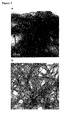
Figure 2 shows a transmission electron microscopic (TEM) view of a gel composition of the present invention comprising a carbon nanotube and an ionic liquid (a) in comparison with a TEM view of the carbon nanotube prior to the formation of the gel composition (b). -
Figure 3 shows an electron absorption spectrum (a) and a Raman spectrum (b) of a gel composition of the present invention. -
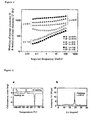
Figure 4 shows the results of dynamic viscoelasticity measurement on a gel composition of the present invention. -
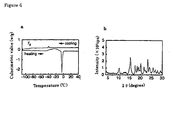
Figure 5 shows the results of differential scanning calorimetry (DSC) and X-ray diffraction (XRD) carried out on a gel composition of the present invention. -
Figure 6 shows the results of DSC and XRD carried out only on an ionic liquid, for purpose of comparison. - According to the present invention, there is provided a unique technology which enables, simply by physical operations, the preparation of a carbon nanotube-containing material (composition) having an extremely excellent workability, wherein three factors (a carbon nanotube (1) and an ionic liquid (2) are pulverized under a shearing force (3)) are indispensable and no gel compositions of the present invention can be produced in case that even one of the factors is not present.
- More specifically: (1) A simple admixing of a carbon nanotube and an ionic liquid without applying a shearing force will not produce the gel composition. (2) Use of carbonaceous materials other than carbon nanotubes, such as graphite, C60, and active carbon will not produce the gel composition. (3) Pulverization of a carbon nanotube under a shearing force using an ordinary organic solvent or an ionic liquid precursor, instead of an ionic liquid, will not produce the gel composition (cf. Comparative Examples set out later).
- Thus, in producing a gel composition comprising a carbon nanotube and an ionic liquid in accordance with the present invention, the carbon nanotube is pulverized, in the presence of the ionic liquid, by applying a shearing force thereto in the first place.
- The examples of means for applying a shearing force in the step of the pulverization include, but are not limited to, a manual or automatic grinding operation in a mortar, in the case of a small-scale production as in a laboratory, and the use of a wet milling machine with a high shearing force such as a ball mill, a roller mill or an oscillating mill, in the case of a mass production. A kneader type of device may also be used. While the time required for the pulverization step is not limited and varies depending upon the degree of the pulverization for the respective uses, it is generally about from five minutes to one hour.
- Through the step as mentioned above, there is obtained a black, pasty product. While the black pasty product may be used as it is, as a composition of the present invention, in general it is preferably subjected to centrifugal separation. Thus, the surplus ionic liquid which was not involved in the formation of the gel composition is removed by the centrifugal separation.
- Although the formation mechanism and structure of the gel composition comprising a carbon nanotube and an ionic liquid of the present invention have not yet been completely elucidated, a rough idea based on the results of various analyses is as follows (see the Working Examples set out later):
- (1) The pulverization treatment under a shearing force will not cause a chemical change of carbon nanotubes but cause a physical configurational change in which the degree of entanglement among the individual carbon nanotubes is decreased so as to form thinner bundles.
- (2) It is thought that the gel formation is not due to the entanglement of carbon nanotubes, but is caused by the formation of a crosslinked structure (three-dimensional network structure) in which the ionic liquid molecules, attached to the surfaces of the less entangled carbon nanotubes through the "cation-π" interaction, serve to combine the bundles of carbon nanotubes with one another through ionic bonding.
- It is well known that an ionic liquid as used in the present invention is also referred to as a cold molten salt or simply as a molten salt, and is defined as a salt which assumes a molten state in a wide range of temperatures including ordinary temperature (room temperature).
- While a variety of known ionic liquids can be used in the present invention, it is preferred to use an ionic liquid which is stable and assumes a molten state at ordinary temperature (room temperature) or at a temperature very near ordinary temperature. As ionic liquids suitable for use in the present invention there can be exemplified the ones composed of a cation selected from the general formulae (I) through (IV) given below (preferably a quaternary ammonium ion) and a anion (X-).


[NRxH4-x]+ (III)
[PRxH4-x]+ (IV)
- In formulae (I) through (IV), R represents an alkyl group having ten or less carbon atoms or an alkyl group containing an ether bond or bonds and having ten or less carbon atoms plus hydrogen atoms. In formula (I), R1 represents an alkyl group having 1-4 carbon atoms or hydrogen atom, which is preferably methyl group having one carbon atom. In formula (I), it is preferred that R and R1 are not the same. In formulae (III) and (IV), x is an integer of 1-4.
- Examples of the anion (X-) include at least one selected from among tetrafluoroborate, hexafluorophosphate, bis(trifluoromethylsulfonyl) imidate, perchlorate, tris(trifluoromethylsulfonyl) carbonate, trifluoromethanesulfonate, dicyanamide, trifluoroacetate, an organic carboxylate, and halogen ions.
- As well known, a carbon nanotube, as used in the present invention, is a carbonaceous material of graphene sheet(s) rolled into a cylindrical form and carbon nanotubes can be divided broadly into single-walled carbon nanotubes (SWCNTs) and multi-walled carbon nanotubes (MWCNTs), depending upon the number of the surrounding walls, and also classified into chiral (spiral) type, zigzag type and armchair type, depending upon the structure of the grapheme sheet. Thus, a variety of carbon nanotubes are known. While the present invention can be applied to any type of the known carbon nanotubes, it is generally easy for a single-walled carbon nanotube, which has a high aspect ratio (i.e., is fine and long), to form a gel and the present invention is therefore suitable for producing a gel composition from a SWCNT. Examples of carbon nanotubes suitable for practical use include, but are not limited to, HiPco (commercially available from Carbon Nanotechnologies Co.,), which can be produced on a relatively large scale from carbon monoxide.
- The ratio of a carbon nanotube and an ionic liquid can be determined by a simple test: A sufficient amount of the ionic liquid is used over the carbon nanotube, so that a clear ionic liquid is isolated when the black pasty product (the carbon nanotube + the ionic liquid) is subjected to the centrifugal separation step following the pulverization. While the ratio depends upon the types of carbon nanotubes and ionic liquids used, it is general that an ionic liquid is used in an amount of more than 100 times by weight over a carbon nanotube.
- As the purity of carbon nanotube is low, the gel formation ability will fall. Thus, it is preferred to use a carbon nanotube which is purified as highly as possible from impurities such as the catalyst residue. While it is general that a carbon nanotube with a purity of about 70% or higher is preferably used owing to efficient gel formation, the purity of carbon nanotubes is optional, ranging from a high purity to a relatively low purity depending upon the application.
- The gel composition of the present invention is a rare material composed of a fine dispersion of a carbon nanotube, and features nonvolatility, incombustibility and high thermal stability, which properties are derived from an ionic liquid.
- The gel composition of the present invention, which comprises a carbon nanotube and an ionic liquid, is further characterized in that it assumes a fluid state when applied with an external force whereas it possesses a shape-retention ability as it is.
- Thus, the gel composition of the present invention, taking advantage of such characteristic properties, can be subjected to a working process for shaping, which comprises a step of forming a desired shape [including planar (two-dimensional) ones such as dots, lines, letters or characters, patterns, figures, or fibrous materials, or stereoscopic (three-dimensional) products] by printing, coating, extruding or injecting the composition with an appropriate tool or device such as an injector, a jet-spray printer, a bar coater or a spray coater, and then a step of removing the ionic liquid from the shape produced. Removing the ionic liquid from the product with the desired shape is accomplished by bringing the product in contact with a solvent (such as water or an alcohol) capable of dissolving the ionic liquid (specifically, for example, the product is immersed in the solvent for extraction or the product is washed with the solvent), or by bringing the product in contact with an absorber (for example, a filter paper or fabric) capable of absorbing the ionic liquid. Thus, the product composed of a carbon nanotube retains its shape. Therefore, the gel composition of the present invention has a wide range of expected applications, including new types of carbon nanotube-containing materials such as painting materials, printing materials, coating materials, molding materials, electronic device materials provided with a semiconducting or metallic property, or micromedical device materials.
- The features of the present invention will be explained more specifically with reference to the following examples, which are not for restricting the present invention.
- On pulverizing 1 part by weight of single-walled carbon nanotube (HiPco: available from Carbon Nanotechnologies Co., purity > 95%) and 200 parts by weight of ionic liquid, 1-butyl-3-methyl imidazolium tetrafluoroborate (BMIBF4: cf
Fig.1 ), there was obtained a black, pasty product. The pasty product was subjected to centrifugation (9100g, three hours) resulting in separation of a black gel composition containing the ionic liquid and approx. 1% by weight of the carbon nanotube (HiPco), from a clear solution of the ionic liquid. In the same manner, gel compositions were prepared by using other types of ionic liquids, i.e., 1-ethyl-3-methylimidazolium tetrafluoroborate (EMIBF4), 1-hexyl-3-methylimidazolium tetrafluoroborate (HMIBF4), 1-butyl-3-methylimidazolium bis (trifluoromethylsulfonyl) imide (BMITf2IV), and 1-butyl-3-methylimidazolium hexafluorophosphate (BMIPF6) (cf.Fig.1 ). In the case where EMIBF4 or HMIBF4 was used, there was obtained a gel composition containing approx. 1% by weight of the carbon nanotube, as in the case of BMIBF4. In the case of BMITf2N or BMIPF6, the gel formation was more efficient, and thus a gel composition was obtained with only approx. 0.5% by weight of the carbon nanotube (HiPco). - When each of the gel compositions was placed in an injector, it could be extruded therefrom in the form of a thread, with which a picture was drawn on a plate. On bringing the drawn picture in contact with a filter paper, the ionic liquid was absorbed into the filter paper while the black picture was stably retained.
- For comparison, in place of the above-mentioned ionic liquid, there was used dichlorobenzene, ethanol or N,N-demethylformamide (DMF), as a conventional organic solvent, or 1-methylimidazole, as a precursor of the ionic liquid, and the resultant mixture was subjected to pulverization, as in Example 1, in an automatic mortar under a high shearing force at room temperature for more than two hours. However, no gels were formed.
- In the same manner as in Example 1 pulverization treatment under a high shearing force was also carried out, where there was used, as carbonaceous material, graphite (1-2µm, Aldrich), active charcoal, or C60 (purity:99.9%, TCl) in place of the carbon nanotube (HiPco). No gel formation was observed.
-
Figure 2a shows a TEM (transmission electron microscopy) view of the gel composition as prepared in Example 1 composed of a dispersion of carbon nanotube (HiPco) in deionized water (the ionic liquid: BMIBF4) as prepared in Example 1. For comparison,Figure 2b shows a TEM view of carbon nanotube (HiPco) having undergone only an ultrasonic treatment with ethanol and thus prior to the gel formation. It is seen that the pulverization treatment under the shearing force resulted in a decreased entanglement among the carbon nanotubes to form thinner bundles. -
Figure 3a shows an electron absorption spectral measurement of the gel composition sandwiched between quartz plates. There are observed electron spectra, as conventionally reported with respect to the single-walled carbon nanotube (HiPco), i.e. the spectra at 730-1000nm and 1100-1700nm attributed to the semiconductive property of the nanotube as well as the spectra at 540-640nm attributed to the metallic property of the nanotube.Figure 3a shows a Raman spectrum of the gel composition (excitation wavelength: 488nm). There is observed the Raman spectrum well known with respect to the carbon nanotube (HiPco): 1588cm-1 and 201cm-1. It can be seen from these results that the pulverization treatment under the shearing force will not cause any chemical change of the carbon nanotube but bring about only a physical conformational change thereof. - Pulverization was carried out on carbon nanotube (HiPco) 15mg and ionic liquid (BMIBF4) 2.0mL in an automatic mortar at room temperature for one hour, followed by centrifugal separation (9,100g × one hour). The resultant gel composition was measured for dynamic viscoelasticity. The results are shown in
Figure 4 . - There is observed a plateau region in G'(modulus of storage elasticity) in the case of a low strain applied (γ = 0.01 or 0.1), suggesting the formation of an elastic network structure in the gel composition, whereas, in the case of a high strain applied (ν=1.0), G' and G" (modulus of loss elasticity) greatly change with the change of angular frequency, suggesting destruction of the gel. As shown in
Figure 4 , even with a considerably low strain applied (γ<1.0), the modulus of storage elasticity G' depends upon the angular frequency. It is thus estimated that the network structure forming the gel is not due to a strong force such as the entanglement of the carbon nanotubes but is caused by relatively weak physical interactions. - The gel composition as prepared in Example 1 containing 0.5% by weight of the carbon nanotube (HiPco) (the ionic liquid: BMITf2N) was measured for differential scanning calorimetric (DSC) analysis and X-ray diffraction (XRD).
- The results of the DSC analysis are shown in
Figure 5a. Figure 5b shows the result of XRD measurement with respect to the intermediate region between the exothermal peak at -52°C and the endothermal peak at -4°C. These results of the DSC analysis and the XRD measurement are completely different from the results of DSC analysis and XRD measurement singly for the ionic liquid BMITf2N (Figure 6a and 6b ), which forms a polycrystalline structure at a low temperature. It is also confirmed that the carbon nanotube does not exhibit any X-ray diffraction. It is thus considered that the simple XRD pattern as given byFigure 5b is due to a single mode of molecular arrangement of the ionic liquid over a wide region. The d value, 4.60 A, as given byFigure 5b is virtually in agreement with the interplanar spacing, 4.53 A , in the formation of an imidazolium ionic pair as reported with respect to crystalline EMIPF6. - It is estimated from the results as shown in the above (2) and (3) that the formation of gel in the gel composition of the present invention is caused by a three-dimensional network structure composed of carbon nanotubes combined with one another through ionic bonding due to ionic liquid molecules, wherein the ionic liquid molecules are arrangedly attached on the surfaces of the less entangled carbon nanotubes through the "cation- π" interaction.
- A gel composition was prepared in the same manner as in Example 1 except that, in place of the carbon nanotube (HiPco) as used in Example 1, there was used a carbon nanotube of a lower purity containing 20% by weight of the metal catalyst residue. The black gel composition obtained was composed of the ionic liquid and ca. 2.5% by weight of the carbon nanotube.
- A gel composition was prepared in the same manner as in Example 1 except that, in place of the carbon nanotube (HiPco) as used in Example 1, there was used a carbon nanotube of a lower purity produced by the laser process containing 30% by weight of graphite. The black gel composition obtained was composed of the ionic liquid and ca. 1.5% by weight of the carbon nanotube.
- As apparent from the foregoing description, there is obtained a gel composition composed of a carbon nanotube and an ionic liquid, by a simple process of pulverizing, in the presence of the ionic liquid, the carbon nanotube under a shearing force applied thereto. The gel composition obtained exhibits an excellent workability and thus it can be worked by a simple process of forming a desired shape by subjecting the composition in a fluidized state to application of an external force by a printing, coating, extrusion or injection operation, and then removing the ionic liquid with a solvent or an absorbent.
- Therefore, the gel composition of the present invention has a wide range of expected applications, including new types of carbon nanotube-containing materials such as painting materials, printing materials, coating materials, molding materials, electronic device materials provided with semiconductor or metallic properties.
Claims (5)
- A gel composition comprising a carbon nanotube and an ionic liquid.
- The gel composition as claimed in claim 1, wherein the carbon nanotube is a single-walled carbon nanotube.
- A method for producing the gel compositional of claim 1 comprising a carbon nanotube and an ionic liquid, which comprises a step of pulverizing, in the presence of the ionic liquid, the carbon nanotube by applying a shearing force thereto.
- The method for producing the gel composition as claimed in claim 3, further comprising a step of subjecting the product of the pulverization to centrifugal separation.
- A method for working the gel composition of claim 1 comprising a carbon nanotube and an ionic liquid, which comprises the step of forming a desired shape from said gel composition by subjecting the composition in a fluidized state to application of an external force by a printing, coating, extrusion or injection operation, and then a step of removing the ionic liquid from said gel composition by bringing said shape in contact with a solvent capable of dissolving the ionic liquid or an absorbent capable of absorbing the ionic liquid.
Applications Claiming Priority (3)
| Application Number | Priority Date | Filing Date | Title |
|---|---|---|---|
| JP2002307754A JP3676337B2 (en) | 2002-10-23 | 2002-10-23 | Gel-like composition comprising carbon nanotube and ionic liquid and method for producing the same |
| JP2002307754 | 2002-10-23 | ||
| PCT/JP2003/013162 WO2004037720A1 (en) | 2002-10-23 | 2003-10-15 | Composition in gel form comprising carbon nanotube and ionic liquid and method for production thereof |
Publications (3)
| Publication Number | Publication Date |
|---|---|
| EP1555242A1 EP1555242A1 (en) | 2005-07-20 |
| EP1555242A4 EP1555242A4 (en) | 2009-01-21 |
| EP1555242B1 true EP1555242B1 (en) | 2012-06-27 |
Family
ID=32170947
Family Applications (1)
| Application Number | Title | Priority Date | Filing Date |
|---|---|---|---|
| EP03756612A Expired - Lifetime EP1555242B1 (en) | 2002-10-23 | 2003-10-15 | Composition in gel form comprising carbon nanotube and ionic liquid and method for production thereof |
Country Status (6)
| Country | Link |
|---|---|
| US (1) | US7531114B2 (en) |
| EP (1) | EP1555242B1 (en) |
| JP (1) | JP3676337B2 (en) |
| KR (1) | KR100627184B1 (en) |
| CN (1) | CN1310831C (en) |
| WO (1) | WO2004037720A1 (en) |
Families Citing this family (46)
| Publication number | Priority date | Publication date | Assignee | Title |
|---|---|---|---|---|
| JP4805820B2 (en) * | 2004-05-13 | 2011-11-02 | 国立大学法人北海道大学 | Fine carbon dispersion |
| CN1312032C (en) * | 2004-06-08 | 2007-04-25 | 中国科学院化学研究所 | Prepn process of composite material of metal or metal oxide and carbon nanotube |
| JP2006176362A (en) | 2004-12-22 | 2006-07-06 | Fuji Xerox Co Ltd | Method for producing carbon nanotube thin film |
| WO2006082768A1 (en) * | 2005-02-02 | 2006-08-10 | National Institute Of Advanced Industrial Science And Technology | Ionic organic compound |
| JP4752283B2 (en) | 2005-02-24 | 2011-08-17 | 富士ゼロックス株式会社 | Solar cell using carbon nanotubes |
| US7550520B2 (en) * | 2005-05-31 | 2009-06-23 | The University Of Alabama | Method of preparing high orientation nanoparticle-containing sheets or films using ionic liquids, and the sheets or films produced thereby |
| JP2006282418A (en) * | 2005-03-31 | 2006-10-19 | Nisshinbo Ind Inc | Gel composition and method for producing the same |
| KR20060131551A (en) * | 2005-06-16 | 2006-12-20 | 엘지.필립스 엘시디 주식회사 | Electrode Structure of Flexible Display and Manufacturing Method Thereof |
| CN100386258C (en) * | 2006-06-23 | 2008-05-07 | 清华大学 | Airgel carbon nanotubes, preparation method and application thereof |
| CN1958574B (en) * | 2006-11-16 | 2012-05-02 | 中国科学院长春应用化学研究所 | Method for preparing ion liquor |
| JP5452847B2 (en) * | 2007-03-22 | 2014-03-26 | スリーエム イノベイティブ プロパティズ カンパニー | Electromagnetic shielding material and sheet |
| KR101358941B1 (en) * | 2007-05-07 | 2014-02-27 | 한국과학기술원 | Conductive Carbon Nanotubes Using Ionic Liquid and Biosensors Using the Same |
| JP5110574B2 (en) * | 2007-06-25 | 2012-12-26 | 独立行政法人産業技術総合研究所 | High-aspect-ratio carbon nanotubes and ionic liquids, conductive thin films and actuator elements |
| JP5660595B2 (en) * | 2008-02-11 | 2015-01-28 | 国立大学法人 東京大学 | Conductive paper and manufacturing method thereof, conductive cellulose composition and manufacturing method thereof, article, electronic device |
| JP5087466B2 (en) * | 2008-05-08 | 2012-12-05 | 昭和電工株式会社 | Electric double layer capacitor |
| US20110319554A1 (en) * | 2008-11-25 | 2011-12-29 | The Board Of Trustees Of The University Of Alabama | Exfoliation of graphite using ionic liquids |
| WO2011055776A1 (en) * | 2009-11-06 | 2011-05-12 | 学校法人 芝浦工業大学 | Process for production of gel containing nano-carbon material |
| KR101196370B1 (en) * | 2009-12-07 | 2012-11-01 | 광 석 서 | Carbon nanotube-polymeric ionic liquid composites and carbon nanotube - conductive polymer composites produced with the same |
| JP5553282B2 (en) | 2010-03-05 | 2014-07-16 | 独立行政法人産業技術総合研究所 | Carbon nanotube separation and recovery method and carbon nanotube |
| CN103068730B (en) * | 2010-08-05 | 2015-08-12 | 独立行政法人产业技术综合研究所 | CNT aggregate and duplexer |
| JP2012097219A (en) | 2010-11-04 | 2012-05-24 | Sony Corp | Conductive ink, method of preparing the same, and method of preparing transparent conductive film |
| US20120207525A1 (en) * | 2011-02-14 | 2012-08-16 | Samsung Electronics Co., Ltd. | Resistance heating composition and heating composite, heating apparatus, and fusing apparatus, including resistance heating composition |
| JP5842349B2 (en) * | 2011-03-18 | 2016-01-13 | 富士通株式会社 | Sheet-like structure, method for producing sheet-like structure, electronic device, and method for producing electronic device |
| WO2013155061A1 (en) | 2012-04-09 | 2013-10-17 | M-I L.L.C. | Triggered heating of wellbore fluids by carbon nanomaterials |
| CN102677546B (en) * | 2012-05-02 | 2014-07-23 | 清华大学 | Ionic liquid coated paper of thin-walled carbon nanotube and preparation method of ionic liquid coated paper |
| KR101922893B1 (en) | 2012-05-14 | 2018-11-28 | 고쿠리츠다이가쿠호우진 도쿄다이가쿠 | Novel graphene nanodispersion and method for preparing same |
| JP5994982B2 (en) * | 2012-07-20 | 2016-09-21 | 国立研究開発法人産業技術総合研究所 | Lithium-air secondary battery using an ionic liquid as an electrolyte and an ionic gel in which carbon is dispersed as an air electrode |
| US20150224210A1 (en) | 2012-08-23 | 2015-08-13 | Japan Science And Technology Agency | Carbon nanomaterial, composition, conductive material, and method of producing the same |
| WO2014046136A1 (en) * | 2012-09-18 | 2014-03-27 | 日産化学工業株式会社 | Hydrogel forming composition and hydrogel produced therefrom |
| WO2014054586A1 (en) | 2012-10-02 | 2014-04-10 | 独立行政法人科学技術振興機構 | Signal detection device and signal detection method |
| CN103911149A (en) * | 2013-01-07 | 2014-07-09 | 中国药科大学 | Preparation method for carbon-nitrogen quantum dots based on ionic liquid, and application of carbon-nitrogen quantum dots as fluorescent probe in drug detection |
| JP6296530B2 (en) | 2013-07-18 | 2018-03-20 | 国立研究開発法人科学技術振興機構 | Biocompatible electrode structure and manufacturing method thereof, and device and manufacturing method thereof |
| JP6271525B2 (en) | 2014-02-06 | 2018-01-31 | 隆夫 染谷 | Electrode and electrode manufacturing method |
| JP6397353B2 (en) * | 2014-02-28 | 2018-09-26 | 国立研究開発法人産業技術総合研究所 | Paste composition having shape-retaining property, film body including carbon nanotubes using the composition, composite material film, and three-dimensional structure |
| US20170095784A1 (en) * | 2014-04-17 | 2017-04-06 | Adeka Corporation | Layered substance-containing liquid and method for producing same |
| JP6619810B2 (en) | 2014-07-15 | 2019-12-11 | シー2センス, インコーポレイテッド | Preparations for enhanced chemical resistance sensing |
| RU2654959C2 (en) * | 2016-04-25 | 2018-05-23 | МСД Текнолоджис С.а.р.л. | Superconcentrate of carbon nanotubes and the method of its production |
| RU2663243C2 (en) * | 2016-12-16 | 2018-08-03 | МСД Текнолоджис С.а.р.л. | Modifier for preparing nanostructured composite materials and method for producing modifier |
| US11363709B2 (en) | 2017-02-24 | 2022-06-14 | BWXT Isotope Technology Group, Inc. | Irradiation targets for the production of radioisotopes |
| US11286172B2 (en) | 2017-02-24 | 2022-03-29 | BWXT Isotope Technology Group, Inc. | Metal-molybdate and method for making the same |
| WO2018236445A2 (en) | 2017-03-24 | 2018-12-27 | The Board Of Trustees Of The University Of Alabama | METALLIC-CHITIN PARTICLE COMPOSITE MATERIALS AND METHODS OF MAKING SAME |
| US11732151B2 (en) | 2020-01-07 | 2023-08-22 | Saudi Arabian Oil Company | Reversible aminal gel compositions, methods, and use in three-dimensional printing |
| KR102325698B1 (en) * | 2020-02-27 | 2021-11-15 | 인하대학교 산학협력단 | stretchable electrode ink composition, and stretchable electrode and thin film transistor preparation method using the same |
| KR20210155878A (en) | 2020-06-17 | 2021-12-24 | 현대자동차주식회사 | Cathode Material of Lithium Air Battery and Cathode Manufacturing Method Using the Same |
| CN112608689B (en) * | 2020-12-03 | 2022-05-20 | 浙江工业大学 | Antistatic organic silicon pressure-sensitive adhesive containing electron transport material and preparation method thereof |
| CN117467226B (en) * | 2023-12-28 | 2024-03-19 | 上海拜安传感技术有限公司 | Composition, sensing film, sensor, preparation method and application |
Family Cites Families (12)
| Publication number | Priority date | Publication date | Assignee | Title |
|---|---|---|---|---|
| DE4029652A1 (en) * | 1990-09-19 | 1992-03-26 | Hoechst Ag | POLYMERE AMMONIUM BORATE AND METHOD FOR THE PRODUCTION THEREOF |
| WO1997043116A1 (en) * | 1996-05-15 | 1997-11-20 | Hyperion Catalysis International, Inc. | Rigid porous carbon structures, methods of making, methods of using and products containing same |
| US5910378A (en) * | 1997-10-10 | 1999-06-08 | Minnesota Mining And Manufacturing Company | Membrane electrode assemblies |
| US6110619A (en) * | 1997-12-19 | 2000-08-29 | Moltech Corporation | Electrochemical cells with cationic polymers and electroactive sulfur compounds |
| JPH11329413A (en) * | 1998-03-31 | 1999-11-30 | Aventis Res & Technol Gmbh & Co Kg | Lithium battery and electrode |
| EP1054036A1 (en) * | 1999-05-18 | 2000-11-22 | Fina Research S.A. | Reinforced polymers |
| JP2004506530A (en) * | 2000-08-24 | 2004-03-04 | ウィリアム・マーシュ・ライス・ユニバーシティ | Polymer wrapped single-walled carbon nanotubes |
| US20030077515A1 (en) * | 2001-04-02 | 2003-04-24 | Chen George Zheng | Conducting polymer-carbon nanotube composite materials and their uses |
| CN1176015C (en) * | 2002-04-19 | 2004-11-17 | 清华大学 | Method of utilizing external force to crush, wash and purify slender carbon nanotube |
| US7061749B2 (en) * | 2002-07-01 | 2006-06-13 | Georgia Tech Research Corporation | Supercapacitor having electrode material comprising single-wall carbon nanotubes and process for making the same |
| US8172998B2 (en) * | 2003-08-21 | 2012-05-08 | Virginia Tech Intellectual Properties, Inc. | Ionic solvents used in ionic polymer transducers, sensors and actuators |
| JP2006176362A (en) * | 2004-12-22 | 2006-07-06 | Fuji Xerox Co Ltd | Method for producing carbon nanotube thin film |
-
2002
- 2002-10-23 JP JP2002307754A patent/JP3676337B2/en not_active Expired - Fee Related
-
2003
- 2003-10-15 WO PCT/JP2003/013162 patent/WO2004037720A1/en not_active Ceased
- 2003-10-15 US US10/517,298 patent/US7531114B2/en not_active Expired - Fee Related
- 2003-10-15 EP EP03756612A patent/EP1555242B1/en not_active Expired - Lifetime
- 2003-10-15 CN CNB2003801019503A patent/CN1310831C/en not_active Expired - Fee Related
- 2003-10-15 KR KR1020057006879A patent/KR100627184B1/en not_active Expired - Fee Related
Also Published As
| Publication number | Publication date |
|---|---|
| KR20050061551A (en) | 2005-06-22 |
| US20050156144A1 (en) | 2005-07-21 |
| JP2004142972A (en) | 2004-05-20 |
| CN1708454A (en) | 2005-12-14 |
| KR100627184B1 (en) | 2006-09-25 |
| EP1555242A4 (en) | 2009-01-21 |
| US7531114B2 (en) | 2009-05-12 |
| WO2004037720A1 (en) | 2004-05-06 |
| JP3676337B2 (en) | 2005-07-27 |
| EP1555242A1 (en) | 2005-07-20 |
| CN1310831C (en) | 2007-04-18 |
Similar Documents
| Publication | Publication Date | Title |
|---|---|---|
| US7531114B2 (en) | Composition in gel form comprising carbon nanotube and ionic liquid and method for production thereof | |
| Zhang et al. | Simultaneous electrochemical dual‐electrode exfoliation of graphite toward scalable production of high‐quality graphene | |
| Gao et al. | Ionic Liquids and Poly (ionic liquid) s for Morphosynthesis of Inorganic Materials | |
| KR101910924B1 (en) | Large scale oxidized graphene production for industrial applications | |
| Lu et al. | Large-scale synthesis of tungsten oxide nanofibers by electrospinning | |
| Jiang et al. | Increased solubility, liquid-crystalline phase, and selective functionalization of single-walled carbon nanotube polyelectrolyte dispersions | |
| Zheng et al. | Mass production of graphene nanoscrolls and their application in high rate performance supercapacitors | |
| JP5775603B2 (en) | Graphene derivative-carbon nanotube composite material and manufacturing method thereof | |
| Hilding et al. | Dispersion of carbon nanotubes in liquids | |
| Maity et al. | Interface engineering of ionic liquid integrated graphene in poly (vinylidene fluoride) matrix yielding magnificent improvement in mechanical, electrical and dielectric properties | |
| Raji et al. | Chemical preparation and functionalization techniques of graphene and graphene oxide | |
| CN109311053A (en) | Graphene-metal hybrid foam-based electrodes for alkali metal batteries | |
| JP2017500265A (en) | Graphene production method and graphene dispersion composition | |
| JP2014529325A (en) | Nanoplate-nanotube composite, method for producing the same, and product obtained therefrom | |
| JP2025131880A (en) | Carbon nanomaterial nanoinks for printing and coating | |
| Hou et al. | Macroscopic and strong ribbons of functionality-rich metal oxides from highly ordered assembly of unilamellar sheets | |
| Chen et al. | Functionalization methods of carbon nanotubes and its applications | |
| JP2016525589A (en) | Dispersant, method for producing the same, and dispersion composition of carbon-based material including the same | |
| Rahaman et al. | Polymer nanocomposites containing graphene: preparation, properties, and applications | |
| Gu et al. | Tuning the Active Oxygen Species of Two-Dimensional Borophene Oxide toward Advanced Metal-Free Catalysis | |
| Zhou et al. | Green, fast and scalable preparation of few-layers graphene | |
| Bilgiç | Review of properties, synthesis, and energy applications of borophene, a novel boron-based 2D material | |
| Grimsdale et al. | New carbon-rich materials for electronics, lithium battery, and hydrogen storage applications | |
| EP1917386B1 (en) | Nanocomposites of polymers with dispersed nanotubes | |
| Tuzemen | Production of graphene by electrochemical exfoliation method and energy applications |
Legal Events
| Date | Code | Title | Description |
|---|---|---|---|
| PUAI | Public reference made under article 153(3) epc to a published international application that has entered the european phase |
Free format text: ORIGINAL CODE: 0009012 |
|
| 17P | Request for examination filed |
Effective date: 20041223 |
|
| AK | Designated contracting states |
Kind code of ref document: A1 Designated state(s): AT BE BG CH CY CZ DE DK EE ES FI FR GB GR HU IE IT LI LU MC NL PT RO SE SI SK TR |
|
| RBV | Designated contracting states (corrected) |
Designated state(s): DE FR GB IT |
|
| A4 | Supplementary search report drawn up and despatched |
Effective date: 20081218 |
|
| 17Q | First examination report despatched |
Effective date: 20090723 |
|
| R17C | First examination report despatched (corrected) |
Effective date: 20100310 |
|
| REG | Reference to a national code |
Ref country code: DE Ref legal event code: R079 Ref document number: 60341403 Country of ref document: DE Free format text: PREVIOUS MAIN CLASS: C01B0031020000 Ipc: B82Y0030000000 |
|
| GRAP | Despatch of communication of intention to grant a patent |
Free format text: ORIGINAL CODE: EPIDOSNIGR1 |
|
| RIC1 | Information provided on ipc code assigned before grant |
Ipc: C01B 31/02 20060101ALI20111219BHEP Ipc: B82Y 30/00 20110101AFI20111219BHEP |
|
| GRAS | Grant fee paid |
Free format text: ORIGINAL CODE: EPIDOSNIGR3 |
|
| GRAA | (expected) grant |
Free format text: ORIGINAL CODE: 0009210 |
|
| AK | Designated contracting states |
Kind code of ref document: B1 Designated state(s): DE FR GB IT |
|
| REG | Reference to a national code |
Ref country code: GB Ref legal event code: FG4D |
|
| REG | Reference to a national code |
Ref country code: DE Ref legal event code: R096 Ref document number: 60341403 Country of ref document: DE Effective date: 20120823 |
|
| PLBE | No opposition filed within time limit |
Free format text: ORIGINAL CODE: 0009261 |
|
| STAA | Information on the status of an ep patent application or granted ep patent |
Free format text: STATUS: NO OPPOSITION FILED WITHIN TIME LIMIT |
|
| 26N | No opposition filed |
Effective date: 20130328 |
|
| REG | Reference to a national code |
Ref country code: DE Ref legal event code: R097 Ref document number: 60341403 Country of ref document: DE Effective date: 20130328 |
|
| REG | Reference to a national code |
Ref country code: FR Ref legal event code: PLFP Year of fee payment: 14 |
|
| REG | Reference to a national code |
Ref country code: FR Ref legal event code: PLFP Year of fee payment: 15 |
|
| REG | Reference to a national code |
Ref country code: FR Ref legal event code: PLFP Year of fee payment: 16 |
|
| PGFP | Annual fee paid to national office [announced via postgrant information from national office to epo] |
Ref country code: DE Payment date: 20181019 Year of fee payment: 16 |
|
| PGFP | Annual fee paid to national office [announced via postgrant information from national office to epo] |
Ref country code: GB Payment date: 20181019 Year of fee payment: 16 Ref country code: IT Payment date: 20181024 Year of fee payment: 16 Ref country code: FR Payment date: 20181022 Year of fee payment: 16 |
|
| REG | Reference to a national code |
Ref country code: DE Ref legal event code: R119 Ref document number: 60341403 Country of ref document: DE |
|
| PG25 | Lapsed in a contracting state [announced via postgrant information from national office to epo] |
Ref country code: DE Free format text: LAPSE BECAUSE OF NON-PAYMENT OF DUE FEES Effective date: 20200501 |
|
| GBPC | Gb: european patent ceased through non-payment of renewal fee |
Effective date: 20191015 |
|
| PG25 | Lapsed in a contracting state [announced via postgrant information from national office to epo] |
Ref country code: FR Free format text: LAPSE BECAUSE OF NON-PAYMENT OF DUE FEES Effective date: 20191031 Ref country code: GB Free format text: LAPSE BECAUSE OF NON-PAYMENT OF DUE FEES Effective date: 20191015 Ref country code: IT Free format text: LAPSE BECAUSE OF NON-PAYMENT OF DUE FEES Effective date: 20191015 |