EP1554259B1 - Novel bicyclic inhibitors of hormone sensitive lipase - Google Patents
Novel bicyclic inhibitors of hormone sensitive lipase Download PDFInfo
- Publication number
- EP1554259B1 EP1554259B1 EP03808700A EP03808700A EP1554259B1 EP 1554259 B1 EP1554259 B1 EP 1554259B1 EP 03808700 A EP03808700 A EP 03808700A EP 03808700 A EP03808700 A EP 03808700A EP 1554259 B1 EP1554259 B1 EP 1554259B1
- Authority
- EP
- European Patent Office
- Prior art keywords
- represent
- och
- benzotriazoles
- formula
- compounds
- Prior art date
- Legal status (The legal status is an assumption and is not a legal conclusion. Google has not performed a legal analysis and makes no representation as to the accuracy of the status listed.)
- Expired - Lifetime
Links
- ZWVOWJIDJRAPAR-UHFFFAOYSA-N CC(CC1)CCN1C([n]1nnc2c1cccc2)=O Chemical compound CC(CC1)CCN1C([n]1nnc2c1cccc2)=O ZWVOWJIDJRAPAR-UHFFFAOYSA-N 0.000 description 4
- RKPRATVIBISBFW-UHFFFAOYSA-N O=C([n]1nnc2c1cccc2)N1CCC(Cc2ccccc2)CC1 Chemical compound O=C([n]1nnc2c1cccc2)N1CCC(Cc2ccccc2)CC1 RKPRATVIBISBFW-UHFFFAOYSA-N 0.000 description 3
- JNIKMJPXCOXJRZ-UHFFFAOYSA-N CC(CC1)CCN1C([n]1nnc2c1ccc(OC)c2)=O Chemical compound CC(CC1)CCN1C([n]1nnc2c1ccc(OC)c2)=O JNIKMJPXCOXJRZ-UHFFFAOYSA-N 0.000 description 2
- RUPKMUKEXOCWPX-UHFFFAOYSA-N C=[Br]c1ccc2[n](C(N(CCC3)CC3C(F)(F)F)=O)nnc2c1 Chemical compound C=[Br]c1ccc2[n](C(N(CCC3)CC3C(F)(F)F)=O)nnc2c1 RUPKMUKEXOCWPX-UHFFFAOYSA-N 0.000 description 1
- ITMIZDJLIOGQEQ-UHFFFAOYSA-N CC(C)C(CC1)CCN1C([n]1nnc2c1cccc2)=O Chemical compound CC(C)C(CC1)CCN1C([n]1nnc2c1cccc2)=O ITMIZDJLIOGQEQ-UHFFFAOYSA-N 0.000 description 1
- BUFMEDDIMLMLGB-UHFFFAOYSA-N CC(CC1)C(C)CN1C([n]1nnc2c1cccc2)=O Chemical compound CC(CC1)C(C)CN1C([n]1nnc2c1cccc2)=O BUFMEDDIMLMLGB-UHFFFAOYSA-N 0.000 description 1
- QHAUNOSFCYFTQQ-UHFFFAOYSA-N CC(CC1)CCN1C([n]1nnc(cc2)c1cc2C(OC)=O)=O Chemical compound CC(CC1)CCN1C([n]1nnc(cc2)c1cc2C(OC)=O)=O QHAUNOSFCYFTQQ-UHFFFAOYSA-N 0.000 description 1
- JFGDGUITICIFGC-UHFFFAOYSA-N CC(CC1)CCN1C([n]1nnc(cc2)c1cc2N)=O Chemical compound CC(CC1)CCN1C([n]1nnc(cc2)c1cc2N)=O JFGDGUITICIFGC-UHFFFAOYSA-N 0.000 description 1
- AEFKHYBQHZAPJZ-UHFFFAOYSA-N CC(CC1)CCN1C([n]1nnc(cc2F)c1cc2Cl)=O Chemical compound CC(CC1)CCN1C([n]1nnc(cc2F)c1cc2Cl)=O AEFKHYBQHZAPJZ-UHFFFAOYSA-N 0.000 description 1
- NVWVENISXPCRDU-UHFFFAOYSA-N CCOC(C(CC1)CCN1C([n]1nnc2c1cccc2)=O)=O Chemical compound CCOC(C(CC1)CCN1C([n]1nnc2c1cccc2)=O)=O NVWVENISXPCRDU-UHFFFAOYSA-N 0.000 description 1
- HMYAFRULSLHPAQ-UHFFFAOYSA-N COc(cc(CCN(C1)C([n]2nnc3c2cccc3)=O)c1c1)c1OC Chemical compound COc(cc(CCN(C1)C([n]2nnc3c2cccc3)=O)c1c1)c1OC HMYAFRULSLHPAQ-UHFFFAOYSA-N 0.000 description 1
- MNEPQKQVONSGQD-UHFFFAOYSA-N COc(cc1)cc2c1[n](C(N(CC1)Cc3c1cccc3)=O)nn2 Chemical compound COc(cc1)cc2c1[n](C(N(CC1)Cc3c1cccc3)=O)nn2 MNEPQKQVONSGQD-UHFFFAOYSA-N 0.000 description 1
- OHIBGECUMAHRGM-UHFFFAOYSA-N Cc(cc1)cc2c1[n](C(N1CC=CCC1)=O)nn2 Chemical compound Cc(cc1)cc2c1[n](C(N1CC=CCC1)=O)nn2 OHIBGECUMAHRGM-UHFFFAOYSA-N 0.000 description 1
- VCMAOXNLCKZWCH-UHFFFAOYSA-N O=C([n]1nnc2c1ccc(Br)c2)N1CC=CCC1 Chemical compound O=C([n]1nnc2c1ccc(Br)c2)N1CC=CCC1 VCMAOXNLCKZWCH-UHFFFAOYSA-N 0.000 description 1
- MLKWBEIIWQDXCY-UHFFFAOYSA-N O=C([n]1nnc2c1cccc2)N(CC1)CCC1C(F)(F)F Chemical compound O=C([n]1nnc2c1cccc2)N(CC1)CCC1C(F)(F)F MLKWBEIIWQDXCY-UHFFFAOYSA-N 0.000 description 1
- CVHZMANGMAYXPK-UHFFFAOYSA-N O=C([n]1nnc2c1cccc2)N(CC1)CCC1Cl Chemical compound O=C([n]1nnc2c1cccc2)N(CC1)CCC1Cl CVHZMANGMAYXPK-UHFFFAOYSA-N 0.000 description 1
- XVCUTEWFIHEDBR-UHFFFAOYSA-N O=C([n]1nnc2c1cccc2)N1CC=CCC1 Chemical compound O=C([n]1nnc2c1cccc2)N1CC=CCC1 XVCUTEWFIHEDBR-UHFFFAOYSA-N 0.000 description 1
- SAWDWFHPMWWLMK-UHFFFAOYSA-N O[NH+](c(cc1)cc2c1[n](C(N1CC=CCC1)=O)nn2)[OH3+2] Chemical compound O[NH+](c(cc1)cc2c1[n](C(N1CC=CCC1)=O)nn2)[OH3+2] SAWDWFHPMWWLMK-UHFFFAOYSA-N 0.000 description 1
Classifications
-
- C—CHEMISTRY; METALLURGY
- C07—ORGANIC CHEMISTRY
- C07D—HETEROCYCLIC COMPOUNDS
- C07D401/00—Heterocyclic compounds containing two or more hetero rings, having nitrogen atoms as the only ring hetero atoms, at least one ring being a six-membered ring with only one nitrogen atom
- C07D401/02—Heterocyclic compounds containing two or more hetero rings, having nitrogen atoms as the only ring hetero atoms, at least one ring being a six-membered ring with only one nitrogen atom containing two hetero rings
- C07D401/06—Heterocyclic compounds containing two or more hetero rings, having nitrogen atoms as the only ring hetero atoms, at least one ring being a six-membered ring with only one nitrogen atom containing two hetero rings linked by a carbon chain containing only aliphatic carbon atoms
-
- A—HUMAN NECESSITIES
- A61—MEDICAL OR VETERINARY SCIENCE; HYGIENE
- A61P—SPECIFIC THERAPEUTIC ACTIVITY OF CHEMICAL COMPOUNDS OR MEDICINAL PREPARATIONS
- A61P3/00—Drugs for disorders of the metabolism
-
- A—HUMAN NECESSITIES
- A61—MEDICAL OR VETERINARY SCIENCE; HYGIENE
- A61P—SPECIFIC THERAPEUTIC ACTIVITY OF CHEMICAL COMPOUNDS OR MEDICINAL PREPARATIONS
- A61P3/00—Drugs for disorders of the metabolism
- A61P3/08—Drugs for disorders of the metabolism for glucose homeostasis
- A61P3/10—Drugs for disorders of the metabolism for glucose homeostasis for hyperglycaemia, e.g. antidiabetics
-
- A—HUMAN NECESSITIES
- A61—MEDICAL OR VETERINARY SCIENCE; HYGIENE
- A61P—SPECIFIC THERAPEUTIC ACTIVITY OF CHEMICAL COMPOUNDS OR MEDICINAL PREPARATIONS
- A61P43/00—Drugs for specific purposes, not provided for in groups A61P1/00-A61P41/00
-
- A—HUMAN NECESSITIES
- A61—MEDICAL OR VETERINARY SCIENCE; HYGIENE
- A61P—SPECIFIC THERAPEUTIC ACTIVITY OF CHEMICAL COMPOUNDS OR MEDICINAL PREPARATIONS
- A61P9/00—Drugs for disorders of the cardiovascular system
- A61P9/10—Drugs for disorders of the cardiovascular system for treating ischaemic or atherosclerotic diseases, e.g. antianginal drugs, coronary vasodilators, drugs for myocardial infarction, retinopathy, cerebrovascula insufficiency, renal arteriosclerosis
-
- C—CHEMISTRY; METALLURGY
- C07—ORGANIC CHEMISTRY
- C07D—HETEROCYCLIC COMPOUNDS
- C07D249/00—Heterocyclic compounds containing five-membered rings having three nitrogen atoms as the only ring hetero atoms
- C07D249/16—Heterocyclic compounds containing five-membered rings having three nitrogen atoms as the only ring hetero atoms condensed with carbocyclic rings or ring systems
- C07D249/18—Benzotriazoles
-
- C—CHEMISTRY; METALLURGY
- C07—ORGANIC CHEMISTRY
- C07D—HETEROCYCLIC COMPOUNDS
- C07D403/00—Heterocyclic compounds containing two or more hetero rings, having nitrogen atoms as the only ring hetero atoms, not provided for by group C07D401/00
- C07D403/02—Heterocyclic compounds containing two or more hetero rings, having nitrogen atoms as the only ring hetero atoms, not provided for by group C07D401/00 containing two hetero rings
- C07D403/06—Heterocyclic compounds containing two or more hetero rings, having nitrogen atoms as the only ring hetero atoms, not provided for by group C07D401/00 containing two hetero rings linked by a carbon chain containing only aliphatic carbon atoms
-
- C—CHEMISTRY; METALLURGY
- C07—ORGANIC CHEMISTRY
- C07D—HETEROCYCLIC COMPOUNDS
- C07D471/00—Heterocyclic compounds containing nitrogen atoms as the only ring hetero atoms in the condensed system, at least one ring being a six-membered ring with one nitrogen atom, not provided for by groups C07D451/00 - C07D463/00
- C07D471/02—Heterocyclic compounds containing nitrogen atoms as the only ring hetero atoms in the condensed system, at least one ring being a six-membered ring with one nitrogen atom, not provided for by groups C07D451/00 - C07D463/00 in which the condensed system contains two hetero rings
- C07D471/10—Spiro-condensed systems
Definitions
- Benzotriazoles are already known from the most diverse fields, such as e.g. photochemistry (US 4,255,510, Kodak) or as an orexin antagonist (WO 02/090355, SKB). Further, the synthesis for the preparation of benzotriazoles by Katritzky et al. in J. Org. Chem. 1997, 62, 4155-4158 and in J. Chem. Research (s) 1999, 230-231. Also known are carbamates as lipase inhibitors such as e.g. Shamkant Patkar et al. in Paul Woolley, Steffen B. Petterson (ed), Lipase (1994) 207-227 or WO 03/051842.
- the invention relates to compounds of the formula I, in the form of their racemates, racemic mixtures and pure enantiomers, and to their diastereomers and mixtures thereof.
- alkyl radicals can be both straight-chain and branched.
- Halogen is fluorine, chlorine or bromine, especially fluorine or chlorine.
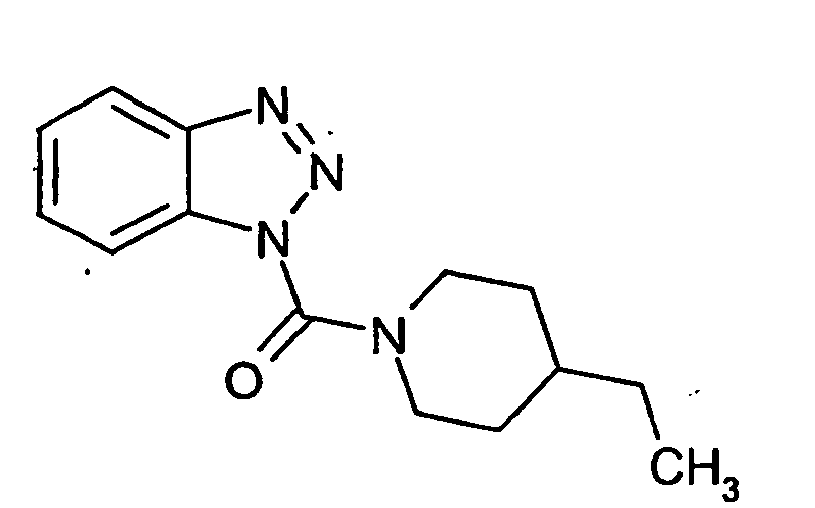
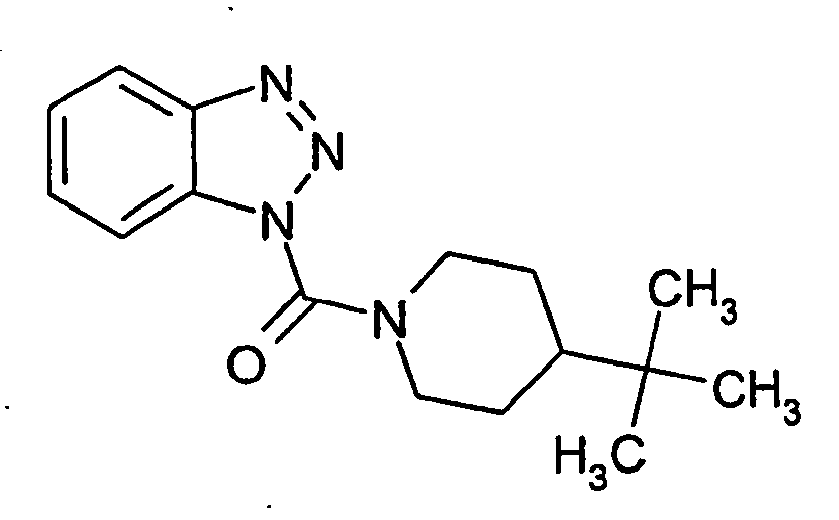
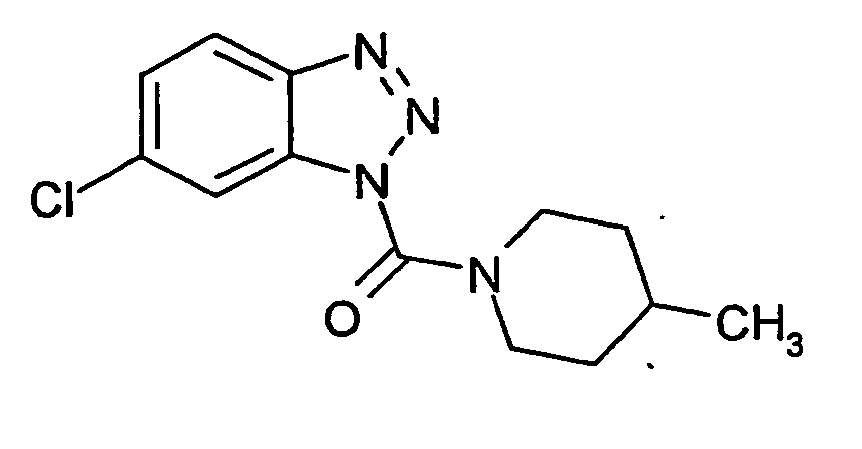
- benzotriazoles of the following structures are very particularly preferred: and the benzotriazoles of the following structures:
- Suitable pharmaceutically acceptable acid addition salts of the compounds according to the invention are salts of inorganic acids, such as hydrochloric acid, hydrobromic acid, phosphoric acid, metaphosphoric acid, nitric acid and sulfuric acid, and also organic acids, such as, for example, acetic acid, benzenesulfonic, benzoic, citric, ethanesulfonic, fumaric acid.
- Suitable pharmaceutically acceptable basic salts are ammonium salts, alkali metal salts (such as sodium and potassium salts), alkaline earth salts (such as magnesium and calcium salts), trometamol (2-amino-2-hydroxymethyl-1,3-propanediol), diethanolamine, lysine or ethylenediamine.
- Salts with a non-pharmaceutically acceptable anion are also within the scope of the invention as useful intermediates for the preparation or purification of pharmaceutically acceptable salts and / or for use in non-therapeutic, for example, in vitro applications.
- physiologically functional derivative refers to any physiologically acceptable derivative of a compound of formula I, e.g. an ester which, when administered to a mammal, e.g. humans, is able to form (directly or indirectly) a compound of formula I or an active metabolite thereof.
- the physiologically functional derivatives also include prodrugs of the compounds according to the invention, as described, for example, in H. Okada et al., Chem. Pharm. Bull. 1994, 42, 57-61. Such prodrugs can be metabolized in vivo to a compound of the invention. These prodrugs may or may not be effective.
- the compounds according to the invention can also be present in various polymorphic forms, for example as amorphous and crystalline polymorphic forms. All polymorphic forms of the compounds of the invention are within the scope of the invention and are a further aspect of the invention.
- the compound (s) of the formula (I) can also be administered in combination with other active substances.
- the amount of a compound of Formula 1 required to achieve the desired biological effect is dependent upon a number of factors, eg, the specific compound chosen, the intended use, the mode of administration, and the clinical condition of the patient.
- the daily dose is in the range of 0.3 mg to 100 mg (typically 3 mg and 50 mg) per day per kilogram of body weight, eg 3-10 mg / kg / day.
- an intravenous dose may range from 0.3 mg to 1.0 mg / kg, which may conveniently be administered as an infusion of 10 ng to 100 ng per kilogram per minute.
- Suitable infusion solutions for these purposes may contain, for example, from 0.1 ng to 10 mg, typically from 1 ng to 10 mg per milliliter.
- Single doses may contain, for example, from 1 mg to 10 g of the active ingredient.
- injectable ampoules, and orally administrable unit dose formulations such as tablets or capsules, may contain, for example, from 1.0 to 1000 mg, typically from 10 to 600 mg.
- the compounds according to formula I can themselves be used as compound, but they are preferably present with a compatible carrier in the form of a pharmaceutical composition.
- the carrier must of course be compatible in the sense that it is compatible with the other ingredients of the composition and is not harmful to the patient.
- the carrier may be a solid or a liquid, or both, and is preferably formulated with the compound as a single dose, for example, as a tablet containing from 0.05% to 95% by weight of the active ingredient may contain.
- Other pharmaceutically active substances may likewise be present, including further compounds of the formula I.
- the pharmaceutical compositions according to the invention can be prepared by one of the known pharmaceutical methods, which essentially consist in mixing the ingredients with pharmacologically acceptable carriers and / or excipients ,
- compositions according to the invention are those suitable for oral, rectal, topical, peroral (e.g., sublingual) and parenteral (e.g., subcutaneous, intramuscular, intradermal, or intravenous) administration, although the most suitable route of administration in each individual case is that of U.S. Patent Nos. 4,646,074; The nature and severity of the condition to be treated and the type of compound used in each case according to formula I is dependent. Also coated formulations and coated slow release formulations are within the scope of the invention. Preference is given to acid and enteric formulations. Suitable enteric coatings include cellulose acetate phthalate, polyvinyl acetate phthalate, hydroxypropylmethylcellulose phthalate and anionic polymers of methacrylic acid and methyl methacrylate.
- Suitable pharmaceutical compounds for oral administration may be in separate units, such as capsules, cachets, lozenges or tablets, each containing a certain amount of the compound of formula I; as a powder or granules; as a solution or suspension in an aqueous or non-aqueous liquid; or as an oil-in-water or water-in-oil emulsion.
- these compositions may be prepared by any suitable pharmaceutical method comprising a step of contacting the active ingredient and the carrier (which may consist of one or more additional ingredients).
- the compositions are prepared by uniformly and homogeneously mixing the active ingredient with a liquid and / or finely divided solid carrier, after which the product is molded, if necessary.
- a tablet can be prepared by adding a powder or granules of Compound is pressed or molded, optionally with one or more additional ingredients.
- Pressed tablets may be prepared by tableting the compound in free-flowing form, such as a powder or granules, optionally mixed with a binder, lubricant, inert diluent and / or surfactant / dispersant in a suitable machine.
- Molded tablets may be prepared by shaping the powdered compound moistened with an inert liquid diluent in a suitable machine.
- compositions suitable for peroral (sublingual) administration include lozenges containing a compound of formula I with a flavor, usually sucrose and gum arabic or tragacanth, and lozenges containing the compound in an inert base such as gelatin and glycerol or sucrose and gum arabic.
- Suitable pharmaceutical compositions for parenteral administration preferably comprise sterile aqueous preparations of a compound according to formula I which are preferably isotonic with the blood of the intended recipient. These preparations are preferably administered intravenously, although the administration may also be subcutaneous, intramuscular or intradermal as an injection. These preparations may preferably be prepared by mixing the compound with water and rendering the resulting solution sterile and isotonic with the blood. Injectable compositions of the invention generally contain from 0.1% to 5% by weight of the active compound.
- Suitable pharmaceutical compositions for rectal administration are preferably as single dose suppositories. These can be prepared by mixing a compound according to formula I with one or more conventional solid carriers, for example cocoa butter, and shaping the resulting mixture.
- Suitable pharmaceutical compositions for topical application to the skin are preferably as an ointment, cream, lotion, paste, spray, aerosol or oil.
- Vaseline, lanolin, polyethylene glycols, alcohols and combinations of two or more of these substances can be used as the carrier.
- the active ingredient is generally present at a level of from 0.1% to 15% by weight of the composition, for example from 0.5% to 2%.
- Suitable pharmaceutical compositions for transdermal applications may exist as single patches suitable for long-term close contact with the epidermis of the patient. Such patches suitably contain the active ingredient in an optionally buffered aqueous solution, dissolved and / or dispersed in an adhesive or dispersed in a polymer.
- a suitable active ingredient concentration is about 1% to 35%, preferably about 3% to 15%.
- the active ingredient can be released by electrotransport or iontophoresis as described, for example, in Pharmaceutical Research, 2 (6): 318 (1986).
- Antidiabetic medicines mentioned in the Red List 2001, chapter 12. They can be combined with the compounds of the formula I according to the invention in particular for the synergistic effect improvement.
- the administration of the active ingredient combination can be carried out either by separate administration of the active ingredients to the patient or in the form of combination preparations in which several active ingredients are present in a pharmaceutical preparation.
- Most of the drugs listed below are disclosed in USP Dictionary of USAN and International Drug Names, US Pharmacopeia, Rockville 2001.
- Antidiabetics include insulin and insulin derivatives, such as Lantus ® (see www.lantus.com) or HMR 1964 fast-acting insulins (see US No.
- the orally active hypoglycemic agents preferably include sulphonylureas, biguanidines, meglitinides, oxadiazolidinediones, thiazolidinediones, Glucosidase inhibitors, glucagon antagonists, GLP-1 agonists, potassium channel openers, such as those disclosed in WO 97/262.65 and WO 99/03861 by Novo Nordisk A / S, insulin sensitizers, inhibitors of liver enzymes involved in the stimulation of gluconeogenesis and / or glycogenolysis, modulators of glucose uptake, lipid metabolism altering compounds such as antihyperlipidemic agents and antilipidemic agents, compounds that reduce food intake, PPAR and PXR agonists, and drugs that target the ATP-dependent potassium channel Beta cells act
- the compounds of formula I are administered in combination with an HMGCoA reductase inhibitor such as simvastatin, fluvastatin, pravastatin, lovastatin, atorvastatin, cerivastatin, rosuvastatin.
- an HMGCoA reductase inhibitor such as simvastatin, fluvastatin, pravastatin, lovastatin, atorvastatin, cerivastatin, rosuvastatin.
- the compounds of formula I are administered in combination with a cholesterol resorption inhibitor, e.g. Ezetimibe, Tiqueside, Pamaqueside.
- a cholesterol resorption inhibitor e.g. Ezetimibe, Tiqueside, Pamaqueside.
- the compounds of formula I are administered in combination with a PPAR gamma agonist, e.g. Rosiglitazone, pioglitazone, JTT-501, Gl 262570.
- a PPAR gamma agonist e.g. Rosiglitazone, pioglitazone, JTT-501, Gl 262570.
- the compounds of formula I in combination with PPAR alpha agonist e.g. GW 9578, GW 7647.
- the compounds of formula I in combination with a mixed PPAR alpha / gamma agonist e.g. GW 1536, AVE 8042, AVE 8134, AVE 0847, or as described in WO 00/64888, WO 00/64876, WO 03/020269.
- a mixed PPAR alpha / gamma agonist e.g. GW 1536, AVE 8042, AVE 8134, AVE 0847, or as described in WO 00/64888, WO 00/64876, WO 03/020269.
- the compounds of formula I are administered in combination with a fibrate, such as fenofibrate, clofibrate, bezafibrate.
- the compounds of formula I are administered in combination with an MTP inhibitor, e.g. Implitapide, BMS-201038, R-103757.
- an MTP inhibitor e.g. Implitapide, BMS-201038, R-103757.
- the compounds of the formula are used in combination with bile acid resorption inhibitor (see, for example, US 6,245,744 or US 6,221,897), e.g. HMR 1741 administered.
- the compounds of formula I are administered in combination with a CETP inhibitor, e.g. JTT-705.
- a CETP inhibitor e.g. JTT-705.
- the compounds of formula I are used in combination with a polymeric bile acid adsorber, e.g. Cholestyramine, colesevelam.
- a polymeric bile acid adsorber e.g. Cholestyramine, colesevelam.
- the compounds of formula I are used in combination with an LDL receptor inducer (see US 6,342,512), e.g. HMR1171, HMR1586.
- the compounds of formula I are administered in combination with an ACAT inhibitor, e.g. Avasimibe, administered.
- an ACAT inhibitor e.g. Avasimibe
- the compounds of formula I are used in combination with an antioxidant, e.g. OPC-14117 administered.
- the compounds of formula I are administered in combination with a lipoprotein lipase inhibitor, e.g. NO-1886, administered.
- a lipoprotein lipase inhibitor e.g. NO-1886
- the compounds of formula I are administered in combination with an ATP citrate lyase inhibitor, such as SB-204990.
- the compounds of formula I are administered in combination with a squalene synthetase inhibitor, e.g. BMS-188494.
- a squalene synthetase inhibitor e.g. BMS-188494.
- the compounds of formula I in combination with a lipoprotein (a) antagonist, e.g. Cl-1027 or nicotinic acid.
- a lipoprotein (a) antagonist e.g. Cl-1027 or nicotinic acid.
- the compounds of formula I are administered in combination with a lipase inhibitor, e.g. Orlistat, administered.
- a lipase inhibitor e.g. Orlistat
- the compounds of the formula I are administered in combination with insulin.
- the compounds of formula I are used in combination with a sulphonylurea, e.g. Tolbutamide, glibenclamide, glipizide or glimepiride.
- a sulphonylurea e.g. Tolbutamide, glibenclamide, glipizide or glimepiride.
- the compounds of formula I are used in combination with a biguanide, e.g. Metformin, administered.
- a biguanide e.g. Metformin
- the compounds of formula I are used in combination with a meglitinide, e.g. Repaglinide, administered.
- the compounds of formula I are used in combination with a thiazolidinedione, e.g. Troglitazone, ciglitazone, pioglitazone, rosiglitazone or those described in WO 97/41097 by Dr. med. Reddy's Research Foundation disclosed compounds, especially 5 - [[4 - [(3,4-dihydro-3-methyl-4-oxo-2-quinazolinylmethoxy) phenyl] methyl] -2,4-thiazolidinedione.
- the compounds of formula I are administered in combination with an ⁇ -glucosidase inhibitor, such as miglitol or acarbose.
- an ⁇ -glucosidase inhibitor such as miglitol or acarbose.
- the compounds of formula I are administered in combination with an agent which acts on the ATP-dependent potassium channel of the beta cells, e.g. Tolbutamide, glibenclamide, glipizide, glimepiride or repaglinide.
- an agent which acts on the ATP-dependent potassium channel of the beta cells e.g. Tolbutamide, glibenclamide, glipizide, glimepiride or repaglinide.
- the compounds of formula I are used in combination with more than one of the aforementioned compounds, e.g. in combination with - a sulphonylurea and metformin, a sulphonylurea and acarbose, repaglinide and metformin, insulin and a sulphonylurea, insulin and metformin, insulin and troglitazone, insulin and lovastatin, etc.
- the compounds of formula I are used in combination with CART modulators (see “cocaine-amphetamine-regulated transcript-influenced energy metabolism, anxiety and gastric emptying in mice" Asakawa, A., et al., M.: Hormones and Metabolic Research (2001), 33 (9), 554-558), NPY antagonists eg naphthalene-1-sulfonic acid ⁇ 4 - [(4-amino-quinazolin-2-ylamino) -methyl] -cyclohexylmethyl ⁇ -amide; hydrochloride (CGP 71683A)), MC4 agonists (eg, 1-amino-1,2,3,4-tetrahydronaphthalene-2-carboxylic acid [2- (3a-benzyl-2-methyl-3-oxo-2,3 , 3a, 4,6,7-hexahydro-pyrazolo [4,3-c] pyridin-5-yl) -1- (4-ch
- the further active ingredient is leptin; see, e.g. "Perspectives in the therapeutic use of leptin", Salvador, Javier; Gomez-Ambrosi, Javier; Fruhbeck, Gema, Expert Opinion on Pharmacotherapy (2001), 2 (10), 1615-1622.
- the further active ingredient is dexamphatamine or amphetamine.
- the other active ingredient is fenfluramine or dexfenfluramine.
- the other active ingredient is sibutramine.
- the other active ingredient is orlistat.
- the other active ingredient is mazindol or phentermine.
- the compounds of formula I in combination with bulking agents preferably insoluble bulking agents
- bulking agents preferably insoluble bulking agents
- Caromax is a carob-containing product of the company Nutrinova, Nutrition Specialties & Food Ingredients GmbH, Industriepark availability, 65926 Frankfurt / Main)) administered.
- the combination with Caromax ® can be done in one preparation, or by separate administration of Compounds of the formula I and Caromax ®.
- Caromax ® can also be administered in the form of food, such as in baked goods or muesli bars.
- the benzotriazoles of the general formula I according to the invention are prepared by methods known per se, for example by acylation of substituted or unsubstituted benzotriazole 2 with carbamoyl chlorides 3 (method A), or in two stages by reaction of benzotriazoles with phosgene and further reaction of Benzotriazolcarbonklarechlorids obtained with amines (Method B).
- the reactions can be carried out in wide temperature ranges. In general, it has been found to be advantageous to work at 0 ° C to the boiling point of the solvent used.
- the solvents used are, for example, methylene chloride, THF, DMF, toluene, ethyl acetate, n-heptane, dioxane, diethyl ether.
- the compounds of the general formula I according to the invention have a surprising inhibiting effect on the hormone-sensitive lipase, HSL, an allosteric enzyme in adipocytes, which is inhibited by insulin and is responsible for the degradation of fats in fat cells and thus for the transfer of fat constituents into the bloodstream ,
- HSL hormone-sensitive lipase
- An inhibition of this enzyme thus corresponds to an insulin-like action of the compounds of the invention, which ultimately leads to a reduction of free fatty acids in the blood and blood sugar.
- They can therefore be used in derangements of the metabolism such as non-insulin-dependent diabetes mellitus, diabetic syndrome, syndrome X and direct damage to the pancreas.
- Inhibition of HSL in ⁇ -cells should lead to a direct recovery of the release of insulin (M. Winzell et al., Diabetes, Vol. 52, August 2003, 2057-2065).
- the compounds of the formula I according to the invention can therefore also be used for insulin release.
- NAG NBD monoacylglyceride
- phosphatidylcholine and 6 mg phosphatidylinositol are dissolved in 1 ml chloroform each.
- 10 mg NAG are dissolved in 1 ml Chlorofom.
- Two parts phosphatidylinositol solution (eg 83.5 ⁇ l) and one part phosphatidylcholine solution (eg 41.5 ⁇ l) and 100 ⁇ l NAG solution are pipetted together in plastic scintillation vials (final concentration in the test: 0.0375 mg phospholipid / ml, 0.05 mg / NAG / ml).
- the chloroform (225 ⁇ l total volume) is completely removed by blowing over with an N2 stream.
- the dried substrate can be stored at 4 ° C for up to 3 days.
- the dried substrate is taken up in 20 ml assay buffer (25 mM Tris / HCl, pH 7.4, 150 mM NaCl) and two ultrasound treatments with a sonic bar (Branson Sonifier Type II, standard microtip). : 1st treatment setting 2, 2 x 1 min, between each 1 min on ice; 2. Treatment setting 4, 2 x 1 min, between each 1 min on ice.
- the color of the substrate solution changes from yellow (extinction maximum 481 nm) to red (extinction maximum 550 nm) by intercalation of NAGs between the phospholipid molecules of the vesicles / micelles.
- the solution is incubated on ice for a further 15 min.
- the assay is performed in 1.5 ml Eppendorf tubes or 96-well plates for 60 min at 30 ° C.
- 10 ⁇ l of the test substance are placed in assay buffer (25 mM Tris / HCl, pH 7.4, 150 mM NaCl) in the presence of 16.6% DMSO.
- the products of the HSL reaction are analyzed by phase separation / thin layer chromatography.
- the incubation mixture 200 ⁇ l total volume, see indirect NAG assay
- the incubation mixture in 2 ml Eppendorfgefäßeh with 1.3 ml of methanol / chloroform / heptane (10: 9: 7) and then with 0.4 ml of 0.1 M NaOH.
- the phase separation is initiated by centrifugation (800xg, 20 min, room temperature). From the aqueous upper phase, equivalent volumes (eg 0.4 ml) are removed and the extinction is determined photometrically at 481 nm.
- the aqueous phase is dried (SpeedVac) and then taken up in 50 ⁇ l of tetrahydrofuran. 5 ⁇ l samples are applied to silica gel Si-60 plates (Merck). The chromatography is carried out with 78 ml of diethyl ether / 22 ml of petroleum ether / 1 ml of glacial acetic acid as the eluent. The amount of released fluorescent NBD fatty acid is determined by phosphorimaging (Molecular Dynamics, Storm 840 and ImageQuant software) at an excitation wavelength of 460 nm and emission wavelength of 540-560 nm.
- Isolated rat fat cells are obtained from epididymal adipose tissue from untreated male rats (Wistar, 220-250 g) by collagenase treatment according to published procedures (eg S. Nilsson et al., Anal. Biochem., 158, 1986, 399-407, G. Fredrikson et Chem. 256, 1981, 6311-6320; Tomquist, Tom, et al., J. Biol. Chem. 251, 1976, 813-819).
- the fat cells from 10 rats are washed three times by flotation with in each case 50 ml of homogenization buffer (25 ml Tris / HCl, pH 7.4, 0.25 M sucrose, 1 mM EDTA, 1 mM DTT, 10 ⁇ g / ml leupeptin, 10 ⁇ g / ml antipain, 20 ⁇ g / ml pepstatin) and finally taken up in 10 ml homogenization buffer.
- the fat cells are homogenized in a Teflon-in-glass homogenizer (Braun-Melsungen) by 10 strokes at 1500 rpm and 15 ° C.
- the homogenate is centrifuged (Sorvall SM24 tube, 5000 rpm, 10 min, 4 ° C).
- the shelter between the fat layer above and the pellet is removed and the centrifugation repeated.
- the resulting shelter is again centrifuged (Sorvall SM24 tube, 20000 rpm, 45 min, 4 ° C).
- the shelter is removed and treated with 1 g of heparin-Sepharose (Pharmacia Biotech, CL-6B, 5x washed with 25 mM Tris / HCl, pH 7.4, 150 mM NaCl).
- the precipitates are collected by centrifugation (Sorvall SS34, 12,000 rpm, 10 min, 4 ° C) and dissolved in 2.5 ml of 20 mM Tris / HCl, pH 7.0, 1 mM EDTA, 65 mM NaCl, 13% sucrose, 1 mM DTT, 10 ⁇ g / ml leupeptin / pepstatin / antipain suspended. The suspension is dialyzed overnight at 4 ° C.
- the HSL is eluted with a volume of equilibration buffer containing 0.5 M potassium phosphate, then dialyzed (see above) and concentrated 5-10 fold by ultrafiltration (Amicon Diaflo PM 10 filter) at 4 ° C.
- the partially purified HSL can be stored at -70 ° C for 4 to 6 weeks.
- trioleoylglycerol in toluene
- 6.8 ⁇ M unlabelled trioleoylglycerol 0.6 mg phospholipids (phosphatidylcholine / phosphatidylinositol 3: 1 w / v) are mixed, dried over N 2 and then dissolved in 2 ml 0.1 M KPi (pH 7.0) was recorded by sonication (Branson 250, microtip, setting 1-2, 2 x 1 min every 1 min).
- Substances are usually tested in four independent approaches.
- the inhibition of the enzymatic activity of HSL by a test substance is determined by comparison with a non-inhibited control reaction.
- the IC50 value is calculated using an inhibition curve with at least 10 concentrations of the test substance.
- the software package GRAPHIT, Elsevier-BIOSOFT, is used for the analysis of the data.
Landscapes
- Organic Chemistry (AREA)
- Chemical & Material Sciences (AREA)
- Health & Medical Sciences (AREA)
- Bioinformatics & Cheminformatics (AREA)
- Engineering & Computer Science (AREA)
- Veterinary Medicine (AREA)
- Medicinal Chemistry (AREA)
- Nuclear Medicine, Radiotherapy & Molecular Imaging (AREA)
- General Chemical & Material Sciences (AREA)
- Pharmacology & Pharmacy (AREA)
- Life Sciences & Earth Sciences (AREA)
- Animal Behavior & Ethology (AREA)
- General Health & Medical Sciences (AREA)
- Public Health (AREA)
- Chemical Kinetics & Catalysis (AREA)
- Diabetes (AREA)
- Obesity (AREA)
- Hematology (AREA)
- Heart & Thoracic Surgery (AREA)
- Cardiology (AREA)
- Emergency Medicine (AREA)
- Endocrinology (AREA)
- Vascular Medicine (AREA)
- Urology & Nephrology (AREA)
- Pharmaceuticals Containing Other Organic And Inorganic Compounds (AREA)
- Nitrogen Condensed Heterocyclic Rings (AREA)
- Plural Heterocyclic Compounds (AREA)
- Hydrogenated Pyridines (AREA)
- Medicines That Contain Protein Lipid Enzymes And Other Medicines (AREA)
- Acyclic And Carbocyclic Compounds In Medicinal Compositions (AREA)
Abstract
Description
Benzotriazole sind bereits aus den verschiedensten Gebieten bekannt, wie z.B. der Fotochemie (US 4,255,510, Kodak) oder als Orexin Antagonisten (WO 02/090355, SKB). Ferner ist die Synthese zur Herstellung von Benzotriazolen von Katritzky et al. in J. Org. Chem. 1997, 62, 4155-4158 und in J.Chem. Research (s) 1999, 230-231 beschrieben. Bekannt sind ferner Carbamate als Lipase-Inhibitoren wie z.B. Shamkant Patkar et al. in Paul Woolley, Steffen B. Petterson (ed), Lipase (1994) 207-227 oder WO 03/051842.Benzotriazoles are already known from the most diverse fields, such as e.g. photochemistry (US 4,255,510, Kodak) or as an orexin antagonist (WO 02/090355, SKB). Further, the synthesis for the preparation of benzotriazoles by Katritzky et al. in J. Org. Chem. 1997, 62, 4155-4158 and in J. Chem. Research (s) 1999, 230-231. Also known are carbamates as lipase inhibitors such as e.g. Shamkant Patkar et al. in Paul Woolley, Steffen B. Petterson (ed), Lipase (1994) 207-227 or WO 03/051842.
Überraschenderweise konnte nun gezeigt werden, dass die erfindungsgemäßen Benzotriazole Wirkung an der HSL, der hormon sensitiven Lipase zeigen.Surprisingly, it has now been possible to show that the benzotriazoles according to the invention have activity on the HSL, the hormone-sensitive lipase.
Die Erfindung betritt Benzotriazole der allgemeinen Formel I,

- R1 bis R8
- H,
Br, Cl, CH3, CN, NH2, NO2, CF3, OCH3, Phenoxy, Benzoyl, CH(OH)-Phenyl, S-Cyclohexyl, CO-OCH3;
oder
zwei Substituenten aus dieser Reihe sind:
R1 = Cl und R3 = CF3 oder
R2=Fund R3=Cl;
- n
- eine ganze Zahl von 0, 1 oder 2; und
- R6
- CH3;
- R7
- CH3, C2H5; CH(CH3)2, C(CH3)3, CF3, Br, Cl, Benzyl oder CO- OC2H5; oder
der Ring anstelle R6 und R7 eine Doppelbindung enthalten kann oder
- R5 und R6 oder R6 und R7
- zusammen mit den sie tragenden C-Atomen für einen benzannellierten Ring oder falls n = 0 ist, auch für Cyclohexandiyl stehen kann, wobei im Falle des Ringschlusses R6/R7 dieser Substituent gegebenenfalls einfach durch NH2 oder NO2 oder einbis zweifach durch OCH3 substituiert sein kann; und
wobei die Verbindungen mit R1 bis R5 und R8 =H, n = 1 und R6/R7 = benzannelliert und R1, R3-R8 = H , R2 = CH3 und n = 1 ausgenommen sind.The invention enters benzotriazoles of the general formula I,
- R1 to R8
- H,
Br, Cl, CH 3, CN, NH 2, NO 2, CF 3, OCH 3, phenoxy, benzoyl, CH (OH) -phenyl, S-cyclohexyl, CO-OCH 3;
or
two substituents from this series are:
R1 = Cl and R3 = CF 3 or
R2 = Fund R3 = Cl;
- n
- an integer of 0, 1 or 2; and
- R6
- CH 3 ;
- R7
- CH 3 , C 2 H 5 ; CH (CH 3 ) 2 , C (CH 3 ) 3 , CF 3 , Br, Cl, benzyl or CO-OC 2 H 5 ; or
the ring may contain a double bond instead of R6 and R7 or
- R5 and R6 or R6 and R7
- together with the carbon atoms carrying them for a benzannellated ring or if n = 0, may also be cyclohexanediyl, wherein in the case of ring closure R6 / R7 this substituent optionally substituted by NH 2 or NO 2 or once or twice by OCH 3 substituted can be; and
where the compounds with R1 to R5 and R8 = H, n = 1 and R6 / R7 = benzo-fused and R1, R3-R8 = H, R2 = CH 3 and n = 1 are excluded.
Die Erfindung bezieht sich auf Verbindungen der Formel I, in Form ihrer Racemate, racemischen Mischungen und reinen Enantiomere sowie auf ihre Diastereomere und Mischungen davon.The invention relates to compounds of the formula I, in the form of their racemates, racemic mixtures and pure enantiomers, and to their diastereomers and mixtures thereof.
Die Alkylreste können sowohl geradkettig wie verzweigt sein. Halogen steht für Fluor, Chlor oder Brom, besonders für Fluor oder Chlor.The alkyl radicals can be both straight-chain and branched. Halogen is fluorine, chlorine or bromine, especially fluorine or chlorine.
Bevorzugt sind Benzotriazole der Formel I,
worin bedeuten :
- R1 bis R8
- H;
- R2
- Br, Cl, CN, NO2, CF3, OCH3, Phenoxy, Benzoyl, CH(OH)-Phenyl, S-Cyclohexyl, CO-OCH3;
- R3
- CH3, CN, Br, Cl, NH2, NO2, Benzoyl.
in which mean:
- R1 to R8
- H;
- R2
- Br, Cl, CN, NO 2 , CF 3 , OCH 3 , phenoxy, benzoyl, CH (OH) -phenyl, S-cyclohexyl, CO-OCH 3 ;
- R3
- CH 3, CN, Br, Cl, NH 2, NO 2, benzoyl.
Besonders bevorzugt sind die Benzotriazole der allgemeinen Formel I, worin bedeuten:
- R1 bis R8
- H;
- R2
- Br, Cl, NO2, OCH3, Phenoxy, CO-OCH3;
- R3
- NH2; oder
R2 = F und R3 = Cl;
- n
- eine ganze Zahl von 1 oder 2 und
- R6
- CH3;
- R7
- CH3, CF3 oder Br; oder
- R6 und R7
- zusammen mit den sie tragenden C-Atomen für einen benzannellierten Ring stehen kann, der gegebenenfalls einfach durch NH2 oder einbis zweifach durch OCH3 substituiert sein kann; und
- n
- eine ganze Zahl von 0; und
- R1 to R8
- H;
- R2
- Br, Cl, NO 2 , OCH 3 , phenoxy, CO-OCH 3 ;
- R3
- NH 2 ; or
R2 = F and R3 = Cl;
- n
- an integer of 1 or 2 and
- R6
- CH 3 ;
- R7
- CH 3 , CF 3 or Br; or
- R6 and R7
- together with the C atoms carrying them may stand for a benzannellated ring which may optionally be monosubstituted by NH 2 or one to two times by OCH 3 ; and
- n
- an integer of 0; and
Benzotriazole der allgemeinen Formel I, worin bedeuten
- R1 bis R8
- H;
- R2
- Br, CN, CF3, OCH3, Phenoxy, Benzoyl, CH(OH)-Phenyl, S-Cyclohexyl;
- R3
- CN, Br, Cl, NO2, Benzoyl; oder
R1 = Cl und R3 = CF3;
- n
- eine ganze Zahl von 1; und
- R6
- CH3;
- R7
- CH3, C2H5; CH(CH3)2, C(CH3)3, Benzyl oder CO-OC2H5; oder
der Ring anstelle R6 und R7 eine Doppelbindung enthalten kann oder
- R5 und R6 oder R6 und R7
- zusammen mit den sie tragenden C-Atomen für einen benzannellierten Ring stehen kann;
- R1 to R8
- H;
- R2
- Br, CN, CF 3, OCH 3, phenoxy, benzoyl, CH (OH) -phenyl, S-cyclohexyl;
- R3
- CN, Br, Cl, NO 2 , benzoyl; or
R1 = Cl and R3 = CF 3;
- n
- an integer of 1; and
- R6
- CH 3 ;
- R7
- CH 3 , C 2 H 5 ; CH (CH 3 ) 2 , C (CH 3 ) 3 , benzyl or CO-OC 2 H 5 ; or
the ring may contain a double bond instead of R6 and R7 or
- R5 and R6 or R6 and R7
- together with the carbon atoms carrying them may represent a benzannellated ring;
Ganz besonders bevorzugt sind die Benzotriazole der folgendenStrukturen:
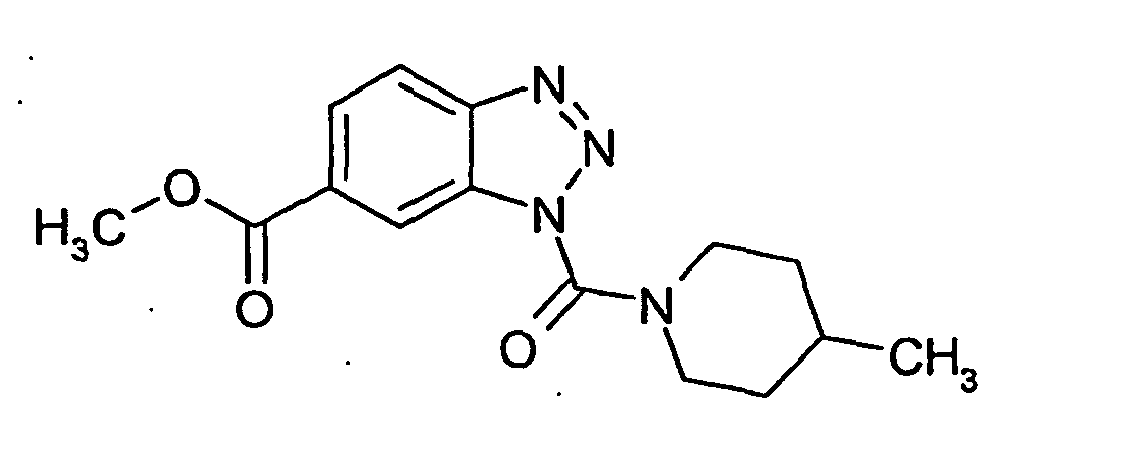


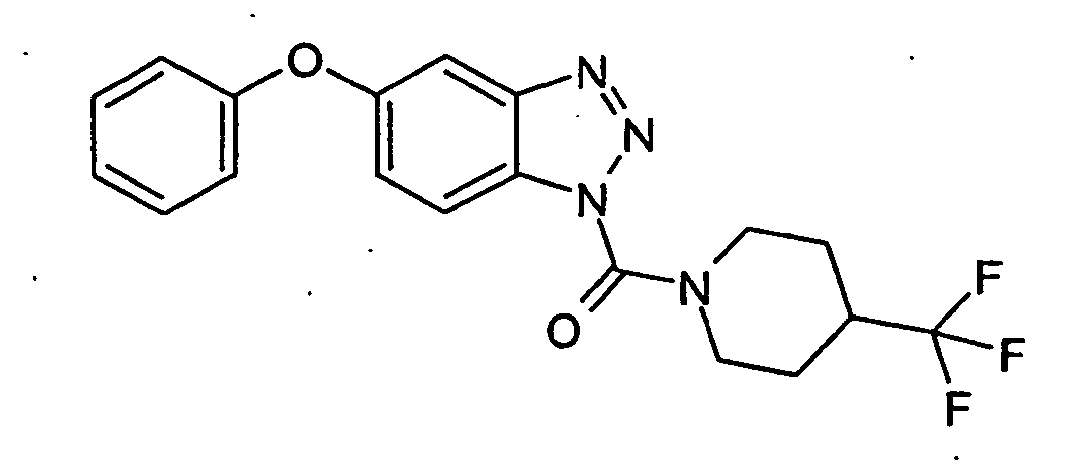


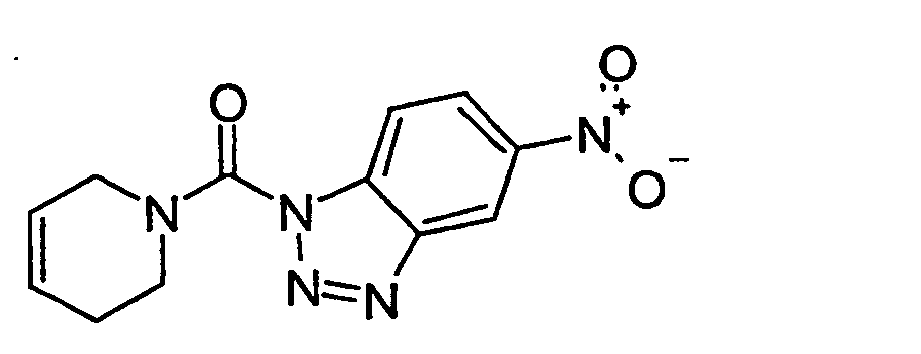


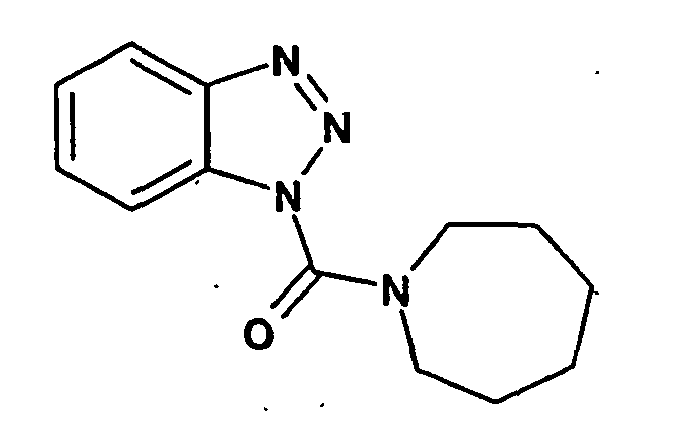


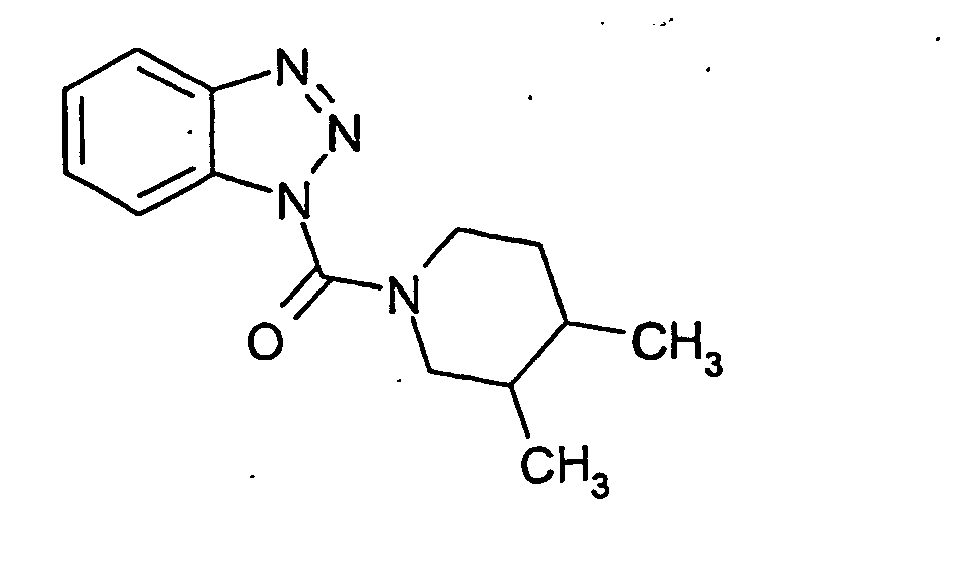


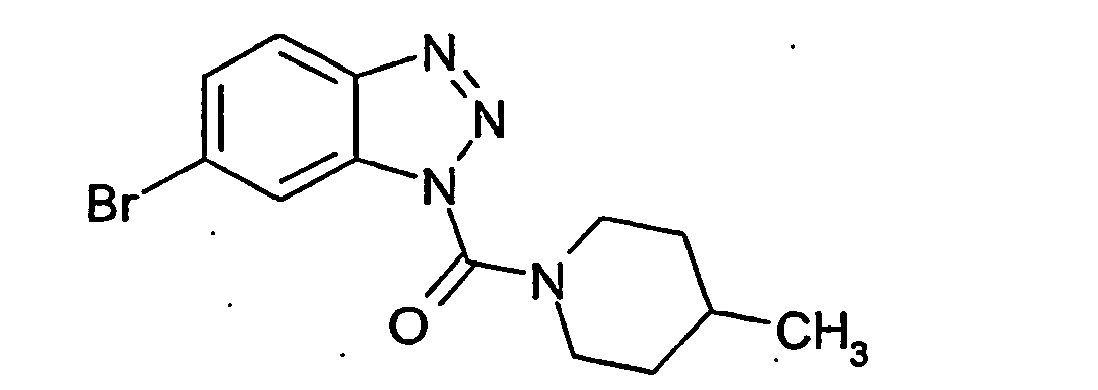
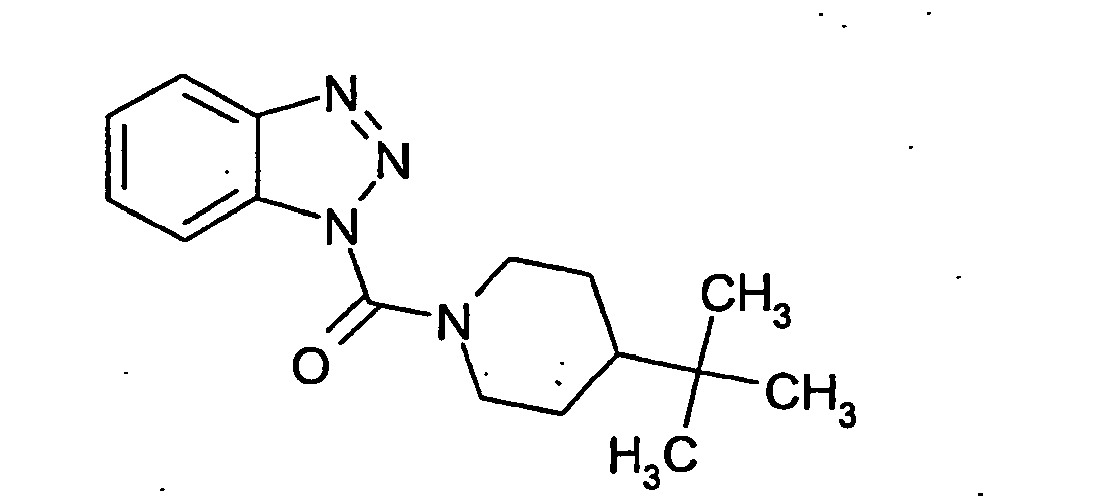


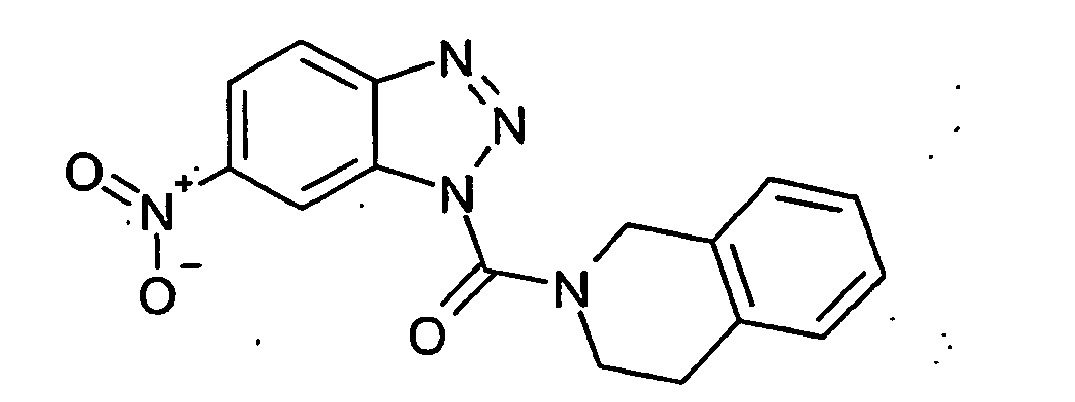


Ferner sind ganz besonders bevorzugt Benzotriazole der folgenden Strukturen:






Pharmazeutisch verträgliche Salze sind aufgrund ihrer höheren Wasseriöslichkeit gegenüber den Ausgangs- bzw. Basisverbindungen besonders geeignet für medizinische Anwendungen. Diese Salze müssen ein pharmazeutisch verträgliches Anion oder Kation aufweisen. Geeignete pharmazeutisch verträgliche Säureadditionssalze der erfindungsgemäßen Verbindungen sind Salze anorganischer Säuren, wie Salzsäure, Bromwasserstoff-, Phosphor-, Metaphosphor-, Salpeter- und Schwefelsäure sowie organischer Säuren, wie z.B. Essigsäure, Benzolsulfon-, Benzoe-, Zitronen-, Ethansulfon-, Fumar-, Glucon-, Glykol-, Isethion-, Milch-, Lactobion-, Malein-, Äpfel-, Methansulfon-, Bernstein-, p-Toluolsulfon- und Weinsäure. Geeignete pharmazeutisch verträgliche basische Salze sind Ammoniumsalze, Alkalimetallsalze (wie Natrium- und Kaliumsalze), Erdalkalisalze (wie Magnesium- und Calciumsalze), Trometamol (2-Amino-2-hydroxymethyl-1,3-propandiol), Diethanolamin, Lysin oder Ethylendiamin.Pharmaceutically acceptable salts are particularly suitable for medical applications because of their higher water solubility over the parent compounds. These salts must be a pharmaceutically acceptable Anion or cation. Suitable pharmaceutically acceptable acid addition salts of the compounds according to the invention are salts of inorganic acids, such as hydrochloric acid, hydrobromic acid, phosphoric acid, metaphosphoric acid, nitric acid and sulfuric acid, and also organic acids, such as, for example, acetic acid, benzenesulfonic, benzoic, citric, ethanesulfonic, fumaric acid. , Gluconic, glycolic, isethionic, lactic, lactobionic, maleic, malic, methanesulfonic, succinic, p-toluenesulfonic and tartaric acids. Suitable pharmaceutically acceptable basic salts are ammonium salts, alkali metal salts (such as sodium and potassium salts), alkaline earth salts (such as magnesium and calcium salts), trometamol (2-amino-2-hydroxymethyl-1,3-propanediol), diethanolamine, lysine or ethylenediamine.
Salze mit einem nicht pharmazeutisch verträglichen Anion, wie zum Beispiel Trifluoracetat, gehören ebenfalls in den Rahmen der Erfindung als nützliche Zwischenprodukte für die Herstellung oder Reinigung pharmazeutisch verträglicher Salze und/oder für die Verwendung in nicht-therapeutischen, zum Beispiel in-vitro-Anwendungen.Salts with a non-pharmaceutically acceptable anion, such as trifluoroacetate, are also within the scope of the invention as useful intermediates for the preparation or purification of pharmaceutically acceptable salts and / or for use in non-therapeutic, for example, in vitro applications.
Der hier verwendete Begriff "physiologisch funktionelles Derivat" bezeichnet jedes physiologisch verträgliche Derivat einer erfindungsgemäßen Verbindung der Formel I, z.B. einen Ester, der bei Verabreichung an einen Säuger, wie z.B. den Menschen, in der Lage ist, (direkt oder indirekt) eine Verbindung der Formel I oder einen aktiven Metaboliten hiervon zu bilden.As used herein, the term "physiologically functional derivative" refers to any physiologically acceptable derivative of a compound of formula I, e.g. an ester which, when administered to a mammal, e.g. humans, is able to form (directly or indirectly) a compound of formula I or an active metabolite thereof.
Zu den physiologisch funktionellen Derivaten zählen auch Prodrugs der erfindungsgemäßen Verbindungen, wie zum Beispiel in H. Okada et al., Chem. Pharm. Bull. 1994, 42, 57-61 beschrieben. Solche Prodrugs können in vivo zu einer erfindungsgemäßen Verbindung metabolisiert werden. Diese Prodrugs können selbst wirksam sein oder nicht.The physiologically functional derivatives also include prodrugs of the compounds according to the invention, as described, for example, in H. Okada et al., Chem. Pharm. Bull. 1994, 42, 57-61. Such prodrugs can be metabolized in vivo to a compound of the invention. These prodrugs may or may not be effective.
Die erfindungsgemäßen Verbindungen können auch in verschiedenen polymorphen Formen vorliegen, z.B. als amorphe und kristalline polymorphe Formen. Alle polymorphen Formen der erfindungsgemäßen Verbindungen gehören in den Rahmen der Erfindung und sind ein weiterer Aspekt der Erfindung.The compounds according to the invention can also be present in various polymorphic forms, for example as amorphous and crystalline polymorphic forms. All polymorphic forms of the compounds of the invention are within the scope of the invention and are a further aspect of the invention.
Nachfolgend beziehen sich alle Verweise auf "Verbindung(en) gemäß Formel I" auf Verbindung(en) der Formel I wie vorstehend beschrieben, sowie ihre Salze, Solvate und physiologisch funktionellen Derivate wie hierin beschrieben.Hereinafter, all references to "compound (s) according to formula I" refer to compound (s) of formula I as described above, as well as their salts, solvates and physiologically functional derivatives as described herein.
Die Verbindung(en) der Formel (I) können auch in Kombination mit weiteren Wirkstoffen verabreicht werden.The compound (s) of the formula (I) can also be administered in combination with other active substances.
Die Menge einer Verbindung gemäß Formel 1, die erforderlich ist, um den gewünschten biologischen Effekt zu erreichen, ist abhängig von einer Reihe von Faktoren, z.B. der gewählten spezifischen Verbindung, der beabsichtigten Verwendung, der Art der Verabreichung und dem klinischen Zustand des Patienten. Im allgemeinen liegt die Tagesdosis im Bereich von 0,3 mg bis 100 mg (typischerweise von 3 mg und 50 mg) pro Tag pro Kilogramm Körpergewicht, z.B. 3-10 mg/kg/Tag. Eine intravenöse Dosis kann z.B. im Bereich von 0,3 mg bis 1,0 mg/kg liegen, die geeigneterweise als Infusion von 10 ng bis 100 ng pro Kilogramm pro Minute verabreicht werden kann. Geeignete Infusionslösungen für diese Zwecke können z.B. von 0,1 ng bis 10 mg, typischerweise von 1 ng bis 10 mg pro Milliliter, enthalten. Einzeldosen können z.B. von 1 mg bis 10 g des Wirkstoffs enthalten. Somit können Ampullen für Injektionen beispielsweise von 1 mg bis 100 mg, und oral verabreichbare Einzeldosisformulierungen, wie zum Beispiel Tabletten oder Kapseln, können beispielsweise von 1,0 bis 1000 mg, typischerweise von 10 bis 600 mg enthalten. Zur Therapie der oben genannten Zustände können die Verbindungen gemäß Formel I selbst als Verbindung verwendet werden, vorzugsweise liegen sie jedoch mit einem verträglichen Träger in Form einer pharmazeutischen Zusammensetzung vor. Der Träger muss natürlich verträglich sein, in dem Sinne, dass er mit den anderen Bestandteilen der Zusammensetzung kompatibel ist und nicht gesundheitsschädlich für den Patienten ist. Der Träger kann ein Feststoff oder eine Flüssigkeit oder beides sein und wird vorzugsweise mit der Verbindung als Einzeldosis formuliert, beispielsweise als Tablette, die von 0,05% bis 95 Gew.-% des Wirkstoffs enthalten kann. Weitere pharmazeutisch aktive Substanzen können ebenfalls vorhanden sein, einschließlich weiterer Verbindungen gemäß Formel I. Die erfindungsgemäßen pharmazeutischen Zusammensetzungen können nach einer der bekannten pharmazeutischen Methoden hergestellt werden, die im wesentlichen darin bestehen, dass die Bestandteile mit pharmakologisch verträglichen Träger- und/oder Hilfsstoffen gemischt werden.The amount of a compound of Formula 1 required to achieve the desired biological effect is dependent upon a number of factors, eg, the specific compound chosen, the intended use, the mode of administration, and the clinical condition of the patient. In general, the daily dose is in the range of 0.3 mg to 100 mg (typically 3 mg and 50 mg) per day per kilogram of body weight, eg 3-10 mg / kg / day. For example, an intravenous dose may range from 0.3 mg to 1.0 mg / kg, which may conveniently be administered as an infusion of 10 ng to 100 ng per kilogram per minute. Suitable infusion solutions for these purposes may contain, for example, from 0.1 ng to 10 mg, typically from 1 ng to 10 mg per milliliter. Single doses may contain, for example, from 1 mg to 10 g of the active ingredient. Thus, for example, from 1 mg to 100 mg, injectable ampoules, and orally administrable unit dose formulations, such as tablets or capsules, may contain, for example, from 1.0 to 1000 mg, typically from 10 to 600 mg. For the therapy of the abovementioned conditions, the compounds according to formula I can themselves be used as compound, but they are preferably present with a compatible carrier in the form of a pharmaceutical composition. The carrier must of course be compatible in the sense that it is compatible with the other ingredients of the composition and is not harmful to the patient. The carrier may be a solid or a liquid, or both, and is preferably formulated with the compound as a single dose, for example, as a tablet containing from 0.05% to 95% by weight of the active ingredient may contain. Other pharmaceutically active substances may likewise be present, including further compounds of the formula I. The pharmaceutical compositions according to the invention can be prepared by one of the known pharmaceutical methods, which essentially consist in mixing the ingredients with pharmacologically acceptable carriers and / or excipients ,
Erfindungsgemäße pharmazeutische Zusammensetzungen sind solche, die für orale, rektale, topische, perorale (z. B. sublinguale) und parenterale (z. B. subkutane, intramuskuläre, intradermale oder intravenöse) Verabreichung geeignet sind, wenngleich die geeignetste Verabreichungsweise in jedem Einzelfall von der Art und Schwere des zu behandelnden Zustandes und von der Art der jeweils verwendeten Verbindung gemäß Formel I abhängig ist. Auch dragierte Formulierungen und dragierte Retardformulierungen gehören in den Rahmen der Erfindung. Bevorzugt sind säure- und magensaftresistente Formulierungen. Geeignete magensaftresistente Beschichtungen umfassen Celluloseacetatphthalat, Poylvinylacetatphthalat, Hydroxypropylmethylcellulosephthalat und anionische Polymere von Methacrylsäure und Methacrylsäuremethylester.Pharmaceutical compositions according to the invention are those suitable for oral, rectal, topical, peroral (e.g., sublingual) and parenteral (e.g., subcutaneous, intramuscular, intradermal, or intravenous) administration, although the most suitable route of administration in each individual case is that of U.S. Patent Nos. 4,646,074; The nature and severity of the condition to be treated and the type of compound used in each case according to formula I is dependent. Also coated formulations and coated slow release formulations are within the scope of the invention. Preference is given to acid and enteric formulations. Suitable enteric coatings include cellulose acetate phthalate, polyvinyl acetate phthalate, hydroxypropylmethylcellulose phthalate and anionic polymers of methacrylic acid and methyl methacrylate.
Geeignete pharmazeutische Verbindungen für die orale Verabreichung können in separaten Einheiten vorliegen, wie zum Beispiel Kapseln, Oblatenkapseln, Lutschtabletten oder Tabletten, die jeweils eine bestimmte Menge der Verbindung gemäß Formel I enthalten; als Pulver oder Granulate; als Lösung oder Suspension in einer wässrigen oder nicht-wässrigen Flüssigkeit; oder als eine Öl-in-Wasser- oder Wasser-in-Öl-Emulsion. Diese Zusammensetzungen können, wie bereits erwähnt, nach jeder geeigneten pharmazeutischen Methode zubereitet werden, die einen Schritt umfasst, bei dem der Wirkstoff und der Träger (der aus einem oder mehreren zusätzlichen Bestandteilen bestehen kann) in Kontakt gebracht werden. Im allgemeinen werden die Zusammensetzungen durch gleichmäßiges und homogenes Vermischen des Wirkstoffs mit einem flüssigen und/oder feinverteilten festen Träger hergestellt, wonach das Produkt, falls erforderlich, geformt wird. So kann beispielsweise eine Tablette hergestellt werden, indem ein Pulver oder Granulat der Verbindung verpresst oder geformt wird, gegebenenfalls mit einem oder mehreren zusätzlichen Bestandteilen. Gepresste Tabletten können durch Tablettieren der Verbindung in frei fließender Form, wie beispielsweise einem Pulver oder Granulat, gegebenenfalls gemischt mit einem Bindemittel, Gleitmittel, inertem Verdünner und/oder einem (mehreren) oberflächenaktiven/dispergierenden Mittel in einer geeigneten Maschine hergestellt werden. Geformte Tabletten können durch Formen der pulverförmigen, mit einem inerten flüssigen Verdünnungsmittel befeuchteten Verbindung in einer geeigneten Maschine hergestellt werden.Suitable pharmaceutical compounds for oral administration may be in separate units, such as capsules, cachets, lozenges or tablets, each containing a certain amount of the compound of formula I; as a powder or granules; as a solution or suspension in an aqueous or non-aqueous liquid; or as an oil-in-water or water-in-oil emulsion. As already mentioned, these compositions may be prepared by any suitable pharmaceutical method comprising a step of contacting the active ingredient and the carrier (which may consist of one or more additional ingredients). In general, the compositions are prepared by uniformly and homogeneously mixing the active ingredient with a liquid and / or finely divided solid carrier, after which the product is molded, if necessary. For example, a tablet can be prepared by adding a powder or granules of Compound is pressed or molded, optionally with one or more additional ingredients. Pressed tablets may be prepared by tableting the compound in free-flowing form, such as a powder or granules, optionally mixed with a binder, lubricant, inert diluent and / or surfactant / dispersant in a suitable machine. Molded tablets may be prepared by shaping the powdered compound moistened with an inert liquid diluent in a suitable machine.
Pharmazeutische Zusammensetzungen, die für eine perorale (sublinguale) Verabreichung geeignet sind, umfassen Lutschtabletten, die eine Verbindung gemäß Formel I mit einem Geschmacksstoff enthalten, üblicherweise Saccharose und Gummi arabicum oder Tragant, und Pastillen, die die Verbindung in einer inerten Basis wie Gelatine und Glycerin oder Saccharose und Gummi arabicum umfassen.Pharmaceutical compositions suitable for peroral (sublingual) administration include lozenges containing a compound of formula I with a flavor, usually sucrose and gum arabic or tragacanth, and lozenges containing the compound in an inert base such as gelatin and glycerol or sucrose and gum arabic.
Geeignete pharmazeutische Zusammensetzungen für die parenterale Verabreichung umfassen vorzugsweise sterile wässrige Zubereitungen einer Verbindung gemäß Formel I, die vorzugsweise isotonisch mit dem Blut des vorgesehenen Empfängers sind. Diese Zubereitungen werden vorzugsweise intravenös verabreicht, wenngleich die Verabreichung auch subkutan, intramuskulär oder intradermal als Injektion erfolgen kann. Diese Zubereitungen können vorzugsweise hergestellt werden, indem die Verbindung mit Wasser gemischt wird und die erhaltene Lösung steril und mit dem Blut isotonisch gemacht wird. Injizierbare erfindungsgemäße Zusammensetzungen enthalten im allgemeinen von 0,1 bis 5 Gew.-% der aktiven Verbindung.Suitable pharmaceutical compositions for parenteral administration preferably comprise sterile aqueous preparations of a compound according to formula I which are preferably isotonic with the blood of the intended recipient. These preparations are preferably administered intravenously, although the administration may also be subcutaneous, intramuscular or intradermal as an injection. These preparations may preferably be prepared by mixing the compound with water and rendering the resulting solution sterile and isotonic with the blood. Injectable compositions of the invention generally contain from 0.1% to 5% by weight of the active compound.
Geeignete pharmazeutische Zusammensetzungen für die rektale Verabreichung liegen vorzugsweise als Einzeldosis-Zäpfchen vor. Diese können hergestellt werden, indem man eine Verbindung gemäß Formel I mit einem oder mehreren herkömmlichen festen Trägern, beispielsweise Kakaobutter, mischt und das entstehende Gemisch in Form bringt.Suitable pharmaceutical compositions for rectal administration are preferably as single dose suppositories. These can be prepared by mixing a compound according to formula I with one or more conventional solid carriers, for example cocoa butter, and shaping the resulting mixture.
Geeignete pharmazeutische Zusammensetzungen für die topische Anwendung auf der Haut liegen vorzugsweise als Salbe, Creme, Lotion, Paste, Spray, Aerosol oder Öl vor. Als Träger können Vaseline, Lanolin, Polyethylenglykole, Alkohole und Kombinationen von zwei oder mehreren dieser Substanzen verwendet werden. Der Wirkstoff ist im allgemeinen in einer Konzentration von 0,1 bis 15 Gew.-% der Zusammensetzung vorhanden, beispielsweise von 0,5 bis 2%.Suitable pharmaceutical compositions for topical application to the skin are preferably as an ointment, cream, lotion, paste, spray, aerosol or oil. Vaseline, lanolin, polyethylene glycols, alcohols and combinations of two or more of these substances can be used as the carrier. The active ingredient is generally present at a level of from 0.1% to 15% by weight of the composition, for example from 0.5% to 2%.
Auch eine transdermale Verabreichung ist möglich. Geeignete pharmazeutische Zusammensetzungen für transdermale Anwendungen können als einzelne Pflaster vorliegen, die für einen langzeitigen engen Kontakt mit der Epidermis des Patienten geeignet sind. Solche Pflaster enthalten geeigneterweise den Wirkstoff in einer gegebenenfalls gepufferten wässrigen Lösung, gelöst und/oder dispergiert in einem Haftmittel oder dispergiert in einem Polymer. Eine geeignete Wirkstoff-Konzentration beträgt ca. 1 % bis 35%, vorzugsweise ca. 3% bis 15%. Als eine besondere Möglichkeit kann der Wirkstoff, wie beispielsweise in Pharmaceutical Research, 2(6): 318 (1986) beschrieben, durch Elektrotransport oder lontophorese freigesetzt werden.Transdermal administration is also possible. Suitable pharmaceutical compositions for transdermal applications may exist as single patches suitable for long-term close contact with the epidermis of the patient. Such patches suitably contain the active ingredient in an optionally buffered aqueous solution, dissolved and / or dispersed in an adhesive or dispersed in a polymer. A suitable active ingredient concentration is about 1% to 35%, preferably about 3% to 15%. As a particular possibility, the active ingredient can be released by electrotransport or iontophoresis as described, for example, in Pharmaceutical Research, 2 (6): 318 (1986).
Alle Antidiabetika, die in der Roten Liste 2001, Kapitel 12 genannt sind. Sie können mit den erfindungsgemäßen Verbindungen der Formel I insbesondere zur synergistischen Wirkungsverbesserung kombiniert werden. Die Verabreichung der Wirkstoffkombination kann entweder durch getrennte Gabe der Wirkstoffe an den Patienten oder in Form von Kombinationspräparaten, worin mehrere Wirkstoffe in einer pharmazeutischen Zubereitung vorliegen, erfolgen. Die meisten der nachfolgend aufgeführten Wirkstoffe sind in USP Dictionary of USAN and International Drug Names, US Pharmacopeia, Rockville 2001, offenbart.
Antidiabetika umfassen Insulin und Insulinderivate, wie z.B. Lantus® (siehe www.lantus.com) oder HMR 1964, schnell wirkende Insuline (siehe US 6,221,633), GLP-1-Derivate wie z.B. diejenigen die in WO 98/08871 von Novo Nordisk A/S offenbart wurden, sowie oral wirksame hypoglykämische Wirkstoffe. Die oral wirksamen hypoglykämischen Wirkstoffe umfassen vorzugsweise Sulphonylfharnstoffe, Biguanidine, Meglitinide, Oxadiazolidindione, Thiazolidindione, Glukosidase-Inhibitoren, Glukagon-Antagonisten, GLP-1-Agonisten, Kaliumkanalöffner, wie z.B. diejenigen, die in WO 97/262.65 und WO 99/03861 von Novo Nordisk A/S offenbart wurden, Insulin-Sensitizer, Inhibitoren von Leberenzymen, die an der Stimulation der Glukoneogenese und/oder Glykogenolyse beteiligt sind, Modulatoren der Glukoseaufnahme, den Fettstoffwechsel verändernde Verbindungen wie antihyperlipidämische Wirkstoffe und antilipidämische Wirkstoffe, Verbindungen, die die Nahrungsmitteleinnahme verringern, PPAR- und PXR-Agonisten und Wirkstoffe, die auf den ATP-abhängigen Kaliumkanal der Betazellen wirken.All antidiabetic medicines mentioned in the Red List 2001, chapter 12. They can be combined with the compounds of the formula I according to the invention in particular for the synergistic effect improvement. The administration of the active ingredient combination can be carried out either by separate administration of the active ingredients to the patient or in the form of combination preparations in which several active ingredients are present in a pharmaceutical preparation. Most of the drugs listed below are disclosed in USP Dictionary of USAN and International Drug Names, US Pharmacopeia, Rockville 2001.
Antidiabetics include insulin and insulin derivatives, such as Lantus ® (see www.lantus.com) or HMR 1964 fast-acting insulins (see US No. 6,221,633), GLP-1 derivatives such as those described in WO 98/08871 of Novo Nordisk A / S, as well as orally active hypoglycemic agents. The orally active hypoglycemic agents preferably include sulphonylureas, biguanidines, meglitinides, oxadiazolidinediones, thiazolidinediones, Glucosidase inhibitors, glucagon antagonists, GLP-1 agonists, potassium channel openers, such as those disclosed in WO 97/262.65 and WO 99/03861 by Novo Nordisk A / S, insulin sensitizers, inhibitors of liver enzymes involved in the stimulation of gluconeogenesis and / or glycogenolysis, modulators of glucose uptake, lipid metabolism altering compounds such as antihyperlipidemic agents and antilipidemic agents, compounds that reduce food intake, PPAR and PXR agonists, and drugs that target the ATP-dependent potassium channel Beta cells act.
Bei einer Ausführungsform der Erfindung werden die Verbindungen der Formel I in Kombination mit einem HMGCoA-Reduktase Inhibitor wie Simvastatin, Fluvastatin, Pravastatin, Lovastatin, Atorvastatin, Cerivastatin, Rosuvastatin verabreicht.In one embodiment of the invention, the compounds of formula I are administered in combination with an HMGCoA reductase inhibitor such as simvastatin, fluvastatin, pravastatin, lovastatin, atorvastatin, cerivastatin, rosuvastatin.
Bei einer Ausführungsform der Erfindung werden die Verbindungen der Formel I in Kombination mit einem Cholesterinresorptionsinhibitor, wie z.B. Ezetimibe, Tiqueside, Pamaqueside, verabreicht.In one embodiment of the invention, the compounds of formula I are administered in combination with a cholesterol resorption inhibitor, e.g. Ezetimibe, Tiqueside, Pamaqueside.
Bei einer Ausführungsform der Erfindung werden die Verbindungen der Formel I in Kombination mit einem PPAR gamma Agonist, wie z.B. Rosiglitazon, Pioglitazon, JTT-501, Gl 262570, verabreicht.In one embodiment of the invention, the compounds of formula I are administered in combination with a PPAR gamma agonist, e.g. Rosiglitazone, pioglitazone, JTT-501, Gl 262570.
Bei einer Ausführungsform der Erfindung werden die Verbindungen der Formel I in Kombination mit PPAR alpha Agonist, wie z.B. GW 9578, GW 7647, verabreicht.In one embodiment of the invention, the compounds of formula I in combination with PPAR alpha agonist, e.g. GW 9578, GW 7647.
Bei einer Ausführungsform der Erfindung werden die Verbindungen der Formel I in Kombination mit einem gemischten PPAR alpha/gamma Agonisten, wie z.B. GW 1536, AVE 8042, AVE 8134, AVE 0847, oder wie in WO 00/64888, WO 00/64876, WO 03/020269 beschrieben verabreicht.In one embodiment of the invention, the compounds of formula I in combination with a mixed PPAR alpha / gamma agonist, e.g. GW 1536, AVE 8042, AVE 8134, AVE 0847, or as described in WO 00/64888, WO 00/64876, WO 03/020269.
Bei einer Ausführungsform der Erfindung werden die Verbindungen der Formel I in Kombination mit einem Fibrat, wie z.B. Fenofibrat, Clofibrat, Bezafibrat, verabreicht.In one embodiment of the invention, the compounds of formula I are administered in combination with a fibrate, such as fenofibrate, clofibrate, bezafibrate.
Bei einer Ausführungsform der Erfindung werden die Verbindungen der Formel I in Kombination mit einem MTP-Inhibitor, wie z.B. Implitapide, BMS-201038, R-103757, verabreicht.In one embodiment of the invention, the compounds of formula I are administered in combination with an MTP inhibitor, e.g. Implitapide, BMS-201038, R-103757.
Bei einer Ausführungsform der Erfindung werden die Verbindungen der Formel in Kombination mit Gallensäureresorptionsinhibitor (siehe z.B. US 6,245,744 oder US 6,221,897), wie z.B. HMR 1741, verabreicht.In one embodiment of the invention, the compounds of the formula are used in combination with bile acid resorption inhibitor (see, for example, US 6,245,744 or US 6,221,897), e.g. HMR 1741 administered.
Bei einer Ausführungsform der Erfindung werden die Verbindungen der Formel I in Kombination mit einem CETP-Inhibitor, wie z.B. JTT-705 , verabreicht.In one embodiment of the invention, the compounds of formula I are administered in combination with a CETP inhibitor, e.g. JTT-705.
Bei einer Ausführungsform der Erfindung werden die Verbindungen der Formel I in Kombination mit einem polymeren Gallensäureadsorber, wie z.B. Cholestyramin, Colesevelam, verabreicht.In one embodiment of the invention, the compounds of formula I are used in combination with a polymeric bile acid adsorber, e.g. Cholestyramine, colesevelam.
Bei einer Ausführungsform der Erfindung werden die Verbindungen der Formel I in Kombination mit einem LDL-Rezeptorinducer (siehe US 6,342,512), wie z.B. HMR1171, HMR1586, verabreicht.In one embodiment of the invention, the compounds of formula I are used in combination with an LDL receptor inducer (see US 6,342,512), e.g. HMR1171, HMR1586.
Bei einer Ausführungsform der Erfindung werden die Verbindungen der Formel I in Kombination mit einem ACAT-Inhibitor, wie z.B. Avasimibe, verabreicht.In one embodiment of the invention, the compounds of formula I are administered in combination with an ACAT inhibitor, e.g. Avasimibe, administered.
Bei einer Ausführungsform der Erfindung werden die Verbindungen der Formel I in Kombination mit einem Antioxidans, wie z.B. OPC-14117, verabreicht.In one embodiment of the invention, the compounds of formula I are used in combination with an antioxidant, e.g. OPC-14117 administered.
Bei einer Ausführungsform der Erfindung werden die Verbindungen der Formel I in Kombination mit einem Lipoprotein-Lipase inhibitor, wie z.B. NO-1886, verabreicht.In one embodiment of the invention, the compounds of formula I are administered in combination with a lipoprotein lipase inhibitor, e.g. NO-1886, administered.
Bei einer Ausführungsform der Erfindung werden die Verbindungen der Formel I in Kombination mit einem ATP-Citrat-Lyase Inhibitor, wie z.B. SB-204990, verabreicht.In one embodiment of the invention, the compounds of formula I are administered in combination with an ATP citrate lyase inhibitor, such as SB-204990.
Bei einer Ausführungsform der Erfindung werden die Verbindungen der Formel I in Kombination mit einem Squalen Synthetase Inhibitor, wie z.B. BMS-188494, verabreicht.In one embodiment of the invention, the compounds of formula I are administered in combination with a squalene synthetase inhibitor, e.g. BMS-188494.
Bei einer Ausführungsform der Erfindung werden die Verbindungen der Formel I in Kombination mit einem Lipoprotein(a) antagonist, wie z.B. Cl-1027 oder Nicotinsäure, verabreicht.In one embodiment of the invention, the compounds of formula I in combination with a lipoprotein (a) antagonist, e.g. Cl-1027 or nicotinic acid.
Bei einer Ausführungsform der Erfindung werden die Verbindungen der Formel I in Kombination mit einem Lipase Inhibitor, wie z.B. Orlistat, verabreicht.In one embodiment of the invention, the compounds of formula I are administered in combination with a lipase inhibitor, e.g. Orlistat, administered.
Bei einer Ausführungsform der Erfindung werden die Verbindungen der Formel I in Kombination mit Insulin verabreicht.In one embodiment of the invention, the compounds of the formula I are administered in combination with insulin.
Bei einer Ausführungsform werden die Verbindungen der Formel I in Kombination mit einem Sulphonylharnstoff, wie z.B. Tolbutamid, Glibenclamid, Glipizid oder Glimepirid verabreicht.In one embodiment, the compounds of formula I are used in combination with a sulphonylurea, e.g. Tolbutamide, glibenclamide, glipizide or glimepiride.
Bei einer Ausführungsform werden die Verbindungen der Formel I in Kombination mit einem Biguanid, wie z.B. Metformin, verabreicht.In one embodiment, the compounds of formula I are used in combination with a biguanide, e.g. Metformin, administered.
Bei wieder einer Ausführungsform werden die Verbindungen der Formel I in Kombination mit einem Meglitinid, wie z.B. Repaglinid, verabreicht.In yet another embodiment, the compounds of formula I are used in combination with a meglitinide, e.g. Repaglinide, administered.
Bei einer Ausführungsform werden die Verbindungen der Formel I in Kombination mit einem Thiazolidindion, wie z.B. Troglitazon, Ciglitazon, Pioglitazon, Rosiglitazon oder den in WO 97/41097 von Dr. Reddy's Research Foundation offenbarten Verbindungen, insbesondere 5-[[4-[(3,4-Dihydro-3-methyl-4-oxo-2-chinazolinylmethoxy]phenyl]methyl]-2,4-thiazolidindion, verabreicht.In one embodiment, the compounds of formula I are used in combination with a thiazolidinedione, e.g. Troglitazone, ciglitazone, pioglitazone, rosiglitazone or those described in WO 97/41097 by Dr. med. Reddy's Research Foundation disclosed compounds, especially 5 - [[4 - [(3,4-dihydro-3-methyl-4-oxo-2-quinazolinylmethoxy) phenyl] methyl] -2,4-thiazolidinedione.
Bei einer Ausführungsform werden die Verbindungen der Formel I in Kombination mit einem α-Glukosidase-Inhibitor, wie z.B. Miglitol oder Acarbose, verabreicht.In one embodiment, the compounds of formula I are administered in combination with an α-glucosidase inhibitor, such as miglitol or acarbose.
Bei einer Ausführungsform werden die Verbindungen der Formel I in Kombination mit einem Wirkstoff verabreicht, der auf den ATP-abhängigen Kaliumkanal der Betazellen wirkt, wie z.B. Tolbutamid, Glibenclamid, Glipizid, Glimepirid oder Repaglinid.In one embodiment, the compounds of formula I are administered in combination with an agent which acts on the ATP-dependent potassium channel of the beta cells, e.g. Tolbutamide, glibenclamide, glipizide, glimepiride or repaglinide.
Bei einer Ausführungsform werden die Verbindungen der Formel I in Kombination mit mehr als einer der vorstehend genannten Verbindungen, z.B. in Kombination mit - einem Sulphonylharnstoff und Metformin, einem Sulphonylharnstoff und Acarbose, Repaglinid und Metformin, Insulin und einem Sulphonylharnstoff, Insulin und Metformin, Insulin und Troglitazon, Insulin und Lovastatin, etc. verabreicht.In one embodiment, the compounds of formula I are used in combination with more than one of the aforementioned compounds, e.g. in combination with - a sulphonylurea and metformin, a sulphonylurea and acarbose, repaglinide and metformin, insulin and a sulphonylurea, insulin and metformin, insulin and troglitazone, insulin and lovastatin, etc.
Bei einer weiteren Ausführungsform werden die Verbindungen der Formel I in Kombination mit CART-Modulatoren (siehe "Cocaine-amphetamine-regulated transcript influences energy metabolism, anxiety and gastric emptying in mice" Asakawa, A, et al., M.:Hormone and Metabolic Research (2001), 33(9), 554-558), NPY-Antagonisten z.B. Naphthalin-1-sulfonsäure {4-[(4-amino-quinazolin-2-ylamino)-methyl]-cyclohexylmethyl}- amid; hydrochlorid (CGP 71683A)), MC4-Agonisten (z.B. 1-Amino-1,2,3,4-tetrahydro-naphthalin-2-carbonsäure [2-(3a-benzyl-2-methyl-3-oxo-2,3,3a,4,6,7-hexahydro-pyrazolo[4,3-c]pyridin-5-yl)-1-(4-chloro-phenyl)-2-oxo-ethyl]-amid; (WO 01/91752)) , Orexin-Antagonisten (z.B. 1-(2-Methyl-benzoxazol-6-yl)-3-[1,5]naphthyridin-4-yl-harnstoff; hydrochlorid (SB-334867-A)), H3-Agonisten (3-Cyclohexyl-1-(4,4-dimethyl-1,4,6,7-tetrahydro-imidazo[4,5-c]pyridin-5-yl)-propan-1- on Oxalsäuresalz (WO 00 /63208)); TNF-Agonisten, CRF-Antagonisten (z.B. [2-Methyl-9-(2,4,6-trimethyl-phenyl)-9H-1 ,3,9-triaza-fluoren-4-yl]-dipropyl-amin (WO 00/66585)), CRF BP-Antagonisten (z.B. Urocortin), Urocortin-Agonisten,β3-Agonisten (z.B. 1-(4-Chloro-3-methanesulfonylmethyl-phényl)-2-[2-(2,3-dimethyl-1H-indol-6-yloxy)-ethylamino]-ethanol; hydrochloride (WO 01/83451)), MSH (Melanocyt-stimulierendes Hormon)-Agonisten, CCK-A Agonisten (z.B. {2-[4-(4-Chloro-2,5-dimethoxy-phenyl)-5-(2-cyclohexyl-ethyl)-thiazol-2-ylcarbamoyl]-5,7-dimethyl-indol-1-yl}-acetic acid Trifluoressigsäuresalz (WO 99/15525)); Serotonin-Wiederaufnahme-Inhibitoren (z.B. Dexfenfluramine), gemischte Sertonin- und noradrenerge Verbindungen (z.B. WO 00/71549), 5HT-Agonisten z.B. 1-(3-Ethyl-benzofuran-7-yl)-piperazin Oxalsäuresalz (WO 01/09111), Bombesin-Agonisten, Galanin-Antagonisten, Wachstumshormon (z.B. humanes Wachstumshormon), Wachstumshormon freisetzende Verbindungen (6-Benzyloxy-1-(2-diisopropylamino-ethylcarbamoyl)-3,4-dihydro-1H-isoquinoline-2-carboxylic acid tert-butyl ester (WO 01/85695)), TRH-Agonisten (siehe z.B. EP 0 462 884) entkoppelnde Protein 2- oder 3-Modulatoren, Leptinagonisten (siehe z.B: Lee, Daniel W.; Leinung, Matthew C.; Rozhavskaya-Arena, Marina; Grasso, Patricia. Leptin agonists as a potential approach to the treatment of obesity. Drugs of the Future (2001), 26(9), 873-881),
DA-Agonisten (Bromocriptin, Doprexin), Lipase/Amylase-Inhibitoren (z.B. WO 00/40569), PPAR-Modulatoren (z.B. WO 00/78312), RXR-Modulatoren oder TR-β-Agonisten verabreicht.In a further embodiment, the compounds of formula I are used in combination with CART modulators (see "cocaine-amphetamine-regulated transcript-influenced energy metabolism, anxiety and gastric emptying in mice" Asakawa, A., et al., M.: Hormones and Metabolic Research (2001), 33 (9), 554-558), NPY antagonists eg naphthalene-1-sulfonic acid {4 - [(4-amino-quinazolin-2-ylamino) -methyl] -cyclohexylmethyl} -amide; hydrochloride (CGP 71683A)), MC4 agonists (eg, 1-amino-1,2,3,4-tetrahydronaphthalene-2-carboxylic acid [2- (3a-benzyl-2-methyl-3-oxo-2,3 , 3a, 4,6,7-hexahydro-pyrazolo [4,3-c] pyridin-5-yl) -1- (4-chloro-phenyl) -2-oxo-ethyl] -amide; (WO 01/91752 )), Orexin antagonists (eg 1- (2-methylbenzoxazol-6-yl) -3- [1,5] naphthyridin-4-ylurea hydrochloride (SB-334867-A)), H3 agonists (3-Cyclohexyl-1- (4,4-dimethyl-1,4,6,7-tetrahydro-imidazo [4,5-c] pyridin-5-yl) -propan-1-one oxalic acid salt (WO 00/63208 )); TNF agonists, CRF antagonists (eg, [2-methyl-9- (2,4,6-trimethyl-phenyl) -9 H -1,3,9-triaza-fluoren-4-yl] -dipropyl-amine (WO 00/66585)), CRF BP antagonists (eg, urocortin), urocortin agonists, β3 agonists (eg, 1- (4-chloro-3-methanesulfonylmethyl-phenyl) -2- [2- (2,3-dimethyl- 1H-indol-6-yloxy) -ethylamino] -ethanol; hydrochloride (WO 01/83451)), MSH (melanocyte stimulating hormone) agonists, CCK-A agonists (eg, {2- [4- (4-chloro) 2,5-dimethoxy-phenyl) -5- (2-cyclohexyl-ethyl) -thiazol-2-ylcarbamoyl] -5,7-dimethyl-indol-1-yl} -acetic acid trifluoroacetic acid salt (WO 99/15525)); Serotonin reuptake inhibitors (eg dexfenfluramine), mixed sertonine and noradrenergic compounds (eg WO 00/71549), 5HT agonists eg 1- (3-ethylbenzofuran-7-yl) -piperazine oxalic acid salt (WO 01/09111), bombesin agonists, galanin antagonists, growth hormone (eg human growth hormone), growth hormone releasing compounds (6-benzyloxy-1- (2-diisopropylamino-ethylcarbamoyl) -3,4-dihydro-1H-isoquinoline- 2-carboxylic acid tert-butyl ester (WO 01/85695)), TRH agonists (see eg EP 0 462 884) decoupling protein 2- or 3-modulators, leptin agonists (see eg: Lee, Daniel W., Leinung, Matthew Rozhavskaya-Arena, Marina, Grasso, Patricia, Leptin agonists as a Potential Approach to the Treatment of Obesity, Drugs of the Future (2001), 26 (9), 873-881),
DA agonists (bromocriptine, doprexine), lipase / amylase inhibitors (eg, WO 00/40569), PPAR modulators (eg, WO 00/78312), RXR modulators, or TR-β agonists.
Bei einer Ausführungsform der Erfindung ist der weitere Wirkstoff Leptin; siehe z.B. "Perspectives in the therapeutic use of leptin", Salvador, Javier; Gomez-Ambrosi, Javier; Fruhbeck, Gema, Expert Opinion on Pharmacotherapy (2001), 2(10), 1615-1622.In one embodiment of the invention, the further active ingredient is leptin; see, e.g. "Perspectives in the therapeutic use of leptin", Salvador, Javier; Gomez-Ambrosi, Javier; Fruhbeck, Gema, Expert Opinion on Pharmacotherapy (2001), 2 (10), 1615-1622.
Bei einer Ausführungsform ist der weitere Wirkstoff Dexamphatamin oder Amphetamin.
Bei einer Ausführungsform ist der weitere Wirkstoff Fenfluramin oder Dexfenfluramin.
Bei noch einer Ausführungsform ist der weitere Wirkstoff Sibutramin.
Bei einer Ausführungsform ist der weitere Wirkstoff Orlistat.
Bei einer Ausführungsform ist der weitere Wirkstoff Mazindol oder Phentermin.In one embodiment, the further active ingredient is dexamphatamine or amphetamine.
In one embodiment, the other active ingredient is fenfluramine or dexfenfluramine.
In yet another embodiment, the other active ingredient is sibutramine.
In one embodiment, the other active ingredient is orlistat.
In one embodiment, the other active ingredient is mazindol or phentermine.
Bei einer Ausführungsform werden die Verbindungen der Formel I in Kombination mit Ballaststoffen, vorzugsweise unlöslichen Ballaststoffen (siehe z.B. Carob/ Caromax® (Zunft H J; et al., Carob pulp preparation for treatment of hypercholesterolemia, ADVANCES IN THERAPY (2001 Sep-Oct), 18(5), 230-6.) Caromax ist ein Carob enthaltendes Produkt der Fa. Nutrinova, Nutrition Specialties &Food Ingredients GmbH, Industriepark Höchst, 65926 Frankfurt / Main)) verabreicht. Die Kombination mit Caromax® kann in einer Zubereitung erfolgen, oder durch getrennte Gabe von Verbindungen der Formel I und Caromax®. Caromax® kann dabei auch in Form von Lebensmitteln, wie z.B. in Backwaren oder Müsliriegeln, verabreicht werden.In one embodiment, the compounds of formula I in combination with bulking agents, preferably insoluble bulking agents (see, for example, carob / Caromax ® (Zunft HJ; et al, Carob pulp preparation for treatment of hypercholesterolemia, ADVANCES IN THERAPY (2001 Sep-Oct). 18 (5), 230-6.) Caromax is a carob-containing product of the company Nutrinova, Nutrition Specialties & Food Ingredients GmbH, Industriepark Höchst, 65926 Frankfurt / Main)) administered. The combination with Caromax ® can be done in one preparation, or by separate administration of Compounds of the formula I and Caromax ®. Caromax ® can also be administered in the form of food, such as in baked goods or muesli bars.
Es versteht sich, dass jede geeignete Kombination der erfindungsgemäßen Verbindungen mit einer oder mehreren der vorstehend genannten Verbindungen und wahlweise einer oder mehreren weiteren pharmakologisch wirksamen Substanzen als unter den Schutzbereich der vorliegenden Erfindung fallend angesehen wird.

Die Herstellung der erfindungsgemäßen Benzotriazole der allgemeinen Formel I erfolgt nach an und für sich bekannten Methoden z.B. durch Acylierung von substituierten, bzw. unsubstituiertem Benzotriazol 2 mit Carbamoylchloriden 3 (Methode A), oder in zwei Stufen durch Umsetzung von Benzotriazolen mit Phosgen und weiterer Umsetzung des erhaltenen Benzotriazolcarbonsäurechlorids mit Aminen (Methode B).
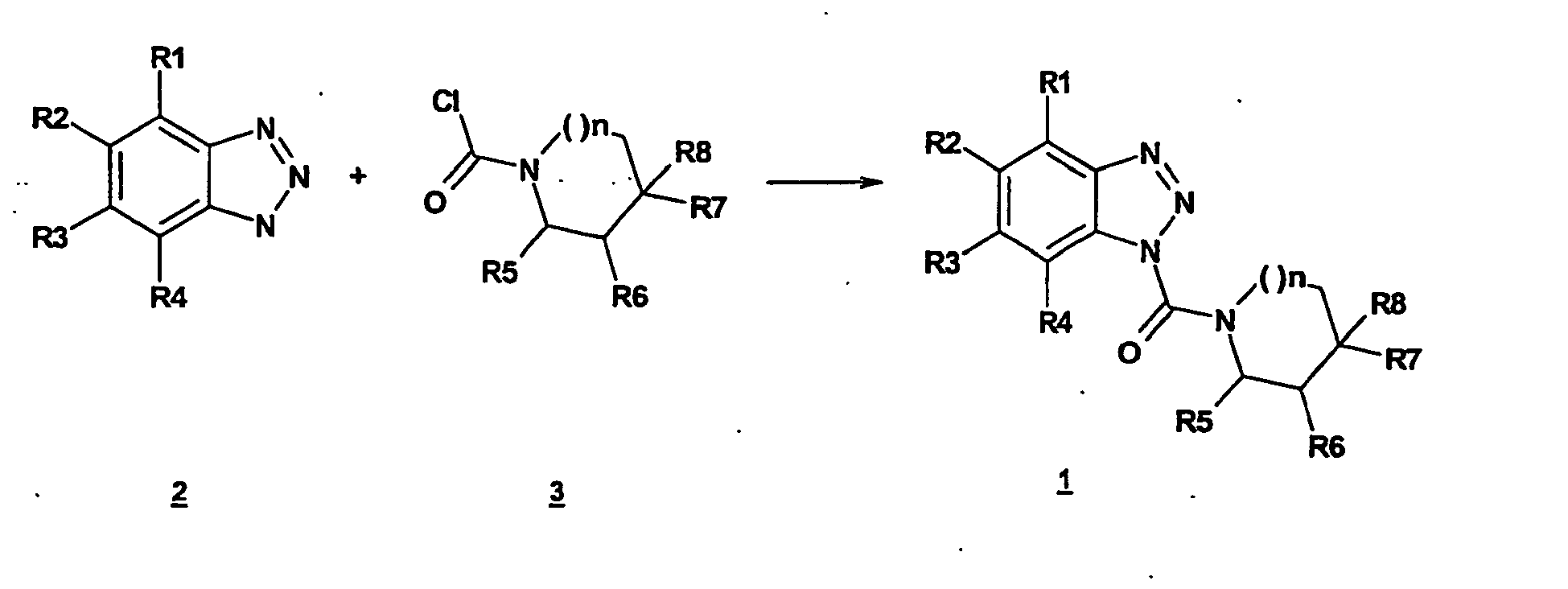

Da bei diesen Reaktionen in der Regel Säuren freigesetzt werden, empfielt es sich zur Beschleunigung Basen wie Pyridin, Triethylamin, Natronlauge oder Alkalicarbonate zuzusetzen. Die Reaktionen können in weiten Temperaturbereichen durchgeführt werden. In der Regel hat es sich als vorteilhaft herausgestellt, bei 0°C bis zum Siedepunkt des verwendeten Lösungsmittels zu arbeiten. Als Lösemittel kommen beispielsweise Methylenchlorid, THF, DMF, Toluol, Essigester, nHeptan, Dioxan, Diethylether zum Einsatz.Since acids are generally released in these reactions, it is advisable to add bases such as pyridine, triethylamine, sodium hydroxide solution or alkali metal carbonates for the purpose of acceleration. The reactions can be carried out in wide temperature ranges. In general, it has been found to be advantageous to work at 0 ° C to the boiling point of the solvent used. The solvents used are, for example, methylene chloride, THF, DMF, toluene, ethyl acetate, n-heptane, dioxane, diethyl ether.
Die erfindungsgemäßen Verbindungen der allgemeinen Formel I besitzen eine überraschende hemmende Wirkung an der hormonsensitiven Lipase, HSL, einem allosterischen Enzym in Adipozyten, das durch Insulin gehemmt wird und für den Abbau von Fetten in Fettzellen und damit für die Überführung von Fettbestandteilen in die Blutbahn verantwortlich ist. Eine Hemmung dieses Enzyms entspricht also einer insulinähnlichen Wirkung der erfindungsgemäßen Verbindungen, die letztlich zu einer Verminderung von freien Fettsäuren im Blut und von Blutzucker führt. Sie können also eingesetzt werden bei Entgleisungen des Stoffwechsels wie zum Beispiel beim nicht insulinabhängigen Diabetes Mellitus, beim diabetischen Syndrom, beim Syndrom X und bei direkter Schädigung des Pankreas.
Eine Hemmung der HSL in β-Zellen sollte zu einer direkten Erholung der Freisetzung von Insulin führen (M. Winzell et al., Diabetes, Vol 52, August 2003, 2057-2065). Die erfindungsgemäßen Verbindungen der Formel I können daher auch zur Insulin-Freisetzung dienen.The compounds of the general formula I according to the invention have a surprising inhibiting effect on the hormone-sensitive lipase, HSL, an allosteric enzyme in adipocytes, which is inhibited by insulin and is responsible for the degradation of fats in fat cells and thus for the transfer of fat constituents into the bloodstream , An inhibition of this enzyme thus corresponds to an insulin-like action of the compounds of the invention, which ultimately leads to a reduction of free fatty acids in the blood and blood sugar. They can therefore be used in derangements of the metabolism such as non-insulin-dependent diabetes mellitus, diabetic syndrome, syndrome X and direct damage to the pancreas.
Inhibition of HSL in β-cells should lead to a direct recovery of the release of insulin (M. Winzell et al., Diabetes, Vol. 52, August 2003, 2057-2065). The compounds of the formula I according to the invention can therefore also be used for insulin release.
Die Wirkung der erfindungsgemäßen Verbindungen der Formel wurde an folgendem Enzymtestsytem geprüft:The effect of the compounds of the formula according to the invention was tested on the following enzyme test system:
6 mg Phosphatidylcholin und 6 mg Phosphatidylinositol werden in je 1 ml Chloroform gelöst. 10 mg NAG werden in 1 ml Chlorofom gelöst. Zwei Teile Phosphatidylinositollösung (z.B. 83.5 µl) und ein Teil Phosphatidylcholinlösung (z.B. 41.5 µl) und 100 µl NAG Lösung werden in Plastikszintillationsgefäßen zusammenpipettiert (Endkonzentration im Test: 0.0375 mg Phospholipid/ml; 0.05 mg/ NAG/ml). Das Chloroform (225 µl Gesamtvolumen) wird durch Überblasen mit einem N2-Strom komplett entfernt. Das getrocknete Substrat kann für bis zu 3 Tagen bei 4°C aufbewahrt werden. Zur Herstellung der Phospholipidvesikel/Micellen mit interkaliertem NAG (am Testtag) wird das getrocknete Substrat in 20 ml Assaypuffer (25 mM Tris/HCl, pH 7.4; 150 mM NaCl) aufgenommen und zwei Ultraschallbehandlungen mit einem Ultraschallstab (Branson Sonifier Type II, Standardmikrospitze): 1. Behandlung Einstellung 2, 2 x 1 min, dazwischen jeweils 1 min auf Eis; 2. Behandlung Einstellung 4, 2 x 1 min, dazwischen jeweils 1 min auf Eis. Während dieser Prozedur verändert sich sich die Farbe der Substratlösung von gelb (Extinktionsmaximum 481 nm) nach rot (Extinktionsmaximum 550 nm) durch Interkalation von NAG zwischen die Phospholipidmoleküle der Vesikel/Micellen. Vor Benutzung als Substrat (innerhalb der nächsten 2 h) wird die Lösung noch 15 min auf Eis inkubiert.6 mg phosphatidylcholine and 6 mg phosphatidylinositol are dissolved in 1 ml chloroform each. 10 mg NAG are dissolved in 1 ml Chlorofom. Two parts phosphatidylinositol solution (eg 83.5 μl) and one part phosphatidylcholine solution (eg 41.5 μl) and 100 μl NAG solution are pipetted together in plastic scintillation vials (final concentration in the test: 0.0375 mg phospholipid / ml, 0.05 mg / NAG / ml). The chloroform (225 μl total volume) is completely removed by blowing over with an N2 stream. The dried substrate can be stored at 4 ° C for up to 3 days. To prepare the phospholipid vesicles / micelles with intercalated NAG (on the test day), the dried substrate is taken up in 20 ml assay buffer (25 mM Tris / HCl, pH 7.4, 150 mM NaCl) and two ultrasound treatments with a sonic bar (Branson Sonifier Type II, standard microtip). : 1st treatment setting 2, 2 x 1 min, between each 1 min on ice; 2. Treatment setting 4, 2 x 1 min, between each 1 min on ice. During this procedure, the color of the substrate solution changes from yellow (extinction maximum 481 nm) to red (extinction maximum 550 nm) by intercalation of NAGs between the phospholipid molecules of the vesicles / micelles. Before use as a substrate (within the next 2 h), the solution is incubated on ice for a further 15 min.
Der Assay wird in 1.5-ml Eppendorfgefäßen oder 96-Lochplatten für 60 min bei 30°C durchgeführt. Für das Auffinden von Inhibitoren der HSL werden 10 µl der Testsubstanz in Assaypuffer (25 mM Tris/HCl, pH 7.4; 150 mM NaCl) in Gegenwart von 16.6 % DMSO vorgelegt. 180 µl der Substratlösung (20 µg/ml Phosphatidylcholin, 10 µg/ml Phosphatidylinositol, 50 µg/ml NAG in Assaypuffer) werden hinzugegeben: Nach einer Vorinkubation für 15 min bei 30°C werden 20 µl der Enzymlösung in Assaypuffer (1- bis 4-fach verdünnt hinzupipettiert und die Extinktion bei 480 nm in einem Küvettenphotometer (0.5 ml-Küvette) bzw. Mikrotiterplattenlesegerät sofort gemessen. Nach 60 min Inkubation bei 30°C wird die Extinktion erneut gemessen. Die Zunahme der Extinktion bei 480 nm ist ein Maß für die Enzymaktivität. Unter Standardbedingungen führen 20 µg partiell gereinigte HSL zu einer Extinktionsänderung von 0.4 = 4000 arb. units.The assay is performed in 1.5 ml Eppendorf tubes or 96-well plates for 60 min at 30 ° C. For the detection of inhibitors of HSL, 10 μl of the test substance are placed in assay buffer (25 mM Tris / HCl, pH 7.4, 150 mM NaCl) in the presence of 16.6% DMSO. 180 μl of the substrate solution (20 μg / ml phosphatidylcholine, 10 μg / ml phosphatidylinositol, 50 μg / ml NAG in assay buffer) are added: After preincubation for 15 min at 30 ° C., 20 μl of the enzyme solution in assay buffer (1- to 4 diluted in duplicate and the extinction was measured immediately at 480 nm in a cuvette photometer (0.5 ml cuvette) or microtiter plate reader, and the absorbance was measured again after incubation for 60 min at 30 ° C. The increase in extinction at 480 nm is a measure of Under standard conditions, 20 μg of partially purified HSL result in an absorbance change of 0.4 = 4000 arb. units.
Alternativ zur Messung der Extinktionsänderung der Substratlösung werden die Produkte der HSL Reaktion durch Phasentrennung/Dünnschichtchromatographie untersucht. Dazu wird der Inkubationsansatz (200 µl Gesamtvolumen, s. indirekter NAG Assay) in 2 ml Eppendorfgefäßeh mit 1.3 ml Methanol/Chloroform/Heptan (10:9:7) und anschließend mit 0.4 ml 0.1 M NaOH versetzt. Nach intensivem Mischen (10 sec) wird die Phasentrennung durch Zentrifugation (800xg, 20 min, Raumtemperatur) eingeleitet. Von der wässrigen oberen Phase werden äquivalente Volumen (z. B. 0.4 ml) abgenommen und die Extinktion photometrisch bei 481 nm bestimmt. Zur Dünnschichtchromatographie wird die wässrige Phase getrocknet (SpeedVac) und dann in 50 µl Tetrahydrofuran aufgenommen. 5-µl Proben werden auf Silicagel Si-60 Platten (Merck) aufgetragen. Die Chromatographie wird mit 78 ml Diethylether/22 ml Petroläther/1 ml Eisessig als Laufmittel durchgeführt. Die Menge an freigesetzter fluoreszierende NBD-Fettsäure wird durch Phosphorimaging (Molecular Dynamics, Storm 840 und ImageQuant Software) bei einer Anregungswellenlänge von 460 nm und Emissionswellenlänge von 540-560 nm bestimmt.Alternatively to measuring the absorbance change of the substrate solution, the products of the HSL reaction are analyzed by phase separation / thin layer chromatography. For this purpose, the incubation mixture (200 μl total volume, see indirect NAG assay) in 2 ml Eppendorfgefäßeh with 1.3 ml of methanol / chloroform / heptane (10: 9: 7) and then with 0.4 ml of 0.1 M NaOH. After intensive mixing (10 sec), the phase separation is initiated by centrifugation (800xg, 20 min, room temperature). From the aqueous upper phase, equivalent volumes (eg 0.4 ml) are removed and the extinction is determined photometrically at 481 nm. For thin-layer chromatography, the aqueous phase is dried (SpeedVac) and then taken up in 50 μl of tetrahydrofuran. 5 μl samples are applied to silica gel Si-60 plates (Merck). The chromatography is carried out with 78 ml of diethyl ether / 22 ml of petroleum ether / 1 ml of glacial acetic acid as the eluent. The amount of released fluorescent NBD fatty acid is determined by phosphorimaging (Molecular Dynamics, Storm 840 and ImageQuant software) at an excitation wavelength of 460 nm and emission wavelength of 540-560 nm.
Isolierte Rattenfettzellen werden aus Nebenhodenfettgewebe von nicht-behandelten männlichen Ratten (Wistar, 220-250 g) durch Kollagenasebehandlung gemäß publizierter Verfahren gewonnen (z.B. S. Nilsson et al., Anal. Biochem. 158, 1986, 399 - 407; G. Fredrikson et al., J. Biol. Chem. 256, 1981, 6311 - 6320; H. Tomquist et al., J. Biol. Chem. 251, 1976, 813 - 819). Die Fettzellen aus 10 Ratten werden dreimal durch Flotation mit jeweils 50 ml Homogenisationspuffer (25 ml Tris/HCl, pH 7.4, 0.25 M Sucrose, 1 mM EDTA, 1 mM DTT, 10 µg/ml Leupeptin, 10 µg/ml Antipain, 20 µg/ml Pepstatin) gewaschen und schließlich in 10 ml Homogenisationspuffer aufgenommen. Die Fettzellen werden im Teflon-in-Glas Homogenisator (Braun-Melsungen) durch 10 Hübe bei 1500 rpm und 15°C homogenisiert. Das Homogenisat wird zentrifugiert (Sorvall SM24-Röhrchen, 5000 rpm, 10 min, 4°C). Der Unterstand zwischen der oben liegenden Fettschicht und dem Pellet wird abgenommen und die Zentrifugation wiederholt. Der daraus resultierende Unterstand wird erneut zentrifugiert (Sorvall SM24-Röhrchen, 20000 rpm, 45 min, 4°C). Der Unterstand wird abgenommen und mit 1 g Heparin-Sepharose (Pharmacia-Biotech, CL-6B, 5 x gewaschen mit 25 mM Tris/HCl, pH 7.4, 150 mM NaCl) versetzt. Nach Inkubation für 60 min bei 4°C (in Intervallen von 15 min aufschütteln) wird der Ansatz zentrifugiert (Sorvall SM24-Röhrchen, 3000 rpm, 10 min, 4°C). Der Überstand wird durch Zugabe von Eisessig auf pH 5.2 gebracht und 30 min bei 4°C inkubiert. Die Präzipitate werden durch Zentrifugation (Sorvall SS34, 12000 rpm, 10 min, 4°C) gesammelt und in 2.5 ml 20 mM Tris/HCl, pH 7.0, 1 mM EDTA, 65 mM NaCl, 13 % sucrose, 1 mM DTT, 10 µg/ml Leupeptin/Pepstatin/Antipain suspendiert. Die Suspension wird über Nacht bei 4°C gegen 25 mM Tris/HCl, pH 7.4, 50 % Glyzerin, 1 mM DTT, 10 µg/ml Leupeptin, Pepstatin, Antipain dialysiert und dann auf eine Hydroxiapatit-Säule aufgetragen (0.1 g pro 1 ml Suspension, äquilibriert mit 10 mM Kaliumphosphat, pH 7.0, 30 % Glyzerin, 1 mM DTT). Die Säule wird mit vier Volumina Äquilibrierungspuffer bei einer Flußrate von 20 bis 30 ml/h gewaschen. Die HSL wird mit einem Volumen Äquilibrierungspuffer, der 0.5 M Kaliumphosphat enthält, eluiert, sodann dialysiert (s.o.) und 5- bis 10-fach konzentriert durch Ultrafiltration (Amicon Diaflo PM 10 Filter) bei 4°C. Die partiell gereinigte HSL kann 4 bis 6 Wochen bei -70°C aufbewahrt werden.Isolated rat fat cells are obtained from epididymal adipose tissue from untreated male rats (Wistar, 220-250 g) by collagenase treatment according to published procedures (eg S. Nilsson et al., Anal. Biochem., 158, 1986, 399-407, G. Fredrikson et Chem. 256, 1981, 6311-6320; Tomquist, Tom, et al., J. Biol. Chem. 251, 1976, 813-819). The fat cells from 10 rats are washed three times by flotation with in each case 50 ml of homogenization buffer (25 ml Tris / HCl, pH 7.4, 0.25 M sucrose, 1 mM EDTA, 1 mM DTT, 10 μg / ml leupeptin, 10 μg / ml antipain, 20 μg / ml pepstatin) and finally taken up in 10 ml homogenization buffer. The fat cells are homogenized in a Teflon-in-glass homogenizer (Braun-Melsungen) by 10 strokes at 1500 rpm and 15 ° C. The homogenate is centrifuged (Sorvall SM24 tube, 5000 rpm, 10 min, 4 ° C). The shelter between the fat layer above and the pellet is removed and the centrifugation repeated. The resulting shelter is again centrifuged (Sorvall SM24 tube, 20000 rpm, 45 min, 4 ° C). The shelter is removed and treated with 1 g of heparin-Sepharose (Pharmacia Biotech, CL-6B, 5x washed with 25 mM Tris / HCl, pH 7.4, 150 mM NaCl). After incubation for 60 min at 4 ° C (shaking at 15 min intervals), the batch is centrifuged (Sorvall SM24 tube, 3000 rpm, 10 min, 4 ° C). The supernatant is brought to pH 5.2 by addition of glacial acetic acid and incubated for 30 min at 4 ° C. The precipitates are collected by centrifugation (Sorvall SS34, 12,000 rpm, 10 min, 4 ° C) and dissolved in 2.5 ml of 20 mM Tris / HCl, pH 7.0, 1 mM EDTA, 65 mM NaCl, 13% sucrose, 1 mM DTT, 10 μg / ml leupeptin / pepstatin / antipain suspended. The suspension is dialyzed overnight at 4 ° C. against 25 mM Tris / HCl, pH 7.4, 50% glycerol, 1 mM DTT, 10 μg / ml leupeptin, pepstatin, antipain and then applied to a hydroxyapatite column (0.1 g per liter ml suspension, equilibrated with 10 mM potassium phosphate, pH 7.0, 30% glycerol, 1 mM DTT). The column is washed with four volumes of equilibration buffer at a flow rate of 20 to 30 ml / h. The HSL is eluted with a volume of equilibration buffer containing 0.5 M potassium phosphate, then dialyzed (see above) and concentrated 5-10 fold by ultrafiltration (Amicon Diaflo PM 10 filter) at 4 ° C. The partially purified HSL can be stored at -70 ° C for 4 to 6 weeks.
Für die Herstellung des Substrats werden 25-50 µCi [3H]Trioleoylglycerin (in Toluol), 6.8 µMol unmarkiertes Trioleoylglycerin und 0.6 mg Phospholipide (Phosphatidylcholin/Phosphatidylinositol 3:1 w/v) gemischt, über N2 getrocknet und dann in 2 ml 0.1 M KPi (pH 7.0) durch Ultraschallbehandlung (Branson 250, Mikrospitze, Einstellung 1-2, 2 x 1 min im 1-min Intervall) aufgenommen. Nach Zugabe von 1 ml KPi und erneuter Ultraschallbehandlung (4 x 30 sec auf Eis in 30-sec Intervallen) wird 1 ml 20% BSA (in KPi) hinzugefügt (Endkonzentration Trioleoylglyzerin 1.7 mM). Für die Reaktion werden 100 µl Substratlösung zu 100 µl HSL-Lösung (HSL präpariert wie oben, verdünnt in 20 mM KPi, pH 7.0, 1 mM EDTA, 1 mM DTT, 0.02% BSA, 20 µg/ml Pepstatin, 10 µg/ml Leupeptin) pipettiert und für 30 min bei 37°C irikubiert. Nach Zugabe von 3.25 ml Methanol/Chloroform/Heptan. (10:9:7) und von 1.05 ml 0.1 M K2CO3, 0.1 M Borsäure (pH 10.5) wird gut gemischt und schließlich zentrifugiert (800 x g, 20 min). Nach Phasentrennung wird ein Äquivalent der oberen Phase (1 ml) abgenommen und die Radioaktivität durch Flüssigszintillationsmessung bestimmt.For the preparation of the substrate, 25-50 μCi of [3H] trioleoylglycerol (in toluene), 6.8 μM unlabelled trioleoylglycerol and 0.6 mg phospholipids (phosphatidylcholine / phosphatidylinositol 3: 1 w / v) are mixed, dried over N 2 and then dissolved in 2 ml 0.1 M KPi (pH 7.0) was recorded by sonication (Branson 250, microtip, setting 1-2, 2 x 1 min every 1 min). After adding 1 ml of KPi and re-sonication (4 x 30 sec on ice at 30-sec intervals), 1 ml of 20% BSA (in KPi) is added (final concentration of trioleoyl glycerol 1.7 mM). For the reaction, 100 μl substrate solution are prepared to 100 μl HSL solution (HSL as above, diluted in 20 mM KPi, pH 7.0, 1 mM EDTA, 1 mM DTT, 0.02% BSA, 20 μg / ml pepstatin, 10 μg / ml Leupeptin) and pipetted for 30 min. at 37 ° C. After addition of 3.25 ml of methanol / chloroform / heptane. (10: 9: 7) and 1.05 ml of 0.1 M K2CO3, 0.1 M boric acid (pH 10.5) is mixed well and finally centrifuged (800 xg, 20 min). After phase separation, one equivalent of the upper phase (1 ml) is taken and the radioactivity determined by liquid scintillation measurement.
Substanzen werden üblicherweise in vier unabhängigen Ansätzen geprüft. Die Hemmung der enzymatischen Aktivität der HSL durch eine Testsubstanz wird durch den Vergleich mit einer nicht-gehemmten Kontrollreaktion bestimmt. Die Berechnung des IC50-Wertes erfolgt über eine Hemmkurve mit mind. 10 Konzentrationen der Testsubstanz. Für die Analyse der Daten wird das Softwarepaket GRAPHIT, Elsevier-BIOSOFT, benutzt.Substances are usually tested in four independent approaches. The inhibition of the enzymatic activity of HSL by a test substance is determined by comparison with a non-inhibited control reaction. The IC50 value is calculated using an inhibition curve with at least 10 concentrations of the test substance. For the analysis of the data the software package GRAPHIT, Elsevier-BIOSOFT, is used.
In diesem Test zeigten die Verbindungen der Beispiele 1 bis 55 Inhibitionen im Bereich von IC50 0,04-5 µM.In this test, the compounds of Examples 1 to 55 showed inhibition in the range of IC 50 0.04-5 μM.
Die nachfolgenden Beispiel beschreiben die Erfindung näher, ohne sie einzuschränken.The following examples describe the invention in more detail without limiting it.
Die folgenden Beispiel wurden nach den im folgenden beschriebenen Methoden hergestellt:The following examples were prepared according to the methods described below:
Zu einer Lösung von 2mmol 1H-Benzotriazol in Pyridin (5mL) und Dichlormethan (10 mL) wird eine Lösung des entsprechenden Carbamoylchlorids (1 mmol) in Dichlormethan (10 mL) zugegeben. Das Reaktionsgemisch wird 16 h bei RT gerührt, dann mit EtOAc (15 mL) versetzt, über Kieselgel filtriert und das Filtrat eingeengt. Das Produkt wird durch präparative HPLC gereinigt und gefriergetrocknet.To a solution of 2 mmol of 1H-benzotriazole in pyridine (5 mL) and dichloromethane (10 mL) is added a solution of the corresponding carbamoyl chloride (1 mmol) in dichloromethane (10 mL). The reaction mixture is stirred for 16 h at RT, then EtOAc (15 mL), filtered through silica gel and the filtrate was concentrated. The product is purified by preparative HPLC and freeze-dried.
Methode B:Method B:
Zu einer Phosgenlösung (20% in Toluol; 90 mL; 182 mmol) tropft man unter Eiskühlung eine Lösung von Benzotriazol (6 g, 50,4 mmol) in THF (100 mL) zu. Das Eisbad wird entfernt und die Lösung noch 2 h bei RT gerührt. Das Lösungmittel wird abdestilliert und der Rückstand in THF zu einem Gesamtvolumen von 25 mL aufgenommen.A solution of benzotriazole (6 g, 50.4 mmol) in THF (100 mL) is added dropwise to a phosgene solution (20% in toluene, 90 mL, 182 mmol) while cooling in ice. The ice bath is removed and the solution is stirred for a further 2 h at RT. The solvent is distilled off and the residue taken up in THF to a total volume of 25 mL.
Jeweils 10 Amine bzw. Aniline (2 mmol) werden in THF (1 mL) vorgelegt und mit Pyridin ( 0,2 mL) versetzt. Die Ansätze werden mit Benzotriazol-1-carbonsäurechlorid-Lösung (1 mL, - 2 mmol) inkubiert und 16 h bei RT gerührt. Anschließend werden die Ansätze mit Ethylacetat verdünnt (5mL), über Kieselgel filtriert und das Filtrat im Vakuum zur Trockne eingeengt. Die Rohprodukte werden durch Flash Chromatographie gereinigt.In each case 10 amines or anilines (2 mmol) are initially charged in THF (1 mL) and pyridine (0.2 mL) is added. The mixtures are incubated with benzotriazole-1-carboxylic acid chloride solution (1 ml, 2 mmol) and stirred at RT for 16 h. The mixtures are then diluted with ethyl acetate (5 ml), filtered through silica gel and the filtrate is concentrated to dryness in vacuo. The crude products are purified by flash chromatography.

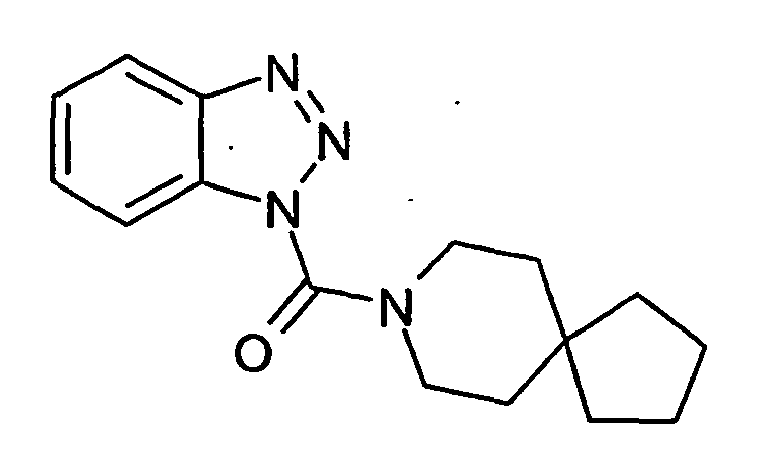


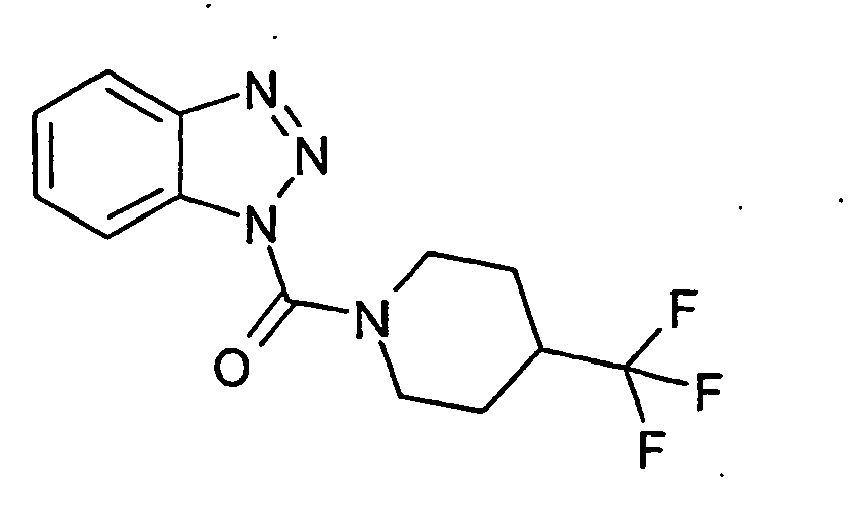


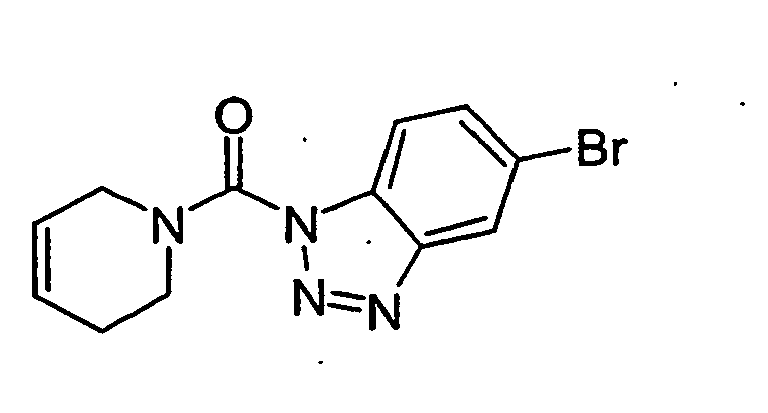


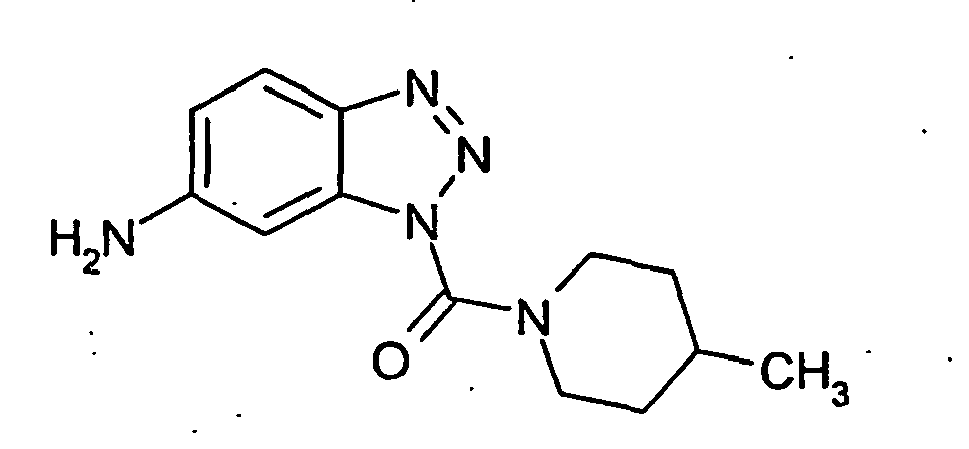


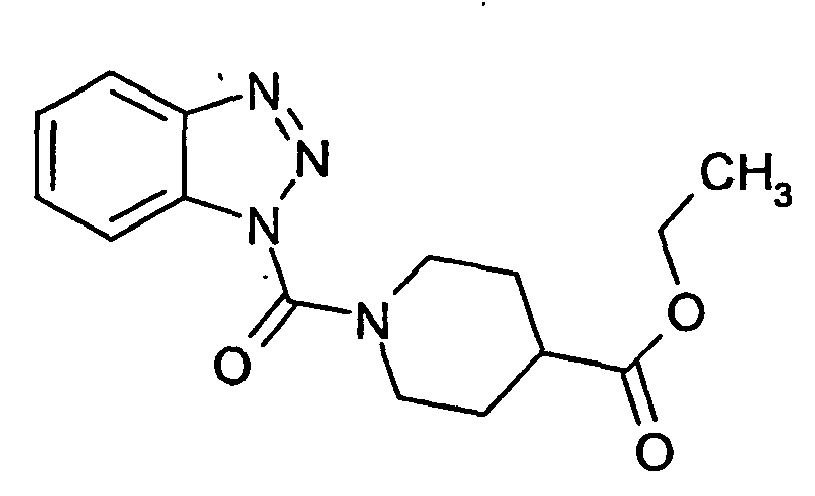


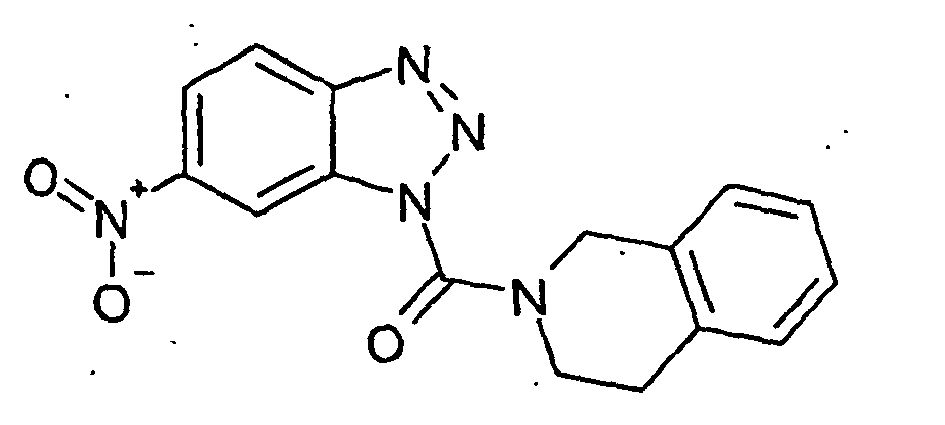


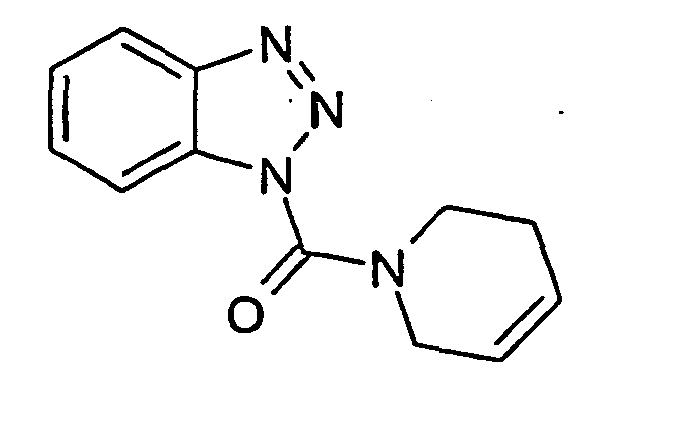
Claims (12)
- Benzotriazoles of the general formula I,

R1 to R8 H,
where one of these radicals R2 or R3 may represent:
Br, Cl, CH3, CN, NH2, NO2, CF3, OCH3, phenoxy, benzoyl, CH(OH)-phenyl, S-cyclohexyl, CO-OCH3 ;
or
two substituents of this series are:
R1 = Cl and R3 = CF3 or
R2 = F and R3 = Cl;n an integer from 0, 1 or 2; andone of the substituents R6 or R7 may represent:R6 CH3 ;R7 CH3, C2H5; CH(CH3)2, C(CH3)3, CF3, Br, Cl, benzyl or CO-OC2H5; orR6 and R7 are both CH3; or
the ring may contain a double bond instead of R6 and R7 orR5 and R6 or R6 and R7 may together with the carbon atoms carrying them represent a benzo-fused ring or else if n = 0 may represent cyclohexanediyl; where in the case of the R6/R7 ring closure this substituent may be optionally substituted singly by NH2 or NO2 or singly or doubly by OCH3; andR7 and R8 together cyclopentyl, diazirine or =CH2;
where the compounds with R1 to R5 and R8 = H, n = 1 and R6/R7 = benzo-fused and R1, R3-R8 = H , R2 = CH3 and n = 1 shall be excluded. - Benzotriazoles of the general formula I according to Claim 1,
in which the meanings are:
R1 to R8 H;
where one of these radicals R2 or R3 may represent:R2 Br, Cl, CN, NO2, CF3, OCH3, phenoxy, benzoyl, CH(OH)-phenyl, S-cyclohexyl, CO-OCH3;R3 CH3, CN, Br, Cl, NH2, NO2, benzoyl. - Benzotriazoles of the general formula I according to Claim 1 or 2, in which the meanings are:
R1 to R8 H;
where one of these radicals R2 or R3 may represent:R2 Br, Cl, NO2, OCH3, phenoxy, CO-OCH3;R3 NH2; ortwo substituents of this series are:R2 = F and R3 = Cl;n an integer from 1 or 2; andone of the substituents R6 or R7 may represent:R6 CH3;R7 CH3, CF3 or Br; orthe ring may contain a double bond instead of R6 and R7 orR6 and R7 may together with the carbon atoms carrying them represent a benzo-fused ring which may optionally be substituted singly by NH2 or singly or doubly by OCH3; andR7 and R8 together cyclopentyl orn an integer from 0; andR6 and R7 may together with the carbon atoms carrying them represent a benzo-fused ring or cyclohexanediyl. - Benzotriazoles of the general formula I as Claimed in claims 1 to 2, wherein
R1 to R8 H;
where one of these radicals R2 or R3 may represent:R2 Br, CN, CF3, OCH3, phenoxy, benzoyl, CH(OH)-phenyl, S-cyclohexyl;R3 CN, Br, Cl, NO2, benzoyl; ortwo substituents of this series are:
R1 = Cl and R3 = CF3;n an integer from 1; andone of the substituents R6 and R7 may represent:R6 CH3 ;R7 CH3, C2H5; CH(CH3)2, C(CH3)3, benzyl or CO- OC2H5 ; orR6 and R7 are both CH3; or
the ring may contain a double bond instead of R6 and R7 orR5 and R6 or R6 and R7 may together with the carbon atoms carrying them represent a benzo-fused ring;where the compounds with R1 to R5 and R8 = H, n = 1 and R6/R7 = benzo-fused shall be excluded. - Benzotriazoles according to Claim 1 of the following structures:


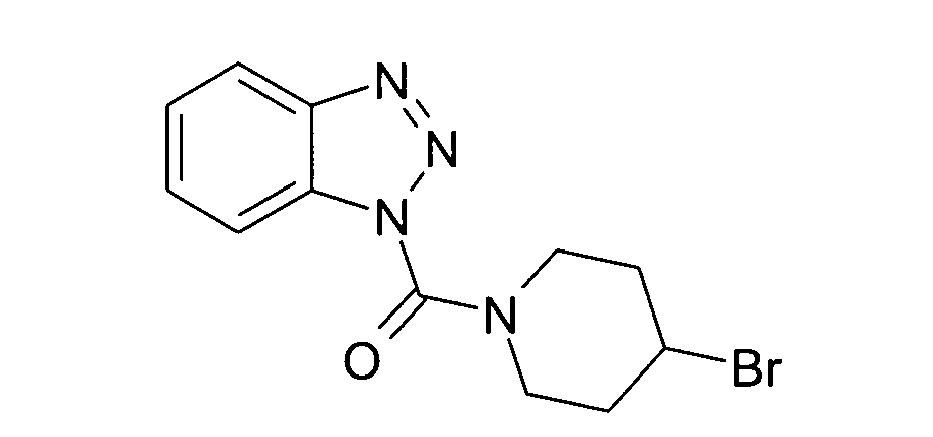


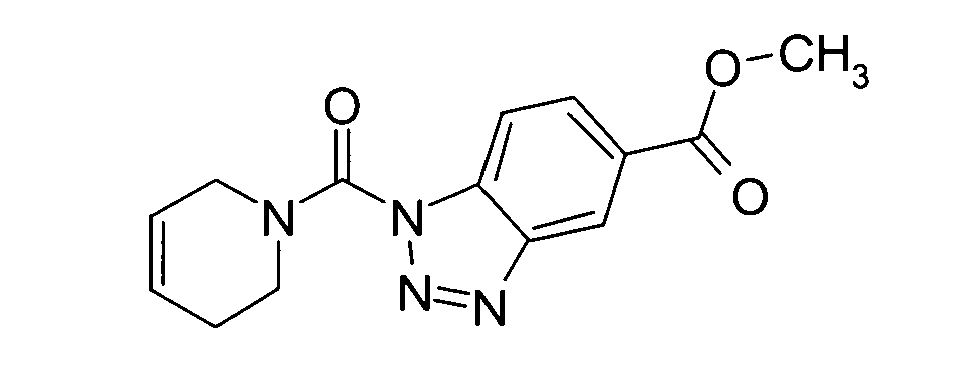


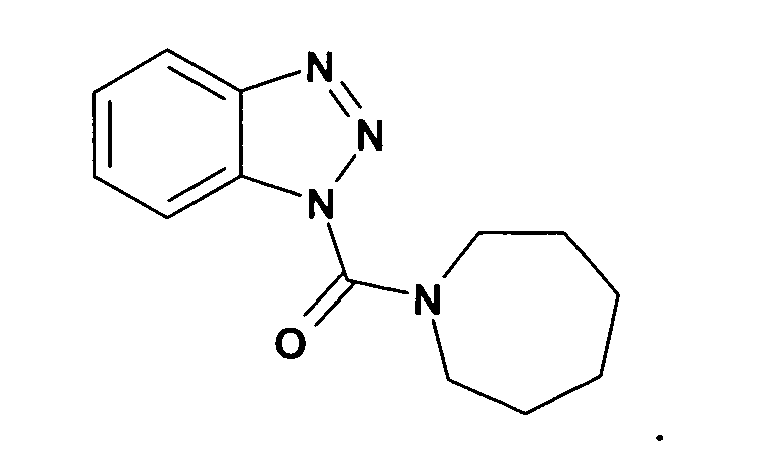
- Benzotriazoles according to Claim 1 of the following structures:
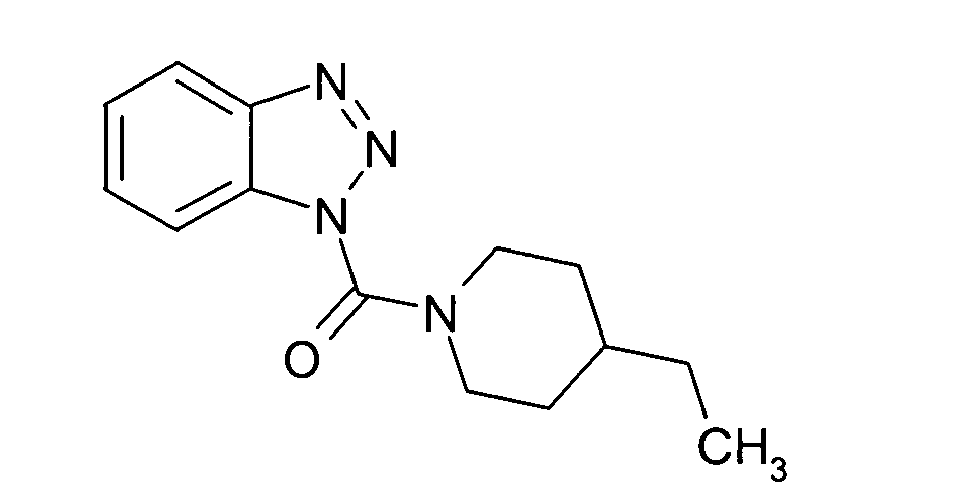


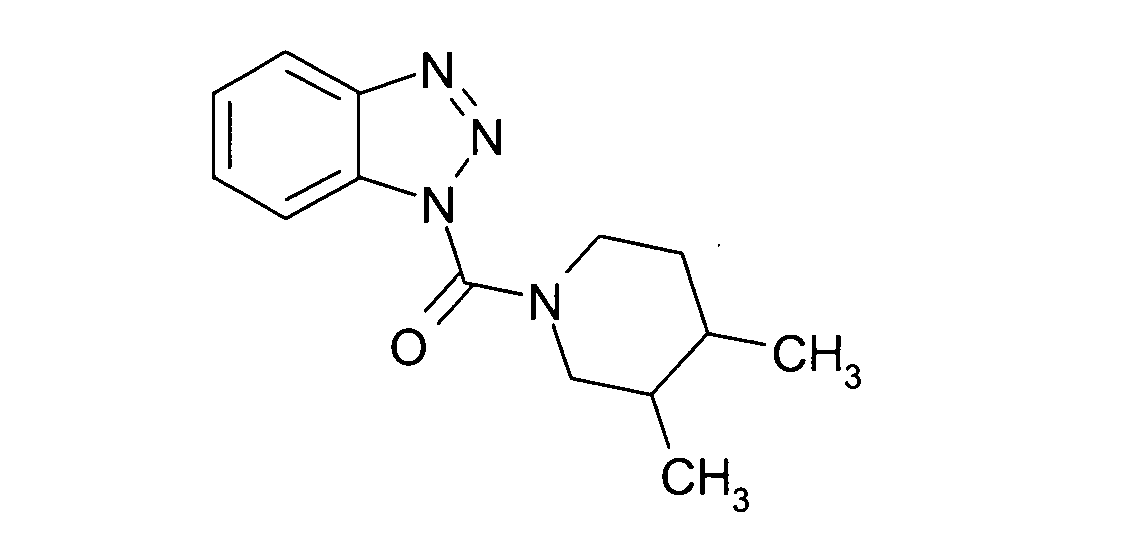


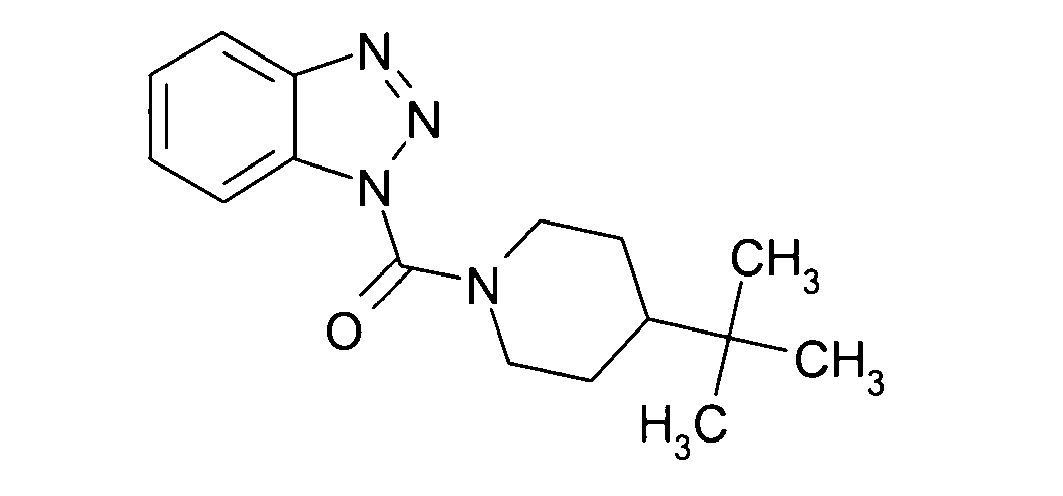
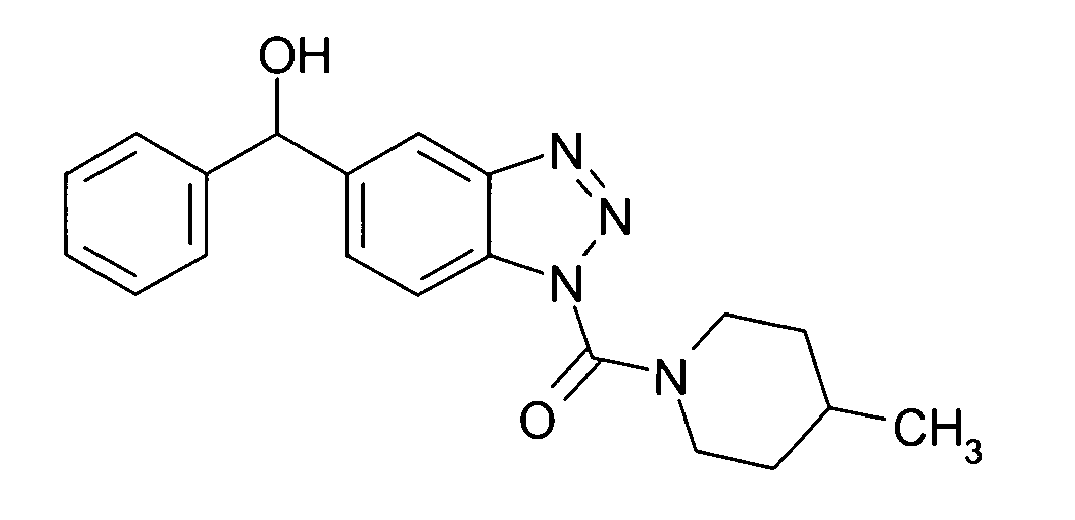

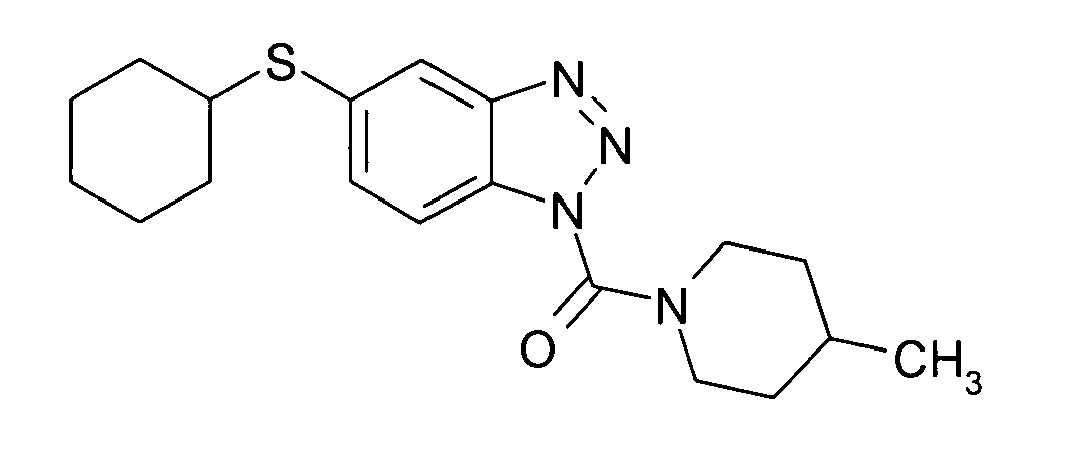
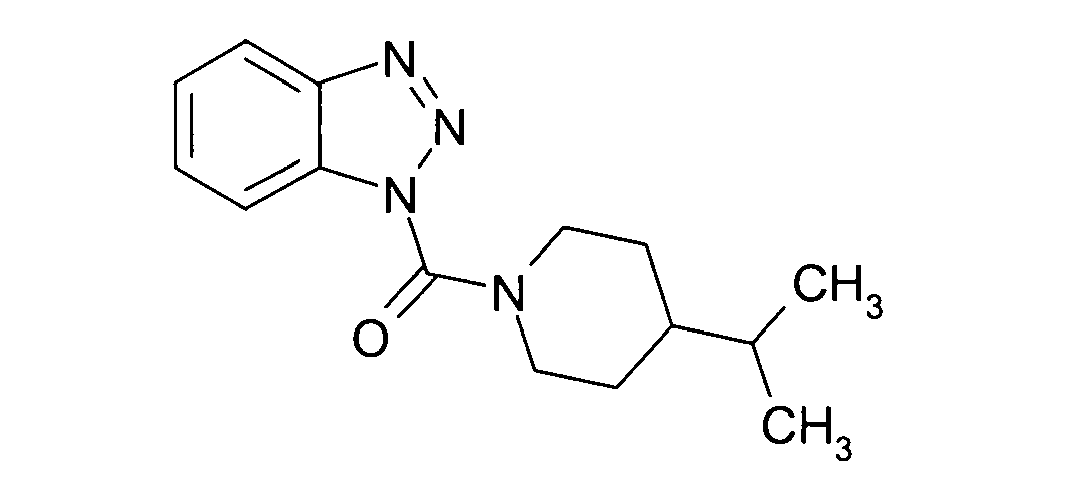
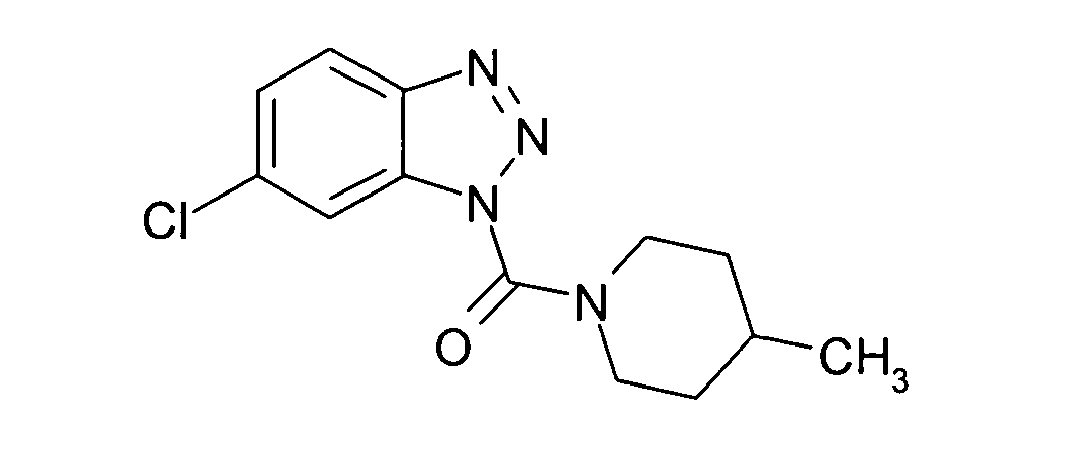


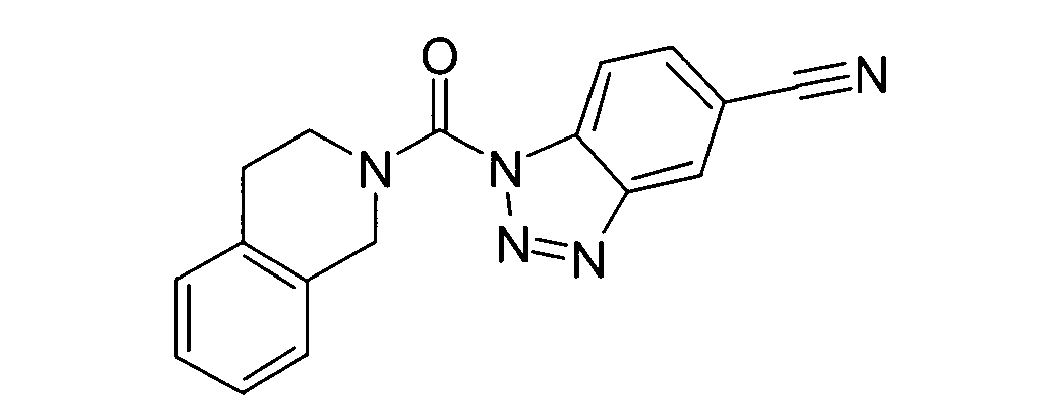


- Benzotriazoles of the following structures as claimed in Claim 6:


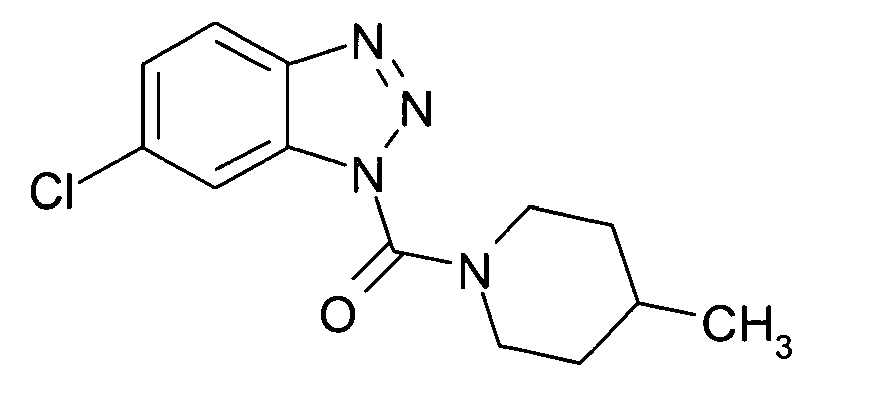

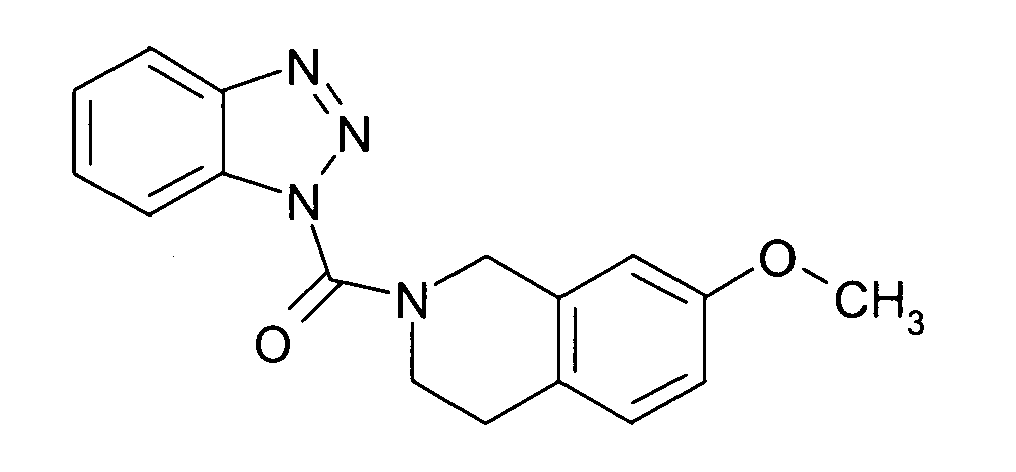


- Benzotriazoles of the following structures as claimed in Claim 7:


- Benzotriazoles of the general formula I,
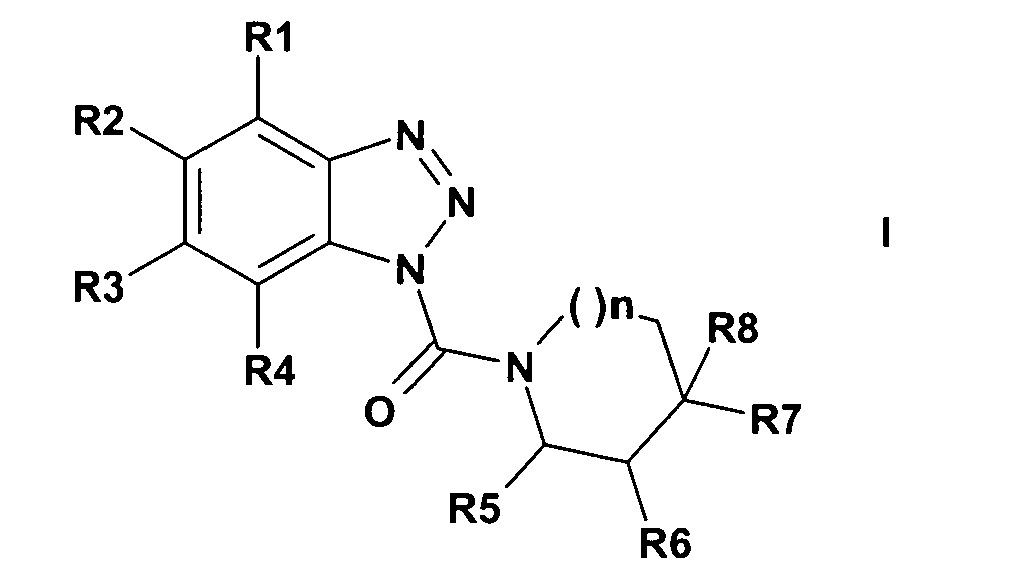
R1 to R8 H;
where one of these radicals R2 or R3 may represent:
Br, Cl, CH3, CN, NH2, NO2, CF3, OCH3, phenoxy, benzoyl, CH(OH)-phenyl, S-cyclohexyl, CO-OCH3;
or
two substituents of this series are:
R1 = Cl and R3 = CF3 or
R2 = F and R3 = Cl;n an integer from 0, 1 or 2; andone of the substituents R6 or R7 may represent:R6 CH3;R7 CH3, C2H5; CH(CH3)2, C(CH3)3, CF3, Br, Cl, benzyl or CO-OC2H5; orR6 and R7 are both CH3; or
the ring may contain a double bond instead of R6 and R7 orR5 and R6 or R6 and R7 may together with the carbon atoms carrying them represent a benzo-fused ring or else if n = 0 may represent cyclohexanediyl; where in the case of the R6/R7 ring closure this substituent may be optionally substituted singly by NH2 or NO2 or singly or doubly by OCH3; andR7 and R8 together cyclopentyl, diazirine or =CH2;
for use in a medicament. - Benzotriazoles of the formula I as claimed in Claim 9 for use in a medicament with an inhibitory effect on hormone-sensitive lipase, HSL.
- Benzotriazoles of the formula I as claimed in Claim 9 for use in a medicament for the treatment of non-insulin-dependent diabetes mellitus, of diabetic syndrome or syndrome X.
- Medicament for the treatment of non-insulin-dependent diabetes mellitus or of diabetic syndrome comprising at least one benzotriazole of the formula I as claimed in Claim 9.
Priority Applications (1)
| Application Number | Priority Date | Filing Date | Title |
|---|---|---|---|
| SI200330647T SI1554259T1 (en) | 2002-10-12 | 2003-09-27 | Novel bicyclic inhibitors of hormone sensitive lipase |
Applications Claiming Priority (3)
| Application Number | Priority Date | Filing Date | Title |
|---|---|---|---|
| DE10247680A DE10247680B4 (en) | 2002-10-12 | 2002-10-12 | New bicyclic inhibitors of the hormone sensitive lipase |
| DE10247680 | 2002-10-12 | ||
| PCT/EP2003/010765 WO2004035550A1 (en) | 2002-10-12 | 2003-09-27 | Novel bicyclic inhibitors of hormone sensitive lipase |
Publications (2)
| Publication Number | Publication Date |
|---|---|
| EP1554259A1 EP1554259A1 (en) | 2005-07-20 |
| EP1554259B1 true EP1554259B1 (en) | 2006-12-27 |
Family
ID=32038583
Family Applications (1)
| Application Number | Title | Priority Date | Filing Date |
|---|---|---|---|
| EP03808700A Expired - Lifetime EP1554259B1 (en) | 2002-10-12 | 2003-09-27 | Novel bicyclic inhibitors of hormone sensitive lipase |
Country Status (38)
| Country | Link |
|---|---|
| EP (1) | EP1554259B1 (en) |
| JP (2) | JP4658607B2 (en) |
| KR (1) | KR20050059254A (en) |
| CN (1) | CN100366616C (en) |
| AR (1) | AR041565A1 (en) |
| AT (1) | ATE349433T1 (en) |
| AU (1) | AU2003275997B8 (en) |
| BR (1) | BR0315257A (en) |
| CA (1) | CA2501734C (en) |
| CR (1) | CR7717A (en) |
| CY (1) | CY1106358T1 (en) |
| DE (2) | DE10247680B4 (en) |
| DK (1) | DK1554259T3 (en) |
| EC (1) | ECSP055729A (en) |
| ES (1) | ES2277152T3 (en) |
| GT (1) | GT200300214A (en) |
| HN (1) | HN2003000316A (en) |
| HR (1) | HRP20050325A2 (en) |
| IL (1) | IL167907A (en) |
| JO (1) | JO2497B1 (en) |
| MA (1) | MA27404A1 (en) |
| MX (1) | MXPA05003359A (en) |
| MY (1) | MY138057A (en) |
| NO (1) | NO20052291L (en) |
| OA (1) | OA12941A (en) |
| PA (1) | PA8585101A1 (en) |
| PE (1) | PE20040776A1 (en) |
| PL (1) | PL374605A1 (en) |
| PT (1) | PT1554259E (en) |
| RS (1) | RS51543B (en) |
| RU (1) | RU2325385C2 (en) |
| SV (1) | SV2004001633A (en) |
| TN (1) | TNSN05105A1 (en) |
| TW (1) | TWI313265B (en) |
| UA (1) | UA79994C2 (en) |
| UY (1) | UY28015A1 (en) |
| WO (1) | WO2004035550A1 (en) |
| ZA (1) | ZA200501757B (en) |
Families Citing this family (25)
| Publication number | Priority date | Publication date | Assignee | Title |
|---|---|---|---|---|
| DE102005002130A1 (en) | 2005-01-17 | 2006-07-27 | Sanofi-Aventis Deutschland Gmbh | New substituted aminomethylene sulfonamides useful as hormone sensitive lipase inhibitors in medicaments for treatment and/or prevention of non-insulin dependent diabetes mellitus, diabetic syndrome or obesity |
| DE102005026809A1 (en) * | 2005-06-09 | 2006-12-14 | Sanofi-Aventis Deutschland Gmbh | Benzothiazol-2-one derivatives as inhibitors of lipases and phospholipases |
| DE102005026808A1 (en) | 2005-06-09 | 2006-12-14 | Sanofi-Aventis Deutschland Gmbh | Benzooxazol-2-one derivatives as inhibitors of lipases and phospholipases |
| DE102005026762A1 (en) | 2005-06-09 | 2006-12-21 | Sanofi-Aventis Deutschland Gmbh | Azolopyridin-2-one derivatives as inhibitors of lipases and phospholipases |
| DE102005048897A1 (en) | 2005-10-12 | 2007-04-19 | Sanofi-Aventis Deutschland Gmbh | Diacylindazole derivatives as inhibitors of lipases and phospholipases |
| DE102005049953A1 (en) * | 2005-10-19 | 2007-04-26 | Sanofi-Aventis Deutschland Gmbh | Carbamoylbenzotriazole derivatives as inhibitors of lipases and phospholipases |
| DE102005049954A1 (en) | 2005-10-19 | 2007-05-31 | Sanofi-Aventis Deutschland Gmbh | Triazolopyridine derivatives as inhibitors of lipases and phospholipases |
| FR2915198B1 (en) * | 2007-04-18 | 2009-12-18 | Sanofi Aventis | TRIAZOLOPYRIDINE CARBOXAMIDE AND TRIAZOLOPYRIDINE -CARBOXAMIDE DERIVATIVES, THEIR PREPARATION AND THEIR THERAPEUTIC USE. |
| FR2915199B1 (en) * | 2007-04-18 | 2010-01-22 | Sanofi Aventis | TRIAZOLOPYRIDINE-CARBOXAMIDE AND TRIAZOLOPYRIMIDINE-CARBOXAMIDE DERIVATIVES, THEIR PREPARATION AND THEIR THERAPEUTIC USE. |
| FR2915197B1 (en) | 2007-04-18 | 2009-06-12 | Sanofi Aventis Sa | TRIAZOLOPYRIDINE CARBOXAMIDE DERIVATIVES, PREPARATION THEREOF AND THERAPEUTIC USE THEREOF. |
| WO2010003624A2 (en) | 2008-07-09 | 2010-01-14 | Sanofi-Aventis | Heterocyclic compounds, processes for their preparation, medicaments comprising these compounds, and the use thereof |
| AU2009330821B2 (en) * | 2008-12-24 | 2015-06-11 | Bial - Portela & Ca, S.A. | Pharmaceutical compounds |
| US8329904B2 (en) * | 2009-05-12 | 2012-12-11 | Hoffmann-La Roche Inc. | Azacyclic derivatives |
| US8440710B2 (en) * | 2009-10-15 | 2013-05-14 | Hoffmann-La Roche Inc. | HSL inhibitors useful in the treatment of diabetes |
| US8097634B2 (en) * | 2010-04-15 | 2012-01-17 | Hoffmann-La Roche Inc. | Azacyclic derivatives |
| US8450350B2 (en) * | 2010-05-05 | 2013-05-28 | Infinity Pharmaceuticals, Inc. | Triazoles as inhibitors of fatty acid synthase |
| US8722721B2 (en) * | 2011-03-16 | 2014-05-13 | Hoffmann-La Roche Inc. | SEC-hydroxycyclohexyl derivatives |
| US8703807B2 (en) * | 2011-03-17 | 2014-04-22 | Hoffmann-La Roche Inc. | Azaspirodecanone compounds |
| US8809384B2 (en) * | 2011-03-25 | 2014-08-19 | Hoffmann-La Roche Inc. | Azaspirodecanone compounds |
| UA119247C2 (en) | 2013-09-06 | 2019-05-27 | РОЙВЕНТ САЙЕНСИЗ ҐмбГ | Spirocyclic compounds as tryptophan hydroxylase inhibitors |
| GB201321740D0 (en) * | 2013-12-09 | 2014-01-22 | Ucb Pharma Sa | Therapeutic agents |
| WO2015089137A1 (en) | 2013-12-11 | 2015-06-18 | Karos Pharmaceuticals, Inc. | Acylguanidines as tryptophan hydroxylase inhibitors |
| WO2016109501A1 (en) | 2014-12-30 | 2016-07-07 | Karos Pharmaceuticals, Inc. | Amide compounds as tryptophan hydroxylase inhibitors |
| US9611201B2 (en) | 2015-03-05 | 2017-04-04 | Karos Pharmaceuticals, Inc. | Processes for preparing (R)-1-(5-chloro-[1,1′-biphenyl]-2-yl)-2,2,2-trifluoroethanol and 1-(5-chloro-[1,1′-biphenyl]-2-yl)-2,2,2-trifluoroethanone |
| KR20210102887A (en) | 2018-11-14 | 2021-08-20 | 알타반트 사이언시스 게엠베하 | Crystalline spirocyclic compound inhibitors of tryptophan hydroxylase 1 (TPH1) for treating diseases or disorders associated with peripheral serotonin |
Family Cites Families (5)
| Publication number | Priority date | Publication date | Assignee | Title |
|---|---|---|---|---|
| CA1126999A (en) * | 1978-10-20 | 1982-07-06 | Michael J. Simons | Use of azole compounds with a n,n disubstituted carbamoyl group on a ring nitrogen as development restrainer precursors in photographic elements |
| US5369086A (en) * | 1993-04-28 | 1994-11-29 | Zeneca Limited | N-benzotriazoles |
| DE19942354A1 (en) * | 1999-09-04 | 2001-03-08 | Aventis Pharma Gmbh | Substituted 3-phenyl-5-alkoxi-1,3,4-oxdiazol-2-one, their manufacture and use in medicinal products |
| BR0209334A (en) * | 2001-05-05 | 2004-06-15 | Smithkline Beecham Plc | Cyclic n-aroil amines |
| BR0214967A (en) * | 2001-12-14 | 2005-05-10 | Novo Nordisk As | Compound, pharmaceutically acceptable salt, process for preparing a compound, pharmaceutical composition, use of a compound and method of treating a patient disorder |
-
2002
- 2002-10-12 DE DE10247680A patent/DE10247680B4/en not_active Expired - Fee Related
-
2003
- 2003-09-27 CN CNB038241420A patent/CN100366616C/en not_active Expired - Fee Related
- 2003-09-27 AU AU2003275997A patent/AU2003275997B8/en not_active Ceased
- 2003-09-27 PL PL03374605A patent/PL374605A1/en not_active Application Discontinuation
- 2003-09-27 EP EP03808700A patent/EP1554259B1/en not_active Expired - Lifetime
- 2003-09-27 PT PT03808700T patent/PT1554259E/en unknown
- 2003-09-27 OA OA1200500103A patent/OA12941A/en unknown
- 2003-09-27 ES ES03808700T patent/ES2277152T3/en not_active Expired - Lifetime
- 2003-09-27 UA UAA200504422A patent/UA79994C2/en unknown
- 2003-09-27 DK DK03808700T patent/DK1554259T3/en active
- 2003-09-27 AT AT03808700T patent/ATE349433T1/en active
- 2003-09-27 BR BR0315257-0A patent/BR0315257A/en not_active IP Right Cessation
- 2003-09-27 RS YUP-2005/0207A patent/RS51543B/en unknown
- 2003-09-27 WO PCT/EP2003/010765 patent/WO2004035550A1/en not_active Ceased
- 2003-09-27 MX MXPA05003359A patent/MXPA05003359A/en active IP Right Grant
- 2003-09-27 JP JP2004544048A patent/JP4658607B2/en not_active Expired - Fee Related
- 2003-09-27 HR HR20050325A patent/HRP20050325A2/en not_active Application Discontinuation
- 2003-09-27 CA CA2501734A patent/CA2501734C/en not_active Expired - Fee Related
- 2003-09-27 DE DE50306134T patent/DE50306134D1/en not_active Expired - Lifetime
- 2003-09-27 RU RU2005114394/04A patent/RU2325385C2/en not_active IP Right Cessation
- 2003-09-27 KR KR1020057006312A patent/KR20050059254A/en not_active Ceased
- 2003-09-29 JO JO2003123A patent/JO2497B1/en active
- 2003-09-29 GT GT200300214A patent/GT200300214A/en unknown
- 2003-10-08 TW TW092127898A patent/TWI313265B/en active
- 2003-10-08 SV SV2003001633A patent/SV2004001633A/en not_active Application Discontinuation
- 2003-10-09 PA PA20038585101A patent/PA8585101A1/en unknown
- 2003-10-09 AR ARP030103676A patent/AR041565A1/en unknown
- 2003-10-09 PE PE2003001028A patent/PE20040776A1/en not_active Application Discontinuation
- 2003-10-09 HN HN2003000316A patent/HN2003000316A/en unknown
- 2003-10-10 MY MYPI20033883A patent/MY138057A/en unknown
- 2003-10-10 UY UY28015A patent/UY28015A1/en unknown
-
2005
- 2005-03-01 ZA ZA200501757A patent/ZA200501757B/en unknown
- 2005-03-07 CR CR7717A patent/CR7717A/en unknown
- 2005-04-07 IL IL167907A patent/IL167907A/en not_active IP Right Cessation
- 2005-04-11 TN TNP2005000105A patent/TNSN05105A1/en unknown
- 2005-04-11 EC EC2005005729A patent/ECSP055729A/en unknown
- 2005-04-11 MA MA28213A patent/MA27404A1/en unknown
- 2005-05-10 NO NO20052291A patent/NO20052291L/en not_active Application Discontinuation
-
2007
- 2007-03-06 CY CY20071100315T patent/CY1106358T1/en unknown
-
2010
- 2010-10-08 JP JP2010228107A patent/JP2011026342A/en not_active Abandoned
Non-Patent Citations (1)
| Title |
|---|
| J. Chem. Research (S) 1999, 230-231 * |
Also Published As
Similar Documents
| Publication | Publication Date | Title |
|---|---|---|
| DE10247680B4 (en) | New bicyclic inhibitors of the hormone sensitive lipase | |
| DE102004005172A1 (en) | Indazole derivatives as inhibitors of the hormone sensitive lipase | |
| EP1523475B1 (en) | Heterocyclically substituted benzoylureas, method for their production and their use as medicaments | |
| DE10215907A1 (en) | Acyl-4-carboxyphenyl-urea derivatives, processes for their preparation and their use | |
| EP1874741A1 (en) | Azole derivatives in the form of lipase and phospholipase inhibitors | |
| DE102005049953A1 (en) | Carbamoylbenzotriazole derivatives as inhibitors of lipases and phospholipases | |
| DE10215908B4 (en) | Acyl-3-carboxyphenyl-urea derivatives and their use as medicaments | |
| EP1896485B1 (en) | Azolopyridine-2-on derivatives as lipase and phospholipase inhibitors | |
| DE102004004971B3 (en) | Cycloalkyl substituted 7-amino-4-quinolone-3-carboxylic acid derivatives, process for their preparation and their use as Arnzeimittel | |
| EP1893590B1 (en) | Benzooxazole-2-on derivatives as lipase and phospholipase inhibitors | |
| EP1896435B1 (en) | Benzothiazol-2-on derivatives as lipase and phospholipase inhibitors | |
| DE10309929B4 (en) | Substituted benzoylureidopyridyl-piperidine and -pyrrolidine-carboxylic acid derivatives, process for their preparation and their use | |
| DE10306502A1 (en) | Substituted 3- (benzoylureido) thiophene derivatives, process for their preparation and their use | |
| DE10246434B4 (en) | Carboxyalkoxy-substituted acyl-carboxyphenyl-urea derivatives and their use as pharmaceuticals | |
| DE102004004973A1 (en) | New 7-phenylamino-quinolone or 1,8-naphthyridone derivatives, useful e.g. for treating type II diabetes or arteriosclerosis, are inhibitors of glycogen phosphorylase | |
| US20040127484A1 (en) | Novel bicyclic inhibitors of hormone sensitive lipase | |
| DE10306503A1 (en) | New 1-benzoyl-3-(heterocyclyl-phenyl)-urea derivatives, are glycogen phosphorylase a inhibitors useful e.g. for treating type II diabetes, dyslipidemia or arteriosclerosis | |
| NZ539347A (en) | Novel bicyclic inhibitors of hormone sensitive lipase |
Legal Events
| Date | Code | Title | Description |
|---|---|---|---|
| PUAI | Public reference made under article 153(3) epc to a published international application that has entered the european phase |
Free format text: ORIGINAL CODE: 0009012 |
|
| 17P | Request for examination filed |
Effective date: 20050512 |
|
| AK | Designated contracting states |
Kind code of ref document: A1 Designated state(s): AT BE BG CH CY CZ DE DK EE ES FI FR GB GR HU IE IT LI LU MC NL PT RO SE SI SK TR |
|
| AX | Request for extension of the european patent |
Extension state: AL LT LV MK |
|
| RAP1 | Party data changed (applicant data changed or rights of an application transferred) |
Owner name: SANOFI-AVENTIS DEUTSCHLAND GMBH |
|
| GRAP | Despatch of communication of intention to grant a patent |
Free format text: ORIGINAL CODE: EPIDOSNIGR1 |
|
| GRAS | Grant fee paid |
Free format text: ORIGINAL CODE: EPIDOSNIGR3 |
|
| GRAA | (expected) grant |
Free format text: ORIGINAL CODE: 0009210 |
|
| AK | Designated contracting states |
Kind code of ref document: B1 Designated state(s): AT BE BG CH CY CZ DE DK EE ES FI FR GB GR HU IE IT LI LU MC NL PT RO SE SI SK TR |
|
| AX | Request for extension of the european patent |
Extension state: AL LT LV MK |
|
| REG | Reference to a national code |
Ref country code: GB Ref legal event code: FG4D Free format text: NOT ENGLISH |
|
| REG | Reference to a national code |
Ref country code: IE Ref legal event code: FG4D Free format text: LANGUAGE OF EP DOCUMENT: GERMAN |
|
| REF | Corresponds to: |
Ref document number: 50306134 Country of ref document: DE Date of ref document: 20070208 Kind code of ref document: P |
|
| REG | Reference to a national code |
Ref country code: PT Ref legal event code: SC4A Free format text: AVAILABILITY OF NATIONAL TRANSLATION Effective date: 20070219 |
|
| REG | Reference to a national code |
Ref country code: RO Ref legal event code: EPE |
|
| REG | Reference to a national code |
Ref country code: EE Ref legal event code: FG4A Ref document number: E000919 Country of ref document: EE Effective date: 20070129 |
|
| REG | Reference to a national code |
Ref country code: SE Ref legal event code: TRGR |
|
| REG | Reference to a national code |
Ref country code: GR Ref legal event code: EP Ref document number: 20070400690 Country of ref document: GR |
|
| REG | Reference to a national code |
Ref country code: HU Ref legal event code: AG4A Ref document number: E001300 Country of ref document: HU |
|
| REG | Reference to a national code |
Ref country code: DK Ref legal event code: T3 |
|
| REG | Reference to a national code |
Ref country code: ES Ref legal event code: FG2A Ref document number: 2277152 Country of ref document: ES Kind code of ref document: T3 |
|
| ET | Fr: translation filed | ||
| PLBE | No opposition filed within time limit |
Free format text: ORIGINAL CODE: 0009261 |
|
| STAA | Information on the status of an ep patent application or granted ep patent |
Free format text: STATUS: NO OPPOSITION FILED WITHIN TIME LIMIT |
|
| 26N | No opposition filed |
Effective date: 20070928 |
|
| PG25 | Lapsed in a contracting state [announced via postgrant information from national office to epo] |
Ref country code: MC Free format text: LAPSE BECAUSE OF NON-PAYMENT OF DUE FEES Effective date: 20070930 |
|
| PGFP | Annual fee paid to national office [announced via postgrant information from national office to epo] |
Ref country code: CH Payment date: 20100914 Year of fee payment: 8 Ref country code: HU Payment date: 20100916 Year of fee payment: 8 Ref country code: IE Payment date: 20100910 Year of fee payment: 8 Ref country code: RO Payment date: 20100831 Year of fee payment: 8 |
|
| PGFP | Annual fee paid to national office [announced via postgrant information from national office to epo] |
Ref country code: AT Payment date: 20100910 Year of fee payment: 8 Ref country code: BG Payment date: 20100831 Year of fee payment: 8 Ref country code: CZ Payment date: 20100827 Year of fee payment: 8 Ref country code: EE Payment date: 20100804 Year of fee payment: 8 Ref country code: FI Payment date: 20100910 Year of fee payment: 8 Ref country code: IT Payment date: 20100922 Year of fee payment: 8 Ref country code: SE Payment date: 20100913 Year of fee payment: 8 Ref country code: SI Payment date: 20100730 Year of fee payment: 8 Ref country code: SK Payment date: 20100830 Year of fee payment: 8 Ref country code: TR Payment date: 20100902 Year of fee payment: 8 |
|
| PGFP | Annual fee paid to national office [announced via postgrant information from national office to epo] |
Ref country code: GR Payment date: 20100817 Year of fee payment: 8 |
|
| PGFP | Annual fee paid to national office [announced via postgrant information from national office to epo] |
Ref country code: DK Payment date: 20100910 Year of fee payment: 8 Ref country code: NL Payment date: 20100910 Year of fee payment: 8 Ref country code: PT Payment date: 20100921 Year of fee payment: 8 |
|
| PGFP | Annual fee paid to national office [announced via postgrant information from national office to epo] |
Ref country code: BE Payment date: 20100915 Year of fee payment: 8 Ref country code: CY Payment date: 20100817 Year of fee payment: 8 Ref country code: LU Payment date: 20101014 Year of fee payment: 8 |
|
| PGFP | Annual fee paid to national office [announced via postgrant information from national office to epo] |
Ref country code: ES Payment date: 20101018 Year of fee payment: 8 |
|
| BERE | Be: lapsed |
Owner name: SANOFI-AVENTIS DEUTSCHLAND G.M.B.H. Effective date: 20110930 |
|
| REG | Reference to a national code |
Ref country code: PT Ref legal event code: MM4A Free format text: LAPSE DUE TO NON-PAYMENT OF FEES Effective date: 20120327 |
|
| REG | Reference to a national code |
Ref country code: NL Ref legal event code: V1 Effective date: 20120401 |
|
| PG25 | Lapsed in a contracting state [announced via postgrant information from national office to epo] |
Ref country code: CZ Free format text: LAPSE BECAUSE OF NON-PAYMENT OF DUE FEES Effective date: 20110927 |
|
| REG | Reference to a national code |
Ref country code: DK Ref legal event code: EBP Ref country code: CH Ref legal event code: PL |
|
| LTLA | Lt: lapse of european patent or patent extension |
Effective date: 20110927 |
|
| REG | Reference to a national code |
Ref country code: GR Ref legal event code: ML Ref document number: 20070400690 Country of ref document: GR Effective date: 20120403 |
|
| PG25 | Lapsed in a contracting state [announced via postgrant information from national office to epo] |
Ref country code: FI Free format text: LAPSE BECAUSE OF NON-PAYMENT OF DUE FEES Effective date: 20110927 Ref country code: IT Free format text: LAPSE BECAUSE OF NON-PAYMENT OF DUE FEES Effective date: 20110927 Ref country code: PT Free format text: LAPSE BECAUSE OF NON-PAYMENT OF DUE FEES Effective date: 20120327 |
|
| REG | Reference to a national code |
Ref country code: SK Ref legal event code: MM4A Ref document number: E 1533 Country of ref document: SK Effective date: 20110927 |
|
| REG | Reference to a national code |
Ref country code: EE Ref legal event code: MM4A Ref document number: E000919 Country of ref document: EE Effective date: 20110930 |
|
| REG | Reference to a national code |
Ref country code: IE Ref legal event code: MM4A |
|
| PG25 | Lapsed in a contracting state [announced via postgrant information from national office to epo] |
Ref country code: BE Free format text: LAPSE BECAUSE OF NON-PAYMENT OF DUE FEES Effective date: 20110930 Ref country code: CY Free format text: LAPSE BECAUSE OF NON-PAYMENT OF DUE FEES Effective date: 20110927 |
|
| REG | Reference to a national code |
Ref country code: SE Ref legal event code: EUG |
|
| PG25 | Lapsed in a contracting state [announced via postgrant information from national office to epo] |
Ref country code: HU Free format text: LAPSE BECAUSE OF NON-PAYMENT OF DUE FEES Effective date: 20110928 Ref country code: CH Free format text: LAPSE BECAUSE OF NON-PAYMENT OF DUE FEES Effective date: 20110930 Ref country code: SK Free format text: LAPSE BECAUSE OF NON-PAYMENT OF DUE FEES Effective date: 20110927 Ref country code: EE Free format text: LAPSE BECAUSE OF NON-PAYMENT OF DUE FEES Effective date: 20110930 Ref country code: NL Free format text: LAPSE BECAUSE OF NON-PAYMENT OF DUE FEES Effective date: 20120401 Ref country code: IE Free format text: LAPSE BECAUSE OF NON-PAYMENT OF DUE FEES Effective date: 20110927 Ref country code: LI Free format text: LAPSE BECAUSE OF NON-PAYMENT OF DUE FEES Effective date: 20110930 |
|
| PG25 | Lapsed in a contracting state [announced via postgrant information from national office to epo] |
Ref country code: GR Free format text: LAPSE BECAUSE OF NON-PAYMENT OF DUE FEES Effective date: 20120403 Ref country code: RO Free format text: LAPSE BECAUSE OF NON-PAYMENT OF DUE FEES Effective date: 20110927 |
|
| PG25 | Lapsed in a contracting state [announced via postgrant information from national office to epo] |
Ref country code: DK Free format text: LAPSE BECAUSE OF NON-PAYMENT OF DUE FEES Effective date: 20110930 |
|
| REG | Reference to a national code |
Ref country code: AT Ref legal event code: MM01 Ref document number: 349433 Country of ref document: AT Kind code of ref document: T Effective date: 20110927 |
|
| PG25 | Lapsed in a contracting state [announced via postgrant information from national office to epo] |
Ref country code: AT Free format text: LAPSE BECAUSE OF NON-PAYMENT OF DUE FEES Effective date: 20110927 |
|
| REG | Reference to a national code |
Ref country code: ES Ref legal event code: FD2A Effective date: 20130417 |
|
| PG25 | Lapsed in a contracting state [announced via postgrant information from national office to epo] |
Ref country code: SE Free format text: LAPSE BECAUSE OF NON-PAYMENT OF DUE FEES Effective date: 20110928 Ref country code: ES Free format text: LAPSE BECAUSE OF NON-PAYMENT OF DUE FEES Effective date: 20110928 |
|
| PG25 | Lapsed in a contracting state [announced via postgrant information from national office to epo] |
Ref country code: LU Free format text: LAPSE BECAUSE OF NON-PAYMENT OF DUE FEES Effective date: 20110927 |
|
| PG25 | Lapsed in a contracting state [announced via postgrant information from national office to epo] |
Ref country code: BG Free format text: LAPSE BECAUSE OF NON-PAYMENT OF DUE FEES Effective date: 20120630 |
|
| REG | Reference to a national code |
Ref country code: SI Ref legal event code: KO00 Effective date: 20130607 |
|
| PG25 | Lapsed in a contracting state [announced via postgrant information from national office to epo] |
Ref country code: SI Free format text: LAPSE BECAUSE OF NON-PAYMENT OF DUE FEES Effective date: 20110928 |
|
| PG25 | Lapsed in a contracting state [announced via postgrant information from national office to epo] |
Ref country code: TR Free format text: LAPSE BECAUSE OF NON-PAYMENT OF DUE FEES Effective date: 20110927 |
|
| PGFP | Annual fee paid to national office [announced via postgrant information from national office to epo] |
Ref country code: DE Payment date: 20140923 Year of fee payment: 12 |
|
| PGFP | Annual fee paid to national office [announced via postgrant information from national office to epo] |
Ref country code: GB Payment date: 20140924 Year of fee payment: 12 |
|
| PGFP | Annual fee paid to national office [announced via postgrant information from national office to epo] |
Ref country code: FR Payment date: 20140906 Year of fee payment: 12 |
|
| REG | Reference to a national code |
Ref country code: DE Ref legal event code: R119 Ref document number: 50306134 Country of ref document: DE |
|
| GBPC | Gb: european patent ceased through non-payment of renewal fee |
Effective date: 20150927 |
|
| REG | Reference to a national code |
Ref country code: FR Ref legal event code: ST Effective date: 20160531 |
|
| PG25 | Lapsed in a contracting state [announced via postgrant information from national office to epo] |
Ref country code: GB Free format text: LAPSE BECAUSE OF NON-PAYMENT OF DUE FEES Effective date: 20150927 Ref country code: DE Free format text: LAPSE BECAUSE OF NON-PAYMENT OF DUE FEES Effective date: 20160401 |
|
| PG25 | Lapsed in a contracting state [announced via postgrant information from national office to epo] |
Ref country code: FR Free format text: LAPSE BECAUSE OF NON-PAYMENT OF DUE FEES Effective date: 20150930 |