EP1553724B1 - Alarm Logfile Meldung mittels XML tagging - Google Patents
Alarm Logfile Meldung mittels XML tagging Download PDFInfo
- Publication number
- EP1553724B1 EP1553724B1 EP05300008A EP05300008A EP1553724B1 EP 1553724 B1 EP1553724 B1 EP 1553724B1 EP 05300008 A EP05300008 A EP 05300008A EP 05300008 A EP05300008 A EP 05300008A EP 1553724 B1 EP1553724 B1 EP 1553724B1
- Authority
- EP
- European Patent Office
- Prior art keywords
- alarm
- xml
- network management
- token
- reported
- Prior art date
- Legal status (The legal status is an assumption and is not a legal conclusion. Google has not performed a legal analysis and makes no representation as to the accuracy of the status listed.)
- Expired - Lifetime
Links
Images
Classifications
-
- H—ELECTRICITY
- H04—ELECTRIC COMMUNICATION TECHNIQUE
- H04L—TRANSMISSION OF DIGITAL INFORMATION, e.g. TELEGRAPHIC COMMUNICATION
- H04L41/00—Arrangements for maintenance, administration or management of data switching networks, e.g. of packet switching networks
- H04L41/06—Management of faults, events, alarms or notifications
- H04L41/0686—Additional information in the notification, e.g. enhancement of specific meta-data
-
- G—PHYSICS
- G06—COMPUTING OR CALCULATING; COUNTING
- G06F—ELECTRIC DIGITAL DATA PROCESSING
- G06F40/00—Handling natural language data
- G06F40/10—Text processing
- G06F40/12—Use of codes for handling textual entities
- G06F40/14—Tree-structured documents
- G06F40/143—Markup, e.g. Standard Generalized Markup Language [SGML] or Document Type Definition [DTD]
-
- H—ELECTRICITY
- H04—ELECTRIC COMMUNICATION TECHNIQUE
- H04L—TRANSMISSION OF DIGITAL INFORMATION, e.g. TELEGRAPHIC COMMUNICATION
- H04L41/00—Arrangements for maintenance, administration or management of data switching networks, e.g. of packet switching networks
- H04L41/02—Standardisation; Integration
- H04L41/022—Multivendor or multi-standard integration
Definitions
- the invention relates to communications network management, and in particular to alarm information reporting methods.
- NMS Network Management System
- an alarm report In referring to a common format for alarm reporting, one understands an alarm report to include a sequenced group of tokens which specify in respect of an alarm, without being limited thereto: an alarm name, an alarm type, an alarm severity, an equipment component specification, a comment, etc.
- the sequence of the alarm tokens relates to the identification of the tokens.
- Each alarm report requires a different combination of such alarm tokens to fully convey the full meaning of the alarm and to distinguish it from others stifling any attempts towards alarm report standardization.
- Network management functions in addressing different aspects in responding to an alarm, require different sub-combinations of reported alarm tokens. Trying to address all network management functions with the same alarm report restricts independent development of network management functionality.
- alarm reports are typically logged in different log files only with the necessary sub-combination of tokens needed to implement the network management functionality.
- the practice introduces an alarm reporting overhead associated with reporting the same alarm multiple times, and further introduces complexities related to log file management.
- Log files employed to support different network management functionality typically have different log file formats in respect of internal file structure including log file headers, the alarm log body, and any log file trailers.
- the structure of a log file dictates the location where alarm reports start and end.
- Further alarm log file formats specify the manner in which alarm tokens are delimited such as: quote-comma delimiters wherein complex tokens containing spaces are placed between quotation marks and a coma is used between tokens, tab delimiters wherein complex tokens may include spaces and the tab character is used between tokens, etc.
- Communications network equipment development includes multiple independent efforts of multiple communications network equipment vendors, wherein documentation has to be provided in respect of each effort for: each change in reporting an alarm, each new alarm, in respect of existing and newly developed communications network equipment.
- a development overhead is incurred in producing the documentation which is required to take into account the diverse network management functionality provided by network management systems.
- the onerous requirement to provide alarm management tools to take advantage of newly reported alarm information relates to the diverse network management functions which are provided by a network management system. All network management functions have to be re-coded for each change in reporting an alarm, for each new alarm, for each change in a log file format, etc. in respect of existing and newly developed communications network equipment. In this respect, specialized log file parting code must be developed and updated with each alarm reporting change.
- the X.733 specification describes alarm token formats for: Probable cause M; Specific problems U; Perceived severity M; Backed-up status U; Back-up object C; Trend indication U; Threshold information C; Notification Identifier U; Correlated notifications U; State change definition U; Monitored attributes U; Proposed repair actions U; Additional text U; Additional information U; etc.
- M denotes a mandatory token
- U denotes the token as a service-user option
- C denotes a conditional token, conditions being defined by the text describing the token
- P denotes a token having a value which is subject to constraints imposed by CCITT Recommendation X.710 / ISO/IEC 9595.
- Lewis D et Al "The role of XML in TMN evolution" IEEE/IFIP International Symposium on Integrated Network Management Proceedings, 2001, pages 689-702 , discloses the potential of the key technology of XML in the evolution of TMN with respect to the communication management domain. XML is suggested as a way to build on TMN's strengths while addressing its weaknesses in terms of being overspecialized and difficult to mediate with. An example of an industrial application of XML in TMN system procurement is given.
- US 2003/028577 discloses a method and system for automated event polling in a network.
- a server receives a HTTP request for data from a database on the server.
- a client generates the HTTP request for the data.
- the server responds to the request by reformatting the data into an XML format.
- the server then transmits the data in XML format to the client.
- the client receives the data transmitted from the server in XML format and converts the data in XML format to a format used by the client software.
- US 2002/007468 discloses a method and system for achieving high availability in a networked computer system.
- the method for achieving high-availability is executed in a networked computer system.
- the method includes using high-availability-aware components to represent hardware and software in the networked computer system, managing the components to achieve a desired level of redundancy, and monitoring health of the networked computer system.
- the method further includes detecting a failure in the networked computer system.
- the method includes recovering from the failure by performing an appropriate failure recovery procedure.
- EP 1385298 discloses a data processing device including an interpreter that provides a set of conversion rules, arranged under shape of 'scripts' related to different primary formats of event. Such arrangement converts of the primary data rules, received in one of the primary formats, into secondary data in the interpretable secondary format by a control device.
- a method of reporting an alarm includes encapsulating each alarm token reported in respect of the reported alarm, between a corresponding pair of eXtensible Markup Language (XML) tags.
- XML eXtensible Markup Language
- a method of parsing an alarm report includes identifying alarm tokens constituent of the reported alarm by inspecting XML tags encapsulating each alarm token.
- each XML tag specifies compliance with one of a standard and a recommendation.
- each XML tag specifies an alarm type.
- each XML tag specifies an alarm token name.
- Advantages are derived from a communication equipment development independence, a network management system development independence, a network management function development independence, employing a single alarm log file for concurrently reporting alarms for multiple network management functions at reduced alarm reporting overheads, an operational resilience of a network management system in respect of a newly reported alarm token in respect of an existing alarm, an operational resilience of the network management system in respect of a newly reported alarm, and only the network management functions requiring a particular no longer reported alarm token in processing an alarm being affected.
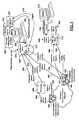
- each alarm token of an alarm report 100 is encapsulated in eXtensible Markup Language (XML) tags having a format.
- XML eXtensible Markup Language
- the format of the XML tags specify:
- Such an exemplary alarm log file 102 would include:
- encapsulating alarm tokens within XML tags enables employing standard XML parsing tools (200) in interpreting alarm log files 102 at a Network Management System (NMS) 204. Only the XML tag definitions are necessary in parsing alarm log files 102 generated in accordance with the exemplary embodiment of the invention.
- NMS Network Management System
- network management functions 204 may regard alarms to be specified by name and sub-combinations of alarm tokens reported in a single alarm log file 102, therefore reducing alarm reporting overheads.
- the use of combined alarm log files 102 in reporting alarm information greatly reduces overheads associated with log file management.
- the XML tags employed to encapsulate alarm tokens act, as shown above, as alarm log file section separation markers enabling the parser 206 to identify the body of alarm reports in the alarm log file 102.
- alarm token delimiters are no longer necessary as the XML tags may encapsulate simple and complex tokens in the same unified manner.
- the XML markers themselves may not be hardcoded in, although hardcoding XML tags into alarm reporting code (104) is not excluded as an implementation of the exemplary embodiment of the invention.
- an alarm code specific to each vendor communication network equipment type 106, may be used as a key to in querying a table 108 of alarm code indexed XML tags for use in reporting the alarm identified by the alarm code.
- the alarm code indexed alarm code table 108 enables XML tag specification independent of the communication network equipment development.
- vendor provided documentation regarding alarms reported by a particular communication network equipment 106 includes publishing the XML tags employed in respect of the alarms without a need to publish alarm codes.
- an alarm report translator 308 may be provided in respect of the particular legacy vendor communication network equipment 306, the alarm report translator 308 implementing current alarm report parsing techniques to identify the specific reported alarms in legacy alarm reports 300 and legacy alarm log files 302, and replace the current delimiters of the alarm reporting format with compliant alarm specific XML tags. Employing the alarm reporting translator 308 reduces development overheads in supporting legacy communications network equipment 306.
- network management system developers need only employ XML parsing techniques in implementing the parser 206 for the NMS 202.
- the XML parser 206 employs the published XML tags and alarm token format information, provided and updated independently of each other, to parse alarm reports 100 and alarm log files 102. Regardless of the sequence in which alarm tokens of a specific alarm are reported in a single alarm log file 102, and irrespective of the number of reported alarm tokens present in respect of each alarm report 100, specific network management functions 204 are triggered 210 based on the presence of specified groups of XML tag encapsulated alarm tokens concurrently and independent of the other network management functions 204. Therefore network management functionality 104 may be employed despite further development with respect to reported alarms (100).
- all network management functions 204 would continue to operate in responding to all previously known reported alarms (100/102) as the parser 206 disregards alarm tokens encapsulated in unknown XML tags.
- the parser 206 need only be provided with an updated XML tag publication to recognize the new XML tags and therefore the newly reported alarm. Only network management functions 204 requiring information reported via the new alarm need be updated independently of the other network management functions 204.
Landscapes
- Engineering & Computer Science (AREA)
- Theoretical Computer Science (AREA)
- Computational Linguistics (AREA)
- Health & Medical Sciences (AREA)
- Artificial Intelligence (AREA)
- Audiology, Speech & Language Pathology (AREA)
- Signal Processing (AREA)
- General Health & Medical Sciences (AREA)
- Physics & Mathematics (AREA)
- General Engineering & Computer Science (AREA)
- General Physics & Mathematics (AREA)
- Computer Networks & Wireless Communication (AREA)
- Data Exchanges In Wide-Area Networks (AREA)
- Small-Scale Networks (AREA)
- Alarm Systems (AREA)
Claims (18)
- Ein Verfahren zur Meldung eines Alarms, folgende Schritte umfassend: Verkapseln eines jeden Alarmtokens (300), welcher in Bezug auf den gemeldeten Alarm zwischen einem entsprechenden Paar von eXtensible Markup Language-Tags (XML) gemeldet wurde; Kompilieren einer Vielzahl von Alarmmeldungen in eine einzige Alarmmeldungs-Log-Datei (102); dadurch gekennzeichnet, dass es weiterhin das Verkapseln der Datei (102), welche die besagte Vielzahl von Alarmmeldungen wischen den XML-Tags, die eine Große eines Inhalts von Alarmmeldungen in der Alarmmeldungsdatelrrnmei spezifizieren, kompiliert, umfasst
- Das Verfahren nach Anspruch 1, wobei der Schritt des Verkapselns eines jeden Alarmtokens in XML-Tags von einer Kummunikationsnetzwerkausrüstung, welche einen entsprechenden Alarmzustand aufweist, gemaß einer den Alarm betreffenden XML-Tag-Spezifikation ausgeführt wird.
- Das Verfahren nach Anspruch 2, wobei die Vielzahl von XML-Tag-Spezifikationen in Bezug auf eine Vielzahl von gemeldeten Alarmen (300) mit Alarmcodes benutzt wird, wobei das Verfahren weiterhin den folgenden Schritt umfasst: Ausfuhren einer Suchanfrage basierend auf dem Alarmcode, um die XML-Tags in Bezug auf die Alarmtokens des gemeldeten Alarms zu erfassen
- Das Verfahren nach einem beliebigen der vorstehenden Ansprüche, weiterhin umfassend den Schritt der Ausgabe der Alarmmeldung (100).
- Das Verfahren nach Anspruch 1, weiterhin umfassend den Schritt des: Sendens einer einzigen Alarmmeldungs-Log-Datei (102) an ein Netzwerkverwaltungssystem (202).
- Das Verfahren nach einem beliebigen der vorstehenden Ansprüche, wobei jeder XML-Tag das Übereinstimmen mit einem Standard und einer Empfehlung spezifiziert.
- Das Verfahren nach einem beliebigen der vorstehenden Anspruche, wobei jeder XML-Tag einen Alarmtyp spezifiziert.
- Das Verfahren nach einem beliebigen der vorstehenden Anspruche, wobei jeder XML-Tag einen Alarmtoken-Namen spezifiziert.
- Ein Verfahren zum Analysieren (200) einer empfangenen Alarmmeldung (100), dadurch gekennzeichnet, dass es den folgenden Schritt umfasst. Identifizieren von Alarmtokens, aus welchen der gemeldete Alarm (300) besteht, durch Prüfen der eXtensible Markup Language-Tags (XML), welche jeden Alarmtoken verkapseln.
- Das Verfahren nach einem beliebigen der Anspruche 9 und 8, weiterhin den folgenden Schritt umfassend: Empfangen einer Registrierungsanfrage (208) von einer Netzwerkverwaltungsfunktion (204), einschließlich einer Gruppe von zu analysierenden Alarmtokens.
- Das Verfahren nach einem beliebigen der Anspruche 9 bis 10, weiterhin den folgenden Schritt umfassend: Triggern (210) der Netzwerkverwaltungsfunktion (204) durch Identifizieren der Gruppe von Alarmtokens in Bezug auf eine Alarrmmeldung (100), welche analysiert wird.
- Das Verfahren nach einem beliebigen der Anspruche 9 bis 10, weiterhin den folgenden Schritt umfassend Triggern (210) von multiplen Verwaltungsfunktionen (204), welche mit dem Parser (206) registriert werden, in Bezug auf die verschiedenen Alarmtoken-Gruppen für den gemeldeten Alarm, wenn die Kombination von Alarmtokens in Alarmtoken-Gruppen gemeldet wird
- Das Verfahren nach einem beliebigen der Ansprüche 9 bis 11, weiterhin die folgenden Schritte umfassend:a Identifizieren eines unbekannten XML-Tags durch Prüfen des gemeldeten Alarmtokens;b Analysieren des Alarmtokens; undc Entfernen des Alermtokens.
- Das Verfahren nach einem beliebigen der Anspruche 9 bis 12, weiterhin die folgenden vorausgehenden Schritte umfassend:a. Empfangen einer Alarm-Log-Datei (102); undb. Identifizieren des Inhalts von Alarmmeldungen in der Alarm-Log-Datei (102)
- Das Verfahren nach Anspruch 14, weiterhin den folgenden Schritt umfassend Identifizieren der XML-Tags, welche den Inhalt von Alarmmeldungen eingrenzen
- Das Verfahren nach einem beliebigen der Anspruche 9 bis 14, wobei jeder XML-Tag die Übereinstimmung mit einem Standard und einer Empfehlung spezifiziert.
- Das Verfahren nach einem beliebigen der Anspruche 9 bis 15, wobei jeder XML-Tag einen Alarmtyp spezifiziert.
- Das Verfahren nach einem beliebigen der Anspruche 9 bis 16, wobei jeder XML-Tag einen Alarmtoken-Namen spezifiziert
Applications Claiming Priority (2)
| Application Number | Priority Date | Filing Date | Title |
|---|---|---|---|
| US10/753,321 US7386787B2 (en) | 2004-01-09 | 2004-01-09 | Combined alarm log file reporting using XML alarm token tagging |
| US753321 | 2004-01-09 |
Publications (2)
| Publication Number | Publication Date |
|---|---|
| EP1553724A1 EP1553724A1 (de) | 2005-07-13 |
| EP1553724B1 true EP1553724B1 (de) | 2008-11-05 |
Family
ID=34592575
Family Applications (1)
| Application Number | Title | Priority Date | Filing Date |
|---|---|---|---|
| EP05300008A Expired - Lifetime EP1553724B1 (de) | 2004-01-09 | 2005-01-07 | Alarm Logfile Meldung mittels XML tagging |
Country Status (4)
| Country | Link |
|---|---|
| US (1) | US7386787B2 (de) |
| EP (1) | EP1553724B1 (de) |
| AT (1) | ATE413745T1 (de) |
| DE (1) | DE602005010760D1 (de) |
Families Citing this family (11)
| Publication number | Priority date | Publication date | Assignee | Title |
|---|---|---|---|---|
| WO2007073257A2 (en) * | 2005-12-21 | 2007-06-28 | Telefonaktiebolaget Lm Ericsson (Publ) | Network alarm management |
| US7779094B2 (en) * | 2007-08-21 | 2010-08-17 | Juniper Networks, Inc. | Event problem report bundles in XML format |
| US8732829B2 (en) * | 2008-04-14 | 2014-05-20 | Tdi Technologies, Inc. | System and method for monitoring and securing a baseboard management controller |
| US9154386B2 (en) * | 2008-06-06 | 2015-10-06 | Tdi Technologies, Inc. | Using metadata analysis for monitoring, alerting, and remediation |
| US8260751B2 (en) * | 2008-08-12 | 2012-09-04 | Tdi Technologies, Inc. | Log file time sequence stamping |
| US20100077458A1 (en) * | 2008-09-25 | 2010-03-25 | Card Access, Inc. | Apparatus, System, and Method for Responsibility-Based Data Management |
| GB201101255D0 (en) * | 2011-01-25 | 2011-03-09 | Cooper Security Ltd | Alarm apparatus |
| CN103312544B (zh) * | 2013-06-14 | 2015-12-02 | 青岛海信传媒网络技术有限公司 | 一种控制终端上报日志文件的方法、设备和系统 |
| CN108132962A (zh) * | 2017-11-17 | 2018-06-08 | 卡斯柯信号有限公司 | 基于实时码位状态自定义联锁维护台报警的方法 |
| CN113259166B (zh) * | 2021-05-27 | 2021-10-01 | 长扬科技(北京)有限公司 | 一种日志告警处理方法和装置 |
| CN115150261B (zh) * | 2022-06-29 | 2024-04-19 | 北京天融信网络安全技术有限公司 | 告警分析的方法、装置、电子设备及存储介质 |
Family Cites Families (10)
| Publication number | Priority date | Publication date | Assignee | Title |
|---|---|---|---|---|
| US5946373A (en) * | 1996-06-21 | 1999-08-31 | Mci Communications Corporation | Topology-based fault analysis in telecommunications networks |
| AU2001261141A1 (en) * | 2000-05-02 | 2001-11-12 | Sun Microsystems, Inc. | Method and system for achieving high availability in a networked computer system |
| US20020040388A1 (en) * | 2000-08-15 | 2002-04-04 | Lockheed Martin Corporation | Method and apparatus for delivering services in a constrained environment |
| US20030028577A1 (en) * | 2001-04-30 | 2003-02-06 | Chia-Chu Dorland | HTTP distributed XML-based automated event polling for network and E-service management |
| US6862698B1 (en) * | 2002-01-22 | 2005-03-01 | Cisco Technology, Inc. | Method of labeling alarms to facilitate correlating alarms in a telecommunications network |
| US7091846B2 (en) * | 2002-03-18 | 2006-08-15 | Siemens Communications, Inc. | Methods and apparatus for handling information regarding an alarm for a communication network |
| WO2003107323A1 (en) * | 2002-06-13 | 2003-12-24 | Cerisent Corporation | A subtree-structured xml database |
| FR2842969B1 (fr) * | 2002-07-25 | 2004-12-17 | Cit Alcatel | Dispositif et procede perfectionnes de traitement de donnees pour la generation d'alarmes au sein d'un reseau de communication |
| US7010565B2 (en) * | 2002-09-30 | 2006-03-07 | Sampson Scott E | Communication management using a token action log |
| US7249373B2 (en) * | 2003-01-15 | 2007-07-24 | Microsoft Corporation | Uniformly representing and transferring security assertion and security response information |
-
2004
- 2004-01-09 US US10/753,321 patent/US7386787B2/en not_active Expired - Fee Related
-
2005
- 2005-01-07 DE DE602005010760T patent/DE602005010760D1/de not_active Expired - Lifetime
- 2005-01-07 EP EP05300008A patent/EP1553724B1/de not_active Expired - Lifetime
- 2005-01-07 AT AT05300008T patent/ATE413745T1/de not_active IP Right Cessation
Also Published As
| Publication number | Publication date |
|---|---|
| US20050154977A1 (en) | 2005-07-14 |
| DE602005010760D1 (de) | 2008-12-18 |
| EP1553724A1 (de) | 2005-07-13 |
| US7386787B2 (en) | 2008-06-10 |
| ATE413745T1 (de) | 2008-11-15 |
Similar Documents
| Publication | Publication Date | Title |
|---|---|---|
| US8898294B2 (en) | Reporting the state of an apparatus to a remote computer | |
| US7051244B2 (en) | Method and apparatus for managing incident reports | |
| US6167448A (en) | Management event notification system using event notification messages written using a markup language | |
| US6757714B1 (en) | Reporting the state of an apparatus to a remote computer | |
| AU720079B2 (en) | Method and apparatus for integrated network management and systems management in communications networks | |
| EP1790130B1 (de) | Agiles system zur verwaltung von informationstechnologieinfrastrukturen | |
| US6009431A (en) | Methods and systems for generating an MIB file | |
| US8099425B2 (en) | Relational model for management information in network devices | |
| WO2007083972A1 (en) | Performing scheduled device management | |
| US7386787B2 (en) | Combined alarm log file reporting using XML alarm token tagging | |
| US20100005103A1 (en) | Distributed application management software | |
| US20020013748A1 (en) | Metadata-driven statistics processing | |
| CN102047683A (zh) | 用于电信系统中的集中管理网络单元的动态故障分析 | |
| EP1977324B1 (de) | Endgerät und verfahren zur durchführung einer auf der basis einer schwelle eingeteilten einrichtungsverwaltung | |
| JP2011210064A (ja) | ログ情報収集システム、装置、方法及びプログラム | |
| US8935388B2 (en) | Systems and methods of automated event processing | |
| WO2007086685A1 (en) | Device management scheduling based on trap mechanism | |
| US20040006619A1 (en) | Structure for event reporting in SNMP systems | |
| US20020184354A1 (en) | System and method for managing status notification messages within communication networks | |
| CN120871762B (zh) | 一种发电厂dcs数据采集接口自动化配置方法及系统 | |
| US8564409B2 (en) | Method and apparatus for operating server for RFID reader and method for operating RFID reader | |
| US7016954B2 (en) | System and method for processing unsolicited messages | |
| CN103138958B (zh) | 一种网管标准接口的实现方法 | |
| CN105721213A (zh) | 一种网络管理告警同步实现的方法及系统 | |
| CN119690726A (zh) | 故障恢复方法 |
Legal Events
| Date | Code | Title | Description |
|---|---|---|---|
| PUAI | Public reference made under article 153(3) epc to a published international application that has entered the european phase |
Free format text: ORIGINAL CODE: 0009012 |
|
| AK | Designated contracting states |
Kind code of ref document: A1 Designated state(s): AT BE BG CH CY CZ DE DK EE ES FI FR GB GR HU IE IS IT LI LT LU MC NL PL PT RO SE SI SK TR |
|
| AX | Request for extension of the european patent |
Extension state: AL BA HR LV MK YU |
|
| 17P | Request for examination filed |
Effective date: 20060113 |
|
| AKX | Designation fees paid |
Designated state(s): AT BE BG CH CY CZ DE DK EE ES FI FR GB GR HU IE IS IT LI LT LU MC NL PL PT RO SE SI SK TR |
|
| 17Q | First examination report despatched |
Effective date: 20061013 |
|
| RAP1 | Party data changed (applicant data changed or rights of an application transferred) |
Owner name: ALCATEL LUCENT |
|
| 17Q | First examination report despatched |
Effective date: 20061013 |
|
| GRAP | Despatch of communication of intention to grant a patent |
Free format text: ORIGINAL CODE: EPIDOSNIGR1 |
|
| GRAS | Grant fee paid |
Free format text: ORIGINAL CODE: EPIDOSNIGR3 |
|
| GRAA | (expected) grant |
Free format text: ORIGINAL CODE: 0009210 |
|
| AK | Designated contracting states |
Kind code of ref document: B1 Designated state(s): AT BE BG CH CY CZ DE DK EE ES FI FR GB GR HU IE IS IT LI LT LU MC NL PL PT RO SE SI SK TR |
|
| REG | Reference to a national code |
Ref country code: GB Ref legal event code: FG4D |
|
| REG | Reference to a national code |
Ref country code: CH Ref legal event code: EP |
|
| REG | Reference to a national code |
Ref country code: IE Ref legal event code: FG4D |
|
| REF | Corresponds to: |
Ref document number: 602005010760 Country of ref document: DE Date of ref document: 20081218 Kind code of ref document: P |
|
| NLV1 | Nl: lapsed or annulled due to failure to fulfill the requirements of art. 29p and 29m of the patents act | ||
| LTIE | Lt: invalidation of european patent or patent extension |
Effective date: 20081105 |
|
| PG25 | Lapsed in a contracting state [announced via postgrant information from national office to epo] |
Ref country code: LT Free format text: LAPSE BECAUSE OF FAILURE TO SUBMIT A TRANSLATION OF THE DESCRIPTION OR TO PAY THE FEE WITHIN THE PRESCRIBED TIME-LIMIT Effective date: 20081105 Ref country code: AT Free format text: LAPSE BECAUSE OF FAILURE TO SUBMIT A TRANSLATION OF THE DESCRIPTION OR TO PAY THE FEE WITHIN THE PRESCRIBED TIME-LIMIT Effective date: 20081105 Ref country code: ES Free format text: LAPSE BECAUSE OF FAILURE TO SUBMIT A TRANSLATION OF THE DESCRIPTION OR TO PAY THE FEE WITHIN THE PRESCRIBED TIME-LIMIT Effective date: 20090216 |
|
| PG25 | Lapsed in a contracting state [announced via postgrant information from national office to epo] |
Ref country code: SI Free format text: LAPSE BECAUSE OF FAILURE TO SUBMIT A TRANSLATION OF THE DESCRIPTION OR TO PAY THE FEE WITHIN THE PRESCRIBED TIME-LIMIT Effective date: 20081105 Ref country code: FI Free format text: LAPSE BECAUSE OF FAILURE TO SUBMIT A TRANSLATION OF THE DESCRIPTION OR TO PAY THE FEE WITHIN THE PRESCRIBED TIME-LIMIT Effective date: 20081105 Ref country code: IS Free format text: LAPSE BECAUSE OF FAILURE TO SUBMIT A TRANSLATION OF THE DESCRIPTION OR TO PAY THE FEE WITHIN THE PRESCRIBED TIME-LIMIT Effective date: 20090305 Ref country code: NL Free format text: LAPSE BECAUSE OF FAILURE TO SUBMIT A TRANSLATION OF THE DESCRIPTION OR TO PAY THE FEE WITHIN THE PRESCRIBED TIME-LIMIT Effective date: 20081105 Ref country code: PL Free format text: LAPSE BECAUSE OF FAILURE TO SUBMIT A TRANSLATION OF THE DESCRIPTION OR TO PAY THE FEE WITHIN THE PRESCRIBED TIME-LIMIT Effective date: 20081105 |
|
| PG25 | Lapsed in a contracting state [announced via postgrant information from national office to epo] |
Ref country code: BG Free format text: LAPSE BECAUSE OF FAILURE TO SUBMIT A TRANSLATION OF THE DESCRIPTION OR TO PAY THE FEE WITHIN THE PRESCRIBED TIME-LIMIT Effective date: 20090205 Ref country code: DK Free format text: LAPSE BECAUSE OF FAILURE TO SUBMIT A TRANSLATION OF THE DESCRIPTION OR TO PAY THE FEE WITHIN THE PRESCRIBED TIME-LIMIT Effective date: 20081105 Ref country code: EE Free format text: LAPSE BECAUSE OF FAILURE TO SUBMIT A TRANSLATION OF THE DESCRIPTION OR TO PAY THE FEE WITHIN THE PRESCRIBED TIME-LIMIT Effective date: 20081105 Ref country code: RO Free format text: LAPSE BECAUSE OF FAILURE TO SUBMIT A TRANSLATION OF THE DESCRIPTION OR TO PAY THE FEE WITHIN THE PRESCRIBED TIME-LIMIT Effective date: 20081105 Ref country code: BE Free format text: LAPSE BECAUSE OF FAILURE TO SUBMIT A TRANSLATION OF THE DESCRIPTION OR TO PAY THE FEE WITHIN THE PRESCRIBED TIME-LIMIT Effective date: 20081105 |
|
| PG25 | Lapsed in a contracting state [announced via postgrant information from national office to epo] |
Ref country code: MC Free format text: LAPSE BECAUSE OF NON-PAYMENT OF DUE FEES Effective date: 20090131 Ref country code: SE Free format text: LAPSE BECAUSE OF FAILURE TO SUBMIT A TRANSLATION OF THE DESCRIPTION OR TO PAY THE FEE WITHIN THE PRESCRIBED TIME-LIMIT Effective date: 20090205 Ref country code: PT Free format text: LAPSE BECAUSE OF FAILURE TO SUBMIT A TRANSLATION OF THE DESCRIPTION OR TO PAY THE FEE WITHIN THE PRESCRIBED TIME-LIMIT Effective date: 20090406 Ref country code: CZ Free format text: LAPSE BECAUSE OF FAILURE TO SUBMIT A TRANSLATION OF THE DESCRIPTION OR TO PAY THE FEE WITHIN THE PRESCRIBED TIME-LIMIT Effective date: 20081105 |
|
| REG | Reference to a national code |
Ref country code: CH Ref legal event code: PL |
|
| PLBE | No opposition filed within time limit |
Free format text: ORIGINAL CODE: 0009261 |
|
| STAA | Information on the status of an ep patent application or granted ep patent |
Free format text: STATUS: NO OPPOSITION FILED WITHIN TIME LIMIT |
|
| PG25 | Lapsed in a contracting state [announced via postgrant information from national office to epo] |
Ref country code: SK Free format text: LAPSE BECAUSE OF FAILURE TO SUBMIT A TRANSLATION OF THE DESCRIPTION OR TO PAY THE FEE WITHIN THE PRESCRIBED TIME-LIMIT Effective date: 20081105 |
|
| 26N | No opposition filed |
Effective date: 20090806 |
|
| PG25 | Lapsed in a contracting state [announced via postgrant information from national office to epo] |
Ref country code: LI Free format text: LAPSE BECAUSE OF NON-PAYMENT OF DUE FEES Effective date: 20090131 Ref country code: CH Free format text: LAPSE BECAUSE OF NON-PAYMENT OF DUE FEES Effective date: 20090131 |
|
| PG25 | Lapsed in a contracting state [announced via postgrant information from national office to epo] |
Ref country code: IE Free format text: LAPSE BECAUSE OF NON-PAYMENT OF DUE FEES Effective date: 20090107 |
|
| PG25 | Lapsed in a contracting state [announced via postgrant information from national office to epo] |
Ref country code: GR Free format text: LAPSE BECAUSE OF FAILURE TO SUBMIT A TRANSLATION OF THE DESCRIPTION OR TO PAY THE FEE WITHIN THE PRESCRIBED TIME-LIMIT Effective date: 20090206 |
|
| PG25 | Lapsed in a contracting state [announced via postgrant information from national office to epo] |
Ref country code: IT Free format text: LAPSE BECAUSE OF FAILURE TO SUBMIT A TRANSLATION OF THE DESCRIPTION OR TO PAY THE FEE WITHIN THE PRESCRIBED TIME-LIMIT Effective date: 20081105 |
|
| PG25 | Lapsed in a contracting state [announced via postgrant information from national office to epo] |
Ref country code: LU Free format text: LAPSE BECAUSE OF NON-PAYMENT OF DUE FEES Effective date: 20090107 |
|
| PG25 | Lapsed in a contracting state [announced via postgrant information from national office to epo] |
Ref country code: HU Free format text: LAPSE BECAUSE OF FAILURE TO SUBMIT A TRANSLATION OF THE DESCRIPTION OR TO PAY THE FEE WITHIN THE PRESCRIBED TIME-LIMIT Effective date: 20090506 |
|
| PG25 | Lapsed in a contracting state [announced via postgrant information from national office to epo] |
Ref country code: TR Free format text: LAPSE BECAUSE OF FAILURE TO SUBMIT A TRANSLATION OF THE DESCRIPTION OR TO PAY THE FEE WITHIN THE PRESCRIBED TIME-LIMIT Effective date: 20081105 |
|
| PG25 | Lapsed in a contracting state [announced via postgrant information from national office to epo] |
Ref country code: CY Free format text: LAPSE BECAUSE OF FAILURE TO SUBMIT A TRANSLATION OF THE DESCRIPTION OR TO PAY THE FEE WITHIN THE PRESCRIBED TIME-LIMIT Effective date: 20081105 |
|
| REG | Reference to a national code |
Ref country code: FR Ref legal event code: GC Effective date: 20131018 |
|
| REG | Reference to a national code |
Ref country code: FR Ref legal event code: PLFP Year of fee payment: 11 |
|
| PGFP | Annual fee paid to national office [announced via postgrant information from national office to epo] |
Ref country code: DE Payment date: 20150121 Year of fee payment: 11 |
|
| PGFP | Annual fee paid to national office [announced via postgrant information from national office to epo] |
Ref country code: GB Payment date: 20150121 Year of fee payment: 11 Ref country code: FR Payment date: 20150122 Year of fee payment: 11 |
|
| REG | Reference to a national code |
Ref country code: FR Ref legal event code: CA Effective date: 20150521 |
|
| REG | Reference to a national code |
Ref country code: FR Ref legal event code: CA Effective date: 20150521 |
|
| REG | Reference to a national code |
Ref country code: DE Ref legal event code: R119 Ref document number: 602005010760 Country of ref document: DE |
|
| GBPC | Gb: european patent ceased through non-payment of renewal fee |
Effective date: 20160107 |
|
| REG | Reference to a national code |
Ref country code: FR Ref legal event code: ST Effective date: 20160930 |
|
| PG25 | Lapsed in a contracting state [announced via postgrant information from national office to epo] |
Ref country code: GB Free format text: LAPSE BECAUSE OF NON-PAYMENT OF DUE FEES Effective date: 20160107 Ref country code: DE Free format text: LAPSE BECAUSE OF NON-PAYMENT OF DUE FEES Effective date: 20160802 |
|
| PG25 | Lapsed in a contracting state [announced via postgrant information from national office to epo] |
Ref country code: FR Free format text: LAPSE BECAUSE OF NON-PAYMENT OF DUE FEES Effective date: 20160201 |