EP1553122A1 - Process for preparing a high molecular polycondensate - Google Patents
Process for preparing a high molecular polycondensate Download PDFInfo
- Publication number
- EP1553122A1 EP1553122A1 EP04075005A EP04075005A EP1553122A1 EP 1553122 A1 EP1553122 A1 EP 1553122A1 EP 04075005 A EP04075005 A EP 04075005A EP 04075005 A EP04075005 A EP 04075005A EP 1553122 A1 EP1553122 A1 EP 1553122A1
- Authority
- EP
- European Patent Office
- Prior art keywords
- polycondensate
- polyamide
- polyester
- process according
- araldit
- Prior art date
- Legal status (The legal status is an assumption and is not a legal conclusion. Google has not performed a legal analysis and makes no representation as to the accuracy of the status listed.)
- Withdrawn
Links
Images
Classifications
-
- C—CHEMISTRY; METALLURGY
- C08—ORGANIC MACROMOLECULAR COMPOUNDS; THEIR PREPARATION OR CHEMICAL WORKING-UP; COMPOSITIONS BASED THEREON
- C08G—MACROMOLECULAR COMPOUNDS OBTAINED OTHERWISE THAN BY REACTIONS ONLY INVOLVING UNSATURATED CARBON-TO-CARBON BONDS
- C08G69/00—Macromolecular compounds obtained by reactions forming a carboxylic amide link in the main chain of the macromolecule
- C08G69/02—Polyamides derived from amino-carboxylic acids or from polyamines and polycarboxylic acids
- C08G69/04—Preparatory processes
-
- C—CHEMISTRY; METALLURGY
- C08—ORGANIC MACROMOLECULAR COMPOUNDS; THEIR PREPARATION OR CHEMICAL WORKING-UP; COMPOSITIONS BASED THEREON
- C08G—MACROMOLECULAR COMPOUNDS OBTAINED OTHERWISE THAN BY REACTIONS ONLY INVOLVING UNSATURATED CARBON-TO-CARBON BONDS
- C08G63/00—Macromolecular compounds obtained by reactions forming a carboxylic ester link in the main chain of the macromolecule
- C08G63/91—Polymers modified by chemical after-treatment
-
- C—CHEMISTRY; METALLURGY
- C08—ORGANIC MACROMOLECULAR COMPOUNDS; THEIR PREPARATION OR CHEMICAL WORKING-UP; COMPOSITIONS BASED THEREON
- C08G—MACROMOLECULAR COMPOUNDS OBTAINED OTHERWISE THAN BY REACTIONS ONLY INVOLVING UNSATURATED CARBON-TO-CARBON BONDS
- C08G64/00—Macromolecular compounds obtained by reactions forming a carbonic ester link in the main chain of the macromolecule
- C08G64/42—Chemical after-treatment
-
- C—CHEMISTRY; METALLURGY
- C08—ORGANIC MACROMOLECULAR COMPOUNDS; THEIR PREPARATION OR CHEMICAL WORKING-UP; COMPOSITIONS BASED THEREON
- C08G—MACROMOLECULAR COMPOUNDS OBTAINED OTHERWISE THAN BY REACTIONS ONLY INVOLVING UNSATURATED CARBON-TO-CARBON BONDS
- C08G69/00—Macromolecular compounds obtained by reactions forming a carboxylic amide link in the main chain of the macromolecule
- C08G69/02—Polyamides derived from amino-carboxylic acids or from polyamines and polycarboxylic acids
- C08G69/26—Polyamides derived from amino-carboxylic acids or from polyamines and polycarboxylic acids derived from polyamines and polycarboxylic acids
- C08G69/28—Preparatory processes
-
- C—CHEMISTRY; METALLURGY
- C08—ORGANIC MACROMOLECULAR COMPOUNDS; THEIR PREPARATION OR CHEMICAL WORKING-UP; COMPOSITIONS BASED THEREON
- C08G—MACROMOLECULAR COMPOUNDS OBTAINED OTHERWISE THAN BY REACTIONS ONLY INVOLVING UNSATURATED CARBON-TO-CARBON BONDS
- C08G69/00—Macromolecular compounds obtained by reactions forming a carboxylic amide link in the main chain of the macromolecule
- C08G69/44—Polyester-amides
-
- C—CHEMISTRY; METALLURGY
- C08—ORGANIC MACROMOLECULAR COMPOUNDS; THEIR PREPARATION OR CHEMICAL WORKING-UP; COMPOSITIONS BASED THEREON
- C08G—MACROMOLECULAR COMPOUNDS OBTAINED OTHERWISE THAN BY REACTIONS ONLY INVOLVING UNSATURATED CARBON-TO-CARBON BONDS
- C08G69/00—Macromolecular compounds obtained by reactions forming a carboxylic amide link in the main chain of the macromolecule
- C08G69/48—Polymers modified by chemical after-treatment
Definitions
- the invention relates to a process for preparing a high-molecular polycondensate, i.e. a polyester, a polyamide, a polyester-amide, a polycarbonate, or a block copolymer by melt-mixing a polyester, a polyamide, a polycarbonate or a mixture of these said polycondensates with a carbonylbislactam.
- Such a process is for example known from WO9847940, which publication discloses a process for preparing a high-molecular polyamide or polyester by melt mixing a polyamide or polyester having a lower molecular weight with a carbonylbislactam.
- a disadvantage of the process of WO9847940 is that during said melt mixing if applied in e.g. an extruder fluctuations in the extruder torque occur, consequently resulting in an unstable process for preparing a high-molecular polycondensate.
- Object of the present invention is to provide a process for preparing a high-molecular polycondensate, which process exhibits this disadvantage to a smaller extent.
- the process according to the invention is a more stable process than the process as disclosed in WO9847940, resulting is less fluctuations in the torque and furthermore in a more constant output of e.g. an extruder.
- An additional advantage of the process according to the invention is that strands produced by an extruder during a melt-mixing process are less susceptible to breakage than strands produced by an extruder according to the process of W09847940.
- Another additional advantage of the process according to the invention is that the polycondensate obtained with the process according to the invention shows less discoloration e.g. under severe process conditions, such as at high temperature, than polycondensate obtained with the process according to WO9847940..
- a further additional advantage of the process according to the invention is that a polycondensate with higher molecular mass can be obtained than in the case of the process according to WO9847940, or that with the process according to the invention the same molecular mass can be achieved in a shorter time.
- a polycondensate having a lower molecular weight is transferred into a high molecular polycondensate.
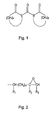
- Carbonyl bislactam is understood to be a compound having formula (I):
- n is an integer of between 3 and 15.
- This latter compound, carbonyl biscaprolactam shows the best activity in obtaining a higher molecular mass with the process according to the invention.
- the diepoxide in this application also referred to as epoxy resin, may have an aliphatic, aromatic, cycloaliphatic, araliphatic or heterocyclic structure. It contains epoxy groups as side groups or these groups form part of an alicyclic or heterocyclic ring system.
- the epoxy groups are preferably linked to the residual molecule as glycidyl groups through ether or ester bonds, or they are N-glycidyl derivatives of heterocyclic amines, amides, ureas or imides. Epoxy resins of these types are commonly known and commercially available.
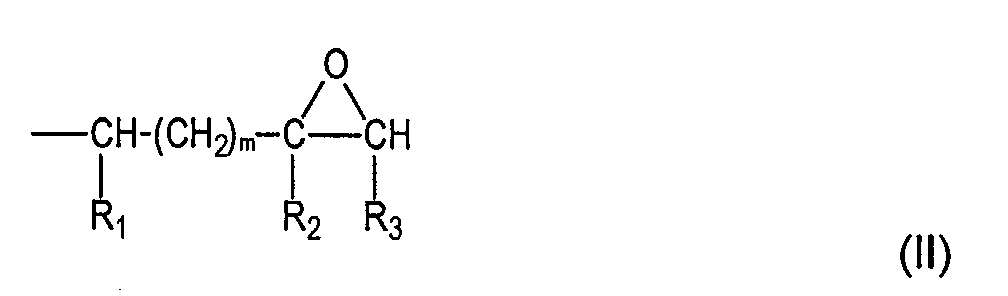
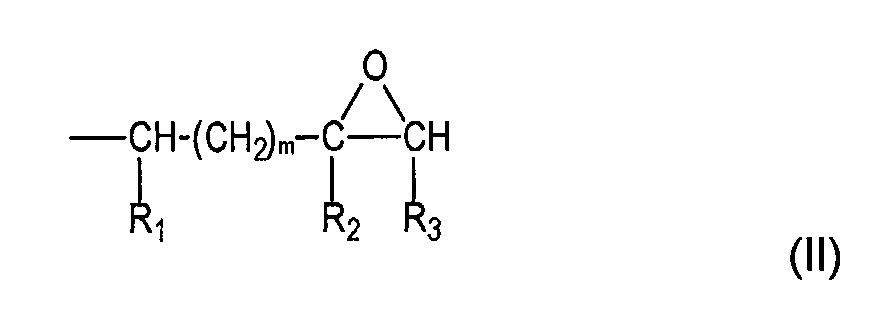
- the epoxy resins contain two epoxy radicals, typically those of formula (II)
- epoxy resins are:
- Suitable epoxy resins are typically:
- Preferred epoxy resins are diglycidyl ethers of bisphenols, typically 2,2-bis(4-hydroxyphenyl)propane (bisphenol A), bis(4-hydroxyphenyl)sulfone (bisphenol S) or mixtures of bis(ortho-/para-hydroxyphenyl)methane (bisphenol F), or 3,4-epoxy-6-methylcyclohexyl-3',4'-epoxy-6'-methylcyclohexane-carboxylate.
- bisphenol A 2,2-bis(4-hydroxyphenyl)propane
- bisphenol S bis(4-hydroxyphenyl)sulfone
- bisphenol F mixtures of bis(ortho-/para-hydroxyphenyl)methane
- More preferred difunctional epoxy resins are the solid diglycidyl ethers of bisphenol A type, e.g. Araldit® GT 6071, GT 7071, GT 7072, GT 6097 and GT 6099, the liquid epoxy resins of the bisphenol F type, e.g. Araldit® GY 281 or PY 306, the liquid glycidyl ethers of carboxylic acids, e.g. Shell® Cardura E terephthalate, Araldit® PY 284 and the liquid cycloaliphatic epoxy resins, e.g. Araldit® CY 179.
- bisphenol A type e.g. Araldit® GT 6071, GT 7071, GT 7072, GT 6097 and GT 6099
- the liquid epoxy resins of the bisphenol F type e.g. Araldit® GY 281 or PY 306
- the liquid glycidyl ethers of carboxylic acids e.g. Shell® Cardura E terephthal
- the process of the invention can be used for all types of said polycondensates as long as they comprise -OH, -NH 2 or -COOH groups.
- the polyesters include at least polyesters derived from aliphatic dicarboxylic acids and diols, polyesters from aliphatic diols and aromatic dicarboxylic acids, copolyesters that are partially aliphatic and partially aromatic and polyesters that contain units derived from cycloaliphatic dicarboxylic acids.
- polybutylene adipate polyethylene terephthalate, polyethylene naphthalate, polybutylene terephthalate, polybutylene naphthalate, copolyesters of polybutylene adipate and polybutylene terephthalate, copolyesters of polybutylene terephthalate and polyethers such as polytetrahydrofurane, the polyester derived from butanediol and cyclohexane dicarboxylic acid, polycaprolactone, polypivalolactone and polyhydroxyalkyl acids such as polylactic acid.
- polyesters are PET, PTT, PBT, PCT and corresponding copolymers or blends such as PBT/PC, PBT/PS, PBT/ASA, PBT/ABS, PET/ABS, PET/PC or also PBT/PET/PC or recyclates of said polyesters.
- PET and the copolymers thereof as well as PBT blends are preferred.
- the polyamides include at least the aliphatic polyamides, for example polyamide-4, polyamide-6, polyamide-8, polyamide-11, polyamide-12, polyamide-4,6, polyamide-6,6, polyamide-6,9, polyamide-6,1 0, polyamide-6,12, polyamides derived from an aliphatic diamine and an aromatic dicarboxylic acid, for example polyamide-4,T, polyamide-6,T, polyamide-4,I, etc., in which T stands for terephthalate and I for isophthalate, copolyamides of linear polyamides and copolyamides of an aliphatic and a partially aromatic polyamide, for example 6/6,T, 6/6,6/6,T, as well as amorphous polyamides of the Trogamid® PA 6-3-T and Grilamid® TR 55 types.
- T stands for terephthalate and I for isophthalate
- polyamide also comprises the corresponding copolymers and blends, e.g. PA/PP and PA/ABS, as well as mixtures of virgin plastic and recyclate.
- polyamides also include recyclates of polyamides. The process is particularly advantageous in the case of partially aromatic polyamides and copolyamides that require in general a relatively long polymerization time.
- PC Polycarbonate
- PC will be taken to mean virgin polycarbonate as well as polycarbonate recyclate.
- PC is typically obtained from bisphenol A and phosgene or a phosgene analog such as trichloromethylchloroformate, triphosgene or diphenylcarbonate, in the last mentioned case by condensation, usually by the addition of a suitable transesterification catalyst, such as a boron hydride, an amine such as 2-methylimidazole or a quaternary ammonium salt.
- a suitable transesterification catalyst such as a boron hydride, an amine such as 2-methylimidazole or a quaternary ammonium salt.
- other additional bisphenol components may be used, and also monomers which may be halogenated in the benzene nucleus.
- the invention is of particular importance with respect to polycondensate recyclates recovered from production waste, useful material collections, or the obligatory returnables originating from, inter alia, the packaging industry, the automotive industry or the electrical sector.
- the polycondensate recyclates are damaged by heat and/or hydrolysis in a wide variety of ways.
- these recyclates may also contain minor amounts of plastics of different structure such as polyolefins, polyurethanes, ABS or PVC.
- these recyclates may also contain as standard impurities, for example, paint residues, contact media or paint systems, metal traces, water traces, fuel residues, or inorganic salts.
- the compatibility may be enhanced by the addition of compatibilisers.
- the process according to the invention can be carried out in a simple manner using the usual melt-mixing techniques and equipment, for example by dry blending the polycondensate having a lower molecular weight, the carbonyl bislactam and the diepoxide and optionally also other additives in a solid state, for example in a tumbler drier, after which the mixture obtained is melted in a usual melt-mixing apparatus, for example a Haake kneader, a Brabender mixer or a continuous mixer as e.g. a single- or double-screw extruder.
- An extruder is machine comprising a barrel and at least one screw, commercially available from several companies as e.g.
- Maillefer, Buss and Krup-Werner&Pfleiderer Preferably a single screw extruder is used. This allows a continuous production of a high molecular polycondensate while inert conditions for preparing the high molecular polycondensate can be maintained.
- the different components can also be fed to the mixing apparatus separately, on a substrate such as silica gel, in the form of a master batch, or with a polymer powder or wax, e.g. a polyethylene wax.
- a substrate such as silica gel
- a polymer powder or wax e.g. a polyethylene wax
- Suitable temperatures for melt mixing are, for example, for: PA-6 230-270 °C; PA-6,6 260-300 °C; PBT 230-280 °C; PET 260-310 °C; PBT/PC 230-280 °C, and PC 260-320 °C
- the carbonyl bislactam and the diepoxide are added to a molten polycondensate product stream in a polymerization process.
- This can be done by adding the carbonyl bislactam and the diepoxide to the molten polycondensate in the polymerization reactor.
- Another embodiment comprises feeding the carbonyl bislactam and the diepoxide to the molten polycondensate just before it leaves the polymerization reactor, e.g. at the exit of the reactor or just before the exit of the reactor.
- the polymerization process can be carried out both batch wise or in a continuous mode. In the first case a reduction of the residence time in the reactor can be realized and thus an increase in productivity; with the continuous process the after-condensation step that is necessary usually to obtain a polyamide or polyester of sufficient molecular weight can be avoided.
- further additives and/or stabilizers may be added to the polycondensate in the process according to the invention.
- these further stabilizers are known to the skilled person and are selected according to the specific demands made of the end product.
- it is possible to add light stabilizers or also antioxidants or additional antioxidants "Plastics Additives Handbook", Ed. R. Gachter and H. Muller, Hanser Verlag, 3rd edition, 1990; in particular pages 88/89, 92,94, 251/252 and 258,259).
- modifiers such as slip agents, mould release agents, impact strength improvers, fillers or reinforcing agents such as glass fibers, flame retardants, antistatic agents and, especially for PBT/PC recyclates, modifiers that prevent transesterification during processing.
- additives and/or stabilizers include:
- Said fillers and reinforcing agents generally are added between 5 and 50 wt%, based on total mass of polycondensate and total mass of additives.
- Preferably fillers and reinforcing agents are added between 10 and 30 wt%, based on total mass of polycondensate and total mass of additives.
- the other additives as mentioned above are generally added between 0.01 and 5 wt%, based on total mass of polycondensate and total of additives.
- the other additives as mentioned above are added between 0.1 and 2 wt%, based on total mass of polycondensate and total mass of additives.
- Tetrakis(2,4-di-tert-butylphenyl)-4,4'-biphenylene-diphosphonite is a very particularly preferred diphosphonite. It is preferred to use 0.01 to 5 wt%, more preferably 0.05 to 2 wt%, of said diphosphonite, relative to amount of the polycondensate.
Landscapes
- Chemical & Material Sciences (AREA)
- Health & Medical Sciences (AREA)
- Chemical Kinetics & Catalysis (AREA)
- Medicinal Chemistry (AREA)
- Polymers & Plastics (AREA)
- Organic Chemistry (AREA)
- General Chemical & Material Sciences (AREA)
- Compositions Of Macromolecular Compounds (AREA)
- Processes Of Treating Macromolecular Substances (AREA)
- Polyamides (AREA)
- Polyesters Or Polycarbonates (AREA)
- Epoxy Resins (AREA)
- Addition Polymer Or Copolymer, Post-Treatments, Or Chemical Modifications (AREA)
- Processing And Handling Of Plastics And Other Materials For Molding In General (AREA)
- Separation, Recovery Or Treatment Of Waste Materials Containing Plastics (AREA)
- Other Resins Obtained By Reactions Not Involving Carbon-To-Carbon Unsaturated Bonds (AREA)
Abstract
The invention relates to a process for preparing a high-molecular
polycondensate, i.e. a polyester, a polyamide, a polyester-amide, a polycarbonate, or a
block copolymer by melt-mixing a polyester, a polyamide, a polycarbonate or a mixture of
a polyamide and a polyester with a carbonyl bislactam according to formula (I), in which
formula n is an integer of between 3 and 15 and a diepoxide. Preferably said diepoxide is
a compound containing epoxy radicals of formula (II), which radicals are linked direct to
carbon, oxygen, nitrogen or sulfur atoms, wherein R1 and R3 are both hydrogen, R2 is
hydrogen or methyl, and m=0, or wherein R1 and R3, taken together, are -CH2-CH2- or
-CH2-CH2-CH2-, in which case R2 is hydrogen and m=0 or 1.
The present invention results in a more stable process for the production
of a polycondensate with a high molecular mass. Furthermore the polycondensate
obtained with the process according to the invention has, even under extreme process
conditions such as high temperature, less discoloration. With the process according to the
invention a permanent increase in the molecular weight of a polycondensate is obtained in
an even faster way than with processes according to the state of the art.
Description
- The invention relates to a process for preparing a high-molecular polycondensate, i.e. a polyester, a polyamide, a polyester-amide, a polycarbonate, or a block copolymer by melt-mixing a polyester, a polyamide, a polycarbonate or a mixture of these said polycondensates with a carbonylbislactam.
- Such a process is for example known from WO9847940, which publication discloses a process for preparing a high-molecular polyamide or polyester by melt mixing a polyamide or polyester having a lower molecular weight with a carbonylbislactam.
- Disclosed are examples of increase of the molecular weight of polyamide 6 and PET by melt mixing said polymers with carbonyl biscaprolactam in a Brabender mixer.
- A disadvantage of the process of WO9847940 is that during said melt mixing if applied in e.g. an extruder fluctuations in the extruder torque occur, consequently resulting in an unstable process for preparing a high-molecular polycondensate.
- Object of the present invention is to provide a process for preparing a high-molecular polycondensate, which process exhibits this disadvantage to a smaller extent.
- This object is achieved with the process according to the invention, characterized in that during said melt mixing also a diepoxide is present. The process according to the invention is a more stable process than the process as disclosed in WO9847940, resulting is less fluctuations in the torque and furthermore in a more constant output of e.g. an extruder.
- An additional advantage of the process according to the invention is that strands produced by an extruder during a melt-mixing process are less susceptible to breakage than strands produced by an extruder according to the process of W09847940.
- Another additional advantage of the process according to the invention is that the polycondensate obtained with the process according to the invention shows less discoloration e.g. under severe process conditions, such as at high temperature, than polycondensate obtained with the process according to WO9847940..
- A further additional advantage of the process according to the invention is that a polycondensate with higher molecular mass can be obtained than in the case of the process according to WO9847940, or that with the process according to the invention the same molecular mass can be achieved in a shorter time. With the process according to the invention, a polycondensate having a lower molecular weight is transferred into a high molecular polycondensate.
- in which formula n is an integer of between 3 and 15. Preferably n = 5 to 12. More preferably n = 5. This latter compound, carbonyl biscaprolactam, shows the best activity in obtaining a higher molecular mass with the process according to the invention.

- The diepoxide, in this application also referred to as epoxy resin, according to the invention may have an aliphatic, aromatic, cycloaliphatic, araliphatic or heterocyclic structure. It contains epoxy groups as side groups or these groups form part of an alicyclic or heterocyclic ring system. The epoxy groups are preferably linked to the residual molecule as glycidyl groups through ether or ester bonds, or they are N-glycidyl derivatives of heterocyclic amines, amides, ureas or imides. Epoxy resins of these types are commonly known and commercially available.
- which radicals are linked directly to carbon, oxygen, nitrogen or sulfur atoms, wherein R1 and R3 are both hydrogen, R2 is hydrogen or methyl, and m=0, or wherein R1 and R3, taken together, are -CH2-CH2- or -CH2-CH2-CH2-, in which case R2 is hydrogen and m=0 or 1.
- Illustrative examples of epoxy resins are:
- I) Diglycidyl and di(β-methylglycidyl) esters which are obtainable by reacting a
compound containing two carboxyl groups in the molecule and epichlorohydrin or glycerol
dichlorohydrin or β-methyl epichlorohydrin. The reaction is conveniently carried out in the
presence of a base.
Compounds containing two carboxyl groups in the molecule may suitably be aliphatic dicarboxylic acids. Exemplary of these dicarboxylic acids are glutaric acid, adipic acid, pimelic acid, suberic acid, azelaic acid, sebacic acid or dimerised or trimerised linoleic acid.
Cycloaliphatic dicarboxylic acids may also be used, for example tetrahydrophthalic acid, 4-methyltetrahydrophthalic acid, hexahydrophthalic acid or 4-methylhexahydrophthalic acid. Aromatic dicarboxylic acids may also be used, including phthalic acid or isophthalic acid. - II) Diglycidyl or di(β-methylglycidyl) ethers which are obtainable by reacting a
compound containing two free alcoholic hydroxyl groups and/or phenolic hydroxyl groups
in the molecule with a suitably substituted epichlorohydrin under alkaline conditions or in
the presence of an acid catalyst and subsequent treatment with an alkali.
Ethers of this type are typically derived from acyclic alcohols such as ethylene glycol, diethylene glycol and higher poly(oxyethylene) glycols, 1,2-propanediol, or poly(oxypropylene) glycols, 1,3-propanediol, 1,4-butanediol, poly(oxytetramethylene) glycols, 1,5-pentanediol, 1,6-hexanediol, sorbitol, as well as from polyepichlorohydrins. They may also be derived from cycloaliphatic alcohols such as 1,3- or 1,4-dihydroxycyclohexane, bis(4-hydroxycyclohexyl)methane, 2,2-bis(4-hydroxycyclohexyl)propane or 1,1-bis(hydroxymethyl)cyclohex-3-ene, or they contain aromatic nuclei, such as N,N-bis(2-hydroxyethyl)aniline or p,p'-bis(2-hydroxyethylamino)diphenylmethane.
The epoxy resins may also be derived from mononuclear phenols, as from resorcinol, 1,2-benzenediol or hydroquinone, or they are based on polynuclear phenols such as 4,4'-dihydroxybiphenyl, bis(4-hydroxyphenyl)methane, 2,2-bis(4-hydroxyphenyl)propane, 2,2-bis(3,5-dibromo-4hydroxyphenyl)propane, 4,4'-dihydroxydiphenylsulfone, or 9,9-bis(4-hydroxyphenyl)fluorene, or on condensates of phenols with formaldehyde which are obtained under acid conditions, for example phenol Novolaks. - III) Bis(N-glycidyl) compounds, obtainable typically by dehydrochlorination of
the reaction products of epichlorohydrin with amines that contain two amino hydrogen
atoms. These amines are typically bis(4-aminophenyl)methane, m-xylylenediamine or
bis(4-methylaminophenyl)methane.
The bis(N-glycidyl) compounds, however, also include N,N'-diglycidyl derivatives of cycloalkylene ureas such as ethyleneurea or 1,3-propyleneurea, and N,N'-diglycidyl derivatives of hydantoins, typically of 5,5-dimethylhydantoin. - IV) Bis(S-glycidyl) compounds, typically bis(S-glycidyl) derivatives that are derived from dithiols such as 1,2-ethanedithiol or bis(4-mercaptomethylphenyl) ether.
- V) Epoxy resins containing a radical of formula (II), wherein R1 and R3 together
are -CH2-CH2- and m is 0, typically bis(2,3-epoxycyclopentyl) ether, 2,3-epoxycyclopentylglycidyl
ether or 1,2-bis(2,3-epoxycyclopentyloxy) ethane. An epoxy resin
containing a radical of formula (II), wherein R1 and R3 together are -CH2-CH2- and m is 1,
is typically 3,4-epoxycyclohexylmethyl-3,4-epoxycyclohexylcarboxy, commercially
available from e.g. Union Carbide as ERL 4221.
By reason of the preparative process, the above-mentioned difunctional epoxy resins may contain minor amounts of mono- or trifunctional groups.
Diglycidyl compounds of aromatic structure are mainly used.
It is furthermore possible to use a mixture of epoxy resins of different structure. Trifunctional or polyfunctional epoxy resins may further be added to obtain branched products. -
- Suitable epoxy resins are typically:
- a) liquid diglycidyl ethers of bisphenol A, e.g. Araldit® GY 240, Araldit® GY 250, Araldit® GY 260, Araldit® GY 266, Araldit® GY 2600, Araldit® MY 790;
- b) solid diglycidyl ethers of bisphenol A, e.g. Araldit® GT 6071, Araldit® GT 7071, Araldit® GT 7072, Araldit® GT 6063, Araldit® GT 7203, Araldit® GT 6064, Araldit® GT 7304, Araldit® GT 7004, Araldit® GT 6084, Araldit® GT 1999, Araldit® GT 7077, Araldit® GT 6097, Araldit® GT 7097, Araldit® GT 7008, Araldit® GT 6099, Araldit® GT 6608, Araldit® GT 6609, Araldit® GT 6610;
- c) liquid diglycidyl ethers of bisphenol F, e.g. Araldit® GY 281, Araldit® GY 282, Araldit® PY 302, Araldit® PY 306;
- d) solid polyglycidyl ethers of tetraphenylethane, e.g. CG Epoxy Araldit® 0163;
- e) solid and liquid polyglycidyl ethers of phenol formaldehyde Novolak, e.g. EPN 1138, EPN 1139,GY 1180, PY307;
- f) solid and liquid polyglycidyl ethers of o-cresolformaldehyde Novolak, e.g. ECN 1235, ECN 1273, ECN 1280, ECN 1299;
- g) liquid glycidyl ethers of alcohols, e.g. Shell® glycidyl ether 162, Araldit® DY 0390, Araldit® DY 0391;
- h) liquid glycidyl ethers of carboxylic acids, e.g. Shell® Cardura E terephthalate, Araldit® PY 284;
- i) solid heterocyclic epoxy resins (triglycidylisocyanurate), e.g. Araldit® PT 810;
- j) liquid cycloaliphatic epoxy resins, e.g. Araldit® CY 179;
- k) liquid N,N,O-triglycidyl ethers of p-aminophenol, e.g. Araldit® MY 0510;
- l) tetraglycidyl-4-4'-methylenebenzamine or N,N,N',N'-tetraglycidyldiaminophenylmethane, e.g. Araldit® MY 720, Araldit® MY 721.
-
- Preferred epoxy resins are diglycidyl ethers of bisphenols, typically 2,2-bis(4-hydroxyphenyl)propane (bisphenol A), bis(4-hydroxyphenyl)sulfone (bisphenol S) or mixtures of bis(ortho-/para-hydroxyphenyl)methane (bisphenol F), or 3,4-epoxy-6-methylcyclohexyl-3',4'-epoxy-6'-methylcyclohexane-carboxylate.
- More preferred difunctional epoxy resins are the solid diglycidyl ethers of bisphenol A type, e.g. Araldit® GT 6071, GT 7071, GT 7072, GT 6097 and GT 6099, the liquid epoxy resins of the bisphenol F type, e.g. Araldit® GY 281 or PY 306, the liquid glycidyl ethers of carboxylic acids, e.g. Shell® Cardura E terephthalate, Araldit® PY 284 and the liquid cycloaliphatic epoxy resins, e.g. Araldit® CY 179.
- It is preferred to use 0.01-5 wt%, more preferably 0.02-2 wt% of diepoxide, relative to amount of the polycondensate.
- In principle, the process of the invention can be used for all types of said polycondensates as long as they comprise -OH, -NH2 or -COOH groups.
- The polyesters include at least polyesters derived from aliphatic dicarboxylic acids and diols, polyesters from aliphatic diols and aromatic dicarboxylic acids, copolyesters that are partially aliphatic and partially aromatic and polyesters that contain units derived from cycloaliphatic dicarboxylic acids. Specific examples are polybutylene adipate, polyethylene terephthalate, polyethylene naphthalate, polybutylene terephthalate, polybutylene naphthalate, copolyesters of polybutylene adipate and polybutylene terephthalate, copolyesters of polybutylene terephthalate and polyethers such as polytetrahydrofurane, the polyester derived from butanediol and cyclohexane dicarboxylic acid, polycaprolactone, polypivalolactone and polyhydroxyalkyl acids such as polylactic acid.
- Particularly suitable polyesters are PET, PTT, PBT, PCT and corresponding copolymers or blends such as PBT/PC, PBT/PS, PBT/ASA, PBT/ABS, PET/ABS, PET/PC or also PBT/PET/PC or recyclates of said polyesters. Most preferred are PET and the copolymers thereof as well as PBT blends.
- The polyamides include at least the aliphatic polyamides, for example polyamide-4, polyamide-6, polyamide-8, polyamide-11, polyamide-12, polyamide-4,6, polyamide-6,6, polyamide-6,9, polyamide-6,1 0, polyamide-6,12, polyamides derived from an aliphatic diamine and an aromatic dicarboxylic acid, for example polyamide-4,T, polyamide-6,T, polyamide-4,I, etc., in which T stands for terephthalate and I for isophthalate, copolyamides of linear polyamides and copolyamides of an aliphatic and a partially aromatic polyamide, for example 6/6,T, 6/6,6/6,T, as well as amorphous polyamides of the Trogamid® PA 6-3-T and Grilamid® TR 55 types. Additional to polyamide this invention also comprises the corresponding copolymers and blends, e.g. PA/PP and PA/ABS, as well as mixtures of virgin plastic and recyclate. Furthermore polyamides also include recyclates of polyamides. The process is particularly advantageous in the case of partially aromatic polyamides and copolyamides that require in general a relatively long polymerization time.
- Polycarbonate (PC) will be taken to mean virgin polycarbonate as well as polycarbonate recyclate. PC is typically obtained from bisphenol A and phosgene or a phosgene analog such as trichloromethylchloroformate, triphosgene or diphenylcarbonate, in the last mentioned case by condensation, usually by the addition of a suitable transesterification catalyst, such as a boron hydride, an amine such as 2-methylimidazole or a quaternary ammonium salt. In addition to bisphenol A, other additional bisphenol components may be used, and also monomers which may be halogenated in the benzene nucleus.
- The invention is of particular importance with respect to polycondensate recyclates recovered from production waste, useful material collections, or the obligatory returnables originating from, inter alia, the packaging industry, the automotive industry or the electrical sector. The polycondensate recyclates are damaged by heat and/or hydrolysis in a wide variety of ways. Furthermore, these recyclates may also contain minor amounts of plastics of different structure such as polyolefins, polyurethanes, ABS or PVC. In addition, these recyclates may also contain as standard impurities, for example, paint residues, contact media or paint systems, metal traces, water traces, fuel residues, or inorganic salts. In the case of blends or mixtures, the compatibility may be enhanced by the addition of compatibilisers.
- The process according to the invention can be carried out in a simple manner using the usual melt-mixing techniques and equipment, for example by dry blending the polycondensate having a lower molecular weight, the carbonyl bislactam and the diepoxide and optionally also other additives in a solid state, for example in a tumbler drier, after which the mixture obtained is melted in a usual melt-mixing apparatus, for example a Haake kneader, a Brabender mixer or a continuous mixer as e.g. a single- or double-screw extruder. An extruder is machine comprising a barrel and at least one screw, commercially available from several companies as e.g. Maillefer, Buss and Krup-Werner&Pfleiderer. Preferably a single screw extruder is used. This allows a continuous production of a high molecular polycondensate while inert conditions for preparing the high molecular polycondensate can be maintained.
- The different components can also be fed to the mixing apparatus separately, on a substrate such as silica gel, in the form of a master batch, or with a polymer powder or wax, e.g. a polyethylene wax.
- Best results are obtained if the lower molecular polycondensate is thoroughly dried before the melt mixing.
- Suitable temperatures for melt mixing are, for example, for:
PA-6 230-270 °C; PA-6,6 260-300 °C; PBT 230-280 °C; PET 260-310 °C; PBT/PC 230-280 °C, and PC 260-320 °C - Preferably the carbonyl bislactam and the diepoxide are added to a molten polycondensate product stream in a polymerization process. This can be done by adding the carbonyl bislactam and the diepoxide to the molten polycondensate in the polymerization reactor. Another embodiment comprises feeding the carbonyl bislactam and the diepoxide to the molten polycondensate just before it leaves the polymerization reactor, e.g. at the exit of the reactor or just before the exit of the reactor. The polymerization process can be carried out both batch wise or in a continuous mode. In the first case a reduction of the residence time in the reactor can be realized and thus an increase in productivity; with the continuous process the after-condensation step that is necessary usually to obtain a polyamide or polyester of sufficient molecular weight can be avoided.
- In addition to the carbonyl bislactam and the diepoxide, further additives and/or stabilizers may be added to the polycondensate in the process according to the invention. These further stabilizers are known to the skilled person and are selected according to the specific demands made of the end product. In particular, it is possible to add light stabilizers or also antioxidants or additional antioxidants ("Plastics Additives Handbook", Ed. R. Gachter and H. Muller, Hanser Verlag, 3rd edition, 1990; in particular pages 88/89, 92,94, 251/252 and 258,259). Likewise it is possible to add further modifiers, such as slip agents, mould release agents, impact strength improvers, fillers or reinforcing agents such as glass fibers, flame retardants, antistatic agents and, especially for PBT/PC recyclates, modifiers that prevent transesterification during processing.
- Particularly suitable additives and/or stabilizers include:
- Antioxidants such as alkylated monophenols; alkylthiomethylphenols; hydroquinones
and alkylated hydroquinones; hydroxylated thiodiphenyl ethers; alkylidenebisphenols;
O-, N- and S- benzyl compounds; 1.8. hydroxybenzylated malonates;aromatic hydroxybenzyl compounds; triazine compounds;
benzylphosphonates;acylaminophenols; esters of β-(5-tert-butyl-4-hydroxy-3-methylphenyl)propionic acid with mono- or polyhydric alcohols; esters of β-(3.5-dicyclohexyl-4-hydroxyphenyl)propionic acid with mono- or polyhydric alcohol; esters of 3,5-di-tert-butyl-4hydroxyphenyl acetic acid with mono- or polyhydric alcohols; amides of β-(3,5-di-tert-butyl-4-hydroxyphenyl)propionic acid. - UV absorbers and light stabilizers such as 2-(2'-hydroxyphenyl)benzotriazoles; 2-hydroxybenzophenones;
esters of substituted and unsubstituted benzoic acids;
acrylates; nickel compounds; sterically hindered amines; oxamides; 2-(2-hydroxyphenyl)-1,3,5-triazines. - Metal deactivators.
- Phosphites, phosphonites and diphosphonites.
- Peroxide scavengers.
- Polyamide stabilizers, for example, copper salts in combination with iodides and/or phosphorus compounds and salts of divalent manganese.
- Basic co-stabilizers, for example, melamine and its derivatives and polyvinylpyrrolidone.
- Nucleating agents.
- Fillers and reinforcing agents, for example, silicates, glass fibers, glass beads, talc, kaolin, mica, barium sulfate, metal oxides and hydroxides, carbon black and graphite.
- Other additives, for example, plasticizers, lubricants, emulsifiers, pigments such as titanium dioxide, fluorescent whitening agents, flame retarders, antistatic agents, blowing agents and, in the case of recyclate blends, in particular compatibilisers, typically copolymers, more particularly block copolymers of styrene with butadiene or of styrene, butadiene and acrylonitrile.
- Further additives for epoxy resins are the compounds customarily used for curing epoxy resins, e.g. carboxylic anhydrides, polyamines, polythiols, tertiary amines.
- Benzofuranones and indolinones.
- Said fillers and reinforcing agents generally are added between 5 and 50 wt%, based on total mass of polycondensate and total mass of additives. Preferably fillers and reinforcing agents are added between 10 and 30 wt%, based on total mass of polycondensate and total mass of additives.
- The other additives as mentioned above are generally added between 0.01 and 5 wt%, based on total mass of polycondensate and total of additives. Preferably the other additives as mentioned above are added between 0.1 and 2 wt%, based on total mass of polycondensate and total mass of additives.
- Tetrakis(2,4-di-tert-butylphenyl)-4,4'-biphenylene-diphosphonite (Irgafos® PEPQ) is a very particularly preferred diphosphonite. It is preferred to use 0.01 to 5 wt%, more preferably 0.05 to 2 wt%, of said diphosphonite, relative to amount of the polycondensate.
Claims (8)
- Process for preparing a high-molecular polycondensate, i.e. a polyester, a polyamide, a polyester-amide, a polycarbonate, or a block copolymer by melt-mixing a polyester, a polyamide, a polycarbonate or a mixture of a polyamide and a polyester with a carbonyl bislactam according to formula (I)in which formula n = an integer of between 3 and 15,

characterized in that during said melt-mixing also a diepoxide is present - Process according to claim 1, wherein the diepoxide is a compound containing epoxy radicals of formula (II)which radicals are linked direct to carbon, oxygen, nitrogen or sulfur atoms, wherein R1 and R3 are both hydrogen, R2 is hydrogen or methyl, and m=0, or wherein R1 and R3, taken together, are -CH2-CH2- or -CH2-CH2-CH2-, in which case R2 is hydrogen and m=0 or 1.
- Process according to claim 1, where in formula (I) n=5
- Process according to any one of claims 1-3, wherein use is made of 0.1 to 4 wt.% of the bislactam, relative to amount of the polycondensate.
- Process according to any one of claims 1-4, wherein use is made of 0.01-5 wt.% of diepoxide, relative to amount of the polycondensate.
- Process according to any one of claims 1-5, wherein during the melt mixing additionally an additive and/or a filler and/or a reinforcing agent and/or a stabilizer is added.
- Process according to any one of claims 1-6, wherein the melt mixing is done in an extruder.
- Process according to any one of claims 1-7, wherein the melt mixing is done in a single screw extruder.
Priority Applications (8)
| Application Number | Priority Date | Filing Date | Title |
|---|---|---|---|
| EP04075005A EP1553122A1 (en) | 2004-01-08 | 2004-01-08 | Process for preparing a high molecular polycondensate |
| AT04804468T ATE395372T1 (en) | 2004-01-08 | 2004-12-29 | METHOD FOR PRODUCING A HIGH MOLECULAR CONDENSATE |
| PCT/EP2004/014886 WO2005068532A1 (en) | 2004-01-08 | 2004-12-29 | Process for preparing a high molecular polycondensate |
| EP04804468A EP1701990B1 (en) | 2004-01-08 | 2004-12-29 | Process for preparing a high molecular polycondensate |
| US10/584,863 US20070161773A1 (en) | 2004-01-08 | 2004-12-29 | Process for preparing a high molecular polycondensate |
| DE602004013836T DE602004013836D1 (en) | 2004-01-08 | 2004-12-29 | METHOD FOR PRODUCING A HIGH-MOLECULAR CONDENSATE |
| JP2006548185A JP2007522273A (en) | 2004-01-08 | 2004-12-29 | Preparation method of polymer polycondensate |
| CNA2004800399726A CN1902255A (en) | 2004-01-08 | 2004-12-29 | Process for preparing a high molecular polycondensate |
Applications Claiming Priority (1)
| Application Number | Priority Date | Filing Date | Title |
|---|---|---|---|
| EP04075005A EP1553122A1 (en) | 2004-01-08 | 2004-01-08 | Process for preparing a high molecular polycondensate |
Publications (1)
| Publication Number | Publication Date |
|---|---|
| EP1553122A1 true EP1553122A1 (en) | 2005-07-13 |
Family
ID=34585980
Family Applications (2)
| Application Number | Title | Priority Date | Filing Date |
|---|---|---|---|
| EP04075005A Withdrawn EP1553122A1 (en) | 2004-01-08 | 2004-01-08 | Process for preparing a high molecular polycondensate |
| EP04804468A Expired - Lifetime EP1701990B1 (en) | 2004-01-08 | 2004-12-29 | Process for preparing a high molecular polycondensate |
Family Applications After (1)
| Application Number | Title | Priority Date | Filing Date |
|---|---|---|---|
| EP04804468A Expired - Lifetime EP1701990B1 (en) | 2004-01-08 | 2004-12-29 | Process for preparing a high molecular polycondensate |
Country Status (7)
| Country | Link |
|---|---|
| US (1) | US20070161773A1 (en) |
| EP (2) | EP1553122A1 (en) |
| JP (1) | JP2007522273A (en) |
| CN (1) | CN1902255A (en) |
| AT (1) | ATE395372T1 (en) |
| DE (1) | DE602004013836D1 (en) |
| WO (1) | WO2005068532A1 (en) |
Cited By (2)
| Publication number | Priority date | Publication date | Assignee | Title |
|---|---|---|---|---|
| DE102007056530A1 (en) | 2007-11-23 | 2009-05-28 | Lanxess Deutschland Gmbh | Thermoplastic molding material, useful to produce monofilaments, comprises a polyamide, a multifunctional reagent increasing the viscosity of polyamide and an elastomer modifier |
| DE102007057719A1 (en) | 2007-11-30 | 2009-06-10 | Lanxess Deutschland Gmbh | Thermoplastic molding material useful for making monofilaments comprises a polyamide, a crosslinking agent and an impact modifier |
Families Citing this family (11)
| Publication number | Priority date | Publication date | Assignee | Title |
|---|---|---|---|---|
| US8080617B2 (en) * | 2005-06-16 | 2011-12-20 | Dow Global Technologies Llc | Aliphatic polyester-amide compositions and a process for producing the same |
| CA2737769C (en) | 2008-09-22 | 2014-02-04 | Medtronic, Inc. | Linear polyesteramides from aminophenolic esters |
| US9839628B2 (en) | 2009-06-01 | 2017-12-12 | Tyrx, Inc. | Compositions and methods for preventing sternal wound infections |
| EP2365022B1 (en) * | 2010-03-11 | 2012-10-03 | Gambro Lundia AB | Process for preparing graft copolymers by reactive blending |
| IT1401724B1 (en) * | 2010-08-26 | 2013-08-02 | Univ Pisa | COPOLYMERS BASED ON BIODEGRADABLE POLYESTERS AND AROMATIC POLYCARBONATES. |
| CN102079814B (en) * | 2010-12-21 | 2012-05-30 | 北京化工大学 | Process for the preparation of aliphatic polyester amides containing short polyamide segments |
| CN104710623B (en) * | 2013-12-11 | 2017-05-10 | 北京化工大学 | Preparation method of biodegradable polyesteramide modified polylactic acid |
| WO2019067517A1 (en) | 2017-09-28 | 2019-04-04 | E. I. Du Pont De Nemours And Company | Polymerization process |
| CN112094401B (en) * | 2020-09-27 | 2021-10-19 | 江南大学 | Degradable polyester and preparation method and application thereof |
| KR102382945B1 (en) | 2021-09-03 | 2022-04-08 | 주식회사 한나노텍 | A matting polymer composition with excellent weather resistance and impact resistance, and matte sheet prepared therefrom |
| CN115181416B (en) * | 2022-07-15 | 2023-12-22 | 华润化学材料科技股份有限公司 | Polyamide engineering plastic and preparation method and application thereof |
Citations (14)
| Publication number | Priority date | Publication date | Assignee | Title |
|---|---|---|---|---|
| GB693645A (en) * | 1950-07-28 | 1953-07-01 | Wingfoot Corp | Method of increasing the molecular weight of polyesters, polyesteramides or polyamides or polyamides |
| JPS61171732A (en) * | 1985-01-23 | 1986-08-02 | Unitika Ltd | Production of polyamide having high polymerization degree |
| US4663399A (en) * | 1985-08-22 | 1987-05-05 | General Electric Company | Polycarbonate-polyether block copolymers, polymer blends containing same and intermediates for the production thereof |
| EP0314303A2 (en) * | 1987-10-02 | 1989-05-03 | Polyplastics Co. Ltd. | Resin modifier and modified resin |
| EP0374517A2 (en) * | 1988-12-19 | 1990-06-27 | General Electric Company | Polyphenylene ether-polyamide copolymers from epoxytriazine-capped polyphenylene ethers |
| JPH07179589A (en) * | 1993-12-22 | 1995-07-18 | Teijin Ltd | Method for producing polyetherester elastomer |
| EP0710684A2 (en) * | 1994-11-02 | 1996-05-08 | MITSUI TOATSU CHEMICALS, Inc. | Preparation process of polyhydroxycarboxylic acid |
| WO1996034909A1 (en) * | 1995-05-04 | 1996-11-07 | Dsm N.V. | High-molecular polyamide |
| JPH09136947A (en) * | 1995-11-17 | 1997-05-27 | Teijin Ltd | Method for producing high-polymerization aliphatic polyester |
| US5807966A (en) * | 1994-06-22 | 1998-09-15 | Ciba Specialty Chemicals Corporation | Increase in molecular weight of polycondensates |
| US6028129A (en) * | 1998-01-26 | 2000-02-22 | Ciba Specialty Chemicals Corporation | Increasing the molecular weight of polycondensates and stabilizing them, using diepoxides of sterically hindered amines |
| JP2000095861A (en) * | 1998-09-21 | 2000-04-04 | Unitika Ltd | Nylon 6 resin composition |
| US6228980B1 (en) * | 1997-04-22 | 2001-05-08 | Dsm N.V. | High-molecular polyamide |
| US20030152728A1 (en) * | 2002-01-23 | 2003-08-14 | Scimed Life Systems, Inc. | Medical devices employing chain extended polymers |
Family Cites Families (3)
| Publication number | Priority date | Publication date | Assignee | Title |
|---|---|---|---|---|
| US4857603A (en) * | 1988-02-29 | 1989-08-15 | Allied-Signal Inc. | Chain extension of polyethylene terephthalate with polyacyllactams |
| JPH07113043A (en) * | 1993-08-27 | 1995-05-02 | Daicel Chem Ind Ltd | Thermoplastic resin composition |
| AUPR005000A0 (en) * | 2000-09-12 | 2000-10-05 | Polymers Australia Pty Limited | Polyster resins with improved properties |
-
2004
- 2004-01-08 EP EP04075005A patent/EP1553122A1/en not_active Withdrawn
- 2004-12-29 WO PCT/EP2004/014886 patent/WO2005068532A1/en not_active Ceased
- 2004-12-29 CN CNA2004800399726A patent/CN1902255A/en active Pending
- 2004-12-29 AT AT04804468T patent/ATE395372T1/en not_active IP Right Cessation
- 2004-12-29 EP EP04804468A patent/EP1701990B1/en not_active Expired - Lifetime
- 2004-12-29 JP JP2006548185A patent/JP2007522273A/en active Pending
- 2004-12-29 US US10/584,863 patent/US20070161773A1/en not_active Abandoned
- 2004-12-29 DE DE602004013836T patent/DE602004013836D1/en not_active Expired - Lifetime
Patent Citations (14)
| Publication number | Priority date | Publication date | Assignee | Title |
|---|---|---|---|---|
| GB693645A (en) * | 1950-07-28 | 1953-07-01 | Wingfoot Corp | Method of increasing the molecular weight of polyesters, polyesteramides or polyamides or polyamides |
| JPS61171732A (en) * | 1985-01-23 | 1986-08-02 | Unitika Ltd | Production of polyamide having high polymerization degree |
| US4663399A (en) * | 1985-08-22 | 1987-05-05 | General Electric Company | Polycarbonate-polyether block copolymers, polymer blends containing same and intermediates for the production thereof |
| EP0314303A2 (en) * | 1987-10-02 | 1989-05-03 | Polyplastics Co. Ltd. | Resin modifier and modified resin |
| EP0374517A2 (en) * | 1988-12-19 | 1990-06-27 | General Electric Company | Polyphenylene ether-polyamide copolymers from epoxytriazine-capped polyphenylene ethers |
| JPH07179589A (en) * | 1993-12-22 | 1995-07-18 | Teijin Ltd | Method for producing polyetherester elastomer |
| US5807966A (en) * | 1994-06-22 | 1998-09-15 | Ciba Specialty Chemicals Corporation | Increase in molecular weight of polycondensates |
| EP0710684A2 (en) * | 1994-11-02 | 1996-05-08 | MITSUI TOATSU CHEMICALS, Inc. | Preparation process of polyhydroxycarboxylic acid |
| WO1996034909A1 (en) * | 1995-05-04 | 1996-11-07 | Dsm N.V. | High-molecular polyamide |
| JPH09136947A (en) * | 1995-11-17 | 1997-05-27 | Teijin Ltd | Method for producing high-polymerization aliphatic polyester |
| US6228980B1 (en) * | 1997-04-22 | 2001-05-08 | Dsm N.V. | High-molecular polyamide |
| US6028129A (en) * | 1998-01-26 | 2000-02-22 | Ciba Specialty Chemicals Corporation | Increasing the molecular weight of polycondensates and stabilizing them, using diepoxides of sterically hindered amines |
| JP2000095861A (en) * | 1998-09-21 | 2000-04-04 | Unitika Ltd | Nylon 6 resin composition |
| US20030152728A1 (en) * | 2002-01-23 | 2003-08-14 | Scimed Life Systems, Inc. | Medical devices employing chain extended polymers |
Non-Patent Citations (4)
| Title |
|---|
| DATABASE WPI Section Ch Week 198637, Derwent World Patents Index; Class A23, AN 1986-242469, XP002321387 * |
| DATABASE WPI Section Ch Week 199537, Derwent World Patents Index; Class A23, AN 1995-280977, XP002321390 * |
| DATABASE WPI Section Ch Week 199731, Derwent World Patents Index; Class A23, AN 1997-337101, XP002321389 * |
| DATABASE WPI Section Ch Week 200027, Derwent World Patents Index; Class A23, AN 2000-313030, XP002321388 * |
Cited By (2)
| Publication number | Priority date | Publication date | Assignee | Title |
|---|---|---|---|---|
| DE102007056530A1 (en) | 2007-11-23 | 2009-05-28 | Lanxess Deutschland Gmbh | Thermoplastic molding material, useful to produce monofilaments, comprises a polyamide, a multifunctional reagent increasing the viscosity of polyamide and an elastomer modifier |
| DE102007057719A1 (en) | 2007-11-30 | 2009-06-10 | Lanxess Deutschland Gmbh | Thermoplastic molding material useful for making monofilaments comprises a polyamide, a crosslinking agent and an impact modifier |
Also Published As
| Publication number | Publication date |
|---|---|
| EP1701990A1 (en) | 2006-09-20 |
| WO2005068532A1 (en) | 2005-07-28 |
| JP2007522273A (en) | 2007-08-09 |
| DE602004013836D1 (en) | 2008-06-26 |
| US20070161773A1 (en) | 2007-07-12 |
| CN1902255A (en) | 2007-01-24 |
| ATE395372T1 (en) | 2008-05-15 |
| EP1701990B1 (en) | 2008-05-14 |
Similar Documents
| Publication | Publication Date | Title |
|---|---|---|
| EP1701990B1 (en) | Process for preparing a high molecular polycondensate | |
| KR100383188B1 (en) | How to increase the molecular weight of polycondensates | |
| JP4491848B2 (en) | Method for producing polyamide | |
| EP0770104B1 (en) | Increase in molecular weight of polycondensates | |
| US9090739B2 (en) | Polyamide and polyamide composition | |
| CN104937034A (en) | Polyamide composition and molded article | |
| JP7440996B2 (en) | Polyamide compositions and molded products | |
| CN102203167A (en) | Modified polyamide, process for its preparation and articles obtained from said polyamide | |
| TW482781B (en) | Increasing the molecular weight of polycondensates | |
| JP5959325B2 (en) | Polyamide composition and molded body obtained by molding polyamide composition | |
| JP2011111576A (en) | Copolyamide | |
| KR101835451B1 (en) | Method for producing polyamide resin | |
| JP6034074B2 (en) | Copolyamide | |
| CA2111905C (en) | Increasing the molecular weight of polyamides | |
| EP0846138B1 (en) | Process for the manufacture of nylon compositions with improved flow | |
| JP2019127500A (en) | Polyamide composition and molded article | |
| JP2004507568A (en) | Method for producing a branched polymer | |
| JP2000504762A (en) | Increasing the molecular weight of polyamide | |
| JP2002501957A (en) | Batch method for producing polyamide from aminonitrile | |
| JP2012180479A (en) | Polyamide resin composition and molded article | |
| JP5524538B2 (en) | Polyamide sheet | |
| EP1664181B1 (en) | Process for improving color of polycondensates | |
| JPH07188409A (en) | Method for producing polyamide resin | |
| JP6042121B2 (en) | Polyamide resin composition and molded product | |
| JPH0232128A (en) | Production of high-viscosity crosslinked polyamide |
Legal Events
| Date | Code | Title | Description |
|---|---|---|---|
| PUAI | Public reference made under article 153(3) epc to a published international application that has entered the european phase |
Free format text: ORIGINAL CODE: 0009012 |
|
| AK | Designated contracting states |
Kind code of ref document: A1 Designated state(s): AT BE BG CH CY CZ DE DK EE ES FI FR GB GR HU IE IT LI LU MC NL PT RO SE SI SK TR |
|
| AX | Request for extension of the european patent |
Extension state: AL LT LV MK |
|
| AKX | Designation fees paid | ||
| REG | Reference to a national code |
Ref country code: DE Ref legal event code: 8566 |
|
| STAA | Information on the status of an ep patent application or granted ep patent |
Free format text: STATUS: THE APPLICATION IS DEEMED TO BE WITHDRAWN |
|
| 18D | Application deemed to be withdrawn |
Effective date: 20060114 |