EP1550282B1 - Arrangement and method for session control in wireless communication network - Google Patents
Arrangement and method for session control in wireless communication network Download PDFInfo
- Publication number
- EP1550282B1 EP1550282B1 EP03756551A EP03756551A EP1550282B1 EP 1550282 B1 EP1550282 B1 EP 1550282B1 EP 03756551 A EP03756551 A EP 03756551A EP 03756551 A EP03756551 A EP 03756551A EP 1550282 B1 EP1550282 B1 EP 1550282B1
- Authority
- EP
- European Patent Office
- Prior art keywords
- packet
- arrangement
- application
- traffic
- pdp contexts
- Prior art date
- Legal status (The legal status is an assumption and is not a legal conclusion. Google has not performed a legal analysis and makes no representation as to the accuracy of the status listed.)
- Expired - Lifetime
Links
- 238000000034 method Methods 0.000 title claims description 34
- 238000004891 communication Methods 0.000 title claims description 9
- 238000007689 inspection Methods 0.000 claims description 19
- 230000002452 interceptive effect Effects 0.000 claims description 8
- 230000000977 initiatory effect Effects 0.000 claims description 7
- 238000001514 detection method Methods 0.000 claims description 5
- 230000004044 response Effects 0.000 claims description 5
- 238000004590 computer program Methods 0.000 claims description 3
- 238000012546 transfer Methods 0.000 claims description 3
- 230000003213 activating effect Effects 0.000 claims 3
- 102100022888 KN motif and ankyrin repeat domain-containing protein 2 Human genes 0.000 description 15
- 238000010586 diagram Methods 0.000 description 13
- 238000007726 management method Methods 0.000 description 7
- 230000004913 activation Effects 0.000 description 6
- 101001094649 Homo sapiens Popeye domain-containing protein 3 Proteins 0.000 description 4
- 101000608234 Homo sapiens Pyrin domain-containing protein 5 Proteins 0.000 description 4
- 101000578693 Homo sapiens Target of rapamycin complex subunit LST8 Proteins 0.000 description 4
- 102100039889 Pyrin domain-containing protein 5 Human genes 0.000 description 4
- 230000008569 process Effects 0.000 description 4
- 230000007246 mechanism Effects 0.000 description 3
- 238000013459 approach Methods 0.000 description 2
- 230000008878 coupling Effects 0.000 description 2
- 238000010168 coupling process Methods 0.000 description 2
- 238000005859 coupling reaction Methods 0.000 description 2
- 239000000543 intermediate Substances 0.000 description 2
- 238000012545 processing Methods 0.000 description 2
- 230000011664 signaling Effects 0.000 description 2
- 230000008901 benefit Effects 0.000 description 1
- 230000005540 biological transmission Effects 0.000 description 1
- 230000009849 deactivation Effects 0.000 description 1
- 238000005516 engineering process Methods 0.000 description 1
- 238000013507 mapping Methods 0.000 description 1
- 238000012544 monitoring process Methods 0.000 description 1
- 230000003287 optical effect Effects 0.000 description 1
- 238000012913 prioritisation Methods 0.000 description 1
- 238000013468 resource allocation Methods 0.000 description 1
- 230000005641 tunneling Effects 0.000 description 1
Images


Classifications
-
- H—ELECTRICITY
- H04—ELECTRIC COMMUNICATION TECHNIQUE
- H04L—TRANSMISSION OF DIGITAL INFORMATION, e.g. TELEGRAPHIC COMMUNICATION
- H04L12/00—Data switching networks
- H04L12/54—Store-and-forward switching systems
- H04L12/56—Packet switching systems
-
- H—ELECTRICITY
- H04—ELECTRIC COMMUNICATION TECHNIQUE
- H04L—TRANSMISSION OF DIGITAL INFORMATION, e.g. TELEGRAPHIC COMMUNICATION
- H04L65/00—Network arrangements, protocols or services for supporting real-time applications in data packet communication
- H04L65/1066—Session management
- H04L65/1069—Session establishment or de-establishment
-
- H—ELECTRICITY
- H04—ELECTRIC COMMUNICATION TECHNIQUE
- H04L—TRANSMISSION OF DIGITAL INFORMATION, e.g. TELEGRAPHIC COMMUNICATION
- H04L65/00—Network arrangements, protocols or services for supporting real-time applications in data packet communication
- H04L65/1066—Session management
- H04L65/1101—Session protocols
-
- H—ELECTRICITY
- H04—ELECTRIC COMMUNICATION TECHNIQUE
- H04L—TRANSMISSION OF DIGITAL INFORMATION, e.g. TELEGRAPHIC COMMUNICATION
- H04L65/00—Network arrangements, protocols or services for supporting real-time applications in data packet communication
- H04L65/1066—Session management
- H04L65/1101—Session protocols
- H04L65/1104—Session initiation protocol [SIP]
-
- H—ELECTRICITY
- H04—ELECTRIC COMMUNICATION TECHNIQUE
- H04W—WIRELESS COMMUNICATION NETWORKS
- H04W76/00—Connection management
- H04W76/10—Connection setup
- H04W76/15—Setup of multiple wireless link connections
-
- H—ELECTRICITY
- H04—ELECTRIC COMMUNICATION TECHNIQUE
- H04W—WIRELESS COMMUNICATION NETWORKS
- H04W76/00—Connection management
- H04W76/10—Connection setup
- H04W76/12—Setup of transport tunnels
-
- H—ELECTRICITY
- H04—ELECTRIC COMMUNICATION TECHNIQUE
- H04W—WIRELESS COMMUNICATION NETWORKS
- H04W76/00—Connection management
- H04W76/30—Connection release
- H04W76/34—Selective release of ongoing connections
-
- H—ELECTRICITY
- H04—ELECTRIC COMMUNICATION TECHNIQUE
- H04W—WIRELESS COMMUNICATION NETWORKS
- H04W84/00—Network topologies
- H04W84/02—Hierarchically pre-organised networks, e.g. paging networks, cellular networks, WLAN [Wireless Local Area Network] or WLL [Wireless Local Loop]
- H04W84/04—Large scale networks; Deep hierarchical networks
Definitions
- This invention relates to session control in communication networks, and particularly (though not exclusively) wireless networks such as UMTS 3G ( U niversal M obile T elecommunication System 3 rd G eneration) mobile wireless networks.
- wireless networks such as UMTS 3G ( U niversal M obile T elecommunication System 3 rd G eneration) mobile wireless networks.
- the UMTS standards [1] define 4 'classes' of packet flows, based on 4 categories of applications:
- the corollary of this is that the wireless network needs to know when particular services are being used, so that it can correctly route data packets for each session over the relevant packet session over the air.
- the UMTS standards imply a tight coupling between the applications and the mobile device, whereby the applications inform the mobile device (UE) that they are starting up, and what are the QoS characteristics of the traffic they will be sending / receiving.
- This will either be a direct, software interface in the case of integrated mobile devices as in standards [3] or can be an AT command interface as in standards [2].
- US6452915 describes a mechanism that identifies a packet flow by examining the same packet flow, followed by a mechanism for traffic flow treatment in terms of prioritization and resource allocation of packets within one large resource pool.
- Stateful inspection is an existing, well-known technology, used in Internet firewalls - a firewall blocks packets coming into or out of a network, except those explicitly allowed. Stateful inspection is a process whereby the firewall inspects packets flowing into it, implies the state of an application-specific packet session via the control packets, then allows data packets for that session to flow through the firewall, if the policy for flows of that type allow it.
- TCP T ransmission C ontrol P rotocol
- IP I nternet P rotocol
- FTP F ile T ransfer P rotocol
- TCP connection request packets packets originating from inside the firewall with the 'SYN' flag set
- TCP '3-way handshake' as explained, for example, in Chapter 18 of "TCP/IP Illustrated, Volume 1, The Protocols” authored by W. Richard Stevens and published by Addison Wesley
- opening up the source and destination IP addresses and TCP port numbers forwarding on the packet to the outside and then monitoring the subsequent TCP control packets to ensure the connection came up and also to catch the eventual tear-down of the TCP session.
- UDP-based U ser D atagram P rotocol-based
- VoIP voice over IP
- incoming VoIP call-control messages are inspected and parsed to reveal the VoIP end-points (IP address and port number) and allow voice data packets through the firewall.
- a known Internet network firewall 10 intermediates between an inside host 20 and an outside host 30. Operation of the firewall 10 is as follows:
- a known Internet network firewall 110 intermediates VoIP data flow between a PC ( P ersonal C omputer) 120 and an Internet Protocol telephone set 130. Operation of the firewall 110 is as follows:
- firewalls 10 and 110 are known only in fixed-line, i.e., wired, applications.
- the UMTS standards define 4 'classes' of packet flows, based on 4 categories of applications (conversational class - e.g., interactive voice / video; streaming class - e.g., streaming media such as Internet radio, or streaming video; interactive class - e.g., web browsing; and background class - e.g., email download).
- conversational class - e.g., interactive voice / video
- streaming class - e.g., streaming media such as Internet radio, or streaming video
- interactive class - e.g., web browsing
- background class - e.g., email download
- the wireless network therefore needs to know when particular services are being used, so that it can correctly route data packets for each session over the relevant packet session over the air.
- the UMTS standards imply a tight coupling between the applications and the mobile device, whereby the applications inform the mobile device (UE) that they are starting up, and what are the QoS characteristics of the traffic they will be sending / receiving.
- This will either be a direct, software interface in the case of integrated mobile devices as in standards, or can be an AT command interface as in standards.
- the present invention overcomes this drawback by applying Stateful Inspection to UMTS Session Management.
- stateful inspection is used in a UTRA ( U MTS T errestrial R adio A ccess) system to examine the data packets, to detect the existence of different application-specific packet flows, which then allows packet-sessions, called PDP ( P acket D ata P rotocol) contexts in the UMTS standards, to be created over the air with the required QoS parameters.
- UTRA U MTS T errestrial R adio A ccess
- the UE brings up a default PDP context for basic data service; all packets are then inspected, both incoming and outgoing, and application-specific traffic is used to open-up dedicated PDP contexts to carry that traffic.
- a PC 210 (generally referred to as TE - T erminal E quipment - in UMTS terminology) is coupled, via R interface 215, to UMTS UE 220 (containing a USIM - not shown - which together with the UE forms MT - Mobile Terminal - in UMTS terminology).
- the UE 220 is coupled through the UMTS radio access and core network 230 via at least a default PDP context 240.
- the UMTS radio access and core network 230 is coupled via a Gi reference point 250) to the Internet 260, containing an email server 270.
- the UE 220 contains a stateful inspection session monitor 280.
- the stateful inspection session monitor 280 monitors packets 290 on the default PDP context 240, looking for email download control messages.
- the UE 220 processes the data packets 290 through RLC ( R adio Li nk C ontroller) 300, MAC (M edium A ccess C ontroller) 310 and CDMA (T ime-Division C ode- D ivision- M ultiple- A ccess) physical air interface 320 in known manner.
- RLC R adio Li nk C ontroller
- MAC M edium A ccess C ontroller
- CDMA T ime-Division C ode- D ivision- M ultiple- A ccess
- the stateful inspection session monitor 280 detects an email download control message 330, it causes a session manager 340 to activate a secondary PDP context 350.
- the email download control packet(s) are processed through RRC ( R adio R esource C ontroller) 360, RLC 370, MAC 380 and CDMA physical air interface 390 in known manner.
- RRC R adio R esource C ontroller
- data packets 290 and email packets 400 are processed in parallel in separate PDP contexts as follows:
- the email download session is conducted between the email server 270 and an email program 410 (running on the PC 210) via the PDP context 350, while the default PDP context 240 continues to process data packets as before.
- FIG. 8 is a VoIP session initiation using SIP (as in 3GPP RFC - Request For Comments - 3261 "SIP: Session Initiation Protocol", June 2002) which is mapped into a conversational class PDP context to carry the VoIP traffic and an interactive class PDP context to carry the VoIP signalling.
- SIP Session Initiation Protocol
- the stateful inspection session monitor 280 monitors packets 290 on the default PDP context 240, looking for VoIP session control packet(s).
- the UE 220 processes the data packets 290 through RLC ( R adio L ink C ontroller) 300, MAC ( M edium A ccess C ontroller) 310 and CDMA ( T ime-Division C ode- D ivision- M ultiple- A ccess) physical air interface 320 in known manner.
- RLC R adio L ink C ontroller
- MAC M edium A ccess C ontroller
- CDMA T ime-Division C ode- D ivision- M ultiple- A ccess
- the stateful inspection session monitor 280 detects VoIP session control packet(s) 420, it causes session manager 340 to activate a secondary PDP context 350.
- the VoIP session control packet (s) are processed through RRC ( R adio R esource C ontroller) 360, RLC 370, MAC 380 and CDMA processor 390 in known manner.
- RRC R adio R esource C ontroller
- the QoS parameters required for a particular VoIP session can be derived or inferred from the SIP signalling.
- a request to set up a session is contained in an INVITE message, e.g.
- the response message indicating answer to this might be:
- FIG. 11 viewed in the context of the UTRA system of FIG. 3 or FIG. 7 , the VoIP example described above in relation to FIG. 8, FIG. 9 and FIG. 10 can be considered as:
- packet sessions are created between the UE and the SGSN (via the Node B - not shown - and RNC 230A) and forwarded on through to the GGSN, where the various packet sessions are bonded back together and connected to the target network (e.g. the Internet) in a single packet stream.
- the target network e.g. the Internet
- 'conversational' class e.g., Video over IP
- traffic may be based on originated calls controlled by SIP or H.323 protocol
- 'streaming' class e.g., carrying streaming media traffic controlled by Real Time Streaming Protocol
- 'interactive' class e.g., carrying POP3 or SMTP traffic.
- 'background' class e.g., carrying POP3 or SMTP traffic.
- stateful inspector and packet filter entities exist within the UE; these may be implemented in software, firmware or hardware.
- the stateful inspector fits in the uplink and downlink packet flow, the packet filter fits in the uplink packet flow (in order to control the split of uplink packets into the correct PDP context).
- a session management software entity exists within the UE; it controls the activation and de-activation of PDP contexts.
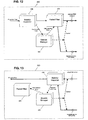
- the relationship between stateful inspector, packet filter and session management is illustrated in the FIG. 12 and FIG. 13 Referring now to FIG. 12 and FIG. 13 , which show uplink and downlink packet flow architectures respectively in the UE (220 or 130A):
- the stateful inspector 450 The stateful inspector 450:
- Session manager 460
- the packet filter 470 The packet filter 470:
- the method described above for session management in a UMTS radio access network may be carried out in software running on a processor (not shown), and that the software may be provided as a computer program element carried on any suitable data carrier (also not shown) such as a magnetic or optical computer disc.
- the method described above for session management in a UMTS radio access network may alternatively be carried out in hardware, for example in the form of an integrated circuit (not shown) such as an FPGA (Field Programmable Gate Array) or ASIC (Application Specific Integrated Integrated Circuit).
- an integrated circuit not shown
- FPGA Field Programmable Gate Array
- ASIC Application Specific Integrated Integrated Circuit
Landscapes
- Engineering & Computer Science (AREA)
- Computer Networks & Wireless Communication (AREA)
- Signal Processing (AREA)
- Business, Economics & Management (AREA)
- General Business, Economics & Management (AREA)
- Multimedia (AREA)
- Data Exchanges In Wide-Area Networks (AREA)
- Mobile Radio Communication Systems (AREA)
- Communication Control (AREA)
- Diaphragms For Electromechanical Transducers (AREA)
Abstract
Description
- This invention relates to session control in communication networks, and particularly (though not exclusively) wireless networks such as UMTS 3G (Universal Mobile Telecommunication System 3 rd Generation) mobile wireless networks.
- In the field of this invention it is known that the UMTS specifications:
- [1] 3GPP TS 23.107 - 3rd Generation Partnership Project; Technical Specification Group Services and System Aspects; QoS Concept and Architecture (Release 1999)"
- [2] 3GPP TS 27.007 - 3rd Generation Partnership Project; Technical Specification Group Terminals; AT command set for User Equipment (UE) (Release 1999)"
- [3] 3GPP TS 23.057 - 3rd Generation Partnership Project; Technical Specification Group Terminals; Mobile Station Application Execution Environment (MExE); Functional description; Stage 2 (Release 1999) and
- [4] 3GPP TS 24.008 - 3rd Generation Partnership Project; Technical Specification Group Core Network; Mobile
radio interface layer 3 specification; Core Network Protocols - Stage 3 (Release 1999) - The UMTS standards [1] define 4 'classes' of packet flows, based on 4 categories of applications:
- Conversational class (e.g., interactive voice /video)
- Streaming class (e.g., streaming media such as Internet radio, or streaming video)
- Interactive class (e.g., web browsing)
- Background class (e.g., email download).
- The corollary of this is that the wireless network needs to know when particular services are being used, so that it can correctly route data packets for each session over the relevant packet session over the air.
- The UMTS standards imply a tight coupling between the applications and the mobile device, whereby the applications inform the mobile device (UE) that they are starting up, and what are the QoS characteristics of the traffic they will be sending / receiving. This will either be a direct, software interface in the case of integrated mobile devices as in standards [3] or can be an AT command interface as in standards [2].
- However, the problem with the approach in the current set of UMTS specifications is that they require special versions of application software (email clients, web browsers, video streaming clients, etc.) to implement an (internal or external) interface to the UE. A standard PC (Personal Computer), when connected to a UE, with standard applications, will not support such an interface and therefore cannot support packet flows of different QoS for different applications, as demanded by the standards.
-
US6452915 describes a mechanism that identifies a packet flow by examining the same packet flow, followed by a mechanism for traffic flow treatment in terms of prioritization and resource allocation of packets within one large resource pool. - A need therefore exists for arrangement and method for session control in wireless communication network wherein the abovementioned disadvantage(s) may be alleviated.
- Stateful inspection is an existing, well-known technology, used in Internet firewalls - a firewall blocks packets coming into or out of a network, except those explicitly allowed. Stateful inspection is a process whereby the firewall inspects packets flowing into it, implies the state of an application-specific packet session via the control packets, then allows data packets for that session to flow through the firewall, if the policy for flows of that type allow it.
- The basic example of stateful inspection is the allowing through of TCP (Transmission Control Protocol) sessions originated from inside the firewall to an IP (Internet Protocol) address on the outside to be allowed, but TCP sessions from outside to be blocked - this is the mechanism that allows through web browsing and FTP (File Transfer Protocol) requests from the inside of a firewall, but blocks requests from the outside to web servers inside the firewall.
- This is done by catching TCP connection request packets (packets originating from inside the firewall with the 'SYN' flag set), starting the TCP '3-way handshake' (as explained, for example, in Chapter 18 of "TCP/IP Illustrated,
Volume 1, The Protocols" authored by W. Richard Stevens and published by Addison Wesley); then opening up the source and destination IP addresses and TCP port numbers, forwarding on the packet to the outside and then monitoring the subsequent TCP control packets to ensure the connection came up and also to catch the eventual tear-down of the TCP session. - Another example of stateful inspection in firewalls for a UDP-based (User Datagram Protocol-based) service is to allow voice over IP (VoIP) calls through the firewall. In this example, incoming VoIP call-control messages are inspected and parsed to reveal the VoIP end-points (IP address and port number) and allow voice data packets through the firewall.
- In accordance with a first aspect of the present invention there is provided an arrangement for session control in a wireless communication network as claimed in
claim 1. - In accordance with a second aspect of the present invention there is provided a method for session control in a wireless communication network as claimed in claim 18.
- One arrangement and method for session control in a wireless communication network incorporating the present invention will now be described, by way of example only, with reference to the accompanying drawings, in which:
-
FIG. 1 shows a schematic diagram illustrating prior art data flow across an Internet network firewall between an inside host and an outside host, and showing set-up and tear-down of a session; -
FIG. 2 shows a schematic diagram illustrating prior art VoIP data flow across an Internet network firewall between a PC and an Internet Protocol telephone set and showing set-up and tear-down; -
FIG. 3 shows a schematic diagram of an arrangement illustrating application of stateful inspection to UMTS session management, in the context of POP3 email download, which is mapped to a 'background class' PDP context, in accordance with the present invention; -
FIG. 4 shows a block schematic diagram illustrating flow of data packets in a default PDP context of the arrangement ofFIG. 3 ; -
FIG. 5 shows a block schematic diagram illustrating detection of email download session control packets to activate a secondary PDP context for the email download session in the arrangement ofFIG. 3 ; -
FIG. 6 shows a block schematic diagram illustrating flow of email packets and other data packets, and their respective processing as two parallel contexts, during the email download session in the arrangement ofFIG. 3 ; -
FIG. 7 shows a schematic diagram of an arrangement, similar toFIG. 3 , illustrating the use of simultaneous default and secondary PDP contexts to provide separate PDP contexts for the email and data packets ofFIG. 6 ; -
FIG. 8 shows a block schematic diagram illustrating flow of data packets in a default PDP context; -
FIG. 9 shows a block schematic diagram illustrating detection of VoIP session control packets to activate a secondary PDP context for controlling a VoIP session; -
FIG. 10 shows a block schematic diagram illustrating flow of VoIP session control packets, VoIP packets and other packets, and their respective processing as two parallel contexts, during a VoIP session; -
FIG. 11 shows a block schematic diagram of a UMTS network, in which packet sessions (PDP contexts) are created between UE and SGSN and forwarded on through to the GGSN, where the various packet sessions are bonded back together and connected to the target network (e.g., the Internet) in a single packet stream, in accordance with the invention; -
FIG. 12 shows a block schematic diagram illustrating UE packet flow architecture in an uplink direction, in accordance with the invention, in the network ofFIG. 11 ; and -
FIG. 13 shows a block schematic diagram illustrating UE packet flow architecture in a downlink direction in accordance with the invention, in the network ofFIG. 11 . - Referring firstly to
FIG. 1 , a knownInternet network firewall 10 intermediates between aninside host 20 and anoutside host 30. Operation of thefirewall 10 is as follows: - At (1), session set-up begins when an outgoing TCP connection detected. The
firewall 10 is opened up for remote IP address and source and destination TCP port numbers, and waits for a SYN response; a session object created by a stateful inspector (not shown). - At (2), the end of 3-way handshake detected, and 2-way TCP session packets are allowed to flow.
- At (3), the start of TCP connection tear-down detected with a FIN packet from the
inside host 20. - At (4), the TCP session teardown is complete, and far end IP address & session TCP port numbers are blocked by the
firewall 10. - Referring now to
FIG. 2 , a knownInternet network firewall 110 intermediates VoIP data flow between a PC (Personal Computer) 120 and an InternetProtocol telephone set 130. Operation of thefirewall 110 is as follows: - At (1), session set-up begins when an outgoing SIP session request (INVITE) is detected. The
firewall 110 is opened up for remote IP address and source and destination port numbers for SIP control messages, and waits for an ACK response; a session object is created by a stateful inspector (not shown). - At (2), a successful ACK is received, and UDP source and destination port numbers are opened up for an RTP session, based on fields parsed out of INVITE and ACK messages. 2-way UDP voice session packets are allowed to flow.
- At (3), start of SIP connection tear-down is detected.
- At (4), SIP session teardown is complete, and far end IP address and session UDP port numbers are blocked by the
firewall 110. - However, the
firewalls - The UMTS standards define 4 'classes' of packet flows, based on 4 categories of applications (conversational class - e.g., interactive voice / video; streaming class - e.g., streaming media such as Internet radio, or streaming video; interactive class - e.g., web browsing; and background class - e.g., email download).
- The wireless network therefore needs to know when particular services are being used, so that it can correctly route data packets for each session over the relevant packet session over the air.
- The UMTS standards imply a tight coupling between the applications and the mobile device, whereby the applications inform the mobile device (UE) that they are starting up, and what are the QoS characteristics of the traffic they will be sending / receiving. This will either be a direct, software interface in the case of integrated mobile devices as in standards, or can be an AT command interface as in standards.
- However, the problem with the approach in the current set of UMTS specifications is that they require special versions of application software (email clients, web browsers, video streaming clients, etc.) to implement an (internal or external) interface to the UE. A standard PC (Personal Computer), when connected to a UE, with standard applications, will not support such an interface and therefore cannot support packet flows of different QoS for different applications, as demanded by the standards.
- In a preferred embodiment, the present invention overcomes this drawback by applying Stateful Inspection to UMTS Session Management.
- Briefly stated, in a preferred embodiment, stateful inspection is used in a UTRA (UMTS Terrestrial Radio Access) system to examine the data packets, to detect the existence of different application-specific packet flows, which then allows packet-sessions, called PDP (Packet Data Protocol) contexts in the UMTS standards, to be created over the air with the required QoS parameters.
- The UE brings up a default PDP context for basic data service; all packets are then inspected, both incoming and outgoing, and application-specific traffic is used to open-up dedicated PDP contexts to carry that traffic.
- One example of how this is used is detection of a POP3 email download, mapping it to a 'background class' PDP context.
- As depicted in
FIG. 3 , a PC 210 (generally referred to as TE - Terminal Equipment - in UMTS terminology) is coupled, viaR interface 215, to UMTS UE 220 (containing a USIM - not shown - which together with the UE forms MT - Mobile Terminal - in UMTS terminology). TheUE 220 is coupled through the UMTS radio access andcore network 230 via at least adefault PDP context 240. The UMTS radio access andcore network 230 is coupled via a Gi reference point 250) to theInternet 260, containing anemail server 270. - Referring now also to
FIG. 4, FIG. 5 andFIG. 6 , theUE 220 contains a statefulinspection session monitor 280. - As shown in
FIG. 4 , the stateful inspection session monitor 280monitors packets 290 on thedefault PDP context 240, looking for email download control messages. In the absence of an email download control message, theUE 220 processes thedata packets 290 through RLC (Radio Link Controller) 300, MAC (Medium Access Controller) 310 and CDMA (Time-Division Code-Division-Multiple-Access)physical air interface 320 in known manner. - As shown in
FIG. 5 , when the stateful inspection session monitor 280 detects an emaildownload control message 330, it causes asession manager 340 to activate asecondary PDP context 350. In the activatedsecondary PDP context 350, the email download control packet(s) are processed through RRC (Radio Resource Controller) 360,RLC 370,MAC 380 and CDMAphysical air interface 390 in known manner. - As shown in
FIG. 6 , after activation of thesecondary PDP context 350,data packets 290 andemail packets 400 are processed in parallel in separate PDP contexts as follows: -
data packets 290 are processed indefault PDP context 240, and -
email packets 400 are processed inPDP context 350. - Thus, as shown in in
FIG. 7 , the email download session is conducted between theemail server 270 and an email program 410 (running on the PC 210) via thePDP context 350, while thedefault PDP context 240 continues to process data packets as before. - Referring now to
FIG. 8, FIG. 9 andFIG. 10 , another example application of the present invention, is a VoIP session initiation using SIP (as in 3GPP RFC - Request For Comments - 3261 "SIP: Session Initiation Protocol", June 2002) which is mapped into a conversational class PDP context to carry the VoIP traffic and an interactive class PDP context to carry the VoIP signalling. - As shown in
FIG. 8 , the stateful inspection session monitor 280monitors packets 290 on thedefault PDP context 240, looking for VoIP session control packet(s). - In the absence of a VoIP session control packet, the
UE 220 processes thedata packets 290 through RLC (Radio Link Controller) 300, MAC (Medium Access Controller) 310 and CDMA (Time-Division Code-Division-Multiple-Access)physical air interface 320 in known manner. - As shown in
FIG. 9 , when the stateful inspection session monitor 280 detects VoIP session control packet(s) 420, it causessession manager 340 to activate asecondary PDP context 350. In the activatedsecondary PDP context 350, the VoIP session control packet (s) are processed through RRC (Radio Resource Controller) 360,RLC 370,MAC 380 andCDMA processor 390 in known manner. Referring now also toFIG. 10 , detection of VoIP session control packet(s) also causesSM 340 to activate a furthersecondary PDP context 430. - As shown in
FIG. 10 , after activation of thesecondary PDP context 350 and the furthersecondary PDP context 430, packets are processed in parallel in three PDP contexts as follows: -
data packets 290 are processed indefault PDP context 240, -
VoIP control packets 420 are processed inPDP context 350, and - VoIP packets are processed in
PDP context 430. - Taking the specific example of the Session Initiation Protocol [RFC 3261 - SIP: Session Initiation Protocol, June 2002] the QoS parameters required for a particular VoIP session can be derived or inferred from the SIP signalling.
- A request to set up a session is contained in an INVITE message, e.g.
- INVITE sip:UserB@there.com SIP/2.0
- Via: SIP/2.0/UDP here.com:5060
- From: BigGuy
- To: LittleGuy
- Call-ID: 12345601@here.com
- CSeq: 1 INVITE
- Contact:
- Content-Type: application/sdp
- Content-Length: 147
- v=0
- o=UserA 2890844526 2890844526 IN IP4 here.com
- s=Session SDP
- c=IN IP4 100.101.102.103
- t=0 0
- m=audio 49172 RTP/
AVP 4 - a=rtpmap:4 G723/8000
- In this case the 'c=' parameter identifies the IP address of the caller, the 'm=' parameter identifies this as an RTP audio stream with local UDP port number and the 'a=' parameter identifies the characteristics (bandwidth, encoding) of the audio stream.
- The response message indicating answer to this might be:
- SIP/2.0 200 OK
- Via: SIP/2.0/UDP here.com:5060
- From: BigGuy
- To: LittleGuy ;tag=8321234356
- Call-ID: 12345601@here.com
- CSeq: 1 INVITE
- Contact:
- Content-Type: application/sdp
- Content-Length: 147
- v=0
- o=UserB 2890844527 2890844527 IN IP4 there.com
- s=Session SDP
- c=IN IP4 110.111.112.113
- t=0 0
- m=audio 3456 RTP/
AVP 4 - a=rtpmap:4 G723/8000
- In this case the 'c=' parameter identifies the IP address of the called party, the 'm=' parameter identifies this as an RTP audio stream with a type 4 (6.3 kbit/s G.723.1) codec & local UDP port number of the called party and the 'a=' parameter identifies the characteristics of the audio stream - basically the codec.
- Finally the ACK message sent by the caller looks like:
- ACK sip:UserB@there.com SIP/2.0
- Via: SIP/2.0/UDP here.com:5060
- From: BigGuy
- To: LittleGuy ;tag=8321234356
- Call-ID: 12345601@here.com
- CSeq: 1 ACK
- So, by this time the source and destination IP addresses and port numbers + the bandwidth required are known - basically enough to set-up a secondary PDP context to send the packets through.
- It will be understood that the application of stateful inspection of packet flows to control UMTS session management as described in the examples above presents a new and advantageous technique providing a UE interface allowing packet flows of different QoS for different applications to be supported simultaneously and in parallel, without requiring special versions of application software (email-clients, web browsers, video streaming clients, etc.).
- Referring now to
FIG. 11 , viewed in the context of the UTRA system ofFIG. 3 orFIG. 7 , the VoIP example described above in relation toFIG. 8, FIG. 9 andFIG. 10 can be considered as: - (i) in the UE (220), detecting application-specific session initiation (incoming or outgoing) and setting up secondary PDP contexts to carry application packet streams (350 and 430), and
- (ii) in
GGSN 230C, GTP (GPRS Tunneling Protocol) sessions fromSGSN 230B extending the PDP contexts all the way to the GGSN. The GGSN can use the per-PDP context QoS parameters (and any other criteria it sees fit) to classify the IP traffic going into the target IP network. - Thus, in a UMTS network, packet sessions (PDP contexts) are created between the UE and the SGSN (via the Node B - not shown - and
RNC 230A) and forwarded on through to the GGSN, where the various packet sessions are bonded back together and connected to the target network (e.g. the Internet) in a single packet stream. - It will be understood that although the invention has been described in the above examples with reference to email (POP3) and VoIP sessions, the invention covers additional or alternative sessions such as: 'conversational' class (e.g., Video over IP) where traffic may be based on originated calls controlled by SIP or H.323 protocol; 'streaming' class (e.g., carrying streaming media traffic controlled by Real Time Streaming Protocol); 'interactive' class; or 'background' class (e.g., carrying POP3 or SMTP traffic).
- It will be understood that stateful inspector and packet filter entities exist within the UE; these may be implemented in software, firmware or hardware. The stateful inspector fits in the uplink and downlink packet flow, the packet filter fits in the uplink packet flow (in order to control the split of uplink packets into the correct PDP context). A session management software entity exists within the UE; it controls the activation and de-activation of PDP contexts. The relationship between stateful inspector, packet filter and session management is illustrated in the
FIG. 12 and FIG. 13 Referring now toFIG. 12 and FIG. 13 , which show uplink and downlink packet flow architectures respectively in the UE (220 or 130A): - The stateful inspector 450:
- Detects application-specific control messages in the uplink and the downlink.
- Implements an interface to the
session management entity 460 to control activation / deactivation of application-specific PDP contexts, including sufficient information regarding the IP packet flow for that instance of that application (source /destination IP address, UDP/TCP indicator and source / destination port number). - Implements an interface from
session manager 460 to inform it of timed-out sessions. - Session manager 460:
- Implements the interface from the
stateful inspector 450 to initiate activation / de-activation of secondary PDP contexts. - Controls the activation / de-activation of secondary (application-specific) PDP contexts over the UMTS air interface.
- Implements an interface to add / delete with uplink packet-flow filters in the packet filter entity 470 (source / destination IP address, UDP/TCP indicator and source / destination port number).
- The packet filter 470:
- Implements the interface from
session manager 460 to add / remove packet filters and associate them to secondary PDP contexts in the uplink. - It will be appreciated that the method described above for session management in a UMTS radio access network may be carried out in software running on a processor (not shown), and that the software may be provided as a computer program element carried on any suitable data carrier (also not shown) such as a magnetic or optical computer disc.
- It will be also be appreciated that the method described above for session management in a UMTS radio access network may alternatively be carried out in hardware, for example in the form of an integrated circuit (not shown) such as an FPGA (Field Programmable Gate Array) or ASIC (Application Specific Integrated Integrated Circuit).
- It will be understood that the arrangement and method for session control in a wireless communication network described above provides the advantage of allowing session set-up and tear-down control of dedicated packet sessions for particular data services, in a UMTS 3G mobile wireless network, with application-specific QoS parameters, without the explicit cooperation of the application software (either via software API or modem AT command).
Claims (38)
- An arrangement for session control in a UMTS wireless communication network, characterised by:means for detecting by stateful inspection means (280) of content of an application-specific control packet from a plurality of application-specific packets in a first packet session of a first wireless packet stream where the content indicates parameters of a subsequent application-specific packet stream; andmeans for activating (340), in response to the detection by the stateful inspection means (280), a plurality of wireless second packet sessions based on the indicated application-specific parameters, without requiring explicit cooperation of application software.
- The arrangement of claim 1 further comprising means for deactivating at least one of the plurality of packet sessions.
- The arrangement of claim 1 or claim 2 wherein the packet sessions comprise Packet Data Protocol (PDP) contexts.
- The arrangement of any of claims 1-3 wherein the means for activating (340), comprises session manager means (340)and packet filter means responsive to the stateful inspection means.
- The arrangement of any of claims 1-4, wherein the means for detecting is arranged to inspect uplink packet flows to detect application-specific packet flows, via application-specific control messages.
- The arrangement of any of claims 1-5, wherein the means for detecting is arranged to inspect downlink packet flows to detect application-specific packet flows, via application-specific control messages.
- The arrangement of any of claims 1-6, wherein the packet sessions comprise conversational class PDP contexts.
- The arrangement of claim 7, wherein the conversational class PDP contexts are arranged to carry Voice over IP (VoIP) traffic.
- The arrangement of claim 7, wherein the conversational class PDP contexts are arranged to carry Video over IP traffic.
- The arrangement of claim 8 or 9 wherein the traffic is based on originated calls controlled by Session Initiation Protocol (SIP).
- The arrangement of claim 8 or 9 wherein the traffic is based on originated calls controlled by H.323 protocol.
- The arrangement of any of claims 1-6, wherein the packet sessions comprise streaming class PDP contexts.
- The arrangement of claim 12, wherein the streaming class PDP contexts are arranged to carry streaming media traffic controlled by Real Time Streaming Protocol.
- The arrangement of any of claims 1-6, wherein the packet sessions comprise interactive class PDP contexts.
- The arrangement of any of claims 1-6, wherein the packet sessions comprise background class PDP contexts.
- The arrangement of claim 15, wherein the background class PDP contexts are arranged to carry Post Office Protocol - Version 3 (POP3) traffic.
- The arrangement of claim 15, wherein the background class PDP contexts are arranged to carry Simple Mail Transfer Protocol (SMTP) traffic.
- A method for session control in a UMTS wireless communication network, comprising:detecting a plurality of application-specific packets in a first packet session of a first wireless packet stream; the method characterised by:performing stateful inspection of content of an application-specific control packet from the plurality of application-specific packets (290) of the first wireless packet stream, where the content indicates parameters of a subsequent application-specific packet stream; andactivating (350), in response to the step of performing stateful inspection, a plurality of wireless second packet sessions based on the indicated application-specific parameters, without requiring explicit cooperation of application software.
- The method of claim 18 further comprising deactivating at least one of the plurality of packet sessions.
- The method of claim 18 or claim 19 wherein the packet sessions comprise Packet Data Protocol (PDP) contexts.
- The method of any of claims 18-20 wherein the method further comprises providing a session manager and a packet filter responsive to the stateful inspection means.
- The method of any of claims 18-21, wherein the step of detecting comprises inspecting uplink packet flows to detect application-specific packet flows, via application-specific control messages.
- The method of any of claims 18-21, wherein the step of detecting comprises inspecting downlink packet flows to detect application-specific packet flows, via application-specific control messages.
- The method of any of claims 18-23, wherein the packet sessions comprise conversational class PDP contexts.
- The method of claim 24, wherein the conversational class PDP contexts carry Voice over IP (VoIP) traffic.
- The method of claim 24, wherein the conversational class PDP contexts carry Video over IP traffic.
- The method of claim 25 or 26 wherein the traffic is based on originated calls controlled by Session Initiation Protocol (SIP) .
- The method of claim 25 or 26 wherein the traffic is based on originated calls controlled by H.323 protocol.
- The method of any of claims 18-23, wherein the packet sessions comprise streaming class PDP contexts.
- The method of claim 29, wherein the streaming class PDP contexts carry streaming media traffic controlled by Real Time Streaming Protocol.
- The method of any of claims 18-23, wherein the packet sessions comprise interactive class PDP contexts.
- The method of any of claims 18-23, wherein the packet sessions comprise background class PDP contexts.
- The method of claim 32, wherein the background class PDP contexts carry Post Office Protocol - Version 3 (POP3) traffic.
- The method of claim 32, wherein the background class PDP contexts carry Simple Mail Transfer Protocol (SMTP) traffic.
- The method of any of claims 18-34, wherein the method is performed in User equipment (UE).
- User equipment (UE) for use in a UTRA system, the user equipment comprising the arrangement of any of claims 1-17.
- An integrated circuit comprising the arrangement of any of claims 1-17.
- A computer program element comprising computer program means to perform all of the steps of the method of any of claims 18-35 when executed on a computer.
Applications Claiming Priority (3)
| Application Number | Priority Date | Filing Date | Title |
|---|---|---|---|
| GB0222632 | 2002-10-01 | ||
| GB0222632A GB2395090B (en) | 2002-10-01 | 2002-10-01 | Arrangement and method for session control in wireless communication network |
| PCT/GB2003/004253 WO2004032450A2 (en) | 2002-10-01 | 2003-10-01 | Arrangement and method for session control in wireless communication network |
Publications (2)
| Publication Number | Publication Date |
|---|---|
| EP1550282A2 EP1550282A2 (en) | 2005-07-06 |
| EP1550282B1 true EP1550282B1 (en) | 2008-06-04 |
Family
ID=9945016
Family Applications (1)
| Application Number | Title | Priority Date | Filing Date |
|---|---|---|---|
| EP03756551A Expired - Lifetime EP1550282B1 (en) | 2002-10-01 | 2003-10-01 | Arrangement and method for session control in wireless communication network |
Country Status (8)
| Country | Link |
|---|---|
| US (2) | US8068421B2 (en) |
| EP (1) | EP1550282B1 (en) |
| AT (1) | ATE397823T1 (en) |
| AU (1) | AU2003299176A1 (en) |
| DE (1) | DE60321474D1 (en) |
| ES (1) | ES2311109T3 (en) |
| GB (1) | GB2395090B (en) |
| WO (1) | WO2004032450A2 (en) |
Cited By (1)
| Publication number | Priority date | Publication date | Assignee | Title |
|---|---|---|---|---|
| CN111095981A (en) * | 2018-04-09 | 2020-05-01 | 联发科技股份有限公司 | AT commands for 5G QOS management |
Families Citing this family (25)
| Publication number | Priority date | Publication date | Assignee | Title |
|---|---|---|---|---|
| GB2395090B (en) | 2002-10-01 | 2006-04-05 | Ipwireless Inc | Arrangement and method for session control in wireless communication network |
| TWI250751B (en) * | 2004-10-01 | 2006-03-01 | Realtek Semiconductor Corp | Apparatus and method for IP allocation |
| US8364807B1 (en) | 2004-11-18 | 2013-01-29 | Rockstar Consortium Us Lp | Identifying and controlling network sessions via an access concentration point |
| US8806020B1 (en) | 2004-12-20 | 2014-08-12 | Avaya Inc. | Peer-to-peer communication session monitoring |
| US7821974B2 (en) * | 2005-03-29 | 2010-10-26 | Microsoft Corporation | UMTS RIL extension |
| US7886311B2 (en) | 2005-03-29 | 2011-02-08 | Microsoft Corporation | Synchronous RIL proxy |
| US8045454B2 (en) * | 2005-09-12 | 2011-10-25 | Cisco Technology, Inc. | Multimedia data flow dropping |
| US20070160015A1 (en) * | 2006-01-09 | 2007-07-12 | Cisco Technology, Inc. | Applying one or more session access parameters to one or more data sessions |
| KR101203753B1 (en) * | 2008-05-09 | 2012-11-21 | 리서치 인 모션 리미티드 | Methods and apparatus for prioritizing assignment of a packet data session for a plurality of applications of a mobile communication device |
| US8787174B2 (en) * | 2009-12-31 | 2014-07-22 | Tekelec, Inc. | Methods, systems, and computer readable media for condition-triggered policies |
| US9185510B2 (en) * | 2010-03-03 | 2015-11-10 | Tekelec, Inc. | Methods, systems, and computer readable media for managing the roaming preferences of mobile subscribers |
| US9917700B2 (en) | 2010-03-15 | 2018-03-13 | Tekelec, Inc. | Systems, methods, and computer readable media for policy enforcement correlation |
| US8812020B2 (en) | 2010-10-15 | 2014-08-19 | Tekelec, Inc. | Methods, systems, and computer readable media for location-based policy enhancement |
| US8626156B2 (en) | 2010-10-20 | 2014-01-07 | Tekelec, Inc. | Methods, systems, and computer readable media for selective policy enhancement (PE) for high-usage roamers |
| TWI411263B (en) * | 2010-12-09 | 2013-10-01 | Softnext Technologies Corp | Network monitoring method and its system |
| US8681622B2 (en) | 2010-12-17 | 2014-03-25 | Tekelec, Inc. | Policy and charging rules function (PCRF) and performance intelligence center (PIC) based congestion control |
| US8800021B1 (en) * | 2011-06-29 | 2014-08-05 | Juniper Networks, Inc. | Hardware implementation of complex firewalls using chaining technique |
| US9860390B2 (en) | 2011-08-10 | 2018-01-02 | Tekelec, Inc. | Methods, systems, and computer readable media for policy event record generation |
| CN104429103B (en) | 2012-07-14 | 2019-03-08 | 泰科来股份有限公司 | Method, system, and computer-readable medium for policy-based local offloading (LBO) |
| EP2873268B1 (en) | 2012-07-14 | 2018-01-17 | Tekelec, Inc. | Methods, systems, and computer readable media for dynamically controlling congestion in a radio access network |
| WO2014015331A1 (en) | 2012-07-20 | 2014-01-23 | Tekelec, Inc. | Methods, systems and computer readable media for distributing policy rules to the mobile edge |
| EP3008946B1 (en) * | 2013-06-11 | 2018-08-08 | Seven Networks, LLC | Offloading application traffic to a shared communication channel for signal optimization in a wireless network for traffic utilizing proprietary and non-proprietary protocols |
| WO2015181845A1 (en) * | 2014-05-26 | 2015-12-03 | Sony Corporation | Methods for handing over a circuit switched call to an internet protocol call and related electronic devices and computer program products |
| CN108353039B (en) * | 2015-11-05 | 2022-04-29 | Lg 电子株式会社 | A method of transmitting and receiving data in a wireless communication system and an apparatus supporting the same |
| US9961713B2 (en) | 2016-02-23 | 2018-05-01 | Motorola Mobility Llc | Procedures to support network slicing in a wireless communication system |
Family Cites Families (11)
| Publication number | Priority date | Publication date | Assignee | Title |
|---|---|---|---|---|
| US6452915B1 (en) * | 1998-07-10 | 2002-09-17 | Malibu Networks, Inc. | IP-flow classification in a wireless point to multi-point (PTMP) transmission system |
| FI107674B (en) * | 1999-08-30 | 2001-09-14 | Nokia Mobile Phones Ltd | Procedure for optimizing data transmission in a packet switched wireless communication system |
| US6621793B2 (en) * | 2000-05-22 | 2003-09-16 | Telefonaktiebolaget Lm Ericsson (Publ) | Application influenced policy |
| US7032031B2 (en) * | 2000-06-23 | 2006-04-18 | Cloudshield Technologies, Inc. | Edge adapter apparatus and method |
| US20020114274A1 (en) * | 2000-09-19 | 2002-08-22 | Sturges James H. | Packet based network for supporting real time applications |
| USH2051H1 (en) * | 2000-09-29 | 2002-11-05 | Opuswave Networks, Inc. | System and method for providing multiple quality of service classes |
| WO2002104046A1 (en) * | 2001-06-15 | 2002-12-27 | Nokia Corporation | Mapping of packets to pdp contexts in multisession connection |
| US6978383B2 (en) * | 2001-07-18 | 2005-12-20 | Crystal Voice Communications | Null-packet transmission from inside a firewall to open a communication window for an outside transmitter |
| US20030193967A1 (en) * | 2001-12-31 | 2003-10-16 | Gregg Fenton | Method, apparatus and system for processing multimedia messages |
| US7688764B2 (en) * | 2002-06-20 | 2010-03-30 | Motorola, Inc. | Method and apparatus for speaker arbitration in a multi-participant communication session |
| GB2395090B (en) | 2002-10-01 | 2006-04-05 | Ipwireless Inc | Arrangement and method for session control in wireless communication network |
-
2002
- 2002-10-01 GB GB0222632A patent/GB2395090B/en not_active Expired - Fee Related
-
2003
- 2003-10-01 ES ES03756551T patent/ES2311109T3/en not_active Expired - Lifetime
- 2003-10-01 EP EP03756551A patent/EP1550282B1/en not_active Expired - Lifetime
- 2003-10-01 US US10/529,961 patent/US8068421B2/en active Active
- 2003-10-01 AU AU2003299176A patent/AU2003299176A1/en not_active Abandoned
- 2003-10-01 DE DE60321474T patent/DE60321474D1/en not_active Expired - Lifetime
- 2003-10-01 AT AT03756551T patent/ATE397823T1/en not_active IP Right Cessation
- 2003-10-01 WO PCT/GB2003/004253 patent/WO2004032450A2/en not_active Ceased
-
2011
- 2011-11-01 US US13/286,825 patent/US8358583B2/en not_active Expired - Fee Related
Cited By (2)
| Publication number | Priority date | Publication date | Assignee | Title |
|---|---|---|---|---|
| CN111095981A (en) * | 2018-04-09 | 2020-05-01 | 联发科技股份有限公司 | AT commands for 5G QOS management |
| CN111095981B (en) * | 2018-04-09 | 2023-10-24 | 联发科技股份有限公司 | PDU session management method and user equipment |
Also Published As
| Publication number | Publication date |
|---|---|
| US8358583B2 (en) | 2013-01-22 |
| GB2395090B (en) | 2006-04-05 |
| AU2003299176A1 (en) | 2004-04-23 |
| ATE397823T1 (en) | 2008-06-15 |
| US20120099529A1 (en) | 2012-04-26 |
| GB0222632D0 (en) | 2002-11-06 |
| ES2311109T3 (en) | 2009-02-01 |
| AU2003299176A8 (en) | 2004-04-23 |
| US20060251000A1 (en) | 2006-11-09 |
| DE60321474D1 (en) | 2008-07-17 |
| EP1550282A2 (en) | 2005-07-06 |
| WO2004032450A2 (en) | 2004-04-15 |
| GB2395090A (en) | 2004-05-12 |
| WO2004032450A3 (en) | 2004-08-26 |
| US8068421B2 (en) | 2011-11-29 |
Similar Documents
| Publication | Publication Date | Title |
|---|---|---|
| EP1550282B1 (en) | Arrangement and method for session control in wireless communication network | |
| EP1374494B1 (en) | Method and apparatus for establishing a protocol proxy for a mobile host terminal in a multimedia session | |
| US7383048B2 (en) | Transmission of data packets by a node | |
| US8576878B2 (en) | Method for controlling parties in real-time data communication | |
| US7058042B2 (en) | One-to-one communication | |
| US20040109459A1 (en) | Packet filter provisioning to a packet data access node | |
| US20060047840A1 (en) | Method and session initiation protocol (SIP) server for the exchange of end-point capabilities | |
| JP2009284492A (en) | Method and system for providing secure communications between communication networks | |
| US20120089728A1 (en) | Monitoring datagrams in a data network | |
| EP1878198A1 (en) | Method and session initiation protocol (sip) server with end-point capabilities check | |
| EP1380182B1 (en) | One-to-one communication in a system having different control plane and user plane logical entities | |
| US20040196786A1 (en) | Initiation of network treatment for data packet associated with real-time application different from network treatment applicable to data packet non-associated with the real-time application | |
| US8139559B2 (en) | Method and network device for accounting chargeable signaling | |
| KR20060133977A (en) | Handling of Early Media Data I |
Legal Events
| Date | Code | Title | Description |
|---|---|---|---|
| PUAI | Public reference made under article 153(3) epc to a published international application that has entered the european phase |
Free format text: ORIGINAL CODE: 0009012 |
|
| 17P | Request for examination filed |
Effective date: 20050502 |
|
| AK | Designated contracting states |
Kind code of ref document: A2 Designated state(s): AT BE BG CH CY CZ DE DK EE ES FI FR GB GR HU IE IT LI LU MC NL PT RO SE SI SK TR |
|
| AX | Request for extension of the european patent |
Extension state: AL LT LV MK |
|
| DAX | Request for extension of the european patent (deleted) | ||
| GRAP | Despatch of communication of intention to grant a patent |
Free format text: ORIGINAL CODE: EPIDOSNIGR1 |
|
| GRAS | Grant fee paid |
Free format text: ORIGINAL CODE: EPIDOSNIGR3 |
|
| GRAA | (expected) grant |
Free format text: ORIGINAL CODE: 0009210 |
|
| AK | Designated contracting states |
Kind code of ref document: B1 Designated state(s): AT BE BG CH CY CZ DE DK EE ES FI FR GB GR HU IE IT LI LU MC NL PT RO SE SI SK TR |
|
| REG | Reference to a national code |
Ref country code: GB Ref legal event code: FG4D |
|
| REG | Reference to a national code |
Ref country code: CH Ref legal event code: EP |
|
| REF | Corresponds to: |
Ref document number: 60321474 Country of ref document: DE Date of ref document: 20080717 Kind code of ref document: P |
|
| REG | Reference to a national code |
Ref country code: IE Ref legal event code: FG4D |
|
| PG25 | Lapsed in a contracting state [announced via postgrant information from national office to epo] |
Ref country code: SI Free format text: LAPSE BECAUSE OF FAILURE TO SUBMIT A TRANSLATION OF THE DESCRIPTION OR TO PAY THE FEE WITHIN THE PRESCRIBED TIME-LIMIT Effective date: 20080604 Ref country code: FI Free format text: LAPSE BECAUSE OF FAILURE TO SUBMIT A TRANSLATION OF THE DESCRIPTION OR TO PAY THE FEE WITHIN THE PRESCRIBED TIME-LIMIT Effective date: 20080604 |
|
| PG25 | Lapsed in a contracting state [announced via postgrant information from national office to epo] |
Ref country code: AT Free format text: LAPSE BECAUSE OF FAILURE TO SUBMIT A TRANSLATION OF THE DESCRIPTION OR TO PAY THE FEE WITHIN THE PRESCRIBED TIME-LIMIT Effective date: 20080604 Ref country code: NL Free format text: LAPSE BECAUSE OF FAILURE TO SUBMIT A TRANSLATION OF THE DESCRIPTION OR TO PAY THE FEE WITHIN THE PRESCRIBED TIME-LIMIT Effective date: 20080604 |
|
| NLV1 | Nl: lapsed or annulled due to failure to fulfill the requirements of art. 29p and 29m of the patents act | ||
| PG25 | Lapsed in a contracting state [announced via postgrant information from national office to epo] |
Ref country code: SE Free format text: LAPSE BECAUSE OF FAILURE TO SUBMIT A TRANSLATION OF THE DESCRIPTION OR TO PAY THE FEE WITHIN THE PRESCRIBED TIME-LIMIT Effective date: 20080904 Ref country code: PT Free format text: LAPSE BECAUSE OF FAILURE TO SUBMIT A TRANSLATION OF THE DESCRIPTION OR TO PAY THE FEE WITHIN THE PRESCRIBED TIME-LIMIT Effective date: 20081104 Ref country code: CZ Free format text: LAPSE BECAUSE OF FAILURE TO SUBMIT A TRANSLATION OF THE DESCRIPTION OR TO PAY THE FEE WITHIN THE PRESCRIBED TIME-LIMIT Effective date: 20080604 |
|
| REG | Reference to a national code |
Ref country code: ES Ref legal event code: FG2A Ref document number: 2311109 Country of ref document: ES Kind code of ref document: T3 |
|
| PG25 | Lapsed in a contracting state [announced via postgrant information from national office to epo] |
Ref country code: RO Free format text: LAPSE BECAUSE OF FAILURE TO SUBMIT A TRANSLATION OF THE DESCRIPTION OR TO PAY THE FEE WITHIN THE PRESCRIBED TIME-LIMIT Effective date: 20080604 Ref country code: BE Free format text: LAPSE BECAUSE OF FAILURE TO SUBMIT A TRANSLATION OF THE DESCRIPTION OR TO PAY THE FEE WITHIN THE PRESCRIBED TIME-LIMIT Effective date: 20080604 Ref country code: SK Free format text: LAPSE BECAUSE OF FAILURE TO SUBMIT A TRANSLATION OF THE DESCRIPTION OR TO PAY THE FEE WITHIN THE PRESCRIBED TIME-LIMIT Effective date: 20080604 |
|
| PLBE | No opposition filed within time limit |
Free format text: ORIGINAL CODE: 0009261 |
|
| STAA | Information on the status of an ep patent application or granted ep patent |
Free format text: STATUS: NO OPPOSITION FILED WITHIN TIME LIMIT |
|
| PG25 | Lapsed in a contracting state [announced via postgrant information from national office to epo] |
Ref country code: BG Free format text: LAPSE BECAUSE OF FAILURE TO SUBMIT A TRANSLATION OF THE DESCRIPTION OR TO PAY THE FEE WITHIN THE PRESCRIBED TIME-LIMIT Effective date: 20080904 Ref country code: DK Free format text: LAPSE BECAUSE OF FAILURE TO SUBMIT A TRANSLATION OF THE DESCRIPTION OR TO PAY THE FEE WITHIN THE PRESCRIBED TIME-LIMIT Effective date: 20080604 Ref country code: EE Free format text: LAPSE BECAUSE OF FAILURE TO SUBMIT A TRANSLATION OF THE DESCRIPTION OR TO PAY THE FEE WITHIN THE PRESCRIBED TIME-LIMIT Effective date: 20080604 |
|
| 26N | No opposition filed |
Effective date: 20090305 |
|
| PG25 | Lapsed in a contracting state [announced via postgrant information from national office to epo] |
Ref country code: MC Free format text: LAPSE BECAUSE OF NON-PAYMENT OF DUE FEES Effective date: 20081031 |
|
| REG | Reference to a national code |
Ref country code: CH Ref legal event code: PL |
|
| PG25 | Lapsed in a contracting state [announced via postgrant information from national office to epo] |
Ref country code: CH Free format text: LAPSE BECAUSE OF NON-PAYMENT OF DUE FEES Effective date: 20081031 Ref country code: IE Free format text: LAPSE BECAUSE OF NON-PAYMENT OF DUE FEES Effective date: 20081001 Ref country code: LI Free format text: LAPSE BECAUSE OF NON-PAYMENT OF DUE FEES Effective date: 20081031 |
|
| PG25 | Lapsed in a contracting state [announced via postgrant information from national office to epo] |
Ref country code: LU Free format text: LAPSE BECAUSE OF NON-PAYMENT OF DUE FEES Effective date: 20081001 Ref country code: HU Free format text: LAPSE BECAUSE OF FAILURE TO SUBMIT A TRANSLATION OF THE DESCRIPTION OR TO PAY THE FEE WITHIN THE PRESCRIBED TIME-LIMIT Effective date: 20081205 Ref country code: CY Free format text: LAPSE BECAUSE OF FAILURE TO SUBMIT A TRANSLATION OF THE DESCRIPTION OR TO PAY THE FEE WITHIN THE PRESCRIBED TIME-LIMIT Effective date: 20080604 |
|
| PG25 | Lapsed in a contracting state [announced via postgrant information from national office to epo] |
Ref country code: TR Free format text: LAPSE BECAUSE OF FAILURE TO SUBMIT A TRANSLATION OF THE DESCRIPTION OR TO PAY THE FEE WITHIN THE PRESCRIBED TIME-LIMIT Effective date: 20080604 |
|
| REG | Reference to a national code |
Ref country code: GB Ref legal event code: 732E Free format text: REGISTERED BETWEEN 20100819 AND 20100825 |
|
| PG25 | Lapsed in a contracting state [announced via postgrant information from national office to epo] |
Ref country code: GR Free format text: LAPSE BECAUSE OF FAILURE TO SUBMIT A TRANSLATION OF THE DESCRIPTION OR TO PAY THE FEE WITHIN THE PRESCRIBED TIME-LIMIT Effective date: 20080905 |
|
| REG | Reference to a national code |
Ref country code: FR Ref legal event code: TP |
|
| PGFP | Annual fee paid to national office [announced via postgrant information from national office to epo] |
Ref country code: IT Payment date: 20101015 Year of fee payment: 8 |
|
| REG | Reference to a national code |
Ref country code: ES Ref legal event code: PC2A Owner name: WIRELESS TECHNOLOGY SOLUTIONS LLC Effective date: 20110613 |
|
| REG | Reference to a national code |
Ref country code: DE Ref legal event code: R081 Ref document number: 60321474 Country of ref document: DE Owner name: INTELLECTUAL VENTURES HOLDING 81 LLC, LAS VEGA, US Free format text: FORMER OWNER: IPWIRELESS, INC., SAN BRUNO, CALIF., US Effective date: 20110427 Ref country code: DE Ref legal event code: R081 Ref document number: 60321474 Country of ref document: DE Owner name: INTELLECTUAL VENTURES II LLC, WILMINGTON, US Free format text: FORMER OWNER: IPWIRELESS, INC., SAN BRUNO, CALIF., US Effective date: 20110427 |
|
| PGFP | Annual fee paid to national office [announced via postgrant information from national office to epo] |
Ref country code: ES Payment date: 20111115 Year of fee payment: 9 |
|
| REG | Reference to a national code |
Ref country code: ES Ref legal event code: PC2A Owner name: IPWIRELESS, INC Effective date: 20120703 Ref country code: FR Ref legal event code: TP Owner name: IPWIRELESS INC, US Effective date: 20120614 |
|
| REG | Reference to a national code |
Ref country code: GB Ref legal event code: 732E Free format text: REGISTERED BETWEEN 20120628 AND 20120704 |
|
| REG | Reference to a national code |
Ref country code: GB Ref legal event code: 732E Free format text: REGISTERED BETWEEN 20121206 AND 20121212 |
|
| REG | Reference to a national code |
Ref country code: FR Ref legal event code: TP Owner name: INTELLECTUAL VENTURES HOLDING 81, LLC, US Effective date: 20121211 |
|
| REG | Reference to a national code |
Ref country code: DE Ref legal event code: R082 Ref document number: 60321474 Country of ref document: DE Representative=s name: SCHUMACHER & WILLSAU PATENTANWALTSGESELLSCHAFT, DE |
|
| REG | Reference to a national code |
Ref country code: DE Ref legal event code: R081 Ref document number: 60321474 Country of ref document: DE Owner name: IPWIRELESS, INC., US Free format text: FORMER OWNER: WIRELESS TECHNOLOGY SOLUTIONS LLC, NEW YORK, US Effective date: 20130326 Ref country code: DE Ref legal event code: R082 Ref document number: 60321474 Country of ref document: DE Representative=s name: SCHUMACHER & WILLSAU PATENTANWALTSGESELLSCHAFT, DE Effective date: 20130326 Ref country code: DE Ref legal event code: R082 Ref document number: 60321474 Country of ref document: DE Representative=s name: MUELLER-BORE & PARTNER PATENTANWAELTE, EUROPEA, DE Effective date: 20130326 Ref country code: DE Ref legal event code: R081 Ref document number: 60321474 Country of ref document: DE Owner name: INTELLECTUAL VENTURES HOLDING 81 LLC, US Free format text: FORMER OWNER: WIRELESS TECHNOLOGY SOLUTIONS LLC, NEW YORK, US Effective date: 20130326 Ref country code: DE Ref legal event code: R082 Ref document number: 60321474 Country of ref document: DE Representative=s name: MUELLER-BORE & PARTNER PATENTANWAELTE PARTG MB, DE Effective date: 20130326 Ref country code: DE Ref legal event code: R081 Ref document number: 60321474 Country of ref document: DE Owner name: INTELLECTUAL VENTURES HOLDING 81 LLC, LAS VEGA, US Free format text: FORMER OWNER: WIRELESS TECHNOLOGY SOLUTIONS LLC, NEW YORK, N.Y., US Effective date: 20130326 Ref country code: DE Ref legal event code: R081 Ref document number: 60321474 Country of ref document: DE Owner name: INTELLECTUAL VENTURES II LLC, WILMINGTON, US Free format text: FORMER OWNER: WIRELESS TECHNOLOGY SOLUTIONS LLC, NEW YORK, N.Y., US Effective date: 20130326 |
|
| REG | Reference to a national code |
Ref country code: DE Ref legal event code: R082 Ref document number: 60321474 Country of ref document: DE Representative=s name: MUELLER-BORE & PARTNER PATENTANWAELTE, EUROPEA, DE |
|
| PG25 | Lapsed in a contracting state [announced via postgrant information from national office to epo] |
Ref country code: IT Free format text: LAPSE BECAUSE OF NON-PAYMENT OF DUE FEES Effective date: 20121001 |
|
| REG | Reference to a national code |
Ref country code: DE Ref legal event code: R082 Ref document number: 60321474 Country of ref document: DE Representative=s name: MUELLER-BORE & PARTNER PATENTANWAELTE, EUROPEA, DE Effective date: 20130726 Ref country code: DE Ref legal event code: R081 Ref document number: 60321474 Country of ref document: DE Owner name: INTELLECTUAL VENTURES HOLDING 81 LLC, US Free format text: FORMER OWNER: IPWIRELESS, INC., SAN FRANCISCO, US Effective date: 20130726 Ref country code: DE Ref legal event code: R082 Ref document number: 60321474 Country of ref document: DE Representative=s name: MUELLER-BORE & PARTNER PATENTANWAELTE PARTG MB, DE Effective date: 20130726 Ref country code: DE Ref legal event code: R081 Ref document number: 60321474 Country of ref document: DE Owner name: INTELLECTUAL VENTURES HOLDING 81 LLC, LAS VEGA, US Free format text: FORMER OWNER: IPWIRELESS, INC., SAN FRANCISCO, CALIF., US Effective date: 20130726 Ref country code: DE Ref legal event code: R081 Ref document number: 60321474 Country of ref document: DE Owner name: INTELLECTUAL VENTURES II LLC, WILMINGTON, US Free format text: FORMER OWNER: IPWIRELESS, INC., SAN FRANCISCO, CALIF., US Effective date: 20130726 |
|
| REG | Reference to a national code |
Ref country code: ES Ref legal event code: FD2A Effective date: 20140116 |
|
| PG25 | Lapsed in a contracting state [announced via postgrant information from national office to epo] |
Ref country code: ES Free format text: LAPSE BECAUSE OF NON-PAYMENT OF DUE FEES Effective date: 20121002 |
|
| REG | Reference to a national code |
Ref country code: FR Ref legal event code: PLFP Year of fee payment: 13 |
|
| REG | Reference to a national code |
Ref country code: DE Ref legal event code: R082 Ref document number: 60321474 Country of ref document: DE Representative=s name: MUELLER-BORE & PARTNER PATENTANWAELTE PARTG MB, DE Ref country code: DE Ref legal event code: R081 Ref document number: 60321474 Country of ref document: DE Owner name: INTELLECTUAL VENTURES II LLC, WILMINGTON, US Free format text: FORMER OWNER: INTELLECTUAL VENTURES HOLDING 81 LLC, LAS VEGAS, NEV., US |
|
| REG | Reference to a national code |
Ref country code: FR Ref legal event code: TP Owner name: INTELLECTUAL VENTURES II LLC, US Effective date: 20160211 |
|
| REG | Reference to a national code |
Ref country code: FR Ref legal event code: PLFP Year of fee payment: 14 |
|
| REG | Reference to a national code |
Ref country code: FR Ref legal event code: PLFP Year of fee payment: 15 |
|
| REG | Reference to a national code |
Ref country code: FR Ref legal event code: PLFP Year of fee payment: 16 |
|
| REG | Reference to a national code |
Ref country code: DE Ref legal event code: R079 Ref document number: 60321474 Country of ref document: DE Free format text: PREVIOUS MAIN CLASS: H04L0029060000 Ipc: H04L0065000000 |
|
| PGFP | Annual fee paid to national office [announced via postgrant information from national office to epo] |
Ref country code: GB Payment date: 20220914 Year of fee payment: 20 |
|
| PGFP | Annual fee paid to national office [announced via postgrant information from national office to epo] |
Ref country code: FR Payment date: 20220916 Year of fee payment: 20 |
|
| PGFP | Annual fee paid to national office [announced via postgrant information from national office to epo] |
Ref country code: DE Payment date: 20220914 Year of fee payment: 20 |
|
| P01 | Opt-out of the competence of the unified patent court (upc) registered |
Effective date: 20230527 |
|
| REG | Reference to a national code |
Ref country code: DE Ref legal event code: R071 Ref document number: 60321474 Country of ref document: DE |
|
| REG | Reference to a national code |
Ref country code: GB Ref legal event code: PE20 Expiry date: 20230930 |
|
| PG25 | Lapsed in a contracting state [announced via postgrant information from national office to epo] |
Ref country code: GB Free format text: LAPSE BECAUSE OF EXPIRATION OF PROTECTION Effective date: 20230930 |