EP1548612A1 - Procédé et dispositif pour determiner des statistiques des colonnes de données d'un base de données relationnel - Google Patents
Procédé et dispositif pour determiner des statistiques des colonnes de données d'un base de données relationnel Download PDFInfo
- Publication number
- EP1548612A1 EP1548612A1 EP03029542A EP03029542A EP1548612A1 EP 1548612 A1 EP1548612 A1 EP 1548612A1 EP 03029542 A EP03029542 A EP 03029542A EP 03029542 A EP03029542 A EP 03029542A EP 1548612 A1 EP1548612 A1 EP 1548612A1
- Authority
- EP
- European Patent Office
- Prior art keywords
- database
- columns
- statistics
- column
- queries
- Prior art date
- Legal status (The legal status is an assumption and is not a legal conclusion. Google has not performed a legal analysis and makes no representation as to the accuracy of the status listed.)
- Withdrawn
Links
Images


Classifications
-
- G—PHYSICS
- G06—COMPUTING OR CALCULATING; COUNTING
- G06F—ELECTRIC DIGITAL DATA PROCESSING
- G06F16/00—Information retrieval; Database structures therefor; File system structures therefor
- G06F16/20—Information retrieval; Database structures therefor; File system structures therefor of structured data, e.g. relational data
- G06F16/24—Querying
- G06F16/245—Query processing
- G06F16/2458—Special types of queries, e.g. statistical queries, fuzzy queries or distributed queries
- G06F16/2462—Approximate or statistical queries
-
- G—PHYSICS
- G06—COMPUTING OR CALCULATING; COUNTING
- G06F—ELECTRIC DIGITAL DATA PROCESSING
- G06F16/00—Information retrieval; Database structures therefor; File system structures therefor
- G06F16/20—Information retrieval; Database structures therefor; File system structures therefor of structured data, e.g. relational data
- G06F16/24—Querying
- G06F16/245—Query processing
- G06F16/2452—Query translation
- G06F16/24524—Access plan code generation and invalidation; Reuse of access plans
-
- G—PHYSICS
- G06—COMPUTING OR CALCULATING; COUNTING
- G06F—ELECTRIC DIGITAL DATA PROCESSING
- G06F16/00—Information retrieval; Database structures therefor; File system structures therefor
- G06F16/20—Information retrieval; Database structures therefor; File system structures therefor of structured data, e.g. relational data
- G06F16/28—Databases characterised by their database models, e.g. relational or object models
- G06F16/284—Relational databases
Definitions
- the invention relates to a method for providing column statistics for data within a relational database, in particular a DB2 database, in order to select an access path to said data.
- the invention also relates to a computer program and a computer program product for providing column statistics for data within a relational database, in particular a DB2 database, for selecting an access path to said data.
- the invention relates to a device for providing column statistics for data within a relational database, in particular a DB2 database, for selecting an access path to said data.
- relational databases are in general stored as relational databases, in particular a DB2 for OS/390 or Z/OS from International Business Machines (IBM). These relational databases may be queried using SQL queries. SQL queries are executed on the database and allow retrieving any data corresponding to the respective query statements.
- relational databases Data within relational databases is mainly stored within tables, each table comprising a plurality of rows and columns. When accessing the data, it may happen that many different tables have to be scanned in order to retrieve the data sets, which match the respective SQL query statement. It is known that relational databases provide, as a central component, a tool called OPTIMIZER. This OPTIMIZER analyses the predicates of the SQL queries to determine an optimal and efficient access path to the tables. This access path may be established at compile or execution time of the database access.
- DB2 OPTIMIZER uses data from the DB2 Catalog. Within this catalog, column statistics, such as cardinality of columns, are provided.
- the access path describes, for example, if the data should be accessed using an index or directly through the base table.
- the OPTIMIZER may use for its decision, for instance, the number of objects, e.g. number of entries in a table, the number of different column values for entries in a table (cardinality), the most frequent values of column entries (distribution), and the number of occurrences of certain values within a table (frequency).
- DB2 For determination of these values, DB2 provides utilities called RUNSTATS, and DSTATS. These utilities determine the above-mentioned statistics. By providing this information, the OPTIMIZER may be able to determine a best strategy for efficient access path determination.
- the RUNSTATS utility collects per default column statistics only for those columns, which are in an index of the base table. To collect column statistics for all objects within a DB2 database is a very time-consuming process and usually does not justify the cost.
- the RUNSTATS utility runs with default options, whereby columns statistics are only collected for the first column of an index.
- the invention proposes a method for providing column statistics for data within a relational database, in particular a DB2 database, in order to select an access path to said data, with the steps of collecting database queries to be executed on said database, parsing said database queries to create at least one usage matrix comprising at least usage information of certain statements within said database queries, determining from said usage matrix columns within said database for which said column statistics are useful, and collecting said column statistics for said determined columns.
- the inventive procedure works automatically, in order to determine suitable candidates for additional column statistics.
- the inventive method also keeps additional maintenance costs low.
- utility jobs may be generated, or made available to the existing maintenance procedures through an interface. Using these utility jobs, additional statistics may be determined within a normal maintenance window.
- the inventive method has the advantage that costs for determination of suitable column candidates and the respective statistics may be kept low, the information basis for an OPTIMIZER may be improved, the results from an OPTIMIZER may be improved in terms of performance, and the integration of the inventive method is trouble free.
- the inventive method proposes to parse these queries.
- elements which refer to columns, may be extracted.
- queries which might be useful candidates for further column statistics.
- the selected queries are used for creating at least one usage matrix comprising at least usage information of the respective statements within said collected queries.
- certain statements may be stored together with the number of occurrences, which tables they refer to, together with which other statements they are used, when they are used, etc.
- Said usage matrix may be used to determine the appropriate candidates, which might be suitable for further column statistics collection. This may be done by defining certain conditions a statement has to match to be a suitable candidate. These conditions might be found within the usage matrix.
- the inventive method proposes to collect the respective columns statistics. This may be done by generating the appropriate utility jobs, which may then be passed to maintenance, RUNSTATS or DSTATS utilities of said database. It may also be possible to provide these jobs via interfaces, the appropriate utilities accessing them through said interfaces.
- said database queries are parsed to determine statements executed on joined tables.
- queries are executed on at least two different tables.
- statements are in the syntax:
- table A and table B are both used when carrying out the query.
- the search predicates relate to both tables and the matching data has to match with these predicates in both tables.
- highly skewed columns may not provide the best results in access path optimization.
- Access paths might be influenced not just by a single skewed predicate, but also by a combination of them.
- the multiplication rule means that the effect is cumulative, so that a relatively small degree of skew in a number of predicates could significantly skew the estimate, and therefore distort the access path.
- the frequency of certain values may differ much, these frequency information may be used to determine the best possible access path.
- the access path might be optimized.
- said database queries are parsed to determine compound statements.
- column statistics might significantly improve access path optimization.
- the filtering effects of compound predicates might differ, in particular with respect to which predicates are correlated. In case of correlated predicates, which mostly appear together in a table, the filtering effect is low. On the other hand, in the case where compound predicates only appear seldom within one row of a table, the filter effect might be high.
- Queries which could benefit from non-index frequency statistics, might be determined in case said queries are parsed to determine statements comprising one of the following syntax:
- said usage matrix comprises information about tables, columns, occurrence rates, and/or page reads of the respective predicates. With this information, it may be possible to determine suitable candidates for column statistic generation.
- step c column statistics for columns, which are queried by said statements most frequently, are determined as useful. It is also proposed that column statistics for columns whose queries by said statements consume most processor time are determined as useful. To define which of the queries are used most frequently or consume most processor time, it is proposed that a threshold value of 80% is defined for determining the most frequently used and/or most processor consuming columns.
- the least information, which is useful for determining suitable candidates, is the frequency statistics of a value for a predicate. Therefore, it is proposed that said column statistics comprise frequency statistics determining an occurrence frequency of a value within a column.
- said occurring frequency is analyzed on a per table, SQL, occurrence, and/or processor cost basis to determine which of said column statistics are useful.
- a further aspect of the invention is a computer program product for providing column statistics for data within a relational database, in particular a DB2 database, for selecting an access path to said data, with a computer program stored thereon comprising instructions operable to cause a processor to collect database queries to be executed on said database, parse said database queries to create at least one usage matrix comprising at least usage information of certain statements within said database queries, determine from said usage matrix columns within said database for which said column statistics are useful, and determine said column statistics for said determined columns.
- Yet another aspect of the invention is a device for providing column statistics for data within a relational database, in particular a DB2 database, for selecting an access path to said data, comprising storage means for storing at least one database, computing means for providing and executing database queries on said database, collection means for collecting database queries to be executed on said database, parsing means for parsing said database queries to create at least one usage matrix comprising at least usage information of certain statements within said database queries, determination means for determining from said usage matrix columns within said database for which said column statistics are useful, and retrieval means for determining said column statistics for said determined columns.
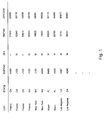
- Fig. 1 depicts the first ten rows of a table comprising CREWINFO information.
- This table comprises the columns CITY, STATE, DEPTNO, SEX, EMPNO, ZIPCODE.
- the table comprises ca. 100.000.000 more rows, all comprising the value M in column SEX.
- the table CREWINFO has one index on column EMPNO.
- Figure 2 depicts a second table comprising BOOKINGS information.
- This table contains 100.000 rows of booking information. The first ten rows are depicted.
- the table BOOKINGS has one index on column EMPNO.
- Correlated columns might be selected and used for access path selection.
- the table used is the table depicted in figure 1. In the following example, this table is considered to comprise only ten values as depicted.
- the table CREWINFO has two indexes, one on CITY, STATE, and ZIPCODE and another on DEPTNO and SEX.
- the filter factors based on column cardinality for column CITY is 1/4 and for column STATE is 1/3.
- the filter factor based on column cardinality for DEPTNO is 1/4 and the filter factor based on column cardinality for columns SEX is 1/2.
- 0,125 is larger then 0,83, the first index is chosen as starting point for the access path.
- the actual filter factor based on actual data distribution for the first index on CITY, STATE and ZIPCODE is 0,4, whereas the actual filter factor for the index based on DEPTNO and SEX is 0,2.
- CITY and STATE always correlate, which means that for instance CITY "FRESNO” is always in STATE "CA”, this index has only little filter effects.
- the index on DEPTNO and SEX does a lot better job in filtering, as its filter effects are much higher.
- the actual number of qualified leaf pages based on compound predicates when starting with the first index is 4, whereas when starting with the second index it is 2. When choosing the second index, the access path should result in faster data retrieval.
- DB2 chooses index 1 as an access. Since the columns CITY and STATE do almost no filtering, and the columns DEPTNO and SEX do a better job of filtering out rows, DB2 should favor index 2 over index 1. This selection is enabled by selecting this index and providing the appropriate statistics according to an inventive embodiment.
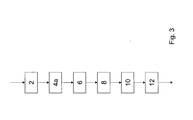
- Fig. 3 depicts diagrammatically a flow diagram of an inventive method.
- step 2 an SQL trace is run in a production environment to get a representative amount of SQL data.
- step 6 it is checked whether all first index columns have complete frequency statistics.
- step 8 a usage matrix of statements in terms of tables, columns, occurrence rates and page reads is created.
- step 10 the top 80% of SQL with respect to occurrence rates or processing time stored in the usage matrices are selected for the generation of frequency statistics. For the respective columns, the required jobs are generated and passed over to DB2 utility DSTATS or RUNSTATS.
- step 12 new REBINDS are generated, which means that the OPTIMIZER is started for any SQL packages that are affected, and new access paths are determined.
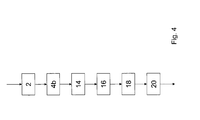
- Fig. 4 depicts a method for selecting frequency statistics for compound statements.
- Compound statements may provide access to correlated columns.
- step 2 again SQL data is retrieved.
- step 4b the SQL data is parsed. Only statements which comprise joins and having a syntax where more than one columnname ⁇ operator> literal or columnname ⁇ operator>columnname clauses are found, which are correlated with an AND statement in the WHERE clause are selected.
- step 14 a usage matrix of said statements in terms of tables, columns, values, occurrence rates and page reads is built, which is analyzed in step 16 to determine suitable candidates for column statistics.
- step 16 For the candidates determined in step 16, the required jobs for generating frequency statistics are built and submitted in step 18. After the frequency statistics have been generated, in step 20 a REBIND is generated for all SQL packages that are affected, and a new access path is calculated.
- Fig. 5 depicts a method where index and non-index column frequencies and correlated column frequencies are generated.
- the same numerals refer to the same steps as in Fig. 3 and 4.
- step 4a After in step 4a the candidates for index and non-index frequency statistics are selected, in step 5 these statements are explained for later comparison.
- step 10a it is checked, whether any of the used indexes do not have first column frequency statistics. In such a case, in step 10a said frequency statistics are generated within a RUNSTATS or DSTATS operation.
- step 10b all SQL are analyzed to determine, which of these statements could benefit from non-index frequencies statistics.
- These statements have a syntax as: columnname ⁇ operator>?, columnname ⁇ operator>: literal, columnname ⁇ operator>columnname, or columnname ⁇ operator>: host variable.
- frequency statistics for the respective columns are generated using RUNSTATS or DSTATS in step 12.
- step 4b SQL queries which contain correlated columns are determined.
- step 14 the frequency statistics for these correlated columns are generated and analysed on a per table, SQL, occurrence and cost basis in step 16.
- RUNSTATS or DSTATS jobs are built in step 18.
- step 15 the respective SQL queries are explained and compared with the EXPLAIN output of step 5.
- step 20 the built RUNSTATS jobs may be simply executed or passed over to a utility generator. They might also be kept for the next time a, threshold value in access time has been reached.
- the inventive method has the benefit that column frequency statistics for suitable candidates may be generated, and therefore the OPTIMIZER may choose a better access path. Suitable candidates may be selected automatically, and no manual selecting is necessary. The method fits into available maintenance tools and does not generate wasteful utilities.
Landscapes
- Engineering & Computer Science (AREA)
- Theoretical Computer Science (AREA)
- Physics & Mathematics (AREA)
- Databases & Information Systems (AREA)
- Data Mining & Analysis (AREA)
- General Engineering & Computer Science (AREA)
- General Physics & Mathematics (AREA)
- Probability & Statistics with Applications (AREA)
- Computational Linguistics (AREA)
- Fuzzy Systems (AREA)
- Mathematical Physics (AREA)
- Software Systems (AREA)
- Information Retrieval, Db Structures And Fs Structures Therefor (AREA)
Priority Applications (1)
| Application Number | Priority Date | Filing Date | Title |
|---|---|---|---|
| EP03029542A EP1548612A1 (fr) | 2003-12-22 | 2003-12-22 | Procédé et dispositif pour determiner des statistiques des colonnes de données d'un base de données relationnel |
Applications Claiming Priority (1)
| Application Number | Priority Date | Filing Date | Title |
|---|---|---|---|
| EP03029542A EP1548612A1 (fr) | 2003-12-22 | 2003-12-22 | Procédé et dispositif pour determiner des statistiques des colonnes de données d'un base de données relationnel |
Publications (1)
| Publication Number | Publication Date |
|---|---|
| EP1548612A1 true EP1548612A1 (fr) | 2005-06-29 |
Family
ID=34530685
Family Applications (1)
| Application Number | Title | Priority Date | Filing Date |
|---|---|---|---|
| EP03029542A Withdrawn EP1548612A1 (fr) | 2003-12-22 | 2003-12-22 | Procédé et dispositif pour determiner des statistiques des colonnes de données d'un base de données relationnel |
Country Status (1)
| Country | Link |
|---|---|
| EP (1) | EP1548612A1 (fr) |
Cited By (5)
| Publication number | Priority date | Publication date | Assignee | Title |
|---|---|---|---|---|
| US8935272B2 (en) * | 2013-03-17 | 2015-01-13 | Alation, Inc. | Curated answers community automatically populated through user query monitoring |
| US9031934B2 (en) | 2011-11-30 | 2015-05-12 | International Business Machines Corporation | Estimation of a filter factor used for access path optimization in a database |
| US10459933B2 (en) | 2015-09-16 | 2019-10-29 | International Business Machines Corporation | Identification and elimination of non-essential statistics for query optimization |
| CN113641704A (zh) * | 2021-08-12 | 2021-11-12 | 北京金山云网络技术有限公司 | 信息采集方法、装置和电子设备 |
| WO2024041221A1 (fr) * | 2022-08-25 | 2024-02-29 | 华为技术有限公司 | Procédé et appareil d'estimation de taux de sélection |
Citations (3)
| Publication number | Priority date | Publication date | Assignee | Title |
|---|---|---|---|---|
| US5899986A (en) * | 1997-02-10 | 1999-05-04 | Oracle Corporation | Methods for collecting query workload based statistics on column groups identified by RDBMS optimizer |
| EP1065606A2 (fr) * | 1999-07-02 | 2001-01-03 | Robert S. Lenzie | Méthode et appareil pour identifier les index préférés dans des bases de données |
| US6360214B1 (en) * | 1998-12-16 | 2002-03-19 | Microsoft Corporation | Automatic database statistics creation |
-
2003
- 2003-12-22 EP EP03029542A patent/EP1548612A1/fr not_active Withdrawn
Patent Citations (3)
| Publication number | Priority date | Publication date | Assignee | Title |
|---|---|---|---|---|
| US5899986A (en) * | 1997-02-10 | 1999-05-04 | Oracle Corporation | Methods for collecting query workload based statistics on column groups identified by RDBMS optimizer |
| US6360214B1 (en) * | 1998-12-16 | 2002-03-19 | Microsoft Corporation | Automatic database statistics creation |
| EP1065606A2 (fr) * | 1999-07-02 | 2001-01-03 | Robert S. Lenzie | Méthode et appareil pour identifier les index préférés dans des bases de données |
Cited By (9)
| Publication number | Priority date | Publication date | Assignee | Title |
|---|---|---|---|---|
| US9031934B2 (en) | 2011-11-30 | 2015-05-12 | International Business Machines Corporation | Estimation of a filter factor used for access path optimization in a database |
| US8935272B2 (en) * | 2013-03-17 | 2015-01-13 | Alation, Inc. | Curated answers community automatically populated through user query monitoring |
| US8965915B2 (en) | 2013-03-17 | 2015-02-24 | Alation, Inc. | Assisted query formation, validation, and result previewing in a database having a complex schema |
| US8996559B2 (en) | 2013-03-17 | 2015-03-31 | Alation, Inc. | Assisted query formation, validation, and result previewing in a database having a complex schema |
| US9244952B2 (en) | 2013-03-17 | 2016-01-26 | Alation, Inc. | Editable and searchable markup pages automatically populated through user query monitoring |
| US10459933B2 (en) | 2015-09-16 | 2019-10-29 | International Business Machines Corporation | Identification and elimination of non-essential statistics for query optimization |
| US10545972B2 (en) | 2015-09-16 | 2020-01-28 | International Business Machines Corporation | Identification and elimination of non-essential statistics for query optimization |
| CN113641704A (zh) * | 2021-08-12 | 2021-11-12 | 北京金山云网络技术有限公司 | 信息采集方法、装置和电子设备 |
| WO2024041221A1 (fr) * | 2022-08-25 | 2024-02-29 | 华为技术有限公司 | Procédé et appareil d'estimation de taux de sélection |
Similar Documents
| Publication | Publication Date | Title |
|---|---|---|
| US7406477B2 (en) | Database system with methodology for automated determination and selection of optimal indexes | |
| US8037059B2 (en) | Implementing aggregation combination using aggregate depth lists and cube aggregation conversion to rollup aggregation for optimizing query processing | |
| Papadakis et al. | A blocking framework for entity resolution in highly heterogeneous information spaces | |
| US8745033B2 (en) | Database query optimization using index carryover to subset an index | |
| US7509311B2 (en) | Use of statistics on views in query optimization | |
| US6356889B1 (en) | Method for determining optimal database materializations using a query optimizer | |
| US7984024B2 (en) | Statistics management | |
| US8682875B2 (en) | Database statistics for optimization of database queries containing user-defined functions | |
| US7734620B2 (en) | Optimizing a database query that fetches N rows | |
| Jindal et al. | Relax and let the database do the partitioning online | |
| CN112162983A (zh) | 数据库索引建议处理方法、装置、介质和电子设备 | |
| US9477729B2 (en) | Domain based keyword search | |
| US20080168058A1 (en) | System for addressing inefficient query processing | |
| US20080288444A1 (en) | Evaluating Multi-Table Join Selectivity in a Computer Database | |
| CN119415549A (zh) | 使用具有规范形式的逻辑查询步骤进行查询处理 | |
| US20090112792A1 (en) | Generating Statistics for Optimizing Database Queries Containing User-Defined Functions | |
| CN109739882B (zh) | 一种基于Presto和Elasticsearch的大数据查询优化方法 | |
| Kipf et al. | Estimating filtered group-by queries is hard: Deep learning to the rescue | |
| US8423569B2 (en) | Decomposed query conditions | |
| US10795889B2 (en) | Query path with aggregate projection | |
| US7840555B2 (en) | System and a method for identifying a selection of index candidates for a database | |
| WO2016086973A1 (fr) | Génération de requêtes de recherche non structurées à partir d'un ensemble de termes de données structurées | |
| Baralis et al. | Answering XML queries by means of data summaries | |
| EP1548612A1 (fr) | Procédé et dispositif pour determiner des statistiques des colonnes de données d'un base de données relationnel | |
| CN108536819B (zh) | 整型列与字符串比较的方法、装置、服务器及存储介质 |
Legal Events
| Date | Code | Title | Description |
|---|---|---|---|
| PUAI | Public reference made under article 153(3) epc to a published international application that has entered the european phase |
Free format text: ORIGINAL CODE: 0009012 |
|
| AK | Designated contracting states |
Kind code of ref document: A1 Designated state(s): AT BE BG CH CY CZ DE DK EE ES FI FR GB GR HU IE IT LI LU MC NL PT RO SE SI SK TR |
|
| AX | Request for extension of the european patent |
Extension state: AL LT LV MK |
|
| STAA | Information on the status of an ep patent application or granted ep patent |
Free format text: STATUS: THE APPLICATION IS DEEMED TO BE WITHDRAWN |
|
| 18D | Application deemed to be withdrawn |
Effective date: 20050623 |