EP1548122B1 - Verfahren zur Herstellung von Dipeptiden - Google Patents
Verfahren zur Herstellung von Dipeptiden Download PDFInfo
- Publication number
- EP1548122B1 EP1548122B1 EP04028191A EP04028191A EP1548122B1 EP 1548122 B1 EP1548122 B1 EP 1548122B1 EP 04028191 A EP04028191 A EP 04028191A EP 04028191 A EP04028191 A EP 04028191A EP 1548122 B1 EP1548122 B1 EP 1548122B1
- Authority
- EP
- European Patent Office
- Prior art keywords
- amino acid
- dna
- protein
- dipeptide
- seq
- Prior art date
- Legal status (The legal status is an assumption and is not a legal conclusion. Google has not performed a legal analysis and makes no representation as to the accuracy of the status listed.)
- Expired - Lifetime
Links
Images
Classifications
-
- C—CHEMISTRY; METALLURGY
- C12—BIOCHEMISTRY; BEER; SPIRITS; WINE; VINEGAR; MICROBIOLOGY; ENZYMOLOGY; MUTATION OR GENETIC ENGINEERING
- C12P—FERMENTATION OR ENZYME-USING PROCESSES TO SYNTHESISE A DESIRED CHEMICAL COMPOUND OR COMPOSITION OR TO SEPARATE OPTICAL ISOMERS FROM A RACEMIC MIXTURE
- C12P21/00—Preparation of peptides or proteins
- C12P21/02—Preparation of peptides or proteins having a known sequence of two or more amino acids, e.g. glutathione
Definitions
- the present invention relates to a process for producing a dipeptide using a microorganism producing a dipeptide.
- Dipeptides are compounds that are important as foods, pharmaceuticals, cosmetics and the like.
- Known methods for producing dipeptides include methods which comprise causing certain kinds of microorganisms or proline iminopeptidase to act on L-amino acid esters and L-amino acids (see WO03/010189 pamphlet and WO03/010307 pamphlet) and a method which comprises causing L-amino acid amide hydrolase to act on L-amino acid amides and L-amino acids (see WO03/010187 pamphlet).
- An object of the present invention is to provide a process for producing a dipeptide using a microorganism producing a dipeptide.
- the present invention relates to a process for producing a dipeptide using a culture of a microorganism or a treated matter thereof, as specified in the present claims.
- Suitable microorganisms include those belonging to the genera Achromobacter , Acinetobacter , Aeromonas , Agrobacterium , Alcaligenes , Arthrobacter , Beijerinckia, Brevibacterium , Clavibacter , Chryseobacterium , Escherichia , Enterobacter , Erwinia , Flavobacterium , Kluyvera, Microbacterium , Micrococcus , Mycoplana , Pantoea.
- Propionibacterium Listonella , Rhizobium , Rhodococcus , Salmonella , Sarcina , Serratia , Staphylococcus , Stenotrophomonas , Streptomyces , Vibrio , Xanthomonas , Bullera , Candida , Cryptococcus , Filobasidium , Geotrichum , Pachysolen , Rhodosporidium , Rhodotorula , Saccharomyces , Sporobolomyces , Tremella , Torulaspora , Torulopsis , Gluconacetobacter , Acetobacter , Gluconobacter , Asaia , Zucharibacter , Actinomadura , Kitasatosporia , Micromonospora , Nocardia , Oerskovia , Saccharothrix , Streptoverticillium , Hafnia , Lactobacillus
- Examples of one or more kinds of substances selected from the group consisting of amino acid amides, amino acid esters and amino acids are one or more kinds of amino acids; one or more kinds of amino acid esters and one or more kinds of amino acids; and one or more kinds of amino acid amides and one or more kinds of amino acids.
- the microorganisms having the ability to produce a dipeptide from one or more kinds of amino acids may be any microorganisms having such ability and include microorganisms producing a protein selected from the group consisting of non-ribosomal peptide synthetase (hereinafter referred to as NRPS), D-alanyl-D-alanine (D-Ala-D-Ala) ligase and bacilysin synthetase.
- NRPS non-ribosomal peptide synthetase
- D-Ala-D-Ala D-alanyl-D-alanine
- bacilysin synthetase bacilysin synthetase.
- microorganisms producing NRPS include procaryotes such as microorganisms of the genus Bacillus , microorganisms producing BacA, BacB and BacC (GenBank AF007865), microorganisms producing TycA, TycB and TycC (GenBank.
- microorganisms producing PcbAB (GenBank M57425), and microorganisms producing a protein having an amino acid sequence which has at least 80% or more, preferably at least 90% or more, more preferably at least 95% or more, even more preferably at least 98% or more and further preferably at least 99% or more homology to the amino acid sequence of any protein selected from BacA, BacB, BacC, TycA, TycB, TycC and PcbAB and having NRPS activity.
- microorganisms producing D-Ala-D-Ala ligase include procaryotes forming peptidoglycans, microorganisms producing DdlA (GenBank accession No. M58467), microorganisms producing DdlB (GenBank accession No. AE000118), microorganisms producing DdlC (GenBank accession No. D88151), and microorganisms producing a protein consisting of an amino acid sequence wherein one or more amino acid residues are deleted, substituted or added in the amino acid sequence of any protein selected from DdlA, DdlB and DdlC and having D-Ala-D-Ala ligase activity.
- microorganisms producing bacilysin synthetase include microorganisms belonging to the genus Bacillus , preferably, Bacillus subtilis , Bacillus amyloliquefaciens , Bacillus coagulans , Bacillus licheniformis , Bacillus megaterium and Bacillus pumilus , more preferably, Bacillus subtilis 168 (ATCC 23857), Bacillus subtilis ATCC 15245, Bacillus subtilis ATCC 6633, Bacillus subtilis IAM 1213, Bacillus subtilis IAM 1107, Bacillus subtilis IAM 1214, Bacillus subtilis ATCC 9466, Bacillus subtilis IAM 1033, Bacillus subtilis ATCC 21555 and Bacillus amyloliquefaciens IFO 3022, and microorganisms producing a protein selected from the following [1] to [4]:
- the amino acid sequence shown in SEQ ID NO: 15 is a region conserved among the proteins having the amino acid sequences shown in SEQ ID NOS: 1 to 7 and is also a region corresponding to the consensus sequence of proteins having Ala-Ala ligase activity derived from various microorganisms.
- microorganisms producing a protein comprising an amino acid sequence which has at least 80% or more, preferably 90% or more, more preferably 95% or more, even more preferably at least 98% or more and further preferably at least 99% or more homology to the amino acid sequence shown in SEQ ID NO: 15 and having the activity to synthesize a dipeptide are also included in the dipeptide-producing microorganisms.
- the protein comprising an amino acid sequence which has at least 80% or more, preferably 90% or more, more preferably at least 95% or more, even more preferably at least 98% or more and further preferably at least 99% or more homology to the amino acid sequence shown in SEQ ID NO: 15 may have the activity to synthesize a dipeptide
- the homology of its amino acid sequence to the amino acid sequence shown in any of SEQ ID NOS: 1 to 7 is at least 65% or more, preferably at least 80% or more, more preferably at least 90% or more, even more preferably at least 95% or more, further preferably at least 98% or more and most preferably at least 99% or more.
- the microorganisms having the ability to produce a dipeptide from one or more kinds of amino acid esters and one or more kinds of amino acids may be any microorganisms having such ability and include those belonging to the genera Achromobacter , Acinetobacter, Aeromonas , Agrobacterium , Alcaligenes , Arthrobacter , Beijerinckia , Brevibacterium , Clavibacter , Chryseobacterium , Escherichia , Enterobacter , Erwinia , Flavobacterium , Kluyvera , Microbacterium , Micrococcus , Mycoplana , Pantoea , Propionibacterium , Listonella , Rhizobium , Rhodococcus , Salmonella , Sarcina , Serratia , Staphylococcus , Stenotrophomonas , Streptomyces , Vibrio , Xanthomonas , Bullera , Candida , Cryptoc
- microorganisms include Achromobacter delmarvae (FERM BP-6988), Acinetobacter johnsonii (ATCC 9036), Aeromonas salmonicida (ATCC 14174), Agrobacterium tumefaciens (IFO 3058).
- Alcaligenes faecalis (ATCC 8750), Arthrobacter citreus (ATCC 11624), Beijerinckia indica (ATCC 9037), Brevibacterium roseum (ATCC 13825), Clavibacter michiganense (ATCC 7429), Chryseobacterium meningosepticum (ATCC 13253), Escherichia coli (ATCC 13071), Enterobacter aerogenes (ATCC 13048), Erwinia amylovora (IFO 12687), Flavobacterium resinovorum (ATCC 12524), Kluyvera citrophila (FERM BP-6564), Microbacterium imperiale (ATCC 8365).
- Micrococcus luteus (ATCC 11880), Mycoplana bullata (ATCC 4278), Pantoea ananatis (ATCC 23822), Propionibacterium shermanii (FERM BP-8100), Listonella anguillarum (ATCC 19264), Rhizobium radiobacter (ATCC 4720), Rhodococcus rhodochrous (ATCC 21198), Salmonella typhimurium (FERM BP-6566), Sarcina lutea (FERM BP-6562), Serratia grimesii (ATCC 14460), Staphylococcus aureus (ATCC 12600), Stenotrophomonas maltophilia (ATCC 13270), Streptomyces lavendulae (ATCC 11924), Vibrio tyrogenes (FERM BP-5848), Xanthomonas maltophilia (FERM BP-5568), Bullera alba (FERM BP-8099), Candida k
- Acetobacter orleanensis (IFO 3223), Acetobacter pasteurianus (ATCC 9325).
- Gluconobacter oxydans (ATCC 621).
- Gluconobacter oxydans (IFO 3171), Gluconacetobacter hansenii (JCM 7643), Asaia ethanolifaciens (FERM BP-6751), Zucharibacter floricola (FREM BP-6752). Actinomadura madurae (ATCC 19425).
- Kitasatosporia griseola (IFO 14371), Micromonospora chersina (ATCC 53710), Nocardia globerula (ATCC 21602), Oerskovia turbata (FERM BP-8122), Saccharothrix australiensis (IFO 14444). Streptoverticillium mobaraensis (IFO 13819), Streptomyces plicatus [ Biochem. Biophys. Res. Commun., 184, 1250 (1992 )], Corynebacterium variabilis [ J. Appl. Microbiol., 90, 449 (2001 )], Arthrobacter nicotianae [ FEMS Microbiol.
- microorganisms having the ability to produce a dipeptide from one or more kinds of L-amino acid esters and one or more kinds of amino acids also include microorganisms having the ability to produce proline iminopeptidase.
- microorganisms are those belonging to the genera Streptomyces , Arthrobacter , Escherichia , Flavobacterium , Hafnia , Lactobacillus , Aeromonas , Xanthomonas , Neisseria , Propionibacterium , Serratia , Thermoplasma , Corynebacterium , Pseudomonas and Bacillus.
- microorganisms are Streptomyces plicatus [ Biochem. Biophys. Res. Commun., 184, 1250 (1992 )], Arthrobacter nicotianae [ FEMS Microbiol. Lett., 78, 191 (1999 )], Escherichia coli ( Japanese Published Unexamined Patent Application No. 113887/90 ), Flavobacterium meningosepticum [ Arch. Biochem. Biophys., 336, 35 (1996 )], Hafnia alvei [ J. Biochem., 119, 468 (1996 )], Lactobacillus delbrueckii [ Microbiology, 140, 527 (1994 )], Bacillus coagulans [ J.
- microorganisms having the ability to produce proline iminopeptidase include microorganisms having the ability to produce a protein of the following [1] or [2]:
- the microorganisms having the ability to produce a dipeptide from one or more kinds of L-amino acid amides and one or more kinds of amino acids may be any microorganisms having such ability and include those belonging to the genera Bacillus , Corynebacterium , Erwinia , Rhodococcus , Chryseobacterium , Micrococcus , Pseudamonas , Cryptococcus , Trichosporon , Rhodosporidium , Sporobolomyces , Tremella , Torulaspora , Sterigmatomyces and Rhodotorula.
- microorganisms Bacillus megaterium (FERM BP-8090), Corynebacterium glutamicum (ATCC 13286), Erwinia carotovora (FERM BP-8089), Rhodococcus rhodochrous (ATCC 19149), Chryseobacterium meningosepticum (ATCC 13253), Micrococcus luteus (ATCC 9341), Pseudomonas saccharophila (ATCC 15946), Cryptococcus albidus (IFO 0378), Trichosporon gracile (ATCC 24660), Rhodosporidium diobovatum (ATCC 22264), Sporobolomyces salmonicolor (IFO 1038), Tremella foliacea (IFO 9297), Torulaspora delbrueckii (IFO 1083), Sterigmatomyces elviae (IFO 1843) and Rhodotorula ingeniosa (ATCC
- microorganisms having the ability to produce a dipeptide from one or more kinds of L-amino acid amides and one or more kinds of amino acids also include microorganisms having the ability to produce L-amino acid amide hydrolase, and examples of the microorganisms are Corynebacterium glutamicum (ATCC 13286) and those having the ability to produce a protein having the amino acid sequence shown in SEQ ID NO: 23.
- microorganisms having the ability to produce L-amino acid amide hydrolase include microorganisms having the ability to produce a protein of the following [1] or [2]:
- the above protein consisting of an amino acid sequence wherein one or more amino acid residues are deleted, substituted or added and having the activity to synthesize a dipeptide can be obtained, for example, by introducing a site-directed mutation into DNA encoding a protein selected from a protein consisting of the amino acid sequence shown in any of SEQ ID NOS: 1 to 7 and 35, a protein consisting of the amino acid sequence shown in any of SEQ ID NOS: 17 to 19 and having proline iminopeptidase activity, and a protein consisting of the amino acid sequence shown in SEQ ID NO: 23 and having L-amino acid amide hydrolase activity by site-directed mutagenesis described in Molecular Cloning, A Laboratory Manual, Second Edition, Cold Spring Harbor Laboratory Press (1989 ) (hereinafter referred to as Molecular Cloning, Second Edition); Current Protocols in Molecular Biology, John Wiley & Sons (1987-1997 ) (hereinafter referred to as Current Protocols in Molecular Biology): Nucleic Acids Research, 10,
- the number of amino acid residues which are deleted, substituted or added is not specifically limited so long as it is within the range where deletion, substitution or addition is possible by known methods such as the above site-directed mutagenesis.
- the suitable number is 1 to dozens, preferably 1 to 20, more preferably 1 to 10, further preferably 1 to 5.
- amino acid sequence is deleted, substituted or added in the amino acid sequence of any of a protein consisting of the amino acid sequence shown in any of SEQ ID NOS: 1 to 7 and 35, a protein consisting of the amino acid sequence shown in any of SEQ ID NOS: 17 to 19 and having proline iminopeptidase activity, and a protein consisting of the amino acid sequence shown in SEQ ID NO: 23 and having L-amino acid amide hydrolase activity" means that the amino acid sequence may contain deletion, substitution or addition of a single or plural amino acid residues at an arbitrary position therein.
- amino acids to be substituted or added may be either natural or not.
- the natural amino acids are L-alanine, L-asparagine, L-aspartic acid, L-glutamine, L-glutamic acid, glycine, L-arginine, L-histidine, L-isoleucine, L-leucine, L-lysine, L-methionine, L-phenylalanine, L-proline, L-serine, L-threonine, L-tryptophan, L-tyrosine, L-valine and L-cysteine.
- amino acids capable of mutual substitution.
- the amino acids in the same group can be mutually substituted.
- proteins consisting of an amino acid sequence wherein one or more amino acid residues are deleted, substituted or added and having the activity to synthesize a dipeptide include proteins consisting of an amino acid sequence which has at least 65% or more, preferably at least 80% or more, more preferably at least 90% or more, even more preferably at least 95% or more, further preferably at least 98% or more and most further preferably at least 99% or more homology to the amino acid sequence shown in any of SEQ ID NOS: 1 to 7 and 35, the amino acid sequence shown in any of SEQ ID NOS: 17 to 19 or the amino acid sequence shown in SEQ ID NO: 23.
- the microorganisms transformed with DNA encoding a protein having the activity to synthesize a dipeptide include those carrying a recombinant DNA obtained by ligating the DNA to a vector DNA.
- microorganisms examples are those carrying a recombinant DNA obtained by ligating, to a vector DNA, DNA encoding a protein having the activity to synthesize a dipeptide from one or more kinds of amino acids, DNA encoding a protein having proline iminopeptidase activity or DNA encoding a protein having L-amino acid amide hydrolase activity.
- microorganisms examples include those belonging to the genera Escherichia, Bacillus, Corynebacterium , Pseudomonas and Saccharomyces.
- the DNAs encoding a protein having the activity to synthesize a dipeptide from one or more kinds of amino acids include DNAs encoding NRPS, D-Ala-D-Ala ligase or bacilysin synthetase.
- DNAs encoding NRPS include DNAs encoding a protein selected from the group consisting of BacA, BacB, BacC, TycA, TycB, TycC and PcbAB.
- Examples of the DNAs encoding D-Ala-D-Ala ligase include DNAs encoding a protein selected from the group consisting of DDlA, DdlB and DdlC.
- DNAs encoding bacilysin synthetase include DNAs encoding a protein of any of the following [1] to [4]:
- DNAs encoding a protein having proline iminopeptidase activity include DNAs encoding proline iminopeptidase or a protein of any of the following [1] to [3]:
- DNAs encoding a protein having L-amino acid amide hydrolase activity include DNAs encoding a protein of any of the following [1] to [3]:
- hybridizing refers to a process in which polynucleotides hybridize to the recited nucleic acid sequence or parts thereof. Therefore, said nucleic acid sequences may be useful as probes in Northern or Southern Blot analysis of RNA or DNA preparations, respectively, or can be used as oligonucleotide primers in PCR analysis dependent on their respective size.
- said hybridizing polynucleotides comprise at least 10, more preferably at least 15 nucleotides while a hybridizing polynucleotide of the present to be used as a probe preferably comprises at least 100. more preferably at least 200, or most preferably at least 500 nucleotides.
- hybridization conditions are referred to in standard text books such as Sambrook et al.: Molecular Cloning: A Laboratory Manual; Cold Spring Harbor Laboratory Press, 2nd edition 1989 and 3rd edition 2001 ; Gerhardt et al.; Methods for General and Molecular Bacteriology; ASH Press, 1994 ; Lefkovits ; Immunology Methods Manual: The Comprehensive Sourcebook of Techniques; Academic Press, 1997 ; Golemis; Protein-Protein Interactions: A Molecular Cloning Manual; Cold Spring Harbor Laboratory Press, 2002 and other standard laboratory manuals known by the person skilled in the art or as recited above.
- Preferred in accordance with the present Inventions are stringent hybridization conditions.
- Stringent hybridization conditions refer, e.g. to an overnight incubation at 42°C in a solution comprising 50% formamide, 5 x SSC (750 mM NaCl, 75 mM sodium citrate), 50 mM sodium phosphate (pH 7.6), 5x Denhardt's solution, 10% dextran sulfate, and 20 ⁇ g/ml denatured, sheared salmon sperm DNA, followed e.g. by washing the filters in 0.2 x SSC at about 65°C. Also contemplated are nucleic acid molecules that hybridize at low stringency hybridization conditions.
- the hybridizable DNA under the above described stringent hybridization conditions includes DNA having at least 80% or more, preferably at least 90% or more, more preferably at least 95% or more, even more preferably at least 98% or more, further preferably at least 99% or more homology to the nucleotide sequence of any of the DNAs described above as calculated by use of programs such as. BLAST and FASTA described above based on the above parameters.
- the homology among nucleotide sequences can be determined by using a program such as BLAST or FASTA described above.
- the DNA hybridizing with the above DNA under stringent conditions is DNA encoding a protein having the activity to synthesize a dipeptide in the following manner. That is, a recombinant DNA expressing the DNA is prepared and the recombinant DNA is introduced into a host cell to obtain a microorganism to be used as an enzyme source.
- the enzyme source and one or more kinds of amino acids are allowed to be present in an aqueous medium, followed by HPLC analysis or the like to know whether a dipeptide is formed and accumulated in the aqueous medium
- the enzyme source, one or more kinds of amino acid esters and one or more kinds of amino acids are allowed to be present in an aqueous medium, followed by HPLC analysis or the like to know whether a dipeptide is formed and accumulated in the aqueous medium
- the enzyme source, one or more kinds of amino acid amides and one or more kinds of amino acids are allowed to be present in an aqueous medium, followed by HPLC analysis or the like to know whether a dipeptide is formed and accumulated in the aqueous medium.
- the microorganisms used in the process for producing a dipeptide of the present invention include the above-mentioned strains available from various public organizations, strains which are obtained by subjecting the above strains which have the ability to produce a dipeptide to known mutagenesis and also recombinant strains in which the ability to produce a dipeptide is intensified by genetic engineering techniques.
- the recombinant strains include microorganisms in which bacilysin synthetase activity, proline iminopeptidase activity or L-amino acid amide hydrolase activity is enhanced, and examples of the recombinant microorganisms include Escherichia coli NM522/pQE60ywfE, Escherichia coli JM109/pUCAAH ( WO03/010187 ). Escherichia coli JM109/pQEAAH ( WO03/010187 ). Escherichia coli JM109/pUCPPPEPI ( WO03/010307 ) and Escherichia coli JM109/pUCPGPEPI ( WO03/010307 ).
- the above DNA encoding a protein having the activity to synthesize a dipeptide can be obtained utilizing the nucleotide sequence information on the DNA, for example, by the method described below.
- the DNA encoding bacilysin synthetase can be obtained, for example, by Southern hybridization of a chromosomal DNA library from a microorganism belonging to the genus Bacillus using a probe designed based on the nucleotide sequence shown in any of SEQ ID NOS: 8 to 14, 29 and 30, or by PCR [ PCR Protocols. Academic Press (1990 )] using primer DNAs designed based on the nucleotide sequence shown in any of SEQ ID NOS: 8 to 14, 29 and 30 and, as a template, the chromosomal DNA of a microorganism belonging to the genus Bacillus.
- the DNA encoding bacilysin synthetase can also be obtained by conducting a search through various gene databases for a sequence having at least 65% or more, preferably at least 80% or more, more preferably at least 90% or more, even more preferably at least 95% or more, further preferably at least 98% or more, most further preferably at least 99% or more homology to the nucleotide sequence of DNA encoding the amino acid sequence shown in any of SEQ ID NOS: 1 to 7, 15 and 35, and obtaining the desired DNA, based on the nucleotide sequence obtained by the search, from a chromosomal DNA or cDNA library of an organism having the nucleotide sequence according to the above-described method.
- the obtained DNA is inserted into a vector by a conventional method to obtain a recombinant DNA.
- a plasmid DNA is extracted from a transformant obtained by introducing the recombinant DNA into Escherichia coli.
- the nucleotide sequence of the DNA can be determined by a conventional sequencing method such as the dideoxy method [ Proc. Natl. Acad. Sci., USA, 74, 5463 (1977 )] or by using a nucleotide sequencer such as 373A DNA Sequencer (Parkin-Elmer Corp.).
- the full length DNA can be obtained by Southern hybridization of a chromosomal DNA library using the partial DNA as a probe.
- DNA synthesizer e.g., Model 8905, PerSeptive Biosystems
- a DNA synthesizer e.g., Model 8905, PerSeptive Biosystems
- DNAs having the nucleotide sequences shown in SEQ ID NOS: 1 to 7, 29 and 30 are DNAs having the nucleotide sequences shown in SEQ ID NOS: 1 to 7, 29 and 30.
- Examples of the vectors for inserting the DNA include pBluescript II KS(+) (Stratagene), pDIRECT [ Nucleic Acids Res.. 18, 6069 (1990 )], pCR-Script Amp SK(+) (Stratagene), pT7 Blue (Novagen, Inc.), pCR II (Invitrogen Corp.) and pCR-TRAP (Genhunter Corp.).
- Escherichia coli examples include Escherichia coli XL1-Blue, Escherichia coli XL2-Blue. Escherichia coli DH1, Escherichia coli MC1000, Escherichia coli KY3276, Escherichia coli W1485, Escherichia coli JM101, Escherichia coli JM109, Escherichia coli HB101, Escherichia coli No. 49, Escherichia coli W3110, Escherichia coli NY49, Escherichia coli MP347, Escherichia coli NM522 and Escherichia coli ME8415.
- Introduction of the recombinant DNA can be carried out by any of the methods for introducing DNA into the above host cells, for example, the method using calcium ion [ Proc. Natl. Acad. Sci. USA, 69, 2110 (1972 )], the protoplast method ( Japanese Published Unexamined Patent Application No. 248394/88 ) and electroporation [ Nucleic Acids Res., 16, 6127 (1988 )].
- microorganism carrying the DNA encoding a protein having the dipeptide-synthesizing activity obtained by the above method is the above-described Escherichia coli NM522/pQE60ywfE, which is a microorganism carrying a recombinant DNA comprising DNA having the nucleotide sequence shown in SEQ ID NO: 8.
- the microorganism which produces a protein having the dipeptide-synthesizing activity can be obtained by introducing the DNA obtained by the method described in the above (a) into a host cell using the methods described in Molecular Cloning, Second Edition, Current Protocols in Molecular Biology, etc., for example, in the following manner.
- a DNA fragment of an appropriate length comprising a region encoding the protein having the dipeptide-synthesizing activity is prepared according to need.
- the productivity of the protein can be enhanced by replacing a nucleotide in the nucleotide sequence of the region encoding the protein so as to make a codon most suitable for the expression in a host cell.
- the DNA fragment is inserted downstream of a promoter in an appropriate expression vector to prepare a recombinant DNA.
- a transformant producing the protein having the dipeptide-synthesizing activity can be obtained by introducing the recombinant DNA into a host cell suited for the expression vector.
- any microorganisms that are capable of expressing the desired gene can be used.
- the expression vectors that can be employed are those capable of autonomous replication or integration into the chromosome in the above host cells and comprising a promoter at a position appropriate for the transcription of the DNA encoding a protein having the dipeptide-synthesizing activity.
- the recombinant DNA comprising the DNA encoding a protein having the dipeptide-synthesizing activity is a recombinant DNA which is capable of autonomous replication in the procaryote and which comprises a promoter, a ribosome binding sequence, the DNA encoding a protein having the dipeptide-synthesizing activity, and a transcription termination sequence.
- the recombinant DNA may further comprise a gene regulating the promoter.
- Suitable expression vectors are pBTrp2, pBTac1 and pBTac2 (products of Boehringer Mannheim GmbH), pHelix1 (Roche Diagnostics Corp.), pKK233-2 (Amersham Pharmacia Biotech), pSE280 (Invitrogen Corp.), pGEMEX-1 (Promega Corp.), pQE-8 (Qiagen, Inc.), pET-3 (Novagen, Inc.), pKYP 10. ( Japanese Published Unexamined Patent Application No. 110600/83 ), pKYP200 [ Agric. Biol. Chem., 48, 669 (1984 )], pLSA1 [ Agric. Biol.
- any promoters capable of functioning in host cells such as Escherichia coli can be used.
- promoters derived from Escherichia coli or phage such as trp promoter (P trp ), lac promoter (P lac ), P L promoter, P R promoter and P SE promoter, SPO1 promoter, SPO2 promoter and penP promoter can be used.
- Artificially designed and modified promoters such as a promoter in which two P trp s are combined in tandem, tac promoter, lacT7 promoter and letI promoter, etc. can also be used.
- promoters such as xylA promoter for the expression in bacteria belonging to the genus Bacillus [ Appl. Microbiol. Biotechnol., 35, 594-599 (1991 )] and P54-6 promoter for the expression in bacteria belonging to the genus Corynebacterium [ Appl. Microbiol. Biotechnol., 53, 674-679 (2000 )].
- telomere binding sequence ribosome binding sequence
- initiation codon is adjusted to an appropriate length (e.g., 6 to 18 nucleotides).
- the transcription termination sequence is not essential, but it is preferred to place the transcription termination sequence immediately downstream of the structural gene.
- procaryotes which are preferably used as host cells include microorganisms belonging to the genera Escherichia, Bacillus, Pseudomonas and Corynebacterium. Specific examples of microorganisms belonging to these genera are Escherichia coli XL1-Blue, Escherichia coli XL2-Blue, Escherichia coli DHl, Escherichia coli DH5 ⁇ , Escherichia coli MC1000, Escherichia coli KY3276, Escherichia coli W1485, Escherichia coli JM101, Escherichia coli JM109. Escherichia coli HB101, Escherichia coli No.
- Introduction of the recombinant DNA can be carried out by any of the methods for introducing DNA into the above host cells, for example, the method using calcium ion [ Proc. Natl. Acad. Sci. USA, 69, 2110 (1972 )], the protoplast method ( Japanese Published Unexamined Patent Application No. 248394/88 ) and electroporation [ Nucleic Acids Res., 16, 6127 (1988 )].
- YEp13 ATCC 37115
- YBp24 ATCC 37051
- YCp50 ATCC 37419
- pHS19 pHS15, etc.
- any promoters capable of functioning in strains belonging to the genus Saccharomyces can be used. Suitable promoters include PHO5 promoter, PGK promoter, GAP promoter, ADH promoter, gal 1 promoter, gal 10 promoter, heat shock polypeptide promoter, MF ⁇ 1 promoter and CUP 1 promoter.
- suitable host cells are strains belonging to the genus Saccharomyces , specifically. Saccharomyces cerevisiae.
- Introduction of the recombinant DNA can be carried out by any of the methods for introducing DNA into yeast, for example, electroporation [ Methods Enzymol., 194, 182 (1990 )], the spheroplast method [ Proc. Natl. Acad. Sci. USA, 81, 4889 (1984 )] and the lithium acetate method [ J. Bacteriol., 153, 163 (1983 )].
- the enzyme source used in the process for producing a dipeptide of the present invention can be obtained by culturing the microorganism obtained in the above 2 in a natural or synthetic medium suitable for efficient culturing of the microorganism which contains carbon sources, nitrogen sources, inorganic salts, etc. which can be assimilated by the microorganism to obtain a culture of the microorganism or a treated matter of the culture, and then treating the culture or treated matter thereof at a temperature as indicated below for a time as indicated below (hereinafter also referred to simply as heat treatment).
- any carbon sources that can be assimilated by the microorganism can be used.
- suitable carbon sources include carbohydrates such as glucose, fructose, sucrose, molasses containing them, starch and starch hydrolyzate; organic acids such as acetic acid and propionic acid; and alcohols such as ethanol and propanol.
- ammonia ammonium salts of organic or inorganic acids such as ammonium chloride, ammonium sulfate, ammonium acetate and ammonium phosphate, and other nitrogen-containing compounds can be used as well as peptone, meat extract, yeast extract, corn steep liquor, casein hydrolyzate, soybean cake, soybean cake hydrolyzate, and various fermented microbial cells and digested products thereof.
- organic or inorganic acids such as ammonium chloride, ammonium sulfate, ammonium acetate and ammonium phosphate
- other nitrogen-containing compounds can be used as well as peptone, meat extract, yeast extract, corn steep liquor, casein hydrolyzate, soybean cake, soybean cake hydrolyzate, and various fermented microbial cells and digested products thereof.
- inorganic salts examples include potassium dihydrogenphosphate, dipotassium hydrogenphosphate, magnesium phosphate, magnesium sulfate, sodium chloride, ferrous sulfate, manganese sulfate, copper sulfate and calcium carbonate.
- Culturing is usually carried out under aerobic conditions, for example, by shaking culture or submerged spinner culture under aeration.
- the culturing temperature is preferably 15 to 40° C. and the culturing period is usually 5 hours to 7 days.
- the pH is maintained at 3.0 to 9.0 during the culturing.
- the pH adjustment is carried out by using an organic or inorganic acid, an alkali solution, urea, calcium carbonate, ammonia, etc.
- antibiotics such as ampicillin and tetracycline may be added to the medium during the culturing.
- an inducer may be added to the medium, if necessary.
- an inducer may be added to the medium, if necessary.
- an inducer may be added to the medium, if necessary.
- a microorganism transformed with an expression vector comprising lac promoter isopropyl- ⁇ -D-thiogalactopyranoside or the like may be added to the medium; and in the case of a microorganism transformed with an expression vector comprising trp promoter, indoleacrylic acid or the like may be added.
- the enzyme source used in the production process of the present invention can be produced by applying heat treatment to the culture of the microorganism or treated matter thereof obtained above at a temperature from 50 to 65°C for 5 to 20 minutes, preferably from 50 to 65°C for 10 to 15 minutes, so long as it does not deprive the microorganism used as the enzyme source of the activity to produce a dipeptide and it can reduce the activity of the microorganism to decompose the dipeptide.
- Those skilled in the art can easily select heat treatment conditions suitable for the microorganism used in the process for producing a dipeptide of the present invention by simple experiments.
- the heat treatment of the culture of the microorganism or treated matter thereof can be carried out in such a state that the culture or treated matter thereof is allowed to be present in an aqueous medium.
- An example of the aqueous medium is an aqueous medium used for the reaction to form a dipeptide described below.
- the heat treatment is to be carried out so long as it is before contacting the substrate such as amino acids, etc. with the enzyme source.
- the treated matter of the culture may be produced after giving heat treatment to the culture, or the treated matter of the culture may be produced prior to the heat treatment.
- the production process of the present invention contemplates a process for producing a dipeptide which comprises allowing an enzyme source and one or more kinds, preferably one or two kinds of substances selected from the group consisting of amino acid amides, amino acid esters and amino acids to be simultaneously present in an aqueous medium, said enzyme source being the culture of a microorganism or treated matter thereof subjected to heat treatment which is obtained in the above 3, allowing the dipeptide to form and accumulate in the medium and recovering the dipeptide from the medium.
- the production processes of the present invention include the following (i) to (iii):
- amino acids preferably amino acids selected from the group consisting of L-amino acids.
- Glycine (Gly) and ⁇ -alanine ( ⁇ -Ala) and can be used in any combination.
- L-amino acids are L-alanine (L-Ala), L-glutamine (L-Gln), L-glutamic acid (L-Glu), L-valine (L-Val), L-leucine (L-Leu).
- the amino acids which are more preferably used in the above process (i) include the following: a combination of one kind of amino acid selected from the group consisting of L-Ala, Gly, L-Met, L-Ser, L-Thr and ⁇ -Ala, and one kind of amino acid selected from the group consisting of L-Ala, L-Gln, L-Glu, Gly, L-Val, L-Leu, L-Ile, L-Pro, L-Phe, L-Trp, L-Met, L-Ser, L-Thr, L-Cys, L-Asn, L-Tyr, L-Lys, L-Arg, L-His, L-Asp, L-a-AB, B-Ala, L-azaserine, L-theanine, L-4-HYP, L-3-HYP, L-Orn, L-Cit and L-6-diazo-5-oxo-norleucine; a combination of L-Gln and L-Phe;
- Further preferred amino acids are: a combination of L-Ala and one kind of amino acid selected from the group consisting of L-Ala, L-Gln, Gly, L-Val, L-Leu, L-Ile, L-Phe, L-Trp, L-Met, L-Ser, L-Thr, L-Cys, L-Asn, L-Tyr, L-Lys.
- L-Phe, L-Leu, L-Thr and L-a-AB a combination of L-Gln and L-Phe; a combination of B-Ala and one kind of amino acid selected from the group consisting of L-Phe, L-Met, L-His and L-Cit; and a combination of L-a-AB and L-Gln, L-Arg or L-a-AB.
- the amino acid used as a substrate is added to the aqueous medium at the start or in the course of reaction to give a concentration of 0.1 to 500 g/l, preferably 0.2 to 200 g/l.
- the dipeptides produced by the above process (i) include the dipeptides represented by the following formula (I): R 1 -R 2 (I) (wherein R 1 and R 2 , which may be the same or different, each representing an amino acid).
- Preferred dipeptides are those represented by the above formula (I) wherein R 1 and R 2 , which may be the same or different, each represent an amino acid selected from the group consisting of L-Ala, L-Gln, L-Glu, Gly, L-Val, L-Leu, L-Ile, L-Pro, L-Phe, L-Trp, L-Met, L-Ser, L-Thr, L-Cys, L-Asn, L-Tyr, L-Lys, L-Arg, L-His, L-Asp, L-a-AB, ⁇ -Ala, L-azaserine.
- L-theanine, L-4-HYP, L-3-HYP, L-Orn and L-6-diazo-5-oxo-norleucine More preferred are dipeptides wherein R 1 is L-Ala, Gly, L-Met, L-Ser, L-Thr or ⁇ -Ala, and R 2 is L-Ala, L-Gln, L-Glu.
- dipeptides wherein R 1 is L-Ala and R 2 is L-Ala, L-Gln, Gly, L-Val, L-Leu, L-Ile, L-Phe, L-Trp, L-Met, L-Ser, L-Thr, L-Cys, L-Asn, L-Tyr, L-Lys, L-Arg, L-His, L-a-AB, L-azaserine or L-theanine; dipeptides wherein R 1 is Gly and R 2 is L-Gln, Gly, L-Trp, L-Met, L-Ser, L-Thr, L-Cys, L-Tyr, L-Lys.
- compounds which can be metabolized by the microorganism of the present invention to produce ATP for example, sugars such as glucose, alcohols such as ethanol, and organic acids such as acetic acid may be added, as ATP source, to the aqueous medium according to need.
- One or more kinds of amino acid esters and one or more kinds of amino acids used as substrates in the above production process (ii) may be any of amino acid esters and amino acids that can be used as substrates by the microorganism used as an enzyme source of the process of the present invention to form a dipeptide, and they can be used in any combination.
- a combination of one kind of L-amino acid ester and one kind of amino acid is used, and it is preferred to use L-amino acid and Gly as the amino acid.
- More preferred combinations of one kind of amino acid ester and one kind of amino acid include combinations of one kind of amino acid ester selected from the group consisting of L-alanine ester, glycine ester, L-valine ester, L-isoleucine ester, L-methionine ester, L-phenylalanine ester, L-serine ester, L-threonine ester, L-glutamine ester, L-tyrosine ester, L-arginine ester, L-aspartic acid-a-ester, L-aspartic acid- ⁇ -ester, L-leucine ester, L-asparagine ester, L-lysine ester, L-aspartic acid-a, ⁇ -dimethyl ester and L-glutamine-Y-ester, and one kind of amino acid selected from the group consisting of L-Gln.
- L-Asn Gly, L-Ala, L-Leu, L-Met, L-Pro, L-Phe, L-Trp, L-Ser, L-Thr, L-Tyr, L-Lys, L-Arg, L-His and L-Glu.
- the amino acid ester and the amino acid used as substrates are added to the aqueous medium at the start or in the course of reaction to give a concentration of 0.1 to 500 g/l, preferably 0.2 to 200 g/l, respectively.
- One or more kinds of amino acid amides and one or more kinds of amino acids used as substrates in the above production process (iii) may be any of amino acid amides and amino acids that can be used as substrates by the microorganism used as an enzyme source of the process of the present invention to form a dipeptide, and they can be used in any combination.
- a combination of one kind of amino acid amide and one kind of amino acid is used, and it is preferred to use L-amino acid and Gly as the amino acid.
- Examples of combinations of one kind of amino acid amide and one kind of amino acid include combinations of one kind of amino acid amide selected from the group consisting of L-alanine amide, glycine amide and L-aspartic acid amide, and one kind of amino acid selected from the group consisting of L-Gln, L-Asn, Gly, L-Ala, L-Val, L-Leu, L-Ile, L-Met, L-Pro, L-Phe, L-Trp, L-Ser, L-Thr, L-Tyr, L-Lys, L-Arg, L-His and L-Glu.
- the amino acid amide and the amino acid used as substrates are added to the aqueous medium at the start or in the course of reaction to give a concentration of 0.1 to 500 g/l, preferably 0.2 to 200 g/l, respectively.
- the aqueous medium used in the production processes of the present invention may comprise any components and may have any composition so far as the dipeptide-forming reaction is not inhibited.
- Suitable aqueous media include water and buffers such as phosphate buffer, carbonate buffer, acetate buffer, borate buffer, citrate buffer and Tris buffer.
- the aqueous medium may comprise alcohols such as methanol and ethanol, esters such as ethyl acetate, ketones such as acetone, and amides such as acetamide.
- the dipeptide-forming reaction is carried out in the aqueous medium at pH 5 to 11, preferably pH 6 to 10, at 20 to 60°C, preferably 25 to 45°C, for 2 to 150 hours, preferably 6 to 120 hours.
- a surfactant or an organic solvent may further be added to the aqueous medium.
- Suitable surfactants include nonionic surfactants such as polyoxyethylene octadecylamine (e.g., Nymeen S-215, NOF Corporation), cationic surfactants such as cetyltrimethylammonium bromide and alkyldimethylbenzylammonium chloride (e.g., Cation F2-40E, NOF Corporation), anionic surfactants such as lauroyl sarcosinate, and tertiary amines such as alkyldimethylamine (e.g., Tertiary Amine FB, NOF Corporation), which may be used alone or in combination.
- nonionic surfactants such as polyoxyethylene octadecylamine (e.g., Nymeen S-215, NOF Corporation)
- cationic surfactants such as cetyltrimethylammonium bromide and alkyldimethylbenzylammonium chloride (e.g., Cation F2-40E, NOF Corporation)
- the surfactant is usually used at a concentration of 0.1 to 50 g/l.
- the organic solvent xylene, toluene, aliphatic alcohols, acetone, ethyl acetate, etc. may be used usually at a concentration of 0.1 to 50 ml/l.
- the treated matters of the culture include the treated matter comprising living cells such as concentrated culture, dried culture, cells obtained by centrifuging the culture, and products obtained by treating the cells by various means such as drying, freeze-drying, treatment with a surfactant, treatment with a solvent, enzymatic treatment and immobilization.
- the treated matters of the culture of the present invention also include crude extracts of protein obtained by removing insoluble matters and the like from the treated matters obtained by treating the above cells by means such as treatment with ultrasonication and mechanical friction.
- the amount of the culture or a treated matter of the culture used as the enzyme source to be added varies according to its specific activity, etc., but is, for example. 5 to 1000 mg, preferably 10 to 400 mg per mg of the amino acid, amino acid ester or amino acid amide used as a substrate.
- Recovery of the dipeptide formed and accumulated in the aqueous medium can be carried out by ordinary methods using active carbon, ion-exchange resins, etc. or by means such as extraction with an organic solvent, crystallization, thin layer chromatography and high performance liquid chromatography.
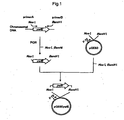
- a ywfE gene fragment of Bacillus subtilis was obtained in the following manner.
- primer A and primer B DNAs having the nucleotide sequences shown in SEQ ID NOS: 25 and 26 (hereinafter referred to as primer A and primer B. respectively) were synthesized.
- Primer A has a nucleotide sequence containing a region wherein the initiation codon of ywfE gene (atg) is substituted by the Nco I recognition sequence (cc atg g).
- Primer B has a nucleotide sequence containing a region wherein the termination codon of ywfE gene is substituted by the Bam HI recognition sequence ( gga tcc).
- PCR was carried out using the chromosomal DNA of Bacillus subtilis as a template and the above primer A and primer B as a set of primers. That is, PCR was carried out by 30 cycles, one cycle consisting of reaction at 94°C for one minute, reaction at 55°C for 2 minutes and reaction at 72°C for 3 minutes, using 40 ⁇ l of a reaction mixture comprising 0.1 ⁇ g of the chromosomal DNA, 0.5 ⁇ mol/l each of the primers, 2.5 units of Pfu DNA polymerase, 4 ⁇ l of buffer for Pfu DNA polymerase (10 x) and 200 ⁇ mol/l each of dNTPs.
- One-tenth of the resulting reaction mixture was subjected to agarose gel electrophoresis to confirm that a ca. 1.4 kb fragment corresponding to the ywfE gene fragment was amplified. Then, the remaining reaction mixture was mixed with an equal amount of phenol/chloroform saturated with TE. The resulting mixture was centrifuged, and the obtained upper layer was mixed with a two-fold volume of cold ethanol and allowed to stand at -80°C for 30 minutes. The resulting solution was centrifuged, and the obtained DNA precipitate was dissolved in 20 ⁇ l of TE.
- C-Terminal His-tagged recombinant expression vector pQB60 (Qiagen, Inc.) (0.2 ⁇ g) was cleaved with restriction enzymes Nco I and Bam HI. DNA fragments were separated by agarose gel electrophoresis, and a 3.4 kb DNA fragment was recovered in the same manner as above.
- the 1.4 kb DNA fragment containing ywfE gene and the 3.4 kb DNA fragment obtained above were subjected to ligation reaction using a ligation kit (Takara Bio Inc.) at 16°C for 16 hours.
- Escherichia coli NM522 (Stratagene) was transformed using the ligation reaction mixture according to the method using calcium ion [Proc. Natl. Acad. Sci. USA, 69 , 2110 (1972)], spread on LB agar medium containing 50 ⁇ g/ml ampicillin, and cultured overnight at 30°C.
- a plasmid was extracted from a colony of the transformant that grew on the medium according to a known method, whereby pQE60ywfE, which is a C-terminal His-tagged type of ywfE gene expression vector, was obtained.
- the structure of the vector was confirmed by digestion with restriction enzymes (Fig. 1).
- Escherichia coli NM522/pQE60ywfE carrying pQE60ywfE was inoculated into 8 ml of LB medium containing 50 ⁇ g/ml ampicillin in a test tube, and cultured at 28°C for 17 hours.
- the resulting culture was inoculated into 50 ml of LB medium containing 50 ⁇ g/ml ampicillin in a 250-ml Erlenmeyer flask, and cultured at 30°C for 3 hours.
- isopropyl- ⁇ -D-thlogalactopyranoside (IPTG) was added to give a final concentration of 1 mmol/l, followed by further culturing at 30°C for 4 hours.
- the resulting culture was centrifuged to obtain wet cells, and a His-tagged recombinant enzyme was purified from the wet cells using HisTrap (His-tagged protein purification kit, Amersham Pharmacia Biotech) according to the instructions attached thereto.
- HisTrap His-tagged protein purification kit, Amersham Pharmacia Biotech
- a reaction mixture (0.1 ml) comprising 0.04 mg of the purified His-tagged recombinant enzyme obtained in Experimental Example 2.
- 100 mmol/l Tris-HCl (pH 8.0), 60 mmol/l magnesium chloride and 60 mmol/l ATP was prepared.
- Gly and ⁇ -Ala selected from the amino acids shown in the first row of Table 1 and in the leftmost column of Table 1 to give a concentration of 30 mmol/l each, and the resulting mixtures were subjected to reaction at 37°C for 16 hours.
- the reaction products were analyzed by HPLC, whereby it was confirmed that the dipeptides shown in Table 1 were formed.
- the dipeptides formed by the reaction using, as substrates, two (or one) kinds of L-amino acids, Gly and ⁇ -Ala shown in the first row and the leftmost column of Table 1 are shown in the respective cells of the table.
- ⁇ means that a dipeptide was formed though its sequence was unidentified; ⁇ means that formation of a dipeptide was not confirmed: and a blank means that reaction was not carried out.
- Escherichia coli NM522/pQR60ywfE obtained in Experimental Example 1 was inoculated into 8 ml of LB medium containing 50 ⁇ g/ml ampicillin in a test tube, and cultured at 28° C for 17 hours.
- the resulting culture was inoculated into 50 ml of LB medium containing 50 ⁇ g/ml ampicillin in a 250-ml Erlenmeyer flask, and cultured at 30°C for 3 hours.
- IPTG was added to give a' final concentration of 1 mmol/1, followed by further culturing at 30°C for 4 hours.
- the resulting culture was centrifuged to obtain wet cells.
- the reaction product was analyzed by the same method as in Experimental Example 3, whereby it was confirmed that 25 mg/l L-Ala-L-Gln was accumulated.
- genes corresponding to the ywfE gene which exist in Bacillus subtilis ATCC 15245, ATCC 6633, IAM 1213, IAM 1107, IAM 1214, ATCC 9466, IAM 1033 and ATCC 21555, Bacillus amyloliquefaciens IFO 3022 and Bacillus pumilus NRRL B-12025 were obtained in the following manner.
- Bacillus amyloliquefaciens IFO 3022 and Bacillus pumilus NRRL B-12025 were respectively inoculated into LB medium and subjected to static culture overnight at 30°C. After the culturing, the chromosomal DNAs of the respective microorganisms were isolated and purified according to the method using saturated phenol described in Current Protocols in Molecular Biology.
- DHAs having the nucleotide sequences shown in SEQ ID NOS: 27 and 28 (hereinafter referred to as primer C and primer D, respectively) were synthesized.
- Primer C has a sequence containing a region upstream of the initiation codon of ywfE gene of the chromosomal DNA of Bacillus subtilis 168
- primer D has a sequence complementary to a sequence containing a region downstream of the termination codon of ywfE gene.
- PCR was carried out using each of the chromosomal DNAs of Bacillus subtilis ATCC 15245. ATCC 6633, IAM 1213, IAM 1107, IAM 1214, ATCC 9466, IAM 1033 and ATCC 21555 and Bacillus amyloliquefaciens IFO 3022 as a template and the above primer C and primer D as a set of primers.
- PCR was carried out by 30 cycles, one cycle consisting of reaction at 94°C for one minute, reaction at 55°C for 2 minutes and reaction at 72°C for 3 minutes, using 40 ⁇ l of a reaction mixture comprising 0.1 ⁇ g of the chromosomal DNA, 0.5 ⁇ mol/l each of the primers, 2.5 units of Pfu DNA polymerase, 4 ⁇ l of buffer for Pfu DNA polymerase (10 x) and 200 ⁇ mol/l each of dNTPs.
- Escherichia coli NM522 was transformed using each ligation reaction mixture according to the method using calcium ion, spread on LB agar medium containing 50 ⁇ g/ml ampicillin, and cultured overnight at 30°C.
- a plasmid was extracted from a colony of each transformant that grew on the medium according to a known method and the structure of each plasmid was analyzed using restriction enzymes. As a result, it was confirmed that the following plasmids containing a gene corresponding to the ywfE gene were obtained: pYWFE1 (derived from ATCC 15245.
- PCR was carried out using the chromosomal DNA of the NRRL B-12025 strain prepared above as a template and DNAs respectively consisting of the nucleotide sequences shown in SEQ ID NOS: 31 and 32 as a set of primers. That is, PCR was carried out by 30 cycles, one cycle consisting of reaction at 98°C for 5 seconds, reaction at 55°C for 30 seconds and reaction at 72°C for one minute, using 50 ⁇ l of a reaction mixture comprising 0.1 ⁇ g of the chromosomal DMA, 0-5 ⁇ mol/l each of the primers, 2.5 units of Z-taq polymerase (TaKara Bio Inc.), 5 ⁇ l of buffer for Z-taq polymerase (10 x) (Takara Bio Inc.) and 200 ⁇ mol/l each of dNTPs.
- a reaction mixture comprising 0.1 ⁇ g of the chromosomal DMA, 0-5 ⁇ mol/l each of the primers, 2.5 units of Z-
- reaction mixture was subjected to agarose gel electrophoresis to confirm that a ca. 0.8 kb fragment was amplified. Then, the remaining reaction mixture was mixed with an equal amount of phenol/chloroform saturated with TE. The resulting mixture was centrifuged, and the obtained upper layer was mixed with a two-fold volume of cold ethanol and allowed to stand at -80°C for 30 minutes. The resulting solution was centrifuged, and the obtained DNA precipitate was dissolved in 20 ⁇ l of TE.
- Escherichia coli DH5 ⁇ was transformed using the reaction mixture according to the method using calcium ions, spread on LB agar medium containing 50 ⁇ g/ml ampicillin, and cultured overnight at 30°C.
- a plasmid was extracted from the transformant obtained above and the nucleotide sequence of the ca. 0.8 kb DNA insert was determined, whereby a sequence from nucleotides 358 to 1160 in the nucleotide sequence shown in SEQ ID NO: 29 was confirmed.
- the above plasmid was cleaved with Eco RI and then subjected to agarose gel electrophoresis to separate a DNA fragment.
- the DNA fragment was purified using GENECLEAN II Kit, and about 0.5 ⁇ g of the purified DNA fragment was DIG-labeled using DIG-High Prime DNA Labeling & Detection Starter Kit I (Roche Diagnostics Corp.) according to the instructions attached thereto.
- the chromosomal DNA of the NRRL B-12025 strain was completely digested with Bam HI, Eco RI, Hind III, Kpn I, Pst I, Sac I, Sal I and Sph I, respectively, and subjected to agarose gel electrophoresis to separate DNA fragments, followed by transfer to nylon membrane plus charge (Roche Diagnostics Corp.) according to an ordinary method.
- the hybridization was carried out by contacting the nylon membrane with the probe DNA at 65°C for 16 hours, washing the nylon membrane twice with a solution consisting of 0-1% SDS and 2 x SSC at room temperature for 5 minutes, and further washing the membrane twice with a solution consisting of 0.1% SDS and 0.5 x SSC at 65°C for 15 minutes.
- the other operations and conditions and detection of the hybridized DNA were carried out according to the instructions attached to the above-mentioned DIG-High Prime DNA Labeling & Detection Starter Kit I.
- the chromosomal DNA of the NRRL B-12025 strain was completely digested with Hin dIII and Pst I, respectively, and subjected to agarose gel electrophoresis to separate DNA fragments. From the respective restriction enzyme-digested DNAs, 3-4 kbp fragments were purified using GENECLEAN II Kit, followed by autocyclization using the ligation kit.
- nucleotide sequence of the 0.8 kb DNA fragment determined above On the basis of the nucleotide sequence of the 0.8 kb DNA fragment determined above, the nucleotide sequences shown in SBQ ID NOS: 33 and 34 were designed and synthesized, and they were used in PCR using the cyclized DNA obtained above as a template.
- PCR was carried out by 30 cycles, one cycle consisting of reaction at 98°C for 5 seconds, reaction at 55°C for 30 seconds and reaction at 72°C for 3 minutes and 30 seconds, using 50 ⁇ l of a reaction mixture comprising 10 ng of the cyclized DNA, 0.5 ⁇ mol/l each of the primers, 2.5 units of pyrobest polymerase (Takara Bio Inc.), 5 ⁇ l of buffer for pyrobest polymerase (10 x) (Takara Bio Inc.) and 200 ⁇ mol/l each of dNTPs.
- a reaction mixture comprising 10 ng of the cyclized DNA, 0.5 ⁇ mol/l each of the primers, 2.5 units of pyrobest polymerase (Takara Bio Inc.), 5 ⁇ l of buffer for pyrobest polymerase (10 x) (Takara Bio Inc.) and 200 ⁇ mol/l each of dNTPs.
- One-tenth of the resulting reaction mixture was subjected to agarose gel electrophoresis to confirm that a ca. 3.0 kb fragment was amplified. Then, the remaining reaction mixture was mixed with an equal amount of phenol/chloroform saturated with TE. The resulting mixture was centrifuged, and the obtained upper layer was mixed with a two-fold volume of cold ethanol and allowed to stand at -80°C for 30 minutes. The resulting solution was centrifuged, and the obtained DNA precipitate was dissolved in 20 ⁇ l of TE.
- Escherichia coli NM522 was transformed using the reaction mixture according to the method using calcium ion, spread on LB agar medium containing 50 ⁇ g/ml ampicillin, and cultured overnight at 30°C.
- a plasmid was extracted from a colony of the transformant that grew on the medium according to a known method and the structure of the plasmid was analyzed using restriction enzymes. As a result, it was confirmed that plasmid pYWFE10 (derived from NRRL B-12025, DNA having the nucleotide sequence shown in SEQ ID NO: 29) containing a gene corresponding to the ywfE gene was obtained.
- nucleotide sequences of the genes corresponding to the ywfE gene which are respectively contained in the plasmids pYWFE1 to pYWFE10 obtained above were determined using 373A DNA Sequencer.
- amino acid sequences of the proteins encoded by the genes respectively contained in pYWFE1, pYWFE6 and pYWFB7 were identical with the amino acid sequence of the protein encoded by the ywfE gene, whereas those of the proteins encoded by the genes respectively contained in pYWFE2, pYWFR3, pYWPE4, pYWFE5, pYWFE8, pYWFE9 and pYWFE10 were different from the amino acid sequence of the protein encoded by the ywfE gene.
- amino acid sequences of the proteins encoded by the genes corresponding to the ywfE gene which are contained in pYWFE2, pYWFE3, pYWFE4, pYWFE5, pYWFE8, pYWFE9 and pYWFE10, and pYWFE1 and pYWFE7 are shown in SEQ ID NOS: 2 to 7, 35 and 1, respectively, and the nucleotide sequences of these genes are shown in SEQ ID NOS: 9 to 14, 29, 8 and 30, respectively.
- PCR was carried out using each of the chromosomal DNAs of Bacillus subtilis ATCC 15245, ATCC 6633, IAM 1213, IAM 1107, IAM 1214, ATCC 9466, IAM 1033 and ATCC 21555 and Bacillus amyloliquefaciens IFO 3022 as a template and primer A and primer B described in Experimental Example 1 as a set of primers.
- PCR was carried out by 30 cycles, one cycle consisting of reaction at 94°C for one minute, reaction at 55°C for 2 minutes and reaction at 72°C for 3 minutes, using 40 ⁇ l of a reaction mixture comprising 0.1 ⁇ g of the chromosomal DNA, 0.5 ⁇ mol/l each of the primers, 2.5 units of Pfu DNA polymerase, 4 ⁇ l of buffer for Pfu DNA polymerase (10 x) and 200 ⁇ mol/l each of dNTPs.
- pQE60ywfE2 (a vector containing the gene derived from ATCC 6633)
- pQE60ywfE3 a vector containing the gene derived from
- Escherichia coli NM522/pQE60ywfE1 to NM522/pQE60ywfE10 strains obtained above were respectively inoculated into 8 ml of LB medium containing 50 ⁇ g/ml ampicillin in a test tube, and cultured at 28°C for 17 hours. Each of the resulting cultures was inoculated into 50 ml of LB medium containing 50 ⁇ g/ml ampicillin in a 250-ml Erlenmeyer flask, and cultured at 30°C for 3 hours. Then. IPTG was added to give a final concentration of 1 mmol/l, followed by further culturing at 30°C for 4 hours. The resulting culture was centrifuged to obtain wet cells, and His-tagged recombinant enzymes were purified from the respective wet cells using HisTrap according to the instructions attached thereto.
- Reaction mixtures (0.1 ml each) comprising 0.04 mg of the respective recombinant enzymes obtained in Experimental Example 7, 100 mmol/l Tris-HCl (pH 8.0), 60 mmol/l magnesium chloride, 60 mmol/l ATP, 30 mmol/l L-Ala and 30 mmol/l L-Gln were prepared, and reactions were carried out at 37°C for 16 hours.
- reaction mixtures were analyzed by the method described in Experimental Example 3, whereby it was confirmed that 3.0 to 3.5 g/l L-Ala-L-Gln and 0.25 to 0.3 g/l L-Ala-L-Ala were formed and accumulated.
- 0.5 g/l magnesium sulfate, 10 g/l yeast extract and 10 g/l peptone was put in a 300-ml Erlenmeyer flask and sterilized at 115°C for 15 minutes.
- Corynebacterium glutamicum ATCC 13286 was cultured at 30oC for 24 hours using a slant agar medium having the same composition as that of the liquid medium (containing 20 g/l agar, pH 7.0), and one platinum loop of the cultured cells was inoculated into the liquid medium and cultured with shaking at 120 reciprocation/min. at 30oC for 17 hours. After the completion of culturing, the culture was centrifuged, and 100 mmol/l borate buffer (pH 9.0) was added to the resulting wet cells to give a concentration of 100 g/l.
- One-ml aliquots of the thus prepared cell suspension were subjected to: 1) no heat treatment; 2) heat treatment at 50oC for 10 minutes; or 3) heat treatment at 55oC for 10 minutes.
- the cell suspensions were then added, respectively, to one ml of a reaction solution [20 mmol/l EDTA, 200 mmol/l L-alanine ethyl ester hydrochloride, 400 mmol/l L-glutamine, 100 mmol/l borate buffer, pH 9.0] to bring total volume to 2 ml, followed by incubation at 30oC for 30 minutes.
- the reaction mixture was heated at 90oC for 15 minutes and then centrifuged, and the amount of L-Ala-L-Gln in the resulting supernatant was determined by HPLC.
- the amount of L-Ala-L-Gln formed was increased to more than 3-fold by carrying out heat treatment.
- Corynebacterium glutamicum ATCC 13286 was cultured and a cell suspension was obtained in the same manner as in Example 1.
- One-ml aliquots of the cell suspension were subjected to: 1) no heat treatment; 2) heat treatment at 50oC for 15 minutes; or 3) heat treatment at 65oC for 15 minutes.
- the cell suspensions were then added, respectively, to one ml of a reaction solution [20 mmol/l EDTA, 2 g/l L-Ala-L-Gln, 100 mmol/l borate buffer, pH 9.0] to bring total volume to 2 ml, followed by incubation at 30oC for 30 minutes.
- the reaction mixture was heated at 90oC for 15 minutes and then centrifuged, and the amount of L-Ala-L-Gln in the resulting supernatant was determined by HPLC in the same manner as in Example 1.
- the amount of L-Ala-L-Gln decomposed by the 30-minute reaction was, when no heat treatment is designated as 100. 84 for the heat treatment at 55oC for 15 minutes and 50 for the heat treatment at 65oC for 15 minutes.
- Escherichia coli JM109 was cultured and a cell suspension was obtained in the same manner as in Example 1.
- One-ml aliquots of the cell suspension were subjected to: 1) no heat treatment; 2) heat treatment at 55oC for 15 minutes; or 3) heat treatment at 65oC for 15 minutes.
- the cell suspensions were then added, respectively, to one ml of a reaction solution [20 mmol/l EDTA, 2 g/l L-Ala-L-Gln, 100 mmol/l borate buffer, pH 9.0] to bring total volume to 2 ml, followed by incubation at 30oC for 30 minutes.
- the reaction mixture was heated at 90QC for 15 minutes and then centrifuged, and the amount of L-Ala-L-Gln in the resulting supernatant was determined by HPLC in the same manner as in Example 1.
- the amount of L-Ala-L-Gln decomposed by the 30-minute reaction was, when no heat treatment is designated as 100, 0 for the heat treatment at 55oC for 15 minutes and 7 for the heat treatment at 65oC for 15 minutes.
Landscapes
- Life Sciences & Earth Sciences (AREA)
- Chemical & Material Sciences (AREA)
- Organic Chemistry (AREA)
- Engineering & Computer Science (AREA)
- Wood Science & Technology (AREA)
- Health & Medical Sciences (AREA)
- Zoology (AREA)
- General Chemical & Material Sciences (AREA)
- Bioinformatics & Cheminformatics (AREA)
- Microbiology (AREA)
- Proteomics, Peptides & Aminoacids (AREA)
- Chemical Kinetics & Catalysis (AREA)
- Biotechnology (AREA)
- Biochemistry (AREA)
- Molecular Biology (AREA)
- General Engineering & Computer Science (AREA)
- General Health & Medical Sciences (AREA)
- Genetics & Genomics (AREA)
- Preparation Of Compounds By Using Micro-Organisms (AREA)
- Enzymes And Modification Thereof (AREA)
- Peptides Or Proteins (AREA)
- Medicines That Contain Protein Lipid Enzymes And Other Medicines (AREA)
Claims (16)
- Verfahren zur Herstellung eines Dipeptids, umfassend:Verfügbarmachen einer Enzymquelle und einer oder mehrerer Arten von Substanzen, ausgewählt aus der Gruppe bestehend aus Aminosäureamiden, Aminosäureestern und Aminosäuren, in einem wässrigen Medium, wobei die Enzymquelle eine Kultur eines Mikroorganismus, welcher die Fähigkeit besitzt, ein Dipeptid zu produzieren, oder behandeltes Material aus der Kultur ist, welches einer Hitzebehandlung bei Temperaturen von 50°C bis 65°C für 5 bis 20 Minuten ausgesetzt war, um das Dipeptid im wässrigen Medium zu produzieren und anzureichern, und die Gewinnung des Dipeptids aus dem wässrigen Medium.
- Verfahren nach Anspruch 1, wobei der Mikroorganismus, welcher die Fähigkeit besitzt ein Dipeptid zu produzieren, ein Mikroorganismus ist, welcher zur Gattung Achromobacter, Acinetobacter, Aeromonas, Agrobacterium, Alcaligenes, Arthrobacter, Beijerinckia, Brevibacterium, Clavibacter, Chryseobacterium, Escherichia, Enterobacter, Erwinia, Flavobacterium, Kluyvera, Microbacterium, Micrococcus, Mycoplana, Pantoea, Propionibacterium, Listonella, Rhizobium, Rhodococcus, Salmonella, Sarcina, Serratia, Staphylococcus, Stenotrophomonas, Streptomyces, Vibrio, Xanthomonas, Bullera, Candida, Cryptococcus, Filobasidium, Geotrichum, Pachysolen, Rhodosporidium, Rhodotorula, Saccharomyces, Sporobolomyces, Tremella, Torulaspora, Torulopsis, Gluconacetobacter, Acetobacter, Gluconobacter, Asaia, Zucharibacter, Actinomadura, Kitasatosporia, Micromonospora, Nocardia, Oerskovia, Saccharothrix, Streptoverticillium, Hafnia, Lactobacillus, Neisseria, Thermoplasma, Corynebacterium, Pseudomonas, Bacillus, Trichosporon oder Sterigmatomyces gehört.
- Verfahren nach Anspruch 1 oder 2, wobei der Mikroorganismus, welcher die Fähigkeit besitzt, ein Dipeptid zu produzieren, ein Mikroorganismus ist, welcher die Fähigkeit besitzt, ein Protein gemäss einem der nachstehenden Punkte (1) bis (4) zu produzieren:(1) ein Protein, welches die Aminosäuresequenz, wie in einer der SEQ ID Nrn.: 1 bis 7 und 35 gezeigt, hat;(2) ein Protein, welches aus einer Aminosäuresequenz besteht, in der ein oder mehrere Aminosäurereste in der Aminosäuresequenz, wie in einer der SEQ ID Nrn.: 1 bis 7 und 35 gezeigt, deletiert, substituiert oder hinzugefügt sind, und die Aktivität besitzt, ein Dipeptid zu synthetisieren;(3) ein Protein, welches eine Aminosäuresequenz hat, die eine 65%-ige oder höhere Homologie zu der Aminosäuresequenz, wie in einer der SEQ ID Nrn.: 1 bis 7 und 35 gezeigt, aufweist und die Aktivität besitzt, ein Dipeptid zu synthetisieren; und(4) ein Protein, welches eine Aminosäuresequenz umfasst, welche eine 80%-ige oder höhere Homologie zu der in SEQ ID Nr.: 15 gezeigten Aminosäuresequenz aufweist und die Aktivität besitzt, ein Dipeptid zu synthetisieren.
- Verfahren nach Anspruch 1 oder 2, wobei der Mikroorganismus, welcher die Fähigkeit besitzt, ein Dipeptid zu produzieren, ein Mikroorganismus ist, welcher DNA gemäss einem der nachstehenden Punkte (1) bis (4) enthält:(1) DNA, welche das Protein nach einem der Punkte (1) bis (4) in Anspruch 3 codiert;(2) DNA, welche die Nucleotidsequenz, wie in einer der SEQ ID Nrn.: 8 bis 14, 29 und 30 gezeigt, besitzt;(3) DNA, welche mit DNA, die eine Nucleotidsequenz, wie in einer der in SEQ ID Nrn.: 8 bis 14, 29 und 30 gezeigt, hat, unter stringenten Bedingungen hybridisiert und ein Protein codiert, das die Aktivität besitzt, ein Dipeptid zu synthetisieren; und(4) DNA, umfassend eine Nucleotidsequenz, welche eine 80%-ige oder höhere Homologie zu der in SEQ ID Nr.: 16 gezeigten Nucleotidsequenz aufweist und ein Protein codiert, das die Aktivität besitzt, ein Dipeptid zu synthetisieren.
- Verfahren nach Anspruch 1 oder 2, wobei der Mikroorganismus, welcher die Fähigkeit besitzt, ein Dipeptid zu produzieren, ein Mikroorganismus ist, welcher ein Protein produziert, welches eine Proliniminopeptidase-Aktivität besitzt, oder ein Protein, welches L-Aminosäureamidhydrolase-Akivität besitzt.
- Verfahren nach Anspruch 5, wobei das Protein, welches Proliniminopeptidase-Aktivität besitzt, ein Protein gemäss einem der nachstehenden Punkte (1) bis (3) ist:(1) ein Protein, welches die Aminosäuresequenz, wie in einer der SEQ ID Nrn.: 17 bis 19 gezeigt, besitzt;(2) ein Protein, welches aus einer Aminosäuresequenz besteht, in der ein oder mehrere Aminosäurereste in der Aminosäuresequenz, wie in einer der SEQ ID Nrn.: 17 bis 19 gezeigt, deletiert, substituiert oder hinzugefügt sind, und Proliniminopeptidase-Aktivität besitzt; und(3) ein Protein, welches aus einer Aminosäuresequenz besteht, welche eine 80%-ige oder höhere Homologie zu der Aminosäuresequenz, wie in einer der SEQ ID Nrn.: 17 bis 19 gezeigt, aufweist und Proliniminopeptidase-Aktivität besitzt.
- Verfahren nach Anspruch 5, wobei der Mikroorganismus, welcher ein Protein produziert, das Proliniminopeptidase-Aktivität besitzt, ein Mikroorganismus ist, der DNA gemäss einem der nachstehenden Punkte (1) bis (3) enthält:(1) DNA, welche das Protein gemäss einem der Punkte (1) bis (3) in Anspruch 6 codiert;(2) DNA, welche die Nucleotidsequenz, wie in einer der SEQ ID Nrn.: 20 bis 22 gezeigt, besitzt; und(3) DNA, welche mit DNA, die die Nucleotidsequenz, wie in einer der SEQ ID Nrn.: 20 bis 22 gezeigt, hat, unter stringenten Bedingungen hybridisiert und ein Protein codiert, das Proliniminopeptidase-Aktivität besitzt.
- Verfahren nach Anspruch 5, wobei das Protein, welches L-Aminosäureamidhydrolase-Aktivität besitzt, ein Protein gemäss einem der nachstehenden Punkte (1) bis (3) ist:(1) Protein, welches die in SEQ ID Nr.: 23 gezeigte Aminosäuresequenz besitzt;(2) ein Protein, welches aus einer Aminosäuresequenz besteht, in der ein oder mehrere Aminosäurereste in der in der SEQ ID Nr. 23 gezeigten Aminosäuresequenz deletiert, substituiert oder hinzugefügt sind und L-Aminosäureamidhydrolase-Aktivität besitzt; und(3) ein Protein, welches aus einer Aminosäuresequenz besteht, welche eine 80%-ige oder höhere Homologie zu der in SEQ ID Nr.: 23 gezeigten Aminosäuresequenz aufweist und L-Aminosäureamidhydrolase-Aktivität besitzt.
- Verfahren nach Anspruch 5, wobei der Mikroorganismus, welcher ein Protein produziert, das L-Aminosäureamidhydrolase-Aktivität besitzt, ein Mikroorganismus ist, welcher DNA nach einem der nachstehenden Punkte (1) bis (3) enthält:(1) DNA, welche das Protein gemäss einem der Punkte (1) bis (3) in Anspruch 8 codiert;(2) DNA, welche die Nucleotidsequenz, wie in SEQ ID Nr.: 24 gezeigt, besitzt; und(3) DNA, welche mit DNA, die die Nucleotidsequenz, wie in einer der SEQ ID Nr.: 24 gezeigt, hat, unter stringenten Bedingungen hybridisiert und welche ein Protein codiert, das L-Aminosäureamidhydrolase-Aktivität besitzt.
- Verfahren nach Anspruch 1, wobei der Mikroorganismus, welcher die Fähigkeit besitzt, ein Dipeptid zu produzieren, ein Mikroorganismus ist, welcher eine rekombinante DNA enthält, in welcher die DNA nach einem der Punkte (1) bis (4) in Anspruch 4, der Punkte (1) bis (3) in Anspruch 7 und der Punkte (1) bis (3) in Anspruch 9 an eine Vektor-DNA ligiert ist.
- Verfahren nach Anspruch 10, wobei der Mikroorganismus welcher eine rekombinante DNA enthält, ein Mikroorganismus ist, der zur Gattung Escherichia, Bacillus, Pseudomonas, Corynebacterium oder Saccharomyces gehört.
- Verfahren nach einem der Ansprüche 1 bis 11, wobei die Aminosäure eine Aminosäure ist, die ausgewählt ist aus L-Aminosäuren, Glycin und β-Alanin.
- Verfahren nach Anspruch 12, wobei die L-Aminosäure eine oder mehrere Arten von Aminosäuren ist, ausgewählt aus der Gruppe bestehend aus L-Alanin, L-Glutamin, L-Glutaminsäure, L-Valin, L-Leucin, L-Isoleucin, L-Prolin, L-Phenylalanin, L-Tryptophan, L-Methionin, L-Serin, L-Threonin, L-Cystein, L-Asparagin, L-Tyrosin, L-Lysin, L-Arginin, L-Histidin, L-Asparaginsäure, L-α-Aminobuttersäure, L-Azaserin, L-Theanin, L-4-Hydroxyprolin, L-3-Hydroxyprolin, L-Ornithin und L-6-Diazo-5-oxo-Norleucin.
- Verfahren nach einem der Ansprüche 1, 2, 5 bis 7, 10 und 11, wobei der Aminosäureester eine oder mehrere Arten von Aminosäureestern ist, ausgewählt aus der Gruppe bestehend aus L-Alaninester, Glycinester, L-Valinester, L-Isoleucinester, L-Methioninester, L-Phenylalaninester, L-Serinester, L-Threoninester, L-Glutaminester, L-Tyrosinester, L-Argininester, L-Asparaginsäure-α-ester, L-Asparaginsäure-β-ester, L-Leucinester, L-Asparaginester, L-Lysinester, L-Asparaginsäure-α,β-dimethylester und L-Glutamin-γ-ester, und die Aminosäure eine oder mehrerer Arten von Aminosäuren ist, ausgewählt aus der Gruppe bestehend aus L-Glutaminsäure, L-Glutamin, L-Asparagin, Glycin, L-Alanin, L-Leucin, L-Methionin, L-Prolin, L-Phenylalanin, L-Tryptophan, L-Serin, L-Threonin, L-Tyrosin, L-Lysin, L-Arginin und L-Histidin.
- Verfahren nach einem der Ansprüche 1, 2, 5 und 8 bis 11, wobei das Aminosäureamid eine oder mehrere Arten von Aminosäureamiden ist, ausgewählt aus der Gruppe bestehend aus L-Alaninamid, Glycinamid and L-Asparaginsäure-a-amid, und die Aminosäure eine oder mehrere Arten von Aminosäuren ist, ausgewählt aus der Gruppe bestehend aus L-Glutaminsäure, L-Asparagin, L-Glutamin, Glycin, L-Alanin, L-Valin, L-Leucin, L-Isoleucin, L-Methionin, L-Prolin, L-Phenylalanin, L-Tryptophan, L-Serin, L-Threonin, L-Tyrosin, L-Lysin, L-Arginin und L-Histidin.
- Verfahren nach einem der Ansprüche 1 bis 15, wobei das behandelte Material der Kultur eine konzentrierte Kultur, eine getrocknete Kultur, Zellen, welche durch Zentrifugieren der Kultur erhalten wurden, oder ein Produkt, welches durch die Trocknung der Zellen, die Gefriertrocknung der Zellen, die Behandlung der Zellen mit einem Tensid, die Behandlung der Zellen mit einem Lösungsmittel, die enzymatische Behandlung der Zellen oder die Fixierung der Zellen erhalten wurde, ist.
Applications Claiming Priority (4)
| Application Number | Priority Date | Filing Date | Title |
|---|---|---|---|
| JP2003397104 | 2003-11-27 | ||
| JP2003397104 | 2003-11-27 | ||
| JP2004189009 | 2004-06-25 | ||
| JP2004189009 | 2004-06-25 |
Publications (2)
| Publication Number | Publication Date |
|---|---|
| EP1548122A1 EP1548122A1 (de) | 2005-06-29 |
| EP1548122B1 true EP1548122B1 (de) | 2007-08-15 |
Family
ID=34554844
Family Applications (1)
| Application Number | Title | Priority Date | Filing Date |
|---|---|---|---|
| EP04028191A Expired - Lifetime EP1548122B1 (de) | 2003-11-27 | 2004-11-26 | Verfahren zur Herstellung von Dipeptiden |
Country Status (6)
| Country | Link |
|---|---|
| US (1) | US20050148048A1 (de) |
| EP (1) | EP1548122B1 (de) |
| JP (1) | JP4731327B2 (de) |
| AT (1) | ATE370242T1 (de) |
| DE (1) | DE602004008201T2 (de) |
| WO (1) | WO2005052153A1 (de) |
Families Citing this family (8)
| Publication number | Priority date | Publication date | Assignee | Title |
|---|---|---|---|---|
| EP1411060A4 (de) * | 2001-07-26 | 2006-09-13 | Ajinomoto Kk | Verfahren zur herstellung von dipeptid, l aminosäureamidhydrolase für die verwendung in diesem verfahren und verfahren zur herstellung von l aminosäureamidhydrolase |
| EP1767628A4 (de) * | 2004-06-25 | 2008-08-27 | Kyowa Hakko Kogyo Kk | Verfahren zur herstellung von dipeptiden oder dipeptidderivaten |
| US8257943B2 (en) | 2004-06-25 | 2012-09-04 | Kyowa Hakko Bio Co., Ltd. | Process for producing dipeptides or dipeptide derivatives |
| ATE541821T1 (de) * | 2004-10-12 | 2012-02-15 | Schott Ag | Gemultiplexter proteinadsorptions-assay |
| JP2006265177A (ja) * | 2005-03-24 | 2006-10-05 | Taiyo Kagaku Co Ltd | チック障害改善用組成物 |
| JP2010088301A (ja) | 2007-02-01 | 2010-04-22 | Ajinomoto Co Inc | L−アミノ酸の製造法 |
| CN101715484B (zh) | 2007-04-06 | 2014-02-19 | 协和发酵生化株式会社 | 二肽的制造方法 |
| CN116622795B (zh) * | 2023-07-20 | 2023-10-13 | 凯莱英生命科学技术(天津)有限公司 | L-氨基酸连接酶的制备方法及其在二肽合成上的应用 |
Family Cites Families (4)
| Publication number | Priority date | Publication date | Assignee | Title |
|---|---|---|---|---|
| DE3741515A1 (de) * | 1987-12-08 | 1989-06-22 | Degussa | Verfahren zur herstellung von dipeptiden |
| EP1411060A4 (de) * | 2001-07-26 | 2006-09-13 | Ajinomoto Kk | Verfahren zur herstellung von dipeptid, l aminosäureamidhydrolase für die verwendung in diesem verfahren und verfahren zur herstellung von l aminosäureamidhydrolase |
| AU2002364710A1 (en) * | 2001-12-03 | 2003-06-17 | Diversa Corporation | Products of manufacture and processes for peptide synthesis |
| CN100400660C (zh) * | 2002-12-26 | 2008-07-09 | 协和发酵工业株式会社 | 生产二肽的方法 |
-
2004
- 2004-11-24 US US10/995,266 patent/US20050148048A1/en not_active Abandoned
- 2004-11-26 JP JP2005515852A patent/JP4731327B2/ja not_active Expired - Lifetime
- 2004-11-26 EP EP04028191A patent/EP1548122B1/de not_active Expired - Lifetime
- 2004-11-26 WO PCT/JP2004/017991 patent/WO2005052153A1/ja not_active Ceased
- 2004-11-26 AT AT04028191T patent/ATE370242T1/de not_active IP Right Cessation
- 2004-11-26 DE DE602004008201T patent/DE602004008201T2/de not_active Expired - Lifetime
Non-Patent Citations (1)
| Title |
|---|
| None * |
Also Published As
| Publication number | Publication date |
|---|---|
| DE602004008201D1 (de) | 2007-09-27 |
| JPWO2005052153A1 (ja) | 2007-06-21 |
| JP4731327B2 (ja) | 2011-07-20 |
| WO2005052153A1 (ja) | 2005-06-09 |
| ATE370242T1 (de) | 2007-09-15 |
| US20050148048A1 (en) | 2005-07-07 |
| DE602004008201T2 (de) | 2008-04-03 |
| EP1548122A1 (de) | 2005-06-29 |
Similar Documents
| Publication | Publication Date | Title |
|---|---|---|
| EP1627884B9 (de) | Verfahren zur Herstellung von Dipeptiden | |
| EP2298905B1 (de) | Neuartiges peptidbildendes Enzymgen | |
| US20100120126A1 (en) | Microorganisms producing dipeptides and process for producing dipeptide using the microorganisms | |
| US20080171357A1 (en) | Method for producing tripeptides and/or peptides longer than tripeptides | |
| EP1548122B1 (de) | Verfahren zur Herstellung von Dipeptiden | |
| EP2143786B1 (de) | Verfahren zur dipeptidherstellung | |
| US8685914B2 (en) | L-alanyl-L-glutamine crystal | |
| EP4166565A1 (de) | Verfahren zur dipeptidherstellung | |
| HK1083345B (en) | Process for producing dipeptides |
Legal Events
| Date | Code | Title | Description |
|---|---|---|---|
| PUAI | Public reference made under article 153(3) epc to a published international application that has entered the european phase |
Free format text: ORIGINAL CODE: 0009012 |
|
| AK | Designated contracting states |
Kind code of ref document: A1 Designated state(s): AT BE BG CH CY CZ DE DK EE ES FI FR GB GR HU IE IS IT LI LU MC NL PL PT RO SE SI SK TR |
|
| AX | Request for extension of the european patent |
Extension state: AL HR LT LV MK YU |
|
| 17P | Request for examination filed |
Effective date: 20051129 |
|
| AKX | Designation fees paid |
Designated state(s): AT BE BG CH CY CZ DE DK EE ES FI FR GB GR HU IE IS IT LI LU MC NL PL PT RO SE SI SK TR |
|
| 17Q | First examination report despatched |
Effective date: 20060131 |
|
| GRAP | Despatch of communication of intention to grant a patent |
Free format text: ORIGINAL CODE: EPIDOSNIGR1 |
|
| GRAS | Grant fee paid |
Free format text: ORIGINAL CODE: EPIDOSNIGR3 |
|
| GRAA | (expected) grant |
Free format text: ORIGINAL CODE: 0009210 |
|
| RIN1 | Information on inventor provided before grant (corrected) |
Inventor name: HASHIMOTO, SHIN-ICHIC/O TECHNICAL RESEARCH LABORAT Inventor name: TABATA, KAZUHIKOC/O TECHNICAL RESEARCH LABORATORIE Inventor name: NOGUCHI, AYAKOC/O TECHNICAL RESEARCH LABORATORIES |
|
| AK | Designated contracting states |
Kind code of ref document: B1 Designated state(s): AT BE BG CH CY CZ DE DK EE ES FI FR GB GR HU IE IS IT LI LU MC NL PL PT RO SE SI SK TR |
|
| REG | Reference to a national code |
Ref country code: GB Ref legal event code: FG4D |
|
| RIN1 | Information on inventor provided before grant (corrected) |
Inventor name: HASHIMOTO, SHIN-ICHIC/O TECHNICAL RESEARCH LABORAT Inventor name: NOGUCHI, AYAKOC/O HEALTHCARE RESEARCH LABORATORIES Inventor name: TABATA, KAZUHIKOC/O TECHNICAL RESEARCH LABORATORIE |
|
| REG | Reference to a national code |
Ref country code: CH Ref legal event code: EP |
|
| REG | Reference to a national code |
Ref country code: IE Ref legal event code: FG4D |
|
| REF | Corresponds to: |
Ref document number: 602004008201 Country of ref document: DE Date of ref document: 20070927 Kind code of ref document: P |
|
| ET | Fr: translation filed | ||
| REG | Reference to a national code |
Ref country code: CH Ref legal event code: NV Representative=s name: BOVARD AG PATENTANWAELTE |
|
| PG25 | Lapsed in a contracting state [announced via postgrant information from national office to epo] |
Ref country code: IS Free format text: LAPSE BECAUSE OF FAILURE TO SUBMIT A TRANSLATION OF THE DESCRIPTION OR TO PAY THE FEE WITHIN THE PRESCRIBED TIME-LIMIT Effective date: 20071215 Ref country code: ES Free format text: LAPSE BECAUSE OF FAILURE TO SUBMIT A TRANSLATION OF THE DESCRIPTION OR TO PAY THE FEE WITHIN THE PRESCRIBED TIME-LIMIT Effective date: 20071126 Ref country code: BG Free format text: LAPSE BECAUSE OF FAILURE TO SUBMIT A TRANSLATION OF THE DESCRIPTION OR TO PAY THE FEE WITHIN THE PRESCRIBED TIME-LIMIT Effective date: 20071115 Ref country code: FI Free format text: LAPSE BECAUSE OF FAILURE TO SUBMIT A TRANSLATION OF THE DESCRIPTION OR TO PAY THE FEE WITHIN THE PRESCRIBED TIME-LIMIT Effective date: 20070815 Ref country code: NL Free format text: LAPSE BECAUSE OF FAILURE TO SUBMIT A TRANSLATION OF THE DESCRIPTION OR TO PAY THE FEE WITHIN THE PRESCRIBED TIME-LIMIT Effective date: 20070815 |
|
| NLV1 | Nl: lapsed or annulled due to failure to fulfill the requirements of art. 29p and 29m of the patents act | ||
| PG25 | Lapsed in a contracting state [announced via postgrant information from national office to epo] |
Ref country code: PL Free format text: LAPSE BECAUSE OF FAILURE TO SUBMIT A TRANSLATION OF THE DESCRIPTION OR TO PAY THE FEE WITHIN THE PRESCRIBED TIME-LIMIT Effective date: 20070815 |
|
| PGFP | Annual fee paid to national office [announced via postgrant information from national office to epo] |
Ref country code: AT Payment date: 20071122 Year of fee payment: 4 |
|
| PG25 | Lapsed in a contracting state [announced via postgrant information from national office to epo] |
Ref country code: BE Free format text: LAPSE BECAUSE OF FAILURE TO SUBMIT A TRANSLATION OF THE DESCRIPTION OR TO PAY THE FEE WITHIN THE PRESCRIBED TIME-LIMIT Effective date: 20070815 |
|
| PG25 | Lapsed in a contracting state [announced via postgrant information from national office to epo] |
Ref country code: GR Free format text: LAPSE BECAUSE OF FAILURE TO SUBMIT A TRANSLATION OF THE DESCRIPTION OR TO PAY THE FEE WITHIN THE PRESCRIBED TIME-LIMIT Effective date: 20071116 Ref country code: DK Free format text: LAPSE BECAUSE OF FAILURE TO SUBMIT A TRANSLATION OF THE DESCRIPTION OR TO PAY THE FEE WITHIN THE PRESCRIBED TIME-LIMIT Effective date: 20070815 |
|
| PG25 | Lapsed in a contracting state [announced via postgrant information from national office to epo] |
Ref country code: SK Free format text: LAPSE BECAUSE OF FAILURE TO SUBMIT A TRANSLATION OF THE DESCRIPTION OR TO PAY THE FEE WITHIN THE PRESCRIBED TIME-LIMIT Effective date: 20070815 Ref country code: PT Free format text: LAPSE BECAUSE OF FAILURE TO SUBMIT A TRANSLATION OF THE DESCRIPTION OR TO PAY THE FEE WITHIN THE PRESCRIBED TIME-LIMIT Effective date: 20080115 Ref country code: CZ Free format text: LAPSE BECAUSE OF FAILURE TO SUBMIT A TRANSLATION OF THE DESCRIPTION OR TO PAY THE FEE WITHIN THE PRESCRIBED TIME-LIMIT Effective date: 20070815 |
|
| PLBE | No opposition filed within time limit |
Free format text: ORIGINAL CODE: 0009261 |
|
| STAA | Information on the status of an ep patent application or granted ep patent |
Free format text: STATUS: NO OPPOSITION FILED WITHIN TIME LIMIT |
|
| PG25 | Lapsed in a contracting state [announced via postgrant information from national office to epo] |
Ref country code: RO Free format text: LAPSE BECAUSE OF FAILURE TO SUBMIT A TRANSLATION OF THE DESCRIPTION OR TO PAY THE FEE WITHIN THE PRESCRIBED TIME-LIMIT Effective date: 20070815 Ref country code: MC Free format text: LAPSE BECAUSE OF NON-PAYMENT OF DUE FEES Effective date: 20071130 Ref country code: SE Free format text: LAPSE BECAUSE OF FAILURE TO SUBMIT A TRANSLATION OF THE DESCRIPTION OR TO PAY THE FEE WITHIN THE PRESCRIBED TIME-LIMIT Effective date: 20071115 |
|
| 26N | No opposition filed |
Effective date: 20080516 |
|
| PG25 | Lapsed in a contracting state [announced via postgrant information from national office to epo] |
Ref country code: IE Free format text: LAPSE BECAUSE OF NON-PAYMENT OF DUE FEES Effective date: 20071126 |
|
| PG25 | Lapsed in a contracting state [announced via postgrant information from national office to epo] |
Ref country code: EE Free format text: LAPSE BECAUSE OF FAILURE TO SUBMIT A TRANSLATION OF THE DESCRIPTION OR TO PAY THE FEE WITHIN THE PRESCRIBED TIME-LIMIT Effective date: 20070815 |
|
| PG25 | Lapsed in a contracting state [announced via postgrant information from national office to epo] |
Ref country code: SI Free format text: LAPSE BECAUSE OF FAILURE TO SUBMIT A TRANSLATION OF THE DESCRIPTION OR TO PAY THE FEE WITHIN THE PRESCRIBED TIME-LIMIT Effective date: 20070815 |
|
| REG | Reference to a national code |
Ref country code: CH Ref legal event code: PL |
|
| GBPC | Gb: european patent ceased through non-payment of renewal fee |
Effective date: 20081126 |
|
| PG25 | Lapsed in a contracting state [announced via postgrant information from national office to epo] |
Ref country code: CY Free format text: LAPSE BECAUSE OF FAILURE TO SUBMIT A TRANSLATION OF THE DESCRIPTION OR TO PAY THE FEE WITHIN THE PRESCRIBED TIME-LIMIT Effective date: 20070815 |
|
| PG25 | Lapsed in a contracting state [announced via postgrant information from national office to epo] |
Ref country code: AT Free format text: LAPSE BECAUSE OF NON-PAYMENT OF DUE FEES Effective date: 20081126 Ref country code: LU Free format text: LAPSE BECAUSE OF NON-PAYMENT OF DUE FEES Effective date: 20071126 |
|
| PG25 | Lapsed in a contracting state [announced via postgrant information from national office to epo] |
Ref country code: HU Free format text: LAPSE BECAUSE OF FAILURE TO SUBMIT A TRANSLATION OF THE DESCRIPTION OR TO PAY THE FEE WITHIN THE PRESCRIBED TIME-LIMIT Effective date: 20080216 Ref country code: TR Free format text: LAPSE BECAUSE OF FAILURE TO SUBMIT A TRANSLATION OF THE DESCRIPTION OR TO PAY THE FEE WITHIN THE PRESCRIBED TIME-LIMIT Effective date: 20070815 |
|
| PG25 | Lapsed in a contracting state [announced via postgrant information from national office to epo] |
Ref country code: CH Free format text: LAPSE BECAUSE OF NON-PAYMENT OF DUE FEES Effective date: 20081130 Ref country code: LI Free format text: LAPSE BECAUSE OF NON-PAYMENT OF DUE FEES Effective date: 20081130 |
|
| PG25 | Lapsed in a contracting state [announced via postgrant information from national office to epo] |
Ref country code: GB Free format text: LAPSE BECAUSE OF NON-PAYMENT OF DUE FEES Effective date: 20081126 |
|
| PGFP | Annual fee paid to national office [announced via postgrant information from national office to epo] |
Ref country code: IT Payment date: 20071130 Year of fee payment: 4 |
|
| REG | Reference to a national code |
Ref country code: FR Ref legal event code: PLFP Year of fee payment: 12 |
|
| REG | Reference to a national code |
Ref country code: FR Ref legal event code: PLFP Year of fee payment: 13 |
|
| REG | Reference to a national code |
Ref country code: FR Ref legal event code: PLFP Year of fee payment: 14 |
|
| REG | Reference to a national code |
Ref country code: FR Ref legal event code: PLFP Year of fee payment: 15 |
|
| P01 | Opt-out of the competence of the unified patent court (upc) registered |
Effective date: 20230509 |
|
| PGFP | Annual fee paid to national office [announced via postgrant information from national office to epo] |
Ref country code: FR Payment date: 20230929 Year of fee payment: 20 |
|
| PGFP | Annual fee paid to national office [announced via postgrant information from national office to epo] |
Ref country code: DE Payment date: 20230929 Year of fee payment: 20 |
|
| REG | Reference to a national code |
Ref country code: DE Ref legal event code: R071 Ref document number: 602004008201 Country of ref document: DE |