EP1535904A2 - Procédé de préparation de dérives de 1- (4-nitrophényl)-3-pyrrolidinols optiquement actifs, et paraphénylenediamines à groupement pyrrolidinyle chirales - Google Patents
Procédé de préparation de dérives de 1- (4-nitrophényl)-3-pyrrolidinols optiquement actifs, et paraphénylenediamines à groupement pyrrolidinyle chirales Download PDFInfo
- Publication number
- EP1535904A2 EP1535904A2 EP04106111A EP04106111A EP1535904A2 EP 1535904 A2 EP1535904 A2 EP 1535904A2 EP 04106111 A EP04106111 A EP 04106111A EP 04106111 A EP04106111 A EP 04106111A EP 1535904 A2 EP1535904 A2 EP 1535904A2
- Authority
- EP
- European Patent Office
- Prior art keywords
- radical
- alkyl
- formula
- compound
- radicals
- Prior art date
- Legal status (The legal status is an assumption and is not a legal conclusion. Google has not performed a legal analysis and makes no representation as to the accuracy of the status listed.)
- Withdrawn
Links
- 0 C*(C)(*(C=C(C=C1)N(C[C@@](C2)O)[C@]2C(O)=O)C=C1[N+]([O-])=O)C=C Chemical compound C*(C)(*(C=C(C=C1)N(C[C@@](C2)O)[C@]2C(O)=O)C=C1[N+]([O-])=O)C=C 0.000 description 6
- KKJQZEWNZXRJFG-AKGZTFGVSA-N CC(C1)CN[C@@H]1C(O)=O Chemical compound CC(C1)CN[C@@H]1C(O)=O KKJQZEWNZXRJFG-AKGZTFGVSA-N 0.000 description 1
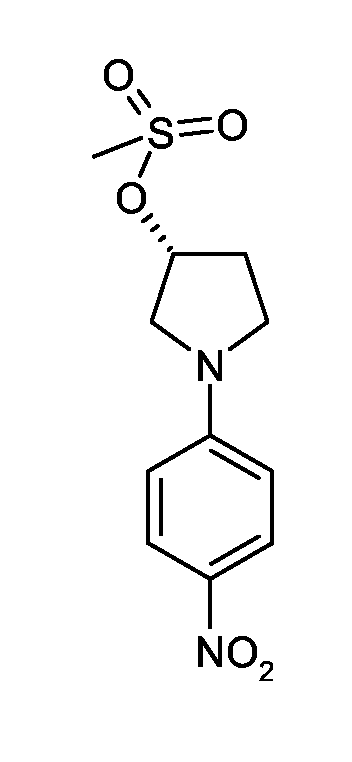
- OLOABQJWJXXNHS-LLVKDONJSA-N CS(O[C@H](CC1)CN1c(cc1)ccc1[N+]([O-])=O)(=O)=O Chemical compound CS(O[C@H](CC1)CN1c(cc1)ccc1[N+]([O-])=O)(=O)=O OLOABQJWJXXNHS-LLVKDONJSA-N 0.000 description 1
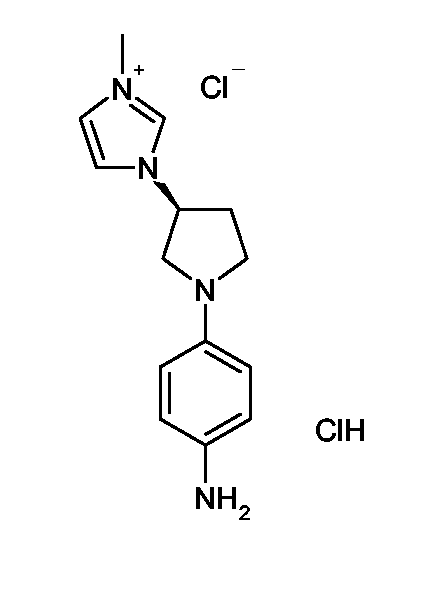
- NXIIJRDAQPWMGP-AWEZNQCLSA-N C[n+]1c[n]([C@@H](CC2)CN2c(cc2)ccc2N)cc1 Chemical compound C[n+]1c[n]([C@@H](CC2)CN2c(cc2)ccc2N)cc1 NXIIJRDAQPWMGP-AWEZNQCLSA-N 0.000 description 1
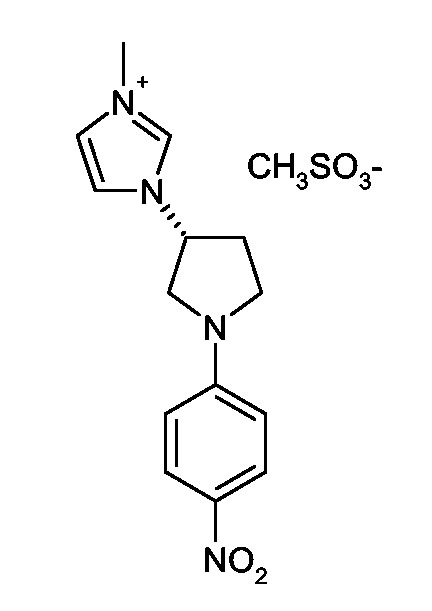
- SMPFCJPECOAQTQ-CQSZACIVSA-N C[n+]1c[n]([C@H](CC2)CN2c(cc2)ccc2[N+]([O-])=O)cc1 Chemical compound C[n+]1c[n]([C@H](CC2)CN2c(cc2)ccc2[N+]([O-])=O)cc1 SMPFCJPECOAQTQ-CQSZACIVSA-N 0.000 description 1
- JHHZLHWJQPUNKB-SCSAIBSYSA-N O[C@H]1CNCC1 Chemical compound O[C@H]1CNCC1 JHHZLHWJQPUNKB-SCSAIBSYSA-N 0.000 description 1
- KWMXJSMRNOVCDS-SNVBAGLBSA-N [O-][N+](c(cc1)ccc1N(CC1)C[C@@H]1O)=O Chemical compound [O-][N+](c(cc1)ccc1N(CC1)C[C@@H]1O)=O KWMXJSMRNOVCDS-SNVBAGLBSA-N 0.000 description 1
Classifications
-
- C—CHEMISTRY; METALLURGY
- C07—ORGANIC CHEMISTRY
- C07D—HETEROCYCLIC COMPOUNDS
- C07D403/00—Heterocyclic compounds containing two or more hetero rings, having nitrogen atoms as the only ring hetero atoms, not provided for by group C07D401/00
- C07D403/02—Heterocyclic compounds containing two or more hetero rings, having nitrogen atoms as the only ring hetero atoms, not provided for by group C07D401/00 containing two hetero rings
- C07D403/04—Heterocyclic compounds containing two or more hetero rings, having nitrogen atoms as the only ring hetero atoms, not provided for by group C07D401/00 containing two hetero rings directly linked by a ring-member-to-ring-member bond
-
- A—HUMAN NECESSITIES
- A61—MEDICAL OR VETERINARY SCIENCE; HYGIENE
- A61K—PREPARATIONS FOR MEDICAL, DENTAL OR TOILETRY PURPOSES
- A61K8/00—Cosmetics or similar toiletry preparations
- A61K8/18—Cosmetics or similar toiletry preparations characterised by the composition
- A61K8/30—Cosmetics or similar toiletry preparations characterised by the composition containing organic compounds
- A61K8/49—Cosmetics or similar toiletry preparations characterised by the composition containing organic compounds containing heterocyclic compounds
- A61K8/4906—Cosmetics or similar toiletry preparations characterised by the composition containing organic compounds containing heterocyclic compounds with one nitrogen as the only hetero atom
- A61K8/4913—Cosmetics or similar toiletry preparations characterised by the composition containing organic compounds containing heterocyclic compounds with one nitrogen as the only hetero atom having five membered rings, e.g. pyrrolidone carboxylic acid
-
- A—HUMAN NECESSITIES
- A61—MEDICAL OR VETERINARY SCIENCE; HYGIENE
- A61Q—SPECIFIC USE OF COSMETICS OR SIMILAR TOILETRY PREPARATIONS
- A61Q5/00—Preparations for care of the hair
- A61Q5/10—Preparations for permanently dyeing the hair
-
- C—CHEMISTRY; METALLURGY
- C07—ORGANIC CHEMISTRY
- C07D—HETEROCYCLIC COMPOUNDS
- C07D207/00—Heterocyclic compounds containing five-membered rings not condensed with other rings, with one nitrogen atom as the only ring hetero atom
- C07D207/02—Heterocyclic compounds containing five-membered rings not condensed with other rings, with one nitrogen atom as the only ring hetero atom with only hydrogen or carbon atoms directly attached to the ring nitrogen atom
- C07D207/04—Heterocyclic compounds containing five-membered rings not condensed with other rings, with one nitrogen atom as the only ring hetero atom with only hydrogen or carbon atoms directly attached to the ring nitrogen atom having no double bonds between ring members or between ring members and non-ring members
- C07D207/10—Heterocyclic compounds containing five-membered rings not condensed with other rings, with one nitrogen atom as the only ring hetero atom with only hydrogen or carbon atoms directly attached to the ring nitrogen atom having no double bonds between ring members or between ring members and non-ring members with hetero atoms or with carbon atoms having three bonds to hetero atoms with at the most one bond to halogen, e.g. ester or nitrile radicals, directly attached to ring carbon atoms
- C07D207/12—Oxygen or sulfur atoms
-
- C—CHEMISTRY; METALLURGY
- C07—ORGANIC CHEMISTRY
- C07D—HETEROCYCLIC COMPOUNDS
- C07D207/00—Heterocyclic compounds containing five-membered rings not condensed with other rings, with one nitrogen atom as the only ring hetero atom
- C07D207/02—Heterocyclic compounds containing five-membered rings not condensed with other rings, with one nitrogen atom as the only ring hetero atom with only hydrogen or carbon atoms directly attached to the ring nitrogen atom
- C07D207/04—Heterocyclic compounds containing five-membered rings not condensed with other rings, with one nitrogen atom as the only ring hetero atom with only hydrogen or carbon atoms directly attached to the ring nitrogen atom having no double bonds between ring members or between ring members and non-ring members
- C07D207/10—Heterocyclic compounds containing five-membered rings not condensed with other rings, with one nitrogen atom as the only ring hetero atom with only hydrogen or carbon atoms directly attached to the ring nitrogen atom having no double bonds between ring members or between ring members and non-ring members with hetero atoms or with carbon atoms having three bonds to hetero atoms with at the most one bond to halogen, e.g. ester or nitrile radicals, directly attached to ring carbon atoms
- C07D207/14—Nitrogen atoms not forming part of a nitro radical
-
- C—CHEMISTRY; METALLURGY
- C09—DYES; PAINTS; POLISHES; NATURAL RESINS; ADHESIVES; COMPOSITIONS NOT OTHERWISE PROVIDED FOR; APPLICATIONS OF MATERIALS NOT OTHERWISE PROVIDED FOR
- C09B—ORGANIC DYES OR CLOSELY-RELATED COMPOUNDS FOR PRODUCING DYES, e.g. PIGMENTS; MORDANTS; LAKES
- C09B51/00—Nitro or nitroso dyes
Definitions
- the invention relates to a method of preparation of 1- (4-nitrophenyl) -3-pyrrolidinol derivatives optically active.
- the invention also relates to new paraphenylenediamines with pyrrolidinyl group Chiral.
- the compounds of formula (II) are used as an oxidation base for dyeing and in dye kits and have the benefit of presenting a good toxicological profile.
- WO-A-01 68043 describes the preparation of compound (IV) by reaction between 4-fluoro-nitrobenzene and (R) -3-pyrrolidinol, according to Scheme 1 below:
- Chiral 3-pyrrolidinols (for example formula (III), of configuration R or S), which are the raw materials used in this type of synthesis, are expensive compounds, difficult to obtain for concerning the compounds of configuration R, even not accessible industrially with regard to the compounds of configuration S.
- WO-A-97 43256 discloses isolation of the hydrochloride form by precipitation with the acid hydrochloric.
- the purpose of the present invention is to provide a process for the preparation of Optically active 1- (4-nitrophenyl) -3-pyrrolidinols which meets, among other things, the needs listed high.
- the purpose of the present invention is still to provide a process for the preparation of Optically active 1- (4-nitrophenyl) -3-pyrrolidinols which do not have the disadvantages, defects, limitations and disadvantages of art processes prior art and which solves the problems of the prior art.
- the invention also relates to a dye composition containing in a medium suitable for dyeing keratinous fibers, at at least one paraphenylenediamine derivative of the formula (II), in a configuration (R) or (S), as a oxidation base.
- the invention also relates to a method of oxidation dyeing of keratinous fibers in which is applied to the fibers a composition dye as defined above, in the presence of oxidizing agent for a time sufficient to develop the desired color.
- Another object of the present invention is a multi-compartment device in which a first compartment contains a composition dyer as defined above and a second compartment contains an oxidizing agent.
- Another object, again, of the invention is the use of this composition for the dyeing of keratin fibers and a fiber dyeing process keratinous, in particular keratinous fibers such as hair, implementing the composition of the present invention.
- Paraphenylene diamine derivatives (PPD) substituted with a chiral pyrrolidinyl group of formula (II), derived from the compounds of formula (I) the invention is the object, are used as a basis oxidation to obtain a color of fibers chromatic keratin, powerful, selectively selective and tenacious.
- a chain aliphatic hydrocarbon is a linear chain or branched which may contain unsaturations of the type alkene or alkyne.
- An alicyclic hydrocarbon chain is a cyclic chain, saturated or unsaturated, does not containing no aromatic ring structure.
- n may be 0 and the benzene ring bears no substituent.
- R 1 can be a chlorine atom, a methyl, ethyl, isopropyl, hydroxymethyl methoxymethyl, hydroxyethyl, 2-hydroxyethyl or 3-hydroxypropyl radical, 1, 2-dihydroxyethyl, methoxy, ethoxy, 2-hydroxyethyloxy, phenyl.
- R 1 is preferably a halogen atom; a hydrocarbon chain C 1 to C 8 , preferably C 1 to C 6 , aliphatic, linear or branched, or alicyclic C 3 to C 8 , saturated or unsaturated, an aryl radical, an arylalkyl radical whose alkyl chain is in C 1 -C 8 , one or more carbon atoms of the hydrocarbon chain and of the alkyl chain of the arylalkyl radical may be replaced by an oxygen, nitrogen, silicon or sulfur atom, or by a group SO 2 ; the radical R 1 having no peroxide bond, or diazo, nitro or nitroso radicals.
- R 1 is chosen from chlorine, bromine, a C 1 -C 6 alkyl radical, advantageously C 1 -C 4 alkyl, hydroxyalkyl C 1 - C 4 alkoxy, C 1 -C 4 alkyl, (C 1 -C 4) alkoxyalkyl, C 1 -C 4 alkyl, for example methoxymethyl, hydroxy C 1 -C 4.
- a C 1 -C 6 alkyl radical advantageously C 1 -C 4 alkyl, hydroxyalkyl C 1 - C 4 alkoxy, C 1 -C 4 alkyl, (C 1 -C 4) alkoxyalkyl, C 1 -C 4 alkyl, for example methoxymethyl, hydroxy C 1 -C 4.
- R 1 is chosen from methyl, hydroxymethyl, 2-hydroxyethyl, 1,2-dihydroxyethyl, methoxy, isopropyloxy and 2-hydroxyethoxy radicals.
- step a decarboxylation of trans-4-hydroxy-L-proline (see Scheme 3) to give (R) -3-pyrrolidinol.
- the decarboxylation can thus be carried out as follows: the solvent is heated in a trans-4-hydroxy-L-proline in the presence of a catalyst such as cyclohexene-1-one.
- the temperature is generally between 100 and 180 ° C.
- the reaction is generally carried out in the presence of a solvent which is usually chosen from the dimethylformamide, dimethylsulfoxide, N-methylpyrolidinone or certain point alcohols boiling point such as cyclohexanol, pentanol, butanol.
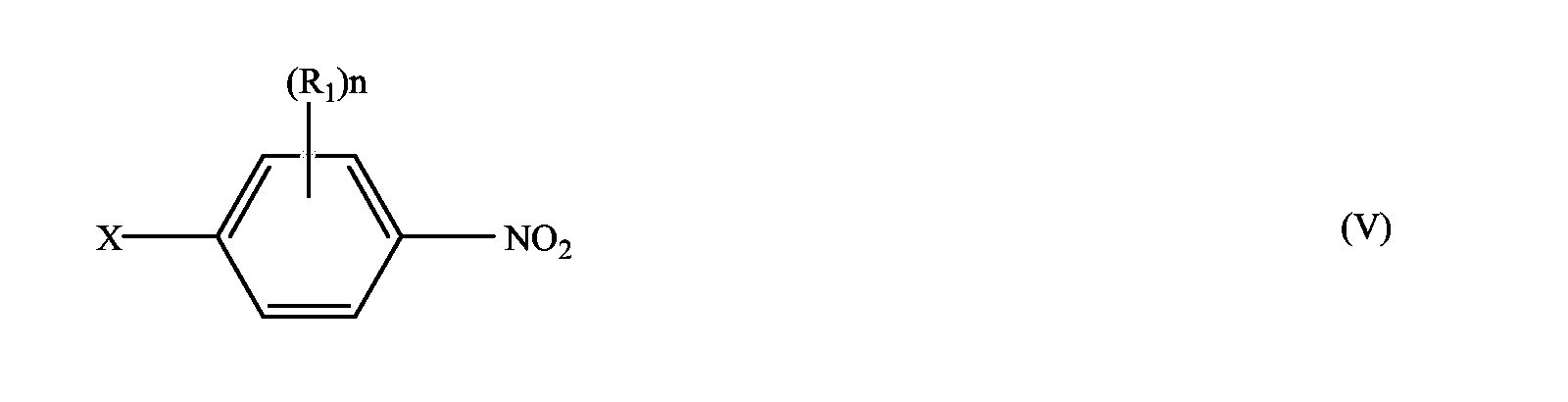
- step a the (R) -3-pyrrolidinol formed is not separated, that is to say, it is left in the vessel or reactor where step a took place. ) of the process, and that is introduced into this vessel or reactor a 4-halonitrobenzene of formula (V), wherein X represents an atom of F, Cl, Br or I, and R 1 has the meaning already given above to react with (R) -3-pyrrolidinol.
- the reaction between (R) -3-pyrrolidinol and 4-halonitrobenzene (V) is generally carried out from the following way: 4-halonitrobenzene is introduced and a base in the mixture containing the (R) -3-pyrrolidinol and heated.
- the temperature of reaction is more particularly between 75 ° C. and 160 ° C.
- the base is chosen among the sodium carbonate, sodium bicarbonate, potassium carbonate, potassium bicarbonate, sodium acetate and potassium acetate.
- the first step a ') of the process consists in condensing the trans-4-hydroxy-L-proline, i.e. the same compound only in the first variant of the process of the invention on a 4-halonitrobenzene of formula (V) to form a compound of formula (VI).
- the general conditions of this reaction of condensation are as follows: solvent for 4-halonitrobenzene and trans-4-hydroxy-L-proline in the presence of a base.
- the temperature is usually between 75 and 180 ° C.
- the solvent is chosen more particularly dimethylformamide, dimethylsulfoxide, N-methylpyrolidinone, water, alcohols such as propanol, isobutanol.
- the base is chosen from preferably from sodium carbonate, bicarbonate of sodium, potassium carbonate, bicarbonate potassium, sodium acetate and acetate of potassium.
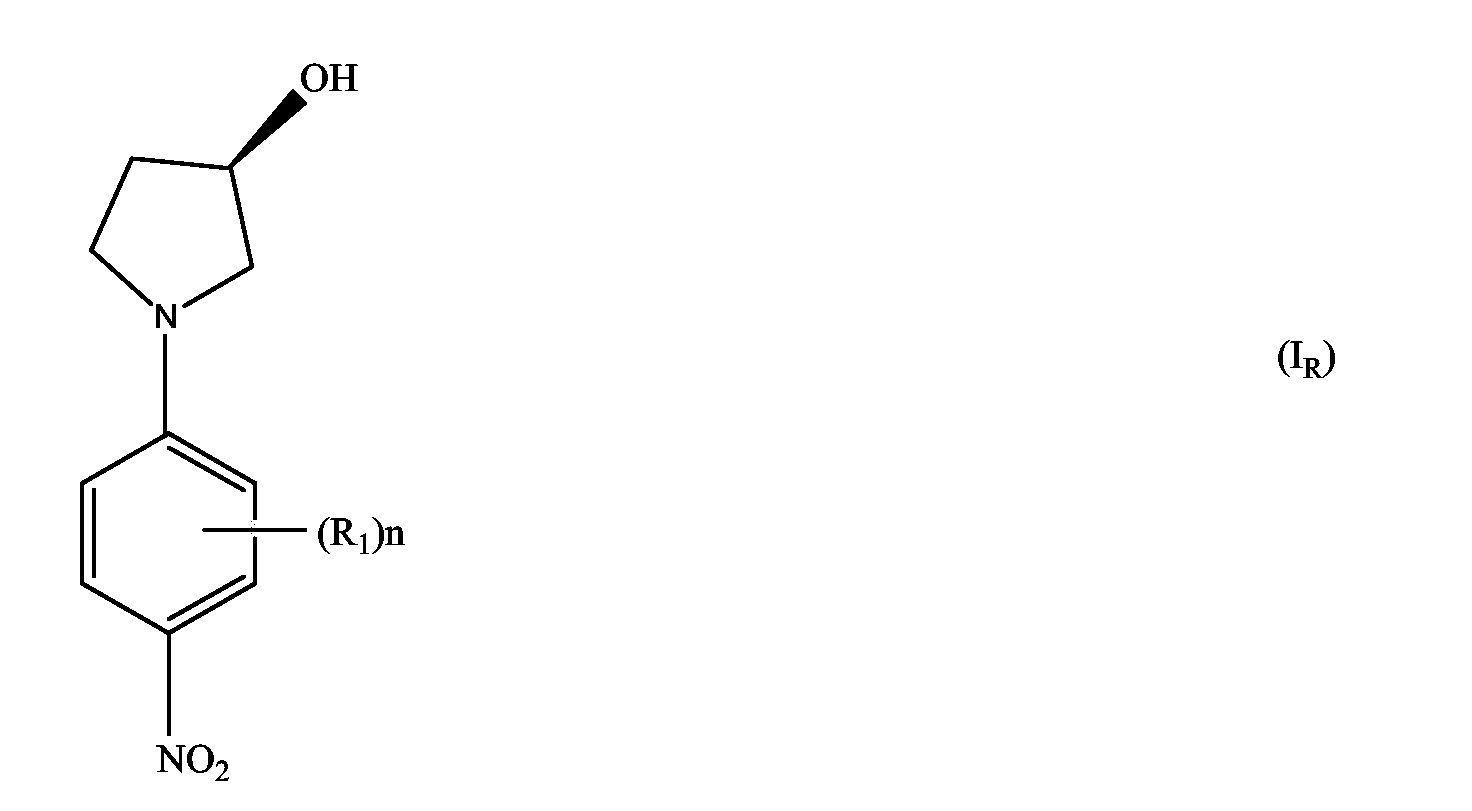
- step b ' The compound of formula (VI) is then decarboxylated (step b ')) to give the compound of formula (I) in which the carbon carrying the OH substituent on the pyrrolidine ring has the (R) configuration (compound I R ).
- the decarboxylation reaction of the compound (VI) is generally performed as follows: a mixture of the compound of the formula (VI) is heated with a catalyst such as cyclohexene-1-one in a solvent.
- the temperature is generally between 100 and 180 ° C.
- the solvent is chosen more particularly among dimethylformamide, the dimethylsulfoxide, N-methylpyrolidinone, alcohols high boiling point such as cyclohexanol, butanol, pentanol, especially.
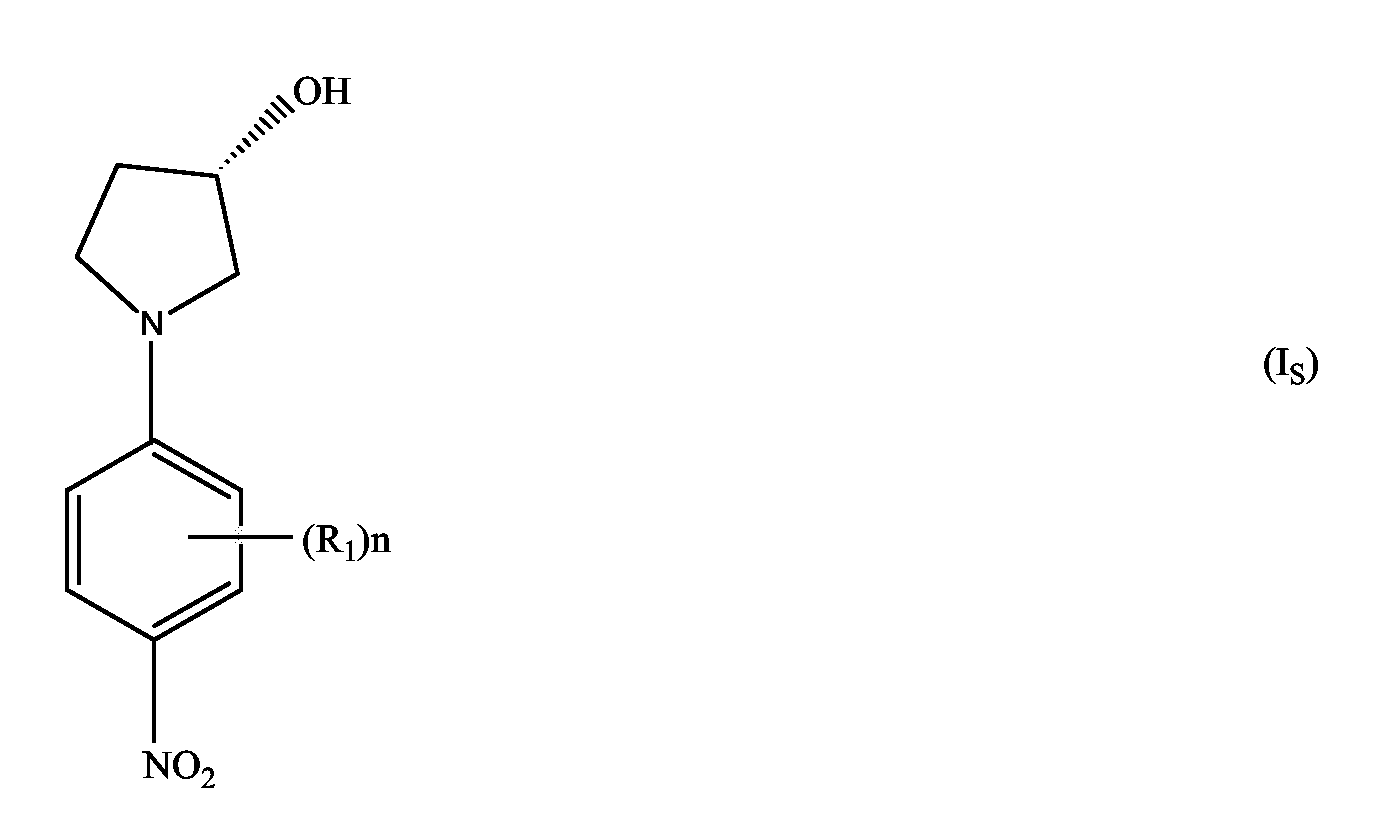
- step b) of the first variant of the process of the invention or at the end of step b ') of the second variant of the process of the invention, it is optionally possible, if it is desired to obtain the compound of formula (I), in which the carbon bearing the OH substituent on the pyrrolidine ring, which has the (S) configuration (compound I S ), effecting a configuration inversion of the compound of formula (I R ) obtained in step b) or b ') during an optional step c), respectively c').
- This inversion of the configuration can be performed by any method of inversion of configuration known in this field of the art.
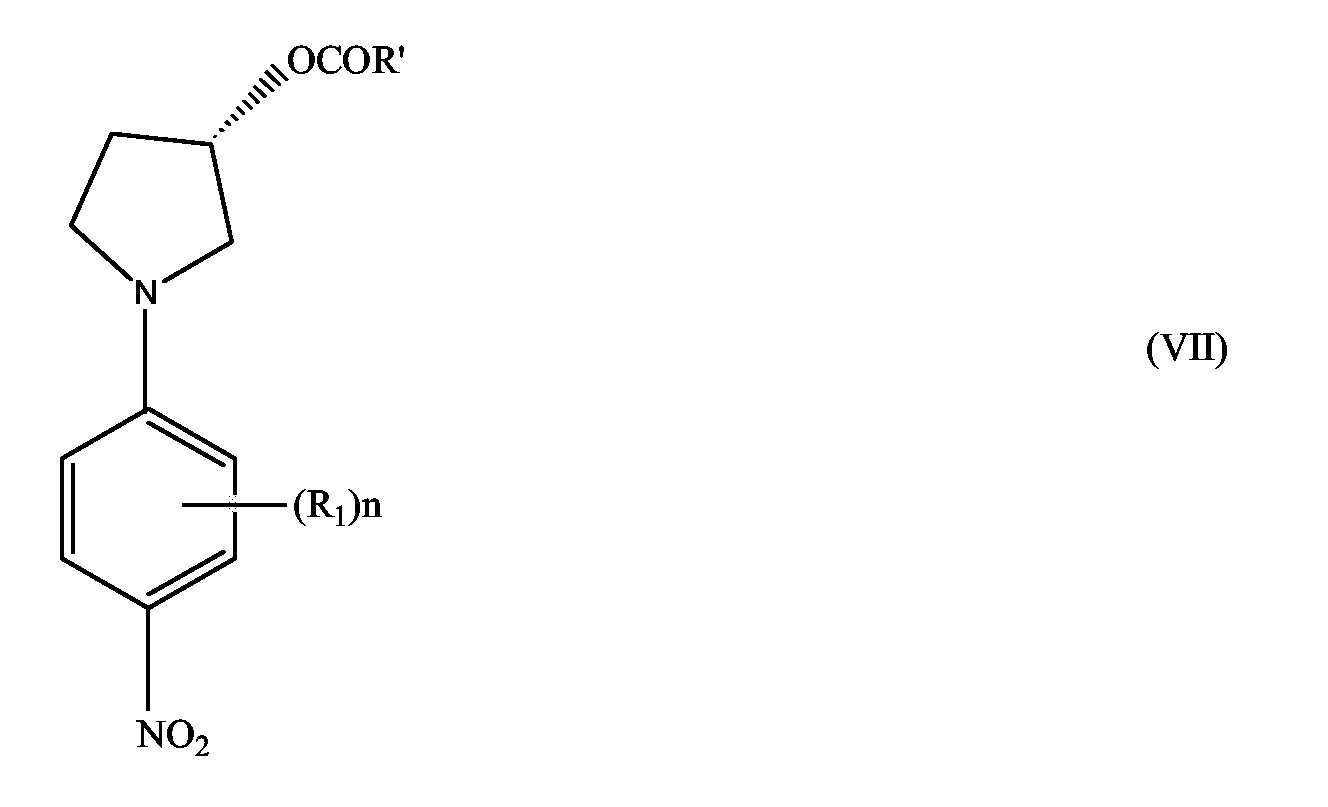
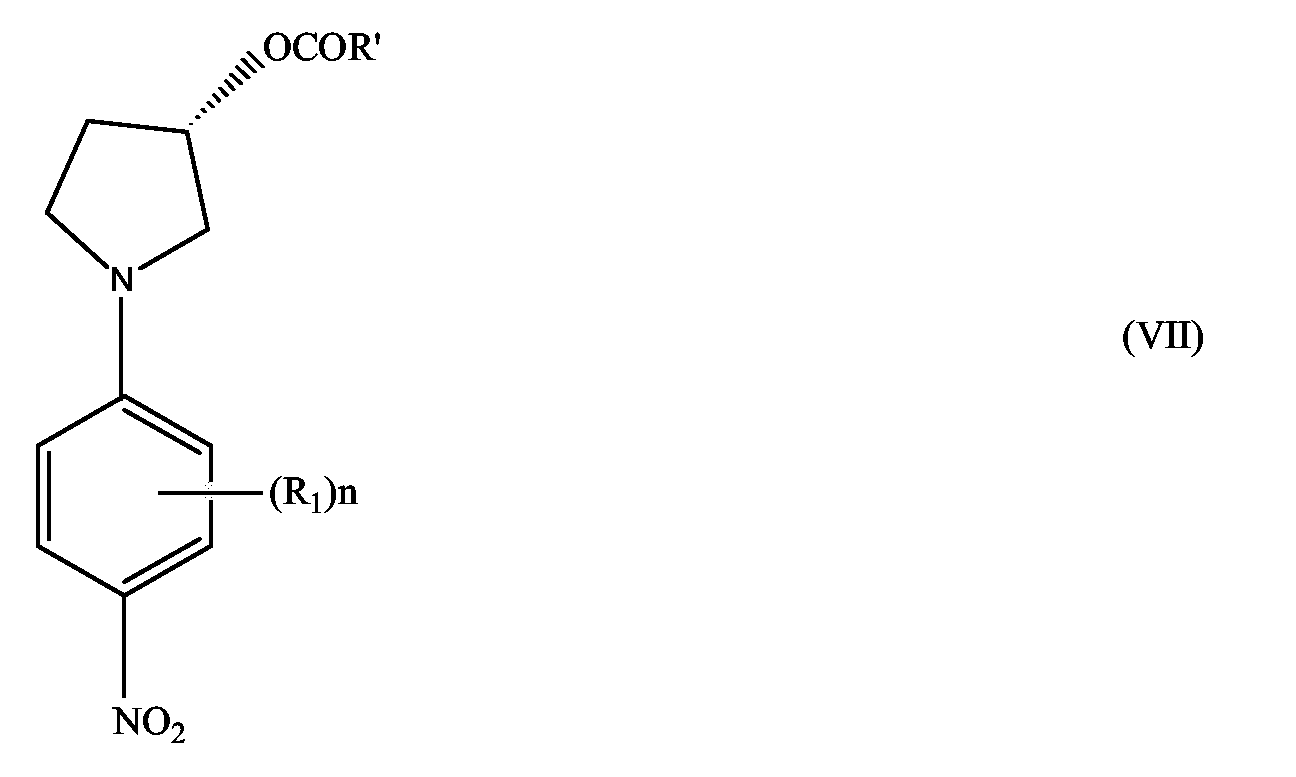
- a MITSUNOBU reaction can be performed (see the papers Bulletin of the Chemical Society of Japan, 1967, Vol 40, 2380, Australian Journal of Chemistry, 1988, Vol 41, 1835, and Organic Preparations and Procedures International 1996, Vol. 28, 127) on the compound of formula (I R ) to obtain a compound of formula (VII): in which R 1 and n have the meaning given above and in which R 'represents a hydrogen atom, a C 1 -C 6 hydrocarbon radical or a C 6 -C 8 aryl radical.
- the carbon atom carrying the OCOR 'group is in the (S) configuration.
- the carboxylic acid R'COOH is chosen in particular from acetic acid, benzoic acid and formic acid.
- the reaction solvent is generally an etheric solvent, such as tetrahydrofuran, diethyl ether, methyl tert-butyl ether.
- the compound of formula (VII) is then hydrolysed under the following general conditions: the compound of formula (VII) is treated with a base chosen from alkali metal hydroxides such as sodium hydroxide, potassium hydroxide or lithium hydroxide to give a compound of formula (I S ) which is isolated with conventional techniques.
- a base chosen from alkali metal hydroxides such as sodium hydroxide, potassium hydroxide or lithium hydroxide to give a compound of formula (I S ) which is isolated with conventional techniques.
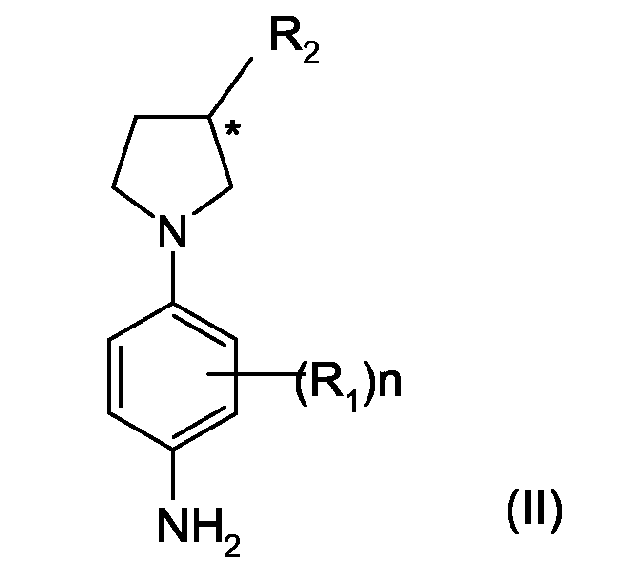
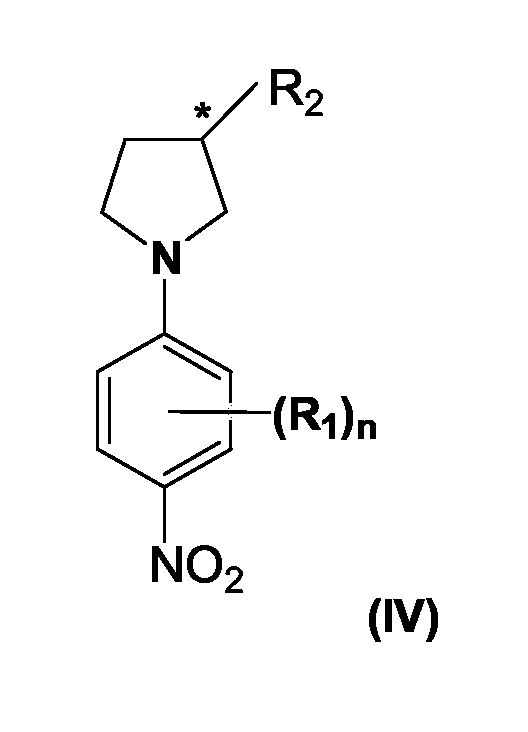
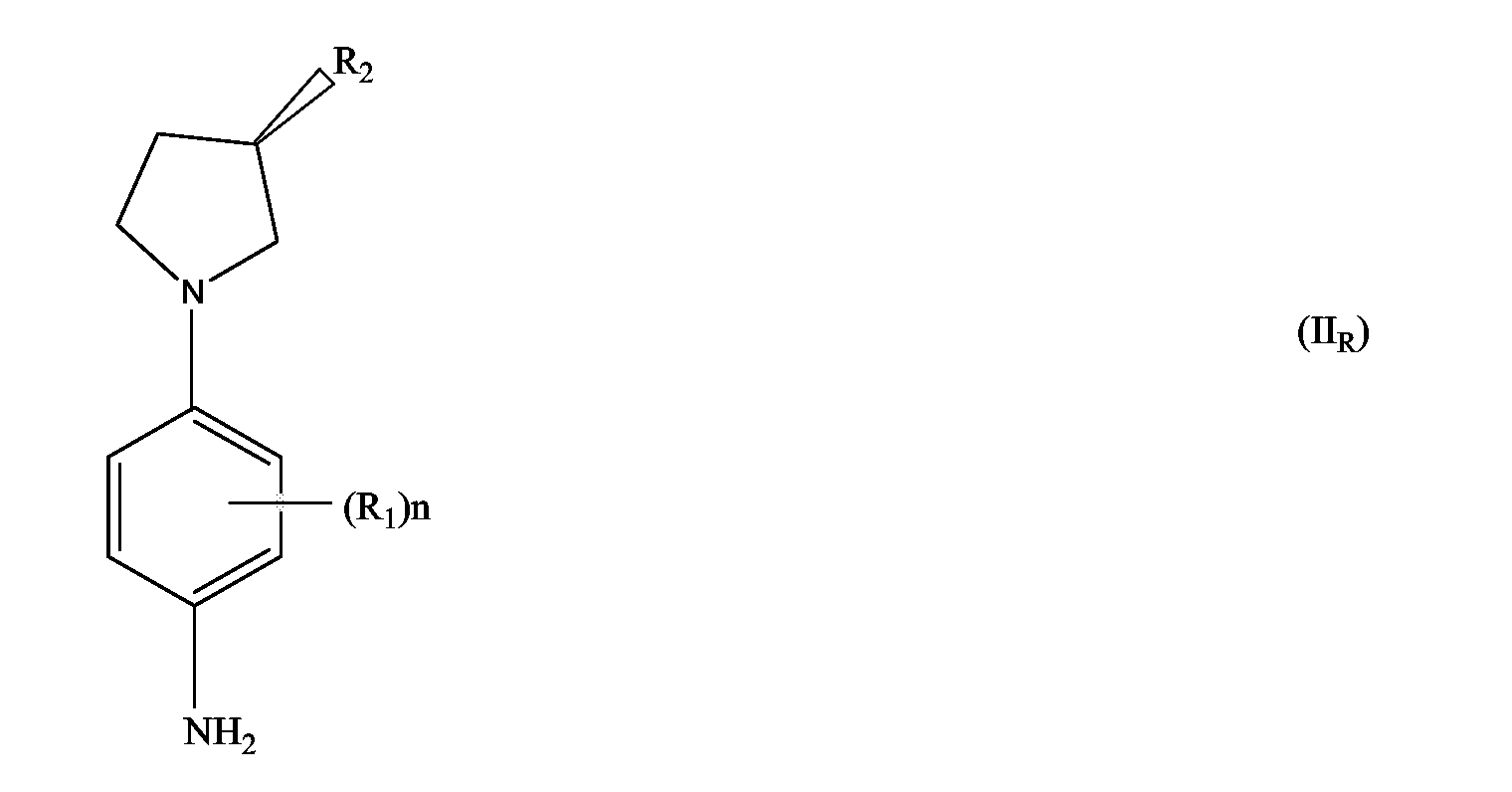
- the compounds of formula (I), of (R) or (S) configuration are precursors for the synthesis of para-phenylenediamines of formula (II), carrying a chiral pyrrolidine group and substituted by an R 2 radical.
- R 1 and n have the meaning (and preferred meanings) already given above.
- radical R 2 represents a cationic or non-cationic nitrogen radical.
- R 2 is a cationic nitrogen radical, it more particularly represents an onium radical such as, for example, an ammonium, imidazolium or pyridinium radical.
- R 2 is a non-cationic nitrogen radical, it represents more particularly a primary (-NH 2 ), secondary (-NHR) or tertiary amine radical (-NR 2 ) where R, which may be identical or different, represents an aliphatic radical, linear or branched, saturated or unsaturated, C 1 -C 22 , preferably a C 1 -C 22 alkyl radical; an alicyclic radical, saturated or unsaturated, C 3 -C 8 ; a monohydroxyalkyl radical C 1 -C 22 , preferably C 1 -C 6 ; a polyhydroxyalkyl radical C 2 -C 22 , preferably C 2 -C 6 ; a (C 1 -C 6 ) alkyl radical C 1 -C 22 , preferably C 1 -C 6 ; an aryl radical; an arylalkyl radical whose alkyl part is C 1 -C 6 , such as the benzyl radical for example; a C 1 -C 6 amid
- radicals R can form, two by two, together with the nitrogen atom to which they are attached, a saturated carbon cycle comprising 3 to 9 chains, preferably 4, 5, 6, 7 or 8 chains, which can contain one or more heteroatoms.
- a saturated carbon cycle comprising 3 to 9 chains, preferably 4, 5, 6, 7 or 8 chains, which can contain one or more heteroatoms.
- R 3 , R 4 and R 5 separately are preferably chosen from a C 1 -C 6 alkyl radical, a C 1 -C 4 monohydroxyalkyl radical, a polyhydroxyalkyl radical C 2 -C 4 alkoxy (C 1 -C 6) alkyl C 1 -C 4 amidoalkyl radical a C 1 -C 6 tri (C 1 -C 6) alkylsilane C 1 -C 6 , or R 3 with R 4 together form an azetidine ring, a pyrrolidine, piperidine, piperazine, morpholine ring, R 5 being chosen in this case from a C 1 -C 6 alkyl radical; a C 1 -C 6 monohydroxyalkyl radical; a C 2 -C 6 polyhydroxyalkyl radical; a C 1 -C 6 aminoalkyl radical, an aminoalkyl radical mono- or di-substituted with a (C 1 -C 6 alkyl radical, a C 1
- radical R 2 corresponds to formula (VIII), it is preferably a trialkylammonium radical whose alkyl radicals may be substituted.
- the vertices E, G, J and L can form a pyrrolic ring, imidazole, pyrazole, oxazolic, thiazolic or triazole imidazole preference.
- the vertices E, G, J, L and M form with the ring nitrogen a pyridine ring or pyrimidine.
- R ' 7 and R' 6 as well as R 7 and R 6 are substituted alkyl radicals.
- the counterion (Y ") may be chosen from a halogen atom such as bromine, chlorine, fluorine or iodine, a hydroxide, a citrate, a succinate, a tartrate, a lactate, a tosylate, a mesylate, a benzenesulphonate, an acetate, a hydrogen sulphate or a C 1 -C 6 alkyl sulphate such as, for example, methyl sulphate, or ethyl sulphate.
- a halogen atom such as bromine, chlorine, fluorine or iodine
- a hydroxide such as bromine, chlorine, fluorine or iodine
- a hydroxide such as bromine, chlorine, fluorine or iodine
- a hydroxide such as bromine, chlorine, fluorine or iodine
- a hydroxide such as bromine, chlorine, fluorine or io
- the counter-ion (Y ") is chosen from a halogen atom such as bromine, chlorine or iodine, a tosylate, a mesylate, a benzenesulphonate, or a C 1 -C 6 alkylsulfate such that for example methylsulfate, or ethylsulfate.
- a halogen atom such as bromine, chlorine or iodine
- a tosylate such as bromine, chlorine or iodine
- a tosylate such as bromine, chlorine or iodine
- mesylate a mesylate
- a benzenesulphonate or a C 1 -C 6 alkylsulfate such that for example methylsulfate, or ethylsulfate.
- the dye composition of this invention comprises, in a medium suitable for dyeing of keratinous fibers, in particular human keratin fibers such as hair humans, as a base of oxidation a derivative of formula (II), in the configuration (R) or (S), as previously defined.
- the oxidation base (s) of the invention are usually present in each quantity between 0.001 to 10% by weight of the total weight of the dyeing composition, preferably between 0.005 and 6% by weight.
- the dye composition of the invention can additionally contain one or more couplers conventionally used for fiber dyeing keratin.
- couplers it is possible in particular mention meta-phenylenediamines, meta-aminophenols, meta-diphenols, naphthalenic couplers, heterocyclic couplers and their addition salts.
- the coupler (s) are each generally present in an amount of between 0.001 and 10% by weight about the total weight of the dyeing composition, preferably between 0.005 and 6%.
- composition of the present invention may in additionally include one or more oxidation bases additional classically used in dyeing oxidation other than those previously described.
- the quantity of each of the oxidation bases additional information is usually between 0.001 and About 10% by weight of the total weight of the composition dye.
- these oxidation bases additional ones are selected from paraphenylenediamines other than those described previously, bis-phenylalkylenediamines, para-aminophenols, bis-para-aminophenols, ortho-aminophenols, heterocyclic bases and their salts addition.
- paraphenylenediamines For example, paraphenylenediamine, paratoluylenediamine, 2-chloro-para-phenylenediamine, 2,3-dimethyl paraphenylenediamine, 2,6-dimethyl para-phenylenediamine, 2,6-diethyl paraphenylenediamine, 2,5-dimethyl paraphenylenediamine, N, N-dimethyl paraphenylenediamine, N, N-diethyl paraphenylenediamine, N, N-dipropyl paraphenylenediamine, 4-amino N, N-diethyl-3-methyl aniline, N, N-bis- ( ⁇ -hydroxyethyl) paraphenylenediamine, 4-N, N-bis- ( ⁇ -hydroxyethyl) amino 2-methyl aniline, the 4-N, N-bis- ( ⁇ -hydroxyethyl) amino 2-chloroaniline, the 2- ⁇ -hydroxyethyl paraphenylenedi
- paraphenylenediamine paratoluylenediamine, 2-isopropyl paraphenylenediamine, 2- ⁇ -hydroxyethyl paraphenylenediamine, 2- ⁇ -hydroxyethyloxy paraphenylenediamine, 2,6-dimethyl para-phenylenediamine, 2,6-diethyl paraphenylenediamine, 2,3-dimethyl paraphenylenediamine, N, N-bis- ( ⁇ -hydroxyethyl) paraphenylenediamine, 4-N, N-bis ( ⁇ -hydroxyethyl) amino 2-methylaniline, 4-N, N-bis- ( ⁇ -hydroxyethyl) amino 2-chloroaniline, 2- ⁇ -hydroxyethyl paraphenylenediamine, 2-fluoro-para-phenylenediamine, 2-isopropyl paraphenylenediamine, the N- ( ⁇ -hydroxyethyl) paraphenylenediamine, the
- para-phenylenediamine paratoluylenediamine, 2-isopropyl paraphenylenediamine, 2- ⁇ -hydroxyethyl paraphenylenediamine, 2- ⁇ -hydroxyethyloxy paraphenylenediamine, 2,6-dimethyl para-phenylenediamine, 2,6-diethyl paraphenylenediamine, 2,3-dimethyl paraphenylenediamine, N, N-bis- ( ⁇ -hydroxyethyl) paraphenylenediamine, 2-chloro-para-phenylenediamine, 2- ⁇ -acetylaminoethyloxy para-phenylenediamine, and their addition salts with an acid are particularly preferred.
- the bis-phenylalkylenediamines it is possible for example, N, N'-bis- ( ⁇ -hydroxyethyl) N, N'-bis- (4'-aminophenyl) 1,3-diamino propanol, the N, N'-bis- ( ⁇ -hydroxyethyl) N, N'-bis- (4'-aminophenyl) ethylenediamine, N, N'-bis- (4-aminophenyl) tetramethylenediamine, N, N'-bis- ( ⁇ -hydroxyethyl) N, N'-bis- (4-aminophenyl) tetramethylenediamine, the N, N'-bis- (4-methylaminophenyl) tetramethylenediamine, N, N'-bis (ethyl) N, N'-bis- (4'-amino) 3'-methylphenyl) ethylenediamine, 1,8-bis (2,5-diamino)
- para-aminophenol 4-amino 3-methyl phenol, 4-amino-3-fluoro phenol, 4-amino 3-hydroxymethyl phenol, 4-amino-2-methyl phenol, 4-amino-2-hydroxymethylphenol, 4-amino 2-methoxymethyl phenol, 4-amino-2-aminomethyl phenol, 4-amino 2- ( ⁇ -hydroxyethylaminomethyl) phenol, 4-amino-2-fluoro phenol, and their salts addition with an acid.
- ortho-aminophenols mention may be made for example, 2-amino phenol, 2-amino-5-methyl phenol, 2-amino-6-methylphenol, 5-acetamido 2-amino phenol, and their addition salts with an acid.
- heterocyclic bases we can mention for example, pyridine derivatives, derivatives pyrimidine and pyrazole derivatives.
- pyridine derivatives mention may be made the compounds described for example in patents GB-A-1,026,978 and GB-A-1,153,196, such as 2,5-diamino pyridine, 2- (4-methoxyphenyl) amino-3-amino pyridine, 2,3-diamino-6-methoxy pyridine, the 2- ( ⁇ -methoxyethyl) amino-3-amino-6-methoxy pyridine, the 3,4-diamino pyridine, and their addition salts with a acid.
- pyridinic oxidation bases in the present invention are the oxidation bases 3-amino pyrazolo [1,5-a] pyridines or their salts addition described, for example, in the application for FR-A-2801308.
- pyrazolo [1,5-a] pyridin-3-ylamine 2-acetylamino pyrazolo [1,5-a] pyridin-3-ylamine; 2-morpholin-4-yl-pyrazolo [1,5-a] pyridin-3-ylamine; acid 3-amino-pyrazolo [1,5-a] pyridin-2-carboxylic acid; the 2-methoxy-pyrazolo [1,5-a] pyridin-3-ylamino; the (3-amino-pyrazolo [1,5-a] pyridin-7-yl) -methanol; the 2- (3-Amino-pyrazolo [1,5-a] pyri
- pyrimidine derivatives mention may be made the compounds described for example in patents DE-A-2359399; JP-A-88-169571; JP-A-05-63124; EP-A-0770375 or the patent application WO-A-96/15765 such as 2,4,5,6-tetraaminopyrimidine, 4-hydroxy 2,5,6-triaminopyrimidine, 2-hydroxy 4,5,6-triaminopyrimidine, 2,4-dihydroxy 5,6-diaminopyrimidine, 2,5,6-triaminopyrimidine, and pyrazolo-pyrimidine derivatives such as those mentioned in the patent application FR-A-2750048 and among which may be mentioned pyrazolo [1,5-a] -pyrimidine-3,7-diamine ; 2,5-dimethyl pyrazolo [1,5-a] pyrimidine-3,7-diamine; pyrazolo [1,5-a] pyrimidine-3,5-diiamine;
- pyrazole derivatives mention may be made the compounds described in DE-A-3843892, DE-A-4133957 and patent applications WO-A-94/08969, WO-A-94/08970, FR-A-2 733 749 and DE-A-195 43 988 as 4,5-diamino 1-methyl pyrazole, 4,5-diamino 1- ( ⁇ -hydroxyethyl) pyrazole, 3,4-diamino pyrazole, 4,5-diamino 1- (4'-chlorobenzyl) pyrazole, the 4,5-diamino 1,3-dimethyl pyrazole, 4,5-diamino 3-methyl 1-phenyl pyrazole, 4,5-diamino-1-methyl 3-phenyl pyrazole, 4-amino-1,3-dimethyl-5-hydrazino pyrazole, 1-benzyl 4,5-diamino-3-methyl pyrazole, 4,5
- addition salts of oxidation bases and couplers that can be used in the framework of the invention are chosen from addition salts with an acid such as hydrochlorides, hydrobromides, sulphates, citrates, succinates, tartrates, lactates, tosylates, benzenesulfonates, phosphates and acetates and addition salts with a base such as soda, potash, ammonia, amines or alkanolamines.
- an acid such as hydrochlorides, hydrobromides, sulphates, citrates, succinates, tartrates, lactates, tosylates, benzenesulfonates, phosphates and acetates
- a base such as soda, potash, ammonia, amines or alkanolamines.
- the dye composition may further contain one or more direct dyes which can be chosen in particular from the nitro dyes of the benzene series, the azo direct dyes, direct dyes methine. These direct dyes can be nonionic, anionic or cationic nature.
- the medium suitable for dyeing also known as dyeing medium, generally consists of water or a mixture of water and at least one organic solvent for solubilizing compounds that are not sufficiently soluble in water.
- organic solvents that may be mentioned are C 1 -C 4 alkanols, such as ethanol and isopropanol; polyols and polyol ethers such as 2-butoxyethanol, propylene glycol, propylene glycol monomethyl ether, diethylene glycol monoethyl ether and monomethyl ether, as well as aromatic alcohols such as benzyl alcohol or phenoxyethanol, and mixtures thereof.
- the solvents are preferably present in proportions of preference between 1 and 40% about the total weight of the dye composition, and even more preferably between 5 and 30% by weight approximately.
- the dye composition may also contain various adjuvants used conventionally in compositions for the dyeing hair, such as surfactants anionic, cationic, nonionic, amphoteric, zwitterionics or their mixtures, polymers anionic, cationic, nonionic, amphoteric, zwitterionic agents or their mixtures, agents mineral or organic thickeners, and in particular anionic polymer associative thickeners, cationic, nonionic and amphoteric agents antioxidants, penetration agents, agents sequestering agents, perfumes, tampons, agents dispersants, conditioning agents such as example of volatile or non-volatile silicones, modified or unmodified film-forming agents, ceramides, preservatives, agents opacifiers.
- adjuvants used conventionally in compositions for the dyeing hair, such as surfactants anionic, cationic, nonionic, amphoteric, zwitterionics or their mixtures, polymers anionic, cationic, nonionic, ampho
- the adjuvants above are in general present in an amount for each of them between 0.01 and 20% by weight relative to the weight of the composition.
- the pH of the dyeing composition in accordance with the invention is generally between 3 and 12 approximately, and preferably between 5 and 11 approximately. he can be adjusted to the desired value by means of agents acidifying or alkalizing agents usually used in dyeing of keratin fibers or else to using conventional buffer systems.
- mineral or organic acids such as hydrochloric acid, orthophosphoric acid, sulfuric acid, carboxylic acids as acetic acid, tartaric acid, citric acid, lactic acid, sulphonic acids.
- alkalinizing agents that may be mentioned, by way of example, are ammonia, alkaline carbonates, alkanolamines such as mono-, di- and triethanolamines and their derivatives, sodium or potassium hydroxides and following formula (A): wherein W is a propylene residue optionally substituted by a hydroxyl group or a C 1 -C 4 alkyl radical; R a, R b, R c and R d, identical or different, represent a hydrogen atom, an alkyl radical in C 1 -C 4 hydroxyalkyl or C 1 -C 4.
- the dye composition according to the invention can be in various forms, such as in the form of liquids, creams, gels, or any other form suitable for dyeing keratinous fibers, more particularly human and especially human hair.
- the process of the present invention is a in which the fibers are applied to the fibers composition according to the present invention as previously defined, and we reveal the color using an oxidizing agent.
- the color can be revealed at pH acidic, neutral or alkaline and the oxidizing agent can be added to the composition of the invention just at the moment of employment or it can be implemented from a oxidizing composition containing it, applied simultaneously or sequentially to the composition of the invention.
- the composition according to the present invention is mixed, preferably at the time of use, to a composition containing, in a medium suitable for dyeing, at least one oxidizing agent, this oxidizing agent being present in an amount sufficient to develop a coloring.
- the resulting mixture is then applied to keratinous fibers. After sufficient time to to develop the desired coloring, said exposure time which is for example from 3 to about 50 minutes, preferably about 5 to 30 minutes, the fibers keratinous are rinsed, washed with shampoo, rinsed again and then dried.
- the oxidizing agents conventionally used to the oxidation dyeing of keratinous fibers are for example hydrogen peroxide, peroxide of urea, alkali metal bromates, persalts such as perborates and persulfates, peracids and the oxidase enzymes of which mention may be made peroxidases, 2-electron oxidoreductases such as uricases and 4-electron oxygenases like laccases. Hydrogen peroxide is particularly preferred.
- the oxidizing composition may also contain various adjuvants conventionally used in compositions for dyeing hair and such as previously defined.
- the pH of the oxidizing composition containing the oxidizing agent is such that after mixing with the dye composition, the pH of the composition resultant applied to keratinous fibers varies preferably between 3 and 12 or so, and even more preferentially between 5 and 11. It can be adjusted to the desired value by means of acidifying agents or alkalizing agents usually used in dyeing keratinous fibers and as defined above.
- the ready-to-use composition that is finally applied on keratin fibers can come in various forms, such as under form of liquids, creams, gels or any other another form suitable for dyeing keratinous fibers, and in particular human hair.
- the subject of the invention is also a device for several compartments or "kit" of stain in which a first compartment contains, contains the dye composition of the present invention defined above and a second compartment contains, contains a composition, with oxidizing agent.
- This device may be equipped with a means deliver to the hair the desired mixture, such as the devices described in patent FR-A-2 586 913 in the name of the plaintiff.
- the mixture is heated at 155 ° C. for 3 hours and then cooled to room temperature. 126.5 g (0.915 moles) of potassium carbonate are introduced, and then 96.8 g (0.686 moles) of 4-fluoro-1-nitrobenzene dissolved in 125 ml of N-methyl- pyrrolidone. It is heated at 105 ° C. for 3 hours. It is cooled to 10 ° C. and then poured into a large volume of ice water. The precipitate is filtered. It is washed with water and then dried under vacuum at 50 ° C. 127.5 g of a yellow solid are thus obtained, ie a final yield of 89%. The solid obtained is characterized by the following analyzes.
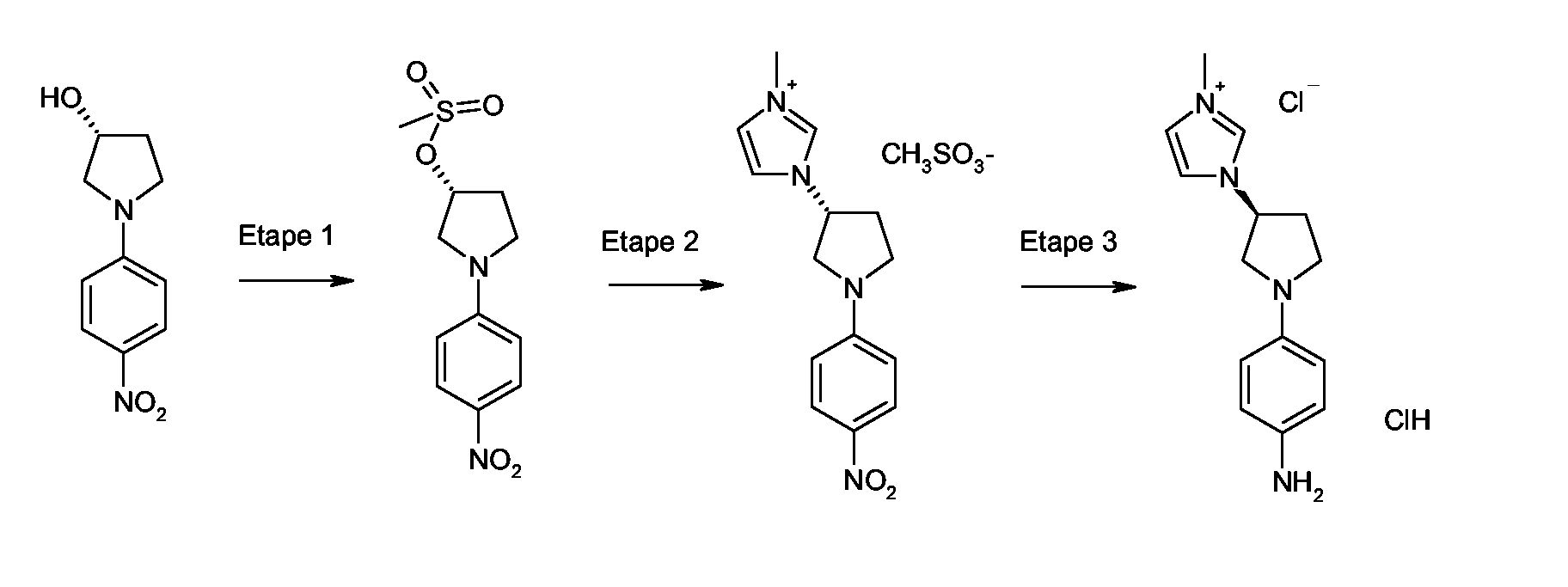
- Step 1
- the solid is washed with acetone and then dried under vacuum.
- Step 3
- the reactor is then purged with nitrogen and the The reaction mixture is filtered under a nitrogen atmosphere.
- the filtrate is recovered immediately in a solution containing 13.5 ml of 37% hydrochloric acid and 20 ml of ethanol at 96.
- the filtrate is then evaporated to obtaining a precipitate.
Landscapes
- Chemical & Material Sciences (AREA)
- Organic Chemistry (AREA)
- Health & Medical Sciences (AREA)
- Life Sciences & Earth Sciences (AREA)
- Animal Behavior & Ethology (AREA)
- General Health & Medical Sciences (AREA)
- Public Health (AREA)
- Veterinary Medicine (AREA)
- Birds (AREA)
- Epidemiology (AREA)
- Pyrrole Compounds (AREA)
- Cosmetics (AREA)
Abstract

Description

- le carbone portant le substituant OH est chiral (R ou S) ;
- n est compris entre 0 et 4, étant entendu que lorsque n est supérieur ou égal à 2, alors les radicaux R1 peuvent être identiques ou différents ;
- R1 représente un atome halogène ; une chaíne hydrocarbonée aliphatique, linéaire ou ramifiée, en C1-C8, ou alicyclique en C3-C8, saturée ou insaturée, un radical aryle, un radical arylalkyle dont la partie alkyle est en C1-C8, un ou plusieurs atomes de carbone de la chaíne hydrocarbonée et de la chaíne alkyle du radical arylalkyle pouvant être remplacé(s) par un atome d'oxygène, d'azote, de silicium, de soufre, ou par un groupement SO2, le radical R1 ne comportant pas de liaison peroxyde, ni de radicaux diazo, nitro ou nitroso.

- le carbone portant le substituant R2 est chiral (R ou S) ;
- n et R1 ont la signification déjà donnée ci-dessus ; et
- R2 représente un radical azoté cationique ou non.


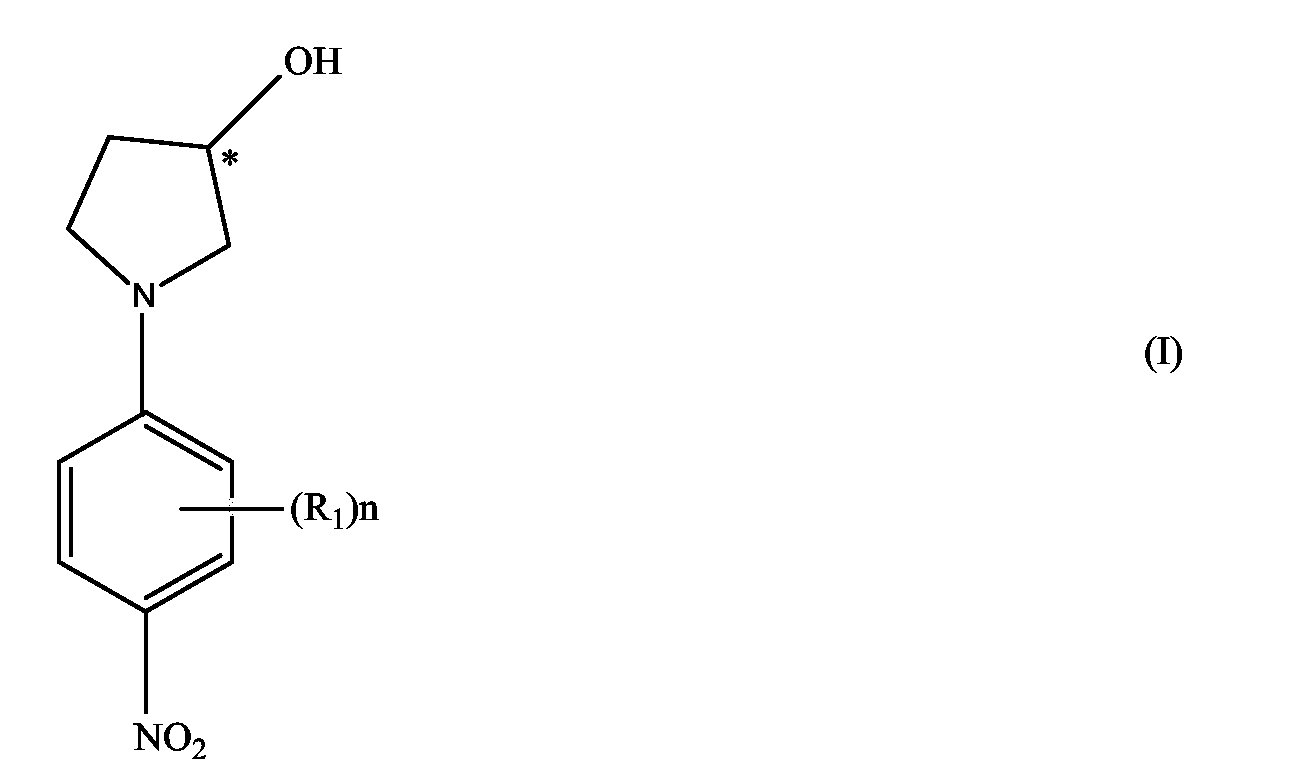
- le carbone portant le substituant OH sur le cycle pyrrolidine est chiral, et possède la configuration (R) ou (S) ;
- n est un nombre entier de 0 à 4, étant entendu que lorsque n est supérieur ou égal à 2, alors les radicaux R1 peuvent être identiques ou différents ;
- R1 représente un atome d'halogène ; une chaíne hydrocarbonée aliphatique, linéaire ou ramifiée, en C1-C8, de préférence en C1-C6, ou alicyclique en C3-C8, saturée ou insaturée, un radical aryle, un radical arylalkyle dont la partie alkyle est en C1-C8, de préférence en C1-C6, un ou plusieurs atomes de carbone de la chaíne hydrocarbonée et de la chaíne alkyle du radical arylalkyle pouvant être remplacé(s) par un atome d'oxygène, d'azote, de silicium, de soufre, ou par un groupement SO2; le radical R1 ne comportant pas de liaison peroxyde, ni de radicaux diazo, nitro ou nitroso ;
- a) on effectue la décarboxylation de la
trans-4-hydroxy-L-proline :
pour obtenir le (R)-3-pyrrolidinol :


- b) sans isolement, on fait réagir le
(R)-3-pyrrolidinol formé, obtenu, avec un
4-halonitrobenzène de formule (V) :
dans laquelle X représente un atome de F, Cl, Br ou I, et R1 a la signification déjà donnée plus haut pour la formule (I), moyennant quoi on obtient le composé de formule (I) dans laquelle le carbone portant le substituant -OH sur le cycle pyrrolidine, possède la configuration (R) (composé IR) :

- c) on réalise éventuellement une inversion de
configuration du composé de formule (IR),
moyennant quoi, on obtient le composé de formule
(IS) :

- le carbone portant le substituant -OH sur le cycle pyrrolidine est chiral, et possède la configuration (R) ou (S) ;
- n est un nombre entier de 0 à 4, étant entendu que lorsque n est supérieur ou égal à 2, alors les radicaux R1 peuvent être identiques ou différents ;
- R1 représente un atome d'halogène ; une chaíne hydrocarbonée aliphatique, linéaire ou ramifiée, en C1-C8, de préférence en C1-C6, ou alicyclique en C3-C8, saturée ou insaturée, un radical aryle, un radical arylalkyle dont la partie alkyle est en C1-C8, de préférence en C1-C6, un ou plusieurs atomes de carbone de la chaíne hydrocarbonée et de la chaíne alkyle du radical arylalkyle pouvant être remplacé(s) par un atome d'oxygène, d'azote, de silicium, de soufre, ou par un groupement SO2; le radical R1 ne comportant pas de liaisons peroxyde, ni de radicaux diazo, nitro ou nitroso ;
- a') on condense la trans-4-hydroxy-L-proline :
avec un 4-halonitrobenzène de formule (V) :
 dans laquelle X représente un atome de F, Cl, Br ou I, et R1 a la signification déjà donnée plus haut pour la formule (I), pour obtenir un composé de formule (VI) :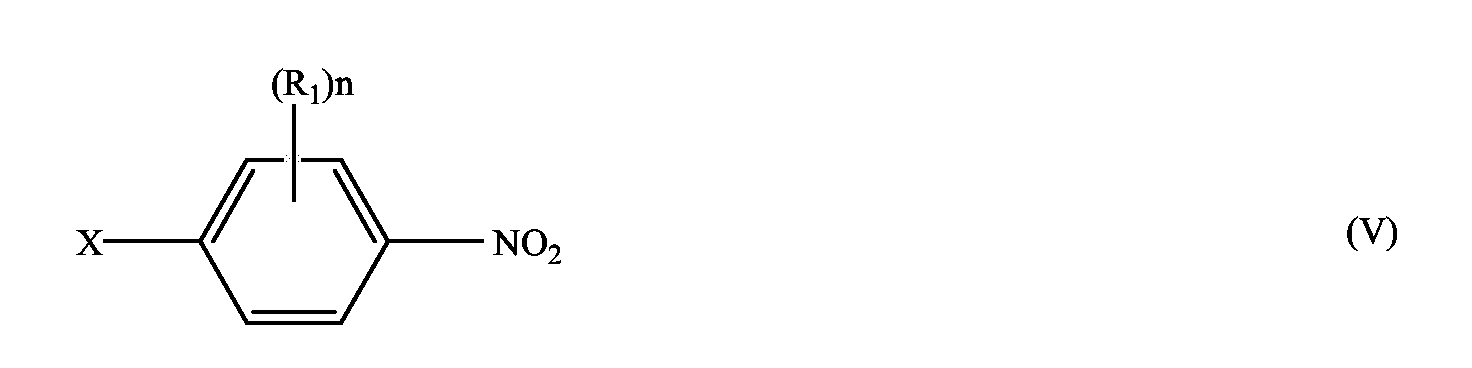

- b') on effectue la décarboxylation du composé de
formule (VI) pour obtenir le composé de formule (I)
dans laquelle le carbone portant le substituant OH
sur le cycle pyrrolidine possède la configuration (R)
(composé IR) :

- c') on réalise éventuellement une inversion de
configuration du composé de formule (IR), moyennant
quoi on obtient un composé de formule (IS) :
Le procédé selon l'invention, aussi bien dans sa première que dans sa deuxième variante, fait appel à des produits de départ qui sont facilement disponibles industriellement, et d'un faible coût, puisqu'il s'agit essentiellement, d'une part, de la trans-4-hydroxy-L-proline et, d'autre part, des 4-halonitrobenzènes, qui sont des produits courants et peu onéreux.Le procédé selon l'invention ne fait pas appel, au contraire des procédés de l'art antérieur, à l'utilisation de 3-pyrolidinols chiraux en tant que matière première, de ce fait un des inconvénients majeurs des procédés de l'art antérieur est évité.Il est à noter que dans la première variante, du procédé selon l'invention, un (R)-3-pyrrolidinol est formé, mais il s'agit d'un produit intermédiaire et non d'un produit de départ et il n'est pas nécessaire d'isoler ce composé que l'on peut faire réagir directement avec le 4-halonitrobenzène.Dans la seconde variante du procédé selon l'invention, on n'a également pas besoin de préparer au préalable le (R)-3-pyrrolidinol. Le procédé selon l'invention, aussi bien dans sa première que dans sa seconde variante, est un procédé simple, fiable, qui présente un nombre limité d'étapes simples, faciles à mettre en oeuvre, et le rendement global du procédé est élevé.Le procédé selon l'invention donne accès aussi bien au composé dans lequel le carbone portant le substituant OH sur le cycle pyrrolidine se trouve dans la configuration (R), qu'au composé dans lequel cet atome de carbone se trouve dans la configuration (S).L'invention concerne, en outre, les nouveaux dérivés de paraphénylène diamines substitués par un groupement pyrrolidinyle chiral de formule (II) et leurs sels d'addition :
 dans laquelle :
- l'atome de carbone qui porte le substituant R2 sur le cycle pyrrolidine est chiral et possède dans la configuration (R) (dérivé (IIR)) ou (S) (dérivé (IIS) ) ;
- R1 et n ont la signification déjà donnée plus haut pour les dérivés de formule (I) ;
- R2 représente un radical azoté cationique ou non.


pour former un composé de formule (IV), avec inversion de configuration (IVR) ou (IVS) :


- R3, R4 et R5, pris séparément, identiques ou non, représentent un atome d'hydrogène, un radical aliphatique, linéaire ou ramifié, saturé ou non, en C1-C22, de préférence un radical alkyle en C1-C22 ; un radical alicyclique, saturé ou non, en C3-C8 ; un radical monohydroxyalkyle en C1-C22, de préférence en C1-C6 ; un radical polyhydroxyalkyle en C2-C22, de préférence en C2-C6 ; un radical alcoxy (C1-C6) alkyle en C1-C22, de préférence en C1-C6 ; un radical aryle ; un radical arylalkyle dont la partie alkyle est en C1-C6, comme le radical benzyle par exemple ; un radical amidoalkyle en C1-C6 ; un radical trialkyl (C1-C6) silanealkyle en C1-C6 ; un radical aminoalkyle en C1-C6 ; un radical aminoalkyle en C1-C6 dont l'amine est mono- ou di-substituée par un radical alkyle en C1-C4, alkyl (C1-C6) carbonyle, amido ou alkyl (C1-C6) -sulfonyle ; ou
- R3, R4 et R5 ensemble, deux à deux, forment, avec l'atome d'azote auxquels ils sont rattachés, un cycle saturé carboné comprenant 3 à 9 chaínons, de préférence 4, 5, 6, 7 ou 8 chaínons, pouvant contenir un ou plusieurs hétéroatomes, à titre d'exemples de ce cycle, on peut citer les cycles azétidine, pyrrolidine, pipéridine, pipérazine ou morpholine, ledit hétérocycle cationique pouvant être substitué par un atome d'halogène, un radical hydroxyle, un radical alkyle en C1-C6, un radical monohydroxyalkyle en C1-C6, un radical polyhydroxyalkyle en C2-C6, un radical alcoxy en C1-C6, un radical trialkyl (C1-C6) silanealkyle en C1-C6, un radical amido, un radical carboxyle, un radical alkyl (C1-C6) carbonyle, un radical thio (-SH), un radical thioalkyle (-R-SH) en C1-C6, un radical alkyl(C1-C6)thio, un radical amino, un radical amino mono ou di-substitué par un radical alkyle (C1-C6) , alkyl (C1-C6) carbonyle, amido ou alkyl (C1-C6) sulfonyle ;
- Y" est un contre-ion.

- les sommets E, G, J, L, identiques ou différents, représentent un atome de carbone, d'oxygène, de soufre ou d'azote pour former un cycle pyrrolique, pyrazolique, imidazolique, triazolique, oxazolique, isooxazolique, thiazolique, isothiazolique ;
- q est un nombre entier compris entre 0 et 4 inclus ;
- o est un nombre entier compris entre 0 et 3 inclus ;
- q+o est un nombre entier compris entre 0 et 4 inclus ;
- R7, identiques ou différents, représentent un radical hydroxyle, un radical alkyle en C1-C6, un radical monohydroxyalkyle en C1-C6, un radical polyhydroxyalkyle en C2-C6, un radical alcoxy en C1-C6, un radical trialkyl (C1-C6) silanealkyle en C1-C6 ; étant entendu que les radicaux R7 sont portés par un atome de carbone ;
- Y" est un contre-ion.

- les sommets E, G, J, L et M identiques ou différents, représentent un atome de carbone, d'oxygène, de soufre ou d'azote pour former un cycle choisi parmi les cycles pyridiniques, pyrimidiniques, pyraziniques, triaziniques et pyridaziniques ;
- p est un nombre entier compris entre 0 et 3 inclus ;
- m est un nombre entier compris entre 0 et 5 inclus ;
- p+m est un nombre entier compris entre 0 et 5 inclus ;
- R'7, identiques ou différents, représentent un radical hydroxyle, un radical alkyle en C1-C6, un radical monohydroxyalkyle en C1-C6, un radical polyhydroxyalkyle en C2-C6, un radical alcoxy en C1-C6, un radical trialkyl (C1-C6) silanealkyle en C1-C6 étant entendu que les radicaux R'7 sont portés par un atome de carbone ;
- R'6 , identique ou différent, représente un radical alkyle en C1-C6, un radical monohydroxyalkyle en C1-C6, un radical polyhydroxyalkyle en C2-C6, un radical trialkyl (C1-C6) silanealkyle en C1-C6, un radical alcoxy (C1-C6) alkyle en C1-C6, un radical benzyle ; étant entendu que les radicaux R'6 sont portés par un azote ;
- Y" représente un contre-ion.


On introduit 126,5 g (0,915 moles) de carbonate de potassium, puis on laisse s'écouler dans le réacteur 96,8 g (0,686 moles) de 4-fluoro-1-nitrobenzène en solution dans 125 ml de N-méthyl-pyrrolidone. On chauffe à 105°C pendant 3 heures. On refroidit à 10°C, puis on verse dans un grand volume d'eau glacée. On filtre le précipité. On le lave à l'eau, puis on le sèche sous vide à 50°C. On obtient ainsi 127,5 g d'un solide jaune, soit un rendement final de 89 %. Le solide obtenu est caractérisé par les analyses suivantes.
| Analyse élémentaire (C12H16N202 : PM = 220,27) . | ||||
| C | H | N | O | |
| % théorique | 57,69 | 5,81 | 13,45 | 23,05 |
| % trouvé | 57,55 | 5,82 | 13,46 | 22,84 |
Claims (33)
- Procédé de préparation d'un dérivé de 1-(4-nitrophényl)-3-pyrrolidinol optiquement actif répondant à la formule (I) suivante :dans laquelle :
 dans lequel on réalise les étapes successives suivantes :le carbone portant le substituant -OH sur le cycle pyrrolidine est chiral, et possède la configuration (R) ou (S) ;n représente un nombre entier de 0 à 4, étant entendu que lorsque n est supérieur ou égal à 2, alors les radicaux R1 peuvent être identiques ou différents ;R1 représente un atome d'halogène ; une chaíne hydrocarbonée aliphatique, linéaire ou ramifiée, en C1-C8, de préférence en C1-C6, ou alicyclique en C3-C8, saturée ou insaturée, un radical aryle, un radical arylalkyle dont la partie alkyle est en C1-C8, de préférence en C1-C6, un ou plusieurs atomes de carbone de la chaíne hydrocarbonée et de la chaíne alkyle du radical arylalkyle pouvant être remplacé(s) par un atome d'oxygène, d'azote, de silicium, de soufre, ou par un groupement SO2 ; le radical R1 ne comportant pas de liaison peroxyde, ni de radicaux diazo, nitro ou nitroso,a) on effectue la décarboxylation de la trans-4-hydroxy-L-proline :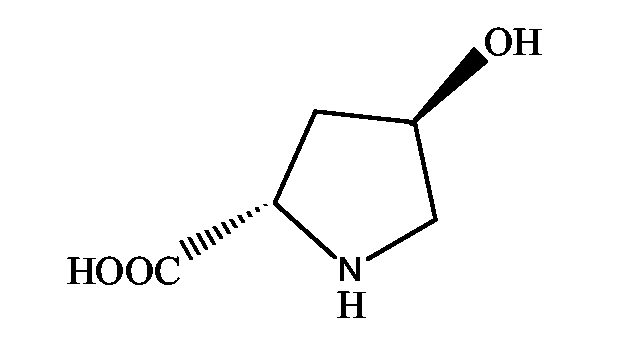

 b) sans isolement, on fait réagir le (R)-3-pyrrolidinol obtenu avec un 4-halonitrobenzène de formule (V) :dans laquelle X représente un atome de F, Cl, Br ou I, et R1 a la signification déjà donnée plus haut pour la formule (I), moyennant quoi on obtient le composé de formule (I) dans laquelle le carbone portant le substituant -OH sur le cycle pyrrolidine, possède la configuration (R) (composé IR) :
 c) on réalise éventuellement une inversion de configuration du composé de formule (IR), moyennant quoi, on obtient le composé de formule (IS) :
- Procédé de préparation d'un dérivé de 1-(4-nitrophényl)-3-pyrrolidinol optiquement actif de formule (I) :dans laquelle :
 dans lequel on réalise les étapes successives suivantes :le carbone portant le substituant -OH sur le cycle pyrrolidine est chiral, et possède la configuration (R) ou (S) ;n représente un nombre entier de 0 à 4, étant entendu que lorsque n est supérieur ou égal à 2, alors les radicaux R1 peuvent être identiques ou différents ;R1 représente un atome d'halogène ; une chaíne hydrocarbonée aliphatique, linéaire ou ramifiée, en C1-C8, de préférence en C1-C6, ou alicyclique en C3-C8, saturée ou insaturée, un radical aryle, un radical arylalkyle dont la partie alkyle est en C1-C8, de préférence en C1-C6, un ou plusieurs atomes de carbone de la chaíne hydrocarbonée et de la chaíne alkyle du radical arylalkyle pouvant être remplacé(s) par un atome d'oxygène, d'azote, de silicium, de soufre, ou par un groupement SO2, le radical R1 ne comportant pas de liaison peroxyde, ni de radicaux diazo, nitro ou nitroso,a') on condense la trans-4-hydroxy-L-proline :
 avec un 4-halonitrobenzène de formule (V) :dans laquelle X représente un atome de F, Cl, Br ou I, et R1 a la signification déjà donnée plus haut pour la formule (I), pour obtenir un composé de formule (VI) :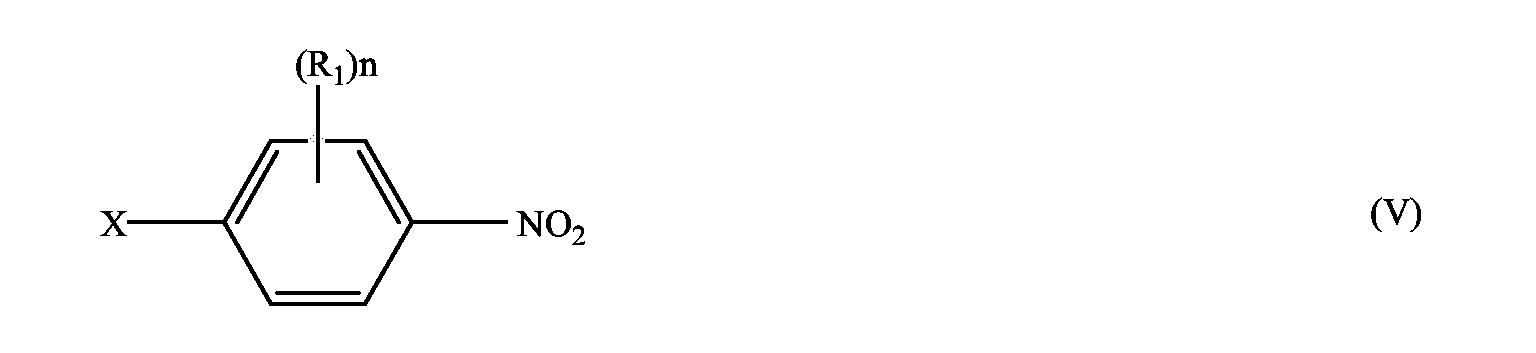
 b') on effectue la décarboxylation du composé de formule (VI) pour obtenir le composé de formule (I) dans laquelle le carbone portant le substituant OH sur le cycle pyrrolidine possède la configuration (R) (composé IR) :
 c') on réalise éventuellement une inversion de configuration du composé de formule (IR), moyennant quoi on obtient un composé de formule (IS) :
- Procédé selon la revendication 1 ou 2, dans lequel n est égal à 0.
- Procédé selon la revendication 1 ou 2, dans lequel n est différent de 0 et par exemple égal à 1, et R1 est un atome d'halogène ; une chaíne hydrocarbonée en C1-C8, de préférence en C1-C6 aliphatique, linéaire ou ramifiée, ou alicyclique en C3-C8, saturée ou insaturée, un radical aryle, un radical arylalkyle dont la chaíne alkyle est en C1-C8, de préférence en C1-C6, un ou plusieurs atomes de carbone de la chaíne hydrocarbonée et de la chaíne alkyle du radical arylalkyle pouvant être remplacés par un atome d'oxygène, d'azote, de silicium, de soufre, ou par un groupement SO2 ; le radical R1 ne comportant pas de liaison peroxyde, ni de radicaux diazo, nitro ou nitroso.
- Procédé selon l'une quelconque des revendications 1, 2 et 4, dans lequel R1 est choisi parmi, le chlore, le brome, un radical alkyle en C1-C6 avantageusement en C1-C4, un radical (C1-C4) alcoxy alkyle en C1-C4, un radical hydroxyalkyle en C1-C4, alcoxy en C1-C4, hydroxyalcoxy en C1-C4.
- Procédé selon la revendication 5, dans lequel R1 est choisi parmi les radicaux méthyle, hydroxyméthyle, 2-hydroxyéthyle, 1,2-dihydroxyéthyle, méthoxy, isopropyloxy, 2-hydroxyéthoxy.
- Procédé selon la revendication 1 ou 2, dans lequel l'inversion de configuration du composé de formule (IR) dans l'étape c) ou c') est réalisée en effectuant une réaction de MITSUNOBU sur le composé de formule (IR) pour obtenir un composé de formule (VII) :dans laquelle R1 et n ont la signification déjà donnée dans la revendication 1 ou la revendication 2, et R' représente un atome d'hydrogène, un radical hydrocarboné en C1-C6 ou un radical aryle en C6-C8, puis en hydrolysant le composé de formule (VII) pour donner le composé de formule (IS) .
- Dérivés de paraphénylènediamine substitués par un groupement pyrrolidinyle chiral, de formule (II), susceptibles d'être préparés à partir d'un dérivé intermédiaire de formule (I) tel que décrit dans la revendication 1, et leurs sels d'addition :dans laquelle :
 l'atome de carbone qui porte le substituant R2 sur le cycle pyrrolidine est chiral et possède la configuration (R) ou (S) ;n représente un nombre entier de 0 à 4, étant entendu que lorsque n est supérieur ou égal à 2, alors les radicaux R1 peuvent être identiques ou différents ;R1 représente un atome d'halogène ; une chaíne hydrocarbonée aliphatique, linéaire ou ramifiée, en C1-C8, de préférence en C1-C6, ou alicyclique en C3-C8, saturée ou insaturée, un radical aryle, un radical arylalkyle dont la partie alkyle est en C1-C8, de préférence en C1-C6, un ou plusieurs atomes de carbone de la chaíne hydrocarbonée et de la chaíne alkyle du radical arylalkyle pouvant être remplacés par un atome d'oxygène, d'azote, de silicium, de soufre, par un groupement SO2, ; le radical R1 ne comportant pas de liaison peroxyde, ni de radicaux diazo, nitro, ou nitroso ;R2 représente un radical azoté cationique ou non.
 - Dérivés selon la revendication 8 dans lesquels n est égal à 0.
- Dérivés selon la revendication 8 dans lesquels n est différent de 0 et par exemple égal à 1, et R1 est un atome d'halogène ; une chaíne hydrocarbonée en C1-C8, de préférence en C1-C6, aliphatique, linéaire ou ramifiée,ou alicyclique en C3-C8, saturée ou insaturée, un radical aryle, un radical arylalkyle dont la chaíne alkyle est en C1-C8, de préférence en C1-C6, un ou plusieurs atomes de carbone de la chaíne hydrocarbonée et de la chaíne alkyle du radical arylalkyle pouvant être remplacés par un atome d'oxygène, d'azote, de silicium, de soufre, par un groupement SO2 ; le radical R1 ne comportant pas de liaison peroxyde, ni de radicaux diazo, nitro ou nitroso.
- Dérivés selon la revendication 10 dans lesquels R1 est choisi parmi le chlore, le brome, un radical alkyle en C1-C6, avantageusement en C1-C4, un radical hydroxyalkyle en C1-C4, un radical (C1-C4) alcoxy alkyle en C1-C4, un radical alcoxy en C1-C4, un radical hydroxyalcoxy en C1-C4.
- Dérivés selon la revendication 11 dans lesquels R1 est choisi parmi les radicaux méthyle, hydroxyméthyle, 2-hydroxyéthyle, 1,2-dihydroxyéthyle, méthoxy, isopropyloxy, 2-hydroxyéthoxy.
- Dérivés selon l'une quelconque des revendications 8 à 12, dans lesquels R2 est un radical azoté non cationique et représente un radical amine primaire (-NH2), secondaire (-NHR) ou tertiaire (-NR2) où R, identiques ou non, représentent un radical aliphatique, linéaire ou ramifié, saturé ou non, en C1-C22 , de préférence un radical alkyle en C1-C22 ; un radical alicyclique, saturé ou non, en C3-C8 ; un radical monohydroxyalkyle en C1-C22, de préférence en C1-C6 ; un radical polyhydroxyalkyle en C2-C22, de préférence en C2-C6 ; un radical alcoxy (C1-C6) alkyle en C1-C22, de préférence en C1-C6 ; un radical aryle ; un radical arylalkyle dont la partie alkyle est en C1-C6, comme le radical benzyle par exemple ; un radical amidoalkyle en C1-C6 ; un radical trialkyl (C1-C6) silanealkyle en C1-C6 ; un radical aminoalkyle en C1-C6 ; un radical aminoalkyle en C1-C6 dont l'amine est mono- ou di-substituée par un radical alkyle en C1-C4, alkyl (C1-C6) carbonyle, amido ou alkyl (C1-C6) sulfonyle ; ou les radicaux R peuvent former deux à deux, ensemble avec l'atome d'azote auxquels ils sont rattachés, un cycle saturé carboné comprenant 3 à 9 chaínons, de préférence 4, 5, 6, 7 ou 8 chaínons, pouvant contenir un ou plusieurs hétéroatomes, des exemples de tels cycles sont les cycles azétidine, pyrrolidine, pipéridine, pipérazine, morpholine, ledit hétérocycle pouvant être substitué par un atome d'halogène, un radical hydroxyle, un radical alkyle en C1-C6, un radical monohydroxyalkyle en C1-C6, un radical polyhydroxyalkyle en C2-C6, un radical alcoxy en C1-C6, un radical trialkyl (C1-C6) silanealkyle en C1-C6, un radical amido, un radical carboxyle, un radical alkyl (C1-C6) carbonyle, un radical thio (-SH), un radical thioalkyle (-R-SH) en C1-C6, un radical alkyl (C1-C6) thio, un radical amino, un radical amino mono ou di-substitué par un radical alkyl (C1-C6) , alkyl (C1-C6) carbonyle, amido ou alkyl(C1-C6)sulfonyle.
- Dérivés selon l'une quelconque des revendications 8 à 12, dans lesquels R2 est un radical dérivé d'aminoguanidine.
- Dérivés selon l'une quelconque des revendications 8 à 12 dans lesquels R2 représente un radical onium Z correspondant à la formule (VIII) :
 R3, R4 et R5, pris séparément, identiques ou non, représentent un radical aliphatique, linéaire ou ramifié, saturé ou non, en C1-C22, de préférence un radical alkyle en C1-C22 ; un radical alicyclique, saturé ou non, en C3-C8 ; un radical monohydroxyalkyle en C1-C22, de préférence en C1-C6 ; un radical polyhydroxyalkyle en C2-C22, de préférence en C2-C6 ; un radical alcoxy (C1-C6) alkyle en C1-C22, de préférence en C1-C6 ; un radical aryle ; un radical arylalkyle dont la partie alkyle est en C1-C6, comme le radical benzyle par exemple ; un radical amidoalkyle en C1-C6 ; un radical trialkyl (C1-C6) silanealkyle en C1-C6 ; un radical aminoalkyle en C1-C6 ; un radical aminoalkyle en C1-C6 dont l'amine est mono- ou di-substituée par un radical alkyle en C1-C4, alkyl (C1-C6) carbonyle, amido ou alkyl (C1-C6) sulfonyle ; ouR3, R4 et R5 ensemble, deux à deux, forment, avec l'atome d'azote auxquels ils sont rattachés, un cycle saturé carboné comprenant 3 à 9 chaínons, de préférence 4, 5, 6, 7 ou 8 chaínons, pouvant contenir un ou plusieurs hétéroatomes ; des exemples de ce cycle sont les cycles azétidine, pyrrolidine, pipéridine, pipérazine ou morpholine, ledit hétérocycle cationique pouvant être substitué par un atome d'halogène, un radical hydroxyle, un radical alkyle en C1-C6, un radical monohydroxyalkyle en C1-C6, un radical polyhydroxyalkyle en C2-C6, un radical alcoxy en C1-C6, un radical trialkyl (C1-C6) silanealkyle en C1-C6, un radical amido, un radical carboxyle, un radical alkyl (C1-C6) carbonyle, un radical thio (-SH), un radical thioalkyle (-R-SH) en C1-C6, un radical alkyl(C1-C6)thio, un radical amino, un radical amino mono ou di-substitué par un radical alkyl (C1-C6) , alkyl (C1-C6) carbonyle, amido ou alkyl (C1-C6) sulfonyle ;Y" est un contre ion.
 - Dérivés selon la revendication 15 dans lesquels dans la formule (VIII) R3, R4 et R5 sont choisis séparément parmi un radical alkyle en C1-C6, un radical monohydroxyalkyle en C1-C4, un radical polyhydroxyalkyle en C2-C4, un radical alcoxy (C1-C6) alkyle en C1-C4, un radical amidoalkyle en C1-C6, un radical trialkyl (C1-C6) silanealkyle en C1-C6, ou R3 avec R4 forment ensemble un cycle azétidine, un cycle pyrrolidine, pipéridine, pipérazine, morpholine, R5 étant choisi dans ce cas parmi un radical alkyle en C1-C6 ; un radical monohydroxyalkyle en C1-C6 ; un radical polyhydroxyalkyle en C2-C6; un radical aminoalkyle en C1-C6, un radical aminoalkyle mono ou di-substitué par un radical alkyl(C1-C6), alkyl (C1-C6) carbonyle, amido ou alkyl (C1-C6) sulfonyle ; un radical carbamylalkyle en C1-C6 ; un radical trialkyl (C1-C6) silanealkyle en C1-C6 ; un radical alkyl (C1-C6) carboxyalkyle en C1-C6 ; un radical alkyl (C1-C6) carbonyalkyle en C1-C6 ; un radical N-alkyl (C1-C6) carbamylalkyle en C1-C6 .
- Dérivés selon la revendication 15 ou 16 dans lesquels dans la formule (VIII) le radical R2 est un radical trialkylammonium dont les radicaux alkyles peuvent être substitués.
- Dérivés de paraphénylènediamine selon l'une quelconque des revendications 8 à 12 dans lesquels R2 représente un radical onium Z correspondant à la formule (IX) :dans laquelle :
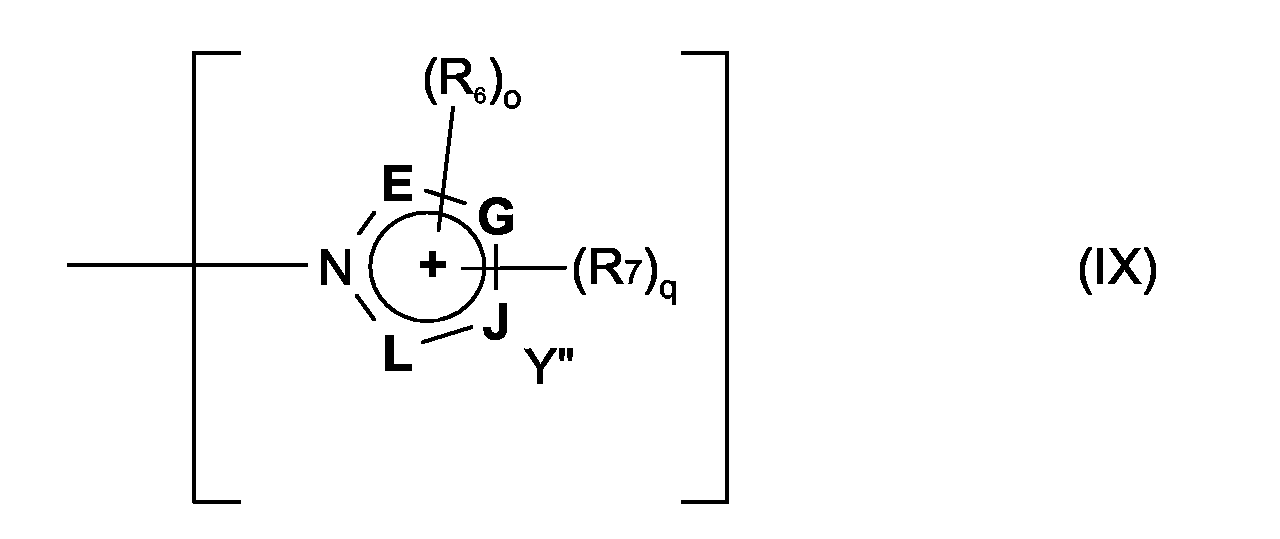 les sommets E, G, J, L, identiques ou différents, représentent un atome de carbone, d'oxygène, de soufre ou d'azote pour former un cycle pyrrolique, pyrazolique, imidazolique, triazolique, oxazolique, isooxazolique, thiazolique, isothiazolique ;q est un nombre entier compris entre 0 et 4 inclus ;o est un nombre entier compris entre 0 et 3 inclus ;q+o est un nombre entier compris entre 0 et 4 inclus ;R7, identiques ou différents, représentent un radical hydroxyle, un radical alkyle en C1-C6, un radical monohydroxyalkyle en C1-C6, un radical polyhydroxyalkyle en C2-C6, un radical alcoxy en C1-C6, un radical trialkyl (C1-C6) silanealkyle en C1-C6 ; étant entendu que les radicaux R7 sont portés par un atome de carbone ;R6 , identique ou différent, représente un radical alkyle en C1-C6, un radical monohydroxyalkyle en C1-C6, un radical polyhydroxyalkyle en C2-C6, un radical trialkyl (C1-C6) silanealkyle en C1-C6, un radical benzyle ; étant entendu que les radicaux R6 sont portés par un azote ;Y" est un contre-ion.
 - Dérivés selon la revendication 18 dans lesquels les sommets E, G, J et L forment un cycle pyrrolique, imidazolique, pyrazolique, oxazolique, thiazolique ou triazolique.
- Dérivés selon la revendication 19 dans lesquels les sommets E, G, J et L forment un cycle imidazolique.
- Dérivés de paraphénylènediamine selon l'une quelconque des revendications 8 à 12 dans lesquels R2 représente le radical onium Z correspondant à la formule (X) :dans laquelle :
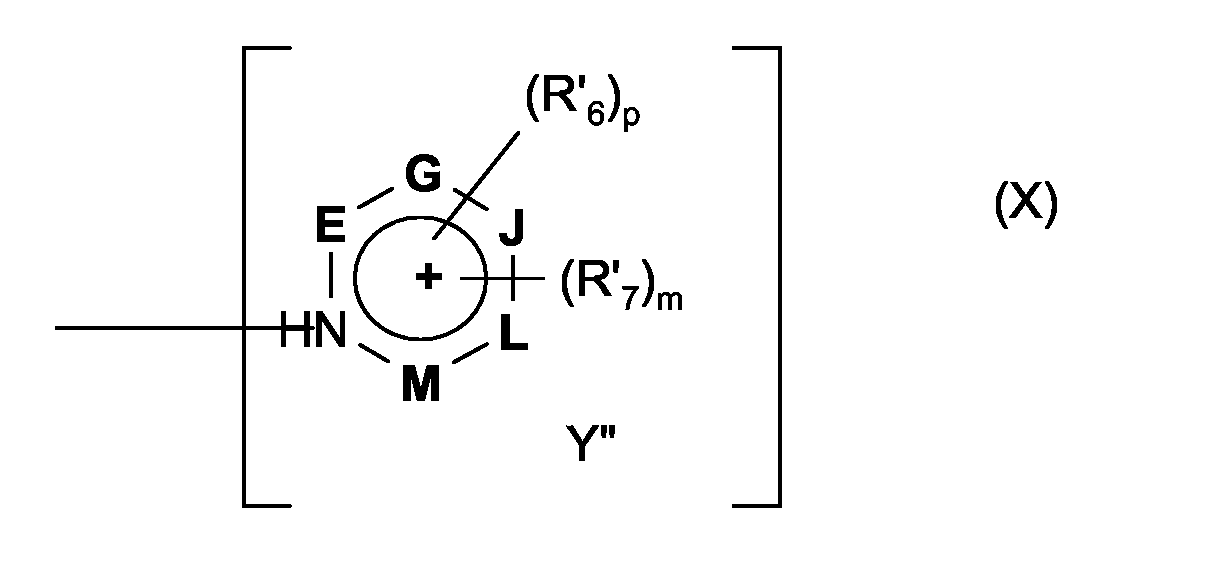 les sommets E, G, J, L et M identiques ou différents, représentent un atome de carbone, d'oxygène, de soufre ou d'azote pour former un cycle choisi parmi les cycles pyridiniques, pyrimidiniques, pyraziniques, triaziniques et pyridaziniques ;p est un nombre entier compris entre 0 et 3 inclus ;m est un nombre entier compris entre 0 et 5 inclus ;p+m est un nombre entier compris entre 0 et 5 inclus ;R'7, identiques ou différents, représentent un radical hydroxyle, un radical alkyle en C1-C6, un radical monohydroxyalkyle en C1-C6, un radical polyhydroxyalkyle en C2-C6, un radical alcoxy en C1-C6, un radical trialkyl (C1-C6) silanealkyle en C1-C6 ; étant entendu que les radicaux R'7 sont portés par un atome de carbone ;R'6 , identiques ou différents, représente un radical alkyle en C1-C6, un radical monohydroxyalkyle en C1-C6, un radical polyhydroxyalkyle en C2-C6, un radical trialkyl (C1-C6) silanealkyle en C1-C6, un radical alcoxy (C1-C6) alkyle en C1-C6, un radical benzyle ; étant entendu que les radicaux R'6 sont portés par un azote ;Y" représente un contre-ion.
 - Dérivés selon la revendication 21 dans lesquels les sommets E, G, J, L et M avec l'azote du cycle forment un cycle pyridinique ou pyrimidinique.
- Dérivés selon l'une quelconque des revendications 18 à 22 dans lesquels R6, R7, R'7 et R'6 sont des radicaux alkyles pouvant être substitués.
- Composition tinctoriale contenant, dans un milieu approprié pour la teinture des fibres kératiniques, au moins un dérivé de paraphénylènediamine de formule (II), dans une configuration (R) ou (S), tel que défini selon l'une quelconque des revendications 8 à 23, à titre de base d'oxydation.
- Composition selon la revendication 24 comprenant en outre au moins un coupleur choisi parmi les métaphénylènediamines, les méta-aminophénols, les métadiphénols, les coupleurs naphtaléniques, les coupleurs hétérocycliques et leurs sels d'addition.
- Composition selon l'une quelconque des revendications 24 ou 25 comprenant en outre au moins une base d'oxydation additionnelle autre que les bases d'oxydation de formule (II) choisie parmi les paraphénylènediamines, les bis-phénylalkylènediamines, les para-aminophénols, les ortho-aminophénols, les bases hétérocycliques et leurs sels d'addition.
- Composition selon l'une quelconque des revendications 24 à 26 dans laquelle la quantité de base d'oxydation de formule (II) est comprise entre 0,001 et 10 %, de préférence entre 0,005 et 6 % en poids environ du poids total de la composition tinctoriale.
- Composition selon l'une quelconque des revendications 24 à 27 dans laquelle la quantité de chacune des bases d'oxydation additionnelles est comprise entre 0,001 et 10 % en poids environ du poids total de la composition tinctoriale.
- Composition selon l'une quelconque des revendications 24 à 28 dans laquelle la quantité de chacun des coupleurs est comprise entre 0,001 et 10 %, de préférence entre 0,005 et 6 % en poids environ du poids total de la composition tinctoriale.
- Procédé de teinture d'oxydation des fibres kératiniques, caractérisé en ce qu'on applique sur les fibres une composition tinctoriale telle que définie dans l'une quelconque des revendications 24 à 29 en présence d'un agent oxydant pendant un temps suffisant pour développer la coloration désirée.
- Procédé selon la revendication 30 dans lequel l'agent oxydant est choisi parmi le peroxyde d'hydrogène, le peroxyde d'urée, les bromates de métaux alcalins, les persels, les peracides et les enzymes oxydases.
- Dispositif à plusieurs compartiments dans lequel un premier compartiment contient une composition tinctoriale telle que définie dans l'une quelconque des revendications 24 à 29 et un deuxième compartiment contient un agent oxydant.
- Utilisation de la composition définie aux revendications 24 à 29 pour la teinture de fibres kératiniques.
Applications Claiming Priority (2)
| Application Number | Priority Date | Filing Date | Title |
|---|---|---|---|
| FR0350940 | 2003-11-28 | ||
| FR0350940A FR2862970A1 (fr) | 2003-11-28 | 2003-11-28 | Procede de preparation de derives de 16(4-nitrophenyl)-3- pyrrolidinols optiquement actifs, et paraphenylenediamines a groupement pyrolidinyle chirales |
Publications (2)
| Publication Number | Publication Date |
|---|---|
| EP1535904A2 true EP1535904A2 (fr) | 2005-06-01 |
| EP1535904A3 EP1535904A3 (fr) | 2005-07-13 |
Family
ID=34451758
Family Applications (1)
| Application Number | Title | Priority Date | Filing Date |
|---|---|---|---|
| EP04106111A Withdrawn EP1535904A3 (fr) | 2003-11-28 | 2004-11-26 | Procédé de préparation de dérives de 1- (4-nitrophényl)-3-pyrrolidinols optiquement actifs, et paraphénylenediamines à groupement pyrrolidinyle chirales |
Country Status (2)
| Country | Link |
|---|---|
| EP (1) | EP1535904A3 (fr) |
| FR (1) | FR2862970A1 (fr) |
Family Cites Families (2)
| Publication number | Priority date | Publication date | Assignee | Title |
|---|---|---|---|---|
| AU2788297A (en) * | 1996-05-14 | 1997-12-05 | Kyowa Hakko Kogyo Co. Ltd. | Process for the preparation of 3-hydroxypyrrolidine |
| FR2806299B1 (fr) * | 2000-03-14 | 2002-12-20 | Oreal | Compositions pour la teinture des fibres keratiniques contenant des derives de paraphenylenediamine a groupement pyrrolidinyle |
-
2003
- 2003-11-28 FR FR0350940A patent/FR2862970A1/fr not_active Withdrawn
-
2004
- 2004-11-26 EP EP04106111A patent/EP1535904A3/fr not_active Withdrawn
Also Published As
| Publication number | Publication date |
|---|---|
| EP1535904A3 (fr) | 2005-07-13 |
| FR2862970A1 (fr) | 2005-06-03 |
Similar Documents
| Publication | Publication Date | Title |
|---|---|---|
| EP1764082B1 (fr) | Dérivés de 4-5-diamino-N,N-dihydro-pyrazol-3-one utilisés pour la teinture des fibres keratiniques | |
| EP1348695B1 (fr) | Dérivés de paraphénylènediamine à groupement pyrrolidinyle substitués par un radical cationique et utilisation de ces dérivés pour la coloration de fibres kératiniques | |
| EP1147109B1 (fr) | Nouvelles bases d'oxydation cationiques, leur utilisation pour la teinture d'oxydation des fibres keratiniques, compositions tinctoriales et procedes de teinture | |
| WO2002045670A1 (fr) | Composition de teinture d'oxydation a base de 1-(4-aminophenyl) pyrrolidines substituees en position 2 | |
| FR2817473A1 (fr) | Composition de teinture d'oxydation a base de 1-4(-aminophenyl)pyrrolidines substituees en position 2 et 4 et procede de teinture de mise en oeuvre | |
| EP1417184B1 (fr) | Composition pour la teinture de fibre keratiniques contenant une paraphenylenediamine substituee par un radical diazacycloheptane | |
| EP1312606B1 (fr) | Nouvelles bases d'oxydation 2,5-diaminopyridine utiles pour la teinture des fibres kératiniques | |
| EP1396486A1 (fr) | Dérivés bis-paraphénylènediamine à groupement pyrrolidinyle et utilisation de ces dérivés pour la coloration de fibres kératiniques | |
| FR2817470A1 (fr) | Composition de teinture d'oxydation a base de 1-(aminophenyl)pyrrolidines substituees en position 2 et 5 et procede de teinture de mise en oeuvre | |
| EP1457199A1 (fr) | Nouveaux coupleurs du type 2,3,5-triaminopyridine et utilisation de ces coupleurs pour la teinture des fibres kératiniques | |
| EP1336606B1 (fr) | Nouveaux coupleurs 6-alcoxy-2,3-diaminopyridine utiles pour la teinture des fibres kératiniques | |
| EP1535904A2 (fr) | Procédé de préparation de dérives de 1- (4-nitrophényl)-3-pyrrolidinols optiquement actifs, et paraphénylenediamines à groupement pyrrolidinyle chirales | |
| EP1462091A1 (fr) | Composition de teinture des fibres kératiniques comprenant un dérivé de para-phénylènediamine cationique substitué par un cycle diazacyclohexane ou diazacycloheptane | |
| EP1551806B1 (fr) | Coupleurs 6-alcoxy- 2,3-diaminopyridine et utilisation de ces coupleurs pour la teinture des fibres keratiniques | |
| EP1518860A1 (fr) | Dérivés de triazacyclononane substitué sur l'un au moins des atomes d'azote par un groupement 4-aminophényle substitué ou non substitué pour la teinture des fibres kératiniques | |
| EP1378230B1 (fr) | Dérivés de para-phénylènediamine à groupement pyrrolidinyle substitué par un radical cyclique et leur utilisation pour la coloration de fibres kératiniques | |
| EP1462445B1 (fr) | Dérivés de paraphénylènediamine à groupement cyclique diaza substitué par un radical cationique et utilisation de ces dérivés pour la coloration de fibres kératiniques | |
| EP1375480A1 (fr) | Dérivés de para-phénylènediamine à groupement pyrrolidinyle substitué par un radical silyle et utilisation de ces dérives pour la coloration de fibres kératiniques | |
| WO2004030643A1 (fr) | Nouveaux coupleurs 6-alcoxy- 2,3-diaminopyridine dont le radical amino en position 2 est un radical amino disubstitue et utilisation de ces coupleurs pour la teinture des fibres keratiniques | |
| EP1462453A1 (fr) | Dérivés de paraphénylènediamine à groupement pyrrolidinyle disubstitué et porteur d'un radical cationique et utilisation de ces dérivés pour la coloration de fibres kératiniques | |
| EP1459732A1 (fr) | Composition tinctoriale comprenant au moins une base d'oxydation hétérocyclique et au moins un coupleur 2,3,5-triaminopyridine | |
| EP1512684A1 (fr) | Utilisation, pour la teinture des fibres kératiniques, d'un dérivés de para-phénylènediamine substituée par un noyau homopiperidine | |
| FR2864957A1 (fr) | Composition pour la teinture des fibres keratiniques comprenant au moins un derive de para-phenylenediamine substitue par un noyau heptamethylenediamine | |
| FR2856059A1 (fr) | Derives de para-phenylenediamine comportant un cycle diazacycloheptane substitue par un radical silyle pour la teinture des fibres keratiniques | |
| EP1362049A1 (fr) | Nouveaux pyrazolo-triazoles et utilisation de ces composes pour la teinture de fibres keratiniques |
Legal Events
| Date | Code | Title | Description |
|---|---|---|---|
| PUAI | Public reference made under article 153(3) epc to a published international application that has entered the european phase |
Free format text: ORIGINAL CODE: 0009012 |
|
| PUAL | Search report despatched |
Free format text: ORIGINAL CODE: 0009013 |
|
| AK | Designated contracting states |
Kind code of ref document: A2 Designated state(s): AT BE BG CH CY CZ DE DK EE ES FI FR GB GR HU IE IS IT LI LU MC NL PL PT RO SE SI SK TR |
|
| AX | Request for extension of the european patent |
Extension state: AL HR LT LV MK YU |
|
| AK | Designated contracting states |
Kind code of ref document: A3 Designated state(s): AT BE BG CH CY CZ DE DK EE ES FI FR GB GR HU IE IS IT LI LU MC NL PL PT RO SE SI SK TR |
|
| AX | Request for extension of the european patent |
Extension state: AL HR LT LV MK YU |
|
| 17P | Request for examination filed |
Effective date: 20051222 |
|
| AKX | Designation fees paid |
Designated state(s): AT BE BG CH CY CZ DE DK EE ES FI FR GB GR HU IE IS IT LI LU MC NL PL PT RO SE SI SK TR |
|
| STAA | Information on the status of an ep patent application or granted ep patent |
Free format text: STATUS: THE APPLICATION IS DEEMED TO BE WITHDRAWN |
|
| 18D | Application deemed to be withdrawn |
Effective date: 20070601 |