EP1535616B1 - Remedy for integration dysfunction syndrome - Google Patents
Remedy for integration dysfunction syndrome Download PDFInfo
- Publication number
- EP1535616B1 EP1535616B1 EP03792731A EP03792731A EP1535616B1 EP 1535616 B1 EP1535616 B1 EP 1535616B1 EP 03792731 A EP03792731 A EP 03792731A EP 03792731 A EP03792731 A EP 03792731A EP 1535616 B1 EP1535616 B1 EP 1535616B1
- Authority
- EP
- European Patent Office
- Prior art keywords
- schizophrenia
- symptoms
- day
- placebo
- use according
- Prior art date
- Legal status (The legal status is an assumption and is not a legal conclusion. Google has not performed a legal analysis and makes no representation as to the accuracy of the status listed.)
- Expired - Lifetime
Links
Images
Classifications
-
- C—CHEMISTRY; METALLURGY
- C07—ORGANIC CHEMISTRY
- C07D—HETEROCYCLIC COMPOUNDS
- C07D417/00—Heterocyclic compounds containing two or more hetero rings, at least one ring having nitrogen and sulfur atoms as the only ring hetero atoms, not provided for by group C07D415/00
- C07D417/02—Heterocyclic compounds containing two or more hetero rings, at least one ring having nitrogen and sulfur atoms as the only ring hetero atoms, not provided for by group C07D415/00 containing two hetero rings
- C07D417/12—Heterocyclic compounds containing two or more hetero rings, at least one ring having nitrogen and sulfur atoms as the only ring hetero atoms, not provided for by group C07D415/00 containing two hetero rings linked by a chain containing hetero atoms as chain links
-
- A—HUMAN NECESSITIES
- A61—MEDICAL OR VETERINARY SCIENCE; HYGIENE
- A61K—PREPARATIONS FOR MEDICAL, DENTAL OR TOILETRY PURPOSES
- A61K31/00—Medicinal preparations containing organic active ingredients
- A61K31/33—Heterocyclic compounds
- A61K31/395—Heterocyclic compounds having nitrogen as a ring hetero atom, e.g. guanethidine or rifamycins
- A61K31/495—Heterocyclic compounds having nitrogen as a ring hetero atom, e.g. guanethidine or rifamycins having six-membered rings with two or more nitrogen atoms as the only ring heteroatoms, e.g. piperazine or tetrazines
- A61K31/496—Non-condensed piperazines containing further heterocyclic rings, e.g. rifampin, thiothixene or sparfloxacin
-
- A—HUMAN NECESSITIES
- A61—MEDICAL OR VETERINARY SCIENCE; HYGIENE
- A61P—SPECIFIC THERAPEUTIC ACTIVITY OF CHEMICAL COMPOUNDS OR MEDICINAL PREPARATIONS
- A61P25/00—Drugs for disorders of the nervous system
- A61P25/18—Antipsychotics, i.e. neuroleptics; Drugs for mania or schizophrenia
-
- A—HUMAN NECESSITIES
- A61—MEDICAL OR VETERINARY SCIENCE; HYGIENE
- A61P—SPECIFIC THERAPEUTIC ACTIVITY OF CHEMICAL COMPOUNDS OR MEDICINAL PREPARATIONS
- A61P25/00—Drugs for disorders of the nervous system
- A61P25/22—Anxiolytics
-
- A—HUMAN NECESSITIES
- A61—MEDICAL OR VETERINARY SCIENCE; HYGIENE
- A61P—SPECIFIC THERAPEUTIC ACTIVITY OF CHEMICAL COMPOUNDS OR MEDICINAL PREPARATIONS
- A61P25/00—Drugs for disorders of the nervous system
- A61P25/24—Antidepressants
-
- A—HUMAN NECESSITIES
- A61—MEDICAL OR VETERINARY SCIENCE; HYGIENE
- A61P—SPECIFIC THERAPEUTIC ACTIVITY OF CHEMICAL COMPOUNDS OR MEDICINAL PREPARATIONS
- A61P25/00—Drugs for disorders of the nervous system
- A61P25/28—Drugs for disorders of the nervous system for treating neurodegenerative disorders of the central nervous system, e.g. nootropic agents, cognition enhancers, drugs for treating Alzheimer's disease or other forms of dementia
Definitions
- the present invention relates to a novel in proving the negative symptoms and/or cognitive dysfunction for use of (1R,2S,3R,4S)-N-[(1R,2R)-2-[4-(1,2-benzoviothianol-3- yl)-1-piperazinylmethyl]-1-cyclohexylmethyl]-2,3-bicyclo[2.2.1]heptane- dicarboximide or a pharmaceutically acceptable salt thereof of schizophrenia .
- the present invention relates to a use of (1R, 2S, 3R, 4S)-N-[(1R, 2R)-2-[4-(1,2-benzoisothiazol-3-yl)-1-piperazinylmethyl]-1-cyclohexylmethyl]-2,3-bicyclo[2.2.1] heptane-dicarboximide or a pharmaceutically acceptable salt thereof for improving the negative symptoms and/or cognitive dysfunction of schizophrenia without bemg accompanied by extrapyramidal symptoms by orally administering a prescribed dose of a specific bicycloheptane-dicarboximide derivative once a day.
- Schizophrenia is a kind of endogenous psychosis, and it is developed mainly during adolescence, and after a chronic course, the personality of patient is progressively decayed, and some of patients may culminate in a mental decay.
- the symptoms of this disease are, for example, positive symptoms often observed during the early stage of the disease such as hallucination, delusion, etc., or negative symptoms such as apathy and withdrawal, or cognitive dysfunction such as impairments of concentration and learning abilities, etc.
- there are other symptoms such as depression, anxiety, etc. as related symptoms thereof.
- Medication is mainly employed in the treatment of schizophrenia, but the treatment of schizophrenia should be continued for a long time, and even though schizophrenia is once healed, there is a large risk of reoccurring of schizophrenia after drug withdrawal so that it is necessary to continue the medication forever. Therefore, any side effects of medication may always be serious problems, and based on this perspective, it has been desired to develop a medicine being suitable for prolonged medication.
- the agents for treatment of schizophrenia are various medicaments such as ones classified in the category of antipsychotic, for example, phenothiazine derivatives (e.g., chlorpromazine, methoxy-promazine, etc.), thioxanthin derivatives having a similar structure to phenothiazine (e.g., chlorprothixene, flupentixol, etc.), benzamide derivatives (e.g., sulpiride, sultopride, etc.), thienodiazepine derivatives (e.g., clotiazepam, etizolam, etc.), and further butyrophenone derivatives (e.g., haloperidol, triperidol, etc.), diphenylbutylamine derivatives (e.g., pimozide, etc.), etc.
- phenothiazine derivatives e.g., chlorpromazine, methoxy-promazine, etc.
- phenothiazine derivatives may cause serious side effects of extrapyramidal symptoms showing parkinsonism such as the stiff gait of skeletal muscles, tremor of muscles, lack of facial expression, salivation, etc.
- diphenylbutylamine derivatives may cause extrapyramidal symptoms in addition to insomnia.
- these conventional antipsychotics may be effective on only some of symptoms among positive symptoms, negative symptoms, cognitive dysfunctions of schizophrenia, and there has been no drug being effective on all of these symptoms.
- the imide derivative of the following formula may be useful as an antipsychotic (c.f., neuroleptic agent, antiaxiety, etc.), especially as an agent for treatment of schizophrenia, senile insanity, manic depressive psychoses, and nervous breakdown ( USP 5,532,372 ).
- Z is D is a group of the formula: -(CH 2 ) p -A-(CH 2 ) q -, etc.
- Ar is an aromatic group, or an aromatic heterocyclic group, etc.
- the present inventor has intensively studied on a series of imide derivatives with respect to many aspects including a use and a dose thereof in order to find a novel agent for treatment of schizophrenia, which may exhibit an excellent effect in the treatment of schizophrenia and have no side effect such as extrapyramidal symptoms, which are often observed in many conventional antipsychotics, and can safely be administered for a long time.
- the present invention provides the use of (1R,2S,3R,4S)-N-[(1R,2R)-2-[4-(1,2-benzoisothiazol-3-yl)-1-piperazinyl-methyl]-1-cyclohexylmethyl]-2,3-bicyclo[2.2.1]heptaniedicarboximide of the above formula (1) or a pharmaceutically acceptable salt thereof according to any of claims 1 to 15.
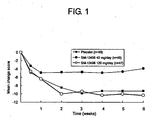
- Fig. 1 is a graph showing the change with time in scores of Brief Psychiatric Rating Scale: BPRS, which are indexes for the effects on schizophrenia, of the active compound of the present invention, (1R,2S,3R,4S)-N-[(1R,2R)-2-[4-(1,2-benzoisothiazol-3-yl)-1-piperazinyl-methyl]-1-cyclohexylmethyl]-2,3-bicyclo[2.2.1]heptanedicarboximide hydrochloride and placebo in the double blind clinical trial.
- BPRS Brief Psychiatric Rating Scale
- the present invention provides a novel use of a compound according to the above formula (1) or a pharmaceutically acceptable salt thereof for the preparation of an agent for the treatment of schizophrenia improving a wide-ranging schizophrenia including positive symptoms, negative symptoms, and cognitive dysfunction, especially positive symptoms and negative symptoms, without being accompanied by extrapyramidal symptoms which agent is orally administered in a prescribed dose of (1R,2S,3R,4S)-N-[(1R,2R)-2-[4-(1,2-benzoisothiazol-3-yl)-1-piperazinylmethyl]-1-cyclohexylmethyl]-2,3-bicyclo[2.2.1]heptanedicarboximide of the above formula (1) or a pharmaceutically acceptable salt thereof, especially a hydrochloride thereof, to a patient with schizophrenia once a day.
- excellent improving effects on the wide-ranging symptoms of schizophrenia may be obtained by orally administering (1R,2S,3R,4S)-N-[(1R,2R)-2-[4-(1,2-benzoisothiazol-3-yl)-1-piperazinylmethyl]-1-cyclohexylmethyl]-2,3-bicyclo[2.2.1]-heptanedicarboximide or a pharmaceutically acceptable salt thereof, for example, a hydrochloride, at a daily dose of 5 mg to 120 mg, preferably at a daily dose of 10 mg to 100 mg, more preferably at a daily dose of 20 mg to 80 mg, once a day.
- a pharmaceutically acceptable salt thereof for example, a hydrochloride
- the above active compound when the present invention is carried out with a patient with schizophrenia in chronic phase, the above active compound should preferably be administered to said patient for a long time at a dose as low as possible, and in such a case, the daily dose of the active compound is in the range of 5 mg to 80 mg, preferably in the range of 5 mg to 60 mg, more preferably in the range of 10 mg to 40 mg, and it is orally administered once a day.
- the therapeutic agent used in the the present invention is in the form of an oral preparation, which contains the compound of the above formula (1) or a pharmaceutically acceptable salt thereof, especially (1R,2S,3R,4S)-N-[(1R,2R)-2-[4-(1,2-benzoisothiazol-3-yl)-1-piperazinylmethyl]-1-cyclohexylmethyl]-2,3-bicyclo[2.2.1]heptanedicarboximide hydrochloride in an amount of 5 mg to 120 mg, preferably in an amount of 10 mg to 100 mg, more preferably in an amount of 20 mg to 80 mg per a single dosage unit.
- the oral preparation includes, for example, tablets, granules, fine granules, powders, capsules, syrups, etc. These preparations should be in the form of a preparation for administration once a day.
- the above preparations may be prepared by a conventional method by using a conventional pharmaceutically acceptable carrier which is usually used in the preparation of a conventional pharmaceutical formulation, for example, excipients such as lactose, white sugar, glucose, starch, calcium carbonate, kaolin, talc, crystalline cellulose, silicic acid, etc., binders such as water, ethanol, gelatin, carboxymethylcellulose, shellac, methylcellulose, gum arabic, tragacanth powder, polyvinylpyrrolidone, etc., disintegrating agents such as sodium arginate, agar powder, laminaran powder, sodium hydrogen carbonate, polyoxyethylenesorbitan fatty acid esters, sodium laurylsulfate, stearic acid monoglyceride, etc., lubricants such as purified talc, stearate, boric acid powder, polyethyleneglycol, etc.
- excipients such as lactose, white sugar, glucose, starch, calcium carbonate, kaolin, tal
- the active compound SM-13496 used in Experiments means (1R,2S,3R,4S)-N-[(1R,2R)-2-[4-(1,2-benzoisothiazol-3-yl)-1-piperazinyl-methyl]-1-cyclohexylmethyl]-2,3-bicyclo[2.2.1]heptanedicarboximide hydrochloride, and the meanings of the abbreviations used in Experiments are as follows. DSM-IV: Diagnostic and Statistical Manual of Mental Disorders, 4th ed.
- CGI-S Clinical Global Impressions scale-Severity of Illness
- CGI-I Clinical Global Impressions scale-Improvement
- AIMS Abnormal Involuntary Movement Scale
- EPS Extrapyramidal symptoms
- LOCF Last Observation Carried Forward (LOCF Analysis: a method of using last not-missing data in cases of dropouts)
- BAS Barnes Akathisia Scale SAS: Simpson-Angust Rating Scale (Rating Scale For Extrapyramidal Reactions)
- PANSS Positive and Negative Syndrome Scale (Rating Scale For Positive - Negative symptoms)
- the placebo-controlled double blind experiment was done on 149 patients with schizophrenia in the acute exacerbation phase at 15 facilities in USA.
- the efficacy and safeness were studied when SM-13496 at a dose of 40 mg or 120 mg, or a placebo was orally administered once a day for 6 weeks after placebo washout.
- Table 1 Name of Clinical Trial A double-blind, randomized, fixed dose, placebo-controlled, parallel-group, 6-week, efficacy, safety, and tolerability study of two dose levels of SM-13496 in patients with schizophrenia by DSM-IV criteria who are experiencing an acute exacerbation of symptoms Purpose The efficacy and safety on patients with schizophrenia in the acute exacerbation phase (DSM-IV criteria) were studied in the placebo-controlled, parallel-group, double-blind test. Subjects Selection criteria:
- BPRS total score (LOCF).
- Fig. 1 shows the changes in BPRS total score (LOCF).
- Fig. 1 shows the changes in BPRS total score (LOCF).
- Fig. 1 shows the changes in BPRS total score (LOCF).
- Fig. 1 shows the changes in BPRS total score (LOCF).
- Fig. 1 shows the changes in BPRS total score (LOCF).
- Fig. 1 shows the BPRS scores in the SM-13496-treated groups are statistically significantly reduced from those of prior to the administration as compared to that in the placebo-treated group at the 2 weeks or later (p ⁇ 0.05).
- Table 4 shows the ratio of the patients of which the BPRS reduction at the end of the experiment is 20 % or more, or the patients who showed 1 or 2 of CGI-I, those patients are considered as responder.
- Table 4 Dose (No.
- Adverse events observed in 10 % or more of the patients are shown in Table 5.
- 114 subjects among 149 subjects showed adverse events, but most of them were mild or moderate ones.
- the number of subjects who dropped out from the trial due to the adverse events was higher in both of the groups treated by two doses of SM-13496 than in the placebo-treated group.
- the main adverse events are suppression, nausea, headache, akathisia, and free-floating vertigo (excluding rotatory vertigo).
- the ratio of the subjects showing suppression was 10 %, 18 %, 14 % in the placebo-treated group, the SM-13496 40 mg-treated group, and the SM-13496 120 mg-treated group, respectively.
- the occurrence of dystonic reaction was low (less than 4 %) in the SM-13496-treated groups. There was no clinically significant change in 12-lead electrocardiogram. There was no significant difference in the ratio of the patients having an abnormal change in laboratory values among the groups. In the SM-13496-treated groups, the moderate increase in the prolactin level in the blood was observed, but there was no clinically significant change in the body temperature, respiration rate, funduscopic examination and slit-lamp microscopy. (iv) Further, the results of the evaluation for dyskinesia (by AIMS), akathisia (by BAS), parkinsonism (by SAS), those symptoms being extrapyramidal symptoms, are shown in Table 8.
- the present invention exhibits an excellent effect on the improvement of wide-ranging schizophrenia including positive symptoms, negative symptoms, cognitive dysfunctions, especially positive symptoms and negative symptoms, without being accompanied by extrapyramidal symptoms when (1R,2S,3R,4S)-N-[(1R,2R)-2-[4-(1,2-benzo-isothiazol-3-yl)-1-piperazinylmethyl]-1-cyclohexylmethyl]-2,3-bicyclo-[2.2.1]heptanedicarboximide or a pharmaceutically acceptable salt thereof especially a hydrochloride thereof is orally administed in prescribed amount once a day to a patient with schizophrenia.
- the present invention since the present invention does not cause an abnormal electrocardiogram which may progress to sudden death, or do not show excessive suppression effects, the present invention may be quite safely employed and may be suitable even to a prolonged medication, and further the present invention may be applied safely to even elder patients, and hence, the present invention is extremely excellent.
Landscapes
- Health & Medical Sciences (AREA)
- Chemical & Material Sciences (AREA)
- Organic Chemistry (AREA)
- Veterinary Medicine (AREA)
- Public Health (AREA)
- General Health & Medical Sciences (AREA)
- Animal Behavior & Ethology (AREA)
- Life Sciences & Earth Sciences (AREA)
- Pharmacology & Pharmacy (AREA)
- Medicinal Chemistry (AREA)
- Engineering & Computer Science (AREA)
- Bioinformatics & Cheminformatics (AREA)
- Neurology (AREA)
- Neurosurgery (AREA)
- Biomedical Technology (AREA)
- General Chemical & Material Sciences (AREA)
- Chemical Kinetics & Catalysis (AREA)
- Nuclear Medicine, Radiotherapy & Molecular Imaging (AREA)
- Psychiatry (AREA)
- Epidemiology (AREA)
- Pain & Pain Management (AREA)
- Hospice & Palliative Care (AREA)
- Pharmaceuticals Containing Other Organic And Inorganic Compounds (AREA)
- Ultra Sonic Daignosis Equipment (AREA)
- Medicines That Contain Protein Lipid Enzymes And Other Medicines (AREA)
- Electrotherapy Devices (AREA)
- Compounds Of Unknown Constitution (AREA)
Abstract
Description
- The present invention relates to a novel in proving the negative symptoms and/or cognitive dysfunction for use of (1R,2S,3R,4S)-N-[(1R,2R)-2-[4-(1,2-benzoviothianol-3- yl)-1-piperazinylmethyl]-1-cyclohexylmethyl]-2,3-bicyclo[2.2.1]heptane- dicarboximide or a pharmaceutically acceptable salt thereof of schizophrenia . More particularly, the present invention relates to a use of (1R, 2S, 3R, 4S)-N-[(1R, 2R)-2-[4-(1,2-benzoisothiazol-3-yl)-1-piperazinylmethyl]-1-cyclohexylmethyl]-2,3-bicyclo[2.2.1] heptane-dicarboximide or a pharmaceutically acceptable salt thereof for improving the negative symptoms and/or cognitive dysfunction of schizophrenia without bemg accompanied by extrapyramidal symptoms by orally administering a prescribed dose of a specific bicycloheptane-dicarboximide derivative once a day.
- Schizophrenia (split personality) is a kind of endogenous psychosis, and it is developed mainly during adolescence, and after a chronic course, the personality of patient is progressively decayed, and some of patients may culminate in a mental decay. The symptoms of this disease are, for example, positive symptoms often observed during the early stage of the disease such as hallucination, delusion, etc., or negative symptoms such as apathy and withdrawal, or cognitive dysfunction such as impairments of concentration and learning abilities, etc. Moreover, there are other symptoms such as depression, anxiety, etc. as related symptoms thereof.
- Medication is mainly employed in the treatment of schizophrenia, but the treatment of schizophrenia should be continued for a long time, and even though schizophrenia is once healed, there is a large risk of reoccurring of schizophrenia after drug withdrawal so that it is necessary to continue the medication forever. Therefore, any side effects of medication may always be serious problems, and based on this perspective, it has been desired to develop a medicine being suitable for prolonged medication.
- The agents for treatment of schizophrenia are various medicaments such as ones classified in the category of antipsychotic, for example, phenothiazine derivatives (e.g., chlorpromazine, methoxy-promazine, etc.), thioxanthin derivatives having a similar structure to phenothiazine (e.g., chlorprothixene, flupentixol, etc.), benzamide derivatives (e.g., sulpiride, sultopride, etc.), thienodiazepine derivatives (e.g., clotiazepam, etizolam, etc.), and further butyrophenone derivatives (e.g., haloperidol, triperidol, etc.), diphenylbutylamine derivatives (e.g., pimozide, etc.), etc.
- However, phenothiazine derivatives, phenothiazine analogues, and butyrophenone derivatives may cause serious side effects of extrapyramidal symptoms showing parkinsonism such as the stiff gait of skeletal muscles, tremor of muscles, lack of facial expression, salivation, etc. Further, diphenylbutylamine derivatives may cause extrapyramidal symptoms in addition to insomnia. In addition, these conventional antipsychotics may be effective on only some of symptoms among positive symptoms, negative symptoms, cognitive dysfunctions of schizophrenia, and there has been no drug being effective on all of these symptoms.
- Therefore, it has been desired to develop a safe medicament which exhibits an excellent effect on various schizophrenia as an antipsychotic without causing side effects such as extrapyramidal symptoms.
- On the other hand, it has been known that the imide derivative of the following formula, which was found by the co-workers of the present inventors, may be useful as an antipsychotic (c.f., neuroleptic agent, antiaxiety, etc.), especially as an agent for treatment of schizophrenia, senile insanity, manic depressive psychoses, and nervous breakdown (
USP 5,532,372 ).


Ar is an aromatic group, or an aromatic heterocyclic group, etc. - The compounds have been described in
EP0464846 as antipsychotic-, neuroleptic- and anti-anxiety agents for the treatment of schizophrenia. - The present inventor has intensively studied on a series of imide derivatives with respect to many aspects including a use and a dose thereof in order to find a novel agent for treatment of schizophrenia, which may exhibit an excellent effect in the treatment of schizophrenia and have no side effect such as extrapyramidal symptoms, which are often observed in many conventional antipsychotics, and can safely be administered for a long time. As a result, the present inventors have found that (1R,2S,3R,4S)-N-[(1R,2R)-2-[4-(1,2-benzoisothiazol-3-yl)-1-piperazinylmethyl]-1-cyclohexylmethyl]-2,3-bicyclo[2.2.1]heptanedicarboximide of the following formula:

- thereof is effective for relieving the wide-ranging symptoms of schizophrenia, and may treat schizophrenia quite safely without being accompanied by extrapyramidal symptoms by orally administering a prescribed dose thereof once a day.
- Namely, the present invention provides the use of (1R,2S,3R,4S)-N-[(1R,2R)-2-[4-(1,2-benzoisothiazol-3-yl)-1-piperazinyl-methyl]-1-cyclohexylmethyl]-2,3-bicyclo[2.2.1]heptaniedicarboximide of the above formula (1) or a pharmaceutically acceptable salt thereof according to any of
claims 1 to 15. -
Fig. 1 is a graph showing the change with time in scores of Brief Psychiatric Rating Scale: BPRS, which are indexes for the effects on schizophrenia, of the active compound of the present invention, (1R,2S,3R,4S)-N-[(1R,2R)-2-[4-(1,2-benzoisothiazol-3-yl)-1-piperazinyl-methyl]-1-cyclohexylmethyl]-2,3-bicyclo[2.2.1]heptanedicarboximide hydrochloride and placebo in the double blind clinical trial. - As shown in Examples as described hereinafter, when orally administering a prescribed dose of (1R,2S,3R,4S)-N-[(1R,2R)-2-[4-(1,2-benzoisothiazol-3-yl)-1-piperazinylmethyl]-1-cyclohexylmethyl]-2,3-bicyclo[2.2.1]heptanedicarboximide hydrochloride once a day for 6 weeks to the patients with schizophrenia in the acute exacerbation, the present inventors have found that the excellent effects on the wide-ranging symptoms were obtained, and surprisingly, any extrapyramidal symptoms as observed in the conventional antipsychotics were hardly observed, especially, abnormal electrocardiogram which progresses to sudden death is not recognized, and hence, that this compound may be quite safely used in the treatment of schizophrenia.
- Namely, the present invention provides a novel use of a compound according to the above formula (1) or a pharmaceutically acceptable salt thereof for the preparation of an agent for the treatment of schizophrenia improving a wide-ranging schizophrenia including positive symptoms, negative symptoms, and cognitive dysfunction, especially positive symptoms and negative symptoms, without being accompanied by extrapyramidal symptoms which agent is orally administered in a prescribed dose of (1R,2S,3R,4S)-N-[(1R,2R)-2-[4-(1,2-benzoisothiazol-3-yl)-1-piperazinylmethyl]-1-cyclohexylmethyl]-2,3-bicyclo[2.2.1]heptanedicarboximide of the above formula (1) or a pharmaceutically acceptable salt thereof, especially a hydrochloride thereof, to a patient with schizophrenia once a day.
- According to the present invention, excellent improving effects on the wide-ranging symptoms of schizophrenia may be obtained by orally administering (1R,2S,3R,4S)-N-[(1R,2R)-2-[4-(1,2-benzoisothiazol-3-yl)-1-piperazinylmethyl]-1-cyclohexylmethyl]-2,3-bicyclo[2.2.1]-heptanedicarboximide or a pharmaceutically acceptable salt thereof, for example, a hydrochloride, at a daily dose of 5 mg to 120 mg, preferably at a daily dose of 10 mg to 100 mg, more preferably at a daily dose of 20 mg to 80 mg, once a day. Further, when carrying out the present invention, side effects such as extrapyramidal symptoms such as parkinsonism, dyskinesia, akathisia, etc., abnormal electrocardiogram, hepatic dysfunction are hardly observed, and hence, the present method may be quite safely used and suitable for a prolonged medication.
- Besides, when the present invention is carried out with a patient with schizophrenia in chronic phase, the above active compound should preferably be administered to said patient for a long time at a dose as low as possible, and in such a case, the daily dose of the active compound is in the range of 5 mg to 80 mg, preferably in the range of 5 mg to 60 mg, more preferably in the range of 10 mg to 40 mg, and it is orally administered once a day.
- The therapeutic agent used in the the present invention is in the form of an oral preparation, which contains the compound of the above formula (1) or a pharmaceutically acceptable salt thereof, especially (1R,2S,3R,4S)-N-[(1R,2R)-2-[4-(1,2-benzoisothiazol-3-yl)-1-piperazinylmethyl]-1-cyclohexylmethyl]-2,3-bicyclo[2.2.1]heptanedicarboximide hydrochloride in an amount of 5 mg to 120 mg, preferably in an amount of 10 mg to 100 mg, more preferably in an amount of 20 mg to 80 mg per a single dosage unit. The oral preparation includes, for example, tablets, granules, fine granules, powders, capsules, syrups, etc. These preparations should be in the form of a preparation for administration once a day.
- The above preparations may be prepared by a conventional method by using a conventional pharmaceutically acceptable carrier which is usually used in the preparation of a conventional pharmaceutical formulation, for example, excipients such as lactose, white sugar, glucose, starch, calcium carbonate, kaolin, talc, crystalline cellulose, silicic acid, etc., binders such as water, ethanol, gelatin, carboxymethylcellulose, shellac, methylcellulose, gum arabic, tragacanth powder, polyvinylpyrrolidone, etc., disintegrating agents such as sodium arginate, agar powder, laminaran powder, sodium hydrogen carbonate, polyoxyethylenesorbitan fatty acid esters, sodium laurylsulfate, stearic acid monoglyceride, etc., lubricants such as purified talc, stearate, boric acid powder, polyethyleneglycol, etc.
- The present invention and the effects thereof are illustrated in more detail by Experiments as described hereinafter.
- The active compound SM-13496 used in Experiments means (1R,2S,3R,4S)-N-[(1R,2R)-2-[4-(1,2-benzoisothiazol-3-yl)-1-piperazinyl-methyl]-1-cyclohexylmethyl]-2,3-bicyclo[2.2.1]heptanedicarboximide hydrochloride, and the meanings of the abbreviations used in Experiments are as follows.
DSM-IV: Diagnostic and Statistical Manual of Mental Disorders, 4th ed. CGI-S: Clinical Global Impressions scale-Severity of Illness CGI-I: Clinical Global Impressions scale-Improvement AIMS: Abnormal Involuntary Movement Scale EPS: Extrapyramidal symptoms LOCF: Last Observation Carried Forward (LOCF Analysis: a method of using last not-missing data in cases of dropouts) BAS: Barnes Akathisia Scale SAS: Simpson-Angust Rating Scale (Rating Scale For Extrapyramidal Reactions) PANSS: Positive and Negative Syndrome Scale (Rating Scale For Positive - Negative symptoms) - According to the procedures as shown in Table 1 as described below, the placebo-controlled double blind experiment was done on 149 patients with schizophrenia in the acute exacerbation phase at 15 facilities in USA. The efficacy and safeness were studied when SM-13496 at a dose of 40 mg or 120 mg, or a placebo was orally administered once a day for 6 weeks after placebo washout.
Table 1 Name of Clinical Trial A double-blind, randomized, fixed dose, placebo-controlled, parallel-group, 6-week, efficacy, safety, and tolerability study of two dose levels of SM-13496 in patients with schizophrenia by DSM-IV criteria who are experiencing an acute exacerbation of symptoms Purpose The efficacy and safety on patients with schizophrenia in the acute exacerbation phase (DSM-IV criteria) were studied in the placebo-controlled, parallel-group, double-blind test. Subjects Selection criteria: - 1) Patients with scchizophrenia determined according to DSM-IV criteria who are experiencing an acute exacerbation of symptoms
- 2) Patients having 42 or more of Extracted-BPRS Score as well as 4 or more of CGI-S Score
- 3) Patients having less than 2 of Simpson-Angus Score as well as less than 3 of AIMS Score
- 4) Patients suffering from schizophrenia for more than 1 year
- 5) Males and females aged 18-64 years
- 1) Patients with treatment-resistant schizophrenia
- 2) Patients being taking depot injections before finishing the therapy cycle
- 3) Patients having a strong suicidal ideation
- 4) Patients with Parkinson's disease, Alzheimer disease, drug addiction, convulsive disorders, epilepsy
- 5) Pregnant women and any women having a possibility of pregnancy, and lactating women
- 6) Patients having drug hypersensitivity
- 7) Any patients who are examined not to be suitable as subjects by principal investigator
- 1) Another antipsychotic is not administered. When another antipsychotic is taken, then it is necessary to set up a washout period before the trial at least 3 days for oral drug or for one therapy cycle for depot injection.
- 2) In case of onset of extrapyramidal symptoms, then the administration of an antiparkinson agent is allowed.
- 3) In case of onset of insomnia, lorazepam is used.
-
-
1) Evaluation of efficacy:
(i) The data by BPRS and PANSS (LOCF), and CGI-S and CGI-I at the end of the trial are shown in Table 2 and Table 3, respectively. As is shown in Table 2 and Table 3, the reductions in the scores at the end of the trial (6 weeks after the administration) from those prior to the administration in the groups treated by SM-13496 40 mg or 120 mg are statistically significant as compared to that in the placebo-treated group with respect to BPRS, CGI-I and CGI-S evaluations. With respect to PANSS evaluation, the reduction in the score at the end of the experiment in the SM-13496 120 mg-treated group is statistically significant as compared to that in the placebo-treated group, which means the psychotic manifestations are improved by SM-13496.Table 2 Dose Placebo SM-13496 40 mg SM-13496 120 mg (No. of Subjects) (45) (47) (44) Rating scale Average (SD) Average (SD) p value# Average (SD) p value# BPRS Total Score. -4.0 (8.45) -10.0 (12.79) 0.014 -11.3 (8.89) 0.003 PANSS Total Score -5.8 (14.06) -14.1 (23.10) 0.063 -174 (15.70) 0.010 #: Two-sided Dunnett's t-test (comparison between the groups treated by each dose and the placebo-treated group)
Covariance analysis using faculty and Groups as factors and the values before administration as covariateTable 3 Dose Placebo SM-1349640mg Sum-13496 120 mg Rating Scale Average (SD) Average (SD) p value# Average (SD) p value# CGI-S (n=41)
0.0(0.77)(n=41)
-0.7(1.12)0.004 (n=40)
-0.8(1.03)0.002 CGI-I (n=45)
4.0(1.41)(n=47)
3.2(1.56)0.013 (n=42)
3.0(1.29)0.005 #: Two-sided Dunnett's t-test (comparison between the groups treated by each dose and the placebo-treated group)
Covariance analysis using faculty and Groups as factors and the values before administration as covariate
(ii) Further, the appendedFig. 1 shows the changes in BPRS total score (LOCF). As is shown inFig. 1 , the BPRS scores in the SM-13496-treated groups are statistically significantly reduced from those of prior to the administration as compared to that in the placebo-treated group at the 2 weeks or later (p<0.05).
(iii) The ratio of the patients of which the BPRS reduction at the end of the experiment is 20 % or more, or the patients who showed 1 or 2 of CGI-I, those patients are considered as responder, is shown in Table 4. As is apparent from Table 4, there was a statistically significant difference between the SM-13496 40 mg- or 120 mg-treated group and the placebo-treated group.Table 4 Dose (No. of Subjects) Placebo (45) SM-13496 40 mg (47) SM-13496 120 mg (44) Number Number p value# Number p value# Responder 10 26 0.002 22 0.007 #: Cochran-Mantel-Haenszel test adjusting the faculties (comparison between the groups treated by each dose and the placebo-treated group) -
(i) Adverse events observed in 10 % or more of the patients are shown in Table 5.Table 5 Placebo 40 mg 120 mg Number of Subjects 50 50 49 Number of subjects showing adverse events (%) 36 (72) 40 (80) 38 (78) Number of subjects showing serious adverse events (%) 3 (6) 3 (6) 3 (6) Number of subjects who drop out from the trial due to adverse events (%) 2 (4) 6 (12) 6 (12) Occurrence of Adverse events (%) Digestive disturbance 6 (12) 4 (8) 2 (4) Nausea 2 (4) 5 (10) 11 (22) Headache 5 (10) 8(16) 3 (6) Akathisia 0 (0) 4 (8) 7 (14) Free-floating vertigo (excluding rotatory vertigo) 3 (6) 6 (12) 5 (10) Suppression 5 (10) 9 (18) 7 (14) Drowsiness 2 (4) 4 (8) 5 (10) Exacerbation of schizophrenia 5 (10) 2 (4) 1 (2)
As is shown in Table 5, 114 subjects among 149 subjects (77 %) showed adverse events, but most of them were mild or moderate ones. The number of subjects who dropped out from the trial due to the adverse events was higher in both of the groups treated by two doses of SM-13496 than in the placebo-treated group.
The main adverse events are suppression, nausea, headache, akathisia, and free-floating vertigo (excluding rotatory vertigo). The ratio of the subjects showing suppression was 10 %, 18 %, 14 % in the placebo-treated group, the SM-13496 40 mg-treated group, and the SM-13496 120 mg-treated group, respectively. In the SM-13496 120 mg-treated group, nausea was more observed as compared to the other groups, but digestive disturbance was less observed than in the placebo-treated group. Exacerbation of schizophrenia was less observed in the SM-13496 40 mg- and 120 mg-treated groups (4 % and 2 %, respectively) than in the placebo-treated group (10 %). Akathisia was observed only in the SM-13496 treated groups, i.e., 8 % and 14 % in the 40 mg-treated group and in the 120 mg-treated group, respectively. The occurrence of the adverse events in the groups treated by SM-13496 were the same as that in the placebo-treated group. Either body weight gain, bulimia, impotence, erectile dysfunction or convulsion was not observed.
(ii) The serious adverse events observed in the above phase II clinical trial are shown in Table 6 as described below.Table 6 Placebo 40 mg 120 mg Number of Subjects 50 50 49 Total (%) 4 (8) 3 (6) 2 (4) Occurrence of Serious Adverse Events (%) Exacerbation of paranoia 0 (0) 1 (2) 0 (0) Psychosis aggravated 0 (0) 1 (2) 0 (0) Exacerbation of schizophrenia 4 (8) 1 (2) 1 (2) Paranoid schizophrenia 0 (0) 0 (0) 1 (2)
As is shown in Table 6, the serious adverse events were observed in 4 cases of the placebo-treated group, 3 cases of the SM-13496 40 mg-treated group and 2 cases of the SM-13496 120 mg-treated group, but the relationship to the tested medicament was denied.
(iii) Further, the side effects observed in this clinical trial are listed in the following Table 7.Table 7 Placebo 40 mg 120 mg Number of Subjects 50 50 49 Occurrence of side effects (%) 22 (44) 33 (66) 35 (71) Mental disturbance Restlessness 0 (0) 1 (2) 1 (2) Psychosis aggravated 0 (0) 0 (0) 2 (4) Agitation 0 (0) 0 (0) 1 (2) Agitation aggravated 0 (0) 0 (0) 2 (4) Anxiety aggravated 0 (0) 1 (2) 0 (0) Insomnia 0 (0) 1 (2) 1 (2) Exacerbation of insomnia 0 (0) 0(0) 0 (0) 0 (0) 1 (2) 1 (2) Nightmare 0 (0) 0 (0) 1 (2) Metabolic disturbances and nutritional disturbance Anorexia 1 (2) 1 (2) 0 (0) Decrease in appetite 1 (2) 1 (2) 1 (2) Disturbance in Skin and Hypodermis Pruritus 1 (2) 0 (0) 0 (0) Infection and parasitosis Tinea pedis 0 (0) 0 (0) 1 (2) External otitis 0 (0) 1 (2) 0 (0) Parotiditis 1 (2) 0 (0) 0 (0) Urinary tract infection 0 (0) 1 (2) 0 (0) Vascular diseases Flushing 1(2) 0 (0) 0 (0) Hot flashes 0 (0) 0 (0) 1 (2) Disturbance in respiratory organ, chest and mediastinum Laryngopharynx pain 0 (0) 1 (2) 0 (0) Breathing difficulty 0 (0) 0 (0) 1 (2) Heart problems Sinus tachycardia 0 (0) 0 (0) 1 (2) Palpitation 0(0) 0 (0) 1 (2) Gastroenteric disturbance Nausea 2 (4) 4 (8) 9 (18) Vomiting 0 (0) 2 (4) 3 (6) Constipation 1 (2) 2 (4) 0 (0) Diarrhea 3 (6) 3 (6) 0 (0) Loose stools 0 (0) 0 (0) 1 (2) Tongue disturbance 0 (0) 1 (2) 0 (0) Dyspepsia 2 (4) 3 (6) 2 (4) Flatulence 0 (0) 1 (2) 0 (0) Dry mouth 1 (2) 0 (0) 0 (0) Salivary hypersecretion 1(2) 1 (2) 0(0) 0 (0) 0 (0) 0 (0) Abdominal pain 2 (4) 0 (0) 0 (0) Total disability and local condition Fatigue 3(6) 3 (6) 1 (2) Fatigue aggravated 0 (0) 1 (2) 0 (0) Hot sensation 1 (2) 0 (0) 0 (0) Sleepiness 1 (2) 1 (2) 2 (4) Nervous system disorder Suppression 3 (6) 9 (18) 7 (14) Akathisia 0 (0) 4 (8) 7 (14) Free-floating vertigo (excluding rotatory vertigo) 0 (0) 5 (10) 5 (10) Drowsiness 2 (4) 4 (8) 5 (10) Headache 3 (6) 6 (12) 1 (2) Extrapyramidal disease 0 (0) 1 (2) 3 (6) Tremor 0 (0) 3 (6) 3 (6) Akathisia aggravated 0 (0) 1 (2) 0 (0) Dystonic reaction 0 (0) 1 (2) 0 (0) Anarthria 0 (0) 0 (0) 1 (2) Glossoplegia 1 (2) 0 (0) 0 (0) Cogwheel rigidity 0 (0) 0 (0) 1 (2) Trismus 0 (0) 0 (0) 1 (2) Musculoskeletal system and connective tissue disorder Muscle stiffness 1 (2) 2 (4) 1 (2) Myalgic pain 0(0) 0(0) 1 (2) Cervical rigidity 0 (0) 1(2) 0 (0) Articular rigidity 0 (0) 1 (2) 0 (6) Melalgia 0 (0) 0 (0) 1 (2) Heavy feeling 0 (0) 1 (2) 0 (0) Laboratory assay Increase in prolactin level in the blood 0 (0) 1 (2) 1 (2) Increase in creatine phosphokinase level in the blood 0 (0) 1 (2) 0 (0) Abnormal electrocardiogram 1(2) 0 (0) 0 (0) Weight loss 1 (2) 1 (2) 2 (4) Increase in total protein 0 (0) 1 (2) 0 (0) Abnormal liver function tests 0 (0) 0 (0) 0 (0) 0(0) 1 (2) 1 (2) Renal Injury and urinary disorder Polyuria 1 (2) 0 (0) 0 (0) Frequent urination 1 (2) 0 (0) 0 (0) Ocular disturbance Blurred vision 0 (0) 1 (2) 1 (2) Dry eye 1 (2) 0 (0) 0 (0)
As is shown in Table 7, among the adverse events, the main side effects, a relationship of which to the SM-13496 cannot be denied, was suppression, nausea, akathisia, free-floating vertigo (excluding rotatory vertigo), sleepiness, headache. The occurrence of dystonic reaction was low (less than 4 %) in the SM-13496-treated groups. There was no clinically significant change in 12-lead electrocardiogram. There was no significant difference in the ratio of the patients having an abnormal change in laboratory values among the groups. In the SM-13496-treated groups, the moderate increase in the prolactin level in the blood was observed, but there was no clinically significant change in the body temperature, respiration rate, funduscopic examination and slit-lamp microscopy.
(iv) Further, the results of the evaluation for dyskinesia (by AIMS), akathisia (by BAS), parkinsonism (by SAS), those symptoms being extrapyramidal symptoms, are shown in Table 8.Table 8 Rating Scale Placebo* SM-13496 40 mg* SM-13496 120 mg* Average (SD) Average (SD) p value* p value# Average (SD) p value# AIMS 0.7 (2.63) 0.7 (2.88) 0.978 0.2 (2.21) 0.467 BAS** 0.0 (0.97) 0.1 (1.04) 0.687 0.4 (0.94) 0.352 SAS -0.1 (0.96) 0.1 (1.08) 0.588 0.1(1.11) 0.808 #: Two-sided Dunnett's t-test (comparison between the groups treated by each dose and the placebo-treated group)
Covariance analysis using faculty and Groups as factors and the values before administration as covariate
* : n= 44-47 for each rating score
**:BAS Global score - As is apparent from the results in Table 8, there was no significant difference in the changes in the score prior to the treatment or in the total score between the treated groups. The ratio of the patients requiring benztropine was 24 % in the SM-13496-treated groups and 18 % in the placebo-treated group.
- The present invention exhibits an excellent effect on the improvement of wide-ranging schizophrenia including positive symptoms, negative symptoms, cognitive dysfunctions, especially positive symptoms and negative symptoms, without being accompanied by extrapyramidal symptoms when (1R,2S,3R,4S)-N-[(1R,2R)-2-[4-(1,2-benzo-isothiazol-3-yl)-1-piperazinylmethyl]-1-cyclohexylmethyl]-2,3-bicyclo-[2.2.1]heptanedicarboximide or a pharmaceutically acceptable salt thereof especially a hydrochloride thereof is orally administed in prescribed amount once a day to a patient with schizophrenia. Besides, since the present invention does not cause an abnormal electrocardiogram which may progress to sudden death, or do not show excessive suppression effects, the present invention may be quite safely employed and may be suitable even to a prolonged medication, and further the present invention may be applied safely to even elder patients, and hence, the present invention is extremely excellent.
Claims (9)
- Use of (1R,2S,3R,4S)-N-[(1R,2R)-2-[4-(1,2-benzoisothiazol-3-yl)-1-piperazinylmethyl]-1-cyclohexylmethyl]-2,3-bicyclo[2.2.1]heptanedicarboximide of the formula (1):

- The use according to claim 1, wherein the active compound is (1R,2S,3R,4S)-N-[(1R,2R)-2-[4-(1,2-benzoisothiazol-3-yl)-1-piperazinylmethyl]-1-cyclohexylmethyl]-2,3-bicyclo[2.2.1]-heptanedicarboximide hydrochloride.
- The use according to claim 1 or claim 2, wherein the agent contains the active compound in an amount of 5 mg to 120 mg as a daily dose for oral administration once a day.
- The use according to claim 1 or 2, wherein the agent is to be administered orally in a daily dose of 5 mg to 120 mg of the active compound once a day and wherein the treatment is not accompanied by any extrapyramidal symptoms.
- The use according to claim 2, wherein the active compound is to be administered orally at a daily dose of 20 mg to 80 mg once a day.
- The use according to claim 2, wherein the active compound is to be administered orally at a daily dose of 5 mg to 80 mg once a day and wherein the schizophrenia is in the chronic stage and wherein the treatment is not accompanied by any extrapyramidal symptoms.
- The use according to claim 2, wherein the active compound is to be administered orally at a daily dose of 10 mg to 40 mg once a day.
- The use according to any of claims 1 to 7, wherein the agent improves the negative symptoms of schizophrenia.
- The use according to any of claims 1 to 7, wherein the agent improves the cognitive dysfunction of schizophrenia.
Priority Applications (2)
| Application Number | Priority Date | Filing Date | Title |
|---|---|---|---|
| EP10013201A EP2295061A1 (en) | 2002-08-22 | 2003-08-20 | Agent for treatment of schizophrenia |
| EP08153777.1A EP1944030B1 (en) | 2002-08-22 | 2003-08-20 | Agent for treatment of schizophrenia |
Applications Claiming Priority (3)
| Application Number | Priority Date | Filing Date | Title |
|---|---|---|---|
| US40492702P | 2002-08-22 | 2002-08-22 | |
| US404927P | 2002-08-22 | ||
| PCT/JP2003/010490 WO2004017973A1 (en) | 2002-08-22 | 2003-08-20 | Remedy for integration dysfunction syndrome |
Related Child Applications (1)
| Application Number | Title | Priority Date | Filing Date |
|---|---|---|---|
| EP08153777.1A Division EP1944030B1 (en) | 2002-08-22 | 2003-08-20 | Agent for treatment of schizophrenia |
Publications (3)
| Publication Number | Publication Date |
|---|---|
| EP1535616A1 EP1535616A1 (en) | 2005-06-01 |
| EP1535616A4 EP1535616A4 (en) | 2005-11-30 |
| EP1535616B1 true EP1535616B1 (en) | 2009-05-13 |
Family
ID=31946785
Family Applications (3)
| Application Number | Title | Priority Date | Filing Date |
|---|---|---|---|
| EP10013201A Withdrawn EP2295061A1 (en) | 2002-08-22 | 2003-08-20 | Agent for treatment of schizophrenia |
| EP03792731A Expired - Lifetime EP1535616B1 (en) | 2002-08-22 | 2003-08-20 | Remedy for integration dysfunction syndrome |
| EP08153777.1A Expired - Lifetime EP1944030B1 (en) | 2002-08-22 | 2003-08-20 | Agent for treatment of schizophrenia |
Family Applications Before (1)
| Application Number | Title | Priority Date | Filing Date |
|---|---|---|---|
| EP10013201A Withdrawn EP2295061A1 (en) | 2002-08-22 | 2003-08-20 | Agent for treatment of schizophrenia |
Family Applications After (1)
| Application Number | Title | Priority Date | Filing Date |
|---|---|---|---|
| EP08153777.1A Expired - Lifetime EP1944030B1 (en) | 2002-08-22 | 2003-08-20 | Agent for treatment of schizophrenia |
Country Status (8)
| Country | Link |
|---|---|
| US (3) | US9174975B2 (en) |
| EP (3) | EP2295061A1 (en) |
| JP (1) | JP4745661B2 (en) |
| AT (1) | ATE431147T1 (en) |
| AU (1) | AU2003257589A1 (en) |
| DE (1) | DE60327634D1 (en) |
| ES (2) | ES2685780T3 (en) |
| WO (1) | WO2004017973A1 (en) |
Families Citing this family (8)
| Publication number | Priority date | Publication date | Assignee | Title |
|---|---|---|---|---|
| ES2685780T3 (en) | 2002-08-22 | 2018-10-11 | Sumitomo Dainippon Pharma Co., Ltd. | Agent for the treatment of schizophrenia |
| CN1826338B (en) | 2003-06-23 | 2011-07-13 | 大日本住友制药株式会社 | Therapeutic agent for senile dementia |
| WO2005080976A1 (en) * | 2004-02-20 | 2005-09-01 | Dainippon Sumitomo Pharma Co., Ltd. | Method of in vivo screening of therapeutic agent for memory/learning dysfunction by schizophrenia |
| DK1884242T3 (en) | 2005-05-26 | 2013-05-06 | Dainippon Sumitomo Pharma Co | PHARMACEUTICAL COMPOSITION COMPREHENSIVE LURASIDON |
| WO2011093522A1 (en) * | 2010-01-28 | 2011-08-04 | Dainippon Sumitomo Pharma Co., Ltd. | A cycloalkane derivative |
| US8258139B2 (en) | 2010-11-08 | 2012-09-04 | Dainippon Sumitomo Pharma Co., Ltd. | Method of treatment for mental disorders |
| CN104220074A (en) * | 2011-12-02 | 2014-12-17 | 大日本住友制药株式会社 | Lurasidone novel dosage regimens and use thereof for the treatment, prevention, and/or management of at least one CNS disorder |
| CA2951917C (en) | 2014-06-16 | 2019-09-24 | Johnson Matthey Public Limited Company | Processes for making alkylated arylpiperazine and alkylated arylpiperidine compounds including novel intermediates |
Family Cites Families (27)
| Publication number | Priority date | Publication date | Assignee | Title |
|---|---|---|---|---|
| JPH0464846A (en) * | 1990-07-05 | 1992-02-28 | Matsushita Seiko Co Ltd | Hood device for office automation equipment |
| JP2800953B2 (en) * | 1990-07-06 | 1998-09-21 | 住友製薬株式会社 | New imide derivatives |
| JP3211279B2 (en) * | 1990-10-08 | 2001-09-25 | 住友化学工業株式会社 | Method for producing high-purity carboxylic acid phenyl esters |
| DK36291D0 (en) * | 1991-03-01 | 1991-03-01 | Lundbeck & Co As H | APPLICATION OF PIPERIDYL-SUBSTITUTED INDEX DERIVATIVES FOR TREATMENT OF COGNITIVE DISORDERS |
| GB9202915D0 (en) | 1992-02-12 | 1992-03-25 | Wellcome Found | Chemical compounds |
| IL110011A (en) | 1994-06-13 | 2004-09-27 | Yeda Res & Dev | Pharmaceutical compositions for the treatment of schizophrenia |
| WO1996014297A1 (en) | 1994-11-04 | 1996-05-17 | Sumitomo Pharmaceuticals Company, Limited | Novel lactam derivatives |
| JP3775823B2 (en) | 1995-06-09 | 2006-05-17 | 大日本住友製薬株式会社 | Novel imide derivatives |
| US6228875B1 (en) * | 1998-04-14 | 2001-05-08 | The General Hospital Corporation | Methods for treating neuropsychiatric disorders |
| WO1999056747A1 (en) * | 1998-05-05 | 1999-11-11 | Jose Pozuelo | Compositions and methods for treating particular chemical addictions and mental illnesses |
| JP2000281576A (en) | 1999-03-29 | 2000-10-10 | Sumitomo Pharmaceut Co Ltd | Proteoglycan production accelerator containing imide derivative |
| AR027134A1 (en) | 1999-12-30 | 2003-03-12 | Lundbeck & Co As H | DERIVATIVES OF INDOL. |
| US6946474B2 (en) | 2000-09-14 | 2005-09-20 | Merck & Co., Inc. | Nitrogen-containing compounds and their use as glycine transport inhibitors |
| JP4868695B2 (en) * | 2000-09-22 | 2012-02-01 | 大日本住友製薬株式会社 | Oral preparation with good disintegration |
| JP2004517112A (en) * | 2001-01-02 | 2004-06-10 | ファルマシア・アンド・アップジョン・カンパニー | New drug combination |
| EP1378492B1 (en) * | 2001-02-21 | 2008-04-02 | Seiwa Pro Co., Ltd. | Remover for scale deposited on titanium material |
| WO2002100399A1 (en) * | 2001-06-12 | 2002-12-19 | Elan Pharmaceuticals, Inc. | Macrocycles useful in the treatment of alzheimer's disease |
| JP4568463B2 (en) | 2001-11-05 | 2010-10-27 | 独立行政法人科学技術振興機構 | Drebrin A expression-suppressed animal neuron and non-human model animal |
| JP4175800B2 (en) | 2001-11-27 | 2008-11-05 | 住友化学株式会社 | Method for producing imide derivative |
| MXPA04007752A (en) * | 2002-02-08 | 2005-06-17 | Abbott Lab | Combination therapy for treatment of schizophrenia. |
| ES2685780T3 (en) | 2002-08-22 | 2018-10-11 | Sumitomo Dainippon Pharma Co., Ltd. | Agent for the treatment of schizophrenia |
| CN1826338B (en) * | 2003-06-23 | 2011-07-13 | 大日本住友制药株式会社 | Therapeutic agent for senile dementia |
| WO2005080976A1 (en) * | 2004-02-20 | 2005-09-01 | Dainippon Sumitomo Pharma Co., Ltd. | Method of in vivo screening of therapeutic agent for memory/learning dysfunction by schizophrenia |
| US7122683B2 (en) * | 2004-11-23 | 2006-10-17 | Pfizer Inc. | Amides useful as monoamine re-uptake inhibitors |
| TW200812993A (en) | 2006-05-02 | 2008-03-16 | Lundbeck & Co As H | New uses of escitalopram |
| US7662820B2 (en) * | 2006-10-30 | 2010-02-16 | Sanrx Pharmaceuticals, Inc. | Dipterinyl calcium pentahydrate (DCP) and therapeutic methods based thereon |
| AU2008236705B2 (en) | 2007-04-04 | 2014-01-23 | Merck Sharp & Dohme Corp. | Therapeutic agents |
-
2003
- 2003-08-20 ES ES08153777.1T patent/ES2685780T3/en not_active Expired - Lifetime
- 2003-08-20 US US10/525,021 patent/US9174975B2/en active Active
- 2003-08-20 JP JP2004530573A patent/JP4745661B2/en not_active Expired - Lifetime
- 2003-08-20 EP EP10013201A patent/EP2295061A1/en not_active Withdrawn
- 2003-08-20 AU AU2003257589A patent/AU2003257589A1/en not_active Abandoned
- 2003-08-20 EP EP03792731A patent/EP1535616B1/en not_active Expired - Lifetime
- 2003-08-20 AT AT03792731T patent/ATE431147T1/en active
- 2003-08-20 ES ES03792731T patent/ES2326078T3/en not_active Expired - Lifetime
- 2003-08-20 WO PCT/JP2003/010490 patent/WO2004017973A1/en not_active Ceased
- 2003-08-20 EP EP08153777.1A patent/EP1944030B1/en not_active Expired - Lifetime
- 2003-08-20 DE DE60327634T patent/DE60327634D1/en not_active Expired - Lifetime
-
2014
- 2014-08-28 US US14/471,919 patent/US9815827B2/en not_active Expired - Fee Related
-
2017
- 2017-10-06 US US15/726,907 patent/US20180051017A1/en not_active Abandoned
Non-Patent Citations (5)
| Title |
|---|
| ALPHS ET AL: "An Industry Perspective on the NIMH Consensus Statement on Negative Symptoms", SCHIZOPHRENIA BULLETIN, vol. 32, no. 2, 2006, pages 225 - 230 * |
| ERHART ET AL, SCHIZOPHRENIA BULLETIN, vol. 32, no. 2, pages 234 - 237 * |
| KANE: "Commentary: Consensus Statement on Negative Symptoms", SCHIZOPHRENIA BULLETIN, vol. 32, no. 2, 2006, pages 223 - 224 * |
| KIRKPATRICK ET AL: "The NIMH-MATRICS Consensus Statement on Negative Symptoms", SCHIZOPHRENIA BULLETIN, vol. 32, no. 2, 2006, pages 214 - 219 * |
| LAUGHREN ET AL: "Food and Drug Administration Perspective on Negative Symptoms in Schizophrenia as a Target for a Drug Treatment Claim", SCHIZOPHRENIA BULLETIN, vol. 32, no. 2, pages 220 - 222 * |
Also Published As
| Publication number | Publication date |
|---|---|
| JP4745661B2 (en) | 2011-08-10 |
| EP1535616A4 (en) | 2005-11-30 |
| US20140371236A1 (en) | 2014-12-18 |
| WO2004017973A1 (en) | 2004-03-04 |
| ES2685780T3 (en) | 2018-10-11 |
| US20180051017A1 (en) | 2018-02-22 |
| JPWO2004017973A1 (en) | 2005-12-08 |
| US9174975B2 (en) | 2015-11-03 |
| US9815827B2 (en) | 2017-11-14 |
| ES2326078T3 (en) | 2009-09-30 |
| EP2295061A1 (en) | 2011-03-16 |
| ATE431147T1 (en) | 2009-05-15 |
| DE60327634D1 (en) | 2009-06-25 |
| EP1944030B1 (en) | 2018-08-01 |
| AU2003257589A1 (en) | 2004-03-11 |
| US20060025422A1 (en) | 2006-02-02 |
| EP1535616A1 (en) | 2005-06-01 |
| EP1944030A1 (en) | 2008-07-16 |
Similar Documents
| Publication | Publication Date | Title |
|---|---|---|
| US9815827B2 (en) | Agent for treatment of schizophrenia | |
| DE60009697T2 (en) | USE OF 1- [4- (5-CYANOINDOL-3YL) BUTYL] -4- (2-CARBAMOYLBENZOFURAN-5-YL) PIPERAZINE AND ITS PHYSIOLOGICAL ACCEPTABLE SALTS FOR THE TREATMENT OF BIPOLAR DISEASES AND MANIA | |
| US20190247379A1 (en) | Use of 4-Aminopyridine to Improve Neuro-Cognitive and/or Neuro-Psychiatric Impairment in Patients with Demyelinating and Other Nervous System Conditions | |
| JP3464012B2 (en) | Psychotic treatment | |
| JP2001510800A (en) | Use of alkanoylcarnitine derivatives for the treatment of attention deficit / hyperactivity | |
| DE60125062T2 (en) | Quetiapine for the treatment of dyskinesia in non-psychotic patients | |
| TWI289060B (en) | Pharmaceutical composition for improving the recovery of post-stroke patients | |
| US20190224208A1 (en) | Pharmaceutical composition for treating premature ejaculation and method for treating premature ejaculation | |
| EP0517787B1 (en) | Method of treating therapy-resistant schizophrenia with amperozide | |
| EP1698622A1 (en) | Agent or method for treatment for severe aphasia in chronic-stage cerebrovascular disorder | |
| CH649710A5 (en) | Psychotropic MEDICINES. | |
| EP0324348A2 (en) | Derivatives of piperidincarboxamide for the treatment of Bradycardia and Bradyarrhythmia | |
| DE3804858A1 (en) | Remedy for hyperuricaemia | |
| OA16802A (en) | Pharmaceutical composition for treating premature ejaculation and method for treating premature ejaculation. | |
| HK1173911B (en) | Use of 4-aminopyridine to improve neuro-cognitive and/or neuro-psychiatric impairment in patients with multiple sclerosis | |
| DE10310396A1 (en) | Treating Parkinson's disease using nefazodone optionally together with trazodone and/or cetirizine, for reducing dopamine requirement and alleviating symptoms |
Legal Events
| Date | Code | Title | Description |
|---|---|---|---|
| PUAI | Public reference made under article 153(3) epc to a published international application that has entered the european phase |
Free format text: ORIGINAL CODE: 0009012 |
|
| 17P | Request for examination filed |
Effective date: 20050309 |
|
| AK | Designated contracting states |
Kind code of ref document: A1 Designated state(s): AT BE BG CH CY CZ DE DK EE ES FI FR GB GR HU IE IT LI LU MC NL PT RO SE SI SK TR |
|
| AX | Request for extension of the european patent |
Extension state: AL LT LV MK |
|
| A4 | Supplementary search report drawn up and despatched |
Effective date: 20051013 |
|
| DAX | Request for extension of the european patent (deleted) | ||
| RAP1 | Party data changed (applicant data changed or rights of an application transferred) |
Owner name: DAINIPPON SUMITOMO PHARMA CO., LTD. |
|
| 17Q | First examination report despatched |
Effective date: 20060512 |
|
| 17Q | First examination report despatched |
Effective date: 20060512 |
|
| GRAC | Information related to communication of intention to grant a patent modified |
Free format text: ORIGINAL CODE: EPIDOSCIGR1 |
|
| GRAP | Despatch of communication of intention to grant a patent |
Free format text: ORIGINAL CODE: EPIDOSNIGR1 |
|
| GRAS | Grant fee paid |
Free format text: ORIGINAL CODE: EPIDOSNIGR3 |
|
| RIN1 | Information on inventor provided before grant (corrected) |
Inventor name: SAMI, SHUNSUKESUMITOMO PHARMACEUTICALS CO. LTD. Inventor name: OGASA, M.C/O SUMITOMO PHARMACEUTICALS CO. LTD. Inventor name: NAKAMURA, M.C/O SUMITOMO PHARMACEUTICALS CO. LTD. |
|
| GRAA | (expected) grant |
Free format text: ORIGINAL CODE: 0009210 |
|
| AK | Designated contracting states |
Kind code of ref document: B1 Designated state(s): AT BE BG CH CY CZ DE DK EE ES FI FR GB GR HU IE IT LI LU MC NL PT RO SE SI SK TR |
|
| REG | Reference to a national code |
Ref country code: GB Ref legal event code: FG4D |
|
| REG | Reference to a national code |
Ref country code: CH Ref legal event code: EP |
|
| REG | Reference to a national code |
Ref country code: CH Ref legal event code: NV Representative=s name: BOHEST AG |
|
| REG | Reference to a national code |
Ref country code: IE Ref legal event code: FG4D |
|
| REF | Corresponds to: |
Ref document number: 60327634 Country of ref document: DE Date of ref document: 20090625 Kind code of ref document: P |
|
| REG | Reference to a national code |
Ref country code: SE Ref legal event code: TRGR |
|
| REG | Reference to a national code |
Ref country code: ES Ref legal event code: FG2A Ref document number: 2326078 Country of ref document: ES Kind code of ref document: T3 |
|
| PG25 | Lapsed in a contracting state [announced via postgrant information from national office to epo] |
Ref country code: PT Free format text: LAPSE BECAUSE OF FAILURE TO SUBMIT A TRANSLATION OF THE DESCRIPTION OR TO PAY THE FEE WITHIN THE PRESCRIBED TIME-LIMIT Effective date: 20090913 |
|
| PG25 | Lapsed in a contracting state [announced via postgrant information from national office to epo] |
Ref country code: SI Free format text: LAPSE BECAUSE OF FAILURE TO SUBMIT A TRANSLATION OF THE DESCRIPTION OR TO PAY THE FEE WITHIN THE PRESCRIBED TIME-LIMIT Effective date: 20090513 |
|
| PG25 | Lapsed in a contracting state [announced via postgrant information from national office to epo] |
Ref country code: RO Free format text: LAPSE BECAUSE OF FAILURE TO SUBMIT A TRANSLATION OF THE DESCRIPTION OR TO PAY THE FEE WITHIN THE PRESCRIBED TIME-LIMIT Effective date: 20090513 Ref country code: EE Free format text: LAPSE BECAUSE OF FAILURE TO SUBMIT A TRANSLATION OF THE DESCRIPTION OR TO PAY THE FEE WITHIN THE PRESCRIBED TIME-LIMIT Effective date: 20090513 Ref country code: DK Free format text: LAPSE BECAUSE OF FAILURE TO SUBMIT A TRANSLATION OF THE DESCRIPTION OR TO PAY THE FEE WITHIN THE PRESCRIBED TIME-LIMIT Effective date: 20090513 Ref country code: CZ Free format text: LAPSE BECAUSE OF FAILURE TO SUBMIT A TRANSLATION OF THE DESCRIPTION OR TO PAY THE FEE WITHIN THE PRESCRIBED TIME-LIMIT Effective date: 20090513 |
|
| PG25 | Lapsed in a contracting state [announced via postgrant information from national office to epo] |
Ref country code: SK Free format text: LAPSE BECAUSE OF FAILURE TO SUBMIT A TRANSLATION OF THE DESCRIPTION OR TO PAY THE FEE WITHIN THE PRESCRIBED TIME-LIMIT Effective date: 20090513 |
|
| PLBE | No opposition filed within time limit |
Free format text: ORIGINAL CODE: 0009261 |
|
| STAA | Information on the status of an ep patent application or granted ep patent |
Free format text: STATUS: NO OPPOSITION FILED WITHIN TIME LIMIT |
|
| PG25 | Lapsed in a contracting state [announced via postgrant information from national office to epo] |
Ref country code: MC Free format text: LAPSE BECAUSE OF NON-PAYMENT OF DUE FEES Effective date: 20090831 Ref country code: BG Free format text: LAPSE BECAUSE OF FAILURE TO SUBMIT A TRANSLATION OF THE DESCRIPTION OR TO PAY THE FEE WITHIN THE PRESCRIBED TIME-LIMIT Effective date: 20090813 |
|
| 26N | No opposition filed |
Effective date: 20100216 |
|
| PG25 | Lapsed in a contracting state [announced via postgrant information from national office to epo] |
Ref country code: GR Free format text: LAPSE BECAUSE OF FAILURE TO SUBMIT A TRANSLATION OF THE DESCRIPTION OR TO PAY THE FEE WITHIN THE PRESCRIBED TIME-LIMIT Effective date: 20090814 |
|
| PG25 | Lapsed in a contracting state [announced via postgrant information from national office to epo] |
Ref country code: HU Free format text: LAPSE BECAUSE OF FAILURE TO SUBMIT A TRANSLATION OF THE DESCRIPTION OR TO PAY THE FEE WITHIN THE PRESCRIBED TIME-LIMIT Effective date: 20091114 |
|
| PG25 | Lapsed in a contracting state [announced via postgrant information from national office to epo] |
Ref country code: CY Free format text: LAPSE BECAUSE OF FAILURE TO SUBMIT A TRANSLATION OF THE DESCRIPTION OR TO PAY THE FEE WITHIN THE PRESCRIBED TIME-LIMIT Effective date: 20090513 |
|
| REG | Reference to a national code |
Ref country code: CH Ref legal event code: PCAR Free format text: NEW ADDRESS: HOLBEINSTRASSE 36-38, 4051 BASEL (CH) |
|
| REG | Reference to a national code |
Ref country code: DE Ref legal event code: R082 Ref document number: 60327634 Country of ref document: DE Representative=s name: VOSSIUS & PARTNER PATENTANWAELTE RECHTSANWAELT, DE |
|
| REG | Reference to a national code |
Ref country code: CH Ref legal event code: PFA Owner name: SUMITOMO DAINIPPON PHARMA CO., LTD., JP Free format text: FORMER OWNER: DAINIPPON SUMITOMO PHARMA CO., LTD., JP |
|
| REG | Reference to a national code |
Ref country code: DE Ref legal event code: R082 Ref document number: 60327634 Country of ref document: DE Representative=s name: VOSSIUS & PARTNER PATENTANWAELTE RECHTSANWAELT, DE Effective date: 20140909 Ref country code: DE Ref legal event code: R081 Ref document number: 60327634 Country of ref document: DE Owner name: SUMITOMO DAINIPPON PHARMA CO., LTD., OSAKA-SHI, JP Free format text: FORMER OWNER: DAINIPPON SUMITOMO PHARMA CO., LTD., OSAKA, JP Effective date: 20140909 Ref country code: DE Ref legal event code: R081 Ref document number: 60327634 Country of ref document: DE Owner name: SUMITOMO DAINIPPON PHARMA CO., LTD., JP Free format text: FORMER OWNER: DAINIPPON SUMITOMO PHARMA CO., LTD., OSAKA, JP Effective date: 20140909 |
|
| REG | Reference to a national code |
Ref country code: ES Ref legal event code: PC2A Owner name: SUMITOMO DAINIPPON PHARMA CO., LTD. Effective date: 20141104 |
|
| REG | Reference to a national code |
Ref country code: FR Ref legal event code: CD Owner name: SUMITOMO DAINIPPON PHARMA CO., LTD., JP Effective date: 20141022 |
|
| REG | Reference to a national code |
Ref country code: NL Ref legal event code: TD Effective date: 20150122 |
|
| REG | Reference to a national code |
Ref country code: AT Ref legal event code: HC Ref document number: 431147 Country of ref document: AT Kind code of ref document: T Owner name: SUMITOMO DAINIPPON PHARMA CO., LTD., JP Effective date: 20150316 |
|
| REG | Reference to a national code |
Ref country code: FR Ref legal event code: PLFP Year of fee payment: 14 |
|
| REG | Reference to a national code |
Ref country code: FR Ref legal event code: PLFP Year of fee payment: 15 |
|
| REG | Reference to a national code |
Ref country code: FR Ref legal event code: PLFP Year of fee payment: 16 |
|
| PGFP | Annual fee paid to national office [announced via postgrant information from national office to epo] |
Ref country code: NL Payment date: 20220822 Year of fee payment: 20 |
|
| PGFP | Annual fee paid to national office [announced via postgrant information from national office to epo] |
Ref country code: TR Payment date: 20220819 Year of fee payment: 20 Ref country code: SE Payment date: 20220819 Year of fee payment: 20 Ref country code: LU Payment date: 20220823 Year of fee payment: 20 Ref country code: IT Payment date: 20220825 Year of fee payment: 20 Ref country code: IE Payment date: 20220825 Year of fee payment: 20 Ref country code: GB Payment date: 20220822 Year of fee payment: 20 Ref country code: FI Payment date: 20220822 Year of fee payment: 20 Ref country code: DE Payment date: 20220620 Year of fee payment: 20 Ref country code: AT Payment date: 20220822 Year of fee payment: 20 |
|
| PGFP | Annual fee paid to national office [announced via postgrant information from national office to epo] |
Ref country code: FR Payment date: 20220823 Year of fee payment: 20 Ref country code: BE Payment date: 20220817 Year of fee payment: 20 |
|
| REG | Reference to a national code |
Ref country code: NL Ref legal event code: HC Owner name: SUMITOMO PHARMA CO., LTD.; JP Free format text: DETAILS ASSIGNMENT: CHANGE OF OWNER(S), CHANGE OF OWNER(S) NAME; FORMER OWNER NAME: SUMITOMO DAINIPPON PHARMA CO., LTD. Effective date: 20221219 |
|
| PGFP | Annual fee paid to national office [announced via postgrant information from national office to epo] |
Ref country code: CH Payment date: 20220824 Year of fee payment: 20 |
|
| REG | Reference to a national code |
Ref country code: FI Ref legal event code: PCE Owner name: SUMITOMO PHARMA CO., LTD. |
|
| PGFP | Annual fee paid to national office [announced via postgrant information from national office to epo] |
Ref country code: ES Payment date: 20221024 Year of fee payment: 20 |
|
| REG | Reference to a national code |
Ref country code: DE Ref legal event code: R081 Ref document number: 60327634 Country of ref document: DE Owner name: SUMITOMO PHARMA CO., LTD., JP Free format text: FORMER OWNER: SUMITOMO DAINIPPON PHARMA CO., LTD., OSAKA-SHI, JP |
|
| REG | Reference to a national code |
Ref country code: BE Ref legal event code: HC Owner name: SUMITOMO PHARMA CO., LTD; JP Free format text: DETAILS ASSIGNMENT: CHANGE OF OWNER(S), CHANGE OF OWNER(S) NAME; FORMER OWNER NAME: SUMITOMO DAINIPPON PHARMA CO., LTD. Effective date: 20230123 |
|
| REG | Reference to a national code |
Ref country code: ES Ref legal event code: PC2A Owner name: SUMITOMO PHARMA CO., LTD. Effective date: 20230525 |
|
| REG | Reference to a national code |
Ref country code: AT Ref legal event code: HC Ref document number: 431147 Country of ref document: AT Kind code of ref document: T Owner name: SUMITOMO PHARMA CO., LTD., JP Effective date: 20230427 |
|
| REG | Reference to a national code |
Ref country code: DE Ref legal event code: R071 Ref document number: 60327634 Country of ref document: DE |
|
| REG | Reference to a national code |
Ref country code: NL Ref legal event code: MK Effective date: 20230819 |
|
| REG | Reference to a national code |
Ref country code: ES Ref legal event code: FD2A Effective date: 20230825 |
|
| REG | Reference to a national code |
Ref country code: CH Ref legal event code: PL |
|
| REG | Reference to a national code |
Ref country code: GB Ref legal event code: PE20 Expiry date: 20230819 |
|
| REG | Reference to a national code |
Ref country code: IE Ref legal event code: MK9A |
|
| REG | Reference to a national code |
Ref country code: BE Ref legal event code: MK Effective date: 20230820 |
|
| REG | Reference to a national code |
Ref country code: SE Ref legal event code: EUG |
|
| REG | Reference to a national code |
Ref country code: AT Ref legal event code: MK07 Ref document number: 431147 Country of ref document: AT Kind code of ref document: T Effective date: 20230820 |
|
| PG25 | Lapsed in a contracting state [announced via postgrant information from national office to epo] |
Ref country code: IE Free format text: LAPSE BECAUSE OF EXPIRATION OF PROTECTION Effective date: 20230820 Ref country code: GB Free format text: LAPSE BECAUSE OF EXPIRATION OF PROTECTION Effective date: 20230819 Ref country code: ES Free format text: LAPSE BECAUSE OF EXPIRATION OF PROTECTION Effective date: 20230821 |