FIELD OF THE INVENTION
This invention relates to a composition for nasal
absorption, and more specifically, to a composition for
nasal absorption containing an opioid analgesic wherein the
opioid analgesic is highly absorbable into the body, and
which has low side effects.
BACKGROUND OF THE INVENTION
Analgesic effect of an opioid analgesic which
specifically binds to an opioid receptor to express strong
analgesic action to central nervous system is very strong,
and post-surgery pain and cancer pain are typical pains
that can be relieved by the use of such opioid analgesic.
Opioid analgesics are categorized into narcotics which are
controlled under the Narcotic and Psychotropic Control Law
and non-narcotics other than such narcotics. This
categorization is based on the degree of psychological and
physical dependency developed after prolonged
administration, and not on the pharmacological action of
the opioid analgesic or difference in clinical effects (see
Rinsho-to-Kenkyu (Clinical Practice and Research), vol. 78,
No. 3 (March, 2001), 481-485).
Opioid analgesics act as an agonist for opioid
receptors (including known subtypes µ, κ, δ, σ, ε, and the
like) which are abundant in central nervous system, and
exhibit strong analgesic effects. Various opioid
analgesics are known, and their pharmacological properties
are consequence of difference in their affinity for the
opioid receptor as well as their activity after binding
with the opioid receptor. For example, morphine classified
in the category of narcotics is a full agonist for µ
receptor, while buprenorphine classified in the category of
non-narcotics is a partial agonist for µ receptor with
affinity for κ receptor, and with weaker development of
tolerance compared to morphine. The analgesic effect of
opioid analgesics are extremely strong, and there is no
reason to refrain from using such opioid analgesics as long
as their side effects are well managed with full
understanding and effective measures.
Incidentally, a chief complaint of about 70% of the
patients suffering from terminal cancer is cancer pain, and
an opioid analgesic, especially morphine hydrochloride
known as a narcotic analgesic, has been used for a long
time in order to relieve the patient from such cancer pain.
Pain control of cancer patients is recently carried out in
a systematic way, and use of an slow-release oral
formulation as a medical morphine formulation has become
prevalent.
Typical slow-release oral formulations include a
morphine sulfate slow-release drug (trade name: MS-Contin
(registered trademark)) which is orally administered twice
a day, and a morphine sulfate slow-release drug (trade
name: Kadian (registered trademark)) which is orally
administered once a day. The pain relief is found to be
achievable approximately 80% on average by the
administration of these formulations, and use of such
formulations have surely contributed for the relief of
terminal cancer patients from the torture of cancer pain.
These slow-release oral formulations, however, are
not free from problems. The incident rate of side effects
caused by use of MS-Contin and Kadian amounts to about 50%.
The side effects caused by these drugs are mostly involved
in digestive system, for example, constipation, nausea,
emesis, thirst, and anorexia. They also cause side effects
on central nervous system such as drowsiness and confusion
(Yakkyoku (Pharmacy) Vol. 53, No.4 (2002)).
With regard to the administration of analgesic for
cancer pain treatment, it is difficult to satisfy the
patient only by the "basic analgesic" which is designed to
suppress the gentle ebb and flow of continuous pain lasting
all the day, and prescription of an "extra fast-acting
analgesic" for the unpredictable incident pain separately
from the "basic analgesic" is important. The patient then
needs to immediately take the medicine on the bases of the
patient's own judgement. Prescription of such "extra fast-acting
analgesic" is extremely important because patients
are prone to fear the unpredictable incident pain not only
at the time they are attacked by the incident pain (also
referred to as breakthrough pain since the pain becomes
even stronger after such pain) one after another, but also
at the time they are relieved from the pain almost all the
day by the sole use of the "basic analgesic". As described
above, opioid therapy of the cancer pain, especially the
cancer pain whose main pain generation mechanism is
nociceptive pain is considered to be feasible by the
combination of periodical intake of the opioid preparation
which exhibits stable analgesic effect for a prolonged time
and occasional intake of the fast-acting opioid preparation,
and the opioid therapy can not be accomplished in the
absence of either type of preparation. (See Rinsho-to-Yakubutsu-Chiryo
(Clinical Practice and Medication) (2002),
Vol.21, No.10, 1032-1038) ).
According to "Cancer Pain Relief" advocated by World
Health Organization (WHO), objects of the cancer pain
treatment are intended primarily to ensure good sleep
without being intervened by the pain, secondly to eliminate
pain during the rest in daytime, and thirdly to eliminate
pain during motion. In consideration of such objects,
administration of the analgesic is generally accomplished
on the bases of oral administration to maintain an
effective blood level for development of an analgesic
action, and the analgesic is administered by transrectal,
subcutaneous, or intravenous administration when such oral
administration can not be conducted. More specifically,
while the analgesic is periodically administered to
maintain the effective blood concentration level, side
effects of morphine in the early phase of the
administration are serious nausea and emesis, and
continuous administration of morphine becomes difficult
when the patient suffers from such nausea and emesis in the
initial administration.
Parenteral administration is also conducted in the
case of cancer of digestive system since oral
administration is often difficult in such cancer. Many
patients, however, feel reluctant about transrectal
administration (suppository), while subcutaneous and
intravenous administrations are associated with the pain of
injection and the problem of muscular atrophy of the
administration site after repeated injection. Accordingly,
there is a demand for development of opioid analgesics free
from such problems. Side effects such as nausea and emesis
have been disregarded in the consideration of the
usefulness of the main action, namely, the analgesic action,
and no constructive efforts have been made for the
development of the opioid analgesic preparation with
reduced side effects.
The inventors of the present invention have been
engaged in the investigation of new administration routes
for the medicament which could not be administered in oral
route, and one such route has been the transnasal
administration. More specifically, nasal cavity which is
the site used for administration in the transnasal route
has nasal proper lamina including a well-developed venous
plexus, and absorption of the medicament through such nasal
mucosa and entrance of the medicament into the systemic
circulation system have been confirmed.
The inventors of the present invention have also
confirmed that such transnasal administration is an
excellent approach in suppressing the side effect
development of the medicament. The inventors have proposed
various carriers which are adapted for such transnasal
administration and exhibit sufficient absorption into the
body as well as reduced nasal stimulation.
For example, Japanese Patent Application Laid-Open No.
11-322582 discloses a carrier for a medicament which is to
be absorbed through the nose, and this carrier has numerous
voids, a surface area of 0. 1 to 0. 4 m2/g, a specific weight
of about 0. 5 to 1. 0, and a grain size of 15 to 300 µm.
Therein it is also disclosed that good absorption of the
medicament loaded on the carrier by the body is achievable
by this carrier since the medicament can never reach the
lung, and the carrier remains attached to the nasal mucosa
without becoming detached therefrom by the action of the
gravity. Japanese Patent Application Laid-Open No. 8-27031
discloses a composition for nasal absorption which
comprises a polyvalent metal compound carrier having an
average particle size up to 250 µm and a physiologically
active medicament having a molecular weight of up to 40000
attached to the carrier. These patent applications are
utterly silent about the opioid analgesic which is the
medicament used in the present invention.
The patent applications as mentioned above disclose
quite a variety of polyvalent metal compound carriers.
These patent applications, however, are utterly silent
about the preferability of the calcium carbonate and/or the
calcium phosphate for use as a carrier of an opioid
transnasal preparation due to their capability of holding
the opioid, releasing the opioid by dissolution, and
retention in the administration site, and the like. The
inventors have also found that some of the carriers know as
preferable for use, such as calcium lactate, magnesium
stearate, aluminum hydroxide, magnesium oxide, as carriers
in the opioid transnasal preparation due to their
dissolution upon contact with the moisture in the nasal
cavity after the intranasal administration, excessive
stimulation of the nasal mucosa, and the like.
DETAILED DESCRIPTION OF THE INVENTION
In order to enable administration of an opioid
analgesic with reduced side effects, the inventors of the
present invention conducted an investigation by focusing on
the approach of transnasal administration. More
specifically, the inventors postulated that the side
effects of opioid analgesics as represented by morphine
hydrochloride with frequent development of side effects may
be reduced by administering the analgesic in transnasal
route, and in such intent, examined extensive transnasal
formulations that had been prepared.
As a result of such examination, the inventors have
unexpectedly found that absorption into the body higher
than that of the oral administration can be attained by
administering an opioid analgesic after loading on some
particular polyvalent metal compound carriers, and that
transnasal administration route exhibits steeper rise of
the absorption curve after the administration compared to
the case of oral administration as well as excellent
bioavailability.
The inventors have also found that some opioid
analgesics exhibit absorption into the body after the
transnasal administration comparable to that of the
administration by intravenous route. Such absorption into
the body higher than that of the oral administration means
that the medicament can be administered at a lower dose,
and therefore, the possibility of reducing the frequency of
side effect development. More specifically, the prompt
rise in the absorption into the body and the good
bioavailability attained by the transnasal administration
enables use of this administration route in treating not
only the continuous pain of the cancer but also the
incident pain, and this invention is of great benefit to
patients suffering from serious cancer pain.
In view of the situation as described above, the present
invention provides a composition for nasal absorption
comprising a carrier of calcium carbonate and/or calcium
phosphate having an average particle size of up to 500 µm
and an effective dose of an opioid analgesic uniformly
distributed and attached to the carrier.
The present invention also provides use of a
composition for nasal absorption in producing an analgesic
for post-surgery pain or cancer pain, wherein the
composition comprises a carrier of calcium carbonate and/or
calcium phosphate having an average particle size of up to
500 µm and an effective dose of an opioid analgesic
uniformly distributed and attached to the carrier.
The present invention also provides a method for
treating post-surgery pain or cancer pain. This method
comprises the step of intranasally administering a
composition comprising a carrier of calcium carbonate
and/or calcium phosphate having an average particle size of
up to 500 µm and an effective dose of an opioid analgesic
uniformly distributed and attached to the carrier.
In other words, a characteristic feature of the
present invention is the excellent absorption into the body
attained by selecting the calcium carbonate and/or the
calcium phosphate from various polyvalent metal compounds
proposed by the inventors of the present invention that has
been used for the carrier adapted for nasal absorption,
uniformly distributing and attaching the narcotic or non-narcotic
opioid analgesic to the thus selected carrier, and
intranasally administering the analgesic.
BRIEF DESCRIPTION OF DRAWINGS
FIG. 1 is a graph showing kinetics of plasma morphine
concentration measured in Test Examples 1 to 3 of the
present invention and the Comparative Example in relation
to time.
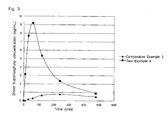
FIGS. 2 and 3 are graphs showing kinetics of plasma
buprenorphine concentration measured in Test Example 4 of
the present invention in relation to time.
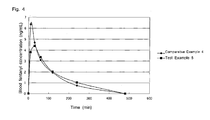
FIG. 4 is a graph showing plasma fentanyl
concentration measured in Test Example 5 of the present
invention in relation to time.
BEST MODE FOR CARRYING OUT THE INVENTION
The opioid analgesic used in the composition for
nasal absorption of the present invention include both
narcotic and non-narcotic opioid analgesics. The narcotic
opioid analgesics are opioid analgesics controlled under
the Narcotic and Psychotropic Control Law, and the narcotic
opioid analgesic may be either a natural narcotic or a
synthetic narcotic. The non-narcotic opioid analgesics are
analgesics with analgesic effects, which are less likely to
invite physical and pchycological dependence or habituation
after prolonged administration compared to the narcotic
analgesics. These analgesics are used mainly in the form
of an oral or injection preparation in order to ameliorate
cancer pain of the terminal cancer patients.
Examples of such opioid analgesic used in the present
invention include a narcotic opioid analgesic selected from
opium, opium/ipecac preparation, morphine,
morphine/atropine preparation, opium alkaloids preparation,
opium alkaloids/atropine preparation, opium
alkaloids/scopolamin preparation, ethylmorphine, oxycodon,
oxycodon/atropine preparation, pethidine,
pethidine/levallorphan preparation, codeine, dihydrocodeine,
fentanyl, droperidol/fentanyl preparation, oxymetebanol,
levorphanol, propoxyphene, methadone, hydromorphone, and
meperidine; a non-narcotic opioid analgesic selected from
buprenorphine, butorphanol, pentazocine,
pentazocine/naloxone preparation, dezocine, tramadol, and
eptazocine; and a pharmaceutically acceptable salt thereof.
The pharmaceutically acceptable salt used in the
present invention is preferably an acid addition salt with
a pharmaceutically acceptable acid such as a salt with an
inorganic acid such as hydrochloric acid, sulfuric acid,
phosphoric acid, and hydrobromic acid or an organic acid
such as oxalic acid, maleic acid, fumaric acid, malic acid,
tartaric acid, citric acid, benzoic acid, acetic acid,
lactic acid, p-toluenesulfonic acid, or methanesulfonic
acid. More preferably, the pharmaceutically acceptable
salt is a salt with hydrochloric acid, sulfuric acid,
phosphoric acid, hydrobromic acid, tartaric acid, or citric
acid.
Typical opioid analgesics include a narcotic opioid
analgesic selected from opium, opium/ipecac preparation,
morphine hydrochloride, morphine sulfate, morphine
hydrochloride/atropine sulfate preparation, opium alkaloids
hydrochloride preparation, opium alkaloids
hydrochloride/atropine sulfate preparation, opium alkaloids
hydrochlorides/scopolamine hydrobromide preparation,
ethylmorphine hydrochloride, compound oxycodone (oxycodone
hydrochloride/hydrocotarnine hydrochloride), compound
oxycodone/atropine sulfate preparation, pethidine
hydrochloride, pethidine hydrochloride/levallorphan
tartrate preparation, codeine phosphate, dihydrocodeine
phosphate, fentanyl, fentanyl citrate, droperidol/fentanyl
citrate preparation, oxymetebanol, levorphanol,
propoxyphene, methadone, hydromorphone and meperidine; and
a non-narcotic opioid analgesic selected from buprenorphine
hydrochloride, butorphanol tartrate, pentazocine,
pentazocine hydrochloride, pentazocine
hydrochloride/naloxone preparation, dezocine, tramadol
hydrochloride, and eptazocine hydrobromide.
More preferable opioid analgesics include morphine,
fentanyl, buprenorphine, and their acid addition salts.
Typical examples of such preferable opioid analgesics
include morphine hydrochloride, morphine sulfate, morphine
hydrochloride/atropine sulfate preparation, fentanyl,
fentanyl citrate, droperidol/fentanyl citrate preparation,
and buprenorphine hydrochloride.
The opioid analgesics as described above are used in
oral, injection, or suppository formulation, and use of
such opioid analgesics by transnasal administration using a
fine powder carrier has never been investigated. In
addition, the opioid analgesics are associated with the
undesirable problems of habituation, addiction, and the
like after their prolonged use, and strict limitation was
set on their use. Accordingly, investigation of their
formulation into a drug product has been difficult.
The carrier used in the composition for nasal
absorption provided by the present invention is calcium
carbonate and/or calcium phosphate. Use of a water soluble
has been deemed adequate in conventional intranasal
formulations in view of the absorption of the effective
ingredient in the body. However, according to the findings
by the inventors of the present invention, a water soluble
carrier is not necessary favorable, and a carrier like
calcium carbonate and/or calcium phosphate used in the
present invention which becomes attached to the nasal
mucosa without dissolving in water is capable of
efficiently releasing the opioid analgesic to attain the
biological absorption of the effective ingredient from the
nasal mucosa.
Typical conventional carriers used include calcium
carbonate, calcium phosphate, calcium lactate, calcium
stearate, aluminum hydroxide, aluminum oxide, magnesium
carbonate, and magnesium hydroxide. Of these carriers,
calcium lactate becomes dissolved on the nasal mucosa, and
calcium stearate turns into an oily form on the nasal
mucosa, and these compounds are less adequate for use as a
carrier. In addition, aluminum hydroxide, aluminum oxide,
magnesium carbonate, and magnesium hydroxide are highly
stimulative, and use of these compounds for the carrier in
an intranasal formulation may present various problems.
In contrast, calcium carbonate and/or calcium
phosphate used in the present invention has been found to
be particularly favorable since these compounds exhibit
good affinity for opioid analgesics, smooth attaching and
releasing of the opioid analgesic, and little stimulation
for the nasal mucosa. Among these, calcium carbonate is
particularly preferable.
The calcium carbonate and/or calcium phosphate used
for the carrier in the present invention may be used either
alone or in combination.
Use of the carrier having an average particle size of
up to 500 µm, preferably up to 250 µm, more preferably up
to 100 µm, and most preferably up to 20 to 100 µm was found
to be favorable.
Accordingly, an embodiment of the present invention
is a composition for nasal absorption comprising a carrier
of calcium carbonate and/or calcium phosphate having an
average particle size of 20 to 100 µm and an opioid
analgesic uniformly distributed and attached to the carrier.
Among such embodiment of the present invention, a
typical embodiment is the composition for nasal absorption
wherein the opioid analgesic is morphine hydrochloride,
morphine sulfate, morphine hydrochloride/atropine sulfate
preparation, fentanyl, fentanyl citrate,
droperidol/fentanyl citrate preparation, or buprenorphine
hydrochloride, and the carrier is calcium carbonate.
Examples of such embodiments are (1) a composition
for nasal absorption comprising a carrier of calcium
carbonate having an average particle size of 20 to 100 µm
and an opioid analgesic uniformly distributed and attached
to the carrier wherein the opioid analgesic is morphine or
its acid addition salt; (2) a composition for nasal
absorption comprising a carrier of calcium carbonate having
an average particle size of 20 to 100 µm and an opioid
analgesic uniformly distributed and attached to the carrier
wherein the opioid analgesic is buprenorphine or its acid
addition salt; and (3) a composition for nasal absorption
comprising a carrier of calcium carbonate having an average
particle size of 20 to 100 µm and an opioid analgesic
uniformly distributed and attached to the carrier wherein
the opioid analgesic is fentanyl or its acid addition salt.
The present invention is effective for treating pains such
as pain after surgery or cancer pain, particularly in
treating incident pain and/or continuous pain of the cancer
pain.
The amount of the opioid analgesic included in the
composition provided by the present invention is the
effective dose of the opioid analgesic, and this effective
dose varies depending on the type of the analgesic selected,
the disease treated, desired frequency of the
administration, effects to be attained by the
administration, and the like. When the composition of the
present invention is used by intranasal administration, the
effects realized by the formulation containing the active
substance may be determined by comparing the
bioavailability with other known formulations.
Typical oral administration dose of an opioid
analgesic is, for example, 10, 30, and 60 mg/tablet in the
case of morphine hydrochloride. However, when the
composition for nasal absorption provided by the present
invention is intranasally administered, the active
component is more promptly absorbed by the body at a higher
bioavailability compared to such oral administration as
demonstrated in the following Examples. Accordingly, the
dose administered in the present invention in single
administration may be lower than the dose determined by
such content of the active component in the oral
administration.
Amount of the opioid analgesic incorporated in the
composition of the present invention may vary depending on
the weight of the formulation. Typical content, however,
is about 0.01 to 50%, and preferably about 0.02 to 40% in
100% by weight of the formulation.
Amount of the calcium carbonate and/or calcium
phosphate used as a carrier in the composition for nasal
absorption of the present invention may also vary depending
on the weight of the formulation. Typical content, however,
is about 50 to 99. 99%, and preferably about 40 to 99. 98%
in 100% by weight of the formulation.
The composition for nasal absorption provided by the
present invention may also include known additives such as
lubricant, binder, diluent, colorant, preservative,
antiseptic, and corrective as desired in order to improve
physical properties, appearance, or odor of the formulation.
Examples of the lubricants include talc, stearic acid and a
salt thereof, and wax, and exemplary binders include starch,
dextrin, gelatin, and hydroxypropylcellulose. Examples of
the diluents include starch and lactose, and exemplary
colorants include Red No. 2. Examples of the preservatives
include ascorbic acid, examples of the antiseptics include
paraoxybenzoate, and examples of the correctives include
menthol.
Of the examples as mentioned above, the binder
incorporated in the composition is preferably a water
soluble polymer such as starch, dextrin, gelatin,
hydroxypropylcellulose, and a typical example of such water
soluble polymer is rice powder. The starch, dextrin,
gelatin, hydroxypropylcellulose, or other water soluble
polymer compound as typified by the rice powder contributes
for the good binding between the carrier and the opioid
analgesic in the composition for nasal absorption provided
by the present invention, and such water soluble polymer
compound also functions as a bumper during the freeze
drying in the production of such composition.
The composition for nasal absorption provided by the
present invention containing an effective dose of the
opioid analgesic can be produced by mixing the carrier
specifically adapted for use in the present invention,
namely, physiologically acceptable calcium carbonate and/or
calcium phosphate in powder or crystalline form having an
average particle size of up to 500 µm with the effective
ingredient, namely, the opioid analgesic.
The mixing is typically accomplished by applying
pressure or shear stress, for example, by mixing the
components in a mortar.
The carrier used in the production of the composition
for nasal absorption of the present invention may have an
average particle size of up to 250 µm, preferably up to 100
µm, and more preferably 20 to 100 µm. In the meanwhile,
the opioid analgesic is also preferably in the form of a
fine powder with an average particle size of typically up
to 20 µm, and preferably up to 10 µm.
More specifically, an effective dose of the opioid
analgesic is mixed with a solution containing about 0.1 1 to
10% by weight, and preferably about 1 to 5% by weight of a
binder such as starch as desired, and this mixture solution
is freeze dried. The freeze dried powder is then kneaded
with the carrier of the present invention at a kneading
moisture of about 55% to obtain the composition for nasal
absorption in the form of a fine powder comprising the
carrier and the opioid analgesic uniformly distributed and
attached to the carrier.
Alternatively, the composition for nasal absorption
of the present invention may be produced by dispersing an
effective dose of the opioid analgesic and the carrier
optionally with the binder in water, and freeze drying the
dispersion.
The production method, however, is not limited to
those described above, and various changes and
modifications may be made to such method.
The resulting composition for nasal absorption may be
filled in a low-grease type capsule to prevent loss of the
active substance before its use (for example, before the
intranasal administration), and the capsule may be placed
in an adequate package, preferably, sealed package. An
exemple of such sealed package is a combination of blister
pack and aluminum backing. In this case, the moisture is
preferably kept at 60% or less throughout the steps.
Examples
Next, the effects specifically attained by the
composition for nasal absorption of the present invention
are demonstrated by the following Test Examples.
Test Example 1
The composition for nasal absorption of the present
invention was prepared by using morphine hydrochloride for
the opioid analgesic and calcium carbonate for the carrier.
More specifically, 2. 0 mg of morphine hydrochloride (using
morphine hydrochloride powder "Sankyo"), 37. 2 mg of
calcium carbonate, and 0.4 mg of rice powder were mixed,
stirred, and allowed to stand for 5 minutes. After adding
an adequate amount of purified water for freeze drying, the
mixture was kneaded and freeze dried under the condition of
about -40°C by using a freeze dryer (manufactured by EVAC).
After the freeze drying, the product was gradually warmed
to 25°C in about 4 hours, and 0.4 mg of calcium stearate
was added as a lubricant. Total weight of the formulation
was 40. 0 mg.
The calcium carbonate used for the carrier had an
average particle size of about 62 µm.
A group of 3 male rhesus monkeys (body weight, 3.35
to 4. 05 kg) were transnasally administered with 40. 0 mg of
the composition as described above (single dose), and the
blood (about 2 mL) was collected from cephalic vein or
saphenous vein at 0, 5, 10, 20, 30, 60, 120, and 240
minutes after the administration to measure the amount of
morphine (in terms of morphine hydrochloride) in plasma by
liquid chromatography coupled with mass spectrometry (LC-MS/MS).
Transnasal administration was conducted by using a
device designed for administering a transnasal absorptive
powder formulation manufactured by UNISIA JECS CO.
(JetRiser for monkeys).
In Comparative Example 1, 2.0 mg of morphine
hydrochloride (using morphine hydrochloride powder
"Sankyo") was filled in a capsule, and the capsule was
orally administered. The blood was collected as in the
case of Test Example 1 to measure the.amount of morphine
(in terms of morphine hydrochloride) in plasma by LC-MS/MS.
The results are summarized in Table 1.
| Plasma morphine concentration (in terms of morphine hydrochloride), unit: ng/mL |
| Time (min) | Test Example 1 (Transnasal administration)
Morphine HCl 2mg/40mg (with rice powder) | Comparative Example 1 (Oral administration)
Morphine HCl 2mg |
| | Animal |
| 1 | Animal 2 | Animal 3 | Animal 1 | Animal 2 | Animal 3 |
| 0 | _(Note) | - | - | - | - | - |
| 5 | 15.9 | - | 15.8 | - | - | - |
| 10 | 13.0 | 8.2 | 21.3 | - | - | - |
| 20 | 14.2 | 6.0 | 19.4 | - | - | - |
| 30 | 15.7 | 5.8 | 18.9 | - | - | - |
| 60 | 13.5 | - | 23.1 | 5.0 | - | 11.0 |
| 120 | 9.1 | 5.4 | 17.1 | - | - | - |
| 240 | 4.6 | - | 8.0 | - | - | - |
| Note: "-" indicates that the concentration was under the detection limit (4.3 ng). |
The composition for nasal absorption of the present
invention was prepared by using morphine hydrochloride for
the opioid analgesic and calcium carbonate for the carrier.
The particular method used for the production was similar
to the one used in Test Example 1.
The composition used in Test Example 2 was 2.0 mg of
morphine hydrochloride, 37.6 mg of calcium carbonate, and 0.
4 mg of calcium stearate (total weight of the formulation,
40. 0 mg), and the composition used in Test Example 3 was 8.
0 mg of morphine hydrochloride, 148.8 mg of calcium
carbonate, 1. 6 mg of rice powder, and 1. 6 mg of calcium
stearate, which are four times that of Test Example 1,
(total weight of the formulation, 160.0 mg).
The calcium carbonate used for the carrier had an
average particle size of about 62 µm.
The male rhesus monkeys (body weight 3. 35 to 4. 05
kg) used in Test Example 1 were also used in Test Examples
2 and 3. A group of three monkeys in Test Example 2, and a
group of two monkeys in Test Example 3 were used, and the
compositions as described above were transnasally
administered in single dose. The blood (about 2 mL) was
collected from cephalic vein or saphenous vein at 0, 5, 10,
20, 30, 60, 120, and 240 minutes after the administration
to measure the amount of morphine (in terms of morphine
hydrochloride) in plasma by LC-MS/MS.
Transnasal administration was conducted by using a
device designed for administering a transnasal absorptive
powder formulation manufactured by UNISIA JECS CO.
(JetRiser for monkeys).
The results are summarized in Table 2.
| Plasma morphine concentration (morphine hydrochloride) unit: ng/mL |
| Time (min) | Test Example 2 (Transnasal administration)
Morphine HCl 2mg/40mg (without rice powder) | Test Example 3 (Transnasal administration)
Morphine HCl 8mg/160mg (with rice powder) |
| | Animal 1 | Animal 2 | Animal 3 | Animal 2 | Animal 3 |
| 0 | - | - | - | - | - |
| 5 | 11.1 | 17.5 | 4.6 | 75.8 | 69.5 |
| 10 | 20.3 | 12.2 | 8.7 | 85.0 | 96.2 |
| 20 | 17.9 | 12.3 | 14.7 | 65.2 | 89.2 |
| 30 | 16.9 | 13.0 | 19.3 | 62.4 | 88.0 |
| 60 | 12.4 | 10.4 | 21.7 | 46.3 | 67.7 |
| 120 | 9.2 | 6.2 | 13.4 | 23.6 | 38.4 |
| 240 | - | - | 7.0 | 6.6 | 17.6 |
Elimination rate constant (Kel) was calculated from
depuration phase data of the plasma concentration measured
in Test Examples 1 to 3 by a method (residual method) not
depending on the model using linear least squares approach,
and half life (T1/2) was calculated by the equation: T1/2 =
Ln (2) /Kel. Maximum blood concentration (Cmax) was
determined from the measured data, and area under the
plasma concentration-time curve (AUC) in the administration
period (t) was calculated in terms of the value obtained by
trapezoidal rule. The average values of these
pharmacokinetic parameters are compared in Table 3, below.
FIG. 1 is a graph showing kinetics of the plasma
morphine concentration measured in Test Examples 1 to 3 and
Comparative Example in relation to the time.
| Pharmacokinetic parameters |
| Time (min) | Comparative Example 1 Oral administration 2 mg | Transnasal administration |
| | | Test Example 1 Morphine HCl 2 mg/40 mg (with rice powder) | Test Example 2 Morphine HCl 2 mg/40 mg (without rice powder) | Test Example 3 Morphine HCl 8mg/160mg (with rice powder) |
| Cmax (ng/mL) | 5.3±5.5 | 15.7±7.5 | 19.8±2.1 | 90.6±7.92 |
| T1/2 (hr) | - | 1.94 | 1.66±0.27 | 1.32±0.34 |
| AUC(0-4) (hr.ng/mL) | - | 38.2±26.2 | 33.3±17.9 | 156.7±44.34 |
As evident from the results shown in Tables 1 to 3
and FIG. 1, the compositions for nasal absorption of the
present invention were confirmed to exhibit prompt
absorption at 5 to 10 minutes after the administration, and
a blood concentration of 10 to 20 ng/mL or higher which is
the level of blood analgesic concentration deemed to be
effective in human is continuously attained.
In Test Examples 1 to 3 of the present invention, the
analgesic and sedation effects were also evaluated by
pinching skin and muscle of the rhesus monkey with forceps
at a regular time interval and observing the reaction of
the animal.
The analgesic effect was confirmed in animals 1 and 2
of Test Example 1 at 30 to 60 minutes after the
administration, and animal 3 of Test Example 1 at 60
minutes after the administration since these animals no
longer reacted to the pinching by the forceps.
These results demonstrate the usefulness of the
composition for nasal absorption of the present invention.
Comparison of the pharmacokinetic parameters revealed
improved absorption promoting action of the present
invention. Compared to the oral administration of 2 mg of
morphine hydrochloride, administration of the composition
for nasal absorption of the same amount (2 mg) had
absorption promoting action of 3 to 4 folds in Cmax, and
about 15 to 20 folds in AUC.
Test Example 4
The composition for nasal absorption of the present
invention was prepared by using buprenorphine hydrochloride
for the opioid analgesic and calcium carbonate and calcium
stearate for the carrier. More specifically, 10.8 mg of
buprenorphine hydrochloride (manufactured by MACFARLAN
SMITH) which had been crushed in a agate mortar and shifted
through a 100 mesh screen, and 1969.2 mg of calcium
carbonate were mixed, and an adequate amount of purified
water was added. After kneading the mixture, the mixture
was freeze dried under the condition of about -40°C by
using a freeze dryer (manufactured by Kyowa Vacuum
Technologies). After the freeze drying, the product was
gradually warmed to 25°C in about 4 hours to give 1961. 9 mg
of the freeze dried product. To this product was added 19.
6 mg of calcium stearate as a lubricant, and the mixture
was shifted through a 83 mesh screen. Total weight of the
formulation was 1980.2 mg. The calcium carbonate used for
the carrier had an average particle size of about 46 µm.
It is to be noted that 10. 8 mg of buprenorphine
hydrochloride corresponds to 10. 0 mg of buprenorphine.
A group of 3 male cynomolgus monkeys (body weight, 2.
60 to 3. 00 kg) were transnasally administered in single
dose with the composition as described above at a dose in
terms of buprenorphine of 0. 1 mg/kg. The blood (about 2
mL) was collected from cephalic vein or saphenous vein at 0,
10, 30, 60, 120, 240, and 480 minutes after the
administration to measure the amount of buprenorphine in
plasma by liquid chromatography coupled with mass
spectrometry (LC-MS/MS).
Transnasal administration was conducted by using a
device designed for administering a transnasal absorptive
powder formulation manufactured by UNISIA JECS CO.
(JetRiser for monkeys).
As a Comparative Example, buprenorphine hydrochloride
at a dose of 0.1 mg/kg in terms of buprenorphine was
intravenously administered. The blood was collected as in
the case of the Test Example to measure the amount of
buprenorphine in plasma by LC-MS/MS.
Also, a suppository of buprenorphine (Lepetan
(suppository) manufactured Otsuka Pharmaceutical Co., Ltd.)
was intrarectally administered at a dose of 0.1 mg/kg in
terms of buprenorphine. The blood was collected as in the
case of the Test Example to measure the amount of
buprenorphine in plasma by LC-MS/MS.
The results are respectively shown in the following
Table 4 (Test Example 4: transnasal administration), Table
5 (Comparative Example 2: intravenous administration), and
Table 6 (Comparative Example 3: intrarectal administration).
The results are also shown in the form of graphs in FIGS. 2
and 3.
| Plasma buprenorphine concentration (unit: ng/mL) |
| Time (min) | Test Example 4 (Transnasal administration) |
| | Animal 1 | Animal 2 | Animal 3 | Mean±SD |
| 0 | - | - | - | 0 |
| 10 | 2.93 | 2.39 | 4.1 | 3.14±0.87 |
| 30 | 6.03 | 7.38 | 9.66 | 7.69±1.83 |
| 60 | 8.74 | 7.02 | 11.8 | 9.19±2.42 |
| 120 | 6.15 | 4.21 | 5.7 | 5.35±1.01 |
| 240 | 3.14 | 1.63 | 2.28 | 2.35±0.76 |
| 480 | 1.42 | 0.46 | 0.75 | 0.88±0.49 |
| Plasma buprenorphine concentration (unit: ng/mL) |
| Time (min) | Comparative Example 2
(Intravenous administration) |
| | Animal 1 | Animal 2 | Animal 3 | mean±SD |
| 0 | - | - | - | 0 |
| 10 | 41.40 | 32.16 | 41.33 | 38.30±5.31 |
| 30 | 32.83 | 18.02 | 33.53 | 28.12±8.76 |
| 60 | 16.85 | 16.45 | 26.51 | 19.94±5.70 |
| 120 | 8.27 | 9.34 | 16.13 | 11.25±4.26 |
| 240 | 3.78 | 4.55 | 7.05 | 5.13±1.71 |
| 480 | 1.46 | 0.97 | 2.00 | 1.48±0.52 |
| Plasma buprenorphine concentration (unit: ng/mL) |
| Time (min) | Comparative Example 3
(Intrarectal administration) |
| | Animal 1 | Animal 2 | Animal 3 | mean±SD |
| 0 | - | - | - | 0 |
| 10 | - | - | - | 0 |
| 30 | 0.13 | 0.19 | 0.11 | 0.14±0.04 |
| 60 | 0.18 | 0.53 | 0.16 | 0.29±0.21 |
| 120 | 0.58 | 1.12 | 0.19 | 0.63±0.47 |
| 240 | 0.15 | 1.40 | - | 0.77±0.89 |
| 480 | - | 0.47 | - | 0.47 |
As evident from the results shown in Tables 4 to 6,
the transnasal formulation of the present invention were
confirmed to exhibit prompt absorption at 5 to 10 minutes
after the administration, and the blood concentration was
remarkably higher than the commercially available
suppository preparation of buprenorphine hydrochloride
(Lepetan, suppository). The blood concentration was about
1/4 of the intravenous administration, indicating the
favorable absorption into the body. The nasal absorption
formulation of the present invention was also confirmed to
exhibit an analgesically effective blood concentration for
a prolonged period.
Test Example 5:
The composition for nasal absorption of the present
invention was prepared by using fentanyl citrate for the
opioid analgesic and calcium carbonate and calcium stearate
for the carrier. More specifically, 2.073 mg of fentanyl
citrate and 344. 6 mg of calcium carbonate were mixed,
stirred, and allowed to stand for 5 minutes. After adding
an adequate amount of purified water for freeze drying, the
mixture was kneaded and freeze dried under the condition of
about -40°C by using a freeze dryer (manufactured by Kyowa
Vacuum Technologies). After the freeze drying, the product
was gradually warmed to 25°C in about 4 hours, and 3.503 mg
of calcium stearate was added as a lubricant. Total weight
of the formulation was 350.2 mg. The calcium carbonate
used for the carrier had an average particle size of about
65 µm.
A group of 3 male cynomolgus monkeys (body weight, 2.
60 to 3.30 kg) were transnasally administered in single
dose with the composition as described above at a dose in
terms of fentanyl of 0. 03 mg/kg. The blood (about 2 mL)
was collected from cephalic vein or saphenous vein at 0, 10,
30, 60, 120, 240, and 480 minutes after the administration
to measure the amount of fentanyl in plasma by liquid
chromatography coupled with mass spectrometry (LC-MS/MS).
Transnasal administration was conducted by using a
device designed for administering a transnasal absorptive
powder formulation manufactured by UNISIA JECS CO.
(JetRiser for monkeys).
As a Comparative Example, fentanyl citrate at a dose
of 0.03 mg/kg in terms of fentanyl was intravenously
administered. The blood was collected as in the case of
the Test Example to measure the amount of fentanyl in
plasma by LC-MS/MS.
The results are respectively shown in the following
Table 7 (Test Example 5: transnasal administration) and
Table 8 (Comparative Example 4: intravenous administration).
The kinetics are shown in FIG. 4.
| Plasma fentanyl concentration (unit: ng/mL) |
| Time (min) | Test Example 5
(Transnasal administration) |
| | Animal 1 | Animal 2 | Animal 3 | Mean±SD |
| 0 | - | - | - | 0 |
| 10 | 2.748 | 4.461 | 4.215 | 3.808±0.926 |
| 30 | 3.076 | 4.239 | 5.827 | 4.381±1.381 |
| 60 | 2.121 | 3.907 | 4.050 | 3.359±1.075 |
| 120 | 1.361 | 2.598 | 2.120 | 2.026±0.624 |
| 240 | 0.810 | 0.879 | 1.425 | 1.038±0.337 |
| 480 | - | - | - | 0 |
| Plasma fentanyl concentration (unit: ng/mL) |
| Time (min) | Comparative Example 4
(Intravenous administration) |
| | Animal 1 | Animal 2 | Animal 3 | Mean±SD |
| 0 | - | - | - | 0 |
| 10 | 5.321 | 7.522 | 6.242 | 6.362±1.105 |
| 30 | 5.184 | 3.828 | 5.036 | 4.683±0.744 |
| 60 | 2.990 | 2.780 | 3.542 | 3.104±0.394 |
| 120 | 1.631 | 1.783 | 2.431 | 1.948±0.425 |
| 240 | 0.612 | 0.808 | 0.860 | 0.760±0.131 |
| 480 | - | - | - | 0 |
As evident from the results shown in Tables 7 and 8,
the transnasal formulation of the present invention
containing fentanyl citrate exhibited a blood concentration
comparable to the blood fentanyl concentration obtained by
intravenous administration, indicating the extremely high
absorption into the body. As demonstrated in FIG. 4
showing the kinetics of the plasma fentanyl concentration
in relation to time in the transnasal administration and
the intravenous administration, rise in the absorption
curve into the body in the transnasal administration was
comparable to that of the intravenous administration, and
the kinetics of the blood fentanyl concentration was also
equivalent to that of the intravenous administration. The
results of the general observation also indicated the
analgesic action of the formulation.
These results indicate that the transnasal
formulation of the present invention is highly useful for
cancer patients suffering from the serious pain.
INDUSTRIAL APPLICABILITY
As described above, this invention provides an opioid
analgesic composition for intranasal administration and a
formulation for intranasal administration, which are
provided with a markedly reduced risk of developing side
effects compared to conventional oral, percutaneous, and
transrectal formulations, and which exhibit prompt
analgesic effects as well as excellent bioavailability. In
particular, the prompt analgesic action after the
administration attained by the intranasal administration is
effective in swiftly ameliorating cancer pain of the
terminal cancer patients and such action is effective not
only for the continuous pain but also for the incident pain.
In addition, reducing of constipation, nausea, emesis, and
other side effects of the digestive system is extremely
effective in controlling the pain, and omission of the
therapeutic intervention such as injection enables use of
the formulation by the patients themselves in a facility
where no physician is present, namely, by a wider range of
patients suffering from the pain. Accordingly, the medical
benefits thus attained by the present invention are huge.