EP1535397B1 - Audio system with balance setting based on information addresses - Google Patents
Audio system with balance setting based on information addresses Download PDFInfo
- Publication number
- EP1535397B1 EP1535397B1 EP03703964.1A EP03703964A EP1535397B1 EP 1535397 B1 EP1535397 B1 EP 1535397B1 EP 03703964 A EP03703964 A EP 03703964A EP 1535397 B1 EP1535397 B1 EP 1535397B1
- Authority
- EP
- European Patent Office
- Prior art keywords
- audio
- audio source
- source units
- category
- passenger
- Prior art date
- Legal status (The legal status is an assumption and is not a legal conclusion. Google has not performed a legal analysis and makes no representation as to the accuracy of the status listed.)
- Expired - Lifetime
Links
Images


Classifications
-
- H—ELECTRICITY
- H04—ELECTRIC COMMUNICATION TECHNIQUE
- H04R—LOUDSPEAKERS, MICROPHONES, GRAMOPHONE PICK-UPS OR LIKE ACOUSTIC ELECTROMECHANICAL TRANSDUCERS; ELECTRIC HEARING AIDS; PUBLIC ADDRESS SYSTEMS
- H04R5/00—Stereophonic arrangements
- H04R5/02—Spatial or constructional arrangements of loudspeakers
-
- H—ELECTRICITY
- H04—ELECTRIC COMMUNICATION TECHNIQUE
- H04B—TRANSMISSION
- H04B1/00—Details of transmission systems, not covered by a single one of groups H04B3/00 - H04B13/00; Details of transmission systems not characterised by the medium used for transmission
- H04B1/38—Transceivers, i.e. devices in which transmitter and receiver form a structural unit and in which at least one part is used for functions of transmitting and receiving
- H04B1/3822—Transceivers, i.e. devices in which transmitter and receiver form a structural unit and in which at least one part is used for functions of transmitting and receiving specially adapted for use in vehicles
-
- H—ELECTRICITY
- H04—ELECTRIC COMMUNICATION TECHNIQUE
- H04R—LOUDSPEAKERS, MICROPHONES, GRAMOPHONE PICK-UPS OR LIKE ACOUSTIC ELECTROMECHANICAL TRANSDUCERS; ELECTRIC HEARING AIDS; PUBLIC ADDRESS SYSTEMS
- H04R5/00—Stereophonic arrangements
- H04R5/04—Circuit arrangements, e.g. for selective connection of amplifier inputs/outputs to loudspeakers, for loudspeaker detection, or for adaptation of settings to personal preferences or hearing impairments
-
- H—ELECTRICITY
- H04—ELECTRIC COMMUNICATION TECHNIQUE
- H04B—TRANSMISSION
- H04B1/00—Details of transmission systems, not covered by a single one of groups H04B3/00 - H04B13/00; Details of transmission systems not characterised by the medium used for transmission
- H04B1/06—Receivers
- H04B1/16—Circuits
- H04B1/20—Circuits for coupling gramophone pick-up, recorder output, or microphone to receiver
Definitions
- This invention relates to vehicle audio systems and, more particularly, to a multi-channel audio system with a balance setting based on each type of audio source.
- the audio sources are used for a wide range of audio, communication and driver information systems that provide varying types of acoustic information to occupants of the motor vehicle.
- the audio sources can be used to generate acoustic driver recommendations from a navigation system, vocal instructions from a speech controlled system, audio outputs from different audio sources (radio tuner, CD/DVD player, MP3 player), traffic messages, telephone conversations and synthetic speech outputs for reading email to name a few.
- the audio sources that are located in the motor vehicle may generate output signals that are meant for different listeners in the motor vehicle. For instance, whereas instructions from the navigation system and traffic messages are primarily of the driver's interest; a concurrently played CD for the children in the back seat of the vehicle is likely only of interest to the children sitting in a back seat for example. The driver or children may not want to interrupt the music being played from the CD with acoustic driver recommendations from the navigation system.
- US Patent publication US2001/0025376 A1 discloses an audio/video system (A/V system) for vehicles which is simple to operate and allows a user to select and use a selected audio/visual presentation of one of the plural A/V appliances.
- a local area network is provided in the vehicle to which a plurality of A/V appliances, such as a CD changer, analog radio receiver or a digital radio receiver, are connected.
- the A/V presentations may be selected independent of the appliances; for example, a radio station may be received simultaneously by the analog and the digital radio receiver.
- a user may first select a class of the A/V presentation he wants to enjoy (e.g. Reports), then a particular presentation among same (e.g. Traffic), and also the data source (e.g. HR3) from which said selected A/V presentation can be received. Finally, the user chooses the output unit (e.g. loudspeaker), through which it is output.
- the output unit e.g. loudspeaker
- US 6,157,725 A discloses a sound system for a motor vehicle and a method for defining a functional scope of a sound system include a control unit, an input unit for operating the system, a display unit, a unit for generating source data in the form of audio data, an amplifier unit for amplifying the source data, one or more speakers, and a bus system that assures transmission of the source data and control data for controlling the units among the individual units.
- At least one unit other than the control unit of the system has a memory assigned to it, in which the functional scope of that unit is represented.
- the functional scope can be transmitted through the bus to the control unit, and the transmitted functional scope can be used in the control unit for at least partially forming the functional scope of the entire system.
- US 2002/0181713 A1 discloses an audio apparatus to be used in a vehicle environment, wherein balance/fader adjustments are performed within the vehicle depending on the number of channels of the respective audio source to be reproduced.
- the document aims at providing an audio apparatus in which optimum sound field settings are enabled in both cases, where a two-channel sources reproduced, and where a multichannel source is reproduced.
- a control unit controls a sound field control system that supplies each of the plurality of speakers within the vehicle with a signal based on the sound field control data which is stored in a separate memory and depending on whether the system has detected a two-channel signal or a multichannel signal.
- a user can input an adjustment value for controlling the sound field in the sound field control section.
- a multi-channel audio system for a vehicle includes a menu-driven user interface for setting the speaker balance setting based upon the type of audio source that generates an audio output signal.
- the multi-channel audio system includes a plurality of audio sources that may be selected from a wide range of audio sources that are capable of being placed in the vehicle.
- the audio sources are connected to a head unit and an amplifier.
- the head unit is the component in the vehicle that is used for audio management.
- Software modules on the head unit allow the occupant to use the audio sources located in the vehicle and manage such things as balance and volume.
- the head unit allows an occupant of the vehicle to adjust the balance setting for a plurality of speakers based upon each audio source or type of audio source.
- the head unit includes a user interface module and an audio manager module.
- the user interface module includes an application that generates a balance setting graphical user interface ("GUI") on a display of the multi-channel audio system.
- GUI graphical user interface
- the balance setting GUI allows the occupant of the vehicle to adjust balance settings for each type of audio source that is capable of providing an audio output signal to the amplifier.
- the audio manager module is an application operable to set the balance setting in the amplifier for each audio source based upon the user's predefined settings.
- the user interface also provides a passenger GUI that allows the user to setup the multi-channel audio system based on a passenger information address.
- the multi-channel audio system allows the user to adjust the balance setting based upon the location of certain types of passengers in the vehicle.
- the user can identify interest groups (driver, co-driver, children, backseat, etc.) and set the balance setting for each of these interest groups. For example, if the children normally sit in the backseat, the user can adjust the balance setting of each audio source that the children want to hear to reproduce audio outputs in only the rear loudspeakers or only in a selected subset of loudspeakers.
- the amplifier is used to audibly reproduce outputs provided by the various audio sources on various combinations of loudspeakers that are located in the vehicle.
- the amplifier includes a balance setting circuit that allows the amplifier to control the balance settings of the output signals that are provided by the audio sources.
- the audio manager module controls the balance setting circuit in the amplifier to operate as defined by the occupant for each audio source or type of source.
- Fig. 1 discloses a multi-channel audio system 100 for a vehicle that is capable of allowing an occupant of the vehicle to adjust and set speaker balance settings based on the type of audio source that is providing an output.
- the balance setting allows the multi-channel audio system 100 to reproduce audible output signals from each audio source in a predefined number of speakers in the vehicle.
- the multi-channel audio system 100 is capable of simultaneously applying multiple balance settings to the audio outputs that are generated on the speakers.
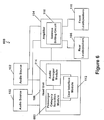
- the multi-channel audio system 100 includes a plurality of audio sources 102 that are connected to an amplifier 104.
- a set of rear loudspeakers 108 and a set of front loudspeakers 110 are connected to the output of the amplifier 104. Additional sets of loudspeakers also could be connected to the output of amplifier 104.
- Several different types of audio sources may be used in the multi-channel audio system 100.
- the audio sources 102 may be selected from a group of audio sources including, but not limited to, a navigation system, a radio tuner, a mobile or remote terminal (telephone), a CD/DVD player, a Radio Data System (RDS) tuner, an Internet radio, a cassette player, a satellite radio, a text-to-speech system, a television tuner or an MP3 player.
- a navigation system a radio tuner, a mobile or remote terminal (telephone), a CD/DVD player, a Radio Data System (RDS) tuner, an Internet radio, a cassette player, a satellite radio, a text-to-speech system, a television tuner or an MP3 player.
- RDS Radio Data System
- the multi-channel audio system 100 also includes a head unit 106 that is connected to the amplifier 104.
- the head unit 106 may include a GUI module 112 that is operable to generate a GUI on a display.
- the GUI module 112 is used by an occupant of the vehicle to adjust and set the balance settings of the rear and front loudspeakers 108, 110 and to review the balance settings that have already been programmed by the occupant and stored in the head unit 106.
- An audio manager module 114 is also included in the head unit 106 that is used to set the balance of the amplifier 104 for each respective audio source 102.
- the head unit 106 may be connected to each one of the audio sources 102 or selected audio sources 102. This allows the head unit 106 to control operation of each of the audio sources 102.
- the amplifier 104 includes a balance setting circuit 116 that sets the balance of the speakers 108, 110 based upon user settings that are input into the GUI 112. Although not illustrated, the amplifier 104 also includes control circuitry and amplification circuitry that are designed to audibly reproduce audio output signals in the loudspeakers 108, 110 based on the user defined balance settings for the audio sources 102.
- the audio manager module 114 is programmed to control the balance setting circuit 116 of the amplifier 104 based on the settings that are determined and input by an occupant of the vehicle.
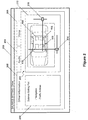
- an illustrative balance setting GUI 200 that may be generated by the GUI 112 is set forth.
- the balance setting GUI 200 illustrated is used to set the balance for the driver of the vehicle.
- the balance setting GUI 200 includes a driver information screen tab 202, an audio screen tab 204, and a voice screen tab 206.
- the multi-channel audio system 100 includes a display that is used to display information to occupants of the vehicle or users of the multi-channel audio system 100.
- the display would be connected to the head unit 106.
- the display is preferentially a touch-screen display that allows the user to interact with settings that are generated on the display.
- Other mechanical adjustment instruments for controlling the balance setting options provided by the head unit 106 may also be used such as buttons, knobs or switches.
- the driver information screen tab 202 brings up a driver information screen 208 that is generated by the GUI application or module of the user interface module 112.
- the driver information screen 208 includes a balance information GUI 210 and a balance setting GUI 212.
- the balance information GUI 210 includes a list of the respective audio sources 102 that are controlled by the settings contained in the balance setting GUI 212 of the driver information screen 208.
- the balance information GUI 210 of the driver information screen 208 includes all of the audio sources 102 in the multi-channel audio system 100 that provide acoustic driver recommendations to the driver.
- the balance information GUI 210 includes navigation acoustic driver recommendations that may be generated from the vehicle navigation system and traffic notices that may be generated by the RDS tuner.
- RDS is a series of enhancements for VHF and FM radio that started in Europe and migrated around the world. It provides a variety of features including a more precise way of tuning and an eight-character display of the station. For car radios, it provides traffic information as well as a way to tune in alternate frequencies for the same station.
- the balance setting GUI 212 of the driver information screen 208 also includes a horizontal adjustment bar 214 and a vertical adjustment bar 216.
- An occupant of the vehicle can adjust the balance setting between the rear and front loudspeakers 108, 110, by using the horizontal adjustment bar 214.
- the vertical adjustment bar 216 is used to adjust the balance setting between the right-hand and left-hand side of the vehicle. In other words, the vertical adjustment bar is used to adjust the balance setting between the left and right loudspeakers of the rear and front loudspeakers 108, 110.
- the occupant of the vehicle can adjust the balance setting by moving the horizontal and vertical adjustment bars 214, 216 to the desired location.
- the balance setting set forth in Fig. 2 has the audio outputs from the navigation system and the RDS tuner set to be audibly reproduced only on the driver side speaker.
- the horizontal and vertical adjustment bars 214, 216 may be adjusted to audibly reproduce acoustic driver recommendations on all of the speakers or just one of the speakers.
- the settings of the horizontal and vertical adjustment bars 214, 216 causes the audio manager module 114 to adjust the balance setting of the audio sources 102 such that the audio output signals that are generated by the various audio sources 102 are set to the balance setting reflected in the balance setting GUI 212.
- the balance setting GUI 200 that is illustrated may be tailored to the driver of the vehicle.
- the multi-channel audio system 100 allows the balance setting to be setup based on passenger information addresses.
- the head unit 106 may be operable to allow the user of the multi-channel audio system 100 to set the balance setting for audio sources 102 for groups of interest, such as a driver, a co-driver or passenger, children, and adult passengers.
- the GUI 112 may use a menu-based selection GUI to allow the user to select which group the balance setting GUI 200 is brought up during operation. Other selection methods for selecting the group of interest may also be used, such as buttons or knobs on the head unit 106.
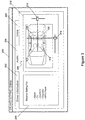
- Fig. 3 illustrates a balance setting GUI 200 that may be used by children. Selection of the audio screen tab 204 causes the user interface 112 of the head unit 106 to generate an audio information screen 300.
- the audio information screen 300 may control the balance settings for various audio sources 102 that are directed toward entertainment and not vehicle navigation or driver information.
- the balance information GUI 210 sets forth that the audio information screen 300 is used to control the balance setting for the tuner or radio, a television, a CD/DVD player, a cassette player and an MP3 player.
- the horizontal and vertical adjustment bars 214, 216 of the balance setting GUI 212 are used to control and adjust the balance settings for the audio sources 102 that fall in this category.
- the balance setting is set to cause the multi-channel audio system 100 to audibly reproduce audible output signals from these audio sources 102 equally on both of the rear loudspeakers 108.
- the voice screen tab 206 is used to set the balance setting of various voice-related audio sources 102. Selection of the voice screen tab 206 will generate a voice information screen.
- the horizontal and vertical adjustment bars 214, 216 of the balance setting GUI 212 are used to control and adjust the balance setting for the various audio sources 102 that fall in this category. Types of audio sources that fall in this category may be a mobile terminal or a text-to-speech system.
- An occupant of a vehicle may adjust the balance settings for several audio sources 102 instead of having one balance setting for all audio sources 102.
- the balance setting for the audio sources 102 to be adjusted based on groups of interest. This allows the occupant of the vehicle to control what speakers audio outputs are generated on such that different speakers 108, 110 can be used for different audio sources 102.
- the balance setting for a navigation system can be setup to only generate acoustic driver recommendations and information on a speaker close to the driver while the balance setting for a CD player can be setup to play audio outputs on speakers in the back seat where children may be located. The children may not want to hear the acoustic driver recommendations generated by the navigation system and may want music from the CD player to continue uninterrupted.
- Such capability is supplied to the multi-channel audio system 100 by providing balance settings for each audio source 102.
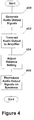
- Fig. 4 is a block diagram that sets forth steps that may be taken by the multi-channel audio system 100 to control the balance settings of the audio sources 102 in the multi-channel audio system 100.
- the audio sources 102 generate a plurality of audio output signals. After the audio output signals are generated by the audio sources 102, they are transmitted to the amplifier 104, as is illustrated at step 402.
- the head unit 108 is used to adjust the balance settings for the audio output signals that are generated by the audio sources 102 and provided to the amplifier 104 at step 404. After the balance settings are adjusted for the audio output signals, they are reproduced on speakers 108, 110 according to the balance settings that are controlled by the head unit 106, as is illustrated at step 406.
- FIG. 5 another block diagram is set forth illustrating the steps that may be taken to adjust the balance settings of the audio sources 102 based upon passenger categories.
- the user or driver of the vehicle selects a passenger category using the head unit 106.
- the passenger category may be selected using the balance setting GUI 200 that is generated by the head unit 106.
- the user or driver of the vehicle adjusts the balance setting for the selected passenger category.
- the audio output signals may be reproduced on the speakers 108, 110 according to the balance settings that are supplied by the user for that category, as is illustrated at step 504.
- Fig 6 depicts yet another embodiment including a multi-channel audio system 600 for use in a vehicle.
- the multi-channel audio system 600 includes a plurality of audio sources 102 that are connected to an amplifier 104 and a head unit 106.
- the head unit 106 is also connected to the amplifier 104.
- a passenger category selection module 602 located on the head unit 106 is used to allow a user to select a passenger category.
- An audio manager module 114 located on the head unit 106 is used for adjusting a balance setting of a plurality of speakers 108, 110 for the selected passenger category based on a respective audio source 102 that generates an audio output signal.
- the user may select a passenger category to correspond to seating locations in the vehicle.
- the passenger categories that may be selected to include, for example, a driver category, a passenger category, and a children category.
- the passenger category selection module 602 allows the user to navigate through a balance setting GUI 200 that is generated for each passenger category in a similar manner set forth above. After the user selects a passenger category, the balance setting GUI 200 for that particular passenger category may be used to adjust the balance settings for the audio sources as with previous embodiments.
- the predefined user balance settings are stored in the head unit 106. Unless the balance settings are adjusted again, each time the multi-channel audio system 600 is turned on the head unit 106 will revert to the saved balance settings.
- some of the audio output signals may be driver information messages that are generated by the navigation system.
- the audio signals from other audio sources may be muted or reduced when driver information messages are generated and played to occupants of the vehicle.
- the audio signals may be muted or reduced in the speaker nearest the driver of the vehicle, or in any combination of speakers.
Landscapes
- Engineering & Computer Science (AREA)
- Signal Processing (AREA)
- Physics & Mathematics (AREA)
- Acoustics & Sound (AREA)
- Computer Networks & Wireless Communication (AREA)
- Stereophonic System (AREA)
- Fittings On The Vehicle Exterior For Carrying Loads, And Devices For Holding Or Mounting Articles (AREA)
- Circuit For Audible Band Transducer (AREA)
Description
- This invention relates to vehicle audio systems and, more particularly, to a multi-channel audio system with a balance setting based on each type of audio source.
- Motor vehicles are currently being equipped with a wide range of audio sources. The audio sources are used for a wide range of audio, communication and driver information systems that provide varying types of acoustic information to occupants of the motor vehicle. For example, the audio sources can be used to generate acoustic driver recommendations from a navigation system, vocal instructions from a speech controlled system, audio outputs from different audio sources (radio tuner, CD/DVD player, MP3 player), traffic messages, telephone conversations and synthetic speech outputs for reading email to name a few.
- The audio sources that are located in the motor vehicle may generate output signals that are meant for different listeners in the motor vehicle. For instance, whereas instructions from the navigation system and traffic messages are primarily of the driver's interest; a concurrently played CD for the children in the back seat of the vehicle is likely only of interest to the children sitting in a back seat for example. The driver or children may not want to interrupt the music being played from the CD with acoustic driver recommendations from the navigation system.
US Patent publicationUS2001/0025376 A1 discloses an audio/video system (A/V system) for vehicles which is simple to operate and allows a user to select and use a selected audio/visual presentation of one of the plural A/V appliances. In more detail, a local area network is provided in the vehicle to which a plurality of A/V appliances, such as a CD changer, analog radio receiver or a digital radio receiver, are connected. The A/V presentations may be selected independent of the appliances; for example, a radio station may be received simultaneously by the analog and the digital radio receiver. In accordance therewith, a user may first select a class of the A/V presentation he wants to enjoy (e.g. Reports), then a particular presentation among same (e.g. Traffic), and also the data source (e.g. HR3) from which said selected A/V presentation can be received. Finally, the user chooses the output unit (e.g. loudspeaker), through which it is output.
US 6,157,725 A discloses a sound system for a motor vehicle and a method for defining a functional scope of a sound system include a control unit, an input unit for operating the system, a display unit, a unit for generating source data in the form of audio data, an amplifier unit for amplifying the source data, one or more speakers, and a bus system that assures transmission of the source data and control data for controlling the units among the individual units. At least one unit other than the control unit of the system has a memory assigned to it, in which the functional scope of that unit is represented. The functional scope can be transmitted through the bus to the control unit, and the transmitted functional scope can be used in the control unit for at least partially forming the functional scope of the entire system. The control unit, the input unit and the display unit are connected to one another in such a way that through the use of the display unit, operating menus required for operating the entire system can be shown in accordance with the functional scope of the entire system, and the operation of the system can be performed with the aid of the input unit on the basis of displays in the display unit.
US 2002/0181713 A1 discloses an audio apparatus to be used in a vehicle environment, wherein balance/fader adjustments are performed within the vehicle depending on the number of channels of the respective audio source to be reproduced. The document aims at providing an audio apparatus in which optimum sound field settings are enabled in both cases, where a two-channel sources reproduced, and where a multichannel source is reproduced.
Thereby, a control unit controls a sound field control system that supplies each of the plurality of speakers within the vehicle with a signal based on the sound field control data which is stored in a separate memory and depending on whether the system has detected a two-channel signal or a multichannel signal. By means of a user input section, a user can input an adjustment value for controlling the sound field in the sound field control section. - Currently, the balance setting of speakers in the motor vehicle can only be set concurrently for all audio sources. As such, a need exists for an audio system that is capable of having balance settings for each type of audio source that is used in the motor vehicle.
- A multi-channel audio system for a vehicle is disclosed that includes a menu-driven user interface for setting the speaker balance setting based upon the type of audio source that generates an audio output signal. The multi-channel audio system includes a plurality of audio sources that may be selected from a wide range of audio sources that are capable of being placed in the vehicle. The audio sources are connected to a head unit and an amplifier. The head unit is the component in the vehicle that is used for audio management. Software modules on the head unit allow the occupant to use the audio sources located in the vehicle and manage such things as balance and volume. The head unit allows an occupant of the vehicle to adjust the balance setting for a plurality of speakers based upon each audio source or type of audio source.
- The head unit includes a user interface module and an audio manager module. The user interface module includes an application that generates a balance setting graphical user interface ("GUI") on a display of the multi-channel audio system. The balance setting GUI allows the occupant of the vehicle to adjust balance settings for each type of audio source that is capable of providing an audio output signal to the amplifier. The audio manager module is an application operable to set the balance setting in the amplifier for each audio source based upon the user's predefined settings.
- The user interface also provides a passenger GUI that allows the user to setup the multi-channel audio system based on a passenger information address. In other words, the multi-channel audio system allows the user to adjust the balance setting based upon the location of certain types of passengers in the vehicle. The user can identify interest groups (driver, co-driver, children, backseat, etc.) and set the balance setting for each of these interest groups. For example, if the children normally sit in the backseat, the user can adjust the balance setting of each audio source that the children want to hear to reproduce audio outputs in only the rear loudspeakers or only in a selected subset of loudspeakers.
- The amplifier is used to audibly reproduce outputs provided by the various audio sources on various combinations of loudspeakers that are located in the vehicle. The amplifier includes a balance setting circuit that allows the amplifier to control the balance settings of the output signals that are provided by the audio sources. The audio manager module controls the balance setting circuit in the amplifier to operate as defined by the occupant for each audio source or type of source.
- Other systems, methods, features and advantages of the invention will be, or will become, apparent to one with skill in the art upon examination of the following figures and detailed description. It is intended that all such additional systems, methods, features and advantages be included within this description and be protected by the following claims.
- The invention can be better understood with reference to the following drawings and description. The components in the figures are not necessarily to scale, emphasis instead being placed upon illustrating the principles of the invention. Moreover, in the figures, like reference numerals designate corresponding parts throughout the different views.
-
Fig. 1 is a block diagram of an audio system that includes a balance setting system for multiple audio sources. -
Fig. 2 is a GUI illustrating an example driver information screen. -
Fig. 3 is a GUI illustrating an example audio information screen. -
Fig. 4 is a block diagram illustrating the method steps taken to adjust balance settings in the audio system. -
Fig. 5 is a block diagram illustrating the method steps taken to adjust balance settings in the audio system based on passenger categories. -
Fig. 6 is a block diagram of an audio system that includes a balance setting system for multiple audio sources based on passenger categories. -
Fig. 1 discloses amulti-channel audio system 100 for a vehicle that is capable of allowing an occupant of the vehicle to adjust and set speaker balance settings based on the type of audio source that is providing an output. The balance setting allows themulti-channel audio system 100 to reproduce audible output signals from each audio source in a predefined number of speakers in the vehicle. When more than one audio source is generating an output on the speakers, themulti-channel audio system 100 is capable of simultaneously applying multiple balance settings to the audio outputs that are generated on the speakers. - The
multi-channel audio system 100 includes a plurality ofaudio sources 102 that are connected to anamplifier 104. A set ofrear loudspeakers 108 and a set offront loudspeakers 110 are connected to the output of theamplifier 104. Additional sets of loudspeakers also could be connected to the output ofamplifier 104. Several different types of audio sources may be used in themulti-channel audio system 100. Theaudio sources 102 may be selected from a group of audio sources including, but not limited to, a navigation system, a radio tuner, a mobile or remote terminal (telephone), a CD/DVD player, a Radio Data System (RDS) tuner, an Internet radio, a cassette player, a satellite radio, a text-to-speech system, a television tuner or an MP3 player. Some of theaudio sources 102 are illustrated inFig. 1 , but other audio sources may be a part of themulti-channel audio system 100 as well. - The
multi-channel audio system 100 also includes ahead unit 106 that is connected to theamplifier 104. Thehead unit 106 may include aGUI module 112 that is operable to generate a GUI on a display. As set forth in greater detail below, theGUI module 112 is used by an occupant of the vehicle to adjust and set the balance settings of the rear andfront loudspeakers head unit 106. Anaudio manager module 114 is also included in thehead unit 106 that is used to set the balance of theamplifier 104 for eachrespective audio source 102. In other embodiments, thehead unit 106 may be connected to each one of theaudio sources 102 or selectedaudio sources 102. This allows thehead unit 106 to control operation of each of theaudio sources 102. - The
amplifier 104 includes abalance setting circuit 116 that sets the balance of thespeakers GUI 112. Although not illustrated, theamplifier 104 also includes control circuitry and amplification circuitry that are designed to audibly reproduce audio output signals in theloudspeakers audio sources 102. Theaudio manager module 114 is programmed to control thebalance setting circuit 116 of theamplifier 104 based on the settings that are determined and input by an occupant of the vehicle. - In
Fig. 2 , an illustrativebalance setting GUI 200 that may be generated by theGUI 112 is set forth. Thebalance setting GUI 200 illustrated is used to set the balance for the driver of the vehicle. Thebalance setting GUI 200 includes a driverinformation screen tab 202, anaudio screen tab 204, and avoice screen tab 206. Although not specifically illustrated, themulti-channel audio system 100 includes a display that is used to display information to occupants of the vehicle or users of themulti-channel audio system 100. The display would be connected to thehead unit 106. The display is preferentially a touch-screen display that allows the user to interact with settings that are generated on the display. Other mechanical adjustment instruments for controlling the balance setting options provided by thehead unit 106 may also be used such as buttons, knobs or switches. - Activation of the driver
information screen tab 202 brings up adriver information screen 208 that is generated by the GUI application or module of theuser interface module 112. Thedriver information screen 208 includes abalance information GUI 210 and abalance setting GUI 212. Thebalance information GUI 210 includes a list of the respectiveaudio sources 102 that are controlled by the settings contained in thebalance setting GUI 212 of thedriver information screen 208. - In the example in
Fig. 2 , thebalance information GUI 210 of thedriver information screen 208 includes all of theaudio sources 102 in themulti-channel audio system 100 that provide acoustic driver recommendations to the driver. As illustrated, thebalance information GUI 210 includes navigation acoustic driver recommendations that may be generated from the vehicle navigation system and traffic notices that may be generated by the RDS tuner. RDS is a series of enhancements for VHF and FM radio that started in Europe and migrated around the world. It provides a variety of features including a more precise way of tuning and an eight-character display of the station. For car radios, it provides traffic information as well as a way to tune in alternate frequencies for the same station. - The
balance setting GUI 212 of thedriver information screen 208 also includes ahorizontal adjustment bar 214 and avertical adjustment bar 216. An occupant of the vehicle can adjust the balance setting between the rear andfront loudspeakers horizontal adjustment bar 214. Thevertical adjustment bar 216 is used to adjust the balance setting between the right-hand and left-hand side of the vehicle. In other words, the vertical adjustment bar is used to adjust the balance setting between the left and right loudspeakers of the rear andfront loudspeakers - During operation, the occupant of the vehicle can adjust the balance setting by moving the horizontal and vertical adjustment bars 214, 216 to the desired location. For illustrative purposes only, the balance setting set forth in
Fig. 2 has the audio outputs from the navigation system and the RDS tuner set to be audibly reproduced only on the driver side speaker. The horizontal and vertical adjustment bars 214, 216 may be adjusted to audibly reproduce acoustic driver recommendations on all of the speakers or just one of the speakers. The settings of the horizontal and vertical adjustment bars 214, 216 causes theaudio manager module 114 to adjust the balance setting of theaudio sources 102 such that the audio output signals that are generated by the variousaudio sources 102 are set to the balance setting reflected in thebalance setting GUI 212. - Also in
Fig. 2 , thebalance setting GUI 200 that is illustrated may be tailored to the driver of the vehicle. Themulti-channel audio system 100 allows the balance setting to be setup based on passenger information addresses. Thehead unit 106 may be operable to allow the user of themulti-channel audio system 100 to set the balance setting foraudio sources 102 for groups of interest, such as a driver, a co-driver or passenger, children, and adult passengers. Although not specifically illustrated, theGUI 112 may use a menu-based selection GUI to allow the user to select which group thebalance setting GUI 200 is brought up during operation. Other selection methods for selecting the group of interest may also be used, such as buttons or knobs on thehead unit 106. -
Fig. 3 illustrates abalance setting GUI 200 that may be used by children. Selection of theaudio screen tab 204 causes theuser interface 112 of thehead unit 106 to generate anaudio information screen 300. Theaudio information screen 300 may control the balance settings for variousaudio sources 102 that are directed toward entertainment and not vehicle navigation or driver information. As illustrated, thebalance information GUI 210 sets forth that theaudio information screen 300 is used to control the balance setting for the tuner or radio, a television, a CD/DVD player, a cassette player and an MP3 player. As with thedriver information screen 208, the horizontal and vertical adjustment bars 214, 216 of thebalance setting GUI 212 are used to control and adjust the balance settings for theaudio sources 102 that fall in this category. In the example set forth inFig. 3 , the balance setting is set to cause themulti-channel audio system 100 to audibly reproduce audible output signals from theseaudio sources 102 equally on both of therear loudspeakers 108. - Although not illustrated, the
voice screen tab 206 is used to set the balance setting of various voice-related audio sources 102. Selection of thevoice screen tab 206 will generate a voice information screen. As with the examples set forth above, the horizontal and vertical adjustment bars 214, 216 of thebalance setting GUI 212 are used to control and adjust the balance setting for the variousaudio sources 102 that fall in this category. Types of audio sources that fall in this category may be a mobile terminal or a text-to-speech system. - An occupant of a vehicle may adjust the balance settings for several
audio sources 102 instead of having one balance setting for allaudio sources 102. In addition, the balance setting for theaudio sources 102 to be adjusted based on groups of interest. This allows the occupant of the vehicle to control what speakers audio outputs are generated on such thatdifferent speakers audio sources 102. For example, the balance setting for a navigation system can be setup to only generate acoustic driver recommendations and information on a speaker close to the driver while the balance setting for a CD player can be setup to play audio outputs on speakers in the back seat where children may be located. The children may not want to hear the acoustic driver recommendations generated by the navigation system and may want music from the CD player to continue uninterrupted. Such capability is supplied to themulti-channel audio system 100 by providing balance settings for eachaudio source 102. -
Fig. 4 is a block diagram that sets forth steps that may be taken by themulti-channel audio system 100 to control the balance settings of theaudio sources 102 in themulti-channel audio system 100. Atstep 400, theaudio sources 102 generate a plurality of audio output signals. After the audio output signals are generated by theaudio sources 102, they are transmitted to theamplifier 104, as is illustrated atstep 402. Thehead unit 108 is used to adjust the balance settings for the audio output signals that are generated by theaudio sources 102 and provided to theamplifier 104 atstep 404. After the balance settings are adjusted for the audio output signals, they are reproduced onspeakers head unit 106, as is illustrated atstep 406. - Referring to
Fig. 5 , another block diagram is set forth illustrating the steps that may be taken to adjust the balance settings of theaudio sources 102 based upon passenger categories. Atstep 500, the user or driver of the vehicle selects a passenger category using thehead unit 106. The passenger category may be selected using thebalance setting GUI 200 that is generated by thehead unit 106. Atstep 502, the user or driver of the vehicle adjusts the balance setting for the selected passenger category. Once the balance settings are adjusted, the audio output signals may be reproduced on thespeakers step 504. -
Fig 6 depicts yet another embodiment including amulti-channel audio system 600 for use in a vehicle. Themulti-channel audio system 600 includes a plurality ofaudio sources 102 that are connected to anamplifier 104 and ahead unit 106. Thehead unit 106 is also connected to theamplifier 104. A passengercategory selection module 602 located on thehead unit 106 is used to allow a user to select a passenger category. Anaudio manager module 114 located on thehead unit 106 is used for adjusting a balance setting of a plurality ofspeakers audio source 102 that generates an audio output signal. - The user may select a passenger category to correspond to seating locations in the vehicle. As such, the passenger categories that may be selected to include, for example, a driver category, a passenger category, and a children category. The passenger
category selection module 602 allows the user to navigate through abalance setting GUI 200 that is generated for each passenger category in a similar manner set forth above. After the user selects a passenger category, thebalance setting GUI 200 for that particular passenger category may be used to adjust the balance settings for the audio sources as with previous embodiments. Once the balance settings are set by the user, the predefined user balance settings are stored in thehead unit 106. Unless the balance settings are adjusted again, each time themulti-channel audio system 600 is turned on thehead unit 106 will revert to the saved balance settings. - As set forth above, some of the audio output signals may be driver information messages that are generated by the navigation system. The audio signals from other audio sources may be muted or reduced when driver information messages are generated and played to occupants of the vehicle. The audio signals may be muted or reduced in the speaker nearest the driver of the vehicle, or in any combination of speakers.
- While various embodiments of the invention have been described, it will be apparent to those of ordinary skill in the art that many more embodiments and implementations are possible. Accordingly, the invention is not to be restricted except in light of the attached claims and their equivalents.
Claims (37)
- An audio system (100) for use in a vehicle, comprising:a plurality of audio source units (102) connected to an amplifier (104), where the audio source units are operable to generate a plurality of audio output signals that are supplied to the amplifier;a control unit (106) connected to the amplifier, the control unit including an audio manager module (114) having stored balance settings for speakers (108, 110) in communication with the amplifier, where each of the audio source units is associated with a respective balance setting of the balance settings, and where the control unit is configured to balance a reproduction of each of the audio source units on the speakers based on each respective balance setting; andthe control unit further including a user interface module (112) configured to set each of the balance settings, and being further configured to adjust each respective balance setting of each of the audio source units that generates the audio output signal, and to adjust each respective balance setting of each of the audio source units based upon a user preference for each of the audio source units.
- The audio system of claim 1 wherein one of the speakers is a driver speaker positioned near a driver of the vehicle;
where one of the audio source units is a navigation system configured to generate an acoustic driver information message; and
where the control unit is further configured to adjust the respective balance setting associated with the navigation system to reproduce the acoustic driver information message on the driver speaker. - The audio system of claim 2 where the control unit is configured to mute the audio output signals from the audio source units other than the navigation system from the driver speaker while the acoustic driver information message is being played on the driver speaker.
- The audio system of claim 2 where audio output signals from audio source units other than the navigation system play uninterrupted by the acoustic driver information message in at least one of the speakers not positioned nearest the driver.
- The audio system of claim 4 where the control unit is configured to mute the acoustic driver information message from the audio output signals sent to the speakers not positioned nearest the driver.
- The audio system of claim 1 where the audio manager module is operable to control the amplifier connected to the speakers based on the balance settings.
- The audio system of claim 1 where the control unit includes a means for adjustment operable to allow a user to adjust each of the balance settings of the audio source units.
- The audio system of claim 1 where the control unit includes a user interface module operable to allow a user to adjust each of the balance settings of the audio source units using a touch-screen display.
- The audio system of claim 8 where the user interface module generates a balance setting graphical user interface (212) on the touch-screen display, where the touch screen is configured to allow a user to adjust at least one of the balance settings.
- The audio system of claim 1 where each respective balance setting for each of the audio source units is stored in the control unit.
- The audio system of claim 1, where the control unit is further configured to receive a selection from among the audio source units of a selected audio generating device, where the respective balance setting of the selected audio source unit is to be adjusted; and
where the selected audio source unit is selected from a group of audio source units including a navigation system, a tuner, a remote terminal, a compact disc player, a digital video disc player, an MP3 player, a radio data service tuner, a television, a satellite radio, an Internet radio, a cassette player, and a text-to-speech system. - The audio system of claim 1, wherein:the control unit is configured to store passenger categories, such as a driver category, a co-driver category, a backseat passenger category or a children category, and balance settings for each of the passenger categories, where each respective balance setting of the balance settings for each of the passenger categories is associated with one of the audio source units;the audio system comprises:a passenger category selection module (602) located on the control unit configured to select a selected passenger category from the passenger categories; andthe user interface module located (112) on the control unit is configured to adjust the respective balance setting associated to selected audio source unit for the selected passenger category.
- The audio system of claim 12 further comprising an audio manager module configured to control the amplifier to audibly reproduce the selected audio source unit in a predetermined number of the speakers based upon the respective balance setting of the selected audio source unit for the selected passenger category.
- The audio system of claim 12 where the passenger category selection module is operable to generate a balance setting graphical user interface that is used to adjust the balance settings of the audio source units.
- The audio system of claim 12 where the selected passenger category is selected from a group of passenger categories including a driver category, a co-driver category, a backseat passenger category and a children category.
- A computer program product for use with an audio system (100) in a vehicle, comprising:computer readable program code for controlling a plurality of audio source units (102) capable of generating a plurality of audio output signals;computer readable program code for storing balance settings for speakers (108, 110), where each of the audio source units is associated with a respective balance setting of the balance settings;computer program code for balancing a reproduction of each of the audio source units on the speakers based on each respective balance setting; andcomputer readable program code for receiving each respective balance setting for each of the audio source units from a user interface.
- The computer program product of claim 16, further comprising computer readable program code for audibly reproducing the audio output signals on the speakers based upon the respective balance setting of each of the audio source units.
- The computer program product of claim 16 where at least one audio output signal comprises an acoustic driver information message generated from a respective audio source unit.
- The computer program product of claim 18 where at least one of the audio source units comprises a navigation system configured to generate the acoustic driver information message.
- The computer program product of claim 19, further comprising:
computer readable program code for reproducing the acoustic driver information message in one of the speakers located nearest to a driver of the vehicle based on the respective balance setting associated with the navigation system. - The computer product of claim 20, further comprising:
computer readable program code for reducing reproduction of the audio output signals from audio source units other than the navigation system in the speaker nearest the driver during reproduction of the acoustic driver information message. - The computer program product of claim 19, further comprising:
computer readable program code to mute the audio output signals from audio source units other than the navigation system in the speaker nearest the driver of the vehicle during reproduction of the acoustic driver information message. - The computer program product of claim 16 where the speakers comprise a front (110) and rear set of loudspeakers (108).
- The computer program product of claim 16, further comprising computer readable program code for generating a graphical user interface on a display capable of allowing the user to adjust at least one of the balance settings.
- The computer program product of claim 16 where the audio source units are selected from a group of audio source units including a navigation system, a tuner, a remote terminal, a compact disc player, a digital video disc player, an MP3 player, a radio data service tuner, a television, a satellite radio, an Internet radio, a cassette player, and a text-to-speech system.
- The computer program product of claim 16, further comprising computer readable program code for setting the balance setting for each of the audio source units based on a passenger category comprising a driver category, a co-driver category, a backseat passenger category and a children category.
- The computer program product of claim 26 where the passenger category includes a driver, a co-driver, at least one child, or at least one adult passenger.
- A method of controlling balance settings in an audio system (100) for a vehicle including a plurality of audio source units (102), comprising the steps of:storing balance settings, where each respective balance setting of the balance settings is associated with one of the audio source units;generating a plurality of audio output signals from the plurality of audio source units;receiving a selection of one of the audio source units as a selected audio source unit;transmitting the audio output signals generated by the selected audio source unit to an amplifier (104);adjusting the respective balance setting associated with the selected audio source unit;reproducing the selected audio source unit on speakers (108, 110) of the vehicle based upon the respective balance setting of the selected audio source unit;adjusting each respective balance setting of each of the audio source units that generates the audio output signal; andadjusting each respective balance setting of each of the audio source units based upon a user preference for each of the audio source units.
- The method of claim 28 further comprising a graphical user interface (212) receiving an adjustment for the respective balance setting associated to the selected audio source unit.
- The method of claim 28 further comprising:generating a graphical user interface including a vertical scroll bar (216) and a horizontal scroll bar (214) for adjusting the respective balance setting of the selected audio generating device;receiving an adjustment for the respective balance setting of the selected audio source unit as a function of at least one of a position of the horizontal scroll bar and a position of the vertical scroll bar.
- The method of claim 29 where generating a graphical user interface further comprises generating the graphical user interface on a touch-screen display in the vehicle.
- The method of claim 28 where a respective audio output signal comprises an acoustic driver information message generated by a navigation system, wherein the audio source units include the navigation system.
- The method of claim 32 further comprises:
reproducing the acoustic driver information message on one of the speakers selected by the driver based on the respective balance setting associated with the navigation system. - The method of claim 28 where the audio source units are selected from a group of audio source units including a navigation system, a tuner, a remote terminal, a compact disc player, a digital video disc player, an MP3 player, a radio data service tuner, a television, a satellite radio, an Internet radio, a cassette player and a text-to-speech system.
- The method of claim 28, further comprising the steps of:selecting a selected passenger category from a plurality of passenger categories, where each of the passenger categories includes a set of balance settings for speakers of the vehicle, and each respective balance setting of each set of the balance settings is associated with one of the audio source units for each of the passenger categories;adjusting the respective balance setting associated with one of the audio source units as a function of the selected passenger category; andreproducing audio output signals on the speakers based on the balance setting for each of the audio source units as a function of the selected passenger category.
- The method of claim 35 further comprising selecting one of the passenger categories as a selected passenger category through a graphical user interface generated by a passenger category selection module located on the control unit.
- The method of claim 36 where the selected passenger category is selected from a group of passenger categories including a driver category, a co-driver category, a backseat passenger category and a children category.
Applications Claiming Priority (1)
| Application Number | Priority Date | Filing Date | Title |
|---|---|---|---|
| PCT/US2003/001932 WO2004068730A1 (en) | 2003-01-23 | 2003-01-23 | Audio system with balance setting based on information addresses |
Publications (3)
| Publication Number | Publication Date |
|---|---|
| EP1535397A1 EP1535397A1 (en) | 2005-06-01 |
| EP1535397A4 EP1535397A4 (en) | 2007-12-19 |
| EP1535397B1 true EP1535397B1 (en) | 2018-10-31 |
Family
ID=32823159
Family Applications (1)
| Application Number | Title | Priority Date | Filing Date |
|---|---|---|---|
| EP03703964.1A Expired - Lifetime EP1535397B1 (en) | 2003-01-23 | 2003-01-23 | Audio system with balance setting based on information addresses |
Country Status (7)
| Country | Link |
|---|---|
| US (1) | US8442239B2 (en) |
| EP (1) | EP1535397B1 (en) |
| JP (1) | JP2006512022A (en) |
| CN (1) | CN1701520B (en) |
| AU (1) | AU2003205288A1 (en) |
| CA (1) | CA2498392C (en) |
| WO (1) | WO2004068730A1 (en) |
Families Citing this family (70)
| Publication number | Priority date | Publication date | Assignee | Title |
|---|---|---|---|---|
| US8189825B2 (en) * | 1994-05-09 | 2012-05-29 | Breed David S | Sound management techniques for vehicles |
| EP1494364B1 (en) * | 2003-06-30 | 2018-04-18 | Harman Becker Automotive Systems GmbH | Device for controlling audio data output |
| US8234395B2 (en) | 2003-07-28 | 2012-07-31 | Sonos, Inc. | System and method for synchronizing operations among a plurality of independently clocked digital data processing devices |
| US8290603B1 (en) | 2004-06-05 | 2012-10-16 | Sonos, Inc. | User interfaces for controlling and manipulating groupings in a multi-zone media system |
| US8020023B2 (en) | 2003-07-28 | 2011-09-13 | Sonos, Inc. | Systems and methods for synchronizing operations among a plurality of independently clocked digital data processing devices without a voltage controlled crystal oscillator |
| US11294618B2 (en) | 2003-07-28 | 2022-04-05 | Sonos, Inc. | Media player system |
| US11106424B2 (en) | 2003-07-28 | 2021-08-31 | Sonos, Inc. | Synchronizing operations among a plurality of independently clocked digital data processing devices |
| US11106425B2 (en) | 2003-07-28 | 2021-08-31 | Sonos, Inc. | Synchronizing operations among a plurality of independently clocked digital data processing devices |
| US8086752B2 (en) | 2006-11-22 | 2011-12-27 | Sonos, Inc. | Systems and methods for synchronizing operations among a plurality of independently clocked digital data processing devices that independently source digital data |
| US9207905B2 (en) | 2003-07-28 | 2015-12-08 | Sonos, Inc. | Method and apparatus for providing synchrony group status information |
| US11650784B2 (en) | 2003-07-28 | 2023-05-16 | Sonos, Inc. | Adjusting volume levels |
| US7653203B2 (en) * | 2004-01-13 | 2010-01-26 | Bose Corporation | Vehicle audio system surround modes |
| US9977561B2 (en) | 2004-04-01 | 2018-05-22 | Sonos, Inc. | Systems, methods, apparatus, and articles of manufacture to provide guest access |
| US8024055B1 (en) | 2004-05-15 | 2011-09-20 | Sonos, Inc. | Method and system for controlling amplifiers |
| US8868698B2 (en) | 2004-06-05 | 2014-10-21 | Sonos, Inc. | Establishing a secure wireless network with minimum human intervention |
| US8326951B1 (en) | 2004-06-05 | 2012-12-04 | Sonos, Inc. | Establishing a secure wireless network with minimum human intervention |
| JP2006287574A (en) * | 2005-03-31 | 2006-10-19 | Fujitsu Ten Ltd | Sound-reproducing apparatus |
| JP2006324712A (en) * | 2005-05-17 | 2006-11-30 | Clarion Co Ltd | Vehicle-mounted sound system |
| JP4215782B2 (en) * | 2005-06-30 | 2009-01-28 | 富士通テン株式会社 | Display device and sound adjustment method for display device |
| US7783594B1 (en) * | 2005-08-29 | 2010-08-24 | Evernote Corp. | System and method for enabling individuals to select desired audio |
| US8670393B2 (en) * | 2006-04-20 | 2014-03-11 | Qualcomm Incorporated | Tagging language for broadcast radio |
| JP5082327B2 (en) * | 2006-08-09 | 2012-11-28 | ソニー株式会社 | Audio signal processing apparatus, audio signal processing method, and audio signal processing program |
| US8483853B1 (en) | 2006-09-12 | 2013-07-09 | Sonos, Inc. | Controlling and manipulating groupings in a multi-zone media system |
| US9202509B2 (en) | 2006-09-12 | 2015-12-01 | Sonos, Inc. | Controlling and grouping in a multi-zone media system |
| US8788080B1 (en) | 2006-09-12 | 2014-07-22 | Sonos, Inc. | Multi-channel pairing in a media system |
| US12167216B2 (en) | 2006-09-12 | 2024-12-10 | Sonos, Inc. | Playback device pairing |
| DE102007012594B4 (en) * | 2006-11-02 | 2014-02-13 | Johnson Controls Gmbh | Device and method for operating a motor vehicle |
| US20100104264A1 (en) * | 2007-01-26 | 2010-04-29 | Shenzhen Tcl New Technology Ltd | System and method for playing audio from a media source on a television during a music-on-mute function |
| US20080273724A1 (en) * | 2007-05-04 | 2008-11-06 | Klaus Hartung | System and method for directionally radiating sound |
| US9100748B2 (en) | 2007-05-04 | 2015-08-04 | Bose Corporation | System and method for directionally radiating sound |
| US8744337B2 (en) * | 2007-06-18 | 2014-06-03 | Qualcomm Incorporated | Apparatus and methods of enhancing radio programming |
| US8638219B2 (en) * | 2007-06-18 | 2014-01-28 | Qualcomm Incorporated | Device and methods of providing radio data system information alerts |
| US9942673B2 (en) * | 2007-11-14 | 2018-04-10 | Sonova Ag | Method and arrangement for fitting a hearing system |
| GB2457968A (en) * | 2008-08-06 | 2009-09-02 | John W Hannay & Co Ltd | Forming a presentation of content |
| US8209609B2 (en) * | 2008-12-23 | 2012-06-26 | Intel Corporation | Audio-visual search and browse interface (AVSBI) |
| CN101820259B (en) * | 2010-02-08 | 2013-04-24 | 成都市华为赛门铁克科技有限公司 | Method and device for adjusting signal amplitude |
| US8654989B2 (en) | 2010-09-01 | 2014-02-18 | Honda Motor Co., Ltd. | Rear surround sound system and method for vehicle |
| US9146122B2 (en) * | 2010-09-24 | 2015-09-29 | Telenav Inc. | Navigation system with audio monitoring mechanism and method of operation thereof |
| US11429343B2 (en) | 2011-01-25 | 2022-08-30 | Sonos, Inc. | Stereo playback configuration and control |
| US11265652B2 (en) | 2011-01-25 | 2022-03-01 | Sonos, Inc. | Playback device pairing |
| US8938312B2 (en) | 2011-04-18 | 2015-01-20 | Sonos, Inc. | Smart line-in processing |
| US9042556B2 (en) | 2011-07-19 | 2015-05-26 | Sonos, Inc | Shaping sound responsive to speaker orientation |
| US8971546B2 (en) * | 2011-10-14 | 2015-03-03 | Sonos, Inc. | Systems, methods, apparatus, and articles of manufacture to control audio playback devices |
| US9344292B2 (en) | 2011-12-30 | 2016-05-17 | Sonos, Inc. | Systems and methods for player setup room names |
| US9729115B2 (en) | 2012-04-27 | 2017-08-08 | Sonos, Inc. | Intelligently increasing the sound level of player |
| US9268522B2 (en) * | 2012-06-27 | 2016-02-23 | Volkswagen Ag | Devices and methods for conveying audio information in vehicles |
| US10019066B2 (en) | 2012-09-28 | 2018-07-10 | Tesla, Inc. | Method of launching an application and selecting the application target window |
| US9008330B2 (en) | 2012-09-28 | 2015-04-14 | Sonos, Inc. | Crossover frequency adjustments for audio speakers |
| US20140095997A1 (en) * | 2012-09-28 | 2014-04-03 | Tesla Motors, Inc. | Audio System Optimization Interface |
| US20140095023A1 (en) | 2012-09-28 | 2014-04-03 | Tesla Motors, Inc. | Vehicle Air Suspension Control System |
| US9502030B2 (en) * | 2012-11-13 | 2016-11-22 | GM Global Technology Operations LLC | Methods and systems for adapting a speech system |
| US9178480B2 (en) * | 2013-02-28 | 2015-11-03 | Toyota Motor Engineering & Manufacturing North America, Inc. | Systems and methods for audio difference detection |
| US9244516B2 (en) | 2013-09-30 | 2016-01-26 | Sonos, Inc. | Media playback system using standby mode in a mesh network |
| KR102114219B1 (en) | 2013-10-10 | 2020-05-25 | 삼성전자주식회사 | Audio system, Method for outputting audio, and Speaker apparatus thereof |
| US9301077B2 (en) | 2014-01-02 | 2016-03-29 | Harman International Industries, Incorporated | Context-based audio tuning |
| US9226073B2 (en) | 2014-02-06 | 2015-12-29 | Sonos, Inc. | Audio output balancing during synchronized playback |
| US9226087B2 (en) | 2014-02-06 | 2015-12-29 | Sonos, Inc. | Audio output balancing during synchronized playback |
| DE102015200718B4 (en) * | 2015-01-19 | 2022-11-10 | Bayerische Motoren Werke Aktiengesellschaft | Adaptation of the sound field in a vehicle with a seat-related sound system |
| US10248376B2 (en) | 2015-06-11 | 2019-04-02 | Sonos, Inc. | Multiple groupings in a playback system |
| US9813813B2 (en) * | 2015-08-31 | 2017-11-07 | Harman International Industries, Incorporated | Customization of a vehicle audio system |
| US10303422B1 (en) | 2016-01-05 | 2019-05-28 | Sonos, Inc. | Multiple-device setup |
| US10712997B2 (en) | 2016-10-17 | 2020-07-14 | Sonos, Inc. | Room association based on name |
| US10129643B2 (en) * | 2016-11-03 | 2018-11-13 | Ford Global Technologies, Llc | Autonomous vehicle ingress and egress |
| KR102605755B1 (en) * | 2016-12-19 | 2023-11-27 | 삼성전자주식회사 | Electronic device for controlling speaker and method of operating the same |
| US11019489B2 (en) * | 2018-03-26 | 2021-05-25 | Bose Corporation | Automatically connecting to a secured network |
| US11012780B2 (en) * | 2019-05-14 | 2021-05-18 | Bose Corporation | Speaker system with customized audio experiences |
| JP7213771B2 (en) | 2019-07-22 | 2023-01-27 | 株式会社ディーアンドエムホールディングス | Wireless Audio Systems, Wireless Speakers, and How to Join Wireless Speaker Groups |
| JP7443870B2 (en) * | 2020-03-24 | 2024-03-06 | ヤマハ株式会社 | Sound signal output method and sound signal output device |
| US12549945B2 (en) | 2020-09-25 | 2026-02-10 | Sonos, Inc. | Intelligent setup for playback devices |
| US12501226B2 (en) * | 2023-03-14 | 2025-12-16 | Rivian Ip Holdings, Llc | Content based stereo signal processing |
Citations (1)
| Publication number | Priority date | Publication date | Assignee | Title |
|---|---|---|---|---|
| EP1263264A2 (en) * | 2001-05-29 | 2002-12-04 | Pioneer Corporation | Audio apparatus |
Family Cites Families (16)
| Publication number | Priority date | Publication date | Assignee | Title |
|---|---|---|---|---|
| JPS62291300A (en) | 1986-06-10 | 1987-12-18 | Alpine Electron Inc | On-vehicle acoustic equipment |
| US5745583A (en) * | 1994-04-04 | 1998-04-28 | Honda Giken Kogyo Kabushiki Kaisha | Audio playback system |
| US5661811A (en) * | 1994-08-25 | 1997-08-26 | Delco Electronics Corporation | Rear seat audio control with multiple media |
| CN1189285A (en) * | 1996-02-13 | 1998-07-29 | 小岛常成 | Electronic acoustic device |
| DE19620980A1 (en) | 1996-05-24 | 1997-11-27 | Philips Patentverwaltung | Audio device for a vehicle |
| DE19651308C2 (en) * | 1996-12-10 | 1998-10-22 | Becker Gmbh | Audio sound system for a motor vehicle |
| US6114774A (en) * | 1998-11-10 | 2000-09-05 | Fiegura; Michael A. | Entertainment system for motor vehicles |
| JP2000197199A (en) | 1998-12-25 | 2000-07-14 | Fujitsu Ten Ltd | In-car audio equipment |
| DE19963155A1 (en) | 1999-12-24 | 2001-06-28 | Mannesmann Vdo Ag | Audio-video system for vehicle or home, has local ring-shaped network with data network, control bus and nodes to connect audio or video devices, and output unit, display, control and operation units |
| JP2001286000A (en) | 2000-03-28 | 2001-10-12 | Alpine Electronics Inc | Vehicle sound system |
| US6937732B2 (en) * | 2000-04-07 | 2005-08-30 | Mazda Motor Corporation | Audio system and its contents reproduction method, audio apparatus for a vehicle and its contents reproduction method, portable audio apparatus, computer program product and computer-readable storage medium |
| US6385542B1 (en) | 2000-10-18 | 2002-05-07 | Magellan Dis, Inc. | Multiple configurations for a vehicle navigation system |
| US7039197B1 (en) * | 2000-10-19 | 2006-05-02 | Lear Corporation | User interface for communication system |
| US20020067839A1 (en) * | 2000-12-04 | 2002-06-06 | Heinrich Timothy K. | The wireless voice activated and recogintion car system |
| JP3715224B2 (en) * | 2001-09-18 | 2005-11-09 | 本田技研工業株式会社 | Entertainment system mounted on the vehicle |
| US7366307B2 (en) * | 2002-10-11 | 2008-04-29 | Micro Ear Technology, Inc. | Programmable interface for fitting hearing devices |
-
2003
- 2003-01-23 US US10/528,870 patent/US8442239B2/en active Active
- 2003-01-23 EP EP03703964.1A patent/EP1535397B1/en not_active Expired - Lifetime
- 2003-01-23 CN CN038253119A patent/CN1701520B/en not_active Expired - Lifetime
- 2003-01-23 JP JP2004567629A patent/JP2006512022A/en not_active Withdrawn
- 2003-01-23 WO PCT/US2003/001932 patent/WO2004068730A1/en not_active Ceased
- 2003-01-23 CA CA2498392A patent/CA2498392C/en not_active Expired - Lifetime
- 2003-01-23 AU AU2003205288A patent/AU2003205288A1/en not_active Abandoned
Patent Citations (3)
| Publication number | Priority date | Publication date | Assignee | Title |
|---|---|---|---|---|
| EP1263264A2 (en) * | 2001-05-29 | 2002-12-04 | Pioneer Corporation | Audio apparatus |
| US20020181713A1 (en) * | 2001-05-29 | 2002-12-05 | Pioneer Corporation | Audio apparatus |
| US7286676B2 (en) * | 2001-05-29 | 2007-10-23 | Pioneer Corporation | Audio apparatus |
Also Published As
| Publication number | Publication date |
|---|---|
| JP2006512022A (en) | 2006-04-06 |
| CA2498392C (en) | 2014-06-17 |
| US20050271219A1 (en) | 2005-12-08 |
| AU2003205288A1 (en) | 2004-08-23 |
| EP1535397A1 (en) | 2005-06-01 |
| CN1701520A (en) | 2005-11-23 |
| EP1535397A4 (en) | 2007-12-19 |
| WO2004068730A1 (en) | 2004-08-12 |
| US8442239B2 (en) | 2013-05-14 |
| CN1701520B (en) | 2011-09-28 |
| CA2498392A1 (en) | 2004-08-12 |
Similar Documents
| Publication | Publication Date | Title |
|---|---|---|
| CA2498392C (en) | Audio system with balance setting based on information addresses | |
| JP6209684B2 (en) | Voice tuning according to the situation | |
| EP1494364B1 (en) | Device for controlling audio data output | |
| US20120121113A1 (en) | Directional control of sound in a vehicle | |
| JP2003158789A (en) | Automotive sound system | |
| US10070242B2 (en) | Devices and methods for conveying audio information in vehicles | |
| US9628894B2 (en) | Audio entertainment system for a vehicle | |
| CN104781127A (en) | Automatic Audio Optimization System | |
| US20030091069A1 (en) | Multiple frequency receiver/player | |
| JP3410244B2 (en) | Automotive sound system | |
| US7757258B2 (en) | System for controlling display and operation of simultaneous transmissions of at least two media | |
| KR100709429B1 (en) | An audio system having a balance setting function based on an information address, a balance setting control method, a method of providing and selecting a menu on a display, and a computer readable recording medium recording a computer program for an automotive audio system. | |
| WO2008070093A1 (en) | Rear seat audio video systems and methods | |
| JPWO2024180632A5 (en) | ||
| WO2024180632A1 (en) | Sound field control method and sound field control device | |
| JP4913120B2 (en) | Audio system with balance setting based on information address | |
| JP4370934B2 (en) | In-vehicle acoustic device | |
| US20100062848A1 (en) | Vehicle entertainment system operable by a remote device and method for remotely operating a vehicle entertainment system | |
| JP2006287574A (en) | Sound-reproducing apparatus | |
| JP2000021144A (en) | In-car audio equipment | |
| KR20080005036U (en) | Vehicle sound system capable of simultaneously outputting navigation and media sounds | |
| KR20050049773A (en) | Audio signal outputting apparatus of a vehicle audio system | |
| JPH07131882A (en) | Car audio system | |
| JPWO2024180633A5 (en) | ||
| JP4319416B2 (en) | Car audio system |
Legal Events
| Date | Code | Title | Description |
|---|---|---|---|
| PUAI | Public reference made under article 153(3) epc to a published international application that has entered the european phase |
Free format text: ORIGINAL CODE: 0009012 |
|
| 17P | Request for examination filed |
Effective date: 20050315 |
|
| AK | Designated contracting states |
Kind code of ref document: A1 Designated state(s): AT BE BG CH CY CZ DE DK EE ES FI FR GB GR HU IE IT LI LU MC NL PT SE SI SK TR |
|
| AX | Request for extension of the european patent |
Extension state: AL LT LV MK RO |
|
| DAX | Request for extension of the european patent (deleted) | ||
| A4 | Supplementary search report drawn up and despatched |
Effective date: 20071119 |
|
| 17Q | First examination report despatched |
Effective date: 20080625 |
|
| GRAP | Despatch of communication of intention to grant a patent |
Free format text: ORIGINAL CODE: EPIDOSNIGR1 |
|
| STAA | Information on the status of an ep patent application or granted ep patent |
Free format text: STATUS: GRANT OF PATENT IS INTENDED |
|
| INTG | Intention to grant announced |
Effective date: 20180525 |
|
| RIC1 | Information provided on ipc code assigned before grant |
Ipc: H04B 1/00 19680901AFI20180514BHEP |
|
| GRAS | Grant fee paid |
Free format text: ORIGINAL CODE: EPIDOSNIGR3 |
|
| GRAA | (expected) grant |
Free format text: ORIGINAL CODE: 0009210 |
|
| STAA | Information on the status of an ep patent application or granted ep patent |
Free format text: STATUS: THE PATENT HAS BEEN GRANTED |
|
| AK | Designated contracting states |
Kind code of ref document: B1 Designated state(s): AT BE BG CH CY CZ DE DK EE ES FI FR GB GR HU IE IT LI LU MC NL PT SE SI SK TR |
|
| REG | Reference to a national code |
Ref country code: CH Ref legal event code: EP Ref country code: GB Ref legal event code: FG4D |
|
| REG | Reference to a national code |
Ref country code: AT Ref legal event code: REF Ref document number: 1060624 Country of ref document: AT Kind code of ref document: T Effective date: 20181115 |
|
| REG | Reference to a national code |
Ref country code: IE Ref legal event code: FG4D |
|
| REG | Reference to a national code |
Ref country code: DE Ref legal event code: R096 Ref document number: 60351592 Country of ref document: DE |
|
| REG | Reference to a national code |
Ref country code: CH Ref legal event code: PK Free format text: BERICHTIGUNGEN |
|
| RIC2 | Information provided on ipc code assigned after grant |
Ipc: H04B 1/00 20060101AFI20180514BHEP |
|
| REG | Reference to a national code |
Ref country code: NL Ref legal event code: MP Effective date: 20181031 |
|
| REG | Reference to a national code |
Ref country code: AT Ref legal event code: MK05 Ref document number: 1060624 Country of ref document: AT Kind code of ref document: T Effective date: 20181031 |
|
| PG25 | Lapsed in a contracting state [announced via postgrant information from national office to epo] |
Ref country code: AT Free format text: LAPSE BECAUSE OF FAILURE TO SUBMIT A TRANSLATION OF THE DESCRIPTION OR TO PAY THE FEE WITHIN THE PRESCRIBED TIME-LIMIT Effective date: 20181031 Ref country code: FI Free format text: LAPSE BECAUSE OF FAILURE TO SUBMIT A TRANSLATION OF THE DESCRIPTION OR TO PAY THE FEE WITHIN THE PRESCRIBED TIME-LIMIT Effective date: 20181031 Ref country code: BG Free format text: LAPSE BECAUSE OF FAILURE TO SUBMIT A TRANSLATION OF THE DESCRIPTION OR TO PAY THE FEE WITHIN THE PRESCRIBED TIME-LIMIT Effective date: 20190131 Ref country code: ES Free format text: LAPSE BECAUSE OF FAILURE TO SUBMIT A TRANSLATION OF THE DESCRIPTION OR TO PAY THE FEE WITHIN THE PRESCRIBED TIME-LIMIT Effective date: 20181031 |
|
| PG25 | Lapsed in a contracting state [announced via postgrant information from national office to epo] |
Ref country code: PT Free format text: LAPSE BECAUSE OF FAILURE TO SUBMIT A TRANSLATION OF THE DESCRIPTION OR TO PAY THE FEE WITHIN THE PRESCRIBED TIME-LIMIT Effective date: 20190301 Ref country code: NL Free format text: LAPSE BECAUSE OF FAILURE TO SUBMIT A TRANSLATION OF THE DESCRIPTION OR TO PAY THE FEE WITHIN THE PRESCRIBED TIME-LIMIT Effective date: 20181031 Ref country code: GR Free format text: LAPSE BECAUSE OF FAILURE TO SUBMIT A TRANSLATION OF THE DESCRIPTION OR TO PAY THE FEE WITHIN THE PRESCRIBED TIME-LIMIT Effective date: 20190201 Ref country code: SE Free format text: LAPSE BECAUSE OF FAILURE TO SUBMIT A TRANSLATION OF THE DESCRIPTION OR TO PAY THE FEE WITHIN THE PRESCRIBED TIME-LIMIT Effective date: 20181031 |
|
| PG25 | Lapsed in a contracting state [announced via postgrant information from national office to epo] |
Ref country code: DK Free format text: LAPSE BECAUSE OF FAILURE TO SUBMIT A TRANSLATION OF THE DESCRIPTION OR TO PAY THE FEE WITHIN THE PRESCRIBED TIME-LIMIT Effective date: 20181031 Ref country code: CZ Free format text: LAPSE BECAUSE OF FAILURE TO SUBMIT A TRANSLATION OF THE DESCRIPTION OR TO PAY THE FEE WITHIN THE PRESCRIBED TIME-LIMIT Effective date: 20181031 Ref country code: IT Free format text: LAPSE BECAUSE OF FAILURE TO SUBMIT A TRANSLATION OF THE DESCRIPTION OR TO PAY THE FEE WITHIN THE PRESCRIBED TIME-LIMIT Effective date: 20181031 |
|
| REG | Reference to a national code |
Ref country code: DE Ref legal event code: R097 Ref document number: 60351592 Country of ref document: DE |
|
| PG25 | Lapsed in a contracting state [announced via postgrant information from national office to epo] |
Ref country code: MC Free format text: LAPSE BECAUSE OF FAILURE TO SUBMIT A TRANSLATION OF THE DESCRIPTION OR TO PAY THE FEE WITHIN THE PRESCRIBED TIME-LIMIT Effective date: 20181031 Ref country code: SK Free format text: LAPSE BECAUSE OF FAILURE TO SUBMIT A TRANSLATION OF THE DESCRIPTION OR TO PAY THE FEE WITHIN THE PRESCRIBED TIME-LIMIT Effective date: 20181031 Ref country code: EE Free format text: LAPSE BECAUSE OF FAILURE TO SUBMIT A TRANSLATION OF THE DESCRIPTION OR TO PAY THE FEE WITHIN THE PRESCRIBED TIME-LIMIT Effective date: 20181031 |
|
| REG | Reference to a national code |
Ref country code: CH Ref legal event code: PL |
|
| PLBE | No opposition filed within time limit |
Free format text: ORIGINAL CODE: 0009261 |
|
| STAA | Information on the status of an ep patent application or granted ep patent |
Free format text: STATUS: NO OPPOSITION FILED WITHIN TIME LIMIT |
|
| PG25 | Lapsed in a contracting state [announced via postgrant information from national office to epo] |
Ref country code: LU Free format text: LAPSE BECAUSE OF NON-PAYMENT OF DUE FEES Effective date: 20190123 |
|
| 26N | No opposition filed |
Effective date: 20190801 |
|
| REG | Reference to a national code |
Ref country code: BE Ref legal event code: MM Effective date: 20190131 |
|
| REG | Reference to a national code |
Ref country code: IE Ref legal event code: MM4A |
|
| PG25 | Lapsed in a contracting state [announced via postgrant information from national office to epo] |
Ref country code: SI Free format text: LAPSE BECAUSE OF FAILURE TO SUBMIT A TRANSLATION OF THE DESCRIPTION OR TO PAY THE FEE WITHIN THE PRESCRIBED TIME-LIMIT Effective date: 20181031 Ref country code: FR Free format text: LAPSE BECAUSE OF NON-PAYMENT OF DUE FEES Effective date: 20190131 |
|
| PG25 | Lapsed in a contracting state [announced via postgrant information from national office to epo] |
Ref country code: BE Free format text: LAPSE BECAUSE OF NON-PAYMENT OF DUE FEES Effective date: 20190131 |
|
| PG25 | Lapsed in a contracting state [announced via postgrant information from national office to epo] |
Ref country code: CH Free format text: LAPSE BECAUSE OF NON-PAYMENT OF DUE FEES Effective date: 20190131 Ref country code: LI Free format text: LAPSE BECAUSE OF NON-PAYMENT OF DUE FEES Effective date: 20190131 |
|
| PG25 | Lapsed in a contracting state [announced via postgrant information from national office to epo] |
Ref country code: IE Free format text: LAPSE BECAUSE OF NON-PAYMENT OF DUE FEES Effective date: 20190123 |
|
| PG25 | Lapsed in a contracting state [announced via postgrant information from national office to epo] |
Ref country code: TR Free format text: LAPSE BECAUSE OF FAILURE TO SUBMIT A TRANSLATION OF THE DESCRIPTION OR TO PAY THE FEE WITHIN THE PRESCRIBED TIME-LIMIT Effective date: 20181031 |
|
| PG25 | Lapsed in a contracting state [announced via postgrant information from national office to epo] |
Ref country code: CY Free format text: LAPSE BECAUSE OF FAILURE TO SUBMIT A TRANSLATION OF THE DESCRIPTION OR TO PAY THE FEE WITHIN THE PRESCRIBED TIME-LIMIT Effective date: 20181031 |
|
| PG25 | Lapsed in a contracting state [announced via postgrant information from national office to epo] |
Ref country code: HU Free format text: LAPSE BECAUSE OF FAILURE TO SUBMIT A TRANSLATION OF THE DESCRIPTION OR TO PAY THE FEE WITHIN THE PRESCRIBED TIME-LIMIT; INVALID AB INITIO Effective date: 20030123 |
|
| PGFP | Annual fee paid to national office [announced via postgrant information from national office to epo] |
Ref country code: GB Payment date: 20211216 Year of fee payment: 20 |
|
| PGFP | Annual fee paid to national office [announced via postgrant information from national office to epo] |
Ref country code: DE Payment date: 20211215 Year of fee payment: 20 |
|
| REG | Reference to a national code |
Ref country code: DE Ref legal event code: R071 Ref document number: 60351592 Country of ref document: DE |
|
| REG | Reference to a national code |
Ref country code: GB Ref legal event code: PE20 Expiry date: 20230122 |
|
| PG25 | Lapsed in a contracting state [announced via postgrant information from national office to epo] |
Ref country code: GB Free format text: LAPSE BECAUSE OF EXPIRATION OF PROTECTION Effective date: 20230122 |