EP1532991A1 - Scaffold material for regeneration of hard tissue/soft tissue interface - Google Patents
Scaffold material for regeneration of hard tissue/soft tissue interface Download PDFInfo
- Publication number
- EP1532991A1 EP1532991A1 EP03725733A EP03725733A EP1532991A1 EP 1532991 A1 EP1532991 A1 EP 1532991A1 EP 03725733 A EP03725733 A EP 03725733A EP 03725733 A EP03725733 A EP 03725733A EP 1532991 A1 EP1532991 A1 EP 1532991A1
- Authority
- EP
- European Patent Office
- Prior art keywords
- hard
- biodegradable polymeric
- soft tissue
- scaffold
- polymeric material
- Prior art date
- Legal status (The legal status is an assumption and is not a legal conclusion. Google has not performed a legal analysis and makes no representation as to the accuracy of the status listed.)
- Withdrawn
Links
Images


Classifications
-
- A—HUMAN NECESSITIES
- A61—MEDICAL OR VETERINARY SCIENCE; HYGIENE
- A61L—METHODS OR APPARATUS FOR STERILISING MATERIALS OR OBJECTS IN GENERAL; DISINFECTION, STERILISATION OR DEODORISATION OF AIR; CHEMICAL ASPECTS OF BANDAGES, DRESSINGS, ABSORBENT PADS OR SURGICAL ARTICLES; MATERIALS FOR BANDAGES, DRESSINGS, ABSORBENT PADS OR SURGICAL ARTICLES
- A61L27/00—Materials for grafts or prostheses or for coating grafts or prostheses
- A61L27/36—Materials for grafts or prostheses or for coating grafts or prostheses containing ingredients of undetermined constitution or reaction products thereof, e.g. transplant tissue, natural bone, extracellular matrix
- A61L27/38—Materials for grafts or prostheses or for coating grafts or prostheses containing ingredients of undetermined constitution or reaction products thereof, e.g. transplant tissue, natural bone, extracellular matrix containing added animal cells
- A61L27/3839—Materials for grafts or prostheses or for coating grafts or prostheses containing ingredients of undetermined constitution or reaction products thereof, e.g. transplant tissue, natural bone, extracellular matrix containing added animal cells characterised by the site of application in the body
-
- A—HUMAN NECESSITIES
- A61—MEDICAL OR VETERINARY SCIENCE; HYGIENE
- A61L—METHODS OR APPARATUS FOR STERILISING MATERIALS OR OBJECTS IN GENERAL; DISINFECTION, STERILISATION OR DEODORISATION OF AIR; CHEMICAL ASPECTS OF BANDAGES, DRESSINGS, ABSORBENT PADS OR SURGICAL ARTICLES; MATERIALS FOR BANDAGES, DRESSINGS, ABSORBENT PADS OR SURGICAL ARTICLES
- A61L27/00—Materials for grafts or prostheses or for coating grafts or prostheses
- A61L27/40—Composite materials, i.e. containing one material dispersed in a matrix of the same or different material
- A61L27/44—Composite materials, i.e. containing one material dispersed in a matrix of the same or different material having a macromolecular matrix
- A61L27/46—Composite materials, i.e. containing one material dispersed in a matrix of the same or different material having a macromolecular matrix with phosphorus-containing inorganic fillers
Definitions
- the present invention relates to a scaffold for regenerating a hard/soft tissue interface. More particularly, the present invention relates to a scaffold consisting of a biodegradable polymeric material with a composition gradient of calcium phosphate that is capable of effectively regenerating the interface between hard tissue (bone or tooth) and soft tissue (tissue other than bone or tooth). Further, the present invention relates to an implant for hard/soft tissue filling with the utilization of such scaffold.
- Cartilage is soft tissue with a limited capacity for regeneration. Thus, it is difficult to naturally regenerate cartilage that has been fractured or defected due to accidents, diseases, or the like.
- Use of a patient's own tissues however, imposes a heavy burden on the patient, and the amounts thereof that can be obtained are limited. Accordingly, the allograft technique that utilizes cartilage tissues of another individual has been attempted as an alternative thereto. Because of the problems of immunological rejection or infection, sufficient outcomes have not yet been attained.
- a scaffold that is suitable for cell differentiation and proliferation.
- beneficial outcomes of tissue regeneration have been attained in hard tissue regeneration with the use of collagen, agarose, or other types of gel for a scaffold.
- Yaylaoglu et al. reported a method for preparing a bone/cartilage implant by generating calcium phosphate in a lyophilized collagen sponge (Gelfix® membrane, Abdi-Ibrahim), and culturing cartilage cells using it as a scaffold (Yaylaglu et al., Biomaterials 20, 1999, pp. 1513-1520).
- a material that simply comprises calcium phosphate however, insufficiently bonds to hard tissues (bones) and thus cannot effectively regenerate a hard/soft tissue interface (a bone/cartilage interface herein).
- Objects of the present invention are to provide a scaffold that effectively regenerates a hard/soft tissue interface and to provide an implant that can sufficiently supplement hard tissue/soft tissue defects with the utilization of such scaffold.
- the present inventors have conducted concentrated studies in order to attain the above objects. Consequently, they considered that a hard tissue-soft tissue bond could be improved by forming an apatite structure similar to a hard tissue structure on the contact surface therebetween. They also found that a scaffold that sufficiently adheres to hard tissues and has excellent capacity of regenerating soft tissues could be obtained by generating a composition gradient of calcium phosphate in a biodegradable polymeric material via alternate soaking. This has led to the completion of the present invention.
- the present invention provides the following (1) to (8).
- the present invention relates to a composite material with a composition gradient of calcium phosphate in a biodegradable polymeric material.
- a biodegradable polymeric material constituting the composite material according to the present invention is a polymeric material that is degraded and absorbed in a body.
- examples thereof include glycosaminoglycan such as hyaluronic acid, chondroitin, chondroitin sulfate, dermatan sulfate, heparin, heparan sulfate, or keratan sulfate and a chemically modified composite thereof, collagen; polylactic acid, polyglycolic acid, polyethylene glycol, and a copolymer or crosslinked product thereof, and a composite of two or more of the aforementioned materials.
- glycosaminoglycan such as hyaluronic acid, chondroitin, chondroitin sulfate, dermatan sulfate, heparin, heparan sulfate, or keratan sulfate and a chemically modified composite thereof, collagen
- glycosaminoglycan such as hyaluronic acid, chondroitin sulfate, keratan sulfate, heparin, or heparan sulfate, collagen, or a composite of two or more thereof, which is a constituent of soft tissues such as a cartilage matrix
- the aforementioned composite may be prepared by simply mixing two or more kinds of biodegradable polymeric materials and then dehydrating and molding the mixture. Preparation of a composite by adequately crosslinking biodegradable polymeric materials with each other is preferable because the strength of the biodegradable polymeric material and the absorption rate in vivo are enhanced.
- a preferable example of the biodegradable polymeric material that is used in the present invention is a composite of hyaluronic acid and type II collagen.
- the origin of the hyaluronic acid is not particularly limited.
- Hyaluronic acid may be extracted from crista galli, umbilical cord, or other substances. It may be produced by a microorganism.
- the molecular weight of hyaluronic acid is not particularly limited, and it is preferably about 100,000 to 1,000,000.
- the origin of collagen that is used for the biodegradable polymeric material according to the present invention is not particularly limited. Examples thereof include collagen obtained from tissues of mammalians (such as cows, pigs, horses, rabbits, or mice), birds (such as chickens), and fish. Alternatively, collagen may be obtained by a gene recombination technique.
- ⁇ ⁇ ⁇ ⁇ ⁇ ⁇ ⁇ ⁇ ⁇ ⁇ ⁇ ⁇ ⁇ ⁇ ⁇ ⁇ ⁇ ⁇ ⁇ ⁇ ⁇ ⁇ ⁇ ⁇ ⁇ ⁇ ⁇ ⁇ ⁇ ⁇ ⁇ ⁇ ⁇ ⁇ ⁇ ⁇ ⁇ ⁇ ⁇ ⁇ ⁇ ⁇ ⁇ ⁇ ⁇ ⁇ ⁇ ⁇ ⁇ ⁇ ⁇ ⁇ ⁇ ⁇ ⁇ ⁇ ⁇ ⁇ ⁇ ⁇ ⁇ ⁇ ⁇ ⁇ ⁇ ⁇ ⁇ ⁇ ⁇ ⁇ ⁇ ⁇ ⁇ ⁇ ⁇ ⁇ ⁇ ⁇ ⁇ ⁇ ⁇ ⁇ ⁇ ⁇ ⁇ ⁇ ⁇ ⁇ ⁇ ⁇ ⁇ ⁇ ⁇ ⁇ ⁇ ⁇ ⁇ ⁇ ⁇ ⁇ ⁇ ⁇ ⁇ ⁇ ⁇ ⁇ ⁇ ⁇ ⁇ ⁇ ⁇ ⁇ ⁇ ⁇ ⁇ ⁇ ⁇ ⁇ ⁇ ⁇ ⁇ ⁇ ⁇ ⁇ ⁇ ⁇
- soluble collagen which is prepared by treating such insoluble collagen with alkali or enzymes, is preferable in the following respects. That is, soluble collagen is easy to use, and antigenic portions are removed therefrom. Phthalated collagen is preferable since it is dissolved in a buffer of any pH level and is easy to use.
- Calcium phosphate which constitutes the composite material according to the present invention, is a group of compounds represented by a chemical formula such as CaHPO 4 , Ca 3 (PO 4 ) 2 , Ca 4 O(PO 4 ) 2 , Ca 10 (PO 4 ) 6 (OH) 2 , CaP 4 O 11 , Ca(PO 3 ) 2 , Ca 2 P 2 O 7 , or Ca(H 2 PO 4 ) 2 ⁇ H 2 O. If such calcium phosphate is soaked in an aqueous solution, it is converted to thermodynamically stable hydroxyapatite in a composite.
- Hydroxyapatite is a compound generally represented by the formula Ca 5 (PO 4 ) 3 OH and is a major component of hard tissues (bone or tooth) of a mammalian in addition to collagen. Hydroxyapatite comprises the aforementioned group of calcium phosphates, and the PO 4 and OH components of apatite in hard tissues of an organism are often substituted with CO 3 in the atmosphere.
- the composite material according to the present invention may comprise such substitution to some extent (about 0% to 10% by mass).
- the composite material according to the present invention has a composition gradient of calcium phosphate in a biodegradable polymeric material.
- gradient refers to changes with a constant gradient.
- the biodegradable polymeric material comprises calcium phosphate from one side toward the other with an increasing linear gradient.
- a method for preparing a crosslinked product of hyaluronic acid and type II collagen is described.
- Hyaluronic acid in amounts of 0.1% to 50% relative to collagen is dissolved in a physiological buffer such as a 0.01 M to 0.5 M phosphate buffer, and the resultant is added to an adequate amount of collagen.
- a crosslinking agent (or a condensing agent) is then added thereto to introduce chemical crosslinking.
- crosslinking agents examples include: aldehyde crosslinking agents such as glutaraldehyde or formaldehyde; isocyanate crosslinking agents such as hexamethylene diisocyanate; carbodiimide crosslinking agents such as 1-ethyl-3-(3-dimethylaminopropyl)carbodiimide hydrochloride; polyepoxy crosslinking agents such as ethylene glycol diethyl ether; and transglutaminase.
- aldehyde crosslinking agents such as glutaraldehyde or formaldehyde
- isocyanate crosslinking agents such as hexamethylene diisocyanate
- carbodiimide crosslinking agents such as 1-ethyl-3-(3-dimethylaminopropyl)carbodiimide hydrochloride
- polyepoxy crosslinking agents such as ethylene glycol diethyl ether
- transglutaminase a tetrafunctional crosslink
- the concentration of a crosslinking agent to be used is suitably determined in accordance with a composition or amount of a substance to be crosslinked.
- a crosslinking agent is preferably added to a reaction solution to bring the final concentration thereof in the reaction solution to about 0.1 mM to 10 mM.
- crosslinking may be introduced via physical crosslinking using ⁇ rays, ultraviolet rays, thermal dehydration, an electron beam, or the like.
- Any functional groups of collagen and hyaluronic acid may be crosslinked.
- Crosslinking may be introduced not only between collagen and hyaluronic acid but also between collagen molecules or between hyaluronic acid molecules.
- Crosslinking between a hydroxyl group and a ⁇ -amino group and between ⁇ -amino groups in the aforementioned molecules is particularly preferable.
- a composition gradient of calcium phosphate in a biodegradable polymeric material is attained via alternate soaking. For example, one side of a biodegradable polymeric material is soaked in a phosphate ion- or calcium ion-containing solution.
- Examples of phosphagens for a phosphate ion-containing solution that are used herein include disodium hydrogen-phosphate, sodium dihydrogen phosphate, dipotassium hydrogen phosphate, potassium dihydrogen phosphate, and phosphoric acid.
- the concentration of the phosphate ion-containing solution is preferably between 0.1 mM and 500 mM.
- Examples of calcium sources for a calcium ion-containing solution that are used herein include calcium chloride, calcium carbonate, calcium acetate, and calcium hydroxide.
- the concentration of the calcium ion-containing solution is preferably between 0.1 mM and 800 mM. This calcium ion-containing solution may be a suspension as long as it is homogenous.
- one side of a biodegradable polymeric material is soaked in a phosphate ion-containing solution and the other side is soaked in a calcium ion-containing solution in order to make the biodegradable polymeric material with a composition gradient of calcium phosphate.
- the biodegradable polymeric material is soaked in a solution for 10 seconds to 120 minutes, and such soaking is repeated more than once.
- the majority of the calcium phosphate in the biodegradable polymeric material forms an apatite structure.
- the distribution of calcium phosphates in the composite material that was prepared by the method described in the section above can be confirmed by a variety of analysis techniques. Examples thereof are X-ray diffraction, microscopy, infrared absorption spectrum, and elementary analysis. These techniques can be carried out solely or in combinations of two or more.
- the composite material according to the present invention comprises a biodegradable polymeric material as the matrix and thus can be used to construct soft tissues in vitro and in vivo for a suitable scaffold for cell culturing.
- the biodegradable polymeric material with a composition gradient of calcium phosphate, and the crystallinity of the calcium phosphate formed is low. Accordingly, the biocompatibility thereof is high.
- the composite material according to the present invention is highly compatible with hard tissues (bones or teeth) at a site with a high hydroxyapatite density. Therefore, the composite material according to the present invention can regenerate the hard/soft tissue interface.
- the composite material according to the present invention can be adequately used as a scaffold for regenerating a hard/soft tissue interface.
- hard tissue refers to tissue forming a hard intercellular substance, such as bone or tooth.
- soft tissue refers to tissues other than hard tissues (such as cartilage).
- the resultant can be preferably used as an implant for filling hard tissue/soft tissue defects. While tissue regeneration makes progress with the aid of the inoculated cells using the transplanted composite material as a scaffold, the composite material is gradually absorbed and substituted with the regenerated soft tissues at the final stage.
- examples of such cells that can be adequately used include cartilage cells, osteoblasts, mesenchymal stem cells, and ES cells.
- Hyaluronic acid or collagen i.e., a constituent of a biological cartilage matrix, can be used as a biodegradable polymeric material, and this can be a scaffold that is suitable for cell differentiation and proliferation as described above.
- the configurations and shapes of the scaffold and those of the implant for hard/soft tissue filling according to the present invention are not particularly limited. They can take any desired configurations or shapes, such as sponges, meshes, unwoven fabric products, discs, films, sticks, particles, or pastes. These configurations and shapes may be suitably selected depending on their applications.
- the scaffold and the implant for hard/soft tissue filling according to the present invention can suitably contain other components within the scope of the present invention.
- growth factors such as basic fibroblast growth factors (bFGF), platelet-derived growth factors (PDGF), insulin and insulin-like growth factors (IGF), hepatocyte growth factors (HGF), glial-derived neurotrophic factors (GDNF), neurotrophic factors (NF), transforming growth factors (TGF), and vascular endothelial growth factors (VEGF); other types of cytokines such as bone morphogenetic factors (BMP) and transcription factors; hormones; inorganic salts such as St, Mg, Ca, and CO 3 ; organic substances such as citric acid and phospholipids; and drugs such as antitumor agents.
- BMP bone morphogenetic factors
- the composite material according to the present invention is highly compatible with a hard tissue. Accordingly, it can be an ideal scaffold for regenerating a hard/soft tissue interface or an ideal implant for hard/soft tissue filling.
- type II collagen Col
- HyA hyaluronic acid
- ChS chondroitin sulfate
- type II collagen bovine-derived, Nitta Gelatin Inc.
- hyaluronic acid molecular weight of 640,000, Seikagaku Corporation
- the prepared cartilage matrices are shown below.
- Pentaerythritol polyethylene glycol ether tetrasuccinimidyl glutarate was used as a crosslinking agent, and the crosslinking agent was added to a final concentration of 0.3 mM or 1.0 mM.
- a 0.1 M phosphate buffer solution (PBS) at a pH level of 7.4 was used as a solvent.
- the prepared cartilage matrix was sandwiched between doughnut-shaped rubbers and inserted in a syringe.
- One side of the matrix was treated with a reaction solution, and the other side thereof was treated with ultrapure water.
- reaction solution CaCl 2 /Tris-HCl and Na 2 HPO 4 were used.
- a CaCl 2 /Tris-HCl solution (pH 7.4) was placed in the reaction solution side, and the cartilage matrix was allowed to stand at 37°C for 5 minutes. Thereafter, the cartilage matrix was washed with ultrapure water, the reaction solution was exchanged with Na 2 HPO 4 , and the cartilage matrix was allowed to stand in the same manner at 37°C for 5 minutes. This procedural cycle was repeated 30 times.
- Samples after each cycle were independently subjected to substance identification via X-ray diffraction and Fourier Transform InfraRed (FT-IR) spectrometry , scanning electron microscopy (SEM), and elementary analysis.
- FT-IR Fourier Transform InfraRed
- SEM scanning electron microscopy
- Inorganic components were subjected to quantitative analysis via differential scanning calorimetry.
- the alternately soaked cartilage matrix was lyophilized, and the cross-section thereof was subjected to elementary analysis. A large quantity of Ca and P were distributed on the reaction surface (the top side), and the density thereof became smaller toward the other side of the matrix. Thus, gradient formation of crystals in the matrix was confirmed (Fig. 3).
- FT-IR spectrometry was carried out via the diffuse reflection method using Spectrum 2000 (Perkin Elmers). Portions where each sample after the 30th cycle had been alternately soaked (portions where calcium phosphate was generated) were selectively removed from the gel, and the removed gel portions were lyophilized, followed by identification based on FT-IR (Fig. 5).
- the lyophilized cartilage matrix was subjected to differential scanning calorimetry using a Thermo Plus TG8120 (Rigaku), organic components were removed, and the amounts (%) of the remaining inorganic components were calculated (Fig. 6).
- the amounts of inorganic components increased as the number of cycles increased. Concentration dependence was not observed in hyaluronic acid. With the concentration range of the crosslinking agent that had been employed, no difference was observed in the amounts of inorganic components.
- the reaction surface (top) and the no-reaction surface (bottom) were observed under a scanning electron microscope (JSM-5600LV, JEOL, magnification: x10,000 (for the reaction surface) and x200 (for the no-reaction surface)) (Fig. 7). Scale-like substances were observed on the reaction surface. There were sponge-like pores that were large enough for cells to enter therein (50 ⁇ m to 200 ⁇ m) on the no-reaction surface.
- the present invention provides a biodegradable polymeric material with a composition gradient of calcium phosphate.
- the biodegradable polymeric material sufficiently adheres to hard tissues and can serve as an excellent scaffold for cell differentiation and proliferation of soft tissues. More specifically, such material can be utilized as a scaffold for regenerating a hard/soft tissue interface or as an implant for hard/soft tissue filling.
Landscapes
- Health & Medical Sciences (AREA)
- Chemical & Material Sciences (AREA)
- Life Sciences & Earth Sciences (AREA)
- Engineering & Computer Science (AREA)
- Animal Behavior & Ethology (AREA)
- Public Health (AREA)
- Veterinary Medicine (AREA)
- Biomedical Technology (AREA)
- General Health & Medical Sciences (AREA)
- Epidemiology (AREA)
- Dermatology (AREA)
- Medicinal Chemistry (AREA)
- Oral & Maxillofacial Surgery (AREA)
- Transplantation (AREA)
- Chemical Kinetics & Catalysis (AREA)
- Vascular Medicine (AREA)
- Botany (AREA)
- Cell Biology (AREA)
- Zoology (AREA)
- Inorganic Chemistry (AREA)
- Composite Materials (AREA)
- Materials Engineering (AREA)
- Materials For Medical Uses (AREA)
Abstract
This invention relates to a scaffold consisting of a biodegradable polymeric material with a composition gradient of calcium phosphate that is capable of effectively regenerating the hard/soft tissue interface and an implant for hard/soft tissue filling with the utilization of such scaffold.
Description
The present invention relates to a scaffold for regenerating a hard/soft tissue
interface. More particularly, the present invention relates to a scaffold consisting of a
biodegradable polymeric material with a composition gradient of calcium phosphate that
is capable of effectively regenerating the interface between hard tissue (bone or tooth)
and soft tissue (tissue other than bone or tooth). Further, the present invention relates
to an implant for hard/soft tissue filling with the utilization of such scaffold.
Cartilage is soft tissue with a limited capacity for regeneration. Thus, it is
difficult to naturally regenerate cartilage that has been fractured or defected due to
accidents, diseases, or the like. In the past, accordingly, cartilage defects used to be
mainly restored by a technique referred to as "mosaicplasty," in which cartilage tissues
were harvested from a non-weight-bearing region and transplanted into the affected area.
Use of a patient's own tissues, however, imposes a heavy burden on the patient, and the
amounts thereof that can be obtained are limited. Accordingly, the allograft technique
that utilizes cartilage tissues of another individual has been attempted as an alternative
thereto. Because of the problems of immunological rejection or infection, sufficient
outcomes have not yet been attained.
Research into regenerative medicine has recently been making progress. In
such regenerative medicine, cells removed from a body are cultured and organized in
vitro, tissues that are as similar as possible to those in the body are reconstructed, and
they are used to replace tissues in the body. Since the tissues regenerated in such a
technique originate from the patient, they do not cause problems such as immunological
rejection or infection. Thus, this technique has drawn attention as an ideal means for
restoring tissue defects. Due to the reasons as mentioned above, regeneration of
cartilage tissues in vitro has been attempted by many research institutes.
Cells exist in a body by adhering to the extracellular matrix and differentiate and
proliferate with the use thereof as a scaffold. In order to construct a perfect
three-dimensional tissue via in vitro cell culture, accordingly, it is necessary to provide a
scaffold that is suitable for cell differentiation and proliferation. Up to the present,
beneficial outcomes of tissue regeneration have been attained in hard tissue regeneration
with the use of collagen, agarose, or other types of gel for a scaffold.
Even when the regenerated cartilage tissues are transplanted in the body, a new
issue arises. That is, cartilage defects cannot be sufficiently supplemented due to weak
adhesion between the bone tissues at the transplantation site and the regenerated
cartilage tissues.
Schaefer et al. reported a method for preparing hard/soft tissue interface-like
tissues by constructing cartilage-like tissues with the use of a biodegradable scaffold
consisting of polyglycolic acid, separately constructing bone-like tissues with the use of
a scaffold consisting of a lactic acid-glycolic acid copolymer and polyethylene glycol,
and then artificially bonding them (Schaefer et al., Biomaterials 21, 2000, pp.
2599-2606). Hard/soft tissue interface-like tissues (bone/cartilage interface-like
tissues) prepared by such method, however, are disadvantageously insufficient in terms
of forming a bond between hard tissue (bone) and soft tissue (cartilage).
In contrast, Yaylaoglu et al. reported a method for preparing a bone/cartilage
implant by generating calcium phosphate in a lyophilized collagen sponge (Gelfix®
membrane, Abdi-Ibrahim), and culturing cartilage cells using it as a scaffold (Yaylaglu
et al., Biomaterials 20, 1999, pp. 1513-1520). A material that simply comprises
calcium phosphate, however, insufficiently bonds to hard tissues (bones) and thus cannot
effectively regenerate a hard/soft tissue interface (a bone/cartilage interface herein).
Objects of the present invention are to provide a scaffold that effectively
regenerates a hard/soft tissue interface and to provide an implant that can sufficiently
supplement hard tissue/soft tissue defects with the utilization of such scaffold.
The present inventors have conducted concentrated studies in order to attain the
above objects. Consequently, they considered that a hard tissue-soft tissue bond could
be improved by forming an apatite structure similar to a hard tissue structure on the
contact surface therebetween. They also found that a scaffold that sufficiently adheres
to hard tissues and has excellent capacity of regenerating soft tissues could be obtained
by generating a composition gradient of calcium phosphate in a biodegradable polymeric
material via alternate soaking. This has led to the completion of the present invention.
Specifically, the present invention provides the following (1) to (8).
Hereafter, the present invention is described in detail.
The present invention relates to a composite material with a composition
gradient of calcium phosphate in a biodegradable polymeric material.
A biodegradable polymeric material constituting the composite material
according to the present invention is a polymeric material that is degraded and absorbed
in a body. Examples thereof include glycosaminoglycan such as hyaluronic acid,
chondroitin, chondroitin sulfate, dermatan sulfate, heparin, heparan sulfate, or keratan
sulfate and a chemically modified composite thereof, collagen; polylactic acid,
polyglycolic acid, polyethylene glycol, and a copolymer or crosslinked product thereof,
and a composite of two or more of the aforementioned materials.
In the present invention, glycosaminoglycan such as hyaluronic acid,
chondroitin sulfate, keratan sulfate, heparin, or heparan sulfate, collagen, or a composite
of two or more thereof, which is a constituent of soft tissues such as a cartilage matrix, is
preferably used as a biodegradable polymeric material. The aforementioned composite
may be prepared by simply mixing two or more kinds of biodegradable polymeric
materials and then dehydrating and molding the mixture. Preparation of a composite by
adequately crosslinking biodegradable polymeric materials with each other is preferable
because the strength of the biodegradable polymeric material and the absorption rate in
vivo are enhanced. A preferable example of the biodegradable polymeric material that
is used in the present invention is a composite of hyaluronic acid and type II collagen.
The origin of the hyaluronic acid is not particularly limited. Hyaluronic acid
may be extracted from crista galli, umbilical cord, or other substances. It may be
produced by a microorganism. The molecular weight of hyaluronic acid is not
particularly limited, and it is preferably about 100,000 to 1,000,000.
The origin of collagen that is used for the biodegradable polymeric material
according to the present invention is not particularly limited. Examples thereof include
collagen obtained from tissues of mammalians (such as cows, pigs, horses, rabbits, or
mice), birds (such as chickens), and fish. Alternatively, collagen may be obtained by a
gene recombination technique.
At present, 19 different species of collagens are known to be present, and any of
these collagens may be employed. When collagen is used for the purpose of
regenerating a bone/cartilage interface, a main component of a cartilage matrix, i.e., type
II collagen, is particularly preferable.
The majority of the forms of naturally-occurring collagen are insoluble. Thus,
use of soluble collagen, which is prepared by treating such insoluble collagen with alkali
or enzymes, is preferable in the following respects. That is, soluble collagen is easy to
use, and antigenic portions are removed therefrom. Phthalated collagen is preferable
since it is dissolved in a buffer of any pH level and is easy to use.
Calcium phosphate, which constitutes the composite material according to the
present invention, is a group of compounds represented by a chemical formula such as
CaHPO4, Ca3(PO4)2, Ca4O(PO4)2, Ca10(PO4)6(OH)2, CaP4O11, Ca(PO3)2, Ca2P2O7, or
Ca(H2PO4)2·H2O. If such calcium phosphate is soaked in an aqueous solution, it is
converted to thermodynamically stable hydroxyapatite in a composite.
Hydroxyapatite is a compound generally represented by the formula
Ca5(PO4)3OH and is a major component of hard tissues (bone or tooth) of a mammalian
in addition to collagen. Hydroxyapatite comprises the aforementioned group of
calcium phosphates, and the PO4 and OH components of apatite in hard tissues of an
organism are often substituted with CO3 in the atmosphere. The composite material
according to the present invention may comprise such substitution to some extent (about
0% to 10% by mass).
The composite material according to the present invention has a composition
gradient of calcium phosphate in a biodegradable polymeric material. The term
"gradient" used herein refers to changes with a constant gradient. Specifically, the
biodegradable polymeric material comprises calcium phosphate from one side toward the
other with an increasing linear gradient.
As a preferable embodiment of a biodegradable polymeric material that is used
in the composite material according to the present invention, a method for preparing a
crosslinked product of hyaluronic acid and type II collagen is described.
Hyaluronic acid in amounts of 0.1% to 50% relative to collagen is dissolved in a
physiological buffer such as a 0.01 M to 0.5 M phosphate buffer, and the resultant is
added to an adequate amount of collagen. A crosslinking agent (or a condensing agent)
is then added thereto to introduce chemical crosslinking. Examples of crosslinking
agents that can be used include: aldehyde crosslinking agents such as glutaraldehyde or
formaldehyde; isocyanate crosslinking agents such as hexamethylene diisocyanate;
carbodiimide crosslinking agents such as
1-ethyl-3-(3-dimethylaminopropyl)carbodiimide hydrochloride; polyepoxy crosslinking
agents such as ethylene glycol diethyl ether; and transglutaminase. In the present
invention, a tetrafunctional crosslinking agent, pentaerythritol polyethylene glycol ether
tetrasuccinimidyl glutarate (PTE-10TGS), is preferable. The concentration of a
crosslinking agent to be used is suitably determined in accordance with a composition or
amount of a substance to be crosslinked. In the case of PTE-10TGS, a crosslinking
agent is preferably added to a reaction solution to bring the final concentration thereof in
the reaction solution to about 0.1 mM to 10 mM.
In addition to the aforementioned chemical crosslinking, crosslinking may be
introduced via physical crosslinking using γ rays, ultraviolet rays, thermal dehydration,
an electron beam, or the like.
Any functional groups of collagen and hyaluronic acid may be crosslinked.
Crosslinking may be introduced not only between collagen and hyaluronic acid but also
between collagen molecules or between hyaluronic acid molecules. Crosslinking
between a hydroxyl group and a ε-amino group and between ε-amino groups in the
aforementioned molecules is particularly preferable.
A composition gradient of calcium phosphate in a biodegradable polymeric
material is attained via alternate soaking. For example, one side of a biodegradable
polymeric material is soaked in a phosphate ion- or calcium ion-containing solution.
Examples of phosphagens for a phosphate ion-containing solution that are used
herein include disodium hydrogen-phosphate, sodium dihydrogen phosphate,
dipotassium hydrogen phosphate, potassium dihydrogen phosphate, and phosphoric acid.
The concentration of the phosphate ion-containing solution is preferably between 0.1
mM and 500 mM.
Examples of calcium sources for a calcium ion-containing solution that are used
herein include calcium chloride, calcium carbonate, calcium acetate, and calcium
hydroxide. The concentration of the calcium ion-containing solution is preferably
between 0.1 mM and 800 mM. This calcium ion-containing solution may be a
suspension as long as it is homogenous.
In the present invention, one side of a biodegradable polymeric material is
soaked in a phosphate ion-containing solution and the other side is soaked in a calcium
ion-containing solution in order to make the biodegradable polymeric material with a
composition gradient of calcium phosphate. Preferably, the biodegradable polymeric
material is soaked in a solution for 10 seconds to 120 minutes, and such soaking is
repeated more than once. Thus, the majority of the calcium phosphate in the
biodegradable polymeric material forms an apatite structure.
The distribution of calcium phosphates in the composite material that was
prepared by the method described in the section above can be confirmed by a variety of
analysis techniques. Examples thereof are X-ray diffraction, microscopy, infrared
absorption spectrum, and elementary analysis. These techniques can be carried out
solely or in combinations of two or more.
The composite material according to the present invention comprises a
biodegradable polymeric material as the matrix and thus can be used to construct soft
tissues in vitro and in vivo for a suitable scaffold for cell culturing.
The biodegradable polymeric material with a composition gradient of calcium
phosphate, and the crystallinity of the calcium phosphate formed is low. Accordingly,
the biocompatibility thereof is high. Unlike conventional scaffolds, the composite
material according to the present invention is highly compatible with hard tissues (bones
or teeth) at a site with a high hydroxyapatite density. Therefore, the composite material
according to the present invention can regenerate the hard/soft tissue interface.
The composite material according to the present invention can be adequately
used as a scaffold for regenerating a hard/soft tissue interface. In the present invention,
the term "hard tissue" refers to tissue forming a hard intercellular substance, such as
bone or tooth. The term "soft tissue" refers to tissues other than hard tissues (such as
cartilage).
Further, if cells are inoculated (after being cultured in vitro or directly without
culturing) to the composite material according to the present invention and transplanted
to hard tissue/soft tissue defects, the resultant can be preferably used as an implant for
filling hard tissue/soft tissue defects. While tissue regeneration makes progress with
the aid of the inoculated cells using the transplanted composite material as a scaffold, the
composite material is gradually absorbed and substituted with the regenerated soft
tissues at the final stage.
When regeneration of a bone/cartilage interface is intended, examples of such
cells that can be adequately used include cartilage cells, osteoblasts, mesenchymal stem
cells, and ES cells. Hyaluronic acid or collagen, i.e., a constituent of a biological
cartilage matrix, can be used as a biodegradable polymeric material, and this can be a
scaffold that is suitable for cell differentiation and proliferation as described above.
The configurations and shapes of the scaffold and those of the implant for
hard/soft tissue filling according to the present invention are not particularly limited.
They can take any desired configurations or shapes, such as sponges, meshes, unwoven
fabric products, discs, films, sticks, particles, or pastes. These configurations and
shapes may be suitably selected depending on their applications.
The scaffold and the implant for hard/soft tissue filling according to the present
invention can suitably contain other components within the scope of the present
invention. Examples of such components include: growth factors such as basic
fibroblast growth factors (bFGF), platelet-derived growth factors (PDGF), insulin and
insulin-like growth factors (IGF), hepatocyte growth factors (HGF), glial-derived
neurotrophic factors (GDNF), neurotrophic factors (NF), transforming growth factors
(TGF), and vascular endothelial growth factors (VEGF); other types of cytokines such as
bone morphogenetic factors (BMP) and transcription factors; hormones; inorganic salts
such as St, Mg, Ca, and CO3; organic substances such as citric acid and phospholipids;
and drugs such as antitumor agents.
The composite material according to the present invention is highly compatible
with a hard tissue. Accordingly, it can be an ideal scaffold for regenerating a hard/soft
tissue interface or an ideal implant for hard/soft tissue filling.
This description includes a part or all of the contents as disclosed in the
description of Japanese Patent Application No. 2002-168588, which is a priority
document of the present application.
The present invention is hereafter described in more detail with reference to the
examples, although the technical scope of the present invention is not limited thereto.
Among the main cartilage components, i.e., type II collagen (Col), hyaluronic
acid (HyA), and chondroitin sulfate (ChS), type II collagen (bovine-derived, Nitta
Gelatin Inc.) and hyaluronic acid (molecular weight of 640,000, Seikagaku Corporation)
were subj ected to the experiment.
The prepared cartilage matrices are shown below.
Pentaerythritol polyethylene glycol ether tetrasuccinimidyl glutarate
(PTE-10TGS) was used as a crosslinking agent, and the crosslinking agent was added to
a final concentration of 0.3 mM or 1.0 mM. As a solvent, a 0.1 M phosphate buffer
solution (PBS) at a pH level of 7.4 was used.
As shown in Fig. 1, the prepared cartilage matrix was sandwiched between
doughnut-shaped rubbers and inserted in a syringe. One side of the matrix was treated
with a reaction solution, and the other side thereof was treated with ultrapure water.
As the reaction solution, CaCl2/Tris-HCl and Na2HPO4 were used.
A CaCl2/Tris-HCl solution (pH 7.4) was placed in the reaction solution side, and
the cartilage matrix was allowed to stand at 37°C for 5 minutes. Thereafter, the
cartilage matrix was washed with ultrapure water, the reaction solution was exchanged
with Na2HPO4, and the cartilage matrix was allowed to stand in the same manner at 37°C
for 5 minutes. This procedural cycle was repeated 30 times.
Samples after each cycle were independently subjected to substance
identification via X-ray diffraction and Fourier Transform InfraRed (FT-IR)
spectrometry , scanning electron microscopy (SEM), and elementary analysis.
Inorganic components were subjected to quantitative analysis via differential scanning
calorimetry.
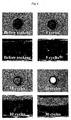
White crystals formed a deposit on the cartilage matrix as the number of cycles
increased. The cross-section of the cartilage matrix was observed under a stereoscopic
microscope (VH-7000C, Keyence, magnification: x35), and gradient formation of
crystals was observed inwardly from one side of the matrix (the reaction side) (Fig. 2).
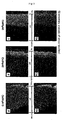
The alternately soaked cartilage matrix was lyophilized, and the cross-section
thereof was subjected to elementary analysis. A large quantity of Ca and P were
distributed on the reaction surface (the top side), and the density thereof became smaller
toward the other side of the matrix. Thus, gradient formation of crystals in the matrix
was confirmed (Fig. 3).
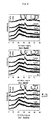
Samples after each reaction cycle were subjected to X-ray diffraction analysis
using PW1729 (Philips), and the formed white crystals were identified (Fig. 4). An
intense peak of hydroxyapatite (HAp) was observed at around 30 degrees, and the line of
maximum intensity of octacalcium phosphate (OCP) was observed at around 4 degrees.
The peak intensity increased as the number of cycles increased. No difference was
observed in white crystals among cartilage matrices.
FT-IR spectrometry was carried out via the diffuse reflection method using
Spectrum 2000 (Perkin Elmers). Portions where each sample after the 30th cycle had
been alternately soaked (portions where calcium phosphate was generated) were
selectively removed from the gel, and the removed gel portions were lyophilized,
followed by identification based on FT-IR (Fig. 5).
In the case of Col/HyA0, oscillations were observed at 1744.39 cm-1 (COO-),
1228.80 cm-1 (amide III), 1539.99 cm-1 (amide II), 1653.45 cm-1 (amide I), and 1378.23
cm-1 (COO-). In the case of Hap, oscillations were observed at 3437.50 cm-1 and
1447.75 cm-1 (OH), 1456.82 cm-1 (CO3 2-), and 1033 cm-1, 600.51 cm-1, and 561.92 cm-1
(PO4 3-).
In the case of Col/HyA2, oscillations were observed at 1232.59 cm-1 (amide III),
1540.23 cm-1 (amide II), 1651.88 cm-1 (amide I), and 1379.07 cm-1 (COO-). In the case
of Hap, oscillations were observed at 3304.81 cm-1 (OH), 1456.09 cm-1 and 1443. 09
cm-1 (CO3 2-), and 1038 cm-1, 600.9 0 cm-1, and 562.89 cm-1 (PO4 3-).
In the case of Col/HyA10, oscillations were observed at 1231.94 cm-1 (amide III),
1530.04 cm-1 (amide II), 1662.34 cm-1 (amide I), and 1379.47 cm-1 (COO-). In the case
of Hap, oscillations were observed at 3306.22 cm-1 (OH), 1456.39 cm-1 and 1443.62 cm-1
(CO3 2-), and 1038 cm-1, 600.88 cm-1, and 563.04 cm-1 (PO4 3-).
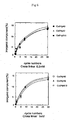
The lyophilized cartilage matrix was subjected to differential scanning
calorimetry using a Thermo Plus TG8120 (Rigaku), organic components were removed,
and the amounts (%) of the remaining inorganic components were calculated (Fig. 6).
The amounts of inorganic components increased as the number of cycles increased.
Concentration dependence was not observed in hyaluronic acid. With the concentration
range of the crosslinking agent that had been employed, no difference was observed in
the amounts of inorganic components.
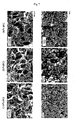
The reaction surface (top) and the no-reaction surface (bottom) were observed
under a scanning electron microscope (JSM-5600LV, JEOL, magnification: x10,000 (for
the reaction surface) and x200 (for the no-reaction surface)) (Fig. 7). Scale-like
substances were observed on the reaction surface. There were sponge-like pores that
were large enough for cells to enter therein (50 µm to 200 µm) on the no-reaction
surface.
All publications, patents, and patent applications cited herein are incorporated
herein by reference in their entirety.
The present invention provides a biodegradable polymeric material with a
composition gradient of calcium phosphate. The biodegradable polymeric material
sufficiently adheres to hard tissues and can serve as an excellent scaffold for cell
differentiation and proliferation of soft tissues. More specifically, such material can be
utilized as a scaffold for regenerating a hard/soft tissue interface or as an implant for
hard/soft tissue filling.
Claims (8)
- A composite material with a composition gradient of calcium phosphate in a biodegradable polymeric material.
- The composite material according to claim 1, wherein the biodegradable polymeric material is at least one member selected from among glycosaminoglycan, collagen, and a composite thereof.
- The composite material according to claim 1, wherein the biodegradable polymeric material is a crosslinked product of glycosaminoglycan and collagen.
- A scaffold for cell differentiation and proliferation consisting of the composite material according to any of claims 1 to 3.
- The scaffold according to claim 4, which can effectively regenerate a hard/soft tissue interface.
- An implant for hard/soft tissue filling comprising the composite material according to any of claims 1 to 3.
- The implant according to claim 6, which further comprises cells.
- A method for producing a composite material with a composition gradient of calcium phosphate in a biodegradable polymeric material by alternately soaking one side or part of the biodegradable polymeric material in a calcium ion-containing solution and the other side or part in a phosphate ion-containing solution.
Applications Claiming Priority (3)
| Application Number | Priority Date | Filing Date | Title |
|---|---|---|---|
| JP2002168588 | 2002-06-10 | ||
| JP2002168588A JP3916516B2 (en) | 2002-06-10 | 2002-06-10 | Scaffolding material for hard tissue-soft tissue interface regeneration |
| PCT/JP2003/005611 WO2003103740A1 (en) | 2002-06-10 | 2003-05-02 | Scaffold material for regeneration of hard tissue/soft tissue interface |
Publications (2)
| Publication Number | Publication Date |
|---|---|
| EP1532991A1 true EP1532991A1 (en) | 2005-05-25 |
| EP1532991A4 EP1532991A4 (en) | 2010-10-13 |
Family
ID=29727693
Family Applications (1)
| Application Number | Title | Priority Date | Filing Date |
|---|---|---|---|
| EP03725733A Withdrawn EP1532991A4 (en) | 2002-06-10 | 2003-05-02 | SUPPORT MATERIAL FOR REGENERATING A HARD TISSUE / SOFT FABRIC INTERFACE |
Country Status (5)
| Country | Link |
|---|---|
| US (1) | US7871638B2 (en) |
| EP (1) | EP1532991A4 (en) |
| JP (1) | JP3916516B2 (en) |
| CA (1) | CA2489156C (en) |
| WO (1) | WO2003103740A1 (en) |
Cited By (26)
| Publication number | Priority date | Publication date | Assignee | Title |
|---|---|---|---|---|
| WO2013036568A1 (en) * | 2011-09-06 | 2013-03-14 | Allergan, Inc. | Hyaluronic acid/collagen- based dermal filler compositions and methods for making same |
| US8450475B2 (en) | 2008-08-04 | 2013-05-28 | Allergan, Inc. | Hyaluronic acid-based gels including lidocaine |
| US8513216B2 (en) | 2007-11-30 | 2013-08-20 | Allergan, Inc. | Polysaccharide gel formulation having increased longevity |
| US8563532B2 (en) | 2003-04-10 | 2013-10-22 | Allergan Industrie Sas | Cross-linking of low-molecular weight and high-molecular weight polysaccharides, preparation of injectable monophase hydrogels, polysaccharides and hydrogels obtained |
| US8586562B2 (en) | 2010-03-12 | 2013-11-19 | Allergan Industrie, Sas | Fluid compositions for improving skin conditions |
| WO2014039607A1 (en) * | 2012-09-06 | 2014-03-13 | Allergan, Inc. | Hyaluronic acid/collagen- based dermal filler compositions and methods for making same |
| US8691279B2 (en) | 2010-03-22 | 2014-04-08 | Allergan, Inc. | Polysaccharide and protein-polysaccharide cross-linked hydrogels for soft tissue augmentation |
| US8697044B2 (en) | 2007-10-09 | 2014-04-15 | Allergan, Inc. | Crossed-linked hyaluronic acid and collagen and uses thereof |
| US8697057B2 (en) | 2010-08-19 | 2014-04-15 | Allergan, Inc. | Compositions and soft tissue replacement methods |
| US8883139B2 (en) | 2010-08-19 | 2014-11-11 | Allergan Inc. | Compositions and soft tissue replacement methods |
| US8889123B2 (en) | 2010-08-19 | 2014-11-18 | Allergan, Inc. | Compositions and soft tissue replacement methods |
| US8946192B2 (en) | 2010-01-13 | 2015-02-03 | Allergan, Inc. | Heat stable hyaluronic acid compositions for dermatological use |
| US9005605B2 (en) | 2010-08-19 | 2015-04-14 | Allergan, Inc. | Compositions and soft tissue replacement methods |
| US9114188B2 (en) | 2010-01-13 | 2015-08-25 | Allergan, Industrie, S.A.S. | Stable hydrogel compositions including additives |
| US9149422B2 (en) | 2011-06-03 | 2015-10-06 | Allergan, Inc. | Dermal filler compositions including antioxidants |
| US9228027B2 (en) | 2008-09-02 | 2016-01-05 | Allergan Holdings France S.A.S. | Threads of Hyaluronic acid and/or derivatives thereof, methods of making thereof and uses thereof |
| US9265761B2 (en) | 2007-11-16 | 2016-02-23 | Allergan, Inc. | Compositions and methods for treating purpura |
| US9393263B2 (en) | 2011-06-03 | 2016-07-19 | Allergan, Inc. | Dermal filler compositions including antioxidants |
| US9408797B2 (en) | 2011-06-03 | 2016-08-09 | Allergan, Inc. | Dermal filler compositions for fine line treatment |
| US9662422B2 (en) | 2011-09-06 | 2017-05-30 | Allergan, Inc. | Crosslinked hyaluronic acid-collagen gels for improving tissue graft viability and soft tissue augmentation |
| US9795711B2 (en) | 2011-09-06 | 2017-10-24 | Allergan, Inc. | Hyaluronic acid-collagen matrices for dermal filling and volumizing applications |
| WO2018055361A1 (en) * | 2016-09-20 | 2018-03-29 | Raft Enterprises Ltd. | Extracellular matrix material |
| US10722444B2 (en) | 2014-09-30 | 2020-07-28 | Allergan Industrie, Sas | Stable hydrogel compositions including additives |
| US11083684B2 (en) | 2011-06-03 | 2021-08-10 | Allergan Industrie, Sas | Dermal filler compositions |
| US11260015B2 (en) | 2015-02-09 | 2022-03-01 | Allergan Industrie, Sas | Compositions and methods for improving skin appearance |
| US12324868B2 (en) | 2015-02-13 | 2025-06-10 | Allergan Industrie, Sas | Implants for sculpting, augmenting or correcting facial features such as the chin |
Families Citing this family (13)
| Publication number | Priority date | Publication date | Assignee | Title |
|---|---|---|---|---|
| FR2850282B1 (en) | 2003-01-27 | 2007-04-06 | Jerome Asius | INJECTABLE IMPLANT BASED ON CERAMIC FOR THE FILLING OF WRINKLES, CUTANEOUS DEPRESSIONS AND SCARS, AND ITS PREPARATION |
| GB2407580B (en) * | 2003-10-28 | 2009-02-25 | Univ Cambridge Tech | Biomaterial |
| US7767221B2 (en) * | 2004-03-05 | 2010-08-03 | The Trustees Of Columbia University In The City Of New York | Multi-phased, biodegradable and osteointegrative composite scaffold for biological fixation of musculoskeletal soft tissue to bone |
| WO2005089127A2 (en) * | 2004-03-05 | 2005-09-29 | The Trustees Of Columbia University In The City Of New York | Polymer-ceramic-hydrogel composite scaffold for osteochondral repair |
| GB2424223C (en) * | 2005-03-07 | 2011-02-02 | Massachusetts Inst Technology | Biomaterial. |
| US20100047309A1 (en) * | 2006-12-06 | 2010-02-25 | Lu Helen H | Graft collar and scaffold apparatuses for musculoskeletal tissue engineering and related methods |
| US8753391B2 (en) | 2007-02-12 | 2014-06-17 | The Trustees Of Columbia University In The City Of New York | Fully synthetic implantable multi-phased scaffold |
| JP2011078624A (en) * | 2009-10-08 | 2011-04-21 | Nagoya Univ | Resin composite having composite layer containing inclined structure calcium phosphate and method of manufacturing the same |
| US8652373B2 (en) * | 2010-07-09 | 2014-02-18 | Indian Institute Of Technology Kanpur | Hydroxyapatite poly(etheretherketone) nanocomposites and method of manufacturing same |
| EP2644169B1 (en) * | 2010-11-26 | 2018-11-21 | National Institute for Materials Science | Bio-hybrid material, production method therefor, and stent |
| WO2014169249A1 (en) | 2013-04-12 | 2014-10-16 | The Trustees Of Columbia University In The City Of New York | Methods for host cell homing and dental pulp regeneration |
| JP6831564B2 (en) * | 2017-02-15 | 2021-02-17 | 国立大学法人東京工業大学 | Composition gradient composite and its production method |
| US11998654B2 (en) | 2018-07-12 | 2024-06-04 | Bard Shannon Limited | Securing implants and medical devices |
Family Cites Families (10)
| Publication number | Priority date | Publication date | Assignee | Title |
|---|---|---|---|---|
| US4947840A (en) * | 1987-08-21 | 1990-08-14 | Massachusetts Institute Of Technology | Biodegradable templates for the regeneration of tissues |
| US5741705A (en) * | 1995-02-23 | 1998-04-21 | Quest International Flavors & Food Ingredients Company, Division Of Indopco, Inc. | Method for in vitro cell growth of eucaryotic cells using low molecular weight peptides |
| JP3451417B2 (en) | 1996-08-12 | 2003-09-29 | タキロン株式会社 | Bioceramic-containing cell structure and method for producing the same |
| AT407255B (en) * | 1997-06-20 | 2001-02-26 | Immuno Ag | RECOMBINANT CELL CLONE WITH INCREASED STABILITY IN SERUM- AND PROTEIN-FREE MEDIUM AND METHOD FOR OBTAINING THE STABLE CELL CLONE |
| US6475725B1 (en) * | 1997-06-20 | 2002-11-05 | Baxter Aktiengesellschaft | Recombinant cell clones having increased stability and methods of making and using the same |
| WO2000021470A1 (en) * | 1998-10-12 | 2000-04-20 | Therics, Inc. | Composites for tissue regeneration and methods of manufacture thereof |
| US6387414B1 (en) * | 1999-08-05 | 2002-05-14 | Nof Corporation | Method for preparing hydroxyapatite composite and biocompatible material |
| AT409379B (en) * | 1999-06-02 | 2002-07-25 | Baxter Ag | MEDIUM FOR PROTEIN- AND SERUM-FREE CELL CULTURE |
| JP2001137329A (en) * | 1999-11-15 | 2001-05-22 | Natl Inst For Res In Inorg Mater | Biological tissue for tendon or ligament and method for producing the same |
| US6969523B1 (en) * | 2001-10-19 | 2005-11-29 | Integra Lifesciences Corporation | Collagen/glycosaminoglycan matrix stable to sterilizing by electron beam radiation |
-
2002
- 2002-06-10 JP JP2002168588A patent/JP3916516B2/en not_active Expired - Lifetime
-
2003
- 2003-05-02 EP EP03725733A patent/EP1532991A4/en not_active Withdrawn
- 2003-05-02 WO PCT/JP2003/005611 patent/WO2003103740A1/en not_active Ceased
- 2003-05-02 US US10/516,818 patent/US7871638B2/en not_active Expired - Fee Related
- 2003-05-02 CA CA2489156A patent/CA2489156C/en not_active Expired - Fee Related
Cited By (78)
| Publication number | Priority date | Publication date | Assignee | Title |
|---|---|---|---|---|
| US10080767B2 (en) | 2003-04-10 | 2018-09-25 | Allergan Industrie Sas | Injectable monophase hydrogels |
| US8563532B2 (en) | 2003-04-10 | 2013-10-22 | Allergan Industrie Sas | Cross-linking of low-molecular weight and high-molecular weight polysaccharides, preparation of injectable monophase hydrogels, polysaccharides and hydrogels obtained |
| US9062130B2 (en) | 2003-04-10 | 2015-06-23 | Allergan Industrie Sas | Cross-linking of low-molecular weight and high-molecular weight polysaccharides, preparation of injectable monophase hydrogels, polysaccharides and hydrogels obtained |
| US11045490B2 (en) | 2003-04-10 | 2021-06-29 | Allergan Industrie, Sas | Injectable monophase hydrogels |
| US10653716B2 (en) | 2003-04-10 | 2020-05-19 | Allergan Industrie, Sas | Injectable monophase hydrogels |
| US8697044B2 (en) | 2007-10-09 | 2014-04-15 | Allergan, Inc. | Crossed-linked hyaluronic acid and collagen and uses thereof |
| US8703118B2 (en) | 2007-10-09 | 2014-04-22 | Allergan, Inc. | Crossed-linked hyaluronic acid and collagen and uses thereof |
| US9265761B2 (en) | 2007-11-16 | 2016-02-23 | Allergan, Inc. | Compositions and methods for treating purpura |
| US8853184B2 (en) | 2007-11-30 | 2014-10-07 | Allergan, Inc. | Polysaccharide gel formulation having increased longevity |
| US8513216B2 (en) | 2007-11-30 | 2013-08-20 | Allergan, Inc. | Polysaccharide gel formulation having increased longevity |
| US10328180B2 (en) | 2008-08-04 | 2019-06-25 | Allergan Industrie, S.A.S. | Hyaluronic acid-based gels including lidocaine |
| US11173232B2 (en) | 2008-08-04 | 2021-11-16 | Allergan Industrie, Sas | Hyaluronic acid-based gels including lidocaine |
| US10485896B2 (en) | 2008-08-04 | 2019-11-26 | Allergan Industrie Sas | Hyaluronic acid-based gels including lidocaine |
| US10391202B2 (en) | 2008-08-04 | 2019-08-27 | Allergan Industrie Sas | Hyaluronic acid-based gels including lidocaine |
| US11020512B2 (en) | 2008-08-04 | 2021-06-01 | Allergan Industrie, Sas | Hyaluronic acid-based gels including lidocaine |
| US9358322B2 (en) | 2008-08-04 | 2016-06-07 | Allergan Industrie Sas | Hyaluronic acid-based gels including lidocaine |
| US9238013B2 (en) | 2008-08-04 | 2016-01-19 | Allergan Industrie, Sas | Hyaluronic acid-based gels including lidocaine |
| US8822676B2 (en) | 2008-08-04 | 2014-09-02 | Allergan Industrie, Sas | Hyaluronic acid-based gels including lidocaine |
| US8450475B2 (en) | 2008-08-04 | 2013-05-28 | Allergan, Inc. | Hyaluronic acid-based gels including lidocaine |
| US9089517B2 (en) | 2008-08-04 | 2015-07-28 | Allergan Industrie Sas | Hyaluronic acid-based gels including lidocaine |
| US9089519B2 (en) | 2008-08-04 | 2015-07-28 | Allergan Industrie Sas | Hyaluronic acid-based gels including lidocaine |
| US9089518B2 (en) | 2008-08-04 | 2015-07-28 | Allergan Industrie Sas | Hyaluronic acid-based gels including lidocaine |
| US9861570B2 (en) | 2008-09-02 | 2018-01-09 | Allergan Holdings France S.A.S. | Threads of hyaluronic acid and/or derivatives thereof, methods of making thereof and uses thereof |
| US9228027B2 (en) | 2008-09-02 | 2016-01-05 | Allergan Holdings France S.A.S. | Threads of Hyaluronic acid and/or derivatives thereof, methods of making thereof and uses thereof |
| US11154484B2 (en) | 2008-09-02 | 2021-10-26 | Allergan Holdings France S.A.S. | Threads of hyaluronic acid and/or derivatives thereof, methods of making thereof and uses thereof |
| US9114188B2 (en) | 2010-01-13 | 2015-08-25 | Allergan, Industrie, S.A.S. | Stable hydrogel compositions including additives |
| US10806821B2 (en) | 2010-01-13 | 2020-10-20 | Allergan Industrie, Sas | Heat stable hyaluronic acid compositions for dermatological use |
| US10220113B2 (en) | 2010-01-13 | 2019-03-05 | Allergan Industrie, Sas | Heat stable hyaluronic acid compositions for dermatological use |
| US9333160B2 (en) | 2010-01-13 | 2016-05-10 | Allergan Industrie, Sas | Heat stable hyaluronic acid compositions for dermatological use |
| US9855367B2 (en) | 2010-01-13 | 2018-01-02 | Allergan Industrie, Sas | Heat stable hyaluronic acid compositions for dermatological use |
| US8946192B2 (en) | 2010-01-13 | 2015-02-03 | Allergan, Inc. | Heat stable hyaluronic acid compositions for dermatological use |
| US10449268B2 (en) | 2010-01-13 | 2019-10-22 | Allergan Industrie, S.A.S. | Stable hydrogel compositions including additives |
| US9655991B2 (en) | 2010-01-13 | 2017-05-23 | Allergan Industrie, S.A.S. | Stable hydrogel compositions including additives |
| US8921338B2 (en) | 2010-03-12 | 2014-12-30 | Allergan Industrie, Sas | Fluid compositions for improving skin conditions |
| US9585821B2 (en) | 2010-03-12 | 2017-03-07 | Allergan Industrie Sas | Methods for making compositions for improving skin conditions |
| US9125840B2 (en) | 2010-03-12 | 2015-09-08 | Allergan Industrie Sas | Methods for improving skin conditions |
| US8586562B2 (en) | 2010-03-12 | 2013-11-19 | Allergan Industrie, Sas | Fluid compositions for improving skin conditions |
| US9480775B2 (en) | 2010-03-22 | 2016-11-01 | Allergan, Inc. | Polysaccharide and protein-polysaccharide cross-linked hydrogels for soft tissue augmentation |
| US10905797B2 (en) | 2010-03-22 | 2021-02-02 | Allergan, Inc. | Polysaccharide and protein-polysaccharide cross-linked hydrogels for soft tissue augmentation |
| US8691279B2 (en) | 2010-03-22 | 2014-04-08 | Allergan, Inc. | Polysaccharide and protein-polysaccharide cross-linked hydrogels for soft tissue augmentation |
| US9012517B2 (en) | 2010-03-22 | 2015-04-21 | Allergan, Inc. | Polysaccharide and protein-polysaccharide cross-linked hydrogels for soft tissue augmentation |
| US10111984B2 (en) | 2010-03-22 | 2018-10-30 | Allergan, Inc. | Polysaccharide and protein-polysaccharide cross-linked hydrogels for soft tissue augmentation |
| US8889123B2 (en) | 2010-08-19 | 2014-11-18 | Allergan, Inc. | Compositions and soft tissue replacement methods |
| US8883139B2 (en) | 2010-08-19 | 2014-11-11 | Allergan Inc. | Compositions and soft tissue replacement methods |
| US8697057B2 (en) | 2010-08-19 | 2014-04-15 | Allergan, Inc. | Compositions and soft tissue replacement methods |
| US9005605B2 (en) | 2010-08-19 | 2015-04-14 | Allergan, Inc. | Compositions and soft tissue replacement methods |
| US10624988B2 (en) | 2011-06-03 | 2020-04-21 | Allergan Industrie, Sas | Dermal filler compositions including antioxidants |
| US9408797B2 (en) | 2011-06-03 | 2016-08-09 | Allergan, Inc. | Dermal filler compositions for fine line treatment |
| US9950092B2 (en) | 2011-06-03 | 2018-04-24 | Allergan, Inc. | Dermal filler compositions for fine line treatment |
| US9149422B2 (en) | 2011-06-03 | 2015-10-06 | Allergan, Inc. | Dermal filler compositions including antioxidants |
| US11083684B2 (en) | 2011-06-03 | 2021-08-10 | Allergan Industrie, Sas | Dermal filler compositions |
| US9393263B2 (en) | 2011-06-03 | 2016-07-19 | Allergan, Inc. | Dermal filler compositions including antioxidants |
| US11000626B2 (en) | 2011-06-03 | 2021-05-11 | Allergan Industrie, Sas | Dermal filler compositions including antioxidants |
| US10994049B2 (en) | 2011-06-03 | 2021-05-04 | Allergan Industrie, Sas | Dermal filler compositions for fine line treatment |
| US9962464B2 (en) | 2011-06-03 | 2018-05-08 | Allergan, Inc. | Dermal filler compositions including antioxidants |
| US9737633B2 (en) | 2011-06-03 | 2017-08-22 | Allergan, Inc. | Dermal filler compositions including antioxidants |
| US9782517B2 (en) | 2011-09-06 | 2017-10-10 | Allergan, Inc. | Crosslinked hyaluronic acid-collagen gels for improving tissue graft viability and soft tissue augmentation |
| EP3466981A1 (en) * | 2011-09-06 | 2019-04-10 | Allergan, Inc. | Hyaluronic acid/collagen-based dermal filler compositions and methods for making same |
| AU2018241098B2 (en) * | 2011-09-06 | 2020-07-16 | Allergan, Inc. | Hyaluronic acid/collagen-based dermal filler compositions and methods for making same |
| AU2022256160B2 (en) * | 2011-09-06 | 2024-09-19 | Allergan, Inc. | Hyaluronic acid/collagen-based dermal filler compositions and methods for making same |
| AU2013312729B2 (en) * | 2011-09-06 | 2017-04-13 | Allergan, Inc. | Hyaluronic acid/collagen- based dermal filler compositions and methods for making same |
| US11844878B2 (en) | 2011-09-06 | 2023-12-19 | Allergan, Inc. | Crosslinked hyaluronic acid-collagen gels for improving tissue graft viability and soft tissue augmentation |
| WO2013036568A1 (en) * | 2011-09-06 | 2013-03-14 | Allergan, Inc. | Hyaluronic acid/collagen- based dermal filler compositions and methods for making same |
| US10434214B2 (en) | 2011-09-06 | 2019-10-08 | Allergan, Inc. | Hyaluronic acid-collagen matrices for dermal filling and volumizing applications |
| US9795711B2 (en) | 2011-09-06 | 2017-10-24 | Allergan, Inc. | Hyaluronic acid-collagen matrices for dermal filling and volumizing applications |
| US9821086B2 (en) | 2011-09-06 | 2017-11-21 | Allergan, Inc. | Hyaluronic acid-collagen matrices for dermal filling and volumizing applications |
| AU2012304607B2 (en) * | 2011-09-06 | 2016-05-19 | Allergan, Inc. | Hyaluronic acid/collagen- based dermal filler compositions and methods for making same |
| US9662422B2 (en) | 2011-09-06 | 2017-05-30 | Allergan, Inc. | Crosslinked hyaluronic acid-collagen gels for improving tissue graft viability and soft tissue augmentation |
| US11833269B2 (en) | 2011-09-06 | 2023-12-05 | Allergan, Inc. | Hyaluronic acid-collagen matrices for dermal filling and volumizing applications |
| AU2020256324B2 (en) * | 2011-09-06 | 2022-07-21 | Allergan, Inc. | Hyaluronic acid/collagen-based dermal filler compositions and methods for making same |
| WO2014039607A1 (en) * | 2012-09-06 | 2014-03-13 | Allergan, Inc. | Hyaluronic acid/collagen- based dermal filler compositions and methods for making same |
| EP3750568A1 (en) * | 2012-09-06 | 2020-12-16 | Allergan, Inc. | Hyaluronic acid/collagen-based dermal filler compositions and methods for making same |
| US10722444B2 (en) | 2014-09-30 | 2020-07-28 | Allergan Industrie, Sas | Stable hydrogel compositions including additives |
| US11260015B2 (en) | 2015-02-09 | 2022-03-01 | Allergan Industrie, Sas | Compositions and methods for improving skin appearance |
| US12011500B2 (en) | 2015-02-09 | 2024-06-18 | Allergan Industrie, Sas | Compositions and methods for improving skin appearance |
| US12324868B2 (en) | 2015-02-13 | 2025-06-10 | Allergan Industrie, Sas | Implants for sculpting, augmenting or correcting facial features such as the chin |
| WO2018055361A1 (en) * | 2016-09-20 | 2018-03-29 | Raft Enterprises Ltd. | Extracellular matrix material |
| US12280174B2 (en) | 2016-09-20 | 2025-04-22 | Raft Enterprises Ltd. | Extracellular matrix material |
Also Published As
| Publication number | Publication date |
|---|---|
| CA2489156A1 (en) | 2003-12-18 |
| US20060165663A1 (en) | 2006-07-27 |
| JP3916516B2 (en) | 2007-05-16 |
| JP2004008634A (en) | 2004-01-15 |
| CA2489156C (en) | 2010-09-07 |
| WO2003103740A1 (en) | 2003-12-18 |
| US7871638B2 (en) | 2011-01-18 |
| EP1532991A4 (en) | 2010-10-13 |
Similar Documents
| Publication | Publication Date | Title |
|---|---|---|
| US7871638B2 (en) | Composite material containing a calcium phosphate gradient | |
| Zippel et al. | Biomaterials and mesenchymal stem cells for regenerative medicine | |
| US7022522B2 (en) | Macroporous polymer scaffold containing calcium phosphate particles | |
| JP5406915B2 (en) | Biocompatible implant | |
| Ghasemi-Mobarakeh et al. | Advances in electrospun nanofibers for bone and cartilage regeneration | |
| CN105688274B (en) | A kind of preparation process of polycaprolactone/gelatin electrospinning compound rest | |
| Khang et al. | Biomaterials: tissue engineering and scaffolds | |
| EP0862617A1 (en) | Tissue-engineered bone repair using cultured periosteal cells | |
| KR20080065606A (en) | Cell transplant method | |
| US20100297239A1 (en) | Osseointegrative meniscus and cartilage implants based on beta-glucan nanocomposites | |
| Nogueira et al. | Three‐dimensional cell‐laden collagen scaffolds: from biochemistry to bone bioengineering | |
| EP4178634B1 (en) | Integrated core-shell bioactive structure for the regeneration of bone and osteochondral tissues | |
| CN1973910B (en) | a tissue engineered bone | |
| Karanth et al. | Towards resorbable 3D‐printed scaffolds for craniofacial bone regeneration | |
| Zhang et al. | Advancing collagen-based biomaterials for oral and craniofacial tissue regeneration | |
| US20080220521A1 (en) | Sheet for guiding regeneration of mesenchymal tissue and production method thereof | |
| Grelewski et al. | Properties of scaffolds as carriers of mesenchymal stem cells for use in bone engineering | |
| Moran et al. | Biofunctional materials for bone and cartilage tissue engineering | |
| Liao et al. | In vitro and in vivo behaviors of the three-layered nanocarbonated hydroxyapatite/collagen/PLGA composite | |
| Fernandes et al. | Biopolymer‐based scaffolds for bone and tissue engineering | |
| Somasundaram et al. | Implications of Biomaterials and Adipose-Derived Stem Cells in the Management of Calvarial Bone Defects | |
| Santin | Bone tissue engineering | |
| Sharma et al. | Bone tissue engineering | |
| Wu | Development of 3D Scaffolds Using Unconventional Mineralized Biomaterials for Bone Tissue Engineering | |
| Favi | Engineering Bacterial Cellulose Scaffold and its Biomimetic Composites for Bone and Cartilage Tissue Regeneration |
Legal Events
| Date | Code | Title | Description |
|---|---|---|---|
| PUAI | Public reference made under article 153(3) epc to a published international application that has entered the european phase |
Free format text: ORIGINAL CODE: 0009012 |
|
| 17P | Request for examination filed |
Effective date: 20041231 |
|
| AK | Designated contracting states |
Kind code of ref document: A1 Designated state(s): AT BE BG CH CY CZ DE DK EE ES FI FR GB GR HU IE IT LI LU MC NL PT RO SE SI SK TR |
|
| RBV | Designated contracting states (corrected) |
Designated state(s): DE FR GB |
|
| A4 | Supplementary search report drawn up and despatched |
Effective date: 20100910 |
|
| 17Q | First examination report despatched |
Effective date: 20110217 |
|
| STAA | Information on the status of an ep patent application or granted ep patent |
Free format text: STATUS: THE APPLICATION IS DEEMED TO BE WITHDRAWN |
|
| 18D | Application deemed to be withdrawn |
Effective date: 20130518 |