EP1532181B1 - Fulvene and preparation thereof - Google Patents
Fulvene and preparation thereof Download PDFInfo
- Publication number
- EP1532181B1 EP1532181B1 EP03791471.0A EP03791471A EP1532181B1 EP 1532181 B1 EP1532181 B1 EP 1532181B1 EP 03791471 A EP03791471 A EP 03791471A EP 1532181 B1 EP1532181 B1 EP 1532181B1
- Authority
- EP
- European Patent Office
- Prior art keywords
- chemical formula
- alkyl
- aryl
- group
- compound represented
- Prior art date
- Legal status (The legal status is an assumption and is not a legal conclusion. Google has not performed a legal analysis and makes no representation as to the accuracy of the status listed.)
- Expired - Lifetime
Links
- 238000002360 preparation method Methods 0.000 title claims description 42
- PGTKVMVZBBZCKQ-UHFFFAOYSA-N Fulvene Chemical compound C=C1C=CC=C1 PGTKVMVZBBZCKQ-UHFFFAOYSA-N 0.000 title description 8
- -1 fulvene compound Chemical class 0.000 claims description 125
- 239000000126 substance Substances 0.000 claims description 96
- 150000001875 compounds Chemical class 0.000 claims description 61
- 125000003118 aryl group Chemical group 0.000 claims description 24
- 125000003342 alkenyl group Chemical group 0.000 claims description 12
- 125000002877 alkyl aryl group Chemical group 0.000 claims description 12
- 125000003710 aryl alkyl group Chemical group 0.000 claims description 12
- 150000002576 ketones Chemical class 0.000 claims description 12
- 125000001183 hydrocarbyl group Chemical group 0.000 claims description 11
- 229910052752 metalloid Inorganic materials 0.000 claims description 11
- 239000012039 electrophile Substances 0.000 claims description 10
- 229910052739 hydrogen Inorganic materials 0.000 claims description 10
- 229910052757 nitrogen Inorganic materials 0.000 claims description 10
- 125000004433 nitrogen atom Chemical group N* 0.000 claims description 10
- 125000004430 oxygen atom Chemical group O* 0.000 claims description 10
- 125000005843 halogen group Chemical group 0.000 claims description 8
- 239000001257 hydrogen Substances 0.000 claims description 8
- 229910052736 halogen Inorganic materials 0.000 claims description 7
- 150000002367 halogens Chemical class 0.000 claims description 7
- BUDQDWGNQVEFAC-UHFFFAOYSA-N Dihydropyran Chemical compound C1COC=CC1 BUDQDWGNQVEFAC-UHFFFAOYSA-N 0.000 claims description 6
- UFHFLCQGNIYNRP-UHFFFAOYSA-N Hydrogen Chemical compound [H][H] UFHFLCQGNIYNRP-UHFFFAOYSA-N 0.000 claims description 6
- VQTUBCCKSQIDNK-UHFFFAOYSA-N Isobutene Chemical compound CC(C)=C VQTUBCCKSQIDNK-UHFFFAOYSA-N 0.000 claims description 6
- 125000000217 alkyl group Chemical group 0.000 claims description 6
- 150000005840 aryl radicals Chemical class 0.000 claims description 6
- 150000002902 organometallic compounds Chemical class 0.000 claims description 6
- WNXJIVFYUVYPPR-UHFFFAOYSA-N 1,3-dioxolane Chemical group C1COCO1 WNXJIVFYUVYPPR-UHFFFAOYSA-N 0.000 claims description 5
- 150000003254 radicals Chemical class 0.000 claims description 5
- 125000003158 alcohol group Chemical group 0.000 claims description 4
- 229910052783 alkali metal Inorganic materials 0.000 claims description 2
- 150000001340 alkali metals Chemical class 0.000 claims description 2
- 230000003301 hydrolyzing effect Effects 0.000 claims description 2
- 238000007344 nucleophilic reaction Methods 0.000 claims description 2
- 238000010534 nucleophilic substitution reaction Methods 0.000 claims description 2
- JOXIMZWYDAKGHI-UHFFFAOYSA-N toluene-4-sulfonic acid Chemical compound CC1=CC=C(S(O)(=O)=O)C=C1 JOXIMZWYDAKGHI-UHFFFAOYSA-N 0.000 claims description 2
- ITMCEJHCFYSIIV-UHFFFAOYSA-N triflic acid Chemical compound OS(=O)(=O)C(F)(F)F ITMCEJHCFYSIIV-UHFFFAOYSA-N 0.000 claims description 2
- 229910052751 metal Inorganic materials 0.000 claims 1
- 239000002184 metal Substances 0.000 claims 1
- 150000003839 salts Chemical class 0.000 claims 1
- 125000001273 sulfonato group Chemical group [O-]S(*)(=O)=O 0.000 claims 1
- 125000002496 methyl group Chemical group [H]C([H])([H])* 0.000 description 73
- 239000000243 solution Substances 0.000 description 55
- ZSWFCLXCOIISFI-UHFFFAOYSA-N endo-cyclopentadiene Natural products C1C=CC=C1 ZSWFCLXCOIISFI-UHFFFAOYSA-N 0.000 description 41
- HEDRZPFGACZZDS-MICDWDOJSA-N Trichloro(2H)methane Chemical compound [2H]C(Cl)(Cl)Cl HEDRZPFGACZZDS-MICDWDOJSA-N 0.000 description 40
- VLKZOEOYAKHREP-UHFFFAOYSA-N n-Hexane Chemical compound CCCCCC VLKZOEOYAKHREP-UHFFFAOYSA-N 0.000 description 40
- XEKOWRVHYACXOJ-UHFFFAOYSA-N Ethyl acetate Chemical compound CCOC(C)=O XEKOWRVHYACXOJ-UHFFFAOYSA-N 0.000 description 39
- YXFVVABEGXRONW-UHFFFAOYSA-N Toluene Chemical compound CC1=CC=CC=C1 YXFVVABEGXRONW-UHFFFAOYSA-N 0.000 description 39
- 239000003054 catalyst Substances 0.000 description 34
- UHOVQNZJYSORNB-MZWXYZOWSA-N benzene-d6 Chemical compound [2H]C1=C([2H])C([2H])=C([2H])C([2H])=C1[2H] UHOVQNZJYSORNB-MZWXYZOWSA-N 0.000 description 32
- RTZKZFJDLAIYFH-UHFFFAOYSA-N Diethyl ether Chemical compound CCOCC RTZKZFJDLAIYFH-UHFFFAOYSA-N 0.000 description 30
- 239000012968 metallocene catalyst Substances 0.000 description 30
- 125000000325 methylidene group Chemical group [H]C([H])=* 0.000 description 29
- 238000005160 1H NMR spectroscopy Methods 0.000 description 24
- 125000000058 cyclopentadienyl group Chemical group C1(=CC=CC1)* 0.000 description 24
- UHOVQNZJYSORNB-UHFFFAOYSA-N Benzene Chemical compound C1=CC=CC=C1 UHOVQNZJYSORNB-UHFFFAOYSA-N 0.000 description 23
- WYURNTSHIVDZCO-UHFFFAOYSA-N Tetrahydrofuran Chemical compound C1CCOC1 WYURNTSHIVDZCO-UHFFFAOYSA-N 0.000 description 23
- 239000002904 solvent Substances 0.000 description 22
- 238000006243 chemical reaction Methods 0.000 description 21
- 239000000178 monomer Substances 0.000 description 21
- VGGSQFUCUMXWEO-UHFFFAOYSA-N Ethene Chemical compound C=C VGGSQFUCUMXWEO-UHFFFAOYSA-N 0.000 description 20
- 239000005977 Ethylene Substances 0.000 description 20
- 238000007334 copolymerization reaction Methods 0.000 description 20
- 238000000034 method Methods 0.000 description 20
- 238000006116 polymerization reaction Methods 0.000 description 20
- 125000001424 substituent group Chemical group 0.000 description 20
- CSNNHWWHGAXBCP-UHFFFAOYSA-L Magnesium sulfate Chemical compound [Mg+2].[O-][S+2]([O-])([O-])[O-] CSNNHWWHGAXBCP-UHFFFAOYSA-L 0.000 description 17
- 238000004009 13C{1H}-NMR spectroscopy Methods 0.000 description 16
- CSCPPACGZOOCGX-UHFFFAOYSA-N Acetone Chemical compound CC(C)=O CSCPPACGZOOCGX-UHFFFAOYSA-N 0.000 description 15
- YMWUJEATGCHHMB-UHFFFAOYSA-N Dichloromethane Chemical compound ClCCl YMWUJEATGCHHMB-UHFFFAOYSA-N 0.000 description 15
- 239000012044 organic layer Substances 0.000 description 15
- MZRVEZGGRBJDDB-UHFFFAOYSA-N N-Butyllithium Chemical compound [Li]CCCC MZRVEZGGRBJDDB-UHFFFAOYSA-N 0.000 description 14
- 229920001577 copolymer Polymers 0.000 description 14
- VYPSYNLAJGMNEJ-UHFFFAOYSA-N Silicium dioxide Chemical compound O=[Si]=O VYPSYNLAJGMNEJ-UHFFFAOYSA-N 0.000 description 13
- 238000004440 column chromatography Methods 0.000 description 13
- 239000013078 crystal Substances 0.000 description 13
- JRZJOMJEPLMPRA-UHFFFAOYSA-N olefin Natural products CCCCCCCC=C JRZJOMJEPLMPRA-UHFFFAOYSA-N 0.000 description 13
- UUFQTNFCRMXOAE-UHFFFAOYSA-N 1-methylmethylene Chemical compound C[CH] UUFQTNFCRMXOAE-UHFFFAOYSA-N 0.000 description 12
- VBOYONXEJMSAAT-UHFFFAOYSA-N 2-(hydroxymethyl)-3-methylcyclopent-2-en-1-one Chemical compound CC1=C(CO)C(=O)CC1 VBOYONXEJMSAAT-UHFFFAOYSA-N 0.000 description 11
- WSFSSNUMVMOOMR-UHFFFAOYSA-N Formaldehyde Chemical compound O=C WSFSSNUMVMOOMR-UHFFFAOYSA-N 0.000 description 11
- 229920000642 polymer Polymers 0.000 description 11
- OFBQJSOFQDEBGM-UHFFFAOYSA-N Pentane Chemical compound CCCCC OFBQJSOFQDEBGM-UHFFFAOYSA-N 0.000 description 10
- 238000002441 X-ray diffraction Methods 0.000 description 10
- 150000001336 alkenes Chemical class 0.000 description 10
- 229910052799 carbon Inorganic materials 0.000 description 10
- 230000000694 effects Effects 0.000 description 10
- YLQBMQCUIZJEEH-UHFFFAOYSA-N tetrahydrofuran Natural products C=1C=COC=1 YLQBMQCUIZJEEH-UHFFFAOYSA-N 0.000 description 10
- XLYOFNOQVPJJNP-UHFFFAOYSA-N water Chemical compound O XLYOFNOQVPJJNP-UHFFFAOYSA-N 0.000 description 10
- 229920000089 Cyclic olefin copolymer Polymers 0.000 description 9
- JFNLZVQOOSMTJK-KNVOCYPGSA-N norbornene Chemical compound C1[C@@H]2CC[C@H]1C=C2 JFNLZVQOOSMTJK-KNVOCYPGSA-N 0.000 description 9
- 238000003786 synthesis reaction Methods 0.000 description 9
- 239000004713 Cyclic olefin copolymer Substances 0.000 description 8
- 125000001797 benzyl group Chemical group [H]C1=C([H])C([H])=C(C([H])=C1[H])C([H])([H])* 0.000 description 8
- 150000002234 fulvenes Chemical class 0.000 description 8
- 239000003446 ligand Substances 0.000 description 8
- 229910052943 magnesium sulfate Inorganic materials 0.000 description 8
- 235000019341 magnesium sulphate Nutrition 0.000 description 8
- 239000000203 mixture Substances 0.000 description 8
- 239000004711 α-olefin Substances 0.000 description 8
- YBYIRNPNPLQARY-UHFFFAOYSA-N 1H-indene Chemical compound C1=CC=C2CC=CC2=C1 YBYIRNPNPLQARY-UHFFFAOYSA-N 0.000 description 7
- 150000004645 aluminates Chemical class 0.000 description 7
- 229910003002 lithium salt Inorganic materials 0.000 description 7
- 159000000002 lithium salts Chemical class 0.000 description 7
- 239000011541 reaction mixture Substances 0.000 description 7
- OKTJSMMVPCPJKN-UHFFFAOYSA-N Carbon Chemical compound [C] OKTJSMMVPCPJKN-UHFFFAOYSA-N 0.000 description 6
- 230000015572 biosynthetic process Effects 0.000 description 6
- 230000000052 comparative effect Effects 0.000 description 6
- 125000002147 dimethylamino group Chemical group [H]C([H])([H])N(*)C([H])([H])[H] 0.000 description 6
- 239000012535 impurity Substances 0.000 description 6
- 229930014626 natural product Natural products 0.000 description 6
- 125000006239 protecting group Chemical group 0.000 description 6
- JUJWROOIHBZHMG-RALIUCGRSA-N pyridine-d5 Chemical compound [2H]C1=NC([2H])=C([2H])C([2H])=C1[2H] JUJWROOIHBZHMG-RALIUCGRSA-N 0.000 description 6
- 239000007787 solid Substances 0.000 description 6
- 238000001644 13C nuclear magnetic resonance spectroscopy Methods 0.000 description 5
- MXQAQVMJIDGQDO-UHFFFAOYSA-N 2-bromo-3-methylcyclopent-2-en-1-one Chemical class CC1=C(Br)C(=O)CC1 MXQAQVMJIDGQDO-UHFFFAOYSA-N 0.000 description 5
- PPBRXRYQALVLMV-UHFFFAOYSA-N Styrene Chemical compound C=CC1=CC=CC=C1 PPBRXRYQALVLMV-UHFFFAOYSA-N 0.000 description 5
- QCWXUUIWCKQGHC-UHFFFAOYSA-N Zirconium Chemical compound [Zr] QCWXUUIWCKQGHC-UHFFFAOYSA-N 0.000 description 5
- 125000002915 carbonyl group Chemical group [*:2]C([*:1])=O 0.000 description 5
- 239000003814 drug Substances 0.000 description 5
- 125000003983 fluorenyl group Chemical group C1(=CC=CC=2C3=CC=CC=C3CC12)* 0.000 description 5
- 239000010410 layer Substances 0.000 description 5
- 239000000047 product Substances 0.000 description 5
- 239000000377 silicon dioxide Substances 0.000 description 5
- GETQZCLCWQTVFV-UHFFFAOYSA-N trimethylamine Chemical compound CN(C)C GETQZCLCWQTVFV-UHFFFAOYSA-N 0.000 description 5
- 229910052726 zirconium Inorganic materials 0.000 description 5
- 150000003755 zirconium compounds Chemical class 0.000 description 5
- LIKMAJRDDDTEIG-UHFFFAOYSA-N 1-hexene Chemical compound CCCCC=C LIKMAJRDDDTEIG-UHFFFAOYSA-N 0.000 description 4
- HGBSVQQFUBFCOD-UHFFFAOYSA-L C1=C(C)C=C(C)C1[Ti](Cl)(Cl)(=CC)C1C=CC=C1 Chemical compound C1=C(C)C=C(C)C1[Ti](Cl)(Cl)(=CC)C1C=CC=C1 HGBSVQQFUBFCOD-UHFFFAOYSA-L 0.000 description 4
- WLTUCKCRMLUNIN-UHFFFAOYSA-L C1=C(C)C=C(C)C1[Zr](Cl)(Cl)(=CC)C1C=CC=C1 Chemical compound C1=C(C)C=C(C)C1[Zr](Cl)(Cl)(=CC)C1C=CC=C1 WLTUCKCRMLUNIN-UHFFFAOYSA-L 0.000 description 4
- 150000001299 aldehydes Chemical class 0.000 description 4
- 229910052782 aluminium Inorganic materials 0.000 description 4
- 239000000460 chlorine Substances 0.000 description 4
- YMWUJEATGCHHMB-DICFDUPASA-N dichloromethane-d2 Chemical compound [2H]C([2H])(Cl)Cl YMWUJEATGCHHMB-DICFDUPASA-N 0.000 description 4
- 238000009826 distribution Methods 0.000 description 4
- 125000000219 ethylidene group Chemical group [H]C(=[*])C([H])([H])[H] 0.000 description 4
- CPOFMOWDMVWCLF-UHFFFAOYSA-N methyl(oxo)alumane Chemical compound C[Al]=O CPOFMOWDMVWCLF-UHFFFAOYSA-N 0.000 description 4
- KJIFKLIQANRMOU-UHFFFAOYSA-N oxidanium;4-methylbenzenesulfonate Chemical compound O.CC1=CC=C(S(O)(=O)=O)C=C1 KJIFKLIQANRMOU-UHFFFAOYSA-N 0.000 description 4
- 239000002685 polymerization catalyst Substances 0.000 description 4
- 230000009257 reactivity Effects 0.000 description 4
- IMFACGCPASFAPR-UHFFFAOYSA-O tributylazanium Chemical compound CCCC[NH+](CCCC)CCCC IMFACGCPASFAPR-UHFFFAOYSA-O 0.000 description 4
- ZMANZCXQSJIPKH-UHFFFAOYSA-O triethylammonium ion Chemical compound CC[NH+](CC)CC ZMANZCXQSJIPKH-UHFFFAOYSA-O 0.000 description 4
- VPGLGRNSAYHXPY-UHFFFAOYSA-L zirconium(2+);dichloride Chemical compound Cl[Zr]Cl VPGLGRNSAYHXPY-UHFFFAOYSA-L 0.000 description 4
- PSDCBZMQRHWNAK-UHFFFAOYSA-N 2-(1-hydroxyethyl)-3-methylcyclopent-2-en-1-one Chemical compound CC(O)C1=C(C)CCC1=O PSDCBZMQRHWNAK-UHFFFAOYSA-N 0.000 description 3
- ORPVAXPKDSSKBT-UHFFFAOYSA-N 2-cyclopenta-1,3-dien-1-yl-1,3-dimethylcyclopenta-1,3-diene Chemical compound CC1=CCC(C)=C1C1=CC=CC1 ORPVAXPKDSSKBT-UHFFFAOYSA-N 0.000 description 3
- MCXINBIURXSUEK-UHFFFAOYSA-N 3-methyl-2-(oxan-2-yloxymethyl)cyclopent-2-en-1-one Chemical compound O=C1CCC(C)=C1COC1OCCCC1 MCXINBIURXSUEK-UHFFFAOYSA-N 0.000 description 3
- HUDWRFSZQLFOLV-UHFFFAOYSA-N 3-methyl-2-[2-(oxan-2-yloxy)ethyl]cyclopent-2-en-1-one Chemical compound O=C1CCC(C)=C1CCOC1OCCCC1 HUDWRFSZQLFOLV-UHFFFAOYSA-N 0.000 description 3
- BTBUEUYNUDRHOZ-UHFFFAOYSA-N Borate Chemical compound [O-]B([O-])[O-] BTBUEUYNUDRHOZ-UHFFFAOYSA-N 0.000 description 3
- 125000006519 CCH3 Chemical group 0.000 description 3
- VEXZGXHMUGYJMC-UHFFFAOYSA-N Hydrochloric acid Chemical compound Cl VEXZGXHMUGYJMC-UHFFFAOYSA-N 0.000 description 3
- OKKJLVBELUTLKV-UHFFFAOYSA-N Methanol Chemical compound OC OKKJLVBELUTLKV-UHFFFAOYSA-N 0.000 description 3
- RWRDLPDLKQPQOW-UHFFFAOYSA-N Pyrrolidine Chemical compound C1CCNC1 RWRDLPDLKQPQOW-UHFFFAOYSA-N 0.000 description 3
- UIIMBOGNXHQVGW-UHFFFAOYSA-M Sodium bicarbonate Chemical class [Na+].OC([O-])=O UIIMBOGNXHQVGW-UHFFFAOYSA-M 0.000 description 3
- 239000011954 Ziegler–Natta catalyst Substances 0.000 description 3
- GCEWAOYSLAKMIH-UHFFFAOYSA-L [Cl-].[Cl-].C(C1=CC=CC=C1)=[Zr+2](C1(C=C(C=C1)C)C)C1=CC=CC=2C3=CC=CC=C3CC1=2 Chemical compound [Cl-].[Cl-].C(C1=CC=CC=C1)=[Zr+2](C1(C=C(C=C1)C)C)C1=CC=CC=2C3=CC=CC=C3CC1=2 GCEWAOYSLAKMIH-UHFFFAOYSA-L 0.000 description 3
- 150000001350 alkyl halides Chemical class 0.000 description 3
- 125000003368 amide group Chemical group 0.000 description 3
- 150000001450 anions Chemical group 0.000 description 3
- 150000001639 boron compounds Chemical class 0.000 description 3
- IJOOHPMOJXWVHK-UHFFFAOYSA-N chlorotrimethylsilane Chemical compound C[Si](C)(C)Cl IJOOHPMOJXWVHK-UHFFFAOYSA-N 0.000 description 3
- RMBPEFMHABBEKP-UHFFFAOYSA-N fluorene Chemical compound C1=CC=C2C3=C[CH]C=CC3=CC2=C1 RMBPEFMHABBEKP-UHFFFAOYSA-N 0.000 description 3
- 238000010438 heat treatment Methods 0.000 description 3
- 125000003454 indenyl group Chemical group C1(C=CC2=CC=CC=C12)* 0.000 description 3
- IHLVCKWPAMTVTG-UHFFFAOYSA-N lithium;carbanide Chemical compound [Li+].[CH3-] IHLVCKWPAMTVTG-UHFFFAOYSA-N 0.000 description 3
- NIHNNTQXNPWCJQ-UHFFFAOYSA-N o-biphenylenemethane Natural products C1=CC=C2CC3=CC=CC=C3C2=C1 NIHNNTQXNPWCJQ-UHFFFAOYSA-N 0.000 description 3
- 125000001997 phenyl group Chemical group [H]C1=C([H])C([H])=C(*)C([H])=C1[H] 0.000 description 3
- 238000003756 stirring Methods 0.000 description 3
- 125000000999 tert-butyl group Chemical group [H]C([H])([H])C(*)(C([H])([H])[H])C([H])([H])[H] 0.000 description 3
- DUNKXUFBGCUVQW-UHFFFAOYSA-J zirconium tetrachloride Chemical compound Cl[Zr](Cl)(Cl)Cl DUNKXUFBGCUVQW-UHFFFAOYSA-J 0.000 description 3
- 0 *C(*)=C1C(*)=CC=C1* Chemical compound *C(*)=C1C(*)=CC=C1* 0.000 description 2
- MYRTYDVEIRVNKP-UHFFFAOYSA-N 1,2-Divinylbenzene Chemical compound C=CC1=CC=CC=C1C=C MYRTYDVEIRVNKP-UHFFFAOYSA-N 0.000 description 2
- ZGEGCLOFRBLKSE-UHFFFAOYSA-N 1-Heptene Chemical compound CCCCCC=C ZGEGCLOFRBLKSE-UHFFFAOYSA-N 0.000 description 2
- WFUPTRDSXJOAAH-UHFFFAOYSA-N 1-[(2,5-dimethylcyclopenta-1,4-dien-1-yl)methyl]-1h-indene Chemical compound CC1=CCC(C)=C1CC1C2=CC=CC=C2C=C1 WFUPTRDSXJOAAH-UHFFFAOYSA-N 0.000 description 2
- AFFLGGQVNFXPEV-UHFFFAOYSA-N 1-decene Chemical compound CCCCCCCCC=C AFFLGGQVNFXPEV-UHFFFAOYSA-N 0.000 description 2
- CRSBERNSMYQZNG-UHFFFAOYSA-N 1-dodecene Chemical compound CCCCCCCCCCC=C CRSBERNSMYQZNG-UHFFFAOYSA-N 0.000 description 2
- GQEZCXVZFLOKMC-UHFFFAOYSA-N 1-hexadecene Chemical compound CCCCCCCCCCCCCCC=C GQEZCXVZFLOKMC-UHFFFAOYSA-N 0.000 description 2
- HFDVRLIODXPAHB-UHFFFAOYSA-N 1-tetradecene Chemical compound CCCCCCCCCCCCC=C HFDVRLIODXPAHB-UHFFFAOYSA-N 0.000 description 2
- DCTOHCCUXLBQMS-UHFFFAOYSA-N 1-undecene Chemical compound CCCCCCCCCC=C DCTOHCCUXLBQMS-UHFFFAOYSA-N 0.000 description 2
- YCPFMOIBTKFZNL-UHFFFAOYSA-N 2-[hydroxy(phenyl)methyl]-3-methylcyclopent-2-en-1-one Chemical compound O=C1CCC(C)=C1C(O)C1=CC=CC=C1 YCPFMOIBTKFZNL-UHFFFAOYSA-N 0.000 description 2
- WSSSPWUEQFSQQG-UHFFFAOYSA-N 4-methyl-1-pentene Chemical compound CC(C)CC=C WSSSPWUEQFSQQG-UHFFFAOYSA-N 0.000 description 2
- IKHGUXGNUITLKF-UHFFFAOYSA-N Acetaldehyde Chemical compound CC=O IKHGUXGNUITLKF-UHFFFAOYSA-N 0.000 description 2
- ROSDSFDQCJNGOL-UHFFFAOYSA-N Dimethylamine Chemical compound CNC ROSDSFDQCJNGOL-UHFFFAOYSA-N 0.000 description 2
- JUJWROOIHBZHMG-UHFFFAOYSA-N Pyridine Chemical compound C1=CC=NC=C1 JUJWROOIHBZHMG-UHFFFAOYSA-N 0.000 description 2
- 229910007928 ZrCl2 Inorganic materials 0.000 description 2
- 238000010306 acid treatment Methods 0.000 description 2
- 239000002585 base Substances 0.000 description 2
- HUMNYLRZRPPJDN-UHFFFAOYSA-N benzaldehyde Chemical compound O=CC1=CC=CC=C1 HUMNYLRZRPPJDN-UHFFFAOYSA-N 0.000 description 2
- 229910052795 boron group element Inorganic materials 0.000 description 2
- 238000007796 conventional method Methods 0.000 description 2
- 238000001816 cooling Methods 0.000 description 2
- GGSUCNLOZRCGPQ-UHFFFAOYSA-O diethyl(phenyl)azanium Chemical compound CC[NH+](CC)C1=CC=CC=C1 GGSUCNLOZRCGPQ-UHFFFAOYSA-O 0.000 description 2
- 239000012153 distilled water Substances 0.000 description 2
- 125000004435 hydrogen atom Chemical group [H]* 0.000 description 2
- 229920000092 linear low density polyethylene Polymers 0.000 description 2
- 239000004707 linear low-density polyethylene Substances 0.000 description 2
- DWWZPYPYUFXZTL-UHFFFAOYSA-N lithium;2h-inden-2-ide Chemical compound [Li+].C1=CC=C2[CH-]C=CC2=C1 DWWZPYPYUFXZTL-UHFFFAOYSA-N 0.000 description 2
- 229910052760 oxygen Inorganic materials 0.000 description 2
- YWAKXRMUMFPDSH-UHFFFAOYSA-N pentene Chemical compound CCCC=C YWAKXRMUMFPDSH-UHFFFAOYSA-N 0.000 description 2
- 229920000573 polyethylene Polymers 0.000 description 2
- 229920000098 polyolefin Polymers 0.000 description 2
- 239000002244 precipitate Substances 0.000 description 2
- 238000011160 research Methods 0.000 description 2
- 229920006395 saturated elastomer Polymers 0.000 description 2
- QDRKDTQENPPHOJ-UHFFFAOYSA-N sodium ethoxide Chemical compound [Na+].CC[O-] QDRKDTQENPPHOJ-UHFFFAOYSA-N 0.000 description 2
- 239000007858 starting material Substances 0.000 description 2
- 125000001412 tetrahydropyranyl group Chemical group 0.000 description 2
- 239000010936 titanium Substances 0.000 description 2
- YFTHZRPMJXBUME-UHFFFAOYSA-N tripropylamine Chemical compound CCCN(CCC)CCC YFTHZRPMJXBUME-UHFFFAOYSA-N 0.000 description 2
- WCFQIFDACWBNJT-UHFFFAOYSA-N $l^{1}-alumanyloxy(2-methylpropyl)aluminum Chemical compound CC(C)C[Al]O[Al] WCFQIFDACWBNJT-UHFFFAOYSA-N 0.000 description 1
- NLPGMHICCBAMSS-UHFFFAOYSA-N (2,5-dimethylcyclopenta-2,4-dien-1-ylidene)methylbenzene Chemical compound CC1=CC=C(C)C1=CC1=CC=CC=C1 NLPGMHICCBAMSS-UHFFFAOYSA-N 0.000 description 1
- PDVFSPNIEOYOQL-UHFFFAOYSA-N (4-methylphenyl)sulfonyl 4-methylbenzenesulfonate Chemical compound C1=CC(C)=CC=C1S(=O)(=O)OS(=O)(=O)C1=CC=C(C)C=C1 PDVFSPNIEOYOQL-UHFFFAOYSA-N 0.000 description 1
- OJOWICOBYCXEKR-KRXBUXKQSA-N (5e)-5-ethylidenebicyclo[2.2.1]hept-2-ene Chemical compound C1C2C(=C/C)/CC1C=C2 OJOWICOBYCXEKR-KRXBUXKQSA-N 0.000 description 1
- HMDQPBSDHHTRNI-UHFFFAOYSA-N 1-(chloromethyl)-3-ethenylbenzene Chemical compound ClCC1=CC=CC(C=C)=C1 HMDQPBSDHHTRNI-UHFFFAOYSA-N 0.000 description 1
- HECLRDQVFMWTQS-RGOKHQFPSA-N 1755-01-7 Chemical compound C1[C@H]2[C@@H]3CC=C[C@@H]3[C@@H]1C=C2 HECLRDQVFMWTQS-RGOKHQFPSA-N 0.000 description 1
- YVSMQHYREUQGRX-UHFFFAOYSA-N 2-ethyloxaluminane Chemical compound CC[Al]1CCCCO1 YVSMQHYREUQGRX-UHFFFAOYSA-N 0.000 description 1
- UDMMZSJNHAWYKX-UHFFFAOYSA-N 4-phenylbicyclo[2.2.1]hept-2-ene Chemical compound C1C(C=C2)CCC21C1=CC=CC=C1 UDMMZSJNHAWYKX-UHFFFAOYSA-N 0.000 description 1
- QWJWPDHACGGABF-UHFFFAOYSA-N 5,5-dimethylcyclopenta-1,3-diene Chemical compound CC1(C)C=CC=C1 QWJWPDHACGGABF-UHFFFAOYSA-N 0.000 description 1
- INYHZQLKOKTDAI-UHFFFAOYSA-N 5-ethenylbicyclo[2.2.1]hept-2-ene Chemical compound C1C2C(C=C)CC1C=C2 INYHZQLKOKTDAI-UHFFFAOYSA-N 0.000 description 1
- NLXLAEXVIDQMFP-UHFFFAOYSA-N Ammonia chloride Chemical class [NH4+].[Cl-] NLXLAEXVIDQMFP-UHFFFAOYSA-N 0.000 description 1
- IJGRMHOSHXDMSA-UHFFFAOYSA-N Atomic nitrogen Chemical compound N#N IJGRMHOSHXDMSA-UHFFFAOYSA-N 0.000 description 1
- WKBOTKDWSSQWDR-UHFFFAOYSA-N Bromine atom Chemical compound [Br] WKBOTKDWSSQWDR-UHFFFAOYSA-N 0.000 description 1
- 229910014033 C-OH Inorganic materials 0.000 description 1
- VOQVGSHVOYUWCB-UHFFFAOYSA-N CC1=CCC(C)=C1C(C=1C2=C(C3=CC=CC=C3C2)C=CC=1)C1=CC=CC=C1 Chemical compound CC1=CCC(C)=C1C(C=1C2=C(C3=CC=CC=C3C2)C=CC=1)C1=CC=CC=C1 VOQVGSHVOYUWCB-UHFFFAOYSA-N 0.000 description 1
- INDSBPFDQXZELY-UHFFFAOYSA-N CC=[Ti](C1C=CC=C1)C1C=C(C)C=C1C Chemical compound CC=[Ti](C1C=CC=C1)C1C=C(C)C=C1C INDSBPFDQXZELY-UHFFFAOYSA-N 0.000 description 1
- ZAMOUSCENKQFHK-UHFFFAOYSA-N Chlorine atom Chemical compound [Cl] ZAMOUSCENKQFHK-UHFFFAOYSA-N 0.000 description 1
- 229910014570 C—OH Inorganic materials 0.000 description 1
- 229920002943 EPDM rubber Polymers 0.000 description 1
- LFQSCWFLJHTTHZ-UHFFFAOYSA-N Ethanol Chemical compound CCO LFQSCWFLJHTTHZ-UHFFFAOYSA-N 0.000 description 1
- 229920000181 Ethylene propylene rubber Polymers 0.000 description 1
- 239000007818 Grignard reagent Substances 0.000 description 1
- 239000002841 Lewis acid Substances 0.000 description 1
- 238000005481 NMR spectroscopy Methods 0.000 description 1
- 239000004698 Polyethylene Substances 0.000 description 1
- XUIMIQQOPSSXEZ-UHFFFAOYSA-N Silicon Chemical compound [Si] XUIMIQQOPSSXEZ-UHFFFAOYSA-N 0.000 description 1
- UIIMBOGNXHQVGW-DEQYMQKBSA-M Sodium bicarbonate-14C Chemical compound [Na+].O[14C]([O-])=O UIIMBOGNXHQVGW-DEQYMQKBSA-M 0.000 description 1
- RTAQQCXQSZGOHL-UHFFFAOYSA-N Titanium Chemical compound [Ti] RTAQQCXQSZGOHL-UHFFFAOYSA-N 0.000 description 1
- 239000004708 Very-low-density polyethylene Substances 0.000 description 1
- 238000007239 Wittig reaction Methods 0.000 description 1
- 125000006241 alcohol protecting group Chemical group 0.000 description 1
- XYLMUPLGERFSHI-UHFFFAOYSA-N alpha-Methylstyrene Chemical compound CC(=C)C1=CC=CC=C1 XYLMUPLGERFSHI-UHFFFAOYSA-N 0.000 description 1
- PNEYBMLMFCGWSK-UHFFFAOYSA-N aluminium oxide Inorganic materials [O-2].[O-2].[O-2].[Al+3].[Al+3] PNEYBMLMFCGWSK-UHFFFAOYSA-N 0.000 description 1
- 238000004458 analytical method Methods 0.000 description 1
- 238000013459 approach Methods 0.000 description 1
- GDTBXPJZTBHREO-UHFFFAOYSA-N bromine Substances BrBr GDTBXPJZTBHREO-UHFFFAOYSA-N 0.000 description 1
- 229910052794 bromium Inorganic materials 0.000 description 1
- 238000001460 carbon-13 nuclear magnetic resonance spectrum Methods 0.000 description 1
- 150000001728 carbonyl compounds Chemical class 0.000 description 1
- 239000003153 chemical reaction reagent Substances 0.000 description 1
- 229910052801 chlorine Inorganic materials 0.000 description 1
- 150000001805 chlorine compounds Chemical group 0.000 description 1
- 125000004122 cyclic group Chemical group 0.000 description 1
- 238000011161 development Methods 0.000 description 1
- 150000001993 dienes Chemical class 0.000 description 1
- MYBJXSAXGLILJD-UHFFFAOYSA-N diethyl(methyl)alumane Chemical compound CC[Al](C)CC MYBJXSAXGLILJD-UHFFFAOYSA-N 0.000 description 1
- HPNMFZURTQLUMO-UHFFFAOYSA-O diethylammonium Chemical compound CC[NH2+]CC HPNMFZURTQLUMO-UHFFFAOYSA-O 0.000 description 1
- SMBQBQBNOXIFSF-UHFFFAOYSA-N dilithium Chemical class [Li][Li] SMBQBQBNOXIFSF-UHFFFAOYSA-N 0.000 description 1
- JLTDJTHDQAWBAV-UHFFFAOYSA-O dimethyl(phenyl)azanium Chemical compound C[NH+](C)C1=CC=CC=C1 JLTDJTHDQAWBAV-UHFFFAOYSA-O 0.000 description 1
- JGHYBJVUQGTEEB-UHFFFAOYSA-M dimethylalumanylium;chloride Chemical compound C[Al](C)Cl JGHYBJVUQGTEEB-UHFFFAOYSA-M 0.000 description 1
- MWNKMBHGMZHEMM-UHFFFAOYSA-N dimethylalumanylium;ethanolate Chemical compound CCO[Al](C)C MWNKMBHGMZHEMM-UHFFFAOYSA-N 0.000 description 1
- DWCMDRNGBIZOQL-UHFFFAOYSA-N dimethylazanide;zirconium(4+) Chemical compound [Zr+4].C[N-]C.C[N-]C.C[N-]C.C[N-]C DWCMDRNGBIZOQL-UHFFFAOYSA-N 0.000 description 1
- LIKFHECYJZWXFJ-UHFFFAOYSA-N dimethyldichlorosilane Chemical compound C[Si](C)(Cl)Cl LIKFHECYJZWXFJ-UHFFFAOYSA-N 0.000 description 1
- 229910001873 dinitrogen Inorganic materials 0.000 description 1
- 238000004821 distillation Methods 0.000 description 1
- 229940069096 dodecene Drugs 0.000 description 1
- 125000001495 ethyl group Chemical group [H]C([H])([H])C([H])([H])* 0.000 description 1
- SHGOGDWTZKFNSC-UHFFFAOYSA-N ethyl(dimethyl)alumane Chemical compound CC[Al](C)C SHGOGDWTZKFNSC-UHFFFAOYSA-N 0.000 description 1
- 238000000605 extraction Methods 0.000 description 1
- 239000000706 filtrate Substances 0.000 description 1
- 238000001914 filtration Methods 0.000 description 1
- 125000001153 fluoro group Chemical group F* 0.000 description 1
- 239000007789 gas Substances 0.000 description 1
- 239000011521 glass Substances 0.000 description 1
- 230000009477 glass transition Effects 0.000 description 1
- 150000004795 grignard reagents Chemical class 0.000 description 1
- JYVHOGDBFNJNMR-UHFFFAOYSA-N hexane;hydrate Chemical compound O.CCCCCC JYVHOGDBFNJNMR-UHFFFAOYSA-N 0.000 description 1
- 150000002431 hydrogen Chemical class 0.000 description 1
- 125000002887 hydroxy group Chemical group [H]O* 0.000 description 1
- PNDPGZBMCMUPRI-UHFFFAOYSA-N iodine Chemical compound II PNDPGZBMCMUPRI-UHFFFAOYSA-N 0.000 description 1
- 229910052744 lithium Inorganic materials 0.000 description 1
- ASSTXQFQQJYCIW-UHFFFAOYSA-N lithium;tert-butylazanide Chemical compound [Li+].CC(C)(C)[NH-] ASSTXQFQQJYCIW-UHFFFAOYSA-N 0.000 description 1
- 238000004519 manufacturing process Methods 0.000 description 1
- 229910001507 metal halide Inorganic materials 0.000 description 1
- BQBCXNQILNPAPX-UHFFFAOYSA-N methoxy(dimethyl)alumane Chemical compound [O-]C.C[Al+]C BQBCXNQILNPAPX-UHFFFAOYSA-N 0.000 description 1
- 238000002156 mixing Methods 0.000 description 1
- 230000007935 neutral effect Effects 0.000 description 1
- 239000012038 nucleophile Substances 0.000 description 1
- 238000005935 nucleophilic addition reaction Methods 0.000 description 1
- QNGNSVIICDLXHT-UHFFFAOYSA-N para-ethylbenzaldehyde Natural products CCC1=CC=C(C=O)C=C1 QNGNSVIICDLXHT-UHFFFAOYSA-N 0.000 description 1
- KHUXNRRPPZOJPT-UHFFFAOYSA-N phenoxy radical Chemical compound O=C1C=C[CH]C=C1 KHUXNRRPPZOJPT-UHFFFAOYSA-N 0.000 description 1
- FVZVCSNXTFCBQU-UHFFFAOYSA-N phosphanyl Chemical group [PH2] FVZVCSNXTFCBQU-UHFFFAOYSA-N 0.000 description 1
- 230000037048 polymerization activity Effects 0.000 description 1
- 230000000379 polymerizing effect Effects 0.000 description 1
- 229920001155 polypropylene Polymers 0.000 description 1
- 238000000425 proton nuclear magnetic resonance spectrum Methods 0.000 description 1
- 238000000746 purification Methods 0.000 description 1
- UMJSCPRVCHMLSP-UHFFFAOYSA-N pyridine Natural products COC1=CC=CN=C1 UMJSCPRVCHMLSP-UHFFFAOYSA-N 0.000 description 1
- 238000001953 recrystallisation Methods 0.000 description 1
- 238000012552 review Methods 0.000 description 1
- 239000000741 silica gel Substances 0.000 description 1
- 229910002027 silica gel Inorganic materials 0.000 description 1
- 229910052710 silicon Inorganic materials 0.000 description 1
- 239000010703 silicon Substances 0.000 description 1
- 229910052708 sodium Inorganic materials 0.000 description 1
- 239000011734 sodium Substances 0.000 description 1
- OHUVHDUNQKJDKW-UHFFFAOYSA-N sodium;cyclopenta-1,3-diene Chemical compound [Na+].C=1C=C[CH-]C=1 OHUVHDUNQKJDKW-UHFFFAOYSA-N 0.000 description 1
- 238000010561 standard procedure Methods 0.000 description 1
- 230000002194 synthesizing effect Effects 0.000 description 1
- 150000003509 tertiary alcohols Chemical class 0.000 description 1
- 229910052719 titanium Inorganic materials 0.000 description 1
- 230000009466 transformation Effects 0.000 description 1
- 229910052723 transition metal Inorganic materials 0.000 description 1
- 150000003623 transition metal compounds Chemical class 0.000 description 1
- 150000003624 transition metals Chemical class 0.000 description 1
- SQBBHCOIQXKPHL-UHFFFAOYSA-N tributylalumane Chemical compound CCCC[Al](CCCC)CCCC SQBBHCOIQXKPHL-UHFFFAOYSA-N 0.000 description 1
- CMHHITPYCHHOGT-UHFFFAOYSA-N tributylborane Chemical compound CCCCB(CCCC)CCCC CMHHITPYCHHOGT-UHFFFAOYSA-N 0.000 description 1
- PYLGJXLKFZZEBJ-UHFFFAOYSA-N tricyclopentylalumane Chemical compound C1CCCC1[Al](C1CCCC1)C1CCCC1 PYLGJXLKFZZEBJ-UHFFFAOYSA-N 0.000 description 1
- 150000005671 trienes Chemical class 0.000 description 1
- VOITXYVAKOUIBA-UHFFFAOYSA-N triethylaluminium Chemical compound CC[Al](CC)CC VOITXYVAKOUIBA-UHFFFAOYSA-N 0.000 description 1
- LALRXNPLTWZJIJ-UHFFFAOYSA-N triethylborane Chemical compound CCB(CC)CC LALRXNPLTWZJIJ-UHFFFAOYSA-N 0.000 description 1
- ORYGRKHDLWYTKX-UHFFFAOYSA-N trihexylalumane Chemical compound CCCCCC[Al](CCCCCC)CCCCCC ORYGRKHDLWYTKX-UHFFFAOYSA-N 0.000 description 1
- MCULRUJILOGHCJ-UHFFFAOYSA-N triisobutylaluminium Chemical compound CC(C)C[Al](CC(C)C)CC(C)C MCULRUJILOGHCJ-UHFFFAOYSA-N 0.000 description 1
- JLTRXTDYQLMHGR-UHFFFAOYSA-N trimethylaluminium Chemical compound C[Al](C)C JLTRXTDYQLMHGR-UHFFFAOYSA-N 0.000 description 1
- WXRGABKACDFXMG-UHFFFAOYSA-N trimethylborane Chemical compound CB(C)C WXRGABKACDFXMG-UHFFFAOYSA-N 0.000 description 1
- YWWDBCBWQNCYNR-UHFFFAOYSA-O trimethylphosphanium Chemical compound C[PH+](C)C YWWDBCBWQNCYNR-UHFFFAOYSA-O 0.000 description 1
- JOJQVUCWSDRWJE-UHFFFAOYSA-N tripentylalumane Chemical compound CCCCC[Al](CCCCC)CCCCC JOJQVUCWSDRWJE-UHFFFAOYSA-N 0.000 description 1
- JQPMDTQDAXRDGS-UHFFFAOYSA-N triphenylalumane Chemical compound C1=CC=CC=C1[Al](C=1C=CC=CC=1)C1=CC=CC=C1 JQPMDTQDAXRDGS-UHFFFAOYSA-N 0.000 description 1
- RIOQSEWOXXDEQQ-UHFFFAOYSA-O triphenylphosphanium Chemical compound C1=CC=CC=C1[PH+](C=1C=CC=CC=1)C1=CC=CC=C1 RIOQSEWOXXDEQQ-UHFFFAOYSA-O 0.000 description 1
- CNWZYDSEVLFSMS-UHFFFAOYSA-N tripropylalumane Chemical compound CCC[Al](CCC)CCC CNWZYDSEVLFSMS-UHFFFAOYSA-N 0.000 description 1
- ZMPKTELQGVLZTD-UHFFFAOYSA-N tripropylborane Chemical compound CCCB(CCC)CCC ZMPKTELQGVLZTD-UHFFFAOYSA-N 0.000 description 1
- XDSSGQHOYWGIKC-UHFFFAOYSA-N tris(2-methylpropyl)borane Chemical compound CC(C)CB(CC(C)C)CC(C)C XDSSGQHOYWGIKC-UHFFFAOYSA-N 0.000 description 1
- WSITXTIRYQMZHM-UHFFFAOYSA-N tris(4-methylphenyl)alumane Chemical compound C1=CC(C)=CC=C1[Al](C=1C=CC(C)=CC=1)C1=CC=C(C)C=C1 WSITXTIRYQMZHM-UHFFFAOYSA-N 0.000 description 1
- OBAJXDYVZBHCGT-UHFFFAOYSA-N tris(pentafluorophenyl)borane Chemical compound FC1=C(F)C(F)=C(F)C(F)=C1B(C=1C(=C(F)C(F)=C(F)C=1F)F)C1=C(F)C(F)=C(F)C(F)=C1F OBAJXDYVZBHCGT-UHFFFAOYSA-N 0.000 description 1
- RTAKQLTYPVIOBZ-UHFFFAOYSA-N tritert-butylalumane Chemical compound CC(C)(C)[Al](C(C)(C)C)C(C)(C)C RTAKQLTYPVIOBZ-UHFFFAOYSA-N 0.000 description 1
- 229920001866 very low density polyethylene Polymers 0.000 description 1
Images


Classifications
-
- C—CHEMISTRY; METALLURGY
- C07—ORGANIC CHEMISTRY
- C07C—ACYCLIC OR CARBOCYCLIC COMPOUNDS
- C07C45/00—Preparation of compounds having >C = O groups bound only to carbon or hydrogen atoms; Preparation of chelates of such compounds
- C07C45/56—Preparation of compounds having >C = O groups bound only to carbon or hydrogen atoms; Preparation of chelates of such compounds from heterocyclic compounds
- C07C45/57—Preparation of compounds having >C = O groups bound only to carbon or hydrogen atoms; Preparation of chelates of such compounds from heterocyclic compounds with oxygen as the only heteroatom
- C07C45/59—Preparation of compounds having >C = O groups bound only to carbon or hydrogen atoms; Preparation of chelates of such compounds from heterocyclic compounds with oxygen as the only heteroatom in five-membered rings
-
- C—CHEMISTRY; METALLURGY
- C07—ORGANIC CHEMISTRY
- C07C—ACYCLIC OR CARBOCYCLIC COMPOUNDS
- C07C45/00—Preparation of compounds having >C = O groups bound only to carbon or hydrogen atoms; Preparation of chelates of such compounds
- C07C45/56—Preparation of compounds having >C = O groups bound only to carbon or hydrogen atoms; Preparation of chelates of such compounds from heterocyclic compounds
- C07C45/57—Preparation of compounds having >C = O groups bound only to carbon or hydrogen atoms; Preparation of chelates of such compounds from heterocyclic compounds with oxygen as the only heteroatom
- C07C45/58—Preparation of compounds having >C = O groups bound only to carbon or hydrogen atoms; Preparation of chelates of such compounds from heterocyclic compounds with oxygen as the only heteroatom in three-membered rings
-
- C—CHEMISTRY; METALLURGY
- C07—ORGANIC CHEMISTRY
- C07C—ACYCLIC OR CARBOCYCLIC COMPOUNDS
- C07C49/00—Ketones; Ketenes; Dimeric ketenes; Ketonic chelates
- C07C49/587—Unsaturated compounds containing a keto groups being part of a ring
- C07C49/687—Unsaturated compounds containing a keto groups being part of a ring containing halogen
-
- C—CHEMISTRY; METALLURGY
- C07—ORGANIC CHEMISTRY
- C07C—ACYCLIC OR CARBOCYCLIC COMPOUNDS
- C07C49/00—Ketones; Ketenes; Dimeric ketenes; Ketonic chelates
- C07C49/587—Unsaturated compounds containing a keto groups being part of a ring
- C07C49/703—Unsaturated compounds containing a keto groups being part of a ring containing hydroxy groups
- C07C49/707—Unsaturated compounds containing a keto groups being part of a ring containing hydroxy groups a keto group being part of a three- to five-membered ring
-
- C—CHEMISTRY; METALLURGY
- C07—ORGANIC CHEMISTRY
- C07C—ACYCLIC OR CARBOCYCLIC COMPOUNDS
- C07C49/00—Ketones; Ketenes; Dimeric ketenes; Ketonic chelates
- C07C49/587—Unsaturated compounds containing a keto groups being part of a ring
- C07C49/703—Unsaturated compounds containing a keto groups being part of a ring containing hydroxy groups
- C07C49/747—Unsaturated compounds containing a keto groups being part of a ring containing hydroxy groups containing six-membered aromatic rings
-
- C—CHEMISTRY; METALLURGY
- C07—ORGANIC CHEMISTRY
- C07C—ACYCLIC OR CARBOCYCLIC COMPOUNDS
- C07C49/00—Ketones; Ketenes; Dimeric ketenes; Ketonic chelates
- C07C49/587—Unsaturated compounds containing a keto groups being part of a ring
- C07C49/753—Unsaturated compounds containing a keto groups being part of a ring containing ether groups, groups, groups, or groups
-
- C—CHEMISTRY; METALLURGY
- C08—ORGANIC MACROMOLECULAR COMPOUNDS; THEIR PREPARATION OR CHEMICAL WORKING-UP; COMPOSITIONS BASED THEREON
- C08F—MACROMOLECULAR COMPOUNDS OBTAINED BY REACTIONS ONLY INVOLVING CARBON-TO-CARBON UNSATURATED BONDS
- C08F210/00—Copolymers of unsaturated aliphatic hydrocarbons having only one carbon-to-carbon double bond
- C08F210/02—Ethene
-
- C—CHEMISTRY; METALLURGY
- C08—ORGANIC MACROMOLECULAR COMPOUNDS; THEIR PREPARATION OR CHEMICAL WORKING-UP; COMPOSITIONS BASED THEREON
- C08F—MACROMOLECULAR COMPOUNDS OBTAINED BY REACTIONS ONLY INVOLVING CARBON-TO-CARBON UNSATURATED BONDS
- C08F110/00—Homopolymers of unsaturated aliphatic hydrocarbons having only one carbon-to-carbon double bond
- C08F110/02—Ethene
-
- C—CHEMISTRY; METALLURGY
- C08—ORGANIC MACROMOLECULAR COMPOUNDS; THEIR PREPARATION OR CHEMICAL WORKING-UP; COMPOSITIONS BASED THEREON
- C08F—MACROMOLECULAR COMPOUNDS OBTAINED BY REACTIONS ONLY INVOLVING CARBON-TO-CARBON UNSATURATED BONDS
- C08F4/00—Polymerisation catalysts
- C08F4/42—Metals; Metal hydrides; Metallo-organic compounds; Use thereof as catalyst precursors
- C08F4/44—Metals; Metal hydrides; Metallo-organic compounds; Use thereof as catalyst precursors selected from light metals, zinc, cadmium, mercury, copper, silver, gold, boron, gallium, indium, thallium, rare earths or actinides
- C08F4/60—Metals; Metal hydrides; Metallo-organic compounds; Use thereof as catalyst precursors selected from light metals, zinc, cadmium, mercury, copper, silver, gold, boron, gallium, indium, thallium, rare earths or actinides together with refractory metals, iron group metals, platinum group metals, manganese, rhenium technetium or compounds thereof
- C08F4/62—Refractory metals or compounds thereof
- C08F4/64—Titanium, zirconium, hafnium or compounds thereof
- C08F4/659—Component covered by group C08F4/64 containing a transition metal-carbon bond
- C08F4/65912—Component covered by group C08F4/64 containing a transition metal-carbon bond in combination with an organoaluminium compound
-
- C—CHEMISTRY; METALLURGY
- C08—ORGANIC MACROMOLECULAR COMPOUNDS; THEIR PREPARATION OR CHEMICAL WORKING-UP; COMPOSITIONS BASED THEREON
- C08F—MACROMOLECULAR COMPOUNDS OBTAINED BY REACTIONS ONLY INVOLVING CARBON-TO-CARBON UNSATURATED BONDS
- C08F4/00—Polymerisation catalysts
- C08F4/42—Metals; Metal hydrides; Metallo-organic compounds; Use thereof as catalyst precursors
- C08F4/44—Metals; Metal hydrides; Metallo-organic compounds; Use thereof as catalyst precursors selected from light metals, zinc, cadmium, mercury, copper, silver, gold, boron, gallium, indium, thallium, rare earths or actinides
- C08F4/60—Metals; Metal hydrides; Metallo-organic compounds; Use thereof as catalyst precursors selected from light metals, zinc, cadmium, mercury, copper, silver, gold, boron, gallium, indium, thallium, rare earths or actinides together with refractory metals, iron group metals, platinum group metals, manganese, rhenium technetium or compounds thereof
- C08F4/62—Refractory metals or compounds thereof
- C08F4/64—Titanium, zirconium, hafnium or compounds thereof
- C08F4/659—Component covered by group C08F4/64 containing a transition metal-carbon bond
- C08F4/6592—Component covered by group C08F4/64 containing a transition metal-carbon bond containing at least one cyclopentadienyl ring, condensed or not, e.g. an indenyl or a fluorenyl ring
-
- Y—GENERAL TAGGING OF NEW TECHNOLOGICAL DEVELOPMENTS; GENERAL TAGGING OF CROSS-SECTIONAL TECHNOLOGIES SPANNING OVER SEVERAL SECTIONS OF THE IPC; TECHNICAL SUBJECTS COVERED BY FORMER USPC CROSS-REFERENCE ART COLLECTIONS [XRACs] AND DIGESTS
- Y10—TECHNICAL SUBJECTS COVERED BY FORMER USPC
- Y10S—TECHNICAL SUBJECTS COVERED BY FORMER USPC CROSS-REFERENCE ART COLLECTIONS [XRACs] AND DIGESTS
- Y10S526/00—Synthetic resins or natural rubbers -- part of the class 520 series
- Y10S526/943—Polymerization with metallocene catalysts
Definitions
- the present invention relates to a novel fulvene compound and a preparation method thereof, and more particularly to a fulvene compound having substituted groups in the 1- and 4-positions prepared from an unsaturated ketone having a substituted group in the ⁇ -position and a halogen atom in the ⁇ -position, and a preparation method thereof.
- the present invention allows to obtain a metallocene catalyst having a substituted group in the ⁇ -position carbon of the bridge of the cyclopentadienyl group made only by reaction of a fulvene compound and an anion group including the cyclopentadienyl group, and allows to obtain a olefin copolymer using the same.
- the fulvene compound is a very important intermediate for synthesizing natural product s or transition metal catalysts having cyclopentadienyl groups.
- a variety of information is given in Chemical Review, 1968, 68, 41 regarding the synthesis and reaction of fulvenes.
- fulvene is prepared by the reaction of a cyclopentadiene anion and a ketone or an aldehyde.
- the cyclopentadiene anion may be reacted with an electrophilic carbonyl compound, or cyclopentadiene may be reacted with an electrophile in the presence of a base such as sodium ethoxide.
- the Wittig reaction can be used.
- the most recent preparation method is to obtain a fulvene derivative by reacting a cyclopentadiene derivative with an electrophile in the presence of pyrrolidine ( Journal of Organic Chemistry 1984, 49, 1849 ).
- the fulvene compound can be purified by column chromatography for a smaller scale, and by distillation or recrystallization for a larger scale.
- the fulvene derivative may or may not have substituents on the pentagonal ring.
- a group 4 transition metal compound having one or two cyclopentadienyl group(s) as a ligand may be activated with methylaluminoxane or a boron compound to be used as an olefin polymerization catalyst ( US Patent No. 5,580,939 ).
- This catalyst shows unique characteristics that cannot be offered by the conventional Ziegler-Natta catalyst. That is, it has a narrow molecular weight distribution, offers good reactivity to secondary monomers such as ⁇ -olefins or cyclic olefins, and the prepared copolymers have a uniform secondary monomer distribution.
- stereoselectivity can be controlled by changing the substituent of the cyclopentadienyl ligand during ⁇ -olefin polymerization ( Angew. Chem. Int. Ed. Engl. 1995, 34, 1143 ), and the degree of copolymerization, molecular weight, secondary monomer distribution, etc. can be controlled during copolymerization of ethylene and other olefins ( US Patent No. 5,470,811 ).
- metallocene catalysts are used for such copolymerization. Because the metallocene catalyst is more expensive than the Ziegler-Natta catalyst, it should have good activity to be economically viable. If the metallocene catalyst has good reactivity for the secondary monomer, it is possible to obtain a polymer comprising a lot of secondary monomers with a small amount of catalyst.
- ansa-type metallocene catalyst has good reactivity for the secondary monomer in general.
- F.J. Karol's research when producing an LLDPE with a density of 0.93 using hexene as a secondary monomer in the presence of a bridged catalyst, an ethylene/hexene ratio of 0.004 to 0.005 is sufficient.
- the ethylene/hexane ratio should be at least 0.02 ( 1997. 4. 18. US Palm Coast, FL, Polymer Reaction Engineering Foundation Conference ).
- the catalyst having bridged ligand structure has attracted interest. Also, the catalyst having bridged ligand structure can control the molecular structure of the propylene polymer depending on the molecular symmetry.
- the catalysts having bridged ligand structure developed thus far can be classified into three types depending on the bridge type.
- the first is a catalyst in which two cyclopentadienyl ligands connected by the reaction of indene or fluorene with an electrophile such as an alkyl halide; the second is a silicon bridged catalyst connected by -SiR 2 -; and the third is a methylene bridged catalyst obtained by the reaction of fulvene and indene or fluorene.
- the following Schemes 3 to 5 are representative syntheses for these catalysts.
- the metallocene catalyst There are two major factors that affect the activity of the metallocene catalyst and the stereostructure of the polymer.
- metallocene catalysts are prepared using common fulvene compounds as an intermediate.
- Such catalysts are the metallocene derivatives having a cyclopentadienyl group and a fluorenyl group, which are prepared by Scheme 5.
- the one with the least steric hindrance is the one having no substituent on the cyclopentadienyl group ( US Patent No. 5,087,677 ).
- the metallocene catalyst prepared by this method has no alkyl substituent, it has an insufficient electronic effect.
- the present invention also provides a fulvene compound represented by the following Chemical Formula 7: wherein each of R 1 . R 2 R 3 , and R 4 is individually or simultaneously a C 1 to C 20 alkyl, alkenyl, alkylaryl, arylalkyl, or aryl; or a group 14 metalloid radical substituted by a hydrocarbyl, and R 3 and R 4 may also be individually or simultaneously a hydrogen, and R 3 and R 4 may be connected by an alkylidine radical including an alkyl or aryl radical to form a ring.
- Chemical Formula 7 wherein each of R 1 . R 2 R 3 , and R 4 is individually or simultaneously a C 1 to C 20 alkyl, alkenyl, alkylaryl, arylalkyl, or aryl; or a group 14 metalloid radical substituted by a hydrocarbyl, and R 3 and R 4 may also be individually or simultaneously a hydrogen, and R 3 and R 4 may be connected by an alkylidine radical including an alky
- the present invention also provides a preparation method of a fulvene compound represented by Chemical Formula 7, which comprises:
- the present invention allows the preparation of an intermediate for natural product synthesis, a medicine intermediate, or an intermediate of a metallocene catalyst for olefin polymerization prepared from the fulvene compound represented by Chemical Formula 7.
- the present invention also allows the preparation of a compound represented by the following Chemical Formula 5: wherein
- R 1 and R 2 are methyl, and R 3 and R 4 are hydrogen simultaneously or individually or both of them are phenyl, it is preferable that A is fluorenyl or its derivative.
- the present invention allows to obtain a metallocene catalyst represented by the following Chemical Formula 1: wherein
- the metallocene catalyst represented by Chemical Formula 1 can be prepared by a preparation method which comprises:
- each of R 1 , R 2 , R 3 , R 4 , land A is the same as defined above.
- the present invention relates to a novel fulvene compound having substituted groups at the 1- and 4-positions, and a preparation method thereof.
- the present invention also relates to a metallocene catalyst using the fulvene compound, a preparation method thereof, and a preparation method of a polyolefin copolymer using the same.
- the present invention is characterized by preparing a fulvene compound from an unsaturated ketone having a substituted group at the ⁇ -position and a halogen atom at the ⁇ -position. That is, a ketone is substituted by a ketal protecting group and is converted into a lithium salt. It is then reacted with an aldehyde or a ketone to obtain an ⁇ , ⁇ -unsaturated ketone having a hydroxy group.
- a novel organic fulvene compound having substituted groups at the 1- and 4-positions which is represented by Chemical Formula 7, is obtained.
- the fulvene compound prepared by the present invention can be used for an intermediate for natural product synthesis, a medicine intermediate, or an olefin intermediate for olefin polymerization using a metallocene catalyst.
- R 1 and R 2 are not hydrogens, and preferably at least one of R 3 and R 4 is an aryl radical. Also preferably, R 1 and R 2 are methyl radicals, and both R 3 and R 4 are phenyls, or one is a phenyl and the other is hydrogen.
- Chemical Formula 9 a novel intermediate represented by Chemical Formula 9 is prepared from an unsaturated ketone (Chemical Formula 14) having a substituted group R 2 at the ⁇ -position and a halogen atom at the ⁇ -position, in order to prepare a fulvene compound having substituted groups at the 1- and 4-positions, which is represented by Chemical Formula 7.
- Chemical Formula 14 the carbonyl group of a commercially available unsaturated ketone (Chemical Formula 14) is converted to prepare a ketal (dioxolane group) derivative represented by Chemical Formula 13.
- X is a halogen atom including iodine, bromine, and chlorine.
- X is Br.
- the compound represented by Chemical Formula 13 is made into a lithium salt using butyllithium, etc. at a low temperature (preferably -78 °C) and under a dehydrated atmosphere. It is then reacted with an electrophile represented by Chemical Formula 12 to obtain the compound represented by Chemical Formula 11.
- R 3 and R 4 are determined by the structure of the electrophile.
- the ketal group (dioxolane group) protecting the carbonyl is easily deprotected during the purification process, e.g., column chromatography. Or, it is easily hydrolyzed by an acid treatment to give the compound represented by Chemical Formula 11.
- the alcohol group of the compound represented by Chemical Formula 11 is protected to prepare the compound represented by Chemical Formula 9. That is, the compound represented by Chemical Formula 11 is reacted with a compound represented by Chemical Formula 10, dihydropyran, or isobutene, which have a double bond, and are used for alcohol group protection, to prepare the compound represented by Chemical Formula 9.
- the protecting group R 5 may be diverse.
- dihydropyran which is known as the best protecting group is used, or an anion of the compound represented by Chemical Formula 11 is reacted with alkyl halide.
- any protecting groups having an ether linkage may be used.
- the ketone compound represented by Chemical Formula 9 is reactive to nucleophile and can be converted to a tertiary alcohol under attack by organometallic compound represented by the following Chemical Formula 8a or Chemical Formula 8b. Then, it is dehydrated by acid treatment to obtain a cyclopentadiene having an alcohol protecting group R 5 .
- Chemical Formula 8a R 1 -M Chemical Formula 8b R 1 -MgX wherein
- the R 1 group of the obtained fulvene compound can be controlled by the organometallic compound used.
- a C 1 to C 20 alkyllithium or aryllithium represented by Chemical Formula 8a is used for the organometallic compound.
- a Grignard reagent represented by Chemical Formula 8b is used.
- the cyclopentadiene is dehydrogenated with a strong base like sodium ethoxide to obtain a cyclopentadienyl anion, so that the protecting group like the tetrahydropyranyl (THP) group is removed.
- a ether compound is prepared from an alkyl halide and an alcohol, so that the alkoxide anion is removed.
- an intermediate for natural product syntheses, a medicine intermediate, or a metallocene catalyst having a cyclopentadienyl group can be prepared.
- the metallocene catalyst can be used for olefin polymerization in combination with an aluminum compound or a boron compound.
- the present invention also allows preparing a bridged metallocene catalyst having only one carbon atom bridge of two cyclopentadienyl ligands and substituent(s) only at the ⁇ -position to the bridgehead carbon, which is prepared from the fulvene derivative having substitutuent(s) at the 1-and/or 4-positions.
- the present invention also allows preparing an ethylene polymer and a copolymer or a cyclic olefin copolymer using the metallocene catalyst.
- the bridged metallocene catalyst having a substituent at the ⁇ -position of the cyclopentadienyl group only has many advantages.
- the part, where monomers are bound and the polymer grows is the opposite side of the bridge, which is close to the ⁇ -position of the cyclopentadienyl group. Since the metallocene catalyst has substituents only at the ⁇ -position, the steric hindrance caused by the substituents is minimized but the catalyst's electronic effect is optimized, thereby the polymerization activity is increased. Therefore, the metallocene catalyst, which has no substituent at the ⁇ -position, easily accepts a monomer with fairly large steric hindrance, and the copolymerization becomes facile.
- A is preferably cyclopentadienyl, indenyl, or fluorenyl, or a derivative thereof substituted by one or more C 1 to C 20 alkyl, alkenyl, alkylaryl, arylalkyl, or aryl. Both R 1 and R 2 are preferably methyl. Also preferably, in the metallocene catalyst represented by Chemical Formula 1, A is a substituted or unsubstituted amido group, and all of R 1 , R 2 , R 3 , and R 4 are C 1 to C 20 alkyls or aryls.
- A is a substituted or unsubstituted phosphino group, and all of R 1 , R 2 , R 3 , and R 4 are C 1 to C 20 alkyls or aryls.
- the metallocene compound represented by Chemical Formula 1 is prepared by the following Scheme 7:
- the fulvene compound having substituted groups at the 2- and 5-positions (Chemical Formula 7) is reacted with an anion of a cyclopentadiene derivative to obtain the compound represented by Chemical Formula 5.
- a cyclopentadiene derivative cyclopentadienyl or its derivative, indenyl or its derivative, fluorenyl or its derivative, a substituted or unsubstituted amido group, or a substituted or unsubstituted phosphino group may be used.
- the compound represented by Chemical Formula 5 is prepared into the metallocene compound represented by Chemical Formula 1 by a variety of methods reported in the literature.
- the compound represented by Chemical Formula 5 may be reacted with zirconium tetrachloride.
- the compound represented by Chemical Formula 5 is treated with 2 equivalents of n -butyllithium to dehydrogenate the cyclopentadiene and the fluorine group to form a cyclopentadienyl anion and a fluorenyl anion, respectively. Then, through a reaction with a metal halide compound, etc., a bridged metallocene compound comprising a cyclopentadienyl group which has only one carbon at the bridge position and a substituent at the ⁇ -position only, can be prepared.
- the present invention allows the manufacture of an ethylenic olefin polymer and a copolymer, which comprises a step of polymerizing one or more kinds of monomers selected from a group consisting of ethylene, an ⁇ -olefin, a diene monomer, a triene monomer, and a styrene monomer in the presence of the metallocene catalyst represented by Chemical Formula 1.
- the present invention also allows obtaining a cyclic olefin copolymer (COC) prepared by the polymerization of an ⁇ -olefin and a cyclic olefin using the metallocene compound represented by Chemical Formula 1 as a catalyst.
- COC cyclic olefin copolymer
- alkyl metal compound represented by Chemical Formula 3 there are trimethylaluminum, triethylaluminum, triisobutylaluminum, tripropylaluminum, tributylaluminum, dimethylchloroaluminum, triisopropylaluminum, tri- t -butylaluminum, tricyclopentylaluminum, tripentylaluminum, triisopentylaluminum, trihexylaluminum, ethyldimethylaluminum, methyldiethylaluminum, triphenylaluminum, tri- p -tolylaluminum, dimethylaluminum methoxide, dimethylaluminum ethoxide, trimethylboron, triethylboron, triisobutylboron, tripropylboron, tributylboron, tris(pentafluorophenyl)boron, and so forth.
- the metallocene catalyst represented by Chemical Formula 1 and the cocatalyst represented by Chemical Formulas 2 to 4 may be used while supported on silica or alumina.
- olefin monomers that are polymerizable using the catalyst and the cocatalyst, there are ethylene, ⁇ -olefins, cyclic olefins, and so forth. Also, a dienic olefin monomer or a trienic olefin monomer having more than two double bonds can be used in polymerization.
- ethylene propylene, 1-butene, 1-pentene, 4-methyl-1-pentene, 1-hexene, 1-heptene, 1-decene, 1-undecene, 1-dodecene, 1-tetradecene, 1-hexadecene, 1-icocene, norbornene, norbonadiene, ethylidenenorbornene, phenyl norbornene, vinylnorbornene, dicyclopentadiene, 1,4-butadiene, 1,5-pentadiene, 1,6-hexadiene, styrene, ⁇ -methylstyrene, divinylbenzene, 3-chloromethylstyrene, and so forth. More than one kind of these monomers can be used to prepare a copolymer.
- novel fulvene compound of the present invention which has substituted groups at the 1- and 4-positions can be used as an intermediate for natural product synthesis, a medicine intermediate, or a starting material for preparation of a metallocene catalyst having a cyclopentadienyl group.
- reaction mixture was added to a separatory funnel containing 40 mL each of water and n -hexane. After taking the organic layer, remaining moisture was removed with magnesium sulfate, and the solvent was removed using a vacuum distiller. The obtained product, which included impurities, was separated with column chromatography using a 10:1 (v/v) mixture solution of ethyl acetate and n-hexane. The yield of the obtained compound was 0.200 g (63 %).
- the present invention provides new preparation method of fulvene compound which comprises converting an ⁇ -bromoketone having a substituted group at the ⁇ -position into a lithium salt of a ketal derivative, followed by transformation into a fulvene by reacting it with an aldehyde or a ketone.
- the remaining moisture was removed from the obtained organic layer with magnesium sulfate, and the solvent was removed in vacuo.
- the obtained product was separated from impurities with column chromatography eluted with a 10:1 (v/v) mixture solution of n-hexane and toluene. The yield of the obtained compound was 0.160 g (76 %).
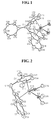
- Fig. 1 shows an X-ray diffraction crystal structure of the obtained metallocene compound.
- Example 7 Copolymerization of ethylene and norbornene
- Example 7 The same procedure as in Example 7 was carried out, with the pressure changed to 30 psi. 8.5 g of copolymer was obtained.
- the T g value determined by DSC was 182 °C.
- Example 7 The same procedure as in Example 7 was carried out, with the pressure changed to 100 psi. 32.9 g of copolymer was obtained.
- the T g value determined by DSC was 149 °C.
- Example 7 The same procedure as in Example 7 was carried out, with the catalyst amount changed to 4 mL. 41.2 g of copolymer was obtained. The T g value determined by DSC was 174 °C.
- Example 7 The same procedure as in Example 7 was carried out, with the reaction temperature changed to 30 °C. 11.5 g of copolymer was obtained.
- the T g value determined by DSC was 157 °C.
- Example 7 The same procedure as in Example 7 was carried out, with the norbornene concentration changed to 80 %. 34.5 g of copolymer was obtained.
- the T g value determined by DSC was 202 °C.
- Example 7 The same procedure as in Example 7 was carried out, with the norbornene solution changed to a 30 % solution. 16.5 g of copolymer was obtained. The T g value determined by DSC was 162 °C.
- Example 7 The same procedure as in Example 7 was carried out, using isopropylene (9-fluorenyl)-cyclopentadienylzirconium dichloride, which is commercially available from Boulder, as the polymerization catalyst. 12.8 g of copolymer was obtained. The T g value determined by DSC was 170 °C.
- the ketal-substituted compound of 2-bromo-3-methyl-2-cyclopenten-1- one (10.3g, 47.5mmol) prepared in Example 1 was put in a Schlenk flask containing a tetrahydrofuran solution (120mL). While keeping the temperature of the flask at -78 °C, n -butyllithium (13.17g, 47.5mmol) was added dropwise, and the reaction mixture was stirred for 1 hour at the same temperature.
- Formaldehyde obtained by heating a mixture of p -formaldehyde (4.28g) and p -toluenesulfonic anhydride (2.23g) was added to the solution, while still maintaining the temperature at -78°C, using a Schlenk line under a condition of 100 °C and reduced pressure. Reaction was carried out for 3 hours. This solution was heated to room temperature and stirred for 10 minutes. Then, water (100mL) was added, and the tetrahydrofuran solvent was removed. The water layer was put in a separatory funnel, and the target compound was extracted using 100 mL of methylene chloride, four times.
- Example 14 The same procedure as in Example 14 was carried out using acetaldehyde instead of formaldehyde.
- 2-(hydroxymethyl)-3-methyl-2-cyclopentene-1-one (2.417 g, 19.16 mmol), prepared in example 14, was dissolved in methylene chloride (60 mL). Then, dihydropyran (4.02 g 47.9 mmol) and p -toluenesulfonic acid monohydrate (36 mg, 0.19 mmol) were added at room temperature. This solution was stirred for 2 hours, and then diluted with ethyl acetate (150 mL). The solution was neutralized with a saturated sodium bicarbonate solution (150 mL), and methylene chloride (200 mL) was added for extraction.
- Example 16 The same procedure as in Example 16 was carried out using 2-(1-hydroxyethyl)- 3-methyl-2-cyclopenten-1-one (1.53 g, 12.6 mmol) instead of 2-(hydroxymethyl)-3- methyl-2-cyclopenten-1-one to obtain 3-methyl-2-[(tetrahydropyranyloxy)ethyl]-2- cyclopenten-1-one (yield: 93 %).
- Example 18 The same procedure as in Example 18 was carried out using 3-methyl-2-[(tetrahydropyranyloxy)ethyl]-2-cyclopenten-1-one instead of 3-methyl-2- [(tetrahydropyranyloxy)methyl]-2-cyclopenten-1-one to obtain a 1,3-dimethyl-2-[1-(tetrahydropyranyl-2-oxy)ethyl]cyclopentadiene compound (yield: 77 %).
- Example 20 The same procedure as in Example 20 was carried out using 2-(1-hydroxyethyl)-3-methyl-2-cyclopenten-1-one instead of 2-(hydroxymethyl)-3-methyl-2-cyclopenten-1-one and adding cyclopentadienyl sodium instead of indenyllithium to obtain 2-(1-cyclopentadienyl)-1,3-dimethylcyclopentadiene (yield: 64 %).
- the 2-(indenylmethyl)-1,3-dimethylcyclopentadiene compound (1.72 g, 7.76 mmol) prepared in Example 20 was dissolved in cold diethyl ether (4.0 mL, -30 °C). Then, n-butyllithium (5.29 g, 2.5M, 15.5 mmol) was added to the solution dropwise. After 12 hours of reaction, the solvent was removed under reduced pressure. The remainder was washed with pentane and dried to obtain a dilithium salt compound of 2-(indenylmethyl)-1,3-dimethylcyclopentadiene (1.45 g, yield: 80 %).
- the prepared compound (0.5 g, 2.14 mmol) was dissolved in 15 mL of tetrahydrofuran and cooled to -30 C.
- a ZrCl 2 (NMe 2 ) 2 (DME) solution obtained by dissolving 15 mL of tetrahydrofuran therein and cooling to -30 °C was quickly added to the lithium salt and stirred at room temperature for 12 hours.
- Fig. 2 shows an X-ray diffraction crystal structure of the metallocene compound.
- the 2-(1-cyclopentadienyl)-1,3-dimethylcyclopentadiene compound (2.17 g, 11.6 mmol) prepared in Example 21 was dissolved in cold diethyl ether (50 mL, -30 °C). After adding methyllithium (14.6 mL, 23.2 mmol), the solution was stirred for 12 hours. The obtained compound was filtered and washed with diethyl ether to obtain a dilithium salt of 2-(1-cyclopentadienyl)-1,3-dimethylcyclopentadiene (yield: 95 %).
- the obtained lithium salt (900 mg, 3.6 mmol) was dissolved in 9 mL of pyridine. Then, ZrCl 2 (NEt 2 ) 2 (THF) 2 (1.62 g, 3.60 mmol) was added at room temperature. This solution was stirred for 12 hours. The solvent was removed under reduced pressure and the residue was dissolved in pentane and filtered through diatomite. The solution was saturated and let alone at -30 °C for 12 hours to obtain a yellow crystal (920 mg, yield: 49 %).
- Example 24 The same procedure as in Example 24 was carried out, using Ti(NMe 2 ) 2 Cl 2 instead of Zr(NMe 2 ) 2 Cl 2 .
- Example 26 The procedure of Example 26 was carried out using bis(diethylamido) ethylidene(cyclopentadienyl)(1,3-dimethylcyclopentadienyl)titanium prepared in Example 25 instead of bis(diethylamido)ethylidene(cyclopentadienyl)(1,3-dimethylcyclopentadienyl)zirconium.
- Fig. 4 shows an X-ray diffraction crystal structure of the metallocene compound.
- Example 28 Copolymerization of ethylene and norbornene
- a 70 mL glass reactor containing 70 mL of 3.54M norbonene toluene solution was kept at 60 °C.
- An activated catalyst obtained by mixing 0.5 ⁇ mol of [methylene( ⁇ 5 -indenyl)( ⁇ 5 -1,3-dimethylcyclopentadienyl)]zirconium dichloride and 2 mmol of MAO and stirring them for 15 minutes was added using a syringe.
- polymerization was carried out for 20 minutes while applying an ethylene gas at 100 psig.
- the polymerization solution was diluted with acetone.
- the obtained polymer was filtered and washed several times with acetone. The remaining solvent was removed under reduced pressure to obtain the polymer.
- the glass transition temperature and molecular weight of the obtained polymer are shown in Table 1.
- Fig. 5 shows an X-ray diffraction crystal structure of the metallocene compound.
- Copolymerization was carried out using the same reactor, norbonene solution, and ethylene pressure as in Example 28, changing the catalyst and polymerization condition.
- the procedure of obtaining polymer after polymerization was the same as in Example 28.
- the polymerization catalyst used, polymerization condition, and polymerization results are shown in Table 1. Table 1.
- Ethylene polymerization was carried out using the metallocene compounds prepared in Examples 23, 26, and 27, by the method of Example 6.
- the polymerization catalyst used, polymerization condition, and polymerization results are shown in Table 2.
- Table 2. Ethylene polymerization result a Example Catalyst Time (min) Temperature (°C) b Activity c M w M w /M n 35 A 10 60 43 140000 1.64 36 A 5 60 35 163000 1.70 37 B 8 60 15 235000 2.12 38 C 5 60 57.6 246000 2.01 *
- C Ethylidene(cyclopentadienyl)(1,3-dimethylcycl
- a metallocene catalyst having only one bridge carbon at the cyclopentadienyl ligand and a substituent at the ⁇ -position to the bridge carbon was prepared from a fulvene derivative having substituents at the 1- and 4-positions.
- the metallocene catalysts of Examples 7 to 13, which have a substituent at the ⁇ -position of the cyclopentadienyl group only showed better copolymerization activity and copolymerization ability for cyclic olefins having large steric hindrance like norbornene, than the isopropylene 9- fluorenylcyclopentadienylzirconium dichloride catalyst used in Comparative Examples 2 to 4.
- novel fulvene compound of the present invention which has substituents at the 1- and 4-positions, can be used for an intermediate for synthesis of natural product s, for a medicine intermediate, or for a starting material for syntheses of metallocene catalysts having cyclopentadienyl groups.
- the bridged metallocene derivative obtained from the fulvene derivative can be used for olefin polymerization, when mixed with an aluminum compound or a boron compound. Since the metallocene catalyst prepared by the present invention has less steric hindrance and offers better electronic effects than the metallocene catalyst prepared by the conventional method, it is useful for copolymerization of large monomers, such as a cyclic olefin copolymer (COC).
- COC cyclic olefin copolymer
Landscapes
- Chemical & Material Sciences (AREA)
- Organic Chemistry (AREA)
- Health & Medical Sciences (AREA)
- Chemical Kinetics & Catalysis (AREA)
- Medicinal Chemistry (AREA)
- Polymers & Plastics (AREA)
- Transition And Organic Metals Composition Catalysts For Addition Polymerization (AREA)
- Organic Low-Molecular-Weight Compounds And Preparation Thereof (AREA)
- Heterocyclic Compounds That Contain Two Or More Ring Oxygen Atoms (AREA)
- Addition Polymer Or Copolymer, Post-Treatments, Or Chemical Modifications (AREA)
Description
- The present invention relates to a novel fulvene compound and a preparation method thereof, and more particularly to a fulvene compound having substituted groups in the 1- and 4-positions prepared from an unsaturated ketone having a substituted group in the β-position and a halogen atom in the α-position, and a preparation method thereof. The present invention allows to obtain a metallocene catalyst having a substituted group in the α-position carbon of the bridge of the cyclopentadienyl group made only by reaction of a fulvene compound and an anion group including the cyclopentadienyl group, and allows to obtain a olefin copolymer using the same.
- The fulvene compound is a very important intermediate for synthesizing natural product s or transition metal catalysts having cyclopentadienyl groups. A variety of information is given in Chemical Review, 1968, 68, 41 regarding the synthesis and reaction of fulvenes.
- In general, fulvene is prepared by the reaction of a cyclopentadiene anion and a ketone or an aldehyde. The cyclopentadiene anion may be reacted with an electrophilic carbonyl compound, or cyclopentadiene may be reacted with an electrophile in the presence of a base such as sodium ethoxide.
- Also, the Wittig reaction can be used. However, the most recent preparation method is to obtain a fulvene derivative by reacting a cyclopentadiene derivative with an electrophile in the presence of pyrrolidine (Journal of Organic Chemistry 1984, 49, 1849).
- The fulvene compound can be purified by column chromatography for a smaller scale, and by distillation or recrystallization for a larger scale.
- Generally, a fulvene compound is prepared by the following Schemes 1 and 2:


- In Schemes 1 and 2, the fulvene derivative may or may not have substituents on the pentagonal ring. In the conventional method, it is impossible to add substituted groups at the 1- and 4-positions of the pentagonal ring simultaneously, because a cyclopentadienyl anion or cyclopentadiene having a substituent is reacted with a ketone or an aldehyde. That is, in Scheme 1, the substituent is mainly added to the β-position instead of α-position of the cyclopentadiene due to steric hindrance. Also, in Scheme 2, when a cyclopentadienyl anion having two substituents in the 1- and 3-positions is reacted with an electrophile, a fulvene having substituents at the α- and β-positions is produced exclusively, but one having substituents at both α-positions is not produced.
- A group 4 transition metal compound having one or two cyclopentadienyl group(s) as a ligand may be activated with methylaluminoxane or a boron compound to be used as an olefin polymerization catalyst (
US Patent No. 5,580,939 ). This catalyst shows unique characteristics that cannot be offered by the conventional Ziegler-Natta catalyst. That is, it has a narrow molecular weight distribution, offers good reactivity to secondary monomers such as α-olefins or cyclic olefins, and the prepared copolymers have a uniform secondary monomer distribution. Moreover, stereoselectivity can be controlled by changing the substituent of the cyclopentadienyl ligand during α-olefin polymerization (Angew. Chem. Int. Ed. Engl. 1995, 34, 1143), and the degree of copolymerization, molecular weight, secondary monomer distribution, etc. can be controlled during copolymerization of ethylene and other olefins (US Patent No. 5,470,811 ). - With the development of catalyst systems, efforts to find catalysts suitable for copolymerization of ethylene and an α-olefin (LLDPE, VLDPE, EPM, and EPDM), for copolymerization of ethylene and a cyclic olefin, for copolymerization of an α-olefin and a cyclic olefin [cyclic olefin copolymer (COC)], and for copolymerization of ethylene, α-olefin, and styrene, are continuously being made. Such copolymerization requires catalysts with good activity, superior reactivity for the secondary monomer, and uniform secondary monomer distribution.
- Other than the Ziegler-Natta catalyst, metallocene catalysts are used for such copolymerization. Because the metallocene catalyst is more expensive than the Ziegler-Natta catalyst, it should have good activity to be economically viable. If the metallocene catalyst has good reactivity for the secondary monomer, it is possible to obtain a polymer comprising a lot of secondary monomers with a small amount of catalyst.
- As a result of much research on copolymerization using a variety of catalysts, it has been proved that ansa-type metallocene catalyst has good reactivity for the secondary monomer in general. According to F.J. Karol's research, when producing an LLDPE with a density of 0.93 using hexene as a secondary monomer in the presence of a bridged catalyst, an ethylene/hexene ratio of 0.004 to 0.005 is sufficient. However, for a non-bridged catalyst, the ethylene/hexane ratio should be at least 0.02 (1997. 4. 18. US Palm Coast, FL, Polymer Reaction Engineering Foundation Conference).
- Therefore, the catalyst having bridged ligand structure has attracted interest. Also, the catalyst having bridged ligand structure can control the molecular structure of the propylene polymer depending on the molecular symmetry.
- The catalysts having bridged ligand structure developed thus far can be classified into three types depending on the bridge type. The first is a catalyst in which two cyclopentadienyl ligands connected by the reaction of indene or fluorene with an electrophile such as an alkyl halide; the second is a silicon bridged catalyst connected by -SiR2-; and the third is a methylene bridged catalyst obtained by the reaction of fulvene and indene or fluorene. The following Schemes 3 to 5 are representative syntheses for these catalysts.


- There are two major factors that affect the activity of the metallocene catalyst and the stereostructure of the polymer. One is the steric hindrance of the catalyst, which determines how freely the monomer can approach the catalyst, and the other is the electronic effect, which determines how much the activated catalyst can be stabilized. If an electron-donating substituent such as an alkyl group is substituted on the cyclopentadienyl ring, it stabilizes the activated metallocene catalyst, and therefore offers advantages to polymerization.
- A variety of metallocene catalysts are prepared using common fulvene compounds as an intermediate. Among such catalysts are the metallocene derivatives having a cyclopentadienyl group and a fluorenyl group, which are prepared by Scheme 5. Among them, the one with the least steric hindrance is the one having no substituent on the cyclopentadienyl group (
US Patent No. 5,087,677 ). However, since the metallocene catalyst prepared by this method has no alkyl substituent, it has an insufficient electronic effect. - It is an object of the present invention to provide an intermediate of fulvene whose 1- and 4-positions can be substituted from an unsaturated ketone having a substituted group at the β-position and a halogen atom at the α-position.
- It is another object of the present invention to provide a fulvene derivative having substituted groups at the 1- and 4-positions prepared using the intermediate, and a preparation method thereof.
- To attain the objects, the present invention provides an intermediate of a fulvene compound represented by the following Chemical Formula 9:

- each of R2, R3, and R4 is individually or simultaneously a hydrogen; a C1 to C20 alkyl, alkenyl, alkylaryl, arylalkyl, or aryl; a C1 to C20 alkyl or aryl having an oxygen atom or a nitrogen atom; or a group 14 metalloid radical substituted by a hydrocarbyl, wherein R3 and R4 may be linked by an alkylidine radical including an alkyl or aryl radical to form a ring;
- R5 is a C1 to C20 alkyl, alkenyl, alkylaryl, arylalkyl, or aryl; a C1 to C20 alkyl or aryl having an oxygen atom or a nitrogen atom; or a group 14 metalloid radical substituted by a hydrocarbyl.
- The present invention also provides a fulvene compound represented by the following Chemical Formula 7:

- The present invention also provides a preparation method of a fulvene compound represented by Chemical Formula 7, which comprises:
- a) a step of lithiating a ketal (dioxolane group) derivative represented by the following Chemical Formula 13, reacting it with an electrophile represented by the following Chemical Formula 12, and then hydrolyzing it to obtain the compound represented by the following Chemical Formula 11;
- b) a step of reacting the compound represented by Chemical Formula 11 with a compound represented by the following Chemical Formula 10, or dihydropyran, or isobutene, to obtain the compound represented by the following Chemical Formula 9 by protecting the alcohol group; and
- c) a step of reacting (nucleophilic reaction) the fulvene intermediate represented by Chemical Formula 9 with an organometallic compound represented by the following Chemical Formula 8a or with an organometallic compound represented by the following Chemical Formula 8b:.

Chemical Formula 8a R1-M
Chemical Formula 8b R1-MgX

Chemical Formula 10 R5-Y


- each of R1, R2, R3, R4, and R5 is the same as defined above;
- X is a halogen atom;
- Y is a leaving group of the nucleophilic substitution, which is halogen, trifluoromethylsulfonate, or p-toluenesulfonate; and
- M is an alkali metal.
- The present invention allows the preparation of an intermediate for natural product synthesis, a medicine intermediate, or an intermediate of a metallocene catalyst for olefin polymerization prepared from the fulvene compound represented by Chemical Formula 7.
- The present invention also allows the preparation of a compound represented by the following Chemical Formula 5:

- each of R1, R2, R3, and R4 is the same as defined above; and
- A is fluorenyl or its derivative, indenyl or its derivative, a substituted or unsubstituted amido, or a substituted or unsubstituted phosphino.
- In the compound represented by Chemical Formula 5, if both R1 and R2 are methyl, and R3 and R4 are hydrogen simultaneously or individually or both of them are phenyl, it is preferable that A is fluorenyl or its derivative.
- The present invention allows to obtain a metallocene catalyst represented by the following Chemical Formula 1:

- each of R1, R2, R3, R4, and A is the same as defined above and A may also be cyclopentadienyl or its derivative;
- M1 is zirconium; and
- each of Q1 and Q2 is chloride.
- The metallocene catalyst represented by Chemical Formula 1 can be prepared by a preparation method which comprises:
- a) a step of reacting a fulvene compound represented by Chemical Formula 7 with a cyclopentadiene derivative to obtain the compound represented by Chemical Formula 5; and
- b) a step of reacting the compound represented by Chemical Formula 5 with zirconium tetrachloride:


- In Chemical Formula 5 and Chemical Formula 7, each of R1, R2, R3, R4, land A is the same as defined above.
-
-
Fig. 1 shows an X-ray diffraction crystal structure of benzylidene(fluorenyl) (1,3-dimethylcyclopentadienyl)zirconium dichloride prepared in Example 5. -
Fig. 2 shows an X-ray diffraction crystal structure of bis(dimethylamido) [methylene(η5-indenyl)(η5-1,3-dimethylcyclopentadienyl)]zirconium prepared in Example 22. -
Fig. 3 shows an X-ray diffraction crystal structure of ethylidene (cyclopentadienyl)(1,3-dimethylcyclopentadienyl)zirconium dichloride prepared in Example 26. -
Fig. 4 shows an X-ray diffraction crystal structure of ethylidene (cyclopentadienyl)(1,3-dimethylcyclopentadienyl)titanium dichloride prepared in Example 27. -
Fig. 5 shows an X-ray diffraction crystal structure of ([2-(t-butylamido) phenylmethyl]-1,3-dimethylcyclopentadienyl)zirconium dichloride prepared in Example 31. - Hereinafter, the present invention is described in more detail.
- The present invention relates to a novel fulvene compound having substituted groups at the 1- and 4-positions, and a preparation method thereof. The present invention also relates to a metallocene catalyst using the fulvene compound, a preparation method thereof, and a preparation method of a polyolefin copolymer using the same.
- Differing from the conventional preparation of fulvene by the reaction of a cyclopentadienyl anion or cyclopentadiene with an electrophile, the present invention is characterized by preparing a fulvene compound from an unsaturated ketone having a substituted group at the β-position and a halogen atom at the α-position. That is, a ketone is substituted by a ketal protecting group and is converted into a lithium salt. It is then reacted with an aldehyde or a ketone to obtain an α,β-unsaturated ketone having a hydroxy group. Then, through a nucleophilic addition reaction, a novel organic fulvene compound having substituted groups at the 1- and 4-positions, which is represented by Chemical Formula 7, is obtained. The fulvene compound prepared by the present invention can be used for an intermediate for natural product synthesis, a medicine intermediate, or an olefin intermediate for olefin polymerization using a metallocene catalyst.
- In the fulvene compound, represented by Chemical Formula 7, R1 and R2 are not hydrogens, and preferably at least one of R3 and R4 is an aryl radical. Also preferably, R1 and R2 are methyl radicals, and both R3 and R4 are phenyls, or one is a phenyl and the other is hydrogen.
- The fulvene compound represented by Chemical Formula 7 is prepared by the following Scheme 6:

- As shown in Scheme 6, a novel intermediate represented by Chemical Formula 9 is prepared from an unsaturated ketone (Chemical Formula 14) having a substituted group R2 at the β-position and a halogen atom at the α-position, in order to prepare a fulvene compound having substituted groups at the 1- and 4-positions, which is represented by Chemical Formula 7.
- For this purpose, the carbonyl group of a commercially available unsaturated ketone (Chemical Formula 14) is converted to prepare a ketal (dioxolane group) derivative represented by Chemical Formula 13. In Chemical Formula 14, X is a halogen atom including iodine, bromine, and chlorine. Preferably, X is Br.
- Then, the compound represented by Chemical Formula 13 is made into a lithium salt using butyllithium, etc. at a low temperature (preferably -78 °C) and under a dehydrated atmosphere. It is then reacted with an electrophile represented by Chemical Formula 12 to obtain the compound represented by Chemical Formula 11. R3 and R4 are determined by the structure of the electrophile. The ketal group (dioxolane group) protecting the carbonyl is easily deprotected during the purification process, e.g., column chromatography. Or, it is easily hydrolyzed by an acid treatment to give the compound represented by Chemical Formula 11.
- Then, the alcohol group of the compound represented by Chemical Formula 11 is protected to prepare the compound represented by Chemical Formula 9. That is, the compound represented by Chemical Formula 11 is reacted with a compound represented by Chemical Formula 10, dihydropyran, or isobutene, which have a double bond, and are used for alcohol group protection, to prepare the compound represented by Chemical Formula 9. In Chemical Formula 10, the protecting group R5 may be diverse. Preferably, dihydropyran which is known as the best protecting group is used, or an anion of the compound represented by Chemical Formula 11 is reacted with alkyl halide. Or, any protecting groups having an ether linkage may be used.
- The ketone compound represented by Chemical Formula 9 is reactive to nucleophile and can be converted to a tertiary alcohol under attack by organometallic compound represented by the following Chemical Formula 8a or Chemical Formula 8b. Then, it is dehydrated by acid treatment to obtain a cyclopentadiene having an alcohol protecting group R5.
Chemical Formula 8a R1-M
Chemical Formula 8b R1-MgX
wherein - each of R1, X, and M is the same as defined above; and
- M is preferably Li or Na.
- The R1 group of the obtained fulvene compound can be controlled by the organometallic compound used. Preferably, a C1 to C20 alkyllithium or aryllithium represented by Chemical Formula 8a is used for the organometallic compound. And more preferably, a Grignard reagent represented by Chemical Formula 8b is used.
- Then, the cyclopentadiene is dehydrogenated with a strong base like sodium ethoxide to obtain a cyclopentadienyl anion, so that the protecting group like the tetrahydropyranyl (THP) group is removed. Or, an ether compound is prepared from an alkyl halide and an alcohol, so that the alkoxide anion is removed.
- From the fulvene compound having substituted groups at the 1- and 4-positions, which is prepared by the present invention, an intermediate for natural product syntheses, a medicine intermediate, or a metallocene catalyst having a cyclopentadienyl group can be prepared. The metallocene catalyst can be used for olefin polymerization in combination with an aluminum compound or a boron compound.
- The present invention also allows preparing a bridged metallocene catalyst having only one carbon atom bridge of two cyclopentadienyl ligands and substituent(s) only at the α-position to the bridgehead carbon, which is prepared from the fulvene derivative having substitutuent(s) at the 1-and/or 4-positions. The present invention also allows preparing an ethylene polymer and a copolymer or a cyclic olefin copolymer using the metallocene catalyst.
- The bridged metallocene catalyst having a substituent at the α-position of the cyclopentadienyl group only has many advantages.
- Particularly, with regard to preparation of a cyclic olefin copolymer, the part, where monomers are bound and the polymer grows is the opposite side of the bridge, which is close to the β-position of the cyclopentadienyl group. Since the metallocene catalyst has substituents only at the α-position, the steric hindrance caused by the substituents is minimized but the catalyst's electronic effect is optimized, thereby the polymerization activity is increased. Therefore, the metallocene catalyst, which has no substituent at the β-position, easily accepts a monomer with fairly large steric hindrance, and the copolymerization becomes facile.
- In the metallocene compound represented by Chemical Formula 1, A is preferably cyclopentadienyl, indenyl, or fluorenyl, or a derivative thereof substituted by one or more C1 to C20 alkyl, alkenyl, alkylaryl, arylalkyl, or aryl. Both R1 and R2 are preferably methyl. Also preferably, in the metallocene catalyst represented by Chemical Formula 1, A is a substituted or unsubstituted amido group, and all of R1, R2, R3, and R4 are C1 to C20 alkyls or aryls. In the metallocene compound represented by Chemical Formula 1, it is further preferable that A is a substituted or unsubstituted phosphino group, and all of R1, R2, R3, and R4 are C1 to C20 alkyls or aryls.
- The metallocene compound represented by Chemical Formula 1 is prepared by the following Scheme 7:

- As shown in Scheme 7, the fulvene compound having substituted groups at the 2- and 5-positions (Chemical Formula 7) is reacted with an anion of a cyclopentadiene derivative to obtain the compound represented by Chemical Formula 5. For the cyclopentadiene derivative, cyclopentadienyl or its derivative, indenyl or its derivative, fluorenyl or its derivative, a substituted or unsubstituted amido group, or a substituted or unsubstituted phosphino group may be used.
- Then, the compound represented by Chemical Formula 5 is prepared into the metallocene compound represented by Chemical Formula 1 by a variety of methods reported in the literature. Preferably, the compound represented by Chemical Formula 5 may be reacted with zirconium tetrachloride.
- To take a preferred example, the compound represented by Chemical Formula 5 is treated with 2 equivalents of n-butyllithium to dehydrogenate the cyclopentadiene and the fluorine group to form a cyclopentadienyl anion and a fluorenyl anion, respectively. Then, through a reaction with a metal halide compound, etc., a bridged metallocene compound comprising a cyclopentadienyl group which has only one carbon at the bridge position and a substituent at the α-position only, can be prepared.
- The present invention allows the manufacture of an ethylenic olefin polymer and a copolymer, which comprises a step of polymerizing one or more kinds of monomers selected from a group consisting of ethylene, an α-olefin, a diene monomer, a triene monomer, and a styrene monomer in the presence of the metallocene catalyst represented by Chemical Formula 1.
- The present invention also allows obtaining a cyclic olefin copolymer (COC) prepared by the polymerization of an α-olefin and a cyclic olefin using the metallocene compound represented by Chemical Formula 1 as a catalyst.
- And, one or more compounds selected from a group consisting of a linear, cyclic, or clustered compound represented by the following Chemical
- Formula 2; a compound represented by the following Chemical Formula 3; and a compound represented by the following Chemical Formula 4a or Chemical Formula 4b can be used as a cocatalyst in cyclic olefin copolymerization:
Chemical Formula 2 -[Al(R6)-O]a-
wherein - R6 is a halogen, a C1 to C20 hydrocarbyl radical, or a C1 to C20 hydrocarbyl radical substituted by a halogen, individually or simultaneously; and
- a is an integer of 2 to 5000;
- N is a group 13 element; and
- each of three R6's is individually or simultaneously a halogen, a C1 to C20 hydrocarbyl radical, or a C1 to C20 hydrocarbyl radical substituted by a halogen;
- L is a neutral or cationic Lewis acid;
- N is a group 13 element; and
- each of four E's is individually or simultaneously a C6 to C20 aryl radical substituted by one or more substituents selected from a group consisting of a halogen, a C1 to C20 hydrocarbyl, a C1 to C20 alkoxy, and a phenoxy radical.
- For the compound represented by Chemical Formula 2, there are methylaluminoxane, ethylaluminoxane, isobutylaluminoxane, butylaluminoxane, and so forth.
- For the alkyl metal compound represented by Chemical Formula 3, there are trimethylaluminum, triethylaluminum, triisobutylaluminum, tripropylaluminum, tributylaluminum, dimethylchloroaluminum, triisopropylaluminum, tri-t-butylaluminum, tricyclopentylaluminum, tripentylaluminum, triisopentylaluminum, trihexylaluminum, ethyldimethylaluminum, methyldiethylaluminum, triphenylaluminum, tri-p-tolylaluminum, dimethylaluminum methoxide, dimethylaluminum ethoxide, trimethylboron, triethylboron, triisobutylboron, tripropylboron, tributylboron, tris(pentafluorophenyl)boron, and so forth.
- For the compound represented by Chemical Formula 4a or 4b, there are triethylammonium tetraphenylborate, tributylammonium tetraphenylborate, trimethylammonium tetraphenylborate, tripropylammonium tetraphenylborate, trimethylammonium tetra(p-tolyl)borate, trimethylammonium tetra(o,p-dimethylphenyl)borate, tributylammonium tetra(p-trifluoromethylphenyl)borate, trimethylammonium tetra(p-trifluoromethylphenyl)borate, tributylammonium tetra(pentafluorophenyl)borate, N,N-dimethylanilinium tetraphenylborate, N,N-diethylanilinium tetraphenylborate, N,N-dimethylanilinium tetra(pentafluorophenyl)borate, diethylammonium tetra(pentafluorophenyl)borate, triphenylphosphonium tetraphenylborate, trimethylphosphonium tetraphenylborate, triethylammonium tetraphenylaluminate, tributylammonium tetraphenylaluminate, trimethylammonium tetraphenylaluminate, tripropylammonium tetraphenylaluminate, trimethylammonium tetra(p-tolyl)aluminate, tripropylammonium tetra(p-tolyl)aluminate, triethylammonium tetra(o,p-dimethylphenyl)aluminate, tributylammonium tetra(p-trifluoromethylphenyl)aluminate, trimethylammonium tetra(p-trifluoromethylphenyl)aluminate, tributylammonium tetrapentafluorophenylaluminate, N,N-dimethylanilinium tetraphenylaluminate, N,N-diethylanilinium tetraphenylaluminate, N,N-diethylanilinium tetra(pentafluorophenyl)aluminate, diethylammonium tetra(pentafluorophenyl)aluminate, triphenylphosphonium tetraphenylaluminate, trimethylphosphonium tetraphenylaluminate, triethylammonium tetraphenylaluminate, tributylammonium tetraphenylaluminate, trimethylammonium tetraphenylborate, tripropylammonium tetraphenylborate, trimethylammonium tetra(p-tolyl)borate, tripropylammonium tetra(p-tolyl)borate, triethylammonium tetra(o,p-dimethylphenyl)borate, trimethylammonium tetra(o,p-dimethylphenyl)borate, tributylammonium tetra(p-trifluoromethylphenyl)borate, trimethylammonium tetra(p-trifluoromethylphenyl)borate, tributylammonium tetra(pentafluorophenyl)borate, N,N-dimethylanilinium tetraphenylborate, N,N-diethylanilinium tetraphenylborate, N,N-dimethylanilinium tetra(pentafluorophenyl)borate, diethylammonium tetra(pentafluorophenyl)borate, triphenylphosphonium tetraphenylborate, triphenylcarbonium tetra(p-trifluoromethylphenyl)borate, triphenylcarbonium tetra(pentafluorophenyl)borate, and so forth.
- The metallocene catalyst represented by Chemical Formula 1 and the cocatalyst represented by Chemical Formulas 2 to 4 may be used while supported on silica or alumina.
- For olefin monomers that are polymerizable using the catalyst and the cocatalyst, there are ethylene, α-olefins, cyclic olefins, and so forth. Also, a dienic olefin monomer or a trienic olefin monomer having more than two double bonds can be used in polymerization. For such monomers, there are ethylene, propylene, 1-butene, 1-pentene, 4-methyl-1-pentene, 1-hexene, 1-heptene, 1-decene, 1-undecene, 1-dodecene, 1-tetradecene, 1-hexadecene, 1-icocene, norbornene, norbonadiene, ethylidenenorbornene, phenyl norbornene, vinylnorbornene, dicyclopentadiene, 1,4-butadiene, 1,5-pentadiene, 1,6-hexadiene, styrene, α-methylstyrene, divinylbenzene, 3-chloromethylstyrene, and so forth. More than one kind of these monomers can be used to prepare a copolymer.
- The novel fulvene compound of the present invention which has substituted groups at the 1- and 4-positions can be used as an intermediate for natural product synthesis, a medicine intermediate, or a starting material for preparation of a metallocene catalyst having a cyclopentadienyl group.
- Hereinafter, the present invention is described in more detail through examples. However, the following examples are only for the understanding of the present invention, and the present invention is not limited by the following examples.
- Organic reagents and solvents required for preparation of the fulvene compound and the catalyst were purchased from Aldrich and Merck and purified by the standard method. Contact with air and moisture was prevented in all synthesis steps to increase experimental reproducibility. The structure of compounds was identified with 300 MHz Bruker NMR study.
- From 2-bromo-3-methyl-2-cyclopenten-1-one purchased from Aldrich, ketal-substituted 2-bromo-3-methyl-2-cyclopentene-1-one was prepared according to the method reported in the literature (J. Am. Chem. Soc. 1988, 110, 4741)).
- 0.550 g (2.54 mmol) of the ketal-substituted 2-bromo-3-methyl-2-cyclopentene-1-one prepared in Example 1 was dissolved in 9.0 mL of tetrahydrofuran. Then, 1.02 mL (2.54 mmol) of 2.5M n-butyllithium was added dropwise to the solution at -78 °C. The solution was reacted for 1 hour to obtain a lithium salt. 0.270 g (2.54 mmol) of benzaldehyde was slowly added to the reaction mixture, and the solution was reacted for about 1 hour at the same temperature. The reaction mixture was poured into a separatory funnel containing 10 mL of distilled water. Then, the solution was extracted with 30 mL of ethyl acetate. After removing residual moisture with anhydrous magnesium sulfate, the solvent was removed in vacuo. The obtained product, which included impurities, was separated by column chromatography eluted with a 3:1 (v/v) mixture solution of ethyl acetate and n-hexane. The obtained ketal protecting group (dioxolane group) is easily converted to a ketone compound due to the silica gel during the column chromatography. The yield of the obtained compound was 0.440 g (96%).
- 1H NMR (CDCl3): δ 7.20-7.36 (m, 5 H), 5.59 (d, J = 9.1 Hz, 1 H, OH), 4.58 (d, J = 9.1 Hz, 1H, CH-O), 2.60-2.50 (m, 2 H), 2.45-2.35(m, 2 H), 2.10 (s, 3 H, CH3). 13C NMR(CDCl3): δ 210.60 (carbonyl), 172.18, 142.85, 140.04, 128.48, 127.44, 125.73, 70.14 (C-OH), 34.58, 32.07, 17.49. IR (neat): 3420 (br, OH), 1690, 1639 (C=C-C=O) cm-1.
- 0.440 g (2.17 mmol) of the 2-(hydroxy-phenyl-methyl)-3-methyl-2-cyclopentene-1-one prepared in Example 2 was dissolved in 9.0 mL of methylene chloride. After adding 0.456 g (5.43mmol) of dihydropyran at 20 °C, 4.13 mg (0.0217mmol) of p-toluenesulfonic acid monohydrate was added. Then, the solution was stirred for 2 hours. The obtained reaction mixture was diluted by adding 30 mL of ethyl acetate, and then washed with 5 mL of saturated sodium bicarbonate solution twice. The solution was separated using a separatory funnel. From the organic layer, remaining moisture was removed with magnesium sulfate, and the solvent was removed in vacuo. The obtained product, which included impurities, was separated with column chromatography eluted with a 3:1 (v/v) mixture solution of ethyl acetate and n-hexane. The yield of the obtained compound was 0.530 g (85 %).
- 0.530 g (1.85 mmol) of the 3-methyl-2-[phenyl-(2-tetrahydropyranyloxo)- methyl]-2-cyclopenten-1-one prepared in Example 3 was dissolved in 10.0 mL of diethyl ether in a Schlenk flask. Then, 1.48 mL (2.22 mmol) of 1.5M methyllithium was added dropwise at -78 °C. The temperature was then increased to room temperature, and the reaction was carried out for 7 hours. 10mL of distilled water was added to the obtained reaction mixture, and diethyl ether was removed in vacuo. After adding 20 mL of ethyl acetate to the mixture solution, the organic layer was taken using a separatory funnel. After adding 20 mL of 2N hydrochloric acid, the separatory funnel was stirred vigorously for 3 minutes. The aqueous layer was discarded and the organic layer was taken. After adding 20 mL of sodium bicarbonate, the aqueous layer was discarded and the organic layer was taken again. After removing remaining moisture with magnesium sulfate, the solvent was removed completely in vacuo. The obtained product, which included impurities, was dissolved in 5 mL of tetrahydrofuran. Then, 46 mg (2.0 mmol) of NaH and 0.5 mL of methanol were added. After the solution turned red, reaction was carried out at room temperature for 3 hours. Then, the reaction mixture was added to a separatory funnel containing 40 mL each of water and n-hexane. After taking the organic layer, remaining moisture was removed with magnesium sulfate, and the solvent was removed using a vacuum distiller. The obtained product, which included impurities, was separated with column chromatography using a 10:1 (v/v) mixture solution of ethyl acetate and n-hexane. The yield of the obtained compound was 0.200 g (63 %).
- 1H NMR(CDCl3): δ 7.37-7.33 (m, 5 H, ph-H), 7.29 (s, 1 H, ph-CH), 6.08 (dq, J = 3.3, 1.7 Hz, 1 H, CH3-C=CH), 6.01 (dq, J = 3.3, 1.7 Hz, 1 H, CH3-C=CH), 2.10 (s, 3 H, CH3), 1.71 (s, 3 H, CH3). 13C NMR (CDCl3): δ 146.33, 136.67, 134.55, 133.52, 132.05, 130.01, 129.32, 129.03, 127.86, 126.97, 16.55 (CH3), 12.66 (CH3).
- Differently from the conventional preparation method of fulvene compound through a reaction of a cyclopentadienyl anion or cyclopentadiene with an electrophile, the present invention provides new preparation method of fulvene compound which comprises converting an α-bromoketone having a substituted group at the β-position into a lithium salt of a ketal derivative, followed by transformation into a fulvene by reacting it with an aldehyde or a ketone.
- 0.097 g (0.600 mmol) of fluorene was dissolved in 3.0 mL of tetrahydrofuran. After adding 0.24 mL (2.5M in hexane, 0.600 mmol) of n-butyllithium dropwise at -30 °C, the reaction was carried out for 1 hour. 0.110 g (0.600 mmol) of the fulvene compound prepared in Example 4 was added at -30 °C, and the solution was reacted at room temperature for about 2 hours. The reaction solution was poured into a separatory funnel containing 4 mL of saturated ammonium chloride solution, and the organic layer was taken with diethyl ether. The remaining moisture was removed from the obtained organic layer with magnesium sulfate, and the solvent was removed in vacuo. The obtained product was separated from impurities with column chromatography eluted with a 10:1 (v/v) mixture solution of n-hexane and toluene. The yield of the obtained compound was 0.160 g (76 %).
- 1H NMR (C6D6): δ 7.65(d, J = 7.4 Hz, 2 H), 7.4-7.0 (m, 9 H), 6.94-6.89 (m, 2 H), 5.81 (sextet, 1 H, J = 1.8 Hz, vinyl-H), 4.83(d, J = 11.2 Hz, 1 H, Ph-CH or Ph-CHCH), 3.91 (d, J = 11.2 Hz, 1 H, Ph-CH or Ph-CHCH), 2.60 (quintet, J = 1.8 Hz, 2 H, CH2), 1.86 (q, J = 1.8 Hz, 3 H, CH3), 1.63(s, 3 H). 13C NMR (C6D6): δ 147.22, 146.67, 144.49, 143.38, 142.41, 141.60, 138.97, 137.88, 129.98, 129.33, 127.47, 126.86, 126.73, 126.66, 126.62, 126.44, 125.76, 119.96, 119.83, 49.01, 40.79, 44.42, 16.73, 14.92.
- 0.108 g (0.310 mmol) of the 2-[α-fluorenylbenzyl]-1,3-, dimethylcyclopentadiene prepared in 1) was dissolved in 3.0 mL of tetrahydrofuran. After adding 0.25 mL (2.5 M in hexane, 0.620 mmol) of n-butyllithium dropwise at -30 °C, the solution was stirred for 12 hours. After removing the solvent from the obtained mixture solution in vacuo, it was washed with 4.0 mL of n-pentane and 4.0 mL of benzene. 0.072 mg (0.31 mmol) of zirconium tetrachloride was reacted with the red lithium salt obtained above for 12 hours in 8.0 mL of n-pentane solvent. After the reaction was completed, the solvent was removed from the obtained mixture solution. Then, the solution was extracted with benzene to obtain 12 g (yield: 76%) of metallocene compound.
Fig. 1 shows an X-ray diffraction crystal structure of the obtained metallocene compound. - 1H NMR (CD2Cl2): δ 8.1-6.9(m, 13H), 6.80 (s, 1 H), 6.28-6.19(dd, 2H), 2.21 (s, 3H), 1.82(s, 3H). 13C-NMR(CD2Cl2): δ 137.67, 128.43, 127.96, 127.75, 127.56, 127.10, 126.45, 126.28, 126.20, 124.94, 124.65, 124.41, 124.24, 124.19, 123.52, 123.41, 123.19, 122.81, 122.34, 121.22, 98.82, 73.59, 41.25, 18.80, 16.34.
- 200 mL of toluene solution was put in a high-pressure reactor. Then, 1.8 mL of methylaluminoxane (toluene solution 6.9 wt% Al, density = 0.88 g/ml, Akzo) was added to the reactor. The reactor was put into a 70 °C constant-temperature bath and let alone for 30 minutes, so that the temperature of the reactor became identical to that of the bath. 2 mL of the catalyst (concentration = 1 µM, toluene solution) prepared in Example 5 was added to the reactor. While applying ethylene at a pressure of 4 atm, the reactor was stirred at 200 rpm. 20 minutes later, the obtained white solid compound was filtered. The solvent was discarded and the filtrate was stirred overnight at room temperature after adding acetone. The solution was filtered to obtain a white solid polymer. Then, it was dried under reduced pressure to obtain 8.5 g of polyethylene polymer.
- Norbornene was dissolved in toluene to make a 56 wt% solution. 200 mL of this solution was put in a high-pressure reactor. Then, 1.8mL of methylaluminoxane (toluene solution 6.9 wt% Al, density = 0.88c/ml, Akzo) was added to the reactor. The reactor was put in a 70 °C constant-temperature bath and let alone for 30 minutes, so that the temperature of the reactor became identical to that of the bath. 2 mL of the catalyst (concentration = 1 µM, toluene solution) prepared in Example 5 was added to the reactor. While applying ethylene at a pressure of 4 atm, the reactor was stirred at 200 rpm. 20 minutes later, the solution was diluted in 600 mL of toluene, and was again diluted with acetone to obtain a white solid compound. The solvent was removed by filtration, and acetone was again added. After stirring at room temperature for 30 minutes, the solution was filtered to give a white solid polymer. Then, it was dried under reduced pressure to obtain 23.0 g of copolymer. The Tg value determined by DSC was 170 °C.
- The same procedure as in Example 7 was carried out, with the pressure changed to 30 psi. 8.5 g of copolymer was obtained. The Tg value determined by DSC was 182 °C.
- The same procedure as in Example 7 was carried out, with the pressure changed to 100 psi. 32.9 g of copolymer was obtained. The Tg value determined by DSC was 149 °C.
- The same procedure as in Example 7 was carried out, with the catalyst amount changed to 4 mL. 41.2 g of copolymer was obtained. The Tg value determined by DSC was 174 °C.
- The same procedure as in Example 7 was carried out, with the reaction temperature changed to 30 °C. 11.5 g of copolymer was obtained. The Tg value determined by DSC was 157 °C.
- The same procedure as in Example 7 was carried out, with the norbornene concentration changed to 80 %. 34.5 g of copolymer was obtained. The Tg value determined by DSC was 202 °C.
- The same procedure as in Example 7 was carried out, with the norbornene solution changed to a 30 % solution. 16.5 g of copolymer was obtained. The Tg value determined by DSC was 162 °C.
- The same procedure as in Example 7 was carried out, using isopropylene (9-fluorenyl)-cyclopentadienylzirconium dichloride, which is commercially available from Boulder, as the polymerization catalyst. 12.8 g of copolymer was obtained. The Tg value determined by DSC was 170 °C.
- The same procedure as in Comparative Example 1 was carried out, with the reaction pressure changed to 30 psi. 6.9 g of copolymer was obtained. The Tg value determined by DSC was 177 °C.
- The same procedure as in Comparative Example 1 was carried out, with the catalyst amount increased to 4 mL. 22.4 g of copolymer was obtained. The Tg value determined by DSC was 173 °C.
- The ketal-substituted compound of 2-bromo-3-methyl-2-cyclopenten-1- one (10.3g, 47.5mmol) prepared in Example 1 was put in a Schlenk flask containing a tetrahydrofuran solution (120mL). While keeping the temperature of the flask at -78 °C, n-butyllithium (13.17g, 47.5mmol) was added dropwise, and the reaction mixture was stirred for 1 hour at the same temperature. Formaldehyde obtained by heating a mixture of p-formaldehyde (4.28g) and p-toluenesulfonic anhydride (2.23g) was added to the solution, while still maintaining the temperature at -78°C, using a Schlenk line under a condition of 100 °C and reduced pressure. Reaction was carried out for 3 hours. This solution was heated to room temperature and stirred for 10 minutes. Then, water (100mL) was added, and the tetrahydrofuran solvent was removed. The water layer was put in a separatory funnel, and the target compound was extracted using 100 mL of methylene chloride, four times. From the methylene chloride solution, moisture was removed with magnesium sulfate, and the solvent was removed using a rotary evaporator. 5.57g of 2-(hydroxymethyl)-3-methyl-2-cyclopenten-1-one was obtained by column chromatography (hexane:ethyl acetate = 1:2) using silica.
- 1H NMR (CDCl3): δ 4.18 (d, J = 4.8 Hz, 2 H, OCH2), 3.44 (d, J = 4.8 Hz, OH), 2.50 - 2.42 (m, 2 H, CH2), 2.32 - 2.25 (m, 2 H, CH2), 2.04 (s, 3 H). 13C{1H} NMR (CDCl3): δ 209.59 (carbonyl); 173.55 (C=CCO), 138.18 (C=CCO), 54.10 (COH), 34.15 (CH2), 31.75 (CH2), 17.07 (CH3). IR (neat): 3400 (br, OH), 1689 and 1640 (C=C-C=O) cm-1. HRMS-EI m/z = M+ Calcd. (C7H10O2): 126.0678. Found: 126.0681.
- The same procedure as in Example 14 was carried out using acetaldehyde instead of formaldehyde. The target compound was obtained by column chromatography (hexane:ethyl acetate = 1:1) (yield: 95%).
- 1H NMR (CDCl3): δ 4.65 (dq, J = 9.6, 6.8 Hz, 1H, OCHCH3), 3.79 (d, J = 9.6Hz, 1H, OH), 2.54-2.52 (m, 2H, CH2), 2.41-2.38 (m, 2H, CH2), 2.08 (s, 3H, C=C-CH3 ), 1.41 (d, J = 6.8 Hz, 3H, OCHCH3). 13C{1H} NMR (CDCl3): δ 210.44 (C=O), 170.22, 141.15, 64.47, 34.71, 31.88, 23.47, 17.16. IR (neat): 3420 (br, OH), 1690 and 1640 (C=C-C=O) cm-1.
- 2-(hydroxymethyl)-3-methyl-2-cyclopentene-1-one (2.417 g, 19.16 mmol), prepared in example 14, was dissolved in methylene chloride (60 mL). Then, dihydropyran (4.02 g 47.9 mmol) and p-toluenesulfonic acid monohydrate (36 mg, 0.19 mmol) were added at room temperature. This solution was stirred for 2 hours, and then diluted with ethyl acetate (150 mL). The solution was neutralized with a saturated sodium bicarbonate solution (150 mL), and methylene chloride (200 mL) was added for extraction. After taking the organic layer, moisture was removed with magnesium sulfate, and the solvent was removed in vacuo. Pure 3-methyl-2-[(tetrahydropyranyloxy)methyl]-2-cyclopenten-1-one was obtained by column chromatography (hexane:ethyl acetate = 1:1) (yield: 94 %).
- 1H NMR (CDCl3): δ 4.64 (t, J = 3.4 Hz, 1 H, OCHO), 4.36 (d, J = 11.2 Hz, 1 H, CCH2O), 4.08 (d, J = 11.2 Hz, 1 H, CCH2O), 3.88 (ddd, J = 11.2, 8.0, 3.2 Hz, 1 H, OCH2CH2), 3.58 - 3.46 (m, 1 H, OCH2CH2), 2.60 - 2.50 (m, 2 H, CH2), 2.43 (2.35 (m, 2 H, CH2), 2.17 (s, 3 H, CH3), 1.84 (1.44 (m, 6 H) ppm. 13C{1H} NMR (CDCl3): (207.98 (carbonyl), 175.42 (C=CCO), 136.63 (C=CCO), 98.45 (OCHO), 62.09 (CH2O), 57.71 (CH2O), 34.39 (CH2), 32.00 (CH2), 30.45 (CH2), 25.42 (CH2), 19.44 (CH2), 17.63 (CH3) ppm. IR (neat): 1701 and 1650 (C=C-C=O) cm-1.
- The same procedure as in Example 16 was carried out using 2-(1-hydroxyethyl)- 3-methyl-2-cyclopenten-1-one (1.53 g, 12.6 mmol) instead of 2-(hydroxymethyl)-3- methyl-2-cyclopenten-1-one to obtain 3-methyl-2-[(tetrahydropyranyloxy)ethyl]-2- cyclopenten-1-one (yield: 93 %).
- 1H NMR (CDCl3): δ 4.80 (q, J = 6.8 Hz, 0.5H, OCHCH3), 4.72 (q, J = 6.8 Hz, 0.5H, OCHCH3), 4.69 (dd, J = 2.8, 4.4 Hz, 0.5H, OCHO), 4.41 (dd, J = 2.8, 4.4 Hz, 0.5H, OCHO), 3.93-3.87 (m, 0.5H, OCHOCH2), 3.76-3.70 (m, 0.5H, OCHOCH2), 3.51-3.46 (m, 0.5H, OCHOCH2), 3.44-3.39 (m, 0.5H, OCHOCH2), 2.54-2.50 (m, 2H, O=CCH2CH2 or O=CCH2CH2), 2.39-2.36 (m, 2H, O=CCH2CH2 or O=CCH2CH2), 2.26 (s, 1.5H, C=CCH3), 2.20 (s, 1.5H, C=CCH3), 1.89-1.49 (m, 6H), 1.41 (d, J = 6.8 Hz, 1.5H, OCHCH3), 1.33 (d, J = 6.8 Hz, 1.5H, OCHCH3. 13C{1H} NMR (CDCl3): δ 207.84 and 207.62 (C=O), 172.75 and 171.81 (O=C-C=C or O=C-C=C), 141.31 and 139.93 (O=C-C=C or O=C-C=C), 97.17, 96.16, 66.77, 65.65, 62.57, 62.40, 34.50, 34.47, 32.24, 32.13, 30.95, 30.78, 25.49, 25.41, 20.51, 19.89, 19.71, 19.28, 17.99, 17.63.
- 3-Methyl-2-[(tetrahydropyranyloxy)methyl]-2-cyclopenten-1-one (4.05 g, 19.2 mmol), prepared in example 16, was dissolved in diethyl ether (50 mL) contained in a Schlenk flask. Then, methyllithium (13.5 mL, 20.2 mmol) was added at -78 °C. The reaction mixture was stirred for 3 hours, while heating it to room temperature. After adding water (20 mL), diethyl ether was removed using a rotary evaporator. After adding ethyl acetate (150 mL), the organic layer was separated from the water layer using a separatory funnel. 2N HCl (50 mL) was added to the organic layer. Then, the separatory funnel was stirred for 3 minutes. The water layer was discarded, and the organic layer was neutralized with a saturated sodium bicarbonate solution (40 mL). After collecting the organic layer, moisture was removed with magnesium sulfate, and the solvent was removed using a rotary evaporator.
- A pure 1,3-dimethyl-2-[(tetrahydropyranyl-2-oxy)methyl]cyclo -pentadiene compound was obtained by column chromatography (hexane:ethyl acetate=10:1) using silica (yield: 76 %).
- 1H NMR (CDCl3): δ 5.83 (s, 1 H, Cp-H) 4.64 (t, J = 3.6 Hz, 1 H, OCHO), 4.46 (d, J = 11.2 Hz, 1 H, CCH2O), 4.20 (d, J = 11.2 Hz, 1 H, CCH2O) 3.93 (ddd, J = 11.2, 8.0, 3.2 Hz, 1 H, OCH2CH2), 3.60 - 3.50 (m, 1 H, OCH2CH2), 2.84 (s, 2 H, Cp-CH2), 2.04 (s, 3 H, CH3), 2.01 (quartet, J = 2.0 Hz, 3 H, CH3), 1.90 - 1.50 (m, 6 H). 13C{1H} NMR (CDCl3): δ 143.06 (Cp-C), 142.91 (Cp-C), 136.16 (Cp-C), 123.68 (Cp-CH), 97.62 (OCHO), 62.14 (CH2O), 60.63 (CH2O), 44.37 (Cp-CH2), 30.71 (CH2), 25.61 (CH2), 19.63 (CH2), 14.39 (CH3), 13.87 (CH3). HRMS-EI m/z = M+ Calcd. (C13H20O2): 208.1460. Found: 208.1463.
- The same procedure as in Example 18 was carried out using 3-methyl-2-[(tetrahydropyranyloxy)ethyl]-2-cyclopenten-1-one instead of 3-methyl-2- [(tetrahydropyranyloxy)methyl]-2-cyclopenten-1-one to obtain a 1,3-dimethyl-2-[1-(tetrahydropyranyl-2-oxy)ethyl]cyclopentadiene compound (yield: 77 %).
- 1H NMR (CDCl3): ( 5.80 (s, 1 H, Cp-H) 4.89 and 4.78 (q, J = 6.4 Hz, 1 H, OCHCH3), 4.80 and 4.41 (dd, J = 4.4, 2.4 Hz, 1 H, OCHO), 3.93 and 3.45 (dt, J = 10.8, 5.6 Hz, 1 H, OCH2), 3.71 (ddd, J = 12.4, 9.6, 3.2 Hz, 0.5 H, OCH2), 3.44 - 3.36 (m, 0.5 H, OCH2), 2.81 and 2.78 (quintet, J = 2.0 Hz, 2 H, Cp-CH2), 2.08 and 2.03 (quartet, J = 2.0 Hz, 3 H, CH3), 2.02 and 2.00 (s, 3 H, CH3), 1.90 ( 1.40 (m, 6 H), 1.43 and 1.34 (d, J = 6.4 Hz, 1 H, OCHCH3). 13C{1H} NMR (CDCl3): (143.03, 142.83, 141.20, 140.87, 139.36, 137.90, 124.82, 124.46, 95.96, 95.67, 67.76, 66.93, 62.74, 61.64, 44.20, 44.15, 31.04, 30.96, 25.74, 25.67, 21.05, 20.17, 19.82, 19.38, 15.74, 15.56, 14.00, 13.78.
- 2-(hydroxymethyl)-3-methyl-2-cyclopenten-1-one (2.98 g, 14.3 mmol) prepared in Example 15 was dissolved in 2 mL of tetrahydrofuran. This solution was added to a solution prepared by stirring indenyllithium (4.36 g, 35.8 mmol) dissolved in 30 mL of tetrahydrofuran at -30 °C. The solution was stirred at room temperature for 12 hours. After adding 40 mL of water, the solution was extracted twice with 40 mL of diethyl ether using a separatory funnel. After taking the organic layer, moisture was removed with magnesium sulfate, and the solvent was removed using a rotary evaporator. A pure target compound (2.29 g, yield: 72%) was obtained by column chromatography (hexane:toluene = 10:1) using silica.
- 1H NMR (CDCl3): δ 7.43 (d, J = 7.2 Hz, 1 H, Ind-H), 7.40 (d, J = 7.2 Hz, 1 H, Ind-H), 7.30 (td, J = 7.2, 0.8 Hz, 1 H, Ind-H), 7.19 (td, J = 7.2, 0.8 Hz, 1 H, Ind-H), 5.93 (quintet, J = 2.0 Hz, 1 H, Ind-H), 5.86 (d, J = 1.6 Hz, 1 H, Cp-H), 3.45 (s, 2 H, bridge-CH2), 3.27 (quartet, J = 2.0 Hz, 2 H, Ind-CH2), 2.87 (s, 2 H, Cp-CH2), 1.97 (s, 3 H, CH3), 1.84 (quartet, J = 2.0 Hz, 3 H, CH3). 13C{1H} NMR (CDCl3): δ 145.27 (Cp-C), 144.47 (Cp-C), 143.81 (Ind-C), 142.44 (Ind-C), 138.51 (Ind-C), 136.95 (Cp-C), 128.52, 125.89, 124.40, 123.57, 123.49, 118.70, 43.99 (Cp-CH2), 37.59 (Ind-CH2), 24.25 (bridge-CH2), 14.35 (CH3), 14.05 (CH3).
- The same procedure as in Example 20 was carried out using 2-(1-hydroxyethyl)-3-methyl-2-cyclopenten-1-one instead of 2-(hydroxymethyl)-3-methyl-2-cyclopenten-1-one and adding cyclopentadienyl sodium instead of indenyllithium to obtain 2-(1-cyclopentadienyl)-1,3-dimethylcyclopentadiene (yield: 64 %).
- 1H NMR (C6D6): δ 6.46 - 6.02 (m, 3 H, Cp-H), 6.80 (s, 1 H, Me2Cp-H), 3.78 (quartet, J = 7.2 Hz, 0.5 H, bridge-CH2), 3.78 - 3.68 (m, 0.5 H, bridge-CH2), 3.00 (quintet, J = 1.6 Hz, 1 H, Me2Cp-CH2), 2.80 (s, 3 H, Me2Cp-CH2 and Cp-CH2), 1.96 (s, 3 H, CH3), 1.84 (quartet, J = 2.0 Hz, 1.5 H, CH3), 1.84 (quartet, J = 2.0 Hz, 1.5 H, CH3), 1.46 (d, J = 7.2 Hz, 1.5 H, CHCH3), 1.45 (d, J = 7.2 Hz, 1.5 H, CHCH3).
- The 2-(indenylmethyl)-1,3-dimethylcyclopentadiene compound (1.72 g, 7.76 mmol) prepared in Example 20 was dissolved in cold diethyl ether (4.0 mL, -30 °C). Then, n-butyllithium (5.29 g, 2.5M, 15.5 mmol) was added to the solution dropwise. After 12 hours of reaction, the solvent was removed under reduced pressure. The remainder was washed with pentane and dried to obtain a dilithium salt compound of 2-(indenylmethyl)-1,3-dimethylcyclopentadiene (1.45 g, yield: 80 %).
- 1H NMR (pyridine-d5): (8.21 (d, J = 6.8 Hz, 1 H, Ind-H), 8.04 (d, J = 6.8 Hz, 1 H, Ind-H), 7.22 (d, J = 3.2 Hz, 1 H, Ind-H), 7.04 (t, J = 6.8 Hz, 1 H, Ind-H), 7.00 (t, J = 6.8 Hz, 1 H, Ind-H), 6.71 (d, J = 3.2 Hz, 1 H, Ind-H), 6.09 (s, 2 H, Cp-H), 4.62 (s, 2 H, bridge-CH2), 2.45 (s, 6 H, CH3). 13C{1H} NMR (pyridine-d5): ( 130.04, 128.06, 118.73, 117.57, 117.23, 113.52, 111.10, 110.92, 110.29, 99.87, 92.08, 24.82 (bridge-CH2), 15.12 (CH3).
- The prepared compound (0.5 g, 2.14 mmol) was dissolved in 15 mL of tetrahydrofuran and cooled to -30 C. A ZrCl2(NMe2)2(DME) solution obtained by dissolving 15 mL of tetrahydrofuran therein and cooling to -30 °C was quickly added to the lithium salt and stirred at room temperature for 12 hours. After the solvent was removed, the residue was saturated and recrystallized in pentane at -30 °C to obtain a yellow bis(dimethylamido)[methylene(η5-indenyl)(η5-1,3-dimethylcyclopentadienyl)]zirconium compound crystal (0.44 g) (yield: 52 %).
Fig. 2 shows an X-ray diffraction crystal structure of the metallocene compound. - 1H NMR (C6D6): (7.51 (d, J = 8 Hz, 1 H, Ind-H), 7.45 (d, J = 8 Hz, 1 H, Ind-H), 6.87 (td, J = 8, 0.8 Hz, 1 H, Ind-H), 6.72 (td, J = 8, 0.8 Hz, 1 H, Ind-H), 6.58 (d, J = 3.2 Hz, 1 H, Ind-H), 5.87 (d, J = 3.2 Hz, 1 H, Cp-H), 5.85 (d, J = 3.2 Hz, 1 H, Cp-H), 5.73 (d, J = 3.2 Hz, 1 H, Ind-H), 3.81 (d, J= 14.2 Hz, 1 H, bridge-CH2), 3.70 (d, J= 14.2 Hz, 1 H, bridge-CH2), 2.85 (s, 6 H, N(CH3)2), 2.56 (s, 6 H, N(CH3)2), 2.13 (s, 3 H, CH3), 1.92 (s, 3 H, CH3). 13C{1H} NMR (C6D6): (125.57, 127.32, 125.26, 123.07, 122.34, 121.68, 114.82, 110.56, 107.84, 102.38, 48.65 (N(CH3)2), 47.51 (N(CH3)2), 22.30 (bridge-CH2), 14.79 (CH3), 13.75 (CH3).
- The bis(dimethylamido)[methylene(η5-indenyl)(η5-1,3-dimethylcyclopentadienyl)]zirconium compound (0.15 g, 0.375 mmol) prepared in Example 22 was dissolved in 1.5 mL of benzene. Then, chlorotrimethylsilane (0.12 g, 1.13 mmol) was added to the solution. After 12 hours of reaction, a yellow [methylene(η5-indenyl)(η5-1,3-dimethylcyclopentadienyl)]zirconium dichloride compound was obtained (yield: 95 %).
- 1H NMR (C6D6): δ 7.26 (dt, J = 8.8, 1.2 Hz, 1 H, Ind-H), 7.06 (ddd, J = 8.8, 6.8, 1.2 Hz, 1 H, Ind-H), 7.02 (dt, J = 8.8, 0.8 Hz, 1 H, Ind-H), 6.74 (ddd, J = 8.8, 6.8, 1.2 Hz, 1 H, Ind-H), 6.65 (dd, J = 3.2, 0.8 Hz, 1 H, Ind-H), 6.14 (d, J = 3.6 Hz, 1 H, Cp-H), 6.11 (d, J = 3.6 Hz, 1 H, Cp-H), 5.65 (d, J = 3.2 Hz, 1 H, Ind-H), 3.68 (s, 2 H, bridge-CH2), 1.82 (s, 3 H, CH3), 1.75 (s, 3 H, CH3). 13C{1H} NMR (C6D6): δ 126.61, 125.97, 125.62, 124.28, 122.65, 120.56, 113.09, 113.05, 22.13 (bridge-CH2), 14.92 (CH3), 15.70 (CH3). (Carbon with no hydrogen attached was not observed.)
- The 2-(1-cyclopentadienyl)-1,3-dimethylcyclopentadiene compound (2.17 g, 11.6 mmol) prepared in Example 21 was dissolved in cold diethyl ether (50 mL, -30 °C). After adding methyllithium (14.6 mL, 23.2 mmol), the solution was stirred for 12 hours. The obtained compound was filtered and washed with diethyl ether to obtain a dilithium salt of 2-(1-cyclopentadienyl)-1,3-dimethylcyclopentadiene (yield: 95 %).
- 1H NMR (pyridine-d5): δ 6.29 (s, 4 H, Cp-H), 5.96 (s, 2 H, Cp-H), 4.63 (quartet, J = 7.2 Hz, 1 H, CHCH3), 2.40 (s, 6 H, CH3), 2.05 (d, J = 7.2 Hz, CHCH3). 13C{1H} NMR (pyridine-d5): δ 131.80, 125.51, 110.33, 102.67, 102.54, 101.37, 33.55 (bridge-CH2), 23.43 (CH3), 16.23 (CH3).
- The obtained lithium salt (900 mg, 3.6 mmol) was dissolved in 9 mL of pyridine. Then, ZrCl2(NEt2)2(THF)2 (1.62 g, 3.60 mmol) was added at room temperature. This solution was stirred for 12 hours. The solvent was removed under reduced pressure and the residue was dissolved in pentane and filtered through diatomite. The solution was saturated and let alone at -30 °C for 12 hours to obtain a yellow crystal (920 mg, yield: 49 %).
- 1H NMR (C6D6): δ 6.27 - 6.22 (m, 1 H, Cp-H), 6.16 - 6.12 (m, 1 H, Cp-H), 5.87 (d, J = 3.6 Hz, 1 H, Me2Cp-H), 5.84 (d, J = 3.6 Hz, 1 H, Me2Cp-H), 5.54 (dd, J = 4.8, 2.4 Hz, 1 H, Cp-H), 5.33 (dd, J = 4.8, 2.4 Hz, 1 H, Cp-H), 3.93 (quartet, J = 7.2 Hz, 1 H, CHCH3), 3.41 - 3.29 (m, 4 H, NCH2), 3.27 - 3.14 (m, 4 H, NCH2), 2.09 (s, 3 H, CH3), 1.92 (s, 3 H, CH3), 1.63 (d, J = 7.2 Hz, 1 H, CHCH3), 1.02 (t, J = 6.8 Hz, 3 H, CH3), 1.01 (t, J = 6.8 Hz, 3 H, CH3). 13C{1H} NMR (C6D6): 125.14 (Cp-C), 123.49 (Cp-C), 116.91 (Cp-C), 115.03 (Cp-C), 113.44 (Cp-CH), 113.04 (Cp-CH)" 111.49 (Cp-CH), 111.24 (Cp-CH), 103.50 (Cp-CH), 101.22 (Cp-CH), 47.19 (NCH2CH3), 47.03 (NCH2CH3), 33.02 (bridge-C), 17.30 (CH3), 16.83 (CH3), 14.72 (NCH2CH3), 14.49 (NCH2CH3), 14.15 (CH3).
- The same procedure as in Example 24 was carried out, using Ti(NMe2)2Cl2 instead of Zr(NMe2)2Cl2.
- 1H NMR (pyridine-d5): δ 6.44 (quartet, 2.0 Hz, 1 H, Cp-H), 6.37 (quartet, 2.0 Hz, 1 H, Cp-H), 6.18 (d, J = 3.2 Hz, 1 H, Me2Cp-H), 6.12 (d, J = 3.2 Hz, 1 H, Me2Cp-H), 5.48 (quartet, 2.0 Hz, 1 H, Cp-H), 5.17 (quartet, 2.0 Hz, 1 H, Cp-H), 3.86 (quartet, J = 7.2 Hz, 1 H, CHCH3), 2.98 (s, 6 H, NCH3), 2.97 (s, 6 H, NCH3), 2.07 (s, 3 H, CH3), 1.95 (s, 3 H, CH3), 1.61 (d, J = 7.2 H, 3 H, CHCH3).
- The bis(diethylamido)ethylidene(cyclopentadienyl)(1,3-dimethylcyclopentadienyl)zirconium compound (920 mg, 22.2 mmol) prepared in Example 24 was dissolved in 9 mL of benzene. Then, Me3SiCl (0.846 mL, 66.6 mmol) was added. This solution was stirred for 12 hours to obtain a bright yellow precipitate. After removing the solvent under reduced pressure, the precipitate was dissolved in benzene and filtered through celite. Then, the solvent was removed under reduced pressure to obtain a yellow crystal (730 mg) (yield: 95 %).
Fig. 3 shows an X-ray diffraction crystal structure of the metallocene compound. - 1H and 13C NMR spectra (730 mg, 95 %). 1H NMR (C6D6): δ 6.45 - 6.40 (m, 1 H, Cp-H), 6.35 - 6.33 (m, 1 H, Cp-H), 6.19 (d, J = 3.6 Hz, 1 H, Me2Cp-H), 6.16 (d, J = 3.6 Hz, 1 H, Me2Cp-H), 5.33 (dd, J = 4.2, 2.8 Hz, 1 H, Cp-H), 5.12 (dd, J = 4.2, 2.8 Hz, 1 H, Cp-H), 3.70 (quartet, J = 7.2 Hz, 1 H, CHCH3), 1.83 (s, 3 H, CH3), 1.66 (s, 3 H, CH3), 1.27 (d, J = 7.2 Hz, 1 H, CHCH3) ppm. 13C{1H} NMR (C6D6): 124.39 (Cp-CH), 123.31 (Cp-CH), 122.64 (Cp-CH), 121.70 (Cp-CH), 121.15 (Cp-CC), 119.43 (Cp-CC), 118.48 (Cp-CC), 109.17 (Cp-CC), 107.47 (Cp-CH), 105.19 (Cp-CH), 33.12 (bridge-C), 17.41 (CH3), 16.39 (CH3), 14.78 (CH3).
- The procedure of Example 26 was carried out using bis(diethylamido) ethylidene(cyclopentadienyl)(1,3-dimethylcyclopentadienyl)titanium prepared in Example 25 instead of bis(diethylamido)ethylidene(cyclopentadienyl)(1,3-dimethylcyclopentadienyl)zirconium.
Fig. 4 shows an X-ray diffraction crystal structure of the metallocene compound. - 1H NMR (C6D6 : pyridine-d5 (10 : 1)): δ 6.76 (quartet, J = 3 Hz, 1 H, Cp-H), 6.83 (quartet, J = 3 Hz, 1 H, Cp-H), 6.67 (d, J = 3.6 Hz, 1 H, Me2Cp-H), 6.64 (d, J = 3.6 Hz, 1 H, Me2Cp-H), 5.45 (dd, J = 3.6, 2.8 Hz, 1 H, Cp-H), 5.18 (dd, J = 3.6, 2.8 Hz, 1 H, Cp-H), 3.90 (quartet, J = 7.2 Hz, 1 H, CHCH3), 1.83 (s, 3 H, CH3), 1.67 (s, 3 H, CH3), 1.40 (d, J = 7.2 Hz, 1 H, CHCH3).
- A 70 mL glass reactor containing 70 mL of 3.54M norbonene toluene solution was kept at 60 °C. An activated catalyst obtained by mixing 0.5 µmol of [methylene(η5-indenyl)(η5-1,3-dimethylcyclopentadienyl)]zirconium dichloride and 2 mmol of MAO and stirring them for 15 minutes was added using a syringe. Just after adding the catalyst, polymerization was carried out for 20 minutes while applying an ethylene gas at 100 psig. After the polymerization was completed, the polymerization solution was diluted with acetone. The obtained polymer was filtered and washed several times with acetone. The remaining solvent was removed under reduced pressure to obtain the polymer. The glass transition temperature and molecular weight of the obtained polymer are shown in Table 1.
- The 1,4-dimethyl-6-phenylfulvene compound 0.95 g (5.21 mmol) prepared in Example 4 was dissolved in 40 mL of tetrahydrofuran. After cooling to -30 °C, 0.41 g (5.21 mmol) of lithium t-butylamide was added. The reaction was carried out for 12 hours while heating to room temperature. After adding 20 mL of water, 50 mL of hexane was added to extract the organic layer. The obtained organic layer was dried using a rotary evaporator. The obtained compound, which included impurities, was purified by column chromatography (hexane:ethyl acetate = 1:2) using silica to obtain 1.06 g of pure compound.
- 1H NMR (CDCl3): δ 7.46 (d, J = 8 Hz, 2 H, Ph-H), 7.25 (t, J = 8 Hz, 2 H, Ph-H), 7.14 (t, J = 8 Hz, 1 H, Ph-H), 5.78 (d, J = 2.0 Hz, 1 H, Cp-CH), 4.98 (s, 1 H, bridge-CH), 2.80 (quintet, J = 2.0 Hz, 2 H, CH2), 2.14 (s, 3 H, CH3), 1.82 (quartet, J = 2.0 Hz, 3 H, CH3), 1.13 (s, 9 H, tBu-H). 13C{1H} NMR (CDCl3): δ 145.66 (ph-Cipso), 143.11 (Cp-C(CH3)), 143.02 (Cp-C(CH3)), 137.05 (Cp-Cbridge head), 127.63 (Ph-C), 127.07 (Ph-C), 125.69 (Ph-C), 125.09 (Cp-CH), 52.98 (NCH), 51.41 (NC(CH3)3), 44.12 (CH2), 30.12 (C(CH3)3), 15.92 (CH3), 14.65 (CH3).
- 0.511 g (2.00 mmol) of the 2-[(t-butylamido)phenylmethyl]-1,3-dimethylcyclopentadiene compound prepared in Example 29 and 0.540 g (2.00 mmol) of Zr(NMe2)4 were dissolved in 30 mL of toluene. The solution was stirred at 100 °C for 2 days while slowly flowing nitrogen gas therein. As dimethylamine and toluene disappeared, a pure white solid bis(dimethylamido)[2-(t-butylamido) phenylmethyl]-1,3-dimethylcyclopentadienyl]zirconium compound suitable for 1H and 13C NMR analyses was obtained.
- 1H NMR (C6D6): δ 7.61 (d, J = 7.6 Hz, 2 H, Ph-H), 7.25 (t, J = 7.6 Hz, 2 H, Ph-H), 7.13 (t, J = 7.6 Hz, 1 H, Ph-H), 5.88 (d, J = 2.8 Hz, 1 H, Cp-H), 5.85 (s, 1 H, bridge-CH), 5.48 (d, J = 2.8 Hz, 1 H, Cp-H), 3.09 (s, 6 H, NCH3), 2.89 (s, 6 H, NCH3), 2.19 (s, 3 H, CH3), 1.54 (s, 3 H, CH3), 1.24 (s, 9 H, tBu-H). 13C{1H} NMR (C6D6): δ 147.10 (Ph-Cipso), 128.45 (Ph-C), 127.64 (Ph-C), 126.45 (Ph-C), 125.43 (Cp-C(CH3)), 123.77 (Cp-C(CH3)), 112.60 (Cp-CH), 107.74 (Cp-CH), 105.76 (Cp-Cbridge head), 59.33 (bridge-CH), 56.20 (NC(CH3)3), 47.37 (N(CH3)2), 43.58 (N(CH3)2), 32.24 (C(CH3)3), 14.79 (CH3), 13.52 (CH3). Anal. Calcd. for C22H35N3Zr: C, 61.1; H, 8.15; N, 9.71. Found: C, 59.7; H, 7.81; N, 9.53.
- 0.530 g (1.22 mmol) of the bis(dimethylamido)[2-(t-butylamido) phenylmethyl]-1,3-dimethylcyclopentadienyl)zirconium dichloride compound prepared in Example 30 was dissolved in 20 mL of toluene. Then, 0.315 g (0.44 mmol) of dichlorodimethylsilane was added. After more than 12 hours of reaction, the produced white solid was filtered off and the solvent was removed under reduced pressure to obtain 0.222 g (yield: 44 %) of ([2-(t-butylamido)phenylmethyl]-1,3-dimethylcyclopentadienyl)zirconium dichloride compound.
Fig. 5 shows an X-ray diffraction crystal structure of the metallocene compound. - 1H NMR (C6D6): δ 7.10 - 7.22 (m, 2 H, Ph-H), 7.10 - 7.00 (m, 3 H, Ph-H), 5.95 (d, J = 3.2 Hz, 1 H, Cp-H), 5.91 (s, 1 H, bridge-CH), 5.77 (d, J = 3.2 Hz, 1 H, Cp-H), 1.99 (s, 3 H, CH3), 1.60 (s, 3 H, CH3), 1.27 (s, 9 H, tBu-H). 13C{1H} NMR (C6D6): δ 142.21 (Ph-Cipso), 132.25 (Cp-C(CH3)), 132.17 (Cp-C(CH3), 128.49 (Ph-C), 128.29 (Ph-C), 127.56 (Ph-C), 116.40 (Cp-CH), 116.17 (Cp-CH), 104.27 (Cp-Cbridge head), 59.65 (bridge-CH), 57.84 (NC(CH3)3), 30.70 (C(CH3)3), 16.58 (CH3), 14.00 (CH3) ppm. Anal. Calcd. for C18H23Cl2NZr: C, 52.0; H, 5.58; N, 3.37. Found: C, 51.7; H, 6.08; N, 3.34.
- Copolymerization was carried out using the same reactor, norbonene solution, and ethylene pressure as in Example 28, changing the catalyst and polymerization condition. The procedure of obtaining polymer after polymerization was the same as in Example 28. The polymerization catalyst used, polymerization condition, and polymerization results are shown in Table 1.
Table 1. Ethylene/norbonene copolymerization results Example Catalyst* Time (min) Temperature (°C) Activity (106 g/mol·h) Tg (°C) Mw Mw/Mn 28 A 20 60 5.0 123 59900 1.73 32 B 5 120 312 129 40800 1.67 33 B 5 90 360 174 54300 2.10 34 C 10 90 5.5 - 80500 2.04 * A: [Methylene(η5-indenyl)(η5-1,3-dimethylcyclopentadienyl)]zirconium dichloride
B: Ethylidene(cyclopentadienyl)(1,3-dimethylcyclopentadienyl)zirconium dichloride
C: Ethylidene(cyclopentadienyl)(1,3-dimethylcyclopentadienyl)titanium dichloride - Ethylene polymerization was carried out using the metallocene compounds prepared in Examples 23, 26, and 27, by the method of Example 6. The polymerization catalyst used, polymerization condition, and polymerization results are shown in Table 2.
Table 2. Ethylene polymerization result a Example Catalyst Time (min) Temperature (°C)b Activity c Mw Mw/Mn 35 A 10 60 43 140000 1.64 36 A 5 60 35 163000 1.70 37 B 8 60 15 235000 2.12 38 C 5 60 57.6 246000 2.01 * A: [Methylene(η5-indenyl)(η5-1,3-dimethylcyclopentadienyl)]zirconium dichloride
B: Ethylidene(cyclopentadienyl)(1,3-dimethylcyclopentadienyl)zirconium dichloride
C: Ethylidene(cyclopentadienyl)(1,3-dimethylcyclopentadienyl)titanium dichloride - As can be seen from the above results, a metallocene catalyst having only one bridge carbon at the cyclopentadienyl ligand and a substituent at the α-position to the bridge carbon was prepared from a fulvene derivative having substituents at the 1- and 4-positions. In particular, the metallocene catalysts of Examples 7 to 13, which have a substituent at the α-position of the cyclopentadienyl group only, showed better copolymerization activity and copolymerization ability for cyclic olefins having large steric hindrance like norbornene, than the isopropylene 9- fluorenylcyclopentadienylzirconium dichloride catalyst used in Comparative Examples 2 to 4.
- As described above, the novel fulvene compound of the present invention, which has substituents at the 1- and 4-positions, can be used for an intermediate for synthesis of natural product s, for a medicine intermediate, or for a starting material for syntheses of metallocene catalysts having cyclopentadienyl groups.
- Also, the bridged metallocene derivative obtained from the fulvene derivative can be used for olefin polymerization, when mixed with an aluminum compound or a boron compound. Since the metallocene catalyst prepared by the present invention has less steric hindrance and offers better electronic effects than the metallocene catalyst prepared by the conventional method, it is useful for copolymerization of large monomers, such as a cyclic olefin copolymer (COC).
Chemical Formula 3 N(R6)3
wherein
Chemical Formula 4a [L-H]+[NE4]-
Chemical Formula 4b [L]+[NE4]-
wherein
Claims (5)
- An intermediate of a fulvene compound represented by the following Chemical Formula 9:
 each of R2, R3, and R4 is independently or simultaneously a hydrogen; a C1 to C20 alkyl, alkenyl, alkylaryl, arylalkyl, or aryl; a C1 to C20 alkyl or aryl having an oxygen atom or a nitrogen atom; or a group 14 metalloid radical substituted by a hydrocarbyl, wherein R3 and R4 may be linked by an alkylidine radical including an alkyl or aryl radical to form a ring; andR5 is a C1 to C20 alkyl, alkenyl, alkylaryl, arylalkyl, or aryl; a C1 to C20 alkyl or aryl having an oxygen atom or a nitrogen atom; or a group 14 metalloid radical substituted by a hydrocarbyl.
 - A fulvene compound represented by the following Chemical Formula 7:
 wherein each of R1 and R2 is individually or simultaneously a C1 to C20 alkyl, alkenyl, alkylaryl, arylalkyl, or aryl; a C1 to C20 alkyl or aryl having an oxygen atom or a nitrogen atom; or a group 14 metalloid radical substituted by a hydrocarbyl;each of R3 and R4 is individually or simultaneously a hydrogen; a C1 to C20 alkyl, alkenyl, alkylaryl, arylalkyl, or aryl; a C1 to C20 alkyl or aryl having an oxygen atom or a nitrogen atom; or a group 14 metalloid radical substituted by a hydrocarbyl; andR3 and R4 are linked or not linked by an alkylidine radical substituted by an alkyl or aryl radical to form a ring.
 - The compound according to Claim 2, wherein both R1 and R2 are methyl radicals.
- A preparation method of a fulvene compound represented by the following Chemical Formula 7, which comprises:a) a step of reacting a ketal (dioxolane group) derivative represented by the following Chemical Formula 13 with a metal salt, and reacting it with an electrophile represented by the following Chemical Formula 12, and hydrolyzing it to obtain a compound represented by the following Chemical Formula 11;b) a step of protecting the alcohol group of the compound represented by Chemical Formula 11 using a compound represented by the following Chemical Formula 10 or by reacting it with dihydropyran or isobutene to obtain a compound represented by the following Chemical Formula 9; andc) a step of nucleophilic reaction of the intermediate compound represented by Chemical Formula 9 with an organometallic compound represented by the following Chemical Formula 8a or Chemical Formula 8b to prepare fulvene compound represented by the following Chemical Formula 7 :

Chemical Formula 8a R1-M
Chemical Formula 8b R1-MgX

Chemical Formula 10 R5-Y


 each of R1 and R2 is individually or simultaneously a C1 to C20 alkyl, alkenyl, alkylaryl, arylalkyl, or aryl; a C1 to C20 alkyl or aryl having an oxygen atom or a nitrogen atom; or a group 14 metalloid radical substituted by a hydrocarbyl;each of R3, and R4 is individually or simultaneously a hydrogen; a C1 to C20 alkyl, alkenyl, alkylaryl, arylalkyl, or aryl; a C1 to C20 alkyl or aryl having an oxygen atom or a nitrogen atom; or a group 14 metalloid radical substituted by a hydrocarbyl;R3 and R4 are linked or not linked by an alkylidine radical substituted by an alkyl or aryl radical to form a ring;R5 is a C1 to C20 alkyl, alkenyl, alkylaryl, arylalkyl, or aryl; a C1 to C20 alkyl or aryl having an oxygen atom or a nitrogen atom; or a group 14 metalloid radical substituted by a hydrocarbyl;X is a halogen atom;Y is a leaving group of the nucleophilic substitution, which is a halogen or a sulfonate group including trifluoromethylsulfonate or p-toluenesulfonate; andM is an alkali metal.
 - The preparation method of a fulvene compound according to Claim 4, wherein the ketal derivative represented by Chemical Formula 13 is prepared from an unsaturated ketone represented by the following Chemical Formula 14:
 R2 is a C1 to C20 alkyl, alkenyl, alkylaryl, arylalkyl, or aryl; a C1 to C20 alkyl or aryl having an oxygen atom or a nitrogen atom; or a group 14 metalloid radical substituted by a hydrocarbyl; andX is a halogen atom.
Applications Claiming Priority (5)
| Application Number | Priority Date | Filing Date | Title |
|---|---|---|---|
| KR2002051426 | 2002-08-29 | ||
| KR2002051425 | 2002-08-29 | ||
| KR10-2002-0051426A KR100497170B1 (en) | 2002-08-29 | 2002-08-29 | Metallocene catalyst and preparation method thereof |
| KR10-2002-0051425A KR100515585B1 (en) | 2002-08-29 | 2002-08-29 | Fulvene-based compound and method for preparing thereof |
| PCT/KR2003/001763 WO2004020481A1 (en) | 2002-08-29 | 2003-08-29 | Fulvene, metallocene catalysts and preparation method thereof, and preparation of polyolefines copolymer using the same |
Publications (3)
| Publication Number | Publication Date |
|---|---|
| EP1532181A1 EP1532181A1 (en) | 2005-05-25 |
| EP1532181A4 EP1532181A4 (en) | 2006-06-28 |
| EP1532181B1 true EP1532181B1 (en) | 2016-03-16 |
Family
ID=31980681
Family Applications (1)
| Application Number | Title | Priority Date | Filing Date |
|---|---|---|---|
| EP03791471.0A Expired - Lifetime EP1532181B1 (en) | 2002-08-29 | 2003-08-29 | Fulvene and preparation thereof |
Country Status (8)
| Country | Link |
|---|---|
| US (2) | US7271277B2 (en) |
| EP (1) | EP1532181B1 (en) |
| JP (2) | JP4202320B2 (en) |
| CN (1) | CN1302016C (en) |
| AU (1) | AU2003261617A1 (en) |
| CA (1) | CA2464518A1 (en) |
| TW (1) | TWI311566B (en) |
| WO (1) | WO2004020481A1 (en) |
Families Citing this family (11)
| Publication number | Priority date | Publication date | Assignee | Title |
|---|---|---|---|---|
| TWI311566B (en) * | 2002-08-29 | 2009-07-01 | Lg Chemical Ltd | Fulvene, metallocene catalysts and preparation method thereof, and preparation of polyolefines copolymer using the same |
| KR20060028603A (en) * | 2004-09-25 | 2006-03-30 | 주식회사 엘지화학 | Ansa-metallocene compound, preparation method thereof and preparation method of polyolefin using the same |
| US7514510B2 (en) * | 2006-07-25 | 2009-04-07 | Fina Technology, Inc. | Fluorenyl catalyst compositions and olefin polymerization process |
| KR100976131B1 (en) * | 2007-01-10 | 2010-08-16 | 주식회사 엘지화학 | Method for producing a transition metal compound, a transition metal compound prepared by the method and a catalyst composition comprising the transition metal compound |
| CN102216255A (en) * | 2008-11-18 | 2011-10-12 | 因温斯特技术公司 | 1,2-Diaminocyclohexane and chemical methods |
| EP2204375A1 (en) * | 2008-12-12 | 2010-07-07 | Total Petrochemicals Research Feluy | Preparation of mono-aryl-substituted methylene-bridged substituted cyclopentadienyl-fluorenyl ligands and zirconium complexes derived thereof |
| MY173869A (en) | 2009-06-16 | 2020-02-25 | Chevron Phillips Chemical Co Lp | Oligomerization of alpha olefins using metallocene-ssa catalyst systems and use of the resultant polyalphaolefins to prepare lubricant blends |
| WO2011044150A1 (en) * | 2009-10-06 | 2011-04-14 | Chevron Phillips Chemical Company Lp | Oligomerization of olefin waxes using metallocene-based catalyst systems |
| CN103930431B (en) * | 2011-03-15 | 2016-07-06 | 株式会社Mecharonics | Novel 4B race metallo-organic compound and preparation thereof |
| US9732300B2 (en) | 2015-07-23 | 2017-08-15 | Chevron Phillipa Chemical Company LP | Liquid propylene oligomers and methods of making same |
| US20200172715A1 (en) * | 2018-11-30 | 2020-06-04 | Exxonmobil Chemical Patents Inc. | Blends of Cyclic Olefin Copolymers and Films Prepared Therefrom |
Family Cites Families (28)
| Publication number | Priority date | Publication date | Assignee | Title |
|---|---|---|---|---|
| JPS5257141A (en) * | 1975-10-31 | 1977-05-11 | T Hasegawa Co Ltd | Process for preparation of 3-methyl-2-formylmethyl-2-cyclopentene-1-on e |
| US5580939A (en) * | 1983-06-06 | 1996-12-03 | Exxon Chemical Patents Inc. | Process and catalyst for polyolefin density and molecular weight control |
| DE3916553A1 (en) | 1989-05-20 | 1990-11-22 | Hoechst Ag | SYNDIO ISO BLOCK POLYMER AND METHOD FOR THE PRODUCTION THEREOF |
| DE3922546A1 (en) * | 1989-07-08 | 1991-01-17 | Hoechst Ag | METHOD FOR THE PRODUCTION OF CYCLOOLEFINPOLYMERS |
| US5208357A (en) | 1990-12-31 | 1993-05-04 | Exxon Chemical Patents, Inc. | Chiral metallocene compounds and preparation thereof by attachment of chiral center |
| US5710222A (en) * | 1992-06-22 | 1998-01-20 | Fina Technology, Inc. | Method for controlling the melting points and molecular weights of syndiotactic polyolefins using metallocene catalyst systems |
| CA2168883C (en) * | 1993-08-06 | 2000-07-04 | Moses Olukayode Jejelowo | Polymerization catalysts, their production and use |
| US5631202A (en) * | 1993-09-24 | 1997-05-20 | Montell Technology Company B.V. | Stereospecific metallocene catalysts with stereolocking α-CP substituents |
| US5498581A (en) * | 1994-06-01 | 1996-03-12 | Phillips Petroleum Company | Method for making and using a supported metallocene catalyst system |
| US5715891A (en) * | 1995-09-27 | 1998-02-10 | Natural Reserves Group, Inc. | Method for isolating multi-lateral well completions while maintaining selective drainhole re-entry access |
| FI104826B (en) * | 1996-01-30 | 2000-04-14 | Borealis As | Heteroatom-substituted metallose compounds for catalytic systems in olefin polymerization and process for their preparation |
| US5912202A (en) * | 1997-01-10 | 1999-06-15 | Union Carbide Chemicals & Plastics Technology Corporation | Olefin polymerization catalyst composition having increased activity |
| DE19719103A1 (en) * | 1997-05-06 | 1998-11-12 | Targor Gmbh | Stereorigid metallocene compound |
| EP0881236A1 (en) | 1997-05-26 | 1998-12-02 | Fina Research S.A. | Metallocene catalyst component for use in producing isotactic polyolefins |
| WO1999002571A1 (en) * | 1997-07-09 | 1999-01-21 | Maruzen Petrochemical Co., Ltd. | Catalytic components for the polymerization of olefins, polymerization catalysts, and process for polymerizing olefins by using the same |
| DE19732804A1 (en) * | 1997-07-30 | 1999-02-04 | Bayer Ag | Catalysts based on fulven metal complexes |
| CA2309174A1 (en) * | 1997-11-07 | 1999-05-20 | Bayer Aktiengesellschaft | Method for producing fulvene metal complexes |
| US6054405A (en) | 1997-12-29 | 2000-04-25 | Union Carbide Chemicals & Plastics Technology Corporation | Catalyst composition for the polymerization of olefins |
| JP2002509954A (en) * | 1998-03-30 | 2002-04-02 | イー・アイ・デュポン・ドウ・ヌムール・アンド・カンパニー | Olefin polymerization |
| US6184402B1 (en) * | 1998-08-03 | 2001-02-06 | Chisso Corporation | Processes for the preparation of metallocene complexes |
| DE19837739A1 (en) * | 1998-08-20 | 2000-02-24 | Bayer Ag | Catalyst system based on Fulven-Cyclopentadienyl metal complexes |
| EP1205497A3 (en) * | 2000-11-10 | 2002-06-12 | Maruzen Petrochemical Co., Ltd. | Method for producing an olefin type copolymer having a cyclic structure |
| JP3854494B2 (en) * | 2000-11-10 | 2006-12-06 | 丸善石油化学株式会社 | Method for producing olefin copolymer having ring structure |
| US6897273B2 (en) | 2000-12-04 | 2005-05-24 | Univation Technologies, Llc | Catalyst composition, method of polymerization and polymer therefrom |
| JP2004027163A (en) | 2002-06-28 | 2004-01-29 | Mitsui Chemicals Inc | Olefin polymerization catalyst and method of polymerizing olefin using the same |
| TWI311566B (en) * | 2002-08-29 | 2009-07-01 | Lg Chemical Ltd | Fulvene, metallocene catalysts and preparation method thereof, and preparation of polyolefines copolymer using the same |
| US7148298B2 (en) * | 2004-06-25 | 2006-12-12 | Chevron Phillips Chemical Company, L.P. | Polymerization catalysts for producing polymers with low levels of long chain branching |
| US20050288461A1 (en) * | 2004-06-25 | 2005-12-29 | Jensen Michael D | Polymerization catalysts for producing polymers with low levels of long chain branching |
-
2003
- 2003-08-29 TW TW092124056A patent/TWI311566B/en active
- 2003-08-29 CN CNB038014297A patent/CN1302016C/en not_active Expired - Fee Related
- 2003-08-29 AU AU2003261617A patent/AU2003261617A1/en not_active Abandoned
- 2003-08-29 EP EP03791471.0A patent/EP1532181B1/en not_active Expired - Lifetime
- 2003-08-29 US US10/494,213 patent/US7271277B2/en not_active Expired - Fee Related
- 2003-08-29 JP JP2004532439A patent/JP4202320B2/en not_active Expired - Fee Related
- 2003-08-29 CA CA002464518A patent/CA2464518A1/en not_active Abandoned
- 2003-08-29 WO PCT/KR2003/001763 patent/WO2004020481A1/en not_active Ceased
-
2007
- 2007-03-15 US US11/686,754 patent/US7439378B2/en not_active Expired - Fee Related
-
2008
- 2008-08-21 JP JP2008213083A patent/JP2009024019A/en active Pending
Also Published As
| Publication number | Publication date |
|---|---|
| CN1302016C (en) | 2007-02-28 |
| TWI311566B (en) | 2009-07-01 |
| JP4202320B2 (en) | 2008-12-24 |
| US20050004385A1 (en) | 2005-01-06 |
| CN1578792A (en) | 2005-02-09 |
| TW200413423A (en) | 2004-08-01 |
| US7271277B2 (en) | 2007-09-18 |
| JP2005532410A (en) | 2005-10-27 |
| AU2003261617A1 (en) | 2004-03-19 |
| US20070185291A1 (en) | 2007-08-09 |
| CA2464518A1 (en) | 2004-03-11 |
| JP2009024019A (en) | 2009-02-05 |
| US7439378B2 (en) | 2008-10-21 |
| WO2004020481A1 (en) | 2004-03-11 |
| EP1532181A1 (en) | 2005-05-25 |
| EP1532181A4 (en) | 2006-06-28 |
Similar Documents
| Publication | Publication Date | Title |
|---|---|---|
| US7439378B2 (en) | Fulvene, metallocene catalysts and preparation method thereof, and preparation of polyolefines copolymer using the same | |
| EP1999165B9 (en) | Transition metal complex, catalyst composition including the same and olefin polymer using catalyst composition | |
| US7972987B2 (en) | Fourth group transition metal compound having cyclopentadienyl ligand, method of preparing compound, and method of preparing olefin polymer using compound | |
| DE112006001798B4 (en) | Transition metal complexes and catalyst compositions containing them | |
| EP1529051B1 (en) | Group 4 metal complexes containing 4-aryl-substituted, tricyclic indenyl derivatives | |
| US7531608B2 (en) | Transition metal complexes, catalyst compositions containing the same, and olefin polymerization using the catalyst compositions | |
| EP3892624B1 (en) | Ligand compound, transition metal compound, and catalyst composition comprising same | |
| EP1794170B1 (en) | Ansa-metallocene compound and process of preparing polyolefin using the same | |
| KR101184736B1 (en) | Novel transition metal compound and method for preparing olefin-based polymers | |
| EP3868770B1 (en) | Transition metal compound and catalyst composition comprising same | |
| KR100515596B1 (en) | Preparation method of polyolefines | |
| KR100497170B1 (en) | Metallocene catalyst and preparation method thereof | |
| US6927262B2 (en) | Bridged biphospholes and metallocenes prepared therefrom | |
| KR100676302B1 (en) | Method for preparing ansa-metallocene compound |
Legal Events
| Date | Code | Title | Description |
|---|---|---|---|
| PUAI | Public reference made under article 153(3) epc to a published international application that has entered the european phase |
Free format text: ORIGINAL CODE: 0009012 |
|
| 17P | Request for examination filed |
Effective date: 20040419 |
|
| AK | Designated contracting states |
Kind code of ref document: A1 Designated state(s): AT BE BG CH CY CZ DE DK EE ES FI FR GB GR HU IE IT LI LU MC NL PT RO SE SI SK TR |
|
| AX | Request for extension of the european patent |
Extension state: AL LT LV MK |
|
| DAX | Request for extension of the european patent (deleted) | ||
| A4 | Supplementary search report drawn up and despatched |
Effective date: 20060531 |
|
| RIC1 | Information provided on ipc code assigned before grant |
Ipc: C08F 4/64 20060101AFI20060524BHEP Ipc: C07C 49/707 20060101ALI20060524BHEP |
|
| 17Q | First examination report despatched |
Effective date: 20070608 |
|
| REG | Reference to a national code |
Ref country code: DE Ref legal event code: R079 Ref document number: 60348682 Country of ref document: DE Free format text: PREVIOUS MAIN CLASS: C08F0004760000 Ipc: C08F0004640000 |
|
| RIC1 | Information provided on ipc code assigned before grant |
Ipc: C07C 49/707 20060101ALI20150724BHEP Ipc: C08F 4/659 20060101ALI20150724BHEP Ipc: C07C 13/15 20060101ALI20150724BHEP Ipc: C08F 4/64 20060101AFI20150724BHEP |
|
| GRAP | Despatch of communication of intention to grant a patent |
Free format text: ORIGINAL CODE: EPIDOSNIGR1 |
|
| INTG | Intention to grant announced |
Effective date: 20151014 |
|
| GRAS | Grant fee paid |
Free format text: ORIGINAL CODE: EPIDOSNIGR3 |
|
| GRAA | (expected) grant |
Free format text: ORIGINAL CODE: 0009210 |
|
| AK | Designated contracting states |
Kind code of ref document: B1 Designated state(s): AT BE BG CH CY CZ DE DK EE ES FI FR GB GR HU IE IT LI LU MC NL PT RO SE SI SK TR |
|
| REG | Reference to a national code |
Ref country code: GB Ref legal event code: FG4D |
|
| REG | Reference to a national code |
Ref country code: CH Ref legal event code: EP |
|
| REG | Reference to a national code |
Ref country code: IE Ref legal event code: FG4D |
|
| REG | Reference to a national code |
Ref country code: AT Ref legal event code: REF Ref document number: 781168 Country of ref document: AT Kind code of ref document: T Effective date: 20160415 |
|
| REG | Reference to a national code |
Ref country code: DE Ref legal event code: R096 Ref document number: 60348682 Country of ref document: DE |
|
| REG | Reference to a national code |
Ref country code: FR Ref legal event code: PLFP Year of fee payment: 14 |
|
| REG | Reference to a national code |
Ref country code: NL Ref legal event code: MP Effective date: 20160316 |
|
| PG25 | Lapsed in a contracting state [announced via postgrant information from national office to epo] |
Ref country code: GR Free format text: LAPSE BECAUSE OF FAILURE TO SUBMIT A TRANSLATION OF THE DESCRIPTION OR TO PAY THE FEE WITHIN THE PRESCRIBED TIME-LIMIT Effective date: 20160617 Ref country code: FI Free format text: LAPSE BECAUSE OF FAILURE TO SUBMIT A TRANSLATION OF THE DESCRIPTION OR TO PAY THE FEE WITHIN THE PRESCRIBED TIME-LIMIT Effective date: 20160316 |
|
| REG | Reference to a national code |
Ref country code: AT Ref legal event code: MK05 Ref document number: 781168 Country of ref document: AT Kind code of ref document: T Effective date: 20160316 |
|
| PG25 | Lapsed in a contracting state [announced via postgrant information from national office to epo] |
Ref country code: NL Free format text: LAPSE BECAUSE OF FAILURE TO SUBMIT A TRANSLATION OF THE DESCRIPTION OR TO PAY THE FEE WITHIN THE PRESCRIBED TIME-LIMIT Effective date: 20160316 Ref country code: SE Free format text: LAPSE BECAUSE OF FAILURE TO SUBMIT A TRANSLATION OF THE DESCRIPTION OR TO PAY THE FEE WITHIN THE PRESCRIBED TIME-LIMIT Effective date: 20160316 |
|
| PG25 | Lapsed in a contracting state [announced via postgrant information from national office to epo] |
Ref country code: EE Free format text: LAPSE BECAUSE OF FAILURE TO SUBMIT A TRANSLATION OF THE DESCRIPTION OR TO PAY THE FEE WITHIN THE PRESCRIBED TIME-LIMIT Effective date: 20160316 |
|
| PG25 | Lapsed in a contracting state [announced via postgrant information from national office to epo] |
Ref country code: PT Free format text: LAPSE BECAUSE OF FAILURE TO SUBMIT A TRANSLATION OF THE DESCRIPTION OR TO PAY THE FEE WITHIN THE PRESCRIBED TIME-LIMIT Effective date: 20160718 Ref country code: ES Free format text: LAPSE BECAUSE OF FAILURE TO SUBMIT A TRANSLATION OF THE DESCRIPTION OR TO PAY THE FEE WITHIN THE PRESCRIBED TIME-LIMIT Effective date: 20160316 Ref country code: RO Free format text: LAPSE BECAUSE OF FAILURE TO SUBMIT A TRANSLATION OF THE DESCRIPTION OR TO PAY THE FEE WITHIN THE PRESCRIBED TIME-LIMIT Effective date: 20160316 Ref country code: AT Free format text: LAPSE BECAUSE OF FAILURE TO SUBMIT A TRANSLATION OF THE DESCRIPTION OR TO PAY THE FEE WITHIN THE PRESCRIBED TIME-LIMIT Effective date: 20160316 Ref country code: SK Free format text: LAPSE BECAUSE OF FAILURE TO SUBMIT A TRANSLATION OF THE DESCRIPTION OR TO PAY THE FEE WITHIN THE PRESCRIBED TIME-LIMIT Effective date: 20160316 Ref country code: CZ Free format text: LAPSE BECAUSE OF FAILURE TO SUBMIT A TRANSLATION OF THE DESCRIPTION OR TO PAY THE FEE WITHIN THE PRESCRIBED TIME-LIMIT Effective date: 20160316 |
|
| REG | Reference to a national code |
Ref country code: DE Ref legal event code: R097 Ref document number: 60348682 Country of ref document: DE |
|
| PG25 | Lapsed in a contracting state [announced via postgrant information from national office to epo] |
Ref country code: BE Free format text: LAPSE BECAUSE OF FAILURE TO SUBMIT A TRANSLATION OF THE DESCRIPTION OR TO PAY THE FEE WITHIN THE PRESCRIBED TIME-LIMIT Effective date: 20160316 Ref country code: IT Free format text: LAPSE BECAUSE OF FAILURE TO SUBMIT A TRANSLATION OF THE DESCRIPTION OR TO PAY THE FEE WITHIN THE PRESCRIBED TIME-LIMIT Effective date: 20160316 |
|
| PLBE | No opposition filed within time limit |
Free format text: ORIGINAL CODE: 0009261 |
|
| STAA | Information on the status of an ep patent application or granted ep patent |
Free format text: STATUS: NO OPPOSITION FILED WITHIN TIME LIMIT |
|
| PG25 | Lapsed in a contracting state [announced via postgrant information from national office to epo] |
Ref country code: DK Free format text: LAPSE BECAUSE OF FAILURE TO SUBMIT A TRANSLATION OF THE DESCRIPTION OR TO PAY THE FEE WITHIN THE PRESCRIBED TIME-LIMIT Effective date: 20160316 |
|
| 26N | No opposition filed |
Effective date: 20161219 |
|
| PG25 | Lapsed in a contracting state [announced via postgrant information from national office to epo] |
Ref country code: BG Free format text: LAPSE BECAUSE OF FAILURE TO SUBMIT A TRANSLATION OF THE DESCRIPTION OR TO PAY THE FEE WITHIN THE PRESCRIBED TIME-LIMIT Effective date: 20160616 |
|
| PG25 | Lapsed in a contracting state [announced via postgrant information from national office to epo] |
Ref country code: MC Free format text: LAPSE BECAUSE OF FAILURE TO SUBMIT A TRANSLATION OF THE DESCRIPTION OR TO PAY THE FEE WITHIN THE PRESCRIBED TIME-LIMIT Effective date: 20160316 |
|
| REG | Reference to a national code |
Ref country code: CH Ref legal event code: PL |
|
| GBPC | Gb: european patent ceased through non-payment of renewal fee |
Effective date: 20160829 |
|
| PG25 | Lapsed in a contracting state [announced via postgrant information from national office to epo] |
Ref country code: CH Free format text: LAPSE BECAUSE OF NON-PAYMENT OF DUE FEES Effective date: 20160831 Ref country code: LI Free format text: LAPSE BECAUSE OF NON-PAYMENT OF DUE FEES Effective date: 20160831 |
|
| PG25 | Lapsed in a contracting state [announced via postgrant information from national office to epo] |
Ref country code: SI Free format text: LAPSE BECAUSE OF FAILURE TO SUBMIT A TRANSLATION OF THE DESCRIPTION OR TO PAY THE FEE WITHIN THE PRESCRIBED TIME-LIMIT Effective date: 20160316 |
|
| REG | Reference to a national code |
Ref country code: IE Ref legal event code: MM4A |
|
| PG25 | Lapsed in a contracting state [announced via postgrant information from national office to epo] |
Ref country code: GB Free format text: LAPSE BECAUSE OF NON-PAYMENT OF DUE FEES Effective date: 20160829 Ref country code: IE Free format text: LAPSE BECAUSE OF NON-PAYMENT OF DUE FEES Effective date: 20160829 |
|
| REG | Reference to a national code |
Ref country code: FR Ref legal event code: PLFP Year of fee payment: 15 |
|
| PG25 | Lapsed in a contracting state [announced via postgrant information from national office to epo] |
Ref country code: LU Free format text: LAPSE BECAUSE OF NON-PAYMENT OF DUE FEES Effective date: 20160829 |
|
| PG25 | Lapsed in a contracting state [announced via postgrant information from national office to epo] |
Ref country code: CY Free format text: LAPSE BECAUSE OF FAILURE TO SUBMIT A TRANSLATION OF THE DESCRIPTION OR TO PAY THE FEE WITHIN THE PRESCRIBED TIME-LIMIT Effective date: 20160316 Ref country code: HU Free format text: LAPSE BECAUSE OF FAILURE TO SUBMIT A TRANSLATION OF THE DESCRIPTION OR TO PAY THE FEE WITHIN THE PRESCRIBED TIME-LIMIT; INVALID AB INITIO Effective date: 20030829 |
|
| PG25 | Lapsed in a contracting state [announced via postgrant information from national office to epo] |
Ref country code: TR Free format text: LAPSE BECAUSE OF FAILURE TO SUBMIT A TRANSLATION OF THE DESCRIPTION OR TO PAY THE FEE WITHIN THE PRESCRIBED TIME-LIMIT Effective date: 20160316 |
|
| REG | Reference to a national code |
Ref country code: FR Ref legal event code: PLFP Year of fee payment: 16 |
|
| PGFP | Annual fee paid to national office [announced via postgrant information from national office to epo] |
Ref country code: DE Payment date: 20220617 Year of fee payment: 20 |
|
| PGFP | Annual fee paid to national office [announced via postgrant information from national office to epo] |
Ref country code: FR Payment date: 20220720 Year of fee payment: 20 |
|
| REG | Reference to a national code |
Ref country code: DE Ref legal event code: R071 Ref document number: 60348682 Country of ref document: DE |