EP1531175B1 - Compositions and methods for improved friction durability in power transmission fluids - Google Patents
Compositions and methods for improved friction durability in power transmission fluids Download PDFInfo
- Publication number
- EP1531175B1 EP1531175B1 EP04026422.8A EP04026422A EP1531175B1 EP 1531175 B1 EP1531175 B1 EP 1531175B1 EP 04026422 A EP04026422 A EP 04026422A EP 1531175 B1 EP1531175 B1 EP 1531175B1
- Authority
- EP
- European Patent Office
- Prior art keywords
- fluid
- power transmission
- hydrocarbyl
- friction
- alkoxylated alcohol
- Prior art date
- Legal status (The legal status is an assumption and is not a legal conclusion. Google has not performed a legal analysis and makes no representation as to the accuracy of the status listed.)
- Expired - Lifetime
Links
- 239000012530 fluid Substances 0.000 title claims description 105
- 230000005540 biological transmission Effects 0.000 title claims description 83
- 239000000203 mixture Substances 0.000 title claims description 69
- 238000000034 method Methods 0.000 title claims description 12
- LFQSCWFLJHTTHZ-UHFFFAOYSA-N Ethanol Chemical compound CCO LFQSCWFLJHTTHZ-UHFFFAOYSA-N 0.000 claims description 57
- 239000002270 dispersing agent Substances 0.000 claims description 48
- KDYFGRWQOYBRFD-UHFFFAOYSA-N Succinic acid Natural products OC(=O)CCC(O)=O KDYFGRWQOYBRFD-UHFFFAOYSA-N 0.000 claims description 28
- -1 hydrocarbyl succinimide Chemical compound 0.000 claims description 23
- 239000000654 additive Substances 0.000 claims description 19
- 238000012360 testing method Methods 0.000 claims description 19
- KDYFGRWQOYBRFD-NUQCWPJISA-N butanedioic acid Chemical class O[14C](=O)CC[14C](O)=O KDYFGRWQOYBRFD-NUQCWPJISA-N 0.000 claims description 15
- 238000005259 measurement Methods 0.000 claims description 15
- 230000000996 additive effect Effects 0.000 claims description 12
- 239000002199 base oil Substances 0.000 claims description 12
- KZNICNPSHKQLFF-UHFFFAOYSA-N dihydromaleimide Natural products O=C1CCC(=O)N1 KZNICNPSHKQLFF-UHFFFAOYSA-N 0.000 claims description 12
- 150000002148 esters Chemical class 0.000 claims description 12
- 150000001408 amides Chemical class 0.000 claims description 10
- 229960002317 succinimide Drugs 0.000 claims description 10
- 125000001931 aliphatic group Chemical group 0.000 claims description 9
- 125000004432 carbon atom Chemical group C* 0.000 claims description 6
- 239000010687 lubricating oil Substances 0.000 claims description 6
- 239000001384 succinic acid Substances 0.000 claims description 6
- 230000001133 acceleration Effects 0.000 claims description 3
- 239000010689 synthetic lubricating oil Substances 0.000 claims description 3
- 150000001338 aliphatic hydrocarbons Chemical class 0.000 claims 1
- 125000000753 cycloalkyl group Chemical group 0.000 claims 1
- 229920006395 saturated elastomer Polymers 0.000 claims 1
- 238000009472 formulation Methods 0.000 description 29
- 239000000523 sample Substances 0.000 description 22
- 230000003068 static effect Effects 0.000 description 14
- 150000001298 alcohols Chemical class 0.000 description 10
- 239000003921 oil Substances 0.000 description 10
- 235000019198 oils Nutrition 0.000 description 10
- 239000003607 modifier Substances 0.000 description 8
- 238000010438 heat treatment Methods 0.000 description 6
- 239000003795 chemical substances by application Substances 0.000 description 5
- 238000007046 ethoxylation reaction Methods 0.000 description 5
- 235000011044 succinic acid Nutrition 0.000 description 5
- OAICVXFJPJFONN-UHFFFAOYSA-N Phosphorus Chemical compound [P] OAICVXFJPJFONN-UHFFFAOYSA-N 0.000 description 4
- 230000032683 aging Effects 0.000 description 4
- 238000010348 incorporation Methods 0.000 description 4
- 238000004519 manufacturing process Methods 0.000 description 4
- 230000000051 modifying effect Effects 0.000 description 4
- 229910052698 phosphorus Inorganic materials 0.000 description 4
- 239000011574 phosphorus Substances 0.000 description 4
- ZOXJGFHDIHLPTG-UHFFFAOYSA-N Boron Chemical compound [B] ZOXJGFHDIHLPTG-UHFFFAOYSA-N 0.000 description 3
- IAYPIBMASNFSPL-UHFFFAOYSA-N Ethylene oxide Chemical compound C1CO1 IAYPIBMASNFSPL-UHFFFAOYSA-N 0.000 description 3
- 229910052796 boron Inorganic materials 0.000 description 3
- LQZZUXJYWNFBMV-UHFFFAOYSA-N dodecan-1-ol Chemical compound CCCCCCCCCCCCO LQZZUXJYWNFBMV-UHFFFAOYSA-N 0.000 description 3
- 239000003112 inhibitor Substances 0.000 description 3
- 239000007788 liquid Substances 0.000 description 3
- 239000002480 mineral oil Substances 0.000 description 3
- IJGRMHOSHXDMSA-UHFFFAOYSA-N Atomic nitrogen Chemical compound N#N IJGRMHOSHXDMSA-UHFFFAOYSA-N 0.000 description 2
- 239000004215 Carbon black (E152) Substances 0.000 description 2
- DNIAPMSPPWPWGF-UHFFFAOYSA-N Propylene glycol Chemical compound CC(O)CO DNIAPMSPPWPWGF-UHFFFAOYSA-N 0.000 description 2
- 238000004458 analytical method Methods 0.000 description 2
- BHEPBYXIRTUNPN-UHFFFAOYSA-N hydridophosphorus(.) (triplet) Chemical compound [PH] BHEPBYXIRTUNPN-UHFFFAOYSA-N 0.000 description 2
- 229930195733 hydrocarbon Natural products 0.000 description 2
- 150000002430 hydrocarbons Chemical class 0.000 description 2
- 125000002887 hydroxy group Chemical group [H]O* 0.000 description 2
- 230000001050 lubricating effect Effects 0.000 description 2
- 230000003647 oxidation Effects 0.000 description 2
- 238000007254 oxidation reaction Methods 0.000 description 2
- 239000003208 petroleum Substances 0.000 description 2
- 238000012545 processing Methods 0.000 description 2
- 238000000611 regression analysis Methods 0.000 description 2
- 230000035882 stress Effects 0.000 description 2
- 229920003171 Poly (ethylene oxide) Polymers 0.000 description 1
- 229920002367 Polyisobutene Polymers 0.000 description 1
- XUIMIQQOPSSXEZ-UHFFFAOYSA-N Silicon Chemical compound [Si] XUIMIQQOPSSXEZ-UHFFFAOYSA-N 0.000 description 1
- 229910000831 Steel Inorganic materials 0.000 description 1
- WYURNTSHIVDZCO-UHFFFAOYSA-N Tetrahydrofuran Chemical class C1CCOC1 WYURNTSHIVDZCO-UHFFFAOYSA-N 0.000 description 1
- 239000002253 acid Substances 0.000 description 1
- 150000007513 acids Chemical class 0.000 description 1
- 150000001336 alkenes Chemical class 0.000 description 1
- 125000002947 alkylene group Chemical group 0.000 description 1
- 150000001412 amines Chemical class 0.000 description 1
- 239000010775 animal oil Substances 0.000 description 1
- 239000003963 antioxidant agent Substances 0.000 description 1
- KGBXLFKZBHKPEV-UHFFFAOYSA-N boric acid Chemical compound OB(O)O KGBXLFKZBHKPEV-UHFFFAOYSA-N 0.000 description 1
- 239000004327 boric acid Substances 0.000 description 1
- 150000001639 boron compounds Chemical class 0.000 description 1
- SNCZNSNPXMPCGN-UHFFFAOYSA-N butanediamide Chemical class NC(=O)CCC(N)=O SNCZNSNPXMPCGN-UHFFFAOYSA-N 0.000 description 1
- 230000015556 catabolic process Effects 0.000 description 1
- 239000003245 coal Substances 0.000 description 1
- 230000000052 comparative effect Effects 0.000 description 1
- 150000001875 compounds Chemical class 0.000 description 1
- 239000012141 concentrate Substances 0.000 description 1
- 239000007859 condensation product Substances 0.000 description 1
- 239000000470 constituent Substances 0.000 description 1
- 239000013068 control sample Substances 0.000 description 1
- 229920001577 copolymer Polymers 0.000 description 1
- 230000007797 corrosion Effects 0.000 description 1
- 238000005260 corrosion Methods 0.000 description 1
- 125000004122 cyclic group Chemical group 0.000 description 1
- 230000003247 decreasing effect Effects 0.000 description 1
- 238000006731 degradation reaction Methods 0.000 description 1
- 239000003599 detergent Substances 0.000 description 1
- 150000001991 dicarboxylic acids Chemical class 0.000 description 1
- USIUVYZYUHIAEV-UHFFFAOYSA-N diphenyl ether Chemical class C=1C=CC=CC=1OC1=CC=CC=C1 USIUVYZYUHIAEV-UHFFFAOYSA-N 0.000 description 1
- LTYMSROWYAPPGB-UHFFFAOYSA-N diphenyl sulfide Chemical class C=1C=CC=CC=1SC1=CC=CC=C1 LTYMSROWYAPPGB-UHFFFAOYSA-N 0.000 description 1
- 239000000975 dye Substances 0.000 description 1
- 230000002708 enhancing effect Effects 0.000 description 1
- 230000032050 esterification Effects 0.000 description 1
- 238000005886 esterification reaction Methods 0.000 description 1
- 238000006266 etherification reaction Methods 0.000 description 1
- LYCAIKOWRPUZTN-UHFFFAOYSA-N ethylene glycol Natural products OCCO LYCAIKOWRPUZTN-UHFFFAOYSA-N 0.000 description 1
- 239000006260 foam Substances 0.000 description 1
- 239000007789 gas Substances 0.000 description 1
- 238000005227 gel permeation chromatography Methods 0.000 description 1
- RBNPOMFGQQGHHO-UHFFFAOYSA-N glyceric acid Chemical compound OCC(O)C(O)=O RBNPOMFGQQGHHO-UHFFFAOYSA-N 0.000 description 1
- WGCNASOHLSPBMP-UHFFFAOYSA-N hydroxyacetaldehyde Natural products OCC=O WGCNASOHLSPBMP-UHFFFAOYSA-N 0.000 description 1
- JEIPFZHSYJVQDO-UHFFFAOYSA-N iron(III) oxide Inorganic materials O=[Fe]O[Fe]=O JEIPFZHSYJVQDO-UHFFFAOYSA-N 0.000 description 1
- 239000000314 lubricant Substances 0.000 description 1
- 235000010446 mineral oil Nutrition 0.000 description 1
- 150000007522 mineralic acids Chemical class 0.000 description 1
- 239000005078 molybdenum compound Substances 0.000 description 1
- 150000002752 molybdenum compounds Chemical class 0.000 description 1
- 229910052757 nitrogen Inorganic materials 0.000 description 1
- QJGQUHMNIGDVPM-UHFFFAOYSA-N nitrogen group Chemical group [N] QJGQUHMNIGDVPM-UHFFFAOYSA-N 0.000 description 1
- 230000001590 oxidative effect Effects 0.000 description 1
- 239000010690 paraffinic oil Substances 0.000 description 1
- 125000001997 phenyl group Chemical class [H]C1=C([H])C([H])=C(*)C([H])=C1[H] 0.000 description 1
- 229920013639 polyalphaolefin Polymers 0.000 description 1
- 229920000768 polyamine Polymers 0.000 description 1
- 229920000642 polymer Polymers 0.000 description 1
- 229920005862 polyol Polymers 0.000 description 1
- 229920000098 polyolefin Polymers 0.000 description 1
- 150000003077 polyols Chemical class 0.000 description 1
- 230000008092 positive effect Effects 0.000 description 1
- 238000002360 preparation method Methods 0.000 description 1
- 229910052710 silicon Inorganic materials 0.000 description 1
- 239000010703 silicon Substances 0.000 description 1
- 239000010959 steel Substances 0.000 description 1
- 239000000126 substance Substances 0.000 description 1
- 150000003900 succinic acid esters Chemical class 0.000 description 1
- 150000003444 succinic acids Chemical class 0.000 description 1
- 230000000153 supplemental effect Effects 0.000 description 1
- ISIJQEHRDSCQIU-UHFFFAOYSA-N tert-butyl 2,7-diazaspiro[4.5]decane-7-carboxylate Chemical compound C1N(C(=O)OC(C)(C)C)CCCC11CNCC1 ISIJQEHRDSCQIU-UHFFFAOYSA-N 0.000 description 1
- 238000010998 test method Methods 0.000 description 1
- 235000015112 vegetable and seed oil Nutrition 0.000 description 1
- 239000008158 vegetable oil Substances 0.000 description 1
Images

Classifications
-
- C—CHEMISTRY; METALLURGY
- C10—PETROLEUM, GAS OR COKE INDUSTRIES; TECHNICAL GASES CONTAINING CARBON MONOXIDE; FUELS; LUBRICANTS; PEAT
- C10M—LUBRICATING COMPOSITIONS; USE OF CHEMICAL SUBSTANCES EITHER ALONE OR AS LUBRICATING INGREDIENTS IN A LUBRICATING COMPOSITION
- C10M169/00—Lubricating compositions characterised by containing as components a mixture of at least two types of ingredient selected from base-materials, thickeners or additives, covered by the preceding groups, each of these compounds being essential
- C10M169/04—Mixtures of base-materials and additives
-
- C—CHEMISTRY; METALLURGY
- C10—PETROLEUM, GAS OR COKE INDUSTRIES; TECHNICAL GASES CONTAINING CARBON MONOXIDE; FUELS; LUBRICANTS; PEAT
- C10M—LUBRICATING COMPOSITIONS; USE OF CHEMICAL SUBSTANCES EITHER ALONE OR AS LUBRICATING INGREDIENTS IN A LUBRICATING COMPOSITION
- C10M163/00—Lubricating compositions characterised by the additive being a mixture of a compound of unknown or incompletely defined constitution and a non-macromolecular compound, each of these compounds being essential
-
- C—CHEMISTRY; METALLURGY
- C10—PETROLEUM, GAS OR COKE INDUSTRIES; TECHNICAL GASES CONTAINING CARBON MONOXIDE; FUELS; LUBRICANTS; PEAT
- C10M—LUBRICATING COMPOSITIONS; USE OF CHEMICAL SUBSTANCES EITHER ALONE OR AS LUBRICATING INGREDIENTS IN A LUBRICATING COMPOSITION
- C10M129/00—Lubricating compositions characterised by the additive being an organic non-macromolecular compound containing oxygen
- C10M129/02—Lubricating compositions characterised by the additive being an organic non-macromolecular compound containing oxygen having a carbon chain of less than 30 atoms
- C10M129/16—Ethers
-
- C—CHEMISTRY; METALLURGY
- C10—PETROLEUM, GAS OR COKE INDUSTRIES; TECHNICAL GASES CONTAINING CARBON MONOXIDE; FUELS; LUBRICANTS; PEAT
- C10M—LUBRICATING COMPOSITIONS; USE OF CHEMICAL SUBSTANCES EITHER ALONE OR AS LUBRICATING INGREDIENTS IN A LUBRICATING COMPOSITION
- C10M141/00—Lubricating compositions characterised by the additive being a mixture of two or more compounds covered by more than one of the main groups C10M125/00 - C10M139/00, each of these compounds being essential
- C10M141/02—Lubricating compositions characterised by the additive being a mixture of two or more compounds covered by more than one of the main groups C10M125/00 - C10M139/00, each of these compounds being essential at least one of them being an organic oxygen-containing compound
-
- C—CHEMISTRY; METALLURGY
- C10—PETROLEUM, GAS OR COKE INDUSTRIES; TECHNICAL GASES CONTAINING CARBON MONOXIDE; FUELS; LUBRICANTS; PEAT
- C10M—LUBRICATING COMPOSITIONS; USE OF CHEMICAL SUBSTANCES EITHER ALONE OR AS LUBRICATING INGREDIENTS IN A LUBRICATING COMPOSITION
- C10M141/00—Lubricating compositions characterised by the additive being a mixture of two or more compounds covered by more than one of the main groups C10M125/00 - C10M139/00, each of these compounds being essential
- C10M141/06—Lubricating compositions characterised by the additive being a mixture of two or more compounds covered by more than one of the main groups C10M125/00 - C10M139/00, each of these compounds being essential at least one of them being an organic nitrogen-containing compound
-
- C—CHEMISTRY; METALLURGY
- C10—PETROLEUM, GAS OR COKE INDUSTRIES; TECHNICAL GASES CONTAINING CARBON MONOXIDE; FUELS; LUBRICANTS; PEAT
- C10M—LUBRICATING COMPOSITIONS; USE OF CHEMICAL SUBSTANCES EITHER ALONE OR AS LUBRICATING INGREDIENTS IN A LUBRICATING COMPOSITION
- C10M145/00—Lubricating compositions characterised by the additive being a macromolecular compound containing oxygen
- C10M145/18—Macromolecular compounds obtained otherwise than by reactions only involving carbon-to-carbon unsaturated bonds
- C10M145/24—Polyethers
- C10M145/26—Polyoxyalkylenes
- C10M145/36—Polyoxyalkylenes etherified
-
- C—CHEMISTRY; METALLURGY
- C10—PETROLEUM, GAS OR COKE INDUSTRIES; TECHNICAL GASES CONTAINING CARBON MONOXIDE; FUELS; LUBRICANTS; PEAT
- C10M—LUBRICATING COMPOSITIONS; USE OF CHEMICAL SUBSTANCES EITHER ALONE OR AS LUBRICATING INGREDIENTS IN A LUBRICATING COMPOSITION
- C10M161/00—Lubricating compositions characterised by the additive being a mixture of a macromolecular compound and a non-macromolecular compound, each of these compounds being essential
-
- C—CHEMISTRY; METALLURGY
- C10—PETROLEUM, GAS OR COKE INDUSTRIES; TECHNICAL GASES CONTAINING CARBON MONOXIDE; FUELS; LUBRICANTS; PEAT
- C10M—LUBRICATING COMPOSITIONS; USE OF CHEMICAL SUBSTANCES EITHER ALONE OR AS LUBRICATING INGREDIENTS IN A LUBRICATING COMPOSITION
- C10M165/00—Lubricating compositions characterised by the additive being a mixture of a macromolecular compound and a compound of unknown or incompletely defined constitution, each of these compounds being essential
-
- C—CHEMISTRY; METALLURGY
- C10—PETROLEUM, GAS OR COKE INDUSTRIES; TECHNICAL GASES CONTAINING CARBON MONOXIDE; FUELS; LUBRICANTS; PEAT
- C10M—LUBRICATING COMPOSITIONS; USE OF CHEMICAL SUBSTANCES EITHER ALONE OR AS LUBRICATING INGREDIENTS IN A LUBRICATING COMPOSITION
- C10M2207/00—Organic non-macromolecular hydrocarbon compounds containing hydrogen, carbon and oxygen as ingredients in lubricant compositions
- C10M2207/04—Ethers; Acetals; Ortho-esters; Ortho-carbonates
- C10M2207/046—Hydroxy ethers
-
- C—CHEMISTRY; METALLURGY
- C10—PETROLEUM, GAS OR COKE INDUSTRIES; TECHNICAL GASES CONTAINING CARBON MONOXIDE; FUELS; LUBRICANTS; PEAT
- C10M—LUBRICATING COMPOSITIONS; USE OF CHEMICAL SUBSTANCES EITHER ALONE OR AS LUBRICATING INGREDIENTS IN A LUBRICATING COMPOSITION
- C10M2209/00—Organic macromolecular compounds containing oxygen as ingredients in lubricant compositions
- C10M2209/10—Macromolecular compoundss obtained otherwise than by reactions only involving carbon-to-carbon unsaturated bonds
- C10M2209/103—Polyethers, i.e. containing di- or higher polyoxyalkylene groups
- C10M2209/104—Polyethers, i.e. containing di- or higher polyoxyalkylene groups of alkylene oxides containing two carbon atoms only
- C10M2209/1045—Polyethers, i.e. containing di- or higher polyoxyalkylene groups of alkylene oxides containing two carbon atoms only used as base material
-
- C—CHEMISTRY; METALLURGY
- C10—PETROLEUM, GAS OR COKE INDUSTRIES; TECHNICAL GASES CONTAINING CARBON MONOXIDE; FUELS; LUBRICANTS; PEAT
- C10M—LUBRICATING COMPOSITIONS; USE OF CHEMICAL SUBSTANCES EITHER ALONE OR AS LUBRICATING INGREDIENTS IN A LUBRICATING COMPOSITION
- C10M2209/00—Organic macromolecular compounds containing oxygen as ingredients in lubricant compositions
- C10M2209/10—Macromolecular compoundss obtained otherwise than by reactions only involving carbon-to-carbon unsaturated bonds
- C10M2209/103—Polyethers, i.e. containing di- or higher polyoxyalkylene groups
- C10M2209/108—Polyethers, i.e. containing di- or higher polyoxyalkylene groups etherified
-
- C—CHEMISTRY; METALLURGY
- C10—PETROLEUM, GAS OR COKE INDUSTRIES; TECHNICAL GASES CONTAINING CARBON MONOXIDE; FUELS; LUBRICANTS; PEAT
- C10M—LUBRICATING COMPOSITIONS; USE OF CHEMICAL SUBSTANCES EITHER ALONE OR AS LUBRICATING INGREDIENTS IN A LUBRICATING COMPOSITION
- C10M2209/00—Organic macromolecular compounds containing oxygen as ingredients in lubricant compositions
- C10M2209/10—Macromolecular compoundss obtained otherwise than by reactions only involving carbon-to-carbon unsaturated bonds
- C10M2209/103—Polyethers, i.e. containing di- or higher polyoxyalkylene groups
- C10M2209/108—Polyethers, i.e. containing di- or higher polyoxyalkylene groups etherified
- C10M2209/1085—Polyethers, i.e. containing di- or higher polyoxyalkylene groups etherified used as base material
-
- C—CHEMISTRY; METALLURGY
- C10—PETROLEUM, GAS OR COKE INDUSTRIES; TECHNICAL GASES CONTAINING CARBON MONOXIDE; FUELS; LUBRICANTS; PEAT
- C10M—LUBRICATING COMPOSITIONS; USE OF CHEMICAL SUBSTANCES EITHER ALONE OR AS LUBRICATING INGREDIENTS IN A LUBRICATING COMPOSITION
- C10M2215/00—Organic non-macromolecular compounds containing nitrogen as ingredients in lubricant Compositions
- C10M2215/16—Nitriles
-
- C—CHEMISTRY; METALLURGY
- C10—PETROLEUM, GAS OR COKE INDUSTRIES; TECHNICAL GASES CONTAINING CARBON MONOXIDE; FUELS; LUBRICANTS; PEAT
- C10M—LUBRICATING COMPOSITIONS; USE OF CHEMICAL SUBSTANCES EITHER ALONE OR AS LUBRICATING INGREDIENTS IN A LUBRICATING COMPOSITION
- C10M2215/00—Organic non-macromolecular compounds containing nitrogen as ingredients in lubricant Compositions
- C10M2215/24—Organic non-macromolecular compounds containing nitrogen as ingredients in lubricant Compositions having hydrocarbon substituents containing thirty or more carbon atoms, e.g. nitrogen derivatives of substituted succinic acid
- C10M2215/28—Amides; Imides
-
- C—CHEMISTRY; METALLURGY
- C10—PETROLEUM, GAS OR COKE INDUSTRIES; TECHNICAL GASES CONTAINING CARBON MONOXIDE; FUELS; LUBRICANTS; PEAT
- C10M—LUBRICATING COMPOSITIONS; USE OF CHEMICAL SUBSTANCES EITHER ALONE OR AS LUBRICATING INGREDIENTS IN A LUBRICATING COMPOSITION
- C10M2217/00—Organic macromolecular compounds containing nitrogen as ingredients in lubricant compositions
- C10M2217/04—Macromolecular compounds from nitrogen-containing monomers obtained otherwise than by reactions only involving carbon-to-carbon unsaturated bonds
- C10M2217/043—Mannich bases
-
- C—CHEMISTRY; METALLURGY
- C10—PETROLEUM, GAS OR COKE INDUSTRIES; TECHNICAL GASES CONTAINING CARBON MONOXIDE; FUELS; LUBRICANTS; PEAT
- C10N—INDEXING SCHEME ASSOCIATED WITH SUBCLASS C10M RELATING TO LUBRICATING COMPOSITIONS
- C10N2030/00—Specified physical or chemical properties which is improved by the additive characterising the lubricating composition, e.g. multifunctional additives
- C10N2030/04—Detergent property or dispersant property
-
- C—CHEMISTRY; METALLURGY
- C10—PETROLEUM, GAS OR COKE INDUSTRIES; TECHNICAL GASES CONTAINING CARBON MONOXIDE; FUELS; LUBRICANTS; PEAT
- C10N—INDEXING SCHEME ASSOCIATED WITH SUBCLASS C10M RELATING TO LUBRICATING COMPOSITIONS
- C10N2030/00—Specified physical or chemical properties which is improved by the additive characterising the lubricating composition, e.g. multifunctional additives
- C10N2030/06—Oiliness; Film-strength; Anti-wear; Resistance to extreme pressure
-
- C—CHEMISTRY; METALLURGY
- C10—PETROLEUM, GAS OR COKE INDUSTRIES; TECHNICAL GASES CONTAINING CARBON MONOXIDE; FUELS; LUBRICANTS; PEAT
- C10N—INDEXING SCHEME ASSOCIATED WITH SUBCLASS C10M RELATING TO LUBRICATING COMPOSITIONS
- C10N2040/00—Specified use or application for which the lubricating composition is intended
- C10N2040/04—Oil-bath; Gear-boxes; Automatic transmissions; Traction drives
-
- C—CHEMISTRY; METALLURGY
- C10—PETROLEUM, GAS OR COKE INDUSTRIES; TECHNICAL GASES CONTAINING CARBON MONOXIDE; FUELS; LUBRICANTS; PEAT
- C10N—INDEXING SCHEME ASSOCIATED WITH SUBCLASS C10M RELATING TO LUBRICATING COMPOSITIONS
- C10N2040/00—Specified use or application for which the lubricating composition is intended
- C10N2040/04—Oil-bath; Gear-boxes; Automatic transmissions; Traction drives
- C10N2040/045—Oil-bath; Gear-boxes; Automatic transmissions; Traction drives for continuous variable transmission [CVT]
Definitions
- the present invention relates to transmission fluid compositions and methods for incorporating an alkoxylated alcohol component in power transmission fluids that provide high overall friction and improved friction durability, yielding effective transmission fluids that are stable with age and operating stresses.
- the present invention also relates to methods for measuring friction performance of a power transmission fluid.
- Power transmission fluids must serve many functions, including the capability to provide sufficient coefficients of friction for friction plates, and in the case of a continuously variable transmission (CVT), the proper steel-on-steel coefficient of friction.
- CVT continuously variable transmission
- Friction modifiers have frequently been used in such formulations to modify the shape of the "friction vs. sliding speed" curve (the ⁇ -v curve), in general, to make it more positive.
- One disadvantage of many friction modifiers is that they typically deteriorate with thermal and chemical stresses. This can lead to shudder in slipping torque converters, in lock-up torque converters, in shifting clutches, in clutch-to-clutch transmissions, and in transmissions with wet starting clutches.
- EP-A 761 804 A1 discloses lubricating compositions which may include a base oil, at least one molybdenum compound, and a (poly)glycerol ether and/or a (poly)oxyalkylene glycol monoalkyl ether. These lubricating compositions may optionally further include a variety of other additives including dispersants and may be used as automobile transmission fluids.
- U.S. Patent no. 3,679,588 discloses petroleum based hydraulic fluids containing a combination of additives including a Mannich dispersant and polyoxyethylene lauryl alcohol.
- U.K. Patent application no. GB 2 285 056 A discloses a friction improving additive for an oil-based automatic transmission or wet brake fluid formed by heating at least one ashless dispersant which contains basic nitrogen and/or at least one hydroxyl group with a combination of (i) an inorganic acid of phosphorus, (ii) a boron compound, and (iii) a polyol having less than 12 carbon atoms to form a liquid composition.
- a commercial succinimide dispersant is reacted with phosphorous acid, boric acid and 1,2-propylene glycol.
- the present invention discloses the novel use of an alkoxylated alcohol of the formula R-[O-(CH 2 ) X ] Y -OH, wherein R is a C 8 -C 18 aliphatic hydrocarbon group, X is 2 to 4, and Y is 1 to 6, in combination with a dispersant selected from a hydrocarbyl succinimide, a hydrocarbyl succinamide, a mixture of an ester and an amide of a hydrocarbyl-substituted succinic acid, and a hydroxyester of a hydrocarbyl-substituted succinic acid, as a friction modifier in a power transmission fluid that achieves improved friction durability relative to a fluid having the same composition absent said at least one alkoxylated alcohol.
- the power transmission fluids of the present disclosure may provide improved or lower static friction while maintaining dynamic friction, thus controlling (or decreasing) friction in a stable manner.
- a power transmission fluid having improved friction properties may comprise a major amount of a base oil and a minor amount of an additive composition including at least one alkoxylated alcohol of the formula R-[O-(CH 2 ) X ] Y -OH, wherein R is a C 8 -C 18 aliphatic hydrocarbon group, X is 2 to 4, and Y is 1 to 6, in combination with a dispersant selected from a hydrocarbyl succinimide, a hydrocarbyl succinamide, a mixture of an ester and an amide of a hydrocarbyl-substituted succinic acid, and a hydroxyester of a hydrocarbyl-substituted succinic acid, as a friction modifier in a power transmission fluid that achieves improved friction durability relative to a fluid having the same composition absent said at least one alkoxylated alcohol.
- the transmission fluid contains 0.01-20 wt.% of the alkoxylated alcohol and 0.01-15 wt.% of the dis
- a method of making a power transmission fluid concentrate having improved friction modifying properties may comprise combining at least one alkoxylated alcohol of the formula R-[O-(CH 2 ) X ] Y -OH, wherein R is a C 8 -C 18 aliphatic hydrocarbon group, X is 2 to 4, and Y is 1 to 6, and a dispersant selected from a hydrocarbyl succinimide, a hydrocarbyl succinamide, a mixture of an ester and an amide of a hydrocarbyl-substituted succinic acid, and a hydroxyester of a hydrocarbyl-substituted succinic acid and heating the alkoxylated alcohol and the dispersant at a temperature between 25 °C and 200 °C for a time between 0.1 to 196 hours.
- a method of making a power transmission fluid may comprise combining an alkoxylated alcohol of the formula R-[O-(CH 2 ) X ] Y -OH, wherein R is a C 8 -C 18 aliphatic hydrocarbon group, X is 2 to 4, and Y is 1 to 6, with a dispersant selected from a hydrocarbyl succinimide, a hydrocarbyl succinamide, a mixture of an ester and an amide of a hydrocarbyl-substituted succinic acid, and a hydroxyester of a hydrocarbyl-substituted succinic acid, and forming a mixture, heating the mixture, and adding the mixture to a base oil.
- a dispersant selected from a hydrocarbyl succinimide, a hydrocarbyl succinamide, a mixture of an ester and an amide of a hydrocarbyl-substituted succinic acid, and a hydroxyester of a hydrocarbyl
- a method of making a power transmission fluid may comprise combining an alkoxylated alcohol of the formula R-[O-(CH 2 ) X ] Y -OH, wherein R is a C 8 -C 18 aliphatic hydrocarbon group, X is 2 to 4, and Y is 1 to 6, with a dispersant selected from a hydrocarbyl succinimide, a hydrocarbyl succinamide, a mixture of an ester and an amide of a hydrocarbyl-substituted succinic acid, and a hydroxyester of a hydrocarbyl-substituted succinic acid, and forming a mixture, and adding the mixture to a base oil to provide a transmission fluid containing from 0.01-20 wt.% of the alkoxylated alcohol and 0.01-15 wt.% of the dispersant.
- a dispersant selected from a hydrocarbyl succinimide, a hydrocarbyl succinamide, a mixture of an ester and
- the power transmission fluids of the present disclosure may comprise a major amount of base oil and a minor amount of an additive composition including an alkoxylated alcohol or mixture of alkoxylated alcohols of the formula R-[O-(CH 2 ) X ] Y -OH, based on the total weight of the fluid, wherein R is an aliphatic hydrocarbon group having from 8 to 18 carbon atoms, X is 2 to 4, and Y is 1 to 6; and a dispersant selected from a hydrocarbyl succinimide, a hydrocarbyl succinamide, a mixture of an ester and an amide of a hydrocarbyl-substituted succinic acid, and a hydroxyester of a hydrocarbyl-substituted succinic acid.
- an additive composition including an alkoxylated alcohol or mixture of alkoxylated alcohols of the formula R-[O-(CH 2 ) X ] Y -OH, based on the total weight of the fluid, where
- compositions achieve improved performance and friction durability in power transmission fluids through the incorporation of 0.01 to 20 wt.% of the alkoxylated alcohol component, which enhances the life of a transmission fluid that is subjected to oxidative and thermal degradation conditions during normal service.
- the present embodiments overcome previous difficulties in achieving enhanced friction performance and overall utility of a power transmission fluid over long periods of time.
- alkoxylated alcohol friction modifiers useful in embodiments of the present disclosure are represented by the general formula: R-[O-(CH 2 ) X ] Y -OH wherein R may be a linear, branched, or cyclic aliphatic hydrocarbon group having from 8 to 18 carbon atoms, X may range from 2 to 4, and Y may range from 1 to 6.
- a "power transmission fluid” or “transmission fluid” may include a lubricant useful for contact with gears involved in the transmission of mechanical energy, including in transmissions that may contain a slipping torque converter, a lock-up torque converter, a starting clutch, and/or one or more shifting clutches.
- Such transmissions may include a three-, four-, five-, six-, or seven-speed transmission, or a continuously variable transmission (chain, belt, or toroidal disk type) or a manual or an automatic transmission.
- the present invention achieves improved friction performance and durability of friction performance in power transmission fluids through the incorporation of 0.01 to 20 wt.% of the alkoxylated alcohol friction modifier component that is both effective and stable over a long period of time.
- the alkoxylated alcohol component may comprise one species of a particular alkoxylated alcohol (e.g., ethoxylated lauryl alcohol, or "ELA"), or a mixture of alkoxylated alcohols within the scope of the present disclosure.
- the alkoxylated alcohol component may be added to a power transmission fluid as one constituent in an overall formulation.
- alkoxylated alcohol may be added to the power transmission fluid in conjunction with another transmission fluid additive, such as a dispersant.
- the alkoxylated alcohol is added to the transmission fluid or to the additive package with no processing or reacting.
- the alkoxylated alcohol is first heated with an ashless dispersant and the resulting mixture is then added to the transmission fluid or additive package.
- the additives provided by this disclosure provide for the incorporation of an alkoxylated alcohol component to a power transmission fluid at room temperature, and at no particular interval in the processing sequence. Once prepared, this novel additive imparts improved friction characteristics, and importantly, provides these benefits over the life of the fluid.
- Another embodiment provides for the combining and heating of the alkoxylated alcohol component with a dispersant prior to incorporation of the mixture in the power transmission fluid.
- the dispersant may contain either or both phosphorus and boron, or neither phosphorous nor boron.
- dispersants may comprise ashless dispersants that may be a hydrocarbyl-substituted succinimide, a hydrocarbyl-substituted succinic acid, a hydrocarbyl-substituted succinamide, a mixture of an ester and an amide of a hydrocarbyl-substituted succinic acid, and a hydroxyester of a hydrocarbyl-substituted succinic acid.
- Typical hydrocarbyl succinimides are disclosed in the following U.S. patents: U.S. 3,018,247 ; U.S. 4,554,086 ; and U.S. 4,857,214 .
- the dispersant used in an embodiment of the present disclosure may comprise hydrocarbyl succinimides in which the hydrocarbyl substituent is a hydrogenated or unhydrogenated polyolefin group; and in a particular embodiment, a polyisobutylene group having a number average molecular weight (measured by gel permeation chromatography) ranging from 700 to 10,000, and in another embodiment ranging from 700 to 5,000, and in another embodiment ranging from 750 to 2,500.
- the overall amount of dispersant used in an embodiment may range from 0.01 wt% to 15 wt%, or as another example, from 0.01 wt% to 10 wt%.
- the amount of dispersant used in a power transmission fluid may range from 1 wt% to 8 wt%.
- Another embodiment may include the dispersant at ranges from 2 wt% to 6 wt%.
- a process for preparing the transmission fluid additives may comprise combining in any sequence an alkoxylated alcohol or mixture of alkoxylated alcohols with a transmission fluid.
- Another embodiment may include a process that comprises combining in any sequence an alkoxylated alcohol or mixture of alkoxylated alcohols with a dispersant and heating at a temperature that ranges between 20°C and 200°C for a time ranging from 0.1 to 196 hours.
- the combination may be heated at 60 °C to 170 °C.
- the combination may be heated for 0.5 to 24 hours.
- the dispersant may be treated with a boron- and/or a phosphorus-containing compound either prior to, concurrently, or following the addition of the alkoxylated alcohol component.
- the concentration of the alkoxylated alcohol component in the finished transmission fluid may range from 0.01 wt% to 20 wt%, as a further example, from 0.05 wt% to 10 wt%, as an even further example, from 0.1 wt% to 6 wt%, and as an even further example, from 0.1 wt% to 3 wt%.
- the concentration of alkoxylated alcohol reacted previously with the dispersant may range from 0.001 wt% to 50 wt%.
- the overall concentration of the dispersant reacted with alkoxylated alcohol in the transmission fluid may range from 0.01 wt% to 20 wt%, to 15 wt%, or to 10 wt%.
- Base or lubricating oils contemplated in preparing the power transmission fluids of the present invention may be derived from natural lubricating oils, synthetic lubricating oils, and mixtures thereof.
- Other suitable base oils may include gas to liquid base oils, and/or any base oil classified as Group I, II, III, IV, or V.
- the base oil used in the present invention may have a kinematic viscosity at 100 °C ranging from 1.0 to 100.0 cSt, and as a further example, from 1.0 to 15.0 cSt, and as an even further example from 1.5 to 10 cSt.
- Natural lubricating oils include animal oils, vegetable oils, petroleum oils, mineral oils, and oils derived from coal and shale.
- Mineral oils include all common mineral oil basestocks, such as naphthenic or paraffinic oils, and may have kinematic viscosities at 100 °C ranging from 0.5 to 20.0 cSt, and as a further example, from 1.5 to 15 cSt.
- Synthetic oils include hydrocarbon oils and halo-substituted hydrocarbon oils, such as oligomerized, polymerized, and interpolymerized olefins and alkylated diphenyl ethers, alkylated diphenyl sulfides, as well as their derivatives, analogs and homologs.
- Synthetic oils also include alkylene oxide polymers, interpolymers, copolymers, and derivatives thereof where the terminal hydroxyl groups have been modified by esterification, etherification, etc.
- Another class of synthetic lubricating oils includes the esters of dicarboxylic acids with a variety of alcohols. Silicon-based oils may also be utilized, as may liquid esters of phosphorus-containing acids, polymeric tetrahydrofurans, poly-alpha olefins, and the like.
- Lubricating oils may be also be derived from unrefined sources, refined oils, rerefined oils, and mixtures thereof.
- the power transmission fluid formulations of the present invention may include other optional components. These components may include other friction modifiers, dispersants, detergents, seal swell agents, antiwear agents, extreme pressure agents, antioxidants, foam inhibitors, lubricity agents, rust inhibitors, corrosion inhibitors, demulsifiers, viscosity improvers, dyes and the like.
- the embodiments of the present invention have been found to be effective when used in conjunction with various additives, including, for example, with and without boronated agents.
- Nitrogen-containing ashless dispersants are well known as lubricating oil additives.
- Suitable ashless dispersants that may be used in the present invention include hydrocarbyl succinimides, hydrocarbyl succinamides, mixed ester/amides of hydrocarbyl-substituted succinic acid, and hydroxyesters of hydrocarbyl-substituted succinic acid.
- Also suitable in the present invention may be condensation products of polyamines and hydrocarbyl-substituted phenyl acids. Mixtures of any of these dispersants may also be used.
- a method of measuring friction performance of a power transmission fluid using an LFW-1 block on ring test apparatus comprises applying fluids between the block and ring of the LFW-1 test apparatus.
- the ring is rotated relative to the block in cycles of acceleration for 40 sec from 0 to 0.5 m/sec and then deceleration from 0.5 to 0 m/sec at 121°C.
- the friction between the block and ring during the cycle are measured to provide 50 or more measurements, or as a further example 100 or more measurements, or as an even further example, 2800 or more measurements.
- a cycle may be repeated any number of times, for example, 1 to 50 times.
- the method may be used to measure the friction performance of a new power transmission fluid or an aged power transmission fluid to provide friction durability.
- a power transmission fluid may be subject to an oxidation bath for 100 hours at 170°C.
- the resulting friction performance measurements or friction durability may then be compared.
- Two or more different power transmission fluids may be so tested and then the friction performance measurements or friction durability compared.
- a power transmission fluid may be selected for a particular power transmitting application, such as a transmission or torque converter disclosed herein, based on the comparison of the resulting measurements.
- the friction performance or friction durability of a power transmission fluid comprising an alkoxylated alcohol may be compared to a power transmission fluid free of an alkoxylated alcohol.
- the friction performance or friction durability of a power transmission fluid comprising an alkoxylated alcohol may be compared to a power transmission fluid comprising a different alkoxylated alcohol.
- Transmission fluid formulations were tested and evaluated for effectiveness in modifying friction in accordance with embodiments of the present disclosure.
- Transmission fluid Formulation (1) was prepared as a control and contained no ELA.
- Formulation (1) contained an ashless dispersant at 4 wt% that contained both boron and phosphorous.
- Formulation (2) was prepared with 0.24 wt% ELA added directly to the transmission fluid at room temperature, and also included the ashless dispersant of Formulation (1) at 4 wt%.
- Formulation (3) was prepared with 6% ELA heated for 4 hours at 120°C with the ashless dispersant. The combination was then added to the other supplemental additives at an overall concentration of 4 wt% in the finished fluid.
- Table 1 The data shown in Table 1 were acquired using LFW-1 block on ring test apparatus using the test procedures disclosed herein.
- the fluids tested were applied between the block and ring of the LFW-1 test apparatus.
- the ring was rotated relative to the block and measurements were taken in cycles of acceleration for about 40 sec and then deceleration from about 0 to about 0.5 m/sec and back to about 0 at about 121°C.
- About 2800 measurements were taken per cycle.
- each transmission fluid sample was "aged” for 100 hours at 170°C using an oxidation bath and subjected to the same testing conditions.
- Table 1 Effectiveness of Ethoxylated Lauryl Alcohol in Modifying Friction Static/Dynamic Initial Static/Dynamic Aged Formulation (1) 0.952 1.057 Formulation (2) 0.923 1.031 Formulation (3) 0.924 1.024
- FIG. 1(A) Initial Friction Measurements
- FIG. 1(B) Aged Measurements
- the LFW-1 test was run using a variety of linear-chain and branched-chain alkoxylated alcohols.
- the results using Samples #3-7 were compared to Sample #2, a formulation using ELA and to a formulation having no ethoxylated alcohol (Sample #1).
- Sample #3 an ethoxylated C10-C12 linear alcohol with an average of 3 ethoxylations per molecule, was used.
- Sample #4 an ethoxylated C10-C12 linear alcohol with an average of 5 ethoxylations per molecule, was used.
- Sample #5 an ethoxylated C12-C14 linear alcohol with an average of 3 ethoxylations per molecule, was used.
- Samples 2-7 exhibited better measures of the ratio of static to dynamic friction in comparison with the control (Sample #1).
- the varying alkoxylated alcohols tested in this example performed similarly to ELA.
- Sample #8 was a formulation comprising 3 moles of ethylene oxide per mole of alcohol
- Sample #9 was a formulation comprising 5 moles of ethylene oxide per mole of alcohol
- comparative Sample #10 was a formulation comprising 7 moles of ethylene oxide per mole of alcohol.
- the branched alkoxylated alcohol samples achieved comparable results for friction performance to those from the ELA and linear alkoxylated alcohols tested in previous examples.
- the LFW-1 test was run using samples containing varying amounts of ELA.
- the samples contained the same components other the varying amount of ELA. All samples included dispersant in the same amount.
- Sample #1 was a control and contained no ELA.
- Sample #2 contained 0.24 wt% ELA
- Sample #3 contained 0.48 wt% ELA
- Sample #4 contained 1.5 wt% ELA
- Sample #5 contained 3.0 wt% ELA.
- the formulations were tested initially and after aging for 100 hours at 170°C. Results for the ratio of static to dynamic friction for new and aged fluid are shown in Table 3, where a more desirable result is a number less than 1. The results indicate improving static/dynamic friction ratios in the aged samples as the ELA is present and is increased.
- a regression analysis of happenstance data was also performed on samples containing ELA added as a component and ELA pre-reacted with a dispersant using an LVFA Durability test (JASO M349).
- the data indicated with a greater than 95% probability of significance that the use of ELA is effective in extending durability life of a power transmission fluid including the same.
- the same analysis showed with a greater than 99% probability that ELA pre-mixed with dispersant also has a positive effect on durability life.
Landscapes
- Chemical & Material Sciences (AREA)
- Chemical Kinetics & Catalysis (AREA)
- General Chemical & Material Sciences (AREA)
- Oil, Petroleum & Natural Gas (AREA)
- Organic Chemistry (AREA)
- Lubricants (AREA)
Description
- The present invention relates to transmission fluid compositions and methods for incorporating an alkoxylated alcohol component in power transmission fluids that provide high overall friction and improved friction durability, yielding effective transmission fluids that are stable with age and operating stresses. The present invention also relates to methods for measuring friction performance of a power transmission fluid.
- Power transmission fluids must serve many functions, including the capability to provide sufficient coefficients of friction for friction plates, and in the case of a continuously variable transmission (CVT), the proper steel-on-steel coefficient of friction.
- Considerable effort has been devoted to the provision of oil-soluble additive formulations for use in power transmission fluids, and in particular those for automatic transmissions and CVTs. Friction modifiers have frequently been used in such formulations to modify the shape of the "friction vs. sliding speed" curve (the µ-v curve), in general, to make it more positive. One disadvantage of many friction modifiers is that they typically deteriorate with thermal and chemical stresses. This can lead to shudder in slipping torque converters, in lock-up torque converters, in shifting clutches, in clutch-to-clutch transmissions, and in transmissions with wet starting clutches. It can also lead to instability in measures of dynamic friction in three-, four-, five-, six-, or seven-speed transmissions, and in CVTs (chain, belt, or toroidal disk type). There is a need for a highly stable friction modifier as an additive in a power transmission fluid that would extend its useful life.
-
EP-A 761 804 A1 -
U.S. Patent no. 3,679,588 discloses petroleum based hydraulic fluids containing a combination of additives including a Mannich dispersant and polyoxyethylene lauryl alcohol. - U.K. Patent application no.
GB 2 285 056 A - The present invention discloses the novel use of an alkoxylated alcohol of the formula R-[O-(CH2)X]Y-OH, wherein R is a C8-C18 aliphatic hydrocarbon group, X is 2 to 4, and Y is 1 to 6, in combination with a dispersant selected from a hydrocarbyl succinimide, a hydrocarbyl succinamide, a mixture of an ester and an amide of a hydrocarbyl-substituted succinic acid, and a hydroxyester of a hydrocarbyl-substituted succinic acid, as a friction modifier in a power transmission fluid that achieves improved friction durability relative to a fluid having the same composition absent said at least one alkoxylated alcohol. Further, the power transmission fluids of the present disclosure may provide improved or lower static friction while maintaining dynamic friction, thus controlling (or decreasing) friction in a stable manner.
- In an embodiment, a power transmission fluid having improved friction properties, may comprise a major amount of a base oil and a minor amount of an additive composition including at least one alkoxylated alcohol of the formula R-[O-(CH2)X]Y-OH, wherein R is a C8-C18 aliphatic hydrocarbon group, X is 2 to 4, and Y is 1 to 6, in combination with a dispersant selected from a hydrocarbyl succinimide, a hydrocarbyl succinamide, a mixture of an ester and an amide of a hydrocarbyl-substituted succinic acid, and a hydroxyester of a hydrocarbyl-substituted succinic acid, as a friction modifier in a power transmission fluid that achieves improved friction durability relative to a fluid having the same composition absent said at least one alkoxylated alcohol. The transmission fluid contains 0.01-20 wt.% of the alkoxylated alcohol and 0.01-15 wt.% of the dispersant, based on the total weight of the transmission fluid.
- In another embodiment, a method of making a power transmission fluid concentrate having improved friction modifying properties may comprise combining at least one alkoxylated alcohol of the formula R-[O-(CH2)X]Y-OH, wherein R is a C8-C18 aliphatic hydrocarbon group, X is 2 to 4, and Y is 1 to 6, and a dispersant selected from a hydrocarbyl succinimide, a hydrocarbyl succinamide, a mixture of an ester and an amide of a hydrocarbyl-substituted succinic acid, and a hydroxyester of a hydrocarbyl-substituted succinic acid and heating the alkoxylated alcohol and the dispersant at a temperature between 25 °C and 200 °C for a time between 0.1 to 196 hours.
- In another embodiment, a method of making a power transmission fluid may comprise combining an alkoxylated alcohol of the formula R-[O-(CH2)X]Y-OH, wherein R is a C8-C18 aliphatic hydrocarbon group, X is 2 to 4, and Y is 1 to 6, with a dispersant selected from a hydrocarbyl succinimide, a hydrocarbyl succinamide, a mixture of an ester and an amide of a hydrocarbyl-substituted succinic acid, and a hydroxyester of a hydrocarbyl-substituted succinic acid, and forming a mixture, heating the mixture, and adding the mixture to a base oil.
- In another embodiment, a method of making a power transmission fluid may comprise combining an alkoxylated alcohol of the formula R-[O-(CH2)X]Y-OH, wherein R is a C8-C18 aliphatic hydrocarbon group, X is 2 to 4, and Y is 1 to 6, with a dispersant selected from a hydrocarbyl succinimide, a hydrocarbyl succinamide, a mixture of an ester and an amide of a hydrocarbyl-substituted succinic acid, and a hydroxyester of a hydrocarbyl-substituted succinic acid, and forming a mixture, and adding the mixture to a base oil to provide a transmission fluid containing from 0.01-20 wt.% of the alkoxylated alcohol and 0.01-15 wt.% of the dispersant.
-
-
FIG. 1(A) illustrates friction profiles for samples tested in a LFW-1 test according to some embodiments of the present disclosure. -
FIG. 1(B) illustrates friction profiles for samples tested in a LFW-1 test according to some embodiments of the present disclosure. -
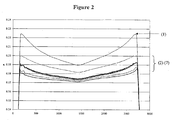
FIG. 2 illustrates friction profiles for samples tested in a LFW-1 test according to some embodiments of the present disclosure. -
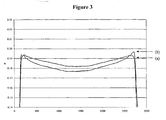
FIG. 3 illustrates friction profiles for samples tested in a LFW-1 test according to some embodiments of the present disclosure. - Novel compositions for enhancing friction and friction durability in power transmission fluids, and also methods for making and using these compositions are presented herein. The power transmission fluids of the present disclosure may comprise a major amount of base oil and a minor amount of an additive composition including an alkoxylated alcohol or mixture of alkoxylated alcohols of the formula R-[O-(CH2)X]Y-OH, based on the total weight of the fluid, wherein R is an aliphatic hydrocarbon group having from 8 to 18 carbon atoms, X is 2 to 4, and Y is 1 to 6; and a dispersant selected from a hydrocarbyl succinimide, a hydrocarbyl succinamide, a mixture of an ester and an amide of a hydrocarbyl-substituted succinic acid, and a hydroxyester of a hydrocarbyl-substituted succinic acid. The present compositions achieve improved performance and friction durability in power transmission fluids through the incorporation of 0.01 to 20 wt.% of the alkoxylated alcohol component, which enhances the life of a transmission fluid that is subjected to oxidative and thermal degradation conditions during normal service.
- The present embodiments overcome previous difficulties in achieving enhanced friction performance and overall utility of a power transmission fluid over long periods of time.
- The alkoxylated alcohol friction modifiers useful in embodiments of the present disclosure are represented by the general formula:
R-[O-(CH2)X]Y-OH
wherein R may be a linear, branched, or cyclic aliphatic hydrocarbon group having from 8 to 18 carbon atoms, X may range from 2 to 4, and Y may range from 1 to 6. - As used herein, a "power transmission fluid" or "transmission fluid" may include a lubricant useful for contact with gears involved in the transmission of mechanical energy, including in transmissions that may contain a slipping torque converter, a lock-up torque converter, a starting clutch, and/or one or more shifting clutches. Such transmissions may include a three-, four-, five-, six-, or seven-speed transmission, or a continuously variable transmission (chain, belt, or toroidal disk type) or a manual or an automatic transmission.
- In an embodiment, the present invention achieves improved friction performance and durability of friction performance in power transmission fluids through the incorporation of 0.01 to 20 wt.% of the alkoxylated alcohol friction modifier component that is both effective and stable over a long period of time. It is contemplated that the alkoxylated alcohol component may comprise one species of a particular alkoxylated alcohol (e.g., ethoxylated lauryl alcohol, or "ELA"), or a mixture of alkoxylated alcohols within the scope of the present disclosure.
- In an embodiment of the present invention, the alkoxylated alcohol component may be added to a power transmission fluid as one constituent in an overall formulation. In another embodiment, alkoxylated alcohol may be added to the power transmission fluid in conjunction with another transmission fluid additive, such as a dispersant. In an embodiment of the invention, the alkoxylated alcohol is added to the transmission fluid or to the additive package with no processing or reacting. In another embodiment, the alkoxylated alcohol is first heated with an ashless dispersant and the resulting mixture is then added to the transmission fluid or additive package.
- In an embodiment, the additives provided by this disclosure provide for the incorporation of an alkoxylated alcohol component to a power transmission fluid at room temperature, and at no particular interval in the processing sequence. Once prepared, this novel additive imparts improved friction characteristics, and importantly, provides these benefits over the life of the fluid. Another embodiment provides for the combining and heating of the alkoxylated alcohol component with a dispersant prior to incorporation of the mixture in the power transmission fluid. The dispersant may contain either or both phosphorus and boron, or neither phosphorous nor boron.
- As described herein, dispersants may comprise ashless dispersants that may be a hydrocarbyl-substituted succinimide, a hydrocarbyl-substituted succinic acid, a hydrocarbyl-substituted succinamide, a mixture of an ester and an amide of a hydrocarbyl-substituted succinic acid, and a hydroxyester of a hydrocarbyl-substituted succinic acid. Typical hydrocarbyl succinimides are disclosed in the following U.S. patents:
U.S. 3,018,247 ;U.S. 4,554,086 ; andU.S. 4,857,214 . Mixed ester-amides of hydrocarbyl-substituted succinic acids using alkanols, amines, and/or aminoalkanols are described, for example, inU.S. 4,234,435 . The use and preparation of hydrocarbyl-substituted succinic acid esters and succinic acid salts are disclosed, for example, inU.S. 3,275,554 ;U.S. 3,454,555 ; andU.S. 3,565,804 . - The dispersant used in an embodiment of the present disclosure may comprise hydrocarbyl succinimides in which the hydrocarbyl substituent is a hydrogenated or unhydrogenated polyolefin group; and in a particular embodiment, a polyisobutylene group having a number average molecular weight (measured by gel permeation chromatography) ranging from 700 to 10,000, and in another embodiment ranging from 700 to 5,000, and in another embodiment ranging from 750 to 2,500. The overall amount of dispersant used in an embodiment may range from 0.01 wt% to 15 wt%, or as another example, from 0.01 wt% to 10 wt%. In another embodiment, the amount of dispersant used in a power transmission fluid may range from 1 wt% to 8 wt%. Another embodiment may include the dispersant at ranges from 2 wt% to 6 wt%.
- A process for preparing the transmission fluid additives may comprise combining in any sequence an alkoxylated alcohol or mixture of alkoxylated alcohols with a transmission fluid. Another embodiment may include a process that comprises combining in any sequence an alkoxylated alcohol or mixture of alkoxylated alcohols with a dispersant and heating at a temperature that ranges between 20°C and 200°C for a time ranging from 0.1 to 196 hours. As a further example, the combination may be heated at 60 °C to 170 °C. As an even further example, the combination may be heated for 0.5 to 24 hours. In an embodiment, the dispersant may be treated with a boron- and/or a phosphorus-containing compound either prior to, concurrently, or following the addition of the alkoxylated alcohol component.
- The concentration of the alkoxylated alcohol component in the finished transmission fluid may range from 0.01 wt% to 20 wt%, as a further example, from 0.05 wt% to 10 wt%, as an even further example, from 0.1 wt% to 6 wt%, and as an even further example, from 0.1 wt% to 3 wt%. In an embodiment in which the ashless dispersant is combined with the alkoxylated alcohol prior to adding the combination to the transmission fluid, the concentration of alkoxylated alcohol reacted previously with the dispersant may range from 0.001 wt% to 50 wt%. In another embodiment, the overall concentration of the dispersant reacted with alkoxylated alcohol in the transmission fluid may range from 0.01 wt% to 20 wt%, to 15 wt%, or to 10 wt%.
- Base or lubricating oils contemplated in preparing the power transmission fluids of the present invention may be derived from natural lubricating oils, synthetic lubricating oils, and mixtures thereof. Other suitable base oils may include gas to liquid base oils, and/or any base oil classified as Group I, II, III, IV, or V. In general, the base oil used in the present invention may have a kinematic viscosity at 100 °C ranging from 1.0 to 100.0 cSt, and as a further example, from 1.0 to 15.0 cSt, and as an even further example from 1.5 to 10 cSt.. Natural lubricating oils include animal oils, vegetable oils, petroleum oils, mineral oils, and oils derived from coal and shale. Mineral oils include all common mineral oil basestocks, such as naphthenic or paraffinic oils, and may have kinematic viscosities at 100 °C ranging from 0.5 to 20.0 cSt, and as a further example, from 1.5 to 15 cSt. Synthetic oils include hydrocarbon oils and halo-substituted hydrocarbon oils, such as oligomerized, polymerized, and interpolymerized olefins and alkylated diphenyl ethers, alkylated diphenyl sulfides, as well as their derivatives, analogs and homologs. Synthetic oils also include alkylene oxide polymers, interpolymers, copolymers, and derivatives thereof where the terminal hydroxyl groups have been modified by esterification, etherification, etc. Another class of synthetic lubricating oils includes the esters of dicarboxylic acids with a variety of alcohols. Silicon-based oils may also be utilized, as may liquid esters of phosphorus-containing acids, polymeric tetrahydrofurans, poly-alpha olefins, and the like. Lubricating oils may be also be derived from unrefined sources, refined oils, rerefined oils, and mixtures thereof.
- In addition to the alkoxylated alcohol component, which may be optionally heated and added with an ashless dispersant, the power transmission fluid formulations of the present invention may include other optional components. These components may include other friction modifiers, dispersants, detergents, seal swell agents, antiwear agents, extreme pressure agents, antioxidants, foam inhibitors, lubricity agents, rust inhibitors, corrosion inhibitors, demulsifiers, viscosity improvers, dyes and the like. The embodiments of the present invention have been found to be effective when used in conjunction with various additives, including, for example, with and without boronated agents.
- Nitrogen-containing ashless dispersants are well known as lubricating oil additives. Suitable ashless dispersants that may be used in the present invention include hydrocarbyl succinimides, hydrocarbyl succinamides, mixed ester/amides of hydrocarbyl-substituted succinic acid, and hydroxyesters of hydrocarbyl-substituted succinic acid. Also suitable in the present invention may be condensation products of polyamines and hydrocarbyl-substituted phenyl acids. Mixtures of any of these dispersants may also be used.
- A method of measuring friction performance of a power transmission fluid using an LFW-1 block on ring test apparatus is described below. The method comprises applying fluids between the block and ring of the LFW-1 test apparatus. The ring is rotated relative to the block in cycles of acceleration for 40 sec from 0 to 0.5 m/sec and then deceleration from 0.5 to 0 m/sec at 121°C. The friction between the block and ring during the cycle are measured to provide 50 or more measurements, or as a further example 100 or more measurements, or as an even further example, 2800 or more measurements. A cycle may be repeated any number of times, for example, 1 to 50 times. The method may be used to measure the friction performance of a new power transmission fluid or an aged power transmission fluid to provide friction durability. To age a power transmission fluid, the fluid maybe subject to an oxidation bath for 100 hours at 170°C. The resulting friction performance measurements or friction durability may then be compared. Two or more different power transmission fluids may be so tested and then the friction performance measurements or friction durability compared. A power transmission fluid may be selected for a particular power transmitting application, such as a transmission or torque converter disclosed herein, based on the comparison of the resulting measurements. As an example, the friction performance or friction durability of a power transmission fluid comprising an alkoxylated alcohol may be compared to a power transmission fluid free of an alkoxylated alcohol. As an even further example, the friction performance or friction durability of a power transmission fluid comprising an alkoxylated alcohol may be compared to a power transmission fluid comprising a different alkoxylated alcohol.
- Transmission fluid formulations were tested and evaluated for effectiveness in modifying friction in accordance with embodiments of the present disclosure.
- This example demonstrates the utility of an alkoxylated alcohol additive in modifying friction initially and over time, as disclosed herein. Transmission fluid Formulation (1) was prepared as a control and contained no ELA. Formulation (1) contained an ashless dispersant at 4 wt% that contained both boron and phosphorous. Formulation (2) was prepared with 0.24 wt% ELA added directly to the transmission fluid at room temperature, and also included the ashless dispersant of Formulation (1) at 4 wt%. Formulation (3) was prepared with 6% ELA heated for 4 hours at 120°C with the ashless dispersant. The combination was then added to the other supplemental additives at an overall concentration of 4 wt% in the finished fluid.
- The data shown in Table 1 were acquired using LFW-1 block on ring test apparatus using the test procedures disclosed herein. In particular, the fluids tested were applied between the block and ring of the LFW-1 test apparatus. The ring was rotated relative to the block and measurements were taken in cycles of acceleration for about 40 sec and then deceleration from about 0 to about 0.5 m/sec and back to about 0 at about 121°C. About 2800 measurements were taken per cycle. To obtain friction measurements for an aged formulation, each transmission fluid sample was "aged" for 100 hours at 170°C using an oxidation bath and subjected to the same testing conditions.
Table 1: Effectiveness of Ethoxylated Lauryl Alcohol in Modifying Friction Static/Dynamic Initial Static/Dynamic Aged Formulation (1) 0.952 1.057 Formulation (2) 0.923 1.031 Formulation (3) 0.924 1.024 - In evaluating the data shown in Table 1, better friction durability is indicated by the ratio of static to dynamic friction being a number less than 1, such as 0.92. Thus, both of the formulations containing ELA surpass the control in friction durability, as the measurements for the coefficient of friction durability decrease when ELA is added to the fluid directly (Formulation (2)), and when pre-reacted with the ashless dispersant (Formulation (3)) both initially and after aging (e.g., by heating).
- The data acquired during the testing of the formulations in this example are shown diagrammatically in the drawings in
FIG. 1(A) (Initial Friction Measurements) andFIG. 1(B) (Aged Measurements) for the three sample formulations described above. Again, lower measurements are indicative of better friction durability; therefore, the curves achieving lower values and less change fromFIG. 1(A) on the y-axis were indicative of better results. - Regression analysis of happenstance data from the initial LFW-1 frictional data of power transmission fluids indicated that ELA added to the fluid and ELA pre-mixed with dispersant both lower static/dynamic friction ratios with a greater than 99% probability of significance. Analysis of the frictional data obtained from testing aged fluids in the LFW-1 demonstrated that ELA added to the fluid and ELA pre-mixed with dispersant both lower static/dynamic friction ratios with a greater than 99.9% probability of significance.
- In another example, the LFW-1 test was run using a variety of linear-chain and branched-chain alkoxylated alcohols. The results using Samples #3-7 were compared to
Sample # 2, a formulation using ELA and to a formulation having no ethoxylated alcohol (Sample #1). InSample # 3, an ethoxylated C10-C12 linear alcohol with an average of 3 ethoxylations per molecule, was used. In Sample #4, an ethoxylated C10-C12 linear alcohol with an average of 5 ethoxylations per molecule, was used. In Sample #5, an ethoxylated C12-C14 linear alcohol with an average of 3 ethoxylations per molecule, was used. In Sample #6, an ethoxylated C8-C10 linear alcohol with an average of 2 ethoxylations per molecule, was used. InSample # 7, an ethoxylated C8-C10 linear alcohol with an average of 4.5 ethoxylations per molecule, was used. The formulations all contained about 4 wt% dispersant. Each formulation was tested both initially and after aging for 100 hours at 170°C. Results for the ratio of static to dynamic friction for new and aged fluid are shown, where a more desirable result is a number less than about 1. These results are also shown diagrammatically inFIG. 2 , where the highest curve reflects results obtained from the control (no alkoxylated alcohol) sample, with the remaining curves performing similarly to ELA in friction testing. - Samples 2-7 exhibited better measures of the ratio of static to dynamic friction in comparison with the control (Sample #1). In addition, the varying alkoxylated alcohols tested in this example performed similarly to ELA.
- Various branched alkoxylated alcohol samples were also tested and compared to the control sample containing no alkoxylated alcohol. Three formulations were tested which include a mixture of 50% linear and 50% branched alkoxylated alcohols. The results from testing these samples are shown in Table 2, and the results from sample #10 are shown schematically in
FIG. 3 . InFIG. 3 , curve (a) represents friction performance of the fluid when new and (b) represents friction performance of the fluid after aging. Data from an LFW-1 test were obtained using three samples:Sample # 8 was a formulation comprising 3 moles of ethylene oxide per mole of alcohol, Sample #9 was a formulation comprising 5 moles of ethylene oxide per mole of alcohol, and comparative Sample #10 was a formulation comprising 7 moles of ethylene oxide per mole of alcohol. The branched alkoxylated alcohol samples achieved comparable results for friction performance to those from the ELA and linear alkoxylated alcohols tested in previous examples.Table 2: Comparison of Alkoxylated Alcohol Formulations Sample # 1 #2 #3 #4 #5 #6 #7 #8 #9 #10 Static/Dynamic Friction (Initial) 1.13 1.077 1.069 1.043 1.079 1.081 1.054 1.080 1.063 1.034 Static/Dynamic Friction (Aged) 1.113 1.031 0.997 0.999 1.036 1.073 1.027 1.035 1.004 0.988 - In another example, the LFW-1 test was run using samples containing varying amounts of ELA. The samples contained the same components other the varying amount of ELA. All samples included dispersant in the same amount.
Sample # 1 was a control and contained no ELA.Sample # 2 contained 0.24 wt% ELA,Sample # 3 contained 0.48 wt% ELA, Sample #4 contained 1.5 wt% ELA, and Sample #5 contained 3.0 wt% ELA. The formulations were tested initially and after aging for 100 hours at 170°C. Results for the ratio of static to dynamic friction for new and aged fluid are shown in Table 3, where a more desirable result is a number less than 1. The results indicate improving static/dynamic friction ratios in the aged samples as the ELA is present and is increased.Table 3: Comparison of Various Amounts of ELA Sample # 1 #2 #3 #4 #5 Static/Dynamic Friction (Initial) 0.952 0.965 0.97 0.938 0.946 Static/Dynamic Friction (Aged) 1.057 1.034 1.01 0.958 0.914 - A regression analysis of happenstance data was also performed on samples containing ELA added as a component and ELA pre-reacted with a dispersant using an LVFA Durability test (JASO M349). The data indicated with a greater than 95% probability of significance that the use of ELA is effective in extending durability life of a power transmission fluid including the same. The same analysis showed with a greater than 99% probability that ELA pre-mixed with dispersant also has a positive effect on durability life.
- As used throughout the specification and claims, "a" and/or "an" may refer to one or more than one. At the very least, and not as an attempt to limit the application of the doctrine of equivalents to the scope of the claims, each numerical parameter should at least be construed in light of the number of reported significant digits and by applying ordinary rounding techniques. Notwithstanding that the numerical ranges and parameters setting forth the broad scope of the invention are approximations, the numerical values set forth in the specific examples are reported as precisely as possible. Any numerical value, however, inherently contains certain errors necessarily resulting from the standard deviation found in their respective testing measurements.
Claims (14)
- A power transmission fluid, including:(a) a major amount of a base oil; and(b) a minor amount of an additive composition including:at least one alkoxylated alcohol of the formula R-[O-(CH2)X]Y-OH, wherein R is an aliphatic hydrocarbon group having from 8 to 18 carbon atoms, X is 2 to 4, and Y is 1 to 6; anda dispersant selected from a hydrocarbyl succinimide, a hydrocarbyl succinamide, a mixture of an ester and an amide of a hydrocarbyl-substituted succinic acid, and a hydroxyester of a hydrocarbyl-substituted succinic acid; wherein the power transmission fluid includes 0.01 to 20 wt% of the alkoxylated alcohol and 0.01 to 15 wt% of the dispersant, based on the total weight of the fluid.
- The fluid of claim 1, wherein the aliphatic hydrocarbon is a saturated or unsaturated linear, branched, or cyclic hydrocarbon.
- The fluid of claim 1, wherein the alkoxylated alcohol has at least eight carbon atoms.
- The fluid of any one of claims 1-3, wherein the amount of alkoxylated alcohol in the fluid is 0.01 wt% to 10 wt%, based on the total weight of the fluid.
- The fluid of any one of claims 1-3, wherein the amount of alkoxylated alcohol in the fluid is 0.05 wt% to 6 wt%, based on the total weight of the fluid.
- The fluid of any one of claims 1-3, wherein the amount of alkoxylated alcohol in the fluid is 0.1 wt% to 3 wt%, based on the total weight of the fluid.
- The fluid of any one of claims 1-6, wherein the base oil includes one or more of a natural lubricating oil, a synthetic lubricating oil, and mixtures thereof.
- The fluid of any one of claims 1-7, wherein the fluid is a belt, chain, or disk-type continuously variable transmission fluid.
- The fluid of claim 1, wherein the concentration of the dispersant in the fluid is 0.01 wt% to 10 wt%, based on the total weight of the fluid.
- The fluid of any one of claims 1-9, wherein the fluid has improved friction durability relative to a fluid having the same composition absent said at least one alkoxylated alcohol, and wherein said friction durability is measured by applying the fluid between a block and ring of an LFW-1 test apparatus, and (1) rotating the ring relative to the block in a cycle of acceleration for 40 seconds from 0 to 0.5 m/sec and then deceleration from 0.5 to 0 m/sec at 121°C, (2) measuring friction between the block and ring during the cycle and (3) repeating steps (1)-(3) for 2800 or more measurements.
- A method of operating a power transmission to increase the duration of friction-modifying capabilities of a power transmission fluid, said method including the steps of adding to the power transmission a power transmission fluid as claimed in any one of claims 1-10, and operating the power transmission.
- A method of operating a power transmission as claimed in claim 11, wherein the power transmission is a continuously variable transmission.
- Use of an additive composition including 0.01 to 20 wt % of at least one alkoxylated alcohol of the formula R-[O-(CH2)X]Y-OH, wherein R is an aliphatic hydrocarbon group having from 8 to 18 carbon atoms, X is 2 to 4, and Y is 1 to 6 to increase a duration of friction-modifying capabilities of a power transmission fluid including 0.01 to 15 wt.% of a dispersant, said weight percentages being based on the total weight of the fluid.
- Use as claimed in claim 13, wherein the dispersant includes one or more of a hydrocarbyl succinimide, a hydrocarbyl succinamide, a mixture of an ester and an amide of a hydrocarbyl-substituted succinic acid, and a hydroxyester of a hydrocarbyl-substituted succinic acid.
Applications Claiming Priority (2)
| Application Number | Priority Date | Filing Date | Title |
|---|---|---|---|
| US10/705,992 US20050101497A1 (en) | 2003-11-12 | 2003-11-12 | Compositions and methods for improved friction durability in power transmission fluids |
| US705992 | 2003-11-12 |
Publications (3)
| Publication Number | Publication Date |
|---|---|
| EP1531175A2 EP1531175A2 (en) | 2005-05-18 |
| EP1531175A3 EP1531175A3 (en) | 2006-03-15 |
| EP1531175B1 true EP1531175B1 (en) | 2016-03-30 |
Family
ID=34435618
Family Applications (1)
| Application Number | Title | Priority Date | Filing Date |
|---|---|---|---|
| EP04026422.8A Expired - Lifetime EP1531175B1 (en) | 2003-11-12 | 2004-11-08 | Compositions and methods for improved friction durability in power transmission fluids |
Country Status (8)
| Country | Link |
|---|---|
| US (2) | US20050101497A1 (en) |
| EP (1) | EP1531175B1 (en) |
| JP (1) | JP2005146276A (en) |
| KR (2) | KR100679901B1 (en) |
| CN (1) | CN100575465C (en) |
| AU (1) | AU2004224894A1 (en) |
| CA (1) | CA2486365C (en) |
| SG (1) | SG112037A1 (en) |
Cited By (1)
| Publication number | Priority date | Publication date | Assignee | Title |
|---|---|---|---|---|
| US12686831B2 (en) | 2021-10-20 | 2026-07-21 | Chevron Oronite Company Llc | Lubricating oil composition for hybrid vehicles |
Families Citing this family (18)
| Publication number | Priority date | Publication date | Assignee | Title |
|---|---|---|---|---|
| US20070004603A1 (en) * | 2005-06-30 | 2007-01-04 | Iyer Ramnath N | Methods for improved power transmission performance and compositions therefor |
| CA2716473C (en) | 2008-03-19 | 2017-07-04 | The Lubrizol Corporation | Antiwear composition comprising hydroxycarboxylic compound |
| US20120128651A1 (en) | 2009-05-29 | 2012-05-24 | Zhuang Zuo | Acute lymphoblastic leukemia (all) biomarkers |
| KR101808012B1 (en) | 2009-08-18 | 2017-12-11 | 더루우브리졸코오포레이션 | Antiwear composition and method of lubricating driveline device |
| US9416332B2 (en) | 2010-11-17 | 2016-08-16 | GM Global Technology Operations LLC | Gear assembly and gear oil composition |
| WO2012112635A1 (en) | 2011-02-16 | 2012-08-23 | The Lubrizol Corporation | Lubricating composition and method of lubricating driveline device |
| US20140194333A1 (en) | 2013-01-04 | 2014-07-10 | Exxonmobil Research And Engineering Company | Method for improving engine fuel efficiency |
| JP6425712B2 (en) | 2013-05-14 | 2018-11-21 | ザ ルブリゾル コーポレイションThe Lubrizol Corporation | Lubricating composition and method of lubricating a transmission |
| EP3227416A1 (en) * | 2014-12-03 | 2017-10-11 | The Lubrizol Corporation | Lubricating composition containing an oxyalkylated aromatic polyol compound |
| CN108200770A (en) | 2015-08-20 | 2018-06-22 | 路博润公司 | Pyrrole Derivatives as Lubricant Additives |
| EP3371286A1 (en) | 2015-11-06 | 2018-09-12 | The Lubrizol Corporation | Lubricant composition containing an antiwear agent |
| WO2017079584A1 (en) | 2015-11-06 | 2017-05-11 | The Lubrizol Corporation | Lubricant composition containing an antiwear agent |
| CN108463543A (en) | 2015-11-17 | 2018-08-28 | 路博润公司 | Acceptable alkyl phenol detersive is as the friction improver in automobile oil in toxicology |
| SG11201810336RA (en) | 2016-06-17 | 2018-12-28 | Lubrizol Corp | Lubricating compositions |
| EP3492569B1 (en) * | 2017-12-01 | 2022-06-08 | Infineum International Limited | Marine engine lubrication |
| CN114096648A (en) | 2019-06-24 | 2022-02-25 | 路博润公司 | Continuous acoustic mixing of performance additives and compositions containing performance additives |
| EP4077601B1 (en) | 2019-12-18 | 2025-09-24 | The Lubrizol Corporation | Polymeric surfactant compound |
| CA3229308A1 (en) | 2021-08-17 | 2023-02-23 | Brian B. Filippini | Method of lubricating an automotive or industrial gear |
Family Cites Families (49)
| Publication number | Priority date | Publication date | Assignee | Title |
|---|---|---|---|---|
| US354012A (en) * | 1886-12-07 | Sole-channeling machine | ||
| DE1248643B (en) * | 1959-03-30 | 1967-08-31 | The Lubrizol Corporation, Cleveland, Ohio (V. St. A.) | Process for the preparation of oil-soluble aylated amines |
| NL124842C (en) * | 1959-08-24 | |||
| NL262417A (en) * | 1960-03-15 | |||
| US3215707A (en) * | 1960-06-07 | 1965-11-02 | Lubrizol Corp | Lubricant |
| US3087936A (en) * | 1961-08-18 | 1963-04-30 | Lubrizol Corp | Reaction product of an aliphatic olefinpolymer-succinic acid producing compound with an amine and reacting the resulting product with a boron compound |
| US3184474A (en) * | 1962-09-05 | 1965-05-18 | Exxon Research Engineering Co | Reaction product of alkenyl succinic acid or anhydride with polyamine and polyhydricmaterial |
| US3184411A (en) * | 1962-09-28 | 1965-05-18 | California Research Corp | Lubricants for reducing corrosion |
| US3381022A (en) * | 1963-04-23 | 1968-04-30 | Lubrizol Corp | Polymerized olefin substituted succinic acid esters |
| US3282955A (en) * | 1963-04-29 | 1966-11-01 | Lubrizol Corp | Reaction products of acylated nitrogen intermediates and a boron compound |
| US3281428A (en) * | 1963-04-29 | 1966-10-25 | Lubrizol Corp | Reaction product of certain acylated nitrogen containing intermediates and a boron compound |
| US3338832A (en) * | 1963-04-29 | 1967-08-29 | Lubrizol Corp | Lubricating oil containing reaction product of certain acylated nitrogen containing intermediates and a boron compound |
| NL137371C (en) * | 1963-08-02 | |||
| FR1445009A (en) * | 1964-07-08 | 1966-07-08 | Huels Chemische Werke Ag | Use of polyalkylene glycols and polyalkylene glycol ethers as additives for light metal rolling mills |
| US3368972A (en) * | 1965-01-06 | 1968-02-13 | Mobil Oil Corp | High molecular weight mannich bases as engine oil additives |
| NL145565B (en) * | 1965-01-28 | 1975-04-15 | Shell Int Research | PROCESS FOR PREPARING A LUBRICANT COMPOSITION. |
| US3344069A (en) * | 1965-07-01 | 1967-09-26 | Lubrizol Corp | Lubricant additive and lubricant containing same |
| US3574576A (en) * | 1965-08-23 | 1971-04-13 | Chevron Res | Distillate fuel compositions having a hydrocarbon substituted alkylene polyamine |
| US3272746A (en) * | 1965-11-22 | 1966-09-13 | Lubrizol Corp | Lubricating composition containing an acylated nitrogen compound |
| BE689597A (en) * | 1966-02-09 | 1967-05-10 | ||
| US3391141A (en) * | 1966-07-07 | 1968-07-02 | Bristol Myers Co | Synthetic cephalosporins |
| US3718663A (en) * | 1967-11-24 | 1973-02-27 | Standard Oil Co | Preparation of oil-soluble boron derivatives of an alkylene polyamine-urea or thiourea-succinic anhydride addition product |
| US3703536A (en) * | 1967-11-24 | 1972-11-21 | Standard Oil Co | Preparation of oil-soluble boron derivatives of an alkylene polyamine-substituted phenol-formaldehyde addition product |
| US3541012A (en) * | 1968-04-15 | 1970-11-17 | Lubrizol Corp | Lubricants and fuels containing improved acylated nitrogen additives |
| US3576743A (en) * | 1969-04-11 | 1971-04-27 | Lubrizol Corp | Lubricant and fuel additives and process for making the additives |
| US3803039A (en) * | 1970-07-13 | 1974-04-09 | Standard Oil Co | Oil solution of aliphatic acid derivatives of high molecular weight mannich condensation product |
| US3679588A (en) * | 1970-10-29 | 1972-07-25 | Standard Oil Co | Hydraulic fluids |
| US4136043A (en) * | 1973-07-19 | 1979-01-23 | The Lubrizol Corporation | Homogeneous compositions prepared from dimercaptothiadiazoles |
| CA1041286A (en) * | 1973-07-19 | 1978-10-31 | The Lubrizol Corporation | Homogeneous compositions prepared from dimercaptothiadiazoles |
| US4140643A (en) * | 1974-05-16 | 1979-02-20 | The Lubrizol Corporation | Nitrogen- and sulfur-containing lubricant additive compositions of improved compatibility |
| US4234435A (en) * | 1979-02-23 | 1980-11-18 | The Lubrizol Corporation | Novel carboxylic acid acylating agents, derivatives thereof, concentrate and lubricant compositions containing the same, and processes for their preparation |
| US4440656A (en) * | 1981-11-23 | 1984-04-03 | Mobil Oil Corporation | Borated alkoxylated alcohols and lubricants and liquid fuels containing same |
| JPS6088094A (en) * | 1983-10-20 | 1985-05-17 | Nippon Oil & Fats Co Ltd | Lubricating oil composition |
| US4554086A (en) * | 1984-04-26 | 1985-11-19 | Texaco Inc. | Borate esters of hydrocarbyl-substituted mono- and bis-succinimides containing polyamine chain linked hydroxyacyl groups and lubricating oil compositions containing same |
| DE3737782C2 (en) * | 1987-11-06 | 1996-05-23 | Toyota Motor Co Ltd | Use a synthetic lubricating oil mixture |
| US4857214A (en) * | 1988-09-16 | 1989-08-15 | Ethylk Petroleum Additives, Inc. | Oil-soluble phosphorus antiwear additives for lubricants |
| JPH05209184A (en) * | 1991-02-22 | 1993-08-20 | Cosmo Sogo Kenkyusho:Kk | Automotive gear oil composition |
| GB2285056B (en) * | 1991-06-03 | 1995-11-22 | Ethyl Petroleum Additives Inc | Automatic transmission and wet brake fluids and additive packages therefor |
| US5817605A (en) * | 1991-06-03 | 1998-10-06 | Ethyl Petroleum Additives, Inc. | Automatic transmission and wet brake fluids and additive package therefor |
| US5503758A (en) * | 1993-03-02 | 1996-04-02 | Mobile Oil Corporation | Antiwear and antioxidant additives |
| EP0738314B1 (en) * | 1993-12-20 | 2003-02-19 | Infineum USA L.P. | Oil soluble friction increasing additives for power transmission fluids |
| CA2148975C (en) | 1994-05-18 | 2005-07-12 | Andrew G. Papay | Lubricant additive compositions |
| US5785881A (en) * | 1994-12-09 | 1998-07-28 | Exxon Chemical Comapny | Oil soluble complexes of phosphorus-free strong mineral acids useful as lubricating oil additives |
| JPH10510564A (en) * | 1994-12-09 | 1998-10-13 | エクソン・ケミカル・パテンツ・インク | Oil-soluble complexes of phosphorus-containing acids useful as lubricating oil additives |
| US5880073A (en) * | 1995-05-24 | 1999-03-09 | Tonen Corporation | Lubricating oil composition |
| US5858931A (en) | 1995-08-09 | 1999-01-12 | Asahi Denka Kogyo K.K | Lubricating composition |
| US6482778B2 (en) * | 1999-08-11 | 2002-11-19 | Ethyl Corporation | Zinc and phosphorus containing transmission fluids having enhanced performance capabilities |
| JP2001214186A (en) * | 2000-01-31 | 2001-08-07 | Asahi Denka Kogyo Kk | Lubricating composition |
| US20020002118A1 (en) * | 2000-05-19 | 2002-01-03 | Brandt M. Karl | Lubrication additive |
-
2003
- 2003-11-12 US US10/705,992 patent/US20050101497A1/en not_active Abandoned
-
2004
- 2004-10-19 CA CA002486365A patent/CA2486365C/en not_active Expired - Lifetime
- 2004-10-26 AU AU2004224894A patent/AU2004224894A1/en not_active Abandoned
- 2004-10-28 JP JP2004314478A patent/JP2005146276A/en active Pending
- 2004-11-08 EP EP04026422.8A patent/EP1531175B1/en not_active Expired - Lifetime
- 2004-11-09 SG SG200406522A patent/SG112037A1/en unknown
- 2004-11-11 CN CN200410094651A patent/CN100575465C/en not_active Expired - Lifetime
- 2004-11-12 KR KR1020040092327A patent/KR100679901B1/en not_active Expired - Lifetime
-
2006
- 2006-07-07 KR KR1020060063749A patent/KR100658413B1/en not_active Expired - Lifetime
-
2007
- 2007-12-19 US US11/942,120 patent/US20080090744A1/en not_active Abandoned
Cited By (1)
| Publication number | Priority date | Publication date | Assignee | Title |
|---|---|---|---|---|
| US12686831B2 (en) | 2021-10-20 | 2026-07-21 | Chevron Oronite Company Llc | Lubricating oil composition for hybrid vehicles |
Also Published As
| Publication number | Publication date |
|---|---|
| CA2486365A1 (en) | 2005-05-12 |
| JP2005146276A (en) | 2005-06-09 |
| SG112037A1 (en) | 2005-06-29 |
| US20050101497A1 (en) | 2005-05-12 |
| KR100679901B1 (en) | 2007-02-07 |
| KR20050045931A (en) | 2005-05-17 |
| US20080090744A1 (en) | 2008-04-17 |
| CA2486365C (en) | 2009-12-29 |
| KR20060090202A (en) | 2006-08-10 |
| AU2004224894A1 (en) | 2005-05-26 |
| EP1531175A3 (en) | 2006-03-15 |
| EP1531175A2 (en) | 2005-05-18 |
| CN100575465C (en) | 2009-12-30 |
| CN1629265A (en) | 2005-06-22 |
| KR100658413B1 (en) | 2006-12-15 |
Similar Documents
| Publication | Publication Date | Title |
|---|---|---|
| US20080090744A1 (en) | Compositions and Methods for Improved Friction Durability in Power Transmission Fluids | |
| EP2230292B1 (en) | Methods of lubricating transmissions | |
| EP3241883B1 (en) | Lubricant compositions | |
| KR100696156B1 (en) | Power Transmission Fluid with Extended Durability | |
| US20030153469A1 (en) | Automatic transmission fluid additive comprising reaction product of hydrocarbyl acrylates and dihydrocarbyldithiophosphoric acids | |
| EP2876152A1 (en) | Lubricating oil composition for continuously variable transmission | |
| CA2752867A1 (en) | Amine derivatives as friction modifiers in lubricants | |
| KR20150037750A (en) | Poly(meth)acrylate-based viscosity index improver, lubricant additive and lubricant composition containing viscosity index improver | |
| EP2430134A1 (en) | Imides and bis-amides as friction modifiers in lubricants | |
| KR100752975B1 (en) | Power transmitting fluids and additive compositions | |
| KR100702884B1 (en) | Power transmission fluid | |
| CN110770330B (en) | Lubricating oil composition | |
| JP2026512025A (en) | Hydraulic fluid composition for agricultural machinery | |
| JP2011084636A (en) | Continuously variable transmission oil composition |
Legal Events
| Date | Code | Title | Description |
|---|---|---|---|
| PUAI | Public reference made under article 153(3) epc to a published international application that has entered the european phase |
Free format text: ORIGINAL CODE: 0009012 |
|
| AK | Designated contracting states |
Kind code of ref document: A2 Designated state(s): AT BE BG CH CY CZ DE DK EE ES FI FR GB GR HU IE IS IT LI LU MC NL PL PT RO SE SI SK TR |
|
| AX | Request for extension of the european patent |
Extension state: AL HR LT LV MK YU |
|
| PUAL | Search report despatched |
Free format text: ORIGINAL CODE: 0009013 |
|
| AK | Designated contracting states |
Kind code of ref document: A3 Designated state(s): AT BE BG CH CY CZ DE DK EE ES FI FR GB GR HU IE IS IT LI LU MC NL PL PT RO SE SI SK TR |
|
| AX | Request for extension of the european patent |
Extension state: AL HR LT LV MK YU |
|
| 17P | Request for examination filed |
Effective date: 20060504 |
|
| AKX | Designation fees paid |
Designated state(s): AT BE BG CH CY CZ DE DK EE ES FI FR GB GR HU IE IS IT LI LU MC NL PL PT RO SE SI SK TR |
|
| 17Q | First examination report despatched |
Effective date: 20090604 |
|
| GRAP | Despatch of communication of intention to grant a patent |
Free format text: ORIGINAL CODE: EPIDOSNIGR1 |
|
| INTG | Intention to grant announced |
Effective date: 20151016 |
|
| GRAS | Grant fee paid |
Free format text: ORIGINAL CODE: EPIDOSNIGR3 |
|
| GRAA | (expected) grant |
Free format text: ORIGINAL CODE: 0009210 |
|
| AK | Designated contracting states |
Kind code of ref document: B1 Designated state(s): AT BE BG CH CY CZ DE DK EE ES FI FR GB GR HU IE IS IT LI LU MC NL PL PT RO SE SI SK TR |
|
| REG | Reference to a national code |
Ref country code: GB Ref legal event code: FG4D |
|
| REG | Reference to a national code |
Ref country code: CH Ref legal event code: EP |
|
| REG | Reference to a national code |
Ref country code: AT Ref legal event code: REF Ref document number: 785406 Country of ref document: AT Kind code of ref document: T Effective date: 20160415 |
|
| REG | Reference to a national code |
Ref country code: IE Ref legal event code: FG4D |
|
| REG | Reference to a national code |
Ref country code: DE Ref legal event code: R096 Ref document number: 602004048907 Country of ref document: DE |
|
| PG25 | Lapsed in a contracting state [announced via postgrant information from national office to epo] |
Ref country code: GR Free format text: LAPSE BECAUSE OF FAILURE TO SUBMIT A TRANSLATION OF THE DESCRIPTION OR TO PAY THE FEE WITHIN THE PRESCRIBED TIME-LIMIT Effective date: 20160701 Ref country code: FI Free format text: LAPSE BECAUSE OF FAILURE TO SUBMIT A TRANSLATION OF THE DESCRIPTION OR TO PAY THE FEE WITHIN THE PRESCRIBED TIME-LIMIT Effective date: 20160330 |
|
| REG | Reference to a national code |
Ref country code: NL Ref legal event code: MP Effective date: 20160330 |
|
| REG | Reference to a national code |
Ref country code: AT Ref legal event code: MK05 Ref document number: 785406 Country of ref document: AT Kind code of ref document: T Effective date: 20160330 |
|
| PG25 | Lapsed in a contracting state [announced via postgrant information from national office to epo] |
Ref country code: SE Free format text: LAPSE BECAUSE OF FAILURE TO SUBMIT A TRANSLATION OF THE DESCRIPTION OR TO PAY THE FEE WITHIN THE PRESCRIBED TIME-LIMIT Effective date: 20160330 |
|
| PG25 | Lapsed in a contracting state [announced via postgrant information from national office to epo] |
Ref country code: NL Free format text: LAPSE BECAUSE OF FAILURE TO SUBMIT A TRANSLATION OF THE DESCRIPTION OR TO PAY THE FEE WITHIN THE PRESCRIBED TIME-LIMIT Effective date: 20160330 |
|
| PG25 | Lapsed in a contracting state [announced via postgrant information from national office to epo] |
Ref country code: EE Free format text: LAPSE BECAUSE OF FAILURE TO SUBMIT A TRANSLATION OF THE DESCRIPTION OR TO PAY THE FEE WITHIN THE PRESCRIBED TIME-LIMIT Effective date: 20160330 Ref country code: PL Free format text: LAPSE BECAUSE OF FAILURE TO SUBMIT A TRANSLATION OF THE DESCRIPTION OR TO PAY THE FEE WITHIN THE PRESCRIBED TIME-LIMIT Effective date: 20160330 Ref country code: IS Free format text: LAPSE BECAUSE OF FAILURE TO SUBMIT A TRANSLATION OF THE DESCRIPTION OR TO PAY THE FEE WITHIN THE PRESCRIBED TIME-LIMIT Effective date: 20160730 |
|
| PG25 | Lapsed in a contracting state [announced via postgrant information from national office to epo] |
Ref country code: RO Free format text: LAPSE BECAUSE OF FAILURE TO SUBMIT A TRANSLATION OF THE DESCRIPTION OR TO PAY THE FEE WITHIN THE PRESCRIBED TIME-LIMIT Effective date: 20160330 Ref country code: AT Free format text: LAPSE BECAUSE OF FAILURE TO SUBMIT A TRANSLATION OF THE DESCRIPTION OR TO PAY THE FEE WITHIN THE PRESCRIBED TIME-LIMIT Effective date: 20160330 Ref country code: SK Free format text: LAPSE BECAUSE OF FAILURE TO SUBMIT A TRANSLATION OF THE DESCRIPTION OR TO PAY THE FEE WITHIN THE PRESCRIBED TIME-LIMIT Effective date: 20160330 Ref country code: PT Free format text: LAPSE BECAUSE OF FAILURE TO SUBMIT A TRANSLATION OF THE DESCRIPTION OR TO PAY THE FEE WITHIN THE PRESCRIBED TIME-LIMIT Effective date: 20160801 Ref country code: ES Free format text: LAPSE BECAUSE OF FAILURE TO SUBMIT A TRANSLATION OF THE DESCRIPTION OR TO PAY THE FEE WITHIN THE PRESCRIBED TIME-LIMIT Effective date: 20160330 Ref country code: CZ Free format text: LAPSE BECAUSE OF FAILURE TO SUBMIT A TRANSLATION OF THE DESCRIPTION OR TO PAY THE FEE WITHIN THE PRESCRIBED TIME-LIMIT Effective date: 20160330 |
|
| PG25 | Lapsed in a contracting state [announced via postgrant information from national office to epo] |
Ref country code: BE Free format text: LAPSE BECAUSE OF FAILURE TO SUBMIT A TRANSLATION OF THE DESCRIPTION OR TO PAY THE FEE WITHIN THE PRESCRIBED TIME-LIMIT Effective date: 20160330 Ref country code: IT Free format text: LAPSE BECAUSE OF FAILURE TO SUBMIT A TRANSLATION OF THE DESCRIPTION OR TO PAY THE FEE WITHIN THE PRESCRIBED TIME-LIMIT Effective date: 20160330 |
|
| REG | Reference to a national code |
Ref country code: DE Ref legal event code: R097 Ref document number: 602004048907 Country of ref document: DE |
|
| PG25 | Lapsed in a contracting state [announced via postgrant information from national office to epo] |
Ref country code: DK Free format text: LAPSE BECAUSE OF FAILURE TO SUBMIT A TRANSLATION OF THE DESCRIPTION OR TO PAY THE FEE WITHIN THE PRESCRIBED TIME-LIMIT Effective date: 20160330 |
|
| PLBE | No opposition filed within time limit |
Free format text: ORIGINAL CODE: 0009261 |
|
| STAA | Information on the status of an ep patent application or granted ep patent |
Free format text: STATUS: NO OPPOSITION FILED WITHIN TIME LIMIT |
|
| 26N | No opposition filed |
Effective date: 20170103 |
|
| PG25 | Lapsed in a contracting state [announced via postgrant information from national office to epo] |
Ref country code: SI Free format text: LAPSE BECAUSE OF FAILURE TO SUBMIT A TRANSLATION OF THE DESCRIPTION OR TO PAY THE FEE WITHIN THE PRESCRIBED TIME-LIMIT Effective date: 20160330 |
|
| REG | Reference to a national code |
Ref country code: CH Ref legal event code: PL |
|
| PG25 | Lapsed in a contracting state [announced via postgrant information from national office to epo] |
Ref country code: LI Free format text: LAPSE BECAUSE OF NON-PAYMENT OF DUE FEES Effective date: 20161130 Ref country code: CH Free format text: LAPSE BECAUSE OF NON-PAYMENT OF DUE FEES Effective date: 20161130 |
|
| REG | Reference to a national code |
Ref country code: IE Ref legal event code: MM4A |
|
| REG | Reference to a national code |
Ref country code: FR Ref legal event code: ST Effective date: 20170731 |
|
| PG25 | Lapsed in a contracting state [announced via postgrant information from national office to epo] |
Ref country code: LU Free format text: LAPSE BECAUSE OF NON-PAYMENT OF DUE FEES Effective date: 20161130 |
|
| PG25 | Lapsed in a contracting state [announced via postgrant information from national office to epo] |
Ref country code: FR Free format text: LAPSE BECAUSE OF NON-PAYMENT OF DUE FEES Effective date: 20161130 |
|
| PG25 | Lapsed in a contracting state [announced via postgrant information from national office to epo] |
Ref country code: IE Free format text: LAPSE BECAUSE OF NON-PAYMENT OF DUE FEES Effective date: 20161108 |
|
| PG25 | Lapsed in a contracting state [announced via postgrant information from national office to epo] |
Ref country code: HU Free format text: LAPSE BECAUSE OF FAILURE TO SUBMIT A TRANSLATION OF THE DESCRIPTION OR TO PAY THE FEE WITHIN THE PRESCRIBED TIME-LIMIT; INVALID AB INITIO Effective date: 20041108 Ref country code: CY Free format text: LAPSE BECAUSE OF FAILURE TO SUBMIT A TRANSLATION OF THE DESCRIPTION OR TO PAY THE FEE WITHIN THE PRESCRIBED TIME-LIMIT Effective date: 20160330 |
|
| PG25 | Lapsed in a contracting state [announced via postgrant information from national office to epo] |
Ref country code: TR Free format text: LAPSE BECAUSE OF FAILURE TO SUBMIT A TRANSLATION OF THE DESCRIPTION OR TO PAY THE FEE WITHIN THE PRESCRIBED TIME-LIMIT Effective date: 20160330 Ref country code: MC Free format text: LAPSE BECAUSE OF FAILURE TO SUBMIT A TRANSLATION OF THE DESCRIPTION OR TO PAY THE FEE WITHIN THE PRESCRIBED TIME-LIMIT Effective date: 20160330 |
|
| PG25 | Lapsed in a contracting state [announced via postgrant information from national office to epo] |
Ref country code: BG Free format text: LAPSE BECAUSE OF FAILURE TO SUBMIT A TRANSLATION OF THE DESCRIPTION OR TO PAY THE FEE WITHIN THE PRESCRIBED TIME-LIMIT Effective date: 20160330 |
|
| PGFP | Annual fee paid to national office [announced via postgrant information from national office to epo] |
Ref country code: GB Payment date: 20231127 Year of fee payment: 20 |
|
| PGFP | Annual fee paid to national office [announced via postgrant information from national office to epo] |
Ref country code: DE Payment date: 20231129 Year of fee payment: 20 |
|
| REG | Reference to a national code |
Ref country code: DE Ref legal event code: R071 Ref document number: 602004048907 Country of ref document: DE |
|
| REG | Reference to a national code |
Ref country code: GB Ref legal event code: PE20 Expiry date: 20241107 |
|
| PG25 | Lapsed in a contracting state [announced via postgrant information from national office to epo] |
Ref country code: GB Free format text: LAPSE BECAUSE OF EXPIRATION OF PROTECTION Effective date: 20241107 |
|
| PG25 | Lapsed in a contracting state [announced via postgrant information from national office to epo] |
Ref country code: GB Free format text: LAPSE BECAUSE OF EXPIRATION OF PROTECTION Effective date: 20241107 |