EP1530998A2 - Adsorptionsmittel zum Verlängern der Haltbarkeit von Lebensmitteln - Google Patents
Adsorptionsmittel zum Verlängern der Haltbarkeit von Lebensmitteln Download PDFInfo
- Publication number
- EP1530998A2 EP1530998A2 EP04105815A EP04105815A EP1530998A2 EP 1530998 A2 EP1530998 A2 EP 1530998A2 EP 04105815 A EP04105815 A EP 04105815A EP 04105815 A EP04105815 A EP 04105815A EP 1530998 A2 EP1530998 A2 EP 1530998A2
- Authority
- EP
- European Patent Office
- Prior art keywords
- adsorbent
- mixture
- cellulose
- zeolites
- starch
- Prior art date
- Legal status (The legal status is an assumption and is not a legal conclusion. Google has not performed a legal analysis and makes no representation as to the accuracy of the status listed.)
- Withdrawn
Links
Images


Classifications
-
- B—PERFORMING OPERATIONS; TRANSPORTING
- B01—PHYSICAL OR CHEMICAL PROCESSES OR APPARATUS IN GENERAL
- B01J—CHEMICAL OR PHYSICAL PROCESSES, e.g. CATALYSIS OR COLLOID CHEMISTRY; THEIR RELEVANT APPARATUS
- B01J20/00—Solid sorbent compositions or filter aid compositions; Sorbents for chromatography; Processes for preparing, regenerating or reactivating thereof
- B01J20/30—Processes for preparing, regenerating, or reactivating
-
- B—PERFORMING OPERATIONS; TRANSPORTING
- B01—PHYSICAL OR CHEMICAL PROCESSES OR APPARATUS IN GENERAL
- B01J—CHEMICAL OR PHYSICAL PROCESSES, e.g. CATALYSIS OR COLLOID CHEMISTRY; THEIR RELEVANT APPARATUS
- B01J20/00—Solid sorbent compositions or filter aid compositions; Sorbents for chromatography; Processes for preparing, regenerating or reactivating thereof
- B01J20/02—Solid sorbent compositions or filter aid compositions; Sorbents for chromatography; Processes for preparing, regenerating or reactivating thereof comprising inorganic material
- B01J20/10—Solid sorbent compositions or filter aid compositions; Sorbents for chromatography; Processes for preparing, regenerating or reactivating thereof comprising inorganic material comprising silica or silicate
- B01J20/16—Alumino-silicates
- B01J20/165—Natural alumino-silicates, e.g. zeolites
-
- B—PERFORMING OPERATIONS; TRANSPORTING
- B01—PHYSICAL OR CHEMICAL PROCESSES OR APPARATUS IN GENERAL
- B01J—CHEMICAL OR PHYSICAL PROCESSES, e.g. CATALYSIS OR COLLOID CHEMISTRY; THEIR RELEVANT APPARATUS
- B01J20/00—Solid sorbent compositions or filter aid compositions; Sorbents for chromatography; Processes for preparing, regenerating or reactivating thereof
- B01J20/02—Solid sorbent compositions or filter aid compositions; Sorbents for chromatography; Processes for preparing, regenerating or reactivating thereof comprising inorganic material
- B01J20/10—Solid sorbent compositions or filter aid compositions; Sorbents for chromatography; Processes for preparing, regenerating or reactivating thereof comprising inorganic material comprising silica or silicate
- B01J20/16—Alumino-silicates
- B01J20/18—Synthetic zeolitic molecular sieves
-
- B—PERFORMING OPERATIONS; TRANSPORTING
- B01—PHYSICAL OR CHEMICAL PROCESSES OR APPARATUS IN GENERAL
- B01J—CHEMICAL OR PHYSICAL PROCESSES, e.g. CATALYSIS OR COLLOID CHEMISTRY; THEIR RELEVANT APPARATUS
- B01J20/00—Solid sorbent compositions or filter aid compositions; Sorbents for chromatography; Processes for preparing, regenerating or reactivating thereof
- B01J20/02—Solid sorbent compositions or filter aid compositions; Sorbents for chromatography; Processes for preparing, regenerating or reactivating thereof comprising inorganic material
- B01J20/10—Solid sorbent compositions or filter aid compositions; Sorbents for chromatography; Processes for preparing, regenerating or reactivating thereof comprising inorganic material comprising silica or silicate
- B01J20/16—Alumino-silicates
- B01J20/18—Synthetic zeolitic molecular sieves
- B01J20/183—Physical conditioning without chemical treatment, e.g. drying, granulating, coating, irradiation
-
- B—PERFORMING OPERATIONS; TRANSPORTING
- B01—PHYSICAL OR CHEMICAL PROCESSES OR APPARATUS IN GENERAL
- B01J—CHEMICAL OR PHYSICAL PROCESSES, e.g. CATALYSIS OR COLLOID CHEMISTRY; THEIR RELEVANT APPARATUS
- B01J20/00—Solid sorbent compositions or filter aid compositions; Sorbents for chromatography; Processes for preparing, regenerating or reactivating thereof
- B01J20/22—Solid sorbent compositions or filter aid compositions; Sorbents for chromatography; Processes for preparing, regenerating or reactivating thereof comprising organic material
- B01J20/24—Naturally occurring macromolecular compounds, e.g. humic acids or their derivatives
-
- B—PERFORMING OPERATIONS; TRANSPORTING
- B01—PHYSICAL OR CHEMICAL PROCESSES OR APPARATUS IN GENERAL
- B01J—CHEMICAL OR PHYSICAL PROCESSES, e.g. CATALYSIS OR COLLOID CHEMISTRY; THEIR RELEVANT APPARATUS
- B01J20/00—Solid sorbent compositions or filter aid compositions; Sorbents for chromatography; Processes for preparing, regenerating or reactivating thereof
- B01J20/30—Processes for preparing, regenerating, or reactivating
- B01J20/3007—Moulding, shaping or extruding
-
- B—PERFORMING OPERATIONS; TRANSPORTING
- B01—PHYSICAL OR CHEMICAL PROCESSES OR APPARATUS IN GENERAL
- B01J—CHEMICAL OR PHYSICAL PROCESSES, e.g. CATALYSIS OR COLLOID CHEMISTRY; THEIR RELEVANT APPARATUS
- B01J2220/00—Aspects relating to sorbent materials
- B01J2220/40—Aspects relating to the composition of sorbent or filter aid materials
- B01J2220/46—Materials comprising a mixture of inorganic and organic materials
-
- B—PERFORMING OPERATIONS; TRANSPORTING
- B01—PHYSICAL OR CHEMICAL PROCESSES OR APPARATUS IN GENERAL
- B01J—CHEMICAL OR PHYSICAL PROCESSES, e.g. CATALYSIS OR COLLOID CHEMISTRY; THEIR RELEVANT APPARATUS
- B01J2220/00—Aspects relating to sorbent materials
- B01J2220/40—Aspects relating to the composition of sorbent or filter aid materials
- B01J2220/48—Sorbents characterised by the starting material used for their preparation
- B01J2220/4812—Sorbents characterised by the starting material used for their preparation the starting material being of organic character
- B01J2220/4825—Polysaccharides or cellulose materials, e.g. starch, chitin, sawdust, wood, straw, cotton
Definitions
- the present invention relates to an adsorbent product comprising cellulose, zeolites and starch able to lengthen the preservation period of food products, by optimizing at the same time the maintenance of the sensorial parameters, preservation period which is designated hereinafter as shelf life.
- the product can be used both in the preservation of fresh food products, such as fresh vegetables, meat and fish, defrost, whole products and products with IV gamma (those products which are poorly treated, washed, decorticated, cut and put-into-bags vegetables are so designated) and in the preservation of dried and oven products.
- the deterioration causes are mainly due to microbic and enzymatic attacks.
- the degrading effects provoke production of amines with low molecular weight, unpleasant smells, softening of meats due to the protein degradation and chromatic variations.
- the huge increase in the consumption of fish products in recent years has been an incentive to face the problem of safeguarding the product both from agents of outer contamination and from damages of physical type which, apart from accelerating the deterioration processes, cause the depreciation of the commercial value of the food product.
- the proposed solutions have involved pretreatments with antimicrobic and antioxidant substances and vacuum-packagings and/or packagings in protective atmosphere (MAP technology/Packaging in Protective Atmosphere).
- the main feature of oven products and of dried products is the low a w (water activity).
- the main deterioration causes for this type of food products can be then ascribed to the absorption of the environmental humidity which, apart from causing the loss in the main sensorial features of the product, make degrading phenomena with microbic origin to start and favour alterations of existing fat substance.
- an object of the present invention is an adsorbent product for lengthening the shelf life of packed food products, which can be obtained by the process comprising the following procedures:
- the adsorbent includes cellulose in a quantity of 40-85%, zeolites in a quantity of 2-30% and starch in a quantity from 0.1% to the quantity complementary to 100%, said quantities being expressed as weight quantity with reference to the total weight of the mixture.
- the adsorbent also comprises kaolin and/or gum in a weight percentage of 0.1-0.3%, with reference to the total weight of the adsorbent.
- the cellulose used in the production of the adsorbent according to the present invention is preferably a mixture of cellulose with long fibres and microcrystalline cellulose with a ratio from 70 to 30% until 50 to 50%, in a particularly preferred way from 60 to 40%.
- the utilized zeolites are preferably present as a mixture of zeolites 3A and 4A in a ratio between 80 and 20% and 60 and 40%, preferably between 70 and 30%.
- the used starch, the function thereof is making the mixture more compact, is preferably rice starch and it is used in a quantity from 0.1% to the complement to 100% of the other two used compounds.
- an adsorbent is advantageously used, wherein the cellulose is present in a quantity of 40-70% and the zeolites in a quantity of 10-30%.
- an adsorbent is advantageously used wherein the cellulose is present in a quantity of 60-70% and the zeolites in a quantity of 10-30%.
- an adsorbent is advantageously utilized wherein the cellulose is present in a quantity of 70-85% and the zeolites in a quantity of 2-10%.
- the adsorbent according to the present invention is preferably used in a 0.5-5% weight ratio with reference to the weight of the food product the shelf life of which has to be lengthened.
- the adsorbent can be produced according to the process - which is also an object of the invention - comprising the following steps:
- step b) the mixture obtained from the procedure a) is mixed with a water quantity in a ratio of 1 mixture part by 1.5 - 2.5 parts of water, preferably in a ratio of 1:2.
- step c) is carried out at temperatures between 60 and 80°C, preferably 70°C until complete drying of the adsorbent.
- kaolin and/o gum in a weight percentage of 0.1-0.3%, with reference to the mixture total weight which will be then mixed with water.
- the obtained anhydrous adsorbent does not require to be activated before use.
- the adsorbent is used not in direct contact with the food product to be preserved, but it is placed inside a packaging which also provides an outer packing.
- a packaging which also provides an outer packing.
- the adsorbent In case of fresh vegetable products it is preferred using the adsorbent inside a packing of the semipermeable type, for example a small polystyrene basin and a polyethylenic film, thus implementing a packaging which is also an object of the present invention.
- a barrier packing for example constituted by coupled plastic films with very low permeability to water and to the main atmospheric gases, by implementing an additional packaging which is also an object of the present invention.
- An additional embodiment of the invention in case of fish, meat and oven products, provides a packaging inside which, in addition to the adsorbent and to the barrier packing, a protective atmosphere is produced.
- atmospheres are the atmospheres constituted by O 2 , N 2 , CO 2 alone or in mixture.
- the adsorbent can be modelled in variable sizes according to the packing to be used and to the type and quantity of the food product to be preserved.
- an adsorbent according to the present invention (70% cellulose, 20% zeolites, 10% starch, hereinafter adsorbent 1) was utilized able to limit the off-flavour phenomena specific of the fish products and to further slow down the degrading phenomena which take place during preservation.
- adsorbent was used to lengthen the shelf life of cuttle-fishes as these fish are considered easily perishable.
- the samples used for the tests belonged to a single lot and were purchased directly from the fishing-boats at the port of Torre del Greco (NA) in order to have samples which had been fished for few hours.
- a barrier film-like packing constituted by a small basin in barriered polystyrene and coupled plastic films with very low permeability to water and to the main atmospheric gases to avoid the gaseous exchanges between the microatmosphere of the packagings and the outer environment.
- a small basin made of barrier foam polystyrene containing the adsorbent not in direct contact with the fished product was used.
- the small basin had at the bottom two groovings (5.4-cm wide, 10-cm long and 1.5-cm deep) for housing the cut-to-length adsorbent.
- the two groovings of the small basin were closed by holed grids of the same material of the small basins to avoid the contact with the material to be preserved. Such condition creates a head space inside the small basin which facilitates the adsorbing action with respect to possible off-flavours and liquids which originate during preservation.
- the utilized gaseous mixture contained N 2 /80% and CO 2 /20%
- the main freshness indicators of the fish species taken into consideration were monitored by stocking the packagings in a refrigerating room at 2°C.
- the example reports the results of the comparison between the organolectic parameters of the fish products preserved i) with the traditional preservation method (fish product in contact with air, as control) ii) with the packaging with the protective atmosphere (80% N 2 , 20% CO 2 ) and a film-like barrier packing and iii) with the packaging of item ii) with the addition of adsorbent product according to the present invention (in a 4% quantity with reference to the weight of the fished product).
- the adsorbent product according to the invention was contained into a small basin made of gas-barriered foam polystyrene and it was not in contact with the fish products to be preserved.
- the main freshness indicators of the fished product were monitored by means of different analyses such as: chemical-physical analyses (pH, Trimethylamine and volatile basic total Nitrogen) and microbiological analyses (aerobical and anaerobical psychrotrophic total bacterical charge).
- analyses were carried out by following methods which are officially recognized or known in the scientific field.
- the determination of the Volatile Basic Total Nitrogen was performed according to the Official Method of the European Union-1991, by using a Cat Mod.620 ultraturrex for the homogenization and a BUCHI Mod. 320 apparatus for the digestion and distillation.
- the TMA Trimethyilamine was determined according to the Analysis official method of AOAC 971.14 1995.
- the samples were taken under aseptic conditions and transferred into aseptic bags for Stomacher apparatus (Pbi International) with addition of the Ringer solution (OXOID SP A) in the ratio 1: lO p/p, then they were homogenized into a Stomacher 400 Pbi International for 2 minutes and analysed after having performed scalar dilutions 1: 10 with sterile Ringer solution.
- Stomacher apparatus Pbi International
- OXOID SP A Ringer solution
- the aerobic and anaerobic psychrophilic microbic charge was detected also onto the adsorbent alone obtaining, during the whole period of the experimentations, microbic charges below the detection limit and that is lower than 10UFC/g.
- the adsorbent then, is able to capture the exudate and to neutralize the phenomenon described above.
- TMA trimethylamine
- ATBV Volatile Basic Total Nitrogen
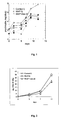
- the ATBV values and the TMA ones detected on the samples in packagings by using the adsorbent product of the present invention with protective atmosphere resulted to be lower compared to the ones obtained for the samples packed according to the classic method and for the ones packed with the protective atmosphere alone.
- the TMA-N/100g concentration found on the samples packed by using the adsorbent of the present invention in protective atmosphere was equal to 5.4 mg and 24.2 mg after 7 and 11 preservation days, significantly lower than 8 and 34 mg found, instead, in the samples of control cuttle-fishes and in the ones packed with the modified atmosphere alone. The same variation was found for the ATBV.
- the concentration of such parameter detected on the samples packed by combining the modified atmosphere and the adsorbent (item iii)) was significantly lowerer and it allowed detecting, for example after 5 and 11 preservation days, values equal to 28 and 112 mg ATBV/100g against 45 and 130-150 mg ATBV/100g detected with respect to the control samples (i) or ii) ) .
- the parameters taken into consideration were: the aroma of the raw product and the product taste after cooking in boiling water for 10 minutes.
- the judgement range was comprised between the values of 1 (extremely unpleasant odour and taste) and 9 (extremely pleasant odour and taste).
- adsorbent 2 (65% cellulose, 25% zeolites, 10% starch), adsorbent 3 (60% cellulose, 30% zeolites, 10% starch), adsorbent 4 (70% cellulose, 25% zeolites, 5% starch), adsorbent 5 (60% cellulose, 25% zeolites, 15% starch) and adsorbent 5bis (60% cellulose, 25% zeolites, 14.9% starch, 0.1% kaolin).
- adsorbent 2 65% cellulose, 25% zeolites, 10% starch
- adsorbent 3 (60% cellulose, 30% zeolites, 10% starch)
- adsorbent 4 (70% cellulose, 25% zeolites, 5% starch
- adsorbent 5 (60% cellulose, 25% zeolites, 15% starch)
- adsorbent 5bis (60% cellulose, 25% zeolites, 14.9% starch, 0.1% kaolin).
- the preservation was carried out in refrigerating room at 6°C and at 80 % of U.R.
- the lignification level was studied through the time evolution of the Toughness and Deflection parameters extrapolated from the tests of bending on three points (load cell of 50 N; speed of the transversed beam 50 mm/min.; the distance between the supports was fixed at 4 cm) with AMETEK LLOYD Instruments LRX plus dinamometer.
- a Perkin-Elmer lambda-Bio 40 spectrophotometer was used, with previous extraction onto 2 g sample of homogenized and centrifugated in 10 ml of 80% acetone.
- the spectrophotometric determination allows detecting at the same time both the chlorophyll a and chlorophyll b pigments.
- the readings were carried out at wavelengths of 663 nm and 645 nm.
- the absorbance of each solution was registered at these wavelengths, by using as white the 80% acetone solution and by using 3-ml quartz cuvettes.
- the colorimetric analysis allowed monitoring the colour variations characterizing the asparagus' stems during preservation. In fact, a progressive loss in the brilliant green tone and a progressive sample yellowing is noted.
- the chlorophyll degradation is one of the phenomena characterizing the asparagus preservation.
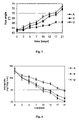
- the degradation phenomenom shown in figure 4, is very marked in the A and B sample; the group of samples with adsorbent shows a reduction in the chlorophyll content, which is much lower compared to the control and B group of samples.
- the lignification phenomenon shows through the increase in thickness of the cell walls with cementation of the cellulosic fibres of the system of fibrovascular bundles and of the xylematic tissues, as well as the appearance of hardened nuclei among the fibres.
- the bending dinamometric tests, shown in figures 5 and 6, allowed evaluating the variation in time of two parameters strongly connected to the asparagus structural modifications: by evaluating the "toughness” parameter it is possible evaluating qualitatively the thickening level of the asparagus walls, which increase due to the lignification process; by evaluating the "deflection” parameter it is possible evaluating the loss in consistency and the structure softening caused by the water loss in the sample.
- the lignification seems strongly characterizing the sample as such. By using the active packing it is possible limiting such phenomenon by keeping the "toughness” parameter value almost constant until the 21st day. Analogous results were registered in the evaluation of the deflection parameter.
- the asparagus are vegetable products characterized by rather short preservation time due to the high respiratory rate and to the stem lignification characterizing this vegetable class.
- the control samples (sample A) resulted, during the preservation period, in a quite rapid drop in the main monitored quality indicators.
- adsorbents having the following compositions: adsorbent 6 (50% cellulose, 30% zeolites, 20% starch), adsorbent 7 (60% cellulose, 20% zeolites, 20% starch), adsorbent 8 (70% cellulose, 10% zeolites, 20% starch) and adsorbent 8bis (70% cellulose, 10% zeolites, 19.8% starch, 0.2% gums).
- adsorbent 6 50% cellulose, 30% zeolites, 20% starch
- adsorbent 7 (60% cellulose, 20% zeolites, 20% starch)
- adsorbent 8 (70% cellulose, 10% zeolites, 20% starch
- adsorbent 8bis 70% cellulose, 10% zeolites, 19.8% starch, 0.2% gums
- the samples of buffalo meat were constituted by whole peaces of silverside weighing 3 - 4 Kg, with an ageing period of about 12 days in climatic cells at 2°C.
- the meat was sliced so as to obtain the same thickness for all the slices (0.8 cm).
- the small basins used in the different experimentations are made of polymeric material with high edges and sealed with barrier film, wherein the adsorbent was inserted.
- the tested packagings were:
- the preservation tests were carried out at the temperature of 5°C for a period equal to 8 days.
- the efficiency of the methods investigated in this study was checked by opening twice, in particular after 3 and 8 days. On each opening day 6 small basins belonging to each investigated group samples were checked, 3 thereof were used for the microbiological analyses and 3 for the pH and colour analyses.
- the pH is measured upon each opening of the packagings with Crison Basic C 20 pHmeter with electrode for solids.
- the colour is measured by means of CR300 Chromameter colourimeter (Minolta, Japan) with 10-mm opening.
- Hue H* or arctg (b*/a*) is evaluated).
- the taken product weighing between 30 and 40 gr, was diluted in ratio 1:3 with sterile physiological solution and homogenized with Stomacher for 30 seconds.
- Aerobic phychrophylic bacteria Tryptone soya agar (Oxoid), at 10°C for 7 days; surface seeding.
- the pH is a freshness evaluation index, since the increase thereof is caused by the accumulation of basic substances such as mercaptan, indole, scatol, amines, etc.
- the acceptability limit of such index is about 6.0-6.2 thereat a dark colouring, a less capability in the water retention of the food product and the development of compounds such as hydrogen sulfide, acetic acid, isobutyric and isovaleric acid, due to the growth of negative Gram bacteria, are noted.
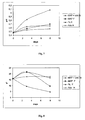
- the pH increase (figure 7) was noted for all the theories, but to the less extent for the samples F, G and H, reaching the value of about 5.6, on the 8th preservation day, unlike the sample as such which reaches on the same day a pH value equal to 6.25.
- the colorimetric analysis was very important since it allowed monitoring the colour variations, the sensorial parameter most critical for the correct preservation of a meat product such as buffalo meat.
- the parameters investigated for evaluating the phenomenon were index of red a* and Hue angle, which accounts for the respective contribution between the yellow and red component.
Landscapes
- Chemical & Material Sciences (AREA)
- Analytical Chemistry (AREA)
- Organic Chemistry (AREA)
- Chemical Kinetics & Catalysis (AREA)
- Inorganic Chemistry (AREA)
- Solid-Sorbent Or Filter-Aiding Compositions (AREA)
- Food Preservation Except Freezing, Refrigeration, And Drying (AREA)
Applications Claiming Priority (2)
| Application Number | Priority Date | Filing Date | Title |
|---|---|---|---|
| ITSA20030021 | 2003-11-17 | ||
| ITSA20030021 ITSA20030021A1 (it) | 2003-11-17 | 2003-11-17 | Adsorbente per la conservazione di prodotti alimentari |
Publications (2)
| Publication Number | Publication Date |
|---|---|
| EP1530998A2 true EP1530998A2 (de) | 2005-05-18 |
| EP1530998A3 EP1530998A3 (de) | 2006-03-08 |
Family
ID=34430804
Family Applications (1)
| Application Number | Title | Priority Date | Filing Date |
|---|---|---|---|
| EP04105815A Withdrawn EP1530998A3 (de) | 2003-11-17 | 2004-11-16 | Adsorptionsmittel zum Verlängern der Haltbarkeit von Lebensmitteln |
Country Status (2)
| Country | Link |
|---|---|
| EP (1) | EP1530998A3 (de) |
| IT (1) | ITSA20030021A1 (de) |
Cited By (1)
| Publication number | Priority date | Publication date | Assignee | Title |
|---|---|---|---|---|
| EP2006218A2 (de) | 2007-06-20 | 2008-12-24 | Marisa Di Matteo | Aktivverpackung für den Transport von pflanzlichem Material |
Family Cites Families (3)
| Publication number | Priority date | Publication date | Assignee | Title |
|---|---|---|---|---|
| US5693384A (en) * | 1992-03-30 | 1997-12-02 | Conservation Resources International, Inc. | Article and method for preserving an archival article |
| CA2213936C (en) * | 1996-08-27 | 2002-01-29 | Rengo Co., Ltd. | Inorganic porous crystals-hydrophilic macromolecule composite |
| US6372333B1 (en) * | 1998-02-25 | 2002-04-16 | Rengo Co., Ltd. | Composition containing inorganic porous crystals-hydrophilic macromolecule composite and product made therefrom |
-
2003
- 2003-11-17 IT ITSA20030021 patent/ITSA20030021A1/it unknown
-
2004
- 2004-11-16 EP EP04105815A patent/EP1530998A3/de not_active Withdrawn
Cited By (2)
| Publication number | Priority date | Publication date | Assignee | Title |
|---|---|---|---|---|
| EP2006218A2 (de) | 2007-06-20 | 2008-12-24 | Marisa Di Matteo | Aktivverpackung für den Transport von pflanzlichem Material |
| EP2006218A3 (de) * | 2007-06-20 | 2010-06-30 | Marisa Di Matteo | Aktivverpackung für den Transport von pflanzlichem Material |
Also Published As
| Publication number | Publication date |
|---|---|
| ITSA20030021A1 (it) | 2005-05-18 |
| EP1530998A3 (de) | 2006-03-08 |
Similar Documents
| Publication | Publication Date | Title |
|---|---|---|
| ZHANG et al. | Effects of active modified atmosphere packaging on postharvest quality of shiitake mushrooms (Lentinula edodes) stored at cold storage | |
| Barragán-Iglesias et al. | Ripeness indexes and physicochemical changes of papaya (Carica papaya L. cv. Maradol) during ripening on-tree | |
| Paulsen et al. | Effect of temperature on glucosinolate content and shelf life of ready-to-eat broccoli florets packaged in passive modified atmosphere | |
| Sun et al. | Kinetic analysis of PGA/PBAT plastic films for strawberry fruit preservation quality and enzyme activity | |
| Singh et al. | Shelf-life enhancement of green bell pepper (Capsicum annuum L.) under active modified atmosphere storage | |
| Rocculi et al. | Effect of 1-MCP treatment and N2O MAP on physiological and quality changes of fresh-cut pineapple | |
| Torales et al. | Influence of passive and active modified atmosphere packaging on yellowing and chlorophyll degrading enzymes activity in fresh-cut rocket leaves | |
| Almenar et al. | Equilibrium modified atmosphere packaging of wild strawberries | |
| Siroli et al. | Efficacy of natural antimicrobials to prolong the shelf-life of minimally processed apples packaged in modified atmosphere | |
| He et al. | Biodegradable PBAT/PLA packaging maintained the quality of postharvest shiitake mushroom by modified humidity and atmosphere | |
| Boeira et al. | Chemical and sensorial characterization of a novel alcoholic beverage produced with native acai (Euterpe precatoria) from different regions of the Amazonas state | |
| Rivero-Pérez et al. | Role of melanoidins in sweet wines | |
| Şener | Effect of temperature and duration of maceration on colour and sensory properties of red wine: A review | |
| Mphahlele et al. | Effects of packaging and duration on quality of minimally processed and unpitted litchi cv.‘Mauritius’ under low storage temperature | |
| Nunes et al. | Quality of strawberries after storage in controlled atmospheres at above optimum storage temperatures | |
| Nicole et al. | Effects of LED lighting recipes on postharvest quality of leafy vegetables grown in a vertical farm | |
| Jemni et al. | Partial vacuum and active modified atmosphere packaging for keeping overall quality of dates | |
| Oguz‐Korkut et al. | Effects of modified atmosphere packaging on physicochemical properties of fresh‐cut ‘Deveci’pears | |
| Legowo et al. | Inhibition of maillard reaction of kepok banana flour with citric acid | |
| Komali et al. | Fabrication of cellulose acetate membrane for monitoring freshness of minimally processed pomegranate (Punica granatum) arils | |
| Sánchez-Molinero et al. | Processing of dry-cured ham in a reduced-oxygen atmosphere: Effects on physicochemical and microbiological parameters and mite growth | |
| Zappia et al. | Influence of light exposure during cold storage of minimally processed vegetables (Valeriana sp.) | |
| Nasution et al. | Development of edible coating based on Aloe vera gel to extend the shelf life of fresh-cut melon | |
| Wang et al. | Effect of different preservation treatments on olecranon honey peach | |
| Sanz et al. | The response to lighting of minimally processed chard: Influence on its shelf life |
Legal Events
| Date | Code | Title | Description |
|---|---|---|---|
| PUAI | Public reference made under article 153(3) epc to a published international application that has entered the european phase |
Free format text: ORIGINAL CODE: 0009012 |
|
| AK | Designated contracting states |
Kind code of ref document: A2 Designated state(s): AT BE BG CH CY CZ DE DK EE ES FI FR GB GR HU IE IS IT LI LU MC NL PL PT RO SE SI SK TR |
|
| AX | Request for extension of the european patent |
Extension state: AL HR LT LV MK YU |
|
| PUAL | Search report despatched |
Free format text: ORIGINAL CODE: 0009013 |
|
| AK | Designated contracting states |
Kind code of ref document: A3 Designated state(s): AT BE BG CH CY CZ DE DK EE ES FI FR GB GR HU IE IS IT LI LU MC NL PL PT RO SE SI SK TR |
|
| AX | Request for extension of the european patent |
Extension state: AL HR LT LV MK YU |
|
| 17P | Request for examination filed |
Effective date: 20060906 |
|
| AKX | Designation fees paid |
Designated state(s): AT BE BG CH CY CZ DE DK EE ES FI FR GB GR HU IE IS IT LI LU MC NL PL PT RO SE SI SK TR |
|
| 17Q | First examination report despatched |
Effective date: 20130617 |
|
| STAA | Information on the status of an ep patent application or granted ep patent |
Free format text: STATUS: THE APPLICATION IS DEEMED TO BE WITHDRAWN |
|
| 18D | Application deemed to be withdrawn |
Effective date: 20170601 |