EP1530859B1 - Routage fonde sur l'heuristique d'un message de demande dans des reseaux poste a poste - Google Patents
Routage fonde sur l'heuristique d'un message de demande dans des reseaux poste a poste Download PDFInfo
- Publication number
- EP1530859B1 EP1530859B1 EP03727078.2A EP03727078A EP1530859B1 EP 1530859 B1 EP1530859 B1 EP 1530859B1 EP 03727078 A EP03727078 A EP 03727078A EP 1530859 B1 EP1530859 B1 EP 1530859B1
- Authority
- EP
- European Patent Office
- Prior art keywords
- query
- host
- peer
- network
- hosts
- Prior art date
- Legal status (The legal status is an assumption and is not a legal conclusion. Google has not performed a legal analysis and makes no representation as to the accuracy of the status listed.)
- Expired - Lifetime
Links
Images


Classifications
-
- H—ELECTRICITY
- H04—ELECTRIC COMMUNICATION TECHNIQUE
- H04L—TRANSMISSION OF DIGITAL INFORMATION, e.g. TELEGRAPHIC COMMUNICATION
- H04L67/00—Network arrangements or protocols for supporting network services or applications
- H04L67/01—Protocols
- H04L67/10—Protocols in which an application is distributed across nodes in the network
- H04L67/104—Peer-to-peer [P2P] networks
- H04L67/1061—Peer-to-peer [P2P] networks using node-based peer discovery mechanisms
- H04L67/1068—Discovery involving direct consultation or announcement among potential requesting and potential source peers
- H04L67/107—Discovery involving direct consultation or announcement among potential requesting and potential source peers with limitation or expansion of the discovery scope
-
- G—PHYSICS
- G06—COMPUTING OR CALCULATING; COUNTING
- G06F—ELECTRIC DIGITAL DATA PROCESSING
- G06F16/00—Information retrieval; Database structures therefor; File system structures therefor
- G06F16/10—File systems; File servers
- G06F16/14—Details of searching files based on file metadata
- G06F16/148—File search processing
-
- G—PHYSICS
- G06—COMPUTING OR CALCULATING; COUNTING
- G06F—ELECTRIC DIGITAL DATA PROCESSING
- G06F16/00—Information retrieval; Database structures therefor; File system structures therefor
- G06F16/10—File systems; File servers
- G06F16/18—File system types
- G06F16/182—Distributed file systems
- G06F16/1834—Distributed file systems implemented based on peer-to-peer networks, e.g. gnutella
- G06F16/1837—Management specially adapted to peer-to-peer storage networks
-
- H—ELECTRICITY
- H04—ELECTRIC COMMUNICATION TECHNIQUE
- H04L—TRANSMISSION OF DIGITAL INFORMATION, e.g. TELEGRAPHIC COMMUNICATION
- H04L45/00—Routing or path finding of packets in data switching networks
- H04L45/20—Hop count for routing purposes, e.g. TTL
-
- H—ELECTRICITY
- H04—ELECTRIC COMMUNICATION TECHNIQUE
- H04L—TRANSMISSION OF DIGITAL INFORMATION, e.g. TELEGRAPHIC COMMUNICATION
- H04L45/00—Routing or path finding of packets in data switching networks
- H04L45/32—Flooding
-
- H—ELECTRICITY
- H04—ELECTRIC COMMUNICATION TECHNIQUE
- H04L—TRANSMISSION OF DIGITAL INFORMATION, e.g. TELEGRAPHIC COMMUNICATION
- H04L45/00—Routing or path finding of packets in data switching networks
- H04L45/36—Backward learning
-
- H—ELECTRICITY
- H04—ELECTRIC COMMUNICATION TECHNIQUE
- H04L—TRANSMISSION OF DIGITAL INFORMATION, e.g. TELEGRAPHIC COMMUNICATION
- H04L67/00—Network arrangements or protocols for supporting network services or applications
- H04L67/01—Protocols
- H04L67/10—Protocols in which an application is distributed across nodes in the network
- H04L67/104—Peer-to-peer [P2P] networks
-
- H—ELECTRICITY
- H04—ELECTRIC COMMUNICATION TECHNIQUE
- H04L—TRANSMISSION OF DIGITAL INFORMATION, e.g. TELEGRAPHIC COMMUNICATION
- H04L67/00—Network arrangements or protocols for supporting network services or applications
- H04L67/50—Network services
- H04L67/60—Scheduling or organising the servicing of application requests, e.g. requests for application data transmissions using the analysis and optimisation of the required network resources
- H04L67/62—Establishing a time schedule for servicing the requests
-
- H—ELECTRICITY
- H04—ELECTRIC COMMUNICATION TECHNIQUE
- H04L—TRANSMISSION OF DIGITAL INFORMATION, e.g. TELEGRAPHIC COMMUNICATION
- H04L67/00—Network arrangements or protocols for supporting network services or applications
- H04L67/50—Network services
- H04L67/60—Scheduling or organising the servicing of application requests, e.g. requests for application data transmissions using the analysis and optimisation of the required network resources
- H04L67/63—Routing a service request depending on the request content or context
-
- H—ELECTRICITY
- H04—ELECTRIC COMMUNICATION TECHNIQUE
- H04L—TRANSMISSION OF DIGITAL INFORMATION, e.g. TELEGRAPHIC COMMUNICATION
- H04L9/00—Cryptographic mechanisms or cryptographic arrangements for secret or secure communications; Network security protocols
- H04L9/40—Network security protocols
-
- H—ELECTRICITY
- H04—ELECTRIC COMMUNICATION TECHNIQUE
- H04L—TRANSMISSION OF DIGITAL INFORMATION, e.g. TELEGRAPHIC COMMUNICATION
- H04L69/00—Network arrangements, protocols or services independent of the application payload and not provided for in the other groups of this subclass
- H04L69/28—Timers or timing mechanisms used in protocols
-
- H—ELECTRICITY
- H04—ELECTRIC COMMUNICATION TECHNIQUE
- H04L—TRANSMISSION OF DIGITAL INFORMATION, e.g. TELEGRAPHIC COMMUNICATION
- H04L69/00—Network arrangements, protocols or services independent of the application payload and not provided for in the other groups of this subclass
- H04L69/30—Definitions, standards or architectural aspects of layered protocol stacks
- H04L69/32—Architecture of open systems interconnection [OSI] 7-layer type protocol stacks, e.g. the interfaces between the data link level and the physical level
- H04L69/322—Intralayer communication protocols among peer entities or protocol data unit [PDU] definitions
- H04L69/329—Intralayer communication protocols among peer entities or protocol data unit [PDU] definitions in the application layer [OSI layer 7]
Definitions
- the present invention relates to the field of Peer to Peer (P2P) messaging in a computer network. More specifically, the present invention relates to determining from which P2P hosts to request content, without the use of a content index.
- P2P Peer to Peer
- Peer to peer (P2P) network protocols are used to exchange content among peers on a network. Generally one peer will be connected to a number of other peers. When a peer wants to find content, the peer transmits a query message to some of the peers it is connected to. This query message travels through the P2P network and elicits query responses from peers that have content that satisfies the query.
- P2P Peer to peer
- a query is sent through the network by assigning it a Time-to-live (TTL) and broadcasting it to all connected peers.
- TTL Time-to-live
- the connected peers decrement the TTL and broadcast it to all of their connected peers, and the query continues through the network in this fashion until the TTL reaches zero.
- This method works well when each peer is connected to a small number of other peers, and when there are few cycles in the network.
- the number of times the query is forwarded grows exponentially with the number of connected peers. For a peer that connects to thousands of other peers, broadcasting queries is not feasible, since the network would become congested with messaging traffic.
- One method of resolving the possibility of network congestion is to maintain an index of the content available through each connection. Queries may then be forwarded to connections that have the content being searched for. However, keeping such an index may not be feasible. For example, due to the size of the index or the dynamic nature of the content.
- Neurogrid Semantically Routing Queries in Peer to Peer Networks
- S.Joseph Peer to Peer Computing and Networking 2002, vol. 2376, no. 2002, 19 May 2002, pages 202-214, XP002252827 discloses a system that maintains a knowledge base of keywords on nodes in a peer to peer network to select a node to receive a query. Nodes have knowledge of the contents of their neighbours.
- the present invention relates to the routing of query messages in a peer to peer network.
- a method of routing messages in a peer to peer network comprising the step of upon receiving a message determining the type of the message and if the message is a query, forwarding the message to a heuristically selected host.
- a scheduler module is initiated by creating a set of all known hosts, and when a request is made to connect to a host providing a host from the set.
- a system for routing queries in a peer to peer network the system utilizing heuristics to determine the best host to forward a query to.
- the present invention uses heuristics to route a query to a subset of connected peers, without knowing the specific content available through any connected peers.
- the present invention may be implemented within a Path Optimizer for Peer-to-Peer Networks (PPO).
- PPO Peer-to-Peer Networks
- An example of a PPO is disclosed in a co-pending application titled "Path Optimizer For Peer To Peer Networks", application number 10/138,336, filed on May 6, 2002 .
- FIG. 1 is a block diagram of networks connected to a PPO.
- Peer to Pesr optimizer (PPO) 10 monitors all P2P traffic between a plurality of networks 12.
- networks 12 include but are not restricted to; a network controlled by an ISP, a corporate network, or a University network.
- Networks 12 would typically be connected to PPO 10 via the Internet, but that is not a requirement of the present invention.
- a node 14 is any computer that is capable of receiving or transmitting P2P data and is referred to hereinafter as a "peer".
- Any network 12 that is capable of providing or requesting P2P traffic may make use of PPO 10.
- the present invention is preferably part of PPO 10, however it is not the intent of the inventors to restrict the present invention to use solely within PPO 10.
- FIG. 2 is a block diagram of the components of the present invention, shown as heuristics based query routing system 20.
- the large arrows show the flow of data obtained from messages received from different P2P communication protocols.
- the small arrows show the flow of information between modules in system 20.
- System 20 may make use of three components in PPO 10 namely: input P2P protocol handler 22, output P2P protocol handler 24 and route/path cost module 26.
- Handler 22 parses a specific P2P protocol and passes the data received to components within system 20. There may be many instances of handler 22, one or more for each different protocol.
- Handler 24 transmits forwarded messages.
- Route/Path Cost Module 26 categorizes connected peers into different "classes", where each class has a cost relative to each other class.
- handlers 22 and 24 may be replaced by equivalent components that serve the same function.
- Handler 22 passes data from three types of P2P messages to system 20, namely:
- Network cache module 28 maintains a cache of all hosts that have been detected in a P2P network. Hosts may be detected in many ways. One way to learn about hosts is by an explicit "Host Information Message" 30. For example, the Gnutella P2P protocol specifies a "Pong" message to advertise the presence of a host, and information about it. Another way to learn about hosts is by inspecting the contents of messages that are routed through module 20. For example, a "Query Hit" message 38 may have been received that has been forwarded through several hosts. This message will have the IP address and listening port of the host that sent it, and although only the final receiver of the message requires this information, the information can be used to learn about the host that sent the query hit message 38.
- Network cache module 28 saves collected information about hosts, and passes relevant information on to connection metrics module 32, which is described below. Since network cache 28 has no general way of knowing when a host is removed from the network, it removes cache entries after a certain amount of time has passed without any reference to that host. When a directly connected host disconnects from the network, that host and any hosts that were reachable through that host are removed from the cache.
- Connection metrics module 32 maintains a set of heuristics based metrics for each P2P connection that is established with system 20. These metrics are obtained from network cache module 28. Some of the metrics are attributes of the connected host, and others are aggregates calculated from all hosts reachable through the connected host. Module 32 provides metrics to scheduler 34, which uses them as input to a weight-based scheduling algorithm. The specific metrics used are described below.
- Scheduler 34 utilizes the input from connection metrics module 32 and route/path cost module 26 (if available) in a probabilistic weight-based algorithm. For example, a weighted round-robin algorithm may be used.
- the output of the algorithm is a sequence of connected hosts, which is used by query cache 36 to make forwarding decisions.
- Query cache module 36 receives "Query" messages 38, makes a forwarding decision, and forwards the query to one or more specific connections vial query forwarding link 40. Query cache module 36 saves queries for a certain amount of time to allow them to be re-sent. Module 36 also receives query hit messages 42 and uses them to track in-progress queries. Queries expire from cache 36 after an expiry time. At expiry time, if the number of returned results is under a certain threshold, the query may be forwarded again, to a different set of hosts. This scheme of query feedback results in a savings in bandwidth, since the initial number of hosts a query must be forwarded to is reduced. Only queries searching for less common content should have to be re-forwarded.
- FIG. 3 is a block diagram of the data structures utilized by system 20.
- One skilled in the art will appreciate that any form of data structures may be utilized to store the data required for the present invention.
- System 20 comprises four tables of data, namely: network host table 50, connection table 52, query table 54 and forwarded table 56.
- Host table 50 is utilized by network cache module 28
- connection table 52 is utilized by connection metrics module 32
- both query table 54 and forwarded table 56 are utilized by query cache module 36.
- each of the tables 50, 52, 54 and 56 is shown as a block containing a list of fields. Fields above the first horizontal line are the "index" fields, and uniquely identify a row in a table.
- Host table 50 is indexed by an "IP Address” field containing the address of a host, and a "Connections” ⁇ field containing the IP address of a connection.
- a connection may be a network 12 that contains a plurality of nodes 14 (see Figure 1 ).
- a connection may also be a single node.
- the "Connection” field of table 50 contains the IP address of a connection and the "IP Address” field contains the IP address of a node within the connection that can serve as a host.
- the connection field references a row in connection table 52, indexed by the "Connection” field of connection table 52. Connection table 52 is described in detail later.
- the "Hops” field contains the number of network hops to the host.
- the "Content” field is the amount of content advertised by the host.
- the "Firewalled” field is either on or off, depending upon whether or not the host is behind a firewall.
- the "Expire Time” field is used to expire hosts from the cache. Each time there is evidence that a host is still on the network, the value of this field is set to the current time plus a constant interval, for example 10 minutes. An entry (i.e. a row), is deleted from table 50 when the current time passes the value in the expire time field.
- Connection table 52 contains the heuristics that are used by scheduler 34. Table 52 is indexed by the IP address of the connected host as shown by the "Host" field.
- the “Total Content” field contains an aggregation of all of the values contained in the “Content” field of host table 50. This provides a measure of the amount of content available through a connection. Connections with more content are given a higher weight by scheduler 34.
- the "Uptime” field contains the amount of time the connected host has been connected to the P2P network. This may be used to indicate the reliability of the host. Connections with a higher uptime are given a higher weight by scheduler 34.
- the "bandwidth” field contains the amount of bandwidth to a connected node.
- Scheduler 34 gives a higher weight to a higher bandwidth connection.
- the "Queries Transmitted” field contains a count of the number of queries that have been forwarded to the connection.
- the "Hits Received” field contains a count of the number of query hits that have been received from the connection.
- the value of the "Hit Rate” field is calculated by dividing the value in the "Queries Transmitted” field with the value in the "Hits Received” field.
- the value of the "Hit Rate” field indicates how well the connected network is at satisfying queries, and is a useful metric for scheduler 34.
- the "% Firewalled” field is aggregated from the “Firewalled” fields of host table 50. A connection that leads to a network with a low number of firewalled hosts is given a higher weight by scheduler 34, since downloading from those hosts has a higher chance of success.
- the "Total Hosts” field provides an estimate of the size of the connected network. Forwarding queries to a large network generally gives a higher rate of success; therefore, larger networks are given a higher weight by scheduler 34.
- the "Count” field contains the number of times this host is connected. It is possible for a host to connect multiple times, and it is necessary to track this because the row should only be deleted when the count becomes zero.
- Query cache module 36 utilizes two tables, query table 54 and forwarded table 56.
- Query table 54 is a cache of in progress queries. Each time a query is received by query cache module 36, the query is entered into table 54.
- the "QueryID” field contains the Global Unique Identifier (GUID) of the query, which is provided with the query. Any incoming queries that already have a GUID in table 54 are duplicates and may be dropped.
- the "Hits" field is initialized to 0 when a query is first forwarded. Whenever a query hit is returned, the value in the hits field is incremented by the number of results in the query hit. A query hit may contain multiple results in response to a query.
- the "Retries” field is initialized to 0 when the query is first forwarded.
- a query may be retried if the number of hits from the query have not met a threshold value (see Figure 9 ). If a query is retried, the retries field is incremented.
- the "Data” field contains the actual query data, so that it may be retransmitted.
- Th e "Expire Time” field is used to clear the cache after a query has been in the network for a certain length of time. A time interval is set that is expected to be the maximum lifetime of a query on the network, by way of example, a minute.
- Forwarded table 56 contains information on which connected hosts a query was forwarded to. It is filled in with the Query ID field of table 54 and the Host field of table 52 whenever a query is forwarded. On a requery, this table is checked before forwarding to a host chosen by scheduler 34. If the host is already in table 56 for the query being forwarded, the query will not be forwarded to that connection again and another host is obtained from scheduler 34.
- Figures 4 to 10 are flowcharts describing the behaviour of system 20 for each possible input. To aid the reader in understanding Figures 4 to 10 , the inventors advise also consulting Figures 2 and 3 to better understand the data and logic flow of the present invention.
- a host information message 30 (see Figure 2 ) is received at step 62.
- a test is made to determine if the IP Address provided by the host information message 30 is in host table 50 (see Figure 3 ). If the IP address is in host table 50 the applicable row is determined at step 66. If the IP address is not in host table 50 a new row in host table 50 is created at step 68.
- the hops, content and firewalled fields are updated for the relevant row based upon the information contained in the host information message.
- the expire time field of the relevant row is set. In one embodiment this may be set at 10 minutes from the current time.
- connection metrics module 32 is invoked to update its entry for the connection. Processing ends at step 76.
- Query message 38 (see Figure 2 ) is received at step 82.
- the value of "k" is the number of connections query message 38 should be forwarded to, the value of k may be selected by the user when configuring system 20.
- a test is then made at step 84 to determine if this is a re-query.
- a re-query is submitted by step 196 of Figure 9 and includes a flag indicating it is a re-query.
- a re-query is issued when the original query has not received enough hits to meet a threshold value. If the query is a re-query, processing moves to step 92.
- step 86 a test is made to determine if the query exists in query table 54, thus indicating it is a duplicate query. If the query already exists in query table 54 then the query has already been forwarded, so it is dropped at step 88. If the query is not in query table 54 it is inserted in query table 54 at step 90. Processing then moves to step 92 where the query is forwarded to a connection obtained from scheduler 34, k times. For each connection received from scheduler 34, forwarded table 56 is checked at step 94 to see if the query has already been forwarded to the connection; if it has, control returns to step 92 where a new connection is obtained from scheduler 34.
- step 96 an entry is inserted into forwarded table 56 for the forwarded query.
- step 98 the value of k is decremented as the query has been forwarded to a connection.
- step 100 the "Queries Transmitted" value for the connection in connection table 52 is incremented.
- a test is then made at step 102 to determine if the value of k is equal to zero. If it is, processing finishes at step 104. If it is not, processing returns to step 92 to obtain another connection for the query.
- Query hit message 42 (see Figure 2 ) is received at step 112.
- a test is made to determine if a query corresponding to query hit 42 is present in query table 54, based upon the GUID of the query. If no corresponding query is present, processing ends at step 120 as this a spurious query hit message or a query hit message from an expired query. If query table 54 does contain a corresponding query, processing moves to step 116 where the "Hits" field of query table 54 is incremented by the number of results indicated in the query hit. Processing next moves to step 118 where the "Hits Received" field of connection table 52 is updated. Processing then ends at step 120.
- step 132 system 20 has determined that a connection to a host is to be established.
- a test is made at step 134 to determine if there is a row having the IP address of the host, contained in the "Connection" field of connection table 32. If such a row exists, then there exist multiple connections from the host and processing moves to step 136 where the "Count" field of connection table 32 is incremented. Processing then ends at step 140.
- step 134 if the test is negative, this is a new host and processing moves to step 138.
- step 138 a new row is added to connection table 32 where the field "Connection" is set to the IP address of the host, and field "Count” is set to the value one. Processing then ends at step 140.
- a flowchart of the logical flow of terminating a connection is shown generally as 150.
- a connection is disconnected.
- a connection would be most often disconnected by a host, however, system 20 may choose to disconnect a host based upon a variety of parameters, for example the number of connections it can maintain.
- the row corresponding to the connection to be disconnected is located in connection table 52 and the value of the "Count" field is decremented at step 156.
- a test is then made at step 158 to determine if the value of the "Count" field is equal to zero. If the test is negative there are still connections from this host, so, processing moves to step 160 where processing ends.
- step 158 If the test at step 158 is positive, processing moves to step 162 where any rows corresponding to the connection are deleted from host table 50. At step 164 all rows in forwarded table 56 corresponding to the connection are deleted. Processing then moves to step 166 where the connection is removed from connection table 52.
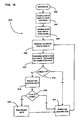
- FIG. 9 is a flowchart of the logical flow upon receiving a timer event, shown generally as process 170.
- Process 170 begins at step 172 when a timer event is received.
- a timer event may be set by system 20 to trigger at any interval, for example, once every second.
- processing moves to step 174 where any expired rows in host table 50 are deleted.
- connection metrics module 32 is invoked to update its metrics to reflect any changes.
- a check is made of query table 54 to determine if any queries have expired. If there are no expired queries processing ends at step 180. If there are expired queries, processing moves to step 182 where any expired queries are selected from query table 54.
- step 184 For each selected query, a test is made at step 184 to determine if the value in the "Hits" is above a threshold, if so, the query has completed successfully and processing moves to step 186. At step 186 all rows in forwarded table 56 matching the expired query are deleted. Processing then moves to step 188 where the expired query is deleted from query table 54 and processing returns to step 178 to determine if there are any more expired queries. Returning now to step 184, if the test is negative, processing moves to step 190 where a test is made to determine if the value contained in the "Retries" field of query table 54 is above a threshold. If so, the query has been retried the maximum number of times, and should not be re-tried again and processing moves to step 186.
- step 192 If the test at step 190 indicates the threshold has not been reached; processing moves to step 192, as the query will be retried.
- step 192 the value of the field "Retries” for the query in query table 54 is updated and processing moves to step 194.
- step 194 the value of the field "Expire Time” for the query in query table 54 is reset, for example to a value of ten minutes past the current time.
- step 196 the query is re-issued according to the process described with relation to Figure 5 . Process 170 then returns to step 178.
- scheduler 34 receives a request to initialize and moves to step 204.
- a set of connected hosts is created. If route/path module 26 (see Figure 2 ) is present, then the sets of connected hosts are created based upon cost class. If not then a single set is created.
- a weight is calculated for each connected host. The weight is calculated utilizing the connection metrics in the connection table 52. A better connection is given a higher weight. Any number of algorithms may be used to calculate the weight of a connection. One example, using the fields (i.e. metrics) of connection table 52 follows.
- each metric is scaled to a number between 1 and 100 by taking the percentage of the metric compared to the maximum of that metric for all connections. For example, if there are three connections, A, B, and C, and A has total content of 3,000KB, B has total content of 30,000KB, and C has total content of 300,000KB, then A's total content for the weight equation will be 1, B's will be 10, and C's will be 100.
- the relative weights of each metric may be configured by the user by specifying the relative importance of each metric. The following may be a good choice for some users as it sends queries out to networks that are most likely to provide results:
- scheduler 34 receives requests for the "next host" in a specified cost class from query cache module. 36. If no cost class information is available, then only a single class exists.
- a host from the corresponding class is randomly selected, and its weight is decreased by one.
- a test is made to determine if the weight associated with a host is now zero. If the weight is not zero, processing moves to step 214 where the selected host is returned to step 208. If at step 212 the weight of the selected host is zero, the host is removed from the set to which it belongs at step 216.
- a test is made to determine if the set to which the host belongs is empty. If it is, the set is reinitialized at step 220 by connection metrics module 32. If the set is not empty processing moves to step 214 where the host removed at step 216 is returned.
- threshold values These values will be set by default, but they may be modified by the user to best match the system requirements of the user.
- the default value of "Retries" in query table 54 may be adjusted by the user based upon the bandwidth cost of receiving query hits balanced against the amount of memory available to store the data provided in a query hit.
- Computer readable forms meaning any stored format that may be read by a computing device.
Landscapes
- Engineering & Computer Science (AREA)
- Computer Networks & Wireless Communication (AREA)
- Signal Processing (AREA)
- Theoretical Computer Science (AREA)
- General Physics & Mathematics (AREA)
- Data Mining & Analysis (AREA)
- Databases & Information Systems (AREA)
- Physics & Mathematics (AREA)
- General Engineering & Computer Science (AREA)
- Library & Information Science (AREA)
- Computer Security & Cryptography (AREA)
- Computer And Data Communications (AREA)
- Data Exchanges In Wide-Area Networks (AREA)
Claims (15)
- Système (20) destiné à acheminer des messages de requêtes dans un réseau poste à poste, ledit système étant caractérisé en ce qu'il comprend :a) un module de cache de réseau (28) adapté pour maintenir un cache d'informations concernant des hôtes connectés dans ledit réseau poste à poste à partir de messages surveillés par ledit système, un hôte connecté étant un pair connecté dans ledit réseau poste à poste qui contient des fichiers qui peuvent être téléchargés ;b) un module de métriques de connexion (32) connecté de manière fonctionnelle audit module de cache de réseau et adapté à maintenir un ensemble de métriques de connexion basées sur l'heuristique pour chacun desdits hôtes connectés détecté sur le réseau par le système, sur la base desdites informations concernant les hôtes connectés dans le réseau ;c) un module ordonnanceur (34) connecté de manière fonctionnelle audit module de métriques de connexion et adapté à générer une séquence de hôtes connectés sur la base d'une pondération desdites métriques de connexion ; etd) un module de cache de requête (36) connecté de manière fonctionnelle audit module ordonnanceur et adapté à recevoir un message de requête à partir d'au moins l'un desdits hôtes connectés dans ledit réseau poste à poste, ledit message de requête contenant une description d'un contenu que l'hôte connecté cherche, et à transmettre ledit message de requête à un ou plusieurs hôte(s) parmi lesdits hôtes connectés selon la séquence de hôtes connectés générée par ledit module ordonnanceur.
- Système de la revendication 1, comprenant en outre : une base de données de table hôte (50), une base de données de table de connexion (52), une base de données de table de requête (54) et une base de données de table transmise (56).
- Procédé destiné à acheminer des messages de requêtes dans un réseau poste à poste, ledit procédé étant caractérisé en ce qu'il comprend les étapes consistant :à maintenir un cache d'informations concernant des hôtes connectés dans ledit réseau poste à poste en surveillant les messages sur le réseau, un hôte connecté étant un pair connecté dans ledit réseau poste à poste qui contient des fichiers qui peuvent être téléchargés ;à maintenir un ensemble de métriques de connexion basées sur l'heuristique pour chacun desdits hôtes connectés détecté sur le réseau, sur la base desdites informations concernant les hôtes connectés dans le réseau ;à générer une séquence de hôtes connectés sur la base d'une pondération desdites métriques de connexion ; età transmettre un message de requête, reçu à partir d'un hôte connecté dans ledit réseau poste à poste et contenant une description d'un contenu que l'hôte connecté cherche, à un ou plusieurs hôte(s) parmi lesdits hôtes connectés selon la séquence des hôtes connectés générée.
- Procédé de la revendication 3 comprenant en outre l'étape consistant à utiliser, lors de la réception d'un message d'informations hôtes, les contenus dudit message d'informations hôtes pour actualiser un cache de réseau (28).
- Procédé de la revendication 3 comprenant en outre l'étape consistant à utiliser, lors de la réception d'un message de requête ou d'un message de réussite de requête, les contenus dudit message de requête ou dudit message de réussite de requête pour actualiser un cache de requête (36).
- Procédé de la revendication 3 dans lequel ladite pondération utilise des métriques à partir de l'ensemble de métriques de connexion consistant en : un contenu total, un temps utilisable, une largeur de bande, un taux de réussite et un pare-feu.
- Procédé de la revendication 3 comprenant en outre les étapes consistant :à émettre un événement de temporisation ; età se débarrasser, si le temps destiné à une connexion à un hôte a expiré, des métriques de connexion pour ledit hôte.
- Procédé de la revendication 3 comprenant en outre l'étape consistant :à supprimer, si une requête qui a été transmise a expiré, ladite requête d'un cache de requête (36).
- Procédé de la revendication 3 comprenant en outre l'étape consistant :à supprimer, si une requête qui a été transmise à un hôte a atteint un seuil de réussites, ladite requête d'un cache de requête (36) sinon à émettre de nouveau ladite requête.
- Procédé de la revendication 3 comprenant en outre l'étape consistant à créer un ensemble d'hôtes, et à fournir, lorsqu'une requête est réalisée pour se connecter à un hôte, un hôte à partir dudit ensemble.
- Procédé de la revendication 10 dans lequel le fait de fournir un hôte à partir dudit ensemble est effectué de façon aléatoire.
- Procédé de la revendication 10 dans lequel un poids est établi pour chaque hôte, ledit poids étant décrémenté chaque fois qu'un hôte soit fourni, et ledit hôte est retiré à partir dudit ensemble d'hôtes, si ledit poids atteint la valeur zéro.
- Procédé de la revendication 10 dans lequel, ledit ensemble est réinitialisé au cas où il est vide.
- Programme informatique comprenant un moyen de code adapté à effectuer toutes les étapes de l'une des revendications 3 à 13, où ledit programme est exécuté sur un système de traitement de données.
- Programme informatique tel que revendiqué dans la revendication 14 incorporé sur un support lisible par ordinateur.
Applications Claiming Priority (3)
| Application Number | Priority Date | Filing Date | Title |
|---|---|---|---|
| US216676 | 1988-07-07 | ||
| US10/216,676 US7376749B2 (en) | 2002-08-12 | 2002-08-12 | Heuristics-based peer to peer message routing |
| PCT/CA2003/000799 WO2004015950A1 (fr) | 2002-08-12 | 2003-05-29 | Routage fonde sur l'heuristique d'un message de demande dans des reseaux poste a poste |
Publications (2)
| Publication Number | Publication Date |
|---|---|
| EP1530859A1 EP1530859A1 (fr) | 2005-05-18 |
| EP1530859B1 true EP1530859B1 (fr) | 2014-03-12 |
Family
ID=31714295
Family Applications (1)
| Application Number | Title | Priority Date | Filing Date |
|---|---|---|---|
| EP03727078.2A Expired - Lifetime EP1530859B1 (fr) | 2002-08-12 | 2003-05-29 | Routage fonde sur l'heuristique d'un message de demande dans des reseaux poste a poste |
Country Status (5)
| Country | Link |
|---|---|
| US (1) | US7376749B2 (fr) |
| EP (1) | EP1530859B1 (fr) |
| AU (1) | AU2003233708A1 (fr) |
| CA (1) | CA2401080C (fr) |
| WO (1) | WO2004015950A1 (fr) |
Families Citing this family (45)
| Publication number | Priority date | Publication date | Assignee | Title |
|---|---|---|---|---|
| US7768996B1 (en) * | 2003-01-09 | 2010-08-03 | Cisco Technology, Inc. | Route re-query scheme in communication networks |
| US8095500B2 (en) | 2003-06-13 | 2012-01-10 | Brilliant Digital Entertainment, Inc. | Methods and systems for searching content in distributed computing networks |
| US20050033616A1 (en) * | 2003-08-05 | 2005-02-10 | Ezrez Software, Inc. | Travel management system providing customized travel plan |
| JP4069388B2 (ja) * | 2003-09-16 | 2008-04-02 | ソニー株式会社 | サーバ装置およびコンテンツサーバ装置 |
| US7715934B2 (en) | 2003-09-19 | 2010-05-11 | Macrovision Corporation | Identification of input files using reference files associated with nodes of a sparse binary tree |
| US8156175B2 (en) | 2004-01-23 | 2012-04-10 | Tiversa Inc. | System and method for searching for specific types of people or information on a peer-to-peer network |
| US7761569B2 (en) * | 2004-01-23 | 2010-07-20 | Tiversa, Inc. | Method for monitoring and providing information over a peer to peer network |
| US7877810B2 (en) * | 2004-03-02 | 2011-01-25 | Rovi Solutions Corporation | System, method and client user interface for a copy protection service |
| US8271522B2 (en) * | 2004-12-03 | 2012-09-18 | National University Of Singapore | Matching queries in a network |
| US8984140B2 (en) * | 2004-12-14 | 2015-03-17 | Hewlett-Packard Development Company, L.P. | Managing connections through an aggregation of network resources providing offloaded connections between applications over a network |
| US20060277092A1 (en) * | 2005-06-03 | 2006-12-07 | Credigy Technologies, Inc. | System and method for a peer to peer exchange of consumer information |
| US7809943B2 (en) * | 2005-09-27 | 2010-10-05 | Rovi Solutions Corporation | Method and system for establishing trust in a peer-to-peer network |
| US8560456B2 (en) * | 2005-12-02 | 2013-10-15 | Credigy Technologies, Inc. | System and method for an anonymous exchange of private data |
| US8086722B2 (en) * | 2005-12-21 | 2011-12-27 | Rovi Solutions Corporation | Techniques for measuring peer-to-peer (P2P) networks |
| EP1802079B1 (fr) * | 2005-12-22 | 2010-03-31 | Microsoft Corporation | Gestion des connexions dans des réseaux de distribution poste à poste |
| US20070162377A1 (en) * | 2005-12-23 | 2007-07-12 | Credigy Technologies, Inc. | System and method for an online exchange of private data |
| US8218445B2 (en) * | 2006-06-02 | 2012-07-10 | Ciena Corporation | Smart ethernet edge networking system |
| US7509312B2 (en) * | 2006-07-28 | 2009-03-24 | International Business Machines Corporation | Method and apparatus for managing peer-to-peer search results |
| EP1914643A1 (fr) * | 2006-10-19 | 2008-04-23 | Motorola, Inc. | Procédé et appareil de filtration de recherches réseau poste-à-poste pour dispositifs à capacité limitée |
| US20080120416A1 (en) * | 2006-11-07 | 2008-05-22 | Tiversa, Inc. | System and method for peer to peer compensation |
| EP2082326A4 (fr) * | 2006-11-07 | 2012-02-15 | Tiversa Inc | Système et procédé permettant d'obtenir une meilleure expérience avec un réseau poste à poste |
| EP2149246B1 (fr) * | 2007-04-12 | 2018-07-11 | Kroll Information Assurance, LLC | Système et procédé de création d'une liste d'informations partagées sur un réseau peer-to-peer |
| EP2171666A4 (fr) * | 2007-06-11 | 2012-05-09 | Tiversa Inc | Système et procédé pour passer des annonces publicitaires dans un réseau de pairs |
| EP2031819A1 (fr) | 2007-09-03 | 2009-03-04 | British Telecommunications Public Limited Company | Système distribué |
| CN101465786B (zh) | 2007-12-18 | 2013-01-09 | 华为技术有限公司 | 一种资源转发的方法、网络实体及网络系统 |
| US8655838B2 (en) * | 2008-02-20 | 2014-02-18 | At&T Intellectual Property I, L.P. | Selection of peers to cluster within a peer-to-peer network |
| JP2011515908A (ja) * | 2008-02-27 | 2011-05-19 | トムソン ライセンシング | 分散型階層構造クラスタ化ピアツーピア・ライブ・ストリーミング・システム |
| US8903973B1 (en) | 2008-11-10 | 2014-12-02 | Tanium Inc. | Parallel distributed network management |
| US9148477B2 (en) * | 2009-01-29 | 2015-09-29 | Qualcomm Incorporated | Methods and apparatus for communicating in a wireless system |
| GB0905562D0 (en) * | 2009-03-31 | 2009-05-13 | British Telecomm | Electronic resource storage system |
| US20110055230A1 (en) * | 2009-08-28 | 2011-03-03 | International Business Machines Corporation | Community-Based Knowledge Sharing |
| US9774527B2 (en) | 2012-08-31 | 2017-09-26 | Nasdaq Technology Ab | Resilient peer-to-peer application message routing |
| US9413846B2 (en) | 2012-12-14 | 2016-08-09 | Microsoft Technology Licensing, Llc | Content-acquisition source selection and management |
| US10391387B2 (en) | 2012-12-14 | 2019-08-27 | Microsoft Technology Licensing, Llc | Presenting digital content item with tiered functionality |
| US9716749B2 (en) | 2012-12-14 | 2017-07-25 | Microsoft Technology Licensing, Llc | Centralized management of a P2P network |
| US11172470B1 (en) | 2012-12-21 | 2021-11-09 | Tanium Inc. | System, security and network management using self-organizing communication orbits in distributed networks |
| US10873645B2 (en) | 2014-03-24 | 2020-12-22 | Tanium Inc. | Software application updating in a local network |
| US11461208B1 (en) | 2015-04-24 | 2022-10-04 | Tanium Inc. | Reliable map-reduce communications in a decentralized, self-organizing communication orbit of a distributed network |
| US11153383B2 (en) | 2016-03-08 | 2021-10-19 | Tanium Inc. | Distributed data analysis for streaming data sources |
| US11886229B1 (en) | 2016-03-08 | 2024-01-30 | Tanium Inc. | System and method for generating a global dictionary and performing similarity search queries in a network |
| US11609835B1 (en) * | 2016-03-08 | 2023-03-21 | Tanium Inc. | Evaluating machine and process performance in distributed system |
| US11048764B2 (en) * | 2016-12-30 | 2021-06-29 | Verizon Media Inc. | Managing under—and over-represented content topics in content pools |
| US11831670B1 (en) | 2019-11-18 | 2023-11-28 | Tanium Inc. | System and method for prioritizing distributed system risk remediations |
| US11563764B1 (en) | 2020-08-24 | 2023-01-24 | Tanium Inc. | Risk scoring based on compliance verification test results in a local network |
| US12231467B1 (en) | 2021-10-19 | 2025-02-18 | Tanium Inc. | System and method for deputizing satellite endpoints |
Family Cites Families (10)
| Publication number | Priority date | Publication date | Assignee | Title |
|---|---|---|---|---|
| US6055568A (en) * | 1996-12-17 | 2000-04-25 | Intel Corporation | Method and apparatus for dynamically configuring a decentralized network of computers |
| US6938095B2 (en) * | 2000-06-28 | 2005-08-30 | Pluris, Inc. | Method and apparatus for establishing and sharing a virtual change notification list among a plurality of peer nodes |
| WO2002057917A2 (fr) * | 2001-01-22 | 2002-07-25 | Sun Microsystems, Inc. | Plate-forme de reseau entre homologues |
| US7099871B2 (en) * | 2001-05-04 | 2006-08-29 | Sun Microsystems, Inc. | System and method for distributed real-time search |
| US7546363B2 (en) * | 2001-07-06 | 2009-06-09 | Intel Corporation | Adaptive route determination for peer-to-peer services |
| US7120691B2 (en) * | 2002-03-15 | 2006-10-10 | International Business Machines Corporation | Secured and access controlled peer-to-peer resource sharing method and apparatus |
| US20030182428A1 (en) * | 2002-03-19 | 2003-09-25 | Jiang Li | Peer-to-peer (P2P) communication system |
| US7260645B2 (en) * | 2002-04-26 | 2007-08-21 | Proficient Networks, Inc. | Methods, apparatuses and systems facilitating determination of network path metrics |
| US7286468B2 (en) * | 2002-11-12 | 2007-10-23 | Cisco Technology, Inc. | Routing system and method for synchronizing a routing system with peers after failover |
| US20050080858A1 (en) * | 2003-10-10 | 2005-04-14 | Microsoft Corporation | System and method for searching a peer-to-peer network |
-
2002
- 2002-08-12 US US10/216,676 patent/US7376749B2/en not_active Expired - Lifetime
- 2002-09-03 CA CA2401080A patent/CA2401080C/fr not_active Expired - Lifetime
-
2003
- 2003-05-29 EP EP03727078.2A patent/EP1530859B1/fr not_active Expired - Lifetime
- 2003-05-29 AU AU2003233708A patent/AU2003233708A1/en not_active Abandoned
- 2003-05-29 WO PCT/CA2003/000799 patent/WO2004015950A1/fr not_active Ceased
Also Published As
| Publication number | Publication date |
|---|---|
| US7376749B2 (en) | 2008-05-20 |
| CA2401080C (fr) | 2010-04-13 |
| AU2003233708A1 (en) | 2004-02-25 |
| WO2004015950A1 (fr) | 2004-02-19 |
| US20040044790A1 (en) | 2004-03-04 |
| EP1530859A1 (fr) | 2005-05-18 |
| CA2401080A1 (fr) | 2004-02-12 |
Similar Documents
| Publication | Publication Date | Title |
|---|---|---|
| EP1530859B1 (fr) | Routage fonde sur l'heuristique d'un message de demande dans des reseaux poste a poste | |
| US7509372B2 (en) | Method and system for redirecting data requests in peer-to-peer data networks | |
| US7958195B2 (en) | Method and apparatus for improving data transfers in peer-to-peer networks | |
| US7174382B2 (en) | Interest-based connections in peer-to-peer networks | |
| US7991879B2 (en) | Internet location coordinate enhanced domain name system | |
| US8626844B2 (en) | Methods and media for exchanging data between nodes of disconnected networks | |
| US20020073204A1 (en) | Method and system for exchange of node characteristics for DATA sharing in peer-to-peer DATA networks | |
| US7586853B2 (en) | Network location management system | |
| US20030018774A1 (en) | System and method for load balancing in ad hoc networks | |
| JP2002512411A (ja) | アクセス制御方法および装置 | |
| US7461128B2 (en) | Method, apparatus and system for processing message bundles on a network | |
| US8645534B2 (en) | Localization of peer to peer traffic | |
| KR101384794B1 (ko) | 메시지 라우팅 플랫폼 | |
| US20060155819A1 (en) | Methods and system for using caches | |
| JP2008537619A (ja) | ピア・ツー・ピア(p2p)・ネットワークを効率的に拡張するための方法、装置、およびプログラム | |
| US8200826B1 (en) | Communal memory | |
| Tomic et al. | Implementation and efficiency analysis of composite DNS-metric for dynamic server selection | |
| Tavakoli | Avoiding Congestion in a Data-Centric Opportunistic Network | |
| JP2004341912A (ja) | 情報探索方法、サーバント、プログラム及び該プログラムを記録した記録媒体 | |
| Zheng et al. | Wcbf: Efficient and high-coverage search schema in unstructured peer-to-peer network | |
| GB2412769A (en) | System for managing cache updates | |
| GB2412770A (en) | Method of communicating data over a network |
Legal Events
| Date | Code | Title | Description |
|---|---|---|---|
| PUAI | Public reference made under article 153(3) epc to a published international application that has entered the european phase |
Free format text: ORIGINAL CODE: 0009012 |
|
| 17P | Request for examination filed |
Effective date: 20050311 |
|
| AK | Designated contracting states |
Kind code of ref document: A1 Designated state(s): AT BE BG CH CY CZ DE DK EE ES FI FR GB GR HU IE IT LI LU MC NL PT RO SE SI SK TR |
|
| AX | Request for extension of the european patent |
Extension state: AL LT LV MK |
|
| DAX | Request for extension of the european patent (deleted) | ||
| RIN1 | Information on inventor provided before grant (corrected) |
Inventor name: BOWMAN, DON Inventor name: LOACH, SCOT |
|
| 17Q | First examination report despatched |
Effective date: 20051104 |
|
| RIN1 | Information on inventor provided before grant (corrected) |
Inventor name: LOACH, SCOT Inventor name: BOWMAN, DON |
|
| RAP1 | Party data changed (applicant data changed or rights of an application transferred) |
Owner name: SANDVINE INCORPORATED ULC |
|
| GRAP | Despatch of communication of intention to grant a patent |
Free format text: ORIGINAL CODE: EPIDOSNIGR1 |
|
| GRAP | Despatch of communication of intention to grant a patent |
Free format text: ORIGINAL CODE: EPIDOSNIGR1 |
|
| INTG | Intention to grant announced |
Effective date: 20131021 |
|
| GRAS | Grant fee paid |
Free format text: ORIGINAL CODE: EPIDOSNIGR3 |
|
| GRAA | (expected) grant |
Free format text: ORIGINAL CODE: 0009210 |
|
| AK | Designated contracting states |
Kind code of ref document: B1 Designated state(s): AT BE BG CH CY CZ DE DK EE ES FI FR GB GR HU IE IT LI LU MC NL PT RO SE SI SK TR |
|
| REG | Reference to a national code |
Ref country code: GB Ref legal event code: FG4D |
|
| REG | Reference to a national code |
Ref country code: CH Ref legal event code: EP |
|
| REG | Reference to a national code |
Ref country code: AT Ref legal event code: REF Ref document number: 656926 Country of ref document: AT Kind code of ref document: T Effective date: 20140315 |
|
| REG | Reference to a national code |
Ref country code: IE Ref legal event code: FG4D |
|
| REG | Reference to a national code |
Ref country code: DE Ref legal event code: R096 Ref document number: 60345842 Country of ref document: DE Effective date: 20140424 |
|
| REG | Reference to a national code |
Ref country code: NL Ref legal event code: VDEP Effective date: 20140312 |
|
| REG | Reference to a national code |
Ref country code: AT Ref legal event code: MK05 Ref document number: 656926 Country of ref document: AT Kind code of ref document: T Effective date: 20140312 |
|
| PG25 | Lapsed in a contracting state [announced via postgrant information from national office to epo] |
Ref country code: CY Free format text: LAPSE BECAUSE OF FAILURE TO SUBMIT A TRANSLATION OF THE DESCRIPTION OR TO PAY THE FEE WITHIN THE PRESCRIBED TIME-LIMIT Effective date: 20140312 Ref country code: FI Free format text: LAPSE BECAUSE OF FAILURE TO SUBMIT A TRANSLATION OF THE DESCRIPTION OR TO PAY THE FEE WITHIN THE PRESCRIBED TIME-LIMIT Effective date: 20140312 Ref country code: SE Free format text: LAPSE BECAUSE OF FAILURE TO SUBMIT A TRANSLATION OF THE DESCRIPTION OR TO PAY THE FEE WITHIN THE PRESCRIBED TIME-LIMIT Effective date: 20140312 |
|
| PG25 | Lapsed in a contracting state [announced via postgrant information from national office to epo] |
Ref country code: BG Free format text: LAPSE BECAUSE OF FAILURE TO SUBMIT A TRANSLATION OF THE DESCRIPTION OR TO PAY THE FEE WITHIN THE PRESCRIBED TIME-LIMIT Effective date: 20140612 Ref country code: EE Free format text: LAPSE BECAUSE OF FAILURE TO SUBMIT A TRANSLATION OF THE DESCRIPTION OR TO PAY THE FEE WITHIN THE PRESCRIBED TIME-LIMIT Effective date: 20140312 Ref country code: RO Free format text: LAPSE BECAUSE OF FAILURE TO SUBMIT A TRANSLATION OF THE DESCRIPTION OR TO PAY THE FEE WITHIN THE PRESCRIBED TIME-LIMIT Effective date: 20140312 Ref country code: BE Free format text: LAPSE BECAUSE OF FAILURE TO SUBMIT A TRANSLATION OF THE DESCRIPTION OR TO PAY THE FEE WITHIN THE PRESCRIBED TIME-LIMIT Effective date: 20140312 Ref country code: NL Free format text: LAPSE BECAUSE OF FAILURE TO SUBMIT A TRANSLATION OF THE DESCRIPTION OR TO PAY THE FEE WITHIN THE PRESCRIBED TIME-LIMIT Effective date: 20140312 Ref country code: CZ Free format text: LAPSE BECAUSE OF FAILURE TO SUBMIT A TRANSLATION OF THE DESCRIPTION OR TO PAY THE FEE WITHIN THE PRESCRIBED TIME-LIMIT Effective date: 20140312 |
|
| PG25 | Lapsed in a contracting state [announced via postgrant information from national office to epo] |
Ref country code: SK Free format text: LAPSE BECAUSE OF FAILURE TO SUBMIT A TRANSLATION OF THE DESCRIPTION OR TO PAY THE FEE WITHIN THE PRESCRIBED TIME-LIMIT Effective date: 20140312 Ref country code: AT Free format text: LAPSE BECAUSE OF FAILURE TO SUBMIT A TRANSLATION OF THE DESCRIPTION OR TO PAY THE FEE WITHIN THE PRESCRIBED TIME-LIMIT Effective date: 20140312 Ref country code: ES Free format text: LAPSE BECAUSE OF FAILURE TO SUBMIT A TRANSLATION OF THE DESCRIPTION OR TO PAY THE FEE WITHIN THE PRESCRIBED TIME-LIMIT Effective date: 20140312 |
|
| REG | Reference to a national code |
Ref country code: DE Ref legal event code: R097 Ref document number: 60345842 Country of ref document: DE |
|
| PG25 | Lapsed in a contracting state [announced via postgrant information from national office to epo] |
Ref country code: LU Free format text: LAPSE BECAUSE OF FAILURE TO SUBMIT A TRANSLATION OF THE DESCRIPTION OR TO PAY THE FEE WITHIN THE PRESCRIBED TIME-LIMIT Effective date: 20140529 Ref country code: PT Free format text: LAPSE BECAUSE OF FAILURE TO SUBMIT A TRANSLATION OF THE DESCRIPTION OR TO PAY THE FEE WITHIN THE PRESCRIBED TIME-LIMIT Effective date: 20140714 |
|
| REG | Reference to a national code |
Ref country code: CH Ref legal event code: PL |
|
| PLBE | No opposition filed within time limit |
Free format text: ORIGINAL CODE: 0009261 |
|
| STAA | Information on the status of an ep patent application or granted ep patent |
Free format text: STATUS: NO OPPOSITION FILED WITHIN TIME LIMIT |
|
| PG25 | Lapsed in a contracting state [announced via postgrant information from national office to epo] |
Ref country code: MC Free format text: LAPSE BECAUSE OF FAILURE TO SUBMIT A TRANSLATION OF THE DESCRIPTION OR TO PAY THE FEE WITHIN THE PRESCRIBED TIME-LIMIT Effective date: 20140312 Ref country code: LI Free format text: LAPSE BECAUSE OF NON-PAYMENT OF DUE FEES Effective date: 20140531 Ref country code: CH Free format text: LAPSE BECAUSE OF NON-PAYMENT OF DUE FEES Effective date: 20140531 Ref country code: DK Free format text: LAPSE BECAUSE OF FAILURE TO SUBMIT A TRANSLATION OF THE DESCRIPTION OR TO PAY THE FEE WITHIN THE PRESCRIBED TIME-LIMIT Effective date: 20140312 |
|
| 26N | No opposition filed |
Effective date: 20141215 |
|
| REG | Reference to a national code |
Ref country code: IE Ref legal event code: MM4A |
|
| REG | Reference to a national code |
Ref country code: DE Ref legal event code: R097 Ref document number: 60345842 Country of ref document: DE Effective date: 20141215 |
|
| PG25 | Lapsed in a contracting state [announced via postgrant information from national office to epo] |
Ref country code: IT Free format text: LAPSE BECAUSE OF FAILURE TO SUBMIT A TRANSLATION OF THE DESCRIPTION OR TO PAY THE FEE WITHIN THE PRESCRIBED TIME-LIMIT Effective date: 20140312 |
|
| PG25 | Lapsed in a contracting state [announced via postgrant information from national office to epo] |
Ref country code: IE Free format text: LAPSE BECAUSE OF NON-PAYMENT OF DUE FEES Effective date: 20140529 |
|
| PG25 | Lapsed in a contracting state [announced via postgrant information from national office to epo] |
Ref country code: SI Free format text: LAPSE BECAUSE OF FAILURE TO SUBMIT A TRANSLATION OF THE DESCRIPTION OR TO PAY THE FEE WITHIN THE PRESCRIBED TIME-LIMIT Effective date: 20140312 |
|
| REG | Reference to a national code |
Ref country code: FR Ref legal event code: PLFP Year of fee payment: 14 |
|
| PG25 | Lapsed in a contracting state [announced via postgrant information from national office to epo] |
Ref country code: GR Free format text: LAPSE BECAUSE OF FAILURE TO SUBMIT A TRANSLATION OF THE DESCRIPTION OR TO PAY THE FEE WITHIN THE PRESCRIBED TIME-LIMIT Effective date: 20140613 |
|
| PG25 | Lapsed in a contracting state [announced via postgrant information from national office to epo] |
Ref country code: HU Free format text: LAPSE BECAUSE OF FAILURE TO SUBMIT A TRANSLATION OF THE DESCRIPTION OR TO PAY THE FEE WITHIN THE PRESCRIBED TIME-LIMIT; INVALID AB INITIO Effective date: 20030529 Ref country code: TR Free format text: LAPSE BECAUSE OF FAILURE TO SUBMIT A TRANSLATION OF THE DESCRIPTION OR TO PAY THE FEE WITHIN THE PRESCRIBED TIME-LIMIT Effective date: 20140312 |
|
| REG | Reference to a national code |
Ref country code: FR Ref legal event code: PLFP Year of fee payment: 15 |
|
| REG | Reference to a national code |
Ref country code: FR Ref legal event code: PLFP Year of fee payment: 16 |
|
| REG | Reference to a national code |
Ref country code: DE Ref legal event code: R079 Ref document number: 60345842 Country of ref document: DE Free format text: PREVIOUS MAIN CLASS: H04L0029060000 Ipc: H04L0065000000 |
|
| PGFP | Annual fee paid to national office [announced via postgrant information from national office to epo] |
Ref country code: GB Payment date: 20220527 Year of fee payment: 20 Ref country code: FR Payment date: 20220525 Year of fee payment: 20 Ref country code: DE Payment date: 20220527 Year of fee payment: 20 |
|
| REG | Reference to a national code |
Ref country code: DE Ref legal event code: R071 Ref document number: 60345842 Country of ref document: DE |
|
| REG | Reference to a national code |
Ref country code: GB Ref legal event code: PE20 Expiry date: 20230528 |
|
| PG25 | Lapsed in a contracting state [announced via postgrant information from national office to epo] |
Ref country code: GB Free format text: LAPSE BECAUSE OF EXPIRATION OF PROTECTION Effective date: 20230528 |