EP1528833A1 - Verfahren zur Selektion eines Verschlüsselungsalgorithmus sowie dafür geeignetes Mobilendgerät - Google Patents
Verfahren zur Selektion eines Verschlüsselungsalgorithmus sowie dafür geeignetes Mobilendgerät Download PDFInfo
- Publication number
- EP1528833A1 EP1528833A1 EP03405775A EP03405775A EP1528833A1 EP 1528833 A1 EP1528833 A1 EP 1528833A1 EP 03405775 A EP03405775 A EP 03405775A EP 03405775 A EP03405775 A EP 03405775A EP 1528833 A1 EP1528833 A1 EP 1528833A1
- Authority
- EP
- European Patent Office
- Prior art keywords
- mobile terminal
- mobile
- encryption algorithm
- network
- identification
- Prior art date
- Legal status (The legal status is an assumption and is not a legal conclusion. Google has not performed a legal analysis and makes no representation as to the accuracy of the status listed.)
- Granted
Links
Images


Classifications
-
- H—ELECTRICITY
- H04—ELECTRIC COMMUNICATION TECHNIQUE
- H04L—TRANSMISSION OF DIGITAL INFORMATION, e.g. TELEGRAPHIC COMMUNICATION
- H04L63/00—Network architectures or network communication protocols for network security
- H04L63/20—Network architectures or network communication protocols for network security for managing network security; network security policies in general
- H04L63/205—Network architectures or network communication protocols for network security for managing network security; network security policies in general involving negotiation or determination of the one or more network security mechanisms to be used, e.g. by negotiation between the client and the server or between peers or by selection according to the capabilities of the entities involved
-
- H—ELECTRICITY
- H04—ELECTRIC COMMUNICATION TECHNIQUE
- H04W—WIRELESS COMMUNICATION NETWORKS
- H04W12/00—Security arrangements; Authentication; Protecting privacy or anonymity
- H04W12/04—Key management, e.g. using generic bootstrapping architecture [GBA]
- H04W12/041—Key generation or derivation
-
- H—ELECTRICITY
- H04—ELECTRIC COMMUNICATION TECHNIQUE
- H04W—WIRELESS COMMUNICATION NETWORKS
- H04W12/00—Security arrangements; Authentication; Protecting privacy or anonymity
- H04W12/12—Detection or prevention of fraud
- H04W12/125—Protection against power exhaustion attacks
-
- H—ELECTRICITY
- H04—ELECTRIC COMMUNICATION TECHNIQUE
- H04W—WIRELESS COMMUNICATION NETWORKS
- H04W88/00—Devices specially adapted for wireless communication networks, e.g. terminals, base stations or access point devices
- H04W88/02—Terminal devices
Definitions
- the present invention relates to a method for the selection of a Encryption algorithm and a suitable mobile terminal.
- the invention particularly relates to a method for selecting an encryption algorithm when connecting a mobile terminal to a mobile network and a suitable mobile terminal for mobile networks.
- Mobile networks for mobile data and voice communication becomes the communication between a mobile communication terminal (Mobile terminal) and the relevant mobile network typically by means of encrypted cryptographic encryption algorithms.
- the encryption algorithm used for encryption of data and voice communication shall be.
- the determination of the encryption algorithm to be used is used, for example, for GSM mobile networks (Global System for Mobile Communication) in the publication "Technical Specification, 3rd Generation Partnership Project, Technical Specification Group Services and System Aspects, Security Related Network Functions (Release 5) ", 3GPP TS 43.020 V5.0.0, July 2002, by 3GPP Support Office, 650 Route des Lucioles, Sophia Antipolis, Valbonne, France, specified.
- the classmark change message includes information for identifying the encryption algorithms, which are supported by the mobile terminal.
- a maximum of seven so-called A5 algorithms are used for Communication encryption supported.
- the mobile network is selected Reason for the information contained in the received Classmark Change message the encryption algorithm to use.
- the mobile network informs the mobile terminal of the encryption algorithms to be used by means of a special data message, a so-called Cipher mode Command message.
- the mobile terminal is used for communication encryption the one specified in the cipher mode command message Encryption algorithm as well as a cryptographic key.
- the cryptographic key is used in the mobile terminal, in particular in a Identification module of the mobile terminal, generated from a random number (RAND), from the mobile network in a so-called authentication request message has been transmitted to the mobile terminal.
- the identification module a so-called SIM (Subscriber Identity Module)
- SIM Subscriber Identity Module
- the cryptographic key is independent of the selected one Encryption algorithm, that is, for all encryption algorithms the same cryptographic key is used. This is the Risk that messages using a strong encryption algorithm were encrypted, can be decrypted by an unauthorized person, if this unauthorized person has the cryptographic key over the decryption one encrypted with a weaker encryption algorithm Message has been determined.
- a first data message For selecting an encryption algorithm when connecting a Mobile terminal to a mobile network, a first data message, the Information for identifying the encryption algorithms comprises supported by the mobile terminal, from the mobile terminal to the mobile network transmitted.
- the encryption algorithms which are supported by the mobile terminal, an encryption algorithm to be used selected.
- the mobile network transmits a second Data message identifying the selected encryption algorithm to be used includes, to the mobile terminal.
- the identification of the used Encryption algorithm assigned in the mobile terminal in a data store stored on information identifying the mobile network and that in a subsequent connection of the mobile terminal to the Mobile network is checked to see if the stored in the data store identification of the encryption algorithm to be used with that in the second Data message from the mobile network to the mobile terminal transmitted identification of the selected encryption algorithm to be used.
- the identification of the encryption algorithm to be used becomes initially in a first data store in the mobile terminal cached.
- the mobile terminal is checked whether in the mobile terminal a message received from the mobile network using the in the first data store cached information successfully decrypted was and the identification of the encryption algorithm to be used becomes only after successful decryption in a second Data memory stored in the mobile terminal.
- the mobile terminal to the mobile network is checked whether the in the second data message transmitted from the mobile network to the mobile terminal Identification of the selected encryption algorithm to use with the identification of the one to be used stored in the second data memory Encryption algorithm matches.
- the information stored in the data memory deleted at a time determined by defined criteria becomes.
- the time to clear the information stored in the datastore in particular the identification of the encryption algorithm to be used, for example, by a defined number of power cycles or charging cycles determined. Due to the fact that the data stored in the data memory Information from the mobile terminal to be automatically deleted from time to time allows for stronger, that is, more secure, encryption algorithms that can be used by the mobile terminal, but only become new available in the mobile network.
- the im Data storage information stored to identify the mobile network Checks whether the mobile terminal to another new mobile network connects. If it turns out that the mobile device is on another new mobile network binds, in the transmission of the first Data message from the mobile terminal to the new mobile network in the first Data reporting all available encryption algorithms as from Mobile terminal supported indicated. Subsequently, when receiving the second data message in the mobile terminal checks whether the new mobile network selected encryption algorithm to be used from before used encryption algorithm deviates. If no deviation is present, the selected by the new mobile network encryption algorithm in the data storage safe the new mobile network be stored assigned.
- a data message a so-called authentication request message, transmitted to the mobile terminal, which data for generating a includes cryptographic key.
- the identification of the encryption algorithm to be used as well the generated cryptographic key in the data store associated with the Information stored to identify the mobile network. If the encryption algorithm to be used by the new mobile network from the previously used encryption algorithm in the mobile terminal checks to see if a new cryptographic key is out generates a received from the new mobile network third data message was, with the previously stored in the data store cryptographic Key matches, and optionally, for example, an error message generated.
- the new mobile network be stored assigned. Consequently, when connecting to a new Mobile network admittedly admitted a different encryption algorithm, however only if a new cryptographic key is used. This prevents an unauthorized person from accessing another encryption algorithm switch and a previously determined, already used can introduce cryptographic keys for use.
- less preferred embodiment is in the transmission of the first data message from the mobile terminal to the new Mobile network in the first data message only the last used encryption algorithm indicated as supported by the mobile terminal when It turns out that the mobile terminal to another new mobile network connects.
- the second data message in the mobile terminal is then checked whether the selected by the new mobile network to be used Encryption algorithm of the last used encryption algorithm deviates and optionally, for example, an error message generated.
- Encryption algorithm of the last used encryption algorithm deviates and optionally, for example, an error message generated.
- the encryption algorithm used also prevents an unauthorized person switch to another encryption algorithm.
- a switch to a stronger encryption algorithm which would be available both in the mobile terminal and in the new mobile network, prevents the identification stored in the data store from being used Encryption algorithm is deleted.
- the identification of the encryption algorithm to be used becomes stored in a data store on a Identification module is executed, which is inserted into the mobile terminal and removably connected to the mobile terminal.
- Identification module is executed, which is inserted into the mobile terminal and removably connected to the mobile terminal.
- Different users with different identification modules can for example be unaffected from the previous use of the mobile terminal individually to mobile networks connect, for example, with various available encryption algorithms.
- the identification of the encryption algorithm to be used in a fixed with the mobile terminal stored data storage and stored in the data store Information stored when connecting a new identification module deleted with the mobile terminal.
- the encryption algorithm to use with the information to identify the mobile network additionally an access technology type the mobile network stored in the data memory.
- FIGS. 1 to 5 like reference numerals denote steps or components that match each other.
- the reference numeral 1 denotes a with the mobile network 2 connectable mobile communication terminal, a mobile terminal.
- the mobile network includes, for example, a GSM or a UMTS mobile network or another, for example satellite-based mobile radio network, or a wireless local area network, called a WLAN (Wireless Local Area Network).
- the mobile terminal 1 is a mobile phone or a Laptop or PDA (Personal Digital Assistant) computer with a communication module for communication over the mobile network 2.
- the mobile network 2 also comprises a computer-based access control unit 21 and an associated computer-based authentication center 22.
- the Access control unit 21 is preferably a VLR unit (Visitor Location Register) or an SGSN unit (Serving GPRS Support Node, GPRS - General Packet Radio Service) for a GSM or UMTS mobile network.
- the authentication center 22 is preferably an AuC unit (Authentication Center) for a GSM or UMTS mobile network.
- the mobile terminal 1 comprises a data memory 111 and another, hereinafter referred to as a buffer 112 data memory.
- the data memory 111 and / or the buffer memory 112 are either fixed in the mobile terminal 1 or on an identification module 11 which is inserted into the mobile terminal 1 and is removably connected to the mobile terminal 1.
- the identification module 11, a so-called SIM or USIM (UMTS Subscriber Identity Module) is preferably designed as a chip card.
- the data memory 111 and the buffer memory 112 are configured to store information for identifying a mobile radio network, an identification of an encryption algorithm (eg a so-called A5 algorithm) and a cryptographic key (KC), as shown schematically in Table 1 is.
- an encryption algorithm eg a so-called A5 algorithm
- KC cryptographic key
- a random number (RAND) for generating the cryptographic key can also be stored.
- the information for identifying a mobile radio network preferably comprises a country code, for example a so-called Mobile Country Code (MCC), a network code, for example a so-called Mobile Network Code (MNC), and, depending on the variant, optionally an access technology type, that is so-called Access Technology Type (ATT). Storage of the access technology type is useful for mobile terminals 1 that support various types of access technologies, such as mobile terminals 1 that support GSM and UMTS access technologies.
- Identification of a mobile network Identification of an encryption algorithm (A5) Cryptographic key (K C ) MCC MNC ATT
- the mobile terminal comprises 1 also has a plurality of functional modules 12, 13, 14 and 15 for execution the functions described later with reference to Figures 3, 4a, 4b and 5.
- the functional modules 12, 13, 14 and 15 are preferably programmed Software modules for controlling one or more processors of the mobile terminal 1 is executed.
- the skilled person will understand that the functional Modules 12, 13, 14 and 15 also completely or at least partially can be executed in hardware.
- the functional modules 12, 13, 14 and 15 may be fixed in the mobile terminal 1 or on the identification module 11 be saved.
- the mobile terminal 1 is set up to transmit a so-called Location Update Request data message to the mobile radio network 2 when connected to the mobile radio network 2 in step T1.
- the mobile terminal of the mobile network 2 receives a so-called authentication request data message, the data, in particular a random number (RAND) for generating a cryptographic key (K C ) comprises.
- the random numbers are generated in the authentication center 22.
- the identification module 11 of the mobile terminal 1 is set up to generate and store the cryptographic key from the random number in step T3 and to prepare an authentication-response data message.
- the mobile terminal 1 is set up to transmit the prepared authentication-response data message to the mobile radio network 2 in step T4.
- the correctness of the received authentication-response data message is checked in step T5 in the mobile radio network, in particular in the access control unit 21. If the check is positive, the mobile radio network 2 transmits a so-called classmark inquiry data message to the mobile terminal 1 in step T6.
- the mobile terminal 1 is set up in step T7 in response to the classmark inquiry data message a classmark change data message to the mobile network to convey.
- the classmark change data message includes information for identifying encryption algorithms supported by the mobile terminal 1.
- step T8 the mobile radio network 2, in particular the access control unit 21, selects from the encryption algorithms, which are jointly supported by the mobile terminal 1 and the mobile radio network 2, the encryption algorithm to be used.
- step T9 the mobile radio network 2 transmits a so-called ciphering mode command data message to the mobile terminal 1.
- the ciphering mode command data message comprises an identification of the encryption algorithm to be used.
- the mobile terminal 1 is set up to provide a so-called ciphering mode complete data message in step T10 using the cryptographic key generated in step T3 and the encryption algorithm to be used in step T9 and to transmit it to the mobile radio network 2 in step T11.
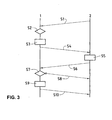
- the mobile terminal is 1, in particular the functional module 12 of the mobile terminal 1, is set up, in step S2 to check whether the mobile terminal 1 again to the same mobile network 2 binds or whether it is to another new mobile network 2 binds.
- the mobile terminal 2 binds to another new one Mobile network 2, if the information identifying the mobile network, which are stored in the data memory 111, not with the received ones Information for identifying the mobile network 2 match, on that binds the mobile device 1. Otherwise, if in the data store 111 stored information to identify a mobile network with the received information for identifying the mobile network 2, to which binds the mobile device 1 match, the mobile terminal binds 1 again to the same mobile network 2.
- the mobile terminal 1, in particular the functional module 13 of the Mobile terminal 1, is set up in the re-connection of the mobile terminal 1 to the same mobile network 2 in step S3 the data storage 111 the stored identification of the encryption algorithm. That is, in step S3, the identification of the encryption algorithm determines that used by the mobile terminal 1 before in the mobile network 2 has been.
- step S4 the functional module 13 transmits the mobile terminal 1 shows the identification of the encryption algorithm determined in step S3 by means of a Classmark Change data message to the mobile network 2.
- the Classmark change data message transmitted in step S4 also indicate that the mobile terminal 2 also unencrypted Communication supported.
- step S5 the mobile radio network 2 selects on the basis of the step S4 submitted Classmark Change data message to use Encryption algorithm. Because in the classmark change data message only the identification of the previously used in mobile network 2 encryption algorithm is specified in step S5 this already before used identification of the encryption algorithm selected and from the mobile network 2 in step S6 by means of a ciphering mode command data message transmitted to the mobile terminal 1.
- the mobile terminal 1, in particular the functional module 14 of the Mobile terminal 1, is set up in step S7 to check whether the in step S6 transmitted identification of the encryption algorithm to be used with the identification of the encryption algorithm stored in the data memory 111 matches. That is, in step S7 is checked whether in the received ciphering mode command data message specified encryption algorithm actually before in the mobile network 2 was used and therefore is allowed for the mobile network 2.
- the Mobile terminal 1 in step S9, using the data in the memory 111 stored cryptographic key and in the data memory 111 stored identification of the previously used encryption algorithm, Prepare and transmit a ciphering mode complete data message the ciphering mode complete data message in step S10 to the mobile network Second
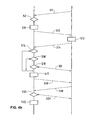
- the mobile terminal 1, in particular the functional module 13 of the Mobile terminal 1 is set up in the connection of the mobile terminal 1 a new mobile network 2 in step S11 all encryption algorithms to be determined, which are supported by the mobile terminal 1.
- step S12 the functional module 13 transmits the mobile terminal 1 identifies the supported encryption algorithms determined in step S11 by means of a classmark change data message the new mobile network 2.
- step S13 the new mobile radio network 2 selects on the basis of the Step S12 transmitted the classmark change data message to be used Encryption algorithm, both from the mobile terminal 1 as is also supported by the new mobile network.
- step S14 the new mobile network 2 the identification of the encryption algorithm to be used by means of a ciphering mode command data message the mobile terminal 1.
- the mobile terminal 1, in particular the functional module 14 of the Mobile terminal 1, is set to check in step S15 whether the in Step S14 transmitted identification of the encryption algorithm to be used with the identification stored in the data memory 111 matches the encryption algorithm. That is, in step S15 it checks to see if the received ciphering mode command data message specified encryption algorithm from previously used Encryption algorithm deviates and therefore from the new mobile network 2 was changed.
- Step S17 If the encryption algorithm has not changed, the that is, if the received and the stored identification of the encryption algorithm match, the functional module 14 moves in Step S17 continues.
- Step S16 If the encryption algorithm has been changed, that is, if the received and the stored identification of the encryption algorithm do not match, the functional module 14 checks in Step S16, whether the generated for the new mobile network 2 cryptographic Key (or the corresponding random number) with that in the data store 111 stored cryptographic key (respectively random number) matches. That is, in step S16, it is checked whether from the new mobile network 2 the same cryptographic key already used before has been.
- step S16 If the cryptographic key was previously used the functional module 14 indicates a protocol error in step S16 and that Mobile terminal 1 transmits an error message in step S8, for example otherwise, the functional module 14 moves in step S 17 continues.
- step S17 the functional module 14 stores the information to identify the new mobile network 2, the identification of the new Mobile network 2 to be used encryption algorithm and the from the new mobile network 2 specified cryptographic key in the cache 112.
- the mobile terminal 1 sets in step S17 Ciphering Mode Complete Data Message Alerts and Sends the Ciphering Mode Complete Data Message in step S10 to the new mobile network. 2
- step S20 the functional module 14 checks whether the first one in Step S19 from the new mobile network 2 transmitted message in the mobile terminal 1 could be successfully decrypted. If the message is successfully decrypted could be, copies the functional module 14 in step S22 the Content stored in the buffer memory 112 in the data memory in step S17 111. Otherwise, if the first message in the mobile terminal 1 not could be successfully decrypted, is the functional module 14 in the Step S20 indicates a protocol error and the mobile terminal 1 transmits in Step S21, for example, an error message to the new mobile network. 2
- the functional module 12 in verifying whether the mobile terminal 1 reconnects to the same or to a new mobile network 2 for identification a mobile network also the access technology type.
- the method sequence differs the embodiment of Figure 4b from the process flow of Embodiment of Figure 4a in that the functional module 14th after step S15 performs step S16 'when the encryption algorithm was changed, that is, if the received and the stored Identification of the encryption algorithm does not match.
- step S16 ' the functional module 14 checks as in step S16, whether from the new mobile network 2 the same, previously used cryptographic Key was specified. If the cryptographic key has been used before, however, the functional module 14 is in the Step S16 'does not log error, but proceeds to step S18. Otherwise, if the cryptographic key has not already been used, drive the functional module 14 continues in step S17.
- step S18 the functional module 14 checks whether the in step S2 detected network change due to a changed access technology type took place. That is, in step S18, it is checked if the country code and the network code of the mobile network to which the mobile terminal attaches, Although they match the country code and the network code in the cache 112, however, the access technology type of the Mobile network to which the mobile terminal reconnects, the access technology type which is stored in the buffer 112. Again, in step S18, it is checked if the access technology changed within the same mobile network 2, for example, because the mobile terminal 1 was previously in a GSM cell and now located in a UMTS cell.
- the functional module 14 continues in step S17. That is, the renewed Use of a cryptographic key is allowed if has changed the access technology within the same mobile network 2 and for example, instead of the previously used GSM encryption algorithm a UMTS encryption algorithm is used. If the Has not changed the access technology type, the functional module 14 is in Step S18 indicates a protocol error and the mobile terminal 1 transmits in Step S8, for example, an error message to the new mobile network. 2
- Step S17 becomes as described above with reference to FIG. 4a was executed, taking into account the information for identification the new mobile network 2 in particular also the access technology type the new mobile network 2 is stored.
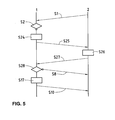
- FIG the functional module 13 of the mobile terminal 1 is set up, in the connection of the mobile terminal 1 to a new mobile network 2 in step S24 the last used to determine the encryption algorithm used in the data store 111 is stored.
- step S25 the functional module 13 transmits the mobile terminal 1 identifies the most recently used identifiers determined in step S24 Encryption algorithms by means of a classmark change data message to the new mobile network 2.
- step S26 the mobile radio network 2 selects on the basis of the Step S25 transmitted the classmark change data message to be used Encryption algorithm. Because in the classmark change data message only the identification of the last used by the mobile terminal 1 Encryption algorithm is indicated in step S26 this last used identification of the encryption algorithm selected and from the mobile network 2 in step S27 by means of a ciphering mode command data message transmitted to the mobile terminal 1.
- the mobile terminal 1, in particular the functional module 14 of the Mobile terminal 1, is arranged to check in step S28 whether the in Step S27 transmitted identification of the encryption algorithm to be used with the identification stored in the data memory 111 matches the encryption algorithm. That is, in step S28 we Check if the received in the Ciphering-Mode-Command-Datamessage specified encryption algorithm actually last was used by the mobile terminal 1 and therefore for the new mobile network 2 is considered admissible.
- step S8 If the received and the stored identification of the encryption algorithm do not match, is the functional module 14 a protocol error and the mobile terminal 1 transmitted in step S8, for example an error message to the mobile network 2. Otherwise, that drives functional module 14 in step S17, which as described above with reference to Figure 4a described, is executed.
- the functional module 15 deletes the data stored in the data memory 111 Information at specific times.
- the time will be, for example determined by the functional module 15 by each at Power cycle (on / off) or at each charge cycle (battery charging) increases a counter, and triggers the deletion if a defined number Power cycles, for example 10, or charging cycles, for example 20, achieved has been.
- the person skilled in the art will understand that the time of extinction by the functional Module 15 can also be set periodically, for example based on an internal time signal of the mobile terminal 1.
Landscapes
- Engineering & Computer Science (AREA)
- Computer Security & Cryptography (AREA)
- Computer Networks & Wireless Communication (AREA)
- Signal Processing (AREA)
- Computer Hardware Design (AREA)
- Computing Systems (AREA)
- General Engineering & Computer Science (AREA)
- Mobile Radio Communication Systems (AREA)
- Telephonic Communication Services (AREA)
Abstract
Description
| Identifizierung eines Mobilfunknetzes | Identifizierung eines Verschlüsselungsalgorithmus (A5) | Kryptographischer Schlüssel (KC) |
| MCC | MNC | ATT |
Claims (20)
- Verfahren zur Selektion eines Verschlüsselungsalgorithmus beim Anbinden eines Mobilendgeräts (1) an ein Mobilfunknetz (2), umfassend:gekennzeichnet durch,Übermittlung einer ersten Datenmeldung (S4, S12, S25) vom Mobilendgerät (1) an das Mobilfunknetz (2), welche erste Datenmeldung Informationen zur Identifizierung der Verschlüsselungsalgorithmen umfasst, die vom Mobilendgerät (1) unterstützt werden,Selektion eines zu verwendenden Verschlüsselungsalgorithmus (S5, S13, S26) durch das Mobilfunknetz (2) aus den Verschlüsselungsalgorithmen, die durch das Mobilendgerät (1) unterstützt werden, undÜbermittlung einer zweiten Datenmeldung (S6, S14, S27) vom Mobilfunknetz (2) an das Mobilendgerät (1), welche zweite Datenmeldung eine Identifizierung des selektierten zu verwendenden Verschlüsselungsalgorithmus umfasst,
Speicherung der Identifizierung (S22) des zu verwendenden Verschlüsselungsalgorithmus in einem Datenspeicher (111) im Mobilendgerät (1), zugeordnet zu Informationen zur Identifizierung des Mobilfunknetzes (2), und
bei einer nachfolgenden Anbindung des Mobilendgeräts (1) an das Mobilfunknetz (2) Überprüfung (S7, S15, S28), ob die im Datenspeicher (111) gespeicherte Identifizierung des zu verwendenden Verschlüsselungsalgorithmus mit der in der zweiten Datenmeldung vom Mobilfunknetz (2) an das Mobilendgerät (1) übermittelten Identifizierung des selektierten zu verwendenden Verschlüsselungsalgorithmus übereinstimmt. - Verfahren nach Anspruch 1, dadurch gekennzeichnet, dass die Identifizierung des zu verwendenden Verschlüsselungsalgorithmus zunächst in einem ersten Datenspeicher (112) im Mobilendgerät (1) zwischengespeichert (S17) wird, dass im Mobilendgerät (1) überprüft (S20) wird, ob im Mobilendgerät (1) eine vom Mobilfunknetz (2) empfangene Meldung unter Verwendung der im ersten Datenspeicher (111) zwischengespeicherten Informationen erfolgreich entschlüsselt wurde, dass die Identifizierung des zu verwendenden Verschlüsselungsalgorithmus erst nach erfolgreicher Entschlüsselung in einem zweiten Datenspeicher (111) im Mobilendgerät (1) gespeichert (S22) wird, und dass bei der nachfolgenden Anbindung des Mobilendgeräts (1) an das Mobilfunknetz (2) überprüft (S7, S15, S28) wird, ob die in der zweiten Datenmeldung vom Mobilfunknetz (2) an das Mobilendgerät (1) übermittelte Identifizierung des selektierten zu verwendenden Verschlüsselungsalgorithmus mit der im zweiten Datenspeicher (111) gespeicherten Identifizierung des zu verwendenden Verschlüsselungsalgorithmus übereinstimmt.
- Verfahren nach einem der Ansprüche 1 oder 2, dadurch gekennzeichnet, dass die im Datenspeicher (111) gespeicherten Informationen zu einem Zeitpunkt gelöscht (S11) werden, der durch definierte Kriterien bestimmt wird.
- Verfahren nach Anspruch 3, dadurch gekennzeichnet, dass der Zeitpunkt zum Löschen der im Datenspeicher (111) gespeichertem Informationen durch eine definierte Anzahl Powerzyklen oder Ladezyklen bestimmt wird.
- Verfahren nach einem der Ansprüche 1 bis 4, dadurch gekennzeichnet, dass vor der Übermittlung der ersten Datenmeldung (S12) vom Mobilendgerät (1) an das Mobilfunknetz (2) im Mobilendgerät (1) auf Grund der im Datenspeicher (111) gespeicherten Informationen zur Identifizierung des Mobilfunknetzes (2) überprüft (S2) wird, ob sich das Mobilendgerät (1) an ein anderes neues Mobilfunknetz (2) anbindet, dass bei der Übermittlung der ersten Datenmeldung (S12) vom Mobilendgerät (1) an das neue Mobilfunknetz (2) in der ersten Datenmeldung sämtliche verfügbaren Verschlüsselungsalgorithmen als vom Mobilendgerät (1) unterstützt angegeben werden, und dass beim Empfang der zweiten Datenmeldung im Mobilendgerät (1) überprüft wird (S15), ob der vom neuen Mobilfunknetz (2) selektierte zu verwendende Verschlüsselungsalgorithmus vom vorher verwendeten Verschlüsselungsalgorithmus abweicht.
- Verfahren nach Anspruch 5, dadurch gekennzeichnet, dass beim Anbinden des Mobilendgeräts (1) an ein Mobilfunknetz (2) vom Mobilfunknetz (2) eine dritte Datenmeldung an das Mobilendgerät (1) übermittelt wird, welche dritte Datenmeldung Daten zur Erzeugung eines kryptographischen Schlüssels umfasst, dass bei der Speicherung der Identifizierung (S17) des zu verwendenden Verschlüsselungsalgorithmus auch der erzeugte kryptographische Schlüssel im Datenspeicher (111) zugeordnet zu den Informationen zur Identifizierung des Mobilfunknetzes (2) gespeichert wird, und dass, wenn der vom neuen Mobilfunknetz (2) selektierte zu verwendende Verschlüsselungsalgorithmus vom vorher verwendeten Verschlüsselungsalgorithmus abweicht, im Mobilendgerät (1) überprüft (S16, S16') wird, ob ein neuer kryptographischer Schlüssel, der aus einer vom neuen Mobilfunknetz (2) empfangenen dritten Datenmeldung erzeugt wurde, mit dem im Datenspeicher (111) vorher gespeicherten kryptographischen Schlüssel übereinstimmt.
- Verfahren nach einem der Ansprüche 1 bis 4, dadurch gekennzeichnet, dass vor der Übermittlung der ersten Datenmeldung (S25) vom Mobilendgerät (1) an das Mobilfunknetz (2) im Mobilendgerät (1) auf Grund der im Datenspeicher (111) gespeicherten Informationen zur Identifizierung des Mobilfunknetzes (2) überprüft (S2) wird, ob sich das Mobilendgerät (1) an ein anderes neues Mobilfunknetz (2) anbindet, dass bei der Übermittlung der ersten Datenmeldung (S25) vom Mobilendgerät (1) an das neue Mobilfunknetz (2) in der ersten Datenmeldung nur der zuletzt verwendete Verschlüsselungsalgorithmus als vom Mobilendgerät (1) unterstützt angegeben wird, und dass beim Empfang der zweiten Datenmeldung im Mobilendgerät (1) überprüft (S28) wird, ob der vom neuen Mobilfunknetz (2) selektierte zu verwendende Verschlüsselungsalgorithmus vom zuletzt verwendeten Verschlüsselungsalgorithmus abweicht.
- Verfahren nach einem der Ansprüche 1 bis 7, dadurch gekennzeichnet, dass die Identifizierung des zu verwendenden Verschlüsselungsalgorithmus in einem fest mit dem Mobilendgerät (1) verbundenen Datenspeicher (111) gespeichert wird, und dass die im Datenspeicher (111) gespeicherten Informationen beim Verbinden eines neuen Identifizierungsmoduls mit dem Mobilendgerät (1) gelöscht werden.
- Verfahren nach einem der Ansprüche 1 bis 7, dadurch gekennzeichnet, dass die Identifizierung des zu verwendenden Verschlüsselungsalgorithmus in einem Datenspeicher (111) gespeichert wird, der auf einem Identifizierungsmodul ausgeführt ist, das in das Mobilendgerät (1) eingeführt und entfernbar mit dem Mobilendgerät (1) verbunden ist.
- Verfahren nach einem der Ansprüche 1 bis 9, dadurch gekennzeichnet, dass bei der Speicherung der Identifizierung (S17) des zu verwendenden Verschlüsselungsalgorithmus mit den Informationen zur Identifizierung des Mobilfunknetzes (2) zusätzlich ein Zugriffstechnologie-Typ des Mobilfunknetzes (2) im Datenspeicher (111) gespeichert wird.
- Mobilendgerät (1) für Mobilfunknetze (2), welches Mobilendgerät (1) eingerichtet ist, beim Anbinden an ein Mobilfunknetz (2) eine erste Datenmeldung an das Mobilfunknetz (2) zu übermitteln, welche erste Datenmeldung Informationen zur Identifizierung von Verschlüsselungsalgorithmen umfasst, die vom Mobilendgerät (1) unterstützt werden, und welches Mobilendgerät (1) eingerichtet ist, vom Mobilfunknetz (2) eine zweite Datenmeldung zu empfangen, welche zweite Datenmeldung eine Identifizierung eines zu verwendenden Verschlüsselungsalgorithmus umfasst, welcher zu verwendende Verschlüsselungsalgorithmus durch das Mobilfunknetz (2) aus den durch das Mobilendgerät (1) unterstützten Verschlüsselungsalgorithmen selektiert wurde, gekennzeichnet durch,
Mittel zur Speicherung der Identifizierung des zu verwendenden Verschlüsselungsalgorithmus in einem Datenspeicher (111) im Mobilendgerät (1), zugeordnet zu Informationen zur Identifizierung des Mobilfunknetzes (2), und
Mittel zur Überprüfung bei einer nachfolgenden Anbindung des Mobilendgeräts (1) an das Mobilfunknetz (2), ob die im Datenspeicher (111) gespeicherte Identifizierung des zu verwendenden Verschlüsselungsalgorithmus mit der in der zweiten Datenmeldung vom Mobilfunknetz (2) an das Mobilendgerät (1) übermittelten Identifizierung des selektierten zu verwendenden Verschlüsselungsalgorithmus übereinstimmt. - Mobilendgerät (1) nach Anspruch 11, dadurch gekennzeichnet, dass die Mittel zur Speicherung der Identifizierung des zu verwendenden Verschlüsselungsalgorithmus eingerichtet sind die Identifizierung des zu verwendenden Verschlüsselungsalgorithmus zunächst in einem ersten Datenspeicher (112) im Mobilendgerät (1) zwischenzuspeichern, dass das Mobilendgerät (1 ) Mittel umfasst zum Überprüfen, ob im Mobilendgerät (1) eine vom Mobilfunknetz (2) empfangene Meldung unter Verwendung der im ersten Datenspeicher (111) zwischengespeicherten Informationen erfolgreich entschlüsselt wurde, dass die Mittel zur Speicherung der Identifizierung des zu verwendenden Verschlüsselungsalgorithmus eingerichtet sind die Identifizierung des zu verwendenden Verschlüsselungsalgorithmus erst nach erfolgreicher Entschlüsselung in einem zweiten Datenspeicher (111) im Mobilendgerät (1) zu speichern, und dass die Mittel zur Überprüfung bei der nachfolgenden Anbindung des Mobilendgeräts (1) an das Mobilfunknetz (2) eingerichtet sind, zum Überprüfen, ob die in der zweiten Datenmeldung vom Mobilfunknetz (2) an das Mobilendgerät (1) übermittelte Identifizierung des selektierten zu verwendenden Verschlüsselungsalgorithmus mit der im zweiten Datenspeicher (111) gespeicherten Identifizierung des zu verwendenden Verschlüsselungsalgorithmus übereinstimmt.
- Mobilendgerät (1) nach einem der Ansprüche 11 oder 12, gekennzeichnet durch Mittel zum Löschen der im Datenspeicher (111) gespeichertem Informationen zu einem Zeitpunkt, der durch definierte Kriterien bestimmt ist.
- Mobilendgerät (1) nach Anspruch 13, gekennzeichnet durch Mittel zum Bestimmen des Zeitpunkts zum Löschen der im Datenspeicher (111) gespeichertem Informationen auf Grund der Anzahl Powerzyklen oder Ladezyklen.
- Mobilendgerät (1) nach einem der Ansprüche 11 bis 14, gekennzeichnet durch Mittel zum Überprüfen, vor der Übermittlung der ersten Datenmeldung an das Mobilfunknetz (2), auf Grund der im Datenspeicher (111) gespeicherten Informationen zur Identifizierung des Mobilfunknetzes (2), ob sich das Mobilendgerät (1) an ein anderes neues Mobilfunknetz (2) anbindet, durch Mittel zum Einfügen von Informationen zur Identifizierung sämtlicher verfügbaren Verschlüsselungsalgorithmen in die erste Datenmeldung vor deren Übermittlung an das neue Mobilfunknetz (2), und durch Mittel zum Überprüfen beim Empfang der zweiten Datenmeldung, ob der vom neuen Mobilfunknetz (2) selektierte zu verwendende Verschlüsselungsalgorithmus vom vorher verwendeten Verschlüsselungsalgorithmus abweicht.
- Mobilendgerät (1) nach Anspruch 15, gekennzeichnet durch Mittel zum Empfangen einer dritten Datenmeldung vom Mobilfunknetz (2), welche dritte Datenmeldung Daten zur Erzeugung eines kryptographischen Schlüssels umfasst, durch Mittel zum Speichern des erzeugten kryptographischen Schlüssels im Datenspeicher (111) zugeordnet zu den Informationen zur Identifizierung des Mobilfunknetzes (2) zusammen mit der Identifizierung des zu verwendenden Verschlüsselungsalgorithmus, und durch Mittel zum Überprüfen, wenn der vom neuen Mobilfunknetz (2) selektierte zu verwendende Verschlüsselungsalgorithmus vom vorher verwendeten Verschlüsselungsalgorithmus abweicht, ob ein neuer kryptographischer Schlüssel, der aus einer vom neuen Mobilfunknetz (2) empfangenen dritten Datenmeldung erzeugt wurde, mit dem im Datenspeicher (111) vorher gespeicherten kryptographischen Schlüssel übereinstimmt.
- Mobilendgerät (1) nach einem der Ansprüche 11 bis 14, gekennzeichnet durch Mittel zum Überprüfen, vor der Übermittlung der ersten Datenmeldung an das Mobilfunknetz (2), auf Grund der im Datenspeicher (111) gespeicherten Informationen zur Identifizierung des Mobilfunknetzes (2), ob sich das Mobilendgerät (1) an ein anderes neues Mobilfunknetz (2) anbindet, durch Mittel zum Einfügen von Informationen zur Identifizierung des zuletzt verwendeten Verschlüsselungsalgorithmus als vom Mobilendgerät (1) unterstützt angegeben in die erste Datenmeldung vor deren Übermittlung an das neue Mobilfunknetz (2), und durch Mittel zum Überprüfen beim Empfang der zweiten Datenmeldung, ob der vom neuen Mobilfunknetz (2) selektierte zu verwendende Verschlüsselungsalgorithmus vom zuletzt verwendeten Verschlüsselungsalgorithmus abweicht.
- Mobilendgerät (1) nach einem der Ansprüche 11 bis 17, dadurch gekennzeichnet, dass der Datenspeicher (111) zur Speicherung des zu verwendenden Verschlüsselungsalgorithmus fest mit dem Mobilendgerät (1) verbunden ist, und dass das Mobilendgerät (1) Mittel umfasst zum Löschen der im Datenspeicher (111) gespeicherten Informationen beim Verbinden eines neuen Identifizierungsmoduls mit dem Mobilendgerät (1).
- Mobilendgerät (1) nach einem der Ansprüche 11 bis 17, dadurch gekennzeichnet, dass der Datenspeicher (111) zur Speicherung des zu verwendenden Verschlüsselungsalgorithmus auf einem Identifizierungsmodul ausgeführt ist, das in das Mobilendgerät (1) eingeführt und entfernbar mit dem Mobilendgerät (1) verbunden ist.
- Mobilendgerät (1 ) nach einem der Ansprüche 11 bis 19, gekennzeichnet durch Mittel zum Speichern der Informationen zur Identifizierung des Mobilfunknetzes (2) im Datenspeicher (111) zusammen mit einem Zugriffstechnologie-Typ.
Priority Applications (4)
| Application Number | Priority Date | Filing Date | Title |
|---|---|---|---|
| DE50308808T DE50308808D1 (de) | 2003-10-28 | 2003-10-28 | Verfahren zur Selektion eines Verschlüsselungsalgorithmus sowie dafür geeignetes Mobilendgerät |
| AT03405775T ATE381234T1 (de) | 2003-10-28 | 2003-10-28 | Verfahren zur selektion eines verschlüsselungsalgorithmus sowie dafür geeignetes mobilendgerät |
| EP03405775A EP1528833B1 (de) | 2003-10-28 | 2003-10-28 | Verfahren zur Selektion eines Verschlüsselungsalgorithmus sowie dafür geeignetes Mobilendgerät |
| ES03405775T ES2298490T3 (es) | 2003-10-28 | 2003-10-28 | Procedimiento para la seleccion de un algoritmo de codificacion y aparato terminal movil apropiado para ello. |
Applications Claiming Priority (1)
| Application Number | Priority Date | Filing Date | Title |
|---|---|---|---|
| EP03405775A EP1528833B1 (de) | 2003-10-28 | 2003-10-28 | Verfahren zur Selektion eines Verschlüsselungsalgorithmus sowie dafür geeignetes Mobilendgerät |
Publications (2)
| Publication Number | Publication Date |
|---|---|
| EP1528833A1 true EP1528833A1 (de) | 2005-05-04 |
| EP1528833B1 EP1528833B1 (de) | 2007-12-12 |
Family
ID=34400623
Family Applications (1)
| Application Number | Title | Priority Date | Filing Date |
|---|---|---|---|
| EP03405775A Expired - Lifetime EP1528833B1 (de) | 2003-10-28 | 2003-10-28 | Verfahren zur Selektion eines Verschlüsselungsalgorithmus sowie dafür geeignetes Mobilendgerät |
Country Status (4)
| Country | Link |
|---|---|
| EP (1) | EP1528833B1 (de) |
| AT (1) | ATE381234T1 (de) |
| DE (1) | DE50308808D1 (de) |
| ES (1) | ES2298490T3 (de) |
Cited By (1)
| Publication number | Priority date | Publication date | Assignee | Title |
|---|---|---|---|---|
| EP3146748A4 (de) * | 2014-05-20 | 2017-12-06 | Nokia Technologies OY | Verfahren, netzwerkelement, mobiles endgerät, system und computerprogrammprodukt zur aushandlung eines kryptographischen algorithmus |
Families Citing this family (1)
| Publication number | Priority date | Publication date | Assignee | Title |
|---|---|---|---|---|
| DE102009030720A1 (de) * | 2009-06-26 | 2010-12-30 | Siemens Aktiengesellschaft | Verfahren zur sicheren Kommunikation |
Citations (4)
| Publication number | Priority date | Publication date | Assignee | Title |
|---|---|---|---|---|
| US5978669A (en) * | 1994-11-10 | 1999-11-02 | Telefonaktiebolaget Lm Ericsson | Method of detecting fraud in a radio communications network by analyzing activity, identification of RF channel data for mobile stations in the network |
| EP1005244A1 (de) * | 1998-11-25 | 2000-05-31 | ICO Services Ltd. | Verbindungsauthentifizierung in einem mobilen Netzwerk |
| EP1045567A2 (de) * | 1999-04-13 | 2000-10-18 | Nokia Networks Oy | Verfahren und System in einem Fernsprechvermittlungssystem |
| WO2001089253A1 (en) * | 2000-05-18 | 2001-11-22 | Ico Services Ltd. | Connection authentication in a mobile network |
-
2003
- 2003-10-28 DE DE50308808T patent/DE50308808D1/de not_active Expired - Lifetime
- 2003-10-28 AT AT03405775T patent/ATE381234T1/de active
- 2003-10-28 EP EP03405775A patent/EP1528833B1/de not_active Expired - Lifetime
- 2003-10-28 ES ES03405775T patent/ES2298490T3/es not_active Expired - Lifetime
Patent Citations (4)
| Publication number | Priority date | Publication date | Assignee | Title |
|---|---|---|---|---|
| US5978669A (en) * | 1994-11-10 | 1999-11-02 | Telefonaktiebolaget Lm Ericsson | Method of detecting fraud in a radio communications network by analyzing activity, identification of RF channel data for mobile stations in the network |
| EP1005244A1 (de) * | 1998-11-25 | 2000-05-31 | ICO Services Ltd. | Verbindungsauthentifizierung in einem mobilen Netzwerk |
| EP1045567A2 (de) * | 1999-04-13 | 2000-10-18 | Nokia Networks Oy | Verfahren und System in einem Fernsprechvermittlungssystem |
| WO2001089253A1 (en) * | 2000-05-18 | 2001-11-22 | Ico Services Ltd. | Connection authentication in a mobile network |
Cited By (1)
| Publication number | Priority date | Publication date | Assignee | Title |
|---|---|---|---|---|
| EP3146748A4 (de) * | 2014-05-20 | 2017-12-06 | Nokia Technologies OY | Verfahren, netzwerkelement, mobiles endgerät, system und computerprogrammprodukt zur aushandlung eines kryptographischen algorithmus |
Also Published As
| Publication number | Publication date |
|---|---|
| EP1528833B1 (de) | 2007-12-12 |
| DE50308808D1 (de) | 2008-01-24 |
| ATE381234T1 (de) | 2007-12-15 |
| ES2298490T3 (es) | 2008-05-16 |
Similar Documents
| Publication | Publication Date | Title |
|---|---|---|
| DE69332238T2 (de) | Verfahren zur Authentifikation und dieses Verfahren verwendende Kommunikationsendeinrichtung und Kommunikationsverarbeitungseinheit | |
| DE602004003856T2 (de) | Verfahren und Vorrichtung zur Authentifizierung in einem Kommunikationssystem | |
| EP1336937B1 (de) | Zutrittskontrollsystem, Zutrittskontrollverfahren und dafur geeignete Vorrichtungen | |
| DE69933012T2 (de) | Verfahren zur dynamischen aktualisierung von einheitskryptoschlüsseln in einem zellularen telefonsystem | |
| DE69904570T2 (de) | Verfahren, anordnung und einrichtung zur authentifizierung durch ein kommunikationsnetz | |
| DE60008531T2 (de) | Verfahren zur vorkontrolle eines programms, enthalten in einer zusätzlichen chipkarte im endgerät | |
| EP2443853B1 (de) | Verfahren zum einbuchen eines mobilfunkgeräts in ein mobilfunknetz | |
| DE19722424C5 (de) | Verfahren zum Sichern eines Zugreifens auf ein fernab gelegenes System | |
| DE69736384T2 (de) | Verwaltung von authentifizierungsschlüsseln in einem mobilen kommunikationssystem | |
| DE60024728T2 (de) | Verfahren und Vorrichtung zur Schlüsselaktualisierung mittels gegenseitiger Validierung | |
| EP2528362B1 (de) | Wechsel von subskriptionsdaten in einem identifizierungsmodul | |
| DE102012018540A1 (de) | Teilnehmeridentitätsmodul zum Authentisieren eines Teilnehmers an einem Kommunikationsnetzwerk | |
| EP1290905B1 (de) | Verfahren zur kryptografischen identifikation einer physikalischen einheit in einem drahtlosen telekommunikationsnetzwerk | |
| DE60203041T2 (de) | Verfahren und vorrichtung zum beglaubigen einer transaktion | |
| EP2528363A2 (de) | Wechsel der Subskription in einem Identifizierungsmodul | |
| WO2012150160A1 (de) | Beantwortung von anfragen mittels des kommunikationsendgeräts eines nutzers | |
| DE102011115154B3 (de) | Verfahren zur Initialisierung und/oder Aktivierung wenigstens eines Nutzerkontos | |
| DE60224391T2 (de) | Sicherer Zugang zu einem Teilnehmermodul | |
| DE102020128700A1 (de) | System zur Authentifizierung eines Benutzers an einer Ladevorrichtung und zur Berichterstattung über die Verwendung derselben | |
| EP1528833B1 (de) | Verfahren zur Selektion eines Verschlüsselungsalgorithmus sowie dafür geeignetes Mobilendgerät | |
| EP1519603A1 (de) | Verfahren zur Authentisierung eines Teilnehmers für einen über ein Kommunikationssystem angebotenen Dienst | |
| DE102006024041A1 (de) | Verfahren zum Personalisieren eines Sicherheitsmoduls eines Telekommunikations-Endgerätes | |
| EP1414259B1 (de) | Verfahren zum Detektieren eines duplizierten Identifizierungsmoduls | |
| EP1414260B1 (de) | Verfahren, System und Vorrichtungen zur Teilnehmerauthentifizierung in einem Telekommunikationsnetz | |
| EP3085132B1 (de) | Verfahren und vorrichtungen zum bereitstellen einer subskription für die kommunikation über ein mobilfunknetz |
Legal Events
| Date | Code | Title | Description |
|---|---|---|---|
| PUAI | Public reference made under article 153(3) epc to a published international application that has entered the european phase |
Free format text: ORIGINAL CODE: 0009012 |
|
| AK | Designated contracting states |
Kind code of ref document: A1 Designated state(s): AT BE BG CH CY CZ DE DK EE ES FI FR GB GR HU IE IT LI LU MC NL PT RO SE SI SK TR |
|
| AX | Request for extension of the european patent |
Extension state: AL LT LV MK |
|
| 17P | Request for examination filed |
Effective date: 20051029 |
|
| AKX | Designation fees paid |
Designated state(s): AT BE BG CH CY CZ DE DK EE ES FI FR GB GR HU IE IT LI LU MC NL PT RO SE SI SK TR |
|
| GRAP | Despatch of communication of intention to grant a patent |
Free format text: ORIGINAL CODE: EPIDOSNIGR1 |
|
| GRAS | Grant fee paid |
Free format text: ORIGINAL CODE: EPIDOSNIGR3 |
|
| GRAA | (expected) grant |
Free format text: ORIGINAL CODE: 0009210 |
|
| AK | Designated contracting states |
Kind code of ref document: B1 Designated state(s): AT BE BG CH CY CZ DE DK EE ES FI FR GB GR HU IE IT LI LU MC NL PT RO SE SI SK TR |
|
| REG | Reference to a national code |
Ref country code: GB Ref legal event code: FG4D Free format text: NOT ENGLISH |
|
| REG | Reference to a national code |
Ref country code: CH Ref legal event code: EP |
|
| REG | Reference to a national code |
Ref country code: IE Ref legal event code: FG4D Free format text: LANGUAGE OF EP DOCUMENT: GERMAN |
|
| REF | Corresponds to: |
Ref document number: 50308808 Country of ref document: DE Date of ref document: 20080124 Kind code of ref document: P |
|
| REG | Reference to a national code |
Ref country code: CH Ref legal event code: NV Representative=s name: ISLER & PEDRAZZINI AG |
|
| REG | Reference to a national code |
Ref country code: SE Ref legal event code: TRGR |
|
| REG | Reference to a national code |
Ref country code: CH Ref legal event code: NV Representative=s name: RENTSCH & PARTNER Ref country code: CH Ref legal event code: PUE Owner name: SWISSCOM (SCHWEIZ) AG Free format text: SWISSCOM MOBILE AG#SCHWARZTORSTRASSE 61#3050 BERN (CH) -TRANSFER TO- SWISSCOM (SCHWEIZ) AG#ALTE TIEFENAUSTRASSE 6#3050 BERN (CH) |
|
| REG | Reference to a national code |
Ref country code: ES Ref legal event code: FG2A Ref document number: 2298490 Country of ref document: ES Kind code of ref document: T3 |
|
| PG25 | Lapsed in a contracting state [announced via postgrant information from national office to epo] |
Ref country code: SI Free format text: LAPSE BECAUSE OF FAILURE TO SUBMIT A TRANSLATION OF THE DESCRIPTION OR TO PAY THE FEE WITHIN THE PRESCRIBED TIME-LIMIT Effective date: 20071212 |
|
| PG25 | Lapsed in a contracting state [announced via postgrant information from national office to epo] |
Ref country code: CZ Free format text: LAPSE BECAUSE OF FAILURE TO SUBMIT A TRANSLATION OF THE DESCRIPTION OR TO PAY THE FEE WITHIN THE PRESCRIBED TIME-LIMIT Effective date: 20071212 |
|
| ET | Fr: translation filed | ||
| PG25 | Lapsed in a contracting state [announced via postgrant information from national office to epo] |
Ref country code: SK Free format text: LAPSE BECAUSE OF FAILURE TO SUBMIT A TRANSLATION OF THE DESCRIPTION OR TO PAY THE FEE WITHIN THE PRESCRIBED TIME-LIMIT Effective date: 20071212 Ref country code: RO Free format text: LAPSE BECAUSE OF FAILURE TO SUBMIT A TRANSLATION OF THE DESCRIPTION OR TO PAY THE FEE WITHIN THE PRESCRIBED TIME-LIMIT Effective date: 20071212 |
|
| PG25 | Lapsed in a contracting state [announced via postgrant information from national office to epo] |
Ref country code: PT Free format text: LAPSE BECAUSE OF FAILURE TO SUBMIT A TRANSLATION OF THE DESCRIPTION OR TO PAY THE FEE WITHIN THE PRESCRIBED TIME-LIMIT Effective date: 20080512 |
|
| REG | Reference to a national code |
Ref country code: IE Ref legal event code: FD4D |
|
| PLBE | No opposition filed within time limit |
Free format text: ORIGINAL CODE: 0009261 |
|
| STAA | Information on the status of an ep patent application or granted ep patent |
Free format text: STATUS: NO OPPOSITION FILED WITHIN TIME LIMIT |
|
| PG25 | Lapsed in a contracting state [announced via postgrant information from national office to epo] |
Ref country code: IE Free format text: LAPSE BECAUSE OF FAILURE TO SUBMIT A TRANSLATION OF THE DESCRIPTION OR TO PAY THE FEE WITHIN THE PRESCRIBED TIME-LIMIT Effective date: 20071212 Ref country code: DK Free format text: LAPSE BECAUSE OF FAILURE TO SUBMIT A TRANSLATION OF THE DESCRIPTION OR TO PAY THE FEE WITHIN THE PRESCRIBED TIME-LIMIT Effective date: 20071212 |
|
| 26N | No opposition filed |
Effective date: 20080915 |
|
| PG25 | Lapsed in a contracting state [announced via postgrant information from national office to epo] |
Ref country code: GR Free format text: LAPSE BECAUSE OF FAILURE TO SUBMIT A TRANSLATION OF THE DESCRIPTION OR TO PAY THE FEE WITHIN THE PRESCRIBED TIME-LIMIT Effective date: 20080313 |
|
| PG25 | Lapsed in a contracting state [announced via postgrant information from national office to epo] |
Ref country code: BG Free format text: LAPSE BECAUSE OF FAILURE TO SUBMIT A TRANSLATION OF THE DESCRIPTION OR TO PAY THE FEE WITHIN THE PRESCRIBED TIME-LIMIT Effective date: 20080312 Ref country code: EE Free format text: LAPSE BECAUSE OF FAILURE TO SUBMIT A TRANSLATION OF THE DESCRIPTION OR TO PAY THE FEE WITHIN THE PRESCRIBED TIME-LIMIT Effective date: 20071212 |
|
| PG25 | Lapsed in a contracting state [announced via postgrant information from national office to epo] |
Ref country code: MC Free format text: LAPSE BECAUSE OF NON-PAYMENT OF DUE FEES Effective date: 20081031 |
|
| PG25 | Lapsed in a contracting state [announced via postgrant information from national office to epo] |
Ref country code: CY Free format text: LAPSE BECAUSE OF FAILURE TO SUBMIT A TRANSLATION OF THE DESCRIPTION OR TO PAY THE FEE WITHIN THE PRESCRIBED TIME-LIMIT Effective date: 20071212 |
|
| REG | Reference to a national code |
Ref country code: GB Ref legal event code: 732E Free format text: REGISTERED BETWEEN 20091217 AND 20091223 |
|
| REG | Reference to a national code |
Ref country code: CH Ref legal event code: PUE Owner name: SWISSCOM AG Free format text: SWISSCOM (SCHWEIZ) AG#ALTE TIEFENAUSTRASSE 6#3050 BERN (CH) -TRANSFER TO- SWISSCOM AG#ALTE TIEFENAUSTRASSE 6#3050 BERN (CH) |
|
| NLS | Nl: assignments of ep-patents |
Owner name: SWISSCOM FIXNET AG Effective date: 20091215 Owner name: SWISSCOM AG Effective date: 20091215 |
|
| NLT1 | Nl: modifications of names registered in virtue of documents presented to the patent office pursuant to art. 16 a, paragraph 1 |
Owner name: SWISSCOM (SCHWEIZ) AG |
|
| REG | Reference to a national code |
Ref country code: FR Ref legal event code: TP |
|
| PG25 | Lapsed in a contracting state [announced via postgrant information from national office to epo] |
Ref country code: HU Free format text: LAPSE BECAUSE OF FAILURE TO SUBMIT A TRANSLATION OF THE DESCRIPTION OR TO PAY THE FEE WITHIN THE PRESCRIBED TIME-LIMIT Effective date: 20080613 Ref country code: LU Free format text: LAPSE BECAUSE OF NON-PAYMENT OF DUE FEES Effective date: 20081028 |
|
| PG25 | Lapsed in a contracting state [announced via postgrant information from national office to epo] |
Ref country code: TR Free format text: LAPSE BECAUSE OF FAILURE TO SUBMIT A TRANSLATION OF THE DESCRIPTION OR TO PAY THE FEE WITHIN THE PRESCRIBED TIME-LIMIT Effective date: 20071212 |
|
| REG | Reference to a national code |
Ref country code: CH Ref legal event code: PFA Owner name: SWISSCOM AG Free format text: SWISSCOM AG#ALTE TIEFENAUSTRASSE 6#3050 BERN (CH) -TRANSFER TO- SWISSCOM AG#ALTE TIEFENAUSTRASSE 6#3050 BERN (CH) |
|
| PGFP | Annual fee paid to national office [announced via postgrant information from national office to epo] |
Ref country code: GB Payment date: 20141021 Year of fee payment: 12 Ref country code: CH Payment date: 20141021 Year of fee payment: 12 Ref country code: DE Payment date: 20141022 Year of fee payment: 12 Ref country code: ES Payment date: 20141028 Year of fee payment: 12 Ref country code: FR Payment date: 20141022 Year of fee payment: 12 Ref country code: FI Payment date: 20141013 Year of fee payment: 12 Ref country code: SE Payment date: 20141021 Year of fee payment: 12 |
|
| PGFP | Annual fee paid to national office [announced via postgrant information from national office to epo] |
Ref country code: NL Payment date: 20141021 Year of fee payment: 12 Ref country code: AT Payment date: 20141022 Year of fee payment: 12 |
|
| PGFP | Annual fee paid to national office [announced via postgrant information from national office to epo] |
Ref country code: IT Payment date: 20141028 Year of fee payment: 12 |
|
| PGFP | Annual fee paid to national office [announced via postgrant information from national office to epo] |
Ref country code: BE Payment date: 20141021 Year of fee payment: 12 |
|
| REG | Reference to a national code |
Ref country code: DE Ref legal event code: R119 Ref document number: 50308808 Country of ref document: DE |
|
| REG | Reference to a national code |
Ref country code: SE Ref legal event code: EUG Ref country code: CH Ref legal event code: PL |
|
| REG | Reference to a national code |
Ref country code: AT Ref legal event code: MM01 Ref document number: 381234 Country of ref document: AT Kind code of ref document: T Effective date: 20151028 |
|
| GBPC | Gb: european patent ceased through non-payment of renewal fee |
Effective date: 20151028 |
|
| REG | Reference to a national code |
Ref country code: NL Ref legal event code: MM Effective date: 20151101 |
|
| PG25 | Lapsed in a contracting state [announced via postgrant information from national office to epo] |
Ref country code: DE Free format text: LAPSE BECAUSE OF NON-PAYMENT OF DUE FEES Effective date: 20160503 Ref country code: GB Free format text: LAPSE BECAUSE OF NON-PAYMENT OF DUE FEES Effective date: 20151028 Ref country code: IT Free format text: LAPSE BECAUSE OF NON-PAYMENT OF DUE FEES Effective date: 20151028 Ref country code: CH Free format text: LAPSE BECAUSE OF NON-PAYMENT OF DUE FEES Effective date: 20151031 Ref country code: LI Free format text: LAPSE BECAUSE OF NON-PAYMENT OF DUE FEES Effective date: 20151031 |
|
| REG | Reference to a national code |
Ref country code: FR Ref legal event code: ST Effective date: 20160630 |
|
| PG25 | Lapsed in a contracting state [announced via postgrant information from national office to epo] |
Ref country code: SE Free format text: LAPSE BECAUSE OF NON-PAYMENT OF DUE FEES Effective date: 20151029 Ref country code: NL Free format text: LAPSE BECAUSE OF NON-PAYMENT OF DUE FEES Effective date: 20151101 Ref country code: FR Free format text: LAPSE BECAUSE OF NON-PAYMENT OF DUE FEES Effective date: 20151102 Ref country code: AT Free format text: LAPSE BECAUSE OF NON-PAYMENT OF DUE FEES Effective date: 20151028 |
|
| REG | Reference to a national code |
Ref country code: ES Ref legal event code: FD2A Effective date: 20161125 |
|
| PG25 | Lapsed in a contracting state [announced via postgrant information from national office to epo] |
Ref country code: ES Free format text: LAPSE BECAUSE OF NON-PAYMENT OF DUE FEES Effective date: 20151029 |
|
| PG25 | Lapsed in a contracting state [announced via postgrant information from national office to epo] |
Ref country code: FI Free format text: LAPSE BECAUSE OF NON-PAYMENT OF DUE FEES Effective date: 20151028 |
|
| PG25 | Lapsed in a contracting state [announced via postgrant information from national office to epo] |
Ref country code: BE Free format text: LAPSE BECAUSE OF NON-PAYMENT OF DUE FEES Effective date: 20151031 |