EP1528752B1 - Kommunikationssystem und Verfahren zur Bearbeitung medizinischer Daten - Google Patents
Kommunikationssystem und Verfahren zur Bearbeitung medizinischer Daten Download PDFInfo
- Publication number
- EP1528752B1 EP1528752B1 EP04023327A EP04023327A EP1528752B1 EP 1528752 B1 EP1528752 B1 EP 1528752B1 EP 04023327 A EP04023327 A EP 04023327A EP 04023327 A EP04023327 A EP 04023327A EP 1528752 B1 EP1528752 B1 EP 1528752B1
- Authority
- EP
- European Patent Office
- Prior art keywords
- data
- server
- medical appliance
- communication system
- client
- Prior art date
- Legal status (The legal status is an assumption and is not a legal conclusion. Google has not performed a legal analysis and makes no representation as to the accuracy of the status listed.)
- Expired - Lifetime
Links
- 238000004891 communication Methods 0.000 title claims abstract description 92
- 238000000034 method Methods 0.000 title claims abstract description 28
- 230000005540 biological transmission Effects 0.000 claims abstract description 25
- 238000011156 evaluation Methods 0.000 claims abstract description 10
- 238000011282 treatment Methods 0.000 claims description 29
- 238000012546 transfer Methods 0.000 claims description 9
- 238000005516 engineering process Methods 0.000 claims description 8
- 238000007792 addition Methods 0.000 claims description 5
- 230000008859 change Effects 0.000 claims description 3
- 230000001360 synchronised effect Effects 0.000 claims description 2
- 230000001143 conditioned effect Effects 0.000 claims 4
- 230000003750 conditioning effect Effects 0.000 claims 4
- 238000013497 data interchange Methods 0.000 claims 1
- 238000012545 processing Methods 0.000 abstract description 12
- 230000008901 benefit Effects 0.000 description 5
- 229940079593 drug Drugs 0.000 description 4
- 239000003814 drug Substances 0.000 description 4
- 230000008569 process Effects 0.000 description 3
- 230000035939 shock Effects 0.000 description 3
- 230000009471 action Effects 0.000 description 2
- 239000008280 blood Substances 0.000 description 2
- 210000004369 blood Anatomy 0.000 description 2
- 230000001419 dependent effect Effects 0.000 description 2
- 238000012423 maintenance Methods 0.000 description 2
- 238000007726 management method Methods 0.000 description 2
- 238000005259 measurement Methods 0.000 description 2
- 238000012805 post-processing Methods 0.000 description 2
- 238000002360 preparation method Methods 0.000 description 2
- 238000000275 quality assurance Methods 0.000 description 2
- 230000001960 triggered effect Effects 0.000 description 2
- WQZGKKKJIJFFOK-GASJEMHNSA-N Glucose Natural products OC[C@H]1OC(O)[C@H](O)[C@@H](O)[C@@H]1O WQZGKKKJIJFFOK-GASJEMHNSA-N 0.000 description 1
- QVGXLLKOCUKJST-UHFFFAOYSA-N atomic oxygen Chemical compound [O] QVGXLLKOCUKJST-UHFFFAOYSA-N 0.000 description 1
- 230000003139 buffering effect Effects 0.000 description 1
- 230000000747 cardiac effect Effects 0.000 description 1
- 238000013523 data management Methods 0.000 description 1
- 238000001514 detection method Methods 0.000 description 1
- 238000010586 diagram Methods 0.000 description 1
- 239000012634 fragment Substances 0.000 description 1
- 239000008103 glucose Substances 0.000 description 1
- 230000000977 initiatory effect Effects 0.000 description 1
- 230000010354 integration Effects 0.000 description 1
- 230000007246 mechanism Effects 0.000 description 1
- 229910052760 oxygen Inorganic materials 0.000 description 1
- 239000001301 oxygen Substances 0.000 description 1
- 238000007639 printing Methods 0.000 description 1
- 230000010076 replication Effects 0.000 description 1
- 230000004044 response Effects 0.000 description 1
- 238000005070 sampling Methods 0.000 description 1
- 238000010972 statistical evaluation Methods 0.000 description 1
- 230000001225 therapeutic effect Effects 0.000 description 1
- 238000012384 transportation and delivery Methods 0.000 description 1
- 238000009423 ventilation Methods 0.000 description 1
- 238000012800 visualization Methods 0.000 description 1
- 238000010626 work up procedure Methods 0.000 description 1
Images

Classifications
-
- H—ELECTRICITY
- H04—ELECTRIC COMMUNICATION TECHNIQUE
- H04L—TRANSMISSION OF DIGITAL INFORMATION, e.g. TELEGRAPHIC COMMUNICATION
- H04L67/00—Network arrangements or protocols for supporting network services or applications
- H04L67/2866—Architectures; Arrangements
- H04L67/2895—Intermediate processing functionally located close to the data provider application, e.g. reverse proxies
-
- H—ELECTRICITY
- H04—ELECTRIC COMMUNICATION TECHNIQUE
- H04L—TRANSMISSION OF DIGITAL INFORMATION, e.g. TELEGRAPHIC COMMUNICATION
- H04L67/00—Network arrangements or protocols for supporting network services or applications
- H04L67/50—Network services
- H04L67/56—Provisioning of proxy services
-
- G—PHYSICS
- G16—INFORMATION AND COMMUNICATION TECHNOLOGY [ICT] SPECIALLY ADAPTED FOR SPECIFIC APPLICATION FIELDS
- G16H—HEALTHCARE INFORMATICS, i.e. INFORMATION AND COMMUNICATION TECHNOLOGY [ICT] SPECIALLY ADAPTED FOR THE HANDLING OR PROCESSING OF MEDICAL OR HEALTHCARE DATA
- G16H10/00—ICT specially adapted for the handling or processing of patient-related medical or healthcare data
- G16H10/60—ICT specially adapted for the handling or processing of patient-related medical or healthcare data for patient-specific data, e.g. for electronic patient records
-
- G—PHYSICS
- G16—INFORMATION AND COMMUNICATION TECHNOLOGY [ICT] SPECIALLY ADAPTED FOR SPECIFIC APPLICATION FIELDS
- G16H—HEALTHCARE INFORMATICS, i.e. INFORMATION AND COMMUNICATION TECHNOLOGY [ICT] SPECIALLY ADAPTED FOR THE HANDLING OR PROCESSING OF MEDICAL OR HEALTHCARE DATA
- G16H40/00—ICT specially adapted for the management or administration of healthcare resources or facilities; ICT specially adapted for the management or operation of medical equipment or devices
- G16H40/20—ICT specially adapted for the management or administration of healthcare resources or facilities; ICT specially adapted for the management or operation of medical equipment or devices for the management or administration of healthcare resources or facilities, e.g. managing hospital staff or surgery rooms
-
- G—PHYSICS
- G16—INFORMATION AND COMMUNICATION TECHNOLOGY [ICT] SPECIALLY ADAPTED FOR SPECIFIC APPLICATION FIELDS
- G16H—HEALTHCARE INFORMATICS, i.e. INFORMATION AND COMMUNICATION TECHNOLOGY [ICT] SPECIALLY ADAPTED FOR THE HANDLING OR PROCESSING OF MEDICAL OR HEALTHCARE DATA
- G16H40/00—ICT specially adapted for the management or administration of healthcare resources or facilities; ICT specially adapted for the management or operation of medical equipment or devices
- G16H40/60—ICT specially adapted for the management or administration of healthcare resources or facilities; ICT specially adapted for the management or operation of medical equipment or devices for the operation of medical equipment or devices
- G16H40/67—ICT specially adapted for the management or administration of healthcare resources or facilities; ICT specially adapted for the management or operation of medical equipment or devices for the operation of medical equipment or devices for remote operation
-
- G—PHYSICS
- G16—INFORMATION AND COMMUNICATION TECHNOLOGY [ICT] SPECIALLY ADAPTED FOR SPECIFIC APPLICATION FIELDS
- G16H—HEALTHCARE INFORMATICS, i.e. INFORMATION AND COMMUNICATION TECHNOLOGY [ICT] SPECIALLY ADAPTED FOR THE HANDLING OR PROCESSING OF MEDICAL OR HEALTHCARE DATA
- G16H80/00—ICT specially adapted for facilitating communication between medical practitioners or patients, e.g. for collaborative diagnosis, therapy or health monitoring
-
- H—ELECTRICITY
- H04—ELECTRIC COMMUNICATION TECHNIQUE
- H04L—TRANSMISSION OF DIGITAL INFORMATION, e.g. TELEGRAPHIC COMMUNICATION
- H04L67/00—Network arrangements or protocols for supporting network services or applications
- H04L67/01—Protocols
- H04L67/12—Protocols specially adapted for proprietary or special-purpose networking environments, e.g. medical networks, sensor networks, networks in vehicles or remote metering networks
-
- H—ELECTRICITY
- H04—ELECTRIC COMMUNICATION TECHNIQUE
- H04L—TRANSMISSION OF DIGITAL INFORMATION, e.g. TELEGRAPHIC COMMUNICATION
- H04L67/00—Network arrangements or protocols for supporting network services or applications
- H04L67/50—Network services
- H04L67/56—Provisioning of proxy services
- H04L67/564—Enhancement of application control based on intercepted application data
-
- H—ELECTRICITY
- H04—ELECTRIC COMMUNICATION TECHNIQUE
- H04L—TRANSMISSION OF DIGITAL INFORMATION, e.g. TELEGRAPHIC COMMUNICATION
- H04L67/00—Network arrangements or protocols for supporting network services or applications
- H04L67/50—Network services
- H04L67/56—Provisioning of proxy services
- H04L67/561—Adding application-functional data or data for application control, e.g. adding metadata
-
- H—ELECTRICITY
- H04—ELECTRIC COMMUNICATION TECHNIQUE
- H04L—TRANSMISSION OF DIGITAL INFORMATION, e.g. TELEGRAPHIC COMMUNICATION
- H04L67/00—Network arrangements or protocols for supporting network services or applications
- H04L67/50—Network services
- H04L67/56—Provisioning of proxy services
- H04L67/565—Conversion or adaptation of application format or content
Definitions
- the present invention relates to a communication system and a method for processing medical data according to the preamble of claims 1 and 24.
- a communication system and a method for processing medical data according to the preamble of claims 1 and 24.
- Such a system is from the WO 02/17593 A2 known.
- the system disclosed therein makes it possible to visualize treatment data which is transmitted, for example, wirelessly from a cardiac pacemaker to a communication device and from there to a web server. This allows observation of the patient without the need for a doctor's visit.
- the data stored in the web server can be viewed by authorized users by means of an internet browser.
- the US 2002/0049684 A1 relates to a client-server communication system in which changes made in a client are stored on a server. These data are then transmitted by the server to a medical device to provide up-to-date medical data or treatment plan.
- the invention is therefore based on the object to provide a communication system and a method for processing medical data, which operates with low data transmission times, which is also accessible to users without Internet access and the small amount of data to be transmitted, the generation of identical data sets in the clients and in the server is possible.
- the present communication system relates to a client-server architecture in which a locally stored evaluation application can be called locally on the client.
- a locally stored evaluation application can be called locally on the client.
- the data prepared, modified or supplemented on the client can be transmitted to the server and stored there and then made available to other users.
- the client receives the medical data, for example, either directly from the medical device or the server, if they are already available on the server.
- medical data means all data relevant to patient care or treatment, such as Treatment data obtained during a medical treatment, or even without medical intervention data, such as the continuously recorded data of a pacemaker, blood sugar sensor, etc.
- the presence of a local application on the client has the advantage that even users without Internet connection can be operated and that eliminates the loading of an application from a central server, which can reduce the amount of data to be transmitted.
- a data exchange between server and client for the purpose of synchronization can be in an advantageous Embodiment of the invention can be further provided that not the entire data set is transmitted, but only the difference in the form of new or changed data, which can be further reduce the transmission times.
- the ability to transfer data from the client (s) to the server ensures that the record on the server is always up to date.
- the data transmission between the medical device, the client (s) and the server can each take place directly or indirectly by interposing further components of the system.
- the data stored in the medical device can be transmitted via the communication interface directly to the client or clients or to the server.
- the medical device may be, for example, an external defibrillator.
- the communication system and method according to the invention is also suitable for any other medical devices, preferably for transportable medical devices, which are used, for example, in emergency missions.
- means are provided for synchronizing the data of the server and the client, by means of which data processed, modified or supplemented exclusively in the client can be transmitted to the server.
- data processed, modified or supplemented exclusively in the client can be transmitted to the server.
- the evaluation application located on the client is a Java WebStart application.
- An advantage of this technology is that the user can automatically receive updates of the software over the Internet. The latest components of the software can be installed at startup if an Internet connection exists.
- Another advantage of the Java WebStart application results from the fact that it is platform-independent and can therefore be used independently of the operating system of the user.
- At least one communication interface of the medical device and at least one client is an interface for the close transmission of data.
- the choice of data transmission technology is arbitrary. For example, infrared or Bluetooth come into question.
- a technique is used, which usually only serves for remote data transmission, such as the mobile radio technology.
- To transfer the data of the medical device this can communicate with the client via an infrared interface or also, for example, via Bluetooth.
- the data can then be transferred from the latter to the server after any processing in the client.
- the medical device interface may also serve to receive data from the client, such as location configuration data or device setup data. In principle, it is also possible to send such data directly from the server to the medical device.
- a communication interface of the medical device is designed as a mobile radio interface.
- the server or a communication server also have in this embodiment of the invention via a mobile radio interface, by means of which data can be transmitted from the medical device to the server or to the communication server and from this to the server. In this way, application or treatment data can be transferred directly from the medical device to the server.
- the transmission can take place by means of mobile radio technology or other suitable data transmission techniques. If the mobile radio technology is used, for example, the GSM standard, GPRS or UMTS is used.
- the communication server can be part of the server.
- the medical device and the server or a communication server have a mobile radio interface, provision can be made for data to be transferable from the server to the medical device or from the server to the communication server and from the latter to the medical device. In this way, it is possible to quickly provide the medical device with important data, such as patient data, that is necessary or useful for further treatment. In addition, it is possible to provide the medical device with location data or configuration data via such a data connection without this having to communicate with a client.
- the memory unit of the server or the client may be stored, inter alia, for the location of the medical device specific data, firmware updates, data concerning device settings of the medical device or patient data, especially previous illnesses and current or past treatments.
- These data or updates can be transferable by means of communication interfaces of the server, the client and the medical device directly from the server or the client to the medical device or from the server to the client and by means of the communication interfaces of the client and the medical device from the client to the medical device.
- the medical device can be configured by means of the client and / or by means of the server and can be supplied with relevant data, for example important and immediately required patient data.
- the medical device has means for detecting measured values incurred as part of a treatment.
- the means for measuring value detection can comprise detectors by means of which sensors can be detected by means of near-field transmission technology, for example by infrared or Bluetooth. It is particularly advantageous if the medical device independently detects sensors in range which send relevant data. The data of these sensors are stored, for example, in addition to the ECG in the memory of the medical device or a defibrillator and are available when reading the data. If the medical device is a defibrillator, the means for acquiring the measurement may include the electrodes of the defibrillator.
- the data processing on the defibrillator can, on the one hand, relate to the visualization of data, in particular to the representation of the recorded ECG in real time.
- the pulse rate and possibly the oxygen saturation can be displayed in numerical form on the monitor.
- an external spO 2 sensor can be integrated into the data acquisition via Bluetooth.
- the data processing of the defibrillator may further comprise the logging with regard to the parts of the protocol that are to be detected promptly. The data acquisition can be completed later with the help of the client 30.
- the medical device has means for acquiring patient data.
- This may be, for example, reading means for any storage media on which patient data is stored.
- One possibility is a chip card reader for reading an insurance card of the patient.
- the means comprise input and / or output means, by means of which data or a code are input, which have an association with a patient and enable the reading of the corresponding patient data into the medical device and its output. Following the entry of the data or the code can be provided that the medical device accesses the patient data from any memory.
- the means for downloading the patient data from a serve electronic patient record via the Internet. In this case, the means are implemented as devices for downloading the corresponding data from the Internet or even from any other non-web-based server.
- the means for acquiring patient data can be used to ensure that basic information about the patient is available in the medical device. Any additional information may be entered in the medical device or by the client.
- the medical device has means for inputting and / or selecting data. This opens up the possibility of entering data during use or treatment, which can later be completed to form an application protocol. If there are only limited input possibilities at the medical device, it is advantageous if only a selection of predefined data takes place.
- the corresponding lists which contain the predetermined selection responses, can be stored in the server's location file and read from there or via the client into the medical device.
- the medical device is difficult to see during the treatment, it is advantageous if it has a communication interface by means of which measured values resulting from a treatment can preferably be transmitted to a monitor in real time.
- the representation of an ECG should be considered.
- the transmission of the measured values can be done, for example, via Bluetooth. In principle, other transmission techniques are conceivable.
- the medical device can have an integrated monitor for visualizing acquired treatment data, which is advantageous in particular when an external monitor or a transmission option to an external monitor is not present.
- the communication system has a receiving unit with a communication interface for receiving the data which can be retrievably stored in the medical device, for example by means of Infrared or Bluetooth.
- the receiving unit may for example be in the emergency room of a clinic and serves to quickly retrieve the treatment data located in the medical device. The data transmitted in this way can then, for example, be further processed and / or set in the intranet of a clinic.
- the receiving unit has an interface for data exchange with the server, so that the treatment data or additional data can be retrieved from the server, but this has longer transmission times result.
- the server has a plurality of data sets, of which at least a first data set includes patient data and at least one second data set relating to the medical device, wherein the data stored in the second data set do not have an association with a specific patient , In the second record only data of a device concerned are stored. For data protection reasons, these data have no relation to a specific patient.
- the server comprises at least a third data set with data specific to a physician and at least a fourth data record with data specific for the location of the medical device.
- the physician-specific data may be, for example, personal data of the physician, data of his or her assignments, personal settings of the medical device, etc.
- the location-specific data of the fourth data set can be, for example, data relating to the possible operating personnel at the location, a list of the medical devices of the location, clinics, vehicles or medicines of the location as well as deployments made with the medical devices of the location ,
- the server has a communication interface by means of which data from documents transmitted by fax can be read into the server.
- every file on the server may have a fax ID which identifies incoming faxes on the server and then archives them as a new document in the corresponding file.
- the server has a communication interface by means of which data stored on the server can be transmitted by fax.
- the sender instructs the server to send a fax with relevant data to a defined recipient.
- conditions or limit values associated with the data stored therein are stored in the memory unit of the server, means being provided by means of which a message or message can be generated when the conditions occur or when the limit value is reached. For example, it is conceivable that if a limit value of a blood glucose value is exceeded, a doctor will be notified by SMS or e-mail. It is also conceivable that messages about the state of the medical device are stored in the server, which causes the dispatch of a fax to the responsible service representative.
- the invention further relates to a method according to claim 24 for processing medical data, in which medical data is recorded, retrievably stored and transmitted to a receiver in a medical device, in which the data acquired by the medical device are stored in a server in retrievable manner the data recorded by the medical device is stored in at least one client which is at least temporarily in communication with the server and viewed, edited, changed or supplemented by means of an evaluation application located on the client and the processed, changed or supplemented data from the client transferred to the server and stored in the server.
- Advantageous embodiments of the method are the subject of the dependent claims.
- Fundamental to the communication system and method according to the invention is the principle that data of the medical device, such as a defibrillator, do not have to be sent directly to a processing station, for example in the clinic, but are stored on a central server, from which a rapid distribution to different Receiver can take place in different forms. From the server, the data can be retrieved using the clients. This communication preferably takes place via an encrypted HTTPS connection. In principle, it is also conceivable to request the data of the server, for example the deployment data by fax from the server. The retrieval or transmission of server data to a mobile device, such as a mobile phone or a PDA are conceivable.
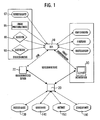
- FIG. 1 shows the external defibrillator 10, which receives data from its electrodes 90, external sensors 80 in the vicinity, preferably by means of wireless sensor technology, as well as from a logging unit 95 of the defibrillator 10 via local inputs of the user. From a local client 30, the defibrillator 10 may also be preferably supplied via infrared with location configuration data, firmware updates and device settings.
- the location configuration data is loaded by the server 20, optionally edited in the client 30, and then sent to the defibrillator 10.
- this data it is also possible to send this data directly from the server 20 to the defibrillator 10, for example by GSM, GPRS, UMTS, etc.
- the communication with the server 20 takes place via the communication server 22.
- basic patient information may be read from the insurance card 97. Any additional information may be entered on the defibrillator 10 or subsequently detected by the client 30 during a post-processing, such as a post-processing. Textn. Basically, it is also conceivable and advantageous if patient data, for example, previous treatment data, data on pre-existing conditions and the like are sent directly from the server 20 to the defibrillator 10, so that they are available before or at the latest in the treatment.
- the local logging 95 according to FIG. 1 serves for the possibility of entering data already during use, which data can be completed later on for the mission protocol. This applies in particular to time-critical information, such as the recording of the delivery of shocks by the defibrillator, the administration of medication or the initiation of therapeutic measures. Preferably, a large part of these measures and inputs location-wide in the location file 160th of the server 20 so that the corresponding possible entries are only to be selected from lists.
- the data acquired by the sensors 80 or the electrodes 90 are read directly into the defibrillator 10. In contrast to other recorded data, all measured values have a constant sampling frequency and can therefore be stored in the form of an array to save space.
- Continuous measured values are packed in EDF form before transmission and then sent in blocks.
- All detected channels are in a transmission unit.
- the transmission must be done in real time, so that a connected monitor can play the data live.
- real-time transmission is irrelevant. Therefore, here the signal can be sent in the whole recorded quality.
- Patient data is transferred in the insert data record, as far as it is collected during use. An assignment of patient data to a patient file 130 does not take place on the defibrillator 10, but only later on the client 30 during the work-up. For reasons of data protection, the patient data is indeed transferred to the doctor's file 150 of the server 20, but not further into the location file 160.
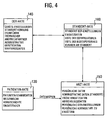
- the defibrillator 10 communicates with the server 20 or with the communication server 22 or indirectly via the client 30, which stores the data on the server 20, possibly after a preparation or for additions. There, the contents are separated and assigned to the patient file 130 shown in FIG. 1, the device file 140, the doctor file 150 and the location file 160.
- Every doctor who works with the communication system receives their own doctor's file 150 in which their personal data can be stored.
- Such physician-specific data includes: personal data of the physician, administrative data of the physician (location, specialist, etc.), data of his missions, personal comments on his missions, personal billing data on the missions, personal defibrillator settings.
- Each defibrillator 10 associated with a location receives, via the location file 160, access to the common data of all defibrillators of a deployment site.
- the deployment data is stored in the location file 160, which has the advantage of allowing searches for operations at a regional level without needing to know which defibrillator was deployed.
- Location-specific data stored in the location file 160 are: possible operators to quickly make a list selection during logging, list of defibrillators at the site, clinics of the site with contact information, standardized drug repertoire of the site or ambulance, missions that with the site defibrillators.
- the device data 140 containing the device-specific data documents the following data: model, serial number, location, owner, contact person, responsible technician, software version of all components, number of deployments, number of delivered shocks, next maintenance date, maintenance logs, link to the location record 160.
- the patient data that is logged during use are provisionally stored in the doctor's file 150. From there, the doctor can enter the data into the patient's file 130 move. To be collected: Master data from the insurance card, emergency time, DIVI protocol of the mission, attending physician.
- the deployment data is stored in the location file 160 as stated above.
- an application log is filed that meets the required standards. This protocol is sometimes recorded promptly during the operation, but can also be supplemented by the doctor with the help of the client 30 after use.
- the stored mission data serve as the basis for the preparation of a billing sheet.
- the contents of the operational data set are: emergency time, emergency location, emergency call, arrival of the defibrillator 10, initiated measures (medication, ventilation, resuscitation, shock) with time stamp, recorded measured values (ECG, other sensors), recorded patient data (from the patient card), Operating staff of the defibrillator, post-treatment clinic, time of introduction, other information according to the DIVI protocol.
- Fig. 4 shows the relationship of said files, i. Memory areas 130-160 among themselves and their preferred contents. There are no direct links to the patient record 130, since this would not be permitted for data protection reasons.
- the signature ensures the integrity and non-repudiation of the data.
- the signature is based on a private / public key signature based on GnuPG. If you want to sign data in the system, you must first generate a key that stores the public key on a public key server. The private (secret) key remains the property of the owner and is additionally secured with a PIN.
- To sign data is from the The XML fragment to be signed forms a hash value that is signed with the private key.
- the signed hash value is appended to the XML document with the key ID of the key.
- the uniqueness of the signature ensures that the calculated signature can only arise from the hash value of the data with a single, specific key. With every other key a different signature would have been created.
- the key server retrieves the public key with the specified key ID and applies the inverse algorithm of the signature to the data. Here, the same value must arise as with the signature. If these values are not identical, the signed data has been changed and the signature is invalid.
- an encryption of data takes place. It is provided that the encryption preferably takes place in two places: on the communication path to prevent eavesdropping of the data as well as the storage in the server 20.
- the encryption on the communication link is taken over by the HTTPS protocol, which is based on asymmetric SSL Encryption builds up.
- the encryption for storage in the database is a symmetric, which represents only an additional backup of the server infrastructure.
- An encryption of the data for special recipients, as it would take place in an encrypted email communication, does not take place. This is not necessary since an examination of the access rights already takes place on the server 20. Encryption of the data for a particular recipient may then become relevant if mission data is to be sent by e-mail to a recipient.
- the client 30 has an application in the form of a JavaWebStart application, which makes the application independent of the user's operating system.
- XML XML
- the data can be processed and visualized by both the client software and the server 20.
- the EDF format is better for the recorded series of measurements, since it uses much less overhead than when using XML.
- the connection between XML and EDF data is achieved by linking the EDF document from the XML document.
- the communication server 22 serves to enable the transmission of data from the defibrillator 10 to the server 20 or in the opposite direction.
- the server 22 receives the same data packets as the client 30 receives via infrared. From this, the deployment protocol is generated in XML form as well as separately the EDF file with the measured values. Both will be immediately transferred to the server 20.
- the server 22 can be realized directly on the server 20. The transmission of the data takes place for example via V.110 interface via the GSM network and thus digitally.
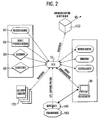
- FIG. 2 shows, in a further schematic representation, the communication partners of the defibrillator 10.
- the external monitor (s) 120 is provided in FIG. 2 and receives the measured values in real time via Bluetooth.
- a receiving station of a clinic is shown schematically in Fig. 2.
- This has a receiving unit 122 which has a communication interface for receiving the data stored in the defibrillator 10 via Bluetooth.
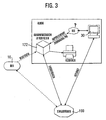
- Fig. 3 shows schematically how the deployment data of the clinic for a post-treatment can be provided.
- the deployment data of the location file 160 of the server 20 it is possible to access the deployment data of the location file 160 of the server 20 via an Internet connection.
- application data may be obtained directly from the receiving unit 122 from the Location file 160 are related, as shown in FIG. 3. However, this assumes that the data from the defibrillator 10 are transmitted in good time to the server 20 and to its location record 160.
- the possibility shown in FIG. 3 exists of sending the data records from the receiving unit 122 to the server 20 with the changes made in the clinic. Another possibility is to visualize and process the record in the clinic via the client 30.
- the data of the server can be transmitted wirelessly to the rescue service, which is particularly advantageous in terms of deployment data from previous operations. In principle, it is also possible to replicate the data on the client 30 before the start of the journey and then to inspect it while driving to the emergency site.
- the following functionalities are implemented in the receiving unit 122: reception of deployment data including patient information from the defibrillator 10 via Bluetooth; Receiving the data from the location file 160; immediate printing of the mission record; Browser-based administration of previously received and current missions.
- the following functionalities should be implemented: Transfer operational data into the KIS-internal documentation; Assign mission data to an existing patient record; Creating a new patient record due to the incident; Transfer of the KIS documentation to the patient record.
- Data processing takes place on the defibrillator 10, the client 30, on the server 20 as well as in the receiving unit 122.
- the data recorded on the defibrillator 10 are verified again and added to the complete DIVI protocol.
- the acquired ECG data can be evaluated and classified again by appropriate algorithms, as far as this has not already been done comprehensively on the defibrillator 10.
- the calculated classification can then be stored directly in the ECG.
- the ECG representation in the client 30 allows a fast finding within the record. Conspicuous areas can be selected, zoomed and measured by mouse movements. By simply double-clicking in ECG can be at the corresponding Place an endorsement in the data history, which is then stored in the mission data.
- the ECG can also be displayed in real time, synchronously with the recorded audio data.
- Main task of the client 30 in the doctor version will be to complete the deployment log.
- the data recorded by the local logging are reworked and supplemented. Text input is ergonomically possible.
- the client 30 allows the creation of a billing statement in the form of an invoice.
- patient information could not already be read in during the use of the patient card, it can be added by means of the client 30.
- the client 30 can be added by means of the client 30.
- Email with link The sender releases the record in the location file 160 and sends the recipient a link that directly displays that record in the browser.
- fax The sender instructs the server 20 to send a fax with the mission log to a defined recipient. It is also possible to automatically send application logs to all clinics in the site area.
- polling 160 fax retrieval identifiers can be assigned to a location record, allowing a direct retrieval of the last assignment by fax polling from the server. Synchronization: If a receiver also has a client 30, access to new missions can be done through simple synchronization, as explained in more detail below.
- the client 30 Furthermore, it is possible to provide the client 30 with external data sources. It is also possible to carry out statistical evaluations of the operations performed in the client 30, which is particularly important for quality assurance.
- Possible recipients of data stored on the server 20 are the clinic, the ambulance service, the family doctor and a rehabilitation facility, the ambulance service for the purpose of quality assurance and the patient.
- a simple solution in terms of communicating with the clinic is to fax the data from the server 20 to the clinic.
- the defibrillator 10 must be read out and the deployment data must be transferred to the server 20, which entails a delay.
- it is more advantageous to receive the data in the clinic via the receiving unit 122 for example by means of Bluetooth according to FIG. 3.
- the receiving unit 122 receives the insert data record as recorded during use. From the receiving unit 122, the data can be retrieved or printed. The data can then be displayed on the screen or, under certain circumstances, imported directly into the clinic information system.
- the data access can be done on the one hand via the client 30 or via an Internet view or be requested by fax from the server.
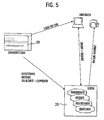
- Fig. 6 shows the flow of synchronization of server and client data.
- parts of the XML data object of the server 20 are replicated (replication 1, 2) and stored locally on the clients 30 (client A, client B).
- Changes on the clients ( ⁇ 1, ⁇ 2) are logged and reproduced on the server 20 during the synchronization process (synchronization 1, 2C).
- Changes which in the meantime have been synchronized by other clients to the server are in turn passed to the synchronizing client after a corresponding check (synchronization 2C, 3C) (synchronization 2S, 3S).
- synchronization involves the following steps: logging changes to Xpath, time and type of change on the client; Transfer of changes to the server; Check the changes logged to the server since the client last synced; Resolution of conflicts of synchronization; Place the changes in a table on the server; Transfer the remaining changes to the clients; when binary elements are modified or added on the client, these modified objects are requested by the client; Store the binary objects in the database.
- Newly created objects on the client that can occur multiple times in a collection are provided with temporary (negative) IDs on the client.
- the server checks which IDs have already been assigned for this path.
- the server changes the Negative IDs to the next higher not yet assigned. This change will also be communicated to the client to update its local copy. In this way Different clients can add new elements at the same time without affecting each other.
- watch points are preferably set, which deliver a message, for example by SMS, when a limit value is exceeded.
- the following steps must be taken: Defining the data element to be observed; Defining the criteria to be respected; Defining the action to be triggered (sending a message, etc.); Placing the watchpoint in the database; Processing all watchpoints of a file at each synchronization; Timed processing of all watchpoints of all files.
- the server 20 record it may be advantageous to grant shares to various users of various parts of the server 20 record.
- it can be determined which user is allowed to read and write on which subtree of the XML data object.
- a user can pass on the administration rights to his own data record to other users who then take over the rights management of the owner as a substitute.
- the paths in XML tree are hidden behind textual descriptions. The following steps are to be carried out: Selection or creation of a co-user of the own data set; Determination of the read / write rights on the data record; possibly definition of the co-user as an administrator on their own data record, which in turn can create additional co-users (and also co-administrators).
Landscapes
- Engineering & Computer Science (AREA)
- Health & Medical Sciences (AREA)
- Medical Informatics (AREA)
- General Health & Medical Sciences (AREA)
- Signal Processing (AREA)
- Primary Health Care (AREA)
- Public Health (AREA)
- Biomedical Technology (AREA)
- Computer Networks & Wireless Communication (AREA)
- Epidemiology (AREA)
- Business, Economics & Management (AREA)
- General Business, Economics & Management (AREA)
- Computing Systems (AREA)
- Pathology (AREA)
- Electrotherapy Devices (AREA)
- Measuring And Recording Apparatus For Diagnosis (AREA)
- Medical Treatment And Welfare Office Work (AREA)
Priority Applications (1)
| Application Number | Priority Date | Filing Date | Title |
|---|---|---|---|
| PL04023327T PL1528752T3 (pl) | 2003-10-29 | 2004-09-30 | System komunikacji i sposób przetwarzania danych medycznych |
Applications Claiming Priority (2)
| Application Number | Priority Date | Filing Date | Title |
|---|---|---|---|
| DE10350538A DE10350538A1 (de) | 2003-10-29 | 2003-10-29 | Kommunikationssystem und Verfahren zur Bearbeitung medizinischer Daten |
| DE10350538 | 2003-10-29 |
Publications (3)
| Publication Number | Publication Date |
|---|---|
| EP1528752A2 EP1528752A2 (de) | 2005-05-04 |
| EP1528752A3 EP1528752A3 (de) | 2005-09-07 |
| EP1528752B1 true EP1528752B1 (de) | 2007-12-05 |
Family
ID=34399601
Family Applications (1)
| Application Number | Title | Priority Date | Filing Date |
|---|---|---|---|
| EP04023327A Expired - Lifetime EP1528752B1 (de) | 2003-10-29 | 2004-09-30 | Kommunikationssystem und Verfahren zur Bearbeitung medizinischer Daten |
Country Status (7)
| Country | Link |
|---|---|
| US (1) | US20050216311A1 (pl) |
| EP (1) | EP1528752B1 (pl) |
| AT (1) | ATE380430T1 (pl) |
| DE (2) | DE10350538A1 (pl) |
| DK (1) | DK1528752T3 (pl) |
| ES (1) | ES2295753T3 (pl) |
| PL (1) | PL1528752T3 (pl) |
Families Citing this family (22)
| Publication number | Priority date | Publication date | Assignee | Title |
|---|---|---|---|---|
| US20130231960A1 (en) * | 2005-09-12 | 2013-09-05 | Mymedicalrecords, Inc. | Personal health record with genomics |
| US8121855B2 (en) * | 2005-09-12 | 2012-02-21 | Mymedicalrecords.Com, Inc. | Method and system for providing online medical records |
| NO325438B1 (no) * | 2005-12-22 | 2008-05-05 | World Medical Ct Holding Sa | Fremgangsmate for sikker overforing av medisinsk data til en mobil enhet/terminal |
| JP4855172B2 (ja) * | 2006-07-31 | 2012-01-18 | シャープ株式会社 | 生体情報測定装置、管理装置、および生体情報通信システム |
| US20080056152A1 (en) * | 2006-09-05 | 2008-03-06 | Sharp Kabushiki Kaisha | Measurement data communication device, health information communication device, information acquisition device, measurement data communication system, method of controlling measurement data communication device, method of controlling information acquisition device, program for controlling measurement data communication device, and recording medium |
| WO2008051939A2 (en) * | 2006-10-24 | 2008-05-02 | Medapps, Inc. | Systems and methods for medical data transmission |
| DE102007033992A1 (de) * | 2007-07-19 | 2009-01-22 | Biotronik Crm Patent Ag | Anordnung und Verfahren zum Management von Daten einer Mehrzahl von programmierbaren persönlichen medizinischen Geräten |
| DE102007043090A1 (de) * | 2007-09-10 | 2009-03-12 | Biotronik Crm Patent Ag | Fernprogrammierbares persönliches Gerät sowie Anordnung und Verfahren zum Fernprogrammieren eines persönlichen Gerätes |
| DE102008000895B4 (de) | 2008-03-31 | 2013-04-11 | CompuGroup Medical AG | Verwendung eines mobilen Telekommunikationsgeräts als elektronische Gesundheitskarte |
| DE102009061800B4 (de) | 2009-02-05 | 2025-12-31 | Löwenstein Medical Technology S.A. | Medizinisches Gerät mit Schnittstelle |
| US20110029592A1 (en) * | 2009-07-28 | 2011-02-03 | Galen Heathcare Solutions Inc. | Computerized method of organizing and distributing electronic healthcare record data |
| WO2013056194A1 (en) | 2011-10-14 | 2013-04-18 | Zoll Medical Corporation | Automated delivery of medical device support software |
| US9788724B2 (en) * | 2013-03-15 | 2017-10-17 | Zoll Medical Corporation | Patient monitor screen aggregation |
| US10340035B2 (en) | 2013-11-13 | 2019-07-02 | Fenwal, Inc. | Medical record storage with electronic signature |
| WO2016080997A1 (en) * | 2014-11-20 | 2016-05-26 | Draeger Medical Systems, Inc. | Transferring device settings |
| US10269454B2 (en) * | 2015-01-06 | 2019-04-23 | Stryker Corporation | Method of configuring devices in an operating theater |
| US10185513B1 (en) | 2015-06-05 | 2019-01-22 | Life365, Inc. | Device configured for dynamic software change |
| US10560135B1 (en) | 2015-06-05 | 2020-02-11 | Life365, Inc. | Health, wellness and activity monitor |
| US9974492B1 (en) | 2015-06-05 | 2018-05-22 | Life365, Inc. | Health monitoring and communications device |
| US11329683B1 (en) | 2015-06-05 | 2022-05-10 | Life365, Inc. | Device configured for functional diagnosis and updates |
| US10388411B1 (en) | 2015-09-02 | 2019-08-20 | Life365, Inc. | Device configured for functional diagnosis and updates |
| CN114036092B (zh) * | 2021-11-16 | 2024-09-24 | 深圳市联影高端医疗装备创新研究院 | 一种医学设备的操作管理系统、方法及存储介质 |
Family Cites Families (10)
| Publication number | Priority date | Publication date | Assignee | Title |
|---|---|---|---|---|
| US5724985A (en) * | 1995-08-02 | 1998-03-10 | Pacesetter, Inc. | User interface for an implantable medical device using an integrated digitizer display screen |
| DE19707026B4 (de) * | 1997-02-21 | 2004-10-28 | Siemens Ag | Medizinische Therapie- und/oder Diagnoseanlage |
| US6272545B1 (en) * | 1997-10-24 | 2001-08-07 | Microsoft Corporation | System and method for interaction between one or more desktop computers and one or more mobile devices |
| DE19758393B4 (de) * | 1997-12-23 | 2006-04-20 | Biotronik Meß- und Therapiegeräte GmbH & Co. Ingenieurbüro Berlin | Anordnung zur Patientenüberwachung |
| US6263245B1 (en) * | 1999-08-12 | 2001-07-17 | Pacesetter, Inc. | System and method for portable implantable device interogation |
| US6497655B1 (en) * | 1999-12-17 | 2002-12-24 | Medtronic, Inc. | Virtual remote monitor, alert, diagnostics and programming for implantable medical device systems |
| GB0001026D0 (en) * | 2000-01-18 | 2000-03-08 | Hewlett Packard Co | Configurable connectivity unit and method and system for configuring such a unit |
| TW587929B (en) * | 2000-05-31 | 2004-05-21 | Matsushita Electric Industrial Co Ltd | Medical checkup network system |
| US7349947B1 (en) * | 2000-08-04 | 2008-03-25 | Firelogic, Inc. | System and method for managing, manipulating, and analyzing data and devices over a distributed network |
| DE10131911A1 (de) * | 2001-07-02 | 2003-01-16 | Ghc Global Health Care Gmbh | Portables telemedizinisches Multidiagnostikgerät |
-
2003
- 2003-10-29 DE DE10350538A patent/DE10350538A1/de not_active Withdrawn
-
2004
- 2004-09-30 DK DK04023327T patent/DK1528752T3/da active
- 2004-09-30 PL PL04023327T patent/PL1528752T3/pl unknown
- 2004-09-30 DE DE502004005640T patent/DE502004005640D1/de not_active Expired - Lifetime
- 2004-09-30 EP EP04023327A patent/EP1528752B1/de not_active Expired - Lifetime
- 2004-09-30 ES ES04023327T patent/ES2295753T3/es not_active Expired - Lifetime
- 2004-09-30 AT AT04023327T patent/ATE380430T1/de active
- 2004-10-29 US US10/977,964 patent/US20050216311A1/en not_active Abandoned
Also Published As
| Publication number | Publication date |
|---|---|
| EP1528752A2 (de) | 2005-05-04 |
| DE10350538A1 (de) | 2005-06-16 |
| DK1528752T3 (da) | 2008-01-02 |
| EP1528752A3 (de) | 2005-09-07 |
| US20050216311A1 (en) | 2005-09-29 |
| ES2295753T3 (es) | 2008-04-16 |
| PL1528752T3 (pl) | 2008-05-30 |
| ATE380430T1 (de) | 2007-12-15 |
| DE502004005640D1 (de) | 2008-01-17 |
Similar Documents
| Publication | Publication Date | Title |
|---|---|---|
| EP1528752B1 (de) | Kommunikationssystem und Verfahren zur Bearbeitung medizinischer Daten | |
| DE10065558A1 (de) | Medizinisches Diagnosesystem mit einem Online-Echtzeitvideotraining | |
| DE10126571A1 (de) | Automatisierte Überwachung einer Sammlung von Betriebsdaten von medizinischen Abbildungsvorrichtungen | |
| DE102004011168A1 (de) | Medizinisches Versorgungssystem, welches mehrere vernetzte Fluidverabreichungspumpen unterstützt | |
| DE10126601A1 (de) | Automatisierte Aktivierung und Deaktivierung einer Betriebsdatenprotokollierung bei einer medizinischen Abbildungsvorrichtung | |
| DE102008002920A1 (de) | Systeme und Verfahren für klinische Analyseintegrationsdienste | |
| DE112004000647T5 (de) | Informationssystem für vorbeugende Gesundheitsfürsorge | |
| EP1101437A1 (de) | Medizinisches System zur Überwachung von Parametern eines Patienten in häuslicher Umgebung | |
| EP1084465B1 (de) | Verfahren zum abgesicherten zugriff auf daten in einem netzwerk | |
| DE112021002610T5 (de) | System und Verfahren zur asynchronen Kommunikation von Infusionsinformationen und zur Erlangung von Fernhilfe für eine laufende Infusion | |
| EP1226783A2 (de) | Verfahren und medizinisches System zur Überwachung eines an Epilepsie leidenden Patienten | |
| WO2012107275A1 (de) | Sichern von zugriffen auf verteilte daten in einem unsicheren datennetz | |
| EP3792925A1 (de) | Verfahren und vorrichtung zur datentechnischen kommunikation in einem netzwerk | |
| DE102014209649A1 (de) | Medizintechnische Anlage mit Eingabemöglichkeit für Patientendaten und Informationen | |
| DE202020004275U1 (de) | Ferntesten | |
| DE19601718C2 (de) | In der zahnärztlichen Praxis einsetzbares mobiles Gerät zur Aufnahme und Übermittlung von Daten | |
| DE102005005243A1 (de) | Informationsmanagementsystem zur Kommunikation und Koordination der Beteiligten im Umfeld von Rettungseinsätzen | |
| EP2693352A1 (de) | System zur Übertragung personenbezogener und nicht personenbezogener Daten (Data-Split) | |
| EP3433778A1 (de) | Software mit steuerlogik zur sicheren übermittlung persönlicher daten über das internet von computern auf den server mit sicherer lagerung der daten auf servern | |
| EP1102193A1 (de) | Medizinisches System zur Überweisung eines Patienten | |
| DE102004017204B4 (de) | Computersystem, Telekommunikationssystem, Computerprogrammprodukt und Verfahren zur Versendung eines Notrufs an eine Notrufzentrale | |
| DE102021125800A1 (de) | Verfahren zum Betrieb eines digitalen Visitenwagens | |
| WO2010031558A1 (de) | Automatische überprüfung von arzneimittelverordnungen für einen patienten | |
| DE102014220160A1 (de) | Pharmacovigilanz- und Medizinproduktesicherheitssystem | |
| EP1221891A1 (de) | Verfahren zur übertragung personenbezogener daten |
Legal Events
| Date | Code | Title | Description |
|---|---|---|---|
| PUAI | Public reference made under article 153(3) epc to a published international application that has entered the european phase |
Free format text: ORIGINAL CODE: 0009012 |
|
| AK | Designated contracting states |
Kind code of ref document: A2 Designated state(s): AT BE BG CH CY CZ DE DK EE ES FI FR GB GR HU IE IT LI LU MC NL PL PT RO SE SI SK TR |
|
| AX | Request for extension of the european patent |
Extension state: AL HR LT LV MK |
|
| PUAL | Search report despatched |
Free format text: ORIGINAL CODE: 0009013 |
|
| AK | Designated contracting states |
Kind code of ref document: A3 Designated state(s): AT BE BG CH CY CZ DE DK EE ES FI FR GB GR HU IE IT LI LU MC NL PL PT RO SE SI SK TR |
|
| AX | Request for extension of the european patent |
Extension state: AL HR LT LV MK |
|
| 17P | Request for examination filed |
Effective date: 20051128 |
|
| AKX | Designation fees paid |
Designated state(s): AT BE BG CH CY CZ DE DK EE ES FI FR GB GR HU IE IT LI LU MC NL PL PT RO SE SI SK TR |
|
| 17Q | First examination report despatched |
Effective date: 20051230 |
|
| GRAP | Despatch of communication of intention to grant a patent |
Free format text: ORIGINAL CODE: EPIDOSNIGR1 |
|
| GRAS | Grant fee paid |
Free format text: ORIGINAL CODE: EPIDOSNIGR3 |
|
| GRAA | (expected) grant |
Free format text: ORIGINAL CODE: 0009210 |
|
| AK | Designated contracting states |
Kind code of ref document: B1 Designated state(s): AT BE BG CH CY CZ DE DK EE ES FI FR GB GR HU IE IT LI LU MC NL PL PT RO SE SI SK TR |
|
| REG | Reference to a national code |
Ref country code: GB Ref legal event code: FG4D Free format text: NOT ENGLISH |
|
| REG | Reference to a national code |
Ref country code: SE Ref legal event code: TRGR |
|
| REG | Reference to a national code |
Ref country code: IE Ref legal event code: FG4D Free format text: LANGUAGE OF EP DOCUMENT: GERMAN |
|
| REG | Reference to a national code |
Ref country code: CH Ref legal event code: EP Ref country code: CH Ref legal event code: NV Representative=s name: BOVARD AG PATENTANWAELTE |
|
| REG | Reference to a national code |
Ref country code: DK Ref legal event code: T3 |
|
| REF | Corresponds to: |
Ref document number: 502004005640 Country of ref document: DE Date of ref document: 20080117 Kind code of ref document: P |
|
| GBT | Gb: translation of ep patent filed (gb section 77(6)(a)/1977) |
Effective date: 20080227 |
|
| REG | Reference to a national code |
Ref country code: ES Ref legal event code: FG2A Ref document number: 2295753 Country of ref document: ES Kind code of ref document: T3 |
|
| PG25 | Lapsed in a contracting state [announced via postgrant information from national office to epo] |
Ref country code: SI Free format text: LAPSE BECAUSE OF FAILURE TO SUBMIT A TRANSLATION OF THE DESCRIPTION OR TO PAY THE FEE WITHIN THE PRESCRIBED TIME-LIMIT Effective date: 20071205 |
|
| REG | Reference to a national code |
Ref country code: PL Ref legal event code: T3 |
|
| ET | Fr: translation filed | ||
| PG25 | Lapsed in a contracting state [announced via postgrant information from national office to epo] |
Ref country code: RO Free format text: LAPSE BECAUSE OF FAILURE TO SUBMIT A TRANSLATION OF THE DESCRIPTION OR TO PAY THE FEE WITHIN THE PRESCRIBED TIME-LIMIT Effective date: 20071205 Ref country code: SK Free format text: LAPSE BECAUSE OF FAILURE TO SUBMIT A TRANSLATION OF THE DESCRIPTION OR TO PAY THE FEE WITHIN THE PRESCRIBED TIME-LIMIT Effective date: 20071205 |
|
| PG25 | Lapsed in a contracting state [announced via postgrant information from national office to epo] |
Ref country code: PT Free format text: LAPSE BECAUSE OF FAILURE TO SUBMIT A TRANSLATION OF THE DESCRIPTION OR TO PAY THE FEE WITHIN THE PRESCRIBED TIME-LIMIT Effective date: 20080505 |
|
| REG | Reference to a national code |
Ref country code: IE Ref legal event code: FD4D |
|
| PLBE | No opposition filed within time limit |
Free format text: ORIGINAL CODE: 0009261 |
|
| STAA | Information on the status of an ep patent application or granted ep patent |
Free format text: STATUS: NO OPPOSITION FILED WITHIN TIME LIMIT |
|
| PG25 | Lapsed in a contracting state [announced via postgrant information from national office to epo] |
Ref country code: IE Free format text: LAPSE BECAUSE OF FAILURE TO SUBMIT A TRANSLATION OF THE DESCRIPTION OR TO PAY THE FEE WITHIN THE PRESCRIBED TIME-LIMIT Effective date: 20071205 |
|
| 26N | No opposition filed |
Effective date: 20080908 |
|
| PG25 | Lapsed in a contracting state [announced via postgrant information from national office to epo] |
Ref country code: GR Free format text: LAPSE BECAUSE OF FAILURE TO SUBMIT A TRANSLATION OF THE DESCRIPTION OR TO PAY THE FEE WITHIN THE PRESCRIBED TIME-LIMIT Effective date: 20080306 |
|
| PG25 | Lapsed in a contracting state [announced via postgrant information from national office to epo] |
Ref country code: MC Free format text: LAPSE BECAUSE OF NON-PAYMENT OF DUE FEES Effective date: 20080930 Ref country code: EE Free format text: LAPSE BECAUSE OF FAILURE TO SUBMIT A TRANSLATION OF THE DESCRIPTION OR TO PAY THE FEE WITHIN THE PRESCRIBED TIME-LIMIT Effective date: 20071205 Ref country code: BG Free format text: LAPSE BECAUSE OF FAILURE TO SUBMIT A TRANSLATION OF THE DESCRIPTION OR TO PAY THE FEE WITHIN THE PRESCRIBED TIME-LIMIT Effective date: 20080305 |
|
| PG25 | Lapsed in a contracting state [announced via postgrant information from national office to epo] |
Ref country code: CY Free format text: LAPSE BECAUSE OF FAILURE TO SUBMIT A TRANSLATION OF THE DESCRIPTION OR TO PAY THE FEE WITHIN THE PRESCRIBED TIME-LIMIT Effective date: 20071205 |
|
| PG25 | Lapsed in a contracting state [announced via postgrant information from national office to epo] |
Ref country code: LU Free format text: LAPSE BECAUSE OF NON-PAYMENT OF DUE FEES Effective date: 20080930 Ref country code: HU Free format text: LAPSE BECAUSE OF FAILURE TO SUBMIT A TRANSLATION OF THE DESCRIPTION OR TO PAY THE FEE WITHIN THE PRESCRIBED TIME-LIMIT Effective date: 20080606 |
|
| REG | Reference to a national code |
Ref country code: CH Ref legal event code: PFA Owner name: CORSCIENCE GMBH & CO. KG Free format text: CORSCIENCE GMBH & CO. KG#HENKESTRASSE 91#91052 ERLANGEN (DE) -TRANSFER TO- CORSCIENCE GMBH & CO. KG#HENKESTRASSE 91#91052 ERLANGEN (DE) |
|
| REG | Reference to a national code |
Ref country code: CH Ref legal event code: PUE Owner name: SAMSUNG ELECTRONICS CO., LTD., KR Free format text: FORMER OWNER: CORSCIENCE GMBH AND CO. KG, DE |
|
| REG | Reference to a national code |
Ref country code: DE Ref legal event code: R082 Ref document number: 502004005640 Country of ref document: DE Representative=s name: GRUENECKER, KINKELDEY, STOCKMAIR & SCHWANHAEUS, DE |
|
| REG | Reference to a national code |
Ref country code: ES Ref legal event code: PC2A Owner name: SAMSUNG ELECTRONICS CO., LTD. Effective date: 20150130 |
|
| REG | Reference to a national code |
Ref country code: GB Ref legal event code: 732E Free format text: REGISTERED BETWEEN 20150122 AND 20150128 |
|
| REG | Reference to a national code |
Ref country code: DE Ref legal event code: R082 Ref document number: 502004005640 Country of ref document: DE Representative=s name: GRUENECKER, KINKELDEY, STOCKMAIR & SCHWANHAEUS, DE Effective date: 20150113 Ref country code: DE Ref legal event code: R081 Ref document number: 502004005640 Country of ref document: DE Owner name: SAMSUNG ELECTRONICS CO., LTD., SUWON-SI, KR Free format text: FORMER OWNER: CORSCIENCE GMBH & CO.KG, 91052 ERLANGEN, DE Effective date: 20150113 Ref country code: DE Ref legal event code: R082 Ref document number: 502004005640 Country of ref document: DE Representative=s name: GRUENECKER PATENT- UND RECHTSANWAELTE PARTG MB, DE Effective date: 20150113 |
|
| REG | Reference to a national code |
Ref country code: FR Ref legal event code: TP Owner name: SAMSUNG ELECTRONICS CO., LTD., KR Effective date: 20150130 Ref country code: FR Ref legal event code: CA Effective date: 20150130 |
|
| REG | Reference to a national code |
Ref country code: NL Ref legal event code: SD Effective date: 20150326 |
|
| REG | Reference to a national code |
Ref country code: AT Ref legal event code: PC Ref document number: 380430 Country of ref document: AT Kind code of ref document: T Owner name: SAMSUNG ELECTRONICS CO., LTD., KR Effective date: 20150223 |
|
| REG | Reference to a national code |
Ref country code: FR Ref legal event code: PLFP Year of fee payment: 13 |
|
| REG | Reference to a national code |
Ref country code: FR Ref legal event code: PLFP Year of fee payment: 14 |
|
| REG | Reference to a national code |
Ref country code: FR Ref legal event code: PLFP Year of fee payment: 15 |
|
| REG | Reference to a national code |
Ref country code: DE Ref legal event code: R079 Ref document number: 502004005640 Country of ref document: DE Free format text: PREVIOUS MAIN CLASS: H04L0029080000 Ipc: H04L0065000000 |
|
| PGFP | Annual fee paid to national office [announced via postgrant information from national office to epo] |
Ref country code: TR Payment date: 20230929 Year of fee payment: 20 Ref country code: NL Payment date: 20230929 Year of fee payment: 20 Ref country code: GB Payment date: 20230929 Year of fee payment: 20 Ref country code: FI Payment date: 20230929 Year of fee payment: 20 Ref country code: AT Payment date: 20231003 Year of fee payment: 20 |
|
| PGFP | Annual fee paid to national office [announced via postgrant information from national office to epo] |
Ref country code: SE Payment date: 20230929 Year of fee payment: 20 Ref country code: PL Payment date: 20230929 Year of fee payment: 20 Ref country code: FR Payment date: 20230929 Year of fee payment: 20 Ref country code: DK Payment date: 20230929 Year of fee payment: 20 Ref country code: DE Payment date: 20230929 Year of fee payment: 20 Ref country code: BE Payment date: 20230929 Year of fee payment: 20 |
|
| PGFP | Annual fee paid to national office [announced via postgrant information from national office to epo] |
Ref country code: ES Payment date: 20231002 Year of fee payment: 20 |
|
| PGFP | Annual fee paid to national office [announced via postgrant information from national office to epo] |
Ref country code: IT Payment date: 20230929 Year of fee payment: 20 Ref country code: CZ Payment date: 20230929 Year of fee payment: 20 Ref country code: CH Payment date: 20231004 Year of fee payment: 20 |
|
| REG | Reference to a national code |
Ref country code: CH Ref legal event code: PL Ref country code: DE Ref legal event code: R071 Ref document number: 502004005640 Country of ref document: DE |
|
| REG | Reference to a national code |
Ref country code: NL Ref legal event code: MK Effective date: 20240929 |
|
| REG | Reference to a national code |
Ref country code: DK Ref legal event code: EUP Expiry date: 20240930 |
|
| PG25 | Lapsed in a contracting state [announced via postgrant information from national office to epo] |
Ref country code: GB Free format text: LAPSE BECAUSE OF EXPIRATION OF PROTECTION Effective date: 20240929 |
|
| PG25 | Lapsed in a contracting state [announced via postgrant information from national office to epo] |
Ref country code: CZ Free format text: LAPSE BECAUSE OF EXPIRATION OF PROTECTION Effective date: 20240930 |
|
| REG | Reference to a national code |
Ref country code: GB Ref legal event code: PE20 Expiry date: 20240929 |
|
| REG | Reference to a national code |
Ref country code: ES Ref legal event code: FD2A Effective date: 20241025 |
|
| REG | Reference to a national code |
Ref country code: SE Ref legal event code: EUG |
|
| PG25 | Lapsed in a contracting state [announced via postgrant information from national office to epo] |
Ref country code: GB Free format text: LAPSE BECAUSE OF EXPIRATION OF PROTECTION Effective date: 20240929 Ref country code: CZ Free format text: LAPSE BECAUSE OF EXPIRATION OF PROTECTION Effective date: 20240930 |
|
| REG | Reference to a national code |
Ref country code: AT Ref legal event code: MK07 Ref document number: 380430 Country of ref document: AT Kind code of ref document: T Effective date: 20240930 |
|
| REG | Reference to a national code |
Ref country code: BE Ref legal event code: MK Effective date: 20240930 |
|
| PG25 | Lapsed in a contracting state [announced via postgrant information from national office to epo] |
Ref country code: ES Free format text: LAPSE BECAUSE OF EXPIRATION OF PROTECTION Effective date: 20241001 |
|
| PG25 | Lapsed in a contracting state [announced via postgrant information from national office to epo] |
Ref country code: ES Free format text: LAPSE BECAUSE OF EXPIRATION OF PROTECTION Effective date: 20241001 |