EP1528453A2 - Zusammenwirkende Erfassung von Berechtigungsnachweisen und Zugangsmodularität - Google Patents
Zusammenwirkende Erfassung von Berechtigungsnachweisen und Zugangsmodularität Download PDFInfo
- Publication number
- EP1528453A2 EP1528453A2 EP04019100A EP04019100A EP1528453A2 EP 1528453 A2 EP1528453 A2 EP 1528453A2 EP 04019100 A EP04019100 A EP 04019100A EP 04019100 A EP04019100 A EP 04019100A EP 1528453 A2 EP1528453 A2 EP 1528453A2
- Authority
- EP
- European Patent Office
- Prior art keywords
- credential
- module
- logon
- user
- authentication
- Prior art date
- Legal status (The legal status is an assumption and is not a legal conclusion. Google has not performed a legal analysis and makes no representation as to the accuracy of the status listed.)
- Granted
Links
Images




Classifications
-
- H—ELECTRICITY
- H04—ELECTRIC COMMUNICATION TECHNIQUE
- H04L—TRANSMISSION OF DIGITAL INFORMATION, e.g. TELEGRAPHIC COMMUNICATION
- H04L9/00—Cryptographic mechanisms or cryptographic arrangements for secret or secure communications; Network security protocols
- H04L9/32—Cryptographic mechanisms or cryptographic arrangements for secret or secure communications; Network security protocols including means for verifying the identity or authority of a user of the system or for message authentication, e.g. authorization, entity authentication, data integrity or data verification, non-repudiation, key authentication or verification of credentials
-
- G—PHYSICS
- G06—COMPUTING OR CALCULATING; COUNTING
- G06F—ELECTRIC DIGITAL DATA PROCESSING
- G06F21/00—Security arrangements for protecting computers, components thereof, programs or data against unauthorised activity
- G06F21/30—Authentication, i.e. establishing the identity or authorisation of security principals
- G06F21/31—User authentication
-
- Y—GENERAL TAGGING OF NEW TECHNOLOGICAL DEVELOPMENTS; GENERAL TAGGING OF CROSS-SECTIONAL TECHNOLOGIES SPANNING OVER SEVERAL SECTIONS OF THE IPC; TECHNICAL SUBJECTS COVERED BY FORMER USPC CROSS-REFERENCE ART COLLECTIONS [XRACs] AND DIGESTS
- Y10—TECHNICAL SUBJECTS COVERED BY FORMER USPC
- Y10S—TECHNICAL SUBJECTS COVERED BY FORMER USPC CROSS-REFERENCE ART COLLECTIONS [XRACs] AND DIGESTS
- Y10S707/00—Data processing: database and file management or data structures
- Y10S707/99931—Database or file accessing
- Y10S707/99938—Concurrency, e.g. lock management in shared database
-
- Y—GENERAL TAGGING OF NEW TECHNOLOGICAL DEVELOPMENTS; GENERAL TAGGING OF CROSS-SECTIONAL TECHNOLOGIES SPANNING OVER SEVERAL SECTIONS OF THE IPC; TECHNICAL SUBJECTS COVERED BY FORMER USPC CROSS-REFERENCE ART COLLECTIONS [XRACs] AND DIGESTS
- Y10—TECHNICAL SUBJECTS COVERED BY FORMER USPC
- Y10S—TECHNICAL SUBJECTS COVERED BY FORMER USPC CROSS-REFERENCE ART COLLECTIONS [XRACs] AND DIGESTS
- Y10S707/00—Data processing: database and file management or data structures
- Y10S707/99931—Database or file accessing
- Y10S707/99939—Privileged access
Definitions
- the present invention relates generally to machine access and more particularly to the identification and authentication of an entity, user, or principal with a credential for logging on to a local and/or remote machine having an operating system.
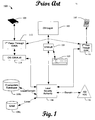
- FIG. 1 An exemplary conventional process 100 is seen in Figure 1 for allowing a user to login to an authentication infrastructure of an operating system for a local machine.
- a local machine is a computing device with an operating system, such as a personal computer, a handheld computer, a thick client device, a thin client device, a personal digital assistant, an expert system, etc.
- the authentication infrastructure authenticates the user using a credential in order to gain access to the computing device via its operating system, such as the WINDOWS@ operating system provided by Microsoft Corporation of Redmond, WA, USA.
- the authentication of a credential is intended herein to be equivalent to the authentication of a user, entity, or principal with a corresponding credential, which phrases and concepts are used herein interchangeably.
- the operating system executes a logon program.
- the logon program can pass control to only one of three (3) different authentication modules. Stated otherwise, the local machine can only have one authentication module with which an authentication can be performed.
- the default authentication module is a Graphical Identification and Authentication module, referred to herein as a 'GINA'.
- the GINA in the WINDOWS® OS, is a module in a dynamic link library (*.dll) that implements a logon user interface for a display of a screen that includes a logon dialog box into which a user inputs a usemame and password.
- the GINA is present to authenticate the user through the operating system of the computing device by use of credentials presented by the user.
- the user's credentials are represented by a set of information that includes identification, and proof of identification, that is used to gain access to local and network resources.
- a GINA 104 seen in Figure 1 is a standard WINDOWS® OS module and requires a conventional interactive logon process, such as by prompting a user to enter a usemame and a password at a user interface 103. After GINA 104 is executing, control is passed to a Local Security Authority (LSA) module 106.
- LSA Local Security Authority
- the LSA module 106 accesses a local Security Accounts Manager (SAM) database 108a, each of which are local stores for logon and security information for the computing device and/or for the relevant environment.
- SAM Security Accounts Manager
- a credentials database 108b which can be local or remote, can store credentials such as fingerprints, passwords, retinal information, face recognition information, and other biometric information that can be used to authenticate a user in conjunction with a custom GINA.
- the LSA module 106 can also establish a connection to access a remote credential database, a token protocol credential service, a challenge and response protocol credential service, and/or an Active Directory (AD) and Kerberos Distribution Center (KDC) 110.
- AD Active Directory
- KDC Kerberos Distribution Center
- Kerberos is a network authentication protocol to identity users that are attempting to log on to a network and to encrypt their communications through secret-key cryptography.
- the AD module uses a technology that enables applications to find, use, and manage directory resources (e.g., usernames and permissions) in a distributed computing environment. From these accesses, identification and authentication is performed for a user with the user's credentials so as to determine the user's access privileges to logon to the computing device via its operating system. A successful identification and authentication will log the user on and will return control to the OS logon module 102. The user will then be logged on and can proceed to use the computing device.
- directory resources e.g., usernames and permissions
- a first type pass-through GINA module 112 is a customized identification and authentication module, such as may be written by an independent software vendor that did not develop the operating system.
- the first type pass-through GINA module 112 interfaces with a smart card reader 105 and also interfaces with a default original operating system GINA 114 module.
- the first type pass-through GINA module 112 receives credentials read by the smart card reader 105 from a smart card inserted therein.
- a certificate read from a smart card inserted into smart card reader 105, and any other credentials acquired from a user can be used to identify and authenticate the user against the credentials database 108b.
- first type pass-through GINA module 112 allows limited modifications to be made to the process of the identification and authentication of a user, while maintaining default behavior of the identification and authentication due to the interface with the original operating system GINA 114 module.
- a second type pass-through GINA module 116 is a complete replacement for the standard GINA 104 for the operating system.
- the second type pass-through GINA module 116 interfaces with a fingerprint reader 107.
- the second type pass-through GINA module 116 receives credentials read by the fingerprint reader 107 from an optically scanned finger impression.
- the optically scanned finger impression from a finger inserted into fingerprint reader 107, and any other credentials acquired from a user can be used to identify and authenticate the user against the credentials database 108b.
- the second type pass-through GINA module 116 is a customized identification and authentication module that does not interface with a standard GINA of the OS, but rather directly interfaces with LSA 106.
- the second type pass-through GINA module 116 allows for full control of a user interface that a user sees when logging on.
- a typical problem is that only one of the GINA 104, the first type pass-through GINA module 112, and the second type pass-through GINA module 116 can be used with an operating system. Stated otherwise, no custom or default GINA can coexist with any other custom GINA through which the OS can log a user on to the computing device or computing environment.
- Figure 1 shows a flow chart depicting a conventional process in which a user logs on to a local machine by providing credentials for identification and authentication.
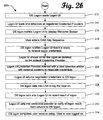
- Figures 2a-2b are respective flow charts depicting respective implementations of a process for a plurality of default or custom alternative credential providers to respectively identify and authenticate a user with credentials provided by the user in order for the user to logon to a local machine, where the user can optionally select one of the several credential provider modules, and where each credential provider module is interoperable with the operating system so as to provide credentials that are compatible for authentication with the operating system.
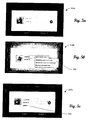
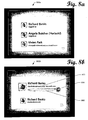
- Figure 5b shows a screen displaying multiple usernames associated with the same alias or username-prefix, which usernames are automatically displayed upon querying of a related database of usernames.
- Figure 6b shows a logon screen that is displayed after a user has selected a Novell account type, where the screen prompt for credentials to be entered into a Novell user interface.
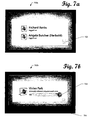
- Figure 7b is a logon screen showing a user account for which a prompt is being made to enter a Personal Identification Number (PIN) as credentials for identification and authentication to logon to a local machine.
- PIN Personal Identification Number
- Figure 13 is a flowchart of an exemplary implementation of a process for the use of a logon screen for receiving credentials from a user and from which the user can make a selection of one of a plurality of pre-logon access types and can also make a selection of one of a plurality of credentials providers, where each of the user's selections can be used to identify and authenticate the user with the credentials so that the user can be logged in through the selected access service to use the local machine that renders the logon screen.
- Series 100 numbers refer to features originally found in Figure 1
- series 200 numbers refer to features originally found in Figure 2
- series 300 numbers refer to features originally found in Figure 3, and so on.
- a local machine can require that all or certain users authenticate with multiple authentication methods.
- a user may be required to authenticate with two different smart cards in order to log on to the local machine.
- a user may be given a choice as to which of multiple ways the user will use to log on to the local machine. For instance, the user can choose to either type in a password or to insert a finger on to a fingerprint sensor in order to log on to the local machine.
- Each credential provider module 202 interfaces with a credential provider Application Program Interface (API) 204 in order to handle communications with an authenticator.
- the credential provider API 204 interfaces with a caller that can be a logon User Interface (UI) 206.
- Logon UI 206 can be a credential manager for receiving and managing credentials from a user.
- Logon UI 206 uses a Remote Procedure Call (RPC) to an operating system (OS) logon module 102.
- the OS logon 102 is an interface to the OS of the computing device.
- the OS Logon 102 performs a Local Security Authority (LSA) logon user call to the Local Security Authority (LSA) module 106.
- LSA Local Security Authority
- the translated credentials are communicated through the credential provider API 204 to the logon UI 206 for communication to the OS logon 102 for local authentication through LSA module 106 so as to log the user on to the local machine.
- the LSA module 106 can perform a remote access outside of the local machine through a connection that is established to a domain.
- An Active Directory (AD) and Kerberos Distribution Center (KDC) 110 are stored at the domain and can be accessed. From these accesses, identification and authentication is performed for the user with the translated credentials so as to determine the user's access privilege to logon to the local machine via the OS. A successful identification and authentication will log the user on. The user, then logged on through the OS, can proceed to use the local machine.
- AD Active Directory
- KDC Kerberos Distribution Center
- the logon process 200b begins at block 212 at which an OS (OS) of the local machine loads the logon User Interface (UI) 206.
- OS OS
- UI logon User Interface
- the logon UI 206 loads and initializes all registered credential providers 202 using credential provider API 204.
- the OS logon 102 performs a LSA logon user call into the LSA 106 to log the user on.
- the OS logon 102 performs an RPC into Logon UI 206 to report the result of the logon process 200b.
- the logon UI 206 calls into the particular credential provider module 202 through the credential provider API 204 to report the result of the logon process 200b. Control then returns to the OS logon 102.
- the OS logon 102 completes the user session setup such that the user is logged on to the computing device.
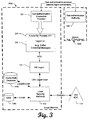
- a process 300 shows steps by which a local machine 300a can use a sub-authentication process at a domain 300b to authenticate a user with the user's credentials.
- a sub-authentication credential provider 302 at the local machine 300a interfaces with a sub-authentication authority 304 at a domain 300b.
- the domain 300b can be a third party server.
- the sub-authentication credential provider 302 interfaces with the credential provider API 204 as discussed above with respect to Figure 2.
- process 300 is similar to process 200a with respect to blocks 206, 102, and 106.
- the AD/KDC 110 interfaces with LSA 106.
- the sub-authentication authority 304 at the domain 300b uses a sub-authentication protocol to return logon credentials to the sub-authentication credential provider 302.
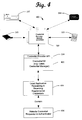
- the sub-authentication credential provider module 402 as seen in Figure 4 can be customized such that the user interface reflects only the branding, logo, trademark, or service mark of a third party and not that of another.
- a user can select an account type from the list 602 which activates the sub-authentication credential provider module 402.
- the sub-authentication credential provider module 402 can then control the UI to provide the user with a brand-specific user logon experience that is still fully compatible with the logon process for the OS.
- the local machine can have a plurality of sub-authentication credential provider modules 402 each of which can provide the user with a different and distinct brand-specific user logon experience, yet be fully compatible with the logon process for the OS of the local machine.
- the UI in a screen 700a of Figure 7a is displayed when a user enters the CAD key sequence (Ctrl+Alt+Del).
- the logon screen 700a shows that two (2) users are already logged on to the local machine.
- An icon 702 in Figure 7a shows the user that smart cards can be used for logging on to the local machine. The user then inserts a smart card into a card reader, such as device 105 that is in communication with the local machine.
- the logon screen 700b of Figure 7b displays only an enumeration of the certificates that were on the user's smart card.
- This display is made by a cooperative processing that uses smart card reader 105 and its corresponding credential provider module 202, the credential provider API 204, and the logon UI 206. Since there is just one certificate on the smart card, the OS automatically selects the one certificate and displays the PIN field 704 as a prompt for data entry to the user.
- logon UI 206 passes the PIN to the OS logon 102 along with the certificate read from the smart card.
- the credential provider module 202 passes Richard's credentials to logon UI 206 via credential provider API 204.
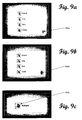
- the logon UI 206 then passes Richard's credentials to OS logon 102 which logs Richard on to the local machine, the result of which is seen by Richard's user tile in the display of Figure 9c at reference numeral 900c.
- a local machine may have been configured to log on when a Remote Access Service (RAS) session is started so that a network connection is established for the logon in order to authenticate users of the local machine against the network.
- RAS Remote Access Service
- a network administrator may require users to logon at a local machine for a RAS session because this requirement allows the network administrator to have tight controls over what is installed on the local machine before the local machine has a chance to establish a connection with an enterprise network that is administered by the network administrator.
- Such tight controls of the local machine may include updating the local machine with anti-virus or other applications to install, and may include forcing periodic changes to passwords, etc.
- all local machines in an enterprise network may be required to establish a logon connection with a specific RAS session prior to logging on to the enterprise network.
- a list of logon connection types is offered to a user upon activation of a pull down menu icon 1006.
- Each item on the list represents a separate logon provider or connection type through which a connection using a corresponding access service can be established to a network.
- a selection of the connection type and corresponding access service from the list is required of the user, along with the input of a username and password into fields 1002 and an account type at field 1004.
- the list of logon connection types and corresponding access services is evoked by activation of icon 1006 so as to show all machine wide connections and allows the user to choose one from the list.
- Each connection represents a Remote Access Service (RAS) that is not necessarily provided by the provider of the OS, yet is compatible with the OS.
- RAS Remote Access Service
- the RAS can be a custom dialer module provided by an independent software vendor unrelated to the provider of the OS.
- the custom RAS obviates the need to use a default RAS dialer that is provided with the OS.
- the RAS session will use the credentials already entered at fields 1002-1004 when trying to establish a connection to a network that was specified by the user from the list at reference numeral 1006. If the credentials input by the user fail to establish the connection as was selected by the user, a prompt will be displayed that asks the user to provide additional credentials. Using these additional credentials, an attempt will again be made at making the connection via the user-specified logon connection type from the list at reference numeral 1006. If this next attempt is successful in establishing a connection to the network, then a return of new credentials will be made for use in the logon process described above with respect to Figures 2-9c.
- FIG. 11 illustrates an exemplary process 1100 for establishing a type of connection to a user-specified access service.
- a logon UI 206 through a pre-logon access provider (PLAP) manager API 1112, requests that PLAP modules 1102 provide a flat list of a corresponding set of connection types and access services.
- the access services in the flat list correspond, for example, to a custom dial up access service 1106, a custom VPN access service 1108, and any other type of custom or default access service 1104.
- a representation of each access service 1104-1108 is displayed to the user by logon UI 206.
- the username and password input by the user are passed as credentials for authentication of the corresponding user, entity, or principal at the domain.
- a successful identification and authentication of the user, entity, or principal with the credentials will be communicated from the PLAP manager API 1112 to the logon UI 206.
- the logon UI 206 will perform an RPC to the OS logon 102, where the RPC will also communicate the credentials.
- the OS logon 102 passes the credentials as an LSA logon user call to the LSA 106 for local identification and authentication against a database of credentials at SAM 108a or at a local or remote credentials database 108b.
- the LSA 106 can pass the credentials over a domain connection to AD/KDC 110 for identification and authentication at the domain.
- the credentials Once the credentials have been used to identify and authenticate a user using either SAM 108a, credentials database 108b, or AD/KDC 110, the success thereof is communicated to OS logon 102 to complete the process of logging the user on to the local machine.
- the SAM 108a, the credentials database 108b, and the AD/KDC 110 can be at the same domain and may also be the same database.
- the authentication for a principal, entity, or user can be made with a corresponding credential against a token protocol credential service and/or a challenge and response protocol credential service.
- FIG 12 shows an example of a screen 1200 that allows a user to input a username and password and to select a logon options button 1202.
- the user's selection of the logon options button 1202 displays a flat list of accounts from which the user can make a selection of an account type 1208a.
- the account type 1208a selection represents the user's selection of a logon plug-in model for a specific credential provider. As seen in screen 1200, the user has selected the account type "Novell".
- the selection of the "Novell" account type allows the user to further select an "advanced Novell options" button 1208b.
- the selection of the "advanced Novell options” button 1208b brings up a Novell UI 1208c that prompts the user to input still further credentials. These further credentials will be used to identify and authenticate the user against an access database at a Novell server.
- the user can also see, and make a FLAP selection from, a flat list of access services by clicking on a pull down menu icon 1210.
- a process 1300 shows a plurality of modules 1302 that include both FLAP modules and credential provider modules each having a respective API 1312 to a logon UI 206.
- Each FLAP module 1302 can correspond to any one of several default or custom pre-logon access providers.
- Each PLAP module 1302 can be selected by a user from the flat list of access services that are displayed by logon UI 206 after the user activates the pull down menu icon 1210.
- Each PLAP module 1302 can establish a connection to a respective network through a different type of connection and corresponding access service in order to authenticate a user using credentials against a local and/or remote credentials database.
- the flat list of access services is requested from the PLAP modules 1302 by the logon UI 206.
- Each credential provider modules 1302 may correspond to readers 103-107 and 208, as discussed above. These input credentials are processed by the corresponding credential provider module 1302 locally at the local machine.
- the credential provider module 1302 may be configured to do a translation on the input credentials, such as by translating biometric credentials received by fingerprint reader 103 or certificate credentials read by smart card reader 105.
- the translated credentials from credential provider module 1302 are in a credential protocol that is intended to be compatible for further identification and authentication by the OS of the local machine.
- this translation of the original credentials to the translated credentials can be done locally at the local machine.
- the translated credentials are then provided by the credential provider module 1302 to the logon UI 206 through the API 1312.
- the API 1312 to the logon UI 206 uses the PLAP module 1302 selected by the user to establish connectivity to the access service using the corresponding type of connection. Stated otherwise, the PLAP module 1302 identifies the access service selected by the user from the flat list of access services that was displayed in the pull down menu of icon 1210 on the screen 1200.
- the FLAP module 1302 receives the credentials that are compatible with the OS as were obtained from credential provider module 1302.
- the logon UI 206 then calls for the PLAP module 1302 to use the translated credentials from the credential provider module 1302 in order to establish a secure network connection session with the corresponding user-selected access service.
- the PLAP module 1302 then attempts to establish the network session with the user-selected access service to the domain at which a credentials database is located. If the PLAP module 1302 is unable to establish the network session using the user-selected access service, then the PLAP module 1302 can request the logon UI 206 to display a custom UI that prompts the user to enter still more credentials that are specific to the custom UI.
- the PLAP module 1302 may request credentials that are specific to authentication at a Novell server. These additional credentials may require still further input of a special username and special password that are needed in order to access a special web site on the Internet (e.g., Novell.com, AOL.com, MSN.com, etc.) in order to get a connection for a network session established with the user-selected access service.
- a special web site on the Internet e.g., Novell.com, AOL.com, MSN.com, etc.
- the custom UI for the PLAP module 1302 is displayed with a dialog box that prompts the user for still more credentials (e.g., Novell UI 1208c).
- the PLAP module 1302 then swaps or switches out the newly entered credentials from the Novell UI 1208c in place of the first credentials (usemame and password) that were previously acquired. These previous credentials are removed and the newly entered credentials are used. The newly entered credentials are returned back to logon UI 206.
- the logon UI 206 then gives the newly entered credentials to the OS logon 102 via an RPC call.
- the OS logon 102 then passes the newly entered credentials to the LSA 106.
- the newly entered credentials are tested in the LSA 106 for identification and authentication.
- the LSA 106 validates against a local database using SAM 108a and/or local or remote credentials database 108b.
- the validation of the newly entered credentials is made by passing the new entered credentials over the network session to the domain at the AD/KDC 110, where the network session connection was established by the PLAP module 1302. Accordingly, the identification and authentication process using the credential provider and PLAP modules 1302 can be a loop back routine.
- a user may originally enter a usemame of "Bill” and a password of "101" as a first set of credentials which are processed locally at the local machine.
- a FLAP module 1302 which corresponds to a user-selected access service, then calls through API 1312 for the logon UI 206 to prompt the user to enter another password. The user then enters the password of "102".
- the new password of "102" is sent over a connection to a credential database (e.g., SAM 108a, credentials database 108b, AD/KDC 110, etc.) using the user-selected access service in a network session connection.
- a credential database e.g., SAM 108a, credentials database 108b, AD/KDC 110, etc.
- the password of "102” is then communicated from logon UI 206 through OS logon 102 to LSA 106.
- LSA 106 passes the password of "102" to a domain for identification and authentication against the AD/KDC 110 or another credential database. So, the first performance is that of the PLAP module 1302 and the second performance is that of the credential provider module 1302.
- Each PLAP module 1302 involves itself in a secure identification and authentication routine as well as in the establishment of a network connection session to a domain.
- the user-selected access service that is established by a respective default or custom PLAP module 1302 can also be the network connection session that is used by the credential provider module 1302 for further identification and authentication of credentials.
- a start up routine is set to automatically execute.
- This startup routine automatically uses the user's logon credentials to logon to the local machine as well as to logon to an Internet Service Provider (ISP) in order to automatically access and retrieve information from a default Web site.
- ISP Internet Service Provider
- the user may be prompted to enter two (2) sets of credentials - one set for the local machine and different set for the ISP that will be accessed through a user-specified PLAP.
- a local machine may be configured so as require identification and authentication of all users at a Novell (or other type) server at a specific domain.
- the user of the local machine will be prompted to enter server-specific credentials (e.g., Novell-server type credentials).
- server-specific credentials e.g., Novell-server type credentials
- the logon UI 206 seen in Figure 13 gathers credentials input by the user in order to satisfy modules 1302 for both the access service and for the credential provider corresponding to the Novell server. During this gathering of credentials, a connection over a network to the domain of the Novell server has not yet been made.
- the user can also select a custom PLAP dialer from the list of access services associated with icon 1210.
- network traffic can begin from the local machine to a remote credential database at a domain and to the domain of the AD/KDC 110.
- the network traffic uses the network connection session established by the PLAP module 1302 to a corresponding access service.
- the network traffic can include credentials in metadata that could have been simultaneously gathered and then sequentially communicated - first for the authentication for a principal to use an access service established using a PLAP module 1302 and second for the credential provider authentication with a credential provider module 1302.
- the access service allows the local machine to securely communicate with the active directory at its domain, which may be a third party Internet server.
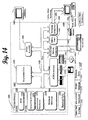
- FIG. 14 shows an exemplary computer system and environment that can be used to implement the processes described herein.
- a computer 1442 which can be a local machine as described with respect to Figures 2a-13, includes one or more processors or processing units 1444, a system memory 1446, and a bus 1448 that couples various system components including the system memory 1446 to processors 1444.
- the bus 1448 represents one or more of any of several types of bus structures, including a memory bus or memory controller, a peripheral bus, an accelerated graphics port, and a processor or local bus using any of a variety of bus architectures.
- the system memory 1446 includes read only memory (ROM) 1450 and random access memory (RAM) 1452.
- a basic input/output system (BIOS) 1454 containing the basic routines that help to transfer information between elements within computer 1442, such as during start-up, is stored in ROM 1450.
- BIOS basic input/output system
- Computer 1442 further includes a hard disk drive 1456 for reading from and writing to a hard disk (not shown), a magnetic disk drive 1458 for reading from and writing to a removable magnetic disk 1460, and an optical disk drive 1462 for reading from or writing to a removable optical disk 1464 such as a CD ROM or other optical media.
- the hard disk drive 1456, magnetic disk drive 1458, and optical disk drive 1462 are connected to the bus 1448 by an SCSI interface 1466 or some other appropriate interface.
- the drives and their associated computer-readable media provide nonvolatile storage of computer-readable instructions, data structures, program modules and other data for computer 1442.
- exemplary environment described herein employs a hard disk, a removable magnetic disk 1460 and a removable optical disk 1464, it should be appreciated by those skilled in the art that other types of computer-readable media which can store data that is accessible by a computer, such as magnetic cassettes, flash memory cards, digital video disks, random access memories (RAMs), read only memories (ROMs), and the like, may also be used in the exemplary operating environment.
- RAMs random access memories
- ROMs read only memories
- a number of program modules may be stored on the hard disk 1456, magnetic disk 1460, optical disk 1464, ROM 1450, or RAM 1452, including an OS 1470, one or more modules or application programs 1472.
- the one or more modules or application programs 1472 can be the credential provider modules 202, the sub-authentication credential provider 302, the PLAP modules 1102, and other modules 1302.
- a user may enter commands and information into computer 1442 through input devices such as a keyboard 1478 and a pointing device 1480.
- Other input devices may include finger print reader 103, token reader 208, smart card reader 105, a microphone, a joystick, a game pad, a satellite dish, a camera or optical scanner, a scent detection and analysis device, or the like. These and other input devices are connected to the processing unit 1444 through an interface 1482 that is coupled to the bus 1448.
- a monitor 1484 or other type of display device is also connected to the bus 1448 via an interface, such as a video adapter 1486.
- personal computers typically include other peripheral output devices (not shown) such as speakers and printers.
- Computer 1442 commonly operates in a networked environment using logical connections to one or more remote computers, such as a remote computer 1488.
- the remote computer 1488 may be another personal computer, a server, a router, a network PC, a peer device or other common network node, and typically includes many or all of the elements described above relative to computer 1442.
- the logical connections depicted in Fig. 14 include a local area network (LAN) 1490 and a wide area network (WAN) 1492.
- LAN local area network
- WAN wide area network
- computer 1442 When used in a LAN networking environment, computer 1442 is connected to the local network through a network interface or adapter 1494. When used in a WAN networking environment, computer 1442 typically includes a modem 1496 or other means for establishing communications over the wide area network 1492, such as the Internet.
- the modem 1496 which may be internal or external, is connected to the bus 1448 via a serial port interface 1468.
- program modules depicted relative to the personal computer 1442, or portions thereof may be stored in the remote memory storage device. It will be appreciated that the network connections shown are exemplary and other means of establishing a communications link between the computers may be used.
- the data processors of computer 1442 are programmed by means of instructions stored at different times in the various computer-readable storage media of the computer.
- Programs and operating systems are typically distributed, for example, on floppy disks or CD-ROMs. From there, they are installed or loaded into the secondary memory of a computer. At execution, they are loaded at least partially into the computer's primary electronic memory.
- the invention described herein includes these and other various types of computer-readable storage media when such media contain instructions or programs for implementing the blocks described below in conjunction with a microprocessor or other data processor.
- the invention also includes the computer itself when programmed according to the methods and techniques described herein.
- programs and other executable program components such as the OS are illustrated herein as discrete blocks, although it is recognized that such programs and components reside at various times in different storage components of the computer, and are executed by the data processor(s) of the computer.
- Implementations allow for a plurality of coexisting interoperable modules to be used that are fully compatible with an OS of a local machine.
- These coexisting interoperable modules can be log-on plug-in models for credential providers to logon to the local machine via its OS, where the models include but are not limited to digital certificates, biometrics, usemame and password credentials, etc.
- These coexisting interoperable modules can also be pre-logon access providers, including but not limited to Internet tunneling applications, wireless communication applications, Ethernet VPN applications, twisted pair circuit switched network applications using dialup 56 K modem hardware, etc.
Landscapes
- Engineering & Computer Science (AREA)
- Computer Security & Cryptography (AREA)
- Theoretical Computer Science (AREA)
- General Physics & Mathematics (AREA)
- Physics & Mathematics (AREA)
- General Engineering & Computer Science (AREA)
- Software Systems (AREA)
- Computer Hardware Design (AREA)
- Computer Networks & Wireless Communication (AREA)
- Signal Processing (AREA)
- Storage Device Security (AREA)
- User Interface Of Digital Computer (AREA)
- Telephonic Communication Services (AREA)
- Computer And Data Communications (AREA)
- Information Transfer Between Computers (AREA)
Applications Claiming Priority (2)
| Application Number | Priority Date | Filing Date | Title |
|---|---|---|---|
| US10/693,585 US7577659B2 (en) | 2003-10-24 | 2003-10-24 | Interoperable credential gathering and access modularity |
| US693585 | 2003-10-24 |
Publications (3)
| Publication Number | Publication Date |
|---|---|
| EP1528453A2 true EP1528453A2 (de) | 2005-05-04 |
| EP1528453A3 EP1528453A3 (de) | 2008-03-12 |
| EP1528453B1 EP1528453B1 (de) | 2017-11-01 |
Family
ID=34423329
Family Applications (1)
| Application Number | Title | Priority Date | Filing Date |
|---|---|---|---|
| EP04019100.9A Expired - Lifetime EP1528453B1 (de) | 2003-10-24 | 2004-08-11 | Zusammenwirkende Erfassung von Berechtigungsnachweisen und Zugangsmodularität |
Country Status (10)
| Country | Link |
|---|---|
| US (1) | US7577659B2 (de) |
| EP (1) | EP1528453B1 (de) |
| JP (1) | JP4913998B2 (de) |
| KR (1) | KR100928383B1 (de) |
| CN (1) | CN1610292B (de) |
| AU (1) | AU2004220758B2 (de) |
| BR (1) | BRPI0403559A (de) |
| CA (1) | CA2482081C (de) |
| MX (1) | MXPA04010031A (de) |
| RU (1) | RU2369025C2 (de) |
Cited By (2)
| Publication number | Priority date | Publication date | Assignee | Title |
|---|---|---|---|---|
| WO2007130226A1 (en) | 2006-05-01 | 2007-11-15 | Microsoft Corporation | Claim transformations for trust relationships |
| EP3483765A1 (de) * | 2010-09-07 | 2019-05-15 | Samsung Electronics Co., Ltd. | Automatisches verbinden mit einen online-service |
Families Citing this family (84)
| Publication number | Priority date | Publication date | Assignee | Title |
|---|---|---|---|---|
| US7577659B2 (en) | 2003-10-24 | 2009-08-18 | Microsoft Corporation | Interoperable credential gathering and access modularity |
| US20050108575A1 (en) * | 2003-11-18 | 2005-05-19 | Yung Chong M. | Apparatus, system, and method for faciliating authenticated communication between authentication realms |
| JP2005203928A (ja) * | 2004-01-14 | 2005-07-28 | Nec Corp | 情報伝達システム及び方法 |
| US7697729B2 (en) * | 2004-01-29 | 2010-04-13 | Authentec, Inc. | System for and method of finger initiated actions |
| US7581111B2 (en) * | 2004-02-17 | 2009-08-25 | Hewlett-Packard Development Company, L.P. | System, method and apparatus for transparently granting access to a selected device using an automatically generated credential |
| JP2005301500A (ja) * | 2004-04-08 | 2005-10-27 | Fujitsu Ltd | 情報処理装置 |
| US7617501B2 (en) | 2004-07-09 | 2009-11-10 | Quest Software, Inc. | Apparatus, system, and method for managing policies on a computer having a foreign operating system |
| DE102004044454A1 (de) * | 2004-09-14 | 2006-03-30 | Giesecke & Devrient Gmbh | Tragbares Gerät zur Freischaltung eines Zugangs |
| US7810143B2 (en) * | 2005-04-22 | 2010-10-05 | Microsoft Corporation | Credential interface |
| US7617530B2 (en) * | 2005-04-22 | 2009-11-10 | Microsoft Corporation | Rights elevator |
| US7739721B2 (en) * | 2005-07-11 | 2010-06-15 | Microsoft Corporation | Per-user and system granular audit policy implementation |
| US9087218B1 (en) | 2005-08-11 | 2015-07-21 | Aaron T. Emigh | Trusted path |
| US20070136792A1 (en) * | 2005-12-05 | 2007-06-14 | Ting David M | Accelerating biometric login procedures |
| US7904949B2 (en) * | 2005-12-19 | 2011-03-08 | Quest Software, Inc. | Apparatus, systems and methods to provide authentication services to a legacy application |
| US8732284B2 (en) * | 2006-01-06 | 2014-05-20 | Apple Inc. | Data serialization in a user switching environment |
| US7945951B2 (en) * | 2006-01-30 | 2011-05-17 | Microsoft Corporation | Rights-context elevator |
| US7941848B2 (en) * | 2006-01-30 | 2011-05-10 | Microsoft Corporation | Elevating rights |
| US8087075B2 (en) * | 2006-02-13 | 2011-12-27 | Quest Software, Inc. | Disconnected credential validation using pre-fetched service tickets |
| US20070198934A1 (en) * | 2006-02-17 | 2007-08-23 | Microsoft Corporation | Performing a Prohibited Task |
| US8429712B2 (en) | 2006-06-08 | 2013-04-23 | Quest Software, Inc. | Centralized user authentication system apparatus and method |
| US20070300080A1 (en) * | 2006-06-22 | 2007-12-27 | Research In Motion Limited | Two-Factor Content Protection |
| US8560595B2 (en) | 2006-06-23 | 2013-10-15 | Microsoft Corporation | Virtualization of mobile device user experience |
| JP4174535B2 (ja) * | 2006-08-22 | 2008-11-05 | Necインフロンティア株式会社 | 無線端末を認証する認証システム及び認証方法 |
| WO2008026763A1 (en) | 2006-08-31 | 2008-03-06 | Kyushu University | Biometrics sensor |
| JP4845660B2 (ja) * | 2006-09-26 | 2011-12-28 | 株式会社野村総合研究所 | ログイン処理装置、ログイン処理システム、プログラム、及び記録媒体 |
| US7841000B2 (en) * | 2006-10-16 | 2010-11-23 | Lenovo (Singapore) Pte. Ltd. | Authentication password storage method and generation method, user authentication method, and computer |
| CN101169812A (zh) * | 2006-10-25 | 2008-04-30 | 知网生物识别科技股份有限公司 | 视窗操作系统的多因子认证系统与登录方法 |
| US8086710B2 (en) | 2006-10-30 | 2011-12-27 | Quest Software, Inc. | Identity migration apparatus and method |
| US7895332B2 (en) * | 2006-10-30 | 2011-02-22 | Quest Software, Inc. | Identity migration system apparatus and method |
| US8087072B2 (en) * | 2007-01-18 | 2011-12-27 | Microsoft Corporation | Provisioning of digital identity representations |
| US8407767B2 (en) | 2007-01-18 | 2013-03-26 | Microsoft Corporation | Provisioning of digital identity representations |
| US8689296B2 (en) | 2007-01-26 | 2014-04-01 | Microsoft Corporation | Remote access of digital identities |
| US8572716B2 (en) * | 2007-04-23 | 2013-10-29 | Microsoft Corporation | Integrating operating systems with content offered by web based entities |
| KR101468537B1 (ko) * | 2007-06-01 | 2014-12-22 | 삼성전자 주식회사 | 웹 기반 서비스를 통한 기기 제어 장치 및 방법 |
| US8943580B2 (en) | 2007-09-24 | 2015-01-27 | Apple Inc. | Embedded authentication systems in an electronic device |
| US8600120B2 (en) | 2008-01-03 | 2013-12-03 | Apple Inc. | Personal computing device control using face detection and recognition |
| CN101447010B (zh) * | 2008-12-30 | 2012-02-22 | 飞天诚信科技股份有限公司 | 登录系统及登录方法 |
| US20100205649A1 (en) * | 2009-02-06 | 2010-08-12 | Microsoft Corporation | Credential gathering with deferred instantiation |
| US8255984B1 (en) | 2009-07-01 | 2012-08-28 | Quest Software, Inc. | Single sign-on system for shared resource environments |
| WO2011038533A1 (en) * | 2009-09-30 | 2011-04-07 | Intel Corporation | Enhancing biometric security of a system |
| US8397066B2 (en) | 2009-10-20 | 2013-03-12 | Thomson Reuters (Markets) Llc | Entitled data cache management |
| US10803724B2 (en) * | 2011-04-19 | 2020-10-13 | Innovation By Imagination LLC | System, device, and method of detecting dangerous situations |
| US8638385B2 (en) | 2011-06-05 | 2014-01-28 | Apple Inc. | Device, method, and graphical user interface for accessing an application in a locked device |
| JP5741271B2 (ja) * | 2011-07-21 | 2015-07-01 | 富士ゼロックス株式会社 | 認証装置、サービス提供システム、及びプログラム |
| US8621584B2 (en) * | 2011-08-31 | 2013-12-31 | Mcafee, Inc. | Credential provider that encapsulates other credential providers |
| US9002322B2 (en) | 2011-09-29 | 2015-04-07 | Apple Inc. | Authentication with secondary approver |
| CN102413189B (zh) * | 2011-12-15 | 2014-01-29 | 北京天地云箱科技有限公司 | 用于瘦客户端的配置方法及装置 |
| CN103581109B (zh) * | 2012-07-19 | 2018-03-02 | 北京京东尚科信息技术有限公司 | 声纹登录购物系统和方法 |
| CN104283843B (zh) * | 2013-07-02 | 2018-12-07 | 腾讯科技(深圳)有限公司 | 一种用户登陆的方法、装置及系统 |
| US9898642B2 (en) | 2013-09-09 | 2018-02-20 | Apple Inc. | Device, method, and graphical user interface for manipulating user interfaces based on fingerprint sensor inputs |
| US20150100890A1 (en) * | 2013-10-04 | 2015-04-09 | Samsung Electronics Co., Ltd. | User interface management method and system |
| US20160267479A1 (en) * | 2013-10-30 | 2016-09-15 | Pin-Ta Chung | Operation and Management System for Transaction Certificates |
| CN103714170A (zh) * | 2013-12-31 | 2014-04-09 | 北京智谷睿拓技术服务有限公司 | 数据访问信息发布及访问方法、装置 |
| KR102204247B1 (ko) * | 2014-02-19 | 2021-01-18 | 삼성전자 주식회사 | 전자 장치의 생체 정보 처리 방법 및 장치 |
| US9928362B2 (en) * | 2014-05-08 | 2018-03-27 | Honeywell International Inc. | Dynamic changing of access token types |
| US9324067B2 (en) | 2014-05-29 | 2016-04-26 | Apple Inc. | User interface for payments |
| US9658996B2 (en) | 2014-09-10 | 2017-05-23 | Microsoft Technology Licensing, Llc | Mapping account information to server authentication |
| JP6394259B2 (ja) * | 2014-10-09 | 2018-09-26 | 富士通株式会社 | 認証システム、認証方法、および認証装置 |
| US9775039B2 (en) * | 2014-11-18 | 2017-09-26 | T-Mobile Usa, Inc. | Data stitching for networked automation |
| US20160180799A1 (en) * | 2014-12-23 | 2016-06-23 | Intel Corporation | Multi-user notification system |
| US10721290B2 (en) | 2015-06-05 | 2020-07-21 | Nutanix, Inc. | Architecture for managing I/O and storage for a virtualization environment using executable containers and virtual machines |
| US9942238B2 (en) | 2015-08-28 | 2018-04-10 | Bank Of America Corporation | Configuring access to online accounts for third parties not associated with the online account |
| CN106803032A (zh) * | 2015-11-26 | 2017-06-06 | 广州市动景计算机科技有限公司 | 实现网站指纹登录的方法、装置和客户端设备 |
| US9894199B1 (en) | 2016-04-05 | 2018-02-13 | State Farm Mutual Automobile Insurance Company | Systems and methods for authenticating a caller at a call center |
| US10687370B2 (en) * | 2016-08-03 | 2020-06-16 | International Business Machines Corporation | Population of user identifiers based on nearby devices |
| DK179978B1 (en) | 2016-09-23 | 2019-11-27 | Apple Inc. | Image data for enhanced user interactions |
| US10649679B2 (en) | 2016-11-23 | 2020-05-12 | Nutanix, Inc. | Containerized application extensions in distributed storage systems |
| US10761911B2 (en) | 2017-02-13 | 2020-09-01 | Nutanix, Inc. | Asynchronous application interactions in distributed systems |
| KR102017057B1 (ko) * | 2017-02-20 | 2019-09-02 | (주)이스톰 | 인증 관리 방법 및 시스템 |
| US20200028848A1 (en) * | 2017-08-11 | 2020-01-23 | Nutanix, Inc. | Secure access to application instances in a multi-user, multi-tenant computing environment |
| KR102185854B1 (ko) | 2017-09-09 | 2020-12-02 | 애플 인크. | 생체측정 인증의 구현 |
| KR102143148B1 (ko) | 2017-09-09 | 2020-08-10 | 애플 인크. | 생체측정 인증의 구현 |
| US10834070B1 (en) * | 2018-01-30 | 2020-11-10 | Dell Products L.P. | Remote logging agent for accessing application server log data |
| US11170085B2 (en) | 2018-06-03 | 2021-11-09 | Apple Inc. | Implementation of biometric authentication |
| EP3750141A4 (de) | 2018-06-20 | 2021-09-15 | Hewlett-Packard Development Company, L.P. | Warnhinweise von vorrichtungen der gemischten realität |
| US11450070B2 (en) | 2018-06-20 | 2022-09-20 | Hewlett-Packard Development Company, L.P. | Alerts of mixed reality devices |
| US10860096B2 (en) | 2018-09-28 | 2020-12-08 | Apple Inc. | Device control using gaze information |
| US11100349B2 (en) | 2018-09-28 | 2021-08-24 | Apple Inc. | Audio assisted enrollment |
| US11405404B2 (en) * | 2019-09-06 | 2022-08-02 | International Business Machines Corporation | Dynamic privilege allocation based on cognitive multiple-factor evaluation |
| WO2021107178A1 (ko) * | 2019-11-27 | 2021-06-03 | (주)이스톰 | 로그인 계정 정보 관리 방법 |
| EP4675470A3 (de) | 2021-01-25 | 2026-02-25 | Apple Inc. | Implementierung von biometrischer authentifizierung |
| US12210603B2 (en) | 2021-03-04 | 2025-01-28 | Apple Inc. | User interface for enrolling a biometric feature |
| US12216754B2 (en) | 2021-05-10 | 2025-02-04 | Apple Inc. | User interfaces for authenticating to perform secure operations |
| CN119989310B (zh) * | 2024-09-10 | 2025-10-21 | 昆仑数智科技有限责任公司 | 应用访问方法、系统、设备及计算机可读存储介质 |
Family Cites Families (40)
| Publication number | Priority date | Publication date | Assignee | Title |
|---|---|---|---|---|
| US5655077A (en) | 1994-12-13 | 1997-08-05 | Microsoft Corporation | Method and system for authenticating access to heterogeneous computing services |
| US5774551A (en) | 1995-08-07 | 1998-06-30 | Sun Microsystems, Inc. | Pluggable account management interface with unified login and logout and multiple user authentication services |
| RU2158444C2 (ru) | 1995-11-06 | 2000-10-27 | Ай Ди Системс, Инк. | Электронная контролирующая система/сеть |
| US5864665A (en) | 1996-08-20 | 1999-01-26 | International Business Machines Corporation | Auditing login activity in a distributed computing environment |
| IL131102A0 (en) * | 1997-02-03 | 2001-01-28 | Mci Communications Corp | A communication system architecture |
| BR9809664A (pt) * | 1997-05-28 | 2000-09-05 | Adan Lucas Young | Processo e aparelho compreendendo um criptossistema que pode ser usado para gerar, verificar, usar, e recuperar códigos criptográficos |
| US6754820B1 (en) | 2001-01-30 | 2004-06-22 | Tecsec, Inc. | Multiple level access system |
| JP2000122975A (ja) * | 1998-10-14 | 2000-04-28 | Toshiba Corp | バイオメトリクスによるユーザー確認システム及び記憶媒体 |
| US6651168B1 (en) * | 1999-01-29 | 2003-11-18 | International Business Machines, Corp. | Authentication framework for multiple authentication processes and mechanisms |
| US7730300B2 (en) * | 1999-03-30 | 2010-06-01 | Sony Corporation | Method and apparatus for protecting the transfer of data |
| US6609198B1 (en) | 1999-08-05 | 2003-08-19 | Sun Microsystems, Inc. | Log-on service providing credential level change without loss of session continuity |
| US7213054B2 (en) | 1999-12-15 | 2007-05-01 | Microsoft Corporation | Methods and apparatuses for handling single-user applications in multi-user computing environments |
| US6982962B1 (en) * | 2000-04-10 | 2006-01-03 | 3Com Corporation | System and method for selecting a network access provider using a portable information device |
| US7565326B2 (en) | 2000-05-25 | 2009-07-21 | Randle William M | Dialect independent multi-dimensional integrator using a normalized language platform and secure controlled access |
| US7194764B2 (en) | 2000-07-10 | 2007-03-20 | Oracle International Corporation | User authentication |
| US20020031230A1 (en) | 2000-08-15 | 2002-03-14 | Sweet William B. | Method and apparatus for a web-based application service model for security management |
| JP4445116B2 (ja) * | 2000-10-17 | 2010-04-07 | 東芝テック株式会社 | ゲートウエイ装置とネットワークシステム |
| JP2002232573A (ja) * | 2001-01-31 | 2002-08-16 | Nec Corp | 移動通信端末、移動通信システム及びサービス提供装置 |
| US20030046392A1 (en) * | 2001-08-29 | 2003-03-06 | Sayling Wen | Automatic network connecting system and method |
| US20030065626A1 (en) | 2001-09-28 | 2003-04-03 | Allen Karl H. | User verification for conducting health-related transactions |
| US20030097345A1 (en) * | 2001-10-18 | 2003-05-22 | Mitch Upton | System and method for invoking business functionality for a workflow |
| JP4145118B2 (ja) * | 2001-11-26 | 2008-09-03 | 松下電器産業株式会社 | アプリケーション認証システム |
| US6807636B2 (en) * | 2002-02-13 | 2004-10-19 | Hitachi Computer Products (America), Inc. | Methods and apparatus for facilitating security in a network |
| US20030177388A1 (en) * | 2002-03-15 | 2003-09-18 | International Business Machines Corporation | Authenticated identity translation within a multiple computing unit environment |
| US20040039909A1 (en) | 2002-08-22 | 2004-02-26 | David Cheng | Flexible authentication with multiple levels and factors |
| US20040139355A1 (en) * | 2002-11-07 | 2004-07-15 | Axel David J. | Method and system of accessing a plurality of network elements |
| JP2004295632A (ja) * | 2003-03-27 | 2004-10-21 | Ricoh Co Ltd | 認証情報取得装置、ユーザ認証システム、認証情報取得プログラム、文書管理装置、文書管理プログラム及び記録媒体 |
| US7257835B2 (en) | 2003-05-28 | 2007-08-14 | Microsoft Corporation | Securely authorizing the performance of actions |
| KR20060123134A (ko) | 2003-10-08 | 2006-12-01 | 스테판 제이. 잉베르그 | 프라이버시 향상 기술을 사용하여 통신을 설정하는 방법 및시스템 |
| US7577659B2 (en) | 2003-10-24 | 2009-08-18 | Microsoft Corporation | Interoperable credential gathering and access modularity |
| US7823071B2 (en) | 2004-02-20 | 2010-10-26 | Microsoft Corporation | User interface start page |
| US20050188317A1 (en) | 2004-02-20 | 2005-08-25 | Microsoft Corporation | Initiate multiple applications |
| US7966572B2 (en) | 2004-02-20 | 2011-06-21 | Microsoft Corporation | User interface transition |
| WO2005107137A2 (en) | 2004-04-23 | 2005-11-10 | Passmark Security, Inc. | Method and apparatus for authenticating users using two or more factors |
| US7721328B2 (en) | 2004-10-01 | 2010-05-18 | Salesforce.Com Inc. | Application identity design |
| US20060085752A1 (en) | 2004-10-14 | 2006-04-20 | International Business Machines Corporation | Method and apparatus for dynamically creating historical groups in a messaging client |
| US8365293B2 (en) | 2005-01-25 | 2013-01-29 | Redphone Security, Inc. | Securing computer network interactions between entities with authorization assurances |
| US7634734B2 (en) | 2005-01-28 | 2009-12-15 | Microsoft Corporation | Direct access to media playback |
| US7810143B2 (en) | 2005-04-22 | 2010-10-05 | Microsoft Corporation | Credential interface |
| CA2640261A1 (en) | 2006-01-26 | 2007-08-09 | Imprivata, Inc. | Systems and methods for multi-factor authentication |
-
2003
- 2003-10-24 US US10/693,585 patent/US7577659B2/en not_active Expired - Lifetime
-
2004
- 2004-08-11 EP EP04019100.9A patent/EP1528453B1/de not_active Expired - Lifetime
- 2004-08-26 BR BR0403559-3A patent/BRPI0403559A/pt not_active IP Right Cessation
- 2004-09-02 CN CN2004100769138A patent/CN1610292B/zh not_active Expired - Fee Related
- 2004-09-03 KR KR1020040070503A patent/KR100928383B1/ko not_active Expired - Fee Related
- 2004-09-16 CA CA2482081A patent/CA2482081C/en not_active Expired - Fee Related
- 2004-09-24 JP JP2004278406A patent/JP4913998B2/ja not_active Expired - Fee Related
- 2004-09-29 AU AU2004220758A patent/AU2004220758B2/en not_active Ceased
- 2004-10-12 MX MXPA04010031A patent/MXPA04010031A/es active IP Right Grant
- 2004-10-22 RU RU2004131027/09A patent/RU2369025C2/ru not_active IP Right Cessation
Cited By (3)
| Publication number | Priority date | Publication date | Assignee | Title |
|---|---|---|---|---|
| WO2007130226A1 (en) | 2006-05-01 | 2007-11-15 | Microsoft Corporation | Claim transformations for trust relationships |
| EP2089810A4 (de) * | 2006-05-01 | 2010-05-05 | Microsoft Corp | Anspruchstransformationen für vertrauensbeziehungen |
| EP3483765A1 (de) * | 2010-09-07 | 2019-05-15 | Samsung Electronics Co., Ltd. | Automatisches verbinden mit einen online-service |
Also Published As
| Publication number | Publication date |
|---|---|
| CN1610292A (zh) | 2005-04-27 |
| JP2005129032A (ja) | 2005-05-19 |
| RU2004131027A (ru) | 2006-04-10 |
| MXPA04010031A (es) | 2005-04-28 |
| EP1528453A3 (de) | 2008-03-12 |
| CA2482081C (en) | 2013-11-19 |
| JP4913998B2 (ja) | 2012-04-11 |
| EP1528453B1 (de) | 2017-11-01 |
| KR100928383B1 (ko) | 2009-11-23 |
| AU2004220758B2 (en) | 2010-02-18 |
| CA2482081A1 (en) | 2005-04-24 |
| CN1610292B (zh) | 2011-01-12 |
| US20050091213A1 (en) | 2005-04-28 |
| US7577659B2 (en) | 2009-08-18 |
| AU2004220758A1 (en) | 2005-05-12 |
| BRPI0403559A (pt) | 2005-06-21 |
| RU2369025C2 (ru) | 2009-09-27 |
| KR20050039539A (ko) | 2005-04-29 |
Similar Documents
| Publication | Publication Date | Title |
|---|---|---|
| CA2482081C (en) | Interoperable credential gathering and access modularity | |
| US6651168B1 (en) | Authentication framework for multiple authentication processes and mechanisms | |
| US6338138B1 (en) | Network-based authentication of computer user | |
| US6144959A (en) | System and method for managing user accounts in a communication network | |
| CN105684388B (zh) | 利用表单填充代理应用的基于网络的单点登录 | |
| US7188254B2 (en) | Peer-to-peer authorization method | |
| US6510236B1 (en) | Authentication framework for managing authentication requests from multiple authentication devices | |
| US7571473B1 (en) | Identity management system and method | |
| US6341352B1 (en) | Method for changing a security policy during processing of a transaction request | |
| EP2109955B1 (de) | Bereitstellung von digitalen identitätsdarstellungen | |
| US9886590B2 (en) | Techniques for enforcing application environment based security policies using role based access control | |
| US6418466B1 (en) | Management of authentication discovery policy in a computer network | |
| CN101167304B (zh) | 证书界面 | |
| US20060021003A1 (en) | Biometric authentication system | |
| US20050027713A1 (en) | Administrative reset of multiple passwords | |
| US20080115208A1 (en) | Multi-Factor Authentication System and a Logon Method of a Windows Operating System | |
| HK1040124B (en) | Apparatus and method for determining program neighborhood of client node in client/server network | |
| US20040236760A1 (en) | Systems and methods for extending a management console across applications | |
| JP2007164661A (ja) | ユーザ認証プログラム、ユーザ認証装置、ユーザ認証方法 | |
| JP2005293565A (ja) | シングルサインオンフレームワークにおけるワークフローを管理する方法及び装置 | |
| JP7159382B2 (ja) | 認証システム及び認証方法 | |
| CN101584148B (zh) | 数字身份表示的供应 | |
| JP2026048204A (ja) | 情報処理装置、情報処理装置の制御方法、及びプログラム | |
| EP4264877A1 (de) | Passwortverwaltungssystem, vorrichtung und verfahren dafür |
Legal Events
| Date | Code | Title | Description |
|---|---|---|---|
| PUAI | Public reference made under article 153(3) epc to a published international application that has entered the european phase |
Free format text: ORIGINAL CODE: 0009012 |
|
| AK | Designated contracting states |
Kind code of ref document: A2 Designated state(s): AT BE BG CH CY CZ DE DK EE ES FI FR GB GR HU IE IT LI LU MC NL PL PT RO SE SI SK TR |
|
| AX | Request for extension of the european patent |
Extension state: AL HR LT LV MK |
|
| PUAL | Search report despatched |
Free format text: ORIGINAL CODE: 0009013 |
|
| AK | Designated contracting states |
Kind code of ref document: A3 Designated state(s): AT BE BG CH CY CZ DE DK EE ES FI FR GB GR HU IE IT LI LU MC NL PL PT RO SE SI SK TR |
|
| AX | Request for extension of the european patent |
Extension state: AL HR LT LV MK |
|
| 17P | Request for examination filed |
Effective date: 20080405 |
|
| R17P | Request for examination filed (corrected) |
Effective date: 20080404 |
|
| 17Q | First examination report despatched |
Effective date: 20080519 |
|
| AKX | Designation fees paid |
Designated state(s): AT BE BG CH CY CZ DE DK EE ES FI FR GB GR HU IE IT LI LU MC NL PL PT RO SE SI SK TR |
|
| RAP1 | Party data changed (applicant data changed or rights of an application transferred) |
Owner name: MICROSOFT TECHNOLOGY LICENSING, LLC |
|
| REG | Reference to a national code |
Ref country code: DE Ref legal event code: R079 Ref document number: 602004051983 Country of ref document: DE Free format text: PREVIOUS MAIN CLASS: G06F0001000000 Ipc: G06F0021310000 |
|
| GRAP | Despatch of communication of intention to grant a patent |
Free format text: ORIGINAL CODE: EPIDOSNIGR1 |
|
| RIC1 | Information provided on ipc code assigned before grant |
Ipc: G06F 21/31 20130101AFI20170120BHEP |
|
| INTG | Intention to grant announced |
Effective date: 20170210 |
|
| RIN1 | Information on inventor provided before grant (corrected) |
Inventor name: PERLIN, ERIC C., C/O MICROSOFT CORPORATION Inventor name: HUTZ, BENJAMIN A., C/O MICROSOFT CORPORATION Inventor name: STEPHENS, JOHN, C/O MICROSOFT CORPORATION Inventor name: FLO, ERIC R., C/O MICROSOFT CORPORATION Inventor name: SCHUTZ, KLAUS U., C/O MICROSOFT CORPORATION Inventor name: ILAC, CRISTIAN, C/O MICROSOFT CORPORATION Inventor name: REASOR, STERLING M., C/O MICROSOFT CORPORATION Inventor name: RICHARDS, STEFAN., C/O MICROSOFT CORPORATION |
|
| GRAJ | Information related to disapproval of communication of intention to grant by the applicant or resumption of examination proceedings by the epo deleted |
Free format text: ORIGINAL CODE: EPIDOSDIGR1 |
|
| GRAP | Despatch of communication of intention to grant a patent |
Free format text: ORIGINAL CODE: EPIDOSNIGR1 |
|
| GRAJ | Information related to disapproval of communication of intention to grant by the applicant or resumption of examination proceedings by the epo deleted |
Free format text: ORIGINAL CODE: EPIDOSDIGR1 |
|
| GRAP | Despatch of communication of intention to grant a patent |
Free format text: ORIGINAL CODE: EPIDOSNIGR1 |
|
| INTC | Intention to grant announced (deleted) | ||
| RIN1 | Information on inventor provided before grant (corrected) |
Inventor name: RICHARDS, STEFAN Inventor name: ILAC, CRISTIAN Inventor name: REASOR, STERLING M. Inventor name: STEPHENS, JOHN Inventor name: FLO, ERIC R. Inventor name: PERLIN, ERIC C. Inventor name: HUTZ, BENJAMIN A. Inventor name: SCHUTZ, KLAUS U. |
|
| INTG | Intention to grant announced |
Effective date: 20170518 |
|
| GRAS | Grant fee paid |
Free format text: ORIGINAL CODE: EPIDOSNIGR3 |
|
| GRAA | (expected) grant |
Free format text: ORIGINAL CODE: 0009210 |
|
| AK | Designated contracting states |
Kind code of ref document: B1 Designated state(s): AT BE BG CH CY CZ DE DK EE ES FI FR GB GR HU IE IT LI LU MC NL PL PT RO SE SI SK TR |
|
| REG | Reference to a national code |
Ref country code: GB Ref legal event code: FG4D |
|
| REG | Reference to a national code |
Ref country code: CH Ref legal event code: EP Ref country code: AT Ref legal event code: REF Ref document number: 942701 Country of ref document: AT Kind code of ref document: T Effective date: 20171115 |
|
| REG | Reference to a national code |
Ref country code: IE Ref legal event code: FG4D |
|
| REG | Reference to a national code |
Ref country code: DE Ref legal event code: R096 Ref document number: 602004051983 Country of ref document: DE |
|
| REG | Reference to a national code |
Ref country code: NL Ref legal event code: MP Effective date: 20171101 |
|
| REG | Reference to a national code |
Ref country code: AT Ref legal event code: MK05 Ref document number: 942701 Country of ref document: AT Kind code of ref document: T Effective date: 20171101 |
|
| PG25 | Lapsed in a contracting state [announced via postgrant information from national office to epo] |
Ref country code: NL Free format text: LAPSE BECAUSE OF FAILURE TO SUBMIT A TRANSLATION OF THE DESCRIPTION OR TO PAY THE FEE WITHIN THE PRESCRIBED TIME-LIMIT Effective date: 20171101 Ref country code: ES Free format text: LAPSE BECAUSE OF FAILURE TO SUBMIT A TRANSLATION OF THE DESCRIPTION OR TO PAY THE FEE WITHIN THE PRESCRIBED TIME-LIMIT Effective date: 20171101 Ref country code: SE Free format text: LAPSE BECAUSE OF FAILURE TO SUBMIT A TRANSLATION OF THE DESCRIPTION OR TO PAY THE FEE WITHIN THE PRESCRIBED TIME-LIMIT Effective date: 20171101 Ref country code: FI Free format text: LAPSE BECAUSE OF FAILURE TO SUBMIT A TRANSLATION OF THE DESCRIPTION OR TO PAY THE FEE WITHIN THE PRESCRIBED TIME-LIMIT Effective date: 20171101 |
|
| PG25 | Lapsed in a contracting state [announced via postgrant information from national office to epo] |
Ref country code: AT Free format text: LAPSE BECAUSE OF FAILURE TO SUBMIT A TRANSLATION OF THE DESCRIPTION OR TO PAY THE FEE WITHIN THE PRESCRIBED TIME-LIMIT Effective date: 20171101 Ref country code: GR Free format text: LAPSE BECAUSE OF FAILURE TO SUBMIT A TRANSLATION OF THE DESCRIPTION OR TO PAY THE FEE WITHIN THE PRESCRIBED TIME-LIMIT Effective date: 20180202 Ref country code: BG Free format text: LAPSE BECAUSE OF FAILURE TO SUBMIT A TRANSLATION OF THE DESCRIPTION OR TO PAY THE FEE WITHIN THE PRESCRIBED TIME-LIMIT Effective date: 20180201 |
|
| PG25 | Lapsed in a contracting state [announced via postgrant information from national office to epo] |
Ref country code: CZ Free format text: LAPSE BECAUSE OF FAILURE TO SUBMIT A TRANSLATION OF THE DESCRIPTION OR TO PAY THE FEE WITHIN THE PRESCRIBED TIME-LIMIT Effective date: 20171101 Ref country code: SK Free format text: LAPSE BECAUSE OF FAILURE TO SUBMIT A TRANSLATION OF THE DESCRIPTION OR TO PAY THE FEE WITHIN THE PRESCRIBED TIME-LIMIT Effective date: 20171101 Ref country code: DK Free format text: LAPSE BECAUSE OF FAILURE TO SUBMIT A TRANSLATION OF THE DESCRIPTION OR TO PAY THE FEE WITHIN THE PRESCRIBED TIME-LIMIT Effective date: 20171101 Ref country code: CY Free format text: LAPSE BECAUSE OF FAILURE TO SUBMIT A TRANSLATION OF THE DESCRIPTION OR TO PAY THE FEE WITHIN THE PRESCRIBED TIME-LIMIT Effective date: 20171101 Ref country code: EE Free format text: LAPSE BECAUSE OF FAILURE TO SUBMIT A TRANSLATION OF THE DESCRIPTION OR TO PAY THE FEE WITHIN THE PRESCRIBED TIME-LIMIT Effective date: 20171101 |
|
| REG | Reference to a national code |
Ref country code: DE Ref legal event code: R097 Ref document number: 602004051983 Country of ref document: DE |
|
| PG25 | Lapsed in a contracting state [announced via postgrant information from national office to epo] |
Ref country code: RO Free format text: LAPSE BECAUSE OF FAILURE TO SUBMIT A TRANSLATION OF THE DESCRIPTION OR TO PAY THE FEE WITHIN THE PRESCRIBED TIME-LIMIT Effective date: 20171101 Ref country code: PL Free format text: LAPSE BECAUSE OF FAILURE TO SUBMIT A TRANSLATION OF THE DESCRIPTION OR TO PAY THE FEE WITHIN THE PRESCRIBED TIME-LIMIT Effective date: 20171101 Ref country code: IT Free format text: LAPSE BECAUSE OF FAILURE TO SUBMIT A TRANSLATION OF THE DESCRIPTION OR TO PAY THE FEE WITHIN THE PRESCRIBED TIME-LIMIT Effective date: 20171101 |
|
| PLBE | No opposition filed within time limit |
Free format text: ORIGINAL CODE: 0009261 |
|
| STAA | Information on the status of an ep patent application or granted ep patent |
Free format text: STATUS: NO OPPOSITION FILED WITHIN TIME LIMIT |
|
| 26N | No opposition filed |
Effective date: 20180802 |
|
| PGFP | Annual fee paid to national office [announced via postgrant information from national office to epo] |
Ref country code: DE Payment date: 20180731 Year of fee payment: 15 |
|
| PG25 | Lapsed in a contracting state [announced via postgrant information from national office to epo] |
Ref country code: SI Free format text: LAPSE BECAUSE OF FAILURE TO SUBMIT A TRANSLATION OF THE DESCRIPTION OR TO PAY THE FEE WITHIN THE PRESCRIBED TIME-LIMIT Effective date: 20171101 |
|
| PG25 | Lapsed in a contracting state [announced via postgrant information from national office to epo] |
Ref country code: MC Free format text: LAPSE BECAUSE OF FAILURE TO SUBMIT A TRANSLATION OF THE DESCRIPTION OR TO PAY THE FEE WITHIN THE PRESCRIBED TIME-LIMIT Effective date: 20171101 |
|
| REG | Reference to a national code |
Ref country code: CH Ref legal event code: PL |
|
| GBPC | Gb: european patent ceased through non-payment of renewal fee |
Effective date: 20180811 |
|
| PG25 | Lapsed in a contracting state [announced via postgrant information from national office to epo] |
Ref country code: LU Free format text: LAPSE BECAUSE OF NON-PAYMENT OF DUE FEES Effective date: 20180811 Ref country code: LI Free format text: LAPSE BECAUSE OF NON-PAYMENT OF DUE FEES Effective date: 20180831 Ref country code: CH Free format text: LAPSE BECAUSE OF NON-PAYMENT OF DUE FEES Effective date: 20180831 |
|
| REG | Reference to a national code |
Ref country code: BE Ref legal event code: MM Effective date: 20180831 |
|
| REG | Reference to a national code |
Ref country code: IE Ref legal event code: MM4A |
|
| PG25 | Lapsed in a contracting state [announced via postgrant information from national office to epo] |
Ref country code: IE Free format text: LAPSE BECAUSE OF NON-PAYMENT OF DUE FEES Effective date: 20180811 |
|
| PG25 | Lapsed in a contracting state [announced via postgrant information from national office to epo] |
Ref country code: BE Free format text: LAPSE BECAUSE OF NON-PAYMENT OF DUE FEES Effective date: 20180831 Ref country code: FR Free format text: LAPSE BECAUSE OF NON-PAYMENT OF DUE FEES Effective date: 20180831 |
|
| PG25 | Lapsed in a contracting state [announced via postgrant information from national office to epo] |
Ref country code: GB Free format text: LAPSE BECAUSE OF NON-PAYMENT OF DUE FEES Effective date: 20180811 |
|
| REG | Reference to a national code |
Ref country code: DE Ref legal event code: R119 Ref document number: 602004051983 Country of ref document: DE |
|
| PG25 | Lapsed in a contracting state [announced via postgrant information from national office to epo] |
Ref country code: TR Free format text: LAPSE BECAUSE OF FAILURE TO SUBMIT A TRANSLATION OF THE DESCRIPTION OR TO PAY THE FEE WITHIN THE PRESCRIBED TIME-LIMIT Effective date: 20171101 |
|
| PG25 | Lapsed in a contracting state [announced via postgrant information from national office to epo] |
Ref country code: HU Free format text: LAPSE BECAUSE OF FAILURE TO SUBMIT A TRANSLATION OF THE DESCRIPTION OR TO PAY THE FEE WITHIN THE PRESCRIBED TIME-LIMIT; INVALID AB INITIO Effective date: 20040811 Ref country code: PT Free format text: LAPSE BECAUSE OF FAILURE TO SUBMIT A TRANSLATION OF THE DESCRIPTION OR TO PAY THE FEE WITHIN THE PRESCRIBED TIME-LIMIT Effective date: 20171101 |
|
| PG25 | Lapsed in a contracting state [announced via postgrant information from national office to epo] |
Ref country code: DE Free format text: LAPSE BECAUSE OF NON-PAYMENT OF DUE FEES Effective date: 20200303 |