EP1526689B1 - Interface entre service de la connectivité mobile et un dispositif WWAN (Wireless Wide Area Network) - Google Patents
Interface entre service de la connectivité mobile et un dispositif WWAN (Wireless Wide Area Network) Download PDFInfo
- Publication number
- EP1526689B1 EP1526689B1 EP04022086.5A EP04022086A EP1526689B1 EP 1526689 B1 EP1526689 B1 EP 1526689B1 EP 04022086 A EP04022086 A EP 04022086A EP 1526689 B1 EP1526689 B1 EP 1526689B1
- Authority
- EP
- European Patent Office
- Prior art keywords
- wwan
- oid
- user
- mode
- driver
- Prior art date
- Legal status (The legal status is an assumption and is not a legal conclusion. Google has not performed a legal analysis and makes no representation as to the accuracy of the status listed.)
- Expired - Lifetime
Links
Images






Classifications
-
- H—ELECTRICITY
- H04—ELECTRIC COMMUNICATION TECHNIQUE
- H04W—WIRELESS COMMUNICATION NETWORKS
- H04W12/00—Security arrangements; Authentication; Protecting privacy or anonymity
- H04W12/06—Authentication
- H04W12/068—Authentication using credential vaults, e.g. password manager applications or one time password [OTP] applications
-
- H—ELECTRICITY
- H04—ELECTRIC COMMUNICATION TECHNIQUE
- H04L—TRANSMISSION OF DIGITAL INFORMATION, e.g. TELEGRAPHIC COMMUNICATION
- H04L63/00—Network architectures or network communication protocols for network security
- H04L63/08—Network architectures or network communication protocols for network security for authentication of entities
- H04L63/0853—Network architectures or network communication protocols for network security for authentication of entities using an additional device, e.g. smartcard, SIM or a different communication terminal
-
- H—ELECTRICITY
- H04—ELECTRIC COMMUNICATION TECHNIQUE
- H04L—TRANSMISSION OF DIGITAL INFORMATION, e.g. TELEGRAPHIC COMMUNICATION
- H04L63/00—Network architectures or network communication protocols for network security
- H04L63/08—Network architectures or network communication protocols for network security for authentication of entities
- H04L63/0876—Network architectures or network communication protocols for network security for authentication of entities based on the identity of the terminal or configuration, e.g. MAC address, hardware or software configuration or device fingerprint
-
- H—ELECTRICITY
- H04—ELECTRIC COMMUNICATION TECHNIQUE
- H04W—WIRELESS COMMUNICATION NETWORKS
- H04W12/00—Security arrangements; Authentication; Protecting privacy or anonymity
- H04W12/06—Authentication
-
- H—ELECTRICITY
- H04—ELECTRIC COMMUNICATION TECHNIQUE
- H04W—WIRELESS COMMUNICATION NETWORKS
- H04W92/00—Interfaces specially adapted for wireless communication networks
- H04W92/04—Interfaces between hierarchically different network devices
- H04W92/10—Interfaces between hierarchically different network devices between terminal device and access point, i.e. wireless air interface
-
- H—ELECTRICITY
- H04—ELECTRIC COMMUNICATION TECHNIQUE
- H04W—WIRELESS COMMUNICATION NETWORKS
- H04W84/00—Network topologies
- H04W84/02—Hierarchically pre-organised networks, e.g. paging networks, cellular networks, WLAN [Wireless Local Area Network] or WLL [Wireless Local Loop]
- H04W84/10—Small scale networks; Flat hierarchical networks
- H04W84/12—WLAN [Wireless Local Area Networks]
Definitions
- This invention pertains generally to the field of computer software-hardware interfaces, and particularly to interfaces between user-mode connectivity applications and kernel-mode WWAN device drivers.
- WWANs Wireless Wide Area Networks
- GSM Global System Mobile
- GPRS General Packet Radio Service
- CDMA Code Division Multiple Access
- Previous systems additionally had the disadvantage of requiring synchronous communication between WWAN device drivers and their configuration user interfaces. If a WWAN device driver required a Personal Identification Number (PIN) in a prior system, for example, the PIN would have to be entered by the user, sent to the device driver, and processed by the device driver before any additional commands could be issued.
- PIN Personal Identification Number
- the requirement of synchronous communication imposed by previous systems often resulted in lengthy periods for configuring WWAN devices, since configuration commands could only be sent when previous commands had been completed.
- Extensions to NDIS for Wireless WANs PCCA Standard STD-201, Revision 1.1 and its appendices describe an architecture using an NDIS interface to communicate with a wireless device.
- the architecture provides, e.g., a Wireless-aware Application and a Control Panel Application, which may communicate with a Wireless Device Driver through a Management API, Service Provider Interface and Wireless Extended NDIS.
- An NdisRequest function call is used to control the driver, inspect its capabilities and determine the driver's current status.
- the NdisRequest works on objects.
- An object is identified by an OID and a value.
- the NdisRequest function call can work asynchronously.
- An OID_WW_CDPD_RSSI is provided for returning the received signal strength indication in dBm. If an indication request is enabled, then an event is triggered according to the TriggerValue as specified in the OID_WW_GEN_INDICATION_REQUEST.
- an OID_WW_GEN_DISABLE_TRANSMITTER is used to immediately disable the device's transmitter without regard to system or user traffic.
- the corresponding query returns the device's current transmitter status and the OID is used to enable/disable the device's transmitter.
- An OID_WW_GPRS_ATT allows for the GPRS service registration state to be set and read. Furthermore, OIDs are discussed for defining, activating, deactivating etc. PDP contexts.
- Embodiments of the present invention provide methods and systems for an event-based configuration interface between a service supporting mobile connectivity (a "Roaming Service") and device drivers exposing WWAN data services.
- This interface is intended to provide the essential states and events for the Roaming Service with minimum user configuration.
- a system for using a user-mode module to kernel-mode driver interface to send commands to and receive information from a kernel-mode WWAN device driver by using OIDs.
- the WWAN device driver controls a GSM-based device.
- the WWAN device driver controls a CDMA-based device.
- the WWAN device driver controls a CDMA or GSM-based device.
- some OIDs are used for indicating to the user-mode entity that the WWAN device has been provisioned by a WWAN service provider. In another embodiment, some OIDs are used for authentication with information from a SIM. In yet another embodiment, some OIDs are used for authentication with a PIN. In one version, the PIN is used in conjunction with a voice call.
- some OIDs are used for managing a signal strength range threshold.
- some OIDs are used to establish a signal strength range threshold, and some OIDs are used for indicating that the signal strength is outside the established signal strength range threshold.
- some OIDs are used for managing a signal strength reporting interval.
- some OIDs are used to establish a signal strength reporting interval, and some OIDs are received at the minimum frequency of the established signal strength reporting interval.
- a method for managing the signal strength of a WWAN device using OIDs sent through a user-mode module to kernel-mode driver interface.
- the method comprises sending an OID to establish a signal strength range threshold, and receiving an OID reporting a signal strength of the WWAN device that is outside the established signal strength range threshold.
- the method further comprises sending an OID to adjust the signal strength range threshold.
- the method further comprises determining, by a WWAN device driver in connection with the WWAN device, that the signal strength of the WWAN device is outside the established signal strength range threshold.
- a method for a user-mode entity to initialize a WWAN device driver using OIDs sent through a user-mode module to kernel-mode driver interface.
- the method comprises sending and receiving OIDs to query the device driver in connection with the WWAN device for information about media supported by the device, sending an OID to set a range of configuration service versions supported by the user-mode entity, sending and receiving OIDs to query the device driver for a range of configuration service versions supported by the device driver, and sending and receiving OIDs to query the device driver for capabilities of the device driver.
- the WWAN device driver controls a GSM-based device.
- the WWAN device driver controls a CDMA-based device.
- a method for a user-mode entity to initialize a WWAN device using OIDs sent through a user-mode module to kemel-mode driver interface.
- the method comprises initializing a device driver in connection with the WWAN device, sending an OID to initialize a protocol stack, receiving an OID indicating that the device driver is in a ready state, sending an OID to power a transceiver and attempt registration, sending an OID to establish a context, and receiving an OID indicating that the device is connected and ready for a communications session.
- the method further comprises receiving an OID from the device driver indicating whether or not a PIN is required.
- the user-mode entity sends an OID containing a PIN if a PIN is required.
- the method further comprises receiving an OID indicating that the device driver is searching for a provider. In one version, the method further comprises receiving an OID indicating that the device driver has packet attached.
- the method further comprises sending an OID requesting a list of provisioned contexts. In one version, the method further comprises receiving an OID with a list of provisioned contexts.
- the WWAN device is a GSM-based device. In another embodiment, the WWAN device is a CDMA-based device.
- the invention may also be practiced in distributed computing environments where tasks are performed by remote processing devices that are linked through a communications network.
- program modules may be located in both local and remote memory storage devices.
- the term computer system may be used to refer to a system of computers such as may be found in a distributed computing environment.
- Figure 1 illustrates an example of a suitable computing system environment 100 on which the invention may be implemented.
- the computing system environment 100 is only one example of a suitable computing environment and is not intended to suggest any limitation as to the scope of use or functionality of the invention. Neither should the computing environment 100 be interpreted as having any dependency or requirement relating to any one or combination of components illustrated in the exemplary operating environment 100.
- one embodiment of the invention does include each component illustrated in the exemplary operating environment 100, another more typical embodiment of the invention excludes non-essential components, for example, input/output devices other than those required for network communications.
- an exemplary system for implementing the invention includes a general purpose computing device in the form of a computer 110.
- Components of the computer 110 may include, but are not limited to, a processing unit 120, a system memory 130, and a system bus 121 that couples various system components including the system memory to the processing unit 120.
- the system bus 121 may be any of several types of bus structures including a memory bus or memory controller, a peripheral bus, and a local bus using any of a variety of bus architectures.
- such architectures include Industry Standard Architecture (ISA) bus, Micro Channel Architecture (MCA) bus, Enhanced ISA (EISA) bus, Video Electronics Standards Association (VESA) local bus, and Peripheral Component Interconnect (PCI) bus also known as Mezzanine bus.
- ISA Industry Standard Architecture
- MCA Micro Channel Architecture
- EISA Enhanced ISA
- VESA Video Electronics Standards Association
- PCI Peripheral Component Interconnect
- the computer 110 typically includes a variety of computer readable media.
- Computer readable media can be any available media that can be accessed by the computer 110 and includes both volatile and nonvolatile media, and removable and non-removable media.
- Computer readable media may comprise computer storage media and communication media.
- Computer storage media includes volatile and nonvolatile, removable and non-removable media implemented in any method or technology for storage of information such as computer readable instructions, data structures, program modules or other data.
- Computer storage media includes, but is not limited to, RAM, ROM, EEPROM, flash memory or other memory technology, CD-ROM, digital versatile disks (DVD) or other optical disk storage, magnetic cassettes, magnetic tape, magnetic disk storage or other magnetic storage devices, or any other medium which can be used to store the desired information and which can be accessed by the computer 110.
- Communication media typically embodies computer readable instructions, data structures, program modules or other data in a modulated data signal such as a carrier wave or other transport mechanism and includes any information delivery media.
- modulated data signal means a signal that has one or more of its characteristics set or changed in such a manner as to encode information in the signal.
- communication media includes wired media such as a wired network or direct-wired connection, and wireless media such as acoustic, RF, infrared and other wireless media. Combinations of the any of the above should also be included within the scope of computer readable media.
- the system memory 130 includes computer storage media in the form of volatile and/or nonvolatile memory such as read only memory (ROM) 131 and random access memory (RAM) 132.
- ROM read only memory
- RAM random access memory
- BIOS basic input/output system
- RAM 132 typically contains data and/or program modules that are immediately accessible to and/or presently being operated on by processing unit 120.
- Figure 1 illustrates operating system 134, application programs 135, other program modules 136 and program data 137.
- the computer 110 may also include other removable/non-removable, volatile/nonvolatile computer storage media.
- Figure 1 illustrates a hard disk drive 141 that reads from or writes to non-removable, nonvolatile magnetic media, a magnetic disk drive 151 that reads from or writes to a removable, nonvolatile magnetic disk 152, and an optical disk drive 155 that reads from or writes to a removable, nonvolatile optical disk 156 such as a CD ROM or other optical media.
- removable/non-removable, volatile/nonvolatile computer storage media that can be used in the exemplary operating environment include, but are not limited to, magnetic tape cassettes, flash memory cards, digital versatile disks, digital video tape, solid state RAM, solid state ROM, and the like.
- the hard disk drive 141 is typically connected to the system bus 121 through a non-removable memory interface such as interface 140, and magnetic disk drive 151 and optical disk drive 155 are typically connected to the system bus 121 by a removable memory interface, such as interface 150.
- hard disk drive 141 is illustrated as storing operating system 144, application programs 145, other program modules 146 and program data 147. Note that these components can either be the same as or different from operating system 134, application programs 135, other program modules 136, and program data 137. Operating system 144, application programs 145, other program modules 146, and program data 147 are given different numbers hereto illustrate that, at a minimum, they are different copies.
- a user may enter commands and information into the computer 110 through input devices such as a tablet, or electronic digitizer, 164, a microphone 163, a keyboard 162 and pointing device 161, commonly referred to as a mouse, trackball or touch pad.
- Other input devices may include a joystick, game pad, satellite dish, scanner, or the like.
- a monitor 191 or other type of display device is also connected to the system bus 121 via an interface, such as a video interface 190.
- the monitor 191 may also be integrated with a touch-screen panel or the like. Note that the monitor and/or touch screen panel can be physically coupled to a housing in which the computing device 110 is incorporated, such as in a tablet-type personal computer. In addition, computers such as the computing device 110 may also include other peripheral output devices such as speakers 197 and printer 196, which may be connected through an output peripheral interface 194 or the like.
- the computer 110 may operate in a networked environment using logical connections to one or more remote computers, such as a remote computer 180.
- the remote computer 180 may be a personal computer, a server, a router, a network PC, a peer device or other common network node, and typically includes many or all of the elements described above relative to the computer 110, although only a memory storage device 181 has been illustrated in Figure 1 .
- the logical connections depicted in Figure 1 include a local area network (LAN) 171 and a wide area network (WAN) 173, but may also include other networks.
- LAN local area network
- WAN wide area network
- Such networking environments are commonplace in offices, enterprise-wide computer networks, intranets and the Internet.
- the computer 110 may comprise the source machine from which data is being migrated
- the remote computer 180 may comprise the destination machine.
- source and destination machines need not be connected by a network or any other means, but instead, data may be migrated via any media capable of being written by the source platform and read by the destination platform or platforms.
- the computer 110 When used in a LAN networking environment, the computer 110 is connected to the LAN 171 through a network interface or adapter 170. When used in a WAN networking environment, the computer 110 typically includes a modem 172 or other means for establishing communications over the WAN 173, such as the Internet.
- the modem 172 which may be internal or external, may be connected to the system bus 121 via the user input interface 160 or other appropriate mechanism.
- program modules depicted relative to the computer 110, or portions thereof may be stored in the remote memory storage device.
- Figure 1 illustrates remote application programs 185 as residing on memory device 181. It will be appreciated that the network connections shown are exemplary and other means of establishing a communications link between the computers may be used.
- the present invention is potentially incorporated into mobile and non-mobile computing devices/machines used in a variety of dynamic networking environments.
- a preferred manner in which to communicate potentially changes as the set of available media changes, the quality of service on particular media changes, and/or the workload on various communication media changes.
- FIG 2 a simple example of a wireless computing environment is depicted wherein the invention is potentially exploited.
- a notebook computer 200 includes multiple network interface cards (not specifically shown) facilitating communications over multiple communications media.
- the notebook computer 200 communicates with a cellular transmission tower 202 (via WWAN media) and a wireless transceiver 204 (via WLAN media) that is communicatively coupled to a local area network 206.
- the wireless transceiver 204 (also referred to as a wireless access point, or WAP), provides access to a variety of resources on the LAN 206.
- the wireless transceiver 204 provides access by the notebook computer 200 to directories/files maintained on a file server 208.
- the LAN 206 also contains a gateway/firewall/modem 210 providing access by users of the LAN 206, including the user of the notebook computer 200, to the Internet 212.
- the gateway/firewall/modem 210 also provides access by users of the Internet 212 to the resources on the LAN 206.
- the user of the notebook computer 200 is able to access the Internet 212 and the file server 208 (through the Internet 212) via multiple communication media.
- the notebook computer 200 is able to access a WWAN 213 the Internet 212 via a cellular network including the cellular transmission tower 202.
- the notebook computer 200 accesses resources on the LAN 206 via the wireless transceiver 204.
- the LAN 206 in the illustrative example is assumed to include network access and proxy servers that enable a properly authenticated user of the notebook computer 200 to access resources of the Internet 212 and the LAN 206 via either of the two illustratively depicted wireless network media.
- the capability of the notebook computer to access a same resource via multiple media introduces the potential for selection of a particular one of the wireless network media based upon current conditions, needs, preferences, etc. of the user of the notebook computer 200.
- other users of the network e.g., PC 214 connected via wireless transceiver 204 and hardwired PCs 216) compete for limited network bandwidth and/or degrade quality of communications via a particular one of multiple network media.
- the PC 214 due to its use of wireless user interface devices (a mouse and keyboard), may create signal interference that degrades other wireless communications. In such instances, a relatively static preference list may not select the best connection available for meeting the particular needs of the notebook 200's current user under the current networking environment conditions.
- a roaming (network and interface selection) engine incorporated within the notebook computer 200 embodying the present invention, applies criteria to information pertaining to multiple supported network media interfaces to select one or more of the notebook computer 200's set of network interfaces and associated networks to carry out current networking needs of the notebook computer 200.
- the roaming engine supports automated network and interface selection decision-making for each of its multiple network interfaces based upon status/capabilities information supplied by multiple network interfaces.
- the roaming engine is capable of taking into account information relating to the current status/capabilities of other network/media combinations when selecting a currently preferred network and interface combination with which to establish a connection.
- the roaming engine can base its network interface/network selection decisions upon: availability of particular resources, network speed (maximum/actual), day/time as well as any other desired factor that can be obtained by the roaming engine.
- the scope of information and breadth of factors (each encompassing potentially multiple media) that determine the notebook computer 200's multiple network interface configuration is significantly enhanced in comparison to preference lists that merely descend a list of network interfaces for a single medium (e.g., WLAN), ordered by preference, until an available network interface for establishing a desired connection is identified.
- a single medium e.g., WLAN
- FIG. 3 an exemplary network software architecture/framework is schematically depicted for incorporation into the notebook computer 200 (or any other computing device).
- the network software architecture is characterized by centralized coordination control that is incorporated into a user-mode connectivity service entity, such as Roaming Services 300.
- a set of N media specific drivers 302 of various media types are associated with a set of N currently present network interface cards (NICs) installed on the computer 200.
- NICs network interface cards
- each of the media specific drivers 302 communicates with a corresponding NIC.
- Such communications include, among other things, status/capabilities information provided by the NICs.
- status/capabilities information is obtained, for example, by periodic scanning performed by the NICs upon request by the drivers 302.
- NICs Upon request, status/capabilities information gathered by the N media specific drivers 302 is passed to and stored within a dynamic data store 304. In addition to receiving scanning commands for searching frequency bands for available wireless devices and networks, the NICs also receive configuration commands from the drivers 302.
- the aforementioned network interface status/capabilities information and notifications are accessible by applications, provisioning services 305 (e.g., a wireless ISP), group-policy services 306, and a user interface 308 via a common Roaming Services API 310.
- provisioning services 305 e.g., a wireless ISP
- group-policy services 306 e.g., a user interface 308
- the common Roaming Services API 310 includes callable methods/operations/functions for querying and changing, via the user interface 308 or group policy services 306: preference lists, visible lists, media configurations, device states, user authentication data, and network configuration.
- a set of media specific modules 320 support automatic network and interface selection and network communication relating to particular media types.
- the set of media specific modules 320 include: an 802.3 module, an 802.11 module, a WWAN module, and a DSL module.
- the media specific modules 320 request capabilities/status information from and communicate with the media specific drivers on behalf of the Roaming Services entity 300 and invoke scanning of network interfaces by associated media specific drivers of a supported media type.
- Network interface configuration commands are passed to an appropriate one (or ones) of the media specific modules 320 to connect to a particular network or networks.
- the media specific modules 320 initiate changes to connections associated with identified network interfaces via calls to associated media specific drivers.
- each one of the media specific modules 320 incorporates a state machine for carrying out the above-described functionality. While the illustrative embodiment provides a media specific module for a particular medium type or class of media types, it is contemplated that alternative embodiments of the invention include composite media specific modules that support multiple, unrelated media types (e.g., a WWAN/WLAN media specific module).
- the media specific modules 320 are associated with two interfaces.
- the media specific modules 320 communicate with the Roaming Services entity via a generalized interface incorporated into a media specific coordination component 322.
- the user-mode media specific modules 320 communicate with the media specific drivers 302, for example, according to (kernel mode) network driver interface specification (NDIS) 340.
- NDIS network driver interface specification
- the media specific modules 320 communicate with the media specific drivers 302 according to NDIS using Object Identifiers (OIDs).
- OIDs Object Identifiers
- each of the media specific drivers 302 contains its own information base, in which the driver stores dynamic configuration information and statistical information that a management entity can query or set.
- An Ethernet multicast address list is an example of configuration information.
- the number of broadcast packets received is an example of statistical information.
- Each information element within the information base is referred to as an object, and is referred to via an OID. Therefore, if a management entity wants to query or set a particular managed object, it provides the specific OID for that object.
- the structure of an OID in accordance with an embodiment of the invention, is shown in Figure 4 .
- the first 3 bytes of the OID provide a key to the OID's various classifications.
- the fourth byte identifies the specific information management object within those classifications.
- the user-mode connectivity service such as the Roaming Service
- the WWAN driver via an interface.
- communications along this interface are in accordance with NDIS.
- the Roaming Service and WWAN driver communicate by exchanging OIDs.
- Three primitives (SET, QUERY, INDICATE) are available, depending on who initiates the action and where the control data is flowing.
- a SET is called by the Roaming Service and sends a data structure down to the WWAN driver.
- a QUERY is also called by the Roaming Service, but causes the WWAN driver to send a data structure up to the Roaming Service.
- An INDICATE is called by the WWAN driver, enabling it to proactively send a data structure up to the Roaming Service.
- OID Object Identifier
- the WWAN driver implements the MiniportSetlnformation NDIS handler to respond to SET requests as follows in Table 1.
- Table 1 the MiniportSetlnformation NDIS handler to respond to SET requests as follows in Table 1.
- MiniportAdapterContext specifies the handle to a miniport driver-allocated context area in which the driver maintains per-NIC state, set up by MiniportInitialize.
- the Oid parameter specifies the system-defined OID_XXX code designating the SET operation the driver should carry out.
- the InformationBuffer is a pointer to a buffer containing the OID-specific data used by MiniportSetlnformation for the set.
- InformationBufferLength specifies the number of bytes at InformationBuffer.
- BytesRead is a pointer to a variable that MiniportSetInformation sets to the number of bytes it read from the buffer at InformationBuffer.
- BytesNeeded is a pointer to a variable that MiniportSetInformation sets to the total number of bytes it needs to satisfy the request if InformationBufferLength is less than Oid requires.
- the WWAN Driver implements the MiniportQueryInformation NDIS handler to respond to a QUERY requests as follows in Table 2.
- Table 2
- MiniportAdapterContext specifies the handle to a miniport driver-allocated context area in which the driver maintains per-NIC state, set up by MiniportInitialize.
- the Oid parameter specifies the system-defined OID_XXX code designating the global query operation the driver should carry out.
- the InformationBuffer is a pointer to a buffer in which MiniportQueryInformation should return the OID-specific information.
- InformationBufferLength specifies the number of bytes at InformationBuffer.
- BytesWritten is a pointer to a variable that MiniportQueryInformation sets to the number of bytes it is returning at InformationBuffer.
- BytesNeeded is a pointer to a variable that MiniportQueryInformation sets to the total number of bytes it needs to satisfy the request if InformationBufferLength is less than Oid requires.
- Indications are sent by calling NdisMIndicateStatus as follows in Table 3. Table 3
- the GeneralStatus parameter is set to NDIS_STATUS_WW_INDICATION for unsolicited indications. For asynchronous responses, it is set to NDIS_STATUS_WW_ASYNC_RESPONSE.
- the StatusBuffer parameter contains data packaged in the data structure shown in Table 4. StatusBufferSize contains the total size of StatusBuffer. Table 4
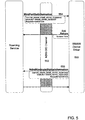
- the SET and QUERY commands are used as defined for operations that return quickly.
- the WWAN driver 550 receives such a command, it processes the request and returns a completion response in a timely fashion.
- some WWAN operations e.g. scanning for visible operators or reading entries from a Subscriber Identity Modue, or SIM
- NDIS 552 serializes OID commands (even if NdisMSetInformationComplete or NdisMQueryInformationComplete is used).
- most operations interacting with the WWAN device use the following asynchronous mechanism based on SET / INDICATE semantics.
- the NDIS OID channel 504 is blocked for other OIDs. After the return operation 556, the NDIS OID channel 504 is open for other OIDs, which could include more asynchronous requests.
- the WWAN device driver keeps track of pending asynchronous requests via the requests' RequestID parameters, which are stored in the information base of the WWAN device driver 550.
- the WWAN driver 550 sends an INDICATE 558 of OID type OID_WW_ASYNC_RESPONSE with ObjectDataSize and ObjectDataOffset pointing the structure shown in Table 8, matching the RequestID parameter from the original asynchronous SET request 554.
- the RequestId parameter matches whatever value was passed in on the SET 554.
- the ResultCode of the response is one of the valves shown in Table 9. Table 9
- OIDs and status indications defined for WWAN drivers are now described with reference to Figure 6 . These OIDs are in addition to other mandatory OIDs and indications required to be supported by any NDIS Miniport driver. Some OIDs and status indications are required based on the type of technology used. Indication values given are only for the NDIS_STATUS_WW_INDICATION status type.
- OID_GEN_MEDIA_SUPPORTED When queried, the miniport must return NdisMedium802_3. This means that the WWAN driver will need to spoof a DHCP server and ARP resolutions.
- OID_GEN_PHYSICAL_MEDIUM When queried, the miniport must return NdisPhysicalMediumWirelessWan. The Roaming Service is required to obtain this value before performing any WWAN OID actions.
- OID_WW_NEGOTIATE_VERSION This object is used to negotiate the version of the interface between Roaming Service and the WWAN driver. First, the Roaming Service does a SET, telling the WWAN driver which versions it supports. Then the Roaming Service performs a QUERY, and the versions supported by the WWAN driver are returned, along with a negotiated version. The Roaming Service is required to negotiate the version with the WWAN driver before performing further WWAN OID actions.
- Table 10 A data structure used to support the OID_WW_NEGOTIATE_VERSION object is shown in Table 10.
- the negotiationatedVersion parameter returned by the QUERY is set to the version to be used. If SET was not performed or a common version was not found, the NegotiatedVersion parameter is set to Oxfffffff, an error is generated for this an all subsequent SET and QUERY operations, and the driver does not issue any INDICATEs. Table 10
- OID_WW_DEVlCE_CAPS This object is used to read the capabilities of the WWAN driver, including the cellular technology, the classes of packet data supported, the type of voice service provided, and whether a SIM is used. The first and last are particularly important, given that provider selection and SIM user interfaces depend on these two capability values. The manufacturer and firmware revision are also available as optional fields.
- Data structures supporting the OID WW_DEVICE_CAPS object, in accordance with an embodiment of the invention, are shown in Table 11.
- the WwanDeviceType parameter indicates whether the device is local or remote with respect to the Roaming Service device.
- the WwanCellularClass parameter controls cellular technology specific features, such as provider registration modes. When set to WwanCellularClassGsm, manual and automatic modes are allowed.
- the WwanVoiceClass parameter denotes the presence of voice service, and how such service interacts with data service.
- the WwanSimClass parameter controls whether the Roaming Service should perform SIM specific operations.
- the WwanDataClass bit field parameter indicates which data services are supported.
- the Manufacturer field points to the manufacturer string.
- the Model field points to the model string.
- the Firmware field points to the firmware revision string.
- the DevSpecificSize and DevSpecificOffset fields point to device specific interface information. Table 11
- OIDs support WWAN initialization 604. Descriptions of the OIDs used to support WWAN initialization are as follows:
- OID_WW_INITIALIZE A SET on this object indicates that the Roaming Service is ready for the WWAN initialization procedure. If a SIM is used, it is also initialized at this time. No data structure is passed down. The device can begin initialization prior to receiving this command; however, OID_WW_READY_STATE indications may only be sent after the driver receives this initialization OID. If the PIN is enabled, the driver indicates a PIN is needed using the WWAN_NOTIFY_PIN_STATE indication. Once the driver is ready for network registration, it indicates WWAN_READYSTATE_INITIALIZED. The transceiver is not be powered on at this time, in case the system is in airplane mode.
- the WWAN driver receives the OID_WW_INITLALIZE OID and is already initialized, the Roaming Service has likely terminated unexpectedly and was restarted. The driver thus completes any pending requests with a WwanResultFailure error, and tears down any existing interfaces and connections, and returns to a proper initialization state.
- OID_WW_SHUTDOWN A SET on this object indicates that the Roaming Service is about to deactivate the driver. No data structure is required. Clean-up procedure begins, such as deactivating any contexts, detaching and deregistering. The driver can send associated indications as these operations occur, but the Roaming Service only looks for the WWAN_READY_STATE_SHUTDOWN notification to know when WAN shutdown has completed. The Roaming Service can assume that WAN shutdown has completed after a certain timeout has elapsed. The Roaming Service waits for a certain period of time to allow for completion of asynchronous events. After that, it continues with remaining shutdown procedures.
- OID_WW_GET_READY_STATE and NDIS_WW_READY_STATE These objects allow the driver to let the Roaming Service know when certain pieces of functionality are ready at start-up and shutdown. (A change could happen during the course of operation, but it is unlikely.) Primarily, this allows the driver to put the WWAN device in the appropriate state before the Roaming Service activates the transceiver and registers on a network. Other states are also supported, such as when the SIM phonebook and SMS store are initialized. During initialization, the Roaming Service will not proceed to registration until it receives a WWAN_READY_STATE_INITIALIZED indication.
- the State parameter is a bit field of WWAN_READY_STATE_* constants.
- the Imsi parameter points to the IMSI string identifying the subscriber. This value need not be populated until the WWAN_READY_STATE_INITIALIZED state is reached.
- the Imei parameter points to the string identifying the equipment (IMEI in GSM and ESN in CDMA). This value need not be populated until the WWAN_READY_STATE_INITIALIZED state is reached.
- the IsdnCount, IsdnListSize, and IsdnListOffset parameters point to an array of MSISDN strings identifying the phone number(s) of the subscriber. Each is NULL terminated, and the final phone number is double NULL terminated. These values need not be populated until the WWAN_READY_STATE_INITIALIZED state is reached. Table 12
- OIDs support PIN operations 606.
- Data structures supporting the PIN operation OIDs are shown in Table 13.
- the OIDs supporting PIN operations 606 are described as follows:
- OID_WW_GET_PIN_STATE and NDIS_WW_PIN_STATE These objects allow the driver to indicate different password conditions at start-up and during the course of operation, such as needing PIN, PIN2, PUK, and PUK2.
- Non SIM passwords are also supported.
- the Roaming Service will not proceed to registration until it receives a WwanPinStateNone indication.
- a SET on OID_WW_GET_PIN STATE is used to query the current ready state asynchronously. DataSize and DataOffset in the WWAN_ASYNC_REQUEST structure are ignored. DataSize and DataOffset in the WWAN_ASYNC_REQUEST structure point to a WWAN_PIN_STATE structure.
- NDIS_WW_PIN_STATE An INDICATE on NDIS_WW_PIN_STATE is sent when a ready state value changes.
- DataSize and DataOffset in the WWAN_ASYNC_NOTIFY structure point to a WWAN_PIN_STATE structure.
- the WWAN driver is responsible for handling emergency voice calls if WwanPinTypePin is indicated during startup.
- the transceiver is activated, automatic registration is performed, and the emergency call is initiated only after a user actually dials an emergency call from the PIN dialog.
- OID_WW_SET_PIN A SET on this object is used to send a PIN to the device, enable/disable PIN settings, or change a PIN on the SIM. If in response to an indication that PIN is needed, either the Roaming Service is not able to disply PIN entry UI or the user cancels out of the dialog, then the Roaming Service sends the OID_WW_SET_PIN OID setting WwanPinActionCancel. The WWAN driver then returns the appropriate password error for any outstanding commands that were waiting for a valid PIN to be entered.
- the PinType parameter is a WWAN_PIN_TYPE value.
- the PinFormat Parameter indicates what format of characters is allowed for the pin.
- the PinLengthMin and PinLengthMax parameters are the minimum and maximum number of characters that must be entered for the PIN. They are set to -1 if range is unknown. If WWAN_PIN_TYPE indicates anything other than WwanPinTypeNone then the device is awaiting a PIN and the AttemptsRemaining parameter indicates how many tries are remaining for that PIN type. A -1 value indicates unknown.
- the PinAction parameter is a WWAN_PIN_ACTION value.
- the Pin parameter is the PIN to send down, or the PIN that is required to enable/disable PIN settings.
- the NewPin fields should be ignored.
- the Pin parameter points to the PUK code and NewPin points to the new PIN to set. Table 13
- OID_WW_GET_PREFERRED_PROVIDERS OID_WW_SET_PREFERRED_PROVIDERS.
- OID_WW_SET_PREFERRED_PROVIDERS OID_WW_SET_PREFERRED_PROVIDERS.
- These objects are used to read, add and delete entries from the preferred provider list stored locally on the device or SIM.
- the network is preferably not contacted to read in these fields.
- if a forbidden provider list is also available, those entries are included in the list and tagged accordingly.
- a SET on OID_WW_GET_PREFERRED_PROVIDERS is used to asynchronously query the preferred provider list.
- a SET on OID_WW_SET_PREFERRED PROVIDERS is used to asynchronously set the preferred provider list.
- the list is passed in its entirety. Individual additions and deletions are not tracked. The driver maintains a cached copy of the list and performs individual adds/deletes, or overwrite
- OID_WW_GET_VISIBLE_PROVIDERS This object is used to obtain the list of providers currently present in the device's range. A SET on this OID asynchronously queries the preferred provider list. DataSize and DataOffset in WWAN_ASYNC_RESPONSE point to a WWAN_PROVIDER_LIST structure. The scan operation preferably takes no more than 30 seconds. If this limit is reachd, the driver returns a partial list.:
- the ProviderlD field is required.
- this string is usually a concatenation of a 3-digit mobile country code (MCC) and a 2 or 3-digit mobile network code (MNC). It is recommended that the MNC code be pre-padded with zero's and set at three digits for alignment and parsing purposes.
- MCC mobile country code
- MNC 2- or 3-digit mobile network code
- the State parameter represents various states that the provider entry could be tagged.
- the ProviderName parameter points to a friendly provider string. For UI reasons, the string preferably does not exceed 20 characters. This field is ignored when the Roaming Service sets the preferred provider list.
- the ProviderCount, ProviderListSize, and ProviderListOffset parameters form a list of WWAN_PROVIDER structures.
- OIDs support registration operations 610.
- Data structures supporting the registration operation OIDs 610 are shown in Table 15.
- the OIDs supporting registration operations 610 are described as follows:
- OID_WW_GET_REGISTER_STATE OID_WW_SET_REGISTER_STATE and NDIS_WW_REGISTER_STATE.
- the driver automatically initiates a packet attach once registration has succeeded.
- the driver still preferably indicates a packet attach state.
- the driver sends appropriate indications so that the Roaming Service can reflect the correct state to the user.
- the Roaming Service will only initiate registration once the driver indicates a state of WWAN_READY_STATE_INITIALIZED.
- the device remains in the registration mode until otherwise indicated or the driver is disabled.
- WwanRegisterModeAutomatic, WwanRegisterModeManual and WwanRegisterModeReregister the device automatically packet attaches once the device is camped on an operator.
- WwanRegisterModeDeregister the device automatically packet detaches.
- WwanRegisterModeAutomatic and WwanRegisterModeManual will not initiate a reregistration if the new mode is the same as the previous mode.
- WwanRegisterModeReregister is used for this purpose. This flag is only valid for setting registration state. Subsequent queries or indications on a registered device yield WwanRegisterModeAutomatic or WwnRegisterModeManual respectively.
- the RegisterMode parameter describes the method that the WWAN device is using to find an operator to camp on.
- WwanRegisterModeAutomatic and WwanRegisterModeManual the device ensures the transceiver is activated, a provider is registered on, and automatically packet attach (if appropriate).
- WwanRegisterModeDeregister the device detaches and deregisters from the current network, but leaves the transmitter powered.
- WwanRegisterModeRadioOff the device detaches and deregisters from the current network, turns off the transmitter powered, but leaves the protocol stack (including SIM) initialized.
- the WwanRegisterModeReregister flag is only valid on a set when the device is currently in mode WwanRegisterModeAutomatic or WwanRegisterModeManual.
- the RegisterState parameter indicates the current registration state of the WWAN device, likely reflected in the user interface.
- the Provider parameter contains the provider which the device is currently camped on (if applicable).
- the Provider parameter contains the provider which the device is locked to (even if the provider is unavailable).
- it contains the operator ID to lock to (ignore operator string).
- this parameter is ignored.
- OID_WW_SET_SIGNAL_SUGGESTION OID_WW_GET_SIGNAL_STATE and NDIS_WW_SIGNAL_STATE. These objects are used to manage signal strength state, reported as decibels above the driver's sensitivity noise floor. An indication is given when the signal strength changes outside of the default threshold value, ensuring the eventing rate does not exceed the default maximum frequency. Appropriate hysteresis is used. Applications preferably never poll for signal strength. In special situations (such as startup) an application uses QUERY to obtain the signal strength. A SET on the OID_WW_SET_SIGNAL_SUGGESTION object asynchronously sets the suggested notification intervals and thresholds for field strength.
- these values are used by the driver during conditions where increased power savings can be realized by reducing signal notifications even further.
- An INDICATE on the NDIS_WW_SIGNAL_STATE object allows the driver to send a signal strength notification when a measured signal strength travels outside the threshold. By default, the driver reports an indication no more than every 5 seconds. The driver preferably only notifies if the signal strength changes at least +/- 4db from the last reported value.
- the Rssi parameter is the signal strength, reported as decibels above the device's sensitivity noise floor.
- the interface specifies a default minimum interval for sending notifications based on Rssi changing. In some situations (e.g. during long periods of user inactivity), the RssiInterval specifies when a longer interval may be used to conserve additional power. It is not required that the driver adhere to this increased interval. When setting the interval, a "-1" value means no suggested value is available. A default minimum interval is used. When indicating signal strength, this value contains the interval currently used by the device. To minimize power consumption, the interface further specifies a default ⁇ threshold for sending notifications based on Rssi changing.
- the driver when the signal strength changes by an amount exceeding the threshold, the driver notifies the Roaming Service of the change.
- the RssiThreshold specifies when a larger ⁇ threshold may be used to conserve additional power. It is not required that the driver adhere to this increased threshold.
- a "-1" value means no suggested value is available.
- a default threshold is used. When indicating signal strength, this value contains the threshold currently used by the device.1
- OIDs support packet data management and activation operations 614.
- Data structures supporting the packet data management and activation operations 614, in accordance with an embodiment of the invention, are shown in Table 17.
- the OIDs supporting packet data management and activation operations 614 are described as follows:
- OID_WW_GET_PACKET_SERVICE and NDIS_WW_PACKET_SERVICE are used to read and notify the current packet attach state and associated data service(s) supported. Once registered, the device automatically attempts to packet attach, so no SET object is required.
- OID_WW_GET_PROVISIONED_CONTEXTS and OID_WW_SET_PROVISIONED_CONTEXTS are used to read and write preferred context entries stored on the device. These settings are local to the device. The network is preferably not contacted to read in these fields.
- a SET on the OID_WW_GET_PROVISIONED_CONTEXTS object asynchronously queries the preferred providers.
- a SET on the OID_WW_SET_PROVISIONED_CONTEXTS object is used to asynchronously activate or deactivate the provided access string.
- the list is passed in its entirety. Individual additions and deletions are not tracked. In some embodiments, the driver maintains a cached copy of the list and performs individual additions/deletions, or overwrites the entire list in a single operation.
- OID_WW_GET_ACTIVATE_STATE OID_WW_SET_ACTIVATE_STATE and NDIS_WW_ACTIVATE_STATE. These objects are used to activate (or deactivate) a particular packet context and to query the associated state.
- the OID_WW_SET_ACTIVATE_STATE object is used to initiate or close a particular context.
- the WWAN driver only attempts context activation when the Roaming Service sends this OID. The driver does not automatically activate a context even after losing registration and/or signal. If the access string is not provided, a context is activated with a blank access string rather than a default string.
- the WWAN driver is expected to send the appropriate indications as the activation state changes, via the NDSI_WW_ACTIVATE STATE object. This object will only be called if the WWAN driver indicates a register state of WwanRegisterStateHome or WwanRegisterStateRoaming. On GSM networks, the device must also indicate an attach state of WwanAttachStateAttached. Table 17
- AttachState is the packet attach state.
- the DataClass parameter is a WWAN_DATA_CLASS_* constant indicating which data class is currently being used. If this changes (e.g. transition from 1xRTT to 1xEvDo), a notification is sent to indicate this change of service.
- the Provider parameter identifies the provider that owns the service referenced by the access string, which is used because some networks do not use a globally unique access string.
- the WWAN_CONTEXT_AUTHENTICATION field denotes the type of authentication that is used when user/password authentication is required.
- the ActivationState parameter instructs the driver what it should do with the provided context when setting the activation state. When querying activation state, the ActivationState parameter reflects the current activation state of the given context. In GSM networks, the AccessString parameter would be an APN string such as "intemet2.voicestream.com”. In CDMA networks, it might be a special dial code such as "#777".
- the AuthenticationType parameter denotes what authentication (if any) to use when activating the context.
- the UserName parameter points to a usemame used for authentication.
- the Password parameter points to a password used for authentication.
- the NumberOfContexts, ContextListSize, and ContextListOffset parameters are references an array of context structures.
- the Context parameter denotes the access string and optional authentication info needed to activate a packet connection.
- OID_WW_GET_LOCATION_INFO OID_WW_SET_LOCATION_INFO
- NDIS_WW_LOCATION_INFO OID_WW_GET_LOCATION_INFO
- OID_WW_SET_LOCATION_INFO OID_WW_SET_LOCATION_INFO
- NDIS_WW_LOCATION_INFO NDIS_WW_LOCATION_INFO
- OIDs support vendor specific operations 618.
- a data structure used to support these OIDS is shown in Table 18. Table 18
- the Appld parameter When the Appld parameter is non-zero, it uniquely identifies each application that registered to the Roaming Service.
- the WWAN driver broadcasts a message to all registered applications by issuing an INDICATE with AppId set to zero.
- the OIDs supporting vendor specific operations 618 include: OID_WW_GET_VENDOR_SPECIFIC, OID_WW_SET_VENDOR_SPECIFIC and NDIS_WW_VENDOR_SPECIFIC. These objects are used to perform operations with vendor specific data, opaque to the Roaming Service.
- An application identifier is available to associate each command with a specific application. An indication with a blank application identifier will be broadcast to all registered applications.
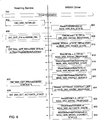
- FIG. 7 illustrates an example 700 of initializing a WWAN device driver by using OIDs, in accordance with an embodiment of the invention.
- the driver identifies itself as a WWAN driver and performs the appropriate version negotiation.
- the Roaming Service queries the driver using OID_GEN_PHYSICAL_MEDIUM in step 702.
- the driver returns NdisPhysicalMediumWirelessWan in step 704, indicating that it supports the WWAN OIDs.
- the Romaing Service then queries the driver with OID_GEN_MEDIA_SUPPORTED in step 706, to which the driver responds with NdisMedium802_3 in step 708, thus communicating that Ethernet packets are formatted according to the 802.3 protocol.
- the Roaming Service sets a range of configuration service versions supported by the Roaming Service with OID_WW_NEGOTIATE_VERSION in step 710.
- the Roaming Service queries the driver with OID_WW_NEGOTIATE_VERSION in step 712 to find the range of configuration service versions supported by the driver.
- the driver returns this value in step 714.
- the Roaming Service queries the driver with OID_WW_DEVICE_CAPS to discover the capabilities of the device driver in step 716. The driver returns these capabilities in step 718.
- FIG 8 illustrates an example of initializing a WWAN device by using OIDs, in accordance with an embodiment of the invention.
- the WWAN device to be initialized by this procedure could be a GPRS device, CDMA-based device, or other WWAN device, and could either require the user to enter a PIN or not.
- the general procedure begins with initialization of the device driver in step 700, as described with reference to Figure 7 .
- the driver initialization is completed before the Roaming Service calls any WWAN OIDs.
- the Roaming Service initializes the protocol stack and SIM, if present, using OID_WW_INITIALIZE in step 802. Once this command is received by the device driver, it may begin sending ready state indications back to the Roaming Service.
- the device driver indicates that no PIN is required with the WwanPinStateNone parameter on NDIS_WW_PIN_STATE in step 804.
- the device driver indicates that a PIN is required with the WwanPinStateNeedPin parameter.
- a PIN may be required, for example, to unlock a SIM.
- the example continues with the driver indicating it is in a ready state with NDIS_WW_READY_STATE in step 810.
- the Roaming Service tells the driver to power up the transceiver and attempt registration by using OID_WW_SET_REGISTER_STATE in step 812.
- the driver indicates it is searching for a provider using NDIS_WW_REGISTER_STATE in step 816. It then indicates that the device is on a home provider, using NDIS_WW_REGISTER_STATE in step 818.
- the driver When the device has packet attached, the driver indicates to the Roaming Service using NDIS_WW_PACKET_SERVICE in step 820.
- the WWAN device is a CDMA-based device, WWAN_DATA_CLASS_1XRTT is returned using NDIS_WW_PACKET_SERVICE, since CDMA does not support the attach notion.
- contexts are provisioned by the WWAN service provider, and the Roaming Service asks for those provisioned contexts using OID_WW_GET PROVISIONED_CONTEXTS in step 822.
- the driver indicates a list of provisioned contexts with a WWAN_ACTIVATION_CONTEXT_LIST parameter of NDIS_WW_ASYNC_RESPONSE in step 824.
- the WWAN_ACTIVATION_CONTEXT_LIST parameter can be, for example, an activation string, such as "#777.” In this way, there is no need to select a connection type, since the device driver has notified the Roaming Service that the device has already been provisioned.
- steps 822 and 824 are omitted in a scenario where contexts are not provisioned and a user manually configures an access point string.
- the example continues with the Roaming Service setting the context using the WWAN_CONTEXT parameter of OID_WW_SET_ACTIVATE_STATE in step 826.
- the driver indicates the WWAN state is activated with NDIS_WW_ACTIVATE_STATE in step 830.
- the driver indicates that it can now service incoming and outgoing IP packets using the NdisMediaStateConnected parameter of NDIS_OID_GEN_MEDIA_CONNECT_STATUS in step 832.
- Figure 9 illustrates an example of a voice call being serviced by a WWAN device using OIDs during a packet connection, in accordance with an embodiment of the invention.
- the device driver indicates the type of service the device is using (GPRS, CDMA, etc.) using NDIS_WW_PACKET_SERVICE in step 902.
- GPRS the WWAN_DATA_CLASS_GPRS parameter is used.
- CDMA the WWAN_DATA_CLASS_1XRTT parameter is used.
- the driver indicates it is connected with the NdisMediaSateConnected parameter on NDIS_GEN_MEDIA_CONNECT_STATUS in step 904.
- the driver When a voice call is later placed or answered on the device in step 906, the driver indicates it is in a disconnected state using NDIS_GEN_MEDIA_CONNECT_STATUS in step 908.
- the driver When the voice call completes in step 910, the driver indicates it is again in a connected state with NDIS_GEN_MEDIA_CONNECT_STATUS in step 912, and the packet connection resumes.
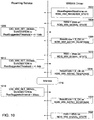
- FIG. 10 illustrates an example of controlling the frequency of signal strength monitoring, in accordance with an embodiment of the invention.
- the driver indicates that the device is on a home provider, using NDIS_WWREGISTER_STATE in step 1002.
- the drive indicates its current signal state - 50 db in this example - using NDSI_WW_SIGNAL_STATE in step 1004.
- the Roaming Service suggests a threshold within which the driver does not need to notify the Roaming Service by setting OID_WW_SET_SIGNAL_SUGGESTION in step 1006.
- the Roaming Service suggests a threshold range of +/- 10 db because the current reported signal strength of 50 db is sufficiently high.
- the driver indicates the value using NDIS_WW_SIGNAL_STATE in step 1010. In the example, the signal has dropped to 38 db. Once the drop has been indicated, in some embodiments the driver ceases to report further indications of signal strength drops.
- the Roaming Service sets a new threshold using OID_WW_SET_SIGNAL_SUGGESTION in step 1012. In this example, the new threshold is +/- 6 db.
- the Roaming Service suggests an increased minimum time interval for the driver to indicate the signal state using the RssiSuggestedInterval parameter of OID_WW_SET_SIGNAL_SUGGESTION in step 1018.
- the suggested interval is 20 seconds.
- the driver indicates that the signal strength - 45 db in this example - is outside the suggested threshold values, using NDIS_WW_SIGNAL_STATE.
- FIG. 11 illustrates an example of performing an operation that requires a SIM password, in accordance with an embodiment of the invention.
- a user attempts to make a voice call with the WWAN device, but the device requires PIN2 clearance.
- the driver indicates that the device is on a home provider, using NDIS_WW_REGISTER_STATE in step 1102.
- the driver indicates to the Roaming Service that the device has packet attached NDIS_WW_PACKET_SERVICE in step 1104.
- the Roaming Service sends a custom OID_WW_VENDOR_SPECIFIC to the driver in step 1106.
- the driver Before sending the asynchronous result, however, the driver indicates that PIN2 is needed, using NDIS_WW_PIN_STATE in step 1108.
- the Roaming Service sends the PIN using OID WW_SET_PIN in step 1110.
Landscapes
- Engineering & Computer Science (AREA)
- Computer Networks & Wireless Communication (AREA)
- Signal Processing (AREA)
- Computer Security & Cryptography (AREA)
- Computer Hardware Design (AREA)
- Computing Systems (AREA)
- General Engineering & Computer Science (AREA)
- Power Engineering (AREA)
- Mobile Radio Communication Systems (AREA)
- Computer And Data Communications (AREA)
Claims (17)
- Procédé pour gérer la puissance du signal d'un périphérique WWAN (100, 180, 200, 208, 214, 216) en utilisant des identifiants d'objet, OIDs, (602-618) envoyés à travers un module en mode utilisateur jusqu'à l'interface de pilote en mode noyau (340), le procédé comprenant les étapes suivantes:recevoir (1004), par une entité en mode utilisateur, un identifiant OID (612) indiquant un état de signal courant envoyé par un pilote de périphérique WWAN en connexion avec le périphérique WWAN, l'état de signal courant comprenant une première intensité de signal du périphérique WWAN;envoyer (1006), par l'entité en mode utilisateur au pilote de périphérique WWAN, un identifiant OID (612) pour établir un seuil de plage d'intensité de signal autour de la première intensité de signal;déterminer (1010), par le pilote de périphérique WWAN (302), qu'une intensité de signal du périphérique WWAN est en dehors du seuil de plage d'intensité de signal établi autour de la première intensité de signal;recevoir (1010), par l'entité en mode utilisateur du pilote de périphérique WWAN, un identifiant OID (612) signalant une seconde intensité de signal du périphérique WWAN qui est en dehors du seuil de plage de puissance de signal établi autour de la première intensité de signal; etenvoyer (1012), par l'entité en mode utilisateur au pilote de périphérique WWAN, un identifiant OID (612) pour établir un seuil de plage d'intensité de signal autour de la seconde intensité de signal.
- Procédé selon la revendication 1, consistant en outre à utiliser le module en mode utilisateur, jusqu'à l'une interface de pilote en mode noyau, pour envoyer des commandes au pilote de périphérique WWAN en mode noyau (302) et recevoir des informations en provenance dudit pilote;
dans lequel, après avoir envoyé un identifiant OID depuis une entité en mode utilisateur (305-322), par le biais du module en mode utilisateur vers une interface pilote en mode noyau, vers le pilote de périphérique WWAN, l'entité en mode utilisateur est autorisée à envoyer des identifiants OID au pilote de périphérique WWAN par le biais du module en mode utilisateur à l'interface pilote en mode noyau, avant de recevoir une réponse en provenance du pilote de périphérique WWAN. - Procédé selon les revendications 1 ou 2, dans lequel le pilote de périphérique WWAN commande un périphérique reposant sur GSM.
- Procédé selon les revendications 1 ou 2, dans lequel le pilote de périphérique WWAN commande un périphérique reposant sur CDMA.
- Procédé selon l'une des revendications 1 à 4, comprenant en outre l'envoi à partir du pilote de périphérique WWAN, par le biais du module en mode utilisateur jusqu'à l'interface pilote en mode noyau, à l'entité en mode utilisateur un identifiant OID indiquant à l'entité en mode utilisateur qu'un périphérique WWAN associé au pilote de périphérique WWAN a été configuré par un prestataire de service WWAN.
- Procédé selon l'une des revendications 1 à 5, comprenant en outre l'envoi à partir du pilote de périphérique WWAN/de l'entité en mode utilisateur, par le biais du module en mode utilisateur jusqu'à l'interface du pilote en mode noyau, à l'entité en mode utilisateur/au pilote de périphérique WWAN, des identifiants OIDs pour authentification avec des informations provenant d'une carte SIM.
- Procédé selon l'une des revendications 1 à 6, comprenant en outre l'envoi à partir du pilote de périphérique WWAN/de l'entité en mode utilisateur, par le biais du module en mode utilisateur jusqu'à l'interface du pilote en mode noyau, à l'entité en mode utilisateur/au pilote de périphérique WWAN, des identifiants OIDs pour authentification avec un code PIN.
- Procédé selon la revendication 7, dans lequel le code PIN est utilisé en combinaison avec un appel vocal
- Procédé selon l'une des revendications 1 à 8, prévoyant en outre que l'entité en mode utilisateur initialise le périphérique WWAN en utilisant les identifiants OID envoyés par le biais du module en mode utilisateur jusqu' à l'interface de pilote en mode noyau, le procédé comprenant en outre les étapes suivantes:initialiser (700) le pilote de périphérique (302) en connexion avec le périphérique WWAN;envoyer (802) un identifiant OID pour initialiser une pile de protocole;recevoir (810) un identifiant OID indiquant que le pilote de périphérique est prêt;envoyer (812) un identifiant OID pour alimenter un émetteur-récepteur et tenter une inscription;envoyer un identifiant OID (822) pour établir un contexte; etrecevoir (832) un identifiant OID indiquant que l'appareil est connecté et prêt pour une session de communication.
- Procédé selon la revendication 9, comprenant en outre la réception (804) d'un identifiant OID provenant du pilote de périphérique indiquant si un code PIN est requis ou non.
- Procédé selon la revendication 10, dans lequel l'entité en mode utilisateur envoie (806) un identifiant OID contenant un code PIN si un code PIN est requis.
- Procédé selon l'une des revendications 9 à 11, comprenant en outre la réception (816) d'un identifiant OID indiquant que le pilote de périphérique recherche un fournisseur
- Procédé selon la revendication 12, comprenant en outre la réception (820) d'un identifiant OID signalant qu'un paquet est fixé au pilote de périphérique.
- Procédé selon l'une des revendications 9 à 13, comprenant en outre l'envoi (822) d'un indiquant OID demandant une liste de contextes provisionnés.
- Procédé de revendication 14, comprenant en outre la réception (824) d'un identifiant OID avec une liste de contextes provisionnés.
- Système pour gérer la puissance du signal d'un périphérique WWAN (100, 180, 200, 208, 214, 216) en utilisant des identifiants d'objet, OIDs, (602-618) envoyés à travers un module en mode utilisateur jusqu'à l'interface de pilote en mode noyau (340), le système comprenant une entité en mode utilisateur et un pilote de périphérique WWAN, dans lequel le système est prévu pour:recevoir (1004), par une entité en mode utilisateur, un identifiant OID (612) indiquant un état de signal courant envoyé par un pilote de périphérique WWAN en connexion avec le périphérique WWAN, l'état de signal courant comprenant une première intensité de signal du périphérique WWAN;envoyer (1006), par l'entité en mode utilisateur au pilote de périphérique WWAN, un identifiant OID (612) pour établir un seuil de plage d'intensité de signal autour de la première intensité de signal;déterminer (1010), par le pilote de périphérique WWAN (302), qu'une intensité de signal du périphérique WWAN est en dehors du seuil de plage d'intensité de signal établi autour de la première intensité de signal;recevoir (1010), par l'entité en mode utilisateur du pilote de périphérique WWAN, un identifiant OID (612) signalant une seconde intensité de signal du périphérique WWAN qui est en dehors du seuil de plage de puissance de signal établi autour de la première intensité de signal; etenvoyer (1012), par l'entité en mode utilisateur au pilote de périphérique WWAN, un identifiant OID (612) pour établir un seuil de plage d'intensité de signal autour de la seconde intensité de signal.
- Système selon la revendication 16, comportant en outre des moyens pour exécuter le procédé selon l'une des revendications 2 à 15.
Applications Claiming Priority (4)
| Application Number | Priority Date | Filing Date | Title |
|---|---|---|---|
| US749796 | 1985-06-28 | ||
| US51433103P | 2003-10-24 | 2003-10-24 | |
| US514331P | 2003-10-24 | ||
| US10/749,796 US7814179B2 (en) | 2003-10-24 | 2003-12-31 | Interface between mobile connectivity service and WWAN device |
Publications (3)
| Publication Number | Publication Date |
|---|---|
| EP1526689A2 EP1526689A2 (fr) | 2005-04-27 |
| EP1526689A3 EP1526689A3 (fr) | 2009-10-07 |
| EP1526689B1 true EP1526689B1 (fr) | 2018-10-17 |
Family
ID=34396619
Family Applications (1)
| Application Number | Title | Priority Date | Filing Date |
|---|---|---|---|
| EP04022086.5A Expired - Lifetime EP1526689B1 (fr) | 2003-10-24 | 2004-09-16 | Interface entre service de la connectivité mobile et un dispositif WWAN (Wireless Wide Area Network) |
Country Status (5)
| Country | Link |
|---|---|
| US (1) | US7814179B2 (fr) |
| EP (1) | EP1526689B1 (fr) |
| JP (1) | JP2005141737A (fr) |
| KR (1) | KR101099270B1 (fr) |
| CN (1) | CN1610325A (fr) |
Families Citing this family (30)
| Publication number | Priority date | Publication date | Assignee | Title |
|---|---|---|---|---|
| US7814179B2 (en) * | 2003-10-24 | 2010-10-12 | Microsoft Corporation | Interface between mobile connectivity service and WWAN device |
| EP1730648A4 (fr) * | 2004-03-04 | 2008-11-26 | Interdigital Tech Corp | Architecture de logiciel pour architecture de systeme a activation en mobilite, et interface api |
| US7587495B2 (en) * | 2004-08-26 | 2009-09-08 | Apple Inc | Automatic configuration of controller computers in a network |
| US8127045B2 (en) | 2004-09-13 | 2012-02-28 | Apple Inc. | Dynamically configurable connection on demand |
| US20060221987A1 (en) * | 2005-03-30 | 2006-10-05 | Junxion Inc. | LAN and WWAN gateway |
| US8054778B2 (en) * | 2005-11-10 | 2011-11-08 | Junxion, Inc. | LAN/WWAN gateway carrier customization |
| US8121071B2 (en) * | 2005-11-10 | 2012-02-21 | Sierra Wireless America, Inc. | Gateway network multiplexing |
| WO2007059037A2 (fr) * | 2005-11-10 | 2007-05-24 | Junxion, Inc. | Multiplexage de reseau passerelle |
| US7885858B2 (en) * | 2006-01-24 | 2011-02-08 | Dell Products L.P. | System and method for managing information handling system wireless network provisioning |
| US20070245414A1 (en) * | 2006-04-14 | 2007-10-18 | Microsoft Corporation | Proxy Authentication and Indirect Certificate Chaining |
| US7821987B2 (en) * | 2006-11-22 | 2010-10-26 | Kyocera Corporation | Wireless wide area network (WWAN) mobile gateway with communication protocol management |
| US20090017865A1 (en) * | 2007-07-13 | 2009-01-15 | Sony Ericsson Mobile Communications Ab | Making calls using the preferred network |
| KR20090016200A (ko) * | 2007-08-10 | 2009-02-13 | 삼성전자주식회사 | 통신 단말기 및 그의 패킷 서비스 제공 방법 |
| US8826307B2 (en) * | 2008-04-18 | 2014-09-02 | Microsoft Corporation | Extensible private driver interface |
| CN101276289B (zh) * | 2008-05-09 | 2010-06-16 | 中兴通讯股份有限公司 | 在Linux系统中用户和多内核进行通讯的方法 |
| US8751612B2 (en) | 2008-11-21 | 2014-06-10 | Microsoft Corporation | Creating cross-technology configuration settings |
| US8676942B2 (en) * | 2008-11-21 | 2014-03-18 | Microsoft Corporation | Common configuration application programming interface |
| US8683046B2 (en) * | 2008-11-21 | 2014-03-25 | Microsoft Corporation | Unified interface for configuring multiple networking technologies |
| US8504006B2 (en) * | 2008-12-30 | 2013-08-06 | Symbol Technologies, Inc. | Interactive management of wireless WAN (WWAN) mobile devices |
| US8521852B2 (en) * | 2009-12-28 | 2013-08-27 | The Directv Group, Inc. | Method and system for registering a client device in a multi-room digital video recording system |
| TW201132163A (en) * | 2010-03-12 | 2011-09-16 | Gemtek Technology Co Ltd | Network interface selection method and network device thereof |
| CN101867565A (zh) * | 2010-04-13 | 2010-10-20 | 中兴通讯股份有限公司 | 一种移动宽带设备的通用驱动方法及驱动器 |
| US8590023B2 (en) * | 2011-06-30 | 2013-11-19 | Intel Corporation | Mobile device and method for automatic connectivity, data offloading and roaming between networks |
| US9674063B2 (en) | 2011-09-28 | 2017-06-06 | Hewlett-Packard Development Company, L.P. | Managing data usage of a computing device |
| WO2013109924A1 (fr) * | 2012-01-18 | 2013-07-25 | Futurewei Technologies, Inc. | Système et procédé de découverte de réseau |
| US9774677B2 (en) | 2012-04-10 | 2017-09-26 | Intel Corporation | Remote direct memory access with reduced latency |
| US9414305B2 (en) * | 2013-02-04 | 2016-08-09 | Metropcs Wireless, Inc. | Intelligent network selection system |
| US20170251422A1 (en) * | 2016-02-29 | 2017-08-31 | Qualcomm Innovation Center, Inc. | Mobile device with multiple wifi interfaces |
| CN106776094B (zh) * | 2016-12-12 | 2020-02-21 | 郑州云海信息技术有限公司 | 一种tgtd服务方法、装置及客户端 |
| CN112566218B (zh) * | 2020-12-01 | 2021-10-26 | 中兴通讯股份有限公司 | Sim卡选择方法、装置、终端及存储介质 |
Family Cites Families (11)
| Publication number | Priority date | Publication date | Assignee | Title |
|---|---|---|---|---|
| JPH09179807A (ja) | 1995-12-25 | 1997-07-11 | Hitachi Ltd | メッセージ通信システム及び方式 |
| PT924678E (pt) * | 1997-12-19 | 2005-01-31 | Toyo Boseki | Rotulos garrafas com estes rotulos e processos para a sua reciclagem |
| US6421728B1 (en) * | 1997-12-31 | 2002-07-16 | Intel Corporation | Architecture for communicating with and controlling separate upstream and downstream devices |
| US6157965A (en) * | 1998-02-27 | 2000-12-05 | Intel Corporation | System and method for binding a virtual device driver to a network driver interface |
| US6629151B1 (en) * | 1999-03-18 | 2003-09-30 | Microsoft Corporation | Method and system for querying the dynamic aspects of wireless connection |
| US6633929B1 (en) | 1999-04-30 | 2003-10-14 | Microsoft Corporation | Method and system for abstracting network device drivers |
| US6959439B1 (en) * | 1999-09-30 | 2005-10-25 | Mindspeed Technologies | System interface abstraction layer |
| US7461148B1 (en) * | 2001-02-16 | 2008-12-02 | Swsoft Holdings, Ltd. | Virtual private server with isolation of system components |
| US7814179B2 (en) * | 2003-10-24 | 2010-10-12 | Microsoft Corporation | Interface between mobile connectivity service and WWAN device |
| US20060242270A1 (en) * | 2005-04-21 | 2006-10-26 | Microsoft Corporation | Isolation of user-mode device drivers |
| US7944890B2 (en) * | 2006-05-23 | 2011-05-17 | Interdigital Technology Corporation | Using windows specified object identifiers (OIDs) for an antenna steering algorithm |
-
2003
- 2003-12-31 US US10/749,796 patent/US7814179B2/en active Active
-
2004
- 2004-09-03 KR KR1020040070501A patent/KR101099270B1/ko not_active Expired - Fee Related
- 2004-09-16 EP EP04022086.5A patent/EP1526689B1/fr not_active Expired - Lifetime
- 2004-10-22 JP JP2004308912A patent/JP2005141737A/ja active Pending
- 2004-10-22 CN CNA200410088279XA patent/CN1610325A/zh active Pending
Non-Patent Citations (1)
| Title |
|---|
| None * |
Also Published As
| Publication number | Publication date |
|---|---|
| CN1610325A (zh) | 2005-04-27 |
| JP2005141737A (ja) | 2005-06-02 |
| US7814179B2 (en) | 2010-10-12 |
| EP1526689A2 (fr) | 2005-04-27 |
| KR20050039538A (ko) | 2005-04-29 |
| EP1526689A3 (fr) | 2009-10-07 |
| US20050090248A1 (en) | 2005-04-28 |
| KR101099270B1 (ko) | 2011-12-26 |
Similar Documents
| Publication | Publication Date | Title |
|---|---|---|
| EP1526689B1 (fr) | Interface entre service de la connectivité mobile et un dispositif WWAN (Wireless Wide Area Network) | |
| US8788715B2 (en) | Network and interface selection on a computing device capable of establishing connections via multiple network communications media | |
| KR100781392B1 (ko) | 동적 인터페이스 관리를 위한 시스템 및 방법 | |
| US7310664B1 (en) | Unified, configurable, adaptive, network architecture | |
| EP1974260B1 (fr) | Indication de dépendance | |
| JP2009545251A (ja) | ワイヤレスネットワークアクセス監視のための方法および装置 | |
| US20060084417A1 (en) | Interface selection from multiple networks | |
| US20110134799A1 (en) | Ad hoc wireless networking | |
| US20060046716A1 (en) | Multi-network seamless roaming through a software-defined-radio | |
| US20070223408A1 (en) | Method and Apparatus for Intelligent Seamless Network Switching | |
| EP3471372A1 (fr) | Schema xml pour la configuration de dispositifs de réseau | |
| JP2003204580A (ja) | 無線ネットワークで作動可能な移動式コンピュータ端末の通信中にアプリケーション間の接続性を維持するソフトウエアの方法 | |
| US20020194498A1 (en) | Mobile communication system for location aware services | |
| US20020178241A1 (en) | Framework for a dynamic management system | |
| US7853247B2 (en) | Method for configuring a mobile terminal, configurable mobile terminal and mobile radio network therefor | |
| US20120046059A1 (en) | Apparatus and method of determining the status of a requested service | |
| CN101176293A (zh) | 网络发现机制 | |
| CN1656831A (zh) | 多模式无线设备的补充业务访问 | |
| HK1072340B (en) | Apparatus and method of determining the status of a requested service |
Legal Events
| Date | Code | Title | Description |
|---|---|---|---|
| PUAI | Public reference made under article 153(3) epc to a published international application that has entered the european phase |
Free format text: ORIGINAL CODE: 0009012 |
|
| AK | Designated contracting states |
Kind code of ref document: A2 Designated state(s): AT BE BG CH CY CZ DE DK EE ES FI FR GB GR HU IE IT LI LU MC NL PL PT RO SE SI SK TR |
|
| AX | Request for extension of the european patent |
Extension state: AL HR LT LV MK |
|
| PUAL | Search report despatched |
Free format text: ORIGINAL CODE: 0009013 |
|
| AK | Designated contracting states |
Kind code of ref document: A3 Designated state(s): AT BE BG CH CY CZ DE DK EE ES FI FR GB GR HU IE IT LI LU MC NL PL PT RO SE SI SK TR |
|
| AX | Request for extension of the european patent |
Extension state: AL HR LT LV MK |
|
| 17P | Request for examination filed |
Effective date: 20100331 |
|
| AKX | Designation fees paid |
Designated state(s): AT BE BG CH CY CZ DE DK EE ES FI FR GB GR HU IE IT LI LU MC NL PL PT RO SE SI SK TR |
|
| 17Q | First examination report despatched |
Effective date: 20110407 |
|
| RAP1 | Party data changed (applicant data changed or rights of an application transferred) |
Owner name: MICROSOFT TECHNOLOGY LICENSING, LLC |
|
| STAA | Information on the status of an ep patent application or granted ep patent |
Free format text: STATUS: EXAMINATION IS IN PROGRESS |
|
| REG | Reference to a national code |
Ref country code: DE Ref legal event code: R079 Ref document number: 602004053292 Country of ref document: DE Free format text: PREVIOUS MAIN CLASS: H04L0012560000 Ipc: H04L0012700000 |
|
| GRAP | Despatch of communication of intention to grant a patent |
Free format text: ORIGINAL CODE: EPIDOSNIGR1 |
|
| STAA | Information on the status of an ep patent application or granted ep patent |
Free format text: STATUS: GRANT OF PATENT IS INTENDED |
|
| RIC1 | Information provided on ipc code assigned before grant |
Ipc: H04W 12/04 20090101ALI20171026BHEP Ipc: H04L 12/70 20130101AFI20171026BHEP |
|
| INTG | Intention to grant announced |
Effective date: 20171123 |
|
| GRAJ | Information related to disapproval of communication of intention to grant by the applicant or resumption of examination proceedings by the epo deleted |
Free format text: ORIGINAL CODE: EPIDOSDIGR1 |
|
| STAA | Information on the status of an ep patent application or granted ep patent |
Free format text: STATUS: EXAMINATION IS IN PROGRESS |
|
| GRAP | Despatch of communication of intention to grant a patent |
Free format text: ORIGINAL CODE: EPIDOSNIGR1 |
|
| STAA | Information on the status of an ep patent application or granted ep patent |
Free format text: STATUS: GRANT OF PATENT IS INTENDED |
|
| INTC | Intention to grant announced (deleted) | ||
| INTG | Intention to grant announced |
Effective date: 20180502 |
|
| GRAS | Grant fee paid |
Free format text: ORIGINAL CODE: EPIDOSNIGR3 |
|
| GRAA | (expected) grant |
Free format text: ORIGINAL CODE: 0009210 |
|
| STAA | Information on the status of an ep patent application or granted ep patent |
Free format text: STATUS: THE PATENT HAS BEEN GRANTED |
|
| AK | Designated contracting states |
Kind code of ref document: B1 Designated state(s): AT BE BG CH CY CZ DE DK EE ES FI FR GB GR HU IE IT LI LU MC NL PL PT RO SE SI SK TR |
|
| REG | Reference to a national code |
Ref country code: GB Ref legal event code: FG4D |
|
| REG | Reference to a national code |
Ref country code: CH Ref legal event code: EP |
|
| REG | Reference to a national code |
Ref country code: IE Ref legal event code: FG4D |
|
| REG | Reference to a national code |
Ref country code: DE Ref legal event code: R096 Ref document number: 602004053292 Country of ref document: DE Ref country code: AT Ref legal event code: REF Ref document number: 1055324 Country of ref document: AT Kind code of ref document: T Effective date: 20181115 |
|
| REG | Reference to a national code |
Ref country code: NL Ref legal event code: FP |
|
| REG | Reference to a national code |
Ref country code: AT Ref legal event code: MK05 Ref document number: 1055324 Country of ref document: AT Kind code of ref document: T Effective date: 20181017 |
|
| PG25 | Lapsed in a contracting state [announced via postgrant information from national office to epo] |
Ref country code: ES Free format text: LAPSE BECAUSE OF FAILURE TO SUBMIT A TRANSLATION OF THE DESCRIPTION OR TO PAY THE FEE WITHIN THE PRESCRIBED TIME-LIMIT Effective date: 20181017 Ref country code: AT Free format text: LAPSE BECAUSE OF FAILURE TO SUBMIT A TRANSLATION OF THE DESCRIPTION OR TO PAY THE FEE WITHIN THE PRESCRIBED TIME-LIMIT Effective date: 20181017 Ref country code: BG Free format text: LAPSE BECAUSE OF FAILURE TO SUBMIT A TRANSLATION OF THE DESCRIPTION OR TO PAY THE FEE WITHIN THE PRESCRIBED TIME-LIMIT Effective date: 20190117 Ref country code: PL Free format text: LAPSE BECAUSE OF FAILURE TO SUBMIT A TRANSLATION OF THE DESCRIPTION OR TO PAY THE FEE WITHIN THE PRESCRIBED TIME-LIMIT Effective date: 20181017 Ref country code: FI Free format text: LAPSE BECAUSE OF FAILURE TO SUBMIT A TRANSLATION OF THE DESCRIPTION OR TO PAY THE FEE WITHIN THE PRESCRIBED TIME-LIMIT Effective date: 20181017 |
|
| PG25 | Lapsed in a contracting state [announced via postgrant information from national office to epo] |
Ref country code: SE Free format text: LAPSE BECAUSE OF FAILURE TO SUBMIT A TRANSLATION OF THE DESCRIPTION OR TO PAY THE FEE WITHIN THE PRESCRIBED TIME-LIMIT Effective date: 20181017 Ref country code: GR Free format text: LAPSE BECAUSE OF FAILURE TO SUBMIT A TRANSLATION OF THE DESCRIPTION OR TO PAY THE FEE WITHIN THE PRESCRIBED TIME-LIMIT Effective date: 20190118 Ref country code: PT Free format text: LAPSE BECAUSE OF FAILURE TO SUBMIT A TRANSLATION OF THE DESCRIPTION OR TO PAY THE FEE WITHIN THE PRESCRIBED TIME-LIMIT Effective date: 20190217 |
|
| REG | Reference to a national code |
Ref country code: DE Ref legal event code: R097 Ref document number: 602004053292 Country of ref document: DE |
|
| PG25 | Lapsed in a contracting state [announced via postgrant information from national office to epo] |
Ref country code: DK Free format text: LAPSE BECAUSE OF FAILURE TO SUBMIT A TRANSLATION OF THE DESCRIPTION OR TO PAY THE FEE WITHIN THE PRESCRIBED TIME-LIMIT Effective date: 20181017 Ref country code: CZ Free format text: LAPSE BECAUSE OF FAILURE TO SUBMIT A TRANSLATION OF THE DESCRIPTION OR TO PAY THE FEE WITHIN THE PRESCRIBED TIME-LIMIT Effective date: 20181017 Ref country code: IT Free format text: LAPSE BECAUSE OF FAILURE TO SUBMIT A TRANSLATION OF THE DESCRIPTION OR TO PAY THE FEE WITHIN THE PRESCRIBED TIME-LIMIT Effective date: 20181017 |
|
| PLBE | No opposition filed within time limit |
Free format text: ORIGINAL CODE: 0009261 |
|
| STAA | Information on the status of an ep patent application or granted ep patent |
Free format text: STATUS: NO OPPOSITION FILED WITHIN TIME LIMIT |
|
| PG25 | Lapsed in a contracting state [announced via postgrant information from national office to epo] |
Ref country code: EE Free format text: LAPSE BECAUSE OF FAILURE TO SUBMIT A TRANSLATION OF THE DESCRIPTION OR TO PAY THE FEE WITHIN THE PRESCRIBED TIME-LIMIT Effective date: 20181017 Ref country code: RO Free format text: LAPSE BECAUSE OF FAILURE TO SUBMIT A TRANSLATION OF THE DESCRIPTION OR TO PAY THE FEE WITHIN THE PRESCRIBED TIME-LIMIT Effective date: 20181017 Ref country code: SK Free format text: LAPSE BECAUSE OF FAILURE TO SUBMIT A TRANSLATION OF THE DESCRIPTION OR TO PAY THE FEE WITHIN THE PRESCRIBED TIME-LIMIT Effective date: 20181017 |
|
| 26N | No opposition filed |
Effective date: 20190718 |
|
| PG25 | Lapsed in a contracting state [announced via postgrant information from national office to epo] |
Ref country code: SI Free format text: LAPSE BECAUSE OF FAILURE TO SUBMIT A TRANSLATION OF THE DESCRIPTION OR TO PAY THE FEE WITHIN THE PRESCRIBED TIME-LIMIT Effective date: 20181017 |
|
| PG25 | Lapsed in a contracting state [announced via postgrant information from national office to epo] |
Ref country code: TR Free format text: LAPSE BECAUSE OF FAILURE TO SUBMIT A TRANSLATION OF THE DESCRIPTION OR TO PAY THE FEE WITHIN THE PRESCRIBED TIME-LIMIT Effective date: 20181017 |
|
| PG25 | Lapsed in a contracting state [announced via postgrant information from national office to epo] |
Ref country code: MC Free format text: LAPSE BECAUSE OF FAILURE TO SUBMIT A TRANSLATION OF THE DESCRIPTION OR TO PAY THE FEE WITHIN THE PRESCRIBED TIME-LIMIT Effective date: 20181017 |
|
| REG | Reference to a national code |
Ref country code: CH Ref legal event code: PL |
|
| PG25 | Lapsed in a contracting state [announced via postgrant information from national office to epo] |
Ref country code: LI Free format text: LAPSE BECAUSE OF NON-PAYMENT OF DUE FEES Effective date: 20190930 Ref country code: LU Free format text: LAPSE BECAUSE OF NON-PAYMENT OF DUE FEES Effective date: 20190916 Ref country code: IE Free format text: LAPSE BECAUSE OF NON-PAYMENT OF DUE FEES Effective date: 20190916 Ref country code: CH Free format text: LAPSE BECAUSE OF NON-PAYMENT OF DUE FEES Effective date: 20190930 |
|
| REG | Reference to a national code |
Ref country code: BE Ref legal event code: MM Effective date: 20190930 |
|
| PG25 | Lapsed in a contracting state [announced via postgrant information from national office to epo] |
Ref country code: BE Free format text: LAPSE BECAUSE OF NON-PAYMENT OF DUE FEES Effective date: 20190930 |
|
| PG25 | Lapsed in a contracting state [announced via postgrant information from national office to epo] |
Ref country code: CY Free format text: LAPSE BECAUSE OF FAILURE TO SUBMIT A TRANSLATION OF THE DESCRIPTION OR TO PAY THE FEE WITHIN THE PRESCRIBED TIME-LIMIT Effective date: 20181017 |
|
| PG25 | Lapsed in a contracting state [announced via postgrant information from national office to epo] |
Ref country code: HU Free format text: LAPSE BECAUSE OF FAILURE TO SUBMIT A TRANSLATION OF THE DESCRIPTION OR TO PAY THE FEE WITHIN THE PRESCRIBED TIME-LIMIT; INVALID AB INITIO Effective date: 20040916 |
|
| P01 | Opt-out of the competence of the unified patent court (upc) registered |
Effective date: 20230505 |
|
| PGFP | Annual fee paid to national office [announced via postgrant information from national office to epo] |
Ref country code: NL Payment date: 20230822 Year of fee payment: 20 |
|
| PGFP | Annual fee paid to national office [announced via postgrant information from national office to epo] |
Ref country code: GB Payment date: 20230823 Year of fee payment: 20 |
|
| PGFP | Annual fee paid to national office [announced via postgrant information from national office to epo] |
Ref country code: FR Payment date: 20230822 Year of fee payment: 20 Ref country code: DE Payment date: 20230822 Year of fee payment: 20 |
|
| REG | Reference to a national code |
Ref country code: DE Ref legal event code: R071 Ref document number: 602004053292 Country of ref document: DE |
|
| REG | Reference to a national code |
Ref country code: NL Ref legal event code: MK Effective date: 20240915 |
|
| REG | Reference to a national code |
Ref country code: GB Ref legal event code: PE20 Expiry date: 20240915 |
|
| PG25 | Lapsed in a contracting state [announced via postgrant information from national office to epo] |
Ref country code: GB Free format text: LAPSE BECAUSE OF EXPIRATION OF PROTECTION Effective date: 20240915 |
|
| PG25 | Lapsed in a contracting state [announced via postgrant information from national office to epo] |
Ref country code: GB Free format text: LAPSE BECAUSE OF EXPIRATION OF PROTECTION Effective date: 20240915 |