EP1526451A2 - Programmierungsschnittstelle für eine Computerplattform mit Funktionalitäten für das Erzeugen von Anwendungen, Dokumenten und Mediapräsentationen - Google Patents
Programmierungsschnittstelle für eine Computerplattform mit Funktionalitäten für das Erzeugen von Anwendungen, Dokumenten und Mediapräsentationen Download PDFInfo
- Publication number
- EP1526451A2 EP1526451A2 EP04020901A EP04020901A EP1526451A2 EP 1526451 A2 EP1526451 A2 EP 1526451A2 EP 04020901 A EP04020901 A EP 04020901A EP 04020901 A EP04020901 A EP 04020901A EP 1526451 A2 EP1526451 A2 EP 1526451A2
- Authority
- EP
- European Patent Office
- Prior art keywords
- services
- group
- recited
- graphical objects
- interface
- Prior art date
- Legal status (The legal status is an assumption and is not a legal conclusion. Google has not performed a legal analysis and makes no representation as to the accuracy of the status listed.)
- Withdrawn
Links
Images



Classifications
-
- G—PHYSICS
- G06—COMPUTING OR CALCULATING; COUNTING
- G06F—ELECTRIC DIGITAL DATA PROCESSING
- G06F9/00—Arrangements for program control, e.g. control units
- G06F9/06—Arrangements for program control, e.g. control units using stored programs, i.e. using an internal store of processing equipment to receive or retain programs
-
- G—PHYSICS
- G06—COMPUTING OR CALCULATING; COUNTING
- G06F—ELECTRIC DIGITAL DATA PROCESSING
- G06F8/00—Arrangements for software engineering
- G06F8/20—Software design
-
- G—PHYSICS
- G06—COMPUTING OR CALCULATING; COUNTING
- G06F—ELECTRIC DIGITAL DATA PROCESSING
- G06F13/00—Interconnection of, or transfer of information or other signals between, memories, input/output devices or central processing units
Definitions
- This invention relates to software and to development of such software. More particularly, this invention relates to a programming interface that facilitates use of a software platform by application programs and computer hardware.
- SDK Software Development Kit
- the SDK contains documentation for the Microsoft® Windows® Code-Named "Longhom” operating system. Duplicate copies of each of these three compact discs also accompany this specification.
- the first compact disc in the set of three compact discs includes a file folder named "lhsdk” that was created on October 22, 2003; it is 586 Mbytes in size, contains 9,692 sub-folders, and contains 44,292 sub-files.
- the second compact disc in the set of three compact discs includes a file folder named "ns" that was created on October 22, 2003; it is 605 Mbytes in size, contains 12,628 sub-folders, and contains 44,934 sub-files.
- the third compact disc in the set of three compact discs includes a file folder named "ns" that was created on October 22, 2003; it is 575 Mbytes in size, contains 9,881 sub-folders, and contains 43,630 sub-files.
- the files on each of these three compact discs can be executed on a Windows®-based computing device (e.g., IBM-PC, or equivalent) that executes a Windows®-brand operating system (e.g., Windows@ NT, Windows@ 98, Windows® 2000, Windows® XP, etc.).
- the files on each compact disc in this set of three compact discs are hereby incorporated by reference.
- Each compact disc in the set of three compact discs itself is a CD-R, and conforms to the ISO 9660 standard.
- the contents of each compact disc in the set of three compact discs is in compliance with the American Standard Code for Information Interchange (ASCII).
- ASCII American Standard Code for Information Interchange
- an application is software meant to perform a specific task for the computer user such as solving a mathematical equation or supporting word processing.
- the operating system is the software that manages and controls the computer hardware. The goal of the operating system is to make the computer resources available to the application programmer while at the same time, hiding the complexity necessary to actually control the hardware.
- the operating system makes the resources available via functions that are collectively known as the Application Program Interface or API.
- API is also used in reference to a single one of these functions.
- the functions are often grouped in terms of what resource or service they provide to the application programmer.
- Application software requests resources by calling individual API functions.
- API functions also serve as the means by which messages and information provided by the operating system are relayed back to the application software.
- Microsoft Corporation developed a network software platform known as the ".NET” Framework (read as “Dot Net”).
- Microsoft@ .NET is software for connecting people, information, systems, and devices.
- the platform allows developers to create Web services that will execute over the Internet. This dynamic shift was accompanied by a set of API functions for Microsoft's .NETTM Framework.
- a programming interface such as an API, provides functions for generating applications, documents, media presentations and other content. These functions allow developers to obtain services from an operating system, object model service, or other system or service. In one embodiment, the functions allow a developer to generate a graphical user interface.
- Fig. 1 illustrates a network architecture in which clients access Web services over the Internet using conventional protocols.
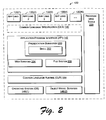
- Fig. 2 is a block diagram of a software architecture for a network platform, which includes an application program interface (API).
- API application program interface
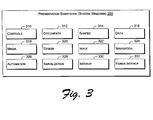
- Fig. 3 is a block diagram of the presentation subsystem supported by the API, as well as function classes of the various API functions.
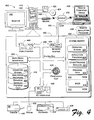
- Fig. 4 is a block diagram of an exemplary computer that may execute all or part of the software architecture.
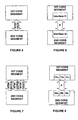
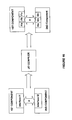
- Figs. 5, 6, 7, 8, 9, 10, 11, 12, 13, 14, 15 and 16 illustrate various example implementations of a programming interface.
- This disclosure addresses an application program interface (API) for a network platform upon which developers can build Web applications and services. More particularly, an exemplary API is described for operating systems that make use of a network platform, such as the .NETTM Framework created by Microsoft Corporation.
- the .NETTM Framework is a software platform for Web services and Web applications implemented in the distributed computing environment. It represents the next generation of Internet computing, using open communication standards to communicate among loosely coupled Web services that are collaborating to perform a particular task.
- the network platform utilizes XML (extensible markup language), an open standard for describing data.
- XML is managed by the World Wide Web Consortium (W3C).
- W3C World Wide Web Consortium
- XML is used for defining data elements on a Web page and business-to-business documents.
- XML uses a similar tag structure as HTML; however, whereas HTML defines how elements are displayed, XML defines what those elements contain.
- HTML uses predefined tags, but XML allows tags to be defined by the developer of the page. Thus, virtually any data items can be identified, allowing Web pages to function like database records.
- SOAP Simple Object Access Protocol
- the network platform allows integration of a wide range of services that can be tailored to the needs of the user.
- SOAP Simple Object Access Protocol
- application program interface or API includes traditional interfaces that employ method or function calls, as well as remote calls (e.g., a proxy, stub relationship) and SOAP/XML invocations.
- Fig. 1 shows a network environment 100 in which a network platform, such as the .NETTM Framework, may be implemented.
- the network environment 100 includes representative Web services 102(1), ..., 102(N), which provide services that can be accessed over a network 104 (e.g., Internet).
- the Web services are programmable application components that are reusable and interact programmatically over the network 104, typically through industry standard Web protocols, such as XML, SOAP, WAP (wireless application protocol), HTTP (hypertext transport protocol), and SMTP (simple mail transfer protocol) although other means of interacting with the Web services over the network may also be used, such as Remote Procedure Call (RPC) or object broker type technology.
- a Web service can be self-describing and is often defined in terms of formats and ordering of messages.
- Web services 102 are accessible directly by other services (as represented by communication link 106) or a software application, such as Web application 110 (as represented by communication links 112 and 114).
- Each Web service 102 is illustrated as including one or more servers that execute software to handle requests for particular services. Such services often maintain databases that store information to be served back to requesters.
- Web services may be configured to perform any one of a variety of different services. Examples of Web services include login verification, notification, database storage, stock quoting, location directories, mapping, music, electronic wallet, calendar/scheduler, telephone listings, news and information, games, ticketing, and so on.
- the Web services can be combined with each other and with other applications to build intelligent interactive experiences.
- the network environment 100 also includes representative client devices 120(1), 120(2), 120(3), 120(4), ..., 120(M) that utilize the Web services 102 (as represented by communication link 122) and/or the Web application 110 (as represented by communication links 124, 126, and 128).
- the clients may communicate with one another using standard protocols as well, as represented by an exemplary XML link 130 between clients 120(3) and 120(4).
- the client devices can be implemented many different ways. Examples of possible client implementations include, without limitation, portable computers, stationary computers, tablet PCs, televisions/set-top boxes, wireless communication devices, personal digital assistants, gaming consoles, printers, photocopiers, and other smart devices.
- the Web application 110 is an application designed to run on the network platform and may utilize the Web services 102 when handling and servicing requests from clients 120.
- the Web application 110 is composed of one or more software applications 130 that run atop a programming framework 132, which are executing on one or more servers 134 or other computer systems. Note that a portion of Web application 110 may actually reside on one or more of clients 120. Alternatively, Web application 110 may coordinate with other software on clients 120 to actually accomplish its tasks.
- the programming framework 132 is the structure that supports the applications and services developed by application developers. It permits multi-language development and seamless integration by supporting multiple languages. It supports open protocols, such as SOAP, and encapsulates the underlying operating system and object model services.
- SOAP open protocols
- the framework provides a robust and secure execution environment for the multiple programming languages and offers secure, integrated class libraries.
- the framework 132 is a multi-tiered architecture that includes an application program interface (API) layer 142, a common language runtime (CLR) layer 144, and an operating system/services layer 146.
- API application program interface
- CLR common language runtime
- This layered architecture allows updates and modifications to various layers without impacting other portions of the framework.
- a common language specification (CLS) 140 allows designers of various languages to write code that is able to access underlying library functionality.
- the specification 140 functions as a contract between language designers and library designers that can be used to promote language interoperability.
- libraries written in one language can be directly accessible to code modules written in other languages to achieve seamless integration between code modules written in one language and code modules written in another language.
- One exemplary detailed implementation of a CLS is described in an ECMA standard created by participants in ECMA TC39/TG3. The reader is directed to the ECMA web site at www.ecma.ch.
- the API layer 142 presents groups of functions that the applications 130 can call to access the resources and services provided by layer 146.
- application developers can create Web applications for distributed computing systems that make full use of the network resources and other Web services, without needing to understand the complex interworkings of how those network resources actually operate or are made available.
- the Web applications can be written in any number of programming languages, and translated into an intermediate language supported by the common language runtime 144 and included as part of the common language specification 140. In this way, the API layer 142 can provide methods for a wide and diverse variety of applications.
- the framework 132 can be configured to support API calls placed by remote applications executing remotely from the servers 134 that host the framework.
- Representative applications 148(1) and 148(2) residing on clients 120(3) and 120(M), respectively, can use the API functions by making calls directly, or indirectly, to the API layer 142 over the network 104.
- the framework may also be implemented at the clients.
- Client 120(3) represents the situation where a framework 150 is implemented at the client.
- This framework may be identical to server-based framework 132, or modified for client purposes.
- the client-based framework may be condensed in the event that the client is a limited or dedicated function device, such as a cellular phone, personal digital assistant, handheld computer, or other communication/computing device.
- Fig. 2 shows the programming framework 132 in more detail.
- the common language specification (CLS) layer 140 supports applications written in a variety of languages 130(1), 130(2), 130(3), 130(4), ..., 130(K). Such application languages include Visual Basic, C++, C#, COBOL, Jscript, Perl, Eiffel, Python, and so on.
- the common language specification 140 specifies a subset of features or rules about features that, if followed, allow the various languages to communicate. For example, some languages do not support a given type (e.g., an "int*" type) that might otherwise be supported by the common language runtime 144. In this case, the common language specification 140 does not include the type.
- types that are supported by all or most languages e.g., the "int[]" type
- common language specification 140 so library developers are free to use it and are assured that the languages can handle it.
- This ability to communicate results in seamless integration between code modules written in one language and code modules written in another language. Since different languages are particularly well suited to particular tasks, the seamless integration between languages allows a developer to select a particular language for a particular code module with the ability to use that code module with modules written in different languages.
- the common language runtime 144 allow seamless multi-language development, with cross language inheritance, and provide a robust and secure execution environment for the multiple programming languages.
- the framework 132 encapsulates the operating system 146(1) (e.g., Windows@-brand operating systems) and object model services 146(2) (e.g., Component Object Model (COM) or Distributed COM).
- the operating system 146(1) provides conventional functions, such as file management, notification, event handling, user interfaces (e.g., windowing, menus, dialogs, etc.), security, authentication, verification, processes and threads, memory management, and so on.
- the object model services 146(2) provide interfacing with other objects to perform various tasks. Calls made to the API layer 142 are handed to the common language runtime layer 144 for local execution by the operating system 146(1) and/or object model services 146(2).
- the API 142 groups API functions into multiple namespaces.
- Namespaces essentially define a collection of classes, interfaces, delegates, enumerations, and structures, which are collectively called "types", that provide a specific set of related functionality.
- a class represents managed heap allocated data that has reference assignment semantics.
- a delegate is an object oriented function pointer.
- An enumeration is a special kind of value type that represents named constants.
- a structure represents static allocated data that has value assignment semantics.
- An interface defines a contract that other types can implement.
- a designer can organize a set of types into a hierarchical namespace.
- the designer is able to create multiple groups from the set of types, with each group containing at least one type that exposes logically related functionality.
- the API 142 is organized to include three root namespaces. It should be noted that although only three root namespaces are illustrated in Fig. 2, additional root namespaces may also be included in API 142.
- the three root namespaces illustrated in API 142 are: a first namespace 200 for a presentation subsystem (which includes a namespace 202 for a user interface shell), a second namespace 204 for web services, and a third namespace 206 for a file system. Each group can then be assigned a name.
- types in the presentation subsystem namespace 200 can be assigned the name "Windows", and types in the file system namespace 206 can be assigned names "Storage".
- the named groups can be organized under a single "global root" namespace for system level APIs, such as an overall System namespace.
- the types in each group can be easily referenced by a hierarchical name that includes the selected top level identifier prefixed to the name of the group containing the type.
- types in the file system namespace 206 can be referenced using the hierarchical name "System.Storage”. In this way, the individual namespaces 200, 204, and 206 become major branches off of the System namespace and can carry a designation where the individual namespaces are prefixed with a designator, such as a "System.” prefix.
- the presentation subsystem namespace 200 pertains to programming and content development. It supplies types that allow for the generation of applications, documents, media presentations and other content.
- presentation subsystem namespace 200 provides a programming model that allows developers to obtain services from the operating system 146(1) and/or object model services 146(2).
- the shell namespace 202 pertains to user interface functionality. It supplies types that allow developers to embed user interface functionality in their applications, and further allows developers to extend the user interface functionality.
- the web services namespace 204 pertains to an infrastructure for enabling creation of a wide variety of applications, e.g. applications as simple as a chat application that operates between two peers on an intranet, and/or as complex as a scalable Web service for millions of users.
- the described infrastructure is advantageously highly variable in that one need only use those parts that are appropriate to the complexity of a particular solution.
- the infrastructure provides a foundation for building message-based applications of various scale and complexity.
- the infrastructure or framework provides APIs for basic messaging, secure messaging, reliable messaging and transacted messaging. In the embodiment described below, the associated APIs have been factored into a hierarchy of namespaces in a manner that has been carefully crafted to balance utility, usability, extensibility and versionability.
- the file system namespace 206 pertains to storage. It supplies types that allow for information storage and retrieval.
- programming tools 210 are provided to assist the developer in building Web services and/or applications.
- One example of the programming tools 210 is Visual StudioTM, a multi-language suite of programming tools offered by Microsoft Corporation.
- Fig. 3 shows a portion of the presentation subsystem 200 in more detail.
- the namespaces are identified according to a hierarchical naming convention in which strings of names are concatenated with periods.
- the presentation subsystem namespace 200 is identified by the root name "System.Windows”.
- System.Windows.Controls Within the "Sytem.Windows” namespace is another namespace for various controls, identified as “System.Windows.Controls”, which further identifies another namespace for primitives (not shown) known as “System.Windows.Controls.Primitives”.
- This naming convention in mind, the following provides a general overview of selected namespaces of the API 142, although other naming conventions could be used with equal effect.
- the presentation subsystem 200 includes multiple namespaces.
- the namespaces shown in Fig. 3 represent a particular embodiment of the presentation subsystem 200.
- Other embodiments of the presentation subsystem 200 may include one or more additional namespaces or may omit one or more of the namespaces shown in Fig. 3.
- a controls namespace 310 includes controls used to build a display of information, such as a user interface, and classes that allow a user to interact with an application.
- Example controls include “Button” that creates a button on the display, “RadioButton” that generates a radio-style button on the display, “Menu” that creates a menu on the display, “ToolBar” that creates a toolbar on the display, "Image” that generates an image on the display and "TreeView” that creates a hierarchical view of information.
- the controls are created by nesting and arranging multiple elements.
- the controls have a logical model that hides the elements used to create the controls, thereby simplifying the programming model.
- the controls can be styled and themed by a developer or a user (e.g., by customizing the appearance and behavior of user interface buttons).
- Some controls have addressable components that allow an individual to adjust the style of individual controls.
- the controls can be sub-classed and extended by application developers and component developers.
- the controls are rendered using vector graphics such that they can be resized to fit the requirements of a particular interface or other display.
- the controls are capable of utilizing animation to enhance, for example, the interactive feel of a user interface and to show actions and reactions.
- the controls namespace 310 includes one or more panels, which are controls that measure and arrange their children (e.g., nested elements). For example, a "DockPanel" panel arranges children by docking each child to the top, left, bottom or right side of the display, and fills-in the remaining space with other data. A particular panel may dock menus and toolbars to the top of the display, a status bar to the bottom of the display, a folder list to the left side of the display, and fills the rest of the space with a list of messages.
- a "DockPanel" panel arranges children by docking each child to the top, left, bottom or right side of the display, and fills-in the remaining space with other data.
- a particular panel may dock menus and toolbars to the top of the display, a status bar to the bottom of the display, a folder list to the left side of the display, and fills the rest of the space with a list of messages.
- System.Windows.Controls.Primitives is a namespace that includes multiple controls that are components typically used by developers of the controls in the System.Windows.Controls namespace and by developers creating their own controls. Examples of these components include “Thumb and RepeatButton”. "ScrollBar”, another component, is created using four repeat buttons (one for "line up”, one for “line down”, one for "page up”, and one for “page down") and a "Thumb” for dragging the current view to another location in the document.
- “ScrollViewer” is a control created using two “ScrollBars” and one "ScrollArea” to provide a scrollable area.
- the System.Windows.Controls namespace also contains various enumerations. The following list contains example enumerations associated with the System.Windows.Controls namespace.
- Position is an example structure associated with the System.Windows.Controls namespace.
- a user of the Generator describes positions using this structure. For example: To start generating forward from the beginning of the item list, specify position (-1, 0) and direction Forward. To start generating backward from the end of the list, specify position (-1,0) and direction Backward. To generate the items after the element with index k, specify position (k, 0) and direction Forward.
- System.Windows.Controls.Atoms is a sub-namespace of the System.Windows.Controls namespace.
- System.Windows.Controls.Atoms includes associated controls, event arguments and event handlers.
- the following list contains example classes associated with the System.Windows.Controls.Atoms namespace.
- a System.Windows.Controls.Primitives namespace is another sub-namespace of the System.Windows.Controls namespace.
- the Primitives sub-namespace includes controls that are intended to be used as primitives by other more complex controls.
- the following list contains example classes associated with the System.Windows.Controls.Primitives namespace.
- IEnsureVisible is an example interface associated with the System.Windows.Controls.Primitives namespace. IEnsureVisible is implemented on a visual to scroll/move a child visual into view.
- a documents namespace 312 is a collection of semantic and formatting elements that are used to create richly formatted and semantically rich documents.
- an "element” is a class that is primarily used in conjunction with a hierarchy of elements (referred to as a "tree"). These elements can be interactive (e.g., receiving user input via keyboard, mouse or other input device), can render images or objects, and can assist with the arrangement of other elements.
- Example elements include a "Block” element that implements a generic block, a "Body” element that represents content that includes the body of a table, a “Cell” element that contains tabular data within a table, a "Header” element that represents the content included in the header of a table, and a "PageBreak” element that is used to break content across multiple pages.
- a shapes namespace 314 is a collection of vector graphics elements used to create images and objects.
- the use of vector graphics elements allows the elements to be easily resized to fit the requirements of a particular interface or display device.
- the following list contains example classes exposed by the System.Windows.Shapes namespace.
- the System.Windows.Controls, System.Windows.Documents and System.Windows.Shapes namespaces provide an integrated system for developing applications and related components.
- This integrated system provides a common programming model for all three namespaces, thereby simplifying development of application programs.
- This interoperability among all three namespaces allows developers to learn a single programming architecture that is applied to any of the features provided by three namespaces.
- a common markup language is used across all three namespaces. This common markup language provides for the mapping of classes and properties specified in XML markup to an instantiated tree of objects.
- a consistent programming model and consistent services are used across the three namespaces.
- a consistent event system is used to initiate and process various events.
- a common property system is used to style various properties, bind data to a property, or animate a property, regardless of whether the property is associated with the "Controls", "Documents", or "Shapes" namespace.
- the same input paradigms and layout handling is common across all three namespaces. For example, various controls from the System.Windows.Controls namespace can be nested in the middle of a document's content defined using the System.Windows.Documents namespace.
- Example source files will include a set of windows and panes (also referred to as “pages") that are declaratively defined using "Controls", “Documents” and “Shapes”. Interaction logic is also provided for the windows and panes. The interaction logic identifies program code that is executed in response to a particular user action or in response to occurrence of an event or activity. The interaction logic is defined, for example, using a Common Language Runtime (CLR) language.
- CLR Common Language Runtime
- a CLR is a runtime environment that handles execution of program code (e.g., .NET program code) and provides various services such as security-related services and memory-related services.
- Example CLR languages include C# and visual basic. Source files may also include other stand-alone programming language files, such as C# or visual basic files.
- a data namespace 316 includes classes and interfaces used to bind properties of elements to data sources, data source classes, and data-specific implementations of data collections and views. These classes and interfaces are also used to handle exceptions in data entry and allow runtime creation of a user interface based on information in various data sources. Data can be displayed in textual form or can be utilized to change the formatting of the display, such as displaying dollar amounts in red if they are negative.
- Example classes include a "Bind” class that represents a binding declaration object that manages bindings between a dynamic property user interface and source data, and an "XmlDataSource” class that serves as a data source for data binding to XML content nodes.
- a media namespace 318 provides various media classes. Application developers as well as component developers may use these classes to develop various presentation functionality.
- Example classes in media namespace 318 include an "ImageEffect” class that permits certain imaging effects (e.g., blur and grayscale), and a "Brush” class that provides a mechanism for filling an area using solid colors, gradients, images, video, and the like.
- the media namespace 318 includes a sub-namespace System.Windows.Media.Animation that includes services that allow a developer to animate properties and coordinate a set of animations with a set of timelines.
- An animation is an object that changes a value over a period of time. Animation effects include moving an object on the display, and changing the size, shape, or color of an object. Multiple animation classes are provided to implement various animation effects. Effects can be achieved by associating an animation with an element's property value. For example, to create a rectangle that fades in and out of view, one or more animations are associated with the opacity property of the rectangle.
- the media namespace 318 also includes a sub-namespace System.Windows.Media.TextFormatting that provides various text services.
- a "TextFormatter” text engine provides services for breaking text lines and formatting text presented on a display. "TextFormatter” is capable of handling different text character formats and paragraph styles as well as handling international text layout.
- a design namespace 320 provides classes that enable the editing of forms and text, formatting data and cross-process data sharing. These classes provide an extensible framework for editing documents, applications, and other content.
- An input namespace 322 includes an input manager that coordinates inputs received by the system.
- the input namespace 322 also includes classes that help manage and provide control for different input devices, such as a keyboard or a mouse.
- a navigation namespace 324 provides a set of classes and services that allow the building of applications with navigation paradigms, such as a browser application. These classes and services permit the development of applications with customized navigation experiences. For example, when purchasing a product or service from an online merchant, clicking a "Back" button causes the application to display a different page that asks the user if they want to cancel or change their order. In another example, activating a "Refresh” button causes an application to retrieve new data instead of first reloading the application followed by retrieving the new data.
- the navigation namespace 324 also includes page functions that provide a mechanism for generating a hierarchy of questions that are presented to a user.
- An automation namespace 326 provides a set of classes that support accessibility and user interface automation.
- a serialization namespace 328 provides a parser that can load or save a hierarchy of objects (e.g., elements) from or to an XML file or a file with a binary representation. This process also sets properties associated with the objects and associates event handlers.
- objects e.g., elements
- An interop namespace 330 provides a set of classes that enable interoperability with other operating systems or computing platforms.
- a forms.interop namespace 332 provides an element that allows an application to host a form control operation.
- System.IO.CompoundFile provides services to utilize a compound file in which various document distributable files are stored. These services allow for the encryption and compression of content. The services also support the storage of multiple renditions of the same content, such as a re-flowable document and a fixed-format document.
- Fig. 4 illustrates an example of a suitable computing environment 400 within which the programming framework 132 may be implemented (either fully or partially).
- the computing environment 400 may be utilized in the computer and network architectures described herein.
- the exemplary computing environment 400 is only one example of a computing environment and is not intended to suggest any limitation as to the scope of use or functionality of the computer and network architectures. Neither should the computing environment 400 be interpreted as having any dependency or requirement relating to any one or combination of components illustrated in the exemplary computing environment 400.
- the framework 132 may be implemented with numerous other general purpose or special purpose computing system environments or configurations. Examples of well known computing systems, environments, and/or configurations that may be suitable for use include, but are not limited to, personal computers, server computers, multiprocessor systems, microprocessor-based systems, network PCs, minicomputers, mainframe computers, distributed computing environments that include any of the above systems or devices, and so on. Compact or subset versions of the framework may also be implemented in clients of limited resources, such as cellular phones, personal digital assistants, handheld computers, or other communication/computing devices.
- the framework 132 may be described in the general context of computer-executable instructions, such as program modules, being executed by one or more computers or other devices.
- program modules include routines, programs, objects, components, data structures, etc. that perform particular tasks or implement particular abstract data types.
- the framework 132 may also be practiced in distributed computing environments where tasks are performed by remote processing devices that are linked through a communications network.
- program modules may be located in both local and remote computer storage media including memory storage devices.
- the computing environment 400 includes a general-purpose computing device in the form of a computer 402.
- the components of computer 402 can include, by are not limited to, one or more processors or processing units 404, a system memory 406, and a system bus 408 that couples various system components including the processor 404 to the system memory 406.
- the system bus 408 represents one or more of several possible types of bus structures, including a memory bus or memory controller, a peripheral bus, an accelerated graphics port, and a processor or local bus using any of a variety of bus architectures.
- bus architectures can include an Industry Standard Architecture (ISA) bus, a Micro Channel Architecture (MCA) bus, an Enhanced ISA (EISA) bus, a Video Electronics Standards Association (VESA) local bus, and a Peripheral Component Interconnects (PCI) bus also known as a Mezzanine bus.
- Computer 402 typically includes a variety of computer readable media. Such media can be any available media that is accessible by computer 402 and includes both volatile and non-volatile media, removable and non-removable media.
- the system memory 406 includes computer readable media in the form of volatile memory, such as random access memory (RAM) 410, and/or non-volatile memory, such as read only memory (ROM) 412.
- RAM random access memory
- ROM read only memory
- a basic input/output system (BIOS) 414 containing the basic routines that help to transfer information between elements within computer 402, such as during start-up, is stored in ROM 412.
- BIOS basic input/output system
- RAM 410 typically contains data and/or program modules that are immediately accessible to and/or presently operated on by the processing unit 404.
- Computer 402 may also include other removable/non-removable, volatile/non-volatile computer storage media.
- Fig. 4 illustrates a hard disk drive 416 for reading from and writing to a non-removable, non-volatile magnetic media (not shown), a magnetic disk drive 418 for reading from and writing to a removable, non-volatile magnetic disk 420 (e.g., a "floppy disk"), and an optical disk drive 422 for reading from and/or writing to a removable, non-volatile optical disk 424 such as a CD-ROM, DVD-ROM, or other optical media.
- a hard disk drive 416 for reading from and writing to a non-removable, non-volatile magnetic media (not shown)
- a magnetic disk drive 418 for reading from and writing to a removable, non-volatile magnetic disk 420 (e.g., a "floppy disk")
- an optical disk drive 422 for reading from and/or writing to a removable, non-volatile optical
- the hard disk drive 416, magnetic disk drive 418, and optical disk drive 422 are each connected to the system bus 408 by one or more data media interfaces 426.
- the hard disk drive 416, magnetic disk drive 418, and optical disk drive 422 can be connected to the system bus 408 by one or more interfaces (not shown).
- the disk drives and their associated computer-readable media provide non-volatile storage of computer readable instructions, data structures, program modules, and other data for computer 402.
- a hard disk 416 a removable magnetic disk 420, and a removable optical disk 424
- other types of computer readable media which can store data that is accessible by a computer, such as magnetic cassettes or other magnetic storage devices, flash memory cards, CD-ROM, digital versatile disks (DVD) or other optical storage, random access memories (RAM), read only memories (ROM), electrically erasable programmable read-only memory (EEPROM), and the like, can also be utilized to implement the exemplary computing system and environment.
- RAM random access memories
- ROM read only memories
- EEPROM electrically erasable programmable read-only memory
- Any number of program modules can be stored on the hard disk 416, magnetic disk 420, optical disk 424, ROM 412, and/or RAM 410, including by way of example, an operating system 426, one or more application programs 428, other program modules 430, and program data 432.
- an operating system 426 one or more application programs 428, other program modules 430, and program data 432.
- Each of the operating system 426, one or more application programs 428, other program modules 430, and program data 432 may include elements of the programming framework 132.
- a user can enter commands and information into computer 402 via input devices such as a keyboard 434 and a pointing device 436 (e.g., a "mouse").
- Other input devices 438 may include a microphone, joystick, game pad, satellite dish, serial port, scanner, and/or the like.
- input/output interfaces 440 that are coupled to the system bus 408, but may be connected by other interface and bus structures, such as a parallel port, game port, or a universal serial bus (USB).
- a monitor 442 or other type of display device can also be connected to the system bus 408 via an interface, such as a video adapter 444.
- other output peripheral devices can include components such as speakers (not shown) and a printer 446 which can be connected to computer 402 via the input/output interfaces 440.
- Computer 402 can operate in a networked environment using logical connections to one or more remote computers, such as a remote computing device 448.
- the remote computing device 448 can be a personal computer, portable computer, a server, a router, a network computer, a peer device or other common network node, and so on.
- the remote computing device 448 is illustrated as a portable computer that can include many or all of the elements and features described herein relative to computer 402.
- Logical connections between computer 402 and the remote computer 448 are depicted as a local area network (LAN) 450 and a general wide area network (WAN) 452.
- LAN local area network
- WAN wide area network
- the computer 402 When implemented in a LAN networking environment, the computer 402 is connected to a local network 450 via a network interface or adapter 454. When implemented in a WAN networking environment, the computer 402 typically includes a modem 456 or other means for establishing communications over the wide network 452.
- the modem 456, which can be internal or external to computer 402, can be connected to the system bus 408 via the input/output interfaces 440 or other appropriate mechanisms. It is to be appreciated that the illustrated network connections are exemplary and that other means of establishing communication link(s) between the computers 402 and 448 can be employed.
- remote application programs 458 reside on a memory device of remote computer 448.
- application programs and other executable program components such as the operating system are illustrated herein as discrete blocks, although it is recognized that such programs and components reside at various times in different storage components of the computing device 402, and are executed by the data processor(s) of the computer.
- Computer readable media can be any available media that can be accessed by a computer.
- Computer readable media may comprise “computer storage media” and “communications media.”
- “Computer storage media” include volatile and non-volatile, removable and non-removable media implemented in any method or technology for storage of information such as computer readable instructions, data structures, program modules, or other data.
- Computer storage media includes, but is not limited to, RAM, ROM, EEPROM, flash memory or other memory technology, CD-ROM, digital versatile disks (DVD) or other optical storage, magnetic cassettes, magnetic tape, magnetic disk storage or other magnetic storage devices, or any other medium which can be used to store the desired information and which can be accessed by a computer.
- Communication media typically embodies computer readable instructions, data structures, program modules, or other data in a modulated data signal, such as carrier wave or other transport mechanism.
- Communication media also includes any information delivery media.
- modulated data signal means a signal that has one or more of its characteristics set or changed in such a manner as to encode information in the signal.
- communication media includes wired media such as a wired network or direct-wired connection, and wireless media such as acoustic, RF, infrared, and other wireless media. Combinations of any of the above are also included within the scope of computer readable media.
- portions of the framework may be implemented in hardware or a combination of hardware, software, and/or firmware.
- one or more application specific integrated circuits (ASICs) or programmable logic devices (PLDs) could be designed or programmed to implement one or more portions of the framework.
- ASICs application specific integrated circuits
- PLDs programmable logic devices
- a programming interface may be viewed as any mechanism, process, protocol for enabling one or more segment(s) of code to communicate with or access the functionality provided by one or more other segment(s) of code.
- a programming interface may be viewed as one or more mechanism(s), method(s), function call(s), module(s), object(s), etc. of a component of a system capable of communicative coupling to one or more mechanism(s), method(s), function call(s), module(s), etc. of other components).
- segment of code in the preceding sentence is intended to include one or more instructions or lines of code, and includes, e.g., code modules, objects, subroutines, functions, and so on, regardless of the terminology applied or whether the code segments are separately compiled, or whether the code segments are provided as source, intermediate, or object code, whether the code segments are utilized in a runtime system or process, or whether they are located on the same or different machines or distributed across multiple machines, or whether the functionality represented by the segments of code are implemented wholly in software, wholly in hardware, or a combination of hardware and software.
- a programming interface may be viewed generically, as shown in Fig. 5 or Fig. 6.
- Fig. 5 illustrates an interface Interface1 as a conduit through which first and second code segments communicate.
- Fig. 6 illustrates an interface as comprising interface objects I1 and I2 (which may or may not be part of the first and second code segments), which enable first and second code segments of a system to communicate via medium M.
- interface objects I1 and I2 are separate interfaces of the same system and one may also consider that objects I1 and I2 plus medium M comprise the interface.
- API application programming or program interface
- COM component object model
- aspects of such a programming interface may include the method whereby the first code segment transmits information (where "information" is used in its broadest sense and includes data, commands, requests, etc.) to the second code segment; the method whereby the second code segment receives the information; and the structure, sequence, syntax, organization, schema, timing and content of the information.
- the underlying transport medium itself may be unimportant to the operation of the interface, whether the medium be wired or wireless, or a combination of both, as long as the information is transported in the manner defined by the interface.
- information may not be passed in one or both directions in the conventional sense, as the information transfer may be either via another mechanism (e.g. information placed in a buffer, file, etc.
- a communication from one code segment to another may be accomplished indirectly by breaking the communication into multiple discrete communications.
- This is depicted schematically in Figs. 7 and 8.
- some interfaces can be described in terms of divisible sets of functionality.
- the interface functionality of Figs. 5 and 6 may be factored to achieve the same result, just as one may mathematically provide 24, or 2 times 2 times 3 times 2.
- the function provided by interface Interface1 may be subdivided to convert the communications of the interface into multiple interfaces Interface1A, Interface 1B, Interface 1C, etc. while achieving the same result.
- the function provided by interface I1 may be subdivided into multiple interfaces I1a, I1b, I1c, etc.
- interface I2 of the second code segment which receives information from the first code segment may be factored into multiple interfaces I2a, I2b, I2c, etc.
- the number of interfaces included with the 1 st code segment need not match the number of interfaces included with the 2 nd code segment.
- the functional spirit of interfaces Interface1 and I1 remain the same as with Figs. 5 and 6, respectively.
- the factoring of interfaces may also follow associative, commutative, and other mathematical properties such that the factoring may be difficult to recognize.
- ordering of operations may be unimportant, and consequently, a function carried out by an interface may be carried out well in advance of reaching the interface, by another piece of code or interface, or performed by a separate component of the system.
- a function carried out by an interface may be carried out well in advance of reaching the interface, by another piece of code or interface, or performed by a separate component of the system.
- one of ordinary skill in the programming arts can appreciate that there are a variety of ways of making different function calls that achieve the same result.
- Figs. 9 and 10 it may be possible to ignore, add or redefine certain aspects (e.g., parameters) of a programming interface while still accomplishing the intended result.
- interface Interface1 of Fig. 5 includes a function call Square(input, precision, output), a call that includes three parameters, input, precision and output, and which is issued from the 1 st Code Segment to the 2 nd Code Segment.
- the middle parameter precision is of no concern in a given scenario, as shown in Fig. 9, it could just as well be ignored or even replaced with a meaningless (in this situation) parameter.
- the functionality of square can be achieved, so long as output is returned after input is squared by the second code segment.
- Precision may very well be a meaningful parameter to some downstream or other portion of the computing system; however, once it is recognized that precision is not necessary for the narrow purpose of calculating the square, it may be replaced or ignored. For example, instead of passing a valid precision value, a meaningless value such as a birth date could be passed without adversely affecting the result.
- interface I1 is replaced by interface I1', redefined to ignore or add parameters to the interface.
- Interface I2 may similarly be redefined as interface I2', redefined to ignore unnecessary parameters, or parameters that may be processed elsewhere.
- a programming interface may include aspects, such as parameters, that are not needed for some purpose, and so they may be ignored or redefined, or processed elsewhere for other purposes.
- Figs. 5 and 6 may be converted to the functionality of Figs. 11 and 12, respectively.
- Fig. 11 the previous 1 st and 2 nd Code Segments of Fig. 5 are merged into a module containing both of them.
- the code segments may still be communicating with each other but the interface may be adapted to a form which is more suitable to the single module.
- formal Call and Return statements may no longer be necessary, but similar processing or response(s) pursuant to interface Interface1 may still be in effect.
- Fig. 12 part (or all) of interface I2 from Fig.
- interface I1 may be written inline into interface I1 to form interface I1".
- interface I2 is divided into I2a and I2b, and interface portion I2a has been coded in-line with interface I1 to form interface I1".
- interface I1 performs a function call square ( input , output ), which is received by interface I2, which after processing the value passed with input (to square it) by the second code segment, passes back the squared result with output.
- the processing performed by the second code segment (squaring input ) can be performed by the first code segment without a call to the interface.
- a communication from one code segment to another may be accomplished indirectly by breaking the communication into multiple discrete communications.
- This is depicted schematically in Figs. 13 and 14.
- one or more piece(s) of middleware (Divorce Interface(s), since they divorce functionality and / or interface functions from the original interface) are provided to convert the communications on the first interface, Interface1, to conform them to a different interface, in this case interfaces Interface2A, Interface2B and Interface2C.
- a third code segment can be introduced with divorce interface DI1 to receive the communications from interface I1 and with divorce interface DI2 to transmit the interface functionality to, for example, interfaces I2a and I2b, redesigned to work with DI2, but to provide the same functional result.
- DI1 and DI2 may work together to translate the functionality of interfaces I1 and I2 of Fig. 6 to a new operating system, while providing the same or similar functional result.
- Yet another possible variant is to dynamically rewrite the code to replace the interface functionality with something else but which achieves the same overall result.
- a code segment presented in an intermediate language e.g. Microsoft IL, Java ByteCode, etc.
- JIT Just-in-Time
- the JIT compiler may be written so as to dynamically convert the communications from the 1 st Code Segment to the 2 nd Code Segment, i.e., to conform them to a different interface as may be required by the 2 nd Code Segment (either the original or a different 2 nd Code Segment).
- Figs. 15 and 16 This is depicted in Figs. 15 and 16. As can be seen in Fig. 15, this approach is similar to the Divorce scenario described above. It might be done, e.g., where an installed base of applications are designed to communicate with an operating system in accordance with an Interface 1 protocol, but then the operating system is changed to use a different interface. The JIT Compiler could be used to conform the communications on the fly from the installed-base applications to the new interface of the operating system. As depicted in Fig. 16, this approach of dynamically rewriting the interface(s) may be applied to dynamically factor, or otherwise alter the interface(s) as well.
Landscapes
- Engineering & Computer Science (AREA)
- Theoretical Computer Science (AREA)
- Software Systems (AREA)
- General Engineering & Computer Science (AREA)
- Physics & Mathematics (AREA)
- General Physics & Mathematics (AREA)
- Stored Programmes (AREA)
- Input From Keyboards Or The Like (AREA)
- Processing Or Creating Images (AREA)
Applications Claiming Priority (2)
| Application Number | Priority Date | Filing Date | Title |
|---|---|---|---|
| US693854 | 2003-10-24 | ||
| US10/693,854 US7721254B2 (en) | 2003-10-24 | 2003-10-24 | Programming interface for a computer platform |
Publications (2)
| Publication Number | Publication Date |
|---|---|
| EP1526451A2 true EP1526451A2 (de) | 2005-04-27 |
| EP1526451A3 EP1526451A3 (de) | 2008-05-07 |
Family
ID=34394601
Family Applications (1)
| Application Number | Title | Priority Date | Filing Date |
|---|---|---|---|
| EP04020901A Withdrawn EP1526451A3 (de) | 2003-10-24 | 2004-09-02 | Programmierungsschnittstelle für eine Computerplattform mit Funktionalitäten für das Erzeugen von Anwendungen, Dokumenten und Mediapräsentationen |
Country Status (18)
| Country | Link |
|---|---|
| US (1) | US7721254B2 (de) |
| EP (1) | EP1526451A3 (de) |
| JP (2) | JP2005129022A (de) |
| KR (1) | KR20050039551A (de) |
| CN (1) | CN100504766C (de) |
| AU (1) | AU2004205330A1 (de) |
| BR (1) | BRPI0403817A (de) |
| CA (1) | CA2481262A1 (de) |
| CO (1) | CO5630025A1 (de) |
| IL (1) | IL164073A0 (de) |
| MX (1) | MXPA04008850A (de) |
| MY (1) | MY144646A (de) |
| NO (1) | NO332643B1 (de) |
| NZ (1) | NZ535216A (de) |
| RU (1) | RU2365978C2 (de) |
| SG (1) | SG111292A1 (de) |
| TW (1) | TWI348625B (de) |
| ZA (1) | ZA200407298B (de) |
Cited By (6)
| Publication number | Priority date | Publication date | Assignee | Title |
|---|---|---|---|---|
| EP1922610A4 (de) * | 2005-08-30 | 2011-09-21 | Microsoft Corp | Verfahren und computerlesbares medium zur befehlserteilung |
| EP2751675A4 (de) * | 2011-08-31 | 2015-01-28 | Microsoft Corp | Beschreibung von nativen anwendungsprogrammierungsschnittstellen eines betriebssystems mit metadaten |
| EP2742420A4 (de) * | 2011-08-11 | 2015-02-11 | Microsoft Corp | Laufzeitsystem |
| US9229790B2 (en) | 2011-08-31 | 2016-01-05 | Microsoft Technology Licensing, Llc | Projecting native application programming interfaces of an operating system into other programming languages |
| US10089119B2 (en) | 2009-12-18 | 2018-10-02 | Microsoft Technology Licensing, Llc | API namespace virtualization |
| US10635504B2 (en) | 2014-10-16 | 2020-04-28 | Microsoft Technology Licensing, Llc | API versioning independent of product releases |
Families Citing this family (60)
| Publication number | Priority date | Publication date | Assignee | Title |
|---|---|---|---|---|
| US9256356B2 (en) * | 2001-03-29 | 2016-02-09 | International Business Machines Corporation | Method and system for providing feedback for docking a content pane in a host window |
| US7308288B2 (en) * | 2003-08-22 | 2007-12-11 | Sbc Knowledge Ventures, Lp. | System and method for prioritized interface design |
| US7219340B2 (en) * | 2003-10-23 | 2007-05-15 | Microsoft Corporation | Changeable class and pattern to provide selective mutability in computer programming environments |
| US7464330B2 (en) * | 2003-12-09 | 2008-12-09 | Microsoft Corporation | Context-free document portions with alternate formats |
| US7617447B1 (en) | 2003-12-09 | 2009-11-10 | Microsoft Corporation | Context free document portions |
| US8661332B2 (en) | 2004-04-30 | 2014-02-25 | Microsoft Corporation | Method and apparatus for document processing |
| US7549118B2 (en) | 2004-04-30 | 2009-06-16 | Microsoft Corporation | Methods and systems for defining documents with selectable and/or sequenceable parts |
| US7418652B2 (en) | 2004-04-30 | 2008-08-26 | Microsoft Corporation | Method and apparatus for interleaving parts of a document |
| US7512878B2 (en) * | 2004-04-30 | 2009-03-31 | Microsoft Corporation | Modular document format |
| US7383500B2 (en) * | 2004-04-30 | 2008-06-03 | Microsoft Corporation | Methods and systems for building packages that contain pre-paginated documents |
| US7487448B2 (en) * | 2004-04-30 | 2009-02-03 | Microsoft Corporation | Document mark up methods and systems |
| US7617450B2 (en) | 2004-09-30 | 2009-11-10 | Microsoft Corporation | Method, system, and computer-readable medium for creating, inserting, and reusing document parts in an electronic document |
| US7614000B2 (en) | 2004-12-20 | 2009-11-03 | Microsoft Corporation | File formats, methods, and computer program products for representing presentations |
| US7617451B2 (en) * | 2004-12-20 | 2009-11-10 | Microsoft Corporation | Structuring data for word processing documents |
| US7617444B2 (en) | 2004-12-20 | 2009-11-10 | Microsoft Corporation | File formats, methods, and computer program products for representing workbooks |
| US7620889B2 (en) | 2004-12-20 | 2009-11-17 | Microsoft Corporation | Method and system for linking data ranges of a computer-generated document with associated extensible markup language elements |
| US20060136816A1 (en) * | 2004-12-20 | 2006-06-22 | Microsoft Corporation | File formats, methods, and computer program products for representing documents |
| US7617229B2 (en) | 2004-12-20 | 2009-11-10 | Microsoft Corporation | Management and use of data in a computer-generated document |
| US7752632B2 (en) * | 2004-12-21 | 2010-07-06 | Microsoft Corporation | Method and system for exposing nested data in a computer-generated document in a transparent manner |
| US7770180B2 (en) * | 2004-12-21 | 2010-08-03 | Microsoft Corporation | Exposing embedded data in a computer-generated document |
| US8135750B2 (en) * | 2005-04-22 | 2012-03-13 | Microsoft Corporation | Efficiently describing relationships between resources |
| US7386558B2 (en) * | 2005-04-22 | 2008-06-10 | Microsoft Corporation | Methods and systems for filtering an Extensible Application Markup Language (XAML) file to facilitate indexing of the logical content contained therein |
| US20060277452A1 (en) * | 2005-06-03 | 2006-12-07 | Microsoft Corporation | Structuring data for presentation documents |
| US20070022128A1 (en) * | 2005-06-03 | 2007-01-25 | Microsoft Corporation | Structuring data for spreadsheet documents |
| KR20070016851A (ko) * | 2005-08-05 | 2007-02-08 | (주)지큐소프트 | 통합 cdma 환경 3d 가속 엔진 |
| EP1835714B1 (de) * | 2006-03-16 | 2014-05-07 | Océ-Technologies B.V. | Drucken via Schnellstart-Funktion |
| US7533349B2 (en) * | 2006-06-09 | 2009-05-12 | Microsoft Corporation | Dragging and dropping objects between local and remote modules |
| US20080189240A1 (en) * | 2007-02-05 | 2008-08-07 | Mullins Ward R | System, method and software for creating or maintaining local or distributed mapping and transparent persistence of complex data objects and their data relationships |
| US7853669B2 (en) * | 2007-05-04 | 2010-12-14 | Microsoft Corporation | Mesh-managing data across a distributed set of devices |
| US8196112B1 (en) | 2008-02-15 | 2012-06-05 | Amazon Technologies, Inc. | Systems and methods for testing widgets in computer environments |
| US8302017B2 (en) * | 2008-03-05 | 2012-10-30 | Microsoft Corporation | Definition for service interface |
| US20090235161A1 (en) * | 2008-03-15 | 2009-09-17 | Microsoft Corporation | Lossless Web-Based Editor For Complex Documents |
| US9753712B2 (en) | 2008-03-20 | 2017-09-05 | Microsoft Technology Licensing, Llc | Application management within deployable object hierarchy |
| US8572033B2 (en) | 2008-03-20 | 2013-10-29 | Microsoft Corporation | Computing environment configuration |
| US8533672B2 (en) * | 2008-03-20 | 2013-09-10 | Sap Ag | Extending the functionality of a host programming language |
| US8484174B2 (en) * | 2008-03-20 | 2013-07-09 | Microsoft Corporation | Computing environment representation |
| US9298747B2 (en) * | 2008-03-20 | 2016-03-29 | Microsoft Technology Licensing, Llc | Deployable, consistent, and extensible computing environment platform |
| US8533673B2 (en) * | 2008-03-20 | 2013-09-10 | Sap Ag | Language-level integration of programming models |
| US8863115B2 (en) * | 2008-03-20 | 2014-10-14 | Sap Ag | Execution of program code having language-level integration of program models |
| US20090248737A1 (en) * | 2008-03-27 | 2009-10-01 | Microsoft Corporation | Computing environment representation |
| US8527525B2 (en) * | 2008-06-30 | 2013-09-03 | Microsoft Corporation | Providing multiple degrees of context for content consumed on computers and media players |
| US8522259B2 (en) * | 2008-11-18 | 2013-08-27 | Accenture Global Services Limited | Event based routing between presentation and business logic components |
| US9075617B2 (en) * | 2009-06-19 | 2015-07-07 | Lindsay Ian Smith | External agent interface |
| US20110022978A1 (en) * | 2009-07-23 | 2011-01-27 | Rockwell Automation Technologies, Inc. | Intelligent device framework |
| US9134137B2 (en) | 2010-12-17 | 2015-09-15 | Microsoft Technology Licensing, Llc | Mobile search based on predicted location |
| US8504989B2 (en) * | 2011-03-10 | 2013-08-06 | Infosys Limited | Service definition document for providing blended services utilizing multiple service endpoints |
| CN103678340B (zh) * | 2012-09-07 | 2016-09-14 | 腾讯科技(深圳)有限公司 | 浏览器引擎的运行方法、装置、浏览器及终端 |
| US10268446B2 (en) | 2013-02-19 | 2019-04-23 | Microsoft Technology Licensing, Llc | Narration of unfocused user interface controls using data retrieval event |
| US9817632B2 (en) | 2013-02-19 | 2017-11-14 | Microsoft Technology Licensing, Llc | Custom narration of a control list via data binding |
| US20140272886A1 (en) * | 2013-03-14 | 2014-09-18 | Patrick H. Vane | System and Method for Gamefied Rapid Application Development Environment |
| US20150279233A1 (en) * | 2013-03-14 | 2015-10-01 | Patrick H. Vane | System and Method for Gamefied Rapid Application Development Environment |
| US9189206B2 (en) * | 2013-05-21 | 2015-11-17 | Red Hat, Inc. | System and method for managing immutable objects |
| US9710440B2 (en) * | 2013-08-21 | 2017-07-18 | Microsoft Technology Licensing, Llc | Presenting fixed format documents in reflowed format |
| EP2902857B1 (de) * | 2014-01-29 | 2018-12-19 | Siemens Aktiengesellschaft | Verfahren zur Bereitstellung von Funktionen innerhalb eines industriellen Automatisierungssystems und industrielles Automatisierungsystem |
| US10078314B2 (en) | 2014-01-29 | 2018-09-18 | Siemens Aktiengesellschaft | Method for providing functions within an industrial automation system, and industrial automation system |
| JP6672309B2 (ja) * | 2014-09-09 | 2020-03-25 | ライブパーソン, インコーポレイテッド | 動的コード管理 |
| WO2016078069A1 (en) | 2014-11-21 | 2016-05-26 | Intel Corporation | Apparatus and method for efficient graphics processing in virtual execution environment |
| US10698571B2 (en) * | 2016-12-29 | 2020-06-30 | Microsoft Technology Licensing, Llc | Behavior feature use in programming by example |
| US10352717B2 (en) * | 2017-02-28 | 2019-07-16 | Google Llc | Navigation application programming interface |
| CN111859081B (zh) * | 2020-04-10 | 2024-12-13 | 北京嘀嘀无限科技发展有限公司 | 一种订单发送方法、装置、电子设备和存储介质 |
Citations (3)
| Publication number | Priority date | Publication date | Assignee | Title |
|---|---|---|---|---|
| US20030028685A1 (en) | 2001-07-10 | 2003-02-06 | Smith Adam W. | Application program interface for network software platform |
| US6598219B1 (en) | 1998-11-30 | 2003-07-22 | International Business Machines Corporation | Method and mechanism for a task oriented XML data model |
| US20030172196A1 (en) | 2001-07-10 | 2003-09-11 | Anders Hejlsberg | Application program interface for network software platform |
Family Cites Families (36)
| Publication number | Priority date | Publication date | Assignee | Title |
|---|---|---|---|---|
| US4914568A (en) * | 1986-10-24 | 1990-04-03 | National Instruments, Inc. | Graphical system for modelling a process and associated method |
| US5097533A (en) | 1988-11-29 | 1992-03-17 | International Business Machines Corporation | System and method for interfacing computer application programs written in different languages to a software system |
| JPH0727505B2 (ja) | 1990-02-12 | 1995-03-29 | インターナショナル・ビジネス・マシーンズ・コーポレイション | インターフェース方法及びインターフェース・システム |
| US5301301A (en) * | 1991-01-30 | 1994-04-05 | National Instruments Corporation | Polymorphic dataflow block diagram system and method for programming a computer |
| JP2522898B2 (ja) * | 1992-09-08 | 1996-08-07 | インターナショナル・ビジネス・マシーンズ・コーポレイション | 動的カストマイズ方法及びグラフィックリソ―ス・エディタ |
| DE69525338T2 (de) * | 1994-05-16 | 2002-10-24 | Apple Computer, Inc. | Abstraktion von mustern und farben in einer graphischen benutzerschnittstelle |
| AU2591995A (en) * | 1994-05-16 | 1995-12-05 | Apple Computer, Inc. | A system and method for customizing appearance and behavior of graphical user interfaces |
| JPH08286916A (ja) * | 1994-12-16 | 1996-11-01 | Internatl Business Mach Corp <Ibm> | オブジェクトにより手続きソフトウェアを機能的に改良するシステム及び方法 |
| US5862379A (en) * | 1995-03-07 | 1999-01-19 | International Business Machines Corporation | Visual programming tool for developing software applications |
| KR100263277B1 (ko) | 1995-06-15 | 2000-08-01 | 피터 엔. 데트킨 | Pci-pci 브리지를 집적화한 i/o 프로세서의 구조 |
| US5872973A (en) * | 1995-10-26 | 1999-02-16 | Viewsoft, Inc. | Method for managing dynamic relations between objects in dynamic object-oriented languages |
| US5893107A (en) * | 1996-07-01 | 1999-04-06 | Microsoft Corporation | Method and system for uniformly accessing multiple directory services |
| US5905492A (en) * | 1996-12-06 | 1999-05-18 | Microsoft Corporation | Dynamically updating themes for an operating system shell |
| DE69728640T2 (de) | 1997-02-21 | 2005-04-21 | Alcatel Sa | Verfahren zur Erzeugung eines Rechnerprogrammes |
| WO1998058510A1 (de) | 1997-06-16 | 1998-12-23 | Swisscom Ag | Mobilgerät, chipkarte und kommunikationsverfahren |
| US6188399B1 (en) * | 1998-05-08 | 2001-02-13 | Apple Computer, Inc. | Multiple theme engine graphical user interface architecture |
| US6915301B2 (en) * | 1998-08-25 | 2005-07-05 | International Business Machines Corporation | Dynamic object properties |
| US6392671B1 (en) * | 1998-10-27 | 2002-05-21 | Lawrence F. Glaser | Computer pointing device having theme identification means |
| US6353451B1 (en) * | 1998-12-16 | 2002-03-05 | Intel Corporation | Method of providing aerial perspective in a graphical user interface |
| US7159183B1 (en) | 1999-08-19 | 2007-01-02 | National Instruments Corporation | System and method for programmatically creating a graphical program |
| KR20010076789A (ko) | 2000-01-28 | 2001-08-16 | 오길록 | 멀티모달 인터넷 인터페이스 장치 및 방법 |
| US6753885B2 (en) * | 2000-04-06 | 2004-06-22 | Microsoft Corporation | System and theme file format for creating visual styles |
| US6762767B2 (en) * | 2000-04-06 | 2004-07-13 | Microsoft Corporation | Theme aware management using fusion |
| EP1143334A3 (de) | 2000-04-06 | 2005-03-30 | Microsoft Corporation | "Themen"-berücksichtigende graphische Benutzerschnittstelle |
| US7451453B1 (en) | 2000-11-22 | 2008-11-11 | Microsoft Corporation | DVD navigator and application programming interfaces (APIs) |
| US7596791B2 (en) * | 2000-12-19 | 2009-09-29 | Emc Corporation | Methods and techniques for delivering rich Java applications over thin-wire connections with high performance and scalability |
| US7546602B2 (en) * | 2001-07-10 | 2009-06-09 | Microsoft Corporation | Application program interface for network software platform |
| US7017162B2 (en) * | 2001-07-10 | 2006-03-21 | Microsoft Corporation | Application program interface for network software platform |
| US6920461B2 (en) * | 2001-07-10 | 2005-07-19 | Microsoft Corp. | Application program interface for network software platform |
| US7117504B2 (en) | 2001-07-10 | 2006-10-03 | Microsoft Corporation | Application program interface that enables communication for a network software platform |
| US20030033593A1 (en) | 2001-08-08 | 2003-02-13 | Evelyn Duesterwald | Dynamic execution layer interface for explicitly or transparently executing application or system binaries |
| US20030093419A1 (en) * | 2001-08-17 | 2003-05-15 | Srinivas Bangalore | System and method for querying information using a flexible multi-modal interface |
| US20030101439A1 (en) * | 2001-11-29 | 2003-05-29 | Giuseppe Desoli | System and method for supporting emulation of a computer system through dynamic code caching and transformation |
| WO2003065179A2 (en) | 2002-02-01 | 2003-08-07 | John Fairweather | A system and method for mining data |
| AUPS145902A0 (en) * | 2002-03-28 | 2002-05-09 | Canon Kabushiki Kaisha | A client server approach for interactive updates of graphical user interfaces on intranets |
| EP1536451A1 (de) | 2003-11-25 | 2005-06-01 | LG. Philips Displays | Kathodenstrahlröhre mit Inline-Elektronenkanone |
-
2003
- 2003-10-24 US US10/693,854 patent/US7721254B2/en not_active Expired - Fee Related
-
2004
- 2004-07-21 MY MYPI20042934A patent/MY144646A/en unknown
- 2004-07-21 TW TW093121807A patent/TWI348625B/zh not_active IP Right Cessation
- 2004-08-30 AU AU2004205330A patent/AU2004205330A1/en not_active Abandoned
- 2004-09-02 EP EP04020901A patent/EP1526451A3/de not_active Withdrawn
- 2004-09-08 CO CO04088586A patent/CO5630025A1/es not_active Application Discontinuation
- 2004-09-09 NZ NZ535216A patent/NZ535216A/en not_active IP Right Cessation
- 2004-09-09 NO NO20043782A patent/NO332643B1/no not_active IP Right Cessation
- 2004-09-10 CN CNB2004100785287A patent/CN100504766C/zh not_active Expired - Fee Related
- 2004-09-10 JP JP2004264629A patent/JP2005129022A/ja active Pending
- 2004-09-10 SG SG200406481A patent/SG111292A1/en unknown
- 2004-09-10 ZA ZA200407298A patent/ZA200407298B/xx unknown
- 2004-09-10 BR BR0403817-7A patent/BRPI0403817A/pt not_active IP Right Cessation
- 2004-09-10 RU RU2004127216/09A patent/RU2365978C2/ru not_active IP Right Cessation
- 2004-09-10 MX MXPA04008850A patent/MXPA04008850A/es not_active Application Discontinuation
- 2004-09-13 CA CA002481262A patent/CA2481262A1/en not_active Abandoned
- 2004-09-13 KR KR1020040072994A patent/KR20050039551A/ko not_active Withdrawn
- 2004-09-14 IL IL16407304A patent/IL164073A0/xx active IP Right Review Request
-
2011
- 2011-12-01 JP JP2011263823A patent/JP2012084165A/ja not_active Withdrawn
Patent Citations (3)
| Publication number | Priority date | Publication date | Assignee | Title |
|---|---|---|---|---|
| US6598219B1 (en) | 1998-11-30 | 2003-07-22 | International Business Machines Corporation | Method and mechanism for a task oriented XML data model |
| US20030028685A1 (en) | 2001-07-10 | 2003-02-06 | Smith Adam W. | Application program interface for network software platform |
| US20030172196A1 (en) | 2001-07-10 | 2003-09-11 | Anders Hejlsberg | Application program interface for network software platform |
Non-Patent Citations (1)
| Title |
|---|
| CHAN P. ET AL.: "Java class Libraries", 1998, ADDISON WESLEY LONGMAN, article "The Java class libraries Passages", pages: 303 - 395 |
Cited By (7)
| Publication number | Priority date | Publication date | Assignee | Title |
|---|---|---|---|---|
| EP1922610A4 (de) * | 2005-08-30 | 2011-09-21 | Microsoft Corp | Verfahren und computerlesbares medium zur befehlserteilung |
| US10089119B2 (en) | 2009-12-18 | 2018-10-02 | Microsoft Technology Licensing, Llc | API namespace virtualization |
| EP2742420A4 (de) * | 2011-08-11 | 2015-02-11 | Microsoft Corp | Laufzeitsystem |
| US9563487B2 (en) | 2011-08-11 | 2017-02-07 | Microsoft Technology Licensing, Llc. | Runtime system |
| EP2751675A4 (de) * | 2011-08-31 | 2015-01-28 | Microsoft Corp | Beschreibung von nativen anwendungsprogrammierungsschnittstellen eines betriebssystems mit metadaten |
| US9229790B2 (en) | 2011-08-31 | 2016-01-05 | Microsoft Technology Licensing, Llc | Projecting native application programming interfaces of an operating system into other programming languages |
| US10635504B2 (en) | 2014-10-16 | 2020-04-28 | Microsoft Technology Licensing, Llc | API versioning independent of product releases |
Also Published As
| Publication number | Publication date |
|---|---|
| NO332643B1 (no) | 2012-11-26 |
| KR20050039551A (ko) | 2005-04-29 |
| CN1609793A (zh) | 2005-04-27 |
| IL164073A0 (en) | 2005-12-18 |
| SG111292A1 (en) | 2005-05-30 |
| CO5630025A1 (es) | 2006-04-28 |
| BRPI0403817A (pt) | 2005-06-21 |
| CN100504766C (zh) | 2009-06-24 |
| NZ535216A (en) | 2007-04-27 |
| US20050091575A1 (en) | 2005-04-28 |
| ZA200407298B (en) | 2006-05-31 |
| MXPA04008850A (es) | 2005-06-17 |
| JP2012084165A (ja) | 2012-04-26 |
| JP2005129022A (ja) | 2005-05-19 |
| EP1526451A3 (de) | 2008-05-07 |
| AU2004205330A1 (en) | 2005-05-12 |
| RU2365978C2 (ru) | 2009-08-27 |
| RU2004127216A (ru) | 2006-02-20 |
| NO20043782L (no) | 2005-04-25 |
| TWI348625B (en) | 2011-09-11 |
| CA2481262A1 (en) | 2005-04-24 |
| US7721254B2 (en) | 2010-05-18 |
| TW200517869A (en) | 2005-06-01 |
| MY144646A (en) | 2011-10-31 |
Similar Documents
| Publication | Publication Date | Title |
|---|---|---|
| US7721254B2 (en) | Programming interface for a computer platform | |
| AU2004205327B2 (en) | Programming interface for a computer platform | |
| US7426734B2 (en) | Facilitating presentation functionality through a programming interface media namespace | |
| Sharp | Microsoft Visual C# 2013 Step by Step | |
| Niemeyer et al. | Learning java | |
| KR20060087995A (ko) | 작업 흐름을 모델링하는 방법 및 시스템 | |
| Lewis et al. | Native mobile development: a cross-reference for iOS and Android | |
| Rossini et al. | Emacs speaks statistics: A multiplatform, multipackage development environment for statistical analysis | |
| Wenz | Essential Silverlight 2 Up-to-Date | |
| Wagner et al. | Web Applications with Javascript or Java: Volume 1: Constraint Validation, Enumerations, Special Datatypes | |
| Dovey et al. | Beginning Objective-C | |
| Troelsen et al. | WPF Controls, Layouts, Events, and Data Binding | |
| Nowowiejski et al. | Generic Reporting Tool Using Modern User Interface Design Technologies | |
| Zammetti | Practical Webix | |
| Millas | Microsoft. Net Framework 4.5 Quickstart Cookbook | |
| Ghoda | Windows 8 MVVM Patterns Revealed: covers both C# and JavaScript | |
| Likness | Building Windows 8 Apps with C# and XAML | |
| Dea et al. | User Interface Controls | |
| Gill | Building Web Applications with C# and. NET: A Complete Reference | |
| Del Sole | Building Cross-Platform Apps with Xamarin. Forms | |
| Evjen et al. | Professional VB 2005 with. Net 3.0 | |
| Allwood et al. | A User Friendly, Type-Safe, Graphical Shell |
Legal Events
| Date | Code | Title | Description |
|---|---|---|---|
| PUAI | Public reference made under article 153(3) epc to a published international application that has entered the european phase |
Free format text: ORIGINAL CODE: 0009012 |
|
| AK | Designated contracting states |
Kind code of ref document: A2 Designated state(s): AT BE BG CH CY CZ DE DK EE ES FI FR GB GR HU IE IT LI LU MC NL PL PT RO SE SI SK TR |
|
| AX | Request for extension of the european patent |
Extension state: AL HR LT LV MK |
|
| PUAL | Search report despatched |
Free format text: ORIGINAL CODE: 0009013 |
|
| AK | Designated contracting states |
Kind code of ref document: A3 Designated state(s): AT BE BG CH CY CZ DE DK EE ES FI FR GB GR HU IE IT LI LU MC NL PL PT RO SE SI SK TR |
|
| AX | Request for extension of the european patent |
Extension state: AL HR LT LV MK |
|
| 17P | Request for examination filed |
Effective date: 20080530 |
|
| 17Q | First examination report despatched |
Effective date: 20080728 |
|
| AKX | Designation fees paid |
Designated state(s): AT BE BG CH CY CZ DE DK EE ES FI FR GB GR HU IE IT LI LU MC NL PL PT RO SE SI SK TR |
|
| STAA | Information on the status of an ep patent application or granted ep patent |
Free format text: STATUS: THE APPLICATION HAS BEEN WITHDRAWN |
|
| 18W | Application withdrawn |
Effective date: 20120925 |