EP1526135A1 - Azabenzodiazepines as pde4 inhibitors - Google Patents
Azabenzodiazepines as pde4 inhibitors Download PDFInfo
- Publication number
- EP1526135A1 EP1526135A1 EP03292660A EP03292660A EP1526135A1 EP 1526135 A1 EP1526135 A1 EP 1526135A1 EP 03292660 A EP03292660 A EP 03292660A EP 03292660 A EP03292660 A EP 03292660A EP 1526135 A1 EP1526135 A1 EP 1526135A1
- Authority
- EP
- European Patent Office
- Prior art keywords
- formula
- compound
- yield
- compounds
- amino
- Prior art date
- Legal status (The legal status is an assumption and is not a legal conclusion. Google has not performed a legal analysis and makes no representation as to the accuracy of the status listed.)
- Withdrawn
Links
- 229940123932 Phosphodiesterase 4 inhibitor Drugs 0.000 title description 6
- 239000002587 phosphodiesterase IV inhibitor Substances 0.000 title description 6
- 150000001875 compounds Chemical class 0.000 claims abstract description 120
- -1 methoxy, hydroxy, amino, dimethylamino, acetamido, pyrrolidin-1-yl Chemical group 0.000 claims abstract description 26
- 150000003839 salts Chemical class 0.000 claims abstract description 19
- 239000002253 acid Substances 0.000 claims abstract description 18
- 208000037265 diseases, disorders, signs and symptoms Diseases 0.000 claims abstract description 17
- 201000010099 disease Diseases 0.000 claims abstract description 16
- 230000003287 optical effect Effects 0.000 claims abstract description 13
- 239000008194 pharmaceutical composition Substances 0.000 claims abstract description 12
- 230000005764 inhibitory process Effects 0.000 claims abstract description 8
- 229910052736 halogen Inorganic materials 0.000 claims abstract description 7
- 150000002367 halogens Chemical class 0.000 claims abstract description 7
- 125000000229 (C1-C4)alkoxy group Chemical group 0.000 claims abstract description 6
- 125000002496 methyl group Chemical group [H]C([H])([H])* 0.000 claims abstract description 6
- 239000004480 active ingredient Substances 0.000 claims abstract description 5
- 125000001997 phenyl group Chemical group [H]C1=C([H])C([H])=C(*)C([H])=C1[H] 0.000 claims abstract description 5
- 238000002560 therapeutic procedure Methods 0.000 claims abstract description 5
- 125000004178 (C1-C4) alkyl group Chemical group 0.000 claims abstract description 4
- 125000000499 benzofuranyl group Chemical group O1C(=CC2=C1C=CC=C2)* 0.000 claims abstract description 3
- 125000005169 cycloalkylcarbonylamino group Chemical group 0.000 claims abstract description 3
- 125000004435 hydrogen atom Chemical group [H]* 0.000 claims abstract description 3
- 125000004029 hydroxymethyl group Chemical group [H]OC([H])([H])* 0.000 claims abstract description 3
- 125000002883 imidazolyl group Chemical group 0.000 claims abstract description 3
- 125000001041 indolyl group Chemical group 0.000 claims abstract description 3
- 125000005956 isoquinolyl group Chemical group 0.000 claims abstract description 3
- 125000001786 isothiazolyl group Chemical group 0.000 claims abstract description 3
- 125000003226 pyrazolyl group Chemical group 0.000 claims abstract description 3
- 125000004076 pyridyl group Chemical group 0.000 claims abstract description 3
- 125000000714 pyrimidinyl group Chemical group 0.000 claims abstract description 3
- 125000005493 quinolyl group Chemical group 0.000 claims abstract description 3
- 229940124530 sulfonamide Drugs 0.000 claims abstract description 3
- 150000003456 sulfonamides Chemical class 0.000 claims abstract description 3
- 125000001544 thienyl group Chemical group 0.000 claims abstract description 3
- 125000002023 trifluoromethyl group Chemical group FC(F)(F)* 0.000 claims abstract description 3
- WYURNTSHIVDZCO-UHFFFAOYSA-N Tetrahydrofuran Chemical compound C1CCOC1 WYURNTSHIVDZCO-UHFFFAOYSA-N 0.000 claims description 21
- 102000004861 Phosphoric Diester Hydrolases Human genes 0.000 claims description 14
- 108090001050 Phosphoric Diester Hydrolases Proteins 0.000 claims description 14
- 238000000034 method Methods 0.000 claims description 14
- 208000006545 Chronic Obstructive Pulmonary Disease Diseases 0.000 claims description 12
- 230000037390 scarring Effects 0.000 claims description 12
- 208000006673 asthma Diseases 0.000 claims description 10
- 238000003786 synthesis reaction Methods 0.000 claims description 10
- 230000002500 effect on skin Effects 0.000 claims description 8
- 238000002360 preparation method Methods 0.000 claims description 8
- 229940126601 medicinal product Drugs 0.000 claims description 7
- 125000003349 3-pyridyl group Chemical group N1=C([H])C([*])=C([H])C([H])=C1[H] 0.000 claims description 6
- 206010009900 Colitis ulcerative Diseases 0.000 claims description 6
- 208000011231 Crohn disease Diseases 0.000 claims description 6
- CPELXLSAUQHCOX-UHFFFAOYSA-N Hydrogen bromide Chemical compound Br CPELXLSAUQHCOX-UHFFFAOYSA-N 0.000 claims description 6
- JUJWROOIHBZHMG-UHFFFAOYSA-N Pyridine Chemical compound C1=CC=NC=C1 JUJWROOIHBZHMG-UHFFFAOYSA-N 0.000 claims description 6
- 201000006704 Ulcerative Colitis Diseases 0.000 claims description 6
- 208000037976 chronic inflammation Diseases 0.000 claims description 6
- 208000037893 chronic inflammatory disorder Diseases 0.000 claims description 6
- 210000000936 intestine Anatomy 0.000 claims description 6
- 238000004519 manufacturing process Methods 0.000 claims description 6
- 239000000546 pharmaceutical excipient Substances 0.000 claims description 6
- 125000002924 primary amino group Chemical group [H]N([H])* 0.000 claims description 6
- RIOQSEWOXXDEQQ-UHFFFAOYSA-N triphenylphosphine Chemical compound C1=CC=CC=C1P(C=1C=CC=CC=1)C1=CC=CC=C1 RIOQSEWOXXDEQQ-UHFFFAOYSA-N 0.000 claims description 6
- MHAJPDPJQMAIIY-UHFFFAOYSA-N Hydrogen peroxide Chemical compound OO MHAJPDPJQMAIIY-UHFFFAOYSA-N 0.000 claims description 5
- 208000022559 Inflammatory bowel disease Diseases 0.000 claims description 5
- KDLHZDBZIXYQEI-UHFFFAOYSA-N Palladium Chemical compound [Pd] KDLHZDBZIXYQEI-UHFFFAOYSA-N 0.000 claims description 5
- MXUGSITVXIZQHM-UHFFFAOYSA-N chembl112996 Chemical compound N=1C(OC)=CC=2CCN(C3=O)C=2C=1C(C=1C=CC=CC=1)=NC3NC(=O)C1=CC=CN=C1 MXUGSITVXIZQHM-UHFFFAOYSA-N 0.000 claims description 5
- 230000002757 inflammatory effect Effects 0.000 claims description 5
- 238000000746 purification Methods 0.000 claims description 5
- 238000000926 separation method Methods 0.000 claims description 5
- 125000000339 4-pyridyl group Chemical group N1=C([H])C([H])=C([*])C([H])=C1[H] 0.000 claims description 4
- 208000030507 AIDS Diseases 0.000 claims description 4
- 206010001052 Acute respiratory distress syndrome Diseases 0.000 claims description 4
- 208000019901 Anxiety disease Diseases 0.000 claims description 4
- 206010012438 Dermatitis atopic Diseases 0.000 claims description 4
- 206010016654 Fibrosis Diseases 0.000 claims description 4
- 206010019280 Heart failures Diseases 0.000 claims description 4
- AFVFQIVMOAPDHO-UHFFFAOYSA-N Methanesulfonic acid Chemical compound CS(O)(=O)=O AFVFQIVMOAPDHO-UHFFFAOYSA-N 0.000 claims description 4
- 206010028980 Neoplasm Diseases 0.000 claims description 4
- 208000001132 Osteoporosis Diseases 0.000 claims description 4
- 201000004681 Psoriasis Diseases 0.000 claims description 4
- 208000013616 Respiratory Distress Syndrome Diseases 0.000 claims description 4
- 206010039085 Rhinitis allergic Diseases 0.000 claims description 4
- 206010040070 Septic Shock Diseases 0.000 claims description 4
- 206010052779 Transplant rejections Diseases 0.000 claims description 4
- 108060008682 Tumor Necrosis Factor Proteins 0.000 claims description 4
- 102000000852 Tumor Necrosis Factor-alpha Human genes 0.000 claims description 4
- 230000002159 abnormal effect Effects 0.000 claims description 4
- 201000000028 adult respiratory distress syndrome Diseases 0.000 claims description 4
- 201000010105 allergic rhinitis Diseases 0.000 claims description 4
- 230000036506 anxiety Effects 0.000 claims description 4
- 201000008937 atopic dermatitis Diseases 0.000 claims description 4
- 201000011510 cancer Diseases 0.000 claims description 4
- 239000003937 drug carrier Substances 0.000 claims description 4
- 230000004761 fibrosis Effects 0.000 claims description 4
- 208000026278 immune system disease Diseases 0.000 claims description 4
- 230000003902 lesion Effects 0.000 claims description 4
- YNESATAKKCNGOF-UHFFFAOYSA-N lithium bis(trimethylsilyl)amide Chemical compound [Li+].C[Si](C)(C)[N-][Si](C)(C)C YNESATAKKCNGOF-UHFFFAOYSA-N 0.000 claims description 4
- 206010025135 lupus erythematosus Diseases 0.000 claims description 4
- 125000000956 methoxy group Chemical group [H]C([H])([H])O* 0.000 claims description 4
- 201000006417 multiple sclerosis Diseases 0.000 claims description 4
- 201000008482 osteoarthritis Diseases 0.000 claims description 4
- 208000002815 pulmonary hypertension Diseases 0.000 claims description 4
- 206010039073 rheumatoid arthritis Diseases 0.000 claims description 4
- 230000036303 septic shock Effects 0.000 claims description 4
- 238000001356 surgical procedure Methods 0.000 claims description 4
- AEMWUHCKKDPRSK-UHFFFAOYSA-N (ne)-n-diazo-2,4,6-tri(propan-2-yl)benzenesulfonamide Chemical compound CC(C)C1=CC(C(C)C)=C(S(=O)(=O)N=[N+]=[N-])C(C(C)C)=C1 AEMWUHCKKDPRSK-UHFFFAOYSA-N 0.000 claims description 3
- IAYPIBMASNFSPL-UHFFFAOYSA-N Ethylene oxide Chemical compound C1CO1 IAYPIBMASNFSPL-UHFFFAOYSA-N 0.000 claims description 3
- 229910000042 hydrogen bromide Inorganic materials 0.000 claims description 3
- WVKIFIROCHIWAY-UHFFFAOYSA-N hydron;2-(methylamino)acetic acid;chloride Chemical compound Cl.CNCC(O)=O WVKIFIROCHIWAY-UHFFFAOYSA-N 0.000 claims description 3
- QARBMVPHQWIHKH-UHFFFAOYSA-N methanesulfonyl chloride Chemical compound CS(Cl)(=O)=O QARBMVPHQWIHKH-UHFFFAOYSA-N 0.000 claims description 3
- ANRQGKOBLBYXFM-UHFFFAOYSA-M phenylmagnesium bromide Chemical compound Br[Mg]C1=CC=CC=C1 ANRQGKOBLBYXFM-UHFFFAOYSA-M 0.000 claims description 3
- 230000008569 process Effects 0.000 claims description 3
- 125000006239 protecting group Chemical group 0.000 claims description 3
- UMJSCPRVCHMLSP-UHFFFAOYSA-N pyridine Natural products COC1=CC=CN=C1 UMJSCPRVCHMLSP-UHFFFAOYSA-N 0.000 claims description 3
- 230000002829 reductive effect Effects 0.000 claims description 3
- 239000007858 starting material Substances 0.000 claims description 3
- 125000000999 tert-butyl group Chemical group [H]C([H])([H])C(*)(C([H])([H])[H])C([H])([H])[H] 0.000 claims description 3
- LDLCZOVUSADOIV-UHFFFAOYSA-N 2-bromoethanol Chemical compound OCCBr LDLCZOVUSADOIV-UHFFFAOYSA-N 0.000 claims description 2
- HTQAZKOPQOXNHI-UHFFFAOYSA-N 7-bromo-1h-pyrrolo[2,3-c]pyridine Chemical compound BrC1=NC=CC2=C1NC=C2 HTQAZKOPQOXNHI-UHFFFAOYSA-N 0.000 claims description 2
- XFXPMWWXUTWYJX-UHFFFAOYSA-N Cyanide Chemical compound N#[C-] XFXPMWWXUTWYJX-UHFFFAOYSA-N 0.000 claims description 2
- 239000012359 Methanesulfonyl chloride Substances 0.000 claims description 2
- 125000000738 acetamido group Chemical group [H]C([H])([H])C(=O)N([H])[*] 0.000 claims description 2
- 150000001412 amines Chemical class 0.000 claims description 2
- 150000007942 carboxylates Chemical class 0.000 claims description 2
- 230000008878 coupling Effects 0.000 claims description 2
- 239000007822 coupling agent Substances 0.000 claims description 2
- 238000010168 coupling process Methods 0.000 claims description 2
- 238000005859 coupling reaction Methods 0.000 claims description 2
- 238000010438 heat treatment Methods 0.000 claims description 2
- 229910052763 palladium Inorganic materials 0.000 claims description 2
- 239000002798 polar solvent Substances 0.000 claims description 2
- 150000003138 primary alcohols Chemical class 0.000 claims description 2
- GTLDTDOJJJZVBW-UHFFFAOYSA-N zinc cyanide Chemical compound [Zn+2].N#[C-].N#[C-] GTLDTDOJJJZVBW-UHFFFAOYSA-N 0.000 claims description 2
- 125000003277 amino group Chemical group 0.000 claims 1
- 101100296720 Dictyostelium discoideum Pde4 gene Proteins 0.000 abstract 1
- 101100082610 Plasmodium falciparum (isolate 3D7) PDEdelta gene Proteins 0.000 abstract 1
- YMWUJEATGCHHMB-UHFFFAOYSA-N Dichloromethane Chemical compound ClCCl YMWUJEATGCHHMB-UHFFFAOYSA-N 0.000 description 42
- XEKOWRVHYACXOJ-UHFFFAOYSA-N Ethyl acetate Chemical compound CCOC(C)=O XEKOWRVHYACXOJ-UHFFFAOYSA-N 0.000 description 39
- 239000000243 solution Substances 0.000 description 26
- 239000011541 reaction mixture Substances 0.000 description 23
- HEDRZPFGACZZDS-MICDWDOJSA-N Trichloro(2H)methane Chemical compound [2H]C(Cl)(Cl)Cl HEDRZPFGACZZDS-MICDWDOJSA-N 0.000 description 20
- 239000007832 Na2SO4 Substances 0.000 description 11
- PMZURENOXWZQFD-UHFFFAOYSA-L Sodium Sulfate Chemical compound [Na+].[Na+].[O-]S([O-])(=O)=O PMZURENOXWZQFD-UHFFFAOYSA-L 0.000 description 11
- 239000012074 organic phase Substances 0.000 description 11
- 229910052938 sodium sulfate Inorganic materials 0.000 description 11
- 238000005160 1H NMR spectroscopy Methods 0.000 description 10
- 239000007787 solid Substances 0.000 description 10
- IVOMOUWHDPKRLL-KQYNXXCUSA-N Cyclic adenosine monophosphate Chemical compound C([C@H]1O2)OP(O)(=O)O[C@H]1[C@@H](O)[C@@H]2N1C(N=CN=C2N)=C2N=C1 IVOMOUWHDPKRLL-KQYNXXCUSA-N 0.000 description 9
- RTZKZFJDLAIYFH-UHFFFAOYSA-N Diethyl ether Chemical compound CCOCC RTZKZFJDLAIYFH-UHFFFAOYSA-N 0.000 description 9
- ZMXDDKWLCZADIW-UHFFFAOYSA-N N,N-Dimethylformamide Chemical compound CN(C)C=O ZMXDDKWLCZADIW-UHFFFAOYSA-N 0.000 description 9
- HEMHJVSKTPXQMS-UHFFFAOYSA-M Sodium hydroxide Chemical compound [OH-].[Na+] HEMHJVSKTPXQMS-UHFFFAOYSA-M 0.000 description 9
- 102000011017 Type 4 Cyclic Nucleotide Phosphodiesterases Human genes 0.000 description 9
- 108010037584 Type 4 Cyclic Nucleotide Phosphodiesterases Proteins 0.000 description 9
- 210000004027 cell Anatomy 0.000 description 8
- 238000011282 treatment Methods 0.000 description 8
- XLYOFNOQVPJJNP-UHFFFAOYSA-N water Substances O XLYOFNOQVPJJNP-UHFFFAOYSA-N 0.000 description 8
- 239000000203 mixture Substances 0.000 description 7
- UIIMBOGNXHQVGW-UHFFFAOYSA-M Sodium bicarbonate Chemical class [Na+].OC([O-])=O UIIMBOGNXHQVGW-UHFFFAOYSA-M 0.000 description 6
- ZMANZCXQSJIPKH-UHFFFAOYSA-N Triethylamine Chemical compound CCN(CC)CC ZMANZCXQSJIPKH-UHFFFAOYSA-N 0.000 description 6
- 239000003795 chemical substances by application Substances 0.000 description 6
- 239000013058 crude material Substances 0.000 description 6
- 239000000543 intermediate Substances 0.000 description 6
- QTBSBXVTEAMEQO-UHFFFAOYSA-N Acetic acid Chemical compound CC(O)=O QTBSBXVTEAMEQO-UHFFFAOYSA-N 0.000 description 5
- VEXZGXHMUGYJMC-UHFFFAOYSA-N Hydrochloric acid Chemical compound Cl VEXZGXHMUGYJMC-UHFFFAOYSA-N 0.000 description 5
- 238000004440 column chromatography Methods 0.000 description 5
- 239000003112 inhibitor Substances 0.000 description 5
- 239000012299 nitrogen atmosphere Substances 0.000 description 5
- MSYGAHOHLUJIKV-UHFFFAOYSA-N 3,5-dimethyl-1-(3-nitrophenyl)-1h-pyrazole-4-carboxylic acid ethyl ester Chemical compound CC1=C(C(=O)OCC)C(C)=NN1C1=CC=CC([N+]([O-])=O)=C1 MSYGAHOHLUJIKV-UHFFFAOYSA-N 0.000 description 4
- HBAQYPYDRFILMT-UHFFFAOYSA-N 8-[3-(1-cyclopropylpyrazol-4-yl)-1H-pyrazolo[4,3-d]pyrimidin-5-yl]-3-methyl-3,8-diazabicyclo[3.2.1]octan-2-one Chemical class C1(CC1)N1N=CC(=C1)C1=NNC2=C1N=C(N=C2)N1C2C(N(CC1CC2)C)=O HBAQYPYDRFILMT-UHFFFAOYSA-N 0.000 description 4
- DYHSDKLCOJIUFX-UHFFFAOYSA-N Di-tert-butyl dicarbonate Substances CC(C)(C)OC(=O)OC(=O)OC(C)(C)C DYHSDKLCOJIUFX-UHFFFAOYSA-N 0.000 description 4
- 239000008346 aqueous phase Substances 0.000 description 4
- 231100000252 nontoxic Toxicity 0.000 description 4
- 230000003000 nontoxic effect Effects 0.000 description 4
- CSCPPACGZOOCGX-UHFFFAOYSA-N Acetone Chemical compound CC(C)=O CSCPPACGZOOCGX-UHFFFAOYSA-N 0.000 description 3
- WEVYAHXRMPXWCK-UHFFFAOYSA-N Acetonitrile Chemical compound CC#N WEVYAHXRMPXWCK-UHFFFAOYSA-N 0.000 description 3
- NLXLAEXVIDQMFP-UHFFFAOYSA-N Ammonia chloride Chemical class [NH4+].[Cl-] NLXLAEXVIDQMFP-UHFFFAOYSA-N 0.000 description 3
- IAZDPXIOMUYVGZ-UHFFFAOYSA-N Dimethylsulphoxide Chemical compound CS(C)=O IAZDPXIOMUYVGZ-UHFFFAOYSA-N 0.000 description 3
- 102000004190 Enzymes Human genes 0.000 description 3
- 108090000790 Enzymes Proteins 0.000 description 3
- OFOBLEOULBTSOW-UHFFFAOYSA-N Malonic acid Chemical compound OC(=O)CC(O)=O OFOBLEOULBTSOW-UHFFFAOYSA-N 0.000 description 3
- OKKJLVBELUTLKV-UHFFFAOYSA-N Methanol Chemical compound OC OKKJLVBELUTLKV-UHFFFAOYSA-N 0.000 description 3
- 101000909851 Mycobacterium tuberculosis (strain ATCC 25618 / H37Rv) cAMP/cGMP dual specificity phosphodiesterase Rv0805 Proteins 0.000 description 3
- KWYHDKDOAIKMQN-UHFFFAOYSA-N N,N,N',N'-tetramethylethylenediamine Chemical compound CN(C)CCN(C)C KWYHDKDOAIKMQN-UHFFFAOYSA-N 0.000 description 3
- MUBZPKHOEPUJKR-UHFFFAOYSA-N Oxalic acid Chemical compound OC(=O)C(O)=O MUBZPKHOEPUJKR-UHFFFAOYSA-N 0.000 description 3
- KWYUFKZDYYNOTN-UHFFFAOYSA-M Potassium hydroxide Chemical compound [OH-].[K+] KWYUFKZDYYNOTN-UHFFFAOYSA-M 0.000 description 3
- RWRDLPDLKQPQOW-UHFFFAOYSA-N Pyrrolidine Chemical compound C1CCNC1 RWRDLPDLKQPQOW-UHFFFAOYSA-N 0.000 description 3
- 230000015572 biosynthetic process Effects 0.000 description 3
- KRKNYBCHXYNGOX-UHFFFAOYSA-N citric acid Chemical compound OC(=O)CC(O)(C(O)=O)CC(O)=O KRKNYBCHXYNGOX-UHFFFAOYSA-N 0.000 description 3
- 239000012043 crude product Substances 0.000 description 3
- 230000000694 effects Effects 0.000 description 3
- 210000003979 eosinophil Anatomy 0.000 description 3
- 238000003818 flash chromatography Methods 0.000 description 3
- 210000001616 monocyte Anatomy 0.000 description 3
- VLKZOEOYAKHREP-UHFFFAOYSA-N n-Hexane Chemical compound CCCCCC VLKZOEOYAKHREP-UHFFFAOYSA-N 0.000 description 3
- 230000037361 pathway Effects 0.000 description 3
- 239000000047 product Substances 0.000 description 3
- 239000000725 suspension Substances 0.000 description 3
- 0 *c(nc1)ccc1N Chemical compound *c(nc1)ccc1N 0.000 description 2
- CIWBSHSKHKDKBQ-JLAZNSOCSA-N Ascorbic acid Chemical compound OC[C@H](O)[C@H]1OC(=O)C(O)=C1O CIWBSHSKHKDKBQ-JLAZNSOCSA-N 0.000 description 2
- IJGRMHOSHXDMSA-UHFFFAOYSA-N Atomic nitrogen Chemical compound N#N IJGRMHOSHXDMSA-UHFFFAOYSA-N 0.000 description 2
- 206010006458 Bronchitis chronic Diseases 0.000 description 2
- 206010014561 Emphysema Diseases 0.000 description 2
- VZCYOOQTPOCHFL-OWOJBTEDSA-N Fumaric acid Chemical compound OC(=O)\C=C\C(O)=O VZCYOOQTPOCHFL-OWOJBTEDSA-N 0.000 description 2
- JGFZNNIVVJXRND-UHFFFAOYSA-N N,N-Diisopropylethylamine (DIPEA) Chemical compound CCN(C(C)C)C(C)C JGFZNNIVVJXRND-UHFFFAOYSA-N 0.000 description 2
- MZRVEZGGRBJDDB-UHFFFAOYSA-N N-Butyllithium Chemical compound [Li]CCCC MZRVEZGGRBJDDB-UHFFFAOYSA-N 0.000 description 2
- 150000001204 N-oxides Chemical class 0.000 description 2
- 238000005481 NMR spectroscopy Methods 0.000 description 2
- PVNIIMVLHYAWGP-UHFFFAOYSA-N Niacin Chemical compound OC(=O)C1=CC=CN=C1 PVNIIMVLHYAWGP-UHFFFAOYSA-N 0.000 description 2
- OFBQJSOFQDEBGM-UHFFFAOYSA-N Pentane Chemical compound CCCCC OFBQJSOFQDEBGM-UHFFFAOYSA-N 0.000 description 2
- NQRYJNQNLNOLGT-UHFFFAOYSA-N Piperidine Chemical compound C1CCNCC1 NQRYJNQNLNOLGT-UHFFFAOYSA-N 0.000 description 2
- LCTONWCANYUPML-UHFFFAOYSA-N Pyruvic acid Chemical compound CC(=O)C(O)=O LCTONWCANYUPML-UHFFFAOYSA-N 0.000 description 2
- CDBYLPFSWZWCQE-UHFFFAOYSA-L Sodium Carbonate Chemical compound [Na+].[Na+].[O-]C([O-])=O CDBYLPFSWZWCQE-UHFFFAOYSA-L 0.000 description 2
- QAOWNCQODCNURD-UHFFFAOYSA-N Sulfuric acid Chemical compound OS(O)(=O)=O QAOWNCQODCNURD-UHFFFAOYSA-N 0.000 description 2
- DTQVDTLACAAQTR-UHFFFAOYSA-N Trifluoroacetic acid Chemical compound OC(=O)C(F)(F)F DTQVDTLACAAQTR-UHFFFAOYSA-N 0.000 description 2
- FPQVGDGSRVMNMR-JCTPKUEWSA-N [[(z)-(1-cyano-2-ethoxy-2-oxoethylidene)amino]oxy-(dimethylamino)methylidene]-dimethylazanium;tetrafluoroborate Chemical compound F[B-](F)(F)F.CCOC(=O)C(\C#N)=N/OC(N(C)C)=[N+](C)C FPQVGDGSRVMNMR-JCTPKUEWSA-N 0.000 description 2
- 229960000583 acetic acid Drugs 0.000 description 2
- 230000009471 action Effects 0.000 description 2
- 239000000443 aerosol Substances 0.000 description 2
- WPYMKLBDIGXBTP-UHFFFAOYSA-N benzoic acid Chemical compound OC(=O)C1=CC=CC=C1 WPYMKLBDIGXBTP-UHFFFAOYSA-N 0.000 description 2
- WGQKYBSKWIADBV-UHFFFAOYSA-N benzylamine Chemical compound NCC1=CC=CC=C1 WGQKYBSKWIADBV-UHFFFAOYSA-N 0.000 description 2
- 239000012267 brine Substances 0.000 description 2
- 206010006451 bronchitis Diseases 0.000 description 2
- 239000000969 carrier Substances 0.000 description 2
- 238000004587 chromatography analysis Methods 0.000 description 2
- 208000007451 chronic bronchitis Diseases 0.000 description 2
- 125000004122 cyclic group Chemical group 0.000 description 2
- 239000006185 dispersion Substances 0.000 description 2
- 239000000839 emulsion Substances 0.000 description 2
- 230000002255 enzymatic effect Effects 0.000 description 2
- 230000006870 function Effects 0.000 description 2
- 230000007062 hydrolysis Effects 0.000 description 2
- 238000006460 hydrolysis reaction Methods 0.000 description 2
- 229910052500 inorganic mineral Inorganic materials 0.000 description 2
- 230000003834 intracellular effect Effects 0.000 description 2
- JVTAAEKCZFNVCJ-UHFFFAOYSA-N lactic acid Chemical compound CC(O)C(O)=O JVTAAEKCZFNVCJ-UHFFFAOYSA-N 0.000 description 2
- 239000011707 mineral Substances 0.000 description 2
- 235000010755 mineral Nutrition 0.000 description 2
- 239000002571 phosphodiesterase inhibitor Substances 0.000 description 2
- 239000000843 powder Substances 0.000 description 2
- 238000010992 reflux Methods 0.000 description 2
- 238000011160 research Methods 0.000 description 2
- 230000000241 respiratory effect Effects 0.000 description 2
- 208000023504 respiratory system disease Diseases 0.000 description 2
- 230000004044 response Effects 0.000 description 2
- 229910000030 sodium bicarbonate Inorganic materials 0.000 description 2
- HPALAKNZSZLMCH-UHFFFAOYSA-M sodium;chloride;hydrate Chemical compound O.[Na+].[Cl-] HPALAKNZSZLMCH-UHFFFAOYSA-M 0.000 description 2
- QCQJCNQXZJNWLW-UHFFFAOYSA-N tert-butyl 5-methoxy-2,3-dihydropyrrolo[2,3-c]pyridine-1-carboxylate Chemical compound C1=NC(OC)=CC2=C1N(C(=O)OC(C)(C)C)CC2 QCQJCNQXZJNWLW-UHFFFAOYSA-N 0.000 description 2
- ZFXYFBGIUFBOJW-UHFFFAOYSA-N theophylline Chemical compound O=C1N(C)C(=O)N(C)C2=C1NC=N2 ZFXYFBGIUFBOJW-UHFFFAOYSA-N 0.000 description 2
- VZCYOOQTPOCHFL-UHFFFAOYSA-N trans-butenedioic acid Natural products OC(=O)C=CC(O)=O VZCYOOQTPOCHFL-UHFFFAOYSA-N 0.000 description 2
- 229910052721 tungsten Inorganic materials 0.000 description 2
- KZPYGQFFRCFCPP-UHFFFAOYSA-N 1,1'-bis(diphenylphosphino)ferrocene Chemical compound [Fe+2].C1=CC=C[C-]1P(C=1C=CC=CC=1)C1=CC=CC=C1.C1=CC=C[C-]1P(C=1C=CC=CC=1)C1=CC=CC=C1 KZPYGQFFRCFCPP-UHFFFAOYSA-N 0.000 description 1
- RYHBNJHYFVUHQT-UHFFFAOYSA-N 1,4-Dioxane Chemical compound C1COCCO1 RYHBNJHYFVUHQT-UHFFFAOYSA-N 0.000 description 1
- RTBFRGCFXZNCOE-UHFFFAOYSA-N 1-methylsulfonylpiperidin-4-one Chemical compound CS(=O)(=O)N1CCC(=O)CC1 RTBFRGCFXZNCOE-UHFFFAOYSA-N 0.000 description 1
- TZYCFQGMLJWXKD-UHFFFAOYSA-N 11-amino-6-methoxy-9-phenyl-1,7,10-triazatricyclo[6.4.1.04,13]trideca-4,6,8(13),9-tetraen-12-one Chemical compound N=1C(OC)=CC=2CCN(C(C(N)N=3)=O)C=2C=1C=3C1=CC=CC=C1 TZYCFQGMLJWXKD-UHFFFAOYSA-N 0.000 description 1
- YKRNTZYETPHIPU-UHFFFAOYSA-N 11-azido-6-methoxy-9-phenyl-1,7,10-triazatricyclo[6.4.1.04,13]trideca-4,6,8(13),9-tetraen-12-one Chemical compound N(=[N+]=[N-])C1N=C(C=2C3=C(CCN3C1=O)C=C(N=2)OC)C1=CC=CC=C1 YKRNTZYETPHIPU-UHFFFAOYSA-N 0.000 description 1
- LBLYYCQCTBFVLH-UHFFFAOYSA-N 2-Methylbenzenesulfonic acid Chemical compound CC1=CC=CC=C1S(O)(=O)=O LBLYYCQCTBFVLH-UHFFFAOYSA-N 0.000 description 1
- GRWKNBPOGBTZMN-UHFFFAOYSA-N 2-benzyl-3-phenylpropane-1,2-diamine Chemical compound C=1C=CC=CC=1CC(N)(CN)CC1=CC=CC=C1 GRWKNBPOGBTZMN-UHFFFAOYSA-N 0.000 description 1
- ZOOGRGPOEVQQDX-UUOKFMHZSA-N 3',5'-cyclic GMP Chemical compound C([C@H]1O2)OP(O)(=O)O[C@H]1[C@@H](O)[C@@H]2N1C(N=C(NC2=O)N)=C2N=C1 ZOOGRGPOEVQQDX-UUOKFMHZSA-N 0.000 description 1
- BMYNFMYTOJXKLE-UHFFFAOYSA-N 3-azaniumyl-2-hydroxypropanoate Chemical compound NCC(O)C(O)=O BMYNFMYTOJXKLE-UHFFFAOYSA-N 0.000 description 1
- DDQHUZFUQKRFRF-UHFFFAOYSA-N 5-methoxy-2,3-dihydro-1h-pyrrolo[2,3-c]pyridine-7-carbonitrile Chemical compound N#CC1=NC(OC)=CC2=C1NCC2 DDQHUZFUQKRFRF-UHFFFAOYSA-N 0.000 description 1
- UUVDJIWRSIJEBS-UHFFFAOYSA-N 6-methoxypyridin-3-amine Chemical compound COC1=CC=C(N)C=N1 UUVDJIWRSIJEBS-UHFFFAOYSA-N 0.000 description 1
- MRYCOXLUTYSTNE-UHFFFAOYSA-N 7-bromo-5-methoxy-2,3-dihydro-1h-pyrrolo[2,3-c]pyridine Chemical compound BrC1=NC(OC)=CC2=C1NCC2 MRYCOXLUTYSTNE-UHFFFAOYSA-N 0.000 description 1
- RTAPDZBZLSXHQQ-UHFFFAOYSA-N 8-methyl-3,7-dihydropurine-2,6-dione Chemical class N1C(=O)NC(=O)C2=C1N=C(C)N2 RTAPDZBZLSXHQQ-UHFFFAOYSA-N 0.000 description 1
- 206010027654 Allergic conditions Diseases 0.000 description 1
- 241000972773 Aulopiformes Species 0.000 description 1
- 239000005711 Benzoic acid Substances 0.000 description 1
- LSPHULWDVZXLIL-UHFFFAOYSA-N Camphoric acid Natural products CC1(C)C(C(O)=O)CCC1(C)C(O)=O LSPHULWDVZXLIL-UHFFFAOYSA-N 0.000 description 1
- UDMBCSSLTHHNCD-UHFFFAOYSA-N Coenzym Q(11) Natural products C1=NC=2C(N)=NC=NC=2N1C1OC(COP(O)(O)=O)C(O)C1O UDMBCSSLTHHNCD-UHFFFAOYSA-N 0.000 description 1
- XDTMQSROBMDMFD-UHFFFAOYSA-N Cyclohexane Chemical compound C1CCCCC1 XDTMQSROBMDMFD-UHFFFAOYSA-N 0.000 description 1
- 108090000695 Cytokines Proteins 0.000 description 1
- 102000004127 Cytokines Human genes 0.000 description 1
- FEWJPZIEWOKRBE-JCYAYHJZSA-N Dextrotartaric acid Chemical compound OC(=O)[C@H](O)[C@@H](O)C(O)=O FEWJPZIEWOKRBE-JCYAYHJZSA-N 0.000 description 1
- 101100135868 Dictyostelium discoideum pde3 gene Proteins 0.000 description 1
- 101100189582 Dictyostelium discoideum pdeD gene Proteins 0.000 description 1
- 101001117089 Drosophila melanogaster Calcium/calmodulin-dependent 3',5'-cyclic nucleotide phosphodiesterase 1 Proteins 0.000 description 1
- 241000238631 Hexapoda Species 0.000 description 1
- 101000830742 Homo sapiens Tryptophan 5-hydroxylase 1 Proteins 0.000 description 1
- 101001098818 Homo sapiens cGMP-inhibited 3',5'-cyclic phosphodiesterase A Proteins 0.000 description 1
- 206010061218 Inflammation Diseases 0.000 description 1
- 102000015696 Interleukins Human genes 0.000 description 1
- 108010063738 Interleukins Proteins 0.000 description 1
- 241000124008 Mammalia Species 0.000 description 1
- GRYLNZFGIOXLOG-UHFFFAOYSA-N Nitric acid Chemical compound O[N+]([O-])=O GRYLNZFGIOXLOG-UHFFFAOYSA-N 0.000 description 1
- 101150098694 PDE5A gene Proteins 0.000 description 1
- 229940099471 Phosphodiesterase inhibitor Drugs 0.000 description 1
- ABLZXFCXXLZCGV-UHFFFAOYSA-N Phosphorous acid Chemical compound OP(O)=O ABLZXFCXXLZCGV-UHFFFAOYSA-N 0.000 description 1
- 108020004511 Recombinant DNA Proteins 0.000 description 1
- BQCADISMDOOEFD-UHFFFAOYSA-N Silver Chemical compound [Ag] BQCADISMDOOEFD-UHFFFAOYSA-N 0.000 description 1
- KDYFGRWQOYBRFD-UHFFFAOYSA-N Succinic acid Natural products OC(=O)CCC(O)=O KDYFGRWQOYBRFD-UHFFFAOYSA-N 0.000 description 1
- 210000001744 T-lymphocyte Anatomy 0.000 description 1
- FEWJPZIEWOKRBE-UHFFFAOYSA-N Tartaric acid Natural products [H+].[H+].[O-]C(=O)C(O)C(O)C([O-])=O FEWJPZIEWOKRBE-UHFFFAOYSA-N 0.000 description 1
- 102100024971 Tryptophan 5-hydroxylase 1 Human genes 0.000 description 1
- QQIRAVWVGBTHMJ-UHFFFAOYSA-N [dimethyl-(trimethylsilylamino)silyl]methane;lithium Chemical compound [Li].C[Si](C)(C)N[Si](C)(C)C QQIRAVWVGBTHMJ-UHFFFAOYSA-N 0.000 description 1
- 239000002250 absorbent Substances 0.000 description 1
- 230000002745 absorbent Effects 0.000 description 1
- 150000007513 acids Chemical class 0.000 description 1
- 230000004913 activation Effects 0.000 description 1
- 208000009956 adenocarcinoma Diseases 0.000 description 1
- UDMBCSSLTHHNCD-KQYNXXCUSA-N adenosine 5'-monophosphate Chemical compound C1=NC=2C(N)=NC=NC=2N1[C@@H]1O[C@H](COP(O)(O)=O)[C@@H](O)[C@H]1O UDMBCSSLTHHNCD-KQYNXXCUSA-N 0.000 description 1
- 229950006790 adenosine phosphate Drugs 0.000 description 1
- 125000000217 alkyl group Chemical group 0.000 description 1
- 239000013566 allergen Substances 0.000 description 1
- 229940095054 ammoniac Drugs 0.000 description 1
- 235000019270 ammonium chloride Nutrition 0.000 description 1
- 235000011114 ammonium hydroxide Nutrition 0.000 description 1
- JFCQEDHGNNZCLN-UHFFFAOYSA-N anhydrous glutaric acid Natural products OC(=O)CCCC(O)=O JFCQEDHGNNZCLN-UHFFFAOYSA-N 0.000 description 1
- 238000005349 anion exchange Methods 0.000 description 1
- 230000003266 anti-allergic effect Effects 0.000 description 1
- 230000003110 anti-inflammatory effect Effects 0.000 description 1
- 210000000709 aorta Anatomy 0.000 description 1
- 239000007864 aqueous solution Substances 0.000 description 1
- 235000010323 ascorbic acid Nutrition 0.000 description 1
- 239000011668 ascorbic acid Substances 0.000 description 1
- 229960005070 ascorbic acid Drugs 0.000 description 1
- 239000012298 atmosphere Substances 0.000 description 1
- 210000003651 basophil Anatomy 0.000 description 1
- 230000008901 benefit Effects 0.000 description 1
- 235000010233 benzoic acid Nutrition 0.000 description 1
- 239000011230 binding agent Substances 0.000 description 1
- 125000001246 bromo group Chemical group Br* 0.000 description 1
- KDYFGRWQOYBRFD-NUQCWPJISA-N butanedioic acid Chemical compound O[14C](=O)CC[14C](O)=O KDYFGRWQOYBRFD-NUQCWPJISA-N 0.000 description 1
- 102100029175 cGMP-specific 3',5'-cyclic phosphodiesterase Human genes 0.000 description 1
- AXCZMVOFGPJBDE-UHFFFAOYSA-L calcium dihydroxide Chemical compound [OH-].[OH-].[Ca+2] AXCZMVOFGPJBDE-UHFFFAOYSA-L 0.000 description 1
- 239000000920 calcium hydroxide Substances 0.000 description 1
- 229910001861 calcium hydroxide Inorganic materials 0.000 description 1
- LSPHULWDVZXLIL-QUBYGPBYSA-N camphoric acid Chemical compound CC1(C)[C@H](C(O)=O)CC[C@]1(C)C(O)=O LSPHULWDVZXLIL-QUBYGPBYSA-N 0.000 description 1
- 229910052799 carbon Inorganic materials 0.000 description 1
- 125000004432 carbon atom Chemical group C* 0.000 description 1
- 229940082638 cardiac stimulant phosphodiesterase inhibitors Drugs 0.000 description 1
- 230000001413 cellular effect Effects 0.000 description 1
- 210000003169 central nervous system Anatomy 0.000 description 1
- PUBPQEOPYAXHPC-UHFFFAOYSA-N chembl113368 Chemical compound N=1C(OC)=CC=2CCN(C(CN=3)=O)C=2C=1C=3C1=CC=CC=C1 PUBPQEOPYAXHPC-UHFFFAOYSA-N 0.000 description 1
- 238000006243 chemical reaction Methods 0.000 description 1
- 125000001309 chloro group Chemical group Cl* 0.000 description 1
- 238000010367 cloning Methods 0.000 description 1
- 239000003086 colorant Substances 0.000 description 1
- 238000007796 conventional method Methods 0.000 description 1
- 239000006071 cream Substances 0.000 description 1
- 238000002425 crystallisation Methods 0.000 description 1
- 230000008025 crystallization Effects 0.000 description 1
- 230000001086 cytosolic effect Effects 0.000 description 1
- 238000011161 development Methods 0.000 description 1
- 230000004069 differentiation Effects 0.000 description 1
- 239000003085 diluting agent Substances 0.000 description 1
- 208000035475 disorder Diseases 0.000 description 1
- 239000002270 dispersing agent Substances 0.000 description 1
- 239000008298 dragée Substances 0.000 description 1
- 239000006196 drop Substances 0.000 description 1
- 239000012636 effector Substances 0.000 description 1
- 239000003995 emulsifying agent Substances 0.000 description 1
- 210000003989 endothelium vascular Anatomy 0.000 description 1
- 238000005516 engineering process Methods 0.000 description 1
- 125000001495 ethyl group Chemical group [H]C([H])([H])C([H])([H])* 0.000 description 1
- 238000011156 evaluation Methods 0.000 description 1
- 239000000284 extract Substances 0.000 description 1
- 125000001153 fluoro group Chemical group F* 0.000 description 1
- 239000001530 fumaric acid Substances 0.000 description 1
- 239000000499 gel Substances 0.000 description 1
- 239000007903 gelatin capsule Substances 0.000 description 1
- 239000012362 glacial acetic acid Substances 0.000 description 1
- 239000008187 granular material Substances 0.000 description 1
- 229940093915 gynecological organic acid Drugs 0.000 description 1
- 125000005843 halogen group Chemical group 0.000 description 1
- 210000002216 heart Anatomy 0.000 description 1
- 210000003630 histaminocyte Anatomy 0.000 description 1
- 229940088597 hormone Drugs 0.000 description 1
- 239000005556 hormone Substances 0.000 description 1
- 102000055047 human PDE3A Human genes 0.000 description 1
- 238000000338 in vitro Methods 0.000 description 1
- 230000004968 inflammatory condition Effects 0.000 description 1
- 230000004054 inflammatory process Effects 0.000 description 1
- 239000007924 injection Substances 0.000 description 1
- 238000002347 injection Methods 0.000 description 1
- 229940047122 interleukins Drugs 0.000 description 1
- 238000007918 intramuscular administration Methods 0.000 description 1
- 238000001990 intravenous administration Methods 0.000 description 1
- 125000002346 iodo group Chemical group I* 0.000 description 1
- 125000001449 isopropyl group Chemical group [H]C([H])([H])C([H])(*)C([H])([H])[H] 0.000 description 1
- 239000004310 lactic acid Substances 0.000 description 1
- 235000014655 lactic acid Nutrition 0.000 description 1
- 210000000265 leukocyte Anatomy 0.000 description 1
- 230000000670 limiting effect Effects 0.000 description 1
- 239000007788 liquid Substances 0.000 description 1
- 239000000314 lubricant Substances 0.000 description 1
- 210000004698 lymphocyte Anatomy 0.000 description 1
- VZCYOOQTPOCHFL-UPHRSURJSA-N maleic acid Chemical compound OC(=O)\C=C/C(O)=O VZCYOOQTPOCHFL-UPHRSURJSA-N 0.000 description 1
- 239000011976 maleic acid Substances 0.000 description 1
- 238000004949 mass spectrometry Methods 0.000 description 1
- 210000003622 mature neutrocyte Anatomy 0.000 description 1
- 238000005259 measurement Methods 0.000 description 1
- 230000002503 metabolic effect Effects 0.000 description 1
- 229940098779 methanesulfonic acid Drugs 0.000 description 1
- 150000007522 mineralic acids Chemical class 0.000 description 1
- 210000002464 muscle smooth vascular Anatomy 0.000 description 1
- 230000030505 negative regulation of chemotaxis Effects 0.000 description 1
- 239000002858 neurotransmitter agent Substances 0.000 description 1
- 239000011664 nicotinic acid Substances 0.000 description 1
- 235000001968 nicotinic acid Nutrition 0.000 description 1
- 229960003512 nicotinic acid Drugs 0.000 description 1
- 229910017604 nitric acid Inorganic materials 0.000 description 1
- 229910052757 nitrogen Inorganic materials 0.000 description 1
- 239000002674 ointment Substances 0.000 description 1
- 238000011017 operating method Methods 0.000 description 1
- 150000007524 organic acids Chemical class 0.000 description 1
- 235000005985 organic acids Nutrition 0.000 description 1
- 150000007530 organic bases Chemical class 0.000 description 1
- 235000006408 oxalic acid Nutrition 0.000 description 1
- 125000004430 oxygen atom Chemical group O* 0.000 description 1
- 230000036961 partial effect Effects 0.000 description 1
- 239000002831 pharmacologic agent Substances 0.000 description 1
- LPNYRYFBWFDTMA-UHFFFAOYSA-N potassium tert-butoxide Chemical compound [K+].CC(C)(C)[O-] LPNYRYFBWFDTMA-UHFFFAOYSA-N 0.000 description 1
- 238000002953 preparative HPLC Methods 0.000 description 1
- 239000003755 preservative agent Substances 0.000 description 1
- 230000035755 proliferation Effects 0.000 description 1
- 125000001436 propyl group Chemical group [H]C([*])([H])C([H])([H])C([H])([H])[H] 0.000 description 1
- 108090000623 proteins and genes Proteins 0.000 description 1
- 229940107700 pyruvic acid Drugs 0.000 description 1
- 125000001453 quaternary ammonium group Chemical group 0.000 description 1
- 230000001105 regulatory effect Effects 0.000 description 1
- 238000012552 review Methods 0.000 description 1
- HJORMJIFDVBMOB-UHFFFAOYSA-N rolipram Chemical compound COC1=CC=C(C2CC(=O)NC2)C=C1OC1CCCC1 HJORMJIFDVBMOB-UHFFFAOYSA-N 0.000 description 1
- 229950005741 rolipram Drugs 0.000 description 1
- 235000019515 salmon Nutrition 0.000 description 1
- 230000003248 secreting effect Effects 0.000 description 1
- 230000035945 sensitivity Effects 0.000 description 1
- 229910052709 silver Inorganic materials 0.000 description 1
- 239000004332 silver Substances 0.000 description 1
- 210000002460 smooth muscle Anatomy 0.000 description 1
- 229910000029 sodium carbonate Inorganic materials 0.000 description 1
- 239000002904 solvent Substances 0.000 description 1
- 239000008174 sterile solution Substances 0.000 description 1
- 230000000638 stimulation Effects 0.000 description 1
- 239000006190 sub-lingual tablet Substances 0.000 description 1
- 238000007920 subcutaneous administration Methods 0.000 description 1
- 239000000758 substrate Substances 0.000 description 1
- 239000000829 suppository Substances 0.000 description 1
- 239000000375 suspending agent Substances 0.000 description 1
- 230000008961 swelling Effects 0.000 description 1
- 239000006188 syrup Substances 0.000 description 1
- 235000020357 syrup Nutrition 0.000 description 1
- 125000006253 t-butylcarbonyl group Chemical group [H]C([H])([H])C(C(*)=O)(C([H])([H])[H])C([H])([H])[H] 0.000 description 1
- 239000003826 tablet Substances 0.000 description 1
- 235000002906 tartaric acid Nutrition 0.000 description 1
- 239000011975 tartaric acid Substances 0.000 description 1
- BQBSTIXIDDRDHH-UHFFFAOYSA-N tert-butyl n-(6-methoxypyridin-3-yl)carbamate Chemical compound COC1=CC=C(NC(=O)OC(C)(C)C)C=N1 BQBSTIXIDDRDHH-UHFFFAOYSA-N 0.000 description 1
- SWWDWKVINFZOTG-UHFFFAOYSA-N tert-butyl n-[4-(2-hydroxyethyl)-6-methoxypyridin-3-yl]carbamate Chemical compound COC1=CC(CCO)=C(NC(=O)OC(C)(C)C)C=N1 SWWDWKVINFZOTG-UHFFFAOYSA-N 0.000 description 1
- YBRBMKDOPFTVDT-UHFFFAOYSA-N tert-butylamine Chemical compound CC(C)(C)N YBRBMKDOPFTVDT-UHFFFAOYSA-N 0.000 description 1
- YLQBMQCUIZJEEH-UHFFFAOYSA-N tetrahydrofuran Natural products C=1C=COC=1 YLQBMQCUIZJEEH-UHFFFAOYSA-N 0.000 description 1
- 229960000278 theophylline Drugs 0.000 description 1
- 230000001225 therapeutic effect Effects 0.000 description 1
- 231100001274 therapeutic index Toxicity 0.000 description 1
- 210000001519 tissue Anatomy 0.000 description 1
- 241000701447 unidentified baculovirus Species 0.000 description 1
- 239000000080 wetting agent Substances 0.000 description 1
Classifications
-
- C—CHEMISTRY; METALLURGY
- C07—ORGANIC CHEMISTRY
- C07D—HETEROCYCLIC COMPOUNDS
- C07D471/00—Heterocyclic compounds containing nitrogen atoms as the only ring hetero atoms in the condensed system, at least one ring being a six-membered ring with one nitrogen atom, not provided for by groups C07D451/00 - C07D463/00
- C07D471/12—Heterocyclic compounds containing nitrogen atoms as the only ring hetero atoms in the condensed system, at least one ring being a six-membered ring with one nitrogen atom, not provided for by groups C07D451/00 - C07D463/00 in which the condensed system contains three hetero rings
- C07D471/16—Peri-condensed systems
-
- A—HUMAN NECESSITIES
- A61—MEDICAL OR VETERINARY SCIENCE; HYGIENE
- A61P—SPECIFIC THERAPEUTIC ACTIVITY OF CHEMICAL COMPOUNDS OR MEDICINAL PREPARATIONS
- A61P1/00—Drugs for disorders of the alimentary tract or the digestive system
- A61P1/04—Drugs for disorders of the alimentary tract or the digestive system for ulcers, gastritis or reflux esophagitis, e.g. antacids, inhibitors of acid secretion, mucosal protectants
-
- A—HUMAN NECESSITIES
- A61—MEDICAL OR VETERINARY SCIENCE; HYGIENE
- A61P—SPECIFIC THERAPEUTIC ACTIVITY OF CHEMICAL COMPOUNDS OR MEDICINAL PREPARATIONS
- A61P11/00—Drugs for disorders of the respiratory system
-
- A—HUMAN NECESSITIES
- A61—MEDICAL OR VETERINARY SCIENCE; HYGIENE
- A61P—SPECIFIC THERAPEUTIC ACTIVITY OF CHEMICAL COMPOUNDS OR MEDICINAL PREPARATIONS
- A61P11/00—Drugs for disorders of the respiratory system
- A61P11/06—Antiasthmatics
-
- A—HUMAN NECESSITIES
- A61—MEDICAL OR VETERINARY SCIENCE; HYGIENE
- A61P—SPECIFIC THERAPEUTIC ACTIVITY OF CHEMICAL COMPOUNDS OR MEDICINAL PREPARATIONS
- A61P17/00—Drugs for dermatological disorders
-
- A—HUMAN NECESSITIES
- A61—MEDICAL OR VETERINARY SCIENCE; HYGIENE
- A61P—SPECIFIC THERAPEUTIC ACTIVITY OF CHEMICAL COMPOUNDS OR MEDICINAL PREPARATIONS
- A61P17/00—Drugs for dermatological disorders
- A61P17/02—Drugs for dermatological disorders for treating wounds, ulcers, burns, scars, keloids, or the like
-
- A—HUMAN NECESSITIES
- A61—MEDICAL OR VETERINARY SCIENCE; HYGIENE
- A61P—SPECIFIC THERAPEUTIC ACTIVITY OF CHEMICAL COMPOUNDS OR MEDICINAL PREPARATIONS
- A61P17/00—Drugs for dermatological disorders
- A61P17/06—Antipsoriatics
-
- A—HUMAN NECESSITIES
- A61—MEDICAL OR VETERINARY SCIENCE; HYGIENE
- A61P—SPECIFIC THERAPEUTIC ACTIVITY OF CHEMICAL COMPOUNDS OR MEDICINAL PREPARATIONS
- A61P19/00—Drugs for skeletal disorders
- A61P19/02—Drugs for skeletal disorders for joint disorders, e.g. arthritis, arthrosis
-
- A—HUMAN NECESSITIES
- A61—MEDICAL OR VETERINARY SCIENCE; HYGIENE
- A61P—SPECIFIC THERAPEUTIC ACTIVITY OF CHEMICAL COMPOUNDS OR MEDICINAL PREPARATIONS
- A61P19/00—Drugs for skeletal disorders
- A61P19/04—Drugs for skeletal disorders for non-specific disorders of the connective tissue
-
- A—HUMAN NECESSITIES
- A61—MEDICAL OR VETERINARY SCIENCE; HYGIENE
- A61P—SPECIFIC THERAPEUTIC ACTIVITY OF CHEMICAL COMPOUNDS OR MEDICINAL PREPARATIONS
- A61P19/00—Drugs for skeletal disorders
- A61P19/08—Drugs for skeletal disorders for bone diseases, e.g. rachitism, Paget's disease
- A61P19/10—Drugs for skeletal disorders for bone diseases, e.g. rachitism, Paget's disease for osteoporosis
-
- A—HUMAN NECESSITIES
- A61—MEDICAL OR VETERINARY SCIENCE; HYGIENE
- A61P—SPECIFIC THERAPEUTIC ACTIVITY OF CHEMICAL COMPOUNDS OR MEDICINAL PREPARATIONS
- A61P25/00—Drugs for disorders of the nervous system
- A61P25/22—Anxiolytics
-
- A—HUMAN NECESSITIES
- A61—MEDICAL OR VETERINARY SCIENCE; HYGIENE
- A61P—SPECIFIC THERAPEUTIC ACTIVITY OF CHEMICAL COMPOUNDS OR MEDICINAL PREPARATIONS
- A61P25/00—Drugs for disorders of the nervous system
- A61P25/24—Antidepressants
-
- A—HUMAN NECESSITIES
- A61—MEDICAL OR VETERINARY SCIENCE; HYGIENE
- A61P—SPECIFIC THERAPEUTIC ACTIVITY OF CHEMICAL COMPOUNDS OR MEDICINAL PREPARATIONS
- A61P29/00—Non-central analgesic, antipyretic or antiinflammatory agents, e.g. antirheumatic agents; Non-steroidal antiinflammatory drugs [NSAID]
-
- A—HUMAN NECESSITIES
- A61—MEDICAL OR VETERINARY SCIENCE; HYGIENE
- A61P—SPECIFIC THERAPEUTIC ACTIVITY OF CHEMICAL COMPOUNDS OR MEDICINAL PREPARATIONS
- A61P31/00—Antiinfectives, i.e. antibiotics, antiseptics, chemotherapeutics
- A61P31/04—Antibacterial agents
-
- A—HUMAN NECESSITIES
- A61—MEDICAL OR VETERINARY SCIENCE; HYGIENE
- A61P—SPECIFIC THERAPEUTIC ACTIVITY OF CHEMICAL COMPOUNDS OR MEDICINAL PREPARATIONS
- A61P31/00—Antiinfectives, i.e. antibiotics, antiseptics, chemotherapeutics
- A61P31/12—Antivirals
- A61P31/14—Antivirals for RNA viruses
- A61P31/18—Antivirals for RNA viruses for HIV
-
- A—HUMAN NECESSITIES
- A61—MEDICAL OR VETERINARY SCIENCE; HYGIENE
- A61P—SPECIFIC THERAPEUTIC ACTIVITY OF CHEMICAL COMPOUNDS OR MEDICINAL PREPARATIONS
- A61P35/00—Antineoplastic agents
-
- A—HUMAN NECESSITIES
- A61—MEDICAL OR VETERINARY SCIENCE; HYGIENE
- A61P—SPECIFIC THERAPEUTIC ACTIVITY OF CHEMICAL COMPOUNDS OR MEDICINAL PREPARATIONS
- A61P37/00—Drugs for immunological or allergic disorders
- A61P37/02—Immunomodulators
- A61P37/06—Immunosuppressants, e.g. drugs for graft rejection
-
- A—HUMAN NECESSITIES
- A61—MEDICAL OR VETERINARY SCIENCE; HYGIENE
- A61P—SPECIFIC THERAPEUTIC ACTIVITY OF CHEMICAL COMPOUNDS OR MEDICINAL PREPARATIONS
- A61P37/00—Drugs for immunological or allergic disorders
- A61P37/08—Antiallergic agents
-
- A—HUMAN NECESSITIES
- A61—MEDICAL OR VETERINARY SCIENCE; HYGIENE
- A61P—SPECIFIC THERAPEUTIC ACTIVITY OF CHEMICAL COMPOUNDS OR MEDICINAL PREPARATIONS
- A61P43/00—Drugs for specific purposes, not provided for in groups A61P1/00-A61P41/00
-
- A—HUMAN NECESSITIES
- A61—MEDICAL OR VETERINARY SCIENCE; HYGIENE
- A61P—SPECIFIC THERAPEUTIC ACTIVITY OF CHEMICAL COMPOUNDS OR MEDICINAL PREPARATIONS
- A61P9/00—Drugs for disorders of the cardiovascular system
- A61P9/04—Inotropic agents, i.e. stimulants of cardiac contraction; Drugs for heart failure
-
- A—HUMAN NECESSITIES
- A61—MEDICAL OR VETERINARY SCIENCE; HYGIENE
- A61P—SPECIFIC THERAPEUTIC ACTIVITY OF CHEMICAL COMPOUNDS OR MEDICINAL PREPARATIONS
- A61P9/00—Drugs for disorders of the cardiovascular system
- A61P9/10—Drugs for disorders of the cardiovascular system for treating ischaemic or atherosclerotic diseases, e.g. antianginal drugs, coronary vasodilators, drugs for myocardial infarction, retinopathy, cerebrovascula insufficiency, renal arteriosclerosis
-
- A—HUMAN NECESSITIES
- A61—MEDICAL OR VETERINARY SCIENCE; HYGIENE
- A61P—SPECIFIC THERAPEUTIC ACTIVITY OF CHEMICAL COMPOUNDS OR MEDICINAL PREPARATIONS
- A61P9/00—Drugs for disorders of the cardiovascular system
- A61P9/12—Antihypertensives
Definitions
- the present invention relates to azabenzodiazepine compounds, to pharmaceutical compositions containing them, to their use as medicinal products and to process for preparing them. These compounds are useful for preparing medicinal products for treating complaints involving a therapy with a phosphodiesterase-4 (PDE4) inhibitor. These medicinal products are useful in particular for treating certain inflammatory conditions and allergic conditions and are more particularly useful in the treatment of various respiratory diseases such as asthma, emphysema and chronic bronchitis.
- PDE4 phosphodiesterase-4
- Cyclic adenosine 3',5'-monophosphate is a ubiquitous intracellular second messenger, which is intermediate between a first messenger (hormone, neurotransmitter or autacoid) and the cellular functional responses: the first messenger stimulates the enzyme responsible for the synthesis of cAMP; depending on the cells concerned, the cAMP then intervenes in a great number of functions: metabolic, contractile or secretory.
- cyclic nucleotide phosphodiesterases which are intracellular enzymes that catalyse its hydrolysis into inactive adenosine 5'-monophosphate.
- PDE cyclic nucleotide phosphodiesterases
- PDE4 phosphodiesterases 4
- cAMP cAMP-activated kinase kinase
- monocytes a kinase containing a kinase
- basophils a hydroxyanisole phosphatidylcholine
- chemotaxis and degranulation of polymorphonuclear neutrophils and eosinophils inhibition of the proliferation and differentiation of lymphocytes.
- Cytokines in particular TNF and interleukins, produced by various types of leukocytes such as the T lymphocytes, monocytes and polymorphonuclear eosinophils, play an important role in triggering inflammatory manifestations, in particular in response to stimulation by an allergen in the respiratory pathways.
- cAMP reduces the tonus of the smooth muscle fibres in the aerial pathways.
- PDE4 inhibitors would have therapeutic activity as anti-inflammatory and anti-allergic medicinal products, and in the treatment of various respiratory diseases such as asthma, emphysema and chronic bronchitis.
- the present invention relates to compounds of formula (I) :
- the invention relates to compounds of formula (I) wherein R 2 represents a pyridin-4-yl or a pyridin-3-yl group optionally substituted from 1 to 3 groups as defined in claim 1, and optionally, their optical isomers, and addition salts thereof with a pharmaceutically acceptable acid or base.
- the invention relates to compounds of formula (I) wherein R 1 represents a group selected from methoxy and amino, and R 2 represents a pyridin-3-yl group, and optionally, their optical isomers, and addition salts thereof with a pharmaceutically acceptable acid or base.
- optical isomers, the N-oxides, as well as the addition salts with a pharmaceutically-acceptable acid or base, of the preferred compounds form an integral part of the invention.
- the invention also relates to a pharmaceutical composition
- a pharmaceutical composition comprising as active ingredient an effective amount of a compound of formula (I) alone or together with one or more pharmaceutically-acceptable excipients or carriers.
- the invention also relates to a method for treating a living body afflicted with a disease where the inhibition of phosphodiesterase type 4 is involved, the said method comprising the administration of an effective amount of a compound of formula (I) to a patient in need thereof.
- Another embodiment of the invention concerns the use of a compound of formula (I), for the preparation of a medicinal product intended for treating a disease involving therapy by inhibition of phosphodiesterase, and more particularly of type-4 phosphodiesterase.
- the compounds of the invention can be used in the treatment of complaints including cancer, acquired immunodeficiency syndrome, fibrosis, excessive scarring including excessive dermal scarring such as normal or abnormal dermal scarring following wounding or surgery, osteoarthritis, osteoporosis, multiple sclerosis, anxiety, depression, atopic dermatitis, rheumatoid arthritis, septic shock, immune diseases including disseminated lupus erythematous, psoriasis, graft rejection and allergic rhinitis, as well as diseases involving the production of TNF ⁇ and more particularly in the treatment of inflammatory complaints such as asthma, chronic obstructive bronchopneumopathy (COPD), post-ischaemic lesions, pulmonary hypertension, congestive cardiac insufficiency, acute respiratory distress syndrome, and chronic inflammatory diseases of the intestine (IBD) such as Crohn's disease and ulcerative colitis.
- complaints including cancer, acquired immunodeficiency syndrome, fibrosis, excessive scar
- the invention also relates to the pharmaceutically acceptable salts of the compounds of formula (I).
- Pharmaceutically acceptable acids mean non-toxic mineral or organic acids. Among those there may be mentioned, without implying any limitation, hydrochloric acid, hydrobromic acid, sulfuric acid, phosphonic acid, nitric acid, citric acid, acetic acid, trifluoroacetic acid, lactic acid, pyruvic acid, malonic acid, succinic acid, glutaric acid, fumaric acid, tartaric acid, maleic acid, ascorbic acid, oxalic acid, methanesulfonic acid, camphoric acid, benzoic acid, toluenesulfonic acid, etc...
- Pharmaceutically acceptable bases mean non-toxic mineral or organic bases. Among those, there may be mentioned, without implying any limitation, sodium hydroxide, potassium hydroxide, calcium hydroxide, triethylamine, tert-butylamine, dibenzylethylenediamine, piperidine, pyrrolidine, benzylamine, quaternary ammonium hydroxides etc...
- the invention also relates to a process for the preparation of compounds of formula (I), which uses as starting material a compound of formula (II): in which R 1 is as defined in the compound of general formula (I), compound of formula (II) in which the primary amino group is protected in a first step by a usual protective group (G 1 ) used classically in organic synthesis, then is treated with oxirane or bromoethanol, in presence of a strong base to yield the compound of formula (III): in which R 1 and G 1 are as defined hereinbefore, compound of formula (III) which is reacted with methanesulfonyl chloride to yield the corresponding mesylate intermediate (in the place of the primary alcohol), which is treated directly in polar condition with LiHMDS to yield to the cyclized compound of formula (IV): in which R 1 and G 1 are as defined hereinbefore, compound of formula (IV) which is treated with hydrogen bromide in the presence of hydrogen peroxide to yield to the corresponding 7-bromo-pyrrolo[
- the compounds of formula (I) are purified, where appropriate, according to a conventional purification technique, and separated, where appropriate, into their different isomers according to a conventional separation technique, and converted, where appropriate, into addition salts thereof with a pharmaceutically-acceptable acid or base.
- isomers of the compounds of the invention are understood to be optical isomers such as enantiomers and diastereoisomers. More especially, pure enantiomeric forms of the compounds of the invention may be separated by starting from mixtures of enantiomers which are reacted with a racemate-separating agent that can be released, the said agent being itself in the form of a pure enantiomer, which allows the corresponding diastereoisomers to be obtained. The diastereoisomers are then separated according to the separation techniques well known to the person skilled in the art, such as crystallization or chromatography, and the separating agent is then removed using conventional techniques of organic synthesis, resulting in a pure enantiomer.
- the compounds of the invention that are present in the form of a mixture of diastereoisomers are isolated in a pure form by using conventional separation techniques such as chromatography.
- compounds of formula (I) of the present invention are phosphodiesterase inhibitors, and more particularly inhibitors of the enzyme PDE4.
- the use of the compounds of the present invention may be recommended for the treatment of cancer, acquired immunodeficiency syndrome, fibrosis, excessive scarring including excessive dermal scarring such as normal or abnormal dermal scarring following wounding or surgery, osteoarthritis, osteoporosis, multiple sclerosis, anxiety, depression, atopic dermatitis, rheumatoid arthritis, septic shock, immune diseases including disseminated lupus erythematous, psoriasis, graft rejection and allergic rhinitis, as well as diseases involving the production of TNF ⁇ and more particularly in the treatment of inflammatory complaints such as asthma, chronic obstructive bronchopneumopathy (COPD), post-ischaemic lesions, pulmonary hypertension, congestive cardiac insufficiency, acute respiratory distress syndrome, and chronic inflammatory diseases of the intestine (IBD) such as
- compounds of formula (I) of the present invention are useful for the preparation of a medicinal product intended for treating a disease selected from chronic obstructive bronchopneumopathy, asthma and chronic inflammatory diseases of the intestine such as Crohn's disease and ulcerative colitis.
- the compounds of formula (I) of the present invention are useful from treating a disease selected from chronic obstructive bronchopneumopathy and asthma.
- the present invention also relates to pharmaceutical compositions comprising as active ingredient at least one compound of formula (I), an isomer thereof, a N-oxide thereof, or an addition salt thereof with a pharmaceutically-acceptable acid or base, alone or in combination with one or more pharmaceutically-acceptable, inert, non-toxic excipients or carriers.
- compositions according to the invention there may be mentioned more especially those that are suitable for oral, parenteral (intravenous, intramuscular or subcutaneous), per- or trans-cutaneous, intravaginal, rectal, nasal, perlingual, buccal, ocular or respiratory administration.
- compositions according to the invention for parenteral injections especially include aqueous and non-aqueous sterile solutions, dispersions, suspension and emulsions, and also sterile powders for reconstituting injectable solutions or dispersions.
- compositions according to the invention for oral administration in solid form especially include tablets or dragées, sublingual tablets, sachets, gelatin capsules and granules, for oral, nasal, buccal or ocular administration in liquid form, especially include emulsions, solutions, suspensions, drops, syrups and aerosols.
- compositions for rectal or vaginal administration are preferably suppositories, and those for per- or trans-cutaneous administration especially include powders, aerosols, creams, ointments, gels and patches.
- compositions mentioned hereinbefore illustrate the invention but do not limit it in any way.
- inert, non-toxic excipients or carriers there may be mentioned, by way of non-limiting example, diluents, solvents, preservatives, wetting agents, emulsifiers, dispersing agents, binders, swelling agents, disintegrating agents, retardants, lubricants, absorbents, suspending agents, colorants, aromatizing agents etc...
- the useful dosage varies according to the age and weight of the patient, the administration route, the pharmaceutical composition used, the nature and severity of the disorder and the administration of any associated treatments.
- the dosage ranges from 2 mg to 1 g per day in one or more administrations.
- the compositions are prepared by methods that are common to those skilled in the art and generally comprise 0.5% to 60% by weight of active principle (compound of formula (I)) and 40% to 99.5% by weight of pharmaceutically acceptable excipients or carriers.
- the starting materials used are products that are known or that are prepared according to known operating procedures.
- the various preparations yield synthetic intermediates that are useful in preparation of the compounds of the invention. Some of these intermediates are new compounds.
- Step 1 tert -Butyl N-(6-methoxy-pyridin-3-yl)-carbamate
- step 2 To a solution of the compound obtained in step 1 (17.5 g, 78 mmol) in dry diethyl ether (400 ml) under nitrogen atmosphere was added TMEDA (28.1 g, 242 mmol) in one portion. The reaction mixture was cooled to -78°C and n -butyl lithium (2.5 M solution in hexane, 100 ml, 234 mmol) was added maintaining a temperature less than -65°C. The reaction mixture was warmed to -10°C and held at this temperature for one hour (the mixture is milky), re-cooled to -78°C and ethylene oxide (8.4 g, 117 mmol) was added.
- TMEDA 28.1 g, 242 mmol
- the reaction mixture was allowed to warm slowly to 10°C and stirred until the solution turned to transparency.
- the reaction mixture was quenched with iced saturated NH 4 Cl, diluted with ethyl acetate.
- the organic phase was separated and the aqueous phase extracted with ethyl acetate.
- the combined organic phases were dried over Na 2 SO 4 , concentrated in vacuo to yield the crude product as a brown oil.
- the crude material was purified by flash chromatography (cyclohexane/ethyl acetate 70/30 then 50/50) to yield the title compound as a yellow crystallizing oil (12.8 g, 61%).
- Step 3 2 ⁇ 5-[( tert -Butylcarbonyl)amino)-2-methoxypyridin-4-yl ⁇ ethylmethane sulphonate
- Step 4 tert -Butyl 5-methoxy-2,3-dihydro-pyrrolo[2,3- c ]pyridine-1-carboxylate
- Step 5 7-Bromo-5-methoxy-2,3-dihydro-1 H -pyrrolo[2,3- c ]pyridine
- step 5 To a solution of compound obtained in step 5 (12 g, 52 mmol) in degassed DMF (100ml) under an atmosphere of nitrogen were added dppf (0.35 g, 0.64 mmol) and Pd(dba) 3 (0.500 g, 0.54 mmol) in one portion, followed by ZnCN 2 (3.66 g, 32 mmol). The reaction mixture was heated 3 hours to 130°C and stirred until complete by TLC. DMF was removed in vacuum and the residue was dissolved in ethyl acetate and ammoniac 14%. The organic phase was separated and the aqueous extracted with ethyl acetate. The combined organic fractions were dried over Na 2 SO 4 and concentrated.
- Step 7 5-Methoxy-2,3-dihydro-1 H pyrrolo-[2,3- c ]pyridin-7-yl)-phenyl methanone
- Step 8 4-Methoxy-6-phenyl-1,2-dihydro-8H 5,7,9a-triaza-benzo[ cd ]azulen-9-one
- step 7 To a solution of compound obtained in step 7 (0.1 g, 0.40 mmol) in pyridine (25ml) was added methyl glycinate hydrochloride (0.054 g, 0.43 mmol). The mixture was heated two days at reflux (115°C) using a Dean Stark apparatus until complete by TLC. The reaction mixture was concentrated to dryness in vacuo and diluted in dichloromethane and washed with Na 2 CO 3 2.5%. The combined organic fractions were dried over Na 2 SO 4 and concentrated to dryness in vacuo. The crude material was purified by column chromatography (dichloromethane/ethyl acetate: 80:20) to yield the title compound as a beige solid (0.050 g, 43%).
- Step 9 8-Azido-4-methoxy-6-phenyl-1,2-dihydro-8 H -5,7,9a-triaza-benzo [ cd ] azulen-9-one
- Step 10 8-Amino-4-methoxy-6-phenyl-1,2-dihydro-8 H -5,7,9a-triaza-benzo[ cd ]azulen-9-one
- step 9 To a solution of compound obtained in step 9 (0.14 g, 0.42 mmol) in THF (3 ml) was added triphenylphosphine (0.22 g, 0.84) and water (0.33 ml). The reaction mixture was stirred at room temperature for 5 hours. The reaction mixture was concentrated to dryness in vacuo. The residue was diluted with ethyl acetate and extracted with a solution of HCl 1M and twice with water. The aqueous phase was basified to pH 12 with a solution of NaOH 1M and extracted with ethyl acetate.
- Step 11 N -(4-Methoxy-9-oxo-6-phenyl-1,2,8,9-tetrahydro-5,7,9a-triaza-benzo[ cd ]azulen-8-yl)-nicotinamide
- step 10 To a solution of compound obtained in step 10 (0.070 g, 0.23 mmol), in dichloromethane (3 ml) was added nicotinic acid (0.030 g, 0.24 mmol) and O -[(ethoxycarbonyl)cyanomethyleneamino]- N,N,N',N' -tetramethyluronium tetrafluoroborate (TOTU) (0.075 g, 0.23 mmol) in one portion. The reaction mixture was cooled to 0-5°C and diisopropylethylamine (0.060 g, 0.46 mmol) was added dropwise. The yellow solution was stirred overnight at room temperature.
- nicotinic acid 0.030 g, 0.24 mmol
- O -[(ethoxycarbonyl)cyanomethyleneamino]- N,N,N',N' -tetramethyluronium tetrafluoroborate (TOTU) 0.075 g,
- the reaction mixture was diluted with dichloromethane and washed with water, a solution of NaHCO 3 and brine.
- the organic phase was dried over Na 2 SO 4 and concentrated to dryness in vacuo.
- the capacity of the compounds of formula (I) of the invention to inhibit cyclic nucleotide phosphodiesterases is evaluated by measuring their IC 50 (concentration needed to inhibit 50% of the enzymatic activity). In the case of PDE4 enzymes, this value is compared to the IC 50 value for rolipram, a reference inhibitor for PDE4 enzymes.
- the type 4 phosphodiesterases are obtained from a cytosolic preparation extracted from a cell line of human origin, U937, according to the method adapted from T. J. Torphy et al., 1992, J. Pharm. Exp. Ther. 263: 1195-1205.
- phosphodiesterases are obtained during a partial purification by FPLC on a Mono Q column (anion exchange column) according to a method adapted from Lavan B. E., Lakey T., Houslay M. D. Biochemical Pharmacology, 1989, 38(22), 4123-4136, and Silver P.J et al., 1988, Eur. J. Pharmacol.
- PDE1 monocyte line TPH1
- PDE5 line derived from an adenocarcinoma MCF7
- dog aorta for PDE3
- human PDE3A starting with a cloning of genes in SF21 insect cells into baculovirus, according to the method adapted from Luckow, V. A. et al., 1991 in Recombinant DNA Technology & Applications., eds. Prokop, Bajpai, R. K. & Ho, C.S., pp 97-152.
- the enzymatic activity is measured in the presence of the inhibitor in a concentration range from 0.1 to 100 ⁇ M.
Landscapes
- Health & Medical Sciences (AREA)
- Chemical & Material Sciences (AREA)
- Organic Chemistry (AREA)
- Life Sciences & Earth Sciences (AREA)
- Pharmacology & Pharmacy (AREA)
- Veterinary Medicine (AREA)
- Engineering & Computer Science (AREA)
- Chemical Kinetics & Catalysis (AREA)
- General Chemical & Material Sciences (AREA)
- Medicinal Chemistry (AREA)
- Nuclear Medicine, Radiotherapy & Molecular Imaging (AREA)
- Public Health (AREA)
- General Health & Medical Sciences (AREA)
- Animal Behavior & Ethology (AREA)
- Bioinformatics & Cheminformatics (AREA)
- Physical Education & Sports Medicine (AREA)
- Immunology (AREA)
- Pulmonology (AREA)
- Cardiology (AREA)
- Rheumatology (AREA)
- Heart & Thoracic Surgery (AREA)
- Orthopedic Medicine & Surgery (AREA)
- Dermatology (AREA)
- Biomedical Technology (AREA)
- Neurology (AREA)
- Neurosurgery (AREA)
- Communicable Diseases (AREA)
- Virology (AREA)
- Oncology (AREA)
- Pain & Pain Management (AREA)
- AIDS & HIV (AREA)
- Vascular Medicine (AREA)
- Transplantation (AREA)
- Psychiatry (AREA)
- Urology & Nephrology (AREA)
- Tropical Medicine & Parasitology (AREA)
- Molecular Biology (AREA)
- Hospice & Palliative Care (AREA)
- Pharmaceuticals Containing Other Organic And Inorganic Compounds (AREA)
- Nitrogen Condensed Heterocyclic Rings (AREA)
Abstract
Compounds of formula (I):
 characterized in that:
- R1 represents a group selected from hydrogen atom, methyl, methoxy, hydroxy, amino, dimethylamino, acetamido, pyrrolidin-1-yl, and hydroxymethyl;
- R2 represent a group selected from phenyl, pyridyl, pyrimidyl, quinolyl, isoquinolyl, indolyl, pyrolyl, [1,2,3]-triazolyl, benzo[c]isoxazolyl, thienyl, pyrazolyl, isothiazolyl, imidazolyl, benzofuranyl, pyrazolo[5,1-c][1,2,4]triazyl each of these groups being optionally substituted from 1 to 3 groups, identical or different independently of each other, selected from halogen, trifluoromethyl, (C1-C4)alkyl, (C1-C4)alkoxy, hydroxy, amino, acetamido, tert-butyloxycarbonylamino, cycloalkylcarbonylamino, sulfonamide, nitro, acetylmethoxy, cyclopentyloxy;
and their use as active ingredient in pharmaceutical composition useful for treating diseases involving therapy by inhibition of PDE4.
Description
- The present invention relates to azabenzodiazepine compounds, to pharmaceutical compositions containing them, to their use as medicinal products and to process for preparing them. These compounds are useful for preparing medicinal products for treating complaints involving a therapy with a phosphodiesterase-4 (PDE4) inhibitor. These medicinal products are useful in particular for treating certain inflammatory conditions and allergic conditions and are more particularly useful in the treatment of various respiratory diseases such as asthma, emphysema and chronic bronchitis.
- Cyclic adenosine 3',5'-monophosphate (cAMP) is a ubiquitous intracellular second messenger, which is intermediate between a first messenger (hormone, neurotransmitter or autacoid) and the cellular functional responses: the first messenger stimulates the enzyme responsible for the synthesis of cAMP; depending on the cells concerned, the cAMP then intervenes in a great number of functions: metabolic, contractile or secretory.
- The effects of cAMP end when it is degraded by cyclic nucleotide phosphodiesterases, which are intracellular enzymes that catalyse its hydrolysis into inactive adenosine 5'-monophosphate.
- At least 11 major families of cyclic nucleotide phosphodiesterases (PDE) have been distinguished in mammals, numbered from 1 to 11 according to their structure, their kinetic behaviour, their substrate specificity or their sensitivity to effectors (Beavo J.A. et al. (1990) Trends Pharmacol. Sci. 11, 150-155. Beavo J.A. et al. (1994) Molecular Pharmacol. 46, 399-405). The PDE4 enzymes are specific for cAMP.
Non-specific phosphodiesterase inhibitor compounds are known, which inhibit several families of enzymes. This is the case for certain methyl xanthines such as theophylline. These compounds have a low therapeutic index, in particular on account of their action on types of PDE present in cells other than the target cells. Conversely, certain families of PDE can be selectively inhibited by various pharmacological agents : the hydrolysis of cyclic nucleotides is slowed down and their concentration thus increases in only the cells in which the type of PDE that is sensitive to the inhibitor is found. - A specific advantage is shown for the phosphodiesterases 4 (PDE4), which have been identified in many tissues including the central nervous system, the heart, vascular endothelium, vascular smooth muscle and that of the aerial pathways, myeloid lines and lymphoid lines.
- An increase in cAMP in the cells involved in inflammation inhibits their activation: inhibition of the synthesis and release of mediators in mastocytes, monocytes, polymorphonuclear eosinophils and basophils, inhibition of chemotaxis and degranulation of polymorphonuclear neutrophils and eosinophils, inhibition of the proliferation and differentiation of lymphocytes.
- Cytokines, in particular TNF and interleukins, produced by various types of leukocytes such as the T lymphocytes, monocytes and polymorphonuclear eosinophils, play an important role in triggering inflammatory manifestations, in particular in response to stimulation by an allergen in the respiratory pathways.
- Moreover, cAMP reduces the tonus of the smooth muscle fibres in the aerial pathways.
- It might thus be expected that selective PDE4 inhibitors would have therapeutic activity as anti-inflammatory and anti-allergic medicinal products, and in the treatment of various respiratory diseases such as asthma, emphysema and chronic bronchitis.
- Extensive research has been conducted for several years into the production and development of powerful PDE4 inhibitors. This is found to be difficult due to the fact that many potential PDE4 inhibitors are not devoid of activity on the phosphodiesterases of other families.
- At the present time, the lack of selectivity of PDE4 inhibitors thus represents a major problem, given the extent of the functions regulated by cAMP. There is thus a need for powerful and selective PDE4 inhibitors, i.e. inhibitors which have no action with respect to PDEs belonging to other families and particularly PDEs which regulate cGMP.
- The present invention relates to compounds of formula (I) :

- R1 represents a group selected from hydrogen atom, methyl, methoxy, hydroxy, amino, dimethylamino, acetamido, pyrrolidin-1-yl, and hydroxymethyl;
- R2 represent a group selected from phenyl, pyridyl, pyrimidyl, quinolyl, isoquinolyl, indolyl, pyrolyl, [1,2,3]-triazolyl, benzo[c]isoxazolyl, thienyl, pyrazolyl, isothiazolyl, imidazolyl, benzofuranyl, pyrazolo[5,1-c][1,2,4]triazyl each of these groups being optionally substituted from 1 to 3 groups, identical or different independently of each other, selected from halogen, trifluoromethyl, (C1-C4)alkyl, (C1-C4)alkoxy, hydroxy, amino, acetamido, tert-butyloxycarbonylamino, cycloalkylcarbonylamino, sulfonamide, nitro, acetylmethoxy, cyclopentyloxy ;
- According to a first preferred embodiment of the invention:
- R1 represents a group selected from methyl, methoxy, amino and acetamido;
- R2 represents a group selected from phenyl, pyridin-3-yl, and pyridin-4-yl, each of these groups being optionally substituted from 1 to 3 groups, identical or different independently of each other selected from halogen, methoxy and amino; and optionally, their optical isomers, and addition salts thereof with a pharmaceutically acceptable acid or base.
- According to a second preferred embodiment, the invention relates to compounds of formula (I) wherein R2 represents a pyridin-4-yl or a pyridin-3-yl group optionally substituted from 1 to 3 groups as defined in claim 1, and optionally, their optical isomers, and addition salts thereof with a pharmaceutically acceptable acid or base.
- According to a third preferred embodiment, the invention relates to compounds of formula (I) wherein R1 represents a group selected from methoxy and amino, and R2 represents a pyridin-3-yl group, and optionally, their optical isomers, and addition salts thereof with a pharmaceutically acceptable acid or base.
- The optical isomers, the N-oxides, as well as the addition salts with a pharmaceutically-acceptable acid or base, of the preferred compounds form an integral part of the invention.
- The invention also relates to a pharmaceutical composition comprising as active ingredient an effective amount of a compound of formula (I) alone or together with one or more pharmaceutically-acceptable excipients or carriers.
- The invention also relates to a method for treating a living body afflicted with a disease where the inhibition of phosphodiesterase type 4 is involved, the said method comprising the administration of an effective amount of a compound of formula (I) to a patient in need thereof.
- Another embodiment of the invention concerns the use of a compound of formula (I), for the preparation of a medicinal product intended for treating a disease involving therapy by inhibition of phosphodiesterase, and more particularly of type-4 phosphodiesterase.
- The compounds of the invention can be used in the treatment of complaints including cancer, acquired immunodeficiency syndrome, fibrosis, excessive scarring including excessive dermal scarring such as normal or abnormal dermal scarring following wounding or surgery, osteoarthritis, osteoporosis, multiple sclerosis, anxiety, depression, atopic dermatitis, rheumatoid arthritis, septic shock, immune diseases including disseminated lupus erythematous, psoriasis, graft rejection and allergic rhinitis, as well as diseases involving the production of TNFα and more particularly in the treatment of inflammatory complaints such as asthma, chronic obstructive bronchopneumopathy (COPD), post-ischaemic lesions, pulmonary hypertension, congestive cardiac insufficiency, acute respiratory distress syndrome, and chronic inflammatory diseases of the intestine (IBD) such as Crohn's disease and ulcerative colitis.
- The compounds provided by this invention are those defined in formula (I). In formula (I), it is understood that :
- a (C1-C4)alkyl group denotes a linear or branched group containing from 1 to 4 carbon atoms ; examples of such groups, without implying any limitation are methyl, ethyl, propyl, isopropyl, tert-butyl,
- a (C1-C4)alkoxy group means the alkyl group as mentioned above bound through an oxygen atom ; examples of such compounds without implying any limitation are methoxy, ethoxy, n-propyloxy, tert-butyloxy,
- a halogen atom means fluoro, chloro, bromo or iodo,
- optical isomers refer to racemates, enantiomers and diastereoisomers.
- The invention also relates to the pharmaceutically acceptable salts of the compounds of formula (I). A review of the pharmaceutically acceptable salts will be found in J. Pharm. Sci., 1977, 66, 1-19.
Pharmaceutically acceptable acids mean non-toxic mineral or organic acids. Among those there may be mentioned, without implying any limitation, hydrochloric acid, hydrobromic acid, sulfuric acid, phosphonic acid, nitric acid, citric acid, acetic acid, trifluoroacetic acid, lactic acid, pyruvic acid, malonic acid, succinic acid, glutaric acid, fumaric acid, tartaric acid, maleic acid, ascorbic acid, oxalic acid, methanesulfonic acid, camphoric acid, benzoic acid, toluenesulfonic acid, etc... - Pharmaceutically acceptable bases mean non-toxic mineral or organic bases. Among those, there may be mentioned, without implying any limitation, sodium hydroxide, potassium hydroxide, calcium hydroxide, triethylamine, tert-butylamine, dibenzylethylenediamine, piperidine, pyrrolidine, benzylamine, quaternary ammonium hydroxides etc...
- The invention also relates to a process for the preparation of compounds of formula (I), which uses as starting material a compound of formula (II):in which R1 is as defined in the compound of general formula (I),
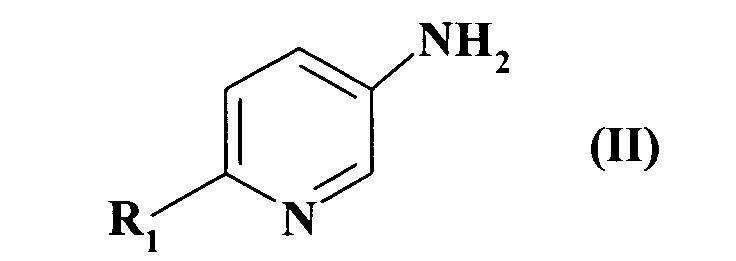
compound of formula (II) in which the primary amino group is protected in a first step by a usual protective group (G1) used classically in organic synthesis, then is treated with oxirane or bromoethanol, in presence of a strong base to yield the compound of formula (III):in which R1 and G1 are as defined hereinbefore,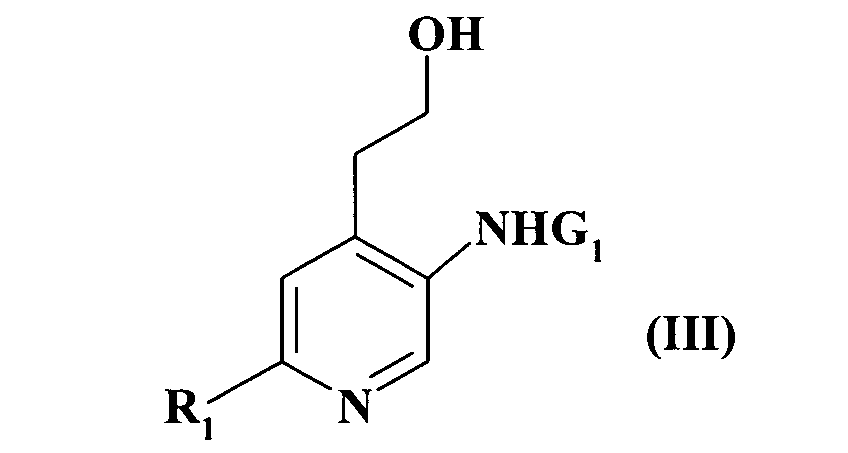
compound of formula (III) which is reacted with methanesulfonyl chloride to yield the corresponding mesylate intermediate (in the place of the primary alcohol), which is treated directly in polar condition with LiHMDS to yield to the cyclized compound of formula (IV):in which R1 and G1 are as defined hereinbefore,
compound of formula (IV) which is treated with hydrogen bromide in the presence of hydrogen peroxide to yield to the corresponding 7-bromo-pyrrolo[2,3-c]pyridin of formula (V):in which R1 is as defined hereinbefore,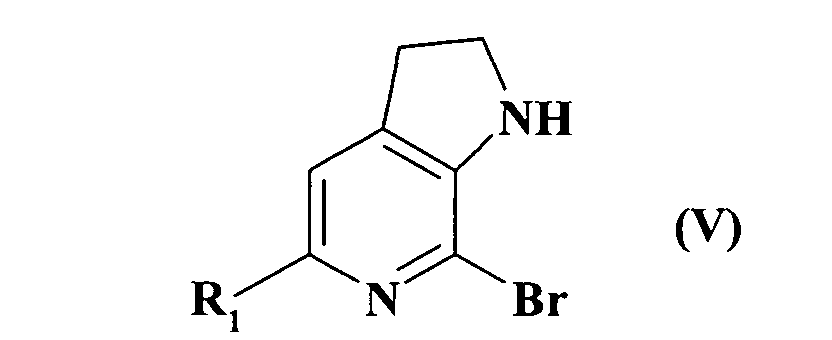
compound of formula (V), which is reacted with zinc cyanide under palladium condition or with cupper cyanide under heating or micro-wave conditions to yield to the corresponding cyanide compound of formula (VI):in which R1 is as defined hereinbefore,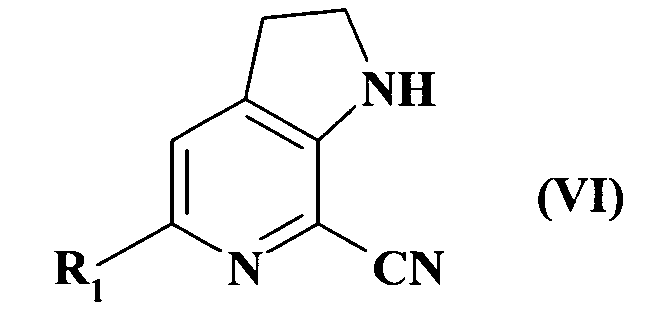
which compound of formula (VI) being treated with phenylmagnesium bromide under polar solvent to yield to the compound of formula (VII):in which R1 is as defined hereinbefore,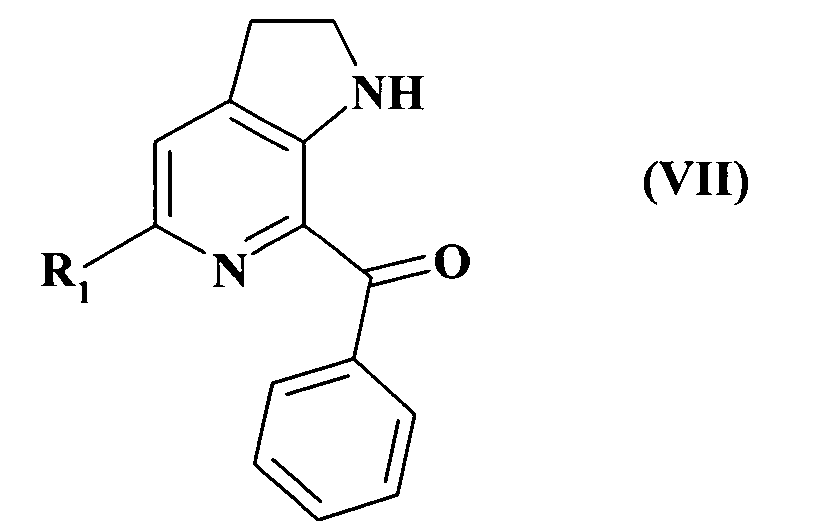
compound of formula (VII) being condensed with methyl glycinate hydrochloride in presence of pyridine, to yield to the compound of formula (VIII):in which R1 is as defined hereinbefore,
which compound of formula (VIII) is reacted with trisylazide to yield to the compound of formula (IX):in which R1 is as defined hereinbefore,
compound of formula (IX) being reduced under smooth conditions with triphenylphosphine in wet tetrahydrofurane to yield to the amino derivative of formula (X):in which R1 is as defined hereinbefore,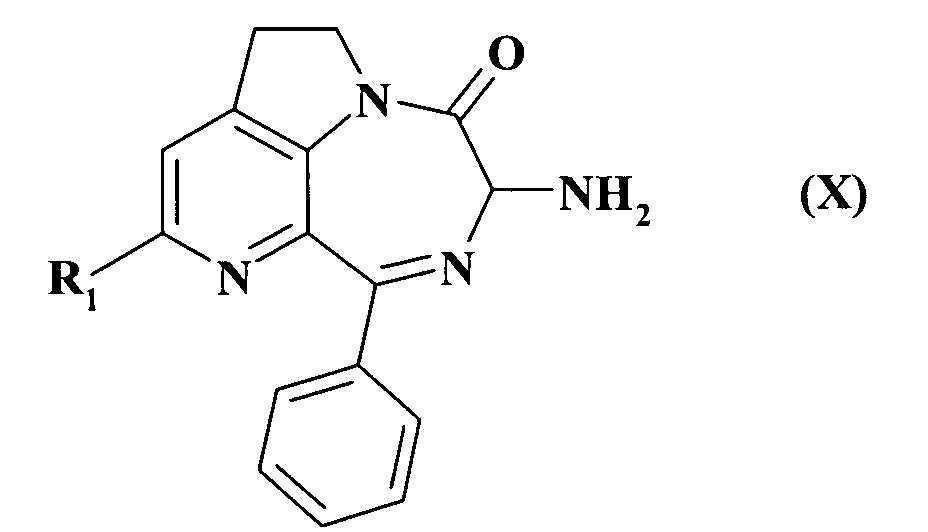
which compound of formula (X) being reacted under peptidic coupling conditions in basic medium using a classical coupling agent of organic synthesis with a compound of formula (XI):in which R2 is as defined in the compounds of general formula (I) and L1 represent a leaving group like halogen or (C1-C4)alkoxy,
to yield to the compound of formula (I), which are purified, where appropriate, according to a conventional purification technique, which are separated, where appropriate, into their different isomers according to a conventional separation technique, and which are converted, where appropriate, into addition salts thereof with a pharmaceutically-acceptable acid or base. - Compounds of formulae (II) and (XI) are either commercial or obtained easily by using classical reactions of organic synthesis well known by the man skilled in the art.
- Compounds of formulae (IV), (V), (VI), (VII), (VIII) and (X) described in the hereinabove process constitute intermediate compounds for the synthesis of the final products of formula (I). These compounds of formula (IV), except 1-(2,3-dihydro-pyrrolo[2,3-c]pyridin-1-yl)acetate and tert-butyl 1-(2,3-dihydro-pyrrolo[2,3-c]pyridin-1-yl)carboxylate, and of formulae (V), (VI), (VII), (VIII) and (X) represent new compounds useful as intermediates.
- The compounds of formula (I) are purified, where appropriate, according to a conventional purification technique, and separated, where appropriate, into their different isomers according to a conventional separation technique, and converted, where appropriate, into addition salts thereof with a pharmaceutically-acceptable acid or base.
- Generally, isomers of the compounds of the invention are understood to be optical isomers such as enantiomers and diastereoisomers. More especially, pure enantiomeric forms of the compounds of the invention may be separated by starting from mixtures of enantiomers which are reacted with a racemate-separating agent that can be released, the said agent being itself in the form of a pure enantiomer, which allows the corresponding diastereoisomers to be obtained. The diastereoisomers are then separated according to the separation techniques well known to the person skilled in the art, such as crystallization or chromatography, and the separating agent is then removed using conventional techniques of organic synthesis, resulting in a pure enantiomer.
- The compounds of the invention that are present in the form of a mixture of diastereoisomers are isolated in a pure form by using conventional separation techniques such as chromatography.
- As mentioned above, compounds of formula (I) of the present invention are phosphodiesterase inhibitors, and more particularly inhibitors of the enzyme PDE4.
- In this respect, their use is recommended for the treatment of diseases or complaints involving a therapy by PDE4 inhibition. By way of example, the use of the compounds of the present invention may be recommended for the treatment of cancer, acquired immunodeficiency syndrome, fibrosis, excessive scarring including excessive dermal scarring such as normal or abnormal dermal scarring following wounding or surgery, osteoarthritis, osteoporosis, multiple sclerosis, anxiety, depression, atopic dermatitis, rheumatoid arthritis, septic shock, immune diseases including disseminated lupus erythematous, psoriasis, graft rejection and allergic rhinitis, as well as diseases involving the production of TNFα and more particularly in the treatment of inflammatory complaints such as asthma, chronic obstructive bronchopneumopathy (COPD), post-ischaemic lesions, pulmonary hypertension, congestive cardiac insufficiency, acute respiratory distress syndrome, and chronic inflammatory diseases of the intestine (IBD) such as Crohn's disease and ulcerative colitis.
- In a preferred embodiment, compounds of formula (I) of the present invention are useful for the preparation of a medicinal product intended for treating a disease selected from chronic obstructive bronchopneumopathy, asthma and chronic inflammatory diseases of the intestine such as Crohn's disease and ulcerative colitis.
- More particularly, the compounds of formula (I) of the present invention are useful from treating a disease selected from chronic obstructive bronchopneumopathy and asthma.
- The present invention also relates to pharmaceutical compositions comprising as active ingredient at least one compound of formula (I), an isomer thereof, a N-oxide thereof, or an addition salt thereof with a pharmaceutically-acceptable acid or base, alone or in combination with one or more pharmaceutically-acceptable, inert, non-toxic excipients or carriers.
- Among the pharmaceutical compositions according to the invention, there may be mentioned more especially those that are suitable for oral, parenteral (intravenous, intramuscular or subcutaneous), per- or trans-cutaneous, intravaginal, rectal, nasal, perlingual, buccal, ocular or respiratory administration.
- Pharmaceutical compositions according to the invention for parenteral injections especially include aqueous and non-aqueous sterile solutions, dispersions, suspension and emulsions, and also sterile powders for reconstituting injectable solutions or dispersions.
- Pharmaceutical compositions according to the invention for oral administration in solid form especially include tablets or dragées, sublingual tablets, sachets, gelatin capsules and granules, for oral, nasal, buccal or ocular administration in liquid form, especially include emulsions, solutions, suspensions, drops, syrups and aerosols.
- Pharmaceutical compositions for rectal or vaginal administration are preferably suppositories, and those for per- or trans-cutaneous administration especially include powders, aerosols, creams, ointments, gels and patches.
- The pharmaceutical compositions mentioned hereinbefore illustrate the invention but do not limit it in any way.
- Among the pharmaceutically acceptable, inert, non-toxic excipients or carriers there may be mentioned, by way of non-limiting example, diluents, solvents, preservatives, wetting agents, emulsifiers, dispersing agents, binders, swelling agents, disintegrating agents, retardants, lubricants, absorbents, suspending agents, colorants, aromatizing agents etc...
- The useful dosage varies according to the age and weight of the patient, the administration route, the pharmaceutical composition used, the nature and severity of the disorder and the administration of any associated treatments. The dosage ranges from 2 mg to 1 g per day in one or more administrations. The compositions are prepared by methods that are common to those skilled in the art and generally comprise 0.5% to 60% by weight of active principle (compound of formula (I)) and 40% to 99.5% by weight of pharmaceutically acceptable excipients or carriers.
- The examples that follow illustrate the invention but do not limit it in any way.
- The starting materials used are products that are known or that are prepared according to known operating procedures. The various preparations yield synthetic intermediates that are useful in preparation of the compounds of the invention. Some of these intermediates are new compounds.
- The structures of the compounds described in the Examples were determined according to the usual spectrophotometric techniques (infrared, nuclear magnetic resonance, mass spectrometry, ...)
In the experimental part: - BOC2O means di-tert-butyl dicarbonate
- TMEDA means N,N,N',N'-tetramethylethylenediamine
- LiHMDS means lithium hexamethyldisilazane
- DMF means dimethylformamide
- THF means tetrahydrofurane
-

- To a solution of 5-amino-2-methoxypyridine (25 g, 202 mmol) in 1,4-dioxane (300 ml) was added BOC2O (48.4 g, 222 mmol) in one portion. The reaction mixture was heated at reflux for two hours, then concentrated in vacuum and further dissolved in dichloromethane. The organic phase was successively washed with HCl 1M, saturated NaHCO3 and water, and dried over Na2SO4 and concentrated under reduced pressure. The crude product was purified by flash chromatography (dichloromethane/acetone: 95/5) afforded 35.4 g of the title compound as a salmon solid. Yield : 79%.
1H NMR (400 MHz, CDCl3) δ 8.00 (d, 1H), 7.80 (br s, 1H) , 6.71 (d, 1H), 6.39 (br s, 1H), 3.90 (s, 3H), 1.50 (s, 9H). -
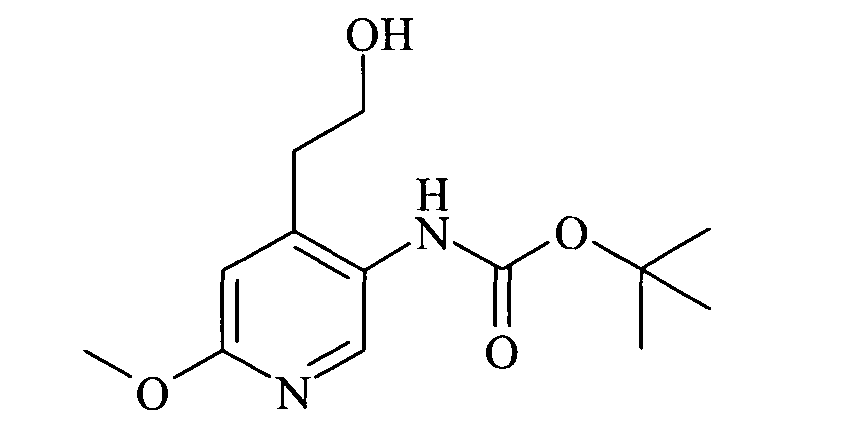
- To a solution of the compound obtained in step 1 (17.5 g, 78 mmol) in dry diethyl ether (400 ml) under nitrogen atmosphere was added TMEDA (28.1 g, 242 mmol) in one portion. The reaction mixture was cooled to -78°C and n-butyl lithium (2.5 M solution in hexane, 100 ml, 234 mmol) was added maintaining a temperature less than -65°C. The reaction mixture was warmed to -10°C and held at this temperature for one hour (the mixture is milky), re-cooled to -78°C and ethylene oxide (8.4 g, 117 mmol) was added. The reaction mixture was allowed to warm slowly to 10°C and stirred until the solution turned to transparency. The reaction mixture was quenched with iced saturated NH4Cl, diluted with ethyl acetate. The organic phase was separated and the aqueous phase extracted with ethyl acetate. The combined organic phases were dried over Na2SO4, concentrated in vacuo to yield the crude product as a brown oil. The crude material was purified by flash chromatography (cyclohexane/ethyl acetate 70/30 then 50/50) to yield the title compound as a yellow crystallizing oil (12.8 g, 61%).
1H NMR (400 MHz, CDCl3) δ8.14 (br s, 1H), 7.48 (br s, 1H), 6.54 (s, 1H), 3.85 (s, 3H), 3.82 (t, 2H, 5.55 Hz), 2.74 (t, 2H, 5.56H), 1.47 (s, 9H). -

- To a cooled solution of the compound obtained in step 2 (12.8 g, 48 mmol) in dry dichloromethane (200 ml) under nitrogen atmosphere was added at 0°C triethylamine (14.6 ml, 105 mmol) in one portion. To this mixture, methanesulphonyl chloride (6 g, 53 mmol) was added slowly keeping the temperature below 0°C. The reaction mixture was allowed to warm to ambient temperature and stirred 1h. The reaction mixture was quenched with saturated sodium bicarbonate (3 x 50 ml). The organic phase was separated and washed with water (20 ml). The combined organic phases were dried over Na2SO4 and concentrated in vacuo to yield the title compound as beige solid (15.6 g, 94 %).
1H NMR (400 MHz, CDCl3) δ 8.21 (s, 1H), 6.65 (s, 1H), 6.19 (br s, 1H), 4.46 (t, 2H), 3.9 (s, 3H), 3.01 (t, 2H), 2.97 (s, 3H), 1.49 (s, 9H). -
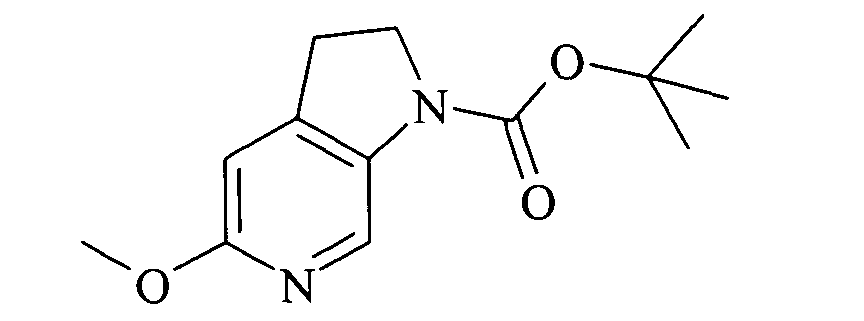
- To a cooled solution of compound obtained in step 3 (15.6 g, 45 mmol) in tetrahydrofuran (220 ml) was added under nitrogen atmosphere at -78°C LiHMDS (1M solution in THF, 50 ml) maintaining a temperature less than -65°C. The reaction mixture was allowed to warm slowly to ambient temperature and stirred until complete. The reaction mixture was quenched in iced water and extracted with ether. The combined organic phases were dried over Na2SO4 and concentrated in vacuo. The resulting solid was triturated in ether to yield the title compound as a white solid (8.9 g, 80%).
1H NMR (400 MHz, CDCl3) δ 8.32 (2br s, 1H), 6.58 (s, 1H), 4.01 (t, 2H), 3.90 (s, 3H), 3.05 (t, 2H), 1.52 (s, 9H). -

- To a cooled solution of compound obtained in step 4 (11.7 g, 47 mmol) in hydrogen bromide 47% W/W (27 ml, 234 mmol) was added at 10°C via a dropping funnel a solution of hydrogen peroxide 50% W/W (3.5 ml, 61 mmol) diluted in 8 ml of water keeping the temperature less than 30°C. The reaction mixture was stirred at room temperature until complete by TLC. The reaction mixture was cooled to less than 10°C and basified to pH 7-8 with a solution of NaOH 1M. The organic phase was separated and the aqueous phase extracted with dichloromethane. The combined extracts were dried over Na2SO4, filtered and concentrated in vacuo. The crude material was purified by flash chromatography (dichloromethane/ethyl acetate: 99/01) to yield the title compound as a yellow oil (11.9 g 73%).
1H NMR (400 MHz, CDCl3) δ6.50 (s, 1H), 3.85 (s, 3H), 3.61 (t, 2H, 8.1 Hz), 3.10 (t, 2H, 8.1 Hz). -
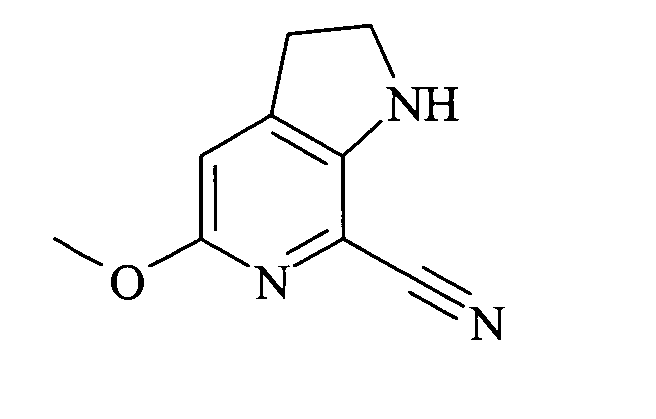
- To a solution of compound obtained in step 5 (12 g, 52 mmol) in degassed DMF (100ml) under an atmosphere of nitrogen were added dppf (0.35 g, 0.64 mmol) and Pd(dba)3 (0.500 g, 0.54 mmol) in one portion, followed by ZnCN2 (3.66 g, 32 mmol). The reaction mixture was heated 3 hours to 130°C and stirred until complete by TLC. DMF was removed in vacuum and the residue was dissolved in ethyl acetate and ammoniac 14%. The organic phase was separated and the aqueous extracted with ethyl acetate. The combined organic fractions were dried over Na2SO4 and concentrated. The crude product was purified by column chromatography (dichloromethane/ethyl acetate: 98/02) to yield the title compound as a beige solid (6.4 g, 70%).
1H NMR (400 MHz, CDCl3) δ6.69 (s, 1H), 4.25 (br s, 1H), 3.88 (s, 3H), 3.72 (t, 2H), 3.10 (t, 2H). -

- To a cooled solution of compound obtained in step 6 (0.5 g, 2.85 mmol) in THF (15 ml) under nitrogen atmosphere was added slowly at -5°C phenylmagnesium bromide (1M solution in THF, 15 ml) and stirred at this temperature for 15 minutes then warmed to room temperature until complete by TLC. The reaction mixture was quenched with a solution of ammonium chloride 1M and diluted with ethyl acetate. The reaction mixture was acidified to pH 1 using an aqueous solution of HCl 1M and the organic phase was separated. The aqueous phase was extracted with ethyl acetate. The combined organic fractions were dried over Na2SO4 and concentrated to dryness in vacuum. The crude material was purified by column chromatography (dichloromethane) to yield the title compound as a bright yellow solid (0.4 g, 55%).
1H NMR (400 MHz, CDCl3) δ 8.24 (d, 2H, 6.6 Hz), 7.42-7.51 (m, 3H), 7.06 (br s, 1H), 6.69 (s, 1H), 3.61 (m, 5H), 3.09 (t, 2H, 9.1 Hz). -

- To a solution of compound obtained in step 7 (0.1 g, 0.40 mmol) in pyridine (25ml) was added methyl glycinate hydrochloride (0.054 g, 0.43 mmol). The mixture was heated two days at reflux (115°C) using a Dean Stark apparatus until complete by TLC. The reaction mixture was concentrated to dryness in vacuo and diluted in dichloromethane and washed with Na2CO3 2.5%. The combined organic fractions were dried over Na2SO4 and concentrated to dryness in vacuo. The crude material was purified by column chromatography (dichloromethane/ethyl acetate: 80:20) to yield the title compound as a beige solid (0.050 g, 43%).
1H NMR (400 MHz, CDCl3) δ7.67 (d, 2H, 7.1 Hz), 7.35-7.42 (m, 3H), 6.82 (s, 1H), 4.44 (s, 2H), 4.27 (t, 2H, 7.6 Hz), 3.78 (s, 3H), 3.19 (t, 2H, 7.6 Hz). -

- To a cooled suspension of potassium tert-butylate (0.042 g, 0.375 mmol) in THF (1 ml) was added at -78°C under nitrogen atmosphere, a solution of compound obtained in step 8 (0.1 g, 0.34 mmol) in THF (1 ml) dropwise. The reaction mixture turned dark blue. A solution of trisylazide (0.116 g, 0.375 mmol) in THF (1 ml) was added and the reaction mixture turned orange. The reaction mixture was stirred at -78°C for 5 minutes before glacial acetic acid was added (0.09 ml, 1.57 mmol) and allowed to warm to room temperature. The reaction mixture was diluted with dichloromethane and washed with a solution of NaHCO3, water and brine. The combined organic fractions were dried over Na2SO4 and concentrated to dryness in vacuo. The crude material was purified by column chromatography (dichloromethane/ethyl acetate: 98:02) to yield the title compound as a solid (0.3 g, 26%).
1H NMR (400 MHz, CDCl3) δ 3.115 (m, 1H), 3.30 (m, 1H), 3.80 (s, 3H), 4.00 (m, 2H), 6.89 (s, 1H), 7.38-7.50 (m, 3H), 7.80 (d, 2H). -

- To a solution of compound obtained in step 9 (0.14 g, 0.42 mmol) in THF (3 ml) was added triphenylphosphine (0.22 g, 0.84) and water (0.33 ml). The reaction mixture was stirred at room temperature for 5 hours. The reaction mixture was concentrated to dryness in vacuo. The residue was diluted with ethyl acetate and extracted with a solution of HCl 1M and twice with water. The aqueous phase was basified to pH 12 with a solution of NaOH 1M and extracted with ethyl acetate. The combined organic phases were dried over Na2SO4 and concentrated to dryness in vacuo to yield the title compound as a solid (0.090 g, 69%), which was used in next step without any further purification.
'H NMR (400 MHz, CDCl3) δ 2.50 (br s, 2H), 3.12 (m, 1H), 3.30 (m, 1H), 3.79 (s, 3H), 3.97 (m, 1H), 4.59 (s, 1H), 4.71 (m, 1H), 6.85 (s, 1H), 7.39-7.50 (m, 3H), 7.70 (d, 2H). -

- To a solution of compound obtained in step 10 (0.070 g, 0.23 mmol), in dichloromethane (3 ml) was added nicotinic acid (0.030 g, 0.24 mmol) and O-[(ethoxycarbonyl)cyanomethyleneamino]-N,N,N',N'-tetramethyluronium tetrafluoroborate (TOTU) (0.075 g, 0.23 mmol) in one portion. The reaction mixture was cooled to 0-5°C and diisopropylethylamine (0.060 g, 0.46 mmol) was added dropwise. The yellow solution was stirred overnight at room temperature. The reaction mixture was diluted with dichloromethane and washed with water, a solution of NaHCO3 and brine. The organic phase was dried over Na2SO4 and concentrated to dryness in vacuo. The crude material was purified by column chromatography (dichloromethane/methanol 100/0, then 98/02 and 97/03) to yield to the desired product, which was triturated in a mixture of ether and pentane (0.080 g, 84%). Both enantiomers were separated by chiral preparative HPLC (column Chiralcel@ OD-H 20x250 mm, 5µm, 17 ml/min, acetonitrile 100%). Rt = 5.79 min and 8.15 min.
1H NMR (500 MHz, DMSO) δ 3.17 (m, 1H), 3.37 (m, 1H), 3.75 (s, 3H), 3.96 (m, 1H), 4.47 (m, 1H), 5.60 (d, 1H), 7.15 (s, 1H), 7.43 (m, 2H), 7.49 (m, 1H), 7.56 (m, 1H), 7.68 (d, 2H), 8.39 (m, 1H), 8.76 (d, 1H), 9.18 (s, 1H), 9.96 (d, 1H). - The capacity of the compounds of formula (I) of the invention to inhibit cyclic nucleotide phosphodiesterases is evaluated by measuring their IC50 (concentration needed to inhibit 50% of the enzymatic activity). In the case of PDE4 enzymes, this value is compared to the IC50 value for rolipram, a reference inhibitor for PDE4 enzymes.
- The type 4 phosphodiesterases are obtained from a cytosolic preparation extracted from a cell line of human origin, U937, according to the method adapted from T. J. Torphy et al., 1992, J. Pharm. Exp. Ther. 263: 1195-1205.
- The other types of phosphodiesterases are obtained during a partial purification by FPLC on a Mono Q column (anion exchange column) according to a method adapted from Lavan B. E., Lakey T., Houslay M. D. Biochemical Pharmacology, 1989, 38(22), 4123-4136, and Silver P.J et al., 1988, Eur. J. Pharmacol. 150: 85-94, either starting with cell lines of human origin for PDE1 (monocyte line TPH1) and PDE5 (line derived from an adenocarcinoma MCF7), or starting with dog aorta for PDE3, or, for human PDE3A, starting with a cloning of genes in SF21 insect cells into baculovirus, according to the method adapted from Luckow, V. A. et al., 1991 in Recombinant DNA Technology & Applications., eds. Prokop, Bajpai, R. K. & Ho, C.S., pp 97-152.
- The measurement of the enzymatic activity for the various types of PDE, and in particular the PDE4 enzymes, is carried out according to a method adapted from W. J. Thomson et al. 1979, Advances in Cyclic Nucleotide Research, Vol. 10: 69-92, ed. G. Brooker et al. Raven Press, NY.
- For the determination of the IC50 value, the enzymatic activity is measured in the presence of the inhibitor in a concentration range from 0.1 to 100 µM.
- Using this test, the racemate of compound of Example 1, the first enantiomer (Rt=5.79 min) of compound of Example 1, and the second enantiomer (Rt = 8.15 min) of compound of Example 1 show respectively an IC50 at 6.1 µM, 4.3 µM, and 73 µM.
Claims (22)
- Compounds of formula (I):characterized in that:
 and optionally, their optical isomers, and addition salts thereof with a pharmaceutically acceptable acid or base.R1 represents a group selected from hydrogen atom, methyl, methoxy, hydroxy, amino, dimethylamino, acetamido, pyrrolidin-1-yl, and hydroxymethyl;R2 represent a group selected from phenyl, pyridyl, pyrimidyl, quinolyl, isoquinolyl, indolyl, pyrolyl, [1,2,3]-triazolyl, benzo[c]isoxazolyl, thienyl, pyrazolyl, isothiazolyl, imidazolyl, benzofuranyl, pyrazolo[5,1-c][1,2,4]triazyl each of these groups being optionally substituted from 1 to 3 groups, identical or different independently of each other, selected from halogen, trifluoromethyl, (C1-C4)alkyl, (C1-C4)alkoxy, hydroxy, amino, acetamido, tert-butyloxycarbonylamino, cycloalkylcarbonylamino, sulfonamide, nitro, acetylmethoxy, cyclopentyloxy;
 - Compounds of formula (I) according to claim 1 characterized in that:and optionally, their optical isomers, and addition salts thereof with a pharmaceutically acceptable acid or base.R1 represents a group selected from methyl, methoxy, amino and acetamido;R2 represents a group selected from phenyl, pyridin-3-yl, and pyridin-4-yl, each of these groups being optionally substituted from 1 to 3 groups, identical or different independently of each other selected from halogen, methoxy and amino;
- Compounds of formula (I) according to anyone of claims 1 or 2 characterized in that R2 represents a pyridin-4-yl or a pyridin-3-yl group optionally substituted from 1 to 3 groups as defined in claim 1, and optionally, their optical isomers, and addition salts thereof with a pharmaceutically acceptable acid or base.
- Compounds of formula (I) according to anyone of claims 1 or 2 characterized in that R1 represents a group selected from methoxy and amino, and R2 represents a pyridin-3-yl, and optionally, their optical isomers, and addition salts thereof with a pharmaceutically acceptable acid or base.
- A compound of formula (I) according to claim 1, which is:its optical isomers, and addition salt thereof with a pharmaceutically acceptable acid or base.N-(4-methoxy-9-oxo-6-phenyl-1,2,8,9-tetrahydro-5,7,9a-triaza-benzo[cd]azulen-8-yl)-nicotinamide,
- A compound of formula (I) according to claim 1, which is the (1R) N-(4-methoxy-9-oxo-6-phenyl-1,2,8,9-tetrahydro-5,7,9a-triaza-benzo[cd]azulen-8-yl)-nicotinamide, and addition salt thereof with a pharmaceutically acceptable acid or base.
- A compound of formula (I) according to claim 1, which is the (1S) N-(4-methoxy-9-oxo-6-phenyl-1,2,8,9-tetrahydro-5,7,9a-triaza-benzo[cd]azulen-8-yl)-nicotinamide, and addition salt thereof with a pharmaceutically acceptable acid or base.
- A process for the preparation of the compound of formula (I) characterized in that there is used as starting material a compound of formula (II):in which R1 is as defined in the compound of general formula (I),

compound of formula (II) in which the primary amino group is protected in a first step by a usual protective group (G1) used classically in organic synthesis, then is treated with oxirane or bromoethanol, in presence of a strong base to yield the compound of formula (III):in which R1 and G1 are as defined hereinbefore,
compound of formula (III) which is reacted with methanesulfonyl chloride to yield the corresponding mesylate intermediate (in the place of the primary alcohol), which is treated directly in polar condition with LiHMDS to yield to the cyclized compound of formula (IV):in which R1 and G1 are as defined hereinbefore,
compound of formula (IV) which is treated with hydrogen bromide in the presence of hydrogen peroxide to yield to the corresponding 7-bromo-pyrrolo[2,3-c]pyridin of formula (V):in which R1 is as defined hereinbefore,
compound of formula (V), which is reacted with zinc cyanide under palladium condition or with cupper cyanide under heating or micro-wave conditions to yield to the corresponding cyanide compound of formula (VI):in which R1 is as defined hereinbefore,
which compound of formula (VI) being treated with phenylmagnesium bromide under polar solvent to yield to the compound of formula (VII):in which R1 is as defined hereinbefore,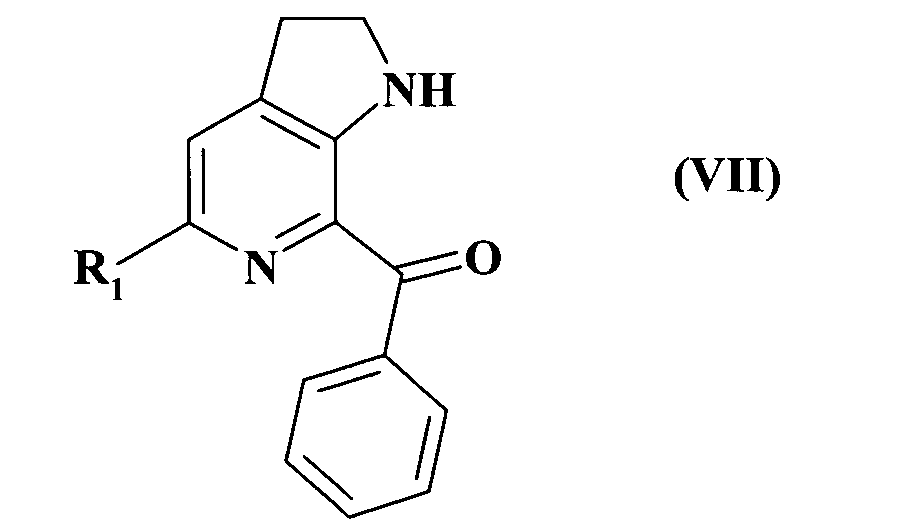
compound of formula (VII) being condensed with methyl glycinate hydrochloride in presence of pyridine, to yield to the compound of formula (VIII):in which R1 is as defined hereinbefore,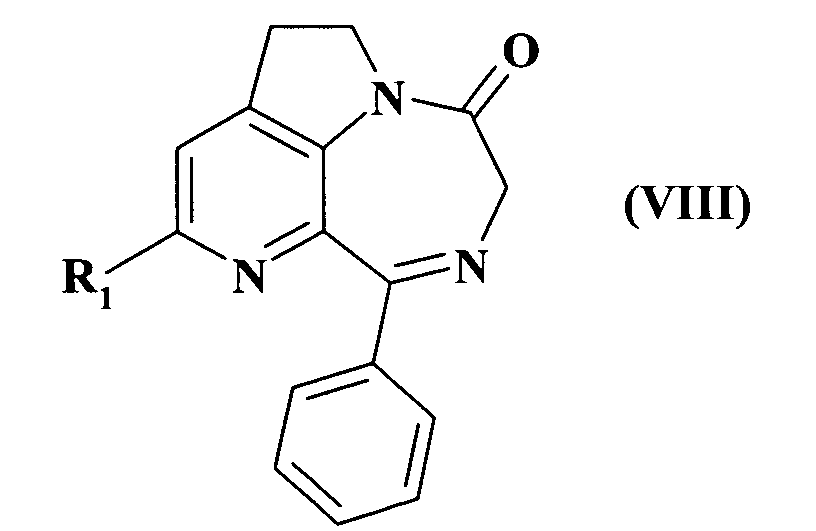
which compound of formula (VIII) is reacted with trisylazide to yield to the compound of formula (IX):in which R1 is as defined hereinbefore,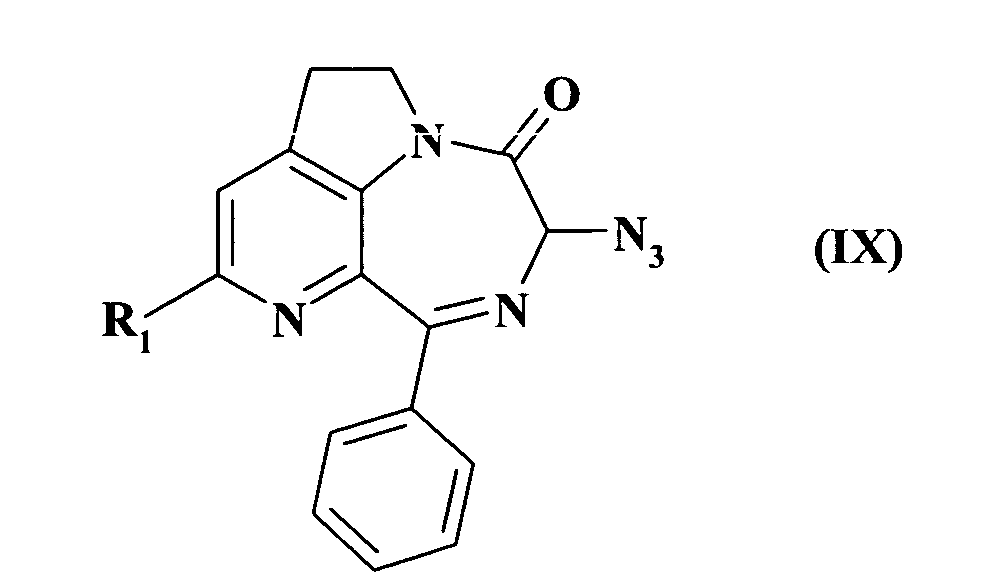
compound of formula (IX) being reduced under smooth conditions with triphenylphosphine in wet tetrahydrofurane to yield to the amino derivative of formula (X):in which R1 is as defined hereinbefore,
which compound of formula (X) being reacted under peptidic coupling conditions in basic medium using a classical coupling agent of organic synthesis with a compound of formula (XI):in which R2 is as defined in the compounds of general formula (I) and L1 represent a leaving group like halogen or (C1-C4)alkoxy,
to yield to the compound of formula (I), which are purified, where appropriate, according to a conventional purification technique, which are separated, where appropriate, into their different isomers according to a conventional separation technique, and which are converted, where appropriate, into addition salts thereof with a pharmaceutically-acceptable acid or base. - Intermediate compounds of formula (IV):in which R1 is as defined in the compound of formula (I) in claim 1, and G1 represents a protecting group of the amino group classically used in organic synthesis, except that (IV) does not represent 1-(2,3-dihydro-pyrrolo[2,3-c]pyridin-1-yl)acetate and tert-butyl 1-(2,3-dihydro-pyrrolo[2,3-c]pyridin-1-yl)carboxylate.

- Intermediate compounds of formula (V):in which R1 is as defined in the compound of formula (I) in claim 1.
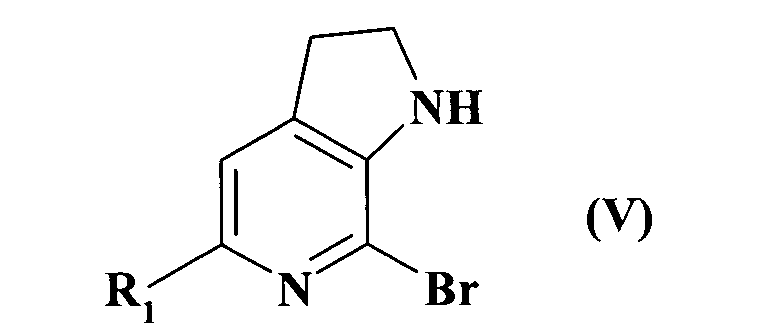
- Intermediate compounds of formula (VI):in which R1 is as defined in the compound of formula (I) in claim 1.

- Intermediate compounds of formula (VII):in which R1 is as defined in the compound of formula (I) in claim 1.

- Intermediate compounds of formula (VIII):in which R1 is as defined in the compound of formula (I) in claim 1.
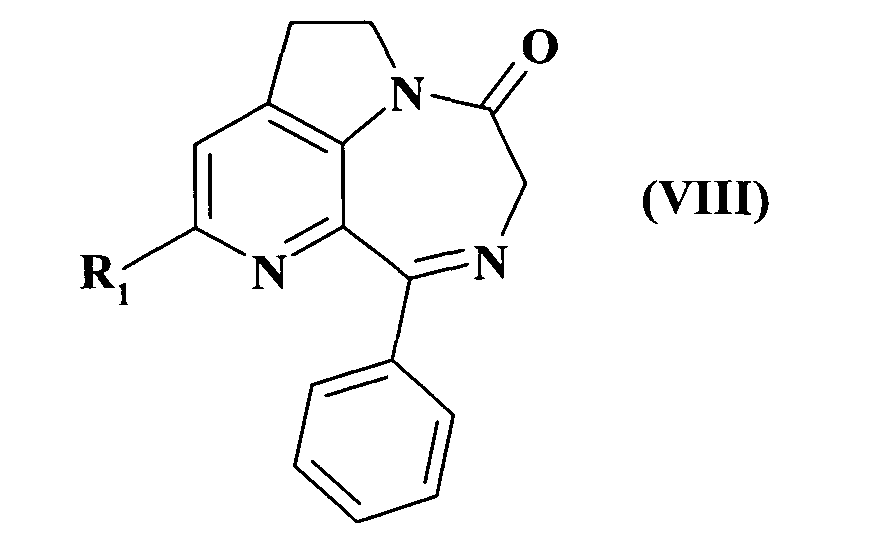
- Intermediate compounds of formula (X):in which R1 is as defined in the compound of formula (I) in claim 1.

- A method for treating a living body afflicted with a disease where the inhibition of phosphodiesterase type 4 is involved, comprising the step of administering to the living body an amount of a compound of claim 1 which is effective for alleviation of said conditions.
- A method for treating a living body afflicted with a disease selected from cancer, acquired immunodeficiency syndrome, fibrosis, excessive scarring including excessive dermal scarring such as normal or abnormal dermal scarring following wounding or surgery, osteoarthritis, osteoporosis, multiple sclerosis, anxiety, depression, atopic dermatitis, rheumatoid arthritis, septic shock, immune diseases including disseminated lupus erythematous, psoriasis, graft rejection and allergic rhinitis, as well as diseases involving the production of TNFα, inflammatory complaints such as asthma, chronic obstructive bronchopneumopathy (COPD), post-ischaemic lesions, pulmonary hypertension, congestive cardiac insufficiency, acute respiratory distress syndrome, and chronic inflammatory diseases of the intestine (IBD) such as Crohn's disease and ulcerative colitis, comprising the step of administering to the living body an amount of a compound of claim 1 which is effective for alleviation of said conditions.
- A pharmaceutical composition comprising as active ingredient an effective amount of a compound as claimed in claim 1, alone or in combination with one or more pharmaceutically-acceptable excipients or carriers.
- A pharmaceutical composition useful in the method of Claim 15 comprising as active ingredient an effective amount of a compound as claimed in claim 1, together with one or more pharmaceutically-acceptable excipients or carriers.
- Use of a compound according to Claim 1, for the preparation of a medicinal product intended for treating a disease involving therapy by inhibition of type 4 phosphodiesterase.
- Use according to Claim 19, characterized in that the disease is cancer, acquired immunodeficiency syndrome, fibrosis, excessive scarring including excessive dermal scarring such as normal or abnormal dermal scarring following wounding or surgery, osteoarthritis, osteoporosis, multiple sclerosis, anxiety, depression, atopic dermatitis, rheumatoid arthritis, septic shock, immune diseases including disseminated lupus erythematous, psoriasis, graft rejection and allergic rhinitis, as well as diseases involving the production of TNFα, inflammatory complaints such as asthma, chronic obstructive bronchopneumopathy (COPD), post-ischaemic lesions, pulmonary hypertension, congestive cardiac insufficiency, acute respiratory distress syndrome, and chronic inflammatory diseases of the intestine (IBD) such as Crohn's disease and ulcerative colitis.
- Use according to Claim 19, characterized in that the disease is selected from chronic obstructive bronchopneumopathy, asthma and chronic inflammatory diseases of the intestine (IBD) such as Crohn's disease and ulcerative colitis.
- Use according to Claim 19, characterized in that the disease is selected from chronic obstructive bronchopneumopathy and asthma.
Priority Applications (7)
| Application Number | Priority Date | Filing Date | Title |
|---|---|---|---|
| EP03292660A EP1526135A1 (en) | 2003-10-24 | 2003-10-24 | Azabenzodiazepines as pde4 inhibitors |
| CA002542720A CA2542720A1 (en) | 2003-10-24 | 2004-10-18 | Azabenzodiazepines as phosphodiesterase-4 inhibitors |
| PCT/IB2004/003406 WO2005040168A1 (en) | 2003-10-24 | 2004-10-18 | Azabenzodiazepines as phosphodiesterase-4 inhibitors |
| BRPI0415570-0A BRPI0415570A (en) | 2003-10-24 | 2004-10-18 | azabenzodiazepines as phosphodiesterase-4 inhibitors |
| JP2006536201A JP2007509127A (en) | 2003-10-24 | 2004-10-18 | Azabenzodiazepines as phosphodiesterase-4 inhibitors |
| EP04769665A EP1680423A1 (en) | 2003-10-24 | 2004-10-18 | Azabenzodiazepines as phosphodiesterase-4 inhibitors |
| MXPA06004486A MXPA06004486A (en) | 2003-10-24 | 2004-10-18 | Azabenzodiazepines as phosphodiesterase-4 inhibitors. |
Applications Claiming Priority (1)
| Application Number | Priority Date | Filing Date | Title |
|---|---|---|---|
| EP03292660A EP1526135A1 (en) | 2003-10-24 | 2003-10-24 | Azabenzodiazepines as pde4 inhibitors |
Publications (1)
| Publication Number | Publication Date |
|---|---|
| EP1526135A1 true EP1526135A1 (en) | 2005-04-27 |
Family
ID=34384718
Family Applications (2)
| Application Number | Title | Priority Date | Filing Date |
|---|---|---|---|
| EP03292660A Withdrawn EP1526135A1 (en) | 2003-10-24 | 2003-10-24 | Azabenzodiazepines as pde4 inhibitors |
| EP04769665A Withdrawn EP1680423A1 (en) | 2003-10-24 | 2004-10-18 | Azabenzodiazepines as phosphodiesterase-4 inhibitors |
Family Applications After (1)
| Application Number | Title | Priority Date | Filing Date |
|---|---|---|---|
| EP04769665A Withdrawn EP1680423A1 (en) | 2003-10-24 | 2004-10-18 | Azabenzodiazepines as phosphodiesterase-4 inhibitors |
Country Status (6)
| Country | Link |
|---|---|
| EP (2) | EP1526135A1 (en) |
| JP (1) | JP2007509127A (en) |
| BR (1) | BRPI0415570A (en) |
| CA (1) | CA2542720A1 (en) |
| MX (1) | MXPA06004486A (en) |
| WO (1) | WO2005040168A1 (en) |
Cited By (1)
| Publication number | Priority date | Publication date | Assignee | Title |
|---|---|---|---|---|
| US20100273752A1 (en) * | 2007-12-04 | 2010-10-28 | Pierre Fabre Medicament | Mequitazine for treating or preventing pathologies involving histamine h4 receptors |
Families Citing this family (1)
| Publication number | Priority date | Publication date | Assignee | Title |
|---|---|---|---|---|
| CA3075740A1 (en) * | 2017-09-12 | 2019-03-21 | Yang Ye | Solid forms of stemospironine and its salts |
Citations (1)
| Publication number | Priority date | Publication date | Assignee | Title |
|---|---|---|---|---|
| WO1999050270A1 (en) * | 1998-03-27 | 1999-10-07 | Parke-Davis | Phosphodiesterase iv-inhibiting diazepinoindoles |
-
2003
- 2003-10-24 EP EP03292660A patent/EP1526135A1/en not_active Withdrawn
-
2004
- 2004-10-18 MX MXPA06004486A patent/MXPA06004486A/en unknown
- 2004-10-18 EP EP04769665A patent/EP1680423A1/en not_active Withdrawn
- 2004-10-18 JP JP2006536201A patent/JP2007509127A/en active Pending
- 2004-10-18 CA CA002542720A patent/CA2542720A1/en not_active Abandoned
- 2004-10-18 WO PCT/IB2004/003406 patent/WO2005040168A1/en not_active Ceased
- 2004-10-18 BR BRPI0415570-0A patent/BRPI0415570A/en not_active IP Right Cessation
Patent Citations (1)
| Publication number | Priority date | Publication date | Assignee | Title |
|---|---|---|---|---|
| WO1999050270A1 (en) * | 1998-03-27 | 1999-10-07 | Parke-Davis | Phosphodiesterase iv-inhibiting diazepinoindoles |
Non-Patent Citations (2)
| Title |
|---|
| NORMAN P: "PDE4 INHIBITORS 1999", EXPERT OPINION ON THERAPEUTIC PATENTS, ASHLEY PUBLICATIONS, GB, vol. 9, no. 8, 1999, pages 1101 - 1118, XP001058161, ISSN: 1354-3776 * |
| NORMAN P: "PDE4 inhibitors: Sustained patenting activity as leading drugs near the market", EXPERT OPINION ON THERAPEUTIC PATENTS 2000 UNITED KINGDOM, vol. 10, no. 9, 2000, pages 1415 - 1427, XP002270874, ISSN: 1354-3776 * |
Cited By (1)
| Publication number | Priority date | Publication date | Assignee | Title |
|---|---|---|---|---|
| US20100273752A1 (en) * | 2007-12-04 | 2010-10-28 | Pierre Fabre Medicament | Mequitazine for treating or preventing pathologies involving histamine h4 receptors |
Also Published As
| Publication number | Publication date |
|---|---|
| CA2542720A1 (en) | 2005-05-06 |
| EP1680423A1 (en) | 2006-07-19 |
| MXPA06004486A (en) | 2006-06-20 |
| JP2007509127A (en) | 2007-04-12 |
| WO2005040168A1 (en) | 2005-05-06 |
| BRPI0415570A (en) | 2007-01-02 |
Similar Documents
| Publication | Publication Date | Title |
|---|---|---|
| TWI465448B (en) | CGRP receptor antagonist | |
| JP3345021B2 (en) | Substituted pyrido- or pyrimido-containing 6,6- or 6,7-bicyclic derivatives | |
| EP2789614B1 (en) | Azaindazoles as Btk kinase modulators and use thereof | |
| EP3548468B1 (en) | Tricyclic rho kinase inhibitors | |
| US20040147506A1 (en) | Benzimidazolone derivatives | |
| WO2020160151A1 (en) | 15-pgdh inhibitors | |
| CN102131800A (en) | 5- and 6-membered heterocyclic compounds | |
| US7781453B2 (en) | Aminopyridine-derivatives | |
| JP2001504797A (en) | Tricyclic-substituted hexahydrobenz [e] isoindole alpha-1 adrenergic antagonists | |
| CZ20023945A3 (en) | Substituted pyrrolopyridine derivatives intended for use as phosphodiesterase inhibitors | |
| JPH07149758A (en) | Intermediate for producing azabicycloquinolone carboxylic acid compound | |
| KR20030070050A (en) | Heterocyclic ether substituted imidazoquinolines | |
| KR20070049682A (en) | compound | |
| JP2009532423A (en) | Pyrrolo-quinoxalinone derivatives as antibacterial agents | |
| AU1719901A (en) | Pyrazolo-pyridine derivatives as ligands for gaba receptors | |
| RU2162470C2 (en) | 2,7-substituted derivatives of octahydropyrrolo[1,2-a]pyrazine, method of treatment, pharmaceutical composition, and intermediates | |
| EP1784402B1 (en) | PYRROLO[3,2-c]PYRIDINE DERIVATIVES AND PROCESSES FOR THE PREPARATION THEREOF | |
| EP1086106B1 (en) | Furopyridine derivatives and their therapeutical use | |
| SK32597A3 (en) | 2,7-substituted octahydro-1h-pyrido[1,2-a]pyrazine derivatives | |
| JP3275389B2 (en) | 4-amino (alkyl) cyclohexane-1-carboxylic acid amide compound | |
| EP0462986B1 (en) | Imidazopyrimidine antiallergy agents | |
| EP1805177A1 (en) | Pyrrolo[3,2-c]pyridine derivatives and processes for the preparation thereof | |
| WO2005040168A1 (en) | Azabenzodiazepines as phosphodiesterase-4 inhibitors | |
| AU733034B2 (en) | Pyrazolopyridine compound and pharmaceutical use thereof | |
| HK1096968B (en) | Aminopyridine-derivatives as inductible no-synthase inhibitors |
Legal Events
| Date | Code | Title | Description |
|---|---|---|---|
| PUAI | Public reference made under article 153(3) epc to a published international application that has entered the european phase |
Free format text: ORIGINAL CODE: 0009012 |
|
| AK | Designated contracting states |
Kind code of ref document: A1 Designated state(s): AT BE BG CH CY CZ DE DK EE ES FI FR GB GR HU IE IT LI LU MC NL PT RO SE SI SK TR |
|
| AX | Request for extension of the european patent |
Extension state: AL LT LV MK |
|
| AKX | Designation fees paid | ||
| REG | Reference to a national code |
Ref country code: DE Ref legal event code: 8566 |
|
| STAA | Information on the status of an ep patent application or granted ep patent |
Free format text: STATUS: THE APPLICATION IS DEEMED TO BE WITHDRAWN |
|
| 18D | Application deemed to be withdrawn |
Effective date: 20051028 |