EP1524269A1 - Use of 8-Prenylnaringenin for hormone replacement therapy - Google Patents
Use of 8-Prenylnaringenin for hormone replacement therapy Download PDFInfo
- Publication number
- EP1524269A1 EP1524269A1 EP03090335A EP03090335A EP1524269A1 EP 1524269 A1 EP1524269 A1 EP 1524269A1 EP 03090335 A EP03090335 A EP 03090335A EP 03090335 A EP03090335 A EP 03090335A EP 1524269 A1 EP1524269 A1 EP 1524269A1
- Authority
- EP
- European Patent Office
- Prior art keywords
- prenylnaringenin
- estradiol
- ovx
- vehicle
- treatment
- Prior art date
- Legal status (The legal status is an assumption and is not a legal conclusion. Google has not performed a legal analysis and makes no representation as to the accuracy of the status listed.)
- Withdrawn
Links
- 0 CC(C)=CCc(c(*C(CC1=O)c2ccc(*)cc2)c1c(O)c1)c1N=O Chemical compound CC(C)=CCc(c(*C(CC1=O)c2ccc(*)cc2)c1c(O)c1)c1N=O 0.000 description 1
Images


Classifications
-
- C—CHEMISTRY; METALLURGY
- C07—ORGANIC CHEMISTRY
- C07D—HETEROCYCLIC COMPOUNDS
- C07D311/00—Heterocyclic compounds containing six-membered rings having one oxygen atom as the only hetero atom, condensed with other rings
- C07D311/02—Heterocyclic compounds containing six-membered rings having one oxygen atom as the only hetero atom, condensed with other rings ortho- or peri-condensed with carbocyclic rings or ring systems
- C07D311/04—Benzo[b]pyrans, not hydrogenated in the carbocyclic ring
- C07D311/22—Benzo[b]pyrans, not hydrogenated in the carbocyclic ring with oxygen or sulfur atoms directly attached in position 4
- C07D311/26—Benzo[b]pyrans, not hydrogenated in the carbocyclic ring with oxygen or sulfur atoms directly attached in position 4 with aromatic rings attached in position 2 or 3
- C07D311/28—Benzo[b]pyrans, not hydrogenated in the carbocyclic ring with oxygen or sulfur atoms directly attached in position 4 with aromatic rings attached in position 2 or 3 with aromatic rings attached in position 2 only
- C07D311/32—2,3-Dihydro derivatives, e.g. flavanones
-
- A—HUMAN NECESSITIES
- A61—MEDICAL OR VETERINARY SCIENCE; HYGIENE
- A61K—PREPARATIONS FOR MEDICAL, DENTAL OR TOILETRY PURPOSES
- A61K31/00—Medicinal preparations containing organic active ingredients
- A61K31/33—Heterocyclic compounds
- A61K31/335—Heterocyclic compounds having oxygen as the only ring hetero atom, e.g. fungichromin
- A61K31/35—Heterocyclic compounds having oxygen as the only ring hetero atom, e.g. fungichromin having six-membered rings with one oxygen as the only ring hetero atom
-
- A—HUMAN NECESSITIES
- A61—MEDICAL OR VETERINARY SCIENCE; HYGIENE
- A61P—SPECIFIC THERAPEUTIC ACTIVITY OF CHEMICAL COMPOUNDS OR MEDICINAL PREPARATIONS
- A61P15/00—Drugs for genital or sexual disorders; Contraceptives
- A61P15/12—Drugs for genital or sexual disorders; Contraceptives for climacteric disorders
-
- A—HUMAN NECESSITIES
- A61—MEDICAL OR VETERINARY SCIENCE; HYGIENE
- A61P—SPECIFIC THERAPEUTIC ACTIVITY OF CHEMICAL COMPOUNDS OR MEDICINAL PREPARATIONS
- A61P19/00—Drugs for skeletal disorders
- A61P19/08—Drugs for skeletal disorders for bone diseases, e.g. rachitism, Paget's disease
- A61P19/10—Drugs for skeletal disorders for bone diseases, e.g. rachitism, Paget's disease for osteoporosis
-
- A—HUMAN NECESSITIES
- A61—MEDICAL OR VETERINARY SCIENCE; HYGIENE
- A61P—SPECIFIC THERAPEUTIC ACTIVITY OF CHEMICAL COMPOUNDS OR MEDICINAL PREPARATIONS
- A61P5/00—Drugs for disorders of the endocrine system
-
- A—HUMAN NECESSITIES
- A61—MEDICAL OR VETERINARY SCIENCE; HYGIENE
- A61P—SPECIFIC THERAPEUTIC ACTIVITY OF CHEMICAL COMPOUNDS OR MEDICINAL PREPARATIONS
- A61P5/00—Drugs for disorders of the endocrine system
- A61P5/24—Drugs for disorders of the endocrine system of the sex hormones
- A61P5/30—Oestrogens
Definitions
- This invention is directed to a production method of 8-Prenylnaringenin, the preparation produced by this method and its use for the production of a medicament.
- Hormone replacement therapy is used for the treatment of menopausal symptoms (short term) and for the prevention or treatment of hormone dependent osteoporosis (short and long term).
- the hormones may be estradiol, estrone, estriol, ethinyl estradiol or conjugated estrogens. All these estrogens are effective in the treatment of menopausal symptoms and the prevention of osteoporosis but also exhibit a non-dissociated proliferative effect on uterine tissue. This proliferation is associated with increased risk for endometriosis and endometrial cancer and lead to vaginal bleedings as a progestin is necessary from time to time to counteract the estrogenic effects on the uterus.
- estrogens which can treat menopausal symptoms and prevent or treat bone loss but only exert minimal or very low proliferative effects in the uterus.
- Continous treatment with such estrogens would not need a counteracting progestin at the level of uterine tissue.
- Some synthetic antiestrogens e.g. Tamoxifen and Raloxifen, have been synthesized which show a certain tissue selectivity (Evans ans Turner, Bone 17, 181 S-190S, 19995). Also plant secondary metabolites occurring compounds were identified which show some estrogenic activity e.g. isoflavones, lignans and others.
- phyto-estrogens are, however, very weak estrogens and rather high daily doses seem to be required for clinical effects.
- the phyto-estrogen 8-Prenylnaringenin derived from the cones of hop (Humulus lupulus) was reported to have a pronounced estrogenic activity which is at least one order of magnitude higher than that of the isoflavone genistein.
- 8-Prenylnaringenin is the most potent phyto-estrogen known, this compound clearly is a good candidate for the preparation. It was, however, reported that 8-Prenylnaringenin did not show the desired tissue selectivity but has a significant effect on uterus growth at the bone loss protective dose in an animal study (Miyamoto et al 1998, Planta Medica 64, 516-519). According to these results this compound would not be chosen as the desired drug candidate.
- an animal study performed with a synthetic relatively pure 8-Prenylnaringenin preparation revealed that 8-Prenylnaringenin exerts selective effects on bone and uterus. While it prevents bone loss in a dose dependent manner, it has only a minimal and dose independent effect on uterus growth and endometrial stimulation.
- the effect of said preparation on uterus proliferation is less than 1/5 and probably 1/10 of that of estradiol wherein doses of 8-Prenylnaringenin and estradiol are compared which are equi-effective on protection of bone loss.
- 8-Prenylnaringenin (5,7-Dihydroxy-2-(4-hydroxyphenyl)-8-(3-methylbut-2-enyl)-chroman-4-on) has the following structure:
- the 4-hydroxyphenyl group may either be in the 2S(-) or the 2R (+) position. Either one of the enantiomers or the racemate may be used.
- the effect on uterus proliferation and the protection of bone loss may be measured in rats as described in example 2 (uterus weight, histology of endometrium and bone mineral density measurement).
- the 8-Prenylnaringenin preparation is synthesized by a method which is based on the method described by Gester et al (2001, Tetrahedron 57, 10115-1018) but includes several improvements.
- One embodiment of this invention is therefore a method to synthesize 8-Prenylnaringenin comprising the steps:
- the invention also relates to the 8-Prenylnaringenin preparation produced by the method of this invention.
- This preparation is at least 95% pure. The purity may be determined by HPLC.
- a further embodiment of this invention is the use of 8-Prenylnaringenin for the production of a medicament for the prevention and treatment of osteoporosis and of peri- and postmenopausal symptoms in women wherein the 8-Prenylnaringenin preparation used for the production is at least 95% pure.
- This invention also relates to the use of the 8-Prenylnaringenin preparation synthesized by the method of this invention for the production of a medicament for the prevention and treatment of osteoporosis and of peri- and postmenopausal symptoms in women.
- Peri- and postmenopausal symptoms are for example hot flushes, mood changes, night sweats and vaginal dryness.
- Administration of the medicament of the invention can be carried out via any of the accepted modes of administration or agents for serving similar utilities.
- administration can be, for example, orally, nasally, parenterally, topically, transdermally, or rectally, sublingually, intramuscular, subcutaneously, or intravenously in the form of solid, semi-solid, lyophilized powder, or liquid dosage forms, such as for example, tablets, suppositories, pills, soft elastic and hard gelatin capsules, powders, solutions, suspensions, or aerosols, or the like, preferably in unit dosage forms suitable for simple administration of precise dosages.
- the compositions will include a conventional pharmaceutical carrier or excipient and 8-Prenylnaringenin as the/an active agent, and, in addition, may include other medicinal agents, pharmaceutical agents, carriers, adjuvants, etc.
- the pharmaceutically acceptable compositions will contain about 1% to about 99% by weight of 8-Prenylnaringenin and 99% to 1% by weight of one or more suitable pharmaceutical excipient(s).
- the composition will be about 5% to 75% by weight of 8-Prenylnaringenin, with the rest being suitable pharmaceutical excipients.
- the preferred route of administration is oral, using a convenient daily dosage regimen which can be adjusted according to the degree of severity of the disease-state to be treated.
- a pharmaceutically acceptable composition containing 8-Prenylnaringenin is formed by the incorporation of any of the normally employed excipients.
- excipients include non-toxic and chemically compatible fillers, binders, disintegrants, buffers, preservatives, anti-oxidants, lubricants, flavorings, thickeners, coloring agents, emulsifiers, and the like, for example, pharmaceutical grades of mannitol, lactose, starch, pregelatinized starch, magnesium stearate, sodium saccharine, talcum, cellulose ether derivatives, glucose, gelatin, sucrose, citrate, cyclodextrin, propyl gallate, and the like.
- Such compositions take the form of solutions, suspensions, tablets, pills, capsules, powders, sustained release formulations and the like.
- compositions will take the form of capsule, caplet or tablet and therefore will also contain a diluent such as lactose, sucrose, dicalcium phosphate, and the like; a disintegrant such as croscarmellose sodium or derivatives thereof; a lubricant such as magnesium stearate and the like; and a binder such as a starch, gum acacia, polyvinylpyrrolidone, gelatin, cellulose ether derivatives, and the like.
- a diluent such as lactose, sucrose, dicalcium phosphate, and the like
- a disintegrant such as croscarmellose sodium or derivatives thereof
- a lubricant such as magnesium stearate and the like
- a binder such as a starch, gum acacia, polyvinylpyrrolidone, gelatin, cellulose ether derivatives, and the like.
- 8-Prenylnaringenin may also be formulated into a suppository using, for example, about 0.5% to about 50% active ingredient disposed in a carrier that slowly dissolves within the body, e.g., polyoxyethylene glycols and polyethylene glycols (PEG), e.g., PEG 1000 (96%) and PEG 4000 (4%), and propylene glycol.
- a carrier that slowly dissolves within the body
- PEG polyoxyethylene glycols and polyethylene glycols
- Liquid pharmaceutically administrable compositions can, for example, be prepared by dissolving, dispersing, etc., 8-Prenylnaringenin (about 0.5% to about 20%), and optional pharmaceutical adjuvants in a carrier, such as, for example, water, saline, aqueous dextrose, aqueous cyclodextrin, glycerol, ethanol and the like, to thereby form a solution or suspension.
- a carrier such as, for example, water, saline, aqueous dextrose, aqueous cyclodextrin, glycerol, ethanol and the like, to thereby form a solution or suspension.
- a pharmaceutical composition of the invention may also contain minor amounts of auxiliary substances such as wetting or emulsifying agents, pH buffering agents, antioxidants, and the like, such as, for example, citric acid, sorbitan monolaurate, triethanolamine oleate, butylated hydroxytoluene, etc.
- auxiliary substances such as wetting or emulsifying agents, pH buffering agents, antioxidants, and the like, such as, for example, citric acid, sorbitan monolaurate, triethanolamine oleate, butylated hydroxytoluene, etc.
- composition to be administered will, in any event, contain a therapeutically effective amount 8-Prenylnaringenin for prevention and treatment of bone loss or of peri-and postmenopausal symptoms in women.
- 8-Prenylnaringenin is administered in a therapeutically effective amount which will vary depending upon a variety of factors including the age, body weight, general health, diet, mode and time of administration, rate of excretion, drug combination, the severity of the particular disease-states, and the host undergoing therapy.
- a therapeutically effective daily dose is from about 0.5 to about 25.0 mg/kg of body weight per day 8-Prenylnaringenin preferably, from about 1 mg to about 10 mg/kg of body weight per day; and most preferably, from about 2 mg to about 5 mg/kg of body weight per day.
- the total method of synthesis is in four steps.
- naringenin available as bulk ware from various suppliers
- 200 g pyridine analytical grade
- 75 g acetic anhydride analytical grade
- the diacetylated product starts to precipitate and stirring is continued for another 15 minutes.
- the mixture is poured to 1 L icecold water and the precipitate is filtered.
- the wet product is then washed with 320 ml of 0.1 N HCl and icecold water.
- the water-wet product is then boiled with 350 ml methanol and filtered twice and finally washed with 50 ml of methanol.
- the product is dried in vacuo at 40 °C over night.
- the product is pure by > 82.5 %.
- the yield is about 107 g of diacetylated product (I).
- the raw product is then stirred with 250 ml dichlormethane, filtered and again washed with 250 ml dichlormethane and dried at 40 °C.
- the raw product is then dissolved in 250 ml tert. Butylmethylether or another suitable solvent, separated from insolubles by filtration and evaporated. Residues are suspended in a small amount of dichlormethane, filtrated and the filtrate dried in vacuo at 40 °C over night. Yield is 15.9 g slightly yellowish powder with a purity of > 95 %.
- the aim of the study was to find the optimal protective estradiol dose against ovariectomy induced bone loss and also to compare three different vehicle solutions (benzyl-benzoate/ricinus oil vs. Ethanol/arachis oil and benzylbenzoate/rcinus oil vs. Benzyl alcohol/sesame oil).
- Groups 3-6 were given 17 ⁇ -estradiol (Sigma) 0.2, 0.4, 1.2 and 4.0 ⁇ g/0.5ml/kg in vehicle B/R, respectively.
- Group 7 given 17 ⁇ -estradiol (Sigma) 1.2 ⁇ g/0.5ml/kg in vehicle ethanol/arachis oil (E/A) and group 8 was administered 17 ⁇ -estradiol hemihydrate (Schering AG, Berlin) 1.2 ⁇ g/0.5mg/kg in vehicle benzyl alcohol/sesame oil (BAS/S). Treatments started on the day following surgical operation and continued for 4 weeks. At the end of the study, ex vivo BMD of proximal tibia was measured and serum estradiol was determined. In addition, uterus was weighed.
- the optimal protective subcutaneous dose of 17 ⁇ -estradiol seemed to be 4.0 ⁇ g/kg/d when administered five times a week for four weeks. This dose prevented the OVX-induced decrease in total and trabecular bone mineral density of proximal tibia and it also prevented the decrease in relative uterine weight and maintained it on the level of the SHAM vehicle group. Initial and final body weights, and change in body weight after 4 weeks treatment .
- the aim of the study was to examine bone and uterine effects of a 4-week treatment with 2S(-) 8-Prenylnaringenin (8-PN) in 3-month-old ovariectomized rats.
- 2S(-) 8-PN at the dose levels of 0.67 mg/kg, 1,77 mg/kg and 18 mg/kg was administered subcutaneously (s.c.), once a day, seven times a week.
- uterine weight and ex vivo bone mineral density (BMD) of tibia were measured.
- the mean body weight of the animals was 271 g (SD 9, SE 2) before operation.
- Treatments with the vehicle or test substance started on the day following operation.
- the animals in the SHAM group received the vehicle, 30% hydroxypropyl- ⁇ -cyclodextrin s.c., and in the OVX groups either the vehicle or 2S(-) 8-PN at nominal doses of 0.67 mg/kg/d, 1.77 mg/kg/d or 18 mg/kg/d s.c.
- Treatments continued for 4 weeks; the dosing frequency was seven times a week.
- the animals were sacrificed one day after the last dosing.
- left tibiae were excised for ex vivo BMD measurement (pQCT) at proximal tibia and uteri were excised for the determination of absolute and relative weights.
- samples for the determination of 2S(-)8-Prenylnaringenin concentration were taken from all dosing solutions on the day when they were prepared and on the last day of use.
- the data of body weights, relative uterine weights and BMD were analyzed with one-way analysis of variance.
- Bone mineral density measurement was carried out by pQCT (XCT-960A, Stratec, Germany). The bone specimens were thawed before measurement. Six 1 mm-thick sections of the proximal tibia (2 mm below the epiphyseal growth plate) were scanned at 0.5 mm intervals using a voxel size of 0.148 mm. Total and trabecular BMD (mg/cm 3 ) were measured. After bone densitometry, the specimens were wrapped back to saline saturated gauzes and stored at -20°C.
- Relative uterine weight was calculated as percentage of body weight
- a post-study histological examination was performed.
- the formalin fixed uteri were embedded in paraffin, cut into 5 ⁇ m transverse sections and were stained with haematoxylin eosin. The sections were then evaluated quantitatively for luminal epithelium cell height.
- 2S(-) 8-PN Comparing the effects of 2S(-) 8-PN on inhibition of bone loss and the increase in uterine weight to data with 17 ⁇ -estradiol, 2S(-) 8-PN has a much lower effect on the uterus than 17 ⁇ -estradiol at the same bone effective dose.
- the aim of the study was to directly compare the effects of Prenylnaringenin (racemate) and 2S(-) 8-Prenylnaringenin to the effects of estradiol hemihydrate on bone mineral density and uterine weight on 3-month-old ovariectomized rats using identical formulations.
- the effects of estradiolhemihydrate in two vehicles were examined for influence of formulations.
- the substances were administered subcutaneously(s.c.) seven days a week beginning the day after ovariectomy.
- uterine weight and bone mineral density (BMD) of tibia were measured.
- Groups 3 and 4 were administered 4 ⁇ g/kg/d of estradiol hemihydrate in vehicle benzyl benzoate/ricinus oil (B/R) and in vehicle HP- ⁇ -CD, respectively.
- Groups 5 and 6 were given 20 mg/kg/d of 2S(-)8-Prenylnaringenin and racemic 8-Prenylnaringenin, respectively, both in vehicle HP- ⁇ -CD.
- left tibiae were excised for the ex vivo BMD measurement (pQCT) and uteri for the determination of absolute and relative weights.
- samples for thedetermination of test substance and control substance concentrations were taken from all dosing solutions on the first and last day of use.
- the data of body weights, relative uterine weights and BMD were analyzed with one-way analysis of variance as described in example 2.
- racemic 8-Prenylnaringenin was similar to 2S(-)8-Prenylnaringenin.
Landscapes
- Health & Medical Sciences (AREA)
- Chemical & Material Sciences (AREA)
- Organic Chemistry (AREA)
- Veterinary Medicine (AREA)
- Public Health (AREA)
- General Health & Medical Sciences (AREA)
- Animal Behavior & Ethology (AREA)
- Life Sciences & Earth Sciences (AREA)
- Medicinal Chemistry (AREA)
- Pharmacology & Pharmacy (AREA)
- Chemical Kinetics & Catalysis (AREA)
- Nuclear Medicine, Radiotherapy & Molecular Imaging (AREA)
- General Chemical & Material Sciences (AREA)
- Bioinformatics & Cheminformatics (AREA)
- Engineering & Computer Science (AREA)
- Endocrinology (AREA)
- Physical Education & Sports Medicine (AREA)
- Epidemiology (AREA)
- Orthopedic Medicine & Surgery (AREA)
- Diabetes (AREA)
- Rheumatology (AREA)
- Reproductive Health (AREA)
- Pharmaceuticals Containing Other Organic And Inorganic Compounds (AREA)
- Pyrane Compounds (AREA)
- Steroid Compounds (AREA)
Abstract
Description
- This invention is directed to a production method of 8-Prenylnaringenin, the preparation produced by this method and its use for the production of a medicament.
- Hormone replacement therapy is used for the treatment of menopausal symptoms (short term) and for the prevention or treatment of hormone dependent osteoporosis (short and long term). The hormones may be estradiol, estrone, estriol, ethinyl estradiol or conjugated estrogens. All these estrogens are effective in the treatment of menopausal symptoms and the prevention of osteoporosis but also exhibit a non-dissociated proliferative effect on uterine tissue. This proliferation is associated with increased risk for endometriosis and endometrial cancer and lead to vaginal bleedings as a progestin is necessary from time to time to counteract the estrogenic effects on the uterus. Therefore, there is a clear medical need for estrogens which can treat menopausal symptoms and prevent or treat bone loss but only exert minimal or very low proliferative effects in the uterus. Continous treatment with such estrogens would not need a counteracting progestin at the level of uterine tissue. Some synthetic antiestrogens, e.g. Tamoxifen and Raloxifen, have been synthesized which show a certain tissue selectivity (Evans ans Turner, Bone 17, 181 S-190S, 19995). Also plant secondary metabolites occurring compounds were identified which show some estrogenic activity e.g. isoflavones, lignans and others. These so-called phyto-estrogens are, however, very weak estrogens and rather high daily doses seem to be required for clinical effects. As it was demonstrated that there is a substantial reduction in breast-cancer risk among women with a high intake of phytoestrogens (Ingram et al 1997, The Lancet 350, 990-994), it would be desirable to find a phyto-estrogen which shows a tissue selectivity in estrogenic effects and thus is able to treat menopausal symptoms and prevent hormone dependent osteoporosis without activating uterine tissue to a degree that would need a counteracting progestin in continous treatment regimens.
- The phyto-estrogen 8-Prenylnaringenin, derived from the cones of hop (Humulus lupulus) was reported to have a pronounced estrogenic activity which is at least one order of magnitude higher than that of the isoflavone genistein. As 8-Prenylnaringenin is the most potent phyto-estrogen known, this compound clearly is a good candidate for the preparation. It was, however, reported that 8-Prenylnaringenin did not show the desired tissue selectivity but has a significant effect on uterus growth at the bone loss protective dose in an animal study (Miyamoto et al 1998, Planta Medica 64, 516-519). According to these results this compound would not be chosen as the desired drug candidate.
- Surprisingly, an animal study performed with a synthetic relatively pure 8-Prenylnaringenin preparation revealed that 8-Prenylnaringenin exerts selective effects on bone and uterus. While it prevents bone loss in a dose dependent manner, it has only a minimal and dose independent effect on uterus growth and endometrial stimulation. The effect of said preparation on uterus proliferation is less than 1/5 and probably 1/10 of that of estradiol wherein doses of 8-Prenylnaringenin and estradiol are compared which are equi-effective on protection of bone loss. The calculation of the ratio of the effect on uterus growth and protection of bone loss is illustrated by the following example: the effect on uterus weight of 0.4 µg/kg/d estradiol is similar to that of 18 mg/kg/d 8-prenylnaringenin, thus the dose ratio is 18 000:0.4 = 1:45 000. The protection of bone loss of 4 µg/kg/d estradiol is similar to that of 18 mg/kg 8-Prenylnaringenin, thus the dose ratio is 18 000:4 = 1:4500. These data were measured according to example 1 and 2 and may vary within normal statistical limits. Extending this calculation to the human situation, the treatment of women with a bone protective dose of 8-Prenylnaringenin would result in an estrogenic effect on the uterus that would be equivalent to an oral estradiol dose of 0.1-0.2 mg/d and thereby fall below the no effect level. This means that peri- and postmenopausal symptoms might be treated without recurrence of vaginal bleedings.
- 8-Prenylnaringenin (5,7-Dihydroxy-2-(4-hydroxyphenyl)-8-(3-methylbut-2-enyl)-chroman-4-on) has the following structure:
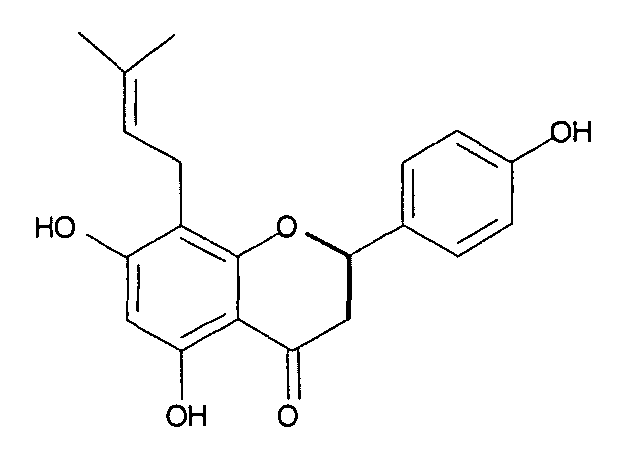
- The 4-hydroxyphenyl group may either be in the 2S(-) or the 2R (+) position. Either one of the enantiomers or the racemate may be used. The effect on uterus proliferation and the protection of bone loss may be measured in rats as described in example 2 (uterus weight, histology of endometrium and bone mineral density measurement).
- The 8-Prenylnaringenin preparation is synthesized by a method which is based on the method described by Gester et al (2001, Tetrahedron 57, 10115-1018) but includes several improvements. One embodiment of this invention is therefore a method to synthesize 8-Prenylnaringenin comprising the steps:
- a. diacetylation of naringenin, crystallization of product
- b. prenylation using tributylphosphine and diisopropylazodicarboxylate, crystallization of product
- c. rearrangement of prenyl side chain using Europium(III)-fod as catalyst, product as residue after destillation of solvent and
- d. solvolysis using K2CO3 in methanol/H2O, product by extraction and various washing procedures whereby said steps do not include a chromatography.
-
- Because no chromatographic steps are needed and the amount of catalyst is drastically reduced, this method is much faster and cheaper than the previously described method, which - by ecomonical reasons - is not a suitable method for up-scaled production.
- The invention also relates to the 8-Prenylnaringenin preparation produced by the method of this invention. This preparation is at least 95% pure. The purity may be determined by HPLC.
- A further embodiment of this invention is the use of 8-Prenylnaringenin for the production of a medicament for the prevention and treatment of osteoporosis and of peri- and postmenopausal symptoms in women wherein the 8-Prenylnaringenin preparation used for the production is at least 95% pure.
- This invention also relates to the use of the 8-Prenylnaringenin preparation synthesized by the method of this invention for the production of a medicament for the prevention and treatment of osteoporosis and of peri- and postmenopausal symptoms in women.
- Peri- and postmenopausal symptoms are for example hot flushes, mood changes, night sweats and vaginal dryness.
- Administration of the medicament of the invention can be carried out via any of the accepted modes of administration or agents for serving similar utilities.Thus, administration can be, for example, orally, nasally, parenterally, topically, transdermally, or rectally, sublingually, intramuscular, subcutaneously, or intravenously in the form of solid, semi-solid, lyophilized powder, or liquid dosage forms, such as for example, tablets, suppositories, pills, soft elastic and hard gelatin capsules, powders, solutions, suspensions, or aerosols, or the like, preferably in unit dosage forms suitable for simple administration of precise dosages. The compositions will include a conventional pharmaceutical carrier or excipient and 8-Prenylnaringenin as the/an active agent, and, in addition, may include other medicinal agents, pharmaceutical agents, carriers, adjuvants, etc.
- Generally, depending on the intended mode of administration, the pharmaceutically acceptable compositions will contain about 1% to about 99% by weight of 8-Prenylnaringenin and 99% to 1% by weight of one or more suitable pharmaceutical excipient(s). Preferably, the composition will be about 5% to 75% by weight of 8-Prenylnaringenin, with the rest being suitable pharmaceutical excipients.
- The preferred route of administration is oral, using a convenient daily dosage regimen which can be adjusted according to the degree of severity of the disease-state to be treated. For such oral administration, a pharmaceutically acceptable composition containing 8-Prenylnaringenin is formed by the incorporation of any of the normally employed excipients. Such excipients include non-toxic and chemically compatible fillers, binders, disintegrants, buffers, preservatives, anti-oxidants, lubricants, flavorings, thickeners, coloring agents, emulsifiers, and the like, for example, pharmaceutical grades of mannitol, lactose, starch, pregelatinized starch, magnesium stearate, sodium saccharine, talcum, cellulose ether derivatives, glucose, gelatin, sucrose, citrate, cyclodextrin, propyl gallate, and the like. Such compositions take the form of solutions, suspensions, tablets, pills, capsules, powders, sustained release formulations and the like.
- Preferably such compositions will take the form of capsule, caplet or tablet and therefore will also contain a diluent such as lactose, sucrose, dicalcium phosphate, and the like; a disintegrant such as croscarmellose sodium or derivatives thereof; a lubricant such as magnesium stearate and the like; and a binder such as a starch, gum acacia, polyvinylpyrrolidone, gelatin, cellulose ether derivatives, and the like.
- 8-Prenylnaringenin may also be formulated into a suppository using, for example, about 0.5% to about 50% active ingredient disposed in a carrier that slowly dissolves within the body, e.g., polyoxyethylene glycols and polyethylene glycols (PEG), e.g., PEG 1000 (96%) and PEG 4000 (4%), and propylene glycol.
- Liquid pharmaceutically administrable compositions can, for example, be prepared by dissolving, dispersing, etc., 8-Prenylnaringenin (about 0.5% to about 20%), and optional pharmaceutical adjuvants in a carrier, such as, for example, water, saline, aqueous dextrose, aqueous cyclodextrin, glycerol, ethanol and the like, to thereby form a solution or suspension.
- If desired, a pharmaceutical composition of the invention may also contain minor amounts of auxiliary substances such as wetting or emulsifying agents, pH buffering agents, antioxidants, and the like, such as, for example, citric acid, sorbitan monolaurate, triethanolamine oleate, butylated hydroxytoluene, etc.
- Actual methods of preparing such dosage forms are known, or will be apparent, to those skilled in this art; for example, see Remington's Pharmaceutical Sciences, 18th Ed., (Mack Publishing Company, Easton, Pennsylvania, 1990). The composition to be administered will, in any event, contain a therapeutically effective amount 8-Prenylnaringenin for prevention and treatment of bone loss or of peri-and postmenopausal symptoms in women.
- 8-Prenylnaringenin is administered in a therapeutically effective amount which will vary depending upon a variety of factors including the age, body weight, general health, diet, mode and time of administration, rate of excretion, drug combination, the severity of the particular disease-states, and the host undergoing therapy. Generally, a therapeutically effective daily dose is from about 0.5 to about 25.0 mg/kg of body weight per day 8-Prenylnaringenin preferably, from about 1 mg to about 10 mg/kg of body weight per day; and most preferably, from about 2 mg to about 5 mg/kg of body weight per day.
- The total method of synthesis is in four steps.
-
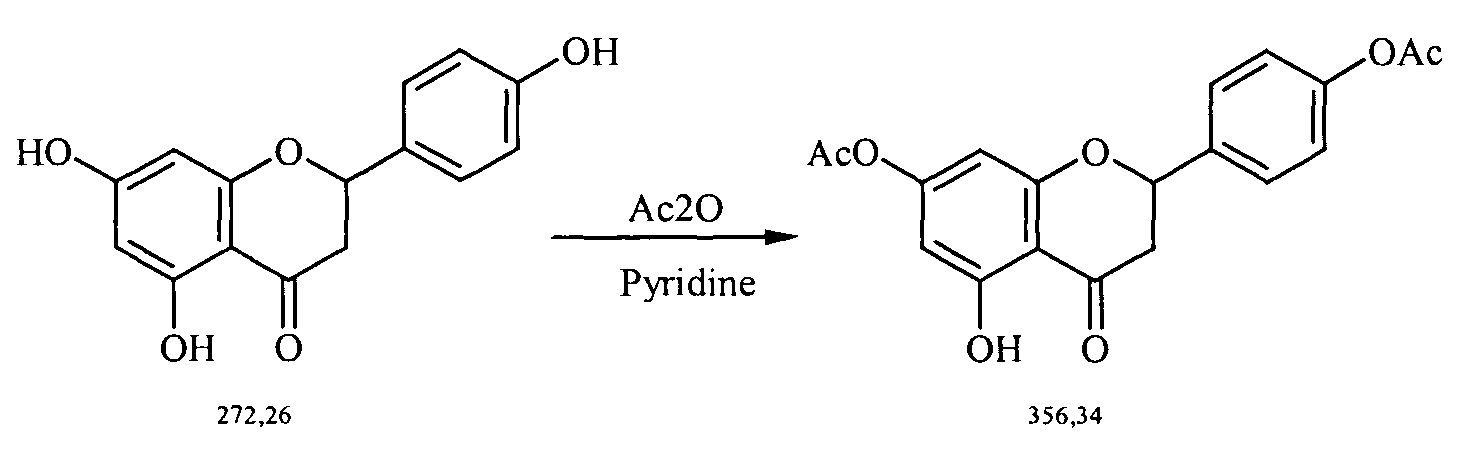
- 100 g of naringenin (available as bulk ware from various suppliers) are mixed with 200 g pyridine (analytical grade) at room temperature and 75 g acetic anhydride (analytical grade) is added dropwise under cooling and stirring within 90 minutes. At the end of process the diacetylated product starts to precipitate and stirring is continued for another 15 minutes. Then the mixture is poured to 1 L icecold water and the precipitate is filtered. The wet product is then washed with 320 ml of 0.1 N HCl and icecold water. The water-wet product is then boiled with 350 ml methanol and filtered twice and finally washed with 50 ml of methanol. The product is dried in vacuo at 40 °C over night. The product is pure by > 82.5 %. The yield is about 107 g of diacetylated product (I).
-

- 106.9 g of I and 36.2 g 3-methyl-2-buten-1-ol (98 %) are mixed with 2670 ml of THF (analytical grade, dried over molecular sieve) and cooled down to 0 °C under nitrogen (ice bath). 74 g of tributylphosphin (98 %) are added under nitrogen. A solution of 95.8 g of diisopropylazodicarboxylate (97 %) in 425 ml of dry THF is then added dropwise at 0 °C within 120 minutes. Following the complete reaction THF is removed by distillation and the oily residue taken up in 500 ml toluene. This solution is washed twice with each 150 ml of water and five times with each 150 ml of 0.8 M Na2CO3. Following phase separation toluene is removed by distillation and the oily residue is dissolved in 300 ml tert. Butylmethylether or another suitable solvent. At -10°C and the addition of primer crystals the prenylated product (II) starts to precipitate after 1-2 hours. To complete crystallisation stirring under cooling is continued for another 16 hours. The product is then filtered, washed with 80 ml of ether or suitable solvent and dried in vacuo at 40 °C over night. The yield is 39.1 g corresponding to 30.7 %. The product is > 78 % pure.
-

- 36 g of product II, 4.4 g of Eu(III)-fod (99 %) and 180 ml of chlorobenzene (synthetical grade) are mixed and heated to 75-80 °C for about 5 hours. Reaction is followed by HPLC and after completion solvent is removed by distillation. The obtained product III is directly used for step 4. Yield is 41 g of wet product.
-
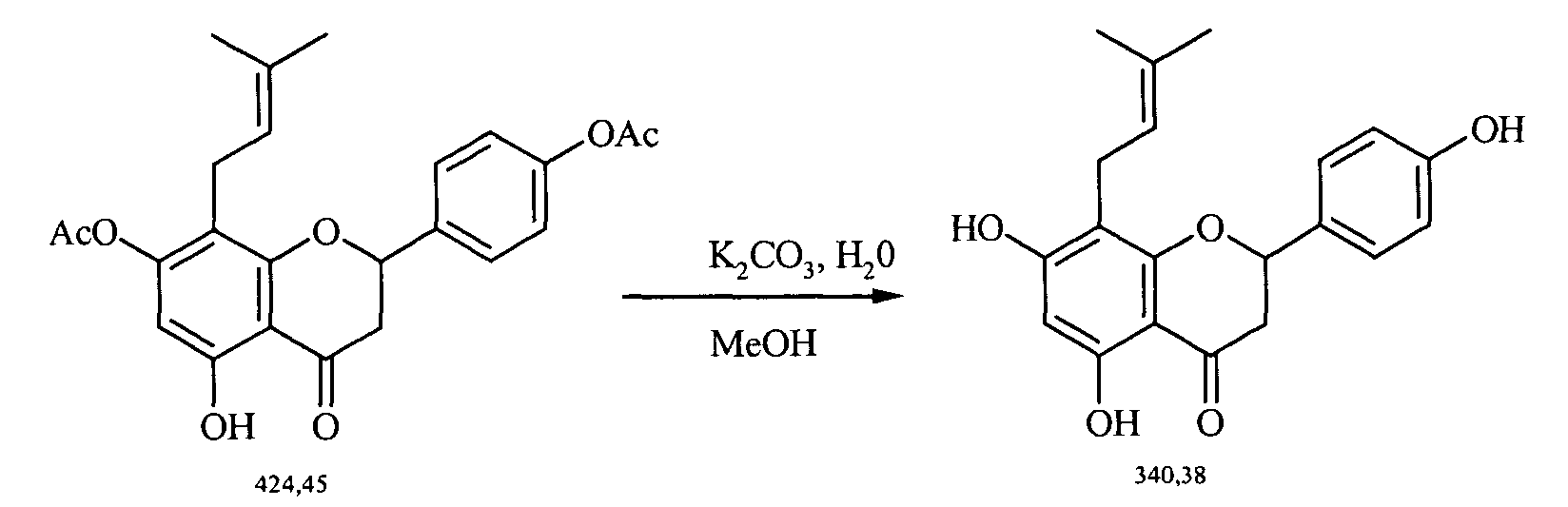
- 41 g of wet product III are mixed with 410 ml of methanol and 20 ml of deionized water. 2.25 g of potassium carbonate are added and the reaction mixture warmed to 40 °C for about 18 hours. After reaction is completed 400 ml of water are added and the mixture adjusted to pH 7 with 1 M HCl. By this, the final compound IV precipitates. Methanol is then removed by distillation at 40 °C and the aqueous phase containing the precipitate is extracted with 300 ml tert. Butylmethylether or another suitable solvent. Extraction is repeated twice with each 100 ml. Combined organic phases are washed with 200 ml water and then evaporated to dryness. The raw product is then stirred with 250 ml dichlormethane, filtered and again washed with 250 ml dichlormethane and dried at 40 °C. The raw product is then dissolved in 250 ml tert. Butylmethylether or another suitable solvent, separated from insolubles by filtration and evaporated. Residues are suspended in a small amount of dichlormethane, filtrated and the filtrate dried in vacuo at 40 °C over night. Yield is 15.9 g slightly yellowish powder with a purity of > 95 %.
- The aim of the study was to find the optimal protective estradiol dose against ovariectomy induced bone loss and also to compare three different vehicle solutions (benzyl-benzoate/ricinus oil vs. Ethanol/arachis oil and benzylbenzoate/rcinus oil vs. Benzyl alcohol/sesame oil).
- Fifty-six female Sprague-Dawley rats, 12-14 weeks old, were used altogether. Forty-nine animals were randomized into seven groups. Group 8 (seven animals) administered with the third vehicle, benzyl alcohol/sesame oil, was added to the study thirteen days later. Seven groups were ovariectomized (OVX) and one group was sham-operated (SHAM). Animals were treated subcutaneously once a day, five days a week (Monday-Friday) as follows. Groups 1 (the SHAM group) and 2 (the OVX group) were given the vehicle benzylbenzoate/ricinus oil (0.5ml/kg, B/R). Groups 3-6 were given 17β-estradiol (Sigma) 0.2, 0.4, 1.2 and 4.0µg/0.5ml/kg in vehicle B/R, respectively. Group 7 given 17β-estradiol (Sigma) 1.2µg/0.5ml/kg in vehicle ethanol/arachis oil (E/A) and
group 8 was administered 17β-estradiol hemihydrate (Schering AG, Berlin) 1.2µg/0.5mg/kg in vehicle benzyl alcohol/sesame oil (BAS/S). Treatments started on the day following surgical operation and continued for 4 weeks. At the end of the study, ex vivo BMD of proximal tibia was measured and serum estradiol was determined. In addition, uterus was weighed. - The optimal protective subcutaneous dose of 17β-estradiol seemed to be 4.0µg/kg/d when administered five times a week for four weeks. This dose prevented the OVX-induced decrease in total and trabecular bone mineral density of proximal tibia and it also prevented the decrease in relative uterine weight and maintained it on the level of the SHAM vehicle group.
Initial and final body weights, and change in body weight after 4 weeks treatment. Group No Operation/ Treatment Dose µg/kg/d Initial body weight g Final body weight g The change in body weight g 1 SHAM/Veh B/R 257 (7) 268 (5) 11 ( 3) 2 OVX/Veh B/R 252 (6) 316 (8) 65 ( 4) 3 OVX/Est in B/R 0.2 252 (7) 304 (6) 51 (3) 4 OVX/Est in B/R 0.4 259 (6) 312 (6) 53 ( 5) 5 OVX/Est in B/R 1.2 255 (5) 303 (6) 48 ( 4) 6 OVX/Est in B/R 4.0 253 (6) 284 (7) 31 ( 3) 7 OVX/Est in E/A 1.2 254 (7) 287 (8) 33 ( 3) 8 OVX/Est in BA/S 1.2 260(11) 288(11) 28 ( 1) Total and trabecular bone mineral density of proximal tibia and relative uterine weight after 4 weeks treatment. Group No Operation/ Treatment Dose µg/kg/d Total bone density mg/cm3 Trabecular density mg/cm3 Relative uterine weight % of body weight 1 SHAM/Veh B/R 622 (20) 431 (25) 0.169 (0.020) 2 OVX/Veh B/R 485 (18) 243 (27) 0.036 ( 0.003) 3 OVX/Est in B/R 0.2 511 (17) 271 (17) 0.045 ( 0.003) 4 OVX/Est in B/R 0.4 506 (8) 260 (13) 0.054 ( 0.003) 5 OVX/Est in B/R 1.2 577 (24) 376 (31 ) 0.110 (0.008) 6 OVX/Est in B/R 4.0 637 (13) 435 (21) 0.159 (0.006) 7 OVX/Est in E/A 1.2 577 (22) 366 (24) 0.114 (0.005) 8 OVX/Est in BA/S 1.2 596 (18) 386 (21) 0.131 (0.008) - The aim of the study was to examine bone and uterine effects of a 4-week treatment with 2S(-) 8-Prenylnaringenin (8-PN) in 3-month-old ovariectomized rats. 2S(-) 8-PN at the dose levels of 0.67 mg/kg, 1,77 mg/kg and 18 mg/kg was administered subcutaneously (s.c.), once a day, seven times a week. At the end of the study, uterine weight and ex vivo bone mineral density (BMD) of tibia were measured.
- A total of 30 female 13-14-week-old Sprague-Dawley rats were used in the study. The animals were randomized into 5 groups, with 6 rats /group. Group 1 was sham-operated (SHAM) and groups 2-5 were ovariectomized (OVX).
- The mean body weight of the animals was 271 g (SD 9, SE 2) before operation. Treatments with the vehicle or test substance started on the day following operation. The animals in the SHAM group received the vehicle, 30% hydroxypropyl-β-cyclodextrin s.c., and in the OVX groups either the vehicle or 2S(-) 8-PN at nominal doses of 0.67 mg/kg/d, 1.77 mg/kg/d or 18 mg/kg/d s.c. Treatments continued for 4 weeks; the dosing frequency was seven times a week. The animals were sacrificed one day after the last dosing. At the end of the study, left tibiae were excised for ex vivo BMD measurement (pQCT) at proximal tibia and uteri were excised for the determination of absolute and relative weights. In addition, samples for the determination of 2S(-)8-Prenylnaringenin concentration were taken from all dosing solutions on the day when they were prepared and on the last day of use. The data of body weights, relative uterine weights and BMD were analyzed with one-way analysis of variance.
- Bone mineral density measurement was carried out by pQCT (XCT-960A, Stratec, Germany). The bone specimens were thawed before measurement. Six 1 mm-thick sections of the proximal tibia (2 mm below the epiphyseal growth plate) were scanned at 0.5 mm intervals using a voxel size of 0.148 mm. Total and trabecular BMD (mg/cm3) were measured. After bone densitometry, the specimens were wrapped back to saline saturated gauzes and stored at -20°C.
- A post-study histological examination was performed. The formalin fixed uteri were embedded in paraffin, cut into 5 µm transverse sections and were stained with haematoxylin eosin. The sections were then evaluated quantitatively for luminal epithelium cell height.
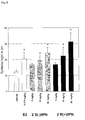
- The results are shown in Fig.1 and Fig.3 and in the following tables:
Body weight Group Operation/ Treatment Dose mg/kg/d n Body weight at the beginning (g) (bw0) Body weight at the end (g) (bw4b) The change in body weight (g) (bw4b-bw0) 1 Sham vehicle 6 271 (3) 278 (5) 7 ( 3) 2 OVX vehicle 6 272 (5) 329 (5) 57 ( 4) 3 2S(-) 8-PN 0.67 6 270(4) 323(11) 53(7) 4 2S(-) 8-PN 1.77 6 270 (4) 305 (7) 35 ( 5) 5 2S(-) 8-PN 18 6 271 (4) 304 (5) 33 ( 4) Relative uterus weight (%) UTERUS WEIGHT N MEAN STD STDERR MIN MAX GROUP Sham vehicle 6 0.194 0.035 0.014 0.154 0.234 OVX vehicle 6 0.035 0.004 0.002 0.029 0.041 2S (-) 8-PN 0.67 6 0.054 0.011 0.005 0.042 0.073 2S (-) 8-PN 1.77 6 0.063 0.008 0.003 0.056 0.077 2S (-) 8-PN 18 6 0.065 0.009 0.004 0.051 0.078 Parameters of ex vivo bone densitometry at left proximal tibia Total BMD (mg/cm3) N MEAN SE STD MEDIAN MIN MAX Group Sham vehicle 6 653.7 11.5 28.2 640.2 631.0 696.0 OVX vehicle 6 532.9 14.6 35.7 528.3 491.1 577.4 2S (-) 8 PN 0.67 6 561.1 11.3 27.6 569.2 524.5 591.1 2S (-) 8 PN 1.77 6 581.5 19.9 48.6 568.1 543 677.2 2S (-) 8 PN 18 6 636.5 17.8 43.6 635.4 582.8 699.2 Trabecular BMD (mg/cm3) N MEAN SE STD MEDIAN MIN MAX Group Sham vehicle 6 447.4 25.2 61.7 439.6 387.1 536.4 OVX vehicle 6 282.2 21.8 53.3 273.1 214.5 353.1 2S (-) 8 PN 0.67 6 319.1 17.4 42.7 318.7 250.3 379.8 2S (-) 8 PN 1.77 6 330.9 27.8 68.1 329.4 223.9 436.1 2S (-) 8 PN 18 6 411.8 15.2 37.2 396.6 378.7 474.0 - Within this
dose range 2S(-) 8-PN prevented the OVX-induced decreases in both total and trabecular BMD at the proximal tibial metaphysis dose dependently. The highest dose of 18 mg/kg/d completely inhibited OVX-induced effects. - Within the
dose range 2S(-) 8-PN increased the relative uterine weight less than twofold when compared to ovariectomy. Compared to the SHAM group the relative uterine weights were markedly reduced ( 0.054-0.065 % vs 0.194 %). - The treatment of ovariectomized rat with ZK 222660 resulted in a weak stimulation of luminal epithelial cell height at 1.77 mg/kg and 18 mg/kg.
- Comparing the effects of 2S(-) 8-PN on inhibition of bone loss and the increase in uterine weight to data with 17β-estradiol, 2S(-) 8-PN has a much lower effect on the uterus than 17β-estradiol at the same bone effective dose.
- The aim of the study was to directly compare the effects of Prenylnaringenin (racemate) and 2S(-) 8-Prenylnaringenin to the effects of estradiol hemihydrate on bone mineral density and uterine weight on 3-month-old ovariectomized rats using identical formulations. In addition, the effects of estradiolhemihydrate in two vehicles (oily, aqueous) were examined for influence of formulations.
The substances were administered subcutaneously(s.c.) seven days a week beginning the day after ovariectomy. At the end of the study, uterine weight and bone mineral density (BMD) of tibia were measured. - Forty-one female Sprague-Dawley rats, 12-14 weeks of age were randomized into six groups, 6-8 animals in each. Five groups were ovariectomized (OVX) and one group was sham-operated (SHAM). Treatments started on the day following operation and continued for 28 days. The animals were treated s.c. once a day seven times a week as follows. Group 1 (SHAM vehicle group) and group 2 (OVX vehicle group) were given the
vehicle 30% hydroxypropyl-β-cyclodextrin (HP-β-CD).Groups 3 and 4 were administered 4 µg/kg/d of estradiol hemihydrate in vehicle benzyl benzoate/ricinus oil (B/R) and in vehicle HP-β-CD, respectively. Groups 5 and 6 were given 20 mg/kg/d of 2S(-)8-Prenylnaringenin and racemic 8-Prenylnaringenin, respectively, both in vehicle HP-β-CD. At the end of the study, left tibiae were excised for the ex vivo BMD measurement (pQCT) and uteri for the determination of absolute and relative weights. In addition, samples for thedetermination of test substance and control substance concentrations were taken from all dosing solutions on the first and last day of use. The data of body weights, relative uterine weights and BMD were analyzed with one-way analysis of variance as described in example 2. -
- Vehicle 1 (used in the groups 1 and 2): 30% hydroxypropyl-β-cyclodextrin and 0.3% NaCl (w/v), 5% ethanol (v/v) in Aqua sterilisata, pH 7.4.
- Vehicle 2 (used when preparing dosing solutions of the groups 4, 5 and 6): 30% hydroxypropyl-β-cyclodextrin and 0.3% NaCl (w/v) in Aqua sterilisata, pH 7.4.
- Vehicle 3 (used when preparing a dosing solution of the group 3): benzyl benzoate / ricinus oil (B/R) 1+4, v/v.
-
- The results are shown in FIG 2 and in the following tables:
Body weight (g). Group Body weight at The beginning (g) Body weight at The end (g) The change in Body weight (g) n (bw0) (bw4b) (bw4b-bw0) Sham vehicle 6 274(7) 284(8) 10(2) OVX vehicle 6 273(10) 335(9) 62(2) Estradiol B/R 6 274(7) 291(9) 17(4) Estradiol HP 6 275(6) 285(9) 10(4) 2S(-) 8PN 8 264(5) 289(6) 24(2) race.8PN 8 262(7) 289(8) 27(2) Relative uterus weight Group Mean SE STD Median Min MAX n Sham vehicle 6 0.185 0.021 0.052 0.179 0.125 0.254 OVX vehicle 6 0.036 0.001 0.004 0.037 0.031 0.040 Estradiol B/R 6 0.175 0.005 0.013 0.178 0.151 0.186 Estradiol HP 6 0.131 0.016 0.039 0.120 0.105 0.210 2S(-) 8PN 8 0.067 0.003 0.009 0.067 0.054 0.080 race.8PN 8 0.066 0.006 0.017 0.065 0.050 0.099 Trabecular density at left proximal tibia (mg/cm3). Group Mean SE STD Median Min MAX n Sham vehicle 6 482 30 73 491 363 560 OVX vehicle 6 280 23 57 265 215 377 Estradiol B/R 6 542 39 95 577 364 624 Estradiol HP 6 406 22 53 383 367 501 2S(-) 8PN 8 352 11 31 352 309 393 race.8PN 8 351 16 46 351 289 415 - Comparing the effects of 2S(-)8-Prenylnaringenin and racemic 8-Prenylnaringenin on inhibition of OVX-induced bone loss, the decrease of OVX-induced body weight gain, and the increase in uterine weight to estradiol given in the same vehicle (HP-β-CD), 2S(-)8-Prenylnaringenin and racemic 8-Prenylnaringenin had a much lower effect on the uterus and body weight than estradiol at the same bone effective dose. This observation is in agreement with the outcome of the previous study (see example 2).
- The effects of racemic 8-Prenylnaringenin were similar to 2S(-)8-Prenylnaringenin.
-
- Fig.1 shows the trabecular bone mineral density (grey columns) and the relative uterine weight (black square) of rats which were either sham-operated and treated with vehicle (30% hydroxypropyl-β-cyclodextrin) or ovariectomized (ovx) and treated with the vehicle or 0.67 mg/kg, 1.77 mg/kg or 18 mg/kg 8-Prenylnaringenin.
- Fig. 2 shows the trabecular bone mineral density (grey columns) and the relative uterine weight (black square) of rats treated as described in example 3. 8-PN designates 8-Prenylnaringenin and Estr. designates estradiol hemihydrate.
- Fig. 3 shows the respective heights of luminal epithelium at nominal doses of 1,
3, and 30 mg/
kg 2S(-)8PN. - Fig. 4 shows the respective heights of luminal epithelium of rats treated as described in example 3.
- Fig. 5 shows a comparison of 2S(-)8Prenylnaringenin and
2R(+)8Prenylnaringenin. Shown are the heights of luminal epithelium of rats
treated with 0,015 mg/kg estradiol hemihydrate, 3/10/30 mg/
kg 2S(-)8PN or 3/10/30 mg/kg 2R(+)8PN. -
Claims (5)
- Method to synthesize 8-Prenylnaringenin comprising the steps:whereby said steps do not include a chromatography.a. diacetylation of naringeninb. prenylation using tributylphosphine and diisopropylazodicarboxylatec. rearrangement of prenyl side chain using Europium(III)-fod andd. solvolysis using K2CO3 in methanol/H2O
- 8-Prenylnaringenin preparation produced by the method according to claim 1
- Use of 8-Prenylnaringenin for the production of a medicament for the prevention and treatment of hormone dependent osteoporosis of peri- and postmenopausal symptoms in women wherein the 8-Prenylnaringenin preparation used for said production is at least 95% pure.
- Use of 8-Prenylnaringenin according to claim 2 for the production of a medicament for the prevention and treatment of hormone dependent osteoporosis and of peri- and postmenopausal symptoms in women.
- Use of 8-Prenylnaringenin for the production of a medicament for the prevention and treatment of hormone dependent osteoporosis of peri- and postmenopausal symptoms in women wherein the effect of said medicament on uterus proliferation is less than 1/5 of that of estradiol and the doses of 8-Prenylnaringenin and estradiol which are compared are equieffective on bone mass reduction
Priority Applications (5)
| Application Number | Priority Date | Filing Date | Title |
|---|---|---|---|
| EP03090335A EP1524269A1 (en) | 2003-10-07 | 2003-10-07 | Use of 8-Prenylnaringenin for hormone replacement therapy |
| EP04765949A EP1670777A1 (en) | 2003-10-07 | 2004-10-06 | Use of 8-prenylnaringenin for hormone replacement therapy |
| US10/575,391 US20070276032A1 (en) | 2003-10-07 | 2004-10-06 | Use of 8-Prenylnaringenin for Hormone Replacement Therapy |
| JP2006530149A JP2007507462A (en) | 2003-10-07 | 2004-10-06 | Use of 8-prenylnaringenin in hormone replacement therapy |
| PCT/EP2004/011466 WO2005037816A1 (en) | 2003-10-07 | 2004-10-06 | Use of 8-prenylnaringenin for hormone replacement therapy |
Applications Claiming Priority (1)
| Application Number | Priority Date | Filing Date | Title |
|---|---|---|---|
| EP03090335A EP1524269A1 (en) | 2003-10-07 | 2003-10-07 | Use of 8-Prenylnaringenin for hormone replacement therapy |
Publications (1)
| Publication Number | Publication Date |
|---|---|
| EP1524269A1 true EP1524269A1 (en) | 2005-04-20 |
Family
ID=34354536
Family Applications (2)
| Application Number | Title | Priority Date | Filing Date |
|---|---|---|---|
| EP03090335A Withdrawn EP1524269A1 (en) | 2003-10-07 | 2003-10-07 | Use of 8-Prenylnaringenin for hormone replacement therapy |
| EP04765949A Withdrawn EP1670777A1 (en) | 2003-10-07 | 2004-10-06 | Use of 8-prenylnaringenin for hormone replacement therapy |
Family Applications After (1)
| Application Number | Title | Priority Date | Filing Date |
|---|---|---|---|
| EP04765949A Withdrawn EP1670777A1 (en) | 2003-10-07 | 2004-10-06 | Use of 8-prenylnaringenin for hormone replacement therapy |
Country Status (4)
| Country | Link |
|---|---|
| US (1) | US20070276032A1 (en) |
| EP (2) | EP1524269A1 (en) |
| JP (1) | JP2007507462A (en) |
| WO (1) | WO2005037816A1 (en) |
Cited By (3)
| Publication number | Priority date | Publication date | Assignee | Title |
|---|---|---|---|---|
| EP1698332A1 (en) * | 2005-03-02 | 2006-09-06 | KAIROSmed GmbH | Oral modified release formulations containing 8-Prenylnaringenin for continuous estrogen support |
| WO2006092295A1 (en) * | 2005-03-02 | 2006-09-08 | Kairosmed Gmbh | Oral modified release formulations containing 8-prenylnaringenin for continuous estrogen support |
| EP1902711A1 (en) * | 2006-09-20 | 2008-03-26 | KAIROSmed GmbH | Oral modified release formulations containing Drospirenon and 8-Prenylnaringenin for use in Hormone Replacement Therapy (HRT) |
Families Citing this family (5)
| Publication number | Priority date | Publication date | Assignee | Title |
|---|---|---|---|---|
| DE102006032500B3 (en) * | 2006-07-06 | 2007-07-12 | Technische Universität Dresden | Preparation of (2S)- and (2R)-8-prenylnaringenin, used in e.g. pharmaceuticals, comprises reducing racemic mixture of 8-prenylnarignenin derivative with formic acid and base, separating non-transferred enantiomer and splitting acyl residue |
| EP1958628A1 (en) * | 2007-02-16 | 2008-08-20 | KAIROSmed GmbH | Combination of immediately liberated drospirenone with a modified releasing formulation containing 8-prenylnaringenin for use in oral contraception and hormone replacement therapy |
| WO2021089840A1 (en) | 2019-11-08 | 2021-05-14 | Mrm Health N.V. | Fermentation method for the production of phytoestrogens |
| CN118795146A (en) * | 2023-04-11 | 2024-10-18 | 香港理工大学 | Application of integrin α5β1 as a target in screening drugs for preventing and/or treating bone loss |
| CN116942656B (en) * | 2023-07-27 | 2024-09-17 | 四川大学华西医院 | Use of naringenin derivatives in preparing anti-pancreatitis drugs |
Citations (2)
| Publication number | Priority date | Publication date | Assignee | Title |
|---|---|---|---|---|
| JPH08165238A (en) * | 1994-12-12 | 1996-06-25 | Sankyo Co Ltd | Agent having estrogen-like activity |
| DE10139479A1 (en) * | 2001-08-10 | 2003-02-27 | Schwabe Willmar Gmbh & Co | Hop extracts, process for their preparation and use |
-
2003
- 2003-10-07 EP EP03090335A patent/EP1524269A1/en not_active Withdrawn
-
2004
- 2004-10-06 EP EP04765949A patent/EP1670777A1/en not_active Withdrawn
- 2004-10-06 US US10/575,391 patent/US20070276032A1/en not_active Abandoned
- 2004-10-06 JP JP2006530149A patent/JP2007507462A/en active Pending
- 2004-10-06 WO PCT/EP2004/011466 patent/WO2005037816A1/en not_active Ceased
Patent Citations (2)
| Publication number | Priority date | Publication date | Assignee | Title |
|---|---|---|---|---|
| JPH08165238A (en) * | 1994-12-12 | 1996-06-25 | Sankyo Co Ltd | Agent having estrogen-like activity |
| DE10139479A1 (en) * | 2001-08-10 | 2003-02-27 | Schwabe Willmar Gmbh & Co | Hop extracts, process for their preparation and use |
Non-Patent Citations (4)
| Title |
|---|
| GESTER S ET AL: "an efficient synthesis of the potent phytoestrogens 8-prenylnaringenin and 6-(1,1-dimethylallyl)naringenin by europium(III)-catalyzed Claisen rearrangement", TETRAHEDRON, vol. 57, 2001, pages 1015 - 1018, XP002267058 * |
| MIYAMOTO M ET AL: "Prenylflavonoids: A new class of non-steroidal phytoestrogen (part 2). Estrogenic effects of 8-isopentenylnaringenin on bone metabolism", PLANTA MEDICA, vol. 64, 1998, NEW YORK, pages 516 - 519, XP009023991 * |
| PATENT ABSTRACTS OF JAPAN vol. 1996, no. 10 31 October 1996 (1996-10-31) * |
| ZIERAU O ET AL: "Estrogenic activity of the phytoestrogens Naringenin, 6-(1,1-dimethylallyl)naringenin and 8-prenylnaringenin", PLANTA MEDICA, vol. 68, 2002, pages 449 - 451, XP009023992 * |
Cited By (3)
| Publication number | Priority date | Publication date | Assignee | Title |
|---|---|---|---|---|
| EP1698332A1 (en) * | 2005-03-02 | 2006-09-06 | KAIROSmed GmbH | Oral modified release formulations containing 8-Prenylnaringenin for continuous estrogen support |
| WO2006092295A1 (en) * | 2005-03-02 | 2006-09-08 | Kairosmed Gmbh | Oral modified release formulations containing 8-prenylnaringenin for continuous estrogen support |
| EP1902711A1 (en) * | 2006-09-20 | 2008-03-26 | KAIROSmed GmbH | Oral modified release formulations containing Drospirenon and 8-Prenylnaringenin for use in Hormone Replacement Therapy (HRT) |
Also Published As
| Publication number | Publication date |
|---|---|
| WO2005037816A1 (en) | 2005-04-28 |
| JP2007507462A (en) | 2007-03-29 |
| US20070276032A1 (en) | 2007-11-29 |
| EP1670777A1 (en) | 2006-06-21 |
Similar Documents
| Publication | Publication Date | Title |
|---|---|---|
| US9561238B2 (en) | Pharmaceutical compositions comprising estetrol derivatives for use in cancer therapy | |
| KR0161300B1 (en) | Benzothiophene Helps Prevent Bone Loss | |
| US6326366B1 (en) | Hormone replacement therapy | |
| US20080038387A1 (en) | Therapy of estrogen-associated disorders | |
| CZ212297A3 (en) | Use of 3,4-diphenylchromans for preparing a medicament intended for treating or prophylaxis of gynecological diseases | |
| US20070276032A1 (en) | Use of 8-Prenylnaringenin for Hormone Replacement Therapy | |
| US20020173499A1 (en) | Estrogen replacement therapy | |
| AU2002338277A1 (en) | Estrogen replacement therapy | |
| KR19990077157A (en) | Use of Centroman L-Enantiomers for the Preparation of Pharmaceutical Compositions for the Treatment or Prevention of Breast Cancer | |
| US6300367B1 (en) | Composition for and method of preventing or treating breast cancer | |
| US20100234310A1 (en) | Estrogenic compounds and their methods of use | |
| EP0850647B1 (en) | Application of 11-substituted steroids for the preparation of medicaments with dissociated estrogenic activity | |
| EP0946585B1 (en) | Steroids substituted in position 11, method of preparation, application as medicines and pharmaceutical compositions containing them | |
| CZ211897A3 (en) | Use of 3,4-diphenylchromans for preparing pharmaceutical preparations used for dilation of vessels | |
| JPH08165238A (en) | Agent having estrogen-like activity | |
| EP1159963A1 (en) | Composition for and method of preventing or treating breast cancer | |
| CN117417303B (en) | Medicine for treating endometriosis and preparation method thereof | |
| WO2005077358A1 (en) | Drug for osteoporosis comprising kampferol as the active ingredient | |
| JPH09301856A (en) | Estrogen agonist | |
| CN1207038A (en) | Application of 3,4-diphenylchroman in the production of pharmaceutical composition for preventing or treating menopausal symptoms | |
| JP2001335484A (en) | Composition or method for prophylaxis or treatment of mammary cancer | |
| AU2008200820A1 (en) | Estrogen replacement therapy | |
| MXPA00006034A (en) | Composition, prevention method or treatment for breast cancer | |
| AU4086900A (en) | Composition for and method of preventing or treating breast cancer | |
| HK1099996A (en) | Estrogen replacement therapy |
Legal Events
| Date | Code | Title | Description |
|---|---|---|---|
| PUAI | Public reference made under article 153(3) epc to a published international application that has entered the european phase |
Free format text: ORIGINAL CODE: 0009012 |
|
| 17P | Request for examination filed |
Effective date: 20031007 |
|
| AK | Designated contracting states |
Kind code of ref document: A1 Designated state(s): AT BE BG CH CY CZ DE DK EE ES FI FR GB GR HU IE IT LI LU MC NL PT RO SE SI SK TR |
|
| AX | Request for extension of the european patent |
Extension state: AL LT LV MK |
|
| AKX | Designation fees paid |
Designated state(s): DE |
|
| 17Q | First examination report despatched |
Effective date: 20060721 |
|
| RAP1 | Party data changed (applicant data changed or rights of an application transferred) |
Owner name: BAYER SCHERING PHARMA AG |
|
| RAP1 | Party data changed (applicant data changed or rights of an application transferred) |
Owner name: BAYER SCHERING PHARMA AKTIENGESELLSCHAFT |
|
| STAA | Information on the status of an ep patent application or granted ep patent |
Free format text: STATUS: THE APPLICATION IS DEEMED TO BE WITHDRAWN |
|
| 18D | Application deemed to be withdrawn |
Effective date: 20070201 |