EP1523151A2 - Verfahren, Anwendungsserver, Programm für Datenverarbeitungsanlagen, sowie zugehöriges Produkt zur automatischen Erzeugung und Konfiguration von Lizenzmodellen und -richtlinien - Google Patents
Verfahren, Anwendungsserver, Programm für Datenverarbeitungsanlagen, sowie zugehöriges Produkt zur automatischen Erzeugung und Konfiguration von Lizenzmodellen und -richtlinien Download PDFInfo
- Publication number
- EP1523151A2 EP1523151A2 EP04103632A EP04103632A EP1523151A2 EP 1523151 A2 EP1523151 A2 EP 1523151A2 EP 04103632 A EP04103632 A EP 04103632A EP 04103632 A EP04103632 A EP 04103632A EP 1523151 A2 EP1523151 A2 EP 1523151A2
- Authority
- EP
- European Patent Office
- Prior art keywords
- service
- license
- contract
- services
- metering
- Prior art date
- Legal status (The legal status is an assumption and is not a legal conclusion. Google has not performed a legal analysis and makes no representation as to the accuracy of the status listed.)
- Withdrawn
Links
Images



Classifications
-
- G—PHYSICS
- G06—COMPUTING OR CALCULATING; COUNTING
- G06Q—INFORMATION AND COMMUNICATION TECHNOLOGY [ICT] SPECIALLY ADAPTED FOR ADMINISTRATIVE, COMMERCIAL, FINANCIAL, MANAGERIAL OR SUPERVISORY PURPOSES; SYSTEMS OR METHODS SPECIALLY ADAPTED FOR ADMINISTRATIVE, COMMERCIAL, FINANCIAL, MANAGERIAL OR SUPERVISORY PURPOSES, NOT OTHERWISE PROVIDED FOR
- G06Q30/00—Commerce
-
- H—ELECTRICITY
- H04—ELECTRIC COMMUNICATION TECHNIQUE
- H04L—TRANSMISSION OF DIGITAL INFORMATION, e.g. TELEGRAPHIC COMMUNICATION
- H04L67/00—Network arrangements or protocols for supporting network services or applications
- H04L67/01—Protocols
- H04L67/02—Protocols based on web technology, e.g. hypertext transfer protocol [HTTP]
Definitions
- the present invention relates to the field of networked computer telecommunication, and in particular to a method and system for processing services associated with a contract between a service requester (SC) and a service provider (SP) wherein said services are to be provided via a network, wherein at least one service contract is defined between said service requester and said service provider.
- SC service requester
- SP service provider
- Web services define a technique for describing software components to be accessed, methods for accessing these components, and discovery methods that enable the identification of relevant service providers.
- Web services are programming language-, programming model-, and system software neutral.
- two prior art Web services standards are relevant. They are shortly sketched out and commented as follows in order to introduce into the problems concerned in prior art:
- SOAP Simple Object Access Protocol
- SOAP payloads can be carried on HTTP, FTP, JMS and other protocols.
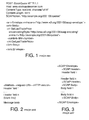
- FIG. 1 gives a SOAP example carried by the HTTP POST request.
- HTTP messages consist of requests from client to server and responses from server to client. Both types of message (Request and Response messages) consist of a start-line, zero or more header fields (also known as "headers"), an empty line indicating the end of the header fields, and possibly a message-body.
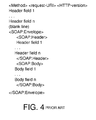
- a HTTP request message The structure of a HTTP request message is depicted in Fig. 2: the first line of that message specifies the method to be applied to the resource, the identifier of the resource, and the HTTP protocol version in use.
- the HTTP protocol defines multiple request methods like GET, HEAD, POST, PUT, DELETE, TRACE, CONNECT, OPTIONS.
- the method indicates the operation to be performed on the resource.
- the resource upon which to apply the request is identified by a Request-URI, which is a Uniform Resource Identifier. Uniform Resource Identifiers are simply formatted strings, which identify--via name, location, address or any other characteristic--a resource. For example:
- the well-known HTTP URL scheme used to locate network resources via the HTTP protocol contains resource-URIs.
- the semantics are that the identified resource is located at the server listening for TCP connections on that port of that host, and the Request-URI identifies the resource.
- the header fields carry meta-information associated with the request or response.
- the message-body of an HTTP message is used to carry the entity-body associated with the request or response.
- the message body depicted in Fig. 2 contains the actual SOAP message, which has a structure as given in fig. 3: Inside An envelope section a number of header fields 1,..n are defined, which construct the so called SOAP header, which is followed by by the actual SOAP body, which comprises a second number of so called "Body fields 1,..n.
- Figure 1 gives a SOAP example carried by the HTTP POST command.
- the HTTP request method is POST
- the resource-URI is "/StockQuote", which is an absolute path identifying the resource for which the request is intended.
- the resource-URI does not contain a query string.
- WSDL Web Services Description Language
- RPC Remote Procedure Call
- So called service interfaces are defined abstractly in terms of message structures and sequences of simple message exchanges (or "operations" in WSDL terminology). They are then bound to a concrete network protocol and data-encoding format to define an endpoint. Related concrete endpoints are bundled to define abstract endpoints (services).
- WSDL supports a service interface definition that is distinct from the protocol bindings used for service invocation. WSDL allows for multiple bindings for a single service.
- the service interface definition and the access binding are also distinct from the implementation of the functionality of the service.
- Service requestors usually generate client stub code for a web service from the corresponding WSDL; the WSDL of a service is usually requested from the service provider.
- the client stub code implements the necessary logic to create the correct message structure and the correct data encoding to address the endpoint. Since there is a distinction between definition, binding and implementation of a service, client stub codes created for a certain definition and binding can usually address various endpoints without requiring code changes, simply by using another endpoint address.
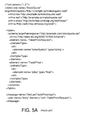
- Fig. 5A and the continuation thereof, Fig. 5B is given to disclose an exemplary WSDL document with further details to a person skilled in the art.
- a stateless server is one, which treats each request as an independent transaction, unrelated to any previous request. This simplifies the server design because it does not need to allocate storage to deal with conversations in progress or worry about freeing it if a client dies in mid-transaction.
- a disadvantage is that it may be necessary to include more information in each request and this extra-information will need to be interpreted by the server each time.
- SC Service Requester or Service Consumer
- SP Service Provider
- three parties are comprised of the Web service Communication, ie the Service Requester, the Service provider who manages the above contracts and the Service Supplier, referred to as SS, which actually performs the service, which is sometimes hold invisible to the requester.
- the Contract Service handles the relationship between service providers and service requestors. It provides information about the type of contract between a service provider and the service hub (deployment contracts, also known as provider contracts) and between a service requestor and the service hub (usage contracts). Usage contracts can be used to subscribe to any combination of operations of any service provided through the service hub.
- a usage contract contains information such as how calls to service operations are to be charged for (by time, by number of uses, by amount of use etc.) and how much the subscribed service operations should cost for that client.
- the Contract Service defines the payment method and rating model to be used, the effective dates for that contract. Contracts may optionally store the digital signatures of both parties (service hub and service provider/requestor) to the contract.
- contracts are added to the Contract Service via a Utility Services Portal supplied with the demo, and a valid contract must be in place between a service hub and a service requestor before the requestor can use the service.
- Web services define a technique for describing software components the execution of which may have a considerable business value for a client, they describe how such web services are accessible by the clients and they describe discovery methods that enable the identification of relevant service providers to a client.
- Web services are mostly programming language-, programming model-, and system software neutral. Web services as described above are of high importance for the next future because they form a key part of dynamic e-business, and in particular of e-business on demand.
- E-business on demand requires besides metering and accounting of services sophisticated systems to deal with the contractual relationships that have to be in place before actual on demand services can be offered to a client.
- a specific difficulty for simply implementing existing licensing business methods into electronic web service management is that the user would need a high degree of personalisation in the licences, the vendor or provider of a web service cannot implement in program form all desired individual license types which are object of face-to-face negotiations between a service provider and a service requestor.
- the contract and license management basically falls into two categories:
- High level contracting deals with the above-mentioned face-to-face negotiations for agreeing on given contract conditions, while low level contracting deals with the runtime implementations of contract attributes as far as they are agreed on by both contracting parties.
- Personalised licenses between a service provider and a service requestor of web services require a great manual afford and are usually only set up with customers requiring enough licenses to be worth the afford of negotiation.
- a service consumer may issue a request for a service with using information included in the request, which comprises a kind of user-ID, which enables a service provider to select a valid contract between the service consumer and the service provider.
- a customer-specific licensing model is instantiated preferably automatically during runtime by using existing license subcontracts and respective licensing software components in cooperation with a service metering component storing all necessary usage information on usage of services actually provided or provided prior to the current service request, in order to find a respective particular license model, which matches best the actual needs of the client, and which is covered by the contractual scope of the negotiated contract terms and conditions.
- different license policies can be followed adaptable to the specific needs of a service requester.
- An advantageous way to do that is to offer a plurality of different license types, which is able to cover most of the clients needs, as experience shows.
- An advantageous collection of different license types comprises the following types:
- each individual license type addresses one single and complete separate aspect of usage conditions.
- said atomic license types can be combined in order to be able to offer a large number of different license models to the customer, a preferred feature, which is not known yet in the world for web services.
- a combined license type can be obtained by associating an individual, predetermined fraction, for instance percentage of each atomic license type to the combined one, which preferably also may be used for billing purposes.
- the definition of a license or the definition of multiple license types according to the present invention is part of an electronic document specifying the contract underlying to said licenses.
- the contracting system implementing the different license types further includes a metering software component designed and defined for metering the technical details of the requested services, in particular those details, which may be used to form part of the billing process postponed to the service itself, and when said metering data associated with a current contract ID is read and used for a checking step in order to make a decision if or if not to allow a service provision, then one and the same contract management system comprises all technical software components in one single system, which is needed for efficiently operating the requested services as well as generating the billing procedure associated with the service.
- a license verification program module having a modular structure for each license type, and if those modules are sequentially operated on when processing an incoming request, then the additional advantage results that the inventional concept is easily to be extended for more license types without being constrained to append much meta-logic around such new module.
- the inventional concept can be integrated in a contract management system that comprises a profile handler, a contract handler and a metering request handler, wherein such handler components cooperate with respective remotely operated services, i.e.
- a profile service for checking and validating the personal identity of the requesting person
- a contract service for checking the usage of the contract
- a metering service for metering any service-relevant entities such as time of usage, amount of data transferred via network, etc.
- a scenario is described in which the service supplier abbreviated further as SS offers the service to the Service Consumer, abbreviated as SC.
- the Service Provider abbreviated as SP realizes the main part of the contract management infrastructure including the main inventional software components. This results in the following interactions, which are implemented according to this embodiment in the respective program module(s) as "steps" of a respective inventional method used by the parties SC, SS, and SP. The steps are enumerated as depicted in the drawing:
- step 620 is shown in Figure 7 in more detail:
- the service provider realizes an application server, depicted with a dotted-line frame, which contains a servlet 71, implementing the runtime environment for service requests, for example a web service runtime environment like Apache Axis.
- the application server also contains multiple handler components denoted with reference signs 72, 74, 76. These handlers realize a local implementation of the infrastructure components F - H, which may be realized on remote servers for example as further web services.
- the handlers 72, 74, 76 provide local functionality needed to handle the communication with the remote services:
- the components 71, 72, 74, 76 (servlet and handlers) run in a shared memory environment and communicate through shared data.
- the servlet 71 ensures that the handlers are invoked in the correct order.
- the Profile Service 72A may be basically used as available in above-described prior art.
- the Profile Service provides access to user profile information like name, address, user-ID, etc. Depending on the implementation, this may be expanded to include more information.
- the Profile Service may be used to save, delete and get profile information.
- Profile Service For the other services to work correctly, all users of business services must have a profile assigned by the Profile Service. Profiles may be created in advance by using a user interface or by directly editing the XML file that holds profiles. This Profile Service can be replaced by any other identity system like Tivoli Identity Manager.
- the Contract Service 74A implements a prior art contracting management concept adapted to integrate the inventional licensing component.
- the Metering Service 76A receives meter events, as explained below, persistently stores the meter events and retrieves meter events upon request. According to this preferred embodiment the Metering Service may be used in conjunction with contract information from the Contract Service 74 to produce a usage report for a particular client using a particular service. It should be noted that the contract service 74A and the metering service 76A both are connected for a data exchange with an inventional Licensing Service component 75A.
- This inventional Licensing Service 75A cooperates with the Contract Services 74A and the Metering Service 76A in order to match best the SC's service usage with the agreed license situation. More details are described later below.
- the Metering Service 76A supports three types of operations:
- Meter events contain the service name and the operation name of the service that was called, timestamps, as well as the ID of the contract used to handle the request. Meter events vary by type, so various ways of charging a service call are possible:
- an implementation variant A referred to as step 752 is as follows:
- the License component 75A requests actual or historic usage data from the Metering Service 76A mentioned above. This data is used to evaluate specific types of license policies for instance consumptive, concurrent, etc., as described above.
- an implementation variant B is proposed, in which the License component 75A has the current usage data and uses this data to perform the evaluation.
- the license evaluation itself is described in more detail with reference to fig. 10.
- the Service Provider offers the service to the Service Consumer.
- the Service Provider requests the service from the Service Supplier.
- the Service Supplier requests the service from the Service Supplier.
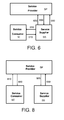
- a Service Handler 90 - see right margin of fig. 9 - invokes, see step 980 - the external business service, which is provided by a Service Supplier (SS), step 985.
- SS Service Supplier
- the components Servlet 91, and handlers 72, 74, 76, and 90 again run in a shared memory environment and communicate through shared data.
- the servlet 91 has only respective differences to that one described above in fig. 7, which yield from the particular differences in scenario 2, and ensures that the handlers are invoked in the correct order.
- a business web service 92 is an external server component provided by the Service Supplier; it is called in a step 910 by the Service Consumer SC, in order to fulfill the requested service call.
- the Licensing Component 75A logic is illustrated in figure 10.
- the Contract Service 74A requests see step 1005, the validation of a license for a given Service Consumer (principal) and a given service from the License Component 75A.
- the SC request indicated as C.request contains the contract, which comprises the license representation.
- each license policy is evaluated specifically in a predetermined sequence, which is given in here exemplarily only.
- the control thereof is implemented in a License dispatcher 1010.
- the calculation 1020 of usage consumption and concurrent usage 1030 is based on metering data, which is requested and input from the Metering Service 76A via dispatcher 1010.
- step 1020 the usage consumption is calculated, ie, questions like: "how often was the service consumed by this principal up to now", “how often was the service requested by this principal in the current time period", etc., are posed and answered by a respective Metering data evaluation as part of step 1020.
- the usage consumption is then compared to the limit defined in the license, see step 1022. If the accumulated usage is still lower than delimited in the contract license section describing the consumptive aspect thereof, a further decision 1024 is taken to check, if more license types are available for the contract. In the YES-branch of decision 1024 it is branched back to the license dispatcher 1010, which enters a similar control flow for the next license type, see calculation 1030, 1040, or 1050.
- the license management may be continued with the evaluation of remaining license types, in order to charge the consumer according to the negotiated terms and conditions in the contract.
- This may also include that a service is charged in a combination of several license types.
- it may mean that the most advantageous "flat rate" (no-restriction / unlimited-use license) aspect is made effective for the service, if this is possible at least for parts of the service to be provided, as for example in a situation, in which 50% of the service is covered by the Concurrent Usage license type, and the other 50% is covered by time slot license type.
- the license generator stores that the current request is supported by the consumptive type license part, and issues a respective positive license validation response in favor to the SC.
- control is transferred to the license generator 1060, which issues a respective negative license validation response for instance accompanied by a rejection message for the requested service.
- the dispatcher 1010 initiates then a step 1030, which calculates the concurrent usage ("how many concurrent service requests originated by this principal are currently executed?").
- the control flow is similar to that one described above with steps 1022, and 1024, but adapted to the number concurrent users.
- the current usage data is requested from the Metering service 76A.
- the license service 75A issues a respective request to the Metering Service.
- two different types of requests can be distinguished: The first requests data about the number of times the service was requested before, and the second type requests data about the number of times the service is currently in use. Both requests take the similar parameters, which can be processed by the Metering Service 76A.
- the steps 1032, 1034, (concurrent usage type) 1040, 1042, and 1044 (Time slot license type), as well as 1050, 1052, 1054 (Identity-based license type) are performed. If there is a restriction-free license type also agreed upon, this may be used also, if the request is not covered by the precedingly mentioned license types.
- steps 1020, 1022, and 1024 and/ or steps 1030, 1032, 1034 may trigger the activation of the Metering Service 76A and may use the new Usage Data for the validation.
- said activation is performed independently, and the usage data is stored, then referenced in ensuing steps 1020, 1022, and 1024 and/ or steps 1030, 1032, 1034.
- the metering service 76A may push the usage data to the License component 75A.
- the License component receives these notifications and stores the usage data; it will then not issue a respective request as mentioned above.
- a Response Generator 1070 creates the overall validation: The overall result is "success", if each license policy is validated successfully.
- a license specifies access regulations and usage conditions for one or multiple principals for example a user, a group of users, a computer resource or an application identified by a unique name etc..
- a license is expressed according to the invention as a license policy or a combination of multiple license policies.
- a license policy defines an aspect of an access regulation and/or a usage condition. By combining multiple license policies it is possible to define arbitrary aspects of access regulations and usage conditions. This serves to best match the consumer's needs.
- a license may refer to a single, entire contract or to one or multiple contract items.
- a representation of a license can either be embedded in a contract representation or can be implemented as a separate document, which is logically linked to a contract.
- the following listing shows an XML representation of a license, which is embedded in a contract document:
- atomic license policies can be combined according to a preferred aspect of the present invention to form a new license.
- the atomic policy types used are "basic”, “named”, “concurrent”, “consumptive”, and “timed”; further atomic license policy types are also possible, as a person skilled in the art may appreciate.
- the licenses are defined inside usage contracts.
- the license service 75A will use the information provided by the contract service 74A together with the metering data from the metering service 76A to make a decision at runtime about the validity of the license.
- This inventional approach allows the easy creation of personalized licenses.
- the license service 75A acts upon information stored in a license database and only links to a license stored in this database are part of the contract.
- a license is defined by combining the atomic license policy types "named” mentioning exemplarily Donald Duck and Mickey Mouse, “consumptive”, delimiting the maximum number of requests per month to 1000, and "Usage condition”, mentioning that no reselling of the service is allowed. While the first two license components can be technically enforced, the type usage condition defines a common understanding between the involved parties.
- the consumptive license policy allows 1000 calls per month to the service subscribed to by the contract.
- This license policy forbids the reselling of the services subscribed to by the contract.
- a license is defined by combining the atomic license policy types "named” and “concurrent”. Both license components can be technically enforced.
- the concurrent license policy allows only one single call at a time to the service subscribed to by the contract.
- a license is defined by combining the atomic license policy types "time based”, “concurrent” and “consumptive”. All license components can be technically enforced.
- the timeframe during which the services can be requested is specified as 9 to 12 o'clock and 18 to 22 o'clock.
- the concurrent license policy allows only two calls at a time to the service subscribed to by the contract.
- the consumptive license policy allows 1000 calls to the service subscribed to by the contract.
- the present invention can be realized in hardware, software, or a combination of hardware and software.
- a tool according to the present invention can be realized in a centralized fashion in one computer system, or in a distributed fashion where different elements are spread across several interconnected computer systems. Any kind of computer system or other apparatus adapted for carrying out the methods described herein is suited.
- a typical combination of hardware and software could be a general-purpose computer system with a computer program that, when being loaded and executed, controls the computer system such that it carries out the methods described herein.
- the present invention can also be embedded in a computer program product, which comprises all the features enabling the implementation of the methods described herein, and which - when loaded in a computer system - is able to carry out these methods.
- Computer program means or computer program in the present context mean any expression, in any language, code or notation, of a set of instructions intended to cause a system having an information processing capability to perform a particular function either directly or after either or both of the following
Landscapes
- Business, Economics & Management (AREA)
- Accounting & Taxation (AREA)
- Development Economics (AREA)
- Economics (AREA)
- Finance (AREA)
- Marketing (AREA)
- Strategic Management (AREA)
- Physics & Mathematics (AREA)
- General Business, Economics & Management (AREA)
- General Physics & Mathematics (AREA)
- Engineering & Computer Science (AREA)
- Theoretical Computer Science (AREA)
- Management, Administration, Business Operations System, And Electronic Commerce (AREA)
Priority Applications (1)
| Application Number | Priority Date | Filing Date | Title |
|---|---|---|---|
| EP04103632A EP1523151A3 (de) | 2003-09-30 | 2004-07-28 | Verfahren, Anwendungsserver, Programm für Datenverarbeitungsanlagen, sowie zugehöriges Produkt zur automatischen Erzeugung und Konfiguration von Lizenzmodellen und -richtlinien |
Applications Claiming Priority (3)
| Application Number | Priority Date | Filing Date | Title |
|---|---|---|---|
| EP03103628 | 2003-09-30 | ||
| EP03103628 | 2003-09-30 | ||
| EP04103632A EP1523151A3 (de) | 2003-09-30 | 2004-07-28 | Verfahren, Anwendungsserver, Programm für Datenverarbeitungsanlagen, sowie zugehöriges Produkt zur automatischen Erzeugung und Konfiguration von Lizenzmodellen und -richtlinien |
Publications (2)
| Publication Number | Publication Date |
|---|---|
| EP1523151A2 true EP1523151A2 (de) | 2005-04-13 |
| EP1523151A3 EP1523151A3 (de) | 2005-09-14 |
Family
ID=34354587
Family Applications (1)
| Application Number | Title | Priority Date | Filing Date |
|---|---|---|---|
| EP04103632A Withdrawn EP1523151A3 (de) | 2003-09-30 | 2004-07-28 | Verfahren, Anwendungsserver, Programm für Datenverarbeitungsanlagen, sowie zugehöriges Produkt zur automatischen Erzeugung und Konfiguration von Lizenzmodellen und -richtlinien |
Country Status (3)
| Country | Link |
|---|---|
| US (2) | US10521800B2 (de) |
| EP (1) | EP1523151A3 (de) |
| CN (1) | CN1604103A (de) |
Cited By (1)
| Publication number | Priority date | Publication date | Assignee | Title |
|---|---|---|---|---|
| WO2007013930A1 (en) * | 2005-07-21 | 2007-02-01 | Computer Associates Think, Inc. | Generating one or more clients for generating one or more synthetic transactions with one or more web service operations |
Families Citing this family (18)
| Publication number | Priority date | Publication date | Assignee | Title |
|---|---|---|---|---|
| CN1604103A (zh) | 2003-09-30 | 2005-04-06 | 国际商业机器公司 | 自动建立和配置许可模型和策略的方法 |
| EP1830294A1 (de) * | 2006-01-05 | 2007-09-05 | Alcatel Lucent | Lizenzschutzsystem, Abrechnungssystem damit und Verfahren zur Lizenzierung einer Software |
| US8056052B2 (en) * | 2006-06-02 | 2011-11-08 | International Business Machines Corporation | Populating service requests |
| TWI327002B (en) * | 2006-11-08 | 2010-07-01 | Inst Information Industry | Web service management systems and methods, and machine readable medium thereof |
| US20090132435A1 (en) * | 2007-11-21 | 2009-05-21 | Microsoft Corporation | Popularity based licensing of user generated content |
| US20090132403A1 (en) * | 2007-11-21 | 2009-05-21 | Microsoft Corporation | Licensing interface for user generated content |
| US20090132422A1 (en) * | 2007-11-21 | 2009-05-21 | Microsoft Corporation | Machine-readable and enforceable license |
| US20090210333A1 (en) * | 2008-02-14 | 2009-08-20 | Microsoft Corporation | Micro-licensing of composite content |
| US8281382B1 (en) * | 2008-06-30 | 2012-10-02 | Amazon Technologies, Inc. | Dynamic throttling systems and services |
| JP5293151B2 (ja) * | 2008-12-19 | 2013-09-18 | 富士ゼロックス株式会社 | コンテンツ保護装置及びコンテンツ保護プログラム |
| US20120311656A1 (en) * | 2011-05-31 | 2012-12-06 | Hohlfeld Matthew W | Apparatus and method of layered licensing |
| US9524378B2 (en) | 2011-05-31 | 2016-12-20 | Qualcomm Incorporated | Apparatus and method of in-application licensing |
| US20140026222A1 (en) * | 2012-07-18 | 2014-01-23 | Vikram Venkata Koka | Framework for providing electronic licenses and licensing programs |
| US9460273B2 (en) * | 2014-10-29 | 2016-10-04 | International Business Machines Corporation | Automatic generation of license terms for service application marketplaces |
| GB201512043D0 (en) * | 2015-07-09 | 2015-08-19 | Microsoft Technology Licensing Llc | Client confirmation method and system |
| US10061684B2 (en) | 2015-07-31 | 2018-08-28 | Microsoft Technology Licensing, Llc | Enhanced service validation |
| JP7124480B2 (ja) * | 2018-06-25 | 2022-08-24 | コニカミノルタ株式会社 | サービス提供システムおよびサービス提供方法 |
| WO2025264158A1 (en) * | 2024-06-20 | 2025-12-26 | Telefonaktiebolaget Lm Ericsson (Publ) | System for providing access to one or more services relating to a software product and method thereof |
Family Cites Families (28)
| Publication number | Priority date | Publication date | Assignee | Title |
|---|---|---|---|---|
| US5715403A (en) * | 1994-11-23 | 1998-02-03 | Xerox Corporation | System for controlling the distribution and use of digital works having attached usage rights where the usage rights are defined by a usage rights grammar |
| US5883955A (en) * | 1995-06-07 | 1999-03-16 | Digital River, Inc. | On-line try before you buy software distribution system |
| US5887060A (en) * | 1995-06-07 | 1999-03-23 | Digital River, Inc. | Central database system for automatic software program sales |
| CA2223409A1 (en) * | 1995-06-07 | 1996-12-19 | Digital River, Inc. | Try before you buy software distribution and marketing system |
| US5903647A (en) * | 1995-06-07 | 1999-05-11 | Digital River, Inc. | Self-launching encrypted digital information distribution system |
| US5870543A (en) * | 1995-06-07 | 1999-02-09 | Digital River, Inc. | System for preventing unauthorized copying of active software |
| US5883954A (en) * | 1995-06-07 | 1999-03-16 | Digital River, Inc. | Self-launching encrypted try before you buy software distribution system |
| US5671412A (en) * | 1995-07-28 | 1997-09-23 | Globetrotter Software, Incorporated | License management system for software applications |
| US5893132A (en) * | 1995-12-14 | 1999-04-06 | Motorola, Inc. | Method and system for encoding a book for reading using an electronic book |
| US5991876A (en) * | 1996-04-01 | 1999-11-23 | Copyright Clearance Center, Inc. | Electronic rights management and authorization system |
| US5742757A (en) * | 1996-05-30 | 1998-04-21 | Mitsubishi Semiconductor America, Inc. | Automatic software license manager |
| US6052717A (en) * | 1996-10-23 | 2000-04-18 | Family Systems, Ltd. | Interactive web book system |
| US6085192A (en) * | 1997-04-11 | 2000-07-04 | Roampage, Inc. | System and method for securely synchronizing multiple copies of a workspace element in a network |
| US6131116A (en) * | 1996-12-13 | 2000-10-10 | Visto Corporation | System and method for globally accessing computer services |
| US6023708A (en) * | 1997-05-29 | 2000-02-08 | Visto Corporation | System and method for using a global translator to synchronize workspace elements across a network |
| US5961590A (en) * | 1997-04-11 | 1999-10-05 | Roampage, Inc. | System and method for synchronizing electronic mail between a client site and a central site |
| JPH1153184A (ja) * | 1997-08-08 | 1999-02-26 | Seta:Kk | データ配信方法および装置 |
| US5991750A (en) * | 1997-10-24 | 1999-11-23 | Ge Capital | System and method for pre-authorization of individual account transactions |
| US6112181A (en) * | 1997-11-06 | 2000-08-29 | Intertrust Technologies Corporation | Systems and methods for matching, selecting, narrowcasting, and/or classifying based on rights management and/or other information |
| US6141754A (en) * | 1997-11-28 | 2000-10-31 | International Business Machines Corporation | Integrated method and system for controlling information access and distribution |
| US6151606A (en) * | 1998-01-16 | 2000-11-21 | Visto Corporation | System and method for using a workspace data manager to access, manipulate and synchronize network data |
| US6226618B1 (en) * | 1998-08-13 | 2001-05-01 | International Business Machines Corporation | Electronic content delivery system |
| US7353194B1 (en) * | 1999-03-02 | 2008-04-01 | Alticor Investments, Inc. | System and method for managing recurring orders in a computer network |
| NO314866B1 (no) * | 2000-05-08 | 2003-06-02 | Ericsson Telefon Ab L M | Mobilt kvitteringssystem |
| US20030220880A1 (en) * | 2002-01-17 | 2003-11-27 | Contentguard Holdings, Inc. | Networked services licensing system and method |
| US6993664B2 (en) * | 2001-03-27 | 2006-01-31 | Microsoft Corporation | Method and system for licensing a software product |
| US20050108176A1 (en) * | 2003-04-30 | 2005-05-19 | Jarol Scott B. | Configurable rules based content item consumption |
| CN1604103A (zh) | 2003-09-30 | 2005-04-06 | 国际商业机器公司 | 自动建立和配置许可模型和策略的方法 |
-
2004
- 2004-05-28 CN CNA2004100476654A patent/CN1604103A/zh active Pending
- 2004-06-24 US US10/876,023 patent/US10521800B2/en active Active
- 2004-07-28 EP EP04103632A patent/EP1523151A3/de not_active Withdrawn
-
2019
- 2019-10-15 US US16/653,125 patent/US11157915B2/en not_active Expired - Lifetime
Non-Patent Citations (1)
| Title |
|---|
| No Search * |
Cited By (2)
| Publication number | Priority date | Publication date | Assignee | Title |
|---|---|---|---|---|
| WO2007013930A1 (en) * | 2005-07-21 | 2007-02-01 | Computer Associates Think, Inc. | Generating one or more clients for generating one or more synthetic transactions with one or more web service operations |
| US8250226B2 (en) | 2005-07-21 | 2012-08-21 | Ca, Inc. | Generating one or more clients for generating one or more synthetic transactions with one or more web service operations |
Also Published As
| Publication number | Publication date |
|---|---|
| CN1604103A (zh) | 2005-04-06 |
| US20050071276A1 (en) | 2005-03-31 |
| US11157915B2 (en) | 2021-10-26 |
| US10521800B2 (en) | 2019-12-31 |
| US20200043013A1 (en) | 2020-02-06 |
| EP1523151A3 (de) | 2005-09-14 |
Similar Documents
| Publication | Publication Date | Title |
|---|---|---|
| US11157915B2 (en) | Automatic creation and configuration of license models and policies | |
| US7613817B2 (en) | Counting and billing mechanism for web-services based on a SOAP-communication protocol | |
| US11734734B2 (en) | System and method for web service billing | |
| US6961735B2 (en) | Method and a bridge for coupling a server and a client of different object types | |
| Tsalgatidou et al. | An overview of standards and related technology in web services | |
| KR100737301B1 (ko) | 주문형 인프라스트럭처에 있어서 제3자 주문형 서비스들의 동적 바인딩 | |
| Papazoglou et al. | Design methodology for web services and business processes | |
| US20090182645A1 (en) | Provisioning Web Services | |
| US8738790B2 (en) | Apparatus, methods and computer programs for metering and accounting for services accessed over a network | |
| EP1198756A1 (de) | Datenverwaltungssystem | |
| AU2006201516A1 (en) | Service delivery platform | |
| CN101098315A (zh) | 在高速低延迟数据通信环境中计算机数据通信方法和系统 | |
| CA2405700C (en) | Web service interfaces used in providing a billing service | |
| WO2013059797A1 (en) | Service based information technology platform | |
| US20050108133A1 (en) | Service shopping and provisioning system and method | |
| US10397342B2 (en) | Web service contract selection | |
| CA2638470A1 (en) | Message sequence management of enterprise based correlated events | |
| US20040192205A1 (en) | Operational support system for telecommunication services | |
| Ishikawa et al. | Incorporating agreements on service options into bpel-based services | |
| Laws et al. | Grid Service Accounting Extensions | |
| Belhajjame et al. | Defining and Coordinating Open-Services Using | |
| Ziegler et al. | WS-Agreement Specification Version 1.0 Experience Document | |
| HK1066611B (en) | A method and a bridge for coupling a server and a client of different object types |
Legal Events
| Date | Code | Title | Description |
|---|---|---|---|
| PUAI | Public reference made under article 153(3) epc to a published international application that has entered the european phase |
Free format text: ORIGINAL CODE: 0009012 |
|
| AK | Designated contracting states |
Kind code of ref document: A2 Designated state(s): AT BE BG CH CY CZ DE DK EE ES FI FR GB GR HU IE IT LI LU MC NL PL PT RO SE SI SK TR |
|
| AX | Request for extension of the european patent |
Extension state: AL HR LT LV MK |
|
| PUAL | Search report despatched |
Free format text: ORIGINAL CODE: 0009013 |
|
| AK | Designated contracting states |
Kind code of ref document: A3 Designated state(s): AT BE BG CH CY CZ DE DK EE ES FI FR GB GR HU IE IT LI LU MC NL PL PT RO SE SI SK TR |
|
| AX | Request for extension of the european patent |
Extension state: AL HR LT LV MK |
|
| AKX | Designation fees paid | ||
| STAA | Information on the status of an ep patent application or granted ep patent |
Free format text: STATUS: THE APPLICATION IS DEEMED TO BE WITHDRAWN |
|
| 18D | Application deemed to be withdrawn |
Effective date: 20060315 |
|
| REG | Reference to a national code |
Ref country code: DE Ref legal event code: 8566 |