EP1520386B1 - Codage de donnees dans un ensemble de donnees - Google Patents
Codage de donnees dans un ensemble de donnees Download PDFInfo
- Publication number
- EP1520386B1 EP1520386B1 EP02722212A EP02722212A EP1520386B1 EP 1520386 B1 EP1520386 B1 EP 1520386B1 EP 02722212 A EP02722212 A EP 02722212A EP 02722212 A EP02722212 A EP 02722212A EP 1520386 B1 EP1520386 B1 EP 1520386B1
- Authority
- EP
- European Patent Office
- Prior art keywords
- data
- coding
- package
- data package
- information
- Prior art date
- Legal status (The legal status is an assumption and is not a legal conclusion. Google has not performed a legal analysis and makes no representation as to the accuracy of the status listed.)
- Expired - Lifetime
Links
Images


Classifications
-
- H—ELECTRICITY
- H01—ELECTRIC ELEMENTS
- H01Q—ANTENNAS, i.e. RADIO AERIALS
- H01Q1/00—Details of, or arrangements associated with, antennas
- H01Q1/12—Supports; Mounting means
- H01Q1/22—Supports; Mounting means by structural association with other equipment or articles
- H01Q1/2208—Supports; Mounting means by structural association with other equipment or articles associated with components used in interrogation type services, i.e. in systems for information exchange between an interrogator/reader and a tag/transponder, e.g. in Radio Frequency Identification [RFID] systems
- H01Q1/2225—Supports; Mounting means by structural association with other equipment or articles associated with components used in interrogation type services, i.e. in systems for information exchange between an interrogator/reader and a tag/transponder, e.g. in Radio Frequency Identification [RFID] systems used in active tags, i.e. provided with its own power source or in passive tags, i.e. deriving power from RF signal
-
- G—PHYSICS
- G06—COMPUTING OR CALCULATING; COUNTING
- G06K—GRAPHICAL DATA READING; PRESENTATION OF DATA; RECORD CARRIERS; HANDLING RECORD CARRIERS
- G06K19/00—Record carriers for use with machines and with at least a part designed to carry digital markings
- G06K19/06—Record carriers for use with machines and with at least a part designed to carry digital markings characterised by the kind of the digital marking, e.g. shape, nature, code
- G06K19/067—Record carriers with conductive marks, printed circuits or semiconductor circuit elements, e.g. credit or identity cards also with resonating or responding marks without active components
- G06K19/07—Record carriers with conductive marks, printed circuits or semiconductor circuit elements, e.g. credit or identity cards also with resonating or responding marks without active components with integrated circuit chips
- G06K19/0723—Record carriers with conductive marks, printed circuits or semiconductor circuit elements, e.g. credit or identity cards also with resonating or responding marks without active components with integrated circuit chips the record carrier comprising an arrangement for non-contact communication, e.g. wireless communication circuits on transponder cards, non-contact smart cards or RFIDs
-
- G—PHYSICS
- G06—COMPUTING OR CALCULATING; COUNTING
- G06K—GRAPHICAL DATA READING; PRESENTATION OF DATA; RECORD CARRIERS; HANDLING RECORD CARRIERS
- G06K19/00—Record carriers for use with machines and with at least a part designed to carry digital markings
- G06K19/06—Record carriers for use with machines and with at least a part designed to carry digital markings characterised by the kind of the digital marking, e.g. shape, nature, code
- G06K19/067—Record carriers with conductive marks, printed circuits or semiconductor circuit elements, e.g. credit or identity cards also with resonating or responding marks without active components
- G06K19/07—Record carriers with conductive marks, printed circuits or semiconductor circuit elements, e.g. credit or identity cards also with resonating or responding marks without active components with integrated circuit chips
- G06K19/077—Constructional details, e.g. mounting of circuits in the carrier
- G06K19/07749—Constructional details, e.g. mounting of circuits in the carrier the record carrier being capable of non-contact communication, e.g. constructional details of the antenna of a non-contact smart card
-
- G—PHYSICS
- G06—COMPUTING OR CALCULATING; COUNTING
- G06K—GRAPHICAL DATA READING; PRESENTATION OF DATA; RECORD CARRIERS; HANDLING RECORD CARRIERS
- G06K19/00—Record carriers for use with machines and with at least a part designed to carry digital markings
- G06K19/06—Record carriers for use with machines and with at least a part designed to carry digital markings characterised by the kind of the digital marking, e.g. shape, nature, code
- G06K19/067—Record carriers with conductive marks, printed circuits or semiconductor circuit elements, e.g. credit or identity cards also with resonating or responding marks without active components
- G06K19/07—Record carriers with conductive marks, printed circuits or semiconductor circuit elements, e.g. credit or identity cards also with resonating or responding marks without active components with integrated circuit chips
- G06K19/077—Constructional details, e.g. mounting of circuits in the carrier
- G06K19/07749—Constructional details, e.g. mounting of circuits in the carrier the record carrier being capable of non-contact communication, e.g. constructional details of the antenna of a non-contact smart card
- G06K19/07773—Antenna details
- G06K19/07786—Antenna details the antenna being of the HF type, such as a dipole
-
- G—PHYSICS
- G06—COMPUTING OR CALCULATING; COUNTING
- G06K—GRAPHICAL DATA READING; PRESENTATION OF DATA; RECORD CARRIERS; HANDLING RECORD CARRIERS
- G06K19/00—Record carriers for use with machines and with at least a part designed to carry digital markings
- G06K19/06—Record carriers for use with machines and with at least a part designed to carry digital markings characterised by the kind of the digital marking, e.g. shape, nature, code
- G06K19/067—Record carriers with conductive marks, printed circuits or semiconductor circuit elements, e.g. credit or identity cards also with resonating or responding marks without active components
- G06K19/07—Record carriers with conductive marks, printed circuits or semiconductor circuit elements, e.g. credit or identity cards also with resonating or responding marks without active components with integrated circuit chips
- G06K19/077—Constructional details, e.g. mounting of circuits in the carrier
- G06K19/07749—Constructional details, e.g. mounting of circuits in the carrier the record carrier being capable of non-contact communication, e.g. constructional details of the antenna of a non-contact smart card
- G06K19/07773—Antenna details
- G06K19/07788—Antenna details the antenna being of the capacitive type
-
- G—PHYSICS
- G06—COMPUTING OR CALCULATING; COUNTING
- G06K—GRAPHICAL DATA READING; PRESENTATION OF DATA; RECORD CARRIERS; HANDLING RECORD CARRIERS
- G06K7/00—Methods or arrangements for sensing record carriers, e.g. for reading patterns
- G06K7/10—Methods or arrangements for sensing record carriers, e.g. for reading patterns by electromagnetic radiation, e.g. optical sensing; by corpuscular radiation
- G06K7/10009—Methods or arrangements for sensing record carriers, e.g. for reading patterns by electromagnetic radiation, e.g. optical sensing; by corpuscular radiation sensing by radiation using wavelengths larger than 0.1 mm, e.g. radio-waves or microwaves
- G06K7/10316—Methods or arrangements for sensing record carriers, e.g. for reading patterns by electromagnetic radiation, e.g. optical sensing; by corpuscular radiation sensing by radiation using wavelengths larger than 0.1 mm, e.g. radio-waves or microwaves using at least one antenna particularly designed for interrogating the wireless record carriers
- G06K7/10326—Methods or arrangements for sensing record carriers, e.g. for reading patterns by electromagnetic radiation, e.g. optical sensing; by corpuscular radiation sensing by radiation using wavelengths larger than 0.1 mm, e.g. radio-waves or microwaves using at least one antenna particularly designed for interrogating the wireless record carriers the antenna being of the very-near field type, e.g. capacitive
-
- H—ELECTRICITY
- H01—ELECTRIC ELEMENTS
- H01Q—ANTENNAS, i.e. RADIO AERIALS
- H01Q1/00—Details of, or arrangements associated with, antennas
- H01Q1/36—Structural form of radiating elements, e.g. cone, spiral, umbrella; Particular materials used therewith
- H01Q1/38—Structural form of radiating elements, e.g. cone, spiral, umbrella; Particular materials used therewith formed by a conductive layer on an insulating support
-
- H—ELECTRICITY
- H01—ELECTRIC ELEMENTS
- H01Q—ANTENNAS, i.e. RADIO AERIALS
- H01Q1/00—Details of, or arrangements associated with, antennas
- H01Q1/40—Radiating elements coated with or embedded in protective material
-
- H—ELECTRICITY
- H01—ELECTRIC ELEMENTS
- H01Q—ANTENNAS, i.e. RADIO AERIALS
- H01Q23/00—Antennas with active circuits or circuit elements integrated within them or attached to them
-
- H—ELECTRICITY
- H01—ELECTRIC ELEMENTS
- H01Q—ANTENNAS, i.e. RADIO AERIALS
- H01Q9/00—Electrically-short antennas having dimensions not more than twice the operating wavelength and consisting of conductive active radiating elements
- H01Q9/04—Resonant antennas
- H01Q9/0407—Substantially flat resonant element parallel to ground plane, e.g. patch antenna
-
- H—ELECTRICITY
- H04—ELECTRIC COMMUNICATION TECHNIQUE
- H04L—TRANSMISSION OF DIGITAL INFORMATION, e.g. TELEGRAPHIC COMMUNICATION
- H04L65/00—Network arrangements, protocols or services for supporting real-time applications in data packet communication
- H04L65/10—Architectures or entities
- H04L65/102—Gateways
- H04L65/1023—Media gateways
- H04L65/103—Media gateways in the network
-
- H—ELECTRICITY
- H04—ELECTRIC COMMUNICATION TECHNIQUE
- H04L—TRANSMISSION OF DIGITAL INFORMATION, e.g. TELEGRAPHIC COMMUNICATION
- H04L65/00—Network arrangements, protocols or services for supporting real-time applications in data packet communication
- H04L65/10—Architectures or entities
- H04L65/102—Gateways
- H04L65/1033—Signalling gateways
- H04L65/104—Signalling gateways in the network
-
- H—ELECTRICITY
- H04—ELECTRIC COMMUNICATION TECHNIQUE
- H04L—TRANSMISSION OF DIGITAL INFORMATION, e.g. TELEGRAPHIC COMMUNICATION
- H04L65/00—Network arrangements, protocols or services for supporting real-time applications in data packet communication
- H04L65/60—Network streaming of media packets
- H04L65/70—Media network packetisation
-
- H—ELECTRICITY
- H04—ELECTRIC COMMUNICATION TECHNIQUE
- H04L—TRANSMISSION OF DIGITAL INFORMATION, e.g. TELEGRAPHIC COMMUNICATION
- H04L65/00—Network arrangements, protocols or services for supporting real-time applications in data packet communication
- H04L65/60—Network streaming of media packets
- H04L65/75—Media network packet handling
- H04L65/765—Media network packet handling intermediate
-
- H—ELECTRICITY
- H04—ELECTRIC COMMUNICATION TECHNIQUE
- H04L—TRANSMISSION OF DIGITAL INFORMATION, e.g. TELEGRAPHIC COMMUNICATION
- H04L67/00—Network arrangements or protocols for supporting network services or applications
- H04L67/50—Network services
- H04L67/56—Provisioning of proxy services
-
- H—ELECTRICITY
- H04—ELECTRIC COMMUNICATION TECHNIQUE
- H04L—TRANSMISSION OF DIGITAL INFORMATION, e.g. TELEGRAPHIC COMMUNICATION
- H04L67/00—Network arrangements or protocols for supporting network services or applications
- H04L67/50—Network services
- H04L67/56—Provisioning of proxy services
- H04L67/565—Conversion or adaptation of application format or content
-
- H—ELECTRICITY
- H04—ELECTRIC COMMUNICATION TECHNIQUE
- H04L—TRANSMISSION OF DIGITAL INFORMATION, e.g. TELEGRAPHIC COMMUNICATION
- H04L9/00—Cryptographic mechanisms or cryptographic arrangements for secret or secure communications; Network security protocols
- H04L9/40—Network security protocols
-
- H—ELECTRICITY
- H04—ELECTRIC COMMUNICATION TECHNIQUE
- H04M—TELEPHONIC COMMUNICATION
- H04M7/00—Arrangements for interconnection between switching centres
- H04M7/006—Networks other than PSTN/ISDN providing telephone service, e.g. Voice over Internet Protocol (VoIP), including next generation networks with a packet-switched transport layer
- H04M7/0072—Speech codec negotiation
-
- H—ELECTRICITY
- H04—ELECTRIC COMMUNICATION TECHNIQUE
- H04M—TELEPHONIC COMMUNICATION
- H04M7/00—Arrangements for interconnection between switching centres
- H04M7/12—Arrangements for interconnection between switching centres for working between exchanges having different types of switching equipment, e.g. power-driven and step by step or decimal and non-decimal
- H04M7/1205—Arrangements for interconnection between switching centres for working between exchanges having different types of switching equipment, e.g. power-driven and step by step or decimal and non-decimal where the types of switching equipement comprises PSTN/ISDN equipment and switching equipment of networks other than PSTN/ISDN, e.g. Internet Protocol networks
- H04M7/125—Details of gateway equipment
- H04M7/1255—Details of gateway equipment where the switching fabric and the switching logic are decomposed such as in Media Gateway Control
-
- H—ELECTRICITY
- H04—ELECTRIC COMMUNICATION TECHNIQUE
- H04L—TRANSMISSION OF DIGITAL INFORMATION, e.g. TELEGRAPHIC COMMUNICATION
- H04L65/00—Network arrangements, protocols or services for supporting real-time applications in data packet communication
- H04L65/1066—Session management
- H04L65/1101—Session protocols
-
- H—ELECTRICITY
- H04—ELECTRIC COMMUNICATION TECHNIQUE
- H04L—TRANSMISSION OF DIGITAL INFORMATION, e.g. TELEGRAPHIC COMMUNICATION
- H04L69/00—Network arrangements, protocols or services independent of the application payload and not provided for in the other groups of this subclass
- H04L69/18—Multiprotocol handlers, e.g. single devices capable of handling multiple protocols
-
- H—ELECTRICITY
- H04—ELECTRIC COMMUNICATION TECHNIQUE
- H04L—TRANSMISSION OF DIGITAL INFORMATION, e.g. TELEGRAPHIC COMMUNICATION
- H04L69/00—Network arrangements, protocols or services independent of the application payload and not provided for in the other groups of this subclass
- H04L69/30—Definitions, standards or architectural aspects of layered protocol stacks
- H04L69/32—Architecture of open systems interconnection [OSI] 7-layer type protocol stacks, e.g. the interfaces between the data link level and the physical level
- H04L69/322—Intralayer communication protocols among peer entities or protocol data unit [PDU] definitions
- H04L69/329—Intralayer communication protocols among peer entities or protocol data unit [PDU] definitions in the application layer [OSI layer 7]
Definitions
- This invention relates to a method of coding data in a data package which is included in a data stream, the data package containing information on a source of origin and a destination for the data package, wherein the coding takes place in a coding system containing a plurality of coding algorithms, and further relates to a circuit for coding said data as mentioned.
- the encoding/decoding of data in a data stream takes place by use of an encoder/decoder (CODEC) device in form of a Digital Signal Processor.
- CODEC encoder/decoder
- a voice CODEC device generally requires significant processing power as well as storage of substantial amounts of state information associated with the voice data stream.
- Telephone communication via Internet or Local Area Networks (LAN) is an increasingly common phenomenon, which requires that analogue data, such as speech, can be transmitted reliably and efficiently across network boundaries.
- An example of an Internet Protocol is User Diagram Protocol (UDP), which is primarily used for broadcasting of messages over a network. UDP provides no guarantee of delivery, does nothing to avoid congestion, and makes no guarantees about the rate or order in which packages will arrive.
- a Media Gateway resides on the edge of a Public Switched Telephone Network (PSTN) and an Internet Protocol (IP) network.
- PSTN Public Switched Telephone Network
- IP Internet Protocol
- the Media Gateway has two endpoints each adapted to a network. If the Media Gateway resides between a PSTN and an IP network, one endpoint would comprise an E1 Interface for the PSTN and the other endpoint would comprise an IP Interface for the IP network.
- the Media Gateway device performs the translation between networks, using a number of encoder/decoder devices to translate analogue voice data into a package-based digital representation of the data.
- the Media Gateway terminates encoded media streams, e.g. voice encoded according to the standardized G.711 coding algorithm.
- a prominent feature of a Media Gateway is its ability to support a range of CODEC's and to allow media transcoding between these.
- Each CODEC device is uniquely adapted to the type of signal it processes and the characteristics of the network, thus many different CODEC's may be required to implement a Media Gateway. Functions as echo cancellation, gain control, silence detection, fax tone detection, etc., are also likely to be part of the capability set of a Media Gateway.
- CODEC devices may be implemented as Software Modules, Dedicated Hardware or any combination thereof.
- a Media Gateway is typically processing a plurality of data streams multiplexed in time. This requires the ability of shifting between CODEC's appropriate for coding the incoming data.
- the CODEC implementation is operating in the context of a Realtime Operating System, the Operating System will force the rescheduling of multiple processes at regular intervals.
- the scheduling process forces the microprocessor to flush the fast and efficient cache memory, after which the processor has to preload new data into the cache memory space for use by the forthcoming task. This flushing of data is very ineffective due to waste of processing time, which calls for an amount of processing overhead by the processor.
- This method makes the processor exceedingly dependent on the access time and latency time of the usual slower external memory, as this will dramatically decrease the performance of the real-time processor.
- the processor possibly may not be able to keep up a steady rhythm of processing, which introduces data under run or loss of information or even worse, lead into processor stalling (e.g. no data will be processed at all).
- Encoding/decoding of multimedia communications over the Internet is disclosed by Lu G. in ' Issue and technologies for supporting multimedia communications over the Internet' [COMPUTER COMMUNICATIONS, ELSEVIER SCIENCE PUBLISHERS BV, AMSTERDAM, NL, vol. 23, no. 14-15, 30. August 2000, pages 1323-1335, ISSN 0140-3664].
- An object of the present invention is to provide an efficient utilization of processor resources during coding of a packetized data stream by handling the data stream in a more efficient way and to optimize the scheduling of processing between several data streams and the access to a CODEC state information in order to improve overall throughput of a Media Gateway device.
- an identification system attaches information to the data package, whereby the information is generated from the information on the source of origin of the data package and its destination by a managing system, and the coding system utilizes said attached information to select one of a plurality of coding algorithms, and the coding system codes data derived from said data package according to the selected coding algorithm.
- the data package is marked with a source of origin and destination that eliminates the need for generating said source of origin and destination.
- the coding system does not have to evaluate if the internal address look-up is in vain.
- one of said coding algorithms contained in the coding system is of a type that can be coded in a Global System for Mobile Communications (GSM) system, the coding system will be able to code respective data without the need of acquiring the said algorithm.
- GSM Global System for Mobile Communications
- one of said coding algorithms contained in the coding system is of a type that can be coded in a Universal Mobile Telecommunication Standard (UMTS) system, the coding system will be able to code respective data without the need for acquiring said algorithm.
- UMTS Universal Mobile Telecommunication Standard
- one of said coding algorithms contained in the coding system is of a type that can be coded in a PSTN system, the coding system will be able to code respective data without the need for acquiring said algorithm.
- the coding system has fewer tasks and therefore a higher processing limit.
- the invention further relates to a circuit in which the circuit comprises means for attaching an identification mark to a data package, whereby said mark is generated from said information on the source of origin of the data package and its destination by a means for managing; and means for subsequently selecting one of said plurality of coding algorithms from said attached identification mark; and means coding said data according to said selected coding algorithm.
- the data package is marked with a source of origin and destination that eliminates the need for generating said source of origin and destination.
- the coding system does not have to evaluate if the internal address look-up is in vain.
- one of said coding algorithms contained in the coding system is of a type that can be coded in a GSM system, the coding system will be able to code respective data without the need for acquiring said algorithm.
- one of said coding algorithms contained in the coding system is of a type that can be coded in a UMTS system, the coding system will be able to code respective data without the need for acquiring said algorithm.
- one of said coding algorithms contained in the coding system is of a type that can be coded in a PSTN system, the coding system will be able to code respective data without the need for acquiring said algorithm.
- the coding system has fewer tasks and therefore a higher processing limit.
- DSP Digital Signal Processor
- This flushing of data at regular and improper intervals will be eliminated by a Package-Driven Architecture for data stream processing being defined.
- This architecture schedules data stream processing by attaching instructions to each data stream package describing the processing required by the given data package.
- dedicated Digital Signal Processors are simple and optimized for performance and not task switching, it is an alternative to use a DSP as Central Processing Unit in said coding system.
- a Stream Manager makes the decision what CODEC the DSP will use for coding.
- the Stream Manager has access to a permanent digital data medium comprising a plurality of available CODEC interfaces.
- CODEC algorithms available to the Stream Manager will be uploaded into the memory of the DSP, either partially or fully.
- the algorithms will be sorted in banks, wherein each bank only one CODEC is available.
- the banks are selectable by the Stream Manager and the DSP does not have the ability to choose which bank to select, but can only access the CODEC data of the bank currently selected by the Stream Manager.
- the Stream Manager has knowledge about the specific CODEC required.
- This knowledge is typically based on the source of origin (PSTN/GSM/IP address etc.) and/or the destination address of the data, but can also be based on for example common used communication standards.
- the Stream Manager indexes the memory area of the DSP where the CODEC is stored. The Stream Manager will enable that particular bank so that the DSP will load the chosen CODEC upon coding the data comprised in said data stream.
- the coding system may comprise means to receive new types of CODEC's. This property of the coding system is beneficial if a data package arrives that may require a CODEC that is not available to the Stream Manager.
- the coding system may store the new CODEC permanently on the storage medium available to the Stream Manager, which after the Stream Manager may upload the said CODEC in the memory available to the DSP. Additionally it is preferred that the coding system comprises means to delete a CODEC from the storage medium to free storage space.
- FIG. 1 illustrates the data flow from one endpoint E1 Interface 1 to a second endpoint IP/UDP Interface 5 through a system architecture and vice versa, which will be described in details in the following.
- the E1 Interface 1 is adapted to an encoded media stream, e.g. G.711 encoded voice data from a PSTN telephone switch-signalling gateway.
- An E1 Interface Agent 2 creates a fixed-size package within an assigned time slot and transmits the current processed time slot information 6 regarding the package to a Stream Manager 12. On request the Stream Manager 12 is able to upload CODEC's from the CODEC storage device 13 to the Media Mapper 3. The Stream Manager 12 generates a Stream ID 7 based upon the time slot information 6 and sends the Stream ID 7 back to the E1 Interface Agent 2, which tags the current fixed-size package with the processing code, Stream ID 7.
- the tagged package is sent to the Media Mapper 3, which upon receiving the data package sends the Stream ID 8, which is identical with above-mentioned Stream ID 7, to the Stream Manager 12.
- the Stream Manager 12 enables the CODEC information 9 appropriate for coding the media data stream package in the Media Mapper 3.
- the data package is sent to the IP Interface Agent 4.
- the IP Interface Agent will now generate the information required to form an IP package.
- the data package will be wrapped into an IP package with the corresponding destination address required by the network protocol.
- the data package is sent to its destination via the IP/UDP Interface 5.
- IP/UDP Interface 105 By receiving a coded media package from the IP/UDP Interface 105 to make the way to a E1 network the method is nearly identical to the first description but in opposite direction.
- An IP package arrives at the IP/UDP Interface where upon the IP Interface Agent 4 recognizes the source and destination address contained in the data package.
- the destination address 11 is sent to the Stream Manager 12, which uses the source address information to index the processing code belonging to that given connection.
- the Stream Manager 12 generates a Stream ID 10 and sends this ID to the IP Interface Agent 4 where the protocol information of the data package may be stripped, and the data package is tagged with the Stream ID 10 assigned by the Stream Manager 12, and sent to the Media Mapper 3.
- Media Mapper 3 indexes the CODEC by way of the Stream ID 8, the Stream Manager 12, and the CODEC Information 9.
- the data derived from the stripped package is coded in accordance with the chosen CODEC and the package is sent to the E1 Interface Agent 2.
- the Stream Manager 12 indexes the transmit buffer for the E1 time slot used by the connection, and the data is finally placed in the transmit buffer of the E1 Interface 1 with respect to the found time slot.
- Fig. 2 shows a detailed excerpt of the data stream 14 as it arrives the E1 Interface agent 2.
- the data stream 14, which can be a continuous stream of any digital signal, is sliced and packed in a predetermined fixed-size package 15 and tagged with a Stream ID 16 in the E1 Interface Agent 2 given by a Stream Manager 12 for subsequent recognition.
- the Stream Manager 12 maintains the media stream by managing the data defining the stream.
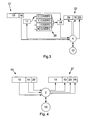
- Fig. 3 shows the architecture of the present invention subsequent to the E1 Interface Agent 2 management.
- the data package 21 containing data 15 and an ID tag 16 is now stripped in the Media Mapper 3 where the ID tag 16 is utilized in a Indexing Mechanism 17 contained in the Stream Manager 12 to point out the memory space 26 used for the requested CODEC.
- the memory space can be organized in smaller fragments each with its own CODEC.
- the Digital Signal Processor 18 loads the chosen CODEC into the internal processing memory and codes the data 15 derived from the package 21 on the basis of the loaded CODEC contained in memory space 26.
- the processed data 24 is tagged with a source of origin and destination contained in the Stream Manager 12 by way of the IP Interface Agent 4 to form a valid IP package 22 after which the IP package 22 is sent to its destination through a common network interface (not shown).
- Fig. 4 illustrates an incoming media stream in form of an Internet Protocol package 23 comprising voice data 15 and source of origin 19 and destination 20.
- the Interface Agent 2 recognizes and sends the information regarding the source of origin and destination from the data package 23 to the Stream Manager 12. Note, that the package information also can be stripped apart from the data. If the source and destination address reside on the data, a look-up in the Stream Manager 12 can subsequently be avoided and internal processing bandwidth in the Media Gateway can be reduced.
- the Stream Manager 12 generates a Stream ID tag, which will be sent to the Interface Agent 2 and tagged thereby to the data package 23 to form a package 27 prepared to be processed in the Media Mapper 3.
- the interplay between the Media Mapper 3, the Interface Agent 4 and the Stream Manager 12 is illustrated in figure 5.
- the pre-processed data package 27, comprising voice data 15, source of origin 19, destination 20 and Stream ID 16, is categorized by the Stream Manager 12 by means of the Stream ID 16 and the E1 Interface Agent 4.
- the Stream Manager 12 has means to index the appropriate CODEC in the memory 26 accessible by the DSP 18, by use of the Indexing Mechanism 17.
- the DSP 18 utilizes the CODEC algorithm designated by the Indexing Mechanism 17 on coding the data 15.
- the DSP 18 sends the processed data to the E1 Interface Agent 4 to let the Stream Manager 12 be provided with the topical destination information 20.
- the Stream Manager 12 indexes the transmit buffer for the E1 time slot used by the connection by way of the destination information 20.
- the data 28 is finally placed in transmit buffer 29 of the E1 Interface 5 with respect to the appropriate time slot.
Landscapes
- Engineering & Computer Science (AREA)
- Computer Networks & Wireless Communication (AREA)
- Signal Processing (AREA)
- Multimedia (AREA)
- Physics & Mathematics (AREA)
- Theoretical Computer Science (AREA)
- General Physics & Mathematics (AREA)
- Computer Hardware Design (AREA)
- Microelectronics & Electronic Packaging (AREA)
- Health & Medical Sciences (AREA)
- Toxicology (AREA)
- Computer Security & Cryptography (AREA)
- Electromagnetism (AREA)
- General Health & Medical Sciences (AREA)
- Artificial Intelligence (AREA)
- Computer Vision & Pattern Recognition (AREA)
- Data Exchanges In Wide-Area Networks (AREA)
- Compression, Expansion, Code Conversion, And Decoders (AREA)
- Auxiliary Devices For And Details Of Packaging Control (AREA)
- Transmission Systems Not Characterized By The Medium Used For Transmission (AREA)
Claims (18)
- Procédé de codage de données (15) en un paquet de données (23) qui est inclus dans un flux de données (14),
ledit paquet de données contenant une information relative à une source d'origine (19) et une destination (20) du paquet de données, moyennant quoi le codage a lieu dans un système de codage (3) contenant une pluralité d'algorithmes de codage (26) et moyennant quoi
un système d'identification (2) attache l'information (16) au paquet de données (23), moyennant quoi ladite information est générée à partir de ladite information relative à la source d'origine (19) du paquet de données et sa destination (20) par un système de administration, caractérisé en ce que- le système de codage (3) utilise ladite information attachée (16) pour sélectionner un de ladite pluralité d'algorithmes de codage (26) ;- le système de codage (3) code lesdites données (15) en fonction de l'algorithme de codage sélectionné. - Procédé selon la revendication 1, caractérisé en ce que ledit flux de données (14) est inclus dans un réseau.
- Procédé selon la revendication 2, caractérisé en ce que ledit paquet de données (23) est formé par un paquet de réseau à protocole Internet.
- Procédé selon la revendication 3, caractérisé en ce que la source d'origine (19) et la destination comprennent des adresses de protocole Internet.
- Procédé selon les revendications 1 à 4, caractérisé en ce que au moins un algorithme de codage est d'un type qui peut être codé dans un système GSM.
- Procédé selon les revendications 1 à 5, caractérisé en ce que au moins un algorithme de codage est d'un type qui peut être codé dans un système UMTS.
- Procédé selon les revendications 1 à 6, caractérisé en ce que au moins un algorithme de codage est d'un type qui peut être codé dans un système PSTN.
- Procédé selon les revendications 1 à 7, caractérisé en ce que ladite identification (16) est fournie dans un agent d'interface (2).
- Circuit de codage de données (15) en un paquet de données (23) qui est inclus dans un flux de données (14),
ledit paquet de données contenant une information concernant une source d'origine (19) et une destination (20) du paquet de données, ledit circuit contenant une pluralité d'algorithmes de codage (26),
ledit circuit comprenant un moyen (2,4) pour attacher une marque d'identification (16) au paquet de données (23), moyennant quoi ladite marque est générée à partir de ladite information relative à la source d'origine (19) du paquet de données (23) et sa destination (20) par un moyen de administration,
caractérisé en ce que le circuit comprend en outre- un moyen (12,17) pour sélectionner ensuite un de ladite pluralité d'algorithmes de codage (26) à partir de ladite marque d'identification attachée (16) ; et- un moyen (18) pour coder lesdites données en fonction dudit algorithme de codage sélectionné. - Circuit selon la revendication 9, caractérisé en ce que ledit flux de données (14) est inclus dans un réseau.
- Circuit selon la revendication 10, caractérisé en ce que ledit paquet de données (23) est formé par un paquet de réseau à protocole Internet.
- Circuit selon la revendication 11, caractérisé en ce que le circuit comprend un moyen (12) pour calculer des adresses de protocole Internet.
- Circuit selon les revendications 9 à 12, caractérisé en ce que le circuit comprend un algorithme de codage d'un type qui peut être codé dans un système GSM.
- Circuit selon les revendications 9 à 13, caractérisé en ce que le circuit comprend un algorithme de codage d'un type qui peut être codé dans un système UMTS.
- Circuit selon les revendications 9 à 14, caractérisé en ce que le circuit comprend un algorithme de codage d'un type qui peut être codé dans un système PSTN.
- Circuit selon les revendications 9 à 15, caractérisé en ce que le circuit comprend un moyen (12,17) pour indexer un algorithme de codage à partir d'une marque d'identification (16).
- Circuit selon les revendications 9 à 16, caractérisé en ce que le circuit comprend un processeur de signal numérique (18).
- Passerelle média pour coder des donnés (15) en un paquet de données (23) qui est inclus dans un flux de données (14),
ledit paquet de données concernant une information relative à une source d'vrigine (19) et une destination (20) du paquet de données, ladite passerelle média contenant une pluralité d'algorithmes de codage (26), ladite passerelle média comprenant un moyen (2,4) pour attacher une marque d'identification (16) au paquet de données (23), moyennant quoi ladite marque est générée à partir de ladite information relative à la source d'origine (19) du paquet de données (23) et sa destination (20) par un moyen de administration,
caractérisé en ce que la passerelle média comprend en outre- un moyen (12,17) pour sélectionner ensuite un de ladite pluralité d'algorithmes de codage (26) à partir de ladite marque d'identification attachée (16) ; et- un moyen (18) pour coder lesdites données en fonction dudit algorithme de codage sélectionné.
Applications Claiming Priority (1)
| Application Number | Priority Date | Filing Date | Title |
|---|---|---|---|
| PCT/EP2002/002751 WO2003077499A2 (fr) | 2002-03-11 | 2002-03-11 | Codage de donnees dans un ensemble de donnees |
Publications (2)
| Publication Number | Publication Date |
|---|---|
| EP1520386A2 EP1520386A2 (fr) | 2005-04-06 |
| EP1520386B1 true EP1520386B1 (fr) | 2006-08-02 |
Family
ID=27798755
Family Applications (1)
| Application Number | Title | Priority Date | Filing Date |
|---|---|---|---|
| EP02722212A Expired - Lifetime EP1520386B1 (fr) | 2002-03-11 | 2002-03-11 | Codage de donnees dans un ensemble de donnees |
Country Status (8)
| Country | Link |
|---|---|
| US (1) | US20050193141A1 (fr) |
| EP (1) | EP1520386B1 (fr) |
| CN (1) | CN100521681C (fr) |
| AT (1) | ATE335348T1 (fr) |
| AU (1) | AU2002253122A1 (fr) |
| DE (1) | DE60213676T2 (fr) |
| ES (1) | ES2268014T3 (fr) |
| WO (1) | WO2003077499A2 (fr) |
Families Citing this family (7)
| Publication number | Priority date | Publication date | Assignee | Title |
|---|---|---|---|---|
| WO2005112415A1 (fr) * | 2004-05-12 | 2005-11-24 | Siemens Aktiengesellschaft | Procede pour etablir une liaison de communication |
| EP1949631A4 (fr) | 2005-10-21 | 2013-02-20 | Nortel Networks Ltd | Schema de multiplexage en mrof |
| US8593999B2 (en) * | 2008-03-06 | 2013-11-26 | Shoretel, Inc. | Bandwidth management and codec negotiation based on WAN topology |
| KR101411024B1 (ko) * | 2008-05-08 | 2014-06-23 | 삼성전자주식회사 | 무선 인지 기반 무선통신 시스템에서 공존 비콘 프로토콜 패킷 전송 장치 및 방법 |
| US8699481B2 (en) | 2010-08-20 | 2014-04-15 | Shoretel, Inc. | Via site for managing network bandwidth |
| US8520541B2 (en) | 2010-08-20 | 2013-08-27 | Shoretel, Inc. | Managing network bandwidth |
| US20130311859A1 (en) * | 2012-05-18 | 2013-11-21 | Barnesandnoble.Com Llc | System and method for enabling execution of video files by readers of electronic publications |
Family Cites Families (8)
| Publication number | Priority date | Publication date | Assignee | Title |
|---|---|---|---|---|
| FI102936B (fi) * | 1996-03-04 | 1999-03-15 | Nokia Telecommunications Oy | Pakettimuotoisen lähetyksen turvallisuuden parantaminen matkaviestinjä rjestelmässä |
| JP3157116B2 (ja) * | 1996-03-29 | 2001-04-16 | 三菱電機株式会社 | 音声符号化伝送システム |
| FI106510B (fi) * | 1997-10-10 | 2001-02-15 | Nokia Networks Oy | Järjestelmä puheen siirtämiseksi matkapuhelinverkon ja kiinteän verkon päätelaitteen välillä |
| US6226751B1 (en) * | 1998-04-17 | 2001-05-01 | Vpnet Technologies, Inc. | Method and apparatus for configuring a virtual private network |
| US20030037235A1 (en) * | 1998-08-19 | 2003-02-20 | Sun Microsystems, Inc. | System for signatureless transmission and reception of data packets between computer networks |
| US6757277B1 (en) * | 1999-01-26 | 2004-06-29 | Siemens Information And Communication Networks, Inc. | System and method for coding algorithm policy adjustment in telephony-over-LAN networks |
| FR2807267B1 (fr) * | 2000-03-28 | 2002-12-06 | Schlumberger Systems & Service | Reseau de radiotelephonie mobile etendu et publiphone pour la mise en oeuvre d'un tel reseau |
| US20020016937A1 (en) * | 2000-08-02 | 2002-02-07 | Henry Houh | Method and apparatus for utilizing a network processor as part of a test system |
-
2002
- 2002-03-11 EP EP02722212A patent/EP1520386B1/fr not_active Expired - Lifetime
- 2002-03-11 ES ES02722212T patent/ES2268014T3/es not_active Expired - Lifetime
- 2002-03-11 CN CNB028284887A patent/CN100521681C/zh not_active Expired - Fee Related
- 2002-03-11 WO PCT/EP2002/002751 patent/WO2003077499A2/fr not_active Ceased
- 2002-03-11 AT AT02722212T patent/ATE335348T1/de not_active IP Right Cessation
- 2002-03-11 US US10/507,335 patent/US20050193141A1/en not_active Abandoned
- 2002-03-11 AU AU2002253122A patent/AU2002253122A1/en not_active Abandoned
- 2002-03-11 DE DE60213676T patent/DE60213676T2/de not_active Expired - Lifetime
Also Published As
| Publication number | Publication date |
|---|---|
| WO2003077499A3 (fr) | 2005-02-10 |
| EP1520386A2 (fr) | 2005-04-06 |
| ES2268014T3 (es) | 2007-03-16 |
| CN100521681C (zh) | 2009-07-29 |
| ATE335348T1 (de) | 2006-08-15 |
| AU2002253122A1 (en) | 2003-09-22 |
| DE60213676T2 (de) | 2007-08-09 |
| US20050193141A1 (en) | 2005-09-01 |
| WO2003077499A2 (fr) | 2003-09-18 |
| CN1631021A (zh) | 2005-06-22 |
| DE60213676D1 (de) | 2006-09-14 |
Similar Documents
| Publication | Publication Date | Title |
|---|---|---|
| US9118524B2 (en) | Soft packet dropping during digital audio packet-switched communications | |
| US6477164B1 (en) | System and method for real-time data and voice transmission over an internet network | |
| US6104998A (en) | System for coding voice signals to optimize bandwidth occupation in high speed packet switching networks | |
| US7165130B2 (en) | Method and system for an adaptive multimode media queue | |
| US7054805B2 (en) | Method and system for allocating memory during encoding of a datastream | |
| US6778961B2 (en) | Method and system for delivering text-to-speech in a real time telephony environment | |
| US20030206519A1 (en) | System and method for encoding and decoding messages | |
| US20060280165A1 (en) | Intelligent negotiator node | |
| EP1520386B1 (fr) | Codage de donnees dans un ensemble de donnees | |
| US20030026280A1 (en) | Format programmable hardware packetizer | |
| US7406090B2 (en) | Managing a buffer for media processing | |
| EP2025102A2 (fr) | Techniques de prise en charge d'une indication de message en attente sur différents protocoles | |
| US6985477B2 (en) | Method and apparatus for supporting multiservice digital signal processing applications | |
| US6766423B2 (en) | Message-based memory system for DSP storage expansion | |
| CN100372346C (zh) | 一种基于软交换的媒体服务器 | |
| KR20000072520A (ko) | 큐오에스 메커니즘을 이용한 음성 데이터 우선 전송 방법 | |
| ZA200405940B (en) | Coding of data in a data package | |
| CN1140980C (zh) | 在远距离接入服务器中处理话音和传真数据的设备 | |
| US6694373B1 (en) | Method and apparatus for hitless switchover of a voice connection in a voice processing module | |
| JP6565319B2 (ja) | 転送処理装置、転送処理方法、および、転送処理プログラム | |
| CN1783855A (zh) | 支持多种终端的通用型网关及网关与终端间的通讯方法 | |
| CN101031092A (zh) | 一种语音报文的处理方法和报文处理器 | |
| CN103701949B (zh) | 一种用于家庭网关的语音自带域名解析方法 | |
| CN1324841C (zh) | 数字信号处理方法及装置 | |
| CN105530252A (zh) | 一种呼叫处理方法及装置 |
Legal Events
| Date | Code | Title | Description |
|---|---|---|---|
| PUAI | Public reference made under article 153(3) epc to a published international application that has entered the european phase |
Free format text: ORIGINAL CODE: 0009012 |
|
| 17P | Request for examination filed |
Effective date: 20040730 |
|
| AK | Designated contracting states |
Kind code of ref document: A2 Designated state(s): AT BE CH CY DE DK ES FI FR GB GR IE IT LI LU MC NL PT SE TR |
|
| AX | Request for extension of the european patent |
Extension state: AL LT LV MK RO SI |
|
| 17Q | First examination report despatched |
Effective date: 20050705 |
|
| GRAP | Despatch of communication of intention to grant a patent |
Free format text: ORIGINAL CODE: EPIDOSNIGR1 |
|
| GRAS | Grant fee paid |
Free format text: ORIGINAL CODE: EPIDOSNIGR3 |
|
| GRAA | (expected) grant |
Free format text: ORIGINAL CODE: 0009210 |
|
| RTI1 | Title (correction) |
Free format text: CODING FOR DATA IN A DATA PACKAGE |
|
| AK | Designated contracting states |
Kind code of ref document: B1 Designated state(s): AT BE CH CY DE DK ES FI FR GB GR IE IT LI LU MC NL PT SE TR |
|
| PG25 | Lapsed in a contracting state [announced via postgrant information from national office to epo] |
Ref country code: IT Free format text: LAPSE BECAUSE OF FAILURE TO SUBMIT A TRANSLATION OF THE DESCRIPTION OR TO PAY THE FEE WITHIN THE PRESCRIBED TIME-LIMIT;WARNING: LAPSES OF ITALIAN PATENTS WITH EFFECTIVE DATE BEFORE 2007 MAY HAVE OCCURRED AT ANY TIME BEFORE 2007. THE CORRECT EFFECTIVE DATE MAY BE DIFFERENT FROM THE ONE RECORDED. Effective date: 20060802 Ref country code: AT Free format text: LAPSE BECAUSE OF FAILURE TO SUBMIT A TRANSLATION OF THE DESCRIPTION OR TO PAY THE FEE WITHIN THE PRESCRIBED TIME-LIMIT Effective date: 20060802 Ref country code: FI Free format text: LAPSE BECAUSE OF FAILURE TO SUBMIT A TRANSLATION OF THE DESCRIPTION OR TO PAY THE FEE WITHIN THE PRESCRIBED TIME-LIMIT Effective date: 20060802 Ref country code: BE Free format text: LAPSE BECAUSE OF FAILURE TO SUBMIT A TRANSLATION OF THE DESCRIPTION OR TO PAY THE FEE WITHIN THE PRESCRIBED TIME-LIMIT Effective date: 20060802 |
|
| REG | Reference to a national code |
Ref country code: GB Ref legal event code: FG4D |
|
| REG | Reference to a national code |
Ref country code: CH Ref legal event code: EP |
|
| REG | Reference to a national code |
Ref country code: IE Ref legal event code: FG4D |
|
| REF | Corresponds to: |
Ref document number: 60213676 Country of ref document: DE Date of ref document: 20060914 Kind code of ref document: P |
|
| REG | Reference to a national code |
Ref country code: CH Ref legal event code: NV Representative=s name: ISLER & PEDRAZZINI AG |
|
| PG25 | Lapsed in a contracting state [announced via postgrant information from national office to epo] |
Ref country code: DK Free format text: LAPSE BECAUSE OF FAILURE TO SUBMIT A TRANSLATION OF THE DESCRIPTION OR TO PAY THE FEE WITHIN THE PRESCRIBED TIME-LIMIT Effective date: 20061102 Ref country code: SE Free format text: LAPSE BECAUSE OF FAILURE TO SUBMIT A TRANSLATION OF THE DESCRIPTION OR TO PAY THE FEE WITHIN THE PRESCRIBED TIME-LIMIT Effective date: 20061102 |
|
| PG25 | Lapsed in a contracting state [announced via postgrant information from national office to epo] |
Ref country code: PT Free format text: LAPSE BECAUSE OF FAILURE TO SUBMIT A TRANSLATION OF THE DESCRIPTION OR TO PAY THE FEE WITHIN THE PRESCRIBED TIME-LIMIT Effective date: 20070102 |
|
| ET | Fr: translation filed | ||
| REG | Reference to a national code |
Ref country code: ES Ref legal event code: FG2A Ref document number: 2268014 Country of ref document: ES Kind code of ref document: T3 |
|
| PLBE | No opposition filed within time limit |
Free format text: ORIGINAL CODE: 0009261 |
|
| STAA | Information on the status of an ep patent application or granted ep patent |
Free format text: STATUS: NO OPPOSITION FILED WITHIN TIME LIMIT |
|
| 26N | No opposition filed |
Effective date: 20070503 |
|
| REG | Reference to a national code |
Ref country code: CH Ref legal event code: PCAR Free format text: ISLER & PEDRAZZINI AG;POSTFACH 1772;8027 ZUERICH (CH) |
|
| PG25 | Lapsed in a contracting state [announced via postgrant information from national office to epo] |
Ref country code: MC Free format text: LAPSE BECAUSE OF NON-PAYMENT OF DUE FEES Effective date: 20070331 Ref country code: IE Free format text: LAPSE BECAUSE OF NON-PAYMENT OF DUE FEES Effective date: 20070312 |
|
| PG25 | Lapsed in a contracting state [announced via postgrant information from national office to epo] |
Ref country code: GR Free format text: LAPSE BECAUSE OF FAILURE TO SUBMIT A TRANSLATION OF THE DESCRIPTION OR TO PAY THE FEE WITHIN THE PRESCRIBED TIME-LIMIT Effective date: 20061103 |
|
| PG25 | Lapsed in a contracting state [announced via postgrant information from national office to epo] |
Ref country code: CY Free format text: LAPSE BECAUSE OF FAILURE TO SUBMIT A TRANSLATION OF THE DESCRIPTION OR TO PAY THE FEE WITHIN THE PRESCRIBED TIME-LIMIT Effective date: 20060802 Ref country code: LU Free format text: LAPSE BECAUSE OF NON-PAYMENT OF DUE FEES Effective date: 20070311 |
|
| PG25 | Lapsed in a contracting state [announced via postgrant information from national office to epo] |
Ref country code: TR Free format text: LAPSE BECAUSE OF FAILURE TO SUBMIT A TRANSLATION OF THE DESCRIPTION OR TO PAY THE FEE WITHIN THE PRESCRIBED TIME-LIMIT Effective date: 20060802 |
|
| REG | Reference to a national code |
Ref country code: FR Ref legal event code: PLFP Year of fee payment: 14 |
|
| PGFP | Annual fee paid to national office [announced via postgrant information from national office to epo] |
Ref country code: CH Payment date: 20150327 Year of fee payment: 14 Ref country code: DE Payment date: 20150327 Year of fee payment: 14 Ref country code: ES Payment date: 20150326 Year of fee payment: 14 |
|
| PGFP | Annual fee paid to national office [announced via postgrant information from national office to epo] |
Ref country code: FR Payment date: 20150317 Year of fee payment: 14 Ref country code: GB Payment date: 20150327 Year of fee payment: 14 |
|
| PGFP | Annual fee paid to national office [announced via postgrant information from national office to epo] |
Ref country code: NL Payment date: 20160326 Year of fee payment: 15 |
|
| REG | Reference to a national code |
Ref country code: DE Ref legal event code: R119 Ref document number: 60213676 Country of ref document: DE |
|
| REG | Reference to a national code |
Ref country code: CH Ref legal event code: PL |
|
| GBPC | Gb: european patent ceased through non-payment of renewal fee |
Effective date: 20160311 |
|
| REG | Reference to a national code |
Ref country code: FR Ref legal event code: ST Effective date: 20161130 |
|
| PG25 | Lapsed in a contracting state [announced via postgrant information from national office to epo] |
Ref country code: FR Free format text: LAPSE BECAUSE OF NON-PAYMENT OF DUE FEES Effective date: 20160331 Ref country code: DE Free format text: LAPSE BECAUSE OF NON-PAYMENT OF DUE FEES Effective date: 20161001 Ref country code: LI Free format text: LAPSE BECAUSE OF NON-PAYMENT OF DUE FEES Effective date: 20160331 Ref country code: CH Free format text: LAPSE BECAUSE OF NON-PAYMENT OF DUE FEES Effective date: 20160331 Ref country code: GB Free format text: LAPSE BECAUSE OF NON-PAYMENT OF DUE FEES Effective date: 20160311 |
|
| REG | Reference to a national code |
Ref country code: ES Ref legal event code: FD2A Effective date: 20170428 |
|
| PG25 | Lapsed in a contracting state [announced via postgrant information from national office to epo] |
Ref country code: ES Free format text: LAPSE BECAUSE OF NON-PAYMENT OF DUE FEES Effective date: 20160312 |
|
| REG | Reference to a national code |
Ref country code: NL Ref legal event code: MM Effective date: 20170401 |
|
| PG25 | Lapsed in a contracting state [announced via postgrant information from national office to epo] |
Ref country code: NL Free format text: LAPSE BECAUSE OF NON-PAYMENT OF DUE FEES Effective date: 20170401 |
|
| PGFP | Annual fee paid to national office [announced via postgrant information from national office to epo] |
Ref country code: IT Payment date: 20200323 Year of fee payment: 19 |
|
| PG25 | Lapsed in a contracting state [announced via postgrant information from national office to epo] |
Ref country code: IT Free format text: LAPSE BECAUSE OF NON-PAYMENT OF DUE FEES Effective date: 20210311 |