EP1517908B1 - Novel benzimidazole derivatives - Google Patents
Novel benzimidazole derivatives Download PDFInfo
- Publication number
- EP1517908B1 EP1517908B1 EP03761822A EP03761822A EP1517908B1 EP 1517908 B1 EP1517908 B1 EP 1517908B1 EP 03761822 A EP03761822 A EP 03761822A EP 03761822 A EP03761822 A EP 03761822A EP 1517908 B1 EP1517908 B1 EP 1517908B1
- Authority
- EP
- European Patent Office
- Prior art keywords
- oxospiro
- trans
- compound
- azaisobenzofuran
- cyclohexan
- Prior art date
- Legal status (The legal status is an assumption and is not a legal conclusion. Google has not performed a legal analysis and makes no representation as to the accuracy of the status listed.)
- Expired - Lifetime
Links
Classifications
-
- C—CHEMISTRY; METALLURGY
- C07—ORGANIC CHEMISTRY
- C07D—HETEROCYCLIC COMPOUNDS
- C07D473/00—Heterocyclic compounds containing purine ring systems
- C07D473/26—Heterocyclic compounds containing purine ring systems with an oxygen, sulphur, or nitrogen atom directly attached in position 2 or 6, but not in both
- C07D473/28—Oxygen atom
- C07D473/30—Oxygen atom attached in position 6, e.g. hypoxanthine
-
- A—HUMAN NECESSITIES
- A61—MEDICAL OR VETERINARY SCIENCE; HYGIENE
- A61P—SPECIFIC THERAPEUTIC ACTIVITY OF CHEMICAL COMPOUNDS OR MEDICINAL PREPARATIONS
- A61P25/00—Drugs for disorders of the nervous system
-
- A—HUMAN NECESSITIES
- A61—MEDICAL OR VETERINARY SCIENCE; HYGIENE
- A61P—SPECIFIC THERAPEUTIC ACTIVITY OF CHEMICAL COMPOUNDS OR MEDICINAL PREPARATIONS
- A61P3/00—Drugs for disorders of the metabolism
-
- A—HUMAN NECESSITIES
- A61—MEDICAL OR VETERINARY SCIENCE; HYGIENE
- A61P—SPECIFIC THERAPEUTIC ACTIVITY OF CHEMICAL COMPOUNDS OR MEDICINAL PREPARATIONS
- A61P3/00—Drugs for disorders of the metabolism
- A61P3/08—Drugs for disorders of the metabolism for glucose homeostasis
- A61P3/10—Drugs for disorders of the metabolism for glucose homeostasis for hyperglycaemia, e.g. antidiabetics
-
- A—HUMAN NECESSITIES
- A61—MEDICAL OR VETERINARY SCIENCE; HYGIENE
- A61P—SPECIFIC THERAPEUTIC ACTIVITY OF CHEMICAL COMPOUNDS OR MEDICINAL PREPARATIONS
- A61P9/00—Drugs for disorders of the cardiovascular system
-
- C—CHEMISTRY; METALLURGY
- C07—ORGANIC CHEMISTRY
- C07D—HETEROCYCLIC COMPOUNDS
- C07D405/00—Heterocyclic compounds containing both one or more hetero rings having oxygen atoms as the only ring hetero atoms, and one or more rings having nitrogen as the only ring hetero atom
- C07D405/02—Heterocyclic compounds containing both one or more hetero rings having oxygen atoms as the only ring hetero atoms, and one or more rings having nitrogen as the only ring hetero atom containing two hetero rings
- C07D405/04—Heterocyclic compounds containing both one or more hetero rings having oxygen atoms as the only ring hetero atoms, and one or more rings having nitrogen as the only ring hetero atom containing two hetero rings directly linked by a ring-member-to-ring-member bond
-
- C—CHEMISTRY; METALLURGY
- C07—ORGANIC CHEMISTRY
- C07D—HETEROCYCLIC COMPOUNDS
- C07D471/00—Heterocyclic compounds containing nitrogen atoms as the only ring hetero atoms in the condensed system, at least one ring being a six-membered ring with one nitrogen atom, not provided for by groups C07D451/00 - C07D463/00
- C07D471/02—Heterocyclic compounds containing nitrogen atoms as the only ring hetero atoms in the condensed system, at least one ring being a six-membered ring with one nitrogen atom, not provided for by groups C07D451/00 - C07D463/00 in which the condensed system contains two hetero rings
- C07D471/04—Ortho-condensed systems
-
- C—CHEMISTRY; METALLURGY
- C07—ORGANIC CHEMISTRY
- C07D—HETEROCYCLIC COMPOUNDS
- C07D471/00—Heterocyclic compounds containing nitrogen atoms as the only ring hetero atoms in the condensed system, at least one ring being a six-membered ring with one nitrogen atom, not provided for by groups C07D451/00 - C07D463/00
- C07D471/02—Heterocyclic compounds containing nitrogen atoms as the only ring hetero atoms in the condensed system, at least one ring being a six-membered ring with one nitrogen atom, not provided for by groups C07D451/00 - C07D463/00 in which the condensed system contains two hetero rings
- C07D471/10—Spiro-condensed systems
-
- C—CHEMISTRY; METALLURGY
- C07—ORGANIC CHEMISTRY
- C07D—HETEROCYCLIC COMPOUNDS
- C07D473/00—Heterocyclic compounds containing purine ring systems
-
- C—CHEMISTRY; METALLURGY
- C07—ORGANIC CHEMISTRY
- C07D—HETEROCYCLIC COMPOUNDS
- C07D491/00—Heterocyclic compounds containing in the condensed ring system both one or more rings having oxygen atoms as the only ring hetero atoms and one or more rings having nitrogen atoms as the only ring hetero atoms, not provided for by groups C07D451/00 - C07D459/00, C07D463/00, C07D477/00 or C07D489/00
- C07D491/02—Heterocyclic compounds containing in the condensed ring system both one or more rings having oxygen atoms as the only ring hetero atoms and one or more rings having nitrogen atoms as the only ring hetero atoms, not provided for by groups C07D451/00 - C07D459/00, C07D463/00, C07D477/00 or C07D489/00 in which the condensed system contains two hetero rings
- C07D491/04—Ortho-condensed systems
Definitions
- NPY has central actions such as depression, anxiety, schizophrenia, pain, dementia, and circadian rhythm control ( DRUGS, vol.52, p.371(1996 ); THE JOURNAL OF NEUROSCIENCE, vol.18, p.3014(1998 )).
- NPY coexists with norepinephrine in sympathetic-nerve terminals and is related to the tonicity of the sympathetic nervous system. It is known that peripheral administration of NPY causes vasoconstriction and enhances the activities of other vasoconstrictive substances such as norepinephrine ( BRITISH JOURNAL OF PHARMACOLOGY, vol.95, p.419(1988 )). It is also reported that NPY could participate in the development of cardiac hypertrophy as a result of the sympathetic stimulation ( PROCEEDING NATIONAL ACADEMIC SCIENCE USA, vol.97, p.1595(2000 )) .
- NPY is also involved in the secretory function of sexual hormones and growth hormone, sexual behavior and reproductive function, gastro-intestinal motility, bronchoconstriction, inflammation and alcohol preference ( LIFE SCIENCE, vol.55, p.551(1994 ); THE JOURNAL OF ALLERGY AND IMMUNOLOGY, vol.101, p.S345(1998 ); NATURE, vol.396, p.366(1998 )).
- NPY Y4 receptor has high affinity for pancreatic polypeptide in particular.
- NPY neurodegenerative disease
- cardiovascular disorders such as angina, acute or congestive heart failure, myocardial infarction, hypertension, nephropathy, electrolyte abnormality, vasospasm, atherosclerosis, etc.
- central nervous system disorders such as bulimia, depression, anxiety, seizure, epilepsy, dementia, pain, alcoholism, drug withdrawal, circadian rhythm disorders, schizophrenia, memory impairment, sleep disorders, cognitive impairment, etc., metabolic diseases such as obesity, diabetes, hormone abnormality, gout, fatty liver, etc., genital or reproductive disorders such as infertility, preterm labor, sexual dysfunction, etc., gastro-intestinal
- NPY receptor antagonist is useful for the prophylaxis or treatment of hypercholesterolemia, hyperlipidemia and arteriosclerosis (International application publication WO99/27965 ).
- “Lower alkyl” refers to a straight- or branched-chain alkyl group of C1 to C6, and examples are methyl, ethyl, propyl, isopropyl, butyl, isobutyl, sec-butyl, tert-butyl, pentyl, isopentyl, hexyl and isohexyl.
- “Lower alkoxycarbonyl” refers to an alkoxycarbonyl group containing said lower alkoxy, that is, an alkoxycarbonyl group of C2 to C7.
- Hydro-lower alkyl refers to said lower alkyl substituted with one, two or more, preferably one or two hydroxy at substitutable, arbitrary position(s), and examples are hydroxymethyl, 2-hydroxyethyl, 1-hydroxy-l-methylethyl, 1,2-dihydroxyethyl and 3-hydroxypropyl.
- Cyclo-lower alkyl refers to a cycloalkyl group of C3 to C6, and examples are cyclopropyl, cyclobutyl, cyclopentyl and cyclohexyl.
- “Lower alkylthio” refers to straight- or branched-chain alkylthio of C1 to C6.
- “Lower alkanoylamino” refers to an amino group mono-substituted with said lower alkanoyl.
- Aryl refers to phenyl or naphthyl.
- Heteroaryl refers to 5- or 6-membered monocyclic heteroaromatic group which contains one, two or more, preferably one to three hetero atom(s) identically or differently selected from the group consisting of oxygen, nitrogen and sulfur; or condensed cyclic heteroaromatic group, where said monocyclic heteroaromatic group is condensed with said aryl group or condensed each other with the same or different said monocyclic heteroaromatic group, and examples are pyrrolyl, furyl, thienyl, imidazolyl, pyrazolyl, thiazolyl, isothiazolyl, oxazolyl, isoxazolyl, triazolyl, tetrazolyl, oxadiazolyl, 1,2,3-thiadiazolyl, 1,2,4-thiadiazolyl, 1,3,4-thiadiazolyl, pyridyl, pyrazinyl, pyrimidinyl, pyridazinyl, 1,2,4
- “Lower alkylamino” refers to an amino group mono-substituted with said lower alkyl.
- N-oxide derivative of the compound represented by the formula (I) means a compound of which any one or more than one nitrogen atoms present in the compound of the formula (I) is or are oxidized to form an N-oxide or N-oxides, and such an N-oxide derivative includes, for example, a compound of which nitrogen atom is oxidized in case when T, U, V or/and W in the formula (I) is or are nitrogen.
- An agent for treatment refers to a medicament which is employed for the treatment and/or prophylaxis of various diseases.
- Ar 1 is aryl or heteroaryl, any of which is optionally substituted by a substituent selected from the group consisting of halogen, nitro, hydroxy, lower alkyl, halo-lower alkyl, hydroxy-lower alkyl, cyclo-lower alkyl, lower alkenyl, lower alkoxy, halo-lower alkoxy, lower alkylthio, lower alkylsulfonyl, carboxyl, lower alkanoyl, lower alkoxycarbonyl, lower alkanoylamino and -Q 2 -Ar 2 ;
- Q 1 is a single bond, oxygen, carbonyl or -N(R 3 )-.
- Halogen as said substituent includes fluorine, chlorine and bromine.
- Halo-lower alkyl as said substituent includes difluoromethyl and trifluoromethyl.
- Lower alkylsulfonyl as said substituent includes methylsulfonyl, ethylsulfonyl and propylsulfonyl.
- Lower alkanoyl as said substituent includes acetyl and propionyl.
- Lower alkoxycarbonyl as said substituent includes methoxycarbonyl and ethoxycarbonyl.
- Lower alkanoylamino as said substituent includes acetylamino and propanoylamino.
- Ar 2 is aryl or heteroaryl, any of which is optionally substituted by a substituent selected from the group consisting of halogen, cyano, lower alkyl, halo-lower alkyl, hydroxy-lower alkyl, hydroxy, lower alkoxy, halo-lower alkoxy, lower alkylamino, di-lower alkylamino, lower alkanoyl and aryl;
- Q 2 is a single bond, oxygen, carbonyl or -N(R 3 )-.
- Aryl or heteroaryl any of which is optionally substituted by a substituent selected from the group consisting of halogen, cyano, lower alkyl, halo-lower alkyl, hydroxy-lower alkyl, hydroxy, lower alkoxy, halo-lower alkoxy, lower alkylamino, di-lower alkylamino, lower alkanoyl and aryl
- a substituent selected from the group consisting of halogen, cyano, lower alkyl, halo-lower alkyl, hydroxy-lower alkyl, hydroxy, lower alkoxy, halo-lower alkoxy, lower alkylamino, di-lower alkylamino, lower alkanoyl and aryl
- substituent (s) may be one, two or more, preferably one or two member(s) identically or differently selected from the group consisting of halogen, cyano, lower alkyl, halo-lower alkyl, hydroxy-
- Halogen as said substituent includes fluorine and chlorine.
- Lower alkyl as said substituent includes methyl, ethyl, propyl and isopropyl.
- Halo-lower alkyl as said substituent includes difluoromethyl and trifluoromethyl.
- Lower alkoxy as said substituent includes methoxy and ethoxy.
- Lower alkylamino as said substituent includes methylamino and ethylamino.
- Di-lower alkylamino as said substituent includes dimethylamino and diethylamino.
- Lower alkanoyl as said substituent includes acetyl and propionyl.
- Aryl as said substituent includes phenyl.
- Preferred substituents of Ar 2 include halogen, cyano, lower alkyl, halo-lower alkyl, hydroxy-lower alkyl, hydroxyl and halo-lower alkoxy.
- Aryl as Ar 2 preferably means phenyl, and heteroaryl as Ar 2 preferably means pyridyl or quinolyl.
- R 3 is hydrogen or lower alkyl, preferably hydrogen, methyl or ethyl.
- Q 2 is preferably a single bond.
- Preferred substituents of Ar 1 include halogen, hydroxy, lower alkyl, halo-lower alkyl, lower alkenyl, lower alkoxy, lower alkanoyl and -Q 2 -Ar 2 , more preferably halogen, hydroxy, halo-lower alkyl and lower alkoxy.
- Aryl as Ar 1 preferably means phenyl, and heteroaryl as Ar 1 includes preferably imidazolyl, furyl, thienyl, pyrazolyl, thiazolyl, oxazolyl, isoxazolyl, 1,2,4-oxadiazol, 1,3,4-oxadiazol, pyridyl, pyrazinyl, pyrimidinyl, benzofuranyl and quinolyl, more preferably pyridyl and quinolyl, most preferably pyridyl.
- Ar 1 includes, for example, phenyl, 2-fluorophenyl, 3-fluorophenyl, 4-fluorophenyl, 2,3-difluorophenyl, 2,4-difluorophenyl, 2,6-difluorophenyl, 3,5-difluorophenyl, 2-chlorophenyl, 3-chlorophenyl, 4-chlorophenyl, 2-bromophenyl, 3-bromophenyl, 4-bromophenyl, 2-chloro-4-fluorophenyl, 2-chloro-5-fluorophenyl, 2-chloro-6-fluorophenyl, 2-bromo-4-fluorophenyl, 2-bromo-5-fluorophenyl, 2-methylphenyl, 3-methylphenyl, 4-methylphenyl, 5-fluoro-2-methylphenyl, 3-fluoromethylphenyl, 2-trifluoromethylphenyl, 3-trifluoromethylphenyl,
- Ar 1 includes phenyl, 2-fluorophenyl, 4-fluorophenyl, 2,4-difluorophenyl, 2,5-difluorophenyl, 2-chloro-4-fluorophenyl, 2-chloro-5-fluorophenyl, 2-trifluoromethylphenyl, 2-difluoromethoxyphenyl, 3-difluoromethoxyphenyl, 3-hydroxyphenyl, 4-hydroxyphenyl, 2-pyridyl, 2-fluoro-5-pyridyl, 3-fluoro-6-pyridyl, 7-benzo[b]furanyl, 2-quinolyl, and 3-quinolyl.
- Q 1 is preferably a single bond, oxygen, or -N(R 3 )-, more preferably a single bond.
- E is methine or hydroxy substituted methine, preferably methine.
- the preferred compounds are, for example, compounds in which Ar 1 is phenyl or heteroaryl, more preferably phenyl, any of which is optionally substituted by a substituent selected from the group consisting of halogen, nitro, hydroxy, lower alkyl, halo-lower alkyl, hydroxy-lower alkyl, cyclo-lower alkyl, lower alkenyl, lower alkoxy, halo-lower alkoxy, lower alkylthio, lower alkylsufonyl, carboxyl, lower alkanoyl, lower alkoxycarbonyl, lower alkanoylamino and -Q 2 -Ar 2 , and R 0 is hydrogen.
- Ar 1 is phenyl or heteroaryl, more preferably phenyl, any of which is optionally substituted by a substituent selected from the group consisting of halogen, nitro, hydroxy, lower alkyl, halo-lower alkyl, hydroxy-lower alky
- the compounds of the present invention may include stereoisomers such as optical isomers, diastereoisomers and geometrical isomers, or tautomers depending upon the mode of substituents.
- the compounds of the present invention include all the stereoisomers, tautomers and their mixtures.
- compounds of the formula (I-a) include stereoisomers such as a trans-form compound of the formula (I-1) or (I-1b'): and a cis-form compound of the formula (I-2b) or (I-2b'): , and compounds of formulae (I-1b) and (I-2b') are preferable.
- polymorphs, hydrates and solvates of the compounds of the present invention are also included within the scope of the invention.
- the specific compound of the formula (I) is, for example, trans-2-(2-chloro-4-fluorophenyl)-8-[3-oxospiro[6-azaisoben zofuran-1(3H),1'-cyclohexan]-4'-yl]purine, trans-2-(4-methoxyphenyl)-8-[3-oxospiro[6-azaisobenzofuran-1(3H),1'-cyclohexan]-4'-yl]purine, trans-2-(2-methylphenyl)-8-[3-oxospiro[6-azaisobenzofuran-1(3H), 1'-cyclohexanl-4'-yl]purine, trans-2-(2-difluoromethoxyphenyl)-8-[3-oxospiro[6-azaisobenzofuran-1(3H),1'-cyclohexan]-4'-yl]purine, trans-2-(3
- the preferable compound is, for example, trans-2-(4-fluorophenyl)-8-[3-oxospiro[6-azaisobenzofuran-1(3H), 1'-cyclohexan]-4'-yl]purine, trans-2-(2,5-difluorophenyl)-8-[3-oxospiro[6-azaisobenzofuran-1(3H), 1'-cyclohexan]-4'-yl]purine, or trans-8-[5-fluoro-3-oxospiro[6-azaisobenzofuran-1(3H),1'-cyclohexan]-4'-yl]-2-(2-fluorophenyl)purine.
- Compounds (I) of the present invention can be synthesized, for example, by the following production methods or the processes shown in examples, but these embodiments are not intended to restrict the process for producing compounds (I) of this invention.
- a compound of the formula (I-2) or N-oxide derivative thereof: (wherein A, B , C , D, n, R 0 , T, U, V, W, X and Y have each the same meaning as defined above) can be prepared by reacting a compound of the formula (V): or its salt with a compound of the formula (VI): or its salt to give a compound of the formula (VII): followed by subjecting the compound (VII) to intramolecular dehydrative ring closure to give a compound of the formula (VIII): (wherein R 0p is H or optionally protected hydroxy, Ar 1p is Ar 1 in which any OH or carboxyl is optionally protected, and T, U, V, W, X and Y have the same meaning as defined above), and optionally removing wherefrom the protecting group(s) and/or oxidizing nitrogen atom(s) of the compound (VIII).
- the present process refers to a process for preparing a compound of the formula (I) wherein E is methine or hydroxy substituted methine, namely a compound of the formula (I-2).
- reaction between a compound of the formula (V) and a carboxylic acid of the formula (VI) is usually carried out by employing 0.5 moles to excessive mole, preferably 1 mole to 1.5 moles of the carboxylic acid (VI), relative to 1 mole of a compound of the formula (V).
- the reaction is usually carried out in an inert solvent.
- solvent methylene chloride, chloroform, tetrahydrofuran, dimethyformamide, pyridine or a mixture thereof.
- the above reaction is preferably carried out in the presence of a condensing agent including, for example, N,N'-dicyclohexylcarbodiimide, N,N'-diisopropylcarbodiimide, 1-(3-dimethylaminopropyl)-3-ethylcarbodiimide, 1-(3-dimethylaminopropyl)-3-ethylcarbodiimide hydrochloride, benzotriazol-1-yloxy-tris-(dimethylamino)phosphonium hexafluorophosphate, benzotriazol-1-yloxy-tris-pyrrolidino-phosphonium hexafluorophosphate, bromotris(dimethylamino)phosphonium hexafluorophosphate, diphenylphosphoric azide, or 1,1'-carbonyldiimidazole.
- a condensing agent including, for example, N,N'-dicy
- Such condensing agent can be usually used in 1 mole to excess moles, preferably 1 to 1.5 moles, relative to 1 mole of a compound of the formula (VI).
- the reaction temperature is usually from -50°C to 100°C, preferably -20°C to 50°C.
- the reaction time is usually 30 minutes to 7 days, preferably 1 to 24 hours.
- an activated derivative of said carboxylic acid may be reacted with a compound of the formula (V), thereby a compound of the formula (I-2) can be prepared.
- Examples of such activated derivatives of the carboxylic acid of the formula (VI) are acid halides, mixed anhydrides, active esters, and active amides.
- the acid halides of the carboxylic acid of the formula (VI) can be prepared by reacting a carboxylic acid of the formula (VI) with a halogenating agent in a conventional manner.
- the halogenating agent used includes, for example, thionyl chloride, phosphorus trichloride, phosphorus pentachloride, phosphorus oxychloride, phosphorus tribromide, oxalyl chloride, and phosgene.
- the active esters of the carboxylic acid of the formula (VI) can be prepared by reacting a carboxylic acid of the formula (VI) with an N-hydroxy compound (e.g. N-hydroxysuccinimide, N-hydroxyphthalimide, 1-hydroxybenzotriazole); or a phenol compound (e.g. 4-nitrophenol, 2,4-dinitrophenol, 2,4,5-trichlorophenol, pentachlorophenol) in the presence of a condensing agent (e.g. N,N'-dicyclohexyl- carbodiimide, 1-(3-dimethylaminopropyl)-3- ethylcarbodiimide) according to the conventional method.
- N-hydroxy compound e.g. N-hydroxysuccinimide, N-hydroxyphthalimide, 1-hydroxybenzotriazole
- a phenol compound e.g. 4-nitrophenol, 2,4-dinitrophenol, 2,4,5-trichlorophenol, pentachlorophenol
- the active amides of the carboxylic acid of the formula (VI) can be prepared by reacting a carboxylic acid of the formula (VI) with 1,1'-carbonyldiimidazole, or 1,1'-carbonylbis(2-methyl-imidazole) according to the conventional method.
- reaction between a compound of the formula (V) and a reactive derivative of the carboxylic acid of the formula (VI) is usually carried out by employing 0. 5 moles to excessive mole, preferably 1 mole to 1.5 moles of the reactive derivative of the carboxylic acid (VI), relative to 1 mole of compound (V) .
- the reaction is usually carried out in an inert solvent.
- inert solvent are methylene chloride, chloroform, tetrahydrofuran, dimethylformamide, pyridine, or a mixture thereof.
- the above reaction may proceed in the absence of a base, but it is preferable to carry out the reaction in the presence of a base to promote the reaction smoothly.
- the bases include organic bases (e.g. triethylamine, diisopropylethylamine, pyridine, 4-dimethylaminopyridine), or inorganic bases (e. g. sodium hydroxide, potassium hydroxide, sodium carbonate, potassium carbonate, sodium hydrogen carbonate).
- organic bases e.g. triethylamine, diisopropylethylamine, pyridine, 4-dimethylaminopyridine
- inorganic bases e. g. sodium hydroxide, potassium hydroxide, sodium carbonate, potassium carbonate, sodium hydrogen carbonate.
- the reaction temperature is usually -50°C to 100°C, preferably -20°C to 50°C.
- the reaction time is usually 5 minutes to 7 days, preferably 30 minutes to 24 hours.
- a usual treatment is carried out after completion of the reaction to obtain a crude product of a compound of formula (VII) .
- the resulting compound of the formula (VII) may be, with or without purification according to the conventional manner, subjected to optional intramolecular ring closure condensation.
- the intramolecular ring closure condensation for preparing a compound of the formula (VIII) from the compound (VII) is usually carried out in the presence of an inert solvent or without any solvent.
- inert solvents are ethanol, propanol, butanol, pentanol, 1,4-dioxane, dimethoxyethane, dimethylformamide, dimethyl sulfoxide, benzene, toluene, xylene, pyridine, or a mixture thereof.
- the reaction temperature is usually from room temperature to the boiling point of the solvent used, preferably 80°C to 190°C.
- the reaction time is usually from 5 hours to 7 days, preferably from 12 hours to 3 days.
- the above ring closure may be carried out in the presence of a dehydrating agent or a catalytic-amount of Lewis acid.
- the dehydrating agent includes, for example, cesium fluoride, phosphorus oxychloride, phosphorus pentachloride, polyphosphoric acid, or thionyl chloride.
- As the Lewis acid there are exemplified by scandium trifluoromethanesulfonate, yttrium trifluoromethanesulfonate, lanthanum trifluoromethanesulfonate, and lanthanide trifluoromethanesulfonate.
- the ring closure is carried out preferably without any solvent, or in the presence of a solvent such as methylene chloride, chloroform, benzene, toluene, xylene or a mixture thereof.
- the amount of the dehydrating agent to be used is usually 1 mole to excessive mole, preferably 2 to 10 moles, relative to 1 mole of a compound of the formula(VII), and that of the Lewis acid is 10 to 200 mole %, preferably 10 to 100 mole %.
- reaction temperature is preferably from room temperature to the boiling point of the solvent used.
- the reaction time is from one hour to 7 days, preferably from 5 hours to 3 days.
- a compound of the formula (I-2) can be produced by treating a reaction mixture in the usual way after removal of the said protecting group(s) when the product has a protecting group after completion of the reaction, or by treating the mixture directly in the usual way when the protecting group is absent.
- the oxidation of a nitrogen atom may be carried out by using of an oxydizing agent (for example m-chloroperbenzoic acid, dioxirane, sodium periodate and hydrogen peroxide).
- an oxydizing agent for example m-chloroperbenzoic acid, dioxirane, sodium periodate and hydrogen peroxide.
- a compound of the formula (I-2) or N-oxide derivative thereof: (wherein A, B , C , D, n, R 0 , T, U, V, W, X and Y have each the same meaning as defined above) can be prepared by reacting a compound of the formula (V): (wherein Ar 1p has the same meaning as defined above) or its salt with a compound of the formula (IX): or its salt to give a compound of the formula (VIII): and optionally removing wherefrom protecting group(s) and/or oxidizing nitrogen atom(s) of the compound (VIII).
- the present process refers to a process for preparing a compound of the formula (I) wherein E is methine or hydroxy substituted methine, namely a compound of the formula (I-2).
- reaction between a compound of the formula (V) and a compound of the formula (IX) is usually carried out by employing 0.5 to 5 moles, preferably 0.7 to 3 moles of a compound of the formula (IX), relative to 1 mole of a compound of the formula (V).
- the reaction is usually carried out in the absence of a solvent or in an inert solvent.
- the inert solvent are benzene, toluene, xylene, methylene chloride, chloroform, hexane, or a mixture thereof.
- the reaction temperature is usually from -20°C to the boiling point of the solvent used, preferably 20°C to 200°C.
- the reaction time is usually from 30 minutes to 7 days, preferably from 3 hours to 3 days.
- the above reaction is preferably carried out in the presence of a Lewis acid such as zinc dichloride, titanium tetrachloride, scandium trifluoromethanesulfonate, ytterbium trifluoromethanesulfonate, or lanthanum trifluoromethanesulfonate.
- a Lewis acid such as zinc dichloride, titanium tetrachloride, scandium trifluoromethanesulfonate, ytterbium trifluoromethanesulfonate, or lanthanum trifluoromethanesulfonate.
- the amount of the Lewis acid used is 10 to 200 mole %, preferably 20 to 100 mole % per mole of a compound of the formula (V).
- reaction When the reaction is carried out in the presence of a Lewis acid, it is preferable to effect the reaction without any solvent, or in the presence of a solvent such as methylene chloride, chloroform, benzene, toluene, xylene, or a mixture thereof.
- a solvent such as methylene chloride, chloroform, benzene, toluene, xylene, or a mixture thereof.
- reaction temperature is from 0°C to the boiling point of the solvent used, preferably room temperature to 150°C.
- the reaction time is usually from 1 hour to 7 days, preferably 12 hours to 3 days.
- a compound of the formula (I-2) can be produced by treating a reaction mixture in the usual way after removal of the said protecting group(s) when the product has a protecting group after completion of the reaction, or by treating the mixture directly in the usual way when the protecting group is absent.
- the removal of the protecting group (s), the oxidation of nitrogen atom(s) and the post-treatment may be conducted according to the method described in the above Production Process 1.
- a compound of the formula (I-2) wherein Q 1 is a bond or N-oxide derivative thereof can be prepared by reacting a compound of the formula (X): (wherein C 0 is a methine group having a halogen or trifluoromethanesulfonyloxy group; E P is methine or methine substituted by optionally protected hydroxy; P is an imino protecting group; and n, T, U, V, W, X and Y have the same meaning as defined above) with a compound of the formula (XI): Met-Ar 1p (XI) (wherein Met is a common organometallic atom, and Ar 1p has the same meaning as defined above) in the presence of a catalyst to give a compound of the formula (XII): (wherein C 1 is a methine having a group represented by -Ar 1p ; and Ar 1p , E P , n, T, U, V, W, X and Y have the same meaning as
- the common organometallic atoms represented by Met are those usually employed in the cross-coupling reaction, and include, for example, lithium, boron, silicon, magnesium, aluminum, zinc, and tin, among which boron, zinc, and tin are preferable.
- boron may be used in the form of boric acid or boric acid ester, zinc in the form of zinc chloride, zinc bromide or zinc iodide, and tin in the form of tri-lower alkyl tin.
- reaction between a compound of the formula (X) and a compound of the formula (XI) is usually carried out by employing 0.5 to 5 moles, preferably 0.7 to 3 moles of a compound of the formula (XI), relative to 1 mole of a compound of the formula (X).
- the catalyst used in the reaction includes a transition metal generally employed in the cross-coupling reaction such as copper, nickel, or palladium. More precisely, preferable examples of such catalyst are tetrakis(triphenylphosphine)palladium(0), palladium(II) acetate, bis(triphenylphosphine) palladium(II) chloride, and [1,1'-bis(diphenylphosphino)ferrocene]palladium(II) dichloride.
- the reaction is usually carried out in an inert solvent.
- inert solvents are water, benzene, toluene, xylene, methylene chloride, chloroform, dimethoxyethane, tetrahydrofuran, dioxane, dimethylformamide, or a mixture thereof.
- the reaction temperature is usually from room temperature to the boiling point of the solvent used, preferably 20°C to 200°C.
- the reaction time is usually 30 minutes to 7 days, preferably 3 hours to 2 days.
- the above reaction is preferably carried out in the presence of a base such as inorganic bases (e.g. sodium hydroxide, potassium hydroxide, sodium hydrogen carbonate, sodium carbonate, potassium carbonate, cesium carbonate), or organic bases (e.g. triethylamine, diisopropylamine).
- a base such as inorganic bases (e.g. sodium hydroxide, potassium hydroxide, sodium hydrogen carbonate, sodium carbonate, potassium carbonate, cesium carbonate), or organic bases (e.g. triethylamine, diisopropylamine).
- the amount of the base used is usually 0.5 to 5 moles, preferably 0.7 to 3 moles of said base, relative to 1 mole of a compound of the formula (X).
- a compound of the formula (I-2) can be prepared by treating a reaction mixture in the usual way after removal of the said protecting group(s) when the product has a protecting group after completion of the reaction, or by treating the mixture directly in the usual way when the protecting group is absent.
- the removal of the protecting group(s), the oxidiation of nitrogen atom(s) and the post-treatment may be conducted according to the method described in the above Production Process 1.
- the compounds of the formula (1-2) maybe readily isolated and purified by the conventional separation technique, and examples of such technique are solvent extraction, recrystallization, column chromatography, and preparative thin layer chromatography.
- salts of compounds of formula (V), (VI) and (IX) refer to the common salts, for example, base addition salt to carboxyl group when the compound has a carboxyl group, or acid addition salt to amino or basic heterocyclyl when the compound has amino or basic heterocyclyl group(s).
- Aforesaid base addition salts include salts with alkali metals (for example sodium, potassium); alkaline earth metals (for example calcium, magnesium); ammonium or organic amines (for example trimethylamine, triethylamine, dicyclohexylamine, ethanolamine, diethanolamine, triethanolamine, procaine, N,N'-dibenzylethylenediamine).
- alkali metals for example sodium, potassium
- alkaline earth metals for example calcium, magnesium
- ammonium or organic amines for example trimethylamine, triethylamine, dicyclohexylamine, ethanolamine, diethanolamine, triethanolamine, procaine, N,N'-dibenzylethylenediamine.
- Aforesaid acid addition salts include salts with inorganic acids (for example hydrochloric acid, sulfuric acid, nitric acid, phosphoric acid, perchloric acid), organic acids (for example maleic acid, fumaric acid, tartaric acid, citric acid, ascorbic acid, trifluoroacetic acid), sulfonic acids (for example methanesulfonic acid, isethionic acid, benzenesulfonic acid, p-toluenesulfonic acid).
- inorganic acids for example hydrochloric acid, sulfuric acid, nitric acid, phosphoric acid, perchloric acid
- organic acids for example maleic acid, fumaric acid, tartaric acid, citric acid, ascorbic acid, trifluoroacetic acid
- sulfonic acids for example methanesulfonic acid, isethionic acid, benzenesulfonic acid, p-toluenesulfonic acid.
- cDNA sequence encoding human NPY Y5 receptor (c.f. International patent publication number WO96/16542 ) was cloned into expression vectors pcDNA3, pRc/RSV (made by Invitrogen Inc.) and pCI-neo (made by Promega Inc.).
- the expression vectors thus obtained were transfected to host cells COS-7, CHO and LM(tk-) (American Type Culture Collection) by cationic lipid method ( Proceedings of the National Academy of Sciences of the United States of America, 84: 7413(1987 )) to give NPY Y5 receptor expression cells.
- a membrane sample prepared from the cells which expressed NPY Y5 receptor was incubated together with a test compound and [ 125 I]peptideYY (made by NEN) (20,00cpm) in an assay buffer (25 mM Tris buffer, pH7.4, containing 10 mM magnesium chloride, 1 mM phenylmethylsulfonyl fluoride, 0.1% bacitracin and 0.5% bovine serum albumin) at 25°C for 2 hours, then filtered through a glass filter GF/C and washed with 5 mM Tris buffer (pH7.4) containing 0.3% BSA. The radioactivity of the cake on the glass filter was measured.
- an assay buffer 25 mM Tris buffer, pH7.4, containing 10 mM magnesium chloride, 1 mM phenylmethylsulfonyl fluoride, 0.1% bacitracin and 0.5% bovine serum albumin
- the compounds of this invention potently inhibited peptideYY (NPY homologue) binding to NPY Y5 receptors.
- a chronic guide cannula (26 gauge, length 11 mm) was inserted stereotaxicly into the third cerebral ventricle of male SD rats (7-8 weeks old, 200-300g) anesthetized with ketamine/xylazine (single intraperitoneal administration of 74 and 11 mg/kg) and fixed by dental resin.
- the top of the guide cannula was located 2.2mm behind bregma, and 8 mm depth from the skull surface on the median line.
- D-Trp 34 NPY (1 ⁇ g/0.4 ⁇ L/head, synthetic cerebrospinal fluid containing 0.05% bovine serum albumin) was injected into the third ventricle.
- a test compound suspended in 0.5% aqueous methylcellulose was administered orally 2 hours before the administration of D-Trp 34 NPY, and the food consumption was measured 2 hours after the administration of D-Trp 34 NPY.
- a test compound was orally or intravenously administered to male SD rats (7-10 weeks old, 200-400g) which abstained from food overnight. About 100 ⁇ L of blood was collected from the tail vein at predetermined time, using a heparinized capillary. The blood was centrifuged (4°C, 6,000 r.p.m., 10 minutes) to collect the plasma, to which was added 3-fold amount of ethanol containing an internal standard. The mixture was stirred, allowed to stand at -20°C for 20 minutes, and then centrifuged (4°C, 10, 000 r.p.m., 10 minutes). The supernatant was analyzed by LC/MS/MS, and the concentration of the test compound in the plasma was measured using a relative calibration curve.
- a test compound was orally or intravenously administered to male SD rats (7-10 weeks old, 200-400g), and whole blood was collected from the abdominal aorta of said rats anesthetized with ether at predetermined time, using a heparin-treated syringe. Then, the head skin was cut open, and a dental 30G needle was inserted between the cervical vertebrae, and it was further inserted into the cavum subarachnoideale. After 50 to 100 ⁇ L cerebrospinal fluid had been collected by a 1 ml-syringe through a tube connected to said dental 30G needle, the brain was extracted.
- the blood sample was centrifuged (4°C, 6,000 r.p.m., 10 minutes) to collect the plasma, to which was added 3-fold amount of ethanol containing an internal standard, and the mixture was stirred.
- the brain sample was homogenized after addition of 2 ml water, an aliquot of the homogenate was taken and 3-fold amount of ethanol containing an internal standard was added thereto and stirred.
- the cerebrospinal fluid was stirred after adding 3-fold amount of ethanol containing an internal standard.
- the samples thus obtained were allowed to stand at -20°C for 20 minutes, and then centrifuged (4°C, 12, 000 g, 10 minutes) .
- the supernatant was analyzed by LC/MS/MS, and the concentration of the test compound in the plasma, brain, and cerebrospinal fluid were measured by the method using a relative calibration curve.
- concentrations of the compound of Example 1 in the brain, cerebrospinal fluid and plasma were 1.10 nmol/g, 0.033 ⁇ M and 2.77 ⁇ M respectively, 2 hours after oral administration (10 mg/kg).
- the compounds of the formula (I) can be administered orally or parenterally and, by formulating into a suitable administrable form, may be administered as a therapeutic agent for various diseases, including, for example, cardiovascular disorders such as angina, acute or congestive heart failure, myocardial infarction, hypertension, nephropathy, electrolyte abnormality, vasospasm, and arteriosclerosis, central nervous system disorders such as bulimia, depression, anxiety, seizure, epilepsy, dementia, pain, alcoholism, drug withdrawal, circadian rhythm disorders, schizophrenia, memory impairment, sleep disorders, and cognitive impairment, metabolic diseases such as obesity, diabetes, hormone abnormality, hypercholesterolemia, hyperlipidemia, gout, and fatty liver, genital or reproductive disorders such as infertility, preterm labor, and sexual dysfunction, gastro-intestinal disorders, respiratory disorder, inflammatory diseases or glaucoma, also for example, atherosclerosis, hypogonadism, hyperandrogenism, polycystic ovary syndrome,
- the compounds of this invention may be administered after being formulated, together with pharmaceutically acceptable additives, into an appropriate preparation according to the mode of administration.
- pharmaceutically acceptable additives those which are usually used in the field of pharmaceutical formulation may be used, for example, gelatin, lactose, sucrose, titanium oxide, starch, crystalline cellulose, hydroxypropyl methylcellulose, carboxymethylcellulose, corn starch, microcrystalline wax, white petrolatum, magnesium methasilicate aluminate, anhydrous calcium phosphate, citric acid, trisodium citrate, hydroxypropyl cellulose, sorbitol, sorbitan fatty acid ester, polysorbate, sucrose fatty acid ester, polyoxyethylene, hydrogenated castor oil, polyvinylpyrrolidone, magnesium stearate, light silicic anhydride, talc, vegetable oil, benzyl alcohol, gum arabic, propylene glycol, polyalkylene glycol, cyclodextrin or hydroxypropyl cyclo
- a mixture with said additives may be formulated into the form of solid preparations (for example tablets, capsules, granules, powder, suppositories); or liquid preparations (for example syrups, elixirs, injections).
- Such preparations may be formulated according to the techniques well-known in the art of pharmaceutical formulation.
- Liquid preparations may be in the form of preparations which are dissolved or suspended in water or other appropriate media when used, and injectable preparations in particular may be dissolved or suspended in physiological saline or glucose solution if necessary, optionally together with a buffer and a preservative.
- a daily dose for an adult is 0.01-100 mg/kg, preferably 0.03-1 mg/kg with simultaneous or divided administration when administered orally, and 0.001-10 mg/kg, preferably 0.001-0.1 mg/kg, more preferably 0.01-0.1 mg/kg with simultaneous or divided administration when administered parenterally, though the dose and the frequency of dosage may vary depending upon the sex, age, body weight, the degree of symptoms and the kind and range of the desired treatment effects.
- An ordinarily skilled physician, veterinarian or clinician can readily determine and prescribe the effective amount of the drug required to prevent, suppress or arrest the progress of diseases.
- All the said preparations may contain 1.0 to 100 wt.%, preferably 1.0 to 60 wt.% of compounds of this invention and may also contain other therapeutically effective compounds.
- the compounds of the present invention can be used in combination with other agents useful for treating metabolic disorders and/or eating disorders.
- the individual component of such combinations can be administered separately at different times or concurrently in divided or single combination forms during the course of therapy.
- the instant invention is therefore to be understood as embracing all such regimes of simultaneous or divided administration and the term "administering" is to be interpreted accordingly.
- the scope of combinations of the compounds of this invention with other agents useful for treating metabolic disorders and/or eating disorders includes in principle any combination of any pharmaceutical composition useful for treating metabolic disorders and/or eating disorders.
- diabetes includes both insulin-dependent diabetes mellitus (i.e., IDDM, also known as type 1 diabetes) and non-insulin-dependent diabetes mellitus (i.e., NIDDM, also known as Type 2 diabetes).
- IDDM insulin-dependent diabetes mellitus
- NIDDM non-insulin-dependent diabetes mellitus
- Type 1 diabetes or insulin-dependent diabetes
- Type 2 diabetes or insulin-independent diabetes (i.e., non-insulin-dependent diabetes mellitus)
- Most of the Type 2 diabetics are also obese.
- the compositions of the present invention are useful for treating both Type 1 and Type 2 diabetes.
- the compositions are especially effective for treating Type 2 diabetes.
- the compositions of the present invention are also useful for treating and/or preventing gestational diabetes mellitus.
- Treatment of diabetes mellitus refers to the administration of a compound or combination of the present invention to treat diabetes.
- One outcome of treatment may be decreasing the glucose level in a subject with elevated glucose levels.
- Another outcome of treatment may be decreasing insulin levels in a subject with elevated insulin levels.
- Another outcome of treatment is decreasing plasma triglycerides in a subject with elevated plasma triglycerides.
- Another outcome of treatment is decreasing LDL cholesterol in a subject with high LDL cholesterol levels.
- Another outcome of treatment is increasing HDL cholesterol in a subject with low HDL cholesterol levels.
- Another outcome of treatment is increasing insulin sensivity.
- Another outcome of treatment may be enhancing glucose tolerance in a subject with glucose intolerance.
- Yet another outcome of treatment may be decreasing insulin resistance in a subject with increased insulin resistance or elevated levels of insulin.
- Prevention of diabetes mellitus refers to the administration of a compound or combination of the present invention to prevent the onset of diabetes in a subject in need thereof.
- hypertension includes essential, or primary, hypertension wherein the cause is not known or where hypertension is due to greater than one cause, such as changes in both the heart and blood vessels; and secondary hypertension wherein the cause is known.
- causes of secondary hypertension include, but are not limited to obesity; kidney disease; hormonal disorders; use of certain drugs, such as oral contraceptives, corticosteroids, and cyclosporin.
- hypertension encompasses high blood pressure, in which both the systolic and diastolic pressure levels are elevated, and isolated systolic hypertension, in which only the systolic pressure is elevated to greater than or equal to 140 mm Hg, while the diastolic pressure is less than 90 mm Hg.
- One outcome of treatment is decreasing blood pressure in a subject with high blood pressure.
- Dyslipidemias or disorders of lipid metabolism include various conditions characterized by abnormal concentrations of one or more lipids (i.e. cholesterol and triglycerides), and/or apolipoproteins (i.e., apolipoproteins A, B, C and E), and/or lipoproteins (i.e., the macromolecular complexes formed by the lipid and the apolipoprotein that allow lipids to circulate in blood, such as LDL, VLDL and IDL) .
- lipids i.e. cholesterol and triglycerides
- apolipoproteins i.e., apolipoproteins A, B, C and E
- lipoproteins i.e., the macromolecular complexes formed by the lipid and the apolipoprotein that allow lipids to circulate in blood, such as LDL, VLDL and IDL
- Hyperlipidemia is associated with abnormally high levels of lipids, LDL and V
- metabolic syndrome also known as syndrome X
- syndrome X is defined in the Third Report of the National Cholesterol Education Program Expert Panel on Detection, Evaluation and Treatment of High Blood Cholesterol in Adults (ATP-III). E.S. Ford et al., JAMA, vol. 287 (3), Jan. 16, 2002, pp 356-359 . Briefly, a person is defined as having metabolic syndrome if the person has three or more of the following symptoms: abdominal obesity, hypertriglyceridemia, low HDL cholesterol, high blood pressure, and high fasting plasma glucose. The criteria for these are defined in ATP-III.
- Concentric LVH is typically exemplified by a left ventricular mass index of 144 and a relative wall thickness of 0.52; eccentric LVH is typically exemplified by a left ventricular mass index of 136 and a relative wall thickness of 0.38; and concentric left ventricular remodeling which is typically exemplified by a LVMI of 93 and a relative wall thickness of 0.49.
- Normal LVMI are typically 85 and normal RWT approximately 0.36.
- Patients with concentric left ventricular (LV) remodeling have a cardiovascular risk intermediate between those with normal left ventricular structure and those with left ventricular hypertrophy.
- One outcome of treatment of diabetes while minimizing cardiac hypertrophy, or left ventricular hypertrophy may be a decrease in ventricular mass. Another outcome of treatment of diabetes while minimizing cardiac hypertrophy or left ventricular hypertrophy may be a decrease in the rate of increase of ventricular mass. Another outcome of treatment of diabetes while minimizing cardiac hypertrophy or left ventricular hypertrophy may be a decrease in ventricular wall thickness. Another outcome of treatment of diabetes while minimizing cardiac hypertrophy of left ventricular hypertrophy may be the decrease in the rate of increase in ventricular wall thickness.
- the term "obesity” as used herein is a condition in which there is an excess of body fat.
- the operational definition of obesity is based on the Body Mass Index (BMI), which is calculated as body weight per height in meters squared (kg/m 2 ) .
- BMI Body Mass Index
- “Obesity” refers to a condition whereby an otherwise healthy subject has a Body Mass Index (BMI) greater than or equal to 30 kg/m 2 , or a condition whereby a subject with at least one co-morbidity has a BMI greater than or equal to 27 kg/m 2 .
- An “obese subject” is an otherwise healthy subject with a Body Mass Index (BMI) greater than or equal to 30 kg/m 2 or a subject with at least one co-morbidity with a BMI greater than or equal to 27 kg/m 2 .
- a “subject at risk of obesity” is an otherwise healthy subject with a BMI of 25 kg/m 2 to less than 30 kg/m 2 or a subject with at least one co-morbidity with a BMI of 25 kg/m 2 to less than 27 kg/m 2 .
- BMI Body Mass Index
- “obesity” refers to a condition whereby a subject with at least one obesity-induced or obesity-related co-morbidity, that requires weight reduction or that would be improved by weight reduction, has a BMI greater than or equal to 25 kg/m 2 .
- an “obese subject” refers to a subject with at least one obesity-induced or obesity-related co-morbidity that requires weight reduction or that would be improved by weight reduction, with a BMI greater than or equal to 25 kg/m 2 .
- a "subject at risk of obesity” is a subject with a BMI of greater than 23 kg/m 2 to less than 25 kg/m 2 .
- obesity is meant to encompass all of the above definitions of obesity.
- Obesity-induced or obesity-related co-morbidities include, but are not limited to, diabetes, non-insulin dependent diabetes mellitus - type 2, diabetes associated with obesity, impaired glucose tolerance, impaired fasting glucose, insulin resistance syndrome, dyslipidemia, hypertension, hypertension associated with obesity, hyperuricacidemia, gout, coronary artery disease, myocardial infarction, angina pectoris, sleep apnea syndrome, Pickwickian syndrome, fatty liver; cerebral infarction, cerebral thrombosis, transient ischemic attack, orthopedic disorders, arthritis deformans, lumbodynia, emmeniopathy, and infertility.
- co-morbidities include: hypertension, hyperlipidemia, dyslipidemia, glucose intolerance, cardiovascular disease, sleep apnea, diabetes mellitus, and other obesity-related conditions.
- Treatment of obesity and obesity-related disorders refers to the administration of the compounds or combinations of the present invention to reduce or maintain the body weight of an obese subject.
- One outcome of treatment may be reducing the body weight of an obese subject relative to that subject's body weight immediately before the administration of the compounds or combinations of the present invention.
- Another outcome of treatment may be preventing body weight regain of body weight previously lost as a result of diet, exercise, or pharmacotherapy.
- Another outcome of treatment may be decreasing the occurrence of and/or the severity of obesity-related diseases.
- the treatment may suitably result in a reduction in food or calorie intake by the subject, including a reduction in total food intake, or a reduction of intake of specific components of the diet such as carbohydrates or fats; and/or the inhibition of nutrient absorption; and/or the inhibition of the reduction of metabolic rate; and in weight reduction in patients in need thereof.
- the treatment may also result in an alteration of metabolic rate, such as an increase in metabolic rate, rather than or in addition to an inhibition of the reduction of metabolic rate; and/or in minimization of the metabolic resistance that normally results from weight loss.
- Prevention of obesity and obesity-related disorders refers to the administration of the compounds or combinations of the present invention to reduce or maintain the body weight of a subject at risk of obesity.
- One outcome of prevention may be reducing the body weight of a subject at risk of obesity relative to that subject's body weight immediately before the administration of the compounds or combinations of the present invention.
- Another outcome of prevention may be preventing body weight regain of body weight previously lost as a result of diet, exercise, or pharmacotherapy.
- Another outcome of prevention may be preventing obesity from occurring if the treatment is administered prior to the onset of obesity in a subject at risk of obesity.
- Another outcome of prevention may be decreasing the occurrence and/or severity of obesity-related disorders if the treatment is administered prior to the onset of obesity in a subject at risk of obesity.
- Such treatment may prevent the occurrence, progression or severity of obesity-related disorders, such as, but not limited to, arteriosclerosis, Type 2 diabetes, polycystic ovary disease, cardiovascular diseases, osteoarthritis, dermatological disorders, hypertension, insulin resistance, hypercholesterolemia, hypertriglyceridemia, and cholelithiasis.
- compositions of the present invention may be used in combination with other drugs that may also be useful in the treatment, prevention, or control of disorders, such as hypertension, hypertension associated with obesity, hypertension-related disorders, cardiac hypertrophy, left ventricular hypertrophy, and metabolic syndrome, obesity and obesity-related disorders, for which compounds comprising the compositions are useful.
- Such other drugs may be administered, by a route and in an amount commonly used therefore, contemporaneously or sequentially with a composition of the present invention.
- a composition of the present invention is used contemporaneously with one or more other drugs, a pharmaceutical composition in unit dosage form containing such other drugs and the composition of the present invention is preferred.
- the combination therapy also includes therapies in which the composition of the present invention and one or more other drugs are administered on different overlapping schedules.
- composition of the present invention and the other active ingredients may be used in lower doses than when each is used singly.
- pharmaceutical compositions of the present invention include those that contain one or more other active ingredients, in addition to a composition of the present invention.
- compositions of the present invention examples include, but are not limited to:
- compositions of the present invention include combinations of a composition of the present invention not only with one other active compound, but also with two or more other active compounds.
- Non-limiting examples include combinations of the compositions of the present invention with one, two or more active compounds selected from lipid-lowering agents, and anti-hypertensive agents.
- Combinations of the compositions of the present invention with one, two or more active compounds selected from lipid lowering agents, and anti-diabetic agents are useful to treat, control or prevent metabolic syndrome.
- compositions comprising an anti-obesity agent, an anti-hypertensive agent, in addition to an anti-diabetic agent and/or a lipid lowering agent will be useful to synergistically treat, control or prevent metabolic syndrome.
- the mass spectrum was determined by electron spray ionization (ESI) method using QuattroII (Product of Micromass Ltd.).
- Tetrahydrofuran (1.5 L) was added to the compound (5.0 g) obtained in the above procedure (2). The mixture was dissolved by heating under reflux, and concentrated until the volume of the solvent was reduced to about 30 mL. The solution was cooled to room temperature, and the precipitated crystal formed upon stirring was collected by filtration to give a colorless crystal (Form-A, 4.1 g) of Compound No. 4. M.p. 285°C-288°C (Yanagimoto Seisakusho, MP-S3).
- Zinc chloride (136 mg), potassium t-butoxide (505 mg) and O-methylhydroxylamine monohydrochloride (125 mg) were successively added to a solution of 2-phenyl-5-nitropyrimidine (201 mg, 1.00 mmol), which was prepared according to the method described in the Journal of American Chemical Society, 78, 1434-1437 (1956 ), in dimethyl sulfoxide (5 mL).
- the mixture was stirred at room temperature for 40 minutes, and saturated aqueous ammonium chloride was added thereto, then the mixture was extracted with ethyl acetate.
- the organic layer was washed with 5% aqueous sodium bicarbonate, dried over aqueous sodium sulfate, and concentrated in vacuo.
- Example 2 The compound of Example 1 5.0 mg Lactose 104.25 mg Crystalline cellulose 20.0 mg Partial alpha-starch 20.0 mg Magnesium stearate 0.75 mg
- the content per one tablet (155 mg)
- the tablet prepared in Formulation Example 1 150 mg Hydroxypropylcellulose 2910 3.6 mg Polyethylene glycol 6000 0.7 mg Titanium dioxide 0.7 mg
- NPY antagonistic effects exhibit NPY antagonistic effects, show excellent pharmacokinetics such as transport into brain or transport to cerebrospinal fluid, and are very safe.
- the compound of the present invention (I) are useful as agents for the treatment of various diseases related to NPY, for example, cardiovascular disorders such as angina, acute or congestive heart failure, myocardial infarction, hypertension, nephropathy, electrolyte abnormality, vasospasm, and arteriosclerosis, central nervous system disorders such as bulimia, depression, anxiety, seizure, epilepsy, dementia, pain, alcoholism, drug withdrawal, circadian rhythm disorders, schizophrenia, memory impairment, sleep disorders, and cognitive impairment, metabolic diseases such as obesity, diabetes, hormone abnormality, hypercholesterolemia, hyperlipidemia, gout, and fatty liver, genital or reproductive disorders such as infertility, preterm labor, and sexual dysfunction, gastro-intestinal disorders, respiratory disorder, inflammatory diseases or glaucoma, also for example, athe
Landscapes
- Chemical & Material Sciences (AREA)
- Organic Chemistry (AREA)
- Health & Medical Sciences (AREA)
- Public Health (AREA)
- Pharmacology & Pharmacy (AREA)
- Bioinformatics & Cheminformatics (AREA)
- Veterinary Medicine (AREA)
- Diabetes (AREA)
- General Health & Medical Sciences (AREA)
- Chemical Kinetics & Catalysis (AREA)
- General Chemical & Material Sciences (AREA)
- Medicinal Chemistry (AREA)
- Nuclear Medicine, Radiotherapy & Molecular Imaging (AREA)
- Animal Behavior & Ethology (AREA)
- Engineering & Computer Science (AREA)
- Life Sciences & Earth Sciences (AREA)
- Obesity (AREA)
- Hematology (AREA)
- Emergency Medicine (AREA)
- Endocrinology (AREA)
- Cardiology (AREA)
- Heart & Thoracic Surgery (AREA)
- Biomedical Technology (AREA)
- Neurology (AREA)
- Neurosurgery (AREA)
- Pharmaceuticals Containing Other Organic And Inorganic Compounds (AREA)
- Plural Heterocyclic Compounds (AREA)
Abstract
Description
- The present invention is useful in medical fields. In more detail, novel benzimidazole derivatives of the present invention have an effect as neuropeptide Y receptor antagonists and are useful as agents for the treatment of various kinds of cardiovascular disorders, central nervous system disorders, and metabolic diseases.
- Neuropeptide Y (hereinafter referred to as NPY), a peptide consisting of 36 amino acids, was first isolated from porcine brain by Tatemoto et al in 1982 (NATURE, vol. 296, p. 659(1982)). NPY is widely distributed in central nervous system and peripheral nervous system, and plays various roles as one of the most abundant peptides in the nervous system. That is, NPY acts as an orexigenic substance in the central nervous system and markedly promotes fat accumulation via the mediation of secretion of various hormones or the action of the nervous system. It is known that continuous intracerebroventricular administration of NPY induces obesity and insulin resistance due to these actions (INTERNATIONAL JOUNAL OF OBESITY, vol.19, p.517(1995); Endocrinology, vol.133, p.1753(1993)). It is also known that NPY has central actions such as depression, anxiety, schizophrenia, pain, dementia, and circadian rhythm control (DRUGS, vol.52, p.371(1996); THE JOURNAL OF NEUROSCIENCE, vol.18, p.3014(1998)). Furthermore, in the periphery, NPY coexists with norepinephrine in sympathetic-nerve terminals and is related to the tonicity of the sympathetic nervous system. It is known that peripheral administration of NPY causes vasoconstriction and enhances the activities of other vasoconstrictive substances such as norepinephrine (BRITISH JOURNAL OF PHARMACOLOGY, vol.95, p.419(1988)). It is also reported that NPY could participate in the development of cardiac hypertrophy as a result of the sympathetic stimulation (PROCEEDING NATIONAL ACADEMIC SCIENCE USA, vol.97, p.1595(2000)) .
- On the other hand, it is reported that NPY is also involved in the secretory function of sexual hormones and growth hormone, sexual behavior and reproductive function, gastro-intestinal motility, bronchoconstriction, inflammation and alcohol preference (LIFE SCIENCE, vol.55, p.551(1994); THE JOURNAL OF ALLERGY AND IMMUNOLOGY, vol.101, p.S345(1998); NATURE, vol.396, p.366(1998)).
- NPY has a variety of pharmacological effects resulting from NPY binding to the NPY receptors, to some of which other NPY related peptides including peptide YY and pancreatic polypeptide also bind. It is known that these pharmacological effects of NPY are mediated by the action of at least five receptors with or without synergistic interactions (TRENDS IN NEUROSCIENCE, vol.20, p.294(1997)).
- It is reported that the central effects mediated by NPY Y1 receptor include remarkable orexigenic effect (ENDOCRINOLOGY, vol.137, p.3177(1996); ENDOCRINOLOGY, vol.141, p.1011(2000)). Further, NPY Y1 receptor is reported to be involved in anxiety and pain (NATURE, vol.259, p.528(1993); BRAIN RESEARCH, vol.859, p.361(2000). In addition, the pressor effect mediated by the strong vasoconstrictor action in the periphery is also reported (FEBS LETTERS, vol.362, p.192(1995) ; NATURE MEDICINE, vol.4, p.722(1998)).
- It is known that the effects mediated by NPY Y2 receptor include an inhibitory effect on the release of various neurotransmitters in the sympathetic nerve endings (BRITISH JOURNAL OF PHARMACOLOGY, vol.102, p.41(1991); SYNAPSE, vol.2, p.299 (1988)) . In periphery, NPY Y2 causes constriction of blood vessel or vas deferens directly or via the control of release of various neurotransmitters (THE JOURNAL OF PHARMACOLOGY AND EXPERIMENTAL THERAPEUTICS, vol.261, p.863(1992); BRITISH JOURNAL OF PHARMACOLOGY, vol.100, p.190(1990)). Inhibition of lipolysis in adipose tissues is also known (ENDOCRINOLOGY, vol.131, p.1970(1992)). Further, inhibition of ion secretion in the gastro-intestinal tract is reported (BRITISH JOURNAL OF PHARMACOLOGY, vol.101, p.247(1990)). On the other hand, the effect on the central nervous system functions such as memory, and anxiety are also known. (BRAIN RESEARCH, vol.503, p.73(1989); PEPTIDES, vol.19, p.359(1998)).
- It is reported that NPY Y3 receptor exists mainly in brainstem and heart and is related to the regulation of blood pressure and heart rate (THE JOURNAL OF PHARMACOLOGY AND EXPERIMENTAL THERAPEUTICS, vol.258, p.633(1991); PEPTIDES, vol.11, p. 545 (1990)). It is also known that NPY Y3 is involved in the control of catecholamine secretion in adrenal gland (THE JOURNAL OF PHARMACOLOGY AND EXPERIMENTAL THERAPEUTICS, vol.244, p.468(1988); LIFE SCIENCE, vol.50, p.PL7(1992)).
- NPY Y4 receptor has high affinity for pancreatic polypeptide in particular. As for the pharmacological effects of NPY Y4, inhibition of pancreatic exocrine secretion and gastro-intestinal motility is reported (GASTROENTEROLOGY, vol.85, p.1411(1983)). Further, it is reported that NPY enhances the secretion of sexual hormones in the central nervous system (ENDOCRINOLOGY, vol.140, p.5171(1999)).
- As for the effects mediated by NPY Y5 receptor, fat accumulation effects including orexigenic effect are prominent (NATURE, vol. 382, p. 168 (1996) : AMERICAN JOURNAL OF PHYSIOLOGY, vol.277, p.R1428(1999)). It is also reported that the NPY Y5 receptor mediates some CNS effects, such as seizure and epilepsy, or pain and morphine withdrawal symptoms, and the control of circadian rhythm (NATURE MEDICINE, vol.3, p. 761 (1997) ; PROCEEDING NATIONAL ACADEMIC SCIENCE USA, vol. 96, p.13518(1999); THE JOURNAL OF PHARMACOLOGY AND EXPERIMENTAL THERAPEUTICS, vol.284, p.633(1998); THE JOURNAL OF NEUROSCIENCE, vol.21, p.5367(2001). In addition, diuresis effect and hypoglicemic effect in the periphery are reported (BRITISH JOURNAL OF PHARMACOLOGY, vol. 120, p.1335(1998); ENDOCRINOLOGY, vol.139, p.3018(1998)). NPY is also reported to enhance cardiac hypertrophy as a result of the sympathetic accentuation (PROCEEDING NATIONAL ACADEMIC SCIENCE USA, vol.97, p.1595 (2000)).
- The effects of NPY are expressed when NPY binds to the NPY receptors in the central or peripheral nervous system. Therefore, the action of NPY can be prevented by blocking its binding to NPY receptors. For this reason, it is expected that substances antagonize NPY binding to NPY receptors may be useful for the prophylaxis or treatment of various diseases related to NPY, for example cardiovascular disorders such as angina, acute or congestive heart failure, myocardial infarction, hypertension, nephropathy, electrolyte abnormality, vasospasm, atherosclerosis, etc., central nervous system disorders such as bulimia, depression, anxiety, seizure, epilepsy, dementia, pain, alcoholism, drug withdrawal, circadian rhythm disorders, schizophrenia, memory impairment, sleep disorders, cognitive impairment, etc., metabolic diseases such as obesity, diabetes, hormone abnormality, gout, fatty liver, etc., genital or reproductive disorders such as infertility, preterm labor, sexual dysfunction, etc., gastro-intestinal disorders, respiratory disorder, inflammatory diseases or glaucoma. (TRENDS IN PHARMACOLOGICAL SCIENCE, vol.15, p.153(1994); LIFE SCIENCE, vol.55, p.551(1994); DRUGS, vol.52, p.371(1996); THE JOURNAL OF ALLERGY AND IMMUNOLOGY, vol.101, p.S345(1998); NATURE, vol.396, p.366(1998); THE JOURNAL OF PHARMACOLOGY AND EXPERIMENTAL THERAPEUTICS, vol.284, p.633(1998); TRENDS IN PHARMACOLOGICAL SCIENCE, vol.20, p.104(1999); PROCEEDING NATIONAL ACADEMIC SCIENCE USA, vol.97, p.1595(2000); THE JOURNAL OF NEUROSCIENCE, vol. 21, p.5367(2001); PHARMACOLOGY & THERAPEUTICS, vol.65, p.397(1995)).
- It was recently found that, as a result of the study by the present inventors, a certain NPY receptor antagonist is useful for the prophylaxis or treatment of hypercholesterolemia, hyperlipidemia and arteriosclerosis (International application publication
WO99/27965 - International application publication
WO00/27845 WO01/14376 WO02/48152 - The object of the present invention is to provide novel medicines which exhibit NPY antagonistic activities.
- The present inventors have discovered that the compounds of the general formula (I):


- Ar1 is aryl or heteroaryl, any of which is optionally substituted by a substituent selected from the group consisting of halogen, nitro, hydroxy, C1-6 alkyl, halo-C1-6 alkyl, hydroxy-C1-6 alkyl, cyclo-C3-6 alkyl, C2-6alkenyl, C1-6 alkoxy, halo-C1-6 alkoxy, C1-6 alkylthio, C1-6 alkylsulfonyl, carboxyl, C2-7 alkanoyl, C2-7 alkoxycarbonyl, C2-7 alkanoylamino and -Q2-Ar2;
- Ar2 is aryl or heteroaryl, any of which is optionally substituted by a substituent selected from the group consisting of halogen, cyano, C1-6 alkyl, halo-C1-6 alkyl, hydroxy-C1-6 alkyl, hydroxy, C1-6 alkoxy, halo-C1-6 alkoxy, C1-6 alkylamino, di-C1-6 alkylamino, C2-7 alkanoyl and aryl;
- Q1 and Q2 are independently a single bond, oxygen, carbonyl or -N(R3) -;
- R3 is hydrogen or C1-6 alkyl;
- E, T, U, V, W, X, Y and n complete a group selected from:
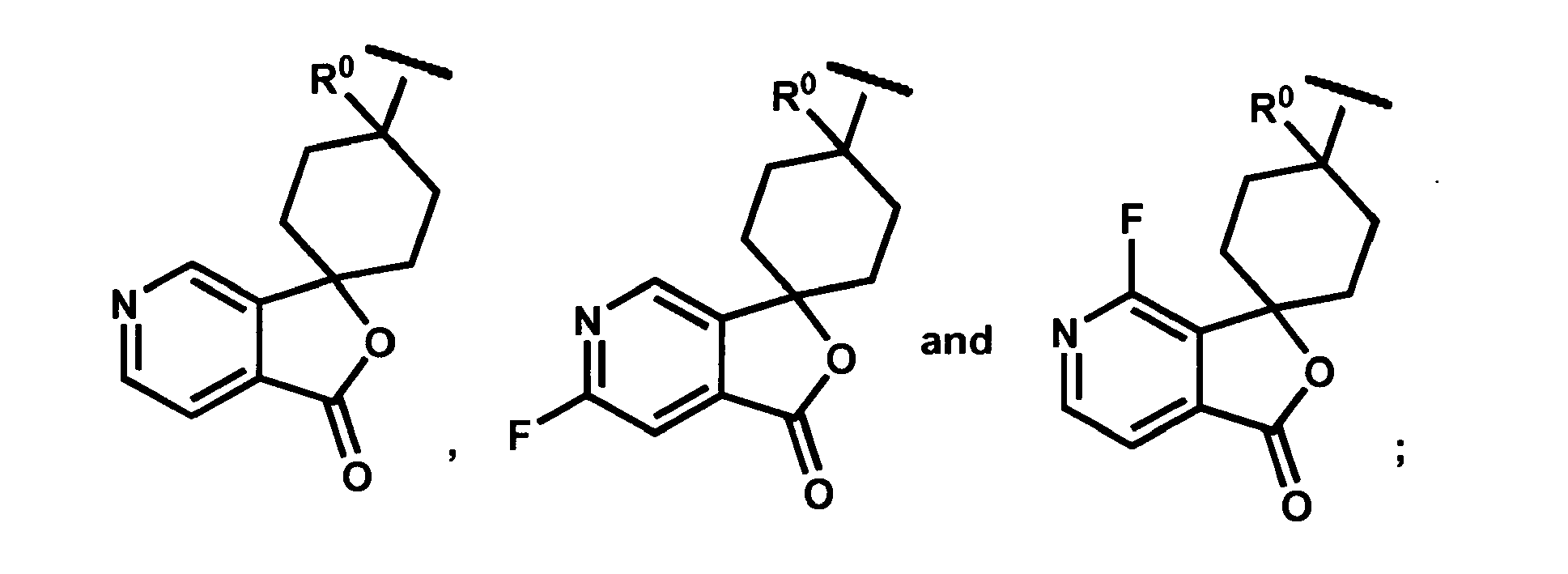
- Compounds of the present invention (I) exhibit NPY antagonistic effects especially on NPY Y5 receptors and show excellent pharmacokinetics such as transport into brain or transport to cerebrospinal fluid, etc. Also, the compound of the present invention (I) are useful as agents for the treatment of various diseases related to NPY, for example, cardiovascular disorders such as angina, acute or congestive heart failure, myocardial infarction, hypertension, nephropathy, electrolyte abnormality, vasospasm, and arteriosclerosis, central nervous system disorders such as bulimia, depression, anxiety, seizure, epilepsy, dementia, pain, alcoholism, drug withdrawal, circadian rhythm disorders, schizophrenia, memory impairment, sleep disorders, and cognitive impairment, metabolic diseases such as obesity, diabetes, hormone abnormality, hypercholesterolemia, hyperlipidemia, gout, and fatty liver, genital or reproductive disorders such as infertility, preterm labor, sexual dysfunction, gastro-intestinal disorders, respiratory disorder, inflammatory diseases or glaucoma, also for example, atherosclerosis, hypogonadism, hyperandrogenism, polycystic ovary syndrome, hirsutism, gastro-intestinal motility disorder, obesity-related gastro-esophageal reflux, obesity hypoventilation (Pickwickian syndrome), sleep apnea, inflammation, systemic inflammation of the vasculature, osteoarthritis, insulin resistance, bronchoconstriction, alcohol preference, metabolic syndrome, Alzheimer's disease, cardiac hypertrophy, left ventricular hypertrophy, hypertriglyceridemia, low HDL cholesterol, cardiovascular disorders such as coronary heart disease (CHD), cerebrovascular disease, stroke, peripheral vascular disease, sudden death, gallbladder diseases, cancer (breast, endometrial, colon), breathlessness, hyperuricemia, impaired fertility, low back pain, or increased anesthetic risk.
- The compounds of the present invention (I) are particularly useful as agents for the treatment of bulimia, obesity or diabetes.
- The present invention relates to the compounds represented by the general formula (I), or the salts thereof, and the production method and the use thereof.
- The means of terms used in the present specification are defined and more detailed description of this invention is described in the following.
- "Halogen" refers to fluorine, chlorine, bromine and iodine.
- "Lower alkyl" refers to a straight- or branched-chain alkyl group of C1 to C6, and examples are methyl, ethyl, propyl, isopropyl, butyl, isobutyl, sec-butyl, tert-butyl, pentyl, isopentyl, hexyl and isohexyl.
- "Halo-lower alkyl" refers to said lower alkyl substituted with identically or differently one, two or more, preferably one to three said halogen at the substitutable, arbitrary position(s), and examples are fluoromethyl, difluoromethyl, trifluoromethyl, 2-fluoroethyl, 1,2-difluoroethyl, chloromethyl, 2-chloroethyl, 1,2-dichloroethyl, bromomethyl and iodomethyl.
- "Lower alkoxy" refers to straight- or branched-chain alkoxy of C1 to C6 and examples are methoxy, ethoxy, propoxy, isopropoxy, butoxy, sec-butoxy, isobutoxy, tert-butoxy, pentyloxy, isopentyloxy, hexyloxy and isohexyloxy.
- "Halo-lower alkoxy" refers to said lower alkoxy substituted with identically or differently one, two or more, preferably one to three said halogen at substitutable, arbitrary position(s), and examples are fluoromethoxy, difluoromethoxy, trifluoromethoxy, 2-fluoroethoxy, 1,2-difluoroethoxy, chloromethoxy, 2-chloroethoxy, 1,2-dichloroethoxy, bromomethoxy and iodomethoxy.
- "Lower alkoxycarbonyl" refers to an alkoxycarbonyl group containing said lower alkoxy, that is, an alkoxycarbonyl group of C2 to C7.
- "Lower alkylsulfonyl" refers to a straight- or branched-chain alkylsulfonyl group of C1 to C6.
- "Hydroxy-lower alkyl" refers to said lower alkyl substituted with one, two or more, preferably one or two hydroxy at substitutable, arbitrary position(s), and examples are hydroxymethyl, 2-hydroxyethyl, 1-hydroxy-l-methylethyl, 1,2-dihydroxyethyl and 3-hydroxypropyl.
- "Cyclo-lower alkyl" refers to a cycloalkyl group of C3 to C6, and examples are cyclopropyl, cyclobutyl, cyclopentyl and cyclohexyl.
- "Lower alkenyl" refers to a straight- or branched-chain alkenyl group of C2 to C6, and examples are vinyl, 1-propenyl, 2-propenyl, isopropenyl, 3-butenyl, 2-butenyl, 1-butenyl, 1-methyl-2-propenyl, 1-methyl-1-propenyl, 1-ethyl-1-ethenyl, 2-methyl-2-propenyl, 2-methyl-l-propenyl, 3-methyl-2-butenyl and 4-pentenyl.
- "Lower alkylthio" refers to straight- or branched-chain alkylthio of C1 to C6.
- "Lower alkanoyl" refers to an alkanoyl group containing said lower alkyl, that is, an alkanoyl group of C2 to C7.
- "Lower alkanoylamino" refers to an amino group mono-substituted with said lower alkanoyl.
- "Aryl" refers to phenyl or naphthyl.
- "Heteroaryl" refers to 5- or 6-membered monocyclic heteroaromatic group which contains one, two or more, preferably one to three hetero atom(s) identically or differently selected from the group consisting of oxygen, nitrogen and sulfur; or condensed cyclic heteroaromatic group, where said monocyclic heteroaromatic group is condensed with said aryl group or condensed each other with the same or different said monocyclic heteroaromatic group, and examples are pyrrolyl, furyl, thienyl, imidazolyl, pyrazolyl, thiazolyl, isothiazolyl, oxazolyl, isoxazolyl, triazolyl, tetrazolyl, oxadiazolyl, 1,2,3-thiadiazolyl, 1,2,4-thiadiazolyl, 1,3,4-thiadiazolyl, pyridyl, pyrazinyl, pyrimidinyl, pyridazinyl, 1,2,4-triazinyl, 1,3,5-triazinyl, indolyl, benzofuranyl, benzothienyl, benzoimidazolyl, benzoxazolyl, benzoisoxazolyl, benzothiazolyl, benzoisothiazolyl, indazolyl, purinyl, quinolyl, isoquinolyl, phthalazinyl, naphthylidinyl, quinoxalinyl, quinazolinyl, cinnolinyl, pteridinyl and pyrido[3,2-b]pyridyl.
- "Lower alkylamino" refers to an amino group mono-substituted with said lower alkyl.
- "Di-lower alkylamino" refers to an amino group di-substituted with the same or different said lower alkyl.
- The salts of compounds of formula (I) refer to the pharmaceutically acceptable, common salts, and examples thereof are base addition salt to said carboxyl group when the compound has a carboxyl group, or acid addition salt to said amino or basic heterocyclyl when the compound has an amino or basic heterocyclyl group.
- Said base addition salts include salts with alkali metals (e.g. sodium, potassium) ; salts with alkaline earth metals (e.g. calcium, magnesium); ammonium salts; and salts with organic amines (e.g. trimethylamine, triethylamine, dicyclohexylamine, ethanolamine, diethanolamine, triethanolamine, procaine, N,N'-dibenzylethylenediamine).
- Said acid addition salts include salts with inorganic acids (e.g. hydrochloric acid, sulfuric acid, nitric acid, phosphoric acid, perchloric acid), salts with organic acids (e.g. maleic acid, fumaric acid, tartaric acid, citric acid, ascorbic acid, trifluoroacetic acid), and salts with sulfonic acids (e.g. methanesulfonic acid, isethionic acid, benzenesulfonic acid, p-toluenesulfonic acid).
- An N-oxide derivative of the compound represented by the formula (I) means a compound of which any one or more than one nitrogen atoms present in the compound of the formula (I) is or are oxidized to form an N-oxide or N-oxides, and such an N-oxide derivative includes, for example, a compound of which nitrogen atom is oxidized in case when T, U, V or/and W in the formula (I) is or are nitrogen.
- "An agent for treatment" refers to a medicament which is employed for the treatment and/or prophylaxis of various diseases.
- In order to disclose the aforesaid compounds of the general formula (I) of the present invention more specifically, the various symbols used in the formula (I) are explained in more detail by presenting preferred embodiments.
- In a group of formula: -Q1-Ar1, Ar1 is aryl or heteroaryl, any of which is optionally substituted by a substituent selected from the group consisting of halogen, nitro, hydroxy, lower alkyl, halo-lower alkyl, hydroxy-lower alkyl, cyclo-lower alkyl, lower alkenyl, lower alkoxy, halo-lower alkoxy, lower alkylthio, lower alkylsulfonyl, carboxyl, lower alkanoyl, lower alkoxycarbonyl, lower alkanoylamino and -Q2-Ar2; Q1 is a single bond, oxygen, carbonyl or -N(R3)-.
- "Aryl or heteroaryl, any of which is optionally substituted by a substituent selected from the group consisting of halogen, nitro, hydroxy, lower alkyl, halo-lower alkyl, hydroxy-lower alkyl, cyclo-lower alkyl, lower alkenyl, lower alkoxy, halo-lower alkoxy, lower alkylthio, lower alkylsufonyl, carboxyl, lower alkanoyl, lower alkoxycarbonyl, lower alkanoylamino and -Q2-Ar2" refers to unsubstituted said aryl or said heteroaryl, or said aryl or said heteroaryl having substituent(s) at the substitutable, arbitrary position(s) wherein said substituent (s) may be one, two or more, preferably one or two member(s) identically or differently selected from the group consisting of halogen, nitro, hydroxy, lower alkyl, halo-lower alkyl, hydroxy-lower alkyl, cyclo-lower alkyl, lower alkenyl, lower alkoxy, halo-lower alkoxy, lower alkylthio, lower alkylsufonyl, carboxyl, lower alkanoyl, lower alkoxycarbonyl, lower alkanoylamino and -Q2-Ar2.
- Halogen as said substituent includes fluorine, chlorine and bromine.
- Lower alkyl as said substituent includes methyl, ethyl, propyl and isopropyl.
- Halo-lower alkyl as said substituent includes difluoromethyl and trifluoromethyl.
- Hydroxy-lower alkyl as said substituent includes hydroxymethyl, 2-hydroxyethyl and 1-hydroxy-1-methylethyl.
- Cyclo-lower alkyl as said substituent includes cyclopropyl and cyclobutyl.
- Lower alkenyl as said substituent includes vinyl, 1-propenyl and 2-methyl-l-propenyl.
- Lower alkoxy as said substituent includes methoxy and ethoxy.
- Halo-lower alkoxy as said substituent includes fluoromethoxy, difluoromethoxy and trifluoromethoxy.
- Lower alkylthio as said substituent includes methylthio and ethylthio.
- Lower alkylsulfonyl as said substituent includes methylsulfonyl, ethylsulfonyl and propylsulfonyl.
- Lower alkanoyl as said substituent includes acetyl and propionyl.
- Lower alkoxycarbonyl as said substituent includes methoxycarbonyl and ethoxycarbonyl.
- Lower alkanoylamino as said substituent includes acetylamino and propanoylamino.
- In a group of formula: -Q2-Ar2 as said substituent, Ar2 is aryl or heteroaryl, any of which is optionally substituted by a substituent selected from the group consisting of halogen, cyano, lower alkyl, halo-lower alkyl, hydroxy-lower alkyl, hydroxy, lower alkoxy, halo-lower alkoxy, lower alkylamino, di-lower alkylamino, lower alkanoyl and aryl; Q2 is a single bond, oxygen, carbonyl or -N(R3)-.
- "Aryl or heteroaryl, any of which is optionally substituted by a substituent selected from the group consisting of halogen, cyano, lower alkyl, halo-lower alkyl, hydroxy-lower alkyl, hydroxy, lower alkoxy, halo-lower alkoxy, lower alkylamino, di-lower alkylamino, lower alkanoyl and aryl" refers to unsubstituted said aryl or said heteroaryl, or said aryl or said heteroaryl having substituent(s) at the substitutable, arbitrary position(s) wherein said substituent (s) may be one, two or more, preferably one or two member(s) identically or differently selected from the group consisting of halogen, cyano, lower alkyl, halo-lower alkyl, hydroxy-lower alkyl, hydroxy, lower alkoxy, halo-lower alkoxy, lower alkylamino, di-lower alkylamino, lower alkanoyl and aryl.
- Halogen as said substituent includes fluorine and chlorine.
- Lower alkyl as said substituent includes methyl, ethyl, propyl and isopropyl.
- Halo-lower alkyl as said substituent includes difluoromethyl and trifluoromethyl.
- Hydroxy-lower alkyl as said substituent includes hydroxymethyl, 2-hydroxyethyl and 1-hydroxy-l-methylethyl.
- Lower alkoxy as said substituent includes methoxy and ethoxy.
- Halo-lower alkoxy as said substituent includes fluoromethoxy, difluoromethoxy, trifluoromethoxy.
- Lower alkylamino as said substituent includes methylamino and ethylamino.
- Di-lower alkylamino as said substituent includes dimethylamino and diethylamino.
- Lower alkanoyl as said substituent includes acetyl and propionyl.
- Aryl as said substituent includes phenyl.
- Preferred substituents of Ar2 include halogen, cyano, lower alkyl, halo-lower alkyl, hydroxy-lower alkyl, hydroxyl and halo-lower alkoxy.
- Aryl as Ar2 preferably means phenyl, and heteroaryl as Ar2 preferably means pyridyl or quinolyl.
- In the group of formula: -N (R3) - as Q1 and Q2, R3 is hydrogen or lower alkyl,
preferably hydrogen, methyl or ethyl. - Q2 is preferably a single bond.
- Preferred substituents of Ar1 include halogen, hydroxy, lower alkyl, halo-lower alkyl, lower alkenyl, lower alkoxy, lower alkanoyl and -Q2-Ar2, more preferably halogen, hydroxy, halo-lower alkyl and lower alkoxy.
- Aryl as Ar1 preferably means phenyl, and heteroaryl as Ar1 includes preferably imidazolyl, furyl, thienyl, pyrazolyl, thiazolyl, oxazolyl, isoxazolyl, 1,2,4-oxadiazol, 1,3,4-oxadiazol, pyridyl, pyrazinyl, pyrimidinyl, benzofuranyl and quinolyl, more preferably pyridyl and quinolyl, most preferably pyridyl.
- Consequently, Ar1 includes, for example, phenyl, 2-fluorophenyl, 3-fluorophenyl, 4-fluorophenyl, 2,3-difluorophenyl, 2,4-difluorophenyl, 2,6-difluorophenyl, 3,5-difluorophenyl, 2-chlorophenyl, 3-chlorophenyl, 4-chlorophenyl, 2-bromophenyl, 3-bromophenyl, 4-bromophenyl, 2-chloro-4-fluorophenyl, 2-chloro-5-fluorophenyl, 2-chloro-6-fluorophenyl, 2-bromo-4-fluorophenyl, 2-bromo-5-fluorophenyl, 2-methylphenyl, 3-methylphenyl, 4-methylphenyl, 5-fluoro-2-methylphenyl, 3-fluoromethylphenyl, 2-trifluoromethylphenyl, 3-trifluoromethylphenyl, 4-trifluoromethylphenyl, 2-methoxyphenyl, 3-methoxyphenyl, 4-methoxyphenyl, 5-fluoro-2-methoxyphenyl, 3-fluoromethoxyphenyl, 2-difluoromethoxyphenyl, 3-difluoromethoxyphenyl, 2-hydroxy-4-fluorophenyl, 2-hydroxymethylphenyl, 3-hydroxymethylphenyl, 3-hydroxyphenyl, 4-hydroxyphenyl, 2-imidazolyl, 2-furyl, 2-thienyl, 1,2,4-oxadiazol-5-yl, 1,3,4-oxadiazol-2-yl, 1,2,4-thiadiazol-5-yl, 1,3,4-thiadiazol-2-yl, 2-pyridyl, 3-pyridyl, 4-pyridyl, 2-fluoro-5-pyridyl, 3-fluoro-6-pyridyl, 2-pyrimidinyl, 4-benzo[b]furanyl, 5-benzo[b]furanyl, 7-benzo[b]furanyl, 2-quinolyl, 3-quinolyl, 4-quinolyl, 5-quinolyl, 6-quinolyl, and 8-quinolyl. Preferably, Ar1 includes phenyl, 2-fluorophenyl, 4-fluorophenyl, 2,4-difluorophenyl, 2,5-difluorophenyl, 2-chloro-4-fluorophenyl, 2-chloro-5-fluorophenyl, 2-trifluoromethylphenyl, 2-difluoromethoxyphenyl, 3-difluoromethoxyphenyl, 3-hydroxyphenyl, 4-hydroxyphenyl, 2-pyridyl, 2-fluoro-5-pyridyl, 3-fluoro-6-pyridyl, 7-benzo[b]furanyl, 2-quinolyl, and 3-quinolyl.
- Q1 is preferably a single bond, oxygen, or -N(R3)-, more preferably a single bond.
- E is methine or hydroxy substituted methine, preferably methine.
- Among the compounds of the formula (I), the preferred compounds are, for example, compounds in which Ar1 is phenyl or heteroaryl, more preferably phenyl, any of which is optionally substituted by a substituent selected from the group consisting of halogen, nitro, hydroxy, lower alkyl, halo-lower alkyl, hydroxy-lower alkyl, cyclo-lower alkyl, lower alkenyl, lower alkoxy, halo-lower alkoxy, lower alkylthio, lower alkylsufonyl, carboxyl, lower alkanoyl, lower alkoxycarbonyl, lower alkanoylamino and -Q2-Ar2, and R0 is hydrogen.
- The compounds of the present invention may include stereoisomers such as optical isomers, diastereoisomers and geometrical isomers, or tautomers depending upon the mode of substituents. The compounds of the present invention include all the stereoisomers, tautomers and their mixtures.
- For example, compounds of the formula (I-a) include stereoisomers such as a trans-form compound of the formula (I-1) or (I-1b'):


- Also included within the scope of the invention are polymorphs, hydrates and solvates of the compounds of the present invention.
- The specific compound of the formula (I) is, for example, trans-2-(2-chloro-4-fluorophenyl)-8-[3-oxospiro[6-azaisoben zofuran-1(3H),1'-cyclohexan]-4'-yl]purine, trans-2-(4-methoxyphenyl)-8-[3-oxospiro[6-azaisobenzofuran-1(3H),1'-cyclohexan]-4'-yl]purine, trans-2-(2-methylphenyl)-8-[3-oxospiro[6-azaisobenzofuran-1(3H), 1'-cyclohexanl-4'-yl]purine, trans-2-(2-difluoromethoxyphenyl)-8-[3-oxospiro[6-azaisobenzofuran-1(3H),1'-cyclohexan]-4'-yl]purine, trans-2-(3-difluoromethoxyphenyl)-8-[3-oxospiro[6-azaisobenzofuran-1(3H),1'-cyclohexan]-4'-yl]purine, trans-8-[3-oxospiro[6-azaisobenzofuran-1(3H),1'-cyclohexan]-4'-yl]-2-(2-trifluoromethylphenyl)purine, trans-2-(2,4-difluorophenyl)-8-[3-oxospiro[6-azaisobenzofuran-1(3H),1'-cyclohexan]-4'-yl]purine, trans-2-(2,5-difluorophenyl)-8-[3-oxospiro[6-azaisobenzofuran-1(3H),1'-cyclohexan]-4'-yl]purine, trans-2-(2-bromo-4-fluorophenyl)-8-[3-oxospiro[6-azaisobenzofuran-1(3H),1'-cyclohexan]-4'-yl]purine, trans-2-(4-chloro-2-fluorophenyl)-8-[3-oxospiro[6-azaisobenzofuran-1(3H),1'-cyclohexan]-4'-yl]purine, trans-8-[3-oxospiro[6-azaisobenzofuran-1(3H),1'-cyclohexan]-4'-yl]-2-(3-quinolyl)purine, trans-8-[5-fluoro-3-oxospiro[6-azaisobenzofuran-1(3H),1'-cyclohexan]-4'-yl]-2-phenylpurine, trans-8-[5-fluoro-3-oxospiro[6-azaisobenzofuran-1(3H),1'-cyclohexan]-4'-yl]-2-(2-fluorophenyl)purine, trans-2-(2,4-difluorophenyl)-8-[5-fluoro-3-oxospiro[6-azaisobenzofuran-1(3H),1'-cyclohexan]-4'-yl]purine, trans-2-(2,5-difluorophenyl)-8-[5-fluoro-3-oxospiro[6-azaisobenzofuran-1(3H),1'-cyclohexan]-4'-yl]purine, trans-2-(4-fluorophenyl)-8-[3-oxospiro[6-azaisobenzofuran-1(3H), 1'-cyclohexan]-4'-yl]purine 6-oxide, trans-2-(4-fluoro-2-hydroxyphenyl)-8-[3-oxospiro[6-azaisobenzofuran-1(3H), 1'-cyclohexan]-4'-yl]purine, trans-2-(4-hydroxyphenyl)-8-[3-oxospiro[6-azaisobenzofuran-1(3H), 1'-cyclohexanl-4'-yl]purine, trans-2-(4-fluoro-3-hydroxyphenyl)-8-[3-oxospiro[6-azaisobenzofuran-1(3H), 1'-cyclohexanl-4'-yl]purine, and cis-2-(4-fluorophenyl)-8-[4'-hydroxy-3-oxospiro[6-azaisobenzofuran-1(3H), 1'-cyclohexan]-4'-yl]purine.
- Among these compounds, the preferable compound is, for example,
trans-2-(4-fluorophenyl)-8-[3-oxospiro[6-azaisobenzofuran-1(3H), 1'-cyclohexan]-4'-yl]purine,
trans-2-(2,5-difluorophenyl)-8-[3-oxospiro[6-azaisobenzofuran-1(3H), 1'-cyclohexan]-4'-yl]purine, or trans-8-[5-fluoro-3-oxospiro[6-azaisobenzofuran-1(3H),1'-cyclohexan]-4'-yl]-2-(2-fluorophenyl)purine. - The process for producing compounds of the present invention is illustrated as follows.
- Compounds (I) of the present invention can be synthesized, for example, by the following production methods or the processes shown in examples, but these embodiments are not intended to restrict the process for producing compounds (I) of this invention.
- A compound of the formula (I-2) or N-oxide derivative thereof:


- The present process refers to a process for preparing a compound of the formula (I) wherein E is methine or hydroxy substituted methine, namely a compound of the formula (I-2).
- The reaction between a compound of the formula (V) and a carboxylic acid of the formula (VI) is usually carried out by employing 0.5 moles to excessive mole, preferably 1 mole to 1.5 moles of the carboxylic acid (VI), relative to 1 mole of a compound of the formula (V).
- The reaction is usually carried out in an inert solvent. Preferable examples of such solvent are methylene chloride, chloroform, tetrahydrofuran, dimethyformamide, pyridine or a mixture thereof.
- The above reaction is preferably carried out in the presence of a condensing agent including, for example, N,N'-dicyclohexylcarbodiimide, N,N'-diisopropylcarbodiimide, 1-(3-dimethylaminopropyl)-3-ethylcarbodiimide, 1-(3-dimethylaminopropyl)-3-ethylcarbodiimide hydrochloride, benzotriazol-1-yloxy-tris-(dimethylamino)phosphonium hexafluorophosphate, benzotriazol-1-yloxy-tris-pyrrolidino-phosphonium hexafluorophosphate, bromotris(dimethylamino)phosphonium hexafluorophosphate, diphenylphosphoric azide, or 1,1'-carbonyldiimidazole.
- Such condensing agent can be usually used in 1 mole to excess moles, preferably 1 to 1.5 moles, relative to 1 mole of a compound of the formula (VI).
- The reaction temperature is usually from -50°C to 100°C, preferably -20°C to 50°C.
- The reaction time is usually 30 minutes to 7 days, preferably 1 to 24 hours.
- In place of the carboxylic acid of the formula (VI), an activated derivative of said carboxylic acid may be reacted with a compound of the formula (V), thereby a compound of the formula (I-2) can be prepared.
- Examples of such activated derivatives of the carboxylic acid of the formula (VI) are acid halides, mixed anhydrides, active esters, and active amides.
- The acid halides of the carboxylic acid of the formula (VI) can be prepared by reacting a carboxylic acid of the formula (VI) with a halogenating agent in a conventional manner. The halogenating agent used includes, for example, thionyl chloride, phosphorus trichloride, phosphorus pentachloride, phosphorus oxychloride, phosphorus tribromide, oxalyl chloride, and phosgene.
- The mixed anhydrides of the carboxylic acid of the formula (VI) can be prepared by reacting a carboxylic acid of the formula (VI) with an alkyl chlorocarbonate (e.g. ethyl chlorocarbonate) or an aliphatic carboxylic acid chloride (e.g. pivaloyl chloride) according to the conventional method.
- The active esters of the carboxylic acid of the formula (VI) can be prepared by reacting a carboxylic acid of the formula (VI) with an N-hydroxy compound (e.g. N-hydroxysuccinimide, N-hydroxyphthalimide, 1-hydroxybenzotriazole); or a phenol compound (e.g. 4-nitrophenol, 2,4-dinitrophenol, 2,4,5-trichlorophenol, pentachlorophenol) in the presence of a condensing agent (e.g. N,N'-dicyclohexyl- carbodiimide, 1-(3-dimethylaminopropyl)-3- ethylcarbodiimide) according to the conventional method.
- The active amides of the carboxylic acid of the formula (VI) can be prepared by reacting a carboxylic acid of the formula (VI) with 1,1'-carbonyldiimidazole, or 1,1'-carbonylbis(2-methyl-imidazole) according to the conventional method.
- The reaction between a compound of the formula (V) and a reactive derivative of the carboxylic acid of the formula (VI) is usually carried out by employing 0. 5 moles to excessive mole, preferably 1 mole to 1.5 moles of the reactive derivative of the carboxylic acid (VI), relative to 1 mole of compound (V) .
- The reaction is usually carried out in an inert solvent. Preferable examples of such inert solvent are methylene chloride, chloroform, tetrahydrofuran, dimethylformamide, pyridine, or a mixture thereof.
- The above reaction may proceed in the absence of a base, but it is preferable to carry out the reaction in the presence of a base to promote the reaction smoothly.
- The bases include organic bases (e.g. triethylamine, diisopropylethylamine, pyridine, 4-dimethylaminopyridine), or inorganic bases (e. g. sodium hydroxide, potassium hydroxide, sodium carbonate, potassium carbonate, sodium hydrogen carbonate).
- It is preferable to employ 1 mole to excessive mole of said base to 1 mole of a compound of the formula (V) . When the base is liquid, such base can also be used as a solvent.
- The reaction temperature is usually -50°C to 100°C, preferably -20°C to 50°C.
- The reaction time is usually 5 minutes to 7 days, preferably 30 minutes to 24 hours.
- A usual treatment is carried out after completion of the reaction to obtain a crude product of a compound of formula (VII) . The resulting compound of the formula (VII) may be, with or without purification according to the conventional manner, subjected to optional intramolecular ring closure condensation.
- The intramolecular ring closure condensation for preparing a compound of the formula (VIII) from the compound (VII) is usually carried out in the presence of an inert solvent or without any solvent.
- Preferred examples of such inert solvents are ethanol, propanol, butanol, pentanol, 1,4-dioxane, dimethoxyethane, dimethylformamide, dimethyl sulfoxide, benzene, toluene, xylene, pyridine, or a mixture thereof.
- The reaction temperature is usually from room temperature to the boiling point of the solvent used, preferably 80°C to 190°C.
- The reaction time is usually from 5 hours to 7 days, preferably from 12 hours to 3 days.
- The above ring closure may be carried out in the presence of a dehydrating agent or a catalytic-amount of Lewis acid. The dehydrating agent includes, for example, cesium fluoride, phosphorus oxychloride, phosphorus pentachloride, polyphosphoric acid, or thionyl chloride. As the Lewis acid, there are exemplified by scandium trifluoromethanesulfonate, yttrium trifluoromethanesulfonate, lanthanum trifluoromethanesulfonate, and lanthanide trifluoromethanesulfonate. The ring closure is carried out preferably without any solvent, or in the presence of a solvent such as methylene chloride, chloroform, benzene, toluene, xylene or a mixture thereof.
- The amount of the dehydrating agent to be used is usually 1 mole to excessive mole, preferably 2 to 10 moles, relative to 1 mole of a compound of the formula(VII), and that of the Lewis acid is 10 to 200 mole %, preferably 10 to 100 mole %.
- In general, the reaction temperature is preferably from room temperature to the boiling point of the solvent used.
- The reaction time is from one hour to 7 days, preferably from 5 hours to 3 days.
- A compound of the formula (I-2) can be produced by treating a reaction mixture in the usual way after removal of the said protecting group(s) when the product has a protecting group after completion of the reaction, or by treating the mixture directly in the usual way when the protecting group is absent.
- The oxidation of a nitrogen atom may be carried out by using of an oxydizing agent (for example m-chloroperbenzoic acid, dioxirane, sodium periodate and hydrogen peroxide).
- A compound of the formula (I-2) or N-oxide derivative thereof:


- The present process refers to a process for preparing a compound of the formula (I) wherein E is methine or hydroxy substituted methine, namely a compound of the formula (I-2).
- The reaction between a compound of the formula (V) and a compound of the formula (IX) is usually carried out by employing 0.5 to 5 moles, preferably 0.7 to 3 moles of a compound of the formula (IX), relative to 1 mole of a compound of the formula (V).
- The reaction is usually carried out in the absence of a solvent or in an inert solvent. Preferred examples of the inert solvent are benzene, toluene, xylene, methylene chloride, chloroform, hexane, or a mixture thereof.
- The reaction temperature is usually from -20°C to the boiling point of the solvent used, preferably 20°C to 200°C.
- The reaction time is usually from 30 minutes to 7 days, preferably from 3 hours to 3 days.
- The above reaction is preferably carried out in the presence of a Lewis acid such as zinc dichloride, titanium tetrachloride, scandium trifluoromethanesulfonate, ytterbium trifluoromethanesulfonate, or lanthanum trifluoromethanesulfonate.
- The amount of the Lewis acid used is 10 to 200 mole %, preferably 20 to 100 mole % per mole of a compound of the formula (V).
- When the reaction is carried out in the presence of a Lewis acid, it is preferable to effect the reaction without any solvent, or in the presence of a solvent such as methylene chloride, chloroform, benzene, toluene, xylene, or a mixture thereof.
- In general, the reaction temperature is from 0°C to the boiling point of the solvent used, preferably room temperature to 150°C.
- The reaction time is usually from 1 hour to 7 days, preferably 12 hours to 3 days.
- A compound of the formula (I-2) can be produced by treating a reaction mixture in the usual way after removal of the said protecting group(s) when the product has a protecting group after completion of the reaction, or by treating the mixture directly in the usual way when the protecting group is absent.
- The removal of the protecting group (s), the oxidation of nitrogen atom(s) and the post-treatment may be conducted according to the method described in the above Production Process 1.
- A compound of the formula (I-2) wherein Q1 is a bond or N-oxide derivative thereof can be prepared by reacting a compound of the formula (X):

Met-Ar1p (XI)
(wherein Met is a common organometallic atom, and Ar1p has the same meaning as defined above) in the presence of a catalyst to give a compound of the formula (XII):
- The common organometallic atoms represented by Met are those usually employed in the cross-coupling reaction, and include, for example, lithium, boron, silicon, magnesium, aluminum, zinc, and tin, among which boron, zinc, and tin are preferable. As the concrete embodiment of the practical use of such metal atoms, boron may be used in the form of boric acid or boric acid ester, zinc in the form of zinc chloride, zinc bromide or zinc iodide, and tin in the form of tri-lower alkyl tin.
- The reaction between a compound of the formula (X) and a compound of the formula (XI) is usually carried out by employing 0.5 to 5 moles, preferably 0.7 to 3 moles of a compound of the formula (XI), relative to 1 mole of a compound of the formula (X).
- The catalyst used in the reaction includes a transition metal generally employed in the cross-coupling reaction such as copper, nickel, or palladium. More precisely, preferable examples of such catalyst are tetrakis(triphenylphosphine)palladium(0), palladium(II) acetate, bis(triphenylphosphine) palladium(II) chloride, and [1,1'-bis(diphenylphosphino)ferrocene]palladium(II) dichloride.
- The reaction is usually carried out in an inert solvent. Preferred examples of such inert solvents are water, benzene, toluene, xylene, methylene chloride, chloroform, dimethoxyethane, tetrahydrofuran, dioxane, dimethylformamide, or a mixture thereof.
- The reaction temperature is usually from room temperature to the boiling point of the solvent used, preferably 20°C to 200°C.
- The reaction time is usually 30 minutes to 7 days, preferably 3 hours to 2 days.
- The above reaction is preferably carried out in the presence of a base such as inorganic bases (e.g. sodium hydroxide, potassium hydroxide, sodium hydrogen carbonate, sodium carbonate, potassium carbonate, cesium carbonate), or organic bases (e.g. triethylamine, diisopropylamine).
- The amount of the base used is usually 0.5 to 5 moles, preferably 0.7 to 3 moles of said base, relative to 1 mole of a compound of the formula (X).
- A compound of the formula (I-2) can be prepared by treating a reaction mixture in the usual way after removal of the said protecting group(s) when the product has a protecting group after completion of the reaction, or by treating the mixture directly in the usual way when the protecting group is absent.
- The removal of the protecting group(s), the oxidiation of nitrogen atom(s) and the post-treatment may be conducted according to the method described in the above Production Process 1.
- The compounds of the formula (1-2) maybe readily isolated and purified by the conventional separation technique, and examples of such technique are solvent extraction, recrystallization, column chromatography, and preparative thin layer chromatography.
- These compounds may be converted into the pharmaceutically acceptable salts or esters by the conventional method, and on the contrary, the conversion of the salts or esters into free compounds may also be carried out according to the conventional method.
- The compounds of the formulae (V), (VI), (IX) and (XI) are commercially available, or can be prepared according to the common methods or analogous methods thereto, or the methods shown in Examples and Reference Examples, optionally employed in combination.
- The salts of compounds of formula (V), (VI) and (IX) refer to the common salts, for example, base addition salt to carboxyl group when the compound has a carboxyl group, or acid addition salt to amino or basic heterocyclyl when the compound has amino or basic heterocyclyl group(s).
- Aforesaid base addition salts include salts with alkali metals (for example sodium, potassium); alkaline earth metals (for example calcium, magnesium); ammonium or organic amines (for example trimethylamine, triethylamine, dicyclohexylamine, ethanolamine, diethanolamine, triethanolamine, procaine, N,N'-dibenzylethylenediamine).
- Aforesaid acid addition salts include salts with inorganic acids (for example hydrochloric acid, sulfuric acid, nitric acid, phosphoric acid, perchloric acid), organic acids (for example maleic acid, fumaric acid, tartaric acid, citric acid, ascorbic acid, trifluoroacetic acid), sulfonic acids (for example methanesulfonic acid, isethionic acid, benzenesulfonic acid, p-toluenesulfonic acid).
- The utility of compounds of the present invention as a medicament is proved by the following pharmacological tests.
- cDNA sequence encoding human NPY Y5 receptor (c.f. International patent publication number
WO96/16542 - A membrane sample prepared from the cells which expressed NPY Y5 receptor was incubated together with a test compound and [125I]peptideYY (made by NEN) (20,00cpm) in an assay buffer (25 mM Tris buffer, pH7.4, containing 10 mM magnesium chloride, 1 mM phenylmethylsulfonyl fluoride, 0.1% bacitracin and 0.5% bovine serum albumin) at 25°C for 2 hours, then filtered through a glass filter GF/C and washed with 5 mM Tris buffer (pH7.4) containing 0.3% BSA. The radioactivity of the cake on the glass filter was measured. Non-specific binding was measured in the presence of 1 µM peptide YY, and a 50% Inhibitory Concentration (IC50) of the test compound against specific peptideYY binding was determined (Endocrinology, 131: 2090(1992)). The results are shown in Table 1.
Table 1 Compounds IC50(nM) Example 1 2.2 Example 4 2.9 Example 5 2.7 Example 8 2.3 - As shown above, the compounds of this invention potently inhibited peptideYY (NPY homologue) binding to NPY Y5 receptors.
- A chronic guide cannula (26 gauge, length 11 mm) was inserted stereotaxicly into the third cerebral ventricle of male SD rats (7-8 weeks old, 200-300g) anesthetized with ketamine/xylazine (single intraperitoneal administration of 74 and 11 mg/kg) and fixed by dental resin. The top of the guide cannula was located 2.2mm behind bregma, and 8 mm depth from the skull surface on the median line. After about 1-week recovery period, D-Trp34NPY (1µg/0.4µL/head, synthetic cerebrospinal fluid containing 0.05% bovine serum albumin) was injected into the third ventricle. A test compound suspended in 0.5% aqueous methylcellulose was administered orally 2 hours before the administration of D-Trp34 NPY, and the food consumption was measured 2 hours after the administration of D-Trp34 NPY.
- The results revealed that 10 mg/kg of the compound of this invention significantly suppressed the increase in food consumption induced by D-Trp34NPY (NPY homologue) which was administered to the third ventricle.
- A test compound was orally or intravenously administered to male SD rats (7-10 weeks old, 200-400g) which abstained from food overnight. About 100 µL of blood was collected from the tail vein at predetermined time, using a heparinized capillary. The blood was centrifuged (4°C, 6,000 r.p.m., 10 minutes) to collect the plasma, to which was added 3-fold amount of ethanol containing an internal standard. The mixture was stirred, allowed to stand at -20°C for 20 minutes, and then centrifuged (4°C, 10, 000 r.p.m., 10 minutes). The supernatant was analyzed by LC/MS/MS, and the concentration of the test compound in the plasma was measured using a relative calibration curve.
- The results revealed that the bioavailability of the compound of Example 1 was 78% and its half-life in the blood was 3.0 hours.
- A test compound was orally or intravenously administered to male SD rats (7-10 weeks old, 200-400g), and whole blood was collected from the abdominal aorta of said rats anesthetized with ether at predetermined time, using a heparin-treated syringe. Then, the head skin was cut open, and a dental 30G needle was inserted between the cervical vertebrae, and it was further inserted into the cavum subarachnoideale. After 50 to 100 µL cerebrospinal fluid had been collected by a 1 ml-syringe through a tube connected to said dental 30G needle, the brain was extracted. The blood sample was centrifuged (4°C, 6,000 r.p.m., 10 minutes) to collect the plasma, to which was added 3-fold amount of ethanol containing an internal standard, and the mixture was stirred. The brain sample was homogenized after addition of 2 ml water, an aliquot of the homogenate was taken and 3-fold amount of ethanol containing an internal standard was added thereto and stirred. The cerebrospinal fluid was stirred after adding 3-fold amount of ethanol containing an internal standard. The samples thus obtained were allowed to stand at -20°C for 20 minutes, and then centrifuged (4°C, 12, 000 g, 10 minutes) . The supernatant was analyzed by LC/MS/MS, and the concentration of the test compound in the plasma, brain, and cerebrospinal fluid were measured by the method using a relative calibration curve.
- The results revealed that concentrations of the compound of Example 1 in the brain, cerebrospinal fluid and plasma were 1.10 nmol/g, 0.033 µM and 2.77 µM respectively, 2 hours after oral administration (10 mg/kg).
- The compounds of the formula (I) can be administered orally or parenterally and, by formulating into a suitable administrable form, may be administered as a therapeutic agent for various diseases, including, for example, cardiovascular disorders such as angina, acute or congestive heart failure, myocardial infarction, hypertension, nephropathy, electrolyte abnormality, vasospasm, and arteriosclerosis, central nervous system disorders such as bulimia, depression, anxiety, seizure, epilepsy, dementia, pain, alcoholism, drug withdrawal, circadian rhythm disorders, schizophrenia, memory impairment, sleep disorders, and cognitive impairment, metabolic diseases such as obesity, diabetes, hormone abnormality, hypercholesterolemia, hyperlipidemia, gout, and fatty liver, genital or reproductive disorders such as infertility, preterm labor, and sexual dysfunction, gastro-intestinal disorders, respiratory disorder, inflammatory diseases or glaucoma, also for example, atherosclerosis, hypogonadism, hyperandrogenism, polycystic ovary syndrome, hirsutism, gastro-intestinal motility disorder, obesity-related gastro-esophageal reflux, obesity hypoventilation (Pickwickian syndrome), sleep apnea, inflammation, systemic inflammation of the vasculature, osteoarthritis, insulin resistance, bronchoconstriction, alcohol preference, metabolic syndrome, Alzheimer's disease, cardiac hypertrophy, left ventricular hypertrophy, hypertriglyceridemia, low HDL cholesterol, cardiovascular disorders such as coronary heart disease (CHD), cerebrovascular disease, stroke, peripheral vascular disease, sudden death, gallbladder diseases, cancer (breast, endometrial, colon), breathlessness, hyperuricemia, impaired fertility, low back pain, or increased anesthetic risk. In clinical use, the compounds of this invention may be administered after being formulated, together with pharmaceutically acceptable additives, into an appropriate preparation according to the mode of administration. As for said additives, those which are usually used in the field of pharmaceutical formulation may be used, for example, gelatin, lactose, sucrose, titanium oxide, starch, crystalline cellulose, hydroxypropyl methylcellulose, carboxymethylcellulose, corn starch, microcrystalline wax, white petrolatum, magnesium methasilicate aluminate, anhydrous calcium phosphate, citric acid, trisodium citrate, hydroxypropyl cellulose, sorbitol, sorbitan fatty acid ester, polysorbate, sucrose fatty acid ester, polyoxyethylene, hydrogenated castor oil, polyvinylpyrrolidone, magnesium stearate, light silicic anhydride, talc, vegetable oil, benzyl alcohol, gum arabic, propylene glycol, polyalkylene glycol, cyclodextrin or hydroxypropyl cyclodextrin.
- A mixture with said additives may be formulated into the form of solid preparations (for example tablets, capsules, granules, powder, suppositories); or liquid preparations (for example syrups, elixirs, injections). Such preparations may be formulated according to the techniques well-known in the art of pharmaceutical formulation. Liquid preparations may be in the form of preparations which are dissolved or suspended in water or other appropriate media when used, and injectable preparations in particular may be dissolved or suspended in physiological saline or glucose solution if necessary, optionally together with a buffer and a preservative.
- When compounds of this invention are used clinically, for example, a daily dose for an adult is 0.01-100 mg/kg, preferably 0.03-1 mg/kg with simultaneous or divided administration when administered orally, and 0.001-10 mg/kg, preferably 0.001-0.1 mg/kg, more preferably 0.01-0.1 mg/kg with simultaneous or divided administration when administered parenterally, though the dose and the frequency of dosage may vary depending upon the sex, age, body weight, the degree of symptoms and the kind and range of the desired treatment effects.
- An ordinarily skilled physician, veterinarian or clinician can readily determine and prescribe the effective amount of the drug required to prevent, suppress or arrest the progress of diseases.
- All the said preparations may contain 1.0 to 100 wt.%, preferably 1.0 to 60 wt.% of compounds of this invention and may also contain other therapeutically effective compounds.
- The compounds of the present invention can be used in combination with other agents useful for treating metabolic disorders and/or eating disorders. The individual component of such combinations can be administered separately at different times or concurrently in divided or single combination forms during the course of therapy. The instant invention is therefore to be understood as embracing all such regimes of simultaneous or divided administration and the term "administering" is to be interpreted accordingly. The scope of combinations of the compounds of this invention with other agents useful for treating metabolic disorders and/or eating disorders includes in principle any combination of any pharmaceutical composition useful for treating metabolic disorders and/or eating disorders.
- The term "diabetes," as used herein, includes both insulin-dependent diabetes mellitus (i.e., IDDM, also known as type 1 diabetes) and non-insulin-dependent diabetes mellitus (i.e., NIDDM, also known as Type 2 diabetes). Type 1 diabetes, or insulin-dependent diabetes, is the result of an absolute deficiency of insulin, the hormone which regulates glucose utilization. Type 2 diabetes, or insulin-independent diabetes (i.e., non-insulin-dependent diabetes mellitus), often occurs in the face of normal, or even elevated levels of insulin and appears to be the result of the inability of tissues to respond appropriately to insulin. Most of the Type 2 diabetics are also obese. The compositions of the present invention are useful for treating both Type 1 and Type 2 diabetes. The compositions are especially effective for treating Type 2 diabetes. The compositions of the present invention are also useful for treating and/or preventing gestational diabetes mellitus.
- Treatment of diabetes mellitus refers to the administration of a compound or combination of the present invention to treat diabetes. One outcome of treatment may be decreasing the glucose level in a subject with elevated glucose levels. Another outcome of treatment may be decreasing insulin levels in a subject with elevated insulin levels. Another outcome of treatment is decreasing plasma triglycerides in a subject with elevated plasma triglycerides. Another outcome of treatment is decreasing LDL cholesterol in a subject with high LDL cholesterol levels. Another outcome of treatment is increasing HDL cholesterol in a subject with low HDL cholesterol levels. Another outcome of treatment is increasing insulin sensivity. Another outcome of treatment may be enhancing glucose tolerance in a subject with glucose intolerance. Yet another outcome of treatment may be decreasing insulin resistance in a subject with increased insulin resistance or elevated levels of insulin.
- Prevention of diabetes mellitus refers to the administration of a compound or combination of the present invention to prevent the onset of diabetes in a subject in need thereof.
- The term "hypertension" as used herein includes essential, or primary, hypertension wherein the cause is not known or where hypertension is due to greater than one cause, such as changes in both the heart and blood vessels; and secondary hypertension wherein the cause is known. Causes of secondary hypertension include, but are not limited to obesity; kidney disease; hormonal disorders; use of certain drugs, such as oral contraceptives, corticosteroids, and cyclosporin. The term "hypertension" encompasses high blood pressure, in which both the systolic and diastolic pressure levels are elevated, and isolated systolic hypertension, in which only the systolic pressure is elevated to greater than or equal to 140 mm Hg, while the diastolic pressure is less than 90 mm Hg. One outcome of treatment is decreasing blood pressure in a subject with high blood pressure.
- Dyslipidemias or disorders of lipid metabolism, include various conditions characterized by abnormal concentrations of one or more lipids (i.e. cholesterol and triglycerides), and/or apolipoproteins (i.e., apolipoproteins A, B, C and E), and/or lipoproteins (i.e., the macromolecular complexes formed by the lipid and the apolipoprotein that allow lipids to circulate in blood, such as LDL, VLDL and IDL) . Hyperlipidemia is associated with abnormally high levels of lipids, LDL and VLDL cholesterol, and/or triglycerides.
- The term "metabolic syndrome", also known as syndrome X, is defined in the Third Report of the National Cholesterol Education Program Expert Panel on Detection, Evaluation and Treatment of High Blood Cholesterol in Adults (ATP-III). E.S. Ford et al., JAMA, vol. 287 (3), Jan. 16, 2002, pp 356-359. Briefly, a person is defined as having metabolic syndrome if the person has three or more of the following symptoms: abdominal obesity, hypertriglyceridemia, low HDL cholesterol, high blood pressure, and high fasting plasma glucose. The criteria for these are defined in ATP-III.
- The term "left venticular hypertrophy" (LVH) as used herein includes three patterns of left ventricular hypertrophy that have been identified based on left ventricular mass index (LVMI = left ventricular mass in grams divided by body surface area in meters2) and relative wall thickness (RWT = 2 x posterior wall thickness/left ventricular end diastolic diameter). Concentric LVH is typically exemplified by a left ventricular mass index of 144 and a relative wall thickness of 0.52; eccentric LVH is typically exemplified by a left ventricular mass index of 136 and a relative wall thickness of 0.38; and concentric left ventricular remodeling which is typically exemplified by a LVMI of 93 and a relative wall thickness of 0.49. Normal LVMI are typically 85 and normal RWT approximately 0.36. Patients with concentric left ventricular (LV) remodeling have a cardiovascular risk intermediate between those with normal left ventricular structure and those with left ventricular hypertrophy.
- One outcome of treatment of diabetes while minimizing cardiac hypertrophy, or left ventricular hypertrophy, may be a decrease in ventricular mass. Another outcome of treatment of diabetes while minimizing cardiac hypertrophy or left ventricular hypertrophy may be a decrease in the rate of increase of ventricular mass. Another outcome of treatment of diabetes while minimizing cardiac hypertrophy or left ventricular hypertrophy may be a decrease in ventricular wall thickness. Another outcome of treatment of diabetes while minimizing cardiac hypertrophy of left ventricular hypertrophy may be the decrease in the rate of increase in ventricular wall thickness.
- The term "obesity" as used herein is a condition in which there is an excess of body fat. The operational definition of obesity is based on the Body Mass Index (BMI), which is calculated as body weight per height in meters squared (kg/m2) . "Obesity" refers to a condition whereby an otherwise healthy subject has a Body Mass Index (BMI) greater than or equal to 30 kg/m2, or a condition whereby a subject with at least one co-morbidity has a BMI greater than or equal to 27 kg/m2. An "obese subject" is an otherwise healthy subject with a Body Mass Index (BMI) greater than or equal to 30 kg/m2 or a subject with at least one co-morbidity with a BMI greater than or equal to 27 kg/m2. A "subject at risk of obesity" is an otherwise healthy subject with a BMI of 25 kg/m2 to less than 30 kg/m2 or a subject with at least one co-morbidity with a BMI of 25 kg/m2 to less than 27 kg/m2.
- The increased risks associated with obesity occur at a lower Body Mass Index (BMI) in Asians. In Asian countries, including Japan, "obesity" refers to a condition whereby a subject with at least one obesity-induced or obesity-related co-morbidity, that requires weight reduction or that would be improved by weight reduction, has a BMI greater than or equal to 25 kg/m2. In Asian countries, including Japan, an "obese subject" refers to a subject with at least one obesity-induced or obesity-related co-morbidity that requires weight reduction or that would be improved by weight reduction, with a BMI greater than or equal to 25 kg/m2. In Asia-Pacific, a "subject at risk of obesity" is a subject with a BMI of greater than 23 kg/m2 to less than 25 kg/m2.
- As used herein, the term "obesity" is meant to encompass all of the above definitions of obesity.
- Obesity-induced or obesity-related co-morbidities include, but are not limited to, diabetes, non-insulin dependent diabetes mellitus - type 2, diabetes associated with obesity, impaired glucose tolerance, impaired fasting glucose, insulin resistance syndrome, dyslipidemia, hypertension, hypertension associated with obesity, hyperuricacidemia, gout, coronary artery disease, myocardial infarction, angina pectoris, sleep apnea syndrome, Pickwickian syndrome, fatty liver; cerebral infarction, cerebral thrombosis, transient ischemic attack, orthopedic disorders, arthritis deformans, lumbodynia, emmeniopathy, and infertility. In particular, co-morbidities include: hypertension, hyperlipidemia, dyslipidemia, glucose intolerance, cardiovascular disease, sleep apnea, diabetes mellitus, and other obesity-related conditions.
- Treatment of obesity and obesity-related disorders refers to the administration of the compounds or combinations of the present invention to reduce or maintain the body weight of an obese subject. One outcome of treatment may be reducing the body weight of an obese subject relative to that subject's body weight immediately before the administration of the compounds or combinations of the present invention. Another outcome of treatment may be preventing body weight regain of body weight previously lost as a result of diet, exercise, or pharmacotherapy. Another outcome of treatment may be decreasing the occurrence of and/or the severity of obesity-related diseases. The treatment may suitably result in a reduction in food or calorie intake by the subject, including a reduction in total food intake, or a reduction of intake of specific components of the diet such as carbohydrates or fats; and/or the inhibition of nutrient absorption; and/or the inhibition of the reduction of metabolic rate; and in weight reduction in patients in need thereof. The treatment may also result in an alteration of metabolic rate, such as an increase in metabolic rate, rather than or in addition to an inhibition of the reduction of metabolic rate; and/or in minimization of the metabolic resistance that normally results from weight loss.
- Prevention of obesity and obesity-related disorders refers to the administration of the compounds or combinations of the present invention to reduce or maintain the body weight of a subject at risk of obesity. One outcome of prevention may be reducing the body weight of a subject at risk of obesity relative to that subject's body weight immediately before the administration of the compounds or combinations of the present invention. Another outcome of prevention may be preventing body weight regain of body weight previously lost as a result of diet, exercise, or pharmacotherapy. Another outcome of prevention may be preventing obesity from occurring if the treatment is administered prior to the onset of obesity in a subject at risk of obesity. Another outcome of prevention may be decreasing the occurrence and/or severity of obesity-related disorders if the treatment is administered prior to the onset of obesity in a subject at risk of obesity. Moreover, if treatment is commenced in already obese subjects, such treatment may prevent the occurrence, progression or severity of obesity-related disorders, such as, but not limited to, arteriosclerosis, Type 2 diabetes, polycystic ovary disease, cardiovascular diseases, osteoarthritis, dermatological disorders, hypertension, insulin resistance, hypercholesterolemia, hypertriglyceridemia, and cholelithiasis.
- The compositions of the present invention may be used in combination with other drugs that may also be useful in the treatment, prevention, or control of disorders, such as hypertension, hypertension associated with obesity, hypertension-related disorders, cardiac hypertrophy, left ventricular hypertrophy, and metabolic syndrome, obesity and obesity-related disorders, for which compounds comprising the compositions are useful. Such other drugs may be administered, by a route and in an amount commonly used therefore, contemporaneously or sequentially with a composition of the present invention. When a composition of the present invention is used contemporaneously with one or more other drugs, a pharmaceutical composition in unit dosage form containing such other drugs and the composition of the present invention is preferred. However, the combination therapy also includes therapies in which the composition of the present invention and one or more other drugs are administered on different overlapping schedules. It is also contemplated that when used in combination with one or more other active ingredients, the composition of the present invention and the other active ingredients may be used in lower doses than when each is used singly. Accordingly, the pharmaceutical compositions of the present invention include those that contain one or more other active ingredients, in addition to a composition of the present invention.
- Examples of other active ingredients that may be administered in combination with a composition of the present invention, and either administered separately or in the same pharmaceutical composition, include, but are not limited to:
- (a) anti-diabetic agents such as (i) PPARγ agonists such as glitazones (e.g. ciglitazone; darglitazone; englitazone; isaglitazone (MCC-555); pioglitazone; rosiglitazone; troglitazone; BRL49653; CLX-0921; 5-BTZD), and GW-0207, LG-100641, and LY-300512; (ii) biguanides such as buformin; metformin; and phenformin; (iii) protein tyrosine phosphatase-1B (PTP-1B) inhibitors; (iv) sulfonylureas such as acetohexamide; chlorpropamide; diabinese; glibenclamide; glipizide; glyburide; glimepiride; gliclazide; glipentide; gliquidone; glisolamide; tolazamide; and tolbutamide; (v) meglitinides such as repaglinide, and nateglinide; (vi) alpha glucoside hydrolase inhibitors such as acarbose; adiposine; camiglibose; emiglitate; miglitol; voglibose; pradimicin-Q; salbostatin; CKD-711; MDL-25, 637; MDL-73, 945; and MOR 14; (vii) alpha-amylase inhibitors such as tendamistat, trestatin, and Al-3688; (viii) insulin secretagogues such as linogliride; and A-4166; (ix) fatty acid oxidation inhibitors, such as clomoxir, and etomoxir; (x) A2 antagonists, such as midaglizole; isaglidole; deriglidole; idazoxan; earoxan; and fluparoxan; (xi) insulin or insulin mimetics, such as biota, LP-100, novarapid, insulin detemir, insulin lispro, insulin glargine, insulin zinc suspension (lente and ultralente) ; Lys-Pro insulin, GLP-1 (73-7) (insulintropin) ; and GLP-1 (7-36) -NH2); (xii) non-thiazolidinediones such as JT-501, and farglitazar (GW-2570/GI-262579); (xiii) PPARα/γ dual agonists such as MK-0767, CLX-0940, GW-1536, GW1929, GW-2433, KRP-297, L-796449, LR-90, and SB 219994; (xiv) other insulin sensitizing drugs; and (xv) VPAC2 receptor agonists;
- (b) lipid lowering agents such as (i) bile acid sequestrants such as, cholestyramine, colesevelem, colestipol, dialkylaminoalkyl derivatives of a cross-linked dextran; Colestid®; LoCholest®; and Questran®; (ii) HMG-CoA reductase inhibitors such as atorvastatin, itavastatin, fluvastatin, lovastatin, pravastatin, rivastatin, rosuvastatin, simvastatin, and ZD-4522; (iii) HMG-CoA synthase inhibitors; (iv) cholesterol absorption inhibitors such as stanol esters, beta-sitosterol, sterol glycosides such as tiqueside; and azetidinones such as ezetimibe; (v) acyl coenzyme A -cholesterol acyl transferase (ACAT) inhibitors such as avasimibe, eflucimibe, KY505, SMP 797; (vi) CETP inhibitors such as JTT 705, torcetrapib, CP 532,632, BAY63-2149, SC 591, SC 795; (vii) squalene synthetase inhibitors; (viii) anti-oxidants such as probucol; (ix) PPARα agonists such as beclofibrate, benzafibrate, ciprofibrate, clofibrate, etofibrate, fenofibrate, gemcabene, and gemfibrozil, GW 7647, BM 170744, LY518674; and other fibric acid derivatives, such as Atromid®, Lopid® and Tricor®; (x) FXR receptor modulators such as GW 4064, SR 103912; (xi) LXR receptor such as GW 3965, T9013137, and XTCO179628; (xii) lipoprotein synthesis inhibitors such as niacin; (xiii) renin angiotensin system inhibitors; (xiv) PPARδ partial agonists; (xv) bile acid reabsorption inhibitors, such as BARI 1453, SC435, PHA384640, S8921, AZD7706; (xvi) PPARδ agonists such as GW 501516, and GW 590735; (xvii) triglyceride synthesis inhibitors; (xviii) microsomal triglyceride transport (MTTP) inhibitors, such as inplitapide, LAB687, and CP346086; (xix) transcription modulators; (xx) squalene epoxidase inhibitors; (xxi) low density lipoprotein (LDL) receptor inducers; (xxii) platelet aggregation inhibitors; (xxiii) 5-LO or FLAP inhibitors; and (xiv) niacin receptor agonists; and
- (c) anti-hypertensive agents such as (i) diuretics, such as thiazides, including chlorthalidone, chlorthiazide, dichlorophenamide, hydroflumethiazide, indapamide, and hydrochlorothiazide; loop diuretics, such as bumetanide, ethacrynic acid, furosemide, and torsemide; potassium sparing agents, such as amiloride, and triamterene; and aldosterone antagonists, such as spironolactone, epirenone; (ii) beta-adrenergic blockers such as acebutolol, atenolol, betaxolol, bevantolol, bisoprolol, bopindolol, carteolol, carvedilol, celiprolol, esmolol, indenolol, metaprolol, nadolol, nebivolol, penbutolol, pindolol, propanolol, sotalol, tertatolol, tilisolol, and timolol; (iii) calcium channel blockers such as amlodipine, aranidipine, azelnidipine, barnidipine, benidipine, bepridil, cinaldipine, clevidipine, diltiazem, efonidipine, felodipine, gallopamil, isradipine, lacidipine, lemildipine, lercanidipine, nicardipine, nifedipine, nilvadipine, nimodepine, nisoldipine, nitrendipine, manidipine, pranidipine, and verapamil; (iv) angiotensin converting enzyme (ACE) inhibitors such as benazepril; captopril; cilazapril; delapril; enalapril; fosinopril; imidapril; losinopril; moexipril; quinapril; quinaprilat; ramipril; perindopril; perindropril; quanipril; spirapril; tenocapril; trandolapril, and zofenopril; (v) neutral endopeptidase inhibitors such as omapatrilat, cadoxatril and ecadotril, fosidotril, sampatrilat, AVE7688, ER4030; (vi) endothelin antagonists such as tezosentan, A308165, and YM62899; (vii) vasodilators such as hydralazine, clonidine, minoxidil, and nicotinyl alcohol; (viii) angiotensin II receptor antagonists such as candesartan, eprosartan, irbesartan, losartan, pratosartan, tasosartan, telmisartan, valsartan, and EXP-3137, FI6828K, and RNH6270; (viv) α/β adrenergic blockers as nipradilol, arotinolol and amosulalol; (x) alpha 1 blockers, such as terazosin, urapidil, prazosin, bunazosin, trimazosin, doxazosin, naftopidil, indoramin, WHIP 164, and XEN010; (xi) alpha 2 agonists such as lofexidine, tiamenidine, moxonidine, rilmenidine and guanobenz; and (xii) aldosterone inhibitors; and
- (d) anti-obesity agents, such as (i) 5HT (serotonin) transporter inhibitors, such as paroxetine, fluoxetine, fenfluramine, fluvoxamine, sertraline, and imipramine; (ii) NE (norepinephrine) transporter inhibitors, such as GW 320659, despiramine, talsupram, and nomifensine; (iii) CB-1 (cannabinoind-1 receptor) antagonist/inverse agonists, such as rimonabant (Sanofi Synthelabo), SR-147778 (Sanofi Synthelabo), BAY 65-2520 (Bayer), and SLV 319 (Solvay), and those disclosed in
U.S. Patent Nos. 5,532,237 ,4,973,587 ,5,013,837 ,5,081,122 ,5,112,820 ,5,292,736 ,5,624,941 andUS 6, 028, 084 ; andWO 96/33159 WO 98/33765 WO98/43636 WO98/43635 WO 01/09120 WO 01.96330 WO98/31227 WO98/41519 WO98/37061 WO00/10967 WO00/1096 WO97/29079 WO99/02499 WO 01/58869 WO 02/076949 WO 01/64632 WO 01/64633 WO 01/64634 WO 03/006007 WO 03/007887 EP-658546 WO 01/87335 WO 02/08250 WO 02/15905
O-[3-(1H-imidazol-4-yl)propanol]carbamates (Kiec-Kononowicz, K. et al., Pharmazie, 55:349-55 (2000)), piperidine-containing histamine H3-receptor antagonists (Lazewska, D. et al., Pharmazie, 56:927-32 (2001), benzophenone derivatives and related compounds (Sasse, A. et al., Arch. Pharm.(Weinheim) 334:45-52 (2001)), substituted N-phenylcarbamates (Reidemeister, S. et al., Pharmazie, 55:83-6 (2000)), and proxifan derivatives (Sasse, A. et al., J. Med. Chem.. 43:3335-43 (2000)); (vi) melanin-concentrating hormone 1 receptor (MCH1R) antagonists, such as T-226296 (Takeda), SNP-7941 (Synaptic), and those disclosed inWO 01/82925 WO 01/87834 WO 02/051809 WO 02/06245 WO 02/076929 WO 02/076947 WO 02/04433 WO 02/51809 WO 02/083134 WO 02/094799 WO 03/004027 JP 13226269 U.S. Patent No. 6,001,836 ; andWO 96/14307 WO 01/23387 WO 99/51600 WO 01/85690 WO 01/85098 WO 01/85173 WO 01/89528 U.S. Patent Nos. 6,140,354 ,6,191,160 ,6,258,837 ,6,313,298 ,6,337,332 ,6,329,395 , and6,340,683 ;U.S. Patent Nos. 6,326,375 ;6,329,395 ;6,337,332 ;6,335,345 ; European Patent Nos.EP-01010691 EP-01044970 WO 97/19682 WO 97/20820 WO 97/20821 WO 97/20822 WO 97/20823 WO 98/27063 WO 00/107409 WO 00/185714 WO 00/185730 WO 00/64880 WO 00/68197 WO 00/69849 WO 01/09120 WO 01/14376 WO 01/85714 WO 01/85730 WO 01/07409 WO 01/02379 WO 01/02379 WO 01/23388 WO 01/23389 WO 01/44201 WO 01/62737 WO 01/62738 WO 01/09120 WO 02/20488 WO 02/22592 WO 02/48152 WO 02/49648 WO 02/094789 5,552,524 ;5,552,523 ;5,552,522 ;5,521,283 ; and PCT International Publication Nos.WO 96/23513 WO 96/23514 WO 96/23515 WO 96/23516 WO 96/23517 WO 96/23518 WO 96/23519 WO 96/23520 WO 00/21509 WO 01/96302 WO 01/68609 WO 02/51232 WO 02/51838 WO 03/023561 US 5,739,106 ; (xvi) CNTF (ciliary neurotrophic factors), such as GI-181771 (Glaxo-SmithKline); SR146131 (Sanofi Synthelabo); butabindide; and PD170,292, PD 149164 (Pfizer); (xvii) CNTF derivatives, such as axokine (Regeneron); andWO 94/09134 WO 98/22128 WO 99/43813 U.S. Patent No. 6358951 ,U.S. Patent Application Nos. 2002/049196 and2002/022637 ; andWO 01/56592 WO 02/32888 U.S. Patent No. 3, 914, 250 ; andWO 02/36596 WO 02/48124 WO 02/10169 WO 01/66548 WO 02/44152 WO 02/51844 WO 02/40456 WO 02/40457 WO 99/64002 WO 00/74679 WO 01/991752 WO 01/74844 WO 01/70708 WO 01/70337 WO 01/91752 WO 02/059095 WO 02/059107 WO 02/059108 WO 02/059117 WO 02/12166 WO 02/11715 WO 02/12178 WO 02/15909 WO 02/068387 WO 02/068388 WO 02/067869 WO 03/007949 WO 03/009847 U.S. Patent Nos. 4,746,680 ,4,806,570 , and5,436,272 , andU.S. Patent Publication No. 2002/0006964 , andWO 01/27068 WO 01/62341 U.S. Patent No. 6,365,633 , andWO 01/27060 WO 01/162341 US Patent Application Nos. 5, 705, 515 ,US 5, 451677 ; andWO 01/74782 WO 02/32897 WO 02/15845 JP 2000256190 WO 99/00123 WO 01/90091 WO 01/90090 WO 01/90092 WO 03/004498 WO 03/004496 EP 1 258 476 ,WO 02/083128 WO 02/062764 WO 03/000250 WO 03/002530 WO 03/002531 WO 03/002553 WO 03/002593 WO 03/000180 WO 03/000181 WO 01/77094 U.S. Patent Nos. 4,598,089 .4,452,813 ,5,512,565 ,5,391,571 ,5, 602, 151 ,4,405,644 ,4,189,438 , and4,242,453 ; (xxxix) fatty acid transporter inhibitors; (xxxx) dicarboxylate transporter inhibitors; (xxxxi) glucose transporter inhibitors; (xxxxii) phosphate transporter inhibitors; (xxxxiii) melanocortin agonists, such as Melanotan II or those described inWO 99/64002 WO 00/746799 - The above combinations include combinations of a composition of the present invention not only with one other active compound, but also with two or more other active compounds. Non-limiting examples include combinations of the compositions of the present invention with one, two or more active compounds selected from lipid-lowering agents, and anti-hypertensive agents. Combinations of the compositions of the present invention with one, two or more active compounds selected from lipid lowering agents, and anti-diabetic agents are useful to treat, control or prevent metabolic syndrome. In particular, compositions comprising an anti-obesity agent, an anti-hypertensive agent, in addition to an anti-diabetic agent and/or a lipid lowering agent will be useful to synergistically treat, control or prevent metabolic syndrome.
- The following Examples and Reference Examples are provided to illustrate the present invention more concretely, but they should not be construed as limiting the invention in any way.
- The mass spectrum was determined by electron spray ionization (ESI) method using QuattroII (Product of Micromass Ltd.).
- Unless otherwise noted, melting point was disclosed in this specification without correction.
- To a solution of trans-3'-oxospiro[cyclohexane-1,1'(3'H)-isobenzofuran]-4-carboxylic acid (190 mg, 0.77 mmol) and 2-phenyl-4,5-diaminopyrimidine (130 mg, 0.70 mmol) in pyridine (3.5 mL) was added 1-(3-dimethylaminopropyl)-3-ethylcarbodiimide hydrochloride (25 mg, 0.13 mmol) at 0°C. The mixture was stirred at room temperature for 10 hours under a nitrogen atmosphere and then concentrated. After addition of saturated aqueous sodium bicarbonate to the residue, the mixture was extracted with ethyl acetate. The organic layer was dried over anhydrous magnesium sulfate and concentrated. The residue was purified by silica gel column chromatography (chloroform : methanol=10 : 1) to give the title compound (212 mg, 73 %).
- To a solution of trans-N-[4-amino-2-phenyl-5-pyrimidyl]-3'-oxospiro[cyclohexane-1,1'(3'H)-isobenzofuran]-4-carboxamide (100 mg, 0.24 mmol) in pyridine (3.5 mL) was added phosphorus oxychloride (0.027 mL, 0.28 mmol). The mixture was stirred at 50°C for 12 hours under a nitrogen atmosphere. The reaction mixture was cooled to room temperature, and then concentrated in vacuo. The residue was diluted with ethyl acetate, and the mixture was washed successively with saturated aqueous sodium bicarbonate and saturated brine, dried over anhydrous magnesium sulfate, and concentrated in vacuo. The resulting residue was purified by preparative thin-layer chromatography (chloroform:methanol= 10 : 1) to give the title compound (87 mg, 91 %).
1HNMR (300 MHz, CDCl3, δ ppm) : 1.70-1.90 (2H, m), 2.20-2.50 (6H, m), 3.25-3.40 (1H, m), 7.40-7.70 (6H, m), 7.89 (1H, d, J=7.8Hz), 8.40-8.50 (2H, m), 9.21 (1H, s); mass spectrum (ESI) : 397 (M+H) - The following compounds were prepared according to the procedure described in Example 1.
- 1HNMR (300 MHz, CDCl3, δ ppm) : 1.50-1.90 (2H, m), 2.15-2.40 (4H, m), 3.10-3.24 (1H, m), 7.47-7.65 (3H, m), 7.77 (1H, d, J=4.8Hz), 8.35-8.50 (2H, m), 8.85 (1H, d, J=5.1Hz), 8.95 (1H, s), 9.23 (1H, s) ; mass spectrum (ESI) : 398 (M+H)
- 1HNMR (300 MHz, DMSO-d6, δ ppm) : 1.88-2.56 (8H, m), 3.38-3.50 (1H, m), 7.28-7.40 (1H, m), 7.50-7.65 (1H, m), 7.87 (1H, d, J=4. 9Hz), 8.16 (1H, dd, J=1.1Hz, 10.8Hz), 8.29 (1H, d, J=7.8Hz), 8.87 (1H, d, J=4.9Hz), 9.15 (1H, s), 9.19 (1H, s); mass spectrum (ESI) : 416 (M+H)
- To a solution of trans-3-oxospiro[6-azaisobenzofuran-1(3H),1'-cyclohexane]-4'-carboxylic acid (4.96 g, 20.0 mmol) and 2-(4-fluorophenyl)-4,5-diaminopyrimidine (3.7 g, 18.1 mmol) in pyridine (60 mL) was added
1-(3-dimethylaminopropyl)-3-ethylcarbodiimide hydrochloride (4.5 g, 23.5 mmol) at 0°C. The mixture was stirred at room temperature for 4 hours under a nitrogen atmosphere, and water (500 mL) and ethyl acetate (120 mL) were added thereto. The resulting precipitate was collected by filtration and dried to give the title compound as a colorless solid (3.97 g, 51 %). The filtrate was extracted with ethyl acetate, and the extract was dried over anhydrous magnesium sulfate, then concentrated. The residue was suspended in ethyl acetate, stirred for a while, filtered off, and dried to further give the title compound (3.13 g, 39 %).
1HNMR (400 MHz, DMSO-d6, δ ppm) : 1.85-1.95 (2H, m), 2.00-2.30 (6H, m), 2.75-2.85 (1H, m), 6.82 (2H, brs), 7.25 (2H, t, J=7.2Hz), 7.84 (1H, d, J=5.2Hz), 8.25-8.35 (2H, m), 8.40 (1H, s), 8.86 (1H, d, J=5.2Hz), 9.11 (1H, s), 9.23 (1H, s); mass spectrum (ESI) : 434 (M+H) - To a solution of trans-N-[4-amino-2-(4-fluorophenyl)-5-pyrimidinyl]-3-oxospiro[6-azaisobenzofuran-1(3H),1'-cyclohexane]-4'-carboxamide (6.89 g, 15.9 mmol) in pyridine (100 mL) was added phosphorus oxychloride (2.3 mL, 24.6 mmol) at 0°C. After stirring at 50°C for 16 hours under a nitrogen atmosphere, the reaction mixture was cooled down to room temperature and concentrated in vacuo. Ice-water was added to the residue, and the mixture was stirred for a while, then extracted with chloroform. The organic layer was dried over anhydrous magnesium sulfate, and concentrated in vacuo. The residue was purified by silica gel column chromatography (C-300, chloroform : tetrahydrofuran = 4 : 1) to give the title compound (hereinafter referred to as Compound No. 4) as a colorless solid (3.0 g, 45 %).
1HNMR (400 MHz, CDCl3, δ ppm) : 1.44-2.58 (8H, m), 3.30-3.50 (1H, m), 7.19 (2H, t, J=8.8Hz), 7.80 (1H, d, J=4.8Hz), 8.46 (2H, dd, J=5.6Hz, 8.8Hz), 8.88 (1H, d, J=4.8Hz), 8.96 (1H, s), 9.18 (1H, s); mass spectrum (ESI) : 416 (M+H) - Tetrahydrofuran (1.5 L) was added to the compound (5.0 g) obtained in the above procedure (2). The mixture was dissolved by heating under reflux, and concentrated until the volume of the solvent was reduced to about 30 mL. The solution was cooled to room temperature, and the precipitated crystal formed upon stirring was collected by filtration to give a colorless crystal (Form-A, 4.1 g) of Compound No. 4.
M.p. 285°C-288°C (Yanagimoto Seisakusho, MP-S3).Powder X-ray diffraction 2θ Intensity(cps) 8.0 242 11.1 342 11.5 273 12.6 397 14.9 1497 16.0 808 16.2 728 17.7 1435 18.2 430 18.5 208 19.9 482 22.3 1103 22.6 1187 22.9 802 23.6 365 25.2 837 25.7 223 27.5 1585 27.9 178 28.2 202 28.7 362 29.6 165 30.2 538 33.8 163 34.1 185 35.5 153 36.6 135 41.5 147 41.6 153 45.3 178 - The above powder X-ray diffraction data were measured using an automated X-ray apparatus RINT-Ultima+system (2kW) (Rigaku International Corporation). The analysis was carried out as follows:
- X-ray source : Cu
- Tube voltage/tube current : 40 kV/30 mA
- Monochromator : automated monochromator
- Goniometer : wide angle goniometer
- Scan step : 0.02 deg.
- Scan velocity : 2.00 deg./min.
- Divergence slit : 1 deg.
- Scattering slit : 1 deg.
- Receiving slit : 0.15 mm
- Determination temperature : 5°C to 40°C
- The crystal (Form-A, 4. 6 g) obtained in the above procedure (3) was added to tetrahydrofuran (1.5 L), and the mixture was dissolved by heating under reflux. The solution was then cooled to 0°C, and a solution of maleic acid (1.33 g) in ethanol (10 ml) was added thereto. After the solvent was concentrated in vacuo, the residue was washed with ethyl acetate to give a maleate (6.0 g) of Compound No. 4.
- The maleate (6.0 g) was suspended in water (300 ml), and the suspension was vigorously stirred at room temperature for 9 hours. The resulting precipitate was collected by filtration to give a colorless crystal (Form-B, 4.4 g) of Compound No. 4. M.p. 246°C-252°C (Yanagimoto Seisakusho, MP-S3).
Powder X-ray diffraction 2θ Intensity(cps) 9.5 447 10.8 1197 13.8 243 14.1 438 14.4 413 15.0 1408 16.0 457 16.1 528 16.9 795 17.2 1550 17.7 285 19.4 332 19.7 403 20.2 755 22.4 367 22.6 473 23.1 613 23.2 520 24.9 245 26.1 2600 26.5 695 27.1 527 27.8 657 28.3 488 28.8 457 29.8 438 30.3 350 31.7 250 32.0 333 48.8 277 - The above X-ray diffraction data were measured under the same conditions as in Example 4 (3) except that the tube current was changed to 40 mA.
- The crystal (Form-A, 680 mg) of Compound No. 4 obtained in the above procedure of (3) was suspended in water (35 mL). The suspension was stirred while heated under reflux for 15 hours, and the resulting precipitate was collected by filtration to give a colorless crystal (Form-C, 650 mg) of Compound No. 4.
M.p. 267°C-270°C (Mettler hot stage FP82).Powder X-ray diffraction 2θ Intensity(cps) 9.7 652 11.6 328 12.6 375 13.3 907 14.2 638 15.5 692 15.9 787 18.3 3808 18.7 1475 18.9 798 19.5 337 19.8 927 20.2 1453 21.2 705 23.9 733 24.7 4958 25.3 400 25.6 1140 25.9 538 26.6 390 27.1 668 27.3 375 28.3 2590 28.7 2395 29.9 805 31.4 927 32.2 363 34.0 393 41.1 378 43.7 330 - The above X-ray diffraction data were measured under the same conditions as in Example 4(3).
- (6-1) 2-Propanol (20 mL) and 1N aqueous potassium hydroxide (2.6 mL) were successively added to Compound No. 4 (1.0 g) at 0°C, followed by stirring at the same temperature for 30 minutes. After dropwise addition of 0.15N hydrochloric acid (20 ml) to the reaction solution, the resulting precipitate was collected by filtration, and then dried to give a colorless solid (740 mg).
- (6-2) The solid (380 mg) obtained above was suspended in 1N hydrochloric acid (10 mL), and the suspension was stirred at room temperature for 12 hours. The resulting precipitate was collected by filtration to give a colorless crystal (Form-C, 290 mg) of Compound No. 4.
-
(1) Working up in the same manner as Example 4 by use of trans-3-oxospiro[6-azaisobenzofuran-1(3H),1'-cyclohexane]-4'-carboxylic acid (24.0 g, 97.1 mmol) and 2-(2,5-difluorophenyl)-4,5-diaminopyrimidine (19.4 g, 87 mmol), there was obtained the title compound (hereinafter referred to as Compound No. 17) as a colorless solid (11.3 g, 30 %). 1HNMR (300 MHz, DMSO-d6, δ ppm) : 1.83-2.02 (8H, m), 3.38-3.49 (1H, br), 7.31-7.48 (2H, m), 7.78-7.92 (2H, m), 8.88 (1H, d, J=4.9Hz), 9.19 (2H, s); mass spectrum (ESI) : 434 (M+H)
(2) Preparation of a crystal (Form-A) of Compound No. 5
Ethanol (390 mL) was added to Compound No. 5 (3.9 g) obtained in the above procedure (1). The mixture was dissolved by heating under reflux, and concentrated until the volume of the solvent was reduced to 120 mL. The solution was cooled down to room temperature, and stirred for 12 hours. The resulting precipitate was collected by filtration to give a colorless crystal (Form-A, 3.6 g) of Compound No.5.
M.p. 265°C-270°C (Mettler hot stage FP82).Powder X-ray diffraction 2θ Intensity(cps) 9.1 387 14.3 448 15.2 155 16.6 1155 17.2 263 18.0 1147 18.3 315 18.8 933 19.1 1002 19.3 1582 19.7 628 21.0 287 21.8 583 22.3 303 22.9 997 23.7 407 24.2 428 24.6 518 24.8 802 25.3 368 26.0 270 27.7 278 28.4 365 29.1 245 29.6 243 31.0 393 33.3 235 33.7 175 36.7 192 38.2 162
The above powder X-ray diffraction data were measured in the same manner as Example 4(3).
(3) Preparation of a crystal (Form-B) of Compound No. 5
2-Propanol (10 mL) and 1N aqueous potassium hydroxide (1.2 mL) were successively added to Compound No. 5 (500 mg) at 0°C, followed by stirring for 30 minutes. After dropwise addition of 0.15N hydrochloric acid (10 mL), the mixture was further stirred for 30 minutes. The resulting precipitate was collected by filtration to give a colorless crystal (Form-B, 390 mg) of Compound No. 5.
M.p. 223°C-227°C (Mettler hot stage FP82).Powder X-ray diffraction 2θ Intensity (cps) 10.2 103 11.5 292 12.6 708 13.3 105 14.8 202 15.5 153 16.4 137 16.9 110 18.2 212 18.9 92 19.0 122 19.3 82 19.4 80 20.1 247 20.2 213 21.5 113 23.3 282 25.3 57 25.9 368 26.3 75 26.9 102 27.2 203 27.6 338 27.9 83 28.1 68 30.4 70 31.6 55 32.0 70 33.2 58 - The above powder X-ray diffraction data were measured under the same conditions as Example 4(3).
- The following compounds were prepared according to the procedure described in Example 1.
- 1HNMR (300 MHz, CDCl3, δ ppm) : 1.70-1.95 (2H, m), 2.20-2.60 (6H, m), 3.20-3.40 (1H, m), 7.10-7.30 (1H, m), 7.40-7.55 (1H, m), 7.78 (1H, d, J=5.1Hz), 8.10-8.25 (1H, m), 8.87 (1H, d, J=5.1Hz), 8.93 (1H, s), 9.27 (1H, s); mass spectrum (ESI) : 450 (M+H)
- 1HNMR (300 MHz, DMSO-d6, δ ppm) : 1.90-2.06 (2H, m), 2.10-2.28 (4H, m), 2.29-2.45 (2H, m), 3.35-3.45 (1H, m), 7.42-7.56 (3H, m), 7.70 (1H, d, J=3.3Hz), 8.44 (2H, dd, J=7.8Hz, J=1.8Hz), 8.82 (1H, s), 9.12 (1H, s); mass spectrum (ESI) : 416 (M+H)
- 1HNMR (400MHz, DMSO-d6, δ ppm) : 1.90-2.70 (8H, m), 3.08-3.60 (1H, m), 7.24-7.42 (2H, m), 7.42-7.60 (1H, m), 7.69 (1H, s), 8.00-8.14 (1H, m), 8.80 (1H, s), 9.13 (1H, s); mass spectrum (ESI) : 434 (M+H)
- 1HNMR (400 MHz, DMSO-d6, δ ppm) : 1.90-2.06 (2H, m), 2.06-2.60 (6H, m), 3.16-3.50 (1H, m), 7.14-7.30 (1H, m), 7.30-7.42 (1H, m), 7.69 (1H, s), 8.02-8.18 (1H, m), 8.79 (1H, s), 9.12 (1H, s); mass spectrum (ESI) : 459 (M+H)
- To a solution of trans-2-chloro-8-[3'-oxospiro[cyclohexane-1,1'(3'H)-isobenzofuran]-4-yl]purine (205 mg, 0.49 mmol) in dimethylformamide (5 mL) were added 2-(trimethylsilyl)ethoxymethyl chloride (0.12 mL, 0.59 mmol) and 60% sodium hydride (30 mg, 0.75 mmol). The mixture was stirred at 50°C for 3 days, cooled to room temperature, and diluted with ethyl acetate and water. The organic layer was washed successively with water and saturated brine, dried over anhydrous sodium sulfate, and concentrated in vacuo. The residue was purified by silica gel column chromatography (C-300, hexane : ethyl acetate = 3 : 2) to give the title compound (115mg, 41%).
- To a solution of trans-2-chloro-8-[3'-oxospiro[cyclohexane-1,1'(3'H)-isobenzofuran]-4-yl]-7-(2-trimethylsilylethoxymethyl)purine (100 mg, 0.21 mmol) in toluene (2 mL) were added 6-fluoro-2-trimethyl-stannylpyridine (80 mg, 0.21 mmol) and [1,1'-bis(diphenylphosphino)ferrocene]palladium(II) dichloride (17 mg, 0.02 mmol). The mixture was stirred under reflux at 120°C for 15 hours under a nitrogen atmosphere. After the reaction solution was cooled to room temperature, it was diluted with ethyl acetate and water. The organic layer was washed successively with water and saturated brine, dried over anhydrous magnesium sulfate, and then concentrated in vacuo. The residue was purified by silica gel column chromatography (C-300, hexane : ethyl acetate=2 : 3) to give the title compound (67 mg, 59 %).
1HNMR (300 MHz, CDCl3, δ ppm) : 1.67-1.95 (2H, m), 2.15-2.36 (6H, m), 3.40-3.52 (1H, m), 7.03-7.11 (1H, m), 7.42-7.63 (3H, m), 7.87 (1H, d, J=7.5Hz), 8.04 (1H, q, J=7.7Hz), 8.56 (1H, d, J=7.7Hz), 9.23 (1H, s), 12.4 (1H, brs); mass spectrum (ESI) : 416 (M+H) - The following compound was prepared according to the procedure described in Example 10.
- 1HNMR (300 MHz, CDCl3, δ ppm) : 1.70-1.82 (2H, m), 2.05-2.35 (6H, m), 3.13-3.22 (1H, m), 6.66 (1H, d, J=2.5Hz), 7.26-7.32 (1H, m), 7.55 (1H, d, J=8.5Hz), 7.79 (1H, d, J=5.0Hz), 8.24 (1H, d, J=8.5Hz), 8.69 (1H, s), 8.85 (1H, d, J=5.0Hz), 9.00 (1H, s), 9.17 (1H, s); mass spectrum (ESI) : 437 (M+H)
- To a suspension of 2-amino-5-bromo-3-nitropyridine (2.2 g, 10.1 mmol) in dimethoxyethane (20 mL) were added 4-fluorophenylboronic acid (4.83 g, 13.1 mmol), tetrakis(triphenylphosphine)palladium (580 mg, 0.50 mmol) and 2N aqueous sodium carbonate solution(10 mL). The mixture was stirred at 80°C for 9 hours under a nitrogen atmosphere. After the reaction mixture was cooled to room temperature, it was diluted with ethyl acetate to give a precipitate, which was collected by filtration, washed with ethyl acetate and then dried to give the title compound (1.76 g, 76 %).
- 2-Amino-5-(4-fluorophenyl)-3-nitropyridine (200 mg, 0.86 mmol) was suspended in a mixture of methanol (5 mL), ethyl acetate (5 mL), tetrahydrofuran (5 mL) and triethylamine (2 mL). After addition of 10% palladium carbon (100 mg), the mixture was stirred at room temperature for 1.5 hours under a hydrogen atmosphere. The reaction mixture was filtered, and the filtrate was concentrated in vacuo. The residue was purified by silica gel column chromatography (C-300, chloroform : methanol=50 : 1) to give the title compound (76 mg, 44 %) as a white solid.
- To a solution of 2,3-diamino-5-(4-fluorophenyl)pyridine (76 mg, 0.37 mmol) and trans-3'-oxospiro[cyclohexane-1,1' (3' H) -isobenzofuran] -4-carboxylic acid (92 mg, 0.37 mmol) in pyridine (1 mL) was added 1-(3-dimethylaminopropyl)-3-ethylcarbodiimide hydrochloride (86 mg, 0.45 mmol). The mixture was stirred at room temperature for 28 hours under a nitrogen atmosphere, and concentrated in vacuo. After addition of saturated aqueous sodium bicarbonate to the residue, the mixture was extracted with ethyl acetate. The organic layer was dried over anhydrous magnesium sulfate, and concentrated in vacuo. The residue was further washed with ethyl acetate and then dried to give the title compound (132 mg, 82 %).
- To a solution of trans-N-[2-amino-5-(4-fluorophenyl)-3-pyridyl]-3'-oxospiro[cyclohexane-1,1'(3'H)-isobenzofuran]-4-carboxamide (130 mg, 0.30 mmol) in pyridine (4 mL) was added phosphorus oxychloride (0.15 mL, 1.5 mmol). The mixture was stirred at 50°C for 16 hours. After the reaction mixture was cooled to room temperature, it was concentrated in vacuo. Aqueous ammonia was added to the residue, and the mixture was extracted with chloroform. The organic layer was dried over anhydrous magnesium sulfate, and concentrated in vacuo. The residue was purified by preparative thin-layer chromatography (chloroform : methanol=10 : 1) to give the title compound (32 mg, 32 %).
1HNMR (300 MHz, CDCl3, δ ppm) : 1.75-2.09 (2H, m), 2.23-2.75 (6H, m), 3.63 (1H, brs), 7.00-7.69 (7H, m), 7.88 (1H, d, J=7.4Hz), 8.29 (1H, brs), 8.53 (1H, brs), 13.2-13.6 (1H, br); mass spectrum (ESI) : 414 (M+H) - The following compounds were prepared according to the procedure described in Example 12.
- 1HNMR (400MHz, DMSO-d6, δppm) : 1.80-2.02 (2H, m), 2.02-2.28(4H, m), 2.28-2.62(2H, m), 3.02-3.60 (1H, m), 7.32(2H, t, J=8.8Hz), 7.82 (1H, d, J=6.8Hz), 8.32(2H, d, J=6.8Hz), 8.42-8.54(2H, m), 8.84 (1H, s), 9.08 (1H, s), 9.18 (1H, s); mass spectrum(ESI):432(M+H)
- 1HNMR (400MHz, CD3OD, δppm) : 1.94-2.10 (2H, m), 2.22-2.58 (6H, m), 3.42-3.58 (1H, m), 6.62-6.78(2H, m), 7.82-7.90 (1H, m), 8.50-8.62(1H, m), 8.83 (1H, d, J=4.8Hz), 9.04 (1H, s), 9.09 (1H, s); mass spectrum(ESI) :432 (M+H)
- 1HNMR (400MHz, CD3OD, δppm) : 1.94-2.10 (2H, m), 2.26-2.58 (6H, m), 3.52-3.62 (1H, m), 7.14(2H, d, J=8.8Hz), 7.88 (1H, d, J=5.2Hz), 8.35(2H, d, J=8.8Hz), 8.85 (1H, d, J=5.2Hz), 9.05 (1H, s), 9.13 (1H, s); mass spectrum (ESI) : 414 (M+H)
- 1HNMR (400MHz, DMSO-d6, δppm) : 1.80-2.70 (8H, m), 3.00-3.54 (1H, m), 7.23 (1H, d, J=7.6Hz), 7.80-8.00(2H, m), 8.07 (1H, d, J=7.6Hz), 8.86 (1H, d, J=5.2Hz), 9.06 (1H, s), 9.16 (1H, s); mass spectrum (ESI) : 432 (M+H)
- 1HNMR (400MHz, CD3OD, δppm) :1.94-3.42 (8H, m), 7.10-7.26 (2H, m), 7.80-7.98 (1H, m), 8.20-8.40 (2H, m), 8.80-8.96 (1H, m), 9.01 (1H, s), 9.09(1H, s); mass spectrum(ESI):432(M+H)
- 2-phenyl-4-chloro-5-nitro-6-aminopyrimidine (367 mg, 1.46 mmol) which was produced according to the method described in the Journal of Chemical Society (C), 1408-1412 (1969) was suspended in a mixture of methanol (3 mL), ethyl acetate (2 mL) and triethylamine (0.21 mL). After addition of 10% palladium-carbon (40 mg), the mixture was stirred at room temperature for 2 hours under a hydrogen atmosphere and then filtered. The filtrate was concentrated in vacuo, and purified by silica gel column chromatography (C-300, chloroform : methanol=50 : 1) to give the title compound (175 mg, 64 %) as a brown solid.
1HNMR (300 MHz, CDCl3, δ ppm) : 7.35-7.47 (3H, m), 7.97 (1H, s), 8.20-8.27 (1H, m); mass spectrum (ESI) : 187 (M+H) - To a solution of 2-phenyl-5-nitropyrimidine (50.1 g, 250 mmol), which was produced according to the method described in the Journal of American Chemical Society, 78, 1434-1437 (1956), in dimethyl sulfoxide (1 L) were added trimethylammonium hydrazine iodide (106 g) and potassium t-butoxide (61.5 g). The mixture was stirred at room temperature for 2.5 hours, and then added to 1N hydrochloric acid. The resulting precipitate was collected by filtration to give a compound and the compound was dissolved in methanol (700 mL). After addition of 10% palladium carbon (8 g) to the solution, the mixture was stirred at room temperature overnight under a hydrogen atmosphere. The reaction mixture was filtered and the filtrate was concentrated in vacuo to give the title compound (25.9 g, 86 %) as a brown solid.
- Zinc chloride (136 mg), potassium t-butoxide (505 mg) and O-methylhydroxylamine monohydrochloride (125 mg) were successively added to a solution of 2-phenyl-5-nitropyrimidine (201 mg, 1.00 mmol), which was prepared according to the method described in the Journal of American Chemical Society, 78, 1434-1437 (1956), in dimethyl sulfoxide (5 mL). The mixture was stirred at room temperature for 40 minutes, and saturated aqueous ammonium chloride was added thereto, then the mixture was extracted with ethyl acetate. The organic layer was washed with 5% aqueous sodium bicarbonate, dried over aqueous sodium sulfate, and concentrated in vacuo. The residue was dissolved in methanol (8 mL), and 10% palladium carbon (50 mg) was added thereto. The mixture was stirred at room temperature for one hour under a hydrogen atmosphere, and then filtered. The filtrate was concentrated in vacuo to give the title compound (148 mg, 80 %) as a brown solid.
- To a solution of commercially available 2,6-dichloro-5-nitropyridine (20.0 g, 95.3 mmol) in ethanol (300 mL) was added aqueous ammonia (60 mL), and the mixture was stirred at room temperature for 10 hours. The resulting precipitate was filtered, washed with ethanol, and dried in vacuo to give 6-amino-2-chloro-5-nitropyridine (13.8 g, 83%). The compound thus obtained was suspended in an acetic acid solution (130 mL) of 30% hydrogen bromide. The suspension was stirred at 100°C for 26 hours, cooled to room temperature, and concentrated in vacuo. The resulting residue was extracted with ethyl acetate. The organic layer was washed with saturated aqueous sodium bicarbonate and saturated brine, dried over anhydrous magnesium sulfate, and concentrated in vacuo. The residue thus obtained was recrystallized from ethyl acetate to give the title compound (14.93 g, 86 %).
- To a solution of 6-amino-2-bromo-5-nitropyridine (2.0 g, 9.2 mmol) and 2-fluorophenylboronic acid (2.57 g, 18 mmol) in dimethoxyethane (60 mL) were added 2M aqueous sodium carbonate solution (18 mL) and tetrakistriphenylphosphine palladium(0) (106 mg, 0.092 mmol). The mixture was stirred at 105°C for 16 hours under a nitrogen atmosphere. After the reaction mixture was cooled to room temperature, it was extracted with ethyl acetate. The organic layer was washed with saturated brine, dried over anhydrous magnesium sulfate, and concentrated in vacuo. The residue was dissolved in a mixture of ethyl acetate (30 mL) and methanol (30 mL). To the solution was added 10% palladium carbon (200 mg), and the mixture was stirred at room temperature for 14 hours under a hydrogen atmosphere. After removal of the palladium catalyst by filtration, the filtrate was concentrated in vacuo. The residue was purified by silica gel column chromatography (chloroform : methanol=30 : 1) to give the title compound (1.87 g, 100 %) as a reddish brown oil.
1HNMR (300 MHz, CD3OD, δ ppm) : 6.89-6.96 (2H, m), 7.06-7.12 (1H, m), 7.15-7.20 (1H, m), 7.25-7.30 (1H ,m), 7.65-7.70 (1H, m); mass spectrum (ESI) : 204 (M+H) - 4,6-dihydroxy-2-(4-fluorophenyl)pyrimidine (11 g, 53 mmol) described in European patent No.
136976A - Phosphorus oxychloride (17 mL) and N,N-dimethylaniline (4.21 mL) were added to 2-(4-fluorophenyl)-4,6-dihydroxy-5-nitropyrimidine (8.2 g, 32.6 mmol). The mixture was heated under reflux for 3 hours, cooled down to room temperature, and concentrated in vacuo to give a residue, to which was added ice-water. The resulting precipitate was collected by filtration, washed with water, and dried to give the objective compound as a solid (9.0 g, 96 %).
- 28% aqueous ammonia (3.1 mL) was added to a solution of 4,6-dichloro-2-(4-fluorophenyl)-5-nitropyrimidine (5.0 g, 17.4 mmol) in tetrahydrofuran (50 mL) at -50°C until the starting material disappeared. After addition of 3N hydrochloric acid (5 mL) to the reaction solution at the same temperature, the reaction temperature was raised and then the mixture was concentrated in vacuo. Water was added to the residue, and the resulting suspension was filtered, then dried to give the objective compound as a solid (4.05 g, 87 %).
- 4-amino-6-chloro-2-(4-fluorophenyl)-5-nitropyrimidine (15.3 g, 57 mmol) was dissolved in a mixture of methanol (200 mL) and ethyl acetate (100 mL), and after adding thereto 10% palladium on carbon (2.88 g) and triethylamine (12 mL), the mixture was stirred in a hydrogen stream for 18 hours. The reaction mixture was filtered and the filtrate was concentrated in vacuo to give a residue, to which was added water. The mixture was extracted with ethyl acetate, and the organic layer was dried over anhydrous magnesium sulfate, then concentrated in vacuo. The residue was purified by silica gel column chromatography (C-300, chloroform : methanol = 20 : 1) to give the title compound as a brown solid (7.16 g, 68 %).
1HNMR (400 MHz, DMSO-d6, δ ppm) : 4.83 (2H, s), 6.36 (1H, s), 7.10-7.23 (2H, m), 7.64 (1H, s), 8.11-8.22 (2H, m); mass spectrum (ESI) : 205 (M+H) - Working up in the same manner as Reference Example 5, there was obtained the title compound (59.7 g) as a yellow solid from 3,5-dihydroxy-2-(2,5-difluorophenyl)pyrimidine (125 g).
Mass spectrum (ESI) : 223 (M+H) - 20.0 g of the compound of Example 1, 417 g of lactose, 80 g of crystalline cellulose and 80g of partial alpha-starch were blended with a V-cone blender. To the mixture was added 3.0 g of magnesium stearate, and the whole was blended. The blended powder was compressed into 3000 tablets by conventional procedure so that each tablet has a weight of 150 mg and a diameter of 7.0 mm.
-
The compound of Example 1 5.0 mg Lactose 104.25 mg Crystalline cellulose 20.0 mg Partial alpha-starch 20.0 mg Magnesium stearate 0.75 mg - 10.8 g of hydroxypropylcellulose 2910 and 2.1 g of polyethylene glycol 6000 were dissolved in 172.5 g of purified water. To the solution was dispersed 2.1 g of titanium dioxide to provide a coating liquid. 2, 500 tablets separately prepared according to Formulation Example 1 were subjected to spray-coating with the coating liquid using HICOATER-MINI to provide film coated tablets with a weight of 155 mg.
-
The tablet prepared in Formulation Example 1 150 mg Hydroxypropylcellulose 2910 3.6 mg Polyethylene glycol 6000 0.7 mg Titanium dioxide 0.7 mg - Compounds of the present invention (I) exhibit NPY antagonistic effects, show excellent pharmacokinetics such as transport into brain or transport to cerebrospinal fluid, and are very safe. Thus, the compound of the present invention (I) are useful as agents for the treatment of various diseases related to NPY, for example, cardiovascular disorders such as angina, acute or congestive heart failure, myocardial infarction, hypertension, nephropathy, electrolyte abnormality, vasospasm, and arteriosclerosis, central nervous system disorders such as bulimia, depression, anxiety, seizure, epilepsy, dementia, pain, alcoholism, drug withdrawal, circadian rhythm disorders, schizophrenia, memory impairment, sleep disorders, and cognitive impairment, metabolic diseases such as obesity, diabetes, hormone abnormality, hypercholesterolemia, hyperlipidemia, gout, and fatty liver, genital or reproductive disorders such as infertility, preterm labor, and sexual dysfunction, gastro-intestinal disorders, respiratory disorder, inflammatory diseases or glaucoma, also for example, atherosclerosis, hypogonadism, hyperandrogenism, polycystic ovary syndrome, hirsutism, gastro-intestinal motility disorder, obesity-related gastro-esophageal reflux, obesity hypoventilation (Pickwickian syndrome), sleep apnea, inflammation, systemic inflammation of the vasculature, osteoarthritis, insulin resistance, bronchoconstriction, alcohol preference, metabolic syndrome, Alzheimer's disease, cardiac hypertrophy, left ventricular hypertrophy, hypertriglyceridemia, low HDL cholesterol, cardiovascular disorders such as coronary heart disease (CHD), cerebrovascular disease, stroke, peripheral vascular disease, sudden death, gallbladder diseases, cancer (breast, endometrial, colon), breathlessness, hyperuricemia, impaired fertility, low back pain, or increased anesthetic risk.
exhibit NPY antagonistic activities especially on NPY Y5 receptors and show excellent pharmacokinetics such as transport into brain or transport to cerebrospinal fluid, etc.
Claims (12)
- A compound of the formula (I),

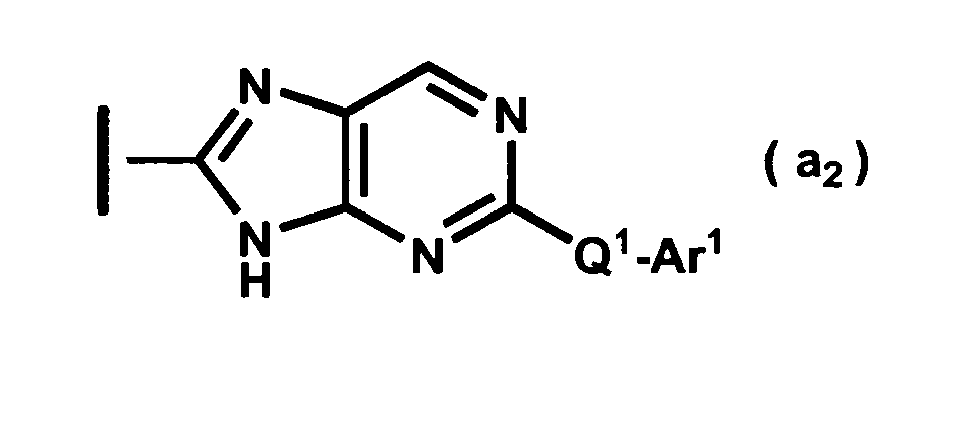
Ar2 is aryl or heteroaryl, any of which is optionally substituted by a substituent selected from the group consisting of halogen, cyano, C1-6 alkyl, halo-C1-6 alkyl, hydroxy-C1-6 alkyl, hydroxy, C1-6 alkoxy, halo-C1-6 alkoxy, C1-6 alkylamino, di-C1-6 alkylamino, C2-7 alkanoyl and aryl;
Q1 and Q2 are independently a single bond, oxygen, carbonyl or -N(R3)-;
R3 is hydrogen or C1-6 alkyl;
E, T, U, V, W, X, Y and n complete a group selected from:
or a pharmaceutically acceptable salt or N-oxide derivative thereof. - The compound as claimed in claim 1, wherein Ar1 is phenyl which is optionally substituted by a substituent selected from the group consisting of halogen, nitro, hydroxy, C1-6 alkyl, halo-C1-6 alkyl, hydroxy-C1-6 alkyl, cyclo-C3-6 alkyl, C2-6 alkenyl, C1-6 alkoxy, halo-C1-6 alkoxy, C1-6 alkylthio, C1-6 alkylsulfonyl, carboxyl, C2-7 alkanoyl, C2-7 alkoxycarbonyl, C2-7 alkanoylamino and -Q2-Ar2.
- The compound as claimed in claim 1, wherein Ar1 is heteroaryl which is optionally substituted by a substituent selected from the group consisting of halogen, nitro, hydroxy, C1-6 alkyl, halo-C1-6 alkyl, hydroxy-C1-6 alkyl, cyclo-C3-6 alkyl, C2-6 alkenyl, C1-6 alkoxy, halo-C1-6 alkoxy, C1-6 alkylthio, C1-6 alkylsulfonyl, carboxyl, C2-7 alkanoyl, C2-7 alkoxycarbonyl, C2-7 alkanoylamino and -Q2-Ar2.
- The compound as claimed in claim 3, wherein the heteroaryl is pyridyl.
- The compound as claimed in claim 1 wherein Q1 is a single bond.
- The compound as claimed in claim 1, which is selected from the group consisting of trans-2-(2-chloro-4-fluorophenyl)-8-[3-oxospiro[6-azaisobenzofuran-1(3H),1'-cyclohexan]-4'-yl]purine, trans-2-(4-methoxyphenyl)-8-[3-oxospiro[6-azaisobenzofuran-1(3H),1'-cyclohexan]-4'-yl]purine, trans-2-(2-methylphenyl)-8-[3-oxospiro[6-azaisobenzofuran-1(3H),1'-cyclohexan]-4'-yl]purine, trans-2-(2-difluoromethoxyphenyl)-8-[3-oxospiro[6-azaisobenzofuran-1(3H),1'-cyclohexan]-4'-yl]purine, trans-2-(3-difluoromethoxyphenyl)-8-[3-oxospiro[6-azaisobenzofuran-1(3H),1'-cyclohexan]-4'-yl]purine, trans-8-[3-oxospiro[6-azaisobenzofuran-1(3H),1'-cyclohexan]-4'-yl]-2-(2-trifluoromethylphenyl)purine, trans-2-(2,4-difluorophenyl)-8-[3-oxospiro[6-azaisobenzofuran-1(3H),1'-cyclohexan]-4'-yl]purine, trans-2-(2,5-difluorophenyl)-8-[3-oxospiro[6-azaisobenzofuran-1(3H),1'-cyclohexan]-4'-yl]purine, trans-2-(2-bromo-4-fluorophenyl)-8-[3-oxospiro[6-azaisobenzofuran-1(3H),1'-cyclohexan]-4'-yl]purine, trans-2-(4-chloro-2-fluorophenyl)-8-[3-oxospiro[6-azaisobenzofuran-1(3H),1'-cyclohexan]-4'-yl]purine, trans-8-[3-oxospiro[6-azaisobenzofuran-1(3H),1'-cyclohexan]-4'-yl]-2-(3-quinolyl)purine, trans-8-[5-fluoro-3-oxospiro[6-azaisobenzofuran-1(3H),1'-cyclohexan]-4'-yl]-2-phenylpurine, trans-8-[5-fluoro-3-oxospiro[6-azaisobenzofuran-1(3H),1'-cyclohexan]-4'-yl]-2-(2-fluorophenyl)purine, trans-2-(2,4-difluorophenyl)-8-[5-fluoro-3-oxospiro[6-azaisobenzofuran-1(3H),1'-cyclohexan]-4'-yl]purine, trans-2-(2,5-difluorophenyl)-8-[5-fluoro-3-oxospiro[6-azaisobenzofuran-1(3H),1'-cyclohexan]-4'-yl]purine, trans-2-(4-fluorophenyl)-8-[3-oxospiro[6-azaisobenzofuran-1(3H), 1'-cyclohexan]-4'-yl]purine 6-oxide, trans-2-(4-fluoro-2-hydroxyphenyl)-8-[3-oxospiro[6-azaisobenzofuran-1(3H), 1'-cyclohexan]-4'-yl]purine, trans-2-(4-hydroxyphenyl)-8-[3-oxospiro[6-azaisobenzofuran-1(3H), 1'-cyclohexan]-4'-yl]purine, trans-2-(4-fluoro-3-hydroxyphenyl)-8-[3-oxospiro[6-azaisobenzofuran-1(3H), 1'-cyclohexan]-4'-yl]purine, and cis-2-(4-fluorophenyl)-8-[4'-hydroxy-3-oxospiro[6-azaisobenzofuran-1(3H), 1'-cyclohexan]-4'-yl]purine.
- The compound of claim 1, which is trans-2-(4-fluorophenyl)-8-[3-oxospiro[6-azaisobenzofuran-1(3H), 1'-cyclohexan]-4'-yl]purine.
- The compound of claim 1, which is trans-2-(2,5-difluorophenyl)-8-[3-oxospiro[6-azaisobenzofuran-1(3H), 1'-cyclohexan]-4'-yl]purine.
- The compound of claim 1, which is trans-8-[5-fluoro-3-oxospiro[6-azaisobenzofuran-1(3H), 1'-cyclohexan]-4'-yl]-2-(2-fluorophenyl)purine.
- A compound of the formula (I) according to any one of claims 1-9 for use in medicine.
- A compound of the formula (I) according to any one of claims 1-9 for use in the treatment of bulimia, obesity or diabetes.
- A pharmaceutical composition comprising a compound of the formula (I) according to any one of claims 1-9 in admixture with a pharmaceutically acceptable carrier.
Applications Claiming Priority (3)
| Application Number | Priority Date | Filing Date | Title |
|---|---|---|---|
| JP2002190978 | 2002-06-28 | ||
| JP2002190978 | 2002-06-28 | ||
| PCT/JP2003/008161 WO2004002986A2 (en) | 2002-06-28 | 2003-06-26 | Novel benzimidazole derivatives |
Publications (2)
| Publication Number | Publication Date |
|---|---|
| EP1517908A2 EP1517908A2 (en) | 2005-03-30 |
| EP1517908B1 true EP1517908B1 (en) | 2011-04-20 |
Family
ID=29996905
Family Applications (1)
| Application Number | Title | Priority Date | Filing Date |
|---|---|---|---|
| EP03761822A Expired - Lifetime EP1517908B1 (en) | 2002-06-28 | 2003-06-26 | Novel benzimidazole derivatives |
Country Status (23)
| Country | Link |
|---|---|
| US (3) | US7105526B2 (en) |
| EP (1) | EP1517908B1 (en) |
| CN (2) | CN100560585C (en) |
| AR (1) | AR040271A1 (en) |
| AT (1) | ATE506360T1 (en) |
| AU (1) | AU2003248248B2 (en) |
| BR (1) | BR0312066A (en) |
| CA (1) | CA2490722C (en) |
| DE (1) | DE60336811D1 (en) |
| DO (1) | DOP2003000662A (en) |
| EA (1) | EA200500103A1 (en) |
| EC (1) | ECSP045505A (en) |
| HR (1) | HRP20041218A2 (en) |
| IL (1) | IL165810A0 (en) |
| IS (1) | IS7667A (en) |
| MX (1) | MXPA04012731A (en) |
| NO (1) | NO20050184L (en) |
| PE (1) | PE20040583A1 (en) |
| PL (1) | PL374693A1 (en) |
| RS (1) | RS113704A (en) |
| TW (1) | TW200406411A (en) |
| WO (1) | WO2004002986A2 (en) |
| ZA (1) | ZA200409339B (en) |
Families Citing this family (79)
| Publication number | Priority date | Publication date | Assignee | Title |
|---|---|---|---|---|
| US6374762B1 (en) * | 1997-10-27 | 2002-04-23 | Correct Craft, Inc. | Water sport towing apparatus |
| ATE433971T1 (en) * | 2002-11-29 | 2009-07-15 | Banyu Pharma Co Ltd | NEW AZOLE DERIVATIVES |
| JP2006519229A (en) * | 2003-02-13 | 2006-08-24 | アルバート・アインシュタイン・カレッジ・オヴ・メディシン・オヴ・イェシヴァ・ユニヴァーシティ | Regulation of food intake and glucose production by modulation of long-chain fatty acyl-CoA levels in the hypothalamus |
| US20040185559A1 (en) | 2003-03-21 | 2004-09-23 | Isis Pharmaceuticals Inc. | Modulation of diacylglycerol acyltransferase 1 expression |
| CA2518465A1 (en) | 2003-03-25 | 2004-10-14 | Takeda San Diego, Inc. | Dipeptidyl peptidase inhibitors |
| US7638638B2 (en) | 2003-05-14 | 2009-12-29 | Takeda San Diego, Inc. | Dipeptidyl peptidase inhibitors |
| KR20060041309A (en) | 2003-08-13 | 2006-05-11 | 다케다 야쿠힌 고교 가부시키가이샤 | 4-pyrimidone derivatives and their use as peptidyl peptidase inhibitors |
| US7825235B2 (en) | 2003-08-18 | 2010-11-02 | Isis Pharmaceuticals, Inc. | Modulation of diacylglycerol acyltransferase 2 expression |
| US7803838B2 (en) | 2004-06-04 | 2010-09-28 | Forest Laboratories Holdings Limited | Compositions comprising nebivolol |
| US7838552B2 (en) | 2004-06-04 | 2010-11-23 | Forest Laboratories Holdings Limited | Compositions comprising nebivolol |
| US20060019954A1 (en) * | 2004-07-20 | 2006-01-26 | Cedars-Sinai Medical Center | Method for reducing the likelihood of the occurrence of cardiac arrhythmias |
| KR20070046929A (en) * | 2004-08-19 | 2007-05-03 | 버텍스 파마슈티칼스 인코포레이티드 | Muscarinic receptor modulators |
| US7786141B2 (en) * | 2004-08-19 | 2010-08-31 | Vertex Pharmaceuticals Incorporated | Dihydrospiroindene modulators of muscarinic receptors |
| WO2006041922A2 (en) * | 2004-10-08 | 2006-04-20 | Dara Biosciences, Inc. | Agents and methods for administration to the central nervous system |
| RU2007124373A (en) * | 2004-11-29 | 2009-01-10 | Вертекс Фармасьютикалз Инкорпорейтед (Us) | MUSCARINE RECEPTION MODULATORS |
| US20070026079A1 (en) * | 2005-02-14 | 2007-02-01 | Louis Herlands | Intranasal administration of modulators of hypothalamic ATP-sensitive potassium channels |
| AU2006290205B2 (en) | 2005-09-14 | 2012-12-13 | Takeda Pharmaceutical Company Limited | Dipeptidyl peptidase inhibitors for treating diabetes |
| CA2622642C (en) | 2005-09-16 | 2013-12-31 | Takeda Pharmaceutical Company Limited | Dipeptidyl peptidase inhibitors |
| KR20080048502A (en) | 2005-09-29 | 2008-06-02 | 머크 앤드 캄파니 인코포레이티드 | Acylated spiropiperidine derivatives as melanocortin-4 receptor modulators |
| US7822474B2 (en) * | 2005-11-30 | 2010-10-26 | Cedars-Sinai Medical Center | Methods for the prediction of arrhythmias and prevention of sudden cardiac death |
| JP2009521483A (en) * | 2005-12-22 | 2009-06-04 | バーテックス ファーマシューティカルズ インコーポレイテッド | Muscarinic receptor modulators |
| EP1987034B1 (en) * | 2006-02-22 | 2011-07-20 | Vertex Pharmceuticals Incorporated | Spiro condensed piperidines as modulators of muscarinic receptors |
| AU2007221214A1 (en) * | 2006-02-22 | 2007-09-07 | Vertex Pharmaceuticals Incorporated | Modulators of muscarinic receptors |
| KR20080107466A (en) * | 2006-03-09 | 2008-12-10 | 파마코페이아, 인코포레이티드 | 8-Heteroarylpurine MN2 Inhibitor for Treatment of Metabolic Disorders |
| WO2007112347A1 (en) | 2006-03-28 | 2007-10-04 | Takeda Pharmaceutical Company Limited | Dipeptidyl peptidase inhibitors |
| CN101500565A (en) * | 2006-06-29 | 2009-08-05 | 弗特克斯药品有限公司 | Modulators of muscarinic receptors |
| EP2057177B1 (en) | 2006-08-04 | 2012-11-21 | Isis Pharmaceuticals, Inc. | Compositions and their uses directed to diacylglycerol acyltransferase 1 |
| AU2007284548A1 (en) * | 2006-08-15 | 2008-02-21 | Vertex Pharmaceuticals Incorporated | Modulators of muscarinic receptors |
| EP2051715A2 (en) | 2006-08-18 | 2009-04-29 | Vertex Pharmceuticals Incorporated | Modulators of muscarinic receptors |
| US8324383B2 (en) | 2006-09-13 | 2012-12-04 | Takeda Pharmaceutical Company Limited | Methods of making polymorphs of benzoate salt of 2-[[6-[(3R)-3-amino-1-piperidinyl]-3,4-dihydro-3-methyl-2,4-dioxo-1(2H)-pyrimidinyl]methyl]-benzonitrile |
| US8173629B2 (en) | 2006-09-22 | 2012-05-08 | Merck Sharp & Dohme Corp. | Method of treatment using fatty acid synthesis inhibitors |
| TW200838536A (en) | 2006-11-29 | 2008-10-01 | Takeda Pharmaceutical | Polymorphs of succinate salt of 2-[6-(3-amino-piperidin-1-yl)-3-methyl-2,4-dioxo-3,4-dihydro-2H-pyrimidin-1-ylmethy]-4-fluor-benzonitrile and methods of use therefor |
| US8093236B2 (en) | 2007-03-13 | 2012-01-10 | Takeda Pharmaceuticals Company Limited | Weekly administration of dipeptidyl peptidase inhibitors |
| JP5319518B2 (en) | 2007-04-02 | 2013-10-16 | Msd株式会社 | Indoledione derivative |
| US7973162B2 (en) * | 2007-10-03 | 2011-07-05 | Vertex Pharmaceuticals Incorporated | Modulators of muscarinic receptors |
| WO2009074835A1 (en) * | 2007-12-10 | 2009-06-18 | N-Gene Research Laboratories Inc. | Dose reduction of a cannabinoid cb1 receptor antagonist in the treatment of overweight or obesity |
| WO2009144554A1 (en) | 2008-05-28 | 2009-12-03 | Pfizer, Inc. | Pyrazolospiroketone acetyl-c0a carboxylase inhibitors |
| EP2350010B1 (en) | 2008-10-30 | 2014-03-26 | Merck Sharp & Dohme Corp. | Isonicotinamide orexin receptor antagonists |
| ES2606717T3 (en) | 2009-02-27 | 2017-03-27 | Enanta Pharmaceuticals, Inc. | Hepatitis C virus inhibitors |
| PT2499139E (en) | 2009-11-10 | 2014-02-10 | Pfizer | N1-pyrazolospiroketone acetyl-coa carboxylase inhibitors |
| EP2516439B1 (en) * | 2009-12-21 | 2014-01-22 | Novartis AG | Diaza-spiro[5.5]undecanes as orexin receptor antagonists |
| EP2374731A1 (en) | 2010-04-07 | 2011-10-12 | Altachem N.V. | High performance valve |
| HRP20161178T1 (en) | 2010-09-30 | 2016-11-04 | Pfizer Inc. | N1-PYRAZOLOSPIROKETONE ACETYL-COA-CARBOXYLASE INHIBITORS |
| HUE025078T2 (en) | 2010-10-29 | 2016-01-28 | Pfizer | N1/N2-LACTAM ACETYL-CoA CARBOXYLASE INHIBITORS |
| WO2012088266A2 (en) | 2010-12-22 | 2012-06-28 | Incyte Corporation | Substituted imidazopyridazines and benzimidazoles as inhibitors of fgfr3 |
| PE20141187A1 (en) | 2011-04-22 | 2014-09-18 | Pfizer | INHIBITORS SUBSTITUTED FOR AEITL-COA CARBOXYLASE |
| WO2013011932A1 (en) | 2011-07-15 | 2013-01-24 | 塩野義製薬株式会社 | Azabenzimidazole derivative having ampk-activating activity |
| AR088352A1 (en) | 2011-10-19 | 2014-05-28 | Merck Sharp & Dohme | ANTAGONISTS OF THE RECEIVER OF 2-PIRIDILOXI-4-NITRILE OREXINE |
| LT3495367T (en) | 2012-06-13 | 2021-02-25 | Incyte Holdings Corporation | MODIFIED TRICYCLIC COMPOUNDS AS FGFR INHIBITORS |
| WO2014026125A1 (en) | 2012-08-10 | 2014-02-13 | Incyte Corporation | Pyrazine derivatives as fgfr inhibitors |
| US9266892B2 (en) | 2012-12-19 | 2016-02-23 | Incyte Holdings Corporation | Fused pyrazoles as FGFR inhibitors |
| LT2986610T (en) | 2013-04-19 | 2018-04-10 | Incyte Holdings Corporation | Bicyclic heterocycles as fgfr inhibitors |
| US10851105B2 (en) | 2014-10-22 | 2020-12-01 | Incyte Corporation | Bicyclic heterocycles as FGFR4 inhibitors |
| MA41551A (en) | 2015-02-20 | 2017-12-26 | Incyte Corp | BICYCLIC HETEROCYCLES USED AS FGFR4 INHIBITORS |
| WO2016134294A1 (en) | 2015-02-20 | 2016-08-25 | Incyte Corporation | Bicyclic heterocycles as fgfr4 inhibitors |
| SG11201706287PA (en) | 2015-02-20 | 2017-09-28 | Incyte Corp | Bicyclic heterocycles as fgfr inhibitors |
| PE20180800A1 (en) | 2015-07-10 | 2018-05-09 | Ionis Pharmaceuticals Inc | DIACIGLYCEROL ACILTRANSFERASE 2 (DGAT2) MODULATORS |
| AR111960A1 (en) | 2017-05-26 | 2019-09-04 | Incyte Corp | CRYSTALLINE FORMS OF A FGFR INHIBITOR AND PROCESSES FOR ITS PREPARATION |
| MX2020011718A (en) | 2018-05-04 | 2021-02-15 | Incyte Corp | SOLID FORMS OF A FIBROBLAST GROWTH FACTOR RECEPTOR (FGFR) INHIBITOR AND PROCESSES FOR PREPARING THEM. |
| ES3061844T3 (en) | 2018-05-04 | 2026-04-07 | Incyte Corp | Salts of an fgfr inhibitor |
| EP3923933A4 (en) | 2019-02-13 | 2022-08-17 | Merck Sharp & Dohme Corp. | PYRROLIDINE-LIKE OREXIN RECEPTOR AGONISTS |
| TW202045476A (en) | 2019-02-13 | 2020-12-16 | 美商默沙東藥廠 | 5-alkyl pyrrolidine orexin receptor agonists |
| US11628162B2 (en) | 2019-03-08 | 2023-04-18 | Incyte Corporation | Methods of treating cancer with an FGFR inhibitor |
| US11591329B2 (en) | 2019-07-09 | 2023-02-28 | Incyte Corporation | Bicyclic heterocycles as FGFR inhibitors |
| WO2021026047A1 (en) | 2019-08-08 | 2021-02-11 | Merck Sharp & Dohme Corp. | Heteroaryl pyrrolidine and piperidine orexin receptor agonists |
| US12122767B2 (en) | 2019-10-01 | 2024-10-22 | Incyte Corporation | Bicyclic heterocycles as FGFR inhibitors |
| TWI891666B (en) | 2019-10-14 | 2025-08-01 | 美商英塞特公司 | Bicyclic heterocycles as fgfr inhibitors |
| US11566028B2 (en) | 2019-10-16 | 2023-01-31 | Incyte Corporation | Bicyclic heterocycles as FGFR inhibitors |
| CA3163875A1 (en) | 2019-12-04 | 2021-06-10 | Incyte Corporation | Tricyclic heterocycles as fgfr inhibitors |
| WO2021113462A1 (en) | 2019-12-04 | 2021-06-10 | Incyte Corporation | Derivatives of an fgfr inhibitor |
| US12012409B2 (en) | 2020-01-15 | 2024-06-18 | Incyte Corporation | Bicyclic heterocycles as FGFR inhibitors |
| MX2023001840A (en) | 2020-08-18 | 2023-03-13 | Merck Sharp & Dohme Llc | Bicycloheptane pyrrolidine orexin receptor agonists. |
| US11683717B2 (en) * | 2020-11-09 | 2023-06-20 | Celona, Inc. | Method and apparatus for determining wireless MNO coverage and efficiently operating an enterprise wireless communication network |
| TW202304459A (en) | 2021-04-12 | 2023-02-01 | 美商英塞特公司 | Combination therapy comprising an fgfr inhibitor and a nectin-4 targeting agent |
| PE20242344A1 (en) | 2021-05-12 | 2024-12-16 | Boehringer Ingelheim Int | PYRIDINE DERIVATIVES WITH N-LINKED CYCLIC SUBSTITUTE AS cGAS INHIBITORS |
| EP4352060A1 (en) | 2021-06-09 | 2024-04-17 | Incyte Corporation | Tricyclic heterocycles as fgfr inhibitors |
| JP2024522189A (en) | 2021-06-09 | 2024-06-11 | インサイト・コーポレイション | Tricyclic Heterocycles as FGFR Inhibitors |
| WO2023155870A1 (en) * | 2022-02-18 | 2023-08-24 | Insilico Medicine Ip Limited | Membrane-associated tyrosine-and threonine-specific cdc2-inhibitory kinase (pkmyt1) inhibitors and uses thereof |
| WO2025233174A1 (en) * | 2024-05-08 | 2025-11-13 | Boehringer Ingelheim International Gmbh | Benzimidazole derivatives as cgas inhibitors |
Family Cites Families (170)
| Publication number | Priority date | Publication date | Assignee | Title |
|---|---|---|---|---|
| US3914250A (en) | 1974-08-01 | 1975-10-21 | American Home Prod | 1,4-Diazepino{8 6,5,4-jk{9 carbazoles |
| JPS608117B2 (en) | 1977-02-08 | 1985-02-28 | 財団法人微生物化学研究会 | New physiologically active substance esterastin and its production method |
| DE2928485A1 (en) | 1979-07-14 | 1981-01-29 | Bayer Ag | USE OF UREA DERIVATIVES AS A MEDICINAL PRODUCT IN THE TREATMENT OF FATTY METABOLISM DISORDERS |
| ZA821577B (en) | 1981-04-06 | 1983-03-30 | Boots Co Plc | Therapeutic agents |
| US4452813A (en) | 1981-05-22 | 1984-06-05 | Taiho Pharmaceutical Company Limited | Sulfonate derivatives, process for preparing same and antilipemic compositions containing the derivative |
| CA1247547A (en) | 1983-06-22 | 1988-12-28 | Paul Hadvary | Leucine derivatives |
| EP0136976A3 (en) | 1983-08-23 | 1985-05-15 | Ciba-Geigy Ag | Use of phenyl pyrimidines as plant regulators |
| IE61928B1 (en) | 1988-11-29 | 1994-11-30 | Boots Co Plc | Treatment of obesity |
| US5391571A (en) | 1989-11-15 | 1995-02-21 | American Home Products Corporation | Cholesterol ester hydrolase inhibitors |
| US5081122A (en) | 1990-03-05 | 1992-01-14 | Sterling Drug Inc. | Antiglaucoma compositions containing 4-arylcarbonyl-1-(4-morpholinyl)-lower-alkyl)-1H-indoles and method of use thereof |
| US5112820A (en) | 1990-03-05 | 1992-05-12 | Sterling Drug Inc. | Anti-glaucoma compositions containing 2- and 3-aminomethyl-6-arylcarbonyl- or 6-phenylthio-2,3-dihydropyrrolo-(1,2,3-de)-1,4-benzoxazines and method of use thereof |
| US5013837A (en) | 1990-03-08 | 1991-05-07 | Sterling Drug Inc. | 3-Arylcarbonyl-1H-indole-containing compounds |
| US4973587A (en) | 1990-03-08 | 1990-11-27 | Sterling Drug Inc. | 3-arylcarbonyl-1-aminoalkyl-1H-indole-containing antiglaucoma method |
| FR2692575B1 (en) | 1992-06-23 | 1995-06-30 | Sanofi Elf | NOVEL PYRAZOLE DERIVATIVES, PROCESS FOR THEIR PREPARATION AND PHARMACEUTICAL COMPOSITIONS CONTAINING THEM. |
| US6472178B1 (en) | 1998-02-27 | 2002-10-29 | Regeneron Pharmaceuticals, Inc. | Nucleic acids encoding a modified ciliary neurotrophic factor and method of making thereof |
| US5349056A (en) | 1992-10-09 | 1994-09-20 | Regeneron Pharmaceuticals | Modified ciliary neurotrophic factors |
| US5451677A (en) | 1993-02-09 | 1995-09-19 | Merck & Co., Inc. | Substituted phenyl sulfonamides as selective β 3 agonists for the treatment of diabetes and obesity |
| US5292736A (en) | 1993-02-26 | 1994-03-08 | Sterling Winthrop Inc. | Morpholinoalkylindenes as antiglaucoma agents |
| FR2714057B1 (en) | 1993-12-17 | 1996-03-08 | Sanofi Elf | New derivatives of 3-pyrazolecarboxamide, process for their preparation and pharmaceutical compositions containing them. |
| US5705515A (en) | 1994-04-26 | 1998-01-06 | Merck & Co., Inc. | Substituted sulfonamides as selective β-3 agonists for the treatment of diabetes and obesity |
| PL321136A1 (en) | 1994-11-07 | 1997-11-24 | Pfizer | Some substituted derivatives of bencylamine as a new class of specific ligands of neuropeptide y1 |
| US5602024A (en) | 1994-12-02 | 1997-02-11 | Synaptic Pharmaceutical Corporation | DNA encoding a hypothalamic atypical neuropeptide Y/peptide YY receptor (Y5) and uses thereof |
| US5605886A (en) | 1995-01-31 | 1997-02-25 | Eli Lilly And Company | Anti-obesity proteins |
| US5552523A (en) | 1995-01-31 | 1996-09-03 | Eli Lilly And Company | Anti-obesity proteins |
| CA2211664A1 (en) | 1995-01-31 | 1996-08-08 | Eli Lilly And Company | Anti-obesity proteins |
| US5552522A (en) | 1995-01-31 | 1996-09-03 | Eli Lilly And Company | Anti-obesity proteins |
| US5552524A (en) | 1995-01-31 | 1996-09-03 | Eli Lilly And Company | Anti-obesity proteins |
| US5521283A (en) | 1995-01-31 | 1996-05-28 | Eli Lilly And Company | Anti-obesity proteins |
| WO1996023514A1 (en) | 1995-01-31 | 1996-08-08 | Eli Lilly And Company | Anti-obesity proteins |
| US5559208A (en) | 1995-01-31 | 1996-09-24 | Eli Lilly And Company | Anti-obesity proteins |
| US5554727A (en) | 1995-01-31 | 1996-09-10 | Eli Lilly And Company | Anti-obesity proteins |
| US5532237A (en) | 1995-02-15 | 1996-07-02 | Merck Frosst Canada, Inc. | Indole derivatives with affinity for the cannabinoid receptor |
| US5831115A (en) | 1995-04-21 | 1998-11-03 | Abbott Laboratories | Inhibitors of squalene synthase and protein farnesyltransferase |
| US20020006964A1 (en) | 1995-05-16 | 2002-01-17 | Young James W. | Methods of using and compositions comprising (+) sibutramine optionally in combination with other pharmacologically active compounds |
| US5739106A (en) | 1995-06-07 | 1998-04-14 | Rink; Timothy J. | Appetite regulating compositions |
| FR2741621B1 (en) | 1995-11-23 | 1998-02-13 | Sanofi Sa | NOVEL PYRAZOLE DERIVATIVES, PROCESS FOR THEIR PREPARATION AND PHARMACEUTICAL COMPOSITIONS CONTAINING THE SAME |
| WO1997020821A1 (en) | 1995-12-01 | 1997-06-12 | Novartis Ag | Heteroaryl derivatives |
| AU7692896A (en) | 1995-12-01 | 1997-06-27 | Novartis Ag | Quinazolin-2,4-diazirines as NPY receptor antagonist |
| WO1997020823A2 (en) | 1995-12-01 | 1997-06-12 | Novartis Ag | 2-amino quinazoline derivatives as npy receptor antagonists |
| AU7626496A (en) | 1995-12-01 | 1997-06-27 | Ciba-Geigy Ag | Heteroaryl compounds |
| WO1997019682A1 (en) | 1995-12-01 | 1997-06-05 | Synaptic Pharmaceutical Corporation | Aryl sulfonamide and sulfamide derivatives and uses thereof |
| TW432073B (en) | 1995-12-28 | 2001-05-01 | Pfizer | Pyrazolopyridine compounds |
| AU1618697A (en) | 1996-02-06 | 1997-08-28 | Japan Tobacco Inc. | Novel compounds and pharmaceutical use thereof |
| IT1288388B1 (en) | 1996-11-19 | 1998-09-22 | Angeletti P Ist Richerche Bio | USE OF SUBSTANCES THAT ACTIVATE THE CNTF RECEPTOR (NEUROTROPHIC CHILI FACTOR) FOR THE PREPARATION OF DRUGS FOR THERAPY |
| CA2274594C (en) | 1996-12-16 | 2006-10-10 | Banyu Pharmaceutical Co., Ltd. | Aminopyrazole derivatives |
| US6100259A (en) | 1997-01-21 | 2000-08-08 | Smithkline Beecham Corporation | Cannabinoid receptor modulators |
| CN1982290A (en) | 1997-02-04 | 2007-06-20 | 阿肯色大学评议会 | Fungicidal carboxamides |
| EP0966436B1 (en) | 1997-02-21 | 2002-12-11 | Bayer Aktiengesellschaft | Aryl sulfonamides and analogues thereof and their use in the treatment of neurodegenerative diseases |
| US5948777A (en) | 1997-03-18 | 1999-09-07 | Smithkline Beecham Corporation | Cannabinoid receptor agonists |
| FR2761266B1 (en) | 1997-03-28 | 1999-07-02 | Sanofi Sa | PHARMACEUTICAL COMPOSITION FORMED BY WET GRANULATION FOR THE ORAL ADMINISTRATION OF A DERIVATIVE OF N-PIPERIDINO-3- PYRAZOLECARBOXAMIDE, ITS SALTS AND THEIR SOLVATES |
| FR2761265B1 (en) | 1997-03-28 | 1999-07-02 | Sanofi Sa | PHARMACEUTICAL COMPOSITION FOR THE ORAL ADMINISTRATION OF A DERIVATIVE OF N-PIPERIDINO-3-PYRAZOLECARBOXAMIDE, ITS SALTS AND THEIR SOLVATES |
| DE69812096T2 (en) | 1997-04-23 | 2003-10-30 | Banyu Pharmaceutical Co., Ltd. | NEUROPEPTID Y RECEPTOR ANTAGONISTS |
| US6001836A (en) | 1997-05-28 | 1999-12-14 | Bristol-Myers Squibb Company | Dihydropyridine NPY antagonists: cyanoguanidine derivatives |
| SE9702457D0 (en) | 1997-06-26 | 1997-06-26 | Pharmacia & Upjohn Ab | screening |
| KR20010021696A (en) | 1997-07-11 | 2001-03-15 | 미즈노 마사루 | Quinoline compounds and medicinal uses thereof |
| AU1262199A (en) | 1997-11-28 | 1999-06-16 | Banyu Pharmaceutical Co., Ltd. | Antihyperlipemic agents |
| CA2326606A1 (en) | 1998-04-02 | 1999-10-14 | Neurogen Corporation | Aminoalkyl substituted 9h-pyridino[2,3-b]indole and 9h-pyrimidino[4,5-b]indole derivatives:crf1 and npy1 receptors |
| ID26128A (en) | 1998-04-29 | 2000-11-23 | Ortho Mcneil Pharm Inc | COMPOUNDS OF N-SUBSTITUTED N-AMINOTETRAL COMPOUNDS AS LIGANS FOR Y Y5 NEUPEPTIDE RECEPTORS WHICH ARE BENEFITABLE IN TREATMENT OF OBESITY AND OTHER INTERRUPTIONS |
| US6329395B1 (en) | 1998-06-08 | 2001-12-11 | Schering Corporation | Neuropeptide Y5 receptor antagonists |
| WO1999064002A1 (en) | 1998-06-11 | 1999-12-16 | Merck & Co., Inc. | Spiropiperidine derivatives as melanocortin receptor agonists |
| HN1998000027A (en) | 1998-08-19 | 1999-06-02 | Bayer Ip Gmbh | Arylsulphonamides and analogues |
| DE19837627A1 (en) | 1998-08-19 | 2000-02-24 | Bayer Ag | New aminoacid esters of arylsulfonamides are useful for e.g. treating neurodegenerative diseases, pain, convulsions or bacterial or viral infections |
| US6358951B1 (en) | 1998-08-21 | 2002-03-19 | Pfizer Inc. | Growth hormone secretagogues |
| US6337332B1 (en) | 1998-09-17 | 2002-01-08 | Pfizer Inc. | Neuropeptide Y receptor antagonists |
| ATE457169T1 (en) | 1998-10-15 | 2010-02-15 | Imp Innovations Ltd | COMPOUNDS FOR THE TREATMENT OF WEIGHT LOSS |
| WO2000027845A1 (en) | 1998-11-10 | 2000-05-18 | Merck & Co., Inc. | Spiro-indolines as y5 receptor antagonists |
| ES2161594B1 (en) | 1998-12-17 | 2003-04-01 | Servier Lab | NEW DERIVATIVES OF HYDRAZIDE, ITS PREPARATION PROCEDURE AND THE PHARMACEUTICAL COMPOSITIONS CONTAINING THEM. |
| US6344481B1 (en) | 1999-03-01 | 2002-02-05 | Pfizer Inc. | Thyromimetic antiobesity agents |
| WO2000054765A1 (en) | 1999-03-19 | 2000-09-21 | Knoll Gmbh | Method of treating eating disorders |
| FR2792314B1 (en) | 1999-04-15 | 2001-06-01 | Adir | NOVEL AMINOTRIAZOLE COMPOUNDS, PROCESS FOR THEIR PREPARATION AND THE PHARMACEUTICAL COMPOSITIONS CONTAINING THE SAME |
| US6340683B1 (en) | 1999-04-22 | 2002-01-22 | Synaptic Pharmaceutical Corporation | Selective NPY (Y5) antagonists (triazines) |
| DK1183245T3 (en) | 1999-04-22 | 2007-09-24 | Lundbeck & Co As H | Selective NPY (Y5) antagonists |
| HK1041263A1 (en) | 1999-05-05 | 2002-07-05 | Ortho-Mcneil Pharmaceutical, Inc. | 3a, 4,5,9b-tetrahydro-1h-benz[e] indol-2-yl amine-derived neuropeptide y receptors ligands useful in the treatment of obesity and other disorders |
| AU778393B2 (en) | 1999-05-12 | 2004-12-02 | Ortho-Mcneil Pharmaceutical, Inc. | Pyrazole carboxamides useful for the treatment of obesity and other disorders |
| CA2377369A1 (en) | 1999-06-04 | 2000-12-14 | Merck & Co., Inc. | Substituted piperidines as melanocortin-4 receptor agonists |
| CA2380866A1 (en) | 1999-06-30 | 2001-01-11 | Synaptic Pharmaceutical Corporation | Selective npy (y5) antagonists |
| AU6000900A (en) | 1999-07-23 | 2001-02-13 | Astrazeneca Uk Limited | Carbazole derivatives and their use as neuropeptide y5 receptor ligands |
| HUP0202143A3 (en) | 1999-07-28 | 2003-12-29 | Ortho Mcneil Pharm Inc | Amine and amide derivatives as ligands for the neuropeptide y y5 receptor pharmaceutical compositions containing them and their use |
| TWI279402B (en) | 1999-08-20 | 2007-04-21 | Banyu Pharma Co Ltd | Spiro compounds having NPY antagonistic activities and agents containing the same |
| KR20020047198A (en) | 1999-09-30 | 2002-06-21 | 해피 페너 ; 해리 에이치. 페너 2세 | CERTAIN ALKYLENE DIAMINE-SUBSTITUTED PYRAZOLO[1,5-a]-1,5-PYRIMIDINES AND PYRAZOLO[1,5-a]-1,3,5-TRIAZINES |
| YU23602A (en) | 1999-09-30 | 2004-09-03 | Neurogen Corporation | Amino substituted pyrazoloo /1,5-a/-1,5-pyrimidines and pyrazolo/1,5-a/-1,3,5-triazines |
| OA12050A (en) | 1999-09-30 | 2006-05-02 | Neurogen Corp | Certain alkylene diamine-substituted heterocycles. |
| DE19949319A1 (en) | 1999-10-13 | 2001-06-13 | Ruetgers Vft Ag | Process for the preparation of aryl alkyl ethers |
| AP2002002481A0 (en) | 1999-10-13 | 2002-06-30 | Pfizer Prod Inc | Biaryl ether derivatives useful as monoamine reuptake inhibitors. |
| IL149872A0 (en) | 1999-12-16 | 2002-11-10 | Schering Corp | Substituted imidazole neuropeptide y y5 receptor antagonists |
| AU2001228325A1 (en) | 2000-02-01 | 2001-08-14 | Novo-Nordisk A/S | Use of compounds for the regulation of food intake |
| AU2001234958A1 (en) | 2000-02-11 | 2001-08-20 | Bristol-Myers Squibb Company | Cannabinoid receptor modulators, their processes of preparation, and use of cannabinoid receptor modulators for treating respiratory and non-respiratory diseases |
| JP2001226269A (en) | 2000-02-18 | 2001-08-21 | Takeda Chem Ind Ltd | Melanin-concentrating hormone antagonist |
| US7064142B2 (en) | 2000-02-22 | 2006-06-20 | Banyu Pharmaceutical, Co., Ltd. | Imidazonline compounds |
| GB0004003D0 (en) | 2000-02-22 | 2000-04-12 | Knoll Ag | Therapeutic agents |
| US6531478B2 (en) | 2000-02-24 | 2003-03-11 | Cheryl P. Kordik | Amino pyrazole derivatives useful for the treatment of obesity and other disorders |
| FR2805818B1 (en) | 2000-03-03 | 2002-04-26 | Aventis Pharma Sa | AZETIDINE DERIVATIVES, THEIR PREPARATION AND THE PHARMACEUTICAL COMPOSITIONS CONTAINING THEM |
| FR2805817B1 (en) | 2000-03-03 | 2002-04-26 | Aventis Pharma Sa | PHARMACEUTICAL COMPOSITIONS CONTAINING AZETIDINE DERIVATIVES, NOVEL AZETIDINE DERIVATIVES AND THEIR PREPARATION |
| FR2805810B1 (en) | 2000-03-03 | 2002-04-26 | Aventis Pharma Sa | PHARMACEUTICAL COMPOSITIONS CONTAINING 3- AMINO-AZETIDINE DERIVATIVES, THE NEW DERIVATIVES AND THEIR PREPARATION |
| EP1132389A1 (en) | 2000-03-06 | 2001-09-12 | Vernalis Research Limited | New aza-indolyl derivatives for the treatment of obesity |
| AU6011301A (en) | 2000-03-14 | 2001-09-24 | Actelion Pharmaceuticals Ltd | 1,2,3,4-tetrahydroisoquinoline derivatives |
| EP1268449A4 (en) | 2000-03-23 | 2004-09-15 | Merck & Co Inc | SUBSTITUTED PIPERIDINES AS MELANOCORTINE RECEPTOR AGONISTS |
| EP1268000A4 (en) | 2000-03-23 | 2004-12-29 | Merck & Co Inc | SPIROPIPERIDINE DERIVATIVES FOR USE AS MELANOCORTIN RECEPTOR AGONISTS |
| US6600015B2 (en) | 2000-04-04 | 2003-07-29 | Hoffmann-La Roche Inc. | Selective linear peptides with melanocortin-4 receptor (MC4-R) agonist activity |
| EP1142886A1 (en) | 2000-04-07 | 2001-10-10 | Aventis Pharma Deutschland GmbH | Percyquinnin, a process for its production and its use as a pharmaceutical |
| ATE479429T1 (en) | 2000-04-28 | 2010-09-15 | Takeda Pharmaceutical | ANTAGONISTS OF THE MELANIN CONCENTRATING HORMONE |
| GB0010757D0 (en) | 2000-05-05 | 2000-06-28 | Astrazeneca Ab | Chemical compounds |
| GB0011013D0 (en) | 2000-05-09 | 2000-06-28 | Astrazeneca Ab | Chemical compounds |
| US6432960B2 (en) | 2000-05-10 | 2002-08-13 | Bristol-Myers Squibb Company | Squarate derivatives of dihydropyridine NPY antagonists |
| US6444675B2 (en) | 2000-05-10 | 2002-09-03 | Bristol-Myers Squibb Company | 4-alkyl and 4-cycloalkyl derivatives of dihydropyridine NPY antagonists |
| AU2001263021A1 (en) | 2000-05-10 | 2001-11-20 | Bristol-Myers Squibb Company | Alkylamine derivatives of dihydropyridine npy antagonists |
| JP2004507456A (en) | 2000-05-11 | 2004-03-11 | ブリストル−マイヤーズ スクイブ カンパニー | Tetrahydroisoquinoline analogs useful as growth hormone secretagogues |
| CA2408913A1 (en) | 2000-05-16 | 2001-11-22 | Takeda Chemical Industries, Ltd. | Melanin-concentrating hormone antagonist |
| EP1286697A2 (en) | 2000-05-17 | 2003-03-05 | Eli Lilly And Company | Method for selectively inhibiting ghrelin action |
| US6391881B2 (en) | 2000-05-19 | 2002-05-21 | Bristol-Myers Squibb Company | Thiourea derivatives of dihydropyridine NPY antagonists |
| SE0001899D0 (en) | 2000-05-22 | 2000-05-22 | Pharmacia & Upjohn Ab | New compounds |
| AU2001264977B2 (en) | 2000-05-30 | 2005-04-14 | Merck & Co., Inc. | Melanocortin receptor agonists |
| AU6690001A (en) | 2000-06-15 | 2001-12-24 | Schering Corp | Thrombin receptor antagonists |
| AU2001272476A1 (en) | 2000-06-16 | 2001-12-24 | Smithkline Beecham Plc | Piperidines for use as orexin receptor antagonists |
| CA2384041A1 (en) | 2000-07-05 | 2002-01-24 | Synaptic Pharmaceuticals Corporation | Selective melanin concentrating hormone-1 (mch1) receptor antagonists and uses thereof |
| US6569861B2 (en) | 2000-07-06 | 2003-05-27 | Neurogen Corporation | Melanin concentrating hormone receptor ligands |
| GB0019357D0 (en) | 2000-08-07 | 2000-09-27 | Melacure Therapeutics Ab | Novel phenyl guanidines |
| AU2001283938A1 (en) | 2000-07-24 | 2002-02-05 | Ardana Bioscience Limited | Ghrelin antagonists |
| DE60113865T2 (en) | 2000-07-31 | 2006-07-20 | Vernalis Research Ltd., Winnersh | PIPERAZINE DERIVATIVES |
| US6768024B1 (en) | 2000-08-04 | 2004-07-27 | Lion Bioscience Ag | Triamine derivative melanocortin receptor ligands and methods of using same |
| GB0019359D0 (en) | 2000-08-07 | 2000-09-27 | Melacure Therapeutics Ab | Novel guanidines |
| AU2001288294A1 (en) | 2000-08-21 | 2002-03-04 | Merck And Co., Inc. | Anti-hypercholesterolemic drug combination |
| AU2001283573A1 (en) | 2000-08-21 | 2002-03-04 | Gliatech, Inc. | The use of histamine H3 receptor inverse agonists for the control of appetite and treatment of obesity |
| CA2419310A1 (en) | 2000-08-23 | 2002-02-28 | Merck & Co., Inc. | Substituted piperidines as melanocortin receptor agonists |
| US6900226B2 (en) | 2000-09-06 | 2005-05-31 | Hoffman-La Roche Inc. | Neuropeptide Y antagonists |
| CN1474810A (en) | 2000-09-14 | 2004-02-11 | ���鹫˾ | Substituted urea, neuropeptide YY5 receptor antagonist |
| HUP0301351A3 (en) | 2000-10-13 | 2007-05-29 | Lilly Co Eli | Use of substituted dipeptides as growth hormone secretagogues, process for their preparation and pharmaceutical compositions containing them |
| JP4047723B2 (en) | 2000-10-16 | 2008-02-13 | エフ.ホフマン−ラ ロシュ アーゲー | Indoline derivatives and their use as 5-HT2 receptor ligands |
| CA2423792A1 (en) | 2000-10-20 | 2002-04-25 | Pfizer Products Inc. | Alpha-aryl ethanolamines and their use as beta-3 adrenergic receptor agonists |
| WO2002036596A2 (en) | 2000-11-03 | 2002-05-10 | Wyeth | CYCLOALKYL[b][1,4]DIAZEPINO[6,7,1-hi]INDOLES AND DERIVATIVES |
| CA2428905A1 (en) | 2000-11-20 | 2002-05-23 | Biovitrum Ab | Piperazinylpyrazines compounds as antagonists of serotonin 5-ht2 receptor |
| NZ525700A (en) | 2000-11-20 | 2004-12-24 | Biovitrum Ab | Piperazinylpyrazine compounds as agonist or antagonist of serotonin 5HT-2 receptor |
| EP1347982B1 (en) | 2000-12-12 | 2005-11-16 | Neurogen Corporation | Spiro isobenzofuran-1,4'-piperidin]-3-ones and 3h-spiroisobenzofuran-1,4'-piperidines |
| GB0030710D0 (en) | 2000-12-15 | 2001-01-31 | Hoffmann La Roche | Piperazine derivatives |
| DE60136562D1 (en) | 2000-12-21 | 2008-12-24 | Schering Corp | HETEROARYL-urea neuropeptide Y Y5 receptor antagonists |
| NZ525723A (en) | 2000-12-22 | 2004-11-26 | Schering Corp | 1,4-di-substituted piperidine antagonists for melanin-concentrating hormone (MCH) and their use in the treatment of obesity or diabetes |
| WO2002051232A2 (en) | 2000-12-27 | 2002-07-04 | Actelion Pharmaceuticals Ltd. | Novel benzazepines and related heterocyclic derivatives |
| EP1347979B1 (en) | 2000-12-27 | 2007-08-08 | F. Hoffmann-La Roche Ag | Indole derivatives and their use as 5-ht2b and 5-ht2c receptor ligands |
| JP2004524297A (en) | 2001-01-23 | 2004-08-12 | イーライ・リリー・アンド・カンパニー | Melanocortin receptor agonist |
| EP1370558B1 (en) | 2001-01-23 | 2005-08-24 | Eli Lilly And Company | Piperazine- and piperidine-derivatives as melanocortin receptor agonists |
| WO2002059107A1 (en) | 2001-01-23 | 2002-08-01 | Eli Lilly And Company | Substituted piperidines/piperazines as melanocortin receptor agonists |
| PE20021002A1 (en) | 2001-02-02 | 2002-12-06 | Takeda Chemical Industries Ltd | CONDENSED HETEROCYCLIC COMPOUNDS |
| EP1372653B1 (en) | 2001-02-28 | 2006-10-04 | Merck & Co., Inc. | Acylated piperidine derivatives as melanocortin-4 receptor agonists |
| EP1385506B1 (en) | 2001-02-28 | 2009-05-06 | Merck & Co., Inc. | Acylated piperidine derivates as melanocortin-4 receptor agonists |
| GEP20053710B (en) | 2001-02-28 | 2005-12-26 | Merck & Co Inc | Acylated Piperidine Derivatives as Melanocortin-4 Receptor Agonists |
| KR20030093257A (en) | 2001-03-21 | 2003-12-06 | 파마코페이아, 인크. | Aryl and biaryl compounds having MCH modulatory activity |
| US6900329B2 (en) | 2001-03-21 | 2005-05-31 | Schering Corporation | MCH antagonists and their use in the treatment of obesity |
| ATE284872T1 (en) | 2001-03-22 | 2005-01-15 | Solvay Pharm Bv | 4,5-DIHYDRO-1H-PYRAZOLE DERIVATIVES WITH CB1 ANTAGONISTIC EFFECT |
| AU782148B2 (en) | 2001-03-29 | 2005-07-07 | Molecular Design International, Inc. | Beta3-adrenoreceptor agonists, agonist compositions and methods of making and using the same |
| US6573287B2 (en) | 2001-04-12 | 2003-06-03 | Bristo-Myers Squibb Company | 2,1-oxazoline and 1,2-pyrazoline-based inhibitors of dipeptidyl peptidase IV and method |
| ATE460163T1 (en) | 2001-04-12 | 2010-03-15 | Pharmacopeia Llc | ARLY AND DIARYL PIPERIDINE DERIVATIVES USABLE AS MCH INHIBITORS |
| FR2824825B1 (en) | 2001-05-15 | 2005-05-06 | Servier Lab | NOVEL ALPHA-AMINOACID DERIVATIVES, PROCESS FOR THEIR PREPARATION AND PHARMACEUTICAL COMPOSITIONS CONTAINING THEM |
| KR100621287B1 (en) | 2001-05-21 | 2006-09-13 | 에프. 호프만-라 로슈 아게 | Quinoline derivatives as ligands for neuropeptide Y receptors |
| IL158941A0 (en) | 2001-05-22 | 2004-05-12 | Neurogen Corp | Melanin concentrating hormone receptor ligands: substituted 1-benzyl-4-aryl piperazine analogues |
| EP1406872B1 (en) | 2001-06-20 | 2007-12-19 | Merck & Co., Inc. | Dipeptidyl peptidase inhibitors for the treatment of diabetes |
| DE60209348T2 (en) | 2001-06-20 | 2006-10-12 | Merck & Co., Inc. | DIPEPTIDYLPEPTIDASE INHIBITORS FOR THE TREATMENT OF DIABETES |
| GB0115517D0 (en) | 2001-06-25 | 2001-08-15 | Ferring Bv | Novel antidiabetic agents |
| CN1723196A (en) | 2001-06-27 | 2006-01-18 | 史密丝克莱恩比彻姆公司 | Fluoropyrrolidines as dipeptidyl peptidase inhibitors |
| WO2003002593A2 (en) | 2001-06-27 | 2003-01-09 | Probiodrug Ag | Peptide structures useful for competitive modulation of dipeptidyl peptidase iv catalysis |
| ATE370943T1 (en) | 2001-06-27 | 2007-09-15 | Smithkline Beecham Corp | FLUOROPYRROLIDINE AS DIPEPTIDYL-PEPTIDASE INHIBITORS |
| WO2003002530A2 (en) | 2001-06-27 | 2003-01-09 | Smithkline Beecham Corporation | Pyrrolidines as dipeptidyl peptidase inhibitors |
| EP1404675B1 (en) | 2001-07-03 | 2008-03-12 | Novo Nordisk A/S | Dpp-iv-inhibiting purine derivatives for the treatment of diabetes |
| IL159697A0 (en) | 2001-07-05 | 2004-06-20 | Synaptic Pharma Corp | Substituted anilinic piperidines as mch selective antagonists |
| UA74912C2 (en) | 2001-07-06 | 2006-02-15 | Merck & Co Inc | Beta-aminotetrahydroimidazo-(1,2-a)-pyrazines and tetratriazolo-(4,3-a)-pyrazines as inhibitors of dipeptylpeptidase for the treatment or prevention of diabetes |
| ITMI20011483A1 (en) | 2001-07-11 | 2003-01-11 | Res & Innovation Soc Coop A R | USE OF COMPOUNDS AS FUNCTIONAL ANTAGONISTS TO CENTRAL DEICANNABINOID RECEPTORS |
| US7115628B2 (en) | 2001-07-18 | 2006-10-03 | Merck & Co., Inc. | Bridged piperidine derivatives as melanocortin receptor agonists |
| WO2003007887A2 (en) | 2001-07-20 | 2003-01-30 | Merck & Co., Inc. | Substituted imidazoles as cannabinoid receptor modulators |
| US6977264B2 (en) | 2001-07-25 | 2005-12-20 | Amgen Inc. | Substituted piperidines and methods of use |
| US6915444B2 (en) | 2001-09-12 | 2005-07-05 | Rockwell Automation Technologies, Inc. | Network independent safety protocol for industrial controller using data manipulation techniques |
| ATE433971T1 (en) * | 2002-11-29 | 2009-07-15 | Banyu Pharma Co Ltd | NEW AZOLE DERIVATIVES |
-
2003
- 2003-06-18 US US10/463,390 patent/US7105526B2/en not_active Expired - Fee Related
- 2003-06-19 AR ARP030102170A patent/AR040271A1/en unknown
- 2003-06-23 DO DO2003000662A patent/DOP2003000662A/en unknown
- 2003-06-23 PE PE2003000627A patent/PE20040583A1/en not_active Application Discontinuation
- 2003-06-25 TW TW092117211A patent/TW200406411A/en unknown
- 2003-06-26 HR HR20041218A patent/HRP20041218A2/en not_active Application Discontinuation
- 2003-06-26 EA EA200500103A patent/EA200500103A1/en unknown
- 2003-06-26 CA CA2490722A patent/CA2490722C/en not_active Expired - Fee Related
- 2003-06-26 WO PCT/JP2003/008161 patent/WO2004002986A2/en not_active Ceased
- 2003-06-26 AU AU2003248248A patent/AU2003248248B2/en not_active Ceased
- 2003-06-26 EP EP03761822A patent/EP1517908B1/en not_active Expired - Lifetime
- 2003-06-26 MX MXPA04012731A patent/MXPA04012731A/en unknown
- 2003-06-26 CN CNB2006100956720A patent/CN100560585C/en not_active Expired - Fee Related
- 2003-06-26 BR BR0312066-0A patent/BR0312066A/en not_active IP Right Cessation
- 2003-06-26 AT AT03761822T patent/ATE506360T1/en not_active IP Right Cessation
- 2003-06-26 RS YUP-1137/04A patent/RS113704A/en unknown
- 2003-06-26 PL PL03374693A patent/PL374693A1/en not_active Application Discontinuation
- 2003-06-26 CN CNB038153432A patent/CN100427486C/en not_active Expired - Fee Related
- 2003-06-26 DE DE60336811T patent/DE60336811D1/en not_active Expired - Lifetime
-
2004
- 2004-11-19 ZA ZA200409339A patent/ZA200409339B/en unknown
- 2004-12-16 IL IL16581004A patent/IL165810A0/en unknown
- 2004-12-22 EC EC2004005505A patent/ECSP045505A/en unknown
-
2005
- 2005-01-12 NO NO20050184A patent/NO20050184L/en not_active Application Discontinuation
- 2005-01-27 IS IS7667A patent/IS7667A/en unknown
-
2006
- 2006-05-10 US US11/431,274 patent/US7687514B2/en not_active Expired - Fee Related
-
2009
- 2009-10-26 US US12/605,503 patent/US7803807B2/en not_active Expired - Fee Related
Also Published As
Similar Documents
| Publication | Publication Date | Title |
|---|---|---|
| US7803807B2 (en) | Benzimidazole derivatives | |
| EP1546133B1 (en) | N-substituted-2-oxodihydropyridine derivatives as npy antagonists | |
| US7691860B2 (en) | Sulfonamide derivatives | |
| US7589096B2 (en) | Azole derivatives | |
| JP4496722B2 (en) | New benzimidazole derivatives | |
| KR20050024422A (en) | Novel benzimidazole derivatives | |
| CA2759471A1 (en) | Heteroarylthiomethyl pyridine derivative |
Legal Events
| Date | Code | Title | Description |
|---|---|---|---|
| PUAI | Public reference made under article 153(3) epc to a published international application that has entered the european phase |
Free format text: ORIGINAL CODE: 0009012 |
|
| 17P | Request for examination filed |
Effective date: 20041123 |
|
| AK | Designated contracting states |
Kind code of ref document: A2 Designated state(s): AT BE BG CH CY CZ DE DK EE ES FI FR GB GR HU IE IT LI LU MC NL PT RO SE SI SK TR |
|
| AX | Request for extension of the european patent |
Extension state: AL LT LV MK |
|
| REG | Reference to a national code |
Ref country code: HK Ref legal event code: DE Ref document number: 1070065 Country of ref document: HK |
|
| 17Q | First examination report despatched |
Effective date: 20060721 |
|
| 17Q | First examination report despatched |
Effective date: 20060721 |
|
| RIC1 | Information provided on ipc code assigned before grant |
Ipc: C07D 405/08 20060101ALI20100719BHEP Ipc: C07D 235/00 20060101ALI20100719BHEP Ipc: C07D 307/00 20060101ALI20100719BHEP Ipc: C07D 207/00 20060101ALI20100719BHEP Ipc: C07D 403/08 20060101ALI20100719BHEP Ipc: C07D 237/00 20060101ALI20100719BHEP Ipc: C07D 241/00 20060101ALI20100719BHEP Ipc: C07D 487/04 20060101ALI20100719BHEP Ipc: C07D 221/00 20060101ALI20100719BHEP Ipc: C07D 471/04 20060101AFI20100719BHEP |
|
| GRAP | Despatch of communication of intention to grant a patent |
Free format text: ORIGINAL CODE: EPIDOSNIGR1 |
|
| REG | Reference to a national code |
Ref country code: HK Ref legal event code: WD Ref document number: 1070065 Country of ref document: HK |
|
| GRAS | Grant fee paid |
Free format text: ORIGINAL CODE: EPIDOSNIGR3 |
|
| RAP1 | Party data changed (applicant data changed or rights of an application transferred) |
Owner name: MSD K.K. |
|
| GRAA | (expected) grant |
Free format text: ORIGINAL CODE: 0009210 |
|
| AK | Designated contracting states |
Kind code of ref document: B1 Designated state(s): AT BE BG CH CY CZ DE DK EE ES FI FR GB GR HU IE IT LI LU MC NL PT RO SE SI SK TR |
|
| AX | Request for extension of the european patent |
Extension state: AL LT LV MK |
|
| REG | Reference to a national code |
Ref country code: GB Ref legal event code: FG4D |
|
| REG | Reference to a national code |
Ref country code: CH Ref legal event code: EP |
|
| REG | Reference to a national code |
Ref country code: NL Ref legal event code: T3 |
|
| REG | Reference to a national code |
Ref country code: IE Ref legal event code: FG4D |
|
| REG | Reference to a national code |
Ref country code: CH Ref legal event code: NV Representative=s name: SERVOPATENT GMBH |
|
| REF | Corresponds to: |
Ref document number: 60336811 Country of ref document: DE Date of ref document: 20110601 Kind code of ref document: P |
|
| REG | Reference to a national code |
Ref country code: DE Ref legal event code: R096 Ref document number: 60336811 Country of ref document: DE Effective date: 20110601 |
|
| LTIE | Lt: invalidation of european patent or patent extension |
Effective date: 20110420 |
|
| PG25 | Lapsed in a contracting state [announced via postgrant information from national office to epo] |
Ref country code: SE Free format text: LAPSE BECAUSE OF FAILURE TO SUBMIT A TRANSLATION OF THE DESCRIPTION OR TO PAY THE FEE WITHIN THE PRESCRIBED TIME-LIMIT Effective date: 20110420 Ref country code: PT Free format text: LAPSE BECAUSE OF FAILURE TO SUBMIT A TRANSLATION OF THE DESCRIPTION OR TO PAY THE FEE WITHIN THE PRESCRIBED TIME-LIMIT Effective date: 20110822 |
|
| PG25 | Lapsed in a contracting state [announced via postgrant information from national office to epo] |
Ref country code: FI Free format text: LAPSE BECAUSE OF FAILURE TO SUBMIT A TRANSLATION OF THE DESCRIPTION OR TO PAY THE FEE WITHIN THE PRESCRIBED TIME-LIMIT Effective date: 20110420 Ref country code: SI Free format text: LAPSE BECAUSE OF FAILURE TO SUBMIT A TRANSLATION OF THE DESCRIPTION OR TO PAY THE FEE WITHIN THE PRESCRIBED TIME-LIMIT Effective date: 20110420 Ref country code: GR Free format text: LAPSE BECAUSE OF FAILURE TO SUBMIT A TRANSLATION OF THE DESCRIPTION OR TO PAY THE FEE WITHIN THE PRESCRIBED TIME-LIMIT Effective date: 20110721 Ref country code: AT Free format text: LAPSE BECAUSE OF FAILURE TO SUBMIT A TRANSLATION OF THE DESCRIPTION OR TO PAY THE FEE WITHIN THE PRESCRIBED TIME-LIMIT Effective date: 20110420 Ref country code: BE Free format text: LAPSE BECAUSE OF FAILURE TO SUBMIT A TRANSLATION OF THE DESCRIPTION OR TO PAY THE FEE WITHIN THE PRESCRIBED TIME-LIMIT Effective date: 20110420 Ref country code: CY Free format text: LAPSE BECAUSE OF FAILURE TO SUBMIT A TRANSLATION OF THE DESCRIPTION OR TO PAY THE FEE WITHIN THE PRESCRIBED TIME-LIMIT Effective date: 20110420 Ref country code: ES Free format text: LAPSE BECAUSE OF FAILURE TO SUBMIT A TRANSLATION OF THE DESCRIPTION OR TO PAY THE FEE WITHIN THE PRESCRIBED TIME-LIMIT Effective date: 20110731 |
|
| PG25 | Lapsed in a contracting state [announced via postgrant information from national office to epo] |
Ref country code: CZ Free format text: LAPSE BECAUSE OF FAILURE TO SUBMIT A TRANSLATION OF THE DESCRIPTION OR TO PAY THE FEE WITHIN THE PRESCRIBED TIME-LIMIT Effective date: 20110420 Ref country code: EE Free format text: LAPSE BECAUSE OF FAILURE TO SUBMIT A TRANSLATION OF THE DESCRIPTION OR TO PAY THE FEE WITHIN THE PRESCRIBED TIME-LIMIT Effective date: 20110420 |
|
| PLBE | No opposition filed within time limit |
Free format text: ORIGINAL CODE: 0009261 |
|
| STAA | Information on the status of an ep patent application or granted ep patent |
Free format text: STATUS: NO OPPOSITION FILED WITHIN TIME LIMIT |
|
| PG25 | Lapsed in a contracting state [announced via postgrant information from national office to epo] |
Ref country code: SK Free format text: LAPSE BECAUSE OF FAILURE TO SUBMIT A TRANSLATION OF THE DESCRIPTION OR TO PAY THE FEE WITHIN THE PRESCRIBED TIME-LIMIT Effective date: 20110420 Ref country code: RO Free format text: LAPSE BECAUSE OF FAILURE TO SUBMIT A TRANSLATION OF THE DESCRIPTION OR TO PAY THE FEE WITHIN THE PRESCRIBED TIME-LIMIT Effective date: 20110420 Ref country code: DK Free format text: LAPSE BECAUSE OF FAILURE TO SUBMIT A TRANSLATION OF THE DESCRIPTION OR TO PAY THE FEE WITHIN THE PRESCRIBED TIME-LIMIT Effective date: 20110420 |
|
| 26N | No opposition filed |
Effective date: 20120123 |
|
| REG | Reference to a national code |
Ref country code: IE Ref legal event code: MM4A |
|
| PG25 | Lapsed in a contracting state [announced via postgrant information from national office to epo] |
Ref country code: IE Free format text: LAPSE BECAUSE OF NON-PAYMENT OF DUE FEES Effective date: 20110626 |
|
| REG | Reference to a national code |
Ref country code: DE Ref legal event code: R097 Ref document number: 60336811 Country of ref document: DE Effective date: 20120123 |
|
| PG25 | Lapsed in a contracting state [announced via postgrant information from national office to epo] |
Ref country code: IT Free format text: LAPSE BECAUSE OF FAILURE TO SUBMIT A TRANSLATION OF THE DESCRIPTION OR TO PAY THE FEE WITHIN THE PRESCRIBED TIME-LIMIT Effective date: 20110420 |
|
| PG25 | Lapsed in a contracting state [announced via postgrant information from national office to epo] |
Ref country code: MC Free format text: LAPSE BECAUSE OF NON-PAYMENT OF DUE FEES Effective date: 20110630 |
|
| PG25 | Lapsed in a contracting state [announced via postgrant information from national office to epo] |
Ref country code: LU Free format text: LAPSE BECAUSE OF NON-PAYMENT OF DUE FEES Effective date: 20110626 |
|
| PG25 | Lapsed in a contracting state [announced via postgrant information from national office to epo] |
Ref country code: BG Free format text: LAPSE BECAUSE OF FAILURE TO SUBMIT A TRANSLATION OF THE DESCRIPTION OR TO PAY THE FEE WITHIN THE PRESCRIBED TIME-LIMIT Effective date: 20110720 |
|
| PGFP | Annual fee paid to national office [announced via postgrant information from national office to epo] |
Ref country code: CH Payment date: 20130426 Year of fee payment: 11 Ref country code: GB Payment date: 20130529 Year of fee payment: 11 |
|
| PGFP | Annual fee paid to national office [announced via postgrant information from national office to epo] |
Ref country code: NL Payment date: 20130620 Year of fee payment: 11 Ref country code: FR Payment date: 20130618 Year of fee payment: 11 |
|
| PG25 | Lapsed in a contracting state [announced via postgrant information from national office to epo] |
Ref country code: TR Free format text: LAPSE BECAUSE OF FAILURE TO SUBMIT A TRANSLATION OF THE DESCRIPTION OR TO PAY THE FEE WITHIN THE PRESCRIBED TIME-LIMIT Effective date: 20110420 |
|
| PG25 | Lapsed in a contracting state [announced via postgrant information from national office to epo] |
Ref country code: HU Free format text: LAPSE BECAUSE OF FAILURE TO SUBMIT A TRANSLATION OF THE DESCRIPTION OR TO PAY THE FEE WITHIN THE PRESCRIBED TIME-LIMIT Effective date: 20110420 |
|
| PGFP | Annual fee paid to national office [announced via postgrant information from national office to epo] |
Ref country code: DE Payment date: 20130628 Year of fee payment: 11 |
|
| REG | Reference to a national code |
Ref country code: DE Ref legal event code: R119 Ref document number: 60336811 Country of ref document: DE |
|
| REG | Reference to a national code |
Ref country code: NL Ref legal event code: V1 Effective date: 20150101 |
|
| REG | Reference to a national code |
Ref country code: CH Ref legal event code: PL |
|
| GBPC | Gb: european patent ceased through non-payment of renewal fee |
Effective date: 20140626 |
|
| REG | Reference to a national code |
Ref country code: DE Ref legal event code: R119 Ref document number: 60336811 Country of ref document: DE Effective date: 20150101 |
|
| REG | Reference to a national code |
Ref country code: FR Ref legal event code: ST Effective date: 20150227 |
|
| PG25 | Lapsed in a contracting state [announced via postgrant information from national office to epo] |
Ref country code: NL Free format text: LAPSE BECAUSE OF NON-PAYMENT OF DUE FEES Effective date: 20150101 |
|
| PG25 | Lapsed in a contracting state [announced via postgrant information from national office to epo] |
Ref country code: DE Free format text: LAPSE BECAUSE OF NON-PAYMENT OF DUE FEES Effective date: 20150101 Ref country code: LI Free format text: LAPSE BECAUSE OF NON-PAYMENT OF DUE FEES Effective date: 20140630 Ref country code: CH Free format text: LAPSE BECAUSE OF NON-PAYMENT OF DUE FEES Effective date: 20140630 |
|
| PG25 | Lapsed in a contracting state [announced via postgrant information from national office to epo] |
Ref country code: GB Free format text: LAPSE BECAUSE OF NON-PAYMENT OF DUE FEES Effective date: 20140626 Ref country code: FR Free format text: LAPSE BECAUSE OF NON-PAYMENT OF DUE FEES Effective date: 20140630 |