EP1517514B1 - Verfahren zur Installation und Aktualisierung von Zertifikaten für die Authentifikation von Geräten. - Google Patents
Verfahren zur Installation und Aktualisierung von Zertifikaten für die Authentifikation von Geräten. Download PDFInfo
- Publication number
- EP1517514B1 EP1517514B1 EP04255769A EP04255769A EP1517514B1 EP 1517514 B1 EP1517514 B1 EP 1517514B1 EP 04255769 A EP04255769 A EP 04255769A EP 04255769 A EP04255769 A EP 04255769A EP 1517514 B1 EP1517514 B1 EP 1517514B1
- Authority
- EP
- European Patent Office
- Prior art keywords
- request
- certificate
- communication
- individual
- authentication
- Prior art date
- Legal status (The legal status is an assumption and is not a legal conclusion. Google has not performed a legal analysis and makes no representation as to the accuracy of the status listed.)
- Expired - Lifetime
Links
Images







Classifications
-
- H—ELECTRICITY
- H04—ELECTRIC COMMUNICATION TECHNIQUE
- H04L—TRANSMISSION OF DIGITAL INFORMATION, e.g. TELEGRAPHIC COMMUNICATION
- H04L63/00—Network architectures or network communication protocols for network security
- H04L63/08—Network architectures or network communication protocols for network security for authentication of entities
- H04L63/0823—Network architectures or network communication protocols for network security for authentication of entities using certificates
-
- G—PHYSICS
- G06—COMPUTING OR CALCULATING; COUNTING
- G06F—ELECTRIC DIGITAL DATA PROCESSING
- G06F21/00—Security arrangements for protecting computers, components thereof, programs or data against unauthorised activity
- G06F21/30—Authentication, i.e. establishing the identity or authorisation of security principals
- G06F21/31—User authentication
- G06F21/33—User authentication using certificates
-
- G—PHYSICS
- G06—COMPUTING OR CALCULATING; COUNTING
- G06F—ELECTRIC DIGITAL DATA PROCESSING
- G06F2221/00—Indexing scheme relating to security arrangements for protecting computers, components thereof, programs or data against unauthorised activity
- G06F2221/21—Indexing scheme relating to G06F21/00 and subgroups addressing additional information or applications relating to security arrangements for protecting computers, components thereof, programs or data against unauthorised activity
- G06F2221/2129—Authenticate client device independently of the user
-
- H—ELECTRICITY
- H04—ELECTRIC COMMUNICATION TECHNIQUE
- H04L—TRANSMISSION OF DIGITAL INFORMATION, e.g. TELEGRAPHIC COMMUNICATION
- H04L63/00—Network architectures or network communication protocols for network security
- H04L63/16—Implementing security features at a particular protocol layer
- H04L63/166—Implementing security features at a particular protocol layer at the transport layer
Definitions
- the present invention generally relates to a communication apparatus, a communication system, a communication apparatus control method and an implementation program thereof.
- the present invention relates to a communication apparatus that has communication means and provides digital certificates to be authenticated by a communicating party for communication.
- the present invention relates to a communication system having a lower-level communication apparatus such as the above-mentioned communication apparatus and an upper-level communication apparatus working as a communicating party of the communication apparatus.
- the present invention relates to a communication apparatus control method for providing digital certificates to be authenticated by a communicating party for communication.
- the present invention relates to a program to cause a computer to behave as the above-mentioned communication apparatus
- Japanese Laid-Open Patent Applications No. 2002-353959 and No. 2002-251492 disclose techniques related to authentication based on SSL and public-key cryptography.
- D1 discloses use of two-level authentication of a device comprising a permanently stored device class tag and a programable certificate which includes a signed public key and a send number.
- D2 discloses use of two-level authentication of a device comprising a preliminary device certificate which can be used once to load an actual device certificate over a public network.
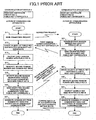
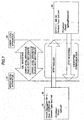
- FIG. 1 is a flowchart of exemplary respective operations executed by communication apparatuses A and B for conventional cross-certification in compliance with SSL.
- each of the communication apparatuses A and B must be provided in advance with a root-key certificate, a private key and a public-key certificate.
- the private key is issued to each communication apparatus by a certificate authority (CA).
- the public-key certificate is a digital certificate created by CA in such a way that a digital signature is attached to a public key corresponding to the private key.
- the root-key certificate is a digital certificate created by CA in such a way that a digital signature is attached to a root key corresponding to a root private key to generate the digital signature of the public-key certificate.
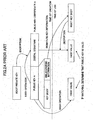
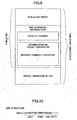
- FIGS. 2A and 2B show exemplary relations among these elements.
- a public key A is composed of a key body to decrypt a document encrypted with a private key A and bibliographic information having some information items, for example, including CA issuing the public key A and a term of validity.
- CA uses a root private key to encrypt a hash value obtained by hashing the public key A, and attaches the hash value as a digital signature to the public key A.
- CA adds identification information of the root private key in use for the digital signature as signature key information to the bibliographic information of the public key A.
- This public-key certificate having the digital signature is the public-key certificate A.
- the key body of the corresponding root public key is used to decrypt the attached digital signature. If the decryption is successfully completed, it can be concluded that CA attached the digital signature. In addition, if the hash value obtained by hashing the public key A matches a hash value obtained by decrypting the digital signature, it can be determined that the key itself has not been also damaged and tampered. Furthermore, if the received data can be successfully decrypted with the public key A, it can be concluded that the data was sent from an owner of the private key A.
- this root key in order to conduct such authentication, the root key must be stored in advance. As shown in FIG 2B , this root key is stored as a root-key certificate to which CA attaches a digital signature.
- the root-key certificate is created in a self-signing form in which the digital signature can be decrypted with a root public key included therein.
- the key body of the root-key certificate is used to decrypt the digital signature, and a hash value obtained by the decryption is compared to a hash value obtained by hashing the root public key. If these values are the same, it can be determined that the root public key has not been damaged and tampered.
- each arrow means that a transmitter transmits information at a process step shown in the arrow source of the arrow. Also, it is supposed that in response to receipt of the transmitted information, the corresponding receiver performs a process step shown in the arrow head of the arrow. In addition, if a step is not successfully completed, a response to report authentication failure is returned at this time, and then the process is halted. If such authentication failure response is received from the other communicating party or the process is timed out, the process is halted.
- the communication apparatus A requests to establish communication to the communication apparatus B.
- the process stream shown in the left-hand side of FIG. 1 is initiated.
- the communication apparatus A sends a connection request to the communication apparatus B.
- CPU of the communication apparatus B executes a predetermined control program, and then the process stream shown in the right-hand side of FIG. 1 is initiated.
- the communication apparatus B generates a first random number, and then uses a private key B to encrypt the first random number.
- the communication apparatus B sends the encrypted first random number and a public-key certificate B to the communication apparatus A.
- the communication apparatus A when receiving the encrypted first random number and the public-key certificate B, the communication apparatus A checks whether the public-key certificate B is valid by using a root key certificate possessed by the communication apparatus A at step S12.
- the communication apparatus A uses a public key in the received public-key certificate B to decrypt the first random number at step S13. If the decryption is successfully completed, the communication apparatus A can make sure that the first random number was sent from the party to which the public-key certificate B was issued.
- the communication apparatus A generates a second random number and a seed of a common key. This common key seed can be generated, for example, based on data exchanged in communication so far.
- the communication apparatus A uses the private key A to encrypt the second random number, and uses the public key B to encrypt the common key seed.
- the communication apparatus A sends these encrypted data together with the public-key certificate A to the communication apparatus B.
- the encryption of the common key seed is intended to make the common key seed secret to any apparatus other than the communication apparatus B.
- the communication apparatus A generates the common key to encrypt subsequent communication from the common key seed generated at step S14.
- the communication apparatus B when receiving the data sent at step S16 by the communication apparatus A, the communication apparatus B checks whether the public-key certificate A is valid based on a root-key certificate possessed by the communication apparatus B at step S23. If the public-key certificate A is determined to be valid, the communication apparatus B uses the public key A in the received public-key certificate A to decrypt the second random number. If the decryption is successfully completed, the communication apparatus B can make sure that the second random number was sent from the party to which the public-key certificate A was issued.
- the communication apparatus B uses the private key B to decrypt the common key seed.
- the common key seed can be shared by the communication apparatuses A and B. Also, this common key seed cannot be known to any apparatus other than the communication apparatus A generating the common key seed and the communication apparatus B possessing the private key B. If the process so far is successfully completed, the communication apparatus B can generate the common key for encryption of subsequent communication from the decrypted common key seed at step S26.
- the communication apparatuses A and B can confirm the success of cross-certification and identify the cryptographic scheme in use for subsequent communication. Then, the communication apparatuses A and B accept that the subsequent communication should follow the cryptographic scheme employing the generated common key, and the certification process is terminated. It is noted that the confirmation includes a response indicating that the authentication from the communication apparatus B has been successfully completed. In this manner, the communication between the communication apparatuses A and B is established each other, and the communication apparatuses A and B can subsequently communicate each other by encrypting data in the determined common key cryptographic scheme with the common key generated at step S17 or S26.
- the communication apparatus does not necessarily encrypt the second random number with the public key A and then send it together with the public-key certificate A to the communication apparatus B.
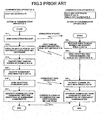
- steps S23 and S24 of the communication apparatus B may become unnecessary, and another exemplary authentication process corresponding to the case may be illustrated in FIG. 3 .
- the communication apparatus B cannot authenticate the communication apparatus A.
- the authentication process shown in FIG. 3 works satisfactorily.
- only the root-key certificate has to be stored in the communication apparatus A.
- the private key A and the public-key certificate A may not be possessed by the communication apparatus A.
- the root-key certificate does not have to be possessed by the communication apparatus B.
- a term of validity is usually set to a public-key certificate in use of the above-mentioned authentication, and the public-key certificate is periodically updated. Also, in cases where a private key is apparently leaked or a root key is renewed, the public-key certificate is updated.
- Such updating means may record such an updated public-key certificate in a recording medium and send the recording medium to a user by registered mail so that the user can update the public-key certificate securely.
- the updating means as described above the user must be familiar to apparatus functions at some degree. Also, if the user fails to update the public-key certificate, the public-key certificate cannot be updated.
- the public-key certificate can be sent from an apparatus capable of communicating to a communication apparatus to be updated and be automatically updated by the communication apparatus.
- the public-key certificate not only the public-key certificate but also a private key are often updated.
- a secure path may be a SSL-based communication path employing a key prior to the updating
- a more specific object of the present invention is to provide a communication apparatus, a a communication system, a communication apparatus control method and a recording medium for storing an implementation program thereof that can easily maintain a condition where authentication is properly performed while maintaining security.
- a communication apparatus having a communication part configured to provide a digital certificate to a communicating party in response to a request received via a plurality of addresses so as to obtain authentication and communicate to the communicating party in response to a request received via an address providing the digital certificate authenticated by the communicating party, and the communication part is further configured to provide an individual certificate with identification information of the communication apparatus as the digital certificate via a first address of the plurality of addresses and a common certificate without the identification information as the digital certificate in response to a request received via a second address of the plurality of addresses, a request execution part configured to execute a process corresponding to a request received from the communicating party by the communication part, and a denial part configured to deny any process corresponding to requests received via the second address other than requests relating to storage of the individual certificate in the communication apparatus.
- the communication apparatus may further include: an authentication part authenticating a digital certificate of the communicating party received from the communicating party, and when the authentication succeeds, permitting subsequent communication, wherein the request execution part may include an update part, in response to receipt of the request to set an individual certificate from the communicating party, updating the individual certificate.
- the request to set an individual certificate may include a request to acquire individual information of the communication apparatus and a request to set the individual certificate.
- the request execution part may include a plurality of request processing parts, each of the request processing parts performing a predefined process corresponding to the request.
- the communication apparatus may further include: a distribution part distributing a request to one of the plurality of request processing parts in accordance with an address receiving the request and a type of the request, wherein the denial part may be implemented by causing the distribution part not to distribute any request other than at least one predetermined request to any of the plurality of request processing parts depending on an address in use.
- the request may be described as a SOAP message.
- the authentication may be performed in accordance with SSL or TLS, and the digital certificate may include a public-key certificate used for the authentication.
- a communication system comprising at least one lower-level apparatus and at least one upper-level apparatus communicating to the at least one lower-level apparatus as a communicating party
- the at least one lower-level apparatus comprises a communication part configured to provide a digital certificate to the communicating party in response to a request received via a plurality of addresses so as to obtain authentication and configured to communicate to the communicating party in response to a request received via an address providing the digital certificate authenticated by the communicating party and the communication part is further configured to provide an individual certificate with identification information of the communication apparatus as the digital certificate in response to a request received via a first address of the plurality of addresses and a common certificate without the identification information as the digital certificate via a second address of the plurality of addresses; a request execution part configured to execute a process corresponding to a request received from the communicating party by the communication part, and a denial part configured to deny any process corresponding to requests received via the second address other than requests relating to storage of the individual certificate in the communication apparatus, and wherein
- a method of controlling a communication apparatus comprising causing the communication apparatus to perform steps of providing a digital certificate via a plurality of addresses so as to obtain authentication from a communicating party, wherein an individual certificate with identification information of the communication apparatus is provided as the digital certificate in response to a request received via a first address of the plurality of addresses and a common certificate without the identification information is provided as the digital certificate in response to a request received via a second address of the plurality of addresses; communicating to the communicating party in response to a request received via an address providing the digital certificate authenticated by the communicating party, performing a process corresponding to a request received from the communicating party in the communication, and denying any process corresponding to requests received via the second address other than processes relating to storage of the individual certificate.
- a recording medium for storing a program which when executed by a computer cause the computer to execute a procedure, comprising the steps of: providing a digital certificate via a plurality of addresses so as to obtain authentication from a communicating party, wherein an individual certificate with identification information of the communication apparatus is provided as the digital certificate in response to a request received via a first address of the plurality of addresses and a common certificate without the identification information is provided as the digital certificate in response to a request received via a second address of the plurality of addresses; communicating to the communicating party in response to a request received via an address providing the digital certificate authenticated by the communicating party, and performing a process corresponding to a request received from the communicating party in the communication, and denying any process corresponding to requests received via the second address other than processes relating to storage of the individual certificate.
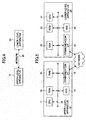
- FIG. 4 is a block diagram illustrating an exemplary system structure of a communication system according to an embodiment of the present invention.
- the communication system includes an upper-level apparatus 10, a lower-level apparatus 20 and a network 30.
- the upper-level apparatus 10 and the lower-level apparatus 20 have respective communication functions, and are connected to each other via the network 30.
- the network 30 may be wired and wireless, and include various types of communication lines (communication paths) of the network 30. Also, although only one lower-level apparatus 20 is illustrated herein, a communication system according to another embodiment may include a plurality of lower-level apparatuses 20 as illustrated FIG. 6 .
- FIG. 5 is a block diagram illustrating an exemplary hardware configuration of the upper-level apparatus 10 and the lower-level apparatus 20 according to an embodiment of the present invention
- the upper apparatus 10 includes CPU 11, ROM 12, RAM 13, HDD 14, a communication interface (I/F) 15 and a system bus 16, and these components are connected via the system bus 16.
- CPU 11 controls operation of the upper-level apparatus 10 by executing various control programs stored in ROM 12 and HDD 14.
- digital certificate used herein represents any types of digital data to which a signature to prevent falsification is attached.
- the lower-level apparatus 20 includes CPU 21, ROM 22, RAM 23, HDD 24, a communication interface (I/F) 25 and a system bus 26, and these components are connected via the system bus 26.
- CPU 21 controls operation of the upper-level apparatus 10 by executing various control programs stored in ROM 22 and HDD 24 as needed.
- the upper-level apparatus 10 and the lower-level apparatus 20 may have various structures depending on applications thereof, such as remote management and electric-commerce. Also, the upper-level apparatus 10 and the lower-level apparatus 20 may be implemented by suitable known computers. If necessary, additional hardware elements may be included in the upper-level apparatus 10 and/or the lower-level apparatus 20. Furthermore, the upper-level apparatus 10 and the lower-level apparatus 20 do not have to be configured to have the same structure.
- FIG. 7 shows an outline of an exemplary communication scheme between the upper-level apparatus 10 and the lower-level apparatus 20 according to an embodiment of the present invention
- the upper-level apparatus 10 when the upper-level apparatus 10 attempts to communicate to the lower-level apparatus 20, the upper-level apparatus 10 first requests the lower-level apparatus 20 to establish communication to the upper-level apparatus 10. Then, if the upper-level apparatus 10 authenticates the lower-level apparatus 20 as an authorized communicating party based on a result of the authentication process in compliance with SSL protocol, as described previously with respect to FIG. 1 and FIG. 3 , the communication is established between the upper-level apparatus 10 and the lower-level apparatus 20.
- This authentication process is conventionally referred to as "SSL handshake". It is noted that cross-certification is not necessarily performed.
- One-directional authentication, as illustrated in FIG. 3 may be adopted.
- the lower-level apparatus 20 is authenticated by sending a public-key certificate thereof to the upper-level apparatus 10.
- the upper-level apparatus 10 is also authenticated by sending a public-key certificate thereof to the lower-level apparatus 20.
- the upper-level apparatus 10 may not be authenticated.
- the upper-level apparatus 10 If the above two-directional or one-directional authentication is successfully completed, the upper-level apparatus 10 generates a process request for a method of an application program installed to the lower-level apparatus 20 in form of a SOAP (Simple Object Access Protocol) message 60 described in XML format, which is a structured language form, and sends the SOAP message 60 as a HTTP request to the lower-level apparatus 20 in accordance with HTTP (Hyper Text Transfer Protocol).
- HTTP Hyper Text Transfer Protocol
- RPC Remote Procedure Call
- the lower-level apparatus 20 In response to receipt of the process request, the lower-level apparatus 20 performs a process corresponding to the request.
- the lower-level apparatus 20 generates the process result as a response SOAP message 70, and returns the SOAP message 70 as a HTTP response to the upper-level apparatus 10.
- these request and response are encrypted with a common key shared between the communication apparatuses 10 and 20 through previous SSL handshake, and then the encrypted request and response are exchanged between the communication apparatuses 10 and 20.
- the communication system can be considered as a client-server system having the upper-level apparatus 10 as a client and the lower-level apparatus 20 as a server.
- RPC can be implemented through not only the above-mentioned technique but also existing protocols, techniques and specifications such as FTP (File Transfer Protocol), COM (Component Object Model) and CORBA (Common Object Request Broker Architecture).
- FIG. 8A schematically shows exemplary types of certificates and keys stored as authentication information in the upper-level apparatus 10.
- FIG. 8B schematically shows exemplary types of certificates and keys stored as authentication information in the lower-level apparatus 20.
- the upper-level apparatus 10 and the lower-level apparatus 20 if broadly classified, store normal authentication information and rescue authentication information. Further, each of these two information classes includes a public-key certificate and a private key used as authentication information on its own, and a root-key certificate used as authentication information on a communicating party.
- a lower-level apparatus individual public-key certificate belongs to an individual digital certificate class.
- the lower-level apparatus individual public-key certificate is a digital certificate created by attaching a digital signature, which can verify the certificate with the aid of an individual root key to authenticate the lower-level apparatus, to an individual public key issued to the lower-level apparatus 20 by CA (not illustrated).
- FIG. 9 shows an exemplary structure of a lower-level apparatus individual public-key certificate according to an embodiment of the present invention.
- its bibliographic information includes machine number information of the lower-level apparatus 20 as identification information thereof.
- the machine number information may further include the type number of the lower-level apparatus 20 and information related to registered users.
- some information items other than the machine number information may be included, as long as these information items can identify the lower-level apparatus 20.
- a lower-level apparatus individual private key is a private key pained with the associated individual public key.
- An individual root-key certificate to authenticate a lower-level apparatus is a digital certificate created by attaching a digital signature, which can verify the certificate by itself with the aid of the corresponding root private key, to an individual root key to authenticate the lower-level apparatus. If a plurality of lower-level apparatuses 20 are provided to the communication system as illustrated in FIG. 6 , a digital signature generated by a uniform root private key is attached to respective individual public keys of the lower-level apparatuses 20, and a uniform individual root key certificate to verify validity thereof is used in common throughout the lower-level apparatuses 20.
- an upper-level apparatus individual public-key certificate, an upper-level apparatus individual private key and an upper-level apparatus individual root-key certificate have the same relation as the above-mentioned certificate and keys for the lower-level apparatus 20 in the communication system.
- the lower-level apparatus 20 in response to receipt of a communication request from the upper-level apparatus 10, sends to the upper-level apparatus 10 a first random number encrypted with a lower-level apparatus individual private key together with a lower-level apparatus individual public-key certificate.
- the upper-level apparatus 10 first, uses an individual root-key certificate to authenticate a lower-level apparatus to check validity of the received lower-level apparatus individual public-key certificate, that is, to check whether the received certificate has been damaged or tampered in course of transmission.
- the upper-level apparatus 10 decrypts the received first random number with the public key included in the lower-level apparatus individual public-key certificate. If the decryption is successfully completed, the upper-level apparatus 10 can determine that the lower-level apparatus 20, to which the upper-level apparatus 10 is currently communicating, is an authorized party to which the lower-level individual public-key certificate was issued, and additionally can identify the lower-level apparatus 20 based on identification information in the received lower-level apparatus individual public-key certificate. Then, the authentication is determined depending on qualification of the identified apparatus as a communicating party.
- the lower-level apparatus 20 also receives an upper-level individual public-key certificate and a random number encrypted with an upper-level apparatus individual private key from the upper-level apparatus 10, and can perform the same authentication by using a root-key certificate to authenticate an upper-level apparatus stored therein.
- these public-key certificate and private key are periodically updated in general.
- the public-key certificate may expire, because the public-key certificate persists in a condition of not being updated due to careless power OFF of the apparatus.
- the public-key certificate and/or the private key are removed due to replacement of parts having the public-key certificate. In these cases, such damaged or removed certificate and private key have to be stored again so that authentication employing an individual public-key certificate can be resumed.
- each apparatus in the communication system is configured to store rescue authentication information to address such situations. As a result, it is possible to securely transmit a new individual public-key certificate to the apparatus that needs the certificate via the network 30 by using the stored rescue authentication information.
- the rescue authentication information includes the almost same contents as those of the above-mentioned normal authentication information.
- a lower-level common public-key certificate belongs to a common certificate class, and is a digital certificate created by attaching a digital signature, which can verify validity thereof with the aid of a lower-level apparatus common root key, to a common public key issued by CA to a lower-level apparatus.
- a lower-level apparatus common private key is a private key associated with the corresponding common public key.
- a common root-key certificate to authenticate an upper-level apparatus is a digital certificate created by attaching a digital signature, which can verify validity thereof by itself, to a common root key to authenticate an upper-level apparatus.
- the rescue authentication information differs vastly from the normal authentication information in that bibliographic information of a common public-key certificate does not include identification information of the apparatus and in that additionally the same common public-key certificate can be stored in all apparatuses located at the same level of the communication system.
- the illustrated communication system in FIG. 4 and FIG. 6 includes two levels of an upper-level apparatus 10 and at least one lower-level apparatus 20.
- the same common public key and the same common private key are available.
- a uniform common public-key certificate can be used among communicating parties at a certain level, these communicating parties can have the same root-key certificate each other. Accordingly, even if a plurality of lower-level apparatuses 20 are provided in the communication system, the same rescue authentication information can be stored in all the lower-level apparatuses 20.
- the machine number shown in FIG. 9 may be set as "0" to represent that the certificate is a common public-key certificate.
- Such rescue authentication information can be made uniform to all apparatuses at the same level.
- the rescue authentication information is set not to be updated subsequently. According to this embodiment, even if authentication becomes impossible with an individual public-key certificate due to updating failure or damage of normal authentication information as described above, authentication is still possible by using a common public-key certificate in the rescue authentication information.
- the identification information of an apparatus is not attached to a common public-key certificate.
- a common public-key certificate is used to authenticate a communicating party, it is impossible to completely identify the communicating party. Even in this case, however, some degree of information on the communicating party can be still obtained.
- a certain vendor may store lower-level apparatus rescue authentication information in all of its apparatuses corresponding to the lower-level apparatus 20 and upper-level apparatus rescue authentication information in all of its apparatuses corresponding to the upper-level apparatus 10, which can communicate to the apparatuses corresponding to the lower-level apparatus 20.
- the lower-level apparatus 20 can determine that a party sending a public-key certificate to check validity with a common root-key certificate to authenticate an upper-level apparatus of the common authentication information stored therein is an upper-level apparatus 10 of the same vendor.
- the upper-level apparatus 10 can also determine that a party sending a public-key certificate to check validity with a common root-key certificate to authenticate a lower-level apparatus of the common authentication information stored therein is a lower-level apparatus 20 of the same vendor.
- a secure communication path can be established by using a common key shared between the communicating parties. Accordingly, if machine number information on the communicating parties is exchanged between them after establishment of the secure communication path, the communicating parties can be identified each other.
- the authentication information shown in FIGS. 8A and 8B may have the same individual root-key certificate regardless of an authenticated target.
- the individual root-key certificate to authenticate an upper-level apparatus and the individual root-key certificate to authenticate a lower-level apparatus may be the same. This is why identification information of an apparatus is attached to an individual public-key certificate, and if the individual public-key certificate is determined to be valid by using a root-key certificate, it is possible to identify the type and level of the apparatus with reference to the identification information.
- the identification information since the identification information is not attached to common certificates, the type thereof is determined based on whether the validity can be checked with a certain root-key certificate. Thus, it is preferable to differentiate common root-key certificates for each group of authenticated targets.
- the lower-level apparatus 20 since the lower-level apparatus 20, which works as a server in this embodiment, cannot identify a party requesting communication in SSL handshake, the lower-level apparatus 20 basically sends a uniform public-key certificate to all parties. However, in the present communication system, the lower-level apparatus 20 can selectively use an individual public-key certificate and a common public key depending on situations.
- FIG. 10 is a diagram illustrating an exemplary URL used to designate a communication address in a communication request from a client to a server in a communication system according to an embodiment of the present invention.
- the lower-level apparatus 20 is designed to accept a communication request via a plurality of addresses and provide a public-key certificate corresponding to an address accepting the communication request. For example, if the lower-level apparatus 20 receives a communication request via a first address indicated as URL "https://123.45.67.89:10000", which is referred to as "normal URL", the lower-level apparatus 20 sends a lower-level apparatus individual public-key certificate to the requesting apparatus.
- URL https://123.45.67.89:10000
- the lower-level apparatus 20 receives a communication request via a second address indicated as URL "https://123.45.67.90:10001", which is referred to as "rescue URL"
- the lower-level apparatus 20 sends a lower-level apparatus common public-key certificate to the requesting apparatus.
- the single lower-level apparatus 20 is able to distinguish the communication request, and selectively provide the corresponding public-key certificate in SSL handshake.
- the upper-level apparatus 10 which works as a client, recognizes the lower-level apparatus to which the upper-level apparatus 10 has sent the communication request. Thus, if cross-certification is performed, the upper-level apparatus 10 can selectively send a public-key certificate suitable for the designated address.
- the URL includes some information items indicative of a host, a port of the host and a URL path, as illustrated in FIG. 10 .
- the information item indicative of a URL path is included in a HTTP request having a SOAP message transmitted after successful completion of SSL handshake, and cannot be referred to during the SSL handshake.
- the address is specified based on a combination of an IP (Internet Protocol) address, which is used as the information item indicative of the host, and a port number of the host.
- the address may be specified based on only one of the IP address and the port number. In this case, the non-used information item can be substituted for common information.
- authentication is normally performed between the upper-level apparatus 10 and the lower-level apparatus 20 by using an individual public-key certificate. Then, even if the individual public-key certificate becomes unavailable because of damage thereof or other reasons, it is possible to ensure a secure communication path through authentication employing a common public-key certificate.
- a common key can be exchanged between the upper-level apparatus 10 and the lower-level apparatus 20 as in the case of employing individual public-key certificate.
- new normal authentication information is sent from the upper-level apparatus 10 to the lower-level apparatus 10 via this secure communication path, and then stored in the lower-level apparatus 20. As a result, it is possible to restore the lower-level apparatus 20 into a status where authentication can be subsequently performed by using the normal authentication information.
- the communication system it is possible to easily maintain the status where the lower-level apparatus 20 can be properly authenticated by using rescue authentication information in addition to normal authentication information.
- the rescue authentication information including a common public-key certificate, is not updated.
- uniform rescue authentication information is stored in all apparatuses belonging to the same level. Thus, leaking of the rescue authentication information must have a significant influence on communication security.
- the communication system is designed to restrict functionality that is allowed to be executed in case of SSL handshake employing a common public-key certificate. Since a new individual public-key certificate can be stored in the lower-level apparatus 20 after authentication with the common public-key certificate, another SSL handshake can be established by using this newly stored individual public-key certificate. Thus, it is sufficient that only an operation to store such a new individual public-key certificate in the lower-level apparatus 20 is permitted under the SSL handshake employing a common public-key certificate.
- the communication system is designed in such a way that if the upper-level apparatus 10 and the lower-level apparatus 20 communicate to each other via rescue URL, which is dedicated to SSL handshake employing a common public-key certificate, no operation other than an operation to set an individual public-key certificate in the lower-level apparatus 20 can be executed. According to the communication system, it is possible to realize securer communication while the advantage of authentication in use of a common public-key certificate is satisfactorily maintained.
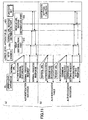
- FIG. 11 is a sequence diagram illustrating an exemplary operation of the communication system according to an embodiment of the present invention.
- the upper-level apparatus 10 sends a communication request to a normal URL of the lower-level apparatus 20, and if authentication is successfully completed with an individual certificate, the upper-level apparatus 10 can send requests to the lower-level apparatus 20 to make use of various functions of the lower-level apparatus 20.
- the lower-level apparatus 20 receives a HTTP request via a HTTP daemon to control HTTP communication. Then, a first distribution part 410 distributes the request to either of second distribution parts 421 and 422 based on URL receiving the request. In the upper portion (a), since the request is received via the normal URL, the first distribution part 410 distributes the request to the second distribution part 421 associated with the normal URL.
- the normal URL second distribution part 421 distributes the received request to a function unit corresponding to the type of the request so as to cause the function unit to perform the function.
- the lower-level apparatus 20 returns a HTTP response to the upper-level apparatus 10 along the inverse process path. In this manner, the lower-level apparatus 20 performs an operation responsive to the request from the upper-level apparatus 10. For the case where the lower-level apparatus 20 receives the request via the normal URL, the lower-level apparatus 20 is allowed to execute any types of operations corresponding to request types.
- an individual certificate used to perform authentication for communication via normal URL includes identification information of the lower-level apparatus 20.
- the individual certificate is used to initiate SSL handshake, it is possible to identify the lower-level apparatus 20 within the SSL handshake.
- the upper-level apparatus 10 can perform management by identifying the apparatus to be managed with reference to identification information included in an individual certificate. As a result, compared to the case of acquiring the identification information separately, it is possible to smoothly conduct the management by executing a simple operation.
- the upper-level apparatus 10 cannot make use of functions of the lower-level apparatus 20.
- the upper-level apparatus 10 sends a communication request to the lower-level apparatus 20 via rescue URL so that authentication can be performed with a common certificate.
- the upper-level apparatus 10 requests the lower-level apparatus 20 to set a new individual certificate.
- the lower-level apparatus 20 uses some certificate setting functions to update the damaged individual certificate into the new one.
- the first distribution part 410 distributes the request to the rescue URL second distribution part 422.
- the rescue URL second distribution part 422 distributes a process associated with the request to a function unit corresponding to the request type.
- the rescue URL second distribution part 422 distributes only a request to set an individual certificate to a corresponding function unit, and on the other hand, ignores requests other than such an individual certificate setting request.
- the lower-level apparatus 20 is designed in such a way that no process other than an individual certificate setting process is allowed to be executed.
- the upper-level apparatus 10 and the lower-level apparatus 20 can communicate via the normal URL as illustrated in the upper-portion (a) in FIG. 10 .
- the lower-level apparatus 20 can be restored quickly into the normal status where authentication employing an individual certificate can be performed. Thus, it is possible to maintain the lower-level apparatus 20 in the status of normal authentication being performed. Also, since no one is involved in the above operation, it is possible to take such advantage easily without necessity of human resources.
- the upper-level apparatus 10 follows the procedure as follows. Specifically, the upper-level apparatus 10 first obtains identification information from the lower-level apparatus 20, and sends the identification information to CA (not illustrated). In response to receipt of the identification information, CA issues a certificate for the lower-level apparatus 20, which is the source apparatus of the identification information. The upper-level apparatus 10 obtains the certificate from CA, and sends the certificate together with a certificate setting request to the lower-level apparatus 20 so as to set the certificate in the lower-level apparatus 20. In another embodiment, the upper-level apparatus 10 may be provided with such CA function so that the upper-level apparatus 10 can issue the certificate by itself.
- the body of a public key accommodated in the individual public key certificate and/or the corresponding private key may be newly generated.
- the key may be reused.
- a root private key may be newly issued to upgrade a current public-key certificate.
- FIG. 12 is a block diagram illustrating an exemplary functional structure of the lower-level apparatus 20 according to an embodiment of the present invention. It is noted that components and function units described below are implemented through execution of suitable software programs by CPU of the lower-level apparatus 20.
- the lower-level apparatus 20 includes a HTTP daemon 331, a first distribution part 410, a normal URL second distribution part 421, a rescue URL second distribution part 422 and a function set 380.
- the function set 380 includes a specific information acquisition function unit 381 and a certificate setting function unit 387. These components and function units correspond to those shown in FIG. 11 .
- the HTTP daemon 331 controls HTTP communication and performs SSL handshake. Also, the HTTP daemon 331 can send a HTTP request received after successful establishment of SSL handshake together with received URL information to the first distribution part 410. It is noted that this URL can be recognized through a TCP (Transmission Control Protocol) connection request in the receipt of the HTTP request. In addition, the HTTP daemon 331 can implement a communication function.
- TCP Transmission Control Protocol
- the lower-level apparatus 20 may be designed to have a plurality of applications to provide various functions, and for each application, one first distribution part may be provided to distribute a request associated with a function provided by the application.
- the HTTP daemon 331 distributes a HTTP request to a first distribution part associated with a URL path included in the HTTP request.
- the first distribution part 410 can distributes requests (commands), which are described in form of SOAP messages, received by the HTTP daemon 331 as HTTP requests to either of the second distribution parts 421 or 422 depending on URLs via which the requests have been received.
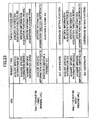
- the lower-level apparatus 20 stores a table, as illustrated in FIG. 13 , to indicate which of the second distribution parts 421 and 422 should receive requests depending on URLs receiving the requests.
- the first distribution part 410 determines which of the second distribution parts 421 and 422 should handle a given request with reference to the table.
- a request received via the normal URL is distributed to the normal URL second distribution part 421, and on the other hand, a request received via the rescue URL is distributed to the rescue URL second distribution part 422.
- Each of the second distribution parts 421 and 422 includes a XML processor, and can use the XML processor to parse a XML code of a HTML body of a HTTP request and convert the XML code into DOM (Document Object Model)-tree structured data to represent relations between XML-based tags as a tree structure.
- This DOM-tree structure data is formed to have a structured data type to indicate the structure of a request message.
- each of the second distribution parts 421 and 422 can work as message conversion means of the lower-level apparatus 20.
- each of the second distribution parts 421 and 422 includes a XML serializer, and can use the XML serializer to inversely convert DOM-tree structured data into XML formatted data
- each of the second distribution parts 421 and 422 parses the generated DOM-tree structured data, and then extracts a data portion related to the request type. Then, the DOM-tree structured data together with HTTP header information, which is header information of the HTTP request, is distributed to a function unit of the function set 380 corresponding to the extracted data portion so as to request the function unit to execute a process corresponding to the request.
- the normal URL second distribution part 421 and the rescue URL second distribution part 422 have different distribution rules, which are described in detail below.
- such a data portion related to the request type includes the name of a child node of "Body" node representing a SOAP body of the DOM-tree structured data.
- the data portion may be URI (Uniform Resource Identifier) included in SOAPAction header of the HTTP request. It is noted that this information is included in the HTTP header information.
- the function set 380 corresponds to a request execution part
- each function unit of the function set 380 corresponds to a request processing part.
- the function units are implemented by software programs to execute processes corresponding to received requests.
- Each function unit of the function set 380 is activated by the normal URL second distribution part 421 or the rescue URL second distribution part 422.
- Each function unit executes logic in accordance with received data, and returns the process result to a requesting second distribution part.
- the function set 380 can parse DOM-tree structured data supplied from the second distribution parts 421 and 422, and convert the data format of the DOM-tree structure data into another data format that can be processed in a programming language in which logic of each function unit is described. Furthermore, the function set 380 can convert result data representing an execution result of a program into DOM-tree structured data. In this embodiment, logic of each function unit of the function set 380 is described, for example, in C language, and this data format corresponds to structured data of C language.
- the function set 380 is configured to include a function or functions depending on request type(s).
- the specific information acquisition function unit 381 acquires information items specific to the lower-level apparatus 20, including identification information, such as ID (machine number), model name, firmware version, optional components and certificate version. If separate requests to acquire these information items are prepared, software items to execute these requests are designed as respective programs that can be called separately.
- identification information such as ID (machine number), model name, firmware version, optional components and certificate version. If separate requests to acquire these information items are prepared, software items to execute these requests are designed as respective programs that can be called separately.
- the certificate setting function unit 387 can set an individual public-key certificate.
- Such an individual public-key certificate is set in the lower-level apparatus 20 by setting an entire certificate set configuring normal authentication information.
- other function units of the function set 380 may include a status acquisition function unit to provide status information of the lower-level apparatus 20 to a requesting apparatus, a log information acquisition function unit to provide log information of the lower-level apparatus 20 to a requesting apparatus, a set value information to provide a set value or values for the lower-level apparatus 20 to a requesting apparatus and an adjustment function unit to adjust the lower-level apparatus 20. Based on configuration of the lower-level apparatus 20, relationship between the lower-level apparatus 20 and the upper-level apparatus 10 and/or other factors, it can be determined what function unit(s) should be included in the function set 380.
- a plurality of applications executed by the lower-level apparatus 20 may provide a function set similar to the function set 380 depending on respective functions of the applications.
- the normal URL second distribution part 421 distributes all types of requests to corresponding function units of the lower-level apparatus 20.
- the rescue URL second distribution part 422 distributes only a request to set an individual public-key certificate in the lower-level apparatus 20 to corresponding function unit(s), as described with respect to FIG. 11 .
- the rescue URL second distribution part 421 in response to receipt of the other types of requests, returns a response representing that the corresponding function unit is not allowed to be executed.
- such individual public-key certificate setting requests includes a request to acquire individual information required to create an individual public-key certificate, including description of information, and a request to set the individual public-key certificate.
- These requests correspond to the specific information acquisition function unit 381 to acquire ID, model name, certificate and version information and the certificate setting function unit 387.
- other types of requests may be also handled as the individual public-key certificate setting request.
- an individual information acquisition request may be handled as the public-key certificate setting request.
- designers of the communication system can determine what request types should be handled as the individual public-key certificate setting request.
- FIGS. 14A and 14B The above-mentioned distribution can be implemented as illustrated in FIGS. 14A and 14B . Namely, a table representing a correspondence between request types and function units to which requests should be distributed is prepared for each second distribution part. Each second distribution part distributes requests to associated function units with reference to the table. Requests not listed in such a table may be handled as ones with which no function unit is associated.
- the lower-level apparatus 20 when the lower-level apparatus 20 receives requests via normal URL, the lower-level apparatus 20 permits all types of requests
- the lower-level apparatus 20 receives requests via rescue URL
- the requests are distributed from the first distribution part 410 to the rescue URL second distribution part 422.
- any request other than those to set an individual public-key certificate is not distributed.
- any process associated with the other requests is prohibited.
- the first distribution part 410 and the rescue URL second distribution part 422 can cooperatively work as a denial part.
- the lower-level apparatus 20 may be configured in such a way that the HTTP daemon 331 does not deliver the request to any application other than the application to set an individual public-key certificate.
- a pair of a normal URL second distribution part and a rescue URL second distribution part is provided to each application, and the rescue URL second distribution part may be designed not to distribute received requests to be denied to any function unit.
- the denial part while the upper-level apparatus 10 and the lower-level apparatus 20 communicate each other via rescue URL for SSL handshake employing a common public-key certificate, it is possible to deny any process other than processes to set an individual public-key certificate.
- advantage of use of a common public-key certificate can be sufficiently maintained, and at the same time, it is possible to improve security by suppressing influence of leaking of a private key corresponding to the common certificate as much as possible.
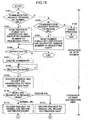
- FIG. 15 and FIG. 16 are a flowchart of an exemplary operation performed in response to receipt of a communication request by the lower-level apparatus 20 according to an embodiment of the present invention.
- This operation relates to a communication apparatus control method according to an embodiment of the present invention.
- one-directional authentication is adopted, that is, a communicating party authenticates only the lower-level apparatus 20.
- the present invention is not limited to this embodiment. In another embodiment, cross-certification may be adopted.
- the CPU of the lower-level apparatus 20 always runs the HTTP daemon 331.
- the lower-level apparatus 20 initiates the operation in accordance with the flowchart of FIG. 15 and FIG. 16 .
- the lower-level apparatus 20 determines whether URL receiving the communication request is normal URL at step S101. If the URL is normal URL (S101: Y), the lower-level apparatus 20 requests authentication by sending a lower-level apparatus individual public-key certificate together with a first random number encrypted with a lower-level apparatus individual private key to the requesting apparatus at step S102. In other words, an individual certificate is delivered to the requesting apparatus in this case.
- the lower-level apparatus 20 waits for a response from the requesting apparatus, and if the lower-level apparatus 20 is not authenticated, the operation is terminated. On the other hand, if the lower-level apparatus 20 is authenticated, the lower-level apparatus 20 creates a common key from a common key seed received in the authentication process at step S107.
- the lower-level apparatus 20 waits for a HTTP request from the requesting apparatus, and if the lower-level apparatus 20 receives a HTTP request, the lower-level apparatus 20 delivers the HTTP request together with received URL information to the first distribution part 410. It is noted that the HTTP daemon 331 of the lower-level apparatus 20 is mainly responsible for the above-mentioned steps, as illustrated in the right-hand side of FIG. 15 .
- the lower-level apparatus 20 determines whether the URL is rescue URL at step S103. If the URL is rescue URL (S103: Y), the lower-level apparatus 20 requests authentication by sending a lower-level common public-key certificate together with a first random number encrypted with a lower-level apparatus common private key to the requesting apparatus at step S104. In other words, the lower-level apparatus 20 sends a common certificate to the requesting apparatus in this case.
- steps S106 through S109 are performed as described above.
- the lower-level apparatus 20 determines that the communication request has been sent to URL that does not accept communication, and performs an error process at step S105. Then, the operation is terminated.
- the first distribution part 410 in response to receipt of the HTTP request at step S109 from the HTTP daemon 331, determines which second distribution part should receive the HTTP request based on the received URL with reference to a table as shown in FIG. 13 . Then, if the HTTP request is received via the normal URL, the first distribution part 410 delivers the HTTP request to the normal URL second distribution part 421 at step S111. On the other hand, if the HTTP request is received via the rescue URL, the first distribution part 410 delivers the HTTP request to the rescue URL second distribution part 422 at step S112.
- the normal URL second distribution part 421 and the rescue URL second distribution part 422 parse SOAP envelopes corresponding to the HTML bodies of the HTTP requests, and create DOM-tree structured data to indicate the structures of the SOAP envelopes at steps S113 and S116, respectively.
- the normal URL second distribution part 421 and the rescue URL second distribution part 422 distribute the HTTP requests to function units of the function set 380 associated with the types of the HTTP requests, respectively.
- the HTTP requests are delivered as HTTP header information and DOM-tree structured data.
- the rescue URL second distribution part 422 distributes only the type of request to set an individual certificate.
- steps S114 and S117 can be performed in accordance with a uniform process.
- the normal URL second distribution part 421 and the rescue URL second distribution part 422 determine whether the distribution has been successfully completed, that is, whether the respective tables include a function unit associated with the type of the received request, at steps S115 and S118, respectively. If the distribution has been successfully completed, both the normal URL second distribution part 421 and the rescue URL second distribution part 422 proceeds to step S119
- the function unit parses the DOM-tree data of the request, and then converts a parameter or parameters in the DOM-tree data into C language structure data.
- the function unit runs its function logic to generate the process result as structure data.
- the function unit converts the structure data into DOM-tree data, and returns the DOM-tree data as a response to corresponding one of the normal URL second distribution part 421 and the rescue URL second distribution part 422.
- the corresponding second distribution part uses a XML serializer thereof (not illustrated) to convert the DOM-tree data into response data in form of a XML formatted SOAP message, and returns the response data as a HTTP response to the requesting apparatus via the HTTP daemon 331. Then, the operation is terminated.
- the corresponding second distribution part determines whether the distribution is not successfully completed (S115/S118: N). If the distribution is not successfully completed (S115/S118: N), the corresponding second distribution part generates DOM-tree data of error information (SOAP Fault) to indicate that the request type is not supported at step S123. At step S124, the corresponding second distribution part converts the DOM-tree data into XML formatted response data, and returns the response data as a HTTP response via the HTTP daemon 331. Then, the operation is terminated.
- SOAP Fault error information
- the operation of the lower-level apparatus 20 is performed until the distribution process of a request to a function unit in such a way that the normal URL second distribution part 421 and the rescue URL second distribution part 422 are distinguished.
- the operation portion to return a response can be performed without any difference between the normal URL second distribution part 421 and the rescue URL second distribution part 422.
- the operation portion after step S119 is illustrated without such separation.
- FIG. 17 is a sequence diagram of the process sequence according to an embodiment of the present invention.
- the illustration handles the case where the lower-level apparatus 20 receives a request via the normal URL.
- the upper-level apparatus 10 sends a request as a HTTP request to the lower-level apparatus 20 via the normal URL, and the HTTP daemon 331 of the lower-level apparatus 20 receives this request at step S201.
- This request is described as a SOAP message.
- the HTTP daemon 331 requests request distribution by sending the received request together with received URL information, such as an IP address and a port number, to the first distribution part 410 at step S202.
- the first distribution part 410 determines which of the normal URL second distribution part 421 and the rescue URL second distribution part 422 should receive the request based on the received URL information with reference to a table as shown in FIGS. 14A and 14B at step S203.
- the URL information represents the normal URL.
- the first distribution part 410 distributes the request to the normal URL second distribution part 421, and requests the normal URL second distribution part 421 to execute a process corresponding to the request at step S204.
- the normal URL second distribution part 421 converts the request SOAP message into DOM-tree data at step S205, and determines which function unit should receive the request depending on the type of the request at step S206.
- the normal URL second distribution part 421 requests a function unit 38x to execute the process by delivering the DOM-tree data to the function unit 38x.
- the function unit 38x converts the DOM-tree data into structure data processable by its logic.
- the function unit 38x executes the logic by giving the structure data as an argument thereto so as to perform the process corresponding to the request.
- the function unit 38x converts structure data representing the process result into DOM-tree data.
- the function unit 38x delivers the DOM-tree data to the normal URL second distribution part 421.
- the normal URL second distribution part 421 converts the DOM-tree data into a SOAP message response at step S212, and sends the SOAP message response as a HTTP response to the upper-level apparatus 10 via the HTTP daemon 331 at steps S213 and S214.
- the rescue URL second distribution part 422 distributes only a request to set an individual public-key certificate to a function unit 38x, whereas the rescue URL second distribution part 422 handles other types of requests as ones having no associated function unit. In this case, while such an almost similar operation to the case of receiving the request via the normal URL is performed, any requests other than an individual certificate setting request can be denied.
- HTTP request is sent from the upper-level apparatus 10 to the lower-level apparatus 20
- HTTP response is sent from the lower-level apparatus 20 to the upper-level apparatus 10.
- FIG. 18 shows exemplary HTTP codes of a certificate setting request delivered from the upper-level apparatus 10 to a rescue URL of the lower-level apparatus 20.
- the HTTP request is a SOAP message in accordance with SOAP, as described previously, and a SOAPAction header 61 is attached to the last line of the HTTP header.
- a portion below the SOAPAction header 61 corresponds to a SOAP envelope, and request contents are described in the SOAP body of the SOAP envelope.
- information to indicate that the request is for setting a certificate is described in a line 62 immediately below "Body".
- a parameter 63 to indicate a certificate version, a parameter 64to indicate an encryption password of the certificate, and a parameter 65 to indicate data generated by encrypting and Base64-encoding the certificate to be set are described.
- the request type can be determined by referring to the line 62 or the last portion of the SOAPAction header 61.
- the second distribution parts distribute requests to function units in accordance with the information.
- FIG. 19 shows exemplary HTTP codes of a HTTP response to the HTTP request shown in FIG. 18 .
- the HTTP response is a SOAP message, and includes the HTTP header and the SOAP envelope.
- a line 71 indicates the executed request type, and a line 72 indicates that the execution result is "OK".
- the line 72 is described as "NG"
- FIG. 20 shows another exemplary HTTP request sent from the upper-level apparatus 10 to a rescue URL of the lower-level apparatus 20.
- the HTTP request is a SOAP message, and is for acquiring the status of the lower-level apparatus 20. Since the HTTP request differs from that shown in FIG. 18 in terms of the request type, the last portion of the SOAPAction header 81 and the contents of the SOAP body differ from those shown in FIG. 18 . Below "Body", only a line 82 to indicate that the request is for acquiring the status of the lower-level apparatus 20 is illustrated, and the other parameters are not described.
- FIG. 21 shows an exemplary HTTP response to the HTTP request shown in FIG. 20 .
- a status acquisition request is not distributed in case of receipt via a rescue URL.
- a response to indicate that such a command does not exist is returned as SOAP Fault. This information is described in a line 91 of the SOAP body.
- FIG. 22 is a block diagram illustrating an exemplary functional structure of a variation of the lower-level apparatus 20 according to an embodiment of the present invention.
- the lower-level apparatus 20 is designed to have the functional structure shown in FIG. 12 .
- the lower-level apparatus 20 may be designed as shown in FIG. 22 .
- the lower-level apparatus 20 may further include an intermediary daemon 332, a HTTP connection management part 342 and a HTTP service execution part 343.
- data is exchanged between the first distribution part 410 and the HTTP daemon 331 via the HTTP service execution part 343.
- the HTTP service execution part 343 is designed to deliver only POST methods, which are considered to include operation requests related to functions of the function set 380, to the first distribution part 410.
- the intermediary daemon 332 in response to notification on connection and disconnection of communication from the HTTP daemon 331, reports the notification to the HTTP connection management part 342. IN response to receipt of the notification, the HTTP connection management part 342 instructs the HTTP service execution part 343 to obtain a HTTP request from the HTTP daemon 331.
- a plurality of the second distribution parts are provided to the lower-level apparatus 20, and the first distribution part 410 distributes requests to an appropriate second distribution part based on received URLs.
- only one second distribution part additionally including functions of the first distribution part 410 is provided, and this single second distribution part may distribute requests to individual functions based on both received URLs and request types.
- a table to indicate a correspondence between the received URLs, the request types and function units associated therewith, as shown in FIG. 23 is stored in the lower-level apparatus 20.
- the lower-level apparatus 20 may be designed in such a way that the second distribution part distributes HTTP header information and DOM-tree data to associated function units with reference to the table.
- the lower-level apparatus 20 has the structure shown in FIG. 12 , URL information does not have to be delivered to the second distribution part earlier than the first distribution part.
- the structure shown in FIG. 12 may be better in terms of simplification of an interface between modules.
- each function unit of the function set 380 is capable of converting DOM-tree data into structure data, and vice versa.
- the function set 380 may further include a handler to execute such data conversion separately from the function units. According to this embodiment, since each function unit can receive data in format that the function unit can directly process, it is possible to develop the function units without knowledge of SOAP and XML.
- the second distribution part is provided with functions to convert SOAP messages described in XML into DOM-tree data, and vice versa.
- the present invention is not limited to this configuration.
- each function unit is designed to directly handle SOAP messages, and the first distribution part 410 may directly distribute SOAP requests to individual function units with reference to a table as shown in FIG. 23 .
- an individual certificate with identification information of an apparatus and a common certificate without such identification information are used.
- the former can be handled as a high-security certificate, and on the other hand, the latter can be handled as a low-security certificate.
- the high-security certificate may have to include various information items.
- the high-security certificate may be limited on exports.
- the high-security certificate may need one or more special authentication programs. For these reasons, the high-security certificate is limited on available environments. As a result, it may be difficult to store an individual certificate in every apparatus in the same way and use the individual certificate for authentication.
- a low-security certificate is less limited than the individual certificate, and it may be relatively easy to store a uniform common certificate in every apparatus and use the common certificate for authentication
- the upper-level apparatus 10 and/or the lower-level apparatus 20 are authenticated in accordance with SSL.
- the present invention is not limited to this scheme.
- the present invention is applicable to TLS (Transport Layer Security), which is developed by improving SSL.
- TLS Transport Layer Security
- the description format of a request is not limited to a SOAP message.
- a request can be accepted as information described in form of a structure language as in the above-mentioned embodiment, it is possible to improve versatility of data and design and modify data format easily.
- a request may be described in other formats.
- CA is provided separately from the upper-level apparatus 10.
- CA may be integrally provided to the upper-level apparatus 10.
- CA may be configured in such a way that components thereof, such as CPU, ROM and RAM, are individually mounted.
- CA may be configured in such a way that these components may be shared with the upper-level apparatus 10. In this case, the shared CPU executes an appropriate software program so that the upper-level apparatus 10 can operate as CA.
- the upper-level apparatus 10 and the lower-level apparatus 20 can have various structures depending on purposes.
- the function set 380 may include various function units depending on types and structures of the apparatus. If any process other than ones to set an individual certificate is denied in case of authentication with a common certificate, it is possible to obtain the same advantage as the above-mentioned embodiment.
- such accepted processes in common certificate authentication may be determined to include other types of processes as needed without limitation on only the individual certificate setting process. For example, when authentication is performed with a low-security common certificate, only a portion of function units may be limited
- the lower-level apparatus 20 may be an image processing apparatus, such as a printer, a FAX machine, a copier, a scanner and a digital multifunction peripheral.
- the lower-level apparatus 20, which serves as a managed apparatus may be a communication apparatus configured by providing a communication function to an apparatus, such as a network electric appliance, a vending machine, medical equipment, a power source device, a ventilation apparatus, a measurement system of gas supply, water supply and power supply, an automobile and an aircraft.
- the upper-level apparatus 10 may be a managing apparatus that collects information from such a managed apparatus and/or sends commands to the managed apparatus to execute some process.
- one or more programs according to the present invention causes a computer to work as the lower-level apparatus 20 that provides a digital certificate via a plurality of addresses to accept authentication from a communicating party and communicates to the communicating party via an authenticated address corresponding to the type of the digital certificate.
- programs may be stored in storage means, such as ROM and HDD, of the computer in advance.
- the programs may be stored in a nonvolatile memory such as CD-ROM, a flexible disk, SRAM (Static RAM), EEPROM (Electrically Erasable and Programmable ROM) and a memory card.
- the programs are installed from the storage means to a computer, and then CPU of the computer executes the programs. Alternatively, CPU reads the programs from the storage means and executes the programs.
- the programs may be downloaded from an external apparatus having a recording medium or storage means for storing the programs.
- a communication system including one or more communication apparatuses that provide digital certificates to accept communication authentication from a communicating apparatus, while high security can be maintained, it is possible to easily maintain a condition where normal authentication can be accepted. As a result, it is possible to operate the communication system with high reliability.
Landscapes
- Engineering & Computer Science (AREA)
- Computer Security & Cryptography (AREA)
- Computer Hardware Design (AREA)
- Theoretical Computer Science (AREA)
- General Engineering & Computer Science (AREA)
- Signal Processing (AREA)
- Computer Networks & Wireless Communication (AREA)
- Software Systems (AREA)
- Physics & Mathematics (AREA)
- General Physics & Mathematics (AREA)
- Computing Systems (AREA)
- Data Exchanges In Wide-Area Networks (AREA)
- Mobile Radio Communication Systems (AREA)
Claims (22)
- Kommunikationsvorrichtung (10, 20) mit einem Kommunikationsteil, der konfiguriert ist, um für einen Kommunikationsteilnehmer (10, 20) ein digitales Zertifikat in Antwort auf eine über eine Mehrzahl von Adressen erhaltene Anfrage für eine Authentifizierung bereitzustellen, und um mit dem Kommunikationsteilnehmer (10, 20) in Antwort auf eine Anfrage, die über eine Adresse erhalten wurde, zu kommunizieren, wobei die Adresse das vom Kommunikationsteimehmer (10, 20) authentifizierte digitale Zertifikat bereitstellt, und wobei der Kommunikationsteil ferner konfiguriert ist, um ein individuelles Zertifikat mit Identifikationsmformationen der Kommunikationsvorrichtung (10, 20) als das digitale Zertifikat über eine erste Adresse der Mehrzahl von Adressen und ein geteiltes Zertifikat ohne die Identifikationsinformationen als das digitale Zertifikat in Antwort auf eine Anfrage, die über eine zweite Adresse der Mehrzahl von Adressen erhalten wurde, bereitzustellen,
einem Anfrage-Ausführungsteil, der konfiguriert ist, um einen Prozess entsprechend einer Anfrage, die der Kommtmikationsteil von dem Kommunikationsteilnehmer (10, 20) erhalten hat, auszuführen, und
einem Verweigerungsteil, der konfiguriert ist, um jedweden Prozess entsprechend Anfragen, die über die zweite Adresse erhalten wurden, bei denen es sich nicht um Anfragen zum Speichern des individuellen Zertifikats in der Komnunikationsvorrichtung (10, 20) handelt, zu verweigern. - Kommunikationsvorrichtung (10, 20) nach Anspruch 1, dadurch gekennzeichnet, dass sie ferner enthält:einen Authentifizierungsteil, der konfiguriert ist, um ein digitales Zertifikat des Kommunikationsteilnehmers (10, 20), das von dem Kommunikationsteilnehmer (10, 20) erhalten wurde, zu authentifizieren, und um die darauffolgende Kommunikation zuzulassen, wenn die Authentifizierung erfolgreich war,wobei der Anfrage-Ausführungsteil einen Aktualisierungsteil umfasst, der das individuelle Zertifikat in Antwort auf den Erhalt der Anfrage zur Einrichtung eines individuellen Zertifikats von dem Kommunikationsteilnehmer (10, 20) aktualisiert.
- Kommunikationsvorrichtung (10, 20) nach Anspruch 1 oder 2, dadurch gekennzeichnet, dass die Anfrage zur Einrichtung eines individuellen Zertifikats eine Anfrage zum Einholen von individuellen Informationen der Kommunikationsvorrichtung (10, 20) und eine Anfrage zum Einrichten des individuellen Zertifikats umfasst.
- Kommunikationsvorrichtung (10, 20) nach einem der Ansprüche 1 bis 3, dadurch gekennzeichnet, dass der Anfrage-Ausführungsteil eine Mehrzahl von Anfrage-Verarbeitungsteilen umfasst, wobei jeder der Anfrage-Verarbeitungsteile konfiguriert ist, um einen vordefinierten Prozess der Anfrage entsprechend auszuführen.
- Kommunikationsvorrichtung (10, 20) nach Anspruch 4, dadurch gekennzeichnet, dass sie ferner enthält:einen Verteilungsteil, der konfiguriert ist, um eine Anfrage an einen der Mehrzahl von Anfrage-Verarbeitungsteilen gemäß einer Adresse, die die Anfrage erhält, und gemäß dem Typ der Anfrage zu verteilen, undwobei der Vervueigenmgsteil ferner konfiguriert ist, um zu verhindern, dass der Verteilungsteil jedwede Anfrage, bei der es sich nicht um zumindest eine vordefinierte Anfrage handelt, je nach einer sich in Verwendung befindlichen Adresse an einen der Mehrzahl von Anfrage-Verarbeitungsteilen verteilt.
- Kommunikationsvorrichtung (10, 20) nach einem der Ansprüche 1 bis 5, dadurch gekennzeichnet, dass die Anfrage als SOAP-Nachricht beschrieben ist.
- Kommunikationsvorrichtung (10, 20) nach einem der Ansprüche 1 bis 6, dadurch gekennzeichnet, dass die Authentifizierung gemäß SSL oder TLS durchgeführt wird, und
dass das digitale Zertifikat ein Public-Key-Zertifikat enthält, das für die Authentifizierung verwendet wird. - Kommunikationssystem mit zumindest einer Vorrichtung (20) einer unteren Ebene und zumindest einer Vorrichtung (10) einer oberen Ebene, die mit der zumindest einen Vorrichtung (20) einer unteren Ebene als Kommunikationsteilnehmer (10) kommuniziert, wobei die zumindest eine Vorrichtung (20) einer unteren Ebene einen Kommunikationsteil umfasst, der konfiguriert ist, um für den Kommunikationsteilnehmer (10) ein digitales Zertifikat in Antwort auf eine über eine Mehrzahl von Adressen erhaltene Anfrage für eine Authentifizierung bereitzustellen, und der konfiguriert ist, um mit dem Kommunikationsteilnehmer (10) in Antwort auf eine Anfrage, die über eine Adresse erhalten wurde, zu kommunizieren, wobei das vom Kommunikationsteilnehmer (20) authentifizierte digitale Zertifikat bereitgestellt wird, und
wobei der Kommunikationsteil ferner konfiguriert ist, um ein individuelles Zertifikat mit Identifikationsinformationen der Kommunikationsvorrichtung (10, 20) als das digitale Zertifikat in Antwort auf eine Anfrage, die über eine erste Adresse der Mehrzahl von Adressen erhalten wurde, und ein geteiltes Zertifikat ohne die Identifikationsinformationen als das digitale Zertifikat über eine zweite Adresse der Mehrzahl von Adressen bereitzustellen;
einem Anfrage-Ausführungsteil, der konfiguriert ist, um einen Prozess entsprechend einer Anfrage, die der Kommunikationsteil von dem Kommunikationsteimebmer (10) erhalten hat, auszuführen, und
einem Verweigerungsteil, der konfiguriert ist, um jedweden Prozess entsprechend Anfragen, die über die zweite Adresse erhalten wurden, bei denen es sich nicht um Anfragen zum Speichern des individuellen Zertifikats in der Kommunikationsvorrichtung (10, 20) handelt, zu verweigern, und
wobei die zumindest eine Vorrichtung einer oberen Ebene einen Authentifizierungsteil umfasst, der konfiguriert ist, um die zumindest eine Vorrichtung (20) einer unteren Ebene unter Verwendung eines digitalen Zertifikats, das von der zumindest einen Vorrichtung (20) einer unteren Ebene erhalten wurde, zu authentifizieren. - Kommunikationssystem nach Anspruch 8, dadurch gekennzeichnet,
dass die Vorrichtung (20) einer unteren Ebene ferner einen Authentifizierungsteil umfasst, der konfiguriert ist, um ein digitales Zertifikat des Kommunikationsteilnebmers (10), das vom Kommunikationsteilnehmer (10) erhalten wurde, zu authentifizieren, und um eine darauffolgende Kommunikation zuzulassen, wenn die Authentifizierung erfolgreich war, und
wobei der Anfrage-Ausführungsteil einen Aktualisierungsteil umfasst, der das individuelle Zertifikat in Antwort auf den Erhalt der Anfrage zur Einrichtung eines individuellen Zertifikats von dem Kommunikationsteilnehmer (10) aktualisiert. - Kommunikationssystem nach Anspruch 8 oder 9, dadurch gekennzeichnet, dass die Anfrage zur Einrichtung eines individuellen Zertifikats eine Anfrage zum Einholen von individuellen Informationen der Vorrichtung (20) einer unteren Ebene und eine Anfrage zum Einrichten der individuellen Informationen umfasst.
- Kommunikationssystem nach einem der Ansprüche 8 bis 10, dadurch gekennzeichnet, dass die Anfrage als SOAP-Nachricht beschrieben ist.
- Kommunikationssystem nach einem der Ansprüche 8 bis 11, dadurch gekennzeichnet,
dass die Authentifizierung gemäß SSL oder TLB durchgeführt wird, und
dass das digitale Zertifikat ein Public-Key-Zertifikat umfasst, das für die Authentifizierung verwendet wird. - Verfahren zum Steuern einer Kommunikationsvorrichtung (10, 20), wobei das Verfahren das Veranlassen der Kommunikationsvorrichtung (10, 20) zur Durchführung der folgenden Schritte umfasst:Bereitstellen eines digitalen Zertifikats über eine Mehrzahl von Adressen, um eine Authentifizierung von einem Kommunikationsteilnehmer (10, 20) zu erhalten, wobei ein individuelles Zertifikat mit Identifikationsinformationen der Kommunikationsvorrichtung (10, 20) als das digitale Zertifikat in Antwort auf eine Anfrage als das digitale Zertifikat in Anwort auf eine Anfrage, die über eine erste Adresse der Mehrzahl von Adressen erhalten wurde, und ein geteiltes Zertifikat ohne die Identifikationsinformationen als das digitale Zertifikat in Antwort auf eine Anfrage, die über eine zweite Adresse der Mehrzahl von Adressen erhalten wurde, bereitgestellt wird;Kommunizieren mit dem Kommunikationsteilnemner (10, 20) in Antwort auf eine Anfrage, die über eine Adresse erhalten wurde, wobei das von dem Kommunikationsteilnehmer (10, 20) authentifizierte digitale Zertifikat bereitgestellt wird, wobei ein Prozess entsprechend einer Anfrage, die von dem Kommunikationsteilnehmer (10, 20) erhalten wurde, während der Kommunikation ausgeführt wird, undVerweigern eines beliebigen Prozesses entsprechend Anfragen, die über die zweite Adresse erhalten wurden, bei denen es sich nicht um Prozesse zum Speichern des individuellen Zertifikats handelt.
- Verfahren nach Anspruch 13, dadurch gekennzeichnet, dass das Verfahren ferner die folgenden Schritte umfasst:Durchführen der Authentifizierung anhand eines digitalen Zertifikats des Kommunikationsteilnehmers (10, 20), das vom Kommunikationsteilnehmer (10, 20) erhalten wurde;Zulassen einer darauffolgenden Kommunikation, wenn die Authentifizierung erfolgreich war;undAktualisieren des individuellen Zertifikats in Antwort auf den Erhalt der Anfrage zur Einrichtung eines individuellen Zertifikats von dem Kommunikationsteilnehmer (10, 20).
- Verfahren nach Anspruch 13 oder 14, dadurch gekennzeichnet, dass die Anfrage zur Einrichtung eines individuellen Zertifikats eine Anfrage zum Einholen von individuellen Informationen der Kommunikationsvorrichtung (10, 20) und eine Anfrage zum Einrichten der individuellen Informationen umfasst.
- Verfahren nach einem der Ansprüche 13 bis 15, dadurch gekennzeichnet, dass die Anfrage als SOAP-Nachricht beschrieben ist.
- Verfahren nach einem der Ansprüche 13 bis 16, dadurch gekennzeichnet,
dass die Authentifizierung gemäß SSL oder TLS durchgeführt wird, und
dass das digitale Zertifikat ein Public-Key-Zertifikat umfasst, das zur Authentifizierung verwendet wird. - Aufnahmemedium zum Speichern eines Programms, das bei Ausführung durch einen Computer den Computer zur Durchführung eines Verfahrens veranlasst, wobei das Verfahren die folgenden Schritte umfasst:Bereitstellen eines digitalen Zertifikats über eine Mehrzahl von Adressen, um eine Authentifizierung von einem Kommunikationsteilnehmer (10, 20) zu erhalten, wobei ein individuelles Zertifikat mit Identifikationsinformationen der Kommunikationsvorrichtung (10, 20) als das digitale Zertifikat in Antwort auf eine Anfrage, die über eine erste Adresse der Mehrzahl von Adressen erhalten wurde, und ein geteiltes Zertifikat ohne die Identifikationsinformationen als das digitale Zertifikat in Antwort auf eine Anfrage, die über eine zweite Adresse der Mehrzahl von Adressen erhalten wurde, bereitgestellt wird;Kommunizieren mit dem Kommunikationsteilnehmer (10, 20) in Antwort auf eine Anfrage, die über eine Adresse erhalten wurde, wobei das von dem Kommunikationsteilnehmer (10, 20) authentifizierte digitale Zertifikat bereitgestellt wird, und wobei ein Prozess entsprechend einer Anfrage, die von dem Kommunikationsteilnehmer (10, 20) erhalten wird, während der Kommunikation ausgeführt wird, undVerweigern eines beliebigen Prozesses entsprechend Anfragen, die über die zweite Adresse erhalten wurden, bei denen es sich nicht um Prozesse zum Speichern des individuellen Zertifikats handelt.
- Aufnahmemedium nach Anspruch 18, dadurch gekennzeichnet, dass das Verfahren ferner die folgenden Schritte umfasst:Durchführen der Authentifizierung anhand eines digitalen Zertifikats des Kommunikationsteilnehmers (10, 20), das vom Kommunikationsteilnehmer (10, 20) erhalten wurde.Zulassen einer darauffolgenden Kommunikation, wenn die Authentifizierung erfolgreich war;undAktualisieren des individuellen Zertifikats in Antwort auf den Erhalt der Anfrage zur Einrichtung eines individuellen Zertifikats von dem Kommunikationsteilnehmer (10, 20).
- Aufnahmemedium nach Anspruch 18 oder 19, dadurch gekennzeichnet, dass die Anfrage zur Einrichtung eines individuellen Zertifikats eine Anfrage zum Einholen von individuellen Informationen der Kommunikationsvorrichtung (10, 20) und eine Anfrage zum Einrichten der individuellen Informationen umfasst.
- Aufnahmemedium nach einem der Ansprüche 18 bis 20, dadurch gekennzeichnet, dass die Anfrage als SOAP-Nachricht beschrieben ist.
- Aufnahmemedium nach einem der Ansprüche 18 bis 21, dadurch gekennzeichnet,
dass die Authentifizierung gemäß SSL oder TLS durchgeführt wird, und
dass das digitale Zertifikat ein Public-Key-Zertifikat enthält, das für die Authentifizierung verwendet wird.
Applications Claiming Priority (4)
| Application Number | Priority Date | Filing Date | Title |
|---|---|---|---|
| JP2003329219 | 2003-09-22 | ||
| JP2003329219 | 2003-09-22 | ||
| JP2004211394 | 2004-07-20 | ||
| JP2004211394A JP4522771B2 (ja) | 2003-09-22 | 2004-07-20 | 通信装置、通信システム、通信装置の制御方法及びプログラム |
Publications (3)
| Publication Number | Publication Date |
|---|---|
| EP1517514A2 EP1517514A2 (de) | 2005-03-23 |
| EP1517514A3 EP1517514A3 (de) | 2009-02-25 |
| EP1517514B1 true EP1517514B1 (de) | 2010-11-10 |
Family
ID=34197225
Family Applications (1)
| Application Number | Title | Priority Date | Filing Date |
|---|---|---|---|
| EP04255769A Expired - Lifetime EP1517514B1 (de) | 2003-09-22 | 2004-09-22 | Verfahren zur Installation und Aktualisierung von Zertifikaten für die Authentifikation von Geräten. |
Country Status (4)
| Country | Link |
|---|---|
| US (1) | US7451307B2 (de) |
| EP (1) | EP1517514B1 (de) |
| JP (1) | JP4522771B2 (de) |
| DE (1) | DE602004029973D1 (de) |
Families Citing this family (19)
| Publication number | Priority date | Publication date | Assignee | Title |
|---|---|---|---|---|
| JP4522771B2 (ja) | 2003-09-22 | 2010-08-11 | 株式会社リコー | 通信装置、通信システム、通信装置の制御方法及びプログラム |
| US8015399B2 (en) * | 2003-09-30 | 2011-09-06 | Ricoh Company, Ltd. | Communication apparatus, communication system, certificate transmission method and program |
| JP4555175B2 (ja) * | 2004-07-20 | 2010-09-29 | 株式会社リコー | 審査装置、通信システム、審査方法、プログラム及び記録媒体 |
| JP3910611B2 (ja) * | 2004-12-28 | 2007-04-25 | 株式会社日立製作所 | 通信支援サーバ、通信支援方法、および通信支援システム |
| DE102006060760A1 (de) * | 2006-09-29 | 2008-04-10 | Siemens Ag | Authentifikationsverfahren und Kommunikationssystem zur Authentifikation |
| US8023654B2 (en) * | 2006-12-18 | 2011-09-20 | Palo Alto Research Center Incorporated | Securing multimedia network communication |
| US8218165B2 (en) * | 2007-03-26 | 2012-07-10 | Ricoh Company, Ltd. | Interruption management method for an image forming apparatus |
| US8165303B1 (en) | 2007-05-03 | 2012-04-24 | Adobe Systems Incorporated | Method and apparatus for public key cryptography |
| US8438567B2 (en) * | 2007-11-07 | 2013-05-07 | Ricoh Company, Ltd. | Information processing device and image processing apparatus |
| JP4535119B2 (ja) * | 2007-11-20 | 2010-09-01 | 沖電気工業株式会社 | 共通鍵生成システム、共通鍵生成方法及びそれを用いるノード |
| JP4666240B2 (ja) * | 2008-07-14 | 2011-04-06 | ソニー株式会社 | 情報処理装置、情報処理方法、プログラム、および情報処理システム |
| US8499154B2 (en) * | 2009-01-27 | 2013-07-30 | GM Global Technology Operations LLC | System and method for establishing a secure connection with a mobile device |
| GB201016672D0 (en) * | 2010-10-04 | 2010-11-17 | Electronic Shipping Solutions Ltd | Secure exchange/authentication of electronic documents |
| US9065854B2 (en) * | 2013-10-28 | 2015-06-23 | Citrix Systems, Inc. | Systems and methods for managing a guest virtual machine executing within a virtualized environment |
| CN105451222B (zh) | 2014-07-31 | 2019-10-22 | 华为技术有限公司 | 一种终端建立连接的方法、装置及系统 |
| JP6459805B2 (ja) * | 2015-07-03 | 2019-01-30 | 富士ゼロックス株式会社 | 情報処理システム、情報処理装置及びプログラム |
| CN105515768B (zh) * | 2016-01-08 | 2017-07-21 | 腾讯科技(深圳)有限公司 | 一种更新密钥的方法、装置和系统 |
| US10942708B2 (en) * | 2017-01-10 | 2021-03-09 | International Business Machines Corporation | Generating web API specification from online documentation |
| JP7552388B2 (ja) * | 2021-01-29 | 2024-09-18 | 株式会社リコー | 機器、通信システム、証明書更新方法およびプログラム |
Family Cites Families (13)
| Publication number | Priority date | Publication date | Assignee | Title |
|---|---|---|---|---|
| US5781723A (en) * | 1996-06-03 | 1998-07-14 | Microsoft Corporation | System and method for self-identifying a portable information device to a computing unit |
| US6314521B1 (en) * | 1997-11-26 | 2001-11-06 | International Business Machines Corporation | Secure configuration of a digital certificate for a printer or other network device |
| JP2002529012A (ja) * | 1998-10-23 | 2002-09-03 | エル3 コミュニケーションズ コーポレイション | 異質の暗号資産におけるキイの資料を管理する装置および方法 |
| JP2000332754A (ja) * | 1999-05-14 | 2000-11-30 | Casio Comput Co Ltd | メール通信システム、情報処理装置、及び記憶媒体 |
| JP4070413B2 (ja) | 2001-02-22 | 2008-04-02 | 株式会社リコー | 電子取引装置、方法及び電子取引システム |
| JP3724564B2 (ja) | 2001-05-30 | 2005-12-07 | 日本電気株式会社 | 認証システム及び認証方法並びに認証用プログラム |
| JP3831352B2 (ja) | 2002-03-25 | 2006-10-11 | 株式会社リコー | プログラム生成処理をコンピュータに行わせるためのコンピュータ読み取り可能なプログラム |
| US20040255113A1 (en) * | 2003-03-31 | 2004-12-16 | Masaaki Ogura | Digital certificate management system, apparatus and software program |
| DE602004008667T2 (de) * | 2003-07-25 | 2008-06-05 | Ricoh Co., Ltd. | Authentifizierungs-System- und Verfahren unter Verwendung von individualisierten und nicht-individualisierten Zertifikaten |
| JP4712325B2 (ja) * | 2003-09-12 | 2011-06-29 | 株式会社リコー | 通信装置、通信システム、通信方法及びプログラム |
| JP4509678B2 (ja) * | 2003-09-12 | 2010-07-21 | 株式会社リコー | 証明書設定方法 |
| JP4522771B2 (ja) | 2003-09-22 | 2010-08-11 | 株式会社リコー | 通信装置、通信システム、通信装置の制御方法及びプログラム |
| US8145898B2 (en) * | 2003-12-23 | 2012-03-27 | Hewlett-Packard Development Company, L.P. | Encryption/decryption pay per use web service |
-
2004
- 2004-07-20 JP JP2004211394A patent/JP4522771B2/ja not_active Expired - Fee Related
- 2004-09-13 US US10/938,563 patent/US7451307B2/en active Active
- 2004-09-22 DE DE602004029973T patent/DE602004029973D1/de not_active Expired - Lifetime
- 2004-09-22 EP EP04255769A patent/EP1517514B1/de not_active Expired - Lifetime
Also Published As
| Publication number | Publication date |
|---|---|
| EP1517514A3 (de) | 2009-02-25 |
| US7451307B2 (en) | 2008-11-11 |
| JP4522771B2 (ja) | 2010-08-11 |
| DE602004029973D1 (de) | 2010-12-23 |
| EP1517514A2 (de) | 2005-03-23 |
| US20050097314A1 (en) | 2005-05-05 |
| JP2005124142A (ja) | 2005-05-12 |
Similar Documents
| Publication | Publication Date | Title |
|---|---|---|
| EP1517514B1 (de) | Verfahren zur Installation und Aktualisierung von Zertifikaten für die Authentifikation von Geräten. | |
| US6233341B1 (en) | System and method for installing and using a temporary certificate at a remote site | |
| JP4555175B2 (ja) | 審査装置、通信システム、審査方法、プログラム及び記録媒体 | |
| US8340283B2 (en) | Method and system for a PKI-based delegation process | |
| US7945779B2 (en) | Securing a communications exchange between computers | |
| US6938154B1 (en) | System, method and article of manufacture for a cryptographic key infrastructure for networked devices | |
| JP4576210B2 (ja) | 証明書転送装置、証明書転送システム、証明書転送方法、プログラム及び記録媒体 | |
| US6895501B1 (en) | Method and apparatus for distributing, interpreting, and storing heterogeneous certificates in a homogenous public key infrastructure | |
| US20130046985A1 (en) | Method and Apparatus for Cryptographic Key Storage Wherein Key Servers are Authenticated by Possession and Secure Distribution of Stored Keys | |
| US20050055552A1 (en) | Assurance system and assurance method | |
| US7584351B2 (en) | Method of transferring digital certificate,apparatus for transferring digital certificate, and system, program, and recording medium for transferring digital certificate | |
| US8707025B2 (en) | Communication apparatus mediating communication between instruments | |
| US20210392004A1 (en) | Apparatus and method for authenticating device based on certificate using physical unclonable function | |
| JP4332071B2 (ja) | クライアント端末、ゲートウエイ装置、及びこれらを備えたネットワークシステム | |
| JP2020014168A (ja) | 電子署名システム、証明書発行システム、鍵管理システム及び電子証明書発行方法 | |
| EP1515518B1 (de) | Verfahren zum Setzen eines digitalen Zertifikats für die Authentifizierung eines Kommunikationsapparats | |
| US7552476B2 (en) | Security against replay attacks of messages | |
| JP4611680B2 (ja) | 通信装置、通信システム、通信方法及びプログラム | |
| JP4657642B2 (ja) | 通信装置、通信システム、通信方法及びプログラム | |
| JP2005130452A (ja) | 通信装置、通信システム、証明書送信方法及びプログラム | |
| JP4611678B2 (ja) | 通信装置、通信システム、通信方法及びプログラム | |
| JP4537797B2 (ja) | 通信装置、通信システム、通信装置の制御方法及びプログラム | |
| JP4542848B2 (ja) | 通信装置、通信システム、通信装置の制御方法及びプログラム | |
| JP4570919B2 (ja) | 通信装置、通信システム、通信装置の制御方法及びプログラム | |
| JP4611681B2 (ja) | 通信装置、通信システム、通信方法及びプログラム |
Legal Events
| Date | Code | Title | Description |
|---|---|---|---|
| PUAI | Public reference made under article 153(3) epc to a published international application that has entered the european phase |
Free format text: ORIGINAL CODE: 0009012 |
|
| 17P | Request for examination filed |
Effective date: 20040929 |
|
| AK | Designated contracting states |
Kind code of ref document: A2 Designated state(s): AT BE BG CH CY CZ DE DK EE ES FI FR GB GR HU IE IT LI LU MC NL PL PT RO SE SI SK TR |
|
| AX | Request for extension of the european patent |
Extension state: AL HR LT LV MK |
|
| PUAL | Search report despatched |
Free format text: ORIGINAL CODE: 0009013 |
|
| AK | Designated contracting states |
Kind code of ref document: A3 Designated state(s): AT BE BG CH CY CZ DE DK EE ES FI FR GB GR HU IE IT LI LU MC NL PL PT RO SE SI SK TR |
|
| AX | Request for extension of the european patent |
Extension state: AL HR LT LV MK |
|
| 17Q | First examination report despatched |
Effective date: 20090924 |
|
| AKX | Designation fees paid |
Designated state(s): DE ES FR GB IT NL |
|
| RTI1 | Title (correction) |
Free format text: METHOD FOR INSTALLING AND UPDATING CERTIFICATES USED FOR DEVICE AUTHENTICATION. |
|
| GRAP | Despatch of communication of intention to grant a patent |
Free format text: ORIGINAL CODE: EPIDOSNIGR1 |
|
| GRAS | Grant fee paid |
Free format text: ORIGINAL CODE: EPIDOSNIGR3 |
|
| GRAA | (expected) grant |
Free format text: ORIGINAL CODE: 0009210 |
|
| AK | Designated contracting states |
Kind code of ref document: B1 Designated state(s): DE ES FR GB IT NL |
|
| REG | Reference to a national code |
Ref country code: GB Ref legal event code: FG4D |
|
| REF | Corresponds to: |
Ref document number: 602004029973 Country of ref document: DE Date of ref document: 20101223 Kind code of ref document: P |
|
| REG | Reference to a national code |
Ref country code: NL Ref legal event code: VDEP Effective date: 20101110 |
|
| PG25 | Lapsed in a contracting state [announced via postgrant information from national office to epo] |
Ref country code: NL Free format text: LAPSE BECAUSE OF FAILURE TO SUBMIT A TRANSLATION OF THE DESCRIPTION OR TO PAY THE FEE WITHIN THE PRESCRIBED TIME-LIMIT Effective date: 20101110 |
|
| PG25 | Lapsed in a contracting state [announced via postgrant information from national office to epo] |
Ref country code: ES Free format text: LAPSE BECAUSE OF FAILURE TO SUBMIT A TRANSLATION OF THE DESCRIPTION OR TO PAY THE FEE WITHIN THE PRESCRIBED TIME-LIMIT Effective date: 20110221 |
|
| PLBE | No opposition filed within time limit |
Free format text: ORIGINAL CODE: 0009261 |
|
| STAA | Information on the status of an ep patent application or granted ep patent |
Free format text: STATUS: NO OPPOSITION FILED WITHIN TIME LIMIT |
|
| 26N | No opposition filed |
Effective date: 20110811 |
|
| REG | Reference to a national code |
Ref country code: DE Ref legal event code: R097 Ref document number: 602004029973 Country of ref document: DE Effective date: 20110811 |
|
| PG25 | Lapsed in a contracting state [announced via postgrant information from national office to epo] |
Ref country code: IT Free format text: LAPSE BECAUSE OF FAILURE TO SUBMIT A TRANSLATION OF THE DESCRIPTION OR TO PAY THE FEE WITHIN THE PRESCRIBED TIME-LIMIT Effective date: 20101110 |
|
| REG | Reference to a national code |
Ref country code: FR Ref legal event code: PLFP Year of fee payment: 13 |
|
| REG | Reference to a national code |
Ref country code: FR Ref legal event code: PLFP Year of fee payment: 14 |
|
| REG | Reference to a national code |
Ref country code: FR Ref legal event code: PLFP Year of fee payment: 15 |
|
| REG | Reference to a national code |
Ref country code: DE Ref legal event code: R079 Ref document number: 602004029973 Country of ref document: DE Free format text: PREVIOUS MAIN CLASS: H04L0029060000 Ipc: H04L0065000000 |
|
| P01 | Opt-out of the competence of the unified patent court (upc) registered |
Effective date: 20230522 |
|
| PGFP | Annual fee paid to national office [announced via postgrant information from national office to epo] |
Ref country code: GB Payment date: 20230920 Year of fee payment: 20 |
|
| PGFP | Annual fee paid to national office [announced via postgrant information from national office to epo] |
Ref country code: FR Payment date: 20230927 Year of fee payment: 20 Ref country code: DE Payment date: 20230920 Year of fee payment: 20 |
|
| REG | Reference to a national code |
Ref country code: DE Ref legal event code: R071 Ref document number: 602004029973 Country of ref document: DE |
|
| PG25 | Lapsed in a contracting state [announced via postgrant information from national office to epo] |
Ref country code: GB Free format text: LAPSE BECAUSE OF EXPIRATION OF PROTECTION Effective date: 20240921 |
|
| REG | Reference to a national code |
Ref country code: GB Ref legal event code: PE20 Expiry date: 20240921 |
|
| PG25 | Lapsed in a contracting state [announced via postgrant information from national office to epo] |
Ref country code: GB Free format text: LAPSE BECAUSE OF EXPIRATION OF PROTECTION Effective date: 20240921 |