TECHNICAL FIELD
The present invention relates to an electric razor capable of cleaning a blade.
BACKGROUND ART
Heretofore, there have been known electric razors capable of removing
shaving debris adhering to the blades of the razors by washing the blades with
water while driving the blades. In such an electric razor, the blade can be washed
with water for cleaning by applying running water to the blade in a state that the
inner blade and the outer blade are attached to the razor body. Further, applying
a cleaning agent to the blade while driving the same makes it possible to more
effectively clean the blade.
If, however, the blade has been left for a long time with shaving debris
adhering thereto, it is more likely that the shaving debris firmly adheres to the
inner blade, with the result that sufficient cleaning effect is not obtainable even if
the blade is washed with water as mentioned above. There is known that a
method of detaching the outer blade of the razor and applying running water
directly to the inner blade while driving the inner blade provides sufficient cleaning
effect, as a measure for such a case that the shaving debris has firmly adhered to
the inner blade. Such a method, however, involves a drawback that the water and
the shaving debris may be flicked off and scattered around the razor due to a
relatively high-speed driving of the inner blade.
In view of the above, there has been proposed a method of using a
dedicated cleaning vessel. According to the method, the electric razor body itself is
accommodated in the cleaning vessel, and the inner blade is driven in a state that
the portion of the razor to be cleaned is encased in the cleaning vessel. This
method eliminates likelihood that the water and the shaving debris may be flicked
off and scattered.
In the former method of detaching the outer blade of the razor and directly
applying running water to the inner blade while driving the inner blade in an
attempt to obtain sufficient cleaning effect, there is a drawback that the water and
the shaving debris may be flicked off and scattered by the driving of the inner blade.
In the latter method of using the dedicated cleaning vessel in an attempt to prevent
scattering of the water and the shaving debris, the dedicated cleaning vessel is
required to clean the blade of the electric razor. In the latter method, further, a
large appliance is required as the cleaning vessel in light of the necessity that the
cleaning vessel must enclose the cleaning portion of the electric razor, which
obstructs easy cleaning of the electric razor.
DISCLOSURE OF THE INVENTION
In view of the above problems residing in the prior art, it is an object of the
present invention to provide an electric razor capable of effectively and easily
cleaning a blade of the razor without scattering water and shaving debris.
The above object is accomplished by an electric razor provided with an
inner blade and an outer blade to allow a user to shave hair such as beard, whiskers
or mustache by nipping the hair between the inner blade and the outer blade while
driving either or both the inner blade and the outer blade. The electric razor is
operatively changeable between a normal drive mode of allowing the user to shave
the hair, and a cleaning drive mode of allowing the user to clean the blade, wherein
at least one of a driving frequency, the number of revolutions per unit time, and an
amplitude of the blade in the cleaning drive mode is differentiated from a
corresponding one in the normal drive mode.
BRIEF DESCRIPTION OF THE DRAWINGS
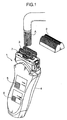
FIG. 1 is an illustration showing an external appearance of an electric
razor as a first embodiment of the present invention, as well as a manner as to how
a blade portion is cleaned.
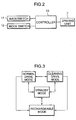
FIG. 2 is a block diagram of the electric razor as the first embodiment of
the present invention.
FIG. 3 is an illustration showing a mode transition to explain an operation
of the electric razor as the first embodiment of the present invention.
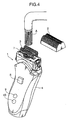
FIG. 4 is an illustration showing an external appearance of an electric
razor as second and third embodiments of the present invention, as well as a
manner as to how a blade portion is cleaned.
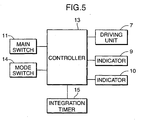
FIG. 5 is a block diagram of the electric razor as the second and third
embodiments of the present invention.
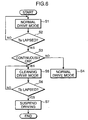
FIG. 6 is a flowchart for explaining an operation of the electric razor as the
second embodiment of the present invention.
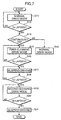
FIG. 7 is a flowchart for explaining an operation of the electric razor as the
third embodiment of the present invention.
BEST MODE FOR CARRYING OUT THE INVENTION
The present invention will be illustrated in detail with embodiments,
which, however, do not limit the invention. Adequate modification is allowable
as far as it does not depart from the object of the present invention described
above or below, and every such modification is intended to be embraced in the
technical scope of the present invention. Arrangements equivalent to each
other in the drawings will be denoted at the same reference numerals, and
description thereof will be omitted herein.
(Construction of First Embodiment)
FIG. 1 is an illustration showing an external appearance of an electric
razor 1 as a first embodiment of the present invention, as well as a manner as to
how an outer blade 2 is detached from the electric razor 1, and an inner blade 3
is washed with running water A. A housing 4 of the electric razor 1 shown in
FIG. 1 has a substantially rectangular column-like shape with a small thickness.
The inner blade 3 is mounted on an upper surface at one end of the housing 4 via
a driving unit 7. The outer blade 2 is mounted to the housing 4 in such a
manner as to substantially cover the inner blade 3.
The outer blade 2 is detachably mountable by the user. When the
outer blade 2 is mounted to the housing 4, the inner portion of the outer blade 2
is brought to sliding contact with the inner blade 3. FIG. 1 shows a state that
the outer blade 2 is detached. Slidable switch handles 5 and 6 are provided on
the front surface of the housing 4 in such a manner that each of the switch
handles 5 and 6 is slidably movable up and down.
The switch handle 5 is a manipulating portion manipulated by the user
to operate the electric razor 1. The switch handle 5 is slidably movable between
two positions respectively corresponding to ON (close) state and OFF (open)
state of the razor 1. The switch handle 6 is a manipulating portion
manipulated by the user in selecting the operation mode of the electric razor 1.
The switch handle 6 is slidable between two positions respectively corresponding
to normal drive mode and cleaning drive mode.
FIG. 2 is a block diagram of the electric razor 1 as the first embodiment
of the present invention. A main switch 11 is turned on in response to sliding of
the switch handle 5 to the ON position, and is turned off in response to sliding of
the switch handle 5 to the OFF position. The ON/OFF signal of the main
switch 11 is outputted to a controller 13.
A mode switch 12 is turned on in response to sliding of the switch
handle 6 to the position corresponding to the cleaning drive mode, and is turned
off in response to sliding of the switch handle 6 to the position corresponding to
the normal drive mode. The ON/OFF signal of the mode switch 12 is outputted
to the controller 13.
The controller 13 detects the ON/OFF signals outputted from the main
switch 11 and the mode switch 12, and outputs a control signal to the driving
unit 7 to control the operation of the driving unit 7 depending on the status of
the ON/OFF signals outputted from the main switch 11 and the mode switch 12.
The controller 13 comprises, for example, a CPU (Central Processing Unit), a
ROM (Read Only Memory), and a RAM (Random Access Memory), and controls
the operation of the driving unit 7, as the CPU executes a program stored in the
ROM. A controller 14 (sic) may be composed of individual parts such as a logic
circuit, a transistor, and an oscillating circuit, in place of the CPU or a like
component.
The driving unit 7 is electrically connected with the inner blade 3, and
drives the inner blade 3 to reciprocate the inner blade 3. The driving unit 7 is
constituted by a linear motor, or a rotary motor, and a cam, for instance. The
driving unit 7 is configured in such a manner that a driving frequency, which is
the number of reciprocating the inner blade 3 per unit time, is variable
depending on the control signal outputted from the controller 13, and that a
driving amplitude, which is a moving distance of the inner blade 3 in one
reciprocation, is set constant. In this arrangement, the moving speed of the
inner blade 3 is proportional to the driving frequency. Further, the controller
13 is configured in such a manner that the moving speed of the inner blade 3 is
controllable by controlling the driving frequency of the driving unit 7 based on
the control signal.
Alternatively, the driving unit 7 may be configured in such a manner
that the driving amplitude, which is the moving distance of the inner blade 3 in
one reciprocation, is variable, with the driving frequency set constant, and the
controller 13 may be configured in such a manner that the driving unit 7
controls the moving speed of the inner blade 3 by controlling the driving
frequency of the driving unit 7 based on the control signal. Further
alternatively, the controller 13 may be configured in such a manner that the
driving unit 7 controls the moving speed of the inner blade 3 by controlling both
the driving frequency and the driving amplitude.
The present invention is applicable to a rotary electric razor in which
the inner blade is made rotatable. In such an altered arrangement, the driving
unit 7 may be configured in such a manner that the number of revolutions,
which is the number of rotating the inner blade 3 per unit time, is variable, and
the controller 13 may control the moving speed of the inner blade 3 by
controlling the number of revolutions of the driving unit 7 based on the control
signal.
The controller 13 implements control in the normal drive mode of
shaving beard, whiskers or mustache (hereinafter, simply called as "hair"), if the
signal outputted from the mode switch 12 is in an OFF state, and the signal
outputted from the main switch 11 is in an ON state.
Specifically, in the normal drive mode, the controller 13 outputs a
control signal to the driving unit 7 to cause the driving unit 7 to reciprocate the
inner blade 3 at a certain driving frequency, so that the inner blade 3 is driven
at a moving speed suitable for shaving the hair. Reciprocating the inner blade
3 with the outer blade 2 mounted on the housing 4 makes it possible to shave the
hair with the hair nipped between the inner blade 3 and the outer blade 2.
The controller 13 implements control in the cleaning drive mode of
cleaning the blade portion, if the signal outputted from the mode switch 12 is in
an ON state, and the signal outputted from the main switch 11 is in an ON state.
Specifically, in the cleaning drive mode, the controller 13 outputs a
control signal to the driving unit 7 to cause the driving unit 7 to reciprocate the
inner blade 3 at a certain driving frequency, so that the inner blade 3 is driven
at a moving speed suitable for cleaning the inner blade 3.
For instance, in the case where cleaning is performed by detaching the
outer blade 2, and directly applying running water A to the inner blade 3, the
controller 13 sets the driving frequency of the driving unit 7 lower than the
frequency in the normal drive mode to suppress scattering of the water and the
shaving debris due to driving of the inner blade 3, so that the moving speed of
the inner blade 3 driven by the driving unit 7 is set lower than the moving speed
in the normal drive mode.
Various experiment results reveal that it is desirable to cause the
controller 13 to control the operation of the driving unit 7 in such a manner that
a maximum instantaneous moving speed of the inner blade 3 is set at 60m or
lower per minute to suppress scattering of the water and the shaving debris
resulting from driving of the inner blade 3. In case of using the rotary electric
razor in the present invention, it is desirable to cause the controller 13 to control
the operation of the driving unit 7 in such a manner that the moving speed of
the inner blade 3 at an outermost perimeter thereof is set at 60m or lower per
minute to suppress scattering of the water and the shaving debris.
It is desirable to cause the controller 13 to control the operation of the
driving unit 7 in such a manner that the moving speed of the inner blade 3
instantaneously reaches 20m or higher per minute in order to obtain sufficient
cleaning effect by cleaning operation of directly applying running water A to the
inner blade 3 while driving the inner blade 3. In such a case, it is desirable to
cause the controller 13 to control the operation of the driving unit 7 in such a
manner that the moving speed of the inner blade 3 reaches 20m or higher per
minute in the vicinity of the center of amplitude when the inner blade 3 is
reciprocated at a possible maximum speed.
Alternatively, the controller 13 may control the driving frequency of the
driving unit 7 to cause the driving unit 7 to drive the inner blade 3 in such a
manner that the moving speed of the inner blade 3 in the cleaning drive mode is
set higher than that in the normal drive mode, in a case that the blade portion is
cleaned by applying water, a cleaning agent, or the like to the outer blade 2 as
well as the inner blade 3, with the outer blade 2 attached to the housing 4 in
order to enhance cleaning effect. In such an altered arrangement, since the
inner blade 3 is driven at a higher moving speed, enhanced cleaning effect can be
obtained. Furthermore, since the electric razor 1 is washed in a state that the
outer blade 2 is mounted, it is less likely that the water and the shaving debris
may be scattered.
Alternatively, the controller 13 may be provided with multiple drive
modes as the cleaning drive mode in such a manner that the inner blade 3 is
driven in the multiple drive modes where the moving speeds of the inner blade 3
are differentiated from each other. For instance, there are prepared a mode of
driving the inner blade 3 at a high speed, a mode of driving the inner blade 3 at
a low speed, and a mode of setting the moving speed of the inner blade 3 to zero,
and the inner blade 3 is driven according to a combined order of the multiple
drive modes in such a manner that the drive mode of the inner blade 3 is shifted
from the high speed mode to the low speed mode quickly, or shifted from the
high speed mode to the zero mode quickly, or these drive modes are repeated in
an arbitrary combined order to vary the moving speed of the inner blade 3
stepwise, or to accelerate the moving speed of the inner blade 3. Such an
altered arrangement is advantageous in obtaining high cleaning effect because
the shaving debris is easily shaken off by the varied moving speed of the inner
blade 3, the accelerated speed of the inner blade 3 or the like.
Furthermore, the electric razor 1 is provided with a rechargeable
battery (not shown), and a charge control circuit (not shown) for controlling
charge of the rechargeable battery. The charge control circuit is operative to
switch over the mode of the electric razor 1 between a rechargeable mode of
charging the rechargeable battery and an operation mode other than the
rechargeable mode, depending on an output voltage of the rechargeable battery.
(Operation of First Embodiment)
FIG. 3 is an illustration showing a mode transition to explain an
operation of the electric razor 1 as the first embodiment of the present invention.
Referring to the mode transition diagram of FIG. 3, standby mode indicates that
the inner blade 3 is in an operation suspended state. When the switch handle 5
slides to the ON-position while the switch handle 6 is set to the position
corresponding to the normal drive mode, an OFF-state signal is outputted from
the mode switch 12 to the controller 13, and an ON-state signal is outputted
from the main switch 11 to the controller 13. Thereby, the controller 13 is
shifted from the standby mode to the normal drive mode.
In the normal drive mode, the controller 13 controls the driving
frequency of the driving unit 7 to cause the driving unit 7 to drive the inner
blade 3 at a moving speed suitable for shaving the hair.
On the other hand, in the case where the switch handle 5 slides to the
ON-position while the switch handle 6 is set to the position corresponding to the
cleaning drive mode, an ON-state signal is outputted from the mode switch 12 to
the controller 13, and an ON-state signal is outputted from the main switch 11
to the controller 13. Thereby, the controller 13 is shifted from the standby mode
to the cleaning drive mode.
In the cleaning drive mode, the controller 13 controls the driving
frequency of the driving unit 7 to cause the driving unit 7 to drive the inner
blade 3 in such a manner that the moving speed of the inner blade 3 is set lower
than that in the normal drive mode, e.g., 20m or higher per minute
instantaneously, with a maximum instantaneous moving speed of 60m or lower
per minute. This arrangement is advantageous in effectively cleaning the inner
blade 3 by detaching the outer blade 2 of the razor 1 and directly applying
running water A to the inner blade 3, and in suppressing scattering of the water
and the shaving debris. Further, this arrangement eliminates use of a
dedicated washing vessel or a like appliance to wash the inner blade 3 and the
like, thereby allowing the user to easily clean the blade of the electric razor 1.
On the other hand, in the case where the switch handle 6 slides to the
position corresponding to the cleaning drive mode while the controller 13 is in
the normal drive mode, and an ON-state signal is outputted from the mode
switch 12, then, the controller 13 is shifted from the normal drive mode to the
cleaning drive mode. Further, in the case where the switch handle 6 slides to
the position corresponding to the normal drive mode while the controller 13 is in
the cleaning drive mode, and an OFF-state signal is outputted from the mode
switch 12, then, the controller 13 is shifted from the cleaning drive mode to the
normal drive mode. Further, in the case where the switch handle 5 slides to the
OFF-position while the controller 13 is in the normal drive mode or the cleaning
drive mode, and an OFF-state signal is outputted from the main switch 11, then,
the controller 13 is shifted from the normal drive mode (or the cleaning drive
mode) to the standby mode. As a result, the driving unit 7 suspends driving of
the inner blade 3.
(Construction of Second Embodiment)
FIG. 4 is an illustration showing an external appearance of an electric
razor 1 as a second embodiment of the present invention, as well as a manner as to
how an outer blade 2 is detached, and an inner blade 3 is washed with running
water A. FIG. 5 is a block diagram showing the electric razor 1 as the second
embodiment of the present invention. The electric razor shown in FIG. 4 is
different from the electric razor 1 shown in FIG. 1 in the following points.
Specifically, the electric razor 1 shown in FIG. 4 is not provided with
slidable switch handles 5 and 6, and is provided with a switch button 8, an indicator
9, and an indicator 10 on the front surface of a housing 4. The switch button 8 is
cooperatively connected with a main switch 11. In this example, a push button
switch such as a non-latch tact switch is used as the main switch 11. The main
switch 11 is so designed that it is kept in an ON-state while the user pushes the
switch button 8, and is turned off in response to the user's release of the switch
button 8.
The indicator 9 notifies the user that the electric razor 1 is operated in the
cleaning drive mode by emitting light based on a signal outputted from a controller
13. The indicator 10 notifies the user of prompting cleaning by emitting light
based on a signal outputted from the controller 13. The indicators 9 and 10 each is
constituted of a light emitting diode, for instance.
The block diagram shown in FIG. 5 is different from the block diagram
shown in FIG. 2 in the following points. Specifically, the arrangement shown in
FIG. 5 is not provided with a mode switch 12, and is provided with a timer 14, an
indicator 9, an indicator 10, and an integration timer 15. The timer 14 measures a
time predefined by the controller 13. A general-purpose timer IC or the like is used
as an example of the timer 14. The timer 14 starts measuring the time, and
outputs a time-up signal to the controller 13 when the measured time has reached
the time predefined by the controller 13.
The integration timer 15 reads out a signal which is outputted from the
controller 13 and indicates that the razor 1 is operated in the normal drive mode,
and integrates a time during which the signal is outputted. The integration timer
15 outputs an integration time-up signal to the controller 13 when the integration
time has reached a predetermined TS. The integration timer 15 resets the
integration time to zero if the controller 13 outputs a signal indicating that the
razor 1 is operated in the cleaning drive mode.
A timer IC operated by power supplied from a battery is used as an
example of the integration timer 15. The integration time 15 holds (stores) the
integration time even if the switch of the electric razor 1 is turned off, or the voltage
of the rechargeable battery equipped in the electric razor 1 is lowered below a
predetermined level. In the case where the controller 13 outputs, to the
integration timer 15, a signal indicating that the razor 1 is operated in the normal
drive mode, the integration timer 15 integrates a time during which the signal is
outputted from the controller 13, in addition to the aforementioned stored
integration time.
The controller 13 detects the status of the ON/OFF signal outputted from
the main switch 11, sets a predetermined time Ta in the timer 14, and causes the
timer 14 to measure the predetermined time Ta. The controller 13 judges whether
the time during which the detected ON/OFF signal is kept in an ON state is not
shorter than the predetermined time Ta measured by the timer 14, and switches
over the mode of the electric razor 1 between the normal drive mode and the
cleaning drive mode, based on a judgment result.
The controller 13 outputs a signal for causing the indicator 9 to emit light
while a driving unit 7 drives the inner blade 3 in the cleaning drive mode, thereby
causing the indicator 9 to emit light. With this arrangement, the user is notified
that the electric razor 1 is operated in the cleaning drive mode by light emission of
the indicator 9. Alternatively, the means for notifying the user that the electric
razor 1 is operated in the cleaning drive mode may be alert means equipped with a
buzzer or the like to alert the user by way of sound.
(Operation of Second Embodiment)
FIG. 6 is a flowchart for explaining the operation of the electric razor 1 as
the second embodiment of the present invention. First, when the main switch 11
is turned on, the controller 13 outputs, to the driving unit 7, a control signal for
controlling the driving unit 7 at a given driving frequency in the normal drive mode
(Step S1). Then, the driving unit 7 drives the inner blade 3 in the normal drive
mode, so that the inner blade 3 is controllably driven at a moving speed suitable for
shaving the hair. Further, the controller 13 sets the predetermined time Ta in the
timer 14, and the timer 14 starts measuring the predetermined time Ta.
As an altered form of Step S1, the controller 13 may control the driving
unit 7 in such a manner that the moving speed of the inner blade 3 is set lower
than the moving speed in the normal drive mode. In this case, it is desirable
that the moving speed of the inner blade 3 at the time of starting driving is not
lower than the moving speed in the cleaning drive mode and is lower than the
moving speed in the normal drive mode. Such an altered arrangement is
effective in suppressing scattering of the water and the shaving debris in the
case where, for example, the main switch 11 is turned on while running water A
is applied to the inner blade 3 in a state that the outer blade 2 has been detached.
Steps S1 and S2 are cyclically repeated to keep driving the inner blade
3 in the normal drive mode until the controller 13 detects the time-up signal
outputted from the timer 14 (YES in Step S2). When the predetermined time
Ta lapses, and the controller 13 detects the time-up signal outputted from the
timer 14, the routine proceeds to Step S3.
In Step S3, if it is judged that the main switch 11 is kept in the ON-state
(YES in Step S3), the routine goes to Step S5, so that the controller 13
implements control in the cleaning drive mode. If it is judged that the main
switch 11 is not kept in the ON-state (NO in Step S3), the routine goes to Step
S4, so that the controller 13 keeps control in the normal drive mode.
The controller 13 is switched over to the cleaning drive mode when the
user continues to push the switch button 8 for the predetermined time Ta by the
operations of Steps S2 and S3. In this embodiment, since the non-latch switch
is used as the main switch 11 which is operated in cooperation with the switch
button 8, the user is allowed to turn off the main switch 11 by merely releasing
the hand from the switch button 8. The user is allowed to switch over the mode
of the electric razor 1 to the normal drive mode by merely releasing the hand
from the switch button 8 before lapse of the predetermined time Ta, thus making
it possible to select the operation mode with a handy operation.
For instance, when the user applies a cleaning agent or the like from
the outside of the outer blade 2 with the outer blade 2 mounted on the housing 4,
pushes the switch button 8, and drives the inner blade 3 in the normal drive
mode, then, the cleaning agent is spread over the entirety of the outer blade 2
and the inner blade 3 to make lather with the cleaning agent. In this case,
since the inner blade 3 is driven at a moving speed higher than that in the
cleaning drive mode, the cleaning agent can be more efficiently spread over, thus
making lather with the cleaning agent efficiently.
If the user keeps pushing the switch button 8 for the predetermined
time, the mode of the electric razor 1 is shifted to the cleaning drive mode.
Thereafter, the user detaches the outer blade 2, and applies running water A
directly to the inner blade 3, whereby cleaning is carried out with the cleaning
agent being spread entirely over the inner blade 3, thus, providing enhanced
cleaning effect. In detaching the outer blade 2, the user is required to
temporarily release the hand from the switch button 8. In view of this, it is
preferable to configure the controller 13 in such a manner that the cleaning
drive mode is continued for a while once the mode is shifted to the cleaning drive
mode, even if the user releases the hand from the switch button 8.
Further, in this embodiment, if the user releases the hand from the
switch button 8 before the predetermined time Ta lapses after applying the
cleaning agent, the mode of the electric razor 1 is shifted to the normal drive
mode. This arrangement makes it possible to clean the electric razor 1 in the
normal drive mode with the outer blade 2 mounted, as is the case with the
conventional art. An example of the predetermined time Ta may range from
about 2 to about 5 seconds, which is considered to be a time enough to spread the
cleaning agent over the outer blade 2 and the inner blade 3.
As an altered arrangement, the routine may go to Step S4 to allow the
controller 13 to implement control in the normal drive mode by skipping Step S3,
if the main switch 11 is turned off before the predetermined time Ta lapses in
Step S2. In such an altered arrangement, when the user releases the hand
from the switch button 8 before the predetermined time Ta lapses, the routine
promptly proceeds to Step S4 to drive the driving unit 7 in the normal drive
mode without waiting for lapse of the predetermined time Ta.
Next, when the normal drive mode is set in Step S4, the controller 13
controls the driving frequency of the driving unit 7 in the normal drive mode.
As a result, the driving unit 7 is driven at a moving speed suitable for shaving
the hair. The controller 13 sets a predetermined time TS in the integration
timer 15.
Further, the controller 13 outputs, to the integration timer 15, a signal
indicating that the driving unit 7 is driven in the normal drive mode, and the
integration timer 15 integrates a time during which the signal is outputted. If
the integration time exceeds the predetermined time TS, the integration timer 15
outputs an integration time-up signal to the controller 13. Then, the controller
13 outputs a signal for causing the indicator 10 to emit light to prompt cleaning.
Thus, the indicator 10 emits light.
An allowable time for accumulating the shaving debris in the blade
portion has been empirically examined by having users shave the hair, and such
a time is set as the predetermined time TS. Alternatively, a switch or a like
component for changing the predetermined time TS may be provided, and the
predetermined time TS may be varied depending on user conditions such as
whether the user is a heavy-bearded person. In such an altered arrangement,
the user is notified that the shaving debris accumulated in the blade portion has
reached the allowable limit, and the time to clean the razor 1 has come by way of
light emission of the indicator 10.
On the other hand, referring back to Step S5, when the controller 13 is
shifted to the cleaning drive mode, the controller 13 controls the driving
frequency of the driving unit 7, so that the driving unit 7 drives the inner blade 3
at a moving speed suitable for cleaning the inner blade 3. Further, the
controller 13 outputs a signal for causing the indicator 9 to emit light to notify
the user that the razor 1 is operated in the cleaning drive mode.
Thus, the user can be notified that the razor 1 is operated in the
cleaning drive mode by light emission of the indicator 9. This arrangement
eliminates likelihood that the user may inadvertently shave the hair in the
cleaning drive mode. Also, the user is guided to detach the outer blade 2
because the user can confirm that the operation mode of the razor 1 has been
shifted to the cleaning drive mode by way of light emission of the indicator 9.
Alternatively, the indicator 9 may be omitted. In such an altered
arrangement, the driving frequency for driving the inner blade 3 is changed by
switching over the operation mode of the razor 1 to the cleaning drive mode, and
the driving sound of the inner blade 3 is changed accordingly. Thus, the user
can confirm that the mode has been switched over to the cleaning drive mode
through the driving sound of the inner blade 3.
The controller 13 sets a predetermined time Tb in the timer 14, and the
timer 14 starts measuring the predetermined time Tb. Further, the controller
13 outputs, to the integration timer 15, a signal indicating that the controller 13
is operated in the cleaning drive mode. Upon receiving the signal, the
integration timer 15 resets the integration time to zero. This arrangement
makes it possible to cause the integration timer 15 to integrate the time during
which the user shaves the hair in the normal drive mode after cleaning the inner
blade 3 in the cleaning drive mode, because the integration timer 15 resets the
integration time to zero in response to driving of the inner blade 3 in the
cleaning drive mode.
Steps S5 and S6 are cyclically repeated until the controller 13 detects
the time-up signal outputted from the timer 14 (Step S6), and the driving of the
inner blade 3 in the cleaning drive mode is continued for the predetermined time
Tb. Upon lapse of the predetermined time Tb, and when the controller 13
detects the time-up signal outputted from the timer 14, the controller 13 causes
the driving unit 7 to suspend the driving of the inner blade 3 (Step S7).
A time necessary for providing sufficient cleaning effect is set as the
predetermined time Tb. In this way, sufficient cleaning effect is obtainable
when the user performs cleaning in the cleaning drive mode.
Further, the driving of the inner blade 3 is automatically suspended by
the controller 13 upon lapse of the time necessary for cleaning. In this
arrangement, there is no need of the user's manipulating the razor 1 to suspend
the driving of the inner blade 3. This arrangement eliminates likelihood that
the blade is kept on being driven even in a case that the blade is brought to a
state where the blade is driven in the cleaning drive mode against the user's
intention. For instance, let us assume a case that the user carries the electric
razor 1 in a bag or the like, and the switch button 8 is pushed against the user's
intension, with the result that the blade is driven in the cleaning drive mode.
In such a case, the above arrangement eliminates likelihood that the blade is
kept on being driven, and prevents waste of the battery.
(Construction of Third Embodiment)
An electric razor 1 as a third embodiment of the present invention is
described. As is the case of the electric razor 1 as the second embodiment, FIG.
4 and FIG. 5 respectively show an external appearance and a block diagram of the
electric razor 1 as the third embodiment of the present invention. The electric
razor 1 as the third embodiment is different from the electric razor 1 as the second
embodiment in the arrangement of the controller 13.
Specifically, in the third embodiment, there are provided, as the
cleaning drive mode of the electric razor 1, a first cleaning drive mode of
performing cleaning by applying a cleaning agent or the like from the outside of
an outer blade 2 with the outer blade 2 mounted, and by spreading the cleaning
agent entirely over the outer blade 2 and an inner blade 3, and a second cleaning
drive mode of performing cleaning by detaching the outer blade 2, and applying
running water to the inner blade 3.
In the first cleaning drive mode, the controller 13 controls the driving
frequency of a driving unit 7, so that the driving unit 7 drives the inner blade 3
at a moving speed suitable for applying a cleaning agent or the like from the
outside of the outer blade 2 with the outer blade 2 mounted, and spreading the
cleaning agent entirely over the outer blade 2 and the inner blade 3.
In the above arrangement, since the outer blade 2 is mounted on a
housing 4, there is no likelihood that the water and the shaving debris may be
scattered, even if the moving speed of the inner blade 3 is set high. In view of
this, it is desirable to set the moving speed of the inner blade 3 in driving the
inner blade 3 in the first cleaning drive mode higher than that in the second
cleaning drive mode in which cleaning is performed by applying running water
to the inner blade 3 with the outer blade 2 detached. This arrangement is
effective in spreading the cleaning agent or making lather with the cleaning
agent. Alternatively, the moving speed of the inner blade 3 in driving the inner
blade 3 in the first cleaning drive mode may be set equal to that in the second
cleaning drive mode. Further alternatively, the moving speed of the inner
blade 3 in driving the inner blade 3 in the first cleaning drive mode may be set
equal to or higher than that in the normal drive mode.
In the second cleaning drive mode, the controller 13 controls the driving
frequency of the driving unit 7 in such a manner that the driving unit 7 drives
the inner blade 3 at a moving speed lower than that in the normal drive mode,
e.g., instantaneously 20m or higher per minute, with a maximum instantaneous
moving speed of 60m or lower per minute.
The controller 13 causes the driving unit 7 to drive the inner blade 3 in
the first cleaning drive mode for a predetermined time Tc, followed by
suspending the driving of the inner blade 3 for a predetermined time Td.
Thereafter, the controller 13 causes the driving unit 7 to drive the inner blade 3
in the second cleaning drive mode for a predetermined time Te, followed by
suspending the driving of the inner blade 3. In this arrangement, the user is
allowed to apply a cleaning agent or the like from the outside of the outer blade 2
with the outer blade 2 mounted to spread the cleaning agent entirely over the
outer blade 2 and the inner blade 3 while the razor 1 is operated in the first
cleaning drive mode, and then, to detach the outer blade 3 easily during the
predetermined time Td while the driving of the inner blade 3 is suspended, and
to clean the razor 1 by directly applying running water to the inner blade 3 with
the cleaning agent having been spread over its entirety while the razor 1 is
operated in the second cleaning drive mode.
In the above arrangement, the respective necessary times are
predefined: the predetermined time Tc, which is a time sufficient for the user to
apply the cleaning agent or the like from the outside of the outer blade 2 with
the outer blade 2 mounted to spread the cleaning agent entirely over the outer
blade 2 and the inner blade 3 or to make lather with the cleaning agent; the
predetermined time Td, which is a time sufficient for the user to detach the outer
blade 2; and the predetermined time Te, which is a time sufficient to obtain
satisfactory cleaning effect in the case where cleaning is performed by directly
applying running water to the inner blade 3.
(Operation of Third Embodiment)
FIG. 7 is a flowchart for explaining the operation of the electric razor 1
as the third embodiment of the present invention. The third embodiment is
different from the second embodiment in the operation of the electric razor 1 in
the cleaning drive mode in Step S15 and thereafter in the flowchart of FIG. 7.
Steps S11 through S14 in FIG. 7 are identical to Steps S1 through S4 in the
flowchart of FIG. 6 showing the second embodiment, and accordingly,
description thereof will be omitted herein, and the operation of Step S15 and
thereafter will be described herein.
The routine goes directly from Step S13 to Step S15 to cause the
controller 13 to implement control in the first cleaning drive mode. In Step S15,
the controller 13 controls the driving frequency of the driving unit 7 in such a
manner that the driving unit 7 drives the inner blade 3 at a moving speed
suitable for spreading the cleaning agent entirely over the outer blade 2 and the
inner blade 3, e.g., at a moving speed identical to that in the normal drive mode.
This arrangement is advantageous in sufficiently spreading the cleaning agent
over the entirety of the outer blade 2 and the inner blade 3 in applying the
cleaning agent from the outside of the outer blade 2 with the outer blade 2
mounted, and driving the inner blade 3, because the inner blade 3 is driven at
the moving speed higher than that of the inner blade 3 in driving the inner blade
3 in the second cleaning drive mode.
The controller 13 outputs a signal for causing the indicator 9 to emit
light to notify the user that the razor 1 is in the cleaning drive mode, whereby
the indicator 9 emits light. Further, the controller 13 sets the predetermined
time Tc in the timer 14, and causes the timer 14 to start measuring the
predetermined time Tc. A time required for sufficiently spreading the cleaning
agent entirely over the outer blade 2 and the inner blade 3 is set as the
predetermined time Tc, for example.
Steps S15 and S16 are cyclically repeated until the controller 13 detects
the time-up signal outputted from the timer 14 (Step S16). In this way, the
driving of the inner blade 3 in the first cleaning drive mode is continued for the
predetermined time Tc. Upon lapse of the predetermined time Tc, and when the
controller 13 detects the time-up signal outputted from the timer 14, the routine
goes to Step S17 to suspend the driving of the inner blade 3.
In Step S17, the controller 13 causes the driving unit 7 to suspend the
driving of the inner blade 3. Further, the controller 13 sets the predetermined
time Td in the timer 14, and causes the timer 14 to start measuring the
predetermined time Td.
Steps S17 and S18 are cyclically repeated until the controller 13 detects
the time-up signal outputted from the timer 14 (Step S18), and the driving of the
inner blade 3 is suspended for the predetermined time Td. Upon lapse of the
predetermined time Td, and when the controller 13 detects the time-up signal
outputted from the timer 14, the routine proceeds to Step S19 to cause the
controller 13 to implement control in the second cleaning drive mode.
A time required for the user to detach the outer blade 2, for instance, is
set as the predetermined time Td. Thus, the user can easily detach the outer
blade 2 without interference such as collision of the outer blade 2 with the inner
blade 3, because the user can detach the outer blade 2 while the driving of the
inner blade 3 is suspended.
Furthermore, when the driving of the inner blade 3 is suspended, the
driving sound of the inner blade 3 ceases. Thus, the user can confirm that the
driving of the inner blade 3 is suspended, and is prompted to detach the outer
blade 2. Alternatively, the controller 13 may output a signal for causing the
indicator 9 to blink light, whereby the indicator 9 blinks light while the driving
of the inner blade 3 is suspended for the purpose of aiding the user to detach the
outer blade 2.
Next, the routine goes to Step S19 to cause the controller 13 to
implement control in the second cleaning drive mode. The controller 13
controls the driving frequency of the driving unit 7 in such a manner that the
driving unit 7 drives the inner blade 3 at a moving speed lower than that in the
normal drive mode, e.g., instantaneously 20m or higher per minute, with a
maximum instantaneous moving speed of 60m or lower per minute. The
controller 13 outputs a signal'for causing the indicator 9 to emit light to notify
the user that the razor 1 is in the cleaning drive mode, thereby emitting light of
the indicator 9.
Further, the controller 13 sets the predetermined time Te in the timer
14 to cause the timer 14 to start measuring the predetermined time Te.
Further, the controller 13 outputs, to the integration timer 15, the signal
indicating that the razor 1 is in the cleaning drive mode. Upon receiving the signal,
the integration timer 15 resets the integration time to zero. Thus, in response to
driving of the inner blade 3 in the second cleaning drive mode, the integration
time integrated by the integration timer 15 is reset to zero. This arrangement
makes it possible to allow the integration timer 15 to integrate a time during
which the user shaves the hair in the normal drive mode after cleaning the inner
blade 3 in the second cleaning drive mode.
Steps S19 and S20 are cyclically repeated until the controller 13 detects
the time-up signal outputted from the timer 14 (Step S20), and the driving of the
inner blade 3 in the second cleaning drive mode is continued for the
predetermined time Te. Upon lapse of the predetermined time Te, and when the
controller 13 detects the time-up signal outputted from the timer 14, the
controller 13 causes the driving unit 7 to suspend the driving of the inner blade 3
(Step S21).
A time required for obtaining sufficient cleaning effect is set as the
predetermined time Te. This arrangement secures sufficient cleaning effect.
Further, since the driving control by the controller 13 is automatically
suspended upon lapse of the predetermined time Te, there is no likelihood that
the inner blade 3 is driven endlessly.
As mentioned above, according to an aspect of the present invention, an
electric razor is provided with an inner blade and an outer blade to allow a user to
shave hair such as beard, whiskers or mustache by nipping the hair between the
inner blade and the outer blade while driving either or both the inner blade and the
outer blade. The electric razor is operatively changeable between a normal drive
mode of allowing the user to shave the hair, and a cleaning drive mode of allowing
the user to clean the blade, wherein at least one of a driving frequency, the number
of revolutions per unit time, and an amplitude of the blade in the cleaning drive
mode is differentiated from a corresponding one in the normal drive mode.
In the electric razor thus constructed, the driving of the blade is
controlled in the normal drive mode for allowing the user to shave the hair, and
the driving of the blade is controlled in the cleaning drive mode for allowing the
user to clean the blade, with at least one of the driving frequency, the number of
revolutions, and the amplitude of the blade in the cleaning drive mode
differentiated from the corresponding one in the normal drive mode. In this
arrangement, since the moving speed of the blade is controlled to a value
suitable for cleaning the blade while the razor is operated in the cleaning drive
mode, the blade can be effectively cleaned. Further, in this arrangement, since
there is no need of cleaning the blade by using an appliance, the blade can be
cleaned with a handy operation.
Preferably, the present invention has a feature that at least one of the
driving frequency, the number of revolutions, and the amplitude of the blade in
the cleaning drive mode is set smaller than the corresponding one in the normal
drive mode. According to the above arrangement, at least one of the driving
frequency, the number of revolutions, and the amplitude of the blade in the
cleaning drive mode is set smaller than the corresponding one in the normal
drive mode. Namely, the moving speed of the blade in the cleaning drive mode
is set lower than that in the normal drive mode. This arrangement is
advantageous in suppressing scattering of water and shaving debris in the case
where cleaning is performed by detaching the outer blade of the razor and
driving the blade in the cleaning drive mode while directly applying water to the
inner blade.
Preferably, the present invention has a feature that a maximum
instantaneous moving speed of the blade is set at 60m or lower per minute, and
at least one of the moving speeds of the blade is instantaneously set at 20m or
higher per minute in the cleaning drive mode. Thus, in the cleaning drive mode,
the maximum instantaneous moving speed of the blade is set at 60m or lower
per minute, and at least one of the moving speeds of the blade is set at 20m or
higher per minute instantaneously. In the above arrangement, while the blade
is driven in the cleaning drive mode by detaching the outer blade of the razor
and directly applying running water to the inner blade, the maximum
instantaneous moving speed of the blade is maintained at a speed not higher
(sic) than a speed at which scattering of water and shaving debris becomes
untolerable. Further, at least one of the moving speeds of the blade
instantaneously attains a speed capable of effectively cleaning the blade. This
arrangement is advantageous in performing effective cleaning while suppressing
scattering of water and shaving debris.
Preferably, the present invention has a feature that at least one of the
driving frequency, the number of revolutions, and the amplitude of the blade in
the cleaning drive mode is set larger than the corresponding one in the normal
drive mode. Thus, at least one of the driving frequency, the number of
revolutions, and the amplitude of the blade in the cleaning drive mode is set
larger than the corresponding one in the normal drive mode. Namely, the
moving speed of the blade in the cleaning drive mode is higher than that in the
normal drive mode. This arrangement is advantageous in effectively cleaning
the blade in the case where cleaning is performed by applying a cleaning agent
or the like to the blade with the outer blade mounted and driving the blade.
Preferably, the present invention has a feature that the cleaning drive
mode includes multiple drive modes, at least one of the driving frequency, the
number of revolutions, and the amplitude of the blade in the one of the multiple
drive modes is differentiated from the corresponding one in the other one of the
multiple drive modes, and the blade is driven in a combined order of the multiple
drive modes. Thus, the cleaning drive mode is provided with the multiple drive
modes, at least one of the driving frequency, the number of revolutions, and the
amplitude of the blade in one of the multiple drive modes is differentiated from
the corresponding one in the other one of the multiple drive modes, and the
blade is driven in a combined order of the multiple drive modes. In this
arrangement, since the shaving debris is shaken off by combining the multiple
drive modes in which the moving speeds of the blade are differentiated from
each other, and by varying the moving speed of the blade, more effective
cleaning can be carried out.
Preferably, the present invention has a feature that the electric razor is
operated in the normal drive mode in response to turning on of a switch, and is
switched over to the cleaning drive mode if a time of the ON-state of the switch
is continued for a predetermined time. In the electric razor thus constructed,
the blade is driven in the normal drive mode in response to turning on of the
switch, and the razor is switched over to the cleaning drive mode if a time of the
ON-state of the switch exceeds the predetermined time. Thus, since the razor is
switched over to the cleaning drive mode if the user continues to turn on the
switch for a period of not shorter than the predetermined time, there is no need
of additionally providing a switch for operating the razor in the cleaning drive
mode.
Preferably, the present invention has a feature that driving of the blade
is suspended after the blade is driven in the cleaning drive mode for a
predetermined time. In the electric razor thus constructed, the driving of the
blade is suspended after the blade is driven in the cleaning drive mode for the
predetermined time. In this arrangement, since the driving of the blade is
suspended upon lapse of the predetermined time even if the blade is brought to a
state where the blade is driven in the cleaning drive mode against the user's
intention, there is no likelihood that the driving of the blade is continued against
the user's intension.
Preferably, the present invention has a feature that driving of the blade
is suspended after the blade is driven for a first duration, and the driving of the
blade is resumed upon lapse of a second duration after the suspension of the
driving of the blade while the electric razor is operated in the cleaning drive
mode. In the electric razor thus constructed, after the blade is driven for the
first duration in the cleaning drive mode, the driving of the blade is suspended
for the second duration, followed by resuming of the driving of the blade. This
arrangement enables the user to detach the outer blade while the driving of the
blade is suspended. Accordingly, the user is allowed to detach the outer blade
easily without interference such as collision of the outer blade with the inner
blade in detaching the outer blade.
Preferably, the present invention has a feature that at least one of the
driving frequency, the number of revolutions, and the amplitude of the blade
after the driving of the blade is resumed is differentiated from the corresponding
one before the driving of the blade is suspended while the electric razor is
operated in the cleaning drive mode. In the electric razor thus constructed, at
least one of the driving frequency, the number of revolutions, and the amplitude
of the blade after the driving of the blade is resumed is differentiated from the
corresponding one before the driving of the blade is suspended. This
arrangement enables to control the moving speed of the blade so as to satisfy a
case where cleaning is performed by applying a cleaning agent to the outer blade
and the inner blade with the outer blade mounted before the driving of the blade
is suspended, and a case where cleaning is performed by detaching the outer
blade, and driving the inner blade after the driving of the blade is resumed.
Preferably, the present invention has a feature that at least one of the
driving frequency, the number of revolutions, and the amplitude of the blade
after the driving of the blade is resumed is set smaller than the corresponding
one before the driving of the blade is suspended while the electric razor is
operated in the cleaning drive mode. In the electric razor thus constructed, at
least one of the driving frequency, the number of revolutions, and the amplitude
of the blade after the driving of the blade is resumed is set smaller than the
corresponding one before the driving of the blade is suspended. This
arrangement is advantageous in suppressing scattering of water and shaving
debris in the case where cleaning is performed by detaching the outer blade and
driving the blade while directly applying running water to the inner blade after
the driving of the blade is resumed.
Preferably, the present invention has a feature that after the driving of
the blade is resumed, the driving of the blade is suspended after the blade is
driven for a third duration while the electric razor is operated in the cleaning
drive mode. In the electric razor thus constructed, after the driving of the blade
is resumed, the blade is driven for the third duration, followed by suspension of
the driving of the blade. This arrangement eliminates likelihood that the blade
is kept on being driven, even if the blade is brought to a state where the blade is
driven in the cleaning drive mode against the user's intension, because the
driving of the blade is suspended upon lapse of the third duration.
Preferably, the present invention has a feature that the blade is driven
with at least one of the driving frequency, the number of revolutions, and the
amplitude of the blade at the time of turning on of the switch smaller than the
corresponding one in the normal drive mode, the blade is driven in the cleaning
drive mode if it is judged that the ON-state time of the switch has reached a
predetermined time, and the blade is driven in the normal drive mode if it is
judged that the ON-state time of the switch has not reached the predetermined
time, and in response to turning off of the switch. In the electric razor thus
constructed, the blade is driven with at least one of the driving frequency, the
number of revolutions, and the amplitude of the blade at the time of turning on
of the switch smaller than the corresponding one in the normal drive mode, the
blade is driven in the cleaning drive mode if it is judged that the ON-state time
of the switch has reached the predetermined time, and the blade is driven in the
normal drive mode if it is judged that the ON-state time of the switch has not
reached the predetermined time, and in response to turning off of the switch.
In this arrangement, the moving speed of the blade at the time of turning on of
the switch is set lower than that in the normal drive mode. This arrangement
is advantageous in suppressing scattering of water and shaving debris at a time
including immediately after the switch is turned on, even if the blade is cleaned
with the outer blade detached by the user.
Preferably, the electric razor of the present invention further comprises
notifying means for notifying the user that the electric razor is operated in the
cleaning drive mode. In the electric razor thus constructed, while the razor is in
the cleaning drive mode, the user is notified by the notifying means that the
razor is operated in the cleaning drive mode. This arrangement enables to
notify the user that the razor is operated in the cleaning drive mode while the
razor is in the cleaning drive mode.
Preferably, the electric razor of the present invention further comprises
indicating means for integrating a time during which the blade is driven in the
normal drive mode after the blade is driven in the cleaning drive mode, and for
prompting the user to clean the blade if it is judged that the integration time has
reached a predetermined time. In the electric razor thus constructed, the
indicating means integrates the time during which the blade is driven in the
normal drive mode after the blade has been driven in the cleaning drive mode,
and prompts the user to clean the electric razor if it is judged that the
integration time has reached the predetermined time. This arrangement
enables to prompt the user to clean the razor at an appropriate time when the
shaving debris has substantially been accumulated.
EXPLOITATION IN INDUSTRY
The present invention has the arrangement as mentioned above. The
present invention provides a handy electric razor capable of efficiently cleaning a
blade without using an appliance for cleaning the blade, and of suppressing
scattering of water and shaving debris, because the razor is provided with the
normal drive mode of allowing the user to shave hair, and a cleaning drive mode of
allowing the user to clean the blade portion.