EP1512481A2 - Spannungsgeregeltes GMA-Schweissen mit einer Konstantstromleistungsquelle und einem Drahtvorschubgerät mit variabler Verstärkung - Google Patents
Spannungsgeregeltes GMA-Schweissen mit einer Konstantstromleistungsquelle und einem Drahtvorschubgerät mit variabler Verstärkung Download PDFInfo
- Publication number
- EP1512481A2 EP1512481A2 EP04019915A EP04019915A EP1512481A2 EP 1512481 A2 EP1512481 A2 EP 1512481A2 EP 04019915 A EP04019915 A EP 04019915A EP 04019915 A EP04019915 A EP 04019915A EP 1512481 A2 EP1512481 A2 EP 1512481A2
- Authority
- EP
- European Patent Office
- Prior art keywords
- wire
- wire feeder
- feed speed
- voltage
- weld
- Prior art date
- Legal status (The legal status is an assumption and is not a legal conclusion. Google has not performed a legal analysis and makes no representation as to the accuracy of the status listed.)
- Withdrawn
Links
- 238000003466 welding Methods 0.000 title claims description 70
- 230000001105 regulatory effect Effects 0.000 title 1
- 238000000034 method Methods 0.000 abstract description 43
- 239000002184 metal Substances 0.000 abstract description 10
- 239000000945 filler Substances 0.000 abstract description 4
- 230000008569 process Effects 0.000 description 31
- 238000012546 transfer Methods 0.000 description 18
- 230000008859 change Effects 0.000 description 6
- 239000000463 material Substances 0.000 description 5
- 238000012544 monitoring process Methods 0.000 description 4
- 238000010926 purge Methods 0.000 description 4
- 239000007921 spray Substances 0.000 description 4
- 238000005520 cutting process Methods 0.000 description 3
- 238000010438 heat treatment Methods 0.000 description 3
- 230000008901 benefit Effects 0.000 description 2
- 230000003247 decreasing effect Effects 0.000 description 2
- 230000006698 induction Effects 0.000 description 2
- 230000004044 response Effects 0.000 description 2
- 230000001052 transient effect Effects 0.000 description 2
- 238000005493 welding type Methods 0.000 description 2
- 229910000831 Steel Inorganic materials 0.000 description 1
- 230000004913 activation Effects 0.000 description 1
- 239000011324 bead Substances 0.000 description 1
- 230000009977 dual effect Effects 0.000 description 1
- 230000004907 flux Effects 0.000 description 1
- 238000012423 maintenance Methods 0.000 description 1
- 238000002844 melting Methods 0.000 description 1
- 230000008018 melting Effects 0.000 description 1
- 238000012986 modification Methods 0.000 description 1
- 230000004048 modification Effects 0.000 description 1
- 230000008929 regeneration Effects 0.000 description 1
- 238000011069 regeneration method Methods 0.000 description 1
- 239000007787 solid Substances 0.000 description 1
- 229910001220 stainless steel Inorganic materials 0.000 description 1
- 239000010935 stainless steel Substances 0.000 description 1
- 239000010959 steel Substances 0.000 description 1
- 238000003860 storage Methods 0.000 description 1
- 230000001960 triggered effect Effects 0.000 description 1
Images


Classifications
-
- B—PERFORMING OPERATIONS; TRANSPORTING
- B23—MACHINE TOOLS; METAL-WORKING NOT OTHERWISE PROVIDED FOR
- B23K—SOLDERING OR UNSOLDERING; WELDING; CLADDING OR PLATING BY SOLDERING OR WELDING; CUTTING BY APPLYING HEAT LOCALLY, e.g. FLAME CUTTING; WORKING BY LASER BEAM
- B23K9/00—Arc welding or cutting
- B23K9/12—Automatic feeding or moving of electrodes or work for spot or seam welding or cutting
- B23K9/124—Circuits or methods for feeding welding wire
- B23K9/125—Feeding of electrodes
-
- B—PERFORMING OPERATIONS; TRANSPORTING
- B23—MACHINE TOOLS; METAL-WORKING NOT OTHERWISE PROVIDED FOR
- B23K—SOLDERING OR UNSOLDERING; WELDING; CLADDING OR PLATING BY SOLDERING OR WELDING; CUTTING BY APPLYING HEAT LOCALLY, e.g. FLAME CUTTING; WORKING BY LASER BEAM
- B23K9/00—Arc welding or cutting
- B23K9/12—Automatic feeding or moving of electrodes or work for spot or seam welding or cutting
- B23K9/124—Circuits or methods for feeding welding wire
Definitions
- the present invention relates generally to welding systems and, more particularly, to a wire feeder connected to a constant current (CC) power source and designed to automatically adjust the speed by which consumable welding wire is delivered to a weld so as to maintain a target voltage at the weld.
- CC constant current
- Wire feeders are typically used to feed metal wire into a weld during a welding process such as Gas Metal Arc Welding (GMAW) and other welding processes.
- GMAW Gas Metal Arc Welding
- Typical wire feeders have a drive roller assembly for driving the metal feed from a feed spindle through a welding gun for introduction to the weld.
- Power is supplied to the drive roller assembly by a welding power supply via a weld cable.
- the amperage or current generated by the power supply governs the speed in which the metal feed is fed to the weld, or the wire feed speed (WFS).
- WFS wire feed speed
- the higher the amperage supplied to the wire feeder the greater the WFS.
- voltage is used to govern the WFS, the lower the voltage, the higher the WFS.
- the speed by which the wire feeder supplies the filler metal to the weld is a direct function of the power delivered to the wire feeder and therefore, the weld.
- the thickness of the metal being welded determines the power required at the weld and thus the WFS necessary to deliver that power. A thicker metal requires higher power to effectively weld.
- power sources which may be designed to supply power to the wire feeder, have been constructed to operate in either a constant current (CC) mode or a constant voltage (CV) mode.
- CC constant current
- CV constant voltage
- the wire feeder is connected to a CC power source.
- CC constant current
- CV constant voltage
- the user is able to adjust the speed by which metal filler or consumable electrode is delivered to a weld so as to maintain a desired voltage at the weld.
- the user may adjust the wire feed speed to maintain a target current level at the weld.
- Wire feed speed (WFS) and voltage at the weld are inversely related therefore to increase the arc voltage at the weld, the WFS must be decreased and to lower the voltage at the weld, the WFS must be increased.
- WFS and current are directly related and, as such, an increase in WFS will cause an increase in current and vice versa.
- short circuit transfer is a welding application that is characterized by a less than 21 volt arc voltage.
- CV power source the user is able to set a desired target voltage that may be less than 21 volts and adjust the speed by which wire is delivered to the weld to control output current. Accordingly, the user may increase output current by increasing WFS while the voltage at the weld is held at the target level by the CV power source.
- CC power sources are typically not usable for short circuit transfer applications.
- CC power sources are designed to maintain a constant output current level.
- the user inputs a desired target current level on the power source and the operational circuitry of the power source operates to maintain an output current level.
- the user may then adjust the WFS to regulate a voltage at the weld. To increase the voltage at the weld, the WFS is decreased. To decrease the voltage, the WFS is increased. If the weld is underpowered, the weld will be insufficient to adequately join the materials being welded. On the other hand, if the weld is overpowered, it is possible to "burn through" the materials being welded. As such, the user must proactively monitor the weld and adjust the WFS accordingly.
- the wire feeder will control the WFS within a limited range of values.
- the user may be unable to get a desired voltage level at the weld. For instance, for short circuit transfer applications, an arc voltage of less than 21 volts is generally required. However, achieving an arc voltage of less than 21 volts may not be possible given the constant current level being maintained by the power source. That is, at the current level selected by the user, additional power may be needed at the weld to sufficiently fuse the materials. To increase the power at the weld, the user will decrement the WFS to increase the arc voltage.
- the wire feeder has a limited range of acceptable WFS values, it may not be possible for the user to decrement the WFS to a level needed to adequately increase the arc voltage. As a result, the weld is underpowered and the materials may not be properly fused. Similarly, to prevent "bum through” the user may seek to increase the WFS to drive the voltage downward to a level that is not permitted by the wire feeder.
- a CV power source may be required which increases equipment costs and accentuates the under-utilization of the CC power source. Additionally, multiple power sources increases the costs associated with maintenance as well as storage.
- the present invention provides a system and method of duplicating CV mode of operation with a CC power source that overcomes the aforementioned drawbacks.
- the invention includes a wire feeder designed to automatically adjust the speed of which consumable wire is delivered to a weld so as to maintain a target arc voltage set by a user.
- the wire feeder is designed to be operational on a CC power source yet adjust the WFS so that a user-selected target voltage is maintained at the weld.
- a controller within the wire feeder is programmed to read an input from the user to a control panel on the wire feeder identifying a target voltage and control the speed by which a drive assembly delivers metal filler to the weld based on the target voltage.
- the target voltage is preferably set to a value such that the weld is sufficiently powered to properly fuse materials at the weld.
- a wire feeder for a GMAW welding system includes a power input configured to receive power at a substantially constant current level from a power source.
- the wire feeder also includes a drive assembly configured to introduce a consumable electrode to a weld at a WFS as well as a controller to set an initial WFS based on a user input.
- the controller is also configured to automatically adjust the WFS to non-incrementally reduce a difference between a target arc voltage and an actual arc voltage.
- a GMAW welding system includes a power source configured to provide a constant current output.
- the welding system further includes a wire feeder connected to receive the constant current output and configured to deliver a consumable electrode to a weld at an initial WFS and automatically adjust the WFS at a gain rate that varies with the initial WFS to maintain the target voltage at the weld.
- a controller is provided.
- the controller is programmed to set an initial WFS, a rate of adjustment from the initial WFS, and monitor a voltage at a weld during the CC welding process and adjust WFS at the rate of adjustment if the voltage at the weld deviates from the target arc voltage.
- a method of executing a constant current welding process includes the steps of receiving voltage feedback of a voltage at a weld and comparing the value of actual voltage at the weld to a target voltage. The method further includes a step of adjusting a speed by which consumable welding wire is delivered to the weld at a rate that varies with initial WFS to reduce the difference between actual voltage and the target voltage.
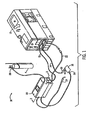
- System 10 includes a power source 12, which can be an AC or a DC welding power supply operable in a constant current (CC) mode.
- the power source 12 has a work cable 14 and clamp 16 designed to hold a workpiece 18 for welding.
- Power source 12 is connected to a wire feeder 20 via cable 22. Connected between the power source 12 and the wire feeder 20 is a weld cable 22.
- the wire feeder 20, which in one embodiment is portable, also includes a welding torch or gun 24 and a voltage sensing lead with clip 26 configured to provide voltage at the weld feedback to the wire feeder.
- a shielding gas cylinder 28 is also connected to the wire feeder 20 to provide shielding gas for the welding process.
- welding wire is fed into contact with the workpiece 18. Once triggered, an electrical current and voltage are generated to cause the welding wire to be heated and melt. As a result, an electrical arc is established which causes the welding wire to continue to melt as well as transfer the melted welding wire to the workpiece 18 where the welding wire fuses and cools with the workpiece 18. Because the electrical energy supplied to the welding system is typically greater than that required to melt the welding wire, most of the remaining energy is in the form of heat which is transferred to the surface of the workpiece 18 resulting in the workpiece 18 also melting and improving bonding between the melted welding wire and the workpiece 18. As the welding torch 24 is translated across the workpiece 18, melted welding wire is continuously transferred to the workpiece 18.
- the wire feeder is designed to introduce flux cored, solid steel, or stainless steel welding wire to a weld.
- the wire feeder is designed to introduce flux cored, solid steel, or stainless steel welding wire to a weld.
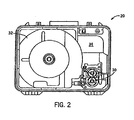
- the wire feeder 20 includes a wire drive assembly 30 to drive wire from a spool 32 designed to support welding wire (not shown) that is supplied to the weld under control of a controller 34 embodied in operational circuitry secured to a circuit board 34 that is connected to the power source 12 through cord 22, Fig.1.
- the controller is governed by a microprocessor capable of being programmed to operate according to certain algorithms and/or programs. User selections or inputs received by the controller from a display and control panel, Fig. 3, and an internally programmed algorithm cause welding system 10 to operate according to the user selections.
- Control panel 36 is designed to allow the user to input various welding parameters so as to define the welding process to be carried out.
- the control panel includes a ON/OFF switch 38 that allows the user to switch the wire feeder on or off.
- Control panel 36 also includes a JOG/PURGE button or switch 40 that allows the user to purge or remove existing gas from the wire feeder. That is, the wire feeder includes a controller that detects activation of purge button 40 and in response thereto transmits a control signal to the gas valve assembly of the wire feeder to cause the drive assembly to purge any residual gas from the wire feeder.
- Control panel 36 also includes a JOG button that when selected causes the controller within the wire feeder to transmit a jog command to the drive assembly.
- Control panel 36 also provides a user interface on the wire feeder that allows the user to set a target voltage via knob 42 as well as an initial wire feed speed via knob 44.
- the wire feed controller will regulate the drive assembly such that the target voltage selected via the user by adjusting knob 42 is substantially maintained at the weld.
- the controller based on user adjustment of wire feed speed knob 44, will set an initial speed by which welding wire is to be delivered to the weld.
- the controller based on feedback received from the weld, will automatically adjust the wire feed speed so that the target voltage selected by the user is maintained.
- a legend 46 associated with voltage adjustment knob 42 represents a scaled voltage level of the desired target voltage. That is, user adjustment of knob 42 to reference numeral 2 of legend 46 represents that the user desires the target voltage to be 20V.
- Control panel 36 illustrated in Fig. 3 represents an example of a control panel which may be incorporated in the wire feeder.
- One skilled in the art will readily appreciate that the appearance and/or orientation of the selector switches, knobs, buttons, and the like may differ from that specifically illustrated.
- LCDs and LEDs may also be utilized and are considered within the scope of the present invention.
- control panel 36 may be constructed such that an LCD displays one or more menus that allow the user to interactively set the target arc voltage as well as the initial wire feed speed. In this regard, the user may navigate through a series of menus or windows that are displayed on the LCD in defining the operational parameters of the welding process to be carried out.
- the present invention provides a controller that is configured to automatically adjust the speed by which a consumable electrode is delivered to a weld so that a user selected target voltage is maintained.
- a relatively constant arc voltage is achieved in addition to the constant current input provided to the wire feeder from the CC power source.
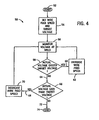
- a control technique or algorithm 50 for automatically maintaining a relatively constant voltage at a weld achieved by a controller within a wire feeder connected to a CC power source is illustrated.
- the technique or process 50 begins at step 52 with a user setting a constant current level on a CC power source as well as setting an initial wire feed speed and target voltage on a control menu on the wire feeder such as that illustrated in Fig. 3.
- the controller within the wire feeder executing process 50 then sets the initial WFS and target voltage based on the user selected inputs.
- the controller will then transmit a control signal to the drive assembly of the wire feeder such that wire is fed to the weld at a speed equal to that identified by the user input.
- the controller will monitor voltage at the weld at step 56 based on voltage feedback. From the feedback, the controller will compare the actual arc voltage or voltage at the weld to the target voltage input by the user to the control menu. If the actual voltage at the weld exceeds the target voltage 58, 60, the controller will send a control signal to the drive assembly of the wire feeder causing an increase in WFS 62.
- the control signal transmitted to the drive assembly by the controller is designed to cause the drive assembly to increase the WFS to a level sufficient to drive the actual voltage to the target voltage level. As such, the difference between the actual voltage and the desired target voltage is reduced and, preferably, brought to zero.
- the controller determines if the actual voltage is less than the target voltage 66. If so 66, 68, the controller transmits a control signal to the wire drive assembly causing the drive assembly to decrease the speed by which the consumable electrode or welding wire is delivered to the weld 70.
- voltage and WFS are inversely related; therefore, a decrease in WFS causes an increase in voltage.
- the controller instructs the drive assembly to decrement the WFS to a level that will cause an increase in arc voltage to a level that reduces the difference between the target voltage and the actual arc voltage.
- process 50 Whether there is an increase in WFS, a decrease in WFS, or no change in the WFS, process 50 returns to step 56 with continued monitoring of the arc voltage. The monitoring and increment/decrement loop will be repeated throughout the welding process until the welding process ends at 74.
- the controller may execute process 50 such that a comparison to a threshold value is carried out before an adjustment in WFS occurs. That is, the controller may compare the difference between actual arc voltage and the target arc voltage with an error threshold to first determine whether the difference between the actual and target voltages is at a level sufficient to cause a change in WFS.
- the controller and the wire feeder may be programmed such that a change in WFS command is not transmitted to the drive assembly until the absolute value of the difference between an actual arc voltage and target arc voltage exceeds one-half volt. In this regard, a minor below threshold deviation from the target voltage as a result of a transient condition will not cause a change in the WFS.
- the controller in executing process 50 may be programmed to execute a timing loop that determines if the difference between actual voltage and target voltage while not sufficient to warrant a change in WFS initially may be maintained over a significant time interval thereby indicating that the minor difference in actual voltage compared to target voltage has not been caused by a transient condition and is therefore indicative of a more permanent system condition.
- the controller may then instruct the drive assembly to increment/decrement the wire feed speed despite the difference between actual voltage and target voltage being less than the set threshold.
- the present invention includes a control technique that maintains a relatively constant voltage at a weld using variable gain adjustments to automatically adjust wire feed speed based on a user identified or input initial wire feed speed.
- the control technique or algorithm 76 begins at step 78 with a user setting a constant current level on a CC power source as well as setting an initial wire feed speed and target voltage 80 on a control menu on the wire feeder such as that illustrated in Fig. 3.
- the controller within the wire feeder executing process 76 sets the initial WFS and target voltage based on the user selected inputs.
- the controller will then transmit a control signal to the drive assembly of the wire feeder such that wire is fed to the weld at a speed equal to that identified by the user input.
- the controller determines and sets a wire feed gain 82 based on the initial wire feed speed setting. For example, for an initial wire feed speed of 100 in/min, the gain may be set to a value of ten and for an initial wire feed speed of 500 in/min, the gain may be set to two. As will be described below, the value of the gain will determine the rate by which wire feed speed is automatically incremented or decremented.
- the controller will monitor voltage at the weld at step 84 based on voltage feedback. From the feedback, the controller will compare the actual arc voltage or voltage at the weld to the target voltage input by the user to the control menu.
- the controller will send a control signal to the drive assembly of the wire feeder causing an increase in WFS 90. Because voltage and WFS have an inverse relationship, an increase in the WFS will cause a decrease in the actual voltage. As such, the control signal transmitted to the drive assembly by the controller is designed to cause the drive assembly to increase the WFS to a level sufficient to drive the actual voltage to the target voltage level. Moreover, the wire feed speed is increased at a rate defined by the gain setting at 82. As such, response time is improved. In this regard, the difference between the actual voltage and the desired target voltage is reduced and, preferably, brought to zero relatively quickly.
- the controller determines if the actual voltage is less than the target voltage 94. If so 94, 96, the controller transmits a control signal to the wire drive assembly causing the drive assembly to decrease the speed by which the consumable electrode or welding wire is delivered to the weld 98.
- voltage and WFS are inversely related; therefore, a decrease in WFS causes an increase in voltage.
- the controller instructs the drive assembly to decrement the WFS to a level that will cause an increase in arc voltage to a level that reduces the difference between the target voltage and the actual arc voltage.
- the wire feed speed is decremented at a rate defined by the gain setting established at 82 based on the initial wire feed speed set by the user. Whether there is an increase in WFS, a decrease in WFS, or no change 100 in the WFS, process 76 returns with continued monitoring of the arc voltage. Further, the wire feed speed is decremented at a rate defined by the gain setting established at 82 based on the initial wire feed speed set by the user. The monitoring and increment/decrement loop will be repeated throughout the welding process until the welding process ends at 102.
- the present invention is applicable with a number of GMAW processes including short circuit transfer, spray transfer, globular transfer, and pulse spray transfer. While each of these processes have particular nuances in which voltage and current levels are managed to control the process, each process may benefit by the present invention whereby a power source designed to provide a constant current output may be workable with a wire feeder to control WFS so as to maintain a relatively constant voltage at the weld.
- controlling the voltage and current at the weld controls the type of weld that is achieved.
- controlling voltage applied at the weld controls the intensity and frequency of the aforementioned ON/OFF cycle, which ultimately controls the height and width of the weld bead.
- the present invention may be applicable with such a transfer mode being carried out with a CC power source so that the desired voltage is maintained with a substantial degree of constancy.
- a wire feeder for a GMAW welding system includes a power input configured to receive power at a substantially constant current level from a power source.
- the wire feeder also includes a drive assembly configured to introduce a consumable electrode to a weld at a WFS as well as a controller to set an initial WFS based on a user input.
- the controller is also configured to automatically adjust the WFS to non-incrementally reduce a difference between a target arc voltage and an actual arc voltage.
- a GMAW welding system includes a power source configured to provide a constant current output.
- the welding system further includes a wire feeder connected to receive a constant current output and configured to deliver a consumable electrode to a weld at an initial WFS and automatically adjust the WFS at a gain rate that varies with the initial WFS to maintain the target voltage at the weld.
- a controller is provided to regulate output of a wire feeder.
- the controller is programmed to set an initial WFS, a rate of adjustment from the initial WFS, and a target arc voltage for a CC welding process.
- the controller is further programmed to monitor a voltage level at a weld during the CC welding process and adjust WFS at the rate of adjustment if the voltage level at the weld deviates from the target arc voltage.
- a method of executing a constant current welding process includes the steps of receiving voltage feedback of a voltage at a weld and comparing the value of actual voltage at the weld to a target voltage.
- the method further includes a step of adjusting a speed by which consumable welding wire is delivered to the weld at a rate that varies with initial WFS to reduce the difference between actual voltage and the target voltage.
- welding devices not only includes welders, but also includes any system that requires high power outputs, such as heating and cutting systems. Therefore, the present invention is equivalently applicable with any device requiring high power output, including welders, plasma cutters, induction heaters, and the like.
- Reference to welding power, welding-type power, or welders generally, includes welding, cutting, or heating power.
- Description of a welding apparatus illustrates just one embodiment in which the present invention may be implemented. The present invention is equivalently applicable with many high power systems, such as cutting and induction heating systems, or any similar systems.
- GMAW welding can be carried out in a number of transfer modes. The present invention is therefore applicable with spray transfer, globular transfer, pulse spray transfer, and short circuit transfer welding processes.
Landscapes
- Engineering & Computer Science (AREA)
- Physics & Mathematics (AREA)
- Plasma & Fusion (AREA)
- Mechanical Engineering (AREA)
- Arc Welding Control (AREA)
Applications Claiming Priority (4)
| Application Number | Priority Date | Filing Date | Title |
|---|---|---|---|
| US605022 | 2000-06-28 | ||
| US10/605,022 US7091449B2 (en) | 2003-09-02 | 2003-09-02 | Voltage regulated MIG welding using a constant current power source |
| US10/709,781 US7005610B2 (en) | 2003-09-02 | 2004-05-27 | Voltage regulated GMAW welding using a constant current power source and wire feeder having variable gain |
| US709781 | 2004-05-27 |
Publications (2)
| Publication Number | Publication Date |
|---|---|
| EP1512481A2 true EP1512481A2 (de) | 2005-03-09 |
| EP1512481A3 EP1512481A3 (de) | 2011-09-28 |
Family
ID=34139084
Family Applications (1)
| Application Number | Title | Priority Date | Filing Date |
|---|---|---|---|
| EP04019915A Withdrawn EP1512481A3 (de) | 2003-09-02 | 2004-08-23 | Spannungsgeregeltes GMA-Schweissen mit einer Konstantstromleistungsquelle und einem Drahtvorschubgerät mit variabler Verstärkung |
Country Status (4)
| Country | Link |
|---|---|
| US (1) | US20060102698A1 (de) |
| EP (1) | EP1512481A3 (de) |
| CA (1) | CA2479973C (de) |
| MX (1) | MXPA04008441A (de) |
Families Citing this family (7)
| Publication number | Priority date | Publication date | Assignee | Title |
|---|---|---|---|---|
| JP5918061B2 (ja) * | 2012-07-30 | 2016-05-18 | 株式会社ダイヘン | 消耗電極アーク溶接制御方法 |
| CN103223551B (zh) * | 2013-04-19 | 2015-10-14 | 苏州宏创高频加热设备有限公司 | 高频焊机的控制系统 |
| USD738944S1 (en) * | 2013-11-12 | 2015-09-15 | Lincoln Global, Inc. | On-board tool box for portable wire feeder |
| US10773331B2 (en) | 2016-08-16 | 2020-09-15 | Illinois Tool Works Inc. | Welding power supplies, wire feeders, and systems to compensate a weld voltage via communications over a weld circuit |
| US10603735B2 (en) | 2016-08-16 | 2020-03-31 | Illinois Tool Works Inc. | Welding power supplies, wire feeders, and systems to compensate a weld voltage via communications over a weld circuit |
| US11660695B2 (en) | 2017-03-09 | 2023-05-30 | Illinois Tool Works Inc. | Welding power supplies, wire feeders, and systems to measure a weld cable voltage drop |
| US11027355B2 (en) | 2017-03-09 | 2021-06-08 | Illinois Tool Works | Welding power supplies, wire feeders, and systems to measure a weld circuit resistance via communications over the weld circuit |
Family Cites Families (18)
| Publication number | Priority date | Publication date | Assignee | Title |
|---|---|---|---|---|
| US2636102A (en) * | 1950-06-27 | 1953-04-21 | Union Carbide & Carbon Corp | Automatic metal arc welding system |
| US3978311A (en) * | 1974-03-26 | 1976-08-31 | Union Carbide Corporation | Voltage sensor circuit for an arc welding wire feed control |
| US3968340A (en) * | 1974-07-03 | 1976-07-06 | Union Carbide Corporation | MIG starting system |
| US4301355A (en) * | 1980-08-04 | 1981-11-17 | Dimetrics, Inc. | Gas metal arc welding system |
| DE3322215C2 (de) * | 1983-06-21 | 1986-02-27 | Messer Griesheim Gmbh, 6000 Frankfurt | Einrichtung zum Lichtbogenschweißen, insbesondere UP-Lichtbogenschweißen mit mehreren gleichzeitig abschmelzenden Drahtelektroden |
| US4665300A (en) * | 1985-12-26 | 1987-05-12 | Bath Iron Works Corporation | Mini wire feeder |
| US4857692A (en) * | 1988-08-17 | 1989-08-15 | Union Carbide Corporation | Spray mode gas metal arc welding process |
| JP2700823B2 (ja) * | 1989-08-29 | 1998-01-21 | ファナック株式会社 | アーク溶接電流・電圧フィードバック制御方法 |
| US5157236A (en) * | 1990-03-29 | 1992-10-20 | Miller Electric Mfg. Co. | Adaptive pulse mode gas metal arc welding control |
| US5278390A (en) * | 1993-03-18 | 1994-01-11 | The Lincoln Electric Company | System and method for controlling a welding process for an arc welder |
| US6504133B2 (en) * | 1997-08-15 | 2003-01-07 | Illinois Tool Works Inc. | Wire feeder with non-linear speed control |
| US6531684B2 (en) * | 2001-06-19 | 2003-03-11 | Illinois Tool Works Inc. | Method and apparatus for welding and control |
| US6963048B2 (en) * | 2002-07-23 | 2005-11-08 | Illinois Tool Works Inc. | Method and apparatus for welding with mechanical arc control |
| US7165707B2 (en) * | 2002-07-23 | 2007-01-23 | Illinois Tool Works Inc. | Method and apparatus for feeding wire to a welding arc |
| US6984806B2 (en) * | 2002-07-23 | 2006-01-10 | Illinois Tool Works Inc. | Method and apparatus for retracting and advancing a welding wire |
| US6969823B2 (en) * | 2002-07-23 | 2005-11-29 | Illinois Tool Works Inc. | Method and apparatus for controlling a welding system |
| US7091445B2 (en) * | 2002-10-25 | 2006-08-15 | Lincoln Global, Inc. | Electric arc welder and method for controlling the welding process of the welder |
| US6969826B2 (en) * | 2004-04-08 | 2005-11-29 | General Electric Company | Welding process |
-
2004
- 2004-08-23 EP EP04019915A patent/EP1512481A3/de not_active Withdrawn
- 2004-08-31 MX MXPA04008441A patent/MXPA04008441A/es active IP Right Grant
- 2004-09-01 CA CA002479973A patent/CA2479973C/en not_active Expired - Lifetime
-
2005
- 2005-12-21 US US11/275,261 patent/US20060102698A1/en not_active Abandoned
Also Published As
| Publication number | Publication date |
|---|---|
| EP1512481A3 (de) | 2011-09-28 |
| CA2479973C (en) | 2009-01-20 |
| US20060102698A1 (en) | 2006-05-18 |
| CA2479973A1 (en) | 2005-03-02 |
| MXPA04008441A (es) | 2005-07-05 |
Similar Documents
| Publication | Publication Date | Title |
|---|---|---|
| US7005610B2 (en) | Voltage regulated GMAW welding using a constant current power source and wire feeder having variable gain | |
| CA2508508C (en) | Welding arc stabilizing process | |
| US10252367B2 (en) | Method and system of welding with auto-determined startup parameters | |
| EP3624980B1 (de) | Systeme und verfahren zum vorwärmen von schweissdraht | |
| US6707002B2 (en) | Method and apparatus for welding and control thereof | |
| US11027359B2 (en) | Systems and methods for determining welding parameters using material thickness and wire diameter | |
| KR900001671B1 (ko) | 반자동 열선 tig 용접장치 | |
| US6259059B1 (en) | Arc welder and torch for same | |
| US9000329B2 (en) | Welding arc stabilization process | |
| US20020117489A1 (en) | Method and system for hot wire welding | |
| MXPA04009552A (es) | Metodo y aparato para determinar automaticamente el tipo de pistola conectada a un alimentador de alambre. | |
| CN111050968A (zh) | 用于在焊接型操作期间协同地控制焊接型输出的方法和设备 | |
| US20080156782A1 (en) | Method and Apparatus For Welding and Control Thereof | |
| US12103121B2 (en) | Methods and apparatus to control welding power and preheating power | |
| US20050045608A1 (en) | Method and apparatus of electronic selection of an output mode of a welding power source | |
| CA2479973C (en) | Voltage regulated gmaw welding using a constant current power source and wire feeder having variable gain | |
| EP4251358B1 (de) | Schweissstromquelle zur synergischen steuerung eines schweissausgangs während eines schweissbetriebs | |
| US7800018B2 (en) | Method and system of welding with adaptive crater fill control | |
| CN111843112B (zh) | 用于控制焊接功率和预加热功率的方法和设备 | |
| JPH0811294B2 (ja) | 非消耗電極溶接装置 |
Legal Events
| Date | Code | Title | Description |
|---|---|---|---|
| PUAI | Public reference made under article 153(3) epc to a published international application that has entered the european phase |
Free format text: ORIGINAL CODE: 0009012 |
|
| 17P | Request for examination filed |
Effective date: 20040823 |
|
| AK | Designated contracting states |
Kind code of ref document: A2 Designated state(s): AT BE BG CH CY CZ DE DK EE ES FI FR GB GR HU IE IT LI LU MC NL PL PT RO SE SI SK TR |
|
| AX | Request for extension of the european patent |
Extension state: AL HR LT LV MK |
|
| PUAL | Search report despatched |
Free format text: ORIGINAL CODE: 0009013 |
|
| AK | Designated contracting states |
Kind code of ref document: A3 Designated state(s): AT BE BG CH CY CZ DE DK EE ES FI FR GB GR HU IE IT LI LU MC NL PL PT RO SE SI SK TR |
|
| AX | Request for extension of the european patent |
Extension state: AL HR LT LV MK |
|
| RIC1 | Information provided on ipc code assigned before grant |
Ipc: B23K 9/12 20060101AFI20110823BHEP |
|
| 17Q | First examination report despatched |
Effective date: 20120503 |
|
| AKX | Designation fees paid |
Designated state(s): AT DE FR GB IT |
|
| STAA | Information on the status of an ep patent application or granted ep patent |
Free format text: STATUS: THE APPLICATION IS DEEMED TO BE WITHDRAWN |
|
| 18D | Application deemed to be withdrawn |
Effective date: 20120914 |