EP1512399A1 - Porphyrin oxygen infusion preparation for increasing oxygen concentration in tumor tissue - Google Patents
Porphyrin oxygen infusion preparation for increasing oxygen concentration in tumor tissue Download PDFInfo
- Publication number
- EP1512399A1 EP1512399A1 EP03733267A EP03733267A EP1512399A1 EP 1512399 A1 EP1512399 A1 EP 1512399A1 EP 03733267 A EP03733267 A EP 03733267A EP 03733267 A EP03733267 A EP 03733267A EP 1512399 A1 EP1512399 A1 EP 1512399A1
- Authority
- EP
- European Patent Office
- Prior art keywords
- oxygen
- metal complex
- porphyrin
- chem
- porphyrin metal
- Prior art date
- Legal status (The legal status is an assumption and is not a legal conclusion. Google has not performed a legal analysis and makes no representation as to the accuracy of the status listed.)
- Withdrawn
Links
Images

Classifications
-
- A—HUMAN NECESSITIES
- A61—MEDICAL OR VETERINARY SCIENCE; HYGIENE
- A61K—PREPARATIONS FOR MEDICAL, DENTAL OR TOILETRY PURPOSES
- A61K47/00—Medicinal preparations characterised by the non-active ingredients used, e.g. carriers or inert additives; Targeting or modifying agents chemically bound to the active ingredient
- A61K47/50—Medicinal preparations characterised by the non-active ingredients used, e.g. carriers or inert additives; Targeting or modifying agents chemically bound to the active ingredient the non-active ingredient being chemically bound to the active ingredient, e.g. polymer-drug conjugates
-
- A—HUMAN NECESSITIES
- A61—MEDICAL OR VETERINARY SCIENCE; HYGIENE
- A61K—PREPARATIONS FOR MEDICAL, DENTAL OR TOILETRY PURPOSES
- A61K31/00—Medicinal preparations containing organic active ingredients
- A61K31/33—Heterocyclic compounds
- A61K31/555—Heterocyclic compounds containing heavy metals, e.g. hemin, hematin, melarsoprol
-
- A—HUMAN NECESSITIES
- A61—MEDICAL OR VETERINARY SCIENCE; HYGIENE
- A61K—PREPARATIONS FOR MEDICAL, DENTAL OR TOILETRY PURPOSES
- A61K31/00—Medicinal preparations containing organic active ingredients
- A61K31/28—Compounds containing heavy metals
- A61K31/295—Iron group metal compounds
-
- A—HUMAN NECESSITIES
- A61—MEDICAL OR VETERINARY SCIENCE; HYGIENE
- A61K—PREPARATIONS FOR MEDICAL, DENTAL OR TOILETRY PURPOSES
- A61K31/00—Medicinal preparations containing organic active ingredients
- A61K31/33—Heterocyclic compounds
- A61K31/395—Heterocyclic compounds having nitrogen as a ring hetero atom, e.g. guanethidine or rifamycins
- A61K31/40—Heterocyclic compounds having nitrogen as a ring hetero atom, e.g. guanethidine or rifamycins having five-membered rings with one nitrogen as the only ring hetero atom, e.g. sulpiride, succinimide, tolmetin, buflomedil
- A61K31/409—Heterocyclic compounds having nitrogen as a ring hetero atom, e.g. guanethidine or rifamycins having five-membered rings with one nitrogen as the only ring hetero atom, e.g. sulpiride, succinimide, tolmetin, buflomedil having four such rings, e.g. porphine derivatives, bilirubin, biliverdine
-
- A—HUMAN NECESSITIES
- A61—MEDICAL OR VETERINARY SCIENCE; HYGIENE
- A61K—PREPARATIONS FOR MEDICAL, DENTAL OR TOILETRY PURPOSES
- A61K41/00—Medicinal preparations obtained by treating materials with wave energy or particle radiation ; Therapies using these preparations
- A61K41/0038—Radiosensitizing, i.e. administration of pharmaceutical agents that enhance the effect of radiotherapy
-
- A—HUMAN NECESSITIES
- A61—MEDICAL OR VETERINARY SCIENCE; HYGIENE
- A61K—PREPARATIONS FOR MEDICAL, DENTAL OR TOILETRY PURPOSES
- A61K47/00—Medicinal preparations characterised by the non-active ingredients used, e.g. carriers or inert additives; Targeting or modifying agents chemically bound to the active ingredient
- A61K47/50—Medicinal preparations characterised by the non-active ingredients used, e.g. carriers or inert additives; Targeting or modifying agents chemically bound to the active ingredient the non-active ingredient being chemically bound to the active ingredient, e.g. polymer-drug conjugates
- A61K47/51—Medicinal preparations characterised by the non-active ingredients used, e.g. carriers or inert additives; Targeting or modifying agents chemically bound to the active ingredient the non-active ingredient being chemically bound to the active ingredient, e.g. polymer-drug conjugates the non-active ingredient being a modifying agent
- A61K47/62—Medicinal preparations characterised by the non-active ingredients used, e.g. carriers or inert additives; Targeting or modifying agents chemically bound to the active ingredient the non-active ingredient being chemically bound to the active ingredient, e.g. polymer-drug conjugates the non-active ingredient being a modifying agent the modifying agent being a protein, peptide or polyamino acid
- A61K47/64—Drug-peptide, drug-protein or drug-polyamino acid conjugates, i.e. the modifying agent being a peptide, protein or polyamino acid which is covalently bonded or complexed to a therapeutically active agent
- A61K47/6445—Haemoglobin
-
- A—HUMAN NECESSITIES
- A61—MEDICAL OR VETERINARY SCIENCE; HYGIENE
- A61K—PREPARATIONS FOR MEDICAL, DENTAL OR TOILETRY PURPOSES
- A61K9/00—Medicinal preparations characterised by special physical form
- A61K9/10—Dispersions; Emulsions
-
- A—HUMAN NECESSITIES
- A61—MEDICAL OR VETERINARY SCIENCE; HYGIENE
- A61P—SPECIFIC THERAPEUTIC ACTIVITY OF CHEMICAL COMPOUNDS OR MEDICINAL PREPARATIONS
- A61P35/00—Antineoplastic agents
-
- A—HUMAN NECESSITIES
- A61—MEDICAL OR VETERINARY SCIENCE; HYGIENE
- A61P—SPECIFIC THERAPEUTIC ACTIVITY OF CHEMICAL COMPOUNDS OR MEDICINAL PREPARATIONS
- A61P43/00—Drugs for specific purposes, not provided for in groups A61P1/00-A61P41/00
Definitions
- the present invention relates to a porphyrin oxygen infusion for increasing oxygen concentrations in tumor tissues, which is administered to mammals having tumor tissues to increase oxygen partial pressures in a hypoxic region of the tumor tissues.
- FeTpivPP complex 5,10,15,20-tetrakis ( ⁇ , ⁇ , ⁇ , ⁇ -o-pival-amidophenyl) porphyrin iron(II) complex (hereinafter referred to as a "FeTpivPP complex") (J. P. Collman, et al., J. Am. Chem. Soc., 97, 1427 (1975).
- the FeTpivPP complex can reversibly bind or release molecular oxygen at room temperature in the presence of an axial base (such as 1-alkylimidazole, 1-alkyl-2-methylimidazole, or a derivative of pyridine) in an organic solvent such as benzene, toluene, dichloromethane, N, N-dimethylformamide, tetrahydrofuran or the like.
- an axial base such as 1-alkylimidazole, 1-alkyl-2-methylimidazole, or a derivative of pyridine
- organic solvent such as benzene, toluene, dichloromethane, N, N-dimethylformamide, tetrahydrofuran or the like.
- the FeTpivPP complex when intended to be used in the living body as an artificial oxygen carrier (an oxygen infusion) that can exhibit the oxygen transport function in stead of hemoglobin, it is essential for the FeTpivPP complex to have an ability to bind or release oxygen under the physiological conditions (i.e., at pH 7.4, Temperature ⁇ 40 °C in physiological saline).
- the present inventors have succeeded in realizing oxygen infusions that can reversibly bind and release oxygen even under the physiological conditions by making active use of minute hydrophobic environments constructed in the vicinity of oxygen coordinating sites along with solubilization of the FeTpivPP complex in water, which are achieved by various methods such as, for example, a method for embedding the FeTpivPP complex or their analogues in bilayer membrane endoplasmic reticula comprising phospholipids (Dalton Trans., 1984, 1147, JP S58-21371(A); a method for enclosing or covering the FeTpivPP complex with micro spheres comprising guttate oil globules (E. Tsuchida et al., Biochem.
- the present inventors have realized a system that can produce stable oxygen complex without addition of any basic axial ligand, by incorporating, for example, an alkyl imidazole derivative or an alkyl histidine derivative as a substituent into molecules of the iron(II) porphyrin complex to form a covalent bond therewith (JP H05-85141(A)).
- Some of the imidazole derivatives which have been widely used as an axial base, have medicinal properties, but they are mostly highly toxic to the body tissues.
- the excessively coexisted imidazole derivative may be a factor contributing to destabilization of the morphologic feature.
- the inventors had no choice but to incorporate the imidazole derivative into molecules of the iron(II) porphyrin complexes.
- the resultant modified iron(II) porphyrin complexes function as oxygen carriers that can be administered to the living bodies (E. Tsuchida et al., Bioconjugate Chem., 11, 46-50 (2000)).
- the oxygen infusions have extremely wide applications in medical cares.
- the expected applications include not only use as revival liquids (alternative red blood cells) for hemorrhagic shock, but also use as oxygen carriers for transporting oxygen to ischemic sites in myocardial infarction, perfusion or stock solutions for transplantable organs, compensating solutions for extracorporeal circulation circuits such as artificial hearts and lungs, oxygen carriers for transporting oxygen to cultured cells of regenerating tissues.
- a cancer therapy intensifier i.e., its curative properties against hypoxic region in tumor tissues.
- the cancer cells are hypoxic cells, and the presence of the hypoxic cells is one of the reasons that malignant tumors have resistance to radiotherapy or chemotherapy.
- the hypoxic cells include (i) acute hypoxic cells caused by the fact that a blood flow in a tumor site is temporarily changed, which in turn causes suspension of oxygen to be transported to regions subject to a certain blood vessel, and (ii) chronic hypoxic cells derived from the fact that formation of new blood vessels can not keep up with abnormal growth of tumors, causing insufficient oxygen supply to cells away from the blood cells.
- the radio sensitivity of the tumor tissues is enhanced up to 3 times compared to that observed under oxygen-free condition, and the chances of survival of the tumor tissues are reduced.
- the radiosensitizing effect is remarkably observed at an oxygen concentration of 0 Torr to 40 Torr, but almost unchanged at a concentration exceeding that range.
- Shorr et al. verified oxygenation of hypoxic tumor tissues and promotion effects on radiotherapy by administration of modified hemoglobin (polyethylene glycol (PEG)-modified hemoglobin (PEG-Hb) with a molecular weight of 128 kDa) (R. Linberg, C. D. Conover, K. L. Shum, R. G. S. Shorr, in vivo, 12, 167-174 (1998)).
- PEG polyethylene glycol
- PEG-Hb after a lapse of 2 hours from the administration maximized the increase of the oxygen concentration of hypoxic tumor tissues (4-7 Torr). Based on this fact, PEG-Hb was administered to rats transplanted with different radiosensitive cancers, which were then subjected to radiation of ⁇ -rays to sequentially measure the sizes of the cancers. As a result, it was revealed that all the tumors are reduced in size. From these results, it was proved that PEG-Hb is effective for oxygenation of the hypoxic tumor tissues and for radiotherapy.
- hemoglobin products are easy to leak out of the vascular endothelium, and trap vascular relaxing factors present in the immediate vicinities of the plain muscles, so that they induce vasoconstriction, and causes rapid enhancement of the blood pressure.
- the oxygen infusions suitable for transporting molecular oxygen to the tumor tissues with small vessel diameters are those comprising molecules with particle size as small as possible.
- an artificial oxygen carrier which is small in molecules but has physicochemical features and molecular sizes that are hard to leak out from the vascular endothelium or kidney.
- the present invention has been made to overcome the aforesaid problems and is intended to provide an oxygen infusion with a high-safety for effectively increasing oxygen pressures in intratumoral hypoxic regions by administration to a site near the tumor tissues.
- the present inventors have studied on an artificial oxygen carrier compound that has a diameter smaller than that of conventional ones and a property to hardly leak out of the vascular endothelium or kidney, and on search, use and administration of an oxygen infusion containing said compound dispersed at a high concentration.
- a porphyrin metal complex that is an active center of oxygen coordination may be combined with serum albumin to form clathrates or inclusion complexes in which molecules of the porphyrin metal complex is enclosed within the crystal structure of serum albumin, and that the resultant porphyrin metal complex-albumin clathrate compounds can be used as preparations capable of providing oxygen to a hypoxic region in tumor tissues at a high efficiency.
- the present invention has been achieved by these findings.
- an oxygen infusion for increasing oxygen concentrations in tumor tissues in living bodies, said oxygen infusion comprising a dispersion of an albumin clathrate compound enclosing a porphyrin metal complex, said albumin clathrate compound being dispersed in a physiologically permissible aqueous media.
- the present invention provides an oxygen infusion comprising an albumin compound enclosing a porphyrin metal complex.
- the oxygen infusion may comprise an albumin clathrate compound enclosing a porphyrin metal complex, dispersed in a physiologically permissible aqueous media, preferably, a physiological saline solution such as phosphate buffered saline.
- the porphyrin metal complex used in the present invention is preferably a porphyrin metal complex represented by the general formula (I): [Chem. 1] [wherein R 1 is a chain or alicyclic hydrocarbon group that may have one or more substituents, R 2 is a basic axial ligand expressed by the formula (A): [chem. 2] (where R 3 is alkylene, R 4 is a group that does not inhibit coordination of said basic axial ligand to a central transition metal ion M), or a basic axial ligand represented by the formula (B): [Chem.
- R 1 is a chain or alicyclic hydrocarbon group that may have one or more substituents
- R 2 is a basic axial ligand expressed by the formula (A): [chem. 2] (where R 3 is alkylene, R 4 is a group that does not inhibit coordination of said basic axial ligand to a central transition metal ion M), or a basic axial ligand represented by the formula (B
- R 5 is alkylene, R 6 is alkyl; and M is a transition metal ion of the 4th or 5th period of the periodic table of elements], and/or a porphyrin metal complex represented by the general formula [II]: [Chem. 4]: [wherein R 7 is hydrogen or a chain hydrocarbon group that may have one or more substituents, R 8 is alkyloxy, alkylamino, or an amino acid or amino acid derivative residue, R 9 is a basic axial ligand represented by the formula [C]: [Chem.
- R 10 is alkylene
- R 11 is a group that does not inhibit coordination of said basic axial ligand to a central transition metal ion M
- porphyrin metal complexes constitute an active center for oxygen coordination.
- R 1 is a C 1 -C 19 chain hydrocarbon group having dimethyl groups at the first position, or a C 3 -C 19 alicyclic hydrocarbon group having a substituent at the first position.
- Examples of the latter alicyclic hydrocarbon group include 1-substituted cyclopropyl, 1-substituted cyclopentyl, 1-substituted cyclohexyl, 1-methyl-2-cyclohexenyl, 2-substituted norbornyl and 1-substituted cycloadamantyl.
- each substituent of the above groups may be methyl, C 1 -C 18 alkylamide, C 1 -C 18 alkanoyloxy, or C 1 -C 18 alkoxy.
- R 3 is C 1 -C 10 alkylene.
- R 4 is hydrogen, methyl, ethyl or propyl.
- R 5 is C 1 -C 10 alkylene.
- R 6 is C 1 -C 18 alkyl.
- R 7 is hydrogen, vinyl, ethyl or methoxy.
- R 8 is C 1 -C 18 alkyloxy, C 1 -C 18 alkylamino, or an amino acid or its derivative residue.
- the amino acid derivative is an amino acid-O-C 1 -C 18 alkyl ester.
- R 10 is C 1 -C 10 alkylene.
- R 11 is hydrogen, methyl, ethyl or propyl.
- R 12 is C 1 -C 18 alkyl.
- M is Fe or Co.
- porphyrin metal complexes of the general formula (I) are disclosed, for example, in JP H06-271577(A), and T. Komatsu et al., Chem. Lett., 2001, 668-669 (2001).
- porphyrin metal complexes of the general formula (II) are disclosed, for example, in T. G. Traylor et al., J. Am. Chem. Soc., 101, 6716-6731 (1979), JP S58-10388 (A) and JP S60-17326 (A), except for those in which R8 is alkylamino. Synthesis of the porphyrin metal complexes of the general formula (II) in which R8 is alkylamino are disclosed in examples mentioned below.
- albumin compound enclosing the porphyrin metal complex
- serum albumins such as human serum albumin, genetically-modified human serum albumin, bovine serum albumin and the like.
- albumin compounds it is also possible to use albumins in the form of a multimer. In particular, it is preferred to use a dimeric form of albumin. The use of dimeric albumins makes it possible to prevent the clathrate compound from leaking out of the circulatory system.
- oxygen infusions comprising an albumin clathrate compound enclosing a porphyrin metal complex therein
- a method as disclosed in JP S08-301873 (A) E. Tsuchida et al., Bioconjugate Chem., 10, 797-802 (1999), or Bioconjugate Chem., 11, 46-50 (2000).
- the oxygen infusion of the present invention generally contains the albumin compound at a concentration of 1 to 30 wt%, preferably, 5 to 25 wt%.
- the bonding number of the porphyrin metal complex per one molecule of the albumin compound is 1 to 8 (mol/mol), so that the concentration of the porphyrin metal complex ranges from 0.15 to 36 mM.
- An appropriate dosage of the oxygen infusion of the present invention is 40 mL/kg body weight or below.
- the oxygen infusion of the present invention has the following favorable properties required for oxidization of tumor tissues: (i) Since the serum albumin that occupies about 60 % of plasma proteins is used as a carrier of the porphyrin metal complex that is an active center for oxygen coordination, the oxygen infusion of the present invention is very high in safety and biocompatibility at the time of intravascular administration; (ii) Since the molecular size is as small as 8 X 3 nm, the oxygen infusion can pass through small capillary vessels in the tumor tissues, to which the red blood cells (8 ⁇ m) can not reach; and (iii) the oxygen infusion has a low isoelectric point (pI), so that it does not leak out of the kidney or vascular endothelium.
- pI isoelectric point
- the oxygen affinity can be adjusted by controlling a three-dimensional structure of the porphyrin metal complex, thus making it possible to transport oxygen at a high efficiency according to the oxygen partial pressure in the affected part.
- the oxygen infusion of the present invention makes it possible to increase the oxygen partial pressure in hypoxic regions of the tumor tissues by administrating it to mammalian living bodies with tumor tissues.
- the oxygen infusion of the present invention can be administered to the living bodies by intra-arterial injection, intravenous injection, local administration, systemic administration or any other administrating means.
- intra-arterial injection intravenous injection
- local administration systemic administration
- any other administrating means any other administrating means.
- the metal in the center of the porphyrin metal complex should be oxygenated before administration.
- Animals with cancer were prepared by transplanting tumor cells in desired sites of laboratory animals such as, for example, rats, hamsters, rabbits or beagles. The following is an explanation on transplantation of tumor cells into right femurs of rats.
- Rats were bred for several days until tumors develop and then subjected to experiments under anesthesia (e.g., using Nembutal, diethyl ether or halothane anesthetic gas). Rats were intubated through the cervical trachea and ventilated under positive pressure by a respirator. A polyethylene catheter was inserted into a left carotid artery so that a distal end of the catheter is located at a position short of a bifurcation of the common iliac artery, and then backward cannulation was carried out to provide an administration rout of sample in the descending aorta.
- anesthesia e.g., using Nembutal, diethyl ether or halothane anesthetic gas
- the oxygen partial pressure in the tumor tissues may be determined by intravenously injecting a phosphorescent probe (palladium coproporphyrin (PdPor)), irradiating light, and monitoring a phosphorescence quenching time with an oxygen partial pressure monitor.
- PdPor is intravenously injected through a tail vein at 5-20 minutes before administration of the sample.
- the femur is incised by 20 mm to expose both normal muscles and the tumor, and the probe is arranged just above the tumor. The measurement is continued while preventing the tumor surfaces from being dried by wetting the tumor surfaces with a warm physiological saline solution of 37 °C.
- the oxygen partial pressure in the tumor site of the right leg was measured at 5 to 30 points in air or an atmosphere containing 99 % oxygen with a device for measurement of an oxygen partial pressure (e.g., OxySpot (Trademark) made by Medical System Corp.), and served as controls. Then, the oxygen saturated samples (1-20 mL/kg) were administered by intra-arterial injection for 1 to 20 minutes under a constant pressure with a syringe pump. Simultaneously with the initiation of intra-arterial injection, measurements were made on sequential changes of the oxygen partial pressure at both tumor site and normal site of the right leg. After completion of measurements, an incision is made at the abdominal area to confirm that the catheter for sample intra-arterial injection is located just before the bifurcation of the common iliac artery, and then measurements are made on size of the tumor.
- an oxygen partial pressure e.g., OxySpot (Trademark) made by Medical System Corp.
- the oxygen partial pressure (PO2) in the tumor tissue there was observed no change in the oxygen partial pressure (PO2) in the tumor tissue even when the oxygen-saturated physiological saline, human serum albumin, genetically-modified human serum albumin, bovine serum albumin and albumin dimer were respectively intra-arterially injected.
- the administration of the oxygen infusion of the present invention containing porphyrin metal complex-albumin clathrate compound causes significant increase in the oxygen partial pressure in the tumor tissue.
- the porphyrin metal complex-albumin clathrate compound of the present invention has a small particle size as mentioned above, and thus it can path through irregular blood vessels in the tumor tissue easily as compared with red blood cells, which in turn makes it possible to effectively increase the oxygen partial pressure in the tumor tissues.
- Synthetic Example A Synthesis of 8, 13-bisvinyl-2-methyl aminocarbonylethyl-18-(3-(1-imidazolyl)propylamino)carbonyl ehtyl-3, 7, 12, 17 tetramethylporphyrin iron complex
- Protoporphyrin IX (0.1 g, 0.18 mmol), distilled pyridine (10 ml) and triethylamine (51 ⁇ L, 0.45 mmol) were charged into a three neck recovery flask of 100 ml and stirred for 10 minutes.
- the resultant mixture was added with (benzotriazolyloxy) tris (dimethylamino) phosphonium hexafluorophosphate (124 mg, 0.45 mmol), stirred for 10 minutes, added with 1-(3-aminopropyl) imidazole (15 ⁇ L, 0.14 mmol) and then stirred for 4 hours under the light shielding condition.
- Synthetic Example B Synthesis of 8, 13-bisvinyl-2-dodecyl aminocarbonylethyl-18-(methyl-O-histidine)carbonylethyl-3,7,12,17-tetramethyl porphyrin iron complex
- a separable flask (2 L) was charged with 10 mL (2.5 mg, 37.5 ⁇ mol) of human serum albumin (25 wt%) and 1 L of phosphate buffered saline (pH 8.1), and then provided with a dropping funnel of 500 mL.
- a recovery flask (300 mL) was charged with 250 mL of an ethanol solution of 2-8-(2-methyl-1-imidazolyl) octanoyloxymethyl-5, 10, 15, 20-tetrakis- ( ⁇ , ⁇ , ⁇ , ⁇ -o-pivaloylamidophenyl) porphyrin iron (II) complex (hereinafter referred to as "FepivP (Im)", 390 mg, 300 ⁇ mol), and connected to the above separable flask through a Teflon (Trademark) tube. The tube was kept so as not to come into contact with the liquid surface.
- Teflon Teflon
- Carbon monoxide was bubbled in the recovery flask containing the ethanol solution of FepivP (Im), and the exhaust gas thereof was allowed to flow to the albumin solution. Simultaneously therewith, the bubbling was carried out so as not to foam the albumin solution. The bubbling and the exhaust gas flow were carried out for about 60 minutes.
- the ethanol solution of FepivP (Im) was added with 250 ⁇ L of an aqueous solution of ascorbic acid (0.6 M) and stirred for 5 minutes. In this manner, Heme is reduced to form a carbon monoxide complex and color of the solution was changed to magenta.
- the resultant ethanol solution of the carbon monoxide FepivP (Im) complex was transferred to the dropping funnel mounted on the separable flask, and slowly dropped into the albumin solution. After completing the dropping, the solution was stirred for 30 minutes.
- the resultant concentrated solution (about 200 mL) was filtered with a filter (DISMIC (Trade name), 0.45 ⁇ m), and the filtrate was concentrated by an ultrafiltration unit (UHP-76K, ADVANTEC (Trademark)) to obtain a concentrated solution of about 50 mL.
- the resultant concentrated solution was added with a 20 wt% solution of sodium chloride so that a concentration of sodium chloride becomes 140 mM.
- a recovery flask of 100 mL was charged with the albumin-Heme (carbon monoxide complex) solution (20 mL) and attached to a rotary evaporator. While cooling the recovery flask with an ice water bath, the recovery flask was rotated and subjected to oxygen flowing through an upper stopcock of a cooling tube for 20 minutes. Then, a halogen lamp (500 w) was fixed to a position spaced by 15 to 20 cm above the rotating recovery flask, and turned on to irradiate the albumin-Heme solution for 10 minutes. Formation of an oxygen complex was confirmed from an absorbance and ⁇ max of ultraviolet visible spectrum of the albumin-Heme solution. A molar extinction coefficient ( ⁇ 426) of the obtained oxygen complex was about 1.16 ⁇ 10 5 M -1 cm -1 . Measurements of oxygen partial pressures in healthy cells and tumor cells
- Donryu rats (Crj-Donryu; Nippon Charles River, male, weight: about 200 g, 6 week old) that were bred by a biological clean system under free-feeding of pellets and water.
- the transplanted tumor cells Ascites hepatoma LY80, were developed by intra-abdominal passage transplantation.
- tumor cells grown for 7 days after transplantation. At 8 days before transplantation, incision was made in the right femur of the rat, and 5 X 10 6 cells were transplanted just beneath the muscle of thigh with syringes of 27 G and 1 mL.
- the partial pressure of oxygen in the tumor tissues was determined from a phosphorescence quenching time that was monitored with an oxygen partial pressure measurement system (Oxyspot Photomeric Oxygen Measurement System (OxySpot, Medical System Corp.) after light irradiation following intravenous injection of palladium coproporphyrin (PdPor).
- PdPor was intravenously injected by an indwelling needle 24 G through the tail vein at 15 minutes before administration of the sample.
- a small incision of 20 mm was made in the femur to expose both normal muscle and the tumor, and a measuring probe was located just above the tumor at a distance of 5 mm. The measurements were carried out while preventing the tumor surfaces from being dried by rinsing the tumor surface with warm physiological saline of 37 °C.
- the rats were anesthetized by inhalation with ether, intubated with 14G-Angiocath (Trademark) via their cervical trachea, and ventilated under positive pressure (80 times/min) by an artificial respirator (Respirator Model SN 480-7 made by Shinano MFG., CO. Ltd), while feeding a gas of 1 % halothane anesthetic gas (FiO2, 1 % halothane Fluothane) mixed with air or oxygen through a small animal anesthetizer.
- an artificial respirator Respirator Model SN 480-7 made by Shinano MFG., CO. Ltd
- a polyethylene catheter (SP10, single lumen, inside diameter: 0.28 mm, outer diameter: 0.61 mm) was inserted into a left carotid artery and located at a distance of 1 cm short of a common iliac artery bifurcation(about 9.5 cm), and then reverse cannulation was carried out to keep a sample administration line in the descending aorta.
- PdPor (0.24 cc (10 mg/mL, 0.9 mL/kg) was injected through the tail vein of caudal portion of the rat.
- the partial pressures of oxygen were measured at 20 points of tumor sites of the right leg in air and an atmosphere containing 99 % oxygen using OxySpot (Trademark), and served as controls.
- oxygen-saturated samples (10 mL/kg) were administered by intra-arterial injection for duration of 4 minutes (2.5 mL/kg/min) under a constant pressure with a syringe pump (FP-W-100, Matys, ToyoSangyo Ltd.).
- the partial pressures of oxygen (PO2) at the normal sites and tumor sites of the right leg under the 99 % oxygen atmosphere were 14-16 Torr and 1.4-1.7 Torr, respectively, as shown in Table 1.
- the partial pressures at the tumor sites are considerably low as compared with those at the normal sites. Thus, it was confirmed that the partial pressure is not increased only by increase in the oxygen concentration in breathing of the rat.
- oxygen-saturated, genetically modified human serum albumin was administered by intra-arterial injection, but there was no change in the oxygen partial pressure (PO 2 ).
- oxygen partial pressure PO 2
- the oxygen partial pressure in the tumor tissues was increased up to 3.5 Torr.
- the oxygen partial pressure after administration of the oxygen infusion product of the present invention is 2.5 time of that before administration. It is considered that the porphyrin metal complex-clathrate albumin compound of the present invention can effectively increases the oxygen partial pressure in the tumor tissues since the compound can pass easily through the irregular blood vessels in the tumor tissues because of its small molecular size, as compared with the red blood cells.
- a highly safe oxygen infusion product for effectively increasing an oxygen partial pressure in hypoxic region of tumor tissues when administered to sites near tumor tissues.
Landscapes
- Health & Medical Sciences (AREA)
- Life Sciences & Earth Sciences (AREA)
- Chemical & Material Sciences (AREA)
- Animal Behavior & Ethology (AREA)
- Veterinary Medicine (AREA)
- Public Health (AREA)
- Medicinal Chemistry (AREA)
- General Health & Medical Sciences (AREA)
- Pharmacology & Pharmacy (AREA)
- Epidemiology (AREA)
- Bioinformatics & Cheminformatics (AREA)
- Engineering & Computer Science (AREA)
- Proteomics, Peptides & Aminoacids (AREA)
- Gastroenterology & Hepatology (AREA)
- Nuclear Medicine, Radiotherapy & Molecular Imaging (AREA)
- Molecular Biology (AREA)
- Organic Chemistry (AREA)
- General Chemical & Material Sciences (AREA)
- Chemical Kinetics & Catalysis (AREA)
- Dispersion Chemistry (AREA)
- Pharmaceuticals Containing Other Organic And Inorganic Compounds (AREA)
- Medicinal Preparation (AREA)
- Medicines That Contain Protein Lipid Enzymes And Other Medicines (AREA)
Abstract
A highly safe oxygen infusion for effectively increasing an
oxygen partial pressure in a hypoxic region of tumor
tissues, which comprises a dispersion of an albumin
clathrate compound enclosing a porphyrin metal complex,
dispersed in a physiologically permissible aqueous media.
Description
The present invention relates to a porphyrin
oxygen infusion for increasing oxygen concentrations in
tumor tissues, which is administered to mammals having
tumor tissues to increase oxygen partial pressures in a
hypoxic region of the tumor tissues.
In living bodies, hemoglobins in red blood cells
are responsible for oxygen transport. There have been
reported many researches on reproduction of an oxygen-transport
function similar to that of an iron(II)
protoporphyrin complex that is an oxygen-binding pocket for
hemoglobin, by use of various synthetic compounds. For
example, pioneering reports include J.P. Collman, Acc. Chem.
Res., 10, 265 (1977), and F. Basolo, B. M. Hoffman, J. A.
Ibers, Ibid, 8, 384 (1975). In particular, known as an
iron (II) Porphyrin complex that can form a stable oxygen
complex under room temperature is 5,10,15,20-tetrakis
(α,α,α,α-o-pival-amidophenyl) porphyrin iron(II) complex
(hereinafter referred to as a "FeTpivPP complex") (J. P.
Collman, et al., J. Am. Chem. Soc., 97, 1427 (1975). The
FeTpivPP complex can reversibly bind or release molecular
oxygen at room temperature in the presence of an axial base
(such as 1-alkylimidazole, 1-alkyl-2-methylimidazole, or a
derivative of pyridine) in an organic solvent such as
benzene, toluene, dichloromethane, N, N-dimethylformamide,
tetrahydrofuran or the like. However, when the FeTpivPP
complex is intended to be used in the living body as an
artificial oxygen carrier (an oxygen infusion) that can
exhibit the oxygen transport function in stead of
hemoglobin, it is essential for the FeTpivPP complex to
have an ability to bind or release oxygen under the
physiological conditions (i.e., at pH 7.4, Temperature <
40 °C in physiological saline). The present inventors have
succeeded in realizing oxygen infusions that can reversibly
bind and release oxygen even under the physiological
conditions by making active use of minute hydrophobic
environments constructed in the vicinity of oxygen
coordinating sites along with solubilization of the
FeTpivPP complex in water, which are achieved by various
methods such as, for example, a method for embedding the
FeTpivPP complex or their analogues in bilayer membrane
endoplasmic reticula comprising phospholipids (Dalton
Trans., 1984, 1147, JP S58-21371(A); a method for enclosing
or covering the FeTpivPP complex with micro spheres
comprising guttate oil globules (E. Tsuchida et al.,
Biochem. Biophs, Acta., 1108, 253-256 (1992), JP H06-264641(A));
a method of self-assembly by inducing formation
of covalent bonds with amphipathic substituents (JP H06-92966(A));
and a method for enclosing serum albumin in
hydrophobic domains (JP H08-301873(A)). Further, the
inventors have proved that these oxygen infusions have an
ability to sufficiently transport oxygen even when
administered to the living body (E. Tsuchida et. al., Artif.
Organs Today, 5, 207-215 (1996)).
As mentioned above, in order to allow the
FeTpivPP complex to exert reversible oxygen binding and
releasing properties, it is necessary to externally add a
basic axial ligand in an excess number of moles to the
liquid. The present inventors have realized a system that
can produce stable oxygen complex without addition of any
basic axial ligand, by incorporating, for example, an alkyl
imidazole derivative or an alkyl histidine derivative as a
substituent into molecules of the iron(II) porphyrin
complex to form a covalent bond therewith (JP H05-85141(A)).
Some of the imidazole derivatives, which have been widely
used as an axial base, have medicinal properties, but they
are mostly highly toxic to the body tissues. Further, if
the used carrier is phospholipid endoplasmic reticulum,
ripido microspheres or albumin, the excessively coexisted
imidazole derivative may be a factor contributing to
destabilization of the morphologic feature. As a way to
minimize the added amount of the axial base, the inventors
had no choice but to incorporate the imidazole derivative
into molecules of the iron(II) porphyrin complexes. Of
course, it has been continuously and experimentally proved
that the resultant modified iron(II) porphyrin complexes
function as oxygen carriers that can be administered to the
living bodies (E. Tsuchida et al., Bioconjugate Chem., 11,
46-50 (2000)).
The oxygen infusions have extremely wide
applications in medical cares. The expected applications
include not only use as revival liquids (alternative red
blood cells) for hemorrhagic shock, but also use as oxygen
carriers for transporting oxygen to ischemic sites in
myocardial infarction, perfusion or stock solutions for
transplantable organs, compensating solutions for
extracorporeal circulation circuits such as artificial
hearts and lungs, oxygen carriers for transporting oxygen
to cultured cells of regenerating tissues. Further,
recently there is an increasing interest in application of
the oxygen infusion as a cancer therapy intensifier, i.e.,
its curative properties against hypoxic region in tumor
tissues.
In general, the cancer cells are hypoxic cells,
and the presence of the hypoxic cells is one of the reasons
that malignant tumors have resistance to radiotherapy or
chemotherapy. The hypoxic cells include (i) acute hypoxic
cells caused by the fact that a blood flow in a tumor site
is temporarily changed, which in turn causes suspension of
oxygen to be transported to regions subject to a certain
blood vessel, and (ii) chronic hypoxic cells derived from
the fact that formation of new blood vessels can not keep
up with abnormal growth of tumors, causing insufficient
oxygen supply to cells away from the blood cells. In fact,
under the presence of oxygen, the radio sensitivity of the
tumor tissues is enhanced up to 3 times compared to that
observed under oxygen-free condition, and the chances of
survival of the tumor tissues are reduced. The
radiosensitizing effect is remarkably observed at an oxygen
concentration of 0 Torr to 40 Torr, but almost unchanged at
a concentration exceeding that range.
There are many unclear points in the action
mechanism of oxygen effects. For example, molecular oxygen
is a strong oxidant that possesses a high electron affinity.
However, the radiosensitizing effect due to oxygen is not
increased in a simple aqueous solution, and the oxygen
effect is never induced even when DNA molecules that are
considered as a target substance are exposed to radiation
in its aqueous solution. At present, it is believed that
the oxygen effect inside the cells is caused by antagonism
between oxygen and glutathione (GSH). The reason why the
cells are killed has been believed that intracellular
target molecules (DNA) form radicals in the cells by the
direct or indirect action of radiation. The radicals are
decreased by reducing reaction of GSH contained in the
cells, and repair radiation damage of the cells. In that
case, however, if oxygen exists in large quantity, oxygen
blocks the action of GSH to produce oxygen effects.
Up to now, there are some reports on attempts to
improve anticancer properties and radio sensitivity by
administration of an oxygen infusion to increase the oxygen
concentration of the tumor tissue in low-oxygen conditions.
The attention was paid to utility of a perfluorochemical
(PFC) emulsion as an oxygen infusion. In 1982, Kokuuchi et
al. reported for the first time a combined therapy of the
PFC emulsion and chemical therapy. They studied changes of
an oxygen concentration in brain tumor tissues caused by
administration of PFC emulsion, using rat models of
subcutaneously transplanted brain tumors (Kokuuchi et al.
Cancer and chemical therapy, 11, 2207-2211 (1984). The
administration of the PFC emulsion is accompanied by
increase of the oxygen partial pressure in the hypoxic
tissues. Based on that result, they revealed availability
of the combined use of PFC emulsion and chemical therapy
against the hypoxic tissues under the condition that a
peripheral oxygen partial pressure is kept at 300 mmHg and
above. However, because of low oxygen affinity of the PFC
emulsion, there remains such a problem that the PFC
emulsion has to be used in a hyperbaric oxygen atmosphere,
for example, in high-pressure tent.
On the other hand, Shorr et al. verified
oxygenation of hypoxic tumor tissues and promotion effects
on radiotherapy by administration of modified hemoglobin
(polyethylene glycol (PEG)-modified hemoglobin (PEG-Hb)
with a molecular weight of 128 kDa) (R. Linberg, C. D.
Conover, K. L. Shum, R. G. S. Shorr, in vivo, 12, 167-174
(1998)). Four kinds of tumors, i.e., bone cancer,
prostatic cancer, lung cancer and glioma were used as
objects for investigation to determine changes of the
oxygen concentration in the tumors by administration of
various hemoglobin preparations. It was revealed that the
PEG-Hb after a lapse of 2 hours from the administration
maximized the increase of the oxygen concentration of
hypoxic tumor tissues (4-7 Torr). Based on this fact, PEG-Hb
was administered to rats transplanted with different
radiosensitive cancers, which were then subjected to
radiation of γ-rays to sequentially measure the sizes of
the cancers. As a result, it was revealed that all the
tumors are reduced in size. From these results, it was
proved that PEG-Hb is effective for oxygenation of the
hypoxic tumor tissues and for radiotherapy. However, it
has generally been known that hemoglobin products are easy
to leak out of the vascular endothelium, and trap vascular
relaxing factors present in the immediate vicinities of the
plain muscles, so that they induce vasoconstriction, and
causes rapid enhancement of the blood pressure.
As is obvious, the oxygen infusions suitable for
transporting molecular oxygen to the tumor tissues with
small vessel diameters are those comprising molecules with
particle size as small as possible. In other words, it is
believed that the hypoxic region in the tumor tissues can
be improved more effectively by an artificial oxygen
carrier, which is small in molecules but has
physicochemical features and molecular sizes that are hard
to leak out from the vascular endothelium or kidney.
However, it has been desired to fulfill design and
synthesis of an oxygen infusion that meets these
requirements, technical improvement in utilization and use.
Accordingly, the present invention has been made
to overcome the aforesaid problems and is intended to
provide an oxygen infusion with a high-safety for
effectively increasing oxygen pressures in intratumoral
hypoxic regions by administration to a site near the tumor
tissues.
The present inventors have studied on an
artificial oxygen carrier compound that has a diameter
smaller than that of conventional ones and a property to
hardly leak out of the vascular endothelium or kidney, and
on search, use and administration of an oxygen infusion
containing said compound dispersed at a high concentration.
As a result, the present inventors have found that a
porphyrin metal complex that is an active center of oxygen
coordination may be combined with serum albumin to form
clathrates or inclusion complexes in which molecules of the
porphyrin metal complex is enclosed within the crystal
structure of serum albumin, and that the resultant
porphyrin metal complex-albumin clathrate compounds can be
used as preparations capable of providing oxygen to a
hypoxic region in tumor tissues at a high efficiency. The
present invention has been achieved by these findings.
According to the present invention, there is
provided an oxygen infusion for increasing oxygen
concentrations in tumor tissues in living bodies, said
oxygen infusion comprising a dispersion of an albumin
clathrate compound enclosing a porphyrin metal complex,
said albumin clathrate compound being dispersed in a
physiologically permissible aqueous media.
The present invention will be explained in detail
hereinafter.
The present invention provides an oxygen infusion
comprising an albumin compound enclosing a porphyrin metal
complex. The oxygen infusion may comprise an albumin
clathrate compound enclosing a porphyrin metal complex,
dispersed in a physiologically permissible aqueous media,
preferably, a physiological saline solution such as
phosphate buffered saline.
The porphyrin metal complex used in the present
invention is preferably a porphyrin metal complex
represented by the general formula (I):
[Chem. 1]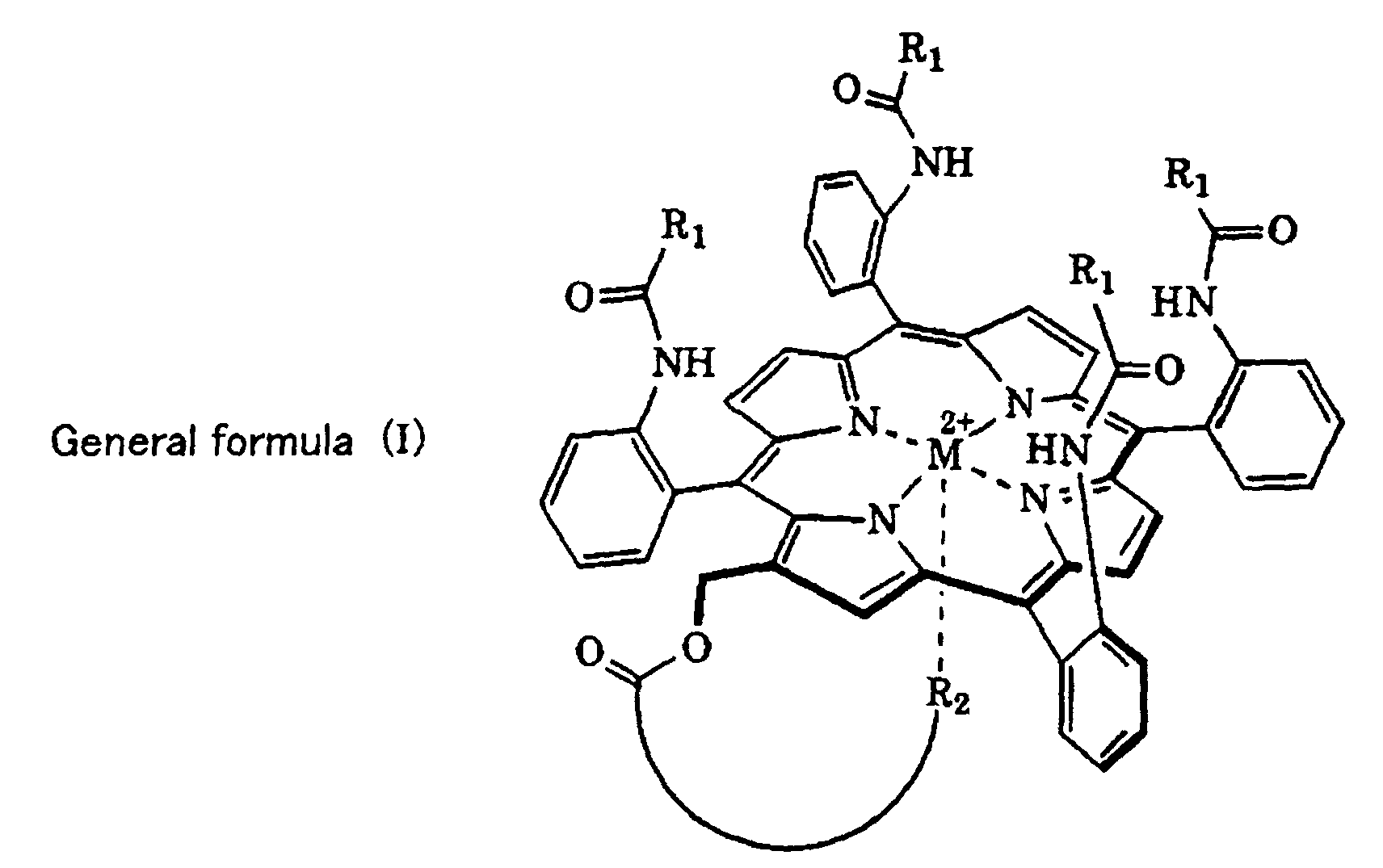 [wherein R1 is a chain or alicyclic hydrocarbon group that
may have one or more substituents,
[wherein R1 is a chain or alicyclic hydrocarbon group that
may have one or more substituents,
R2 is a basic axial ligand expressed by the formula (A):
[chem. 2] (where R3 is alkylene, R4 is a group that does not inhibit
coordination of said basic axial ligand to a central
transition metal ion M), or a basic axial ligand
represented by the formula (B):
(where R3 is alkylene, R4 is a group that does not inhibit
coordination of said basic axial ligand to a central
transition metal ion M), or a basic axial ligand
represented by the formula (B):
[Chem. 3] (where R5 is alkylene, R6 is alkyl); and
M is a transition metal ion of the 4th or 5th period of the periodic table of elements], and/or a porphyrin metal complex represented by the general formula [II]:
[Chem. 4]: [wherein R7 is hydrogen or a chain hydrocarbon group that
may have one or more substituents,
[wherein R7 is hydrogen or a chain hydrocarbon group that
may have one or more substituents,
R8 is alkyloxy, alkylamino, or an amino acid or amino acid derivative residue,
R9 is a basic axial ligand represented by the formula [C]:
[Chem. 5] (where R10 is alkylene, R11 is a group that does not
inhibit coordination of said basic axial ligand to a
central transition metal ion M), or a basic axial ligand
represented by the formula (D):
(where R10 is alkylene, R11 is a group that does not
inhibit coordination of said basic axial ligand to a
central transition metal ion M), or a basic axial ligand
represented by the formula (D):
[Chem. 6] (where R12 is alkyl), and
M is a transition metal ion of the 4th or 5th period of the periodic table of elements].
[Chem. 1]
R2 is a basic axial ligand expressed by the formula (A):
[chem. 2]
[Chem. 3]
M is a transition metal ion of the 4th or 5th period of the periodic table of elements], and/or a porphyrin metal complex represented by the general formula [II]:
[Chem. 4]:
R8 is alkyloxy, alkylamino, or an amino acid or amino acid derivative residue,
R9 is a basic axial ligand represented by the formula [C]:
[Chem. 5]
[Chem. 6]
M is a transition metal ion of the 4th or 5th period of the periodic table of elements].
These porphyrin metal complexes constitute an
active center for oxygen coordination.
In the porphyrin metal complexes of the general
formula (I), it is preferred that R1 is a C1-C19 chain
hydrocarbon group having dimethyl groups at the first
position, or a C3-C19 alicyclic hydrocarbon group having a
substituent at the first position. Examples of the latter
alicyclic hydrocarbon group include 1-substituted
cyclopropyl, 1-substituted cyclopentyl, 1-substituted
cyclohexyl, 1-methyl-2-cyclohexenyl, 2-substituted
norbornyl and 1-substituted cycloadamantyl. Here, each
substituent of the above groups may be methyl, C1-C18
alkylamide, C1-C18 alkanoyloxy, or C1-C18 alkoxy.
It is preferred that R3 is C1-C10 alkylene.
It is preferred that R4 is hydrogen, methyl,
ethyl or propyl.
It is preferred that R5 is C1-C10 alkylene.
It is preferred that R6 is C1-C18 alkyl.
In the porphyrin metal complexes of the general
formula (II), it is preferred that R7 is hydrogen, vinyl,
ethyl or methoxy.
Preferably, R8 is C1-C18 alkyloxy, C1-C18
alkylamino, or an amino acid or its derivative residue.
Preferably, the amino acid derivative is an amino acid-O-C1-C18
alkyl ester.
Preferably, R10 is C1-C10 alkylene.
Preferably, R11 is hydrogen, methyl, ethyl or
propyl.
Preferably, R12 is C1-C18 alkyl.
In both the general formulas (I) and (II), it is
preferred that M is Fe or Co.
The porphyrin metal complexes of the general
formula (I) are disclosed, for example, in JP H06-271577(A),
and T. Komatsu et al., Chem. Lett., 2001, 668-669 (2001).
The porphyrin metal complexes of the general
formula (II) are disclosed, for example, in T. G. Traylor
et al., J. Am. Chem. Soc., 101, 6716-6731 (1979), JP S58-10388
(A) and JP S60-17326 (A), except for those in which R8
is alkylamino. Synthesis of the porphyrin metal complexes
of the general formula (II) in which R8 is alkylamino are
disclosed in examples mentioned below.
As the albumin compound enclosing the porphyrin
metal complex, there may be used serum albumins such as
human serum albumin, genetically-modified human serum
albumin, bovine serum albumin and the like. As the albumin
compounds, it is also possible to use albumins in the form
of a multimer. In particular, it is preferred to use a
dimeric form of albumin. The use of dimeric albumins makes
it possible to prevent the clathrate compound from leaking
out of the circulatory system.
For the production of oxygen infusions comprising
an albumin clathrate compound enclosing a porphyrin metal
complex therein, there may be used such a method as
disclosed in JP S08-301873 (A), E. Tsuchida et al.,
Bioconjugate Chem., 10, 797-802 (1999), or Bioconjugate
Chem., 11, 46-50 (2000). It is desirable that the oxygen
infusion of the present invention generally contains the
albumin compound at a concentration of 1 to 30 wt%,
preferably, 5 to 25 wt%. The bonding number of the
porphyrin metal complex per one molecule of the albumin
compound is 1 to 8 (mol/mol), so that the concentration of
the porphyrin metal complex ranges from 0.15 to 36 mM. An
appropriate dosage of the oxygen infusion of the present
invention is 40 mL/kg body weight or below.
The oxygen infusion of the present invention has
the following favorable properties required for oxidization
of tumor tissues: (i) Since the serum albumin that occupies
about 60 % of plasma proteins is used as a carrier of the
porphyrin metal complex that is an active center for oxygen
coordination, the oxygen infusion of the present invention
is very high in safety and biocompatibility at the time of
intravascular administration; (ii) Since the molecular size
is as small as 8 X 3 nm, the oxygen infusion can pass
through small capillary vessels in the tumor tissues, to
which the red blood cells (8 µm) can not reach; and (iii)
the oxygen infusion has a low isoelectric point (pI), so
that it does not leak out of the kidney or vascular
endothelium.
Further, the oxygen affinity can be adjusted by
controlling a three-dimensional structure of the porphyrin
metal complex, thus making it possible to transport oxygen
at a high efficiency according to the oxygen partial
pressure in the affected part.
The oxygen infusion of the present invention
makes it possible to increase the oxygen partial pressure
in hypoxic regions of the tumor tissues by administrating
it to mammalian living bodies with tumor tissues.
The oxygen infusion of the present invention can
be administered to the living bodies by intra-arterial
injection, intravenous injection, local administration,
systemic administration or any other administrating means.
Of course, the metal in the center of the porphyrin metal
complex should be oxygenated before administration.
The following is a detained description of
examples of a method for increasing oxygen partial
pressures in hypoxic regions of tumor tissues, which is
achieved by administrating the oxygen infusion of the
present invention to mammals having tumor tissues.
Animals with cancer were prepared by
transplanting tumor cells in desired sites of laboratory
animals such as, for example, rats, hamsters, rabbits or
beagles. The following is an explanation on
transplantation of tumor cells into right femurs of rats.
Rats were bred for several days until tumors
develop and then subjected to experiments under anesthesia
(e.g., using Nembutal, diethyl ether or halothane
anesthetic gas). Rats were intubated through the cervical
trachea and ventilated under positive pressure by a
respirator. A polyethylene catheter was inserted into a
left carotid artery so that a distal end of the catheter is
located at a position short of a bifurcation of the common
iliac artery, and then backward cannulation was carried out
to provide an administration rout of sample in the
descending aorta.
The oxygen partial pressure in the tumor tissues
may be determined by intravenously injecting a
phosphorescent probe (palladium coproporphyrin (PdPor)),
irradiating light, and monitoring a phosphorescence
quenching time with an oxygen partial pressure monitor.
PdPor is intravenously injected through a tail vein at 5-20
minutes before administration of the sample. The femur is
incised by 20 mm to expose both normal muscles and the
tumor, and the probe is arranged just above the tumor. The
measurement is continued while preventing the tumor
surfaces from being dried by wetting the tumor surfaces
with a warm physiological saline solution of 37 °C. The
oxygen partial pressure in the tumor site of the right leg
was measured at 5 to 30 points in air or an atmosphere
containing 99 % oxygen with a device for measurement of an
oxygen partial pressure (e.g., OxySpot (Trademark) made by
Medical System Corp.), and served as controls. Then, the
oxygen saturated samples (1-20 mL/kg) were administered by
intra-arterial injection for 1 to 20 minutes under a
constant pressure with a syringe pump. Simultaneously with
the initiation of intra-arterial injection, measurements
were made on sequential changes of the oxygen partial
pressure at both tumor site and normal site of the right
leg. After completion of measurements, an incision is made
at the abdominal area to confirm that the catheter for
sample intra-arterial injection is located just before the
bifurcation of the common iliac artery, and then
measurements are made on size of the tumor.
In that case, there was observed no change in the
oxygen partial pressure (PO2) in the tumor tissue even when
the oxygen-saturated physiological saline, human serum
albumin, genetically-modified human serum albumin, bovine
serum albumin and albumin dimer were respectively intra-arterially
injected. In contrast therewith, the
administration of the oxygen infusion of the present
invention containing porphyrin metal complex-albumin
clathrate compound causes significant increase in the
oxygen partial pressure in the tumor tissue. It is
considered that the porphyrin metal complex-albumin
clathrate compound of the present invention has a small
particle size as mentioned above, and thus it can path
through irregular blood vessels in the tumor tissue easily
as compared with red blood cells, which in turn makes it
possible to effectively increase the oxygen partial
pressure in the tumor tissues.
The present invention will be explained below by
examples but is never limited thereto.
Protoporphyrin IX (0.1 g, 0.18 mmol), distilled
pyridine (10 ml) and triethylamine (51 µL, 0.45 mmol) were
charged into a three neck recovery flask of 100 ml and
stirred for 10 minutes. The resultant mixture was added
with (benzotriazolyloxy) tris (dimethylamino) phosphonium
hexafluorophosphate (124 mg, 0.45 mmol), stirred for 10
minutes, added with 1-(3-aminopropyl) imidazole (15 µL,
0.14 mmol) and then stirred for 4 hours under the light
shielding condition. The resultant reaction mixture was
added with 5 mL of tetrahydrofuran solution of methylamine,
and stirred for 4 hours. After removing pyridine under
reduced pressure by a vacuum pump, the reaction products
were fractionated and refined with silica gel columns
(chloroform/methanol/tryethylamine=8/1/1). The resultant
fraction was vacuum dried. There was obtained a red solid
substance, 24 mg (yield 19 %) of 8, 13-bisvinyl-2-methyl
aminocarbonylethyl-18-(3-(1-imidazolyl)propylamino)
carbonylehtyl-3, 7, 12, 17-tetramethylporphyrin.
Rf: 0.6 (chloroform/methanol=3/1)
IR(cm-1) : νc=O (amido) : 1631
UV-vis/λmax (nm) (CHCl3) : 631; 579; 542; 508; 409
1H-NMR (δ (ppm)) (CDCl3) : -4.0 (s, 2H, inner); 1.8-2.4 (m, 4H, -C2H4-Im); 2.7 (m, 4H, -CH2-COO-, -CH2-NH-); 3.5-3.7 (m, 15H, Por-CH3, CONHCH3); 4.2 (s, 4H, Por-CH2-); 5.8 (s, 1H, Im); 6.1-6.4 (q, 4H, CH2=CH-); 6.6 (d, 1H, Im); 8.2 (m, 2H, CH2=CH-); 9.5-10.0 (q, 4H, meso)
FAB-MAS[m/Z] : 683.
Rf: 0.6 (chloroform/methanol=3/1)
IR(cm-1) : νc=O (amido) : 1631
UV-vis/λmax (nm) (CHCl3) : 631; 579; 542; 508; 409
1H-NMR (δ (ppm)) (CDCl3) : -4.0 (s, 2H, inner); 1.8-2.4 (m, 4H, -C2H4-Im); 2.7 (m, 4H, -CH2-COO-, -CH2-NH-); 3.5-3.7 (m, 15H, Por-CH3, CONHCH3); 4.2 (s, 4H, Por-CH2-); 5.8 (s, 1H, Im); 6.1-6.4 (q, 4H, CH2=CH-); 6.6 (d, 1H, Im); 8.2 (m, 2H, CH2=CH-); 9.5-10.0 (q, 4H, meso)
FAB-MAS[m/Z] : 683.
A three neck recovery flask of 50 ml was charged
with 5 ml of a dimethylformamide solution of the porphyrin
compound (23.9 mg, 34.6 µmol) obtained in the above process
(I), and then deoxygenated with nitrogen for 20 minutes.
Iron chloride tetrahydrate (68.8 mg, 346 µmol) was quickly
added to that solution, and the resultant mixture was
stirred under the nitrogen atmosphere for 3 hours at 70 °C.
The completion of reactions was confirmed by adding one
drop of hydrochloric acid to a diluted solution of the
reaction mixture in chloroform and observing no peaks (at
about 450 nm) derived from dication in the UV-visible
spectrum. The solvent was removed under reduced pressure
by a vacuum pump, and the reaction products were
fractionated and refined with silica gel columns
(chloroform/methanol/tryethylamine=8/1/1). By vacuum
drying, there was obtained 7.6 mg (yield: 29 %) of a brown
solid substance.
Rf: 0.1 (chloroform/methanol/tryethylamine=8/1/1)
IR(cm-1) : νc=O (amido):1649
UV-vis/λmax (nm) (CHCl3) : 583; 531; 406
FAB-MAS[m/Z] : 736.
Rf: 0.1 (chloroform/methanol/tryethylamine=8/1/1)
IR(cm-1) : νc=O (amido):1649
UV-vis/λmax (nm) (CHCl3) : 583; 531; 406
FAB-MAS[m/Z] : 736.
There was obtained 8, 13-bisvinyl-2-dodecyl amino
carbonylethyl-18-(methyl-O-histidine) carbonylethyl-3, 7, 12,
17-tetramethylporphyriniron with a yield of 25% in the same
manner as the process (I) of synthetic Example A except for
that histidine-O-methyl ester was used instead of 1-(3-aminopropyl)imidazole,
and that dodecylamine was used
instead of methylamine.
Rf: 0.4 (chloroform/methanol = 15/1)
IR(cm-1) : νc=O (amido):1640
UV-vis/λmax (nm) (CHCl3) : 631; 575; 540; 409
1H-NMR (δ(ppm)) (CDCl3) : -4.0 (s, 2H, inner); 0.8 (s, 3H, -(CH2)10CH3); 1.2-1.8 (m, 20H, -CH2-); 1.9 (t, 4H, -CH2(C=O)NH-); 3.2 (s, 2H, -Im-CH2-); 3.3 (t, 2H, -(C=O)NHCH2-); 3.5-3.7 (m, 12H, Por-CH3); 3.7 (m, 3H, His-OMe); 4.2 (s, 4H, Por-CH2-); 4.8 (s, 1H, His-CH2CH-); 6.1-6.4 (q, 4H, CH2=CH-); 6.8 (s, 1H, Im); 7.6 (s, 1H, Im); 8.2 (m, 2H, CH2=CH-); 9.5-10.0 (q, 4H, meso)
FAB-MAS [m/Z] : 881
Rf: 0.4 (chloroform/methanol = 15/1)
IR(cm-1) : νc=O (amido):1640
UV-vis/λmax (nm) (CHCl3) : 631; 575; 540; 409
1H-NMR (δ(ppm)) (CDCl3) : -4.0 (s, 2H, inner); 0.8 (s, 3H, -(CH2)10CH3); 1.2-1.8 (m, 20H, -CH2-); 1.9 (t, 4H, -CH2(C=O)NH-); 3.2 (s, 2H, -Im-CH2-); 3.3 (t, 2H, -(C=O)NHCH2-); 3.5-3.7 (m, 12H, Por-CH3); 3.7 (m, 3H, His-OMe); 4.2 (s, 4H, Por-CH2-); 4.8 (s, 1H, His-CH2CH-); 6.1-6.4 (q, 4H, CH2=CH-); 6.8 (s, 1H, Im); 7.6 (s, 1H, Im); 8.2 (m, 2H, CH2=CH-); 9.5-10.0 (q, 4H, meso)
FAB-MAS [m/Z] : 881
Using the resultant porphyrin, its iron complex
was prepared in the same manner as the process (II) of
synthetic example A.
A separable flask (2 L) was charged with 10 mL
(2.5 mg, 37.5 µmol) of human serum albumin (25 wt%) and 1 L
of phosphate buffered saline (pH 8.1), and then provided
with a dropping funnel of 500 mL. Separately, a recovery
flask (300 mL) was charged with 250 mL of an ethanol
solution of 2-8-(2-methyl-1-imidazolyl) octanoyloxymethyl-5,
10, 15, 20-tetrakis- (α,α,α,α-o-pivaloylamidophenyl)
porphyrin iron (II) complex (hereinafter referred to as
"FepivP (Im)", 390 mg, 300 µmol), and connected to the
above separable flask through a Teflon (Trademark) tube.
The tube was kept so as not to come into contact with the
liquid surface. Carbon monoxide was bubbled in the
recovery flask containing the ethanol solution of FepivP
(Im), and the exhaust gas thereof was allowed to flow to
the albumin solution. Simultaneously therewith, the
bubbling was carried out so as not to foam the albumin
solution. The bubbling and the exhaust gas flow were
carried out for about 60 minutes. In the carbon monoxide
atmosphere, the ethanol solution of FepivP (Im) was added
with 250 µL of an aqueous solution of ascorbic acid (0.6 M)
and stirred for 5 minutes. In this manner, Heme is reduced
to form a carbon monoxide complex and color of the solution
was changed to magenta.
The resultant ethanol solution of the carbon
monoxide FepivP (Im) complex was transferred to the
dropping funnel mounted on the separable flask, and slowly
dropped into the albumin solution. After completing the
dropping, the solution was stirred for 30 minutes.
The following procedures were carried out under
the light shielding conditions using aluminum foils. Using
a closed-circuit type ultrafiltration equipment (Pellicon 2
MINI HOLDER (Trade name), Cat. NO. XX42PMINI) provided with
a ultrafiltration membrane having a filtration area of 0.1
m2 and a molecular weight cut off of 10 kDa, P2B010A01
(Trade name of MILIPORE), 1.25 L of the 20 % ethanol
solution of the resultant albumin-Heme was filtered. At
the time 50 mL of a filtrate was filtered out, 50 mL of a
phosphate buffer (1 mM, pH 7.3) was added. This procedure
was repeated until 10 L (1.25 X 8 L) of the phosphate
buffer solution was filtered out. Then, the albumin-Heme
solution was concentrated to 100 mL and collected into a
container.
The resultant concentrated solution (about 200
mL) was filtered with a filter (DISMIC (Trade name), 0.45
µm), and the filtrate was concentrated by an
ultrafiltration unit (UHP-76K, ADVANTEC (Trademark)) to
obtain a concentrated solution of about 50 mL.
The resultant concentrated solution was added
with a 20 wt% solution of sodium chloride so that a
concentration of sodium chloride becomes 140 mM.
Using a pH meter and a salt meter, measurements
were made on pH and a Na+ concentration of the albumin-Heme
solution. The albumin concentration was determined by a
bromocresol green (BCG) test, while the concentration of
FepivP (Im) was determined by an ICP (inductively coupled
plasma) emission spectrometry.
A recovery flask of 100 mL was charged with the
albumin-Heme (carbon monoxide complex) solution (20 mL) and
attached to a rotary evaporator. While cooling the
recovery flask with an ice water bath, the recovery flask
was rotated and subjected to oxygen flowing through an
upper stopcock of a cooling tube for 20 minutes. Then, a
halogen lamp (500 w) was fixed to a position spaced by 15
to 20 cm above the rotating recovery flask, and turned on
to irradiate the albumin-Heme solution for 10 minutes.
Formation of an oxygen complex was confirmed from an
absorbance and λmax of ultraviolet visible spectrum of the
albumin-Heme solution. A molar extinction coefficient
(ε426) of the obtained oxygen complex was about 1.16×10⁵ M-1cm-1.
Measurements of oxygen partial pressures in healthy cells
and tumor cells
As experimental animals, there were used Donryu
rats (Crj-Donryu; Nippon Charles River, male, weight: about
200 g, 6 week old) that were bred by a biological clean
system under free-feeding of pellets and water. The
transplanted tumor cells, Ascites hepatoma LY80, were
developed by intra-abdominal passage transplantation. For
preparation of rats developed by a cancer, there were used
tumor cells grown for 7 days after transplantation. At 8
days before transplantation, incision was made in the right
femur of the rat, and 5 X 10⁶ cells were transplanted just
beneath the muscle of thigh with syringes of 27 G and 1 mL.
The partial pressure of oxygen in the tumor tissues was
determined from a phosphorescence quenching time that was
monitored with an oxygen partial pressure measurement
system (Oxyspot Photomeric Oxygen Measurement System
(OxySpot, Medical System Corp.) after light irradiation
following intravenous injection of palladium coproporphyrin
(PdPor). PdPor was intravenously injected by an indwelling
needle 24 G through the tail vein at 15 minutes before
administration of the sample. A small incision of 20 mm
was made in the femur to expose both normal muscle and the
tumor, and a measuring probe was located just above the
tumor at a distance of 5 mm. The measurements were carried
out while preventing the tumor surfaces from being dried by
rinsing the tumor surface with warm physiological saline of
37 °C.
The rats were anesthetized by inhalation with
ether, intubated with 14G-Angiocath (Trademark) via their
cervical trachea, and ventilated under positive pressure
(80 times/min) by an artificial respirator (Respirator
Model SN 480-7 made by Shinano MFG., CO. Ltd), while
feeding a gas of 1 % halothane anesthetic gas (FiO2, 1 %
halothane Fluothane) mixed with air or oxygen through a
small animal anesthetizer. A polyethylene catheter (SP10,
single lumen, inside diameter: 0.28 mm, outer diameter:
0.61 mm) was inserted into a left carotid artery and
located at a distance of 1 cm short of a common iliac
artery bifurcation(about 9.5 cm), and then reverse
cannulation was carried out to keep a sample administration
line in the descending aorta.
After peeling away a skin of tumor cells of the
right leg, PdPor (0.24 cc (10 mg/mL, 0.9 mL/kg)) was
injected through the tail vein of caudal portion of the rat.
The partial pressures of oxygen were measured at 20 points
of tumor sites of the right leg in air and an atmosphere
containing 99 % oxygen using OxySpot (Trademark), and
served as controls. Then, oxygen-saturated samples (10
mL/kg) were administered by intra-arterial injection for
duration of 4 minutes (2.5 mL/kg/min) under a constant
pressure with a syringe pump (FP-W-100, Matys, ToyoSangyo
Ltd.). Simultaneously with the initiation of intra-arterial
injection, measurements were made on the partial
pressures of oxygen at both tumor sites and normal sites
(at 5 points, for a duration of 15 minutes) to determine
sequential changes of the oxygen partial pressure. After
the measurements, an incision was made in the abdomen to
confirm a fact that the sample intra-arterial injection
catheter is located at a position short of the bifurcation
of common iliac artery, and a size of the tumor was
measured.
The partial pressures of oxygen (PO2) at the
normal sites and tumor sites of the right leg under the
99 % oxygen atmosphere were 14-16 Torr and 1.4-1.7 Torr,
respectively, as shown in Table 1. The partial pressures
at the tumor sites are considerably low as compared with
those at the normal sites. Thus, it was confirmed that the
partial pressure is not increased only by increase in the
oxygen concentration in breathing of the rat.
The primary values of various parameters for the
rHSA-Heme treated group (4 rats) and rHSA treated group (4
rats) are shown in Table 1.
| rHSA-Heme treated group | rHSA treated group | |
| weight(g) | 213±4.2 | 203±6.3 |
| tumor size(mm) | 16.5×14.0 | 19.0×14.0 |
| PO2(Torr) (tumor cells) | 1.4±0.2 | 1.7±0.2 |
| PO2 (Torr) (tumor cells) | 15.7±2.3 | 14.8±2.8 |
| Blood gas parameter: | ||
| pH | 7.41±0.04 | 7.42±0.04 |
| PO2(Torr) | 394±73 | 402±60 |
| PCO2 (Torr) | 34.6±4.2 | 33.0±2.8 |
Next, oxygen-saturated, genetically modified
human serum albumin (rHSA) was administered by intra-arterial
injection, but there was no change in the oxygen
partial pressure (PO2). In contrast therewith, when the
oxygen infusion product of the present invention prepared
as above was administered, the oxygen partial pressure in
the tumor tissues was increased up to 3.5 Torr. These
results are shown in Fig. 1. The oxygen partial pressure
after administration of the oxygen infusion product of the
present invention is 2.5 time of that before administration.
It is considered that the porphyrin metal complex-clathrate
albumin compound of the present invention can effectively
increases the oxygen partial pressure in the tumor tissues
since the compound can pass easily through the irregular
blood vessels in the tumor tissues because of its small
molecular size, as compared with the red blood cells.
Effects of oxygen supply to the hypoxic region in
the tumor tissues were measured in the same manner as
Example 1, except for that 2-8-(1-imidazolyl) octanoyloxy
methyl-5, 10, 15, 20-tetrakis-(α,α,α,α-o-(1-methyl cyclohexanoyl)
aminophenyl)porphyrin iron(II) complex was used
instead of FepivP (Im) in Example 1. The oxygen partial
pressure in the tumor tissues was increased up to about 7.0
Torr. Thus, it was demonstrated that the effect of
supplying oxygen to the low oxygen tumor tissues that
results from the administration of albumin-Heme, which is
an artificial oxygen carrier.
Effects of oxygen supply to the hypoxic region in the
tumor tissues were measured in the same manner as Example 1
except for taht 8, 13-bisvinyl-2-methoxycarbonyl ethyl-18-(3-(1-imidazolyl)
propylamino) carbonylehtyl-3, 7, 12, 17-tetramethyl
porphyrin iron(II) complex was used instead of
FepivP (Im) in Example 1. The oxygen partial pressure in
the tumor tissues was increased up to about 1.6 Torr. Thus,
it was demonstrated that the effect of supplying oxygen to
the low oxygen tumor tissues that results from the
administration of albumin-Heme which is an artificial
oxygen carrier.
As mentioned above, according to the present
invention there is provided a highly safe oxygen infusion
product for effectively increasing an oxygen partial
pressure in hypoxic region of tumor tissues when
administered to sites near tumor tissues.
Claims (4)
- An oxygen infusion for increasing an oxygen concentration in tumor tissues in living bodies, said oxygen infusion comprising a dispersion of an albumin clathrate compound including porphyrin metal complex, dispersed in a physiologically permissible aqueous media.
- The oxygen infusion according to claim 1, wherein said porphyrin metal complex is a porphyrin metal complex represented by the general formula (I):
[Chem. 7][wherein R1 is a chain or alicyclic hydrocarbon group that may have one or more substituents,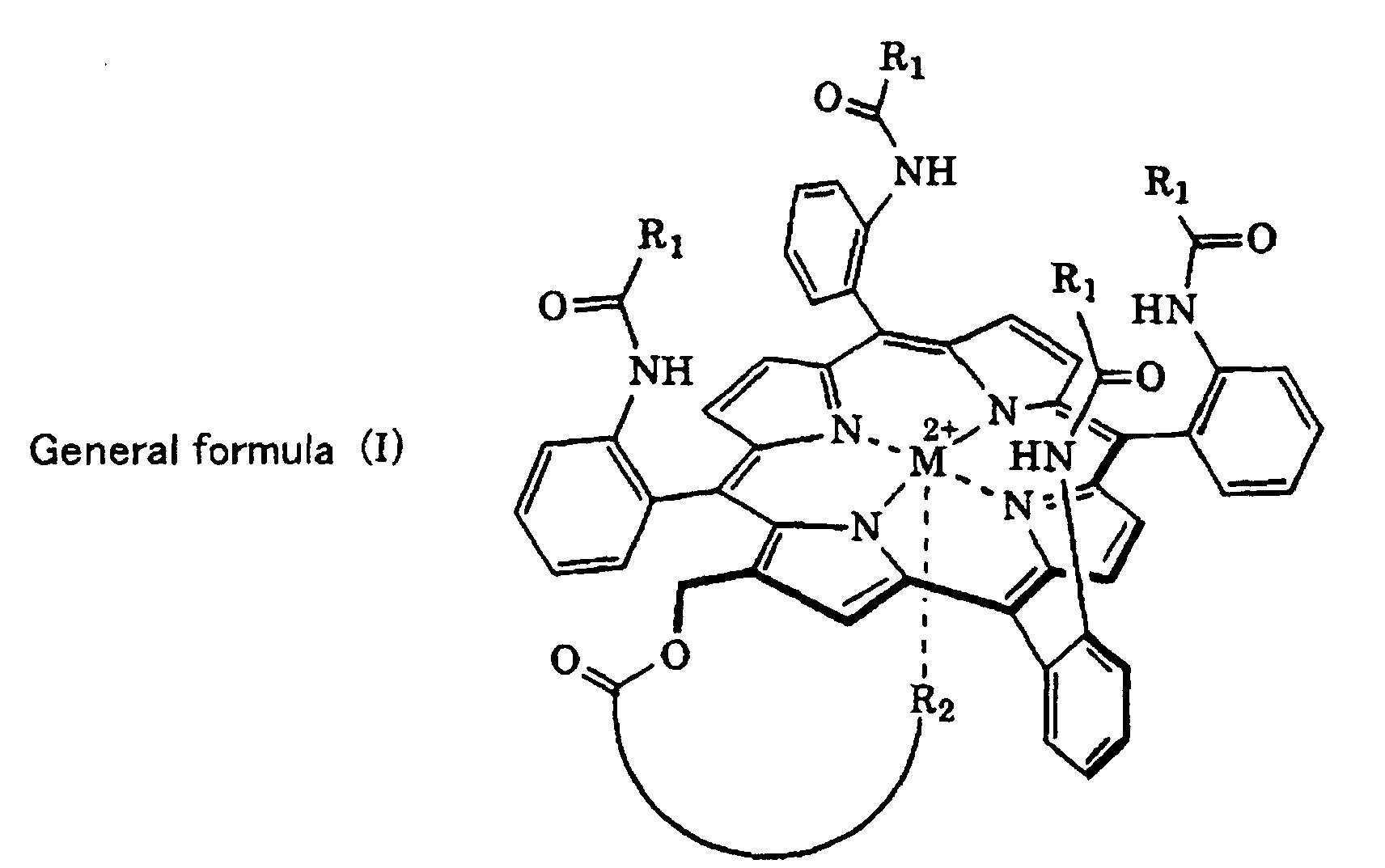
R2 is a basic axial ligand expressed by the formula (A) :
[chem. 8](where R3 is alkylene, R4 is a group that does not inhibit coordination of said basic axial ligand to a central transition metal ion M), or a basic axial ligand represented by the formula (B):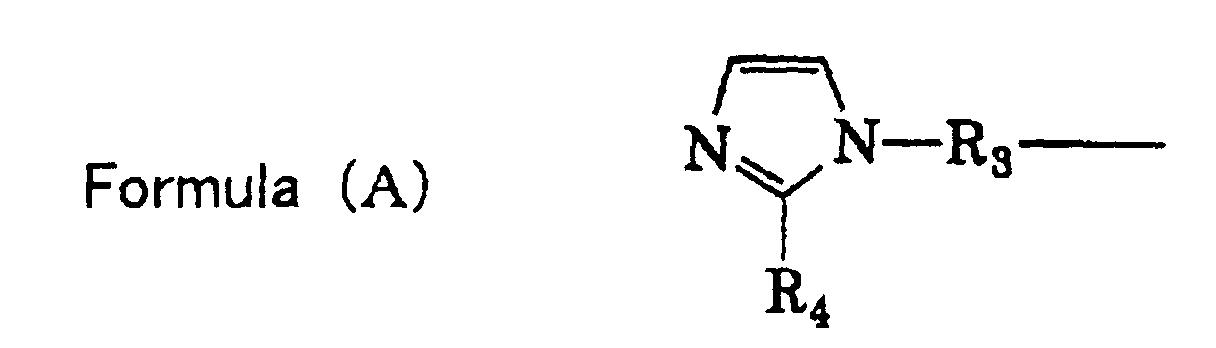
[Chem. 9](where R5 is alkylene, R6 is alkyl); and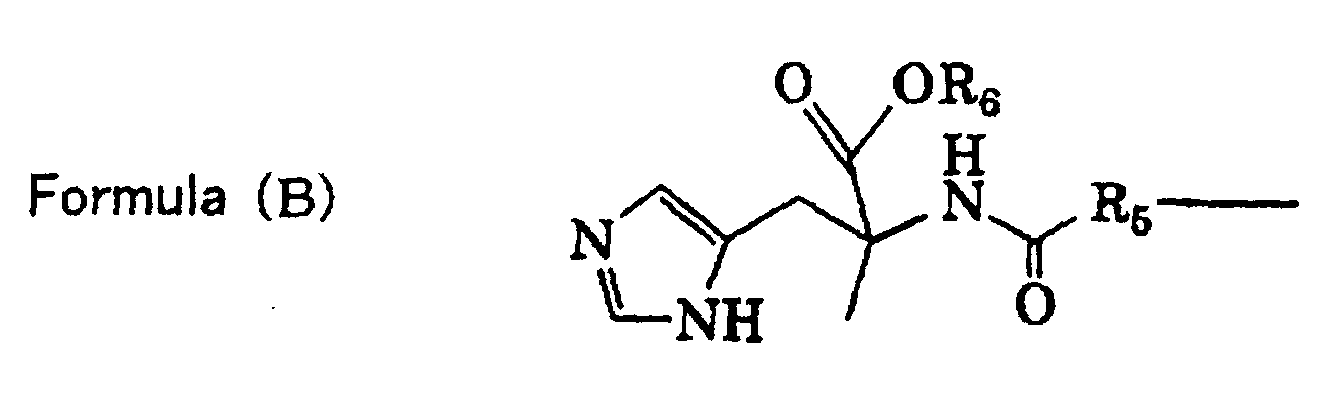
M is a transition metal ion of the 4th or 5th period of the periodic table of elements], and/or a porphyrin metal complex represented by the general formula [II]:
[Chem. 10][wherein R7 is a chain or alicyclic hydrocarbon group that may have one or more substituents,
R8 is alkyloxy, alkylamino, amino or an amino acid derivative residue,
R9 is an basic axial ligand represented by the formula [C] :
[Chem. 11](where R10 is alkylene, R11 is a group that does not inhibit coordination of said basic axial ligand to a central transition metal ion M), or an basic axial ligand represented by the formula (D):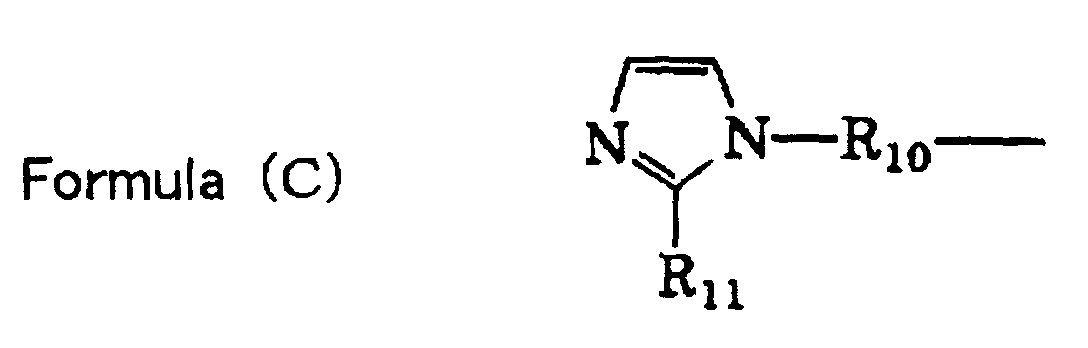
[Chem. 12](where R12 is alkyl), and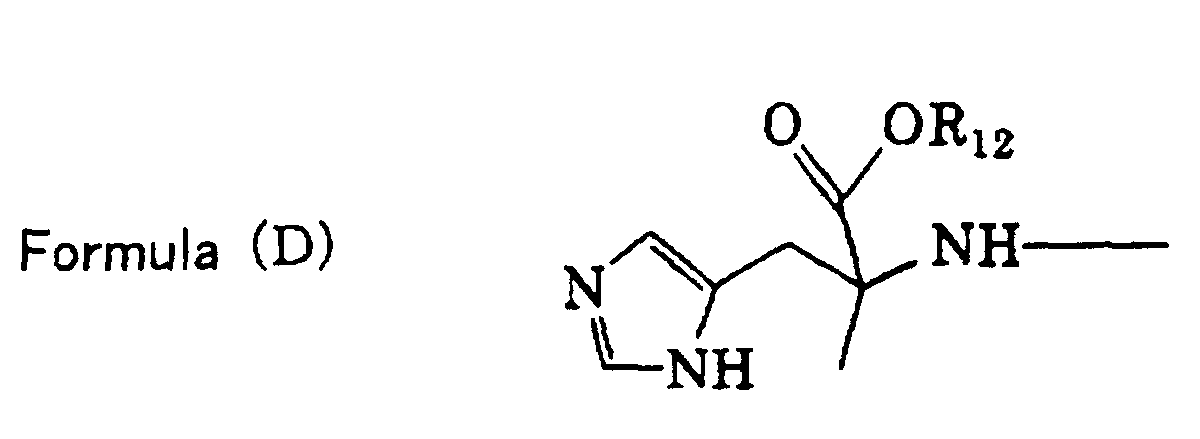
M is a transition metal ion of the 4th or 5th period of the periodic table of elements]. - The oxygen infusion according to claim 2, wherein said porphyrin metal complex is a porphyrin metal complex of the general formula (I), in which R1 is C1-C19 chain hydrocarbon group having dimethyl groups at the first position or C3-C19 alicyclic hydrocarbon having a substituent at the first position, R3 is C1-C10 alkylene, R4 is hydrogen, methyl, ethyl or propyl, R5 is C1-C10 alkylene, R6 is C1-C18 alkyl, M is Fe or Co.
- The oxygen infusion according to claim 2, wherein said porphyrin metal complex is a porphyrin metal complex of the general formula (II), in which R7 is hydrogen, vinyl, ethyl or methoxy; R8 is C1-C18 alkyloxy, C1-C18 alkylamino, amino acid or a derivative residue thereof; R10 is C1-C10 alkylene; R11 is hydrogen, methyl, ethyl or propyl; R12 is C1-C18 alkyl; and M is Fe or Co.
Applications Claiming Priority (3)
| Application Number | Priority Date | Filing Date | Title |
|---|---|---|---|
| JP2002161942A JP4529344B2 (en) | 2002-06-03 | 2002-06-03 | Porphyrin oxygen infusion formulation to increase oxygen concentration in tumor tissue |
| JP2002161942 | 2002-06-03 | ||
| PCT/JP2003/006991 WO2003101451A1 (en) | 2002-06-03 | 2003-06-03 | Porphyrin oxygen infusion preparation for increasing oxygen concentration in tumor tissue |
Publications (2)
| Publication Number | Publication Date |
|---|---|
| EP1512399A1 true EP1512399A1 (en) | 2005-03-09 |
| EP1512399A4 EP1512399A4 (en) | 2009-12-30 |
Family
ID=29706594
Family Applications (1)
| Application Number | Title | Priority Date | Filing Date |
|---|---|---|---|
| EP03733267A Withdrawn EP1512399A4 (en) | 2002-06-03 | 2003-06-03 | Porphyrin oxygen infusion preparation for increasing oxygen concentration in tumor tissue |
Country Status (8)
| Country | Link |
|---|---|
| US (2) | US20050222116A1 (en) |
| EP (1) | EP1512399A4 (en) |
| JP (1) | JP4529344B2 (en) |
| KR (1) | KR20050008789A (en) |
| CN (1) | CN1674891A (en) |
| AU (1) | AU2003241909A1 (en) |
| CA (1) | CA2487757A1 (en) |
| WO (1) | WO2003101451A1 (en) |
Cited By (3)
| Publication number | Priority date | Publication date | Assignee | Title |
|---|---|---|---|---|
| EP1683529A1 (en) * | 2005-01-25 | 2006-07-26 | Nipro Corporation | Inclusion compound of porphyrin metal complex and albumin |
| EP1704870A1 (en) | 2005-03-25 | 2006-09-27 | Nipro Corporation | Use of iron compounds as radiosensitizers |
| EP1880721A4 (en) * | 2005-05-12 | 2009-05-27 | Nipro Corp | Agent for improving circulatory disorder |
Families Citing this family (6)
| Publication number | Priority date | Publication date | Assignee | Title |
|---|---|---|---|---|
| CN100381083C (en) | 2003-04-29 | 2008-04-16 | 韩力 | Non-combustible electronic spray cigarette |
| JP2006232818A (en) * | 2005-01-25 | 2006-09-07 | Nipro Corp | Inclusion compound of porphyrin metal complex and albumin |
| JP4972929B2 (en) * | 2005-03-25 | 2012-07-11 | ニプロ株式会社 | Radiosensitizer |
| US9694075B2 (en) * | 2011-04-08 | 2017-07-04 | Sanovas, Inc. | Treatment of hypoxic tumors with localized oxygenation |
| US10029115B2 (en) | 2011-04-08 | 2018-07-24 | Sanovas Intellectual Property, Llc | Photodynamic therapy for tumors with localized delivery |
| CN108030921B (en) * | 2017-12-20 | 2021-05-25 | 深圳先进技术研究院 | A kind of preparation method and application of albumin-loaded metalloporphyrin complex nanoparticles |
Family Cites Families (5)
| Publication number | Priority date | Publication date | Assignee | Title |
|---|---|---|---|---|
| GB8429845D0 (en) * | 1984-11-26 | 1985-01-03 | Efamol Ltd | Porphyrins & cancer treatment |
| US5599923A (en) * | 1989-03-06 | 1997-02-04 | Board Of Regents, University Of Tx | Texaphyrin metal complexes having improved functionalization |
| JP3428225B2 (en) * | 1995-04-28 | 2003-07-22 | 三菱ウェルファーマ株式会社 | Porphyrin metal complex-albumin inclusion compound and oxygen carrier |
| PL201172B1 (en) * | 1998-12-09 | 2009-03-31 | Yeda Res & Dev | Palladium-substituted bacteriochlorophyll derivatives and use thereof |
| JP3816767B2 (en) * | 2001-07-30 | 2006-08-30 | 独立行政法人科学技術振興機構 | Porphyrin metal complex and oxygen infusion containing it |
-
2002
- 2002-06-03 JP JP2002161942A patent/JP4529344B2/en not_active Expired - Fee Related
-
2003
- 2003-06-03 KR KR10-2004-7019718A patent/KR20050008789A/en not_active Ceased
- 2003-06-03 US US10/516,588 patent/US20050222116A1/en not_active Abandoned
- 2003-06-03 EP EP03733267A patent/EP1512399A4/en not_active Withdrawn
- 2003-06-03 AU AU2003241909A patent/AU2003241909A1/en not_active Abandoned
- 2003-06-03 CA CA002487757A patent/CA2487757A1/en not_active Abandoned
- 2003-06-03 CN CNA038186160A patent/CN1674891A/en active Pending
- 2003-06-03 WO PCT/JP2003/006991 patent/WO2003101451A1/en not_active Ceased
-
2007
- 2007-10-05 US US11/868,259 patent/US20080081801A1/en not_active Abandoned
Cited By (3)
| Publication number | Priority date | Publication date | Assignee | Title |
|---|---|---|---|---|
| EP1683529A1 (en) * | 2005-01-25 | 2006-07-26 | Nipro Corporation | Inclusion compound of porphyrin metal complex and albumin |
| EP1704870A1 (en) | 2005-03-25 | 2006-09-27 | Nipro Corporation | Use of iron compounds as radiosensitizers |
| EP1880721A4 (en) * | 2005-05-12 | 2009-05-27 | Nipro Corp | Agent for improving circulatory disorder |
Also Published As
| Publication number | Publication date |
|---|---|
| EP1512399A4 (en) | 2009-12-30 |
| US20050222116A1 (en) | 2005-10-06 |
| WO2003101451A1 (en) | 2003-12-11 |
| CA2487757A1 (en) | 2003-12-11 |
| JP4529344B2 (en) | 2010-08-25 |
| JP2004010495A (en) | 2004-01-15 |
| KR20050008789A (en) | 2005-01-21 |
| AU2003241909A1 (en) | 2003-12-19 |
| US20080081801A1 (en) | 2008-04-03 |
| CN1674891A (en) | 2005-09-28 |
Similar Documents
| Publication | Publication Date | Title |
|---|---|---|
| US20080081801A1 (en) | Porphyrin oxygen infusion for increasing concentrations in tumor tissues | |
| Feng et al. | Biodegradable oxygen-producing manganese-chelated metal organic frameworks for tumor-targeted synergistic chemo/photothermal/photodynamic therapy | |
| US7045140B2 (en) | Therapeutic delivery of carbon monoxide | |
| Ji et al. | Toward carbon monoxide–based therapeutics: critical drug delivery and developability issues | |
| AU2002307959A1 (en) | Therapeutic delivery of carbon monoxide | |
| KR890002204B1 (en) | An aqueous pharmaceutical composition comprising a perfluorocarbon emulsion, its preparation and the emulsion | |
| Bauer et al. | Compelling evidence: a critical update on the therapeutic potential of carbon monoxide | |
| US20070065485A1 (en) | Therapeutic delivery of carbon monoxide | |
| Wang et al. | Cytomembrane-targeted photodynamic priming triggers extracellular vesicle storm for deep penetration and complete destruction of bladder cancer | |
| GB2395431A (en) | Combination of a metal carbonyl compound and a guanylate cyclase stimulant or stabilizer for the therapeutic delivery of carbon monoxide | |
| CN114699537A (en) | ROS (reactive oxygen species) -responsive anticancer drug for improving curative effect of hypoxia-sensitized PD-1 antibody | |
| CN117205335A (en) | A metal-organic framework composite nanomedicine and its preparation method | |
| Yamada et al. | Zinc Substituted Myoglobin− Albumin Fusion Protein: A Photosensitizer for Cancer Therapy | |
| CN116173233A (en) | Nano-preparation, preparation and application of PD-1 targeting loaded curcumin in kidney diseases | |
| WO2022228230A1 (en) | Amphiphilic material and application thereof in preparation for liposome | |
| CN120093917A (en) | Preparation method and use of siliceous body capable of releasing carbon monoxide and chemotherapeutic drugs in dual response to ultrasound/hydrogen peroxide | |
| US10137148B2 (en) | Reducing the proliferation of adenocarcinoma cells (CaCo-2) by administration of a poly-oxygenated metal hydroxide | |
| CN115068615B (en) | A "open source and reduce expenditure" anti-tumor pharmaceutical composition for reversing hypoxia and its application | |
| CN114437153B (en) | Adriamycin-monoamine oxidase inhibitor prodrug compound and preparation method and application thereof | |
| DE19824653A1 (en) | Use of compounds concentrating in necrotic tissue as drug depots, e.g. for radiation therapy, pharmacotherapy, restenosis prevention and diagnosis | |
| US20070142290A1 (en) | Surface-modified serum albumin-metal porphyrin composite, and oxygen infusion solution containing the same | |
| CN1810250A (en) | Inclusion compound of porphyrin metal complex and albumin | |
| JP2007269665A (en) | Ligand substitution infusion formulation | |
| Teicher et al. | Definition and manipulation of tumor oxygenation | |
| Rodrigues et al. | Enhanced uptake of ifosfamide into GH3 prolactinomas with hypercapnic hyperoxic gases monitored in vivo by 31P MRS |
Legal Events
| Date | Code | Title | Description |
|---|---|---|---|
| PUAI | Public reference made under article 153(3) epc to a published international application that has entered the european phase |
Free format text: ORIGINAL CODE: 0009012 |
|
| 17P | Request for examination filed |
Effective date: 20041220 |
|
| AK | Designated contracting states |
Kind code of ref document: A1 Designated state(s): AT BE BG CH CY CZ DE DK EE ES FI FR GB GR HU IE IT LI LU MC NL PT RO SE SI SK TR |
|
| AX | Request for extension of the european patent |
Extension state: AL LT LV MK |
|
| DAX | Request for extension of the european patent (deleted) | ||
| A4 | Supplementary search report drawn up and despatched |
Effective date: 20091130 |
|
| STAA | Information on the status of an ep patent application or granted ep patent |
Free format text: STATUS: THE APPLICATION HAS BEEN WITHDRAWN |
|
| 18W | Application withdrawn |
Effective date: 20100222 |