EP1511382B1 - Benzodioxole derivatives as modulators of the proteolytic activity in plants - Google Patents
Benzodioxole derivatives as modulators of the proteolytic activity in plants Download PDFInfo
- Publication number
- EP1511382B1 EP1511382B1 EP03739485A EP03739485A EP1511382B1 EP 1511382 B1 EP1511382 B1 EP 1511382B1 EP 03739485 A EP03739485 A EP 03739485A EP 03739485 A EP03739485 A EP 03739485A EP 1511382 B1 EP1511382 B1 EP 1511382B1
- Authority
- EP
- European Patent Office
- Prior art keywords
- group
- use according
- alkyl
- hydrogen
- plants
- Prior art date
- Legal status (The legal status is an assumption and is not a legal conclusion. Google has not performed a legal analysis and makes no representation as to the accuracy of the status listed.)
- Expired - Lifetime
Links
- 150000005528 benzodioxoles Chemical class 0.000 title claims abstract description 14
- 230000002797 proteolythic effect Effects 0.000 title description 20
- 230000000694 effects Effects 0.000 claims abstract description 63
- 241000196324 Embryophyta Species 0.000 claims description 66
- 102000035195 Peptidases Human genes 0.000 claims description 39
- 108091005804 Peptidases Proteins 0.000 claims description 39
- 239000004365 Protease Substances 0.000 claims description 38
- 229920000742 Cotton Polymers 0.000 claims description 36
- 108090000623 proteins and genes Proteins 0.000 claims description 31
- 102000004169 proteins and genes Human genes 0.000 claims description 30
- 238000011282 treatment Methods 0.000 claims description 24
- 230000009261 transgenic effect Effects 0.000 claims description 23
- 125000000217 alkyl group Chemical group 0.000 claims description 22
- 229910052739 hydrogen Inorganic materials 0.000 claims description 22
- 239000001257 hydrogen Substances 0.000 claims description 22
- 102000005593 Endopeptidases Human genes 0.000 claims description 20
- 108010059378 Endopeptidases Proteins 0.000 claims description 20
- 238000000034 method Methods 0.000 claims description 20
- 108010004032 Bromelains Proteins 0.000 claims description 17
- 150000001875 compounds Chemical class 0.000 claims description 17
- 229940024999 proteolytic enzymes for treatment of wounds and ulcers Drugs 0.000 claims description 15
- 102000005367 Carboxypeptidases Human genes 0.000 claims description 13
- 108010006303 Carboxypeptidases Proteins 0.000 claims description 13
- 102000004190 Enzymes Human genes 0.000 claims description 13
- 108090000790 Enzymes Proteins 0.000 claims description 13
- 229940088598 enzyme Drugs 0.000 claims description 13
- UFHFLCQGNIYNRP-UHFFFAOYSA-N Hydrogen Chemical compound [H][H] UFHFLCQGNIYNRP-UHFFFAOYSA-N 0.000 claims description 11
- 235000019835 bromelain Nutrition 0.000 claims description 11
- 239000003995 emulsifying agent Substances 0.000 claims description 11
- -1 polyoxyethylene Polymers 0.000 claims description 11
- 108090000270 Ficain Proteins 0.000 claims description 10
- 108090000526 Papain Proteins 0.000 claims description 10
- 150000002431 hydrogen Chemical class 0.000 claims description 9
- 229940066758 endopeptidases Drugs 0.000 claims description 7
- 229910052757 nitrogen Inorganic materials 0.000 claims description 7
- 235000019834 papain Nutrition 0.000 claims description 7
- 229940055729 papain Drugs 0.000 claims description 7
- 244000068988 Glycine max Species 0.000 claims description 6
- 235000010469 Glycine max Nutrition 0.000 claims description 6
- 240000008042 Zea mays Species 0.000 claims description 6
- 235000016383 Zea mays subsp huehuetenangensis Nutrition 0.000 claims description 6
- 235000002017 Zea mays subsp mays Nutrition 0.000 claims description 6
- 150000001412 amines Chemical class 0.000 claims description 6
- 125000003118 aryl group Chemical group 0.000 claims description 6
- 239000012965 benzophenone Substances 0.000 claims description 6
- 150000008366 benzophenones Chemical class 0.000 claims description 6
- 125000004093 cyano group Chemical group *C#N 0.000 claims description 6
- 235000014113 dietary fatty acids Nutrition 0.000 claims description 6
- 150000002170 ethers Chemical class 0.000 claims description 6
- 229930195729 fatty acid Natural products 0.000 claims description 6
- 239000000194 fatty acid Substances 0.000 claims description 6
- 235000019836 ficin Nutrition 0.000 claims description 6
- POTUGHMKJGOKRI-UHFFFAOYSA-N ficin Chemical compound FI=CI=N POTUGHMKJGOKRI-UHFFFAOYSA-N 0.000 claims description 6
- 235000009973 maize Nutrition 0.000 claims description 6
- XUJNEKJLAYXESH-UHFFFAOYSA-N cysteine Natural products SCC(N)C(O)=O XUJNEKJLAYXESH-UHFFFAOYSA-N 0.000 claims description 5
- 125000001424 substituent group Chemical group 0.000 claims description 5
- 102000004400 Aminopeptidases Human genes 0.000 claims description 4
- 108090000915 Aminopeptidases Proteins 0.000 claims description 4
- 229910006069 SO3H Inorganic materials 0.000 claims description 4
- 108700019146 Transgenes Proteins 0.000 claims description 4
- 239000002253 acid Substances 0.000 claims description 4
- 150000001565 benzotriazoles Chemical class 0.000 claims description 4
- 159000000007 calcium salts Chemical class 0.000 claims description 4
- 150000002148 esters Chemical class 0.000 claims description 4
- 150000004665 fatty acids Chemical class 0.000 claims description 4
- 229910052736 halogen Inorganic materials 0.000 claims description 4
- 150000002367 halogens Chemical class 0.000 claims description 4
- 102000004860 Dipeptidases Human genes 0.000 claims description 3
- 108090001081 Dipeptidases Proteins 0.000 claims description 3
- 229920003171 Poly (ethylene oxide) Polymers 0.000 claims description 3
- 150000007513 acids Chemical class 0.000 claims description 3
- RSOILICUEWXSLA-UHFFFAOYSA-N bis(1,2,2,6,6-pentamethylpiperidin-4-yl) decanedioate Chemical compound C1C(C)(C)N(C)C(C)(C)CC1OC(=O)CCCCCCCCC(=O)OC1CC(C)(C)N(C)C(C)(C)C1 RSOILICUEWXSLA-UHFFFAOYSA-N 0.000 claims description 3
- DXGLGDHPHMLXJC-UHFFFAOYSA-N oxybenzone Chemical compound OC1=CC(OC)=CC=C1C(=O)C1=CC=CC=C1 DXGLGDHPHMLXJC-UHFFFAOYSA-N 0.000 claims description 3
- 229940116351 sebacate Drugs 0.000 claims description 3
- CXMXRPHRNRROMY-UHFFFAOYSA-L sebacate(2-) Chemical compound [O-]C(=O)CCCCCCCCC([O-])=O CXMXRPHRNRROMY-UHFFFAOYSA-L 0.000 claims description 3
- 108010032088 Calpain Proteins 0.000 claims description 2
- 102000007590 Calpain Human genes 0.000 claims description 2
- 102000005600 Cathepsins Human genes 0.000 claims description 2
- 108010084457 Cathepsins Proteins 0.000 claims description 2
- 108090001069 Chymopapain Proteins 0.000 claims description 2
- 102000003843 Metalloendopeptidases Human genes 0.000 claims description 2
- 108090000131 Metalloendopeptidases Proteins 0.000 claims description 2
- RVGRUAULSDPKGF-UHFFFAOYSA-N Poloxamer Chemical compound C1CO1.CC1CO1 RVGRUAULSDPKGF-UHFFFAOYSA-N 0.000 claims description 2
- 102000012479 Serine Proteases Human genes 0.000 claims description 2
- 108010022999 Serine Proteases Proteins 0.000 claims description 2
- ISWQCIVKKSOKNN-UHFFFAOYSA-L Tiron Chemical compound [Na+].[Na+].OC1=CC(S([O-])(=O)=O)=CC(S([O-])(=O)=O)=C1O ISWQCIVKKSOKNN-UHFFFAOYSA-L 0.000 claims description 2
- 125000003710 aryl alkyl group Chemical group 0.000 claims description 2
- 125000001797 benzyl group Chemical group [H]C1=C([H])C([H])=C(C([H])=C1[H])C([H])([H])* 0.000 claims description 2
- 229960002976 chymopapain Drugs 0.000 claims description 2
- 239000007859 condensation product Substances 0.000 claims description 2
- 150000002191 fatty alcohols Chemical class 0.000 claims description 2
- 125000004435 hydrogen atom Chemical group [H]* 0.000 claims description 2
- QUAMTGJKVDWJEQ-UHFFFAOYSA-N octabenzone Chemical compound OC1=CC(OCCCCCCCC)=CC=C1C(=O)C1=CC=CC=C1 QUAMTGJKVDWJEQ-UHFFFAOYSA-N 0.000 claims description 2
- 125000001997 phenyl group Chemical group [H]C1=C([H])C([H])=C(*)C([H])=C1[H] 0.000 claims description 2
- 125000003386 piperidinyl group Chemical group 0.000 claims description 2
- 229920000570 polyether Polymers 0.000 claims description 2
- 229920000151 polyglycol Polymers 0.000 claims description 2
- 239000010695 polyglycol Substances 0.000 claims description 2
- 229920001522 polyglycol ester Polymers 0.000 claims description 2
- 125000001436 propyl group Chemical group [H]C([*])([H])C([H])([H])C([H])([H])[H] 0.000 claims description 2
- 108700003918 Bacillus Thuringiensis insecticidal crystal Proteins 0.000 claims 1
- 244000299507 Gossypium hirsutum Species 0.000 claims 1
- 125000002757 morpholinyl group Chemical group 0.000 claims 1
- 125000004433 nitrogen atom Chemical group N* 0.000 claims 1
- 125000000719 pyrrolidinyl group Chemical group 0.000 claims 1
- 125000003944 tolyl group Chemical group 0.000 claims 1
- 102000004157 Hydrolases Human genes 0.000 abstract description 2
- 108090000604 Hydrolases Proteins 0.000 abstract description 2
- FIPWRIJSWJWJAI-UHFFFAOYSA-N Butyl carbitol 6-propylpiperonyl ether Chemical compound C1=C(CCC)C(COCCOCCOCCCC)=CC2=C1OCO2 FIPWRIJSWJWJAI-UHFFFAOYSA-N 0.000 description 84
- 229960005235 piperonyl butoxide Drugs 0.000 description 81
- 241000219146 Gossypium Species 0.000 description 35
- 238000003556 assay Methods 0.000 description 28
- 239000003053 toxin Substances 0.000 description 22
- 108700012359 toxins Proteins 0.000 description 20
- 239000000758 substrate Substances 0.000 description 19
- 231100000765 toxin Toxicity 0.000 description 19
- 230000005764 inhibitory process Effects 0.000 description 14
- XLYOFNOQVPJJNP-UHFFFAOYSA-N water Chemical compound O XLYOFNOQVPJJNP-UHFFFAOYSA-N 0.000 description 14
- 239000000203 mixture Substances 0.000 description 13
- 102000004142 Trypsin Human genes 0.000 description 12
- 108090000631 Trypsin Proteins 0.000 description 12
- 239000000872 buffer Substances 0.000 description 12
- 240000002024 Gossypium herbaceum Species 0.000 description 11
- 235000004341 Gossypium herbaceum Nutrition 0.000 description 11
- 238000004458 analytical method Methods 0.000 description 11
- 239000000843 powder Substances 0.000 description 11
- 239000012588 trypsin Substances 0.000 description 11
- 235000019833 protease Nutrition 0.000 description 10
- 238000002835 absorbance Methods 0.000 description 9
- 230000002255 enzymatic effect Effects 0.000 description 9
- 230000008569 process Effects 0.000 description 9
- 241000193388 Bacillus thuringiensis Species 0.000 description 8
- 229940097012 bacillus thuringiensis Drugs 0.000 description 8
- 239000000284 extract Substances 0.000 description 8
- 230000035784 germination Effects 0.000 description 8
- 230000007246 mechanism Effects 0.000 description 8
- TVLKDNVFWJESIO-NSHDSACASA-N (4-nitrophenyl) (2s)-2,6-diaminohexanoate Chemical compound NCCCC[C@H](N)C(=O)OC1=CC=C([N+]([O-])=O)C=C1 TVLKDNVFWJESIO-NSHDSACASA-N 0.000 description 7
- 239000003112 inhibitor Substances 0.000 description 7
- 239000002917 insecticide Substances 0.000 description 7
- 230000017854 proteolysis Effects 0.000 description 7
- 239000000243 solution Substances 0.000 description 7
- IJGRMHOSHXDMSA-UHFFFAOYSA-N Atomic nitrogen Chemical compound N#N IJGRMHOSHXDMSA-UHFFFAOYSA-N 0.000 description 6
- NHTMVDHEPJAVLT-UHFFFAOYSA-N Isooctane Chemical compound CC(C)CC(C)(C)C NHTMVDHEPJAVLT-UHFFFAOYSA-N 0.000 description 6
- XUJNEKJLAYXESH-REOHCLBHSA-N L-Cysteine Chemical compound SC[C@H](N)C(O)=O XUJNEKJLAYXESH-REOHCLBHSA-N 0.000 description 6
- 230000033228 biological regulation Effects 0.000 description 6
- JVSWJIKNEAIKJW-UHFFFAOYSA-N dimethyl-hexane Natural products CCCCCC(C)C JVSWJIKNEAIKJW-UHFFFAOYSA-N 0.000 description 6
- 239000000137 peptide hydrolase inhibitor Substances 0.000 description 6
- 210000001519 tissue Anatomy 0.000 description 6
- YNJBWRMUSHSURL-UHFFFAOYSA-N trichloroacetic acid Chemical compound OC(=O)C(Cl)(Cl)Cl YNJBWRMUSHSURL-UHFFFAOYSA-N 0.000 description 6
- 241000227653 Lycopersicon Species 0.000 description 5
- 235000007688 Lycopersicon esculentum Nutrition 0.000 description 5
- 244000061456 Solanum tuberosum Species 0.000 description 5
- 235000002595 Solanum tuberosum Nutrition 0.000 description 5
- 230000004913 activation Effects 0.000 description 5
- 239000004480 active ingredient Substances 0.000 description 5
- 210000004027 cell Anatomy 0.000 description 5
- 238000005119 centrifugation Methods 0.000 description 5
- 229940042399 direct acting antivirals protease inhibitors Drugs 0.000 description 5
- 239000012153 distilled water Substances 0.000 description 5
- 238000004519 manufacturing process Methods 0.000 description 5
- 239000000463 material Substances 0.000 description 5
- 239000000693 micelle Substances 0.000 description 5
- 239000010453 quartz Substances 0.000 description 5
- VYPSYNLAJGMNEJ-UHFFFAOYSA-N silicon dioxide Inorganic materials O=[Si]=O VYPSYNLAJGMNEJ-UHFFFAOYSA-N 0.000 description 5
- 238000009331 sowing Methods 0.000 description 5
- 239000000725 suspension Substances 0.000 description 5
- 238000012360 testing method Methods 0.000 description 5
- 239000012141 concentrate Substances 0.000 description 4
- 238000000605 extraction Methods 0.000 description 4
- 238000009472 formulation Methods 0.000 description 4
- 230000006870 function Effects 0.000 description 4
- 230000002401 inhibitory effect Effects 0.000 description 4
- 239000000546 pharmaceutical excipient Substances 0.000 description 4
- 229920000642 polymer Polymers 0.000 description 4
- 125000002924 primary amino group Chemical group [H]N([H])* 0.000 description 4
- JKMHFZQWWAIEOD-UHFFFAOYSA-N 2-[4-(2-hydroxyethyl)piperazin-1-yl]ethanesulfonic acid Chemical compound OCC[NH+]1CCN(CCS([O-])(=O)=O)CC1 JKMHFZQWWAIEOD-UHFFFAOYSA-N 0.000 description 3
- WEVYAHXRMPXWCK-UHFFFAOYSA-N Acetonitrile Chemical compound CC#N WEVYAHXRMPXWCK-UHFFFAOYSA-N 0.000 description 3
- 241000283690 Bos taurus Species 0.000 description 3
- 241000233866 Fungi Species 0.000 description 3
- 239000001828 Gelatine Substances 0.000 description 3
- 241000238631 Hexapoda Species 0.000 description 3
- 229910019142 PO4 Inorganic materials 0.000 description 3
- RWRDLPDLKQPQOW-UHFFFAOYSA-N Pyrrolidine Chemical compound C1CCNC1 RWRDLPDLKQPQOW-UHFFFAOYSA-N 0.000 description 3
- 239000000443 aerosol Substances 0.000 description 3
- 238000013459 approach Methods 0.000 description 3
- OHJMTUPIZMNBFR-UHFFFAOYSA-N biuret Chemical compound NC(=O)NC(N)=O OHJMTUPIZMNBFR-UHFFFAOYSA-N 0.000 description 3
- WYEMLYFITZORAB-UHFFFAOYSA-N boscalid Chemical compound C1=CC(Cl)=CC=C1C1=CC=CC=C1NC(=O)C1=CC=CN=C1Cl WYEMLYFITZORAB-UHFFFAOYSA-N 0.000 description 3
- 238000010586 diagram Methods 0.000 description 3
- 238000009792 diffusion process Methods 0.000 description 3
- WIQNBRLKJVFVDD-UHFFFAOYSA-L disodium 2-sulfobutanedioate 2,2,4-trimethylpentane Chemical compound C(C)(C)CC(C)(C)C.S(=O)(=O)(O)C(C(=O)[O-])CC(=O)[O-].[Na+].[Na+] WIQNBRLKJVFVDD-UHFFFAOYSA-L 0.000 description 3
- 238000002474 experimental method Methods 0.000 description 3
- 229920000159 gelatin Polymers 0.000 description 3
- 235000019322 gelatine Nutrition 0.000 description 3
- 125000001841 imino group Chemical group [H]N=* 0.000 description 3
- NBIIXXVUZAFLBC-UHFFFAOYSA-K phosphate Chemical compound [O-]P([O-])([O-])=O NBIIXXVUZAFLBC-UHFFFAOYSA-K 0.000 description 3
- 239000010452 phosphate Substances 0.000 description 3
- 230000008121 plant development Effects 0.000 description 3
- 239000002985 plastic film Substances 0.000 description 3
- 229920006255 plastic film Polymers 0.000 description 3
- 235000019419 proteases Nutrition 0.000 description 3
- 230000001105 regulatory effect Effects 0.000 description 3
- 230000002441 reversible effect Effects 0.000 description 3
- 239000012086 standard solution Substances 0.000 description 3
- 239000000126 substance Substances 0.000 description 3
- FTNJQNQLEGKTGD-UHFFFAOYSA-N 1,3-benzodioxole Chemical compound C1=CC=C2OCOC2=C1 FTNJQNQLEGKTGD-UHFFFAOYSA-N 0.000 description 2
- QIJIUJYANDSEKG-UHFFFAOYSA-N 2,4,4-trimethylpentan-2-amine Chemical compound CC(C)(C)CC(C)(C)N QIJIUJYANDSEKG-UHFFFAOYSA-N 0.000 description 2
- QTBSBXVTEAMEQO-UHFFFAOYSA-M Acetate Chemical compound CC([O-])=O QTBSBXVTEAMEQO-UHFFFAOYSA-M 0.000 description 2
- CSCPPACGZOOCGX-UHFFFAOYSA-N Acetone Chemical compound CC(C)=O CSCPPACGZOOCGX-UHFFFAOYSA-N 0.000 description 2
- 229920001817 Agar Polymers 0.000 description 2
- MUXOBHXGJLMRAB-UHFFFAOYSA-N Dimethyl succinate Chemical compound COC(=O)CCC(=O)OC MUXOBHXGJLMRAB-UHFFFAOYSA-N 0.000 description 2
- 239000007995 HEPES buffer Substances 0.000 description 2
- 241001465754 Metazoa Species 0.000 description 2
- 108090000829 Ribosome Inactivating Proteins Proteins 0.000 description 2
- 239000012062 aqueous buffer Substances 0.000 description 2
- 230000015572 biosynthetic process Effects 0.000 description 2
- 125000000484 butyl group Chemical group [H]C([*])([H])C([H])([H])C([H])([H])C([H])([H])[H] 0.000 description 2
- 125000004181 carboxyalkyl group Chemical group 0.000 description 2
- 230000015556 catabolic process Effects 0.000 description 2
- 235000012343 cottonseed oil Nutrition 0.000 description 2
- MGNCLNQXLYJVJD-UHFFFAOYSA-N cyanuric chloride Chemical compound ClC1=NC(Cl)=NC(Cl)=N1 MGNCLNQXLYJVJD-UHFFFAOYSA-N 0.000 description 2
- 238000011161 development Methods 0.000 description 2
- 230000018109 developmental process Effects 0.000 description 2
- 238000001704 evaporation Methods 0.000 description 2
- 230000008020 evaporation Effects 0.000 description 2
- 238000001914 filtration Methods 0.000 description 2
- 238000004108 freeze drying Methods 0.000 description 2
- 230000000855 fungicidal effect Effects 0.000 description 2
- 239000000417 fungicide Substances 0.000 description 2
- QBKSWRVVCFFDOT-UHFFFAOYSA-N gossypol Chemical compound CC(C)C1=C(O)C(O)=C(C=O)C2=C(O)C(C=3C(O)=C4C(C=O)=C(O)C(O)=C(C4=CC=3C)C(C)C)=C(C)C=C21 QBKSWRVVCFFDOT-UHFFFAOYSA-N 0.000 description 2
- 230000007062 hydrolysis Effects 0.000 description 2
- 238000006460 hydrolysis reaction Methods 0.000 description 2
- 230000003301 hydrolyzing effect Effects 0.000 description 2
- 230000003902 lesion Effects 0.000 description 2
- 239000007788 liquid Substances 0.000 description 2
- 235000012054 meals Nutrition 0.000 description 2
- 238000001471 micro-filtration Methods 0.000 description 2
- 238000002156 mixing Methods 0.000 description 2
- VLKZOEOYAKHREP-UHFFFAOYSA-N n-Hexane Chemical compound CCCCCC VLKZOEOYAKHREP-UHFFFAOYSA-N 0.000 description 2
- RGCLLPNLLBQHPF-HJWRWDBZSA-N phosphamidon Chemical compound CCN(CC)C(=O)C(\Cl)=C(/C)OP(=O)(OC)OC RGCLLPNLLBQHPF-HJWRWDBZSA-N 0.000 description 2
- 238000005375 photometry Methods 0.000 description 2
- 230000003711 photoprotective effect Effects 0.000 description 2
- 239000000419 plant extract Substances 0.000 description 2
- 230000008635 plant growth Effects 0.000 description 2
- 239000004033 plastic Substances 0.000 description 2
- 238000002360 preparation method Methods 0.000 description 2
- 108090000765 processed proteins & peptides Proteins 0.000 description 2
- 239000000047 product Substances 0.000 description 2
- 230000006920 protein precipitation Effects 0.000 description 2
- 210000003705 ribosome Anatomy 0.000 description 2
- 239000004576 sand Substances 0.000 description 2
- 238000013207 serial dilution Methods 0.000 description 2
- 238000001228 spectrum Methods 0.000 description 2
- 239000006228 supernatant Substances 0.000 description 2
- 238000003786 synthesis reaction Methods 0.000 description 2
- VMKGUOYDQYWEJP-SFHVURJKSA-N (4-nitrophenyl) (2s)-6-amino-2-(phenylmethoxycarbonylamino)hexanoate Chemical compound N([C@@H](CCCCN)C(=O)OC=1C=CC(=CC=1)[N+]([O-])=O)C(=O)OCC1=CC=CC=C1 VMKGUOYDQYWEJP-SFHVURJKSA-N 0.000 description 1
- SXGZJKUKBWWHRA-UHFFFAOYSA-N 2-(N-morpholiniumyl)ethanesulfonate Chemical compound [O-]S(=O)(=O)CC[NH+]1CCOCC1 SXGZJKUKBWWHRA-UHFFFAOYSA-N 0.000 description 1
- IYAZLDLPUNDVAG-UHFFFAOYSA-N 2-(benzotriazol-2-yl)-4-(2,4,4-trimethylpentan-2-yl)phenol Chemical compound CC(C)(C)CC(C)(C)C1=CC=C(O)C(N2N=C3C=CC=CC3=N2)=C1 IYAZLDLPUNDVAG-UHFFFAOYSA-N 0.000 description 1
- QKNYBSVHEMOAJP-UHFFFAOYSA-N 2-amino-2-(hydroxymethyl)propane-1,3-diol;hydron;chloride Chemical compound Cl.OCC(N)(CO)CO QKNYBSVHEMOAJP-UHFFFAOYSA-N 0.000 description 1
- STEYNUVPFMIUOY-UHFFFAOYSA-N 4-Hydroxy-1-(2-hydroxyethyl)-2,2,6,6-tetramethylpiperidine Chemical compound CC1(C)CC(O)CC(C)(C)N1CCO STEYNUVPFMIUOY-UHFFFAOYSA-N 0.000 description 1
- UWSMKYBKUPAEJQ-UHFFFAOYSA-N 5-Chloro-2-(3,5-di-tert-butyl-2-hydroxyphenyl)-2H-benzotriazole Chemical compound CC(C)(C)C1=CC(C(C)(C)C)=CC(N2N=C3C=C(Cl)C=CC3=N2)=C1O UWSMKYBKUPAEJQ-UHFFFAOYSA-N 0.000 description 1
- 241000894006 Bacteria Species 0.000 description 1
- 101000655894 Bos taurus Serine protease 1 Proteins 0.000 description 1
- 0 CCCc1c(COCCOCCOCCC*)cc2OIOc2c1 Chemical compound CCCc1c(COCCOCCOCCC*)cc2OIOc2c1 0.000 description 1
- KXDHJXZQYSOELW-UHFFFAOYSA-M Carbamate Chemical compound NC([O-])=O KXDHJXZQYSOELW-UHFFFAOYSA-M 0.000 description 1
- 108010051152 Carboxylesterase Proteins 0.000 description 1
- 102000013392 Carboxylesterase Human genes 0.000 description 1
- 102000012286 Chitinases Human genes 0.000 description 1
- 108010022172 Chitinases Proteins 0.000 description 1
- 102000002004 Cytochrome P-450 Enzyme System Human genes 0.000 description 1
- 238000002965 ELISA Methods 0.000 description 1
- 238000012286 ELISA Assay Methods 0.000 description 1
- 102000018389 Exopeptidases Human genes 0.000 description 1
- 108010091443 Exopeptidases Proteins 0.000 description 1
- YNAVUWVOSKDBBP-UHFFFAOYSA-N Morpholine Chemical group C1COCCN1 YNAVUWVOSKDBBP-UHFFFAOYSA-N 0.000 description 1
- 101710198130 NADPH-cytochrome P450 reductase Proteins 0.000 description 1
- 241000244206 Nematoda Species 0.000 description 1
- 102000004316 Oxidoreductases Human genes 0.000 description 1
- 108090000854 Oxidoreductases Proteins 0.000 description 1
- 208000030852 Parasitic disease Diseases 0.000 description 1
- 101710118538 Protease Proteins 0.000 description 1
- 229940124158 Protease/peptidase inhibitor Drugs 0.000 description 1
- 108010078762 Protein Precursors Proteins 0.000 description 1
- 102000014961 Protein Precursors Human genes 0.000 description 1
- 241001414987 Strepsiptera Species 0.000 description 1
- QHOPXUFELLHKAS-UHFFFAOYSA-N Thespesin Natural products CC(C)c1c(O)c(O)c2C(O)Oc3c(c(C)cc1c23)-c1c2OC(O)c3c(O)c(O)c(C(C)C)c(cc1C)c23 QHOPXUFELLHKAS-UHFFFAOYSA-N 0.000 description 1
- 206010052428 Wound Diseases 0.000 description 1
- 208000027418 Wounds and injury Diseases 0.000 description 1
- VXSIXFKKSNGRRO-MXOVTSAMSA-N [(1s)-2-methyl-4-oxo-3-[(2z)-penta-2,4-dienyl]cyclopent-2-en-1-yl] (1r,3r)-2,2-dimethyl-3-(2-methylprop-1-enyl)cyclopropane-1-carboxylate;[(1s)-2-methyl-4-oxo-3-[(2z)-penta-2,4-dienyl]cyclopent-2-en-1-yl] (1r,3r)-3-[(e)-3-methoxy-2-methyl-3-oxoprop-1-enyl Chemical class CC1(C)[C@H](C=C(C)C)[C@H]1C(=O)O[C@@H]1C(C)=C(C\C=C/C=C)C(=O)C1.CC1(C)[C@H](/C=C(\C)C(=O)OC)[C@H]1C(=O)O[C@@H]1C(C)=C(C\C=C/C=C)C(=O)C1 VXSIXFKKSNGRRO-MXOVTSAMSA-N 0.000 description 1
- 238000009825 accumulation Methods 0.000 description 1
- 239000008351 acetate buffer Substances 0.000 description 1
- 230000009471 action Effects 0.000 description 1
- 238000005273 aeration Methods 0.000 description 1
- 230000016571 aggressive behavior Effects 0.000 description 1
- 238000013019 agitation Methods 0.000 description 1
- 150000001413 amino acids Chemical class 0.000 description 1
- 125000004429 atom Chemical group 0.000 description 1
- 230000008901 benefit Effects 0.000 description 1
- VEMKTZHHVJILDY-UXHICEINSA-N bioresmethrin Chemical compound CC1(C)[C@H](C=C(C)C)[C@H]1C(=O)OCC1=COC(CC=2C=CC=CC=2)=C1 VEMKTZHHVJILDY-UXHICEINSA-N 0.000 description 1
- 239000007853 buffer solution Substances 0.000 description 1
- 238000004364 calculation method Methods 0.000 description 1
- 210000002421 cell wall Anatomy 0.000 description 1
- 230000008859 change Effects 0.000 description 1
- 238000006243 chemical reaction Methods 0.000 description 1
- 239000003795 chemical substances by application Substances 0.000 description 1
- 230000001276 controlling effect Effects 0.000 description 1
- 230000002596 correlated effect Effects 0.000 description 1
- 239000000287 crude extract Substances 0.000 description 1
- 238000006731 degradation reaction Methods 0.000 description 1
- 230000001419 dependent effect Effects 0.000 description 1
- 230000009699 differential effect Effects 0.000 description 1
- 238000001952 enzyme assay Methods 0.000 description 1
- 125000000816 ethylene group Chemical group [H]C([H])([*:1])C([H])([H])[*:2] 0.000 description 1
- 239000002657 fibrous material Substances 0.000 description 1
- 235000013305 food Nutrition 0.000 description 1
- 229930000755 gossypol Natural products 0.000 description 1
- 229950005277 gossypol Drugs 0.000 description 1
- 230000012010 growth Effects 0.000 description 1
- 125000004051 hexyl group Chemical group [H]C([H])([H])C([H])([H])C([H])([H])C([H])([H])C([H])([H])C([H])([H])* 0.000 description 1
- 238000000338 in vitro Methods 0.000 description 1
- 238000000099 in vitro assay Methods 0.000 description 1
- 230000000415 inactivating effect Effects 0.000 description 1
- 230000002779 inactivation Effects 0.000 description 1
- 238000003780 insertion Methods 0.000 description 1
- 230000037431 insertion Effects 0.000 description 1
- 231100000053 low toxicity Toxicity 0.000 description 1
- 230000035800 maturation Effects 0.000 description 1
- 239000012528 membrane Substances 0.000 description 1
- 244000000010 microbial pathogen Species 0.000 description 1
- 230000003228 microsomal effect Effects 0.000 description 1
- 238000012986 modification Methods 0.000 description 1
- 230000004048 modification Effects 0.000 description 1
- 239000003960 organic solvent Substances 0.000 description 1
- 238000013021 overheating Methods 0.000 description 1
- 244000045947 parasite Species 0.000 description 1
- 230000003071 parasitic effect Effects 0.000 description 1
- 230000037361 pathway Effects 0.000 description 1
- 239000008188 pellet Substances 0.000 description 1
- 238000007539 photo-oxidation reaction Methods 0.000 description 1
- 239000000049 pigment Substances 0.000 description 1
- 229920001184 polypeptide Polymers 0.000 description 1
- 150000008442 polyphenolic compounds Chemical class 0.000 description 1
- 230000003389 potentiating effect Effects 0.000 description 1
- 102000004196 processed proteins & peptides Human genes 0.000 description 1
- 230000004224 protection Effects 0.000 description 1
- 239000003223 protective agent Substances 0.000 description 1
- 230000001681 protective effect Effects 0.000 description 1
- 230000007065 protein hydrolysis Effects 0.000 description 1
- HYJYGLGUBUDSLJ-UHFFFAOYSA-N pyrethrin Natural products CCC(=O)OC1CC(=C)C2CC3OC3(C)C2C2OC(=O)C(=C)C12 HYJYGLGUBUDSLJ-UHFFFAOYSA-N 0.000 description 1
- 229940070846 pyrethrins Drugs 0.000 description 1
- 239000002728 pyrethroid Substances 0.000 description 1
- 229910052705 radium Inorganic materials 0.000 description 1
- HCWPIIXVSYCSAN-UHFFFAOYSA-N radium atom Chemical compound [Ra] HCWPIIXVSYCSAN-UHFFFAOYSA-N 0.000 description 1
- 230000011363 regulation of cellular process Effects 0.000 description 1
- 230000004044 response Effects 0.000 description 1
- 238000012552 review Methods 0.000 description 1
- 229920006395 saturated elastomer Polymers 0.000 description 1
- 238000009738 saturating Methods 0.000 description 1
- 230000005562 seed maturation Effects 0.000 description 1
- 230000007928 solubilization Effects 0.000 description 1
- 238000005063 solubilization Methods 0.000 description 1
- 230000003381 solubilizing effect Effects 0.000 description 1
- 238000002798 spectrophotometry method Methods 0.000 description 1
- 238000005507 spraying Methods 0.000 description 1
- 239000004094 surface-active agent Substances 0.000 description 1
- 230000002195 synergetic effect Effects 0.000 description 1
- 239000012622 synthetic inhibitor Substances 0.000 description 1
- 239000008399 tap water Substances 0.000 description 1
- 235000020679 tap water Nutrition 0.000 description 1
- 230000002123 temporal effect Effects 0.000 description 1
- 150000000552 thionines Chemical class 0.000 description 1
- 230000008467 tissue growth Effects 0.000 description 1
- 230000017423 tissue regeneration Effects 0.000 description 1
- 125000005425 toluyl group Chemical group 0.000 description 1
- 238000012250 transgenic expression Methods 0.000 description 1
- 230000014616 translation Effects 0.000 description 1
- 230000007306 turnover Effects 0.000 description 1
- 230000008016 vaporization Effects 0.000 description 1
Images





Classifications
-
- A—HUMAN NECESSITIES
- A01—AGRICULTURE; FORESTRY; ANIMAL HUSBANDRY; HUNTING; TRAPPING; FISHING
- A01N—PRESERVATION OF BODIES OF HUMANS OR ANIMALS OR PLANTS OR PARTS THEREOF; BIOCIDES, e.g. AS DISINFECTANTS, AS PESTICIDES OR AS HERBICIDES; PEST REPELLANTS OR ATTRACTANTS; PLANT GROWTH REGULATORS
- A01N43/00—Biocides, pest repellants or attractants, or plant growth regulators containing heterocyclic compounds
- A01N43/02—Biocides, pest repellants or attractants, or plant growth regulators containing heterocyclic compounds having rings with one or more oxygen or sulfur atoms as the only ring hetero atoms
- A01N43/24—Biocides, pest repellants or attractants, or plant growth regulators containing heterocyclic compounds having rings with one or more oxygen or sulfur atoms as the only ring hetero atoms with two or more hetero atoms
- A01N43/26—Biocides, pest repellants or attractants, or plant growth regulators containing heterocyclic compounds having rings with one or more oxygen or sulfur atoms as the only ring hetero atoms with two or more hetero atoms five-membered rings
- A01N43/28—Biocides, pest repellants or attractants, or plant growth regulators containing heterocyclic compounds having rings with one or more oxygen or sulfur atoms as the only ring hetero atoms with two or more hetero atoms five-membered rings with two hetero atoms in positions 1,3
- A01N43/30—Biocides, pest repellants or attractants, or plant growth regulators containing heterocyclic compounds having rings with one or more oxygen or sulfur atoms as the only ring hetero atoms with two or more hetero atoms five-membered rings with two hetero atoms in positions 1,3 with two oxygen atoms in positions 1,3, condensed with a carbocyclic ring
Definitions
- the invention relates to the use of benzodioxole derivatives to modify enzyme activity in plants.
- Piperonyl butoxide is a benzodioxole polyoxyethylene known for some time as a synergist of insecticides such as for example of pyrethrins, pyrethroids and carbamate types insecticides.
- proteases and their physiological inhibitors as key enzymes in the regulation of cellular processes both in the animal and plant kingdoms is known and widely recognised.
- the object of the present invention is the use of benzodioxole derivatives of formula I, amongst which the preferred is piperonyl butoxide (PBO) as modulators of the activity or of the content of proteolytic enzymes in plants.
- PBO piperonyl butoxide
- Proteolytic enzymes able to hydrolyse peptide bonds are preferably selected from the group consisting of: carboxypeptidases, aminopeptidases, dipeptidases, endopeptidases.
- Treatment with benzodioxole derivatives is carried out on plants, preferably transgenic for a protein with insecticidic function, preferably belonging to the category of the Bacillus thuringiensis toxins ( Bt-toxin ) , belonging to the Cry group.
- transgenic plants are cotton, maize, tomato, potato and soya, or even more preferably, cotton.
- compositions containing the benzodioxole derivatives as the active ingredients in combination with suitable emulsifiers and optionally with photoprotective compounds selected from the group consisting of: benzotriazoles, benzophenones and sterically hindered amines, as modulators of the activity or of the content of proteolytic enzymes in plants.
- the invention extends to a process for regulating the proteolytic activity in plants, preferably transgenic, even more preferably cotton, maize, soya, tomato, potato comprising essentially the treatment of such plants with benzodioxole derivatives and with the compositions containing such compounds, in a way such that the final concentration of PBO is comprised of between 50 and 500 grams/hectare and is performed at the end of the vegetative cycle.
- the present invention relates to the use of benzodioxole derivatives comprised in the following general formula I : wherein R 1 , R 2 and R 3 being the same or different are selected from the group consisting of: hydrogen; alkyl C 2 -C 8 ; CH 2 OR 4 where R 4 is selected from the group consisting of: hydrogen, -(CH 2 CH 2 O) n -R 5 , in which n is an integer from 1 to 4 and R 5 is selected from the group consisting of: hydrogen, alkyl C 1 -C 8 , aryl non substituted or substituted by: alkyl C 1 -C 4 , halogen, cyano group (CN), -SO 3 H group, carboxyalkyl group -COOR 6 , (where R 6 is hydrogen or alkyl C 1 -C 8 ), a - N(R 7 )-R 8 group , where R 7 and R 8 being the same or different are: hydrogen or alkyl C 1 -C 4 or together with the
- the substituents R 1 , R 2 and R 3 being the same or different are selected from the group consisting of: hydrogen, alkyl C 2 -C 4 , CH 2 OR 4 where R 4 is selected from the group consisting of: hydrogen, -(CH 2 CH 2 O) n -R 5 , in which n is an integer from 1 to 2 and R 5 is selected from the group consisting of: hydrogen, alkyl C 1 -C 4 , benzyl, aryl non substituted or substituted by: alkyl C 1 -C 3 , and where, when R 1 , R 2 and R 3 are the same, they can never be hydrogen.
- R 1 , R 2 and R 3 being the same or different, are selected from the group consisting of: hydrogen, propyl, CH 2 OR 4 where R 4 is -(CH 2 CH 2 O) 2 -R 5 and R 5 is selected from the group consisting of: alkyl C 2 -C 4 , phenyl, toluyl and where, when R 1 , R 2 and R 3 are the same, they can never be hydrogen.
- R 4 is -(CH 2 CH 2 O) 2 -R 5
- R 5 is selected from the group consisting of: alkyl C 2 -C 4 , phenyl, toluyl and where, when R 1 , R 2 and R 3 are the same, they can never be hydrogen.
- such compounds correspond to piperonyl-butoxide (PBO) or 5-[[2-(2-Butoxyethoxy)ethoxy]methyl]-6-propyl-1,3-benzodioxole, of formula (II):
- proteases proteinases or peptidases are used in an equivalent manner and are intended to refer to the peptidic hydrolases, denominated for simplicity proteolytic enzymes or proteases over the course of the present description, i.e. to enzymes with hydrolytic activity towards peptide or amidic bonds independently of their position, therefore either when they are internal to the polypeptide chain, or at the N- or C- terminal ends.
- endopeptidases type enzymes, and exopeptidases such as the aminopeptidases or carboxypeptidases which hydrolyse the peptide bonds liberating single amino acids sequentially from the Nor C- terminal ends are comprised within the definiton of proteolytic enzymes.
- proteolytic enzymes on which PBO exherts its regulatory activity are preferably selected from the group consisting of: carboxypeptidases, aminopeptidases, dipeptidases, endopeptidases, wherein the endopeptidases are preferably selected from the group consisting of: serine proteases, cystein proteases, cathepsins, metallo-endopeptidases; the cystein proteases are preferably selected from the group consisting of: bromelain, calpain, ficin, papain, chymopapain.
- proteolytic activity in plants for example through the activation of specific inhibitors has a predominantly defensive role in comparison to the proteases of insects and pathogenic micro-organisms.
- protease inhibitors are synthesised de novo contributing to the defence strategy of the plant.
- the invention comprises as a further embodiment the PBO proteolytic modulation activity on seeds; according to a further embodiment PBO is also useful to determine the activation of plant's defensive pathways in the case of wounds or lesions allowing the regulation of general tissue growth.
- a further advantage of the novel activity on plant cell proteolytic activity herein described is the regulation of the production, of the maturation or of the degradation, or in other words of the turn-over of endogenous proteinaceous substances, for example those with natural insecticide or fungicide functions or with tissue repair functions. This mechanism may help in potentiating the natural response of the plant cell towards possible parasitic aggression, or towards externally derived stresses.
- Treatment with PBO is carried out as known to the skilled man on all plant types, concentrating on the air exposed areas of the plant, and in particular on the leaves.
- the treatment can also be performed on seeds.
- the treatment is preferably carried out on transgenic plants selected from the group consisting of: cotton, maize, potato, tomato and soya.
- the invention refers to the use of benzodioxole derivatives as modulators of the proteolytic activity in plants transgenic for the insertion of a transgene encoding a protein.
- the plant proteolytic activity variation obtained after treatment with PBO has a differential effect depending on the system considered as it may allows to increase or even to reduce the availability of a protein, or of a protein in its active conformation. It is known that a steady state level is the result of the rate of protein degradation and production. However proteolysis is also known as a mechanism for protein activation. As a result, the new use allows an increase in the natural or induced defences of the plant towards parasitic infection or external attacks. Accordingly, a further and preferred embodiment of the invention is the regulation of transgenically expressed protein levels through the modulation of the proteolytic activity within a plant cell. Particularly preferred are plants transgenic for one of the Bacillus thuringiensis toxins.
- this preferred embodiment of the invention is not limited to a single production or activation mechanism on the transgenic protein, but extends to all the mechanisms activated by PBO through a direct or indirect effect (such as through protease inhibitors) on proteolytic enzymes.
- An increase in the levels of proteolytic enzymes can be monitored by direct or indirect assays.
- the activity of proteases on various endogenous or exogenous substrates can be measured according to methods well known in the art.
- the transgene encodes one of the Cry protein of Bacillus thuringiensis and even more preferably for a protein selected from the group consisting of: Cryl, Cry II, Cry III, Cry IV, in particular CrylA (a), (b) or (c).
- the plant is cotton and the transgene encodes for the CryI toxin of Bacillus thuringiensis.
- benzodioxole derivatives of formula I as proteolytic modulators is particularly advantageous in transgenic plants, preferably selected from the group consisting of: cotton, maize, tomato, potato or soya preferably when they are transgenic for Bt-toxin, still more preferably for the Cry I toxin, for inhibiting the proteolytic mechanisms directly or indirectly modifying the expression of the transgenic (i.e. inactivating or reducing) Bt toxin in the plant cell.
- Particularly preferred is the PBO treatment of cotton transgenic for one of the Bacillus thuringiensis toxins.
- the levels of Bt toxin in plants are measured as known in the field, for example with immunoenzymatic assays carried out with antibodies specific for the Bt toxin.
- quantities of Bt toxin less than the useful limits can be estimated by directly measuring the lack of mortality in the parasitic insects in the field or in the laboratory.
- the invention provides a process to regulate the proteolytic activity in plants, preferably to inhibit at least partially the proteolytic activity of a plant, comprising essentially the treatment of the plants with PBO or its derivatives or with the compositions comprising PBO as the active ingredient, in a way such that the concentration of the active ingredient is comprised from 50 to 800 grams/hectare, more preferably from 100 to 400 grams/hectare, even more preferably from 200 to 350 grams/hectare.
- the process according to the invention is preferably repeated up to three times per vegetative cycle and even more preferably is carried out at the end of the vegetative cycle.
- This preferred aspect is of particular relevance when the plant is transgenic and in particular when such plant, preferably cotton, maize, tomato, potato and soya, is transgenic for the Cry toxin of Bacillus thuringiensis.
- the modulatory activity of PBO is observed few hours after the treatment up to few days, during different phases of the plant growth cycle.
- the modulation of protease activity by PBO in plants is preferably a negative modulation, through a direct inhibition of PBO on the enzyme, or through an indirect effect such as, for example, through the activation of protease inhibitors or the de novo synthesis of specific protease inhibitors.
- compositions with appropriate excipients or emulsifiers Treatment with PBO is conveniently carried out using compositions with appropriate excipients or emulsifiers. Therefore according to a further aspect the invention relates to the use of compositions containing the benzodioxole derivatives of formula I as the active ingredient, or the preferred embodiments thereof, such as PBO, in combination with appropriate emulsifiers or excipients and optionally with photoprotector compounds, as modulators of the activity or the content of proteolytic enzymes in plants.
- the emulsifiers used are selected from the group consisting of: calcium salts of alkylarylsulphonic acids, polyglycol esters of fatty acids, alkylarylpolyglycol ethers, polyglycol ethers of fatty alcohols, ethylene oxide-propylene oxide condensation products, alkyl polyethers, sorbitanic fatty acid esters, polyoxyethylensorbitanic fatty acid esters, polyoxyethylene sorbitanic esters.
- Particularly preferred are the emulsifiers selected from the group consisting of: alkylarylpolyglycol ethers and calcium salts of alkylarylsulfonic acid.
- the emulsifiers are present at a minimum concentration of 2% (w/w).
- the concentration of PBO in the compositions with emulsifiers or excipients is comprised from 1 to 98% (w/w), preferably from 20 to 95%, even more preferably from 50 to 90%.
- the mixture of active ingredients in combination with the appropriate excipients or emulsifiers is denominated "concentrate".
- concentrations comprised from 0,1% to 10%, preferably from 0.5% to 8%, even more preferably from 1% to 5% in weight of the concentrate.
- benzotriazoles compounds are selected from the group consisting of: 2-(2'-hydroxy-5-t-octylphenyl) benzotriazole and 2-(2'-hydroxy-3',5'-di-t-butylphenyl)-5-chlorobenzotriazole.
- benzophenones compounds are selected from the group consisting of: 2-hydroxy-4-methoxy benzophenone, 2-hydroxy-4-octyloxy benzophenone, 2'-dihydroxy-4,4'-dimethoxybenzophenone.
- compounds are selected from the group consisting of: di(2,2,6,6-tetramethyl-4-piperinidyl) sebacate; di (1,2,2,6,6-pentamethyl-4-piperidinyl) sebacate; alpha-[[6-[[4,6-bis(dibutylamino)-1,3,5-triazin-2-yl](2,2,6,6-tetramethyl-4-piperidinyl)amino]hexyl](2,2,6,6-tetramethyl-4-piperidinyl) amino]-omega-[4,6-bis(dibutylamino)-1,3,5-triazin-2-yl]-poly[[6-[butyl(2,2,6,6-tetramethyl-4-piperidinyl)amino]-1,3,5-triazin-2,4-diyl][2,2,6,6-tetramethyl-4-piperidinyl)
- benzophenones even more preferably 2-hydroxy-4-methoxy benzophenone and 2-hydroxy-4-octyloxy benzofenone, and amongst sterically hindered amines, preferred compounds are di(2,2,6,6-tetramethyl-4-piperinidyl) sebacate and di(1,2,2,6,6-pentamethyl-4-piperidinyl) sebacate.
- the concentrate optionally containing the photoprotective agent, is emulsionable and is therefore mixed with water so as to obtain the appropriate solutions to be nebulised preferably by field spraying such that the concentration of PBO is comprised from 50 to 800 grams/hectare, preferably from 100 to 400 grams/hectare, even more preferably from 200 to 350 grams/hectare. Every treatment cycle in the field can be composed of one up to three treatments per vegetative cycle.
- the assays were carried out in the reverse-micelles assay dispersed in organic solvent, described by Walde et al. in Eur. J. Biochem., 1988, 173:401-409, and already reported in the literature in kinetic studies of the inhibition of trypsin with natural and synthetic inhibitors.
- the enzyme assay on reverse-micelle has been already described in the literature for the enzyme trypsin and was adapted to different enzymes. These values were obtained by vigorously mixing, in a quartz spectrophotometry cell, 1 ml of 50 mM AOT-ISO with appropriate volumes of protease and different buffer solutions, respectively MES (2-[N-morpholino]ethanesulfonic acid) for the enzyme papain, HEPES (N-[2-Hydroxyethyl]piperazine-N'-[2-ethanesulfonic acid]) for the enzyme ficin and acetate for the enzyme bromelain. When the solution was completely transparent and apparently homogeneous, it was adjusted thermostatically to 30°C.
- AOT-ISO 50 mM (bis 2-etylhexyl sodium sulfosuccinate- isooctane)
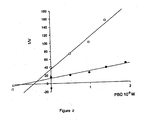
- the experimental data obtained are represented graphically in the form of Dixon-plot (described for example in: "Quantitative Problems in Biochemistry", E A. Dawes, 5 th ed. 1972 Baltimore, The Williams and Wilkins Company), in the figures 1, 2 and 3.
- Ki values inhibitor constant
- Such a graphical representation allows the calculation of the Ki values (inhibition constant) obtained for PBO respectively on papain: 2.6x10 -3 M, on ficin: 4.5x10 -4 M and on bromelain: 1x10 -4 M, therefore indicating that the inhibitory effect of PBO is higher on bromelain.
- the test results, obtained at non saturating substrate concentrations indicate that, under these conditions, PBO inhibits all the proteases tested.
- the assay was carried out as described in Heinrikson & Kezdy, 1976, Methods in Enzymol. 45, p. 740.
- the conditions are summarised briefly herein: 50 ⁇ g of bromelain was mixed with variable quantities of Na CBZ-L-lysine p-nitrophenyl ester substrate in 3 ml of 10 mM acetate buffer pH 4.6 containing KCl (0.1 M) and L-cystein (1 mM).
- the changes in the initial velocities of the reaction were measured by the changes in absorbance at 340 nm/min, in the presence of a 1% solution of PBO in H 2 O in two different experiments.
- Table 1 The effect of 1% PBO on the activity of bromelain.
- Substrate conc. control test 1 test 2 Mean (% contr.) 24 ⁇ M 0.0199 0.0141 0.0130 0.0136 (68%) 48 ⁇ M 0.0297 0.0243 0.0297 0.0270 (68%) 96 ⁇ M 0.0623 0.0518 0.0461 0.0490 (78%)
- Cotton seeds (cv. Carmela) were obtained from “Semillas Baffle", Barcelona (E).
- the cotton sprouts of 4 days were collected and frozen in liquid nitrogen and freeze dried (Hile et al. 1972). After this process, the material was crushed in a pestle and freed from fibrous material and settled up to obtain a pretty homogeneous meal of about 0.5 mesh.
- the meals were defatted using n-hexane (1:10 w/v) at room temperature and then treated with acetone at -20°C to remove pigments and polyphenolic compounds, in this case mainly gossypol.
- the powders obtained were stored in a dry box at room temperature.
- the acetonic powder (30 mg) was suspended in buffer (4 ml) and incubated at 37°C for 30, 60, 90,120 minutes. The proteolysis was stopped adding 1 ml of 12% trichloroacetic acid.
- the buffer used was 0.1 M phosphate pH 6.5 (Hile et al. 1972).
- the control was a suspension of the same sample prepared in the same way but, in this case, it was immediately deactivated, adding 1 ml of trichloroacetic acid. The trials with treated and untreated samples were carried out at the same time.
- Proteins were precipitated with trichloroacetic acid and then removed by filtration, before with Whatman paper n. 4 and then by micro-filtration (Orange Scientific Braine l'Alleud, Belgium ( ⁇ 0.2 ⁇ m)). Finally, the hydrolyzed protein samples were analyzed as clear solutions by determining the absorbance at 280 nm in a quartz cuvette.
- the acetonic powder (30 mg) was suspended in buffer (4 ml) and incubated at 37°C for 15', 30, 60, 90, 120 minutes. The proteolysis was stopped adding 1 ml of 12% trichloroacetic acid.
- the buffer used was 0.1 M phosphate pH 7.7 (Funkhouser et al. 1980).
- the control was a suspension of the same sample prepared in the same way but was immediately deactivated, adding up 1 ml of trichloroacetic acid. The trials with treated and untreated samples were carried out at the same time.
- Proteins were precipitated with trichloroacetic acid and then removed by filtration, before with Whatman paper n. 4 and then by micro-filtration (Orange Scientific Braine l'Alleud, Belgium ( ⁇ 0.2 ⁇ m)). Finally, the hydrolyzed protein samples were analyzed as clear solutions by determining the absorbance at 280 nm in a quartz cuvette.
- Bt toxin concentration was measured in Bt transgenic cotton plant samples (cv.SicalaV2i) treated with PBO or untreated (the control).
- the assay was carried out on samples collected at different plant development stages, which were: 4, 35, 60, 85 days after sowing.
- the ELISA Cry1Ab/Cry1Ac Plate Kit was obtained from Envirologix (Portland, Maine - USA). The assay was performed according to the Envirologix protocol with the following modifications:
- Figure 6a shows the Bt concentrations in PBO treated or untreated cotton plant samples at the plant development stages reported above. In figure 6 and in table 5 is also shown that there is a significant lower Bt content in PBO-treated samples at 35, 60, 85 days after planting, whereas no difference was found at 4 days.
- Figure 6b shows the difference in percentage between PBO-treated and untreated cotton plant samples.
- Cotton seeds of the cv. Sicala V2i were previously rinsed in distilled water and then placed in equal number in suitable plastic boxes containing settled and sterile sand. Seeds were watered with equal volumes of distilled water and the culture boxes were then covered with a plastic film to avoid evaporation during germination, which was carried out in the dark for 4 days at 30°C.
- the seeds to be analysed after 4 days of germination were watered with distilled water or with an equal volume of a micro-suspension saturated of PBO (2% w/v). After 4 days, these sprouts were collected for testing, whereas the other sprouts were moved in suitable pots and located in the greenhouse at 24°C during the day and 20°C in the night.
- a powder aliquot, which represents each step of plant growth, of the treated and controls samples was extracted in two steps.
- the powder sample was extracted with buffer 0.1 M Tris-HCI pH 7.7 (1:20 w/v) using an Ultraturrax blender at 24,000 x RPM for 2 min in a ice bath to avoid overheating.
- the extract was then clarified by centrifugation at 5,000 x g at 10°C, for 20 min.
- the clear supernatant was collected and filtrated with Whatman paper n°4.
- the pellet was further extracted with the same procedure, with the exception that in this case the extraction ratio was 1:10 (w/v).
- the amount of soluble proteins was determined by the Biuret method and the enzymatic activity was then expressed as specific activity i.e. Units/mg soluble proteins.
- RDA was performed as described in Santarius, K. and Ryan, C., Anal. Biochem., 1977, 77: 1-9 in Petri dishes containing bovine gelatine as substrate, dispersed in agar gel. Each dish contained 5 wells of which 4 were filled with suitable aliquots of concentrated cotton extracts, whereas one was filled with a bovine ⁇ -trypsin as standard solution (0.2 U/ml). The dishes were covered and sealed with a plastic film to avoid evaporation and then incubated at 37°C for 16 hours.
- the enzymatic activity in the protein-agar gel produced a clear radial diffusion zone around each circular wells, due to the bovine gelatine proteolysis against an opaque background.
- the trypsin equivalents were calculated by measuring the radii of the clear zones produced by the plant extracts and compared to a standard curve obtained by a serial dilution of trypsin. Each dish contained a standard solution of trypsin that was used to plot a standard curve for each plate, thus the endopeptidase activity was expressed as units of trypsin equivalents.
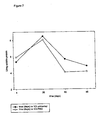
- FIG. 7 shows the values of endopeptidase activity obtained with RDA of the treated and untreated cotton samples.
- This experiment points out that the commercial PBO formulation (Endura), especially at 35, 60, 85 days after sowing, significantly inhibited the endopeptidase activity in cotton leaves of Sicala V2i genotype,
- table 6 are shown the differences between treated and untreated cotton samples as percentages. Table 6.
- U trypsin equivalents
- the photometric assay was carried out as described in Erlanger, B.F. et al. Arch. Biochem., 1961, 95: 271-278 . In the assay is measured the absorbance variation due to DL-BAPA hydrolysis at 410 nm. The assay was performed mixing directly in the cuvette 20 ⁇ l of cotton crude extract with 980 ⁇ l of DL-BAPA in buffer 0.1 M Tris-HCI pH 8.2. One peptidase unit was defined as the amount of the enzyme which produces one unit of absorbance variation (410 nm) per minute at pH 8.2 and 30°C.
- Figure 8 reports the values of peptidase activity in PBO treated and untreated cotton samples calculated as U/mg of soluble protein. In this figure is shown a maximum of peptidase activity around 60 days of development. At this time the treatment with commercial PBO formulation (Endura) shows a maximum significant inhibition of the proteolytic activity on the Sicala V2i cotton. Differences in the proteolytic activity are observed throughout the plant growing cycle by this assay in PBO treated vs untreated cotton plants. A statistically significant inhibition is observed during the most part of the plant growing cycle. Finally, in table 7 is shown the specific activities of peptidase of treated and untreated Sicala V2i cotton samples.
Landscapes
- Life Sciences & Earth Sciences (AREA)
- Wood Science & Technology (AREA)
- Environmental Sciences (AREA)
- Plant Pathology (AREA)
- Health & Medical Sciences (AREA)
- Engineering & Computer Science (AREA)
- Dentistry (AREA)
- General Health & Medical Sciences (AREA)
- Agronomy & Crop Science (AREA)
- Pest Control & Pesticides (AREA)
- Zoology (AREA)
- Agricultural Chemicals And Associated Chemicals (AREA)
- Measuring Or Testing Involving Enzymes Or Micro-Organisms (AREA)
- Cultivation Of Plants (AREA)
- Enzymes And Modification Thereof (AREA)
- Pretreatment Of Seeds And Plants (AREA)
- Peptides Or Proteins (AREA)
- Heterocyclic Carbon Compounds Containing A Hetero Ring Having Oxygen Or Sulfur (AREA)
Abstract
Description
- The invention relates to the use of benzodioxole derivatives to modify enzyme activity in plants.
- Piperonyl butoxide is a benzodioxole polyoxyethylene known for some time as a synergist of insecticides such as for example of pyrethrins, pyrethroids and carbamate types insecticides.
- Its relatively low toxicity with regard to humans and animals and its appreciable effects on a large spectrum of insecticides has allowed its use to spread rapidly in agriculture.
- The mechanisms at the heart of this synergistic effect have not yet been clarified, even if from time to time direct or indirect regulation effects on some specific enzymes involved in the inactivation or in the catabolism of the insecticide molecules with which it synergises have been proposed, such as for example non specific esterases present in insect homogenates (Piperonyl Butoxide "The insecticide Synergist", 1998, Academic Press, p .215), more recently on microsomal oxidases (Alzogaray R.A. Arch. Insect Biochem. Physiol., 2001, 46:119-126), or on cytochrome P450 mono oxygenases (Kotze et al. Int. J. Parasitol, 1997, 27;33-40). However, as yet, an effect of PBO on enzymes of plant origin has not been described, let alone in particular on the proteolytic or peptidase class of enzymes.
- The significance of the proteases and their physiological inhibitors as key enzymes in the regulation of cellular processes both in the animal and plant kingdoms is known and widely recognised.
- In plants, for example, the balance between proteolytic enzymes and natural inhibitors is at the heart of the precise temporal regulations of the germination process of dormant seeds.
- It is also known that over the course of evolution, the production of natural inhibitors of proteolytic enzymes has been selected in plants, among others, as a protection mechanism against parasites. The usefulness of interventions based on this type of approach is confirmed for example in Harsulkar A.M. et al. Plant Physiol., 1999, 121:497-506. An approach based on the use of protease inhibitors expressed transgenically, is described in EP 502730 and in EP 339009: in the first the expression of the inhibitor is sufficient to determine a protective effect against nematodes, in the second, the transgenic expression of a natural protease inhibitor potentiates the insecticide effect of the product of the first gene encoding the Bt toxin (Bacillus thuringiensis toxin). The same approach is described by S. Macintosh et al. in J. Agric. Food Chem. 1990, 38:1145-1152.
- It is therefore evident that the availability of a product endowed with regulatory activity of the activity of proteolytic enzymes of plant origin is of great industrial interest for a wide spectrum of applications.
- The object of the present invention is the use of benzodioxole derivatives of formula I, amongst which the preferred is piperonyl butoxide (PBO) as modulators of the activity or of the content of proteolytic enzymes in plants. Proteolytic enzymes able to hydrolyse peptide bonds, are preferably selected from the group consisting of: carboxypeptidases, aminopeptidases, dipeptidases, endopeptidases.
- Treatment with benzodioxole derivatives is carried out on plants, preferably transgenic for a protein with insecticidic function, preferably belonging to the category of the Bacillus thuringiensis toxins (Bt-toxin), belonging to the Cry group. Preferably such transgenic plants are cotton, maize, tomato, potato and soya, or even more preferably, cotton.
- According to a further aspect the invention extends to the use of compositions containing the benzodioxole derivatives as the active ingredients in combination with suitable emulsifiers and optionally with photoprotective compounds selected from the group consisting of: benzotriazoles, benzophenones and sterically hindered amines, as modulators of the activity or of the content of proteolytic enzymes in plants.
- According to a further aspect the invention extends to a process for regulating the proteolytic activity in plants, preferably transgenic, even more preferably cotton, maize, soya, tomato, potato comprising essentially the treatment of such plants with benzodioxole derivatives and with the compositions containing such compounds, in a way such that the final concentration of PBO is comprised of between 50 and 500 grams/hectare and is performed at the end of the vegetative cycle.
-
- Figure 1. Graphical representation of the inhibition of increasing concentrations of PBO on the activity of the enzyme papain by Dixon-plot.
From the Dixon-plot obtained at two different substrate concentrations (CBZ: L lysine-p-nitrophenyl ester), used at 1.5 x10⁻⁴ M (full circle -●-) and 6x10⁻⁵ M (empty circle -O-) respectively, it is possible to calculate the inhibition constant (Ki) of PBO on the enzyme papain, which as equal to 2.6x10⁻³M. In addition, from the diagram it is possible to evaluate the IC50 equal to 2x10⁻³M.
Abscissa: PBO concentration (M); ordinate: 1/V (Δ Abs/min). Reverse micelles assay ISO-AOT 50mM (AOT: double aerosol (2-ethylhexylsodiumsulfosuccinate in isooctane (ISO)); Wo (H2O/AOT)=23 - Figure 2. Graphical representation of the inhibition of increasing concentrations of PBO on the activity of the enzyme ficin by Dixon-plot.
From the Dixon diagram obtained at two different substrate concentrations (CBZ: L lysine-p-nitrophenyl ester), used at 1.5 x10⁻⁴ M (full circle -●-) and 6x10⁻⁵ M (empty circle -○-) respectively, it is possible to calculate the inhibition constant (Ki) of PBO on the enzyme ficin, equal to 0.45x10⁻³M. From the diagram it is also possible to evaluate the IC50 equal to 0.8x10⁻³M.
Abscissa: PBO concentration (M), ordinate: 1/V (Δ Abs/min). Reverse micelles assay of ISO-AOT 50mM (AOT: twin aerosol (2-ethylhexylsodiumsulfosuccinate in isooctane (ISO)); Wo (H2O/AOT)=25 - Figure 3. Graphical representation of the inhibition of increasing concentrations of PBO on the activity of the enzyme bromelain by Dixon-plot.
From the Dixon-plot obtained at two different substrate concentrations (CBZ: L lysine-p-nitrophenyl ester), used at 1.5 x10⁻⁴ M (full circle -●-) and 6x10⁻⁵ M (empty circle -○-) respectively, it is possible to calculate the inhibition constant (Ki) of PBO on the enzyme bromelain, equal to 0.1x10⁻³M. In addition from the plot it is possible to evaluate the IC50 equal to 0.4x10⁻³M.
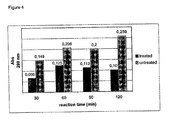
Abscissa: PBO concentration (M), ordinate: 1/V (Δ Abs/min). Reverse micelles assay of ISO-AOT 50mM (AOT: twin aerosol (2-ethylhexylsodiumsulfosuccinate in isooctane (ISO)); Wo (H2O/AOT)=28 - Figure 4. Carboxypeptidase activity in cotton sprouts after 4 day of germination.
The extent of proteolytic activity in cotton sprouts was measured at 30', 60', 90' and 120' after suspension of the acetonic powder in aqueous buffer at pH 6.5 by determining the absorbance at 280 nm in a quartz cuvette, after protein precipitation with TCA and removal by centrifugation.
Each series of analysis was performed in duplicate. The comparison between the values of carboxypeptidase activity of treated and untreated samples was done using the average value of each series of analysis.
Treated samples: dark grey
Untreated samples: light grey - Figure 5. Endopeptidase activity in cotton sprouts after 4 day of germination.
The extent of hydrolytic activity in cotton sprouts was measured at 15', 30', 60', 90' and 120' after solubilization of the acetonic powder in aqueous buffer at pH 7.7 by determining the absorbance at 280 nm in a quartz cuvette after protein precipitation with TCA and removal by centrifugation. Each series of analysis was performed in duplicate. The comparison between the values of carboxypeptidase activity in treated (dark grey) and untreated (light grey) samples was done using the average value of each series of analysis. Abscissa: time (min); ordinate: Abs 280 nm. - Figure 6. Bt content in PBO treated vs PBO untreated cotton plants.
An immunoenzymatic assay was used to determine the Bt levels at different stages of plant development.- a) Measured Bt toxin values; ordinate: Bt expressed as ppm; abscissa: days of plant colture and where different, plant tissue. Black col.: Untreated cotton; grey col: PBO treated cotton. Standard deviation is also indicated.
- b) % differences in Bt content during time in PBO treated vs untreated plants. Ordinate: % Bt content (ppm) in PBO treated minus untreated plants; abscissa: days of plant colture and where different, plant tissue (cotyledons or leaves).
- Figure 7. Comparison between endopeptidase activity of treated with PBO and untreated cotton plants at different growing stages by the Radial Diffusion Assay.
The radium of the clear zone produced by the plant extracts was compared to a standard curve obtained by a serial dilution of trypsin. A standard solution of trypsin was used to plot a standard curve for each sample plate, thus the endopeptidase activity was expressed as units of trypsin equivalents. For each extract, the amount of soluble proteins in mg was determined by the Biuret method and the enzymatic activity was then expressed as specific activity i.e. Units/mg soluble proteins. Abscissa: time (days); ordinate: trypsin units/mg soluble protein. - Figure 8. Comparison between peptidase activity (U/mg of soluble protein) of PBO treated and untreated cotton plants by a photometric assay with DL-BAPA as a substrate.
The photometric assay was carried out following the DL-BAPA hydrolysis at 410 nm. One peptidase unit (U) was defined as the amount of the enzyme, which produces one unit of absorbance variation at 410 nm/minute at pH 8.2 and 30°C. For each extract, the amount of soluble proteins in mg was determined by the Biuret method and the enzymatic activity was then expressed as specific activity i.e. Units/mg soluble proteins.
Each analysis was performed in duplicate or in triplicate and the standard deviation for each point is also indicated. Abscissa: time (days); ordinate: trypsin units/mg soluble protein. - The present invention relates to the use of benzodioxole derivatives comprised in the following general formula I :

R5 is in addition selected from the group consisting of: aralkyl C7-C9 non substituted or substituted on the aromatic ring by substituents selected from the group consisting of: alkyl C1-C4, halogen, a cyano group, a -SO3H group, a carboxyalkyl group -COOR9, where R9 has the same meaning as R6 and where, when R1, R2 and R3 are the same, they cannot be hydrogen, said use based on the surprising finding that the previuosly defined compounds are endowed with the capacity to modulate the activity or the content of plant proteolytic enzymes. - Preferably, in the above mentioned compounds, the substituents R1, R2 and R3 being the same or different are selected from the group consisting of: hydrogen, alkyl C2-C4, CH2OR4 where R4 is selected from the group consisting of: hydrogen, -(CH2CH2O)n-R5, in which n is an integer from 1 to 2 and R5 is selected from the group consisting of: hydrogen, alkyl C1-C4, benzyl, aryl non substituted or substituted by: alkyl C1-C3, and where, when R1, R2 and R3 are the same, they can never be hydrogen.
- Still more preferably in such compounds of formula I, the substituents R1, R2 and R3 being the same or different, are selected from the group consisting of: hydrogen, propyl, CH2OR4 where R4 is -(CH2CH2O)2-R5 and R5 is selected from the group consisting of: alkyl C2-C4, phenyl, toluyl and where, when R1, R2 and R3 are the same, they can never be hydrogen. Still more preferably such compounds correspond to piperonyl-butoxide (PBO) or 5-[[2-(2-Butoxyethoxy)ethoxy]methyl]-6-propyl-1,3-benzodioxole, of formula (II):

- For simplicity we will make reference in the following text, only to the compound piperonyl-butoxide known by the abbreviation PBO or the term "benzodioxole derivatives", being understood that with this abbreviation and with this term is intended to refer in the present application, to all the compounds of general formula I, comprising the preferred substituents.
- For the purpose of the present invention the terms proteases, proteinases or peptidases are used in an equivalent manner and are intended to refer to the peptidic hydrolases, denominated for simplicity proteolytic enzymes or proteases over the course of the present description, i.e. to enzymes with hydrolytic activity towards peptide or amidic bonds independently of their position, therefore either when they are internal to the polypeptide chain, or at the N- or C- terminal ends. According to this definition therefore, both endopeptidases type enzymes, and exopeptidases, such as the aminopeptidases or carboxypeptidases which hydrolyse the peptide bonds liberating single amino acids sequentially from the Nor C- terminal ends are comprised within the definiton of proteolytic enzymes.
- The proteolytic enzymes on which PBO exherts its regulatory activity, are preferably selected from the group consisting of: carboxypeptidases, aminopeptidases, dipeptidases, endopeptidases, wherein the endopeptidases are preferably selected from the group consisting of: serine proteases, cystein proteases, cathepsins, metallo-endopeptidases; the cystein proteases are preferably selected from the group consisting of: bromelain, calpain, ficin, papain, chymopapain.
- The regulation of proteolytic activity in plants, for example through the activation of specific inhibitors has a predominantly defensive role in comparison to the proteases of insects and pathogenic micro-organisms. In the case of lesions produced by mechanical or biological means, protease inhibitors are synthesised de novo contributing to the defence strategy of the plant.
- The modulatory potential of the inhibitors on the endogenous proteases could be modest in seeds and tends to disappear during germination; an important role has been attributed to the inhibitors during seed maturation to prevent protein degradation during the accumulation phase. Therefore according to further object, the invention comprises as a further embodiment the PBO proteolytic modulation activity on seeds; according to a further embodiment PBO is also useful to determine the activation of plant's defensive pathways in the case of wounds or lesions allowing the regulation of general tissue growth.
- A further advantage of the novel activity on plant cell proteolytic activity herein described is the regulation of the production, of the maturation or of the degradation, or in other words of the turn-over of endogenous proteinaceous substances, for example those with natural insecticide or fungicide functions or with tissue repair functions. This mechanism may help in potentiating the natural response of the plant cell towards possible parasitic aggression, or towards externally derived stresses.
- An example of substances endowed with fungicide activity, is described in Leah et al. J. Biol. Chem.,1991, 266:1564-1573 and is non extensively enlisted herein: Ribosome Inactivating Proteins (RIP), which have specificity for only distantly correlated ribosomes, such as fungi, but not for plant ribosomes, or the chitinases and the (1-3) -β-glucanases, which interfere with the synthesis of the cell walls of the fungus. Other substances produced by the plant in the form of inactive protein precursors, and having defensive functions against bacteria and fungi in their mature forms, are thionines, described for example in Bohlmann H. Critical Reviews in Plant Sciences, 1994, 13:1-16.
- Treatment with PBO according to the novel use herein described is carried out as known to the skilled man on all plant types, concentrating on the air exposed areas of the plant, and in particular on the leaves. The treatment can also be performed on seeds. In its preferred embodiment the treatment is preferably carried out on transgenic plants selected from the group consisting of: cotton, maize, potato, tomato and soya. According to this preferred embodiment, the invention refers to the use of benzodioxole derivatives as modulators of the proteolytic activity in plants transgenic for the insertion of a transgene encoding a protein.
- The plant proteolytic activity variation obtained after treatment with PBO, has a differential effect depending on the system considered as it may allows to increase or even to reduce the availability of a protein, or of a protein in its active conformation. It is known that a steady state level is the result of the rate of protein degradation and production. However proteolysis is also known as a mechanism for protein activation. As a result, the new use allows an increase in the natural or induced defences of the plant towards parasitic infection or external attacks. Accordingly, a further and preferred embodiment of the invention is the regulation of transgenically expressed protein levels through the modulation of the proteolytic activity within a plant cell. Particularly preferred are plants transgenic for one of the Bacillus thuringiensis toxins.
- In particular, in the case of plants transgenic for the Bacillus thuringiensis Bt toxin gene, the possibility of controlling the mechanism of proteolysis is extremely important both to control the activity of the transgenic toxin or to regulate its production.
- It is however to be noted that this preferred embodiment of the invention is not limited to a single production or activation mechanism on the transgenic protein, but extends to all the mechanisms activated by PBO through a direct or indirect effect (such as through protease inhibitors) on proteolytic enzymes. An increase in the levels of proteolytic enzymes can be monitored by direct or indirect assays. Among the indirect assays the activity of proteases on various endogenous or exogenous substrates can be measured according to methods well known in the art.
- In the case of transgenic plants, the transgene encodes one of the Cry protein of Bacillus thuringiensis and even more preferably for a protein selected from the group consisting of: Cryl, Cry II, Cry III, Cry IV, in particular CrylA (a), (b) or (c). According to a particularly preferred embodiment the plant is cotton and the transgene encodes for the CryI toxin of Bacillus thuringiensis.
- The authors of the present invention have additionally observed that in cotton transgenic for the Bt CryI protein, the amount of transgenic toxin after PBO treatment is higher than in transgenic untreated plants and this finding correlates with a loss in proteolytic activity in PBO-treated plants versus untreated, during a period of at least 100 days.
- Hence the use of benzodioxole derivatives of formula I as proteolytic modulators is particularly advantageous in transgenic plants, preferably selected from the group consisting of: cotton, maize, tomato, potato or soya preferably when they are transgenic for Bt-toxin, still more preferably for the Cry I toxin, for inhibiting the proteolytic mechanisms directly or indirectly modifying the expression of the transgenic (i.e. inactivating or reducing) Bt toxin in the plant cell. Particularly preferred is the PBO treatment of cotton transgenic for one of the Bacillus thuringiensis toxins.
- The levels of Bt toxin in plants are measured as known in the field, for example with immunoenzymatic assays carried out with antibodies specific for the Bt toxin. Alternatively, quantities of Bt toxin less than the useful limits can be estimated by directly measuring the lack of mortality in the parasitic insects in the field or in the laboratory.
- According to an additional embodiment, the invention provides a process to regulate the proteolytic activity in plants, preferably to inhibit at least partially the proteolytic activity of a plant, comprising essentially the treatment of the plants with PBO or its derivatives or with the compositions comprising PBO as the active ingredient, in a way such that the concentration of the active ingredient is comprised from 50 to 800 grams/hectare, more preferably from 100 to 400 grams/hectare, even more preferably from 200 to 350 grams/hectare. The process according to the invention is preferably repeated up to three times per vegetative cycle and even more preferably is carried out at the end of the vegetative cycle.
- This preferred aspect is of particular relevance when the plant is transgenic and in particular when such plant, preferably cotton, maize, tomato, potato and soya, is transgenic for the Cry toxin of Bacillus thuringiensis. As a matter of fact the modulatory activity of PBO is observed few hours after the treatment up to few days, during different phases of the plant growth cycle.
- The modulation of protease activity by PBO in plants is preferably a negative modulation, through a direct inhibition of PBO on the enzyme, or through an indirect effect such as, for example, through the activation of protease inhibitors or the de novo synthesis of specific protease inhibitors.
- Treatment with PBO is conveniently carried out using compositions with appropriate excipients or emulsifiers. Therefore according to a further aspect the invention relates to the use of compositions containing the benzodioxole derivatives of formula I as the active ingredient, or the preferred embodiments thereof, such as PBO, in combination with appropriate emulsifiers or excipients and optionally with photoprotector compounds, as modulators of the activity or the content of proteolytic enzymes in plants. The emulsifiers used are selected from the group consisting of: calcium salts of alkylarylsulphonic acids, polyglycol esters of fatty acids, alkylarylpolyglycol ethers, polyglycol ethers of fatty alcohols, ethylene oxide-propylene oxide condensation products, alkyl polyethers, sorbitanic fatty acid esters, polyoxyethylensorbitanic fatty acid esters, polyoxyethylene sorbitanic esters. Particularly preferred are the emulsifiers selected from the group consisting of: alkylarylpolyglycol ethers and calcium salts of alkylarylsulfonic acid. The emulsifiers are present at a minimum concentration of 2% (w/w).
- The concentration of PBO in the compositions with emulsifiers or excipients is comprised from 1 to 98% (w/w), preferably from 20 to 95%, even more preferably from 50 to 90%.
- For the purposes herein the mixture of active ingredients in combination with the appropriate excipients or emulsifiers is denominated "concentrate". To the concentrate is optionally added a protective agent against photo oxidation (photoprotectors) selected from the class of compounds consisting of: benzotriazoles, benzophenones, and sterically hindered amines, in concentrations comprised from 0,1% to 10%, preferably from 0.5% to 8%, even more preferably from 1% to 5% in weight of the concentrate.
- Amongst benzotriazoles, compounds are selected from the group consisting of: 2-(2'-hydroxy-5-t-octylphenyl) benzotriazole and 2-(2'-hydroxy-3',5'-di-t-butylphenyl)-5-chlorobenzotriazole.
- Amongst benzophenones, compounds are selected from the group consisting of: 2-hydroxy-4-methoxy benzophenone, 2-hydroxy-4-octyloxy benzophenone, 2'-dihydroxy-4,4'-dimethoxybenzophenone.
- Amongst sterically hindered amines, compounds are selected from the group consisting of: di(2,2,6,6-tetramethyl-4-piperinidyl) sebacate; di (1,2,2,6,6-pentamethyl-4-piperidinyl) sebacate; alpha-[[6-[[4,6-bis(dibutylamino)-1,3,5-triazin-2-yl](2,2,6,6-tetramethyl-4-piperidinyl)amino]hexyl](2,2,6,6-tetramethyl-4-piperidinyl) amino]-omega-[4,6-bis(dibutylamino)-1,3,5-triazin-2-yl]-poly[[6-[butyl(2,2,6,6-tetramethyl-4-piperidinyl)amino]-1,3,5-triazin-2,4-diyl][2,2,6,6-tetramethyl-4-piperidinyl)imino]-1,6-hexandiyl[2,2,6,6-tetramethyl-4-piperidinyl)imino]; polymer of dimethylsuccinate with 4-hydroxy-2,2,6,6-tetramethyl-1-piperidinethanol; polymer of N,N' di (2,2,6,6-tetramethyl-4-piperinidyl)-1,6-hexanediamine with 2,4,6 trichloro-1,3,5-triazine and 1,1,3,3-tetramethylbutylamine; poly-methylpropyl-3-oxy(4((2,2,6,6-tetramethyl) piperidinyl siloxane; 1,3,5-triazine- 2,4,6,-triamine, N,N'''[1,2-ethanediyl di[[[4,6-bis [butyl (1,2,2,6,6-pentamethyl-4-piperidinyl) amino] -1,3,5-triazine 2- il] imino]-3,1-propano diyl]]-di [N',N"- dibutyl- N',N"-bis(1,2,2,6,6-pentamethyl-4-piperidinyle)] or the following mixture: mixture of the polymer of dimethylsuccinate with 4-hydroxy-2,2,6,6-tetramethyl-1-piperidin ethanol and the polymer of N,N' di(2,2,6,6-tetramethyl-4-piperinidyl)-1,6-hexanediamine with 2,4,6 trichloro-1,3,5-triazine and 1,1,3,3-tetramethylbutylamine.
- Particularly preferred are benzophenones, even more preferably 2-hydroxy-4-methoxy benzophenone and 2-hydroxy-4-octyloxy benzofenone, and amongst sterically hindered amines, preferred compounds are di(2,2,6,6-tetramethyl-4-piperinidyl) sebacate and di(1,2,2,6,6-pentamethyl-4-piperidinyl) sebacate.
- The concentrate, optionally containing the photoprotective agent, is emulsionable and is therefore mixed with water so as to obtain the appropriate solutions to be nebulised preferably by field spraying such that the concentration of PBO is comprised from 50 to 800 grams/hectare, preferably from 100 to 400 grams/hectare, even more preferably from 200 to 350 grams/hectare. Every treatment cycle in the field can be composed of one up to three treatments per vegetative cycle.
- The invention will be now better detailed in the following experimental examples, which do not represent any limitation thereof.
- The assays were carried out in the reverse-micelles assay dispersed in organic solvent, described by Walde et al. in Eur. J. Biochem., 1988, 173:401-409, and already reported in the literature in kinetic studies of the inhibition of trypsin with natural and synthetic inhibitors. Such an assay was adapted to the following purified plant enzymes: papain, ficin and bromelain (Sigma catalogue N°: P4762, F4125, B5144 respectively) in the presence of substrate CBZ (L lysine-p-nitrophenyl ester, Sigma catalogue N° C3637), and carried out respectively with Wo (molar ratio water/surfactant or H2O/AOT)= 23, 25, 28.
- The enzyme assay on reverse-micelle has been already described in the literature for the enzyme trypsin and was adapted to different enzymes. These values were obtained by vigorously mixing, in a quartz spectrophotometry cell, 1 ml of 50 mM AOT-ISO with appropriate volumes of protease and different buffer solutions, respectively MES (2-[N-morpholino]ethanesulfonic acid) for the enzyme papain, HEPES (N-[2-Hydroxyethyl]piperazine-N'-[2-ethanesulfonic acid]) for the enzyme ficin and acetate for the enzyme bromelain. When the solution was completely transparent and apparently homogeneous, it was adjusted thermostatically to 30°C. To this solution was added an appropriate volume of substrate CBZ (dissolved in acetonitrile/H2O, 80:20 (v/v) at a concentration of 15 mM) and following further agitation (the solution returned to being transparent), the change in absorbance was measured (Δabs) at 340 nm with a Cary 219 spectrophotometer. The assay conditions in summary, were the following:
- AOT-ISO: 50 mM (bis 2-etylhexyl sodium sulfosuccinate- isooctane)
- Wo: 23
- buffer: 50 mM MES pH 6.2 containing 2.5 mM cystein,
- temperature: 30°C
- substrate: 1.5 x10⁻⁴M and 6x10⁻⁵M CBZ (L lysine-p-nitrophenyl ester, Sigma)
- papain: 2 mg/ml
- PBO (when present): from 4.87x10⁻⁴M to 5.9x 10⁻³M
-
- AOT-ISO: 50 mM (bis2-ethylhexyl sodium sulfosuccinate- isooctane)
- Wo: 25
- buffer: 50 mM HEPES pH 7.1 containing 2.5 mM L-cystein ,
- temperature: 30°C
- substrate: 1.5 x10⁻⁴ M and 6x10⁻⁵M CBZ (L lysine-p-nitrophenyl ester, Sigma)
- ficin: 1.7 mg/ml
- PBO (when present): from 4.87x10⁻⁴M to 5.9x 10⁻³M
-
- AOT-ISO: 50 mM (bis2-ethylhexyl sodium sulfosuccinate- isooctane)
- Wo: 28
- buffer: 10 mM Acetate, pH 4.6 containing 1 mM L-cystein
- temperature: 30°C
- substrate: 1.5 x10⁻⁴M and 6x10⁻⁵M CBZ (L lysine-p-nitrophenyl ester, Sigma)
- bromelain: 2 mg/ml
- PBO (when present): from 4.87 x 10⁻⁴ M to 5.9 x 10⁻³M.
- The experimental data obtained are represented graphically in the form of Dixon-plot (described for example in: "Quantitative Problems in Biochemistry", E A. Dawes, 5th ed. 1972 Baltimore, The Williams and Wilkins Company), in the figures 1, 2 and 3. Such a graphical representation allows the calculation of the Ki values (inhibition constant) obtained for PBO respectively on papain: 2.6x10⁻³ M, on ficin: 4.5x10⁻⁴ M and on bromelain: 1x10⁻⁴ M, therefore indicating that the inhibitory effect of PBO is higher on bromelain. The test results, obtained at non saturating substrate concentrations, indicate that, under these conditions, PBO inhibits all the proteases tested. In particular from the Dixon plots presented in figures 1-3 it is possible to evaluate the IC50 of PBO which on the papain system is equal to 2×10⁻³ M, on the enzyme ficin it is equal to 0.8x10⁻³M and on the enzyme bromelain is equal to 0.4x10⁻³M.
- The assay was carried out as described in Heinrikson & Kezdy, 1976, Methods in Enzymol. 45, p. 740. The conditions are summarised briefly herein: 50µg of bromelain was mixed with variable quantities of Na CBZ-L-lysine p-nitrophenyl ester substrate in 3 ml of 10 mM acetate buffer pH 4.6 containing KCl (0.1 M) and L-cystein (1 mM). The changes in the initial velocities of the reaction were measured by the changes in absorbance at 340 nm/min, in the presence of a 1% solution of PBO in H2O in two different experiments.
- The results are presented in table 1.
Table 1. The effect of 1% PBO on the activity of bromelain. Substrate conc. control test 1 test 2Mean (% contr.) 24 µM 0.0199 0.0141 0.0130 0.0136 (68%) 48 µM 0.0297 0.0243 0.0297 0.0270 (68%) 96 µM 0.0623 0.0518 0.0461 0.0490 (78%) - The data indicate that 1% PBO has an inhibitory effect on bromelain which for substrate concentrations comprised of between 20-24 µM and 48-50 µM, is variable from 65 to 80%.
- The experiment was repeated using increasing concentrations of PBO and a fixed substrate concentration (240 µM). The data are reported in table 2.
Table 2. Effect of increasing quantities of PBO on the activity of the enzyme bromelain % PBO Exp. 1 Exp.2 Exp. 3 (w/w) Initial velocity (% of control) 0 0.1382 0.1221 0.1051 0.334 0.1306 (95%) 0.1197 (98%) 0.1029 0.5 0.1252 (91 %) - - 0.667 - 0.1079 (88%) - 1 0.1194 (86%) 0.1057 (86%) - 1.334 - 0.1029 (84%) - 1.667 - 0.0927 (76%) - - From the data in table 2 it may be observed that PBO at concentration values higher than 0.5% has an inhibitory activity of the proteolytic enzyme bromelain.
- This effect is concentration dependent. The degree of the inhibition is in agreement with the data obtained in the previous examples.
- With the aim to evaluate the effect of PBO on the endogenous plant enzymatic system in cotton in vitro assays were carried out using acetonic powders got from treated (PBO) and untreated freeze dried seed sprouts, without the addition of any specific exogenous substrate. The basic idea was to "freeze" the physiologic protein hydrolysis enzymatic activity and to re-establish the process simply solubilizing the proteolytic enzymatic system in suitable buffers, which were 0.1 M phosphate pH 6.5 and 0.1 M tris-HCl pH 7.7, for evaluating both the carboxypeptidase and the endopeptidase activities according to the method described by Hile et al. 1972; Funkhouser et al. 1980.
- Cotton seeds (cv. Carmela) were obtained from "Semillas Baffle", Barcelona (E).
- The seeds were previously rinsed in tap water and then imbibed with aeration in distilled water over night (Funkhouser, E.A. et al., Z. Pflanzenphysiol., 1980, 100, 319-324).
- After this process, seeds were planted in settled and sterile sand and then watered with distilled water (untreated seeds) and with the same volume of a micro-suspension of saturated PBO (1% w/v) (treated seeds). The plastic boxes containing seeds were covered by a plastic film and placed in a germinator in the dark for 4 days at 30°C as described in Hile, J.N. and Dure, L.S. J. Biol. Chem., 1972, 247: 5034-5040.
- The cotton sprouts of 4 days were collected and frozen in liquid nitrogen and freeze dried (Hile et al. 1972). After this process, the material was crushed in a pestle and freed from fibrous material and settled up to obtain a pretty homogeneous meal of about 0.5 mesh.
- The meals were defatted using n-hexane (1:10 w/v) at room temperature and then treated with acetone at -20°C to remove pigments and polyphenolic compounds, in this case mainly gossypol. The powders obtained were stored in a dry box at room temperature.
- The acetonic powder (30 mg) was suspended in buffer (4 ml) and incubated at 37°C for 30, 60, 90,120 minutes. The proteolysis was stopped adding 1 ml of 12% trichloroacetic acid. In this case, the buffer used was 0.1 M phosphate pH 6.5 (Hile et al. 1972). The control was a suspension of the same sample prepared in the same way but, in this case, it was immediately deactivated, adding 1 ml of trichloroacetic acid. The trials with treated and untreated samples were carried out at the same time.
- Proteins were precipitated with trichloroacetic acid and then removed by filtration, before with Whatman paper n. 4 and then by micro-filtration (Orange Scientific Braine l'Alleud, Belgium (∅ 0.2 µm)). Finally, the hydrolyzed protein samples were analyzed as clear solutions by determining the absorbance at 280 nm in a quartz cuvette.
- Each series of analysis was performed twice. The comparison between the values of carboxypeptidase activity of treated and untreated samples was done using the average value of each series of analysis.
- From the data shown in Fig. 4 it may be inferred that the proteolytic activity related to carboxypeptidase in treated samples is lower than in the untreated ones.
- In Table 3 the percentage of these differences is also reported.
Table 3 - Carboxypeptidase activity of treated and untreated cotton sprouts at the 4th day of germination. Untreated Cotton Sprouts PBO Treated Cotton Sprouts Exp. n° 1 2 Mean Activity (U) 1 2 Mean Activity (U) ΔU % Time 0 0.759 0.695 0.727 0.632 0.729 0.68 - 30' 0.894 0.858 0.876 0.149 0.730 0.763 0.746 0.066 0.083 55.7 60' 0.925 0.942 0.933 0.206 0.752 0.858 0.805 0.125 0.081 39.3 90' 0.988 0.956 0.927 0.200 0.880 0.838 0.859 0.113 0.087 43.5 120' 0.943 1.030 0.986 0.259 0.775 0.787 0.781 0.101 0.158 61.0 - The acetonic powder (30 mg) was suspended in buffer (4 ml) and incubated at 37°C for 15', 30, 60, 90, 120 minutes. The proteolysis was stopped adding 1 ml of 12% trichloroacetic acid. In this case the buffer used was 0.1 M phosphate pH 7.7 (Funkhouser et al. 1980). The control was a suspension of the same sample prepared in the same way but was immediately deactivated, adding up 1 ml of trichloroacetic acid. The trials with treated and untreated samples were carried out at the same time.
- Proteins were precipitated with trichloroacetic acid and then removed by filtration, before with Whatman paper n. 4 and then by micro-filtration (Orange Scientific Braine l'Alleud, Belgium (Ø 0.2 µm)). Finally, the hydrolyzed protein samples were analyzed as clear solutions by determining the absorbance at 280 nm in a quartz cuvette.
- Each series of analysis was performed threefold. The comparison between the values of endopeptidase activity of treated and untreated samples was done using the average value of each series of analysis. As it is possible to see in Fig. 5, also the endopeptidase activity in PBO treated cotton sprouts is lower than in the untreated ones. In Table 4 the percentage of these differences is also reported.

- With the aim to find the correlation between Bt toxin levels and the effect of the PBO treatment on cotton plants, the Bt toxin concentration was measured in Bt transgenic cotton plant samples (cv.SicalaV2i) treated with PBO or untreated (the control).
- The assay was carried out on samples collected at different plant development stages, which were: 4, 35, 60, 85 days after sowing.
- In order to determine the Bt toxin concentration in PBO treated or untreated cotton samples, a specific ELISA assay was used. The ELISA Cry1Ab/Cry1Ac Plate Kit was obtained from Envirologix (Portland, Maine - USA). The assay was performed according to the Envirologix protocol with the following modifications:
- 1. The cotton freeze-dried powder got from leaf or cotyledon tissues was used instead of the fresh and whole leaf tissue.
- 2. The Bt toxin extraction from the cotton freeze-dried powder was done with a sample/buffer ratio of 1:25 (w/v).
- 3. The extraction was made leaving the sample in the buffer for at least 4 hours at room temperature, instead of using the Envirologix Disposable Tissue Extractor. The extract was then clarified by centrifugation at 5,000 x g for 5 min at room temperature.
- Figure 6a shows the Bt concentrations in PBO treated or untreated cotton plant samples at the plant development stages reported above. In figure 6 and in table 5 is also shown that there is a significant lower Bt content in PBO-treated samples at 35, 60, 85 days after planting, whereas no difference was found at 4 days. Figure 6b shows the difference in percentage between PBO-treated and untreated cotton plant samples.
- In table 5 are summarized the results obtained with the described assay.
Table 5. Bt content and differences between PBO treated with and untreated samples in transgenic cotton Cry1Ac ppm Growth stage days (tissue) cv V2i untreated cv V2i PBO treated Δ: treated - control %: treated - control 4 (plantlets) 46.86 44.60 -2.26 -4.823 . 35 (cotyledons) 60.99 66.57 5.58 9.149 35 (leaves) 32.85 45.45 12.6 38.356 60 (leaves) 26.64 31.07 4.43 16.629 85 (leaves) 28.18 31.91 3.73 13,236 A: difference in values treated minus control (cv V2i untreated) - With the aim to evaluate the action of PBO on the proteolytic activity in cotton plants, the enzymatic activity was tested on samples of PBO treated and untreated cotton leaves (as control). The samples were collected at different development stages of plants, which were: 4, 35, 60 and 85 days after sowing.
- These samples were also analysed for determining the Bt content (as described in example 4). To this aim, the enzymatic activity was tested on crude freeze dried leaf extracts with two different assays: the Radial Diffusion Assay (RDA), in which a protein, such as the bovine gelatine, was used as a substrate to test the endopeptidase activity, and a photometric assay described in the next example, in which DL-BAPA was used as a substrate, to determine a general peptidase activity.
- Cotton seeds of the cv. Sicala V2i were previously rinsed in distilled water and then placed in equal number in suitable plastic boxes containing settled and sterile sand. Seeds were watered with equal volumes of distilled water and the culture boxes were then covered with a plastic film to avoid evaporation during germination, which was carried out in the dark for 4 days at 30°C. The seeds to be analysed after 4 days of germination were watered with distilled water or with an equal volume of a micro-suspension saturated of PBO (2% w/v). After 4 days, these sprouts were collected for testing, whereas the other sprouts were moved in suitable pots and located in the greenhouse at 24°C during the day and 20°C in the night.
- At fixed times of 4, 35, 60, 85 days after sowing, 10 plants fairly homogeneous for height were treated with a commercial PBO formulation (Endura) 2% (w/v). Treatments were given out vaporizing the diluted formulation on the plants taking care to treat both leaves sides.
- Two days after each treatment, a sample of the treated plants, and the correspondent controls, were collected and all leaves were frozen in liquid nitrogen and freeze dried. After this process, the material was powdered in a pestle and then stored in a dry box at room temperature.
- A powder aliquot, which represents each step of plant growth, of the treated and controls samples was extracted in two steps. The powder sample was extracted with buffer 0.1 M Tris-HCI pH 7.7 (1:20 w/v) using an Ultraturrax blender at 24,000 x RPM for 2 min in a ice bath to avoid overheating. The extract was then clarified by centrifugation at 5,000 x g at 10°C, for 20 min. The clear supernatant was collected and filtrated with Whatman paper n°4. The pellet was further extracted with the same procedure, with the exception that in this case the extraction ratio was 1:10 (w/v). Finally, the supernatants of the two extractions processes were joined and then concentrated 4-5 times by centrifugation at 3,000 x g at 15°C for 2 hours, using suitable concentrators (Amicon Inc. Beverly, MA - USA), fitted with a membrane of 10 KD cut off.
- For each extract, the amount of soluble proteins was determined by the Biuret method and the enzymatic activity was then expressed as specific activity i.e. Units/mg soluble proteins.
- RDA was performed as described in Santarius, K. and Ryan, C., Anal. Biochem., 1977, 77: 1-9 in Petri dishes containing bovine gelatine as substrate, dispersed in agar gel. Each dish contained 5 wells of which 4 were filled with suitable aliquots of concentrated cotton extracts, whereas one was filled with a bovine β-trypsin as standard solution (0.2 U/ml). The dishes were covered and sealed with a plastic film to avoid evaporation and then incubated at 37°C for 16 hours.
- The enzymatic activity in the protein-agar gel produced a clear radial diffusion zone around each circular wells, due to the bovine gelatine proteolysis against an opaque background.
- The trypsin equivalents were calculated by measuring the radii of the clear zones produced by the plant extracts and compared to a standard curve obtained by a serial dilution of trypsin. Each dish contained a standard solution of trypsin that was used to plot a standard curve for each plate, thus the endopeptidase activity was expressed as units of trypsin equivalents.
- Each analysis was performed in quadruplicate. Figure 7 shows the values of endopeptidase activity obtained with RDA of the treated and untreated cotton samples. This experiment points out that the commercial PBO formulation (Endura), especially at 35, 60, 85 days after sowing, significantly inhibited the endopeptidase activity in cotton leaves of Sicala V2i genotype, In table 6 are shown the differences between treated and untreated cotton samples as percentages.
Table 6. Endopeptidase activity of PBO treated and untreated samples by the RDA assay. Days after sowing U/mg protein Difference % cv. V2i Bt untreated cv. V2i Bt PBO Treated minus untreated 4 5.36 5.90 9.15 35 8.47 8.04 -5.35 60 5.67 4.07 -39.31 85 4.82 4.14 -16.42 U=trypsin equivalents - The photometric assay was carried out as described in Erlanger, B.F. et al. Arch. Biochem., 1961, 95: 271-278 . In the assay is measured the absorbance variation due to DL-BAPA hydrolysis at 410 nm. The assay was performed mixing directly in the
cuvette 20 µl of cotton crude extract with 980 µl of DL-BAPA in buffer 0.1 M Tris-HCI pH 8.2. One peptidase unit was defined as the amount of the enzyme which produces one unit of absorbance variation (410 nm) per minute at pH 8.2 and 30°C. - Each series of analysis was performed in duplicate or triplicate. Figure 8 reports the values of peptidase activity in PBO treated and untreated cotton samples calculated as U/mg of soluble protein. In this figure is shown a maximum of peptidase activity around 60 days of development. At this time the treatment with commercial PBO formulation (Endura) shows a maximum significant inhibition of the proteolytic activity on the Sicala V2i cotton. Differences in the proteolytic activity are observed throughout the plant growing cycle by this assay in PBO treated vs untreated cotton plants. A statistically significant inhibition is observed during the most part of the plant growing cycle. Finally, in table 7 is shown the specific activities of peptidase of treated and untreated Sicala V2i cotton samples.
- In this table it is also reported the activity differences in percentage between the treated and untreated samples.

Claims (24)
- Use of benzodioxole derivatives of formula I

for modulating the activity or the content of proteolytic enzymes in plants. - The use according to claim 1 wherein R1, R2 and R3 either the same or different are selected from the group consisting of: hydrogen; alkyl C2-C4; CH2OR4 where R4 is selected from the group consisting of: hydrogen, - (CH2CH2O)n-R5, in which n is an integer from 1 to 2 and R5 is selected from the group consisting of: hydrogen, alkyl C1-C4, benzyl, aryl non substituted or substituted by: alkyl C1-C3.
- The use according to claim 2 wherein R1, R2 either the same or different are selected from the group consisting of: hydrogen, propyl, CH2OR4 where R4 is - (CH2CH2O)2-R5 and R5 is selected from the group consisting of: alkyl C2-C4, phenyl, tolyl.
- The use according to claim 3 wherein the compounds have the following formula II:

- The use according to anyone of claims 1-4 wherein such enzymes are selected from the group consisting of: carboxypeptidases, aminopeptidases, dipeptidases, endopeptidases.
- The use according to claim 5 wherein such endopeptidases are selected from the group consisting of: serine proteases, cystein proteases, cathepsins, metallo-endopeptidases.
- The use according to claim 6 wherein such cystein proteases are: bromelain, calpain, ficin, papain, chymopapain.
- The use according to anyone of claims 1-7 wherein said plants are selected from the group consisting of: soya, maize and cotton.
- The use according to claim 8 wherein said plants are transgenic.
- The use according to claim 9 wherein the transgene encodes for a Bacillus thuringiensis Cry protein.
- The use according to claim 10 wherein the Cry protein is selected from the group consisting of: Cryl, Cry II, Cry III, Cry IV.
- The use according to claim 11 wherein said protein is the CrylA protein of subtype (a), (b) or (c).
- The use according to anyone of claims 1-7 wherein said modulation is a negative modulation.
- Use of the benzodioxole derivatives according to claim 1-13 in combination with suitable emulsifiers and optionally photoprotector compounds, as modulators of the activity or the content of the proteolytic enzymes in plants.
- The use according to claim 14 wherein said emulsifiers are selected from the group consisting of: calcium salts of alkylarylsulfonic acids, polyglycol esters of fatty acids, alkylarylpolyglycol ethers, polyglycol ethers of fatty alcohols, condensation products of ethylene oxide-propylene oxide, alkyl polyethers, esters of sorbitanic fatty acid, esters of polyoxyethylenesorbitanic fatty acid, sorbitanic esters of polyoxyethylene.
- The use according to claim 15 wherein such emulsifiers are selected from: alkylarylpolyglycol ethers and calcium salts of alkylarylsulfonic acids.
- The use according to claim 15 wherein such photoprotector compounds are selected from the class of compounds consisting of: benzotriazoles, benzophenones and sterically hindered amines.
- The use according to claim 17 wherein the benzophenones are selected from the group consisting of: 2-hydroxy-4-methoxy benzophenone and 2-hydroxy-4-octyloxy benzophenone, and the sterically hindered amines are selected from the group consisting of: Bis(2,2,6,6-tetramethyl-4-piperinidyl) sebacate and di (1,2,2,6,6-pentamethyl-4-piperidinyl) sebacate.
- The use according to claim 1-14 comprising a treatment of said plants with the benzodioxole derivatives of formula II:at concentration comprised from 50 to 800 grams/hectare.

- The use according to claim 19 wherein said concentration is comprised from 100 to 400 grams/hectare, still more preferably from 200 and 350 grams/hectare.
- The use according to claim 20 characterised in that the treatment is repeated up to three times per vegetative cycle.
- The use according to claim 21 wherein at least one treatment is performed at the end of the vegetative cycle.
- The use according to claims 19-22 wherein said treatment is carried out by nebulisation.
- The method according to claim 23 wherein the treatment is concentrated on the air-exposed areas of the plant.
Applications Claiming Priority (3)
| Application Number | Priority Date | Filing Date | Title |
|---|---|---|---|
| ITMI20020287 | 2002-02-14 | ||
| IT2002MI000287A ITMI20020287A1 (en) | 2002-02-14 | 2002-02-14 | DUTIES OF BENZODIOSSOLO AS MODULATORS OF THE PROTEOLITHIC ACTIVITY IN PLANTS AND IN THEIR PARASITES |
| PCT/EP2003/001425 WO2003067985A1 (en) | 2002-02-14 | 2003-02-13 | Benzodioxole derivatives as modulators of the proteolytic activity in plants |
Publications (2)
| Publication Number | Publication Date |
|---|---|
| EP1511382A1 EP1511382A1 (en) | 2005-03-09 |
| EP1511382B1 true EP1511382B1 (en) | 2006-04-12 |
Family
ID=11449232
Family Applications (1)
| Application Number | Title | Priority Date | Filing Date |
|---|---|---|---|
| EP03739485A Expired - Lifetime EP1511382B1 (en) | 2002-02-14 | 2003-02-13 | Benzodioxole derivatives as modulators of the proteolytic activity in plants |
Country Status (11)
| Country | Link |
|---|---|
| US (1) | US8017557B2 (en) |
| EP (1) | EP1511382B1 (en) |
| CN (1) | CN100512644C (en) |
| AT (1) | ATE322821T1 (en) |
| AU (1) | AU2003210260B2 (en) |
| BR (1) | BR0307603A (en) |
| DE (1) | DE60304571T2 (en) |
| ES (1) | ES2263986T3 (en) |
| IT (1) | ITMI20020287A1 (en) |
| WO (1) | WO2003067985A1 (en) |
| ZA (1) | ZA200407110B (en) |
Families Citing this family (1)
| Publication number | Priority date | Publication date | Assignee | Title |
|---|---|---|---|---|
| CN104016960B (en) * | 2013-03-01 | 2018-03-23 | 华东理工大学 | A kind of heterocyclic compound and application thereof |
Family Cites Families (8)
| Publication number | Priority date | Publication date | Assignee | Title |
|---|---|---|---|---|
| JPS5710842B2 (en) * | 1973-10-18 | 1982-03-01 | ||
| US4056610A (en) * | 1975-04-09 | 1977-11-01 | Minnesota Mining And Manufacturing Company | Microcapsule insecticide composition |
| FR2533416B1 (en) * | 1982-09-29 | 1988-09-02 | Roussel Uclaf | NOVEL PESTICIDE COMPOSITIONS CONTAINING A PHOTOSTABILIZER |
| TR24186A (en) | 1988-04-11 | 1991-05-30 | Monsanto Co | YOENTEM TO INCREASE THE ACTIVITY OF POISONOUS POISONS |
| GB9104617D0 (en) | 1991-03-05 | 1991-04-17 | Nickerson Int Seed | Pest control |
| US5326560A (en) * | 1991-04-18 | 1994-07-05 | Henderson Jack A | Insecticide carriers and insecticides |
| GB9302107D0 (en) * | 1993-02-03 | 1993-03-24 | Univ Court Of The University O | Benzimidazole compositions |
| IN184305B (en) * | 1995-10-19 | 2000-08-05 | Council Scient Ind Res |
-
2002
- 2002-02-14 IT IT2002MI000287A patent/ITMI20020287A1/en unknown
-
2003
- 2003-02-13 US US10/504,367 patent/US8017557B2/en not_active Expired - Fee Related
- 2003-02-13 AU AU2003210260A patent/AU2003210260B2/en not_active Ceased
- 2003-02-13 AT AT03739485T patent/ATE322821T1/en not_active IP Right Cessation
- 2003-02-13 EP EP03739485A patent/EP1511382B1/en not_active Expired - Lifetime
- 2003-02-13 DE DE60304571T patent/DE60304571T2/en not_active Expired - Lifetime
- 2003-02-13 CN CNB038038722A patent/CN100512644C/en not_active Expired - Fee Related
- 2003-02-13 WO PCT/EP2003/001425 patent/WO2003067985A1/en not_active Ceased
- 2003-02-13 BR BR0307603-2A patent/BR0307603A/en not_active Application Discontinuation
- 2003-02-13 ES ES03739485T patent/ES2263986T3/en not_active Expired - Lifetime
-
2004
- 2004-09-06 ZA ZA2004/07110A patent/ZA200407110B/en unknown
Non-Patent Citations (1)
| Title |
|---|
| DALLING M.J.: "PLANT PROTEOLYTIC ENZYMES", vol. 1, 1986, article BOLLER T.: "Roles of proteolytic enzymes in interaction of plants with other organisms", pages: 87 - 88 * |
Also Published As
| Publication number | Publication date |
|---|---|
| US8017557B2 (en) | 2011-09-13 |
| ITMI20020287A0 (en) | 2002-02-14 |
| ITMI20020287A1 (en) | 2003-08-14 |
| EP1511382A1 (en) | 2005-03-09 |
| AU2003210260B2 (en) | 2007-03-15 |
| WO2003067985A1 (en) | 2003-08-21 |
| AU2003210260A1 (en) | 2003-09-04 |
| ATE322821T1 (en) | 2006-04-15 |
| DE60304571T2 (en) | 2007-05-10 |
| ZA200407110B (en) | 2005-11-30 |
| US20050085390A1 (en) | 2005-04-21 |
| CN100512644C (en) | 2009-07-15 |
| ES2263986T3 (en) | 2006-12-16 |
| CN1633238A (en) | 2005-06-29 |
| BR0307603A (en) | 2004-12-21 |
| DE60304571D1 (en) | 2006-05-24 |
Similar Documents
| Publication | Publication Date | Title |
|---|---|---|
| Milling et al. | Mode of action of the anilino‐pyrimidine fungicide pyrimethanil. 2. Effects on enzyme secretion in Botrytis cinerea | |
| CN103503924B (en) | Preparation method and applications of fusarium oxysporum inoculant | |
| KR101073887B1 (en) | Sulfur fermentation liquor ratio and preparation method thereof, plant disease treatment composition using same and preparation method thereof | |
| CN110903138A (en) | Microbial selenium-rich pesticide fertilizer for preventing and treating root knot nematode disease, clubroot and underground pests | |
| US20070093387A1 (en) | Anti-microbial/anti-viral composition | |
| Connick Jr et al. | Stability of microsclerotial inoculum of Colletotrichum truncatum encapsulated in wheat flour–kaolin granules | |
| EP3618615B1 (en) | Methods of pest control | |
| US11213029B2 (en) | Composition for plant disease control comprising limonene derivatives as active ingredients | |
| US8017557B2 (en) | Benzodioxole derivatives as modulators of proteolytic activity in plants | |
| KR20040066958A (en) | Control Agents and Its Manufacturing Process for Plant Growth, Powdery Mildew, and Nematocide | |
| US20040228844A1 (en) | Method for controlling harmful plant-parasitic nematodes | |
| Abo-Korah | Effectiveness of certain safety commercial nematicides compare with a chemical nematicide Carbofuran for controlling M. incognita infected pomegranate plants | |
| Tzeng et al. | The use of MR formulation as a novel and environmentally safe photodynamic fungicide for the control of powdery mildews | |
| CN107318865A (en) | The composition pesticide of captan and furametpyr compounding | |
| US4725436A (en) | Method for controlling harmful fungi in cereals | |
| KR102960071B1 (en) | Insecticide Composition Comprising Natural Essential Oil Derived from a Plant | |
| US5030450A (en) | Method for inhibiting nematode infection of plants with Nematostatic trichothecene compositions | |
| JPH11279015A (en) | Plant growth promoter | |
| Imara et al. | Induction of Resistance and Defense Mechanisms of Geranium Plants Against Root Rot Disease Using Gallic Acid and 3, 5-dinitrobenzoic Acid. | |
| JP3287368B2 (en) | Pathogen resistant inducer for turfgrass | |
| JP2006045088A (en) | Plant growth inhibitor removing agent and method for removing plant growth inhibitor in nutrient solution | |
| KR100559367B1 (en) | Plant anthrax control agent using 2-phenylimino-1,3-thiazolidine derivative and its salt as an active ingredient | |
| JPS5848522B2 (en) | Agricultural and horticultural disinfectant and storage disease control agent | |
| CN119867088A (en) | Preparation method of functional composite microbial agent for preventing and controlling plant root-knot nematode | |
| KR20250016904A (en) | Insecticide Composition Comprising Natural Essential Oil Derived from a Plant |
Legal Events
| Date | Code | Title | Description |
|---|---|---|---|
| PUAI | Public reference made under article 153(3) epc to a published international application that has entered the european phase |
Free format text: ORIGINAL CODE: 0009012 |
|
| 17P | Request for examination filed |
Effective date: 20041216 |
|
| AK | Designated contracting states |
Kind code of ref document: A1 Designated state(s): AT BE BG CH CY CZ DE DK EE ES FI FR GB GR HU IE IT LI LU MC NL PT SE SI SK TR |
|
| AX | Request for extension of the european patent |
Extension state: AL LT LV MK RO |
|
| R17P | Request for examination filed (corrected) |
Effective date: 20041216 |
|
| GRAP | Despatch of communication of intention to grant a patent |
Free format text: ORIGINAL CODE: EPIDOSNIGR1 |
|
| GRAS | Grant fee paid |
Free format text: ORIGINAL CODE: EPIDOSNIGR3 |
|
| GRAA | (expected) grant |
Free format text: ORIGINAL CODE: 0009210 |
|
| AK | Designated contracting states |
Kind code of ref document: B1 Designated state(s): AT BE BG CH CY CZ DE DK EE ES FI FR GB GR HU IE IT LI LU MC NL PT SE SI SK TR |
|
| PG25 | Lapsed in a contracting state [announced via postgrant information from national office to epo] |
Ref country code: IT Free format text: LAPSE BECAUSE OF FAILURE TO SUBMIT A TRANSLATION OF THE DESCRIPTION OR TO PAY THE FEE WITHIN THE PRESCRIBED TIME-LIMIT;WARNING: LAPSES OF ITALIAN PATENTS WITH EFFECTIVE DATE BEFORE 2007 MAY HAVE OCCURRED AT ANY TIME BEFORE 2007. THE CORRECT EFFECTIVE DATE MAY BE DIFFERENT FROM THE ONE RECORDED. Effective date: 20060412 Ref country code: CZ Free format text: LAPSE BECAUSE OF FAILURE TO SUBMIT A TRANSLATION OF THE DESCRIPTION OR TO PAY THE FEE WITHIN THE PRESCRIBED TIME-LIMIT Effective date: 20060412 Ref country code: SK Free format text: LAPSE BECAUSE OF FAILURE TO SUBMIT A TRANSLATION OF THE DESCRIPTION OR TO PAY THE FEE WITHIN THE PRESCRIBED TIME-LIMIT Effective date: 20060412 Ref country code: SI Free format text: LAPSE BECAUSE OF FAILURE TO SUBMIT A TRANSLATION OF THE DESCRIPTION OR TO PAY THE FEE WITHIN THE PRESCRIBED TIME-LIMIT Effective date: 20060412 Ref country code: AT Free format text: LAPSE BECAUSE OF FAILURE TO SUBMIT A TRANSLATION OF THE DESCRIPTION OR TO PAY THE FEE WITHIN THE PRESCRIBED TIME-LIMIT Effective date: 20060412 Ref country code: LI Free format text: LAPSE BECAUSE OF FAILURE TO SUBMIT A TRANSLATION OF THE DESCRIPTION OR TO PAY THE FEE WITHIN THE PRESCRIBED TIME-LIMIT Effective date: 20060412 Ref country code: CH Free format text: LAPSE BECAUSE OF FAILURE TO SUBMIT A TRANSLATION OF THE DESCRIPTION OR TO PAY THE FEE WITHIN THE PRESCRIBED TIME-LIMIT Effective date: 20060412 Ref country code: FI Free format text: LAPSE BECAUSE OF FAILURE TO SUBMIT A TRANSLATION OF THE DESCRIPTION OR TO PAY THE FEE WITHIN THE PRESCRIBED TIME-LIMIT Effective date: 20060412 Ref country code: BE Free format text: LAPSE BECAUSE OF FAILURE TO SUBMIT A TRANSLATION OF THE DESCRIPTION OR TO PAY THE FEE WITHIN THE PRESCRIBED TIME-LIMIT Effective date: 20060412 |
|
| REG | Reference to a national code |
Ref country code: GB Ref legal event code: FG4D |
|
| REG | Reference to a national code |
Ref country code: CH Ref legal event code: EP |
|
| REF | Corresponds to: |
Ref document number: 60304571 Country of ref document: DE Date of ref document: 20060524 Kind code of ref document: P |
|
| REG | Reference to a national code |
Ref country code: IE Ref legal event code: FG4D |
|
| PG25 | Lapsed in a contracting state [announced via postgrant information from national office to epo] |
Ref country code: DK Free format text: LAPSE BECAUSE OF FAILURE TO SUBMIT A TRANSLATION OF THE DESCRIPTION OR TO PAY THE FEE WITHIN THE PRESCRIBED TIME-LIMIT Effective date: 20060712 Ref country code: SE Free format text: LAPSE BECAUSE OF FAILURE TO SUBMIT A TRANSLATION OF THE DESCRIPTION OR TO PAY THE FEE WITHIN THE PRESCRIBED TIME-LIMIT Effective date: 20060712 |
|
| PG25 | Lapsed in a contracting state [announced via postgrant information from national office to epo] |
Ref country code: PT Free format text: LAPSE BECAUSE OF FAILURE TO SUBMIT A TRANSLATION OF THE DESCRIPTION OR TO PAY THE FEE WITHIN THE PRESCRIBED TIME-LIMIT Effective date: 20060912 |
|
| REG | Reference to a national code |
Ref country code: GR Ref legal event code: EP Ref document number: 20060402398 Country of ref document: GR |
|
| REG | Reference to a national code |
Ref country code: CH Ref legal event code: PL |
|
| ET | Fr: translation filed | ||
| REG | Reference to a national code |
Ref country code: ES Ref legal event code: FG2A Ref document number: 2263986 Country of ref document: ES Kind code of ref document: T3 |
|
| PG25 | Lapsed in a contracting state [announced via postgrant information from national office to epo] |
Ref country code: MC Free format text: LAPSE BECAUSE OF NON-PAYMENT OF DUE FEES Effective date: 20070228 |
|
| PLBE | No opposition filed within time limit |
Free format text: ORIGINAL CODE: 0009261 |
|
| STAA | Information on the status of an ep patent application or granted ep patent |
Free format text: STATUS: NO OPPOSITION FILED WITHIN TIME LIMIT |
|
| 26N | No opposition filed |
Effective date: 20070115 |
|
| GBPC | Gb: european patent ceased through non-payment of renewal fee |
Effective date: 20070213 |
|
| PG25 | Lapsed in a contracting state [announced via postgrant information from national office to epo] |
Ref country code: IE Free format text: LAPSE BECAUSE OF NON-PAYMENT OF DUE FEES Effective date: 20070213 |
|
| PG25 | Lapsed in a contracting state [announced via postgrant information from national office to epo] |
Ref country code: GB Free format text: LAPSE BECAUSE OF NON-PAYMENT OF DUE FEES Effective date: 20070213 |
|
| PG25 | Lapsed in a contracting state [announced via postgrant information from national office to epo] |
Ref country code: BG Free format text: LAPSE BECAUSE OF FAILURE TO SUBMIT A TRANSLATION OF THE DESCRIPTION OR TO PAY THE FEE WITHIN THE PRESCRIBED TIME-LIMIT Effective date: 20060712 |
|
| PG25 | Lapsed in a contracting state [announced via postgrant information from national office to epo] |
Ref country code: EE Free format text: LAPSE BECAUSE OF FAILURE TO SUBMIT A TRANSLATION OF THE DESCRIPTION OR TO PAY THE FEE WITHIN THE PRESCRIBED TIME-LIMIT Effective date: 20060412 |
|
| PG25 | Lapsed in a contracting state [announced via postgrant information from national office to epo] |
Ref country code: LU Free format text: LAPSE BECAUSE OF NON-PAYMENT OF DUE FEES Effective date: 20070213 Ref country code: CY Free format text: LAPSE BECAUSE OF FAILURE TO SUBMIT A TRANSLATION OF THE DESCRIPTION OR TO PAY THE FEE WITHIN THE PRESCRIBED TIME-LIMIT Effective date: 20060412 |
|
| PG25 | Lapsed in a contracting state [announced via postgrant information from national office to epo] |
Ref country code: TR Free format text: LAPSE BECAUSE OF FAILURE TO SUBMIT A TRANSLATION OF THE DESCRIPTION OR TO PAY THE FEE WITHIN THE PRESCRIBED TIME-LIMIT Effective date: 20060412 Ref country code: HU Free format text: LAPSE BECAUSE OF FAILURE TO SUBMIT A TRANSLATION OF THE DESCRIPTION OR TO PAY THE FEE WITHIN THE PRESCRIBED TIME-LIMIT Effective date: 20061013 |
|
| PGFP | Annual fee paid to national office [announced via postgrant information from national office to epo] |
Ref country code: FR Payment date: 20120104 Year of fee payment: 10 |
|
| PGFP | Annual fee paid to national office [announced via postgrant information from national office to epo] |
Ref country code: DE Payment date: 20120118 Year of fee payment: 10 |
|
| PGFP | Annual fee paid to national office [announced via postgrant information from national office to epo] |
Ref country code: GR Payment date: 20120118 Year of fee payment: 10 |
|
| PGFP | Annual fee paid to national office [announced via postgrant information from national office to epo] |
Ref country code: NL Payment date: 20120118 Year of fee payment: 10 |
|
| PGFP | Annual fee paid to national office [announced via postgrant information from national office to epo] |
Ref country code: ES Payment date: 20120119 Year of fee payment: 10 |
|
| REG | Reference to a national code |
Ref country code: NL Ref legal event code: V1 Effective date: 20130901 |
|
| REG | Reference to a national code |
Ref country code: GR Ref legal event code: ML Ref document number: 20060402398 Country of ref document: GR Effective date: 20130904 |
|
| PG25 | Lapsed in a contracting state [announced via postgrant information from national office to epo] |
Ref country code: GR Free format text: LAPSE BECAUSE OF NON-PAYMENT OF DUE FEES Effective date: 20130904 Ref country code: NL Free format text: LAPSE BECAUSE OF NON-PAYMENT OF DUE FEES Effective date: 20130901 |
|
| REG | Reference to a national code |
Ref country code: FR Ref legal event code: ST Effective date: 20131031 |
|
| REG | Reference to a national code |
Ref country code: DE Ref legal event code: R119 Ref document number: 60304571 Country of ref document: DE Effective date: 20130903 |
|
| PG25 | Lapsed in a contracting state [announced via postgrant information from national office to epo] |
Ref country code: FR Free format text: LAPSE BECAUSE OF NON-PAYMENT OF DUE FEES Effective date: 20130228 Ref country code: DE Free format text: LAPSE BECAUSE OF NON-PAYMENT OF DUE FEES Effective date: 20130903 |
|
| REG | Reference to a national code |
Ref country code: ES Ref legal event code: FD2A Effective date: 20140714 |
|
| PG25 | Lapsed in a contracting state [announced via postgrant information from national office to epo] |
Ref country code: ES Free format text: LAPSE BECAUSE OF NON-PAYMENT OF DUE FEES Effective date: 20130214 |