EP1511310A1 - Digital camera - Google Patents
Digital camera Download PDFInfo
- Publication number
- EP1511310A1 EP1511310A1 EP03733296A EP03733296A EP1511310A1 EP 1511310 A1 EP1511310 A1 EP 1511310A1 EP 03733296 A EP03733296 A EP 03733296A EP 03733296 A EP03733296 A EP 03733296A EP 1511310 A1 EP1511310 A1 EP 1511310A1
- Authority
- EP
- European Patent Office
- Prior art keywords
- data
- image
- subject image
- image data
- default
- Prior art date
- Legal status (The legal status is an assumption and is not a legal conclusion. Google has not performed a legal analysis and makes no representation as to the accuracy of the status listed.)
- Withdrawn
Links
Images





Classifications
-
- G—PHYSICS
- G06—COMPUTING OR CALCULATING; COUNTING
- G06T—IMAGE DATA PROCESSING OR GENERATION, IN GENERAL
- G06T11/00—Two-dimensional [2D] image generation
- G06T11/60—Creating or editing images; Combining images with text
-
- H—ELECTRICITY
- H04—ELECTRIC COMMUNICATION TECHNIQUE
- H04N—PICTORIAL COMMUNICATION, e.g. TELEVISION
- H04N1/00—Scanning, transmission or reproduction of documents or the like, e.g. facsimile transmission; Details thereof
- H04N1/21—Intermediate information storage
- H04N1/2104—Intermediate information storage for one or a few pictures
- H04N1/2158—Intermediate information storage for one or a few pictures using a detachable storage unit
-
- H—ELECTRICITY
- H04—ELECTRIC COMMUNICATION TECHNIQUE
- H04N—PICTORIAL COMMUNICATION, e.g. TELEVISION
- H04N1/00—Scanning, transmission or reproduction of documents or the like, e.g. facsimile transmission; Details thereof
- H04N1/387—Composing, repositioning or otherwise geometrically modifying originals
- H04N1/3871—Composing, repositioning or otherwise geometrically modifying originals the composed originals being of different kinds, e.g. low- and high-resolution originals
-
- H—ELECTRICITY
- H04—ELECTRIC COMMUNICATION TECHNIQUE
- H04N—PICTORIAL COMMUNICATION, e.g. TELEVISION
- H04N5/00—Details of television systems
- H04N5/222—Studio circuitry; Studio devices; Studio equipment
- H04N5/262—Studio circuits, e.g. for mixing, switching-over, change of character of image, other special effects ; Cameras specially adapted for the electronic generation of special effects
- H04N5/2621—Cameras specially adapted for the electronic generation of special effects during image pickup, e.g. digital cameras, camcorders, video cameras having integrated special effects capability
-
- H—ELECTRICITY
- H04—ELECTRIC COMMUNICATION TECHNIQUE
- H04N—PICTORIAL COMMUNICATION, e.g. TELEVISION
- H04N5/00—Details of television systems
- H04N5/222—Studio circuitry; Studio devices; Studio equipment
- H04N5/262—Studio circuits, e.g. for mixing, switching-over, change of character of image, other special effects ; Cameras specially adapted for the electronic generation of special effects
- H04N5/272—Means for inserting a foreground image in a background image, i.e. inlay, outlay
-
- H—ELECTRICITY
- H04—ELECTRIC COMMUNICATION TECHNIQUE
- H04N—PICTORIAL COMMUNICATION, e.g. TELEVISION
- H04N2101/00—Still video cameras
-
- H—ELECTRICITY
- H04—ELECTRIC COMMUNICATION TECHNIQUE
- H04N—PICTORIAL COMMUNICATION, e.g. TELEVISION
- H04N2201/00—Indexing scheme relating to scanning, transmission or reproduction of documents or the like, and to details thereof
- H04N2201/32—Circuits or arrangements for control or supervision between transmitter and receiver or between image input and image output device, e.g. between a still-image camera and its memory or between a still-image camera and a printer device
- H04N2201/3201—Display, printing, storage or transmission of additional information, e.g. ID code, date and time or title
- H04N2201/3225—Display, printing, storage or transmission of additional information, e.g. ID code, date and time or title of data relating to an image, a page or a document
-
- H—ELECTRICITY
- H04—ELECTRIC COMMUNICATION TECHNIQUE
- H04N—PICTORIAL COMMUNICATION, e.g. TELEVISION
- H04N2201/00—Indexing scheme relating to scanning, transmission or reproduction of documents or the like, and to details thereof
- H04N2201/32—Circuits or arrangements for control or supervision between transmitter and receiver or between image input and image output device, e.g. between a still-image camera and its memory or between a still-image camera and a printer device
- H04N2201/3201—Display, printing, storage or transmission of additional information, e.g. ID code, date and time or title
- H04N2201/3225—Display, printing, storage or transmission of additional information, e.g. ID code, date and time or title of data relating to an image, a page or a document
- H04N2201/3247—Data linking a set of images to one another, e.g. sequence, burst or continuous capture mode
-
- H—ELECTRICITY
- H04—ELECTRIC COMMUNICATION TECHNIQUE
- H04N—PICTORIAL COMMUNICATION, e.g. TELEVISION
- H04N2201/00—Indexing scheme relating to scanning, transmission or reproduction of documents or the like, and to details thereof
- H04N2201/32—Circuits or arrangements for control or supervision between transmitter and receiver or between image input and image output device, e.g. between a still-image camera and its memory or between a still-image camera and a printer device
- H04N2201/3201—Display, printing, storage or transmission of additional information, e.g. ID code, date and time or title
- H04N2201/3274—Storage or retrieval of prestored additional information
- H04N2201/3277—The additional information being stored in the same storage device as the image data
Definitions
- This invention relates to a digital camera.
- a digital camera has a use of recording a subject as material of a composite image, for example.
- the composite image is widely used to print a greeting card with a photo, a framed photo seal, etc.
- a digital camera for recording a composite image provided by combining a digital image representing a border and a background (default image) and a digital image representing a subject (subject image) in external memory has been known (for example, refer to patent document 1).
- Patent document 1 JP-A-2001-45352
- the default image and the subject image are combined before they are recorded in the external memory, and thus the subject image before being combined is not recorded in the external memory.
- the subject image can be used only for the purpose of being combined with the default image selected before photographing.
- a digital camera is characterized by image processing means for creating subject image data representing a subject image based on output of an image sensor; and subject image output means for storing subject image data and associating data for associating default image data representing a default image combined with a subject image represented by the subject image data with the subject image data in nonvolatile memory.
- the subject image data representing the subject image rather than the image provided by combining the subject image and the default image is stored in the nonvolatile memory, whereby the subject image can be recorded so that the subject image can be drawn as it is combined with the selected default image and that the subject image can be drawn separately from the selected default image.
- the digital camera according to the invention is characterized in that the subject image output means stores associating data for associating a plurality of pieces of default image data with one piece of subject image data in the nonvolatile memory.
- One subject image and multiple background images are associated with each other, whereby a plurality of composite images can be created from one subject image.
- the digital camera according to the invention is characterized in that the subject image output means has first subject image output means for setting a first default image before a shutter command is entered and storing first associating data for associating default image data representing the first default image with subject image data in the nonvolatile memory; and second subject image output means for setting a second default image after a shutter command is entered and storing second associating data for associating default image data representing the second default image with the subject image data associated with the first default image in the nonvolatile memory, and that the first default image and the second associating data are distinguished from each other with respect to the setting time of the default image.
- the digital camera according to the invention is characterized in that the subject image output means uses a table to associate the default image data with the subject image data. Accordingly, it becomes easy to edit and use the information for associating the default image with the subject image.
- the digital camera according to the invention is characterized in that the associating data associates layout definition data for defining playback layout of the subject image and the default image with the subject image data.
- the subject image data is stored in memory in association with the layout definition data, whereby it is made possible to control the layout of the subject image and the default image for the composite image with the digital camera.
- the digital camera according to the invention is characterized in that the digital camera further includes default image selection means for selecting the default image data to be associated with the subject image data before and after a shutter command is entered, and that the associating data associates the default image data selected through the default image selection means with the subject image data through the layout definition data so that whether the default image data associated with the subject image data by the associating data is selected before or after the shutter command is entered can be determined.
- the default image data representing the default image combined with the subject image is selected before or after the shutter command is entered can be determined by the associating data, so that whether or not the combination of the subject image and the default image determined by the associating data is the combination intended by the operator in entering the shutter command can be determined after the fact just before print, etc.
- the digital camera according to the invention is characterized in that the layout definition data contains a plurality of layout definition files each for defining playback layout of the subject image and the default image for each playback medium size and an index file containing paths of the plurality of layout definition files, and that the associating data is stored in a file having a file name at least a part of which matches the file name of the file storing the subject image data and contains the path of the index file.
- Subject image is stored in the memory in association with a plurality of layout definition files each for defining playback layout of the subject image and the default image for each playback medium size through the an index file, whereby it is made possible to control the layout of the subject image and the default image for the composite image played back on playback media of different sizes for each playback medium size with the digital camera.
- the digital camera according to the invention is characterized in that the nonvolatile memory is removable memory.
- Subject image data is stored in the removable memory, whereby it is made possible to transmit the subject image data through the removable memory to a different image processing apparatus from the digital camera recording the subject image.
- the digital camera according to the invention is characterized in that the digital camera further includes playback layout output means for storing the default image data representing a default image and layout definition data for defining playback layout of subject image and the default image in the removable memory.
- Default image and layout definition data are stored in the removable memory together with subject image data, whereby it is made possible to play back the composite image of the subject image and the default image according to the playback layout defined in the layout definition data in a different image processing apparatus from the digital camera recording the subject image. That is, it is made possible to control the layout of the subject image and the default image for the composite image played back in a different image processing apparatus with the digital camera.
- the digital camera according to the invention is characterized in that the layout definition data contains a plurality of layout definition files each for defining playback layout of the subject image and the default image for each playback medium size and an index file containing paths of the plurality of layout definition files, and that the associating data is stored in a file having a file name at least a part of which matches the file name of the file storing the subject image data and contains the path of the index file.
- Subject image is stored in the removable memory in association with a plurality of layout definition files each for defining playback layout of the subject image and the default image for each playback medium size through the an index file, whereby it is made possible to control the layout of the subject image and the default image for the composite image played back on playback media of different sizes for each playback medium size with the digital camera.
- the digital camera according to the invention is characterized in that the digital camera further includes display means for displaying a composite image provided by combining the subject image represented by subject image data and the default image represented by the default image data associated with the subject image data.
- the composite image provided by combining the subject image and the default image is displayed, whereby it is made possible to check the composite image with the digital camera.
- the digital camera according to the invention is characterized in that the digital camera further includes print control means for causing a printer to print a composite image provided by combining the subject image represented by subject image data and the default image represented by the default image data associated with the subject image data.
- the digital camera causes a printer to print the composite image, whereby it is made possible to easily print the composite image of the subject image recorded in the digital camera without using a personal computer, etc.
- the digital camera according to the invention is characterized in that the print control means creates print data of a composite image provided by combining the subject image represented by subject image data and the default image represented by the default image data associated with the subject image data and causes the printer to print the composite image based on the print data.
- the print data is created in the digital camera, whereby it is made possible to easily print the composite image of the subject image recorded in the digital camera even with a printer that cannot create the print data based on the subject image data and the default image data.
- the functions of the plurality of means included in the invention are provided by hardware resources whose functions are determined by the configuration and hardware resources whose functions are determined by programs, or by combining them.
- the functions of the plurality of means are not limited to those provided by hardware resources physically independent of each other.
- the invention can be determined not only as the invention of an apparatus, but also as the invention of a program, the invention of a record medium recording the program, and the invention of a method.
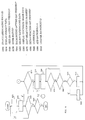
- FIG. 2 is a block diagram to show the configuration of a digital camera 1 according to a first embodiment of the invention.
- FIGS. 3A and 3B are a front view and a rear view to show the appearance of the digital camera 1.
- a lens drive section 72 drives a zoom lens 40 so as to form a subject image on the light reception section of an image sensor 44 at the scaling factor responsive to a signal input from a CPU 68.
- An aperture drive section 74 drives an optical aperture 42 so that the incident light amount on the image sensor 44 becomes the incident light amount responsive to a signal input from the CPU 68.
- the image sensor 44 is an area image sensor formed with an on-chip color filter array made up of four complementary color filters of C (Cyan), M (Magenta), Y (Yellow), and G (Green) for storing the charges provided by executing photoelectric conversion of received light for a given time and outputting an electric signal responsive to the light reception amount for each photoelectric conversion element.
- the color filter array may be made up of three complementary color filters of C, M, and Y or may be made up of primary color filters of R (Red), G (green), and B (Blue).
- a CDS circuit 46 performs reduction processing of noise contained in the analog electric signal.
- An AGC circuit 48 performs gain control, thereby adjusting the level of the analog electric signal.
- An A/D converter 50 quantizes the analog electric signal subjected to the processing described above into a digital signal of a determined gradation.
- a scan control section 76 outputs a shift pulse, a vertical transfer pulse, a horizontal transfer pulse, etc., to the image sensor 44 and outputs a drive pulse to the CDS circuit 46, the AGC circuit 48, and the A/D converter 50 to operate these components in synchronization with the image sensor 44.
- a digital image processing section 52 which is implemented, for example, as a DSP (Digital Signal Processor) , performs image generation processing, white balance correction, ⁇ correction, color space conversion, etc., based on the image signal output from the A/D converter 50, creates subject image data representing R, G, and B gradation values, Y, Cb, and Cr gradation values, etc., for example, for each pixel, and stores the subject image data in RAM 66.
- the image generation processing mentioned here is processing of mainly generating image data having three gradation values for each pixel by interpolation processing using digital data representing the gradation value of any of CMYG corresponding to output of each photoelectric conversion element.
- a compression-decompression processing section 54 compresses the subject image data output from the digital image processing section 52 to create compressed image data in conformity with a JPEG format, for example, in a photographing mode and decompresses the compressed image data read from removable memory 57 using a reader/writer 56 and stores the decompressed image data in the RAM 66 in a playback mode.
- the removable memory 57 implemented as nonvolatile memory such as flash memory can be attached to and detached from the reader/writer 56, and the reader/writer 56 writes data into the removable memory 57 and reads data stored in the removable memory 57.
- An operation section 64 includes various buttons such as a power button 14 for turning on/off power, a dial switch 16 for setting a mode such as the photographing mode, the playback mode, or a direct print mode, a shutter button 28 for entering a shutter command, a background setting button 18 for setting a background in the photographing mode, zoom buttons 10 and 12 for setting the magnification or scaling factor of a zoom lens, a next selection key 20, a preceding selection key 22, and a determination key 24, and a circuit for detecting the user pressing any button and the rotation angle of the dial switch 16.
- a power button 14 for turning on/off power
- a dial switch 16 for setting a mode such as the photographing mode, the playback mode, or a direct print mode
- a shutter button 28 for entering a shutter command
- a background setting button 18 for setting a background in the photographing mode
- zoom buttons 10 and 12 for setting the magnification or scaling factor of a zoom lens
- a next selection key 20 a preceding selection key 22, and a determination key
- a display control section 58 performs processing of thinning out the image data stored in the RAM 66 at a fixed scaling factor in response to the display area of the display, color space conversion processing, combining processing, etc., and drives an LCD (Liquid Crystal Display) 26 as the display based on the display data created by performing the processing.
- a frame buffer 62 contains a background area and a foreground area for separately storing the image data to be combined.
- the display control section 58 includes a combining processing circuit for displaying a composite image on the LCD 26 by displaying the pixels of the image data stored in the background area taking precedence over the transparent pixels of the image data stored in the foreground area and displaying the opaque pixels of the image data stored in the foreground area taking precedence over the pixels of the image data stored in the background area.
- the CPU 68 controls the whole digital camera 1 by executing a computer program stored in ROM 70.
- the ROM 70 is memory for storing the computer program, etc., for the CPU 68 to execute various types of control.
- the RAM 66 is memory for temporarily storing various programs and various pieces of data.
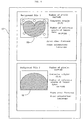
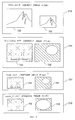
- FIG. 4 is a schematic drawing to show background files recorded in the removable memory 57.
- the background file which is provided for creating printed matter of a greeting card with a photo, a photo seal, etc., is transferred from a personal computer, etc., and is previously stored in the ROM 70 or the removable memory 57.
- the background data stored in the background file represents an image 80, 82 made up of a line drawing, fills, text, etc.
- the hatched area is an area into which the subject image represented by subject image data is fitted (transparent area).
- the background file is made up of data indicating the number of pixels of the background data, the coordinates with which the origin coordinates of the subject image data are matched (coordinates of composite origin), the number of reference pixels of layout data, the print size, the print orientation of the background data (portrait, landscape), etc., in addition to the background data.
- a comparison is made between the number of reference pixels of layout data and the number of pixels of the subject image data to be laid out, the background data is thinned out or interpolated to the size responsive to the number of pixels of the subject image data to be laid out, and the coordinates of the composite origin are converted accordingly.
- the number of pixels of the background data is (1280 x 640)
- the coordinates of the composite origin are (20, 20)
- the number of reference pixels of layout data is (640 x 480)
- the number of pixels of the subject image data is (1280 x 960)
- the number of pixels of the subject image data is twice the number of reference pixels in both horizontal and vertical directions and thus the combining processing before print is performed as follows:
- the background data is interpolated to set the number of pixels of the background data to (2560 x 1280), the coordinates of the composite origin are converted into (40, 40), and the image represented by the background data and the image represented by the subject image data are combined so that the image represented by the subject image data overlaps in the range of (40, 40) to (1320, 1000) of the image represented by the background data after conversion.
- the true background data used to create composite image data for print may be previously stored in the personal computer or the standalone printer and display processing in the digital camera 1 may be executed using data with a coarse gradation at a lower resolution than that of the true background data. In doing so, the background data does not put pressure on the memory space of the digital camera 1 and the background data can be processed at high speed.
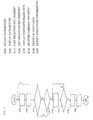
- FIG. 5 is a flowchart to show a processing flow for storing subject image data in the removable memory 57 in association with background data before photographing.
- the sequence shown in FIG. 5 is started as an operator presses the background setting button 18 in the photographing mode determined by the rotation angle of the dial switch 16.
- step S100 any one of the background files stored in the removable memory 57 is selected.
- step S105 the background image represented by the background data stored in the selected background file is displayed on the LCD 26.
- step S110 when the next selection key 20 is pressed, the process returns to step S100 and another background file is selected and the above-described processing is repeated.
- the subject image is displayed as a moving image in the transparent area of the image represented by the background data. Accordingly, it is made possible to create the subject image data representing an image in harmony with the image represented by the background data selected as the determination key 24 is pressed at step S120.
- the background data selected at steps S100 to A120 and the subject image data created by the digital image processing section 52 are stored in the frame buffer 62 and the display control section 58 combines the subject image data and the background data stored in the frame buffer 62 and outputs a drive signal to the LCD 26, whereby composite image data 83 is displayed as shown in FIG. 3 (A).
- the subject image data is updated every predetermined time.
- step S140 whether or not a shutter command is entered, namely, whether or not the shutter button 28 is pressed is detected. If the shutter button 28 being pressed is not detected, the process returns to step S130 and the above-described processing is repeated. If the shutter button 28 being pressed is detected at step S140, the process goes to step S150.
- a predetermined control signal is input to the scan control section 76, the charges accumulated in the image sensor 44 for a predetermined time are scanned, subject image data is created in the digital image processing section 52, and the subject image data is compressed by the compression-decompression processing section 54 to create compressed image data, which is then stored in a subject folder of the removable memory 57 by the reader/writer 56 in a predetermined file format such as JPEG.
- step S160 information to associate the subject image data recorded at step S150 and the background file selected as the determination key 24 is pressed at step S110 with each other is stored in the removable memory 57.
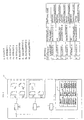
- an associating record is created with the file name of the subject image data recorded at step S150 as "subject file name,” the file name of the background file selected as the determination key 24 is pressed at step S110 as "background file name,” and before photographing as "setting time,” and is added to a setting table T shown in FIG. 1.
- the associating record added at this time corresponds to first associating data as claimed in Claims.
- the setting table T for managing the information to associate the subject image data and the background-file with each other will be discussed.
- the setting table T is recorded in a setting folder of the removable memory 57.
- the setting table T is made up of associating records for associating the subject files and the background files with each other in a one-to-one correspondence.
- Each associating record is made up of ID, subject file name, background file name, and setting time.
- the "subject file name” is data for uniquely identifying the subject file storing subject image data in a file system of the digital camera 1, personal computer, etc.
- the "background file name” is data for uniquely identifying the background file in the file system of the digital camera 1, personal computer, etc.
- the "setting time” is data indicating whether the associating record is created before photographing or is created or edited after photographing. That is, the associating record with before photographing as the "setting time” is an associating record created at step S160 and an associating record not edited later.
- the associating record with after photographing as the "setting time” is an associating record added or overwritten in a background setting mode described later. Whether or not the "setting time” is before photographing is determined, whereby it is made possible to determine whether or not the combination of the background file and the subject file associated with each other according to the associating record is a combination for bringing the subject and the background into harmony with each other, intended by the operator in entering the shutter command.
- an associating record with "no background” set in the "background file name” may be created and be added to the setting table each time for each shutter command.
- the subject image data and the background data may be associated with each other not only according to a table, but also according to a directory or may be associated with each other by storing the file name of the associated file in the subject file or the background file.
- FIG. 6 is a flowchart to show the processing. The sequence shown in FIG. 6 is started as the rotation angle of the dial switch 16 corresponding to the playback mode is detected in the operation section 64.
- any one of the associating records stored in the setting table T is selected.
- the subject image data with the subject file name stored in the selected associating record is displayed on the LCD 26.
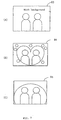
- text or an icon indicating the fact is combined with the subject for display as shown in FIG. 7 (A).
- step S220 whether or not the next selection key 20 is pressed is detected. If the next selection key 20 is pressed, the process returns to step S200 and another associating record is selected and the above-described processing is repeated. If the next selection key 20 is not pressed at step S220, the process goes to step S230 and whether or not a mode switch command is entered, namely, whether or not the rotation angle of the dial switch 16 is changed is detected. If a mode switch command is entered, the playback mode is terminated and is switched into another mode. If a mode switch command is not entered at step S230, the process goes to step S240 and whether or not the background setting key 18 is pressed is detected.
- step S250 If the background setting key 18 is pressed, the process goes to step S250 and a transition is made to the background setting mode.
- the mode for executing the processing sequence of steps S250 to S310 is called the background setting mode. If the background setting key 18 is not pressed at step S240, the process returns to step S220 and the above-described processing is repeated.
- any one of the background files stored in the removable memory is selected.
- the background file associated according to the associating record selected at step S200 is selected.
- the image represented by the subject image data associated according to the currently selected associating record and the image represented by the background data selected at step S250 are combined and the composite image is displayed on the LCD 26.
- the background data and the subject image data are stored in the frame buffer 62 and the display control section 58 combines the subject image data and the background data stored in the frame buffer 62 and outputs a drive signal to the LCD 26, whereby composite image data 84 shown in FIG. 7 (B) is displayed.
- step S270 whether or not the next selection key 20 is pressed is detected. If the next selection key 20 is pressed, the process returns to step S250, another piece of background data is selected, the above-described processing is repeated, and composite image data 85, for example, shown in FIG. 7 (C) is displayed. If the next selection key 20 is not pressed, the process goes to step S280 and whether or not the determination key 24 is pressed is detected. Steps S270 and S280 are repeated until the next selection key 20 or the determination key 24 is pressed. If the determination key 24 is pressed, the process goes to step S290.
- step S290 to record information for associating the subject image data associated according to the currently selected associating record and the background file selected at step S250 with each other in the setting table T, the operator is requested to select overwriting the currently selected associating record or adding a new associating record. Specifically, for example, buttons of "yes” and “no” are displayed on the LCD 26 together with a character string of "do you overwrite?" and the operator is requested to select either of the buttons of "yes” and “no” by pressing the next selection key 20, the preceding selection key 22, and the determination key 24.
- step S290 If the operator selects overwriting at step S290, the process goes to step S300 and the background file name in the currently selected associating record is changed to the file name of the background data selected at step S250 and "setting time" in the associating record is changed to "after photographing.”
- step S290 If the operator does not select overwriting at step S290, the process goes to step S310 and a new associating record is created with the subject file name in the currently selected associating record as "subject file name," the file name of the background data selected at step S250 as "background file name, " and "setting time” as “after photographing” and is added to the setting table T.
- the associating record added at this time corresponds to second associating data as claimed in Claims.
- image processing means as claimed in Claims is made up of the CDS circuit 46, the AGC circuit 48, the A/D converter 50, the digital image processing section 52, etc., and the function is realized as the processing at steps S130 and S150 is performed.
- the functions of subject image output means, first subject image output means, and second subject image output means as claimed in Claims are realized as the processing at steps S100, S105, S110, S120, and S160 is performed in the photographing mode and are realized as the processing at steps S250 to S310 is performed in the background setting mode.
- the function of the first subject image output means as claimed in Claims corresponds to the processing at steps S100, S105, S110, and S120 in the photographing mode
- the function of the second subject image output means as claimed in Claims corresponds to the processing at steps S250 to S310 in the background setting mode.
- the subject image data rather than the data provided by combining the subject image data and the background data is stored in the removable memory 57 and the subject image data and the background data are associated with each other according to the associating record stored in the setting table T. Therefore, the subject image data can be recorded in the removable memory 57 so that it can be drawn as it is combined with the selected background data and that it can be drawn separately from the selected background data.
- the subject image data, the background data, and the setting table T stored in the removable memory 57 are read in a personal computer, etc., and the subject image data and the background data are combined based on the setting table T, whereby a plurality of composite images can be created from one subject image data piece recorded with the digital camera 1.
- the information for associating the subject image data and the background data with each other is managed using the table, so that the information for associating the subject image data and the background data with each other can be easily edited and used.
- FIG. 8 is a schematic drawing to show directories of files stored in removable memory 57 with a digital camera 1 according to a second embodiment.
- " ⁇ removable" corresponds to the root directory of the removable memory 57.
- Components in the second embodiment substantially identical with those in the first embodiment are denoted by the same reference numerals in the second embodiment and will not be discussed again.
- a subject image file with extension ".exif” contains image data representing the subject image formed on an image sensor 44 when a shutter button 28 is pressed, and is created in a digital image processing section 52.
- a file with extension ".ust” is an associating file for associating a subject image file and a layout definition file file with each other.
- the filename of an index file with extension ".usm” is described in the associating file.
- the filename of the associating file is the same as the filename of the subject image file to be associated with the layout definition file described in the index file described in the associating file.
- a filename of an index file, "daen_0.usm, " is described in an associating file "0002.ust” and the filenames of layout definition files "daen01.usd,” “daen02.usd,” etc., are described in the index file "daen_0.usm.” That is, the subject image and the associating file are associated with each other according to their filenames, and the associating file and the index file are associated with each other according to the filename described in the associating file. Further, the index file and the layout definition file are associated with each other according to the filename of the layout definition file described in the index file.
- the files are associated with each other, whereby a plurality of layout definition files different in paper size and having similitude relation are associated with one subject image file.
- the associating file is stored in the removable memory 57 together with the subject image file when the shutter button 28 is pressed.
- the layout definition file can be associated with the subject image data already stored in the removable memory 57.
- text information indicating whether the associating file is set before the shutter button 28 is pressed or is set in the background setting mode is described.
- a file with extension ".usd” is a layout definition file for defining the print layout of a subject image and a default image and the layout definition file is retained for each paper size.
- the layout definition file is described later in detail.
- FIG. 9 is a schematic drawing to show various images stored in the removable memory 57 in association with each other through the layout definition file.
- a subject image file 238 with extension ".exif” contains data representing a subject image, essential image data 240 and thumbnail image data 242, which are recorded in an Exif file format.
- a default image file 244 with extension ".eff" contains data representing a default image combined with a subject image based on the layout definition file, default image data 246 and ⁇ channel data 248.
- the ⁇ channel data is data setting the transmittance of the upper layer between superposed layers for each pixel. For example, in pixels with the transmittance set to 100% by the ⁇ channel data, a pixel in the lower layer rather than a pixel in the upper layer is adopted as a pixel of a composite image. If a script for drawing a default image is described in the layout definition file, the subject image and the default image are related to each other through the layout definition file.
- a preview image file 254 with extension ".usf" contains data to display the layout defined in the layout definition file on an LCD 26, preview image data 250 and ⁇ channel data 252.
- the preview image file 254 is displayed in a mode of selecting the layout definition file to be associated with the subject image file before the shutter button 28 is pressed and the background setting mode to which a transition can be made from the playback mode.
- the size of a preview image is matched with the size of a thumbnail image defined in the industrial standard such as Exif, for example, whereby it is made possible to display the layout defined in the layout definition file at high speed using hardware for displaying the thumbnail image data of subject images at high speed.
- a framing image file 260 with extension ".ctf" contains data to display a part of the default image defined in the layout definition file (framing image) on an LCD of a digital camera, framing image data 256 and ⁇ channel data 258. In a photographing mode, a framing image is displayed on the LCD 26, whereby appropriate framing responsive to the shape of the frame into which a default image is fitted is made possible.
- the data representing a default image, the data representing a preview image, and the data representing a framing image are stored in the folder of the same name as the filename of the index file describing the filenames of the layout definition files corresponding to the data.
- the layout definition file, the index file, the default image file, the preview image file, and the framing image file maybe stored only in ROM 70 or may be stored in the removable memory 57 until the associating file is stored in the removable memory 57.
- the associating file is stored in the removable memory 57, if the layout definition file, the index file, the default image file, the preview image file, and the framing image file are not stored in the removable memory 57, these files are stored in the removable memory 57 together with the associating file.
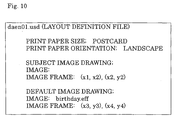
- FIG. 10 is a schematic drawing to show the contents of a layout definition file.
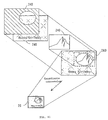
- FIG. 11 is a schematic drawing to show processing of laying out a subject image and a default image for a postcard 260 using the layout definition file when a print command is accepted in the digital camera 1 directly connected to a printer or when a print command is accepted in a printer to which data can be input from the removable memory 57.
- Processing of creating print data of a composite image using the layout definition file, the subject image file, the default image file, etc. may be performed by a CPU 68 of the digital camera 1 or a CPU of a printer.
- one-page image data to be printed is created using the layout definition file, the subject image file, the default image file, etc., and further color space conversion processing, resolution conversion processing, halftone processing, interlace processing, etc., is performed for the image data to be printed to create print data, and the print data is sent to a printer through an interface such as USB.
- the layout definition file, the subject image file, and the default image file may be input to the printer through an interface such as USB or the removable memory 57 and the layout definition file may be interpreted in the printer.
- the digital camera 1 may send only the default image file corresponding to the paper size selected by the user through menu operation of the digital camera 1 to the printer.
- the layout of the subject image and the default image is defined by a script.
- the script defines the print paper size, the print paper orientation, the image frames to place the subject image and the default image on print paper, etc., so that they can be interpreted uniquely in a printer, etc.
- “postcard” as the paper size and "landscape” as the print paper orientation are described by the script
- the image frame (for example, upper left coordinates of the frame “(x1, y1)” and lower right coordinates of the frame “(x2, y2) ) is described by the script for each subject image to be printed
- the filename of the default image file for example, "birthday. eff”
- the image frame for example, upper left coordinates of the frame "(x3, y3)” and lower right coordinates of the frame "(x4, y4)
- the script for each default image to be printed.
- FIG. 12 is a drawing to show screen transition of the LCD 26 in the mode in the playback mode.
- FIG. 12 (A) shows a screen on which a subject image stored in the removable memory 57 is displayed.
- the essential image data of the subject image may be read from the removable memory 57 and scaled down before display, the thumbnail image data of the subject image may be read and displayed intact, or the thumbnail image data of the subject image may be read and scaled up or down before display. If a default image is associated with the subject image selected as the next selection key 20 or the preceding selection key 22 is pressed, a part of the default image is displayed as shown in FIG.
- one of the subject image files stored in a predetermined directory of the removable memory 57 is selected in order each time the next selection key 20 or the preceding selection key 22 is pressed. If the associating file of the same filename as the selected subject image file is stored in the directory, a screen indicating that a layout definition file is associated with the selected subject image file is displayed on the LCD 26 as shown in FIG. 12 (B1) or FIG. 12 (B2). In this state, if the print start is accepted in the digital camera 1, the selected subject image file is printed in accordance with the script described in the layout definition file associated with the subject image file.
- FIG. 12 (B1) and FIG. 12 (B2) show a state in which "0002.exif" shown in FIG. 8 is selected. Processing when a subject image file stored in the removable memory in association with default image data is selected in the playback mode will be discussed below with reference to a flowchart of FIG. 13:
- thumbnail image data 242, the framing image data 256, and the ⁇ channel data 258 shown in FIG. 9 are read from the removable memory 57, and the thumbnail image data 242 and the framing image data 256 are superposed on each other on the LCD 26 as shown in FIG. 12 (B1) (S300).
- image data representing "with frame” stored in the ROM of the control section 212 may be displayed in the upper layer of the thumbnail image data 242 of the subject image.
- next selection key 20 or the preceding selection key 22 is pressed in a state in which the subject image is displayed on the LCD 26, another subject image file is selected (S310).
- the determination switch 24 is pressed in a state in which the subject image is displayed on the LCD 26, the following processing for displaying the whole of the image into which the subject image and the default image are combined on one screen is started (S320):
- the following processing may be started when a timer started when a new subject image file was selected times out.
- the layout definition file is read and coordinate conversion of the image frame described in the script is executed in response to the screen of the LCD 26 as shown in FIG. 11 (S330).
- a file describing the script defining the image frame responsive to the screen of the LCD 26 may be previously associated with the index file, etc., for storage. In this case, it is not necessary to read the layout definition file and it is not necessary either to execute coordinate conversion of the image frame in the layout definition file.
- thumbnail image 242 representing the subject image is scaled down in response to the image frame subjected to the coordinate conversion as shown in FIG. 14 (S340).
- the preview image data 250 and the ⁇ channel data 252 in the preview image file associated with the subject image file through the index file are read from the removable memory 57.
- the whole of the image into which the subject image and the default image are combined is displayed on one screen of LCD 26 based on the scaled-down thumbnail image 242, the preview image data 250, and the ⁇ channel data 252, as shown in screen B in FIG. 14.
- the print start is accepted in the digital camera 1
- the selected subject image file is printed in accordance with the script described in the layout definition file associated with the subject image file.
Landscapes
- Engineering & Computer Science (AREA)
- Multimedia (AREA)
- Signal Processing (AREA)
- Physics & Mathematics (AREA)
- General Physics & Mathematics (AREA)
- Theoretical Computer Science (AREA)
- Television Signal Processing For Recording (AREA)
- Studio Devices (AREA)
Abstract
A digital camera capable of recording a subject image
so that the subject image can be drawn as it is combined with
a selected default image and that the subject image can be drawn
separately from a selected default image.
The digital camera includes image processing means for
creating subject image data based on output of an image sensor
and default image setting means for storing subject image data
in removable memory 57 together with information for
associating background data with the subject image data,
whereby the subject image data rather than the data provided
by combining the subject image data and the background data
is stored in the removable memory 57 and the subject image data
and the background data are associated with each other.
Description
This invention relates to a digital camera.
A digital camera has a use of recording a subject as
material of a composite image, for example. The composite
image is widely used to print a greeting card with a photo,
a framed photo seal, etc.
Hitherto, a digital camera for recording a composite
image provided by combining a digital image representing a
border and a background (default image) and a digital image
representing a subject (subject image) in external memory has
been known (for example, refer to patent document 1).
However, according to the digital camera disclosed in
patent document 1, the default image and the subject image are
combined before they are recorded in the external memory, and
thus the subject image before being combined is not recorded
in the external memory. Thus, the subject image can be used
only for the purpose of being combined with the default image
selected before photographing.
Considering such a problem, it is therefore an object
of the invention to provide a digital camera capable of
recording a subject image so that the subject image can be drawn
as it is combined with a selected default image and that the
subject image can be drawn separately from a selected default
image.
To accomplish the above-described object, a digital
camera according to the invention is characterized by image
processing means for creating subject image data representing
a subject image based on output of an image sensor; and subject
image output means for storing subject image data and
associating data for associating default image data
representing a default image combined with a subject image
represented by the subject image data with the subject image
data in nonvolatile memory. The subject image data
representing the subject image rather than the image provided
by combining the subject image and the default image is stored
in the nonvolatile memory, whereby the subject image can be
recorded so that the subject image can be drawn as it is combined
with the selected default image and that the subject image can
be drawn separately from the selected default image.
Further, the digital camera according to the invention
is characterized in that the subject image output means stores
associating data for associating a plurality of pieces of
default image data with one piece of subject image data in the
nonvolatile memory. One subject image and multiple background
images are associated with each other, whereby a plurality of
composite images can be created from one subject image.
Further, the digital camera according to the invention
is characterized in that the subject image output means has
first subject image output means for setting a first default
image before a shutter command is entered and storing first
associating data for associating default image data
representing the first default image with subject image data
in the nonvolatile memory; and second subject image output
means for setting a second default image after a shutter command
is entered and storing second associating data for associating
default image data representing the second default image with
the subject image data associated with the first default image
in the nonvolatile memory, and that the first default image
and the second associating data are distinguished from each
other with respect to the setting time of the default image.
If a plurality of combinations of default images and subject
images are set, it becomes hard to determine which of the
combinations is the combination for bringing the subject image
and the default image into harmony with each other, intended
by the operator in entering the shutter command. Since the
combination of the default image and the subject image set
before the shutter command is entered is distinguished from
the combination set after the shutter command is entered, the
combination for bringing the subject image and the default
image into harmony with each other, intended by the operator
in entering the shutter command can be determined easily.
Further, the digital camera according to the invention
is characterized in that the subject image output means uses
a table to associate the default image data with the subject
image data. Accordingly, it becomes easy to edit and use the
information for associating the default image with the subject
image.
Further, the digital camera according to the invention
is characterized in that the associating data associates layout
definition data for defining playback layout of the subject
image and the default image with the subject image data. The
subject image data is stored in memory in association with the
layout definition data, whereby it is made possible to control
the layout of the subject image and the default image for the
composite image with the digital camera.
Further, the digital camera according to the invention
is characterized in that the digital camera further includes
default image selection means for selecting the default image
data to be associated with the subject image data before and
after a shutter command is entered, and that the associating
data associates the default image data selected through the
default image selection means with the subject image data
through the layout definition data so that whether the default
image data associated with the subject image data by the
associating data is selected before or after the shutter
command is entered can be determined. Whether the default
image data representing the default image combined with the
subject image is selected before or after the shutter command
is entered can be determined by the associating data, so that
whether or not the combination of the subject image and the
default image determined by the associating data is the
combination intended by the operator in entering the shutter
command can be determined after the fact just before print,
etc.
Further, the digital camera according to the invention
is characterized in that the layout definition data contains
a plurality of layout definition files each for defining
playback layout of the subject image and the default image for
each playback medium size and an index file containing paths
of the plurality of layout definition files, and that the
associating data is stored in a file having a file name at least
a part of which matches the file name of the file storing the
subject image data and contains the path of the index file.
Subject image is stored in the memory in association with a
plurality of layout definition files each for defining playback
layout of the subject image and the default image for each
playback medium size through the an index file, whereby it is
made possible to control the layout of the subject image and
the default image for the composite image played back on
playback media of different sizes for each playback medium size
with the digital camera.
Further, the digital camera according to the invention
is characterized in that the nonvolatile memory is removable
memory. Subject image data is stored in the removable memory,
whereby it is made possible to transmit the subject image data
through the removable memory to a different image processing
apparatus from the digital camera recording the subject image.
Further, the digital camera according to the invention
is characterized in that the digital camera further includes
playback layout output means for storing the default image data
representing a default image and layout definition data for
defining playback layout of subject image and the default image
in the removable memory. Default image and layout definition
data are stored in the removable memory together with subject
image data, whereby it is made possible to play back the
composite image of the subject image and the default image
according to the playback layout defined in the layout
definition data in a different image processing apparatus from
the digital camera recording the subject image. That is, it
is made possible to control the layout of the subject image
and the default image for the composite image played back in
a different image processing apparatus with the digital camera.
Further, the digital camera according to the invention
is characterized in that the layout definition data contains
a plurality of layout definition files each for defining
playback layout of the subject image and the default image for
each playback medium size and an index file containing paths
of the plurality of layout definition files, and that the
associating data is stored in a file having a file name at least
a part of which matches the file name of the file storing the
subject image data and contains the path of the index file.
Subject image is stored in the removable memory in association
with a plurality of layout definition files each for defining
playback layout of the subject image and the default image for
each playback medium size through the an index file, whereby
it is made possible to control the layout of the subject image
and the default image for the composite image played back on
playback media of different sizes for each playback medium size
with the digital camera.
Further, the digital camera according to the invention
is characterized in that the digital camera further includes
display means for displaying a composite image provided by
combining the subject image represented by subject image data
and the default image represented by the default image data
associated with the subject image data. The composite image
provided by combining the subject image and the default image
is displayed, whereby it is made possible to check the composite
image with the digital camera.
Further, the digital camera according to the invention
is characterized in that the digital camera further includes
print control means for causing a printer to print a composite
image provided by combining the subject image represented by
subject image data and the default image represented by the
default image data associated with the subject image data. The
digital camera causes a printer to print the composite image,
whereby it is made possible to easily print the composite image
of the subject image recorded in the digital camera without
using a personal computer, etc.
Further, the digital camera according to the invention
is characterized in that the print control means creates print
data of a composite image provided by combining the subject
image represented by subject image data and the default image
represented by the default image data associated with the
subject image data and causes the printer to print the composite
image based on the print data. The print data is created in
the digital camera, whereby it is made possible to easily print
the composite image of the subject image recorded in the digital
camera even with a printer that cannot create the print data
based on the subject image data and the default image data.
The functions of the plurality of means included in the
invention are provided by hardware resources whose functions
are determined by the configuration and hardware resources
whose functions are determined by programs, or by combining
them. The functions of the plurality of means are not limited
to those provided by hardware resources physically independent
of each other. The invention can be determined not only as
the invention of an apparatus, but also as the invention of
a program, the invention of a record medium recording the
program, and the invention of a method.
Embodiments of the invention will be discussed below
based on embodiments.
FIG. 2 is a block diagram to show the configuration of
a digital camera 1 according to a first embodiment of the
invention. FIGS. 3A and 3B are a front view and a rear view
to show the appearance of the digital camera 1.
A lens drive section 72 drives a zoom lens 40 so as to
form a subject image on the light reception section of an image
sensor 44 at the scaling factor responsive to a signal input
from a CPU 68. An aperture drive section 74 drives an optical
aperture 42 so that the incident light amount on the image
sensor 44 becomes the incident light amount responsive to a
signal input from the CPU 68.
The image sensor 44 is an area image sensor formed with
an on-chip color filter array made up of four complementary
color filters of C (Cyan), M (Magenta), Y (Yellow), and G
(Green) for storing the charges provided by executing
photoelectric conversion of received light for a given time
and outputting an electric signal responsive to the light
reception amount for each photoelectric conversion element.
The color filter array may be made up of three complementary
color filters of C, M, and Y or may be made up of primary color
filters of R (Red), G (green), and B (Blue).
A CDS circuit 46 performs reduction processing of noise
contained in the analog electric signal. An AGC circuit 48
performs gain control, thereby adjusting the level of the
analog electric signal. An A/D converter 50 quantizes the
analog electric signal subjected to the processing described
above into a digital signal of a determined gradation. A scan
control section 76 outputs a shift pulse, a vertical transfer
pulse, a horizontal transfer pulse, etc., to the image sensor
44 and outputs a drive pulse to the CDS circuit 46, the AGC
circuit 48, and the A/D converter 50 to operate these components
in synchronization with the image sensor 44.
A digital image processing section 52, which is
implemented, for example, as a DSP (Digital Signal Processor) ,
performs image generation processing, white balance
correction, γ correction, color space conversion, etc., based
on the image signal output from the A/D converter 50, creates
subject image data representing R, G, and B gradation values,
Y, Cb, and Cr gradation values, etc., for example, for each
pixel, and stores the subject image data in RAM 66. The image
generation processing mentioned here is processing of mainly
generating image data having three gradation values for each
pixel by interpolation processing using digital data
representing the gradation value of any of CMYG corresponding
to output of each photoelectric conversion element.
A compression-decompression processing section 54
compresses the subject image data output from the digital image
processing section 52 to create compressed image data in
conformity with a JPEG format, for example, in a photographing
mode and decompresses the compressed image data read from
removable memory 57 using a reader/writer 56 and stores the
decompressed image data in the RAM 66 in a playback mode. The
removable memory 57 implemented as nonvolatile memory such as
flash memory can be attached to and detached from the
reader/writer 56, and the reader/writer 56 writes data into
the removable memory 57 and reads data stored in the removable
memory 57.
An operation section 64 includes various buttons such
as a power button 14 for turning on/off power, a dial switch
16 for setting a mode such as the photographing mode, the
playback mode, or a direct print mode, a shutter button 28 for
entering a shutter command, a background setting button 18 for
setting a background in the photographing mode, zoom buttons
10 and 12 for setting the magnification or scaling factor of
a zoom lens, a next selection key 20, a preceding selection
key 22, and a determination key 24, and a circuit for detecting
the user pressing any button and the rotation angle of the dial
switch 16.
A display control section 58 performs processing of
thinning out the image data stored in the RAM 66 at a fixed
scaling factor in response to the display area of the display,
color space conversion processing, combining processing, etc.,
and drives an LCD (Liquid Crystal Display) 26 as the display
based on the display data created by performing the processing.
A frame buffer 62 contains a background area and a foreground
area for separately storing the image data to be combined. The
display control section 58 includes a combining processing
circuit for displaying a composite image on the LCD 26 by
displaying the pixels of the image data stored in the background
area taking precedence over the transparent pixels of the image
data stored in the foreground area and displaying the opaque
pixels of the image data stored in the foreground area taking
precedence over the pixels of the image data stored in the
background area.
The CPU 68 controls the whole digital camera 1 by
executing a computer program stored in ROM 70. The ROM 70 is
memory for storing the computer program, etc., for the CPU 68
to execute various types of control. The RAM 66 is memory for
temporarily storing various programs and various pieces of
data.
The configuration of the digital camera 1 has been
described. Next, background data as a default image will be
discussed.
FIG. 4 is a schematic drawing to show background files
recorded in the removable memory 57.
The background file, which is provided for creating
printed matter of a greeting card with a photo, a photo seal,
etc., is transferred from a personal computer, etc., and is
previously stored in the ROM 70 or the removable memory 57.
In the description that follows, it is assumed that the
background files are stored in a background folder of the
removable memory 57 as shown in FIG. 1. The background data
stored in the background file represents an image 80, 82 made
up of a line drawing, fills, text, etc. The hatched area is
an area into which the subject image represented by subject
image data is fitted (transparent area). As the gradation
value of each pixel in the transparent area, a predetermined
value representing transparency, such as R=00H, G=00H, B=00H,
for example, is set.
The background file is made up of data indicating the
number of pixels of the background data, the coordinates with
which the origin coordinates of the subject image data are
matched (coordinates of composite origin), the number of
reference pixels of layout data, the print size, the print
orientation of the background data (portrait, landscape), etc.,
in addition to the background data. At the combining
processing time before print, a comparison is made between the
number of reference pixels of layout data and the number of
pixels of the subject image data to be laid out, the background
data is thinned out or interpolated to the size responsive to
the number of pixels of the subject image data to be laid out,
and the coordinates of the composite origin are converted
accordingly.
For example, if the number of pixels of the background
data is (1280 x 640), the coordinates of the composite origin
are (20, 20), the number of reference pixels of layout data
is (640 x 480), and the number of pixels of the subject image
data is (1280 x 960), the number of pixels of the subject image
data is twice the number of reference pixels in both horizontal
and vertical directions and thus the combining processing
before print is performed as follows: The background data is
interpolated to set the number of pixels of the background data
to (2560 x 1280), the coordinates of the composite origin are
converted into (40, 40), and the image represented by the
background data and the image represented by the subject image
data are combined so that the image represented by the subject
image data overlaps in the range of (40, 40) to (1320, 1000)
of the image represented by the background data after
conversion. At the print time, further interpolation
processing, thinning-out processing, or rotation processing
is performed based on the print size, the print orientation
of the background data, etc., previously stored in the
background file, and a composite image of the setup print size
and in the setup print orientation is printed on a printer.
If the image represented by the subject image data and
the image represented by the background data are combined into
a composite image in a personal computer or a standalone printer
and then the composite image is printed and it is not assumed
that the digital camera 1 and a printer are directly connected
for printing, the true background data used to create composite
image data for print may be previously stored in the personal
computer or the standalone printer and display processing in
the digital camera 1 may be executed using data with a coarse
gradation at a lower resolution than that of the true background
data. In doing so, the background data does not put pressure
on the memory space of the digital camera 1 and the background
data can be processed at high speed.
The background data has been described. Next, the
operation of the digital camera 1 will be discussed.
FIG. 5 is a flowchart to show a processing flow for storing
subject image data in the removable memory 57 in association
with background data before photographing. The sequence shown
in FIG. 5 is started as an operator presses the background
setting button 18 in the photographing mode determined by the
rotation angle of the dial switch 16.
At step S100, any one of the background files stored in
the removable memory 57 is selected. At step S105, the
background image represented by the background data stored in
the selected background file is displayed on the LCD 26. At
step S110, when the next selection key 20 is pressed, the
process returns to step S100 and another background file is
selected and the above-described processing is repeated.
When the determination key 24 is pressed at step S120,
at step S130, the subject image is displayed as a moving image
in the transparent area of the image represented by the
background data. Accordingly, it is made possible to create
the subject image data representing an image in harmony with
the image represented by the background data selected as the
determination key 24 is pressed at step S120. Specifically,
the background data selected at steps S100 to A120 and the
subject image data created by the digital image processing
section 52 are stored in the frame buffer 62 and the display
control section 58 combines the subject image data and the
background data stored in the frame buffer 62 and outputs a
drive signal to the LCD 26, whereby composite image data 83
is displayed as shown in FIG. 3 (A). The subject image data
is updated every predetermined time.
At step S140, whether or not a shutter command is entered,
namely, whether or not the shutter button 28 is pressed is
detected. If the shutter button 28 being pressed is not
detected, the process returns to step S130 and the
above-described processing is repeated. If the shutter button
28 being pressed is detected at step S140, the process goes
to step S150.
At step S150, a predetermined control signal is input
to the scan control section 76, the charges accumulated in the
image sensor 44 for a predetermined time are scanned, subject
image data is created in the digital image processing section
52, and the subject image data is compressed by the
compression-decompression processing section 54 to create
compressed image data, which is then stored in a subject folder
of the removable memory 57 by the reader/writer 56 in a
predetermined file format such as JPEG.
At step S160, information to associate the subject image
data recorded at step S150 and the background file selected
as the determination key 24 is pressed at step S110 with each
other is stored in the removable memory 57. Specifically, an
associating record is created with the file name of the subject
image data recorded at step S150 as "subject file name," the
file name of the background file selected as the determination
key 24 is pressed at step S110 as "background file name," and
before photographing as "setting time," and is added to a
setting table T shown in FIG. 1. The associating record added
at this time corresponds to first associating data as claimed
in Claims.
Here, the setting table T for managing the information
to associate the subject image data and the background-file
with each other will be discussed. The setting table T is
recorded in a setting folder of the removable memory 57. The
setting table T is made up of associating records for
associating the subject files and the background files with
each other in a one-to-one correspondence. Each associating
record is made up of ID, subject file name, background file
name, and setting time. The "subject file name" is data for
uniquely identifying the subject file storing subject image
data in a file system of the digital camera 1, personal computer,
etc. The "background file name" is data for uniquely
identifying the background file in the file system of the
digital camera 1, personal computer, etc. The "setting time"
is data indicating whether the associating record is created
before photographing or is created or edited after
photographing. That is, the associating record with before
photographing as the "setting time" is an associating record
created at step S160 and an associating record not edited later.
The associating record with after photographing as the "setting
time" is an associating record added or overwritten in a
background setting mode described later. Whether or not the
"setting time" is before photographing is determined, whereby
it is made possible to determine whether or not the combination
of the background file and the subject file associated with
each other according to the associating record is a combination
for bringing the subject and the background into harmony with
each other, intended by the operator in entering the shutter
command. When the shutter command is entered in a state in
which no background data is set, an associating record with
"no background" set in the "background file name" may be created
and be added to the setting table each time for each shutter
command.
An unlimited number of associating records each for
associating a subject file and a background file with each other
in any combination can be added to the setting table T within
the upper limit of the memory capacity. Associating records
for associating different background files with one subject
file (in the example in FIG. 1, associating records with ID
3 and ID 4) can be created. Therefore, using the setting table
T, information for associating two or more background files
with one subject file can be stored in the removable memory
57.
The subject image data and the background data may be
associated with each other not only according to a table, but
also according to a directory or may be associated with each
other by storing the file name of the associated file in the
subject file or the background file.
The processing flow of storing the information to
associate the subject image data with the background data in
the removable memory 57 has been described. Next, processing
of setting associating of subject image data and background
data with each other after photographing will be discussed.
FIG. 6 is a flowchart to show the processing. The
sequence shown in FIG. 6 is started as the rotation angle of
the dial switch 16 corresponding to the playback mode is
detected in the operation section 64.
At step S200, any one of the associating records stored
in the setting table T is selected. At step S210, the subject
image data with the subject file name stored in the selected
associating record is displayed on the LCD 26. At this time,
if a background file is associated with the subject file in
the selected associating record, text or an icon indicating
the fact is combined with the subject for display as shown in
FIG. 7 (A).
At step S220, whether or not the next selection key 20
is pressed is detected. If the next selection key 20 is pressed,
the process returns to step S200 and another associating record
is selected and the above-described processing is repeated.
If the next selection key 20 is not pressed at step S220, the
process goes to step S230 and whether or not a mode switch
command is entered, namely, whether or not the rotation angle
of the dial switch 16 is changed is detected. If a mode switch
command is entered, the playback mode is terminated and is
switched into another mode. If a mode switch command is not
entered at step S230, the process goes to step S240 and whether
or not the background setting key 18 is pressed is detected.
If the background setting key 18 is pressed, the process goes
to step S250 and a transition is made to the background setting
mode. The mode for executing the processing sequence of steps
S250 to S310 is called the background setting mode. If the
background setting key 18 is not pressed at step S240, the
process returns to step S220 and the above-described processing
is repeated.
At step S250, any one of the background files stored in
the removable memory is selected. In the first processing
executed just after step S240, the background file associated
according to the associating record selected at step S200 is
selected. At step S260, the image represented by the subject
image data associated according to the currently selected
associating record and the image represented by the background
data selected at step S250 are combined and the composite image
is displayed on the LCD 26. Specifically, the background data
and the subject image data are stored in the frame buffer 62
and the display control section 58 combines the subject image
data and the background data stored in the frame buffer 62 and
outputs a drive signal to the LCD 26, whereby composite image
data 84 shown in FIG. 7 (B) is displayed.
At step S270, whether or not the next selection key 20
is pressed is detected. If the next selection key 20 is pressed,
the process returns to step S250, another piece of background
data is selected, the above-described processing is repeated,
and composite image data 85, for example, shown in FIG. 7 (C)
is displayed. If the next selection key 20 is not pressed,
the process goes to step S280 and whether or not the
determination key 24 is pressed is detected. Steps S270 and
S280 are repeated until the next selection key 20 or the
determination key 24 is pressed. If the determination key 24
is pressed, the process goes to step S290.
At step S290, to record information for associating the
subject image data associated according to the currently
selected associating record and the background file selected
at step S250 with each other in the setting table T, the operator
is requested to select overwriting the currently selected
associating record or adding a new associating record.
Specifically, for example, buttons of "yes" and "no" are
displayed on the LCD 26 together with a character string of
"do you overwrite?" and the operator is requested to select
either of the buttons of "yes" and "no" by pressing the next
selection key 20, the preceding selection key 22, and the
determination key 24.
If the operator selects overwriting at step S290, the
process goes to step S300 and the background file name in the
currently selected associating record is changed to the file
name of the background data selected at step S250 and "setting
time" in the associating record is changed to "after
photographing."
If the operator does not select overwriting at step
S290, the process goes to step S310 and a new associating record
is created with the subject file name in the currently selected
associating record as "subject file name," the file name of
the background data selected at step S250 as "background file
name, " and "setting time" as "after photographing" and is added
to the setting table T. The associating record added at this
time corresponds to second associating data as claimed in
Claims. Upon completion of the processing at step S300 or S310,
the process returns to step S240 and the above-described
processing is repeated.
The processing of setting associating of the subject
image data and the background data with each other after
photographing has been described. In the first embodiment of
the invention, image processing means as claimed in Claims is
made up of the CDS circuit 46, the AGC circuit 48, the A/D
converter 50, the digital image processing section 52, etc.,
and the function is realized as the processing at steps S130
and S150 is performed. The functions of subject image output
means, first subject image output means, and second subject
image output means as claimed in Claims are realized as the
processing at steps S100, S105, S110, S120, and S160 is
performed in the photographing mode and are realized as the
processing at steps S250 to S310 is performed in the background
setting mode. Particularly, the function of the first subject
image output means as claimed in Claims corresponds to the
processing at steps S100, S105, S110, and S120 in the
photographing mode, and the function of the second subject
image output means as claimed in Claims corresponds to the
processing at steps S250 to S310 in the background setting mode.
In the first embodiment of the invention described above,
the subject image data rather than the data provided by
combining the subject image data and the background data is
stored in the removable memory 57 and the subject image data
and the background data are associated with each other
according to the associating record stored in the setting table
T. Therefore, the subject image data can be recorded in the
removable memory 57 so that it can be drawn as it is combined
with the selected background data and that it can be drawn
separately from the selected background data. Further, if
records for associating two or more pieces of background data
with one piece of subject image data are stored in the setting
table T, the subject image data, the background data, and the
setting table T stored in the removable memory 57 are read in
a personal computer, etc., and the subject image data and the
background data are combined based on the setting table T,
whereby a plurality of composite images can be created from
one subject image data piece recorded with the digital camera
1.
In the first embodiment of the invention, the information
for associating the subject image data and the background data
with each other is managed using the table, so that the
information for associating the subject image data and the
background data with each other can be easily edited and used.
FIG. 8 is a schematic drawing to show directories of files
stored in removable memory 57 with a digital camera 1 according
to a second embodiment. "¥removable" corresponds to the root
directory of the removable memory 57. Components in the second
embodiment substantially identical with those in the first
embodiment are denoted by the same reference numerals in the
second embodiment and will not be discussed again.
A subject image file with extension ".exif" contains
image data representing the subject image formed on an image
sensor 44 when a shutter button 28 is pressed, and is created
in a digital image processing section 52.
A file with extension ".ust" is an associating file for
associating a subject image file and a layout definition file
file with each other. The filename of an index file with
extension ".usm" is described in the associating file. The
filename of the associating file is the same as the filename
of the subject image file to be associated with the layout
definition file described in the index file described in the
associating file. For example, a filename of an index file,
"daen_0.usm, " is described in an associating file "0002.ust"
and the filenames of layout definition files "daen01.usd,"
"daen02.usd," etc., are described in the index file
"daen_0.usm." That is, the subject image and the associating
file are associated with each other according to their
filenames, and the associating file and the index file are
associated with each other according to the filename described
in the associating file. Further, the index file and the layout
definition file are associated with each other according to
the filename of the layout definition file described in the
index file. The files are associated with each other, whereby
a plurality of layout definition files different in paper size
and having similitude relation are associated with one subject
image file.
If a layout definition file is selected by menu operation
before the shutter button 28 is pressed, the associating file
is stored in the removable memory 57 together with the subject
image file when the shutter button 28 is pressed. As a
transition is made from a playback mode to a background setting
mode, the layout definition file can be associated with the
subject image data already stored in the removable memory 57.
In each associating file, text information indicating whether
the associating file is set before the shutter button 28 is
pressed or is set in the background setting mode is described.
A file with extension ".usd" is a layout definition file
for defining the print layout of a subject image and a default
image and the layout definition file is retained for each paper
size. The layout definition file is described later in detail.
FIG. 9 is a schematic drawing to show various images
stored in the removable memory 57 in association with each other
through the layout definition file.
A subject image file 238 with extension ".exif" contains
data representing a subject image, essential image data 240
and thumbnail image data 242, which are recorded in an Exif
file format.
A default image file 244 with extension ".eff" contains
data representing a default image combined with a subject image
based on the layout definition file, default image data 246
and α channel data 248. The α channel data is data setting
the transmittance of the upper layer between superposed layers
for each pixel. For example, in pixels with the transmittance
set to 100% by the α channel data, a pixel in the lower layer
rather than a pixel in the upper layer is adopted as a pixel
of a composite image. If a script for drawing a default image
is described in the layout definition file, the subject image
and the default image are related to each other through the
layout definition file.
A preview image file 254 with extension ".usf" contains
data to display the layout defined in the layout definition
file on an LCD 26, preview image data 250 and α channel data
252. The preview image file 254 is displayed in a mode of
selecting the layout definition file to be associated with the
subject image file before the shutter button 28 is pressed and
the background setting mode to which a transition can be made
from the playback mode. The size of a preview image is matched
with the size of a thumbnail image defined in the industrial
standard such as Exif, for example, whereby it is made possible
to display the layout defined in the layout definition file
at high speed using hardware for displaying the thumbnail image
data of subject images at high speed.
A framing image file 260 with extension ".ctf" contains
data to display a part of the default image defined in the layout
definition file (framing image) on an LCD of a digital camera,
framing image data 256 and α channel data 258. In a
photographing mode, a framing image is displayed on the LCD
26, whereby appropriate framing responsive to the shape of the
frame into which a default image is fitted is made possible.
As shown in FIG. 8, the data representing a default image,
the data representing a preview image, and the data
representing a framing image are stored in the folder of the
same name as the filename of the index file describing the
filenames of the layout definition files corresponding to the
data.
The layout definition file, the index file, the default
image file, the preview image file, and the framing image file
maybe stored only in ROM 70 or may be stored in the removable
memory 57 until the associating file is stored in the removable
memory 57. When the associating file is stored in the removable
memory 57, if the layout definition file, the index file, the
default image file, the preview image file, and the framing
image file are not stored in the removable memory 57, these
files are stored in the removable memory 57 together with the
associating file.
FIG. 10 is a schematic drawing to show the contents of
a layout definition file. FIG. 11 is a schematic drawing to
show processing of laying out a subject image and a default
image for a postcard 260 using the layout definition file when
a print command is accepted in the digital camera 1 directly
connected to a printer or when a print command is accepted in
a printer to which data can be input from the removable memory
57. Processing of creating print data of a composite image
using the layout definition file, the subject image file, the
default image file, etc., may be performed by a CPU 68 of the
digital camera 1 or a CPU of a printer. To create print data
by the CPU 68 of the digital camera 1, one-page image data to
be printed is created using the layout definition file, the
subject image file, the default image file, etc., and further
color space conversion processing, resolution conversion
processing, halftone processing, interlace processing, etc.,
is performed for the image data to be printed to create print
data, and the print data is sent to a printer through an
interface such as USB. To create print data by the CPU of
the printer, the layout definition file, the subject image file,
and the default image file may be input to the printer through
an interface such as USB or the removable memory 57 and the
layout definition file may be interpreted in the printer. To
directly connect the digital camera 1 and a printer for print,
the digital camera 1 may send only the default image file
corresponding to the paper size selected by the user through
menu operation of the digital camera 1 to the printer.
In the layout definition file, the layout of the subject
image and the default image is defined by a script. The script
defines the print paper size, the print paper orientation, the
image frames to place the subject image and the default image
on print paper, etc., so that they can be interpreted uniquely
in a printer, etc. Specifically, for example, "postcard" as
the paper size and "landscape" as the print paper orientation
are described by the script, the image frame (for example, upper
left coordinates of the frame "(x1, y1)" and lower right
coordinates of the frame "(x2, y2) ") is described by the script
for each subject image to be printed, and the filename of the
default image file (for example, "birthday. eff") and the image
frame (for example, upper left coordinates of the frame "(x3,
y3)" and lower right coordinates of the frame "(x4, y4)") are
described by the script for each default image to be printed.
FIG. 12 is a drawing to show screen transition of the
LCD 26 in the mode in the playback mode. FIG. 12 (A) shows
a screen on which a subject image stored in the removable memory
57 is displayed. To display the subject image being selected,
the essential image data of the subject image may be read from
the removable memory 57 and scaled down before display, the
thumbnail image data of the subject image may be read and
displayed intact, or the thumbnail image data of the subject
image may be read and scaled up or down before display. If
a default image is associated with the subject image selected
as the next selection key 20 or the preceding selection key
22 is pressed, a part of the default image is displayed as shown
in FIG. 12 (B1) or text, icon, etc., indicating that the default
image is associated is displayed together with the subject
image, as shown in FIG. 12 (B2). If the determination switch
24 is pressed in a state in which the subject image with which
a default image is associated is displayed on the LCD 26, the
whole of the image into which the subject image and the default
image are combined is displayed on one screen, as shown in FIG.
12 (C).
In the playback mode, one of the subject image files
stored in a predetermined directory of the removable memory
57 is selected in order each time the next selection key 20
or the preceding selection key 22 is pressed. If the
associating file of the same filename as the selected subject
image file is stored in the directory, a screen indicating that
a layout definition file is associated with the selected
subject image file is displayed on the LCD 26 as shown in FIG.
12 (B1) or FIG. 12 (B2). In this state, if the print start
is accepted in the digital camera 1, the selected subject image
file is printed in accordance with the script described in the
layout definition file associated with the subject image file.
FIG. 12 (B1) and FIG. 12 (B2) show a state in which
"0002.exif" shown in FIG. 8 is selected. Processing when a
subject image file stored in the removable memory in
association with default image data is selected in the playback
mode will be discussed below with reference to a flowchart of
FIG. 13:
First, the thumbnail image data 242, the framing image
data 256, and the α channel data 258 shown in FIG. 9 are read
from the removable memory 57, and the thumbnail image data 242
and the framing image data 256 are superposed on each other
on the LCD 26 as shown in FIG. 12 (B1) (S300). To display screen
A in FIG. 12 (B2) and FIG. 14, image data representing "with
frame" stored in the ROM of the control section 212 may be
displayed in the upper layer of the thumbnail image data 242
of the subject image.
If the next selection key 20 or the preceding selection
key 22 is pressed in a state in which the subject image is
displayed on the LCD 26, another subject image file is selected
(S310).
If the determination switch 24 is pressed in a state in
which the subject image is displayed on the LCD 26, the
following processing for displaying the whole of the image into
which the subject image and the default image are combined on
one screen is started (S320): The following processing may
be started when a timer started when a new subject image file
was selected times out.
First, the layout definition file is read and coordinate
conversion of the image frame described in the script is
executed in response to the screen of the LCD 26 as shown in
FIG. 11 (S330). A file describing the script defining the image
frame responsive to the screen of the LCD 26 may be previously
associated with the index file, etc., for storage. In this
case, it is not necessary to read the layout definition file
and it is not necessary either to execute coordinate conversion
of the image frame in the layout definition file.
Next, the thumbnail image 242 representing the subject
image is scaled down in response to the image frame subjected
to the coordinate conversion as shown in FIG. 14 (S340).
Next, the preview image data 250 and the α channel data
252 in the preview image file associated with the subject image
file through the index file are read from the removable memory
57. Subsequently, the whole of the image into which the subject
image and the default image are combined is displayed on one
screen of LCD 26 based on the scaled-down thumbnail image 242,
the preview image data 250, and the α channel data 252, as shown
in screen B in FIG. 14. In this state, if the print start is
accepted in the digital camera 1, the selected subject image
file is printed in accordance with the script described in the
layout definition file associated with the subject image file.
Claims (13)
- A digital camera comprising:image processing means for creating subject image data representing a subject image based on output of an image sensor; andsubj ect image output means for storing subject image data and associating data for associating default image data representing a default image to be combined with the subject image represented by the subject image data with the subject image data in nonvolatile memory.
- The digital camera as claimed in claim 1, wherein said subject image output means stores associating data for associating a plurality of pieces of default image data with one piece of subject image data in the nonvolatile memory.
- The digital camera as claimed in claim 1 or 2, wherein said subject image output means includes:wherein the first default image and the second associating data are distinguished from each other with respect to the setting time of the default image.first subject image output means for setting a first default image before a shutter command is entered and storing first associating data for associating default image data representing the first default image with subject image data in the nonvolatile memory; andsecond subject image output means for setting a second default image after a shutter command is entered and storing second associating data for associating default image data representing the second default image with the subject image data associated with the first default image in the nonvolatile memory, and
- The digital camera as claimed in claim 1, 2, or 3, wherein said subject image output means uses a table to associate the default image data with the subject image data.
- The digital camera as claimed in claim 1, wherein the associating data associates layout definition data for defining playback layout of the subject image and the default image with the subject image data.
- The digital camera as claimed in claim 5, wherein said digital camera further comprises default image selection means for selecting the default image data to be associated with the subj ect image data before and after a shutter command is entered, and
wherein the associating data associates the default image data selected through the default image selection means with the subject image data through the layout definition data so that whether the default image data associated with the subject image data by the associating data is selected before or after the shutter command is entered can be determined. - The digital camera as claimed in claim 5 or 6, wherein the layout definition data contains a plurality of layout definition files each for defining playback layout of the subject image and the default image for each playback medium size and an index file containing paths of the plurality of layout definition files, and
wherein the associating data is stored in a file having a file name at least a part of which matches the file name of the file storing the subject image data and contains the path of the index file. - The digital camera as claimed in any one of claims 1 to 7, wherein the nonvolatile memory is removable memory.
- The digital camera as claimed in claim 8, wherein said digital camera further comprises playback layout output means for storing the default image data representing a default image and layout definition data for defining playback layout of subject image and the default image in the removable memory.
- The digital camera as claimed in claim 9, wherein the layout definition data contains a plurality of layout definition files each for defining playback layout of the subject image and the default image for each playback medium size and an index file containing paths of the plurality of layout definition files, and
wherein the associating data is stored in a file having a file name at least a part of which matches the file name of the file storing the subject image data and contains the path of the index file. - The digital camera as claimed in any one of claims 1 to 10, wherein said digital camera further comprises display means for displaying a composite image provided by combining the subj ect image represented by subj ect image data and the default image represented by the default image data associated with the subject image data.
- The digital camera as claimed in any one of claims 1 to 11, wherein said digital camera further comprises print control means for causing a printer to print a composite image provided by combining the subject image represented by subject image data and the default image represented by the default image data associated with the subject image data.
- The digital camera as claimed in claim 12, wherein the print control means creates print data of a composite image provided by combining the subject image represented by subject image data and the default image represented by the default image data associated with the subject image data and causes the printer to print the composite image based on the print data.
Applications Claiming Priority (5)
| Application Number | Priority Date | Filing Date | Title |
|---|---|---|---|
| JP2002164044 | 2002-06-05 | ||
| JP2002164044 | 2002-06-05 | ||
| JP2003005485 | 2003-01-14 | ||
| JP2003005485 | 2003-01-14 | ||
| PCT/JP2003/007138 WO2004008750A1 (en) | 2002-06-05 | 2003-06-05 | Digital camera |
Publications (2)
| Publication Number | Publication Date |
|---|---|
| EP1511310A1 true EP1511310A1 (en) | 2005-03-02 |
| EP1511310A4 EP1511310A4 (en) | 2006-08-16 |
Family
ID=30117356
Family Applications (1)
| Application Number | Title | Priority Date | Filing Date |
|---|---|---|---|
| EP03733296A Withdrawn EP1511310A4 (en) | 2002-06-05 | 2003-06-05 | DIGITAL CAMERA |
Country Status (4)
| Country | Link |
|---|---|
| EP (1) | EP1511310A4 (en) |
| JP (1) | JP4910288B2 (en) |
| CN (1) | CN100448282C (en) |
| WO (1) | WO2004008750A1 (en) |
Families Citing this family (6)
| Publication number | Priority date | Publication date | Assignee | Title |
|---|---|---|---|---|
| JP2005348196A (en) * | 2004-06-04 | 2005-12-15 | Casio Comput Co Ltd | Camera device, shooting related information display method, and shooting related information display control program |
| JP2007173937A (en) * | 2005-12-19 | 2007-07-05 | Ricoh Co Ltd | Image forming apparatus, image forming method, program, and recording medium |
| JP6234056B2 (en) * | 2012-06-07 | 2017-11-22 | キヤノン株式会社 | Reading apparatus and control method thereof |
| JP2016058937A (en) * | 2014-09-11 | 2016-04-21 | 辰巳電子工業株式会社 | Image editing device for game, image editing method for game and computer program |
| CN109254712B (en) * | 2018-09-30 | 2022-05-31 | 联想(北京)有限公司 | Information processing method and electronic equipment |
| GB2577989B (en) | 2018-09-30 | 2021-03-24 | Lenovo Beijing Co Ltd | Information processing method and electronic device |
Family Cites Families (16)
| Publication number | Priority date | Publication date | Assignee | Title |
|---|---|---|---|---|
| GB8904535D0 (en) * | 1989-02-28 | 1989-04-12 | Barcrest Ltd | Automatic picture taking machine |
| CA2130706A1 (en) * | 1993-09-24 | 1995-03-25 | John Bruce Watkins | System for custom imprinting a variety of articles with images obtained from a variety of different sources |
| US5477264A (en) * | 1994-03-29 | 1995-12-19 | Eastman Kodak Company | Electronic imaging system using a removable software-enhanced storage device |
| JPH11196362A (en) * | 1997-01-10 | 1999-07-21 | Casio Comput Co Ltd | Imaging device and imaging image processing method |
| JP3799745B2 (en) * | 1997-06-16 | 2006-07-19 | カシオ計算機株式会社 | Image processing device |
| JPH11168689A (en) * | 1997-12-02 | 1999-06-22 | Fuji Photo Film Co Ltd | Image-pickup device |
| JPH11298764A (en) * | 1998-04-14 | 1999-10-29 | Fuji Photo Film Co Ltd | Digital still camera with composite image display function |
| CN1229977C (en) * | 1998-06-22 | 2005-11-30 | 富士写真胶片株式会社 | Photographic device and method thereof |
| JP2000023123A (en) * | 1998-06-30 | 2000-01-21 | Nec Corp | Video telephone system |
| JP2000298721A (en) * | 1999-04-13 | 2000-10-24 | Canon Inc | Image processing apparatus and method, computer readable memory |
| JP2001127986A (en) * | 1999-10-29 | 2001-05-11 | Canon Inc | Image processing apparatus, image processing method, and storage medium |
| JP2001160939A (en) * | 1999-12-01 | 2001-06-12 | Canon Inc | Image processing apparatus, image processing system, and control method therefor |
| JP2001177764A (en) * | 1999-12-17 | 2001-06-29 | Canon Inc | Image processing apparatus, image processing method, and storage medium |
| US8345105B2 (en) * | 2000-03-06 | 2013-01-01 | Sony Corporation | System and method for accessing and utilizing ancillary data with an electronic camera device |
| JP2001285420A (en) * | 2000-03-24 | 2001-10-12 | Telefon Ab L M Ericsson | Mobile radio communication equipment, communication system, and printer |
| JP2002044416A (en) * | 2000-07-27 | 2002-02-08 | Noritsu Koki Co Ltd | Image synthesis print output device |
-
2003
- 2003-06-05 CN CNB03813070XA patent/CN100448282C/en not_active Expired - Fee Related
- 2003-06-05 JP JP2004521129A patent/JP4910288B2/en not_active Expired - Fee Related
- 2003-06-05 WO PCT/JP2003/007138 patent/WO2004008750A1/en not_active Ceased
- 2003-06-05 EP EP03733296A patent/EP1511310A4/en not_active Withdrawn
Also Published As
| Publication number | Publication date |
|---|---|
| WO2004008750A1 (en) | 2004-01-22 |
| CN100448282C (en) | 2008-12-31 |
| JP4910288B2 (en) | 2012-04-04 |
| JPWO2004008750A1 (en) | 2005-11-17 |
| EP1511310A4 (en) | 2006-08-16 |
| CN1659877A (en) | 2005-08-24 |
Similar Documents
| Publication | Publication Date | Title |
|---|---|---|
| US8098298B2 (en) | Digital camera recording a composite image | |
| US8269837B2 (en) | Digital camera and image processing apparatus | |
| JP3821129B2 (en) | Digital camera | |
| JPH11146312A (en) | Information processing apparatus, information processing apparatus control method, and recording medium | |
| EP1511310A1 (en) | Digital camera | |
| CN100369460C (en) | Digital camera | |
| US20050212945A1 (en) | Digital camera | |
| JP3821130B2 (en) | Digital camera | |
| JP3786270B2 (en) | Digital camera | |
| JP2007274661A (en) | Imaging apparatus, image reproducing apparatus, and program | |
| JP4186595B2 (en) | Digital camera and printing control method using digital camera | |
| JPH10341361A (en) | Digital camera with panoramic image-photographing function | |
| JP4085786B2 (en) | Digital camera, printing system, and computer-readable recording medium | |
| JP2004229211A (en) | Digital camera | |
| JP3786271B2 (en) | Digital camera and display control method of digital camera | |
| JP4292811B2 (en) | Digital camera | |
| JPWO2004012449A1 (en) | Digital camera | |
| JP2004228744A (en) | Digital camera | |
| JP2006352606A (en) | Digital image recording device |
Legal Events
| Date | Code | Title | Description |
|---|---|---|---|
| PUAI | Public reference made under article 153(3) epc to a published international application that has entered the european phase |
Free format text: ORIGINAL CODE: 0009012 |
|
| 17P | Request for examination filed |
Effective date: 20041207 |
|
| AK | Designated contracting states |
Kind code of ref document: A1 Designated state(s): AT BE BG CH CY CZ DE DK EE ES FI FR GB GR HU IE IT LI LU MC NL PT RO SE SI SK TR |
|
| AX | Request for extension of the european patent |
Extension state: AL LT LV MK |
|
| DAX | Request for extension of the european patent (deleted) | ||
| A4 | Supplementary search report drawn up and despatched |
Effective date: 20060714 |
|
| 17Q | First examination report despatched |
Effective date: 20060925 |
|
| STAA | Information on the status of an ep patent application or granted ep patent |
Free format text: STATUS: THE APPLICATION IS DEEMED TO BE WITHDRAWN |
|
| 18D | Application deemed to be withdrawn |
Effective date: 20090207 |