EP1510951A1 - Datenverarbeitungsverfahren, System und Computerprogramm - Google Patents
Datenverarbeitungsverfahren, System und Computerprogramm Download PDFInfo
- Publication number
- EP1510951A1 EP1510951A1 EP03019349A EP03019349A EP1510951A1 EP 1510951 A1 EP1510951 A1 EP 1510951A1 EP 03019349 A EP03019349 A EP 03019349A EP 03019349 A EP03019349 A EP 03019349A EP 1510951 A1 EP1510951 A1 EP 1510951A1
- Authority
- EP
- European Patent Office
- Prior art keywords
- sub
- data processing
- request
- responses
- processing system
- Prior art date
- Legal status (The legal status is an assumption and is not a legal conclusion. Google has not performed a legal analysis and makes no representation as to the accuracy of the status listed.)
- Withdrawn
Links
Images



Classifications
-
- G—PHYSICS
- G06—COMPUTING OR CALCULATING; COUNTING
- G06Q—INFORMATION AND COMMUNICATION TECHNOLOGY [ICT] SPECIALLY ADAPTED FOR ADMINISTRATIVE, COMMERCIAL, FINANCIAL, MANAGERIAL OR SUPERVISORY PURPOSES; SYSTEMS OR METHODS SPECIALLY ADAPTED FOR ADMINISTRATIVE, COMMERCIAL, FINANCIAL, MANAGERIAL OR SUPERVISORY PURPOSES, NOT OTHERWISE PROVIDED FOR
- G06Q10/00—Administration; Management
- G06Q10/08—Logistics, e.g. warehousing, loading or distribution; Inventory or stock management
- G06Q10/087—Inventory or stock management, e.g. order filling, procurement or balancing against orders
-
- G—PHYSICS
- G06—COMPUTING OR CALCULATING; COUNTING
- G06Q—INFORMATION AND COMMUNICATION TECHNOLOGY [ICT] SPECIALLY ADAPTED FOR ADMINISTRATIVE, COMMERCIAL, FINANCIAL, MANAGERIAL OR SUPERVISORY PURPOSES; SYSTEMS OR METHODS SPECIALLY ADAPTED FOR ADMINISTRATIVE, COMMERCIAL, FINANCIAL, MANAGERIAL OR SUPERVISORY PURPOSES, NOT OTHERWISE PROVIDED FOR
- G06Q10/00—Administration; Management
- G06Q10/06—Resources, workflows, human or project management; Enterprise or organisation planning; Enterprise or organisation modelling
Definitions
- the present invention relates in general to a data processing system and, in particular, to a supply chain management system and method.
- the modern logistic network of the business relationships has evolved into increasingly complex multi-partner and multi-system environment shaped by dynamic events.
- Supply chain management is getting more unpredictable for example due to outsourcing or globalization.
- the determination of a partner in the modern supply chain is usually done by functionalities located in vast array of systems: for example, planning systems, purchasing systems, and transportation systems. Many of these systems are often legacy systems.
- the coordination of processes inside the logistic network needs to be responsive, adaptive and open to integrate partners.
- the central data processing system includes hardware, software and communications components that cooperatively achieve the technical effect of an improved, centralized data processing in a supply chain management.
- a customer request containing plurality of items is received from a corresponding customer of a supply chain.
- Item unique identifiers are generated and assigned to the items.
- a plurality of sub-requests is generated where each sub-request is assigned to a system by means of the rules.
- the sub-requests carrying separate unique identifiers are processed at the partner side and sub-responses are received at the central data processing system. Responses are generated based on association of sub-responses with the same original item and then, send back to the customer's data processing system.
- the synchronous communication is used the dynamic combining of the sub-results is performed at runtime.
- the sub-responses are aggregated in a database until all sub-responses have been received. The amount of requested resources is adjusted in both cases based on the information received from the central data processing system.
- the present invention makes possible to easily plug in the existing functionalities into the one central data processing system which could provide flexible and adaptable partner and system determination, as well as, availability checks in a supply chain management. It also enables faster and more effective execution and control of logistic processes in a complex partner/system environment. It also provides an interface that allows a customer to deal with one system and avoid the complexity of multiple systems and functions.
- the present invention can be used for a fulfilment coordination engine as described in unpublished PCT Patent Application number PCT/EP03/02279 (attorney Docket No. SAP.203.01 PCT) which is herein incorporated by reference in its entirety.
- the claimed invention is applicable to many different industries.
- One skilled in the art will appreciate that the various embodiments and concepts of the present invention are applicable to plurality of industries without straying from the spirit of the present invention.
- the present invention includes a supply chain management system involving at least one customer.
- Supply chain also includes at least one partner.
- the supply chain partners include business partners, locations and logical systems.
- Exchange Infrastructure can be used for various embodiments of the present invention. It enables the development of the cross-system applications that exchange a multitude of system messages using the runtime infrastructure and synchronous or asynchronous communication. However, since the use of synchronous communication via the XI currently requires that the called function works without state, the partner ascertainment service can only be called synchronously via the XI if the application scenario does not require that the partner ascertainment service or any of the partner ascertainment functions it calls work with state.
- the aim of the Exchange Infrastructure is to integrate different systems implemented on different platforms (Java, ABAP, and so on).
- the Exchange Infrastructure is based on an open architecture, makes uses of open standards, in particular those from the XML (eXtensible Markup Language) and Java environments; and offers services that are essential in a heterogeneous and complex system landscape: namely a runtime infrastructure for message exchange; configuration options for managing business processes and message flow; and options for transforming message contents between the sender and receiver systems.
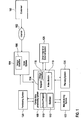
- Figure 1 illustrates a central data processing system 108 for processing of a customer request 114 according to an embodiment of the present invention.
- Sales system 104 provides electronic connectivity to the central data processing system and enables collection of customer requests for future processing. Utilizing a network, for example an Internet 102, a request for at least one item is received from a corresponding customer 100 at the central data processing system.
- a central data processing system checks if each item has a unique identifier 106; if an item is found without a unique identifier, a new unique identifier 116 is generated and assigned to this item.
- Customer requests comprising a plurality of items are then processed by means of a set of rules 118 in a looping mode, that is when the request has more then one item then each item is sequentially processed and the response is send for each item.
- the control program 110 implements the corresponding control processes.
- the assigned unique identifiers are then stored in a database 112.
- partner systems such as for example a purchasing system 120, a manufacturing system 122, a planning system 124 or any other internal or external systems126 send their responses back, those responses are associated in turn with the original items and the final response is then sent to the customer's data processing system.
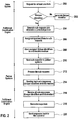
- FIG. 2 depicts a corresponding flow chart.
- a request for at least one item is sent by the customer's data processing system, in this case a Sales system.
- a central data processing system in this case a Fulfilment Coordination Engine (FCE)
- FCE Fulfilment Coordination Engine
- each item is checked for presence of the unique identifier; if the unique identifier is missing the FCE generates and assigns unique identifiers to the item.
- the sub-requests are generated and assigned to a partner's system by means of the rules.
- FCE Fulfilment Coordination Engine
- each of the sub-requests receives a separate unique identifier and assigned unique identifiers are stored in the retrievable medium in the step 208. That means that in case of asynchronous communication, the unique identifiers are stored in the database. However, in the case of synchronous communication the unique identifiers are stored in the memory and they are only in this case stored in the database when the Logical Unit of Work (LUW) in the called system is ended with the command COMMIT. In the step 210 sub-requests are sent to partner systems.
- LEOW Logical Unit of Work
- step 212 receives all sub-responses from the partner systems and in the step 218, the responses are generated based on association of sub-responses with the original item.
- step 220 the responses are send back to the customer's data processing system, in this case a sales system.
- Figure 3A illustrates a structure of the document used in the central data processing system and associated mapping of the data from standard orders.
- Data processing conducted in multi-system and multi-business environment means that various document types can be used such as for example purchase orders or sales orders.
- central data processing system can for example use an order-like document structure 326 that consists of a header section 328, at least one item 330 that can contain for example fields like business partner, product, location or contract; and at least one schedule line 332 per item comprising information regarding a delivery date and a quantity.
- This special design of the three level structure allows all documents that exist in internal systems as well as all those documents of different applications that are relevant for central data processing to be mapped. If for example, sales order processing calls the central data processing system, then the data of the sales order 334 that was transferred to the central data processing system via the interface, is mapped onto the document 326.
- the sales order header 335 is mapped on the document header 328, the order items 336 are mapped on the document items 330 and the request schedule lines 337 on the document schedule lines 332.
- the similar process takes place when the system receives a purchase order 344.
- the purchase order header 345 is mapped on the document header 328, the purchase order items 346 are mapped on the document items 330 and the purchase order schedule lines 347 on the document schedule lines 332.
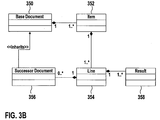
- Figure 3B depicts, for example, the case when product substitution and/or location substitution occurs and base documents 350 create document hierarchies.
- schedule lines 354 have a list of successor items 352 which can include partners, substitution products or locations.
- a schedule line 354 contains several successor documents 356. Beside product and/or location substitution also further hierarchy levels can be produced in the document.
- Figure 4 illustrates a more detailed embodiment of the data processing system of the present invention, describing a case when synchronous communication is used throughout the supply chain.
- the embodiment of Figure 4 constitutes a logical continuation of the Figure 1 where like elements are referenced by like reference numbers having added 300.
- Synchronous communication takes place in this embodiment of the invention via Synchronous Remote Function Call (sRFC) 413 if any of the called partner functions work with state. Since the use of synchronous communication via the XI currently requires that the called function works without state, the partner ascertainment service can only be called synchronously via the XI if the application scenario does not require that the partner ascertainment service or any of the partner's functions it calls work with state.
- sRFC Synchronous Remote Function Call
- the central data processing system is in this case a Fulfilment Coordination Engine (FCE) 408.
- FCE receives a request 414 for at least one item from a corresponding customer 400 via the Network 409 which can also include Internet 402.
- a calling application is a Sales system 404.
- each item is checked for the presence of a unique identifier 406, if an item is found without a unique identifier, a new unique identifier 416 is generated and assigned to this item.
- the control program 410 is the central component of the Fulfilment Coordination Engine.
- the control program must be called to begin the request processing.
- the set of rules 418 determined by the control program contains a sort profile, a selection profile, a search key and the determination procedure.
- a sort profile is used to determine how partner lists should be sorted for further processing.
- a selection profile is used to define the procedure used to select partners.
- a search key and the determination procedure are used to determine whether an availability check is executed and if so, what kind.
- a plurality of sub-requests 430 for plurality of partners' systems is then generated where each sub-request is assigned to an internal or external system by means of the set of rules where complex dependencies have access using Condition Technology 427. In this case, the objects, for example rules searched for are determined by evaluating conditions. The search key is then interpreted as a condition type.
- the Fulfilment Coordination Engine then calls synchronously functions 417 according to Customizing 425.
- synchronous communication When synchronous communication is used, the customer receives immediately a response also synchronously, so that customer's data processing system can continue working.
- called functions are implemented in the external systems. Functions are not called directly but via corresponding interfaces 415. In contrast to functions, the interfaces are always implemented on the side of the central data processing system.
- the call of a function, and the respective mapping are implemented within an interface. There is a 1:1 relationship between interfaces and functions: There must be a separate interface for each of the functions. In contrast, an N: M relationship exists between interfaces and logical systems.
- the assigned unique identifiers are then stored in a database 412 while sub-requests are sent to different partner systems.
- Sending of the sub-requests to partner systems such as for example a purchasing system 420, a manufacturing system 422, a planning system 424 or any other internal or external systems 426 further comprises either sending a request for a partner search or a partner availability check at schedule-line level or determining at least one business system or an availability check for this system at schedule-line level. It is further determined on the item level which availability check function should be called.
- a separate unique identifier for each of the sub-requests is then generated.
- Availability check returns confirmation of dates and quantities as well as, if necessary, alternative products and/or locations are included.
- the availability check reserves temporary a requested resources that have been identified as available. The resources are reserved this way that the requested resources are equal to the original resources less the quantities that have already been confirmed and reserved via partner's system functions previously called. Thus, availability checks carried out in processes running in parallel do not consume the same quantities. It is assured that overbooking of resources does not occur during an availability check.
- Some functions enable the assignment of an expiration date to their temporary quantity assignments. If this date has been reached, the temporary quantity assignments are automatically handled (deleted, for example). Up to this date, the temporary quantity assignments are active, that is, they reserve a quantity. However, if the expiration date is not assigned automatically, the Fulfilment Coordination Engine has to sent a specific message terminating the reservation of resources.
- partner search when partner search is executed, a list of partners is returned. Subject to the partner's functions used, further data such as prices and contracts, and similar, can be also included.
- Supply Chain Management (SCM) scheduling module 428 can be called by the Fulfilment Coordination Engine to determine the dates which are transferred to the partners' functions based on the dates received from the customer. Also, it is further used to determine the dates to be returned to the customer based on the dates received in the sub-responses from the partners' systems.
- SCM Supply Chain Management
- Fulfilment Coordination Engine When Fulfilment Coordination Engine receives the sub-responses 432, those resulting sub-responses which are sent by the partner systems back to the FCE have the same unique identifiers as the sub-requests sent originally. Thus, the sub-responses can be associated on the base of the matched unique identifiers with the original sub-requests. Those sub-responses are then stored in the main memory 411 of the Fulfilment Coordination Engine and the internal logic checks if all the roots of the unique identifiers are there so the final response 434 can be sent to the customer's data processing system immediately in order for it to continue working without interruptions. The response can be displayed utilizing a sales system interface 407. However, it is also possible that the result is not displayed at all, it depends on the calling system/application which of the two options occurs. In any case, all the details of the partner search or/and availability check are hidden from the calling system/application.
- Figure 5 illustrates a more detailed embodiment of the data processing system of the present invention, describing a case when an asynchronous communication is used throughout the supply chain.
- the embodiment of Figure 5 constitutes a logical continuation of the Figure 1 where like elements are referenced by like reference numbers having added 400.
- the central data processing system is in this case a Fulfilment Coordination Engine (FCE) 508.
- FCE Fulfilment Coordination Engine
- the Fulfilment Coordination Engine is called asynchronously and it also calls asynchronously the functions located in the external partner systems (520, 522, 524, and 526) via the control program.
- Asynchronous communication takes place via the Exchange Infrastructure (XI) 513.
- the Fulfilment Coordination Engine 508 receives asynchronously a request 514 for at least one item from a corresponding customer 500 via the Network 509.
- an asynchronous call is made by sales system 504.
- each item is checked for the presence of a unique identifier 506, if an item is found without a unique identifier, a new unique identifier 516 is generated and assigned to this item.
- a plurality of sub-requests 530 for plurality of partners' systems is then generated where each sub-request is assigned to an internal or external system by means of the set of rules 518 which allow to configure the sequence functions are called. Complex dependencies have access using Condition Technology 527.
- the Fulfilment Coordination Engine calls asynchronously partner's functions according to Customizing 525 via the control program 510 and the sub-requests are processed at the partner side.
- the resulting sub-responses which are sent by the partner systems back to the Fulfilment Coordination Engine have the same unique identifiers as the sub-requests sent originally.
- a control program 510 performs a query each time a sub-response comes back from the partner system, in order to retrieve all relevant sub-responses stored so far in the database.
- the received sub-response is then stored in the database until all the sub-responses are collected.
- the database query determines all the received sub-responses to be sufficient, then the final response 534 is sent to the customer's data processing system.
- the response can be displayed utilizing a sales system interface 507. However, it is also possible that the result is not displayed at all, it depends on the calling system/application which of the two options occurs. In any case, all the details of the partner search or/and availability check are hidden from the calling system/application.
- SCM scheduling module 528 can be called by the Fulfilment Coordination Engine system to determine the dates which are transferred to the partners' functions based on the dates received from the customer. Also, it is further used to determine the dates to be returned to the customer based on the dates received in the sub-responses from the partners' systems.
- the workflow 529 can be used together with the Fulfilment Coordination Engine.
- sub-responses from partner's functions are received via the workflow which is started when asynchronous calls of the partner's functions are triggered.
Landscapes
- Business, Economics & Management (AREA)
- Engineering & Computer Science (AREA)
- Economics (AREA)
- Human Resources & Organizations (AREA)
- Strategic Management (AREA)
- Entrepreneurship & Innovation (AREA)
- Operations Research (AREA)
- Physics & Mathematics (AREA)
- Theoretical Computer Science (AREA)
- Marketing (AREA)
- Development Economics (AREA)
- Quality & Reliability (AREA)
- Tourism & Hospitality (AREA)
- General Physics & Mathematics (AREA)
- General Business, Economics & Management (AREA)
- Game Theory and Decision Science (AREA)
- Educational Administration (AREA)
- Accounting & Taxation (AREA)
- Finance (AREA)
- Information Retrieval, Db Structures And Fs Structures Therefor (AREA)
- Management, Administration, Business Operations System, And Electronic Commerce (AREA)
Priority Applications (4)
| Application Number | Priority Date | Filing Date | Title |
|---|---|---|---|
| EP03019349A EP1510951A1 (de) | 2003-08-27 | 2003-08-27 | Datenverarbeitungsverfahren, System und Computerprogramm |
| US10/569,761 US20060224431A1 (en) | 2003-08-27 | 2004-08-20 | Data processing method, system and computer program |
| EP04786215A EP1661083A1 (de) | 2003-08-27 | 2004-08-20 | Datenverarbeitungsverfahren, systeme und computerprogramm |
| PCT/EP2004/009348 WO2005022424A1 (en) | 2003-08-27 | 2004-08-20 | A data processing method, system and computer program |
Applications Claiming Priority (1)
| Application Number | Priority Date | Filing Date | Title |
|---|---|---|---|
| EP03019349A EP1510951A1 (de) | 2003-08-27 | 2003-08-27 | Datenverarbeitungsverfahren, System und Computerprogramm |
Publications (1)
| Publication Number | Publication Date |
|---|---|
| EP1510951A1 true EP1510951A1 (de) | 2005-03-02 |
Family
ID=34089617
Family Applications (2)
| Application Number | Title | Priority Date | Filing Date |
|---|---|---|---|
| EP03019349A Withdrawn EP1510951A1 (de) | 2003-08-27 | 2003-08-27 | Datenverarbeitungsverfahren, System und Computerprogramm |
| EP04786215A Ceased EP1661083A1 (de) | 2003-08-27 | 2004-08-20 | Datenverarbeitungsverfahren, systeme und computerprogramm |
Family Applications After (1)
| Application Number | Title | Priority Date | Filing Date |
|---|---|---|---|
| EP04786215A Ceased EP1661083A1 (de) | 2003-08-27 | 2004-08-20 | Datenverarbeitungsverfahren, systeme und computerprogramm |
Country Status (3)
| Country | Link |
|---|---|
| US (1) | US20060224431A1 (de) |
| EP (2) | EP1510951A1 (de) |
| WO (1) | WO2005022424A1 (de) |
Cited By (3)
| Publication number | Priority date | Publication date | Assignee | Title |
|---|---|---|---|---|
| EP3260979A1 (de) * | 2016-06-14 | 2017-12-27 | Royal Bank Of Canada | Verifizierung von datenprozessen in einem netzwerk von aus datenverarbeitungsressourcen |
| US10284462B2 (en) | 2014-12-15 | 2019-05-07 | Royal Bank Of Canada | Verification of data processes in a network of computing resources |
| US11165714B2 (en) | 2014-12-15 | 2021-11-02 | Royal Bank Of Canada | Verification of data processes in a network of computing resources |
Families Citing this family (8)
| Publication number | Priority date | Publication date | Assignee | Title |
|---|---|---|---|---|
| EP1624403A1 (de) * | 2004-08-02 | 2006-02-08 | Sap Ag | System zum Durchsuchen eines Datenbanksystems |
| US20070143356A1 (en) * | 2005-12-15 | 2007-06-21 | Kleinsmith Richard A | Enforcing workflow for implementing unique identification |
| US20070156426A1 (en) * | 2005-12-30 | 2007-07-05 | Thomas Hoffmann | Internally unique referencing for correlation |
| US8812333B2 (en) | 2007-09-17 | 2014-08-19 | Amadeus S.A.S. | Automated split ticketing |
| US20140082753A1 (en) * | 2012-09-20 | 2014-03-20 | Siar SARFERAZ | Systems and methods for data privacy and destruction in multi-system landscapes |
| US10394789B1 (en) * | 2015-12-07 | 2019-08-27 | Amazon Technologies, Inc. | Techniques and systems for scalable request handling in data processing systems |
| CN106709690A (zh) * | 2017-01-12 | 2017-05-24 | 山信软件股份有限公司 | 一种订单进程跟踪系统 |
| US20200226536A1 (en) * | 2019-01-11 | 2020-07-16 | Kshitiz Uttam | Constrained concurrent resource allocator |
Citations (5)
| Publication number | Priority date | Publication date | Assignee | Title |
|---|---|---|---|---|
| US5649103A (en) * | 1995-07-13 | 1997-07-15 | Cabletron Systems, Inc. | Method and apparatus for managing multiple server requests and collating reponses |
| WO2001067348A2 (en) * | 2000-03-03 | 2001-09-13 | Pcorder.Com | System and method for multi-source transaction processing |
| US20020091533A1 (en) * | 2001-01-05 | 2002-07-11 | International Business Machines Corporation, | Technique for automated e-business services |
| US20020128871A1 (en) * | 2000-12-07 | 2002-09-12 | Dan Adamson | Method, apparatus, and system for aggregating, targeting, and synchronizing health information delivery |
| US20030144852A1 (en) * | 2002-01-25 | 2003-07-31 | Frieder Eckert | Providing highly automated procurement services |
Family Cites Families (10)
| Publication number | Priority date | Publication date | Assignee | Title |
|---|---|---|---|---|
| DE69215976T2 (de) * | 1991-06-28 | 1997-07-10 | Digital Equipment Corp | Verfahren und Gerät für Netzrechnersystemgruppenverwaltung |
| US5889957A (en) * | 1995-06-07 | 1999-03-30 | Tandem Computers Incorporated | Method and apparatus for context sensitive pathsend |
| US5805823A (en) * | 1996-01-30 | 1998-09-08 | Wayfarer Communications, Inc. | System and method for optimal multiplexed message aggregation between client applications in client-server networks |
| US6219711B1 (en) * | 1997-05-13 | 2001-04-17 | Micron Electronics, Inc. | Synchronous communication interface |
| US6068661A (en) * | 1997-10-01 | 2000-05-30 | Micron Electronics, Inc. | Method of emulating synchronous communication |
| US7281046B1 (en) * | 2000-06-30 | 2007-10-09 | Covad Communications Company | Application program interface for automating high speed network access ordering and provisioning processes |
| US7249044B2 (en) * | 2000-10-05 | 2007-07-24 | I2 Technologies Us, Inc. | Fulfillment management system for managing ATP data in a distributed supply chain environment |
| US20020042755A1 (en) * | 2000-10-05 | 2002-04-11 | I2 Technologies, Us, Inc. | Collaborative fulfillment in a distributed supply chain environment |
| AU2002252069A1 (en) * | 2001-02-20 | 2002-09-04 | Seven Blue Seas Vacations, Inc. | Travel and fare reservation and tracking system |
| GB2378270B (en) * | 2001-07-30 | 2005-04-20 | Ibm | Method and apparatus for data transfer across a network |
-
2003
- 2003-08-27 EP EP03019349A patent/EP1510951A1/de not_active Withdrawn
-
2004
- 2004-08-20 US US10/569,761 patent/US20060224431A1/en not_active Abandoned
- 2004-08-20 WO PCT/EP2004/009348 patent/WO2005022424A1/en not_active Ceased
- 2004-08-20 EP EP04786215A patent/EP1661083A1/de not_active Ceased
Patent Citations (5)
| Publication number | Priority date | Publication date | Assignee | Title |
|---|---|---|---|---|
| US5649103A (en) * | 1995-07-13 | 1997-07-15 | Cabletron Systems, Inc. | Method and apparatus for managing multiple server requests and collating reponses |
| WO2001067348A2 (en) * | 2000-03-03 | 2001-09-13 | Pcorder.Com | System and method for multi-source transaction processing |
| US20020128871A1 (en) * | 2000-12-07 | 2002-09-12 | Dan Adamson | Method, apparatus, and system for aggregating, targeting, and synchronizing health information delivery |
| US20020091533A1 (en) * | 2001-01-05 | 2002-07-11 | International Business Machines Corporation, | Technique for automated e-business services |
| US20030144852A1 (en) * | 2002-01-25 | 2003-07-31 | Frieder Eckert | Providing highly automated procurement services |
Non-Patent Citations (2)
| Title |
|---|
| AERTS A ET AL: "On the design of a mobile agent Web for supporting virtual enterprises", ENABLING TECHNOLOGIES: INFRASTRUCTURE FOR COLLABORATIVE ENTERPRISES, 2000. (WET ICE 2000). PROCEEDINGS. IEEE 9TH INTERNATIONAL WORKSHOPS ON GAITHERSBURG, MD, USA 14-16 JUNE 2000, LOS ALAMITOS, CA, USA,IEEE COMPUT. SOC, US, 14 June 2000 (2000-06-14), pages 236 - 241, XP010522943, ISBN: 0-7695-0798-0 * |
| ANDREOLI J M ET AL: "AllianceNet: Information Sharing, Negotiation and Decision-Making for Distributed Organizations", PROCEEDINGS EC-WEB 2000, GREENWHICH, UK, 4-6 SEPT. 2000, September 2000 (2000-09-01), pages 1 - 7, XP002269578 * |
Cited By (8)
| Publication number | Priority date | Publication date | Assignee | Title |
|---|---|---|---|---|
| US10284462B2 (en) | 2014-12-15 | 2019-05-07 | Royal Bank Of Canada | Verification of data processes in a network of computing resources |
| US11165714B2 (en) | 2014-12-15 | 2021-11-02 | Royal Bank Of Canada | Verification of data processes in a network of computing resources |
| US11368391B2 (en) | 2014-12-15 | 2022-06-21 | Royal Bank Of Canada | Verification of data processes in a network of computing resources |
| US11477135B2 (en) | 2014-12-15 | 2022-10-18 | Royal Bank Of Canada | Verification of data processes in a network of computing resources |
| US11824768B2 (en) | 2014-12-15 | 2023-11-21 | Royal Bank Of Canada | Verification of data processes in a network of computing resources |
| US11962513B2 (en) | 2014-12-15 | 2024-04-16 | Royal Bank Of Canada | Verification of data processes in a network of computing resources |
| EP3260979A1 (de) * | 2016-06-14 | 2017-12-27 | Royal Bank Of Canada | Verifizierung von datenprozessen in einem netzwerk von aus datenverarbeitungsressourcen |
| EP4083798A1 (de) * | 2016-06-14 | 2022-11-02 | Royal Bank Of Canada | Verifizierung von datenprozessen in einem netzwerk aus datenverarbeitungsressourcen |
Also Published As
| Publication number | Publication date |
|---|---|
| US20060224431A1 (en) | 2006-10-05 |
| WO2005022424A8 (en) | 2006-04-20 |
| WO2005022424A1 (en) | 2005-03-10 |
| EP1661083A1 (de) | 2006-05-31 |
Similar Documents
| Publication | Publication Date | Title |
|---|---|---|
| US7657453B2 (en) | System, computer-readable medium and method for filtering exceptions generated by forecasting and replenishment engine | |
| US9152941B2 (en) | Systems and methods for automated parallelization of back-order processing | |
| US7890389B2 (en) | Methods and systems for grouping and managing stock requests | |
| US6011917A (en) | Method and computer system for generating process management computer programs from process models | |
| US7100147B2 (en) | Method, system, and program for generating a workflow | |
| US7370335B1 (en) | System and method for providing a public application program interface | |
| US10083416B2 (en) | Time phase work pool management for returned inventory asset routing | |
| US20050060235A2 (en) | Collaborative commerce hub | |
| US20020170035A1 (en) | Event-based scheduling method and system for workflow activities | |
| US20030236689A1 (en) | Analyzing decision points in business processes | |
| US20100257260A1 (en) | System and method for dynamically modifying synchronized business information server interfaces | |
| US20060206894A1 (en) | Method of scheduling jobs using database management system for real-time processing | |
| US7574379B2 (en) | Method and system of using artifacts to identify elements of a component business model | |
| US7403985B2 (en) | Method and system for analyzing electronic service execution | |
| Jeng et al. | WHAM: supporting mobile workforce and applications in workflow environments | |
| US20060224431A1 (en) | Data processing method, system and computer program | |
| US20030041071A1 (en) | Database Management system and database | |
| AU2008203816B2 (en) | Message sequence management of enterprise based correlated events | |
| US6507844B1 (en) | Method and system for minimizing network traffic | |
| EP2140410A1 (de) | Verfahren und system zur bestimmung von berechtigungen an ressourcen einer organisation | |
| US20090210887A1 (en) | Radio frequency identification business-aware framework | |
| CN116700929A (zh) | 基于人工智能的任务批量处理方法及系统 | |
| US20060230047A1 (en) | Standardized integration model for distributed business processes | |
| US7684349B2 (en) | Method and system for transparently controlling the behavior of service methods in a service oriented architecture | |
| EP1544733A1 (de) | Datenverarbeitungssystem und -verfahren |
Legal Events
| Date | Code | Title | Description |
|---|---|---|---|
| PUAI | Public reference made under article 153(3) epc to a published international application that has entered the european phase |
Free format text: ORIGINAL CODE: 0009012 |
|
| AK | Designated contracting states |
Kind code of ref document: A1 Designated state(s): AT BE BG CH CY CZ DE DK EE ES FI FR GB GR HU IE IT LI LU MC NL PT RO SE SI SK TR |
|
| AX | Request for extension of the european patent |
Extension state: AL LT LV MK |
|
| RAP1 | Party data changed (applicant data changed or rights of an application transferred) |
Owner name: SAP AG |
|
| 17P | Request for examination filed |
Effective date: 20050902 |
|
| AKX | Designation fees paid |
Designated state(s): AT BE BG CH CY CZ DE DK EE ES FI FR GB GR HU IE IT LI LU MC NL PT RO SE SI SK TR |
|
| 17Q | First examination report despatched |
Effective date: 20060720 |
|
| APBK | Appeal reference recorded |
Free format text: ORIGINAL CODE: EPIDOSNREFNE |
|
| APBN | Date of receipt of notice of appeal recorded |
Free format text: ORIGINAL CODE: EPIDOSNNOA2E |
|
| APAF | Appeal reference modified |
Free format text: ORIGINAL CODE: EPIDOSCREFNE |
|
| APBR | Date of receipt of statement of grounds of appeal recorded |
Free format text: ORIGINAL CODE: EPIDOSNNOA3E |
|
| RAP1 | Party data changed (applicant data changed or rights of an application transferred) |
Owner name: SAP SE |
|
| APBT | Appeal procedure closed |
Free format text: ORIGINAL CODE: EPIDOSNNOA9E |
|
| STAA | Information on the status of an ep patent application or granted ep patent |
Free format text: STATUS: THE APPLICATION IS DEEMED TO BE WITHDRAWN |
|
| 18D | Application deemed to be withdrawn |
Effective date: 20160301 |