EP1510946A1 - System und Verfahren zur mobilen Entdeckung von Informationen - Google Patents
System und Verfahren zur mobilen Entdeckung von Informationen Download PDFInfo
- Publication number
- EP1510946A1 EP1510946A1 EP04104081A EP04104081A EP1510946A1 EP 1510946 A1 EP1510946 A1 EP 1510946A1 EP 04104081 A EP04104081 A EP 04104081A EP 04104081 A EP04104081 A EP 04104081A EP 1510946 A1 EP1510946 A1 EP 1510946A1
- Authority
- EP
- European Patent Office
- Prior art keywords
- information
- mobile device
- server
- information request
- results
- Prior art date
- Legal status (The legal status is an assumption and is not a legal conclusion. Google has not performed a legal analysis and makes no representation as to the accuracy of the status listed.)
- Withdrawn
Links
Images




Classifications
-
- G—PHYSICS
- G06—COMPUTING OR CALCULATING; COUNTING
- G06F—ELECTRIC DIGITAL DATA PROCESSING
- G06F16/00—Information retrieval; Database structures therefor; File system structures therefor
- G06F16/90—Details of database functions independent of the retrieved data types
- G06F16/95—Retrieval from the web
- G06F16/951—Indexing; Web crawling techniques
-
- H—ELECTRICITY
- H04—ELECTRIC COMMUNICATION TECHNIQUE
- H04M—TELEPHONIC COMMUNICATION
- H04M1/00—Substation equipment, e.g. for use by subscribers
- H04M1/72—Mobile telephones; Cordless telephones, i.e. devices for establishing wireless links to base stations without route selection
- H04M1/724—User interfaces specially adapted for cordless or mobile telephones
- H04M1/72403—User interfaces specially adapted for cordless or mobile telephones with means for local support of applications that increase the functionality
- H04M1/72445—User interfaces specially adapted for cordless or mobile telephones with means for local support of applications that increase the functionality for supporting Internet browser applications
-
- H—ELECTRICITY
- H04—ELECTRIC COMMUNICATION TECHNIQUE
- H04M—TELEPHONIC COMMUNICATION
- H04M1/00—Substation equipment, e.g. for use by subscribers
- H04M1/72—Mobile telephones; Cordless telephones, i.e. devices for establishing wireless links to base stations without route selection
- H04M1/724—User interfaces specially adapted for cordless or mobile telephones
- H04M1/72403—User interfaces specially adapted for cordless or mobile telephones with means for local support of applications that increase the functionality
- H04M1/7243—User interfaces specially adapted for cordless or mobile telephones with means for local support of applications that increase the functionality with interactive means for internal management of messages
- H04M1/72436—User interfaces specially adapted for cordless or mobile telephones with means for local support of applications that increase the functionality with interactive means for internal management of messages for text messaging, e.g. short messaging services [SMS] or e-mails
Definitions
- This invention relates to the field of mobile information discovery.
- the invention relates to the use of a mobile device (eg mobile telephone) for information discovery and collaboration.
- SMS Short Message Service
- WAP Wireless AP
- chat applications can mimic desktop chat experience. All these applications address parts of the problem of mobile information discovery, but are mostly intended for social usage.
- Some mobile search technologies have been developed for mobile devices and these streamline the search process and target appropriate web pages.
- Predictive typing techniques have been used to increase the speed of input of a keyword query to alleviate the time restraints of inputting text information requests into a mobile device.
- a system of mobile information discovery comprising: a mobile device including a display means and an input means; a server for managing an information request sent from the mobile device; wherein an information request input once into the mobile device is capable of being sent singly or in parallel to a choice of multiple information discovery channels managed by the server; the server includes storage means for results of the information request and means for returning the results to the mobile device.
- a unified means of information discovery using a mobile communication device such as a mobile phone is provided.
- Multiple information discovery channels are preferably combined in a common front end with the channels operating singly or in parallel.
- the user preferably expresses his/her information needs in free text only once.
- the mobile device has connection means for connection to the server wherein the connection means supports a persistent connection to a network.
- the multiple information discovery channels may be search means, messaging means and discussion means and the multiple information discovery channels may obtain information from information resources in the form of people and data repositories.
- the input means enables textual inputs and the information request is input in the form of free text.
- the mobile device may be a mobile phone with a client application for processing the information request.
- the server may be a knowledge management server connected by a network to information resources.
- the server may use push technology to return the results to the mobile device.
- the results may be in the form of search results, return messages and threads in a discussion.
- a method of mobile information discovery comprising: inputting an information request once into a mobile device; selecting one or more forms of information discovery channel by which to process the information request from a multiple of information discovery channels, the information request being sent singly or in parallel to the information discovery channels; the information request being managed by and the results stored in a server; and the results being returned to the mobile device.
- the mobile device is connected to the server by a connection means which supports a persistent connection.
- the information request is input in the form of free text.
- the multiple information discovery channels may be search, messaging and discussion.
- the method may include selecting one or more information resource to which the information request is to be sent for each selected information discovery channel. If the information discovery channel is a search, the information repositories through which the search is to be conducted may be selected by input into the mobile device. If the information discovery channel is messaging, the information resources in the form of people may be selected by input into the mobile device. If the information discovery channel is discussion, the information resources in the form of discussion forums may be selected by input into the mobile device.
- An indication of a result may be sent to the mobile device followed by the result when requested.
- the results may be pushed by the server to the mobile device.
- the results may be in the form of search results, return messages and threads in a discussion.
- the server may receive an information request from the mobile device, may process the information request by sending it by means of the selected information discovery channels to the selected information resources, and the server may receive, manage and return results of the information request to the mobile device.
- Figure 1 is a schematic diagram of an information discovery system operable from a mobile device in accordance with a preferred embodiment of the present invention
- FIG. 2 is a block diagram of an information discovery system in accordance with a preferred embodiment of the present invention.
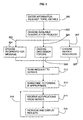
- FIG. 3 is a flow diagram of the operation of a client application in accordance with a preferred embodiment of the present invention.
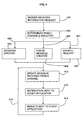
- FIG. 4 is a flow diagram of the operation of a server in accordance with a preferred embodiment of the present invention.
- Figure 5 is a schematic diagram of the interrelation between the client application and the server in accordance with a preferred embodiment of the present invention.
- Figure 6 is a showing a mobile device and user interface in accordance with a preferred embodiment of the present invention.
- the mobile device 100 is a handheld apparatus which has a user interface 102 and an input mechanism 104, for example a key pad.
- the mobile device 100 has communication means such that it can access a telephone or data network.
- the mobile device 100 can be a mobile or cellular telephone, a personal digital assistant (PDA) or other form of handheld device with communication means.
- PDA personal digital assistant
- the communication means of the mobile device 100 supports a persistent connection to a network.
- GPRS General Packet Radio Services
- GPRS General Packet Radio Services
- the mobile device 100 has an operating system that supports a client application.
- the operating system is able to support graphical display and textual inputs from the user.
- the platform may be for example, a Symbian or Linux® * operating system or MIDP (mobile information device profile) enabling functionality of the mobile device 100.
- the client application can be ported into any suitable platform.
- the mobile device 100 can receive rich graphics and will have at least 8MB of memory and the ability to run applications of size greater than 64K.
- the described system can be implemented on simple mobile devices. Preferably such devices support persistent connection and graphical display and textual input.
- a user of the mobile device 100 can input an information request 106 using the input mechanism 104 and the user interface 102.
- the client application of the mobile device 100 provides a form for the information request 106 in which a user can provide details of the requested information expressed in free text.
- a context for the information can also optionally be provided by the user.
- the information request 106 can be sent to any one or more of multiple channels which use different information discovery technologies.
- three forms of channel are described namely: instant messaging 108; topic-based discussions 110; and searches 112.
- any two of these channels or additional channels which may become available with new technology could also be used.
- the described method and system provides a one stop point for information discovery using any one or more of these multiple channel technologies.
- a single information request 106 can be sent simultaneously to each of the channels.
- the first channel described uses instant messaging technology 108 to direct the information request 106 to actual people identified by the user.
- the people can be selected by the user from a contact or "buddy" list.
- the user of this channel for information discovery will initiate a concurrent instant messaging session with multiple people if more than one is selected.
- the second channel directs the information request 106 to public discussion groups 110.
- the information request is posted as an entry to the newsgroup/forum etc.
- the third channel directs the information request 106 to information repositories, where the query is expressed as search request 112.
- the multiple channels provides a means for mobile information discovery and collaboration to mobile workers using a mobile device 100.
- Discovery can be carried out by searches through local and remote contents and collaboration can be achieved by interaction with peers and experts.
- the multiple channels can be used singly or in parallel to accelerate obtaining responses to a single input of an information request.
- a client application 200 is supported by a mobile device 100.
- the client application 200 may be customised to suit individual user's needs.
- the client application 200 communicates using the communication means of the mobile device 100 with a server 202.
- the server 202 may be a knowledge management product for example as provided by International Business Machines Corporation such as the Lotus® ** Discovery Server (LDS) or the WebSphere® ** Portal Server (WPS) through WebSphere Everyplace Assess (WEA).
- LDS Lotus® ** Discovery Server
- WPS WebSphere® ** Portal Server
- WEA WebSphere Everyplace Assess
- the server 202 manages the information requests 106 sent by the client application 200.
- the client application 200 subscribes to the server 202 in order to use the server 202 operations.
- the server 202 is connected via a network 203 to other servers.
- the network 203 may be the Internet and the server 202 can access any resources available on the Internet.
- the server 202 has storage means 209 for storing all incoming and outgoing data relating to an information request from a client application 200.
- the server 202 processes information requests received from the client application 200 using one or more of the multiple channels as indicated by the client application 200.
- the server 202 sends simple events to the client application 200 indicating that new data has arrived from one of the channels. Initially, the server 202 sends only the title information of the data to the client application 200 and stores the entire data result in the storage means 209.
- the user of the mobile device decides and indicates via the client application 200 when to retrieve the entire data result. This behaviour is customisable for each of the channels such that the client application 200 can dictate different procedures for each form of channel used.
- the client application 200 can be set up to receive the full data each time it arrives or to receive an empty notification specifying that there is something new in the specified channel. In this way the client application 200 does not have to deal with potentially large amount of data.
- the client application 200 maintains a sliding data window such that when displayed data exceeds the client application's memory capacity, the data is dropped and new data is received instead. For example, if a mobile device is capable of containing 50K of data, when some results are being read and the amount displayed already exceeds 50K, the client application 200 will drop the already displayed data and bring a new set of data from the server 202 for display.
- Figure 2 shows the server 202 in communication with a collaboration server 204 through which instant messaging can take place and an information retrieval server 206 for searching for information relating to the information request 106.
- the information retrieval server 206 can access databases 208 either directly or via network connections to search for information.
- the client application 200 algorithm is as follows:
- Discussion forums 110 - let the user choose from a variety of discussion forums - synchronous or asynchronous;
- the server 202 algorithm is as follows:
- FIG. 3 a flow diagram of the client application 200 actions is shown.
- an information request is input into the mobile device indicating a topic and details.
- the client application will ask the user to choose 302 from the available channels for the information request, namely the channels of messaging, discussion and search.
- the client application will ask the user to choose 304 the people to which the message is to be sent.
- Predefined lists can be used and a default to send to particular people can be programmed.
- the client application will ask the user to select 306 the discussion forums which should be used. Again, a default list of forums could be specified in the client application.
- the client application will ask the user to select 308 databases or resources for searching. Again, the selection of databases or resources can be predefined with a default selection.
- the information request is sent to the server 310 by the client application.
- the client application may subscribe 312 to available forums to receive notification about new topics.
- a notification 314 is received by the client application.
- the client application can request and display the results 316 when appropriate.
- the policy for receiving results can be pre-set for a particular user.
- the client application then waits for further notifications (illustrated by the loop 318).
- FIG. 4 a flow diagram of the actions of the server 202 is shown.
- An information request is received 400 from a client application.
- the server determines 402 from the request which of the three channels has been specified for use.
- a message is created 404 including the topic and details to all the selected recipients through a collaboration server.
- a new forum message is created 406 including the topic and details.
- a subscription is also made to the newly posted topic.
- the information request 408 is sent to the information retrieval server.
- a notification 412 is sent to the client application.
- the client application responds to the notification, the results are sent 414 to the client application.
- the server continues to wait for further results 410 from the three channels (shown by the loop 416) and sends further notifications 412 to the client application.
- Push technology is used to send the answers back to the client application from the server.
- Push technology sends results back to the client application at the instigation of the server. This relieves the client application from having to actively retrieve information from the server.
- the client application is notified about search results, updated instant messaging sessions and updated relevant thread in discussion forums.
- all the information is stored on the server, allowing the user to receive information notifications both synchronously and asynchronously.
- Figure 5 shows the interaction between the client application 200 and the server 202.
- the server 202 manages and stores the results of the information requests carried out for a client application 200.
- An information request 501 is sent from the client application 200 to the server 202.
- Subscriptions 502 to discussion forums are made by the client application 200 where appropriate for an information request.
- Notifications 503 are sent from the server 202 when a result is received at the server 202 to an information request.
- the result could be a search result, a return instant message, or a new thread in a discussion forum.
- the client application 200 can dictate when to receive the actual results 504 notified in a notification 503.
- a mobile device 100 is illustrated in Figure 6 as an example only with a graphical user interface in the form of a display screen 102 and input means 104 consisting of a numerical key pad 601 including text input means and buttons 602, 603 for paging through displays and selecting options displayed on the screen 102.
- a first display 604 shows a menu which includes an option of "ASK" for inputting a new information request. If this option is selected using a selection button 603 of the input means 104, a second display 605 is brought up onto the screen 102 which allows a user to enter details of the information request in free text.
- the input is in the form of a topic and a context.
- the form of entry of the information request may differ but generally a user can enter a query once in free text and it can be sent to multiple resources. This is the only stage where the user should spend time interacting with the keypad. Once the information request has been entered, the user can access people or information repositories via quick menus and simple key clicks.
- a third display 606 shows the options of sending the information request using different channels to information resources.
- the three possible channels are shown of sending a message to a contact, a discussion in a forum or persistent chat room and/or a search in various databases. Any combination of the possible channels can be selected so that the information request can be sent by a single channel or a combination of two channels or by all three channels.
- Figure 6 shows a messages display 607 in which a user can select recipients of a message from a contacts list.
- a discussion display 608 shows an ongoing discussion in which the user is a participant.
- a search display 609 shows a list of possible databases which could be searched.
- a contacts or "buddy" list can be stored on the mobile device or a list stored on a remote computer can be accessed from the mobile device.
- the discussion can be a one to one discussion or a multiple-user discussion.
- Synchronous discussions can be participated in intermittently using persistent chat technology.
- Awareness clues can be provided including an indication that the user is entering a response, a user status and a participant list.
- Incoming resources are managed by a user for example by opening, participating and closing a discussion and by managing search results.
- the ability to link multiple channels into a common front end provides substantive value over approaching each channel independently.
- the described method and system overcomes the difficulties of input on small form factor devices by allowing a single input to be used for multiple channels and further allows the channels to be exercised in parallel.
- One key advantage of the described method and system is that the user does not have to decide ahead of time which information discovery paradigm is the most appropriate. This is especially important in a mobile form where the most tedious stage for users is the input of details of an information request when the user expresses his needs.
- the method and system are described in relating to three channels of messaging, discussion and searches.
- the described method and system apply to multiple channels and any additional forms of information discovery channel can be applied as further channels without departing from the scope of the present invention. Similarly only two of the described channels could be used.
- Linux is a trademark of Linus Torvalds in the United States of America, other countries, or both
Landscapes
- Engineering & Computer Science (AREA)
- Databases & Information Systems (AREA)
- Theoretical Computer Science (AREA)
- Physics & Mathematics (AREA)
- Data Mining & Analysis (AREA)
- General Engineering & Computer Science (AREA)
- General Physics & Mathematics (AREA)
- Signal Processing (AREA)
- Computer Networks & Wireless Communication (AREA)
- Human Computer Interaction (AREA)
- Information Transfer Between Computers (AREA)
- Telephonic Communication Services (AREA)
- Mobile Radio Communication Systems (AREA)
Applications Claiming Priority (2)
| Application Number | Priority Date | Filing Date | Title |
|---|---|---|---|
| GB0320254 | 2003-08-29 | ||
| GBGB0320254.6A GB0320254D0 (en) | 2003-08-29 | 2003-08-29 | System and method for mobile information discovery |
Publications (1)
| Publication Number | Publication Date |
|---|---|
| EP1510946A1 true EP1510946A1 (de) | 2005-03-02 |
Family
ID=28686550
Family Applications (1)
| Application Number | Title | Priority Date | Filing Date |
|---|---|---|---|
| EP04104081A Withdrawn EP1510946A1 (de) | 2003-08-29 | 2004-08-25 | System und Verfahren zur mobilen Entdeckung von Informationen |
Country Status (5)
| Country | Link |
|---|---|
| EP (1) | EP1510946A1 (de) |
| JP (1) | JP2005080302A (de) |
| KR (1) | KR100623851B1 (de) |
| CN (1) | CN1592440A (de) |
| GB (1) | GB0320254D0 (de) |
Families Citing this family (1)
| Publication number | Priority date | Publication date | Assignee | Title |
|---|---|---|---|---|
| US6686328B1 (en) | 1998-07-17 | 2004-02-03 | The Procter & Gamble Company | Detergent tablet |
Citations (3)
| Publication number | Priority date | Publication date | Assignee | Title |
|---|---|---|---|---|
| WO2002010939A1 (en) * | 2000-07-28 | 2002-02-07 | American Calcar Inc. | Technique for effective organization and communication of information |
| WO2002015604A2 (en) * | 2000-08-11 | 2002-02-21 | Informatica Corporation | Mobile data communication system |
| WO2002023309A2 (en) * | 2000-09-18 | 2002-03-21 | Wiscom Technologies, Inc. | Interactive wireless information and communications agent |
Family Cites Families (5)
| Publication number | Priority date | Publication date | Assignee | Title |
|---|---|---|---|---|
| KR100255375B1 (ko) * | 1997-12-29 | 2000-05-01 | 윤종용 | 무선통신시스템의 재설정채널 검색방법 |
| US20020131444A1 (en) | 2001-03-13 | 2002-09-19 | Moodie Justin Charles | Communications system with database management |
| US7076244B2 (en) | 2001-07-23 | 2006-07-11 | Research In Motion Limited | System and method for pushing information to a mobile device |
| KR100481674B1 (ko) * | 2001-09-27 | 2005-04-13 | 위즈정보기술주식회사 | Sms를 이용한 전화번호 등의 정보 조회 방법 및 시스템 |
| KR20040042927A (ko) * | 2002-11-14 | 2004-05-22 | 주식회사 드리머 | 단문 메시지 서비스를 이용한 정보 검색 서비스 시스템 및그 방법 |
-
2003
- 2003-08-29 GB GBGB0320254.6A patent/GB0320254D0/en not_active Ceased
-
2004
- 2004-07-30 KR KR1020040060121A patent/KR100623851B1/ko not_active Expired - Fee Related
- 2004-08-24 CN CNA2004100641882A patent/CN1592440A/zh active Pending
- 2004-08-25 EP EP04104081A patent/EP1510946A1/de not_active Withdrawn
- 2004-08-27 JP JP2004247798A patent/JP2005080302A/ja active Pending
Patent Citations (3)
| Publication number | Priority date | Publication date | Assignee | Title |
|---|---|---|---|---|
| WO2002010939A1 (en) * | 2000-07-28 | 2002-02-07 | American Calcar Inc. | Technique for effective organization and communication of information |
| WO2002015604A2 (en) * | 2000-08-11 | 2002-02-21 | Informatica Corporation | Mobile data communication system |
| WO2002023309A2 (en) * | 2000-09-18 | 2002-03-21 | Wiscom Technologies, Inc. | Interactive wireless information and communications agent |
Non-Patent Citations (1)
| Title |
|---|
| ANONYMOUS: "Simplify and Consolidate Enterprise Communications and Information with Oracle Collaboration Suite", February 2003 (2003-02-01), XP002309938, Retrieved from the Internet <URL:http://www.oracle.com/technology/products/cs/pdfs/cs_bwp.pdf> [retrieved on 20041209] * |
Also Published As
| Publication number | Publication date |
|---|---|
| KR20050022290A (ko) | 2005-03-07 |
| JP2005080302A (ja) | 2005-03-24 |
| GB0320254D0 (en) | 2003-10-01 |
| KR100623851B1 (ko) | 2006-09-19 |
| CN1592440A (zh) | 2005-03-09 |
Similar Documents
| Publication | Publication Date | Title |
|---|---|---|
| US20050233755A1 (en) | Mobile information discovery | |
| US9400972B2 (en) | Weighting social network relationships based on communications history | |
| US10616289B2 (en) | System and method for managing online group chat | |
| KR101126032B1 (ko) | 모바일 위치를 사용한 검색 리파인 | |
| KR101077739B1 (ko) | 초대받은 사람의 자동 컨퍼런스 참가를 위한 사용자 개시 초대 | |
| US9131054B2 (en) | Synchronization in unified messaging systems | |
| CN1794727B (zh) | 用于事件驱动的存在订购的存在系统和方法 | |
| US20110093549A1 (en) | Personal assistance service with instant messaging | |
| US8312083B2 (en) | System and method for sharing search result using messenger | |
| US20080183814A1 (en) | Representing online presence for groups | |
| US20050165785A1 (en) | Social network surfing | |
| US20100081461A1 (en) | SMS Based Social Networking | |
| US20080134063A1 (en) | System and method for displaying dynamic information content in a screen saver of a mobile communication device | |
| GB2409787A (en) | Communication system providing services to groups of users | |
| KR20060094853A (ko) | 복수의 접속 소스들로부터 접속 정보를 통합하는 시스템 및방법 | |
| EP2568685A1 (de) | System und verfahren zur synchronisierung eines benutzerprofils in sozialen netzwerken und der persönlichen kontaktkarte des benutzers | |
| CN101313598A (zh) | 用于移动设备的信息传递系统和方法 | |
| US20130019185A1 (en) | Method, Devices and a System for Communication | |
| US8065371B1 (en) | Cross-platform managed message exchange | |
| WO2002096056A2 (en) | Mobile community communication | |
| US8880730B2 (en) | Method and system for managing destination addresses | |
| EP1510946A1 (de) | System und Verfahren zur mobilen Entdeckung von Informationen | |
| KR20090032420A (ko) | 이동 단말의 무선 인터넷 브라우저에서 메모어플리케이션과 연동하여 메모를 관리하는 방법 및 장치 | |
| CN1311661C (zh) | 多媒体信息服务订阅电子报的方法及其架构 | |
| US20250298493A1 (en) | System and method for individual or group chat messaging containing organized topics and events on the same screen |
Legal Events
| Date | Code | Title | Description |
|---|---|---|---|
| PUAI | Public reference made under article 153(3) epc to a published international application that has entered the european phase |
Free format text: ORIGINAL CODE: 0009012 |
|
| AK | Designated contracting states |
Kind code of ref document: A1 Designated state(s): AT BE BG CH CY CZ DE DK EE ES FI FR GB GR HU IE IT LI LU MC NL PL PT RO SE SI SK TR |
|
| AX | Request for extension of the european patent |
Extension state: AL HR LT LV MK |
|
| 17P | Request for examination filed |
Effective date: 20050319 |
|
| AKX | Designation fees paid |
Designated state(s): AT BE BG CH CY CZ DE DK EE ES FI FR GB GR HU IE IT LI LU MC NL PL PT RO SE SI SK TR |
|
| STAA | Information on the status of an ep patent application or granted ep patent |
Free format text: STATUS: THE APPLICATION IS DEEMED TO BE WITHDRAWN |
|
| 18D | Application deemed to be withdrawn |
Effective date: 20060619 |