EP1510919A2 - Systeme und Verfahren zum Synchronisieren von Softwareausführung über Datenverarbeitungssysteme und -plattformen - Google Patents
Systeme und Verfahren zum Synchronisieren von Softwareausführung über Datenverarbeitungssysteme und -plattformen Download PDFInfo
- Publication number
- EP1510919A2 EP1510919A2 EP04103759A EP04103759A EP1510919A2 EP 1510919 A2 EP1510919 A2 EP 1510919A2 EP 04103759 A EP04103759 A EP 04103759A EP 04103759 A EP04103759 A EP 04103759A EP 1510919 A2 EP1510919 A2 EP 1510919A2
- Authority
- EP
- European Patent Office
- Prior art keywords
- phase
- testcase
- phases
- distributed application
- event
- Prior art date
- Legal status (The legal status is an assumption and is not a legal conclusion. Google has not performed a legal analysis and makes no representation as to the accuracy of the status listed.)
- Withdrawn
Links
Images




Classifications
-
- G—PHYSICS
- G06—COMPUTING OR CALCULATING; COUNTING
- G06F—ELECTRIC DIGITAL DATA PROCESSING
- G06F9/00—Arrangements for program control, e.g. control units
- G06F9/06—Arrangements for program control, e.g. control units using stored programs, i.e. using an internal store of processing equipment to receive or retain programs
- G06F9/46—Multiprogramming arrangements
- G06F9/52—Program synchronisation; Mutual exclusion, e.g. by means of semaphores
Definitions
- the present invention relates to the field of software automation in data processing systems, and in particular, to the execution of testcase processes across multiple data processing systems and platforms, and, further, to the synchronization of such processes.
- TM Apache
- TM open source web server
- Linux (TM) operating system exceeds 1.6 million lines of source code. Testing such software products is a time-consuming task. Testing of software involves the invocation of the program functionality, and, typically, validating the correctness of the results of that functionality.
- the testing of software includes the execution of one or more testcases which are designed to exercise the operations that implement the functionality of the software under task.
- the testcases are run to verify that the software under test does not fail for the testcase conditions, and additionally verify that the output generated is correct.
- software testing includes activities that are performed by members of the software development team, and other activities that are automated, that is, performed by another software program.
- Data processing systems typically constitute a networked data processing system in which a set of commonly-accessed resources provide services to a multiplicity of users attached to the network. These services may include electronic mail (e-mail) services, Internet access, distributed computing services, input/output services, such as printing, etc.
- the software deployed to provide such services as well as to access those services may be deployed across a multiplicity of platforms, that is, operating systems.
- GUIs graphical user interfaces
- testcases that use more than one testcase process may give rise to race conditions.
- one testcase process may generate output used by a second testcase process.
- the two processes must be synchronized to avoid the second process executing before the first.
- the present invention provides a method of executing a distributed application comprising: executing a distributed application in a sequence of phases, each phase having a corresponding set of executable code, and wherein code corresponding to each phase is executed asynchronously across multiple processes; and initiating each phase of the plurality of phases in response to a synchronization event, wherein the synchronization event comprises an event triggered and handled externally to the distributed application.
- At least two of the multiple processes are deployed on hosts having different operating systems.
- the step of initiating each phase of the plurality of phases comprises: invoking distributed application executable code; and obtaining a name of a current phase in response to execution of said executable code.
- the method preferably further comprises, in said executable code, branching to a portion of said executable code corresponding to the current phase in response to the name of the current phase.
- the method preferably further comprises: if a current phase has completed across the multiple data processing systems, triggering a next synchronization event.
- the method preferably further comprises blocking on said synchronization event.
- the method preferably further comprises: extracting a sequence of phase names from distributed application metadata; and for each phase name in said sequence of phase names, invoking distributed application executable code corresponding to each phase name in response to a synchronization event for a current phase.
- said synchronization event is triggered in response to a number of processes blocked on said synchronization event meeting or exceeding a preselected threshold.
- the method preferably further comprises: polling a semaphore corresponding to said synchronization event; and retrieving a number of processes waiting on said synchronization event.
- the present invention provides a computer program product embodied in a tangible storage medium comprising programming instructions for: executing a distributed application in a sequence of phases, each phase having a corresponding set of executable code, and wherein code corresponding to each phase is executed asynchronously across multiple processes; and initiating each phase of the plurality of phases in response to a synchronization event, wherein the synchronization event comprises an event triggered and handled externally to the distributed application.
- At least two of the multiple processes care deployed on hosts having different operating systems.
- the programming for initiating each phase of the plurality of phases comprises programming instructions for: invoking distributed application executable code; and obtaining a name of a current phase in response to execution of said executable code.
- the program product preferably further comprises programming instructions for, in said executable code, branching to a portion of said executable code corresponding to the current phase in response to the name of the current phase.
- the program product preferably further comprises programming instructions for: if a current phase has completed across the multiple data processing systems, triggering a next synchronization event.
- the program product preferably further comprises programming instructions for blocking on said synchronization event.
- the program product preferably further comprises programming instructions for: extracting a sequence of phase names from distributed application metadata; and for each phase name in said sequence of phase names, invoking distributed application executable code corresponding to each phase name in response to a synchronization event for a current phase.
- said synchronization event is triggered in response to a number of processes blocked on said synchronization event meeting or exceeding a preselected threshold.
- the program product preferably further comprises programming instructions for: polling a semaphore corresponding to said synchronization event; and retrieving a number of processes waiting on said synchronization event.
- the present invention provides a data processing system comprising: circuitry operable for executing a distributed application in a sequence of phases, each phase having a corresponding set of executable code, and wherein code corresponding to each phase is executed asynchronously across multiple processes and circuitry operable for initiating each phase of the plurality of phases in response to a synchronization event, wherein the synchronization event comprises an event triggered and handled externally to the distributed application.
- At least two of the multiple processes deployed on hosts having different operating systems are deployed on hosts having different operating systems.
- the circuitry operable for initiating each phase of the plurality of phases comprises: circuitry operable for invoking distributed application executable code; and circuitry operable for obtaining a name of a current phase in response to execution of said executable code.
- the data processing system preferably further comprises circuitry operable for, branching to a portion of said executable code corresponding to the current phase in response to the name of the current phase.
- the data processing system preferably further comprises circuitry operable for, if a current phase has completed across the multiple data processing systems, triggering a next synchronization event.
- the data processing system preferably further comprises circuitry operable for blocking on said synchronization event.
- the data processing system preferably further comprises circuitry operable for extracting a sequence of phase names from distributed application metadata; and circuitry operable for, for each phase name in said sequence of phase names, invoking distributed application executable code corresponding to each phase name in response to a synchronization event for a current phase.
- said synchronization event is triggered in response to a number of processes blocked on said synchronization event meeting or exceeding a preselected threshold.
- the data processing system preferably further comprises circuitry operable for polling a semaphore corresponding to said synchronization event; and circuitry operable for retrieving a number of processes waiting on said synchronization event.
- a method of executing a distributed application may be performed.
- the method includes executing a testcase in a sequence of phases. Each phase has a corresponding set of executable code.
- the code corresponding to each phase is executed asynchronously across multiple processes.
- the method also includes initiating each phase of the plurality of phases in response to a synchronization event.
- the synchronization event includes an event triggered and handled externally to the testcase.
- FIGURE 1 illustrates an architecture for automating testcase execution in accordance with the present inventive principles
- FIGURE 2 illustrates, schematically, a testcase definition which may be used in conjunction with the architecture of FIGURE 1;
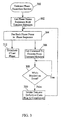
- FIGURE 3 illustrates, in flowchart form, a testcase phase execution service methodology in accordance with the present inventive principles
- FIGURE 4 illustrates, in flowchart form, a testcase code execution methodology in accordance with the principles of the present invention.
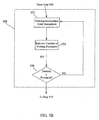
- FIGURES 5A and 5B illustrate, in flowchart form, a methodology for synchronizing testcase processes in accordance with the principles of the present invention.
- FIGURE 6 illustrates, in block diagram form, a data processing system which may be use in conjunction with the methodologies incorporating the present inventive principles.
- testcases are distributed across multiple data processing systems (equivalently, “machines” or “hosts”) that may collectively include multiple platforms (equivalently, “operating systems”).
- a testcase may be executed as one or more processes progressing through a sequence of phases, with execution within a phase being asynchronous among processes. Synchronization of the testcase processes across the data processing systems and platforms may be effected by managing an event; the testcase processes block on the event upon completion of the current testcase phase.
- a testcase phase execution service on each host handles synchronization events.
- the definition of the testcase may include metadata that identifies the particular phases in sequence, that is phase names, for the testcase; the phase names identifies the phases to the synchronization process that triggers the synchronization events which initiate each succeeding phase of the testcase.
- IPC interprocess communication
- FIGURE 1 schematically illustrates a software automation architecture for executing testcases across multiple data processing hardware and platforms in accordance with the present inventive principles.
- Architecture 100 includes a plurality of data processing systems102a-102d which may be conventional workstations, server hardware or similar devices.
- data processing systems102b-102d need not have the same operating system (not shown).
- an operating system may also be referred to as a platform.
- a different operating system may be deployed on each of data processing systems102b-102d, or different combinations of operating systems may be deployed on these data processing systems.
- the operating system deployed on data processing system 102a may thus be different from any of (or the same as) the data processing systems deployed on data processing systems 102b-102d.
- the testcases depicted in FIGURE 1 as testcase code 104a-104c, may be executed across different platforms and data processing hardware.
- dispatcher106 may provide synchronization services with respect to execution of the testcase, as discussed in conjunction with FIGURE3 and FIGURES5A and 5B, below.
- a testcase phase execution service 108a-108c may be included in each of data processing systems 102b-102d.
- the testcase phase execution service may provide a wrapper around the testcase software itself, and provide an interface between the testcase code and dispatcher 106.
- the testcase phase execution service provides a mechanism for synchronization of the execution of the testcase, and an interface between the testcase executable and dispatcher 106.
- testcase definition 200 includes code202 which may include the executable code that perform the operations constituting the test to be performed. Additionally, the testcase definition includes any data, 204 required by the operations constituting the test to be performed.
- code202 may include the executable code that perform the operations constituting the test to be performed.
- the testcase definition includes any data, 204 required by the operations constituting the test to be performed.
- a testcase for a database client/server application may include code for client-side and server-side operations on the database deployed in respective processes.
- the testcase definition may include data to initialize the database tables.
- testcase definition200 includes metadata206 which constitutes data about the testcase itself.
- This metadata may include, for example, the names (or other type of identifiers) for each of the phases of the testcase.
- a testcase run may be viewed, in accordance with the principles of the present invention, as a sequence of execution phases punctuated by synchronization points. Between the synchronization points, as previously noted, the execution of the testcase across systems and/or platforms may be asynchronous.
- FIGURES3-6 illustrate, in flowchart form, testcase execution and synchronization processes in accordance with the principles of the present invention.
- the flowcharts provided herein are not necessarily indicative of the serialization of operations being performed in an embodiment of the present invention. Steps disclosed within these flowcharts may be performed in parallel. The flowcharts are indicative of those considerations that may be performed to produce the operations available to automate the execution of testcases across data processing systems and/or platforms. It is further noted that the order presented is illustrative and does not necessarily imply that the steps must be performed in the order shown.
- Testcase phase execution service process 300 may be performed by a testcase phase execution service, such as testcase phase execution service 108a-108c, FIGURE 1. Moreover, testcase phase execution service300 may be invoked by dispatcher106, FIGURE1. The invocation of test phase execution service300 may be effected using an interprocess communication (IPC) protocol, or, more particularly, a remote procedure call (RPC) as supported by the particular operating systems deployed on the testcase data processing systems, such as systems 102b-102d, FIGURE 1.
- IPC interprocess communication
- RPC remote procedure call
- remote procedure invocations and interprocess communications may be implemented in an embodiment of the present invention by using high-level process invocation and monitoring services.
- a mechanism for using such services is provided by the Software Test Automation Framework (STAF).
- STAF is an open-source, multi-platform framework that provides such services as process invocation, resource management, logging, and monitoring.
- STAF software and documentation are distributed electronically through SourceForge.net.
- SourceForge.net is a centralized location for Open Source developers to control and manage Open Source software development.
- SourceForge.net provides hosting to Open Source software development projects.
- the Uniform Resource Locator for the STAF homepage at SourceForge.net is ⁇ http://staf.sourceforge.net/index.php>.
- the testcase phase execution service may be started using a STAF process service.
- the phase name sequence is obtained from the testcase definitions metadata, step 302.
- the testcase definition metadata may include a list of phase names ( i . e . distinct identifiers) for the phases of the particular testcase to be run.
- the testcase definition may be accessed by testcase phase execution service 300 in response to data provided by a dispatcher, such as dispatcher 106, FIGURE 1.
- Testcase phase execution service 300 enters a loop over the phases in the sequence in step 304.
- the command to be executed is obtained from the testcase metadata.
- testcase phase execution service blocks on a phase synchronization event.
- a synchronization event may be uniquely associated with each testcase phase.
- a STAF semaphore service may be used to provide the synchronization event. This will be discussed further in conjunction with FIGURES 5A and 5B. In such an embodiment of the present invention, this may be implemented by associating a corresponding event name with each phase name. (STAF semaphores provide for named event and mutex semaphores.) The use of a STAF semaphore service to post synchronization events will be discussed in conjunction with FIGURE 5.
- testcase phase execution service 300 breaks out of the loop.
- the testcase definition code is invoked in step 310, and runs to completion.
- Testcase phase execution service 300 then blocks on the next event by returning to step 304.
- testcase phase execution process 300 breaks out of the loop over phases, step 304, and terminates in step 312.
- Testcase execution may be effected in conjunction with the testcase phase execution service, such as testcase phase execution service 300, FIGURE 3 in accordance with testcase execution methodology 400 illustrated, in flow chart form, in FIGURE 4.
- the phase name of the current phase is obtained. This may be, for example, extracted from the command line parameters passed through the IPC mechanism. Another mechanism that may be used in an embodiment of the present invention is to pass the phase name in an environment variable. It would be appreciated by those of ordinary skill in the art that the particular technique used to pass in the phase names does not implicate the present inventive principles, and that any of the typically-used parameter-passing mechanisms may be used in conjunction with the present invention.
- the testcase code branches to the logic for the phase having the phase name obtained in step 404.
- the code may branch to a portion of the executable code corresponding to the current phase.
- a branch may be effected in the testcase code by, for example, a "switch" statement (that is, the branching may be effected by a C-like "switch” statement in the source code; it would be recognized by those of ordinary skill in the art that the executable code corresponds to a set of machine instructions that implement the "switch" statement).
- legacy testcases may have been designed to execute asynchronously to completion. It would be appreciated by those of ordinary skill in the art that such testcases are runnable within this invention as a single-phase testcase).
- testcase phase code is executed.
- the testcase execution for the current phase terminates in step 410, and control returns to the testcase phase execution process, such as phase execution process 300, FIGURE 3.
- FIGURES 5A and 5B illustrating (in partial views), in flow chart form, synchronization process 500 in accordance with the present inventive principles.
- synchronization process 500 may be performed by dispatcher 106 in an embodiment according to architecture 100, FIGURE 1.
- synchronization process 500 may be implemented as a stand-alone process.
- step 502 the phase name sequence is obtained from the testcase definitions metadata, similar to step 302, FIGURE 3. Additionally, a threshold value may be obtained from the metadata.
- process 500 enters a loop over the phases for the particular testcase. Recall that the synchronization points are predetermined points in the testcase that punctuate the execution of the testcase to permit the synchronization of the execution across multiple systems and platforms. Typically, a phase is specified by a testcase designer to avoid a potential race condition. However, for the present purposes it suffices that the phases are predetermined by the design of a particular testcase.
- process 500 continues to step 508, in which a determination is made whether a number of testcase processes blocked on the event associated with the current phase meets or exceeds a preselected threshold.
- a preselected threshold In other words, if the number of testcase processes waiting on the event achieves a "critical mass.”
- the threshold, or "critical mass” value may, for example, be included in the testcase metadata, whereby the triggering of synchronization events on the number of blocked processes may be selected in accordance with the particular testcase.
- step 510 the event corresponding to the current phase is triggered.
- the STAF semaphore service discussed in conjunction with testcase phase service process 300, FIGURE 3 may be used. Refer now to FIGURE 5B, illustrating alternative steps 508 and 510 in accordance with such an embodiment.
- step 552 the synchronization event semaphore is polled (a STAF event query may be used to effect step 552).
- the response in accordance with the STAF specification, includes the number of processes waiting on the event.
- step 554 the number of waiting events is retrieved, and in step 556, the number of waiting events is compared to the threshold value. If the number waiting is less than the threshold, step 504 loops back to step 552 ("No" branch of step 554).
- step 510 the synchronization event is triggered.
- an event name may be associated with each phase in the sequence of phases.
- the named event associated with the current phase is triggered.
- process 500 returns to step 504 and loops over the remaining phases in the sequence for the testcase, repeating steps 506-510 until all testcase phases have been executed. On completion of the last phase, synchronization process 500 breaks out of the loop in step 504, and terminates in step 512.
- FIGURE 6 there is illustrated an exemplary hardware configuration of data processing system 600 in accordance with the subject invention.
- this system in conjunction with architecture 100, FIGURE 1, including data processing systems 102a-102d and, correspondingly with the methodologies in FIGURES 3-5 for automated, cross-platform multiprocess software automation.
- Data processing system 600 includes central processing unit (CPU) 610, such as a conventional microprocessor, and a number of other units interconnected via system bus 612.
- CPU central processing unit
- Data processing system 600 also includes random access memory (RAM) 614, read only memory (ROM) 616 and input/output (I/O) adapter 618 for connecting peripheral devices such as disk units 620 to bus 612, user interface adapter 622 for connecting keyboard 624, mouse 626, trackball 632 and/or other user interface devices such as a touch screen device (not shown) to bus 612.
- System 600 also includes communication adapter 634 for connecting data processing system 600 to a data processing network, enabling the system to communicate with other systems, and display adapter 636 for connecting bus 612 to display device 638.
- CPU 610 may include other circuitry not shown herein, which will include circuitry commonly found within a microprocessor, e.g. execution units, bus interface units, arithmetic logic units, etc. CPU 610 may also reside on a single integrated circuit.
- Preferred implementations of the invention include implementations as a computer system programmed to execute the method or methods described herein, and as a computer program product.
- sets of instructions for executing the method or methods are resident in the random access memory 614 of one or more computer systems configured generally as described above.
- these sets of instructions, in conjunction with system components that execute them may effect the execution of testcase phases, as described in conjunction with FIGURES 3 and 4, for example.
- these sets of instructions, in conjunction with system components that execute them may effect the synchronization process in accordance with the present inventive principles, as discussed in conjunction with FIGURE 5.
- the set of instructions may be stored as a computer program product in another computer memory, for example, in disk drive 620 (which may include a removable memory such as an optical disk or floppy disk for eventual use in the disk drive 620).
- the computer program product can also be stored at another computer and transmitted to the users work station by a network or by an external network such as the Internet.
- the physical storage of the sets of instructions physically changes the medium upon which is the stored so that the medium carries computer readable information. The change may be electrical, magnetic, chemical, biological, or some other physical change. While it is convenient to describe the invention in terms of instructions, symbols, characters, or the like, the reader should remember that all of these in similar terms should be associated with the appropriate physical elements.
- the invention may describe terms such as comparing, validating, selecting, identifying, or other terms that could be associated with a human operator.
- terms such as comparing, validating, selecting, identifying, or other terms that could be associated with a human operator.
- no action by a human operator is desirable.
- the operations described are, in large part, machine operations processing electrical signals to generate other electrical signals.
Landscapes
- Engineering & Computer Science (AREA)
- Software Systems (AREA)
- Theoretical Computer Science (AREA)
- Physics & Mathematics (AREA)
- General Engineering & Computer Science (AREA)
- General Physics & Mathematics (AREA)
- Debugging And Monitoring (AREA)
- Multi Processors (AREA)
- Test And Diagnosis Of Digital Computers (AREA)
Applications Claiming Priority (2)
| Application Number | Priority Date | Filing Date | Title |
|---|---|---|---|
| US636985 | 2003-08-07 | ||
| US10/636,985 US7984427B2 (en) | 2003-08-07 | 2003-08-07 | System and methods for synchronizing software execution across data processing systems and platforms |
Publications (2)
| Publication Number | Publication Date |
|---|---|
| EP1510919A2 true EP1510919A2 (de) | 2005-03-02 |
| EP1510919A3 EP1510919A3 (de) | 2007-07-18 |
Family
ID=34104623
Family Applications (1)
| Application Number | Title | Priority Date | Filing Date |
|---|---|---|---|
| EP04103759A Withdrawn EP1510919A3 (de) | 2003-08-07 | 2004-08-04 | Systeme und Verfahren zum Synchronisieren von Softwareausführung über Datenverarbeitungssysteme und -plattformen |
Country Status (3)
| Country | Link |
|---|---|
| US (2) | US7984427B2 (de) |
| EP (1) | EP1510919A3 (de) |
| CN (1) | CN1282080C (de) |
Families Citing this family (14)
| Publication number | Priority date | Publication date | Assignee | Title |
|---|---|---|---|---|
| US9053239B2 (en) | 2003-08-07 | 2015-06-09 | International Business Machines Corporation | Systems and methods for synchronizing software execution across data processing systems and platforms |
| US7877703B1 (en) * | 2005-03-14 | 2011-01-25 | Seven Networks, Inc. | Intelligent rendering of information in a limited display environment |
| US7437546B2 (en) * | 2005-08-03 | 2008-10-14 | Intel Corporation | Multiple, cooperating operating systems (OS) platform system and method |
| US7849362B2 (en) * | 2005-12-09 | 2010-12-07 | International Business Machines Corporation | Method and system of coherent design verification of inter-cluster interactions |
| US20070294246A1 (en) * | 2006-06-16 | 2007-12-20 | Microsoft Corporation | Associating metadata on a per-user basis |
| US20090199047A1 (en) * | 2008-01-31 | 2009-08-06 | Yahoo! Inc. | Executing software performance test jobs in a clustered system |
| US9378120B2 (en) * | 2011-11-09 | 2016-06-28 | Tata Consultancy Services Limited | Automated test execution plan derivation system and method |
| CN104487935B (zh) | 2012-07-27 | 2018-04-24 | 慧与发展有限责任合伙企业 | 记录外部过程 |
| CN103905495B (zh) | 2012-12-27 | 2019-04-23 | 腾讯科技(深圳)有限公司 | 一种应用的同步方法及后台服务器 |
| CN104850491B (zh) * | 2014-02-19 | 2018-09-25 | 深圳中兴网信科技有限公司 | 一种软件测试方法、设备及系统 |
| US9448903B2 (en) * | 2014-08-16 | 2016-09-20 | Vmware, Inc. | Multiple test type analysis for a test case using test case metadata |
| CN104572472B (zh) * | 2015-01-28 | 2018-03-06 | 中国农业银行股份有限公司 | 一种程序执行顺序诊断方法与系统 |
| CN109542641A (zh) * | 2018-11-14 | 2019-03-29 | 中国联合网络通信集团有限公司 | 服务调用方法、装置及系统 |
| CN110990278A (zh) * | 2019-11-29 | 2020-04-10 | 深圳前海微众银行股份有限公司 | 一种测试方法及装置 |
Family Cites Families (33)
| Publication number | Priority date | Publication date | Assignee | Title |
|---|---|---|---|---|
| US4318182A (en) * | 1974-04-19 | 1982-03-02 | Honeywell Information Systems Inc. | Deadlock detection and prevention mechanism for a computer system |
| US5214780A (en) | 1990-03-23 | 1993-05-25 | Sun Microsystems, Inc. | Synchronized journaling system |
| US5511185A (en) * | 1990-11-27 | 1996-04-23 | Mercury Interactive Corporation | System for automatic testing of computer software having output synchronization and capable of responding to asynchronous events |
| JP2772304B2 (ja) | 1992-04-10 | 1998-07-02 | 富士通株式会社 | 並列処理の負荷均一化方法 |
| US5535438A (en) * | 1994-05-10 | 1996-07-09 | Panasonic Technologies, Inc. | Phase linear class E amplifier for a satellite communication terminal which communicates with a low earth orbiting satellite |
| US5623599A (en) * | 1994-07-29 | 1997-04-22 | International Business Machines Corporation | Method and apparatus for processing a synchronizing marker for an asynchronous remote data copy |
| US5634010A (en) * | 1994-10-21 | 1997-05-27 | Modulus Technologies, Inc. | Managing and distributing data objects of different types between computers connected to a network |
| US5623670A (en) * | 1995-02-17 | 1997-04-22 | Lucent Technologies Inc. | Method and apparatus for crash safe enforcement of mutually exclusive access to shared resources in a multitasking computer system |
| DE69625751T2 (de) * | 1995-07-07 | 2003-10-02 | Sun Microsystems, Inc. | Verfahren und System zur Ausführungssynchronisation von Ereignissen beim Testen von Software |
| US6067639A (en) * | 1995-11-09 | 2000-05-23 | Microsoft Corporation | Method for integrating automated software testing with software development |
| US6279124B1 (en) * | 1996-06-17 | 2001-08-21 | Qwest Communications International Inc. | Method and system for testing hardware and/or software applications |
| US5958019A (en) | 1996-07-01 | 1999-09-28 | Sun Microsystems, Inc. | Multiprocessing system configured to perform synchronization operations |
| US6023580A (en) * | 1996-07-03 | 2000-02-08 | Objectswitch Corporation | Apparatus and method for testing computer systems |
| WO1998010347A1 (de) | 1996-09-04 | 1998-03-12 | Siemens Nixdorf Informationssysteme Ag | Synchronisationsverfahren |
| US6002869A (en) | 1997-02-26 | 1999-12-14 | Novell, Inc. | System and method for automatically testing software programs |
| US6157940A (en) * | 1997-11-21 | 2000-12-05 | International Business Machines Corporation | Automated client-based web server stress tool simulating simultaneous multiple user server accesses |
| US6185701B1 (en) * | 1997-11-21 | 2001-02-06 | International Business Machines Corporation | Automated client-based web application URL link extraction tool for use in testing and verification of internet web servers and associated applications executing thereon |
| US6757847B1 (en) * | 1998-12-29 | 2004-06-29 | International Business Machines Corporation | Synchronization for system analysis |
| US6343371B1 (en) * | 1999-01-14 | 2002-01-29 | Compaq Computer Corporation | System and method for statically detecting potential race conditions in multi-threaded computer programs |
| US6594820B1 (en) * | 1999-09-28 | 2003-07-15 | Sun Microsystems, Inc. | Method and apparatus for testing a process in a computer system |
| US6775824B1 (en) * | 2000-01-12 | 2004-08-10 | Empirix Inc. | Method and system for software object testing |
| US6959433B1 (en) * | 2000-04-14 | 2005-10-25 | International Business Machines Corporation | Data processing system, method, and program for automatically testing software applications |
| US6751711B1 (en) * | 2000-10-27 | 2004-06-15 | Nortel Networks Limited | Methods and systems for process rollback in a shared memory parallel processor computing environment |
| US6754850B2 (en) * | 2001-03-02 | 2004-06-22 | National Instruments Corporation | System and method for performing batch synchronization for a test sequence |
| US6971084B2 (en) * | 2001-03-02 | 2005-11-29 | National Instruments Corporation | System and method for synchronizing execution of a batch of threads |
| US7210105B2 (en) | 2001-03-02 | 2007-04-24 | National Instruments Corporation | System and method for synchronizing software execution |
| US7089556B2 (en) * | 2001-03-26 | 2006-08-08 | International Business Machines Corporation | System and method for dynamic self-determining asynchronous event-driven computation |
| US6910158B2 (en) * | 2001-10-01 | 2005-06-21 | International Business Machines Corporation | Test tool and methods for facilitating testing of duplexed computer functions |
| US7055137B2 (en) * | 2001-11-29 | 2006-05-30 | I2 Technologies Us, Inc. | Distributed automated software graphical user interface (GUI) testing |
| US6851075B2 (en) * | 2002-01-04 | 2005-02-01 | International Business Machines Corporation | Race detection for parallel software |
| US7089534B2 (en) * | 2002-05-01 | 2006-08-08 | International Business Machines Corporation | Model based test generation for validation of parallel and concurrent software |
| US7159021B2 (en) * | 2002-06-27 | 2007-01-02 | Microsoft Corporation | System and method for testing peer-to-peer network applications |
| US7174554B2 (en) * | 2002-12-20 | 2007-02-06 | Microsoft Corporation | Tools and methods for discovering race condition errors |
-
2003
- 2003-08-07 US US10/636,985 patent/US7984427B2/en active Active
-
2004
- 2004-08-03 CN CN200410058897.XA patent/CN1282080C/zh not_active Expired - Lifetime
- 2004-08-04 EP EP04103759A patent/EP1510919A3/de not_active Withdrawn
-
2011
- 2011-07-15 US US13/184,461 patent/US8407672B2/en not_active Expired - Fee Related
Also Published As
| Publication number | Publication date |
|---|---|
| CN1282080C (zh) | 2006-10-25 |
| EP1510919A3 (de) | 2007-07-18 |
| US20050044136A1 (en) | 2005-02-24 |
| CN1619500A (zh) | 2005-05-25 |
| US8407672B2 (en) | 2013-03-26 |
| US7984427B2 (en) | 2011-07-19 |
| US20120291013A1 (en) | 2012-11-15 |
Similar Documents
| Publication | Publication Date | Title |
|---|---|---|
| US8407672B2 (en) | Systems and methods for synchronizing software execution across data processing systems and platforms | |
| US11341031B2 (en) | Controlling executions of synchronous and/or non-synchronous operations with asynchronous messages | |
| US9419884B1 (en) | Intelligent automated testing method for restful web services | |
| CN107291438B (zh) | 自动化脚本的生成方法、装置及电子设备 | |
| Scheuner et al. | Cloud work bench--infrastructure-as-code based cloud benchmarking | |
| US12026509B2 (en) | Dynamic review of software updates after pull requests | |
| CN114546738A (zh) | 服务器通用测试方法、系统、终端及存储介质 | |
| WO2015019074A1 (en) | Automated application test system | |
| US9003231B1 (en) | System for instantiating service instances for testing in a known state | |
| CN111538659A (zh) | 业务场景的接口测试方法、系统、电子设备和存储介质 | |
| CN110502579A (zh) | 用于批量和实时特征计算的系统和方法 | |
| CN104636251A (zh) | 一种多浏览器兼容性测试方法及系统 | |
| US7987460B2 (en) | Automation tool for application installations | |
| US20170364436A1 (en) | Plugin-based software verification system | |
| US20050114836A1 (en) | Block box testing in multi-tier application environments | |
| Cordeiro et al. | Shaker: a tool for detecting more flaky tests faster | |
| US20050033953A1 (en) | Systems and methods for a bootstrap mechanism for software execution | |
| US9053239B2 (en) | Systems and methods for synchronizing software execution across data processing systems and platforms | |
| US20050034120A1 (en) | Systems and methods for cooperatively building public file packages | |
| Mentzelopoulou | Reducing LLM Hallucinations with Retrieval Prompt Engineering | |
| Sun et al. | V-mcs: A configuration system for virtual machines | |
| Ng et al. | Toward quality EDA tools and tool flows through high-performance computing | |
| Kumar | Cloud Simulator Search Framework The Vigilant Fetcher | |
| Aowtab et al. | e-Commerce Mobile Systems Development with Enhanced Microservice Architecture Design | |
| Bin Mohamed Aowtab Khan et al. | e-Commerce Mobile Systems Development with Enhanced Microservice Architecture Design |
Legal Events
| Date | Code | Title | Description |
|---|---|---|---|
| PUAI | Public reference made under article 153(3) epc to a published international application that has entered the european phase |
Free format text: ORIGINAL CODE: 0009012 |
|
| AK | Designated contracting states |
Kind code of ref document: A2 Designated state(s): AT BE BG CH CY CZ DE DK EE ES FI FR GB GR HU IE IT LI LU MC NL PL PT RO SE SI SK TR |
|
| AX | Request for extension of the european patent |
Extension state: AL HR LT LV MK |
|
| PUAL | Search report despatched |
Free format text: ORIGINAL CODE: 0009013 |
|
| AK | Designated contracting states |
Kind code of ref document: A3 Designated state(s): AT BE BG CH CY CZ DE DK EE ES FI FR GB GR HU IE IT LI LU MC NL PL PT RO SE SI SK TR |
|
| AX | Request for extension of the european patent |
Extension state: AL HR LT LV MK |
|
| AKX | Designation fees paid | ||
| REG | Reference to a national code |
Ref country code: DE Ref legal event code: 8566 |
|
| STAA | Information on the status of an ep patent application or granted ep patent |
Free format text: STATUS: THE APPLICATION IS DEEMED TO BE WITHDRAWN |
|
| 18D | Application deemed to be withdrawn |
Effective date: 20080119 |