EP1509638B1 - Washwater neutralization system for glass forming line - Google Patents
Washwater neutralization system for glass forming line Download PDFInfo
- Publication number
- EP1509638B1 EP1509638B1 EP03728802A EP03728802A EP1509638B1 EP 1509638 B1 EP1509638 B1 EP 1509638B1 EP 03728802 A EP03728802 A EP 03728802A EP 03728802 A EP03728802 A EP 03728802A EP 1509638 B1 EP1509638 B1 EP 1509638B1
- Authority
- EP
- European Patent Office
- Prior art keywords
- washwater
- solution
- tank
- introducing
- neutralization system
- Prior art date
- Legal status (The legal status is an assumption and is not a legal conclusion. Google has not performed a legal analysis and makes no representation as to the accuracy of the status listed.)
- Revoked
Links
- 238000006386 neutralization reaction Methods 0.000 title claims description 55
- 238000007496 glass forming Methods 0.000 title claims description 24
- 239000011230 binding agent Substances 0.000 claims description 93
- HEMHJVSKTPXQMS-UHFFFAOYSA-M Sodium hydroxide Chemical compound [OH-].[Na+] HEMHJVSKTPXQMS-UHFFFAOYSA-M 0.000 claims description 72
- 238000000034 method Methods 0.000 claims description 49
- XLYOFNOQVPJJNP-UHFFFAOYSA-M hydroxide Chemical compound [OH-] XLYOFNOQVPJJNP-UHFFFAOYSA-M 0.000 claims description 36
- XLYOFNOQVPJJNP-UHFFFAOYSA-N water Substances O XLYOFNOQVPJJNP-UHFFFAOYSA-N 0.000 claims description 33
- 229920002125 Sokalan® Polymers 0.000 claims description 32
- 239000004584 polyacrylic acid Substances 0.000 claims description 30
- 238000011084 recovery Methods 0.000 claims description 28
- 239000000523 sample Substances 0.000 claims description 27
- 239000000835 fiber Substances 0.000 claims description 17
- 230000007797 corrosion Effects 0.000 claims description 15
- 238000005260 corrosion Methods 0.000 claims description 15
- 230000008878 coupling Effects 0.000 claims description 15
- 238000010168 coupling process Methods 0.000 claims description 15
- 238000005859 coupling reaction Methods 0.000 claims description 15
- 239000002253 acid Substances 0.000 claims description 12
- 150000003839 salts Chemical class 0.000 claims description 12
- OFOBLEOULBTSOW-UHFFFAOYSA-N Propanedioic acid Natural products OC(=O)CC(O)=O OFOBLEOULBTSOW-UHFFFAOYSA-N 0.000 claims description 9
- VZCYOOQTPOCHFL-UPHRSURJSA-N maleic acid Chemical compound OC(=O)\C=C/C(O)=O VZCYOOQTPOCHFL-UPHRSURJSA-N 0.000 claims description 9
- 239000011976 maleic acid Substances 0.000 claims description 9
- FPYJFEHAWHCUMM-UHFFFAOYSA-N maleic anhydride Chemical compound O=C1OC(=O)C=C1 FPYJFEHAWHCUMM-UHFFFAOYSA-N 0.000 claims description 9
- VZCYOOQTPOCHFL-UHFFFAOYSA-N trans-butenedioic acid Natural products OC(=O)C=CC(O)=O VZCYOOQTPOCHFL-UHFFFAOYSA-N 0.000 claims description 9
- 239000003365 glass fiber Substances 0.000 claims description 8
- 238000004519 manufacturing process Methods 0.000 claims description 8
- VHUUQVKOLVNVRT-UHFFFAOYSA-N Ammonium hydroxide Chemical compound [NH4+].[OH-] VHUUQVKOLVNVRT-UHFFFAOYSA-N 0.000 claims description 4
- 239000000908 ammonium hydroxide Substances 0.000 claims description 4
- AXCZMVOFGPJBDE-UHFFFAOYSA-L calcium dihydroxide Chemical compound [OH-].[OH-].[Ca+2] AXCZMVOFGPJBDE-UHFFFAOYSA-L 0.000 claims description 4
- 239000007787 solid Substances 0.000 claims description 4
- 239000012530 fluid Substances 0.000 claims 4
- 239000000243 solution Substances 0.000 description 46
- 239000011152 fibreglass Substances 0.000 description 13
- 238000009413 insulation Methods 0.000 description 12
- 230000003247 decreasing effect Effects 0.000 description 4
- 229910000975 Carbon steel Inorganic materials 0.000 description 3
- PEDCQBHIVMGVHV-UHFFFAOYSA-N Glycerine Chemical compound OCC(O)CO PEDCQBHIVMGVHV-UHFFFAOYSA-N 0.000 description 3
- 238000010521 absorption reaction Methods 0.000 description 3
- 239000010962 carbon steel Substances 0.000 description 3
- 230000015556 catabolic process Effects 0.000 description 3
- 230000007423 decrease Effects 0.000 description 3
- 238000006731 degradation reaction Methods 0.000 description 3
- 230000007613 environmental effect Effects 0.000 description 3
- 239000011521 glass Substances 0.000 description 3
- 230000003472 neutralizing effect Effects 0.000 description 3
- QGZKDVFQNNGYKY-UHFFFAOYSA-N Ammonia Chemical compound N QGZKDVFQNNGYKY-UHFFFAOYSA-N 0.000 description 2
- UIIMBOGNXHQVGW-UHFFFAOYSA-M Sodium bicarbonate Chemical compound [Na+].OC([O-])=O UIIMBOGNXHQVGW-UHFFFAOYSA-M 0.000 description 2
- 230000002378 acidificating effect Effects 0.000 description 2
- 239000000872 buffer Substances 0.000 description 2
- 239000000920 calcium hydroxide Substances 0.000 description 2
- 229910001861 calcium hydroxide Inorganic materials 0.000 description 2
- 230000000670 limiting effect Effects 0.000 description 2
- 239000000463 material Substances 0.000 description 2
- 239000000203 mixture Substances 0.000 description 2
- 239000002245 particle Substances 0.000 description 2
- ISWSIDIOOBJBQZ-UHFFFAOYSA-N phenol group Chemical group C1(=CC=CC=C1)O ISWSIDIOOBJBQZ-UHFFFAOYSA-N 0.000 description 2
- 239000011347 resin Substances 0.000 description 2
- 229920005989 resin Polymers 0.000 description 2
- 239000010935 stainless steel Substances 0.000 description 2
- 229910001220 stainless steel Inorganic materials 0.000 description 2
- LFQSCWFLJHTTHZ-UHFFFAOYSA-N Ethanol Chemical compound CCO LFQSCWFLJHTTHZ-UHFFFAOYSA-N 0.000 description 1
- GSEJCLTVZPLZKY-UHFFFAOYSA-N Triethanolamine Chemical class OCCN(CCO)CCO GSEJCLTVZPLZKY-UHFFFAOYSA-N 0.000 description 1
- 230000002411 adverse Effects 0.000 description 1
- 229910021529 ammonia Inorganic materials 0.000 description 1
- 239000007864 aqueous solution Substances 0.000 description 1
- 230000015572 biosynthetic process Effects 0.000 description 1
- 238000007664 blowing Methods 0.000 description 1
- 239000003054 catalyst Substances 0.000 description 1
- 238000004140 cleaning Methods 0.000 description 1
- 238000004132 cross linking Methods 0.000 description 1
- 238000005816 glass manufacturing process Methods 0.000 description 1
- 239000003112 inhibitor Substances 0.000 description 1
- 230000002401 inhibitory effect Effects 0.000 description 1
- 239000007788 liquid Substances 0.000 description 1
- 239000006060 molten glass Substances 0.000 description 1
- 230000009972 noncorrosive effect Effects 0.000 description 1
- 239000003002 pH adjusting agent Substances 0.000 description 1
- OJMIONKXNSYLSR-UHFFFAOYSA-N phosphorous acid Chemical compound OP(O)O OJMIONKXNSYLSR-UHFFFAOYSA-N 0.000 description 1
- 229920000642 polymer Polymers 0.000 description 1
- 238000002360 preparation method Methods 0.000 description 1
- 229910000030 sodium bicarbonate Inorganic materials 0.000 description 1
- 235000017557 sodium bicarbonate Nutrition 0.000 description 1
- 238000003860 storage Methods 0.000 description 1
- 239000002351 wastewater Substances 0.000 description 1
- 210000002268 wool Anatomy 0.000 description 1
Images
Classifications
-
- C—CHEMISTRY; METALLURGY
- C23—COATING METALLIC MATERIAL; COATING MATERIAL WITH METALLIC MATERIAL; CHEMICAL SURFACE TREATMENT; DIFFUSION TREATMENT OF METALLIC MATERIAL; COATING BY VACUUM EVAPORATION, BY SPUTTERING, BY ION IMPLANTATION OR BY CHEMICAL VAPOUR DEPOSITION, IN GENERAL; INHIBITING CORROSION OF METALLIC MATERIAL OR INCRUSTATION IN GENERAL
- C23F—NON-MECHANICAL REMOVAL OF METALLIC MATERIAL FROM SURFACE; INHIBITING CORROSION OF METALLIC MATERIAL OR INCRUSTATION IN GENERAL; MULTI-STEP PROCESSES FOR SURFACE TREATMENT OF METALLIC MATERIAL INVOLVING AT LEAST ONE PROCESS PROVIDED FOR IN CLASS C23 AND AT LEAST ONE PROCESS COVERED BY SUBCLASS C21D OR C22F OR CLASS C25
- C23F15/00—Other methods of preventing corrosion or incrustation
-
- C—CHEMISTRY; METALLURGY
- C02—TREATMENT OF WATER, WASTE WATER, SEWAGE, OR SLUDGE
- C02F—TREATMENT OF WATER, WASTE WATER, SEWAGE, OR SLUDGE
- C02F1/00—Treatment of water, waste water, or sewage
- C02F1/66—Treatment of water, waste water, or sewage by neutralisation; pH adjustment
-
- C—CHEMISTRY; METALLURGY
- C02—TREATMENT OF WATER, WASTE WATER, SEWAGE, OR SLUDGE
- C02F—TREATMENT OF WATER, WASTE WATER, SEWAGE, OR SLUDGE
- C02F2103/00—Nature of the water, waste water, sewage or sludge to be treated
- C02F2103/34—Nature of the water, waste water, sewage or sludge to be treated from industrial activities not provided for in groups C02F2103/12 - C02F2103/32
- C02F2103/36—Nature of the water, waste water, sewage or sludge to be treated from industrial activities not provided for in groups C02F2103/12 - C02F2103/32 from the manufacture of organic compounds
- C02F2103/38—Polymers
-
- C—CHEMISTRY; METALLURGY
- C02—TREATMENT OF WATER, WASTE WATER, SEWAGE, OR SLUDGE
- C02F—TREATMENT OF WATER, WASTE WATER, SEWAGE, OR SLUDGE
- C02F2209/00—Controlling or monitoring parameters in water treatment
- C02F2209/06—Controlling or monitoring parameters in water treatment pH
-
- C—CHEMISTRY; METALLURGY
- C03—GLASS; MINERAL OR SLAG WOOL
- C03C—CHEMICAL COMPOSITION OF GLASSES, GLAZES OR VITREOUS ENAMELS; SURFACE TREATMENT OF GLASS; SURFACE TREATMENT OF FIBRES OR FILAMENTS MADE FROM GLASS, MINERALS OR SLAGS; JOINING GLASS TO GLASS OR OTHER MATERIALS
- C03C25/00—Surface treatment of fibres or filaments made from glass, minerals or slags
- C03C25/10—Coating
- C03C25/12—General methods of coating; Devices therefor
- C03C25/14—Spraying
- C03C25/146—Spraying onto fibres in suspension in a gaseous medium
Definitions
- the present invention generally to washwater systems for glass forming lines and more specifically washwater neutralization systems for glass forming lines.
- washwater systems remove excess binder from the equipment used to form fiberglass insulation products. This allows the equipment to be operated at optimum efficiency to maximize glass throughput.
- the washwater equipment also prevents damage due to the buildup of binder, thereby limiting the amount of downtime associated with equipment cleaning, repair and replacement.
- This equipment includes but is not limited to forming conveyors, forming hoodwalls, suction boxes, drop boxes, and forming fans.
- Polycarboxylic acid based fiberglass binder resins have been used in the glass industry for insulation applications.
- Polycarboxylic acid based binders provide advantages in these applications in terms of mechanical properties and decreased reliance on environmental control equipment. It is also known to add a cobinder to the binder resin to improve the performance of the binder.
- the solution proposed in international patent application WO 99/61384 is to use specific polyacrylic acid based binder compositions, having lower emissions, comprising an aqueous solution of a polycarboxy polymer, a monomeric trihydric alcohol, a catalyst, a pH adjuster and a corrosion inhibitor.
- Another solution proposed is to decrease the amount of cycles that reclaim water is introduced through the forming equipment. However, this also leads to increased costs in terms of water usage and wastewater removal. This also decreases the efficiency of the forming equipment associated with replacing the reclaim water.
- the present invention reduces the corrosion rate of forming and washwater equipment by controlling the pH to between about 8.0 and 8.5 or above of reclaimed washwater used to clean the equipment and wash uncured polyacrylic binder, an optional cobinder and fiberglass from the equipment.
- a washwater neutralizing system is introduced within the closed loop system to ensure that the washwater is maintained between about 8.0 and 8.5 or above. This is accomplished by coupling a pH probe to the inside of a washwater holding tank to monitor the pH of the washwater. If the pH is measured by the probe at below about 8.5, a pump will introduce a quantity of the base solution, preferably a hydroxide solution, to the tank until the pH is raised to at least about 8.5. This ensures that reclaim washwater, used to wash the uncured binder and fibers from the equipment, is maintained at a pH which limits corrosion of the equipment. This increases the useful life of the forming equipment and decreases manufacturing costs associated with repair and replacement of forming equipment due to acid corrosion.
- a closed-loop hoodwall reclaim washwater system is introduced in addition to the washwater reclaim washwater system.
- the hoodwall reclaim washwater system pumps washwater from a separate washwater tank to remove excess polyacrylic acid binder from the hoodwalls of the forming area or may be used as makeup water for preparation of the aqueous binder.
- the closed-loop hoodwall reclaim washwater system is not coupled to the washwater neutralizing system, so the washwater that is reclaimed is substantially free of base solution. The reclaimed washwater may then be returned to a binder makeup tank for reuse, thereby reducing binder costs.
- bound fiberglass containing the recovered binder experiences better and more consistant curing as compared with binders having small amount of base solution, as even small amounts of base solution within the binder can inhibit curing of the binder.
- bound fiberglass products having substantially base solution-free binders have decreased degradation rates associated with water absorption caused by the presence of polyacrylic acids salts, degradation that affects the insulating properties such as recovery, stiffness, and R-value of these products.
- the second reclaim system would therefore minimize the amount of base solution in the binder makeup, thereby reducing curing problems associated with the base solution.
- the second reclaim system also increases the amount of recoverable binder, thereby decreasing binder costs.
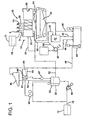
- Figure 1 illustrates a fiberglass forming line having a closed-loop washwater recovery system according to one preferred embodiment of the present invention
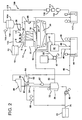
- Figure 2 illustrates a fiberglass forming line having a closed-loop washwater recovery system and a closed-loop hoodwall washwater recovery system according to another preferred embodiment of the present invention.
- Figure 1 illustrates a fiberglass forming line 10 having a closed-loop washwater recovery system 12 according to one preferred embodiment of the present invention.
- Fiberglass is formed on the forming line 10 in a multistep process.
- Molten glass is first introduced from a furnace (not shown) through a bushing (not shown) to a spinner 14 that forms a plurality of fiberglass fibers 8 in a method well known in the art.
- a water-based polyacrylic binder and an optional maleic acid or maleic anhydride cobinder 18 from a binder makeup tank 72 is sprayed onto the fibers 8 by a plurality of spaced nozzles (not shown) contained on a binder ring 20 to form an uncured binder coated fiber 9.
- the polyacrylic acid binder applied to the fibers is conventional and comprise polyacrylic acids having glycerol and triethanolamines as crosslinking groups.
- Suitable binders are disclosed in U.S. Patent 6933349 entitled “ Low Odor Insulation Binder from Phosphite Terminated Polyacrylic Acid” filed 3/21/01; U.S. Patent 7157524 entitled “Surfactant-Containing Insulation Binder” filed 5/31/01; U.S. Patent Number 6,194,512 entitled “Corrosion Inhibiting Composition for Polyacrylic Acid Based Binders” all of which are incorporated herein by reference. Binder is diluted to a preferred application viscosity with water to between approximately 3 to 25% solids.
- a maleic acid or maleic anhydride co-binder may be optionally added to improve the performance of the polyacrylic acid binder and reduce the cost of the binder.
- the maleic acid or maleic anhydride cobinder also improves the overall stiffness and recovery of the final insulation product.
- the fibers 9 are then introduced through a forming hoodwall 22 that confines the fibers 9.
- the walls 65 of the hoodwall comprise a continuous moving belt that contain the fibers 8 and binder and optional cobinder 18 within the forming hood.
- the fibers 9 are gathered onto a forming conveyor 24 by pulling a large volume of air across a series of perforated plates on the conveyor 24 using a forming fan 40.
- the fibers 9 form an uncured pack 16 on the forming conveyor 24.
- a drop out box 42 slows down the velocity of air between the conveyor 24 and forming fan 40 so that fibers 9 and binder and optional cobinder 18 droplets which pass through the forming conveyor 24 are substantially prevented from reaching the forming fan 40.
- the walls 65 of the forming section are washed with a washwater solution 26 introduced from a washwater tank 32 through a pump 50 and inlet line 52 to application devices 28 that pack rinse walls 65 of the forming hoodwall 22 with the solution 26.
- the washwater solution 26 removes excess binder and optional cobinder 18 from the walls 65 of the forming hoodwall 22.
- the excess binder and optional cobinder 18 and washwater solution 26 is then removed from the forming hoodwall 22 is collected and returned to the washwater.
- the collected tank 32 polyacrylic acid and the optional maleic acid or maleic anhydride cobinder coated fiberglass pack 16 is then moved along the conveyor 24 to an oven (not shown) for subsequent curing and processing to form glass fiber insulation products.
- the method for forming the glass pack 16, introducing the binder and optional cobinder 18, and subsequent formation of fiberglass insulation products such as batts, rolls, blowing wool and board products from the pack 16 is well known in the art and not relevant to the present invention except as directed to the closed-loop washwater recovery system 12 that is the subject of the present invention.
- the washwater solution 26 is also introduced separately via input lines 53, 55, 57, 59 to remove excess binder and optional cobinder 18 from the suction boxes 30, forming fan 40, drop out boxes 42, and forming hoodwall 22, respectively. This ensures clean surfaces and optimum performance for the equipment.
- the washwater solution 26 is then gathered from the boxes 30, 42, fan 40, forming hoodwall 22, and conveyor 24 into a washwater sump 44 via lines 46.
- the sump 44 pumps the washwater solution 26 and excess binder and optional cobinder 18 via outlet line 48 to a shaker screen 49, in which glass fibers and partially cured particles of binder and optional cobinder 18 are removed.
- the remaining solution 26 containing liquid binder and optional cobinder 18 is returned to a washwater tank 32 via line 54.
- the washwater tank 32 contains one or more pH probes 60 that provide electrical feedback to a processor 63 of the neutralization system 62.
- the processor 63 of the neutralization system 62 interprets an electrical signal from the pH probes 60 and directs the introduction of a base solution 64 into the washwater tank 32 through pump 67 from a holding tank 66 that is either contained within or coupled to the neutralization system 62. This ensures that washwater solution 26 pumped through the closed-loop washwater recovery system 12 is maintained at a pH that will not corrode the forming conveyor 24, suction boxes 30, forming fan 40, drop out boxes 42, duct work and environmental equipment (not shown).
- the base solution 64 comprises a weak acid/strong base salt that is soluble in water and can neutralize the washwater solution 26 without the production of insoluble salts. Further, the base solution should not buffer the washwater solution 26 to an extent that the washwater solution 26 may not be able to be removed from the washwater tank 32 and used to prepare phenolic binders.
- the base solution 64 may be solid sodium hydroxide or a solution of any available concentration, preferably a 50% by weight solution of sodium hydroxide dispersed in water.
- other hydroxide solutions may be used as the base solution 64 such as calcium hydroxide or ammonium hydroxide.
- calcium hydroxide has limited solubility in water and the insoluble salts tend to settle out and cause potential pluggage problems.
- ammonium hydroxide releases ammonia, and therefore environmental concerns in terms of plant emissions would likely have to be addressed.
- weak acid/strong base salts such as sodium bicarbonate can be used in the base solution 64.
- these salts are not preferred in that they will buffer the washwater solution 26 to an extent that the washwater solution 26 may not be able to be removed from the washwater tank 32 and used to prepare phenolic binders.
- the reclaimed washwater solution 26 containing the binder 18 may be siphoned from the tank 32 through line 70 and placed into a binder/cobinder makeup tank 72.
- the binder and optional cobinder 18 material may be recovered from the washwater solution 26 and reused in the application process. This can reduce binder and cobinder 18 costs, therein helping to minimize the manufacturing costs for making insulation products.
- the corrosion rate of the equipment in the forming area may be minimized as compared with prior art systems utilizing a closed-loop washwater system without an associated neutralizing system 62.
- input line 59 which supplied washwater solution 26 to the walls 65 of the forming hoodwall 22 of Figure 1 , is replaced with a closed-loop hoodwall washwater recovery system 100.
- washwater solution 102 is introduced from a hoodwall reclaim recirculation tank 104 of the system 100 through a line 106 to the walls 65 of the forming hoodwall 22 to remove excess binder and optional cobinder 18 that may have accumulated on the walls 106.
- the excess binder and optional cobinder 18 and washwater solution 102 is then returned to the tank 104 via pump 117 through line 110 after passing through a series of filters 112 or a shaker screen 114, or centrifuge 116, or a combination of all three as shown here.
- the filters 112, shaker screens 114, and/or centrifuge 116 removes glass fibers and suspended partially cured particles of binder and optional cobinder 18 from the washwater solution 102 prior to reintroduction to the recirculation tank 104. Water may be introduced by a pump 118 to the tank 104 to replace water lost in the process. All wetted parts of the hoodwall reclaim system 100 should be stainless steel or contain a corrosion resistant material.
- the reclaimed washwater solution 102 containing the binder and optional cobinder 18 may be siphoned from the tank 104 through line 124 and placed into a binder makeup tank 72.
- the binder and optional cobinder 18 is a water-based binder/optional cobinder as described above, the binder and cobinder 18 and washwater solution 102 may be reused in the application process. This can reduce binder and optional cobinder 18 costs, therein helping to minimize the manufacturing costs for making insulation products.
- a second closed-loop hoodwall washwater recovery system 100 offers advantages as compared with Figure 1 .
- the second system 100 increases the amount of recoverable binder 18.
- the binder and optional cobinder 18 recovered is substantially free of the base solution 64. This is important because the base solution 64 adversely affects the curing of reclaimed binder and optional cobinder 18 used in glass fiber products if the base 64 is not removed.
- the amount of polyacrylic acid salt contained in the finished insulation product made from the pack 16 is also minimized. This is important because the polyacrylic acid salt increases the potential for water absorption within the finished insulation product, water absorption which can lead to an increase in degradation of the insulation properties of the finished insulated product during storage and subsequent use.
Landscapes
- Chemical & Material Sciences (AREA)
- Engineering & Computer Science (AREA)
- Materials Engineering (AREA)
- Mechanical Engineering (AREA)
- Metallurgy (AREA)
- Organic Chemistry (AREA)
- Paper (AREA)
- Water Treatment By Electricity Or Magnetism (AREA)
Description
- The present invention generally to washwater systems for glass forming lines and more specifically washwater neutralization systems for glass forming lines.
- In the fiberglass industry, washwater systems remove excess binder from the equipment used to form fiberglass insulation products. This allows the equipment to be operated at optimum efficiency to maximize glass throughput. The washwater equipment also prevents damage due to the buildup of binder, thereby limiting the amount of downtime associated with equipment cleaning, repair and replacement. This equipment includes but is not limited to forming conveyors, forming hoodwalls, suction boxes, drop boxes, and forming fans.
- Polycarboxylic acid based fiberglass binder resins have been used in the glass industry for insulation applications. Polycarboxylic acid based binders provide advantages in these applications in terms of mechanical properties and decreased reliance on environmental control equipment. It is also known to add a cobinder to the binder resin to improve the performance of the binder.
- One problem with currently available washwater systems is that the polyacrylic acid binder, and hence the reclaim water, becomes acidic as the number of cycles of removing binder increases. This acidic reclaim water can corrode the walls of the forming and washwater equipment, which is typically made of carbon steel, thereby limiting the equipment's useful life. This results in added manufacturing costs due to equipment replacement and downtime. This also can result in decreased efficiency in the glass manufacturing process, resulting in increased manufacturing costs associated with rework and the like.
- Various solutions have tried to address this corrosion problem. For example, stainless steel can replace carbon steel in the forming and washwater equipment due to its non-corrosive nature. However this equipment is expensive relative to carbon steel equipment.
- The solution proposed in international patent application
WO 99/61384 - Another solution proposed is to decrease the amount of cycles that reclaim water is introduced through the forming equipment. However, this also leads to increased costs in terms of water usage and wastewater removal. This also decreases the efficiency of the forming equipment associated with replacing the reclaim water.
- It is thus highly desirable to improve the corrosion resistance of forming equipment and washwater equipment.
- The present invention reduces the corrosion rate of forming and washwater equipment by controlling the pH to between about 8.0 and 8.5 or above of reclaimed washwater used to clean the equipment and wash uncured polyacrylic binder, an optional cobinder and fiberglass from the equipment.
- To accomplish this, a washwater neutralizing system is introduced within the closed loop system to ensure that the washwater is maintained between about 8.0 and 8.5 or above. This is accomplished by coupling a pH probe to the inside of a washwater holding tank to monitor the pH of the washwater. If the pH is measured by the probe at below about 8.5, a pump will introduce a quantity of the base solution, preferably a hydroxide solution, to the tank until the pH is raised to at least about 8.5. This ensures that reclaim washwater, used to wash the uncured binder and fibers from the equipment, is maintained at a pH which limits corrosion of the equipment. This increases the useful life of the forming equipment and decreases manufacturing costs associated with repair and replacement of forming equipment due to acid corrosion.
- In another preferred embodiment, a closed-loop hoodwall reclaim washwater system is introduced in addition to the washwater reclaim washwater system. The hoodwall reclaim washwater system pumps washwater from a separate washwater tank to remove excess polyacrylic acid binder from the hoodwalls of the forming area or may be used as makeup water for preparation of the aqueous binder. The closed-loop hoodwall reclaim washwater system is not coupled to the washwater neutralizing system, so the washwater that is reclaimed is substantially free of base solution. The reclaimed washwater may then be returned to a binder makeup tank for reuse, thereby reducing binder costs. Further, because the recovered binder is substantially base solution free, bound fiberglass containing the recovered binder experiences better and more consistant curing as compared with binders having small amount of base solution, as even small amounts of base solution within the binder can inhibit curing of the binder. Also, bound fiberglass products having substantially base solution-free binders have decreased degradation rates associated with water absorption caused by the presence of polyacrylic acids salts, degradation that affects the insulating properties such as recovery, stiffness, and R-value of these products. The second reclaim system would therefore minimize the amount of base solution in the binder makeup, thereby reducing curing problems associated with the base solution. The second reclaim system also increases the amount of recoverable binder, thereby decreasing binder costs.
- The foregoing and other advantages of the invention will become apparent from the following disclosure in which one or more preferred embodiments of the invention are described in detail and illustrated in the accompanying drawings. It is contemplated that variations in procedures, structural features and arrangement of parts may appear to a person skilled in the art without departing from the scope of or sacrificing any of the advantages of the invention.
-
Figure 1 illustrates a fiberglass forming line having a closed-loop washwater recovery system according to one preferred embodiment of the present invention; and -
Figure 2 illustrates a fiberglass forming line having a closed-loop washwater recovery system and a closed-loop hoodwall washwater recovery system according to another preferred embodiment of the present invention. -
Figure 1 illustrates afiberglass forming line 10 having a closed-loop washwater recovery system 12 according to one preferred embodiment of the present invention. - Fiberglass is formed on the forming
line 10 in a multistep process. Molten glass is first introduced from a furnace (not shown) through a bushing (not shown) to aspinner 14 that forms a plurality offiberglass fibers 8 in a method well known in the art. A water-based polyacrylic binder and an optional maleic acid ormaleic anhydride cobinder 18 from abinder makeup tank 72 is sprayed onto thefibers 8 by a plurality of spaced nozzles (not shown) contained on abinder ring 20 to form an uncured binder coatedfiber 9. - The polyacrylic acid binder applied to the fibers is conventional and comprise polyacrylic acids having glycerol and triethanolamines as crosslinking groups. Suitable binders are disclosed in
U.S. Patent 6933349 entitled " Low Odor Insulation Binder from Phosphite Terminated Polyacrylic Acid" filed 3/21/01;U.S. Patent 7157524 entitled "Surfactant-Containing Insulation Binder" filed 5/31/01;U.S. Patent Number 6,194,512 entitled "Corrosion Inhibiting Composition for Polyacrylic Acid Based Binders" all of which are incorporated herein by reference. Binder is diluted to a preferred application viscosity with water to between approximately 3 to 25% solids. - A maleic acid or maleic anhydride co-binder may be optionally added to improve the performance of the polyacrylic acid binder and reduce the cost of the binder. The maleic acid or maleic anhydride cobinder also improves the overall stiffness and recovery of the final insulation product.
- The
fibers 9 are then introduced through a forminghoodwall 22 that confines thefibers 9. Thewalls 65 of the hoodwall comprise a continuous moving belt that contain thefibers 8 and binder andoptional cobinder 18 within the forming hood. Thefibers 9 are gathered onto a formingconveyor 24 by pulling a large volume of air across a series of perforated plates on theconveyor 24 using a formingfan 40. Thefibers 9 form anuncured pack 16 on the formingconveyor 24. A drop outbox 42 slows down the velocity of air between theconveyor 24 and formingfan 40 so thatfibers 9 and binder andoptional cobinder 18 droplets which pass through the formingconveyor 24 are substantially prevented from reaching the formingfan 40. - The
walls 65 of the forming section are washed with awashwater solution 26 introduced from awashwater tank 32 through apump 50 andinlet line 52 toapplication devices 28 that packrinse walls 65 of the forminghoodwall 22 with thesolution 26. Thewashwater solution 26 removes excess binder andoptional cobinder 18 from thewalls 65 of the forminghoodwall 22. The excess binder andoptional cobinder 18 andwashwater solution 26 is then removed from the forminghoodwall 22 is collected and returned to the washwater. The collectedtank 32 polyacrylic acid and the optional maleic acid or maleic anhydride cobinder coatedfiberglass pack 16 is then moved along theconveyor 24 to an oven (not shown) for subsequent curing and processing to form glass fiber insulation products. The method for forming theglass pack 16, introducing the binder andoptional cobinder 18, and subsequent formation of fiberglass insulation products such as batts, rolls, blowing wool and board products from thepack 16 is well known in the art and not relevant to the present invention except as directed to the closed-loop washwater recovery system 12 that is the subject of the present invention. - The
washwater solution 26 is also introduced separately viainput lines optional cobinder 18 from thesuction boxes 30, formingfan 40, drop outboxes 42, and forminghoodwall 22, respectively. This ensures clean surfaces and optimum performance for the equipment. Thewashwater solution 26 is then gathered from theboxes fan 40, forminghoodwall 22, andconveyor 24 into awashwater sump 44 vialines 46. Thesump 44 pumps thewashwater solution 26 and excess binder andoptional cobinder 18 viaoutlet line 48 to ashaker screen 49, in which glass fibers and partially cured particles of binder andoptional cobinder 18 are removed. Theremaining solution 26 containing liquid binder andoptional cobinder 18 is returned to awashwater tank 32 vialine 54. - The
washwater tank 32 contains one ormore pH probes 60 that provide electrical feedback to aprocessor 63 of theneutralization system 62. When thepH probes 60 indicate that the pH of thewashwater solution 26 is less than approximately 8.0 or 8.5, theprocessor 63 of theneutralization system 62 interprets an electrical signal from thepH probes 60 and directs the introduction of abase solution 64 into thewashwater tank 32 throughpump 67 from aholding tank 66 that is either contained within or coupled to theneutralization system 62. This ensures thatwashwater solution 26 pumped through the closed-loop washwater recovery system 12 is maintained at a pH that will not corrode the formingconveyor 24,suction boxes 30, formingfan 40, drop outboxes 42, duct work and environmental equipment (not shown). - Preferably, the
base solution 64 comprises a weak acid/strong base salt that is soluble in water and can neutralize thewashwater solution 26 without the production of insoluble salts. Further, the base solution should not buffer thewashwater solution 26 to an extent that thewashwater solution 26 may not be able to be removed from thewashwater tank 32 and used to prepare phenolic binders. Thebase solution 64 may be solid sodium hydroxide or a solution of any available concentration, preferably a 50% by weight solution of sodium hydroxide dispersed in water. However, other hydroxide solutions may be used as thebase solution 64 such as calcium hydroxide or ammonium hydroxide. However, calcium hydroxide has limited solubility in water and the insoluble salts tend to settle out and cause potential pluggage problems. Also, ammonium hydroxide releases ammonia, and therefore environmental concerns in terms of plant emissions would likely have to be addressed. - Further, other weak acid/strong base salts such as sodium bicarbonate can be used in the
base solution 64. However, these salts are not preferred in that they will buffer thewashwater solution 26 to an extent that thewashwater solution 26 may not be able to be removed from thewashwater tank 32 and used to prepare phenolic binders. - The reclaimed
washwater solution 26 containing thebinder 18 may be siphoned from thetank 32 throughline 70 and placed into a binder/cobinder makeup tank 72. Here, the binder andoptional cobinder 18 material may be recovered from thewashwater solution 26 and reused in the application process. This can reduce binder andcobinder 18 costs, therein helping to minimize the manufacturing costs for making insulation products. - By maintaining the washwater at a pH in the range of about 8.0 to 8.5 or above, the corrosion rate of the equipment in the forming area may be minimized as compared with prior art systems utilizing a closed-loop washwater system without an associated neutralizing
system 62. - In another preferred embodiment, as shown in
Figure 2 ,input line 59, which suppliedwashwater solution 26 to thewalls 65 of the forminghoodwall 22 ofFigure 1 , is replaced with a closed-loop hoodwallwashwater recovery system 100. - Referring now to
Figure 2 ,washwater solution 102 is introduced from a hoodwall reclaimrecirculation tank 104 of thesystem 100 through a line 106 to thewalls 65 of the forminghoodwall 22 to remove excess binder andoptional cobinder 18 that may have accumulated on the walls 106. The excess binder and optional cobinder 18 andwashwater solution 102 is then returned to thetank 104 viapump 117 throughline 110 after passing through a series offilters 112 or ashaker screen 114, orcentrifuge 116, or a combination of all three as shown here. Thefilters 112, shaker screens 114, and/orcentrifuge 116 removes glass fibers and suspended partially cured particles of binder andoptional cobinder 18 from thewashwater solution 102 prior to reintroduction to therecirculation tank 104. Water may be introduced by apump 118 to thetank 104 to replace water lost in the process. All wetted parts of the hoodwall reclaimsystem 100 should be stainless steel or contain a corrosion resistant material. - The reclaimed
washwater solution 102 containing the binder andoptional cobinder 18 may be siphoned from thetank 104 throughline 124 and placed into abinder makeup tank 72. As the binder andoptional cobinder 18 is a water-based binder/optional cobinder as described above, the binder andcobinder 18 andwashwater solution 102 may be reused in the application process. This can reduce binder andoptional cobinder 18 costs, therein helping to minimize the manufacturing costs for making insulation products. - The addition of a second closed-loop hoodwall
washwater recovery system 100 offers advantages as compared withFigure 1 . For example, thesecond system 100 increases the amount ofrecoverable binder 18. Further, the binder andoptional cobinder 18 recovered is substantially free of thebase solution 64. This is important because thebase solution 64 adversely affects the curing of reclaimed binder andoptional cobinder 18 used in glass fiber products if thebase 64 is not removed. - Further, by minimizing the amount of
base solution 64 in thepack 16, the amount of polyacrylic acid salt contained in the finished insulation product made from thepack 16 is also minimized. This is important because the polyacrylic acid salt increases the potential for water absorption within the finished insulation product, water absorption which can lead to an increase in degradation of the insulation properties of the finished insulated product during storage and subsequent use.
Claims (53)
- A method for reducing acid corrosion of the surfaces of equipment used to form polyacrylic acid bound fibers having a polyacrylic acid binder and a maleic acid cobinder or a maleic anhydride cobinder, the method comprising the step of:introducing a quantity of a base to raise the pH of a washwater solution to at least about 8. 5 when the pH of said quantity of a washwater system as determined by said neutralization system is below approximately 8. 5.
- The method of claim 1, wherein introducing a quantity of base comprises the step of mixing a base solution from a hydroxide that is soluble in water and will form a weakacid/strong base salt.
- The method of claim 1, wherein introducing a quantity of base comprises introducing a quantity of a hydroxide.
- The method of claim 3, wherein the hydroxide is an aqueous sodium hydroxide solution.
- The method of claim 3, wherein the hydroxide solution is a 50% by weight solution of sodium hydroxide in water.
- The method of claim 3, wherein the hydroxide is a solid.
- The method of claim 1 for reducing acid corrosion of the surfaces of equipment used to form polyacrylic acid bound fibers having a polyacrylic acid binder and a maleic acid cobinder or maleic anhydride co-binder (18) bound to a glass fiber surface, the method comprising:coupling a neutralization system (62) to a washwater tank (32) of a closed-loop washwater system (12) having a quantity of washwater solution (26), wherein said quantity of washwater solution is used to remove an excess of the polyacrylic acid binder from the surfaces of the equipment;determining the pH of said quantity of washwater solution using said neutralization system; andintroducing a quantity of base solution (64) from a holding tank (66) of said neutralization system sufficient to raise the pH of said washwater solution to at least about 8.5 when the pH of said quantity of washwater system as determined by said neutralization system is below about 8.5.
- The method of claim 7, wherein determining the pH and introducing a quantity of base solution comprises:coupling at least one pH probe (60) of said neutralization system within said washwater tank, wherein said at least one pH probe is electrically coupled to said neutralization system;determining the pH of said quantity of washwater solution within said washwater tank using said at least one pH probe;directing an electrical signal from said at least one pH probe to said neutralization system, said electrical signal representing the pH of said quantity of washwater solution;and introducing a quantity of base solution from a holding tank of said neutralization system as a function of said electrical signal, said quantity of base solution sufficient to raise the pH of said washwater solution to at least about 8.5.
- The method of claim 8, wherein introducing a quantity of base solution comprises introducing a quantity of a hydroxide solution from a holding tank of said neutralization system as a function of said electrical signal, said quantity of hydroxide solution sufficient to raise the pH of said washwater solution to at least about 8.5.
- The method of claim 9, wherein introducing a quantity of hydroxide solution comprises introducing a quantity of a sodium hydroxide solution from a holding tank of said neutralization system as a function of said electrical signal, said quantity of sodium hydroxide solution sufficient to raise the pH of said washwater solution to about least about 8.5.
- The method of claim 9, wherein introducing a quantity of hydroxide solution comprises introducing a quantity of a 50% by weight solution of sodium hydroxide in water from a holding tank of said neutralization system as a function of said electrical signal, said quantity of said 50% by weight solution of sodium hydroxide in water sufficient to raise the pH of said washwater solution to at least about 8.5.
- The method of claim 7 for reducing acid corrosion of the equipment used to form polyacrylic acid coated fibers, the method comprising:coupling a neutralization system (62) to a washwater tank (32) of a closed-loop washwater system (12) having a quantity of washwater solution (26), wherein said quantity of washwater solution is used to remove an excess of the polyacrylic acid binder from the surfaces of the equipment;determining the pH of said quantity of washwater solution using said neutralization system;introducing a quantity of base solution (64) from a holding tank (66) of said neutralization system sufficient to raise the pH of said washwater solution to at least about 8.5 when the pH of said quantity of washwater system as determined by said neutralization system is below about 8. 5; andcoupling a closed loop hoodwall washwater recovery system (100) to a forming hoodwall (22) of the equipment, said closed loop hoodwall washwater recovery system capable of introducing a quantity of a second washwater solution (102) to remove excess polyacrylic acid binder and maleic acid cobinder or maleic anhydride cobinder (18) from at least one wall (65) of said forming hoodwall.
- The method of claim 12 further comprising fluid coupling said closed loop hoodwall washwater recovery system to a binder makeup tank (72), said binder makeup tank used to supply the polyacrylic acid binder and maleic acid cobinder or maleic anhydride cobinder to the glass forming equipment.
- The method of claim 12 further comprising fluid coupling a binder makeup tank to said washwater tank, said binder makeup tank used to supply the polyacrylic acid binder and maleic acid cobinder or maleic anhydride cobinder to the glass forming equipment.
- The method of claim 12, wherein determining the pH and introducing a quantity of base solution comprises:coupling at least one pH probe (60) of said neutralization system within said washwater tank, wherein said at least one pH probe is electrically coupled to said neutralization system;determining the pH of said quantity of washwater solution within said washwater tank using said at least one pH probe;directing an electrical signal from said at least one pH probe to said neutralization system, said electrical signal representing the pH of said quantity of washwater solution; andintroducing a quantity of base solution from a holding tank of said neutralization system as a function of said electrical signal, said quantity of base solution sufficient to raise the pH of said washwater solution to at least about 8. 5.
- The method of claim 12, wherein introducing a quantity of base solution comprises introducing a quantity of a hydroxide solution from a holding tank of said neutralization system as a function of said electrical signal, said quantity of hydroxide solution sufficient to raise the pH of said washwater solution to at least about 8.5.
- The method of claim 16, wherein introducing a quantity of hydroxide solution comprises introducing a quantity of a sodium hydroxide solution from a holding tank of said neutralization system as a function of said electrical signal, said quantity of sodium hydroxide solution sufficient to raise the pH of said washwater solution to at least about 8. 5.
- The method of claim 16, wherein introducing a quantity of hydroxide solution comprises introducing a quantity of a 50% by weight solution of sodium hydroxide in water from a holding tank of said neutralization system as a function of said electrical signal, said quantity of said50% by weight solution of sodium hydroxide in water sufficient to raise the pH of said washwater solution to at least about approximately 8.5.
- A glass forming line (10) having a closed loop washwater recovery system (12), said closed loop washwater recovery system used to remove excess binder and cobinder (18) from equipment used in forming a glass fiber, the closed loop washwater recovery system comprising:a washwater tank (32) fluidically coupled to the equipment, said washwater tank having a quantity of washwater solution (26);at least one pH probe (60) positioned within said washwater tank capable of measuring the pH of said quantity of washwater solution within said washwater tank;a neutralization system (62) electrically coupled to said at least one pH probe, said neutralization system having a processor(63) and a holding tank (66), said holding tank having a quantity of base solution (64),wherein said processor can interpret an electrical signal from said at least one pH probe representing the pH of said quantity of washwater solution and direct a quantity of said base solution from said holding tank to said washwater tank when the pH of said washwater solution as interpreted by said processor is a predetermined pH.
- The glass forming line of claim 19, wherein said pH of said washwater solution as interpreted by said processor is less than about 8.5.
- The glass forming line of claim 19, wherein said base solution comprises a hydroxide base that is soluble in water and will form and neutralize said washwater solution without the production of insoluble salts.
- The glass forming line of claim 19, wherein said base solution comprises a hydroxide solution selected from the group comprising a sodium hydroxide solution, a calcium hydroxide solution or an ammonium hydroxide solution.
- The glass forming line of claim 22, wherein said hydroxide solution comprises an approximately 50% by weight hydroxide solution in water.
- The glass forming line of claim 19, further comprising a closed-loop hoodwall washwater recovery system (100) coupled to a forming hoodwall (22) of the equipment.
- The glass forming line of claim 24, wherein said closed-loop hoodwall recovery system comprises a hoodwall reclaim recirculation tank (104) fluidically coupled to said forming hoodwall, said hoodwall reclaim recirculation tank having a quantity of a second washwater solution (102), said second washwater solution used to wash at least one wall (65) of said forming hoodwall.
- The glass forming line of claim 24, wherein said closed-loop hoodwall washwater recovery system is coupled to a binder makeup tank (72).
- The glass forming line of claim 19, wherein said washwater tank is coupled to a binder makeup tank.
- The glass forming line of claim 19 having a closed loop washwater recovery system (12), said closed loop washwater recovery system used to remove excess binder (18) from equipment used in forming a glass fiber, the closed loop washwater recovery system comprising:a washwater tank (32) fluidically coupled to the equipment, said washwater tank having a quantity of washwater solution (26);at least one pH probe (60) positioned within said washwater tank capable of measuring the pH of said quantity of washwater solution within said washwater tank;a neutralization system (62) electrically coupled to said at least one pH probe, said neutralization system having a processor (63) and a holding tank (66), said holding tank having a quantity of base solution (64),wherein said processor can interpret an electrical signal from said at least one pH probe representing the pH of said quantity of washwater solution and direct a quantity of said base solution from said holding tank to said washwater tank when the pH of said washwater solution as interpreted by said processor is less than approximately 8.0.
- The glass forming line of claim 28, wherein said base solution comprises a hydroxide base that is soluble in water and will form and neutralize said washwater solution without the production of insoluble salts.
- The glass forming line of claim 28, wherein said base solution comprises a hydroxide solution selected from the group comprising a sodium hydroxide solution, a calcium hydroxide solution or an ammonium hydroxide solution.
- The glass forming line of claim 30, wherein said hydroxide solution comprises an approximately 50% by weight hydroxide solution in water.
- The glass forming line of claim 28, further comprising a closed-loop hoodwall washwater recovery system (100) coupled to a forming hoodwall (22) of the equipment.
- The glass forming line of claim 32, wherein said closed-loop hoodwall recovery system comprises a hoodwall reclaim recirculation tank (104) fluidically coupled to said forming hoodwall, said hoodwall reclaim recirculation tank having a quantity of a second washwater solution (102), said second washwater solution used to wash at least one wall (65) of said forming hoodwall.
- The glass forming line of claim 32, wherein said closed-loop hoodwall washwater recovery system is coupled to a binder makeup tank (72).
- The glass forming line of claim 28, wherein said washwater tank is coupled to a binder makeup tank.
- The method of claim 7 for reducing acid corrosion of the surfaces of equipment used to form polyacrylic acid bound fibers having a polyacrylic acid binder bound to a glass fiber surface, the method comprising:coupling a neutralization system (62) to a washwater tank (32) of a closed-loop washwater system (12) having a quantity of washwater solution (26), wherein said quantity of washwater solution is used to remove an excess of the polyacrylic acid binder (18) from the surfaces of the equipment;determining the pH of said quantity of washwater solution using said neutralization system; andintroducing a quantity of base solution (64) from a holding tank (62) of said neutralization system sufficient to raise the pH of said washwater solution above approximately 8.0 when the pH of said quantity of washwater system as determined by said neutralization system is below approximately 8.0.
- The method of claim 36, wherein determining the pH and introducing a quantity of base solution comprises:coupling at least one pH probe (60) of said neutralization system within said washwater tank, wherein said at least one pH probe is electrically coupled to said neutralization system; determining the pH of said quantity of washwater solution within said washwater tank using said at least one pH probe; directing an electrical signal from said at least one pH probe to said neutralization system, said electrical signal representing the pH of said quantity of washwater solution; and introducing a quantity of base solution from a holding tank of said neutralization system as a function of said electrical signal, said quantity of base solution sufficient to raise the pH of said washwater solution above approximately 8.0.
- The method of claim 37, wherein introducing a quantity of base solution comprises introducing a quantity of a hydroxide solution from a holding tank of said neutralization system as a function of said electrical signal, said quantity of hydroxide solution sufficient to raise the pH of said washwater solution above approximately 8.0.
- The method of claim 38, wherein introducing a quantity of hydroxide solution comprises introducing a quantity of a sodium hydroxide solution from a holding tank of said neutralization system as a function of said electrical signal, said quantity of sodium hydroxide solution sufficient to raise the pH of said washwater solution above approximately 8. 0.
- The method of claim 38, wherein introducing a quantity of hydroxide solution comprises introducing a quantity of a 50% by weight solution of sodium hydroxide in water from a holding tank of said neutralization system as a function of said electrical signal, said quantity of said 50% by weight solution of sodium hydroxide in water sufficient to raise the pH of said washwater solution above approximately 8.0.
- The method for reducing acid corrosion of the equipment used to form polyacrylic acid coated fibers, the method comprising:coupling a neutralization system (62) to a washwater tank (32) of a closed-loop washwater system (12) having a quantity of washwater solution (26), wherein said quantity of washwater solution is used to remove an excess of the polyacrylic acid binder (18) from the surfaces of the equipment;determining the pH of said quantity of washwater solution using said neutralization system;introducing a quantity of base solution (64) from a holding tank (66) of said neutralization system sufficient to raise the pH of said washwater solution above approximately 8. 0 when the pH of said quantity of washwater system as determined by said neutralization system is below approximately 8.0 ; andcoupling a closed loop hoodwall washwater recovery system (100) to a forming hoodwall (22) of the equipment, said closed loop hoodwall washwater recovery system capable of introducing a quantity of a second washwater solution (102) to remove excess polyacrylic acid binder from at least one wall (65) of said forming hoodwall.
- The method of claim 41 further comprising fluid coupling said closed loop hoodwall washwater recovery system to a binder makeup tank (72), said binder makeup tank used to supply the polyacrylic acid binder to the glass forming equipment.
- The method of claim 41 further comprising fluid coupling said to a binder makeup tank to said washwater tank, said binder makeup tank used to supply the polyacrylic acid binder to the glass forming equipment.
- The method of claim 41, wherein determining the pH and introducing a quantity of base solution comprises: coupling at least one pH probe (60) of said neutralization system within said washwater tank, wherein said at least one pH probe is electrically coupled to said neutralization system; determining the pH of said quantity of washwater solution within said washwater tank using said at least one pH probe ; directing an electrical signal from said at least one pH probe to said neutralization system, said electrical signal representing the pH of said quantity of washwater solution; and introducing a quantity of base solution from a holding tank of said neutralization system as a function of said electrical signal, said quantity of base solution sufficient to raise the pH of said washwater solution above approximately 8.0.
- The method of claim 41, wherein introducing a quantity of base solution comprises introducing a quantity of a hydroxide solution from a holding tank of said neutralization system as a function of said electrical signal, said quantity of hydroxide solution sufficient to raise the pH of said washwater solution above approximately 8.0.
- The method of claim 45, wherein introducing a quantity of hydroxide solution comprises introducing a quantity of a sodium hydroxide solution from a holding tank of said neutralization system as a function of said electrical signal, said quantity of sodium hydroxide solution sufficient to raise the pH of said washwater solution above approximately 8.0.
- The method of claim 45, wherein introducing a quantity of hydroxide solution comprises introducing a quantity of a 50% by weight solution of sodium hydroxide in water from a holding tank of said neutralization system as a function of said electrical signal, said quantity of said 50% by weight solution of sodium hydroxide in water sufficient to raise the pH of said washwater solution above approximately 8.0.
- A method for reducing acid corrosion of the surfaces of equipment used to form polyacrylic acid bound fibers having a polyacrylic acid binder, the method comprising the step of:introducing a quantity of a base to raise the pH of a washwater solution above approximately 8.0 when the pH of said quantity of a washwater system as determined by said neutralization system is below approximately 8.0.
- The method of claim 48, wherein introducing a quantity of base comprises the step of mixing a base solution from a hydroxide that is soluble in water and will form a weak acid/strong base salt.
- The method of claim 48, wherein introducing a quantity of base comprises introducing a quantity of a hydroxide.
- The method of claim 50, wherein the hydroxide is an aqueous sodium hydroxide solution.
- The method of claim51, wherein the hydroxide solution is a 50% by weight solution of sodium hydroxide in water.
- The method of claim51, wherein the hydroxide is a solid.
Applications Claiming Priority (5)
| Application Number | Priority Date | Filing Date | Title |
|---|---|---|---|
| US10/160,842 US7185516B2 (en) | 2002-05-31 | 2002-05-31 | Washwater neutralization system for glass forming line |
| US160842 | 2002-05-31 | ||
| US334441 | 2002-12-31 | ||
| US10/334,441 US7251959B2 (en) | 2002-05-31 | 2002-12-31 | Washwater neutralization system for glass forming line |
| PCT/US2003/014670 WO2003102269A1 (en) | 2002-05-31 | 2003-05-12 | Washwater neutralization system for glass forming line |
Publications (2)
| Publication Number | Publication Date |
|---|---|
| EP1509638A1 EP1509638A1 (en) | 2005-03-02 |
| EP1509638B1 true EP1509638B1 (en) | 2008-10-08 |
Family
ID=29714730
Family Applications (1)
| Application Number | Title | Priority Date | Filing Date |
|---|---|---|---|
| EP03728802A Revoked EP1509638B1 (en) | 2002-05-31 | 2003-05-12 | Washwater neutralization system for glass forming line |
Country Status (6)
| Country | Link |
|---|---|
| EP (1) | EP1509638B1 (en) |
| AU (1) | AU2003233525B2 (en) |
| CA (1) | CA2485844A1 (en) |
| MX (1) | MXPA04011839A (en) |
| NZ (1) | NZ536685A (en) |
| WO (1) | WO2003102269A1 (en) |
Families Citing this family (1)
| Publication number | Priority date | Publication date | Assignee | Title |
|---|---|---|---|---|
| FR3101343B1 (en) * | 2019-09-26 | 2021-10-22 | Saint Gobain Isover | METHOD OF RECYCLING WATER FROM A PROCESS FOR MANUFACTURING A MINERAL FIBER MATTRESS |
Family Cites Families (3)
| Publication number | Priority date | Publication date | Assignee | Title |
|---|---|---|---|---|
| EP0680459A1 (en) * | 1993-01-23 | 1995-11-08 | SCHIWEK, Helmut | Glass fiber manufacturing process and plant |
| JP3928182B2 (en) * | 1995-09-29 | 2007-06-13 | 栗田工業株式会社 | Corrosion prevention and scale prevention method for open circulation cooling water system |
| WO1999061384A1 (en) * | 1998-05-28 | 1999-12-02 | Owens Corning | Corrosion inhibiting composition for polyacrylic acid based binders |
-
2003
- 2003-05-12 MX MXPA04011839A patent/MXPA04011839A/en active IP Right Grant
- 2003-05-12 AU AU2003233525A patent/AU2003233525B2/en not_active Expired
- 2003-05-12 CA CA002485844A patent/CA2485844A1/en not_active Abandoned
- 2003-05-12 NZ NZ536685A patent/NZ536685A/en not_active IP Right Cessation
- 2003-05-12 EP EP03728802A patent/EP1509638B1/en not_active Revoked
- 2003-05-12 WO PCT/US2003/014670 patent/WO2003102269A1/en not_active Ceased
Also Published As
| Publication number | Publication date |
|---|---|
| AU2003233525B2 (en) | 2008-11-06 |
| WO2003102269A1 (en) | 2003-12-11 |
| CA2485844A1 (en) | 2003-12-11 |
| AU2003233525A1 (en) | 2003-12-19 |
| MXPA04011839A (en) | 2005-03-31 |
| EP1509638A1 (en) | 2005-03-02 |
| NZ536685A (en) | 2007-03-30 |
Similar Documents
| Publication | Publication Date | Title |
|---|---|---|
| US7251959B2 (en) | Washwater neutralization system for glass forming line | |
| KR100712970B1 (en) | Method for reducing corrosion | |
| JP6121087B2 (en) | How to recycle water from the manufacturing process of an insulating mineral fiber blanket | |
| CN1317311C (en) | Curable composition and use thereof | |
| CN107002357B (en) | Method for controlling stickies deposition in pulp and papermaking processes | |
| CN111491457A (en) | Etching device for PCB | |
| US8821625B2 (en) | Apparatus and method for re-circulating wash water used in manufacturing glass fiber products | |
| AU2003233525B2 (en) | Washwater neutralization system for glass forming line | |
| EP0474869B1 (en) | Agent used in treating wet spray booth and method of treatment of said booth | |
| EP0084669A1 (en) | A method for cleaning gas mixtures which might contain dust from a urea plant | |
| JPH10509485A (en) | Glass fiber binder | |
| US7153437B2 (en) | Controlling corrosion in process water systems | |
| JP4891563B2 (en) | Deposit treatment liquid and deposit treatment method | |
| CN104631187B (en) | A kind of papermaking cadre keeps a public place clean technique | |
| JPH11672A (en) | Wet coating booth treatment agent | |
| US12590027B2 (en) | Method for recycling water resulting from a method for producing a mat of mineral fibres | |
| CN221714715U (en) | Iron core rust prevention equipment | |
| JP2003268579A (en) | Cleaning liquid for aluminum sheet, cleaning method therefor and cleaning equipment | |
| JP2002361240A (en) | Floating dispersant, processing method, and processing apparatus | |
| CN118666452A (en) | Treatment method of vehicle body spraying water-based hazardous waste solution | |
| JP2007014845A (en) | Wet paint booth circulating water treatment method | |
| JPH04298280A (en) | Wet painting booth treatment agent | |
| JPH07329040A (en) | Curtain wall tile surface stain preventing agent and method for producing curtain wall |
Legal Events
| Date | Code | Title | Description |
|---|---|---|---|
| PUAI | Public reference made under article 153(3) epc to a published international application that has entered the european phase |
Free format text: ORIGINAL CODE: 0009012 |
|
| 17P | Request for examination filed |
Effective date: 20041222 |
|
| AK | Designated contracting states |
Kind code of ref document: A1 Designated state(s): AT BE BG CH CY CZ DE DK EE ES FI FR GB GR HU IE IT LI LU MC NL PT RO SE SI SK TR |
|
| AX | Request for extension of the european patent |
Extension state: AL LT LV MK |
|
| DAX | Request for extension of the european patent (deleted) | ||
| RIN1 | Information on inventor provided before grant (corrected) |
Inventor name: CHEN, LIANG Inventor name: DOWNEY, WILLIAM, E. Inventor name: GIBSON, BOBBY, R. Inventor name: MAGER, MICHAEL, V. Inventor name: COOPER, WILLIAM, R. Inventor name: BULLOCK, KATHLEEN, M. Inventor name: GUIGLEY, KEVIN, S. Inventor name: LEWIS, MICHAEL, P. Inventor name: DELAVIZ, YADOLLAH Inventor name: CLINE, HARRY, B. |
|
| 17Q | First examination report despatched |
Effective date: 20070511 |
|
| GRAP | Despatch of communication of intention to grant a patent |
Free format text: ORIGINAL CODE: EPIDOSNIGR1 |
|
| GRAS | Grant fee paid |
Free format text: ORIGINAL CODE: EPIDOSNIGR3 |
|
| GRAA | (expected) grant |
Free format text: ORIGINAL CODE: 0009210 |
|
| AK | Designated contracting states |
Kind code of ref document: B1 Designated state(s): AT BE BG CH CY CZ DE DK EE ES FI FR GB GR HU IE IT LI LU MC NL PT RO SE SI SK TR |
|
| REG | Reference to a national code |
Ref country code: GB Ref legal event code: FG4D |
|
| REG | Reference to a national code |
Ref country code: CH Ref legal event code: EP |
|
| REG | Reference to a national code |
Ref country code: IE Ref legal event code: FG4D |
|
| REF | Corresponds to: |
Ref document number: 60323971 Country of ref document: DE Date of ref document: 20081120 Kind code of ref document: P |
|
| PG25 | Lapsed in a contracting state [announced via postgrant information from national office to epo] |
Ref country code: SI Free format text: LAPSE BECAUSE OF FAILURE TO SUBMIT A TRANSLATION OF THE DESCRIPTION OR TO PAY THE FEE WITHIN THE PRESCRIBED TIME-LIMIT Effective date: 20081008 |
|
| RAP2 | Party data changed (patent owner data changed or rights of a patent transferred) |
Owner name: OWENS CORNING INTELLECTUAL CAPITAL, LLC |
|
| NLV1 | Nl: lapsed or annulled due to failure to fulfill the requirements of art. 29p and 29m of the patents act | ||
| PG25 | Lapsed in a contracting state [announced via postgrant information from national office to epo] |
Ref country code: AT Free format text: LAPSE BECAUSE OF FAILURE TO SUBMIT A TRANSLATION OF THE DESCRIPTION OR TO PAY THE FEE WITHIN THE PRESCRIBED TIME-LIMIT Effective date: 20081008 Ref country code: ES Free format text: LAPSE BECAUSE OF FAILURE TO SUBMIT A TRANSLATION OF THE DESCRIPTION OR TO PAY THE FEE WITHIN THE PRESCRIBED TIME-LIMIT Effective date: 20090119 Ref country code: BG Free format text: LAPSE BECAUSE OF FAILURE TO SUBMIT A TRANSLATION OF THE DESCRIPTION OR TO PAY THE FEE WITHIN THE PRESCRIBED TIME-LIMIT Effective date: 20090108 |
|
| PG25 | Lapsed in a contracting state [announced via postgrant information from national office to epo] |
Ref country code: PT Free format text: LAPSE BECAUSE OF FAILURE TO SUBMIT A TRANSLATION OF THE DESCRIPTION OR TO PAY THE FEE WITHIN THE PRESCRIBED TIME-LIMIT Effective date: 20090218 Ref country code: NL Free format text: LAPSE BECAUSE OF FAILURE TO SUBMIT A TRANSLATION OF THE DESCRIPTION OR TO PAY THE FEE WITHIN THE PRESCRIBED TIME-LIMIT Effective date: 20081008 Ref country code: FI Free format text: LAPSE BECAUSE OF FAILURE TO SUBMIT A TRANSLATION OF THE DESCRIPTION OR TO PAY THE FEE WITHIN THE PRESCRIBED TIME-LIMIT Effective date: 20081008 |
|
| PLBI | Opposition filed |
Free format text: ORIGINAL CODE: 0009260 |
|
| PG25 | Lapsed in a contracting state [announced via postgrant information from national office to epo] |
Ref country code: BE Free format text: LAPSE BECAUSE OF FAILURE TO SUBMIT A TRANSLATION OF THE DESCRIPTION OR TO PAY THE FEE WITHIN THE PRESCRIBED TIME-LIMIT Effective date: 20081008 Ref country code: DK Free format text: LAPSE BECAUSE OF FAILURE TO SUBMIT A TRANSLATION OF THE DESCRIPTION OR TO PAY THE FEE WITHIN THE PRESCRIBED TIME-LIMIT Effective date: 20081008 Ref country code: EE Free format text: LAPSE BECAUSE OF FAILURE TO SUBMIT A TRANSLATION OF THE DESCRIPTION OR TO PAY THE FEE WITHIN THE PRESCRIBED TIME-LIMIT Effective date: 20081008 Ref country code: RO Free format text: LAPSE BECAUSE OF FAILURE TO SUBMIT A TRANSLATION OF THE DESCRIPTION OR TO PAY THE FEE WITHIN THE PRESCRIBED TIME-LIMIT Effective date: 20081008 |
|
| PLAX | Notice of opposition and request to file observation + time limit sent |
Free format text: ORIGINAL CODE: EPIDOSNOBS2 |
|
| 26 | Opposition filed |
Opponent name: SAINT-GOBAIN ISOVER Effective date: 20090707 |
|
| PG25 | Lapsed in a contracting state [announced via postgrant information from national office to epo] |
Ref country code: CZ Free format text: LAPSE BECAUSE OF FAILURE TO SUBMIT A TRANSLATION OF THE DESCRIPTION OR TO PAY THE FEE WITHIN THE PRESCRIBED TIME-LIMIT Effective date: 20081008 Ref country code: IT Free format text: LAPSE BECAUSE OF FAILURE TO SUBMIT A TRANSLATION OF THE DESCRIPTION OR TO PAY THE FEE WITHIN THE PRESCRIBED TIME-LIMIT Effective date: 20081008 Ref country code: SE Free format text: LAPSE BECAUSE OF FAILURE TO SUBMIT A TRANSLATION OF THE DESCRIPTION OR TO PAY THE FEE WITHIN THE PRESCRIBED TIME-LIMIT Effective date: 20090108 |
|
| PG25 | Lapsed in a contracting state [announced via postgrant information from national office to epo] |
Ref country code: SK Free format text: LAPSE BECAUSE OF FAILURE TO SUBMIT A TRANSLATION OF THE DESCRIPTION OR TO PAY THE FEE WITHIN THE PRESCRIBED TIME-LIMIT Effective date: 20081008 |
|
| PLAF | Information modified related to communication of a notice of opposition and request to file observations + time limit |
Free format text: ORIGINAL CODE: EPIDOSCOBS2 |
|
| PG25 | Lapsed in a contracting state [announced via postgrant information from national office to epo] |
Ref country code: MC Free format text: LAPSE BECAUSE OF NON-PAYMENT OF DUE FEES Effective date: 20090531 |
|
| REG | Reference to a national code |
Ref country code: CH Ref legal event code: PL |
|
| PG25 | Lapsed in a contracting state [announced via postgrant information from national office to epo] |
Ref country code: CH Free format text: LAPSE BECAUSE OF NON-PAYMENT OF DUE FEES Effective date: 20090531 Ref country code: LI Free format text: LAPSE BECAUSE OF NON-PAYMENT OF DUE FEES Effective date: 20090531 |
|
| PLBB | Reply of patent proprietor to notice(s) of opposition received |
Free format text: ORIGINAL CODE: EPIDOSNOBS3 |
|
| REG | Reference to a national code |
Ref country code: IE Ref legal event code: MM4A |
|
| PG25 | Lapsed in a contracting state [announced via postgrant information from national office to epo] |
Ref country code: IE Free format text: LAPSE BECAUSE OF NON-PAYMENT OF DUE FEES Effective date: 20090512 |
|
| PG25 | Lapsed in a contracting state [announced via postgrant information from national office to epo] |
Ref country code: GR Free format text: LAPSE BECAUSE OF FAILURE TO SUBMIT A TRANSLATION OF THE DESCRIPTION OR TO PAY THE FEE WITHIN THE PRESCRIBED TIME-LIMIT Effective date: 20090109 |
|
| PG25 | Lapsed in a contracting state [announced via postgrant information from national office to epo] |
Ref country code: LU Free format text: LAPSE BECAUSE OF NON-PAYMENT OF DUE FEES Effective date: 20090512 |
|
| PG25 | Lapsed in a contracting state [announced via postgrant information from national office to epo] |
Ref country code: HU Free format text: LAPSE BECAUSE OF FAILURE TO SUBMIT A TRANSLATION OF THE DESCRIPTION OR TO PAY THE FEE WITHIN THE PRESCRIBED TIME-LIMIT Effective date: 20090409 |
|
| PGFP | Annual fee paid to national office [announced via postgrant information from national office to epo] |
Ref country code: FR Payment date: 20110607 Year of fee payment: 9 |
|
| PG25 | Lapsed in a contracting state [announced via postgrant information from national office to epo] |
Ref country code: TR Free format text: LAPSE BECAUSE OF FAILURE TO SUBMIT A TRANSLATION OF THE DESCRIPTION OR TO PAY THE FEE WITHIN THE PRESCRIBED TIME-LIMIT Effective date: 20081008 |
|
| PGFP | Annual fee paid to national office [announced via postgrant information from national office to epo] |
Ref country code: GB Payment date: 20110525 Year of fee payment: 9 |
|
| PG25 | Lapsed in a contracting state [announced via postgrant information from national office to epo] |
Ref country code: CY Free format text: LAPSE BECAUSE OF FAILURE TO SUBMIT A TRANSLATION OF THE DESCRIPTION OR TO PAY THE FEE WITHIN THE PRESCRIBED TIME-LIMIT Effective date: 20081008 |
|
| PGFP | Annual fee paid to national office [announced via postgrant information from national office to epo] |
Ref country code: DE Payment date: 20110527 Year of fee payment: 9 |
|
| APBM | Appeal reference recorded |
Free format text: ORIGINAL CODE: EPIDOSNREFNO |
|
| APBP | Date of receipt of notice of appeal recorded |
Free format text: ORIGINAL CODE: EPIDOSNNOA2O |
|
| APAH | Appeal reference modified |
Free format text: ORIGINAL CODE: EPIDOSCREFNO |
|
| APBQ | Date of receipt of statement of grounds of appeal recorded |
Free format text: ORIGINAL CODE: EPIDOSNNOA3O |
|
| GBPC | Gb: european patent ceased through non-payment of renewal fee |
Effective date: 20120512 |
|
| REG | Reference to a national code |
Ref country code: FR Ref legal event code: ST Effective date: 20130131 |
|
| REG | Reference to a national code |
Ref country code: DE Ref legal event code: R119 Ref document number: 60323971 Country of ref document: DE Effective date: 20121201 |
|
| PG25 | Lapsed in a contracting state [announced via postgrant information from national office to epo] |
Ref country code: GB Free format text: LAPSE BECAUSE OF NON-PAYMENT OF DUE FEES Effective date: 20120512 Ref country code: FR Free format text: LAPSE BECAUSE OF NON-PAYMENT OF DUE FEES Effective date: 20120531 |
|
| APBY | Invitation to file observations in appeal sent |
Free format text: ORIGINAL CODE: EPIDOSNOBA2O |
|
| PG25 | Lapsed in a contracting state [announced via postgrant information from national office to epo] |
Ref country code: DE Free format text: LAPSE BECAUSE OF NON-PAYMENT OF DUE FEES Effective date: 20121201 |
|
| APCA | Receipt of observations in appeal recorded |
Free format text: ORIGINAL CODE: EPIDOSNOBA4O |
|
| APBU | Appeal procedure closed |
Free format text: ORIGINAL CODE: EPIDOSNNOA9O |
|
| RDAF | Communication despatched that patent is revoked |
Free format text: ORIGINAL CODE: EPIDOSNREV1 |
|
| RDAG | Patent revoked |
Free format text: ORIGINAL CODE: 0009271 |
|
| STAA | Information on the status of an ep patent application or granted ep patent |
Free format text: STATUS: PATENT REVOKED |
|
| 27W | Patent revoked |
Effective date: 20140705 |