EP1508564B1 - Method for producing 2-benzylaniline - Google Patents
Method for producing 2-benzylaniline Download PDFInfo
- Publication number
- EP1508564B1 EP1508564B1 EP03730676A EP03730676A EP1508564B1 EP 1508564 B1 EP1508564 B1 EP 1508564B1 EP 03730676 A EP03730676 A EP 03730676A EP 03730676 A EP03730676 A EP 03730676A EP 1508564 B1 EP1508564 B1 EP 1508564B1
- Authority
- EP
- European Patent Office
- Prior art keywords
- benzylaniline
- reaction
- amino
- catalyst
- water
- Prior art date
- Legal status (The legal status is an assumption and is not a legal conclusion. Google has not performed a legal analysis and makes no representation as to the accuracy of the status listed.)
- Expired - Lifetime
Links
Images
Classifications
-
- C—CHEMISTRY; METALLURGY
- C07—ORGANIC CHEMISTRY
- C07C—ACYCLIC OR CARBOCYCLIC COMPOUNDS
- C07C209/00—Preparation of compounds containing amino groups bound to a carbon skeleton
- C07C209/68—Preparation of compounds containing amino groups bound to a carbon skeleton from amines, by reactions not involving amino groups, e.g. reduction of unsaturated amines, aromatisation, or substitution of the carbon skeleton
- C07C209/74—Preparation of compounds containing amino groups bound to a carbon skeleton from amines, by reactions not involving amino groups, e.g. reduction of unsaturated amines, aromatisation, or substitution of the carbon skeleton by halogenation, hydrohalogenation, dehalogenation, or dehydrohalogenation
Definitions
- the present invention relates to a new method of manufacturing 2-benzylaniline which is an important intermediate for pharmaceuticals.
- 2-benzylaniline is an important compound as an intermediate material for pharmaceuticals.
- One of the known methods of manufacturing this compound is to reduce 2-aminobenzophenone with metallic sodium or hydrazine ( J. Chem. Soc., 292, 1948 ; Chem. Ber., 96, 765, 1963 ).
- the starting 2-aminobenzophenone used therefor is difficult to obtain, and further, the cost of 2-aminobenzophenone is relatively high. Therefore, there has been a demand to develop a less expensive manufacturing method for industrial use.
- An object of the present invention is to provide a new and industrially advantageous method of manufacturing 2-benzylaniline.
- the present inventors have made a strenuous effort and have found out a method of simultaneously performing dehalogenation and hydrogenation of a carbonyl group under a reductive condition using a hydrogenation catalyst and hydrogen.
- the method uses 2-amino-5-halogenobenzophenone as a starting material which is less expensive and easily obtainable.
- the present inventors have found out that catalytic reduction to methylene by hydrogenation of a carbon-oxygen bond and dehalogenation proceed at one time, starting from 2-amino-5-halogenobenzophenone under basic conditions where catalytic reduction (hydrogenation) to methylene cannot normally be expected, or under neutral conditions (which indicate the conditions without intentionally adding an acid for hydrogenation of a carbon-oxygen bond). It is surprising that these two different reactions occur simultaneously under a reductive condition from 2-amino-5-halogenobenzophenone using a palladium or a palladium/carbon catalyst with hydrogen, and 2-benzylaniline is obtained in high yield in one-pot reaction.
- the method according to the present invention provides:
- the reaction of the present invention is carried out by adding a reducing agent after mixing a starting material and a solvent, and if required, additionally mixing a base or an amphoteric compound.
- An organic solvent is used for extraction, then the extract is washed with water and concentrated, whereby crude 2-benzylaniline is obtained. It is purified, if required, by distillation under a reduced pressure (or purified by recrystallization or by other appropriate methods), whereby pure 2-benzylaniline can be produced.
- an aprotic solvent such as dimethylformamide and N-methylpyrrolidone
- an ether type solvent such as tetrahydrofuran and diglyme
- an alcohol type solvent such as ethanol and 2-propanol
- a hydrocarbon solvent such toluene and xylene
- a solution consisting the mixture thereof can also be used.
- dimethylformamide, N-methylpyrrolidone and tetrahydrofuran because of their excellent solubility for 2-amino-5-halogenobenzophenone.
- dimethylformamide is more preferably used.
- the amount of a solvent to be used is 1 through 50-fold volume, preferably 2 through 10-fold volume, more preferably 5-fold volume with respect to the weight of 2-amino-5-halogenobenzophenone.
- Water may be added to improve the solubility of a salt with hydrochloride generated by the reaction. Its amount of use is 0.1 through 20-fold volume, preferably 0.5 through 5-fold volume, and more preferably 2-fold volume.
- a hydrogenation reaction is preferably used as a reductive condition because it does not produce a waste product.
- the catalyst used for the hydrogenation reaction is preferably a palladium catalyst, more preferably a palladium/carbon catalyst.
- the amount of catalyst to be used is 0.1 through 50 percent by weight, preferably 0.5 through 10 percent by weight, and more preferably 1 through 7.5 percent by weight, with respect to the weight of 2-amino-5-halogenobenzophenone. If it is less than 0.1 percent, the reaction will be too slow. If it is over 50 percent, the cost will be too high.
- pressurized hydrogen conditions are preferred in order to reduce reaction time, although reaction will take place under an atmospheric pressure.
- the hydrogen pressure is 0.1 through 15 MPa, preferably 0.5 through 10 MPa and more preferably 1 through 5 MPa.
- the preferred base includes an inorganic base such as alkaline metallic hydroxide and alkaline metallic carbonate, and an organic base such as alkaline metallic acetate, triethylamine, N-methyl morpholine and pyridine. More preferred base includes potassium carbonate and triethylamine.
- the amount of the base to be used is 0.1 through 1.0 mole equivalent with respect to 2-amino-5-halogenobenzophenone, preferably 0.3 through 0.9, and more preferably 0.6 through 0.8.
- reaction temperature is 0 through 100 °C, preferably 10 through 90 °C and more preferably 20 through 60 °C.
- the reaction time varies according to the amount of the solvent, catalyst and basic substance, hydrogen pressure and temperature. Normally, reaction time is 1 through 30 hours and generally, 3 through 6 hours.
- 2-amino-5-halogenobenzylaniline, 2-amino-5-halogenobenzhydrol and 2-aminobenzhydrol as reaction intermediates tend to remain in the hydrogenation reaction under basic conditions. Accordingly, if an excessive hydrogenation reaction is carried out until they are completely reduced, aromatic nucleus will be hydrogenated, resulting in decrease of yield.
- reaction is preferably terminated so that the remaining amount of the aforementioned 2-amino-5-halogenobenzylaniline, 2-amino-5-halogenobenzhydrol or 2-aminobenzhydrol will be about 0.1 through 1.5%.
- the progress of reaction can be measured by chromatography with high efficiency.
- the liquid chromatography measuring conditions are as given below:
- the manufacturing method of the present invention allows 2-benzylaniline to be manufactured in one-pot reaction without using hazardous substances and without isolating the reaction intermediates, achieving in substantial reduction of the manufacturing cost.
Landscapes
- Chemical & Material Sciences (AREA)
- Organic Chemistry (AREA)
- Chemical Kinetics & Catalysis (AREA)
- Organic Low-Molecular-Weight Compounds And Preparation Thereof (AREA)
- Low-Molecular Organic Synthesis Reactions Using Catalysts (AREA)
Abstract
Description
- The present invention relates to a new method of manufacturing 2-benzylaniline which is an important intermediate for pharmaceuticals.
- 2-benzylaniline is an important compound as an intermediate material for pharmaceuticals. One of the known methods of manufacturing this compound is to reduce 2-aminobenzophenone with metallic sodium or hydrazine (J. Chem. Soc., 292, 1948; Chem. Ber., 96, 765, 1963). However, the starting 2-aminobenzophenone used therefor is difficult to obtain, and further, the cost of 2-aminobenzophenone is relatively high. Therefore, there has been a demand to develop a less expensive manufacturing method for industrial use.
- Another method is known which applies Friedel-Crafts reaction to 2-aminobenzylchloride hydrochloride and benzene by using aluminum chloride (Chem. Ber., 61, 2276, 1928). Another known method is to reduce o-nitrodiphenyl methane obtained by Friedel-Crafts reaction using 2-nitrobenzylchloride and benzene with aluminum chloride (J. Am. Chem. Soc., 53, 1428, 1931). However, benzene is a carcinogenic material and its safety problem remains unsolved in industrial production.
-
US 5773677 provides a process for hydrogenolysis of C-O and C=O bonds in organic substances by reaction with hydrogen in the presence of a catalyst system which contains at least one metal from Groups VIII and/or IB on a support consisting of at least one solid acid with an acid activity index of at least 90%. - An object of the present invention is to provide a new and industrially advantageous method of manufacturing 2-benzylaniline.
- To solve the aforementioned problems, the present inventors have made a strenuous effort and have found out a method of simultaneously performing dehalogenation and hydrogenation of a carbonyl group under a reductive condition using a hydrogenation catalyst and hydrogen. The method uses 2-amino-5-halogenobenzophenone as a starting material which is less expensive and easily obtainable.
- Generally, in the dehalogenation reaction by catalytic reduction, basic conditions are used to promote the reaction. In hydrogenation of a carbon-oxygen bond, for example, in the case of benzophenone, the reaction is inhibited at the phase of benzhydrol under basic conditions. Acidic conditions must be used in order to promote the reaction and to reduce benzhydrol to methylene. As a result, normally, dehalogenation and hydrogenation of a carbon-oxygen bond must be carried out in two stages: under basic conditions and under acidic conditions.
- The present inventors have found out that catalytic reduction to methylene by hydrogenation of a carbon-oxygen bond and dehalogenation proceed at one time, starting from 2-amino-5-halogenobenzophenone under basic conditions where catalytic reduction (hydrogenation) to methylene cannot normally be expected, or under neutral conditions (which indicate the conditions without intentionally adding an acid for hydrogenation of a carbon-oxygen bond). It is surprising that these two different reactions occur simultaneously under a reductive condition from 2-amino-5-halogenobenzophenone using a palladium or a palladium/carbon catalyst with hydrogen, and 2-benzylaniline is obtained in high yield in one-pot reaction.
- In the manufacturing method of the present invention, although there coexist 2-aminobenzophenone as a dehalogenated product, 2-amino-5-halogenobenzhydrol obtained by reduction of a carbonyl group, 2-aminobenzhydrol obtained in further advanced stage of reduction and 2-amino-5-halogenobenzophenone as a reaction intermediate, they are fully reduced to 2-benzylaniline and 2-benzylaniline is obtained in high yield.
- To be more specific, the method according to the present invention provides:
- (1) A method of manufacturing 2-benzylaniline, wherein 2-amino-5-halogenobenzophenone is reacted under a reductive condition using a hydrogenation catalyst and hydrogen.
- (2) The method of manufacturing 2-benzylaniline described in the aforementioned method (1), wherein an organic solvent or a water-containing organic solvent is used as a solvent for the reaction.
- (3) The method of manufacturing 2-benzylaniline described in the aforementioned method (1) or (2), wherein the reaction is carried out under a reductive condition using a palladium catalyst.
- (4) The method of manufacturing 2-benzylaniline described in the aforementioned method (3), wherein a base is added.
- (5) The method of manufacturing 2-benzylaniline described in the aforementioned method (3), wherein an amphoteric compound is further added.
- (6) The method of manufacturing 2-benzylaniline described in the aforementioned method (1), wherein a palladium-carbon catalyst in dimethylformamide is used in the reaction.
- (7) The method of manufacturing 2-benzylaniline described in the aforementioned method (6), wherein a base is added.
-
-
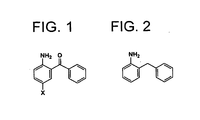
Fig. 1 shows 2-amino-5-halogenobenzophenone (where X denotes a halogen atom); and -
Fig. 2 shows 2-benzylaniline. - The reaction of the present invention is carried out by adding a reducing agent after mixing a starting material and a solvent, and if required, additionally mixing a base or an amphoteric compound. An organic solvent is used for extraction, then the extract is washed with water and concentrated, whereby crude 2-benzylaniline is obtained. It is purified, if required, by distillation under a reduced pressure (or purified by recrystallization or by other appropriate methods), whereby pure 2-benzylaniline can be produced.
- When an organic solvent is used, an aprotic solvent such as dimethylformamide and N-methylpyrrolidone, an ether type solvent such as tetrahydrofuran and diglyme, an alcohol type solvent such as ethanol and 2-propanol, and a hydrocarbon solvent such toluene and xylene are utilized. A solution consisting the mixture thereof can also be used. Preferably used are, dimethylformamide, N-methylpyrrolidone and tetrahydrofuran because of their excellent solubility for 2-amino-5-halogenobenzophenone. Among them, dimethylformamide is more preferably used. The amount of a solvent to be used is 1 through 50-fold volume, preferably 2 through 10-fold volume, more preferably 5-fold volume with respect to the weight of 2-amino-5-halogenobenzophenone. Water may be added to improve the solubility of a salt with hydrochloride generated by the reaction. Its amount of use is 0.1 through 20-fold volume, preferably 0.5 through 5-fold volume, and more preferably 2-fold volume.
- From the viewpoint of industrial production, a hydrogenation reaction is preferably used as a reductive condition because it does not produce a waste product. The catalyst used for the hydrogenation reaction is preferably a palladium catalyst, more preferably a palladium/carbon catalyst. The amount of catalyst to be used is 0.1 through 50 percent by weight, preferably 0.5 through 10 percent by weight, and more preferably 1 through 7.5 percent by weight, with respect to the weight of 2-amino-5-halogenobenzophenone. If it is less than 0.1 percent, the reaction will be too slow. If it is over 50 percent, the cost will be too high.
- When a catalyst is used for hydrogenation, pressurized hydrogen conditions are preferred in order to reduce reaction time, although reaction will take place under an atmospheric pressure. The hydrogen pressure is 0.1 through 15 MPa, preferably 0.5 through 10 MPa and more preferably 1 through 5 MPa.
- When hydrogenation reaction is performed, 2-benzylaniline acts as a neutralizing agent of hydrochloric acid generated during the reaction, therefore dehalogenation reaction will take place without adding a base. Since 2-amino-5-halogenobenzylaniline tends to remain at the end of the reaction, a base may be added. The preferred base includes an inorganic base such as alkaline metallic hydroxide and alkaline metallic carbonate, and an organic base such as alkaline metallic acetate, triethylamine, N-methyl morpholine and pyridine. More preferred base includes potassium carbonate and triethylamine. The amount of the base to be used is 0.1 through 1.0 mole equivalent with respect to 2-amino-5-halogenobenzophenone, preferably 0.3 through 0.9, and more preferably 0.6 through 0.8.
- When more than 1.0 mole equivalent is used, the basicity of the reaction solution will be increased and the dehalogenation reaction will take place faster, however, the remaining amount of 2-aminobenzhydrol will be increased. When 2-amino-5-halogenobenzhydrol and 2-amino-5-halogenobenzylaniline as intermediates are required to eliminate completely, 1.0 mole equivalent or more of base is used. After making sure that there is almost no absorption of hydrogen, an acid component such as an acetic acid is added so that the reaction solution will be acidic, and hydrogenation is continued. Instead of base, an amphoteric compound may be used. Use of amino acid and alkylaminosulfonic acid is preferred. More preferred are alanine and taurine. The amount of the amphoteric compound to be used should be 1.0 through 10.0 mole equivalent with respect to 2-amino-5-halogenobenzophenone, and preferably 1.0 through 3.0 mole equvalent.
- In the case of hydrogenation reaction, the reaction temperature is 0 through 100 °C, preferably 10 through 90 °C and more preferably 20 through 60 °C. The reaction time varies according to the amount of the solvent, catalyst and basic substance, hydrogen pressure and temperature. Normally, reaction time is 1 through 30 hours and generally, 3 through 6 hours. Further, in addition to the aforementioned 2-amino-5-halogenobenzylaniline, 2-amino-5-halogenobenzhydrol and 2-aminobenzhydrol as reaction intermediates tend to remain in the hydrogenation reaction under basic conditions. Accordingly, if an excessive hydrogenation reaction is carried out until they are completely reduced, aromatic nucleus will be hydrogenated, resulting in decrease of yield. Thus, the reaction is preferably terminated so that the remaining amount of the aforementioned 2-amino-5-halogenobenzylaniline, 2-amino-5-halogenobenzhydrol or 2-aminobenzhydrol will be about 0.1 through 1.5%.
- The progress of reaction can be measured by chromatography with high efficiency. The liquid chromatography measuring conditions are as given below:
- Column: Symmetry C18, 4.6 x 150 mm
- Eluant: Acetonitrile/0.3% phosphate aqueous solution: 6/4
- Flow rate: 1.0 ml/min.
- Detector: UV 254 nm
- Thermostatic bath temperature: 40 °C
- The present invention will be described with reference to examples, however, the present invention is not restricted thereto.
- 37.5 g of 2-amino-5-chlorobenzophenone and 188 ml of dimethylformamide were added into a 500 ml autoclave (by Hastelloy Inc.) equipped with an agitator and a thermometer, and 5.63 g of 10% palladium carbon (M type) (wet type, water: 55 ±5 wt%) by Kawaken Fine Chemical Inc. was then added. Air in the autoclave was replaced by nitrogen and then by hydrogen. After that, the reaction was performed at a hydrogen pressure of 3.0 MPa, a reaction temperature of 30 through 35 °C and an agitation speed of 1000 through 1100 rpm. About one hour later, the hydrogen absorption speed was reduced, and heating was applied until about 60 °C was reached. Further about one hour later, when there was almost no hydrogen absorption, cooling was carried out to reduce the temperature to the room temperature. The contents were then transferred into a 500 ml flask. The catalyst was removed by filtering with a pressure filter, and the catalyst was washed with 19 ml of dimethylformamide. Then, 200 ml of toluene, 38.8 g of 25% sodium hydroxide aqueous solution and 50 ml of water were added to the filtrate and were agitated. After that, it was transferred into a separate solution funnel, and the water layer was removed. The organic layer was washed three times with 50 ml of water. The extracted solution was concentrated under a reduced pressure and 30.1 gram of brown oil was obtained. The brown oil was subjected to distillation under a reduced pressure(0.6 KPa and 170°C) to get 26.7 g of 2-benzylaniline.
Yield rate: 90.1%
HPLC purity: 98.7%
MS m/z = 183 (molecule ion peak)
1H-NMR (CDC13) σ 3.4 - 3.6 (broad, 2H, -NH2), 3.9 (s, 2H, -CH2-), 6.7 - 7.3 (m, 9H, aromatics) - 37.5 g of 2-amino-5-chlorobenzophenone, 20.3 g of taurine and 188 ml of dimethylformamide were added into a 500 ml autoclave (by Hastelloy Inc.) equipped with an agitator and a thermometer, and 5.63 g of 10% palladium carbon (M type) (wet type, water: 55 ±5 wt%) by Kawaken Fine Chemical Inc. was then added. Air in the autoclave was replaced by nitrogen and then by hydrogen. After that, the reaction was performed at a hydrogen pressure of 3.0 MPa, a reaction temperature of 30 through 35 °C and an agitation speed of 1000 through 1100 rpm. About two hours later, the hydrogen absorption speed was reduced, and heating was applied until about 50 °C was reached. About another hour later, when there was almost no hydrogen absorption, cooling was carried out to reduce the temperature to the room temperature. The contents were then transferred into a 500 ml flask. The catalyst was removed by filtering with a pressure filter, and the catalyst was washed with 19 ml of dimethylformamide. Then, 200 ml of toluene, 38.8 g of 25% sodium hydroxide aqueous solution and 75 ml of water were added to the filtrate and were agitated. After that, it was transferred into a separate solution funnel, and the water layer was removed. The organic layer was washed three times with 50 ml of water. The extracted solution was concentrated under a reduced pressure and 30.7 g of brown oil was obtained. The brown oil was subjected to distillation under a reduced presure (0.6 KPa and 170°C) to get 27.1 g of 2-benzylaniline.
Yield rate: 91.2%
HPLC purity: 98.7% - The spectra according to the mass spectrometry and nuclear magnetic resonance spectroscopy were the same as that of the 2-benzylaniline obtained in EXAMPLE 1.
- 37.5 g of 2-amino-5-chlorobenzophenone, 15.8 ml of triethylamine and 188 ml of dimethylformamide were added into a 500 ml autoclave (by Hastelloy Inc.) equipped with an agitator and a thermometer, and 1.88 g of 10% palladium carbon (M type) (wet type, water: 55 ±5 wt%) by Kawaken Fine Chemical Inc. was then added. Air in the autoclave was replaced by nitrogen and then by hydrogen. After that, the reaction was performed at a hydrogen pressure of 3.0 MPa, a reaction temperature of 30 through 35 °C and an agitation speed of 1000 through 1100 rpm. About three hours later, the hydrogen absorption speed was reduced, and heating was applied until about 45 °C was reached. About five hours later, when there was almost no hydrogen absorption, cooling was carried out to reduce the temperature to the room temperature. The contents were then transferred into a 500 ml flask. The catalyst was removed by filtering with a pressure filter, and the catalyst was washed with 19 ml of dimethylformamide. Then, 200 ml of toluene, 19.4 g of 25% sodium hydroxide aqueous solution and 50 ml of water were added to the filtrate and were agitated. After that, it was transferred into a separate solution funnel, and the water layer was removed. The organic layer was washed three times with 50 ml of water. The extracted solution was concentrated under a reduced pressure and 29.7 g of brown oil was obtained. The brown oil was subjected to distillation under a reduced pressure (0.6 KPa and 170°C) to get 28.0 g of 2-benzylaniline.
Yield rate: 94.6%
HPLC purity: 98.8% - The spectra according to the mass spectrometry and nuclear magnetic resonance spectroscopy were the same as that of the 2-benzylaniline obtained in EXAMPLE 1.
- 25.0 g of 2-amino-5-chlorobenzophenone, 8.2 g of potassium carbonate, 150 ml of dimethylformamide and 50 ml of water were added into a 500 ml autoclave (by Hastelloy Inc.) equipped with an agitator and a thermometer, and 3.75 g of 10% palladium carbon (M type) (wet type, water: 55 ±5 wt%) by Kawaken Fine Chemical Inc. was then added. Air in the autoclave was replaced by nitrogen and then by hydrogen. After that, the reaction was performed at a hydrogen pressure of 3.0 MPa, a reaction temperature of 30 through 35 °C and an agitation speed of 1000 through 1100 rpm. About twelve hours later, when there was almost no hydrogen absorption, cooling was carried out to reduce the temperature to the room temperature. The contents were then transferred into a 500 ml flask. The catalyst was removed by filtering with a pressure filter, and the catalyst was washed with 12 ml of dimethylformamide. Then, 130 ml of toluene, was added to the filtrate and was agitated. After that, it was transferred into a separate solution funnel, and the water layer was removed. The organic layer was washed three times with 30 ml of water. The extracted solution was concentrated under a reduced pressure and 21.0 g of brown oil was obtained. The brown oil was subjected to distillation under a reduced pressure (0.6 KPa and 170°C) to get 16.8 g of 2-benzylaniline.
Yield rate: 85.1%
HPLC purity: 98.4% - The spectra according to the mass spectrometry and nuclear magnetic resonance spectroscopy were the same as that of the 2-benzylaniline obtained in EXAMPLE 1.
- 37.5 g of 2-amino-5-chlorobenzophenone, 12.3 g of potassium carbonate, 113 ml of dimethylformamide and 75 ml of water were added into a 500 ml autoclave (by Hastelloy Inc.) equipped with an agitator and a thermometer, and 5.63 g of 10% palladium carbon (M type) (wet type, water: 55 ±5 wt%) by Kawaken Fine Chemical Inc. was then added. Air in the autoclave was replaced by nitrogen and then by hydrogen. After that, the reaction was performed at a hydrogen pressure of 3.0 MPa, a reaction temperature of 30 through 35°C and an agitation speed of 1000 through 1100 rpm. About seven hours later, it was confirmed that the hydrogen absorption speed was reduced, and 14 ml of acetic acid was added to continue reaction for five hours. Since there was almost no hydrogen absorption, cooling was carried out to reduce the temperature to the room temperature. The contents were then transferred into a 500 ml flask. The catalyst was removed by filtering with a pressure filter, and the catalyst was washed with 19 ml of dimethylformamide. Then, 200 ml of toluene, 38.8 g of 25% sodium hydroxide aqueous solution and 50 ml of water were added to the filtrate and were agitated. After that, it was transferred into a separate solution funnel, and the water layer was removed. The organic layer was washed three times with 50 ml of water. The extracted solution was concentrated under a reduced pressure and 28.7 g of brown oil was obtained. The brown oil was subjected to distillation under a reduced pressure (0.6 KPa and 170°C) to get 24.1 g of 2-benzylaniline.
Yield rate: 81.4%
HPLC purity: 98.5% - The spectra according to the mass spectrometry and nuclear magnetic resonance spectroscopy were the same as that of the 2-benzylaniline obtained in EXAMPLE 1.
- 37.5 g of 2-amino-5-chlorobenzophenone, 15.8 ml of triethylamine and 188 ml of N-methylpyrrolidone were added into a 500 ml autoclave (by Hastelloy Inc.) equipped with an agitator and a thermometer, and 1.88 g of 10% palladium carbon (M type) (wet type, water: 55 ±5 wt%) by Kawaken Fine Chemical Inc. was then added. Air in the autoclave was replaced by nitrogen and then by hydrogen. After that, the reaction was performed at a hydrogen pressure of 3.0 MPa, a reaction temperature of 30 through 35°C and an agitation speed of 1000 through 1100 rpm. About three hours later, the hydrogen absorption speed was reduced, and heating was applied until about 45 °C was reached. About two hours later, when there was almost no hydrogen absorption, cooling was carried out to reduce the temperature to the room temperature. The contents were then transferred into a 500 ml flask. The catalyst was removed by filtering with a pressure filter, and the catalyst was washed with 19 ml of N-methylpyrrolidone. Then, 200 ml of toluene, 19.4 g of 25% sodium hydroxide aqueous solution and 50 ml of water were added to the filtrate and were agitated. After that, it was transferred into a separate solution funnel, and the water layer was removed. The organic layer was washed three times with 50 ml of water. The extracted solution was concentrated under a reduced pressure and 32.1 g of brown oil was obtained. The brown oil was subjected to distillation under a reduced pressure (0.6 KPa and 170 °C) to get 27.5 g of 2-benzylaniline.
Yield rate: 92.9%
HPLC purity: 98.5% - The spectra according to the mass spectrometry and nuclear magnetic resonance spectroscopy were the same as that of the 2-benzylaniline obtained in EXAMPLE 1.
- 37.5 g of 2-amino-5-chlorobenzophenone, 15.8 ml of triethylamine and 188 ml of tetrahydrofuran were added into a 500 ml autoclave (by Hastelloy Inc.) equipped with an agitator and a thermometer, and 1.88 g of 10% palladium carbon (M type) (wet type, water: 55 ±5 wt%) by Kawaken Fine Chemical Inc. was then added. Air in the autoclave was replaced by nitrogen and then by hydrogen. After that, the reaction was performed at a hydrogen pressure of 3.0 MPa, a reaction temperature of 30 through 35°C and an agitation speed of 1000 through 1100 rpm. About two hours later, the hydrogen absorption speed was reduced, and heating was aaplied until about 45°C was reached. About one hour later, when there was almost no hydrogen absorption, cooling was carried out to reduce the temperature to the room temperature. The contents were then transferred into a 500 ml flask. The catalyst was removed by filtering with a pressure filter, and the catalyst was washed with 19 ml of tetrahydrofuran. Then, 200 ml of toluene, 19.4 g of 25% sodium hydroxide aqueous solution and 50 ml of water were added to the filtrate and were agitated. After that, it was transferred into a separate solution funnel, and the water layer was removed. The organic layer was washed three times with 50 ml of water. The extracted solution was concentrated under a reduced pressure and 29.5 g of brown oil was obtained. The brown oil was subjected to distillation under a reduced pressure (0.6 KPa and 170°C) to get 27.8 g of 2-benzylaniline.
Yield rate: 93.9%
HPLC purity: 98.8% - The spectra according to the mass spectrometry and nuclear magnetic resonance spectroscopy were the same as that of the 2-benzylaniline obtained in EXAMPLE 1.
- 37.5 g of 2-amino-5-chlorobenzophenone, 15.8 ml of triethylamine and 188 ml of dimethylformamide were added into a 500 ml autoclave (by Hastelloy Inc.) equipped with an agitator and a thermometer, and 0.38 g of palladium black by Kawaken Fine Chemical Inc. was then added. Air in the autoclave was replaced by nitrogen and then by hydrogen. After that, the reaction was performed at a hydrogen pressure of 3.0 MPa, a reaction temperature of 30 through 35°C and an agitation speed of 1000 through 1100 rpm. Since there was almost no hydrogen absorption about three hours later, cooling was carried out to reduce the temperature to the room temperature. The contents were then transferred into a 500 ml flask. The catalyst was removed by filtering with a pressure filter, and the catalyst was washed with 19 ml of dimethylformamide. Then, 200 ml of toluene, 19.4 g of 25% sodium hydroxide aqueous solution and 50 ml of water were added to the filtrate and were agitated. After that, it was transferred into a separate solution funnel, and the water layer was removed. The organic layer was washed three times with 50 ml of water. The extracted solution was concentrated under a reduced pressure and 30.3 g of brown oil was obtained. The brown oil was subjected to distillation under a reduced pressure (0.6 KPa and 170°C) to get 27.0 g of 2-benzylaniline.
Yield rate: 91.2%
HPLC purity: 98.9% - The spectra according to the mass spectrometry and nuclear magnetic resonance spectroscopy were the same as that of the 2-benzylaniline obtained in EXAMPLE 1.
- In the Examples 1 through 8, the amount of 2-amino-5-halogenobenzylaniline, 2-amino-5-halogenobenzhydrol and 2-aminobenzhydrol in the reaction solution at the end of reaction was determined under the aforementioned chromatographic conditions. They are all within the range of 0.2 through 1.0%.
- The manufacturing method of the present invention allows 2-benzylaniline to be manufactured in one-pot reaction without using hazardous substances and without isolating the reaction intermediates, achieving in substantial reduction of the manufacturing cost.
Claims (7)
- A method of manufacturing 2-benzylaniline, comprising the step of:allowing 2-amino-5-halogenobenzophenone to react under a reductive condition using a hydrogenation catalyst and hydrogen.
- The method of manufacturing 2-benzylaniline of claim 1,
wherein an organic solvent or a water-containing organic solvent is further used as a solvent for the reaction. - The method of manufacturing 2-benzylaniline of claims 1 or 2,
wherein the reaction is carried out under the reductive condition using a palladium catalyst. - The method of manufacturing 2-benzylaniline of claim 3, wherein a base is further added.
- The method of manufacturing 2-benzylaniline of claim 3, wherein an amphoteric compound is further added.
- The method of manufacturing 2-benzylaniline of claim 1,
wherein a palladium-carbon catalyst in dimethylformamide is used in the reaction. - The method of manufacturing 2-benzylaniline of claim 6, wherein a base is further added.
Applications Claiming Priority (3)
| Application Number | Priority Date | Filing Date | Title |
|---|---|---|---|
| PCT/JP2002/005298 WO2004002936A1 (en) | 2002-05-30 | 2002-05-30 | Process for producing 2-benzylaniline |
| WOPCT/JP02/02529 | 2002-05-30 | ||
| PCT/JP2003/006707 WO2003101930A1 (en) | 2002-05-30 | 2003-05-28 | Method for producing 2-benzylaniline |
Publications (3)
| Publication Number | Publication Date |
|---|---|
| EP1508564A1 EP1508564A1 (en) | 2005-02-23 |
| EP1508564A4 EP1508564A4 (en) | 2006-08-09 |
| EP1508564B1 true EP1508564B1 (en) | 2011-07-13 |
Family
ID=29606632
Family Applications (1)
| Application Number | Title | Priority Date | Filing Date |
|---|---|---|---|
| EP03730676A Expired - Lifetime EP1508564B1 (en) | 2002-05-30 | 2003-05-28 | Method for producing 2-benzylaniline |
Country Status (9)
| Country | Link |
|---|---|
| US (1) | US6992223B2 (en) |
| EP (1) | EP1508564B1 (en) |
| KR (1) | KR100723562B1 (en) |
| CN (1) | CN1301960C (en) |
| AT (1) | ATE516260T1 (en) |
| ES (1) | ES2367358T3 (en) |
| MX (1) | MXPA04011850A (en) |
| PT (1) | PT1508564E (en) |
| WO (2) | WO2004002936A1 (en) |
Families Citing this family (3)
| Publication number | Priority date | Publication date | Assignee | Title |
|---|---|---|---|---|
| CN102432515B (en) * | 2010-11-17 | 2013-08-14 | 江苏恒祥化工有限责任公司 | Preparation technology for N-ethyl pyrrolidine |
| CN102040527A (en) * | 2010-11-26 | 2011-05-04 | 西北师范大学 | Preparation method of N,N-benzyl diphenylamine |
| CN112010730A (en) * | 2020-07-30 | 2020-12-01 | 河北旭阳能源有限公司 | Green preparation method of diphenylmethane |
Family Cites Families (6)
| Publication number | Priority date | Publication date | Assignee | Title |
|---|---|---|---|---|
| US1887772A (en) * | 1929-04-01 | 1932-11-15 | Dow Chemical Co | Preparation of benzyl-alkyl aniline |
| JPS5129449A (en) * | 1974-09-05 | 1976-03-12 | Nissan Chemical Ind Ltd | Arukiru mataha ararukiruanirinrui no seizohoho |
| DE19535395C1 (en) * | 1995-09-23 | 1997-03-06 | Degussa | Process for the hydrogenolysis of C-O and C = O bonds in organic substances |
| JP2001220371A (en) * | 1999-11-30 | 2001-08-14 | Takeda Chem Ind Ltd | Method for producing optically active vezhydrols |
| JP4510972B2 (en) | 2000-01-24 | 2010-07-28 | 弘尚 佐治木 | Dechlorination method for aromatic chlorine compounds |
| JP4041281B2 (en) * | 2000-12-26 | 2008-01-30 | 大日本印刷株式会社 | Method for producing 2-benzylaniline |
-
2002
- 2002-05-30 WO PCT/JP2002/005298 patent/WO2004002936A1/en not_active Ceased
-
2003
- 2003-05-28 AT AT03730676T patent/ATE516260T1/en not_active IP Right Cessation
- 2003-05-28 US US10/515,974 patent/US6992223B2/en not_active Expired - Lifetime
- 2003-05-28 MX MXPA04011850A patent/MXPA04011850A/en active IP Right Grant
- 2003-05-28 PT PT03730676T patent/PT1508564E/en unknown
- 2003-05-28 ES ES03730676T patent/ES2367358T3/en not_active Expired - Lifetime
- 2003-05-28 EP EP03730676A patent/EP1508564B1/en not_active Expired - Lifetime
- 2003-05-28 CN CNB03812047XA patent/CN1301960C/en not_active Expired - Fee Related
- 2003-05-28 KR KR1020047019197A patent/KR100723562B1/en not_active Expired - Fee Related
- 2003-05-28 WO PCT/JP2003/006707 patent/WO2003101930A1/en not_active Ceased
Also Published As
| Publication number | Publication date |
|---|---|
| US6992223B2 (en) | 2006-01-31 |
| PT1508564E (en) | 2011-09-06 |
| ATE516260T1 (en) | 2011-07-15 |
| WO2003101930A1 (en) | 2003-12-11 |
| KR100723562B1 (en) | 2007-06-04 |
| ES2367358T3 (en) | 2011-11-02 |
| CN1301960C (en) | 2007-02-28 |
| EP1508564A4 (en) | 2006-08-09 |
| CN1656055A (en) | 2005-08-17 |
| MXPA04011850A (en) | 2005-03-31 |
| KR20050013111A (en) | 2005-02-02 |
| US20050165255A1 (en) | 2005-07-28 |
| EP1508564A1 (en) | 2005-02-23 |
| WO2004002936A1 (en) | 2004-01-08 |
Similar Documents
| Publication | Publication Date | Title |
|---|---|---|
| EP1206441B1 (en) | The method for preparing 4-nitrodiphenylamine and 4-nitrosodiphenylamine from carbanilide | |
| JP5256024B2 (en) | Method for producing 4-aminodiphenylamine | |
| JP2003292476A (en) | Method for producing diaminoresorcinol compound | |
| CN109678741B (en) | Preparation method of 4-amino-3-fluorobenzoic acid | |
| KR20120070259A (en) | Method for preparation of 4,4'-dintrodiphenylamine and 4,4'-bis(alkylamino)diphenylamine with the base catalyst complex | |
| US6992223B2 (en) | Method for producing 2-benzylaniline | |
| Raju et al. | A new reagent for selective reduction of nitro group | |
| JPH1067718A (en) | Production of 4-hydroxyaniline compound | |
| CN118103355A (en) | Hydrogenation synthesis method for preparing pyrazine carboxylic acid derivatives as fluorescent tracers | |
| WO2011046308A2 (en) | Production method for 4,4'-bis(alkylamino)diphenylamine | |
| CN117486730B (en) | Dicyclohexyl group Process for the preparation of methylamines | |
| JP4041281B2 (en) | Method for producing 2-benzylaniline | |
| US5105012A (en) | Catalytic reduction of dinitrobenzenes using a noble metal catalyst and iron or iron salts | |
| JP4553192B2 (en) | Method for producing 1,5-diaminonaphthalene | |
| JP2898553B2 (en) | Method for producing 3-aminophenol | |
| US7683189B2 (en) | Process for producing aminobenzopyran compound | |
| EP0663394B1 (en) | Process for preparing 5-aminodihydropyrrole, intermediate thereof and process for preparing said intermediate | |
| EP0331422A2 (en) | Method of preparing 2-acylresorcinols | |
| JP2004285004A (en) | Production method for 4,6-diaminoresorcinol | |
| JPH0967319A (en) | Production of alkyl anilines | |
| JPH0873417A (en) | Production of 4,6-diaminoresorcinol | |
| WO2000051966A1 (en) | The method for preparing 4-nitrodiphenylamine from carbanilide | |
| JPH1160545A (en) | Production of 2,2-bis(3-amino-4-hydroxyphenyl)propane | |
| JPS62223157A (en) | Production of nitrones | |
| HK1078874B (en) | Process for producing aminobenzopyran compound |
Legal Events
| Date | Code | Title | Description |
|---|---|---|---|
| PUAI | Public reference made under article 153(3) epc to a published international application that has entered the european phase |
Free format text: ORIGINAL CODE: 0009012 |
|
| 17P | Request for examination filed |
Effective date: 20041126 |
|
| AK | Designated contracting states |
Kind code of ref document: A1 Designated state(s): AT BE BG CH CY CZ DE DK EE ES FI FR GB GR HU IE IT LI LU MC NL PT RO SE SI SK TR |
|
| RIC1 | Information provided on ipc code assigned before grant |
Ipc: C07C 211/45 20060101ALI20060628BHEP Ipc: C07C 209/74 20060101AFI20031216BHEP Ipc: C07B 61/00 20060101ALI20060628BHEP |
|
| A4 | Supplementary search report drawn up and despatched |
Effective date: 20060711 |
|
| RAP1 | Party data changed (applicant data changed or rights of an application transferred) |
Owner name: DAI NIPPON PRINTING CO., LTD. |
|
| 17Q | First examination report despatched |
Effective date: 20080220 |
|
| GRAJ | Information related to disapproval of communication of intention to grant by the applicant or resumption of examination proceedings by the epo deleted |
Free format text: ORIGINAL CODE: EPIDOSDIGR1 |
|
| GRAP | Despatch of communication of intention to grant a patent |
Free format text: ORIGINAL CODE: EPIDOSNIGR1 |
|
| GRAP | Despatch of communication of intention to grant a patent |
Free format text: ORIGINAL CODE: EPIDOSNIGR1 |
|
| RIN1 | Information on inventor provided before grant (corrected) |
Inventor name: IKEDA, SHIN,KONICA MINOLTA CHEMICAL CO., LTD Inventor name: TAKAHASHI, YASUHIRO,KONICA MINOLTA CHEM. CO.,LTD |
|
| GRAS | Grant fee paid |
Free format text: ORIGINAL CODE: EPIDOSNIGR3 |
|
| GRAA | (expected) grant |
Free format text: ORIGINAL CODE: 0009210 |
|
| RIN1 | Information on inventor provided before grant (corrected) |
Inventor name: TAKAHASHI, YASUHIRO Inventor name: IKEDA, SHIN |
|
| AK | Designated contracting states |
Kind code of ref document: B1 Designated state(s): AT BE BG CH CY CZ DE DK EE ES FI FR GB GR HU IE IT LI LU MC NL PT RO SE SI SK TR |
|
| REG | Reference to a national code |
Ref country code: GB Ref legal event code: FG4D |
|
| REG | Reference to a national code |
Ref country code: CH Ref legal event code: EP |
|
| REG | Reference to a national code |
Ref country code: CH Ref legal event code: NV Representative=s name: BRAUNPAT BRAUN EDER AG |
|
| REG | Reference to a national code |
Ref country code: IE Ref legal event code: FG4D |
|
| REG | Reference to a national code |
Ref country code: DE Ref legal event code: R096 Ref document number: 60337674 Country of ref document: DE Effective date: 20110901 |
|
| REG | Reference to a national code |
Ref country code: PT Ref legal event code: SC4A Free format text: AVAILABILITY OF NATIONAL TRANSLATION Effective date: 20110830 |
|
| REG | Reference to a national code |
Ref country code: ES Ref legal event code: FG2A Ref document number: 2367358 Country of ref document: ES Kind code of ref document: T3 Effective date: 20111102 Ref country code: NL Ref legal event code: VDEP Effective date: 20110713 |
|
| REG | Reference to a national code |
Ref country code: AT Ref legal event code: MK05 Ref document number: 516260 Country of ref document: AT Kind code of ref document: T Effective date: 20110713 |
|
| PG25 | Lapsed in a contracting state [announced via postgrant information from national office to epo] |
Ref country code: BE Free format text: LAPSE BECAUSE OF FAILURE TO SUBMIT A TRANSLATION OF THE DESCRIPTION OR TO PAY THE FEE WITHIN THE PRESCRIBED TIME-LIMIT Effective date: 20110713 Ref country code: NL Free format text: LAPSE BECAUSE OF FAILURE TO SUBMIT A TRANSLATION OF THE DESCRIPTION OR TO PAY THE FEE WITHIN THE PRESCRIBED TIME-LIMIT Effective date: 20110713 Ref country code: SE Free format text: LAPSE BECAUSE OF FAILURE TO SUBMIT A TRANSLATION OF THE DESCRIPTION OR TO PAY THE FEE WITHIN THE PRESCRIBED TIME-LIMIT Effective date: 20110713 Ref country code: FI Free format text: LAPSE BECAUSE OF FAILURE TO SUBMIT A TRANSLATION OF THE DESCRIPTION OR TO PAY THE FEE WITHIN THE PRESCRIBED TIME-LIMIT Effective date: 20110713 |
|
| PG25 | Lapsed in a contracting state [announced via postgrant information from national office to epo] |
Ref country code: SI Free format text: LAPSE BECAUSE OF FAILURE TO SUBMIT A TRANSLATION OF THE DESCRIPTION OR TO PAY THE FEE WITHIN THE PRESCRIBED TIME-LIMIT Effective date: 20110713 Ref country code: GR Free format text: LAPSE BECAUSE OF FAILURE TO SUBMIT A TRANSLATION OF THE DESCRIPTION OR TO PAY THE FEE WITHIN THE PRESCRIBED TIME-LIMIT Effective date: 20111014 Ref country code: CY Free format text: LAPSE BECAUSE OF FAILURE TO SUBMIT A TRANSLATION OF THE DESCRIPTION OR TO PAY THE FEE WITHIN THE PRESCRIBED TIME-LIMIT Effective date: 20110713 Ref country code: AT Free format text: LAPSE BECAUSE OF FAILURE TO SUBMIT A TRANSLATION OF THE DESCRIPTION OR TO PAY THE FEE WITHIN THE PRESCRIBED TIME-LIMIT Effective date: 20110713 |
|
| PG25 | Lapsed in a contracting state [announced via postgrant information from national office to epo] |
Ref country code: CZ Free format text: LAPSE BECAUSE OF FAILURE TO SUBMIT A TRANSLATION OF THE DESCRIPTION OR TO PAY THE FEE WITHIN THE PRESCRIBED TIME-LIMIT Effective date: 20110713 Ref country code: SK Free format text: LAPSE BECAUSE OF FAILURE TO SUBMIT A TRANSLATION OF THE DESCRIPTION OR TO PAY THE FEE WITHIN THE PRESCRIBED TIME-LIMIT Effective date: 20110713 |
|
| PLBE | No opposition filed within time limit |
Free format text: ORIGINAL CODE: 0009261 |
|
| STAA | Information on the status of an ep patent application or granted ep patent |
Free format text: STATUS: NO OPPOSITION FILED WITHIN TIME LIMIT |
|
| PG25 | Lapsed in a contracting state [announced via postgrant information from national office to epo] |
Ref country code: RO Free format text: LAPSE BECAUSE OF FAILURE TO SUBMIT A TRANSLATION OF THE DESCRIPTION OR TO PAY THE FEE WITHIN THE PRESCRIBED TIME-LIMIT Effective date: 20110713 Ref country code: EE Free format text: LAPSE BECAUSE OF FAILURE TO SUBMIT A TRANSLATION OF THE DESCRIPTION OR TO PAY THE FEE WITHIN THE PRESCRIBED TIME-LIMIT Effective date: 20110713 |
|
| 26N | No opposition filed |
Effective date: 20120416 |
|
| PG25 | Lapsed in a contracting state [announced via postgrant information from national office to epo] |
Ref country code: DK Free format text: LAPSE BECAUSE OF FAILURE TO SUBMIT A TRANSLATION OF THE DESCRIPTION OR TO PAY THE FEE WITHIN THE PRESCRIBED TIME-LIMIT Effective date: 20110713 |
|
| REG | Reference to a national code |
Ref country code: DE Ref legal event code: R097 Ref document number: 60337674 Country of ref document: DE Effective date: 20120416 |
|
| PG25 | Lapsed in a contracting state [announced via postgrant information from national office to epo] |
Ref country code: MC Free format text: LAPSE BECAUSE OF NON-PAYMENT OF DUE FEES Effective date: 20120531 |
|
| REG | Reference to a national code |
Ref country code: CH Ref legal event code: PL |
|
| GBPC | Gb: european patent ceased through non-payment of renewal fee |
Effective date: 20120528 |
|
| PG25 | Lapsed in a contracting state [announced via postgrant information from national office to epo] |
Ref country code: CH Free format text: LAPSE BECAUSE OF NON-PAYMENT OF DUE FEES Effective date: 20120531 Ref country code: LI Free format text: LAPSE BECAUSE OF NON-PAYMENT OF DUE FEES Effective date: 20120531 |
|
| REG | Reference to a national code |
Ref country code: IE Ref legal event code: MM4A |
|
| REG | Reference to a national code |
Ref country code: FR Ref legal event code: ST Effective date: 20130131 |
|
| REG | Reference to a national code |
Ref country code: PT Ref legal event code: MM4A Free format text: LAPSE DUE TO NON-PAYMENT OF FEES Effective date: 20130228 |
|
| PG25 | Lapsed in a contracting state [announced via postgrant information from national office to epo] |
Ref country code: FR Free format text: LAPSE BECAUSE OF NON-PAYMENT OF DUE FEES Effective date: 20120531 Ref country code: GB Free format text: LAPSE BECAUSE OF NON-PAYMENT OF DUE FEES Effective date: 20120528 Ref country code: IE Free format text: LAPSE BECAUSE OF NON-PAYMENT OF DUE FEES Effective date: 20120528 |
|
| PG25 | Lapsed in a contracting state [announced via postgrant information from national office to epo] |
Ref country code: PT Free format text: LAPSE BECAUSE OF NON-PAYMENT OF DUE FEES Effective date: 20130228 |
|
| PG25 | Lapsed in a contracting state [announced via postgrant information from national office to epo] |
Ref country code: BG Free format text: LAPSE BECAUSE OF FAILURE TO SUBMIT A TRANSLATION OF THE DESCRIPTION OR TO PAY THE FEE WITHIN THE PRESCRIBED TIME-LIMIT Effective date: 20111013 |
|
| REG | Reference to a national code |
Ref country code: ES Ref legal event code: FD2A Effective date: 20131023 |
|
| PG25 | Lapsed in a contracting state [announced via postgrant information from national office to epo] |
Ref country code: ES Free format text: LAPSE BECAUSE OF NON-PAYMENT OF DUE FEES Effective date: 20120529 |
|
| PG25 | Lapsed in a contracting state [announced via postgrant information from national office to epo] |
Ref country code: TR Free format text: LAPSE BECAUSE OF FAILURE TO SUBMIT A TRANSLATION OF THE DESCRIPTION OR TO PAY THE FEE WITHIN THE PRESCRIBED TIME-LIMIT Effective date: 20110713 |
|
| PG25 | Lapsed in a contracting state [announced via postgrant information from national office to epo] |
Ref country code: LU Free format text: LAPSE BECAUSE OF NON-PAYMENT OF DUE FEES Effective date: 20120528 |
|
| PG25 | Lapsed in a contracting state [announced via postgrant information from national office to epo] |
Ref country code: HU Free format text: LAPSE BECAUSE OF FAILURE TO SUBMIT A TRANSLATION OF THE DESCRIPTION OR TO PAY THE FEE WITHIN THE PRESCRIBED TIME-LIMIT Effective date: 20030528 |
|
| PGFP | Annual fee paid to national office [announced via postgrant information from national office to epo] |
Ref country code: DE Payment date: 20170523 Year of fee payment: 15 |
|
| PGFP | Annual fee paid to national office [announced via postgrant information from national office to epo] |
Ref country code: IT Payment date: 20170526 Year of fee payment: 15 |
|
| REG | Reference to a national code |
Ref country code: DE Ref legal event code: R119 Ref document number: 60337674 Country of ref document: DE |
|
| PG25 | Lapsed in a contracting state [announced via postgrant information from national office to epo] |
Ref country code: IT Free format text: LAPSE BECAUSE OF NON-PAYMENT OF DUE FEES Effective date: 20180528 Ref country code: DE Free format text: LAPSE BECAUSE OF NON-PAYMENT OF DUE FEES Effective date: 20181201 |