EP1506175B1 - N-substituted tricyclic 3-aminopyrazoles as pdgf receptor inhibitors - Google Patents
N-substituted tricyclic 3-aminopyrazoles as pdgf receptor inhibitors Download PDFInfo
- Publication number
- EP1506175B1 EP1506175B1 EP03728909A EP03728909A EP1506175B1 EP 1506175 B1 EP1506175 B1 EP 1506175B1 EP 03728909 A EP03728909 A EP 03728909A EP 03728909 A EP03728909 A EP 03728909A EP 1506175 B1 EP1506175 B1 EP 1506175B1
- Authority
- EP
- European Patent Office
- Prior art keywords
- alkyl
- phenyl
- indeno
- pyrazol
- dihydro
- Prior art date
- Legal status (The legal status is an assumption and is not a legal conclusion. Google has not performed a legal analysis and makes no representation as to the accuracy of the status listed.)
- Expired - Lifetime
Links
- 108091008606 PDGF receptors Proteins 0.000 title claims abstract description 38
- 102000011653 Platelet-Derived Growth Factor Receptors Human genes 0.000 title claims abstract description 35
- 239000003112 inhibitor Substances 0.000 title abstract description 11
- JVVRJMXHNUAPHW-UHFFFAOYSA-N 1h-pyrazol-5-amine Chemical class NC=1C=CNN=1 JVVRJMXHNUAPHW-UHFFFAOYSA-N 0.000 title abstract description 6
- 150000001875 compounds Chemical class 0.000 claims abstract description 338
- 238000000034 method Methods 0.000 claims abstract description 73
- 208000037265 diseases, disorders, signs and symptoms Diseases 0.000 claims abstract description 47
- 230000002062 proliferating effect Effects 0.000 claims abstract description 24
- 206010028980 Neoplasm Diseases 0.000 claims abstract description 19
- 238000002360 preparation method Methods 0.000 claims abstract description 19
- 239000008194 pharmaceutical composition Substances 0.000 claims abstract description 10
- 125000000217 alkyl group Chemical group 0.000 claims description 1177
- -1 -OH Chemical group 0.000 claims description 1155
- 125000003545 alkoxy group Chemical group 0.000 claims description 454
- 125000000592 heterocycloalkyl group Chemical group 0.000 claims description 333
- 125000003118 aryl group Chemical group 0.000 claims description 269
- 125000000753 cycloalkyl group Chemical group 0.000 claims description 256
- 125000004001 thioalkyl group Chemical group 0.000 claims description 247
- 229910052736 halogen Inorganic materials 0.000 claims description 244
- 150000002367 halogens Chemical class 0.000 claims description 240
- 125000001072 heteroaryl group Chemical group 0.000 claims description 199
- 125000002496 methyl group Chemical group [H]C([H])([H])* 0.000 claims description 182
- 125000003342 alkenyl group Chemical group 0.000 claims description 173
- 125000004663 dialkyl amino group Chemical group 0.000 claims description 139
- 125000003282 alkyl amino group Chemical group 0.000 claims description 132
- 125000001997 phenyl group Chemical group [H]C1=C([H])C([H])=C(*)C([H])=C1[H] 0.000 claims description 123
- 125000004093 cyano group Chemical group *C#N 0.000 claims description 121
- 125000002924 primary amino group Chemical group [H]N([H])* 0.000 claims description 110
- 125000001495 ethyl group Chemical group [H]C([H])([H])C([H])([H])* 0.000 claims description 109
- 125000002887 hydroxy group Chemical group [H]O* 0.000 claims description 105
- 125000001424 substituent group Chemical group 0.000 claims description 99
- 150000002825 nitriles Chemical class 0.000 claims description 84
- 125000004432 carbon atom Chemical group C* 0.000 claims description 60
- 125000001797 benzyl group Chemical group [H]C1=C([H])C([H])=C(C([H])=C1[H])C([H])([H])* 0.000 claims description 59
- 229910052760 oxygen Inorganic materials 0.000 claims description 59
- 125000005647 linker group Chemical group 0.000 claims description 55
- 125000000449 nitro group Chemical group [O-][N+](*)=O 0.000 claims description 50
- 125000000956 methoxy group Chemical group [H]C([H])([H])O* 0.000 claims description 46
- 208000035475 disorder Diseases 0.000 claims description 42
- 230000003287 optical effect Effects 0.000 claims description 41
- 150000003839 salts Chemical class 0.000 claims description 41
- 229910052799 carbon Inorganic materials 0.000 claims description 40
- 125000001153 fluoro group Chemical group F* 0.000 claims description 40
- OKTJSMMVPCPJKN-UHFFFAOYSA-N Carbon Chemical group [C] OKTJSMMVPCPJKN-UHFFFAOYSA-N 0.000 claims description 39
- 125000002619 bicyclic group Chemical group 0.000 claims description 31
- 239000001301 oxygen Substances 0.000 claims description 31
- 125000003837 (C1-C20) alkyl group Chemical group 0.000 claims description 30
- 125000001309 chloro group Chemical group Cl* 0.000 claims description 30
- RTZKZFJDLAIYFH-UHFFFAOYSA-N ether Substances CCOCC RTZKZFJDLAIYFH-UHFFFAOYSA-N 0.000 claims description 30
- 125000005842 heteroatom Chemical group 0.000 claims description 30
- 230000008569 process Effects 0.000 claims description 30
- 125000002950 monocyclic group Chemical group 0.000 claims description 29
- 229910052757 nitrogen Inorganic materials 0.000 claims description 29
- 229910006074 SO2NH2 Inorganic materials 0.000 claims description 28
- 229910052717 sulfur Inorganic materials 0.000 claims description 28
- 125000004122 cyclic group Chemical group 0.000 claims description 26
- 125000004043 oxo group Chemical group O=* 0.000 claims description 26
- 125000000472 sulfonyl group Chemical group *S(*)(=O)=O 0.000 claims description 26
- QTBSBXVTEAMEQO-UHFFFAOYSA-N acetic acid Substances CC(O)=O QTBSBXVTEAMEQO-UHFFFAOYSA-N 0.000 claims description 21
- 125000004180 3-fluorophenyl group Chemical group [H]C1=C([H])C(*)=C([H])C(F)=C1[H] 0.000 claims description 20
- 125000005843 halogen group Chemical group 0.000 claims description 20
- 125000000719 pyrrolidinyl group Chemical group 0.000 claims description 19
- 125000004435 hydrogen atom Chemical group [H]* 0.000 claims description 18
- OAKJQQAXSVQMHS-UHFFFAOYSA-N Hydrazine Chemical compound NN OAKJQQAXSVQMHS-UHFFFAOYSA-N 0.000 claims description 17
- 125000004076 pyridyl group Chemical group 0.000 claims description 17
- 125000002757 morpholinyl group Chemical group 0.000 claims description 16
- 125000004200 2-methoxyethyl group Chemical group [H]C([H])([H])OC([H])([H])C([H])([H])* 0.000 claims description 15
- 229910017912 NH2OH Inorganic materials 0.000 claims description 15
- 125000002915 carbonyl group Chemical group [*:2]C([*:1])=O 0.000 claims description 15
- 239000001257 hydrogen Substances 0.000 claims description 15
- 229910052739 hydrogen Inorganic materials 0.000 claims description 15
- 239000000010 aprotic solvent Substances 0.000 claims description 14
- 125000003710 aryl alkyl group Chemical group 0.000 claims description 14
- 125000001624 naphthyl group Chemical group 0.000 claims description 14
- 229920006395 saturated elastomer Polymers 0.000 claims description 14
- 230000000694 effects Effects 0.000 claims description 13
- 125000003983 fluorenyl group Chemical group C1(=CC=CC=2C3=CC=CC=C3CC12)* 0.000 claims description 13
- 125000003386 piperidinyl group Chemical group 0.000 claims description 13
- 125000000714 pyrimidinyl group Chemical group 0.000 claims description 13
- 125000004179 3-chlorophenyl group Chemical group [H]C1=C([H])C(*)=C([H])C(Cl)=C1[H] 0.000 claims description 12
- 125000002883 imidazolyl group Chemical group 0.000 claims description 12
- 230000002401 inhibitory effect Effects 0.000 claims description 12
- 125000006275 3-bromophenyl group Chemical group [H]C1=C([H])C(Br)=C([H])C(*)=C1[H] 0.000 claims description 11
- 125000001301 ethoxy group Chemical group [H]C([H])([H])C([H])([H])O* 0.000 claims description 11
- WSFSSNUMVMOOMR-UHFFFAOYSA-N Formaldehyde Chemical compound O=C WSFSSNUMVMOOMR-UHFFFAOYSA-N 0.000 claims description 10
- 125000001246 bromo group Chemical group Br* 0.000 claims description 10
- 201000011510 cancer Diseases 0.000 claims description 10
- 125000001449 isopropyl group Chemical group [H]C([H])([H])C([H])(*)C([H])([H])[H] 0.000 claims description 10
- 125000006179 2-methyl benzyl group Chemical group [H]C1=C([H])C(=C(C([H])=C1[H])C([H])([H])*)C([H])([H])[H] 0.000 claims description 9
- 125000003852 3-chlorobenzyl group Chemical group [H]C1=C([H])C(=C([H])C(Cl)=C1[H])C([H])([H])* 0.000 claims description 9
- 125000004207 3-methoxyphenyl group Chemical group [H]C1=C([H])C(*)=C([H])C(OC([H])([H])[H])=C1[H] 0.000 claims description 9
- 239000003937 drug carrier Substances 0.000 claims description 9
- 125000001544 thienyl group Chemical group 0.000 claims description 9
- 206010009944 Colon cancer Diseases 0.000 claims description 8
- 125000000113 cyclohexyl group Chemical group [H]C1([H])C([H])([H])C([H])([H])C([H])(*)C([H])([H])C1([H])[H] 0.000 claims description 8
- 125000000842 isoxazolyl group Chemical group 0.000 claims description 8
- 208000037803 restenosis Diseases 0.000 claims description 8
- 125000004172 4-methoxyphenyl group Chemical group [H]C1=C([H])C(OC([H])([H])[H])=C([H])C([H])=C1* 0.000 claims description 7
- 125000004863 4-trifluoromethoxyphenyl group Chemical group [H]C1=C([H])C(OC(F)(F)F)=C([H])C([H])=C1* 0.000 claims description 7
- 206010012689 Diabetic retinopathy Diseases 0.000 claims description 7
- 125000002541 furyl group Chemical group 0.000 claims description 7
- 230000001613 neoplastic effect Effects 0.000 claims description 7
- 125000002023 trifluoromethyl group Chemical group FC(F)(F)* 0.000 claims description 7
- 125000004847 2-fluorobenzyl group Chemical group [H]C1=C([H])C(F)=C(C([H])=C1[H])C([H])([H])* 0.000 claims description 6
- 125000003349 3-pyridyl group Chemical group N1=C([H])C([*])=C([H])C([H])=C1[H] 0.000 claims description 6
- 125000000051 benzyloxy group Chemical group [H]C1=C([H])C([H])=C(C([H])=C1[H])C([H])([H])O* 0.000 claims description 6
- 125000004210 cyclohexylmethyl group Chemical group [H]C([H])(*)C1([H])C([H])([H])C([H])([H])C([H])([H])C([H])([H])C1([H])[H] 0.000 claims description 6
- 208000032839 leukemia Diseases 0.000 claims description 6
- 238000002156 mixing Methods 0.000 claims description 6
- 125000004193 piperazinyl group Chemical group 0.000 claims description 6
- 208000005069 pulmonary fibrosis Diseases 0.000 claims description 6
- 206010039073 rheumatoid arthritis Diseases 0.000 claims description 6
- 230000008685 targeting Effects 0.000 claims description 6
- 125000000876 trifluoromethoxy group Chemical group FC(F)(F)O* 0.000 claims description 6
- 125000004178 (C1-C4) alkyl group Chemical group 0.000 claims description 5
- 125000006282 2-chlorobenzyl group Chemical group [H]C1=C([H])C(Cl)=C(C([H])=C1[H])C([H])([H])* 0.000 claims description 5
- 125000006180 3-methyl benzyl group Chemical group [H]C1=C([H])C(=C([H])C(=C1[H])C([H])([H])[H])C([H])([H])* 0.000 claims description 5
- 125000001255 4-fluorophenyl group Chemical group [H]C1=C([H])C(*)=C([H])C([H])=C1F 0.000 claims description 5
- 125000004199 4-trifluoromethylphenyl group Chemical group [H]C1=C([H])C(=C([H])C([H])=C1*)C(F)(F)F 0.000 claims description 5
- 201000001320 Atherosclerosis Diseases 0.000 claims description 5
- 208000032612 Glial tumor Diseases 0.000 claims description 5
- 206010018338 Glioma Diseases 0.000 claims description 5
- 206010025323 Lymphomas Diseases 0.000 claims description 5
- 108091000080 Phosphotransferase Proteins 0.000 claims description 5
- 239000003795 chemical substances by application Substances 0.000 claims description 5
- RAFNCPHFRHZCPS-UHFFFAOYSA-N di(imidazol-1-yl)methanethione Chemical compound C1=CN=CN1C(=S)N1C=CN=C1 RAFNCPHFRHZCPS-UHFFFAOYSA-N 0.000 claims description 5
- 102000020233 phosphotransferase Human genes 0.000 claims description 5
- 125000005871 1,3-benzodioxolyl group Chemical group 0.000 claims description 4
- 206010006187 Breast cancer Diseases 0.000 claims description 4
- 208000026310 Breast neoplasm Diseases 0.000 claims description 4
- 208000001333 Colorectal Neoplasms Diseases 0.000 claims description 4
- 208000000461 Esophageal Neoplasms Diseases 0.000 claims description 4
- 206010058467 Lung neoplasm malignant Diseases 0.000 claims description 4
- 208000034578 Multiple myelomas Diseases 0.000 claims description 4
- 206010030155 Oesophageal carcinoma Diseases 0.000 claims description 4
- 206010033128 Ovarian cancer Diseases 0.000 claims description 4
- 206010061535 Ovarian neoplasm Diseases 0.000 claims description 4
- 206010061902 Pancreatic neoplasm Diseases 0.000 claims description 4
- 206010035226 Plasma cell myeloma Diseases 0.000 claims description 4
- 206010060862 Prostate cancer Diseases 0.000 claims description 4
- 208000000236 Prostatic Neoplasms Diseases 0.000 claims description 4
- 208000005718 Stomach Neoplasms Diseases 0.000 claims description 4
- 230000004663 cell proliferation Effects 0.000 claims description 4
- 208000029742 colonic neoplasm Diseases 0.000 claims description 4
- 125000002147 dimethylamino group Chemical group [H]C([H])([H])N(*)C([H])([H])[H] 0.000 claims description 4
- 239000003814 drug Substances 0.000 claims description 4
- 201000004101 esophageal cancer Diseases 0.000 claims description 4
- 206010017758 gastric cancer Diseases 0.000 claims description 4
- 125000003453 indazolyl group Chemical group N1N=C(C2=C1C=CC=C2)* 0.000 claims description 4
- 125000001041 indolyl group Chemical group 0.000 claims description 4
- 201000005202 lung cancer Diseases 0.000 claims description 4
- 208000020816 lung neoplasm Diseases 0.000 claims description 4
- 125000000040 m-tolyl group Chemical group [H]C1=C([H])C(*)=C([H])C(=C1[H])C([H])([H])[H] 0.000 claims description 4
- 208000015486 malignant pancreatic neoplasm Diseases 0.000 claims description 4
- 201000001441 melanoma Diseases 0.000 claims description 4
- 125000001037 p-tolyl group Chemical group [H]C1=C([H])C(=C([H])C([H])=C1*)C([H])([H])[H] 0.000 claims description 4
- 201000002528 pancreatic cancer Diseases 0.000 claims description 4
- 208000008443 pancreatic carcinoma Diseases 0.000 claims description 4
- 201000011549 stomach cancer Diseases 0.000 claims description 4
- 125000004201 2,4-dichlorophenyl group Chemical group [H]C1=C([H])C(*)=C(Cl)C([H])=C1Cl 0.000 claims description 3
- 125000006276 2-bromophenyl group Chemical group [H]C1=C([H])C(Br)=C(*)C([H])=C1[H] 0.000 claims description 3
- 125000004182 2-chlorophenyl group Chemical group [H]C1=C([H])C(Cl)=C(*)C([H])=C1[H] 0.000 claims description 3
- 125000004198 2-fluorophenyl group Chemical group [H]C1=C([H])C(F)=C(*)C([H])=C1[H] 0.000 claims description 3
- 125000002941 2-furyl group Chemical group O1C([*])=C([H])C([H])=C1[H] 0.000 claims description 3
- 125000004204 2-methoxyphenyl group Chemical group [H]C1=C([H])C(*)=C(OC([H])([H])[H])C([H])=C1[H] 0.000 claims description 3
- 125000005809 3,4,5-trimethoxyphenyl group Chemical group [H]C1=C(OC([H])([H])[H])C(OC([H])([H])[H])=C(OC([H])([H])[H])C([H])=C1* 0.000 claims description 3
- 125000004189 3,4-dichlorophenyl group Chemical group [H]C1=C([H])C(Cl)=C(Cl)C([H])=C1* 0.000 claims description 3
- 125000006509 3,4-difluorobenzyl group Chemical group [H]C1=C(F)C(F)=C([H])C(=C1[H])C([H])([H])* 0.000 claims description 3
- 125000003762 3,4-dimethoxyphenyl group Chemical group [H]C1=C([H])C(OC([H])([H])[H])=C(OC([H])([H])[H])C([H])=C1* 0.000 claims description 3
- 125000004211 3,5-difluorophenyl group Chemical group [H]C1=C(F)C([H])=C(*)C([H])=C1F 0.000 claims description 3
- 125000006284 3-fluorobenzyl group Chemical group [H]C1=C([H])C(=C([H])C(F)=C1[H])C([H])([H])* 0.000 claims description 3
- 125000004208 3-hydroxyphenyl group Chemical group [H]OC1=C([H])C([H])=C([H])C(*)=C1[H] 0.000 claims description 3
- 125000004800 4-bromophenyl group Chemical group [H]C1=C([H])C(*)=C([H])C([H])=C1Br 0.000 claims description 3
- 125000004801 4-cyanophenyl group Chemical group [H]C1=C([H])C(C#N)=C([H])C([H])=C1* 0.000 claims description 3
- 206010010356 Congenital anomaly Diseases 0.000 claims description 3
- 206010018364 Glomerulonephritis Diseases 0.000 claims description 3
- 206010023421 Kidney fibrosis Diseases 0.000 claims description 3
- 208000007696 Multicystic Dysplastic Kidney Diseases 0.000 claims description 3
- 201000003793 Myelodysplastic syndrome Diseases 0.000 claims description 3
- 208000034827 Neointima Diseases 0.000 claims description 3
- IYABWNGZIDDRAK-UHFFFAOYSA-N allene Chemical group C=C=C IYABWNGZIDDRAK-UHFFFAOYSA-N 0.000 claims description 3
- 206010061989 glomerulosclerosis Diseases 0.000 claims description 3
- 125000004029 hydroxymethyl group Chemical group [H]OC([H])([H])* 0.000 claims description 3
- 125000003392 indanyl group Chemical group C1(CCC2=CC=CC=C12)* 0.000 claims description 3
- 230000008692 neointimal formation Effects 0.000 claims description 3
- 125000003261 o-tolyl group Chemical group [H]C1=C([H])C(*)=C(C([H])=C1[H])C([H])([H])[H] 0.000 claims description 3
- 125000003854 p-chlorophenyl group Chemical group [H]C1=C([H])C(*)=C([H])C([H])=C1Cl 0.000 claims description 3
- 125000000999 tert-butyl group Chemical group [H]C([H])([H])C(*)(C([H])([H])[H])C([H])([H])[H] 0.000 claims description 3
- 238000002560 therapeutic procedure Methods 0.000 claims description 3
- 238000002054 transplantation Methods 0.000 claims description 3
- 125000004743 1-methylethoxycarbonyl group Chemical group CC(C)OC(=O)* 0.000 claims description 2
- 125000006507 2,4-difluorobenzyl group Chemical group [H]C1=C(F)C([H])=C(F)C(=C1[H])C([H])([H])* 0.000 claims description 2
- 125000006508 2,6-difluorobenzyl group Chemical group [H]C1=C([H])C(F)=C(C(F)=C1[H])C([H])([H])* 0.000 claims description 2
- 125000000979 2-amino-2-oxoethyl group Chemical group [H]C([*])([H])C(=O)N([H])[H] 0.000 claims description 2
- 125000006280 2-bromobenzyl group Chemical group [H]C1=C([H])C(Br)=C(C([H])=C1[H])C([H])([H])* 0.000 claims description 2
- 125000000954 2-hydroxyethyl group Chemical group [H]C([*])([H])C([H])([H])O[H] 0.000 claims description 2
- 125000002927 2-methoxybenzyl group Chemical group [H]C1=C([H])C([H])=C(C(OC([H])([H])[H])=C1[H])C([H])([H])* 0.000 claims description 2
- 125000004105 2-pyridyl group Chemical group N1=C([*])C([H])=C([H])C([H])=C1[H] 0.000 claims description 2
- 125000006479 2-pyridyl methyl group Chemical group [H]C1=C([H])C([H])=C([H])C(=N1)C([H])([H])* 0.000 claims description 2
- 125000006499 2-trifluoromethoxy benzyl group Chemical group [H]C1=C([H])C(OC(F)(F)F)=C(C([H])=C1[H])C([H])([H])* 0.000 claims description 2
- 125000006494 2-trifluoromethyl benzyl group Chemical group [H]C1=C([H])C([H])=C(C(=C1[H])C([H])([H])*)C(F)(F)F 0.000 claims description 2
- 125000006512 3,4-dichlorobenzyl group Chemical group [H]C1=C(Cl)C(Cl)=C([H])C(=C1[H])C([H])([H])* 0.000 claims description 2
- 125000006185 3,4-dimethyl benzyl group Chemical group [H]C1=C(C([H])=C(C(=C1[H])C([H])([H])[H])C([H])([H])[H])C([H])([H])* 0.000 claims description 2
- 125000006497 3-methoxybenzyl group Chemical group [H]C1=C([H])C(=C([H])C(OC([H])([H])[H])=C1[H])C([H])([H])* 0.000 claims description 2
- 125000001999 4-Methoxybenzoyl group Chemical group [H]C1=C([H])C(=C([H])C([H])=C1OC([H])([H])[H])C(*)=O 0.000 claims description 2
- 125000000242 4-chlorobenzoyl group Chemical group ClC1=CC=C(C(=O)*)C=C1 0.000 claims description 2
- 125000004176 4-fluorobenzyl group Chemical group [H]C1=C([H])C(=C([H])C([H])=C1F)C([H])([H])* 0.000 claims description 2
- 125000004217 4-methoxybenzyl group Chemical group [H]C1=C([H])C(=C([H])C([H])=C1OC([H])([H])[H])C([H])([H])* 0.000 claims description 2
- 125000006181 4-methyl benzyl group Chemical group [H]C1=C([H])C(=C([H])C([H])=C1C([H])([H])[H])C([H])([H])* 0.000 claims description 2
- GAWIXWVDTYZWAW-UHFFFAOYSA-N C[CH]O Chemical group C[CH]O GAWIXWVDTYZWAW-UHFFFAOYSA-N 0.000 claims description 2
- 206010061218 Inflammation Diseases 0.000 claims description 2
- 125000001539 acetonyl group Chemical group [H]C([H])([H])C(=O)C([H])([H])* 0.000 claims description 2
- 125000004453 alkoxycarbonyl group Chemical group 0.000 claims description 2
- 125000005055 alkyl alkoxy group Chemical group 0.000 claims description 2
- 125000004457 alkyl amino carbonyl group Chemical group 0.000 claims description 2
- 125000002431 aminoalkoxy group Chemical group 0.000 claims description 2
- 125000002047 benzodioxolyl group Chemical group O1OC(C2=C1C=CC=C2)* 0.000 claims description 2
- 238000002512 chemotherapy Methods 0.000 claims description 2
- 125000003754 ethoxycarbonyl group Chemical group C(=O)(OCC)* 0.000 claims description 2
- 238000001415 gene therapy Methods 0.000 claims description 2
- CBOIHMRHGLHBPB-UHFFFAOYSA-N hydroxymethyl Chemical compound O[CH2] CBOIHMRHGLHBPB-UHFFFAOYSA-N 0.000 claims description 2
- 206010020718 hyperplasia Diseases 0.000 claims description 2
- 238000009169 immunotherapy Methods 0.000 claims description 2
- 230000004054 inflammatory process Effects 0.000 claims description 2
- 208000002780 macular degeneration Diseases 0.000 claims description 2
- 125000001160 methoxycarbonyl group Chemical group [H]C([H])([H])OC(*)=O 0.000 claims description 2
- 125000004184 methoxymethyl group Chemical group [H]C([H])([H])OC([H])([H])* 0.000 claims description 2
- 125000006678 phenoxycarbonyl group Chemical group 0.000 claims description 2
- 125000000587 piperidin-1-yl group Chemical group [H]C1([H])N(*)C([H])([H])C([H])([H])C([H])([H])C1([H])[H] 0.000 claims description 2
- UFUASNAHBMBJIX-UHFFFAOYSA-N propan-1-one Chemical group CC[C]=O UFUASNAHBMBJIX-UHFFFAOYSA-N 0.000 claims description 2
- 238000001959 radiotherapy Methods 0.000 claims description 2
- 125000004055 thiomethyl group Chemical group [H]SC([H])([H])* 0.000 claims description 2
- 125000000446 sulfanediyl group Chemical group *S* 0.000 claims 36
- OAWDKVYBPOBVDX-UHFFFAOYSA-N n-(3-bromophenyl)-4-ethyl-6,7-dimethoxy-1,4-dihydroindeno[1,2-c]pyrazol-3-amine Chemical compound C=12C(CC)C3=CC(OC)=C(OC)C=C3C2=NNC=1NC1=CC=CC(Br)=C1 OAWDKVYBPOBVDX-UHFFFAOYSA-N 0.000 claims 7
- 239000000203 mixture Substances 0.000 claims 6
- UHWIDKLVNCNELW-UHFFFAOYSA-N n-(3-bromophenyl)-6,7-dimethoxy-4-methyl-1,4-dihydroindeno[1,2-c]pyrazol-3-amine Chemical compound N1N=C2C=3C=C(OC)C(OC)=CC=3C(C)C2=C1NC1=CC=CC(Br)=C1 UHWIDKLVNCNELW-UHFFFAOYSA-N 0.000 claims 6
- 125000004289 pyrazol-3-yl group Chemical group [H]N1N=C(*)C([H])=C1[H] 0.000 claims 6
- VCYMYPGYAYHIHD-UHFFFAOYSA-N 1-[3-(3-fluoroanilino)-6,7-dimethoxy-4h-indeno[1,2-c]pyrazol-1-yl]-2-methoxyethanone Chemical compound C1=2CC3=CC(OC)=C(OC)C=C3C=2N(C(=O)COC)N=C1NC1=CC=CC(F)=C1 VCYMYPGYAYHIHD-UHFFFAOYSA-N 0.000 claims 3
- WCQJVKGCCSUJQY-UHFFFAOYSA-N 1-[3-[(6-fluoro-1,4-dihydroindeno[1,2-c]pyrazol-3-yl)amino]phenyl]ethanol Chemical compound CC(O)C1=CC=CC(NC2=C3C(C4=CC=C(F)C=C4C3)=NN2)=C1 WCQJVKGCCSUJQY-UHFFFAOYSA-N 0.000 claims 3
- DMLQATVUBAPRGM-UHFFFAOYSA-N 1-[3-[(7-methyl-1,4-dihydroindeno[1,2-c]pyrazol-3-yl)amino]phenyl]ethanol Chemical compound CC(O)C1=CC=CC(NC2=C3C(C4=CC(C)=CC=C4C3)=NN2)=C1 DMLQATVUBAPRGM-UHFFFAOYSA-N 0.000 claims 3
- FXDFGRFRPQXYIZ-UHFFFAOYSA-N 1-[[3-(3-chloro-4-fluoroanilino)-7-methoxy-1,4-dihydroindeno[1,2-c]pyrazol-6-yl]oxy]-3-pyrrolidin-1-ylpropan-2-ol Chemical compound C1=C(OCC(O)CN2CCCC2)C(OC)=CC(C2=NN3)=C1CC2=C3NC1=CC=C(F)C(Cl)=C1 FXDFGRFRPQXYIZ-UHFFFAOYSA-N 0.000 claims 3
- KHSNPCQAKPXLFV-UHFFFAOYSA-N 1-[[3-(3-chloroanilino)-7-methoxy-1,4-dihydroindeno[1,2-c]pyrazol-6-yl]oxy]-3-pyrrolidin-1-ylpropan-2-ol Chemical compound C1=C(OCC(O)CN2CCCC2)C(OC)=CC(C2=NN3)=C1CC2=C3NC1=CC=CC(Cl)=C1 KHSNPCQAKPXLFV-UHFFFAOYSA-N 0.000 claims 3
- XZWMVIQZBQPNTR-UHFFFAOYSA-N 1-[[3-(3-fluoroanilino)-7-methoxy-1,4-dihydroindeno[1,2-c]pyrazol-6-yl]oxy]-3-pyrrolidin-1-ylpropan-2-ol Chemical compound C1=C(OCC(O)CN2CCCC2)C(OC)=CC(C2=NN3)=C1CC2=C3NC1=CC=CC(F)=C1 XZWMVIQZBQPNTR-UHFFFAOYSA-N 0.000 claims 3
- YVTYPPCKNAYXGJ-UHFFFAOYSA-N 1-[[3-[(2,6-dichlorophenyl)methylamino]-7-methoxy-1,4-dihydroindeno[1,2-c]pyrazol-6-yl]oxy]-3-pyrrolidin-1-ylpropan-2-ol Chemical compound C1=C(OCC(O)CN2CCCC2)C(OC)=CC(C2=NN3)=C1CC2=C3NCC1=C(Cl)C=CC=C1Cl YVTYPPCKNAYXGJ-UHFFFAOYSA-N 0.000 claims 3
- XMBZIFNYRFGUQP-UHFFFAOYSA-N 1-[[3-[(2,6-difluorophenyl)methylamino]-7-methoxy-1,4-dihydroindeno[1,2-c]pyrazol-6-yl]oxy]-3-pyrrolidin-1-ylpropan-2-ol Chemical compound C1=C(OCC(O)CN2CCCC2)C(OC)=CC(C2=NN3)=C1CC2=C3NCC1=C(F)C=CC=C1F XMBZIFNYRFGUQP-UHFFFAOYSA-N 0.000 claims 3
- GAXXFOGJVJELTC-UHFFFAOYSA-N 1-[[3-[(2-chlorophenyl)methylamino]-7-methoxy-1,4-dihydroindeno[1,2-c]pyrazol-6-yl]oxy]-3-pyrrolidin-1-ylpropan-2-ol Chemical compound C1=C(OCC(O)CN2CCCC2)C(OC)=CC(C2=NN3)=C1CC2=C3NCC1=CC=CC=C1Cl GAXXFOGJVJELTC-UHFFFAOYSA-N 0.000 claims 3
- FCVMYIGTSMOYCD-UHFFFAOYSA-N 1-[[6-ethoxy-3-(3-fluoroanilino)-1,4-dihydroindeno[1,2-c]pyrazol-7-yl]oxy]-3-pyrrolidin-1-ylpropan-2-ol Chemical compound N1N=C2C=3C=C(OCC(O)CN4CCCC4)C(OCC)=CC=3CC2=C1NC1=CC=CC(F)=C1 FCVMYIGTSMOYCD-UHFFFAOYSA-N 0.000 claims 3
- SVELGQJGBMAURK-UHFFFAOYSA-N 1-[[6-ethoxy-3-(3-methoxyanilino)-1,4-dihydroindeno[1,2-c]pyrazol-7-yl]oxy]-3-pyrrolidin-1-ylpropan-2-ol Chemical compound N1N=C2C=3C=C(OCC(O)CN4CCCC4)C(OCC)=CC=3CC2=C1NC1=CC=CC(OC)=C1 SVELGQJGBMAURK-UHFFFAOYSA-N 0.000 claims 3
- SGLFYCFZRGUSOU-UHFFFAOYSA-N 1-[[6-ethoxy-3-(pyridin-3-ylamino)-1,4-dihydroindeno[1,2-c]pyrazol-7-yl]oxy]-3-pyrrolidin-1-ylpropan-2-ol Chemical compound N1N=C2C=3C=C(OCC(O)CN4CCCC4)C(OCC)=CC=3CC2=C1NC1=CC=CN=C1 SGLFYCFZRGUSOU-UHFFFAOYSA-N 0.000 claims 3
- QNOAWFBSBYAWES-UHFFFAOYSA-N 1-[[7-methoxy-3-(3-methoxyanilino)-1,4-dihydroindeno[1,2-c]pyrazol-6-yl]oxy]-3-pyrrolidin-1-ylpropan-2-ol Chemical compound COC1=CC=CC(NC2=C3C(C4=CC(OC)=C(OCC(O)CN5CCCC5)C=C4C3)=NN2)=C1 QNOAWFBSBYAWES-UHFFFAOYSA-N 0.000 claims 3
- JTMDREJKBAHGQM-UHFFFAOYSA-N 3-(3-fluoroanilino)-6-methoxy-1,4-dihydroindeno[1,2-c]pyrazol-7-ol Chemical compound N1N=C2C=3C=C(O)C(OC)=CC=3CC2=C1NC1=CC=CC(F)=C1 JTMDREJKBAHGQM-UHFFFAOYSA-N 0.000 claims 3
- UJNOQRXHHURQIA-UHFFFAOYSA-N 3-[(6,7-dimethoxy-1,4-dihydroindeno[1,2-c]pyrazol-3-yl)amino]benzamide Chemical compound N1N=C2C=3C=C(OC)C(OC)=CC=3CC2=C1NC1=CC=CC(C(N)=O)=C1 UJNOQRXHHURQIA-UHFFFAOYSA-N 0.000 claims 3
- AYGDULPDFMXBKF-UHFFFAOYSA-N 3-[[3-(3-chloro-4-fluoroanilino)-7-(3-hydroxypropoxy)-1,4-dihydroindeno[1,2-c]pyrazol-6-yl]oxy]propan-1-ol Chemical compound N1N=C2C=3C=C(OCCCO)C(OCCCO)=CC=3CC2=C1NC1=CC=C(F)C(Cl)=C1 AYGDULPDFMXBKF-UHFFFAOYSA-N 0.000 claims 3
- BXYFYAOWRDHBTN-UHFFFAOYSA-N 3-[[3-(3-chloro-4-fluoroanilino)-7-methoxy-1,4-dihydroindeno[1,2-c]pyrazol-6-yl]oxy]propan-1-ol Chemical compound C1=C(OCCCO)C(OC)=CC(C2=NN3)=C1CC2=C3NC1=CC=C(F)C(Cl)=C1 BXYFYAOWRDHBTN-UHFFFAOYSA-N 0.000 claims 3
- UQFVUURIUXGZLV-UHFFFAOYSA-N 3-[[3-(3-chloro-4-fluoroanilino)-7-methoxy-1,4-dihydroindeno[1,2-c]pyrazol-6-yl]oxy]propane-1,2-diol Chemical compound C1=C(OCC(O)CO)C(OC)=CC(C2=NN3)=C1CC2=C3NC1=CC=C(F)C(Cl)=C1 UQFVUURIUXGZLV-UHFFFAOYSA-N 0.000 claims 3
- LTHHVICNTIDADD-UHFFFAOYSA-N 3-[[3-(3-chloroanilino)-6-ethoxy-1,4-dihydroindeno[1,2-c]pyrazol-7-yl]oxy]propan-1-ol Chemical compound N1N=C2C=3C=C(OCCCO)C(OCC)=CC=3CC2=C1NC1=CC=CC(Cl)=C1 LTHHVICNTIDADD-UHFFFAOYSA-N 0.000 claims 3
- GWQAJQQGKSNHPS-UHFFFAOYSA-N 3-[[3-(3-chloroanilino)-7-(3-hydroxypropoxy)-1,4-dihydroindeno[1,2-c]pyrazol-6-yl]oxy]propan-1-ol Chemical compound N1N=C2C=3C=C(OCCCO)C(OCCCO)=CC=3CC2=C1NC1=CC=CC(Cl)=C1 GWQAJQQGKSNHPS-UHFFFAOYSA-N 0.000 claims 3
- YOPDIYADUGWLQB-UHFFFAOYSA-N 3-[[3-(3-chloroanilino)-7-methoxy-1,4-dihydroindeno[1,2-c]pyrazol-6-yl]oxy]propan-1-ol Chemical compound C1=C(OCCCO)C(OC)=CC(C2=NN3)=C1CC2=C3NC1=CC=CC(Cl)=C1 YOPDIYADUGWLQB-UHFFFAOYSA-N 0.000 claims 3
- OZTGWMGRDQUKFN-UHFFFAOYSA-N 3-[[3-(3-chloroanilino)-7-methoxy-1,4-dihydroindeno[1,2-c]pyrazol-6-yl]oxy]propane-1,2-diol Chemical compound C1=C(OCC(O)CO)C(OC)=CC(C2=NN3)=C1CC2=C3NC1=CC=CC(Cl)=C1 OZTGWMGRDQUKFN-UHFFFAOYSA-N 0.000 claims 3
- BOWIKEMULFWORP-UHFFFAOYSA-N 3-[[3-(3-ethoxyanilino)-7-(3-hydroxypropoxy)-1,4-dihydroindeno[1,2-c]pyrazol-6-yl]oxy]propan-1-ol Chemical compound CCOC1=CC=CC(NC2=C3C(C4=CC(OCCCO)=C(OCCCO)C=C4C3)=NN2)=C1 BOWIKEMULFWORP-UHFFFAOYSA-N 0.000 claims 3
- KNOZFTPWIIJZKT-UHFFFAOYSA-N 3-[[3-(3-ethoxyanilino)-7-methoxy-1,4-dihydroindeno[1,2-c]pyrazol-6-yl]oxy]propane-1,2-diol Chemical compound CCOC1=CC=CC(NC2=C3C(C4=CC(OC)=C(OCC(O)CO)C=C4C3)=NN2)=C1 KNOZFTPWIIJZKT-UHFFFAOYSA-N 0.000 claims 3
- IBBLJPQTZZEIHX-UHFFFAOYSA-N 3-[[3-(3-fluoroanilino)-7-methoxy-1,4-dihydroindeno[1,2-c]pyrazol-6-yl]oxy]propane-1,2-diol Chemical compound C1=C(OCC(O)CO)C(OC)=CC(C2=NN3)=C1CC2=C3NC1=CC=CC(F)=C1 IBBLJPQTZZEIHX-UHFFFAOYSA-N 0.000 claims 3
- UHZAHRFCHNCGLR-UHFFFAOYSA-N 3-[[3-[(2,6-dichlorophenyl)methylamino]-7-methoxy-1,4-dihydroindeno[1,2-c]pyrazol-6-yl]oxy]propan-1-ol Chemical compound C1=C(OCCCO)C(OC)=CC(C2=NN3)=C1CC2=C3NCC1=C(Cl)C=CC=C1Cl UHZAHRFCHNCGLR-UHFFFAOYSA-N 0.000 claims 3
- JSPJVQTYLGJMGK-UHFFFAOYSA-N 3-[[3-[(2,6-dichlorophenyl)methylamino]-7-methoxy-1,4-dihydroindeno[1,2-c]pyrazol-6-yl]oxy]propane-1,2-diol Chemical compound C1=C(OCC(O)CO)C(OC)=CC(C2=NN3)=C1CC2=C3NCC1=C(Cl)C=CC=C1Cl JSPJVQTYLGJMGK-UHFFFAOYSA-N 0.000 claims 3
- SHIRAMUZLKKNNO-UHFFFAOYSA-N 3-[[3-[(2,6-difluorophenyl)methylamino]-7-methoxy-1,4-dihydroindeno[1,2-c]pyrazol-6-yl]oxy]propane-1,2-diol Chemical compound C1=C(OCC(O)CO)C(OC)=CC(C2=NN3)=C1CC2=C3NCC1=C(F)C=CC=C1F SHIRAMUZLKKNNO-UHFFFAOYSA-N 0.000 claims 3
- ILUZVLUHIOOHHT-UHFFFAOYSA-N 3-[[3-[(2-chlorophenyl)methylamino]-7-methoxy-1,4-dihydroindeno[1,2-c]pyrazol-6-yl]oxy]propan-1-ol Chemical compound C1=C(OCCCO)C(OC)=CC(C2=NN3)=C1CC2=C3NCC1=CC=CC=C1Cl ILUZVLUHIOOHHT-UHFFFAOYSA-N 0.000 claims 3
- PUEOTDYZSCXIGG-UHFFFAOYSA-N 3-[[3-[(2-chlorophenyl)methylamino]-7-methoxy-1,4-dihydroindeno[1,2-c]pyrazol-6-yl]oxy]propane-1,2-diol Chemical compound C1=C(OCC(O)CO)C(OC)=CC(C2=NN3)=C1CC2=C3NCC1=CC=CC=C1Cl PUEOTDYZSCXIGG-UHFFFAOYSA-N 0.000 claims 3
- KFQJLNWLDUNWPZ-UHFFFAOYSA-N 3-[[3-[(2-fluorophenyl)methylamino]-7-methoxy-1,4-dihydroindeno[1,2-c]pyrazol-6-yl]oxy]propan-1-ol Chemical compound C1=C(OCCCO)C(OC)=CC(C2=NN3)=C1CC2=C3NCC1=CC=CC=C1F KFQJLNWLDUNWPZ-UHFFFAOYSA-N 0.000 claims 3
- FCHUXFAENNHERU-UHFFFAOYSA-N 3-[[3-[(2-fluorophenyl)methylamino]-7-methoxy-1,4-dihydroindeno[1,2-c]pyrazol-6-yl]oxy]propane-1,2-diol Chemical compound C1=C(OCC(O)CO)C(OC)=CC(C2=NN3)=C1CC2=C3NCC1=CC=CC=C1F FCHUXFAENNHERU-UHFFFAOYSA-N 0.000 claims 3
- YGMQJKMDCMJCHP-UHFFFAOYSA-N 3-[[3-[(2-methylphenyl)methylamino]-1,4-dihydroindeno[1,2-c]pyrazol-5-yl]oxy]propan-1-ol Chemical compound CC1=CC=CC=C1CNC1=C(CC=2C(=CC=CC3=2)OCCCO)C3=NN1 YGMQJKMDCMJCHP-UHFFFAOYSA-N 0.000 claims 3
- YZUVIKRQUQFIAL-UHFFFAOYSA-N 3-[[6-ethoxy-3-(3-fluoroanilino)-1,4-dihydroindeno[1,2-c]pyrazol-7-yl]oxy]propan-1-ol Chemical compound N1N=C2C=3C=C(OCCCO)C(OCC)=CC=3CC2=C1NC1=CC=CC(F)=C1 YZUVIKRQUQFIAL-UHFFFAOYSA-N 0.000 claims 3
- XLMKDYIDKLAQSA-UHFFFAOYSA-N 3-[[6-ethoxy-3-(3-methoxyanilino)-1,4-dihydroindeno[1,2-c]pyrazol-7-yl]oxy]propan-1-ol Chemical compound N1N=C2C=3C=C(OCCCO)C(OCC)=CC=3CC2=C1NC1=CC=CC(OC)=C1 XLMKDYIDKLAQSA-UHFFFAOYSA-N 0.000 claims 3
- MFZDCFXAZPBDEP-UHFFFAOYSA-N 3-[[7-(3-hydroxypropoxy)-3-(3-methoxyanilino)-1,4-dihydroindeno[1,2-c]pyrazol-6-yl]oxy]propan-1-ol Chemical compound COC1=CC=CC(NC2=C3C(C4=CC(OCCCO)=C(OCCCO)C=C4C3)=NN2)=C1 MFZDCFXAZPBDEP-UHFFFAOYSA-N 0.000 claims 3
- KCRZCMIPKSZBHK-UHFFFAOYSA-N 3-[[7-(3-hydroxypropoxy)-3-(pyridin-3-ylamino)-1,4-dihydroindeno[1,2-c]pyrazol-6-yl]oxy]propan-1-ol Chemical compound N1N=C2C=3C=C(OCCCO)C(OCCCO)=CC=3CC2=C1NC1=CC=CN=C1 KCRZCMIPKSZBHK-UHFFFAOYSA-N 0.000 claims 3
- ZGXLAKOPRGBXQN-UHFFFAOYSA-N 3-[[7-ethoxy-3-(3-fluoroanilino)-1,4-dihydroindeno[1,2-c]pyrazol-6-yl]oxy]propan-1-ol Chemical compound C1=C(OCCCO)C(OCC)=CC(C2=NN3)=C1CC2=C3NC1=CC=CC(F)=C1 ZGXLAKOPRGBXQN-UHFFFAOYSA-N 0.000 claims 3
- QMMNBLQHLKPFSO-UHFFFAOYSA-N 3-[[7-ethoxy-3-(3-methoxyanilino)-1,4-dihydroindeno[1,2-c]pyrazol-6-yl]oxy]propan-1-ol Chemical compound C1=C(OCCCO)C(OCC)=CC(C2=NN3)=C1CC2=C3NC1=CC=CC(OC)=C1 QMMNBLQHLKPFSO-UHFFFAOYSA-N 0.000 claims 3
- MSDQRWVRFDEYCH-UHFFFAOYSA-N 3-[[7-methoxy-3-(3-methoxyanilino)-1,4-dihydroindeno[1,2-c]pyrazol-6-yl]oxy]propan-1-ol Chemical compound COC1=CC=CC(NC2=C3C(C4=CC(OC)=C(OCCCO)C=C4C3)=NN2)=C1 MSDQRWVRFDEYCH-UHFFFAOYSA-N 0.000 claims 3
- LIFBMKVGHXNXSR-UHFFFAOYSA-N 3-[[7-methoxy-3-(3-methoxyanilino)-1,4-dihydroindeno[1,2-c]pyrazol-6-yl]oxy]propane-1,2-diol Chemical compound COC1=CC=CC(NC2=C3C(C4=CC(OC)=C(OCC(O)CO)C=C4C3)=NN2)=C1 LIFBMKVGHXNXSR-UHFFFAOYSA-N 0.000 claims 3
- XJGDBYIMZFONIL-UHFFFAOYSA-N 3-n-(3-fluorophenyl)-6,7-dimethoxy-1,4-dihydroindeno[1,2-c]pyrazole-3,5-diamine Chemical compound NC1=C(OC)C(OC)=CC(C2=NN3)=C1CC2=C3NC1=CC=CC(F)=C1 XJGDBYIMZFONIL-UHFFFAOYSA-N 0.000 claims 3
- KHDQFBYYVXYKJK-UHFFFAOYSA-N 3-n-(3-methoxyphenyl)-1,4-dihydroindeno[1,2-c]pyrazole-3,6-diamine Chemical compound COC1=CC=CC(NC2=C3C(C4=CC=C(N)C=C4C3)=NN2)=C1 KHDQFBYYVXYKJK-UHFFFAOYSA-N 0.000 claims 3
- QRYPAPHDRFITIK-UHFFFAOYSA-N 4-[3-(3-fluoroanilino)-6,7-dimethoxy-4h-indeno[1,2-c]pyrazol-1-yl]-4-oxobutanamide Chemical compound N=1N(C(=O)CCC(N)=O)C=2C=3C=C(OC)C(OC)=CC=3CC=2C=1NC1=CC=CC(F)=C1 QRYPAPHDRFITIK-UHFFFAOYSA-N 0.000 claims 3
- HNJRRXJNDDPKPT-UHFFFAOYSA-N 5-[3-(dimethylamino)propoxy]-n-(3-fluorophenyl)-1,4-dihydroindeno[1,2-c]pyrazol-3-amine Chemical compound CN(C)CCCOC1=CC=CC(C2=NN3)=C1CC2=C3NC1=CC=CC(F)=C1 HNJRRXJNDDPKPT-UHFFFAOYSA-N 0.000 claims 3
- OWKYFQKNNHTVSQ-UHFFFAOYSA-N 5-methoxy-n-phenyl-1h-[1]benzofuro[3,2-c]pyrazol-3-amine Chemical compound C=12OC=3C(OC)=CC=CC=3C2=NNC=1NC1=CC=CC=C1 OWKYFQKNNHTVSQ-UHFFFAOYSA-N 0.000 claims 3
- LZMGTQHBOBFYDR-UHFFFAOYSA-N 6,7-bis(3-methoxypropoxy)-n-pyridin-3-yl-1,4-dihydroindeno[1,2-c]pyrazol-3-amine Chemical compound N1N=C2C=3C=C(OCCCOC)C(OCCCOC)=CC=3CC2=C1NC1=CC=CN=C1 LZMGTQHBOBFYDR-UHFFFAOYSA-N 0.000 claims 3
- SGKLWOYMWMUALT-UHFFFAOYSA-N 6,7-diethoxy-n-(3-fluorophenyl)-1,4-dihydroindeno[1,2-c]pyrazol-3-amine Chemical compound N1N=C2C=3C=C(OCC)C(OCC)=CC=3CC2=C1NC1=CC=CC(F)=C1 SGKLWOYMWMUALT-UHFFFAOYSA-N 0.000 claims 3
- JHIWYINJSYXUBP-UHFFFAOYSA-N 6,7-diethoxy-n-(3-methoxyphenyl)-1,4-dihydroindeno[1,2-c]pyrazol-3-amine Chemical compound N1N=C2C=3C=C(OCC)C(OCC)=CC=3CC2=C1NC1=CC=CC(OC)=C1 JHIWYINJSYXUBP-UHFFFAOYSA-N 0.000 claims 3
- LDICOWJCCSVHIU-UHFFFAOYSA-N 6,7-diethoxy-n-(3-methoxyphenyl)-4-methyl-1,4-dihydroindeno[1,2-c]pyrazol-3-amine Chemical compound N1N=C2C=3C=C(OCC)C(OCC)=CC=3C(C)C2=C1NC1=CC=CC(OC)=C1 LDICOWJCCSVHIU-UHFFFAOYSA-N 0.000 claims 3
- UTQJHQHYLXMCNU-UHFFFAOYSA-N 6,7-dimethoxy-n-(3-methoxyphenyl)-1,4-dihydroindeno[1,2-c]pyrazol-3-amine Chemical compound COC1=CC=CC(NC2=C3C(C4=CC(OC)=C(OC)C=C4C3)=NN2)=C1 UTQJHQHYLXMCNU-UHFFFAOYSA-N 0.000 claims 3
- JVLAEMYDVDSSMA-UHFFFAOYSA-N 6,7-dimethoxy-n-(3-methoxyphenyl)-4-methyl-1,4-dihydroindeno[1,2-c]pyrazol-3-amine Chemical compound COC1=CC=CC(NC2=C3C(C)C4=CC(OC)=C(OC)C=C4C3=NN2)=C1 JVLAEMYDVDSSMA-UHFFFAOYSA-N 0.000 claims 3
- WDJRVICSQLWOGN-UHFFFAOYSA-N 6,7-dimethoxy-n-(3-methylphenyl)-1,4-dihydroindeno[1,2-c]pyrazol-3-amine Chemical compound N1N=C2C=3C=C(OC)C(OC)=CC=3CC2=C1NC1=CC=CC(C)=C1 WDJRVICSQLWOGN-UHFFFAOYSA-N 0.000 claims 3
- IUNYGMKWRBRYDX-UHFFFAOYSA-N 6,7-dimethoxy-n-(3-methylsulfanylphenyl)-1,4-dihydroindeno[1,2-c]pyrazol-3-amine Chemical compound N1N=C2C=3C=C(OC)C(OC)=CC=3CC2=C1NC1=CC=CC(SC)=C1 IUNYGMKWRBRYDX-UHFFFAOYSA-N 0.000 claims 3
- PZGBFSMUOPAJTB-UHFFFAOYSA-N 6,7-dimethoxy-n-(3-propan-2-yloxyphenyl)-1,4-dihydroindeno[1,2-c]pyrazol-3-amine Chemical compound N1N=C2C=3C=C(OC)C(OC)=CC=3CC2=C1NC1=CC=CC(OC(C)C)=C1 PZGBFSMUOPAJTB-UHFFFAOYSA-N 0.000 claims 3
- ZRXAZBRPNWLZRX-UHFFFAOYSA-N 6,7-dimethoxy-n-pyridin-3-yl-1,4-dihydroindeno[1,2-c]pyrazol-3-amine Chemical compound N1N=C2C=3C=C(OC)C(OC)=CC=3CC2=C1NC1=CC=CN=C1 ZRXAZBRPNWLZRX-UHFFFAOYSA-N 0.000 claims 3
- UHIPMYKVVDVSQA-UHFFFAOYSA-N 6-(3-methoxypropoxy)-n-phenyl-1,4-dihydroindeno[1,2-c]pyrazol-3-amine Chemical compound C=1C(OCCCOC)=CC=C(C2=NN3)C=1CC2=C3NC1=CC=CC=C1 UHIPMYKVVDVSQA-UHFFFAOYSA-N 0.000 claims 3
- UGYYAWZINHJAEB-UHFFFAOYSA-N 6-[3-(dimethylamino)propoxy]-n-(3-fluorophenyl)-7-methoxy-1,4-dihydroindeno[1,2-c]pyrazol-3-amine Chemical compound C1=C(OCCCN(C)C)C(OC)=CC(C2=NN3)=C1CC2=C3NC1=CC=CC(F)=C1 UGYYAWZINHJAEB-UHFFFAOYSA-N 0.000 claims 3
- MLJHODWUEVPHLD-UHFFFAOYSA-N 6-bromo-7-methoxy-n-(3-methoxyphenyl)-1,4-dihydroindeno[1,2-c]pyrazol-3-amine Chemical compound COC1=CC=CC(NC2=C3C(C4=CC(OC)=C(Br)C=C4C3)=NN2)=C1 MLJHODWUEVPHLD-UHFFFAOYSA-N 0.000 claims 3
- NMVIZPKNTWDDJL-UHFFFAOYSA-N 6-bromo-n-(3-fluorophenyl)-7-methoxy-1,4-dihydroindeno[1,2-c]pyrazol-3-amine Chemical compound C1=C(Br)C(OC)=CC(C2=NN3)=C1CC2=C3NC1=CC=CC(F)=C1 NMVIZPKNTWDDJL-UHFFFAOYSA-N 0.000 claims 3
- MULNYOXAWOWCCL-UHFFFAOYSA-N 6-fluoro-7-methoxy-n-(3-methoxyphenyl)-1,4-dihydroindeno[1,2-c]pyrazol-3-amine Chemical compound COC1=CC=CC(NC2=C3C(C4=CC(OC)=C(F)C=C4C3)=NN2)=C1 MULNYOXAWOWCCL-UHFFFAOYSA-N 0.000 claims 3
- WGFXBODETPLQCU-UHFFFAOYSA-N 6-fluoro-7-methoxy-n-[(2-methylphenyl)methyl]-1,4-dihydroindeno[1,2-c]pyrazol-3-amine Chemical compound C1=C(F)C(OC)=CC(C2=NN3)=C1CC2=C3NCC1=CC=CC=C1C WGFXBODETPLQCU-UHFFFAOYSA-N 0.000 claims 3
- BATXYINJIRGPAI-UHFFFAOYSA-N 6-fluoro-7-methoxy-n-pyridin-3-yl-1,4-dihydroindeno[1,2-c]pyrazol-3-amine Chemical compound C1=C(F)C(OC)=CC(C2=NN3)=C1CC2=C3NC1=CC=CN=C1 BATXYINJIRGPAI-UHFFFAOYSA-N 0.000 claims 3
- CARMKYFFTTUAFV-UHFFFAOYSA-N 6-fluoro-n-(3-fluorophenyl)-7-methoxy-1,4-dihydroindeno[1,2-c]pyrazol-3-amine Chemical compound C1=C(F)C(OC)=CC(C2=NN3)=C1CC2=C3NC1=CC=CC(F)=C1 CARMKYFFTTUAFV-UHFFFAOYSA-N 0.000 claims 3
- ISMNMTAKTNCFEK-UHFFFAOYSA-N 6-fluoro-n-(3-methylphenyl)-1,4-dihydroindeno[1,2-c]pyrazol-3-amine Chemical compound CC1=CC=CC(NC2=C3C(C4=CC=C(F)C=C4C3)=NN2)=C1 ISMNMTAKTNCFEK-UHFFFAOYSA-N 0.000 claims 3
- DQXYIUHNYQIPDG-UHFFFAOYSA-N 6-fluoro-n-(4-fluorophenyl)-7-methoxy-1,4-dihydroindeno[1,2-c]pyrazol-3-amine Chemical compound C1=C(F)C(OC)=CC(C2=NN3)=C1CC2=C3NC1=CC=C(F)C=C1 DQXYIUHNYQIPDG-UHFFFAOYSA-N 0.000 claims 3
- PERXMRKIHKFWGA-UHFFFAOYSA-N 7-fluoro-n-(3-fluorophenyl)-1,4-dihydroindeno[1,2-c]pyrazol-3-amine Chemical compound N1N=C2C3=CC(F)=CC=C3CC2=C1NC1=CC=CC(F)=C1 PERXMRKIHKFWGA-UHFFFAOYSA-N 0.000 claims 3
- OMEJIERZEJTADN-UHFFFAOYSA-N 7-fluoro-n-phenyl-1,4-dihydroindeno[1,2-c]pyrazol-3-amine Chemical compound N1N=C2C3=CC(F)=CC=C3CC2=C1NC1=CC=CC=C1 OMEJIERZEJTADN-UHFFFAOYSA-N 0.000 claims 3
- DBXQAERHLWWQJS-UHFFFAOYSA-N 7-methoxy-n-(3-methoxyphenyl)-6-(3-morpholin-4-ylpropoxy)-1,4-dihydroindeno[1,2-c]pyrazol-3-amine Chemical compound COC1=CC=CC(NC2=C3C(C4=CC(OC)=C(OCCCN5CCOCC5)C=C4C3)=NN2)=C1 DBXQAERHLWWQJS-UHFFFAOYSA-N 0.000 claims 3
- AGHLCDBNXFFRTL-UHFFFAOYSA-N 7-methoxy-n-(3-methoxyphenyl)-6-(3-pyrrolidin-1-ylpropoxy)-1,4-dihydroindeno[1,2-c]pyrazol-3-amine Chemical compound COC1=CC=CC(NC2=C3C(C4=CC(OC)=C(OCCCN5CCCC5)C=C4C3)=NN2)=C1 AGHLCDBNXFFRTL-UHFFFAOYSA-N 0.000 claims 3
- ZIGBQHUHHTZBHG-UHFFFAOYSA-N 7-methoxy-n-(3-methoxyphenyl)-6-[3-(4-methylpiperazin-1-yl)propoxy]-1,4-dihydroindeno[1,2-c]pyrazol-3-amine Chemical compound COC1=CC=CC(NC2=C3C(C4=CC(OC)=C(OCCCN5CCN(C)CC5)C=C4C3)=NN2)=C1 ZIGBQHUHHTZBHG-UHFFFAOYSA-N 0.000 claims 3
- NUQUNCWBUDTVNX-UHFFFAOYSA-N 7-methoxy-n-phenyl-1,4-dihydroindeno[1,2-c]pyrazol-3-amine Chemical compound N1N=C2C3=CC(OC)=CC=C3CC2=C1NC1=CC=CC=C1 NUQUNCWBUDTVNX-UHFFFAOYSA-N 0.000 claims 3
- AQTSZDCNGUBMSY-UHFFFAOYSA-N COC1=CC=CC(NC=2C3=C(C4=C(C=5N=C(C)OC=5C(OC)=C4)C3)NN=2)=C1 Chemical compound COC1=CC=CC(NC=2C3=C(C4=C(C=5N=C(C)OC=5C(OC)=C4)C3)NN=2)=C1 AQTSZDCNGUBMSY-UHFFFAOYSA-N 0.000 claims 3
- HBMCOIJFEXWKSH-UHFFFAOYSA-N N-(3-fluorophenyl)-7-methoxy-4-methyl-5-oxa-3,11,12-triazatetracyclo[7.6.0.02,6.010,14]pentadeca-1,3,6,8,10-pentaen-13-imine Chemical compound C12CC=3C=4N=C(C)OC=4C(OC)=CC=3C2=NN=C1NC1=CC=CC(F)=C1 HBMCOIJFEXWKSH-UHFFFAOYSA-N 0.000 claims 3
- DZZACJOVKMIOLM-UHFFFAOYSA-N [2-[3-(3-fluoroanilino)-6,7-dimethoxy-4h-indeno[1,2-c]pyrazol-1-yl]-2-oxoethyl] 2-methoxyacetate Chemical compound C1=2CC3=CC(OC)=C(OC)C=C3C=2N(C(=O)COC(=O)COC)N=C1NC1=CC=CC(F)=C1 DZZACJOVKMIOLM-UHFFFAOYSA-N 0.000 claims 3
- MRMBBSXFYMELDL-UHFFFAOYSA-N [2-[3-(3-fluoroanilino)-6,7-dimethoxy-4h-indeno[1,2-c]pyrazol-1-yl]-2-oxoethyl] acetate Chemical compound N=1N(C(=O)COC(C)=O)C=2C=3C=C(OC)C(OC)=CC=3CC=2C=1NC1=CC=CC(F)=C1 MRMBBSXFYMELDL-UHFFFAOYSA-N 0.000 claims 3
- SMLHMBXAZLBCAX-UHFFFAOYSA-N methyl 3-[(6,7-dimethoxy-1,4-dihydroindeno[1,2-c]pyrazol-3-yl)amino]benzoate Chemical compound COC(=O)C1=CC=CC(NC2=C3C(C4=CC(OC)=C(OC)C=C4C3)=NN2)=C1 SMLHMBXAZLBCAX-UHFFFAOYSA-N 0.000 claims 3
- JKDHIEAXGFZPOZ-UHFFFAOYSA-N methyl 3-[[7-methoxy-6-(3-pyrrolidin-1-ylpropoxy)-1,4-dihydroindeno[1,2-c]pyrazol-3-yl]amino]benzoate Chemical compound COC(=O)C1=CC=CC(NC2=C3C(C4=CC(OC)=C(OCCCN5CCCC5)C=C4C3)=NN2)=C1 JKDHIEAXGFZPOZ-UHFFFAOYSA-N 0.000 claims 3
- PEQZHGHGKCIIDG-UHFFFAOYSA-N n-(2,5-difluorophenyl)-6-fluoro-1,4-dihydroindeno[1,2-c]pyrazol-3-amine Chemical compound C=1C(F)=CC=C(C2=NN3)C=1CC2=C3NC1=CC(F)=CC=C1F PEQZHGHGKCIIDG-UHFFFAOYSA-N 0.000 claims 3
- UFVGQLJCPOFULB-UHFFFAOYSA-N n-(2,5-dimethoxyphenyl)-6-fluoro-1,4-dihydroindeno[1,2-c]pyrazol-3-amine Chemical compound COC1=CC=C(OC)C(NC2=C3C(C4=CC=C(F)C=C4C3)=NN2)=C1 UFVGQLJCPOFULB-UHFFFAOYSA-N 0.000 claims 3
- CZYGYNQCGAAZFG-UHFFFAOYSA-N n-(2-chloropyridin-3-yl)-6,7-dimethoxy-1,4-dihydroindeno[1,2-c]pyrazol-3-amine Chemical compound N1N=C2C=3C=C(OC)C(OC)=CC=3CC2=C1NC1=CC=CN=C1Cl CZYGYNQCGAAZFG-UHFFFAOYSA-N 0.000 claims 3
- NBYDULGXUZFZBJ-UHFFFAOYSA-N n-(3,5-difluorophenyl)-6,7-dimethoxy-1,4-dihydroindeno[1,2-c]pyrazol-3-amine Chemical compound N1N=C2C=3C=C(OC)C(OC)=CC=3CC2=C1NC1=CC(F)=CC(F)=C1 NBYDULGXUZFZBJ-UHFFFAOYSA-N 0.000 claims 3
- IABRIBXDNDBNDG-UHFFFAOYSA-N n-(3-bromophenyl)-6-(4-methylpiperazin-1-yl)-1,4-dihydroindeno[1,2-c]pyrazol-3-amine Chemical compound C1CN(C)CCN1C1=CC=C2C3=NNC(NC=4C=C(Br)C=CC=4)=C3CC2=C1 IABRIBXDNDBNDG-UHFFFAOYSA-N 0.000 claims 3
- ATZDBNUUGJIZHE-UHFFFAOYSA-N n-(3-bromophenyl)-6-fluoro-7-methoxy-1,4-dihydroindeno[1,2-c]pyrazol-3-amine Chemical compound C1=C(F)C(OC)=CC(C2=NN3)=C1CC2=C3NC1=CC=CC(Br)=C1 ATZDBNUUGJIZHE-UHFFFAOYSA-N 0.000 claims 3
- VBDOXHYQXNZQJJ-UHFFFAOYSA-N n-(3-bromophenyl)-7-methoxy-6-(3-morpholin-4-ylpropoxy)-1,4-dihydroindeno[1,2-c]pyrazol-3-amine Chemical compound C1=C(OCCCN2CCOCC2)C(OC)=CC(C2=NN3)=C1CC2=C3NC1=CC=CC(Br)=C1 VBDOXHYQXNZQJJ-UHFFFAOYSA-N 0.000 claims 3
- HXTAWXORUSZALY-UHFFFAOYSA-N n-(3-chloro-4-fluorophenyl)-1h-[1]benzofuro[3,2-c]pyrazol-3-amine Chemical compound C1=C(Cl)C(F)=CC=C1NC1=C2OC3=CC=CC=C3C2=NN1 HXTAWXORUSZALY-UHFFFAOYSA-N 0.000 claims 3
- WGVRDMZDEMMPID-UHFFFAOYSA-N n-(3-chloro-4-fluorophenyl)-6,7-diethoxy-1,4-dihydroindeno[1,2-c]pyrazol-3-amine Chemical compound N1N=C2C=3C=C(OCC)C(OCC)=CC=3CC2=C1NC1=CC=C(F)C(Cl)=C1 WGVRDMZDEMMPID-UHFFFAOYSA-N 0.000 claims 3
- IDGDLNIGNRBBOJ-UHFFFAOYSA-N n-(3-chloro-4-fluorophenyl)-6-[3-(dimethylamino)propoxy]-7-methoxy-1,4-dihydroindeno[1,2-c]pyrazol-3-amine Chemical compound C1=C(OCCCN(C)C)C(OC)=CC(C2=NN3)=C1CC2=C3NC1=CC=C(F)C(Cl)=C1 IDGDLNIGNRBBOJ-UHFFFAOYSA-N 0.000 claims 3
- OGSFZVRRGMNPJK-UHFFFAOYSA-N n-(3-chloro-4-fluorophenyl)-6-fluoro-1,4-dihydroindeno[1,2-c]pyrazol-3-amine Chemical compound C=1C(F)=CC=C(C2=NN3)C=1CC2=C3NC1=CC=C(F)C(Cl)=C1 OGSFZVRRGMNPJK-UHFFFAOYSA-N 0.000 claims 3
- QSIZGNPHWDQXOL-UHFFFAOYSA-N n-(3-chloro-4-fluorophenyl)-7-methoxy-6-(3-pyrrolidin-1-ylpropoxy)-1,4-dihydroindeno[1,2-c]pyrazol-3-amine Chemical compound C1=C(OCCCN2CCCC2)C(OC)=CC(C2=NN3)=C1CC2=C3NC1=CC=C(F)C(Cl)=C1 QSIZGNPHWDQXOL-UHFFFAOYSA-N 0.000 claims 3
- ITFGXEQALLEKKN-UHFFFAOYSA-N n-(3-chlorophenyl)-6,7-bis(3-methoxypropoxy)-1,4-dihydroindeno[1,2-c]pyrazol-3-amine Chemical compound N1N=C2C=3C=C(OCCCOC)C(OCCCOC)=CC=3CC2=C1NC1=CC=CC(Cl)=C1 ITFGXEQALLEKKN-UHFFFAOYSA-N 0.000 claims 3
- HQWXULPPGIWSPY-UHFFFAOYSA-N n-(3-chlorophenyl)-7-methoxy-6-(3-morpholin-4-ylpropoxy)-1,4-dihydroindeno[1,2-c]pyrazol-3-amine Chemical compound C1=C(OCCCN2CCOCC2)C(OC)=CC(C2=NN3)=C1CC2=C3NC1=CC=CC(Cl)=C1 HQWXULPPGIWSPY-UHFFFAOYSA-N 0.000 claims 3
- YEHOHUROWNMLKB-UHFFFAOYSA-N n-(3-chlorophenyl)-7-methoxy-6-[3-(4-methylpiperazin-1-yl)propoxy]-1,4-dihydroindeno[1,2-c]pyrazol-3-amine Chemical compound C1=C(OCCCN2CCN(C)CC2)C(OC)=CC(C2=NN3)=C1CC2=C3NC1=CC=CC(Cl)=C1 YEHOHUROWNMLKB-UHFFFAOYSA-N 0.000 claims 3
- VHXXNZVNRKJVIL-UHFFFAOYSA-N n-(3-ethoxyphenyl)-4-ethyl-6,7-dimethoxy-1,4-dihydroindeno[1,2-c]pyrazol-3-amine Chemical compound CCOC1=CC=CC(NC2=C3C(CC)C4=CC(OC)=C(OC)C=C4C3=NN2)=C1 VHXXNZVNRKJVIL-UHFFFAOYSA-N 0.000 claims 3
- LTFIIUTVOIGAEV-UHFFFAOYSA-N n-(3-ethoxyphenyl)-6,7-dimethoxy-4-methyl-1,4-dihydroindeno[1,2-c]pyrazol-3-amine Chemical compound CCOC1=CC=CC(NC2=C3C(C)C4=CC(OC)=C(OC)C=C4C3=NN2)=C1 LTFIIUTVOIGAEV-UHFFFAOYSA-N 0.000 claims 3
- UAQJELGKCQOCMA-UHFFFAOYSA-N n-(3-fluorophenyl)-1h-[1]benzofuro[3,2-c]pyrazol-3-amine Chemical compound FC1=CC=CC(NC2=C3OC4=CC=CC=C4C3=NN2)=C1 UAQJELGKCQOCMA-UHFFFAOYSA-N 0.000 claims 3
- ZDNURMVOKAERHZ-UHFFFAOYSA-N n-(3-fluorophenyl)-6,7-dimethoxy-1,4-dihydroindeno[1,2-c]pyrazol-3-amine Chemical compound N=1NC=2C=3C=C(OC)C(OC)=CC=3CC=2C=1NC1=CC=CC(F)=C1 ZDNURMVOKAERHZ-UHFFFAOYSA-N 0.000 claims 3
- AZLRIDWXMAMVDG-UHFFFAOYSA-N n-(3-fluorophenyl)-6,7-dimethoxy-4-methyl-1,4-dihydroindeno[1,2-c]pyrazol-3-amine Chemical compound N1N=C2C=3C=C(OC)C(OC)=CC=3C(C)C2=C1NC1=CC=CC(F)=C1 AZLRIDWXMAMVDG-UHFFFAOYSA-N 0.000 claims 3
- QCXJXHWVLRLCMH-UHFFFAOYSA-N n-(3-fluorophenyl)-6-(3-imidazol-1-ylpropoxy)-7-methoxy-1,4-dihydroindeno[1,2-c]pyrazol-3-amine Chemical compound C1=C(OCCCN2C=NC=C2)C(OC)=CC(C2=NN3)=C1CC2=C3NC1=CC=CC(F)=C1 QCXJXHWVLRLCMH-UHFFFAOYSA-N 0.000 claims 3
- HPZRSTSIAWDFHX-UHFFFAOYSA-N n-(3-fluorophenyl)-7-methoxy-1,4-dihydroindeno[1,2-c]pyrazol-3-amine Chemical compound N1N=C2C3=CC(OC)=CC=C3CC2=C1NC1=CC=CC(F)=C1 HPZRSTSIAWDFHX-UHFFFAOYSA-N 0.000 claims 3
- SAACRVJSPQJASD-UHFFFAOYSA-N n-(3-fluorophenyl)-7-methoxy-6-(3-methoxypropoxy)-1,4-dihydroindeno[1,2-c]pyrazol-3-amine Chemical compound N1N=C2C=3C=C(OC)C(OCCCOC)=CC=3CC2=C1NC1=CC=CC(F)=C1 SAACRVJSPQJASD-UHFFFAOYSA-N 0.000 claims 3
- YPBDEZCQZAKPEF-UHFFFAOYSA-N n-(3-fluorophenyl)-7-methoxy-6-(3-morpholin-4-ylpropoxy)-1,4-dihydroindeno[1,2-c]pyrazol-3-amine Chemical compound C1=C(OCCCN2CCOCC2)C(OC)=CC(C2=NN3)=C1CC2=C3NC1=CC=CC(F)=C1 YPBDEZCQZAKPEF-UHFFFAOYSA-N 0.000 claims 3
- AJFBXQDWIWIVHC-UHFFFAOYSA-N n-(3-fluorophenyl)-7-methoxy-6-(3-pyrrolidin-1-ylpropoxy)-1,4-dihydroindeno[1,2-c]pyrazol-3-amine Chemical compound C1=C(OCCCN2CCCC2)C(OC)=CC(C2=NN3)=C1CC2=C3NC1=CC=CC(F)=C1 AJFBXQDWIWIVHC-UHFFFAOYSA-N 0.000 claims 3
- AIKJCRSUOQTWRA-UHFFFAOYSA-N n-(3-fluorophenyl)-7-methoxy-6-[3-(4-methylpiperazin-1-yl)propoxy]-1,4-dihydroindeno[1,2-c]pyrazol-3-amine Chemical compound C1=C(OCCCN2CCN(C)CC2)C(OC)=CC(C2=NN3)=C1CC2=C3NC1=CC=CC(F)=C1 AIKJCRSUOQTWRA-UHFFFAOYSA-N 0.000 claims 3
- MASBCGFWKROKQS-UHFFFAOYSA-N n-(3-fluorophenyl)-7-methyl-1,4-dihydroindeno[1,2-c]pyrazol-3-amine Chemical compound N1N=C2C3=CC(C)=CC=C3CC2=C1NC1=CC=CC(F)=C1 MASBCGFWKROKQS-UHFFFAOYSA-N 0.000 claims 3
- LGVUDXPSQQHMDW-UHFFFAOYSA-N n-(3-methoxyphenyl)-1,4-dihydroindeno[1,2-c]pyrazol-3-amine Chemical compound COC1=CC=CC(NC2=C3C(C4=CC=CC=C4C3)=NN2)=C1 LGVUDXPSQQHMDW-UHFFFAOYSA-N 0.000 claims 3
- ZDOPWPBEJZVDPX-UHFFFAOYSA-N n-(4-fluorophenyl)-6,7-dimethoxy-1,4-dihydroindeno[1,2-c]pyrazol-3-amine Chemical compound N1N=C2C=3C=C(OC)C(OC)=CC=3CC2=C1NC1=CC=C(F)C=C1 ZDOPWPBEJZVDPX-UHFFFAOYSA-N 0.000 claims 3
- JSSRYIWHIWRWNX-UHFFFAOYSA-N n-(4-fluorophenyl)-7-methoxy-1,4-dihydroindeno[1,2-c]pyrazol-3-amine Chemical compound N1N=C2C3=CC(OC)=CC=C3CC2=C1NC1=CC=C(F)C=C1 JSSRYIWHIWRWNX-UHFFFAOYSA-N 0.000 claims 3
- VHGSVJCDQDKPFQ-UHFFFAOYSA-N n-[(2,5-dichlorophenyl)methyl]-6,7-dimethoxy-1,4-dihydroindeno[1,2-c]pyrazol-3-amine Chemical compound N1N=C2C=3C=C(OC)C(OC)=CC=3CC2=C1NCC1=CC(Cl)=CC=C1Cl VHGSVJCDQDKPFQ-UHFFFAOYSA-N 0.000 claims 3
- VLUYZFADWXLXSV-UHFFFAOYSA-N n-[(2,6-dichlorophenyl)methyl]-5-(3-morpholin-4-ylpropoxy)-1,4-dihydroindeno[1,2-c]pyrazol-3-amine Chemical compound ClC1=CC=CC(Cl)=C1CNC1=C(CC=2C(=CC=CC3=2)OCCCN2CCOCC2)C3=NN1 VLUYZFADWXLXSV-UHFFFAOYSA-N 0.000 claims 3
- UOGMDQCGKKJBID-UHFFFAOYSA-N n-[(2,6-dichlorophenyl)methyl]-6,7-diethoxy-1,4-dihydroindeno[1,2-c]pyrazol-3-amine Chemical compound N1N=C2C=3C=C(OCC)C(OCC)=CC=3CC2=C1NCC1=C(Cl)C=CC=C1Cl UOGMDQCGKKJBID-UHFFFAOYSA-N 0.000 claims 3
- ZHQMDEGOUARLFO-UHFFFAOYSA-N n-[(2-bromophenyl)methyl]-6,7-dimethoxy-1,4-dihydroindeno[1,2-c]pyrazol-3-amine Chemical compound N1N=C2C=3C=C(OC)C(OC)=CC=3CC2=C1NCC1=CC=CC=C1Br ZHQMDEGOUARLFO-UHFFFAOYSA-N 0.000 claims 3
- YCTZFDWFLWXXNZ-UHFFFAOYSA-N n-[(2-chlorophenyl)methyl]-6,7-diethoxy-1,4-dihydroindeno[1,2-c]pyrazol-3-amine Chemical compound N1N=C2C=3C=C(OCC)C(OCC)=CC=3CC2=C1NCC1=CC=CC=C1Cl YCTZFDWFLWXXNZ-UHFFFAOYSA-N 0.000 claims 3
- XRDITBBJGIFEBN-UHFFFAOYSA-N n-[(2-chlorophenyl)methyl]-6,7-dimethoxy-1,4-dihydroindeno[1,2-c]pyrazol-3-amine Chemical compound N1N=C2C=3C=C(OC)C(OC)=CC=3CC2=C1NCC1=CC=CC=C1Cl XRDITBBJGIFEBN-UHFFFAOYSA-N 0.000 claims 3
- YNWOBIIEKNXQIO-UHFFFAOYSA-N (4-fluorophenyl) 3-(3-fluoroanilino)-6,7-dimethoxy-4h-indeno[1,2-c]pyrazole-2-carboxylate Chemical compound C=1C=C(F)C=CC=1OC(=O)N1N=C2C=3C=C(OC)C(OC)=CC=3CC2=C1NC1=CC=CC(F)=C1 YNWOBIIEKNXQIO-UHFFFAOYSA-N 0.000 claims 2
- RJMNCSHTNSGYOR-UHFFFAOYSA-N 1-[3-(3-fluoroanilino)-6,7-dimethoxy-4h-indeno[1,2-c]pyrazol-1-yl]-2-hydroxyethanone Chemical compound N=1N(C(=O)CO)C=2C=3C=C(OC)C(OC)=CC=3CC=2C=1NC1=CC=CC(F)=C1 RJMNCSHTNSGYOR-UHFFFAOYSA-N 0.000 claims 2
- IQZUDWXSXKFCPG-UHFFFAOYSA-N 1-[3-(3-fluoroanilino)-6,7-dimethoxy-4h-indeno[1,2-c]pyrazol-2-yl]-3-pyrrolidin-1-ylpropane-1,3-dione Chemical compound C1CCCN1C(=O)CC(=O)N1N=C2C=3C=C(OC)C(OC)=CC=3CC2=C1NC1=CC=CC(F)=C1 IQZUDWXSXKFCPG-UHFFFAOYSA-N 0.000 claims 2
- AEGSWSZFDZMLDX-UHFFFAOYSA-N 1-[3-[(6,7-dimethoxy-1,4-dihydroindeno[1,2-c]pyrazol-3-yl)amino]phenyl]ethanol Chemical compound N1N=C2C=3C=C(OC)C(OC)=CC=3CC2=C1NC1=CC=CC(C(C)O)=C1 AEGSWSZFDZMLDX-UHFFFAOYSA-N 0.000 claims 2
- FNVDIMUMENEFRY-UHFFFAOYSA-N 1-[[3-[(2-fluorophenyl)methylamino]-7-methoxy-1,4-dihydroindeno[1,2-c]pyrazol-6-yl]oxy]-3-pyrrolidin-1-ylpropan-2-ol Chemical compound C1=C(OCC(O)CN2CCCC2)C(OC)=CC(C2=NN3)=C1CC2=C3NCC1=CC=CC=C1F FNVDIMUMENEFRY-UHFFFAOYSA-N 0.000 claims 2
- PWVWMECSWSFLAS-UHFFFAOYSA-N 1-[[6-ethoxy-3-(3-ethoxyanilino)-1,4-dihydroindeno[1,2-c]pyrazol-7-yl]oxy]-3-pyrrolidin-1-ylpropan-2-ol Chemical compound CCOC1=CC=CC(NC2=C3C(C4=CC(OCC(O)CN5CCCC5)=C(OCC)C=C4C3)=NN2)=C1 PWVWMECSWSFLAS-UHFFFAOYSA-N 0.000 claims 2
- BPFVQYBNRVQEOH-UHFFFAOYSA-N 1-[[7-methoxy-3-(pyridin-3-ylamino)-1,4-dihydroindeno[1,2-c]pyrazol-6-yl]oxy]-3-pyrrolidin-1-ylpropan-2-ol Chemical compound C1=C(OCC(O)CN2CCCC2)C(OC)=CC(C2=NN3)=C1CC2=C3NC1=CC=CN=C1 BPFVQYBNRVQEOH-UHFFFAOYSA-N 0.000 claims 2
- VIMYPYOTWHRBOB-UHFFFAOYSA-N 3-(3-fluoroanilino)-6,7-dimethoxy-n-(2-morpholin-4-ylethyl)-4h-indeno[1,2-c]pyrazole-1-carboxamide Chemical compound N=1N(C(=O)NCCN2CCOCC2)C=2C=3C=C(OC)C(OC)=CC=3CC=2C=1NC1=CC=CC(F)=C1 VIMYPYOTWHRBOB-UHFFFAOYSA-N 0.000 claims 2
- PIBZLKWRQPYRJF-UHFFFAOYSA-N 3-(3-fluoroanilino)-7-methoxy-1,4-dihydroindeno[1,2-c]pyrazol-6-ol Chemical compound C1=C(O)C(OC)=CC(C2=NN3)=C1CC2=C3NC1=CC=CC(F)=C1 PIBZLKWRQPYRJF-UHFFFAOYSA-N 0.000 claims 2
- HIIXMFPTEPGMJN-UHFFFAOYSA-N 3-[(6,7-dimethoxy-1,4-dihydroindeno[1,2-c]pyrazol-3-yl)amino]phenol Chemical compound N1N=C2C=3C=C(OC)C(OC)=CC=3CC2=C1NC1=CC=CC(O)=C1 HIIXMFPTEPGMJN-UHFFFAOYSA-N 0.000 claims 2
- MTXZYMWLNYBBJR-UHFFFAOYSA-N 3-[[3-(3-bromoanilino)-1,4-dihydroindeno[1,2-c]pyrazol-5-yl]oxy]propane-1,2-diol Chemical compound OCC(O)COC1=CC=CC(C2=NN3)=C1CC2=C3NC1=CC=CC(Br)=C1 MTXZYMWLNYBBJR-UHFFFAOYSA-N 0.000 claims 2
- BCCVFXSOMKMFNV-UHFFFAOYSA-N 3-[[3-(3-chloroanilino)-1,4-dihydroindeno[1,2-c]pyrazol-5-yl]oxy]propan-1-ol Chemical compound OCCCOC1=CC=CC(C2=NN3)=C1CC2=C3NC1=CC=CC(Cl)=C1 BCCVFXSOMKMFNV-UHFFFAOYSA-N 0.000 claims 2
- KVMFABNVPSKPLB-UHFFFAOYSA-N 3-[[3-(3-ethoxyanilino)-7-methoxy-1,4-dihydroindeno[1,2-c]pyrazol-6-yl]oxy]propan-1-ol Chemical compound CCOC1=CC=CC(NC2=C3C(C4=CC(OC)=C(OCCCO)C=C4C3)=NN2)=C1 KVMFABNVPSKPLB-UHFFFAOYSA-N 0.000 claims 2
- QKMRGXKIEGTJOR-UHFFFAOYSA-N 3-[[3-(3-fluoroanilino)-7-(3-hydroxypropoxy)-1,4-dihydroindeno[1,2-c]pyrazol-6-yl]oxy]propan-1-ol Chemical compound N1N=C2C=3C=C(OCCCO)C(OCCCO)=CC=3CC2=C1NC1=CC=CC(F)=C1 QKMRGXKIEGTJOR-UHFFFAOYSA-N 0.000 claims 2
- DGQDQWTZXYQPFH-UHFFFAOYSA-N 3-[[3-(3-fluoroanilino)-7-methoxy-1,4-dihydroindeno[1,2-c]pyrazol-6-yl]oxy]propan-1-ol Chemical compound C1=C(OCCCO)C(OC)=CC(C2=NN3)=C1CC2=C3NC1=CC=CC(F)=C1 DGQDQWTZXYQPFH-UHFFFAOYSA-N 0.000 claims 2
- RNXXZBISJYLZCS-UHFFFAOYSA-N 3-[[3-[(2,6-difluorophenyl)methylamino]-7-methoxy-1,4-dihydroindeno[1,2-c]pyrazol-6-yl]oxy]propan-1-ol Chemical compound C1=C(OCCCO)C(OC)=CC(C2=NN3)=C1CC2=C3NCC1=C(F)C=CC=C1F RNXXZBISJYLZCS-UHFFFAOYSA-N 0.000 claims 2
- YYMXVPPTCQSRFL-UHFFFAOYSA-N 3-[[6-ethoxy-3-(3-ethoxyanilino)-1,4-dihydroindeno[1,2-c]pyrazol-7-yl]oxy]propan-1-ol Chemical compound CCOC1=CC=CC(NC2=C3C(C4=CC(OCCCO)=C(OCC)C=C4C3)=NN2)=C1 YYMXVPPTCQSRFL-UHFFFAOYSA-N 0.000 claims 2
- JCWCXZQEJOUWMV-UHFFFAOYSA-N 3-[[6-ethoxy-3-(pyridin-3-ylamino)-1,4-dihydroindeno[1,2-c]pyrazol-7-yl]oxy]propan-1-ol Chemical compound N1N=C2C=3C=C(OCCCO)C(OCC)=CC=3CC2=C1NC1=CC=CN=C1 JCWCXZQEJOUWMV-UHFFFAOYSA-N 0.000 claims 2
- YFWLPZBFHVXJIU-UHFFFAOYSA-N 3-[[7-ethoxy-3-(pyridin-3-ylamino)-1,4-dihydroindeno[1,2-c]pyrazol-6-yl]oxy]propan-1-ol Chemical compound C1=C(OCCCO)C(OCC)=CC(C2=NN3)=C1CC2=C3NC1=CC=CN=C1 YFWLPZBFHVXJIU-UHFFFAOYSA-N 0.000 claims 2
- AOADOOVLHRPJSK-UHFFFAOYSA-N 3-n-(3-chlorophenyl)-1,4-dihydroindeno[1,2-c]pyrazole-3,6-diamine Chemical compound C=1C(N)=CC=C(C2=NN3)C=1CC2=C3NC1=CC=CC(Cl)=C1 AOADOOVLHRPJSK-UHFFFAOYSA-N 0.000 claims 2
- VWEOSURJKWWIDP-UHFFFAOYSA-N 4-[3-(3-fluoroanilino)-6,7-dimethoxy-4h-indeno[1,2-c]pyrazol-1-yl]-4-oxobutanoic acid Chemical compound N=1N(C(=O)CCC(O)=O)C=2C=3C=C(OC)C(OC)=CC=3CC=2C=1NC1=CC=CC(F)=C1 VWEOSURJKWWIDP-UHFFFAOYSA-N 0.000 claims 2
- PPMXJPUHHBYOJG-UHFFFAOYSA-N 5-[3-(3-fluoroanilino)-6,7-dimethoxy-4h-indeno[1,2-c]pyrazol-1-yl]-n-methyl-5-oxopentanamide Chemical compound C1=2CC3=CC(OC)=C(OC)C=C3C=2N(C(=O)CCCC(=O)NC)N=C1NC1=CC=CC(F)=C1 PPMXJPUHHBYOJG-UHFFFAOYSA-N 0.000 claims 2
- UNYRTXMDRYRVPN-UHFFFAOYSA-N 5-methoxy-n-phenyl-1,4-dihydroindeno[1,2-c]pyrazol-3-amine Chemical compound COC1=CC=CC(C2=NN3)=C1CC2=C3NC1=CC=CC=C1 UNYRTXMDRYRVPN-UHFFFAOYSA-N 0.000 claims 2
- HDKIUUKXWGZOIE-UHFFFAOYSA-N 6,7-dimethoxy-n-(3-phenylmethoxyphenyl)-1,4-dihydroindeno[1,2-c]pyrazol-3-amine Chemical compound N1N=C2C=3C=C(OC)C(OC)=CC=3CC2=C1NC(C=1)=CC=CC=1OCC1=CC=CC=C1 HDKIUUKXWGZOIE-UHFFFAOYSA-N 0.000 claims 2
- XIVZINLXKYXNHU-UHFFFAOYSA-N 6,7-dimethoxy-n-[(2-methylphenyl)methyl]-1,4-dihydroindeno[1,2-c]pyrazol-3-amine Chemical compound N1N=C2C=3C=C(OC)C(OC)=CC=3CC2=C1NCC1=CC=CC=C1C XIVZINLXKYXNHU-UHFFFAOYSA-N 0.000 claims 2
- DBGIFKODXXMSAS-UHFFFAOYSA-N 6,7-dimethoxy-n-[3-(trifluoromethyl)phenyl]-1,4-dihydroindeno[1,2-c]pyrazol-3-amine Chemical compound N1N=C2C=3C=C(OC)C(OC)=CC=3CC2=C1NC1=CC=CC(C(F)(F)F)=C1 DBGIFKODXXMSAS-UHFFFAOYSA-N 0.000 claims 2
- SDBXHRXOZYIZCX-UHFFFAOYSA-N 6,7-dimethoxy-n-[3-(trifluoromethylsulfanyl)phenyl]-1,4-dihydroindeno[1,2-c]pyrazol-3-amine Chemical compound N1N=C2C=3C=C(OC)C(OC)=CC=3CC2=C1NC1=CC=CC(SC(F)(F)F)=C1 SDBXHRXOZYIZCX-UHFFFAOYSA-N 0.000 claims 2
- FVOYKMXSLLUCQY-UHFFFAOYSA-N 6-chloro-n-pyridin-3-yl-1,4-dihydroindeno[1,2-c]pyrazol-3-amine Chemical compound C=1C(Cl)=CC=C(C2=NN3)C=1CC2=C3NC1=CC=CN=C1 FVOYKMXSLLUCQY-UHFFFAOYSA-N 0.000 claims 2
- QGHHXZQTTLTSJU-UHFFFAOYSA-N 6-fluoro-n-(4-methoxyphenyl)-1,4-dihydroindeno[1,2-c]pyrazol-3-amine Chemical compound C1=CC(OC)=CC=C1NC1=C(CC=2C3=CC=C(F)C=2)C3=NN1 QGHHXZQTTLTSJU-UHFFFAOYSA-N 0.000 claims 2
- DLTACMCHYFMWPR-UHFFFAOYSA-N 6-fluoro-n-[4-(trifluoromethyl)phenyl]-1,4-dihydroindeno[1,2-c]pyrazol-3-amine Chemical compound C=1C(F)=CC=C(C2=NN3)C=1CC2=C3NC1=CC=C(C(F)(F)F)C=C1 DLTACMCHYFMWPR-UHFFFAOYSA-N 0.000 claims 2
- ZBXOZYNBPHWXQB-UHFFFAOYSA-N 7-methoxy-6-(3-morpholin-4-ylpropoxy)-n-pyridin-3-yl-1,4-dihydroindeno[1,2-c]pyrazol-3-amine Chemical compound C1=C(OCCCN2CCOCC2)C(OC)=CC(C2=NN3)=C1CC2=C3NC1=CC=CN=C1 ZBXOZYNBPHWXQB-UHFFFAOYSA-N 0.000 claims 2
- SWSJHLNUOIXYDA-UHFFFAOYSA-N 7-methyl-n-phenyl-1,4-dihydroindeno[1,2-c]pyrazol-3-amine Chemical compound N1N=C2C3=CC(C)=CC=C3CC2=C1NC1=CC=CC=C1 SWSJHLNUOIXYDA-UHFFFAOYSA-N 0.000 claims 2
- 208000024893 Acute lymphoblastic leukemia Diseases 0.000 claims 2
- 208000014697 Acute lymphocytic leukaemia Diseases 0.000 claims 2
- 208000031261 Acute myeloid leukaemia Diseases 0.000 claims 2
- AVPXMDKSNPPURB-UHFFFAOYSA-N COC1=CC=CC(NC2=C3C(C4=CC=5OCOC=5C=C4C3)=NN2)=C1 Chemical compound COC1=CC=CC(NC2=C3C(C4=CC=5OCOC=5C=C4C3)=NN2)=C1 AVPXMDKSNPPURB-UHFFFAOYSA-N 0.000 claims 2
- WYJDBLAMPYMKQJ-UHFFFAOYSA-N ClC1=CC=CC(NC2=C3C(C4=CC=5OCOC=5C=C4C3)=NN2)=C1 Chemical compound ClC1=CC=CC(NC2=C3C(C4=CC=5OCOC=5C=C4C3)=NN2)=C1 WYJDBLAMPYMKQJ-UHFFFAOYSA-N 0.000 claims 2
- 208000033776 Myeloid Acute Leukemia Diseases 0.000 claims 2
- 208000033755 Neutrophilic Chronic Leukemia Diseases 0.000 claims 2
- 208000006664 Precursor Cell Lymphoblastic Leukemia-Lymphoma Diseases 0.000 claims 2
- CHOIOKYJZYGPJW-UHFFFAOYSA-N [3-(3-fluoroanilino)-6,7-dimethoxy-4h-indeno[1,2-c]pyrazol-1-yl]methyl acetate Chemical compound N=1N(COC(C)=O)C=2C=3C=C(OC)C(OC)=CC=3CC=2C=1NC1=CC=CC(F)=C1 CHOIOKYJZYGPJW-UHFFFAOYSA-N 0.000 claims 2
- AWAXRFDDZRAGPF-UHFFFAOYSA-N [3-(3-fluoroanilino)-6,7-dimethoxy-4h-indeno[1,2-c]pyrazol-1-yl]methyl butanoate Chemical compound C1=2CC3=CC(OC)=C(OC)C=C3C=2N(COC(=O)CCC)N=C1NC1=CC=CC(F)=C1 AWAXRFDDZRAGPF-UHFFFAOYSA-N 0.000 claims 2
- XLDWHMJPGBGJJM-UHFFFAOYSA-N [3-(3-fluoroanilino)-6,7-dimethoxy-4h-indeno[1,2-c]pyrazol-2-yl]methyl acetate Chemical compound CC(=O)OCN1N=C2C=3C=C(OC)C(OC)=CC=3CC2=C1NC1=CC=CC(F)=C1 XLDWHMJPGBGJJM-UHFFFAOYSA-N 0.000 claims 2
- ADCAVKSVRDXFQA-UHFFFAOYSA-N [3-[(6,7-dimethoxy-1,4-dihydroindeno[1,2-c]pyrazol-3-yl)amino]phenyl]methanol Chemical compound N1N=C2C=3C=C(OC)C(OC)=CC=3CC2=C1NC1=CC=CC(CO)=C1 ADCAVKSVRDXFQA-UHFFFAOYSA-N 0.000 claims 2
- 208000036676 acute undifferentiated leukemia Diseases 0.000 claims 2
- 201000010903 chronic neutrophilic leukemia Diseases 0.000 claims 2
- 238000012377 drug delivery Methods 0.000 claims 2
- MGXAJTSURSKAFN-UHFFFAOYSA-N ethyl 3-[3-(3-fluoroanilino)-6,7-dimethoxy-4h-indeno[1,2-c]pyrazol-1-yl]-3-oxopropanoate Chemical compound C1=2CC3=CC(OC)=C(OC)C=C3C=2N(C(=O)CC(=O)OCC)N=C1NC1=CC=CC(F)=C1 MGXAJTSURSKAFN-UHFFFAOYSA-N 0.000 claims 2
- XBUKCOMWGKBOBX-UHFFFAOYSA-N methyl 3-[[7-methoxy-6-(3-morpholin-4-ylpropoxy)-1,4-dihydroindeno[1,2-c]pyrazol-3-yl]amino]benzoate Chemical compound COC(=O)C1=CC=CC(NC2=C3C(C4=CC(OC)=C(OCCCN5CCOCC5)C=C4C3)=NN2)=C1 XBUKCOMWGKBOBX-UHFFFAOYSA-N 0.000 claims 2
- PRDTZHPQZJDRJH-UHFFFAOYSA-N n-(2,5-difluorophenyl)-7-methyl-1,4-dihydroindeno[1,2-c]pyrazol-3-amine Chemical compound N1N=C2C3=CC(C)=CC=C3CC2=C1NC1=CC(F)=CC=C1F PRDTZHPQZJDRJH-UHFFFAOYSA-N 0.000 claims 2
- GFGAATDMIIILBW-UHFFFAOYSA-N n-(2,5-dimethoxyphenyl)-1,4-dihydroindeno[1,2-c]pyrazol-3-amine Chemical compound COC1=CC=C(OC)C(NC2=C3C(C4=CC=CC=C4C3)=NN2)=C1 GFGAATDMIIILBW-UHFFFAOYSA-N 0.000 claims 2
- PJIMOPUSAZSEIS-UHFFFAOYSA-N n-(2-chloropyridin-3-yl)-6,7-dimethoxy-4-methyl-1,4-dihydroindeno[1,2-c]pyrazol-3-amine Chemical compound N1N=C2C=3C=C(OC)C(OC)=CC=3C(C)C2=C1NC1=CC=CN=C1Cl PJIMOPUSAZSEIS-UHFFFAOYSA-N 0.000 claims 2
- PICJSCJLHFJTLM-UHFFFAOYSA-N n-(2-fluorophenyl)-6,7-dimethoxy-1,4-dihydroindeno[1,2-c]pyrazol-3-amine Chemical compound N1N=C2C=3C=C(OC)C(OC)=CC=3CC2=C1NC1=CC=CC=C1F PICJSCJLHFJTLM-UHFFFAOYSA-N 0.000 claims 2
- BDNNPXBLNYWWDF-UHFFFAOYSA-N n-(3,4-dimethoxyphenyl)-6-fluoro-1,4-dihydroindeno[1,2-c]pyrazol-3-amine Chemical compound C1=C(OC)C(OC)=CC=C1NC1=C(CC=2C3=CC=C(F)C=2)C3=NN1 BDNNPXBLNYWWDF-UHFFFAOYSA-N 0.000 claims 2
- VKUDKNDLBHBZKM-UHFFFAOYSA-N n-(3,5-dimethoxyphenyl)-6,7-dimethoxy-1,4-dihydroindeno[1,2-c]pyrazol-3-amine Chemical compound COC1=CC(OC)=CC(NC2=C3C(C4=CC(OC)=C(OC)C=C4C3)=NN2)=C1 VKUDKNDLBHBZKM-UHFFFAOYSA-N 0.000 claims 2
- VANSKJQIXWHGEW-UHFFFAOYSA-N n-(3,5-dimethoxyphenyl)-6-fluoro-1,4-dihydroindeno[1,2-c]pyrazol-3-amine Chemical compound COC1=CC(OC)=CC(NC2=C3C(C4=CC=C(F)C=C4C3)=NN2)=C1 VANSKJQIXWHGEW-UHFFFAOYSA-N 0.000 claims 2
- CALKDKBZWSEPMN-UHFFFAOYSA-N n-(3-bromophenyl)-6,7-dimethoxy-1,4-dihydroindeno[1,2-c]pyrazol-3-amine Chemical compound N1N=C2C=3C=C(OC)C(OC)=CC=3CC2=C1NC1=CC=CC(Br)=C1 CALKDKBZWSEPMN-UHFFFAOYSA-N 0.000 claims 2
- NNZWNENCWGKPBB-UHFFFAOYSA-N n-(3-chloro-4-fluorophenyl)-6,7-bis(3-methoxypropoxy)-1,4-dihydroindeno[1,2-c]pyrazol-3-amine Chemical compound N1N=C2C=3C=C(OCCCOC)C(OCCCOC)=CC=3CC2=C1NC1=CC=C(F)C(Cl)=C1 NNZWNENCWGKPBB-UHFFFAOYSA-N 0.000 claims 2
- JGBNEMXJTDWKTD-UHFFFAOYSA-N n-(3-chloro-4-fluorophenyl)-6,7-dimethoxy-1,4-dihydroindeno[1,2-c]pyrazol-3-amine Chemical compound N1N=C2C=3C=C(OC)C(OC)=CC=3CC2=C1NC1=CC=C(F)C(Cl)=C1 JGBNEMXJTDWKTD-UHFFFAOYSA-N 0.000 claims 2
- JIZJGCUZTZXTJQ-UHFFFAOYSA-N n-(3-chloro-4-fluorophenyl)-6-(3-imidazol-1-ylpropoxy)-7-methoxy-1,4-dihydroindeno[1,2-c]pyrazol-3-amine Chemical compound C1=C(OCCCN2C=NC=C2)C(OC)=CC(C2=NN3)=C1CC2=C3NC1=CC=C(F)C(Cl)=C1 JIZJGCUZTZXTJQ-UHFFFAOYSA-N 0.000 claims 2
- HCWYXSKEHKEXTR-UHFFFAOYSA-N n-(3-chloro-4-fluorophenyl)-6-fluoro-7-methoxy-1,4-dihydroindeno[1,2-c]pyrazol-3-amine Chemical compound C1=C(F)C(OC)=CC(C2=NN3)=C1CC2=C3NC1=CC=C(F)C(Cl)=C1 HCWYXSKEHKEXTR-UHFFFAOYSA-N 0.000 claims 2
- RTMVBYKBUBLDJC-UHFFFAOYSA-N n-(3-chloro-4-methoxyphenyl)-7-methyl-1,4-dihydroindeno[1,2-c]pyrazol-3-amine Chemical compound C1=C(Cl)C(OC)=CC=C1NC1=C(CC=2C3=CC(C)=CC=2)C3=NN1 RTMVBYKBUBLDJC-UHFFFAOYSA-N 0.000 claims 2
- HHTRCCIBFRBQJO-UHFFFAOYSA-N n-(3-chlorophenyl)-6-(4-methylpiperazin-1-yl)-1,4-dihydroindeno[1,2-c]pyrazol-3-amine Chemical compound C1CN(C)CCN1C1=CC=C2C3=NNC(NC=4C=C(Cl)C=CC=4)=C3CC2=C1 HHTRCCIBFRBQJO-UHFFFAOYSA-N 0.000 claims 2
- MTCYNRGZMPINQR-UHFFFAOYSA-N n-(3-ethoxyphenyl)-6,7-dimethoxy-1,4-dihydroindeno[1,2-c]pyrazol-3-amine Chemical compound CCOC1=CC=CC(NC2=C3C(C4=CC(OC)=C(OC)C=C4C3)=NN2)=C1 MTCYNRGZMPINQR-UHFFFAOYSA-N 0.000 claims 2
- KEYAGVDFDIJTKV-UHFFFAOYSA-N n-(3-ethylphenyl)-6,7-dimethoxy-1,4-dihydroindeno[1,2-c]pyrazol-3-amine Chemical compound CCC1=CC=CC(NC2=C3C(C4=CC(OC)=C(OC)C=C4C3)=NN2)=C1 KEYAGVDFDIJTKV-UHFFFAOYSA-N 0.000 claims 2
- NIVWTULRKVOLJI-UHFFFAOYSA-N n-(3-fluorophenyl)-1,4-dihydroindeno[1,2-c]pyrazol-3-amine Chemical compound FC1=CC=CC(NC2=C3C(C4=CC=CC=C4C3)=NN2)=C1 NIVWTULRKVOLJI-UHFFFAOYSA-N 0.000 claims 2
- IMJOUQDZURUSSJ-UHFFFAOYSA-N n-(3-fluorophenyl)-5-methoxy-1,4-dihydroindeno[1,2-c]pyrazol-3-amine Chemical compound COC1=CC=CC(C2=NN3)=C1CC2=C3NC1=CC=CC(F)=C1 IMJOUQDZURUSSJ-UHFFFAOYSA-N 0.000 claims 2
- HZTKVPNNFOCFIS-UHFFFAOYSA-N n-(3-fluorophenyl)-6,7-bis(3-methoxypropoxy)-1,4-dihydroindeno[1,2-c]pyrazol-3-amine Chemical compound N1N=C2C=3C=C(OCCCOC)C(OCCCOC)=CC=3CC2=C1NC1=CC=CC(F)=C1 HZTKVPNNFOCFIS-UHFFFAOYSA-N 0.000 claims 2
- OIHYABORAXOWOK-UHFFFAOYSA-N n-(3-fluorophenyl)-6,7-di(propan-2-yloxy)-1,4-dihydroindeno[1,2-c]pyrazol-3-amine Chemical compound N1N=C2C=3C=C(OC(C)C)C(OC(C)C)=CC=3CC2=C1NC1=CC=CC(F)=C1 OIHYABORAXOWOK-UHFFFAOYSA-N 0.000 claims 2
- XTMITYYTYVWYCU-UHFFFAOYSA-N n-(3-methoxyphenyl)-1,4-dihydrothieno[2,3]cyclopenta[2,4-b]pyrazol-3-amine Chemical compound COC1=CC=CC(NC=2C3=C(C=4C=CSC=4C3)NN=2)=C1 XTMITYYTYVWYCU-UHFFFAOYSA-N 0.000 claims 2
- ZBNXLKASTLYRMZ-UHFFFAOYSA-N n-(3-methoxyphenyl)-6,7-bis(3-methoxypropoxy)-1,4-dihydroindeno[1,2-c]pyrazol-3-amine Chemical compound N1N=C2C=3C=C(OCCCOC)C(OCCCOC)=CC=3CC2=C1NC1=CC=CC(OC)=C1 ZBNXLKASTLYRMZ-UHFFFAOYSA-N 0.000 claims 2
- MPJHXQCTIDZOBU-UHFFFAOYSA-N n-(5-chloro-2-methoxyphenyl)-1,4-dihydroindeno[1,2-c]pyrazol-3-amine Chemical compound COC1=CC=C(Cl)C=C1NC1=C(CC=2C3=CC=CC=2)C3=NN1 MPJHXQCTIDZOBU-UHFFFAOYSA-N 0.000 claims 2
- MNDBMSAGBAKOKP-UHFFFAOYSA-N n-[(2,3-dimethoxyphenyl)methyl]-6,7-dimethoxy-1,4-dihydroindeno[1,2-c]pyrazol-3-amine Chemical compound COC1=CC=CC(CNC2=C3C(C4=CC(OC)=C(OC)C=C4C3)=NN2)=C1OC MNDBMSAGBAKOKP-UHFFFAOYSA-N 0.000 claims 2
- BDNAWTMLLDEGRU-UHFFFAOYSA-N n-[(2,6-difluorophenyl)methyl]-6,7-dimethoxy-1,4-dihydroindeno[1,2-c]pyrazol-3-amine Chemical compound N1N=C2C=3C=C(OC)C(OC)=CC=3CC2=C1NCC1=C(F)C=CC=C1F BDNAWTMLLDEGRU-UHFFFAOYSA-N 0.000 claims 2
- KCAQKRBPBDVCHO-UHFFFAOYSA-N n-[3-(3-fluoroanilino)-6,7-dimethoxy-1,4-dihydroindeno[1,2-c]pyrazol-5-yl]acetamide Chemical compound CC(=O)NC1=C(OC)C(OC)=CC(C2=NN3)=C1CC2=C3NC1=CC=CC(F)=C1 KCAQKRBPBDVCHO-UHFFFAOYSA-N 0.000 claims 2
- IWNGTCOXQFESFP-UHFFFAOYSA-N (4-chlorophenyl) 3-(3-fluoroanilino)-6,7-dimethoxy-4h-indeno[1,2-c]pyrazole-1-carboxylate Chemical compound N=1N(C(=O)OC=2C=CC(Cl)=CC=2)C=2C=3C=C(OC)C(OC)=CC=3CC=2C=1NC1=CC=CC(F)=C1 IWNGTCOXQFESFP-UHFFFAOYSA-N 0.000 claims 1
- XFIXPYOJBOCBKN-UHFFFAOYSA-N 1-[3-(3-fluoroanilino)-6,7-dimethoxy-4h-indeno[1,2-c]pyrazol-2-yl]ethanone Chemical compound CC(=O)N1N=C2C=3C=C(OC)C(OC)=CC=3CC2=C1NC1=CC=CC(F)=C1 XFIXPYOJBOCBKN-UHFFFAOYSA-N 0.000 claims 1
- SQEMYQNTAAIWEZ-UHFFFAOYSA-N 3-(3-fluoroanilino)-6,7-dimethoxy-n-(2-pyrrolidin-1-ylethyl)-4h-indeno[1,2-c]pyrazole-1-carboxamide Chemical compound N=1N(C(=O)NCCN2CCCC2)C=2C=3C=C(OC)C(OC)=CC=3CC=2C=1NC1=CC=CC(F)=C1 SQEMYQNTAAIWEZ-UHFFFAOYSA-N 0.000 claims 1
- OKFUAHBPCAQWMB-UHFFFAOYSA-N 3-[[3-(3-chloro-4-fluoroanilino)-6-ethoxy-1,4-dihydroindeno[1,2-c]pyrazol-7-yl]oxy]propan-1-ol Chemical compound N1N=C2C=3C=C(OCCCO)C(OCC)=CC=3CC2=C1NC1=CC=C(F)C(Cl)=C1 OKFUAHBPCAQWMB-UHFFFAOYSA-N 0.000 claims 1
- WWJZIOUHTLQHSM-UHFFFAOYSA-N 3-[[3-[(2,6-difluorophenyl)methylamino]-1,4-dihydroindeno[1,2-c]pyrazol-5-yl]oxy]propan-1-ol Chemical compound OCCCOC1=CC=CC(C2=NN3)=C1CC2=C3NCC1=C(F)C=CC=C1F WWJZIOUHTLQHSM-UHFFFAOYSA-N 0.000 claims 1
- QCYJCUATHFZEPQ-UHFFFAOYSA-N 3-[[7-methoxy-3-(pyridin-3-ylamino)-1,4-dihydroindeno[1,2-c]pyrazol-6-yl]oxy]propane-1,2-diol Chemical compound C1=C(OCC(O)CO)C(OC)=CC(C2=NN3)=C1CC2=C3NC1=CC=CN=C1 QCYJCUATHFZEPQ-UHFFFAOYSA-N 0.000 claims 1
- XVAAMUMPXVDWLQ-UHFFFAOYSA-N 3-n-phenyl-1,4-dihydroindeno[1,2-c]pyrazole-3,6-diamine Chemical compound C=1C(N)=CC=C(C2=NN3)C=1CC2=C3NC1=CC=CC=C1 XVAAMUMPXVDWLQ-UHFFFAOYSA-N 0.000 claims 1
- SQTARZJRIQBBBI-UHFFFAOYSA-N 4-ethyl-n-(3-fluorophenyl)-6,7-dimethoxy-1,4-dihydroindeno[1,2-c]pyrazol-3-amine Chemical compound C=12C(CC)C3=CC(OC)=C(OC)C=C3C2=NNC=1NC1=CC=CC(F)=C1 SQTARZJRIQBBBI-UHFFFAOYSA-N 0.000 claims 1
- ANPATQAQFKSEBZ-UHFFFAOYSA-N 6,7-diethoxy-4-methyl-n-pyridin-3-yl-1,4-dihydroindeno[1,2-c]pyrazol-3-amine Chemical compound N1N=C2C=3C=C(OCC)C(OCC)=CC=3C(C)C2=C1NC1=CC=CN=C1 ANPATQAQFKSEBZ-UHFFFAOYSA-N 0.000 claims 1
- HHGSVFKHTIFUNL-UHFFFAOYSA-N 6,7-diethoxy-n-(3-fluorophenyl)-4-methyl-1,4-dihydroindeno[1,2-c]pyrazol-3-amine Chemical compound N1N=C2C=3C=C(OCC)C(OCC)=CC=3C(C)C2=C1NC1=CC=CC(F)=C1 HHGSVFKHTIFUNL-UHFFFAOYSA-N 0.000 claims 1
- CNXRZZIEXPEPHF-UHFFFAOYSA-N 6,7-diethoxy-n-(4-fluorophenyl)-4-methyl-1,4-dihydroindeno[1,2-c]pyrazol-3-amine Chemical compound N1N=C2C=3C=C(OCC)C(OCC)=CC=3C(C)C2=C1NC1=CC=C(F)C=C1 CNXRZZIEXPEPHF-UHFFFAOYSA-N 0.000 claims 1
- ZWOSYFWJSXLWDZ-UHFFFAOYSA-N 6,7-diethoxy-n-[(2-fluorophenyl)methyl]-1,4-dihydroindeno[1,2-c]pyrazol-3-amine Chemical compound N1N=C2C=3C=C(OCC)C(OCC)=CC=3CC2=C1NCC1=CC=CC=C1F ZWOSYFWJSXLWDZ-UHFFFAOYSA-N 0.000 claims 1
- FSRKISUWFHZHIA-UHFFFAOYSA-N 6,7-dimethoxy-4-methyl-n-phenyl-1,4-dihydroindeno[1,2-c]pyrazol-3-amine Chemical compound N1N=C2C=3C=C(OC)C(OC)=CC=3C(C)C2=C1NC1=CC=CC=C1 FSRKISUWFHZHIA-UHFFFAOYSA-N 0.000 claims 1
- URYVZDYBUDYKST-UHFFFAOYSA-N 6,7-dimethoxy-n-[(3-methoxyphenyl)methyl]-1,4-dihydroindeno[1,2-c]pyrazol-3-amine Chemical compound COC1=CC=CC(CNC2=C3C(C4=CC(OC)=C(OC)C=C4C3)=NN2)=C1 URYVZDYBUDYKST-UHFFFAOYSA-N 0.000 claims 1
- BQTXZMRRKOJGMZ-UHFFFAOYSA-N 6,7-dimethoxy-n-[[2-(trifluoromethyl)phenyl]methyl]-1,4-dihydroindeno[1,2-c]pyrazol-3-amine Chemical compound N1N=C2C=3C=C(OC)C(OC)=CC=3CC2=C1NCC1=CC=CC=C1C(F)(F)F BQTXZMRRKOJGMZ-UHFFFAOYSA-N 0.000 claims 1
- RWKBPANRHRUTJW-UHFFFAOYSA-N 6,7-dimethoxy-n-phenyl-1,4-dihydroindeno[1,2-c]pyrazol-3-amine Chemical compound N1N=C2C=3C=C(OC)C(OC)=CC=3CC2=C1NC1=CC=CC=C1 RWKBPANRHRUTJW-UHFFFAOYSA-N 0.000 claims 1
- RZUZJAQQQQQHKK-UHFFFAOYSA-N 6,7-dimethoxy-n-pyridin-2-yl-1,4-dihydroindeno[1,2-c]pyrazol-3-amine Chemical compound N1N=C2C=3C=C(OC)C(OC)=CC=3CC2=C1NC1=CC=CC=N1 RZUZJAQQQQQHKK-UHFFFAOYSA-N 0.000 claims 1
- ZTIBKMKAGVNCSQ-UHFFFAOYSA-N 6-[3-(dimethylamino)propoxy]-n-(3-fluorophenyl)-1,4-dihydroindeno[1,2-c]pyrazol-3-amine Chemical compound C=1C(OCCCN(C)C)=CC=C(C2=NN3)C=1CC2=C3NC1=CC=CC(F)=C1 ZTIBKMKAGVNCSQ-UHFFFAOYSA-N 0.000 claims 1
- OOLADOCLWQODNQ-UHFFFAOYSA-N 6-[3-(dimethylamino)propoxy]-n-(4-fluorophenyl)-1,4-dihydroindeno[1,2-c]pyrazol-3-amine Chemical compound C=1C(OCCCN(C)C)=CC=C(C2=NN3)C=1CC2=C3NC1=CC=C(F)C=C1 OOLADOCLWQODNQ-UHFFFAOYSA-N 0.000 claims 1
- FOMWPIRRGRRUGA-UHFFFAOYSA-N 6-bromo-n-(3-fluorophenyl)-1,4-dihydroindeno[1,2-c]pyrazol-3-amine Chemical compound FC1=CC=CC(NC2=C3C(C4=CC=C(Br)C=C4C3)=NN2)=C1 FOMWPIRRGRRUGA-UHFFFAOYSA-N 0.000 claims 1
- VLEFYSGNWWSEJU-UHFFFAOYSA-N 6-chloro-n-(3-fluorophenyl)-1,4-dihydroindeno[1,2-c]pyrazol-3-amine Chemical compound FC1=CC=CC(NC2=C3C(C4=CC=C(Cl)C=C4C3)=NN2)=C1 VLEFYSGNWWSEJU-UHFFFAOYSA-N 0.000 claims 1
- IPTXJJVHZXSISQ-UHFFFAOYSA-N 6-chloro-n-(3-methoxyphenyl)-1,4-dihydroindeno[1,2-c]pyrazol-3-amine Chemical compound COC1=CC=CC(NC2=C3C(C4=CC=C(Cl)C=C4C3)=NN2)=C1 IPTXJJVHZXSISQ-UHFFFAOYSA-N 0.000 claims 1
- AOYCGFXSZIIQQN-UHFFFAOYSA-N 6-fluoro-n-(1h-indol-5-yl)-1,4-dihydroindeno[1,2-c]pyrazol-3-amine Chemical compound C1=C2NC=CC2=CC(NC2=C3CC=4C(C3=NN2)=CC=C(C=4)F)=C1 AOYCGFXSZIIQQN-UHFFFAOYSA-N 0.000 claims 1
- STXDOULNRMNKHZ-UHFFFAOYSA-N 6-fluoro-n-(4-fluorophenyl)-1,4-dihydroindeno[1,2-c]pyrazol-3-amine Chemical compound C1=CC(F)=CC=C1NC1=C(CC=2C3=CC=C(F)C=2)C3=NN1 STXDOULNRMNKHZ-UHFFFAOYSA-N 0.000 claims 1
- DIQUEMFRDBWWOS-UHFFFAOYSA-N 6-fluoro-n-phenyl-1,4-dihydroindeno[1,2-c]pyrazol-3-amine Chemical compound C=1C(F)=CC=C(C2=NN3)C=1CC2=C3NC1=CC=CC=C1 DIQUEMFRDBWWOS-UHFFFAOYSA-N 0.000 claims 1
- MQDUJVMFRBZJCH-UHFFFAOYSA-N 7-methoxy-n-(3-methoxyphenyl)-6-(3-methoxypropoxy)-1,4-dihydroindeno[1,2-c]pyrazol-3-amine Chemical compound N1N=C2C=3C=C(OC)C(OCCCOC)=CC=3CC2=C1NC1=CC=CC(OC)=C1 MQDUJVMFRBZJCH-UHFFFAOYSA-N 0.000 claims 1
- 208000032791 BCR-ABL1 positive chronic myelogenous leukemia Diseases 0.000 claims 1
- JMINZDDLSCMZNI-UHFFFAOYSA-N FC1=CC=CC(NC2=C3C(C4=CC=5OCOC=5C=C4C3)=NN2)=C1 Chemical compound FC1=CC=CC(NC2=C3C(C4=CC=5OCOC=5C=C4C3)=NN2)=C1 JMINZDDLSCMZNI-UHFFFAOYSA-N 0.000 claims 1
- NYKSNLMHWQYDKC-UHFFFAOYSA-N N-(3-bromophenyl)-4,6-dioxa-11,12-diazatetracyclo[7.6.0.03,7.010,14]pentadeca-1,3(7),8,10(14),12-pentaen-13-amine Chemical compound BrC1=CC=CC(NC2=C3C(C4=CC=5OCOC=5C=C4C3)=NN2)=C1 NYKSNLMHWQYDKC-UHFFFAOYSA-N 0.000 claims 1
- 239000004146 Propane-1,2-diol Substances 0.000 claims 1
- ONAMVYHZBUCEDN-UHFFFAOYSA-N [2-[3-(3-fluoroanilino)-6,7-dimethoxy-4h-indeno[1,2-c]pyrazol-1-yl]-2-oxoethyl] 2-methylpropanoate Chemical compound N=1N(C(=O)COC(=O)C(C)C)C=2C=3C=C(OC)C(OC)=CC=3CC=2C=1NC1=CC=CC(F)=C1 ONAMVYHZBUCEDN-UHFFFAOYSA-N 0.000 claims 1
- 125000004414 alkyl thio group Chemical group 0.000 claims 1
- 125000002102 aryl alkyloxo group Chemical group 0.000 claims 1
- 125000003917 carbamoyl group Chemical group [H]N([H])C(*)=O 0.000 claims 1
- IYFUTGMZAATSJK-UHFFFAOYSA-N ethyl 3-[(3-anilino-6,7-dimethoxy-4h-indeno[1,2-c]pyrazole-2-carbonyl)amino]propanoate Chemical compound CCOC(=O)CCNC(=O)N1N=C(C2=CC(OC)=C(OC)C=C2C2)C2=C1NC1=CC=CC=C1 IYFUTGMZAATSJK-UHFFFAOYSA-N 0.000 claims 1
- RWHKSIWAPHRQEN-UHFFFAOYSA-N ethyl 3-[(6,7-dimethoxy-1,4-dihydroindeno[1,2-c]pyrazol-3-yl)amino]benzoate Chemical compound CCOC(=O)C1=CC=CC(NC2=C3C(C4=CC(OC)=C(OC)C=C4C3)=NN2)=C1 RWHKSIWAPHRQEN-UHFFFAOYSA-N 0.000 claims 1
- 125000004573 morpholin-4-yl group Chemical group N1(CCOCC1)* 0.000 claims 1
- CWQFADYIIXDXQK-UHFFFAOYSA-N n-(1h-indol-5-yl)-7-methyl-1,4-dihydroindeno[1,2-c]pyrazol-3-amine Chemical compound C1=C2NC=CC2=CC(NC2=C3CC4=CC=C(C=C4C3=NN2)C)=C1 CWQFADYIIXDXQK-UHFFFAOYSA-N 0.000 claims 1
- AIBOKQKMKWXMDX-UHFFFAOYSA-N n-(2,5-difluorophenyl)-4-methyl-1,4-dihydroindeno[1,2-c]pyrazol-3-amine Chemical compound C=12C(C)C3=CC=CC=C3C2=NNC=1NC1=CC(F)=CC=C1F AIBOKQKMKWXMDX-UHFFFAOYSA-N 0.000 claims 1
- YLWBDYAXFDGSIC-UHFFFAOYSA-N n-(2,5-difluorophenyl)-6-methoxy-1,4-dihydroindeno[1,2-c]pyrazol-3-amine Chemical compound C=1C(OC)=CC=C(C2=NN3)C=1CC2=C3NC1=CC(F)=CC=C1F YLWBDYAXFDGSIC-UHFFFAOYSA-N 0.000 claims 1
- MXDSDWGGXDXZSX-UHFFFAOYSA-N n-(3-bromophenyl)-6,7-diethoxy-4-methyl-1,4-dihydroindeno[1,2-c]pyrazol-3-amine Chemical compound N1N=C2C=3C=C(OCC)C(OCC)=CC=3C(C)C2=C1NC1=CC=CC(Br)=C1 MXDSDWGGXDXZSX-UHFFFAOYSA-N 0.000 claims 1
- AININCOUGLTTDW-UHFFFAOYSA-N n-(3-bromophenyl)-6-methoxy-1,4-dihydroindeno[1,2-c]pyrazol-3-amine Chemical compound C=1C(OC)=CC=C(C2=NN3)C=1CC2=C3NC1=CC=CC(Br)=C1 AININCOUGLTTDW-UHFFFAOYSA-N 0.000 claims 1
- MKRNNGMSVHOKEW-UHFFFAOYSA-N n-(3-chloro-4-fluorophenyl)-7-methoxy-6-(3-methoxypropoxy)-1,4-dihydroindeno[1,2-c]pyrazol-3-amine Chemical compound N1N=C2C=3C=C(OC)C(OCCCOC)=CC=3CC2=C1NC1=CC=C(F)C(Cl)=C1 MKRNNGMSVHOKEW-UHFFFAOYSA-N 0.000 claims 1
- WFWOVAKZJCRGQZ-UHFFFAOYSA-N n-(3-chloro-4-fluorophenyl)-7-methoxy-6-(3-morpholin-4-ylpropoxy)-1,4-dihydroindeno[1,2-c]pyrazol-3-amine Chemical compound C1=C(OCCCN2CCOCC2)C(OC)=CC(C2=NN3)=C1CC2=C3NC1=CC=C(F)C(Cl)=C1 WFWOVAKZJCRGQZ-UHFFFAOYSA-N 0.000 claims 1
- IAIBVBHWEAVLRN-UHFFFAOYSA-N n-(3-chlorophenyl)-1,4-dihydrothieno[2,3]cyclopenta[2,4-b]pyrazol-3-amine Chemical compound ClC1=CC=CC(NC=2C3=C(C=4C=CSC=4C3)NN=2)=C1 IAIBVBHWEAVLRN-UHFFFAOYSA-N 0.000 claims 1
- ZRTAMSGRPVOLMX-UHFFFAOYSA-N n-(3-chlorophenyl)-4-ethyl-6,7-dimethoxy-1,4-dihydroindeno[1,2-c]pyrazol-3-amine Chemical compound C=12C(CC)C3=CC(OC)=C(OC)C=C3C2=NNC=1NC1=CC=CC(Cl)=C1 ZRTAMSGRPVOLMX-UHFFFAOYSA-N 0.000 claims 1
- WVDRRFJDEHTKNN-UHFFFAOYSA-N n-(3-chlorophenyl)-6,7-dimethoxy-1,4-dihydroindeno[1,2-c]pyrazol-3-amine Chemical compound N1N=C2C=3C=C(OC)C(OC)=CC=3CC2=C1NC1=CC=CC(Cl)=C1 WVDRRFJDEHTKNN-UHFFFAOYSA-N 0.000 claims 1
- XAWRWLCVPUVOOU-UHFFFAOYSA-N n-(3-ethoxyphenyl)-1,4-dihydrothieno[2,3]cyclopenta[2,4-b]pyrazol-3-amine Chemical compound CCOC1=CC=CC(NC2=C3C(C=4C=CSC=4C3)=NN2)=C1 XAWRWLCVPUVOOU-UHFFFAOYSA-N 0.000 claims 1
- FKEWZESINODIRX-UHFFFAOYSA-N n-(3-fluorophenyl)-6-methoxy-7-phenylmethoxy-1,4-dihydroindeno[1,2-c]pyrazol-3-amine Chemical compound N1N=C2C=3C=C(OCC=4C=CC=CC=4)C(OC)=CC=3CC2=C1NC1=CC=CC(F)=C1 FKEWZESINODIRX-UHFFFAOYSA-N 0.000 claims 1
- YKZIOBXCCFLHKE-UHFFFAOYSA-N n-(3-methoxyphenyl)-6,7-di(propan-2-yloxy)-1,4-dihydroindeno[1,2-c]pyrazol-3-amine Chemical compound COC1=CC=CC(NC2=C3C(C4=CC(OC(C)C)=C(OC(C)C)C=C4C3)=NN2)=C1 YKZIOBXCCFLHKE-UHFFFAOYSA-N 0.000 claims 1
- CTQROTJKHIWGGY-UHFFFAOYSA-N n-(3-methoxyphenyl)-6-(3-methoxypropoxy)-1,4-dihydroindeno[1,2-c]pyrazol-3-amine Chemical compound C=1C(OCCCOC)=CC=C(C2=NN3)C=1CC2=C3NC1=CC=CC(OC)=C1 CTQROTJKHIWGGY-UHFFFAOYSA-N 0.000 claims 1
- DZWADIYYFNYVDS-UHFFFAOYSA-N n-[(2,6-dichlorophenyl)methyl]-6,7-dimethoxy-4-methyl-1,4-dihydroindeno[1,2-c]pyrazol-3-amine Chemical compound N1N=C2C=3C=C(OC)C(OC)=CC=3C(C)C2=C1NCC1=C(Cl)C=CC=C1Cl DZWADIYYFNYVDS-UHFFFAOYSA-N 0.000 claims 1
- CTZVYCOEJCFLPO-UHFFFAOYSA-N n-[(2,6-difluorophenyl)methyl]-1,6-dimethoxy-3,4-dihydro-2h-indeno[1,2-c]pyrazol-3-amine Chemical compound C12=CC=C(OC)C=C2CC2=C1N(OC)NC2NCC1=C(F)C=CC=C1F CTZVYCOEJCFLPO-UHFFFAOYSA-N 0.000 claims 1
- NUDULFAFXHCUAM-UHFFFAOYSA-N n-[(2-fluorophenyl)methyl]-6,7-dimethoxy-1,4-dihydroindeno[1,2-c]pyrazol-3-amine Chemical compound N1N=C2C=3C=C(OC)C(OC)=CC=3CC2=C1NCC1=CC=CC=C1F NUDULFAFXHCUAM-UHFFFAOYSA-N 0.000 claims 1
- JSFVPPVEZQBHEM-UHFFFAOYSA-N n-[(3-chlorophenyl)methyl]-6,7-dimethoxy-1,4-dihydroindeno[1,2-c]pyrazol-3-amine Chemical compound N1N=C2C=3C=C(OC)C(OC)=CC=3CC2=C1NCC1=CC=CC(Cl)=C1 JSFVPPVEZQBHEM-UHFFFAOYSA-N 0.000 claims 1
- XQXQRRMUHREBCT-UHFFFAOYSA-N n-benzyl-6,7-diethoxy-1,4-dihydroindeno[1,2-c]pyrazol-3-amine Chemical compound N1N=C2C=3C=C(OCC)C(OCC)=CC=3CC2=C1NCC1=CC=CC=C1 XQXQRRMUHREBCT-UHFFFAOYSA-N 0.000 claims 1
- 229960004063 propylene glycol Drugs 0.000 claims 1
- 230000001225 therapeutic effect Effects 0.000 claims 1
- 125000005034 trifluormethylthio group Chemical group FC(S*)(F)F 0.000 claims 1
- 102000001253 Protein Kinase Human genes 0.000 abstract description 3
- 108060006633 protein kinase Proteins 0.000 abstract description 3
- 125000004149 thio group Chemical group *S* 0.000 description 48
- 125000001570 methylene group Chemical group [H]C([H])([*:1])[*:2] 0.000 description 36
- 210000004027 cell Anatomy 0.000 description 23
- ZMXDDKWLCZADIW-UHFFFAOYSA-N N,N-dimethylformamide Substances CN(C)C=O ZMXDDKWLCZADIW-UHFFFAOYSA-N 0.000 description 18
- WYURNTSHIVDZCO-UHFFFAOYSA-N Tetrahydrofuran Chemical compound C1CCOC1 WYURNTSHIVDZCO-UHFFFAOYSA-N 0.000 description 16
- 108010038512 Platelet-Derived Growth Factor Proteins 0.000 description 9
- 102000010780 Platelet-Derived Growth Factor Human genes 0.000 description 9
- YMWUJEATGCHHMB-UHFFFAOYSA-N Dichloromethane Chemical compound ClCCl YMWUJEATGCHHMB-UHFFFAOYSA-N 0.000 description 8
- VEXZGXHMUGYJMC-UHFFFAOYSA-N Hydrochloric acid Chemical compound Cl VEXZGXHMUGYJMC-UHFFFAOYSA-N 0.000 description 8
- ZCSHNCUQKCANBX-UHFFFAOYSA-N lithium diisopropylamide Chemical compound [Li+].CC(C)[N-]C(C)C ZCSHNCUQKCANBX-UHFFFAOYSA-N 0.000 description 8
- 125000004943 pyrimidin-6-yl group Chemical group N1=CN=CC=C1* 0.000 description 8
- 239000002253 acid Substances 0.000 description 7
- 230000035578 autophosphorylation Effects 0.000 description 7
- 239000003960 organic solvent Substances 0.000 description 7
- 125000004938 5-pyridyl group Chemical group N1=CC=CC(=C1)* 0.000 description 6
- OKKJLVBELUTLKV-UHFFFAOYSA-N Methanol Chemical compound OC OKKJLVBELUTLKV-UHFFFAOYSA-N 0.000 description 6
- 239000002585 base Substances 0.000 description 6
- 125000003253 isopropoxy group Chemical group [H]C([H])([H])C([H])(O*)C([H])([H])[H] 0.000 description 6
- 125000004528 pyrimidin-5-yl group Chemical group N1=CN=CC(=C1)* 0.000 description 6
- 238000011282 treatment Methods 0.000 description 6
- IAZDPXIOMUYVGZ-UHFFFAOYSA-N Dimethylsulphoxide Chemical compound CS(C)=O IAZDPXIOMUYVGZ-UHFFFAOYSA-N 0.000 description 5
- XEKOWRVHYACXOJ-UHFFFAOYSA-N Ethyl acetate Chemical compound CCOC(C)=O XEKOWRVHYACXOJ-UHFFFAOYSA-N 0.000 description 5
- 102000004022 Protein-Tyrosine Kinases Human genes 0.000 description 5
- 108090000412 Protein-Tyrosine Kinases Proteins 0.000 description 5
- 229960000583 acetic acid Drugs 0.000 description 5
- 230000033115 angiogenesis Effects 0.000 description 5
- 150000003254 radicals Chemical class 0.000 description 5
- 102000005962 receptors Human genes 0.000 description 5
- 108020003175 receptors Proteins 0.000 description 5
- 238000003786 synthesis reaction Methods 0.000 description 5
- 230000004614 tumor growth Effects 0.000 description 5
- 125000002856 2-fluorophenylethyl group Chemical group [H]C1=C([H])C(F)=C(C([H])=C1[H])C([H])([H])C([H])([H])* 0.000 description 4
- GYXGGHPMGUITOT-IAGOWNOFSA-N 5-(3,4-dichlorophenyl)-n-[(1r,2r)-2-hydroxycyclohexyl]-6-(2,2,2-trifluoroethoxy)pyridine-3-carboxamide Chemical compound O[C@@H]1CCCC[C@H]1NC(=O)C1=CN=C(OCC(F)(F)F)C(C=2C=C(Cl)C(Cl)=CC=2)=C1 GYXGGHPMGUITOT-IAGOWNOFSA-N 0.000 description 4
- 230000015572 biosynthetic process Effects 0.000 description 4
- 201000010099 disease Diseases 0.000 description 4
- YNESATAKKCNGOF-UHFFFAOYSA-N lithium bis(trimethylsilyl)amide Chemical compound [Li+].C[Si](C)(C)[N-][Si](C)(C)C YNESATAKKCNGOF-UHFFFAOYSA-N 0.000 description 4
- 125000001436 propyl group Chemical group [H]C([*])([H])C([H])([H])C([H])([H])[H] 0.000 description 4
- 125000006239 protecting group Chemical group 0.000 description 4
- 125000002943 quinolinyl group Chemical class N1=C(C=CC2=CC=CC=C12)* 0.000 description 4
- 238000010992 reflux Methods 0.000 description 4
- WRIKHQLVHPKCJU-UHFFFAOYSA-N sodium bis(trimethylsilyl)amide Chemical compound C[Si](C)(C)N([Na])[Si](C)(C)C WRIKHQLVHPKCJU-UHFFFAOYSA-N 0.000 description 4
- 229910000104 sodium hydride Inorganic materials 0.000 description 4
- RYHBNJHYFVUHQT-UHFFFAOYSA-N 1,4-Dioxane Chemical compound C1COCCO1 RYHBNJHYFVUHQT-UHFFFAOYSA-N 0.000 description 3
- 125000000339 4-pyridyl group Chemical group N1=C([H])C([H])=C([*])C([H])=C1[H] 0.000 description 3
- 125000004939 6-pyridyl group Chemical group N1=CC=CC=C1* 0.000 description 3
- WEVYAHXRMPXWCK-UHFFFAOYSA-N Acetonitrile Chemical compound CC#N WEVYAHXRMPXWCK-UHFFFAOYSA-N 0.000 description 3
- ZKHQWZAMYRWXGA-UHFFFAOYSA-N Adenosine triphosphate Natural products C1=NC=2C(N)=NC=NC=2N1C1OC(COP(O)(=O)OP(O)(=O)OP(O)(O)=O)C(O)C1O ZKHQWZAMYRWXGA-UHFFFAOYSA-N 0.000 description 3
- QGJOPFRUJISHPQ-UHFFFAOYSA-N Carbon disulfide Chemical compound S=C=S QGJOPFRUJISHPQ-UHFFFAOYSA-N 0.000 description 3
- 238000005863 Friedel-Crafts acylation reaction Methods 0.000 description 3
- KFZMGEQAYNKOFK-UHFFFAOYSA-N Isopropanol Chemical compound CC(C)O KFZMGEQAYNKOFK-UHFFFAOYSA-N 0.000 description 3
- KEAYESYHFKHZAL-UHFFFAOYSA-N Sodium Chemical compound [Na] KEAYESYHFKHZAL-UHFFFAOYSA-N 0.000 description 3
- 108010073929 Vascular Endothelial Growth Factor A Proteins 0.000 description 3
- 102000005789 Vascular Endothelial Growth Factors Human genes 0.000 description 3
- 108010019530 Vascular Endothelial Growth Factors Proteins 0.000 description 3
- 125000004429 atom Chemical group 0.000 description 3
- 125000004196 benzothienyl group Chemical group S1C(=CC2=C1C=CC=C2)* 0.000 description 3
- 230000027455 binding Effects 0.000 description 3
- 150000001721 carbon Chemical group 0.000 description 3
- 125000004404 heteroalkyl group Chemical group 0.000 description 3
- 125000000623 heterocyclic group Chemical group 0.000 description 3
- KTUFNOKKBVMGRW-UHFFFAOYSA-N imatinib Chemical compound C1CN(C)CCN1CC1=CC=C(C(=O)NC=2C=C(NC=3N=C(C=CN=3)C=3C=NC=CC=3)C(C)=CC=2)C=C1 KTUFNOKKBVMGRW-UHFFFAOYSA-N 0.000 description 3
- 150000002576 ketones Chemical class 0.000 description 3
- 108091008598 receptor tyrosine kinases Proteins 0.000 description 3
- 102000027426 receptor tyrosine kinases Human genes 0.000 description 3
- 150000003384 small molecules Chemical class 0.000 description 3
- 239000012312 sodium hydride Substances 0.000 description 3
- 239000007858 starting material Substances 0.000 description 3
- 125000000094 2-phenylethyl group Chemical group [H]C1=C([H])C([H])=C(C([H])=C1[H])C([H])([H])C([H])([H])* 0.000 description 2
- 125000000984 3-chloro-4-fluorobenzyl group Chemical group [H]C1=C(F)C(Cl)=C([H])C(=C1[H])C([H])([H])* 0.000 description 2
- HEDRZPFGACZZDS-UHFFFAOYSA-N Chloroform Chemical compound ClC(Cl)Cl HEDRZPFGACZZDS-UHFFFAOYSA-N 0.000 description 2
- 239000005977 Ethylene Substances 0.000 description 2
- 108090000386 Fibroblast Growth Factor 1 Proteins 0.000 description 2
- 108090000379 Fibroblast growth factor 2 Proteins 0.000 description 2
- 206010027476 Metastases Diseases 0.000 description 2
- 102100040681 Platelet-derived growth factor C Human genes 0.000 description 2
- 102000014400 SH2 domains Human genes 0.000 description 2
- 108050003452 SH2 domains Proteins 0.000 description 2
- QAOWNCQODCNURD-UHFFFAOYSA-N Sulfuric acid Chemical compound OS(O)(=O)=O QAOWNCQODCNURD-UHFFFAOYSA-N 0.000 description 2
- 150000000475 acetylene derivatives Chemical class 0.000 description 2
- VSCWAEJMTAWNJL-UHFFFAOYSA-K aluminium trichloride Chemical compound Cl[Al](Cl)Cl VSCWAEJMTAWNJL-UHFFFAOYSA-K 0.000 description 2
- 229940035676 analgesics Drugs 0.000 description 2
- 239000000730 antalgic agent Substances 0.000 description 2
- 238000011122 anti-angiogenic therapy Methods 0.000 description 2
- 125000004618 benzofuryl group Chemical group O1C(=CC2=C1C=CC=C2)* 0.000 description 2
- 125000001164 benzothiazolyl group Chemical group S1C(=NC2=C1C=CC=C2)* 0.000 description 2
- 230000001413 cellular effect Effects 0.000 description 2
- 125000000259 cinnolinyl group Chemical group N1=NC(=CC2=CC=CC=C12)* 0.000 description 2
- 238000002648 combination therapy Methods 0.000 description 2
- 238000009833 condensation Methods 0.000 description 2
- 230000005494 condensation Effects 0.000 description 2
- 238000006352 cycloaddition reaction Methods 0.000 description 2
- 125000000532 dioxanyl group Chemical group 0.000 description 2
- 229940079593 drug Drugs 0.000 description 2
- 230000013020 embryo development Effects 0.000 description 2
- 235000019439 ethyl acetate Nutrition 0.000 description 2
- 230000012010 growth Effects 0.000 description 2
- 238000004128 high performance liquid chromatography Methods 0.000 description 2
- 229960002411 imatinib Drugs 0.000 description 2
- 125000003387 indolinyl group Chemical group N1(CCC2=CC=CC=C12)* 0.000 description 2
- 230000005764 inhibitory process Effects 0.000 description 2
- INQOMBQAUSQDDS-UHFFFAOYSA-N iodomethane Chemical compound IC INQOMBQAUSQDDS-UHFFFAOYSA-N 0.000 description 2
- 125000002183 isoquinolinyl group Chemical group C1(=NC=CC2=CC=CC=C12)* 0.000 description 2
- 125000001786 isothiazolyl group Chemical group 0.000 description 2
- 230000009401 metastasis Effects 0.000 description 2
- VYZZORFSNDAUEJ-UHFFFAOYSA-N phenyl 3-(3-fluoroanilino)-6,7-dimethoxy-4h-indeno[1,2-c]pyrazole-1-carboxylate Chemical compound N=1N(C(=O)OC=2C=CC=CC=2)C=2C=3C=C(OC)C(OC)=CC=3CC=2C=1NC1=CC=CC(F)=C1 VYZZORFSNDAUEJ-UHFFFAOYSA-N 0.000 description 2
- 125000000286 phenylethyl group Chemical group [H]C1=C([H])C([H])=C(C([H])=C1[H])C([H])([H])C([H])([H])* 0.000 description 2
- 125000004592 phthalazinyl group Chemical group C1(=NN=CC2=CC=CC=C12)* 0.000 description 2
- 108010017992 platelet-derived growth factor C Proteins 0.000 description 2
- 230000035755 proliferation Effects 0.000 description 2
- 125000001042 pteridinyl group Chemical group N1=C(N=CC2=NC=CN=C12)* 0.000 description 2
- 125000003226 pyrazolyl group Chemical group 0.000 description 2
- 125000002294 quinazolinyl group Chemical group N1=C(N=CC2=CC=CC=C12)* 0.000 description 2
- XSCHRSMBECNVNS-UHFFFAOYSA-N quinoxaline Chemical compound N1=CC=NC2=CC=CC=C21 XSCHRSMBECNVNS-UHFFFAOYSA-N 0.000 description 2
- 238000007363 ring formation reaction Methods 0.000 description 2
- 230000019491 signal transduction Effects 0.000 description 2
- 230000011664 signaling Effects 0.000 description 2
- 238000004809 thin layer chromatography Methods 0.000 description 2
- JOXIMZWYDAKGHI-UHFFFAOYSA-N toluene-4-sulfonic acid Chemical compound CC1=CC=C(S(O)(=O)=O)C=C1 JOXIMZWYDAKGHI-UHFFFAOYSA-N 0.000 description 2
- 229940121358 tyrosine kinase inhibitor Drugs 0.000 description 2
- 239000005483 tyrosine kinase inhibitor Substances 0.000 description 2
- 230000029663 wound healing Effects 0.000 description 2
- 125000000008 (C1-C10) alkyl group Chemical group 0.000 description 1
- OPCMVVKRCLOEDQ-UHFFFAOYSA-N 1-(4-chlorophenyl)-2-(methylamino)pentan-1-one Chemical compound ClC1=CC=C(C=C1)C(C(CCC)NC)=O OPCMVVKRCLOEDQ-UHFFFAOYSA-N 0.000 description 1
- KAESVJOAVNADME-UHFFFAOYSA-N 1H-pyrrole Natural products C=1C=CNC=1 KAESVJOAVNADME-UHFFFAOYSA-N 0.000 description 1
- SEVWETLUDSWOOH-UHFFFAOYSA-N 2-(azacycloundec-2-yl)-azacycloundecane Chemical group C1CCCCCCCCNC1C1NCCCCCCCCC1 SEVWETLUDSWOOH-UHFFFAOYSA-N 0.000 description 1
- QKNYBSVHEMOAJP-UHFFFAOYSA-N 2-amino-2-(hydroxymethyl)propane-1,3-diol;hydron;chloride Chemical compound Cl.OCC(N)(CO)CO QKNYBSVHEMOAJP-UHFFFAOYSA-N 0.000 description 1
- 125000004493 2-methylbut-1-yl group Chemical group CC(C*)CC 0.000 description 1
- 125000005916 2-methylpentyl group Chemical group 0.000 description 1
- NHFDRBXTEDBWCZ-ZROIWOOFSA-N 3-[2,4-dimethyl-5-[(z)-(2-oxo-1h-indol-3-ylidene)methyl]-1h-pyrrol-3-yl]propanoic acid Chemical compound OC(=O)CCC1=C(C)NC(\C=C/2C3=CC=CC=C3NC\2=O)=C1C NHFDRBXTEDBWCZ-ZROIWOOFSA-N 0.000 description 1
- INGHAKCVSOYMIH-UHFFFAOYSA-N 4h-pyrazolo[4,3-g]quinoxaline Chemical class C1=CN=C2CC3=CN=NC3=CC2=N1 INGHAKCVSOYMIH-UHFFFAOYSA-N 0.000 description 1
- ZKHQWZAMYRWXGA-KQYNXXCUSA-J ATP(4-) Chemical compound C1=NC=2C(N)=NC=NC=2N1[C@@H]1O[C@H](COP([O-])(=O)OP([O-])(=O)OP([O-])([O-])=O)[C@@H](O)[C@H]1O ZKHQWZAMYRWXGA-KQYNXXCUSA-J 0.000 description 1
- HGINCPLSRVDWNT-UHFFFAOYSA-N Acrolein Chemical class C=CC=O HGINCPLSRVDWNT-UHFFFAOYSA-N 0.000 description 1
- 102000007469 Actins Human genes 0.000 description 1
- 108010085238 Actins Proteins 0.000 description 1
- 108091007914 CDKs Proteins 0.000 description 1
- 101100421901 Caenorhabditis elegans sos-1 gene Proteins 0.000 description 1
- 239000004215 Carbon black (E152) Substances 0.000 description 1
- 208000005623 Carcinogenesis Diseases 0.000 description 1
- 102000003903 Cyclin-dependent kinases Human genes 0.000 description 1
- 108090000266 Cyclin-dependent kinases Proteins 0.000 description 1
- XTHFKEDIFFGKHM-UHFFFAOYSA-N Dimethoxyethane Chemical compound COCCOC XTHFKEDIFFGKHM-UHFFFAOYSA-N 0.000 description 1
- 241000551547 Dione <red algae> Species 0.000 description 1
- 101100015729 Drosophila melanogaster drk gene Proteins 0.000 description 1
- 241000709661 Enterovirus Species 0.000 description 1
- 102000004190 Enzymes Human genes 0.000 description 1
- 108090000790 Enzymes Proteins 0.000 description 1
- VGGSQFUCUMXWEO-UHFFFAOYSA-N Ethene Chemical compound C=C VGGSQFUCUMXWEO-UHFFFAOYSA-N 0.000 description 1
- 102000003971 Fibroblast Growth Factor 1 Human genes 0.000 description 1
- 102100031706 Fibroblast growth factor 1 Human genes 0.000 description 1
- 102000003974 Fibroblast growth factor 2 Human genes 0.000 description 1
- 102100024785 Fibroblast growth factor 2 Human genes 0.000 description 1
- 238000005727 Friedel-Crafts reaction Methods 0.000 description 1
- 241000282414 Homo sapiens Species 0.000 description 1
- 101000692455 Homo sapiens Platelet-derived growth factor receptor beta Proteins 0.000 description 1
- UFHFLCQGNIYNRP-UHFFFAOYSA-N Hydrogen Chemical compound [H][H] UFHFLCQGNIYNRP-UHFFFAOYSA-N 0.000 description 1
- 102000016844 Immunoglobulin-like domains Human genes 0.000 description 1
- 108050006430 Immunoglobulin-like domains Proteins 0.000 description 1
- 108010044467 Isoenzymes Proteins 0.000 description 1
- 239000005517 L01XE01 - Imatinib Substances 0.000 description 1
- 241001465754 Metazoa Species 0.000 description 1
- 150000001204 N-oxides Chemical class 0.000 description 1
- 108010055723 PDGF receptor tyrosine kinase Proteins 0.000 description 1
- 238000006086 Paal-Knorr synthesis reaction Methods 0.000 description 1
- 102000003993 Phosphatidylinositol 3-kinases Human genes 0.000 description 1
- 108090000430 Phosphatidylinositol 3-kinases Proteins 0.000 description 1
- 108010056751 Phospholipase C gamma Proteins 0.000 description 1
- 102000004422 Phospholipase C gamma Human genes 0.000 description 1
- 102100026547 Platelet-derived growth factor receptor beta Human genes 0.000 description 1
- 201000004681 Psoriasis Diseases 0.000 description 1
- 206010037211 Psychomotor hyperactivity Diseases 0.000 description 1
- 241000700159 Rattus Species 0.000 description 1
- 108091005682 Receptor kinases Proteins 0.000 description 1
- FAPWRFPIFSIZLT-UHFFFAOYSA-M Sodium chloride Chemical compound [Na+].[Cl-] FAPWRFPIFSIZLT-UHFFFAOYSA-M 0.000 description 1
- 239000007983 Tris buffer Substances 0.000 description 1
- 102000014384 Type C Phospholipases Human genes 0.000 description 1
- 108010079194 Type C Phospholipases Proteins 0.000 description 1
- 238000010958 [3+2] cycloaddition reaction Methods 0.000 description 1
- BOGSOFADOWIECK-UHFFFAOYSA-N [N].C=1C=NNC=1 Chemical group [N].C=1C=NNC=1 BOGSOFADOWIECK-UHFFFAOYSA-N 0.000 description 1
- 230000002378 acidificating effect Effects 0.000 description 1
- 150000007513 acids Chemical class 0.000 description 1
- 150000001298 alcohols Chemical class 0.000 description 1
- 150000001335 aliphatic alkanes Chemical class 0.000 description 1
- 150000001345 alkine derivatives Chemical class 0.000 description 1
- 125000005037 alkyl phenyl group Chemical group 0.000 description 1
- 150000001412 amines Chemical class 0.000 description 1
- 125000004397 aminosulfonyl group Chemical group NS(=O)(=O)* 0.000 description 1
- 230000002491 angiogenic effect Effects 0.000 description 1
- 238000010171 animal model Methods 0.000 description 1
- 239000005557 antagonist Substances 0.000 description 1
- 230000003110 anti-inflammatory effect Effects 0.000 description 1
- 239000003472 antidiabetic agent Substances 0.000 description 1
- 229940111121 antirheumatic drug quinolines Drugs 0.000 description 1
- 229940027991 antiseptic and disinfectant quinoline derivative Drugs 0.000 description 1
- 230000006907 apoptotic process Effects 0.000 description 1
- 150000008365 aromatic ketones Chemical class 0.000 description 1
- 206010003246 arthritis Diseases 0.000 description 1
- 125000005165 aryl thioxy group Chemical group 0.000 description 1
- 125000004104 aryloxy group Chemical group 0.000 description 1
- QVGXLLKOCUKJST-UHFFFAOYSA-N atomic oxygen Chemical group [O] QVGXLLKOCUKJST-UHFFFAOYSA-N 0.000 description 1
- 230000008901 benefit Effects 0.000 description 1
- 125000003785 benzimidazolyl group Chemical group N1=C(NC2=C1C=CC=C2)* 0.000 description 1
- 125000003236 benzoyl group Chemical group [H]C1=C([H])C([H])=C(C([H])=C1[H])C(*)=O 0.000 description 1
- DKEKURXRUXRNES-UHFFFAOYSA-N bis(1h-pyrrol-2-yl)methanone Chemical class C=1C=CNC=1C(=O)C1=CC=CN1 DKEKURXRUXRNES-UHFFFAOYSA-N 0.000 description 1
- HMKCSFHWMJHMTG-UHFFFAOYSA-N bis(furan-2-yl)methanone Chemical class C=1C=COC=1C(=O)C1=CC=CO1 HMKCSFHWMJHMTG-UHFFFAOYSA-N 0.000 description 1
- 210000004204 blood vessel Anatomy 0.000 description 1
- 210000000481 breast Anatomy 0.000 description 1
- 244000309464 bull Species 0.000 description 1
- 125000000484 butyl group Chemical group [H]C([*])([H])C([H])([H])C([H])([H])C([H])([H])[H] 0.000 description 1
- 230000036952 cancer formation Effects 0.000 description 1
- MOIPGXQKZSZOQX-UHFFFAOYSA-N carbonyl bromide Chemical class BrC(Br)=O MOIPGXQKZSZOQX-UHFFFAOYSA-N 0.000 description 1
- 125000003178 carboxy group Chemical group [H]OC(*)=O 0.000 description 1
- 231100000504 carcinogenesis Toxicity 0.000 description 1
- 230000003197 catalytic effect Effects 0.000 description 1
- 230000024245 cell differentiation Effects 0.000 description 1
- 230000010261 cell growth Effects 0.000 description 1
- 230000012292 cell migration Effects 0.000 description 1
- 230000036755 cellular response Effects 0.000 description 1
- 230000035605 chemotaxis Effects 0.000 description 1
- 125000004230 chromenyl group Chemical group O1C(C=CC2=CC=CC=C12)* 0.000 description 1
- 230000002860 competitive effect Effects 0.000 description 1
- 210000001608 connective tissue cell Anatomy 0.000 description 1
- 125000001995 cyclobutyl group Chemical group [H]C1([H])C([H])([H])C([H])(*)C1([H])[H] 0.000 description 1
- 125000001162 cycloheptenyl group Chemical group C1(=CCCCCC1)* 0.000 description 1
- 125000000582 cycloheptyl group Chemical group [H]C1([H])C([H])([H])C([H])([H])C([H])([H])C([H])(*)C([H])([H])C1([H])[H] 0.000 description 1
- 125000000640 cyclooctyl group Chemical group [H]C1([H])C([H])([H])C([H])([H])C([H])([H])C([H])(*)C([H])([H])C([H])([H])C1([H])[H] 0.000 description 1
- 125000002433 cyclopentenyl group Chemical group C1(=CCCC1)* 0.000 description 1
- 125000001511 cyclopentyl group Chemical group [H]C1([H])C([H])([H])C([H])([H])C([H])(*)C1([H])[H] 0.000 description 1
- 125000001559 cyclopropyl group Chemical group [H]C1([H])C([H])([H])C1([H])* 0.000 description 1
- 230000001086 cytosolic effect Effects 0.000 description 1
- 230000001419 dependent effect Effects 0.000 description 1
- 238000013461 design Methods 0.000 description 1
- 238000011161 development Methods 0.000 description 1
- 230000018109 developmental process Effects 0.000 description 1
- 125000005594 diketone group Chemical group 0.000 description 1
- 238000006471 dimerization reaction Methods 0.000 description 1
- 125000005879 dioxolanyl group Chemical group 0.000 description 1
- 125000005883 dithianyl group Chemical group 0.000 description 1
- VHJLVAABSRFDPM-QWWZWVQMSA-N dithiothreitol Chemical group SC[C@@H](O)[C@H](O)CS VHJLVAABSRFDPM-QWWZWVQMSA-N 0.000 description 1
- 239000000975 dye Substances 0.000 description 1
- 230000003511 endothelial effect Effects 0.000 description 1
- 125000000816 ethylene group Chemical group [H]C([H])([*:1])C([H])([H])[*:2] 0.000 description 1
- XFBVBWWRPKNWHW-UHFFFAOYSA-N etodolac Chemical compound C1COC(CC)(CC(O)=O)C2=N[C]3C(CC)=CC=CC3=C21 XFBVBWWRPKNWHW-UHFFFAOYSA-N 0.000 description 1
- 229960005293 etodolac Drugs 0.000 description 1
- 230000001747 exhibiting effect Effects 0.000 description 1
- 230000006870 function Effects 0.000 description 1
- 150000002240 furans Chemical class 0.000 description 1
- 125000003838 furazanyl group Chemical group 0.000 description 1
- 230000002496 gastric effect Effects 0.000 description 1
- 229940080856 gleevec Drugs 0.000 description 1
- 101150098203 grb2 gene Proteins 0.000 description 1
- 239000003102 growth factor Substances 0.000 description 1
- 230000013632 homeostatic process Effects 0.000 description 1
- 229930195733 hydrocarbon Natural products 0.000 description 1
- 229940126904 hypoglycaemic agent Drugs 0.000 description 1
- 125000002632 imidazolidinyl group Chemical group 0.000 description 1
- 125000002636 imidazolinyl group Chemical group 0.000 description 1
- 239000002955 immunomodulating agent Substances 0.000 description 1
- 229940121354 immunomodulator Drugs 0.000 description 1
- 238000001727 in vivo Methods 0.000 description 1
- QNXSIUBBGPHDDE-UHFFFAOYSA-N indan-1-one Chemical class C1=CC=C2C(=O)CCC2=C1 QNXSIUBBGPHDDE-UHFFFAOYSA-N 0.000 description 1
- 125000003406 indolizinyl group Chemical group C=1(C=CN2C=CC=CC12)* 0.000 description 1
- 230000003834 intracellular effect Effects 0.000 description 1
- 125000000959 isobutyl group Chemical group [H]C([H])([H])C([H])(C([H])([H])[H])C([H])([H])* 0.000 description 1
- 125000004594 isoindolinyl group Chemical group C1(NCC2=CC=CC=C12)* 0.000 description 1
- 125000000904 isoindolyl group Chemical group C=1(NC=C2C=CC=CC12)* 0.000 description 1
- 210000004072 lung Anatomy 0.000 description 1
- 230000005906 menstruation Effects 0.000 description 1
- 238000013508 migration Methods 0.000 description 1
- 239000003226 mitogen Substances 0.000 description 1
- 230000002297 mitogenic effect Effects 0.000 description 1
- 230000004048 modification Effects 0.000 description 1
- 238000012986 modification Methods 0.000 description 1
- 238000003032 molecular docking Methods 0.000 description 1
- 125000004108 n-butyl group Chemical group [H]C([H])([H])C([H])([H])C([H])([H])C([H])([H])* 0.000 description 1
- 125000001280 n-hexyl group Chemical group C(CCCCC)* 0.000 description 1
- 125000000740 n-pentyl group Chemical group [H]C([H])([H])C([H])([H])C([H])([H])C([H])([H])C([H])([H])* 0.000 description 1
- XGXNTJHZPBRBHJ-UHFFFAOYSA-N n-phenylpyrimidin-2-amine Chemical class N=1C=CC=NC=1NC1=CC=CC=C1 XGXNTJHZPBRBHJ-UHFFFAOYSA-N 0.000 description 1
- 125000004123 n-propyl group Chemical group [H]C([H])([H])C([H])([H])C([H])([H])* 0.000 description 1
- 125000004923 naphthylmethyl group Chemical group C1(=CC=CC2=CC=CC=C12)C* 0.000 description 1
- 150000005054 naphthyridines Chemical class 0.000 description 1
- 125000004593 naphthyridinyl group Chemical group N1=C(C=CC2=CC=CN=C12)* 0.000 description 1
- 125000001971 neopentyl group Chemical group [H]C([*])([H])C(C([H])([H])[H])(C([H])([H])[H])C([H])([H])[H] 0.000 description 1
- 230000004112 neuroprotection Effects 0.000 description 1
- 238000005580 one pot reaction Methods 0.000 description 1
- 150000002916 oxazoles Chemical class 0.000 description 1
- 125000002971 oxazolyl group Chemical group 0.000 description 1
- 239000007800 oxidant agent Substances 0.000 description 1
- 230000003647 oxidation Effects 0.000 description 1
- 238000007254 oxidation reaction Methods 0.000 description 1
- LVSJDHGRKAEGLX-UHFFFAOYSA-N oxolane;2,2,2-trifluoroacetic acid Chemical compound C1CCOC1.OC(=O)C(F)(F)F LVSJDHGRKAEGLX-UHFFFAOYSA-N 0.000 description 1
- 125000004430 oxygen atom Chemical group O* 0.000 description 1
- 230000008506 pathogenesis Effects 0.000 description 1
- 230000001575 pathological effect Effects 0.000 description 1
- 230000035699 permeability Effects 0.000 description 1
- 125000004344 phenylpropyl group Chemical group 0.000 description 1
- 239000008363 phosphate buffer Substances 0.000 description 1
- 230000035790 physiological processes and functions Effects 0.000 description 1
- 229920000137 polyphosphoric acid Polymers 0.000 description 1
- 230000003389 potentiating effect Effects 0.000 description 1
- 230000002265 prevention Effects 0.000 description 1
- 238000011321 prophylaxis Methods 0.000 description 1
- 235000019260 propionic acid Nutrition 0.000 description 1
- 210000002307 prostate Anatomy 0.000 description 1
- 125000000561 purinyl group Chemical group N1=C(N=C2N=CNC2=C1)* 0.000 description 1
- 125000004309 pyranyl group Chemical group O1C(C=CC=C1)* 0.000 description 1
- 125000003373 pyrazinyl group Chemical group 0.000 description 1
- 150000003217 pyrazoles Chemical class 0.000 description 1
- 125000003072 pyrazolidinyl group Chemical group 0.000 description 1
- 125000002755 pyrazolinyl group Chemical group 0.000 description 1
- 125000002098 pyridazinyl group Chemical group 0.000 description 1
- 125000005344 pyridylmethyl group Chemical group [H]C1=C([H])C([H])=C([H])C(=N1)C([H])([H])* 0.000 description 1
- 125000001422 pyrrolinyl group Chemical group 0.000 description 1
- 125000000168 pyrrolyl group Chemical group 0.000 description 1
- 125000001567 quinoxalinyl group Chemical group N1=C(C=NC2=CC=CC=C12)* 0.000 description 1
- 230000002829 reductive effect Effects 0.000 description 1
- 230000008929 regeneration Effects 0.000 description 1
- 238000011069 regeneration method Methods 0.000 description 1
- 102000037983 regulatory factors Human genes 0.000 description 1
- 108091008025 regulatory factors Proteins 0.000 description 1
- 230000008521 reorganization Effects 0.000 description 1
- 229910052703 rhodium Inorganic materials 0.000 description 1
- 239000010948 rhodium Substances 0.000 description 1
- MHOVAHRLVXNVSD-UHFFFAOYSA-N rhodium atom Chemical compound [Rh] MHOVAHRLVXNVSD-UHFFFAOYSA-N 0.000 description 1
- SYBXSZMNKDOUCA-UHFFFAOYSA-J rhodium(2+);tetraacetate Chemical compound [Rh+2].[Rh+2].CC([O-])=O.CC([O-])=O.CC([O-])=O.CC([O-])=O SYBXSZMNKDOUCA-UHFFFAOYSA-J 0.000 description 1
- 125000002914 sec-butyl group Chemical group [H]C([H])([H])C([H])([H])C([H])(*)C([H])([H])[H] 0.000 description 1
- 239000000333 selective estrogen receptor modulator Substances 0.000 description 1
- 229940095743 selective estrogen receptor modulator Drugs 0.000 description 1
- 210000000329 smooth muscle myocyte Anatomy 0.000 description 1
- 230000008477 smooth muscle tissue growth Effects 0.000 description 1
- MFBOGIVSZKQAPD-UHFFFAOYSA-M sodium butyrate Chemical compound [Na+].CCCC([O-])=O MFBOGIVSZKQAPD-UHFFFAOYSA-M 0.000 description 1
- 239000011780 sodium chloride Substances 0.000 description 1
- 210000000130 stem cell Anatomy 0.000 description 1
- 230000004936 stimulating effect Effects 0.000 description 1
- 210000003518 stress fiber Anatomy 0.000 description 1
- 238000006467 substitution reaction Methods 0.000 description 1
- 239000013589 supplement Substances 0.000 description 1
- 230000002459 sustained effect Effects 0.000 description 1
- 230000002194 synthesizing effect Effects 0.000 description 1
- YLQBMQCUIZJEEH-UHFFFAOYSA-N tetrahydrofuran Natural products C=1C=COC=1 YLQBMQCUIZJEEH-UHFFFAOYSA-N 0.000 description 1
- 229940124597 therapeutic agent Drugs 0.000 description 1
- 125000001113 thiadiazolyl group Chemical group 0.000 description 1
- YUKQRDCYNOVPGJ-UHFFFAOYSA-N thioacetamide Chemical class CC(N)=S YUKQRDCYNOVPGJ-UHFFFAOYSA-N 0.000 description 1
- 125000004568 thiomorpholinyl group Chemical group 0.000 description 1
- 108091008578 transmembrane receptors Proteins 0.000 description 1
- 102000027257 transmembrane receptors Human genes 0.000 description 1
- 125000001425 triazolyl group Chemical group 0.000 description 1
- DTQVDTLACAAQTR-UHFFFAOYSA-N trifluoroacetic acid Substances OC(=O)C(F)(F)F DTQVDTLACAAQTR-UHFFFAOYSA-N 0.000 description 1
- LENZDBCJOHFCAS-UHFFFAOYSA-N tris Chemical compound OCC(N)(CO)CO LENZDBCJOHFCAS-UHFFFAOYSA-N 0.000 description 1
- 125000005455 trithianyl group Chemical group 0.000 description 1
- 210000004881 tumor cell Anatomy 0.000 description 1
- 230000001875 tumorinhibitory effect Effects 0.000 description 1
- 125000001493 tyrosinyl group Chemical group [H]OC1=C([H])C([H])=C(C([H])=C1[H])C([H])([H])C([H])(N([H])[H])C(*)=O 0.000 description 1
- 230000002792 vascular Effects 0.000 description 1
- 210000005166 vasculature Anatomy 0.000 description 1
Classifications
-
- C—CHEMISTRY; METALLURGY
- C07—ORGANIC CHEMISTRY
- C07F—ACYCLIC, CARBOCYCLIC OR HETEROCYCLIC COMPOUNDS CONTAINING ELEMENTS OTHER THAN CARBON, HYDROGEN, HALOGEN, OXYGEN, NITROGEN, SULFUR, SELENIUM OR TELLURIUM
- C07F9/00—Compounds containing elements of Groups 5 or 15 of the Periodic Table
- C07F9/02—Phosphorus compounds
- C07F9/547—Heterocyclic compounds, e.g. containing phosphorus as a ring hetero atom
- C07F9/645—Heterocyclic compounds, e.g. containing phosphorus as a ring hetero atom having two nitrogen atoms as the only ring hetero atoms
- C07F9/6503—Five-membered rings
- C07F9/65031—Five-membered rings having the nitrogen atoms in the positions 1 and 2
- C07F9/65038—Five-membered rings having the nitrogen atoms in the positions 1 and 2 condensed with carbocyclic rings or carbocyclic ring systems
-
- A—HUMAN NECESSITIES
- A61—MEDICAL OR VETERINARY SCIENCE; HYGIENE
- A61P—SPECIFIC THERAPEUTIC ACTIVITY OF CHEMICAL COMPOUNDS OR MEDICINAL PREPARATIONS
- A61P11/00—Drugs for disorders of the respiratory system
-
- A—HUMAN NECESSITIES
- A61—MEDICAL OR VETERINARY SCIENCE; HYGIENE
- A61P—SPECIFIC THERAPEUTIC ACTIVITY OF CHEMICAL COMPOUNDS OR MEDICINAL PREPARATIONS
- A61P13/00—Drugs for disorders of the urinary system
- A61P13/12—Drugs for disorders of the urinary system of the kidneys
-
- A—HUMAN NECESSITIES
- A61—MEDICAL OR VETERINARY SCIENCE; HYGIENE
- A61P—SPECIFIC THERAPEUTIC ACTIVITY OF CHEMICAL COMPOUNDS OR MEDICINAL PREPARATIONS
- A61P19/00—Drugs for skeletal disorders
-
- A—HUMAN NECESSITIES
- A61—MEDICAL OR VETERINARY SCIENCE; HYGIENE
- A61P—SPECIFIC THERAPEUTIC ACTIVITY OF CHEMICAL COMPOUNDS OR MEDICINAL PREPARATIONS
- A61P19/00—Drugs for skeletal disorders
- A61P19/02—Drugs for skeletal disorders for joint disorders, e.g. arthritis, arthrosis
-
- A—HUMAN NECESSITIES
- A61—MEDICAL OR VETERINARY SCIENCE; HYGIENE
- A61P—SPECIFIC THERAPEUTIC ACTIVITY OF CHEMICAL COMPOUNDS OR MEDICINAL PREPARATIONS
- A61P27/00—Drugs for disorders of the senses
- A61P27/02—Ophthalmic agents
-
- A—HUMAN NECESSITIES
- A61—MEDICAL OR VETERINARY SCIENCE; HYGIENE
- A61P—SPECIFIC THERAPEUTIC ACTIVITY OF CHEMICAL COMPOUNDS OR MEDICINAL PREPARATIONS
- A61P29/00—Non-central analgesic, antipyretic or antiinflammatory agents, e.g. antirheumatic agents; Non-steroidal antiinflammatory drugs [NSAID]
-
- A—HUMAN NECESSITIES
- A61—MEDICAL OR VETERINARY SCIENCE; HYGIENE
- A61P—SPECIFIC THERAPEUTIC ACTIVITY OF CHEMICAL COMPOUNDS OR MEDICINAL PREPARATIONS
- A61P35/00—Antineoplastic agents
-
- A—HUMAN NECESSITIES
- A61—MEDICAL OR VETERINARY SCIENCE; HYGIENE
- A61P—SPECIFIC THERAPEUTIC ACTIVITY OF CHEMICAL COMPOUNDS OR MEDICINAL PREPARATIONS
- A61P35/00—Antineoplastic agents
- A61P35/02—Antineoplastic agents specific for leukemia
-
- A—HUMAN NECESSITIES
- A61—MEDICAL OR VETERINARY SCIENCE; HYGIENE
- A61P—SPECIFIC THERAPEUTIC ACTIVITY OF CHEMICAL COMPOUNDS OR MEDICINAL PREPARATIONS
- A61P35/00—Antineoplastic agents
- A61P35/04—Antineoplastic agents specific for metastasis
-
- A—HUMAN NECESSITIES
- A61—MEDICAL OR VETERINARY SCIENCE; HYGIENE
- A61P—SPECIFIC THERAPEUTIC ACTIVITY OF CHEMICAL COMPOUNDS OR MEDICINAL PREPARATIONS
- A61P43/00—Drugs for specific purposes, not provided for in groups A61P1/00-A61P41/00
-
- A—HUMAN NECESSITIES
- A61—MEDICAL OR VETERINARY SCIENCE; HYGIENE
- A61P—SPECIFIC THERAPEUTIC ACTIVITY OF CHEMICAL COMPOUNDS OR MEDICINAL PREPARATIONS
- A61P9/00—Drugs for disorders of the cardiovascular system
-
- A—HUMAN NECESSITIES
- A61—MEDICAL OR VETERINARY SCIENCE; HYGIENE
- A61P—SPECIFIC THERAPEUTIC ACTIVITY OF CHEMICAL COMPOUNDS OR MEDICINAL PREPARATIONS
- A61P9/00—Drugs for disorders of the cardiovascular system
- A61P9/10—Drugs for disorders of the cardiovascular system for treating ischaemic or atherosclerotic diseases, e.g. antianginal drugs, coronary vasodilators, drugs for myocardial infarction, retinopathy, cerebrovascula insufficiency, renal arteriosclerosis
-
- C—CHEMISTRY; METALLURGY
- C07—ORGANIC CHEMISTRY
- C07D—HETEROCYCLIC COMPOUNDS
- C07D231/00—Heterocyclic compounds containing 1,2-diazole or hydrogenated 1,2-diazole rings
- C07D231/54—Heterocyclic compounds containing 1,2-diazole or hydrogenated 1,2-diazole rings condensed with carbocyclic rings or ring systems
-
- C—CHEMISTRY; METALLURGY
- C07—ORGANIC CHEMISTRY
- C07D—HETEROCYCLIC COMPOUNDS
- C07D231/00—Heterocyclic compounds containing 1,2-diazole or hydrogenated 1,2-diazole rings
- C07D231/54—Heterocyclic compounds containing 1,2-diazole or hydrogenated 1,2-diazole rings condensed with carbocyclic rings or ring systems
- C07D231/56—Benzopyrazoles; Hydrogenated benzopyrazoles
-
- C—CHEMISTRY; METALLURGY
- C07—ORGANIC CHEMISTRY
- C07D—HETEROCYCLIC COMPOUNDS
- C07D233/00—Heterocyclic compounds containing 1,3-diazole or hydrogenated 1,3-diazole rings, not condensed with other rings
- C07D233/54—Heterocyclic compounds containing 1,3-diazole or hydrogenated 1,3-diazole rings, not condensed with other rings having two double bonds between ring members or between ring members and non-ring members
- C07D233/64—Heterocyclic compounds containing 1,3-diazole or hydrogenated 1,3-diazole rings, not condensed with other rings having two double bonds between ring members or between ring members and non-ring members with substituted hydrocarbon radicals attached to ring carbon atoms, e.g. histidine
-
- C—CHEMISTRY; METALLURGY
- C07—ORGANIC CHEMISTRY
- C07D—HETEROCYCLIC COMPOUNDS
- C07D401/00—Heterocyclic compounds containing two or more hetero rings, having nitrogen atoms as the only ring hetero atoms, at least one ring being a six-membered ring with only one nitrogen atom
- C07D401/02—Heterocyclic compounds containing two or more hetero rings, having nitrogen atoms as the only ring hetero atoms, at least one ring being a six-membered ring with only one nitrogen atom containing two hetero rings
- C07D401/12—Heterocyclic compounds containing two or more hetero rings, having nitrogen atoms as the only ring hetero atoms, at least one ring being a six-membered ring with only one nitrogen atom containing two hetero rings linked by a chain containing hetero atoms as chain links
-
- C—CHEMISTRY; METALLURGY
- C07—ORGANIC CHEMISTRY
- C07D—HETEROCYCLIC COMPOUNDS
- C07D401/00—Heterocyclic compounds containing two or more hetero rings, having nitrogen atoms as the only ring hetero atoms, at least one ring being a six-membered ring with only one nitrogen atom
- C07D401/14—Heterocyclic compounds containing two or more hetero rings, having nitrogen atoms as the only ring hetero atoms, at least one ring being a six-membered ring with only one nitrogen atom containing three or more hetero rings
-
- C—CHEMISTRY; METALLURGY
- C07—ORGANIC CHEMISTRY
- C07D—HETEROCYCLIC COMPOUNDS
- C07D403/00—Heterocyclic compounds containing two or more hetero rings, having nitrogen atoms as the only ring hetero atoms, not provided for by group C07D401/00
- C07D403/02—Heterocyclic compounds containing two or more hetero rings, having nitrogen atoms as the only ring hetero atoms, not provided for by group C07D401/00 containing two hetero rings
- C07D403/04—Heterocyclic compounds containing two or more hetero rings, having nitrogen atoms as the only ring hetero atoms, not provided for by group C07D401/00 containing two hetero rings directly linked by a ring-member-to-ring-member bond
-
- C—CHEMISTRY; METALLURGY
- C07—ORGANIC CHEMISTRY
- C07D—HETEROCYCLIC COMPOUNDS
- C07D403/00—Heterocyclic compounds containing two or more hetero rings, having nitrogen atoms as the only ring hetero atoms, not provided for by group C07D401/00
- C07D403/02—Heterocyclic compounds containing two or more hetero rings, having nitrogen atoms as the only ring hetero atoms, not provided for by group C07D401/00 containing two hetero rings
- C07D403/12—Heterocyclic compounds containing two or more hetero rings, having nitrogen atoms as the only ring hetero atoms, not provided for by group C07D401/00 containing two hetero rings linked by a chain containing hetero atoms as chain links
-
- C—CHEMISTRY; METALLURGY
- C07—ORGANIC CHEMISTRY
- C07D—HETEROCYCLIC COMPOUNDS
- C07D405/00—Heterocyclic compounds containing both one or more hetero rings having oxygen atoms as the only ring hetero atoms, and one or more rings having nitrogen as the only ring hetero atom
- C07D405/02—Heterocyclic compounds containing both one or more hetero rings having oxygen atoms as the only ring hetero atoms, and one or more rings having nitrogen as the only ring hetero atom containing two hetero rings
- C07D405/04—Heterocyclic compounds containing both one or more hetero rings having oxygen atoms as the only ring hetero atoms, and one or more rings having nitrogen as the only ring hetero atom containing two hetero rings directly linked by a ring-member-to-ring-member bond
-
- C—CHEMISTRY; METALLURGY
- C07—ORGANIC CHEMISTRY
- C07D—HETEROCYCLIC COMPOUNDS
- C07D405/00—Heterocyclic compounds containing both one or more hetero rings having oxygen atoms as the only ring hetero atoms, and one or more rings having nitrogen as the only ring hetero atom
- C07D405/02—Heterocyclic compounds containing both one or more hetero rings having oxygen atoms as the only ring hetero atoms, and one or more rings having nitrogen as the only ring hetero atom containing two hetero rings
- C07D405/12—Heterocyclic compounds containing both one or more hetero rings having oxygen atoms as the only ring hetero atoms, and one or more rings having nitrogen as the only ring hetero atom containing two hetero rings linked by a chain containing hetero atoms as chain links
-
- C—CHEMISTRY; METALLURGY
- C07—ORGANIC CHEMISTRY
- C07D—HETEROCYCLIC COMPOUNDS
- C07D413/00—Heterocyclic compounds containing two or more hetero rings, at least one ring having nitrogen and oxygen atoms as the only ring hetero atoms
- C07D413/02—Heterocyclic compounds containing two or more hetero rings, at least one ring having nitrogen and oxygen atoms as the only ring hetero atoms containing two hetero rings
- C07D413/12—Heterocyclic compounds containing two or more hetero rings, at least one ring having nitrogen and oxygen atoms as the only ring hetero atoms containing two hetero rings linked by a chain containing hetero atoms as chain links
-
- C—CHEMISTRY; METALLURGY
- C07—ORGANIC CHEMISTRY
- C07D—HETEROCYCLIC COMPOUNDS
- C07D491/00—Heterocyclic compounds containing in the condensed ring system both one or more rings having oxygen atoms as the only ring hetero atoms and one or more rings having nitrogen atoms as the only ring hetero atoms, not provided for by groups C07D451/00 - C07D459/00, C07D463/00, C07D477/00 or C07D489/00
- C07D491/02—Heterocyclic compounds containing in the condensed ring system both one or more rings having oxygen atoms as the only ring hetero atoms and one or more rings having nitrogen atoms as the only ring hetero atoms, not provided for by groups C07D451/00 - C07D459/00, C07D463/00, C07D477/00 or C07D489/00 in which the condensed system contains two hetero rings
- C07D491/04—Ortho-condensed systems
-
- C—CHEMISTRY; METALLURGY
- C07—ORGANIC CHEMISTRY
- C07D—HETEROCYCLIC COMPOUNDS
- C07D495/00—Heterocyclic compounds containing in the condensed system at least one hetero ring having sulfur atoms as the only ring hetero atoms
- C07D495/02—Heterocyclic compounds containing in the condensed system at least one hetero ring having sulfur atoms as the only ring hetero atoms in which the condensed system contains two hetero rings
- C07D495/04—Ortho-condensed systems
Definitions
- This invention relates to a novel series of N-substituted tricyclic 3-aminopyrazole compounds and such compounds for use in treating cell proliferative disorders, such as tumors, restenosis, rheumatoid arthritis, diabetic retinopathy. More particularly, the compounds are inhibitors of the PDGF receptor tyrosine kinase.
- PDGF Platelet-derived growth factor
- PDGF exerts its cellular effects through binding to its specific receptor, PDGF-R.
- PDGF-R is a transmembrane receptor tyrosine kinase (RTK). It consists of two isozymes ⁇ and ⁇ . Each of these receptors has an extracellular part featuring five immunoglobulin-like domains and an intracellular part with a tyrosine kinase domain. Both ⁇ and ⁇ -containing receptors have been associated with mitogenic activity, stimulating edge ruffling and loss of stress fibers. Only the ⁇ -containing receptors has been associated with chemotaxis and actin reorganization ( Heldin, C-H, EMBO Journal 11:4251-4259, 1992 ).
- Binding of PDGF to PDGF-R results in dimerization of the two subunits of the PDGF-R receptors, thereby allowing autophosphorylation of each subunit on specific tyrosine residues in the cytoplasmic domain.
- the autophosphorylation leads to increased kinase activity and produces docking sites for a large number of signaling molecules with SH2 domains, such as Grb2/Sos1, PLC-gamma, GAP, PI-3 kinase and Src. ( Heldin et al., Biochem. Biophys. Acta 1378:F79-113, 1998 , and references therein).
- SH2 domain-containing signaling molecules Upon binding to PDGF-R, these SH2 domain-containing signaling molecules initiate signal transduction pathways that are involved in different cellular responses such as cell proliferation, cell mobility, cell permeability or apoptosis.
- PDGF has several important cellular effects in vivo . It regulates cell growth, differentiation, and migration during embryonal development, and plays a possible role in neuroprotection and regeneration. It also stimulates wound healing in adults. In addition, PDGF also has specialized functions in the vascular system as well as in the homeostasis of connective ussue ( Ostman and Heldin, Adv. Can. Res., 80:1-38, 2001 , and references therein).
- Overactivity of PDGF has been implicated in the pathogenesis of a number of serious diseases, including cancers (glioma, lung, breast, colorectal, prostate, gastric and esophageal, leukemias and lymphomas), and other cell proliferative disorders, such as atherosclerosis, transplantation-induced vasculopathies, neointima formation, lung fibrosis, restenosis, pulmonary fibrosis, glomerulonephritis, glomerulosclerosis, congenital multicystic renal dysplasia, kidney fibrosis, and rheumatoid arthritis ( Ostman A, Heldin CH., Adv. Cancer Res, 80:1-38, 2001 , and references therein).
- cancers glioma, lung, breast, colorectal, prostate, gastric and esophageal, leukemias and lymphomas
- other cell proliferative disorders such as atherosclerosis, transplantation-induced vasculopathies, n
- Angiogenesis is the development of new vasculature from preexisting blood vessels and/or circulating endothelial stem cells (see i.e., Springer et al., 1998). Angiogenesis plays a vital role in many physiological processes, such as embryogenesis, wound healing and menstruation. Angiogenesis also appears to be important in certain pathological events, such as solid tumor growth and metastasis, arthritis, psoriasis and diabetic retinopathy ( Hanahan and Folkman, Cell, 86(3):353-364, 1996 ;).
- VEGF vascular endothelial growth factor
- aFGF acidic and basic fibroblast growth factor
- bFGF basic fibroblast growth factor
- PDGF vascular endothelial growth factor
- the receptors for VEGF and PDGF belong to one super family of receptor tyrosine kinases. Therefore, in addition to their role in treating other cell proliferative disorders, clinically useful PDGF-R tyrosine kinase inhibitors are useful for antiangiogenic therapy and to control tumor cell proliferation.
- Small molecule inhibitors of the receptor tyrosine kinase constitute a novel class of drugs with large potential ( Druker and Lydon, J. Clin. Invest., 105:3-7, 2000 , and references therein). Since 1995, a number of small molecule inhibitors for PDGF receptor autophosphorylation have been characterized. Some examples are listed below.
- JP 06087834 discloses N-phenyl-2-pyrimidine-amine derivatives which have tumor inhibitory activity and are useful for treating tumors in warm-blooded animals including human beings. Derivatives of this group of compounds, compound CGP53716 ( Buchdunger et al., PNAS, 92:2558-2562, 1995 ) and compound STI-571 ( Buchdunger et al., Cancer Res, 56:100-4, 1996 ), have been shown to inhibit PDGF-R autophosphorylation.
- JP 11158149 discloses quinoline derivatives for the treatment of diseases such as tumors and diabetic retinopathy.
- Derivatives of this group of compounds, compound Ki6783 ( Yagi et al., Exp. Cell Res. 243:285-292, 1997 ) and compound Ki6896 ( Yagi et al., Gen. Pharmacol. 31:765-773, 1998 ), have been shown inhibit PDGF-R autophosphorylation.
- US5932580 discloses PDGF receptor kinase inhibitory compounds of the quinoxaline family including Tyrphostin, ATP-competitive inhibitors of the receptor kinase.
- US5409930 discloses bis mono- and/or bicyclic aryl and/or heteroaryl compounds exhibiting protein tyrosine kinase inhibition activity.
- Compound RPR101511A a derivative of this group of compound, has been shown to inhibit PDGF-R autophosphorylation ( Bilder et al., Circulation. 99(25):3292-9.1999 ).
- US 5563173 discloses a method of inhibiting the proliferation of smooth muscle cells by sodium butyrate, which inhibits PDGF-R kinase activity.
- Compound SU-6668 an ATP competitive inhibitor, has been shown to inhibit PDGF-R autophosphorylation ( Laird, et al., Cancer Res. 60:4152-4160, 2000 ].
- WO01/79198 discloses amino-pyrazole compounds of the following formula that modulate and/or inhibit the activity of protein kinases.
- WO0212242 discloses bicyclo-pyrazole compounds that are useful for treating diseases linked to disregulated protein kinases.
- STI-571 GLEEVEC
- GLEEVEC GLEEVEC
- references to a number of substituted tricyclic pyrazole derivatives include those disclosing use as: inhibitors of tyrosine kinase activity ( WO 99/17769 , WO 99/17770 ); cyclin dependent kinases inhibitors ( WO 99/54308 ); selective estrogen receptor modulators ( WO 00/07996 ); analgesics ( U.S 4,420,476 ); prophylaxis and therapy of diseases caused by rhinoviruses ( U.S. 4,220,776 ; U.S. 4,140,785 ); analgesics / anti-inflammatory activity ( U.S. 3,928,378 ; Schenone, Silvia et al.
- the present invention provides N-substituted tricyclic 3-aminopyrazole derivatives as inhibitors of the PDGF receptor (PDGF-R) tyrosine kinase and such compounds for use in treating cell proliferative disorders or disorders related to (i.e., associated with or implicating with) platelet-derived growth factor receptor (PDGF-R) such as such as tumors, restenosis, rheumatoid arthritis, diabetic retinopathy.
- PDGF-R PDGF receptor
- PDGF-R platelet-derived growth factor receptor
- Illustrative of the invention is a pharmaceutical composition comprising a pharmaceutically acceptable carrier and any of the compounds of Formulae (I) and (II).
- Another illustration of the invention is a process for making a pharmaceutical composition comprising mixing any of the compounds of Formulae (I) and (II) and a pharmaceutically acceptable carrier.
- Another illustration of the present invention is a pharmaceutical composition prepared by mixing any of the compounds of Formulae (I) and (II) and a pharmaceutically acceptable carrier.
- the present invention is further related to a compound of Formulae (I) and (II) for the treatment of a PDGF-R related disorder or a cell proliferative disorder in a subject.
- the disorder related to PDGF-R or a cell proliferative disorder is selected from neoplastic and other cell proliferative disorders.
- said neoplastic disorder is a cancer selected from a glioma cancer, a lung cancer, a breast cancer, a colorectal cancer, a prostate cancer, a gastric cancer, an esophageal cancer, a colon cancer, a pancreatic cancer, an ovarian cancer, a melanoma, a myelodiys plasia, a multiple myeloma, a leukemia and a lymphoma, and said other cell proliferative disorder is selected from atherosclerosis, transplantation-induced vasculopathies, neointima formation, lung fibrosis, macular degeneration, restenosis, pulmonary fibrosis, glomerulonephritis, glomerulosclerosis, congenital multicystic renal dysplasia, kidney fibrosis, rheumatoid arthritis and diabetic retinopathy.
- a cancer selected from a glioma cancer, a lung cancer,
- the invention is directed to a compound of Formulae (I) and (II) for inhibiting the onset of a disorder related to PDGF-R or a cell proliferative disorder in a subject.
- the invention further includes a compound of the invention for use in combination therapy for treating or inhibiting the onset of a disorder related to PDGF-R or a cell proliferative disorder in a subject.
- the combination therapy comprises administering to the subject a therapeutically or prophylactically effective amount, respectively, of a compound of the invention and one or more other anti-cell proliferation therapies including, but not limited to, chemotherapy, radiation therapy, gene therapy and immunotherapy.
- the present invention also provides a compound of the invention for the treatment of a cell proliferative disorder, preferably restenosis, intimal hyperplasia, inflammation, or atherosclerosis in vessel walls, by controlled delivery, by release from an intraluminal medical device.
- a cell proliferative disorder preferably restenosis, intimal hyperplasia, inflammation, or atherosclerosis in vessel walls
- the present invention further provides a compound of the invention conjugated to a targeting agent for treating a cell proliferative disorder in a subject, preferably, a neoplastic disorder selected from a glioma cancer, a lung cancer, a breast cancer, a colorectal cancer, a prostate cancer, a gastric cancer, an esophageal cancer, a colon cancer, a pancreatic cancer, an ovarian cancer, a melanoma, a myelodysplasia, a multiple myeloma, a leukemia and a lymphoma.
- a targeting agent for treating a cell proliferative disorder in a subject preferably, a neoplastic disorder selected from a glioma cancer, a lung cancer, a breast cancer, a colorectal cancer, a prostate cancer, a gastric cancer, an esophageal cancer, a colon cancer, a pancreatic cancer, an ovarian cancer, a
- the present invention futher provides a method for reducing or inhibiting the kinase activity of PDGF-R or c-Abl in a cell ex vivo comprising the step of contacting the cell with a compound of Formulae (I) or (II).
- the present invention also provides a compound of Formula (I) or (II) for inhibiting the kinase activity of PDGF-R or c-Abl in a subject.
- the present invention further provides a method of inhibiting cell proliferation in a cell ex vivo comprising the step of contacting the cell with a compound of Formulae (I) or (II).
- the present invention is further directed to processes for the preparation of compounds of Formula (I) and compounds of Formula (II)
- the present invention relates to novel N-substituted tricyclic 3-aminopyrazole derivatives, their synthesis and said compounds for the treatment and / or prevention of PDGF-R related disorders, such as tumors, restenosis, rheumatoid arthritis, diabetic retinopathy.
- n is an integer from 1 to 4;
- R 1 is selected from the group consisting of hydrogen, lower alkyl, -OH, alkoxy, -oxo, -NH 2 , -NH(alkyl) and -N(alkyl) 2 ; is selected from the group consisting of an aryl, a five to six membered monocyclic heteroaryl, a nine to ten membered benzo-fused heteroaryl, a nine to ten membered benzo-fused heterocycloalkyl group, and a nine to ten membered benzo-fused cycloalkyl group; wherein the benzo-fused heteroaryl, benzo-fused heterocycloalkyl or benzo-fused cycloalkyl group is attached to the molecule such that the phenyl ring is bound directly to the portion of the molecule;
- p is an integer from 0 to 2;
- R 2 is selected from the group consist
- the 1 ,3-methylenedioxyphenyl group may be bound to the rest of the compound of formula (I) to form a compound of the formula (Im), (In) or (Ip): wherein the exact orientation would be evident from the structure or name of the compound prepared.
- phenyl, thienyl and 3,4-methylenedioxyphenyl Preferably is selected form the group consisting of phenyl, thienyl and 3,4-methylenedioxyphenyl.
- a five or six membered heteroaryl is selected from the group consisting of phenyl, thienyl, pyridyl, pyrimidinyl, furyl, isoxazolyl, imidazolyl, pyrazolyl and 3,4-methylenedioxyphenyl.
- a five or six membered heteroaryl Preferably is selected form the group consisting of a five or six membered heteroaryl.
- In another embodiment of the present invention is selected from the group consisting of a nine or ten membered benzo-fused heteroaryl, a nine or ten membered benzo-fused cycloalkyl, and a nine or ten membered benzo-fused heterocycloalkyl.
- R 1 is selected from the group consisting of hydrogen, hydroxy, methyl, and oxo, preferably R 1 is hydrogen or methyl.
- n is an integer from 1 to 2.
- p is 0 and q is an integer from 0 to 2.
- p is an integer from 1 to 2 and q is an integer from 0 to 1.
- R 2 is wherein X, A 1 and are as defined herein.
- X is O.
- X is O and is a heterocycloalkyl or heteroaryl, wherein the heterocycloalkyl or heteroaryl is optionally substituted with one to three substituents independently selected from halogen, alkoxy, hydroxy, amino, alkylamino or dialkylamino.
- R 2 is -X-A 1 -Y-A 2 wherein X, A 1 , Y, A 2 are as defined herein.
- X and Y are each independently absent or O.
- R 3 is selected from the group consisting of alkoxy, halogen, amino, dialkylamino, lower alkyl, and hydroxy. Preferably, R 3 is lower alkyl or lower alkoxy.
- L 1 is a lower alkyl, preferably methylene. In another embodiment of the present invention L 1 is absent.
- a preferred embodiment of the present invention is aryl, heteroaryl, cycloalkyl, or herterocycloalkyl.
- Preferably is aryl or heteroaryl.
- n is an integer from 1 to 2;
- R 1 is hydrogen; is selected from the group consisting of phenyl, a five to six membered heteroaryl and a nine to ten membered benzo-fused heterocycloalkyl group; wherein the nine to ten membered benzo-fused heterocycloalkyl group is attached to the molecule such that the phenyl ring is bound directly to the portion of the molecule; preferably, is selected from the group consisting of phenyl, thienyl and 1,3-benzodioxolyl;
- p is an integer from 0 to 2;
- R 2 is selected from the group consisting of di(lower alkyl)amino-alkoxy, lower alkyl-alkoxy, hydroxy substituted alkoxy and wherein A 1 is selected from the group consisting of lower alkyl; wherein the lower alkyl is optionally substituted with one to two substituents independently selected
- L 1 is absent or lower alkyl, preferably, L 1 is absent or CH 2 ; is selected from the group consisting of phenyl and a five or six membered heteroaryl group; wherein the phenyl or heteroaryl group is optionally substituted with one to two substituents independently selected from halogen, lower alkyl, lower alkoxy or benzyloxy; preferably, is selected from the group consisting of phenyl and pyridyl; wherein the phenyl is optionally substituted with one to two substituents independently selected from fluoro, chloro, methyl, methoxy or benzyloxy; or an optical isomer, enantiomer, diastereomer, racemate or pharmaceutically acceptable salt thereof.
- R 1 is selected from the group consisting of hydrogen and lower alkyl; preferably R 1 is selected from hydrogen or methyl; is selected from the group consisting of phenyl, a five to six membered heteroaryl and a nine to ten membered benzo-fused heteroaryl; wherein the phenyl, five to six membered heteroaryl or nine to ten membered benzo-fused heteroaryl is optionally substituted with one to two substituents independently selected from halogen, lower alkyl, lower alkoxy, trifluoromethyl, trifluoromethoxy, difluoromethoxy or lower alkoxy-lower alkoxy; preferably is selected from the group consisting of phenyl, 3,5-dimethoxyphenyl, 4,5-diethoxyphenyl, 4,5-di(trifluoromethoxy)-phenyl, 4,5-di(methoxyethoxy)-phenyl, 4,5
- the present invention is further directed to a process for the preparation of compounds of Formula (I) wherein, n is an integer from 1 to 4; R 1 is selected from the group consisting of hydrogen, lower alkyl, -OH, alkoxy, -oxo, -NH 2 , -NH(alkyl) and -N(alkyl) 2 ; is selected from the group consisting of an aryl, a five to six membered monocyclic heteroaryl, a nine to ten membered benzo-fused heteroaryl, a nine to ten membered benzo-fused heterocycloalkyl group, and a nine to ten membered benzo-fused cycloalkyl group; wherein the benzo-fused heteroaryl, benzo-fused heterocycloalkyl or benzo-fused cycloalkyl group is attached to the molecule: such that the phenyl ring is bound directly to the portion of the molecule; p is an integer from 0 to 2
- the present invention is further directed to compounds of Formula (II): wherein: is selected from the group consisting of Formulae A-1, A-2 and A-3: wherein Formula A-1 is attached on the b 1 side of Formula A-1 to the L 2 ring of formula (II) and optionally substituted with one substituent selected from the group consisting of Formulae A-1-a, A-1-b and A-1-c: wherein Formula A-1-a is attached on the a 1 side to adjacent carbons on the d 1 or d 2 side of Formula A-1; wherein Formula A-1-b is attached on the a 2 side to adjacent carbons on the d 1 or d 2 side of Formula A-1; and wherein Formula A-1-c is attached on the a 6 side to adjacent carbons on the d 1 or d 2 side of Formula A-1; wherein R 8 is H or alkyl; wherein Formula A-2 is attached on the b 2 side of Formula A-2 to the L 2 ring of formula (II), and A 1 , A 2 , A 3
- the L 2 ring of formula (II) refers to the ring of Formula (II) containing the L 2 substituent.
- the ring of Formula (II) is attached to the L 2 ring of formula (II) such that the point of attachment for the ring is the second and third carbon counterclockwise from the pyrazole nitrogen bearing the R 6 substituent.
- L 2 is -CH 2 - and is phenyl
- the point of attachment is as shown below: or, where L 2 is -CH 2 CH 2 - and is phenyl, the point of attachment is as shown below:
- An embodiment of the present invention includes compounds of Formula (II) wherein: is selected from the group consisting of Formulae A-1, A-2 and A-3: wherein Formula A-1 is attached on the b 1 side of Formula A-1 to the L 2 ring of formulae (II) and optionally substituted with one substituent selected from the group consisting of Formulae A-1-a, A-1-b and A-1-c: wherein Formula A-1-a is attached on the a 1 side to adjacent carbons on the d 1 or d 2 side of Formula A-1; wherein Formula A-1-b is attached on the a 2 side to adjacent carbons on the d 1 or d 2 side of Formula A-1; and wherein Formula A-1-c is attached on the a 6 side to adjacent carbons on the d 1 or d 2 side of Formula A-1; wherein R 8 is H or lower alkyl; wherein Formula A-2 is attached on the b 2 side of Formula A-2 to the L 2 ring of formulae (II), and one or two of A 1 , A
- An embodiment of the present invention includes compounds of Formula (II) wherein: is selected from the group consisting of Formulae A-1, A-2 and A-3: wherein Formula A-1 is attached on the b 1 side of Formula A-1 to the L 2 ring of formulae (II) and optionally substituted with one substituent selected from the group consisting of Formulae A-1-a, A-1-b and A-1-c: wherein Formula A-1-a is attached on the a 1 side to adjacent carbons on the d 1 or d 2 side of Formula A-1; wherein Formula A-1-b is attached on the a 2 side to adjacent carbons on the d 1 or d 2 side of Formula A-1; and wherein Formula A-1-c is attached on the a 6 side to adjacent carbons on the d 1 or d 2 side of Formula A-1; wherein R 8 is H or lower alkyl; wherein Formula A-2 is selected from the group consisting of pyridyl and pyrimidinyl; is attached on the b 2 side of Formula A-2 to
- a embodiment of the present invention includes compounds of Formula (II) wherein is selected from the group consisting of: wherein Formula A-4 is attached on the b 1 side of Formula A-4 to the L 2 ring of formulae (II); wherein Formula A-5 is attached on the b 1 side of Formula A-5 to the L 2 ring of Formula (II); wherein R 8 is H and lower alkyl; wherein Formula A-6 is attached on the b 1 side of Formula A-6 to the L 2 ring of Formula (II); and wherein Formulae A-3-a is attached on the b 3 side of Formulae A-3-a to the L 2 ring of formula (II), wherein R 12 is independently selected from H, methyl, phenyl, ethoxy, chloro or fluoro; and wherein m is an integer from 0 to 4; provided that when is Formula A-4, the sum of m and s is an integer from 0 to 4, and when is Formulae A-5 or A-6, the sum of m and s is an integer from 0
- a embodiment of the present invention includes compounds of Formula (II) wherein is selected from the group consisting of: wherein Formula A-4 is attached on the b 1 side of Formula A-4 to the L 2 ring of formulae (II); wherein Formula A-5 is attached on the b 1 side of Formula A-5 to the L 2 ring of Formula (II); wherein R 8 is H and lower alkyl; and wherein Formulae A-3-a is attached on the b 3 side of Formulae A-3-a to the L 2 ring of formula (II), wherein R 12 is independently selected from H, methyl, phenyl, ethoxy, chloro or fluoro; and wherein m is an integer from 0 to 4; provided that when is Formula A-4, the sum of m and s is an integer from 0 to 4, and when is Formula A-5, the sum of m and s is an integer from 0 to 2.
- a embodiment of the present invention includes compounds of Formula (II) wherein is: wherein Formula A-4 is attached on the b 1 side of Formula A-4 to the L 2 ring of formulae (II); and wherein m is an integer from 0 to 4; provided that when is Formula A-4, the sum of m and s is an integer from 0 to 4.
- a embodiment of the present invention includes compounds of Formula (II) wherein: R 9 is independently selected from the group consisting of: methoxy, ethoxy, isopropoxy, methyl, amino, cyano, N,N-dimethyl-amino, bromo, chloro, fluoro, trifluoromethyl, trifluoromethoxy, hydroxy and N-(1-oxo-ethyl)-amino.
- L 2 is a linking group selected from the group consisting of: -(CH 2 )-, -(CH 2 ) 3-4 -
- a embodiment of the present invention includes compounds of Formula (II) wherein: R 100 is selected from: alkyl, hydroxy, aryl, or oxo.
- a embodiment of the present invention includes compounds of Formulae (II) wherein: R 100 is selected from: methyl, hydroxy, phenyl, or oxo.
- An embodiment of the present invention includes compounds of Formula (II) wherein: R 10 is independently selected from the group consisting of -X 1 -A 20 -Y 1 -A 21 , -X 1 -A 20 -A 21 , -X 1 -A 21 , -A 20 -A 21 and -A 21 .
- An embodiment of the present invention includes compounds of Formula (II) wherein: R 10 is independently selected from the group consisting of -X 1 -A 20 -Y 1 -A 21 , -X 1 -A 20 -A 21 and -X 1 -A 21 .
- An embodiment of the present invention includes compounds of Formula (II): wherein X 1 and Y 1 are each independently absent or selected from the group consisting of: -NH-, -O-, -SO 2 - and -SO 2 NH-.
- An embodiment of the present invention includes compounds of Formula (II), wherein X 1 and Y 1 are each independently absent or -O-.
- An embodiment of the present invention includes compounds of Formula (II), wherein X 1 is absent or -O-.
- An embodiment of the present invention includes compounds of Formula (II), wherein Y 1 is absent.
- An embodiment of the present invention includes compounds of Formula (II) wherein: A 20 is absent or selected from methyl, ethyl, propyl or isopropyl; wherein methyl, ethyl, propyl or isopropyl are optionally substituted with one or more groups independently selected from: alkoxy, dialkylamino or hydroxy.
- An embodiment of the present invention includes compounds of Formula (II) wherein: A 20 is absent or selected from methyl, ethyl, propyl or isopropyl; wherein methyl, ethyl, propyl or isopropyl are optionally substituted with one or more groups independently selected from methoxy, dimethyl-amino or hydroxy.
- An embodiment of the present invention includes compounds of Formula (II) wherein A 21 is H.
- An embodiment of the present invention includes compounds of Formula (II) wherein is selected from the group consisting of phenyl, imidazolyl, pyrrolidinyl, piperidinyl and morpholinyl optionally substituted with one or more substituents independently selected from halogen, hydroxy, amino, nitro, alkyl, halogenated alkyl, alkoxy, halogenated alkoxy, alkylamino, dialkylamino, -NHSO 2 alkyl or -SO 2 alkyl.
- An embodiment of the present invention includes compounds of Formula (II) wherein is selected from the group consisting of phenyl, imidazolyl, pyrrolidinyl, piperidinyl and morpholinyl optionally substituted with one or more substituents independently selected from chloro, fluoro, hydroxy or alkyl.
- An embodiment of the present invention includes compounds of Formula (II) wherein R 9 and R 10 are independently selected from the group consisting of: 1-piperidinyl, 2-(pyrrolidin-1-yl)-ethoxy, 2,3-dihydroxy-propoxy, 2-hydroxy-3-pyrrolidin-1-yl-propoxy, 3-(4-methyl-piperazin-1-yl)-propoxy, 3-( N , N dimethyl-amino)-propoxy, 3-hydroxy-propoxy, 3-imidazol-1-yl-propoxy, 3-methoxy-propoxy, 3-morpholin-4-yl-propoxy, 3-pyrrolidin-1-yl-2-hydroxy-propoxy, 3-pyrrolidin-1-yl-propoxy, 4-methyl-piperazin-1-yl, amino, benzyl, benzyloxy, bromo, chloro, cyano, ethoxy, fluoro, H, hydroxy, isopropoxy, methoxy, methyl, N -(1-oxo-e
- An embodiment of the present invention includes compounds of Formula (II) wherein R 6 and R 7 are independently selected from the group consisting of:
- An embodiment of the present invention includes compounds of Formula (II) wherein R 6 and R 7 are independently selected from the group consisting of:
- An embodiment of the present invention includes compounds of Formula (II) wherein R 6 and R 7 are independently selected from the group consisting of:
- An embodiment of the present invention includes compounds of Formula (II) wherein R 6 and R 7 are independently selected from the group consisting of:
- An embodiment of the present invention includes compounds of Formula (II) wherein R 6 and R 7 are independently selected from the group consisting of:
- An embodiment of the present invention includes compounds of Formula (II) wherein R 6 and R 7 are independently selected from the group consisting of:
- An embodiment of the present invention includes compounds of Formula (II) wherein R 6 and R 7 are independently selected from the group consisting of:
- R 6 and R 7 are independently selected from the group consisting of: H, 1-methoxy-1-oxo-ethyl, 1-methyl-ethoxy-carbonyl, 1-oxo-butoxy-methyl, 1-oxo-ethoxy-methyl, 1-oxo-ethyl, 1-oxo-propyl, 2-(1-oxo-ethoxy)-1-oxo-ethyl, 2-(2-methoxy-1-oxo-ethoxy)-1-oxo-ethyl, 2-(2-methyl-1-oxo-propoxy)-1-oxo-ethyl, 2-amino-2-oxo-ethyl, 2,2-dimethyl-1-oxo-propoxy-methyl, 2-ethoxy2-oxo-ethyl, 2-methoxy-2-oxo-ethyl, 2,6-difluoro-benzoyl, 2-[2-(2-hydroxy-
- An embodiment of the present invention includes compounds of Formula (II) wherein L 3 is absent or is a linking group selected from the group consisting of methylene, ethylene, carbonyl or -SO 2 -.
- a embodiment of the present invention includes compounds of Formula (II) wherein L 3 is absent or is a linking group selected from the group consisting of methylene, ethylene or carbonyl.
- An embodiment of the present invention includes compounds of Formula (II) wherein is selected from the group consisting of an aryl, a cycloalkyl, a heteroaryl, a heterocycloalkyl, a nine to ten membered benzo-fused cycloalkyl, a nine to ten membered benzo-fused heteroaryl, and a nine to ten membered benzo-fused heterocycloalkyl.
- a embodiment of the present invention includes compounds of Formula (II) wherein is selected from the group consisting of an aryl, a cycloalkyl, a heteroaryl, a heterocycloalkyl, a nine to ten membered benzo-fused cycloalkyl and a nine to ten membered benzo-fused heterocyclalkyl.
- An embodiment of the present invention includes compounds of Formula (II) wherein is selected from the group consisting of phenyl, cyclohexyl, furyl, imidazolyl, isoxazolyl, pyridyl, pyrimidinyl, indolyl, indazolyl, piperidinyl, morpholinyl, indanyl, 2,3-dihydro-1 H -indolyl and benzodioxolyl.
- An embodiment of the present invention includes compounds of Formula (II) wherein W is absent.
- An embodiment of the present invention includes compounds of Formula (II) wherein: B 10 is absent or selected from methyl or ethyl, ; wherein methyl or ethyl are optionally substituted with one or more groups independently selected from dialkylamino or hydroxy.
- An embodiment of the present invention includes compounds of Formula (II) wherein: B 10 is absent or selected from methyl or ethyl, ; wherein methyl or ethyl are optionally substituted with one or more groups independently selected from dimethyl-amino or hydroxy.
- An embodiment of the present invention includes compounds of Formula (II) wherein: B 20 is absent or H.
- An embodiment of the present invention includes compounds of Formula (II) wherein: is selected from the group consisting of phenyl, imidazolyl, pyridinyl, pyrimidinyl, pyrrolidinyl, morpholinyl, piperazinyl and piperidinyl optionally substituted with one or more substituents independently selected from methoxy, ethoxy, methyl, ethyl, bromo, chloro, fluoro, trifluoromethyl, pyridinyl, hydroxy or hydroxymethyl.
- a embodiment of the present invention includes compounds of Formula (II) wherein: is selected from the group consisting of: 1-(3-methoxyphenyl)-( S *)ethyl; 2-(3-bromo)-pyridyl; 2-(3-methyl)-pyridyl; 2-(3-methyl-5-bromo)-pyridyl; 2-(4,6-dimethyl)-pyridyl; 2-(4-bromo)-pyridyl; 2-(piperidin-1-yl)-ethyl; 2,2-difluoro-1,3-benzodioxol-4-yl; 2,3-dichloro-benzyl; 2,3-dichloro-phenyl; 2,3-dihydro-1 H -indol-1-yl; 2,3-dimethoxy-benzyl; 2,4,6-trifluoro-phenyl; 2,4-dichloro-phenyl; 2,4-difluoro-
- An embodiment of the present invention includes compounds of Formula (II) wherein: is selected from the group consisting of Formulae A-1, A-2 and A-3: wherein Formula A-1 is attached on the b 1 side of Formula A-1 to the L 2 ring of Formula (II) and optionally substituted with one substituent selected from the group consisting of Formulae A-1-a, A-1-b and A-1-c: wherein Formula A-1-a is attached on the a 1 side to adjacent carbons on the d 1 or d 2 side of Formula A-1; wherein Formula A-1-b is attached on the a 2 side to adjacent carbons on the d 1 or d 2 side of Formula A-1; wherein Formula A-1-c is attached on the a 6 side to adjacent carbons on the d 1 or d 2 side of Formula A-1; wherein R 8 is H or lower alkyl; wherein Formula A-2 is selected from the group consisting of pyridyl and pyrimidinyl; is attached on the b 2 side of Formula A-2 to the L
- An embodiment of the present invention includes compounds of Formula (II) wherein is selected from the group consisting of: wherein Formula A-4 is attached on the b 1 side of Formula A-4 to the L 2 ring of Formula (II); wherein Formula A-5 is attached on the b 1 side of Formula A-5 to the L 2 ring of Formula (II); wherein R 8 is H and lower alkyl; wherein Formula A-6 is attached on the b 1 side of Formula A-6 to the L 2 ring of Formula (II); and wherein Formula A-3-a is attached on the b 3 side of Formula A-3-a to the L 2 ring of formula (II), wherein R 12 is independently selected from H, methyl, phenyl, ethoxy, chloro or fluoro; s is an integer from 0 to 2; and m is an integer from 0 to 4; provided that when is Formula A-4, the sum of m and s is an integer from 0 to 4, and when is Formulae A-5 or A-6, the sum of m and s
- the present invention is further directed to compounds of Formula (II-AA) wherein: R 100 is selected from the group consisting of: H and alkyl; R B and R C are independently selected from the group consisting of: alkoxy; and R 5 is selected from the group consisting of: alkoxy and halogen; or an optical isomer, enantiomer, diastereomer, racemate, or pharmaceutically acceptable salt thereof.
- a preferred embodiment of the present invention includes compounds of Formula (II-AA) wherein R 100 is selected from the group consisting of: H, methyl, ethyl; R B and R c are independently selected from the group consisting of: methoxy and ethoxy; and R 5 is selected from the group consisting of: methoxy, ethoxy, isopropoxy, chloro, bromo, and fluoro.
- the present invention is further directed to compounds of Formula (II- BB) wherein R C is -O(CH 2 ) 3 OH; R 100 is selected from the group consisting of: H and alkyl; R B is selected from the group consisting of: alkoxy; and R 5 is selected from the group consisting of: alkoxy and halogen; or an optical isomer, enantiomer, diastereomer, racemate, or pharmaceutically acceptable salt thereof.
- a preferred embodiment of the present invention includes compounds of Formula (II-BB) wherein R 100 is selected from the group consisting of: H, methyl, ethyl; R B is selected from the group consisting of: methoxy and ethoxy; and R 5 is selected from the group consisting of: methoxy, ethoxy, isopropoxy, chloro, bromo, and fluoro.
- R 100 is selected from the group consisting of: H, methyl, ethyl
- R B is selected from the group consisting of: methoxy and ethoxy
- R 5 is selected from the group consisting of: methoxy, ethoxy, isopropoxy, chloro, bromo, and fluoro.
- the present invention is further directed to compounds of Formula (II-CC) wherein R 100 is selected from the group consisting of: H and alkyl; R B and R c are independently selected from the group consisting of: alkoxy; and R 5 is selected from the group consisting of: alkyl, cyano, hydroxy, alkoxy and halogen; or an optical isomer, enantiomer, diastereomer, racemate, or pharmaceutically acceptable salt thereof.
- R 100 is selected from the group consisting of: H and alkyl
- R B and R c are independently selected from the group consisting of: alkoxy
- R 5 is selected from the group consisting of: alkyl, cyano, hydroxy, alkoxy and halogen; or an optical isomer, enantiomer, diastereomer, racemate, or pharmaceutically acceptable salt thereof.
- a preferred embodiment of the present invention includes compounds of Formula (II-CC) wherein R 100 is selected from the group consisting of: H, methyl, ethyl; R B and R C are independently selected from the group consisting of: methoxy and ethoxy; and R 5 is selected from the group consisting of: methoxy, ethoxy, isopropoxy, chloro, methyl, cyano and hydroxy.
- the present invention is further directed to compounds of Formula (II-DD) wherein R C is -O(CH 2 ) 3 OH; R 100 is selected from the group consisting of: H and alkyl; R B is selected from the group consisting of: alkoxy; and R 5 is selected from the group consisting of: alkyl, cyano, hydroxy, alkoxy and halogen; or an optical isomer, enantiomer, diastereomer, racemate, or pharmaceutically acceptable salt thereof.
- R C is -O(CH 2 ) 3 OH
- R 100 is selected from the group consisting of: H and alkyl
- R B is selected from the group consisting of: alkoxy
- R 5 is selected from the group consisting of: alkyl, cyano, hydroxy, alkoxy and halogen; or an optical isomer, enantiomer, diastereomer, racemate, or pharmaceutically acceptable salt thereof.
- a preferred embodiment of the present invention includes compounds of Formula (II-DD) wherein R 100 is selected from the group consisting of: H, methyl, and ethyl; R B is selected from the group consisting of: methoxy and ethoxy; and R 5 is selected from the group consisting of: methoxy, ethoxy, isopropoxy, chloro, methyl, cyano and hydroxy.
- R 100 is selected from the group consisting of: H, methyl, and ethyl
- R B is selected from the group consisting of: methoxy and ethoxy
- R 5 is selected from the group consisting of: methoxy, ethoxy, isopropoxy, chloro, methyl, cyano and hydroxy.
- the present invention is further directed to compounds of Formula (II-EE) wherein R 5 is selected from the group consisting of: alkoxy and halogen; and R C is selected from the group consisting of: alkoxy, or an optical isomer, enantiomer, diastereomer, racemate, or pharmaceutically acceptable salt thereof.
- the present invention is further directed to compounds of Formula (II-GG): wherein: is selected from the group consisting of Formulae A-1, A-2 and A-3: wherein Formula A-1 is attached on the b 1 side of Formula A-1 to the L 2 ring of Formula (II-GG) and optionally substituted with one substituent selected from the group consisting of Formulae A-1-a, A-1-b and A-1-c: wherein Formula A-1-a is attached on the a 1 side to adjacent carbons on the d 1 or d 2 side of Formula A-1; wherein Formula A-1-b is attached on the a 2 side to adjacent carbons on the d 1 or d 2 side of Formula A-1; and wherein Formula A-1-c is attached on the a 6 side to adjacent carbons on the d 1 or d 2 side of the Formula A-1 ; wherein R 8 is H or alkyl; wherein Formula A-2 is attached on the b 2 side of Formula A-2 to the L 2 ring of Formula (II-GG): wherein Formula
- the present invention is further directed to compounds of Formula (II-HH): wherein: is selected from the group consisting of Formulae A-1, A-2 and A-3: wherein Formula A-1 is attached on the b 1 side of Formula A-1 to the L 2 ring of formula (II-HH) and optionally substituted with one substituent selected from the group consisting of Formulae A-1-a, A-1-b and A-1-c: wherein Formula A-1-a is attached on the a 1 side to adjacent carbons on the d 1 or d 2 side of Formula A-1; wherein Formula A-1-b is attached on the a 2 side to adjacent carbons on the d 1 or d 2 side of Formula A-1; and wherein Formula A-1-c is attached on the a 6 side to adjacent carbons on the d 1 or d 2 side of Formula A-1; wherein R 8 is H or alkyl; wherein Formula A-2 is attached on the b 2 side of Formula A-2 to the L 2 ring of formula (II-HH), and
- L 2 is a linking group selected from the group consisting of: -(CH 2 )-, -CH(CH 3 )-, -CH(CH 2 CH 3 )-.
- the present invention is further directed to compounds of Formula (II-JJ): wherein R 6 and R 7 are independently selected from the group consisting of:
- the present invention is further directed to a compound selected from the group consisting of:
- the present invention is further directed to a compound selected from the group consisting of:
- the present invention is further directed to a compound of the following formula:
- the present invention is further directed to a compound of the following formula:
- the present invention is further directed to a compound of the following formula:
- the present invention is further directed to a compound of the following formula:
- the present invention is further directed to a process for the preparation of compounds of Formula (IIa): wherein: is selected from the group consisting of Formulae A-1, A-2 and A-3: wherein Formula A-1 is attached on the b 1 side of Formula A-1 to the L 2 ring of formula (II) and optionally substituted with one substituent selected from the group consisting of Formulae A-1-a, A-1-b and A-1-c: wherein Formula A-1-a is attached on the a 1 side to adjacent carbons on the d 1 or d 2 side of Formula A-1; wherein Formula A-1-b is attached on the a 2 side to adjacent carbons on the d 1 or d 2 side of Formula A-1; and wherein Formula A-1-c is attached on the a 6 side to adjacent carbons on the d 1 or d 2 side of Formula A-1; wherein R 8 is H or alkyl; wherein Formula A-2 is attached on the b 2 side of Formula A-2 to the L 2 ring of formula (II), and A 1
- the present invention is further directed to a process for the preparation of compounds of formula (T5) wherein: is selected from the group consisting of Formulae A-1, A-2 and A-3: wherein Formula A-1 is attached on the b 1 side of Formula A-1 to the L 2 ring of formula (II) and optionally substituted with one substituent selected from the group consisting of Formulae A-1-a, A-1-b and A-1-c: wherein Formula A-1-a is attached on the a 1 side to adjacent carbons on the d 1 or d 2 side of Formula A-1; wherein Formula A-1-b is attached on the a 2 side to adjacent carbons on the d 1 or d 2 side of Formula A-1; and wherein Formula A-1-c is attached on the a 6 side to adjacent carbons on the d 1 or d 2 side of Formula A-1; wherein R 8 is H or alkyl; wherein Formula A-2 is attached on the b 2 side of Formula A-2 to the L 2 ring of formula (II), and A 1 , A 2
- the present invention is further directed to a process for the preparation of compounds of formula (T3) wherein: is selected from the group consisting of Formulae A-1, A-2 and A-3: wherein Formula A-1 is attached on the b 1 side of Formula A-1 to the L 2 ring of formula (II) and optionally substituted with one substituent selected from the group consisting of Formulae A-1-a, A-1-b and A-1-c: wherein Formula A-1-a is attached on the a 1 side to adjacent carbons on the d 1 or d 2 side of Formula A-1; wherein Formula A-1-b is attached on the a 2 side to adjacent carbons on the d 1 or d 2 side of Formula A-1; and wherein Formula A-1-c is attached on the a 6 side to adjacent carbons on the d 1 or d 2 side of Formula A-1; wherein R 8 is H or alkyl; wherein Formula A-2 is attached on the b 2 side of Formula A-2 to the L 2 ring of formula (II), and A 1 , A 2
- G represents and R A , R B , R C and R D represent an R 2 or R 3 group in Formula (I), and/or an R 9 or R 10 group in Formula (II). Additional representative examples of compounds within the scope of the invention, are listed in Table 6.
- the ring (the A / E ring,), representing the (A ring) in Formula (I) and the (E ring) in Formula (II) are numbered based on convention, counting clockwise, unless otherwise indicated by convention, with the leading numbers indicating the carbon atoms bound to the rest of the core molecule.
- substituent would be named 4,5-(3-methyl-isoxazolyl).
- the A/ E ring is a phenyl
- the phenyl group by definition, is bound at the 1,2 positions, and the phenyl ring substituents are numbered counting clockwise, as in the first structure (4,5-isoxazolyl) shown above.
- alkyl as used herein, whether used alone or as part of a substituent group, means straight and branched chains having 1 to 10 carbon atoms, or any number within this range.
- alkyl radicals include methyl, ethyl, n -propyl, isopropyl, n -butyl, isobutyl, sec- butyl, t -butyl, n -pentyl, 3-(2-methyl)butyl, 2-pentyl, 2-methylbutyl, neopentyl, n- hexyl, 2-hexyl, 2-methylpentyl.
- lower alkyl shall include straight and branched chains having 1 to 4 carbon atoms, or any number within this range.
- alkoxy or “alkyloxy” are used synonymously herein, and as used herein, whether used alone or as part of a substituent group, denotes an oxygen ether radical of the above described straight or branched chain alkyl groups.
- alkoxy radicals include methoxy, ethoxy, n -propoxy, sec -butoxy, t -butoxy, n -hexyloxy.
- Specific placement of the oxygen atom in relation to the alkyl portion is specified in the following manner, "-Oalkyl” or “-alkylO-”, to describe -OCH 3 and -CH 2 O-respectively (wherein alkyl is methyl for purposes of the example).
- aryl employed alone or in combination with other terms (e.g., aryloxy, arylthioxy, arylalkyl), shall mean phenyl, naphthyl or fluorenyl.
- aralkyl shall mean any lower alkyl group substituted with an aryl group such as phenyl, naphthyl, for example, benzyl, phenylethyl, phenylpropyl, naphthylmethyl.
- cycloalkyl as used herein, whether used alone or as part of a substituent group, shall mean any stable 3-10 membered, saturated ring system, for example cyclopropyl, cyclobutyl, cyclopentyl, cyclohexyl, cycloheptyl and cyclooctyl.
- partially unsaturated carbocycle as used herein, whether used alone or as part of a substituent group, shall mean any stable 5-10 membered, partially unstaturated ring system, wherein the carbocycle contains, at least one unsaturated bond, for example cyclopentenyl, cyclohexehyl, cycloheptenyl.
- heteroaryl group as used herein, whether used alone or as part of a substituent group, shall denote any five to ten membered monocyclic or bicyclic aromatic ring structure which containing carbon atoms and at least one heteroatom selected from the group consisting of O, N and S, optionally containing one to four additional heteroatoms independently selected from the group consisting of O, N and S.
- the heteroaryl group may be attached at any heteroatom or carbon atom of the ring such that the result is a stable structure.
- heteroaryl groups include, but are not limited to, pyrrolyl, furyl, thienyl, oxazolyl, imidazolyl, pyrazolyl, isoxazolyl, isothiazolyl, triazolyl, thiadiazolyl, pyridyl, pyridazinyl, pyrimidinyl, pyrazinyl, pyranyl, furazanyl, indolizinyl, indolyl, isoindolinyl, indazolyl, benzofuryl, benzothienyl, benzimidazolyl, benzthiazolyl, purinyl, quinolizinyl, quinolinyl, isoquinolinyl, isothiazolyl, cinnolinyl, phthalazinyl, quinazolinyl, quinoxalinyl, naphthyridinyl, pteridinyl.
- heterocycloalkyl shall denote any five to ten membered monocyclic or bicyclic, saturated or partially unsaturated ring structure containing C atoms and at least one heteroatom selected from the group consisting of O, N and S, optionally containing one to four additional heteroatoms independently selected from the group consisting of O, N and S.
- the monocyclic or bicyclic heteroalkyl group may be attached at any heteroatom or carbon atom of the ring such that the result is a stable structure.
- Suitable monocyclic or bicyclic heteroalkyl groups include, but are not limited to, pyrrolinyl, pyrrolidinyl, dioxolanyl, imidazolinyl, imidazolidinyl, pyrazolinyl, pyrazolidinyl, piperidinyl, dioxanyl, morpholinyl, dithianyl, thiomorpholinyl, piperazinyl, trithianyl, indolinyl, chromenyl, 1,3-methylenedioxyphenyl (equivalent to benzofused dioxolyl), 1,4-ethylenedioxyphenyl (equivalent to benzofused dioxanyl), 2,3-dihydrobenzofuryl.
- the term "benzo-fused heteroaryl” shall mean a bicyclic ring structure wherein one of the rings is phenyl and the other is a five to six membered heteroaryl.
- the benzo-fused heteroaryls are a subset of heteroaryls. Suitable example include, but are not limited to, indolyl, isoindolyl, benzofuryl, benzothienyl, indazolyl, benzthiazolyl, quinolinyl, isoquinolinyl, cinnolinyl, phthalazinyl, quinazolinyl, pteridinyl.
- benzo-fused heterocycloalkyl shall mean a bicyclic ring structure wherein one of the rings is phenyl and the other is a five to six membered heterocycloalkyl.
- the benzo-fused heterocycloalkyls are a subset of the heterocycloalkyl groups.
- Suitable examples include, but are not limited to, 1,3-benzodioxolyl (also known as 1,3-methylenedioxyphenyl), indolinyl, 1,4-benzodioxolanyl (also known as 1,4-ethylenedioxyphenyl), benzodihydrofuranyl, benzotetrahydropyranyl, benzodihydrothiophene.
- 1,3-benzodioxolyl also known as 1,3-methylenedioxyphenyl
- indolinyl also known as 1,4-benzodioxolanyl (also known as 1,4-ethylenedioxyphenyl)
- 1,4-benzodioxolanyl also known as 1,4-ethylenedioxyphenyl
- benzodihydrofuranyl benzotetrahydropyranyl
- benzodihydrothiophene benzodihydrothiophene.
- benzo-fused cycloalkyl shall mean a bicyclic ring structure wherein one of the rings is phenyl and the other is a three to eight membered cycloalkyl. Suitable examples include, but are not limited to indanyl, 1,2,3,4-tetrahydronaphthyl, 6,7,8,9,-tetrahydro- 5H -benzocycloheptenyl, 5,6,7,8,9,10-hexahydrobenzocyclooctenyl.
- linking group is intended to refer to a divalent radical derived by, for example, the removal of at least one hydrogen atom from each of two different atoms, or the removal of two hydrogen atoms from a single atom, such that the two monovalent radical centers, or the single divalent radical center, form bonds with different atoms.
- alkyldiyl shall include straight and branched chain of 1 to 10 carbon atoms, or any number within this range, divalent or monovalent hydrocarbon radicals derived by the removal of one hydrogen atom from each of two different carbon atoms, or by the removal of two hydrogen atoms from a single carbon atom.
- examples include methyldiyl (also referred to herein as methylene), and ethyldiyls (also referred to herein as ethylene), such as ethan-1,1-diyl, and ethan-1,2-diyl.
- Nomenclature for radical substituents is derived by first indicating the functionality having the point of attachment with a hyphen, followed by the adjacent functionality toward the terminal portion of the side chain, as in:
- the two points of attachment are indicated with a lead hyphen and a final hypen.
- the points of attachment of a linking group having two monvalent radical centers would be indicated as -(CH 2 ) 2 -or -O(CH 2 ) 2 -
- Points of attachment for an aromatic ring member would be indicated as -N-., -S-or -CH-, for example.
- the point of attachment for the terminal substituent is indicated by the second dash.
- substituents e.g., phenyl, aryl, heteroalkyl, heteroaryl
- that group may have one or more substituents, preferably from one to five substituents, more preferably from one to three substituents, most preferably from one to two substituents, independently selected from the list of substituents.
- the compounds of the present invention may be prepared by any number of processes as described generally below and more specifically as described in the Examples which follow herein.
- any of the processes for preparation of the compounds of the present invention described herein it may be necessary and/or desirable to protect sensitive or reactive groups on any of the molecules concerned (for example hydroxy, amino, thio, oxo or carboxy groups).
- This may be achieved by means of conventional protecting groups, such as those described in Protective Groups in Organic Chemistry, ed. J.F.W. McOmie, Plenum Press, 1973 ; and T.W. Greene & P.G.M. Wuts, Protective Groups in Organic Synthesis, John Wiley & Sons, 1991 .
- the protecting groups may be removed at a convenient subsequent stage using methods known from the art.
- Methods of synthesizing the compounds of the present invention include, but are not limited to, the methods described below
- the starting materials used in Methods A through E are generally, starting ketones of the Formula (S1) wherein R 1 , R 2 , R 3 , p, q, and n are as described herein for Formula (I)
- Compounds of the formula (S1) are either known or commercially available compounds or compounds which may be prepared from known compounds by known chemistry.
- Aromatic ketones may be prepared by the Friedel-Crafts reaction (See Practical Organic Chemistry by Vogel, Third Edition, pp724-749 ).
- Friedel-Crafts acylation of substituted aryl propanoic acids of formula (S1a), or their derivatives will yield substituted indan-1-ones of formula (S1b), as described in the literature.
- Friedel-Crafts acylation of substituted aryl butanoic acids or their derivatives will yield substituted alpha-tetralones (For example, see Cho, H. et al., Heterocycles (1996), 43(1), 127-131 ; Baddeley et al., J. Chem. Soc, (1956), 4647 ; Reeve et al., J. Amer. Chem. Soc. (1951), 73, 1371 )
- Starting ketones of formula (S1b) may also be prepared from the oxidation of the corresponding alcohols of formula (S1c) or alkanes of formula (S1d) using various known oxidizing agents (For example, see Mandal, et al., Tetrahedron Lett, (1996), 37(21), 3769-3772 ; Ishihara, et al., J. Org.Chem. (1997), 62(17), 5664-5665 ).
- Starting pyridyl heteroaryl ketones may be prepared by condensation of diones of formula (S1e) or enaminones of formula (S1g) with propandiketals of formula (S1f) or propenaldehydes of formula (S1h), respectively (Examples see: Huang et al., Synth. Commun. (1998), 28(7), 1197-1200 ; Reimann et al., Pharmazie (1995), 50(9), 589-592 ).
- Starting thienyl heteroaryl ketones may be prepared by Friedel -Crafts acylation of heteroarylpropanoic acids using aluminum chloride, polyphosphoric acid or trifouoroacetic acid etc. to provide the cyclized ketones.
- Friedel -Crafts acylation of heteroarylpropanoic acids using aluminum chloride, polyphosphoric acid or trifouoroacetic acid etc. to provide the cyclized ketones.
- Starting furanyl heteroaryl ketones of the Formula (S1) may also be prepared according to procedures described Kraus et al., Synlett (1997), 11, 1259-1260 ; Hoye, et al., J. Org. Chem.(1990), 55 (15), 4518 ; and Lee, et al., Bull Korean Chem. Soc. (1998),19 (10), 1080-1083 .
- Starting pyrrolylketones may be prepared via intramolecular cyaloaddition of azomethide ylides with tethered alkynes as shown below ( Nayyar, et al., J. Org. Chem. (1997), 62(4), 982-991 ).
- the starting pyrrole ketones may be prepared from diketones by reacting with ⁇ -bromoketones or alpha-bromopyruvates and then by carrying out Paal-Knorr cyclization with suitably substituted amines (For example, see Stojanovic et al., J. Serb. Chem. Soc. (1997), 62(9), 749-7530 . )
- Thiazolyl heteroaryl ketones may be prepared via the condensation of bromoketones with thioacetamides as described in Maillard, et al., Eur. J. Med. Chem. Ther (1984), 19 (5), 451 .
- Oxazole ketones and furanyl ketones may be prepared via Rhodium catalyzed cycloadditions of alpha-diazo-diketones with nitriles or acetylenes.
- lodonium ylides may undergo Rh 2 (OAc) 4 catalyzed thermal [3+2]-cycloaddition with acetylenes and nitriles to form the corresponding furans and oxazoles, respectively.
- Rh 2 (OAc) 4 catalyzed thermal [3+2]-cycloaddition with acetylenes and nitriles to form the corresponding furans and oxazoles, respectively.
- Starting isoxazole ketones may be prepared by cycloaddition of N-oxides with cyclic diketones or enones in a one-step reaction as show below (For example see Akhrem et al., Khim. Geterotsikl. Soedin. (1974), 7, 901-4 ; Akhrem, et al., Synthesis (1978), 1, 43 ).
- the starting materials i.e., compounds of Formula (S1), supra are known compounds or are compounds which may be prepared according to known methods, for example, as outlined above.
- Starting compounds of Formula (S1) wherein n is selected from 2 to 4 are similarly known compounds, or may similarly be prepared according to known methods or by modification of the above noted examplary procedures.
- a compound of Formula (S1) a known compound or compound prepared by known methods
- a suitably substituted compound of Formula (S2) a known compound or compound prepared by known methods
- a temperature in the range of about -78 to about 100°C in an aprotic organic solvent such as THF, dioxane, DMF, and the like, in the presence of a base such as lithium bis(trimethylsilyl)amide, sodium bis(trimethylsilyl)amide, lithium diisopropylamide, and the like, to yield the corresponding compound of Formula (S3).
- the compound of Formula (S3) is reacted with hydrazine, preferably in the presence of about one equivalent of an acid such as acetic acid, hydrochloric acid, and the like, at an elevated temperature, preferably at about reflux temperature, to yield the corresponding compound of Formula (I).
- an acid such as acetic acid, hydrochloric acid, and the like
- a compound of Formula (S1) a known compound or compound prepared by known methods, is reacted with a compound of Formula (S4) (1,1'-thiocarbonyldiimidazole), at a reduced temperature in the range of about -78°C to about 0°C, in an aprotic organic solvent such as THF, dioxane, DMF, and the like, in the presence of a strong base such as sodium hydride, lithium bis(trimethylsilyl) amide, sodium bis(trimethylsilyl)amide, lithium diisopropylamide, and the like, to yield the corresponding compound of Formula (S5).
- a compound of Formula (S4) (1,1'-thiocarbonyldiimidazole)
- the compound of Formula (S5) is reacted with a suitably substituted compound of Formula (S6), a known compound or compound prepared by known methods, in an aprotic organic solvent such as THF, dioxane, methylene chloride, chloroform, DMF, and the like, to yield the corresponding compound of Formula (S3).
- aprotic organic solvent such as THF, dioxane, methylene chloride, chloroform, DMF, and the like
- the compound of Formula (S3) is reacted with hydrazine, preferably in the presence of about one equivalent of an acid such as acetic acid, hydrochloric acid, and the like, at an elevated temperature, preferably at about reflux temperature, to yield the corresponding compound of Formula (I).
- an acid such as acetic acid, hydrochloric acid, and the like
- the present invention is further directed to a process for the preparation of a compound of Formula (I), as decribed in more detail in method B above.
- the invention relates to a process for the preparation of a compound of Formula (S5), using Method B above.
- the invention relates to a process for the preparation of a compound of Formula (S3), using the process outlined in Method B above.
- the compound of Formula (S1) a known compound or compound prepared by known methods
- a suitably substituted compound of Formula (S2) a known compound or compound prepared by known methods
- a suitably substituted compound of Formula (S2) a known compound or compound prepared by known methods
- a temperature in the range of about 0 to about 120°C in an aprotic organic solvent such as THF, DMF, and the like, in the presence of sodium hydride, to yield the corresponding compound of Formula (S3).
- the compound of Formula (S3) is reacted with hydrazine, preferably in the presence of about one equivalent of an acid such as acetic acid, hydrochloric acid, and the like, at an elevated temperature, preferably at about reflux temperature, to yield the corresponding compound of Formula (I).
- an acid such as acetic acid, hydrochloric acid, and the like
- a compound of Formula (S1) a known compound or compound prepared by known methods, is reacted with carbon disulfide and methyl iodide, in the presence of a base such as sodium hydride, lithium bis(trimethylsilyl) amide, sodium bis(trimethylsilyl)amide, lithium diisopropylamide, and the like, in an aprotic organic solvent such THF, DMF, and the like, at an elevated temperature in the range of about 25° to about 100°C, to yield the corresponding compound of Formula (S7).
- Some compounds of Formula (S7) are known, for example as disclosed in Villemin et al., Synthesis (1991), (4), 301-3 ; Augustin, et al., J. Prakt. Chem. (1979), 321(2), 215-25 ; and in WIPO publication WO 95/07893 .
- the compound of Formula (S7) is reacted with a suitably substituted compound of Formula (S6), a known compound or compound prepared by known methods, in an aprotic organic solvent such as THF, DMF, and the like, at an elevated temperature in the range of about 25° to about 150°C, in the presence of a catalytic amount of an acid such as acetic acid, sulfuric acid, p-toluene sulfonic acid, and the like, to yield the corresponding compound of Formula (S8).
- aprotic organic solvent such as THF, DMF, and the like
- the compound of Formula (S8) is reacted with hydrazine, preferably in the presence of about one equivalent of an acid such as acetic acid, hydrochloric acid, and the like, at an elevated temperature, preferably at about reflux temperature, to yield the corresponding compound of Formula (I).
- an acid such as acetic acid, hydrochloric acid, and the like
- a compound of Formula (S1) a known compound or compound prepared by known methods
- a suitably substituted compound of Formula (S2) a known compound or compound prepared by known methods
- methyl iodide and a base such as DBU, NaH, lithium bis(trimethylsilyl) amide, sodium bis(trimethylsilyl)amide, lithium diisopropylamide, and the like
- an aprotic organic solvent such as acetonitrile, THF, DMF, and the like
- the compound of Formula (S8) is reacted with hydrazine, preferably in the presence of about one equivalent of an acid such as acetic acid, hydrochloric acid, and the like, at an elevated temperature, preferably at about reflux temperature, to yield the corresponding compound of Formula (I).
- an acid such as acetic acid, hydrochloric acid, and the like
- a compound of Formula (T1) a known compound or compound prepared by known methods
- a suitably substituted compound of Formula (T2) a known compound or compound prepared by known methods
- THF aprotic organic solvent
- dioxane a known compound or compound prepared by known methods
- a base such as lithium bis(trimethylsilyl)amide, sodium bis(trimethylsilyl)amide, lithium diisopropylamide, and the like
- Cumpoud of Formula (T1) where L2 containing oxygen, sulfur or nitrogen atom can also be prepared by known methods (For example, see A. R. Deshpande, et al., Synthetic Communications , (1990), 20(6), 809-816 ; W-S. Li, et al., Tetrahedron Letters, (2002), 43, 1923-1925 ; C. Brian, et al., Tetrahedron, (1987), 43(1), 69-76 ; H. Winfvoid, et al., Chemie, (1970), 10(9), 343 : C. Mukerjee, et al., Synletters, (2002), (2), 325-327 ; T. Sugasawa, et al., J. Org. Chem., (1979), 44(4), 578-586 :S; and Torii, et al., J. Org. Chem.,(1978), 43(14), 2882-2885 .)
- the compound of Formula (T3) is reacted with hydrazine, preferably in the presence of about one equivalent of an acid such as acetic acid, hydrochloric acid, and the like, at an elevated temperature, preferably at about reflux temperature, to yield the corresponding compound of Formula (IIa).
- an acid such as acetic acid, hydrochloric acid, and the like
- a compound of Formula (T1) a known compound or compound prepared by known methods, is reacted with a compound of Formula (T4) (1,1'-thiocarbonyldiimidazole), at a reduced temperature in the range of about -78°C to about 0°C, in an aprotic organic solvent such as THF, dioxane, DMF, and the like, in the presence of a strong base such as sodium hydride, lithium bis(trimethylsilyl) amide, sodium bis(trimethylsilyl)amide, lithium diisopropylamide, and the like, to yield the corresponding compound of Formula (T5).
- THF trimethylsilyl
- DMF dioxane
- a strong base such as sodium hydride, lithium bis(trimethylsilyl) amide, sodium bis(trimethylsilyl)amide, lithium diisopropylamide, and the like
- the compound of Formula (T5) is reacted with a suitably substituted compound of Formula (T6), a known compound or compound prepared by known methods, in an aprotic organic solvent such as THF, dioxane, methylene chloride, chloroform, DMF, and the like, to yield the corresponding compound of Formula (T3).
- aprotic organic solvent such as THF, dioxane, methylene chloride, chloroform, DMF, and the like
- the compound of Formula (T3) is reacted with hydrazine, preferably in the presence of about one equivalent of an acid such as acetic acid, hydrochloric acid, and the like, at an elevated temperature, preferably at about reflux temperature, to yield the corresponding compound of Formula (IIa).
- an acid such as acetic acid, hydrochloric acid, and the like
- the present invention is further directed to a process for the preparation of a compound of Formula (IIa), as decribed in more detail in method G above.
- the invention relates to a process for the preparation of a compound of Formula (T5), using Method G above.
- the invention relates to a process for the preparation of a compound of Formula (T3), using the process outlined in Method G above.
- the compound of Formula (T1) a known compound or compound prepared by known methods
- a suitably substituted compound of Formula (T2) a known compound or compound prepared by known methods
- THF aprotic organic solvent
- DMF aprotic organic solvent
- T3 aprotic organic solvent
- the compound of Formula (T3) is reacted with hydrazine, preferably in the presence of about one equivalent of an acid such as acetic acid, hydrochloric acid, and the like, at an elevated temperature, preferably at about reflux temperature, to yield the corresponding compound of Formula (IIa).
- an acid such as acetic acid, hydrochloric acid, and the like
- Method I Compounds of Formula (II), of the structure (IIa), may alternatively be prepared according to the process outlined in Method I.
- a compound of Formula (T1) a known compound or compound prepared by known methods, is reacted with carbon disulfide and methyl iodide, in the presence of a base such as sodium hydride, lithium bis(trimethylsilyl) amide, sodium bis(trimethylsilyl)amide, lithium diisopropylamide, and the like, in an aprotic organic solvent such THF, DMF, and the like, at an elevated temperature in the range of about 25° to about 100°C, to yield the corresponding compound of Formula (T7).
- a base such as sodium hydride, lithium bis(trimethylsilyl) amide, sodium bis(trimethylsilyl)amide, lithium diisopropylamide, and the like
- an aprotic organic solvent such THF, DMF, and the like
- the compound of Formula (T7) is reacted with a suitably substituted compound of Formula (T6), a known compound or compound prepared by known methods, in an aprotic organic solvent such as THF, DMF, and the like, at an elevated temperature in the range of about 25° to about 150°C, in the presence of a catalytic amount of an acid such as acetic acid, sulfuric acid, p-toluene sulfonic acid, and the like, to yield the corresponding compound of Formula (T8).
- aprotic organic solvent such as THF, DMF, and the like
- the compound of Formula (T8) is reacted with hydrazine, preferably in the presence of about one equivalent of an acid such as acetic acid, hydrochloric acid, and the like, at an elevated temperature, preferably at about reflux temperature, to yield the corresponding compound of Formula (IIa).
- an acid such as acetic acid, hydrochloric acid, and the like
- a compound of Formula (T1) a known compound or compound prepared by known methods
- a suitably substituted compound of Formula (T2) a known compound or compound prepared by known methods
- methyl iodide and a base such as DBU, NaH, lithium bis(trimethylsilyl) amide, sodium bis(trimethylsilyl)amide, lithium diisopropylamide, and the like
- an aprotic organic solvent such as acetonitrile, THF, DMF, and the like
- the compound of Formula (T8) is reacted with hydrazine, preferably in the presence of about one equivalent of an acid such as acetic acid, hydrochloric acid, and the like, at an elevated temperature, preferably at about reflux temperature, to yield the corresponding compound of Formula (IIa).
- an acid such as acetic acid, hydrochloric acid, and the like
- the present invention includes compounds of Formula (II) wherein one of R 6 or R 7 is present and other than hydrogen (i.e., compounds of formula (IIb), (IIc), (IId), (IId), (IIe), (IIf), (IIg), (IIh), (IIj), (IIk), (IIm) (IIn), (IIo), (IIp), (IIq), (IIr) and (IIs) as defined in more detail below).
- Said compounds are potentially prodrugs of compounds of Formulae (I) and (II).
- the present invention further includes process for the preparation of said compounds of formula (IIb), (IIc), (IId), (IId), (IIe), (IIf), (IIg), (IIh), (IIj), (IIk), (IIm) (IIn), (IIo), (IIp), (IIq), (IIr) and (IIs).
- compounds of Formula (II) wherein one of R 6 or R 7 is present and other than hydrogen are believed to be absorbed in vivo and then metabolized or hydrolyzed to the corresponding compounds of Formulae (I) or (II).
- the compounds of formula (II) wherein one of R 6 or R 7 is present and other than hydrogen may further have intrinsic biological activity similar to the parent compounds of Formula (I) and / or (II).
- a suitably substituted compound of Formula (IIa) is reacted with a suitably substituted alkylating agent, a compound of formula (T9), a known compound, for example methyl iodide, dimethyl sulfate, chloromethylpivalate, ethylene oxide, and the like, or compound prepared by known methods, for example as halide, mesylate, tosylate, epoxide and triflate, and the like, at a temperature in a range of -70° to 100°C, in an aprotic solvent such as THF, DMF, and the like; in the presence of a base, such as potassium carbonate, cesium carbonate, pyridine, triethylamine, diisopropylethylamine, and the like, to yield a mixture of the corresponding regioisomers, compounds of formula (IIb) and (IIc).
- a base such as potassium carbonate, cesium carbonate, pyridine, triethylamine
- the ratio of the two regioisomers is dependent on the base and solvent used.
- the two regioisomers are separated by silica gel column chromatography or reverse phase column chromatography to yield compounds of formula (IIb) and (IIc).
- a suitably substituted compound of Formula (IIa) is reacted with a suitable acylating agent, a compound of formula (T11) or (T12), a known compound or compound prepared by known methods, for example, acetyl chloride, isobutyryl chloride, succinic anhydride, methoxylacetylchloride, benzyloxylacetylchloride, benzoyl chloride, and the like, at a temperature in a range of about between about -70° and about 100°C, in an aprotic solvent, such as THF, DMF, pyridine and the like, in the presence of base, such as pyridine, triethylamine, diisopropylethylamine, and the like, to yield a mixture of the corresponding regioisomers, compounds of formula (IId) and (IIe).
- a suitable acylating agent a compound of formula (T11) or (T12), a known compound or compound prepared
- the ratio of the two regioisomers is dependent on the base and solvent used.
- the two regioisomers are separated by silica gel column chromatography or reverse phase column chromatography to yield compounds of formula (IId) and (IIe).
- a suitably substituted compound of formula (IIa) is reacted with a suitably substituted carboxilc acid, a compound of formula (T13), a known compound or compound prepared by known methods, for example, 3-oxo-3-pyrrolidin-1-propionic acid, and the like, at a temperature in a range of between about -70° and about 100°C, in an aprotic solvent such as THF, DMF, and the like, in the presence of base, such as triethylamine, diisopropylethylamine, and the like, to yield a mixture of the corresponding regioisomers, compounds of formula (IId) and (IIe).
- the ratio of the two regioisomers is dependent on the base and solvent used.
- the two regioisomers are separated by silica gel column chromatography or reverse phase column chromatography to yield compounds of formula (IId) and (IIe).
- Compounds of formula (IIf) and (IIg), wherein one of R 6 or R 7 is selected from the group consisting of paragraphs (i), (j), and (k) of Formula (II) may be prepared according to the process outlined in Method O.
- a suitably substituted compound of formula (IIa) is reacted with a suitably substituted chloroformate, a compound of formula (T14), a known compound or compound prepared by known methods, for example, ethyl chloroformate, 2-methoxyethyl chloroformate, isopropylchloroformate, tri(ethyleneglycol), bis(chloroformate), and the like, at the temperature in a range of between about -70° and bout 100°C, in an aprotic solvent such as THF, DMF, DCM, and the like, in the presence of base such as pyridine, triethylamine, diisopropylethylamine, and the like, to yield a mixture of the corresponding regioisomers, compounds of formula (IIf) and (IIg).
- aprotic solvent such as THF, DMF, DCM, and the like
- base such as pyridine, triethylamine, diisopropyleth
- the ratio of the two regioisomers is dependent on the base and solvent used.
- the two regioisomers are separated by silica gel column chromatography or reverse phase column chromatography to yield compounds of formula (IIf) and (IIg).
- a suitably substituted compound of Formula (IIa) is reacted with a suitably substituted aryl chloroformate, a compound of formula (T15), a known compound or compound prepared by known methods, for example, phenyl chloroformate, 4-nitrophenyl chloroformate, and the like, at a temperature in a range of between about -70° and about 100°C, in an aprotic solvent, such as THF, DMF, DCM, and the like, in the presence of base such as pyridine, triethylamine, diisopropylethylamine, and the like, to yield a mixture of the corresponding regioisomers, compounds of formula (T16) and (T17).
- Compounds of formula (T16) and (T17) are separated by silica gel column chromatography or reverse column chromatography.
- the compounds of formula (T16) and (T17), separately, are reacted with a suitably substituted amine, a compound of formula (T18), a known compound or compound prepared by known methods, for example, 1-methyl-1-ethyl-1,2-diamine, propylamine, 3-(morpholin-4-yl)-1-propylamine, and the like, in an aprotic solvent such as DMF, DMSO, THF, and the like, at the temperature in a range of between about -70° and about 100°C to yield the corresponding compounds of formula (IIh) and (IIj).
- aprotic solvent such as DMF, DMSO, THF, and the like
- the compounds of formula (T16) and (T17) as a mixture are reacted with a suitably substituted amine, a compound of formula (T18), to yield a mixture of compounds of formula (IIh) and (IIj).
- the compounds of formula (IIh) and (IIj) are then separated by known methods, for example by silica gel column chromatography or reverse phase column.
- a suitably substituted compound of Formula (IIa) is reacted with a suitably substituted isocyanate, a compound of formula (T19) or a suitably substituted thioisocyanate, a compound of formula (T20), for example, phenylisocyanate, methylisocyanate, methylthioisocyanate, and the like, at a temperature in a range of between about -20° and about 100°C, in an aprotic solvent, such as THF, DMF, DCM, and the like, in the presence of base, such as pyridine, triethylamine, diisopropylethylamine, and the like, to yield a mixture of the corresponding regioisomers, compounds of formula (Ilk) and (IIm).
- the ratio of the two regioisomers is dependent on the base and solvent used.
- the two regioisomers are separated by silica gel column chromatography or reverse phase column chromatography to yield compounds of formula (IIk) and (IIm).
- a suitably substituted compound of Formula (IIa) is reacted with a suitably substituted sulfamoyl chloride, a compound of formula (T21), a known compound, for example, dimethylsulfamoyl chloride, ethylsulfamoyl chloride, and the like, or a compound prepared by known methods, at a temperature in a range of between about -20° and about 100°C, in an aprotic solvent, such as THF, DMF, DCM, and the like, in the presence of base, such as pyridine, triethylamine, diisopropylethylamine, and the like, to yield a mixture of the corresponding regioisomers, compounds of formula (IIn) and (IIo).
- the ratio of the two regioisomers is dependent on the base and solvent used.
- the two regioisomers are separated by silica gel column chromatography or reverse phase column chromatography to yield compounds of formula (IIn) and (IIo).
- a suitably substituted compound of Formula (IIa) is reacted with a suitably alkyl chlorophosphate, a compound of formula (T22), a known compound, for example, dimethylchlorophosphate, diethylchlorophosphate, and the like, or a compound prepared by known methods, at a temperature in a range of between about -20° and about 100°C, in an aprotic solvent, such as THF, DMF, DCM, and the like, in the presence of base, such as pyridine, triethylamine, diisopropylethylamine, and the like, to yield a mixture of the corresponding regioisomers, compounds of formula (IIp) and (IIq).
- aprotic solvent such as THF, DMF, DCM, and the like
- base such as pyridine, triethylamine, diisopropylethylamine, and the like
- the ratio of the two regioisomers is dependent on the base and solvent used.
- the two regioisomers are separated by silica gel column chromatography or reverse phase column chromatography to yield compounds of formula (IIp) and (IIq).
- a suitably substituted compound of Formula (IIa) is reacted with a suitably substituted aryl thionochloroformate, a compound of formula (T23), a known compound or compound prepared by known methods, for example, phenylthionochloroformate, and the like, at a temperature in a range of between about -70° and about 100°C, in an aprotic solvent, such as THF, DMF, DCM, and the like, in the presence of base such as pyridine, triethylamine, diisopropylethylamine, and the like, to yield a mixture of the corresponding regioisomers, compounds of formula (T24) and (T25).
- Compounds of formula (T24) and (T25) are seprated by silica gel column chromatography or reverse phase column chromatography.
- the compounds of formula (T24) and (T25), separately are reacted with a suitably substituted amine, a compound of formula (T26), a known compound or compound prepared by known methods, for example, piperidine, morpholine.
- a suitably substituted amine for example, piperidine, morpholine.
- Dimethylamine, pyrrolidine and the like in an aprotic solvent such as DMF, DMSO, THF, and the like, at the temperature in a range of between about -70° and about 100°C to yield the corresponding compounds of formula (IIr) and (IIs).
- the compounds of formula (T24) and (T25) as a mixture are reacted with a suitably substituted amine, a compound of formula (T26), to yield a mixture of compounds of formula (IIr) and (IIs).
- the compounds of formula (IIr) and (IIs) are then separated by known methods, for example by silica gel column chromatography or reverse phase column.
- the compounds of this invention may undergo the in vivo N-glucuronidation by various endogenous isozymes of the UDP-glucuronosyltransferase family ( Chiu, S-HL; Huskey, S-EW; 1996 ASPET N-glucuronidation of xenobiotics symposium: Species differences in N-glucuronidation, Drug Metabolism and Disposition 1998, 26(9): 838-847 ).
- the ability of the compounds of the present invention to be reversibly glucuronidated allows for the targeting of the present compounds to tumor tissue ( Sperker, B; Backman, JT; Kroemer, HK, The role of ⁇ -glucuronidase in drug disposition and drug targeting in humans, Clin. Pharmacokinet., 1997, 33(1): 18-31 ).
- reversible glucuronidation of the present compounds may also be recognized by one skilled in the art as a potential method for the detoxification of compounds of Formulae (I) and (II) ( Caldwell, J; The significance of phase II conjugation reactions in drug disposition and toxicity, Life Sci, 1979, 24: 571-578 ), thus allowing the N-glucuronide metabolites formed to serve as a potential non-toxic reservoir for compounds of Formulae (I) and (II) which can then be readily unmasked to fully biologically active compounds of Formulae (I) and (II) in situ by tumor associated ⁇ -glucuronidase.
- N-glucuronide metabolites of compounds of Formulae (I) and (II) will have the structures shown below as GLU A, GLU B, and GLU C:
- the glucuronidated compounds will have a ⁇ -configuration about the anomeric carbon atom, especially if the glucuronide is produced by well-established enzymatic methods known to persons skilled in the art ( Luukkanen, L; Kilpelaeinen, I; Kangas, H; Ottoila, P; Elovaara, E; Taskinen, J, Enzyme-Assisted Synthesis and Structural Characterization of Nitrocatechol Glucuronides, Bioconjugate Chemistry (1999), 10(1), 150-154 ).
- N-glucuronides may also be prepared by direct synthesis by reacting compounds of Formulae (I) and (II) with suitably protected glucuronosyl halides by synthetic methodology know to persons skilled in the art ( Upadhyaya, Pramod; Mclntee, Edward J.; Hecht, Stephen S., Preparation of Pyridine-N-glucuronides of Tobacco-Specific Nitrosamines., Chemical Research in Toxicology (2001), 14(5), 555-561 ).
- GLU A, GLU B and GLU C derivatives of the compounds of Formulae (I) and (II) may be prepared by known methods, by adapting the procedures cited above.
- R 2 and / or R 3 groups on the and / or rings may alternatively be incorporated into the compound of Formula (I) by known methods, after formation of the core structure of Formula (I), a compound of Formula (Icore) wherein each Z is bound directly to the or ring or to a portion of an R 2 or R 3 substituent (for example wherein the desired R 2 group is X-A 1 -Y-A 2 , the Z group may be bound to an X-A 1 group bound to an or ring).
- the hydroxy group may be reacted according to known methods with an alkyl halide, to form the corresponding -O-alkyl substituent; with Cl-C(O)-alkyl or Cl-C(O)-aryl to form the corresponding -C(O)-alkyl or -C(O)-aryl substituent; with Cl-C(O)O-alkyl or Cl-C(O)O-aryl to form the corresponding -C(O)O-alkyl or -C(O)O-aryl substituent; or with C(O)N(alkyl) or C(O)C(aryl) to form the corresponding -OC(O)N(alkyl) or -OC(O)N(aryl) substituent.
- the amino group may be reacted according to known methods with HC(O)-alkyl or HC(O)-aryl to form the corresponding -NHCH 2 -alkyl or -NHCH 2 -aryl substituent; with Cl-C(O)-alkyl or Cl-C(O)-aryl to form the corresponding -NHC(O)-alkyl or -NHC(O)aryl substituent; with C(O)N-alkyl or C(O)N-aryl to form the corresponding -NHC(O)NH-alkyl or -NHC(O)NH-aryl substituent; with Cl-C(O)O-alkyl or Cl-C(O)O-aryl to form the corresponding -NHC(O)O-alkyl or -NHC(O)O-aryl substituent; or with Cl-SO 2 -alkyl or Cl-SO 2 -aryl to form the corresponding -NHSO 2 -alkyl or Cl-SO
- the thio group may be reacted according to known methods with an alkyl halide to form the corresponding alkyl thio substituent. If one or more of the Z groups is alkylthio, the alkylthio group may be reacted according to known methods to form the corresponding alkyl sulfonyl substituent.
- the carboxy group may be reacted according to known methods to form the corresponding -C(O)Cl group, which in turn may be further reacted to form the desired R 2 and / or R 3 substituents.
- the -C(O)Cl group may be reacted according to known methods with an alkoxy to form the corresponding - C(O)O-alkyl substituent; with -NH(alkyl) or N(alkyl) 2 to form the corresponding - C(O)NH(alkyl) or -C(O)N(alkyl) 2 substituent.
- the halogen may be reacted according to known methods with B(OH) 2 -alkyl, B(OH) 2 -aryl or B(OH) 2 -heteroaryl to displace the halogen with the corresponding -alkyl, -aryl or -heteroaryl group.
- the halogen may be reacted according to known methods with an alkylamine, a dialkylamine, an arylamine, a heteroarylamine or a heterocycloalkylamine to displace the halogen with the corresponding -NHalkyl, -N(alkyl) 2 , -N-aryl, -NH-heteroaryl or -NH-heterocycloalkyl group.
- the halogen may be reacted according to known methods with HO-alkyl, HO-aryl, HO-heteroaryl or HO-heterocycloalkyl to displace the halogen with the corresponding -O-alkyl, -O-aryl, -O-heteroaryl or -O-heterocycloalkyl group.
- the halogen may be reacted according to known methods with HS-alkyl, HS-aryl, HS-heteroaryl or HS-heterocycloalkyl to displace the halogen with the corresponding -S-alkyl, -S-aryl, -S-heteroaryl or -S-heterocycloalkyl group.
- the -O-SO 2 aryl or -OSO 2 -alkylgroup may be reacted according to known methods with an alkyl amine, a dialkylamine an aryl amine or a heteroarylamino to form the corresponding -NH(alkyl), -N(alkyl) 2 , -NH(aryl) or -NH(heteroaryl) group.
- the -O-SO 2 aryl or -OSO 2 -alkylgroup may be reacted according to known methods to displace the -O-SO 2 group with a halogen such as Br or I, to form a reactive intermediate which can then be further reacted to form the desired substituent.
- the S may be oxidized according to known methods to form the corresponding -SO 2 -alkyl, -SO 2 -aryl, -S O 2 -heteroaryl or -SO 2 -heterocycloalkyl substituent.
- the Z group may be reacted according to known methods to form the corresponding epoxide, which in turn may be reacted with a substituted amine such as an alkylamino, a dialkylamine, an arylamine, a heteroarylamine, a heterocycloalkylamine, or a cyclic amine (such as piperidine, morpholine, imidazole, and the like), to form the corresponding -CH(OH)CH 2 -NH-alkyl, -CH(OH)CH 2 -N(alkyl) 2 , -CH(OH)CH 2 -NH-aryl, -CH(OH)CH 2 -NH-heteroaryl, -CH(OH)CH 2 -NH-heterocycloalkyl or -CH(OH)CH 2 -(cyclic amine bound through the N atom) substituent.
- a substituted amine such as an alkylamino, a dialkylamine, an arylamine
- Compounds of Formula (I) wherein R 1 is hydroxy may be converted according to known methods to form intermediate compounds wherein R 1 is -O-SO 2 -aryl or -O-SO 2 -alkyl by reacting the intermediate compound with the corresponding Cl-SO 2 -aryl or Cl-SO 2 -alkyl reagent.
- the -O-SO 2 -aryl or -O-SO 2 -alkyl R 1 group may then be further optionally reacted according to known methods to form an amine (by reacting with NaN 3 followed by reduction).
- compounds of Formula (I) wherein R 1 is hydroxy may be converted according to known methods to form compounds of Formula (I) wherein R 1 is -O-alkyl by reacting with the corresponding alkyl halide.
- transformation or reactions similar to those described above may be employed in (or applied to) the preparation of compounds of formula (II). More particularly, the processes described above for the introduction and optional conversion of R 1 groups in the compounds of formula (I) may be similarly applied to the preparation of compounds of formula (II), wherein such transformations are appropriate in the preparation of desired L 2 groups.
- 1,3-indione (5g, 0.0342mol) and phenyl isothiocyanate, Compound 1b, (4.1mL, 0.0342mol) were added into acetonitrile (50mL) and cooled to 0°C.
- DBU (10.2mL, 0.0684mol) was then added dropwise and the reaction mixture was stirred at room temperature for two hours.
- the reaction mixture was cooled to 0°C, then methyl iodide (3.2mL, 0.051 mol) was added slowly.
- the reaction mixture was stirred at room temperature for four hours, and then quenched with 50/50 acetic acid/water solution (300mL). The precipitate was filtered and washed with water.
- the intermediate H was a known compound and was prepared according to the literature procedure described in Jose M. saa, etal J. Org Chem., 57(2), 589, 1992 .
- 5-Hydroxy-6-methoxy-indan-1-one (Intermediate H) (3.0g. 0.017mol) was taken into 100mL diethyl ether and 7.5mL of nitric acid was added dropwise. The reaction stirred at room temperature for two hours. The reaction was complete by HPLC. The precipitate was filtered off and washed with ether. 3.2g of a yellow solid (Intermediate Q) was produced.
- the intermediate Q was a known compound and was prepared according to the literature procedure described in Jose M. saa, etal J. Org Chem., 57(2), 589, 1992 .
- 5-Hydroxy-6-methoxy-4-nitro-indan-1-one (Intermediate Q) (2.0g, 9.0mmol) was added to the tinchloride dihydrate(10.0g, 44mmol) in 30mL conc. HCl over an ice bath. The reaction stirred at room temperature overnight. The reaction was complete by HPLC. The reaction was quenched with water and made neutral with solid NaOH pellets. The solid precipitate that formed was filtered off through Celite.
- the intermediate R was a known compound and was prepared according to the literature procedure described in Jose M. saa, etal J. Org Chem., 57(2), 589, 1992 .
- 4-Amino-5-hydroxy-6-methoxy-indan-1-one (Intermediate R) (1.5g, 7.8mmol) was taken into 40mL of glacial acetic acid and gently refluxed overnight. Reaction not complete by HPLC so the reaction was continued for one more day. Quenched with water, made basic with 3N NaOH and extracted with EtOAc. Washed with brine, dried over Na 2 SO 4 and removed solvent in vacuo. 1.2g of a dark solid (Intermediate Q) was produced; MS m / z 218 (M+H) + .
- the first flask was then added all at once to the second flask. Reaction was complete within 10 minutes. The reaction was allowed to come to room temperature. Solvent was removed in vacuo. The resulting brown oil was taken up in ethyl acetate and dichloromethane and washed with sodium bicarbonate. The resulting organics were dried (sodium sulfate), filtered, and the solvent was removed in vacuo . The major isomer (Compound 471 ) was separated from the minor by reverse phase chromatography. By 1 H NMR, the free chloroformate had hydrolyzed to the alcohol in the DMSO used to load the reverse phase column. Fractions of each isomer were collected and lyophilized.
- lodomethane (0.141g, 0.001 mole) was added to a mixture of (3-Fluoro-phenyl)-6,7-dimethoxy-2, 4-dihydro-indeno [1,2-c] 1-N-methyl-pyrazol-3-yl)-amine (Compound 14 ) (321 mg, 0.001 mole), diisopropylethylamine (0.129g, 0.001 mole), and DCM (5mL). The reaction mixture was stirred at room temperature with stirring for 18 hrs. The resulting mixture was first added to water (5mL) and then extracted with CH 2 Cl 2 .
- lodomethane (0.141g, 0.001 mole) was added to a mixture of (3-Fluoro-phenyl)-6,7-dimethoxy-2,4-dihydro-indeno [1,2-c] 1-N -methyl-pyrazol-3-yl)-amine (Compound 14) (321mg, 0.001 mole), diisopropylethylamine (0.129g, 0.001 mole), and DCM (5mL). The reaction mixture was stirred at room temperature with stirring for 18 hrs. The resulting mixture was first added to water (5mL) and then extracted with CH 2 Cl 2 .
- the intermediate (Compound 46b ) was not isolated and the mixture was subsequently treated with hydrazine (0.04mL, 1.3mmol), and acetic acid (2 drops). The reaction was heated at 75°C for 18 hrs. The reaction solution was then diluted with CH 2 Cl 2 , and washed with aqueous NaHCO 3 solution, then wash with water, dried over (Na 2 SO 4 ), and solvent was removed in vacuum. The title compound was purified by HPLC with C-18 reversed phase column and CH 3 CN-H 2 O-TFA as gradient solvent. The title compound (Compound 529 ) was obtained as a solid TFA salt.
- reaction solution was then diluted with ethyl acetate, washed with water and dried over MgSO 4 .
- the solvent was removed in vacuo and the title compound was purified by HPLC with a C-18 reversed phase column and CH 3 CN-H 2 O-TFA as gradient solvents.
- the title compound was obtained as a solid TFA salt.
- PDGF-R kinase activity was assayed by its ability to phosphorylate one of its target proteins, PLC ⁇ , in a cell-free system, in particular, a PLC1 peptide comprising the tyrosine residue where the phosphorylation occurs was used for the assay.
- 10 mM DTT final concentration at 1 mM in assay
- 10 mM ATP final concentration at 5 ⁇ M in assay
- 33 P- ⁇ -ATP Cat. No.: NEG/602H.
- Reagents were first mixed according the following regimen: ONE PLATE ( ⁇ l) PER WELL ( ⁇ l) 10X Kinase Buffer 1100 10 10 mM DTT 1100 10 10 mM cold ATP 5.5 0.05 1 mM PLC1 Peptide 2.75 0.025 33 P- ⁇ -ATP (10 ⁇ Ci/ ⁇ l) 8.8 0.08 H 2 O 5475 49.77
- the above reaction mixture was dispensed into each well of a Flashplate at 70 ⁇ l/well.
- the test compound either in a fixed concentration or in serially diluted concentrations in 100% DMSO was added to appropriate wells at 1 ⁇ l/well.
- Enzyme PDGF-R was diluted in Enzyme dilution buffer as following: Enzyme Dilution Buffer 3289 ⁇ l PDGF-R enzyme 100 ⁇ l
- the kinase reaction was initiated by adding 30 ⁇ l of diluted PDGF-R enzyme solution to each well on the Flashplate containing hotATP and PLC1, except wells of column 12 rows E through H, which were used to calculate the plate background.
- the Flashplate was swirled to mix and was incubated at 30°C for 60 minutes. Then, the reaction mixture was discarded and the Flashplate was washed 3 times each with 200 ⁇ l Wash/Stop Buffer. Subsequently, each well on the Flashplate was filled with 200 ⁇ l of Wash/Stop buffer. The amount of 33 P retained in each well was measured using a Packard TopCount after the plate was sealed with a transparent plate sealer.
- the well containing such a compound contained less 33 P as compared to the well without the compound.
- the percentage of inhibition of the test compound on PDGF-R kinase activity is defined as the amount of 33 P retained in the well containing the compound divided by the amount of 33 P in the well without the compound.
- more than 600 compounds within the scope of the invention at a final concentration of 1.0 ⁇ M have demonstrated inhibitory effect on PDGF-R kinase activity.
- the IC 50 for PDGF-R kinase activity refers to the concentration of an inhibitor at which the activity of the PDGF-R kinase is reduced by one-half as compared with reactions containing no inhibitor.
- Inhibition of PDGF-R kinase activity preferably refers to an IC 50 of less than or equal to about 75 ⁇ M using the assay described above.
- the compound can inhibit PDGF-R kinase activity with an IC 50 of less than or equal to about 10 ⁇ M, more preferably less than or equal to about 1 ⁇ M, most preferably less than or equal to about 0.1 ⁇ M.
- Lower IC 50 values are preferred because the IC 50 provides an indication as to the effectiveness of the compound.
- Other factors known in art, such as compound half-life, biodistribution, and toxicity should also be considered for therapeutic uses. Such factors may enable a compound with a higher IC 50 to have greater in vivo efficacy than a compound having a lower IC 50 .
- Variants of Bcr-Abl have been associated with distinct types of human leukemias, such as chronic myelogenous leukemia (CML); acute lymphocytic leukemia (ALL); chronic neutrophilic leukemia (CNL); acute undifferentiated leukemia (AUL); and acute myelogenous leukemia (AML) ( Anjali et al., 2002, Leukemia Research, 26(8): 713-720 ).
- CML chronic myelogenous leukemia
- ALL acute lymphocytic leukemia
- CNL chronic neutrophilic leukemia
- AUL acute undifferentiated leukemia
- AML acute myelogenous leukemia
- Reagents were first mixed according to the following regimen: ONE PLATE (ul) PER WELL ( ⁇ l) 10X Kinase Buffer 1100 10 10 mM DTT 1100 10 10 mM cold ATP 5.5 0.05 1 mM Abl Peptide 11 0.1 33 P- ⁇ -ATP at 10 ⁇ Ci/ ⁇ l 22 0.2 H 2 O 5462 49.65
- the above reaction mixture was dispensed into each well of a Flashplate at 70 ⁇ l/well.
- the test compound either in a fixed concentration or in serially diluted concentrations in 100% DMSO was added to appropriate wells at 1 ⁇ l/well.
- Enzyme Abl was diluted in enzyme dilution buffer as following: Enzyme Dilution Buffer 3289 ⁇ l Abl enzyme (100 Units/ ⁇ l) 11 ⁇ l
- the kinase reaction was started by adding 30 ⁇ l of diluted Abl enzyme solution to each well on the Flashplate containing hot ATP (2 ⁇ Ci/well) and Abl peptide substrate (at 1 ⁇ M final conc.), except wells of column 12 rows E and F, which were used to calculate the plate background.
- the Flashplate was swirled to mix and was incubated at 30°C for 60 minutes. Then, the reaction mixture was discarded and the Flashplate was washed 3 times each with 200 ⁇ L Wash/Stop Buffer. Subsequently, each well on the Flashplate was filled with 200 ⁇ l of Wash/Stop buffer. The amount of 33 P retained in each well was measured using a Packard TopCount after the plate was sealed with a transparent plate sealer.
- test compound inhibited c-Abl kinase activity
- the well containing such the test compound contained less 33 P as compared to the well without the compound.
- compounds within the scope of the invention demonstrated inhibitory effect on c-Abl kinase.
- the IC 50 for c-Abl kinase activity refers to the concentration of an inhibitor at which the activity of c-Abl kinase is reduced by one-half as compared with reactions containing no inhibitor.
- the IC 50 for c-Abl kinase activity of individual representative compounds of the present invention are listed in Table B. Table B.
- IC50 of compounds for the c-Abl kinase activity Compound Number IC50 (uM) 2 0.011 8 0.694 11 0.118 12 0.020 13 0.173 14 0.038 22 0.019 26 0.134 29 0.005 30 0.491 32 0.002 36 0.064 38 0.002 39 0.013 41 0.078 44 0.007 54 0.971 63 0.419 90 10.290 97 0.227 116 0.386 118 0.427 119 0.524 122 1.260 124 1.850 128 0.313 129 10.780 129 2.360 130 0.236 132 0.665 133 0.498 134 1.160 140 1.410 156 0.089 157 0.371 160 1.020 170 0.075 172 0.084 179 0.870 180 0.082 181 0.056 182 0.093 185 0.666 188 1.400 190 0.069 199 0.027 200 0.020 201 0.217 202 2.650 203 0.160 204 0.165 205 0.328 207
- the biological activities of the compounds of the invention were also measured in cell-based assays.
- One such assay is to measure the effect of the compound on cell proliferation in the presence or absence of PDGF stimulation in various cell types.
- HCASMC cryopreserved human coronary artery smooth muscle cells
- PDGF-BB Recombinant human PDGF beta homodimer
- R&D System Meapolis, MN, Cat. No 220-BB
- HCASMC Cryopreserved human coronary artery smooth muscle cells
- SMGS smooth muscle growth supplement
- Cascade Biologics Portland, OR, HCASMC Cat. No: C-017-5C; Medium 231 Cat. No: M-231-500; and SMGS Cat. No: S-007-25
- 96-well CytoStar tissue culture treated scintillating microplates purchased from Amersham (Piscataway, NJ, Cat.
- HCASMC HCASMC were seeded at approx. 4000 cells/well in a volume of 100 ⁇ l of complete Medium 231 with SMGS. Cells were grown for 48 hrs until they reach 80% confluence. They were then quiesced in SMGS-free Medium 231 for 24 hrs. Cell media were replenished with SMGS-free Medium 231 containing PDGF-BB at 50 ng/mL in a total volume of 100 ⁇ l/well; and 1 ⁇ l of test compounds in serially diluted concentrations in 100% DMSO was added to each well.
- the amount of 14 C retained in a well correlates to the proliferation of cells inside the well.
- a test compound inhibited PDGF-BB induced HCASMC proliferation the well containing such a compound retained less 14 C as compared to the maximum growth control wells without the compound.
- IC 50 of an individual compound on the inhibition of PDGF-BB induced HCASMC proliferation was measured using the above procedure.
- said IC 50 refers to the concentration of the test compound at which the amount of PDGF-BB induced HCASMC proliferation is reduced by one-half as compared to the maximum growth control wells without the compound.
- Table C shows examples of the IC 50 for representative compounds of the invention.
- HUVEC cells from Cascade Biologics, Cat No: C-015-10C; Medium 200 from Cascade Biologics, Cat No: M-200-500; Low serum growth supplements (LSGS) from Cascade Biologics, Cat No: S-003-10; F12-K medium from Gibco/BRL, Cat No: 21127-022; BrdU kit from Roche, Cat No: 1 647 229; and Trypsin /EDTA solution from Cascade Biologics, Cat No: R-001-100.
- LSGS Low serum growth supplements
- HUVEC cells were grown in M-200 medium supplemented with LSGS.
- cells were detached with Trypsin /EDTA solution and washed three times with 10 mL of F12K (LS, low serum) medium and then centrifuged at 400xG for 5 minutes.
- F-12K (LS) medium is F-12K medium containing 0.2% heat-treated fetal bovine serum.
- Cell concentration was adjusted to about 5 x 10 4 cells/mL in F-12K (LS) medium, and 200 ⁇ l (approx. 1 x 10 4 cells) were added to each well of a 96-well plate. Cells were then incubated for 16 to 20 hours at 37°C under 95% air/5% CO 2 to allow the cells to attach and become quiescent.
- LS F-12K
- Wash Solution was prepared by making a 1:10 dilution of Wash Buffer Stock (included in the BrdU kit) with distilled water. Substrate solution (included in the BrdU kit) (100uL) was added to each well and incubated for an additional 30-40 minutes. Plates were then read at 405 nm on a 96-well plate reader.
- IC 50 of an individual compound on the inhibition of PDGF-BB independent HUVEC proliferation was measured using the above procedure.
- said IC 50 refers to the concentration of the test compound at which the amount of HUVEC proliferation is reduced by one-half as compared to the maximum growth control wells without the compound.
- Table C shows examples of the IC 50 for Representative compounds of the invention.
- Human tumor cell lines derived from various human tissue origins (LoVo from colon, H460 from lung, T47D from breast, PC3 from prostate, A375 from melanoma, AsPC1 from pancreas) were obtained from the American Type Culture Collection (ATCC) and cultured under specified conditions required for each cell type, as provided by ATCC. Complete medium was obtained from Cellgro: Iscove's medium with 10% Fetal Bovine Serium (FBS) (Mediatech, Inc., Herndon, VA 20171, Cat. No. 10-016-CV).
- FBS Fetal Bovine Serium
- Tumor cells were seeded at approx. 3000-8000 cells per well in a volume of 100 ⁇ l of complete medium. Cells were grown for 24 hours in complete medium, and 1 ⁇ l of test compound was serially diluted in 100% DMSO and added to each well. For maximum growth control wells, only 1 ⁇ l of 100% DMSO was added. After 24 hours incubation, 20 ⁇ l of 14 C-thymidine master mix was added to each well and the 14 C-thymidine master mix was pepared according to the following regimen: Reagent: One Plate ( ⁇ l) One well ( ⁇ l) 14 C-thymidine 220 2 Complete medium 1980 18 Total Mix 2200 20
- IC 50 of an individual compound on the inhibition of tumor cell line proliferation was measured using the above procedure.
- said IC 50 refers to the concentration of the test compound at which the amount of tumor cell proliferation is reduced by one-half as compared to the maximum growth control wells without the compound.
- Table C shows examples of the IC 50 for representative compounds of the invention.
- Table C IC 50 of representative compounds on cell proliferation Cpd No.
- CML K562 cell line The effect of compounds of the invention on cell proliferation in leukemia cells, in particular, the human chronic myelogenous leukemia (CML) K562 cell line, was tested using flow cytometry and trypan blue exclusion cell counting assays.
- the CML K562 cell line has been found to express the oncogene bcr / abl , the genetic hallmark of human CML ( Wu et al., 1995, Leukemia, 9(5): 858-862 ).
- CML K562 cell line The human chronic myelogenous leukemia (CML) K562 cell line was obtained from American Type Culture Collection (ATCC) and cultured under specified conditions, as provided by ATCC.
- a Becton Dickinson FACSCalibur instrument was used for flow cytometry analyses.
- a CycleTEST PLUS DNA Reagent Kit (Cat. No. 340242, Becton Dickinson) was used in the study for cell staining.
- the standard operating procedure and a protocol for CycleTEST PLUS DNA Reagent Kit from Becton Dickinson have been followed to carry out the study. Briefly, flow cytometric analysis of the differentially stained CML K562 cell line was used to estimate the DNA content and cell cycle phase distribution of cells treated with various concentrations of the compound for 24 hours.
- CML K562 cells treated with compound No. 14 were first stained with propidium iodide followed by fluorescence analysis to quantitate the cell cycle profile. Data analysis was carried out using the ModFit LT cell cycle data analysis program (Verity Software House, Topsham, Maine 04086, www.vsh.com). Cell viability test was performed using a Trypan Blue exclusion assay (Trypan Blue from Sigma, Cat No. T 0776) following procedures known to those skilled in the art.
- Angiogenesis inhibitory activity of a compound of this invention can be measured in vivo using the matrigel mouse model (MM Assay) of angiogenesis ( Passaniti et al., Laboratory Investigation, 67: 519-528, 1992 ).
- the matrigel mouse assay is a well-established method to quantify angiogenesis (see e g. Capogrossi et al., Methods in Molecular Medicine, Vascular Disease: Molecular Biology and Gene Therapy Protocols, Edited by: A.H. Baker, Humana Press Inc., Totowa, NJ, 1999 ).
- the model has been characterized extensively for its relevance as a mimic of the process of angiogenesis and has been used extensively to evaluate in vivo both potential angiogenic and anti-angiogenic activity of numerous compounds/agents.
- Compounds with demonstrated anti-angiogenic activity in other angiogenesis models have been shown to be potent inhibitors of angiogenesis in the MM assay and produce tumor growth reduction in human tumor xenograft models. All procedures involving animals were conducted in an animal facility fully accredited by the American Association for Assessment and Accreditation of Laboratory Animal Care (AAALAC) and in accordance with The Guide for the Care and Use of Laboratory Animals (NIH). Protocols were approved by the RWJ-PRI Internal Animal Care and Use Committee (IACUC).
- mice Normal male mice (C57BL/6J) were injected subcutaneously (ventrally below rib cage at abdominal midline) with 1.0 mL of chilled matrigel supplemented with a single purified pro-angiogenic growth factor (100-500 ng/mL of either rhPDGF-BB ( supra ), recombinant human basic fibroblast growth factor, rhFGF-basic (R&D System Cat. No 233-FB) or recombinant human vascular endothelial growth factor, rhVEGF (PanVera Cat. No R2951) and heparin (35 U/mL).
- pro-angiogenic growth factor 100-500 ng/mL of either rhPDGF-BB ( supra ), recombinant human basic fibroblast growth factor, rhFGF-basic (R&D System Cat. No 233-FB) or recombinant human vascular endothelial growth factor, rhVEGF (PanVera Cat. No R
- Vehicle or test compounds (8-10 mice per treatment group) were administered orally by gavage beginning two hours after matrigel injections. Dosing continued for three consecutive days (ie. qd dosing on day 1, bid dosing on day 2, and bid dosing on day 3). Approximately 18 hours after the last dose of vehicle or drug, mice were euthanized and the matrigel plugs were surgically removed intact (overlying skin removed and plug cut out retaining some of the peritoneal lining for support). The plug was placed in pre-labeled tubes containing 1.0 mL distilled water, minced and extracted for hemoglobin (Hb) overnight in a 37°C water bath with light shaking. The tubes were centrifuged the next day at 3000 rpm for 20 minutes.
- Hb hemoglobin
- the anti-tumor activity of experimental compounds was evaluated in vivo using the human tumor nude mouse xenograft model. All procedures involving animals were conducted in an animal facility fully accredited by the American Association for Assessment and Accreditation of Laboratory Animal Care (AAALAC) and in accordance with The Guide for the Care and Use of Laboratory Animals (NIH). Protocols were approved by the RWJ-PRI Internal Animal Care and Use Committee (IACUC).
- mice Human tumor cell lines (LoVo, MDA-MB-231, H460 etc.) were obtained from American Type Culture Collection and cultured under specified conditions required for each cell type.
- Female athymic nude mice (Charles River nu/nu) were injected subcutaneously in the inguinal region of the thigh with 1-2 x 10 6 tumor cells in 0.1 mL volume on day zero.
- vehicle control group
- experimental drugs beginning three days after tumor cell inoculation.
- Compounds were prepared in 0.5% methylcellulose and treatments were administered bid for 30-35 consecutive days. Tumor growth was measured twice a week using calipers for the duration of the treatment. Tumor areas (mm 2 ) were calculated as a product of length x width.
- Any compound within the scope of the invention can be tested in vivo using the human tumor nude mouse xenograft model described herein.
- Radiotherapy is a major therapeutic modality in treating many types of cancers including human prostate and ovarian cancers.
- the anti-proliferative activity of compounds within the scope of the invention was tested in combination with irradiation treatment.
- a clonogenicity assay was performed on two different human cancer cell lines, DU145 (prostate cancer) and MDAH2774 (ovarian cancer) after the combined treatment of irradiation and a representative compound of the invention, compound No. 14.
- Cells DU145 (prostate cancer) and MDAH2774 (ovarian cancer) were obtained from ATCC; growth media MEM medium (Mediatech, Hemdon, VA) was supplemented with 8%FBS, 50U/ml penicillin and 50 ⁇ g/ml Streptomycin (Hyclone, Logan, UT), 2mM L-glutamine (Hyclone, Logan, UT), 25mM HEPES (Hyclone, Logan, UT); McCoy's 5A medium (Mediatech, Hemdon, VA) was supplemented with 8% FBS, 50U/ml penicillin and 50 ⁇ g/ml-Strep (Hyclone, Logan, UT) and Glutamine 2mM L-glutamine (Hyclone, Logan, UT), 137 Cs ⁇ -source was a Gammacell 1000 Elite irradiator (MDS Nordion, Kanata, Ontario, Canada); DMSO; 1X PBS; Methanol; 0.25%
- DU145 or MDAH2774 cells at desired cell number were plated in early log phase on 60mm dishes in MEM medium supplemented with 8% FBS, Penicillin, Streptomycin, L-glutamine, or McCoys medium supplemented with 8% FBS, Penicillin, Streptomycin and Glutamine, respectively. Cells were plated in triplicate. Compound No. 14 at various concentrations was added to the cells 14 h after the plating. The final concentrations of the compound in the cell media ranged from 1 to 100 nM. After 24h incubation with the test compound plates were split in two groups of equal size.
- the plates in the first group were irradiated with 7.3Gy (plates containing DU145 cells) or 5.4Gy (plates containing MDAH2774 cells) using a 137 Cs ⁇ -source (dose rate 3.32 Gy/min).
- the second group of plates were treated identically but not irradiated. Cells were incubated for an additional 24 hours in medium containing test compound. Then, the cells were replenished with fresh compound-free identical medium and allowed to grow for an additional 11 days. Cells were then fixed with methanol, stained with 0.25% crystal violet, and the clones containing more than 50 cells were counted.
- Prodrugs are molecules that can be reversibly hydrolyzed back to the active agent by enzymes such as esterases. Pro-drugs of compounds within the scope of the invention were evaluated in in vitro and in vivo assay systems for their possible in vivo conversion to parent compounds.
- pro-drugs of a representative compound of the invention were incubated in freshly prepared rat plasma for 2 hours.
- the PDGF-R kinase inhibitory activities of these pro-drugs were assayed prior to and after the plasma incubation.
- the PDGF-R kinase inhibition assay was performed as described supra . It was shown that 2h incubation in plasma increased the PDGF-R kinase inhibitory activity of the pro-drugs significantly. This suggests that a significant amount of pro-drug had been converted to the parent drug in rat plasma. Indeed, a significant amount of parent compound had been detected by HPLC analyses following the 2 h incubation with rat plasma (Table G).
- pro-drugs have been administered orally to rats (10 mg/kg) in pharmacokinetics studies, and the conversion of pro-drugs to the parent compound was montitored by HPLC/MS/MS analyses.
- Parent compound or the glucuronide conjugates of the parent compound was detected in the rat plasma from the pharmacokinetics studies (Table G).
- Table G conversion of representative pro-drugs to parent compound No. 14 measured by HPLC.
- Compounds of the invention can be used in methods of treatment / prevention for cell proliferation disorders or a disorder related to PDGF-R. They can also be used in methods of identifying new PDGF-R inhibitors, for example via rational design.
- Compounds of the invention can be used to identify novel PDGF-R kinase inhibitors based on rational design.
- rational design refers to the process of designing a PDGF-R kinase inhibitor based on the three-dimensional structure of an inhibitor of PDGF-R kinase, preferably the method involving the three-dimensional structure of an inhibitor of PDGF-R kinase complexed with a PDGF-R protein, preferably a human PDGF-R protein, and more preferably a kinase catalytic domain of human PDGF-R protein.
- PDGF-R kinase catalytic domain refers to a polypeptide consisting of a minimal amino acid sequence required for PDGF-R kinase activity, wherein the minimal amino acid sequence required for PDGF-R kinase activity can be readily determined by those skilled in the art.
- the catalytic domain can be that of a PDGF-R from human or an animal.
- the "PDGF-R kinase catalytic domain” can comprise amino acid 545 to 1106 of GenBank Access NO: AAA36427.
- a method for identifying novel PDGF-R kinase inhibitors based on rational design comprises the steps of: (a) determining a three-dimensional structure of the compound of Fomula I or II in the absence or presence of a polypeptide comprising the PDGF-R kinase catalytic domain; (b) analyzing the three-dimensional structure for the compound alone or for the intermolecular interaction between said compound and PDGF-R; (c) selecting a compound that mimics the structure for the compound alone or incorporates the predictive interaction; (d) synthesizing said designed compound; and (e) determining the ability of the molecule to bind and inhibit PDGF-R kinase activity. These steps can be repeated to obtain the optimal compounds by fine tuning the interaction features.
- the three-dimensional structure can be obtained by, for example, X-ray crystallography, nuclear magnetic resonance, or homology modeling, all of which are well-known methods.
- a particular method envisaged herein comprises analyzing the three-dimensional structure for the intermolecular interaction between said compound and PDGF-R, preferably the active kinase domain of PDGF-R.
- Information of the three-dimensional structure of the compound of Fomula (I) or (II) complexed with PDGF-R can be used in molecular modeling software systems to assist in analyzing intermolecular interactions.
- the likely binding site on PDGF-R as well as the key residues on the compound of Formula (I) or (II), which are critical for the intermolecular interaction, will be identified and analyzed.
- Another particular method envisaged herein comprises designing a compound that incorporates the predictive interaction identified above.
- Such computer-assisted modeling and drug design may utilize information such as chemical conformational analysis, electrostatic potential of the molecules, protein folding, etc. Therefore, depending on the intermolecular interaction between the compound of Formula (I) or (II) and PDGF-R, novel PDGF-R kinase inhibitors will be designed to allow the specific binding of the designed compound to PDGF-R.
- the compound of Formula (I) or (II) may serve as a template for the initial design.
- Another particular method envisaged herein comprises synthesizing the designed compounds that incorporate the predictive interaction identified above.
- Such a class of compounds can be synthesized using a variety of methods known in the art. For example, the synthesis methods described herein or the modification of these methods may prove to be useful to synthesize the designed compounds.
- Yet another particular method envisaged herein comprises assaying the new compounds for their ability to bind and inhibit PDGF-R activity.
- the ability of a compound to inhibit PDGF-R kinase activity can be measured using any of the biological assays described supra, including the cell-free PDGF-R kinase assay; the PDGF-BB stimulated HCASMC cell proliferation and the human tumor cell proliferation assay; the in vivo anti-angiogenesis MM assay; and the human tumor mouse xenograft assay.
- novel c-Abl kinase inhibitors can be identified by rational design using procedure similar to that described herein. Such a method comprises the steps of:
- compounds of the invention can be used to inhibit or reduce PDGF-R kinase or c-Abl kinase activity in a cell ex vivo or are provided for use in treating disorders related to PDGF-R or cell proliferation in a subject.
- the present invention provides a method for reducing or inhibiting the kinase activity of PDGF-R or c-Abl in a cell ex vivo comprising the step of contacting the cell with a compound of Formula (I) or (II).
- the present invention also provides a compound of Formula (I) or (II) for inhibiting the kinase activity of PDGF-R or c-Abl in a subject.
- the present invention further provides a method of inhibiting cell proliferation in a cell ex vivo comprising the step of contacting the cell with a compound of Formula (I) or (II).
- the kinase activity of PDGF-R or c-Abl in a cell or.a subject can be determined by procedures well known in the art, such as the PDGF-R kinase assay or the c-Abl kinase assay described supra .
- subject refers to an animal, preferably a mammal, most preferably a human, who has been the object of treatment, observation or experiment.
- the present invention provides a compound of the invention for use in both prophylactic and therapeutic methods for treating a subject at risk of (or susceptible to) developing a cell proliferative disorder or a disorder related to PDGF-R.
- the invention provides a pharmaceutical composition comprising the compound of Formula (I) or (II) and a pharmaceutically acceptable carrier for use in preventing in a subject a cell proliferative disorder or a disorder related to PDGF-R, by administering to the subject a prophylactically effective amount.
- Administration of said prophylactic agent can occur prior to the manifestation of symptoms characteristic of the cell proliferative disorder or disorder related to PDGF-R, such that a disease or disorder is prevented or, alternatively, delayed in its progression.
- the invention pertains to a pharmaceutical composition
- a pharmaceutical composition comprising the compound of Formula (I) or (II) and a pharmaceutically acceptable carrier for use in treating in a subject a cell proliferative disorder or a disorder related to PDGF-R by administering to the subject therapeutically effective amount.
- Administration of said therapeutic agent can occur concurrently with the manifestation of symptoms characteristic of the disorder, such that said therapeutic agent serves as a therapy to compensate for the cell proliferative disorder or disorders related to PDGF-R.
- prophylactically effective amount refers to an amount of an active compound or pharmaceutical agent that inhibits or delays in a subject the onset of a disorder as being sought by a researcher, veterinarian, medical doctor or other clinician.
- terapéuticaally effective amount refers to an amount of active compound or pharmaceutical agent that elicits the biological or medicinal response in a subject that is being sought by a researcher, veterinarian, medical doctor or other clinician, which includes alleviation of the symptoms of the disease or disorder being treated.
- composition is intended to encompass a product comprising the specified ingredients in the specified amounts, as well as any product which results, directly or indirectly, from combinations of the specified ingredients in the specified amounts.
- disorders related to PDGF-R shall include diseases associated with or implicating PDGF-R activity, for example, the overactivity of PDGF-R, and conditions that accompany with these diseases.
- overactivity of PDGF-R refers to either 1) PDGF-R expression in cells which normally do not express PDGF-R; 2) PDGF expression by cells which normally do not express PDGF; 3) increased PDGF-R expression leading to unwanted cell proliferation; 4) increased PDGF expression leading to unwanted cell proliferation; or 5) mutations leading to constitutive activation of PDGF-R.
- disorders related to PDGF-R include disorders resulting from over stimulation of PDGF-R due to abnormally high amount of PDGF or mutations in PDGF, or disorders resulting from abnormally high amount of PDGF-R activity due to abnormally high amount of PDGF-R or mutations in PDGF-R.
- PDGF vascular endothelial growth factor
- cancers glioma, lung, breast, colorectal, prostate, gastric and esophageal, leukemias and lymphomas
- other cell proliferative disorders such as atherosclerosis, transplantation-induced vasculopathies, neointima formation, lung fibrosis, restenosis, pulmonary fibrosis, glomerulonephritis, glomerulosclerosis, congenital multicystic renal dysplasia, kidney fibrosis, and rheumatoid arthritis ( Ostman A, Heldin CH., Adv. Cancer Res, 80:1-38, 2001 , and references therein).
- cell proliferative disorders refers to unwanted cell proliferation of one or more subset of cells in a multicellular organism resulting in harm (i.e., discomfort or decreased life expectancy) to the multicellular organisms.
- Cell proliferative disorders can occur in different types of animals and humans.
- “cell proliferative disorders” include neoplastic and other cell proliferative disorders.
- a “neoplastic disorder” refers to a tumor resulting from uncontrolled cellular overgrowth.
- neoplastic disorders include but are not limited to cancers such as, glioma cancers, lung cancers, breast cancers, colorectal cancers, prostate cancers, gastric cancers, esophageal cancers, colon cancers, pancreatic cancers, ovarian cancers, myelodysplasia, multiple myeloma, leukemias and lymphomas.
- leukemias include, but are not limited to chronic myelogenous leukemia (CML); acute lymphocytic leukemia (ALL); chronic neutrophilic leukemia (CNL); acute undifferentiated leukemia (AUL); and acute myelogenous leukemia (AML).
- Examples of other cell proliferative disorders include but are not limited to, atherosclerosis, transplantation-induced vasculopathies, neointima formation, lung fibrosis, macular degeneration, restenosis, pulmonary fibrosis, glomerulonephritis, glomerulosclerosis, congenital multicystic renal dysplasia, kidney fibrosis, diabetic retinopathy and rheumatoid arthritis.
- the invention encompasses a compound of the invention for use in a combination therapy for treating or inhibiting the onset of a cell proliferative disorder or a disorder related to PDGF-R in a subject.
- the combination therapy comprises administering to the subject a therapeutically or prophylactically effective amount of the compound of Formulae (I) or (II), and one or more other anti-cell proliferation therapy including chemotherapy, radiation therapy, gene therapy and immunotherapy.
- the compound of the present invention may be for administration in combination with chemotherapy.
- chemotherapy refers to a therapy involving a chemotherapeutic agent.
- a variety of chemotherapeutic agents may be used in the combined treatment methods disclosed herein.
- Chemotherapeutic agents contemplated as exemplary including, but not limited to, adriamycin, dactinomycin, mitomycin, carminomycin, daunomycin, doxorubicin, tamoxifen, taxol, taxotere, vincristine, vinblastine, vinorelbine, etoposide (VP-16), 5-fluorouracil (5FU), cytosine arabinoside, cyclophohphamide, thiotepa, methotrexate, camptothecin, herceptin, actinomycin-D, mitomycin C, cisplatin (CDDP), aminopterin, combretastatin(s) and derivatives and prodrugs thereof.
- adriamycin driamycin
- dactinomycin mitomycin
- carminomycin daunomycin
- doxorubicin doxorubicin
- tamoxifen taxol
- the compound of the present invention may be for administration in combination with radiation therapy.
- radiation therapy refers to a therapy that comprises exposing the subject in need thereof to radiation. Such therapy is known to those skilled in the art.
- the appropriate scheme of radiation therapy will be similar to those already employed in clinical therapies wherein the radiation therapy is used alone or in combination with other chemotherapeutics.
- the compound of the present invention may be for administration in combination with a gene therapy.
- gene therapy refers to a therapy targeting on particular genes involved in tumor development. Possible gene therapy strategies include the restoration of defective cancer-inhibitory genes, cell transduction or transfection with antisense DNA corresponding to genes coding for growth factors and their receptors, or with the so-called 'suicide genes'.
- the compound of the present invention may be for administration in combination with an immunotherapy.
- immunotherapy refers to a therapy targeting particular protein involved in tumor development via antibodies specific to such protein.
- monoclonal antibodies against vascular endothelial growth factor have been used in treating cancers.
- the two pharmaceuticals may be administered together in a single composition, separately, sequentially, at approximately the same time, or on separate dosing schedules.
- chemotherapeutic agents will be generally similar to or less than those already employed in clinical therapies wherein the chemotherapeutics are administered alone or in combination with other chemotherapeutics.
- agents such as cisplatin, and other DNA alkylating agents are used widely to treat cancer.
- the efficacious doses of cisplatin used in clinical applications is of 20 mg/m 2 for 5 days every three weeks for a total of three courses.
- Cisplatin is not absorbed orally and must therefore be delivered via injection intravenously, subcutaneously, intratumorally or intraperitoneally.
- Further useful agents include compounds that interfere with DNA replication, mitosis and chromosomal segregation.
- chemotherapeutic compounds including adriamycin, also known as doxorubicin, etoposide, verapamil, podophyllotoxin, and the like, are widely used in a clinical setting for the treatment of neoplasms. These compounds are administered through bolus injections intravenously at doses ranging from 25-75 mg/m 2 at 21 day intervals for adriamycin, to 35-50 mg/m 2 for etoposide intravenously or double the intravenous dose orally.
- Agents that disrupt the synthesis and fidelity of polynucleotide precursors such as 5-fluorouracil (5-FU) are preferentially used to target neoplastic cells. Although quite toxic, 5-FU is commonly used via intravenous administration with doses ranging from 3 to 15 mg/kg/day.
- the compound of the invention can be administered to a subject systemically, for example, intravenously, orally, subcutaneously, intramuscular, intradermal, or parenterally.
- the compound of the invention can also be administered to a subject locally.
- Non-limiting examples of local delivery systems include the use of intraluminal medical devices that include intravascular drug delivery catheters, wires, pharmacological stents and endoluminal paving.
- the compound of the invention can further be administered to a subject in combination with a targeting agent to achieve high local concentration of the compound at the target site.
- the compound may be formulated for fast-release or slow-release with the objective of maintaining the drugs or agents in contact with target tissues for a period ranging from hours to weeks.
- the present invention also provides a pharmaceutical composition
- a pharmaceutical composition comprising the compound of Formula (I) or (II), or an optical isomer, enantiomer, diastereomer, racemate or pharmaceutically acceptable salt thereof, in association with a pharmaceutically acceptable carrier.
- the pharmaceutical composition may contain between about 0.1 mg and 1000 mg, preferably about 100 to 500 mg, of the compound, and may be constituted into any form suitable for the mode of administration selected.
- pharmaceutical phrases "pharmaceutically acceptable” refer to molecular entities and compositions that do not produce an adverse, allergic or other untoward reaction when administered to an animal or a human, as appropriate. Veterinary uses are equally envisaged herein and "pharmaceutically acceptable" formulations include formulations for both clinical and/or veterinary use.
- Carriers include necessary and inert pharmaceutical excipients, including, but not limited to, binders, suspending agents, lubricants, flavorants, sweeteners, preservatives, dyes, and coatings.
- Compositions suitable for oral administration include solid forms, such as pills, tablets, caplets, capsules (each including immediate release, timed release and sustained release formulations), granules, and powder, and liquid forms, such as solutions, syrups, elixirs, emulsions, and suspensions.
- Forms useful for parenteral administration include sterile solutions, emulsions and suspensions.
- the pharmaceutical composition of the present invention also includes a pharmaceutical composition for slow release of the compound of the invention.
- the composition includes a slow release carrier (typically, a polymeric carrier) and a compound of the invention.
- Slow release biodegradable carriers are well known in the art. These are materials that may form particles that capture therein an active compound(s) and slowly degrade/dissolve under a suitable environment (e.g., aqueous, acidic, basic, etc) and thereby degrade/dissolve in body fluids and release the active compound(s) therein.
- the particles are preferably nanoparticles (i.e., in the range of about 1 to 500 nm in diameter, preferably about 50-200 nm in diameter, and most preferably about 100 nm in diameter).
- the present invention also provides methods to prepare the pharmaceutical compositions of this invention.
- Compound of Formulae (I) or (II) or an optical isomer, enantiomer, ester, diastereomer, racemate or racemic mixture thereof, and salt thereof, as the active ingredient is intimately admixed with a pharmaceutical carrier according to conventional pharmaceutical compounding techniques, which carrier may take a wide variety of forms depending on the form of preparation desired for administration, e.g., oral or parenteral such as intramuscular.
- a pharmaceutical carrier may take a wide variety of forms depending on the form of preparation desired for administration, e.g., oral or parenteral such as intramuscular.
- oral or parenteral such as intramuscular.
- In preparing the compositions in oral dosage do not produce an adverse, allergic or other untoward reaction when administered to an animal, or a human, as appropriate.
- compositions suitable for oral administration include solid forms, such as pills, tablets, caplets, capsules (each including immediate release, timed release and sustained release formulations), granules, and powders, and liquid forms, such as solutions, syrups, elixirs, emulsions, and suspensions.
- forms useful for parenteral administration include sterile solutions, emulsions and suspensions.
- the pharmaceutical composition of the present invention also includes a pharmaceutical composition for slow release of the compound of the invention.
- the composition includes a slow release carrier (typically, a polymeric carrier) and a compound of the invention.
- Slow release biodegradable carriers are well known in the art. These are materials that may form particles that capture therein an active compound(s) and slowly degrade/dissolve under a suitable environment (e.g., aqueous, acidic, basic, etc) and thereby degrade/dissolve in body fluids and release the active compound(s) therein.
- the particles are preferably nanoparticles (i.e., in the range of about 1 to 500 nm in diameter, preferably about 50-200 nm in diameter, and most preferably about 100 nm in diameter).
- the present invention also provides methods to prepare the pharmaceutical compositions of this invention.
- Compound of Formulae (I) or (II) or an optical isomer, enantiomer, ester, diastereomer, racemate or racemic mixture thereof, and salt thereof, as the active ingredient is intimately admixed with a pharmaceutical carrier according to conventional pharmaceutical compounding techniques, which carrier may take a wide variety of forms depending on the form of preparation desired for administration, e.g., oral or parenteral such as intramuscular.
- a pharmaceutical carrier may take a wide variety of forms depending on the form of preparation desired for administration, e.g., oral or parenteral such as intramuscular.
- any of the usual pharmaceutical media may be employed.
- suitable carriers and additives include water, glycols, oils, alcohols, flavoring agents, preservatives, coloring agents and the like;
- suitable carriers and additives include starches, sugars, diluents, granulating agents, lubricants, binders, disintegrating agents and the like. Because of their ease in administration, tablets and capsules represent the most advantageous oral dosage unit form, in which case solid pharmaceutical carriers are obviously employed. If desired, tablets may be sugar coated or enteric coated by standard techniques.
- the carrier will usually comprise sterile water, though other ingredients, for example, for purposes such as aiding solubility or for preservation, may be included.
- injectable suspensions may also be prepared, in which case appropriate liquid carriers, suspending agents and the like may be employed.
- a slow release carrier typically a polymeric carrier, and a compound of the invention are first dissolved or dispersed in an organic solvent. The obtained organic solution is then added into an aqueous solution to obtain an oil-in-water-type emulsion.
- the aqueous solution includes surface-active agent(s). Subsequently, the organic solvent is evaporated from the oil-in-water-type emulsion to obtain a colloidal suspension of particles containing the slow release carrier and the compound of the invention.
- the pharmaceutical compositions herein will contain, per dosage unit, e.g., tablet, capsule, powder, injection, teaspoonful and the like, an amount of the active ingredient necessary to deliver an effective dose as described above.
- the pharmaceutical compositions herein will contain, per unit dosage unit, e.g., tablet, capsule, powder, injection, suppository, teaspoonful and the like, from about 0.01 mg to 200 mg/kg of body weight per day. Preferably, the range is from about 0.03 to about 100 mg/kg of body weight per day, most preferably, from about 0.05 to about 10 mg/kg of body weight per day.
- the compounds may be administered on a regimen of 1 to 5 times per day. The dosages, however, may be varied depending upon the requirement of the patients, the severity of the condition being treated and the compound being employed. The use of either daily administration or post-periodic dosing may be employed.
- compositions are in unit dosage forms such as tablets, pills, capsules, powders, granules, sterile parenteral solutions or suspensions, metered aerosol or liquid sprays, drops, ampoules, auto-injector devices or suppositories; for oral parenteral, intranasal, sublingual or rectal administration, or for administration by inhalation or insufflation.
- the composition may be presented in a form suitable for once-weekly or once-monthly administration; for example, an insoluble salt of the active compound, such as the decanoate salt, may be adapted to provide a depot preparation for intramuscular injection.
- a pharmaceutical carrier e.g.
- a solid preformulation composition containing a homogeneous mixture of a compound of the present invention, or a pharmaceutically acceptable salt thereof.
- preformulation compositions as homogeneous, it is meant that the active ingredient is dispersed evenly throughout the composition so that the composition may be readily subdivided into equally effective dosage forms such as tablets, pills and capsules.
- This solid preformulation composition is then subdivided into unit dosage forms of the type described above containing from 0.1 to about 500 mg of the active ingredient of the present invention.
- the tablets or pills of the novel composition can be coated or otherwise compounded to provide a dosage form affording the advantage of prolonged action.
- the tablet or pill can comprise an inner dosage and an outer dosage component, the latter being in the form of an envelope over the former.
- the two components can be separated by an enteric layer which serves to resist disintegration in the stomach and permits the inner component to pass intact into the duodenum or to be delayed in release.
- enteric layers or coatings such materials including a number of polymeric acids with such materials as shellac, acetyl alcohol and cellulose acetate.
- liquid forms in which the compound of Formulae (I) or (II) may be incorporated for administration orally or by injection include, aqueous solutions, suitably flavored syrups, aqueous or oil suspensions, and flavored emulsions with edible oils such as cottonseed oil, sesame oil, coconut oil or peanut oil, as well as elixirs and similar pharmaceutical vehicles.
- Suitable dispersing or suspending agents for aqueous suspensions include synthetic and natural gums such as tragacanth, acacia, alginate, dextran, sodium carboxymethylcellulose, methylcellulose, polyvinyl-pyrrolidone or gelatin.
- liquid forms in suitably flavored suspending or dispersing agents may also include the synthetic and natural gums, for example, tragacanth, acacia, methyl-cellulose and the like.
- tragacanth for example, tragacanth, acacia, methyl-cellulose and the like.
- methyl-cellulose for example, tragacanth, acacia, methyl-cellulose and the like.
- sterile suspensions and solutions are desired.
- Isotonic preparations which generally contain suitable preservatives are employed when intravenous administration is desired.
- compounds of Formulae (I) or (II) may be administered in a single daily dose, or the total daily dosage may be administered in divided doses of two, three or four times daily.
- compounds for the present invention can be administered in intranasal form via topical use of suitable intranasal vehicles, or via transdermal skin patches well known to those of ordinary skill in that art.
- the dosage administration will, of course, be continuous rather than intermittent throughout the dosage regimen.
- the active drug component can be combined with an oral, non-toxic pharmaceutically acceptable inert carrier such as ethanol, glycerol, water and the like.
- suitable binders include, without limitation, starch, gelatin, natural sugars such as glucose or beta-lactose, corn sweeteners, natural and synthetic gums such as acacia, tragacanth or sodium oleate, sodium stearate, magnesium stearate, sodium benzoate, sodium acetate, sodium chloride and the like.
- Disintegrators include, without limitation, starch, methyl cellulose, agar, bentonite, xanthan gum and the like.
- the daily dosage of the products may be varied over a wide range from 1 to 5000 mg per adult human per day.
- the compositions are preferably provided in the form of tablets containing, 0.01,0.05, 0.1, 0.5, 1.0, 2.5, 5.0, 10.0, 15.0, 25.0, 50.0, 100, 150, 200, 250 and 500 milligrams of the active ingredient for the symptomatic adjustment of the dosage to the patient to be treated.
- An effective amount of the drug is ordinarily supplied at a dosage level of from about 0.01 mg/kg to about 200 mg/kg of body weight per day.
- the range is from about 0.03 to about 15 mg/kg of body weight per day, and more particularly, from about 0.05 to about 10 mg/kg of body weight per day.
- the compounds may be administered on a regimen up to four or more times per day, preferably of 1 to 2 times per day.
- Optimal dosages to be administered may be readily determined by those skilled in the art, and will vary with the particular compound used, the mode of administration, the strength of the preparation, the mode of administration, and the advancement of the disease condition. In addition, factors associated with the particular patient being treated, including patient age, weight, diet and time of administration, will result in the need to adjust dosages.
- the compound of the present invention can also be administered in the form of liposome delivery systems, such as small unilamellar vesicles, large unilamellar vesicles, and multilamellar vesicles.
- Liposomes can be formed from a variety of lipids, including but not limited to amphipathic lipids such as phosphatidylcholines, sphingomyelins, phosphatidylethanolamines, phophatidylcholines, cardiolipins, phosphatidylserines, phosphatidylglycerols, phosphatidic acids, phosphatidylinositols, diacyl trimethylammonium propanes, diacyl dimethylammonium propanes, and stearylamine, neutral lipids such as triglycerides, and combinations thereof. They may either contain cholesterol or may be cholesterol-free.
- the compound of the present invention can also be administered locally.
- Any delivery device such as intravascular drug delivery catheters, wires, pharmacological stents and endoluminal paving, may be utilized. It is preferred that the delivery device comprises a stent that includes a coating or sheath which elutes or releases the compounds.
- the delivery system for such a device may comprise a local infusion catheter that delivers the compound at a rate controlled by the administor.
- the present invention provides a drug delivery device comprising an intraluminal medical device, preferably a stent, and a therapeutic dosage of a compound of the invention.
- the term "stent” refers to any device capable of being delivered by a catheter.
- a stent is routinely used to prevent vascular closure due to physical anomalies such as unwanted inward growth of vascular tissue due to surgical trauma. It often has a tubular, expanding lattice-type structure appropriate to be left inside the lumen of a duct to relieve an obstruction.
- the stent has a lumen wall-contacting surface and a lumen-exposed surface.
- the lumen-wall contacting surface is the outside surface of the tube and the lumen-exposed surface is the inner surface of the tube.
- the stent can be polymeric, metallic or polymeric and metallic, and it can optionally be biodegradable.
- stents are inserted into the lumen in a non-expanded form and are then expanded autonomously, or with the aid of a second device in situ.
- a typical method of expansion occurs through the use of a catheter-mounted angioplastry balloon which is inflated within the stenosed vessel or body passageway in order to shear and disrupt the obstructions associated with the wall components of the vessel and to obtain an enlarged lumen.
- Self-expanding stents as described in US 2002/0016625 A1 (Falotico et al ., in pending) may also be utilized.
- the combination of a stent with drugs, agents or compounds which prevent inflammation and proliferation may provide the most efficacious treatment for post-angioplastry restenosis.
- the compound can be incorporated into or affixed to the stent in a number of ways and in utilizing any number of biocompatible materials.
- the compound is directly incorporated into a polymeric matrix, such as the polymer polypyrrole, and subsequently coated onto the outer surface of the stent.
- the compound elutes from the matrix by diffusion through the polymer molecules.
- Stents and methods for coating drugs on stents are discussed in detail in WIPO publication W09632907 .
- the stent is first coated with as a base layer comprising a solution of the compound, ethylene-co-vinylacetate, and polybutylmethacrylate.
- the stent is further coated with an outer layer comprising only polybutylmethacrylate.
- the outlayer acts as a diffusion barrier to prevent the compound from eluting too quickly and entering the surrounding tissues.
- the thickness of the outer layer or topcoat determines the rate at which the compound elutes from the matrix. Stents and methods for coating are discussed in detail in U.S. Publication No. 2002/0016625 and references disclosed therein.
- the solution of the compound of the invention and the biocompatible materials/polymers may be incorporated into or onto a stent in a number of ways.
- the solution may be sprayed onto the stent or the stent may be dipped into the solution.
- the solution is sprayed onto the stent and then allowed to dry.
- the solution may be electrically charged to one polarity and the stent electrically changed to the opposite polarity. In this manner, the solution and stent will be attracted to one another.
- waste may be reduced and more control over the thickness of the coat may be achieved.
- Compound is preferably only affixed to the outer surface of the stent which makes contact with one tissue.
- the entire stent may be coated.
- the combination of the dose of compound applied to the stent and the polymer coating that controls the release of the drug is important in the effectiveness of the drug.
- the compound preferably remains on the stent for at least three days up to approximately six months and more, preferably between seven and thirty days.
- non-erodible biocompatible polymers may be utilized in conjunction with the compound of the invention. It is important to note that different polymers may be utilized for different stents. For example, the above-described ethylene-co-vinylacetate and polybutylmethacrylate matrix works well with stainless steel stents. Other polymers may be utilized more effectively with stents formed from other materials, including materials that exhibit superelastic properties such as alloys of nickel and titanium.
- the present invention further provides a compound of the invention for use in the treatment of disorders related to PDGF-R, particularly restenosis, intimal hyperplasia or inflammation, in blood vessel walls, by controlled delivery, by release from an intraluminal medical device, such as a stent.
- Methods for introducing a stent into a lumen of a body are well known and the compound-coated stents of this invention are preferably introduced using a catheter.
- methods will vary slightly based on the location of stent implantation.
- the balloon catheter bearing the stent is inserted into the coronary artery and the stent is positioned at the desired site.
- the balloon is inflated, expanding the stent.
- the stent contacts the lumen wall.
- the balloon is deflated and removed.
- the stent remains in place with the lumen-contacting surface bearing the compound directly contacting the lumen wall surface.
- Stent implantation may be accompanied by anticoagulation therapy as needed.
- Optimum conditions for delivery of the compounds for use in the stent of the invention may vary with the different local delivery systems used, as well as the properties and concentrations of the compounds used. Conditions that may be optimized include, for example, the concentrations of the compounds, the delivery volume, the delivery rate, the depth of penetration of the vessel wall, the proximal inflation pressure, the amount and size of perforations and the fit of the drug delivery catheter balloon. Conditions may be optimized for inhibition of smooth muscle cell proliferation at the site of injury such that significant arterial blockage due to restenosis does not occur, as measured, for example, by the proliferative ability of the smooth muscle cells, or by changes in the vascular resistance or lumen diameter. Optimum conditions can be determined based on data from animal model studies using routine computational methods.
- Another alternative method for administering compounds of this invention may be by conjugating the compound to a targeting agent which directs the conjugate to its intended site of action, i.e., to vascular endothelial cells, or to tumor cells. Both antibody and non-antibody targeting agents may be used. Because of the specific interaction between the targeting agent and its corresponding binding partner, a compound of this invention can be administered with high local concentrations at or near a target site and thus treats the disorder at the target site more effectively.
- the antibody targeting agents include antibodies or antigen-binding fragments thereof, that bind to a targetable or accessible component of a tumor cell, tumor vasculature, or tumor stroma.
- the "targetable or accessible component" of a tumor cell, tumor vasculature or tumor stroma is preferably a surface-expressed, surface-accessible or surface-localized component.
- the antibody targeting agents also include antibodies or antigen-binding fragments thereof, that bind to an intracellular component that is released from a necrotic tumor cell.
- antibodies are monoclonal antibodies, or antigen-binding fragments thereof, that bind to insoluble intracellular antigen(s) present in cells that may be induced to be permeable, or in cell ghosts of substantially all neoplastic and normal cells, but are not present or accessible on the exterior of normal living cells of a mammal.
- the term "antibody” is intended to refer broadly to any immunologic binding agent such as IgG, IgM, IgA, IgE. F(ab')2, a univalent fragment such as Fab', Fab, Dab, as well as engineered antibodies such as recombinant antibodies, humanized antibodies, bispecific antibodies, and the like.
- the antibody can be either the polyclonal or the monoclonal, although the monoclonal is preferred.
- There is a very broad array of antibodies known in the art that have immunological specificity for the cell surface of virtually any solid tumor type see a Summary Table on monoclonal antibodies for solid tumors in US 5855866 to Thorpe et al). Methods are known to those skilled in the art to produce and isolate antibodies against tumor (see i.e., US 5855866 to Thorpe et al ., and US 6342219 to Thorpe et al .).
- the non-antibody targeting agents includes growth factors, such as PDGF, VEGF and FGF; peptides containing the tripeptide R-G-D, that bind specifically to the tumor vasculature; and other targeting components such as annexins and related ligands.
- growth factors such as PDGF, VEGF and FGF
- peptides containing the tripeptide R-G-D that bind specifically to the tumor vasculature
- other targeting components such as annexins and related ligands.
- hyaluronan oligosaccharides which specifically recognize Hyaluronan-binding protein, a cell surface protein expressed during tumor cell and endothelial cell migration and during capillary-like tubule formation ( US 5902795, Toole et al .), and polyanionic compounds, particularly polysulphated or polysulphonated compounds such as N-and O-sulfated polyanionic polysaccharides, polystyrene sulfonate and other polyanionic compounds described in US 5762918 (Thorpe ), which selectively bind to vascular endothelial cells.
- hyaluronan oligosaccharides which specifically recognize Hyaluronan-binding protein, a cell surface protein expressed during tumor cell and endothelial cell migration and during capillary-like tubule formation
- polyanionic compounds particularly polysulphated or polysulphonated compounds such as N-and O-sulfated polyanionic polysaccharides, polysty
- any linking moiety that is reasonably stable in blood can be used to link the compound of the invention to the targeting agent, biologically-releasable bonds and/or selectively cleavable spacers or linkers is preferred.
- "Biologically-releasable bonds” and “selectively cleavable spacers or linkers” still have reasonable stability in the circulation, but are releasable, cleavable or hydrolyzable only or preferentially under certain conditions, i.e., within a certain environment, or in contact with a particular agent.
- bonds include, for example, disulfide and trisulfide bonds and acid-labile bonds, as described in U.S. Pat. Nos.
- the present invention provides a pharmaceutical composition that comprises an effective amount of the compound of the invention conjugated to a targeting agent and a pharmaceutically acceptable carrier described supra.
- the present invention further provides a compound of Formulae (I) or (II) conjugated to a targeting agent for use in treating a disorder related to PDGF-R, particularly a tumor.
- proteins such as antibodies or growth factors, or polysaccharides are used as targeting agents, they are preferably administered in the form of injectable compositions.
- the injectable antibody solution will be administered into a vein, artery or into the spinal fluid over the course of from 2 minutes to about 45 minutes, preferably from 10 to 20 minutes.
- intradermal and intracavitary administration are advantageous for tumors restricted to areas close to particular regions of the skin and/or to particular body cavities.
- intrathecal administrations may be used for tumors located in the brain.
- Therapeutically effective doses of the compound of the invention conjugated to a targeting agent depend on the individual, the disease type, the disease state, the method of administration and other clinical variables.
- the effective dosages are readily determinable using data from an animal model.
- Experimental animals bearing solid tumors are frequently used to optimize appropriate therapeutic doses prior to translating to a clinical environment.
- Such models are known to be very reliable in predicting effective anti-cancer strategies.
- mice bearing solid tumors are widely used in pre-clinical testing to determine working ranges of therapeutic agents that give beneficial anti-tumor effects with minimal toxicity.
- stereochemically pure isomeric forms may be obtained by the application of art known principles. Diastereoisomers may be separated by physical separation methods such as fractional crystallization and chromatographic techniques, and enantiomers may be separated from each other by the selective crystallization of the diastereomeric salts with optically active acids or bases or by chiral chromatography. Pure stereoisomers may also be prepared synthetically from appropriate stereochemically pure starting materials, or by using stereoselective reactions.
- Some of the compounds of the present invention may have trans and cis isomers.
- these isomers may be separated by conventional techniques such as preparative chromatography.
- the compounds may be prepared as a single stereoisomer or in racemic form as a mixture of some possible stereoisomers.
- the non-racemic forms may be obtained by either synthesis or resolution.
- the compounds may, for example, be resolved into their component enantiomers by standard techniques, such as the formation of diastereomeric pairs by salt formation.
- the compounds may also be resolved by covalent linkage to a chiral auxiliary, followed by chromatographic separation and/or crystallographic separation, and removal of the chiral auxiliary.
- the compounds may be resolved using chiral chromatography.
- the scope of the present invention is intended to cover all such isomers or stereoisomers per se, as well as mixtures of cis and trans isomers, mixtures of diastereomers and racemic mixtures of enantiomers (optical isomers) as well.
Landscapes
- Chemical & Material Sciences (AREA)
- Organic Chemistry (AREA)
- Health & Medical Sciences (AREA)
- General Health & Medical Sciences (AREA)
- Life Sciences & Earth Sciences (AREA)
- Medicinal Chemistry (AREA)
- Nuclear Medicine, Radiotherapy & Molecular Imaging (AREA)
- General Chemical & Material Sciences (AREA)
- Pharmacology & Pharmacy (AREA)
- Chemical Kinetics & Catalysis (AREA)
- Animal Behavior & Ethology (AREA)
- Public Health (AREA)
- Veterinary Medicine (AREA)
- Engineering & Computer Science (AREA)
- Bioinformatics & Cheminformatics (AREA)
- Cardiology (AREA)
- Physical Education & Sports Medicine (AREA)
- Molecular Biology (AREA)
- Oncology (AREA)
- Heart & Thoracic Surgery (AREA)
- Biochemistry (AREA)
- Urology & Nephrology (AREA)
- Rheumatology (AREA)
- Pain & Pain Management (AREA)
- Orthopedic Medicine & Surgery (AREA)
- Ophthalmology & Optometry (AREA)
- Pulmonology (AREA)
- Hematology (AREA)
- Vascular Medicine (AREA)
- Immunology (AREA)
- Pharmaceuticals Containing Other Organic And Inorganic Compounds (AREA)
- Nitrogen And Oxygen Or Sulfur-Condensed Heterocyclic Ring Systems (AREA)
- Nitrogen Condensed Heterocyclic Rings (AREA)
- Plural Heterocyclic Compounds (AREA)
- Heterocyclic Carbon Compounds Containing A Hetero Ring Having Oxygen Or Sulfur (AREA)
- Measuring Or Testing Involving Enzymes Or Micro-Organisms (AREA)
- Materials For Medical Uses (AREA)
- Investigating Or Analysing Biological Materials (AREA)
- Saccharide Compounds (AREA)
Abstract
Description
- This invention relates to a novel series of N-substituted tricyclic 3-aminopyrazole compounds and such compounds for use in treating cell proliferative disorders, such as tumors, restenosis, rheumatoid arthritis, diabetic retinopathy. More particularly, the compounds are inhibitors of the PDGF receptor tyrosine kinase.
- Accumulating evidence supports the concept that loss of growth control of cancer cells involves perturbation of signaling pathways that in the normal cell are controlled by growth regulatory factors. Platelet-derived growth factor (PDGF) is a connective tissue cell mitogen that has been implicated in tumorigenesis (Ostman and Heldin, Adv. Can. Res., 80:1-38, 2001, and references therein) as well as a principal player in the complex process of angiogenesis that is critical for tumor growth.
- PDGF exerts its cellular effects through binding to its specific receptor, PDGF-R. PDGF-R is a transmembrane receptor tyrosine kinase (RTK). It consists of two isozymes α and β. Each of these receptors has an extracellular part featuring five immunoglobulin-like domains and an intracellular part with a tyrosine kinase domain. Both α and β-containing receptors have been associated with mitogenic activity, stimulating edge ruffling and loss of stress fibers. Only the β-containing receptors has been associated with chemotaxis and actin reorganization (Heldin, C-H, EMBO Journal 11:4251-4259, 1992).
- Binding of PDGF to PDGF-R results in dimerization of the two subunits of the PDGF-R receptors, thereby allowing autophosphorylation of each subunit on specific tyrosine residues in the cytoplasmic domain. The autophosphorylation leads to increased kinase activity and produces docking sites for a large number of signaling molecules with SH2 domains, such as Grb2/Sos1, PLC-gamma, GAP, PI-3 kinase and Src. (Heldin et al., Biochem. Biophys. Acta 1378:F79-113, 1998, and references therein). Upon binding to PDGF-R, these SH2 domain-containing signaling molecules initiate signal transduction pathways that are involved in different cellular responses such as cell proliferation, cell mobility, cell permeability or apoptosis.
- PDGF has several important cellular effects in vivo. It regulates cell growth, differentiation, and migration during embryonal development, and plays a possible role in neuroprotection and regeneration. It also stimulates wound healing in adults. In addition, PDGF also has specialized functions in the vascular system as well as in the homeostasis of connective ussue (Ostman and Heldin, Adv. Can. Res., 80:1-38, 2001, and references therein).
- Overactivity of PDGF has been implicated in the pathogenesis of a number of serious diseases, including cancers (glioma, lung, breast, colorectal, prostate, gastric and esophageal, leukemias and lymphomas), and other cell proliferative disorders, such as atherosclerosis, transplantation-induced vasculopathies, neointima formation, lung fibrosis, restenosis, pulmonary fibrosis, glomerulonephritis, glomerulosclerosis, congenital multicystic renal dysplasia, kidney fibrosis, and rheumatoid arthritis (Ostman A, Heldin CH., Adv. Cancer Res, 80:1-38, 2001, and references therein).
- A considerable body of direct and indirect experimental evidence showed that sustained tumor growth and metastasis are angiogenesis-dependent (see e.g., Hanahan, Science, 277:48-50, 1997). Angiogenesis is the development of new vasculature from preexisting blood vessels and/or circulating endothelial stem cells (see i.e., Springer et al., 1998). Angiogenesis plays a vital role in many physiological processes, such as embryogenesis, wound healing and menstruation. Angiogenesis also appears to be important in certain pathological events, such as solid tumor growth and metastasis, arthritis, psoriasis and diabetic retinopathy (Hanahan and Folkman, Cell, 86(3):353-364, 1996;).
- Anti-angiogenic therapy is currently being studied as a way to interfere with tumor growth. Indeed, numerous studies in animal models have demonstrated striking effects in tumor growth inhibition by targeting angiogenic growth factors such as vascular endothelial growth factor (VEGF), acidic and basic fibroblast growth factor (aFGF, bFGF) and PDGF. The receptors for VEGF and PDGF belong to one super family of receptor tyrosine kinases. Therefore, in addition to their role in treating other cell proliferative disorders, clinically useful PDGF-R tyrosine kinase inhibitors are useful for antiangiogenic therapy and to control tumor cell proliferation.
- Small molecule inhibitors of the receptor tyrosine kinase constitute a novel class of drugs with large potential (Druker and Lydon, J. Clin. Invest., 105:3-7, 2000, and references therein). Since 1995, a number of small molecule inhibitors for PDGF receptor autophosphorylation have been characterized. Some examples are listed below.
-
JP 06087834 (Zimmermann -
JP 11158149 (Kubo et al. -
US5932580 (Levitzki et al. ) discloses PDGF receptor kinase inhibitory compounds of the quinoxaline family including Tyrphostin, ATP-competitive inhibitors of the receptor kinase. -
US5409930 (Spada, et al. ) discloses bis mono- and/or bicyclic aryl and/or heteroaryl compounds exhibiting protein tyrosine kinase inhibition activity. Compound RPR101511A, a derivative of this group of compound, has been shown to inhibit PDGF-R autophosphorylation (Bilder et al., Circulation. 99(25):3292-9.1999). -
US 5563173 (Yatsu, et al. ) discloses a method of inhibiting the proliferation of smooth muscle cells by sodium butyrate, which inhibits PDGF-R kinase activity. -
US5476851 (Myers, et al. ) discloses Pyrazolo[3,4-g]quinoxaline compounds, as PDGF receptor protein tyrosine kinase inhibitors. - Compound SU-6668, an ATP competitive inhibitor, has been shown to inhibit PDGF-R autophosphorylation (Laird, et al., Cancer Res. 60:4152-4160, 2000].
-
WO01/79198 (Reich et al. 
-
WO0212242 (Fancelli et al. - Up to now, STI-571 (GLEEVEC) is the only compound to reach market with significant PDGFR activity, although it is not a selective antagonist of this enzyme. Therefore, PDGF-R remains an extremely attractive target for the design of potent and selective small molecule inhibitors that will represent an important new class of therapeutic agents for the treatment of tumors and other cell proliferative disorders.
- References to a number of substituted tricyclic pyrazole derivatives include those disclosing use as: inhibitors of tyrosine kinase activity (
WO 99/17769 WO 99/17770 WO 99/54308 WO 00/07996 U.S 4,420,476 ); prophylaxis and therapy of diseases caused by rhinoviruses (U.S. 4,220,776 ;U.S. 4,140,785 ); analgesics / anti-inflammatory activity (U.S. 3,928,378 ; Schenone, Silvia et al. Farmaco (2000), 55(5), 383-388 ); cyan couplers for photographic dye (EP 0620489 ,JP 8022109 JP 6092963 JP 6100561 - The present invention provides N-substituted tricyclic 3-aminopyrazole derivatives as inhibitors of the PDGF receptor (PDGF-R) tyrosine kinase and such compounds for use in treating cell proliferative disorders or disorders related to (i.e., associated with or implicating with) platelet-derived growth factor receptor (PDGF-R) such as such as tumors, restenosis, rheumatoid arthritis, diabetic retinopathy.
- Illustrative of the invention is a pharmaceutical composition comprising a pharmaceutically acceptable carrier and any of the compounds of Formulae (I) and (II). Another illustration of the invention is a process for making a pharmaceutical composition comprising mixing any of the compounds of Formulae (I) and (II) and a pharmaceutically acceptable carrier. Another illustration of the present invention is a pharmaceutical composition prepared by mixing any of the compounds of Formulae (I) and (II) and a pharmaceutically acceptable carrier.
- The present invention is further related to a compound of Formulae (I) and (II) for the treatment of a PDGF-R related disorder or a cell proliferative disorder in a subject. The disorder related to PDGF-R or a cell proliferative disorder is selected from neoplastic and other cell proliferative disorders. Preferably, said neoplastic disorder is a cancer selected from a glioma cancer, a lung cancer, a breast cancer, a colorectal cancer, a prostate cancer, a gastric cancer, an esophageal cancer, a colon cancer, a pancreatic cancer, an ovarian cancer, a melanoma, a myelodiys plasia, a multiple myeloma, a leukemia and a lymphoma, and said other cell proliferative disorder is selected from atherosclerosis, transplantation-induced vasculopathies, neointima formation, lung fibrosis, macular degeneration, restenosis, pulmonary fibrosis, glomerulonephritis, glomerulosclerosis, congenital multicystic renal dysplasia, kidney fibrosis, rheumatoid arthritis and diabetic retinopathy.
- The invention is directed to a compound of Formulae (I) and (II) for inhibiting the onset of a disorder related to PDGF-R or a cell proliferative disorder in a subject.
- The invention further includes a compound of the invention for use in combination therapy for treating or inhibiting the onset of a disorder related to PDGF-R or a cell proliferative disorder in a subject. The combination therapy comprises administering to the subject a therapeutically or prophylactically effective amount, respectively, of a compound of the invention and one or more other anti-cell proliferation therapies including, but not limited to, chemotherapy, radiation therapy, gene therapy and immunotherapy.
- The present invention also provides a compound of the invention for the treatment of a cell proliferative disorder, preferably restenosis, intimal hyperplasia, inflammation, or atherosclerosis in vessel walls, by controlled delivery, by release from an intraluminal medical device.
- The present invention further provides a compound of the invention conjugated to a targeting agent for treating a cell proliferative disorder in a subject, preferably, a neoplastic disorder selected from a glioma cancer, a lung cancer, a breast cancer, a colorectal cancer, a prostate cancer, a gastric cancer, an esophageal cancer, a colon cancer, a pancreatic cancer, an ovarian cancer, a melanoma, a myelodysplasia, a multiple myeloma, a leukemia and a lymphoma.
- The present invention futher provides a method for reducing or inhibiting the kinase activity of PDGF-R or c-Abl in a cell ex vivo comprising the step of contacting the cell with a compound of Formulae (I) or (II). The present invention also provides a compound of Formula (I) or (II) for inhibiting the kinase activity of PDGF-R or c-Abl in a subject.
- The present invention further provides a method of inhibiting cell proliferation in a cell ex vivo comprising the step of contacting the cell with a compound of Formulae (I) or (II).
- The present invention is further directed to processes for the preparation of compounds of Formula (I) and compounds of Formula (II)
- Other features and advantages of the invention will be apparent from the following detailed description of the invention thereof, and from the claims.
- The present invention relates to novel N-substituted tricyclic 3-aminopyrazole derivatives, their synthesis and said compounds for the treatment and / or prevention of PDGF-R related disorders, such as tumors, restenosis, rheumatoid arthritis, diabetic retinopathy.
- The present invention is directed to compounds of Formula (I):

n is an integer from 1 to 4;
R1 is selected from the group consisting of hydrogen, lower alkyl, -OH, alkoxy, -oxo, -NH2, -NH(alkyl) and -N(alkyl)2;
is selected from the group consisting of an aryl, a five to six membered monocyclic heteroaryl, a nine to ten membered benzo-fused heteroaryl, a nine to ten membered benzo-fused heterocycloalkyl group, and a nine to ten membered benzo-fused cycloalkyl group; wherein the benzo-fused heteroaryl, benzo-fused heterocycloalkyl or benzo-fused cycloalkyl group is attached to the molecule such that the phenyl ring is bound directly to the

p is an integer from 0 to 2;
R2 is selected from the group consisting of
X and Y are each independently absent or selected from the group consisting of -O-, -NH-, -N(alkyl)-. -S-, -SO-, -SO2-, -OC(=O), -C(=O)O-, -NHC(=O)-, -N(alkyl)C(=O)-, -C(=O)NH-, -C(=O)N(alkyl)-, -OC(=O)O-, -NHC(=O)O-, -OC(=O)NH-, -N(alkyl)C(=O)O-, -OC(=O)N(alkyl)-, -NHC(=O)NH-, -NHC(=O)N(alkyl)-, -N(alkyl)C(=O)NH-, -N(alkyl)C(=O)N(alkyl)-, -NHSO2-, -SO2NH-, -N(alkyl)SO2- and -SO2N(alkyl)-;
A1 is absent or selected from alkyl or alkenyl; A2 is selected from alkyl, alkenyl, or H; wherein, when A1 or A2 is alkyl or alkenyl, the alkyl or alkenyl group may be optionally substituted with one or more groups independently selected from halogen, cyano, hydroxy, alkoxy, thio, halogenated alkoxy, -OC(=O)alkyl, -OC(=O)Oalkyl, amino, alkylamino, -NHC(=O)alkyl, -N(alkyl)C(=O)alkyl, dialkylamino, -NHC(=O)NH2, -NHC(=O)NHalkyl, -N(alkyl)C(=O)NHalkyl, -N(alkyl)C(=O)NH2, -OC(=O)NHalkyl, -NHC(=O)Oalkyl, -N(alkyl)C(=O)Oalkyl, -NHSO2alkyl, -N(alkyl)SO2alkyl, thioalkyl, halogenated thioalkyl, -SO2alkyl, halogenated -SO2alkyl, -NHC(=O)N(alkyl)2, -N(alkyl)C(=O)N(alkyl)2 or -OC(=O)N(alkyl)2;
is selected from the group consisting of an aryl, a cycloalkyl, a partially unsaturated carbocycle, a heteroaryl, a heterocycloalkyl, a nine to ten membered benzo-fused cycloalkyl, and a nine to ten membered benzo-fused heterocycloalkyl; wherein, the aryl, cycloalkyl, partially unsaturated carbocycle, heteroaryl, heterocycloalkyl, benzo-fused cycloalkyl, or benzo-fused heterocycloalkyl, is optionally substituted with one or more substituents independently selected from halogen, hydroxy, amino, thio, nitro, cyano, alkyl, halogenated alkyl, alkoxy, halogenated alkoxy, alkylamino, -NHC(=O)alkyl, -N(alkyl)C(=O)alkyl, or dialkylamino, -NHC(=O)NH2, -NHC(=O)NHalkyl, -N(alkyl)C(=O)NHalkyl, -OC(=O)NHalkyl, -NHC(=O)Oalkyl, -N(alkyl)C(=O)Oalkyl, -NHSO2alkyl, -N(alkyl)SO2alkyl, thioalkyl, halogenated thioalkyl, -SO2alkyl, halogenated -SO2alkyl, -NHC(=O)N(alkyl)2, -N(alkyl)C(=O)N(alkyl)2 or -OC(=O)N(alkyl)2;
q is an integer from 0 to 4;
R3 is selected from the group consisting of halogen, hydroxy, amino, thio, nitro, cyano, alkyl, halogenated alkyl, alkoxy, halogenated alkyloxy, alkylamino, -NHC(=O)alkyl, -N(alkyl)C(=O)alkyl, or dialkylamino, -NHC(=O)NH2, -NHC(=O)NHalkyl, -N(alkyl)C(=O)NHalkyl, -OC(=O)NHalkyl, -NHC(=O)Oalkyl, -N(alkyl)C(=O)Oalkyl, -NHSO2alkyl, -N(alkyl)SO2alkyl, thioalkyl, halogenated thioalkyl, -SO2alkyl, halogenated -SO2alkyl, -NHC(=O)N(alkyl)2, -N(alkyl)C(=O)N(alkyl)2 and -OC(=O)N(alkyl)2;
provided that the sum of p and q is an integer from 0 to 4;
L1 is absent or selected from the group consisting of alkyl;
is selected from the group consisting of an aryl, a cycloalkyl, a partially unsaturated carbocycle, a heteroaryl, a heterocycloalkyl, a nine to ten membered benzo-fused cycloalkyl, and a nine to ten membered benzo-fused heterocycloalkyl;
or an optical isomer, enantiomer, diastereomer, racemate, or pharmaceutically acceptable salt thereof, useful for the treatment of a PDGF-R related disorders. - In formula (I), whenis a nine to ten membered benzo-fused heteroaryl, a nine to ten membered benzo-fused heterocycloalkyl, or a nine to ten membered benzo-fused cycloalkyl group, the benzo-fused heteroaryl, benzo-fused heterocycloalkyl, or benzo-fused cycloalkyl group is attached to the molecule such that the phenyl ring is bound directly to the
 is unsubstituted 3,4-methylenedioxyphenyl, the 1 ,3-methylenedioxyphenyl group may be bound to the rest of the compound of formula (I) to form a compound of the formula (Im), (In) or (Ip):


- In an embodiment of the present inventionis selected from the group consisting of phenyl, thienyl, pyridyl, pyrimidinyl, furyl, isoxazolyl, imidazolyl, pyrazolyl and 3,4-methylenedioxyphenyl. Preferablyis selected form the group consisting of phenyl, thienyl and 3,4-methylenedioxyphenyl. In another embodiment of the present inventionis selected form the group consisting of a five or six membered heteroaryl. In another embodiment of the present inventionis selected from the group consisting of a nine or ten membered benzo-fused heteroaryl, a nine or ten membered benzo-fused cycloalkyl, and a nine or ten membered benzo-fused heterocycloalkyl.
- In a preferred embodiment of the present invention R1 is selected from the group consisting of hydrogen, hydroxy, methyl, and oxo, preferably R1 is hydrogen or methyl.
- In an embodiment of the present invention n is an integer from 1 to 2. In another embodiment of the present invention p is 0 and q is an integer from 0 to 2. In yet another embodiment of the present invention p is an integer from 1 to 2 and q is an integer from 0 to 1. In an embodiment of the present invention, R2 is
 are as defined herein. Preferably, X is O. In another embodiment of the present invention, X is O andis a heterocycloalkyl or heteroaryl, wherein the heterocycloalkyl or heteroaryl is optionally substituted with one to three substituents independently selected from halogen, alkoxy, hydroxy, amino, alkylamino or dialkylamino.
 - In another embodiment of the present invention, R2 is -X-A1-Y-A2 wherein X, A1, Y, A2 are as defined herein. Preferably, X and Y are each independently absent or O.
- In an embodiment of the present invention, R3 is selected from the group consisting of alkoxy, halogen, amino, dialkylamino, lower alkyl, and hydroxy. Preferably, R3 is lower alkyl or lower alkoxy.
- In an embodiment of the present invention L1 is a lower alkyl, preferably methylene. In another embodiment of the present invention L1 is absent.
- A preferred embodiment of the present invention,is aryl, heteroaryl, cycloalkyl, or herterocycloalkyl. Preferablyis aryl or heteroaryl.
- In an embodiment of the present invention is a compound of Formula (Ia):
 are as defined herein for Formula (I), or an optical isomer, enantiomer, diastereomer, racemate or pharmaceutically acceptable salt thereof.
 - Another preferred embodiment of the present invention is a compound of formula (I) wherein n is an integer from 1 to 2;
R1 is hydrogen;
is selected from the group consisting of phenyl, a five to six membered heteroaryl and a nine to ten membered benzo-fused heterocycloalkyl group; wherein the nine to ten membered benzo-fused heterocycloalkyl group is attached to the molecule such that the phenyl ring is bound directly to the portion of the molecule; preferably,is selected from the group consisting of phenyl, thienyl and 1,3-benzodioxolyl;
p is an integer from 0 to 2;
R2 is selected from the group consisting of di(lower alkyl)amino-alkoxy, lower alkyl-alkoxy, hydroxy substituted alkoxy and is selected from the group consisting of a five or six membered heteroaryl and a five or six membered heterocycloalkyl;
wherein the heteroaryl or heterocycloalkyl is optionally substituted with one to two substituents independently selected from halogen, lower alkyl, lower alkoxy, amino, lower alkylamino or di(lower alkyl)amino; preferably, R2 is selected from the group consisting of 3-dimethylamino-propoxy, 3-methoxy-propoxy, 2,3-dihydroxy-n-propoxy, 3-hydroxy-propoxy, 2-hydroxy-3-pyrrolidin-1-yl-propoxy and 3-(4-methyl-piperazin-1-yl-propoxy;
q is an integer from 0 to 2;
R3 is selected from the group consisting of lower alkyl and lower alkoxy, and halogen; preferably, R3 is selected from the group consisting of methyl, methoxy, ethoxy.
L1 is absent or lower alkyl, preferably, L1 is absent or CH2;
preferably,
- Another embodiment of the present invention is a compound of Formula (I) wherein R1 is selected from the group consisting of hydrogen and lower alkyl; preferably R1 is selected from hydrogen or methyl;
is selected from the group consisting of phenyl, a five to six membered heteroaryl and a nine to ten membered benzo-fused heteroaryl;
wherein the phenyl, five to six membered heteroaryl or nine to ten membered benzo-fused heteroaryl is optionally substituted with one to two substituents independently selected from halogen, lower alkyl, lower alkoxy, trifluoromethyl, trifluoromethoxy, difluoromethoxy or lower alkoxy-lower alkoxy; preferably
is selected from the group consisting of phenyl, 3,5-dimethoxyphenyl, 4,5-diethoxyphenyl, 4,5-di(trifluoromethoxy)-phenyl, 4,5-di(methoxyethoxy)-phenyl, 4,5-di(methoxypropoxy)-phenyl, 4,5-di(isopropoxy)-phenyl, 4,5-di(difluoromethoxy)-phenyl, 4-chloro-5-methoxy-phenyl, 4-methoxyethoxy-5-ethoxy-phenyl, pyridyl, pyrimidinyl, furyl, 5-chloro-thienyl, 3-ethoxy-thienyl, isoxazolyl, 3-methyl-isoxazolyl, 2-methyl-8-ethoxy-benzoxazolyl, benzothienyl,
L1 is absent or selected from lower alkyl, preferably L1 is absent or selected from methyl or ethyl;
preferably
or an optical isomer, enantiomer, diastereomer, racemate or pharmaceutically acceptable salt thereof. - The present invention is further directed to a process for the preparation of compounds of Formula (I)

n is an integer from 1 to 4;
R1 is selected from the group consisting of hydrogen, lower alkyl, -OH, alkoxy, -oxo, -NH2, -NH(alkyl) and -N(alkyl)2;
is selected from the group consisting of an aryl, a five to six membered monocyclic heteroaryl, a nine to ten membered benzo-fused heteroaryl, a nine to ten membered benzo-fused heterocycloalkyl group, and a nine to ten membered benzo-fused cycloalkyl group; wherein the benzo-fused heteroaryl, benzo-fused heterocycloalkyl or benzo-fused cycloalkyl group is attached to the molecule: such that the phenyl ring is bound directly to the
p is an integer from 0 to 2;
R2 is selected from the group consisting of
X and Y are each independently absent or selected from the group consisting of -O-, -NH-, -N(alkyl)-, -S-, -SO-, -SO2-, -OC(=O), -C(=O)O-, -NHC(=O)-, -N(alkyl)C(=O)-, -C(=O)NH-, -C(=O)N(alkyl)-, -OC(=O)O-, -NHC(=O)O-, -OC(=O)NH-, -N(alkyl)C(=O)O-, -OC(=O)N(alkyl)-, -NHC(=O)NH-, -NHC(=O)N(alkyl)-, -N(alkyl)C(=O)NH-, -N(alkyl)C(=O)N(alkyl)-, -NHSO2-, -SO2NH-, -N(alkyl)SO2- and -SO2N(alkyl)-;
A1 is absent or selected from alkyl or alkenyl; A2 is selected from alkyl, alkenyl, or H; wherein, when A1 or A2 is alkyl or alkenyl, the alkyl or alkenyl group may be optionally substituted with one or more groups independently selected from halogen, cyano, hydroxy, alkoxy, thio, halogenated alkoxy, -OC(=O)alkyl, -OC(=O)Oalkyl, amino, alkylamino, -NHC(=O)alkyl, -N(alkyl)C(=O)alkyl, dialkylamino, -NHC(=O)NH2, -NHC(=O)NHalkyl, -N(alkyl)C(=O)NHalkyl, -N(alkyl)C(=O)NH2, -OC(=O)NHalkyl, -NHC(=O)Oalkyl, -N(alkyl)C(=O)Oalkyl, -NHSO2alkyl, -N(alkyl)SO2alkyl, thioalkyl, halogenated thioalkyl, -SO2alkyl, halogenated -SO2alkyl, -NHC(=O)N(alkyl)2, -N(alkyl)C(=O)N(alkyl)2 or -OC(=O)N(alkyl)2;
is selected from the group consisting of an aryl, a cycloalkyl, a partially unsaturated carbocycle, a heteroaryl, a heterocycloalkyl, a nine to ten membered benzo-fused cycloalkyl, and a nine to ten membered benzo-fused heterocycloalkyl; wherein, the aryl, cycloalkyl, partially unsaturated carbocycle, heteroaryl, heterocycloalkyl, benzo-fused cycloalkyl, or benzo-fused heterocycloalkyl, is optionally substituted with one or more substituents independently selected from halogen, hydroxy, amino, thio, nitro, cyano, alkyl, halogenated alkyl, alkoxy, halogenated alkoxy, alkylamino, -NHC(=O)alkyl, -N(alkyl)C(=O)alkyl, or dialkylamino, -NHC(=O)NH2, -NHC(=O)NHalkyl, -N(alkyl)C(=O)NHalkyl, -OC(=O)NHalkyl, -NHC(=O)Oalkyl, -N(alkyl)C(=O)Oalkyl, -NHSO2alkyl, -N(alkyl)SO2alkyl, thioalkyl, halogenated thioalkyl, -SO2alkyl, halogenated -SO2alkyl, -NHC(=O)N(alkyl)2, -N(alkyl)C(=O)N(alkyl)2 or -OC(=O)N(alkyl)2;
q is an integer from 0 to 4;
R3 is selected from the group consisting of halogen, hydroxy, amino, thio, nitro, cyano, alkyl, halogenated alkyl, alkoxy, halogenated alkyloxy, alkylamino, -NHC(=O)alkyl, -N(alkyl)C(=O)alkyl, or dialkylamino, -NHC(=O)NH2, -NHC(=O)NHalkyl, -N(alkyl)C(=O)NHalkyl, -OC(=O)NHalkyl, -NHC(=O)Oalkyl, -N(alkyl)C(=O)Oalkyl, -NHSO2alkyl, -N(alkyl)SO2alkyl, thioalkyl, halogenated thioalkyl, -SO2alkyl, halogenated -SO2alkyl, -NHC(=O)N(alkyl)2, -N(alkyl)C(=O)N(alkyl)2 and -OC(=O)N(alkyl)2;
provided that the sum of p and q is an integer from 0 to 4;
L1 is absent or selected from the group consisting of alkyl;
is selected from the group consisting of an aryl, a cycloalkyl, a partially unsaturated carbocycle, a heteroaryl, a heterocycloalkyl, a nine to ten membered benzo-fused cycloalkyl, and a nine to ten membered benzo-fused heterocycloalkyl;
or an optical isomer, enantiomer, diastereomer, racemate, or pharmaceutically acceptable salt thereof;
comprising

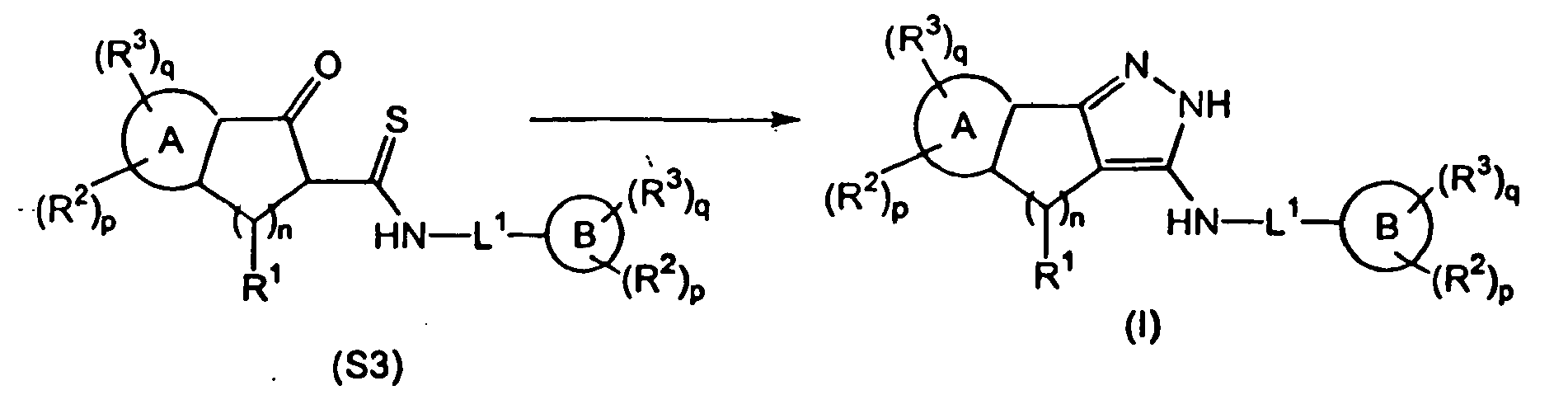
- The present invention is further directed to compounds of Formula (II):
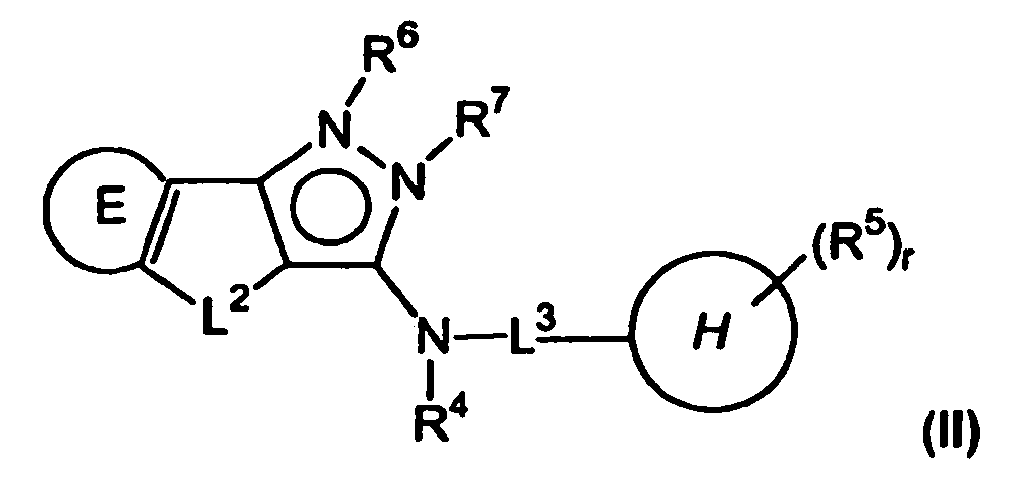
is selected from the group consisting of Formulae A-1, A-2 and A-3:


wherein R8 is H or alkyl;

R9 is independently selected from the group consisting of: alkoxy, alkyl, alkylamino, amino, cyano, dialkylamino, halogen, halogenated alkyl, halogenated alkyloxy, halogenated -SO2alkyl, halogenated thioalkyl, hydroxy, -N(alkyl)C(=O)alkyl, -N(alkyl)C(=O)N(alkyl)2, -N(alkyl)C(=O)NHalkyl, -N(alkyl)C(=O)Oalkyl, -N(alkyl)SO2alkyl, -NHC(=O)alkyl, -NHC(=O)N(alkyl)2, -NHC(=O)NH2, -NHC(=O)NHalkyl, -NHC(=O)Oalkyl, -NHSO2alkyl, nitro, -OC(=O)N(alkyl)2, -OC(=O)NHalkyl, -SO2alkyl, thio and thioalkyl;
L2 is a linking group selected from the group consisting of: -(CH2)1-4-, -CH(R100)-, -C(=R100)-, -C(R100)2-, -O-, -O(CH2)1-4-, -OCH(R100)-, -OC(R100)2, -S-, -NH-, -N(lower alkyl)-, -N(COalkyl)-, -N(aryl)-, -N(CO2alkyl)-, -N(CONHalkyl)-, -N(SO2alkyl) and -N(SO2aryl)-; wherein R100 is selected from: alkyl, hydroxy, aryl, alkoxy, oxo, -NH2, -NH(alkyl) -N(alkyl)2, =N(OH) or -NH2OH; provided that when L2 is -CH2CH2-, neither R6 nor R7 is -CH2-(C=O)NHalkyl, -CH2-(C=O)N(alkyl)2 or -CH2C(=O)Oalkyl; provided that when L2 is -OCH(R100)-, R100 is alkoxy, andis phenyl, R5 is not -C(=O)NH-NH2; and provided that when L2 is -O- or -S-, neither R6 nor R7 is -CH3;
R10 is independently selected from the group consisting of
wherein X1 and Y1 are each independently absent or selected from the group consisting of: -(alkyl)C(=O)N(alkyl)-, -C(=O)N(alkyl)-, -C(=O)NH-, -C(=O)O-, -N(alkyl)-, -N(alkyl)C(=O)-, -N(alkyl)C(=O)NH-, -N(alkyl)C(=O)O-, -N(alkyl)SO2-, -NH-, -NHC(=O)-, -NHC(=O)N(alkyl)-, -NHC(=O)NH, -NHC(=O)O-, -NHSO2-, -O-, -OC(=O), -OC(=O)N(alkyl)-, -OC(=O)NH-, -OC(=O)O-, -S-, -SO-, -SO2-, -SO2N(alkyl)-, and -SO2NH-;
A20 is absent or selected from alkyl or alkenyl; and
A21 is selected from alkyl, alkenyl, or H;
wherein when A20 or A21 is alkyl or alkenyl, the alkyl or alkenyl may be optionally substituted with one or more groups independently selected from: alkoxy, alkylamino, amino, cyano, dialkylamino, halogen, halogenated alkoxy, halogenated -SO2alkyl, halogenated thioalkyl, hydroxy, -N(alkyl)C(=O)alkyl, -N(alkyl)C(=O)N(alkyl)2, -N(alkyl)C(=O)NH2, -N(alkyl)C(=O)NHalkyl, -N(alkyl)C(=O)Oalkyl, -N(alkyl)SO2alkyl, -NHC(=O)alkyl, -NHC(=O)N(alkyl)2, -NHC(=O)NH2, -NHC(=O)NHalkyl, -NHC(=O)Oalkyl, -NHSO2alkyl, -OC(=O)alkyl, -OC(=O)N(alkyl)2, -OC(=O)NHalkyl, -OC(=O)Oalkyl, -SO2alkyl, thio or thioalkyl;
is selected from the group consisting of aryl, cycloalkyl, partially unsaturated carbocycle, heteroaryl, heterocycloalkyl, nine to ten membered benzo-fused cycloalkyl, and nine to ten membered benzo-fused heterocycloalkyl; wherein, the aryl, cycloalkyl, partially unsaturated carbocycle, heteroaryl, heterocycloalkyl, benzo-fused cycloalkyl, or benzo-fused heterocycloalkyl, are optionally substituted with one or more substituents independently selected from halogen, hydroxy, amino, thio, nitro, cyano, alkyl, halogenated alkyl, alkoxy, halogenated alkoxy, alkylamino, -NHC(=O)alkyl, -N(alkyl)C(=O)alkyl, or dialkylamino, -NHC(=O)NH2, -NHC(=O)NHalkyl, -N(alkyl)C(=O)NHalkyl, -OC(=O)NHalkyl, -NHC(=O)Oalkyl, -N(alkyl)C(=O)Oalkyl, -NHSO2alkyl, -N(alkyl)SO2alkyl, thioalkyl, halogenated thioalkyl, -SO2alkyl, halogenated -SO2alkyl, -NHC(=O)N(alkyl)2, -N(alkyl)C(=O)N(alkyl)2 or -OC(=O)N(alkyl)2;
s is an integer from 0 to 2;
m is an integer from 0 to 4; provided that whenis not substituted with Formulae A-1-a, A-1-b or A-1-c, the sum of m and s is an integer from 0 to 4, and whenis substituted with one of Formulae A-1-a, A-1-b, or A-1-c, the sum of m and s is an integer from 0 to 2;
R6 and R7 are independently selected from the group consisting of: - (a) H;
- (b)

- (c) -CH2- substituted with one group selected from: -H, -methyl, -Oalkyl, -CH2OH, -CH(CH3)OH, -O(C=O)alkyl, -(C=O)OH, -C(=O)Oalkyl, -C(=O)Oaryl, -C(=O)Oheteroaryl, -(C=O)NH2, -(C=O)NHalkyl, -(C=O)N(alkyl)2, -C(=O)alkyl, -phenyl-OCH3 or -phenyl-OC(=O)alkyl; (d) -C(=O)(CH2CH2O-)1-10 terminating with H, methyl, ethyl, or benzyl;
- (e) -C(=O)CH2O(CH2CH2O-)1-10 terminating with H, methyl, ethyl, or benzyl;
- (f) -C(=O)alkyl, or -C(=O)(C3-6)cycloalkyl, wherein said -C(=O)alkyl, and -C(=O)(C3-6)cycloalkyl may be optionally substituted with one or more groups independently selected from: -OH, -Oalkyl, -Oalkylaryl, -NH2, -NHalkyl, -N(alkyl)2, heterocycloalkyl, -NHC(=O)alkyl, -NHSO2alkyl, or -OC(=O)alkyl;
- (g) -C(=O)(CH2)1-3aryl, -C(=O)aryl, -C(=O)(CH2)1-3heteroaryl, or -C(=O)heteroaryl, wherein said -C(=O)(CH2)1-3aryl, -C(=O)aryl, -C(=O)(CH2)1-3heteroaryl, and -C(=O)heteroaryl may be optionally substituted with one or more groups independently selected from: -OH, -Oalkyl, -NH2, -NHalkyl, -N(alkyl)2, heterocycloalkyl, -NHC(=O)alkyl, -NHSO2alkyl, halogen, nitrile, or -OC(=O)alkyl;
- (h) -C(=O)(CH2)1-6C(=O)- terminating with methyl, ethyl, -OH, -Oalkyl, -NH2, -NHalkyl, -N(alkyl)2, or heterocycloalkyl;
- (hh) -C(=O)alkylOC(=O)alkyl- terminating with -OH, -Oalkyl, -NH2, -NHalkyl, -N(alkyl)2, or heterocycloalkyl;
- (i) -C(=O)O(CH2CH2O-)1-10 terminating with H, methyl, ethyl, or benzyl;
- (j) -C(=O)Oalkyl, or -C(=O)O(C3-6)cycloalkyl, wherein said -C(=O)Oalkyl, and -C(=O)O(C3-6)cycloalkyl may be optionally substituted with one or more groups independently selected from: -OH, -Oalkyl, -NH2, -NHalkyl, -N(alkyl)2, heterocycloalkyl, -NHC(=O)alkyl, -NHSO2alkyl, -OC(=O)alkyl, -C(=O)OH, -C(=O)Oalkyl, -C(=O)NH2, -C(=O)NHalkyl, or -C(=O)N(alkyl)2;
- (k) -C(=O)O(CH2)1-3aryl, -C(=O)Oaryl, -C(=O)O(CH2)1-3heteroaryl, or -C(=O)Oheteroaryl, wherein said -C(=O)O(CH2)1-3aryl, -C(=O)Oaryl, -C(=O)O(CH2)1-3heteroaryl, or -C(=O)Oheteroaryl may be optionally substituted with one or more groups independently selected from: -OH, -Oalkyl, -NH2, -NHalkyl, -N(alkyl)2, heterocycloalkyl, -NHC(=O)alkyl, -NHSO2alkyl, halogen, nitrile, or -OC(=O)alkyl;
- (I) -C(=O)NH(CH2CH2O-)1-10 terminating with -H, methyl, ethyl, benzyl, -CH2CH2NH2, -CH2CH2NHalkyl, -CH2CH2N(alkyl)2, -CH2CH2-1-pyrrolidinyl, -CH2CH2-1-piperidinyl, -CH2CH2-4-morpholinyl, -CH2CH2-1-piperazinyl, -CH2CH2-1-(4-CH3)-piperazinyl or -C(=O)alkyl;
- (m) -C(=O)NH2, -C(=O)NH(C1-20)alkyl, -C(=O)NH(C3-6)cycloalkyl, or -C(=O)N(alkyl)2, wherein said -C(=O)NH(C1-20)alkyl, -C(=O)NH(C3-6)cycloalkyl, and -C(=O)N(alkyl)2 may be optionally substituted with one or more groups independently selected from: -OH, -Oalkyl, -NH2, -NHalkyl, -N(alkyl)2, heterocycloalkyl, -NHC(=O)alkyl, -NHSO2alkyl, -OC(=O)alkyl, -OC(=O)alkenyl, -NHC(=O)aryl, -C(=O)OH, -C(=O)Oalkyl, -C(=O)NH2, -C(=O)NHalkyl, or -C(=O)N(alkyl)2; and, wherein the aryl portion of said -NHC(=O)aryl may be optionally substituted with one or more groups independently selected from: alkyl, -OH, -Oalkyl, -NH2, -NHalkyl, -N(alkyl)2, halogen or nitrile;
- (n) -C(=O)NH(CH2)1-3aryl, -C(=O)NHaryl, -C(=O)NH(CH2)1-3heteroaryl, or -C(=O)NHheteroaryl, wherein said -C(=O)NH(CH2)1-3aryl, -C(=O)NHaryl, -C(=O)NH(CH2)1-3heteroaryl, and -C(=O)NHheteroaryl may be optionally substituted with one or more groups independently selected from: -OH, -Oalkyl, -NH2, -NHalkyl, -N(alkyl)2 , heterocycloalkyl, -NHC(=O)alkyl, -NHSO2alkyl, halogen, nitrile, or -OC(=O)alkyl;
- (o) -C(=O)NHCH2CH2NH(CH2CH2NH-)0-3 terminating with H, methyl, ethyl, -CH2CH2NHalkyl, -CH2CH2N(alkyl)2, -CH2CH2-1-pyrrolidinyl, -CH2CH2-1-piperidinyl, -CH2CH2-4-morpholinyl, -CH2CH2-1-piperazinyl, -CH2CH2-1-(4-CH3)-piperazinyl, -CH2CH2OH, -CH2CH2OCH3, -CH2CH2OCH2CH3, -CH2CH2OC(=O)alkyl, or -C(=O)aryl; wherein the aryl portion of said -C(=O)aryl may be optionally substituted with one or more groups independently selected from: alkyl, -OH , -Oalkyl, -NH2, -NHalkyl, -N(alkyl)2, halogen or nitrile;
- (p) -C(=S)NH2;
- (q) -C(=S)NHalkyl;
- (r) -C(=S)N(alkyl)2;
- (s) -SO2NH2;
- (t) -SO2NHalkyl;
- (u) -SO2N(alkyl)2;
- (v) -P(=O)(OCH3)2; and
- (w) -P(=O)(OCH2CH3)2;
- In formula (II), "the L2 ring of formula (II)" refers to the ring of Formula (II) containing the L2 substituent.
Thering of Formula (II) is attached to the L2 ring of formula (II) such that the point of attachment for thering is the second and third carbon counterclockwise from the pyrazole nitrogen bearing the R6 substituent. For example, where
L2 is -CH2- andis phenyl, the point of attachment is as shown below:
L2 is -CH2CH2- andis phenyl, the point of attachment is as shown below:
- Further emobidments of the present invention include compounds of Formula II wherein E, L2, R6, R7, R4, L3 H, and (R5)r vary as set forth below individually and combinations of the variations thereof.
- An embodiment of the present invention includes compounds of Formula (II) wherein:
is selected from the group consisting of Formulae A-1, A-2 and A-3:


wherein R8 is H or lower alkyl;

- An embodiment of the present invention includes compounds of Formula (II) wherein:
is selected from the group consisting of Formulae A-1, A-2 and A-3:


wherein R8 is H or lower alkyl;

- A embodiment of the present invention includes compounds of Formula (II) wherein
is selected from the group consisting of: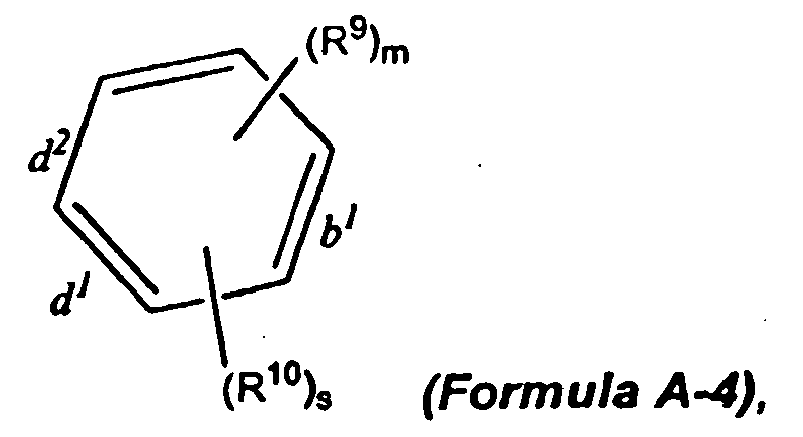


m is an integer from 0 to 4; provided that whenis Formula A-4, the sum of m and s is an integer from 0 to 4, and whenis Formulae A-5 or A-6, the sum of m and s is an integer from 0 to 2. - A embodiment of the present invention includes compounds of Formula (II) wherein
is selected from the group consisting of:

 is Formula A-4, the sum of m and s is an integer from 0 to 4, and whenis Formula A-5, the sum of m and s is an integer from 0 to 2.
 - A embodiment of the present invention includes compounds of Formula (II) wherein
is:
m is an integer from 0 to 4; provided that whenis Formula A-4, the sum of m and s is an integer from 0 to 4. - An embodiment of the present invention includes compounds of Formula (II) wherein:
R9 is independently selected from the group consisting of: alkoxy, alkyl, alkylamino, amino, cyano, dialkylamino, halogen, halogenated alkyl, halogenated alkyloxy, halogenated thioalkyl, hydroxy, -N(alkyl)C(=O)alkyl, -N(alkyl)C(=O)N(alkyl)2, -N(alkyl)C(=O)NHalkyl, -N(alkyl)C(=O)Oalkyl, -N(alkyl)SO2alkyl, -NHC(=O)alkyl, -NHC(=O)N(alkyl)2, -NHC(=O)NH2, -NHC(=O)NHalkyl, -NHC(=O)Oalkyl, -NHSO2alkyl, -OC(=O)N(alkyl)2, -OC(=O)NHalkyl and thioalkyl. - An embodiment of the present invention includes compounds of Formula (II) wherein:
R9 is independently selected from the group consisting of: alkoxy, alkyl, alkylamino, amino, cyano, dialkylamino, halogen, halogenated alkyl, halogenated alkyloxy, hydroxy, -NHC(=O)alkyl, -NHC(=O)NHalkyl, -NHC(=O)Oalkyl, -NHSO2alkyl, and thioalkyl. - A embodiment of the present invention includes compounds of Formula (II) wherein:
R9 is independently selected from the group consisting of: alkoxy, alkyl, amino, cyano, dialkylamino, halogen, halogenated alkyl, halogenated alkyloxy, hydroxy and -NHC(=O)alkyl. - A embodiment of the present invention includes compounds of Formula (II) wherein:
R9 is independently selected from the group consisting of: methoxy, ethoxy, isopropoxy, methyl, amino, cyano, N,N-dimethyl-amino, bromo, chloro, fluoro, trifluoromethyl, trifluoromethoxy, hydroxy and N-(1-oxo-ethyl)-amino. - An embodiment of the present invention includes compounds of Formulae (II) wherein:
L2 is a linking group selected from the group consisting of: -(CH2)-, -(CH2)3-4-, -CH(R100)-, -C(=R100)-, -C(R100)2-, -O-, -O(CH2)1-4-, -OCH(R100)-, -OC(R100)2-, -S-, -NH-, -N(lower alkyl)-, -N(COalkyl)-, -N(aryl)-, -N(CO2alkyl)-, -N(CONHalkyl)-, -N(SO2alkyl) and -N(SO2aryl)-. - An embodiment of the present invention includes compounds of Formula (II) wherein:
L2 is a linking group selected from the group consisting of: -(CH2)1-4-, -CH(R100)-, -C(=R100)-, -C(R100)2-, -O-, -O(CH2)1-4-, -OCH(R200)-, -OC(R100)2-, -S-, -NH-, -N(lower alkyl)-, -N(COalkyl)-, -N(aryl)-, -N(CO2alkyl)-, -N(CONHalkyl)-, -N(SO2alkyl) and -N(SO2aryl)-; wherein R200 is selected from: alkyl, hydroxy, aryl, oxo, -NH2, -NH(alkyl) -N(alkyl)2, =N(OH) or -NH2OH. - An embodiment of the present invention includes compounds of Formula (II) wherein:
L2 is a linking group selected from the group consisting of: -(CH2)1-4-, -CH(R100)-, -C(=R100)-, -C(R100)2-, -O-, -O(CH2)1-4-, -OCH(R100)-, -OC(R100)2-, -NH-, -N(lower alkyl)-, -N(COalkyl)-, -N(aryl)-, -N(CO2alkyl)-, -N(CONHalkyl)-, -N(SO2alkyl) and -N(SO2aryl)-. - An embodiment of the present invention includes compounds of Formula (II) wherein:
L2 is a linking group selected from the group consisting of: -(CH2)1-4-, -CH(R100)-, -C(=R100)-, -C(R100)2-, -O(CH2)1-4-, -OCH(R100)-, -OC(R100)2-, -NH-, -N(lower alkyl)-, -N(COalkyl)-, -N(aryl)-, -N(CO2alkyl)-, -N(CONHalkyl)-, -N(SO2alkyl) and -N(SO2aryl)-. - An embodiment of the present invention includes compounds of Formula (II) wherein:
L2 is a linking group selected from the group consisting of: -(CH2)-, -(CH2)3-4-, -CH(R100)-, -C(=R100)-, -C(R100)2-, -O(CH2)1-4-, -OCH(R200)-, -OC(R100)2-, -NH-, -N(lower alkyl)-, -N(COalkyl)-, -N(aryl)-, -N(CO2alkyl)-, -N(CONHalkyl)-, -N(SO2alkyl) and -N(SO2aryl)-; wherein R200 is selected from: alkyl, hydroxy, aryl, oxo, -NH2, -NH(alkyl) -N(alkyl)2, =N(OH) or -NH2OH. - An embodiment of the present invention includes compounds of Formula (II) wherein:
L2 is a linking group selected from the group consisting of: -(CH2)1-4-, -CH(R100)-, -C(=R100)-, -C(R100)2-, -O-, -O(CH2)1-4-, -OCH(R100)-, -OC(R100)2-, -S-, -NH-, -N(lower alkyl)-, -N(COalkyl)-, -N(aryl)-, -N(CO2alkyl)-, -N(CONHalkyl)-, -N(SO2alkyl) and -N(SO2aryl)-; provided that when L2 is -CH2CH2-, neither R6 nor R7 is -CH2-(C=O)NHalkyl. - An embodiment of the present invention includes compounds of Formula (II) wherein:
L2 is a linking group selected from the group consisting of: -(CH2)1-4-, -CH(R100)-, -C(=R100)-, -C(R100)2-, -O-, -O(CH2)1-4-, -OCH(R100)-, -OC(R100)2-, -S-, -NH-, -N(lower alkyl)-, -N(COalkyl)-, -N(aryl)-, -N(CO2alkyl)-, -N(CONHalkyl)-, -N(SO2alkyl) and -N(SO2aryl)-; provided that when L2 is -CH2CH2-, neither R6 nor R7 is -CH2-(C=O)NHalkyl or -CH2-(C=O)N(alkyl)2. - An embodiment of the present invention includes compounds of Formula (II) wherein:
L2 is a linking group selected from the group consisting of: -(CH2)1-4-, -CH(R100)-, -C(=R100)-, -C(R100)2-, -O-, -O(CH2)1-4-, -OCH(R100)-, -OC(R100)2-, -S-, -NH-, -N(lower alkyl)-, -N(COalkyl)-, -N(aryl)-, -N(CO2alkyl)-, -N(CONHalkyl)-, -N(SO2alkyl) and -N(SO2aryl)-; provided that when L2 is -CH2CH2-, neither R6 nor R7 is -CH2C(=O)Oalkyl. - An embodiment of the present invention includes compounds of Formula (II) wherein:
L2 is a linking group selected from the group consisting of: -(CH2)1-4-, -CH(R100)-, -C(=R100)-, -C(R100)2-, -O-, -O(CH2)1-4-, -OCH(R100)-, -OC(R100)2-, -S-, -NH-, -N(lower alkyl)-, -N(COalkyl)-, -N(aryl)-, -N(CO2alkyl)-, -N(CONHalkyl)-, -N(SO2alkyl) and -N(SO2aryl)-; provided that when L2 is -CH2CH2-, neither R6 nor R7 is -CH2-(C=O)NHalkyl, -CH2-(C=O)N(alkyl)2 or -CH2C(=O)Oalkyl. - An embodiment of the present invention includes compounds of Formula (II) wherein:
L2 is a linking group selected from the group consisting of: -(CH2)1-4-, -CH(R100)-, -C(=R100)-, -C(R100)2-, -O-, -O(CH2)1-4-, -OCH(R100)-, -OC(R100)2-, -S-, -NH-, -N(lower alkyl)-, -N(COalkyl)-, -N(aryl)-, -N(CO2alkyl)-, -N(CONHalkyl)-, -N(SO2alkyl) and -N(SO2aryl)-; provided that when L2 is -OCH(R100)-, R100 is alkoxy, andis phenyl, R5 is not -C(=O)NH-NH2. - An embodiment of the present invention includes compounds of Formula (II) wherein:
L2 is a linking group selected from the group consisting of: -(CH2)1-4-, -CH(R100)-, -C(=R100)-, -C(R100)2-, -O-, -O(CH2)1-4-, -OCH(R100)-, -OC(R100)2-, -S-, -NH-, -N(lower alkyl)-, -N(COalkyl)-, -N(aryl)-, -N(CO2alkyl)-, -N(CONHalkyl)-, -N(SO2alkyl) and -N(SO2aryl)-; provided that when L2 is -O-, neither R6 nor R7 is -CH3. - An embodiment of the present invention includes compounds of Formula (II) wherein:
L2 is a linking group selected from the group consisting of: -(CH2)1-4-, -CH(R100)-, -C(=R100)-, -C(R100)2-, -O-, -O(CH2)1-4-, -OCH(R100)-, -OC(R100)2-, -S-, -NH-, -N(lower alkyl)-, -N(COalkyl)-, -N(aryl)-, -N(CO2alkyl)-, -N(CONHalkyl)-, -N(SO2alkyl) and -N(SO2aryl)-; provided that when L2 is -S-, neither R6 nor R7 is -CH3. - An embodiment of the present invention includes compounds of Formula (II) wherein:
L2 is a linking group selected from the group consisting of: -(CH2)1-4-, -CH(R100)-, -C(=R100)-, -C(R100)2-, -O-, -O(CH2)1-4-, -OCH(R100)-, -OC(R100)2-, -S-, -NH-, -N(lower alkyl)-, -N(COalkyl)-, -N(aryl)-, -N(CO2alkyl)-, -N(CONHalkyl)-, -N(SO2alkyl) and -N(SO2aryl)-; provided that when L2 is -0- or -S-, neither R6 nor R7 is -CH3. - A embodiment of the present invention includes compounds of Formula (II) wherein:
L2 is a linking group selected from the group consisting of: -(CH2)1-4-, -CH(R100)-, -C(=R100)-, -C(R100)2- , -O-, -O(CH2)1-4-, -N(COalkyl)-, -N(aryl)-, -N(CO2alkyl)-, -N(CONHalkyl)-, -N(SO2alkyl) and -N(SO2aryl)-. - A embodiment of the present invention includes compounds of Formula (II) wherein:
L2 is a linking group selected from the group consisting of: -(CH2)1-4-, -CH(R100)-, -C(=R100)-, -C(R100)2-, -O-, and -O(CH2)1-4-. - A embodiment of the present invention includes compounds of Formula (II), wherein:
R100 is selected from: alkyl, hydroxy, aryl, oxo or =N(OH). - A embodiment of the present invention includes compounds of Formula (II) wherein:
R100 is selected from: alkyl, hydroxy, aryl, or oxo. - An embodiment of the present invention includes compounds of Formulae (II) wherein:
R100 is selected from: methyl, hydroxy, phenyl, oxo or =N(OH). - A embodiment of the present invention includes compounds of Formulae (II) wherein:
R100 is selected from: methyl, hydroxy, phenyl, or oxo. - An embodiment of the present invention includes compounds of Formula (II) wherein:
R10 is independently selected from the group consisting of
- An embodiment of the present invention includes compounds of Formula (II) wherein:
R10 is independently selected from the group consisting of
- An embodiment of the present invention includes compounds of Formula (II):
wherein X1 and Y1 are each independently absent or selected from the group consisting of: -C(=O)NH-, -C(=O)O-, -NH-, -NHC(=O)-, -NHC(=O)NH, -NHC(=O)O-, -NHSO2-, -O-, -OC(=O), -OC(=O)NH-, -OC(=O)O-, -S-, -SO-, -SO2- and -SO2NH-. - An embodiment of the present invention includes compounds of Formula (II):
wherein X1 and Y1 are each independently absent or selected from the group consisting of: -NH-, -O-, -SO2- and -SO2NH-. - An embodiment of the present invention includes compounds of Formula (II), wherein X1 and Y1 are each independently absent or -O-.
- An embodiment of the present invention includes compounds of Formula (II), wherein X1 is absent or -O-.
- An embodiment of the present invention includes compounds of Formula (II), wherein Y1 is absent.
- An embodiment of the present invention includes compounds of Formula (II), wherein:
A20 is absent or alkyl; and
wherein when A20 is alkyl, the alkyl may be optionally substituted with one or more groups independently selected from: alkoxy, alkylamino, amino, cyano, dialkylamino, halogen, halogenated alkoxy, halogenated -SO2alkyl, halogenated thioalkyl, hydroxy, -N(alkyl)C(=O)alkyl, -N(alkyl)C(=O)N(alkyl)2, -N(alkyl)C(=O)NH2, -N(alkyl)C(=O)NHalkyl, -N(alkyl)C(=O)Oalkyl, -N(alkyl)SO2alkyl, -NHC(=O)alkyl, -NHC(=O)N(alkyl)2, -NHC(=O)NH2, -NHC(=O)NHalkyl, -NHC(=O)Oalkyl, -NHSO2alkyl, -OC(=O)alkyl, -OC(=O)N(alkyl)2, -OC(=O)NHalkyl, -OC(=O)Oalkyl, -SO2alkyl, thio or thioalkyl. - An embodiment of the present invention includes compounds of Formula (II) wherein:
A20 is absent or alkyl; and
wherein when A20 is alkyl, the alkyl may be optionally substituted with one or more groups independently selected from: alkoxy, alkylamino, amino, dialkylamino, halogen, halogenated alkoxy, hydroxy, -NHC(=O)NH2, -NHSO2alkyl, -SO2alkyl or thioalkyl. - An embodiment of the present invention includes compounds of Formula (II) wherein:
A20 is absent or selected from methyl, ethyl, propyl or isopropyl; wherein methyl, ethyl, propyl or isopropyl are optionally substituted with one or more groups independently selected from: alkoxy, dialkylamino or hydroxy. - An embodiment of the present invention includes compounds of Formula (II) wherein:
A20 is absent or selected from methyl, ethyl, propyl or isopropyl; wherein methyl, ethyl, propyl or isopropyl are optionally substituted with one or more groups independently selected from methoxy, dimethyl-amino or hydroxy. - An embodiment of the present invention includes compounds of Formula (II) wherein:
A21 is selected from alkyl, alkenyl, or H; and
wherein when A21 is alkyl or alkenyl, the alkyl or alkenyl may be optionally substituted with one or more groups independently selected from: alkoxy, alkylamino, amino, cyano, dialkylamino, halogen, halogenated alkoxy, halogenated -SO2alkyl, halogenated thioalkyl, hydroxy, -N(alkyl)C(=O)alkyl, -N(alkyl)C(=O)N(alkyl)2, -N(alkyl)C(=O)NH2, -N(alkyl)C(=O)NHalkyl, -N(alkyl)C(=O)Oalkyl, -N(alkyl)SO2alkyl, -NHC(=O)alkyl, -NHC(=O)N(alkyl)2, -NHC(=O)NH2, -NHC(=O)NHalkyl, -NHC(=O)Oalkyl, -NHSO2alkyl, -OC(=O)alkyl, -OC(=O)N(alkyl)2, -OC(=O)NHalkyl, -OC(=O)Oalkyl, -SO2alkyl, thio or thioalkyl. - An embodiment of the present invention includes compounds of Formula (II) wherein:
A21 is selected from alkyl, alkenyl, or H; and
wherein when A21 is alkyl or alkenyl, the alkyl or alkenyl may be optionally substituted with one or more groups independently selected from: alkoxy, alkylamino, amino, dialkylamino, halogen, halogenated alkoxy, hydroxy, -NHC(=O)NH2, -NHSO2alkyl or thioalkyl. - An embodiment of the present invention includes compounds of Formula (II) wherein A21 is H.
- An embodiment of the present invention includes compounds of Formula (II) wherein
is selected from the group consisting of aryl, cycloalkyl, partially unsaturated carbocycle, heteroaryl and heterocycloalkyl optionally substituted with one or more substituents independently selected from halogen, hydroxy, amino, thio, nitro, cyano, alkyl, halogenated alkyl, alkoxy, halogenated alkoxy, alkylamino, -NHC(=O)alkyl, -N(alkyl)C(=O)alkyl, or dialkylamino, -NHC(=O)NH2, -NHC(=O)NHalkyl, -N(alkyl)C(=O)NHalkyl, -OC(=O)NHalkyl, -NHC(=O)Oalkyl, -N(alkyl)C(=O)Oalkyl, -NHSO2alkyl, -N(alkyl)SO2alkyl, thioalkyl, halogenated thioalkyl, -SO2alkyl, halogenated -SO2alkyl, -NHC(=O)N(alkyl)2, -N(alkyl)C(=O)N(alkyl)2 or -OC(=O)N(alkyl)2. - An embodiment of the present invention includes compounds of Formula (II) wherein
is selected from the group consisting of aryl, heteroaryl and heterocycloalkyl optionally substituted with one or more substituents independently selected from halogen, hydroxy, amino, thio, nitro, cyano, alkyl, halogenated alkyl, alkoxy, halogenated alkoxy, alkylamino, -NHC(=O)alkyl, -N(alkyl)C(=O)alkyl, or dialkylamino, -NHC(=O)NH2, -NHC(=O)NHalkyl, -N(alkyl)C(=O)NHalkyl, -OC(=O)NHalkyl, -NHC(=O)Oalkyl, -N(alkyl)C(=O)Oalkyl, -NHSO2alkyl, -N(alkyl)SO2alkyl, thioalkyl, halogenated thioalkyl, -SO2alkyl, halogenated -SO2alkyl, -NHC(=O)N(alkyl)2, -N(alkyl)C(=O)N(alkyl)2 or -OC(=O)N(alkyl)2. - An embodiment of the present invention includes compounds of Formula (II) wherein
is selected from the group consisting of phenyl, imidazolyl, pyrrolidinyl, piperidinyl and morpholinyl optionally substituted with one or more substituents independently selected from halogen, hydroxy, amino, thio, nitro, cyano, alkyl, halogenated alkyl, alkoxy, halogenated alkoxy, alkylamino, -NHC(=O)alkyl, -N(alkyl)C(=O)alkyl, or dialkylamino, -NHC(=O)NH2, -NHC(=O)NHalkyl, -N(alkyl)C(=O)NHalkyl, -OC(=O)NHalkyl, -NHC(=O)Oalkyl, -N(alkyl)C(=O)Oalkyl, -NHSO2alkyl, -N(alkyl)SO2alkyl, thioalkyl, halogenated thioalkyl, -SO2alkyl, halogenated -SO2alkyl, -NHC(=O)N(alkyl)2, -N(alkyl)C(=O)N(alkyl)2 or -OC(=O)N(alkyl)2. - An embodiment of the present invention includes compounds of Formula (II) wherein
is selected from the group consisting of phenyl, imidazolyl, pyrrolidinyl, piperidinyl and morpholinyl optionally substituted with one or more substituents independently selected from halogen, hydroxy, amino, nitro, alkyl, halogenated alkyl, alkoxy, halogenated alkoxy, alkylamino, dialkylamino, -NHSO2alkyl or -SO2alkyl. - An embodiment of the present invention includes compounds of Formula (II) wherein
is selected from the group consisting of phenyl, imidazolyl, pyrrolidinyl, piperidinyl and morpholinyl optionally substituted with one or more substituents independently selected from chloro, fluoro, hydroxy or alkyl. - An embodiment of the present invention includes compounds of Formula (II) wherein
R9 and R10 are independently selected from the group consisting of: 1-piperidinyl, 2-(pyrrolidin-1-yl)-ethoxy, 2,3-dihydroxy-propoxy, 2-hydroxy-3-pyrrolidin-1-yl-propoxy, 3-(4-methyl-piperazin-1-yl)-propoxy, 3-(N,N dimethyl-amino)-propoxy, 3-hydroxy-propoxy, 3-imidazol-1-yl-propoxy, 3-methoxy-propoxy, 3-morpholin-4-yl-propoxy, 3-pyrrolidin-1-yl-2-hydroxy-propoxy, 3-pyrrolidin-1-yl-propoxy, 4-methyl-piperazin-1-yl, amino, benzyl, benzyloxy, bromo, chloro, cyano, ethoxy, fluoro, H, hydroxy, isopropoxy, methoxy, methyl, N-(1-oxo-ethyyl)-amino, and N,N-dimethyl-amino. - An embodiment of the present invention includes compounds of Formula (II) wherein
R6 and R7 are independently selected from the group consisting of: - (a) H;
- (b)

- (c) -CH2- substituted with one group selected from: -H, -methyl, -Oalkyl, -CH2OH, -CH(CH3)OH, -O(C=O)alkyl, -(C=O)OH, -C(=O)Oalkyl, -C(=O)Oaryl, -C(=O)Oheteroaryl, -(C=O)NH2, -(C=O)NHalkyl, -(C=O)N(alkyl)2, -C(=O)alkyl, -phenyl-OCH3 or -phenyl-OC(=O)alkyl;
- (d) -C(=O)(CH2CH2O-)1-10 terminating with H;
- (e) -C(=O)CH2O(CH2CH2O-)1-10 terminating with H;
- (f) -C(=O)alkyl optionally substituted with one or more groups independently selected from: -OH, -Oalkyl, -Oalkylaryl, -NH2, -NHalkyl, -N(alkyl)2, heterocycloalkyl, -NHC(=O)alkyl, -NHSO2alkyl, or -OC(=O)alkyl;
- (g) -C(=O)(CH2)1-3aryl or -C(=O)aryl, wherein said -C(=O)aryl may be optionally substituted with one or more groups independently selected from: -OH, -Oalkyl, -NH2, -NHalkyl, -N(alkyl)2, heterocycloalkyl, -NHC(=O)alkyl, -NHSO2alkyl, halogen, nitrile, or -OC(=O)alkyl;
- (h) -C(=O)(CH2)1-6(=O)- terminating with methyl, ethyl, -OH, -Oalkyl, -NH2, -NHalkyl, -N(alkyl)2, or heterocycloalkyl;
- (hh) -C(=O)alkylOC(=O)alkyl- terminating with -OH, -Oalkyl, -NH2, -NHalkyl or -N(alkyl)2;
- (i) -C(=O)O(CH2CH2O-)1-10 terminating with H, methyl, ethyl, or benzyl;
- (j) -C(=O)Oalkyloptionally substituted with one or more groups independently selected from: -OH, -Oalkyl, -NH2, -NHalkyl, -N(alkyl)2, heterocycloalkyl, -NHC(=O)alkyl, -NHSO2alkyl, -OC(=O)alkyl, -C(=O)OH,
- -C(=O)Oalkyl, -C(=O)NH2, -C(=O)NHalkyl, or -C(=O)N(alkyl)2;
- (k) -C(=O)O(CH2)1-3aryl or -C(=O)Oaryl, wherein said -C(=O)Oaryl may be optionally substituted with one or more groups independently selected from: -OH, -Oalkyl, -NH2, -NHalkyl, -N(alkyl)2, heterocycloalkyl, -NHC(=O)alkyl, -NHSO2alkyl, halogen, nitrile, or -OC(=O)alkyl;
- (I) -C(=O)NH(CH2CH2O-)1-10 terminating with -H, methyl, ethyl, benzyl,-CH2CH2NH2, -CH2CH2NHalkyl, -CH2CH2N(alkyl)2, -CH2CH2-1-pyrrolidinyl, -CH2CH2-1-piperidinyl, -CH2CH2-4-morpholinyl, -CH2CH2-1-piperazinyl, -CH2CH2-1-(4-CH3)-piperazinyl or -C(=O)alkyl;
- (m) -C(=O)NH2, -C(=O)NH(C1-20)alkyl, or -C(=O)N(C1-20alkyl)2, wherein said -C(=O)NH(C1-20)alkyl, may be optionally substituted with one or more groups independently selected from: -OH, -Oalkyl, -NH2, -NHalkyl, -N(alkyl)2, heterocycloalkyl, -NHC(=O)alkyl, -NHSO2alkyl, -OC(=O)alkyl, -OC(=O)alkenyl, -NHC(=O)aryl, -C(=O)OH, -C(=O)Oalkyl, -C(=O)NH2, -C(=O)NHalkyl, or -C(=O)N(alkyl)2; and, wherein the aryl portion of said -NHC(=O)aryl may be optionally substituted with one or more groups independently selected from: alkyl, -OH, -Oalkyl, -NH2, -NHalkyl, -N(alkyl)2, halogen or nitrile;
- (n) -C(=O)NH(CH2)1-3aryl or -C(=O)NHaryl, wherein said -C(=O)NHaryl may be optionally substituted with one or more groups independently selected from: -OH, -Oalkyl, -NH2, -NHalkyl, -N(alkyl)2, heterocycloalkyl, -NHC(=O)alkyl, -NHSO2alkyl, halogen, nitrile, or -OC(=O)alkyl;
- (o) -C(=O)NHCH2CH2NH(CH2CH2NH-)0-3 terminating with H, methyl, ethyl, -CH2CH2NHalkyl, -CH2CH2N(alkyl)2, -CH2CH2-1-pyrrolidinyl, -CH2CH2-1-piperidinyl, -CH2CH2-4-morpholinyl, -CH2CH2-1-piperazinyl, -CH2CH2-1-(4-CH3)-piperazinyl, -CH2CH2OH, -CH2CH2OCH3, -CH2CH2OCH2CH3, -CH2CH2OC(=O)alkyl or -C(=O)aryl; wherein the aryl portion of said -C(=O)aryl may be optionally substituted with one or more groups independently selected from: alkyl, -OH , -Oalkyl, -NH2, -NHalkyl, -N(alkyl)2, halogen or nitrile;
- (p) -C(=S)NH2;
- (q) -C(=S)NHalkyl;
- (r) -C(=S)N(alkyl)2;
- (s) -SO2NH2;
- (t) -SO2NHalkyl;
- (u) -SO2N(alkyl)2;
- (v) -P(=O)(OCH3)2; and
- (w) -P(=O)(OCH2CH3)2;
- An embodiment of the present invention includes compounds of Formula (II) wherein
R6 and R7 are independently selected from the group consisting of: - (a) H;
- (b)

- (c) -CH2- substituted with one group selected from: -H, -methyl, -Oalkyl, -CH2OH, -CH(CH3)OH, -O(C=O)alkyl, -(C=O)OH, -C(=O)Oalkyl, -C(=O)Oaryl, -C(=O)Oheteroaryl, -(C=O)NH2, -(C=O)NHalkyl, -(C=O)N(alkyl)2, -C(=O)alkyl, -phenyl-OCH3 or -phenyl-OC(=O)alkyl;
- (f) -C(=O)alkyl optionally substituted with one or more groups independently selected from: -OH, -Oalkyl, -Oalkylaryl, -NH2, -NHalkyl, -N(alkyl)2, heterocycloalkyl, -NHC(=O)alkyl, -NHSO2alkyl, or -OC(=O)alkyl;
- (g) -C(=O)(CH2)1-3aryl or -C(=O)aryl, wherein said -C(=O)aryl may be optionally substituted with one or more groups independently selected from: -OH, -Oalkyl, -NH2, -NHalkyl, -N(alkyl)2, heterocycloalkyl, -NHC(=O)alkyl, -NHSO2alkyl, halogen, nitrile, or -OC(=O)alkyl;
- (h) -C(=O)(CH2)1-6C(=O)- terminating with methyl, ethyl, -OH, -Oalkyl, -NH2, -NHalkyl, -N(alkyl)2, or heterocycloalkyl;
- (hh) -C(=O)alkylOC(=O)alkyl- terminating with -OH, -Oalkyl, -NH2, -NHalkyl or -N(alkyl)2;
- (i) -C(=O)O(CH2CH2O-)1-10 terminating with H, methyl, ethyl, or benzyl;
- (j) -C(=O)Oalkyloptionally substituted with one or more groups independently selected from: -OH, -Oalkyl, -NH2, -NHalkyl, -N(alkyl)2, heterocycloalkyl, -NHC(=O)alkyl, -NHSO2alkyl, -OC(=O)alkyl, -C(=O)OH, -C(=O)Oalkyl, -C(=O)NH2, -C(=O)NHalkyl, or -C(=O)N(alkyl)2;
- (k) -C(=O)O(CH2)1-3aryl or -C(=O)Oaryl, wherein said -C(=O)Oaryl may be optionally substituted with one or more groups independently selected from: -OH, -Oalkyl, -NH2, -NHalkyl, -N(alkyl)2, heterocycloalkyl, -NHC(=O)alkyl, -NHSO2alkyl, halogen, nitrile, or -OC(=O)alkyl;
- (I) -C(=O)NH(CH2CH2O-)1-10 terminating with -H, methyl, ethyl, benzyl,-CH2CH2NH2, -CH2CH2NHalkyl, -CH2CH2N(alkyl)2, -CH2CH2-1-pyrrolidinyl, -CH2CH2-1-piperidinyl, -CH2CH2-4-morpholinyl, -CH2CH2-1-piperazinyl, -CH2CH2-1-(4-CH3)-piperazinyl or -C(=O)alkyl;
- (m) -C(=O)NH2, -C(=O)NH(C1-20)alkyl, or -C(=O)N(C1-20alkyl)2, wherein said -C(=O)NH(C1-20)alkyl, may be optionally substituted with one or more groups independently selected from: -OH, -Oalkyl, -NH2, -NHalkyl, -N(alkyl)2, heterocycloalkyl, -NHC(=O)alkyl, -NHSO2alkyl, -OC(=O)alkyl, -OC(=O)alkenyl, -NHC(=O)aryl, -C(=O)OH, -C(=O)Oalkyl, -C(=O)NH2, -C(=O)NHalkyl, or -C(=O)N(alkyl)2; and, wherein the aryl portion of said -NHC(=O)aryl may be optionally substituted with one or more groups independently selected from: alkyl, -OH, -Oalkyl, -NH2, -NHalkyl, -N(alkyl)2, halogen or nitrile;
- (n) -C(=O)NH(CH2)1-3aryl or -C(=O)NHaryl, wherein said -C(=O)NHaryl may be optionally substituted with one or more groups independently selected from: -OH, -Oalkyl, -NH2, -NHalkyl, -N(alkyl)2, heterocycloalkyl, -NHC(=O)alkyl, -NHSO2alkyl, halogen, nitrile, or -OC(=O)alkyl;
- (o) -C(=O)NHCH2CH2NH(CH2CH2NH-)0-3 terminating with H, methyl, ethyl, -CH2CH2NHalkyl, -CH2CH2N(alkyl)2, -CH2CH2-1-pyrrolidinyl, -CH2CH2-1-piperidinyl, -CH2CH2-4-morpholinyl, -CH2CH2-1-piperazinyl, -CH2CH2-1-(4-CH3)-piperazinyl, -CH2CH2OH, -CH2CH2OCH3, -CH2CH2OCH2CH3, -CH2CH2OC(=O)alkyl, or -C(=O)aryl; wherein the aryl portion of said -C(=O)aryl may be optionally substituted with one or more groups independently selected from: alkyl, -OH , -Oalkyl, -NH2, -NHalkyl, -N(alkyl)2, halogen or nitrile;
- (p) -C(=S)NH2;
- (u) -SO2N(alkyl)2; and
- (w) -P(=O)(OCH2CH3)2;
- An embodiment of the present invention includes compounds of Formula (II) wherein
R6 and R7 are independently selected from the group consisting of: - (a) H;
- (b)

- (c) -CH2- substituted with one group selected from: -H, -methyl, -Oalkyl, -CH2OH, -CH(CH3)OH, -O(C=O)alkyl, -(C=O)OH, -C(=O)Oalkyl, -C(=O)Oaryl, -C(=O)Oheteroaryl, -(C=O)NH2, -(C=O)NHalkyl, -(C=O)N(alkyl)2, -C(=O)alkyl, -phenyl-OCH3 or -phenyl-OC(=O)alkyl;
- (f) -C(=O)alkyl optionally substituted with one or more groups independently selected from: -OH, -Oalkyl, -Oalkylaryl, -NH2, -NHalkyl, -N(alkyl)2, heterocycloalkyl, -NHC(=O)alkyl, -NHSO2alkyl, or -OC(=O)alkyl;
- (g) -C(=O)aryl optionally substituted with one or more groups independently selected from: -OH, -Oalkyl, -NH2, -NHalkyl, -N(alkyl)2, heterocycloalkyl, -NHC(=O)alkyl, -NHSO2alkyl, halogen, nitrile, or -OC(=O)alkyl;
- (h) -C(=O)(CH2)1-6C(=O)- terminating with methyl, ethyl, -OH, -Oalkyl, -NH2, -NHalkyl, -N(alkyl)2, or heterocycloalkyl;
- (hh) -C(=O)alkylOC(=O)alkyl- terminating with -OH, -Oalkyl, -NH2, -NHalkyl or -N(alkyl)2;
- (i) -C(=O)O(CH2CH2O-)1-10 terminating with H, methyl, ethyl, or benzyl;
- (j) -C(=O)Oalkyloptionally substituted with one or more groups independently selected from: -OH, -Oalkyl, -NH2, -NHalkyl, -N(alkyl)2, heterocycloalkyl, -NHC(=O)alkyl, -NHSO2alkyl, -OC(=O)alkyl, -C(=O)OH, -C(=O)Oalkyl, -C(=O)NH2, -C(=O)NHalkyl, or -C(=O)N(alkyl)2;
- (k) -C(=O)Oaryl optionally substituted with one or more groups independently selected from: -OH, -Oalkyl, -NH2, -NHalkyl, -N(alkyl)2, heterocycloalkyl, -NHC(=O)alkyl, -NHSO2alkyl, halogen, nitrile, or -OC(=O)alkyl;
- (l) -C(=O)NH(CH2CH2O-)1-10 terminating with -H, methyl, ethyl, benzyl,-CH2CH2NH2, -CH2CH2NHalkyl, -CH2CH2N(alkyl)2, -CH2CH2-1-pyrrolidinyl, -CH2CH2-1-piperidinyl, -CH2CH2-4-morpholinyl, -CH2CH2-1-piperazinyl, -CH2CH2-1-(4-CH3)-piperazinyl or -C(=O)alkyl;
- (m) -C(=O)NH(C1-20)alkyl optionally substituted with one or more groups independently selected from: -OH, -Oalkyl, -NH2, -NHalkyl, -N(alkyl)2, heterocycloalkyl, -NHC(=O)alkyl, -NHSO2alkyl, -OC(=O)alkyl, -OC(=O)alkenyl, -NHC(=O)aryl, -C(=O)OH, -C(=O)Oalkyl, -C(=O)NH2, -C(=O)NHalkyl, or -C(=O)N(alkyl)2; and, wherein the aryl portion of said -NHC(=O)aryl may be optionally substituted with one or more groups independently selected from: alkyl, -OH, -Oalkyl, -NH2, -NHalkyl, -N(alkyl)2, halogen or nitrile;
- (n) -C(=O)NHaryl optionally substituted with one or more groups independently selected from: -OH, -Oalkyl, -NH2, -NHalkyl, -N(alkyl)2, heterocycloalkyl, -NHC(=O)alkyl, -NHSO2alkyl, halogen, nitrile, or -OC(=O)alkyl;
- (o) -C(=O)NHCH2CH2NH(CH2CH2NH-)0-3 terminating with H, methyl, ethyl, -CH2CH2NHalkyl, -CH2CH2N(alkyl)2, -CH2CH2-1-pyrrolidinyl, -CH2CH2-1-piperidinyl, -CH2CH2-4-morpholinyl, -CH2CH2-1-piperazinyl, -CH2CH2-1-(4-CH3)-piperazinyl, -CH2CH2OH, -CH2CH2OCH3, -CH2CH2OCH2CH3, -CH2CH2OC(=O)alkyl, or -C(=O)aryl; wherein the aryl portion of said -C(=O)aryl may be optionally substituted with one or more groups independently selected from: alkyl, -OH , -Oalkyl, -NH2, -NHalkyl, -N(alkyl)2, halogen or nitrile;
- (p) -C(=S)NH2;
- (u) -SO2N(alkyl)2; and
- (w) -P(=O)(OCH2CH3)2;
- An embodiment of the present invention includes compounds of Formula (II) wherein
R6 and R7 are independently selected from the group consisting of: - (a) H;
- (b)

- (c) -CH2- substituted with one group selected from: -H, -methyl, -Oalkyl, -CH2OH, -CH(CH3)OH, -O(C=O)alkyl, -(C=O)OH, -C(=O)Oalkyl, -C(=O)Oaryl, -C(=O)Oheteroaryl, -(C=O)NH2, -(C=O)NHalkyl, -(C=O)N(alkyl)2, -C(=O)alkyl, -phenyl-OCH3 or -phenyl-OC(=O)alkyl;
- (f) -C(=O)alkyl optionally substituted with one or more groups independently selected from: -OH, -Oalkyl, -Oalkyl-phenyl, -NH2, -NHalkyl, -N(alkyl)2, heterocycloalkyl, -NHC(=O)alkyl, -NHSO2alkyl, or -OC(=O)alkyl;
- (g) -C(=O)aryl optionally substituted with one or more groups independently selected from: -OH, -Oalkyl, -NH2, -NHalkyl, -N(alkyl)2, heterocycloalkyl, -NHC(=O)alkyl, -NHSO2alkyl, chloro, fluoro, , nitrile, or -OC(=O)alkyl;
- (h) -C(=O)(CH2)1-6C(=O)- terminating with methyl, ethyl, -OH, -Oalkyl, -NH2, -NHalkyl, -N(alkyl)2, or pyrrolidinyl;
- (hh) -C(=O)alkylOC(=O)alkyl- terminating with -OH, -Oalkyl, -NH2, -NHalkyl or -N(alkyl)2;
- (i) -C(=O)O(CH2CH2O-)1-10 terminating with H, methyl, ethyl, or benzyl;
- (j) -C(=O)Oalkyloptionally substituted with one or more groups independently selected from: -OH, -Oalkyl, -NH2, -NHalkyl, -N(alkyl)2, heterocycloalkyl, -NHC(=O)alkyl, -NHSO2alkyl, -OC(=O)alkyl, -C(=O)OH, -C(=O)Oalkyl, -C(=O)NH2, -C(=O)NHalkyl, or -C(=O)N(alkyl)2;
- (k) -C(=O)Oaryl optionally substituted with one or more groups independently selected from: -OH, -Oalkyl, -NH2, -NHalkyl, -N(alkyl)2, heterocycloalkyl, -NHC(=O)alkyl, -NHSO2alkyl, chloro, fluoro, nitrile, or -OC(=O)alkyl;
- (I) -C(=O)NH(CH2CH2O-)1-10 terminating with -H, methyl, ethyl, benzyl,-CH2CH2NH2, -CH2CH2NHalkyl, -CH2CH2N(alkyl)2, -CH2CH2-1-pyrrolidinyl, -CH2CH2-1-piperidinyl, -CH2CH2-4-morpholinyl, -CH2CH2-1-piperazinyl, -CH2CH2-1-(4-CH3)-piperazinyl or -C(=O)alkyl;
- (m) -C(=O)NH(C1-20)alkyl optionally substituted with one or more groups independently selected from: -OH, -Oalkyl, -NH2, -NHalkyl, -N(alkyl)2, pyrrolidinyl, morpholinyl, -NHC(=O)alkyl, -NHSO2alkyl, -OC(=O)alkyl, -OC(=O)alkenyl, -NHC(=O)phenyl, -C(=O)OH, -C(=O)Oalkyl, -C(=O)NH2, -C(=O)NHalkyl, or -C(=O)N(alkyl)2; and, wherein the phenyl portion of said -NHC(=O)phenyl may be optionally substituted with one or more groups independently selected from: alkyl, -OH, -Oalkyl, -NH2, -NHalkyl, -N(alkyl)2, halogen or nitrile;
- (n) -C(=O)NHaryl optionally substituted with one or more groups independently selected from: -OH, -Oalkyl, -NH2, -NHalkyl, -N(alkyl)2, heterocycloalkyl, -NHC(=O)alkyl, -NHSO2alkyl, chloro, fluoro, nitrile, or -OC(=O)alkyl;
- (o) -C(=O)NHCH2CH2NH(CH2CH2NH-)0-3 terminating with H, methyl, ethyl, -CH2CH2NHalkyl, -CH2CH2N(alkyl)2, -CH2CH2-1-pyrrolidinyl, -CH2CH2-1-piperidinyl, -CH2CH2-4-morpholinyl, -CH2CH2-1-piperazinyl, -CH2CH2-1-(4-CH3)-piperazinyl, -CH2CH2OH, -CH2CH2OCH3, -CH2CH2OCH2CH3, -CH2CH2OC(=O)alkyl, or -C(=O)phenyl; wherein the phenyl portion of said -C(=O)phenyl may be optionally substituted with one or more groups independently selected from: alkyl, -OH , -Oalkyl, -NH2, -NHalkyl, -N(alkyl)2, halogen or nitrile;
- (p) -C(=S)NH2;
- (u) -SO2N(alkyl)2; and
- (w) -P(=O)(OCH2CH3)2;
- An embodiment of the present invention includes compounds of Formula (II) wherein
R6 and R7 are independently selected from the group consisting of: - (a) H;
- (b)

- (c) -CH2- substituted with one group selected from: -H, -methyl, -Oalkyl, -CH2OH, -CH(CH3)OH, -O(C=O)alkyl, -C(=O)Oalkyl, -(C=O)NH2, -C(=O)alkyl or -phenyl-OC(=O)alkyl;
- (f) -C(=O)alkyl optionally substituted with one or more groups independently selected from: -OH, -Oalkyl, -Oalkyl-phenyl or -OC(=O)alkyl;
- (g) -C(=O)phenyl optionally substituted with one or more groups independently selected from: -OH, -Oalkyl, -NH2, -NHalkyl, -N(alkyl)2, heterocycloalkyl, -NHC(=O)alkyl, -NHSO2alkyl, chloro, fluoro, , nitrile, or -OC(=O)alkyl;
- (h) -C(=O)(CH2)1-6C(=O)- terminating with -OH, -Oalkyl, -NH2, -NHalkyl, -N(alkyl)2, or pyrrolidinyl;
- (hh) -C(=O)alkylOC(=O)alkyl- terminating with -Oalkyl;
- (i) -C(=O)O(CH2CH2O-)1-10 terminating with H or benzyl;
- (j) -C(=O)Oalkyloptionally substituted with one or more -Oalkyl groups;
- (k) -C(=O)Ophenyl optionally substituted with one or more groups independently selected from: -OH, -Oalkyl, -NH2, -NHalkyl, -N(alkyl)2, heterocycloalkyl, -NHC(=O)alkyl, -NHSO2alkyl, chloro, fluoro, nitrile, or -OC(=O)alkyl;
- (I) -C(=O)NH(CH2CH2O-)1-10 terminating with -H;
- (m) -C(=O)NH(C1-20)alkyl optionally substituted with one or more groups independently selected from: -NH2, -NHalkyl, -N(alkyl)2, pyrrolidinyl, morpholinyl, -NHC(=O)alkyl, -OC(=O)alkenyl, -NHC(=O)phenyl or -C(=O)Oalkyl; and, wherein the phenyl portion of said -NHC(=O)phenyl may be optionally substituted with one or more groups independently selected from: alkyl, -OH, -Oalkyl, -NH2, -NHalkyl, -N(alkyl)2, halogen or nitrile;
- (n) -C(=O)NHphenyl optionally substituted with one or more groups independently selected from: -OH, -Oalkyl, -NH2, -NHalkyl, -N(alkyl)2, heterocycloalkyl, -NHC(=O)alkyl, -NHSO2alkyl, chloro, fluoro, nitrile, or -OC(=O)alkyl;
- (o) -C(=O)NHCH2CH2NH(CH2CH2NH-)0-3 terminating with H, methyl, ethyl, -CH2CH2NHalkyl, -CH2CH2N(alkyl)2, -CH2CH2-1-pyrrolidinyl, -CH2CH2-1-piperidinyl, -CH2CH2-4-morpholinyl, -CH2CH2-1-piperazinyl, -CH2CH2-1-(4-CH3)-piperazinyl, -CH2CH2OH, -CH2CH2OCH3, -CH2CH2OCH2CH3, -CH2CH2OC(=O)alkyl, and -C(=O)phenyl; wherein the phenyl portion of said -C(=O)phenyl may be optionally substituted with one or more groups independently selected from: alkyl, -OH , -Oalkyl, -NH2, -NHalkyl, -N(alkyl)2, halogen and nitrile;
- (p) -C(=S)NH2;
- (u) -SO2N(alkyl)2; and
- (w) -P(=O)(OCH2CH3)2;
- An embodiment of the present invention includes compounds of Formula (II) wherein
R6 and R7 are independently selected from the group consisting of: - (a) H;
- (b)

- (c) -CH2- substituted with one group selected from: -H, -methyl, -Oalkyl, -CH2OH, -CH(CH3)OH, -O(C=O)alkyl, -C(=O)Oalkyl, -(C=O)NH2, -C(=O)alkyl or -phenyl-OC(=O)alkyl;
- (f) -C(=O)alkyl optionally substituted with one or more groups independently selected from: -OH, -Oalkyl, -Oalkyl-phenyl or -OC(=O)alkyl;
- (g) -C(=O)phenyl optionally substituted with one or more groups independently selected from: -OH, -Oalkyl, -NH2, -NHalkyl, -N(alkyl)2, heterocycloalkyl, -NHC(=O)alkyl, -NHSO2alkyl, chloro, fluoro, , nitrile, and-OC(=O)alkyl;
- (h) -C(=O)(CH2)1-6(=O)- terminating with -OH, -Oalkyl, -NH2, -NHalkyl, -N(alkyl)2, or pyrrolidinyl;
- (hh) -C(=O)alkylOC(=O)alkyl- terminating with -Oalkyl;
- (i) -C(=O)O(CH2CH2O-)1-10 terminating with H or benzyl;
- (j) -C(=O)Oalkyloptionally substituted with one or more -Oalkyl groups;
- (k) -C(=O)Ophenyl optionally substituted with one or more groups independently selected from: -OH, -Oalkyl, -NH2, -NHalkyl, -N(alkyl)2, heterocycloalkyl, -NHC(=O)alkyl, -NHSO2alkyl, chloro, fluoro, nitrile, and -OC(=O)alkyl;
- (I) -C(=O)NH(CH2CH2O-)1-10 terminating with -H;
- (m) -C(=O)NH(C1-20)alkyl optionally substituted with one or more groups independently selected from: -NH2, -NHalkyl, -N(alkyl)2, pyrrolidinyl, morpholinyl, -NHC(=O)alkyl, -OC(=O)alkenyl, -NHC(=O)phenyl or -C(=O)Oalkyl; and, wherein the phenyl portion of said -NHC(=O)phenyl may be optionally substituted with one or more groups independently selected from: alkyl, -OH, -Oalkyl, -NH2, -NHalkyl, -N(alkyl)2, halogen and nitrile;
- (n) -C(=O)NHphenyl optionally substituted with one or more groups independently selected from: -OH, -Oalkyl, -NH2, -NHalkyl, -N(alkyl)2, heterocycloalkyl, -NHC(=O)alkyl, -NHSO2alkyl, chloro, fluoro, nitrile, and -OC(=O)alkyl;
- (o) -C(=O)NHCH2CH2NH(CH2CH2NH-)0-3 terminating with -CH2CH2OH and -C(=O)phenyl; wherein the phenyl portion of said -C(=O)phenyl may be optionally substituted with one or more groups independently selected from: alkyl, -OH , -Oalkyl, -NH2, -NHalkyl, -N(alkyl)2. halogen and nitrile;
- (p) -C(=S)NH2;
- (u) -SO2N(alkyl)2; and
- (w) -P(=O)(OCH2CH3)2;
- An embodiment of the present invention includes compounds of Formula (II) wherein
R6 and R7 are independently selected from the group consisting of: - (a) H;
- (b)

- (c) -CH2- substituted with one group selected from: -H, -methyl, -Oalkyl, -CH2OH, -CH(CH3)OH, -O(C=O)alkyl, -C(=O)Oalkyl, -(C=O)NH2, -C(=O)alkyl or -phenyl-OC(=O)alkyl;
- (f) -C(=O)alkyl optionally substituted with one or more groups independently selected from: -OH, -Oalkyl, -Oalkyl-phenyl or -OC(=O)alkyl;
- (g) -C(=O)phenyl optionally substituted with one or more groups independently selected from: -Oalkyl, chloro or fluoro, ;
- (h) -C(=O)(CH2)1-6C(=O)- terminating with -OH, -Oalkyl, -NH2, -NHalkyl, -N(alkyl)2, or pyrrolidinyl;
- (hh) -C(=O)alkylOC(=O)alkyl- terminating with -Oalkyl;
- (i) -C(=O)O(CH2CH2O-)1-10 terminating with H or benzyl;
- (j) -C(=O)Oalkyloptionally substituted with one or more -Oalkyl groups;
- (k) -C(=O)Ophenyl optionally substituted with one or more chloro, fluoro groups;
- (I) -C(=O)NH(CH2CH2O-)1-10 terminating with -H;
- (m) -C(=O)NH(C1-20)alkyl optionally substituted with one or more groups independently selected from: -NH2, -NHalkyl, -N(alkyl)2, pyrrolidinyl, morpholinyl, -NHC(=O)alkyl, -OC(=O)alkenyl, -NHC(=O)phenyl or -C(=O)Oalkyl; and, wherein the phenyl portion of said -NHC(=O)phenyl may be optionally substituted with one or more groups independently selected from: alkyl, -OH, -Oalkyl, -NH2, -NHalkyl, -N(alkyl)2, halogen and nitrile;
- (n) -C(=O)NHphenyl optionally substituted with one or more fluoro groups;
- (o) -C(=O)NHCH2CH2NH(CH2CH2NH-)0-3 terminating with -CH2CH2OH and -C(=O)phenyl; wherein the phenyl portion of said -C(=O)phenyl may be optionally substituted with one or more -OHgroups;
- (p) -C(=S)NH2;
- (u) -SO2N(alkyl)2; and
- (w) -P(=O)(OCH2CH3)2;
- An embodiment of the present invention includes compounds of Formulae (II) wherein R6 and R7 are independently selected from the group consisting of: H,

- An embodiment of the present invention includes compounds of Formula (II) wherein
L3 is absent or is a linking group selected from the group consisting of methylene, ethylene, carbonyl or -SO2-. - A embodiment of the present invention includes compounds of Formula (II) wherein
L3 is absent or is a linking group selected from the group consisting of methylene, ethylene or carbonyl. - An embodiment of the present invention includes compounds of Formula (II) wherein
is selected from the group consisting of an aryl, a cycloalkyl, a heteroaryl, a heterocycloalkyl, a nine to ten membered benzo-fused cycloalkyl, a nine to ten membered benzo-fused heteroaryl, and a nine to ten membered benzo-fused heterocycloalkyl. - A embodiment of the present invention includes compounds of Formula (II) wherein
is selected from the group consisting of an aryl, a cycloalkyl, a heteroaryl, a heterocycloalkyl, a nine to ten membered benzo-fused cycloalkyl and a nine to ten membered benzo-fused heterocyclalkyl. - An embodiment of the present invention includes compounds of Formula (II) wherein
is selected from the group consisting of phenyl, cyclohexyl, furyl, imidazolyl, isoxazolyl, pyridyl, pyrimidinyl, indolyl, indazolyl, piperidinyl, morpholinyl, indanyl, 2,3-dihydro-1H-indolyl and benzodioxolyl. - A embodiment of the present invention includes compounds of Formula (II) wherein
R5 is independently selected from the group consisting of: alkyl, alkyloxy, amino, -C(=O)NH2, -C(=O)Oalkyl, -C(=O)OH, cyano, dialkylamino, halogen, halogenated alkyl, halogenated alkyloxy, halogenated thioalkyl, hydroxy, hydroxy alkyl, -NHC(=O)NH2, -NHSO2alkyl, nitro, -SO2alkyl, -SO2NH2, thio, thioalkyl,
- A embodiment of the present invention includes compounds of Formula (II) wherein
R5 is independently selected from the group consisting of: alkyl, alkyloxy, -C(=O)NH2, -C(=O)Oalkyl, -C(=O)OH, cyano, dialkylamino, halogen, halogenated alkyl, halogenated alkyloxy, halogenated thioalkyl, hydroxy, hydroxy alkyl, nitro, -SO2NH2, thioalkyl,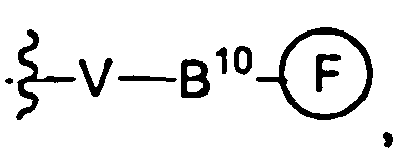
- An embodiment of the present invention includes compounds of Formula (II) wherein
R5 is independently selected from the group consisting of: methyl, ethyl, isopropyl, t-butyl, methoxy, ethoxy, -C(=O)NH2, -C(=O)Omethyl, -C(=O)Oethyl, -C(=O)OH, cyano, dimethyl-amino, bromo, chloro, fluoro, trifluoromethyl, trifluoromethoxy, thio-trifluoromethyl, hydroxy, hydroxymethyl, hydroxyethyl, nitro, -SO2NH2, thiomethyl
- An embodiment of the present invention includes compounds of Formula (II):
wherein V and W are each independently absent or selected from the group consisting of: -C(=O), -C(=O)N(alkyl)-, -C(=O)NH-, -C(=O)O-, -NH-, -NH(=O)-, -NHC(=O)NH-, -NHC(=O)O-, -NHSO2-, -O-, -OC(=O), -OC(=O)NH-, -OC(=O)O-, -S-, -SO-, -SO2-, and -SO2NH-. - An embodiment of the present invention includes compounds of Formula (II):
wherein V and W are each independently absent or selected from the group consisting of: -C(=O), -C(=O)N(alkyl)-, -C(=O)NH-, -C(=O)O-, -NH-, -O- and -SO2-. - An embodiment of the present invention includes compounds of Formula (II) wherein V is absent or selected from the group consisting of: -C(=O), -C(=O)N(alkyl)-, -C(=O)NH-, -C(=O)O-, -NH-, -O- and -SO2-.
- An embodiment of the present invention includes compounds of Formula (II) wherein V is absent or selected from the group consisting of: -C(=O)NH-, -C(=O)O-, -NH-, -O- and -SO2-.
- An embodiment of the present invention includes compounds of Formula (II) wherein W is absent.
- An embodiment of the present invention includes compounds of Formula (II) wherein:
B10 is absent or alkyl; and
wherein when B10 is alkyl, the alkyl may be optionally substituted with one or more groups independently selected from: alkoxy, alkylamino, amino, cyano, dialkylamino, halogen, halogenated alkoxy, halogenated -SO2alkyl, halogenated thioalkyl, hydroxy -N(alkyl)C(=O)alkyl, -N(alkyl)C(=O)N(alkyl)2, -N(alkyl)C(=O)NH2, -N(alkyl)C(=O)NHalkyl, -N(alkyl)C(=O)Oalkyl, -N(alkyl)SO2alkyl, -NHC(=O)alkyl, -NHC(=O)N(alkyl)2, -NHC(=O)NH2, -NHC(=O)NHalkyl, -NHC(=O)Oalkyl, -NHSO2alkyl, -OC(=O)alkyl, -OC(=O)N(alkyl)2, -OC(=O)NHalkyl, -OC(=O)Oalkyl, -SO2alkyl, thio or thioalkyl. - An embodiment of the present invention includes compounds of Formula (II) wherein:
B10 is absent or alkyl; and
wherein when B10 is alkyl, the alkyl may be optionally substituted with one or more groups independently selected from: alkoxy, alkylamino, amino, dialkylamino, halogen, halogenated alkoxy, hydroxy -NHC(=O)NH2, -NHSO2alkyl, -SO2alkyl or thioalkyl. - An embodiment of the present invention includes compounds of Formula (II) wherein:
B10 is absent or selected from methyl or ethyl, ; wherein methyl or ethyl are optionally substituted with one or more groups independently selected from dialkylamino or hydroxy. - An embodiment of the present invention includes compounds of Formula (II) wherein:
B10 is absent or selected from methyl or ethyl, ; wherein methyl or ethyl are optionally substituted with one or more groups independently selected from dimethyl-amino or hydroxy. - An embodiment of the present invention includes compounds of Formula (II) wherein:
B20 is absent or selected from alkyl, alkenyl, or H;
wherein, when B20 is alkyl or alkenyl, the alkyl or alkenyl group may be optionally substituted with one or more groups independently selected from: alkoxy, alkylamino, amino, cyano, dialkylamino, halogen, halogenated alkoxy, halogenated -SO2alkyl, halogenated thioalkyl, hydroxy -N(alkyl)C(=O)alkyl, -N(alkyl)C(=O)N(alkyl)2, -N(alkyl)C(=O)NH2, -N(alkyl)C(=O)NHalkyl, -N(alkyl)C(=O)Oalkyl, -N(alkyl)SO2alkyl, -NHC(=O)alkyl, -NHC(=O)N(alkyl)2, -NHC(=O)NH2, -NHC(=O)NHalkyl, -NHC(=O)Oalkyl, -NHSO2alkyl, -OC(=O)alkyl, -OC(=O)N(alkyl)2, -OC(=O)NHalkyl, -OC(=O)Oalkyl, -SO2alkyl, thio or thioalkyl. - An embodiment of the present invention includes compounds of Formula (II) wherein:
B20 is absent or selected from alkyl, alkenyl, or H;
wherein, when B20 is alkyl or alkenyl, the alkyl or alkenyl group may be optionally substituted with one or more groups independently selected from: alkoxy, alkylamino, amino, dialkylamino, halogen, halogenated alkoxy, hydroxy, -NHC(=O)NH2, -NHSO2alkyl or thioalkyl. - An embodiment of the present invention includes compounds of Formula (II) wherein:
B20 is absent or H. - An embodiment of the present invention includes compounds of Formula (II) wherein:
is selected from the group consisting of aryl, cycloalkyl, partially unsaturated carbocycle, heteroaryl and heterocycloalkyl optionally substituted with one or more substituents independently selected from alkoxy, alkyl, alkylamino, amino, cyano, dialkylamino, halogen, halogenated alkoxy, halogenated alkyl, halogenated -SO2alkyl, halogenated thioalkyl, heteroaryl, hydroxy, hydroxy alkyl, -N(alkyl)C(=O)alkyl, -N(alkyl)C(=O)N(alkyl)2, -N(alkyl)C(=O)NHalkyl, -N(alkyl)C(=O)Oalkyl, -N(alkyl)SO2alkyl, -NHC(=O)alkyl, -NHC(=O)N(alkyl)2, -NHC(=O)NH2, -NHC(=O)NHalkyl, -NHC(=O)Oalkyl, -NHSO2alkyl, nitro, -OC(=O)N(alkyl)2, -OC(=O)NHalkyl, -SO2alkyl, thio or thioalkyl.
- An embodiment of the present invention includes compounds of Formula (II) wherein:
is selected from the group consisting of phenyl, imidazolyl, pyridinyl, pyrimidinyl, pyrrolidinyl, morpholinyl, piperazinyl and piperidinyl optionally substituted with one or more substituents independently selected from alkoxy, alkyl, alkylamino, amino, cyano, dialkylamino, halogen, halogenated alkoxy, halogenated alkyl, halogenated -SO2alkyl, halogenated thioalkyl, heteroaryl, hydroxy, hydroxy alkyl, -N(alkyl)C(=O)alkyl, -N(alkyl)C(=O)N(alkyl)2, -N(alkyl)C(=O)NHalkyl, -N(alkyl)C(=O)Oalkyl, -N(alkyl)SO2alkyl, -NHC(=O)alkyl, -NHC(=O)N(alkyl)2, -NHC(=O)NH2, -NHC(=O)NHalkyl, -NHC(=O)Oalkyl, -NHSO2alkyl, nitro, -OC(=O)N(alkyl)2, -OC(=O)NHalkyl, -SO2alkyl, thio or thioalkyl. - An embodiment of the present invention includes compounds of Formula (II) wherein:
is selected from the group consisting of phenyl, imidazolyl, pyridinyl, pyrimidinyl, pyrrolidinyl, morpholinyl, piperazinyl and piperidinyl optionally substituted with one or more substituents independently selected from alkoxy, alkyl, alkylamino, amino, dialkylamino, halogen, halogenated alkoxy, halogenated alkyl, heteroaryl, hydroxy, hydroxy alkyl, -NHC(=O)NH2, -NHSO2alkyl, nitro or -SO2alkyl. - An embodiment of the present invention includes compounds of Formula (II) wherein:
is selected from the group consisting of phenyl, imidazolyl, pyridinyl, pyrimidinyl, pyrrolidinyl, morpholinyl, piperazinyl and piperidinyl optionally substituted with one or more substituents independently selected from methoxy, ethoxy, methyl, ethyl, bromo, chloro, fluoro, trifluoromethyl, pyridinyl, hydroxy or hydroxymethyl. - A embodiment of the present invention includes compounds of Formula (II) wherein:

- An embodiment of the present invention includes compounds of Formula (II) wherein:
is selected from the group consisting of Formulae A-1, A-2 and A-3:
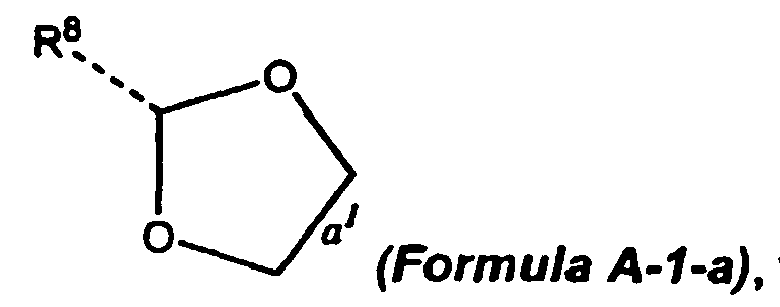

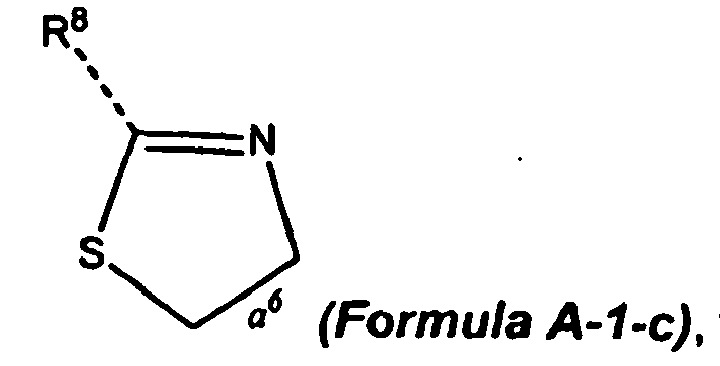
wherein R8 is H or lower alkyl;

a carbon ring member with C1-4alkyl, aryl, alkoxy, or halogen;
s is an integer from 0 to 2; and
m is an integer from 0 to 4; provided that whenis not substituted with Formulae A-1-a, A-1-b or A-1-c, the sum of m and s is an integer from 0 to 4, and whenis substituted with one of Formulae A-1-a, A-1-b, or A-1-c, the sum of m and s is an integer from 0 to 2;
R9 is independently selected from the group consisting of: alkoxy, alkyl, alkylamino, amino, cyano, dialkylamino, halogen, halogenated alkyl, halogenated alkyloxy, hydroxy, -NHC(=O)alkyl, -NHC(=O)NHalkyl, -NHC(=O)Oalkyl, -NHSO2alkyl, and thioalkyl;
L2 is a linking group selected from the group consisting of: -(CH2)-, -(CH2)3-4-, -CH(R100)-, -C(=R100)-, -C(R100)2-, -O-, -O(CH2)1-4-, -OCH(R100)-, -OC(R100)2-, -S-, -NH-, -N(lower alkyl)-, -N(COalkyl)-, -N(aryl)-, -N(CO2alkyl)-, -N(CONHalkyl)-, -N(SO2alkyl) and -N(SO2aryl)-; provided that when L2 is -O-, neither R6 nor R7 is -CH3;
R100 is selected from: alkyl, hydroxy, aryl, oxo or =N(OH);
R10 is independently selected from the group consisting of
X1 and Y1 are each independently absent or selected from the group consisting of: -NH-, -O-, -SO2- and -SO2NH-;
A20 is absent or alkyl;
wherein when A20 is alkyl, the alkyl may be optionally substituted with one or more groups independently selected from: alkoxy, alkylamino, amino, cyano, dialkylamino, halogen, halogenated alkoxy, halogenated -SO2alkyl, halogenated thioalkyl, hydroxy, -N(alkyl)C(=O)alkyl, -N(alkyl)C(=O)N(alkyl)2, -N(alkyl)C(=O)NH2, -N(alkyl)C(=O)NHalkyl, -N(alkyl)C(=O)Oalkyl, -N(alkyl)SO2alkyl, -NHC(=O)alkyl, -NHC(=O)N(alkyl)2, -NHC(=O)NH2, -NHC(=O)NHalkyl, -NHC(=O)Oalkyl, -NHSO2alkyl, -OC(=O)alkyl, -OC(=O)N(alkyl)2, -OC(=O)NHalkyl, -OC(=O)Oalkyl, -SO2alkyl, thio or thioalkyl;
A21 is selected from alkyl, alkenyl, or H;
wherein when A21 is alkyl or alkenyl, the alkyl or alkenyl may be optionally substituted with one or more groups independently selected from: alkoxy, alkylamino, amino, cyano, dialkylamino, halogen, halogenated alkoxy, halogenated -SO2alkyl, halogenated thioalkyl, hydroxy, -N(alkyl)C(=O)alkyl, -N(alkyl)C(=O)N(alkyl)2, -N(alkyl)C(=O)NH2, -N(alkyl)C(=O)NHalkyl, -N(alkyl)C(=O)Oalkyl, -N(alkyl)SO2alkyl, -NHC(=O)alkyl, -NHC(=O)N(alkyl)2, -NHC(=O)NH2, -NHC(=O)NHalkyl, -NHC(=O)Oalkyl, -NHSO2alkyl, -OC(=O)alkyl, -OC(=O)N(alkyl)2, -OC(=O)NHalkyl, -OC(=O)Oalkyl, -SO2alkyl, thio or thioalkyl; and
is selected from the group consisting of aryl, cycloalkyl, partially unsaturated carbocycle, heteroaryl and heterocycloalkyl optionally substituted with one or more substituents independently selected from halogen, hydroxy, amino, thio, nitro, cyano, alkyl, halogenated alkyl, alkoxy, halogenated alkoxy, alkylamino, -NHC(=O)alkyl, -N(alkyl)C(=O)alkyl, or dialkylamino, -NHC(=O)NH2, -NHC(=O)NHalkyl, -N(alkyl)C(=O)NHalkyl, -OC(=O)NHalkyl, -NHC(=O)Oalkyl, -N(alkyl)C(=O)Oalkyl, -NHSO2alkyl, -N(alkyl)SO2alkyl, thioalkyl, halogenated thioalkyl, -SO2alkyl, halogenated -SO2alkyl, -NHC(=O)N(alkyl)2, -N(alkyl)C(=O)N(alkyl)2 or -OC(=O)N(alkyl)2;
R6 and R7 are independently selected from the group consisting of: - (a) H;
- (b)
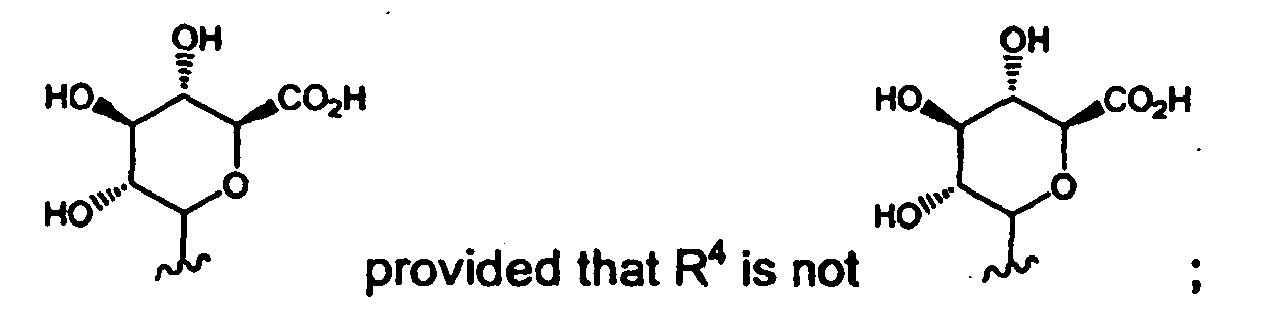
- (c) -CH2- substituted with one group selected from: -H, -methyl, -Oalkyl, -CH2OH, -CH(CH3)OH, -O(C=O)alkyl, -(C=O)OH, -C(=O)Oalkyl, -C(=O)Oaryl, -C(=O)Oheteroaryl, -(C=O)NH2, -(C=O)NHalkyl, -(C=O)N(alkyl)2, -C(=O)alkyl, -phenyl-OCH3 or -phenyl-OC(=O)alkyl;
- (d) -C(=O)(CH2CH2O-)1-10 terminating with H;
- (e) -C(=O)CH2O(CH2CH2O-)1-10 terminating with H;
- (f) -C(=O)alkyl optionally substituted with one or more groups independently selected from: -OH, -Oalkyl, -Oalkylaryl, -NH2, -NHalkyl, -N(alkyl)2, heterocycloalkyl, -NHC(=O)alkyl, -NHSO2alkyl, or -OC(=O)alkyl;
- (g) -C(=O)(CH2)1-3aryl or -C(=O)aryl, wherein said -C(=O)aryl may be optionally substituted with one or more groups independently selected from: -OH, -Oalkyl, -NH2, -NHalkyl, -N(alkyl)2, heterocycloalkyl, -NHC(=O)alkyl, -NHSO2alkyl, halogen, nitrile, or -OC(=O)alkyl;
- (h) -C(=O)(CH2)1-6C(=O)- terminating with methyl, ethyl, -OH, -Oalkyl, -NH2, -NHalkyl, -N(alkyl)2, or heterocycloalkyl;
- (hh) -C(=O)alkylOC(=O)alkyl- terminating with -OH, -Oalkyl, -NH2, -NHalkyl or -N(alkyl)2;
- (i) -C(=O)O(CH2CH2O-)1-10 terminating with H, methyl, ethyl, or benzyl;
- (j) -C(=O)Oalkyloptionally substituted with one or more groups independently selected from: -OH, -Oalkyl, -NH2, -NHalkyl, -N(alkyl)2, heterocycloalkyl, -NHC(=O)alkyl, -NHSO2alkyl, -OC(=O)alkyl, -C(=O)OH, -C(=O)Oalkyl, -C(=O)NH2, -C(=O)NHalkyl, or -C(=O)N(alkyl)2;
- (k) -C(=O)O(CH2)1-3aryl or -C(=O)Oaryl, wherein said -C(=O)Oaryl may be optionally substituted with one or more groups independently selected from: -OH, -Oalkyl, -NH2, -NHalkyl, -N(alkyl)2, heterocycloalkyl, -NHC(=O)alkyl, -NHSO2alkyl, halogen, nitrile, or -OC(=O)alkyl;
- (l) -C(=O)NH(CH2CH2O-)1-10 terminating with -H, methyl, ethyl, benzyl,-CH2CH2NH2, -CH2CH2NHalkyl, -CH2CH2N(alkyl)2, -CH2CH2-1-pyrrolidinyl, -CH2CH2-1-piperidinyl, -CH2CH2-4-morpholinyl, -CH2CH2-1-piperazinyl, -CH2CH2-1-(4-CH3)-piperazinyl or -C(=O)alkyl;
- (m) -C(=O)NH2, -C(=O)NH(C1-20)alkyl, or -C(=O)N(C1-20alkyl)2, wherein said -C(=O)NH(C1-20)alkyl, may be optionally substituted with one or more groups independently selected from: -OH, -Oalkyl, -NH2, -NHalkyl, -N(alkyl)2, heterocycloalkyl, -NHC(=O)alkyl, -NHSO2alkyl, -OC(=O)alkyl, -OC(=O)alkenyl, -NHC(=O)aryl, -C(=O)OH, -C(=O)Oalkyl, -C(=O)NH2, -C(=O)NHalkyl, or -C(=O)N(alkyl)2; and, wherein the aryl portion of said -NHC(=O)aryl may be optionally substituted with one or more groups independently selected from: alkyl, -OH, -Oalkyl, -NH2, -NHalkyl, -N(alkyl)2, halogen or nitrile;
- (n) -C(=O)NH(CH2)1-3aryl or -C(=O)NHaryl, wherein said -C(=O)NHaryl may be optionally substituted with one or more groups independently selected from: -OH, -Oalkyl, -NH2, -NHalkyl, -N(alkyl)2, heterocycloalkyl, -NHC(=O)alkyl, -NHSO2alkyl, halogen, nitrile, or -OC(=O)alkyl;
- (o) -C(=O)NHCH2CH2NH(CH2CH2NH-)0-3 terminating with H, methyl, ethyl, -CH2CH2NHalkyl, -CH2CH2N(alkyl)2, -CH2CH2-1-pyrrolidinyl, -CH2CH2-1-piperidinyl, -CH2CH2-4-morpholinyl, -CH2CH2-1-piperazinyl, -CH2CH2-1-(4-CH3)-piperazinyl, -CH2CH2OH, -CH2CH2OCH3, -CH2CH2OCH2CH3, -CH2CH2OC(=O)alkyl or -C(=O)aryl; wherein the aryl portion of said -C(=O)aryl may be optionally substituted with one or more groups independently selected from: alkyl, -OH , -Oalkyl, -NH2, -NHalkyl, -N(alkyl)2, halogen or nitrile;
- (p) -C(=S)NH2;
- (q) -C(=S)NHalkyl;
- (r) -C(=S)N(alkyl)2;
- (s) -SO2NH2;
- (t) -SO2NHalkyl;
- (u) -SO2N(alkyl)2;
- (v) -P(=O)(OCH3)2; and
- (w) -P(=O)(OCH2CH3)2;
- An embodiment of the present invention includes compounds of Formula (II) wherein
is selected from the group consisting of:


s is an integer from 0 to 2; and
m is an integer from 0 to 4; provided that whenis Formula A-4, the sum of m and s is an integer from 0 to 4, and whenis Formulae A-5 or A-6, the sum of m and s is an integer from 0 to 2;
R9 is independently selected from the group consisting of: alkoxy, alkyl, amino, cyano, dialkylamino, halogen, halogenated alkyl, halogenated alkyloxy, hydroxy and -NHC(=O)alkyl;
L2 is a linking group selected from the group consisting of: -(CH2)-, -(CH2)3-4-, -CH(R100)-, -C(=R100)-, -C(R100)2-, -O(CH2)1-4-, -OCH(R100)-, -OC(R100)2-, -S-, -NH-, -N(lower alkyl)-, -N(COalkyl)-, -N(aryl)-, -N(CO2alkyl)-, -N(CONHalkyl)-, -N(SO2alkyl) and -N(SO2aryl)-;
R100 is selected from: alkyl, hydroxy, aryl, oxo or =N(OH);
R10 is independently selected from the group consisting of
X1 and Y1 are each independently absent or -O-;
A20 is absent or alkyl;
wherein when A20 is alkyl, the alkyl may be optionally substituted with one or more groups independently selected from: alkoxy, alkylamino, amino, dialkylamino, halogen, halogenated alkoxy, hydroxy, -NHC(=O)NH2, -NHSO2alkyl, -SO2alkyl or thioalkyl;
A21 is selected from alkyl, alkenyl, or H;
wherein when A21 is alkyl or alkenyl, the alkyl or alkenyl may be optionally substituted with one or more groups independently selected from: alkoxy, alkylamino, amino, dialkylamino, halogen, halogenated alkoxy, hydroxy, -NHC(=O)NH2, -NHSO2alkyl or thioalkyl; and
is selected from the group consisting of aryl, heteroaryl and heterocycloalkyl optionally substituted with one or more substituents independently selected from halogen, hydroxy, amino, thio, nitro, cyano, alkyl, halogenated alkyl, alkoxy, halogenated alkoxy, alkylamino, -NHC(=O)alkyl, -N(alkyl)C(=O)alkyl, or dialkylamino, -NHC(=O)NH2, -NHC(=O)NHalkyl, -N(alkyl)C(=O)NHalkyl, -OC(=O)NHalkyl, -NHC(=O)Oalkyl, -N(alkyl)C(=O)Oalkyl, -NHSO2alkyl, -N(alkyl)SO2alkyl, thioalkyl, halogenated thioalkyl, -SO2alkyl, halogenated -SO2alkyl, -NHC(=O)N(alkyl)2, -N(alkyl)C(=O)N(alkyl)2 or -OC(=O)N(alkyl)2;
R6 and R7 are independently selected from the group consisting of: - (a) H;
- (b)

- (c) -CH2- substituted with one group selected from: -H, -methyl, -Oalkyl, -CH2OH, -CH(CH3)OH, -O(C=O)alkyl, -(C=O)OH, -C(=O)Oalkyl, -C(=O)Oaryl, -C(=O)Oheteroaryl, -(C=O)NH2, -(C=O)NHalkyl, -(C=O)N(alkyl)2, -C(=O)alkyl, -phenyl-OCH3 or -phenyl-OC(=O)alkyl;
- (f) -C(=O)alkyl optionally substituted with one or more groups independently selected from: -OH, -Oalkyl, -Oalkylaryl, -NH2, -NHalkyl, -N(alkyl)2, heterocycloalkyl, -NHC(=O)alkyl, -NHSO2alkyl, or -OC(=O)alkyl;
- (g) -C(=O)(CH2)1-3aryl or -C(=O)aryl, wherein said -C(=O)aryl may be optionally substituted with one or more groups independently selected from: -OH, -Oalkyl, -NH2, -NHalkyl, -N(alkyl)2, heterocycloalkyl, -NHC(=O)alkyl, -NHSO2alkyl, halogen, nitrile, or -OC(=O)alkyl;
- (h) -C(=O)(CH2)1-6C(=O)- terminating with methyl, ethyl, -OH, -Oalkyl, -NH2, -NHalkyl, -N(alkyl)2, or heterocycloalkyl;
- (hh) -C(=O)alkylOC(=O)alkyl- terminating with -OH, -Oalkyl, -NH2, -NHalkyl or -N(alkyl)2;
- (i) -C(=O)O(CH2CH2O-)1-10 terminating with H, methyl, ethyl, or benzyl;
- (j) -C(=O)Oalkyloptionally substituted with one or more groups independently selected from: -OH, -Oalkyl, -NH2, -NHalkyl, -N(alkyl)2, heterocycloalkyl, -NHC(=O)alkyl, -NHSO2alkyl, -OC(=O)alkyl, -C(=O)OH, -C(=O)Oalkyl, -C(=O)NH2, -C(=O)NHalkyl, or -C(=O)N(alkyl)2;
- (k) -C(=O)O(CH2)1-3aryl or -C(=O)Oaryl, wherein said -C(=O)Oaryl may be optionally substituted with one or more groups independently selected from: -OH, -Oalkyl, -NH2, -NHalkyl, -N(alkyl)2, heterocycloalkyl, -NHC(=O)alkyl, -NHSO2alkyl, halogen, nitrile, or -OC(=O)alkyl;
- (I) -C(=O)NH(CH2CH2O-)1-10 terminating with -H, methyl, ethyl, benzyl,-CH2CH2NH2, -CH2CH2NHalkyl, -CH2CH2N(alkyl)2, -CH2CH2-1-pyrrolidinyl, -CH2CH2-1-piperidinyl, -CH2CH2-4-morpholinyl, -CH2CH2-1-piperazinyl, -CH2CH2-1-(4-CH3)-piperazinyl or -C(=O)alkyl;
- (m) -C(=O)NH2, -C(=O)NH(C1-20)alkyl, or -C(=O)N(C1-20alkyl)2, wherein said -C(=O)NH(C1-20)alkyl, may be optionally substituted with one or more groups independently selected from: -OH, -Oalkyl, -NH2, -NHalkyl, -N(alkyl)2, heterocycloalkyl, -NHC(=O)alkyl, -NHSO2alkyl, -OC(=O)alkyl, -OC(=O)alkenyl, -NHC(=O)aryl, -C(=O)OH, -C(=O)Oalkyl, -C(=O)NH2, -C(=O)NHalkyl, or -C(=O)N(alkyl)2; and, wherein the aryl portion of said -NHC(=O)aryl may be optionally substituted with one or more groups independently selected from: alkyl, -OH, -Oalkyl, -NH2, -NHalkyl, -N(alkyl)2, halogen or nitrile;
- (n) -C(=O)NH(CH2)1-3aryl or -C(=O)NHaryl, wherein said -C(=O)NHaryl may be optionally substituted with one or more groups independently selected from: -OH, -Oalkyl, -NH2, -NHalkyl, -N(alkyl)2, heterocycloalkyl, -NHC(=O)alkyl, -NHSO2alkyl, halogen, nitrile, or -OC(=O)alkyl;
- (o) -C(=O)NHCH2CH2NH(CH2CH2NH-)0-3 terminating with H, methyl, ethyl, -CH2CH2NHalkyl, -CH2CH2N(alkyl)2, -CH2CH2-1-pyrrolidinyl, -CH2CH2-1-piperidinyl, -CH2CH2-4-morpholinyl, -CH2CH2-1-piperazinyl, -CH2CH2-1-(4-CH3)-piperazinyl, -CH2CH2OH, -CH2CH2OCH3, -CH2CH2OCH2CH3, -CH2CH2OC(=O)alkyl, or -C(=O)aryl; wherein the aryl portion of said -C(=O)aryl may be optionally substituted with one or more groups independently selected from: alkyl, -OH , -Oalkyl, -NH2, -NHalkyl, -N(alkyl)2, halogen or nitrile;
- (p) -C(=S)NH2;
- (u) -SO2N(alkyl)2; and
- (w) -P(=O)(OCH2CH3)2:
- The present invention is further directed to compounds of Formula (II-AA)

R100 is selected from the group consisting of: H and alkyl;
RB and RC are independently selected from the group consisting of: alkoxy; and
R5 is selected from the group consisting of: alkoxy and halogen;
or an optical isomer, enantiomer, diastereomer, racemate, or pharmaceutically acceptable salt thereof. - A preferred embodiment of the present invention includes compounds of Formula (II-AA) wherein R100 is selected from the group consisting of: H, methyl, ethyl; RB and Rc are independently selected from the group consisting of: methoxy and ethoxy; and R5 is selected from the group consisting of: methoxy, ethoxy, isopropoxy, chloro, bromo, and fluoro.
- The present invention is further directed to compounds of Formula (II-BB)

RC is -O(CH2)3OH;
R100 is selected from the group consisting of: H and alkyl;
RB is selected from the group consisting of: alkoxy; and
R5 is selected from the group consisting of: alkoxy and halogen;
or an optical isomer, enantiomer, diastereomer, racemate, or pharmaceutically acceptable salt thereof. - A preferred embodiment of the present invention includes compounds of Formula (II-BB) wherein R100 is selected from the group consisting of: H, methyl, ethyl; RB is selected from the group consisting of: methoxy and ethoxy; and R5 is selected from the group consisting of: methoxy, ethoxy, isopropoxy, chloro, bromo, and fluoro.
- The present invention is further directed to compounds of Formula (II-CC)
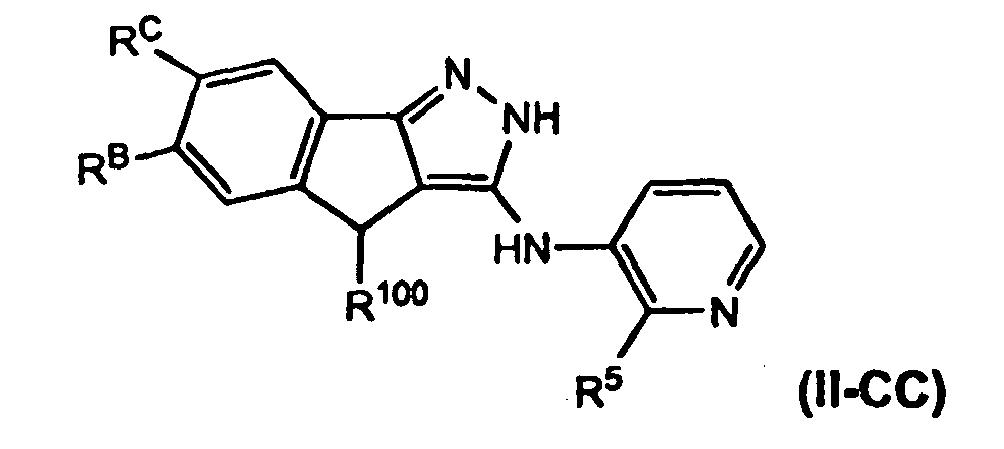
R100 is selected from the group consisting of: H and alkyl;
RB and Rc are independently selected from the group consisting of: alkoxy; and
R5 is selected from the group consisting of: alkyl, cyano, hydroxy, alkoxy and halogen;
or an optical isomer, enantiomer, diastereomer, racemate, or pharmaceutically acceptable salt thereof. - A preferred embodiment of the present invention includes compounds of Formula (II-CC) wherein R100 is selected from the group consisting of: H, methyl, ethyl; RB and RC are independently selected from the group consisting of: methoxy and ethoxy; and R5 is selected from the group consisting of: methoxy, ethoxy, isopropoxy, chloro, methyl, cyano and hydroxy.
- The present invention is further directed to compounds of Formula (II-DD)
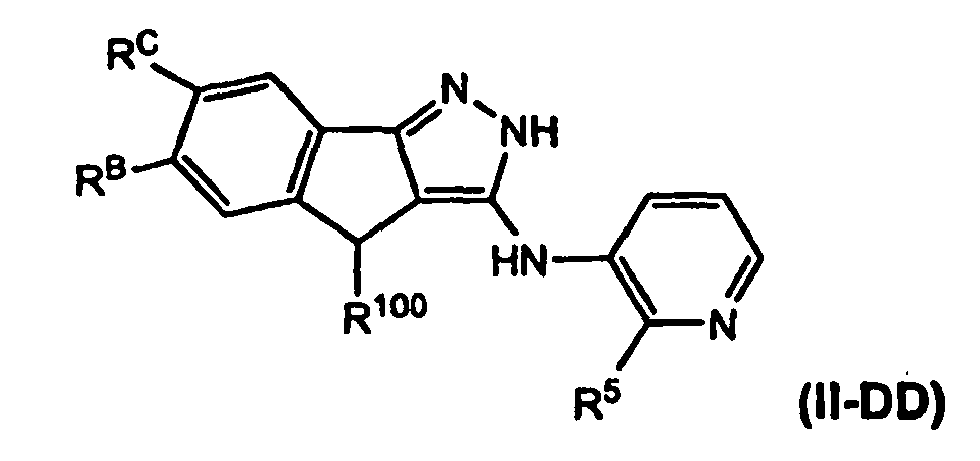
RC is -O(CH2)3OH;
R100 is selected from the group consisting of: H and alkyl;
RB is selected from the group consisting of: alkoxy; and
R5 is selected from the group consisting of: alkyl, cyano, hydroxy, alkoxy and halogen;
or an optical isomer, enantiomer, diastereomer, racemate, or pharmaceutically acceptable salt thereof. - A preferred embodiment of the present invention includes compounds of Formula (II-DD) wherein R100 is selected from the group consisting of: H, methyl, and ethyl; RB is selected from the group consisting of: methoxy and ethoxy; and R5 is selected from the group consisting of: methoxy, ethoxy, isopropoxy, chloro, methyl, cyano and hydroxy.
- The present invention is further directed to compounds of Formula (II-EE)

R5 is selected from the group consisting of: alkoxy and halogen; and RC is selected from the group consisting of: alkoxy,



- In a preferred embodiment, the present invention is further directed to compounds of Formula (II-FF)

R9 is independently selected from the group consisting of: alkoxy, alkyl, alkylamino, amino, cyano, dialkylamino, halogen, halogenated alkyl, halogenated alkyloxy, halogenated -SO2alkyl, halogenated thioalkyl, hydroxy, -N(alkyl)C(=O)alkyl, -N(alkyl)C(=O)N(alkyl)2, -N(alkyl)C(=O)NHalkyl, -N(alkyl)C(=O)Oalkyl, -N(alkyl)SO2alkyl, -NHC(=O)alkyl, NHC(=O)N(alkyl)2, -NHC(=O)NH2, -NHC(=O)NHalkyl, -NHC(=O)Oalkyl, -NHSO2alkyl, nitro, OC(=O)N(alkyl)2, -OC(=O)NHalkyl, -SO2alkyl, thio and thioalkyl;
L2 is a linking group selected from the group consisting of: -(CH2)1-4-, -CH(R100)-, -C(=R100)-, -C(R100)2-, -O-, -O(CH2)1-4-, -OCH(R100)-, -OC(R100)2-, -S-, -NH-, -N(lower alkyl)-, -N(COalkyl)-, -N(aryl)-, -N(CO2alkyl)-, -N(CONHalkyl)-, -N(SO2alkyl) and -N(SO2aryl)-; wherein R100 is selected from: alkyl, hydroxy, aryl, alkoxy, oxo, -NH2, -NH(alkyl) -N(alkyl)2, =N(OH) or -NH2OH; provided that when L2 is -CH2CH2-, neither R6 nor R7 is -CH2-(C=O)NHalkyl, -CH2-(C=O)N(alkyl)2 or -CH2C(=O)Oalkyl; provided that when L2 is -OCH(R100)-, R100 is alkoxy, andis phenyl, R5 is not -C(=O)NH-NH2; and provided that when L2 is -0- or -S-, neither R6 nor R7 is -CH3;
R10 is independently selected from the group consisting of
wherein X1 and Y1 are each independently absent or selected from the group consisting of: -(alkyl)C(=O)N(alkyl)-, -C(=O)N(alkyl)-, -C(=O)NH-, -C(=O)O-, -N(alkyl)-, -N(alkyl)C(=O)-, -N(alkyl)C(=O)NH-, -N(alkyl)C(=O)O-, -N(alkyl)SO2-, -NH-, -NHC(=O)-, -NHC(=O)N(alkyl)-, -NHC(=O)NH, -NHC(=O)O-, -NHSO2-, -O-, -OC(=O), -OC(=O)N(alkyl)-, -OC(=O)NH-, -OC(=O)O-, -S-, -SO-, -SO2-, -SO2N(alkyl)-, and -SO2NH-; A20 is absent or selected from alkyl or alkenyl; and
A21 is selected from alkyl, alkenyl, or H;
wherein when A20 or A21 is alkyl or alkenyl, the alkyl or alkenyl may be optionally substituted with one or more groups independently selected from: alkoxy, alkylamino, amino, cyano, dialkylamino, halogen, halogenated alkoxy, halogenated -SO2alkyl, halogenated thioalkyl, hydroxy, -N(alkyl)C(=O)alkyl, -N(alkyl)C(=O)N(alkyl)2, -N(alkyl)C(=O)NH2, -N(alkyl)C(=O)NHalkyl, -N(alkyl)C(=O)Oalkyl, -N(alkyl)SO2alkyl, -NHC(=O)alkyl, -NHC(=O)N(alkyl)2, -NHC(=O)NH2, -NHC(=O)NHalkyl, -NHC(=O)Oalkyl, -NHSO2alkyl. -OC(=O)alkyl, -OC(=O)N(alkyl)2, -OC(=O)NHalkyl, -OC(=O)Oalkyl, -SO2alkyl, thio or thioalkyl;
is selected from the group consisting of aryl, cycloalkyl, partially unsaturated carbocycle, heteroaryl, heterocycloalkyl, nine to ten membered benzo-fused cycloalkyl, and nine to ten membered benzo-fused heterocycloalkyl; wherein, the aryl, cycloalkyl, partially unsaturated carbocycle, heteroaryl, heterocycloalkyl, benzo-fused cycloalkyl, or benzo-fused heterocycloalkyl, are optionally substituted with one or more substituents independently selected from halogen, hydroxy, amino, thio, nitro, cyano, alkyl, halogenated alkyl, alkoxy, halogenated alkoxy, alkylamino, -NHC(=O)alkyl, -N(alkyl)C(=O)alkyl, or dialkylamino, -NHC(=O)NH2, -NHC(=O)NHalkyl, -N(alkyl)C(=O)NHalkyl, -OC(=O)NHalkyl, -NHC(=O)Oalkyl, -N(alkyl)C(=O)Oalkyl, -NHSO2alkyl, -N(alkyl)SO2alkyl, thioalkyl, halogenated thioalkyl, -SO2alkyl, halogenated -SO2alkyl, -NHC(=O)N(alkyl)2, -N(alkyl)C(=O)N(alkyl)2 or -OC(=O)N(alkyl)2;
s is an integer from 0 to 2;
m is an integer from 0 to 4; provided that the sum of m and s is an integer from
0 to 4;
R6 and R7 are independently selected from the group consisting of: - (a) H;
- (b)

- (c) -CH2- substituted with one group selected from: -H, -methyl, -Oalkyl, -CH2OH, -CH(CH3)OH, -O(C=O)alkyl, -(C=O)OH, -C(=O)Oalkyl, -C(=O)Oaryl, -C(=O)Oheteroaryl, -(C=O)NH2, -(C=O)NHalkyl, -(C=O)N(alkyl)2, -C(=O)alkyl, -phenyl-OCH3 or-phenyl-OC(=O)alkyl;
- (d) -C(=O)(CH2CH2O-)1-10 terminating with H, methyl, ethyl, or benzyl;
- (e) -C(=O)CH2O(CH2CH2O-)1-10 terminating with H, methyl, ethyl, or benzyl; (f) -C(=O)alkyl, or C(=O)(C3-6)cycloalkyl, wherein said -C(=O)alkyl, and -C(=O)(C3-6)cycloalkyl may be optionally substituted with one or more groups independently selected from: -OH, -Oalkyl, -Oalkylaryl, -NH2, -NHalkyl, -N(alkyl)2, heterocycloalkyl, -NHC(=O)alkyl, -NHSO2alkyl, or -OC(=O)alkyl;
- (g) -C(=O)(CH2)1-3aryl, -C(=O)aryl, -C(=O)(CH2)1-3heteroaryl, or -C(=O)heteroaryl, wherein said -C(=O)(CH2)1-3aryl, -C(=O)aryl, -C(=O)(CH2)1-3heteroaryl, and -C(=O)heteroaryl may be optionally substituted with one or more groups independently selected from: -OH, -Oalkyl, -NH2, -NHalkyl, -N(alkyl)2, heterocycloalkyl, -NHC(=O)alkyl, -NHSO2alkyl, halogen, nitrile, or -OC(=O)alkyl;
- (h) -C(=O)(CH2)1-6C(=O)- terminating with methyl, ethyl, -OH, -Oalkyl, -NH2, -NHalkyl, -N(alkyl)2, or heterocycloalkyl;
- (hh) -C(=O)alkylOC(=O)alkyl- terminating with -OH, -Oalkyl, -NH2, -NHalkyl, -N(alkyl)2, or heterocycloalkyl;
- (i) -C(=O)O(CH2CH2O-)1-10 terminating with H, methyl, ethyl, or benzyl;
- (j) -C(=O)Oalkyl, or -C(=O)O(C3-6)cycloalkyl, wherein said -C(=O)Oalkyl, and -C(=O)O(C3-6)cycloalkyl may be optionally substituted with one or more groups independently selected from: -OH, -Oalkyl, -NH2, -NHalkyl, -N(alkyl)2, heterocycloalkyl, -NHC(=O)alkyl, -NHSO2alkyl, -OC(=O)alkyl, -C(=O)OH, -C(=O)Oalkyl, -C(=O)NH2, -C(=O)NHalkyl, or -C(=O)N(alkyl)2;
- (k) -C(=O)O(CH2)1-3aryl, -C(=O)Oaryl, -C(=O)O(CH2)1-3heteroaryl, or -C(=O)Oheteroaryl, wherein said -C(=O)O(CH2)1-3aryl, -C(=O)Oaryl, -C(=O)O(CH2)1-3heteroaryl, or -C(=O)Oheteroaryl may be optionally substituted with one or more groups independently selected from: -OH, -Oalkyl, -NH2, -NHalkyl, -N(alkyl)2, heterocycloalkyl, -NHC(=O)alkyl, -NHSO2alkyl, halogen, nitrile, or -OC(=O)alkyl;
- (l) -C(=O)NH(CH2CH2O-)1-10 terminating with -H, methyl, ethyl, benzyl, -CH2CH2NH2, -CH2CH2NHalkyl, -CH2CH2N(alkyl)2, -CH2CH2-1-pyrrolidinyl, CH2CH2-1-piperidinyl, -CH2CH2-4-morpholinyl, -CH2CH2-1-piperazinyl, -CH2CH2-1-(4-CH3)-piperazinyl or -C(=O)alkyl;
- (m) -C(=O)NH2, -C(=O)NH(C1-20)alkyl, -C(=O)NH(C3-6)cycloalkyl, or -C(=O)N(alkyl)2, wherein said -C(=O)NH(C1-20)alkyl, -C(=O)NH(C3-6)cycloalkyl, and -C(=O)N(alkyl)2 may be optionally substituted with one or more groups independently selected from: -OH, -Oalkyl, -NH2, -NHalkyl, -N(alkyl)2, heterocycloalkyl, -NHC(=O)alkyl, -NHSO2alkyl, -OC(=O)alkyl, -OC(=O)alkenyl, -NHC(=O)aryl, -C(=O)OH, -C(=O)Oalkyl, -C(=O)NH2, -C(=O)NHalkyl, or -C(=O)N(alkyl)2; and, wherein the aryl portion of said -NHC(=O)aryl may be optionally substituted with one or more groups independently selected from: alkyl, -OH, -Oalkyl, -NH2, -NHalkyl, -N(alkyl)2, halogen or nitrile;
- (n) -C(=O)NH(CH2)1-3aryl, -C(=O)NHaryl, -C(=O)NH(CH2)1-3heteroaryl, or -C(=O)NHheteroaryl, wherein said -C(=O)NH(CH2)1-3aryl, -C(=O)NHaryl, -C(=O)NH(CH2)1-3heteroaryl, and -C(=O)NHheteroaryl may be optionally substituted with one or more groups independently selected from: -OH, -Oalkyl, -NH2, -NHalkyl, -N(alkyl)2, heterocycloalkyl, -NHC(=O)alkyl, -NHSO2alkyl, halogen, nitrile, or -OC(=O)alkyl;
- (o) -C(=O)NHCH2CH2NH(CH2CH2NH-)0-3 terminating with H, methyl, ethyl, -CH2CH2NHalkyl, -CH2CH2N(alkyl)2, -CH2CH2-1-pyrrolidinyl, -CH2CH2-1-piperidinyl, -CH2CH2-4-morpholinyl, -CH2CH2-1-piperazinyl, -CH2CH2-1-(4-CH3)-piperazinyl, -CH2CH2OH, -CH2CH2OCH3, -CH2CH2OCH2CH3, -CH2CH2OC(=O)alkyl, or -C(=O)aryl; wherein the aryl portion of said -C(=O)aryl may be optionally substituted with one or more groups independently selected from: alkyl, -OH , -Oalkyl, -NH2, -NHalkyl, -N(alkyl)2, halogen or nitrile;
- (p) -C(=S)NH2;
- (q) -C(=S)NHalkyl;
- (r) -C(=S)N(alkyl)2;
- (s) -SO2NH2;
- (t) -SO2NHalkyl;
- (u) -SO2N(alkyl)2;
- (v) -P(=O)(OCH3)2; and
- (w) -P(=O)(OCH2CH3)2;
- Further embodiments of the invention include compounds of Formula II-FF wherein L2, R4, R6, R7, L3 H, and (R5)r vary as set forth in section 2.a.1 above for Formula II and combinations of the variations thereof.
- In a preferred embodiment, the present invention is further directed to compounds of Formula (II-GG):

is selected from the group consisting of Formulae A-1, A-2 and A-3:


wherein R8 is H or alkyl;

R9 is independently selected from the group consisting of: alkoxy, alkyl, alkylamino, amino, cyano, dialkylamino, halogen, halogenated alkyl, halogenated alkyloxy, halogenated -SO2alkyl, halogenated thioalkyl, hydroxy, -N(alkyl)C(=O)alkyl, -N(alkyl)C(=O)N(alkyl)2, -N(alkyl)C(=O)NHalkyl, -N(alkyl)C(=O)Oalkyl, -N(alkyl)SO2alkyl, -NHC(=O)alkyl, -NHC(=O)N(alkyl)2, -NHC(=O)NH2, -NHC(=O)NHalkyl, -NHC(=O)Oalkyl, -NHSO2alkyl, nitro, -OC(=O)N(alkyl)2, -OC(=O)NHalkyl, -SO2alkyl, thio and thioalkyl;
L2 is a linking group selected from the group consisting of: -(CH2)1-4-, -CH(R100)-, -C(=R100)-, -C(R100)2- , -O-, -O(CH2)1-4-, -OCH(R100)-, -OC(R100)2-, -S-, -NH-, -N(lower alkyl)-, -N(COalkyl)-, -N(aryl)-, -N(CO2alkyl)-. -N(CONHalkyl)-, -N(SO2alkyl) and -N(SO2aryl)-; wherein R100 is selected from: alkyl, hydroxy, aryl, alkoxy, oxo, -NH2, -NH(alkyl) -N(alkyl)2, =N(OH) or -NH2OH; provided that when L2 is -OCH(R100)-, R100 is alkoxy, andis phenyl, R5 is not -C(=O)NH-NH2;
R10 is independently selected from the group consisting of
wherein X1 and Y1 are each independently absent or selected from the group consisting of: -(alkyl)C(=O)N(alkyl)-, -C(=O)N(alkyl)-, -C(=O)NH-, -C(=O)O-, -N(alkyl)-, -N(alkyl)C(=O)-, -N(alkyl)C(=O)NH-, -N(alkyl)C(=O)O-, -N(alkyl)SO2-, -NH-, -NHC(=O)-, -NHC(=O)N(alkyl)-, -NHC(=O)NH, -NHC(=O)O-, -NHSO2-, -O-, -OC(=O), -OC(=O)N(alkyl)-, -OC(=O)NH-, -OC(=O)O-, -S-, -SO-, -SO2-, -SO2N(alkyl)-, and -SO2NH-; A20 is absent or selected from alkyl or alkenyl; and
A21 is selected from alkyl, alkenyl, or H;
wherein when A20 or A21 is alkyl or alkenyl, the alkyl or alkenyl may be optionally substituted with one or more groups independently selected from: alkoxy, alkylamino, amino, cyano, dialkylamino, halogen, halogenated alkoxy, halogenated -SO2alkyl, halogenated thioalkyl, hydroxy, -N(alkyl)C(=O)alkyl, -N(alkyl)C(=O)N(alkyl)2, -N(alkyl)C(=O)NH2, -N(alkyl)C(=O)NHalkyl, -N(alkyl)C(=O)Oalkyl, -N(alkyl)SO2alkyl, -NHC(=O)alkyl, -NHC(=O)N(alkyl)2, -NHC(=O)NH2, -NHC(=O)NHalkyl, -NHC(=O)Oalkyl, -NHSO2alkyl, -OC(=O)alkyl, -OC(=O)N(alkyl)2, -OC(=O)NHalkyl, -OC(=O)Oalkyl, -SO2alkyl, thio or thioalkyl;
is selected from the group consisting of aryl, cycloalkyl, partially unsaturated carbocycle, heteroaryl, heterocycloalkyl, nine to ten membered benzo-fused cycloalkyl, and nine to ten membered benzo-fused heterocycloalkyl; wherein, the aryl, cycloalkyl, partially unsaturated carbocycle, heteroaryl, heterocycloalkyl, benzo-fused cycloalkyl, or benzo-fused heterocycloalkyl, are optionally substituted with one or more substituents independently selected from halogen, hydroxy, amino, thio, nitro, cyano, alkyl, halogenated alkyl, alkoxy, halogenated alkoxy, alkylamino, -NHC(=O)alkyl, -N(alkyl)C(=O)alkyl, or dialkylamino, -NHC(=O)NH2, -NHC(=O)NHalkyl, -N(alkyl)C(=O)NHalkyl, -OC(=O)NHalkyl, -NHC(=O)Oalkyl. -N(alkyl)C(=O)Oalkyl, -NHSO2alkyl, -N(alkyl)SO2alkyl, thioalkyl, halogenated thioalkyl, -SO2alkyl, halogenated -SO2alkyl, -NHC(=O)N(alkyl)2, -N(alkyl)C(=O)N(alkyl)2 or -OC(=O)N(alkyl)2
s is an integer from 0 to 2;
m is an integer from 0 to 4; provided that whenis not substituted with Formulae A-1-a, A-1-b or A-1-c, the sum of m and s is an integer from 0 to 4, and whenis substituted with one of Formulae A-1-a, A-1-b, or A-1-c, the sum of m and s is an integer from 0 to 2;
R6 and R7 are independently selected from the group consisting of: - (a) H;
- (b)

- (c) alkyl
- (d) -C(=O)alkylOH; and
- (e) -C(=O)CH2Oalkoxy;
- Further embodiments of the invention include compounds of Formula II-GG wherein E, L2, R4, L3 H, and (R5)r vary as set forth in section 2.a.1 above for Formula II, and R6 and R7 vary as set forth below, and combinations of the aforementioned variations of E, L2, R4, L3 H, (R5)r, R6 and R7
- In a preferred embodiment of the invention are compounds of Formula II-GG, wherein R7 is absent, and R6 is selected from the group consisting of:
- (a) H;
- (b)

- (c) methyl
- (d) -C(=O)CH2OH; and
- (e) -C(=O)CH2Omethoxy;
- In a preferred embodiment, the present invention is further directed to compounds of Formula (II-HH):

is selected from the group consisting of Formulae A-1, A-2 and A-3:

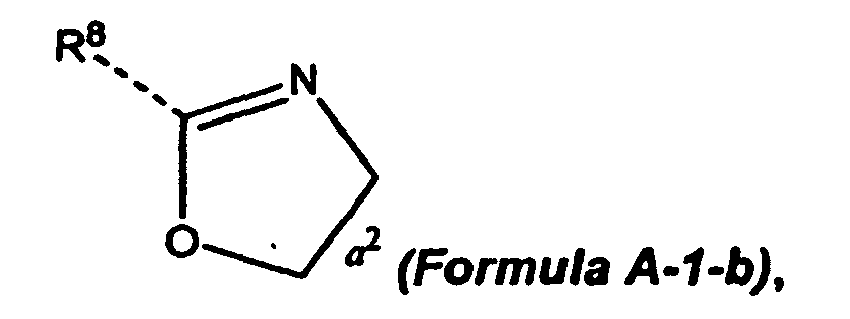

wherein R8 is H or alkyl;

R9 is independently selected from the group consisting of: alkoxy, alkyl, alkylamino, amino, cyano, dialkylamino, halogen, halogenated alkyl, halogenated alkyloxy, halogenated -SO2alkyl, halogenated thioalkyl, hydroxy, -N(alkyl)C(=O)alkyl, -N(alkyl)C(=O)N(alkyl)2, -N(alkyl)C(=O)NHalkyl, -N(alkyl)C(=O)Oalkyl, -N(alkyl)SO2alkyl, -NHC(=O)alkyl, -NHC(=O)N(alkyl)2, -NHC(=O)NH2, -NHC(=O)NHalkyl, -NHC(=O)Oalkyl, -NHSO2alkyl, nitro, -OC(=O)N(alkyl)2, -OC(=O)NHalkyl, -SO2alkyl, thio and thioalkyl;
L2 is a linking group selected from the group consisting of: -(CH2)-, -CH(CH3)-, -CH(CH2CH3)-, and -O-, provided that when L2 is -O-, neither R6 nor R7 is -CH3;
R10 is independently selected from the group consisting of
wherein X1 and Y1 are each independently absent or selected from the group consisting of: -(alkyl)C(=O)N(alkyl)-, -C(=O)N(alkyl)-, -C(=O)NH-, -C(=O)O-, -N(alkyl)-, -N(alkyl)C(=O)-, -N(alkyl)C(=O)NH-, -N(alkyl)C(=O)O-, -N(alkyl)SO2-, -NH-, -NHC(=O)-, -NHC(=O)N(alkyl)-, -NHC(=O)NH, -NHC(=O)O-, -NHSO2-, -O-, -OC(=O), -OC(=O)N(alkyl)-, -OC(=O)NH-, -OC(=O)O-, -S-, -SO-, -SO2-, -SO2N(alkyl)-, and -SO2NH-; A20 is absent or selected from alkyl or alkenyl; and
A21 is selected from alkyl, alkenyl, or H;
wherein when A20 or A21 is alkyl or alkenyl, the alkyl or alkenyl may be optionally substituted with one or more groups independently selected from: alkoxy, alkylamino, amino, cyano, dialkylamino, halogen, halogenated alkoxy, halogenated -SO2alkyl, halogenated thioalkyl, hydroxy, -N(alkyl)C(=O)alkyl, -N(alkyl)C(=O)N(alkyl)2, -N(alkyl)C(=O)NH2, -N(alkyl)C(=O)NHalkyl, -N(alkyl)C(=O)Oalkyl, -N(alkyl)SO2alkyl, -NHC(=O)alkyl, -NHC(=O)N(alkyl)2, -NHC(=O)NH2, -NHC(=O)NHalkyl, -NHC(=O)Oalkyl, -NHSO2alkyl, -OC(=O)alkyl, -OC(=O)N(alkyl)2, -OC(=O)NHalkyl, -OC(=O)Oalkyl, -SO2alkyl, thio or thioalkyl;
is selected from the group consisting of aryl, cycloalkyl, partially unsaturated carbocycle, heteroaryl, heterocycloalkyl, nine to ten membered benzo-fused cycloalkyl, and nine to ten membered benzo-fused heterocycloalkyl; wherein, the aryl, cycloalkyl, partially unsaturated carbocycle, heteroaryl, heterocycloalkyl, benzo-fused cycloalkyl, or benzo-fused heterocycloalkyl, are optionally substituted with one or more substituents independently selected from halogen, hydroxy, amino, thio, nitro, cyano, alkyl, halogenated alkyl, alkoxy, halogenated alkoxy, alkylamino, -NHC(=O)alkyl, -N(alkyl)C(=O)alkyl, or dialkylamino, -NHC(=O)NH2, -NHC(=O)NHalkyl, -N(alkyl)C(=O)NHalkyl, -OC(=O)NHalkyl, -NHC(=O)Oalkyl, -N(alkyl)C(=O)Oalkyl, -NHSO2alkyl, -N(alkyl)SO2alkyl, thioalkyl, halogenated thioalkyl, -SO2alkyl, halogenated -SO2alkyl, -NHC(=O)N(alkyl)2, -N(alkyl)C(=O)N(alkyl)2 or -OC(=O)N(alkyl)2;
s is an integer from 0 to 2;
m is an integer from 0 to 4; provided that whenis not substituted with Formulae A-1-a, A-1-b or A-1-c, the sum of m and s is an integer from 0 to 4, and whenis substituted with one of Formulae A-1-a, A-1-b, or A-1-c, the sum of m and s is an integer from 0 to 2;
R6 and R7 are independently selected from the group consisting of: - (a) H;
- (b)

- (c) -CH2- substituted with one group selected from: -H, -methyl, -Oalkyl, -CH2OH, -CH(CH3)OH, -O(C=O)alkyl, -(C=O)OH, -C(=O)Oalkyl, -C(=O)Oaryl, -C(=O)Oheteroaryl, -(C=O)NH2, -(C=O)NHalkyl, -(C=O)N(alkyl)2, -C(=O)alkyl, -phenyl-OCH3 or -phenyl-OC(=O)alkyl; (d) -C(=O)(CH2CH2O-)1-10 terminating with H, methyl, ethyl, or benzyl;
- (e) -C(=O)CH2O(CH2CH2O-)1-10 terminating with H, methyl, ethyl, or benzyl;
- (f) -C(=O)alkyl, or -C(=O)(C3-6)cycloalkyl, wherein said -C(=O)alkyl, and -C(=O)(C3-6)cycloalkyl may be optionally substituted with one or more groups independently selected from: -OH, -Oalkyl, -Oalkylaryl, -NH2, -NHalkyl, -N(alkyl)2, heterocycloalkyl, -NHC(=O)alkyl, -NHSO2alkyl, or -OC(=O)alkyl;
- (g) -C(=O)(CH2)1-3aryl, -C(=O)aryl, -C(=O)(CH2)1-3heteroaryl, or -C(=O)heteroaryl, wherein said -C(=O)(CH2)1-3aryl, -C(=O)aryl, -C(=O)(CH2)1-3heteroaryl, and -C(=O)heteroaryl may be optionally substituted with one or more groups independently selected from: -OH, -Oalkyl, -NH2, -NHalkyl, -N(alkyl)2, heterocycloalkyl, -NHC(=O)alkyl, -NHSO2alkyl, halogen, nitrile, or -OC(=O)alkyl;
- (h) -C(=O)(CH2)1-6C(=O)- terminating with methyl, ethyl, -OH, -Oalkyl, -NH2, -NHalkyl, -N(alkyl)2, or heterocycloalkyl;
- (hh) -C(=O)alkylOC(=O)alkyl- terminating with -OH, -Oalkyl, -NH2, -NHalkyl, -N(alkyl)2, or heterocycloalkyl;
- (i) -C(=O)O(CH2CH2O-)1-10 terminating with H, methyl, ethyl, or benzyl;
- (j) -C(=O)Oalkyl, or -C(=O)O(C3-6)cycloalkyl, wherein said -C(=O)Oalkyl, and -C(=O)O(C3-6)cycloalkyl may be optionally substituted with one or more groups independently selected from: -OH, -Oalkyl, -NH2, -NHalkyl, -N(alkyl)2, heterocycloalkyl, -NHC(=O)alkyl, -NHSO2alkyl, -OC(=O)alkyl, -C(=O)OH, -C(=O)Oalkyl, -C(=O)NH2, -C(=O)NHalkyl, or -C(=O)N(alkyl)2;
- (k) -C(=O)O(CH2)1-3aryl, -C(=O)Oaryl, -C(=O)O(CH2)1-3heteroaryl, or -C(=O)Oheteroaryl, wherein said -C(=O)O(CH2)1-3aryl, -C(=O)Oaryl, -C(=O)O(CH2)1-3heteroaryl, or -C(=O)Oheteroaryl may be optionally substituted with one or more groups independently selected from: -OH, -Oalkyl, -NH2, -NHalkyl, -N(alkyl)2, heterocycloalkyl, -NHC(=O)alkyl, -NHSO2alkyl, halogen, nitrile, or -OC(=O)alkyl;
- (I) -C(=O)NH(CH2CH2O-)1-10 terminating with -H, methyl, ethyl, benzyl, -CH2CH2NH2, -CH2CH2NHalkyl, -CH2CH2N(alkyl)2, -CH2CH2-1-pyrrolidinyl, -CH2CH2-1-piperidinyl, -CH2CH2-4-morpholinyl, -CH2CH2-1-piperazinyl, -CH2CH2-1-(4-CH3)-piperazinyl or -C(=O)alkyl;
- (m) -C(=O)NH2, -C(=O)NH(C1-20)alkyl, -C(=O)NH(C3-6)cycloalkyl, or -C(=O)N(alkyl)2, wherein said -C(=O)NH(C1-20)alkyl, -C(=O)NH(C3-6)cycloalkyl, and -C(=O)N(alkyl)2 may be optionally substituted with one or more groups independently selected from: -OH, -Oalkyl, -NH2, -NHalkyl, -N(alkyl)2, heterocycloalkyl, -NHC(=O)alkyl, -NHSO2alkyl, -OC(=O)alkyl, -OC(=O)alkenyl, -NHC(=O)aryl, -C(=O)OH, -C(=O)Oalkyl, -C(=O)NH2, -C(=O)NHalkyl, or -C(=O)N(alkyl)2; and, wherein the aryl portion of said -NHC(=O)aryl may be optionally substituted with one or more groups independently selected from: alkyl, -OH, -Oalkyl, -NH2, -NHalkyl, -N(alkyl)2, halogen or nitrile;
- (n) -C(=O)NH(CH2)1-3aryl, -C(=O)NHaryl, -C(=O)NH(CH2)1-3heteroaryl, or -C(=O)NHheteroaryl, wherein said -C(=O)NH(CH2)1-3aryl, -C(=O)NHaryl, -C(=O)NH(CH2)1-3heteroaryl, and -C(=O)NHheteroaryl may be optionally substituted with one or more groups independently selected from: -OH, -Oalkyl, -NH2, -NHalkyl, -N(alkyl)2, heterocycloalkyl, -NHC(=O)alkyl, -NHSO2alkyl, halogen, nitrile, or -OC(=O)alkyl;
- (o) -C(=O)NHCH2CH2NH(CH2CH2NH-)0-3 terminating with H, methyl, ethyl, -CH2CH2NHalkyl, -CH2CH2N(alkyl)2, -CH2CH2-1-pyrrolidinyl, -CH2CH2-1-piperidinyl, -CH2CH2-4-morpholinyl, -CH2CH2-1-piperazinyl, -CH2CH2-1-(4-CH3)-piperazinyl, -CH2CH2OH, -CH2CH2OCH3, -CH2CH2OCH2CH3, -CH2CH2OC(=O)alkyl, or -C(=O)aryl; wherein the aryl portion of said -C(=O)aryl may be optionally substituted with one or more groups independently selected from: alkyl, -OH, -Oalkyl, -NH2, -NHalkyl, -N(alkyl)2, halogen or nitrile;
- (p) -C(=S)NH2;
- (q) -C(=S)NHalkyl;
- (r) -C(=S)N(alkyl)2;
- (s) -SO2NH2;
- (t) -SO2NHalkyl;
- (u) -SO2N(alkyl)2;
- (v) -P(=O)(OCH3)2; and
- (w) -P(=O)(OCH2CH3)2;
- Further embodiments of the invention include compounds of Formula II-HH wherein E, R4, R6, R7, L3 H, and (R5)r vary as set forth in section 2.a.1 above for Formula II, and L2 varies as set forth below, and combinations of the aforementioned variations of E, L2, R4, R6, R7, L3 H, (R5)r.
- In a preferred embodiment of the invention are compounds of Formula II-HH, wherein
L2 is a linking group selected from the group consisting of: -(CH2)-, -CH(CH3)-, -CH(CH2CH3)-. - In a preferred embodiment, the present invention is further directed to compounds of Formula (II-JJ):

R6 and R7 are independently selected from the group consisting of: - (a) H;
- (b)

- (c) -CH2- substituted with one group selected from: -H, -methyl, -Oalkyl, -CH2OH, -CH(CH3)OH, -O(C=O)alkyl, -(C=O)OH, -C(=O)Oalkyl, -C(=O)Oaryl, -C(=O)Oheteroaryl, -(C=O)NH2, -(C=O)NHalkyl, -(C=O)N(alkyl)2, -C(=O)alkyl, -phenyl-OCH3 or -phenyl-OC(=O)alkyl; (d) -C(=O)(CH2CH2O-)1-10 terminating with H, methyl, ethyl, or benzyl;
- (e) -C(=O)CH2O(CH2CH2O-)1-10 terminating with H, methyl, ethyl, or benzyl;
- (f) -C(=O)alkyl, or -C(=O)(C3-6)cycloalkyl, wherein said -C(=O)alkyl, and -C(=O)(C3-6)cycloalkyl may be optionally substituted with one or more groups independently selected from: -OH, -Oalkyl, -Oalkylaryl, -NH2, -NHalkyl, -N(alkyl)2, heterocycloalkyl, -NHC(=O)alkyl, -NHSO2alkyl, or -OC(=O)alkyl;
- (g) -C(=O)(CH2)1-3aryl, -C(=O)aryl, -C(=O)(CH2)1-3heteroaryl, or -C(=O)heteroaryl, wherein said -C(=O)(CH2)1-3aryl, -C(=O)aryl, -C(=O)(CH2)1-3heteroaryl, and -C(=O)heteroaryl may be optionally substituted with one or more groups independently selected from: -OH, -Oalkyl, -NH2, -NHalkyl, -N(alkyl)2, heterocycloalkyl, -NHC(=O)alkyl, -NHSO2alkyl, halogen, nitrile, or -OC(=O)alkyl;
- (h) -C(=O)(CH2)1-6C(=O)- terminating with methyl, ethyl, -OH, -Oalkyl, -NH2, -NHalkyl, -N(alkyl)2, or heterocycloalkyl;
- (hh) -C(=O)alkylOC(=O)alkyl- terminating with -OH, -Oalkyl, -NH2, -NHalkyl, -N(alkyl)2, or heterocycloalkyl;
- (i) -C(=O)O(CH2CH2O-)1-10 terminating with H, methyl, ethyl, or benzyl;
- (j) -C(=O)Oalkyl; or -C(=O)O(C3-6)cycloalkyl, wherein said -C(-O)Oalkyl, and -C(=O)O(C3-6)cycloalkyl may be optionally substituted with one or more groups independently selected from: -OH, -Oalkyl, -NH2, -NHalkyl, -N(alkyl)2, heterocycloalkyl, -NHC(=O)alkyl, -NHSO2alkyl, -OC(=O)alkyl, -C(=O)OH, -C(=O)Oalkyl, -C(=O)NH2, -C(=O)NHalkyl, or -C(=O)N(alkyl)2;
- (k) -C(=O)O(CH2)1-3aryl, -C(=O)Oaryl, -C(=O)O(CH2)1-3heteroaryl, or -C(=O)Oheteroaryl, wherein said -C(=O)O(CH2)1-3aryl, -C(=O)Oaryl, -C(=O)O(CH2)1-3heteroaryl, or -C(=O)Oheteroaryl may be optionally substituted with one or more groups independently selected from: -OH, -Oalkyl, -NH2, -NHalkyl, -N(alkyl)2, heterocycloalkyl, -NHC(=O)alkyl, -NHSO2alkyl, halogen, nitrile, or -OC(=O)alkyl;
- (l) -C(=O)NH(CH2CH2O-)1-10 terminating with -H, methyl, ethyl, benzyl, -CH2CH2NH2, -CH2CH2NHalkyl, -CH2CH2N(alkyl)2, -CH2CH2-1-pyrrolidinyl, -CH2CH2-1-piperidinyl, -CH2CH2-4-morpholinyl, -CH2CH2-1-piperazinyl, -CH2CH2-1-(4-CH3)-piperazinyl or -C(=O)alkyl;
- (m) -C(=O)NH2, -C(=O)NH(C1-20)alkyl, -C(=O)NH(C3-6)cycloalkyl, or -C(=O)N(alkyl)2, wherein said -C(=O)NH(C1-20)alkyl, -C(=O)NH(C3-6)cycloalkyl, and -C(=O)N(alkyl)2 may be optionally substituted with one or more groups independently selected from: -OH, -Oalkyl, -NH2, -NHalkyl, -N(alkyl)2, heterocycloalkyl, -NHC(=O)alkyl, -NHSO2alkyl, -OC(=O)alkyl, -OC(=O)alkenyl, -NHC(=O)aryl, -C(=O)OH, -C(=O)Oalkyl, -C(=O)NH2, -C(=O)NHalkyl, or -C(=O)N(alkyl)2; and, wherein the aryl portion of said -NHC(=O)aryl may be optionally substituted with one or more groups independently selected from: alkyl, -OH, -Oalkyl, -NH2, -NHalkyl, -N(alkyl)2, halogen or nitrile;
- (n) -C(=O)NH(CH2)1-3aryl, -C(=O)NHaryl, -C(=O)NH(CH2)1-3heteroaryl, or -C(=O)NHheteroaryl, wherein said -C(=O)NH(CH2)1-3aryl, -C(=O)NHaryl, -C(=O)NH(CH2)1-3heteroaryl, and -C(=O)NHheteroaryl may be optionally substituted with one or more groups independently selected from: -OH, -Oalkyl, -NH2, -NHalkyl, -N(alkyl)2 , heterocycloalkyl, -NHC(=O)alkyl, -NHSO2alkyl, halogen, nitrile, or -OC(=O)alkyl;
- (o) -C(=O)NHCH2CH2NH(CH2CH2NH-)0-3 terminating with H, methyl, ethyl, -CH2CH2NHalkyl, -CH2CH2N(alkyl)2, -CH2CH2-1-pyrrolidinyl, -CH2CH2-1-piperidinyl, -CH2CH2-4-morpholinyl, -CH2CH2-1-piperazinyl, -CH2CH2-1-(4-CH3)-piperazinyl, -CH2CH2OH, -CH2CH2OCH3, -CH2CH2OCH2CH3, -CH2CH2OC(=O)alkyl, or -C(=O)aryl; wherein the aryl portion of said -C(=O)aryl may be optionally substituted with one or more groups independently selected from: alkyl, -OH , -Oalkyl, -NH2, -NHalkyl, -N(alkyl)2, halogen or nitrile;
- (p) -C(=S)NH2;
- (q) -C(=S)NHalkyl;
- (r) -C(=S)N(alkyl)2;
- (s) -SO2NH2;
- (t) -SO2NHalkyl;
- (u) -SO2N(alkyl)2;
- (v) -P(=O)(OCH3)2; and
- (w) -P(=O)(OCH2CH3)2;
- Further embodiments of the invention include compounds of Formula II-JJ wherein R6 and R7 vary as set forth in section 2.a.1 above for Formula II.
- In a preferred embodiment, the present invention is further directed to a compound selected from the group consisting of:


- In a preferred embodiment, the present invention is further directed to a compound selected from the group consisting of:


- In a preferred embodiment, the present invention is further directed to a compound of the following formula:

- In a preferred embodiment, the present invention is further directed to a compound of the following formula:

- In a preferred embodiment, the present invention is further directed to a compound of the following formula:

- In a preferred embodiment, the present invention is further directed to a compound of the following formula:

- The present invention is further directed to a process for the preparation of compounds of Formula (IIa):

is selected from the group consisting of Formulae A-1, A-2 and A-3:
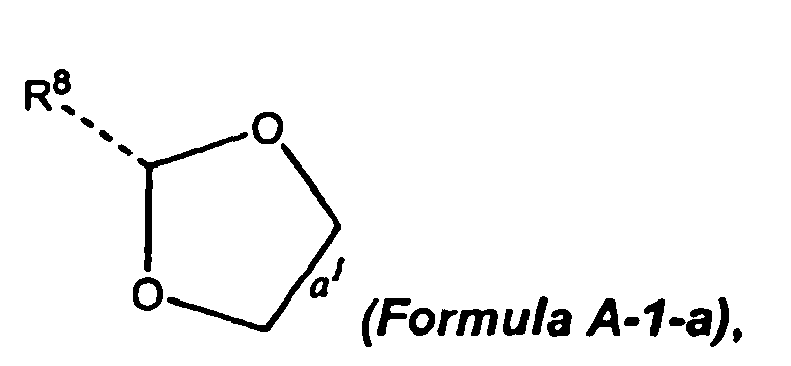

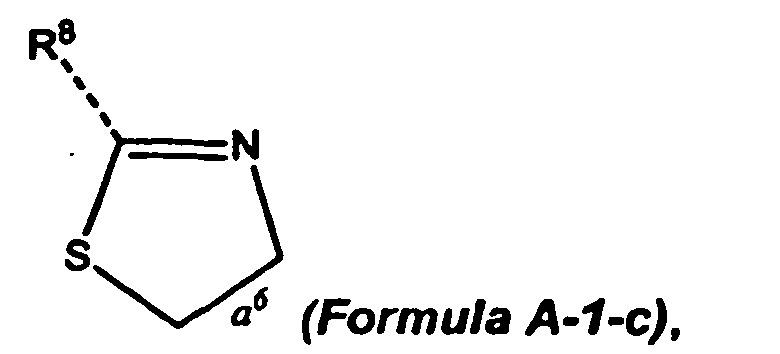
wherein R8 is H or alkyl;

R9 is independently selected from the group consisting of: alkoxy, alkyl, alkylamino, amino, cyano, dialkylamino, halogen, halogenated alkyl, halogenated alkyloxy, halogenated -SO2alkyl, halogenated thioalkyl, hydroxy, -N(alkyl)C(=O)alkyl, -N(alkyl)C(=O)N(alkyl)2, -N(alkyl)C(=O)NHalkyl, -N(alkyl)C(=O)Oalkyl, -N(alkyl)SO2alkyl, -NHC(=O)alkyl, -NHC(=O)N(alkyl)2, -NHC(=O)NH2, -NHC(=O)NHalkyl, -NHC(=O)Oalkyl, -NHSO2alkyl, nitro, -OC(=O)N(alkyl)2, -OC(=O)NHalkyl, -SO2alkyl, thio and thioalkyl:
L2 is a linking group selected from the group consisting of: -(CH2)1-4-, -CH(R100)-, -C(=R100)-, -C(R100)2-, -O-, -O(CH2)1-4-, -OCH(R100)-, -OC(R100)2-, -S-, -NH-, -N(lower alkyl)-, -N(COalkyl)-, -N(aryl)-, -N(CO2alkyl)-, -N(CONHalkyl)-, -N(SO2alkyl) and -N(SO2aryl)-; wherein R100 is selected from: alkyl, hydroxy, aryl, alkoxy, oxo, -NH2, -NH(alkyl) -N(alkyl)2, =N(OH) or -NH2OH; provided that when L2 is -OCH(R100)-, R100 is alkoxy, andis phenyl, R5 is not -C(=O)NH-NH2;
R10 is independently selected from the group consisting of
wherein X1 and Y1 are each independently absent or selected from the group consisting of: -(alkyl)C(=O)N(alkyl)-, -C(=O)N(alkyl)-, -C(=O)NH-, -C(=O)O-, -N(alkyl)-, -N(alkyl)C(=O)-, -N(alkyl)C(=O)NH-, -N(alkyl)C(=O)O-, -N(alkyl)SO2-, -NH-, -NHC(=O)-, -NHC(=O)N(alkyl)-, -NHC(=O)NH, -NHC(=O)O-, -NHSO2-, -O-, -OC(=O), -OC(=O)N(alkyl)-, -OC(=O)NH-, -OC(=O)O-, -S-, -SO-, -SO2-, -SO2N(alkyl)-, and -SO2NH-; A20 is absent or selected from alkyl or alkenyl; and
A21 is selected from alkyl, alkenyl, or H;
wherein when A20 or A21 is alkyl or alkenyl, the alkyl or alkenyl may be optionally substituted with one or more groups independently selected from: alkoxy, alkylamino, amino, cyano, dialkylamino, halogen, halogenated alkoxy, halogenated -SO2alkyl, halogenated thioalkyl, hydroxy, -N(alkyl)C(=O)alkyl, -N(alkyl)C(=O)N(alkyl)2, -N(alkyl)C(=O)NH2, -N(alkyl)C(=O)NHalkyl, -N(alkyl)C(=O)Oalkyl, -N(alkyl)SO2alkyl, -NHC(=O)alkyl, -NHC(=O)N(alkyl)2, -NHC(=O)NH2, -NHC(=O)NHalkyl, -NHC(=O)Oalkyl, -NHSO2alkyl, -OC(=O)alkyl, -OC(=O)N(alkyl)2, -OC(=O)NHalkyl, -OC(=O)Oalkyl, -SO2alkyl, thio or thioalkyl;
is selected from the group consisting of aryl, cycloalkyl, partially unsaturated carbocycle, heteroaryl, heterocycloalkyl, nine to ten membered benzo-fused cycloalkyl, and nine to ten membered benzo-fused heterocycloalkyl; wherein, the aryl, cycloalkyl, partially unsaturated carbocycle, heteroaryl, heterocycloalkyl, benzo-fused cycloalkyl, or benzo-fused heterocycloalkyl, are optionally substituted with one or more substituents independently selected from halogen, hydroxy, amino, thio, nitro, cyano, alkyl, halogenated alkyl, alkoxy, halogenated alkoxy, alkylamino, -NHC(=O)alkyl, -N(alkyl)C(=O)alkyl, or dialkylamino, -NHC(=O)NH2, -NHC(=O)NHalkyl, -N(alkyl)C(=O)NHalkyl, -OC(=O)NHalkyl, -NHC(=O)Oalkyl, -N(alkyl)C(=O)Oalkyl, -NHSO2alkyl, -N(alkyl)SO2alkyl, thioalkyl, halogenated thioalkyl, -SO2alkyl, halogenated -SO2alkyl, -NHC(=O)N(alkyl)2, -N(alkyl)C(=O)N(alkyl)2 or -OC(=O)N(alkyl)2;
s is an integer from 0 to 2;
m is an integer from 0 to 4; provided that whenis not substituted with Formulae A-1-a, A-1-b or A-1-c, the sum of m and s is an integer from 0 to 4, and whenis substituted with one of Formulae A-1-a, A-1-b, or A-1-c, the sum of m and s is an integer from 0 to 2;
L3 is absent or is a linking group selected from the group consisting of alkyldiyl, carbonyl or -SO2-;
is selected from the group consisting of an aryl , a cycloalkyl, a partially unsaturated carbocycle, aralkyl, a heteroaryl , a heterocycloalkyl, a nine to ten membered benzo-fused cycloalkyl, a nine to ten membered benzo-fused heteroaryl, and a nine to ten membered benzo-fused
heterocycloalkyl;
r is an integer from 0 to 4; and
R5 is independently selected from the group consisting of: alkyl, alkyl amino, alkyloxy, amino, -C(=O)NH2, -C(=O)Oalkyl, -C(=O)OH, -CH2OH, cyano, dialkylamino, halogen, halogenated alkyl, halogenated alkyloxy, halogenated SO2-alkyl, halogenated thioalkyl, hydroxy, hydroxy alkyl, -N(alkyl)C(=O)alkyl, -N(alkyl)C(=O)N(alkyl)2, -N(alkyl)C(=O)NHalkyl, -N(alkyl)C(=O)Oalkyl, -N(alkyl)SO2alkyl, -NHC(=O)alkyl, -NHC(=O)N(alkyl)2, -NHC(=O)NH2, -NHC(=O)NHalkyl, -NHC(=O)Oalkyl, -NHSO2alkyl, nitro, -OC(=O)N(alkyl)2, -OC(=O)NHalkyl, -SO2alkyl, -SO2NH2, thio, thioalkyl,
V and W are each independently absent or selected from the group consisting of: -C(=O), -C(=O)N(alkyl)-, -C(=O)NH-, -C(=O)O-, -N(alkyl)-, -N(alkyl)C(=O)-, -N(alkyl)C(=O)N(alkyl)-, -N(alkyl)C(=O)NH-, -N(alkyl)C(=O)O-, -N(alkyl)SO2-, -NH-, -NHC(=O)-, -NHC(=O)N(alkyl)-, -NHC(=O)NH-, -NHC(=O)O-, -NHSO2-, -O-, -OC(=O), -OC(=O)N(alkyl)-, -OC(=O)NH-, -OC(=O)O-, -S-, -SO-, -SO2-, -SO2N(alkyl)- and -SO2NH-;
B10 is absent or selected from alkyl or alkenyl;
B20 is absent or selected from alkyl, alkenyl, or H;
wherein, when B10 or B20 is alkyl or alkenyl, the alkyl or alkenyl group may be optionally substituted with one or more groups independently selected from: alkoxy, alkylamino, amino, cyano, dialkylamino, halogen, halogenated alkoxy, halogenated -SO2alkyl, halogenated thioalkyl, hydroxy -N(alkyl)C(=O)alkyl, -N(alkyl)C(=O)N(alkyl)2, -N(alkyl)C(=O)NH2, -N(alkyl)C(=O)NHalkyl, -N(alkyl)C(=O)Oalkyl, -N(alkyl)SO2alkyl, -NHC(=O)alkyl, -NHC(=O)N(alkyl)2, -NHC(=O)NH2, -NHC(=O)NHalkyl, -NHC(=O)Oalkyl, -NHSO2alkyl, -OC(=O)alkyl, -OC(=O)N(alkyl)2, -OC(=O)NHalkyl, -OC(=O)Oalkyl, -SO2alkyl, thio or thioalkyl; and
is selected from the group consisting of: an aryl, a cycloalkyl, a partially unsaturated carbocycle, a heteroaryl, a heterocycloalkyl, a nine to ten membered benzo-fused cycloalkyl, and a nine to ten membered benzo-fused heterocycloalkyl,
wherein, the aryl, cycloalkyl, partially unsaturated carbocycle, heteroaryl, heterocycloalkyl, benzo-fused cycloalkyl, or benzo-fused heterocycloalkyl, is optionally substituted with one or more substituents independently selected from: alkoxy, alkylamino, amino, cyano, dialkylamino, halogen, halogenated alkoxy, halogenated alkyl, halogenated -SO2alkyl, halogenated thioalkyl, heteroaryl, hydroxy, hydroxy alkyl, -N(alkyl)C(=O)alkyl, -N(alkyl)C(=O)N(alkyl)2, -N(alkyl)C(=O)NHalkyl, -N(alkyl)C(=O)Oalkyl, -N(alkyl)SO2alkyl, -NHC(=O)alkyl, -NHC(=O)N(alkyl)2, -NHC(=O)NH2, -NHC(=O)NHalkyl, -NHC(=O)Oalkyl, -NHSO2alkyl, nitro, -OC(=O)N(alkyl)2, -OC(=O)NHalkyl, -SO2alkyl, thio or thioalkyl;
or an optical isomer, enantiomer, diastereomer, racemate, or pharmaceutically acceptable salt thereof;
comprising
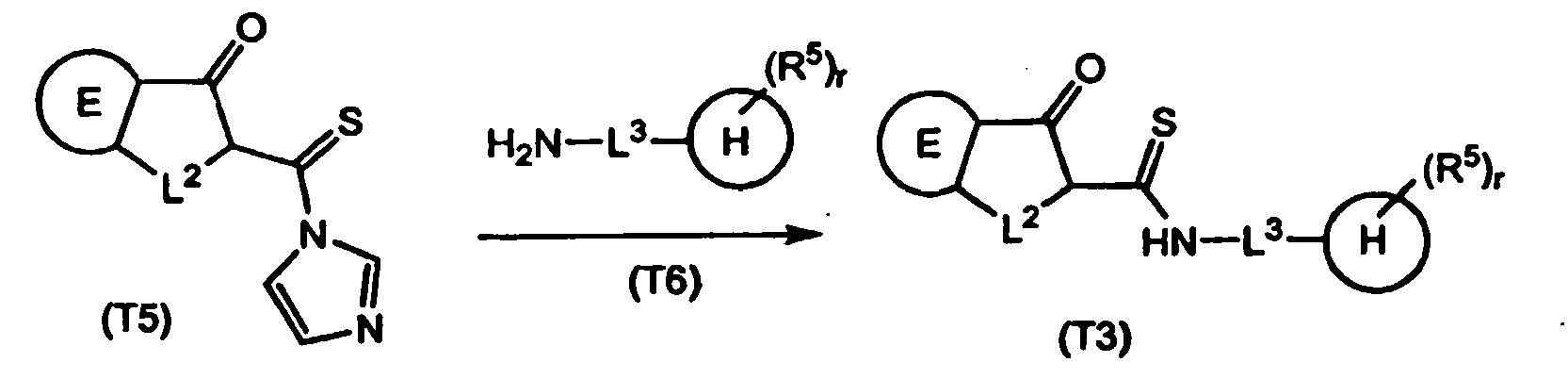
reacting a compound of formula (T3) with hydrazine,
- The present invention is further directed to a process for the preparation of compounds of formula (T5)

is selected from the group consisting of Formulae A-1, A-2 and A-3:


wherein R8 is H or alkyl;

R9 is independently selected from the group consisting of: alkoxy, alkyl, alkylamino, amino, cyano, dialkylamino, halogen, halogenated alkyl, halogenated alkyloxy, halogenated -SO2alkyl, halogenated thioalkyl, hydroxy, -N(alkyl)C(=O)alkyl, -N(alkyl)C(=O)N(alkyl)2, -N(alkyl)C(=O)NHalkyl, -N(alkyl)C(=O)Oalkyl, -N(alkyl)SO2alkyl, -NHC(=O)alkyl, -NHC(=O)N(alkyl)2, -NHC(=O)NH2, -NHC(=O)NHalkyl, -NHC(=O)Oalkyl, -NHSO2alkyl, nitro, -OC(=O)N(alkyl)2, -OC(=O)NHalkyl, -SO2alkyl, thio and thioalkyl;
L2 is a linking group selected from the group consisting of: -(CH2)1-4-, -CH(R100)-, -C(=R100)-, -C(R100)2-, -O-, -O(CH2)1-4-, -OCH(R100)-, -OC(R100)2-, -S-, -NH-, -N(lower alkyl)-, -N(COalkyl)-, -N(aryl)-, -N(CO2alkyl)-, -N(CONHalkyl)-, -N(SO2alkyl) and -N(SO2aryl)-; wherein R100 is selected from: alkyl, hydroxy, aryl, alkoxy, oxo, -NH2, -NH(alkyl) -N(alkyl)2, =N(OH) or -NH2OH;
R10 is independently selected from the group consisting of
wherein X1 and Y1 are each independently absent or selected from the group consisting of: -(alkyl)C(=O)N(alkyl)-, -C(=O)N(alkyl)-, -C(=O)NH-, -C(=O)O-, -N(alkyl)-, -N(alkyl)C(=O)-, -N(alkyl)C(=O)NH-, -N(alkyl)C(=O)O-, -N(alkyl)SO2-, -NH-, -NH(=O)-, -NHC(=O)N(alkyl)-, -NHC(=O)NH, -NHC(=O)O-, -NHSO2-, -O-, -OC(=O), -OC(=O)N(alkyl)-, -OC(=O)NH-, -OC(=O)O-, -S-, -SO-, -SO2-, -SO2N(alkyl)-, and -SO2NH-;
A20 is absent or selected from alkyl or alkenyl; and
A21 is selected from alkyl, alkenyl, or H;
wherein when A20 or A21 is alkyl or alkenyl, the alkyl or alkenyl may be optionally substituted with one or more groups independently selected from: alkoxy, alkylamino, amino, cyano, dialkylamino, halogen, halogenated alkoxy, halogenated -SO2alkyl, halogenated thioalkyl, hydroxy, -N(alkyl)C(=O)alkyl, -N(alkyl)C(=O)N(alkyl)2, -N(alkyl)C(=O)NH2, -N(alkyl)C(=O)NHalkyl, -N(alkyl)C(=O)Oalkyl, -N(alkyl)SO2alkyl, -NHC(=O)alkyl, -NHC(=O)N(alkyl)2, -NHC(=O)NH2, -NHC(=O)NHalkyl, -NHC(=O)Oalkyl, -NHSO2alkyl, -OC(=O)alkyl, -OC(=O)N(alkyl)2, -OC(=O)NHalkyl, -OC(=O)Oalkyl, -SO2alkyl, thio or thioalkyl;
is selected from the group consisting of aryl, cycloalkyl, partially unsaturated carbocycle, heteroaryl, heterocycloalkyl, nine to ten membered benzo-fused cycloalkyl, and nine to ten membered benzo-fused heterocycloalkyl; wherein, the aryl, cycloalkyl, partially unsaturated carbocycle, heteroaryl, heterocycloalkyl, benzo-fused cycloalkyl, or benzo-fused heterocycloalkyl, are optionally substituted with one or more substituents independently selected from halogen, hydroxy, amino, thio, nitro, cyano, alkyl, halogenated alkyl, alkoxy, halogenated alkoxy, alkylamino, -NHC(=O)alkyl, -N(alkyl)C(=O)alkyl, or dialkylamino, -NHC(=O)NH2, -NHC(=O)NHalkyl, -N(alkyl)C(=O)NHalkyl, -OC(=O)NHalkyl, -NHC(=O)Oalkyl, -N(alkyl)C(=O)Oalkyl, -NHSO2alkyl, -N(alkyl)SO2alkyl, thioalkyl, halogenated thioalkyl, -SO2alkyl, halogenated -SO2alkyl, -NHC(=O)N(alkyl)2, -N(alkyl)C(=O)N(alkyl)2 or -OC(=O)N(alkyl)2;
s is an integer from 0 to 2;
m is an integer from 0 to 4; provided that whenis not substituted with Formulae A-1-a, A-1-b or A-1-c, the sum of m and s is an integer from 0 to 4, and whenis substituted with one of Formulae A-1-a, A-1-b, or A-1-c, the sum of m and s is an integer from 0 to 2;
or an optical isomer, enantiomer, diastereomer, racemate, or pharmaceutically acceptable salt thereof;
comprising
- The present invention is further directed to a process for the preparation of compounds of formula (T3)

is selected from the group consisting of Formulae A-1, A-2 and A-3:

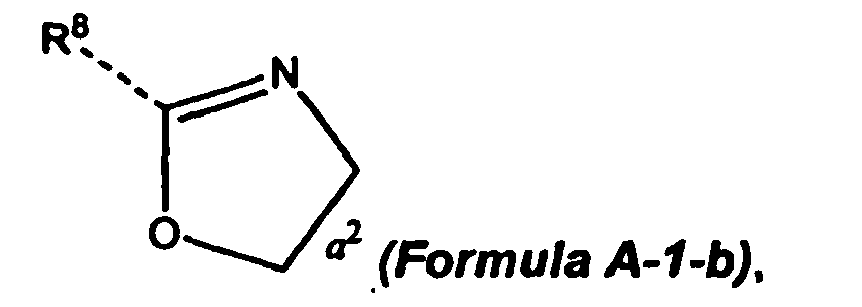

wherein R8 is H or alkyl;

R9 is independently selected from the group consisting of: alkoxy, alkyl, alkylamino, amino, cyano, dialkylamino, halogen, halogenated alkyl, halogenated alkyloxy, halogenated -SO2alkyl, halogenated thioalkyl, hydroxy, -N(alkyl)C(=O)alkyl, -N(alkyl)C(=O)N(alkyl)2, -N(alkyl)C(=O)NHalkyl, -N(alkyl)C(=O)Oalkyl, -N(alkyl)SO2alkyl, -NHC(=O)alkyl, -NHC(=O)N(alkyl)2, -NHC(=O)NH2, -NHC(=O)NHalkyl, -NHC(=O)Oalkyl, -NHSO2alkyl, nitro, -OC(=O)N(alkyl)2, -OC(=O)NHalkyl, -SO2alkyl, thio and thioalkyl; L2 is a linking group selected from the group consisting of: -(CH2)1-4-, -CH(R100)-, -C(=R100)-, -C(R100)2-, -O-, -O(CH2)1-4-, -OCH(R100)-, -OC(R100)2-, -S-, -NH-, -N(lower alkyl)-, -N(COalkyl)-, -N(aryl)-, -N(CO2alkyl)-, -N(CONHalkyl)-, -N(SO2alkyl) and -N(SO2aryl)-; wherein R100 is selected from: alkyl, hydroxy, aryl, alkoxy, oxo, -NH2, -NH(alkyl) -N(alkyl)2, =N(OH) or -NH2OH; provided that when L2 is -OCH(R100)-, R100 is alkoxy, andis phenyl, R5 is not -C(=O)NH-NH2;
R10 is independently selected from the group consisting of
wherein X1 and Y1 are each independently absent or selected from the group consisting of: -(alkyl)C(=O)N(alkyl)-, -C(=O)N(alkyl)-, -C(=O)NH-, -C(=O)O-, -N(alkyl)-, -N(alkyl)C(=O)-, -N(alkyl)C(=O)NH-, -N(alkyl)C(=O)O-, -N(alkyl)SO2-, -NH-, -NHC(=O)-, -NHC(=O)N(alkyl)-, -NHC(=O)NH, -NHC(=O)O-, -NHSO2-, -O-; -OC(=O), -OC(=O)N(alkyl)-, -OC(=O)NH-, -OC(=O)O-, -S-, -SO-, -SO2-, -SO2N(alkyl)-, and -SO2NH-; A20 is absent or selected from alkyl or alkenyl; and
A21 is selected from alkyl, alkenyl, or H;
wherein when A20 or A21 is alkyl or alkenyl, the alkyl or alkenyl may be optionally substituted with one or more groups independently selected from: alkoxy, alkylamino, amino, cyano, dialkylamino, halogen, halogenated alkoxy, halogenated -SO2alkyl, halogenated thioalkyl, hydroxy, -N(alkyl)C(=O)alkyl, -N(alkyl)C(=O)N(alkyl)2, -N(alkyl)C(=O)NH2, -N(alkyl)C(=O)NHalkyl, -N(alkyl)C(=O)Oalkyl, -N(alkyl)SO2alkyl, -NHC(=O)alkyl, -NHC(=O)N(alkyl)2, -NHC(=O)NH2, -NHC(=O)NHalkyl, -NHC(=O)Oalkyl, -NHSO2alkyl, -OC(=O)alkyl, -OC(=O)N(alkyl)2, -OC(=O)NHalkyl, -OC(=O)Oalkyl, -SO2alkyl, thio or thioalkyl;
is selected from the group consisting of aryl, cycloalkyl, partially unsaturated carbocycle, heteroaryl, heterocycloalkyl, nine to ten membered benzo-fused cycloalkyl, and nine to ten membered benzo-fused heterocycloalkyl; wherein, the aryl, cycloalkyl, partially unsaturated carbocycle, heteroaryl, heterocycloalkyl, benzo-fused cycloalkyl, or benzo-fused heterocycloalkyl, are optionally substituted with one or more substituents independently selected from halogen, hydroxy, amino, thio, nitro, cyano, alkyl, halogenated alkyl, alkoxy, halogenated alkoxy, alkylamino, -NHC(=O)alkyl, -N(alkyl)C(=O)alkyl, or dialkylamino, -NHC(=O)NH2, -NHC(=O)NHalkyl, -N(alkyl)C(=O)NHalkyl, -OC(=O)NHalkyl, -NHC(=O)Oalkyl, -N(alkyl)C(=O)Oalkyl, -NHSO2alkyl, -N(alkyl)SO2alkyl, thioalkyl, halogenated thioalkyl, -SO2alkyl, halogenated -SO2alkyl, -NHC(=O)N(alkyl)2, -N(alkyl)C(=O)N(alkyl)2 or -OC(=O)N(alkyl)2;
s is an integer from 0 to 2;
m is an integer from 0 to 4; provided that whenis not substituted with Formulae A-1-a, A-1-b or A-1-c, the sum of m and s is an integer from 0 to 4, and whenis substituted with one of Formulae A-1-a, A-1-b, or A-1-c, the sum of m and s is an integer from 0 to 2;
L3 is absent or is a linking group selected from the group consisting of alkyldiyl, carbonyl or -SO2-;
is selected from the group consisting of an aryl, a cycloalkyl, a partially unsaturated carbocycle, aralkyl, a heteroaryl , a heterocycloalkyl, a nine to ten membered benzo-fused cycloalkyl, a nine to ten membered benzo-fused heteroaryl, and a nine to ten membered benzo-fused heterocycloalkyl;
r is an integer from 0 to 4; and
R5 is independently selected from the group consisting of: alkyl, alkyl amino, alkyloxy, amino, -C(=O)NH2, -C(=O)Oalkyl, -C(=O)OH, -CH2OH, cyano, dialkylamino, halogen, halogenated alkyl, halogenated alkyloxy, halogenated SO2-alkyl, halogenated thioalkyl, hydroxy, hydroxy alkyl, -N(alkyl)C(=O)alkyl, -N(alkyl)C(=O)N(alkyl)2, -N(alkyl)C(=O)NHalkyl, -N(alkyl)C(=O)Oalkyl, -N(alkyl)SO2alkyl, -NHC(=O)alkyl, -NHC(=O)N(alkyl)2, -NHC(=O)NH2, -NHC(=O)NHalkyl, -NHC(=O)Oalkyl, -NHSO2alkyl, nitro, -OC(=O)N(alkyl)2, -OC(=O)NHalkyl, -SO2alkyl, -SO2NH2, thio, thioalkyl,
wherein,
V and W are each independently absent or selected from the group consisting of: -C(=O), -C(=O)N(alkyl)-, -C(=O)NH-, -C(=O)O-, -N(alkyl)-, -N(alkyl)C(=O)-, -N(alkyl)C(=O)N(alkyl)-, -N(alkyl)C(=O)NH-, -N(alkyl)C(=O)O-, -N(alkyl)SO2-, -NH-, -NHC(=O)-, -NHC(=O)N(alkyl)-, -NHC(=O)NH-, -NHC(=O)O-, -NHSO2-, -O-, -OC(=O), -OC(=O)N(alkyl)-, -OC(=O)NH-, -OC(=O)O-, -S-, -SO-, -SO2-, -SO2N(alkyl)- and -SO2NH-; B10 is absent or selected from alkyl or alkenyl;
B20 is absent or selected from alkyl, alkenyl, or H;
wherein, when B10 or B20 is alkyl or alkenyl, the alkyl or alkenyl group may be optionally substituted with one or more groups independently selected from: alkoxy, alkylamino, amino, cyano, dialkylamino, halogen, halogenated alkoxy, halogenated -SO2alkyl, halogenated thioalkyl, hydroxy -N(alkyl)C(=O)alkyl, -N(alkyl)C(=O)N(alkyl)2, -N(alkyl)C(=O)NH2, -N(alkyl)C(=O)NHalkyl, -N(alkyl)C(=O)Oalkyl, -N(alkyl)SO2alkyl, -NHC(=O)alkyl, -NHC(=O)N(alkyl)2, -NHC(=O)NH2, -NHC(=O)NHalkyl, -NHC(=O)Oalkyl, -NHSO2alkyl, -OC(=O)alkyl, -OC(=O)N(alkyl)2, -OC(=O)NHalkyl, -OC(=O)Oalkyl, -SO2alkyl, thio or thioalkyl; and
is selected from the group consisting of: an aryl, a cycloalkyl, a partially unsaturated carbocycle, a heteroaryl, a heterocycloalkyl, a nine to ten membered benzo-fused cycloalkyl, and a nine to ten membered benzo-fused heterocycloalkyl,
wherein, the aryl, cycloalkyl, partially unsaturated carbocycle, heteroaryl, heterocycloalkyl, benzo-fused cycloalkyl, or benzo-fused heterocycloalkyl, is optionally substituted with one or more substituents independently selected from: alkoxy, alkylamino, amino, cyano, dialkylamino, halogen, halogenated alkoxy, halogenated alkyl, halogenated -SO2alkyl, halogenated thioalkyl, heteroaryl, hydroxy, hydroxy alkyl, -N(alkyl)C(=O)alkyl, -N(alkyl)C(=O)N(alkyl)2, -N(alkyl)C(=O)NHalkyl, -N(alkyl)C(=O)Oalkyl, -N(alkyl)SO2alkyl, -NHC(=O)alkyl, -NHC(=O)N(alkyl)2, -NHC(=O)NH2, -NHC(=O)NHalkyl, -NHC(=O)Oalkyl, -NHSO2alkyl, nitro, -OC(=O)N(alkyl)2, -OC(=O)NHalkyl, -SO2alkyl, thio or thioalkyl;
or an optical isomer, enantiomer, diastereomer, racemate; or pharmaceutically acceptable salt thereof;
comprising
- In an embodiment of the present invention are compounds as listed in Tables 1 through 13; below. Molecular weight indicated by "MS," expressed in m/z (M+H)+ units. Compounds which have been synthesized are as listed in Tables 1 through 5 and 7 through 13.
- (In reference to compounds of formulae (I) and (II), G represents


- In Tables 4 and 6 below, thering (the A / E ring,), representing the
 (A ring) in Formula (I) and the(E ring) in Formula (II) are numbered based on convention, counting clockwise, unless otherwise indicated by convention, with the leading numbers indicating the carbon atoms bound to the rest of the core molecule. Thus, for example, for in the structure below
- Named A/ E ring, substituents followed by an * are numbered counterclockwise, following convention. For example, in the structure below

- Otherwise, when the A/ E ring, is a phenyl, the phenyl group, by definition, is bound at the 1,2 positions, and the phenyl ring substituents are numbered counting clockwise, as in the first structure (4,5-isoxazolyl) shown above.
Table 1 
Cpd G RA MS 8 phenyl methoxy 278 23 phenyl methyl 262 71 phenyl 3-(N,N-dimethyl-amino)-propoxy 349 72 3-chloro-phenyl 3-(N,N-dimethyl-amino)-propoxy 383 73 4-fluoro-phenyl 3-(N,N-dimethyl-amino)-propoxy 367 74 3-methoxy-phenyl 3-(N,N-dimethyl-amino)-propoxy 379 75 3-pyridyl 3-(N,N-dimethyl-amino)-propoxy 350 77 3-(methoxy-carbonyl)-phenyl 3-(N,N-dimethyl-amino)-propoxy 407 90 3-fluoro-phenyl 3-(N,N-dimethyl-amino)-propoxy 367 98 4-fluoro-phenyl methyl 280 99 3-fluoro-phenyl methyl 280 100 3-pyridyl methyl 263 101 2,5-dimethoxy-phenyl methyl 322 102 2,4-dimethoxy-phenyl methyl 322 103 2,5-difluoro-phenyl methyl 298 104 4-trifluoromethoxy-phenyl methyl 346 105 4-trifluoromethyl-phenyl methyl 330 144 4-fluoro-phenyl methoxy 296 145 4-methoxy-phenyl methoxy 308 146 3-pyridyl methoxy 279 147 2,5-dimethoxy-phenyl methoxy 338 148 2,4-dimethoxy-phenyl methoxy 338 149 3-trifluoromethoxy-phenyl methoxy 362 150 3-trifluoromethyl-phenyl methoxy 346 392 3-chloro-phenyl 3-morpholin-4-yl-propoxy 425 393 3-fluoro-phenyl 3-morpholin-4-yl-propoxy 409 394 3-ethoxy-phenyl 3-morpholin-4-yl-propoxy 435 414 2,6-difluoro-benzyl 3-morpholin-4-yl-propoxy 441 415 2,6-dichloro-benzyl 3-morpholin-4-yl-propoxy 474 416 2-fluoro-benzyl 3-morpholin-4-yl-propoxy 423 417 3-methoxy-5-trifluoromethyl-phenyl methoxy 376 418 3-(amino-sulfonyl)-phenyl methoxy 357 422 3-fluoro-phenyl methoxy 296 423 2,6-difluoro-benzyl methoxy 328 440 3-chloro-phenyl 3-hydroxy-propoxy 356 441 3-ethoxy-phenyl 3-hydroxy-propoxy 366 442 3-fluoro-phenyl 3-hydroxy-propoxy 340 443 2,6-difluoro-benzyl 3-hydroxy-propoxy 372 444 2-fluoro-benzyl 3-hydroxy-propoxy 354 445 2-methyl-benzyl 3-hydroxy-propoxy 350 468 3-bromo-phenyl 2,3-dihydroxy-propoxy 417 469 3-fluoro-phenyl 2,3-dihydroxy-propoxy 356 478 3-bromo-phenyl 2-(pyrrolidin-1-yl)-ethoxy 440 479 2,6-difluoro-benzyl 2,3-dihydroxy-propoxy 421 Table 2 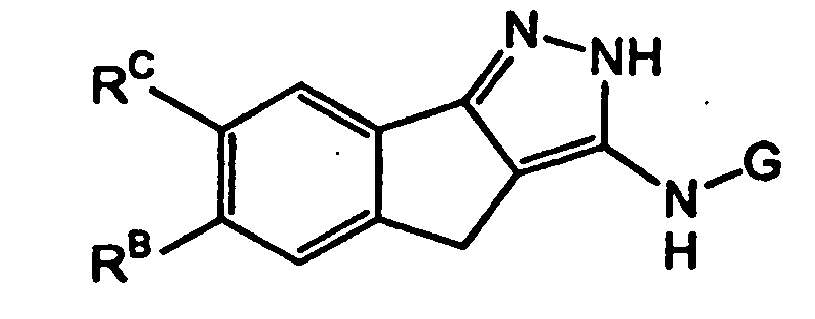
Cpd G RB RC MS 1 phenyl H H 248 2 phenyl methoxy methoxy 308 3 phenyl H H 282 4 4-chloro-phenyl methoxy methoxy 342 5 3-chloro-phenyl methoxy methoxy 342 6 4-chloro-phenyl methoxy methoxy 338 7 4-methoxy-phenyl methoxy H 278 9 2-chloro-phenyl methoxy methoxy 342 10 4-(ethoxy-carbonyl)-phenyl methoxy methoxy 380 11 3-(methoxy-carbonyl)-phenyl methoxy methoxy 366 12 2-fluoro-phenyl methoxy methoxy 326 13 4-fluoro-phenyl methoxy methoxy 326 14 3-fluoro-phenyl methoxy methoxy 326 15 2-trifluoromethoxy-phenyl methoxy methoxy 392 16 4-trifluoromethoxy-phenyl methoxy methoxy 392 17 2,4-dichloro-phenyl methoxy methoxy 377 18 3,4-dichloro-phenyl methoxy methoxy 377 19 3,5-dichloro-phenyl methoxy methoxy 377 20 2,3-dichloro-phenyl methoxy methoxy 377 21 phenyl chloro H 282 22 phenyl H methyl 262 24 phenyl fluoro H 266 25 4-trifluoromethyl-phenyl methoxy methoxy 376 26 3-trifluoromethyl-phenyl methoxy methoxy 376 27 2-methoxy-phenyl methoxy methoxy 338 28 2-trifluoromethyl-phenyl methoxy methoxy 376 29 3-methoxy-phenyl methoxy methoxy 338 30 3-pyridyl methoxy methoxy 309 31 2-methyl-phenyl methoxy methoxy 322 32 3-methyl-phenyl methoxy methoxy 322 33 4-methyl-phenyl methoxy methoxy 322 34 2,5-dichloro-phenyl methoxy methoxy 377 36 3-hydroxy-methyl-phenyl methoxy methoxy 338 37 6-indazolyl methoxy methoxy 348 38 3-hydroxy-phenyl methoxy methoxy 324 39 phenyl H methoxy 278 40 4-(N,N-dimethyl-amino)-phenyl methoxy methoxy 351 41 3,5-dimethoxy-phenyl methoxy methoxy 368 42 3,4,5-trimethoxy-phenyl methoxy methoxy 398 43 2-bromo-phenyl methoxy methoxy 387 44 3-bromo-phenyl methoxy methoxy 387 45 4-bromo-phenyl methoxy methoxy 387 46 5-chloro-2-methyl-phenyl methoxy methoxy 356 47 2,4-dimethoxy-phenyl methoxy methoxy 386 48 2,5-dimethoxy-phenyl methoxy methoxy 368 49 3,4-dimethoxy-phenyl methoxy methoxy 368 51 4-(4-methyl-piperazin-1-yl)-phenyl methoxy methoxy 406 53 3-chloro-4-fluoro-phenyl methoxy methoxy 360 54 3-benzyloxy-phenyl methoxy methoxy 414 55 2,5-difluoro-phenyl methoxy methoxy 344 56 5-chloro-2-methoxy-phenyl methoxy methoxy 372 57 2-isopropyl-phenyl methoxy methoxy 350 58 2-ethyl-phenyl methoxy methoxy 336 59 4-cyano-phenyl methoxy methoxy 333 61 3-cyano-phenyl methoxy methoxy 333 62 3,4-methylenedioxy-phenyl methoxy methoxy 352 64 phenyl 4-methyl-piperazin-1-yl H 346 65 phenyl 1-piperidinyl H 331 66 phenyl amino H 263 67 cyclohexyl methoxy methoxy 314 70 3,5-di(trifluoromethyl)-phenyl methoxy methoxy 444 76 2-trifluoromethyl-4-bromo-phenyl methoxy methoxy 455 78 2-furyl methoxy methoxy 298 79 5-indanyl methoxy methoxy 348 81 2-(piperidin-1-yl)-ethyl methoxy methoxy 343 82 4-fluoro-phenyl methoxy H 296 83 3-bromo-phenyl methoxy H 357 84 3-pyridyl methoxy H 279 85 2,5-dimethoxy-phenyl methoxy H 338 86 3,4-dimethoxy-phenyl methoxy H 338 87 2,5-difluoro-phenyl methoxy H 314 88 4-trifluoromethoxy-phenyl methoxy H 362 89 4-trifluoromethyl-phenyl methoxy H 346 92 phenyl N,N-dimethyl-amino H 291 115 3-carboxy-phenyl methoxy methoxy 352 116 3-(amino-carbonyl)-phenyl methoxy methoxy 351 117 3-bromo-phenyl amino H 342 118 3-methoxy-phenyl amino H 293 119 3-chloro-phenyl amino H 297 120 3-(methoxy-carbonyl)-phenyl amino H 321 121 3-fluoro-phenyl amino H 281 122 3-bromo-phenyl 4-methyl-piperazin-1-yl H 425 123 3-methoxy-phenyl 4-methyl-piperazin-1-yl H 376 124 3-chloro-phenyl 4-methyl-piperazin-1-yl H 380 125 3-bromo-phenyl hydroxy hydroxy 359 129 3-pyridyl 3-morpholin-4-yl-propoxy methoxy 422 130 3-bromo-phenyl 3-morpholin-4-yl-propoxy methoxy 500 131 3-methoxy-phenyl 3-morpholin-4-yl-propoxy methoxy 451 132 3-chloro-phenyl 3-morpholin-4-yl-propoxy methoxy 455 133 3-(methoxy-carbonyl)-phenyl 3-morpholin-4-yl-propoxy methoxy 479 134 3-fluoro-phenyl 3-morpholin-4-yl-propoxy methoxy 439 135 3-chloro-phenyl 3-methoxy-propoxy H 370 136 3-fluoro-phenyl 3-methoxy-propoxy H 354 137 3-(methoxy-carbonyl)-phenyl 3-methoxy-propoxy H 394 138 3-fluoro-phenyl 3-methoxy-propoxy H 354 139 3-methoxy-phenyl 3-methoxy-propoxy H 366 140 phenyl 3-methoxy-propoxy H 336 141 3-bromo-phenyl 3-methoxy-propoxy H 415 142 3-pyridyl 3-methoxy-propoxy H 337 143 4-methoxy-phenyl 3-methoxy-propoxy H 366 151 3-fluoro-phenyl bromo H 345 152 3-pyridyl bromo H 328 153 2,5-difluoro-phenyl bromo H 363 154 3-trifluoromethoxy-phenyl bromo H 411 155 3-trifluoromethyl-phenyl bromo H 395 156 3-methoxy-phenyl 3-pyrrolidin-1-yl-propoxy methoxy 435 157 3-(methoxy-carbonyl)-phenyl 3-pyrrolidin-1-yl-propoxy methoxy 463 158 phenyl bromo H 327 159 4-fluoro-phenyl 3-(N,N-dimethyl-amino)-propoxy H 367 160 3-fluoro-phenyl 3-(N,N-dimethyl-amino)-propoxy H 367 161 3-pyridyl 3-(N,N-dimethyl-amino)-propoxy H 350 162 2,5-dimethoxy-phenyl 3-(N,N-dimethyl-amino)-propoxy H 409 163 2,5-difluoro-phenyl 3-(N,N-dimethyl-amino)-propoxy H 385 165 3-trifluoromethyl-phenyl 3-(N,N-dimethyl-amino)-propoxy H 417 166 3-chloro-4-fluoro-phenyl 3-methoxy-propoxy methoxy 418 167 3-chloro-4-fluoro-phenyl isopropoxy isopropoxy 416 168 3-methoxy-phenyl isopropoxy isopropoxy 394 169 3-fluoro-phenyl isopropoxy isopropoxy 382 170 4-fluoro-phenyl H methoxy 296 171 4-methoxy-phenyl H methoxy 308 172 3-fluoro-phenyl H methoxy 296 173 3-pyridyl H methoxy 279 174 2,5-dimethoxy-phenyl H methoxy 338 175 2,4-dimethoxy-phenyl H methoxy 338 176 2,5-difluoro-phenyl H methoxy 314 177 4-trifluoromethoxy-phenyl H methoxy 362 178 4-trifluoromethyl-phenyl H methoxy 346 179 3-chloro-4-fluoro-phenyl 3-morpholin-4-yl-propoxy methoxy 473 180 3-fluoro-phenyl 3-pyrrolidin-1-yl-propoxy methoxy 423 181 3-chloro-4-fluoro-phenyl 3-pyrrolidin-1-yl-propoxy methoxy 457 182 3-fluoro-phenyl H methyl 280 183 4-methoxy-phenyl H methyl 292 184 2,5-dimethoxy-phenyl H methyl 322 185 2,5-difluoro-phenyl H methyl 298 186 4-trifluoromethoxy-phenyl H methyl 346 187 3-trifluoromethyl-phenyl H methyl 330 188 3-pyridyl chloro H 283 189 4-methoxy-phenyl chloro H 312 190 3-methoxy-phenyl chloro H 312 191 3-fluoro-phenyl chloro H 300 192 2,5-difluono-phenyl chloro H 318 193 4-trifluoromethyl-phenyl chloro H 350 194 4-trifluoromethoxy-phenyl chloro H 366 195 3,5-di(trifluoromethyl)-phenyl chloro H 418 196 4-dimethylamino-phenyl chloro H 325 197 3-methyl-phenyl chloro H 296 198 4-methyl-phenyl chloro H 296 199 3-fluoro-phenyl 3-(N,N-dimethyl-amino)-propoxy methoxy 397 200 3-chloro-4-fluoro-phenyl 3-(N,N-dimethyl-amino)-propoxy methoxy 431 201 4-fluoro-phenyl fluoro H 284 202 3-chloro-4-fluoro-phenyl fluoro H 318 203 2,5-dimethoxy-phenyl fluoro H 326 204 3,5-dimethoxy-phenyl fluoro H 326 205 3,4-dimethoxy-phenyl fluoro H 326 206 3,5-dimethyl-phenyl methoxy methoxy 336 207 3,5-difluoro-phenyl methoxy methoxy 344 208 3-methylthio-phenyl methoxy methoxy 354 209 3-ethyl-phenyl methoxy methoxy 336 210 3-(ethoxy-carbonyl)-phenyl methoxy methoxy 380 211 3-(trifluoromethyl-thio)-phenyl methoxy methoxy 408 212 4-fluoro-3-trifluoromethyl-phenyl methoxy methoxy 394 213 3-chloro-phenyl 3-(4-methyl-piperazin-1-yl)-propoxy methoxy 468 214 3-chloro-4-fluoro-phenyl 3-(4-methyl-piperazin-1-yl)-propoxy methoxy 486 215 3-methoxy-phenyl 3-(4-methyl-piperazin-1-yl)-propoxy methoxy 464 216 3-fluoro-phenyl 3-(4-methyl-piperazin-1-yl)-propoxy methoxy 452 217 4-trifluoromethoxy-phenyl 3-(N,N-dimethyl-amino)-propoxy H 433 218 4-benzyloxy-phenyl methoxy methoxy 414 221 4-(piperidin-4-y1-sulfonyl)-phenyl methoxy methoxy 455 226 3-fluoro-phenyl 3-imidazol-1-yl-propoxy methoxy 420 227 3-chloro-4-fluoro-phenyl 3-imidazol-1-yl-propoxy methoxy 454 233 4-methoxy-phenyl fluoro H 296 234 3-methoxy-phenyl fluoro H 296 235 3-fluoro-phenyl fluoro H 284 236 2,5-difluoro-phenyl fluoro H 302 237 4-trifluoromethyl-phenyl fluoro H 334 238 4-trifluoromethoxy-phenyl fluoro H 350 239 3,5-di(trifluoromethyl)-phenyl fluoro H 402 240 3-methyl-phenyl fluoro H 280 242 3-fluoro-phenyl 3-methoxy-propoxy methoxy 384 244 3-methoxy-phenyl 3-methoxy-propoxy methoxy 396 245 3-methoxy-phenyl ethoxy ethoxy 366 246 3-chloro-4-fluoro-phenyl ethoxy ethoxy 388 259 3-chloro-phenyl 2,3-dihydroxy-propoxy methoxy 402 260 3-methoxy-phenyl 2,3-dihydroxy-propoxy methoxy 398 261 3-chloro-4-fluoro-phenyl 2,3-dihydroxy-propoxy methoxy 420 262 3-fluoro-phenyl 2,3-dihydroxy-propoxy methoxy 386 263 3-pyridyl 2,3-dihydroxy-propoxy methoxy 369 265 3-fluoro-phenyl 3-hydroxy-propoxy methoxy 370 266 3-methoxy-phenyl 3-hydroxy-propoxy methoxy 382 267 3-chloro-4-fluoro-phenyl 3-hydroxy-propoxy methoxy 404 268 3-chloro-phenyl 3-hydroxy-propoxy methoxy 386 269 3-fluoro-phenyl 2-hydroxy-3-pyrrolidin-1-yl-propoxy methoxy 439 270 3-methoxy-phenyl 2-hydroxy-3-pyrrolidin-1-yl-propoxy methoxy 451 276 4-fluoro-3-nitro-phenyl methoxy methoxy 371 277 3-chloro-4-methoxy-phenyl methoxy methoxy 372 278 3-(1-hydroxy-ethyl)-phenyl methoxy methoxy 352 279 3,5-di(tert-butyl)-phenyl methoxy methoxy 420 280 3-chloro-4-fluoro-phenyl 2-hydroxy-3-pyrrolidin-1-yl-propoxy methoxy 473 281 3-pyridyl 2-hydroxy-3-pyrrolidin-1-yl-propoxy methoxy 422 282 3-chloro-phenyl 2-hydroxy-3-pyrrolidin-1-yl-propoxy methoxy 455 283 3-fluoro-phenyl 3-methoxy-propoxy 3-methoxy-propoxy 442 284 3-methoxy-phenyl 3-methoxy-propoxy 3-methoxy-propoxy 454 285 3-chloro-phenyl 3-methoxy-propoxy 3-methoxy-propoxy 458 286 3-pyridyl 3-methoxy-propoxy 3-methoxy-propoxy 425 287 3-chloro-4-fluoro-phenyl 3-methoxy-propoxy 3-methoxy-propoxy 476 288 3-chloro-4-methoxy-phenyl fluoro H 330 289 3-(1-hydroxy-ethyl)-phenyl fluoro H 310 290 5-indolyl fluoro H 305 291 3-fluoro-phenyl benzyloxy methoxy 402 297 3-(2-hydroxy-ethyl-amino-carbonyl)-phenyl methoxy methoxy 395 298 3-[N-(3-pyrrolidin-1-yl-propyl)-aminocarbonyl]-phenyl methoxy methoxy 462 299 phenyl H fluoro 266 303 3,5-di(tert-butyl)-phenyl fluoro H 378 309 3-chloro-4-methoxy-phenyl H methyl 326 310 3-(1-hydroxy-ethyl)-phenyl H methyl 306 311 5-indolyl H methyl 301 312 3,5-di(tert-butyl)-phenyl H methyl 374 319 3-(4-methyl-piperazinyl-carbonyl)-phenyl methoxy methoxy 434 334 3-fluoro-phenyl H fluoro 284 337 3-fluoro-phenyl H H 266 338 5-chloro-2-methyl-phenyl H H 296 339 2,5-difluoro-phenyl H H 284 340 5-trifluoromethyl-2-fluoro-phenyl H H 334 341 2,5-dimethoxy-phenyl H H 308 342 5-chloro-2-methoxy-phenyl H H 312 343 3-methoxy-phenyl H H 278 357 3-fluoro-phenyl fluoro methoxy 314 358 3-bromo-phenyl fluoro methoxy 375 359 3-chloro-4-fluoro-phenyl fluoro methoxy 348 360 3-methoxy-phenyl fluoro methoxy 326 361 4-fluoro-phenyl fluoro methoxy 314 362 3-fluoro-phenyl hydroxy hydroxy 298 363 3-fluoro-phenyl hydroxy methoxy 312 364 3-pyridyl fluoro methoxy 297 365 3-fluoro-phenyl ethoxy 3-hydroxy-propoxy 384 366 3-methoxy-phenyl ethoxy 3-hydroxy-propoxy 396 367 3-chloro-phenyl ethoxy 3-hydroxy-propoxy 400 368 3-chloro-4-fluoro-phenyl ethoxy 3-hydroxy-propoxy 418 369 3-fluoro-phenyl bromo methoxy 375 370 3-methoxy-phenyl bromo methoxy 387 371 3-pyridyl ethoxy 3-hydroxy-propoxy 367 372 3-pyridyl 3-hydroxy-propoxy 3-hydroxy-propoxy 397 373 3-chloro-phenyl 3-hydroxy-propoxy 3-hydroxy-propoxy 430 374 3-ethoxy-phenyl methoxy methoxy 352 375 3-ethoxy-phenyl ethoxy ethoxy 380 376 3-ethoxy-phenyl 3-hydroxy-propoxy methoxy 396 377 3-(2-chloro)-pyridyl methoxy methoxy 343 379 3-ethoxy-phenyl 2,3-dihydroxy-propoxy methoxy 412 382 3-fluoro-phenyl 3-hydroxy-propoxy ethoxy 384 383 3-pyridyl 3-hydroxy-propoxy ethoxy 367 384 3-methoxy-phenyl 3-hydroxy-propoxy ethoxy 396 388 3-ethoxy-phenyl ethoxy 3-hydroxy-propoxy 410 389 3-chloro-4-fluoro-phenyl 3-hydroxy-propoxy 3-hydroxy-propoxy 448 398 3-fluoro-phenyl 3-hydroxy-propoxy 3-hydroxy-propoxy 414 400 3-methoxy-phenyl 3-hydroxy-propoxy 3-hydroxy-propoxy 426 401 3-ethoxy-phenyl 3-hydroxy-propoxy 3-hydroxy-propoxy 440 410 2-bromo-3-fluoro-phenyl methoxy methoxy 405 452 4-methyl-3-[N-[4-(3-pyridyl)-pyrimidin-2-yl]amino]-phenyl methoxy methoxy 492 453 3-(4-methoxy)-pyridyl methoxy methoxy 339 454 3-(2,4-dimethoxy)-pyridyl methoxy methoxy 369 460 3-fluoro-phenyl ethoxy 3-pyrrolidin-1-yl-2-hydroxy-propoxy 453 461 3-pyridyl ethoxy 3-pyrrolidin-1-yl-2-hydroxy-propoxy 436 462 3-methoxy-phenyl ethoxy 3-pyrrolidin-1-yl-2-hydroxy-propoxy 465 463 3-ethoxy-phenyl ethoxy 3-pyrrolidin-1-yl-2-hydroxy-propoxy 479 476 2,6-difluoro-phenyl methoxy methoxy 344 477 2,4,6-trifluoro-phenyl methoxy methoxy 362 549 3-fluoro-phenyl methoxy benzyloxy 402 562 2-pyridyl methoxy methoxy 309 565 2,2-difluoro-1,3-benzodioxol-4-yl methoxy methoxy 388 566 2,3-dihydro-1H-indol-1-yl methoxy methoxy 334 567 5-bromo-2,3-dihydro-1H-indol-1-yl methoxy methoxy 413 576 2-(3-methyl-5-bromo)-pyridyl methoxy methoxy 402 577 3-(4-trifluoromethyl)-pyridyl methoxy methoxy 377 582 2-(3-bromo)-pyridyl methoxy methoxy 388 583 2-(4-bromo)-pyridyl methoxy methoxy 388 584 3-isopropoxy-phenyl methoxy methoxy 367 587 2-(3-methyl)-pyridyl methoxy methoxy 324 588 2-(4,6-dimethyl)-pyridyl methoxy methoxy 338 594 3-fluoro-phenyl ethoxy ethoxy 355 608 3-fluoro-phenyl methoxy hydroxy 313 Table 3 
Cpd G RB RC MS 63 benzyl methoxy methoxy 322 69 2-morpholin-4-yl-ethyl methoxy methoxy 345 219 3,4-dichloro-benzyl methoxy methoxy 391 220 cyclohexyl-methyl methoxy methoxy 328 222 4-methyl-benzyl methoxy methoxy 336 223 2-methyl-benzyl methoxy methoxy 336 224 2-methoxy-benzyl methoxy methoxy 352 225 3-methoxy-benzyl methoxy methoxy 352 230 2-chloro-benzyl methoxy methoxy 356 231 4-methoxy-benzyl methoxy methoxy 352 264 benzyl ethoxy ethoxy 350 271 3,5-dichloro-benzyl methoxy methoxy 390 272 3-methyl-benzyl methoxy methoxy 336 273 4-chloro-3-methyl-benzyl methoxy methoxy 370 274 2,5-dimethoxy-benzyl methoxy methoxy 382 275 3,4-difluoro-benzyl methoxy methoxy 358 293 2-fluoro-benzyl ethoxy ethoxy 368 294 3-fluoro-benzyl ethoxy ethoxy 368 295 2,6-dichloro-benzyl ethoxy ethoxy 418 296 2-methoxy-benzyl ethoxy ethoxy 380 301 2-trifluoromethoxy-benzyl ethoxy ethoxy 434 292 2-chloro-benzyl ethoxy ethoxy 384 304 3,5-dichloro-benzyl fluoro H 349 305 3-methyl-benzyl fluoro H 294 306 3-chloro-4-methyl-benzyl fluoro H 328 307 2,5-dimethoxy-benzyl fluoro H 340 308 3,4-difluoro-benzyl fluoro H 316 313 3,5-dichloro-benzyl H methyl 345 314 3-methyl-benzyl H methyl 290 315 3-chloro-4-methyl-benzyl H methyl 324 316 2,5-dimethoxy-benzyl H methyl 336 317 3,4-difluoro-benzyl H methyl 312 320 3,4-dimethyl-benzyl methoxy methoxy 350 321 2,6-difluoro-benzyl methoxy methoxy 358 322 2,3-dimethoxy-benzyl methoxy methoxy 382 323 2,5-difluoro-benzyl methoxy methoxy 358 324 1-(3-methoxy-phenyl)-(S*)ethyl methoxy methoxy 366 325 2-fluoro-benzyl methoxy methoxy 340 326 2,3-dichloro-benzyl methoxy methoxy 391 327 3-fluoro-benzyl methoxy methoxy 340 328 2,4-difluoro-benzyl methoxy methoxy 358 329 2-trifluoromethyl-benzyl methoxy methoxy 390 330 2,5-dichloro-benzyl methoxy methoxy 391 331 4-fluoro-benzyl methoxy methoxy 340 333 3-chloro-benzyl methoxy methoxy 370 378 2-methyl-benzyl fluoro H 296 385 2-chloro-benzyl 3-hydroxy-propoxy methoxy 400 386 2-fluoro-benzyl 3-hydroxy-propoxy methoxy 384 387 2-fluoro-benzyl 2,3-dihydroxy-propoxy methoxy 400 390 2,6-dichloro-benzyl methoxy 3-pyrrolidin-1-yl-2-hydroxy-propoxy 504 391 2,6-difluoro-benzyl methoxy 3-pyrrolidin-1-yl-2-hydroxy-propoxy 471 396 2-chloro-benzyl methoxy 3-pyrrolidin-1-yl-2-hydroxy-propoxy 469 397 2-fluoro-benzyl methoxy 3-pyrrolidin-1-yl-2-hydroxy-propoxy 453 424 3-chloro-benzyl methoxy methoxy 370 425 2-methyl-benzyl fluoro methoxy 324 426 2-fluoro-benzyl fluoro methoxy 328 448 2,6-dichloro-benzyl 3-hydroxy-propoxy methoxy 435 449 2,6-difluoro-benzyl 3-hydroxy-propoxy methoxy 402 450 2,6-dichloro-benzyl 2,3-dihydroxy-propoxy methoxy 451 451 2-chloro-benzyl 2,3-dihydroxy-propoxy methoxy 416 455 5-(phenyl)-isoxazol-3-yl-methyl methoxy methoxy 389 457 2,6-difluoro-benzyl 2,3-dihydroxy-propoxy methoxy 418 563 2-pyridyl-methyl methoxy methoxy 323 564 3-pyridyl-methyl methoxy methoxy 323 575 2-bromo-benzyl methoxy methoxy 401 Table 4 
Cpd L2 G A / E Ring MS 52 -(CH2)2- phenyl 4,5-thienyl 268 93 -(CH2)2- phenyl phenyl 262 94 -CH2- phenyl 4,5-thienyl 254 95 -CH2- 3-bromo-phenyl 5,6-(1,3-benzodioxolyl) 371 96 -CH2- 3-fluoro-phenyl 5,6-(1,3-benzodioxolyl) 310 97 -CH2- 3-methoxy-phenyl 5,6-(1,3-benzodioxolyl) 322 126 -CH2- 3-pyridyl 5,6-(1,3-benzodioxolyl) 293 127 -CH2- 3-(methoxy-carbonyl)-phenyl 5,6-(1,3-benzodioxolyl) 350 128 -CH2- 3-chloro-phenyl 5,6-(1,3-benzodioxolyl) 326 232 -CH2- 3-methoxy-phenyl 4,5-thienyl 284 335 -CH2- 3-fluoro-phenyl 4,5-thienyl 272 402 -CH2- 3-pyridyl 4,5-thienyl 255 403 -CH2- 3-chloro-phenyl 4,5-thienyl 288 404 -CH2- 4-fluoro-3-chloro-phenyl 4,5-thienyl 306 405 -CH2- 3-ethoxy-phenyl 4,5-thienyl 298 Table 5 
Cpd G RB RC R1/100 MS 35 phenyl H H oxo 262 50 phenyl H H hydroxy 264 106 4-fluoro-phenyl H H methyl 280 107 4-methoxy-phenyl H H methyl 292 108 3-fluoro-phenyl H H methyl 280 109 3-pyridyl H H methyl 263 110 2,5-dimethoxy-phenyl H H methyl 322 111 2,4-dimethoxy-phenyl H H methyl 322 112 2,5-difluoro-phenyl H H methyl 298 113 4-trifluoromethoxy-phenyl H H methyl 346 114 4-trifluoromethyl-phenyl H H methyl 330 247 phenyl methoxy methoxy methyl 322 248 4-fluoro-phenyl methoxy methoxy methyl 340 249 3-fluoro-phenyl methoxy methoxy methyl 340 250 3-chloro-4-fluoro-phenyl methoxy methoxy methyl 374 251 3,5-difluoro-phenyl methoxy methoxy methyl 358 252 2,5-difluoro-phenyl methoxy methoxy methyl 358 253 3-methoxy-phenyl methoxy methoxy methyl 352 254 3-benzyloxy-phenyl methoxy methoxy methyl 428 255 3-methylthio-phenyl methoxy methoxy methyl 368 256 3-bromo-phenyl methoxy methoxy methyl 400 257 3-chloro-phenyl methoxy methoxy methyl 356 258 2,5-dimethoxy-phenyl methoxy methoxy methyl 382 344 3-fluoro-phenyl ethoxy ethoxy methyl 368 345 3-pyridyl ethoxy ethoxy methyl 351 346 3-bromo-phenyl ethoxy ethoxy methyl 429 347 4-fluoro-3-chloro-phenyl ethoxy ethoxy methyl 402 348 3-methoxy-phenyl ethoxy ethoxy methyl 380 349 4-fluoro-phenyl ethoxy ethoxy methyl 368 351 3-fluoro-phenyl isopropoxy isopropoxy methyl 396 352 3-pyridyl isopropoxy isopropoxy methyl 379 353 3-bromo-phenyl isopropoxy isopropoxy methyl 457 354 4-fluoro-3-chloro-phenyl isopropoxy isopropoxy methyl 430 355 3-methoxy-phenyl isopropoxy isopropoxy methyl 408 356 4-fluoro-phenyl isopropoxy isopropoxy methyl 396 419 3-chloro-phenyl methoxy methoxy ethyl 370 420 3-bromo-phenyl methoxy methoxy ethyl 415 421 4-fluoro-phenyl methoxy methoxy ethyl 354 482 3-bromo-phenyl methoxy methoxy (R*)ethyl 415 483 3-bromo-phenyl methoxy methoxy (S*)ethyl 415 485 3-bromo-phenyl methoxy methoxy 4,4-dimethyl 415 486 3-chloro-phenyl methoxy methoxy 4,4-dimethyl 370 487 3-fluoro-phenyl methoxy methoxy 4,4-dimethyl 354 488 3-methoxy-phenyl methoxy methoxy 4,4-dimethyl 366 489 3-ethoxy-phenyl methoxy methoxy 4,4-dimethyl 380 504 3-ethoxy-phenyl ethoxy ethoxy methyl 394 505 3-ethoxy-phenyl methoxy methoxy ethyl 380 512 3-methoxy-phenyl methoxy methoxy ethyl 366 538 3-bromo-phenyl methoxy methoxy 2-isopropyl 429 540 3-chloro-phenyl methoxy methoxy 2-isopropyl 384 541 3-methoxy-phenyl methoxy methoxy 2-isopropyl 380 553 3-bromo-phenyl methoxy methoxy (R*)methyl 401 554 3-methoxy-phenyl methoxy methoxy (R*)methyl 366 555 3-bromo-phenyl methoxy methoxy (R*)ethyl 415 556 3-methoxy-phenyl methoxy methoxy (R*)ethyl 380 559 3-(2-chloro)-pyridyl methoxy methoxy (R*)methyl 357 568 3-bromo-phenyl methoxy methoxy (S*)methyl 401 569 3-ethoxy-phenyl methoxy methoxy (S*)methyl 366 570 3-bromo-phenyl methoxy methoxy (S*)ethyl 415 571 3-ethoxy-phenyl methoxy methoxy (S*)ethyl 380 585 2,6-dichloro-benzyl methoxy methoxy (S*)ethyl 420 586 2,6-dichloro-benzyl methoxy methoxy (S*)methyl 405 607 3-(2-chloro)-pyridyl methoxy methoxy (R*)ethyl 371 Table 6 
ID No A / E Ring R1/100 G ID-1 5,6-pyridyl H 3-fluoro-phenyl ID-2 5,6-pyridyl H 3-bromo-phenyl ID-3 5,6-pyridyl H benzyl ID-4 4,5-pyridyl H 3-fluoro-phenyl ID-5 4,5-pyridyl H 3-methoxy-phenyl ID-6 4,5-pyridyl H 3-chloro-benzyl ID-7 3,4-pyridyl H 3-fluoro-phenyl ID-8 3,4-pyridyl H 3-chloro-phenyl ID-9 3,4-pyridyl H 3-fluoro-benzyl ID·10 5,6-pyrimidinyl H 3-hydroxymethyl-phenyl ID-11 5,6-pyrimidinyl H 3-bromo-phenyl ID-12 5,6-pyrimidinyl H 2-fluoro-benzyl ID-13 4,5-pyrimidinyl H 3-hydroxymethyl-phenyl ID-14 4,5-pyrimidinyl H 3-bromo-phenyl ID-15 4,5-pyrimidinyl H 2-fluoro-benzyl ID-16 2,3-(5-chloro-thienyl) H 3-fluoro-phenyl ID-17 2,3-(5-chloro-thienyl) H 3-pyridyl ID-18 2,3-(5-chloro-thienyl) H 2-chloro-benzyl ID-19 4,5-(2-phenyl-furyl) H phenyl ID-20 4,5-(2-phenyl-furyl) H 3-chloro-4-fluoro-benzyl ID-21 4,5-thienyl H 3-fluoro-phenyl ID-22 4,5-thienyl H 3-chloro-phenyl ID-23 4,5-thienyl H benzyl ID-24 3,4-furyl H 3-hydroxymethyl-phenyl ID-25 3,4-furyl H 3-chloro-phenyl ID-26 3,4-furyl H 2-aminosulfonyl-benzyl ID-27 3,4-isoxazolyl * H 3-dimethylamino-phenyl ID-28 3,4-isoxazolyl * H 3-chloro-phenyl ID-29 3,4-isoxazolyl * H 2,6-dichloro-benzyl ID-30 4,5-(3-methyl-isoxazolyl) H 4-methoxy-phenyl ID-31 4,5-(3-methyl-isoxazolyl) H 3-chloro-phenyl ID-32 4,5-(3-methyl-isoxazolyl) H 2-fluoro-benzyl ID-33 1,2-[4,5-di(trifluoromethoxy)-phenyl] H 3-fluoro-phenyl ID-34 1,2-[4,5-di(trifluoromethoxy)-phenyl] H 3-bromo-phenyl ID-35 1,2-[4,5-di(trifluoromethoxy)-phenyl] H 3-methyl-benzyl ID-36 1,2-(3,5-dimethoxy-phenyl) H 3-methoxy-phenyl ID-37 1,2-(3,5-dimethoxy-phenyl) H 3-bromo-phenyl ID-38 1,2-(3,5-dimethoxy-phenyl) H 2-chloro-benzyl ID-39 1,2-(4-chloro-5-methoxy-phenyl) H 3-chloro-phenyl ID-40 1,2-(4-chloro-5-methoxy-phenyl) H 3-bromo-phenyl ID-41 1,2-(4-chloro-5-methoxy-phenyl) H 3-chloro-benzyl ID-42 1,2-(4-methoxy-ethoxy-5-ethoxy-phenyl) H 3-fluoro-phenyl ID-43 1,2-(4-methoxy-ethoxy-5-ethoxy-phenyl) H 3-methoxy-phenyl ID-44 1,2-(4-methoxy-ethoxy-5-ethoxy-phenyl) H 2-methyl-benzyl ID-45 5,6-(2-methyl-8-ethoxy-benzoxazolyl) * H 3-fluoro-phenyl ID-46 5,6-(2-methyl-8-ethoxy-benzoxazolyl) * H 3-bromo-phenyl ID-47 5,6-(2-methyl-8-ethoxy-benzoxazolyl) * H 2-methyl-benzyl ID-48 5,6-benzothiazolyl H 3-chloro-phenyl ID-49 5,6-benzothiazolyl H 3-methoxy-phenyl ID-50 5,6-benzothiazolyl H 3-chloro-benzyl ID-51 1,2-(4,5-diethoxy-phenyl) H 2,3-dichloro-benzyl ID-52 1,2-(4,5-diethoxy-phenyl) H 3-chloro-benzyl ID-53 1,2-(4,5-diethoxy-phenyl) H benzyl ID-54 1,2-(4,5-di(3-methoxy-propoxy)-phenyl) H 3-fluoro-phenyl ID-55 1,2-(4,5-di(methoxyethoxy)-phenyl) H 3-methoxy-phenyl ID-56 1,2-(4,5-di(methoxyethoxy)-phenyl) H 2-methyl-benzyl ID-57 1,2-[4,5-di(isopropoxy)-phenyl] H 2,3-dichloro-benzyl ID-58 1,2-[4,5-di(isopropoxy)-phenyl] H 3-chloro-benzyl ID-59 1,2-[4,5-di(isopropoxy)-phenyl] H 2-methyl-benzyl ID-60 1,2-[4,5-di(isopropoxy)-phenyl] methyl 2,3-dichloro-benzyl ID-61 1,2-[4,5-di(isopropoxy)-phenyl] methyl 3-chloro-benzyl ID-62 1,2-[4,5-di(isopropoxy)-phenyl] methyl 2-methyl-benzyl ID-63 1,2-(4,5-diethoxy-phenyl) methyl 2,3-dichloro-benzyl ID-64 1,2-(4,5-diethoxy-phenyl) methyl 3-chloro-benzyl ID-65 1,2-(4,5-diethoxy-phenyl) methyl 2-methyl-benzyl ID-66 1,2-(4,5-diethoxy-phenyl) H 3-(dimethylamino-ethylamino-carbonyl)-phenyl ID-67 1,2-(4,5-diethoxy-phenyl) H 3-(2-pyrrolidin-1-yl-ethylamino-carbonyl)-phenyl ID-68 1,2-(4,5-diethoxy-phenyl) H 3-(2-pyrrolidin-1-yl-n-propylamino-carbonyl)-phenyl ID-69 1,2-(4-methoxyethoxy-5-ethoxy-phenyl) H 3-(2-dimethylamino-ethylamino-carbonyl)-phenyl ID-70 1,2-(4-methoxyethoxy-5-ethoxy-phenyl) H 3-(2-pyrrolidin-1-yl-ethylamino-carbonyl)-phenyl ID-71 1,2-(4-methoxyethoxy-5-ethoxy-phenyl) H 3-(3-pyrrolidin-1-yl-propylamino-carbonyl)-phenyl ID-72 1,2-(4,5-diethoxy-phenyl) H 3-[2-(1-methyl-imidazol-5-yl-ethylamino-carbonyl)-phenyl] ID-73 1,2-(4,5-diethoxy-phenyl) H 3-[2-(imidazol-1-yl ethylamino-carbonyl)-phenyl] ID-74 1,2-(4,5-diethoxy-phenyl) H 3-[N-(3-hydroxymethyl-1-pyrrolidin-1-yl-propyl)-amino-carbonyl]-phenyl ID-75 1,2-(4,5-diethoxy-phenyl) H 2-aminosulfonyl-phenyl ID-76 1,2-(4,5-diethoxy-phenyl) H 3-aminosulfonyl-phenyl ID-77 1,2-(4,5-diethoxy-phenyl) H 4-aminosulfonyl-phenyl ID-78 1,2-(4,5-di(difluoromethoxy)-phenyl) H 3-fluoro-phenyl ID-79 1,2-(4,5-di(difluoromethoxy)-phenyl) H 3-aminosulfonyl-phenyl ID-80 1,2-(4,5-di(difluoromethoxy)-phenyl) H 3-(ethoxy-carbonyl)-phenyl ID-81 4,5-(3-ethoxy-thienyl) H 3-pyridyl-methyl ID-82 4,5-(3-ethoxy-thienyl) H 3-chloro-benzyl ID-83 4,5-(3-ethoxy-thienyl) H benzyl ID-84 4,5-(3-ethoxy-thienyl) H cyclohexylmethyl ID-85 4,5-(3-ethoxy-thienyl) H cyclohexylmethyl ID-86 4,5-(3-ethoxy-thienyl) H phenethyl ID-87 5,6-pyrimidinyl H cyclohexylmethyl ID-88 5,6-pyrimidinyl H phenethyl ID-89 4,5-(3-methyl-isoxazolyl) H cyclohexyl ID-90 4,5-(3-methyl-isoxazolyl) H 2-fluoro-phenylethyl ID-91 4,5-pyridyl H 3-hydroxy-cyclohexyl ID-92 4,5-pyridyl H 2-methylbenzyl ID-93 4,5-pyridyl H 3-methoxy-phenyl ethyl ID-94 5,6-pyrimidinyl H 4-hydroxy-cyclohexyl ID-95 5,6-pyrimidinyl H 2-hydroxymethyl-benzyl ID-96 5,6-pyrimidinyl H 2-fluoro-phenyl ethyl ID-97 4,5-pyrimidinyl H 4-hydroxy-cyclohexyl ID-98 4,5-pyrimidinyl H 2-hydroxymethyl-benzyl ID-99 4,5-pyrimidinyl H 2-fluoro-phenyl ethyl ID-100 1,2-(4,5-diethoxy-phenyl) H 3-pyridylmethyl ID-101 1,2-(4,5-diethoxy-phenyl) H 1-methyl-5-imidazolylmethyl ID-102 1,2-(4,5-diethoxy-phenyl) H 6-pyrimidinylmethyl ID-103 1,2-(4,5-diethoxy-phenyl) H 3-pyridylethyl ID-104 1,2-(4,5-diethoxy-phenyl) H 1-methyl-5-imidazolylmethyl ID-105 1,2-(4,5-diethoxy-phenyl) H 6-pyrimidinylmethyl Table 7 
Cpd RA RB RC RD L2 G MS 318 H H H H oxy-ethylene phenyl 278 350 H cyano H H ethylene phenyl 287 380 H H H H oxy 3-fluoro-phenyl 268 381 H H H H oxy 3-chloro-4-fluoro-phenyl 302 595 methoxy H H H oxy phenyl 281 606 H methoxy hydroxy benzyl methylene 3-fluoro-phenyl 403 Table 8 
Cpd RA RD G MS 332 methoxy methoxy phenyl 308 Table 9 
Cpd RB RC R1/100 R6 G MS 91 methoxy methoxy H methyl 3-bromo-phenyl 401 409 methoxy methoxy H 2,2-dimethyl-1-oxo-propoxy-methyl 3-fluoro-phenyl 440 427 methoxy methoxy H benzoyl 3-fluoro-phenyl 430 428 methoxy methoxy H 4-methoxy-1,4-dioxo-n-butyl 3-fluoro-phenyl 440 429 methoxy methoxy H 4-ethoxy-1,4-dioxo-n-butyl 3-fluoro-phenyl 454 430 methoxy methoxy H 1-oxo-propyl 3-fluoro-phenyl 382 431 methoxy methoxy H 2-methyl-1-oxo-propyl 3-fluoro-phenyl 396 432 methoxy methoxy H 2-hydroxy-1-oxo-ethyl 3-fluoro-phenyl 384 433 methoxy methoxy H phenoxy-carbonyl 3-fluoro-phenyl 446 438 methoxy methoxy H 2-methoxy-ethoxy-carbonyl 3-fluoro-phenyl 428 439 methoxy methoxy H methoxy-carbonyl 3-fluoro-phenyl 384 446 methoxy methoxy H diethoxy-phosphinyl 3-fluoro-phenyl 462 447 methoxy methoxy H N,N-dimethyl-amino-sulfonyl 3-fluoro-phenyl 433 458 methoxy methoxy H 4-methoxy-benzoyl 3-fluoro-phenyl 460 459 methoxy methoxy H 3-ethoxy-1,3-dioxo-propyl 3-fluoro-phenyl 440 464 methoxy methoxy H 5-methoxy-1,5-dioxo-pentyl 3-fluoro-phenyl 454 465 methoxy methoxy H 2-methoxy-1-oxo-ethyl 3-fluoro-phenyl 398 466 methoxy methoxy H 4-hydroxy-1,4-dioxo-n-butyl 3-fluoro-phenyl 426 467 methoxy methoxy H 2-(1-oxo-ethoxy)-1-oxo-ethyl 3-fluoro-phenyl 426 470 methoxy methoxy H 2-benzyloxy-ethoxy-carbonyl 3-fluoro-phenyl 504 471 methoxy methoxy H 2-[2-(2-hydroxy-ethoxy)-ethoxy]-ethoxy-carbonyl 3-fluoro-phenyl 502 472 methoxy methoxy H methoxy-methyl 3-fluoro-phenyl 370 473 methoxy methoxy H 2-(2-methoxy-1-oxo-ethoxy)-1-oxo-ethyl 3-fluoro-phenyl 456 474 methoxy methoxy H 2-(2-methyl-1-oxo-propoxy)-1-oxo-ethyl 3-fluoro-phenyl 454 480 methoxy methoxy H 2,6-difluoro-benzoyl 3-fluoro-phenyl 466 481 methoxy methoxy H 2-fluoro-benzoyl 3-fluoro-phenyl 448 484 methoxy methoxy H 2-oxo-propyl 3-fluoro-phenyl 382 490 methoxy methoxy H 1-oxo-butoxy-methyl 3-fluoro-phenyl 426 492 methoxy methoxy H 4-fluoro-benzoyl 3-fluoro-phenyl 448 494 methoxy methoxy H 4-chloro-benzoyl 3-fluoro-phenyl 464 496 methoxy methoxy H 1-oxo-ethoxy-methyl 3-fluoro-phenyl 398 498 methoxy methoxy H 4-(1-oxo-ethoxy)-benzyl 3-fluoro-phenyl 474 500 methoxy methoxy H 4-fluoro-phenoxy-carbonyl 3-fluoro-phenyl 464 501 methoxy methoxy H 4-chloro-phenoxy-carbonyl 3-fluoro-phenyl 480 502 methoxy methoxy H 2-hydroxy-propyl 3-fluoro-phenyl 384 506 methoxy methoxy H 5-(N-methyl-amino)-1,5-dioxo-pentyl 3-fluoro-phenyl 453 509 methoxy methoxy H 2-methoxy-2-oxo-ethyl 3-fluoro-phenyl 398 511 methoxy methoxy H 2-ethoxy-2-oxo-ethyl 3-fluoro-phenyl 412 513 methoxy methoxy H 2-chloro-phenoxy-carbonyl 3-fluoro-phenyl 480 514 methoxy methoxy ethyl 2-methoxy-1-oxo-ethyl 3-bromo-phenyl 487 516 methoxy methoxy H N-(2-amino-ethyl)-amino-carbonyl 3-fluoro-phenyl 412 517 methoxy methoxy H N-[2-(N,N-dimethyl-amino)-ethyl]-amino-carbonyl 3-fluoro-phenyl 440 519 methoxy methoxy ethyl 2-benzyloxy-1-oxo-ethyl 3-fluoro-phenyl 563 520 methoxy methoxy H N-(2-1H-pyrrolidin-1-yl-ethyl)-amino-carbonyl 3-fluoro-phenyl 466 521 methoxy methoxy H N-(2-morpholin-4-yl-ethyl)-amino-carbonyl 3-fluoro-phenyl 482 523 methoxy methoxy H N-[2-[N-(2-hydroxy-ethyl)-amino]-ethyl]-amino-carbonyl 3-fluoro-phenyl 456 524 methoxy methoxy H N-[2-(N-methyl-amino)-ethyl]-amino-carbonyl 3-fluoro-phenyl 426 525 methoxy methoxy H N-[2-[N-(2-methyl-1-oxo-propyl)-amino]-ethyl]-amino-carbonyl 3-fluoro-phenyl 482 526 methoxy methoxy H N-[2-[N-(1-oxo-ethyl)-amino]-ethyl]-amino-carbonyl 3-fluoro-phenyl 454 527 methoxy methoxy H N-[2-(2-methenyl-1-oxo-propoxy)-ethyl]-amino-carbonyl 3-fluoro-phenyl 481 530 methoxy methoxy H N-[2-(3-methyl-1-methoxy-1-oxo)-n-butyl]-amino-carbonyl 3-fluoro-phenyl 483 531 methoxy methoxy H 4-amino-1,4-dioxo-n-butyl 3-fluoro-phenyl 424 532 methoxy methoxy H N-[2-(N-benzoyl-amino)-ethyl]-amino-carbonyl 3-fluoro-phenyl 516 534 methoxy methoxy H 2-amino-2-oxo-ethyl 3-fluoro-phenyl 383 536 methoxy methoxy H 3-1H-pyrrolidin-1-yl-1,3-dioxo-propyl 3-fluoro-phenyl 465 537 methoxy methoxy H 3-(N,N-diethyl-amino)-1,3-dioxo-propyl 3-fluoro-phenyl 467 542 methoxy methoxy H N-[2-[N-(2-hydroxy-benzoyl)-amino]-ethyl]-amino-carbonyl 3-fluoro-phenyl 532 544 methoxy methoxy H N-[2-[2-(2-hydroxy-ethoxy)-ethoxy]-ethyl]-amino-carbonyl 3-fluoro-phenyl 501 546 methoxy methoxy ethyl benzoyl 3-bromo-phenyl 519 547 methoxy methoxy ethyl 2-[2-(2-hydroxy-ethoxy)-ethoxy]-ethoxy-carbonyl 3-bromo-phenyl 591 548 methoxy methoxy methyl 2-[2-(2-hydroxy-ethoxy)-ethoxy]-ethoxy-carbonyl 3-bromo-phenyl 577 572 methoxy methoxy H 2-hydroxy-ethyl 3-fluoro-phenyl 370 578 methoxy methoxy H N-methyl-amino-carbonyl 3-fluoro-phenyl 383 581 methoxy methoxy H N-methyl-amino-thiocarbonyl 3-fluoro-phenyl 399 609 methoxy methoxy H methyl 3-fluoro-phenyl 340 611 methoxy methoxy H (R)3,(S)4,(S)5-trihydroxy-(S)6-carboy-tetrahydro-(R)2-pyran 3-fluoro-phenyl 503 Table 10 
Cpd RB RC R1/100 R7 G MS 300 methoxy methoxy phenyl H phenyl 384 302 methoxy methoxy phenyl H 3-fluoro-phenyl 402 395 methoxy methoxy H N-(3-fluoro-phenyl)-amino-carbonyl 3-fluoro-phenyl 463 406 methoxy methoxy H 1-oxo-ethyl 3-fluoro-phenyl 368 407 methoxy methoxy H N-(2-ethoxy-2-oxo-ethyl)-amino-carbonyl 3-fluoro-phenyl 455 408 methoxy methoxy H 2,2-dimethyl-1-oxo-propoxy-methyl 3-fluoro-phenyl 440 411 methoxy methoxy H N-(3-ethoxy-3-oxo-propyl)-amino-carbonyl phenyl 451 412 methoxy methoxy H N-[2-(4-methyl-1-methoxy-1-oxo)-pentyl]-amino-carbonyl 3-fluoro-phenyl 497 413 methoxy methoxy H N-[2-(3-methyl-1-methoxy-1-oxo)-n-butyl]-amino-carbonyl 3-fluoro-phenyl 483 434 methoxy methoxy H methoxy-carbonyl 3-fluoro-phenyl 384 435 methoxy methoxy H ethoxy-carbonyl 3-fluoro-phenyl 398 436 methoxy methoxy H 1-methyl-ethoxy-carbonyl 3-fluoro-phenyl 412 437 methoxy methoxy H 2-methoxy-ethoxy-carbonyl 3-fluoro-phenyl 428 475 methoxy methoxy H methoxy-methyl 3-fluoro-phenyl 370 491 methoxy methoxy H 1-oxo-butoxy-methyl 3-fluoro-phenyl 426 497 methoxy methoxy H 1-oxo-ethoxy-methyl 3-fluoro-phenyl 398 499 methoxy methoxy H 4-(1-oxo-ethoxy)-benzyl 3-fluoro-phenyl 474 503 methoxy methoxy H 4-fluoro-phenoxy-carbonyl 3-fluoro-phenyl 464 510 methoxy methoxy H 2-ethoxy-2-oxo-ethyl 3-fluoro-phenyl 412 515 methoxy methoxy ethyl 2-methoxy-1-oxo-ethyl 3-bromo-phenyl 487 518 methoxy methoxy ethyl 2-benzyloxy-1-oxo-ethyl 3-fluoro-phenyl 563 522 methoxy methoxy H N-(2-morpholin-4-yl-ethyl)-amino-carbonyl 3-fluoro-phenyl 482 528 methoxy methoxy H N-[2-(2-methenyl-1-oxo-propoxy)-ethyl]-amino-carbonyl 3-fluoro-phenyl 481 529 methoxy methoxy H (R)3,(S)4,(S)5-trihydroxy-(S)6-carboxy-tetrahydro-(R)2-pyran 3-fluoro-phenyl 503 535 methoxy methoxy H 3-1H-pyrrolidin-1-yl-1,3-dioxo-propyl 3-fluoro-phenyl 465 573 methoxy methoxy H 2-hydroxy-ethyl 3-fluoro-phenyl 370 579 methoxy methoxy H N-methyl-amino-carbonyl 3-fluoro-phenyl 383 580 methoxy methoxy H N-methyl-amino-thiocarbonyl 3-fluoro-phenyl 399 598 methoxy methoxy H N-(pentadecyl)-amino-carbonyl 3-fluoro-phenyl 580 602 methoxy methoxy H 1-methoxy-1-oxo-ethyl 3-fluoro-phenyl 399 604 methoxy methoxy H N-[2-[2-(2-hydroxy-ethoxy)-ethoxy]-ethyl]-amino-carbonyl 3-fluoro-phenyl 502 608 methoxy methoxy H methyl 3-fluoro-phenyl 340 Table 11 
Cpd RC R8 G MS 560 methoxy methyl 3-methoxy-phenyl 363 574 methoxy methyl 2-fluoro-benzyl 365 605 methoxy methyl 3-fluoro-phenyl 352 Table 12 
Cpd RA RB RC G MS 557 N-(1-oxo-ethyl)-amino methoxy methoxy 3-fluoro-phenyl 383 558 amino methoxy methoxy 3-fluoro-phenyl 341 Table 13 
Cpd RB RC R4 G MS 591 methoxy methoxy (R)3,(S)4,(S)5-trihydroxy-(S)6-carboxy-tetrahydro-(R)2-pyran 3-fluoro-phenyl 503 - Unless otherwise noted, the term "alkyl" as used herein, whether used alone or as part of a substituent group, means straight and branched chains having 1 to 10 carbon atoms, or any number within this range. For example, alkyl radicals include methyl, ethyl, n-propyl, isopropyl, n-butyl, isobutyl, sec-butyl, t-butyl, n-pentyl, 3-(2-methyl)butyl, 2-pentyl, 2-methylbutyl, neopentyl, n-hexyl, 2-hexyl, 2-methylpentyl. Unless otherwise noted, lower alkyl shall include straight and branched chains having 1 to 4 carbon atoms, or any number within this range.
- Unless otherwise noted, the terms "alkoxy" or "alkyloxy" are used synonymously herein, and as used herein, whether used alone or as part of a substituent group, denotes an oxygen ether radical of the above described straight or branched chain alkyl groups. For example, alkoxy radicals include methoxy, ethoxy, n-propoxy, sec-butoxy, t-butoxy, n-hexyloxy. Specific placement of the oxygen atom in relation to the alkyl portion is specified in the following manner, "-Oalkyl" or "-alkylO-", to describe -OCH3 and -CH2O-respectively (wherein alkyl is methyl for purposes of the example).
- Unless otherwise stated, "aryl," employed alone or in combination with other terms (e.g., aryloxy, arylthioxy, arylalkyl), shall mean phenyl, naphthyl or fluorenyl.
- As used herein, unless otherwise noted, "aralkyl" shall mean any lower alkyl group substituted with an aryl group such as phenyl, naphthyl, for example, benzyl, phenylethyl, phenylpropyl, naphthylmethyl.
- Unless otherwise noted, the term "cycloalkyl" as used herein, whether used alone or as part of a substituent group, shall mean any stable 3-10 membered, saturated ring system, for example cyclopropyl, cyclobutyl, cyclopentyl, cyclohexyl, cycloheptyl and cyclooctyl.
- Unless otherwise noted, the term "partially unsaturated carbocycle" as used herein, whether used alone or as part of a substituent group, shall mean any stable 5-10 membered, partially unstaturated ring system, wherein the carbocycle contains, at least one unsaturated bond, for example cyclopentenyl, cyclohexehyl, cycloheptenyl.
- Unless otherwise noted, the term "heteroaryl group" as used herein, whether used alone or as part of a substituent group, shall denote any five to ten membered monocyclic or bicyclic aromatic ring structure which containing carbon atoms and at least one heteroatom selected from the group consisting of O, N and S, optionally containing one to four additional heteroatoms independently selected from the group consisting of O, N and S. The heteroaryl group may be attached at any heteroatom or carbon atom of the ring such that the result is a stable structure. Examples of suitable heteroaryl groups include, but are not limited to, pyrrolyl, furyl, thienyl, oxazolyl, imidazolyl, pyrazolyl, isoxazolyl, isothiazolyl, triazolyl, thiadiazolyl, pyridyl, pyridazinyl, pyrimidinyl, pyrazinyl, pyranyl, furazanyl, indolizinyl, indolyl, isoindolinyl, indazolyl, benzofuryl, benzothienyl, benzimidazolyl, benzthiazolyl, purinyl, quinolizinyl, quinolinyl, isoquinolinyl, isothiazolyl, cinnolinyl, phthalazinyl, quinazolinyl, quinoxalinyl, naphthyridinyl, pteridinyl.
- As used herein, the term "heterocycloalkyl" shall denote any five to ten membered monocyclic or bicyclic, saturated or partially unsaturated ring structure containing C atoms and at least one heteroatom selected from the group consisting of O, N and S, optionally containing one to four additional heteroatoms independently selected from the group consisting of O, N and S. The monocyclic or bicyclic heteroalkyl group may be attached at any heteroatom or carbon atom of the ring such that the result is a stable structure. Examples of suitable monocyclic or bicyclic heteroalkyl groups include, but are not limited to, pyrrolinyl, pyrrolidinyl, dioxolanyl, imidazolinyl, imidazolidinyl, pyrazolinyl, pyrazolidinyl, piperidinyl, dioxanyl, morpholinyl, dithianyl, thiomorpholinyl, piperazinyl, trithianyl, indolinyl, chromenyl, 1,3-methylenedioxyphenyl (equivalent to benzofused dioxolyl), 1,4-ethylenedioxyphenyl (equivalent to benzofused dioxanyl), 2,3-dihydrobenzofuryl.
- As used herein, unless otherwise noted, the term "benzo-fused heteroaryl" shall mean a bicyclic ring structure wherein one of the rings is phenyl and the other is a five to six membered heteroaryl. The benzo-fused heteroaryls are a subset of heteroaryls. Suitable example include, but are not limited to, indolyl, isoindolyl, benzofuryl, benzothienyl, indazolyl, benzthiazolyl, quinolinyl, isoquinolinyl, cinnolinyl, phthalazinyl, quinazolinyl, pteridinyl.
- As used herein, unless otherwise noted, the term "benzo-fused heterocycloalkyl" shall mean a bicyclic ring structure wherein one of the rings is phenyl and the other is a five to six membered heterocycloalkyl. The benzo-fused heterocycloalkyls are a subset of the heterocycloalkyl groups. Suitable examples include, but are not limited to, 1,3-benzodioxolyl (also known as 1,3-methylenedioxyphenyl), indolinyl, 1,4-benzodioxolanyl (also known as 1,4-ethylenedioxyphenyl), benzodihydrofuranyl, benzotetrahydropyranyl, benzodihydrothiophene.
- As used herein, unless otherwise noted, the term "benzo-fused cycloalkyl" shall mean a bicyclic ring structure wherein one of the rings is phenyl and the other is a three to eight membered cycloalkyl. Suitable examples include, but are not limited to indanyl, 1,2,3,4-tetrahydronaphthyl, 6,7,8,9,-tetrahydro-5H-benzocycloheptenyl, 5,6,7,8,9,10-hexahydrobenzocyclooctenyl.
- As used herein, the term "linking group" is intended to refer to a divalent radical derived by, for example, the removal of at least one hydrogen atom from each of two different atoms, or the removal of two hydrogen atoms from a single atom, such that the two monovalent radical centers, or the single divalent radical center, form bonds with different atoms.
- As used herein, the term "alkyldiyl" shall include straight and branched chain of 1 to 10 carbon atoms, or any number within this range, divalent or monovalent hydrocarbon radicals derived by the removal of one hydrogen atom from each of two different carbon atoms, or by the removal of two hydrogen atoms from a single carbon atom. Examples include methyldiyl (also referred to herein as methylene), and ethyldiyls (also referred to herein as ethylene), such as ethan-1,1-diyl, and ethan-1,2-diyl.
- In general, IUPAC nomenclature rules are used throughout this disclosure. Nomenclature for radical substituents is derived by first indicating the functionality having the point of attachment with a hyphen, followed by the adjacent functionality toward the terminal portion of the side chain, as in:
- -(C1-10)alkyl-C(O)NH-(C1-10)alkyl-Phenyl
or, when a lead hyphen is not used, by describing the terminal portion of the side chain first, followed by the adjacent functionality toward the point of attachment, as in: - phenyl-(C1-10)alkylamido(C1-10)alkyl, or phenylalkylamidoalkyl
all three of which refer to a radical of the formula:
- Where the are two point of attachment, for example in a linking group, or a ring member, the two points of attachment are indicated with a lead hyphen and a final hypen. For example, the points of attachment of a linking group having two monvalent radical centers would be indicated as -(CH2)2-or -O(CH2)2-, and the points of attachment of a linking group having a single divalent radical center would be indicated as -NH-or -N(C=O alkyl)-. Points of attachment for an aromatic ring member would be indicated as -N-., -S-or -CH-, for example.
- Where the phrase "terminating with" is used, the point of attachment for the terminal substituent is indicated by the second dash. For example, for the phrase "-C(=O)-(CH2CH2O-)1-10 terminating with -H, methyl, ethyl, or benzyl" the point of attachment for the selected terminal substituent is the terminal oxygen, for example, -C(=O)-(CH2CH2OH) or -C(=O)-(CH2CH2OCH2CH2OCH2CH2OCH3).
- When a particular group is "substituted" (e.g., phenyl, aryl, heteroalkyl, heteroaryl), that group may have one or more substituents, preferably from one to five substituents, more preferably from one to three substituents, most preferably from one to two substituents, independently selected from the list of substituents.
- With reference to substituents, the term "independently" means that when more than one of such substituents is possible, such substituents may be the same or different from each other.
- It is intended that the definition of any substituent or variable at a particular location in a molecule be independent of its definitions elsewhere in that molecule. It is understood that substituents and substitution patterns on the compounds of this invention can be selected by one of ordinary skill in the art to provide compounds that are chemically stable and that can be readily synthesized by techniques known in the art as well as those methods set forth herein.
- Compounds exemplified in the present invention were named according to nomenclature well known in the art, either using Autonom Version 2.2 (brand of nomenclature software provided in the ChemDraw Ultra® 7.0.1 Office Suite marketed by CambridgeSoft.com)
- Abbreviations used in the specification, particularly the Schemes and Examples, are as follows:
- Aq.
- = Aqueous
- ATP
- = Adenosine triphosphate
- DBU
- = 2,2'-Diazabicycloundecane
- DCM
- = Dichloromethane
- DME
- = Dimethoxyethylene
- DMF
- = N,N-Dimethylformamide
- DMSO
- = Dimethylsulfoxide
- DTT
- = Dithiothreitol
- EtOAc
- = Ethyl acetate
- HPLC
- = High Pressure Liquid Chromatography
- IprOH
- = Isopropyl alcohol
- MeOH
- = Methanol
- PBS
- = Phosphate buffer saline
- PLC
- = Phospholipase C
- RAR
- = Rat aortic ring
- Sat.
- = Saturated
- SMGS
- = Smooth muscle growth supplement
- TFA
- = Trifluoroacetic Acid
- THF
- = Tetrahydrofuran
- TLC
- = Thin Layer Chromatography
- Tris HCl or Tris-Cl
- = Tris[hydroxymethyl]aminomethyl hydrochloride
- The compounds of the present invention may be prepared by any number of processes as described generally below and more specifically as described in the Examples which follow herein.
- During any of the processes for preparation of the compounds of the present invention described herein, it may be necessary and/or desirable to protect sensitive or reactive groups on any of the molecules concerned (for example hydroxy, amino, thio, oxo or carboxy groups). This may be achieved by means of conventional protecting groups, such as those described in Protective Groups in Organic Chemistry, ed. J.F.W. McOmie, Plenum Press, 1973; and T.W. Greene & P.G.M. Wuts, Protective Groups in Organic Synthesis, John Wiley & Sons, 1991. The protecting groups may be removed at a convenient subsequent stage using methods known from the art.
- Methods of synthesizing the compounds of the present invention include, but are not limited to, the methods described below The starting materials used in Methods A through E are generally, starting ketones of the Formula (S1)

- Aromatic ketones may be prepared by the Friedel-Crafts reaction (See Practical Organic Chemistry by Vogel, Third Edition, pp724-749). For example, Friedel-Crafts acylation of substituted aryl propanoic acids of formula (S1a), or their derivatives will yield substituted indan-1-ones of formula (S1b), as described in the literature. Similarly, Friedel-Crafts acylation of substituted aryl butanoic acids or their derivatives will yield substituted alpha-tetralones (For example, see Cho, H. et al., Heterocycles (1996), 43(1), 127-131; Baddeley et al., J. Chem. Soc, (1956), 4647; Reeve et al., J. Amer. Chem. Soc. (1951), 73, 1371)

- Starting ketones of formula (S1b) may also be prepared from the oxidation of the corresponding alcohols of formula (S1c) or alkanes of formula (S1d) using various known oxidizing agents (For example, see Mandal, et al., Tetrahedron Lett, (1996), 37(21), 3769-3772; Ishihara, et al., J. Org.Chem. (1997), 62(17), 5664-5665).

- Starting pyridyl heteroaryl ketones may be prepared by condensation of diones of formula (S1e) or enaminones of formula (S1g) with propandiketals of formula (S1f) or propenaldehydes of formula (S1h), respectively (Examples see: Huang et al., Synth. Commun. (1998), 28(7), 1197-1200; Reimann et al., Pharmazie (1995), 50(9), 589-592).

- Starting thienyl heteroaryl ketones may be prepared by Friedel -Crafts acylation of heteroarylpropanoic acids using aluminum chloride, polyphosphoric acid or trifouoroacetic acid etc. to provide the cyclized ketones. (For example see Cantrell et al., Tetrahedron Lett (1967), 4477; Muraro et al., C R Hebd Seances Acad Sci (1971), 273, 1362; Macdowell, et al., J. Org. Chem. (1967), 32, 1226; Binder, et al., Monatsh Chem (1998), 129(8). 887-896).


- Starting furanyl heteroaryl ketones of the Formula (S1) may also be prepared according to procedures described Kraus et al., Synlett (1997), 11, 1259-1260; Hoye, et al., J. Org. Chem.(1990), 55 (15), 4518; and Lee, et al., Bull Korean Chem. Soc. (1998),19 (10), 1080-1083.


- Starting pyrrolylketones may be prepared via intramolecular cyaloaddition of azomethide ylides with tethered alkynes as shown below (Nayyar, et al., J. Org. Chem. (1997), 62(4), 982-991). Alternatively, the starting pyrrole ketones may be prepared from diketones by reacting with α-bromoketones or alpha-bromopyruvates and then by carrying out Paal-Knorr cyclization with suitably substituted amines (For example, see Stojanovic et al., J. Serb. Chem. Soc. (1997), 62(9), 749-7530. )


- Thiazolyl heteroaryl ketones may be prepared via the condensation of bromoketones with thioacetamides as described in Maillard, et al., Eur. J. Med. Chem. Ther (1984), 19 (5), 451.

- Oxazole ketones and furanyl ketones may be prepared via Rhodium catalyzed cycloadditions of alpha-diazo-diketones with nitriles or acetylenes. Similarly, lodonium ylides may undergo Rh2(OAc)4 catalyzed thermal [3+2]-cycloaddition with acetylenes and nitriles to form the corresponding furans and oxazoles, respectively. (For example see Lee, et al., Heterocycles (1998), 48(5). 875-883; and Gogonas, et. al, Tetrahedron Lett. (2000), 41(48), 9299-9303).

- Starting isoxazole ketones may be prepared by cycloaddition of N-oxides with cyclic diketones or enones in a one-step reaction as show below (For example see Akhrem et al., Khim. Geterotsikl. Soedin. (1974), 7, 901-4; Akhrem, et al., Synthesis (1978), 1, 43).

- One skilled in the art will recognize that for the preparation of the compounds of the instant invention, the starting materials, i.e., compounds of Formula (S1), supra are known compounds or are compounds which may be prepared according to known methods, for example, as outlined above. Starting compounds of Formula (S1) wherein n is selected from 2 to 4, are similarly known compounds, or may similarly be prepared according to known methods or by modification of the above noted examplary procedures.
- Compounds of Formula (I) may be prepared according to the process outlined in Method A.

- Accordingly, a compound of Formula (S1), a known compound or compound prepared by known methods, is reacted with a suitably substituted compound of Formula (S2), a known compound or compound prepared by known methods, at a temperature in the range of about -78 to about 100°C, in an aprotic organic solvent such as THF, dioxane, DMF, and the like, in the presence of a base such as lithium bis(trimethylsilyl)amide, sodium bis(trimethylsilyl)amide, lithium diisopropylamide, and the like, to yield the corresponding compound of Formula (S3).
- The compound of Formula (S3) is reacted with hydrazine, preferably in the presence of about one equivalent of an acid such as acetic acid, hydrochloric acid, and the like, at an elevated temperature, preferably at about reflux temperature, to yield the corresponding compound of Formula (I).
- Examples of β-ketothioamide cyclization (S3 to I) with hydrazine forms anilinopyrrazoles similar to those described in the second step of Method A above, have been reported in literature (For example, see M. Suesse and S. John, J. Prakt. Chem.; (1986), 328(4), 635-9). Additionally, some ketothioamides are reported in the literatures, for example Wesolowska et al., Pol. J. Chem. (2001), 75(3), 387-400; Hansen, et al., J. Mol. Struct. (1996), 378(1), 45-59; Augustin, et al., J. Prakt. Chem. (1979), 321(2), 205-14; Schoen et al., Rocz. Chem. (1971), 45(1), 73-60.
- Compounds of Formula (I) may alternatively be prepared according to the process outlined in Method B.


- Accordingly, a compound of Formula (S1), a known compound or compound prepared by known methods, is reacted with a compound of Formula (S4) (1,1'-thiocarbonyldiimidazole), at a reduced temperature in the range of about -78°C to about 0°C, in an aprotic organic solvent such as THF, dioxane, DMF, and the like, in the presence of a strong base such as sodium hydride, lithium bis(trimethylsilyl) amide, sodium bis(trimethylsilyl)amide, lithium diisopropylamide, and the like, to yield the corresponding compound of Formula (S5).
- The compound of Formula (S5) is reacted with a suitably substituted compound of Formula (S6), a known compound or compound prepared by known methods, in an aprotic organic solvent such as THF, dioxane, methylene chloride, chloroform, DMF, and the like, to yield the corresponding compound of Formula (S3).
- The compound of Formula (S3) is reacted with hydrazine, preferably in the presence of about one equivalent of an acid such as acetic acid, hydrochloric acid, and the like, at an elevated temperature, preferably at about reflux temperature, to yield the corresponding compound of Formula (I).
- The present invention is further directed to a process for the preparation of a compound of Formula (I), as decribed in more detail in method B above. In one embodiment of the present invention the invention relates to a process for the preparation of a compound of Formula (S5), using Method B above. In another embodiment the invention relates to a process for the preparation of a compound of Formula (S3), using the process outlined in Method B above.
- Compounds of Formula (I) may alternatively be prepared according to the process outlined in Method C.

- More particularly, the compound of Formula (S1), a known compound or compound prepared by known methods, is reacted with a suitably substituted compound of Formula (S2), a known compound or compound prepared by known methods, at a temperature in the range of about 0 to about 120°C, in an aprotic organic solvent such as THF, DMF, and the like, in the presence of sodium hydride, to yield the corresponding compound of Formula (S3).
- The compound of Formula (S3) is reacted with hydrazine, preferably in the presence of about one equivalent of an acid such as acetic acid, hydrochloric acid, and the like, at an elevated temperature, preferably at about reflux temperature, to yield the corresponding compound of Formula (I).
- Compounds of Formula (I) may alternatively be prepared according to the process outlined in Method D.

- Accordingly, a compound of Formula (S1), a known compound or compound prepared by known methods, is reacted with carbon disulfide and methyl iodide, in the presence of a base such as sodium hydride, lithium bis(trimethylsilyl) amide, sodium bis(trimethylsilyl)amide, lithium diisopropylamide, and the like, in an aprotic organic solvent such THF, DMF, and the like, at an elevated temperature in the range of about 25° to about 100°C, to yield the corresponding compound of Formula (S7). Some compounds of Formula (S7) are known, for example as disclosed in Villemin et al., Synthesis (1991), (4), 301-3; Augustin, et al., J. Prakt. Chem. (1979), 321(2), 215-25; and in WIPO publication
WO 95/07893 - The compound of Formula (S7) is reacted with a suitably substituted compound of Formula (S6), a known compound or compound prepared by known methods, in an aprotic organic solvent such as THF, DMF, and the like, at an elevated temperature in the range of about 25° to about 150°C, in the presence of a catalytic amount of an acid such as acetic acid, sulfuric acid, p-toluene sulfonic acid, and the like, to yield the corresponding compound of Formula (S8).
- The compound of Formula (S8) is reacted with hydrazine, preferably in the presence of about one equivalent of an acid such as acetic acid, hydrochloric acid, and the like, at an elevated temperature, preferably at about reflux temperature, to yield the corresponding compound of Formula (I).
- Compounds of Formula (I) may alternatively be prepared according to the process outlined in Method E.

- Accordingly, a compound of Formula (S1), a known compound or compound prepared by known methods, is reacted with a suitably substituted compound of Formula (S2), a known compound or compound prepared by known methods, in the presence of methyl iodide and a base such as DBU, NaH, lithium bis(trimethylsilyl) amide, sodium bis(trimethylsilyl)amide, lithium diisopropylamide, and the like, in an aprotic organic solvent such as acetonitrile, THF, DMF, and the like, at an elevated temperature in the range of about 0 to about 100°C, to yield the corresponding compound of Formula (S8).
- The compound of Formula (S8) is reacted with hydrazine, preferably in the presence of about one equivalent of an acid such as acetic acid, hydrochloric acid, and the like, at an elevated temperature, preferably at about reflux temperature, to yield the corresponding compound of Formula (I).
- Compounds of Formula (II), of the structure (IIa), may be prepared according to the process outlined in Method F.

- Accordingly, a compound of Formula (T1), a known compound or compound prepared by known methods, is reacted with a suitably substituted compound of Formula (T2), a known compound or compound prepared by known methods, at a temperature in the range of about -78 to about 100°C, in an aprotic organic solvent such as THF, dioxane, DMF, and the like, in the presence of a base such as lithium bis(trimethylsilyl)amide, sodium bis(trimethylsilyl)amide, lithium diisopropylamide, and the like, to yield the corresponding compound of Formula (T3).
- Cumpoud of Formula (T1) where L2 containing oxygen, sulfur or nitrogen atom can also be prepared by known methods (For example, see A. R. Deshpande, et al., Synthetic Communications , (1990), 20(6), 809-816; W-S. Li, et al., Tetrahedron Letters, (2002), 43, 1923-1925; C. Brian, et al., Tetrahedron, (1987), 43(1), 69-76; H. Winfvoid, et al., Chemie, (1970), 10(9), 343: C. Mukerjee, et al., Synletters, (2002), (2), 325-327; T. Sugasawa, et al., J. Org. Chem., (1979), 44(4), 578-586:S; and Torii, et al., J. Org. Chem.,(1978), 43(14), 2882-2885.)
- The compound of Formula (T3) is reacted with hydrazine, preferably in the presence of about one equivalent of an acid such as acetic acid, hydrochloric acid, and the like, at an elevated temperature, preferably at about reflux temperature, to yield the corresponding compound of Formula (IIa).
- Examples of β-ketothioamide cyclization (T3 to IIa) with hydrazine forms anilinopyrrazoles similar to those described in the second step of Method F above, have been reported in literature (For example, see M. Suesse and S. John, J. Prakt. Chem.; (1986), 328(4), 635-9). Additionally, some ketothioamides are reported in the literatures, for example Wesolowska et al., Pol. J. Chem. (2001), 75(3), 387-400; Hansen, et al., J. Mol. Struct. (1996), 378(1), 45-59; Augustin, et al., J. Prakt. Chem. (1979), 321(2), 205-14; Schoen et al., Rocz. Chem. (1971), 45(1), 73-60.
- Compounds of Formula (II), of the structure (IIa), may alternatively be prepared according to the process outlined in Method G.
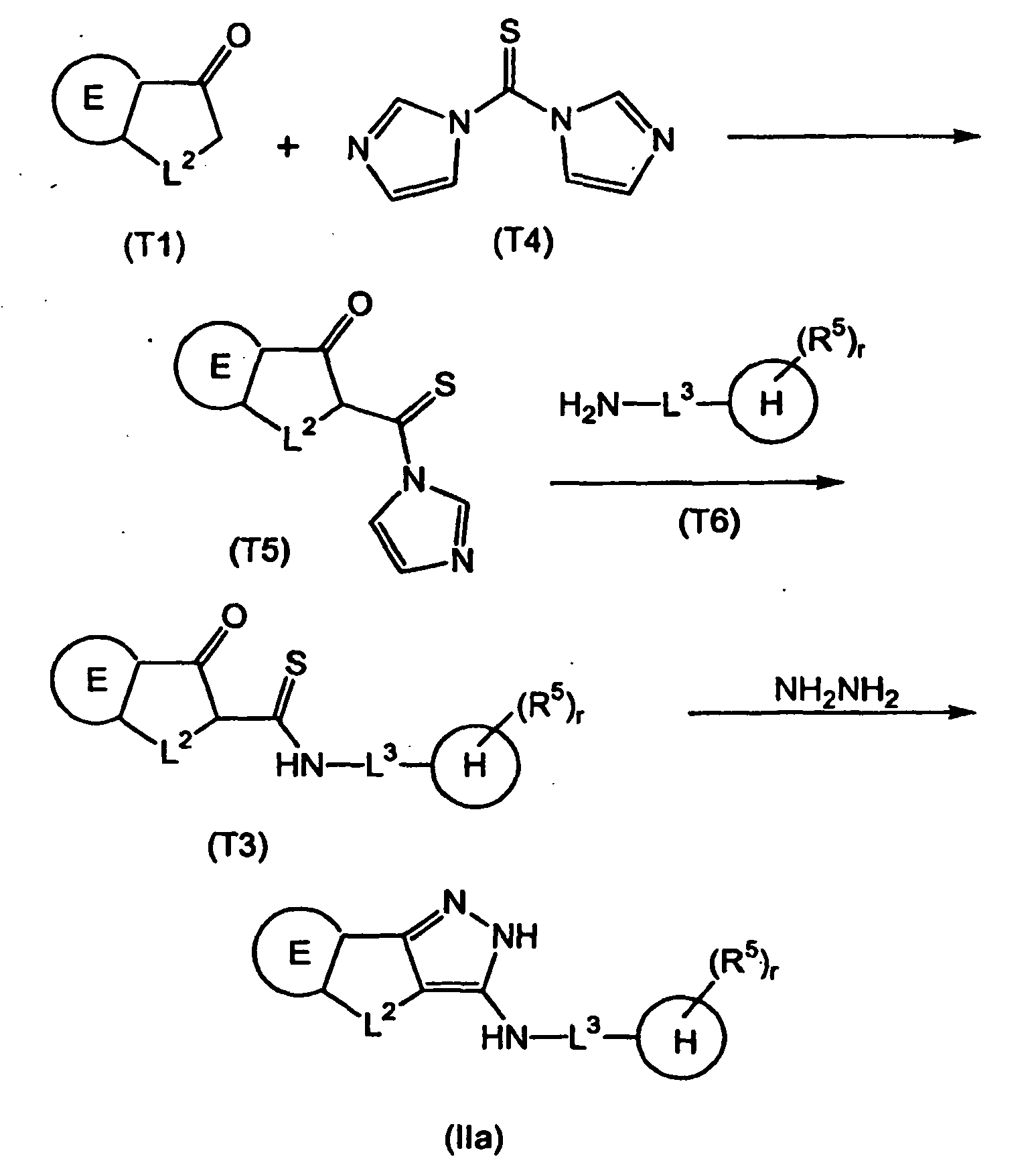
- Accordingly, a compound of Formula (T1), a known compound or compound prepared by known methods, is reacted with a compound of Formula (T4) (1,1'-thiocarbonyldiimidazole), at a reduced temperature in the range of about -78°C to about 0°C, in an aprotic organic solvent such as THF, dioxane, DMF, and the like, in the presence of a strong base such as sodium hydride, lithium bis(trimethylsilyl) amide, sodium bis(trimethylsilyl)amide, lithium diisopropylamide, and the like, to yield the corresponding compound of Formula (T5).
- The compound of Formula (T5) is reacted with a suitably substituted compound of Formula (T6), a known compound or compound prepared by known methods, in an aprotic organic solvent such as THF, dioxane, methylene chloride, chloroform, DMF, and the like, to yield the corresponding compound of Formula (T3).
- The compound of Formula (T3) is reacted with hydrazine, preferably in the presence of about one equivalent of an acid such as acetic acid, hydrochloric acid, and the like, at an elevated temperature, preferably at about reflux temperature, to yield the corresponding compound of Formula (IIa).
- The present invention is further directed to a process for the preparation of a compound of Formula (IIa), as decribed in more detail in method G above. In one embodiment of the present invention the invention relates to a process for the preparation of a compound of Formula (T5), using Method G above. In another embodiment the invention relates to a process for the preparation of a compound of Formula (T3), using the process outlined in Method G above.
- Compounds of Formula (II), of the structure (IIa), may alternatively be prepared according to the process outlined in Method H.


- More particularly, the compound of Formula (T1), a known compound or compound prepared by known methods, is reacted with a suitably substituted compound of Formula (T2), a known compound or compound prepared by known methods, at a temperature in the range of about 0 to about 120°C, in an aprotic organic solvent such as THF, DMF, and the like, in the presence of sodium hydride, to yield the corresponding compound of Formula (T3).
- The compound of Formula (T3) is reacted with hydrazine, preferably in the presence of about one equivalent of an acid such as acetic acid, hydrochloric acid, and the like, at an elevated temperature, preferably at about reflux temperature, to yield the corresponding compound of Formula (IIa).
-


- Accordingly, a compound of Formula (T1), a known compound or compound prepared by known methods, is reacted with carbon disulfide and methyl iodide, in the presence of a base such as sodium hydride, lithium bis(trimethylsilyl) amide, sodium bis(trimethylsilyl)amide, lithium diisopropylamide, and the like, in an aprotic organic solvent such THF, DMF, and the like, at an elevated temperature in the range of about 25° to about 100°C, to yield the corresponding compound of Formula (T7).
- The compound of Formula (T7) is reacted with a suitably substituted compound of Formula (T6), a known compound or compound prepared by known methods, in an aprotic organic solvent such as THF, DMF, and the like, at an elevated temperature in the range of about 25° to about 150°C, in the presence of a catalytic amount of an acid such as acetic acid, sulfuric acid, p-toluene sulfonic acid, and the like, to yield the corresponding compound of Formula (T8).
- The compound of Formula (T8) is reacted with hydrazine, preferably in the presence of about one equivalent of an acid such as acetic acid, hydrochloric acid, and the like, at an elevated temperature, preferably at about reflux temperature, to yield the corresponding compound of Formula (IIa).
- Compounds of Formula (II), of the structure (IIa), may alternatively be prepared according to the process outlined in Method J.

- Accordingly, a compound of Formula (T1), a known compound or compound prepared by known methods, is reacted with a suitably substituted compound of Formula (T2), a known compound or compound prepared by known methods, in the presence of methyl iodide and a base such as DBU, NaH, lithium bis(trimethylsilyl) amide, sodium bis(trimethylsilyl)amide, lithium diisopropylamide, and the like, in an aprotic organic solvent such as acetonitrile, THF, DMF, and the like, at an elevated temperature in the range of about 0 to about 100°C, to yield the corresponding compound of Formula (T8).
- The compound of Formula (T8) is reacted with hydrazine, preferably in the presence of about one equivalent of an acid such as acetic acid, hydrochloric acid, and the like, at an elevated temperature, preferably at about reflux temperature, to yield the corresponding compound of Formula (IIa).
- The present invention includes compounds of Formula (II) wherein one of R6 or R7 is present and other than hydrogen (i.e., compounds of formula (IIb), (IIc), (IId), (IId), (IIe), (IIf), (IIg), (IIh), (IIj), (IIk), (IIm) (IIn), (IIo), (IIp), (IIq), (IIr) and (IIs) as defined in more detail below). Said compounds are potentially prodrugs of compounds of Formulae (I) and (II). The present invention further includes process for the preparation of said compounds of formula (IIb), (IIc), (IId), (IId), (IIe), (IIf), (IIg), (IIh), (IIj), (IIk), (IIm) (IIn), (IIo), (IIp), (IIq), (IIr) and (IIs).
- As prodrugs, compounds of Formula (II) wherein one of R6 or R7 is present and other than hydrogen are believed to be absorbed in vivo and then metabolized or hydrolyzed to the corresponding compounds of Formulae (I) or (II). The compounds of formula (II) wherein one of R6 or R7 is present and other than hydrogen may further have intrinsic biological activity similar to the parent compounds of Formula (I) and / or (II).
- Compounds of formula (IIb) and (IIc) wherein one of R6 or R7 is selected from the group consisting of paragraph (c) of Formula (II) may be prepared according to the process outlined in Method L.

- Accordingly, a suitably substituted compound of Formula (IIa) is reacted with a suitably substituted alkylating agent, a compound of formula (T9), a known compound, for example methyl iodide, dimethyl sulfate, chloromethylpivalate, ethylene oxide, and the like, or compound prepared by known methods, for example as halide, mesylate, tosylate, epoxide and triflate, and the like, at a temperature in a range of -70° to 100°C, in an aprotic solvent such as THF, DMF, and the like; in the presence of a base, such as potassium carbonate, cesium carbonate, pyridine, triethylamine, diisopropylethylamine, and the like, to yield a mixture of the corresponding regioisomers, compounds of formula (IIb) and (IIc). The ratio of the two regioisomers is dependent on the base and solvent used. Preferably, the two regioisomers are separated by silica gel column chromatography or reverse phase column chromatography to yield compounds of formula (IIb) and (IIc).
- Compounds of formula (IId) and (IIe) wherein one of R6 or R7 is selected from the group consisting of consisting of paragraphs (d), (e), (f), (g), (h) and (hh) of Formula (II) may be prepared according to the process outlined in Method M.
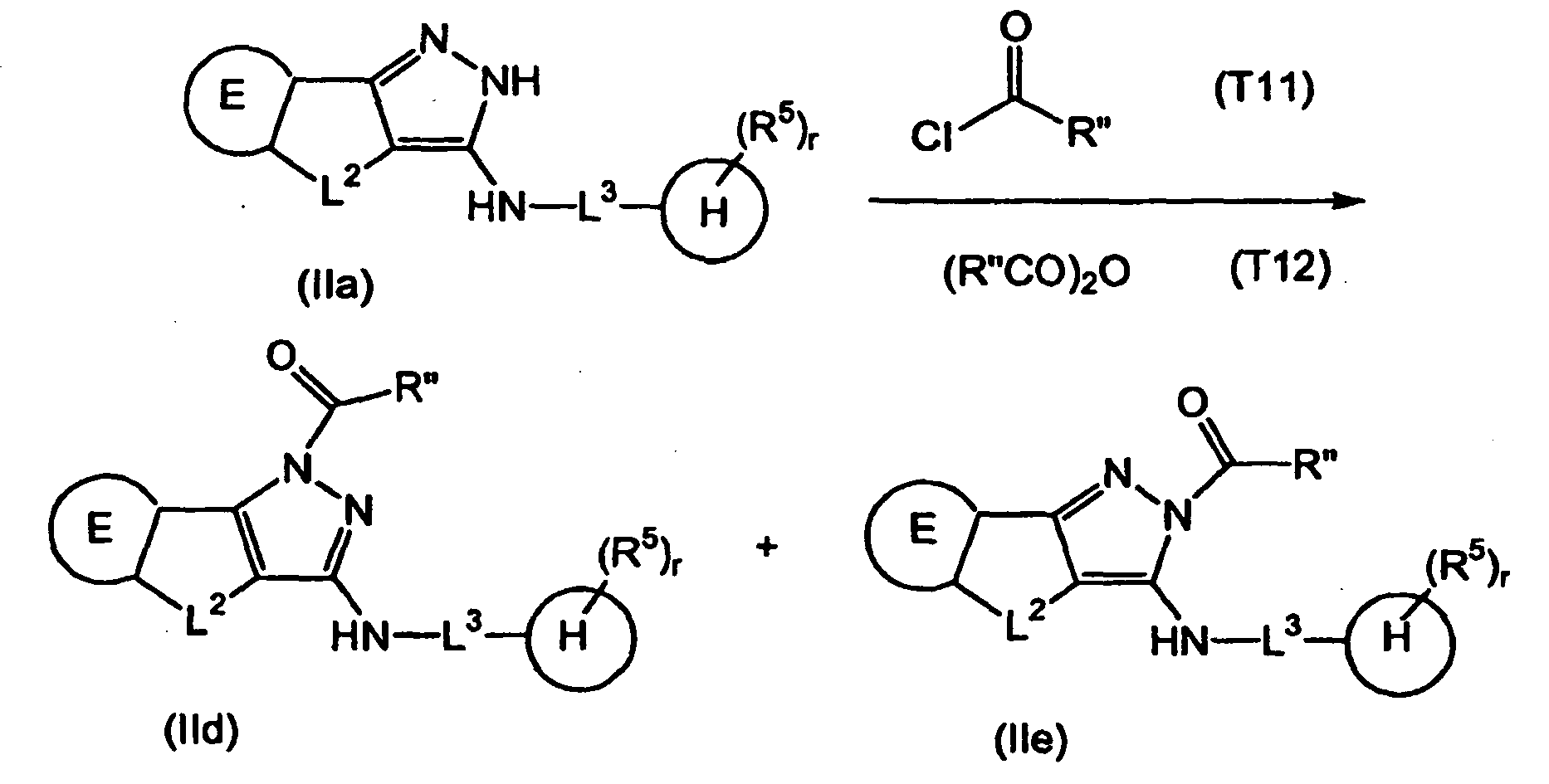
- Accordingly, a suitably substituted compound of Formula (IIa) is reacted with a suitable acylating agent, a compound of formula (T11) or (T12), a known compound or compound prepared by known methods, for example, acetyl chloride, isobutyryl chloride, succinic anhydride, methoxylacetylchloride, benzyloxylacetylchloride, benzoyl chloride, and the like, at a temperature in a range of about between about -70° and about 100°C, in an aprotic solvent, such as THF, DMF, pyridine and the like, in the presence of base, such as pyridine, triethylamine, diisopropylethylamine, and the like, to yield a mixture of the corresponding regioisomers, compounds of formula (IId) and (IIe). The ratio of the two regioisomers is dependent on the base and solvent used. Preferably, the two regioisomers are separated by silica gel column chromatography or reverse phase column chromatography to yield compounds of formula (IId) and (IIe).
- Compounds of formula (IId) and (IIe), wherein one of R6 or R7 is selected from the group consisting of paragraphs (d), (e), (f), (g), (h) and (hh) of Formula (II) may alternatively be prepared according to the process outlined in Method N.

- Accordingly, a suitably substituted compound of formula (IIa), is reacted with a suitably substituted carboxilc acid, a compound of formula (T13), a known compound or compound prepared by known methods, for example, 3-oxo-3-pyrrolidin-1-propionic acid, and the like, at a temperature in a range of between about -70° and about 100°C, in an aprotic solvent such as THF, DMF, and the like, in the presence of base, such as triethylamine, diisopropylethylamine, and the like, to yield a mixture of the corresponding regioisomers, compounds of formula (IId) and (IIe). The ratio of the two regioisomers is dependent on the base and solvent used. Preferably, the two regioisomers are separated by silica gel column chromatography or reverse phase column chromatography to yield compounds of formula (IId) and (IIe).
- One skilled in the art will recognize that when the carboxylic acid of formula (T13) such as benzoic acid, propanoic acid, and the like, the reaction is completed in the presence of a suitable peptide coupling reagent, such as 1-(3-dimethylaminopropyl)-3-ethylcarbodiimide (EDC) and hydroxybenzotriazole hydrate (HOBT), and the like.
- Compounds of formula (IIf) and (IIg), wherein one of R6 or R7 is selected from the group consisting of paragraphs (i), (j), and (k) of Formula (II) may may be prepared according to the process outlined in Method O.

- Accordingly, a suitably substituted compound of formula (IIa) is reacted with a suitably substituted chloroformate, a compound of formula (T14), a known compound or compound prepared by known methods, for example, ethyl chloroformate, 2-methoxyethyl chloroformate, isopropylchloroformate, tri(ethyleneglycol), bis(chloroformate), and the like, at the temperature in a range of between about -70° and bout 100°C, in an aprotic solvent such as THF, DMF, DCM, and the like, in the presence of base such as pyridine, triethylamine, diisopropylethylamine, and the like, to yield a mixture of the corresponding regioisomers, compounds of formula (IIf) and (IIg). The ratio of the two regioisomers is dependent on the base and solvent used. Preferably, the two regioisomers are separated by silica gel column chromatography or reverse phase column chromatography to yield compounds of formula (IIf) and (IIg).
- Compounds of formula (IIh) and (IIj), wherein one of R6 or R7 is selected from the group consisting of paragraphs (I), (m), (n) and (o) of Formula (II) may be prepared according to the process outlined in Method P.

- Accordingly, a suitably substituted compound of Formula (IIa) is reacted with a suitably substituted aryl chloroformate, a compound of formula (T15), a known compound or compound prepared by known methods, for example, phenyl chloroformate, 4-nitrophenyl chloroformate, and the like, at a temperature in a range of between about -70° and about 100°C, in an aprotic solvent, such as THF, DMF, DCM, and the like, in the presence of base such as pyridine, triethylamine, diisopropylethylamine, and the like, to yield a mixture of the corresponding regioisomers, compounds of formula (T16) and (T17). Compounds of formula (T16) and (T17) are separated by silica gel column chromatography or reverse column chromatography.
- The compounds of formula (T16) and (T17), separately, are reacted with a suitably substituted amine, a compound of formula (T18), a known compound or compound prepared by known methods, for example, 1-methyl-1-ethyl-1,2-diamine, propylamine, 3-(morpholin-4-yl)-1-propylamine, and the like, in an aprotic solvent such as DMF, DMSO, THF, and the like, at the temperature in a range of between about -70° and about 100°C to yield the corresponding compounds of formula (IIh) and (IIj).
- Alternatively, the compounds of formula (T16) and (T17) as a mixture are reacted with a suitably substituted amine, a compound of formula (T18), to yield a mixture of compounds of formula (IIh) and (IIj). The compounds of formula (IIh) and (IIj) are then separated by known methods, for example by silica gel column chromatography or reverse phase column.
- Both sequences give the desired compounds of formula (IIh) and (IIi). Preparation of a library of compounds is achieved more efficiently by reacting the compounds of formula (T16) and (T17) separately than by reacting a mixture of compounds of formula (T16) and (T17) followed by separation.
- Compounds of formula (Ilk) and (IIm), wherein one of R6 or R7 is selected from the group consisting of paragraphs (I), (m), (n), (o), (p) and (q) of Formula (II) may be prepared according to the process outlined in Method Q.


- Accordingly, a suitably substituted compound of Formula (IIa) is reacted with a suitably substituted isocyanate, a compound of formula (T19) or a suitably substituted thioisocyanate, a compound of formula (T20), for example, phenylisocyanate, methylisocyanate, methylthioisocyanate, and the like, at a temperature in a range of between about -20° and about 100°C, in an aprotic solvent, such as THF, DMF, DCM, and the like, in the presence of base, such as pyridine, triethylamine, diisopropylethylamine, and the like, to yield a mixture of the corresponding regioisomers, compounds of formula (Ilk) and (IIm). The ratio of the two regioisomers is dependent on the base and solvent used. Preferably, the two regioisomers are separated by silica gel column chromatography or reverse phase column chromatography to yield compounds of formula (IIk) and (IIm).
- One skilled in the art will recognize that when the compound of formula (IIa) is reacted with an isocyanate, then the corresponding compounds of formula (Ilk) and (IIm) will have R6 or R7 substituents of -C(O)NHR""'. Similarly, when the compound of formula (IIa) is reacted with an thioisocyanate, then the corresponding compounds of formula (IIk) and (IIm) will have R6 / or R7 substituent of -C(S)NHR""'.
- Compounds of formula (IIn) and (IIo), wherein one of R6 or R7 is selected from the group consisting of paragraphs (s), (t) and (u) of Formula (II) may be prepared according to the process outlined in Method R.

- Accordingly, a suitably substituted compound of Formula (IIa) is reacted with a suitably substituted sulfamoyl chloride, a compound of formula (T21), a known compound, for example, dimethylsulfamoyl chloride, ethylsulfamoyl chloride, and the like, or a compound prepared by known methods, at a temperature in a range of between about -20° and about 100°C, in an aprotic solvent, such as THF, DMF, DCM, and the like, in the presence of base, such as pyridine, triethylamine, diisopropylethylamine, and the like, to yield a mixture of the corresponding regioisomers, compounds of formula (IIn) and (IIo). The ratio of the two regioisomers is dependent on the base and solvent used. Preferably, the two regioisomers are separated by silica gel column chromatography or reverse phase column chromatography to yield compounds of formula (IIn) and (IIo).
- One skilled in the art will recognize that when the compound of formula (IIa) is reacted with an sulfamyl, then the corresponding compounds of formula (IIo) and (IIp) will have R6 or R7 substituents of -SO2NHR""' and -SO2N(R""')2.
- Compounds of formula (IIp) and (IIq), wherein one of R6 or R7 is selected from the group consisting of paragraphs (v) and (w) of Formula (II) may be prepared according to the process outlined in Method S.

- Accordingly, a suitably substituted compound of Formula (IIa) is reacted with a suitably alkyl chlorophosphate, a compound of formula (T22), a known compound, for example, dimethylchlorophosphate, diethylchlorophosphate, and the like, or a compound prepared by known methods, at a temperature in a range of between about -20° and about 100°C, in an aprotic solvent, such as THF, DMF, DCM, and the like, in the presence of base, such as pyridine, triethylamine, diisopropylethylamine, and the like, to yield a mixture of the corresponding regioisomers, compounds of formula (IIp) and (IIq). The ratio of the two regioisomers is dependent on the base and solvent used. Preferably, the two regioisomers are separated by silica gel column chromatography or reverse phase column chromatography to yield compounds of formula (IIp) and (IIq).
- One skilled in the art will recognize that when the compound of formula (IIa) is reacted with a dialkyl chlorophosphate, then the corresponding compounds of formula (IIp) and (IIq) will have R6 or R7 substituents of -P(=O)(O(C1-C3)alkyl)2
- Compounds of formula (IIr) and (IIs), wherein one of R6 or R7 is selected from the group consisting of paragraph (r) of Formula (II) may be prepared according to the process outlined in Method T.

- Accordingly, a suitably substituted compound of Formula (IIa) is reacted with a suitably substituted aryl thionochloroformate, a compound of formula (T23), a known compound or compound prepared by known methods, for example, phenylthionochloroformate, and the like, at a temperature in a range of between about -70° and about 100°C, in an aprotic solvent, such as THF, DMF, DCM, and the like, in the presence of base such as pyridine, triethylamine, diisopropylethylamine, and the like, to yield a mixture of the corresponding regioisomers, compounds of formula (T24) and (T25). Compounds of formula (T24) and (T25) are seprated by silica gel column chromatography or reverse phase column chromatography.
- The compounds of formula (T24) and (T25), separately are reacted with a suitably substituted amine, a compound of formula (T26), a known compound or compound prepared by known methods, for example, piperidine, morpholine. Dimethylamine, pyrrolidine and the like, in an aprotic solvent such as DMF, DMSO, THF, and the like, at the temperature in a range of between about -70° and about 100°C to yield the corresponding compounds of formula (IIr) and (IIs).
- Alternatively, the compounds of formula (T24) and (T25) as a mixture are reacted with a suitably substituted amine, a compound of formula (T26), to yield a mixture of compounds of formula (IIr) and (IIs). The compounds of formula (IIr) and (IIs) are then separated by known methods, for example by silica gel column chromatography or reverse phase column.
- Both sequences give the desired compounds of formula (IIr) and (IIs). Preparation of a library of compounds is achieved more efficiently by reacting the compounds of formula (T24) and (T25) separately than by reacting a mixture of compounds of formula (T24) and (T25) followed by separation..
- To varying degrees the compounds of this invention may undergo the in vivo N-glucuronidation by various endogenous isozymes of the UDP-glucuronosyltransferase family (Chiu, S-HL; Huskey, S-EW; 1996 ASPET N-glucuronidation of xenobiotics symposium: Species differences in N-glucuronidation, Drug Metabolism and Disposition 1998, 26(9): 838-847).
- One skilled in the art will understand that in vivo metabolites of compounds of Formulae (I) and (II) may be readily reverted to compounds of Formulae (1) and (II) by action of endogenous β-glucuronidase. The scientific literature details that tumor tissue generally contains elevated levels of endogenous β-glucuronidase. By action of endogenous β-glucuronidase, the in situ re-generation of compounds of Formulae (I) and (II) can be accomplished. In this way, the ability of the compounds of the present invention to be reversibly glucuronidated allows for the targeting of the present compounds to tumor tissue (Sperker, B; Backman, JT; Kroemer, HK, The role of β-glucuronidase in drug disposition and drug targeting in humans, Clin. Pharmacokinet., 1997, 33(1): 18-31).
- Furthermore, reversible glucuronidation of the present compounds may also be recognized by one skilled in the art as a potential method for the detoxification of compounds of Formulae (I) and (II) (Caldwell, J; The significance of phase II conjugation reactions in drug disposition and toxicity, Life Sci, 1979, 24: 571-578), thus allowing the N-glucuronide metabolites formed to serve as a potential non-toxic reservoir for compounds of Formulae (I) and (II) which can then be readily unmasked to fully biologically active compounds of Formulae (I) and (II) in situ by tumor associated β-glucuronidase.
- The N-glucuronide metabolites of compounds of Formulae (I) and (II) will have the structures shown below as GLU A, GLU B, and GLU C:


- Usually, the glucuronidated compounds will have a β-configuration about the anomeric carbon atom, especially if the glucuronide is produced by well-established enzymatic methods known to persons skilled in the art (Luukkanen, L; Kilpelaeinen, I; Kangas, H; Ottoila, P; Elovaara, E; Taskinen, J, Enzyme-Assisted Synthesis and Structural Characterization of Nitrocatechol Glucuronides, Bioconjugate Chemistry (1999), 10(1), 150-154).
- The N-glucuronides may also be prepared by direct synthesis by reacting compounds of Formulae (I) and (II) with suitably protected glucuronosyl halides by synthetic methodology know to persons skilled in the art (Upadhyaya, Pramod; Mclntee, Edward J.; Hecht, Stephen S., Preparation of Pyridine-N-glucuronides of Tobacco-Specific Nitrosamines., Chemical Research in Toxicology (2001), 14(5), 555-561).
- One skilled in the art will recognize that the GLU A, GLU B and GLU C derivatives of the compounds of Formulae (I) and (II) may be prepared by known methods, by adapting the procedures cited above.
- One skilled in the art will further recognize that the R2 and / or R3 groups on theand / orrings may alternatively be incorporated into the compound of Formula (I) by known methods, after formation of the core structure of Formula (I), a compound of Formula (Icore)
 orring or to a portion of an R2 or R3 substituent (for example wherein the desired R2 group is X-A1-Y-A2, the Z group may be bound to an X-A1 group bound to anorring).
 - For example, if one or more of the Z groups are hydroxy, the hydroxy group may be reacted according to known methods with an alkyl halide, to form the corresponding -O-alkyl substituent; with Cl-C(O)-alkyl or Cl-C(O)-aryl to form the corresponding -C(O)-alkyl or -C(O)-aryl substituent; with Cl-C(O)O-alkyl or Cl-C(O)O-aryl to form the corresponding -C(O)O-alkyl or -C(O)O-aryl substituent; or with C(O)N(alkyl) or C(O)C(aryl) to form the corresponding -OC(O)N(alkyl) or -OC(O)N(aryl) substituent.
- If one or more of the Z groups is amino, the amino group may be reacted according to known methods with HC(O)-alkyl or HC(O)-aryl to form the corresponding -NHCH2-alkyl or -NHCH2-aryl substituent; with Cl-C(O)-alkyl or Cl-C(O)-aryl to form the corresponding -NHC(O)-alkyl or -NHC(O)aryl substituent; with C(O)N-alkyl or C(O)N-aryl to form the corresponding -NHC(O)NH-alkyl or -NHC(O)NH-aryl substituent; with Cl-C(O)O-alkyl or Cl-C(O)O-aryl to form the corresponding -NHC(O)O-alkyl or -NHC(O)O-aryl substituent; or with Cl-SO2-alkyl or Cl-SO2-aryl to form the corresponding -NHSO2-alkyl or -NHSO2-aryl substituent. One skilled in the art will further recognize that if the Z group is an alkyl amino or aryl amino group, similar chemistry may be preformed to yield corresponding substituents where the N group bound directly to the A or B ring remains substituted with the alkyl or aryl group.
- If one or more of the Z groups is thio, the thio group may be reacted according to known methods with an alkyl halide to form the corresponding alkyl thio substituent. If one or more of the Z groups is alkylthio, the alkylthio group may be reacted according to known methods to form the corresponding alkyl sulfonyl substituent.
- If one or more of the Z groups is carboxy, the carboxy group may be reacted according to known methods to form the corresponding -C(O)Cl group, which in turn may be further reacted to form the desired R2 and / or R3 substituents.
- If one or more of the Z groups is -C(O)Cl, the -C(O)Cl group may be reacted according to known methods with an alkoxy to form the corresponding - C(O)O-alkyl substituent; with -NH(alkyl) or N(alkyl)2 to form the corresponding - C(O)NH(alkyl) or -C(O)N(alkyl)2 substituent.
- If one or more of the Z groups is a halogen such as iodine or bromine, the halogen may be reacted according to known methods with B(OH)2-alkyl, B(OH)2-aryl or B(OH)2-heteroaryl to displace the halogen with the corresponding -alkyl, -aryl or -heteroaryl group.
- Alternatively, if one or more of the Z groups is a halogen such as iodine or bromine, the halogen may be reacted according to known methods with an alkylamine, a dialkylamine, an arylamine, a heteroarylamine or a heterocycloalkylamine to displace the halogen with the corresponding -NHalkyl, -N(alkyl)2, -N-aryl, -NH-heteroaryl or -NH-heterocycloalkyl group.
- Alternatively, if one or more of the Z groups is a halogen such as iodine or bromine, the halogen may be reacted according to known methods with HO-alkyl, HO-aryl, HO-heteroaryl or HO-heterocycloalkyl to displace the halogen with the corresponding -O-alkyl, -O-aryl, -O-heteroaryl or -O-heterocycloalkyl group.
- Alternatively, if one or more of the Z groups is a halogen such as iodine or bromine, the halogen may be reacted according to known methods with HS-alkyl, HS-aryl, HS-heteroaryl or HS-heterocycloalkyl to displace the halogen with the corresponding -S-alkyl, -S-aryl, -S-heteroaryl or -S-heterocycloalkyl group.
- If one or more of the Z groups is -O-SO2-aryl or -OSO2-alkyl, the -O-SO2aryl or -OSO2-alkylgroup may be reacted according to known methods with an alkyl amine, a dialkylamine an aryl amine or a heteroarylamino to form the corresponding -NH(alkyl), -N(alkyl)2, -NH(aryl) or -NH(heteroaryl) group.
- Alternatively, If one or more of the Z groups is -O-SO2-aryl or -OSO2-alkyl, the -O-SO2aryl or -OSO2-alkylgroup may be reacted according to known methods to displace the -O-SO2 group with a halogen such as Br or I, to form a reactive intermediate which can then be further reacted to form the desired substituent.
- If one or more of the Z groups is -S-alkyl, -S-aryl, -S-heteroaryl or -S-heterocycloalkyl, the S may be oxidized according to known methods to form the corresponding -SO2-alkyl, -SO2-aryl, -S O2-heteroaryl or -SO2-heterocycloalkyl substituent.
- If one or more of the Z groups contains a terminal unsaturated bond, the Z group may be reacted according to known methods to form the corresponding epoxide, which in turn may be reacted with a substituted amine such as an alkylamino, a dialkylamine, an arylamine, a heteroarylamine, a heterocycloalkylamine, or a cyclic amine (such as piperidine, morpholine, imidazole, and the like), to form the corresponding -CH(OH)CH2-NH-alkyl, -CH(OH)CH2-N(alkyl)2, -CH(OH)CH2-NH-aryl, -CH(OH)CH2-NH-heteroaryl, -CH(OH)CH2-NH-heterocycloalkyl or -CH(OH)CH2-(cyclic amine bound through the N atom) substituent.
- One skilled in the art will further recognize transformation or reactions similar to those described above may be employed in (or applied to) the preparation of compounds of formula (II). More particularly, the processes described above for the introduction of R2 and/or R3 groups on theand / orrings may be used to incorporate R5, R9 and/or R10 substituents onto theandrings on the compounds of formula (II).
- One skilled in the art will recognize that compounds of Formula (I) wherein R1 is oxo (=O) may be converted according to known methods to form compounds of Formula (I) wherein R1 is hydroxy (by reduction) or converted to intermediate compounds wherein R1 is =NHOH (by reacting with NH4OH). The intermediate compounds wherein R1 is =NHOH may then be reduced according to known methods to the corresponding amine, which may then be further optionally functionalized to the corresponding substituted amine.
- Compounds of Formula (I) wherein R1 is hydroxy may be converted according to known methods to form intermediate compounds wherein R1 is -O-SO2-aryl or -O-SO2-alkyl by reacting the intermediate compound with the corresponding Cl-SO2-aryl or Cl-SO2-alkyl reagent. The -O-SO2-aryl or -O-SO2-alkyl R1 group may then be further optionally reacted according to known methods to form an amine (by reacting with NaN3 followed by reduction).
- Alternatively, compounds of Formula (I) wherein R1 is hydroxy may be converted according to known methods to form compounds of Formula (I) wherein R1 is -O-alkyl by reacting with the corresponding alkyl halide.
- Compounds of Formula (I) wherein R1 is amine or alkyl amine may be reacted according to known methods to form compounds of Formula (I) wherein R1 is -NH-CH2-alkyl or -NH-(CH2-alkyl)2 by reacting with HC(O)-alkyl.
- One skilled in the art will further recognize that transformation or reactions similar to those described above may be employed in (or applied to) the preparation of compounds of formula (II). More particularly, the processes described above for the introduction and optional conversion of R1 groups in the compounds of formula (I) may be similarly applied to the preparation of compounds of formula (II), wherein such transformations are appropriate in the preparation of desired L2 groups.
- One skilled in the art will further recognize that the above examples for the inclusion of desired substituent groups into the compounds of Formula (I) and / or compounds of formula (II) are not intended to be all inclusive, but rather are intended to provide examples of known chemistry for the incorporation of representative substituents. Additional substituents groups not specifically described herein may be incorporated into the compounds of Formula (I) and / or compounds of formula (II) by known methods.
- Representative compounds of the present invention synthesized by the aforementioned methods are presented below. Examples of the synthesis of specific compounds are presented thereafter.
Cpd Structure Cpd Structure 1 
2 
3 
4 
5 
6 
7 
8 
9 
10 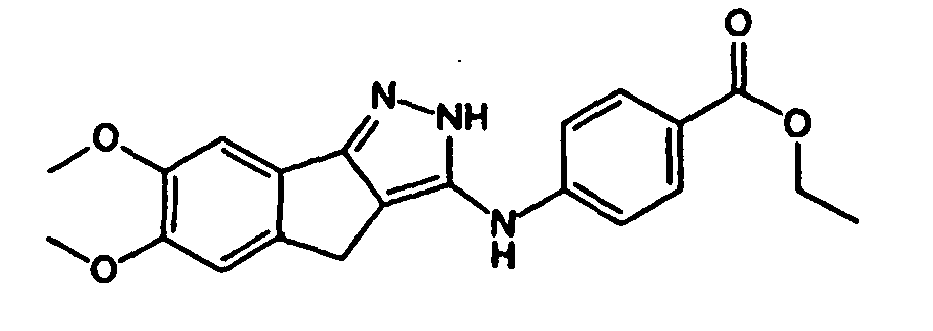
11 
12 
13 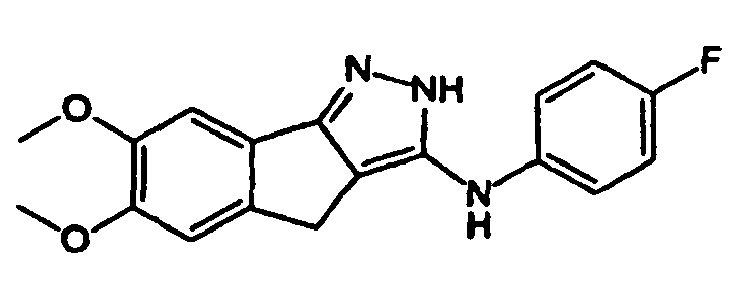
14 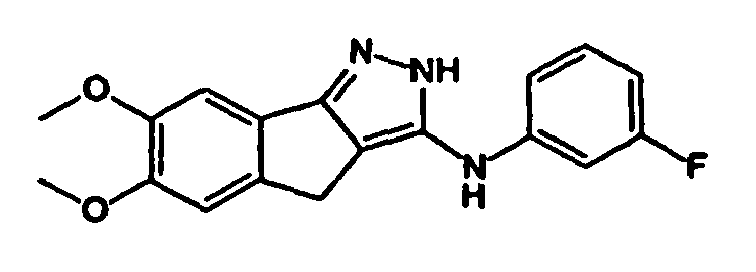
15 
16 
17 
18 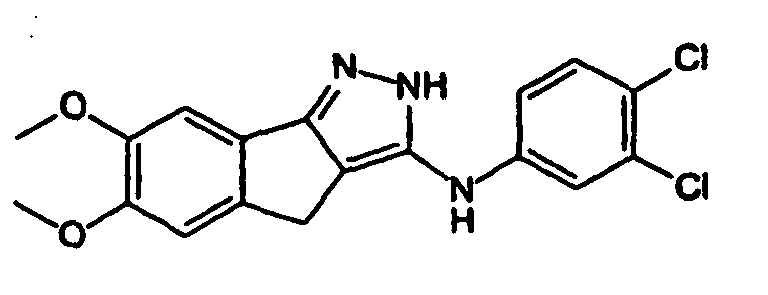
19 
20 
21 
22 
23 
24 
25 
26 
27 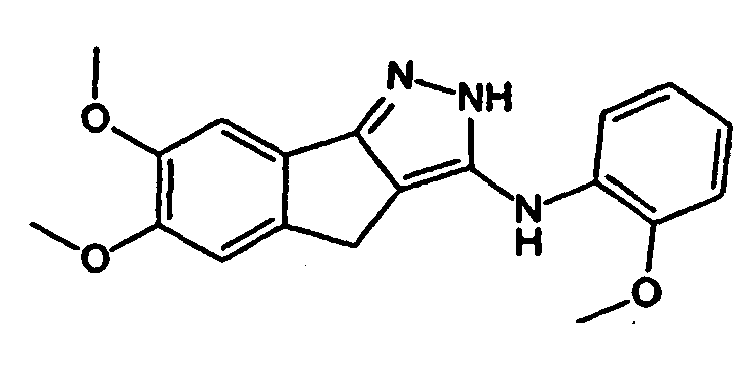
28 
29 
30 
31 
32 
33 
34 
35 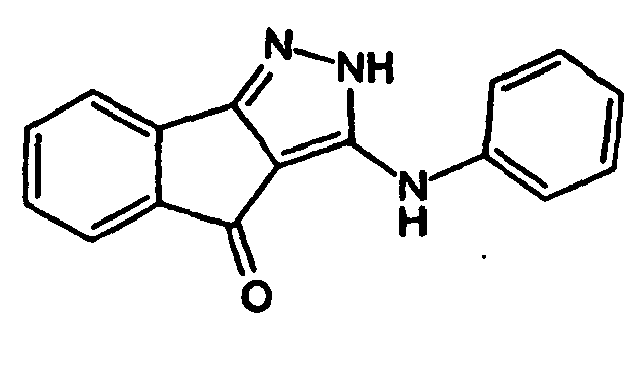
36 
37 
38 
39 
40 
41 
42 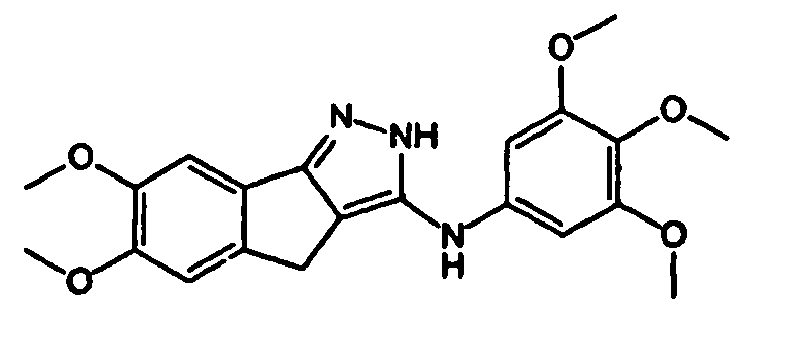
43 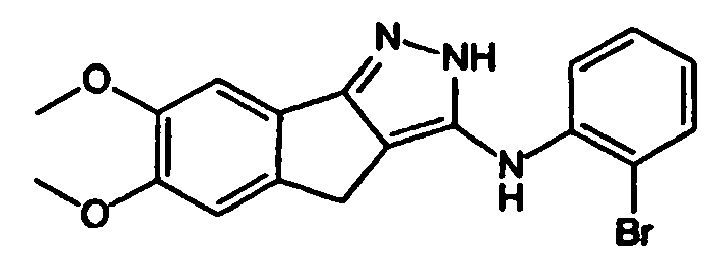
44 
45 
46 
47 
48 
49 
50 
51 
52 
53 
54 
55 
56 
57 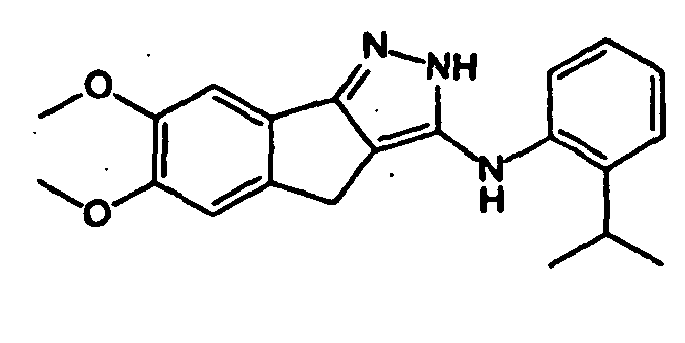
58 
59 
61 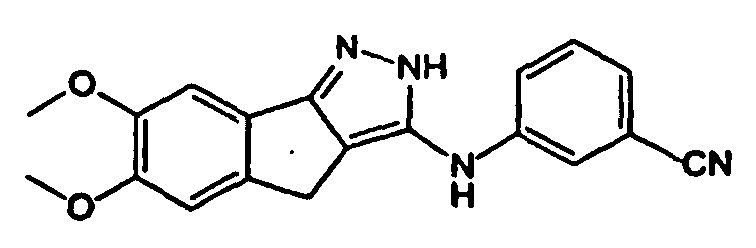
62 
63 
64 
65 
66 
67 
69 
70 
71 
72 
73 
74 
75 
76 
77 
78 
79 
81 
82 
83 
84 
85 
86 
87 
88 
89 
90 
91 
92 
93 
94 
95 
96 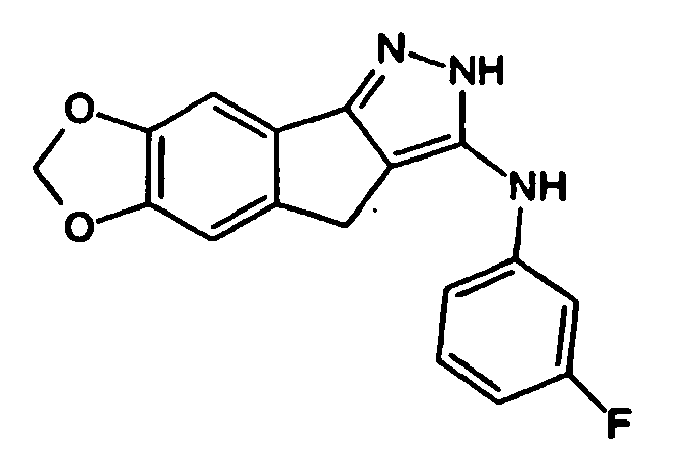
97 
98 
99 
100 
101 
102 
103 
104 
105 
106 
107 
108 
109 
110 
111 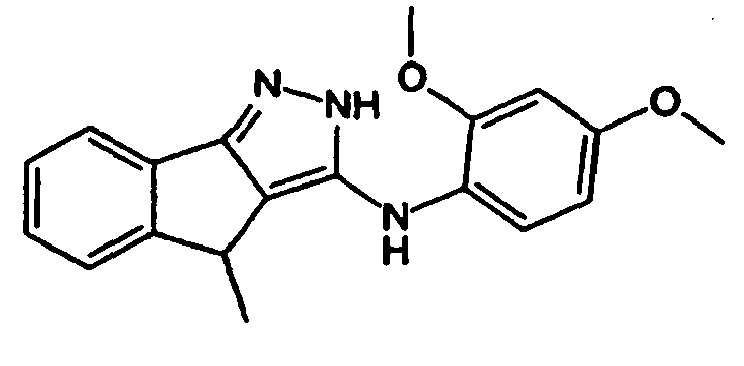
112 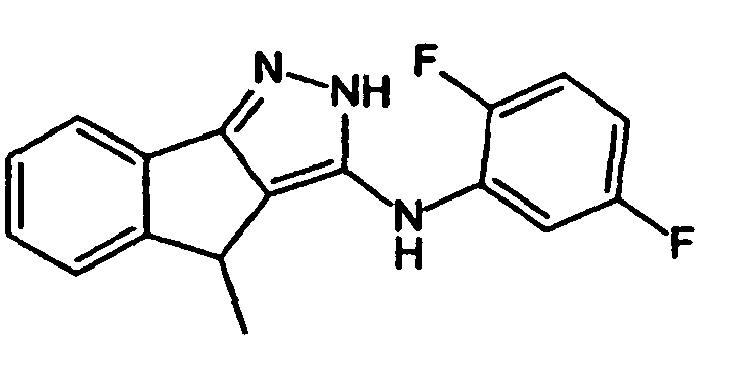
113 
114 
115 
116 
117 
118 
119 
120 
121 
122 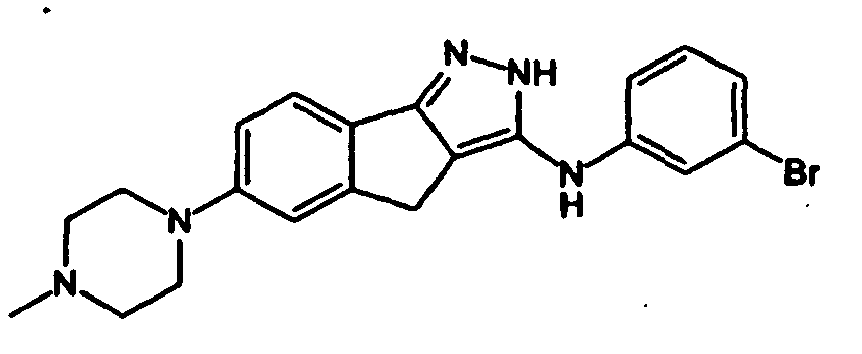
123 
124 
125 
126 
127 
128 
129 
130 
131 
132 
133 
134 
135 
136 
137 
138 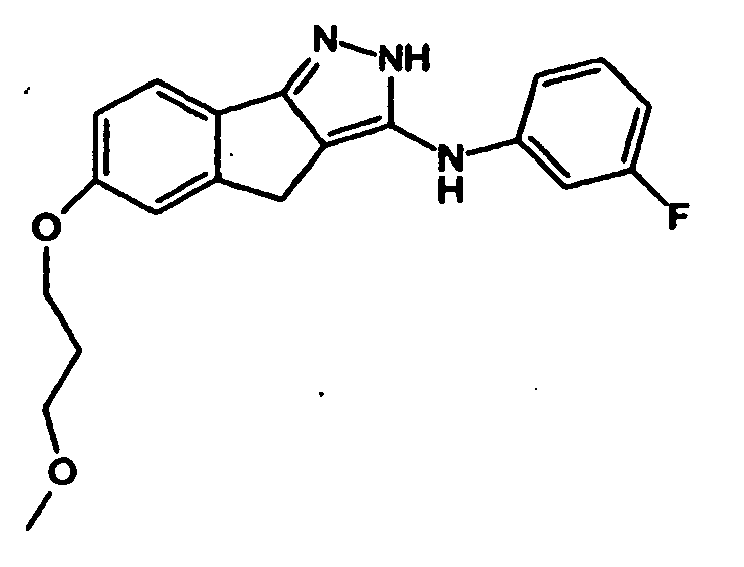
139 
140 
141 
142 
143 
144 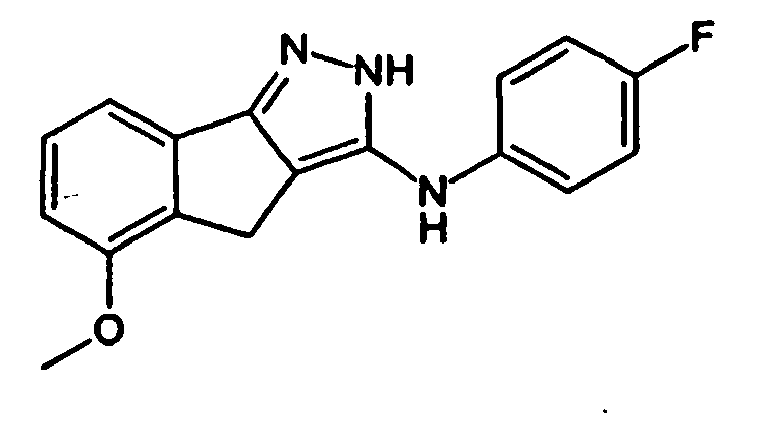
145 
146 
147 
148 
149 
150 
151 
152 
153 
154 
155 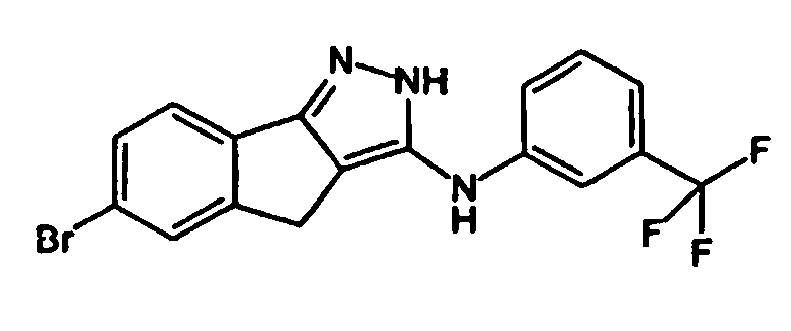
156 
157 
158 
159 
160 
161 
162 
163 
165 
166 
167 
168 
169 
170 
171 
172 
173 
174 
175 
176 
177 
178 
179 
180 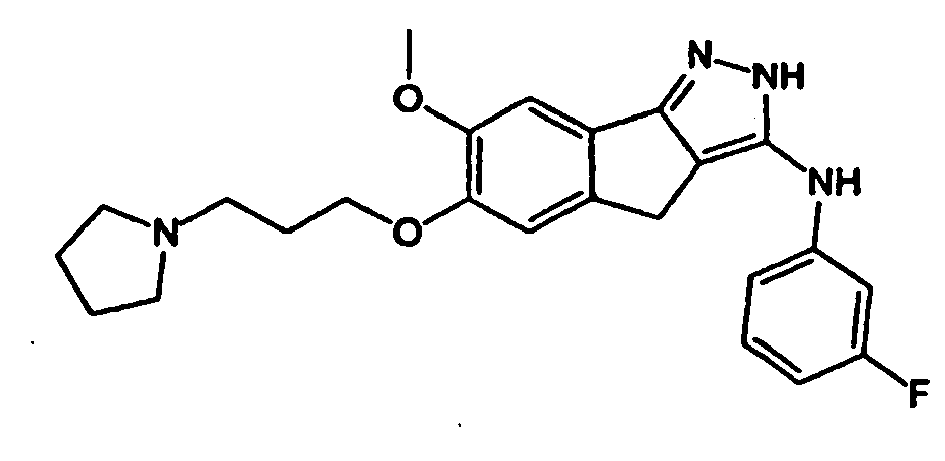
181 
182 
183 
184 
185 
186 
187 
188 
189 
190 
191 
192 
193 
194 
195 
196 
197 
198 
199 
200 
201 
202 
203 
204 
205 
206 
207 
208 
209 
210 
211 
212 
213 
214 
215 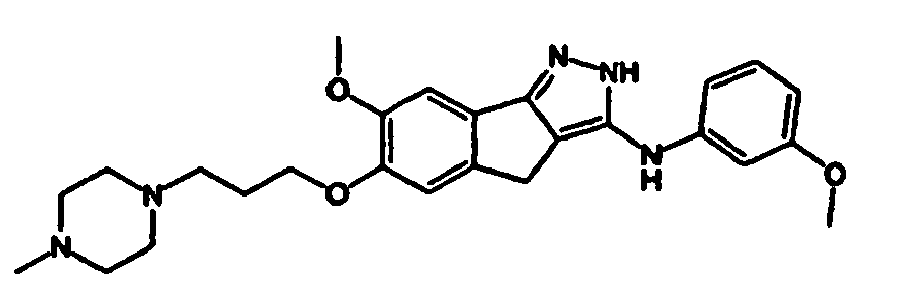
216 
217 
218 
219 
220 
221 
222 
223 
224 
225 
226 
227 
230 
231 
232 
233 
234 
235 
236 
237 
238 
239 
240 
242 
244 
245 
246 
247 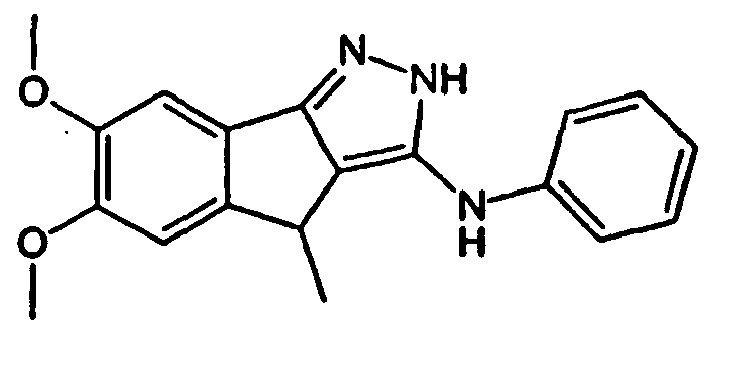
248 
249 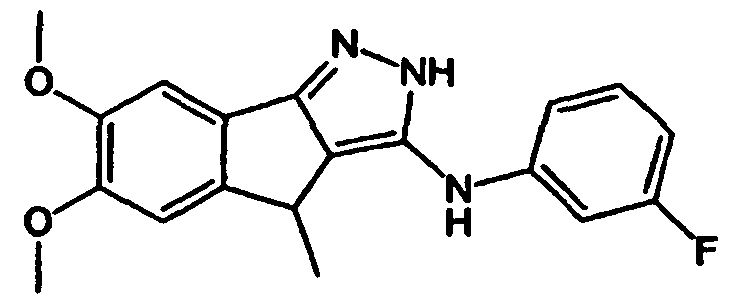
250 
251 
252 
253 
254 
255 
256 
257 
258 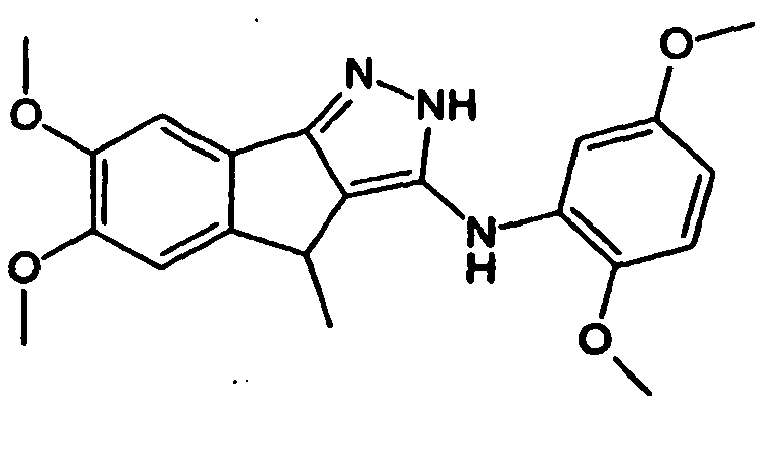
259 
260 
261 
262 
263 
264 
265 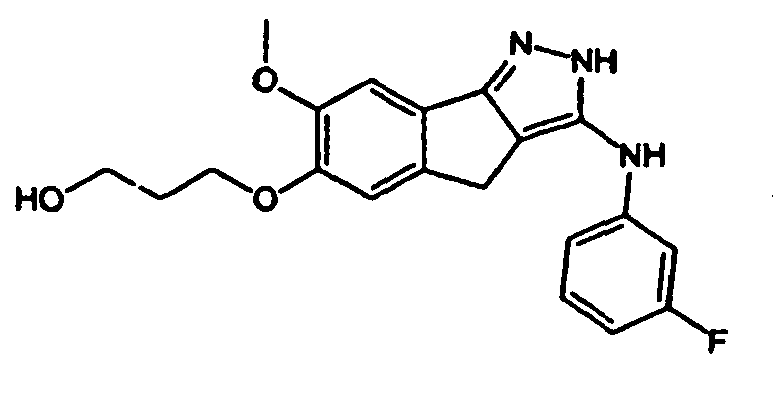
266 
267 
268 
269 
270 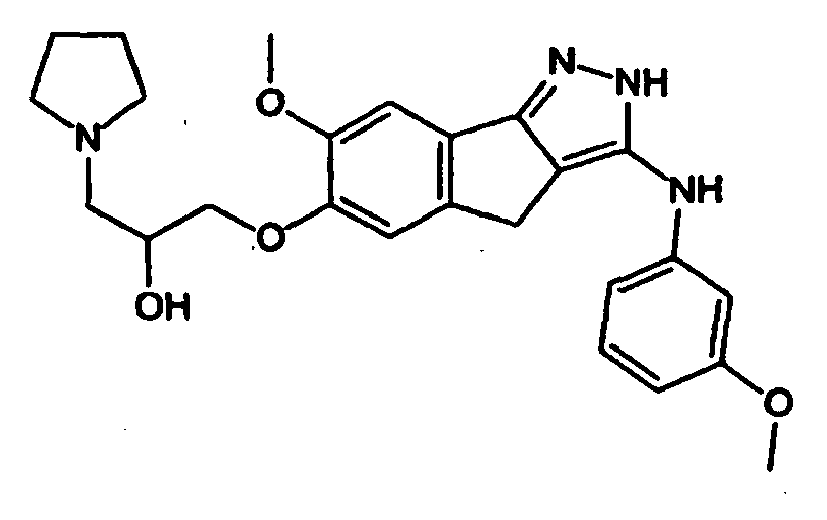
271 
272 
273 
274 
275 
276 
277 
278 
279 
280 
281 
282 
283 
284 
285 
286 
287 
288 
289 
290 
291 
292 
293 
294 
295 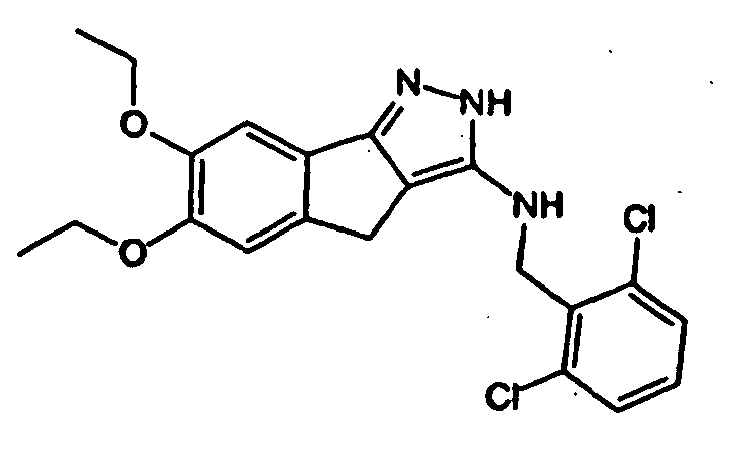
296 
297 
298 
299 
300 
301 
302 
303 
304 
305 
306 
307 
308 
309 
310 
311 
312 
313 
314 
315 
316 
317 
318 
319 
320 
321 
322 
323 
324 
325 
326 
327 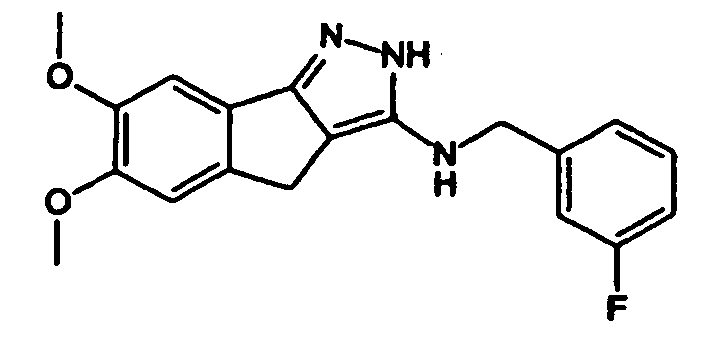
328 
329 
330 
331 
332 
333 
334 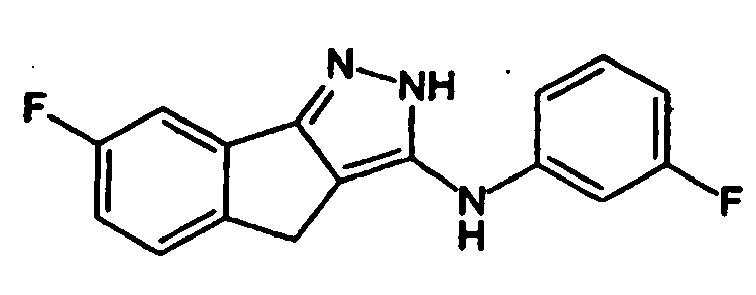
335 
337 
338 
339 
340 
341 
342 
343 
344 
345 
346 
347 
348 
349 
350 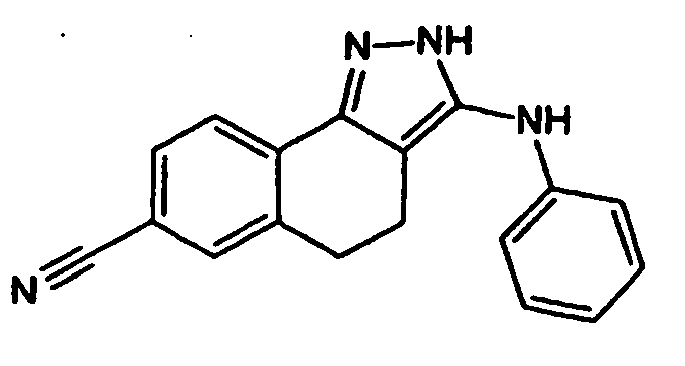
351 
352 
353 
354 
355 
356 
357 
358 
359 
360 
361 
362 
363 
364 
365 
366 
367 
368 
369 
370 
371 
372 
373 
374 
375 
376 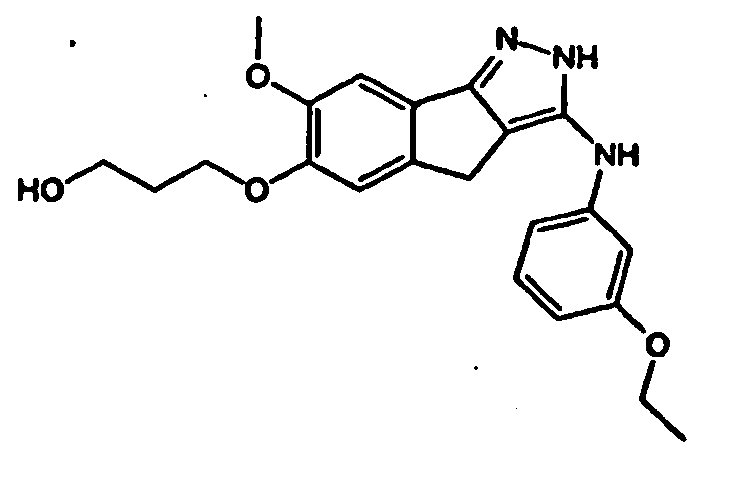
377 
378 
379 
380 
381 
382 
383 
384 
385 
386 
387 
388 
389 
390 
391 
392 
393 
394 
395 
396 
397 
398 
400 
401 
402 
403 
404 
405 
406 
407 
408 
409 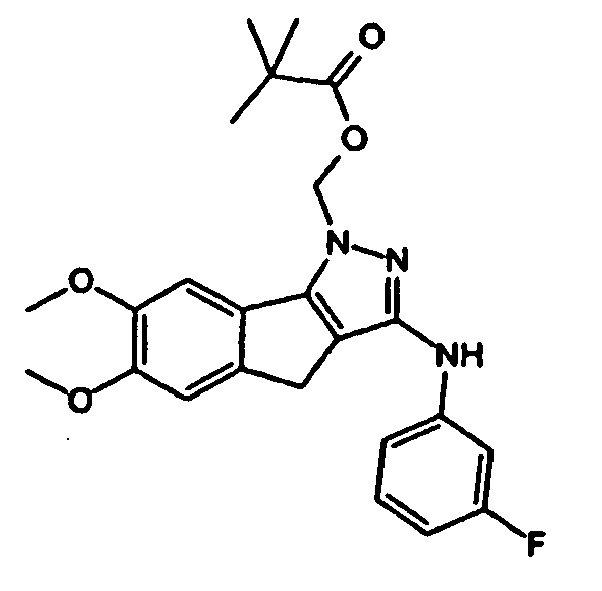
410 
411 
412 
413 
414 
415 
416 
417 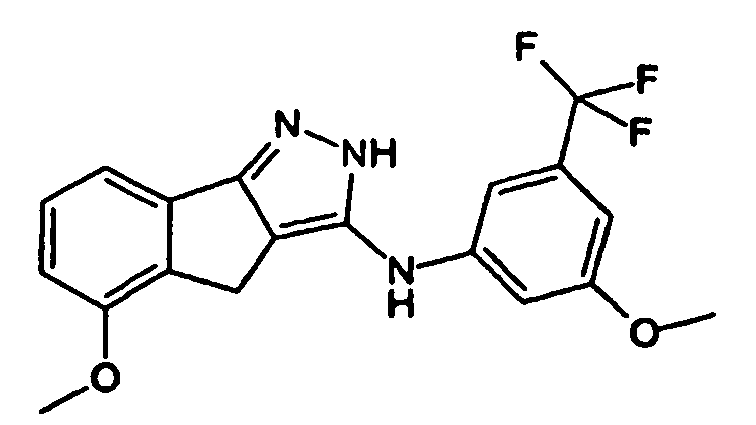
418 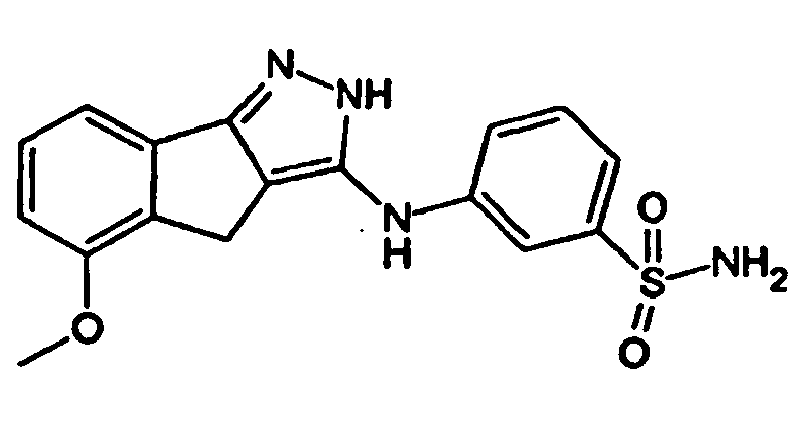
419 
420 
421 
422 
423 
424 
425 
426 
427 
428 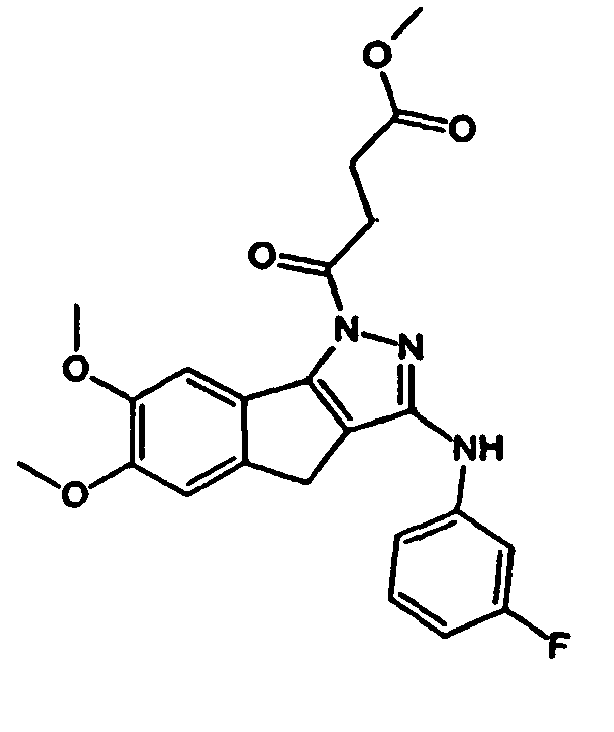
429 
430 
431 
432 
433 
434 
435 
436 
437 
438 
439 
440 
441 
442 
443 
444 
445 
446 
447 
448 
449 
450 
451 
452 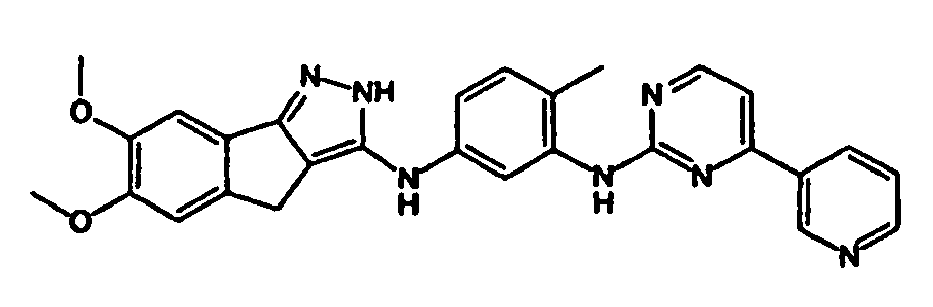
453 
454 
455 
457 
458 
459 
460 
461 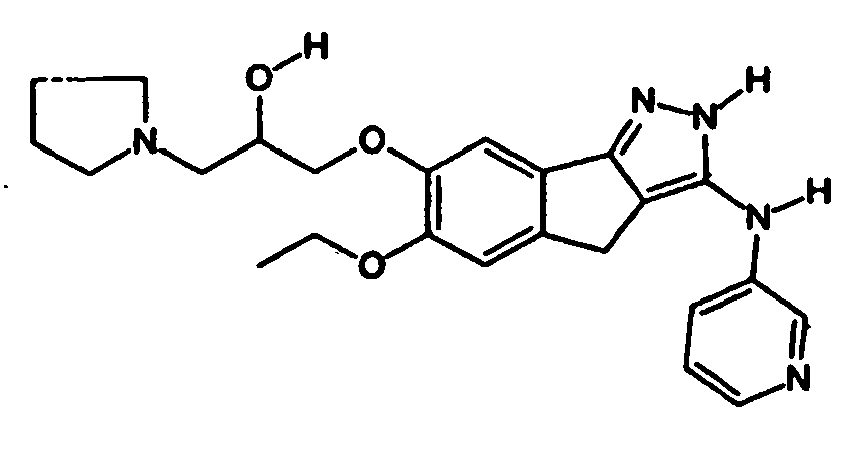
462 
463 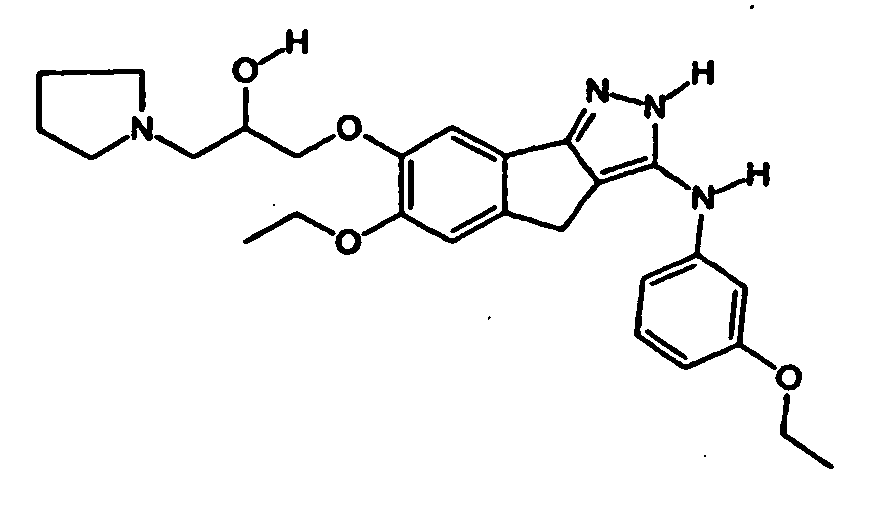
464 
465 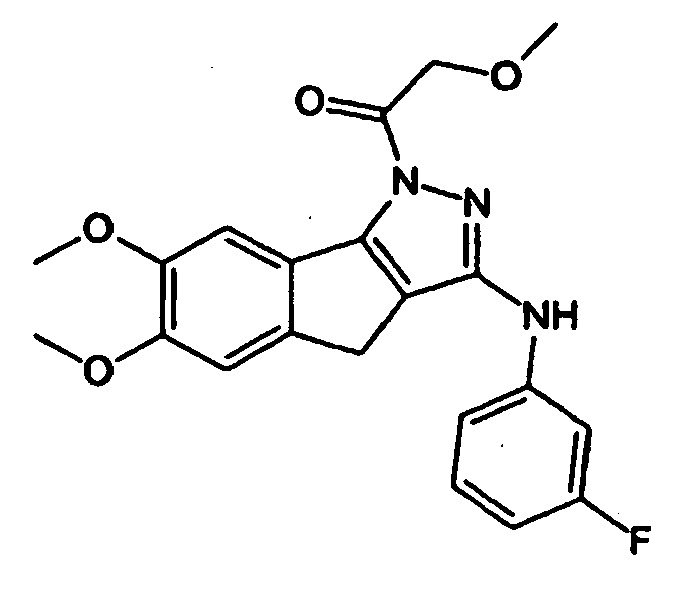
466 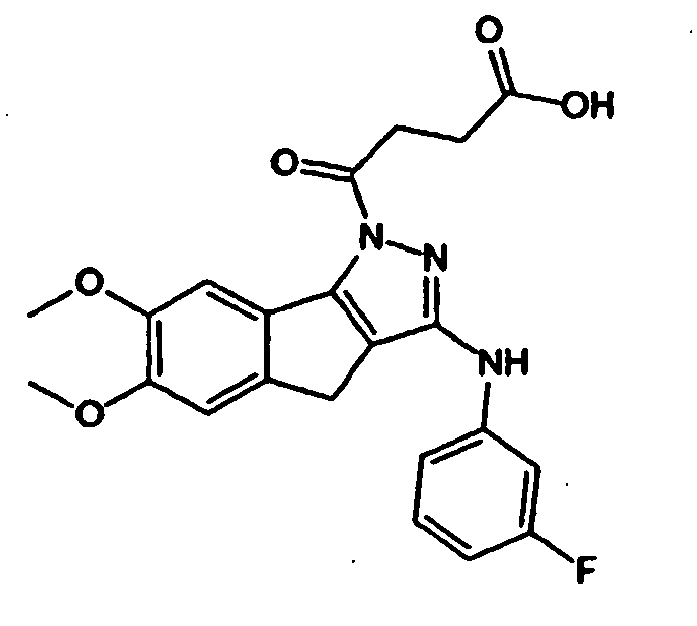
467 
468 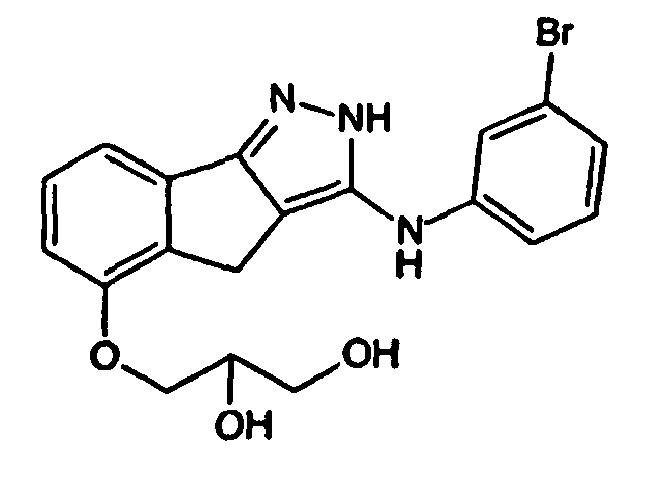
469 
470 
471 
472 
473 
474 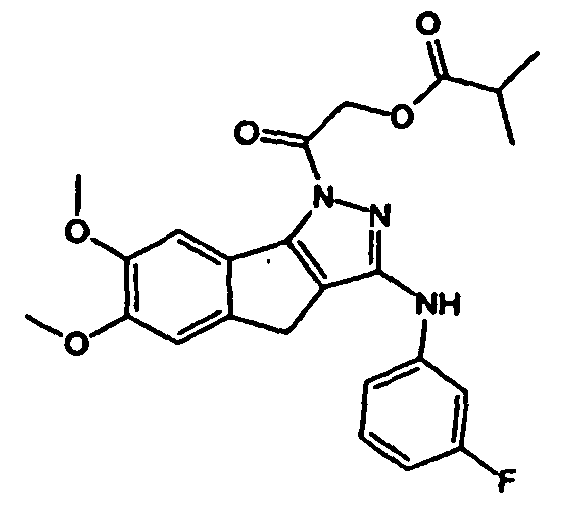
475 
476 
477 
478 
479 
480 
481 
482 
483 
484 
485 
486 
487 
488 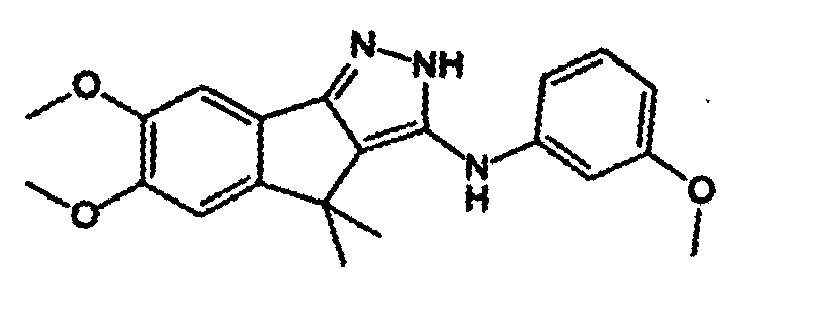
489 
490 
491 
492 
494 
496 
497 
498 
499 
500 
501 
502 
503 
504 
505 
506 
509 
510 
511 
512 
513 
514 
515 
516 
517 
518 
519 
520 
521 
522 
523 
524 
525 
526 
527 
528 
529 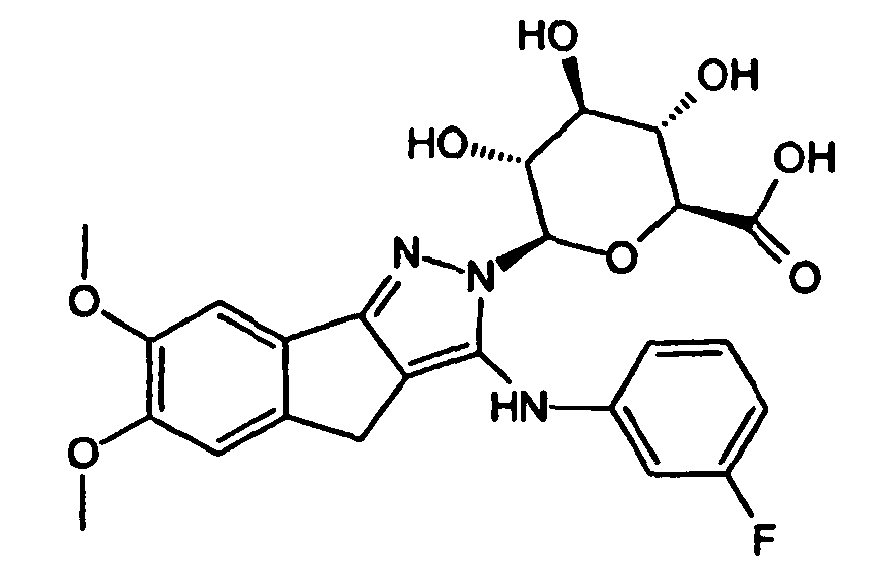
530 
531 
532 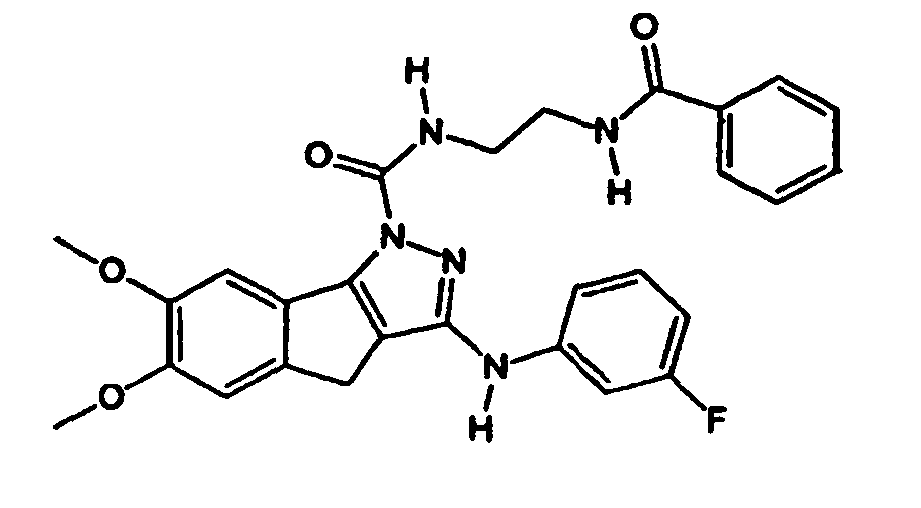
534 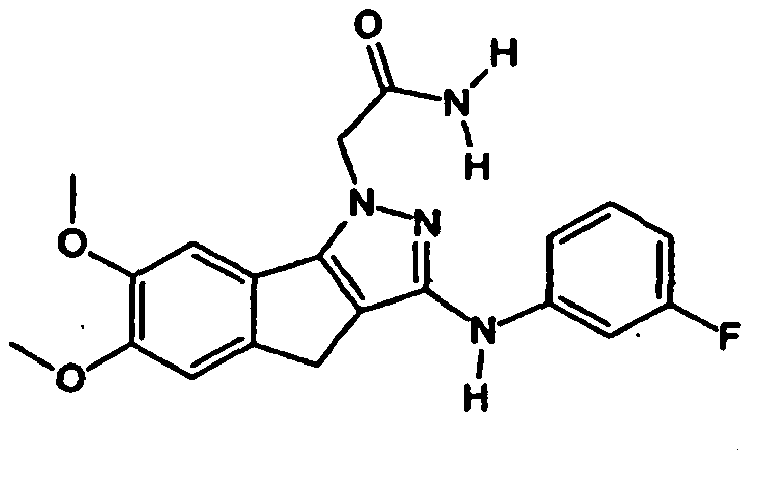
535 
536 
537 
538 
540 
541 
542 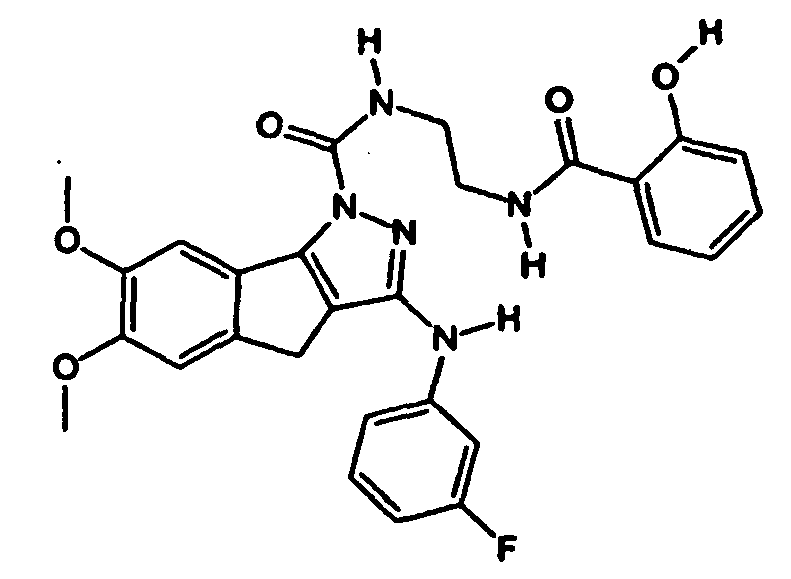
544 
546 
547 
548 
549 
553 
554 
555 
556 
557 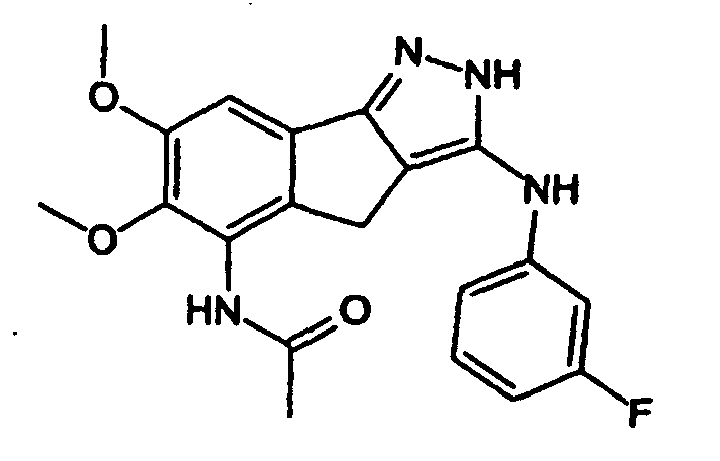
558 
559 
560 
562 
563 
564 
565 
566 
567 
568 
569 
570 
571 
572 
573 
574 
575 
576 
577 
578 
579 
580 
581 
582 
583 
584 
585 
586 
587 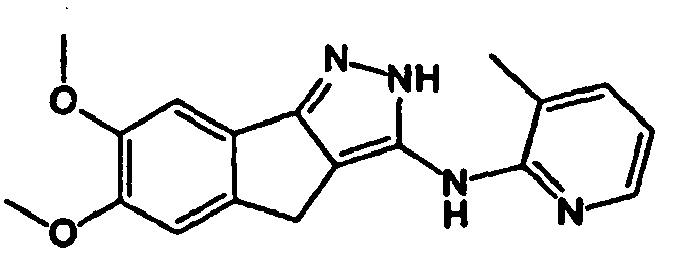
588 
591 
594 
595 
598 
602 
604 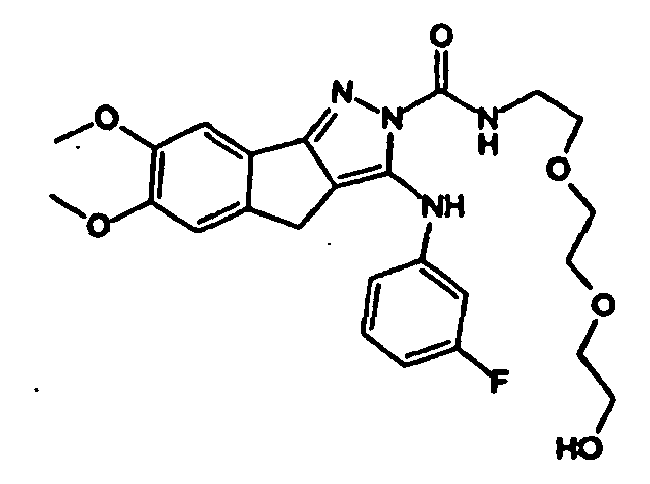
605 
606 
607 
608 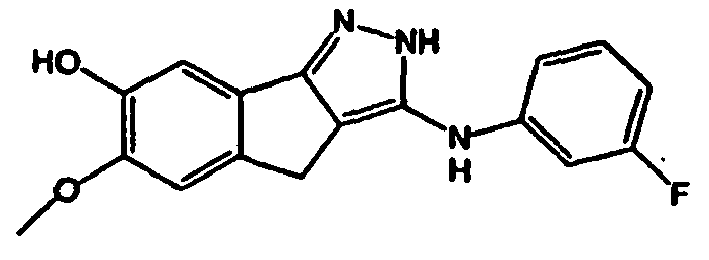
609 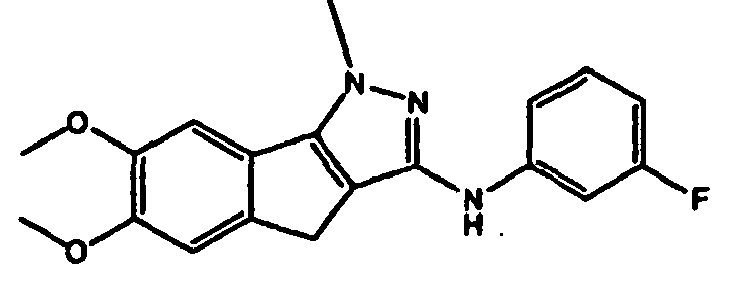
610 
611 
- The following examples are given for the purpose of illustrating various synthetic methods for compounds of the invention and are not meant to limit the present invention in any fashion.
-

-

-

-

-

-

-

-
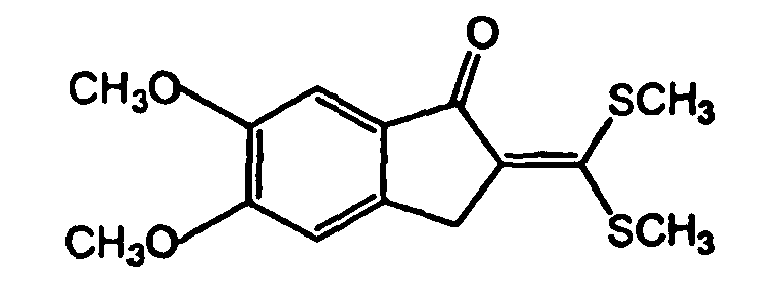
-

-

The precipiate (0.50g, 0.0017mol), hydrazine (0.08mL, 0.0026mol), and acetic acid (0.5mL, 0.006mol) were added together into acetonitrile (10mL) and then stirred at 75°C for four hours. The reaction mixture was quenched with saturated aq. NaHCO3 solution, extracted with ethyl acetate, washed with brine, and dried over sodium sulfate. The solvent was removed in vacuo. The resulting crude material was triturated with dichloromethane and methanol to yield the title compound (Compound 35) 3-Phenylamino-2H-indeno[1 ,2-c]pyrazol-4-one. MS m/z 262 (M+H)+; 1HNMR (DMSO-d6): 6.92(m,1H), 7.11 (m,2H), 7.27(m,3H), 7.48(m,3H) 9.60(s,1H), 12.3(s,1 H). -

-

-
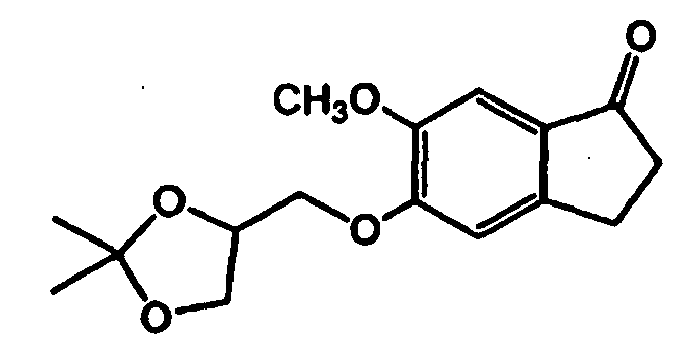
-

-

-

-

-

-

-

-

-

-

-

-

1HNMR (DMSO-d6): 2.78(t, 2H), 3.32(t, 2H), 3.45(s, 2H), 3.62(s, 3H), 3.79(s, 6H), 6.64(m, 1H), 7.15(s, 1H), 7.30(m, 2H), 7.62(d, 1H), 7.70(s, 1H), 9.45(s, 1H). -

-

-

-

-

1HNMR (DMSO-d6): 2.42(m, 2H), 2.76(m, 2H), 3.71 (s, 3H), 6.50(s, 1H). -

-

1HNMR (DMSO-d6): 2.62(s, 3H), 3.60(s, 2H), 4.05(s, 3H), 6.54(t, 1H), 6.98(d, 1H), 7.22(m, 3H), 8.87(br, 1H). -

-

1HNMR (CDCl3): 2.69(m, 2H), 2.80(m, 2H), 3.84(s, 3H), 3.87(s, 3H), 4.02(s, 2H), 6.72(s, 1H). -

-

1HNMR (DMSO-d6): 2.07(s,1H), 3.32(s, 1H), 3.40(s, 1H), 3.72(s, 3H), 3.89(s, 3H), 6.51 (t, 1 H), 6.92(t, 1 H), 7.18(m, 3H), 8.87(br, 1 H), 9.62(s, 1 H). -

1H NMR (DMSO-d6 ): 1.4 (d, 6H), 3.55 (s, 2H), 3.85 (s, 6H), 5.25 (sept, 1H), 6.65 (t, 1H), 7.25 (m, 3H), 7.65 (d, 1H), 7.8 (s, 1H), 9.4 (s, 1H). -

1H NMR (DMSO-d6 ): 3.35 (s, 3H), 3.6 (s, 2H), 3.75 (t, 2H), 3.85 (d, 6H), 4.6 (t, 2H), 6.7 (m, 1H), 7.3 (m, 3H), 7.7 (d, 1H), 7.8 (s, 1 H), 9.4 (s, 1H). -

1H NMR (DMSO-d6 ): 3.35 (s, 3H), 3.4 (s, 2H), 3.7 (t, 2H), 3.8 (s, 3H), 3.9 (s, 3H), 4.5 (t, 2H), 6.85 (t, 1H), 7.0 (m, 2H), 7.2 (s, 1H), 7.35 (m, 2H), 8.9 (s, 1H). -
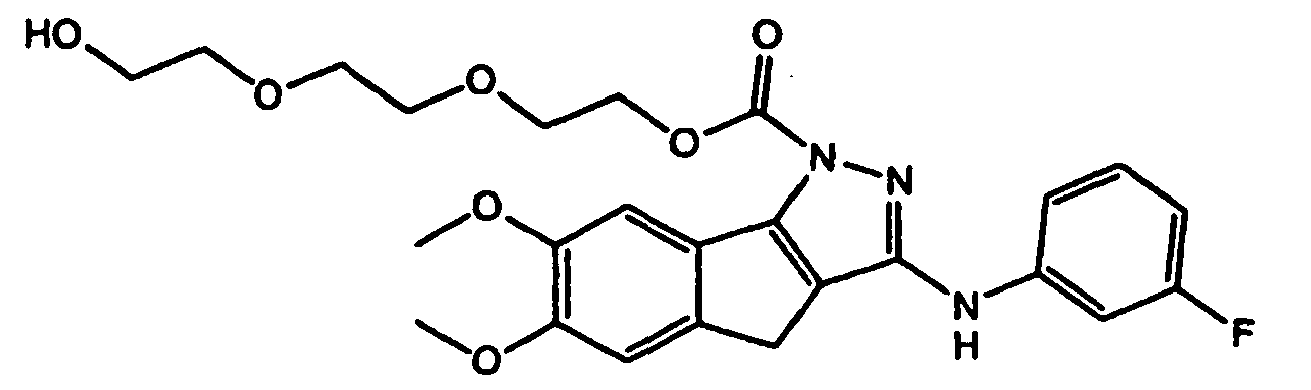
1H NMR (DMSO-d6 ): 3.3-3.7 (m, 12H), 3.85 (d, 6H), 4.6 (m, 2H), 6.7 (m, 1H), 7.3 (m, 3H), 7.7 (d, 1H), 7.8 (s, 1H), 9.4 (s, 1H). -

HPLC: 100% (uv 214mµ); MS m/z 340 (M+H)+;
1HNMR (CDCl3-d1): 3.33 (s, 2H), 3.84 (s, 3H), 3.90 (s,3H), 3.95 (s, 3H),6.48 (t,1H), 6,.66 (d 1H), 6.57 (d, 1H), 7.0 (s, 1H), 7.1 (t, 2H). -

1HNMR (CDCl3-d1): 3.33 (s, 2H), 3.74 (s, 3H), 3.84 (s, 3H), 3.88 (s, 3H),6.37 (d,1H), 6,.46 (d 1 H), 6.53 (t, 1 H), 7.0 (s, 1H), 7.1 (t, 1H), 7.2 (s,1H). -

1HNMR (CDCl3-d1): 3.33 (s, 2H), 3.74 (s, 3H), 3.84 (s, 3H), 3.88 (s, 3H),6.377 (m,1H), 7.21 (s 1H), 7.33 (m, 3H),7.4 (m, 2H), 7.6 (d, 1H), 7.85 (s, 1H), 7.9 (m,1H),9.31 (s ,1H), 9.54 (s ,1H). -

The intermediate (Compound 46b) was not isolated and the mixture was subsequently treated with hydrazine (0.04mL, 1.3mmol), and acetic acid (2 drops). The reaction was heated at 75°C for 18 hrs. The reaction solution was then diluted with CH2Cl2, and washed with aqueous NaHCO3 solution, then wash with water, dried over (Na2SO4), and solvent was removed in vacuum. The title compound was purified by HPLC with C-18 reversed phase column and CH3CN-H2O-TFA as gradient solvent. The title compound (Compound 529) was obtained as a solid TFA salt. MS m/z 343 (M+H)+;
1HNMR (CDCl3-d1): 3.33 (s, 2H), 3.84 (s, 3H), 3.88 (s, 3H), 6.77 (t, 1H), 6,.86 (d 1H), 7.6 (d, 1 H), 7.9 (d, 1H), 8.23 (s, 1H). -

HPLC: 99% pure (UV);
1HNMR: 0.9 (t, 3H), 1.4 (m, 1H), 2.0 (m, 1H), 2.2 (d of d, 1H), 2.7 (d of d, 1H), 3.2 (m, 1 H), 3.8 (s, 1H), 3.9 (s, 1H), 7.0 (s, 1H), 7.2 (s, 1H). -
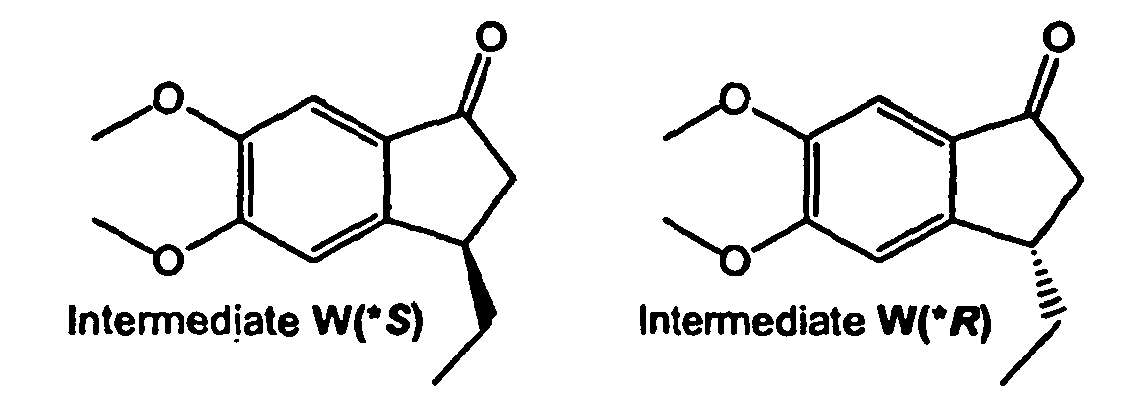
HPLC: 99% pure (UV);
1HNMR: 0.9 (t, 3H), 1.4 (m, 1 H), 2.0 (m, 1 H), 2.2 (d of d, 1 H), 2.7 (d of d, 1 H), 3.2 (m, 1H), 3.8 (s, 1H), 3.9 (s, 1H), 7.0 (s, 1 H), 7.2 (s, 1H).
*R and *S configurations are as drawn. The absolute configurations are not determined.
*R isomer has rotation: α (MeOH)= -20.55
*S isomer has rotation: α (MeOH)= +18.60 -

1HNMR: 1.3 (d, 3H), 2.1 (d of d, 1H), 2.8 (d of d, 1H), 3.3 (m, 1H), 3.8 (s, 3H), 3.9 (s, 3H), 7.0 (s, 1 H), 7.2 (s, 1H). -

1HNMR: 1.3 (d, 3H), 2.1 (d of d, 1 H), 2.8 (d of d, 1H), 3.3 (m, 1H), 3.8 (s, 3H), 3.9 (s, 3H), 7.0 (s, 1H), 7.2 (s, 1H).
*R and *S configurations are as drawn. The absolute configurations are not determined.
*R isomer has rotation: α (MeOH)= -5.85
*S isomer has rotation: α (MeOH)= +6.00 -

HPLC: 100% pure (UV)
1HNMR: 1.2(d, 3H), 3.7(q, 1H), 3.8(d, 6H), 7.0(m, 1H), 7.1 (s, 1H), 7.2(d, 2H), 7.25(s, 1H), 7.55(s, 1 H), 8.8(s, 1H).
*R isomer has rotation: α (MeOH)= +62.85
The absolute configuration has not been determined. -
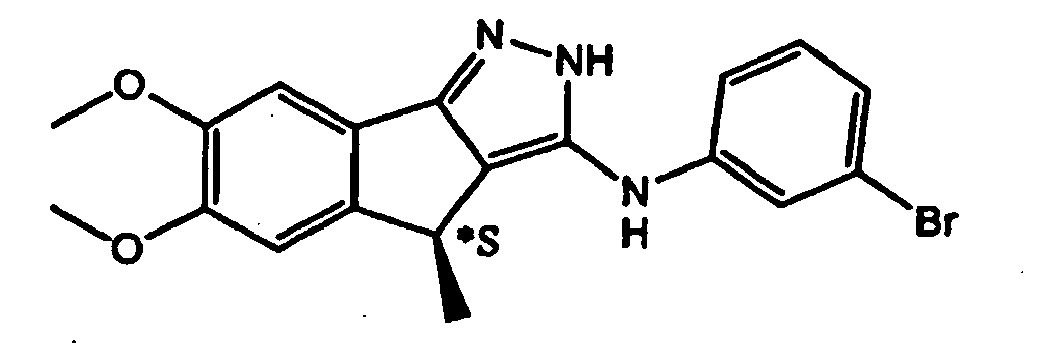
HPLC: 100% pure (UV)
1HNMR: 1.2(d, 3H), 3.7(q, 1H), 3.8(d, 6H), 7.0(m, 1H), 7.1 (s, 1H), 7.2(d, 2H), 7.25(s, 1H), 7.55(s, 1H), 8.8(s, 1H).
*S isomer has rotation: α (MeOH)= -62.60
The absolute configuration has not been determined. -

HPLC: 100% pure (UV);
1HNMR: 0.5(t, 3H), 1.7(m, 1H), 1.8(m, 1 H), 3.7(t, 1H), 3.8(d, 6H), 6.95(d, 1H), 7.1 (d, 1H), 7.2(m, 3H), 7.3(s, 1H), 8.7(s, 1 H).
*R isomer has rotation: α (MeOH)= +74.64
The absolute configuration has not been determined. -

HPLC: 100% pure (UV);
1HNMR: 0.5(t, 3H), 1.8(m, 2H), 3.7(t, 1H), 3.8(d, 6H), 6.95(d, 1H), 7.1 (d, 1H), 7.2(m, 3H), 7.3(s, 1H), 8.7(s, 1H).
*S isomer has rotation: α (MeOH)= -53.85
The absolute configuration has not been determined. -

-

1HNMR (DMSO-d6): 2.60 (s, 3H), 3.12 (m, 2H), 3.24 (s, 2H), 3.58 (q, 2H), 3.78 (s, 3H), 3.81 (s, 3H), 6.55 (t, 1H), 7.21 (m, 2H), 7.32 (d, 1H), 7.49 (d, 1H), 7.90 (s, 1H), 8.15 (t, 1H), 8.60 (s, 1H), 9.22 (s, 1H). -

1HNMR (DMSO-d6): 6.55(dt, 1H), 6.95(d, 1H), 7.05(d, 1H), 7.20(dd, 1H), 7.40(m, 2H), 7.65(d, 1H), 7.75(d, 1H), 9.00(br s, 1H). -

1HNMR (DMSO-d6): 1.20(s, 9H), 3.40(s, 2H), 3.90(s, 3H), 3.96(s, 3H), 6.20(s, 2H), 6.57(m, 1H), 6.82(d, 1H), 6.95(m, 1H), 7.03(s, 1H), 7.15(m, 1H), 7.27(s, 1H). -

1HNMR (DMSO-d6): 1.22(s, 9H), 3.40(s, 2H), 3.90(s, 3H), 3.93(s, 3H), 5.94(s, 2H), 6.62(m, 2H), 6.72(d, 1H), 6.97(s, 1H), 7.21 (m, 1H), 7.33(s, 1H), 7.56(bs, 1H). -

1HNMR (CDCl3): 1.60(m, 12H), 2.13(m, 4H), 2.70(t, 2H), 3.12(t, 3H), 3.52(m, 4H), 3.90(m, 2H), 4.20(m, 4H), 4.60(s, 2H), 6.90(s, 1H), 7.18(s, 1H). -

1HNMR (MeOH-d4): 2.05(m, 4H), 3.50(s, 2H), 3.83(m, 4H), 4.20(t, 4H), 6.76(m, 1H), 6.95(m, 2H), 7.26(s, 1H), 7.28(s, 1H), 7.36(m, 1H). -

The mixture of 5-ethoxy-6-hydroxy-indan-1-one (Compound 62a) (0.520 g, 0.00271 mol), 2-(3-chloro-propoxy)-tetrahydro-pyran (Compound 18a) (0.938 g, 0.00542 mol), potassium carbonate (0.936 g, 0.00678 mol) and potassium iodide (0.900 g, 0.00542 mol) in DMF (5.5 mL) was stirred at 60 °C for 12 h. The reaction mixture was then diluted with ethyl acetate, washed with water and dried over MgSO4. The solvent was removed in vacuo and the title compound was purified by silica gel column chromatography using 3:1 Hexanes : ethyl acetate as the eluent. MS m/z 334.2 (M+H)+;
1HNMR (CDCl3): 1.60(m, 9H), 2.18(m, 2H), 2.65(t, 2H), 3.06(t, 2H), 3.48(m, 2H), 3.85(m, 2H), 4.18(m, 4H), 4.62(t, 1H), 6.84(s, 1H), 7.22(s, 1H). -

-

1HNMR (CDCl3): 1.65(m, 9H), 2.20(m, 2H), 2.68(t, 2H), 3.15(t, 2H), 3.55(m, 2H), 4.10(m, 6H), 4.60(m,1H), 6.92(s, 1H), 7.16(s, 1 H). -

-

1HNMR (CDCl3): 6.25(d, 1H), 7.08(m, 1H), 7.30(d, 1 H), 7.42(d, 1H), 7.88(d, 1H). -

-

1HNMR (CDCl3): 3.01 (t, 2H), 3.18(t, 2H), 7.15(d, 1H), 7.32(d, 1H). -

1HNMR (DMSO-d6): 1.25(t, 1H), 3.52(s, 2H), 3.88(q, 2H), 5.80(bs, 1H), 6.28(m, 1H), 6.65(m, 2H), 7.05(t, 1H), 7.18(d, 1H), 7.58(d, 1H), 8.60(bs, 1H). -

1HNMR (DMSO-d6): 8.65(bs, 1H), 7.14(m, 3H), 6.79(s, 1H), 6.71(d, 1H), 6.37(d, 1H), 4.03(m, 6H), 3.60(t, 2H), 3.40(s, 1H), 1.88(m, 2H), 1.30(m, 6H). - Compounds within the scope of this invention were subjected to various biological tests. Results of these tests showed that compounds within the scope of this invention inhibited PDGF-R kinase activity. Compounds within the scope of this invention also exhibited inhibitory activity against c-Abl kinase. In addition, compounds within the scope of this invention inhibited cell (including normal tissue cells, tumor cells and leukemia cells) proliferation in the presence or absence of PDGF stimulation. Other studies demonstrated that compounds within the scope of this invention inhibited angiogenesis and compounds were shown to have anti-tumor activity. Further, compounds within the scope of this invention sensitized tumor cells for radiation treatment. Pro-drugs of compounds within the scope of the invention were demonstrated to convert back to parent compounds in vivo.
- The following representative assays were performed in determining the biological activities of compounds within the scope of the invention. They are given to illustrate the invention in a non-limiting fashion.
- PDGF-R kinase activity was assayed by its ability to phosphorylate one of its target proteins, PLCγ, in a cell-free system, in particular, a PLC1 peptide comprising the tyrosine residue where the phosphorylation occurs was used for the assay.
- The following reagents were prepared for the assay: 10X Kinase Buffer (500 mM Tris-HCl pH=8, 100 mM MgCl2, 1 mM Na3VO4); 10 mM DTT (final concentration at 1 mM in assay); 10 mM ATP (final concentration at 5 µM in assay); 33P-γ-ATP (Cat. No.: NEG/602H. 2000-3000 Ci/mmol) purchased from NEN; Purified, soluble, recombinant PDGF-receptor beta enzyme comprising the tyrosine kinase domain (from amino acid 545 to 1106 of GenBank Access NO: AAA36427) at 0.4 mg/mL; Enzyme Dilution Buffer (50 mM Tris-HCl pH=8.0, 0.1% BSA); Wash/Stop Buffer (PBS +100 mM EDTA); NEN Streptavidin Flashplates (Cat. No.: SMP-103) which binds to the biotinylated PLC1 peptide but not the PDGF-R enzyme; PLC1 peptide (Biotin-KHKKLAEGSAYEEV-Amide) at 1 mM in 50 mM Tris-HCL with pH of 8.0.
- Reagents were first mixed according the following regimen:
ONE PLATE (µl) PER WELL (µl) 10X Kinase Buffer 1100 10 10 mM DTT 1100 10 10 mM cold ATP 5.5 0.05 1 mM PLC1 Peptide 2.75 0.025 33P-γ-ATP (10 µCi/µl) 8.8 0.08 H2O 5475 49.77 - The above reaction mixture was dispensed into each well of a Flashplate at 70 µl/well. To test the effect of a compound on PDGF-R kinase activity, the test compound either in a fixed concentration or in serially diluted concentrations in 100% DMSO was added to appropriate wells at 1 µl/well.
- Enzyme PDGF-R was diluted in Enzyme dilution buffer as following:
Enzyme Dilution Buffer 3289 µl PDGF-R enzyme 100 µl - The kinase reaction was initiated by adding 30 µl of diluted PDGF-R enzyme solution to each well on the Flashplate containing hotATP and PLC1, except wells of column 12 rows E through H, which were used to calculate the plate background. The Flashplate was swirled to mix and was incubated at 30°C for 60 minutes. Then, the reaction mixture was discarded and the Flashplate was washed 3 times each with 200 µl Wash/Stop Buffer. Subsequently, each well on the Flashplate was filled with 200 µl of Wash/Stop buffer. The amount of 33P retained in each well was measured using a Packard TopCount after the plate was sealed with a transparent plate sealer.
- When a test compound inhibited the PDGF-R kinase activity, the well containing such a compound contained less 33P as compared to the well without the compound. The percentage of inhibition of the test compound on PDGF-R kinase activity is defined as the amount of 33P retained in the well containing the compound divided by the amount of 33P in the well without the compound. Tested under the described assay conditions, more than 600 compounds within the scope of the invention at a final concentration of 1.0 µM have demonstrated inhibitory effect on PDGF-R kinase activity.
- In order to test the potency of inhibition of present compounds, an IC50 for an individual compound was measured using the above procedure. As used herein, the IC50 for PDGF-R kinase activity refers to the concentration of an inhibitor at which the activity of the PDGF-R kinase is reduced by one-half as compared with reactions containing no inhibitor.
- Inhibition of PDGF-R kinase activity preferably refers to an IC50 of less than or equal to about 75 µM using the assay described above. Preferably, the compound can inhibit PDGF-R kinase activity with an IC50 of less than or equal to about 10 µM, more preferably less than or equal to about 1 µM, most preferably less than or equal to about 0.1 µM. Lower IC50 values are preferred because the IC50 provides an indication as to the effectiveness of the compound. Other factors known in art, such as compound half-life, biodistribution, and toxicity should also be considered for therapeutic uses. Such factors may enable a compound with a higher IC50 to have greater in vivo efficacy than a compound having a lower IC50.
- Representative compounds of the present invention were tested for PDGF-R kinase activity with % inhibition and / or IC50 results as listed in Table A.
Table A. IC50 and percent of Inhibition of compounds on PDGF-R kinase activity CPD NAME Percent Inhibition @10uM IC50 ( µ M) 1 (2,4-Dihydro-indeno[1,2-c]pyrazol-3-yl)-phenyl-amine 91 0.317 2 (6,7-Dimethoxy-2,4-dihydro-indeno[1,2-c]pyrazol-3-yl)-phenyl-amine 91 0.006 3 (4-Chloro-phenyl)-(2,4-dihydro-indeno[1,2-c]pyrazol-3-yl)-amine 90 0.157 4 (3-Chloro-phenyl)-(6,7-dimethoxy-2,4-dihydro-indeno[1,2-c]pyrazol-3-yl)-amine 90 0.003 5 (4-Chloro-phenyl)-(6,7-dimethoxy-2,4-dihydro-indeno[1,2-c]pyrazol-3-yl)-amine 91 0.659 6 (6,7-Dimethoxy-2,4-dihydro-indeno[1,2-c]pyrazol-3-yl)-(4-methoxy-phenyl)-amine 75 0.131 7 (6-Methoxy-2,4-dihydro-indeno[1,2-c]pyrazol-3-yl)-phenyl-amine 92 0.217 8 (5-Methoxy-2,4-dihydro-indeno[1,2-c]pyrazol-3-yl)-phenyl-amine 98 0.054 9 (2-Chloro-phenyl)-(6,7-dimethoxy-2,4-dihydro-indeno[1,2-c]pyrazol-3-yl)-amine 89 0.11 10 4-(6,7-Dimethoxy-2,4-dihydro-indeno[1,2-c]pyrazol-3-ylamino)-benzoic acid ethyl ester 68 2.07 11 3-(6,7-Dimethoxy-2,4-dihydro-indeno[1,2-c]pyrazol-3-ylamino)-benzoic acid methyl ester 97 0.0157 12 (6,7-Dimethoxy-2,4-dihydro-indeno[1,2-c]pyrazol-3-yl)-(2-fluoro-phenyl)-amine 76 0.056 13 (6,7-Dimethoxy-2,4-dihydro-indeno[1,2-c]pyrazol-3-yl)-(4-fluoro-phenyl)-amine 91 0.0065 14 (6,7-Dimethoxy-2,4-dihydro-indeno[1,2-c]pyrazol-3-yl)-(3-fluoro-phenyl)-amine 108 0.0017 15 (6,7-Dimethoxy-2,4-dihydro-indeno[1,2-c]pyrazol-3-yl)-(2-trifluoromethoxy-phenyl)-amine 79 1.92 16 (6,7-Dimethoxy-2,4-dihydro-indeno[1,2-c]pyrazol-3-yl)-(4-trifluoromethoxy-phenyl)-amine 79 4 17 (2,4-Dichloro-phenyl)-(6,7-dimethoxy-2,4-dihydro-indeno[1,2-c]pyrazol-3-yl)-amine 79 3.54 18 (3,4-Dichloro-phenyl)-(6,7-dimethoxy-2,4-dihydro-indeno[1,2-c]pyrazol-3-yl)-amine 65 0.23 19 (3,5-Dichloro-phenyl)-(6,7-dimethoxy-2,4-dihydro-indeno[1,2-c]pyrazol-3-yl)-amine 91 0.174 20 (2,3-Dichloro-phenyl)-(6,7-dimethoxy-2,4-dihydro-indeno[1,2-c]pyrazol-3-yl)-amine 77 1.095 21 (6-Chloro-2,4-dihydro-indeno[1,2-c]pyrazol-3-yl)-phenyl-amine 103 0.121 22 (7-Methyl-2,4-dihydro-indeno[1,2-c]pyrazol-3-yl)-phenyl-amine 96 0.045 23 (5-Methyl-2,4-dihydro-indeno[1,2-c]pyrazol-3-yl)-phenyl-amine 87 1.94 24 (6-Fluoro-2,4-dihydro-indeno[1,2-c]pyrazol-3-yl)-phenyl-amine 71 0.084 25 (6,7-Dimethoxy-2,4-dihydro-indeno[1,2-c]pyrazol-3-yl)-(4-trifluoromethyl-phenyl)-amine 62 4.766 26 (6,7-Dimethoxy-2,4-dihydro-indeno[1,2-c]pyrazol-3-yl)-(3-trifluoromethyl-phenyl)-amine 92 0.037 27 (6,7-Dimethoxy-2,4-dihydro-indeno[1,2-c]pyrazol-3-yl)-(2-methoxy-phenyl)-amine 71 0.655 28 (6,7-Dimethoxy-2,4-dihydro-indeno[1,2-c]pyrazol-3-yl)-(2-trifluoromethyl-phenyl)-amine 96 19.14 29 (6,7-Dimethoxy-2,4-dihydro-indeno[1,2-c]pyrazol-3-yl)-(3-methoxy-phenyl)-amine 99 0.01 30 (6,7-Dimethoxy-2,4-dihydro-indeno[1,2-c]pyrazol-3-yl)-pyridin-3-yl-amine 107 0.016 31 (6,7-Dimethoxy-2,4-dihydro-indeno[1,2-c]pyrazol-3-yl)-o-tolyl-amine 59 0.115 32 (6,7-Dimethoxy-2,4-dihydro-indeno[1,2-c]pyrazol-3-yl)-m-tolyl-amine 79 0.012 33 (6,7-Dimethoxy-2,4-dihydro-indeno[1,2-c]pyrazol-3-yl)-p-tolyl-amine 59 1.415 34 (2,5-Dichloro-phenyl)-(6,7-dimethoxy-2,4-dihydro-indeno[1,2-c]pyrazol-3-yl)-amine 57 6.987 35 3-Phenylamino-2H-indeno[1,2-c]pyrazol-4-one 88 2.063 36 [3-(6,7-Dimethoxy-2,4-dihydro-indeno[1,2-c]pyrazol-3-ylamino)-phenyl]-methanol 85 0.033 37 (6,7-Dimethoxy-2,4-dihydro-indeno[1,2-c]pyrazol-3-yl)-(1H-indazol-6-yl)-amine 80 1.978 38 3-(6,7-Dimethoxy-2,4-dihydro-indeno[1,2-c]pyrazol-3-ylamino)-phenol 74 0.031 39 (7-Methoxy-2,4-dihydro-indeno[1,2-c]pyrazol-3-yl)-phenyl-amine 92 0.018 40 N-(6,7-Dimethoxy-2,4-dihydro-indeno[1,2-c]pyrazol-3-yl)-N',N"-dimethyl-benzene-1,2-diamine 63 5.95 41 (6,7-Dimethoxy-2,4-dihydro-indeno[1,2-c]pyrazol-3-yl)-(3,5-dimethoxy-phenyl)-amine 83 0.0336 42 (6,7-Dimethoxy-2,4-dihydro-indeno[1,2-c]pyrazol-3-yl)-(3,4,5-trimethoxy-phenyl)-amine 85 0.692 43 (2-Bromo-phenyl)-(6,7-dimethoxy-2,4-dihydro-indeno[1,2-c]pyrazol-3-yl)-amine 60 0.195 44 (3-Bromo-phenyl)-(6,7-dimethoxy-2,4-dihydro-indeno[1,2-c]pyrazol-3-yl)-amine 94 0.00054 45 (4-Bromo-phenyl)-(6,7-dimethoxy-2,4-dihydro-indeno[1,2-c]pyrazol-3-yl)-amine 86 2.164 46 (5-Chloro-2-methyl-phenyl)-(6,7-dimethoxy-2,4-dihydro-indeno[1,2-c]pyrazol-3-yl)-amine 51 14.15 47 (6,7-Dimethoxy-2,4-dihydro-indeno[1,2-c]pyrazol-3-yl)-(2,4-dimethoxy-phenyl)-amine 47 NT 48 (6,7-Dimethoxy-2,4-dihydro-indeno[1,2-c]pyrazol-3-yl)-(2,5-dimethoxy-phenyl)-amine 39 NT 49 (6,7-Dimethoxy-2,4-dihydro-indeno[1,2-c]pyrazol-3-yl)-(3,4-dimethoxy-phenyl)-amine 72 3.066 50 3-Phenylamino-2,4-dihydro-indeno[1,2-c]pyrazol-4-ol 38 11.37 51 (6,7-Dimethoxy-2,4-dihydro-indeno[1,2-c]pyrazol-3-yl)-[4-(4-methyl-piperazin-1-yl)-phenyl]-amine 30 26.75 52 (4,5-Dihydro-2H-6-thia-1,2-diaza-as-indacen-3-yl)-phenyl-amine 71 2.4 53 (3-Chloro-4-fluoro-phenyl)-(6,7-dimethoxy-2,4-dihydro-indeno[1,2-c]pyrazol-3-yl)-amine 94 0.05859 54 (3-Benzyloxy-phenyl)-(6,7-dimethoxy-2,4-dihydro-indeno[1,2-c]pyrazol-3-yl)-amine 76 0.0348 55 (2,5-Difluoro-phenyl)-(6,7-dimethoxy-2,4-dihydro-indeno[1,2-c]pyrazol-3-yl)-amine 76 0.636 56 (5-Chloro-2-methoxy-phenyl)-(6,7-dimethoxy-2,4-dihydro-indeno[1,2-c]pyrazol-3-yl)-amine 36 8.402 57 (6,7-Dimethoxy-2,4-dihydro-indeno[1,2-c]pyrazol-3-yl)-(2-isopropyl-phenyl)-amine 71 2.151 58 (6,7-Dimethoxy-2,4-dihydro-indeno[1,2-c]pyrazol-3-yl)-(2-ethyl-phenyl)-amine 40 8.524 59 4-(6,7-Dimethoxy-2,4-dihydro-indeno[1,2-c]pyrazol-3-ylamino)-benzonitrile 71 1.818 61 3-(6,7-Dimethoxy-2,4-dihydro-indeno[1,2-c]pyrazol-3-ylamino)-benzonitrile 71 0.137 62 Benzo[1,3]dioxol-5-yl-(6,7-dimethoxy-2,4-dihydro-indeno[1,2-c]pyrazol-3-yl)-amine 85 0.313 63 Benzyl-(6,7-dimethoxy-2,4-dihydro-indeno[1,2-c]pyrazol-3-yl)-amine 94 0.1909 64 [6-(4-Methyl-piperazin-1-yl)-2,4-dihydro-indeno[1,2-c]pyrazol-3-yl]-phenyl-amine 118 0.449 65 Phenyl-(6-piperidin-1-yl-2,4-dihydro-indeno[1,2-c]pyrazol-3-yl)-amine 76 1.535 66 N3-Phenyl-2,4-dihydro-indeno[1,2-c]pyrazole-3,6-diamine 108 0.092 67 Cyclohexyl-(6,7-dimethoxy-2,4-dihydro-indeno[1,2-c]pyrazol-3-yl)-amine 77 0.617 69 (6,7-Dimethoxy-2,4-dihydro-indeno[1,2-c]pyrazol-3-yl)-(2-morpholin-4-yl-ethyl)-amine 18 70 (3,5-Bis-trifluoromethyl-phenyl)-(6,7-dimethoxy-2,4-dihydro-indeno[1,2-c]pyrazol-3-yl)-amine 41.5 16.85 71 [5-(3-Dimethylamino-propoxy)-2,4-dihydro-indeno[1,2-c]pyrazol-3-yl]-phenyl-amine 110 0.185 72 (3-Chloro-phenyl)-[5-(3-dimethylamino-propoxy)-2,4-dihydro-indeno[1,2-c]pyrazol-3-yl]-amine 96 0.283 73 [5-(3-Dimethylamino-propoxy)-2,4-dihydro-indeno[1,2-c]pyrazol-3-yl]-(4-fluoro-phenyl)-amine ∼30 >>50 74 [5-(3-Dimethylamino-propoxy)-2,4-dihydro-indeno[1,2-c]pyrazol-3-yl]-(3-methoxy-phenyl)-amine 102 0.424 75 [5-(3-Dimethylamino-propoxy)-2,4-dihydro-indeno[1,2-c]pyrazol-3-yl]-pyridin-3-yl-amine 115 0.575 76 (4-Bromo-2-trifluoromethyl-phenyl)-(6,7-dimethoxy-2,4-dihydro-indeno[1,2-c]pyrazol-3-yl)-amine 16 >>50 77 3-[5-(3-Dimethylamino-propoxy)-2,4-dihydro-indeno[1,2-c]pyrazol-3-ylamino]-benzoic acid methyl ester 108 0.217 78 (6,7-Dimethoxy-2,4-dihydro-indeno[1,2-c]pyrazol-3-yl)-furan-2-yl-amine 85 1.291 79 (6,7-Dimethoxy-2,4-dihydro-indeno[1,2-c]pyrazol-3-yl)-indan-5-yl-amine 56 3.705 81 (6,7-Dimethoxy-2,4-dihydro-indeno[1,2-c]pyrazol-3-yl)-(2-piperidin-1-yl-ethyl)-amine 29 85.95 82 (4-Fluoro-phenyl)-(6-methoxy-2,4-dihydro-indeno[1,2-c]pyrazol-3-yl)-amine 79 0.273 83 (3-Bromo-phenyl)-(6-methoxy-2,4-dihydro-indeno[1,2-c]pyrazol-3-yl)-amine 93 0.0719 84 (6-Methoxy-2,4-dihydro-indeno[1,2-c]pyrazol-3-yl)-pyridin-3-yl-amine 86 0.71 85 (2,5-Dimethoxy-phenyl)-(6-methoxy-2,4-dihydro-indeno[1,2-c]pyrazol-3-yl)-amine 61 5.823 86 (3,4-Dimethoxy-phenyl)-(6-methoxy-2,4-dihydro-indeno[1,2-c]pyrazol-3-yl)-amine 57 2.532 87 (2,5-Difluoro-phenyl)-(6-methoxy-2,4-dihydro-indeno[1,2-c]pyrazol-3-yl)-amine 91 0.069 88 (6-Methoxy-2,4-dihydro-indeno[1,2-c]pyrazol-3-yl)-(4-trifluoromethoxy-phenyl)-amine 42 20.8 89 (6-Methoxy-2,4-dihydro-indeno[1,2-c]pyrazol-3-yl)-(4-trifluoromethyl-phenyl)-amine 88 0.886 90 [5-(3-Dimethylamino-propoxy)-2,4-dihydro-indeno[1,2-c]pyrazol-3-yl]-(3-fluoro-phenyl)-amine 97 0.0087 91 (3-Bromo-phenyl)-(6,7-dimethoxy-1-methyl-1,4-dihydro-indeno[1,2-c]pyrazol-3-yl)-amine 76 2.969 92 N6,N6-Dimethyl-N3-phenyl-2,4-dihydro-indeno[1,2-c]pyrazole-3,6-diamine 75 0.383 93 (4,5-Dihydro-2H-benzo[g]indazol-3-yl)-phenyl-amine 88 1.027 94 (5,7-Dihydro-1-thia-4 5-diaza-cyclopenta[a]pentalen-6-yl)-phenyl-amine 95 0.415 95 (3-Bromo-phenyl)-(2,9-dihydro-5,7-dioxa-2,3-diaza-cyclopenta[a]-s-indacen-1-yl)-amine 91.0 0.063 96 (2,9-Dihydro-5,7-dioxa-2,3-diaza-cyclopenta[a]-s-indacen-1-yl)-(3-fluoro-phenyl)-amine 93.0 0.076 97 (2,9-Dihydro-5,7-dioxa-2,3-diaza-cyclopenta[a]-s-indacen-1-yl)-(3-methoxy-phenyl)-amine 91.0 0.054 98 (4-Fluoro-phenyl)-(5-methyl-2,4-dihydro-indeno[1,2-c]pyrazol-3-yl)-amine 26 30.69 99 (3-Fluoro-phenyl)-(5-methyl-2,4-dihydro-indeno[1,2-c]pyrazol-3-yl)-amine 87.5 1.468 100 (5-Methyl-2,4-dihydro-indeno[1,2-c]pyrazol-3-yl)-pyridin-3-yl-amine 81 1.723 101 (2,5-Dimethoxy-phenyl)-(5-methyl-2,4-dihydro-indeno[1,2-c]pyrazol-3-yl)-amine 52 1.092 102 (2,4-Dimethoxy-phenyl)-(5-methyl-2,4-dihydro-indeno[1,2-c]pyrazol-3-yl)-amine 50 3.404 103 (2,5-Difluoro-phenyl)-(5-methyl-2,4-dihydro-indeno[1,2-c]pyrazol-3-yl)-amine 43 4.099 104 (5-Methyl-2,4-dihydro-indeno[1,2-c]pyrazol-3-yl)-(4-trifluoromethoxy-phenyl)-amine 36 0.666 105 (5-Methyl-2,4-dihydro-indeno[1,2-c]pyrazol-3-yl)-(4-trifluoromethyl-phenyl)-amine 69 1.884 106 (4-Fluoro-phenyl)-(4-methyl-2,4-dihydro-indeno[1,2-c]pyrazol-3-yl)-amine 38 1.048 107 (4-Methoxy-phenyl)-(4-methyl-2,4-dihydro-indeno[1,2-c]pyrazol-3-yl)-amine 56 1.275 108 (3-Fluoro-phenyl)-(4-methyl-2,4-dihydro-indeno[1,2-c]pyrazol-3-yl)-amine 82 0.3 109 (4-Methyl-2,4-dihydro-indeno[1,2-c]pyrazol-3-yl)-pyridin-3-yl-amine 83 0.537 110 (2,5-Dimethoxy-phenyl)-(4-methyl-2,4-dihydro-indeno[1,2-c]pyrazol-3-yl)-amine 80 0.189 111 (2,4-Dimethoxy-phenyl)-(4-methyl-2,4-dihydro-indeno[1,2-c]pyrazol-3-yl)-amine 95 0.11 112 (2,5-Difluoro-phenyl)-(4-methyl-2,4-dihydro-indeno[1,2-c]pyrazol-3-yl)-amine 72 0.083 113 (4-Methyl-2,4-dihydro-indeno[1,2-c]pyrazol-3-yl)-(4-trifluoromethoxy-phenyl)-amine 60 2.45 114 (4-Methyl-2,4-dihydro-indeno[1,2-c]pyrazol-3-yl)-(3-trifluoromethyl-phenyl)-amine 80 1.37 115 3-(6,7-Dimethoxy-2,4-dihydro-indeno[1,2-c]pyrazol-3-ylamino)-benzoic acid 82 3.056 116 3-(6,7-Dimethoxy-2,4-dihydro-indeno[1,2-c]pyrazol-3-ylamino)-benzamide 96 0.0053 117 N3-(3-Bromo-phenyl)-2,4-dihydro-indeno[1,2-c]pyrazole-3,6-diamine 98 0.13 118 N3-(3-Methoxy-phenyl)-2,4-dihydro-indeno[1,2-c]pyrazole-3,6-diamine 74 0.0213 119 N3-(3-Chloro-phenyl)-2,4-dihydro-indeno[1,2-c]pyrazole-3,6-diamine 90 0.0198 120 3-(6-Amino-2,4-dihydro-indeno[1,2-c]pyrazol-3-ylamino)-benzoic acid methyl ester 87 0.308 121 N3-(3-Fluoro-phenyl)-2,4-dihydro-indeno[1,2-c]pyrazole-3,6-diamine 92 0.143 122 (3-Bromo-phenyl)-[6-(4-methyl-piperazin-1-yl)-2,4-dihydro-indeno[1,2-c]pyrazol-3-yl]-amine 70 0.0162 123 (3-Methoxy-phenyl)-[6-(4-methyl-piperazin-1-yl)-2,4-dihydro-indeno[1,2-c]pyrazol-3-yl]-amine 87 0.228 124 (3-Chloro-phenyl)-[6-(4-methyl-piperazin-1-yl)-2,4-dihydro-indeno[1,2-c]pyrazol-3-yl]-amine 94 0.163 125 3-(3-Bromo-phenylamino)-2,4-dihydro-indeno[1,2-c]pyrazole-6,7-diol 71 3.44 126 (2,9-Dihydro-5,7-dioxa-2,3-diaza-cyclopenta[a]-s-indacen-1-yl)-pyridin-3-yl-amine 65 0.1758 127 3-(2,9-Dihydro-5,7-dioxa-2,3-diaza-cyclopenta[a]-s-indacen-1-ylamino)-benzoic acid methyl ester 89 0.421 128 (3-Chloro-phenyl)-(2,9-dihydro-5,7-dioxa-2,3-diaza-cyclopenta[a]-s-indacen-1-yl)-amlne 88 0.05958 129 [7-Methoxy-6-(3-morpholin-4-yl-propoxy)-2,4-dihydro-indeno[1,2-c]pyrazol-3-yl]-pyridin-3-yl-amine 53.5 0.0367 130 (3-Bromo-phenyly[7-methoxy-6-(3-morpholin-4-yl-propoxy)-2,4-dihydro-indeno[1,2-c]pyrazol-3-yl]-amine 94.5 0.002148 131 [7-Methoxy-6-(3-morpholin-4-yl-propoxy)-2,4-dihydro-indeno[1,2-c]pyrazol-3-yl]-(3-methoxy-phenyl)-amine 97 0.01297 132 (3-Chloro-phenyl)-[7-methoxy-6-(3-morpholin-4-yl-propoxy)-2,4-dihydro-indeno[1,2-c]pyrazol-3-yl]-amine 79 0.00537 133 3-[7-Methoxy-6-(3-morpholin-4-yl-propoxy)-2,4-dihydro-indeno[1,2-c]pyrazol-3-ylamino]-benzoic acid methyl ester 53 0.03789 134 (3-Fluoro-phenyl)-[7-methoxy-6-(3-morpholin-4-yl-propoxy)-2,4-dihydro-indeno[1,2-c]pyrazol-3-yl]-amine 96 0.01006 135 (3-Chloro-phenyl)-[6-(3-methoxy-propoxy)-2,4-dihydro-indeno[1,2-c]pyrazol-3-yl]-amine 87 0.202 136 (4-Fluoro-phenyl)-[6-(3-methoxy-propoxy)-2,4-dihydro-indeno[1,2-c]pyrazol-3-yl]-amine 64.5 1.331 137 3-[6-(3-Methoxy-propoxy)-2,4-dihydro-indeno[1,2-c]pyrazol-3-ylamino]-benzoic acid methyl ester 71 2.11 138 (3-Fluoro-phenyl)-[6-(3-methoxy-propoxy)-2,4-dihydro-indeno[1,2-c]pyrazol-3-yl]-amine 79.5 0.3011 139 (3-Methoxy-phenyl)-[6-(3-methoxy-propoxy)-2,4-dihydro-indeno[1,2-c]pyrazol-3-yl]-amine 80 0.09822 140 [6-(3-Methoxy-propoxy)-2,4-dihydro-indeno[1,2-c]pyrazol-3-yl]-phenyl-amine 56.5 0.01366 141 (3-Bromo-phenyl)-[6-(3-methoxy-propoxy)-2.4-dihydro-indeno[1,2-c]pyrazol-3-yl]-amine 83.5 0.3192 142 [6-(3-Methoxy-propoxy)-2,4-dihydro-indeno[1,2-c]pyrazol-3-yl]-pyridin-3-yl-amine 82.5 0.4534 143 (4-Methoxy-phenyl)-[6-(3-methoxy-propoxy)-2,4-dihydro-indeno[1,2-c]pyrazol-3-yl]-amine 67 8.124 144 (4-Fluoro-phenyly(5-methoxy-2,4-dihydro-indeno[1,2-c]pyrazol-3-yl)-amine 96.5 0.8359 145 (5-Methoxy-2,4-dihydro-indeno[1,2-c]pyrazol-3-yl)-(4-methoxy-phenyl)-amine 48.5 13.93 146 (5-Methoxy-2,4-dihydro-indeno[1,2-c]pyrazol-3-yl)-pyridin-3-yl-amine 78.5 0.1603 147 (2,5-Dimethoxy-phenyly(5-methoxy-2,4-dihydro-indeno[1,2-c]pyrazol-3-yl)-amine 32 2.984 148 (2,4-Dimethoxy-phenyl)-(5-methoxy-2,4-dihydro-indeno[1,2-c]pyrazol-3-yl)-amine 57 8.601 149 (5-Methoxy-2,4-dihydro-indeno[1,2-c]pyrazol-3-yl)-(3-trifluoromethoxy-phenyl)-amine 27.5 8.37 150 (5-Methoxy-2,4-dihydro-indeno[1,2-c]pyrazol-3-yl)-(3-trifluoromethyl-phenyl)-amine 85 0.8226 151 (6-Bromo-2,4-dihydro-indeno[1,2-c]pyrazol-3-yl)-(3-fluoro-phenyl)-amine 79 0.09184 152 (6-Bromo-2,4-dihydro-indeno[1,2-c]pyrazol-3-yl)-pyridin-3-yl-amine 80 0.1739 153 (6-Bromo-2,4-dihydro-indeno[1,2-c]pyrazol-3-yl)-(2,5-difluoro-phenyl)-amine 79 1.033 154 (6-Bromo-2,4-dihydro-indeno[1,2-c]pyrazol-3-yl)-(3-trifluoromethoxy-phenyl)-amine 29 41.62 155 (6-Bromo-2,4-dihydro-indeno[1,2-c]pyrazol-3-yl)-(3-trifluoromethyl-phenyl)-amine 53 8.11 156 (3-Methoxy-phenyl)-[7-methoxy-6-(3-pyrrolidin-1-yl-propoxy)-2,4-dihydro-indeno[1,2-c]pyrazol-3-yl]-amine 87.5 0.001 157 3-[7-Methoxy-6-(3-pyrrolidin-1-yl-propoxy)-2,4-dihydro-indeno[1,2-c]pyrazol-3-ylamino]-benzoic acid methyl ester 85 0.007 158 (6-Bromo-2,4-dihydro-indeno[1,2-c]pyrazol-3-yl)-phenyl-amine 87.5 0.1859 159 [6-(3-Dimethylamino-propoxy)-2,4-dihydro-indeno[1,2-c]pyrazol-3-y1]-(4-fluoro-phenyl)-amine 92.5 0.09887 160 [6-(3-Dimethylamino-propoxy)-2,4-dihydro-indeno[1,2-c]pyrazol-3-yl]-(3-fluoro-phenyl)-amine 94.5 0.05855 161 [6-(3-Dimethylamino-propoxy)-2,4-dihydro-indeno[1,2-c]pyrazol-3-yl]-pyridin-3-yl-amine 84 0.3825 162 (2,5-Dimethoxy-phenyl)-[6-(3-dimethylamino-propoxy)-2,4-dihydro-indeno[1,2-c]pyrazol-3-yl]-amine 21.5 54.87 163 (2,5-Difluoro-phenyly[6-(3-dimethylamino-propoxy)-2,4-dihydro-indeno[1,2-c]pyrazol-3-yl]-amine 32 22.65 165 [6-(3-Dimethylamino-propoxy)-2,4-dihydro-indeno[1,2-c]pyrazol-3-yl]-(3-trifluoromethyl-phenyl)-amine 92.5 0.1009 166 (3-Chloro-4-fluoro-phenyl)-[7-methoxy-6-(3-methoxy-propoxy)-2,4-dihydro-indeno[1,2-c]pyrazol-3-yl]-amine 88 0.085 167 (3-Chloro-4-fluoro-phenyl)-(6,7-diisopropoxy-2,4-dihydro-indeno[1,2-c]pyrazol-3-yl)-amine 92 0.5111 168 (6,7-Diisopropoxy-2,4-dihydro-indeno[1,2-c]pyrazol-3-yl)-(3-methoxy-phenyl)-amine 91 0.0688 169 (6-7-Diisopropoxy-2,4-dihydro-indeno[1,2-c]pyrazol-3-yl)-(3-fluoro-phenyl)-amine 89 0.036 170 (4-Fluoro-phenyl)-(7-methoxy-2,4-dihydro-indeno[1,2-c]pyrazol-3-yl)-amine 95.5 0.02676 171 (7-Methoxy-2,4-dihydro-indeno[1,2-c]pyrazol-3-yl)-(4-methoxy-phenyl)-amine 92.5 0.1232 172 (3-Fluoro-phenyl)-(7-methoxy-2,4-dihydro-indeno[1,2-c]pyrazol-3-yl)-amine 55 0.0133 173 (7-Methoxy-2,4-dihydro-indeno[1,2-c]pyrazol-3-yl)-pyridin-3-yl-amine 87 0.2146 174 (2,5-Dimethoxy-phenyl)-(7-methoxy-2,4-dihydro-indeno[1,2-c]pyrazol-3-yl)-amine 83 0.3459 175 (2,4-Dimethoxy-phenyl)-(7-methoxy-2,4-dihydro-indeno[1,2-c]pyrazol-3-yl)-amine 71 3.929 176 (2,5-Difluoro-phenyl)-(7-methoxy-2,4-dihydro-indeno[1,2-c]pyrazol-3-yl)-amine 46.5 0.3183 177 (7-Methoxy-2,4-dihydro-indeno[1,2-c]pyrazol-3-yl)-(4-trifluoromethoxy-phenyl)-amine 65.5 0.5226 178 (7-Methoxy-2,4-dihydro-indeno[1,2-c]pyrazol-3-yl)-(4-trifluoromethyl-phenyl)-amine 98.5 0.1324 179 3-Chloro-4-fluoro-phenyl)-[7-methoxy-6-(3-morpholin-4-yl-propoxy)-2,4-dihydro-indeno[1,2-c]pyrazol-3-yl]-amine 92 0.07124 180 (3-Fluoro-phenyl)-[7-methoxy-6-(3-pyrrolidin-1-yl-propoxy)-2,4-dihydro-indeno[1,2-c]pyrazol-3-yl]-amine 98.5 0.0133 181 (3-Chloro-4-fluoro-phenyl)-[7-methoxy-6-(3-pyrrolidin-1-yl-propoxy)-2,4-dihydro-indeno[1,2-c]pyrazol-3-yl]-amine 74.5 0.01536 182 (3-Fluoro-phenyl)-(7-methyl-2,4-dihydro-indeno[1,2-c]pyrazol-3-yl)-amine 107 0.005 183 (4-Methoxy-phenyl)-(7-methyl-2,4-dihydro-indeno[1,2-c]pyrazol-3-yl)-amine 53 0.5455 184 (2,5-Dimethoxy-phenyl)-(7-methyl-2,4-dihydro-indeno[1,2-c]pyrazol-3-yl)-amine 94 1.1 185 (2,5-Difluoro-phenyl)-(7-methyl-2,4-dihydro-indeno[1,2-c]pyrazol-3-yl)-amine 84 0.05 186 (7-Methyl-2,4-dihydro-indeno[1,2-c]pyrazol-3-yl)-(4-trifluoromethoxy-phenyl)-amine 78 0.4141 187 (7-Methyl-2,4-dihydro-indeno[1,2-c]pyrazol-3-yl)-(3-trifluoromethyl-phenyl)-amine 35 188 (6-Chloro-2,4-dihydro-indeno[1,2-c]pyrazol-3-yl)-pyridin-3-yl-amine 74 0.0437 189 (6-Chloro-2,4-dihydro-indeno[1,2-c]pyrazol-3-yl)-(4-methoxy-phenyl)-amine 92 0.1989 190 (6-Chloro-2,4-dihydro-indeno[1,2-c]pyrazol-3-yl)-(3-methoxy-phenyl)-amine 80 0.04 191 (6-Chloro-2,4-dihydro-indeno[1,2-c]pyrazol-3-yl)-(3-fluoro-phenyl)-amine 88 0.0686 192 (6-Chloro-2,4-dihydro-indeno[1,2-c]pyrazol-3-yl)-(2,5-difluoro-phenyl)-amine 67 0.103 193 (6-Chloro-2,4-dihydro-indeno[1,2-c]pyrazol-3-yl)-(4-trifluoromethyl-phenyl)-amine 49 194 (6-Chloro-2,4-dihydro-indeno[1,2-c]pyrazol-3-yl)-(4-trifluoromethoxy-phenyl)-amine 87 2.608 195 (3,5-Bis-trifluoromethyl-phenyl)-(6-chloro-2,4-dihydro-indeno[1,2-c]pyrazol-3-yl)-amine 76 2.28 196 N-(6-Chloro-2,4-dihydro-indeno[1,2-c]pyrazol-3-yl)-N',N'-dimethyl-benzene-1,4-diamine 70 1.293 197 (6-Chloro-2,4-dihydro-indeno[1,2-c]pyrazol-3-yl)-m-tolyl-amine 8 198 (6-Chloro-2,4-dihydro-indeno[1,2-c]pyrazol-3-yl)-p-tolyl-amine 72 0.1384 199 [6-(3-Dimethylamino-propoxy)-7-methoxy-2,4-dihydro-indeno[1,2-c]pyrazol-3-yl]-(3-fluoro-phenyl)-amine 83 0.0059 200 (3-Chloro-4-fluoro-phenyl)-[6-(3-dimethylamino-propoxy)-7-methoxy-2,4-dihydro-indeno[1,2-c]pyrazol-3-yl]-amine 87 0.002 201 (6-Fluoro-2,4-dihydro-indeno[1,2-c]pyrazol-3-yl)-(4-fluoro-phenyl)-amine 96 0.009 202 (3-Chloro-4-fluoro-phenyl)-(6-fluoro-2,4-dihydro-indeno[1,2-c]pyrazol-3-yl)-amine 77 0.01238 203 (2,5-Dimethoxy-phehyl)-(6-fluoro-2,4-dihydro-indeno[1,2-c]pyrazol-3-yl)-amine 86 0.01595 204 (3,5-Dimethoxy-phenyly(6-fluoro-2,4-dihydro-indeno[1,2-c]pyrazol-3-yl)-amine 90 0.038 205 (3,4-Dimethoxy-phenyl)-(6-fluoro-2,4-dihydro-indeno[1,2-c]pyrazol-3-yl)-amine 86 0.047 206 (6,7-Dimethoxy-2,4-dihydro-indeno[1,2-c]pyrazol-3-yl)-(3,5-dimethyl-phenyl)-amine 63 0.6401 207 (3,5-Difluoro-phenyl)-(6,7-dimethoxy-2,4-dihydro-indeno[1,2-c]pyrazol-3-yl)-amine 89 0.01 208 (6,7-Dimethoxy-2,4-dihydro-indeno[1,2-c]pyrazol-3-yl)-(3-methylsulfanyl-phenylyamine 82 0.003 209 (6,7-Dimethoxy-2,4-dihydro-indeno[1,2-c]pyrazol-3-yl)-(3-ethyl-phenyl)-amine 99 0.03281 210 3-(6,7-Dimethoxy-2,4-dihydro-indeno[1,2-c]pyrazol-3-ylamino)-benzoic acid ethyl ester 90 0.06723 211 (6,7-Dimethoxy-2,4-dihydro-indeno[1,2-c]pyrazol-3-yl)-(3-trifluoromethylsulfanyl-phenyl)-amine 87 0.05 212 (6,7-Dimethoxy-2,4-dihydro-indeno[1,2-c]pyrazol-3-yl)-(4-fluoro-3-trifluoromethyl-phenyl)-amine 84 0.775 213 (3-Chloro-phenyl)-{7-methoxy-6-[3-(4-methyl-piperazin-1-yl)-propoxy]-2,4-dihydro-indeno[1,2-c]pyrazol-3-yl}-amine 82 0.0027 214 (3-Chloro-4-fluoro-phenyl)-{7-methoxy-6-[3-(4-methyl-piperazin-1-yl)-propoxy]-2,4-dihydro-indeno[1,2-c]pyrazol-3-yl}-amine 46 215 {7-Methoxy-6-[3-(4-methyl-piperazin-1-yl)-propoxy]-2,4-dihydro-indeno[1,2-c]pyrazol-3-yl}-(3-methoxy-phenyl)-amine 99 0.0057 216 (3-Fluoro-phenyl)-{7-methoxy-6-[3-(4-methyl-piperazin-1-yl)-propoxy]-2,4-dihydro-indeno[1,2-c]pyrazol-3-yl}-amine 100 0.0058 217 [6-(3-Dimethylamino-propoxy)-2,4-dihydro-indeno[1,2-c]pyrazol-3-yl]-(4-trifluoromethoxy-phenyl)-amine 51 3.479 218 (4-Benzyloxy-phenyl)-(6,7-dimethoxy-2,4-dihydro-indeno[1,2-c]pyrazol-3-yl)-amine 81 2.01 219 (3,4-Dichloro-benzyly(6,7-dimethoxy-2,4-dihydro-indeno[1,2-c]pyrazol-3-yl)-amine 39 220 Cyclohexylmethyl-(6,7-dimethoxy-2,4-dihydro-indeno[1,2-c]pyrazol-3-yl)-amine 73 3.29 221 (6,7-Dimethoxy-2,4-dihydro-indeno[1,2-c]pyrazol-3-yl)-[4-(piperidine-1-sulfonyl)-phenyl]-amine 71 1.598 222 (6,7-Dimethoxy-2,4-dihydro-indeno[1,2-c]pyrazol-3-yl)-(4-methyl-benzyl)-amine 70 0.806 223 (6,7-Dimethoxy-2,4-dihydro-indeno[1,2-c]pyrazol-3-yl)-(2-methyl-benzyl)-amine 97 0.04593 224 (6,7-Dimethoxy-2,4-dihydro-indeno[1,2-c]pyrazol-3-yl)-(2-methoxy-benzyl)-amine 24 225 (6,7-Dimethoxy-2,4-dihydro-indeno[1,2-c]pyrazol-3-yl)-(3-methoxy-benzyl)-amine 90 0.07443 226 (3-Fluoro-phenyl)-[6-(3-imidazol-1-yl-propoxy)-7-methoxy-2,4-dihydro-indeno[1,2-c]pyrazol-3-yl]-amine 102 0.003 227 (3-Chloro-4-fluoro-phenyl)-[6-(3-imidazol-1-yl-propoxy)-7-methoxy-2,4-dihydro-indeno[1,2-c]pyrazol-3-yl]-amine 83.5 0.03487 230 (2-Chloro-benzyl)-(6,7-dimethoxy-2,4-dihydro-indeno[1,2-c]pyrazol-3-yl)-amine 90 0.0019 231 (6,7-Dimethoxy-2,4-dihydro-indeno[1,2-c]pyrazol-3-yl)-(4-methoxy-benzyl)-amine 37 232 (5,7-Dihydro-1-thia-4,5-diaza-cyclopenta[a]pentalen-6-yl)-(3-methoxy-phenyl)-amine 102 0.0396 233 (6-Fluoro-2,4-dihydro-indeno[1,2-c]pyrazol-3-yl)-(4-methoxy-phenyl)-amine 50 0.02759 234 (6-Fluoro-2,4-dihydro-indeno[1,2-c]pyrazol-3-yl)-(3-methoxy-phenyl)-amine 101 0.3581 235 (6-Fluoro-2,4-dihydro-indeno[1,2-c]pyrazol-3-yl)-(3-fluoro-phenyl)-amine 86 0.2114 236 (2,5-Difluoro-phenyl)-(6-fluoro-2,4-dihydro-indeno[1,2-c]pyrazol-3-yl)-amine 82 0.005 237 (6-Fluoro-2,4-dihydro-indeno[1,2-c]pyrazol-3-yl)-(4-trifluoromethyl-phenyl)-amine 88 0.05 238 (6-Fluoro-2,4-dihydro-indeno[1,2-c]pyrazol-3-yl)-(4-trifluoromethoxy-phenyl)-amine 87 0.4187 239 (3,5-Bis-trifluoromethyl-phenyl)-(6-fluoro-2,4-dihydro-indeno[1,2-c]pyrazol-3-yl)-amine 91 0.138 240 (6-Fluoro-2,4-dihydro-indeno[1,2-c]pyrazol-3-yl)-m-tolyl-amine 92 0.002 242 (3-Fluoro-phenyl)-[7-methoxy-6-(3-methoxy-propoxy)-2,4-dihydro-indeno[1,2-c]pyrazol-3-yl]-amine 104 0.013 244 [7-Methoxy-6-(3-methoxy-propoxy)-2,4-dihydro-indeno[1,2-c]pyrazol-3-yl]-(3-methoxy-phenyl)-amine 101 0.0002 245 (6,7-Diethoxy-2,4-dihydro-indeno[1,2-c]pyrazol-3-yl)-(3-methoxy-phenyl)-amine 87 0.001 246 (3-Chloro-4-fluoro-phenyl)-(6,7-diethoxy-2,4-dihydro-indeno[1,2-c]pyrazol-3-yl)-amine 77 0.0121 247 (6,7-Dimethoxy-4-methyl-2,4-dihydro-indeno[1,2-c]pyrazol-3-yl)-phenyl-amine 96 0.07 248 (6,7-Dimethoxy-4-methyl-2,4-dihydro-indeno[1,2-c]pyrazol-3-yl)-(4-fluoro-phenyl)-amine 68 0.4099 249 (6,7-Dimethoxy-4-methyl-2,4-dihydro-indeno[1,2-c]pyrazol-3-yl)-(3-fluoro-phenyl)-amine 96 0.006 250 (3-Chloro-4-fluoro-phenyl)-(6,7-dimethoxy-4-methyl-2,4-dihydro-indeno[1,2-c]pyrazol-3-yl)-amine 88 0.2234 251 (3,5-Difluoro-phenyl)-(6,7-dimethoxy-4-methyl-2,4-dihydro-indeno[1,2-c]pyrazol-3-yl)-amine 84 0.3222 252 (2,5-Difluoro-phenyl)-(6,7-dimethoxy-4-methyl-2,4-dihydro-indeno[1,2-c]pyrazol-3-yl)-amine 16 253 (6,7-Dimethoxy-4-methyl-2,4-dihydro-indeno[1,2-c]pyrazol-3-yl)-(3-methoxy-phenyl)-amine 94 0.0165 254 (3-Benzyloxy-phenyl)-(6,7-dimethoxy-4-methyl-2,4-dihydro-indeno[1,2-c]pyrazol-3-yl)-amine 89 0.1808 255 (6,7-Dimethoxy-4-methyl-2,4-dihydro-indeno[1,2-c]pyrazol-3-yl)-(3-methylsulfanyl-phenyl)-amine 90 0.1615 256 (3-Bromo-phenyl)-(6,7-dimethoxy-4-methyl-2,4-dihydro-indeno[1,2-c]pyrazol-3-yl)-amine 89 0.008 257 (3-Chloro-phenyl)-(6,7-dimethoxy-4-methyl-2,4-dihydro-indeno[1,2-c]pyrazol-3-yl)-amine 35 258 (6,7-Dimethoxy-4-methyl-2,4-dihydro-indeno[1,2-c]pyrazol-3-yl)-(2,5-dimethoxy-phenyl)-amine 39 259 3-[3-(3-Chloro-phenylamino)-7-methoxy-2,4-dihydro-indeno[1,2-c]pyrazol-6-yloxy]-propane-1,2-diol 93 0.002045 260 3-[7-Methoxy-3-(3-methoxy-phenylamino)-2,4-dihydro-indeno[1,2-c]pyrazol-6-yloxy]-propane-1,2-diol 91 0.0015 261 3-[3-(3-Chloro-4-fluoro-phenylamino)-7-methoxy 2,4-dihydro-indeno[1,2-c]pyrazol-6-yloxy]-propane-1,2-diol 71 0.01 262 3-[3-(3-Fluoro-phenylamino)-7-methoxy-2,4-dihydro-indeno[1,2-c]pyrazol-6-yloxy]-propane-1,2-diol 90 0.001 263 3-[7-Methoxy-3-(pyridin-3-ylamino)-2,4-dihydro-indeno[1,2-c]pyrazol-6-yloxy]-propane-1,2-diol 103 0.046 264 Benzyl-(6,7-diethoxy-2,4-dihydro-indeno[1,2-c]pyrazol-3-yl)-amine 86 0.08519 265 3-[3-(3-Fluoro-phenylamino)-7-methoxy-2,4-dihydro-indeno[1,2-c]pyrazol-6-yloxy]-propan-1-ol 63 0.005535 266 3-[7-Methoxy-3-(3-methoxy-phenylamino)-2,4-dihydro-indeno[1,2-c]pyrazol-6-yloxy]-propan-1-ol 110 0.001534 267 3-[3-(3-Chloro-4-fluoro-phenylamino)-7-methoxy-2,4-dihydro-indeno[1,2-c]pyrazol-6-yloxy]-propan-1-ol 93.5 0.01059 268 3-[3-(3-Chloro-phenylaminoy)-7-methoxy-2,4-dihydro-indeno[1,2-c]pyrazol-6-yloxy]-propan-1-ol 84 0.001134 269 1-[3-(3-Fluoro-phenylamino)-7-methoxy-2,4-dihydro-indeno[1,2-c]pyrazol-6-yloxy]-3-pyrrolidin-1-yl-propan-2-ol 94 0.0005914 270 1-[7-Methoxy-3-(3-methoxy-phenylamino)-2,4-dihydro-indeno[1,2-c]pyrazol-6-yloxy]-3-pyrrolidin-1-yl-propan-2-ol 107 0.0004287 271 (3,5-Dichloro-benzyl)-(6,7-dimethoxy-2,4-dihydro-indeno[1,2-c]pyrazol-3-yl)-amine 54.5 6.987 272 (6,7-Dimethoxy-2,4-dihydro-indeno[1,2-c]pyrazol-3-yl)-(3-methyl-benzyl)-amine 61 0.3888 273 (3-Chloro-4-methyl-benzyl)-(6,7-dimethoxy-2,4-dihydro-indeno[1,2-c]pyrazol-3-yl)-amine 77 1.584 274 (2,5-Dimethoxy-benzyl)-(6,7-dimethoxy-2,4-dihydro-indeno[1,2-c]pyrazol-3-yl)-amine 57.5 2.61 275 (3,4-Difluoro-benzly)-(6,7-dimethoxy-2,4-dihydro-indeno[1,2-c]pyrazol-3-yl)-amine 80.5 0.5006 276 (6,7-Dimethoxy-2,4-dihydro-indeno[1,2-c]pyrazol-3-yl)-(4-fluoro-3-nitro-phenyl)-amine 11 0.2874 277 (3-Chloro-4-methoxy-phenyl)-(6,7-dimethoxy-2,4-dihydro-indeno[1,2-c]pyrazol-3-yl)-amine 88 1.361 278 1-[3-(6,7-Dimethoxy-2,4-dihydro-indeno[1,2-c]pyrazol-3-ylamino)-phenyl]-ethanol 97 0.02949 279 (3,5-Di-tert-butyl-phenyl)-(6,7-dimethoxy-2,4-dihydro-indeno[1,2-c]pyrazol-3-yl)-amine 19.5 203.1 280 1-[3-(3-Chloro-4-fluoro-phenylamino)-7-methoxy-2,4-dihydro-indeno[1,2-c]pyrazol-6-yloxy]-3-pyrrolidin-1-yl-propan-2-ol 102 0.00172 281 1-[7-Methoxy-3-(pyridin-3-ylamino)-2,4-dihydro-indeno[1,2-c]pyrazol-6-yloxy]-3-pyrrolidin-1-yl-propan-2-ol 67 0.002599 282 1-[3-(3-Chloro-phenylamino)-7-methoxy-2,4-dihydro-indeno[1,2-c]pyrazol-6-yloxy]-3-pyrrolidin-1-yl-propan-2-ol 99 0.000089 283 [6,7-Bis-(3-methoxy-propoxy)-2,4-dihydro-indeno[1,2-c]pyrazol-3-yl]-(3-fluoro-phenyl)-amine 86.5 0.004356 284 [6,7-Bis-(3-methoxy-propoxy)-2,4-dihydro-indeno[1,2-c]pyrazol-3-yl]-(3-methoxy-phenyl)-amine 84.6 0.00509 285 [6,7-Bis-(3-methoxy-propoxy)-2,4-dihydro-indeno[1,2-c]pyrazol-3-yl]-(3-chloro-phenyl)-amine 18.5 0.002779 286 [6,7-Bis-(3-methoxy-propoxy)-2,4-dihydro-indeno[1,2-c]pyrazol-3-yl]-pyridin-3-yl-amine 95.5 0.01624 287 [6,7-Bis-(3-methoxy-propoxy)-2,4-dihydro-indeno[1,2-c]pyrazol-3-yl]-(3-chloro-4-fluoro-phenyl)-amine 92.5 0.02616 288 (3-Chloro-4-methoxy-phenyl)-(6-fluoro-2,4-dihydro-indeno[1,2-c]pyrazol-3-yl)-amine 88.5 0.2194 289 1-[3-(6-Fluoro-2,4-dihydro-indeno[1,2-c]pyrazol-3-ylamino)-phenyl]-ethanol 93.5 0.01853 290 (6-Fluoro-2,4-dihydro-indeno[1,2-c]pyrazol-3-yl)-(1H-indol-5-yl)-amine 87.5 0.06142 291 (6-Benzyloxy-7-methoxy-2,4-dihydro-indeno[1,2-c]pyrazol-3-yl)-(3-fluoro-phenyl)-amine 95 0.2052 292 (2-Chloro-benzyl)-(6,7-diethoxy-2,4-dihydro-indeno[1,2-c]pyrazol-3-yl)-amine 86.5 0.01822 293 (6,7-Diethoxy-2,4-dihydro-indeno[1,2-c]pyrazol-3-yl)-(2-fluoro-benzyl)-amine 96.5 0.06916 294 (6,7-Diethoxy-2,4-dihydro-indeno[1,2-c]pyrazol-3-yl)-(3-fluoro-benzyl)-amine 81 0.2637 295 (2,6-Dichloro-benzyl)-(6,7-diethoxy-2,4-dihydro-indeno[1,2-c]pyrazol-3-yl)-amine 81.5 0.001645 296 (6,7-Diethoxy-2,4-dihydro-indeno[1,2-c]pyrazol-3-yl)-(2-methoxy-benzyl)-amine 72.5 1.821 297 3-(6,7-Dimethoxy-2,4-dihydro-indeno[1,2-c]pyrazol-3-ylamino)-N-(2-hydroxy-ethyl)-benzamide 90.5 0.2749 298 3-(6,7-Dimethoxy-2,4-dihydro-indeno[1,2-c]pyrazol-3-ylamino)-N-(3-pyrrolidin-1-yl-propyl)-benzamide 92 0.4082 299 (7-Fluoro-2,4-dihydro-indeno[1,2-c]pyrazol-3-yl)-phenyl-amine 80 0.01928 300 (6,7-Dimethoxy-4-phenyl-2,4-dihydro-indeno[1,2-c]pyrazol-3-yl)-phenyl-amine 40 301 (6,7-Diethoxy-2,4-dihydro-indeno[1,2-c]pyrazol-3-yl)-(2-trifluoromethoxy-benzyl)-amine 72 302 (6,7-Dimethoxy-4-phenyl-2,4-dihydro-indeno[1,2-c]pyrazol-3-yl)-(3-fluoro-phenyl)-amine 47 303 (3,5-Di-tert-butyl-phenyl)-(6-fluoro-2,4-dihydro-indeno[1,2-c]pyrazol-3-yl)-amine 50 9.338 304 (3,5-Dichloro-benzyl)-(6-fluoro-2,4-dihydro-indeno[1,2-c]pyrazol-3-yl)-amine 38 3.456 305 (6-Fluoro-2,4-dihydro-indeno[1,2-c]pyrazol-3-yl)-(3-methyl-benzyl)-amine 87 0.4577 306 (3-Chloro-4-methyl-benzyly)-(6-fluoro-2,4-dihydro-indeno[1,2-c]pyrazol-3-yl)-amine 47.5 8.589 307 (2,5-Dimethoxy-benzyl)-(6-fluoro-2,4-dihydro-indeno[1,2-c]pyrazol-3-yl)-amine 59 3.401 308 (3,4-Difluoro-benzyl)-(6-fluoro-2,4-dihydro-indeno[1,2-c]pyrazol-3-yl)-amine 14 0.5108 309 (3-Chloro-4-methoxy-phenyl)-(7-methyl-2,4-dihydro-indeno[1,2-c]pyrazol-3-yl)-amine 92.5 0.03022 310 1-[3-(7-Methyl-2,4-dihydro-indeno[1,2-c]pyrazol-3-ylamino)-phenyl]-ethanol 95.5 0.0202 311 (1H-Indol-5-yl)-(7-methyl-2,4-dihydro-indeno[1,2-c]pyrazol-3-yl)-amine 68.5 0.07478 312 (3,5-Di-tert-butyl-phenyl)-(7-methyl-2,4-dihydro-indeno[1,2-c]pyrazol-3-yl)-amine 56.5 5.672 313 (3,5-Dichloro-benzyl)-(7-methyl-2,4-dihydro-indeno[1,2-c]pyrazol-3-yl)-amine 62.5 3.503 314 (3-Methyl-benzyl)-(7-methyl-2,4-dihydro-indeno[1,2-c]pyrazol-3-yl)-amine 76 0.8944 315 (3-Chloro-4-methyl-benzyl)-(7-methyl-2,4-dihydro-indeno[1,2-c]pyrazol-3-yl)-amine 17.5 1.924 316 (2,5-Dimethoxy-benzyl)-(7-methyl-2,4-dihydro-indeno[1,2-c]pyrazol-3-yl)-amine 66 4.906 317 (3,4-Difluoro-benzyl)-(7-methyl-2,4-dihydro-indeno[1,2-c]pyrazol-3-yl)-amine 79 1.247 318 (4,5-Dihydro-2H-6-oxa-1,2-diaza-benzo[e]azulen-3-yl)-phenyl-amine 23 34.38 319 [3-(6,7-Dimethoxy-2,4-dihydro-indeno[1,2-c]pyrazol-3-ylamino)-phenyl]-(4-methyl-piperazin-1-yl)-methanone 80.5 2.201 320 (6,7-Dimethoxy-2,4-dihydro-indeno[1,2-c]pyrazol-3-yl)-(3,4-dimethyl-benzyl)-amine 70.5 1.958 321 (2,6-Difluoro-benzyl)-(6,7-dimethoxy-2,4-dihydro-indeno[1,2-c]pyrazol-3-yl)-amine 77 0.007454 322 (2,3-Dimethoxy-benzyl)-(6,7-dimethoxy-2,4-dihydro-indeno[1,2-c]pyrazol-3-yl)-amine 22 0.05466 323 (2,5-Difluoro-benzyl)-(6,7-dimethoxy-2,4-dihydro-indeno[1,2-c]pyrazol-3-yl)-amine 60.5 8.711 324 (6,7-Dimethoxy-2,4-dihydro-indeno[1,2-c]pyrazol-3-yl)-[1-(3-methoxy-phenyl)-ethyl]-amine 74.5 1.325 325 (6,7-Dimethoxy-2,4-dihydro-indeno[1,2-c]pyrazol-3-yl)-(2-fluoro-benzyl)-amine 61 0.09669 326 (2,3-Dichloro-benzyl)-(6,7-dimethoxy-2,4-dihydro-indeno[1,2-c]pyrazol-3-yl)-amine 82 0.2671 327 (6,7-Dimethoxy-2,4-dihydro-indeno[1,2-c]pyrazol-3-yl)-(3-fluoro-benzyl)-amine 52 10.62 328 (2,4-Difluoro-benzyl)-(6,7-dimethoxy-2,4-dihydro-indeno[1,2.c]pyrazol-3-yl)amine 78.5 0.6971 329 (6,7-Dimethoxy-2,4-dihydro-indeno[1,2-c]pyrazol-3-yl)-(2-trifluoromethyl-benzylyamine 58 0.0762 330 (2,5-Dichloro-benzyly(6,7-dimethoxy-2,4-dihydro-indeno[1,2-c]pyrazol-3-yl)-amine 100 0.0162 331 (6,7-Dimethoxy-2,4-dihydro-indeno[1,2-c]pyrazol-3-yl)-(4-fluoro-benzyl)-amine 93 0.1886 332 (5,8-Dimethoxy-2,4-dihydro-indeno[1,2-c]pyrazol-3-yl)-phenyl-amine 90 0.3716 333 (3-Chloro-benzyl)-(6,7-dimethoxy-4-methyl-2,4-dihydro-indeno[1,2-c]pyrazol-3-yl)-amine 73.5 2.55 334 (7-Fluoro-2,4-dihydro-indeno[1,2-c]pyrazol-3-yl)-(3-fluoro-phenyl)-amine 99.5 0.008693 335 (5,7-Dihydro-1-thia-4,5-diaza-cyclopenta[a]pentalen-6-yl)-(3-fluoro-phenyl)-amine 100 0.1292 337 (2,4-Dihydro-indeno[1,2-c]pyrazol-3-yl)-(3-fluoro-phenyl)-amine 100 0.008804 338 (5-Chloro-2-methyl-phenyl)-(2,4-dihydro-indeno[1,2-c]pyrazol-3-yl)-amine 78.5 0.4512 339 (2,5-Difluoro-phenyl)-(2,4-dihydro-indeno[1,2-c]pyrazol-3-yl)-amine 100 0.1174 340 (2,4-Dihydro-indeno[1,2-c]pyrazol-3-yl)-(2-fluoro-5-trifluoromethyl-phenyl)-amine 92.5 0.1046 341 (2,4-Dihydro-indeno[1,2-c]pyrazol-3-yl)-(2,5-dimethoxy-phenyl)-amine 92.5 0.04118 342 (5-Chloro-2-methoxy-phenyl)-(2,4-dihydro-indeno[1,2-c]pyrazol-3-yl)-amine 56.5 0.02668 343 (2,4-Dihydro-indeno[1,2-c]pyrazol-3-yl)-(3-methoxy-phenyl)-amine 99.5 0.008075 344 (6,7-Diethoxy-4-methyl-2,4-dihydro-indeno[1,2-c]pyrazol-3-yl)-(3-fluoro-phenyl)-amine 100 0.06465 345 (6,7-Diethoxy-4-methyl-2,4-dihydro-indeno[1,2-c]pyrazol-3-yl)-pyridin-3-yl-amine 88 0.0893 346 (3-Bromo-phenyl)-(6,7-diethoxy-4-methyl-2,4-dihydro-indeno[1,2-c]pyrazol-3-yl)-amine 98 0.07392 347 (3-Chloro-4-fluoro-phenyl)-(6,7-diethoxy-4-methyl-2,4-dihydro-indeno[1,2-c]pyrazol-3-yl)-amine 90.5 0.5453 348 (6,7-Diethoxy-4-methyl-2,4-dihydro-indeno[1,2-c]pyrazol-3-yl)-(3-methoxy-phenyl)-amine 97.5 0.02529 349 (6,7-Diethoxy4-methyl-2,4-dihydro-indeno[1,2-c]pyrazol-3-yl)-(4-fluoro-phenyl)-amine 78 0.08089 350 3-Phenylamino-4,5-dihydro-2H-benzo[g]indazole-7-carbonitrile 91 0.6512 351 (6,7-Diisopropoxy-4-methyl-2,4-dihydro-indeno[1,2-c]pyrazol-3-yl)-(3-fluoro-phenyl)-amine 93 0.3998 352 (6,7-Diisopropoxy-4-methyl-2,4-dihydro-indeno[1,2-c]pyrazol-3-yl)-pyridin-3-yl-amine 86.5 0.7554 353 (3-Bromo-phenyl)-(6,7-diisopropoxy-4-methyl-2,4-dihydro-indeno[1,2-c]pyrazol-3-yl)-amine 88 0.3594 354 (3-Chloro-4-fluoro-phenyl)-(6,7-diisopropoxy-4-methyl-2,4-dihydro-indeno[1,2-c]pyrazol-3-yl)-amine 62 2.45 355 (6,7-Diisopropoxy-4-methyl-2,4-dihydro-indeno[1,2-c]pyrazol-3-yl)-(3-methoxy-phenyl)-amine 85 1.026 356 (6,7-Diisopropoxy-4-methyl-2,4-dihydro-indeno[1,2-c]pyrazol-3-yl)-(4-fluoro-phenyl)-amine 70 1.953 357 (6-Fluoro-7-methoxy-2,4-dihydro-indeno[1,2-c]pyrazol-3-yl)-(3-fluoro-phenyl)-amine 98.5 0.009417 358 (3-Bromo-phenyl)-(6-fluoro-7-methoxy-2,4-dihydro-indeno[1,2-c]pyrazol-3-yl)-amine 92 0.00877 359 (3-Chloro-4-fluoro-phenyl)-(6-fluoro-7-methoxy-2,4-dihydro-indeno[1,2-c]pyrazol-3-yl)-amine 98.5 0.04151 360 (6-Fluoro-7-methoxy-2,4-dihydro-indeno[1,2-c]pyrazol-3-yl)-(3-methoxy-phenyl)-amine 98 0.007501 361 (6-Fluoro-7-methoxy-2,4-dihydro-indeno[1,2-c]pyrazol-3-yl)-(4-fluoro-phenyl)-amine 100 0.01156 362 3-(3-Fluoro-phenylamino)-2,4-dihydro-indeno[1,2-c]pyrazole-6,7-diol 80.5 0.7844 363 3-(3-Fluoro-phenylamino)-7-methoxy-2,4-dihydro-indeno[1,2-c]pyrazol-6-ol 76.5 0.005466 364 (6-Fluoro-7-methoxy-2,4-dihydro-indeno[1,2-c]pyrazol-3-yl)-pyridin-3-yl-amine 100 0.01506 365 3-[6-Ethoxy-3-(3-fluoro-phenylamino)-2,4-dihydro-indeno[1,2-c]pyrazol-7-yloxy]-propan-1-ol 99.5 0.01131 366 3-[6-Ethoxy-3-(3-methoxy-phenylamino)-2,4-dihydro-indeno[1,2-c]pyrrzol-7-yloxy]-propan-1-ol 100 0.01209 367 3-[-(3-Chloro-phenylamino)-6-ethoxy-2,4-dihydro-indeno[1,2-c]pyrazol-7-yloxy]-propan-1-ol 97 0.00814 368 3-[3-(3-Chloro-4-fluoro-phenylamino)-6-ethoxy-2,4-dihydro-indeno[1,2-c]pyrazol-7-yloxy]-propan-1-ol 89.5 0.06293 369 (6-Bromo-7-methoxy-2,4-dihydro-indeno[1,2-c]pyrazol-3-yl)-(3-fluoro-phehyl)-amine 100 0.0187 370 (6-Bromo-7-methoxy-2,4-dihydro-indeno[1,2-c]pyrazol-3-yl)-(3-methoxy-phenyl)-amine 94 0.01218 371 3-[6-Ethoxy-3-(pyridin-3-ylamino)-2,4-dihydro-indeno[1,2-c]pyrazol-7-yloxy]-propan-1-ol 100 0.0476 372 3-[7-(3-Hydroxy-propoxy)-3-(pyridin-3-ylamino)-2,4 dihydro-indeno[1,2-c]pyrazol-6-yloxy]-propan-1-ol 100 0.01553 373 3-[3-(3-Chloro-phenylamino)-7-(3-hydroxy-propoxy)-2,4-dihydro-indeno[1,2-c]pyrazol-6-yloxy]-propan-1-ol 100 0.003772 374 (6,7-Dimethoxy-2,4-dihydro-indeno[1,2-c]pyrazol-3-yl)-(3-ethoxy-phenyl)-amine 100 0.01412 375 (6,7-Diethoxy-2,4-dihydro-indeno[1,2-c]pyrazol-3-yl)-(3-ethoxy-phenyl)-amine 96.5 0.1028 376 3-[3-(3-Ethoxy-phenylamino)-7-methoxy-2,4-dihydro-indeno[1,2-c]pyrazol-6-yloxy]-propan-1-ol 100 0.009096 377 (2-Chloro-pyridin-3-yl)-(6,7-dimethoxy-2,4-dihydro-indeno[1,2-c]pyrazol-3-yl)-amine 99 0.008572 378 (6-Fluoro-2,4-dihydro-indeno[1,2-c]pyrazol-3-yl)-(2-methyl-benzyl)-amine 94.5 0.467 379 3-[3-(3-Ethoxy-phenylamino)-7-methoxy-2,4-dihydro-indeno[1,2-c]pyrazol-6-yloxy]-propane-1,2-diol 100 0.008119 380 (3-Fluoro-phenyl)-(2H-8-oxa-2,3-diaza-cyclopenta[a]inden-1-yl)-amine 99.5 0.01533 381 (3-Chloro-4-fluoro-phenyl)-(2H-8-oxa-2,3-diaza-cyclopenta[a]inden-1-yl)-amine 100 0.05492 382 3-[7-Ethoxy-3-(3-fluoro-phenylamino)-2,4-dihydro-indeno[1,2-c]pyrazol-6-yloxy]-propan-1-ol 100 0.01185 383 3-[7-Ethoxy-3-(pyridin-3-ylamino)-2,4-dihydro-indeno[1,2-c]pyrazol-6-yloxy]-propan-1-ol 93 0.02533 384 3-[7-Ethoxy-3-(3-methoxy-phenylamino)-2,4-dihydro-indeno[1,2-c]pyrazol-6-yloxy]-propan-1-ol 100 0.005607 385 3-[3-(2-Chloro-benzylamino)-7-methoxy-2,4-dihydro-indeno[1,2-c]pyrazol-6-yloxy]-propan-1-ol 98.5 0.004072 386 3-[3-(2-Fluoro-benzylamino)-7-methoxy-2,4-dihydro-indeno[1,2-c]pyrazol-6-yloxy]-propan-1-ol 95.5 0.01101 387 3-[3-(2-Fluoro-benzylamino)-7-methoxy-2,4-dihydro-indeno[1,2-c]pyrazol-6-yloxy]-propane-1,2-diol 100 0.01162 388 3-[6-Ethoxy-3-(3-ethoxy-phenylamino)-2,4-dihydro-indeno[1,2-c]pyrazol-7-yloxy]-propan-1-ol 96 0.03667 389 3-[3-(3-Chloro-4-fluoro-phenylamino)-7-(3-hydroxy-propoxy)-2,4-dihydro-indeno[1,2-c]pyrazol-6-yloxy]-propan-1-ol 98 0.01511 390 1-[3-(2,6-Dichloro-benzylamino)-7-methoxy-2,4-dihydro-indeno[1,2-c]pyrazol-6-yloxy]-3-pyrrolidin-1-yl-propan-2-ol 99 0.002029 391 1-[3-(2,6-Difluoro-benzylaminor7-methoxy-2,4-dihydro-indeno[1,2-c]pyrazol-6-yloxy]-3-pyrrolidin-1-yl-propan-2-ol 99 0.006796 392 (3-Chloro-phenyl)-[5-(3-morpholin-4-yl-propoxy)-2,4-dihydro-indeno[1,2-c]pyrazol-3-yl]-amine 80 0.1528 393 (3-Fluoro-phenyl)-[5-(3-morpholin-4-yl-propoxy)-2,4-94.5 dihydro-indeno[1,2-c]pyrazol-3-yl]-amine 0.1737 394 (3-Ethoxy-phenyl)-[5-(3-morpholin-4-yl-propoxy)-2,4-dihydro-indeno[1,2-c]pyrazol-3-yl]-amine 91 0.3289 395 3-(3-Fluoro-phenylamino)-6,7-dimethoxy-4H-indeno[1,2-c]pyrazole-2-carboxylic acid (3-fluoro-phenyl)-amide 88 0.6861 396 1-[3-(2-Chloro-benzylamino)-7-methoxy-2,4-dihydro-indeno[1,2-c]pyrazol-6-yloxy]-3-pyrrolidin-1-yl-propan-2-ol 99.5 0.005129 397 1-[3-(2-Fluoro-benzylamino)-7-methoxy-2,4-dihydro-indeno[1,2-c]pyrazol-6-yloxy]-3-pyrrolidin-1-yl-propan-2-l 92 0.007701 398 3-[3-(3-Fluoro-phenylamino)-7-(3-hydroxy-propoxy)-2,4-dihydro-indeno[1,2-cjpyrazol-6-yloxy]-propan-1-ol 96 0.00682 400 3-[7-(3-Hydroxy-propoxy)-3-(3-methoxy-phenylamino)-2,4-dihydro-indeno[1,2-c]pyrazol-6-yloxy]-propan-1-ol 98.5 0.002918 401 3-[3-(3-Ethoxy-phenylamino)-7-(3-hydroxy-propoxy)-2,4-dihydro-indeno[1,2-c]pyrazol-6-yloxy]-propan-1-ol 98.5 0.02203 402 (5,7-Dihydro-1-thia-4,5-diaza-cyclopenta[a]pentalen-6-yl)-pyridin-3-yl-amine 90 0.1957 403 (3-Chloro-phenyl)-(5,7-dihydro-1-thia-4,5-diaza-cyclopenta[a]pentalen-6-yl)-amine 96 0.08588 404 (3-Chloro-4-fluoro-phenyl)-(5,7-dihydro-1-thia-4,5-diaza-cyclopenta[a]pentalen-6-yl)-amine 74.5 1.115 405 (5,7-Dihydro-1-thia-4,5-diaza-cyclopenta[a]pentalen-6-yl)-(3-ethoxy-phenyl)-amine 94.5 0.06354 406 1-[3-(3-Fluoro-phenylamino)-6,7-dimethoxy-4H-indeno[1,2-c]pyrazol-2-yl]-ethanone 96 0.07502 407 {[3-(3-Fluoro-phenylamino)-6,7-dimethoxy-4H-indeno[1,2-c]pyrazole-2-carbonyl]-amino}-acetic acid ethyl ester 39 9.883 408 2,2-Dimethyl-propionic acid 3-(3-fluoro-phenylamino)-6,7-dimethoxy-4H-indeno[1,2-c]pyrazol-2-ylmethyl ester 83 0.6866 409 2,2-Dimethyl-propionic acid 3-(3-fluoro-phenylamino)-6,7-dimethoxy-4H-indeno[1,2-c]pyrazol-1-ylmethyl ester 85.5 0.1076 410 (2-Bromo-3-fluoro-phenyl)-(6,7-dimethox-2,4-dihydro-indeno[1,2-c]pyrazol-3-yl)-amine 83.5 1.076 411 3-[(6,7-Dimethoxy-3-phenylamino-4H-indeno[1,2-c]pyrazole-2-carbonyl)-amino]-propionic acid ethyl ester 14.5 0.08233 412 2-{[3-(3-Fluoro-phenylamino)-6,7-dimethoxy-4H-indeno[1,2-c]pyrazole-2-carbonyl]-amino}-4-methyl-pentanoic acid methyl ester 44 12.72 413 2-{[3-(3-Fluoro-phenylamino)-6,7-dimethoxy-4H-indeno[1,2-c]pyrazole-2-carbonyl]-amino}-3-methyl-butyric acid methyl ester 71 1.14 414 (2,6-Difluoro-benzyl)-[5-(3-morpholin-4-yl-propoxy)-2,4-dihydro-indeno[1,2-c]pyrazol-3-yl]-amine 80.5 0.5639 415 (2,6-Dichloro-benzyl)-[5-(3-morpholin-4-yl-propoxy)-2,4-dihydro-indeno[1,2-c]pyrazol-3-yl]-amine 98 0.02581 416 (2-Fluoro-benzyl)-[5-(3-morpholin-4-propoxy)-2,4-dihydro-indeno[1,2-c]pyrazol-3-yl]-amine 72.5 1.185 417 (5-Methoxy-2,4-dihydro-indeno[1,2-c]pyrazol-3-yl)-(3-methoxy-5-trifluoromethyl-phenyl)-amine 27.5 12.2 418 3-(5-Methoxy-2,4-dihydro-indeno[1,2-c]pyrazol-3-ylamino)-benzenesulfonamide 82.5 0.8916 419 (3-Chloro-phenyl)-(4-ethyl-6,7-dimethoxy-2,4-dihydro-indeno[1,2-c]pyrazol-3-yl)-amine 100 0.06214 420 (3-Bromo-phenyl)-(4-ethyl-6,7-dimethoxy-2,4-dihydro-indeno[1,2-c]pyrazol-3-yl)-amine 100 0.05236 421 (4-Ethyl-6,7-dimethoxy-2,4-dihydro-indeno[1,2-c]pyrazol-3-yl)-(3-fluoro-phenyl)-amine 100 0.08219 422 (3-Fluoro-phenyl)-(5-methoxy-2,4-dihydro-indeno[1,2-c]pyrazol-3-yl)-amine 83 0.02966 423 (2,6-Difluoro-benzyl)-(5-methoxy-2,4-dihydro-indeno[1,2-c]pyrazol-3-yl)-amine 90 0.1815 424 (3-Chloro-benzyl)-(6,7-dimethoxy-2,4-dihydro-indeno[1,2-c]pyrazol-3-yl)-amine 100 0.07912 425 (6-Fluoro-7-methoxy-2,4-dihydro-indeno[1,2-c]pyrazol-3-yl)-(2-methyl-benzyl)-amine 96 0.002296 426 (2-Fluoro-benzyl)-(6-fluoro-7-methoxy-2,4-dihydro-indeno[1,2-c]pyrazol-3-yl)-amine 97 0.2415 427 [3-(3-Fluoro-phenylamino)-6,7-dimethoxy-4H-1.15 indeno[1,2-c]pyrazol-1-y1]-phenyl-methanone 80 428 4-[3-(3-Fluoro-phenylamino)-6,7-dimethoxy-4H-indeno[1,2-c]pyrazol-1-yl]-4-oxo-butyric acid methyl ester 85.5 0.432 429 4-[3-(3-Fluoro-phenylamino)-6,7-dimethoxy-4H-indeno[1,2-c]pyrazol-1-yl]-4-oxo-butyric acid ethyl ester 72 0.6706 430 1-[3-(3-Fluoro-phenylamino)-6,7-dimethoxy-4H-indeno[1,2-c]pyrazol-1-yl]-propan-1-one 61.5 0.571 431 1-[3-(3-Fluoro-phenylamino)-6,7-dimethoxy-4H-indeno[1,2-c]pyrazol-1-yl]-2-methyl-propan-1-one 84.5 0.4437 432 1-[3-(3-Fluoro-phenylamino)-6,7-dimethoxy-4H- indeno[1,2-c]pyrazol-1-yl]-2-hydroxy-ethanone 95.5 0.03804 433 3-(3-Fluoro-phenylamino)-6,7-dimethoxy-4H-indeno[1,2-c]pyrazole-1-carboxylic acid phenyl ester 71 0.5849 434 3-(3-Fluoro-phenylamino)-6,7-dimethoxy-4H-indeno[1,2-c]pyrazole-2-carboxylic acid methyl ester 86 0.503 435 3-(3-Fluoro-phenylamino)-6,7-dimethoxy-4H-indeno[1,2-c]pyrazole-2-carboxylic acid ethyl ester 67 1.588 436 3-(3-Flunro-phenylamino)-6,7-dimethoxy-4H-indeno[1,2-c]pyrazole-2-carboxylic acid isopropyl ester 9.5 0.9619 437 3-(3-Fluoro-phenylamino)-6,7-dimethoxy-4H-indeno[1,2-c]pyrazole-2-carboxylic acid 2-methoxy ethyl ester 83.5 0.2914 438 3-(3-Fluoro-phenylamino)-6,7-dimethoxy-4H-indeno[1,2-c]pyrazole-1-carboxylic acid 2-methoxy-ethyl ester 77.5 0.9923 439 3-(3-Fluoro-phenylamino)-6,7-dimethoxy-4H-indeno[1,2-c]pyrazole-1-carboxylic acid methyl ester 69.5 0.6202 440 3-[3-(3-Chloro-phenylamino)-2,4-dihydro-indeno[1,2-c]pyrazol-5-yloxy]-propan-1-ol 89.5 0.04574 441 3-[3-(3-Ethoxy-phenylamino)-2,4-dihydro-indeno[1,2-c]pyrazol-5-yloxy]-propan-1-ol 96 0.2058 442 3-[3-(3-Fluoro-phenylamino)-2,4-dihydro-indeno[1,2-c]pyrazol-5-yloxy]-propan-1-ol 94.5 0.2048 443 3-[3-(2,6-Difluoro-benzylamino)-2,4-dihydro-indeno[1,2-c]pyrazol-5-yloxy]-propan-1-ol 89.5 0.09795 444 3-[3-(2-Fluoro-benzylamino)-2,4-dihydro-indeno[1,2-c]pyrazol-5-yloxy]-propan-1-ol 79.5 0.5185 445 3-[3-(2-Methyl-benzylamino)-2,4-dihydro-indeno[1,2-c]pyrazol-5-yloxy]-propan-1-ol 95 0.02526 446 [3-(3-Fluoro-phenylamino)-6,7-dimethoxy-4H-indeno[1,2-c]pyrazol-1-yl]-phosphonic acid diethyl ester 93.5 0.2656 447 3-(3-Fluoro-phenylamino)-6,7-dimethoxy-4H-indeno[1,2-c]pyrazole-1-sulfonic acid dimethylamide 7 448 3-[3-(2,6-Dichloro-benzylamino)-7-methoxy-2,4-dihydro-indeno[1,2-c]pyrazol-6-yloxy]-propan-1-ol 100 0.001767 449 3-[3-(2,6-Difluoro-benzylamino)-7-methoxy-2,4-dihydro-indeno[1,2-c]pyrazol-6-yloxy]-propan-1-ol 98.5 0.004098 450 3-[3-(2,6-Dichloro-benzylamino)-7-methoxy-2,4-dihydro-indeno[1,2-c]pyrazol-6-yloxy]-propane-1,2-diol 100 0.0009382 451 3-[3-(2-Chloro-benzylamino)-7-methoxy-2,4-dihydro-indeno[1,2-c]pyrazol-6-yloxy]-propane-1,2-diol 99.5 0.002004 452 N1-(6,7-Dimethoxy-2,4-dihydro-indeno[1,2-c]pyrazol-3-yl)-4-methyl-N3-(4-pyridin-3-yl-pynmidin-2-yl)-benzene-1,3-diamine 72 1.096 453 (6,7-Dimethoxy-2,4-dihydro-indeno[1,2-c]pyrazol-3-yl)-(4-methoxy-pyridin-3-yl)-amine 88 0.8294 454 (6,7-Dimethoxy-2,4-dihydro-indeno[1,2-c]pyrazol-3-yl)-(2,4-dimethoxy-pyridin-3-yl)-amine 99 0.2579 455 (6,7-Dimethoxy-2,4-dihydro-indeno[1,2-c]pyrazol-3-yl)-(5-phenyl-isoxazol-3-ylmethyl)-amine 95 0.1532 457 3-[3-(2,6-Difluoro-benzylamino)-7-methoxy-2,4-dihydro-indeno[1,2-c]pyrazol-6-yloxy]-propane-1,2-diol 100 0.003414 458 [3-(3-Fluoro-phenylamino)-6,7-dimethoxy-4H-indeno[1,2-c]pyrazol-1-yl]-(4-methoxy-phenyl)-methanone 70.5 6.998 459 3-[3-(3-Fluoro-phenylamino)-6,7-dimethoxy-4H-indeno[1,2-c]pyrazol-1-yl]-3-oxo-propionic acid ethyl ester 100 0.03654 460 1-[6-Ethoxy-3-(3-fluoro-phenylamino)-2,4-dihydro-indeno[1,2-c]pyrazol-7-yloxy]-3-pyrrolidin-1-yl-propan-2-ol 97.5 0.00427 461 1-[6-Ethoxy-3-(pyridin-3-ylamino)-2,4-dihydro-indeno[1,2-c]pyrazol-7-yloxy]-3-pyrrolidin-1-yl-propan-2-ol 97.5 0.007552 462 1-[6-Ethoxy-3-(3-methoxy-phenylamino)-2,4-dihydro-indeno[1,2-c]pyrazol-7-yloxy]-3-pyrrolidin-1-yl-propan-2-ol 99 0.00215 463 1-[6-Ethoxy-3-(3-ethoxy-phenylamino)-2,4-dihydro-indeno[1,2-c]pyrazol-7-yloxy]-3-pyrrolidin-1-yl-propan-2-ol 98.5 0.01095 464 5-[3-(3-Fluoro-phenylamino)-6,7-dimethoxy-4H-indeno[1,2-c]pyrazol-1-yl]-5-oxo-pentanoic acid methyl ester 92 0.2446 465 1-[3-(3-Fluoro-phenylamino)-6,7-dimethoxy-4H-indeno[1,2-c]pyrazol-1-yl]-2-methoxy-ethanone 96 0.006728 466 4-[3-(3-Fluoro-phenylamino)-6,7-dimethoxy-4H-indeno[1,2-c]pyrazol-1-yl]-4-oxo-butyric acid 96 0.03113 467 Acetic acid 2-[3-(3-fluoro-phenylamino)-6,7-dimethoxy-4H-indeno[1,2-c]pyrazol-1-yl]-2-oxo-ethyl ester 96.5 0.01763 468 3-[3-(3-Bromo-phenylamino)-2,4-dihydro-indeno[1,2-c]pyrazol-5-yloxy]-propane-1,2-diol 95.5 0.04784 469 3-[3-(3-Fluoro-phenylamino)-2,4-dihydro-indeno[1,2-c]pyrazol-5-yloxy]-propane-1,2-diol 96 0.1598 470 3-(3-Fluoro-phenylamino)-6,7-dimethoxy-4H-indeno[1,2-c]pyrazole-1-carboxylic acid 2-benzyloxy-ethyl ester 96 0.197 471 3-(3-Fluoro-phenylamino)-6,7-dimethoxy-4H-indeno[1,2-c]pyrazole-1-carboxylic acid 2-[2-(2-hydroxy-ethoxy)-ethoxy]-ethyl ester 90.5 0.1347 472 (6,7-Dimethoxy-l-methoxymethyl-1,4-dihydro-indeno[1,2-c]pyrazol-3-yl)-(3-fluoro-phenyl)-amine 35 473 Methoxy-acetic acid 2-[3-(3-fluoro-phenylamino)-6,7-dimethoxy-4H-indeno[1,2-c]pyrazol-1-yl]-2-oxo-ethyl ester 98.5 0.008962 474 Isobutyric acid 2-[3-(3-fluoro-phenylamino)-6,7-dimethoxy-4H-indeno[1,2-c]pyrazol-1-yl]-2-oxo-ethyl ester 91.5 0.06342 475 (6,7-Dimethoxy-2-methoxymethyl-2,4-dihydro-indeno[1,2-c]pyrazol-3-yl)-(3-fluoro-phenyl)-amine 65.5 5.035 476 (2,6-Difluoro-phenyl)-(6,7-dimethoxy-2,4-dihydro-indeno[1,2-c]pyrazol-3-yl)-amine 88.5 0.2495 477 (6,7-Dimethoxy-2,4-dihydro-indeno[1,2-c]pyrazol-3-yl)-(2,4,6-trifluoro-phenyl)-amine 95 0.2293 478 (3-Bromo-phenyl)-[5-(2-pyrrolidin-1-yl-ethoxy)-2,4-dihydro-indeno[1,2-c]pyrazol-3-yl]-amine 93.5 0.1617 479 3-[3-(2,6-Dichloro-benzylamino)-2,4-dihydro-indeno[1,2-c]pyrazol-5-yloxy]-propane-1,2-diol 94.5 0.6238 480 (2,6-Difluoro-phenyl)-[3-(3-fluoro-phenylamino)-6,7-dimethoxy-4H-indeno[1,2-c]pyrazol-1-yl]-methanone 8 481 (2-Fluoro-phenyl)-[3-(3-fluoro-phenylamino)-6,7-dimethoxy-4H-indeno[1,2-c]pyrazol-1-yl]-methanone 59 3.764 482 (3-Bromo-phenyl)-(4-ethyl-6,7-dimethoxy-1,4-dihydro-indeno[1,2-c]pyrazol-3-yl)-amine 100 0.03863 483 (3-Bromo-phenyl)-(4-ethyl-6,7-dimethoxy-1,4-dihydro-indeno[1,2-c]pyrazol-3-yl)-amine 78.5 4.97 484 1-[3-(3-Fluoro-phenylamino)-6,7-dimethoxy-4H-indeno[1,2-c]pyrazol-1-yl]-propan-2-one 87 0.218 485 (3-Bromo-phenyl)-(6,7-dimethoxy-4,4-dimethyl-2,4-dihydro-indeno[1,2-c]pyrazol-3-yl)-amine 32 59.03 486 (3-Chloro-phenyl)-(6,7-dimethoxy-4,4-dimethyl-2,4-dihydro-indeno[1,2-c]pyrazol-3-yl)-amine 34.5 15.76 487 (6,7-Dimethoxy-4,4-dimethyl-2,4-dihydro-indeno[1,2-43 c]pyrazol-3-yl)-(3-fluoro-phenyl)-amine 37.47 488 (6,7-Dimethoxy-4,4-dimethyl-2,4-dihydro-indeno[1,2-c]pyrazol-3-yl)-(3-methoxy-phenyl)-amine 33.5 39.29 489 (6,7-Dimethoxy-4,4-dimethyl-2,4-dihydro-indeno[1,2-c]pyrazol-3-yl)-(3-ethoxy-phenyl)-amine 25.5 490 Butyric acid 3-(3-fluoro-phenylamino)-6,7-dimethoxy-4H-indeno[1,2-c]pyrazol-1-ylmethyl ester 96 0.0285 491 Butyric acid 3-(3-fluoro-phenylamino)-6,7-dimethoxy-4H-indeno[1,2-c]pyrazol-2-ylmethyl ester 92 0.3142 492 (4-Fluoro-phenyl)-[3-(3-fluoro-phenylamino)-6,7-dimethoxy-4H-indeno[1,2-c]pyrazol-1-yl]-methanone 78 0.4716 494 (4-Chloro-phenyl)-[3-(3-fluoro-phenylamino)-6,7-dimethoxy-4H-indeno[1,2-c]pyrazol-1-yl]-methanone 83 1.541 496 Acetic acid 3-(3-fluoro-phenylamino)-6,7-dimethoxy 4H-indeno[1,2-c]pyrazol-1-ylmethyl ester 88.5 0.0136 497 Acetic acid 3-(3-fluoro-phenylamino)-6,7-dimethoxy-4H-indeno[1,2-c]pyrazol-2-ylmethyl ester 97 0.07774 498 Acetic acid 4-[3-(3-fluoro-phenylamino)-6,7-dimethoxy-4H-indeno[1,2-c]pyrazol-1-ylmethyl]-phenyl ester 51.5 8.326 499 Acetic acid 4-[3-(3-fluoro-phenylamino)-6,7-dimethoxy-4H-indeno[1,2-c]pyrazol-2-ylmethyl]-phenyl ester 87 1.743 500 3-(3-Fluoro-phenylamino)-6,7-dimethoxy-4H-indeno[1,2-c]pyrazole-1-carboxylic acid 4-fluoro-phenyl ester 80.5 0.4923 501 3-(3-Fluoro-phenylamino)-6,7-dimethoxy-4H-indeno[1,2-c]pyrazole-1-carboxylic acid 4-chloro-phenyl ester 90 0.09598 502 1-[3-(3-Fluoro-phenylamino)-6,7-dimethoxy-4H-indeno[1,2-c]pyrazol-1-yl]-propan-2-ol 60.5 54.02 503 3-(3-Fluoro-phenylamino)-6,7-dimethoxy-4H-indeno[1,2-c]pyrazole-2-carboxylic acid 4-fluoro-phenyl ester 103 0.04509 504 (6,7-Diethoxy-4-methyl-2,4-dihydro-indeno[1,2-c]pyrazol-3-yl)-(3-ethoxy-phenyl)-amine 101 0.1419 505 (3-Ethoxy-phenyl)-(4-ethyl-6,7-dimethoxy-2,4-dihydro-indeno[1,2-c]pyrazol-3-yl)-amine 97 0.134 506 5-[3-(3-Fluoro-phenylamino)-6,7-dimethoxy-4H-indeno[1,2-c]pyrazol-1-yl]-5-oxo-pentanoic acid methylamide 97 0.0294 509 [3-(3-Fluoro-phenylamino)-6,7-dimethoxy-4H-indeno[1,2-c]pyrazol-1-yl]-acetic acid methyl ester 30.5 30.5 510 [3-(3-Fluoro-phenylamino)-6,7-dimethoxy-4H-indeno[1,2-c]pyrazol-2-yl]-acetic acid ethyl ester 57 26.62 511 [3-(3-Fluoro-phenylamino)-6,7-dimethoxy-4H-indeno[1,2-c]pyrazol-1-yl]-acetic acid ethyl ester 51 12.52 512 (4-Ethyl-6,7-dimethoxy-2,4-dihydro-indeno[1,2-c]pyrazol-3-yl)-(3-methoxy-phenyl)-amine 92 0.1834 513 3-(3-Fluoro-phenylamino)-6,7-dimethoxy-4H-indeno[1,2-c]pyrazole-1-carboxylic acid 2-chloro-phenyl ester 86 0.7726 514 1-[3-(3-Bromo-phenylamino)-4-ethyl-6,7-dimethoxy 85 4H-indeno[1,2-c]pyrazol-1-yl]-2-methoxy-ethanone 0.24 515 1-[3-(3-Bromo-phenylamino)-4-ethyl-6,7-dimethoxy-4H-indeno[1,2-c]pyrazol-2-yl]-2-methoxy-ethanone 90 0.1357 516 3-(3-Fluoro-phenylamino)-6,7-dimethoxy-4H-indeno[1,2-c]pyrazole-1-carboxylic acid (2-amino-ethyl)-amide 68.5 10.04 517 3-(3-Fluoro-phenylamino)-6,7-dimethoxy-4H-indeno[1,2-c]pyrazole-1-carboxylic acid (2-dimethylamino-ethyl)-amide 75.5 1.793 518 2-Benzyloxy-1-[3-(3-bromo-phenylamino)-4-ethyl-6,7-dimethoxy4H-indeno[1,2-c]pyrazol-2-yl]-ethanone 92.5 0.1838 519 2-Benzyloxy-1-[3-(3-bromo-phenylamino)-4-ethyl-ethanone6,7-dimethoxy-4H-indeno[1,2-c]pyrazol-1-yl]- 97.5 0.139 520 3-(3-Fluoro-phenylamino)-6,7-dimethoxy-4H-indeno[1,2-c]pyrazole-1-carboxylic acid (2-pyrrolidin1-yl-ethyl)-amide 100 0.06525 521 3-(3-Fluoro-phenylamino)-6,7-dimethoxy-4H-indeno[1,2-c]pyrazole-1-carboxylic acid (2-morpholin-4-yl-ethyl)-amide 97 0.05587 522 3-(3-Fluoro-phenylamino)-6,7-dimethoxy-4H-indeno[1,2-c]pyrazole-2-carboxylic acid (2-morpholin-4-yl-ethyl)-amide 94 0.7909 523 3-(3-Fluoro-phenylamino)-6,7-dimethoxy-4H-indeno[1,2-c]pyrazole-1-carboxylic acid [2-(2-hydroxy-ethylamino)-ethyl]-amide 98.5 0.1927 524 3-(3-Fluoro-phenylamino)-6,7-dimethoxy-4H indeno[1,2-c]pyrazole-1-carboxylic acid (2-methylamino-ethyl)-amide 78 2.482 525 3-(3-Fluoro-phenylamino)-6,7-dimethoxy-4H-indeno[1,2-c]pyrazole-1-carboxylic acid (2-isobutyrylamino-ethyl)-amide 33 43.16 526 3-(3-Fluoro-phenylamino)-6,7-dimethoxy-4H-indeno[1,2-c]pyrazole-1-carboxylic acid (2-acetylamino-ethyl)-amide 73 8.091 527 2-Methyl-acrylic acid 2-{[3-(3-fluoro-phenylamino)-6,7-dimethoxy-4H-indeno[1,2-c]pyrazole-1-carbonyl]-amino}-ethyl ester 46.5 17.47 528 2-Methyl-acrylic acid 2-{[3-(3-fluoro-phenylamino)-6,7-dimethoxy-4H-indeno[1,2-c]pyrazole-2-carbonyl]-amino}-ethyl ester 93.5 0.196 529 6-[3-(3-Fluoro-phenylamino)-6,7-dimethoxy-4H-indeno[1,2-c]pyrazol-2-yl]-3,4,5-trihydroxy-tetrahydro-pyran-2-carboxylic acid 44 10.64 530 2-{[3-(3-Fluoro-phenylamino)-6,7-dimethoxy-4H-indeno[1,2-c]pyrazole-1-carbonyl]-amino}-3-methyl-butyric acid methyl ester 71.5 4.151 531 4-[3-(3-Fluoro-phenylamino)-6,7-dimethoxy-4H-indeno[1,2-c]pyrazol-1-yl]-4-oxo-butyramide 90 0.02404 532 3-(3-Fluoro-phenylamino)-6,7-dimethoxy-4H-indeno[1,2-c]pyrazole-1-carboxylic acid (2-benzoylamino-ethyl)-amide 42 534 2-[3-(3-Fluoro-phenylamino)-6,7-dimethoxy-4H-indeno[1,2-c]pyrazol-1-y1]-acetamide 94 0.9332 535 1-[3-(3-Fluoro-phenylamino)-6,7-dimethoxy-4H-indeno[1,2-c]pyrazol-2-yl]-3-pyrrolidin-1-yl-propane-1,3-dione 105 0.03224 536 1-[3-(3-Fluoro-phenylamino)-6,7-dimethoxy-4H-indeno[1,2-c]pyrazol-1-yl]-3-pyrrolidin-1-yl-propane-1,3-dione 88 0.4362 537 N,N-Diethyl-3-[3-(3-fluoro-phenylamino)-6,7-dimethoxy-4H-indeno[1,2-c]pyrazol-1-yl]-3-oxo-propionamide 104 0.3303 538 (3-Bromo-phenyl)-(4-isopropyl-6,7-dimethoxy-2,4-dihydro-indeno[1,2-c]pyrazol-3-yl)-amine 65 540 (3-Chloro-phenyl)-(4-isopropyl-6,7-dimethoxy-2,4-dihydro-indeno[1,2-c]pyrazol-3-yl)-amine 47 14.68 541 (4-Isopropyl-6,7-dimethoxy-2,4-dihydro-indeno[1,2-c]pyrazol-3-yl)-(3-methoxy-phenyl)-amine 50 44.22 542 3-(3-Fluoro-phenylamino)-6,7-dimethoxy-4H-indeno[1,2-c]pyrazole-1-carboxylic acid [2-(2-hydroxy-benzoylamino)-ethyl]-amide 21 544 3-(3-Fluoro-phenylamino)-6,7-dimethoxy-4H-indeno[1,2-c]pyrazole-1-carboxylic acid {2-[2-(2-hydroxy-ethoxy)-ethoxy]-ethyl}-amide 60 546 [3-(3-Bromo-phenylamino)-4-ethyl-6,7-dimethoxy-4H-indeno[1,2-c]pyrazol-1-yl]-phenyl-methanone 72.5 547 3-(3-Bromo-phenylamino)-4-ethyl-6,7-dimethoxy-4H-indeno[1,2-c]pyrazole-1-carboxylic acid 2-[2-(2-hydroxy-ethoxy)-ethoxy]-ethyl ester 68.5 548 3-(3-Bromo-phenylamino)-6,7-dimethoxy-4-methyl-4H-indeno[1,2-c]pyrazole-1-carboxylic acid 2-[2-(2-hydroxy-ethoxy)-ethoxy]-ethyl ester 82.5 0.2144 549 (7-Benzyloxy-6-methoxy-2,4-dihydro-indeno[1,2-c]pyrazol-3-yl)-(3-fluoro-phenyl)-amine 106 0.09114 553 (3-Bromo-phenyl)-(6,7-dimethoxy-4-methyl-2,4-dihydro-indeno[1,2-c]pyrazol-3-yl)-amine 99.5 0.006501 554 (6,7-Dimethoxy-4-methyl-2,4-dihydro-indeno[1,2-c]pyrazol-3-yl)-(3-ethoxy-phenyl)-amine 102 0.0208 555 (3-Bromo-phenyl)-(4-ethyl-6,7-dimethoxy-2,4-dihydro-indeno[1,2-c]pyrazol-3-yl)-amine 97.5 0.02094 556 (3-Ethoxy-phenyl)-(4-ethyl-6,7-dimethoxy-2,4-dihydro-indeno[1,2-c]pyrazol-3-yl)-amine 98 0.0104 557 N-[3-(3-Fluoro-phenylamino)-6,7-dimethoxy-2,4-dihydro-indeno[1,2-c]pyrazol-5-yl]-acetamide 101.5 0.03248 558 N3-(3-Fluoro-phenyl)-6,7-dimethoxy-2,4-dihydro-indeno[1,2-c]pyrazole-3,5-diamine 102 0.01214 559 (2-Chloro-pyridin-3-yl)-(6,7-dimethoxy-4-methyl-2,4-dihydro-indeno[1,2-c]pyrazol-3-yl)-amine 102 0.03706 560 (4-Methoxy-2-methyl-6,9-dihydro-3-oxa-1,6,7-triaza-cyclopenta[b]-as-indacen-8-yl)-(3-methoxy-phenyl)-amine 102 0.02471 562 (6,7-Dimethoxy-2,4-dihydro-indeno[1,2-c]pyrazol-3-yl)-pyridin-2-yl-amine 93.5 0.08399 563 (6,7-Dimethoxy-2,4-dihydro-indeno[1,2-c]pyrazol-3-yl)-pyridin-2-ylmethyl-amine 89 1.449 564 (6,7-Dimethoxy-2,4-dihydro-indeno[1,2-c]pyrazol-3-yl)-pyridin-3-ylmethyl-amine 99.5 0.8864 565 (2,2-Difluoro-benzo[1,3]dioxol-4-yly(6,7-dimethoxy-2,4-dihydro-indeno[1,2-c]pyrazol-3-yl)-amine 41.5 566 3-(2,3-Dihydro-indol-1-yl)-6,7-dimethoxy-2,4-dihydro-indeno[1,2-c]pyrazole 54 567 3-(5-Bromo-2,3-dihydro-indol-1-yl)-6,7-dimethoxy-2,4-dihydro-indeno[1,2-c]pyrazole 39.5 568 (3-Bromo-phenyly)-(6,7-dimethoxy-4-methyl-2,4-dihydro-indeno[1,2-c]pyrazol-3-yl)-amine 78 0.7904 569 (6,7-Dimethoxy-4-methyl-2,4-dihydro-indeno[1,2-c]pyrazol-3-yl)-(3-ethoxy-phenyl)-amine 64 5.098 570 (3-Bromo-phenyl)-(4-ethyl-6,7-dimethoxy-2,4-dihydro-indeno[1,2-c]pyrazol-3-yl)-amine 77.5 2.048 571 (3-Ethoxy-phenyl)-(4-ethyl-6,7-dimethoxy-2,4-dihydro-indeno[1,2-c]pyrazol-3-yl)-amine 66 3.886 572 2-[3-(3-Fluoro-phenylamino)~6,7-dimethoxy-4H-indeno[1,2-c]pyrazol-1-y1]-ethanol 67 7.332 573 2-[3-(3-Fluoro-phenylamino)-6,7-dimethoxy-4H-indeno[1,2-c]pyrazol-2-yl]-ethanol 52 574 (2-Fluoro-benzyl)-(4-methoxy-2-methyl-6,9-dihydro-3-oxa-1,6,7-triaza-cyclopenta[b]-as-indacen-8-yl)-amine 99 0.163 575 (2-Bromo-benryl)-(6,7-dimethoxy-2,4-dihydro-indeno[1,2-c]pyrazol-3-yl)-amine 99.5 0.002129 576 (5-Bromo-3-methyl-pyridin-2-yl)-(6,7-dimethoxy-2,4-dihydro-indeno[1,2-c]pyrazol-3-yl)-amine 18 33.33 577 (6,7-Dimethoxy-2,4-dihydro-indeno[1,2-c]pyrazol-3-yl)-(4-trifluoromethyl-pyridin-3-yl)-amine 19 361.5 578 3-(3-Fluoro-phenylamino)-6,7-dimethoxy-4H-indeno[1,2-c]pyrazole-1-carboxylic acid methylamide 80 4.023 579 3-(3-Fluoro-phenylamino)-6,7-dimethoxy-4H-indeno[1,2-c]pyrazole-2-carboxylic acid methylamide 28 580 3-(3-Fluoro-phenylamino)-6,7-dimethoxy-4H-indeno[1,2-c]pyrazole-2-carbothioic acid methylamide 93 0.1255 581 3-(3-Fluoro-phenylamino)-6,7-dimethoxy-4H-indeno[1,2-c]pyrazole-1-carbothioic acid methylamide 90.5 1.139 582 (3-Bromo-pyridin-2-yl)-(6,7-dimethoxy-2,4-dihydro-indeno[1,2-c]pyrazol-3-yl)-amine 82.5 1.247 583 (5-Bromo-pyridin-2-yl)-(6,7-dimethoxy-2,4-dihydro-indeno[1,2-c]pyrazol-3-yl)-amine 82 1.101 584 (6,7-Dimethoxy-2,4-dihydro-indeno[1,2-c]pyrazol-3-yl)-(3-isopropoxy-phenyl)-amine 109 0.01113 585 (2,6-Dichloro-benzyl)-(4-ethyl-6,7-dimethoxy-2,4-dihydro-indeno[1,2-c]pyrazol-3-yl)-amine 101.5 0.4287 586 (2,6-Dichloro-benzyl)-(6,7-dimethoxy-4-methyl-2,4-dihydro-indeno[1,2-c]pyrazol-3-yl)-amine 100.5 0.02776 587 (6,7-Dimethoxy-2,4-dihydro-indeno[1,2-c]pyrazol-3- yl)-(3-methyl-pyridin-2-yl)-amine 86 1.704 588 (6,7-Dimethoxy-2,4-dihydro-indeno[1,2-c]pyrazol-3- yl)-(4,6-dimethyl-pyridin-2-yl)-amine 103 0.5564 591 6-[(6,7-Dimethoxy-2,4-dihydro-indeno[1,2-c]pyrazol-3-yl)-(3-fluoro-phenyl)-amino]-3,4,5-trihydroxy- tetrahydro-pyran-2-carboxylic acid 96 0.6623 594 (6,7-Diethoxy-2,4-dihydro-indeno[1,2-c]pyrazol-3-yl)-(3-fluoro-phenyl)-amine 64 0.0156 595 (7-Methoxy-2H-8-oxa-2,3-diaza-cyclopenta[a]inden-1-yl)-phenyl-amine 71 0.02488 598 3-(3-Fluoro-phenylamino)-6,7-dimethoxy-4H-indeno[1,2-c]pyrazole-2-carboxylic acid pentadecylamide 0 98.43 601 3-(6,7-Dimethoxy-2,4-dihydro-indeno[1,2-c]pyrazol-3-ylamino)-N-{2-[2-(2-{2-[5-(2-oxo-hexahydro-thieno[3,4-d]imidazol-6-yl)-pentanoylamino]-ethoxy}- ethoxy)-ethoxy]-ethyl}-benzamide 89 2.29 602 [3-(3-Fluoro-phenylamino)-6,7-dimethoxy-4H-indeno[1,2-c]pyrazol-2-yl]-acetic acid methyl ester 40 604 3-(3-Fluoro-phenylamino)-6,7-dimethoxy-4H-indeno[1,2-c]pyrazole-2-carboxylic acid {2-[2-(2-79.5hydroxy-ethoxy)-ethoxy]-ethyl}-amide 79.5 2.127 605 (3-Fluoro-phenyl)-(4-methoxy-2-methyl-8a,9-dihydro-3-oxa-1,6,7-triaza-cyclopenta[b]-as-indacen-8-yl)-amine 97.5 0.0051 606 8-Benzyl-3-(3-fluoro-phenylamino)-6-methoxy-2,4-dihydro-indeno[1,2-c]pyrazol-7-ol 53.5 607 (2-Chloro-pyridin-3-yl)-(4-ethyl-6,7-dimethoxy-2,4-dihydro-indeno[1,2-c]pyrazol-3-yl)-amine 78 0.5475 608 3-(3-Fluoro-phenylamino)-6-methoxy-2,4-dihydro-indeno[1,2-c]pyrazol-7-ol 106 0.02596 609 (6,7-Dimethoxy-1-methyl-1,4-dihydro-indeno[1,2- c]pyrazol-3-yl)-(3-fluoro-phenyl)-amine 84 4.683 610 (6,7-Dimethoxy-2-methyl-2,4-dihydro-indeno[1,2-51.5 c]pyrazol-3-yl)-(3-fluoro-phenyl)-amine 51.5 9.377 611 6-[3-(3-fluoro-phenylamino)-6,7-dimethoxy-4H-indeno[1,2-c]pyrazol-1-yl]-3,4,5-trihydroxy-tetrahydro-pyran-2-carboxylic acid - Previous studies have shown that a selective PDGF-R kinase inhibitor STI-571 (supra) was also a selective inhibitor for c-Abl kinase activity and therefore was a selective inhibitor for the Bcr-Abl oncogene product (for a review on therapeutic interventions on Bcr-Abl see Kindler et al., 2002, Expert Opin Ther Targets; 6(1): 85-101). Variants of Bcr-Abl have been associated with distinct types of human leukemias, such as chronic myelogenous leukemia (CML); acute lymphocytic leukemia (ALL); chronic neutrophilic leukemia (CNL); acute undifferentiated leukemia (AUL); and acute myelogenous leukemia (AML) (Anjali et al., 2002, Leukemia Research, 26(8): 713-720). The inhibitory activity of compounds within the scope of the invention on c-Abl kinase activity was tested according to the following procedure.
-
- 1. 10X Kinase Buffer [500 mM Tris-HCl pH = 8, 100 mM MaCl2, 1 mM Na3VO4]
- 2. 10 mM DTT [final concentration 1 mM]
- 3. 10 mM ATP [final concentration 5 µM] (Gibco, Cat No:18330-019, Carlsbad, CA)
- 4. 33P-γ-ATP [NEG-602H; 2000-3000 Ci/mmol], 2 µCuries per well at 10 µCi/µl (0.2 µl/well)
- 5. Abl enzyme (New England Biolabs, Cat No. P6050L, Beverly, MA) at 100 Units/µl use 10 Units/well (0.1 µl/well)
- 6. Enzyme Dilution Buffer [50 mM Tris-HCl pH=8.0, 0.1% BSA]
- 7. Wash/Stop Buffer [PBS +100 mM EDTA]
- 8. NEN Streptavidin Flashplates (New England Nuclear, Cat No. SMP-103, Boston, MA).
- 9. Abl Peptide Substrate (Biotin-EAIYAAPFAKKK-amide) at 1 mM in 50 mM Tris-HCL pH = 8.0. (Use at 1.0 µM).
- Reagents were first mixed according to the following regimen:
ONE PLATE (ul) PER WELL (µl) 10X Kinase Buffer 1100 10 10 mM DTT 1100 10 10 mM cold ATP 5.5 0.05 1 mM Abl Peptide 11 0.1 33P-γ-ATP at 10 µCi/µl 22 0.2 H2O 5462 49.65 - The above reaction mixture was dispensed into each well of a Flashplate at 70 µl/well. To test the effect of a compound on Abl kinase activity, the test compound either in a fixed concentration or in serially diluted concentrations in 100% DMSO was added to appropriate wells at 1 µl/well.
- Enzyme Abl was diluted in enzyme dilution buffer as following:
Enzyme Dilution Buffer 3289 µl Abl enzyme (100 Units/µl) 11 µl - The kinase reaction was started by adding 30 µl of diluted Abl enzyme solution to each well on the Flashplate containing hot ATP (2 µCi/well) and Abl peptide substrate (at 1 µM final conc.), except wells of column 12 rows E and F, which were used to calculate the plate background. The Flashplate was swirled to mix and was incubated at 30°C for 60 minutes. Then, the reaction mixture was discarded and the Flashplate was washed 3 times each with 200 µL Wash/Stop Buffer. Subsequently, each well on the Flashplate was filled with 200 µl of Wash/Stop buffer. The amount of 33P retained in each well was measured using a Packard TopCount after the plate was sealed with a transparent plate sealer.
- When a test compound inhibited c-Abl kinase activity, the well containing such the test compound contained less 33P as compared to the well without the compound. Tested under the described assay conditions, compounds within the scope of the invention demonstrated inhibitory effect on c-Abl kinase.
- In order to test the potency of inhibition of present compounds, an IC50 for an individual compound was measured using the above procedure. As used herein, the IC50 for c-Abl kinase activity refers to the concentration of an inhibitor at which the activity of c-Abl kinase is reduced by one-half as compared with reactions containing no inhibitor. The IC50 for c-Abl kinase activity of individual representative compounds of the present invention are listed in Table B.
Table B. IC50 of compounds for the c-Abl kinase activity Compound Number IC50 (uM) 2 0.011 8 0.694 11 0.118 12 0.020 13 0.173 14 0.038 22 0.019 26 0.134 29 0.005 30 0.491 32 0.002 36 0.064 38 0.002 39 0.013 41 0.078 44 0.007 54 0.971 63 0.419 90 10.290 97 0.227 116 0.386 118 0.427 119 0.524 122 1.260 124 1.850 128 0.313 129 10.780 129 2.360 130 0.236 132 0.665 133 0.498 134 1.160 140 1.410 156 0.089 157 0.371 160 1.020 170 0.075 172 0.084 179 0.870 180 0.082 181 0.056 182 0.093 185 0.666 188 1.400 190 0.069 199 0.027 200 0.020 201 0.217 202 2.650 203 0.160 204 0.165 205 0.328 207 0.062 208 0.009 209 0.007 218 0.439 226 0.245 227 0.641 247 0.033 249 0.035 253 0.03795 256 0.055 260 0.013 261 0.064 262 0.027 263 0.512 265 0.085 266 0.015 267 0.326 268 0.020 269 0.101 270 0.036 280 0.363 281 1.580 282 0.043 283 0.340 284 0.069 286 2.950 287 3.450 289 2.400 292 0.001 299 0.198 309 0.822 310 1.471 330 0.091 334 3.300 337 2.742 339 2.180 341 0.350 348 0.011 358 0.338 359 0.143 360 0.077 361 0.043 363 0.001 369 0.047 370 0.006 371 0.905 373 0.010 374 0.051 376 0.060 379 0.014 380 0.327 381 1.496 382 0.019 383 0.183 384 0.004 385 0.012 386 0.020 388 0.046 389 0.017 390 0.000 391 0.014 396 0.002 398 0.010 400 0.005 401 0.014 415 0.219 419 0.292 420 0.335 422 3.078 432 0.096 448 0.003 449 0.023 457 0.004 459 0.070 460 0.004 461 0.337 462 0.000 463 0.008 465 0.051 466 0.191 467 0.244 468 0.603 469 0.027 490 0.038 595 0.460 - In addition to the above cell-free assays, the biological activities of the compounds of the invention were also measured in cell-based assays. One such assay is to measure the effect of the compound on cell proliferation in the presence or absence of PDGF stimulation in various cell types.
- The effect of compounds of the invention on cell proliferation in normal human primary cells, in particular, cryopreserved human coronary artery smooth muscle cells (HCASMC), in the presence of PDGF stimulation was tested based on incorporation of 14C-thymidine into DNA of cells.
- The following materials were purchased from their respective sources: Recombinant human PDGF beta homodimer, rhPDGF-BB (herein after referred as "PDGF-BB") purchased from R&D System (Minneapolis, MN, Cat. No 220-BB); Cryopreserved human coronary artery smooth muscle cells (HCASMC), tissue culture medium for HCASMC, and smooth muscle growth supplement (SMGS) purchased from Cascade Biologics (Portland, OR, HCASMC Cat. No: C-017-5C; Medium 231 Cat. No: M-231-500; and SMGS Cat. No: S-007-25); 96-well CytoStar tissue culture treated scintillating microplates purchased from Amersham (Piscataway, NJ, Cat. No: RPNQ0160); Methyl 14C-thymidine at 56 mCi/mmol (250 µCi/2.5 mL) purchased from NEN (Cat. No.: NEC568); DMSO from Sigma (St. Louis, MO, Cat. No: D-5879); Sterile reagent reservoirs from Costar (VWR International, Inc., West Chester, PA, Cat. No: 4870); Dulbecco's PBS from Gibco (Cat. No: 14190-136); Backing tape white plate cover for bottom of CytoStar plate from Packard (Cat. No: 6005199)
- HCASMC were seeded at approx. 4000 cells/well in a volume of 100 µl of complete Medium 231 with SMGS. Cells were grown for 48 hrs until they reach 80% confluence. They were then quiesced in SMGS-free Medium 231 for 24 hrs. Cell media were replenished with SMGS-free Medium 231 containing PDGF-BB at 50 ng/mL in a total volume of 100 µl/well; and 1 µl of test compounds in serially diluted concentrations in 100% DMSO was added to each well. For the maximum growth control wells, only 1 µl of 100% DMSO was added; for minimum growth (blank) wells, 1 µl of 10 mM cycloheximide was added to each well. After 24 hours incubation, 20 µl of 14C-thymidine mix was added to each well and the 14C-thymidine mix was made according the following regimen:
Reagent: One Plate (µl) One well (µl) 14C-thymidine 220 2 SMGS-free Medium 231 1980 18 Total Mix 2200 20 - Cells were incubated for an additional 24 hrs in media containing test compounds, PDGF-BB and 14C-thymidine. Then, the reaction mixture was discarded and the plate was washed 3 times each with 200 µl PBS. Subsequently, each well on the plate was filled with 200 µl of PBS. The top of the plate was sealed with transparent plate sealer and white plate backing sealers were applied to the bottom of plates. The retained 14C inside each well was measured using a Packard TopCount.
- The amount of 14C retained in a well correlates to the proliferation of cells inside the well. When a test compound inhibited PDGF-BB induced HCASMC proliferation, the well containing such a compound retained less 14C as compared to the maximum growth control wells without the compound. In order to test the potency of inhibition of the present compound, IC50 of an individual compound on the inhibition of PDGF-BB induced HCASMC proliferation was measured using the above procedure. As used herein, said IC50 refers to the concentration of the test compound at which the amount of PDGF-BB induced HCASMC proliferation is reduced by one-half as compared to the maximum growth control wells without the compound. Table C shows examples of the IC50 for representative compounds of the invention.
- The effect of compounds of the invention on cell proliferation in normal human primary cell, in particular, human umbilical vein endothelial cells (HUVEC), in the absence of PDGF stimulation was tested based on incorporation of BrdU into DNA of cells.
- The following materials were purchased from their respective sources: HUVEC cells from Cascade Biologics, Cat No: C-015-10C; Medium 200 from Cascade Biologics, Cat No: M-200-500; Low serum growth supplements (LSGS) from Cascade Biologics, Cat No: S-003-10; F12-K medium from Gibco/BRL, Cat No: 21127-022; BrdU kit from Roche, Cat No: 1 647 229; and Trypsin /EDTA solution from Cascade Biologics, Cat No: R-001-100.
- For propigation, HUVEC cells were grown in M-200 medium supplemented with LSGS. For studies, cells were detached with Trypsin /EDTA solution and washed three times with 10 mL of F12K (LS, low serum) medium and then centrifuged at 400xG for 5 minutes. F-12K (LS) medium is F-12K medium containing 0.2% heat-treated fetal bovine serum.
- Cell concentration was adjusted to about 5 x 10⁴ cells/mL in F-12K (LS) medium, and 200 µl (approx. 1 x 10⁴ cells) were added to each well of a 96-well plate. Cells were then incubated for 16 to 20 hours at 37°C under 95% air/5% CO2 to allow the cells to attach and become quiescent.
- Cell proliferation was stimulated by adding 50 µL of a 1:10 dilution of LSGS in F12K (LS). Maximum-stimulated control wells were prepared by adding 50 µl of a 1:10 dilution of LSGS. Zero control wells contained 50 µL of F-12K (LS) medium only. Test compounds in 100% DMSO were added at a volume of 2.5 µl to achieve the desired final drug concentration. Replicates of eight wells per condition were tested. Cells were incubated at 37°C overnight. On the next day 25 µL of BrdU (1:100 dilution of stock in F-12K (LS) medium) was added to each well.
- Cells were incubated for an additional 20-24 hours. The medium was removed and the cells were fixed by adding 200 µL of FixDent solution (included in the BrdU kit) to each well and then incubated at room temperature for an additional 30 minutes. FixDent was removed by flicking and blotting the plates, and 100 µL of anti-BrdU-POD (included in the BrdU kit) diluted at a 1:100 dilution in antibody dilution solution (included in the BrdU kit) was added to each well. The diluted anti-BrdU-POD solution was prepared shortly before use. The plates were incubated at room temperature for 90 minutes.
- The unbound antibody was removed by washing three times with Wash Solution (200 uL per wash). Wash Solution was prepared by making a 1:10 dilution of Wash Buffer Stock (included in the BrdU kit) with distilled water. Substrate solution (included in the BrdU kit) (100uL) was added to each well and incubated for an additional 30-40 minutes. Plates were then read at 405 nm on a 96-well plate reader.
- In order to test the potency of inhibition of the present compound, IC50 of an individual compound on the inhibition of PDGF-BB independent HUVEC proliferation was measured using the above procedure. As used herein, said IC50 refers to the concentration of the test compound at which the amount of HUVEC proliferation is reduced by one-half as compared to the maximum growth control wells without the compound. Table C shows examples of the IC50 for Representative compounds of the invention.
- The effect of compounds of the invention on cell proliferation in various tumor cells was tested based on incorporation of 14C-thymidine into DNA of cells.
- Similar to those described above in 3a, except that different cells, cell growth medium, and growth supplements were used. Human tumor cell lines derived from various human tissue origins (LoVo from colon, H460 from lung, T47D from breast, PC3 from prostate, A375 from melanoma, AsPC1 from pancreas) were obtained from the American Type Culture Collection (ATCC) and cultured under specified conditions required for each cell type, as provided by ATCC. Complete medium was obtained from Cellgro: Iscove's medium with 10% Fetal Bovine Serium (FBS) (Mediatech, Inc., Herndon, VA 20171, Cat. No. 10-016-CV).
- Tumor cells were seeded at approx. 3000-8000 cells per well in a volume of 100 µl of complete medium. Cells were grown for 24 hours in complete medium, and 1 µl of test compound was serially diluted in 100% DMSO and added to each well. For maximum growth control wells, only 1 µl of 100% DMSO was added. After 24 hours incubation, 20 µl of 14C-thymidine master mix was added to each well and the 14C-thymidine master mix was pepared according to the following regimen:
Reagent: One Plate (µl) One well (µl) 14C-thymidine 220 2 Complete medium 1980 18 Total Mix 2200 20 - Cells were incubated for an additional 24 hours at 37°C in medium containing test compound and 14C-thymidine. Then, the reaction mixture was discarded and the plate was washed 2 times each with 200 µl PBS. Subsequently, each well on the plate was filled with 200 µl of PBS. The top of the plate was sealed with transparent plate sealer and white plate backing sealers were applied to the bottom of plates. The retained 14C inside each well was measured using a Packard TopCount.
- In order to test the potency of inhibition of the present compound, IC50 of an individual compound on the inhibition of tumor cell line proliferation was measured using the above procedure. As used herein, said IC50 refers to the concentration of the test compound at which the amount of tumor cell proliferation is reduced by one-half as compared to the maximum growth control wells without the compound. Table C shows examples of the IC50 for representative compounds of the invention.
Table C. IC 50 of representative compounds on cell proliferation Cpd No. HCASMC (PDGF-BB) (µM) HUVEC (LSGS) (µM) H460 (µM) LoVo (µM) PC3 (µM) T47D (µM) A375 (µM) AsPC1 (µM) 4 0.268 1.730 0.030 0.012 0.048 0.030 1.580 0.427 11 0.014 0.002 0.033 0.002 0.014 0.007 0.005 0.03 12 0.106 0.031 0.003 0.011 0.013 0.031 0.011 0.077 14 0.003 4.870 0.010 0.011 0.02 0.032 0.007 0.592 22 0.278 2.150 9.270 13.450 49.500 0.381 11.550 >10 30 0.002 > 1.0 0.290 0.423 0.175 8.200 0.507 > 10 39 0.009 0.015 9.950 10.530 >10 >10 >50 >10 63 0.014 2.460 3.67 2.4 6.12 2.6 2.84 10.3 91 0.071 0.004 97 0.019 1.910 0.424 0.225 1.68 0.622 0.362 5.67 122 0.125 0.223 14.300 3.840 6.340 10.500 14.400 >10 157 0.008 0.218 3.590 2.140 3.130 1.900 1.230 >10 330 0.049 1.200 3.700 0.303 0.355 2.176 1.550 388 0.006 0.018 0.004 0.003 0.002 0.155 432 0.035 0.012 0.006 0.002 0.040 420 4.100 3.800 0.276 0.822 0.214 4.300 - The effect of compounds of the invention on cell proliferation in leukemia cells, in particular, the human chronic myelogenous leukemia (CML) K562 cell line, was tested using flow cytometry and trypan blue exclusion cell counting assays. The CML K562 cell line has been found to express the oncogene bcr/abl, the genetic hallmark of human CML (Wu et al., 1995, Leukemia, 9(5): 858-862).
- The human chronic myelogenous leukemia (CML) K562 cell line was obtained from American Type Culture Collection (ATCC) and cultured under specified conditions, as provided by ATCC. A Becton Dickinson FACSCalibur instrument was used for flow cytometry analyses. A CycleTEST PLUS DNA Reagent Kit (Cat. No. 340242, Becton Dickinson) was used in the study for cell staining. The standard operating procedure and a protocol for CycleTEST PLUS DNA Reagent Kit from Becton Dickinson have been followed to carry out the study. Briefly, flow cytometric analysis of the differentially stained CML K562 cell line was used to estimate the DNA content and cell cycle phase distribution of cells treated with various concentrations of the compound for 24 hours. CML K562 cells treated with compound No. 14 were first stained with propidium iodide followed by fluorescence analysis to quantitate the cell cycle profile. Data analysis was carried out using the ModFit LT cell cycle data analysis program (Verity Software House, Topsham, Maine 04086, www.vsh.com). Cell viability test was performed using a Trypan Blue exclusion assay (Trypan Blue from Sigma, Cat No. T 0776) following procedures known to those skilled in the art.
- Flow cytometry spectra demonstrated that after 24 hours of treatment the compound caused accumulation of cells in the G2/M phase of the cycle and growth arrest of human CML K562 cells in a concentration-dependent fashion (Table D).
Table D. Percent of cells at various growth phases after compound treatment Compound Conc. (nM) G0-G1 (%) S phase (%) G2/M (%) 0 37 45 18 1 35 53 11 10 31 41 28 100 2 0 98 1000 3 4 93 10 000 5 5 90 - Cell viability studies using the trypan blue exclusion assay demonstrated that treating the K562 cells with compound No. 14 for 24 hours caused a concentration-dependent decrease of cell proliferation in K562 cells. The IC50 for compound No. 14 on K562 (i.e., the concentration of the compound at which the amount of K562 cell proliferation is reduced by one -half as compared to the maximum growth control without the compound) was about 10 nM as measured from the trypan blue exclusion assay.
- Using similar protocols in flowcytometry and trypan blue exclusion cell counting assays, it was found that compound No. 14 also blocked growth of other cell types such as H460 and LoVo in the G2/M cell cycle phase.
- Any compound within the scope of the invention could be tested for their ability to inhibit cell proliferation using various protocols described herein.
- Angiogenesis inhibitory activity of a compound of this invention can be measured in vivo using the matrigel mouse model (MM Assay) of angiogenesis (Passaniti et al., Laboratory Investigation, 67: 519-528, 1992). The matrigel mouse assay is a well-established method to quantify angiogenesis (see e g. Capogrossi et al., Methods in Molecular Medicine, Vascular Disease: Molecular Biology and Gene Therapy Protocols, Edited by: A.H. Baker, Humana Press Inc., Totowa, NJ, 1999). The model has been characterized extensively for its relevance as a mimic of the process of angiogenesis and has been used extensively to evaluate in vivo both potential angiogenic and anti-angiogenic activity of numerous compounds/agents. Compounds with demonstrated anti-angiogenic activity in other angiogenesis models (eg. RAR assay) have been shown to be potent inhibitors of angiogenesis in the MM assay and produce tumor growth reduction in human tumor xenograft models. All procedures involving animals were conducted in an animal facility fully accredited by the American Association for Assessment and Accreditation of Laboratory Animal Care (AAALAC) and in accordance with The Guide for the Care and Use of Laboratory Animals (NIH). Protocols were approved by the RWJ-PRI Internal Animal Care and Use Committee (IACUC).
- Normal male mice (C57BL/6J) were injected subcutaneously (ventrally below rib cage at abdominal midline) with 1.0 mL of chilled matrigel supplemented with a single purified pro-angiogenic growth factor (100-500 ng/mL of either rhPDGF-BB (supra), recombinant human basic fibroblast growth factor, rhFGF-basic (R&D System Cat. No 233-FB) or recombinant human vascular endothelial growth factor, rhVEGF (PanVera Cat. No R2951) and heparin (35 U/mL). Compounds are formulated as 0.1% suspensions (1 mg/mL final concentration) in 0.5% methylcellulose. Vehicle or test compounds (8-10 mice per treatment group) were administered orally by gavage beginning two hours after matrigel injections. Dosing continued for three consecutive days (ie. qd dosing on day 1, bid dosing on day 2, and bid dosing on day 3). Approximately 18 hours after the last dose of vehicle or drug, mice were euthanized and the matrigel plugs were surgically removed intact (overlying skin removed and plug cut out retaining some of the peritoneal lining for support). The plug was placed in pre-labeled tubes containing 1.0 mL distilled water, minced and extracted for hemoglobin (Hb) overnight in a 37°C water bath with light shaking. The tubes were centrifuged the next day at 3000 rpm for 20 minutes. Supernatants were removed and the hemoglobin concentration in the plug extract was measured spectrophotometrically using the Drabkin's assay method (Drabkin's reagent kit 525-A; SIGMA) and read on a Beckman DU 7400 Spectrophotometer. Hemoglobin content of the plug was used as an indirect index of the angiogenic response and a reduction of plug hemoglobin content was indicative of in vivo anti-angiogenic activity. The ability of compounds to inhibit PDGF-BB-stimulated angiogenesis in vivo was compared directly to vehicle-treated control mice. Group differences were analyzed statistically using the Mann-Whitney Test, with a p-value of 0.05 or less considered statistically significant.
- Any compound within the scope of the invention can be tested using the in vivo MM assay protocol described herein. Results for representative compounds of the invention from the in vivo MM assay supplemented with PDGF are shown in Table E.
Table E. Representative Compounds Inhibit Angiogenesis in in vivo MM Assay supplemented with PDGF-BB. Compound No. %Inhibition @ 30 mg/kg po 14 40 12 45 26 42 - The anti-tumor activity of experimental compounds was evaluated in vivo using the human tumor nude mouse xenograft model. All procedures involving animals were conducted in an animal facility fully accredited by the American Association for Assessment and Accreditation of Laboratory Animal Care (AAALAC) and in accordance with The Guide for the Care and Use of Laboratory Animals (NIH). Protocols were approved by the RWJ-PRI Internal Animal Care and Use Committee (IACUC).
- Human tumor cell lines (LoVo, MDA-MB-231, H460 etc.) were obtained from American Type Culture Collection and cultured under specified conditions required for each cell type. Female athymic nude mice (Charles River nu/nu) were injected subcutaneously in the inguinal region of the thigh with 1-2 x 10⁶ tumor cells in 0.1 mL volume on day zero. For growth delay studies, mice were dosed orally with vehicle (control group) or experimental drugs beginning three days after tumor cell inoculation. Compounds were prepared in 0.5% methylcellulose and treatments were administered bid for 30-35 consecutive days. Tumor growth was measured twice a week using calipers for the duration of the treatment. Tumor areas (mm2) were calculated as a product of length x width. Body weights were obtained twice a week and loss of body weight was used as a measure of gross toxicity. At study termination, mice were euthanized and solid tumors were surgically excised intact and weighed. Final tumor weight served as the primary efficacy endpoint. Differences between treated and control mice were analyzed statistically by ANOVA and Dunnett's t-test.
- Any compound within the scope of the invention can be tested in vivo using the human tumor nude mouse xenograft model described herein. A representative compound, compound No. 14, inhibited tumor growth by 72 % with 50mg /kg of the drug from the in vivo human tumor nude mouse xenograft model study.
- Radiotherapy is a major therapeutic modality in treating many types of cancers including human prostate and ovarian cancers. The anti-proliferative activity of compounds within the scope of the invention was tested in combination with irradiation treatment. A clonogenicity assay was performed on two different human cancer cell lines, DU145 (prostate cancer) and MDAH2774 (ovarian cancer) after the combined treatment of irradiation and a representative compound of the invention, compound No. 14.
- Cells DU145 (prostate cancer) and MDAH2774 (ovarian cancer) were obtained from ATCC; growth media MEM medium (Mediatech, Hemdon, VA) was supplemented with 8%FBS, 50U/ml penicillin and 50µg/ml Streptomycin (Hyclone, Logan, UT), 2mM L-glutamine (Hyclone, Logan, UT), 25mM HEPES (Hyclone, Logan, UT); McCoy's 5A medium (Mediatech, Hemdon, VA) was supplemented with 8% FBS, 50U/ml penicillin and 50µg/ml-Strep (Hyclone, Logan, UT) and Glutamine 2mM L-glutamine (Hyclone, Logan, UT), 137Cs γ-source was a Gammacell 1000 Elite irradiator (MDS Nordion, Kanata, Ontario, Canada); DMSO; 1X PBS; Methanol; 0.25% Crystal Violet, and 60mm tissue culture dishes.
- DU145 or MDAH2774 cells at desired cell number were plated in early log phase on 60mm dishes in MEM medium supplemented with 8% FBS, Penicillin, Streptomycin, L-glutamine, or McCoys medium supplemented with 8% FBS, Penicillin, Streptomycin and Glutamine, respectively. Cells were plated in triplicate. Compound No. 14 at various concentrations was added to the cells 14 h after the plating. The final concentrations of the compound in the cell media ranged from 1 to 100 nM. After 24h incubation with the test compound plates were split in two groups of equal size. The plates in the first group were irradiated with 7.3Gy (plates containing DU145 cells) or 5.4Gy (plates containing MDAH2774 cells) using a 137Cs γ-source (dose rate 3.32 Gy/min). The second group of plates were treated identically but not irradiated. Cells were incubated for an additional 24 hours in medium containing test compound. Then, the cells were replenished with fresh compound-free identical medium and allowed to grow for an additional 11 days. Cells were then fixed with methanol, stained with 0.25% crystal violet, and the clones containing more than 50 cells were counted.
- The results from these studies showed that starting at the 30 nM concentration, compound No. 14 showed marked inhibitory activities against colony formation in both DU145 and MDAH2774 cells in the presence or absence of radiation, but clearly the inhibitory effect was greater with radiation (Table F). The activity appeared to be concentration-dependent with more dramatic effects achieved at 100 nM compound with radiation in either cell line. The results are consistent with the observation that compound No. 14 caused G2/M growth arrest in proliferating cancer cells, because cells under G2/M growth arrest are expected to be more vulnerable and sensitive to additional insult, such as radiation.
- Any compound within the scope of the invention could be tested for their ability to sensitize cells for radiation treatment using the protocols described herein.
Table F. Clonogenicity assays on the combined treatment of irradiation and compound No. 14. Compound Conc. (nM) No. of DU145 Clones (average of three plates) No. of MDAH2774 Clones (average of three plates) W/o Radiation (200 cells initially plated) w/ Radiation (1200 cells initially plated) w/o Radiation (200 cells initially plated) w/ Radiation (1000 cells initially plated 0 133 134 101 121 1 118 117 98 121 3 108 100 96 125 10 111 126 110 121 30 100 57 35 8 100 22 5 8 3 - This study indicated that cancer cells that were pre-treated with low concentrations of compound of the invention showed a greater reduction of colony formation in combination with radiation, compared to either compound or irradiation alone. These preliminary studies support the principal of using compound of the invention in combination with radiation therapy in cancers
where radiotherapy is a standard therapeutic modality. - It has been demonstrated that the chemical modification of an active agent can significantly change the chemical-physical properties such as solubility, stability, absorption, transport and bio-availability in terms of a particular biospace (see Bioreversible Carrier in Drug Design, by Edward B. Roche, Pergamon Press, 1987). Prodrugs are molecules that can be reversibly hydrolyzed back to the active agent by enzymes such as esterases. Pro-drugs of compounds within the scope of the invention were evaluated in in vitro and in vivo assay systems for their possible in vivo conversion to parent compounds.
- Various pro-drugs of a representative compound of the invention, compound No. 14, were incubated in freshly prepared rat plasma for 2 hours. The PDGF-R kinase inhibitory activities of these pro-drugs were assayed prior to and after the plasma incubation. The PDGF-R kinase inhibition assay was performed as described supra. It was shown that 2h incubation in plasma increased the PDGF-R kinase inhibitory activity of the pro-drugs significantly. This suggests that a significant amount of pro-drug had been converted to the parent drug in rat plasma. Indeed, a significant amount of parent compound had been detected by HPLC analyses following the 2 h incubation with rat plasma (Table G).
- Furthermore, pro-drugs have been administered orally to rats (10 mg/kg) in pharmacokinetics studies, and the conversion of pro-drugs to the parent compound was montitored by HPLC/MS/MS analyses. Parent compound or the glucuronide conjugates of the parent compound was detected in the rat plasma from the pharmacokinetics studies (Table G).
Table G: conversion of representative pro-drugs to parent compound No. 14 measured by HPLC. Compound No. Incubation in rat plasma (2h) Fast PK (0.5h) (conc. µM) % of Parent Prodrug Parent Glucuronide conjugates 578 0% 7.8 0 0.007 432 22% 0.08 0.05 0.9 465 6% 0.223 0 6.664 433 47% 0.06 0.1 3.9 471 56% 0 1.856 34.79 436 1.5% 0.038 0 3.347 - The conversion of pro-drugs to any parent compound within the scope of the invention could be tested using the protocols described herein.
- Compounds of the invention can be used in methods of treatment / prevention for cell proliferation disorders or a disorder related to PDGF-R. They can also be used in methods of identifying new PDGF-R inhibitors, for example via rational design.
- Compounds of the invention can be used to identify novel PDGF-R kinase inhibitors based on rational design.
- As used herein, "rational design" refers to the process of designing a PDGF-R kinase inhibitor based on the three-dimensional structure of an inhibitor of PDGF-R kinase, preferably the method involving the three-dimensional structure of an inhibitor of PDGF-R kinase complexed with a PDGF-R protein, preferably a human PDGF-R protein, and more preferably a kinase catalytic domain of human PDGF-R protein. As used herein, "PDGF-R kinase catalytic domain" refers to a polypeptide consisting of a minimal amino acid sequence required for PDGF-R kinase activity, wherein the minimal amino acid sequence required for PDGF-R kinase activity can be readily determined by those skilled in the art. The catalytic domain can be that of a PDGF-R from human or an animal. For example, the "PDGF-R kinase catalytic domain" can comprise amino acid 545 to 1106 of GenBank Access NO: AAA36427.
- Structure based rational design has been used successfully for identifying novel small molecule inhibitors for a variety of enzymes, such as proteases and protein tyrosine phosphatases. A method for identifying novel PDGF-R kinase inhibitors based on rational design comprises the steps of: (a) determining a three-dimensional structure of the compound of Fomula I or II in the absence or presence of a polypeptide comprising the PDGF-R kinase catalytic domain; (b) analyzing the three-dimensional structure for the compound alone or for the intermolecular interaction between said compound and PDGF-R; (c) selecting a compound that mimics the structure for the compound alone or incorporates the predictive interaction; (d) synthesizing said designed compound; and (e) determining the ability of the molecule to bind and inhibit PDGF-R kinase activity. These steps can be repeated to obtain the optimal compounds by fine tuning the interaction features.
- The three-dimensional structure can be obtained by, for example, X-ray crystallography, nuclear magnetic resonance, or homology modeling, all of which are well-known methods.
- A particular method envisaged herein comprises analyzing the three-dimensional structure for the intermolecular interaction between said compound and PDGF-R, preferably the active kinase domain of PDGF-R. Information of the three-dimensional structure of the compound of Fomula (I) or (II) complexed with PDGF-R can be used in molecular modeling software systems to assist in analyzing intermolecular interactions. The likely binding site on PDGF-R as well as the key residues on the compound of Formula (I) or (II), which are critical for the intermolecular interaction, will be identified and analyzed.
- Another particular method envisaged herein comprises designing a compound that incorporates the predictive interaction identified above. Such computer-assisted modeling and drug design may utilize information such as chemical conformational analysis, electrostatic potential of the molecules, protein folding, etc. Therefore, depending on the intermolecular interaction between the compound of Formula (I) or (II) and PDGF-R, novel PDGF-R kinase inhibitors will be designed to allow the specific binding of the designed compound to PDGF-R. The compound of Formula (I) or (II) may serve as a template for the initial design.
- Another particular method envisaged herein comprises synthesizing the designed compounds that incorporate the predictive interaction identified above. Such a class of compounds can be synthesized using a variety of methods known in the art. For example, the synthesis methods described herein or the modification of these methods may prove to be useful to synthesize the designed compounds.
- Yet another particular method envisaged herein comprises assaying the new compounds for their ability to bind and inhibit PDGF-R activity. The ability of a compound to inhibit PDGF-R kinase activity can be measured using any of the biological assays described supra, including the cell-free PDGF-R kinase assay; the PDGF-BB stimulated HCASMC cell proliferation and the human tumor cell proliferation assay; the in vivo anti-angiogenesis MM assay; and the human tumor mouse xenograft assay.
- Because compounds within the scope of the invention also exhibited inhibitory activity for the c-Abl kinase, novel c-Abl kinase inhibitors can be identified by rational design using procedure similar to that described herein. Such a method comprises the steps of:
- (a) determining a three-dimensional structure of the compound of Fomula I or II in the absence or presence of a polypeptide comprising the c-Abl kinase catalytic domain;
- (b) analyzing the three-dimensional structure for the compound alone or for the intermolecular interaction between said compound and c-Abl;
- (c) selecting a compound that mimics the structure for the compound alone or incorporates the predictive interaction;
- (d) synthesizing said designed compound; and
- (e) determining the ability of the molecule to bind and inhibit c-Abl kinase activity.
- In another aspect of this invention, compounds of the invention can be used to inhibit or reduce PDGF-R kinase or c-Abl kinase activity in a cell ex vivo or are provided for use in treating disorders related to PDGF-R or cell proliferation in a subject.
- In one embodiment to this aspect, the present invention provides a method for reducing or inhibiting the kinase activity of PDGF-R or c-Abl in a cell ex vivo comprising the step of contacting the cell with a compound of Formula (I) or (II). The present invention also provides a compound of Formula (I) or (II) for inhibiting the kinase activity of PDGF-R or c-Abl in a subject. The present invention further provides a method of inhibiting cell proliferation in a cell ex vivo comprising the step of contacting the cell with a compound of Formula (I) or (II).
- The kinase activity of PDGF-R or c-Abl in a cell or.a subject can be determined by procedures well known in the art, such as the PDGF-R kinase assay or the c-Abl kinase assay described supra.
- The term "subject" as used herein, refers to an animal, preferably a mammal, most preferably a human, who has been the object of treatment, observation or experiment.
- In other embodiments to this aspect, the present invention provides a compound of the invention for use in both prophylactic and therapeutic methods for treating a subject at risk of (or susceptible to) developing a cell proliferative disorder or a disorder related to PDGF-R.
- In one example, the invention provides a pharmaceutical composition comprising the compound of Formula (I) or (II) and a pharmaceutically acceptable carrier for use in preventing in a subject a cell proliferative disorder or a disorder related to PDGF-R, by administering to the subject a prophylactically effective amount. Administration of said prophylactic agent can occur prior to the manifestation of symptoms characteristic of the cell proliferative disorder or disorder related to PDGF-R, such that a disease or disorder is prevented or, alternatively, delayed in its progression.
- In another example, the invention pertains to a pharmaceutical composition comprising the compound of Formula (I) or (II) and a pharmaceutically acceptable carrier for use in treating in a subject a cell proliferative disorder or a disorder related to PDGF-R by administering to the subject therapeutically effective amount. Administration of said therapeutic agent can occur concurrently with the manifestation of symptoms characteristic of the disorder, such that said therapeutic agent serves as a therapy to compensate for the cell proliferative disorder or disorders related to PDGF-R.
- The term "prophylactically effective amount" refers to an amount of an active compound or pharmaceutical agent that inhibits or delays in a subject the onset of a disorder as being sought by a researcher, veterinarian, medical doctor or other clinician.
- The term "therapeutically effective amount" as used herein, refers to an amount of active compound or pharmaceutical agent that elicits the biological or medicinal response in a subject that is being sought by a researcher, veterinarian, medical doctor or other clinician, which includes alleviation of the symptoms of the disease or disorder being treated.
- Methods are known in the art for determining therapeutically and prophylactically effective doses for the instant pharmaceutical composition.
- As used herein, the term "composition" is intended to encompass a product comprising the specified ingredients in the specified amounts, as well as any product which results, directly or indirectly, from combinations of the specified ingredients in the specified amounts.
- As used herein, the terms "disorders related to PDGF-R", or "disorders related to PDGF receptor", or "disorders related to PDGF receptor tyrosine kinase " shall include diseases associated with or implicating PDGF-R activity, for example, the overactivity of PDGF-R, and conditions that accompany with these diseases. The term "overactivity of PDGF-R" refers to either 1) PDGF-R expression in cells which normally do not express PDGF-R; 2) PDGF expression by cells which normally do not express PDGF; 3) increased PDGF-R expression leading to unwanted cell proliferation; 4) increased PDGF expression leading to unwanted cell proliferation; or 5) mutations leading to constitutive activation of PDGF-R. Examples of "disorders related to PDGF-R" include disorders resulting from over stimulation of PDGF-R due to abnormally high amount of PDGF or mutations in PDGF, or disorders resulting from abnormally high amount of PDGF-R activity due to abnormally high amount of PDGF-R or mutations in PDGF-R. It is known that overactivity of PDGF has been implicated in the pathogenesis of a number of serious diseases, including cancers (glioma, lung, breast, colorectal, prostate, gastric and esophageal, leukemias and lymphomas), and other cell proliferative disorders, such as atherosclerosis, transplantation-induced vasculopathies, neointima formation, lung fibrosis, restenosis, pulmonary fibrosis, glomerulonephritis, glomerulosclerosis, congenital multicystic renal dysplasia, kidney fibrosis, and rheumatoid arthritis (Ostman A, Heldin CH., Adv. Cancer Res, 80:1-38, 2001, and references therein).
- The term "cell proliferative disorders" refers to unwanted cell proliferation of one or more subset of cells in a multicellular organism resulting in harm (i.e., discomfort or decreased life expectancy) to the multicellular organisms. Cell proliferative disorders can occur in different types of animals and humans. For example, as used herein "cell proliferative disorders" include neoplastic and other cell proliferative disorders. As used herein, a "neoplastic disorder" refers to a tumor resulting from uncontrolled cellular overgrowth. Examples of neoplastic disorders include but are not limited to cancers such as, glioma cancers, lung cancers, breast cancers, colorectal cancers, prostate cancers, gastric cancers, esophageal cancers, colon cancers, pancreatic cancers, ovarian cancers, myelodysplasia, multiple myeloma, leukemias and lymphomas. Examples of leukemias include, but are not limited to chronic myelogenous leukemia (CML); acute lymphocytic leukemia (ALL); chronic neutrophilic leukemia (CNL); acute undifferentiated leukemia (AUL); and acute myelogenous leukemia (AML). Examples of other cell proliferative disorders, include but are not limited to, atherosclerosis, transplantation-induced vasculopathies, neointima formation, lung fibrosis, macular degeneration, restenosis, pulmonary fibrosis, glomerulonephritis, glomerulosclerosis, congenital multicystic renal dysplasia, kidney fibrosis, diabetic retinopathy and rheumatoid arthritis.
- In a further embodiment to this aspect, the invention encompasses a compound of the invention for use in a combination therapy for treating or inhibiting the onset of a cell proliferative disorder or a disorder related to PDGF-R in a subject. The combination therapy comprises administering to the subject a therapeutically or prophylactically effective amount of the compound of Formulae (I) or (II), and one or more other anti-cell proliferation therapy including chemotherapy, radiation therapy, gene therapy and immunotherapy.
- In an embodiment of the present invention, the compound of the present invention may be for administration in combination with chemotherapy. As used herein, chemotherapy refers to a therapy involving a chemotherapeutic agent. A variety of chemotherapeutic agents may be used in the combined treatment methods disclosed herein. Chemotherapeutic agents contemplated as exemplary including, but not limited to, adriamycin, dactinomycin, mitomycin, carminomycin, daunomycin, doxorubicin, tamoxifen, taxol, taxotere, vincristine, vinblastine, vinorelbine, etoposide (VP-16), 5-fluorouracil (5FU), cytosine arabinoside, cyclophohphamide, thiotepa, methotrexate, camptothecin, herceptin, actinomycin-D, mitomycin C, cisplatin (CDDP), aminopterin, combretastatin(s) and derivatives and prodrugs thereof.
- In another embodiment of the present inveniton, the compound of the present invention may be for administration in combination with radiation therapy. As used herein, "radiation therapy" refers to a therapy that comprises exposing the subject in need thereof to radiation. Such therapy is known to those skilled in the art. The appropriate scheme of radiation therapy will be similar to those already employed in clinical therapies wherein the radiation therapy is used alone or in combination with other chemotherapeutics.
- In another embodiment of the present invention, the compound of the present invention may be for administration in combination with a gene therapy. As used herein, "gene therapy" refers to a therapy targeting on particular genes involved in tumor development. Possible gene therapy strategies include the restoration of defective cancer-inhibitory genes, cell transduction or transfection with antisense DNA corresponding to genes coding for growth factors and their receptors, or with the so-called 'suicide genes'.
- In other embodiments of this invention, the compound of the present invention may be for administration in combination with an immunotherapy. As used herein, "immunotherapy" refers to a therapy targeting particular protein involved in tumor development via antibodies specific to such protein. For example, monoclonal antibodies against vascular endothelial growth factor have been used in treating cancers.
- Where a second pharmaceutical is to be used in addition to the compound of the invention, the two pharmaceuticals may be administered together in a single composition, separately, sequentially, at approximately the same time, or on separate dosing schedules.
- As will be understood by those of ordinary skill in the art, the appropriate doses of chemotherapeutic agents will be generally similar to or less than those already employed in clinical therapies wherein the chemotherapeutics are administered alone or in combination with other chemotherapeutics. By way of example only, agents such as cisplatin, and other DNA alkylating agents are used widely to treat cancer. The efficacious doses of cisplatin used in clinical applications is of 20 mg/m2 for 5 days every three weeks for a total of three courses. Cisplatin is not absorbed orally and must therefore be delivered via injection intravenously, subcutaneously, intratumorally or intraperitoneally. Further useful agents include compounds that interfere with DNA replication, mitosis and chromosomal segregation. Such chemotherapeutic compounds including adriamycin, also known as doxorubicin, etoposide, verapamil, podophyllotoxin, and the like, are widely used in a clinical setting for the treatment of neoplasms. These compounds are administered through bolus injections intravenously at doses ranging from 25-75 mg/m2 at 21 day intervals for adriamycin, to 35-50 mg/m2 for etoposide intravenously or double the intravenous dose orally. Agents that disrupt the synthesis and fidelity of polynucleotide precursors such as 5-fluorouracil (5-FU) are preferentially used to target neoplastic cells. Although quite toxic, 5-FU is commonly used via intravenous administration with doses ranging from 3 to 15 mg/kg/day.
- The compound of the invention can be administered to a subject systemically, for example, intravenously, orally, subcutaneously, intramuscular, intradermal, or parenterally. The compound of the invention can also be administered to a subject locally. Non-limiting examples of local delivery systems include the use of intraluminal medical devices that include intravascular drug delivery catheters, wires, pharmacological stents and endoluminal paving. The compound of the invention can further be administered to a subject in combination with a targeting agent to achieve high local concentration of the compound at the target site. In addition, the compound may be formulated for fast-release or slow-release with the objective of maintaining the drugs or agents in contact with target tissues for a period ranging from hours to weeks.
- The present invention also provides a pharmaceutical composition comprising the compound of Formula (I) or (II), or an optical isomer, enantiomer, diastereomer, racemate or pharmaceutically acceptable salt thereof, in association with a pharmaceutically acceptable carrier. The pharmaceutical composition may contain between about 0.1 mg and 1000 mg, preferably about 100 to 500 mg, of the compound, and may be constituted into any form suitable for the mode of administration selected. The phrases "pharmaceutically acceptable" refer to molecular entities and compositions that do not produce an adverse, allergic or other untoward reaction when administered to an animal or a human, as appropriate. Veterinary uses are equally envisaged herein and "pharmaceutically acceptable" formulations include formulations for both clinical and/or veterinary use. Carriers include necessary and inert pharmaceutical excipients, including, but not limited to, binders, suspending agents, lubricants, flavorants, sweeteners, preservatives, dyes, and coatings. Compositions suitable for oral administration include solid forms, such as pills, tablets, caplets, capsules (each including immediate release, timed release and sustained release formulations), granules, and powder, and liquid forms, such as solutions, syrups, elixirs, emulsions, and suspensions. Forms useful for parenteral administration include sterile solutions, emulsions and suspensions.
- The pharmaceutical composition of the present invention also includes a pharmaceutical composition for slow release of the compound of the invention. The composition includes a slow release carrier (typically, a polymeric carrier) and a compound of the invention. Slow release biodegradable carriers are well known in the art. These are materials that may form particles that capture therein an active compound(s) and slowly degrade/dissolve under a suitable environment (e.g., aqueous, acidic, basic, etc) and thereby degrade/dissolve in body fluids and release the active compound(s) therein. The particles are preferably nanoparticles (i.e., in the range of about 1 to 500 nm in diameter, preferably about 50-200 nm in diameter, and most preferably about 100 nm in diameter).
- The present invention also provides methods to prepare the pharmaceutical compositions of this invention. Compound of Formulae (I) or (II) or an optical isomer, enantiomer, ester, diastereomer, racemate or racemic mixture thereof, and salt thereof, as the active ingredient, is intimately admixed with a pharmaceutical carrier according to conventional pharmaceutical compounding techniques, which carrier may take a wide variety of forms depending on the form of preparation desired for administration, e.g., oral or parenteral such as intramuscular. In preparing the compositions in oral dosage do not produce an adverse, allergic or other untoward reaction when administered to an animal, or a human, as appropriate. Veterinary uses are equally included within the invention and "pharmaceutically acceptable" formulations include formulations for both clinical and/or veterinary use. Carriers include necessary and inert pharmaceutical excipients, including, but not limited to, binders, suspending agents, lubricants, flavorants, sweeteners, preservatives, dyes, and coatings. Compositions suitable for oral administration include solid forms, such as pills, tablets, caplets, capsules (each including immediate release, timed release and sustained release formulations), granules, and powders, and liquid forms, such as solutions, syrups, elixirs, emulsions, and suspensions. Forms useful for parenteral administration include sterile solutions, emulsions and suspensions.
- The pharmaceutical composition of the present invention also includes a pharmaceutical composition for slow release of the compound of the invention. The composition includes a slow release carrier (typically, a polymeric carrier) and a compound of the invention. Slow release biodegradable carriers are well known in the art. These are materials that may form particles that capture therein an active compound(s) and slowly degrade/dissolve under a suitable environment (e.g., aqueous, acidic, basic, etc) and thereby degrade/dissolve in body fluids and release the active compound(s) therein. The particles are preferably nanoparticles (i.e., in the range of about 1 to 500 nm in diameter, preferably about 50-200 nm in diameter, and most preferably about 100 nm in diameter).
- The present invention also provides methods to prepare the pharmaceutical compositions of this invention. Compound of Formulae (I) or (II) or an optical isomer, enantiomer, ester, diastereomer, racemate or racemic mixture thereof, and salt thereof, as the active ingredient, is intimately admixed with a pharmaceutical carrier according to conventional pharmaceutical compounding techniques, which carrier may take a wide variety of forms depending on the form of preparation desired for administration, e.g., oral or parenteral such as intramuscular. In preparing the compositions in oral dosage form, any of the usual pharmaceutical media may be employed. Thus, for liquid oral preparations, such as for example, suspensions, elixirs and solutions, suitable carriers and additives include water, glycols, oils, alcohols, flavoring agents, preservatives, coloring agents and the like; for solid oral preparations such as, for example, powders, capsules, caplets, gelcaps and tablets, suitable carriers and additives include starches, sugars, diluents, granulating agents, lubricants, binders, disintegrating agents and the like. Because of their ease in administration, tablets and capsules represent the most advantageous oral dosage unit form, in which case solid pharmaceutical carriers are obviously employed. If desired, tablets may be sugar coated or enteric coated by standard techniques. For parenterals, the carrier will usually comprise sterile water, though other ingredients, for example, for purposes such as aiding solubility or for preservation, may be included. Injectable suspensions may also be prepared, in which case appropriate liquid carriers, suspending agents and the like may be employed. In preparation for slow release, a slow release carrier, typically a polymeric carrier, and a compound of the invention are first dissolved or dispersed in an organic solvent. The obtained organic solution is then added into an aqueous solution to obtain an oil-in-water-type emulsion. Preferably, the aqueous solution includes surface-active agent(s). Subsequently, the organic solvent is evaporated from the oil-in-water-type emulsion to obtain a colloidal suspension of particles containing the slow release carrier and the compound of the invention.
- The pharmaceutical compositions herein will contain, per dosage unit, e.g., tablet, capsule, powder, injection, teaspoonful and the like, an amount of the active ingredient necessary to deliver an effective dose as described above. The pharmaceutical compositions herein will contain, per unit dosage unit, e.g., tablet, capsule, powder, injection, suppository, teaspoonful and the like, from about 0.01 mg to 200 mg/kg of body weight per day. Preferably, the range is from about 0.03 to about 100 mg/kg of body weight per day, most preferably, from about 0.05 to about 10 mg/kg of body weight per day. The compounds may be administered on a regimen of 1 to 5 times per day. The dosages, however, may be varied depending upon the requirement of the patients, the severity of the condition being treated and the compound being employed. The use of either daily administration or post-periodic dosing may be employed.
- Preferably these compositions are in unit dosage forms such as tablets, pills, capsules, powders, granules, sterile parenteral solutions or suspensions, metered aerosol or liquid sprays, drops, ampoules, auto-injector devices or suppositories; for oral parenteral, intranasal, sublingual or rectal administration, or for administration by inhalation or insufflation. Alternatively, the composition may be presented in a form suitable for once-weekly or once-monthly administration; for example, an insoluble salt of the active compound, such as the decanoate salt, may be adapted to provide a depot preparation for intramuscular injection. For preparing solid compositions such as tablets, the principal active ingredient is mixed with a pharmaceutical carrier, e.g. conventional tableting ingredients such as corn starch, lactose, sucrose, sorbitol, talc, stearic acid, magnesium stearate, dicalcium phosphate or gums, and other pharmaceutical diluents, e.g. water, to form a solid preformulation composition containing a homogeneous mixture of a compound of the present invention, or a pharmaceutically acceptable salt thereof. When referring to these preformulation compositions as homogeneous, it is meant that the active ingredient is dispersed evenly throughout the composition so that the composition may be readily subdivided into equally effective dosage forms such as tablets, pills and capsules. This solid preformulation composition is then subdivided into unit dosage forms of the type described above containing from 0.1 to about 500 mg of the active ingredient of the present invention. The tablets or pills of the novel composition can be coated or otherwise compounded to provide a dosage form affording the advantage of prolonged action. For example, the tablet or pill can comprise an inner dosage and an outer dosage component, the latter being in the form of an envelope over the former. The two components can be separated by an enteric layer which serves to resist disintegration in the stomach and permits the inner component to pass intact into the duodenum or to be delayed in release. A variety of material can be used for such enteric layers or coatings, such materials including a number of polymeric acids with such materials as shellac, acetyl alcohol and cellulose acetate.
- The liquid forms in which the compound of Formulae (I) or (II) may be incorporated for administration orally or by injection include, aqueous solutions, suitably flavored syrups, aqueous or oil suspensions, and flavored emulsions with edible oils such as cottonseed oil, sesame oil, coconut oil or peanut oil, as well as elixirs and similar pharmaceutical vehicles. Suitable dispersing or suspending agents for aqueous suspensions, include synthetic and natural gums such as tragacanth, acacia, alginate, dextran, sodium carboxymethylcellulose, methylcellulose, polyvinyl-pyrrolidone or gelatin. The liquid forms in suitably flavored suspending or dispersing agents may also include the synthetic and natural gums, for example, tragacanth, acacia, methyl-cellulose and the like. For parenteral administration, sterile suspensions and solutions are desired. Isotonic preparations which generally contain suitable preservatives are employed when intravenous administration is desired.
- Advantageously, compounds of Formulae (I) or (II) may be administered in a single daily dose, or the total daily dosage may be administered in divided doses of two, three or four times daily. Furthermore, compounds for the present invention can be administered in intranasal form via topical use of suitable intranasal vehicles, or via transdermal skin patches well known to those of ordinary skill in that art. To be administered in the form of a transdermal delivery system, the dosage administration will, of course, be continuous rather than intermittent throughout the dosage regimen.
- For instance, for oral administration in the form of a tablet or capsule, the active drug component can be combined with an oral, non-toxic pharmaceutically acceptable inert carrier such as ethanol, glycerol, water and the like. Moreover, when desired or necessary, suitable binders; lubricants, disintegrating agents and coloring agents can also be incorporated into the mixture. Suitable binders include, without limitation, starch, gelatin, natural sugars such as glucose or beta-lactose, corn sweeteners, natural and synthetic gums such as acacia, tragacanth or sodium oleate, sodium stearate, magnesium stearate, sodium benzoate, sodium acetate, sodium chloride and the like. Disintegrators include, without limitation, starch, methyl cellulose, agar, bentonite, xanthan gum and the like.
- The daily dosage of the products may be varied over a wide range from 1 to 5000 mg per adult human per day. For oral administration, the compositions are preferably provided in the form of tablets containing, 0.01,0.05, 0.1, 0.5, 1.0, 2.5, 5.0, 10.0, 15.0, 25.0, 50.0, 100, 150, 200, 250 and 500 milligrams of the active ingredient for the symptomatic adjustment of the dosage to the patient to be treated. An effective amount of the drug is ordinarily supplied at a dosage level of from about 0.01 mg/kg to about 200 mg/kg of body weight per day. Particularly, the range is from about 0.03 to about 15 mg/kg of body weight per day, and more particularly, from about 0.05 to about 10 mg/kg of body weight per day. The compounds may be administered on a regimen up to four or more times per day, preferably of 1 to 2 times per day.
- Optimal dosages to be administered may be readily determined by those skilled in the art, and will vary with the particular compound used, the mode of administration, the strength of the preparation, the mode of administration, and the advancement of the disease condition. In addition, factors associated with the particular patient being treated, including patient age, weight, diet and time of administration, will result in the need to adjust dosages.
- The compound of the present invention can also be administered in the form of liposome delivery systems, such as small unilamellar vesicles, large unilamellar vesicles, and multilamellar vesicles. Liposomes can be formed from a variety of lipids, including but not limited to amphipathic lipids such as phosphatidylcholines, sphingomyelins, phosphatidylethanolamines, phophatidylcholines, cardiolipins, phosphatidylserines, phosphatidylglycerols, phosphatidic acids, phosphatidylinositols, diacyl trimethylammonium propanes, diacyl dimethylammonium propanes, and stearylamine, neutral lipids such as triglycerides, and combinations thereof. They may either contain cholesterol or may be cholesterol-free.
- The compound of the present invention can also be administered locally. Any delivery device, such as intravascular drug delivery catheters, wires, pharmacological stents and endoluminal paving, may be utilized. It is preferred that the delivery device comprises a stent that includes a coating or sheath which elutes or releases the compounds. The delivery system for such a device may comprise a local infusion catheter that delivers the compound at a rate controlled by the administor.
- The present invention provides a drug delivery device comprising an intraluminal medical device, preferably a stent, and a therapeutic dosage of a compound of the invention.
- The term "stent" refers to any device capable of being delivered by a catheter. A stent is routinely used to prevent vascular closure due to physical anomalies such as unwanted inward growth of vascular tissue due to surgical trauma. It often has a tubular, expanding lattice-type structure appropriate to be left inside the lumen of a duct to relieve an obstruction. The stent has a lumen wall-contacting surface and a lumen-exposed surface. The lumen-wall contacting surface is the outside surface of the tube and the lumen-exposed surface is the inner surface of the tube. The stent can be polymeric, metallic or polymeric and metallic, and it can optionally be biodegradable.
- Commonly, stents are inserted into the lumen in a non-expanded form and are then expanded autonomously, or with the aid of a second device in situ. A typical method of expansion occurs through the use of a catheter-mounted angioplastry balloon which is inflated within the stenosed vessel or body passageway in order to shear and disrupt the obstructions associated with the wall components of the vessel and to obtain an enlarged lumen. Self-expanding stents as described in
US 2002/0016625 A1 (Falotico et al ., in pending) may also be utilized. The combination of a stent with drugs, agents or compounds which prevent inflammation and proliferation, may provide the most efficacious treatment for post-angioplastry restenosis. - Compounds of the invention can be incorporated into or affixed to the stent in a number of ways and in utilizing any number of biocompatible materials. In one exemplary embodiment, the compound is directly incorporated into a polymeric matrix, such as the polymer polypyrrole, and subsequently coated onto the outer surface of the stent. Essentially, the compound elutes from the matrix by diffusion through the polymer molecules. Stents and methods for coating drugs on stents are discussed in detail in WIPO publication
W09632907 U.S. Publication No. 2002/0016625 and references disclosed therein. - The solution of the compound of the invention and the biocompatible materials/polymers may be incorporated into or onto a stent in a number of ways. For example, the solution may be sprayed onto the stent or the stent may be dipped into the solution. In a preferred embodiment, the solution is sprayed onto the stent and then allowed to dry. In another exemplary embodiment, the solution may be electrically charged to one polarity and the stent electrically changed to the opposite polarity. In this manner, the solution and stent will be attracted to one another. In using this type of spraying process, waste may be reduced and more control over the thickness of the coat may be achieved. Compound is preferably only affixed to the outer surface of the stent which makes contact with one tissue. However, for some compounds, the entire stent may be coated. The combination of the dose of compound applied to the stent and the polymer coating that controls the release of the drug is important in the effectiveness of the drug. The compound preferably remains on the stent for at least three days up to approximately six months and more, preferably between seven and thirty days.
- Any number of non-erodible biocompatible polymers may be utilized in conjunction with the compound of the invention. It is important to note that different polymers may be utilized for different stents. For example, the above-described ethylene-co-vinylacetate and polybutylmethacrylate matrix works well with stainless steel stents. Other polymers may be utilized more effectively with stents formed from other materials, including materials that exhibit superelastic properties such as alloys of nickel and titanium.
- The present invention further provides a compound of the invention for use in the treatment of disorders related to PDGF-R, particularly restenosis, intimal hyperplasia or inflammation, in blood vessel walls, by controlled delivery, by release from an intraluminal medical device, such as a stent.
- Methods for introducing a stent into a lumen of a body are well known and the compound-coated stents of this invention are preferably introduced using a catheter. As will be appreciated by those of ordinary skill in the art, methods will vary slightly based on the location of stent implantation. For coronary stent implantation, the balloon catheter bearing the stent is inserted into the coronary artery and the stent is positioned at the desired site. The balloon is inflated, expanding the stent. As the stent expands, the stent contacts the lumen wall. Once the stent is positioned, the balloon is deflated and removed. The stent remains in place with the lumen-contacting surface bearing the compound directly contacting the lumen wall surface. Stent implantation may be accompanied by anticoagulation therapy as needed.
- Optimum conditions for delivery of the compounds for use in the stent of the invention may vary with the different local delivery systems used, as well as the properties and concentrations of the compounds used. Conditions that may be optimized include, for example, the concentrations of the compounds, the delivery volume, the delivery rate, the depth of penetration of the vessel wall, the proximal inflation pressure, the amount and size of perforations and the fit of the drug delivery catheter balloon. Conditions may be optimized for inhibition of smooth muscle cell proliferation at the site of injury such that significant arterial blockage due to restenosis does not occur, as measured, for example, by the proliferative ability of the smooth muscle cells, or by changes in the vascular resistance or lumen diameter. Optimum conditions can be determined based on data from animal model studies using routine computational methods.
- Another alternative method for administering compounds of this invention may be by conjugating the compound to a targeting agent which directs the conjugate to its intended site of action, i.e., to vascular endothelial cells, or to tumor cells. Both antibody and non-antibody targeting agents may be used. Because of the specific interaction between the targeting agent and its corresponding binding partner, a compound of this invention can be administered with high local concentrations at or near a target site and thus treats the disorder at the target site more effectively.
- The antibody targeting agents include antibodies or antigen-binding fragments thereof, that bind to a targetable or accessible component of a tumor cell, tumor vasculature, or tumor stroma. The "targetable or accessible component" of a tumor cell, tumor vasculature or tumor stroma, is preferably a surface-expressed, surface-accessible or surface-localized component. The antibody targeting agents also include antibodies or antigen-binding fragments thereof, that bind to an intracellular component that is released from a necrotic tumor cell. Preferably such antibodies are monoclonal antibodies, or antigen-binding fragments thereof, that bind to insoluble intracellular antigen(s) present in cells that may be induced to be permeable, or in cell ghosts of substantially all neoplastic and normal cells, but are not present or accessible on the exterior of normal living cells of a mammal.
- As used herein, the term "antibody" is intended to refer broadly to any immunologic binding agent such as IgG, IgM, IgA, IgE. F(ab')2, a univalent fragment such as Fab', Fab, Dab, as well as engineered antibodies such as recombinant antibodies, humanized antibodies, bispecific antibodies, and the like. The antibody can be either the polyclonal or the monoclonal, although the monoclonal is preferred. There is a very broad array of antibodies known in the art that have immunological specificity for the cell surface of virtually any solid tumor type (see a Summary Table on monoclonal antibodies for solid tumors in
US 5855866 to Thorpe et al). Methods are known to those skilled in the art to produce and isolate antibodies against tumor (see i.e.,US 5855866 to Thorpe et al ., andUS 6342219 to Thorpe et al .). - The non-antibody targeting agents includes growth factors, such as PDGF, VEGF and FGF; peptides containing the tripeptide R-G-D, that bind specifically to the tumor vasculature; and other targeting components such as annexins and related ligands. In addition, a variety of other organic molecules can also be used as targeting agents for tumors, examples are hyaluronan oligosaccharides which specifically recognize Hyaluronan-binding protein, a cell surface protein expressed during tumor cell and endothelial cell migration and during capillary-like tubule formation (
US 5902795, Toole et al .), and polyanionic compounds, particularly polysulphated or polysulphonated compounds such as N-and O-sulfated polyanionic polysaccharides, polystyrene sulfonate and other polyanionic compounds described inUS 5762918 (Thorpe ), which selectively bind to vascular endothelial cells. - Techniques for conjugating therapeutic moiety to antibodies are well known, see, e.g., Amon et al., "Monoclonal Antibodies For Immunotargeting Of Drugs In Cancer Therapy", in Monoclonal Antibodies And Cancer Therapy, Reisfeld et al. (eds.), pp. 243-56 (Alan R. Liss, Inc. 1985); Hellstrom et al., "Antibodies For Drug Delivery", in Controlled Drug Delivery (2nd Ed.), Robinson et al. (eds.), pp. 623-53 (Marcel Dekker, Inc. 1987); Thorpe, "Antibody Carriers Of Cytotoxic Agents In Cancer Therapy: A Review", in Monoclonal Antibodies '84: Biological And Clinical Applications, Pinchera et al. (eds.), pp. 475-506 (1985). Similar techniques can also be applied to attach compounds of the invention to non-antibody targeting agents. Those skilled in the art will know, or be able to determine, methods of forming conjugates with non-antibody targeting agents, such as small molecules, oligopeptides, polysaccharides, or other polyanionic compounds.
- Although any linking moiety that is reasonably stable in blood, can be used to link the compound of the invention to the targeting agent, biologically-releasable bonds and/or selectively cleavable spacers or linkers is preferred. "Biologically-releasable bonds" and "selectively cleavable spacers or linkers" still have reasonable stability in the circulation, but are releasable, cleavable or hydrolyzable only or preferentially under certain conditions, i.e., within a certain environment, or in contact with a particular agent. Such bonds include, for example, disulfide and trisulfide bonds and acid-labile bonds, as described in
U.S. Pat. Nos. 5,474,765 and5,762,918 and enzyme-sensitive bonds, including peptide bonds, esters, amides, phosphodiesters and glycosides as described inU.S. Pat. Nos. 5,474,765 and5,762,918 . Such selective-release design features facilitate sustained release of the compounds from the conjugates at the intended target site. - The present invention provides a pharmaceutical composition that comprises an effective amount of the compound of the invention conjugated to a targeting agent and a pharmaceutically acceptable carrier described supra.
- The present invention further provides a compound of Formulae (I) or (II) conjugated to a targeting agent for use in treating a disorder related to PDGF-R, particularly a tumor. When proteins such as antibodies or growth factors, or polysaccharides are used as targeting agents, they are preferably administered in the form of injectable compositions. The injectable antibody solution will be administered into a vein, artery or into the spinal fluid over the course of from 2 minutes to about 45 minutes, preferably from 10 to 20 minutes. In certain cases, intradermal and intracavitary administration are advantageous for tumors restricted to areas close to particular regions of the skin and/or to particular body cavities. In addition, intrathecal administrations may be used for tumors located in the brain.
- Therapeutically effective doses of the compound of the invention conjugated to a targeting agent depend on the individual, the disease type, the disease state, the method of administration and other clinical variables. The effective dosages are readily determinable using data from an animal model. Experimental animals bearing solid tumors are frequently used to optimize appropriate therapeutic doses prior to translating to a clinical environment. Such models are known to be very reliable in predicting effective anti-cancer strategies. For example, mice bearing solid tumors, are widely used in pre-clinical testing to determine working ranges of therapeutic agents that give beneficial anti-tumor effects with minimal toxicity.
- One skilled in the art will recognize that the compounds of Formulae (I) or (II) may have one or more asymmetric carbon atoms in their structure. It is intended that the present invention includes within its scope the stereochemically pure isomeric forms of the compounds as well as their racemates. Stereochemically pure isomeric forms may be obtained by the application of art known principles. Diastereoisomers may be separated by physical separation methods such as fractional crystallization and chromatographic techniques, and enantiomers may be separated from each other by the selective crystallization of the diastereomeric salts with optically active acids or bases or by chiral chromatography. Pure stereoisomers may also be prepared synthetically from appropriate stereochemically pure starting materials, or by using stereoselective reactions.
- Some of the compounds of the present invention may have trans and cis isomers. In addition, where the processes for the preparation of the compounds according to the invention give rise to mixture of stereoisomers, these isomers may be separated by conventional techniques such as preparative chromatography. The compounds may be prepared as a single stereoisomer or in racemic form as a mixture of some possible stereoisomers. The non-racemic forms may be obtained by either synthesis or resolution. The compounds may, for example, be resolved into their component enantiomers by standard techniques, such as the formation of diastereomeric pairs by salt formation. The compounds may also be resolved by covalent linkage to a chiral auxiliary, followed by chromatographic separation and/or crystallographic separation, and removal of the chiral auxiliary. Alternatively, the compounds may be resolved using chiral chromatography. The scope of the present invention is intended to cover all such isomers or stereoisomers per se, as well as mixtures of cis and trans isomers, mixtures of diastereomers and racemic mixtures of enantiomers (optical isomers) as well.
- While the foregoing specification teaches the principles of the present invention, with examples provided for the purpose of illustration, it will be understood that the practice of the invention encompasses all of the usual variations, adaptations and/or modifications as come within the scope of the following claims.
R4 is selected from the group consisting of: H and


L3 is absent or is a linking group selected from the group consisting of alkyldiyl, carbonyl or -SO2-;
r is an integer from 0 to 4; and
R5 is independently selected from the group consisting of: alkyl, alkyl amino, alkyloxy, amino, -C(=O)NH2, -C(=O)Oalkyl, -C(=O)OH, -CH2OH, cyano, dialkylamino, halogen, halogenated alkyl, halogenated alkyloxy, halogenated SO2-alkyl, halogenated thioalkyl, hydroxy, hydroxy alkyl, -N(alkyl)C(=O)alkyl, -N(alkyl)C(=O)N(alkyl)2, -N(alkyl)C(=O)NHalkyl, -N(alkyl)C(=O)Oalkyl, -N(alkyl)SO2alkyl, -NHC(=O)alkyl, -NHC(=O)N(alkyl)2, -NHC(=O)NH2, -NHC(=O)NHalkyl, -NHC(=O)Oalkyl, -NHSO2alkyl, nitro, -OC(=O)N(alkyl)2, -OC(=O)NHalkyl, -SO2alkyl, -SO2NH2, thio, thioalkyl,

V and W are each independently absent or selected from the group consisting of: -C(=O), -C(=O)N(alkyl)-, -C(=O)NH-, -C(=O)O-, -N(alkyl)-, -N(alkyl)C(=O)-, -N(alkyl)C(=O)N(alkyl)-, -N(alkyl)C(=O)NH-, -N(alkyl)C(=O)O-, -N(alkyl)SO2-, -NH-, -NH(=O)-, -NHC(=O)N(alkyl)-, -NHC(=O)NH-, -NHC(=O)O-, -NHSO2-, -O-, -OC(=O), -OC(=O)N(alkyl)-, -OC(=O)NH-, -OC(=O)O-, -S-, -SO-, -SO2-, -SO2N(alkyl)- and -SO2NH-;
B10 is absent or selected from alkyl or alkenyl;
B20 is absent or selected from alkyl, alkenyl, or H;
wherein, when B10 or B20 is alkyl or alkenyl, the alkyl or alkenyl group may be optionally substituted with one or more groups independently selected from: alkoxy, alkylamino, amino, cyano, dialkylamino, halogen, halogenated alkoxy, halogenated -SO2alkyl, halogenated thioalkyl, hydroxy -N(alkyl)C(=O)alkyl, -N(alkyl)C(=O)N(alkyl)2, -N(alkyl)C(=O)NH2, -N(alkyl)C(=O)NHalkyl, -N(alkyl)C(=O)Oalkyl, -N(alkyl)SO2alkyl, -NHC(=O)alkyl, -NHC(=O)N(alkyl)2, -NHC(=O)NH2, -NHC(=O)NHalkyl, -NHC(=O)Oalkyl, -NHSO2alkyl, -OC(=O)alkyl, -OC(=O)N(alkyl)2, -OC(=O)NHalkyl, -OC(=O)Oalkyl, -SO2alkyl, thio or thioalkyl; and
wherein, the aryl, cycloalkyl, partially unsaturated carbocycle, heteroaryl, heterocycloalkyl, benzo-fused cycloalkyl, or benzo-fused heterocycloalkyl, is optionally substituted with one or more substituents independently selected from: alkoxy, alkylamino, amino, cyano, dialkylamino, halogen, halogenated alkoxy, halogenated alkyl, halogenated -SO2alkyl, halogenated thioalkyl, heteroaryl, hydroxy, hydroxy alkyl, -N(alkyl)C(=O)alkyl, -N(alkyl)C(=O)N(alkyl)2, -N(alkyl)C(=O)NHalkyl, -N(alkyl)C(=O)Oalkyl, -N(alkyl)SO2alkyl, -NHC(=O)alkyl, -NHC(=O)N(alkyl)2, -NHC(=O)NH2, -NHC(=O)NHalkyl, -NHC(=O)Oalkyl, -NHSO2alkyl, nitro, -OC(=O)N(alkyl)2, -OC(=O)NHalkyl, -SO2alkyl, thio or thioalkyl;
or an optical isomer, enantiomer, diastereomer, racemate, or pharmaceutically acceptable salt thereof.
R4 is selected from the group consisting of: H and


L3 is absent or is a linking group selected from the group consisting of methylene, ethylene, carbonyl or -SO2-;
r is an integer from 0 to 4; and
R5 is independently selected from the group consisting of: alkyl, alkyloxy, amino, -C(=O)NH2, -C(=O)Oalkyl, -C(=O)OH, cyano, dialkylamino, halogen, halogenated alkyl, halogenated alkyloxy, halogenated thioalkyl, hydroxy, hydroxy alkyl, -NHC(=O)NH2, -NHSO2alkyl, nitro, -SO2alkyl, -SO2NH2, thio, thioalkyl,

V and W are each independently absent or selected from the group consisting of: -C(=O), -C(=O)N(alkyl)-, -C(=O)NH-, -C(=O)O-, -NH-. -NHC(=O)-, -NHC(=O)NH-, -NHC(=O)O-, -NHSO2-, -O-, -OC(=O), -OC(=O)NH-, -OC(=O)O-, -S-, -SO-, -SO2-, and -SO2NH-;
B10 is absent or alkyl;
wherein when B10 is alkyl, the alkyl may be optionally substituted with one or more groups independently selected from: alkoxy, alkylamino, amino, cyano, dialkylamino, halogen, halogenated alkoxy, halogenated -SO2alkyl, halogenated thioalkyl, hydroxy -N(alkyl)C(=O)alkyl, -N(alkyl)C(=O)N(alkyl)2, -N(alkyl)C(=O)NH2, -N(alkyl)C(=O)NHalkyl, -N(alkyl)C(=O)Oalkyl, -N(alkyl)SO2alkyl, -NHC(=O)alkyl, -NHC(=O)N(alkyl)2, -NHC(=O)NH2, -NHC(=O)NHalkyl, -NHC(=O)Oalkyl, -NHSO2alkyl, -OC(=O)alkyl, -OC(=O)N(alkyl)2, -OC(=O)NHalkyl, -OC(=O)Oalkyl, -SO2alkyl, thio or thioalkyl;
B20 is absent or selected from alkyl, alkenyl, or H;
wherein, when B20 is alkyl or alkenyl, the alkyl or alkenyl group may be optionally substituted with one or more groups independently selected from: alkoxy, alkylamino, amino, cyano, dialkylamino, halogen, halogenated alkoxy, halogenated -SO2alkyl, halogenated thioalkyl, hydroxy -N(alkyl)C(=O)alkyl, -N(alkyl)C(=O)N(alkyl)2, -N(alkyl)C(=O)NH2, -N(alkyl)C(=O)NHalkyl, -N(alkyl)C(=O)Oalkyl, -N(alkyl)SO2alkyl, -NHC(=O)alkyl, -NHC(=O)N(alkyl)2, -NHC(=O)NH2, -NHC(=O)NHalkyl, -NHC(=O)Oalkyl, -NHSO2alkyl, -OC(=O)alkyl, -OC(=O)N(alkyl)2, -OC(=O)NHalkyl, -OC(=O)Oalkyl, -SO2alkyl, thio or thioalkyl; and
or an optical isomer, enantiomer, diastereomer, racemate, or pharmaceutically acceptable salt thereof.
R4 is selected from the group consisting of: H and


methylene, ethylene or carbonyl;
nine to ten membered benzo-fused heterocycloalkyl;
r is an integer from 0 to 4; and
R5 is independently selected from the group consisting of: alkyl, alkyloxy, -C(=O)NH2, -C(=O)Oalkyl, -C(=O)OH, cyano, dialkylamino, halogen, halogenated alkyl, halogenated alkyloxy, halogenated thioalkyl, hydroxy, hydroxy alkyl, nitro, -SO2NH2, thioalkyl,

V and W are each independently absent or selected from the group consisting of: -C(=O), -C(=O)N(alkyl)-, -C(=O)NH-, -C(=O)O-, -NH-, -O- and -SO2-;
B10 is absent or alkyl;
wherein when B10 is alkyl, the alkyl may be optionally substituted with one or more groups independently selected from: alkoxy, alkylamino, amino, dialkylamino, halogen, halogenated alkoxy, hydroxy -NHC(=O)NH2, -NHSO2alkyl, -SO2alkyl or thioalkyl;
B20 is absent or selected from alkyl, alkenyl, or H;
wherein, when B20 is alkyl or alkenyl, the alkyl or alkenyl group may be optionally substituted with one or more groups independently selected from: alkoxy, alkylamino, amino, dialkylamino, halogen, halogenated alkoxy, hydroxy, -NHC(=O)NH2, -NFiSO2alkyl or thioalkyl; and
or an optical isomer, enantiomer, diastereomer, racemate, or pharmaceutically acceptable salt thereof.
R4 is selected from the group consisting of: H and


L3 is absent or is a linking group selected from the group consisting of alkyldiyl, carbonyl or -SO2-;
heterocycloalkyl;
r is an integer from 0 to 4; and
R5 is independently selected from the group consisting of: alkyl, alkyl amino, alkyloxy, amino, -C(=O)NH2, -C(=O)Oalkyl, -C(=O)OH, -CH2OH, cyano, dialkylamino, halogen, halogenated alkyl, halogenated alkyloxy, halogenated SO2-alkyl, halogenated thioalkyl, hydroxy, hydroxy alkyl, -N(alkyl)C(=O)alkyl, -N(alkyl)C(=O)N(alkyl)2, -N(alkyl)C(=O)NHalkyl, -N(alkyl)C(=O)Oalkyl, -N(alkyl)SO2alkyl, -NHC(=O)alkyl, -NHC(=O)N(alkyl)2, -NHC(=O)NH2, -NHC(=O)NHalkyl, -NHC(=O)Oalkyl, -NHSO2alkyl, nitro, -OC(=O)N(alkyl)2, -OC(=O)NHalkyl, -SO2alkyl, -SO2NH2, thio, thioalkyl,

wherein,
V and W are each independently absent or selected from the group consisting of: -C(=O), -C(=O)N(alkyl)-, -C(=O)NH-, -C(=O)O-, -N(alkyl)-, -N(alkyl)C(=O)-, -N(alkyl)C(=O)N(alkyl)-, -N(alkyl)C(=O)NH-, -N(alkyl)C(=O)O-, -N(alkyl)SO2-, -NH-, -NHC(=O)-, -NHC(=O)N(alkyl)-, -NHC(=O)NH-, -NHC(=O)O-, -NHSO2-, -O-, -OC(=O), -OC(=O)N(alkyl)-, -OC(=O)NH-, -OC(=O)O-, -S-, -SO-, -SO2-, -SO2N(alkyl)- and -SO2NH-; B10 is absent or selected from alkyl or alkenyl;
B20 is absent or selected from alkyl, alkenyl, or H;
wherein, when B10 or B20 is alkyl or alkenyl, the alkyl or alkenyl group may be optionally substituted with one or more groups independently selected from: alkoxy, alkylamino, amino, cyano, dialkylamino, halogen, halogenated alkoxy, halogenated -SO2alkyl, halogenated thioalkyl, hydroxy -N(alkyl)C(=O)alkyl, -N(alkyl)C(=O)N(alkyl)2, -N(alkyl)C(=O)NH2, -N(alkyl)C(=O)NHalkyl, -N(alkyl)C(=O)Oalkyl, -N(alkyl)SO2alkyl, -NHC(=O)alkyl, -NHC(=O)N(alkyl)2, -NHC(=O)NH2, -NHC(=O)NHalkyl, -NHC(=O)Oalkyl, -NHSO2alkyl, -OC(=O)alkyl, -OC(=O)N(alkyl)2, -OC(=O)NHalkyl, -OC(=O)Oalkyl, -SO2alkyl, thio or thioalkyl; and
wherein, the aryl, cycloalkyl, partially unsaturated carbocycle, heteroaryl, heterocycloalkyl, benzo-fused cycloalkyl, or benzo-fused heterocycloalkyl, is optionally substituted with one or more substituents independently selected from: alkoxy, alkylamino, amino, cyano, dialkylamino, halogen, halogenated alkoxy, halogenated alkyl, halogenated -SO2alkyl, halogenated thioalkyl, heteroaryl, hydroxy, hydroxy alkyl, -N(alkyl)C(=O)alkyl, -N(alkyl)C(=O)N(alkyl)2, -N(alkyl)C(=O)NHalkyl, -N(alkyl)C(=O)Oalkyl, -N(alkyl)SO2alkyl, -NHC(=O)alkyl, -NHC(=O)N(alkyl)2, -NHC(=O)NH2, -NHC(=O)NHalkyl, -NHC(=O)Oalkyl, -NHSO2alkyl, nitro, -OC(=O)N(alkyl)2, -OC(=O)NHalkyl, -SO2alkyl, thio or thioalkyl;
or an optical isomer, enantiomer, diastereomer, racemate, or pharmaceutically acceptable salt thereof.
R4 is selected from the group consisting of: H and


L3 is absent or is a linking group selected from the group consisting of alkyldiyl, carbonyl or -SO2-;
heterocycloalkyl;
r is an integer from 0 to 4; and
R5 is independently selected from the group consisting of: alkyl, alkyl amino, alkyloxy, amino, -C(=O)NH2, -C(=O)Oalkyl, -C(=O)OH, -CH2OH, cyano, dialkylamino, halogen, halogenated alkyl, halogenated alkyloxy, halogenated SO2-alkyl, halogenated thioalkyl, hydroxy, hydroxy alkyl, -N(alkyl)C(=O)alkyl, -N(alkyl)C(=O)N(alkyl)2, -N(alkyl)C(=O)NHalkyl, -N(alkyl)C(=O)Oalkyl, -N(alkyl)SO2alkyl, -NHC(=O)alkyl, -NHC(=O)N(alkyl)2, -NHC(=O)NH2, -NHC(=O)NHalkyl, -NHC(=O)Oalkyl, -NHSO2alkyl, nitro, -OC(=O)N(alkyl)2, -OC(=O)NHalkyl, -SO2alkyl, -SO2NH2, thio, thioalkyl,

V and W are each independently absent or selected from the group consisting of: -C(=O), -C(=O)N(alkyl)-, -C(=O)NH-, -C(=O)O-, -N(alkyl)-, -N(alkyl)C(=O)-, -N(alkyl)C(=O)N(alkyl)-, -N(alkyl)C(=O)NH-, -N(alkyl)C(=O)O-, -N(alkyl)SO2-, -NH-, -NHC(=O)-, -NHC(=O)N(alkyl)-, -NHC(=O)NH-, -NHC(=O)O-, -NHSO2, -O-, -OC(=O), -OC(=O)N(alkyl)-, -OC(=O)NH-, -OC(=O)O-, -S-, -SO-, -SO2, -SO2N(alkyl)- and -SO2NH-; B10 is absent or selected from alkyl or alkenyl;
B20 is absent or selected from alkyl, alkenyl, or H;
wherein, when B10 or B20 is alkyl or alkenyl, the alkyl or alkenyl group may be optionally substituted with one or more groups independently selected from: alkoxy, alkylamino, amino, cyano, dialkylamino, halogen, halogenated alkoxy, halogenated -SO2alkyl, halogenated thioalkyl, hydroxy -N(alkyl)C(=O)alkyl, N(alkyl)C(=O)N(alkyl)2, -N(alkyl)C(=O)NH2, -N(alkyl)C(=O)NHalkyl, -N(alkyl)C(=O)Oalkyl, -N(alkyl)SO2alkyl, -NHC(=O)alkyl, -NHC(=O)N(alkyl)2, -NHC(=O)NH2, -NHC(=O)NHalkyl, -NHC(=O)Oalkyl, -NHSO2alkyl, -OC(=O)alkyl, -OC(=O)N(alkyl)2, -OC(=O)NHalkyl, -OC(=O)Oalkyl, -SO2alkyl, thio or thioalkyl; and
wherein, the aryl, cycloalkyl, partially unsaturated carbocycle, heteroaryl, heterocycloalkyl, benzo-fused cycloalkyl, or benzo-fused heterocycloalkyl, is optionally substituted with one or more substituents independently selected from: alkoxy, alkylamino, amino, cyano, dialkylamino, halogen, halogenated alkoxy, halogenated alkyl, halogenated -SO2alkyl, halogenated thioalkyl, heteroaryl, hydroxy, hydroxy alkyl, -N(alkyl)C(=O)alkyl, -N(alkyl)C(=O)N(alkyl)2, -N(alkyl)C(=O)NHalkyl, -N(alkyl)C(=O)Oalkyl, -N(alkyl)SO2alkyl, -NHC(=O)alkyl, -NHC(=O)N(alkyl)2, -NHC(=O)NH2, -NHC(=O)NHalkyl, -NHC(=O)Oalkyl, -NHSO2alkyl, nitro, -OC(=O)N(alkyl)2, -OC(=O)NHalkyl, -SO2alkyl, thio or thioalkyl;
or an optical isomer, enantiomer, diastereomer, racemate, or pharmaceutically acceptable salt thereof.
R4 is selected from the group consisting of: H and


L3 is absent or is a linking group selected from the group consisting of alkyldiyl, carbonyl or -SO2-;
r is an integer from 0 to 4; and
R5 is independently selected from the group consisting of: alkyl, alkyl amino, alkyloxy, amino, -C(=O)NH2, -C(=O)Oalkyl, -C(=O)OH, -CH2OH, cyano, dialkylamino, halogen, halogenated alkyl, halogenated alkyloxy, halogenated SO2-alkyl, halogenated thioalkyl, hydroxy, hydroxy alkyl, -N(alkyl)C(=O)alkyl, -N(alkyl)C(=O)N(alkyl)2, -N(alkyl)C(=O)NHalkyl, -N(alkyl)C(=O)Oalkyl, -N(alkyl)SO2alkyl, -NHC(=O)alkyl, -NHC(=O)N(alkyl)2, -NHC(=O)NH2, -NHC(=O)NHalkyl, -NHC(=O)Oalkyl, -NHSO2alkyl, nitro, -OC(=O)N(alkyl)2, -OC(=O)NHalkyl, -SO2alkyl, -SO2NH2, thio, thioalkyl,

wherein,
V and W are each independently absent or selected from the group consisting of: -C(=O), -C(=O)N(alkyl)-, -C(=O)NH-, -C(=O)O-, -N(alkyl)-, -N(alkyl)C(=O)-, -N(alkyl)C(=O)N(alkyl)-, -N(alkyl)C(=O)NH-, -N(alkyl)C(=O)O-, -N(alkyl)SO2-, -NH-, -NHC(=O)-, -NHC(=O)N(alkyl)-, -NHC(=O)NH-, -NHC(=O)O-, -NHSO2-, -O-, -OC(=O), -OC(=O)N(alkyl)-, -OC(=O)NH-, -OC(=O)O-, -S-, -SO-, -SO2-, -SO2N(alkyl)- and -SO2NH-; B10 is absent or selected from alkyl or alkenyl;
B20 is absent or selected from alkyl, alkenyl, or H;
wherein, when B10 or B20 is alkyl or alkenyl, the alkyl or alkenyl group may be optionally substituted with one or more groups independently selected from: alkoxy, alkylamino, amino, cyano, dialkylamino, halogen, halogenated alkoxy, halogenated -SO2alkyl, halogenated thioalkyl, hydroxy -N(alkyl)C(=O)alkyl, -N(alkyl)C(=O)N(alkyl)2, -N(alkyl)C(=O)NH2, -N(alkyl)C(=O)NHalkyl, -N(alkyl)C(=O)Oalkyl, -N(alkyl)SO2alkyl, -NHC(=O)alkyl, -NHC(=O)N(alkyl)2, -NHC(=O)NH2, -NHC(=O)NHalkyl, -NHC(=O)Oalkyl, -NHSO2alkyl, -OC(=O)alkyl, -OC(=O)N(alkyl)2, -OC(=O)NHalkyl, -OC(=O)Oalkyl, -SO2alkyl, thio or thioalkyl; and
wherein, the aryl, cycloalkyl, partially unsaturated carbocycle, heteroaryl, heterocycloalkyl, benzo-fused cycloalkyl, or benzo-fused heterocycloalkyl, is optionally substituted with one or more substituents independently selected from: alkoxy, alkylamino, amino, cyano, dialkylamino, halogen, halogenated alkoxy, halogenated alkyl, halogenated -SO2alkyl, halogenated thioalkyl, heteroaryl, hydroxy, hydroxy alkyl, -N(alkyl)C(=O)alkyl, -N(alkyl)C(=O)N(alkyl)2, -N(alkyl)C(=O)NHalkyl, -N(alkyl)C(=O)Oalkyl, -N(alkyl)SO2alkyl, -NHC(=O)alkyl, -NHC(=O)N(alkyl)2, -NHC(=O)NH2, -NHC(=O)NHalkyl, -NHC(=O)Oalkyl, -NHSO2alkyl, nitro, -OC(=O)N(alkyl)2, -OC(=O)NHalkyl, -SO2alkyl, thio or thioalkyl;
or an optical isomer, enantiomer, diastereomer, racemate, or pharmaceutically acceptable salt thereof.
R4 is selected from the group consisting of: H and


or an optical isomer, enantiomer, diastereomer, racemate, or pharmaceutically acceptable salt thereof.
Claims (78)
- A compound of Formula (I):

n is an integer from 1 to 4;
R1 is selected from the group consisting of hydrogen, lower alkyl, -OH, alkoxy, -oxo, -NH2, -NH(alkyl) and -N(alkyl)2;
is selected from the group consisting of an aryl, a five to six membered monocyclic heteroaryl, a nine to ten membered benzo-fused heteroaryl, a nine to ten membered benzo-fused heterocycloalkyl group, and a nine to ten membered benzo-fused cycloalkyl group; wherein the benzo-fused heteroaryl, benzo-fused heterocycloalkyl or benzo-fused cycloalkyl group is attached to the molecule such that the phenyl ring is bound directly to the

p is an integer from 0 to 2;
R2 is selected from the group consisting of
X and Y are each independently absent or selected from the group consisting of -O-, -NH-, -N(alkyl)-, -S-, -SO-, -SO2-, -OC(=O), -C(=O)O-, -NH(=O)-, -N(alkyl)C(=O)-, -C(=O)NH-, -C(=O)N(alkyl)-, -OC(=O)O-, -NHC(=O)O-, -OC(=O)NH-, -N(alkyl)C(=O)O-, -OC(=O)N(alkyl)-, -NHC(=O)NH- -NHC(=O)N(alkyl)-, -N(alkyl)C(=O)NH-, -N(alkyl)C(=O)N(alkyl)-, -NHSO2-, -SO2NH-, -N(alkyl)SO2-and -SO2N(alkyl)-;
A1 is absent or selected from alkyl or alkenyl; A2 is selected from alkyl, alkenyl, or H; wherein, when A1 or A2 is alkyl or alkenyl, the alkyl or alkenyl group may be optionally substituted with one or more groups independently selected from halogen, cyano, hydroxy, alkoxy, thio, halogenated alkoxy, -OC(=O)alkyl, -OC(=O)Oalkyl, amino, alkylamino, -NHC(=O)alkyl, -N(alkyl)C(=O)alkyl, dialkylamino, -NHC(=O)NH2, -NHC(=O)NHalkyl, -N(alkyl)C(=O)NHalkyl, -N(alkyl)C(=O)NH2, -OC(=O)NHalkyl, -NHC(=O)Oalkyl, -N(alkyl)C(=O)Oalkyl, -NHSO2alkyl, -N(alkyl)SO2alkyl, thioalkyl, halogenated thioalkyl, -SO2alkyl, halogenated -SO2alkyl, -NHC(=O)N(alkyl)2, -N(alkyl)C(=O)N(alkyl)2 or -OC(=O)N(alkyl)2;
is selected from the group consisting of an aryl, a cycloalkyl, a partially unsaturated carbocycle, a heteroaryl, a heterocycloalkyl, a nine to ten membered benzo-fused cycloalkyl, and a nine to ten membered benzo-fused heterocycloalkyl; wherein, the aryl, cycloalkyl, partially unsaturated carbocycle, heteroaryl, heterocycloalkyl, benzo-fused cycloalkyl, or benzo-fused heterocycloalkyl, is optionally substituted with one or more substituents independently selected from halogen, hydroxy, amino, thio, nitro, cyano, alkyl, halogenated alkyl, alkoxy, halogenated alkoxy, alkylamino, -NHC(=O)alkyl, -N(alkyl)C(=O)alkyl, or dialkylamino, -NHC(=O)NH2, -NHC(=O)NHalkyl, -N(alkyl)C(=O)NHalkyl, -OC(=O)NHalkyl, -NHC(=O)Oalkyl, -N(alkyl)C(=O)Oalkyl, -NHSO2alkyl, -N(alkyl)SO2alkyl, thioalkyl, halogenated thioalkyl, -SO2alkyl, halogenated -SO2alkyl, -NHC(=O)N(alkyl)2, -N(alkyl)C(=O)N(alkyl)2 or -OC(=O)N(alkyl)2;
q is an integer from 0 to 4;
R3 is selected from the group consisting of halogen, hydroxy, amino, thio, nitro, cyano, alkyl, halogenated alkyl, alkoxy, halogenated alkyloxy, alkylamino, -NHC(=O)alkyl, -N(alkyl)C(=O)alkyl, or dialkylamino, -NHC(=O)NH2, -NHC(=O)NHalkyl, -N(alkyl)C(=O)NHalkyl, -OC(=O)NHalkyl, -NHC(=O)Oalkyl, -N(alkyl)C(=O)Oalkyl, -NHSO2alkyl, -N(alkyl)SO2alkyl, thioalkyl, halogenated thioalkyl, -SO2alkyl, halogenated -SO2alkyl, -NHC(=O)N(alkyl)2, -N(alkyl)C(=O)N(alkyl)2 and -OC(=O)N(alkyl)2;
provided that the sum of p and q is an integer from 0 to 4;
L1 is absent or selected from the group consisting of alkyl;
is selected from the group consisting of an aryl, a cycloalkyl, a partially unsaturated carbocycle, a heteroaryl, a heterocycloalkyl, a nine to ten membered benzo-fused cycloalkyl, and a nine to ten membered benzo-fused heterocycloalkyl;
or an optical isomer, enantiomer, diastereomer, racemate, or pharmaceutically acceptable salt thereof;
wherein "alkyl" means a straight or branched chain alkyl group having 1 to 10 carbon atoms; "alkoxy" and "alkyloxy" mean an oxygen ether radical of said alkyl group; "lower alkyl" means a straight or branched chain alkyl group having 1 to 4 carbon atoms; "lower alkoxy" and "lower alkyloxy" mean an oxygen ether radical of said lower alkyl group; "aryl" means phenyl, naphthyl or fluorenyl; "heteroaryl" means a five to ten membered monocyclic or bicyclic aromatic ring structure containing carbon atoms and at least one heteroatom selected from the group consisting of O, N and S; "cycloalkyl" means a three to ten membered, saturated ring system; "heterocycloalkyl" means a five to ten membered monocyclic or bicyclic, saturated or partially unsaturated ring structure containing carbon atoms and at least one heteroatom selected from the group consisting of O, N and S; and "partially unsaturated carbocycle" means five to ten membered, partially unstaturated ring system containing at least one unsaturated bond. - A compound as in Claim 1 of the formula (Ia)

- A compound as in Claim 1 wherein
n is an integer from 1 to 2;
R1 is hydrogen;
is selected from the group consisting of phenyl, a five to six membered heteroaryl and a nine to ten membered benzo-fused heterocycloalkyl group; wherein the nine to ten membered benzo-fused heterocycloalkyl group is attached to the molecule such that the phenyl ring is bound directly to the
p is an integer from 0 to 2;
R2 is selected from the group consisting of di(lower alkyl)amino-alkoxy, lower alkyl-alkoxy, hydroxy substituted alkoxy and is selected from the group consisting of a five or six membered heteroaryl and a five or six membered heterocycloalkyl; wherein the heteroaryl or heterocycloalkyl is optionally substituted with one to two substituents independently selected from halogen, lower alkyl, lower alkoxy, amino, lower alkylamino or di(lower alkyl)amino;
q is an integer from 0 to 2;
R3 is selected from the group consisting of lower alkyl and lower alkoxy, and halogen;
L1 is absent or lower alkyl;
or an optical isomer, enantiomer, diastereomer, racemate or pharmaceutically acceptable salt thereof. - A compound as in Claim 1 wherein
n is an integer from 1 to 2;
R1 is hydrogen;
is selected from the group consisting of phenyl, thienyl and 1,3-benzodioxolyl;
p is an integer from 0 to 2;
R2 is selected from the group consisting of 3-dimethylamino-propoxy, 3-methoxy-propoxy, 2,3-dihydroxy-n-propoxy, 3-hydroxy-propoxy, 2-hydroxy-3-pyrrolidin-1-yl-propoxy and 3-(4-methyl-piperazin-1-yl-propoxy;
q is an integer from 0 to 2;
R3 is selected from the group consisting of methyl, methoxy, ethoxy.
L1 is absent or CH2;
or an optical isomer, enantiomer, diastereomer, racemate or pharmaceutically acceptable salt thereof. - A compound as in Claim 1 wherein
is selected from the group consisting of phenyl, a five membered heteroaryl, a nine membered benzo-fused heteroaryl and a nine membered benzo-fused hetercycloalkyl;
R1 is selected from the group consisting of hydrogen, hydroxy, oxo and lower alkyl;
p is an integer from 0 to 2;
R2 is selected from the group consisting of heterocycloalkyl, benzyloxy, di(lower alkyl)amino-lower alkoxy, lower alkoxy-lower alkoxy, heteroaryl-lower alkoxy, heterocycloalkyl-lower alkoxy and lower alkoxy; wherein the heterocycloalkyl, whether alone or as part of a substituent group is optionally substituted with a substiuent selected from lower alkyl or hydroxy; wherein the lower alkoxy, whether alone or as part of a subtituent group is optionally substituted with one to two hydroxy;
q is an integer from 0 to 2;
R3 is selected from the group consisting of hydroxy, lower alkoxy, lower alkyl, halogen, amino, (lower alkyl)amino and di(lower alkyl)amino;
L1 is absent or selected from the group consisting of lower alkyl;
or an optical isomer, enantiomer, diastereomer, racemate or pharmaceutically acceptable salt thereof. - A compound as in Claim 5, wherein
is selected from the group consisting of phenyl, thienyl and 1,3-benzodioxolyl;
R1 is selected from the group consisting of hydrogen, hydroxy, oxo and methyl;
p is an integer from 0 to 2;
R2 is selected from the group consisting of piperidinyl, 4-methyl-piperizin-1-yl, 3-(4-methyl-piperazin-1-yl)-propoxy, 3-dimethylamino-propoxy, 3-methoxy-propoxy, 3-morpholin-1-yl-propoxy, 3-pyrrolidin-1yl-propoxy, 3-imidazol-1-yl-propoxy, 2,3-dihydroxy-propoxy, 3-hydroxy-propoxy, 2-hydroxy-3-pyrrolidin-1-yl-propoxy, and benzyloxy;
q is an integer from 0 to 2;
R3 is selected from the group consisting of hydroxy, methoxy, ethoxy, isopropoxy, methyl, bromo, fluoro, chloro, amino and dimethylamino;
L1 is absent or selected from the group consisting of methyl and ethyl;
cyclohexyl, 2-furyl, 3-pyridyl, 4-morpholinyl, 5-indolyl, 6-indazolyl, 5-indanyl, piperidinyl and 3,4-methylenedioxyphenyl;
or an optical isomer, enantiomer, diastereomer, racemate or pharmaceutically acceptable salt thereof. - A compound of Formula (II):

is selected from the group consisting of Formulae A-1, A-2 and A-3:


wherein R8 is H or alkyl;

R9 is independently selected from the group consisting of: alkoxy, alkyl, alkylamino, amino, cyano, dialkylamino, halogen, halogenated alkyl, halogenated alkyloxy, halogenated -SO2alkyl, halogenated thioalkyl, hydroxy, -N(alkyl)C(=O)alkyl, -N(alkyl)C(=O)N(alkyl)2, -N(alkyl)C(=O)NHalkyl, -N(alkyl)C(=O)Oalkyl, -N(alkyl)SO2alkyl, -NHC(=O)alkyl, -NHC(=O)N(alkyl)2, -NHC(=O)NH2, -NHC(=O)NHalkyl, -NHC(=O)Oalkyl, -NHSO2alkyl, nitro, -OC(=O)N(alkyl)2, -OC(=O)NHalkyl, -SO2alkyl, thio and thioalkyl;
L2 is a linking group selected from the group consisting of: -(CH2)1-4--CH(R100)-, -C(=R100)-, -C(R100)2-, -O-, -O(CH2)1-4-, -OCH(R100)-, -OC(R100)2-, -S-, -NH-, -N(lower alkyl)-, -N(COalkyl)-, -N(aryl)-, -N(CO2alkyl)-, -N(CONHalkyl)-, -N(SO2alkyl) and -N(SO2aryl)-; wherein R100 is selected from: alkyl, hydroxy, aryl, alkoxy, oxo, -NH2, -NH(alkyl) -N(alkyl)2, =N(OH) or -NH2OH; provided that when L2 is -CH2CH2-, neither R6 nor R7 is -CH2-(C=O)NHalkyl, -CH2-(C=O)N(alkyl)2 or -CH2C(=O)Oalkyl; provided that when L2 is -OCH(R100)-, R100 is alkoxy, andis phenyl, R5 is not -C(=O)NH-NH2; and provided that when L2 is -0-or-S-, neither R6 nor R7 is -CH3;
R10 is independently selected from the group consisting of
wherein X1 and Y1 are each independently absent or selected from the group consisting of: -(alkyl)C(=O)N(alkyl)-, -C(=O)N(alkyl)-, -C(=O)NH-, -C(=O)O-, -N(alkyl)-, -N(alkyl)C(=O)-, -N(alkyl)C(=O)NH-, -N(alkyl)C(=O)O-, -N(alkyl)SO2-, -NH-, -NHC(=O)-, -NHC(=O)N(alkyl)-, -NHC(=O)NH, -NHC(=O)O-, -NHSO2-, -O-, -OC(=O), -OC(=O)N(alkyl)-, -OC(=O)NH-, -OC(=O)O-, -S-, -SO-, -SO2-, -SO2N(alkyl)-, and -SO2NH-
A20 is absent or selected from alkyl or alkenyl; and
A21 is selected from alkyl, alkenyl, or H;
wherein when A20 or A21 is alkyl or alkenyl, the alkyl or alkenyl may be optionally substituted with one or more groups independently selected from: alkoxy, alkylamino, amino, cyano, dialkylamino, halogen, halogenated alkoxy, halogenated -SO2alkyl, halogenated thioalkyl, hydroxy, -N(alkyl)C(=O)alkyl, -N(alkyl)C(=O)N(alkyl)2, -N(alkyl)C(=O)NH2, -N(alkyl)C(=O)NHalkyl, -N(alkyl)C(=O)Oalkyl, -N(alkyl)SO2alkyl, -NHC(=O)alkyl, -NHC(=O)N(alkyl)2, -NHC(=O)NH2, -NHC(=O)NHalkyl, -NHC(=O)Oalkyl, -NHSO2alkyl, -OC(=O)alkyl, -OC(=O)N(alkyl)2, -OC(=O)NHalkyl, -OC(=O)Oalkyl, -SO2alkyl, thio or thioalkyl;
is selected from the group consisting of aryl, cycloalkyl, partially unsaturated carbocycle, heteroaryl, heterocycloalkyl, nine to ten membered benzo-fused cycloalkyl, and nine to ten membered benzo-fused heterocycloalkyl; wherein, the aryl, cycloalkyl, partially unsaturated carbocycle, heteroaryl, heterocycloalkyl, benzo-fused cycloalkyl, or benzo-fused heterocycloalkyl, are optionally substituted with one or more substituents independently selected from halogen, hydroxy, amino, thio, nitro, cyano, alkyl, halogenated alkyl, alkoxy, halogenated alkoxy, -alkylamino, -NHC(=O)alkyl, -N(alkyl)C(=O)alkyl, or dialkylamino, -NHC(=O)NH2, -NHC(=O)NHalkyl, -N(alkyl)C(=O)NHalkyl, -OC(=O)NHalkyl, -NHC(=O)Oalkyl, -N(alkyl)C(=O)Oalkyl, -NHSO2alkyl, -N(alkyl)SO2alkyl, thioalkyl, halogenated thioalkyl, -SO2alkyl, halogenated -SO2alkyl, -NHC(=O)N(alkyl)2, -N(alkyl)C(=O)N(alkyl)2 or -OC(=O)N(alkyl)2;
s is an integer from 0 to 2;
m is an integer from 0 to 4; provided that whenis not substituted with Formulae A-1-a, A-1-b or A-1-c, the sum of m and s is an integer from 0 to 4, and whenis substituted with one of Formulae A-1-a, A-1-b, or A-1-c, the sum of m and s is an integer from 0 to 2;
R6 and R7 are independently selected from the group consisting of:(a) H;(b) (c) -CH2-substituted with one group selected from: -H, -methyl, -Oalkyl, -CH2OH, -CH(CH3)OH, -O(C=O)alkyl, -(C=O)OH, -C(=O)Oalkyl, -C(=O)Oaryl, -C(=O)Oheteroaryl, -(C=O)NH2, -(C=O)NHalkyl, -(C=O)N(alkyl)2, -C(=O)alkyl, -phenyl-OCH3 or -phenyl-OC(=O)alkyl;(d) -C(=O)(CH2CH2O-)1-10 terminating with H, methyl, ethyl, or benzyl;(e) -C(=O)CH2O(CH2CH2O-)1-10 terminating with H, methyl, ethyl, or benzyl;(f) -C(=O)alkyl, or -C(=O)(C3-6)cycloalkyl, wherein said -C(=O)alkyl, and -C(=O)(C3-6)cycloalkyl may be optionally substituted with one or more groups independently selected from: -OH, -Oalkyl, -Oalkylaryl, -NH2, -NHalkyl, -N(alkyl)2, heterocycloalkyl, -NHC(=O)alkyl, -NHSO2alkyl, or -OC(=O)alkyl;(g) -C(=O)(CH2)1-3aryl, -C(=O)aryl, -C(=O)(CH2)1-3heteroaryl, or -C(=O)heteroaryl, wherein said -C(=O)(CH2)1-3aryl, -C(=O)aryl, -C(=O)(CH2)1-3heteroaryl, and -C(=O)heteroaryl may be optionally substituted with one or more groups independently selected from: -OH, -Oalkyl, -NH2, -NHalkyl, -N(alkyl)2, heterocycloalkyl, -NHC(=O)alkyl, -NHSO2alkyl, halogen, nitrile, or -OC(=O)alkyl;(h) -C(=O)(CH2)1-6C(=O)-terminating with methyl, ethyl, -OH, -Oalkyl, -NH2, -NHalkyl, -N(alkyl)2, or heterocycloalkyl;(hh) -C(=O)alkylOC(=O)alkyl-terminating with -OH, -Oalkyl, -NH2, -NHalkyl, -N(alkyl)2, or heterocycloalkyl;(i) -C(=O)O(CH2CH2O-)1-10 terminating with H, methyl, ethyl, or benzyl;(j) -C(=O)Oalkyl, or -C(=O)O(C3-6)cycloalkyl, wherein said -C(=O)Oalkyl, and -C(=O)O(C3-6)cycloalkyl may be optionally substituted with one or more groups independently selected from: -OH, -Oalkyl, -NH2, -NHalkyl, -N(alkyl)2, heterocycloalkyl, -NHC(=O)alkyl, -NHSO2alkyl, -OC(=O)alkyl, -C(=O)OH, -C(=O)Oalkyl, -C(=O)NH2, -C(=O)NHalkyl, or -C(=O)N(alkyl)2;(k) -C(=O)O(CH2)1-3aryl, -C(=O)Oaryl, -C(=O)O(CH2)1-3heteroaryl, or -C(=O)Oheteroaryl, wherein said -C(=O)O(CH2)1-3aryl, -C(=O)Oaryl, -C(=O)O(CH2)1-3heteroaryl, or -C(=O)Oheteroaryl may be optionally substituted with one or more groups independently selected from: -OH, -Oalkyl, -NH2, -NHalkyl, -N(alkyl)2, heterocycloalkyl, -NHC(=O)alkyl, -NHSO2alkyl, halogen, nitrile, or -OC(=O)alkyl;(I) -C(=O)NH(CH2CH2O-)1-10 terminating with -H, methyl, ethyl, benzyl, -CH2CH2NH2, -CH2CH2NHalkyl, -CH2CH2N(alkyl)2, -CH2CH2-1-pyrrolidinyl, -CH2CH2-1-piperidinyl, -CH2CH2-4-morpholinyl, -CH2CH2-1-piperazinyl, -CH2CH2-1-(4-CH3)-piperazinyl or -C(=O)alkyl;(m) -C(=O)NH2, -C(=O)NH(C1-20)alkyl, -C(=O)NH(C3-6)cycloalkyl, or -C(=O)N(alkyl)2, wherein said -C(=O)NH(C1-20)alkyl, -C(=O)NH(C3-6)cycloalkyl, and -C(=O)N(alkyl)2 may be optionally substituted with one or more groups independently selected from: -OH, -Oalkyl, -NH2, -NHalkyl, -N(alkyl)2, heterocycloalkyl, -NHC(=O)alkyl, -NHSO2alkyl, -OC(=O)alkyl, -OC(=O)alkenyl, -NHC(=O)aryl, -C(=O)OH, -C(=O)O-alkyl, -C(=O)NH2, -C(=O)NHalkyl, or -C(=O)N(alkyl)2; and, wherein the aryl portion of said -NHC(=O)aryl may be optionally substituted with one or more groups independently selected from: alkyl -OH, -O-alkyl, -NH2, -NHalkyl, -N(alkyl)2, halogen or nitrile;(n) -C(=O)NH(CH2)1-3aryl, -C(=O)NHaryl, -C(=O)NH(CH2)1-3heteroaryl, or -C(=O)NHheteroaryl, wherein said -C(=O)NH(CH2)1-3aryl, -C(=O)NHaryl, -C(=O)NH(CH2)1-3heteroaryl, and -C(=O)NHheteroaryl may be optionally substituted with one or more groups independently selected from: -OH, -Oalkyl, -NH2, -NHalkyl, -N(alkyl)2 heterocycloalkyl, -NHC(=O)alkyl, -NHSO2alkyl, halogen, nitrile, or -OC(=O)alkyl;(o) -C(=O)NHCH2CH2NH(CH2CH2NH-)0-3 terminating With H, methyl, ethyl, -CH2CH2NHalkyl, -CH2CH2N(alkyl)2, -CH2CH2-1-pyrrolidinyl, -CH2CH2-1-piperidinyl, -CH2CH2-4-morpholinyl, -CH2CH2-1-piperazinyl, -CH2CH2-1-(4-CH3)-piperazinyl, -CH2CH2OH, -CH2CH2OCH3, -CH2CH2OCH2CH3, -CH2CH2OC(=O)alkyl, or -C(=O)aryl; wherein the aryl portion of said -C(=O)aryl may be optionally substituted with one or more groups independently selected from: alkyl, -OH, -O-alkyl, -NH2, -NHalkyl, -N(alkyl)2, halogen or nitrile;(p). -C(=S)NH2;(q) -C(=S)NHalkyl;(r) -C(=S)N(alkyl)2:(s) -SO2NH2;(t) -SO2NHalkyl;(u) -SO2N(alkyl)2;(v) -P(=O)(OCH3)2; and(w) -P(=O)(OCH2CH3)2;provided that when R6 is present, R7 is absent; and provided that when R7 is present, R6 is absent;
R4 is selected from the group consisting of: H and

L3 is absent or is a linking group selected from the group consisting of alkyldiyl, carbonyl or -SO2-;
is selected from the group consisting of an aryl, a cycloalkyl, a partially unsaturated carbocycle, aralkyl, a heteroaryl , a heterocycloalkyl, a nine to ten membered benzo-fused cycloalkyl, a nine to ten membered benzo-fused heteroaryl, and a nine to ten membered benzo-fused heterocycloalkyl;
r is an integer from 0 to 4; and
R5 is independently selected from the group consisting of: alkyl, alkyl amino, alkyloxy, amino, -C(=O)NH2, -C(=O)Oalkyl, -C(=O)OH, -CH2OH, cyano, dialkylamino, halogen, halogenated alkyl, halogenated alkyloxy, halogenated SO2-alkyl, halogenated thioalkyl, hydroxy, hydroxy alkyl, -N(alkyl)C(=O)alkyl, -N(alkyl)C(=O)N(alkyl)2, -N(alkyl)C(=O)NHalkyl, -N(alkyl)C(=O)Oalkyl, -N(alkyl)SO2alkyl, -NHC(=O)alkyl, -NHC(=O)N(alkyl)2, -NHC(=O)NH2, -NHC(=O)NHalkyl, -NHC(=O)Oalkyl, -NHSO2alkyl, nitro, -OC(=O)N(alkyl)2, -OC(=O)NHalkyl, -SO2alkyl, -SO2NH2, thio, thioalkyl,
V and W are each independently absent or selected from the group consisting of: -C(=O), -C(=O)N(alkyl)-, -C(=O)NH-, -C(=O)O-, -N(alkyl)-, -N(alkyl)C(=O)-, -N(alkyl)C(=O)N(alkyl)-, -N(alkyl)C(=O)NH-, -N(alkyl)C(=O)O-, -N(alkyl)SO2-, -NH-, -NHC(=O)-, -NHC(=O)N(alkyl)-, -NHC(=O)NH-, -NHC(=O)O-, -NHSO2-, -O-, -OC(=O), -OC(=O)N(alkyl)-, -OC(=O)NH-, -OC(=O)O-, -S-, -SO-, -SO2-, -SO2N(alkyl)-and -SO2NH-;
B10 is absent or selected from alkyl or alkenyl;
B20 is absent or selected from alkyl, alkenyl, or H;
wherein, when B10 or B20 is alkyl or alkenyl, the alkyl or alkenyl group may be optionally substituted with one or more groups independently selected from: alkoxy, alkylamino, amino, cyano, dialkylamino, halogen, halogenated alkoxy, halogenated -SO2alkyl, halogenated thioalkyl, hydroxy -N(alkyl)C(=O)alkyl, -N(alkyl)C(=O)N(alkyl)2, -N(alkyl)C(=O)NH2, -N(alkyl)C(=O)NHalkyl, -N(alkyl)C(=O)Oalkyl, -N(alkyl)SO2alkyl, -NHC(=O)alkyl, -NHC(=O)N(alkyl)2, -NHC(=O)NH2, -NHC(=O)NHalkyl, -NHC(=O)Oalkyl, -NHSO2alkyl, -OC(=O)alkyl, -OC(=O)N(alkyl)2; -OC(=O)NHalkyl, -OC(=O)Oalkyl, -SO2alkyl, thio or thioalkyl; and
is selected from the group consisting of: an aryl, a cycloalkyl, a partially unsaturated carbocycle, a heteroaryl, a heterocycloalkyl, a nine to ten membered benzo-fused cycloalkyl, and a nine to ten membered benzo-fused heterocycloalkyl,
wherein, the aryl, cycloalkyl, partially unsaturated carbocycle, heteroaryl, heterocycloalkyl, benzo-fused cycloalkyl, or benzo-fused heterocycloalkyl, is optionally substituted with one or more substituents independently selected from: alkoxy, alkylamino, amino, cyano, dialkylamino, halogen, halogenated alkoxy, halogenated alkyl, halogenated -SO2alkyl, halogenated thioalkyl, heteroaryl, hydroxy, hydroxy alkyl, -N(alkyl)C(=O)alkyl, -N(alkyl)C(=O)N(alkyl)2, -N(alkyl)C(=O)NHalkyl, -N(alkyl)C(=O)Oalkyl, -N(alkyl)SO2alkyl, -NHC(=O)alkyl, -NHC(=O)N(alkyl)2, -NHC(=O)NH2, -NHC(=O)NHalkyl, -NHC(=O)Oalkyl, -NHSO2alkyl, nitro, -OC(=O)N(alkyl)2, -OC(=O)NHalkyl, -SO2alkyl, thio or thioalkyl;
or an optical isomer, enantiomer, diastereomer, racemate, or pharmaceutically acceptable salt thereof;
wherein "alkyl" means a straight or branched chain alkyl group having 1 to 10 carbon atoms; "alkoxy" and "alkyloxy" mean an oxygen ether radical of said alkyl group; "lower alkyl" means a straight or branched chain alkyl group having 1 to 4 carbon atoms; "lower alkoxy" and "lower alkyloxy" mean an oxygen ether radical of said lower alkyl group; "aryl" means phenyl, naphthyl or fluorenyl; "heteroaryl" means a five to ten membered monocyclic or bicyclic aromatic ring structure containing carbon atoms and at least one heteroatom selected from the group consisting of O, N and S; "cycloalkyl" means a three to ten membered, saturated ring system; "heterocycloalkyl" means a five to ten membered monocyclic or bicyclic, saturated or partially unsaturated ring structure containing carbon atoms and at least one heteroatom selected from the group consisting of O, N and S; and "partially unsaturated carbocycle" means five to ten membered, partially unstaturated ring system containing at least one unsaturated bond. - A compound as in claim 7 wherein:wherein Formula A-1 is attached on the b1 side of Formula A-1 to the L2 ring of formulae (II) and optionally substituted with one substituent selected from the group consisting of Formulae A-1-a; A-1-b and A-1-c:is selected from the group consisting of Formulae A-1, A-2 and A-3:

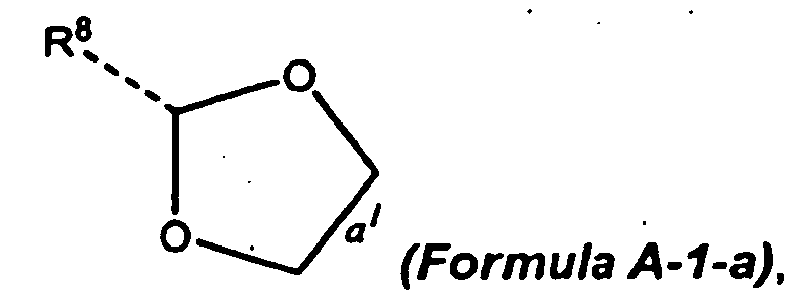


wherein R8 is H or lower alkyl;

- A compound as in claim 7 wherein:
is:
m is an integer from 0 to 4; provided that whenis Formula A-4, the sum of m and s is an integer from 0 to 4. - A compound as in claim 7 wherein: L2 is a linking group selected from the group consisting of: -(CH2)-, -(CH2)3-4-, -CH(R100)-, -C(=R100)-, -C(R100)2-, -O(CH2)1-4-, -OCH(R200)-, -OC(R100)2-, -NH-, -N(lower alkyl)-, -N(COalkyl)-, -N(aryl)-, -N(CO2alkyl)-, -N(CONHalkyl)-, -N(SO2alkyl) and -N(SO2aryl)-; wherein R200 is selected from: alkyl, hydroxy, aryl, oxo, -NH2, -NH(alkyl) -N(alkyl)2, =N(OH) or -NH2OH.
- A compound as in claim 7 wherein: R9 and R10 are independently selected from the group consisting of: 1-piperidinyl, 2-(pyrrolidin-1-yl)-ethoxy, 2,3-dihydroxy-propoxy, 2-hydroxy-3-pyrrolidin-1-yl-propoxy, 3-(4-methyl-piperazin-1-yl)-propoxy, 3-(N,N-dimethyl-amino)-propoxy, 3-hydroxy-propoxy, 3-imidazol-1-yl-propoxy, 3-methoxy-propoxy, 3-morpholin-4-yl-propoxy, 3-pyrrolidin-1-yl-2-hydroxy-propoxy, 3-pyrrolidin-1-yl-propoxy, 4-methyl-piperazin-1-yl, amino, benzyl, benzyloxy, bromo, chloro, cyano, ethoxy, fluoro, H, hydroxy, isopropoxy, methoxy, methyl, N-(1-oxo-ethyl)-amino, and N,N-dimethyl-amino.
- A compound as in claim 7 wherein: R6 and R7 are independently selected from the group consisting of:(a) H;(b)
 (c) -CH2-substituted with one group selected from: -H, -methyl, -Oalkyl, -CH2OH, -CH(CH3)OH, -O(P=O)alkyl, -C(=O)Oalkyl, -(C=O)NH2, -C(=O)alkyl or -phenyl-OC(=O)alkyl;(f) -C(=O)alkyl optionally substituted with one or more groups independently selected from: -OH, -Oalkyl, -Oalkyl-phenyl or -OC(=O)alkyl;(g) -C(=O)phenyl optionally substituted with one or more groups independently selected from: -Oalkyl, chloro or fluoro,;(h) -C(=O)(CH2)1-6C(=O)-terminating with -OH, -Oalkyl, -NH2, -NHalkyl, -N(alkyl)2, or pyrrolidinyl;(hh) -C(=O)alkylOC(=O)alkyl-terminating with -Oalkyl;(i) -C(=O)O(CH2CH2O-)1-10 terminating with H or benzyl;(j) -C(=O)Oalkyloptionally substituted with one or more -Oalkyl groups;(k) -C(=O)Ophenyl optionally substituted with one or more chloro, fluoro groups;(I) -C(=O)NH(CH2CH2O-)1-10 terminating with -H;(m) -C(=O)NH(C1-20)alkyl optionally substituted with one or more groups independently selected from: -NH2, -NHalkyl, -N(alkyl)2, pyrrolidinyl, morpholinyl, -NHC(=O)alkyl, -OC(=O)alkenyl, -NHC(=O)phenyl or -C(=O)Oalkyl; and, wherein the phenyl portion of said -NHC(=O)phenyl may be optionally substituted with one or more groups independently selected from: alkyl, -OH, -Oalkyl, -NH2, -NHalkyl, -N(alkyl)2, halogen and nitrile;(n) -C(=O)NHphenyl optionally substituted with one or more fluoro groups;(o) -C(=O)NHCH2CH2NH(CH2CH2NH-)0-3 terminating with -CH2CH2OH and -C(=O)phenyl; wherein the phenyl portion of said -C(=O)phenyl may be optionally substituted with one or more -OHgroups;(p) -C(=S)NH2;(u) -SO2N(alkyl)2; and(w) -P(=O)(OCH2CH3)2;provided that when R6 is present, R7 is absent; and provided that when R7 is present, R6 is absent.
 - A compound as in claim 7 wherein: R6 and R7 are independently selected from the group consisting of: H,

- A compound as in claim 7 wherein: L3 is absent or is a linking group selected from the group consisting of methylene, ethylene or carbonyl.
- A compound as in claim 7 wherein:
is selected from the group consisting of Phenyl, cyclohexyl, furyl, imidazolyl, isoxazolyl, pyridyl, pyrimidinyl, indolyl, indazolyl, piperidinyl, morpholinyl, indanyl, 2,3-dihydro-1H-indolyl and benzodioxolyl. - A compound as in claim 7 wherein: R5 is independently selected from the group consisting of: methyl, ethyl, isopropyl, t-butyl, methoxy, ethoxy, -C(=O)NH2, -C(=O)Omethyl, -C(=O)Oethyl, -C(=O)OH, cyano, dimethyl-amino, bromo, chloro, fluoro, trifluoromethyl, trifluoromethoxy, thio-trifluoromethyl, hydroxy, hydroxymethyl, hydroxyethyl, nitro, -SO2NH2, thiomethyl

- A compound as in claim 16 wherein: V and W are each independently absent or selected from the group consisting of: -C(=O), -C(=O)N(alkyl)-, -C(=O)NH-, -C(=O)O-, -NH-, -O-and -SO2-; B10 is absent or selected from methyl or ethyl, ; wherein methyl or ethyl are optionally substituted with one or more groups independently selected from dimethyl-amino or hydroxy; and B20 is absent or selected from alkyl, alkenyl, or H, wherein, when B20 is alkyl or alkenyl, the alkyl or alkenyl group may be optionally substituted with one or more groups independently selected from: alkoxy, alkylamino, amino, dialkylamino, halogen, halogenated alkoxy, hydroxy, -NHC(=O)NH2, -NHSO2alkyl or thioalkyl.
- A compound as in claim 17 wherein:
is selected from the group consisting of phenyl, imidazolyl, pyridinyl, pyrimidinyl, pyrrolidinyl, morpholinyl, piperazinyl and piperidinyl optionally substituted with one or more substituents independently selected from methoxy, ethoxy, methyl, ethyl, bromo, chloro, fluoro, trifluoromethyl, pyridinyl, hydroxy or hydroxymethyl. - A compound as in claim 9 wherein:

- A compound of Formula (II-AA):

R100 is selected from the group consisting of: H and alkyl;
RB and RC are independently selected from the group consisting of: alkoxy; and
R5 is selected from the group consisting of: alkoxy and halogen;
or an optical isomer, enantiomer, diastereomer, racemate, or pharmaceutically acceptable salt thereof;
wherein "alkyl" means a straight or branched chain alkyl group having 1 to 10 carbon atoms; and "alkoxy" means an oxygen ether radical of said alkyl group. - A compound as in claim 20, whereinR100 is selected from the group consisting of: H, methyl, ethyl; RB and RC are independently selected from the group consisting of: methoxy and ethoxy; and R5 is selected from the group consisting of: methoxy, ethoxy, isopropoxy, chloro, bromo, and fluoro.
- A compound of Formula (II-BB):

RC is -O(CH2)3OH;
R100 is selected from the group consisting of: H and alkyl;
RB is selected from the group consisting of: alkoxy; and
R5 is selected from the group consisting of: alkoxy and halogen;
or an optical isomer, enantiomer, diastereomer, racemate, or pharmaceutically acceptable salt thereof;
wherein "alkyl" means a straight or branched chain alkyl group having 1 to 10 carbon atoms; and "alkoxy" means an oxygen ether radical of said alkyl group. - A compound as in claim 22, wherein R100 is selected from the group consisting of: H, methyl, ethyl; RB is selected from the group consisting of: methoxy and ethoxy; and R5 is selected from the group consisting of: methoxy, ethoxy, isopropoxy, chloro, bromo, and fluoro.
- A comound of Formula (II-CC)

R100 is selected from the group consisting of: H and alkyl;
RB and RC are independently selected from the group consisting of: alkoxy; and
R5 is selected from the group consisting of: alkyl, cyano, hydroxy, alkoxy and halogen;
or an optical isomer, enantiomer, diastereomer, racemate, or pharmaceutically acceptable salt thereof;
wherein "alkyl" means a straight or branched chain alkyl group having 1 to 10 carbon atoms; and "alkoxy" means an oxygen ether radical of said alkyl group. - A compound as in claim 24 wherein R100 is selected from the group consisting of: H, methyl, ethyl; RB and RC are independently selected from the group consisting of: methoxy and ethoxy; and R5 is selected from the group consisting of: methoxy, ethoxy, isopropoxy, chloro, methyl, cyano and hydroxy.
- A comound of Formula (II-DD)

RC is -O(CH2)3OH;
R100 is selected from the group consisting of: H and alkyl;
RB is selected from the group consisting of: alkoxy; and
R5 is selected from the group consisting of: alkyl, cyano, hydroxy, alkoxy and halogen;
or an optical isomer, enantiomer, diastereomer, racemate, or pharmaceutical acceptable salt thereof;
wherein "alkyl" means a straight or branched chain alkyl group having 1 to 10 carbon atoms; and "alkoxy" means an oxygen ether radical of said alkyl group. - A compound as in claim 16 wherein R100 is selected from the group consisting of: H, methyl, and ethyl; RB is selected from the group consisting of: methoxy and ethoxy; and R5 is selected from the group consisting of: methoxy, ethoxy, isopropoxy, chloro, methyl, cyano and hydroxy.
- A comound of Formula (II-EE)

R5 is selected from the group consisting of: alkoxy and halogen; and
RC is selected from the group consisting of: alkoxy,


wherein "alkyl" means a straight or branched chain alkyl group having 1 to 10 carbon atoms; and "alkoxy" means an oxygen ether radical of said alkyl group. - A compound of Formula (II-FF)

R9 is independently selected from the group consisting of: alkoxy, alkyl, alkylamino, amino, cyano, dialkylamino, halogen, halogenated alkyl, halogenated alkyloxy, halogenated -SO2alkyl, halogenated thioalkyl, hydroxy, -N(alkyl)C(=O)alkyl, -N(alkyl)C(=O)N(alkyl)2, -N(alkyl)C(=O)NHalkyl, -N(alkyl)C(=O)Oalkyl, -N(alkyl)SO2alkyl, -NHC(=O)alkyl, -NHC(=O)N(alkyl)2, -NHC(=O)NH2, -NHC(=O)NHalkyl, -NHC(=O)Qalkyl, -NHSO2alkyl, nitro, -OC(=O)N(alkyl)2, -OC(=O)NHalkyl, -SO2alkyl, thio and thioalkyl;
L2 is a linking group selected from the group consisting of: -(CH2)1-4-, -CH(R100)-, -C(=R100)-, -C(R100)2-, -O-, -O(CH2)1-4-, -OCH(R100)-, -OC(R100)2-, -S-, -NH-, -N(lower alkyl)-, -N(COalkyl)-, -N(aryl)-, -N(CO2alkyl)-, -N(CONHalkyl)-, -N(SO2alkyl) and -N(SO2aryl)-; wherein R100 is selected from: alkyl, hydroxy, aryl, alkoxy, oxo, -NH2, -NH(alkyl) -N(alkyl)2, =N(OH) or -NH2OH; provided that when L2 is -CH2CH2-, neither R6 nor R7 is -CH2-(C=O)NHalkyl, -CH2-(C=O)N(alkyl)2 or -CH2C(=O)Oalkyl; provided that when L2 is -OCH(R100)-, R100 is alkoxy, andis phenyl, R5 is not -C(=O)NH-NH2; and provided that when L2 is -O-or -S-, neither R6 nor R7 is -CH3;
R10 is independently selected from the group consisting of
wherein X1 and Y1 are each independently absent or selected from the group consisting of: -(alkyl)C(=O)N(alkyl)-, -C(=O)N(alkyl)-, -C(=O)NH-, -C(=O)O-, -N(alkyl)-, -N(alkyl)C(=O)-, -N(alkyl)C(=O)NH-, -N(alkyl)C(=O)O-, -N(alkyl)SO2-, -NH-, -NHC(=O)-, -NHC(=O)N(alkyl)-, -NHC(=O)NH, -NHC(=O)O-, -NHSO2-, -O-, -OC(=O), -OC(=O)N(alkyl)-, -OC(=O)NH-, -OC(=O)O-, -S-, -SO-, -SO2-, -SO2N(alkyl)-, and -SO2NH-;
A20 is absent or selected from alkyl or alkenyl; and
A21 is selected from alkyl, alkenyl, or H;
wherein when A20 or A21 is alkyl or alkenyl, the alkyl or alkenyl may be optionally substituted with one or more groups independently selected from: alkoxy, alkylamino, amino, cyano, dialkylamino, halogen, halogenated alkoxy, halogenated -SO2alkyl, halogenated thioalkyl, hydroxy, -N(alkyl)C(=O)alkyl, -N(alkyl)C(=O)N(alkyl)2, -N(alkyl)C(=O)NH2, -N(alkyl)C(=O)NHalkyl, -N(alkyl)C(=O)Oalkyl, -N(alkyl)SO2alkyl, -NHC(=O)alkyl, -NHC(=O)N(alkyl)2, -NHC(=O)NH2, -NHC(=O)NHalkyl, -NHC(=O)Oalkyl, -NHSO2alkyl, -OC(=O)alkyl, -OC(=O)N(alkyl)2, -OC(=O)NHalkyl, -OC(=O)Oalkyl, -SO2alkyl, thio or thioalkyl;
is selected from the group consisting of aryl, cycloalkyl, partially unsaturated carbocycle, heteroaryl, heterocycloalkyl, nine to ten membered benzo-fused cycloalkyl, and nine to ten membered benzo-fused heterocycloalkyl; wherein, the aryl, cycloalkyl; partially unsaturated carbocycle, heteroaryl, heterocycloalkyl, benzo-fused cycloalkyl, or benzo-fused heterocycloalkyl, are optionally substituted with one or more substituents independently selected from halogen, hydroxy, amino, thio, nitro, cyano, alkyl, halogenated alkyl, alkoxy, halogenated alkoxy, alkylamino, -NHC(=O)alkyl, -N(alkyl)C(=O)alkyl, or dialkylamino, -NHC(=O)NH2, -NHC(=O)NHalkyl, -N(alkyl)C(=O)NHalkyl, -OC(=O)NHalkyl, -NHC(=O)Oalkyl, -N(alkyl)C(=O)Oalkyl, -NHSO2alkyl, -N(alkyl)SO2alkyl, thioalkyl, halogenated thioalkyl, -SO2alkyl, halogenated -SO2alkyl, -NHC(=O)N(alkyl)2, -N(alkyl)C(=O)N(alkyl)2 or -OC(=O)N(alkyl)2;
s is an integer from 0 to 2;
m is an integer from 0 to 4; provided that the sum of m and s is an integer from
0 to 4;
R6 and R7 are independently selected from the group consisting of:(a) H;(b) (c) -CH2-substituted with one group selected from: -H, -methyl, -Oalkyl, -CH2OH, -CH(CH3)OH, -O(C=O)alkyl, -(C=O)OH, -C(=O)Oalkyl, -C(=O)Oaryl, -C(=O)Oheteroaryl, -(C=O)NH2, -(C=O)NHalkyl, -(C=O)N(alkyl)2, -C(=O)alkyl, -phenyl-OCH3 or -phenyl-OC(=O)alkyl;(d) -C(=O)(CH2CH2O-)1-10 terminating with H, methyl, ethyl, or benzyl;(e) -C(=O)CH2O(CH2CH2O-)1-10 terminating with H, methyl, ethyl, or benzyl;(f) -C(=O)alkyl, or -C(=O)(C3-6)cycloalkyl, wherein said -C(=O)alkyl, and -C(=O)(C3-6)cycloalkyl may be optionally substituted with one or more groups independently selected from: -OH, -Oalkyl, -Oalkylaryl, -NH2, -NHalkyl, -N(alkyl)2, heterocycloalkyl, -NHC(=O)alkyl, -NHSO2alkyl, or -OC(=O)alkyl;(g) -C(=O)(CH2)1-3aryl, -C(=O)aryl, -C(=O)(CH2)1-3heteroaryl, or -C(=O)heteroaryl, wherein said -C(=O)(CH2)1-3aryl, -C(=O)aryl, -C(=O)(CH2)1-3heteroaryl, and -C(=O)heteroaryl may be optionally substituted with one or more groups independently selected from: -OH, -Oalkyl, -NH2, -NHalkyl, -N(alkyl)2, heterocycloalkyl, -NHC(=O)alkyl, -NHSO2alkyl, halogen, nitrile, or -OC(=O)alkyl;(h) -C(=O)(CH2)1-6C(=O)-terminating with methyl, ethyl, -OH, -Oalkyl, -NH2, -NHalkyl, -N(alkyl)2, or heterocycloalkyl;(hh) -C(=O)alkylOC(=O)alkyl-terminating with -OH, -Oalkyl, -NH2, -NHalkyl, -N(alkyl)2, or heterocycloalkyl;(i) -C(=O)O(CH2CH2O-)1-10 terminating with H, methyl, ethyl, or benzyl;(j) -C(=O)Oalkyl, or -C(=O)O(C3-6)cycloalkyl, wherein said -C(=O)Oalkyl, and -C(=O)O(C3-6)cycloalkyl may be optionally substituted with one or more groups independently selected from: -OH, -Oalkyl, -NH2, -NHalkyl, -N(alkyl)2, heterocycloalkyl, -NHC(=O)alkyl, -NHSO2alkyl, -OC(=O)alkyl, -C(=O)OH, -C(=O)Oalkyl, -C(=O)NH2, -C(=O)NHalkyl, or -C(=O)N(alkyl)2;(k) -C(=O)O(CH2)1-3aryl, -C(=O)Oaryl, -C(=O)O(CH2)1-3heteroaryl, or -C(=O)Oheteroaryl, wherein said -C(=O)O(CH2)1-3aryl, -C(=O)Oaryl, -C(=O)O(CH2)1-3heteroaryl, or -C(=O)Oheteroaryl may be optionally substituted with one or more groups independently selected from: -OH, -Oalkyl, -NH2, -NHalkyl, -N(alkyl)2, heterocycloalkyl, -NHC(=O)alkyl, -NHSO2alkyl, halogen, nitrile, or -OC(=O)alkyl;(I) -C(=O)NH(CH2CH2O-)1-10 terminating with -H, methyl, ethyl, benzyl, -CH2CH2NH2, -CH2CH2NHalkyl, -CH2CH2N(alkyl)2, -CH2CH2-1-pyrrolidinyl, -CH2CH2-1-piperidinyl, -CH2CH2-4-morpholinyl, -CH2CH2-1-piperazinyl, -CH2CH2-1-(4-CH3)-piperazinyl or -C(=O)alkyl;(m) -C(=O)NH2, -C(=O)NH(C1-20)alkyl, -C(=O)NH(C3-6)cycloalkyl, or -C(=O)N(alkyl)2, wherein said -C(=O)NH(C1-20)alkyl, -C(=O)NH(C3-6)cycloalkyl, and -C(=O)N(alkyl)2 may be optionally substituted with one or more groups independently selected from: -OH, -Oalkyl, -NH2, -NHalkyl, -N(alkyl)2, heterocycloalkyl, -NHC(=O)alkyl, -NHSO2alkyl, -OC(=O)alkyl, -OC(=O)alkenyl, -NHC(=O)aryl, -C(=O)OH, -C(=O)Oalkyl, -C(=O)NH2, -C(=O)NHalkyl, or -C(=O)N(alkyl)2; and, wherein the aryl portion of said -NHC(=O)aryl may be optionally substituted with one or more groups independently selected from: alkyl, -OH, -Oalkyl, -NH2, -NHalkyl, -N(alkyl)2, halogen or nitrile;(n) -C(=O)NH(CH2)1-3aryl, -C(=O)NHaryl, -C(=O)NH(CH2)1-3heteroaryl, or -C(=O)NHheteroaryl, wherein said -C(=O)NH(CH2)1-3aryl, -C(=O)NHaryl, -C(=O)NH(CH2)1-3heteroaryl, and -C(=O)NHheteroaryl may be optionally substituted with one or more groups independently selected from: -OH, -Oalkyl, -NH2, -NHalkyl, -N(alkyl)2, heterocycloalkyl, -NHC(=O)alkyl, -NHSO2alkyl, halogen, nitrile, or -OC(=O)alkyl;(o) -C(=O)NHCH2CH2NH(CH2CH2NH-)0-3 terminating with H, methyl, ethyl, -CH2CH2NHalkyl, -CH2CH2N(alkyl)2, -CH2CH2-1-pyrrolidinyl, -CH2CH2-1-piperidinyl, -CH2CH2-4-morpholinyl, -CH2CH2-1-piperazinyl, -CH2CH2-1-(4-CH3)-piperazinyl, -CH2CH2OH, -CH2CH2OCH3, -CH2CH2OCH2CH3, -CH2CH2OC(=O)alkyl, or -C(=O)aryl; wherein the aryl portion of said -C(=O)aryl may be optionally substituted with one or more groups independently selected from: alkyl, -OH, -Oalkyl, -NH2, -NHalkyl, -N(alkyl)2, halogen or nitrile;(p) -C(=S)NH2;(q) -C(=S)NHalkyl;(r) -C(=S)N(alkyl)2;(s) -SO2NH2;(t) -SO2NHalkyl;(u) -SO2N(alkyl)2;(v) -P(=O)(OCH3)2; and(w) -P(=O)(OCH2CH3)2;provided that when R6 is present, R7 is absent; and provided that when R7 is present, R6 is absent;
R4 is selected from the group consisting of: H and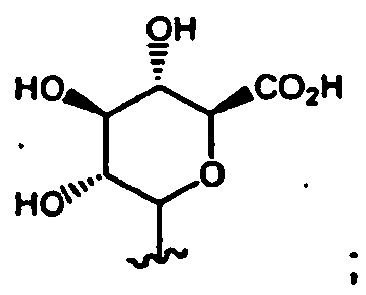
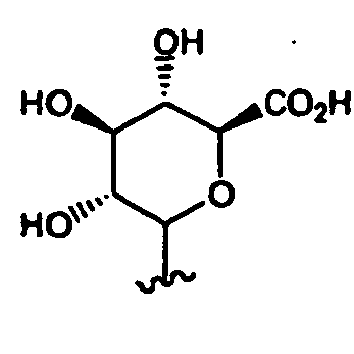
L3 is absent or is a linking group selected from the group consisting of alkyldiyl, carbonyl or -SO2-;
is selected from the group consisting of an aryl , a cycloalkyl, a partially unsaturated carbocycle, aralkyl, a heteroaryl , a heterocycloalkyl, a nine to ten membered benzo-fused cycloalkyl, a nine to ten membered benzo-fused heteroaryl, and a nine to ten membered benzo-fused heterocycloalkyl;
r is an integer from 0 to 4; and
R5 is independently selected from the group consisting of: alkyl, alkyl amino, alkyloxy, amino, -C(=O)NH2, -C(=O)Oalkyl, -C(=O)OH, -CH2OH, cyano, dialkylamino, halogen, halogenated alkyl, halogenated alkyloxy, halogenated SO2-alkyl, halogenated thioalkyl, hydroxy, hydroxy alkyl, -N(alkyl)C(=O)alkyl, -N(alkyl)C(=O)N(alkyl)2, -N(alkyl)C(=O)NHalkyl, -N(alkyl)C(=O)Oalkyl, -N(alkyl)SO2alkyl, -NHC(=O)alkyl, -NHC(=O)N(alkyl)2, -NHC(=O)NH2, -NHC(=O)NHalkyl, -NHC(=O)Oalkyl, -NHSO2alkyl, nitro, -OC(=O)N(alkyl)2, -OC(=O)NHalkyl, -SO2alkyl, -SO2NH2, thio, thioalkyl,
V and W are each independently absent or selected from the group consisting of: -C(=O), -C(=O)N(alkyl)-, -C(=O)NH-, -C(=O)O-, -N(alkyl)-, -N(alkyl)C(=O)-, -N(alkyl)C(=O)N(alkyl)-, -N(alkyl)C(=O)NH-, -N(alkyl)C(=O)O-, -N(alkyl)SO2-, -NH-, -NHC(=O)-, -NHC(=O)N(alkyl)-, -NHC(=O)NH-, -NHC(=O)O-, -NHSO2-, -O-, -OC(=O), -OC(=O)N(alkyl)-, -OC(=O)NH-, -OC(=O)O-, -S-, -SO-, -SO2-, -SO2N(alkyl)-and -SO2NH-;
B10 is absent or selected from alkyl or alkenyl;
B20 is absent or selected from alkyl, alkenyl, or H;
wherein, when B10 or B20 is alkyl or alkenyl, the alkyl or alkenyl group may be optionally substituted with one or more groups independently selected from: alkoxy, alkylamino, amino, cyano, dialkylamino, halogen, halogenated alkoxy, halogenated -SO2alkyl, halogenated thioalkyl, hydroxy -N(alkyl)C(=O)alkyl, -N(alkyl)C(=O)N(alkyl)2, -N(alkyl)C(=O)NH2, -N(alkyl)C(=O)NHalkyl, -N(alkyl)C(=O)Oalkyl, -N(alkyl)SO2alkyl, -NHC(=O)alkyl, -NHC(=O)N(alkyl)2, -NHC(=O)NH2, -NHC(=O)NHalkyl, -NHC(=O)Oalkyl, -NHSO2alkyl, -OC(=O)alkyl, -OC(=O)N(alkyl)2, -OC(=O)NHalkyl, -OC(=O)Oalkyl, -SO2alkyl, thio or thioalkyl; and
is selected from the group consisting of: an aryl, a cycloalkyl, a partially unsaturated carbocycle, a heteroaryl, a heterocycloalkyl, a nine to ten membered benzo-fused cycloalkyl, and a nine to ten membered benzo-fused heterocycloalkyl,
wherein, the aryl, cycloalkyl, partially unsaturated carbocycle, heteroaryl, heterocycloalkyl, benzo-fused cycloalkyl, or benzo-fused heterocycloalkyl, is optionally substituted with one or more substituents independently selected from: alkoxy, alkylamino, amino, cyano, dialkylamino, halogen, halogenated alkoxy, halogenated alkyl, halogenated -SO2alkyl, halogenated thioalkyl, heteroaryl, hydroxy, hydroxy alkyl, -N(alkyl)C(=O)alkyl, -N(alkyl)C(=O)N(alkyl)2, -N(alkyl)C(=O)NHalkyl, -N(alkyl)C(=O)Oalkyl, -N(alkyl)SO2alkyl, -NHC(=O)alkyl, -NHC(=O)N(alkyl)2, -NHC(=O)NH2, -NHC(=O)NHalkyl, -NHC(=O)Oalkyl, -NHSO2alkyl, nitro, -OC(=O)N(alkyl)2, -OC(=O)NHalkyl, -SO2alkyl, thio or thioalkyl;
or an optical isomer, enantiomer, diastereomer, racemate, or pharmaceutically acceptable salt thereof;
wherein "alkyl" means a straight or branched chain alkyl group having 1 to 10 carbon atoms; "alkoxy" and "alkyloxy" mean an oxygen ether radical of said alkyl group; "lower alkyl" means a straight or branched chain alkyl group having 1 to 4 carbon atoms; "lower alkoxy" and "lower alkyloxy" mean an oxygen ether radical of said lower alkyl group; "aryl" means phenyl, naphthyl or fluorenyl; "heteroaryl" means a five to ten membered monocyclic or bicyclic aromatic ring structure containing carbon atoms and at least one heteroatom selected from the group consisting of O, N and S; "cycloalkyl" means a three to ten membered, saturated ring system; "heterocycloalkyl" means a five to ten membered monocyclic or bicyclic, saturated or partially unsaturated ring structure containing carbon atoms and at least one heteroatom selected from the group consisting of O, N and S; and "partially unsaturated carbocycle" means five to ten membered, partially unstaturated ring system containing at least one unsaturated bond. - A compound of Formula (II-GG):

is selected from the group consisting of Formulae A-1, A-2 and A-3:


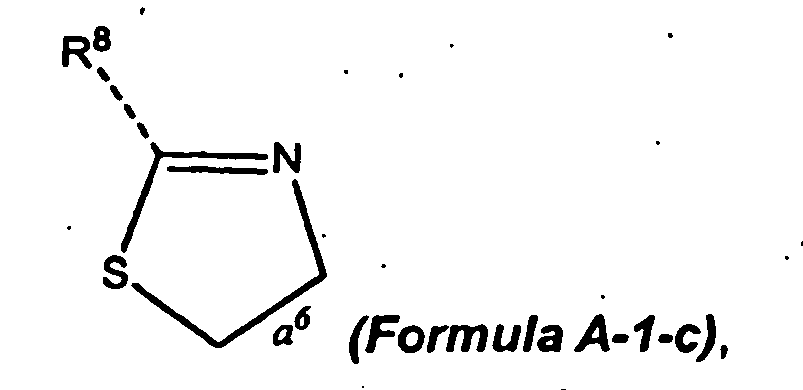
wherein R8 is H or alkyl;

R9 is independently selected from the group consisting of: alkoxy, alkyl, alkylamino, amino, cyano, dialkylamino, halogen, halogenated alkyl, halogenated alkyloxy, halogenated -SO2alkyl, halogenated thioalkyl, hydroxy, -N(alkyl)C(=O)alkyl, -N(alkyl)C(=O)N(alkyl)2, -N(alkyl)C(=O)NHalkyl, -N(alkyl)C(=O)Oalkyl, -N(alkyl)SO2alkyl, -NHC(=O)alkyl, -NHC(=O)N(alkyl)2, -NHC(=O)NH2, -NHC(=O)NHalkyl, -NHC(=O)Oalkyl, -NHSO2alkyl, nitro, -OC(=O)N(alkyl)2, -OC(=O)NHalkyl, -SO2alkyl, thio and thioalkyl;
L2 is a linking group selected from the group consisting of: -(CH2)1-4-, -CH(R100)-, -C(=R100)-, -C(R100)2-, -O-, -O(CH2)1-4-, -OCH(R100)-, -OC(R100)2-, -S-, -NH-, -N(lower alkyl)-, -N(COalkyl)-, -N(aryl)-, -N(CO2alkyl)-, -N(CONHalkyl)-, -N(SO2alkyl) and -N(SO2aryl)-; wherein R100 is selected from: alkyl, hydroxy, aryl, alkoxy, oxo, -NH2, -NH(alkyl) -N(alkyl)2, =N(OH) or -NH2OH; provided that when L2 is -OCH(R100)-, R100 is alkoxy, andis phenyl, R5 is not -C(=O)NH-NH2;
R10 is independently selected from the group consisting of
wherein X1 and Y1 are each independently absent or selected from the group consisting of: -(alkyl)C(=O)N(alkyl)-, -C(=O)N(alkyl)-, -C(=O)NH-, -C(=O)O-, -N(alkyl)-, -N(alkyl)C(=O)-, -N(alkyl)C(=O)NH-, -N(alkyl)C(=O)O-, -N(alkyl)SO2-, -NH-, -NH(=O)-, -NHC(=O)N(alkyl)-, -NHC(=O)NH, -NHC(=O)O-, -NHSO2-, -O-, -OC(=O), -OC(=O)N(alkyl)-, -OC(=O)NH-, -OC(=O)O-, -S-, -SO-, -SO2-, -SO2N(alkyl)-, and -SO2NH-;
A20 is absent or selected from alkyl or alkenyl; and
A21 is selected from alkyl, alkenyl, or H;
wherein when A20 or A21 is alkyl or alkenyl, the alkyl or alkenyl may be optionally substituted with one or more groups independently selected from: alkoxy, alkylamino, amino, cyano, dialkylamino, halogen, halogenated alkoxy, halogenated -SO2alkyl, halogenated thioalkyl, hydroxy, -N(alkyl)C(=O)alkyl, -N(alkyl)C(=O)N(alkyl)2, -N(alkyl)C(=O)NH2, -N(alkyl)C(=O)NHalkyl, -N(alkyl)C(=O)Oalkyl, -N(alkyl)SO2alkyl, -NHC(=O)alkyl, -NHC(=O)N(alkyl)2, -NHC(=O)NH2, -NHC(=O)NHalkyl, -NHC(=O)Oalkyl, -NHSO2alkyl, -OC(=O)alkyl, -OC(=O)N(alkyl)2, -OC(=O)NHalkyl, -OC(=O)Oalkyl, -SO2alkyl, thio or thioalkyl;
is selected from the group consisting of aryl, cycloalkyl, partially unsaturated carbocycle, heteroaryl, heterocycloalkyl, nine to ten membered benzo-fused cycloalkyl, and nine to ten membered benzo-fused heterocycloalkyl; wherein, the aryl, cycloalkyl, partially unsaturated carbocycle, heteroaryl, heterocycloalkyl, benzo-fused cycloalkyl, or benzo-fused heterocycloalkyl, are optionally substituted with one or more substituents independently selected from halogen, hydroxy, amino, thio, nitro, cyano, alkyl, halogenated alkyl, alkoxy, halogenated alkoxy, alkylamino, -NHC(=O)alkyl, -N(alkyl)C(=O)alkyl, or dialkylamino, -NHC(=O)NH2, -NHC(=O)NHalkyl, -N(alkyl)C(=O)NHalkyl, -OC(=O)NHalkyl, -NHC(=O)Oalkyl, -N(alkyl)C(=O)Oalkyl, -NHSO2alkyl, -N(alkyl)SO2alkyl, thioalkyl, halogenated thioalkyl, -SO2alkyl, halogenated -SO2alkyl, -NHC(=O)N(alkyl)2, -N(alkyl)C(=O)N(alkyl)2 or -OC(=O)N(alkyl)2;
s is an integer from 0 to 2;
m is an integer from 0 to 4; provided that whenis not substituted with Formulae A-1-a, A-1-b or A-1-c, the sum of m and s is an integer from 0 to 4, and whenis substituted with one of Formulae A-1-a, A-1-b, or A-1-c, the sum of m and s is an integer from 0 to 2;
R6 and R7 are independently selected from the group consisting of:(a) H;(b) (c) alkyl(d) -C(=O)alkylOH; and(e) -C(=O)CH2Oalkoxy;provided that when R6 is present, R7 is absent; and provided that when R7 is present, R6 is absent;
R4 is selected from the group consisting of: H and

L3 is absent or is a linking group selected from the group consisting of alkyldiyl, carbonyl or -SO2-;
is selected from the group consisting of an aryl, a cycloalkyl, a partially unsaturated carbocycle, aralkyl, a heteroaryl , a heterocycloalkyl, a nine to ten membered benzo-fused cycloalkyl, a nine to ten membered benzo-fused heteroaryl, and a nine to ten membered benzo-fused heterocycloalkyl;
r is an integer from 0 to 4; and
R5 is independently selected from the group consisting of: alkyl, alkyl amino, alkyloxy, amino, -C(=O)NH2, -C(=O)Oalkyl, -C(=O)OH, -CH2OH, cyano, dialkylamino, halogen, halogenated alkyl, halogenated alkyloxy, halogenated SO2-alkyl, halogenated thioalkyl, hydroxy, hydroxy alkyl, -N(alkyl)C(=O)alkyl, -N(alkyl)C(=O)N(alkyl)2, -N(alkyl)C(=O)NHalkyl, -N(alkyl)C(=O)Oalkyl, -N(alkyl)SO2alkyl, -NHC(=O)alkyl, -NHC(=O)N(alkyl)2, -NHC(=O)NH2, -NHC(=O)NHalkyl, -NHC(=O)Oalkyl, -NHSO2alkyl, nitro, -OC(=O)N(alkyl)2, -OC(=O)NHalkyl, -SO2alkyl, -SO2NH2, thio, thioalkyl,
V and W are each independently absent or selected from the group consisting of: -C(=O), -C(=O)N(alkyl)-, -C(=O)NH-, -C(=O)O-, -N(alkyl)-, -N(alkyl)C(=O)-, -N(alkyl)C(=O)N(alkyl)-, -N(alkyl)C(=O)NH-, -N(alkyl)C(=O)O-, -N(alkyl)SO2-, -NH-, -NHC(=O)-, -NHC(=O)N(alkyl)-, -NHC(=O)NH-, -NHC(=O)O-, -NHSO2-, -O-, -OC(=O), -OC(=O)N(alkyl)-, -OC(=O)NH-, -OC(=O)O-, -S-, -SO-, -SO2-, -SO2N(alkyl)-and -SO2NH-;
B10 is absent or selected from alkyl or alkenyl;
B20 is absent or selected from alkyl, alkenyl, or H;
wherein, when B10 or B20 is alkyl or alkenyl, the alkyl or alkenyl group may be optionally substituted with one or more groups independently selected from: alkoxy, alkylamino, amino, cyano, dialkylamino, halogen, halogenated alkoxy, halogenated -SO2alkyl, halogenated thioalkyl, hydroxy -N(alkyl)C(=O)alkyl, -N(alkyl)C(=O)N(alkyl)2, -N(alkyl)C(=O)NH2, -N(alkyl)C(=O)NHalkyl, -N(alkyl)C(=O)Oalkyl, -N(alkyl)SO2alkyl, -NHC(=O)alkyl, -NHC(=O)N(alkyl)2, -NHC(=O)NH2, -NHC(=O)NHalkyl, -NHC(=O)Oalkyl, -NHSO2alkyl, -OC(=O)alkyl, -OC(=O)N(alkyl)2, -OC(=O)NHalkyl, -OC(=O)Oalkyl, -SO2alkyl, thio or thioalkyl; and
is selected from the group consisting of: an aryl, a cycloalkyl, a partially unsaturated carbocycle, a heteroaryl, a heterocycloalkyl, a nine to ten membered benzo-fused cycloalkyl, and a nine to ten membered benzo-fused heterocycloalkyl,
wherein, the aryl, cycloalkyl, partially unsaturated carbocycle, heteroaryl, heterocycloalkyl, benzo-fused cycloalkyl, or benzo-fused heterocycloalkyl, is optionally substituted with one or more substituents independently selected from: alkoxy, alkylamino, amino, cyano, dialkylamino, halogen, halogenated alkoxy, halogenated alkyl, halogenated -SO2alkyl, halogenated thioalkyl, heteroaryl, hydroxy, hydroxy alkyl, -N(alkyl)C(=O)alkyl, -N(alkyl)C(=O)N(alkyl)2, -N(alkyl)C(=O)NHalkyl, -N(alkyl)C(=O)Oalkyl, -N(alkyl)SO2alkyl, -NHC(=O)alkyl, -NHC(=O)N(alkyl)2, -NHC(=O)NH2, -NHC(=O)NHalkyl, -NHC(=O)Oalkyl, -NHSO2alkyl, nitro, -OC(=O)N(alkyl)2, -OC(=O)NHalkyl, -SO2alkyl, thio or thioalkyl;
or an optical isomer, enantiomer, diastereomer, racemate, or pharmaceutically acceptable salt thereof;
wherein "alkyl" means a straight or branched chain alkyl group having 1 to 10 carbon atoms; "alkoxy" and "alkyloxy" mean an oxygen ether radical of said alkyl group; "lower alkyl" means a straight or branched chain alkyl group having 1 to 4 carbon atoms; "lower alkoxy" and "lower alkyloxy" mean an oxygen ether radical of said lower alkyl group; "aryl" means phenyl, naphthyl or fluorenyl; "heteroaryl" means a five to ten membered monocyclic or bicyclic aromatic ring structure containing carbon atoms and at least one heteroatom selected from the group consisting of O, N and S; "cycloalkyl" means a three to ten membered, saturated ring system; "heterocycloalkyl" means a five to ten membered monocyclic or bicyclic, saturated or partially unsaturated ring structure containing carbon atoms and at least one heteroatom selected from the group consisting of O, N and S; and "partially unsaturated carbocycle" means five to ten membered, partially unstaturated ring system containing at least one unsaturated bond. - A compound as in claim 30, wherein R7 is absent, and R6 is selected from the group consisting of:(a) H;(b)
 (c) methyl(d) -C(=O)CH2OH; and(e) -C(=O)CH2Omethoxy;
 - A compound of Formula (II-HH):

is selected from the group consisting of Formulae A-1, A-2 and A-3:


wherein R8 is H or alkyl;

R9 is independently selected from the group consisting of: alkoxy, alkyl, alkylamino, amino, cyano, dialkylamino, halogen, halogenated alkyl, halogenated alkyloxy, halogenated -SO2alkyl, halogenated thioalkyl, hydroxy, -N(alkyl)C(=O)alkyl, -N(alkyl)C(=O)N(alkyl)2, -N(alkyl)C(=O)NHalkyl, -N(alkyl)C(=O)Oalkyl, -N(alkyl)SO2alkyl, -NHC(=O)alkyl, -NHC(=O)N(alkyl)2, -NHC(=O)NH2, -NHC(=O)NHalkyl, -NHC(=O)Oalkyl, -NHSO2alkyl, nitro, -OC(=O)N(alkyl)2, -OC(=O)NHalkyl, -SO2alkyl, thio and thioalkyl;
L2 is a linking group selected from the group consisting of: -(CH2)-, -CH(CH3)-, -CH(CH2CH3)-, and -O-, provided that when L2 is -O-, neither R6 nor R7 is -CH3;
R10 is independently selected from the group consisting of
wherein X1 and Y1 are each independently absent or selected from the group consisting of: -(alkyl)C(=O)N(alkyl)-, -C(=O)N(alkyl)-, -C(=O)NH-, -C(=O)O-, -N(alkyl)-, -N(alkyl)C(=O)-, -N(alkyl)C(=O)NH-, -N(alkyl)C(=O)O-, -N(alkyl)SO2-, -NH-, -NH(=O)-, -NHC(=O)N(alkyl)-, -NHC(=O)NH, -NHC(=O)O-, -NHSO2-, -O-, -OC(=O), -OC(=O)N(alkyl)-, -OC(=O)NH-, -OC(=O)O-, -S-, -SO-, -SO2-, -SO2N(alkyl)-, and -SO2NH-;
A20 is absent or selected from alkyl or alkenyl; and
A21 is selected from alkyl, alkenyl, or H;
wherein when A20 or A21 is alkyl or alkenyl, the alkyl or alkenyl may be optionally substituted with one or more groups independently selected from: alkoxy, alkylamino, amino, cyano, dialkylamino, halogen, halogenated alkoxy, halogenated -SO2alkyl, halogenated thioalkyl, hydroxy, -N(alkyl)C(=O)alkyl, -N(alkyl)C(=O)N(alkyl)2, -N(alkyl)C(=O)NH2, -N(alkyl)C(=O)NHalkyl, -N(alkyl)C(=O)Oalkyl, -N(alkyl)SO2alkyl, -NHC(=O)alkyl, -NHC(=O)N(alkyl)2, -NHC(=O)NH2, -NHC(=O)NHalkyl, -NHC(=O)Oalkyl, -NHSO2alkyl, -OC(=O)alkyl, -OC(=O)N(alkyl)2, -OC(=O)NHalkyl, -OC(=O)Oalkyl, -SO2alkyl, thio or thioalkyl;
is selected from the group consisting of aryl, cycloalkyl, partially unsaturated carbocycle, heteroaryl, heterocycloalkyl, nine to ten membered benzo-fused cycloalkyl, and nine to ten membered benzo-fused heterocycloalkyl; wherein, the aryl, cycloalkyl, partially unsaturated carbocycle, heteroaryl, heterocycloalkyl, benzo-fused cycloalkyl, or benzo-fused heterocycloalkyl, are optionally substituted with one or more substituents independently selected from halogen, hydroxy, amino, thio, nitro, cyano, alkyl, halogenated alkyl, alkoxy, halogenated alkoxy, alkylamino, -NHC(=O)alkyl, -N(alkyl)C(=O)alkyl, or dialkylamino, -NHC(=O)NH2, -NHC(=O)NHalkyl, -N(alkyl)C(=O)NHalkyl, -OC(=O)NHalkyl, -NHC(=O)Oalkyl, -N(alkyl)C(=O)Oalkyl, -NHSO2alkyl, -N(alkyl)SO2alkyl, thioalkyl, halogenated thioalkyl, -SO2alkyl, halogenated -SO2alkyl, -NHC(=O)N(alkyl)2, -N(alkyl)C(=O)N(alkyl)2 or -OC(=O)N(alkyl)2;
s is an integer from 0 to 2;
m is an integer from 0 to 4; provided that whenis not substituted with Formulae A-1-a, A-1-b or A-1-c, the sum of m and s is an integer from 0 to 4, and whenis substituted with one of Formulae A-1-a, A-1-b, or A-1-c, the sum of m and s is an integer from 0 to 2;
R6 and R7 are independently selected from the group consisting of:(a) H;(b) (c) -CH2-substituted with one group selected from; -H, -methyl, -Oalkyl, -CH2OH, -CH(CH3)OH, -O(C=O)alkyl, -(C=O)OH, -C(=O)Oalkyl, -C(=O)Oaryl, -C(=O)Oheteroaryl, -(C=O)NH2, -(C=O)NHalkyl, -(C=O)N(alkyl)2, -C(=O)alkyl, -phenyl-OCH3 or -phenyl-OC(=O)alkyl;(d) -C(=O)(CH2CH2O-)1-10 terminating with H, methyl, ethyl, or benzyl;(e) -C(=O)CH2O(CH2CH2O-)1-10 terminating with H, methyl, ethyl, or benzyl;(f) -C(=O)alkyl, or -C(=O)(C3-6)cycloalkyl, wherein said -C(=O)alkyl, and -C(=O)(C3-6)cycloalkyl may be optionally substituted with one or more groups independently selected from: -OH, -Oalkyl, -Oalkylaryl, -NH2, -NHalkyl, -N(alkyl)2, heterocycloalkyl, -NHC(=O)alkyl, -NHSO2alkyl, or -OC(=O)alkyl;(g) -C(=O)(CH2)1-3aryl, -C(=O)aryl, -C(=O)(CH2)1-3heteroaryl, or -C(=O)heteroaryl, wherein said -C(=O)(CH2)1-3aryl, -C(=O)aryl, -C(=O)(CH2)1-3heteroaryl, and -C(=O)heteroaryl may be optionally substituted with one or more groups independently selected from: -OH, -Oalkyl, -NH2, -NHalkyl, -N(alkyl)2, heterocycloalkyl, -NHC(=O)alkyl, -NHSO2alkyl, halogen, nitrile, or -OC(=O)alkyl;(h) -C(=O)(CH2)1-6C(=O)-terminating with methyl, ethyl, -OH, -Oalkyl, -NH2, -NHalkyl, -N(alkyl)2, or heterocycloalkyl;(hh) -C(=O)alkylOC(=O)alkyl-terminating with -OH, -Oalkyl, -NH2, -NHalkyl, -N(alkyl)2, or heterocycloalkyl;(i) -C(=O)O(CH2CH2O-)1-10 terminating with H, methyl, ethyl, or benzyl;(j) -C(=O)Oalkyl, or -C(=O)O(C3-6)cycloalkyl, wherein said -C(=O)Oalkyl, and -C(=O)O(C3-6)cycloalkyl may be optionally substituted with one or more groups independently selected from: -OH, -Oalkyl, -NH2, -NHalkyl, -N(alkyl)2, heterocycloalkyl, -NHC(=O)alkyl, -NHSO2alkyl, -OC(=O)alkyl, -C(=O)OH, -C(=O)Oalkyl, -C(=O)NH2, -C(=O)NHalkyl, or -C(=O)N(alkyl)2;(k) -C(=O)O(CH2)1-3aryl, -C(=O)Oaryl, -C(=O)O(CH2)1-3heteroaryl, or -C(=O)Oheteroaryl, wherein said -C(=O)O(CH2)1-3aryl, -C(=O)Oaryl, -C(=O)O(CH2)1-3heteroaryl, or -C(=O)Oheteroaryl may be optionally substituted with one or more groups independently selected from: -OH, -Oalkyl, -NH2, -NHalkyl, -N(alkyl)2, heterocycloalkyl, -NHC(=O)alkyl, -NHSO2alkyl, halogen, nitrile, or -OC(=O)alkyl;(l) -C(=O)NH(CH2CH2O-)1-10 terminating with -H, methyl, ethyl, benzyl, -CH2CH2NH2, -CH2CH2NHalkyl, -CH2CH2N(alkyl)2, -CH2CH2-1-pyrrolidinyl, -CH2CH2-1-piperidinyl, -CH2CH2-4-morpholinyl, -CH2CH2-1-piperazinyl, -CH2CH2-1-(4-CH3)-piperazinyl or -C(=O)alkyl;(m) -C(=O)NH2, -C(=O)NH(C1-20)alkyl, -C(=O)NH(C3-6)cycloalkyl, or -C(=O)N(alkyl)2, wherein said -C(=O)NH(C1-20)alkyl, -C(=O)NH(C3-6)cycloalkyl, and -C(=O)N(alkyl)2 may be optionally substituted with one or more groups independently selected from: -OH, -Oalkyl, -NH2, -NHalkyl, -N(alkyl)2, heterocycloalkyl, -NHC(=O)alkyl, -NHSO2alkyl, -OC(=O)alkyl, -OC(=O)alkenyl, -NHC(=O)aryl, -C(=O)OH, -C(=O)Oalkyl, -C(=O)NH2, -C(=O)NHalkyl, or -C(=O)N(alkyl)2; and, wherein the aryl portion of said -NHC(=O)aryl may be optionally substituted with one or more groups independently selected from: alkyl, -OH, -Oalkyl, -NH2, -NHalkyl, -N(alkyl)2, halogen or nitrile;(n) -C(=O)NH(CH2)1-3aryl, -C(=O)NHaryl, -C(=O)NH(CH2)1-3heteroaryl, or -C(=O)NHheteroaryl, wherein said -C(=O)NH(CH2)1-3aryl, -C(=O)NHaryl, -C(=O)NH(CH2)1-3heteroaryl, and -C(=O)NHheteroaryl may be optionally substituted with one or more groups independently selected from: -OH, -Oalkyl, -NH2, -NHalkyl, -N(alkyl)2 , heterocycloalkyl, -NHC(=O)alkyl, -NHSO2alkyl, halogen, nitrile, or -OC(=O)alkyl;(o) -C(=O)NHCH2CH2NH(CH2CH2NH-)0-3 terminating with H, methyl, ethyl, -CH2CH2NHalkyl, -CH2CH2N(alkyl)2, -CH2CH2-1-pyrrolidinyl, -CH2CH2-1-piperidinyl, -CH2CH2-4-morpholinyl, -CH2CH2-1-piperazinyl, -CH2CH2-1-(4-CH3)-piperazinyl, -CH2CH2OH, -CH2CH2OCH3, -CH2CH2OCH2CH3, -CH2CH2OC(=O)alkyl, or -C(=O)aryl; wherein the aryl portion of said -C(=O)aryl may be optionally substituted with one or more groups independently selected from: alkyl, -OH , -Oalkyl, -NH2, -NHalkyl, -N(alkyl)2, halogen or nitrile;(p) -C(=S)NH2;(q) -C(=S)NHalkyl;(r) -C(=S)N(alkyl)2;(s) -SO2NH2;(t) -SO2NHalkyl;(u) -SO2N(alkyl)2;(v) -P(=O)(OCH3)2; and(w) -P(=O)(OCH2CH3)2;provided that when R6 is present, R7 is absent; and provided that when R7 is present, R6 is absent;
R4 is selected from the group consisting of: H and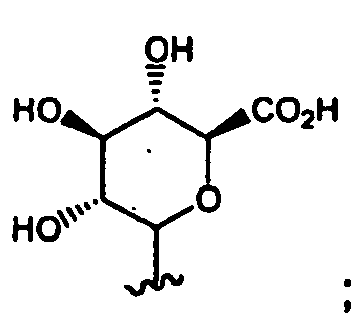

L3 is absent or is a linking group selected from the group consisting of alkyldiyl, carbonyl or -SO2-;
is selected from the group consisting of an aryl, a cycloalkyl, a partially unsaturated carbocycle, aralkyl, a heteroaryl, a heterocycloalkyl, a nine to ten membered benzo-fused cycloalkyl, a nine to ten membered benzo-fused heteroaryl, and a nine to ten membered benzo-fused heterocycloalkyl;
r is an integer from 0 to 4; and
R5 is independently selected from the group consisting of: alkyl, alkyl amino, alkyloxy, amino, -C(=O)NH2, -C(=O)Oalkyl, -C(=O)OH, -CH2OH, cyano, dialkylamino, halogen, halogenated alkyl, halogenated alkyloxy, halogenated SO2-alkyl, halogenated thioalkyl, hydroxy, hydroxy alkyl, -N(alkyl)C(=O)alkyl, -N(alkyl)C(=O)N(alkyl)2, -N(alkyl)C(=O)NHalkyl, -N(alkyl)C(=O)Oalkyl, -N(alkyl)SO2alkyl, -NHC(=O)alkyl, -NHC(=O)N(alkyl)2, -NHC(=O)NH2, -NHC(=O)NHalkyl, -NHC(=O)Oalkyl, -NHSO2alkyl, nitro, -OC(=O)N(alkyl)2, -OC(=O)NHalkyl, -SO2alkyl, -SO2NH2, thio, thioalkyl,
V and W are each independently absent or selected from the group consisting of: -C(=O), -C(=O)N(alkyl)-, -C(=O)NH-, -C(=O)O-, -N(alkyl)-, -N(alkyl)C(=O)-, -N(alkyl)C(=O)N(alkyl)-, -N(alkyl)C(=O)NH-, -N(alkyl)C(=O)O-, -N(alkyl)SO2-, -NH-, -NHC(=O)-, -NHC(=O)N(alkyl)-, -NHC(=O)NH-, -NHC(=O)O-, -NHO2-, -O-, -OC(=O), -OC(=O)N(alkyl)-, -OC(=O)NH-, -OC(=O)O-, -S-, -SO-, -SO2-, -SO2N(alkyl)-and -SO2NH-;
B10 is absent or selected from alkyl or alkenyl;
B20 is absent or selected from alkyl, alkenyl, or H;
wherein, when B10 or B20 is alkyl or alkenyl, the alkyl or alkenyl group may be optionally substituted with one or more groups independently selected from: alkoxy, alkylamino, amino, cyano, dialkylamino, halogen, halogenated alkoxy, halogenated -SO2alkyl, halogenated thioalkyl, hydroxy -N(alkyl)C(=O)alkyl, -N(alkyl)C(=O)N(alkyl)2, -N(alkyl)C(=O)NH2, -N(alkyl)C(=O)NHalkyl, -N(alkyl)C(=O)Oalkyl, -N(alkyl)SO2alkyl, -NHC(=O)alkyl, -NHC(=O)N(alkyl)2, -NHC(=O)NH2, -NHC(=O)NHalkyl, -NHC(=O)Oalkyl, -NHSO2alkyl, -OC(=O)alkyl, -OC(=O)N(alkyl)2, -OC(=O)NHalkyl, -OC(=O)Oalkyl, -SO2alkyl, thio or thioalkyl; and
is selected from the group consisting of: an aryl, a cycloalkyl, a partially unsaturated carbocycle, a heteroaryl, a heterocycloalkyl, a nine to ten membered benzo-fused cycloalkyl, and a nine to ten membered benzo-fused heterocycloalkyl,
wherein, the aryl, cycloalkyl, partially unsaturated carbocycle, heteroaryl, heterocycloalkyl, benzo-fused cycloalkyl, or benzo-fused heterocycloalkyl, is optionally substituted with one or more substituents independently selected from: alkoxy, alkylamino, amino, cyano, dialkylamino, halogen, halogenated alkoxy, halogenated alkyl, halogenated -SO2alkyl, halogenated thioalkyl, heteroaryl, hydroxy, hydroxy alkyl, -N(alkyl)C(=O)alkyl, -N(alkyl)C(=O)N(alkyl)2, -N(alkyl)C(=O)NHalkyl, -N(alkyl)C(=O)Oalkyl, -N(alkyl)SO2alkyl, -NHC(=O)alkyl, -NHC(=O)N(alkyl)2, -NHC(=O)NH2, -NHC(=O)NHalkyl, -NHC(=O)Oalkyl, -NHSO2alkyl, nitro, -OC(=O)N(alkyl)2, -OC(=O)NHalkyl, -SO2alkyl, thio or thioalkyl;
or an optical isomer, enantiomer, diastereomer, racemate, or pharmaceutically acceptable salt thereof;
wherein "alkyl" means a straight or branched chain alkyl group having 1 to 10 carbon atoms; "alkoxy" and "alkyloxy" mean an oxygen ether radical of said alkyl group; "lower alkyl" means a straight or branched chain alkyl group having 1 to 4 carbon atoms; "lower alkoxy" and "lower alkyloxy" mean an oxygen ether radical of said lower alkyl group; "aryl" means phenyl, naphthyl or fluorenyl; "heteroaryl" means a five to ten membered monocyclic or bicyclic aromatic ring structure containing carbon atoms and at least one heteroatom selected from the group consisting of O, N and S; "cycloalkyl" means a three to ten membered, saturated ring system; "heterocycloalkyl" means a five to ten membered monocyclic or bicyclic, saturated or partially unsaturated ring structure containing carbon atoms and at least one heteroatom selected from the group consisting of O, N and S; and "partially unsaturated carbocycle" means five to ten membered, partially unstaturated ring system containing at least one unsaturated bond. - A compound as in claim 32, wherein L2 is a linking group selected from the group consisting of: -(CH2)-, -CH(CH3)-, -CH(CH2CH3)-.
- A compound of Formula (II-JJ):

R6 and R7 are independently selected from the group consisting of:(a) H;(b) (c) -CH2-substituted with one group selected from: -H, -methyl, -Oalkyl, -CH2OH, -CH(CH3)OH, -O(C=O)alkyl, -(C=O)OH, -C(=O)Oalkyl, -C(=O)Oaryl, -C(=O)Oheteroaryl, -(C=O)NH2, -(C=O)NHalkyl, -(C=O)N(alkyl)2, -C(=O)alkyl, -phenyl-OCH3 or -phenyl-OC(=O)alkyl;(d) -C(=O)(CH2CH2O-)1-10 terminating with H, methyl, ethyl, or benzyl;(e) -C(=O)CH2O(CH2CH2O-)1-10 terminating with H, methyl, ethyl, or benzyl;(f) -C(=O)alkyl, or -C(=O)(C3-6)cycloalkyl, wherein said -C(=O)alkyl, and -C(=O)(C3-6)cycloalkyl may be optionally substituted with one or more groups independently selected from: -OH, -Oalkyl, -Oalkylaryl, -NH2, -NHalkyl, -N(alkyl)2, heterocycloalkyl, -NHC(=O)alkyl, -NHSO2alkyl, or -OC(=O)alkyl;(g) -C(=O)(CH2)1-3aryl, -C(=O)aryl, -C(=O)(CH2)1-3heteroaryl, or -C(=O)heteroaryl, wherein said -C(=O)(CH2)1-3aryl, -C(=O)aryl, -C(=O)(CH2)1-3heteroaryl, and -C(=O)heteroaryl may be optionally substituted with one or more groups independently selected from: -OH, -Oalkyl, -NH2, -NHalkyl, -N(alkyl)2, heterocycloalkyl, -NHC(=O)alkyl, -NHSO2alkyl, halogen, nitrile, or -OC(=O)alkyl;(h) -C(=O)(CH2)1-6C(=O)-terminating with methyl, ethyl, -OH, -Oalkyl, -NH2, -NHalkyl, -N(alkyl)2, or heterocycloalkyl;(hh) -C(=O)alkylOC(=O)alkyl-terminating with -OH, -Oalkyl, -NH2, -NHalkyl, -N(alkyl)2, or heterocycloalkyl;(i) -C(=O)O(CH2CH2O-)1-10 terminating with H, methyl, ethyl, or benzyl;(j) -C(=O)Oalkyl, or -C(=O)O(C3-6)cycloalkyl, wherein said -C(=O)Oalkyl, and -C(=O)O(C3-6)cycloalkyl may be optionally substituted with one or more groups independently selected from: -OH, -Oalkyl, -NH2, -NHalkyl, -N(alkyl)2, heterocycloalkyl, -NHC(=O)alkyl, -NHSO2alkyl, -OC(=O)alkyl, -C(=O)OH, -C(=O)Oalkyl, -C(=O)NH2, -C(=O)NHalkyl, or -C(=O)N(alkyl)2;(k) -C(=O)O(CH2)1-3aryl, -C(=O)Oaryl, -C(=O)O(CH2)1-3heteroaryl, or -C(=O)Oheteroaryl, wherein said -C(=O)O(CH2)1-3aryl, -C(=O)Oaryl, -C(=O)O(CH2)1-3heteroaryl, or -C(=O)Oheteroaryl may be optionally substituted with one or more groups independently elected from: -OH, -Oalkyl, -NH2, -NHalkyl, -N(alkyl)2 , heterocycloalkyl, -NHC(=O)alkyl, -NHSO2alkyl, halogen, nitrile, or -OC(=O)alkyl;(I) -C(=O)NH(CH2CH2O-)1-10 terminating with -H, methyl, ethyl, benzyl, -CH2CH2NH2, -CH2CH2NHalkyl, -CH2CH2N(alkyl)2, -CH2CH2-1-pyrrolidinyl, -CH2CH2-1-piperidinyl, -CH2CH2-4-morpholinyl -CH2CH2-1-piperazinyl, -CH2CH2-1-(4-CH3)-piperazinyl or -C(=O)alkyl;(m) -C(=O)NH2, -C(=O)NH(C1-20)alkyl, -C(=O)NH(C3-6)cycloalkyl, or -C(=O)N(alkyl)2, wherein said -C(=O)NH(C1-20)alkyl, -C(=O)NH(C3-6)cycloalkyl, and -C(=O)N(alkyl)2 may be optionally substituted with one or more groups independently selected from: -OH, -Oalkyl, -NH2, -NHalkyl, -N(alkyl)2, heterocycloalkyl, -NHC(=O)alkyl, -NHSO2alkyl, -OC(=O)alkyl, -OC(=O)alkenyl, -NHC(=O)aryl, -C(=O)OH, -C(=O)Oalkyl, -C(=O)NH2, -C(=O)NHalkyl, or -C(=O)N(alkyl)2; and, wherein the aryl portion of said -NHC(=O)aryl may be optionally substituted with one or more groups independently selected from: alkyl, -OH, -Oalkyl, -NH2, -NHalkyl, -N(alkyl)2, halogen or nitrile;(n) -C(=O)NH(CH2)1-3aryl, -C(=O)NHaryl, -C(=O)NH(CH2)1-3heteroaryl, or -C(=O)NHheteroaryl, wherein said -C(=O)NH(CH2)1-3aryl, -C(=O)NHaryl, -C(=O)NH(CH2)1-3heteroaryl, and -C(=O)NHheteroaryl may be optionally substituted with one or more groups independently selected from: -OH, -Oalkyl, -NH2, -NHalkyl, -N(alkyl)2, heterocycloalkyl, -NHC(=O)alkyl, -NHSO2alkyl, halogen, nitrile, or -OC(=O)alkyl;(o) -C(=O)NHCH2CH2NH(CH2CH2NH-)0-3 terminating with H, methyl, ethyl, -CH2CH2NHalkyl, -CH2CH2N(alkyl)2, -CH2CH2-1-pyrrolidinyl, -CH2CH2-1-piperidinyl, -CH2CH2-4-morpholinyl, -CH2CH2-1-piperazinyl, -CH2CH2-1-(4-CH3)-piperazinyl, -CH2CH2OH, -CH2CH2OCH3, -CH2CH2OCH2CH3, -CH2CH2OC(=O)alkyl, or -C(=O)aryl; wherein the aryl portion of said -C(=O)aryl may be optionally substituted with one or more groups independently selected from: alkyl, -OH, -Oalkyl, -NH2, -NHalkyl, -N(alkyl)2, halogen or nitrile;(p) -C(=S)NH2;(q) -C(=S)NHalkyl;(r) -C(=S)N(alkyl)2;(s) -SO2NH2;(t) -SO2NHalkyl;(u) -SO2N(alkyl)2;(v) -P(=O)(OCH3)2; and(w) -P(=O)(OCH2CH3)2;provided that when R6 is present, R7 is absent; and provided that when R7 is present, R6 is absent;
R4 is selected from the group consisting of: H and

or an optical isomer, enantiomer, diastereomer, racemate, or pharmaceutically acceptable salt thereof;
wherein "alkyl" means a straight or branched chain alkyl group having 1 to 10 carbon atoms; "alkoxy" and "alkyloxy" mean an oxygen ether radical of said alkyl group; "lower alkyl" means a straight or branched chain alkyl group having 1 to 4 carbon atoms; "lower alkoxy" and "lower alkyloxy" mean an oxygen ether radical of said lower alkyl group; "aryl" means phenyl, naphthyl or fluorenyl; "heteroaryl" means a five to ten membered monocyclic or bicyclic aromatic ring structure containing carbon atoms and at least one heteroatom selected from the group consisting of O, N and S; "cycloalkyl" means a three to ten membered, saturated ring system; "heterocycloalkyl" means a five to ten membered monocyclic or bicyclic, saturated or partially unsaturated ring structure containing carbon atoms and at least one heteroatom selected from the group consisting of O, N and S; and "partially unsaturated carbocycle" means five to ten membered, partially unstaturated ring system containing at least one unsaturated bond. - A compound selected from the group consisting of:


- A compound selected from the group consisting of:


- A compound of the following formula:

- A compound of the following formula:

- Acompound of the following formula:

- A compound of the following formula:

- A compound selected from the group consisting of:1-[3-(3-Chloro-phenylamino)-7-methoxy-2,4-dihydro-indeno[1,2-c]pyrazol-6-yloxy]-3-pyrrolidin-1-yl-propan-2-ol;[7-Methoxy-6-(3-methoxy-propoxy)-2,4-dihydro-indeno[1,2-c]pyrazol-3-yl]-(3-methoxy-phenyl)-amine;1-[7-Methoxy-3-(3-methoxy-phenylamino)-2,4-dihydro-indeno[1,2-c]pyrazol-6-yloxy]-3-pyrrolidin-1-yl-propan-2-ol;(3-Bromo-phenyl)-(6,7-dimethoxy-2,4-dihydro-indeno[1,2-c]pyrazo)-3-yl)-amine;1-[3-(3-Fluoro-phenylamino)-7-methoxy-2,4-dihydro-indeno[1,2-c]pyrazol-6-yloxy]-3-pyrrolidin-1-yl-propan-2-ol;3-[3-(2,6-Dichloro-benzylamino)-7-methoxy-2,4-dihydro-indeno[1,2-c]pyrazol-6-yloxy]-propane-1,2-diol;(3-Methoxy-phenyl)-[7-methoxy-6-(3-pyrrolidin-1-yl-propoxy)-2,4-dihydro-indeno[1,2-c]pyrazol-3-yl]-amine;(6,7-Diethoxy-2,4-dihydro-indeno[1,2-c]pyrazol-3-yl)-(3-methoxy-phenyl)-amine;3-[3-(3-Fluoro-phenylamino)-7-methoxy-2,4-dihydro-indeno[1,2-c]pyrazol-6-yloxy]-propane-1,2-diol;3-[3-(3-Chloro-phenylamino)-7-methoxy-2,4-dihydro-indeno[1,2-c]pyrazol-6-yloxy]-propan-1-ol;3-[7-Methoxy-3-(3-methoxy-phenylamino)-2,4-dihydro-indeno[1,2-c]pyrazol-6-yloxy]-propane-1,2-diol;3-[7-Methoxy-3-(3-methoxy-phenylamino)-2,4-dihydro-indeno[1,2-c]pyrazol-6-yloxy]-propan-1-ol;(2,6-Dichloro-benzyl)-(6,7-diethoxy-2,4-dihydro-indeno[1,2-c]pyrazol-3-yl)-amine;(6,7-Dimethoxy-2,4-dihydro-indeno[1,2-c]pyrazol-3-yl)-(3-fluoro-phenyl)-amine;1-[3-(3-Chloro-4-fluoro-phenylamino)-7-methoxy-2,4-dihydro-indeno[1,2-c]pyrazol-6-yloxy]-3-pyrrolidin-1-yl-propan-2-ol;3-[3-(2,6-Dichloro-benzylamino)-7-methoxy-2,4-dihydro-indeno[1,2-c]pyrazol-6-yloxy]-propan-1-ol;(2-Chloro-benzyl)-(6,7-dimethoxy-2,4-dihydro-indeno[1,2-c]pyrazol-3-yl)-amine;(3-Chloro-4-fluoro-phenyl)-[6-(3-dimethylamino-propoxy)-7-methoxy-2,4-dihydro-indeno[1,2-c]pyrazol-3-yl]-amine;(6-Fluoro-2,4-dihydro-indeno[1,2-c]pyrazol-3-yl)-m-tolyl-amine;3-[3-(2-Chloro-benzylamino)-7-methoxy-2,4-dihydro-indeno[1,2-c]pyrazol-6-yloxy]-propane-1,2-diol;1-[3-(2,6-Dichloro-benzylamino)-7-methoxy-2,4-dihydro-indeno[1,2-c]pyrazol-6-yloxy]-3-pyrrolidin-1-yl-propan-2-ol;3-[3-(3-Chloro-phenylamino)-7-methoxy-2,4-dihydro-indeno[1,2-c]pyrazol-6-yloxy]-propane-1,2-diol;(2-Bromo-benzyl)-(6,7-dimethoxy-2,4-dihydro-indeno[1,2-c]pyrazol-3-yl)-amine;(3-Bromo-phenyl)-[7-methoxy-6-(3-morpholin-4-yl-propoxy)-2,4-dihydro-indeno[1,2-c]pyrazol-3-yl]-amine;1-[6-Ethoxy-3-(3-methoxy-phenylamino)-2,4-dihydro-indeno[1,2-c]pyrazol-7-yloxy]-3-pyrrolidin-1-yl-propan-2-ol;(6-Fluoro-7-methoxy-2,4-dihydro-indeno[1,2-c]pyrazol-3-yl)-(2-methyl-benzyl)-amine;1-[7-Methoxy-3-(pyridin-3-ylamino)-2,4-dihydro-indeno[1,2-c]pyrazol-6-yloxy]-3-pyrrolidin-1-yl-propan-2-ol;(3-Chloro-phenyl)-{7-methoxy-6-[3-(4-methyl-piperazin-1-yl)-propoxy]-2,4-dihydro-indeno[1,2-c]pyrazol-3-yl}-amine;[6,7-Bis-(3-methoxy-propoxy)-2,4-dihydro-indeno[1,2-c]pyrazol-3-yl]-(3-chloro-phenyl)-amine;3-[7-(3-Hydroxy-propoxy)-3-(3-methoxy-phenylamino)-2,4-dihydro-indeno[1,2-c]pyrazol-6-yloxy]-propan-1-ol;(3-Chloro-phenyl)-(6,7-dimethoxy-2,4-dihydro-indeno[1,2-c]pyrazol-3-yl)-amine;(6,7-Dimethoxy-2,4-dihydro-indeno[1,2-c]pyrazol-3-yl)-(3-methylsulfanyl-phenyl)-amine;(3-Fluoro-phenyl)-[6-(3-imidazol-1-yl-propoxy)-7-methoxy-2,4-dihydro-indeno[1,2-c]pyrazol-3-yl]-amine;3-[3-(2,6-Difluoro-benzylamino)-7-methoxy-2,4-dihydro-indeno[1,2-c]pyrazol-6-yloxy]-propane-1,2-diol;3-[3-(3-Chloro-phenylamino)-7-(3-hydroxy-propoxy)-2,4-dihydro-indeno[1,2-c]pyrazol-6-yloxy]-propan-1-ol;3-[3-(2-Chloro-benzylamino)-7-methoxy-2,4-dihydro-indeno[1,2-c]pyrazol-6-yloxy]-propan-1-ol;3-[3-(2,6-Difluoro-benzylamino)-7-methoxy-2,4-dihydro-indeno[1,2-c]pyrazol-6-yloxy]-propan-1-ol;1-[6-Ethoxy-3-(3-fluoro-phenylamino)-2,4-dihydro-indeno[1,2-c]pyrazol-7-yloxy]-3-pyrrolidin-1-yl-propan-2-ol;[6,7-Bis-(3-methoxy-propoxy)-2,4-dihydro-indeno[1,2-c]pyrazol-3-yl]-(3-fluoro-phenyl-amine;(3-Fluoro-phenyl)-(7-methyl-2,4-dihydro-indeno[1,2-c]pyrazol-3-yl)-amine;(2,5-Difluoro-phenyl)-(6-fluoro-2,4-dihydro-indeno[1,2-c]pyrazol-3-yl)-amine;[6,7-Bis-(3-methoxy-propoxy)-2,4-dihydro-indeno[1,2-c]pyrazol-3-yl]-(3-methoxy-phenyl)-amine;(3-Fluoro-phenyl)-(4-methoxy-2-methyl-8a,9-dihydro-3-oxa-1,6,7-triaza-cyclopenta[b]-as-indacen-8-yl)-amine;1-[3-(2-Chloro-benzylamino)-7-methoxy-2,4-dihydro-indeno[1,2-c]pyrazol-6-yloxy]-3-pyrrolidin-1-yl-propan-2-ol;3-(6,7-Dimethoxy-2,4-dihydro-indeno[1,2-c]pyrazol-3-ylamino)-benzamide;(3-Chloro-phenyl)-[7-methoxy-6-(3-morpholin-4-yl-propoxy)-2,4-dihydro-indeno[1,2-c]pyrazol-3-yl]-amine;3-(3-Fluoro-phenylamino)-7-methoxy-2,4-dihydro-indeno[1,2-c]pyrazol-6-ol;3-[3-(3-Fluoro-phenylamino)-7-methoxy-2,4-dihydro-indeno[1,2-c]pyrazol-6-yloxy]-propan-1-ol;3-[7-Ethoxy-3-(3-methoxy-phenylamino)-2,4-dihydro-indeno[1,2-c]pyrazol-6-yloxy]-propan-1-ol;{7-Methoxy-6-[3-(4-methyl-piperazin-1-yl)-propoxy]-2,4-dihydro-indeno[1,2-c]pyrazol-3-yl}-(3-methoxy-phenyl)-amine;(3-Fluoro-phenyl)-{7-methoxy-6-[3-(4-methyl-piperazin-1-yl)-propoxy]-2,4-dihydro-indeno[1,2-c]pyrazol-3-yl}-amine;[6-(3-Dimethylamino-propoxy)-7-methoxy-2,4-dihydro-indeno[1,2-c]pyrazol-3-yl]-(3-fluoro-phenyl)-amine;(6,7-Dimethoxy-2,4-dihydro-indeno[1,2-c]pyrazol-3-yl)-phenyl-amine;(6,7-Dimethoxy-4-methyl-2,4-dihydro-indeno[1,2-c]pyrazol-3-yl)-(3-fluoro-phenyl)-amine;(6,7-Dimethoxy-2,4-dihydro-indeno[1,2-c]pyrazol-3-yl)-(4-fluoro-phenyl)-amine;(3-Bromo-phenyl)-(6,7-dimethoxy-4-methyl-2,4-dihydro-indeno[1,2-c]pyrazol-3-yl)-amine;1-[3-(3-Fluoro-phenylamino)-6,7-dimethoxy-4H-indeno[1,2-c]pyrazol-1-yl]-2-methoxy-ethanone;1-[3-(2,6-Difluoro-benzylamino)-7-methoxy-2,4-dihydro-indeno[1,2-c]pyrazol-6-yloxy]-3-pyrrolidin-1-yl-propan-2-ol;3-[3-(3-Fluoro-phenylamino)-7-(3-hydroxy-propoxy)-2,4-dihydro-indeno[1,2-c]pyrazol-6-yloxy]-propan-1-ol;3-[7-Methoxy-6-(3-pyrrolidin-1-yl-propoxy)-2,4-dihydro-indeno[1,2-c]pyrazol-3-ylamino]-benzoic acid methyl ester;(2,6-Difluoro-benzyl)-(6,7-dimethoxy-2,4-dihydro-indeno[1,2-c]pyrazol-3-yl)-amine;(6-Fluoro-7-methoxy-2,4-dihydro-indeno[1,2-c]pyrazol-3-yl)-(3-methoxy-phenyl)-amine;1-[6-Ethoxy-3-(pyridin-3-ylamino)-2,4-dihydro-indeno[1,2-c]pyrazol-7-yloxy]-3-pyrrolidin-1-yl-propan-2-ol;1-[3-(2-Fluoro-benzylamino)-7-methoxy-2,4-dihydro-indeno[1,2-c]pyrazol-6-yloxy]-3-pyrrolidin-1-yl-propan-2-ol;(3-Bromo-phenyl)-(6,7-dimethoxy-4-methyl-2,4-dihydro-indeno[1,2-c]pyrazol-3-yl)-amine;(2,4-Dihydro-indeno[1,2-c]pyrazol-3-yl)-(3-methoxy-phenyl)-amine;3-[3-(3-Ethoxy-phenylamino)-7-methoxy-2,4-dihydro-indeno[1,2-c]pyrazol-6-yloxy]-propane-1,2-diol;3-[3-(3-Chloro-phenylamino)-6-ethoxy-2,4-dihydro-indeno[1,2-c]pyrazol-7-yloxy]-propan-1-ol;(2-Chloro-pyridin-3-yl)-(6,7-dimethoxy-2,4-dihydro-indeno[1,2-c]pyrazol-3-yl)-amine;(7-Fluoro-2,4-dihydro-indeno[1,2-c]pyrazol-3-yl)-(3-fluoro-phenyl)-amine;[5-(3-Dimethylamino-propoxy)-2,4-dihydro-indeno[1,2-c]pyrazol-3-yl]-(3-fluoro-phenyl)-amine;(3-Bromo-phenyl)-(6-fluoro-7-methoxy-2,4-dihydro-indeno[1,2-c]pyrazol-3-yl)-amine;(2,4-Dihydro-indeno[1,2-c]pyrazol-3-yl)-(3-fluoro-phenyl)-amine;Methoxy-acetic acid 2-[3-(3-fluoro-phenylamino)-6,7-dimethoxy-4H-indeno[1,2-c]pyrazol-1-yl]-2-oxo-ethyl ester;(6-Fluoro-2,4-dihydro-indeno[1,2-c]pyrazol-3-yl)-(4-fluoro-phenyl)-amine;3-[3-(3-Ethoxy-phenylamino)-7-methoxy-2,4-dihydro-indeno[1,2-c]pyrazol-6-yloxy]-prooan-1-ol;(6-Fluoro-7-methoxy-2,4-dihydro-indeno[1,2-c]pyrazol-3-yl)-(3-fluoro-phenyl)-amine;(6,7-Dimethoxy-2,4-dihydro-indeno[1,2-c]pyrazol-3-yl)-(3-methoxy-phenyl)-amine;(3,5-Difluoro-phenyl)-(6,7-dimethoxy-2,4-dihydro-indeno[1,2-c]pyrazol-3-yl)-amine;3-[3-(3-Chloro-4-fluoro-phenylamino)-7-methoxy-2,4-dihydro-indeno[1,2-c]pyrazol-6-yloxy]-propane-1,2-diol;(3-Fluoro-phenyl)-[7-methoxy-6-(3-morpholin-4-yl-propoxy)-2,4-dihydro-indeno[1,2-c]pyrazol-3-yl]-amine;(3-Ethoxy-phenyl)-(4-ethyl-6,7-dimethoxy-2,4-dihydro-indeno[1,2-c]pyrazol-3-yl)-amine;3-[3-(3-Chloro-4-fluoro-phenylamino)-7-methoxy-2,4-dihydro-indeno[1,2-c]pyrazol-6-yloxy]-propan-1-ol;1-[6-Ethoxy-3-(3-ethoxy-phenylamino)-2,4-dihydro-indeno[1,2-c]pyrazol-7-yloxy]-3-pyrrolidin-1-yl-propan-2-ol;3-[3-(2-Fluoro-benzylamino)-7-methoxy-2,4-dihydro-indeno[1,2-c]pyrazol-6-yloxy]-propan-1-ol;(6,7-Dimethoxy-2,4-dihydro-indeno[1,2-c]pyrazol-3-yl)-(3-isopropoxy-phenyl)-amine;3-[6-Ethoxy-3-(3-fluoro-phenylamino)-2,4-dihydro-indeno[1,2-c]pyrazol-7-yloxy]-propan-1-ol;(6-Fluoro-7-methoxy-2,4-dihydro-indeno[1,2-c]pyrazol-3-yl)-(4-fluoro-phenyl)-amine;3-[3-(2-Fluoro-benzylamino)-7-methoxy-2,4-dihydro-indeno[1,2-c]pyrazol-6-yloxy]-propane-1,2-diol;3-[7-Ethoxy-3-(3-fluoro-phenylamino)-2,4-dihydro-indeno[1,2-c]pyrazol-6-yloxy]-propan-1-ol;(6,7-Dimethoxy-2,4-dihydro-indeno[1,2-c]pyrazol-3-yl)-m-tolyl-amine;3-[6-Ethoxy-3-(3-methoxy-phenylamino)-2,4-dihydro-indeno[1,2-c]pyrazol-7-yloxy]-propan-1-ol;(3-Chloro-4-fluoro-phenyl)-(6,7-diethoxy-2,4-dihydro-indeno[1,2-c]pyrazol-3-yl)-amine;N3-(3-Fluoro-phenyl)-6,7-dimethoxy-2,4-dihydro-indeno[1,2-c]pyrazole-3,5-diamine;(6-Bromo-7-methoxy-2,4-dihydro-indeno[1,2-c]pyrazol-3-yl)-(3-methoxy-phenyl)-amine;(3-Chloro-4-fluoro-phenyl)-(6-fluoro-2,4-dihydro-indeno[1,2-c]pyrazol-3-yl)-amine;[7-Methoxy-6-(3-morpholin-4-yl-propoxy)-2,4-dihydro-indeno[1,2-c]pyrazol-3-yl]-(3-methoxy-phenyl)-amine;(3-Fluoro-phenyl)-[7-methoxy-6-(3-methoxy-propoxy)-2,4-dihydro-indeno[1,2-c]pyrazol-3-yl]-amine;(3-Fluoro-phenyl)-(7-methoxy-2,4-dihydro-indeno[1,2-c]pyrazol-3-yl)-amine;(3-Fluoro-phenyl)-[7-methoxy-6-(3-pyrrolidin-1-yl-propoxy)-2,4-dihydro-indeno[1,2-c]pyrazol-3-yl]-amine;Acetic acid 3-(3-fluoro-phenylamino)-6,7-dimethoxy-4H-indeno[1,2-c]pyrazol-1-ylmethyl ester;[6-(3-Methoxy-propoxy)-2,4-dihydro-indeno[1,2-c]pyrazol-3-yl]-phenyl-amine;(6,7-Dimethoxy-2,4-dihydro-indeno[1,2-c]pyrazol-3-y)-(3-ethoxy-pheny)-amine;(6-Fluoro-7-methoxy-2,4-dihydro-indeno[1,2-c]pyrazol-3-yl)-pyridin-3-yl-amine;3-[3-(3-Chloro-4-fluoro-phenylamino)-7-(3-hydroxy-propoxy)-2,4-dihydro-indeno[1,2-c]pyrazol-6-yloxy]-propan-1-ol;(3-Fluoro-phenyl)-(2H-8-oxa-2,3-diaza-cyclopenta[a]inden-1-yl)-amine;(3-Chloro-4-fluoro-phenyl)-[7-methoxy-6-(3-pyrrolidin-1-yl-propoxy)-2,4-dihydro-indeno[1,2-c]pyrazol-3-yl]-amine;3-[7-(3-Hydroxy-propoxy)-3-(pyridin-3-ylamino)-2,4-dihydro-indeno[1,2-c]pyrazol-6-yloxy]-propan-1-ol;(6,7-Diethoxy-2,4-dihydro-indeno[1,2-c]pyrazol-3-yl)-(3-fluoro-phenyl)-amine; 3-(6,7-Dimethoxy-2,4-dihydro-indeno[1,2-c]pyrazol-3-ylamino)-benzoic acid methyl ester;(2,5-Dimethoxy-phenyl)-(6-fluoro-2,4-dihydro-indeno[1,2-c]pyrazol-3-yl)-amine;(6,7-Dimethoxy-2,4-dihydro-indeno[1,2-c]pyrazol-3-yl)-pyridin-3-yl-amine;(3-Bromo-phenyl)-[6-(4-methyl-piperazin-1-yl)-2,4-dihydro-indeno[1,2-c]pyrazol-3-yl]-amine;(2,5-Dichloro-benzyl)-(6,7-dimethoxy-2,4-dihydro-indeno[1,2-c]pyrazol-3-yl)-amine;[6,7-Bis-(3-methoxy-propoxy)-2,4-dihydro-indeno[1,2-c]pyrazol-3-yl]-pyridin-3-yl-amine;(3-Chloro-pheny)-[6-(4-methyl-piperazin-1-yl)-2,4-dihydro-indeno[1,2-c]pyrazol-3-yl]-amine;(6,7-Dimethoxy-4-methyl-2,4-dihydro-indeno[1,2-c]pyrazol-3-yl)-(3-methoxy-phenyl)-amine;Acetic acid 2-[3-(3-fluoro-phenylamino)-6,7-dimethoxy-4H-indeno[1,2-c]pyrazol-1-yl]-2-oxo-ethyl ester;(7-Methoxy-2,4-dihydro-indeno[1,2-c]pyrazol-3-yl)-phenyl-amine;(2-Chloro-benzyl)-(6,7-diethoxy-2,4-dihydro-indeno[1,2-c]pyrazol-3-yl)-amine;1-[3-(6-Fluoro-2,4-dihydro-indeno[1,2-c]pyrazol-3-ylamino)-phenyl]-ethanol;(6-Bromo-7-methoxy-2,4-dihydro-indeno[1,2-c]pyrazol-3-yl)-(3-fluoro-phenyl)-amine;(7-Fluoro-2,4-dihydro-indeno[1,2-c]pyrazol-3-yl)-phenyl-amine;N3-(3-Chloro-phenyl)-2,4-dihydro-indeno[1,-2-c]pyrazole-3,6-diamine;1-[3-(7-Methyl-2,4-dihydro-indeno[1,2-c]pyrazol-3-ylamino)-phenyl]-ethanol;(6,7-Dimethoxy-4-methyl-2,4-dihydro-indeno[1,2-c]pyrazol-3-yl)-(3-ethoxy-phenyl)-amine;(3-Bromo-phenyl)-(4-ethyl-6,7-dimethoxy-2,4-dihydro-indeno[1,2-c]pyrazol-3-yl)-amine;N3-(3-Methoxy-phenyl)-2,4-dihydro-indeno[1,2-c]pyrazole-3,6-diamine;3-[3-(3-Ethoxy-phenylamino)-7-(3-hydroxy-propoxy)-2,4-dihydro-indeno[1,2-c]pyrazol-6-yloxy]-propan-1-ol;4-[3-(3-Fluoro-phenylamino)-6,7-dimethoxy-4H-indeno[1,2-c]pyrazol-1-yl]-4-oxo-butyramide;(4-Methoxy-2-methyl-6,9-dihydro-3-oxa-1,6,7-triaza-cyclopenta[b]-as-indacen-8-yl)-(3-methoxy-phenyl)-amine;(7-Methoxy-2H-8-oxa-2,3-diaza-cyclopenta[a]inden-1-yl)-phenyl-amine;3-[3-(2-Methyl-benzylamino)-2,4-dihydro-indeno[1,2-c]pyrazol-5-yloxy]-propan-1-ol;(6,7-Diethoxy-4-methyl-2,4-dihydro-indeno[1,2-c]pyrazol-3-yl)-(3-methoxy-phenyl)-amine;3-[7-Ethoxy-3-(pyridin-3-ylamino)-2,4-dihydro-inderio[1,2-c]pyrazol-6-yloxy]-propan-1-ol;(2,6-Dichloro-benzyl)-[5-(3-morpholin-4-yl-propoxy)-2,4-dihydro-indeno[1,2-c]pyrazol-3-yl]-amine;3-(3-Fluoro-phenylamino)-6-methoxy-2,4-dihydro-indeno[1,2-c]pyrazol-7-ol;[6,7-Bis-(3-methoxy-propoxy)-2,4-dihydro-indeno[1,2-c]pyrazol-3-yl]-(3-chloro-4-fluoro-phenyl)-amine;(5-Chloro-2-methoxy-phenyl)-(2,4-dihydro-indeno[1,2-c]pyrazol-3-yl)-amine;(4-Fluoro-phenyl)-(7-methoxy-2,4-dihydro-indeno[1,2-c]pyrazol-3-yl)-amine;(6-Fluoro-2,4-dihydro-indeno[1,2-c]pyrazol-3-yl)-(4-methoxy-phenyl)-amine;(2,6-Dichloro-benzyl)-(6,7-dimethoxy-4-methyl-2,4-dihydro-indeno[1,2-c]pyrazol-3-yl)-amine;Butyric acid 3-(3-fluoro-phenylamino)-6,7-dimethoxy-4H-indeno[1,2-c]pyrazol-1-ylmethyl ester;5-[3-(3-Fluoro-phenylamino)-6,7-dimethoxy-4H-indeno[1,2-c]pyrazol-1-yl]-5-oxo-pentanoic acid methylamide;1-[3-(6,7-Dimethoxy-2,4-dihydro-indeno[1,2-c]pyrazol-3-ylamino)-phenyl]-ethanol;(3-Fluoro-phenyl)-(5-methoxy-2,4-dihydro-indeno[1,2-c]pyrazol-3-yl)-amine;(3-Chloro-4-methoxy-phenyl)-(7-methyl-2,4-dihydro-indeno[1,2-c]pyrazol-3-yl)-amine;3-(6,7-Dimethoxy-2,4-dihydro-indeno[1,2-c]pyrazol-3-ylamino)-phenol;4-[3-(3-Fluoro-phenylamino)-6,7-dimethoxy-4H-indeno[1,2-c]pyrazol-1-yl]-4-oxo-butyric acid;1-[3-(3-Fluoro-phenylamino)-6,7-dimethoxy-4H-indeno[1,2-c]pyrazol-2-yl]-3-pyrrolidin-1-yl-propane-1,3-dione;N-[3-(3-Fluoro-phenylamino)-6,7-dimethoxy-2,4-dihydro-indeno[1,2-c]pyrazol-5-yl]-acetamide;(6,7-Dimethoxy-2,4-dihydro-indeno[1,2-c]pyrazol-3-yl)-(3-ethyl-phenyl)-amine;[3-(6,7-Dimethoxy-2,4-dihydro-indeno[1,2-c]pyrazol-3-ylamino)-phenyl]-methanol;(6,7-Dimethoxy-2,4-dihydro-indeno[1,2-c]pyrazol-3-yl)-(3,5-dimethoxy-phenyl)-amine;(3-Benzyloxy-phenyl)-(6,7-dimethoxy-2,4-dihydro-indeno[1,2-c]pyrazol-3-yl)-amine;(3-Chloro-4-fluoro-phenyl)-[6-(3-imidazol-1-yl-propoxy)-7-methoxy-2,4-dihydro-indeno[1,2-c]pyrazol-3-yl]-amine;(6,7-Diisopropoxy-2,4-dihydro-indeno[1,2-c]pyrazol-3-yl)-(3-fluoro-phenyl)-amine;3-[3-(3-Fluoro-phenylamino)-6,7-dimethoxy-4H-indeno[1,2-c]pyrazol-1-yl]-3-oxo-propionic acid ethyl ester;3-[6-Ethoxy-3-(3-ethoxy-phenylamino)-2,4-dihydro-indeno[1,2-c]pyrazol-7-yloxy]-propan-1-ol;[7-Methoxy-6-(3-morpholin-4-yl-propoxy)-2,4-dihydro-indeno[1,2-c]pyrazol-3-yl]-pyridin-3-yl-amine;(6,7-Dimethoxy-2,4-dihydro-indeno[1,2-c]pyrazol-3-yl)-(3-trifluoromethyl-phenyl)-amine;(2-Chloro-pyridin-3-yl)-(6,7-dimethoxy-4-methyl-2,4-dihydro-indeno[1,2-c]pyrazol-3-yl)-amine;3-[7-Methoxy-6-(3-morpholin-4-yl-propoxy)-2,4-dihydro-indeno[1,2-c]pyrazol-3-ylamino]-benzoic acid methyl ester;(3,5-Dimethoxy-phenyl)-(6-fluoro-2,4-dihydro-indeno[1,2-c]pyrazol-3-yl)-amine;1-[3-(3-Fluoro-phenylamino)-6,7-dimethoxy-4H-indeno[1,2-c]pyrazol-1-yl]-2-hydroxy-ethanone;(3-Bromo-phenyl)-(4-ethyl-6,7-dimethoxy-1,4-dihydro-indeno[1,2-c]pyrazol-3-yl)-amine;(5,7-Dihydro-1-thia-4,5-diaza-cyclopenta[a]pentalen-6-yl)-(3-methoxy-phenyl)-amine;(6-Chloro-2,4-dihydro-indeno[1,2-c]pyrazol-3-yl)-(3-methoxy-phenyl)-amine;(2,4-Dihydro-indeno[1,2-c]pyrazol-3-yl)-(2,5-dimethoxy-phenyl)-amine;(3-Chloro-4-fluoro-phenyl)-(6-fluoro-7-methoxy-2,4-dihydro-indeno[1,2-c]pyrazol-3-yl)-amine;(6-Chloro-2,4-dihydro-indeno[1,2-c]pyrazol-3-yl)-pyridin-3-yl-amine;(7-Methyl-2,4-dihydro-indeno[1,2-c]pyrazol-3-yl)-phenyl-amine;3-(3-Fluoro-phenylamino)-6,7-dimethoxy-4H-indeno[1,2-c]pyrazole-2-carboxylic acid 4-fluoro-phenyl ester;3-[3-(3-Chloro-phenylamino)-2,4-dihydro-indeno[1,2-c]pyrazol-5-yloxy]-propan-1-ol;(6,7-Dimethoxy-2,4-dihydro-indeno[1,2-c]pyrazol-3-yl)-(2-methyl-benzyl)-amine;3-[7-Methoxy-3-(pyridin-3-ylamino)-2,4-dihydro-indeno[1,2-c]pyrazol-6-yloxy]-propane-1,2-diol;(3,4-Dimethoxy-phenyl)-(6-fluoro-2,4-dihydro-indeno[1,2-c]pyrazol-3-yl)-amine;3-[6-Ethoxy-3-(pyridin-3-ylamino)-2,4-dihydro-indeno[1,2-c]pyrazol-7-yloxy]-propan-1-ol;3-[3-(3-Bromo-phenylamino)-2,4-dihydro-indeno[1,2-c]pyrazol-5-yloxy]-propane-1,2-diol;(2,5-Difluoro-phenyl)-(7-methyl-2,4-dihydro-indeno[1,2-c]pyrazol-3-yl)-amine;(6,7-Dimethoxy-2,4-dihydro-indeno[1,2-c]pyrazol-3-yl)-(3-trifluoromethylsulfanyl-phenyl)-amine;(6-Fluoro-2,4-dihydro-indeno[1,2-c]pyrazol-3-yl)-(4-trifluoromethyl-phenyl)-amine;(3-Bromo-phenyl)-(4-ethyl-6,7-dimethoxy-2,4-dihydro-indeno[1,2-c]pyrazol-3-yl)-amine;(5-Methoxy-2,4-dihydro-indeno[1,2-c]pyrazol-3-yl)-phenyl-amine;(2,9-Dihydro-5,7-dioxa-2,3-diaza-cyclopenta[a]-s-indacen-1-yl)-(3-methoxy-phenyl)-amine;(2,3-Dimethoxy-benzyl)-(6,7-dimethoxy-2,4-dihydro-indeno[1,2-c]pyrazol-3-yl)-amine;(3-Chloro-4-fluoro-phenyl)-(2H-8-oxa-2,3-diaza-cyclopenta[a]inden-yl)-amine;3-(3-Fluoro-phenylamino)-6,7-dimethoxy-4H-indeno[1,2-c]pyrazole-1-carboxylic acid (2-morpholin-4-yl-ethyl)-amide;(6,7-Dimethoxy-2,4-dihydro-indeno[1,2-c]pyrazol-3-yl)-(2-fluoro-phenyl)-amine;[6-(3-Dimethylamio-propoxy)-2,4-dihydro-indeno[1,2-c]pyrazol-3-yl]-(3-fluoro-phenyl)-amine;(3-Chloro-4-fluoro-phenyl)-(6,7-dimethoxy-2,4-dihydro-indeno[1,2-c]pyrazol-3-yl)-amine;(3-Chloro-phenyl)-(2,9-dihydro-5,7-dioxa-2,3-diaza-cyclopenta[a]-s-indacen-1-yl)-amine;(6-Fluoro-2,4-dihydro-indeno[1,2-c]pyrazol-3-yl)-(1H-indol-5-yl)-amine;(3-Chloro-phenyl)-(4-ethyl-6,7-dimethoxy-2,4-dihydro-indeno[1,2-c]pyrazol-3-yl)-amine;3-[3-(3-Chloro-4-fluoro-phenylamino)-6-ethoxy-2,4-dihydro-indeno[1,2-c]pyrazol-7-yloxy]-propan-1-ol;(3-Bromo-phenyl)-(2,9-dihydro-5,7-dioxa-2,3-diaza-cyclopenta[a]-s-indacen-1-yl)-amine;Isobutyric acid 2-[3-(3-fluoro-phenylamino)-6,7-dimethoxy-4H-indeno[1,2-c]pyrazol-1-yl]-2-oxo-ethyl ester;(5,7-Dihydro-1-thia-4,5-diaza-cyclopenta[a]pentalen-6-yl)-(3-ethoxy-phenyl)-amine;(6,7-Diethoxy-4-methyl-2,4-dihydro-indeno[1,2-c]pyrazol-3-yl)-(3-fluoro-phenyl)-amine;3-(3-Fluoro-phenylamino)-6,7-dimethoxy-4H-indeno[1,2-c]pyrazole-1-carboxylic acid (2-pyrrolidin-1-yl-ethyl)-amide;3-(6,7-Dimethoxy-2,4-dihydro-indeno[1,2-c]pyrazol-3-ylamino)-benzoic acid ethyl ester;(6-Chloro-2,4-dihydro-indeno[1,2-c]pyrazol-3-yl)-(3-fluoro-phenyl)-amine;(6,7-Diisopropoxy-2,4-dihydro-indeno[1,2-c]pyrazol-3-yl)-(3-methoxy-phenyl)-amine;(2,5-Difluoro-phenyl)-(6-methoxy-2,4-dihydro-indeno[1,2-c]pyrazol-3-yl)-amine;(6,7-Diethoxy-2,4-dihydro-indeno[1,2-c]pyrazol-3-yl)-(2-fluoro-benzyl)-amine;(6,7-Dimethoxy-4-methyl-2,4-dihydro-indeno[1,2-c]pyrazol-3-yl)-phenyl-amine;(3-Chloro-4-fluoro-phenyl)-[7-methoxy-6-(3-morpholin-4-yl-propoxy)-2,4-dihydro-indeno[1,2-c]pyrazol-3-yl]-amine;(3-Bromo-phenyl)-(6-methoxy-2,4-dihydro-indeno[1,2-c]pyrazol-3-yl)-amine;(3-Bromo-phenyl)-(6,7-diethoxy-4-methyl-2,4-dihydro-indeno[1,2-c]pyrazol-3-yl)-amine;(6,7-Dimethoxy-2,4-dihydro-indeno[1,2-c]pyrazol-3-yl)-(3-methoxy-benzyl)-amine;(1H-Indol-5-yl)-(7-methyl-2,4-dihydro-indeno[1,2-c]pyrazol-3-yl)-amine;1-[3-(3-Fluoro-phenylamino)-6,7-dimethoxy-4H-indeno[1,2-c]pyrazol-2-yl]-ethanone;(2,9-Dihydro-5,7-dioxa-2,3-diaza-cyclopenta[a]-s-indacen-1-yl)-(3-fluoro-phenyl)-amine;(6,7-Dimethoxy-2,4-dihydro-indeno[1,2-c]pyrazol-3-yl)-(2-trifluoromethyl-benzyl)-amine;Acetic acid 3-(3-fluoro-phenylamino)-6,7-dimethoxy-4H-indeno[1,2-c]pyrazol-2-ylmethyl ester;(3-Chloro-benzyl)-(6,7-dimethoxy-2,4-dihydro-indeno[1,2-c]pyrazol-3-yl)-amine;(6,7-Diethoxy-4-methyl-2,4-dihydro-indeno[1,2-c]pyrazol-3-yl)-(4-fluoro-phenyl)-amine;(4-Ethyl-6,7-dimethoxy-2,4-dihydro-indeno[1,2-c]pyrazol-3-yl)-(3-fluoro-phenyl)-amine;3-[(6,7-Dimethoxy-3-phenylamino-4H-indeno[1,2-c]pyrazole-2-carbonyl)-amino]-propionic acid ethyl ester;(2,5-Difluoro-phenyl)-(4-methyl-2,4-dihydro-indeno[1,2-c]pyrazol-3-yl)-amine;(6,7-Dimethoxy-2,4-dihydro-indeno[1,2-c]pyrazol-3-yl)-pyridin-2-yl-amine;(6-Fluoro-2,4-dihydro-indeno[1,2-c]pyrazol-3-yl)-phenyl-amine;(3-Chloro-4-fluoro-phenyl)-[7-methoxy-6-(3-methoxy-propoxy)-2,4-dihydro-indeno[1,2-c]pyrazol-3-yl]-amine;Benzyl-(6,7-diethoxy-2,4-dihydro-indeno[1,2-c]pyrazol-3-yl)-amine; (3-Chloro-phenyl)-(5,7-dihydro-thia-4,5-diaza-cyclopenta[a]pentalen-6-yl)-amine;(6,7-Diethoxy-4-methyl-2,4-dihydro-indeno[1,2-c]pyrazol-3-yl)-pyridin-3-yl-amine;(7-Benzyloxy-6-methoxy-2,4-dihydro-indeno[1,2-c]pyrazol-3-yl)-(3-fluoro-phenyl)-amine;(6-Bromo-2,4-dihydro-indeno[1,2-c]pyrazol-3-yl)-(3-fluoro-phenyl)-amine;N3-Phenyl-2,4-dihydro-indeno[1,2-c]pyrazole-3,6-diamine;3-(3-Fluoro-phenylamino)-6,7-dimethoxy-4H-indeno[1,2-c]pyrazole-1-carboxylic acid 4-chloro-phenyl ester;(6,7-Dimethoxy-2,4-dihydro-indeno[1,2-c]pyrazol-3-yl)-(2-fluoro-benzyl)-amine;3-[3-(2,6-Difluoro-benzylamino)-2,4-dihydro-indeno[1,2-c]pyrazol-5-yloxy]-propan-1-ol;(3-Methoxy-phenyl)-[6-(3-methoxy-propoxy)-2,4-dihydro-indeno[1,2-c]pyrazol-3-yl]-amine; and[6-(3-Dimethylamino-propoxy)-2,4-dihydro-indeno[1,2-c]pyrazol-3-yl]-(4-fluoro-phenyl)-amine.
- A compound selected from the group consisting of:(5-Methoxy-2,4-dihydro-indeno[1,2-c]pyrazol-3-yl)-phenyl-amine;3-(6,7-Dimethoxy-2,4-dihydro-indeno[1,2-c]pyrazol-3-ylamino)-benzoic acid methyl ester;(6,7-Dimethoxy-2,4-dihydro-indeno[1,2-c]pyrazol-3-yl)-(2-fluoro-phenyl)-amine;(6,7-Dimethoxy-2,4-dihydro-indeno[1,2-c]pyrazol-3-yl)-(4-fluoro-phenyl)-amine;(6,7-Dimethoxy-2,4-dihydro-indeno[1,2-c]pyrazol-3-yl)-(3-fluoro-phenyl)-amine;(7-Methyl-2,4-dihydro-indeno[1,2-c]pyrazol-3-yl)-phenyl-amine;(6,7-Dimethoxy-2,4-dihydro-indeno[1,2-c]pyrazol-3-yl)-(3-trifluoromethyl-phenyl)-amine;(6,7-Dimethoxy-2,4-dihydro-indeno[1,2-c]pyrazol-3-yl)-(3-methoxy-phenyl)-amine;(6,7-Dimethoxy-2,4-dihydro-indeno[1,2-c]pyrazol-3-yl)-pyridin-3-yl-amine;(6,7-Dimethoxy-2,4-dihydro-indeno[1,2-c]pyrazol-3-yl)-m-tolyl-amine;[3-(6,7-Dimethoxy-2,4-dihydro-indeno[1,2-c]pyrazol-3-ylamino)-phenyl]-methanol;3-(6,7-Dimethoxy-2,4-dihydro-indeno[1,2-c]pyrazol-3-ylamino)-phenol;(7-Methoxy-2,4-dihydro-indeno[1,2-c]pyrazol-3-yl)-phenyl-amine;(6,7-Dimethoxy-2,4-dihydro-indeno[1,2-c]pyrazol-3-yl)-(3,5-dimethoxy-phenyl)-amine;(3-Bromo-phenyl)-(6,7-dimethoxy-2,4-dihydro-indeno[1,2-c]pyrazol-3-yl)-amine;(3-Chloro-4-fluoro-phenyl)-(6,7-dimethoxy-2,4-dihydroindeno[1,2-c]pyrazol-3-yl)-amine;(3-Benzyloxy-phenyl)-(6,7-dimethoxy-2,4-dihydro-indeno[1,2-c]pyrazol-3-yl)-amine;[5-(3-Dimethylamino-propoxy)-2,4-dihydro-indeno[1,2-c]pyrazol-3-yl]-(3-fluoro-phenyl)-amine;(2,9-Dihydro-5,7-dioxa-2,3-diaza-cyclopenta[a]-s-indacen-1-yl)-(3-methoxy-phenyl)-amine;3-(6,7-Dimethoxy-2,4-dihydro-indeno[1,2-c]pyrazol-3-ylamino)-benzamide;N3-(3-Methoxy-phenyl)-2,4-dihydro-indeno[1,2-c]pyrazole-3,6-diamine;N3-(3-Chloro-phenyl)-2,4-dihydroindeno[1,2-c]pyrazole-3,6-diamine;(3-Bromo-phenyl)-[6-(4-methyl-piperazin-1-yl)-2,4-dihydro-indeno[1,2-c]pyrazol-3-yl]-amine;(3-Chloro-phenyl)-[6-(4-methyl-piperazin-1-yl)-2,4-dihydro-indeno[1,2-c]pyrazol-3-yl]-amine;(3-Chloro-phenyl)-(2,9-dihydro-5,7-dioxa-2,3-diaza-cyclopenta[a]-s-indacen-1-yl)-amine;[7-Methoxy-6-(3-morpholin-4-yl-propoxy)-2,4-dihydro-indeno[1,2-c]pyrazol-3-yl]-pyridin-3-yl-amine;(3-Bromo-phenyl)-[7-methoxy-6-(3-morpholin-4-yl-propoxy)-2,4-dihydro-indeno[1,2-c]pyrazol-3-yl]-amine;[7-Methoxy-6-(3-morpholin-4-yl-propoxy)-2,4-dihydro-indeno[1,2-c]pyrazol-3-yl]-(3-methoxy-phenyl)-amine;(3-Chloro-phenyl)-[7-methoxy-6-(3-morpholin-4-yl-propoxy)-2,4-dihydro-indeno[1,2-c]pyrazol-3-yl]-amine;3-[7-Methoxy-6-(3-morpholin-4-yl-propoxy)-2,4-dihydro-indeno[1,2-c]pyrazol-3-ylamino]-benzoic acid methyl ester;(3-Fluoro-phenyl)-[7-methoxy-6-(3-morpholin-4-yl-propoxy)-2,4-dihydro-indeno[1,2-c]pyrazol-3-yl]-amine;[6-(3-Methoxy-propoxy)-2,4-dihydro-indeno[1,2-c]pyrazol-3-yl]-phenyl-amine;(3-Methoxy-phenyl)-[7-methoxy-6-(3-pyrrolidin-1-yl-propoxy)-2,4-dihydro-indeno[1,2-c]pyrazol-3-yl]-amine;3-[7-Methoxy-6-(3-pyrrolidin-1-yl-propoxy)-2,4-dihydro-indeno[1,2-c]pyrazol-3-ylamino]-benzoic acid methyl ester;[6-(3-Dimethylamino-propoxy)-2,4-dihydro-indeno[1,2-c]pyrazol-3-yl]-(3-fluoro-phenyl)-amine;(6,7-Diisopropoxy-2,4-dihydro-indeno[1,2-c]pyrazol-3-yl)-(3-fluoro-phenyl)-amine;(4-Fluoro-phenyl)-(7-methoxy-2,4-dihydro-indeno[1,2-c]pyrazol-3-yl)-amine;(3-Fluoro-phenyl)-(7-methoxy-2,4-dihydro-indeno[1,2-c]pyrazol-3-yl)-amine;(3-Fluoro-phenyl)-[7-methoxy-6-(3-pyrrolidin-1-yl-propoxy)-2,4-dihydro-indeno[1,2-c]pyrazol-3-yl]-amine;(3-Chloro-4-fluoro-phenyl)-[7-methoxy-6-(3-pyrrolidin-1-yl-propoxy)-2,4-dihydro-indeno[1,2-c]pyrazol-3-yl]-amine;(3-Fluoro-phenyl)-(7-methyl-2,4-dihydro-indeno[1,2-c]pyrazol-3-yl)-amine;(2,5-Difluoro-phenyl)-(7-methyl-2,4-dihydro-indeno[1,2-c]pyrazol-3-yl)-amine;(6-Chloro-2,4-dihydro-indeno[1,2-c]pyrazol-3-yl)-pyridin-3-yl-amine;(6-Chloro-2,4-d ihydro-indeno[1,2-c]pyrazol-3-yl)-(3-methoxy-phenyl)-amine;[6-(3-Dimethylamino-propoxy)-7-methoxy-2,4-dihydro-indeno[1,2-c]pyrazol-3-yl]-(3-fluoro-phenyl)-amine;(3-Chloro-4-fluoro-phenyl)-[6-(3-dimethylamino-propoxy)-7-methoxy-2,4-dihydro-indeno[1,2-c]pyrazol-3-yl]-amine;(3-Chloro-4-fluoro-phenyl)-(6-fluoro-2,4-dihydro-indeno[1,2-c]pyrazol-3-yl)-amine;(2,5-Dimethoxy-phenyl)-(6-fluoro-2,4-dihydro-indeno[1,2-c]pyrazol-3-yl)-amine;(3,5-Dimethoxy-phenyl)-(6-fluoro-2,4-dihydro-indeno[1,2-c]pyrazol-3-yl)-amine;(3,4-Dimethoxy-phenyl)-(6-fluoro-2,4-dihydro-indeno[1,2-c]pyrazol-3-yl)-amine;(3,5-Difluoro-phenyl)-(6,7-dimethoxy-2,4-dihydro-indeno[1,2-c]-pyrazol-3-yl)-amine;(6,7-Dimethoxy-2,4-dihydro-indeno[1,2-c]pyrazol-3-yl)-(3-methylsulfanyl-phenyl)-amine;(6,7-Dimethoxy-2,4-dihydro-indeno[1,2-c]pyrazol-3-yl)-(3-ethyl-phenyl)-amine;(6,7-Dimethoxy-2,4-dihydro-indeno[1,2-c]pyrazol-3-yl)-(3-trifluoromethylsulfanyl-phenyl)-amine;(3-Chloro-phenyl)-{7-methoxy-6-[3-(4-methyl-piperazin-1-yl)-propoxy]-2,4-dihydro-indeno[1,2-c]pyrazol-3-yl}-amine;{7-Methoxy-6-[3-(4-methyl-piperazin-1-yl)-propoxy]-2,4-dihydro-indeno[1,2-c]pyrazol-3-yl}-(3-methoxy-phenyl)-amine;(3-Fluoro-phenyl)-{7-methoxy-6-[3-(4-methyl-piperazin-1-yl)-propoxy]-2,4-dihydro-indeno[1,2-c]pyrazol-3-yl}-amine;(6,7-Dimethoxy-2,4-dihydro-indeno[1,2-c]pyrazol-3-yl)-(2-methyl-benzyl)-amine;(3-Fluoro-phenyl)-[6-(3-imidazol-1-yl-propoxy)-7-methoxy-2,4-dihydro-indeno[1,2-c]pyrazol-3-yl]-amine;(3-Chloro-4-fluoro-phenyl)-[6-(3-imidazol-1-yl-propoxy)-7-methoxy-2,4-dihydro-indeno[1,2-c]pyrazol-3-yl]-amine;(2-Chloro-benzyl)-(6,7-dimethoxy-2,4-dihydro-indeno[1,2-c]pyrazol-3-yl)-amine;(5,7-Dihydro-1-thia-4,5-diaza-cyclopenta[a]pentalen-6-yl)-(3-methoxy-phenyl)-amine;(6-Fluoro-2,4-dihydro-indeno[1,2-c]pyrazol-3-yl)-(4-methoxy-phenyl)-amine;(2,5-Difluoro-phenyl)-(6-fluoro-2,4-dihydro-indeno[1,2-c]pyrazol-3-yl)-amine;(6-Fluoro-2,4-dihydro-indeno[1,2-c]pyrazol-3-yl)-(4-trifluoromethyl-phenyl)-amine;(6-Fluoro-2,4-dihydro-indeno[1,2-c]pyrazol-3-yl)-m-tolyl-amine;(3-Fluoro-phenyl)-[7-methoxy-6-(3-methoxy-propoxy)-2,4-dihydro-indeno[1,2-c]pyrazol-3-yl]-amine;[7-Methoxy-6-(3-methoxy-propoxy)-2,4-dihydro-indeno[1-,2-c]pyrazol-3-yl]-(3-methoxy-phenyl)-amine;(6,7-Diethoxy-2,4-dihydro-indeno[1,2-c]pyrazol-3-yl)-(3-methoxy-phenyl)-amine;(3-Chloro-4-fluoro-phenyl)-(6,7-diethoxy-2,4-dihydro-indeno[1,2-c]pyrazol-3-yl)-amine;(6,7-Dimethoxy-4-methyl-2,4-dihydro-indeno[1,2-c]pyrazol-3-yl)-(3-fluoro-phenyl)-amine;(6,7-Dimethoxy-4-methyl-2,4-dihydro-indeno[1,2-c]pyrazol-3-yl)-(3-methoxy-phenyl)-amine;(3-Bromo-phenyl)-(6,7-dimethoxy-4-methyl-2,4-dihydro-indeno[1,2-c]pyrazol-3-yl)-amine;3-[3-(3-Chloro-phenylamino)-7-methoxy-2,4-dihydro-indeno[1,2-c]pyrazol-6-yloxy]-propane-1,2-diol;3-[7-Methoxy-3-(3-methoxy-phenylamino)-2,4-dihydro-indeno[1,2-c]pyrazol-6-yloxy]-propane-1,2-diol;3-[3-(3-Chloro-4-fluoro-phenylamino)-7-methoxy-2,4-dihydro-indeno[1,2-c]pyrazol-6-yloxy]-propane-1,2-diol;3-[3-(3-Fluoro-phenylamino)-7-methoxy-2,4-dihydro-indeno[1,2-c]pyrazol-6-yloxy]-propane-1,2-diol;3-[7-Methoxy-3-(pyrdin-3-ylamino)-2,4-dihydro-indeno[1,2-c]pyrazol-6-yloxy]-propane-1,2-diol;3-[3-(3-Fluoro-phenylamino)-7-methoxy-2,4-dihydro-indeno[1,2-c]pyrazol-6-yloxy]-propan-1-ol;3-[7-Methoxy-3-(3-methoxy-phenylamino)-2,4-dihydro-indeno[1,2-c]pyrazol-6-yloxy]-propan-1-ol;3-[3-(3-Chloro-4-fluoro-phenylamino)-7-methoxy-2,4-dihydro-indeno[1,2-c]pyrazol-6-yloxy]-propan-1-ol;3-[3-(3-Chloro-phenylamino)-7-methoxy-2,4-dihydro-indeno[1,2-c]pyrazol-6-yloxy]-propan-1-ol;1-[3-(3-Fluoro-phenylamino)-7-methoxy-2,4-dihydro-indeno[1,2-c]pyrazol-6-yloxy]-3-pyrrolidin-1-yl-propan-2-ol;1-[7-Methoxy-3-(3-methoxy-phenylamino)-2,4-dihydro-indeno[1,2-c]pyrazol-6-yloxy]-3-pyrrolidin-1-yl-propan-2-ol;1-[3-(6,7-Dimethoxy-2,4-dihydro-indeno[1,2-c]pyrazol-3-ylamino)-phenyl]-ethanol;1-[3-(3-Chloro-4-fluoro-phenylamino)-7-methoxy-2,4-dihydro-indeno[1,2-c]pyrazol-6-yloxy]-3-pyrrolidin-1-yl-propan-2-ol;1-[7-Methoxy-3-(pyridin-3-ylamino)-2,4-dihydro-indeno[1,2-c]pyrazol-6-yloxy]-3-pyrrolidin-1-yl-propan-2-ol;1-[3-(3-Chloro-phenylamino)-7-methoxy-2,4-dihydro-indeno[1,2-c]pyrazol-6-yloxy]-3-pyrrolidin-1-yl-propan-2-ol;[6,7-Bis-(3-methoxy-propoxy)-2,4-dihydro-indeno[1,2-c]pyrazol-3-yl]-(3-fluoro-phenyl)-amine;[6,7-Bis-(3-methoxy-propoxy)-2,4-dihydro-indeno[1,2-c]pyrazol-3-yl]-(3-methoxy-phenyl)-amine;[6,7-Bis-(3-methoxy-propoxy)-2,4-dihydro-indeno[1,2-c]pyrazol-3-yl]-(3-chloro-phenyl)-amine;[6,7-Bis-(3-methoxy-propoxy)-2,4-dihydro-indeno[1,2-c]pyrazol-3-yl]-pyridin-3-yl-amine;[6,7-Bis-(3-methoxy-propoxy)-2,4-dihydro-indeno[1,2-c]pyrazol-3-yl]-(3-chloro-4-fluoro-phenyl)-amine;1-[3-(6-Fluoro-2,4-dihydro-indeno[1,2-c]pyrazol-3-ylamino)-phenyl]-ethanol;(2-Chloro-benzyl)-(6,7-diethoxy-2,4-dihydro-indeno[1,2-c]pyrazol-3-yl)-amine;(2,6-Dichloro-benzyl)-(6,7-diethoxy-2,4-dihydro-indeno[1,2-c]pyrazol-3-yl)-amine;(7-Fluoro-2,4-dihydro-indeno[1,2-c]pyrazol-3-yl)-phenyl-amine;(3-Chloro-4-methoxy-phenyl)-(7-methyl-2,4-dihydro-indeno[1,2-c]pyrazol-3-yl)-amine;1-[3-(7-Methyl-2,4-dihydro-indeno[1,2-c]pyrazol-3-ylamino)-phenyl]-ethanol;(2,6-Difluoro-benzyl)-(6,7-dimethoxy-2,4-dihydro-indeno[1,2-c]pyrazol-3-yl)-amine;(2,3-Dimethoxy-benzyl)-(6,7-dimethoxy-2,4-dihydro-indeno[1,2-c]pyrazol-3-yl)-amine;(2,5-Dichloro-benzyl)-(6,7-dimethoxy-2,4-dihydro-indeno[1,2-c]pyrazol-3-yl)-amine;(7-Fluoro-2,4-dihydro-indeno[1,2-c]pyrazol-3-yl)-(3-fluoro-phenyl)-amine;(2,4-Dihydro-indeno[1,2-c]pyrazol-3-yl)-(3-fluoro-phenyl)-amine;(2,4-Dihydro-indeno[1,2-c]pyrazol-3-yl)-(2,5-dimethoxy-phenyl)-amine;(5-Chloro-2-methoxy-phenyl)-(2,4-dihydro-indeno[1,2-c]pyrazol-3-yl)-amine;(2,4-Dihydro-indeno[1,2-c]pyrazol-3-yl)-(3-methoxy-phenyl)-amine;(6,7-Diethoxy-4-methyl-2,4-dihydro-indeno[1,2-c]pyrazol-3-yl)-(3-methoxy-phenyl)-amine;(6-Fluoro-7-methoxy-2,4-dihydro-indeno[1,2-c]pyrazol-3-yl)-(3-fluoro-phenyl)-amine;(3-Bromo-phenyl)-(6-fluoro-7-methoxy-2,4-dihydro-indeno[1,2-c]pyrazol-3-yl)-amine;(3-Chloro-4-fluoro-phenyl)-(6-fluoro-7-methoxy-2,4-dihydro-indeno[1,2-c]pyrazol-3-yl)-amine;(6-Fluoro-7-methoxy-2,4-dihydro-indeno[1,2-c]pyrazol-3-yl)-(3-methoxy-phenyl)-amine;(6-Fluoro-7-methoxy-2,4-dihydro-indeno[1,2-c]pyrazol-3-yl)-(4-fluoro-phenyl)-amine;3-(3-Fluoro-phenylamino)-7-methoxy-2,4-dihydro-indeno[1,2-c]pyrazol-6-ol;(6-Fluoro-7-methoxy-2,4-dihydro-indeno[1,2-c]pyrazol-3-yl)-pyridin-3-yl-amine;3-[6-Ethoxy-3-(3-fluoro-phenylamino)-2,4-dihydro-indeno[1,2-c]pyrazol-7-yloxy]-propan-1-ol;3-[6-Ethoxy-3-(3-methoxy-phenylamino)-2,4-dihydro-indeno[1,2-c]pyrazol-7-yloxy]-propan-1-ol;3-[3-(3-Chloro-phenylamino)-6-ethoxy-2,4-dihydro-indeno[1,2-c]pyrazol-7-yloxy]-propan-1-ol;(6-Bromo-7-methoxy-2,4-dihydro-indeno[1,2-c]pyrazol-3-yl)-(3-fluoro-phenyl)-amine;(6-Bromo-7-methoxy-2,4-dihydro-indeno[1,2-c]pyrazol-3-yl)-(3-methoxy-phenyl)-amine;3-[6-Ethoxy-3-(pyridin-3-ylamino)-2,4-dihydro-indeno[1,2-c]pyrazol-7-yloxy]-propan-1-ol;3-[7-(3-Hydroxy-propoxy)-3-(pyridin-3-ylamino)-2,4-dihydro-indeno[1,2-c]pyrazol-6-yloxy]-propan-1-ol;3-[3-(3-Chloro-phenylamino)-7-(3-hydroxy-propoxy)-2,4-dihydro-indeno[1,2-c]pyrazol-6-yloxy]-propan-1-ol;(6,7-Dimethoxy-2,4-dihydro-indeno[1,2-c]pyrazol-3-yl)-(3-ethoxy-phenyl)-amine;3-[3-(3-Ethoxy-phenylamino)-7-methoxy-2,4-dihydro-indeno[1,2-c]pyrazol-6-yloxy]-propan-1-ol;(2-Chloro-pyridin-3-yl)-(6,7-dimethoxy-2,4-dihydro-indeno[1,2-c]pyrazol-3-yl)-amine;3-[3-(3-Ethoxy-phenylamino)-7-methoxy-2,4-dihydro-indeno[1,2-c]pyrazol-6-yloxy]-propane-1,2-diol;(3-Fluoro-phenyl)-(2H-8-oxa-2,3-diaza-cyclopenta[a]inden-1-yl)-amine;(3-Chloro-4-fluoro-phenyl)-(2H-8-oxa-2,3-diaza-cyclopenta[a]inden-1-yl)-amine;3-[7-Ethoxy-3-(3-fluoro-phenylamino)-2,4-dihydro-indeno[1,2-c]pyrazol-6-yloxy]-propan-1-ol;3-[7-Ethoxy-3-(pyridin-3-ylamino)-2,4-dihydro-indeno[1,2-c]pyrazol-6-yloxy]-propan-1-ol;3-[7-Ethoxy-3-(3-methoxy-phenylamino)-2,4-dihydro-indeno[1,2-c]pyrazol-6-yloxy]-propan-1-ol;3-[3-(2-Chloro-benzylamino)-7-methoxy-2,4-dihydro-indeno[1,2-c]pyrazol-6-yloxy]-propan-1-ol;3-[3-(2-Fluoro-benzylamino)-7-methoxy-2,4-dihydro-indeno[1,2-c]pyrazol-6-yloxy]-propan-1-ol;3-[3-(2-Fluoro-benzylamino)-7-methoxy-2,4-dihydro-indeno[1,2-c]pyrazol-6-yloxy]-propane-1,2-diol;3-[6-Ethoxy-3-(3-ethoxy-phenylamino)-2,4-dihydro-indeno[1,2-c]pyrazol-7-yloxy]-propan-1-ol;3-[3-(3-Chloro-4-fluoro-phenylamino)-7-(3-hydroxy-propoxy)-2,4-dihydro-indeno[1,2-c]pyrazol-6-yloxy]-propan-1-ol;1-[3-(2,6-Dichloro-benzylamino)-7-methoxy-2,4-dihydro-indeno[1,2-c]pyrazol-6-yloxy]-3-pyrrolidin-1-yl-propan-2-ol;1-[3-(2,6-Difluoro-benzylamino)-7-methoxy-2,4-dihydro-indeno[1,2-c]pyrazol-6-yloxy]-3-pyrrolidin-1-yl-propan-2-ol;1-[3-(2-Chloro-benzylamino)-7-methoxy-2,4-dihydro-indeno[1,2-c]pyrazol-6-yloxy]-3-pyrrolidin-1-yl-propan-2-ol;1-[3-(2-Fluoro-benzylamino)-7-methoxy-2,4-dihydro-indeno[1,2-c]pyrazol-6-yloxy]-3-pyrrolidin-1-yl-propan-2-ol;3-[3-(3-Flubro-phenylamino)-7-(3-hydroxy-propoxy)-2,4-dihydro-indeno[1,2-c]pyrazol-6-yloxy]-propan-1-ol;3-[7-(3-Hydroxy-propoxy)-3-(3-methoxy-phenylamino)-2,4-dihydro-indeno[1,2-c]pyrazol-6-yloxy]-propan-1-ol;3-[3-(3-Ethoxy-phenylamino)-7-(3-hydroxy-propoxy)-2,4-dihydro-indeno[1,2-c]pyrazol-6-yloxy]-propan-1-ol;(2,6-Dichloro-benzyl)-[5-(3-morpholin-4-yl-propoxy)-2,4-dihydro-indeno[1,2-c]pyrazol-3-yl]-amine;(3-Bromo-phenyl)-(4-ethyl-6,7-dimethoxy-2,4-dihydro-indeno[1,2-c]pyrazol-3-yl)-amine;(3-Fluoro-phenyl)-(5-methoxy-2,4-dihydro-indeno[1,2-c]pyrazol-3-yl)-amine;(6-Fluoro-7-methoxy-2,4-dihydro-indeno[1,2-c]pyrazol-3-yl)-(2-methyl-benzyl)-amine;1-[3-(3-Fluoro-phenylamino)-6,7-dimethoxy-4H-indeno[1,2-c]pyrazol-1-yl]-2-hydroxy-ethanone;3-[3-(3-Chloro-phenylamino)-2,4-dihydro-indeno[1,2-c]pyrazol-5-yloxy]-propan-1-ol;3-[3-(2-Methyl-benzylamino)-2,4-dihydro-indeno[1,2-c]pyrazol-5-yloxy]-propan-1-ol;3-[3-(2,6-Dichloro-benzylamino)-7-methoxy-2,4-dihydro-indeno[1,2-c]pyrazol-6-yloxy]-propan-1-ol;3-[3-(2,6-Difluoro-benzylamino)-7-methoxy-2,4-dihydro-indieno[1,2-c]pyrazol-6-yloxy]-propan-1-ol;3-[3-(2,6-Dichloro-benzylamino)-7-methoxy-2,4-dihydro-indeno[1,2-c]pyrazol-6-yloxy]-propane-1,2-diol;3-[3-(2-Chloro-benzylamino)-7-methoxy-2,4-dihydro-indeno[1,2-c]pyrazol-6-yloxy]-propane-1,2-diol;3-[3-(2,6-Difluoro-benzylamino)-7-methoxy-2,4-dihydro-indeno[1,2-c]pyrazol-6-yloxy]-propane-1,2-diol;3-[3-(3-Fluoro-phenylamino)-6,7-dimethoxy-4H-indeno[1,2-c]pyrazol-1-yl]-3-oxo-propionic acid ethyl ester;1-[6-Ethoxy-3-(3-fluoro-phenylamino)-2,4-dihydro-indeno[1,2-c]pyrazol-7-yloxy]-3-pyrrolidin-1-yl-propan-2-ol;1-[6-Ethoxy-3-(pyridin-3-ylamino)-2,4-dihydro-indeno[1,2-c]pyrazol-7-yloxy]-3-pyrrolidin-1-yl-propan-2-ol;1-[6-Ethoxy-3-(3-methoxy-phenylamino)-2,4-dihydro-indeno[1,2-c]pyrazol-7-yloxy]-3-pyrrolidin-1-yl-propan-2-ol;1-[6-Ethoxy-3-(3-ethoxy-pheeylamino)-2,4-dihydro-indeno[1,2-c]pyrazol-7-yloxy]-3-pyrrolidin-1-yl-propan-2-ol;1-[3-(3-Fluoro-phenylamino)-6,7-dimethoxy-4H-indeno[1,2-c]pyrazol-1-yl]-2-methoxy-ethanone;4-[3-(3-Fluoro-phenylamino)-6,7-dimethoxy-4H-indeno[1,2-c]pyrazol-1-yl]-4-oxo-butyric acid;Acetic acid 2-[3-(3-fluoro-phenylamino)-6,7-dimethoxy-4H-indeno[1,2-c]pyrazol-1-yl]-2-oxo-ethyl ester;3-[3-(3-Bromo-phenylamino)-2,4-dihydro-indeno[1,2-c]pyrazol-5-yloxy]-propane-1,2-diol;Methoxy-acetic acid 2-[3-(3-fluoro-phenylamino)-6,7-dimethoxy-4H-indeno[1,2-c]pyrazol-1-yl]-2-oxo-ethyl ester;(3-Bromo-phenyl)-(4-ethyl-6,7-dimethoxy-1,4-dihydro-indeno[1,2-c]pyrazol-3-yl)-amine;Butyric acid 3-(3-fluoro-phenylamino)-6,7-dimethoxy-4H-indeno[1,2-c]pyrazol-1-ylmethyl ester;Acetic acid 3-(3-fluoro-phenylamino)-6,7-dimethoxy-4H-indeno[1,2-c]pyrazol-1-ylmethyl ester;Acetic acid 3-(3-fluoro-phenylamino)-6,7-dimethoxy-4H-indeno[1,2-c]pyrazol-2-ylmethyl ester;3-(3-Fluoro-phenylamino)-6,7-dimethoxy-4H-indeno[1,2-c]pyrazole-2-carboxylic acid 4-fluoro-phenyl ester;5-[3-(3-Fluoro-phenylamino)-6,7-dimethoxy-4H-indeno[1,2-c]pyrazol-1-yl]-5-oxo-pentanoic acid methylamide;3-(3-Fluoro-phenylamino)-6,7-dimethoxy-4H-indeno[1,2-c]pyrazole-1-carboxylic acid (2-morpholin-4-yl-ethyl)-amide;4-[3-(3-Fluoro-phenylamino)-6,7-dimethoxy-4H-indeno[1,2-c]pyrazol-1-yl]-4-oxo-butyramide;1-[3-(3-Fluoro-phenylamino)-6,7-dimethoxy-4H-indeno[1,2-c]pyrazol-2-yl]-3-pyrrolidin-1-yl-propane-1,3-dione;(3-Bromo-phenyl)-(6,7-dimethoxy-4-methyl-2,4-dihydro-indeno[1,2-c]pyrazol-3-yl)-amine;(6,7-Dimethoxy-4-methyl-2,4-dihydro-indeno[1,2-c]pyrazol-3-yl)-(3-ethoxy-phenyl)-amine;(3-Bromo-phenyl)-(4-ethyl-6,7-dimethoxy-2,4-dihydro-indeno[1,2-c]pyrazol-3-yl)-amine;(3-Ethoxy-phenyl)-(4-ethyl-6,7-dimethoxy-2,4-dihydro-indeno[1,2-c]pyrazol-3-yl)-amine;N-[3-(3-Fluoro-phenylamino)-6,7-dimethoxy-2,4-dihydro-indeno[1,2-c]pyrazol-5-yl]-acetamide;N3-(3-Fluoro-phenyl)-6,7-dimethoxy-2,4-dihydro-indeno[1,2-c]pyrazole-3,5-diamine;(2-Chloro-pyridin-3-yl)-(6,7-dimethoxy-4-methyl-2,4-dihydro-indeno[1,2-c]pyrazol-3-yl)-amine;(4-Methoxy-2-methyl-6,9-dihydro-3-oxa-1,6,7-triaza-cyclopenta[b]-as-indacen-8-yl)-(3-methoxy-phenyl)-amine;(2-Bromo-benzyl)-(6,7-dimethoxy-2,4-dihydro-indeno[1,2-c]pyrazol-3-yl)-amine;(5-Bromo-pyridin-2-y)-(6,7-dimethoxy-2,4-dihydro-indeno[1,2-c]pyrazol-3-yl)-amine;(6,7-Dimethoxy-2,4-dihydro-indeno[1,2-c]pyrazol-3-yl)-(3-isopropoxy-phenyl)-amine;(2,6-Dichloro-benryl)-(6,7-dimethoxy-4-methyl-2,4-dihydro-indeno[1,2-c]pyrazol-3-yl)-amine;(6,7-Diethoxy-2,4-dihydro-indeno[1,2-c]pyrazol-3-yl)-(3-fluoro-phenyl)-amine;(7-Methoxy-2H-8-oxa-2,3-diaza-cyclopenta[a]inden-1-yl)-phenyl-amine;(3-Fluoro-phenyl)-(4-methoxy-2-methyl-8a,9-dihydro-3-oxa-1,6,7-triaza-cyclopenta[b]-as-indacen-8-yl)-amine; and,3-(3-Fluoro-phenylamino)-6-methoxy-2,4-dihydro-indeno[1,2-c]pyrazol-7-ol.
- A compound selected from the group consisting of:3-(6,7-Dimethoxy-2,4-dihydro-indeno[1,2-c]pyrazol-3-ylamino)-benzoic acid methyl ester;(6,7-Dimethoxy-2,4-dihydro-indeno[1,2-c]pyrazol-3-yl)-(4-fluoro-phenyl)-amine;(6,7-Dimethoxy-2,4-dihydro-indeno[1,2-c]pyrazol-3-yl)-(3-fluoro-phenyl)-amine;(6,7-Dimethoxy-2,4-dihydro-indeno[1,2-c]pyrazol-3-yl)-(3-methoxy-phenyl)-amine;(6,7-Dimethoxy-2,4-dihydro-indeno[1,2-c]pyrazol-3-yl)-pyridin-3-yl-amine;(6,7-Dimethoxy-2,4-dihydro-indeno[1,2-c]pyrazol-3-yl)-m-tolyl-amine;(7-Methoxy-2,4-dihydro-indeno[1,2-c]pyrazol-3-yl)-phenyl-amine;(3-Bromo-phenyl)-(6,7-dimethoxy-2,4-dihydro-indeno[1,2-c]pyrazol-3-yl)-amine;[5-(3-Dimethylamino-propoxy)-2,4-dihydro-indeno[1,2-c]pyrazol-3-yl]-(3-fluoro-phenyl)-amine;3-(6,7-Dimethoxy-2,4-dihydro-indeno[1,2-c]pyrazol-3-ylamino)-benzamide;N3-(3-Methoxy-phenyl)-2,4-dihydro-indeno[1,2-c]pyrazole-3,6-diamine;N3-(3-Chloro-phenyl)-2,4-dihydro-indeno[1,2-c]pyrazole-3,6-diamine;(3-Bromo-phenyl)-[6-(4-methyl-piperazin-1-yl)-2,4-dihydro-indeno[1,2-c]pyrazol-3-yl]-amine;(3-Chloro-phenyl)-[6-(4-methyl-piperazin-1-yl)-2,4-dihydro-indeno[1,2-c]pyrazol-3-yl]-amine;(3-Bromo-phenyl)-[7-methoxy-6-(3-morpholin-4-yl-propoxy)-2,4-dihydro-indeno[1,2-c]pyrazol-3-yl]-amine;[7-Methoxy-6-(3-morpholin-4-yl-propoxy)-2,4-dihydro-indeno[1,2-c]pyrazol-3-yl]-(3-methoxy-phenyl)-amine;(3-Chloro-phenyl)-[7-methoxy-6-(3-morpholin-4-yl-propoxy)-2,4-dihydro-indeno[1,2-c]pyrazol-3-yl]-amine;(3-Fluoro-phenyl)-[7-methoxy-6-(3-morpholin-4-yl-propoxy)-2,4-dihydro-indeno[1,2-c]pyrazol-3-yl]-amine;[6-(3-Methoxy-propoxy)-2,4-dihydro-indeno[1,2-c]pyrazol-3-yl]-phenyl-amine;(3-Methoxy-phenyl)-[7-methoxy-6-(3-pyrrolidin-1-yl-propoxy)-2,4-dihydro-indeno[1,2-c]pyrazol-3-yl]-amine;3-[7-Methoxy-6-(3-pyrrolidin-1-yl-propoxy)-2,4-dihydro-indeno[1,2-c]pyrazol-3-ylamino]-benzoic acid methyl ester;(4-Fluoro-phenyl)-(7-methoxy-2,4-dihydro-indeno[1,2-c]pyrazol-3-yl)-amine;(3-Fluoro-phenyl)-(7-methoxy-2,4-dihydro-indeno[1,2-c]pyrazol-3-yl)-amine;(3-Fluoro-phenyl)-[7-methoxy-6-(3-pyrrolidin-1-yl-propoxy)-2,4-dihydro-indeno[1,2-c]pyrazol-3-yl]-amine;(3-Chloro-4-fluoro-phenyl)-[7-methoxy-6-(3-pyrrolidin-1-yl-propoxy)-2,4-dihydro-indeno[1,2-c]pyrazol-3-yl]-amine;(3-Fluoro-phenyl)-(7-methyl-2,4-dihydro-indeno[1,2-c]pyrazol-3-yl)-amine;[6-(3-Dimethylamino-propoxy)-7-methoxy-2,4-dihydro-indeno[1,2-c]pyrazol-3-yl]-(3-fluoro-phenyl)-amine;(3-Chloro-4-fluoro-phenyl)-[6-(3-dimethylamino-propoxy)-7-methoxy-2,4-dihydro-indeno[1,2-c]pyrazol-3-yl]-amine;(3-Chloro-4-fluoro-phenyl)-(6-fluoro-2,4-dihydro-indeno[1,2-c]pyrazol-3-yl)-amine;(2,5-Dimethoxy-phenyl)-(6-fluoro-2,4-dihydro-indeno[1,2-c]pyrazol-3-yl)-amine;(3,5-Difluoro-phenyl)-(6,7-dimethoxy-2,4-dihydro-indeno[1,2-c]pyrazol-3-yl)-amine;(6,7-Dimethoxy-2,4-dihydro-indeno[1,2-c]pyrazol-3-yl)-(3-methylsulfanyl-phenyl)-amine;(3-Chloro-phenyl)-{7-methoxy-6-[3-(4-methyl-piperazin-1-yl)-propoxy]-2,4-dihydro-indeno[1,2-c]pyrazol-3-yl}-amine;{7-Methoxy-6-[3-(4-methyl-piperazin-1-yl)-propoxy]-2,4-dihydro-indeno[1,2-c]pyrazol-3-yl}-(3-methoxy-phenyl)-amine;(3-Fluoro-phenyl)-{7-methoxy-6-[3-(4-methyl-piperazin-1-yl)-propoxy]-2,4-dihydro-indeno[1,2-c]pyrazol-3-yl}-amine;(3-Fluoro-phenyl)-[6-(3-imidazol-1-yl-propoxy)-7-methoxy-2,4-dihydro-indeno[1,2-c]pyrazol-3-yl]-amine;(2-Chloro-benzyl)-(6,7-dimethoxy-2,4-dihydro-indeno[1,2-c]pyrazol-3-yl)-amine;(2,5-Difluoro-phenyl)-(6-fluoro-2,4-dihydro-indeno[1,2-c]pyrazol-3-yl)-amine;(6-Fluoro-2,4-dihydro-indeno[1,2-c]pyrazol-3-yl)-m-tolyl-amine;(3-Fluoro-phenyl)-[7-methoxy-6-(3-methoxy-propoxy)-2,4-dihydro-indeno[1,2-c]pyrazol-3-yl]-amine;[7-Methoxy-6-(3-methooy-propoxy)-2,4-dihydro-indeno[1,2-c]pyrazol-3-yl]-(3-methoxy-phenyl)-amine;(6,7-Diethoxy-2,4-dihydro-indeno[1,2-c]pyrazol-3-yl)-(3-methoxy-phenyl)-amine;(3-Chloro-4-fluoro-phenyl)-(6,7-diethoxy-2,4-dihydro-indeno[1,2-c]pyrazol-3-yl)-amine;(6,7-Dimethoxy-4-methyl-2,4-dihydro-indeno[1,2-c]pyrazol-3-yl)-(3-fluoro-phenyl)-amine;(6,7-Dimethoxy-4-methyl-2,4-dihydro-indeno[1,2-c]pyrazol-3-yl)-(3-methoxy-phenyl)-amine;(3-Bromo-phenyl)-(6,7-dimethoxy-4-methyl-2,4-dihydro-indeno[1,2-c]pyrazol-3-yl)-amine;3-[3-(3-Chloro-phenylamino)-7-methoxy-2,4-dihydro-indeno[1,2-c]pyrazol-6-yloxy]-propane-1,2-diol;3-[7-Methoxy-3-(3-methoxy-phenylamino)-2,4-dihydro-indeno[1,2-c]pyrazol-6-yloxy]-propane-1,2-diol;3-[3-(3-Chloro-4-fluoro-phenylamino)-7-methoxy-2,4-dihydro-indeno[1,2-c]pyrazol-6-yloxy]-propane-1,2-diol;3-[3-(3-Fluoro-phenylamino)-7-methoxy-2,4-dihydro-indeno[1,2-c]pyrazol-6-yloxy]-propane-1,2-diol;3-[7-Methoxy-3-(3-methoxy-phenylamino)-2,4-dihydro-indeno[1,2-c]pyrazol-6-yloxy]-propan-1-ol;3-[3-(3-Chloro-4-fluoro-phenylamino)-7-methoxy-2,4-dihydro-indeno[1,2-c]pyrazol-6-yloxy]-propan-1-ol;3-[3-(3-Chloro-phenylamino)-7-methoxy-2,4-dihydro-indeno[1,2-c]pyrazol-6-yloxy]-propan-1-ol;1-[3-(3-Fluoro-phenylamino)-7-methoxy-2,4-dihydro-indeno[1,2-c]pyrazol-6-yloxy]-3-pyrrolidin-1-yl-propan-2-ol;1-[7-Methoxy-3-(3-methoxy-phenylamino)-2,4-dihydro-indeno[1,2-c]pyrazol-6-yloxy]-3-pyrrolidin-1-yl-propan-2-ol;1-[3-(3-Chloro-4-fluoro-phenylamino)-7-methoxy-2,4-dihydro-indeno[1,2-c]pyrazol-6-yloxy]-3-pyrrolidin-1-yl-propan-2-ol;1-[7-Methoxy-3-(pyidin-3-ylamino)-2,4-dihydro-indeno[1,2-c]pyrazol-6-yloxy]-3-pyrrolidin-1-yl-propan-2-ol;1-[3-(3-Chloro-phenylamino)-7-methoxy-2,4-dihydro-indeno[1,2-c]pyrazol-6-yloxy]-3-pyrrolidin-1-yl-propan-2-ol;[6,7-Bis-(3-methoxy-propoxy)-2,4-dihydro-indeno[1,2-c]pyrazol-3-yl]-(3-fluoro-phenyl)-amine;[6,7-Bis-(3-methoxy-propoxy)-2,4-dihydro-indeno[1-,2-c]pyrazol-3-yl]-(3-methoxy-phenyl)-amine;[6,7-Bis-(3-methoxy-propoxy)-2,4-dihydro-indeno[1,2-c]pyrazol-3-yl]-(3-chloro-phenyl)-amine;[6,7-Bis-(3-methoxy-propoxy)-2,4-dihydro-indeno[1,2-c]pyrazol-3-yl]-pyridin-3-yl-amine;1-[3-(6-Fluoro-2,4-dihydro-indeno[1,2-c]pyrazol-3-ylamino)-phenyl]-ethanol;(2-Chloro-benzyl)-(6,7-diethoxy-2,4-dihydro-indeno[1,2-c]pyrazol-3-yl)-amine;(2,6-Dichloro-benzyl)-(6,7-diethoxy-2,4-dihydro-indeno[1,2-c]pyrazol-3-yl)-amine;(7-Fluoro-2,4-dihydro-indeno[1,2-c]pyrazol-3-yl)-phenyl-amine;1-[3-(7-Methyl-2,4-dihydro-indeno[1,2-c]pyrazol-3-ylamino)-phenyl]-ethanol;(2,6-Difluoro-benzyl)-(6,1-dimethoxy-2,4-dihydro-indeno[1,2-c]pyrazol-3-yl)-amine;(2,5-Dichloro-benzyl)-(6,7-dimethoxy-2,4-dihydro-indeno[1,2-c]pyrazol-3-yl)-amine;(7-Fluoro-2,4-dihydro-indeno[1,2-c]pyrazol-3-yl)-(3-fluoro-phenyl)-amine;(2,4-Dihydro-indeno[1,2-c]pyrazol-3-yl)-(3-fluom-phenyl)-amine;(2,4-Dihydro-indeno[1,2-c]pyrazol-3-yl)-(3-methoxy-phenyl)-amine;(6,7-Diethoxy-4-methyl-2,4-dihydro-indeno[1,2-c]pyrazol-3-yl)-(3-methoxy-phenyl)-amine;(6-Fluoro-7-methoxy-2,4-dihydro-indeno[1,2-c]pyrazol-3-yl)-(3-fluoro-phenyl)-amine;(3-Bromo-phenyl)-(6-fluoro-7-methoxy-2,4-dihydro-indeno[1,2-c]pyrazol-3-yl)-amine;(6-Fluoro-7-methoxy-2,4-dihydro-indeno[1,2-c]pyrazol-3-yl)-(3-methoxy-phenyl)-amine;(6-Fluoro-7-methoxy-2,4-dihydro-indeno[1,2-c]pyrazol-3-yl)-(4-fluoro-phenyl)-amine;3-(3-Fluoro-phenylamino)-7-methoxy-2,4-dihydro-indeno[1,2-c]pyrazolol-6-ol;(6-Fluoro-7-methoxy-2,4-dihydro-indeno[1,2-c]pyrazol-3-yl)-pyridin-3-yl-amine; 3-[6-Ethoxy-3-(3-fluoro-phenylamino)-2,4-dihydro-indeno[1,2-c]pyrazol-7-yloxy]-propan-1-ol;3-[6-Ethoxy-3-(3-methoxy-phenylamino)-2,4-dihydro-indeno[1,2-c]pyrazol-7-yloxy]-propan-1-ol;3-[3-(3-Chloro-phenylamino)-6-ethoxy-2,4-dihydro-indeno[1,2-c]pyrazol-7-yloxy]-propan-1-ol;(6-Bromo-7-methoxy-2,4-dihydro-indeno[1,2-c]pyrazol-3-yl)-(3-fluoro-phenyl)-amine;(6-Bromo-7-methoxy-2,4-dihydro-indeno[1,2-c]pyrazol-3-yl)-(3-methoxy-phenyl)-amine;3-[7-(3-Hydroxy-propoxy)-3-(pyridin-3-ylamino)-2,4-dihydro-indeno[1,2-c]pyrazol-6-yloxy]-propan-1-ol;3-[3-(3-Chloro-phenylamino)-7-(3-hydroxy-propoxy)-2,4-dihydro-indeno[1,2-c]pyrazol-6-yloxy]-propan-1-ol;(6,7-Dimethoxy-2,4-dihydro-indeno[1,2-c]pyrazol-3-yl)-(3-ethoxy-phenyl)-amine;3-[3-(3-Ethoxy-phenylamino)-7-methoxy-2,4-dihydro-indeno[1,2-c]pyrazol-6-yloxy]-propan-1-ol;(2-Chloro-pyridin-3-yl)-(6,7-dimethoxy-2,4-dihydro-indeno[1,2-c]pyrazol-3-yl)-amine;3-[3-(3-Ethoxy-phenylamino)-7-methoxy-2,4-dihydro-indeno[1,2-c]pyrazol-6-yloxy]-propane-1,2-diol;(3-Fluoro-phenyl)-(2H-8-oxa-2,3-diaza-cyclopenta[a]inden-1-yl)-amine;(3-Chloro-4-fluoro-phenyl)-(2H-8-oxa-2,3-diaza-cyclopenta[a]inden-1-yl)-amine;3-[7-Ethoxy-3-(3-fluoro-phenylamino)-2,4-dihydro-indeno[1,2-c]pyrazol-6-yloxy]-propan-1-ol;3-[7-Ethoxy-3-(pyridin-3-ylamino)-2,4-dihydro-indeno[1,2-c]pyrazol-6-yloxy]-propan-1-ol;3-[7-Ethoxy-3-(3-methoxy-phenylamino)-2,4-dihydro-indeno[1,2-c]pyrazol-6-yloxy]-propan-1-ol;3-[3-(2-Chloro-benzylamino)-7-methoxy-2,4-dihydro-indeno[1,2-c]pyrazol-6-yloxy]-propan-1-ol;3-[3-(2-Fluoro-benzylamino)-7-methoxy-2,4-dihydro-indeno[1,2-c]pyrazol-6-yloxy]-propan-1-ol;3-[3-(2-Fluoro-benzylamino)-7-methoxy-2,4-dihydro-indeno[1,2-c]pyrazol-6-yloxy]-propane-1,2-diol;3-[3-(3-Chloro-4-fluoro-phenylamino)-7-(3-hydroxy-propoxy)-2,4-dihydro-indeno[1,2-c]pyrazol-6-yloxy]-propan-1-ol;1-[3-(2,6-Dichloro-benzylamino)-7-methoxy-2,4-dihydro-indeno[1,2-c]pyrazol-6-yloxy]-3-pyrrolidin-1-yl-propan-2-ol;1-[3-(2,6-Difluoro-benzylamino)-7-methoxy-2,4-dihydro-indeno[1,2-c]pyrazol-6-yloxy]-3-pyrrolidin-1-yl-propan-2-ol;1-[3-(2-Chloro-benzylamino)-7-methoxy-2,4-dihydro-indeno[1,2-c]pyrazol-6-yloxy]-3-pyrrolidin-1-yl-propan-2-ol;1-[3-(2-Fluoro-benzylamino)-7-methexy-2m4-dihydro-indeno[1,2-c]pyrazol-6-yloxy]-3-pyrrolidin-1-yl-propan-2-ol;3-[3-(3-Fluoro-phenylamino)-7-(3-hydroxy-propoxy)-2,4-dihydro-indeno[1,2-c]pyrazol-6-yloxy]-propan-1-ol;3-[7-(3-Hydroxy-propoxy)-3-(3-methoxy-phenylamino)-2,4-dihydro-indeno[1,2-c]pyrazol-6-yloxy]-propan-1-ol;3-[3-(3-Ethoxy-phenylamino)-7-(3-hydroxy-propoxy)-2,4-dihydro-indeno[1,2-c]pyrazol-6-yloxy]-propan-1-ol;(2,6-Dichloro-benzyl)-[5-(3-morpholin-4-yl-propoxy)-2,4-dihydro-indeno[1,2-c]pyrazol-3-yl]-amine;(3-Fluoro-ohenyl)-(5-methoxy-2,4-dihydro-indeno[1,2-c]pyrazol-3-yl)-amine;(6-Fluoro-7-methoxy-2,4-dihydro-indeno[1,2-c]pyrazol-3-yl)-(2-methyl-benzyl)-amine;3-[3-(2-Methyl-benzylamino)-2,4-dihydro-indeno[1,2-c]pyrazol-5-yloxy]-propan-1-ol;3-[3-(2,6-Dichloro-benzylamino)-7-methoxy-2,4-dihydro-indeno[1,2-c]pyrazol-6-yloxy]-propan-1-ol;3-[3-(2,6-Difluoro-benzylamino)-7-methoxy-2,4-dihydro-indeno[1,2-c]pyrazol-6-yloxy]-propan-1-ol;3-[3-(2,6-Dichloro-benzylamino)-7-methoxy-2,4-dihydro-indeno[1,2-c]pyrazol-6-yloxy]-propane-1,2-diol;3-[3-(2-Chloro-benzylamino)-7-methoxy-2,4-dihydro-indeno[1,2-c]pyrazol-6-yloxy]-propane-1,2-diol;3-[3-(2,6-Difluoro-benzylamino)-7-methoxy-2,4-dihydro-indeno[1,2-c]pyrazol-6-yloxy]-propane-1,2-diol;1-[6-Ethoxy-3-(3-fluoro-phenylamino)-2,4-dihydro-indeno[1,2-c]pyrazol-7-yloxy]-3-pyrrolidin-1-yl-propan-2-ol;1-[6-Ethoxy-3-(pyridin-3-ylamino)-2,4-dihydro-indeno[1,2-c]pyrazol-7-yloxy]-3-pyrrolidin-1-yl-propan-2-ol;1-[6-Ethoxy-3-(3-methoxy-phenylamino)-2,4-dihydro-indeno[1,2-c]pyrazol-7-yloxy]-3-pyrrolidin-1-yl-propan-2-ol;1-[6-Ethoxy-3-(3-ethoxy-phenylamino)-2,4-dihydro-indeno[1,2-c]pyrazol-7-yloxy]-3-pyrrolidin-1-yl-propan-2-ol;1-[3-(3-Fluoro-phenylamino)-6,7-dimethoxy-4H-indeno[1,2-c]pyrazol-1-yl]-2-methoxy-ethanone;Acetic acid 2-[3-(3-fluoro-phenylamino)-6,7-dimethoxy-4H-indeno[1,2-c]pyrazol-1-yl]-2-oxo-ethyl ester;Methoxy-acetic acid 2-[3-(3-fluoro-phenylamino)-6,7-dimethoxy-4H-indeno[1,2-c]pyrazol-1-yl]-2-oxo-ethyl ester;Acetic acid 3-(3-fluoro-phenylamino)-6,7-dimethoxy-4H-indeno[1,2-c]pyrazol-1-yl methyl ester;4-[3-(3-Fluoro-phenylamino)-6,7-dimethoxy-4H-indeno[1,2-c]pyrazol-1-yl]-4-oxo-butyramide;(3-Bromo-phenyl)-(6,7-dimethoxy-4-methyl-2,4-dihydro-indeno[1,2-c]pyrazol-3-yl)-amine;(6,7-Dimethoxy-4-methyl-2,4-dihydro-indeno[1,2-c]pyrazol-3-yl)-(3-ethoxy-phenyl)-amine;(3-Bromo-phenyl)-(4-ethyl-6,7-dimethoxy-2,4-dihydro-indeno[1,2-c]pyrazol-3-yl)-amine;(3-Ethoxy-phenyl)-(4-ethyl-6,7-dimethoxy-2,4-dihydro-indeno[1,2-c]pyrazol-3-yl)-amine;N3-(3-Fluoro-phenyl)-6,7-dimethoxy-2,4-dihydro-indeno[1,2-c]pyrazole-3,5-diamine;(4-Methoxy-2-methyl-6,9-dihydro-3-oxa-1,6,7-triaza-cyclopenta[b]-as-indacen-8-yl)-(3-methoxy-phenyl)-amine;(2-Bromo-benzyl)-(6,7-dimethoxy-2,4-dihydro-indeno[1,2-c]pyrazol-3-yl)-amine;(6,7-Dimethoxy-2,4-dihydro-indeno[1,2-c]pyrazol-3-yl)-(3-isopropoxy-phenyl)-amine;(6,7-Diethoxy-2,4-dihydro-indeno[1,2-c]pyrazol-3-yl)-(3-fluoro-phenyl)-amine;(7-Methoxy-2H-8-oxa-2,3-diaza-cyclopenta[a]inden-1-yl)-phenyl-amine;(3-Fluoro-phenyl)-(4-methoxy-2-methyl-8a,9-dihydro-3-oxa-1,6,7-triaza-cyclopenta[b]-as-indacen-8-yl)-amine; and3-(3-Fluoro-phenylamino)-6-methoxy-2,4-dihydro-indeno[1,2-c]pyrazol-7-ol.
- A pharmaceutical composition comprising a pharmaceutically acceptable carrier and a compound of Claims 1, 7, 20, 22, 24, 26, 28-30, 32, 34, and 36-43.
- A pharmaceutical composition made by mixing a compound of Claims 1, 7, 20, 22, 24, 26, 28-30, 32, 34, and 36-43 and a pharmaceutically acceptable carrier.
- A process for making a pharmaceutical composition comprising mixing a compound of Claims 1, 7, 20, 22, 24, 26, 28-30, 32, 34, and 36-43 and a pharmaceutically acceptable carrier.
- A compound of claims 1, 7, 20, 22, 24, 26, 28-30, 32, 34, and 36-43 for use in treating a disorder related to PDGF receptor or a cell proliferative disorder in a subject.
- A composition of claim 44 for use in treating a disorder related to PDGF receptor or a cell proliferative disorder in a subject.
- The composition of claim 48 wherein said cell proliferative disorder is a neoplastic disorder.
- The composition of claim 49 wherein said the neoplastic disorder is a cancer selected from the group consisting of a glioma cancer, a lung cancer, a breast cancer, a colorectal cancer, a prostate cancer, a gastric cancer, an esophageal cancer, a colon cancer, a pancreatic cancer, an ovarian cancer, a melanoma, a myelodysplasia, a multiple myeloma; a lymphom, and a leukemia.
- The composition of claim 50 wherein said leukemia is selected from chronic myelogenous leukemia (CML); acute lymphocytic leukemia (ALL); chronic neutrophilic leukemia (CNL); acute undifferentiated leukemia (AUL); and acute myelogenous leukemia (AML).
- The composition of claim 48 wherein said cell proliferative disorder is not a neoplastic disorder.
- The composition of claim 52 wherein said cell proliferative disorder is selected from atherosclerosis, transplantation-induced vasculopathies, neointima formation, lung fibrosis, macular degeneration, restenosis, pulmonary fibrosis, glomerulonephritis, glomerulosclerosis, congenital multicystic renal dysplasia, kidney fibrosis, diabetic retinopathy and rheumatoid arthritis.
- A compound of claims 1, 7, 20, 22, 24, 26, 28-30, 32, 34, and 36-43 for use in treating a cell proliferative disorder or a disorder related to PDGF receptor in a subject, wherein said medicament is for use in combination with one or more therapies choosing from the group consisting of a chemotherapy, a radiation therapy, a gene therapy, and an immunotherapy.
- A compound of claims 1, 7, 20, 22, 24, 26, 28-30, 32, 34, and 36-43 for use in an intraluminal medical device for treating a cell proliferative disorder or a disorder related to PDGF receptor in a subject by controlled delivery of said compound.
- The compound of claim 55 wherein said cell proliferative disorder or a disorder related to PDGF-R is restenosis, intimal hyperplasia, atherosclerosis or inflammation, in vessel walls.
- A drug delivery device comprising an intraluminal medical device, and a therapeutical effective amount of a compound of claims 1, 7, 20, 22, 24, 26, 28-30, 32, 34, and 36-43.
- The drug delivery device of claim 57, wherein the intraluminal medical device is a stent.
- A compound of claims 1, 7, 20, 22, 24, 26, 28-30, 32, 34, and 36-43 conjugated to a targeting agent for use in treating a cell proliferative disorder or a disorder related to PDGF receptor in a subject.
- The compound of claim 59, wherein said cell proliferative disorder is a neoplastic disorder selected from a glioma cancer, a lung cancer, a breast cancer, a colorectal cancer, a prostate cancer, a gastric cancer, an esophageal cancer, a colon cancer, a pancreatic cancer, an ovarian cancer, a melanoma, a myelodysplasia, a multiple myeloma, a leukemia and a lymphoma.
- A pharmaceutical composition comprising a compound of Claims 1, 7, 20, 22, 24, 26, 28-30, 32, 34, and 36-43 conjugated to a targeting agent and a pharmaceutically acceptable carrier.
- A pharmaceutical composition made by mixing a compound of Claims 1, 7, 20, 22, 24, 26, 28-30, 32, 34, and 36-43 conjugated to a targeting agent and a pharmaceutically acceptable carrier.
- A process for making a pharmaceutical composition comprising mixing a compound of Claims 1, 7, 20, 22, 24, 26, 28-30, 32, 34, and 36-43 conjugated to a targeting agent and a pharmaceutically acceptable carrier.
- A method for reducing or inhibiting the PDGF-R kinase activity in a cell ex vivo comprising the step of contacting the cell with a compound of Formula (I) or (II).
- A compound of Formula (I) or (II) for use in reducing or inhibiting the PDGF-R kinase activity in a subject.
- A method for reducing or inhibiting the c-Abl kinase activity in a cell ex vivo comprising the step of contacting the cell with a compound of Formula (I) or (II).
- A compound of Formula (I) or (II) for use in reducing or inhibiting the c-Abl kinase activity in a subject.
- A method of inhibiting cell proliferation in a cell ex vivo comprising the step of contacting the cell with a compound of Formula (I) or (II).
- A process for the preparation of a compound of Formula (1):

n is an integer from 1 to 4;
R1 is selected from the group consisting of hydrogen, lower alkyl, -OH,
alkoxy, -oxo, -NH2, -NH(alkyl) and -N(alkyl)2;
is selected from the group consisting of an aryl, a five to six membered monocyclic heteroaryl, a nine to ten membered benzo-fused heteroaryl, a nine to ten membered benzo-fused heterocycloalkyl group, and a nine to ten membered benzo-fused cycloalkyl group; wherein the benzo-fused heteroaryl, benzo-fused heterocycloalkyl or benzo-fused cycloalkyl group is attached to the molecule such that the phenyl ring is bound directly to the
p is an integer from 0 to 2;
R2 is selected from the group consisting of
X and Y are each independently absent or selected from the group consisting of -O-, -NH-, -N(alkyl)-, -S-, -SO-, -SO2-, -OC(=O), -C(=O)O-, -NHC(=O)-, -N(alkyl)C(=O)-, -C(=O)NH-, -C(=O)N(alkyl)-, -OC(=O)O-, -NHC(=O)O-, -OC(=O)NH-, -N(alkyl)C(=O)O-, -OC(=O)N(alkyl)-, -NHC(=O)NH-, -NHC(=O)N(alkyl)-, -N(alkyl)C(=O)NH-, -N(alkyl)C(=O)N(alkyl)-, -NHSO2-, -SO2NH-, -N(alkyl)SO2-and -SO2N(alkyl)-;
A1 is absent or selected from alkyl or alkenyl; A2 is selected from alkyl, alkenyl, or H; wherein, when A1 or A2 is alkyl or alkenyl, the alkyl or alkenyl group may be optionally substituted with one or more groups independently selected from halogen, cyano, hydroxy, alkoxy, thio, halogenated alkoxy, -OC(=O)alkyl, -OC(=O)Oalkyl, amino, alkylamino, -NHC(=O)alkyl, -N(alkyl)C(=O)alkyl, dialkylamino, -NHC(=O)NH2, -NHC(=O)NHalkyl, -N(alkyl)C(=O)NHalkyl, -N(alkyl)C(=O)NH2, -OC(=O)NHalkyl, -NHC(=O)Oalkyl, N(alkyl)C(=O)Oalkyl, -NHSO2alkyl, -N(alkyl)SO2alkyl, thioalkyl, halogenated thioalkyl, -SO2alkyl, halogenated -SO2alkyl, -NHC(=O)N(alkyl)2, -N(alkyl)C(=O)N(alkyl)2 or -OC(=O)N(alkyl)2;
is selected from the group consisting of an aryl, a cycloalkyl, a partially unsaturated carbocycle, a heteroaryl, a heterocycloalkyl, a nine to ten membered benzo-fused cycloalkyl, and a nine to ten membered benzo-fused heterocycloalkyl; wherein, the aryl, cycloalkyl, partially unsaturated carbocycle, heteroaryl, heterocycloalkyl, benzo-fused cycloalkyl, or benzo-fused heterocycloalkyl, is optionally substituted with one or more substituents independently selected from halogen, hydroxy, amino, thio, nitro, cyano, alkyl, halogenated alkyl, alkoxy, halogenated alkoxy, alkylamino, -NHC(=O)alkyl, -N(alkyl)C(=O)alkyl, or dialkylamino, -NHC(=O)NH2, -NHC(=O)NHalkyl, -N(alkyl)C(=O)NHalkyl, -OC(=O)NHalkyl, -NHC(=O)Oalkyl, -N(alkyl)C(=O)Oalkyl, -NHSO2alkyl, -N(alkyl)SO2alkyl, thioalkyl, halogenated thioalkyl, -SO2alkyl, halogenated -SO2alkyl, -NHC(=O)N(alkyl)2, -N(alkyl)C(=O)N(alkyl)2 or -OC(=O)N(alkyl)2;
q is an integer from 0 to 4;
R3 is selected from the group consisting of halogen, hydroxy, amino, thio, nitro, cyano, alkyl, halogenated alkyl, alkoxy, halogenated alkyloxy, alkylamino, -NHC(=O)alkyl, -N(alkyl)C(=O)alkyl, or dialkylamino, -NHC(=O)NH2, -NHC(=O)NHalkyl, -N(alkyl)C(=O)NHalkyl, -OC(=O)NHalkyl, -NHC(=O)Oalkyl, -N(alkyl)C(=O)Oalkyl, -NHSO2alkyl, -N(alkyl)SO2alkyl, thioalkyl, halogenated thioalkyl, -SO2alkyl, halogenated -SO2alkyl, -NHC(=O)N(alkyl)2, -N(alkyl)C(=O)N(alkyl)2 and -OC(=O)N(alkyl)2;
provided that the sum of p and q is an integer from 0 to 4;
L1 is absent or selected from the group consisting of alkyl;
is selected from the group consisting of an aryl, a cycloalkyl, a partially unsaturated carbocycle, a heteroaryl, a heterocycloalkyl, a nine to ten membered benzo-fused cycloalkyl, and a nine to ten membered benzo-fused heterocycloalkyl;
or an optical isomer, enantiomer, diastereomer, racemate, or pharmaceutically acceptable salt thereof;
comprising
wherein "alkyl" means a straight or branched chain alkyl group having 1 to 10 carbon atoms; "alkoxy" and "alkyloxy" mean an oxygen ether radical of said alkyl group; "lower alkyl" means a straight or branched chain alkyl group having 1 to 4 carbon atoms; "lower alkoxy" and "lower alkyloxy" mean an oxygen ether radical of said lower alkyl group; "aryl" means phenyl, naphthyl or fluorenyl; "heteroaryl" means a five to ten membered monocyclic or bicyclic aromatic ring structure containing carbon atoms and at least one heteroatom selected from the group consisting of O, N and S; "cycloalkyl" means a three to ten membered, saturated ring system; "heterocycloalkyl" means a five to ten membered monocyclic or bicyclic, saturated or partially unsaturated ring structure containing carbon atoms and at least one heteroatom selected from the group consisting of O, N and S; and "partially unsaturated carbocycle" means five to ten membered, partially unstaturated ring system containing at least one unsaturated bond. - The process of Claim 69, further comprising

- The process of Claim 70, further comprising

- A process for the preparation of a compound of formula (S5)

n is an integer from 1 to 4;
R1 is selected from the group consisting of hydrogen, lower alkyl, -OH, alkoxy, -oxo, -NH2, -NH(alkyl) and-N(alkyl)2;
is selected from the group consisting of an aryl, a five to six membered monocyclic heteroaryl, a nine to ten membered benzo-fused heteroaryl, a nine to ten membered benzo-fused heterocycloalkyl group, and a nine to ten membered benzo-fused cycloalkyl group; wherein the benzo-fused heteroaryl, benzo-fused heterocycloalkyl or benzo-fused cycloalkyl group is attached to the molecule such that the phenyl ring is bound directly to the
p is an integer from 0 to 2;
R2 is selected from the group consisting of
X and Y are each independently absent or selected from the group consisting of -O-, -NH-, -N(alkyl)-, -S-, -SO-, -SO2-, -OC(=O), -C(=O)O-, -NHC(=O)-, -N(alkyl)C(=O)-, -C(=O)NH-, -C(=O)N(alkyl)-, -OC(=O)O-, -NHC(=O)O-, -OC(=O)NH-, -N(alkyl)C(=O)O-, -OC(=O)N(alkyl)-, -NHC(=O)NH-, -NHC(=O)N(alkyl)-, -N(alkyl)C(=O)NH-, -N(alkyl)C(=O)N(alkyl)-, -NHSO2-, -SO2NH-, -N(alkyl)SO2-and -SO2N(alkyl)-;
A1 is absent or selected from alkyl or alkenyl; A2 is selected from alkyl, alkenyl, or H; wherein, when A1 or A2 is alkyl or alkenyl, the alkyl or alkenyl group may be optionally substituted with one or more groups independently selected from halogen, cyano, hydroxy, alkoxy, thio, halogenated alkoxy, - OC(=O)alkyl, -OC(=O)Oalkyl, amino, alkylamino, -NHC(=O)alkyl, - N(alkyl)C(=O)alkyl, dialkylamino, -NHC(=O)NH2, -NHC(=O)NHalkyl, - N(alkyl)C(=O)NHalkyl, -N(alkyl)C(=O)NH2, -OC(=O)NHalkyl, -NHC(=O)Oalkyl, - N(alkyl)C(=O)Oalkyl, -NHSO2alkyl, -N(alkyl)SO2alkyl, thioalkyl, halogenated thioalkyl, -SO2alkyl, halogenated -SO2alkyl, -NHC(=O)N(alkyl)2, - N(alkyl)C(=O)N(alkyl)2 or -OC(=O)N(alkyl)2;
is selected from the group consisting of an aryl, a cycloalkyl, a partially unsaturated carbocycle, a heteroaryl, a heterocycloalkyl, a nine to ten membered benzo-fused cycloalkyl, and a nine to ten membered benzo-fused heterocycloalkyl; wherein, the aryl, cycloalkyl, partially unsaturated carbocycle, heteroaryl, heterocycloalkyl, benzo-fused cycloalkyl, or benzo-fused heterocycloalkyl, is optionally substituted with one or more substituents independently selected from halogen, hydroxy, amino, thio, nitro, cyano, alkyl, halogenated alkyl, alkoxy, halogenated alkoxy, alkylamino, -NHC(=O)alkyl, -N(alkyl)C(=O)alkyl, or dialkylamino, -NHC(=O)NH2, -NHC(=O)NHalkyl, -N(alkyl)C(=O)NHalkyl, -OC(=O)NHalkyl, -NHC(=O)Oalkyl, -N(alkyl)C(=O)Oalkyl, -NHSO2alkyl, -N(alkyl)SO2alkyl, thioalkyl, halogenated thioalkyl, -SO2alkyl, halogenated -SO2alkyl, -NHC(=O)N(alkyl)2, -N(alkyl)C(=O)N(alkyl)2 or -OC(=O)N(alkyl)2;
q is an integer from 0 to 4;
R3 is selected from the group consisting of halogen, hydroxy, amino, thio, nitro, cyano, alkyl, halogenated alkyl, alkoxy, halogenated alkyloxy, alkylamino, -NHC(=O)alkyl, -N(alkyl)C(=O)alkyl, or dialkylamino, -NHC(=O)NH2, -NHC(=O)NHalkyl, -N(alkyl)C(=O)NHalkyl, -OC(=O)NHalkyl, -NHC(=O)Oalkyl, -N(alkyl)C(=O)Oalkyl, -NHSO2alkyl, -N(alkyl)SO2alkyl, thioalkyl, halogenated thioalkyl, -SO2alkyl, halogenated -SO2alkyl, -NHC(=O)N(alkyl)2, -N(alkyl)C(=O)N(alkyl)2 and -OC(=O)N(alkyl)2;
provided that the sum of p and q is an integer from 0 to 4;
or an optical isomer, enantiomer, diastereomer, racemate, or pharmaceutically acceptable salt thereof;
comprising
wherein "alkyl" means a straight or branched chain alkyl group having 1 to 10 carbon atoms; "alkoxy" and "alkyloxy" mean an oxygen ether radical of said alkyl group; "lower alkyl" means a straight or branched chain alkyl group having 1 to 4 carbon atoms; "lower alkoxy" and "lower alkyloxy" mean an oxygen ether radical of said lower alkyl group; "aryl" means phenyl, naphthyl or fluorenyl; "heteroaryl" means a five to ten membered monocyclic or bicyclic aromatic ring structure containing carbon atoms and at least one heteroatom selected from the group consisting of O, N and S; "cycloalkyl" means a three to ten membered, saturated ring system; "heterocycloalkyl" means a five to ten membered monocyclic or bicyclic, saturated or partially unsaturated ring structure containing carbon atoms and at least one heteroatom selected from the group consisting of O, N and S; and "partially unsaturated carbocycle" means five to ten membered, partially unstaturated ring system containing at least one unsaturated bond. - A process for the preparation of a compound of formula (S3)

n is an integer from 1 to 4;
R1 is selected from the group consisting of hydrogen, lower alkyl, -OH, alkoxy, -oxo, -NH2, -NH(alkyl) and -N(alkyl)2;
is selected from the group consisting of an aryl, a five to six membered monocyclic heteroaryl, a nine to ten membered benzo-fused heteroaryl, a nine to ten membered benzo-fused heterocycloalkyl group, and a nine to ten membered benzo-fused cycloalkyl group; wherein the benzo-fused heteroaryl, benzo-fused heterocycloalkyl or benzo-fused cycloalkyl group is attached to the molecule such that the phenyl ring is bound directly to the
p is an integer from 0 to 2;
R2 is selected from the group consisting of
X and Y are each independently absent or selected from the group consisting of -O-, -NH-, -N(alkyl)-, -S-, -SO-, -SO2-, -OC(=O), -C(=O)O-, -NH(=O)-, -N(alkyl)C(=O)-, -C(=O)NH-, -C(=O)N(alkyl)-, -OC(=O)O-, -NHC(=O)O-, -OC(=O)NH-, -N(alkyl)C(=O)O-, -OC(=O)N(alkyl)-, -NHC(=O)NH-, -NHC(=O)N(alkyl)-, -N(alkyl)C(=O)NH-, -N(alkyl)C(=O)N(alkyl)-, -NHSO2-, -SO2NH-, -N(alkyl)SO2-and -SO2N(alkyl)-;
A1 is absent or selected from alkyl or alkenyl; A2 is selected from alkyl, alkenyl, or H; wherein, when A1 or A2 is alkyl or alkenyl, the alkyl or alkenyl group may be optionally substituted with one or more groups independently selected from halogen, cyano, hydroxy, alkoxy, thio, halogenated alkoxy, -OC(=O)alkyl, -OC(=O)Oalkyl, amino, alkylamino, -NHC(=O)alkyl, -N(alkyl)C(=O)alkyl, dialkylamino, -NHC(=O)NH2, -NHC(=O)NHalkyl, -N(alkyl)C(=O)NHalkyl, -N(alkyl)C(=O)NH2, -OC(=O)NHalkyl, -NHC(=O)Oalkyl, N(alkyl)C(=O)Oalkyl, -NHSO2alkyl, -N(alkyl)SO2alkyl, thioalkyl, halogenated thioalkyl, -SO2alkyl, halogenated -SO2alkyl, -NHC(=O)N(alkyl)2, -N(alkyl)C(=O)N(alkyl)2 or -OC(=O)N(alkyl)2;
is selected from the group consisting of an aryl, a cycloalkyl, a partially unsaturated carbocycle, a heteroaryl, a heterocycloalkyl, a nine to ten membered benzo-fused cycloalkyl, and a nine to ten membered benzo-fused heterocycloalkyl; wherein, the aryl, cycloalkyl, partially unsaturated carbocycle, heteroaryl, heterocycloalkyl, benzo-fused cycloalkyl, or benzo-fused heterocycloalkyl, is optionally substituted with one or more substituents independently selected from halogen, hydroxy, amino, thio, nitro, cyano, alkyl, halogenated alkyl, alkoxy, halogenated alkoxy, alkylamino, -NHC(=O)alkyl, - N(alkyl)C(=O)alkyl, or dialkylamino, -NHC(=O)NH2, -NHC(=O)NHalkyl, - N(alkyl)C(=O)NHalkyl, -OC(=O)NHalkyl, -NHC(=O)Oalkyl, - N(alkyl)C(=O)Oalkyl, -NHSO2alkyl, -N(alkyl)SO2alkyl, thioalkyl, halogenated thioalkyl, -SO2alkyl, halogenated -SO2alkyl, -NHC(=O)N(alkyl)2, -N(alkyl)C(=O)N(alkyl)2 or -OC(=O)N(alkyl)2;
q is an integer from 0 to 4;
R3 is selected from the group consisting of halogen, hydroxy, amino, thio, nitro, cyano, alkyl, halogenated alkyl, alkoxy, halogenated alkyloxy, alkylamino, -NHC(=O)alkyl, -N(alkyl)C(=O)alkyl, or dialkylamino, -NHC(=O)NH2, -NHC(=O)NHalkyl, -N(alkyl)C(=O)NHalkyl, -OC(=O)NHalkyl, -NHC(=O)Oalkyl, -N(alkyl)C(=O)Oalkyl, -NHSO2alkyl; -N(alkyl)SO2alkyl, thioalkyl, halogenated thioalkyl, -SO2alkyl, halogenated -SO2alkyl, -NHC(=O)N(alkyl)2, -N(alkyl)C(=O)N(alkyl)2 and -OC(=O)N(alkyl)2;
provided that the sum of p and q is an integer from 0 to 4;
L1 is absent or selected from the group consisting of alkyl;
is selected from the group consisting of an aryl, a cycloalkyl, a partially unsaturated carbocycle, a heteroaryl, a heterocycloalkyl, a nine to ten membered benzo-fused cycloalkyl, and a nine to ten membered benzo-fused heterocycloalkyl;
or an optical isomer, enantiomer, diastereomer, racemate, or pharmaceutically acceptable salt thereof;
comprising
wherein "alkyl" means a straight or branched chain alkyl group having 1 to 10 carbon atoms; "alkoxy" and "alkyloxy" mean an oxygen ether radical of said alkyl group; "lower alkyl" means a straight or branched chain alkyl group having 1 to 4 carbon atoms; "lower alkoxy" and "lower alkyloxy" mean an oxygen ether radical of said lower alkyl group; "aryl" means phenyl, naphthyl or fluorenyl; "heteroaryl" means a five to ten membered monocyclic or bicyclic aromatic ring structure containing carbon atoms and at least one heteroatom selected from the group consisting of O, N and S; "cycloalkyl" means a three to ten membered, saturated ring system; "heterocycloalkyl" means a five to ten membered monocyclic or bicyclic, saturated or partially unsaturated ring structure containing carbon atoms and at least one heteroatom selected from the group consisting of O, N and S; and "partially unsaturated carbocycle" means five to ten membered, partially unstaturated ring system containing at least one unsaturated bond. - A process for the preparation of a compound of Formula (IIa):

is selected from the group consisting of Formulae A-1, A-2 and A-3:


wherein R8 is H or alkyl;

R9 is independently selected from the group consisting of: alkoxy, alkyl, alkylamino, amino, cyano, dialkylamino, halogen, halogenated alkyl, halogenated alkyloxy, halogenated -SO2alkyl, halogenated thioalkyl, hydroxy, -N(alkyl)C(=O)alkyl, -N(alkyl)C(=O)N(alkyl)2, -N(alkyl)C(=O)NHalkyl, -N(alkyl)C(=O)Oalkyl, -N(alkyl)SO2alkyl, -NHC(=O)alkyl, -NHC(=O)N(alkyl)2, -NHC(=O)NH2, -NHC(=O)NHalkyl, -NHC(=O)Oalkyl, -NHSO2alkyl, nitro, -OC(=O)N(alkyl)2, -OC(=O)NHalkyl, -SO2alkyl, thio and thioalkyl;
L2 is a linking group selected from the group consisting of: -(CH2)1-4-, -CH(R100)-, -C(=R100)-, -C(R100)2-, -O-, -O(CH2)1-4-, -OCH(R100)-, -OC(R100)2-, -S-, -NH-, -N(lower alkyl)-, -N(COalkyl)-, -N(aryl)-, -N(CO2alkyl)-, -N(CONHalkyl)-, -N(SO2alkyl) and -N(SO2aryl)-; wherein R100 is one or two substituents independently selected from: alkyl, hydroxy, aryl, alkoxy, oxo, -NH2, -NH(alkyl) -N(alkyl)2, =N(OH) or -NH2OH; provided that when L2 is -OCH(R100)-, R100 is alkoxy, andis phenyl, R5 is not -C(=O)NH-NH2;
R10 is independently selected from the group consisting of
wherein X1 and Y1 are each independently absent or selected from the group consisting of: -(alkyl)C(=O)N(alkyl)-, -C(=O)N(alkyl)-, -C(=O)NH-, -C(=O)O-, -N(alkyl)-, -N(alkyl)C(=O)-, -N(alkyl)C(=O)NH-, -N(alkyl)C(=O)O-, -N(alkyl)SO2-, -NH-, -NHC(=O)-, -NHC(=O)N(alkyl)-, -NHC(=O)NH, -NHC(=O)O-, -NHSO2-, -O-, -OC(=O), -OC(=O)N(alkyl)-, -OC(=O)NH-, -OC(=O)O-, -S-, -SO-, -SO2-, -SO2N(alkyl)-, and -SO2NH-;
A20 is absent or selected from alkyl or alkenyl; and
A21 is selected from alkyl, alkenyl, or H;
wherein when A20 or A21 is alkyl or alkenyl, the alkyl or alkenyl may be optionally substituted with one or more groups independently selected from: alkoxy, alkylamino, amino, cyano, dialkylamino, halogen, halogenated alkoxy, halogenated -SO2alkyl, halogenated thioalkyl, hydroxy, -N(alkyl)C(=O)alkyl, -N(alkyl)C(=O)N(alkyl)2, -N(alkyl)C(=O)NH2, -N(alkyl)C(=O)NHalkyl, -N(alkyl)C(=O)Oalkyl, -N(alkyl)SO2alkyl, -NHC(=O)alkyl, -NHC(=O)N(alkyl)2, -NHC(=O)NH2, -NHC(=O)NHalkyl, -NHC(=O)Oalkyl, -NHSO2alkyl, -OC(=O)alkyl, -OC(=O)N(alkyl)2, -OC(=O)NHalkyl, -OC(=O)Oalkyl, -SO2alkyl, thio or thioalkyl;
is selected from the group consisting of aryl, cycloalkyl, partially unsaturated carbocycle, heteroaryl, heterocycloalkyl, nine to ten membered benzo-fused cycloalkyl, and nine to ten membered benzo-fused heterocycloalkyl; wherein, the aryl, cycloalkyl, partially unsaturated carbocycle, heteroaryl, heterocycloalkyl, benzo-fused cycloalkyl, or benzo-fused heterocycloalkyl, are optionally substituted with one or more substituents independently selected from halogen, hydroxy, amino, thio, nitro, cyano, alkyl, halogenated alkyl, alkoxy, halogenated alkoxy, alkylamino, -NHC(=O)alkyl, -N(alkyl)C(=O)alkyl, or dialkylamino, -NHC(=O)NH2, -NHC(=O)NHalkyl, -N(alkyl)C(=O)NHalkyl, -OC(=O)NHalkyl, -NHC(=O)Oalkyl, -N(alkyl)C(=O)Oalkyl, -NHSO2alkyl, -N(alkyl)SO2alkyl, thioalkyl, halogenated thioalkyl, -SO2alkyl, halogenated -SO2alkyl, -NHC(=O)N(alkyl)2, -N(alkyl)C(=O)N(alkyl)2 or -OC(=O)N(alkyl)2;
s is an integer from 0 to 2;
m is an integer from 0 to 4; provided that whenis not substituted with Formulae A-1-a, A-1-b or A-1-c, the sum of m and s is an integer from 0 to 4, and whenis substituted with one of Formulae A-1-a, A-1-b, or A-1-c, the sum of m and s is an integer from 0 to 2;
L3 is absent or is a linking group selected from the group consisting of alkyldiyl, carbonyl or -SO2-;
is selected from the group consisting of an aryl , a cycloalkyl, a partially unsaturated carbocycle, aralkyl, a heteroaryl , a heterocycloalkyl, a nine to ten membered benzo-fused cycloalkyl, a nine to ten membered benzo-fused heteroaryl, and a nine to ten membered benzo-fused heterocycloalkyl;
r is an integer from 0 to 4; and
R5 is independently selected from the group consisting of: alkyl, alkyl amino, alkyloxy, amino, -C(=O)NH2, -C(=O)Oalkyl, -C(=O)OH, -CH2OH, cyano, dialkylamino, halogen, halogenated alkyl, halogenated alkyloxy, halogenated SO2-alkyl, halogenated thioalkyl, hydroxy, hydroxy alkyl, -N(alkyl)C(=O)alkyl, -N(alkyl)C(=O)N(alkyl)2, -N(alkyl)C(=O)NHalkyl, -N(alkyl)C(=O)Oalkyl, -N(alkyl)SO2alkyl, -NHC(=O)alkyl, -NHC(=O)N(alkyl)2, -NHC(=O)NH2, -NHC(=O)NHalkyl, -NHC(=O)Oalkyl, -NHSO2alkyl, nitro, -OC(=O)N(alkyl)2, -OC(=O)NHalkyl, -SO2alkyl, -SO2NH2, thio, thioalkyl,
V and W are each independently absent or selected from the group consisting of: -C(=O), -C(=O)N(alkyl)-, -C(=O)NH-, -C(=O)O-, -N(alkyl)-, -N(alkyl)C(=O)-, -N(alkyl)C(=O)N(alkyl)-, -N(alkyl)C(=O)NH-, -N(alkyl)C(=O)O-, -N(alkyl)SO2-, -NH-, -NHC(=O)-, -NHC(=O)N(alkyl)-, -NHC(=O)NH-, -NHC(=O)O-, -NHSO2-, -O-, -OC(=O), -OC(=O)N(alkyl)-, -OC(=O)NH-, -OC(=O)O-, -S-, -SO-, -SO2-, -SO2N(alkyl)-and -SO2NH-;
B10 is absent or selected from alkyl or alkenyl;
B20 is absent or selected from alkyl, alkenyl, or H;
wherein, when B10 or B20 is alkyl or alkenyl, the alkyl or alkenyl group may be optionally substituted with one or more groups independently selected from: alkoxy, alkylamino, amino, cyano, dialkylamino, halogen, halogenated alkoxy, halogenated -SO2alkyl, halogenated thioalkyl, hydroxy -N(alkyl)C(=O)alkyl, -N(alkyl)C(=O)N(alkyl)2, -N(alkyl)C(=O)NH2, -N(alkyl)C(=O)NHalkyl, -N(alkyl)C(=O)Oalkyl, -N(alkyl)SO2alkyl, -NHC(=O)alkyl, -NHC(=O)N(alkyl)2, -NHC(=O)NH2, -NHC(=O)NHalkyl, -NHC(=O)Oalkyl, -NHSO2alkyl, -OC(=O)alkyl, -OC(=O)N(alkyl)2, -OC(=O)NHalkyl, -OC(=O)Oalkyl, -SO2alkyl, thio or thioalkyl; and
is selected from the group consisting of: an aryl, a cycloalkyl, a partially unsaturated carbocycle, a heteroaryl, a heterocycloalkyl, a nine to ten membered benzo-fused cycloalkyl, and a nine to ten membered benzo-fused heterocycloalkyl,
wherein, the aryl, cycloalkyl, partially unsaturated carbocycle, heteroaryl, heterocycloalkyl, benzo-fused cycloalkyl, or benzo-fused heterocycloalkyl, is optionally substituted with one or more substituents independently selected from: alkoxy, alkylamino, amino, cyano, dialkylamino, halogen, halogenated alkoxy, halogenated alkyl, halogenated -SO2alkyl, halogenated thioalkyl, heteroaryl, hydroxy, hydroxy alkyl, -N(alkyl)C(=O)alkyl, -N(alkyl)C(=O)N(alkyl)2, -N(alkyl)C(=O)NHalkyl, -N(alkyl)C(=O)Oalkyl, -N(alkyl)SO2alkyl, -NHC(=O)alkyl, -NHC(=O)N(alkyl)2, -NHC(=O)NH2, -NHC(=O)NHalkyl, -NHC(=O)Oalkyl, -NHSO2alkyl, nitro, -OC(=O)N(alkyl)2, -OC(=O)NHalkyl, -SO2alkyl, thio or thioalkyl;
or an optical isomer, enantiomer, diastereomer, racemate, or pharmaceutically acceptable salt thereof;
comprising :
reacting a compound of formula (T3) with hydrazine,
wherein "alkyl" means a straight or branched chain alkyl group having 1 to 10 carbon atoms; "alkoxy" and "alkyloxy" mean an oxygen ether radical of said alkyl group; "lower alkyl" means a straight or branched chain alkyl group haying 1 to 4 carbon atoms; "lower alkoxy" and "lower alkyloxy" mean an oxygen ether radical of said lower alkyl group; "aryl" means phenyl, naphthyl or fluorenyl; "heteroaryl" means a five to ten membered monocyclic or bicyclic aromatic ring structure containing carbon atoms and at least one heteroatom selected from the group consisting of O, N and S; "cycloalkyl" means a three to ten membered, saturated ring system; "heterocycloalkyl" means a five to ten membered monocyclic or bicyclic, saturated or partially unsaturated ring structure containing carbon atoms and at least one heteroatom selected from the group consisting of O, N and S; and "partially unsaturated carbocycle" means five to ten membered, partially unstaturated ring system containing at least one unsaturated bond. - The process of Claim 74, further comprising

- The process of Claim 75, further comprising

- A process for the preparation of a compound of formula (T5)

is selected from the group consisting of Formulae A-1, A-2 and A-3:


wherein R8 is H or alkyl;

R9 is independently selected from the group consisting of: alkoxy, alkyl, alkylamino, amino, cyano, dialkylamino, halogen, halogenated alkyl, halogenated alkyloxy, halogenated -SO2alkyl, halogenated thioalkyl, hydroxy, -N(alkyl)C(=O)alkyl, -N(alkyl)C(=O)N(alkyl)2, -N(alkyl)C(=O)NHalkyl, -N(alkyl)C(=O)Oalkyl, -N(alkyl)SO2alkyl, -NHC(=O)alkyl, -NHC(=O)N(alkyl)2, -NHC(=O)NH2, -NHC(=O)NHalkyl, -NHC(=O)Oalkyl, -NHSO2alkyl, nitro, -OC(=O)N(alkyl)2, -OC(=O)NHalkyl, -SO2alkyl, thio and thioalkyl;
L2 is a linking group selected from the group consisting of: -(CH2)1-4-, -CH(R100)-, -C(=R100)-, -C(R100)2-, -O-, -O(CH2)1-4-, -OCH(R100)-, -OC(R100)2-, -S-, -NH-, -N(lower alkyl)-, -N(COalkyl)-, -N(aryl)-, -N(CO2alkyl)-, -N(CONHalkyl)-, -N(SO2alkyl) and -N(SO2aryl)-; wherein R100 is selected from: alkyl, hydroxy, aryl, alkoxy, oxo, -NH2, -NH(alkyl) -N(alkyl)2, =N(OH) or -NH2OH;
R10 is independently selected from the group consisting of
A20 is absent or selected from alkyl or alkenyl; and
A21 is selected from alkyl, alkenyl, or H;
wherein when A20 or A21 is alkyl or alkenyl, the alkyl or alkenyl may be optionally substituted with one or more groups independently selected from: alkoxy, alkylamino, amino, cyano, dialkylamino, halogen, halogenated alkoxy, halogenated -SO2alkyl, halogenated thioalkyl, hydroxy, -N(alkyl)C(=O)alkyl, -N(alkyl)C(=O)N(alkyl)2, -N(alkyl)C(=O)NH2, -N(alkyl)C(=O)NHalkyl, -N(alkyl)C(=O)Oalkyl, -N(alkyl)SO2alkyl, -NHC(=O)alkyl, -NHC(=O)N(alkyl)2, -NHC(=O)NH2, -NHC(=O)NHalkyl, -NHC(=O)Oalkyl, -NHSO2alkyl, -OC(=O)alkyl, -OC(=O)N(alkyl)2, -OC(=O)NHalkyl, -OC(=O)Oalkyl, -SO2alkyl, thio or thioalkyl;
is selected from the group consisting of aryl, cycloalkyl, partially unsaturated carbocycle, heteroaryl, heterocycloalkyl, nine to ten membered benzo-fused cycloalkyl, and nine to ten membered benzo-fused heterocycloalkyl; wherein, the aryl, cycloalkyl, partially unsaturated carbocycle, heteroaryl, heterocycloalkyl, benzo-fused cycloalkyl, or benzo-fused heterocycloalkyl, are optionally substituted with one or more substituents independently selected from halogen, hydroxy, amino, thio, nitro, cyano, alkyl, halogenated alkyl, alkoxy, halogenated alkoxy, alkylamino, -NHC(=O)alkyl, -N(alkyl)C(=O)alkyl, or dialkylamino, -NHC(=O)NH2, -NHC(=O)NHalkyl, -N(alkyl)C(=O)NHalkyl, -OC(=O)NHalkyl, -NHC(=O)Oalkyl, -N(alkyl)C(=O)Oalkyl, -NHSO2alkyl, -N(alkyl)SO2alkyl, thioalkyl, halogenated thioalkyl, -SO2alkyl, halogenated -SO2alkyl, , -NHC(=O)N(alkyl)2, -N(alkyl)C(=O)N(alkyl)2 or -OC(=O)N(alkyl)2;
s is an integer from 0 to 2;
m is an integer from 0 to 4; provided that whenis not substituted with Formulae A-1-a, A-1-b or A-1-c, the sum of m and s is an integer from 0 to 4, whenis substituted with one of Formulae A-1-a. A-1-b, or A-1-c, the sum of m and s is an integer from 0 to 2;
or an optical isomer, enantiomer, diastereomer, racemate, or pharmaceutically acceptable salt thereof;
comprising
wherein "alkyl" means a straight or branched chain alkyl group having 1 to 10 carbon atoms; "alkoxy" and "alkyloxy" mean an oxygen ether radical of said alkyl, group; "lower alkyl" means a straight or branched chain alkyl group having 1 to 4 carbon atoms; "lower alkoxy" and "lower alkyloxy" mean an oxygen ether radical of said lower alkyl group; "aryl" means phenyl, naphthyl or fluorenyl; "heteroaryl" means a five to ten membered monocyclic or bicyclic aromatic ring structure containing carbon atoms and at least one heteroatom selected from the group consisting of O, N and S; "cycloalkyl" means a three to ten membered, saturated ring system; "heterocycloalkyl" means a five to ten membered monocyclic or bicyclic, saturated or partially unsaturated ring structure containing carbon atoms and at least one heteroatom selected from the group consisting of O, N and S; and "partially unsaturated carbocycle" means five to ten membered, partially unstaturated ring system containing at least one unsaturated bond. - A process for the preparation of a compound of formula (T3)

is selected from the group consisting of Formulae A-1, A-2 and A-3:


wherein R8 is H or alkyl;

R9 is independently selected from the group consisting of: alkoxy, alkyl, alkylamino, amino, cyano, dialkylamino, halogen, halogenated alkyl, halogenated alkyloxy, halogenated -SO2alkyl, halogenated thioalkyl, hydroxy, -N(alkyl)C(=O)alkyl, -N(alkyl)C(=O)N(alkyl)2, -N(alkyl)C(=O)NHalkyl, -N(alkyl)C(=O)Oalkyl, -N(alkyl)SO2alkyl, -NHC(=O)alkyl, -NHC(=O)N(alkyl)2, -NHC(=O)NH2, -NHC(=O)NHalkyl, -NHC(=O)Oalkyl, -NHSO2alkyl, nitro, -OC(=O)N(alkyl)2, -OC(=O)NHalkyl, -SO2alkyl, thio and thioalkyl;
L2 is a linking group selected from the group consisting of: -(CH2)1-4-, -CH(R100)-, -C(=R100)-, -C(R100)2-, -O-, -O(CH2)1-4-, -OCH(R100)-, -OC(R100)2-, -S-, -NH-, -N(lower alkyl)-, -N(COalkyl)-, -N(aryl)-, -N(CO2alkyl)-, -N(CONHalkyl)-, -N(SO2alkyl) and -N(SO2aryl)-; wherein R100 is selected from: alkyl, hydroxy, aryl, alkoxy, oxo, -NH2, -NH(alkyl) -N(alkyl)2, =N(OH) or -NH2OH;
R10 is independently selected from the group consisting of
wherein X1 and Y1 are each independently absent or selected from the group consisting of: -(alkyl)C(=O)N(alkyl)-, -C(=O)N(alkyl)-, -C(=O)NH-, -C(=O)O-, -N(alkyl)-, -N(alkyl)C(=O)-, -N(alkyl)C(=O)NH-, -N(alkyl)C(=O)O-, -N(alkyl)SO2-, -NH-, -NHC(=O)-, -NHC(=O)N(alkyl)-, -NHC(=O)NH, -NHC(=O)O-, -NHSO2-, -O-, -OC(=O), -OC(=O)N(alkyl)-, -OC(=O)NH-, -OC(=O)O-, -S-, -SO-, -SO2-, -SO2N(alkyl)-, and -SO2NH-;
A20 is absent or selected from alkyl or alkenyl; and
A21 is selected from alkyl, alkenyl, or H;
wherein when A20 or A21 is alkyl or alkenyl, the alkyl or alkenyl may be optionally substituted with one or more groups independently selected from: alkoxy, alkylamino, amino, cyano, dialkylamino, halogen, halogenated alkoxy, halogenated -SO2alkyl, halogenated thioalkyl, hydroxy, -N(alkyl)C(=O)alkyl, -N(alkyl)C(=O)N(alkyl)2, -N(alkyl)C(=O)NH2, -N(alkyl)C(=O)NHalkyl, -N(alkyl)C(=O)Oalkyl, -N(alkyl)SO2alkyl, -NHC(=O)alkyl, -NHC(=O)N(alkyl)2, -NHC(=O)NH2, -NHC(=O)NHalkyl, -NHC(=O)Oalkyl, -NHSO2alkyl, -OC(=O)alkyl, -OC(=O)N(alkyl)2, -OC(=O)NHalkyl, -OC(=O)Oalkyl, -SO2alkyl, thio or thioalkyl;
is selected from the group consisting of aryl, cycloalkyl, partially unsaturated carbocycle, heteroaryl, heterocycloalkyl, nine to ten membered benzo-fused cycloalkyl, and nine to ten membered benzo-fused heterocycloalkyl; wherein, the aryl, cycloalkyl, partially unsaturated carbocycle, heteroaryl, heterocycloalkyl, benzo-fused cycloalkyl, or benzo-fused heterocycloalkyl, are optionally substituted with one or more substituents independently selected from halogen, hydroxy, amino, thio, nitro, cyano, alkyl, halogenated alkyl, alkoxy, halogenated alkoxy, alkylamino, -NHC(=O)alkyl, -N(alkyl)C(=O)alkyl, or dialkylamino, -NHC(=O)NH2, -NHC(=O)NHalkyl, -N(alkyl)C(=O)NHalkyl, -OC(=O)NHalkyl, -NHC(=O)Oalkyl, -N(alkyl)C(=O)Oalkyl, -NHSO2alkyl, -N(alkyl)SO2alkyl, thioalkyl, halogenated thioalkyl, -SO2alkyl, halogenated -SO2alkyl, -NHC(=O)N(alkyl)2, -N(alkyl)C(=O)N(alkyl)2 or -OC(=O)N(alkyl)2;
s is an integer from 0 to 2;
m is an integer from 0 to 4; provided that whenis, not substituted with Formulae A-1-a, A-1-b or A-1-c, the sum of m and s is an integer from 0 to 4, and whenis substituted with one of Formulae A-1-a, A-1-b, or A-1-c, the sum of m and s is an integer from 0 to 2;
L3 is absent or is a linking group selected from the group consisting of alkyldiyl, carbonyl or -SO2-;
is selected from the group consisting of an aryl, a cycloalkyl, a partially unsaturated carbocycle, aralkyl, a heteroaryl , a heterocycloalkyl, a nine to ten membered benzo-fused cycloalkyl, a nine to ten membered benzo-fused heteroaryl, and a nine to ten membered benzo-fused heterocycloalkyl;
r is an integer from 0 to 4; and
R5 is independently selected from the group consisting of: alkyl, alkyl amino, alkyloxy, amino, -C(=O)NH2, -C(=O)Oalkyl, -C(=O)OH, -CH2OH, cyano, dialkylamino, halogen, halogenated alkyl, halogenated alkyloxy, halogenated SO2-alkyl, halogenated thioalkyl, hydroxy, hydroxy alkyl, -N(alkyl)C(=O)alkyl, -N(alkyl)C(=O)N(alkyl)2, -N(alkyl)C(=O)NHalkyl, -N(alkyl)C(=O)Oalkyl, -N(alkyl)SO2alkyl, -NHC(=O)alkyl, -NHC(=O)N(alkyl)2, -NHC(=O)NH2, -NHC(=O)NHalkyl, -NHC(=O)Oalkyl, -NHSO2alkyl, nitro, -OC(=O)N(alkyl)2, -OC(=O)NHalkyl, -SO2alkyl, -SO2NH2, thio, thioalkyl,
V and W are each independently absent or selected from the group consisting of: -C(=O), -C(=O)N(alkyl)-, -C(=O)NH-, -C(=O)O-, -N(alkyl)-, -N(alkyl)C(=O)-, -N(alkyl)C(=O)N(alkyl)-, -N(alkyl)C(=O)NH-, -N(alkyl)C(=O)O-, -N(alkyl)SO2-, -NH-, -NHC(=O)-, -NHC(=O)N(alkyl)-, -NHC(=O)NH-, -NHC(=O)O-, -NHSO2-, -O-, -OC(=O), -OC(=O)N(alkyl)-, -OC(=O)NH-, -OC(=O)O-, -S-, -SO-, -SO2-, -SO2N(alkyl)-and -SO2NH-;
B10 is absent or selected from alkyl or alkenyl;
B20 is absent or selected from alkyl, alkenyl, or H;
wherein, when B10 or B20 is alkyl or alkenyl, the alkyl or alkenyl group may be optionally substituted with one or more groups independently selected from: alkoxy, alkylamino, amino, cyano, dialkylamino, halogen, halogenated alkoxy, halogenated -SO2alkyl, halogenated thioalkyl, hydroxy -N(alkyl)C(=O)alkyl, -N(alkyl)C(=O)N(alkyl)2, -N(alkyl)C(=O)NH2, -N(alkyl)C(=O)NHalkyl, -N(alkyl)C(=O)Oalkyl, -N(alkyl)SO2alkyl, -NHC(=O)alkyl, -NHC(=O)N(alkyl)2, -NHC(=O)NH2, -NHC(=O)NHalkyl, -NHC(=O)Oalkyl, -NHSO2alkyl, -OC(=O)alkyl, -OC(=O)N(alkyl)2, -OC(=O)NHalkyl, -OC(=O)Oalkyl, -SO2alkyl, thio or thioalkyl; and
is selected from the group consisting of: an aryl, a cycloalkyl, a partially unsaturated carbocycle, a heteroaryl, a heterocycloalkyl, a nine to ten membered benzo-fused cycloalkyl, and a nine to ten membered benzo-fused heterocycloalkyl,
wherein, the aryl, cycloalkyl, partially unsaturated carbocycle, heteroaryl, heterocycloalkyl, benzo-fused cycloalkyl, or benzo-fused heterocycloalkyl, is optionally substituted with one or more substituents independently selected from: alkoxy, alkylamino, amino, cyano, dialkylamino, halogen, halogenated alkoxy, halogenated alkyl, halogenated -SO2alkyl, halogenated thioalkyl, heteroaryl, hydroxy, hydroxy alkyl, -N(alkyl)C(=O)alkyl, -N(alkyl)C(=O)N(alkyl)2, -N(alkyl)C(=O)NHalkyl, -N(alkyl)C(=O)Oalkyl, -N(alkyl)SO2alkyl, -NHC(=O)alkyl, -NHC(=O)N(alkyl)2, -NHC(=O)NH2, -NHC(=O)NHalkyl, -NHC(=O)Oalkyl, -NHSO2alkyl, nitro, -OC(=O)N(alkyl)2, -OC(=O)NHalkyl, -SO2alkyl, thio or thioalkyl;
or an optical isomer, enantiomer, diastereomer, racemate, or pharmaceutically acceptable salt thereof;
comprising
wherein "alkyl" means a straight or branched chain alkyl group having 1 to 10 carbon atoms; "alkoxy" and "alkyloxy" mean an oxygen ether radical of said alkyl group; "lower alkyl" means a straight or branched chain alkyl group having 1 to 4 carbon atoms; "lower alkoxy" and "lower alkyloxy" mean an oxygen ether radical of said lower alkyl group; "aryl" means phenyl, naphthyl or fluorenyl; "heteroaryl" means a five to ten membered monocyclic or bicyclic aromatic ring structure containing carbon atoms and at least one heteroatom selected from the group consisting of O, N and S; "cycloalkyl" means a three to ten membered, saturated ring system; "heterocycloalkyl" means a five to ten membered monocyclic or bicyclic, saturated or partially unsaturated ring structure containing carbon atoms and at least one heteroatom selected from the group consisting of O, N and S; and "partially unsaturated carbocycle" means five to ten membered, partially unstaturated ring system containing at least one unsaturated bond.
Applications Claiming Priority (3)
| Application Number | Priority Date | Filing Date | Title |
|---|---|---|---|
| US38073502P | 2002-05-15 | 2002-05-15 | |
| US380735P | 2002-05-15 | ||
| PCT/US2003/015193 WO2003097609A1 (en) | 2002-05-15 | 2003-05-13 | N-substituted tricyclic 3-aminopyrazoles as pdfg receptor inhibitors |
Publications (2)
| Publication Number | Publication Date |
|---|---|
| EP1506175A1 EP1506175A1 (en) | 2005-02-16 |
| EP1506175B1 true EP1506175B1 (en) | 2009-04-01 |
Family
ID=29550005
Family Applications (1)
| Application Number | Title | Priority Date | Filing Date |
|---|---|---|---|
| EP03728909A Expired - Lifetime EP1506175B1 (en) | 2002-05-15 | 2003-05-13 | N-substituted tricyclic 3-aminopyrazoles as pdgf receptor inhibitors |
Country Status (29)
| Country | Link |
|---|---|
| US (2) | US7196110B2 (en) |
| EP (1) | EP1506175B1 (en) |
| JP (1) | JP2006502097A (en) |
| KR (1) | KR20040106554A (en) |
| CN (1) | CN100396670C (en) |
| AR (1) | AR040079A1 (en) |
| AT (1) | ATE427301T1 (en) |
| AU (1) | AU2003234567A1 (en) |
| BR (1) | BRPI0311179A2 (en) |
| CA (1) | CA2486097A1 (en) |
| CR (1) | CR7574A (en) |
| DE (1) | DE60326950D1 (en) |
| EA (1) | EA008770B1 (en) |
| ES (1) | ES2323952T3 (en) |
| HR (1) | HRP20041188A2 (en) |
| IL (1) | IL165197A0 (en) |
| MX (1) | MXPA04011320A (en) |
| MY (1) | MY138268A (en) |
| NO (1) | NO20045451L (en) |
| NZ (1) | NZ548796A (en) |
| PE (1) | PE20040758A1 (en) |
| PL (1) | PL374062A1 (en) |
| RS (1) | RS98804A (en) |
| SA (1) | SA03240431A (en) |
| TW (1) | TW200407311A (en) |
| UA (1) | UA80820C2 (en) |
| UY (1) | UY27811A1 (en) |
| WO (1) | WO2003097609A1 (en) |
| ZA (1) | ZA200410108B (en) |
Families Citing this family (53)
| Publication number | Priority date | Publication date | Assignee | Title |
|---|---|---|---|---|
| AU2003234567A1 (en) * | 2002-05-15 | 2003-12-02 | Janssen Pharmaceutica N.V. | N-substituted tricyclic 3-aminopyrazoles as pdfg receptor inhibitors |
| AU2004291503A1 (en) * | 2003-11-13 | 2005-06-02 | Janssen Pharmaceutica N.V. | Immobilized N-substituted tricyclic 3-aminopyrazoles for the identification of biomolecular targets |
| CA2551495A1 (en) * | 2004-01-07 | 2005-07-28 | Ambit Biosciences Corporation | Conjugated small molecules |
| EP1794313B1 (en) * | 2004-06-21 | 2013-05-15 | Proteome Sciences Plc | Screening methods using c-abl, fyn and syk in combination with tau protein |
| CA2573190A1 (en) | 2004-07-09 | 2006-01-26 | Medisyn Technologies, Inc. | Mt477 and related compounds for the treatment of various cancers |
| EP1815206B1 (en) | 2004-10-13 | 2016-04-06 | PTC Therapeutics, Inc. | Compounds for nonsense suppression, and methods for their use |
| JP2006321724A (en) * | 2005-05-17 | 2006-11-30 | Tokyo Univ Of Science | Antitumor agent |
| EP2037954A4 (en) * | 2006-06-20 | 2011-09-14 | Janssen Pharmaceutica Nv | Method for modulating the pharmacokinetics and metabolism of a therapeutic agent |
| US20080031866A1 (en) * | 2006-06-20 | 2008-02-07 | Eichenbaum Gary M | Method for modulating the pharmacokinetics and metabolism of a therapeutic agent |
| JPWO2008093639A1 (en) | 2007-01-29 | 2010-05-20 | 武田薬品工業株式会社 | Pyrazole compounds |
| WO2008094896A1 (en) * | 2007-01-31 | 2008-08-07 | Janssen Pharmaceutica, N.V. | N-substituted tricyclic 3-aminopyrazoles as anti-mitotic tubulin polymerization inhibitors |
| US9220837B2 (en) | 2007-03-19 | 2015-12-29 | Insuline Medical Ltd. | Method and device for drug delivery |
| US8622991B2 (en) | 2007-03-19 | 2014-01-07 | Insuline Medical Ltd. | Method and device for drug delivery |
| US8827979B2 (en) | 2007-03-19 | 2014-09-09 | Insuline Medical Ltd. | Drug delivery device |
| US8409133B2 (en) | 2007-12-18 | 2013-04-02 | Insuline Medical Ltd. | Drug delivery device with sensor for closed-loop operation |
| EP2355758A2 (en) | 2008-11-07 | 2011-08-17 | Insuline Medical Ltd. | Device and method for drug delivery |
| CN102686571B (en) * | 2009-10-29 | 2015-11-25 | 百时美施贵宝公司 | tricyclic heterocyclic compounds |
| WO2012088266A2 (en) | 2010-12-22 | 2012-06-28 | Incyte Corporation | Substituted imidazopyridazines and benzimidazoles as inhibitors of fgfr3 |
| WO2012121168A1 (en) * | 2011-03-04 | 2012-09-13 | 国立大学法人京都大学 | Kinase inhibitor |
| TWI553010B (en) * | 2012-04-12 | 2016-10-11 | 財團法人生物技術開發中心 | Heterocyclic pyrazole compounds, method for preparing the same and use thereof |
| LT3495367T (en) | 2012-06-13 | 2021-02-25 | Incyte Holdings Corporation | MODIFIED TRICYCLIC COMPOUNDS AS FGFR INHIBITORS |
| WO2014026125A1 (en) | 2012-08-10 | 2014-02-13 | Incyte Corporation | Pyrazine derivatives as fgfr inhibitors |
| WO2014039831A1 (en) | 2012-09-07 | 2014-03-13 | Takeda Pharmaceutical Company Limited | SUBSTITUTED-1,4-DIHYDROPYRAZOLO[4,3-b]INDOLES |
| US9266892B2 (en) | 2012-12-19 | 2016-02-23 | Incyte Holdings Corporation | Fused pyrazoles as FGFR inhibitors |
| PE20151593A1 (en) | 2013-03-14 | 2015-11-05 | Newlink Genetics Corp | TRICYCLIC COMPOUNDS AS INHIBITORS OF IMMUNOSUPPRESSION MEDIATED BY TRYPTOPHAN METABOLISM |
| LT2986610T (en) | 2013-04-19 | 2018-04-10 | Incyte Holdings Corporation | Bicyclic heterocycles as fgfr inhibitors |
| US10851105B2 (en) | 2014-10-22 | 2020-12-01 | Incyte Corporation | Bicyclic heterocycles as FGFR4 inhibitors |
| CN105884828A (en) * | 2015-02-16 | 2016-08-24 | 上海迪诺医药科技有限公司 | Polycyclic compound, pharmaceutical composition and application thereof |
| MA41551A (en) | 2015-02-20 | 2017-12-26 | Incyte Corp | BICYCLIC HETEROCYCLES USED AS FGFR4 INHIBITORS |
| WO2016134294A1 (en) | 2015-02-20 | 2016-08-25 | Incyte Corporation | Bicyclic heterocycles as fgfr4 inhibitors |
| SG11201706287PA (en) | 2015-02-20 | 2017-09-28 | Incyte Corp | Bicyclic heterocycles as fgfr inhibitors |
| ES2859478T3 (en) | 2016-09-02 | 2021-10-04 | Bristol Myers Squibb Co | Substituted tricyclic heterocyclic compounds |
| AR111960A1 (en) | 2017-05-26 | 2019-09-04 | Incyte Corp | CRYSTALLINE FORMS OF A FGFR INHIBITOR AND PROCESSES FOR ITS PREPARATION |
| US11059784B2 (en) | 2017-08-09 | 2021-07-13 | Bristol-Myers Squibb Company | Oxime ether compounds |
| WO2019032632A1 (en) | 2017-08-09 | 2019-02-14 | Bristol-Myers Squibb Company | Alkylphenyl compounds |
| ES3061844T3 (en) | 2018-05-04 | 2026-04-07 | Incyte Corp | Salts of an fgfr inhibitor |
| MX2020011718A (en) | 2018-05-04 | 2021-02-15 | Incyte Corp | SOLID FORMS OF A FIBROBLAST GROWTH FACTOR RECEPTOR (FGFR) INHIBITOR AND PROCESSES FOR PREPARING THEM. |
| US11628162B2 (en) | 2019-03-08 | 2023-04-18 | Incyte Corporation | Methods of treating cancer with an FGFR inhibitor |
| US11591329B2 (en) | 2019-07-09 | 2023-02-28 | Incyte Corporation | Bicyclic heterocycles as FGFR inhibitors |
| TWI759829B (en) | 2019-08-23 | 2022-04-01 | 財團法人生物技術開發中心 | Heterocyclic pyrazole derivatives as type iii receptor tyrosine kinase inhibitors |
| US12122767B2 (en) | 2019-10-01 | 2024-10-22 | Incyte Corporation | Bicyclic heterocycles as FGFR inhibitors |
| TWI891666B (en) | 2019-10-14 | 2025-08-01 | 美商英塞特公司 | Bicyclic heterocycles as fgfr inhibitors |
| US11566028B2 (en) | 2019-10-16 | 2023-01-31 | Incyte Corporation | Bicyclic heterocycles as FGFR inhibitors |
| WO2021113462A1 (en) | 2019-12-04 | 2021-06-10 | Incyte Corporation | Derivatives of an fgfr inhibitor |
| CA3163875A1 (en) | 2019-12-04 | 2021-06-10 | Incyte Corporation | Tricyclic heterocycles as fgfr inhibitors |
| US12012409B2 (en) | 2020-01-15 | 2024-06-18 | Incyte Corporation | Bicyclic heterocycles as FGFR inhibitors |
| TW202304459A (en) | 2021-04-12 | 2023-02-01 | 美商英塞特公司 | Combination therapy comprising an fgfr inhibitor and a nectin-4 targeting agent |
| EP4352060A1 (en) | 2021-06-09 | 2024-04-17 | Incyte Corporation | Tricyclic heterocycles as fgfr inhibitors |
| JP2024522189A (en) | 2021-06-09 | 2024-06-11 | インサイト・コーポレイション | Tricyclic Heterocycles as FGFR Inhibitors |
| CN117986265A (en) * | 2021-09-14 | 2024-05-07 | 北京福元医药股份有限公司 | Benzylamino-substituted pyrimidopyrone derivatives and compositions, preparations and uses thereof |
| KR20240115979A (en) | 2021-11-08 | 2024-07-26 | 프로젠토스 테라퓨틱스, 인크. | Platelet-derived growth factor receptor (PDGFR) alpha inhibitors and uses thereof |
| CN114890987B (en) * | 2022-04-13 | 2023-12-19 | 万华化学集团股份有限公司 | Thiophenol-thiophene ligand and preparation method thereof, olefin polymerization catalyst and preparation method and application thereof |
| CN114686427B (en) * | 2022-05-23 | 2022-07-29 | 中国人民解放军总医院第一医学中心 | Spleen-regulating B lymphocyte and preparation method and application thereof |
Family Cites Families (31)
| Publication number | Priority date | Publication date | Assignee | Title |
|---|---|---|---|---|
| US3928378A (en) * | 1974-01-30 | 1975-12-23 | Hoechst Co American | Fused bicyclic aminopyrazoles |
| US4220776A (en) * | 1978-12-21 | 1980-09-02 | E. I. Du Pont De Nemours And Company | N-(Pyridothienopyrazol)amides |
| US4140785A (en) * | 1978-05-08 | 1979-02-20 | E. I. Du Pont De Nemours And Company | N-(benzothienopyrazol)amide antirhinoviral agents |
| US4420476A (en) * | 1982-05-24 | 1983-12-13 | Averst McKenna & Harrison, Inc. | Benzofuro[3,2-c]pyrazol-3-amine derivatives |
| CA2102780C (en) * | 1991-05-10 | 2007-01-09 | Alfred P. Spada | Bis mono-and bicyclic aryl and heteroaryl compounds which inhibit egf and/or pdgf receptor tyrosine kinase |
| WO1993017715A1 (en) * | 1992-03-05 | 1993-09-16 | Board Of Regents, The University Of Texas System | Diagnostic and/or therapeutic agents, targeted to neovascular endothelial cells |
| US5474765A (en) * | 1992-03-23 | 1995-12-12 | Ut Sw Medical Ctr At Dallas | Preparation and use of steroid-polyanionic polymer-based conjugates targeted to vascular endothelial cells |
| JPH0622109A (en) | 1992-07-03 | 1994-01-28 | Fujitsu Ltd | Facsimile equipment and facsimile information service system |
| JPH06100561A (en) | 1992-07-13 | 1994-04-12 | Otsuka Pharmaceut Factory Inc | Naphthyridine and pyridopyrazine derivatives |
| JP2997828B2 (en) | 1992-07-30 | 2000-01-11 | 株式会社大塚製薬工場 | Quinoline and naphthyridine derivatives |
| JP3148960B2 (en) | 1993-04-12 | 2001-03-26 | コニカ株式会社 | Photo cyan coupler |
| WO1995007893A1 (en) | 1993-09-15 | 1995-03-23 | Merck Sharp & Dohme Limited | Fused tricyclic heteroaromatic derivatives as dopamine receptor subtype ligands |
| US5364881A (en) * | 1993-11-15 | 1994-11-15 | The Medical College Of Wisconsin Research Foundation, Inc. | S-alkyl-isothioureido-amino acids and use thereof |
| JP3245765B2 (en) | 1994-07-05 | 2002-01-15 | コニカ株式会社 | Photo cyan coupler |
| US5476932A (en) | 1994-08-26 | 1995-12-19 | Hoffmann-La Roche Inc. | Process for producing N4-acyl-5'-deoxy-5-fluorocytidine derivatives |
| US5476851A (en) * | 1994-09-08 | 1995-12-19 | Rhone-Poulenc Rorer Pharmaceuticals, Inc. | Pyrazolo[3,4-g]quinoxaline compounds which inhibit PDGF receptor protein tyrosine kinase |
| US5563173A (en) * | 1994-12-22 | 1996-10-08 | Research Development Foundation | Anti-proliferative effects of sodium butyrate |
| DE69623455T2 (en) | 1995-04-19 | 2003-01-16 | Schneider (Usa) Inc., Plymouth | COATED DILATATOR FOR DISPOSING A MEDICINAL PRODUCT |
| CA2304565A1 (en) * | 1997-10-06 | 1999-04-15 | Basf Aktiengesellschaft | Indeno[1,2-c]-, naphtho[1,2-c]- and benzo[6,7]cyclohepta[1,2-c]pyrazole derivatives |
| CA2304466A1 (en) | 1997-10-06 | 1999-04-15 | Basf Aktiengesellschaft | Indeno[1,2-c]pyrazole derivatives for inhibiting tyrosine kinase activity |
| JP4194678B2 (en) | 1997-11-28 | 2008-12-10 | キリンファーマ株式会社 | Quinoline derivative and pharmaceutical composition containing the same |
| US5932580A (en) * | 1997-12-01 | 1999-08-03 | Yissum Research And Development Company Of The Hebrew University Of Jerusalem | PDGF receptor kinase inhibitory compounds their preparation and compositions |
| CN1297442A (en) | 1998-04-21 | 2001-05-30 | 杜邦药品公司 | 5-aminoindeno [1,2-c] pyrazol-4-ones as anti-cancer and anti-proliferative agents |
| ATE355279T1 (en) | 1998-08-07 | 2006-03-15 | Novartis Vaccines & Diagnostic | PYRAZOLES AS MODULATORS OF THE ESTROGEN RECEPTOR |
| NZ514269A (en) * | 1999-04-06 | 2003-10-31 | Abbott Gmbh & Co | Substituted 1,4-dihydroindeno[1,2-c]pyrazoles useful as inhibitors of tyrosine kinase |
| IL145941A (en) * | 1999-04-28 | 2007-08-19 | Univ Texas | Compositions and methods for cancer treatment by selectively inhibiting vegf |
| US6824987B1 (en) * | 1999-05-11 | 2004-11-30 | President And Fellows Of Harvard College | Small molecule printing |
| BR0110302A (en) * | 2000-04-18 | 2003-01-14 | Agouron Pharma | Pyrazole compounds for protein kinase inhibition, pharmaceutically acceptable salt and prodrug, pharmaceutically active metabolite or pharmaceutically acceptable salt of metabolite, pharmaceutical composition, method of treating disease in mammals mediated by protein kinase activity, modulation or inhibition method of the activity of a protein kinase receptor |
| US6776796B2 (en) * | 2000-05-12 | 2004-08-17 | Cordis Corportation | Antiinflammatory drug and delivery device |
| JP4555547B2 (en) | 2000-08-10 | 2010-10-06 | ファイザー イタリア ソシエタ ア レスポンサビリタ リミタータ | Bicyclic pyrazoles as kinase inhibitors, methods for preparing them and pharmaceutical compositions containing them |
| AU2003234567A1 (en) * | 2002-05-15 | 2003-12-02 | Janssen Pharmaceutica N.V. | N-substituted tricyclic 3-aminopyrazoles as pdfg receptor inhibitors |
-
2003
- 2003-05-13 AU AU2003234567A patent/AU2003234567A1/en not_active Abandoned
- 2003-05-13 RS YU98804A patent/RS98804A/en unknown
- 2003-05-13 ES ES03728909T patent/ES2323952T3/en not_active Expired - Lifetime
- 2003-05-13 MY MYPI20031800A patent/MY138268A/en unknown
- 2003-05-13 JP JP2004505342A patent/JP2006502097A/en not_active Withdrawn
- 2003-05-13 WO PCT/US2003/015193 patent/WO2003097609A1/en not_active Ceased
- 2003-05-13 PL PL03374062A patent/PL374062A1/en not_active Application Discontinuation
- 2003-05-13 DE DE60326950T patent/DE60326950D1/en not_active Expired - Fee Related
- 2003-05-13 CA CA002486097A patent/CA2486097A1/en not_active Abandoned
- 2003-05-13 EA EA200401378A patent/EA008770B1/en not_active IP Right Cessation
- 2003-05-13 EP EP03728909A patent/EP1506175B1/en not_active Expired - Lifetime
- 2003-05-13 AT AT03728909T patent/ATE427301T1/en not_active IP Right Cessation
- 2003-05-13 UA UA20041109391A patent/UA80820C2/en unknown
- 2003-05-13 MX MXPA04011320A patent/MXPA04011320A/en active IP Right Grant
- 2003-05-13 NZ NZ548796A patent/NZ548796A/en unknown
- 2003-05-13 HR HR20041188A patent/HRP20041188A2/en not_active Application Discontinuation
- 2003-05-13 BR BRPI0311179A patent/BRPI0311179A2/en not_active IP Right Cessation
- 2003-05-13 KR KR10-2004-7018454A patent/KR20040106554A/en not_active Ceased
- 2003-05-13 CN CNB038164884A patent/CN100396670C/en not_active Expired - Fee Related
- 2003-05-14 TW TW092113012A patent/TW200407311A/en unknown
- 2003-05-14 US US10/438,152 patent/US7196110B2/en not_active Expired - Lifetime
- 2003-05-15 UY UY27811A patent/UY27811A1/en not_active Application Discontinuation
- 2003-05-15 AR ARP030101696A patent/AR040079A1/en not_active Application Discontinuation
- 2003-05-15 PE PE2003000466A patent/PE20040758A1/en not_active Application Discontinuation
- 2003-12-07 SA SA03240431A patent/SA03240431A/en unknown
-
2004
- 2004-11-14 IL IL16519704A patent/IL165197A0/en unknown
- 2004-11-15 CR CR7574A patent/CR7574A/en not_active Application Discontinuation
- 2004-12-14 NO NO20045451A patent/NO20045451L/en unknown
- 2004-12-14 ZA ZA200410108A patent/ZA200410108B/en unknown
-
2007
- 2007-01-25 US US11/657,912 patent/US7795440B2/en not_active Expired - Lifetime
Also Published As
| Publication number | Publication date |
|---|---|
| UY27811A1 (en) | 2003-10-31 |
| EA200401378A1 (en) | 2005-06-30 |
| ES2323952T3 (en) | 2009-07-28 |
| PL374062A1 (en) | 2005-09-19 |
| DE60326950D1 (en) | 2009-05-14 |
| JP2006502097A (en) | 2006-01-19 |
| CR7574A (en) | 2008-09-10 |
| AU2003234567A1 (en) | 2003-12-02 |
| MY138268A (en) | 2009-05-29 |
| CA2486097A1 (en) | 2003-11-27 |
| UA80820C2 (en) | 2007-11-12 |
| WO2003097609A1 (en) | 2003-11-27 |
| EP1506175A1 (en) | 2005-02-16 |
| US7196110B2 (en) | 2007-03-27 |
| PE20040758A1 (en) | 2005-01-01 |
| CN1668601A (en) | 2005-09-14 |
| KR20040106554A (en) | 2004-12-17 |
| US20070142305A1 (en) | 2007-06-21 |
| NZ548796A (en) | 2008-01-31 |
| US20040082639A1 (en) | 2004-04-29 |
| MXPA04011320A (en) | 2005-08-16 |
| AR040079A1 (en) | 2005-03-16 |
| ZA200410108B (en) | 2006-05-31 |
| ATE427301T1 (en) | 2009-04-15 |
| IL165197A0 (en) | 2005-12-18 |
| NO20045451L (en) | 2005-02-09 |
| RS98804A (en) | 2006-10-27 |
| CN100396670C (en) | 2008-06-25 |
| TW200407311A (en) | 2004-05-16 |
| SA03240431A (en) | 2005-12-03 |
| US7795440B2 (en) | 2010-09-14 |
| HRP20041188A2 (en) | 2007-03-31 |
| EA008770B1 (en) | 2007-08-31 |
| BRPI0311179A2 (en) | 2016-06-21 |
Similar Documents
| Publication | Publication Date | Title |
|---|---|---|
| US7795440B2 (en) | N-substituted tricyclic 1-aminopyrazoles as inhibitors for the treatment of cell proliferative disorders | |
| JP4845736B2 (en) | Protein kinase inhibitor | |
| Galal et al. | Design, synthesis and molecular docking study of novel quinoxalin-2 (1H)-ones as anti-tumor active agents with inhibition of tyrosine kinase receptor and studying their cyclooxygenase-2 activity | |
| TW202440549A (en) | Checkpoint kinase 1 (chk1) inhibitors and uses thereof | |
| TW202039490A (en) | Heterobicyclic inhibitors of mat2a and methods of use for treating cancer | |
| KR20100075873A (en) | Inhibitors of protein tyrosine kinase activity | |
| SK72996A3 (en) | Heterocyclic ring-fused pyrimidine derivatives and pharmaceutical compositions on their base | |
| BRPI0620292B1 (en) | TRIAZOLOPYRIDAZINE COMPOUNDS AS KINASE MODULATORS, COMPOSITION, USE, COMBINATION AND PREPARATION PROCESS OF SUCH COMPOUND | |
| SG182205A1 (en) | Organic compounds and their uses | |
| KR20110088960A (en) | Bicyclic heteroaryl derivatives having protein kinase inhibitory activity | |
| EP2799437A1 (en) | Quinoline and cinnoline compounds and use thereof | |
| Zhu et al. | Design, synthesis, and antifibrosis evaluation of 4-(benzo-[c][1, 2, 5] thiadiazol-5-yl)-3 (5)-(6-methyl-pyridin-2-yl) pyrazole and 3 (5)-(6-methylpyridin-2-yl)-4-(thieno-[3, 2,-c] pyridin-2-yl) pyrazole derivatives | |
| CN113045559B (en) | Diaryl urea PI3K alpha/mTOR double-target inhibitor and pharmaceutical composition and application thereof | |
| EP3762377B1 (en) | Pyridinone- and pyridazinone-based compounds and medical uses thereof | |
| JP2010533700A (en) | Pyrimidine derivatives | |
| JP2004505965A (en) | Compound | |
| US20090076003A1 (en) | Phthalazine Derivatives with Angiogenesis Inhibiting Activity | |
| KR102169940B1 (en) | New derivatives of indole for the treatment of cancer, viral infections and lung diseases | |
| CN119403803A (en) | PARG inhibitors | |
| CN110835332A (en) | Aromatic heterocyclic substituted indazole derivative, preparation method and medical application thereof | |
| CN108329258A (en) | The 4- phenoxypyridines analog derivatives of the structure containing semicarbazones and its application | |
| CN107253964A (en) | The preparation and application of the thienopyrimidines of the structure containing heteroaryl amide | |
| WO2009103719A1 (en) | Substituted 4-(indol-3-yl)quinazolines and use and production thereof | |
| JP2002322178A (en) | 4-aminopyridopyrimidine derivative substituted with bicyclic group | |
| JP4599164B2 (en) | Pyridindrone derivatives substituted at the 3-position by a heterocyclic group, their production and their therapeutic use |
Legal Events
| Date | Code | Title | Description |
|---|---|---|---|
| PUAI | Public reference made under article 153(3) epc to a published international application that has entered the european phase |
Free format text: ORIGINAL CODE: 0009012 |
|
| 17P | Request for examination filed |
Effective date: 20041214 |
|
| AK | Designated contracting states |
Kind code of ref document: A1 Designated state(s): AT BE BG CH CY CZ DE DK EE ES FI FR GB GR HU IE IT LI LU MC NL PT RO SE SI SK TR |
|
| AX | Request for extension of the european patent |
Extension state: AL LT LV MK |
|
| 17Q | First examination report despatched |
Effective date: 20070125 |
|
| GRAP | Despatch of communication of intention to grant a patent |
Free format text: ORIGINAL CODE: EPIDOSNIGR1 |
|
| GRAS | Grant fee paid |
Free format text: ORIGINAL CODE: EPIDOSNIGR3 |
|
| GRAA | (expected) grant |
Free format text: ORIGINAL CODE: 0009210 |
|
| AK | Designated contracting states |
Kind code of ref document: B1 Designated state(s): AT BE BG CH CY CZ DE DK EE ES FI FR GB GR HU IE IT LI LU MC NL PT RO SE SI SK TR |
|
| AX | Request for extension of the european patent |
Extension state: AL LT LV MK |
|
| REG | Reference to a national code |
Ref country code: GB Ref legal event code: FG4D |
|
| REG | Reference to a national code |
Ref country code: CH Ref legal event code: EP |
|
| REG | Reference to a national code |
Ref country code: IE Ref legal event code: FG4D |
|
| REF | Corresponds to: |
Ref document number: 60326950 Country of ref document: DE Date of ref document: 20090514 Kind code of ref document: P |
|
| REG | Reference to a national code |
Ref country code: CH Ref legal event code: NV Representative=s name: E. BLUM & CO. AG PATENT- UND MARKENANWAELTE VSP |
|
| REG | Reference to a national code |
Ref country code: ES Ref legal event code: FG2A Ref document number: 2323952 Country of ref document: ES Kind code of ref document: T3 |
|
| PG25 | Lapsed in a contracting state [announced via postgrant information from national office to epo] |
Ref country code: SI Free format text: LAPSE BECAUSE OF FAILURE TO SUBMIT A TRANSLATION OF THE DESCRIPTION OR TO PAY THE FEE WITHIN THE PRESCRIBED TIME-LIMIT Effective date: 20090401 |
|
| PGFP | Annual fee paid to national office [announced via postgrant information from national office to epo] |
Ref country code: ES Payment date: 20090610 Year of fee payment: 7 Ref country code: NL Payment date: 20090525 Year of fee payment: 7 |
|
| PGFP | Annual fee paid to national office [announced via postgrant information from national office to epo] |
Ref country code: DE Payment date: 20090529 Year of fee payment: 7 Ref country code: IT Payment date: 20090618 Year of fee payment: 7 |
|
| LTIE | Lt: invalidation of european patent or patent extension |
Effective date: 20090401 |
|
| PGFP | Annual fee paid to national office [announced via postgrant information from national office to epo] |
Ref country code: BE Payment date: 20090602 Year of fee payment: 7 |
|
| PG25 | Lapsed in a contracting state [announced via postgrant information from national office to epo] |
Ref country code: AT Free format text: LAPSE BECAUSE OF FAILURE TO SUBMIT A TRANSLATION OF THE DESCRIPTION OR TO PAY THE FEE WITHIN THE PRESCRIBED TIME-LIMIT Effective date: 20090401 Ref country code: EE Free format text: LAPSE BECAUSE OF FAILURE TO SUBMIT A TRANSLATION OF THE DESCRIPTION OR TO PAY THE FEE WITHIN THE PRESCRIBED TIME-LIMIT Effective date: 20090401 Ref country code: FI Free format text: LAPSE BECAUSE OF FAILURE TO SUBMIT A TRANSLATION OF THE DESCRIPTION OR TO PAY THE FEE WITHIN THE PRESCRIBED TIME-LIMIT Effective date: 20090401 Ref country code: PT Free format text: LAPSE BECAUSE OF FAILURE TO SUBMIT A TRANSLATION OF THE DESCRIPTION OR TO PAY THE FEE WITHIN THE PRESCRIBED TIME-LIMIT Effective date: 20090902 |
|
| PGFP | Annual fee paid to national office [announced via postgrant information from national office to epo] |
Ref country code: CH Payment date: 20090526 Year of fee payment: 7 |
|
| PG25 | Lapsed in a contracting state [announced via postgrant information from national office to epo] |
Ref country code: SE Free format text: LAPSE BECAUSE OF FAILURE TO SUBMIT A TRANSLATION OF THE DESCRIPTION OR TO PAY THE FEE WITHIN THE PRESCRIBED TIME-LIMIT Effective date: 20090701 |
|
| PGFP | Annual fee paid to national office [announced via postgrant information from national office to epo] |
Ref country code: GB Payment date: 20090527 Year of fee payment: 7 |
|
| PG25 | Lapsed in a contracting state [announced via postgrant information from national office to epo] |
Ref country code: MC Free format text: LAPSE BECAUSE OF NON-PAYMENT OF DUE FEES Effective date: 20090531 |
|
| PG25 | Lapsed in a contracting state [announced via postgrant information from national office to epo] |
Ref country code: CZ Free format text: LAPSE BECAUSE OF FAILURE TO SUBMIT A TRANSLATION OF THE DESCRIPTION OR TO PAY THE FEE WITHIN THE PRESCRIBED TIME-LIMIT Effective date: 20090401 Ref country code: DK Free format text: LAPSE BECAUSE OF FAILURE TO SUBMIT A TRANSLATION OF THE DESCRIPTION OR TO PAY THE FEE WITHIN THE PRESCRIBED TIME-LIMIT Effective date: 20090401 Ref country code: RO Free format text: LAPSE BECAUSE OF FAILURE TO SUBMIT A TRANSLATION OF THE DESCRIPTION OR TO PAY THE FEE WITHIN THE PRESCRIBED TIME-LIMIT Effective date: 20090401 |
|
| PLBE | No opposition filed within time limit |
Free format text: ORIGINAL CODE: 0009261 |
|
| STAA | Information on the status of an ep patent application or granted ep patent |
Free format text: STATUS: NO OPPOSITION FILED WITHIN TIME LIMIT |
|
| PG25 | Lapsed in a contracting state [announced via postgrant information from national office to epo] |
Ref country code: SK Free format text: LAPSE BECAUSE OF FAILURE TO SUBMIT A TRANSLATION OF THE DESCRIPTION OR TO PAY THE FEE WITHIN THE PRESCRIBED TIME-LIMIT Effective date: 20090401 |
|
| 26N | No opposition filed |
Effective date: 20100105 |
|
| REG | Reference to a national code |
Ref country code: IE Ref legal event code: MM4A |
|
| PG25 | Lapsed in a contracting state [announced via postgrant information from national office to epo] |
Ref country code: BG Free format text: LAPSE BECAUSE OF FAILURE TO SUBMIT A TRANSLATION OF THE DESCRIPTION OR TO PAY THE FEE WITHIN THE PRESCRIBED TIME-LIMIT Effective date: 20090701 |
|
| PG25 | Lapsed in a contracting state [announced via postgrant information from national office to epo] |
Ref country code: IE Free format text: LAPSE BECAUSE OF NON-PAYMENT OF DUE FEES Effective date: 20090513 |
|
| PG25 | Lapsed in a contracting state [announced via postgrant information from national office to epo] |
Ref country code: GR Free format text: LAPSE BECAUSE OF FAILURE TO SUBMIT A TRANSLATION OF THE DESCRIPTION OR TO PAY THE FEE WITHIN THE PRESCRIBED TIME-LIMIT Effective date: 20090702 |
|
| BERE | Be: lapsed |
Owner name: JANSSEN PHARMACEUTICA NV Effective date: 20100531 |
|
| REG | Reference to a national code |
Ref country code: NL Ref legal event code: V1 Effective date: 20101201 |
|
| REG | Reference to a national code |
Ref country code: CH Ref legal event code: PL |
|
| GBPC | Gb: european patent ceased through non-payment of renewal fee |
Effective date: 20100513 |
|
| REG | Reference to a national code |
Ref country code: FR Ref legal event code: ST Effective date: 20110131 |
|
| PG25 | Lapsed in a contracting state [announced via postgrant information from national office to epo] |
Ref country code: CH Free format text: LAPSE BECAUSE OF NON-PAYMENT OF DUE FEES Effective date: 20100531 Ref country code: LI Free format text: LAPSE BECAUSE OF NON-PAYMENT OF DUE FEES Effective date: 20100531 |
|
| PG25 | Lapsed in a contracting state [announced via postgrant information from national office to epo] |
Ref country code: NL Free format text: LAPSE BECAUSE OF NON-PAYMENT OF DUE FEES Effective date: 20101201 Ref country code: IT Free format text: LAPSE BECAUSE OF NON-PAYMENT OF DUE FEES Effective date: 20100513 Ref country code: BE Free format text: LAPSE BECAUSE OF NON-PAYMENT OF DUE FEES Effective date: 20100531 |
|
| PG25 | Lapsed in a contracting state [announced via postgrant information from national office to epo] |
Ref country code: DE Free format text: LAPSE BECAUSE OF NON-PAYMENT OF DUE FEES Effective date: 20101201 Ref country code: LU Free format text: LAPSE BECAUSE OF NON-PAYMENT OF DUE FEES Effective date: 20090513 |
|
| PG25 | Lapsed in a contracting state [announced via postgrant information from national office to epo] |
Ref country code: FR Free format text: LAPSE BECAUSE OF NON-PAYMENT OF DUE FEES Effective date: 20100531 |
|
| PG25 | Lapsed in a contracting state [announced via postgrant information from national office to epo] |
Ref country code: HU Free format text: LAPSE BECAUSE OF FAILURE TO SUBMIT A TRANSLATION OF THE DESCRIPTION OR TO PAY THE FEE WITHIN THE PRESCRIBED TIME-LIMIT Effective date: 20091002 |
|
| REG | Reference to a national code |
Ref country code: ES Ref legal event code: FD2A Effective date: 20110712 |
|
| PG25 | Lapsed in a contracting state [announced via postgrant information from national office to epo] |
Ref country code: ES Free format text: LAPSE BECAUSE OF NON-PAYMENT OF DUE FEES Effective date: 20110630 Ref country code: GB Free format text: LAPSE BECAUSE OF NON-PAYMENT OF DUE FEES Effective date: 20100513 |
|
| PG25 | Lapsed in a contracting state [announced via postgrant information from national office to epo] |
Ref country code: TR Free format text: LAPSE BECAUSE OF FAILURE TO SUBMIT A TRANSLATION OF THE DESCRIPTION OR TO PAY THE FEE WITHIN THE PRESCRIBED TIME-LIMIT Effective date: 20090401 |
|
| PG25 | Lapsed in a contracting state [announced via postgrant information from national office to epo] |
Ref country code: ES Free format text: LAPSE BECAUSE OF NON-PAYMENT OF DUE FEES Effective date: 20100514 Ref country code: CY Free format text: LAPSE BECAUSE OF FAILURE TO SUBMIT A TRANSLATION OF THE DESCRIPTION OR TO PAY THE FEE WITHIN THE PRESCRIBED TIME-LIMIT Effective date: 20090401 |
|
| PGFP | Annual fee paid to national office [announced via postgrant information from national office to epo] |
Ref country code: FR Payment date: 20090601 Year of fee payment: 7 |