EP1505805A1 - Mobile terminal having international dial operation function and international dial system - Google Patents
Mobile terminal having international dial operation function and international dial system Download PDFInfo
- Publication number
- EP1505805A1 EP1505805A1 EP03723338A EP03723338A EP1505805A1 EP 1505805 A1 EP1505805 A1 EP 1505805A1 EP 03723338 A EP03723338 A EP 03723338A EP 03723338 A EP03723338 A EP 03723338A EP 1505805 A1 EP1505805 A1 EP 1505805A1
- Authority
- EP
- European Patent Office
- Prior art keywords
- telephone number
- international
- mobile terminal
- call
- location
- Prior art date
- Legal status (The legal status is an assumption and is not a legal conclusion. Google has not performed a legal analysis and makes no representation as to the accuracy of the status listed.)
- Withdrawn
Links
Images




Classifications
-
- H—ELECTRICITY
- H04—ELECTRIC COMMUNICATION TECHNIQUE
- H04M—TELEPHONIC COMMUNICATION
- H04M1/00—Substation equipment, e.g. for use by subscribers
- H04M1/72—Mobile telephones; Cordless telephones, i.e. devices for establishing wireless links to base stations without route selection
- H04M1/724—User interfaces specially adapted for cordless or mobile telephones
- H04M1/72448—User interfaces specially adapted for cordless or mobile telephones with means for adapting the functionality of the device according to specific conditions
- H04M1/72457—User interfaces specially adapted for cordless or mobile telephones with means for adapting the functionality of the device according to specific conditions according to geographic location
-
- H—ELECTRICITY
- H04—ELECTRIC COMMUNICATION TECHNIQUE
- H04M—TELEPHONIC COMMUNICATION
- H04M1/00—Substation equipment, e.g. for use by subscribers
- H04M1/26—Devices for calling a subscriber
- H04M1/27—Devices whereby a plurality of signals may be stored simultaneously
- H04M1/274—Devices whereby a plurality of signals may be stored simultaneously with provision for storing more than one subscriber number at a time, e.g. using toothed disc
- H04M1/2745—Devices whereby a plurality of signals may be stored simultaneously with provision for storing more than one subscriber number at a time, e.g. using toothed disc using static electronic memories, e.g. chips
- H04M1/27485—Appending a prefix to or inserting a pause into a dialling sequence
Definitions
- the present invention relates to a mobile terminal with an international dialing operation function, an international dialing program and an international dialing system, and in particular to a mobile terminal with an international dialing operation function, an international dialing program and an international dialing system for performing dialing after conversion into an appropriate international telephone number.
- Figure 9A shows the format for international telephone numbers.
- an international prefix 1A followed by a country code 1B of the counterpart and a telephone number 1C are inputted as an international telephone number to make an international telephone call.
- the international prefix 1A is a number indicating that the call is an international telephone call, and it is specified according to the country and region from which the international telephone call is originated.
- the telephone number 1C is information which is included in the domestic telephone number of the counterpart and which can also identify the counterpart in making an international telephone call. For example, in the case of making an international telephone call from overseas to Japan, the international prefix in the country from which the telephone call is originated is inputted, and "81", the country code of Japan, is added as the country code 1B.
- the Japanese domestic telephone number consists of a domestic prefix 4A, which is a prefix number used only in Japan, and a telephone number 4B to correspond to the telephone number 1C of an international telephone number as shown in Figure 9B. Therefore, the number obtained by removing the domestic prefix located at the top from the domestic telephone number is inputted. For example, in the case of a mobile phone number "090-xxxx-xxxx", "90xxxxxxxx" without "0" is inputted subsequently after the country code 1B.
- conversion into an international telephone number is required to make an international call.
- the conversion into an international telephone number is unfamiliar and troublesome to many people, and wrong dialing, that is, inputting a wrong number and originating a call with the wrong number is caused.
- the object of the present invention is particularly to provide a mobile terminal with a function of performing troublesome conversion into an international telephone number with easier operability and a dialing function, an international dialing program and an international dialing system.
- Amobile terminal with an international dialing operation function is characterized in comprising location identification means for identifying a location of the terminal at the time of origination of a call and number conversion means for, according to the identified location, converting an inputted counterparts telephone number into a telephone number with which connection to the counterpart is possible from the location, and in originating a call using the telephone number converted by the number conversion means.
- the mobile terminal By configuring the mobile terminal to include such location identification means, information required for an international call according to locations can be automatically attached, and it is also possible to determine whether or not a call is an international call through comparison with a counterpart's telephone number or information held in the mobile terminal.
- the mobile terminal with an international dialing operation function is characterized in further comprising confirmation means for requesting confirmation on whether or not the telephone number converted by the number conversion means is correct, and in originating a call using the converted telephone number if it is confirmed that the converted telephone number is correct.
- the mobile terminal by configuring the mobile terminal to present a converted telephone number to the originator without originating a call immediately after conversion of the telephone number and enable origination after confirmation by the originator on whether the converted telephone number is correct or not, it is possible to originate a call using a certainly correct telephone number.
- the mobile terminal with an international dialing operation function is characterized in that, if a call from the identified location to a counterpart is an international call, the number conversion means identifies an international prefix corresponding to the identified location and performs conversion into an international telephone number using the international prefix.
- the mobile terminal with an international dialing operation function is characterized in further comprising telephone number's country identification means for identifying a country to which the inputted counterpart's telephone number belongs.
- a telephone number' s country may be automatically identified by comparing an inputted counterpart's telephone number with the number system for each country registered in advance, or the telephone number' s country may be identified based on telephone number's country information manually inputted by an originator.
- the telephone number's country may be identified by using telephone number's country information registered in association with counterparts' telephone numbers inside the mobile terminal in advance.
- country code information required for conversion into an international telephone number can be attached, and it is also possible to determine whether a call is an international call or not through comparison between the country which the number for the call belongs and the identification location.
- the mobile terminal with an international dialing operation function is characterized in that the confirmation means requests the confirmation in response to an external instruction.
- the external instruction includes key input by an originator, for example. According to such configuration, a confirmation request is made only when an originator wants to confirm the converted telephone number, and a call can be immediately originated when confirmation is not required.
- the mobile terminal with an international dialing operation function is characterized in that the confirmation means requests the confirmation if the inputted counterpart' s telephone number has been converted by the number conversion. means.
- themobile terminal with an international dialing operation function may be configured so that a confirmation request is automatically made whenever the number conversion is performed.
- the mobile terminal with an international dialing operation function is characterized in that the number conversion means performs telephone number conversion at the point of time when the counterpart's telephone number is inputted.
- the mobile terminal with an international dialing operation function is characterized in that the number conversion means performs telephone number conversion in response to an external instruction.
- the mobile terminal with an international dialing operation function is characterized in that, if a call from the identified location to a counterpart is an international call, the number conversion means identifies a country code corresponding to the inputted counterpart's telephone number and performs conversion into an international telephone number using the identified country code.
- the mobile terminal with an international dialing operation function is characterized in that, if a call from the identified location to a counterpart is an international call, the number conversion means identifies a telephone number required to be in an international telephone number for identifying the counterpart, from the inputted counterpart' s telephone number and performs conversion into an international telephone number using the identified telephone number.
- the mobile terminal with an international dialing operation function is characterized in that the inputted counterpart' s telephone number is a telephone number selected from among telephone numbers registeredwith a telephone number directory held in the terminal.
- the mobile terminal with an international dialing operation function is characterized in that the telephone number' s country identification means identifies the country to which the counterpart's telephone number belongs with the use of information on the country to which the selected counterpart's telephone number belongs and which is further inputted in addition to the selection of the counterpart's telephone number from the telephone number directory.
- the originator when he has selected a counterpart's telephone number from the telephone number directory, to manually input what country the inputted number belongs to.
- the originator by setting a particular country which is frequently specified as the telephone number's country to be further inputted, for all the telephone numbers, manual input of a telephone number's country can be omitted when the telephone number belongs to the particular country.
- the mobile terminal with an international dialing operation function is characterized in that the location identification means identifies a location of the terminal based on network identification information received from a wireless base station with which communication is possible at the location of the terminal.
- the international dialing system is an international dialing system including the mobile terminal with an international dialing operation function, and is characterized in that at least one of location identification means for identifying a location of the mobile terminal at the time of origination of a call and number conversion means for converting a counterpart's telephone number inputted into the mobile terminal into a telephone number with which connection to the counterpart is possible from the location is provided in a network to which the mobile terminal is connectable and the other means is provided in the mobile terminal.
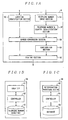
- Figures 1A to 1C illustrate the configuration of a mobile terminal that performs conversion into a telephone number connectable to a counterpart according to locations of the mobile terminal.
- Figure 2 illustrates an example of a mobile communication system inwhich themobile terminal that performs conversion into a telephone number connectable to a counter part according to locations of the mobile terminal is used.
- the mobile communication system of Figure 2 comprises an HLR (home location register) 94 for managing a mobile terminal 5 in a mobile communication network HNW for managing the mobile terminal 5, and comprises a VLR (visiting location register) 93 for temporarily managing the mobile terminal 5 which has moved from a different network and a wireless base station 92 for performing wireless communication with the mobile terminal 5 in a mobile communication network FNW different from the mobile communication network HNW.
- Each of the networks is provided with a gateway switch GW for performing switch among different networks and a communication line WC for connecting different networks to enable communication between the different networks.
- the VLR 93 when detecting that the mobile terminal 5 has moved to the mobile communication network FNW, the VLR 93 registers location information on the mobile terminal and information on the mobile terminal 5 with the HLR 94 based on information received from the mobile terminal 5, and acquires information on the mobile terminal 5, such as subscriber information, from the HLR 94.
- Such management by VLR 93 and cooperation between the VLR 93 and the HLR 94 enable the mobile terminal 5 to originate and receive a call within the mobile communication network FMW to which ithasmoved.
- the HLR 94 can always identify the location of the mobile terminal 5, receiving of a call with reference to the HLR 94 can be performed as done within the mobile communication network HNW.
- Figure 2 shows a case where the mobile terminal 5 which has moved to the mobile communication network FNW (shown as “overseas” in the figure) originates a call to a counterpart's terminal 6 in the mobile communication network HNW (shown as "originator's country” in the figure).
- the mobile terminal 5 comprises: a telephone number input section 5A for accepting input of a counterpart's telephone number by the originator of the mobile terminal 5; a telephone number' s country determination section 5F for identifying the country to which the inputted counterpart's telephone number belongs; a location identification section 5C for identifying the location of the terminal at the tie of origination of a call; anumber conversion section 5B for converting a telephone number according to locations of the terminal; a confirmation section 5D for requesting confirmation from the originator on whether or not the telephone number has been converted correctly by the number conversion section 5B; and a dialing section 5E for performing dialing with the use of the number converted by the number conversion section 5B.
- a telephone number input section 5A for accepting input of a counterpart's telephone number by the originator of the mobile terminal 5
- a telephone number' s country determination section 5F for identifying the country to which the inputted counterpart's telephone number belongs
- a location identification section 5C for identifying the location of the terminal at the tie of origination
- FIG. 1B illustrates the detailed configuration of the telephone number input section 5A.
- the telephone number input section 5A comprises a user interface section A1 (hereinafter referred to as a user I/F section), a controller A2 and a telephone number directory A3.
- the user I/F section A1 comprises operation buttons for accepting input of a telephone number and the like by an operator and a screen for showing the operation condition. In this embodiment, input of a counterpart's telephone number is accepted by the user I/F section A1.
- the control section A2 controls each portion of the telephone number input section 5A.
- the originator of the mobile terminal 5 registers counterparts' telephone numbers with the telephone number directory A3 in advance.
- the country for example, Japan
- the originator may manually input and add information on the country to which the selected counterpart's telephone number belongs.
- the location identification section 5C identifies a location of a mobile terminal when it originates a call as described above.
- the location identification section 5C comprises a wireless sending/receiving device not shown.
- the wireless sending/receiving device communicates with the wireless base station 92 so that the mobile terminal 5 connects to the counterpart's terminal 6, as shown in Figure 2.
- network identification information (network identifier; hereinafter abbreviated to "NwID”) which the wireless sending/receiving device receives from the wireless base station 92 is used as information for identifying a location of the mobile terminal 5.
- the NwID used in this embodiment can identify an operator providing communication services (an overseas mobile phone service provider).
- the wireless sending/receiving device receives an NwID only from a wireless base station capable of performing wireless communication. Therefore, by identifying the operator and then areas covered by services provided by the operator, the location of the mobile terminal can be identified.
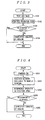
- the location identification operation by this location identification section is shown in the flowchart of Figure 3.
- a wireless sending/receiving section receives an NwID sent from a wireless base station.
- step S102 an operator code identifying an operator is acquired from the NwID received at step S101.
- step S103 it is determined whether or not the operator is an operator in the originator' s country based on the operator code. This determination is performed by identifying a country or region corresponding to the acquired operator code with the use of a table which is held in the location identification section and in which operator codes are associated with countries or regions to be covered by services provided by the operators and determining whether or not the identified country or region is the originator' s country.
- the originator' s country is a country where the originator usually uses his mobile terminal, and in this embodiment, it is the country where the originator is usually provided with communication services for the mobile terminal 5 as described above. If it is determined that the country is not the originator's country, that is, the country is a foreign country, then the process further proceeds to step S104 to identify the country or region.
- step S104 the country or region where the mobile terminal is located is identified based on the operator code.
- NwID Nwid Identification
- the present invention does not limit identification of a location of the mobile terminal 5 to be performed based on receiving of the NwID.
- the method shown in the flowchart of Figure 4 may be used to identify a location. The operation shown in Figure 4 will be now described below.
- a mobile terminal is powered on for the first time at a place where an originator has moved.
- the mobile terminal receives NwIDs from multiple networks available to the mobile terminal.
- the originator selects an operator to use from among the available networks from which the mobile terminal has received NwIDs (at step S202) and determines the operator.
- steps S204 and S205 a country or region is identified based on the operator selected at step S203, similarly to steps S103 and S104 of Figure 3. Thus, it is possible to perform suitable number conversion appropriate for the selected network even when there are multiple available networks.
- the number conversion section 5B converts a telephone number based on the location of the terminal as described above.
- the detailed configuration of the number conversion section 5B is shown in Figure 1C.
- the number conversion section comprises a determination processing device B2 for performing a determination processing, a controller B1 for controlling each device, and a database B3 having various tables used for conversion of a telephone number.
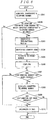
- a counterpart' s telephone number inputtedby an originator is acquired from the telephone number input section.
- the counterpart's telephone number may be inputted with the use of a telephone number directory or may be manually inputted by the originator, as described above.
- step S302A the result of location identification by the location identification section is acquired. If the location identification result is determined to indicate the originator's country, the process ends without performing conversion of the telephone number. If the location identification result is determined to indicate a foreign country, then the country or region where the mobile terminal is located and which has been identified by the location identification section is received, and the process proceeds to step S303.
- Whether to convert a telephone number based on the result of location identification can be determined not only based on determination on whether or not the country is the originator' s country but also based on the determination shown at step S302B of Figure 6. That is, at step S301 of the figure, the counterpart's telephone number is acquired as described above. In this case, the country to which the counterpart's telephone number belongs is identified by the telephone number's country determination section. At step S302B, if the identified country to which the counterpart's telephone number belongs is different from the origination location identified by the location identification section (in the case of "Yes" in the figure), then the call is determined to be an international call, and the process proceeds to step S303. Otherwise (in the case of "No" at step S302B), the process ends without converting the number.
- the subsequent steps after step S303 of Figure 6 are the same as those after step S303 of Figure 5.
- an international prefix is identified.
- the international prefix is a number indicating that a call is an international call as described in the section of "Background Art".
- the international prefix identifies an originating-side gateway switch for exchanging international communication, and therefore specified for each country or region covered by the gateway switch. Accordingly, the international prefix is identified from correspondence relationships between countries or regions and international prefixes, based on the country or region where the mobile terminal is located, which is identified by the location identification section. Alternatively, in the case where the gateway switch which can be used by a selected operator is different, the international prefix is identified from correspondence relationships between operators and international prefixes allowed for the operators.
- FIG. 7A and 7B show the configuration of a table for specifying a correspondence relationship between an operator and an allowed international prefix. Such a table may be recorded to the mobile terminal in advance for all the operators, for example. Alternatively, after determination of an operator at a place where the mobile terminal has moved to, the mobile terminal may acquire information on an international prefix which can be used for the operator from a device on a network, such as a VLR, to which the mobile terminal connects.
- a device on a network such as a VLR
- a country code is identified.
- the country code is generally set to a country code corresponding to the originator's country.
- counterparts' telephone numbers belonging to various countries other than the originator's country are mixed and registered with the telephone number directory, as shown in Figure 7B, it is desirable to hold the counterparts' telephone numbers and country codes of the countries to which the counterparts' telephone numbers belong in association with each other. This makes it possible to easily originate a call only by selecting a counterpart's telephone number from a telephone number directory without manually specifying a country code each time.
- step S305 information required for an international telephone number is extracted from the inputted counterpart' s telephone number.
- the information required for an international telephone number, which is to be extracted here is an international prefix 1A and a country code 1B followed by a telephone number 1C as shown in Figure 9A.
- a domestic telephone number 4 comprises a domestic prefix 4A and a telephone number 4B as shown in Figure 9B described above. Accordingly, if a counterpart is in Japan, the telephone number 4B corresponding to the telephone number 1C of a telephone number 1 is extractedby removing the domestic prefix 4A ("0").
- telephone numbers used for domestic communication may include special numbers which are not based on the configuration shown in Figure B, such as those of the emergency service and the police, and numbers for which origination from overseas is regulated (such as 0120 and 0990) .
- numbers for which origination from overseas is regulated such as 0120 and 0990.
- a list may be created and a processing for regulating conversion may be performed.
- the international prefix identified at step S304, the country code identified at step S305 and the telephone number extracted at step S306 are coupled in the order shown in Figure 9A. An international telephone number is generated by such coupling.
- a mobile terminal when a mobile terminal is used in an originator's country, it is possible to use a telephone number registered with a telephone number directory for a domestic call without conversion thereof. Even if the mobile terminal is in a foreign country, that is, it is roaming, the originator only has to select a telephone number from the telephone number directory (in most cases, domestic telephone numbers used in his own country are registered) to make a call to his own country from the foreign country where he stays. After input of the selection, the mobile terminal is automatically determined to be in a foreign country, and an appropriate international prefix is added no matter which country the originator stays in, the telephone number is converted into an international telephone number, and communication from the foreign country to the originator's country is enabled.
- the number conversion may be performed when a counterpart's telephone number has been inputted and determined by an originator, for example, by pressing an origination button. Alternatively it may be performed when a special operation for number conversion, for example, pressing a particular operation key other than numeral keys has been performed. If number conversion is triggered by pressing the origination button, the originator can easily originate an international call without being conscious of whether the originating call is a domestic telephone call or an international telephone call. If number conversion is performed only when a special operation is performed, number conversion can be performed selectively without performing number conversion for all dialings. Accordingly, in the case of using a mobile terminal performing the operation as shown in Figure 5 to originate a domestic call in a foreign country, it can be achieved by directly dialing a domestic telephone number available in the foreign country without performing number conversion.
- Conversion by the number conversion section may be as described below. It can be assumed that, when an originator registers a telephone number of a country other than his own country or the country where he stays with a telephone number directory, he often registers the telephone number for identifying a counterpart with a country code attached thereto. Accordingly, at the identification of a country code at step S304 of the flowchart in Figure 5, a country code may be derived from the registered or inputted telephone number with a country code attached thereto. Thus, conversion into an international telephone number by telephone number conversion means canbe performed tomake an international call to a country other than the originator's own country while he is roaming.
- location identification by the location identification section is utilized not only for dialing but also for registration with a telephone number directory. If the location is determined to be in a foreign country and an originator registers adomestic telephone number available in the foreign country, the telephone number can be registered with a country code automatically attached thereto as shown in Figure 7B. Thus, a telephone number of a country other than the originator's country is registered with a country code attached thereto, so that telephone number conversion can be performed by deriving a country code from a registered telephone number even when the originator is roaming in various countries.
- an international call made with the use of a mobile terminal is usually a call from a foreign country to the originator's own country in most cases, and most of calls other than that are assumed to be domestic calls. Accordingly, by selectively performing number conversion as described above or confirming a converted number with a confirmation section as described later, more appropriate conversion can be performed.
- the confirmation section 5D confirms whether or not a telephone number has been converted by the number conversion section 5B to an originator who has inputted a counterpart' s telephone number.
- the confirmation method is not especially limited and any method may be applicable only if it can request confirmation from the originator.
- a converted telephone number may be displayed on a screen, and it is requested to press the origination button among the operation buttons if the telephone number is correct. Since conversion into an international telephone number is unfamiliar to most people, indication to the effect that the number is an international telephone number, an originating country and a counterpart's country may be displayed.
- step S306 of the figure An example of an operation flow from when confirmation is requested after conversion of a number until a call is originated with the use of the converted telephone number is shown by steps S306 to S310 of Figure 5.
- an origination request key the "*" key in the figure
- the converted number is displayed (step S308) . In this case, if the conversion is wrong, the originator who has confirmed the display can perform re-editing.
- a screen may be displayed which guides the originator so that he can easily instruct conversion by re-specifying the conditions such as an originating country and a counterpart's country.
- a call is originated (step S310). If pressing of a confirmation request key is not detected after input of a counterpart's number ("No" at step S307), a call is automatically originated with the converted number.
- a confirmation request is made in response to a key input by the originator, so that the confirmation request is made only when the originator wants to make confirmation, and a call can be originated without a special operation similarly to the case of a usual international telephone call.
- a confirmation may be automatically requested whenever a call is determined to be one to a foreign country and therefore conversion into an international telephone number is performed.
- Such number conversion performed according to locations is not limited to an international telephone call.
- an originating terminal such as the international prefix
- conversion in accordance with a different rule identified according to locations is requested, such as conversion into an international telephone number, the conversion can be also performed.
- the number conversion operation can be performed similarly to the above description.
- the program recorded on the recording medium for performing such an operation is not only a program recorded on the mobile terminal in advance but also may be configured to be such that the mobile terminal can download from a network through communication.
- At least one of location identification means for identifying a location of a mobile terminal and number conversion means for converting a counterpart's telephone number inputted into the mobile terminal into a telephone number with which connection to the counterpart is possible from the identified location can be provided for a network device to which the mobile terminal can connect.
- Figures 8A to 8C show the configuration block of an international dialing system according to such second embodiment.
- the network device includes, for example, a gateway switch GW, a switch 90, a wireless base station 92 and a VLR 93 in the mobile communication network FNW in Figure 2. These devices are for communicating with a mobile terminal, and information for identifying themselves in communication with other networks can be used as information for identifying a location of the mobile terminal.
- Figures 8A to 8C show an example of providing the wireless base station 92,with the above-described means.
- a wireless base station 92 is configured to comprise a location identification section 92a for identifying a location of a mobile terminal 5 and a number conversion section 92b.
- a location identification section 92a for identifying a location of a mobile terminal 5
- a number conversion section 92b for converting an international prefix
- a location identification section 5b in a mobile terminal 5 it is determined that the location of origination is overseas by a location identification section 5b in a mobile terminal 5, and a counterpart' s telephone number is automatically attached with the country code of the country to which the counterpart's telephone number belongs and an identifier indicating that the originating call is an international originating call and sent to a wireless base station 92.
- a number conversion section 92b of the wireless base station 92 (or possibly a switch 90) which has received information including the telephone number performs number conversion by attaching an international prefix, based on the received information.
- the wireless base station 92 comprises a location identification section 92a for sending information identifying a location of the mobile terminal 5, for example, international prefix information itself, to a mobile terminal 5, and a telephone number receiving section 92c for receiving a telephone number converted by the mobile terminal 5 in response to the sending of the information and originating a call.
- the location of an originator's terminal is identified, and thereby, in the case of an international telephone call from overseas to an originator's country, whether the call is an international call or not is determined and an international prefix is identified so that automatic conversion into an international telephone number can be performed.
- an international telephone number which is unfamiliar and troublesome to many people, can be performed without especially being conscious of the conversion, in a foreign country.
Landscapes
- Engineering & Computer Science (AREA)
- Signal Processing (AREA)
- Environmental & Geological Engineering (AREA)
- Human Computer Interaction (AREA)
- Computer Networks & Wireless Communication (AREA)
- Telephone Function (AREA)
- Mobile Radio Communication Systems (AREA)
Abstract
There is provided a mobile terminal with an international
dialing operation function, which enables unfamiliar and
troublesome conversion into an international telephone number
to be performed with a simpler operation and which performs
conversion into an appropriate telephone number according to
the location where the terminal has moved.
The mobile terminal identifies its location with a
location identification section and determines whether an
originating call is a call to the originator's country or to
a foreign country according to the identified location. If
the call is to a foreign country, an international prefix
according to the identified location is identified.
Furthermore, a country code is set to correspond to the
originator's country, or it is identified from the inputted
counterpart' s telephone number and the like. Conversion into
an international telephone number is performed using the
country code, and then a call is originated. When the call
is originated to the originator's country, the domestic
telephone number is used for origination without being
converted. A converted number is displayed on an operation
screen so that the originator may confirm whether it is
appropriate or not.
Description
The present invention relates to a mobile terminal with
an international dialing operation function, an international
dialing program and an international dialing system, and in
particular to a mobile terminal with an international dialing
operation function, an international dialing program and an
international dialing system for performing dialing after
conversion into an appropriate international telephone
number.
Recently, an international telephone call is frequently
made between a caller and a recipient in different countries.
In order to make an international telephone call, a telephone
number usually used for a domestic call (a domestic telephone
number) cannot be used for dialing. A domestic telephone
number must be converted into an international telephone number
for making an international telephone call.
Figure 9A shows the format for international telephone
numbers. As shown in Figure 9A, an international prefix 1A
followed by a country code 1B of the counterpart and a telephone
number 1C are inputted as an international telephone number
to make an international telephone call. The international
prefix 1A is a number indicating that the call is an
international telephone call, and it is specified according
to the country and region from which the international
telephone call is originated. The telephone number 1C is
information which is included in the domestic telephone number
of the counterpart and which can also identify the counterpart
in making an international telephone call. For example, in
the case of making an international telephone call from
overseas to Japan, the international prefix in the country
from which the telephone call is originated is inputted, and
"81", the country code of Japan, is added as the country code
1B. Then, as the telephone number 1C, information required
for the international telephone number for identifying the
counterpart is acquired from a Japanese domestic telephone
number and inputted. The Japanese domestic telephone number
consists of a domestic prefix 4A, which is a prefix number
used only in Japan, and a telephone number 4B to correspond
to the telephone number 1C of an international telephone number
as shown in Figure 9B. Therefore, the number obtained by
removing the domestic prefix located at the top from the
domestic telephone number is inputted. For example, in the
case of a mobile phone number "090-xxxx-xxxx", "90xxxxxxxx"
without "0" is inputted subsequently after the country code
1B.
As described above, conversion into an international
telephone number is required to make an international call.
The conversion into an international telephone number, however,
is unfamiliar and troublesome to many people, and wrong dialing,
that is, inputting a wrong number and originating a call with
the wrong number is caused.
Recently, with the spread of roaming services, the same
mobile terminal can be used internationally, and cases of
making an international telephone call using a mobile terminal
are considered to increase. In such cases, since an
originating mobile terminal moves, the international prefix
must be set according to the location of origination as
described above. Thus, consideration must be paid to use of
an international telephone call with a mobile terminal.
The object of the present invention is particularly to
provide a mobile terminal with a function of performing
troublesome conversion into an international telephone number
with easier operability and a dialing function, an
international dialing program and an international dialing
system.
Amobile terminal with an international dialing operation
function according to the present invention is characterized
in comprising location identification means for identifying
a location of the terminal at the time of origination of a
call and number conversion means for, according to the
identified location, converting an inputted counterparts
telephone number into a telephone number with which connection
to the counterpart is possible from the location, and in
originating a call using the telephone number converted by
the number conversion means.
By configuring the mobile terminal to include such
location identification means, information required for an
international call according to locations can be automatically
attached, and it is also possible to determine whether or not
a call is an international call through comparison with a
counterpart's telephone number or information held in the
mobile terminal.
The mobile terminal with an international dialing
operation function is characterized in further comprising
confirmation means for requesting confirmation on whether or
not the telephone number converted by the number conversion
means is correct, and in originating a call using the converted
telephone number if it is confirmed that the converted
telephone number is correct.
That is, by configuring the mobile terminal to present
a converted telephone number to the originator without
originating a call immediately after conversion of the
telephone number and enable origination after confirmation
by the originator on whether the converted telephone number
is correct or not, it is possible to originate a call using
a certainly correct telephone number.
The mobile terminal with an international dialing
operation function is characterized in that, if a call from
the identified location to a counterpart is an international
call, the number conversion means identifies an international
prefix corresponding to the identified location and performs
conversion into an international telephone number using the
international prefix.
The mobile terminal with an international dialing
operation function is characterized in further comprising
telephone number's country identification means for
identifying a country to which the inputted counterpart's
telephone number belongs.
That is, a telephone number' s country may be automatically
identified by comparing an inputted counterpart's telephone
number with the number system for each country registered in
advance, or the telephone number' s country may be identified
based on telephone number's country information manually
inputted by an originator. Alternatively, the telephone
number's country may be identified by using telephone number's
country information registered in association with
counterparts' telephone numbers inside the mobile terminal
in advance. By using such telephone number's country
identification means, country code information required for
conversion into an international telephone number can be
attached, and it is also possible to determine whether a call
is an international call or not through comparison between
the country which the number for the call belongs and the
identification location.
The mobile terminal with an international dialing
operation function is characterized in that the confirmation
means requests the confirmation in response to an external
instruction.
The external instruction includes key input by an
originator, for example. According to such configuration,
a confirmation request is made only when an originator wants
to confirm the converted telephone number, and a call can be
immediately originated when confirmation is not required.
The mobile terminal with an international dialing
operation function is characterized in that the confirmation
means requests the confirmation if the inputted counterpart' s
telephone number has been converted by the number conversion.
means.
That is, themobile terminal with an international dialing
operation function may be configured so that a confirmation
request is automatically made whenever the number conversion
is performed.
The mobile terminal with an international dialing
operation function is characterized in that the number
conversion means performs telephone number conversion at the
point of time when the counterpart's telephone number is
inputted.
The mobile terminal with an international dialing
operation function is characterized in that the number
conversion means performs telephone number conversion in
response to an external instruction.
The mobile terminal with an international dialing
operation function is characterized in that, if a call from
the identified location to a counterpart is an international
call, the number conversion means identifies a country code
corresponding to the inputted counterpart's telephone number
and performs conversion into an international telephone number
using the identified country code.
The mobile terminal with an international dialing
operation function is characterized in that, if a call from
the identified location to a counterpart is an international
call, the number conversion means identifies a telephone number
required to be in an international telephone number for
identifying the counterpart, from the inputted counterpart' s
telephone number and performs conversion into an international
telephone number using the identified telephone number.
The mobile terminal with an international dialing
operation function is characterized in that the inputted
counterpart' s telephone number is a telephone number selected
from among telephone numbers registeredwith a telephone number
directory held in the terminal.
The mobile terminal with an international dialing
operation function is characterized in that the telephone
number' s country identification means identifies the country
to which the counterpart's telephone number belongs with the
use of information on the country to which the selected
counterpart's telephone number belongs and which is further
inputted in addition to the selection of the counterpart's
telephone number from the telephone number directory.
That is, it is also possible for the originator, when
he has selected a counterpart's telephone number from the
telephone number directory, to manually input what country
the inputted number belongs to. In this case, by setting a
particular country which is frequently specified as the
telephone number's country to be further inputted, for all
the telephone numbers, manual input of a telephone number's
country can be omitted when the telephone number belongs to
the particular country.
The mobile terminal with an international dialing
operation function is characterized in that the location
identification means identifies a location of the terminal
based on network identification information received from a
wireless base station with which communication is possible
at the location of the terminal.
The international dialing system according to the present
invention is an international dialing system including the
mobile terminal with an international dialing operation
function, and is characterized in that at least one of location
identification means for identifying a location of the mobile
terminal at the time of origination of a call and number
conversion means for converting a counterpart's telephone
number inputted into the mobile terminal into a telephone
number with which connection to the counterpart is possible
from the location is provided in a network to which the mobile
terminal is connectable and the other means is provided in
the mobile terminal.
Embodiments of the present invention will be now described
with reference to drawings. In each of figures referred to
in the description below, the same reference numerals are given
to the same portions as those in the other figures.
Figures 1A to 1C illustrate the configuration of a mobile
terminal that performs conversion into a telephone number
connectable to a counterpart according to locations of the
mobile terminal. Figure 2 illustrates an example of a mobile
communication system inwhich themobile terminal that performs
conversion into a telephone number connectable to a counter
part according to locations of the mobile terminal is used.
The mobile communication system of Figure 2 comprises
an HLR (home location register) 94 for managing a mobile
terminal 5 in a mobile communication network HNW for managing
the mobile terminal 5, and comprises a VLR (visiting location
register) 93 for temporarily managing the mobile terminal 5
which has moved from a different network and a wireless base
station 92 for performing wireless communication with the
mobile terminal 5 in a mobile communication network FNW
different from the mobile communication network HNW. Each
of the networks is provided with a gateway switch GW for
performing switch among different networks and a communication
line WC for connecting different networks to enable
communication between the different networks.
In the mobile communication system, when detecting that
the mobile terminal 5 has moved to the mobile communication
network FNW, the VLR 93 registers location information on the
mobile terminal and information on the mobile terminal 5 with
the HLR 94 based on information received from the mobile
terminal 5, and acquires information on the mobile terminal
5, such as subscriber information, from the HLR 94. Such
management by VLR 93 and cooperation between the VLR 93 and
the HLR 94 enable the mobile terminal 5 to originate and receive
a call within the mobile communication network FMW to which
ithasmoved. Furthermore, since the HLR 94 can always identify
the location of the mobile terminal 5, receiving of a call
with reference to the HLR 94 can be performed as done within
the mobile communication network HNW.
Figure 2 shows a case where the mobile terminal 5 which
has moved to the mobile communication network FNW (shown as
"overseas" in the figure) originates a call to a counterpart's
terminal 6 in the mobile communication network HNW (shown as
"originator's country" in the figure).
As shown in Figure 1A, the mobile terminal 5 comprises:
a telephone number input section 5A for accepting input of
a counterpart's telephone number by the originator of the
mobile terminal 5; a telephone number' s country determination
section 5F for identifying the country to which the inputted
counterpart's telephone number belongs; a location
identification section 5C for identifying the location of the
terminal at the tie of origination of a call; anumber conversion
section 5B for converting a telephone number according to
locations of the terminal; a confirmation section 5D for
requesting confirmation from the originator on whether or not
the telephone number has been converted correctly by the number
conversion section 5B; and a dialing section 5E for performing
dialing with the use of the number converted by the number
conversion section 5B.
Figure 1B illustrates the detailed configuration of the
telephone number input section 5A. As shown in the figure,
the telephone number input section 5A comprises a user
interface section A1 (hereinafter referred to as a user I/F
section), a controller A2 and a telephone number directory
A3.
The user I/F section A1 comprises operation buttons for
accepting input of a telephone number and the like by an operator
and a screen for showing the operation condition. In this
embodiment, input of a counterpart's telephone number is
accepted by the user I/F section A1.
The control section A2 controls each portion of the
telephone number input section 5A.
The originator of the mobile terminal 5 registers
counterparts' telephone numbers with the telephone number
directory A3 in advance. When a counterpart's telephone
number is registered, the country (for example, Japan) to which
the counterpart' s telephone number belongs can be also stored.
To dial a number, it is possible to select a counterpart's
telephone number from among the registered telephone numbers
instead of inputting the telephone number with the use of the
operation buttons. If a counterpart's telephone number is
selected from the telephone number directory A3 as described
above, the originator may manually input and add information
on the country to which the selected counterpart's telephone
number belongs. Alternatively, by setting the originator's
country, for example, as the telephone number's country, for
all the telephone numbers registered with the telephone number
directory A3, manual input of a telephone number's country
can be omitted when the telephone number belongs to the
originator's country.
Returning to Figure 1A, the location identification
section 5C identifies a location of a mobile terminal when
it originates a call as described above. In this embodiment,
the location identification section 5C comprises a wireless
sending/receiving device not shown. The wireless
sending/receiving device communicates with the wireless base
station 92 so that the mobile terminal 5 connects to the
counterpart's terminal 6, as shown in Figure 2. In this
embodiment, network identification information (network
identifier; hereinafter abbreviated to "NwID") which the
wireless sending/receiving device receives from the wireless
base station 92 is used as information for identifying a
location of the mobile terminal 5. The NwID used in this
embodiment can identify an operator providing communication
services (an overseas mobile phone service provider). The
wireless sending/receiving device receives an NwID only from
a wireless base station capable of performing wireless
communication. Therefore, by identifying the operator and
then areas covered by services provided by the operator, the
location of the mobile terminal can be identified. The
location identification operation by this location
identification section is shown in the flowchart of Figure
3.
At step S101 of Figure 3, a wireless sending/receiving
section receives an NwID sent from a wireless base station.
At step S102, an operator code identifying an operator
is acquired from the NwID received at step S101.
At step S103, it is determined whether or not the operator
is an operator in the originator' s country based on the operator
code. This determination is performed by identifying a
country or region corresponding to the acquired operator code
with the use of a table which is held in the location
identification section and in which operator codes are
associated with countries or regions to be covered by services
provided by the operators and determining whether or not the
identified country or region is the originator' s country. The
originator' s country is a country where the originator usually
uses his mobile terminal, and in this embodiment, it is the
country where the originator is usually provided with
communication services for the mobile terminal 5 as described
above. If it is determined that the country is not the
originator's country, that is, the country is a foreign country,
then the process further proceeds to step S104 to identify
the country or region.
At step S104, the country or region where the mobile
terminal is located is identified based on the operator code.
By using an NwID to identify a location makes, it is
possible to identify a location without requiring an originator
to perform a particular operation every time he originates
a call, even if each call is originated at a different location.
The present invention does not limit identification of a
location of the mobile terminal 5 to be performed based on
receiving of the NwID. The method shown in the flowchart of
Figure 4 may be used to identify a location. The operation
shown in Figure 4 will be now described below. At step S201
of Figure 4, a mobile terminal is powered on for the first
time at a place where an originator has moved. At step S202,
the mobile terminal receives NwIDs from multiple networks
available to the mobile terminal. At step S203, the originator
selects an operator to use from among the available networks
from which the mobile terminal has received NwIDs (at step
S202) and determines the operator. At steps S204 and S205,
a country or region is identified based on the operator selected
at step S203, similarly to steps S103 and S104 of Figure 3.
Thus, it is possible to perform suitable number conversion
appropriate for the selected network even when there are
multiple available networks.
Returning to Figure 1A, the number conversion section
5B converts a telephone number based on the location of the
terminal as described above. The detailed configuration of
the number conversion section 5B is shown in Figure 1C. As
shown in Figure 1C, the number conversion section comprises
a determination processing device B2 for performing a
determination processing, a controller B1 for controlling each
device, and a database B3 having various tables used for
conversion of a telephone number.
The number conversion operation by the number conversion
section will be now described with regard to the flowchart
shown in Figure 5 and with reference to Figures 9A and 9B which
illustrate the configurations of an international telephone
number and a domestic telephone number in Japan.
At step S301 of Figure 5, a counterpart' s telephone number
inputtedby an originator is acquired from the telephone number
input section. The counterpart's telephone number may be
inputted with the use of a telephone number directory or may
be manually inputted by the originator, as described above.
At step S302A, the result of location identification by
the location identification section is acquired. If the
location identification result is determined to indicate the
originator's country, the process ends without performing
conversion of the telephone number. If the location
identification result is determined to indicate a foreign
country, then the country or region where the mobile terminal
is located and which has been identified by the location
identification section is received, and the process proceeds
to step S303.
Whether to convert a telephone number based on the result
of location identification can be determined not only based
on determination on whether or not the country is the
originator' s country but also based on the determination shown
at step S302B of Figure 6. That is, at step S301 of the figure,
the counterpart's telephone number is acquired as described
above. In this case, the country to which the counterpart's
telephone number belongs is identified by the telephone
number's country determination section. At step S302B, if
the identified country to which the counterpart's telephone
number belongs is different from the origination location
identified by the location identification section (in the case
of "Yes" in the figure), then the call is determined to be
an international call, and the process proceeds to step S303.
Otherwise (in the case of "No" at step S302B), the process
ends without converting the number. The subsequent steps
after step S303 of Figure 6 are the same as those after step
S303 of Figure 5.
At step S303, an international prefix is identified. The
international prefix is a number indicating that a call is
an international call as described in the section of
"Background Art". The international prefix identifies an
originating-side gateway switch for exchanging international
communication, and therefore specified for each country or
region covered by the gateway switch. Accordingly, the
international prefix is identified from correspondence
relationships between countries or regions and international
prefixes, based on the country or region where the mobile
terminal is located, which is identified by the location
identification section. Alternatively, in the case where the
gateway switch which can be used by a selected operator is
different, the international prefix is identified from
correspondence relationships between operators and
international prefixes allowed for the operators. In this
case, if an operator corresponds to multiple international
prefixes, all the international prefixes allowed for the
originator may be presented, for example, and a selected one
prefix may be used. The correspondence relationships between
countries or regions and international prefixes are saved as
a table, for example, in the above-mentioned database in
advance. Figures 7A and 7B show the configuration of a table
for specifying a correspondence relationship between an
operator and an allowed international prefix. Such a table
may be recorded to the mobile terminal in advance for all the
operators, for example. Alternatively, after determination
of an operator at a place where the mobile terminal has moved
to, the mobile terminal may acquire information on an
international prefix which can be used for the operator from
a device on a network, such as a VLR, to which the mobile terminal
connects.
At step S304, a country code is identified. In this
embodiment, the country code is generally set to a country
code corresponding to the originator's country. When
counterparts' telephone numbers belonging to various
countries other than the originator's country are mixed and
registered with the telephone number directory, as shown in
Figure 7B, it is desirable to hold the counterparts' telephone
numbers and country codes of the countries to which the
counterparts' telephone numbers belong in association with
each other. This makes it possible to easily originate a call
only by selecting a counterpart's telephone number from a
telephone number directory without manually specifying a
country code each time.
At step S305, information required for an international
telephone number is extracted from the inputted counterpart' s
telephone number. The information required for an
international telephone number, which is to be extracted here,
is an international prefix 1A and a country code 1B followed
by a telephone number 1C as shown in Figure 9A. For example,
in Japan, a domestic telephone number 4 comprises a domestic
prefix 4A and a telephone number 4B as shown in Figure 9B
described above. Accordingly, if a counterpart is in Japan,
the telephone number 4B corresponding to the telephone number
1C of a telephone number 1 is extractedby removing the domestic
prefix 4A ("0"). In this case, telephone numbers used for
domestic communication may include special numbers which are
not based on the configuration shown in Figure B, such as those
of the emergency service and the police, and numbers for which
origination from overseas is regulated (such as 0120 and 0990) .
As for these numbers, a list may be created and a processing
for regulating conversion may be performed.
At step S306 of Figure 5, the international prefix
identified at step S304, the country code identified at step
S305 and the telephone number extracted at step S306 are coupled
in the order shown in Figure 9A. An international telephone
number is generated by such coupling.
As described above, when a mobile terminal is used in
an originator's country, it is possible to use a telephone
number registered with a telephone number directory for a
domestic call without conversion thereof. Even if the mobile
terminal is in a foreign country, that is, it is roaming, the
originator only has to select a telephone number from the
telephone number directory (in most cases, domestic telephone
numbers used in his own country are registered) to make a call
to his own country from the foreign country where he stays.
After input of the selection, the mobile terminal is
automatically determined to be in a foreign country, and an
appropriate international prefix is added no matter which
country the originator stays in, the telephone number is
converted into an international telephone number, and
communication from the foreign country to the originator's
country is enabled.
With regard to the timing for performing number conversion,
the number conversion may be performed when a counterpart's
telephone number has been inputted and determined by an
originator, for example, by pressing an origination button.
Alternatively it may be performed when a special operation
for number conversion, for example, pressing a particular
operation key other than numeral keys has been performed. If
number conversion is triggered by pressing the origination
button, the originator can easily originate an international
call without being conscious of whether the originating call
is a domestic telephone call or an international telephone
call. If number conversion is performed only when a special
operation is performed, number conversion can be performed
selectively without performing number conversion for all
dialings. Accordingly, in the case of using a mobile terminal
performing the operation as shown in Figure 5 to originate
a domestic call in a foreign country, it can be achieved by
directly dialing a domestic telephone number available in the
foreign country without performing number conversion.
Conversion by the number conversion section may be as
described below. It can be assumed that, when an originator
registers a telephone number of a country other than his own
country or the country where he stays with a telephone number
directory, he often registers the telephone number for
identifying a counterpart with a country code attached thereto.
Accordingly, at the identification of a country code at step
S304 of the flowchart in Figure 5, a country code may be derived
from the registered or inputted telephone number with a country
code attached thereto. Thus, conversion into an
international telephone number by telephone number conversion
means canbe performed tomake an international call to a country
other than the originator's own country while he is roaming.
In order to enable such conversion, location
identification by the location identification section is
utilized not only for dialing but also for registration with
a telephone number directory. If the location is determined
to be in a foreign country and an originator registers adomestic
telephone number available in the foreign country, the
telephone number can be registered with a country code
automatically attached thereto as shown in Figure 7B. Thus,
a telephone number of a country other than the originator's
country is registered with a country code attached thereto,
so that telephone number conversion can be performed by
deriving a country code from a registered telephone number
even when the originator is roaming in various countries.
Furthermore, all the telephone numbers are registered in
association with country codes as shown in Figure 7B, so that
differentiation between an international telephone number and
a domestic telephone number can be more completely performed
through step S302B of Figure 6, that is, through comparison
between the originator's location identified by the location
identification section and a country code.
However, an international call made with the use of a
mobile terminal, whether in the originator's country or a
foreign country, is usually a call from a foreign country to
the originator's own country in most cases, and most of calls
other than that are assumed to be domestic calls. Accordingly,
by selectively performing number conversion as described above
or confirming a converted number with a confirmation section
as described later, more appropriate conversion can be
performed.
Returning to Figures 1A to 1C, the confirmation section
5D confirms whether or not a telephone number has been converted
by the number conversion section 5B to an originator who has
inputted a counterpart' s telephone number. The confirmation
method is not especially limited and any method may be
applicable only if it can request confirmation from the
originator. For example, a converted telephone number may
be displayed on a screen, and it is requested to press the
origination button among the operation buttons if the telephone
number is correct. Since conversion into an international
telephone number is unfamiliar to most people, indication to
the effect that the number is an international telephone number,
an originating country and a counterpart's country may be
displayed.
An example of an operation flow from when confirmation
is requested after conversion of a number until a call is
originated with the use of the converted telephone number is
shown by steps S306 to S310 of Figure 5. At step S306 of the
figure, it is detected that an origination request key (the
"*" key in the figure) has been pressed by the originator who
wants to confirm the converted telephone number. If it is
detected that the origination request key has been pressed
("Yes" in the figure) , the converted number is displayed (step
S308) . In this case, if the conversion is wrong, the originator
who has confirmed the display can perform re-editing.
Alternatively, a screen may be displayed which guides the
originator so that he can easily instruct conversion by
re-specifying the conditions such as an originating country
and a counterpart's country. After that, if input of an
appropriate counterpart's number is confirmed and pressing
of a predetermined confirmation key is detected ("Yes" at step
S309), then a call is originated (step S310). If pressing
of a confirmation request key is not detected after input of
a counterpart's number ("No" at step S307), a call is
automatically originated with the converted number.
As described above, a confirmation request is made in
response to a key input by the originator, so that the
confirmation request is made only when the originator wants
to make confirmation, and a call can be originated without
a special operation similarly to the case of a usual
international telephone call.
Alternatively, a confirmation may be automatically
requested whenever a call is determined to be one to a foreign
country and therefore conversion into an international
telephone number is performed.
By requesting confirmation as described above, it is
possible to originate a call more certainly. Furthermore,
as described above, it is possible to prevent a telephone number
inputted for a domestic call in a foreign country from being
determined to be a call overseas, automatically converted into
a number for an international call and dialed.
Such number conversion performed according to locations
is not limited to an international telephone call. For example,
when it is necessary to attach information identifiedaccording
to locations of an originating terminal, such as the
international prefix, for a call to a different domestic
telephone network, it is possible to attach a number according
to an identified location with the use of the location
identification means according to present invention. When
conversion in accordance with a different rule identified
according to locations is requested, such as conversion into
an international telephone number, the conversion can be also
performed.
It is obvious that, by preparing a recording medium on
which programs for realizing the operations shown in Figure
4 or Figure 5 and described above are recorded and controlling
each portion of Figures 1A to 1C, the same number conversion
operation as described above can be performed.
It is also obvious that, by controlling the processing
unit included in a mobile terminal with the program recorded
on the recording medium, the number conversion operation can
be performed similarly to the above description. The program
recorded on the recording medium for performing such an
operation is not only a program recorded on the mobile terminal
in advance but also may be configured to be such that the mobile
terminal can download from a network through communication.
That is, the present invention may be further embodied
in the following aspects with regard to the description in
the claims:
At least one of location identification means for
identifying a location of a mobile terminal and number
conversion means for converting a counterpart's telephone
number inputted into the mobile terminal into a telephone
number with which connection to the counterpart is possible
from the identified location, according to the present
invention, can be provided for a network device to which the
mobile terminal can connect. Figures 8A to 8C show the
configuration block of an international dialing system
according to such second embodiment.
The network device includes, for example, a gateway switch
GW, a switch 90, a wireless base station 92 and a VLR 93 in
the mobile communication network FNW in Figure 2. These
devices are for communicating with a mobile terminal, and
information for identifying themselves in communication with
other networks can be used as information for identifying a
location of the mobile terminal. Figures 8A to 8C show an
example of providing the wireless base station 92,with the
above-described means.
In Figure 8A, a wireless base station 92 is configured
to comprise a location identification section 92a for
identifying a location of a mobile terminal 5 and a number
conversion section 92b. Thus, based on a counterpart's
telephone number sent from a telephone number sending section
5a of the mobile terminal 5 when a call is originated, an
international prefix is attached so that the telephone number
is converted into a number appropriate for the call originated
via the base station.
Similarly, in Figure 8B, it is determined that the location
of origination is overseas by a location identification section
5b in a mobile terminal 5, and a counterpart' s telephone number
is automatically attached with the country code of the country
to which the counterpart's telephone number belongs and an
identifier indicating that the originating call is an
international originating call and sent to a wireless base
station 92. A number conversion section 92b of the wireless
base station 92 (or possibly a switch 90) which has received
information including the telephone number performs number
conversion by attaching an international prefix, based on the
received information.
In Figure 8C, the wireless base station 92 comprises a
location identification section 92a for sending information
identifying a location of the mobile terminal 5, for example,
international prefix information itself, to a mobile terminal
5, and a telephone number receiving section 92c for receiving
a telephone number converted by the mobile terminal 5 in
response to the sending of the information and originating
a call.
The above description relates to particular embodiments
of the present invention, and those skilled in the art may
think of various variations of the present invention. Any
of such variations should be included in the technical scope
of the present invention.
As described above, according to the present invention,
the location of an originator's terminal is identified, and
thereby, in the case of an international telephone call from
overseas to an originator's country, whether the call is an
international call or not is determined and an international
prefix is identified so that automatic conversion into an
international telephone number can be performed. Thus, there
is obtained an effect that conversion into an international
telephone number, which is unfamiliar and troublesome to many
people, can be performed without especially being conscious
of the conversion, in a foreign country.
Furthermore, by providing confirmation means for
confirming a converted telephone number, the conversion of
a telephone number can be performed more certainly and more
easily.
Claims (12)
- A mobile terminal with an international dialing operation function characterized in comprising location identification means for identifying a location of the terminal at the time of origination of a call and number conversion means for, according to the identified location, converting an inputted counterpart's telephone number into a telephone number with which connection to the counterpart is possible from the location, and in originating a call using the telephone number converted by the number conversion means.
- The mobile terminal with an international dialing operation function according to claim 1, characterized in further comprising confirmation means for requesting confirmation on whether or not the telephone number converted by the number conversion means is correct, and in originating a call using the converted telephone number if it is confirmed that the converted telephone number is correct.
- The mobile terminal with an international dialing operation function according to claim 1 or 2, characterized in that, if a call from the identified location to a counterpart is an international call, the number conversion means identifies an international prefix corresponding to the identified location and performs conversion into an international telephone number using the international prefix.
- The mobile terminal with an international dialing operation function according to claim 2 or 3, characterized in that the confirmation means requests the confirmation in response to an external instruction.
- The mobile terminal with an international dialing operation function according to claim 2 or 3 characterized in that the confirmation means requests the confirmation if the inputted counterpart' s telephone number has been converted by the number conversion means.
- The mobile terminal with an international dialing operation function according any one of claim 1 to 5, characterized in that the number conversion means performs telephone number conversion at the point of time when the counterpart's telephone number is inputted.
- The mobile terminal with an international dialing operation function according to any one of claims 1 to 5, characterized in that the number conversion means performs telephone number conversion in response to an external instruction.
- The mobile terminal with an international dialing operation function according to any one of claims 1 to 7, characterized in that, if a call from the identified location to a counterpart is an international call, the number conversion means identifies a country code corresponding to the inputted counterpart's telephone number and performs conversion into an international telephone number using the identified country code.
- The mobile terminal with an international dialing operation function according to any one of claims 1 to 8, characterized in that, if a call from the identified location to a counterpart is an international call, the number conversion means identifies a telephone number required by an international telephone number for identifying the counterpart, from the inputted counterpart' s telephone number and performs conversion into the international telephone number using the identified telephone number.
- The mobile terminal with an international dialing operation function according to any one of claims 1 to 9, characterized in that the inputted counterpart's telephone number is a telephone number selected from among telephone numbers registered with a telephone number directory held in the terminal.
- The mobile terminal with an international dialing operation function according to any one of claims 1 to 10, characterized in that the location identification means identifies a location of the terminal based on network identification information received from a wireless base station with which communication is possible at the location of the terminal.
- An international dialing system including the mobile terminal with an international dialing operation function according to anyone of claims 1 to 11, the international dialing system being characterized in that at least one of location identification means for identifying a location of the mobile terminal at the time of origination of a call and number conversion means for converting a counterpart's telephone number inputted into the mobile terminal into a telephone number with which connection to the counterpart is possible from the location is provided in a network to which the mobile terminal is connectable and the other means is provided in the mobile terminal.
Applications Claiming Priority (3)
| Application Number | Priority Date | Filing Date | Title |
|---|---|---|---|
| JP2002135767 | 2002-05-10 | ||
| JP2002135767A JP2003333165A (en) | 2002-05-10 | 2002-05-10 | Mobile terminal with international dialing function, international dialing program, and international dialing system |
| PCT/JP2003/005902 WO2003096659A1 (en) | 2002-05-10 | 2003-05-12 | Mobile terminal having international dial operation function and international dial system |
Publications (2)
| Publication Number | Publication Date |
|---|---|
| EP1505805A1 true EP1505805A1 (en) | 2005-02-09 |
| EP1505805A4 EP1505805A4 (en) | 2008-09-03 |
Family
ID=29416759
Family Applications (1)
| Application Number | Title | Priority Date | Filing Date |
|---|---|---|---|
| EP03723338A Withdrawn EP1505805A4 (en) | 2002-05-10 | 2003-05-12 | MOBILE TERMINAL WITH FUNCTION AND INTERNATIONAL NUMBERING SYSTEM |
Country Status (5)
| Country | Link |
|---|---|
| US (1) | US20050176411A1 (en) |
| EP (1) | EP1505805A4 (en) |
| JP (1) | JP2003333165A (en) |
| CN (1) | CN1653788A (en) |
| WO (1) | WO2003096659A1 (en) |
Cited By (5)
| Publication number | Priority date | Publication date | Assignee | Title |
|---|---|---|---|---|
| EP2530917A3 (en) * | 2011-06-03 | 2012-12-26 | Apple Inc. | Intelligent telephone number processing |
| CN103516916A (en) * | 2012-06-28 | 2014-01-15 | 中兴通讯股份有限公司 | Dialing method and device |
| WO2014179190A1 (en) * | 2013-04-29 | 2014-11-06 | Google Inc. | Phone number format suggestion |
| US9160827B2 (en) | 2012-04-27 | 2015-10-13 | Apple Inc. | Automatically adjusting country and area codes when doing a business card or telephone number exchange |
| WO2018059252A1 (en) * | 2016-09-30 | 2018-04-05 | Beijing Kingsoft Internet Security Software Co., Ltd. | Method and device for making phone call and electronic device |
Families Citing this family (49)
| Publication number | Priority date | Publication date | Assignee | Title |
|---|---|---|---|---|
| US7336949B2 (en) * | 2002-12-09 | 2008-02-26 | Qualcomm Incorporated | International dialing for wireless networks |
| US7146158B2 (en) * | 2003-11-14 | 2006-12-05 | Motorola, Inc. | Method and apparatus for reformatting dialed numbers |
| EP1569424B1 (en) * | 2004-02-25 | 2015-09-23 | BlackBerry Limited | Phone number replace code system and method |
| US6968214B2 (en) | 2004-02-25 | 2005-11-22 | Research In Motion Limited | Phone number replace code system and method |
| US7715829B2 (en) | 2004-12-13 | 2010-05-11 | Qualcomm Incorporated | Method and apparatus for supporting enhanced international dialing in cellular systems |
| US7353034B2 (en) | 2005-04-04 | 2008-04-01 | X One, Inc. | Location sharing and tracking using mobile phones or other wireless devices |
| US8090092B2 (en) | 2006-05-02 | 2012-01-03 | Skype Limited | Dialling phone numbers |
| KR101233176B1 (en) * | 2006-05-02 | 2013-02-15 | 엘지전자 주식회사 | Method for handling cs calls in voice call continuity and vcc application server and translation entity |
| US8265633B2 (en) * | 2006-08-10 | 2012-09-11 | Nokia Corporation | Mobile communication terminal and method therefore |
| WO2008100008A1 (en) * | 2007-02-13 | 2008-08-21 | Electronics And Telecommunications Research Institute | Method and apparatus for automatically converting phone number while roaming |
| JP4949099B2 (en) * | 2007-03-23 | 2012-06-06 | 株式会社エヌ・ティ・ティ・ドコモ | Communication device and operation confirmation method |
| KR100938343B1 (en) * | 2007-05-18 | 2010-01-22 | 주식회사 케이티 | How to provide international call roaming service and mobile communication terminal for it |
| US8204684B2 (en) | 2007-06-28 | 2012-06-19 | Apple Inc. | Adaptive mobile device navigation |
| US8774825B2 (en) | 2007-06-28 | 2014-07-08 | Apple Inc. | Integration of map services with user applications in a mobile device |
| US8175802B2 (en) | 2007-06-28 | 2012-05-08 | Apple Inc. | Adaptive route guidance based on preferences |
| US8332402B2 (en) | 2007-06-28 | 2012-12-11 | Apple Inc. | Location based media items |
| US8385946B2 (en) | 2007-06-28 | 2013-02-26 | Apple Inc. | Disfavored route progressions or locations |
| US8275352B2 (en) | 2007-06-28 | 2012-09-25 | Apple Inc. | Location-based emergency information |
| US8290513B2 (en) | 2007-06-28 | 2012-10-16 | Apple Inc. | Location-based services |
| US8762056B2 (en) | 2007-06-28 | 2014-06-24 | Apple Inc. | Route reference |
| US8180379B2 (en) | 2007-06-28 | 2012-05-15 | Apple Inc. | Synchronizing mobile and vehicle devices |
| US9066199B2 (en) | 2007-06-28 | 2015-06-23 | Apple Inc. | Location-aware mobile device |
| US9109904B2 (en) | 2007-06-28 | 2015-08-18 | Apple Inc. | Integration of map services and user applications in a mobile device |
| US8108144B2 (en) | 2007-06-28 | 2012-01-31 | Apple Inc. | Location based tracking |
| US8311526B2 (en) | 2007-06-28 | 2012-11-13 | Apple Inc. | Location-based categorical information services |
| US8355862B2 (en) | 2008-01-06 | 2013-01-15 | Apple Inc. | Graphical user interface for presenting location information |
| US9250092B2 (en) | 2008-05-12 | 2016-02-02 | Apple Inc. | Map service with network-based query for search |
| US8644843B2 (en) | 2008-05-16 | 2014-02-04 | Apple Inc. | Location determination |
| US8369867B2 (en) | 2008-06-30 | 2013-02-05 | Apple Inc. | Location sharing |
| US8359643B2 (en) | 2008-09-18 | 2013-01-22 | Apple Inc. | Group formation using anonymous broadcast information |
| US8565765B2 (en) | 2008-10-17 | 2013-10-22 | Qualcomm Incorporated | Method and apparatus for determining the country where a mobile device has acquired service |
| US8260320B2 (en) | 2008-11-13 | 2012-09-04 | Apple Inc. | Location specific content |
| US8670748B2 (en) | 2009-05-01 | 2014-03-11 | Apple Inc. | Remotely locating and commanding a mobile device |
| US8666367B2 (en) | 2009-05-01 | 2014-03-04 | Apple Inc. | Remotely locating and commanding a mobile device |
| US8660530B2 (en) | 2009-05-01 | 2014-02-25 | Apple Inc. | Remotely receiving and communicating commands to a mobile device for execution by the mobile device |
| US8532274B2 (en) | 2010-11-29 | 2013-09-10 | Amerimex Communications Corp | System and method for providing limited unique telephone numbers to access multiple long distance destinations |
| US8483716B1 (en) * | 2011-04-01 | 2013-07-09 | Google Inc. | Network and location based phone number format identification |
| CN102958037A (en) * | 2011-08-25 | 2013-03-06 | 联芯科技有限公司 | Dialing method and dialing device for mobile terminal |
| CN103139763B (en) * | 2011-11-28 | 2017-07-21 | 联想(北京)有限公司 | A kind of information processing method and device |
| CN102883287A (en) * | 2012-06-20 | 2013-01-16 | 天翼电信终端有限公司 | Methods and devices for dialing and redialing |
| CN102946598B (en) * | 2012-11-05 | 2015-03-18 | 天翼电信终端有限公司 | International roaming call method |
| CN103037058B (en) * | 2012-12-14 | 2016-03-30 | 中兴通讯股份有限公司 | Based on the number display of mobile terminal, device and mobile terminal |
| CN103338313A (en) * | 2013-06-14 | 2013-10-02 | 北京小米科技有限责任公司 | Method and device for processing telephone numbers |
| JP5972245B2 (en) * | 2013-10-11 | 2016-08-17 | ソフトバンク株式会社 | mobile phone |
| CN105744036B (en) * | 2015-12-25 | 2019-03-12 | 小米科技有限责任公司 | Make a phone call the method and device of number |
| CN105744503B (en) * | 2016-03-23 | 2020-04-24 | 联想(北京)有限公司 | Information processing method and electronic equipment |
| CN106131820B (en) * | 2016-06-14 | 2019-09-17 | 腾讯科技(深圳)有限公司 | The method and apparatus of country code are provided in international call business |
| CN106791085A (en) * | 2016-12-19 | 2017-05-31 | 北京小米移动软件有限公司 | Message prompt method and device |
| US11539835B2 (en) | 2018-07-09 | 2022-12-27 | Victor Tokunbo Ojesina | Global dialing format |
Family Cites Families (9)
| Publication number | Priority date | Publication date | Assignee | Title |
|---|---|---|---|---|
| JP2689776B2 (en) * | 1991-07-30 | 1997-12-10 | 日本電気株式会社 | In-vehicle mobile phone terminal |
| DE19711096A1 (en) * | 1997-03-17 | 1998-09-24 | Siemens Ag | Communication connection construction method |
| JP3453063B2 (en) * | 1998-05-28 | 2003-10-06 | シャープ株式会社 | Mobile phone |
| US6259917B1 (en) * | 1998-12-09 | 2001-07-10 | Sony Corporation | Apparatus and method for deriving a current network location from previously visited networks and movements between the previously visited networks |
| JP4059605B2 (en) * | 1999-06-14 | 2008-03-12 | 三菱電機株式会社 | Portable communication device and automatic call processing method |
| JP3425915B2 (en) * | 1999-12-16 | 2003-07-14 | エヌイーシーアクセステクニカ株式会社 | Phone number acquisition device and acquisition method |
| ATE309666T1 (en) * | 2000-03-31 | 2005-11-15 | Qualcomm Inc | METHOD AND DEVICE FOR CONVERTING ADDRESS BOOK ENTRY IN A WIRELESS COMMUNICATIONS DEVICE |
| JP2001346256A (en) * | 2000-05-31 | 2001-12-14 | Toshiba Corp | Transmission method of mobile communication terminal device, mobile communication terminal device, and information providing server |
| US20030003909A1 (en) * | 2001-06-29 | 2003-01-02 | Nokia Corporation | System and method for identifying service provider initiated location-dependent services in a mobile communication system |
-
2002
- 2002-05-10 JP JP2002135767A patent/JP2003333165A/en active Pending
-
2003
- 2003-05-12 WO PCT/JP2003/005902 patent/WO2003096659A1/en not_active Ceased
- 2003-05-12 EP EP03723338A patent/EP1505805A4/en not_active Withdrawn
- 2003-05-12 CN CNA038105624A patent/CN1653788A/en active Pending
- 2003-05-12 US US10/513,825 patent/US20050176411A1/en not_active Abandoned
Cited By (9)
| Publication number | Priority date | Publication date | Assignee | Title |
|---|---|---|---|---|
| EP2530917A3 (en) * | 2011-06-03 | 2012-12-26 | Apple Inc. | Intelligent telephone number processing |
| US8838078B2 (en) | 2011-06-03 | 2014-09-16 | Apple Inc. | Intelligent telephone number processing |
| US9160827B2 (en) | 2012-04-27 | 2015-10-13 | Apple Inc. | Automatically adjusting country and area codes when doing a business card or telephone number exchange |
| CN103516916A (en) * | 2012-06-28 | 2014-01-15 | 中兴通讯股份有限公司 | Dialing method and device |
| EP2852137A4 (en) * | 2012-06-28 | 2015-06-24 | Zte Corp | METHOD AND DEVICE FOR NUMBER COMPOSITION |
| US9344880B2 (en) | 2012-06-28 | 2016-05-17 | Zte Corporation | Dialing method and device |
| WO2014179190A1 (en) * | 2013-04-29 | 2014-11-06 | Google Inc. | Phone number format suggestion |
| CN105453528A (en) * | 2013-04-29 | 2016-03-30 | 谷歌公司 | Phone Number Format Recommendations |
| WO2018059252A1 (en) * | 2016-09-30 | 2018-04-05 | Beijing Kingsoft Internet Security Software Co., Ltd. | Method and device for making phone call and electronic device |
Also Published As
| Publication number | Publication date |
|---|---|
| WO2003096659A1 (en) | 2003-11-20 |
| US20050176411A1 (en) | 2005-08-11 |
| JP2003333165A (en) | 2003-11-21 |
| EP1505805A4 (en) | 2008-09-03 |
| CN1653788A (en) | 2005-08-10 |
Similar Documents
| Publication | Publication Date | Title |
|---|---|---|
| US20050176411A1 (en) | Mobile terminal having international dial operation function and international dial system | |
| US7120469B1 (en) | Portable communication device for domestic and international communications and automatic calling method for domestic and international calls | |
| KR20070073957A (en) | Automatic setup of international telephone numbers on mobile terminals | |
| JP2003289580A (en) | Communication control method and wireless telephone terminal | |
| KR20060055562A (en) | International call automatic calling method and mobile communication terminal for same | |
| CN101103615A (en) | Method and apparatus for supporting enhanced international dialing in a cellular telecommunication system | |
| EP0858204A2 (en) | A mobile telephone and method of operation thereof | |
| KR100946887B1 (en) | Method and apparatus for acquiring capability information of a terminal in a communication system and delivery device for the same | |
| JP4018621B2 (en) | Mobile communication system | |
| KR100391171B1 (en) | Mobile Terminal Call Processing Method Between Private Wireless Network And Mobile Communication Network | |
| CA2330075C (en) | Provision of cellular wire-line service | |
| KR100983141B1 (en) | Mobile communication system and its control method for international roaming processing, and mobile communication terminal and control method included in the system | |
| KR20130118581A (en) | Domestic and international receiving and originating service device and discount service operating method thereof | |
| KR20060024263A (en) | Mobile terminal with automatic phone number conversion when roaming | |
| JP2008054021A (en) | Mobile communication system and mobile phone | |
| KR20130117488A (en) | Domestic and international receiving and originating service device and operating method thereof | |
| KR101002284B1 (en) | Subscriber network identifier display service method and system | |
| KR20000025434A (en) | Method of user-related information transmission using sms in wireless network | |
| KR100660291B1 (en) | Plus Code Dialing Service System Using Feature Code and Its Method | |
| JP2005159799A (en) | Mobile device | |
| JP2006121756A (en) | Portable communication device | |
| JP2005198065A (en) | Mobile communication terminal automatic call service device and mobile communication terminal device | |
| KR100744780B1 (en) | Mute Prevention Guide Broadcasting Method of Region-based Virtual Private Network Service in Mobile Communication Networks | |
| KR100833299B1 (en) | Charging system and method when roaming | |
| KR101108203B1 (en) | Mobile communication system with call forwarding service switching function using AC method |
Legal Events
| Date | Code | Title | Description |
|---|---|---|---|
| PUAI | Public reference made under article 153(3) epc to a published international application that has entered the european phase |
Free format text: ORIGINAL CODE: 0009012 |
|
| 17P | Request for examination filed |
Effective date: 20041110 |
|
| AK | Designated contracting states |
Kind code of ref document: A1 Designated state(s): AT BE BG CH CY CZ DE DK EE ES FI FR GB GR HU IE IT LI LU MC NL PT RO SE SI SK TR |
|
| RBV | Designated contracting states (corrected) |
Designated state(s): DE GB |
|
| A4 | Supplementary search report drawn up and despatched |
Effective date: 20080805 |
|
| 17Q | First examination report despatched |
Effective date: 20081104 |
|
| STAA | Information on the status of an ep patent application or granted ep patent |
Free format text: STATUS: THE APPLICATION IS DEEMED TO BE WITHDRAWN |
|
| 18D | Application deemed to be withdrawn |
Effective date: 20090317 |