EP1505792A2 - Apparatus and methods for providing communication between systems having different protocol versions - Google Patents
Apparatus and methods for providing communication between systems having different protocol versions Download PDFInfo
- Publication number
- EP1505792A2 EP1505792A2 EP04018507A EP04018507A EP1505792A2 EP 1505792 A2 EP1505792 A2 EP 1505792A2 EP 04018507 A EP04018507 A EP 04018507A EP 04018507 A EP04018507 A EP 04018507A EP 1505792 A2 EP1505792 A2 EP 1505792A2
- Authority
- EP
- European Patent Office
- Prior art keywords
- ipv4
- socket
- ipv6
- packet
- api
- Prior art date
- Legal status (The legal status is an assumption and is not a legal conclusion. Google has not performed a legal analysis and makes no representation as to the accuracy of the status listed.)
- Withdrawn
Links
Images




Classifications
-
- H—ELECTRICITY
- H04—ELECTRIC COMMUNICATION TECHNIQUE
- H04L—TRANSMISSION OF DIGITAL INFORMATION, e.g. TELEGRAPHIC COMMUNICATION
- H04L9/00—Cryptographic mechanisms or cryptographic arrangements for secret or secure communications; Network security protocols
- H04L9/40—Network security protocols
Definitions
- the present invention relates generally to electronic communications via computer networks. More specifically, the present invention relates to apparatus and methods for providing communication between systems having different protocol versions.
- Computer and communication technologies continue to advance at a rapid pace. Indeed, computer and communication technologies are involved in many aspects of a person's day. For example, many devices being used today by consumers have a small computer incorporated within the device. These small computers come in varying sizes and degrees of sophistication. These small computers may vary in sophistication from one microcontroller to a fully-functional complete computer system. For example, small computers may be a one-chip computer, such as a microcontroller, a one-board type of computer, such as a controller, a typical desktop computer, such as an IBM-PC compatible, etc.
- Computers are used in almost all aspects of business, industry and academic endeavors. More and more homes are using computers as well. The pervasiveness of computers has been accelerated by the increased use of computer networks, including the Internet. Most companies have one or more computer networks and also make extensive use of the Internet. The productivity of employees often requires human and computer interaction. Improvements in computers and software have been a force for bringing about great increases in business and industrial productivity.
- Computer networks use rules governing the transmission and reception of data. These rules of the computer network are often referred to as a protocol. There are many different protocols that are being used today in combination with computer networks. One important protocol in use today is the Internet Protocol.
- the Internet Protocol is the network layer protocol in the TCP/IP communications protocol suite.
- IPv4 IP Version 4
- IPv6 IP Version 6
- IPv4 and IPv6 protocols need to coexist.
- a method for a computer system for providing communication between a first system and a second system is disclosed.
- the first system uses a first version of a protocol and the second system uses a second version of the protocol.
- a first application is provided on the first system.
- a function call is made to a socket Application Programming Interface (API) for the first version.
- the function call is translated to a translated function call wherein the translated function call uses raw sockets.
- a function call is made to the socket API for the translated function call that uses raw sockets.
- a packet is passed to a stack for the first version of the protocol. The packet may be passed to a network card driver.
- the first version of the protocol is IPv4 (Internet Protocol version 4) and the second version of the protocol is IPv6 (Internet Protocol version 6).
- the method disclosed may also include supplying IP headers.
- the IP headers may be supplied only once.
- the method may be implemented by inserting an API level translator layer between a socket API layer and a TCP/IPv4 layer. Further, the method may be implemented without using an IPv6 stack.
- An alternate implementation for a reception-related IPv4 socket function may also be provided.
- an incoming packet is received on a raw socket.
- a source host is checked to determine the proper destination for the incoming packet.
- a port number is checked for the incoming packet.
- a transport and IP headers are stripped from the incoming packet.
- a payload is passed to a destination application. Tunneling of IPv6 packets over IPv4 routing infrastructure may also be performed.
- a Name Resolver service may be used to perform name to address resolution related functions.
- the Name Resolver service may be configured to run on a separate host that includes an IPv4 stack and an IPv6 stack.
- Name to address resolution functions of the Name Resolver service may use the IPv6 stack.
- the Name Resolver service may be further configured to receive a query from the first system, use the address resolution functions to obtain a record and send the record to the first system.
- IPv4 socket API call may be intercepted to send a packet.
- the IPv4 socket API call is translated to use a raw socket.
- Transport and IPv6 headers are provided.
- a corresponding IPv4 socket API function is called for the raw socket and the packet is passed to the stack.
- the packet may be fragmented. Moreover, the packet may be passed to a network card driver.
- a set of executable instructions for implementing a method in an IPv4 (Internet Protocol version 4) computer system for providing communication between the IPv4 system and an IPv6 (Internet Protocol version 6) system is also disclosed.
- An IPv4 application is provided on the IPv4 system.
- a function call is made to an IPv4 socket Application Programming Interface (API).
- API IPv4 socket Application Programming Interface
- the function call is translated to a translated function call wherein the translated function call uses raw sockets.
- Another function call is made to the IPv4 socket API for the translated function call that uses raw sockets.
- a packet is passed to an IPv4 stack.
- the method of the set of executable instructions may be implemented by inserting an API level translator layer between a socket API layer and a TCP/IPv4 layer.
- the executable instructions may be stored on a computer-readable medium.
- a system for enabling an IPv4 (Internet Protocol version 4) application to communicate across a computer network with an IPv6 (Internet Protocol version 6) system is disclosed.
- the system includes a computing device and executable instructions.
- Executable instructions are configured to make a function call to an IPv4 socket Application Programming Interface (API).
- API IPv4 socket Application Programming Interface
- the instructions translate the function call to a translated function call wherein the translated function call uses raw sockets.
- Another function call is made to the IPv4 socket API for the translated function call that uses raw sockets.
- a packet is passed to an IPv4 stack.
- a software module or component may include any type of computer instruction or computer executable code located within a memory device and/or transmitted as electronic signals over a system bus or network.
- a software module may, for instance, comprise one or more physical or logical blocks of computer instructions, which may be organized as a routine, program, object, component, data structure, etc., that performs one or more tasks or implements particular abstract data types.
- a particular software module may comprise disparate instructions stored in different locations of a memory device, which together implement the described functionality of the module.
- a module may comprise a single instruction, or many instructions, and may be distributed over several different code segments, among different programs, and across several memory devices.
- Some embodiments may be practiced in a distributed computing environment where tasks are performed by a remote processing device linked through a communications network.
- software modules may be located in local and/or remote memory storage devices.
- FIG. 1 is a block diagram illustrating two different systems communicating with one another over a computer network.
- One system 102 illustrated in Figure 1 uses the current Internet Protocol version known as IPv4 (IP Version 4).
- the other system 104 uses the new version of Internet Protocol known as IPv6 (IP Version 6).
- IPv4 Internet Protocol version 4
- IPv6 IP Version 6
- FIG 2 is a block diagram illustrating the major hardware components typically utilized with embodiments herein.
- the systems and methods disclosed may be used with a computing device 202 that communicates with other devices via a computer network 106.
- Computing devices 202 are known in the art and are commercially available.
- the major hardware components typically utilized in a computing device 202 are illustrated in Figure 2.
- a computing device 202 typically includes a processor 203 in electronic communication with input components or devices 204 and/or output components or devices 206.
- the processor 203 is operably connected to input 204 and/or output devices 206 capable of electronic communication with the processor 203, or, in other words, to devices capable of input and/or output in the form of an electrical signal.
- Embodiments of devices 202 may include the inputs 204, outputs 206 and the processor 203 within the same physical structure or in separate housings or structures.
- the electronic device 202 may also include memory 208.
- the memory 208 may be a separate component from the processor 203, or it may be on-board memory 208 included in the same part as the processor 203.
- microcontrollers often include a certain amount of on-board memory.
- the processor 203 is also in electronic communication with a communication interface 210.
- the communication interface 210 may be used for communications with other devices 202.
- the communication interfaces 210 of the various devices 202 may be designed to communicate with each other to send signals or messages between the computing devices 202.
- the computing device 202 may also include other communication ports 212.
- other components 214 may also be included in the electronic device 202.
- the computing device 202 may be a one-chip computer, such as a microcontroller, a one-board type of computer, such as a controller, a typical desktop computer, such as an IBM-PC compatible, a router, a host, a Personal Digital Assistant (PDA), a Unix-based workstation, etc. Accordingly, the block diagram of Figure 2 is only meant to illustrate typical components of a computing device 202 and is not meant to limit the scope of embodiments disclosed herein.
- IPv4 IP Version 4
- IPv6 IP Version 6
- IPv6 IP Version 6
- IPv6 uses 128 bits to represent an address.
- IPv6 aims to support simpler configurations, provide security at the IP level and to provide better support for quality of service (QOS).
- QOS quality of service
- IPv4 IPv6
- IPv6 IPv6 is designed to support this migration from IPv4.
- IPv6 packets can be tunneled over IPv4 routing infrastructure that currently exists. This is done by encapsulating IPv6 packets with an IPv4 header and setting the source and destination address fields of IPv4 header to end points of the tunnel.
- a dual IP stack may also help with IPv4 compatibility.
- Systems may be made to support implementations of both IPv6 and IPv4 stacks on IPv6 nodes.
- DNS domain name systems
- IPv4 applications are greater than the number of IPv6 applications.
- One way to enable IPv4 applications to work with IPv6 is to modify the IPv4 applications to use the newer IPv6 API.
- modifying the IPv4 applications may not be feasible in all cases. For example, the source code may not be available or may be lost for these applications.
- changing the IPv4 applications assumes that there is an IPv6 stack available for the particular operating system on which these applications run. This may not be true in all the cases. For example, for some embedded applications, their operating system may not have support for an IPv6 stack. In such situations a solution which allows the existing IPv4 applications to communicate with IPv6 hosts without making any modifications to the source code of the IPv4 applications is desirable.
- There are several possible approaches to achieve this including a Bump-In-the-Stack (BIS), and a Bump-In-the-API (BIA).
- the BIS approach works by intercepting the data flow between the TCP/IPv4 layer and the network card driver module and translating IPv4 to IPv6 and vice-a-versa.
- the BIA approach provides a translation mechanism between the IPv4 APIs and IPv6 APIs.
- the BIS approach has the following drawbacks.
- IPv4 headers are added first by the TCP/IPv4 stack, then the BIS module intercepts packets and adds IPv6 headers, this involves extra overhead because the IPv4 headers are first added and then they are replaced by the IPv6 headers.
- the BIS module needs to intercept packets between the IPv4 stack and the network driver, which may not be supported by the operating system or network driver architecture. If a system tries to use the BIS and the operating system or network driver does not support the BIS operation, the system may become unstable or otherwise unusable while attempting to use the unsupported BIS.
- the BIA approach has the following drawbacks.
- the BIA needs an IPv6 stack installed on the host, which is running an IPv4 application.
- an IPv6 stack may not be available for all the operating systems.
- the systems and methods herein provide an API level translator (ALT) approach, which can allow an existing IPv4 application to communicate with IPv6 hosts.
- This approach does not require capturing packets in the stack level and also works even if there is no IPv6 stack installed on the host.
- the systems and methods disclosed herein provide several benefits for IPv4 applications to communicate to IPv6 hosts. This approach works even when there is no IPv6 stack installed (e.g., if an IPv6 stack does not exist for the system).
- the systems herein do not need to add IP headers twice.
- the embodiments disclosed do not need to capture packets between the IP stack and network card driver (as is the case for BIS approach).
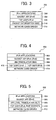
- FIG 3 shows the overall structure of the Bump-In-the-Stack (BIS) approach 302.
- IPv4 Applications 304 are at the highest layer.
- IPv4 applications 304 are above the socket API (IPv4) 306.
- the socket API (IPv4) 306 sits above TCP(UDP)/IPv4 308.
- the BIS works by adding an extra layer between the TCP/IPv4 layer 308 and the network card driver layer 312. This new layer is the packet interceptor (BIS) layer 310. In this layer 310 the packets are intercepted and the outgoing packets are translated from IPv4 to IPv6 and the incoming packets are translated from IPv6 to IPv4.
- BIOS packet interceptor
- FIG 4 shows the overall structure of the Bump-In-the-API (BIA) approach 402.
- IPv4 Applications 404 are at the highest layer.
- IPv4 applications 404 are above the socket API (IPv4, IPv6) 406.
- the BIA approach maps each IPv4 socket API into the IPv6 socket API.
- the BIA translator 408 intercepts the socket function calls.
- IPv6 stack needs to be available for the operating system and installed. As a result, the BIA approach will not work if there is no IPv6 stack available.
- FIG. 5 shows the API Level Translator structure 502. IPv4 applications 504 are at the highest layer. IPv4 applications 504 are above the socket API (IPv4) 506.
- IPv4 socket function calls are intercepted. However, since there is not an IPv6 stack (as is the case for BIA), it maps each function call to use raw sockets, supplies its own IP headers (for "send” operations) and uses the IPv4 stack functionality.
- IPv6 stack as is the case for BIA
- the API Level Translator may work on any system which supports raw sockets and the IP_HDRINCL or equivalent socket option, which allows supplying IP headers.
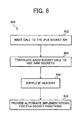
- FIG. 6 is a flow diagram illustrating a general method to implement the API Level Translator.
- an IPv4 application makes 602 a call to the IPv4 socket API.
- Each socket call is translated 604 to use raw sockets (SOCK_RAW option).
- the method supplies 606 its own IP headers. In one embodiment, this may be done by setting the socket option on the raw socket to supply IP headers (setsockopt function, IP_HDRINCL option). Then the method provides 608 alternate implementations for IPv4 socket functions.
- the guidelines may be used for transmission and reception related functions (e.g. sendto, send, recvfrom, recv).
- Figure 7 is a flow diagram illustrating a method 700 for receiving data.
- the system may receive 702 incoming packets on the raw socket. If required, the source host may be checked 704 to make sure the packet is for the correct application. The received packet's port number may be checked 706. Then the system may strip 708 the received packet transport and IP headers and pass 710 the payload to the application.
- Tunneling may be used.
- the IPv6 packet may be created in such a way that "host to router" tunneling is used.
- UDP and ICMP protocols sending and receiving packets using the systems herein will be appreciated by those skilled in the art.
- TCP protocol a user level TCP implementation may be used.
- name to address resolution related functions e.g. gethostbyname, gethostbyaddr, inet_addr
- the first approach is to use the approach used by BIS. That is, to use an extension name resolver and an address mapper as in the BIS.
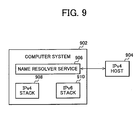
- the second approach is to define and use a "Name Resolver" service, as illustrated in Figure 9.
- a "Name Resolver” service 906 may run on a separate host 902 which has both IPv6 and IPv4 stacks 910, 908.
- the intercepted name to address resolution functions on the IPv4 only host 904 may lookup this "Name Resolver" service 906 and send a query to it.
- the service 906 may use newer name to address resolution functions using its IPv6 stack 910 (e.g. getaddrinfo, getnameinfo, etc.) and send back the AAAA record it obtained for the query to the IPv4 only host 904.
- This AAAA record will now be associated with the particular hostname or IPv4 address query and will be stored in the API level translator (ALT) address resolution module. This mapping will be used to supply appropriate IPv6 headers for all destination addresses matching the corresponding destination hostname or destination IPv4 address.
- the source IPv4 address can be mapped to an IPv6 address based on the recommendation from RFC 2765 (Stateless IP/ICMP Translation Algorithm - (SIIT) - Nordmark E., Sun Microsystems "Stateless IP/ICMP Translation Algorithm (SIIT)," RFC 2765, February 2000.
- RFC 2765 Stateless IP/ICMP Translation Algorithm - (SIIT) - Nordmark E., Sun Microsystems "Stateless IP/ICMP Translation Algorithm (SIIT),” RFC 2765, February 2000.
- the description below illustrates the sequence of steps in the BIS, BIA and ALT approaches to further illustrate the differences between them.
- the IPv4 application wants to send some data.
- the IPv4 application makes an IPv4 socket API call to send the data.
- This data is passed to the IPv4 stack by the IPv4 socket API.
- the IPv4 stack puts the transport and IPv4 headers on it.
- the stack also performs other functions and passes the IPv4 packet to the layer below.
- the BIS packet interceptor intercepts this IPv4 packet and translates it into an IPv6 packet. It will then pass the packet to the network card driver.
- the IPv4 application makes an IPv4 socket API call to send the data.
- the BIA module intercepts this function call and instead calls a corresponding IPv6 socket API function.
- the data will thus be passed to the IPv6 stack, which will add appropriate transport and IPv6 headers.
- the IPv6 stack may also perform other functions and will pass the IPv6 packet to the network card driver.
- FIG 8 is a flow diagram illustrating a method 800 for an IPv4 application to send data using the ALT approach.
- the IPv4 application makes 802 an IPv4 socket API call to send the data.
- the ALT module intercepts 804 this function call. It has already mapped 806 the corresponding socket to a raw socket.
- the ALT provides 808 the appropriate transport and IPv6 headers. If necessary, it will perform 810 host-to-router tunneling. If necessary, it will fragment the packet 811. It will then call 812 the corresponding IPv4 socket API function for the raw socket and will pass 814 the packet to the IPv4 stack.
- the stack may perform 816 other functions (other than adding transport and IP headers) and will pass 818 the packet to the network card driver.
- DSP digital signal processor
- ASIC application specific integrated circuit
- FPGA field programmable gate array signal
- a general purpose processor may be a microprocessor, but in the alternative, the processor may be any conventional processor, controller, microcontroller, or state machine.
- a processor may also be implemented as a combination of computing devices, e.g., a combination of a DSP and a microprocessor, a plurality of microprocessors, one or more microprocessors in conjunction with a DSP core, or any other such configuration.
- a software module may reside in RAM memory, flash memory, ROM memory, EPROM memory, EEPROM memory, registers, hard disk, a removable disk, a CD-ROM, or any other form of storage medium known in the art.
- An exemplary storage medium is coupled to the processor such the processor can read information from, and write information to, the storage medium.
- the storage medium may be integral to the processor.
- the processor and the storage medium may reside in an ASIC.
- the ASIC may reside in a user terminal.
- the processor and the storage medium may reside as discrete components in a user terminal.
- the methods disclosed herein comprise one or more steps or actions for achieving the described method.
- the method steps and/or actions may be interchanged with one another without departing from the scope of the present invention.
- the order and/or use of specific steps and/or actions may be modified without departing from the scope of the present invention.
Landscapes
- Engineering & Computer Science (AREA)
- Computer Security & Cryptography (AREA)
- Computer Networks & Wireless Communication (AREA)
- Signal Processing (AREA)
- Data Exchanges In Wide-Area Networks (AREA)
- Communication Control (AREA)
Abstract
Description
Claims (33)
- A method for a computer system for providing communication between a first system (102) and a second system (104), characterized in that the first system (102) uses a first version of a protocol and the second system (104) uses a second version of the protocol, the method comprising:providing a first application (108) on the first system (102);making a function call to a socket Application Programming Interface (API) for the first version;translating the function call to a translated function call wherein the translated function call uses raw sockets;making a function call to the socket API for the translated function call that uses raw sockets; andpassing a packet to a stack for the first version of the protocol.
- The method of claim 1, characterized in that the first version of the protocol is IPv4 (Internet Protocol version 4) and the second version of the protocol is IPv6 (Internet Protocol version 6).
- The method of claim 2, further comprising supplying IP headers.
- The method of claim 2, further comprising supplying IP headers only once.
- The method of claim 2, characterized in that the method is implemented by inserting an API level translator layer between a socket API layer and a TCP/IPv4 layer.
- The method of claim 2, characterized in that the method is implemented without using an IPv6 stack.
- The method of claim 4, further comprising passing the packet to a network card driver.
- The method of claim 2, further comprising providing an alternate implementation for a reception-related IPv4 socket function, characterized in that the alternate implementation comprises:receiving an incoming packet on a raw socket;checking a source host to determine the proper destination for the incoming packet;checking a port number for the incoming packet;stripping a transport and IP headers from the incoming packet; andpassing a payload to a destination application.
- The method of claim 2, further comprising performing tunneling of IPv6 packets over IPv4 routing infrastructure.
- The method of claim 2, further comprising using a Name Resolver service to perform name to address resolution related functions.
- The method of claim 10, characterized in that the Name Resolver service is configured to run on a separate host that includes an IPv4 stack and an IPv6 stack.
- The method of claim 11, characterized in that name to address resolution functions of the Name Resolver service use the IPv6 stack.
- The method of claim 12, characterized in that the Name Resolver service is further configured to receive a query from the first system, use the address resolution functions to obtain a record and send the record to the first system.
- The method of claim 2, further comprising providing an alternate implementation for a sending-related IPv4 socket function, characterized in that the alternate implementation comprises:intercepting an IPv4 socket API call to send a packet;translating the IPv4 socket API call to use a raw socket;providing transport and IPv6 headers;calling a corresponding IPv4 socket API function for the raw socket; andpassing the packet to the stack.
- The method of claim 14, further comprising performing tunneling of IPv6 packets over IPv4 routing infrastructure.
- The method of claim 14, further comprising fragmenting the packet.
- The method of claim 14, further comprising passing the packet to a network card driver.
- A set of executable instructions for implementing a method in an IPv4 (Internet Protocol version 4) computer system (102) for providing communication between the IPv4 system (102) and an IPv6 (Internet Protocol version 6) system (104), the method comprising:providing an IPv4 application (108) on the IPv4 system (102);making a function call to an IPv4 socket Application Programming Interface (API);translating the function call to a translated function call wherein the translated function call uses raw sockets;making another function call to the IPv4 socket API for the translated function call that uses raw sockets; andpassing a packet to an IPv4 stack.
- The set of executable instructions of claim 18, characterized in that the method further comprises supplying IP headers only once.
- The set of executable instructions of claim 18, characterized in that the method is implemented by inserting an API level translator layer between a socket API layer and a TCP/IPv4 layer.
- The set of executable instructions of claim 18, characterized in that the method is implemented without using an IPv6 stack.
- The set of executable instructions of claim 18, characterized in that the method further comprises providing an alternate implementation for a reception-related IPv4 socket function, wherein the alternate implementation comprises:receiving an incoming packet on a raw socket;checking a source host to determine the proper destination for the incoming packet;checking a port number for the incoming packet;stripping a transport and IP headers from the incoming packet; andpassing a payload to the IPv4 application.
- The set of executable instructions of claim 18, characterized in that the method further comprises providing an alternate implementation for a sending-related IPv4 socket function, wherein the alternate implementation comprises:intercepting an IPv4 socket API call to send data;translating the IPv4 socket API call to use a raw socket;providing transport and IPv6 headers;calling a corresponding IPv4 socket API function for the raw socket; andpassing the data to the IPv4 stack.
- The set of executable instructions of claim 23, characterized in that the method further comprises performing tunneling of IPv6 packets over IPv4 routing infrastructure.
- The set of executable instructions of claim 23, characterized in that the method further comprises fragmenting the packet.
- The set of executable instructions of claim 23, characterized in that the method further comprises passing the packet to a network card driver.
- A computer-readable medium for storing the set of executable instructions in any of claims 18-26.
- A system for enabling an IPv4 (Internet Protocol version 4) application (108) to communicate across a computer network (106) using an IPv6 (Internet Protocol version 6) system (104), the system comprising:a computing device;executable instructions executable on the computing device, wherein the executable instructions are configured to implement a method comprising:making a function call to an IPv4 socket Application Programming Interface (API);translating the function call to a translated function call wherein the translated function call uses raw sockets;making another function call to the IPv4 socket API for the translated function call that uses raw sockets; andpassing a packet to an IPv4 stack.
- The system of claim 28, further comprising an API level translator layer between a socket API layer and a TCP/IPv4 layer.
- The system of claim 28, characterized in that the method further comprises providing an alternate implementation for a reception-related IPv4 socket function, wherein the alternate implementation comprises:receiving an incoming packet on a raw socket;checking a source host to determine the proper destination for the incoming packet;checking a port number for the incoming packet;stripping a transport and IP headers from the incoming packet; andpassing a payload to the IPv4 application.
- The system of claim 28, characterized in that the method further comprises providing an alternate implementation for a sending-related IPv4 socket function, wherein the alternate implementation comprises:intercepting an IPv4 socket API call to send the packet;translating the IPv4 socket API call to use a raw socket;providing transport and IPv6 headers;calling a corresponding IPv4 socket API function for the raw socket; andpassing the packet to the IPv4 stack.
- The system of claim 28, characterized in that the method further comprises performing tunneling of IPv6 packets over IPv4 routing infrastructure.
- The system of claim 28, characterized in that the method further comprises fragmenting the packet.
Applications Claiming Priority (2)
| Application Number | Priority Date | Filing Date | Title |
|---|---|---|---|
| US10/637,408 US7340746B2 (en) | 2003-08-07 | 2003-08-07 | Apparatus and methods for providing communication between systems having different protocol versions |
| US637408 | 2003-08-07 |
Publications (2)
| Publication Number | Publication Date |
|---|---|
| EP1505792A2 true EP1505792A2 (en) | 2005-02-09 |
| EP1505792A3 EP1505792A3 (en) | 2005-08-24 |
Family
ID=33552973
Family Applications (1)
| Application Number | Title | Priority Date | Filing Date |
|---|---|---|---|
| EP04018507A Withdrawn EP1505792A3 (en) | 2003-08-07 | 2004-08-04 | Apparatus and methods for providing communication between systems having different protocol versions |
Country Status (3)
| Country | Link |
|---|---|
| US (1) | US7340746B2 (en) |
| EP (1) | EP1505792A3 (en) |
| JP (1) | JP2005057752A (en) |
Cited By (6)
| Publication number | Priority date | Publication date | Assignee | Title |
|---|---|---|---|---|
| CN101909042A (en) * | 2009-06-03 | 2010-12-08 | 中国移动通信集团公司 | Method and system for host with IPv4 application to communicate through IPv6 network |
| WO2010139194A1 (en) * | 2009-06-03 | 2010-12-09 | 中国移动通信集团公司 | Method and device of host with ipv4 application for performing communication |
| CN102739809A (en) * | 2011-04-07 | 2012-10-17 | 中国电信股份有限公司 | DNS64 database, server, system and IPv4/IPv6 communication method |
| CN101931658B (en) * | 2009-06-26 | 2013-07-03 | 中国移动通信集团公司 | Method and device for IPv6 host computer with IPv4 application to perform communication |
| CN103502968A (en) * | 2011-03-15 | 2014-01-08 | 迈思肯系统公司 | Generic data exchange method using hierarchical routing |
| WO2024148858A1 (en) * | 2023-01-10 | 2024-07-18 | 苏州元脑智能科技有限公司 | User mode network stack calling and user mode interface setting methods and apparatus |
Families Citing this family (9)
| Publication number | Priority date | Publication date | Assignee | Title |
|---|---|---|---|---|
| CN1870569B (en) * | 2005-05-25 | 2012-02-08 | 国际商业机器公司 | Network system and its management method, communication terminal and file transmitting method |
| US8543706B2 (en) * | 2006-05-23 | 2013-09-24 | Freebit Co., Ltd. | Communication module for connecting application program to virtual private network |
| US8412207B2 (en) * | 2006-12-21 | 2013-04-02 | Core Wireless Licensing S.A.R.L. | Method of providing a mobility service |
| US8635440B2 (en) * | 2007-12-13 | 2014-01-21 | Microsoft Corporation | Proxy with layer 3 security |
| US8739289B2 (en) * | 2008-04-04 | 2014-05-27 | Microsoft Corporation | Hardware interface for enabling direct access and security assessment sharing |
| US8484666B2 (en) | 2010-09-13 | 2013-07-09 | Microsoft Corporation | Optimizations for implementing multi-stack stack hosts |
| US9479475B1 (en) * | 2014-03-17 | 2016-10-25 | Michael E. Mazarick | System and method for IPv4 to IPv6 transition rather than an outage |
| US12457191B2 (en) | 2023-03-06 | 2025-10-28 | T-Mobile Usa, Inc. | User plane function configured to prioritize using a preferred internet protocol to establish a connection between user device and host server |
| CN117112044B (en) * | 2023-10-23 | 2024-02-06 | 腾讯科技(深圳)有限公司 | Instruction processing method, device, equipment and medium based on network card |
Citations (1)
| Publication number | Priority date | Publication date | Assignee | Title |
|---|---|---|---|---|
| US5721876A (en) * | 1995-03-30 | 1998-02-24 | Bull Hn Information Systems Inc. | Sockets application program mechanism for proprietary based application programs running in an emulation environment |
Family Cites Families (21)
| Publication number | Priority date | Publication date | Assignee | Title |
|---|---|---|---|---|
| US21706A (en) * | 1858-10-05 | tatum | ||
| US136216A (en) * | 1873-02-25 | Improvement in sawing-machines | ||
| US21703A (en) * | 1858-10-05 | shaler | ||
| US136237A (en) * | 1873-02-25 | Improvement in car-couplings | ||
| US24960A (en) * | 1859-08-02 | Machinery fob molding candles | ||
| US21705A (en) * | 1858-10-05 | Apparatus fob tanning | ||
| US21704A (en) * | 1858-10-05 | Improvement in wrappers for cigars | ||
| JP3531367B2 (en) * | 1996-07-04 | 2004-05-31 | 株式会社日立製作所 | Translator |
| US5774660A (en) * | 1996-08-05 | 1998-06-30 | Resonate, Inc. | World-wide-web server with delayed resource-binding for resource-based load balancing on a distributed resource multi-node network |
| DE69737645T2 (en) | 1996-11-01 | 2007-11-22 | Hitachi, Ltd. | Communication method between an IPv4 terminal and an IPv6 terminal and IPv4-IPv6 conversion apparatus |
| US6690669B1 (en) | 1996-11-01 | 2004-02-10 | Hitachi, Ltd. | Communicating method between IPv4 terminal and IPv6 terminal and IPv4-IPv6 converting apparatus |
| JPH11136285A (en) | 1997-10-31 | 1999-05-21 | Hitachi Ltd | IPv4-IPv6 communication method and IPv4-IPv6 translation device |
| US6360265B1 (en) * | 1998-07-08 | 2002-03-19 | Lucent Technologies Inc. | Arrangement of delivering internet protocol datagrams for multimedia services to the same server |
| US6675218B1 (en) * | 1998-08-14 | 2004-01-06 | 3Com Corporation | System for user-space network packet modification |
| JP3017217B1 (en) | 1999-03-02 | 2000-03-06 | 中国日本電気ソフトウェア株式会社 | IPv4-IPv6 conversion device |
| CA2382534C (en) | 1999-09-24 | 2009-09-08 | British Telecommunications Public Limited Company | Packet network interfacing |
| EP1087575A1 (en) | 1999-09-24 | 2001-03-28 | BRITISH TELECOMMUNICATIONS public limited company | Packet network interfacing |
| US20010040895A1 (en) | 2000-03-16 | 2001-11-15 | Templin Fred Lambert | An IPv6-IPv4 compatibility aggregatable global unicast address format for incremental deployment of IPv6 nodes within IPv4 |
| JP3635223B2 (en) | 2000-03-29 | 2005-04-06 | 松下電器産業株式会社 | IPv4-IPv6 address replacement method and IPv4-IPv6 communication method |
| US8046452B2 (en) | 2001-03-08 | 2011-10-25 | British Telecommunications Public Limited Company | Inter-network address translator that is separately addressable from address alias assignment process |
| US8218555B2 (en) * | 2001-04-24 | 2012-07-10 | Nvidia Corporation | Gigabit ethernet adapter |
-
2003
- 2003-08-07 US US10/637,408 patent/US7340746B2/en not_active Expired - Fee Related
-
2004
- 2004-07-26 JP JP2004216825A patent/JP2005057752A/en active Pending
- 2004-08-04 EP EP04018507A patent/EP1505792A3/en not_active Withdrawn
Patent Citations (1)
| Publication number | Priority date | Publication date | Assignee | Title |
|---|---|---|---|---|
| US5721876A (en) * | 1995-03-30 | 1998-02-24 | Bull Hn Information Systems Inc. | Sockets application program mechanism for proprietary based application programs running in an emulation environment |
Cited By (11)
| Publication number | Priority date | Publication date | Assignee | Title |
|---|---|---|---|---|
| CN101909042A (en) * | 2009-06-03 | 2010-12-08 | 中国移动通信集团公司 | Method and system for host with IPv4 application to communicate through IPv6 network |
| WO2010139194A1 (en) * | 2009-06-03 | 2010-12-09 | 中国移动通信集团公司 | Method and device of host with ipv4 application for performing communication |
| CN101909042B (en) * | 2009-06-03 | 2012-12-26 | 中国移动通信集团公司 | Method and system for host computer with IPv4 application to communicate through IPv6 network |
| US8909812B2 (en) | 2009-06-03 | 2014-12-09 | China Mobile Group Beijing Co., Ltd. | Method and device for communication for host device with IPv4 application |
| CN101931658B (en) * | 2009-06-26 | 2013-07-03 | 中国移动通信集团公司 | Method and device for IPv6 host computer with IPv4 application to perform communication |
| CN103502968A (en) * | 2011-03-15 | 2014-01-08 | 迈思肯系统公司 | Generic data exchange method using hierarchical routing |
| CN103502968B (en) * | 2011-03-15 | 2016-11-02 | 迈思肯系统公司 | Use the generic data exchange method of hierarchy routing |
| US9843469B2 (en) | 2011-03-15 | 2017-12-12 | Microscan Systems, Inc. | Generic data exchange method using hierarchical routing |
| CN102739809A (en) * | 2011-04-07 | 2012-10-17 | 中国电信股份有限公司 | DNS64 database, server, system and IPv4/IPv6 communication method |
| CN102739809B (en) * | 2011-04-07 | 2015-07-15 | 中国电信股份有限公司 | DNS64 database, server, system and IPv4/IPv6 communication method |
| WO2024148858A1 (en) * | 2023-01-10 | 2024-07-18 | 苏州元脑智能科技有限公司 | User mode network stack calling and user mode interface setting methods and apparatus |
Also Published As
| Publication number | Publication date |
|---|---|
| US20050034131A1 (en) | 2005-02-10 |
| JP2005057752A (en) | 2005-03-03 |
| EP1505792A3 (en) | 2005-08-24 |
| US7340746B2 (en) | 2008-03-04 |
Similar Documents
| Publication | Publication Date | Title |
|---|---|---|
| US7245622B2 (en) | Allowing IPv4 clients to communicate over an IPv6 network when behind a network address translator with reduced server workload | |
| US6055236A (en) | Method and system for locating network services with distributed network address translation | |
| JP3793083B2 (en) | Method and apparatus for providing security by network address translation using tunneling and compensation | |
| US7340746B2 (en) | Apparatus and methods for providing communication between systems having different protocol versions | |
| US7032242B1 (en) | Method and system for distributed network address translation with network security features | |
| US6567405B1 (en) | Method and protocol for distributed network address translation | |
| US6708219B1 (en) | Method and system for dual-network address utilization | |
| JP5475763B2 (en) | Method for receiving data packets from IPv4 domain in IPv6 domain, and related devices and access equipment | |
| US8447802B2 (en) | Address manipulation to provide for the use of network tools even when transaction acceleration is in use over a network | |
| EP1159815B1 (en) | Method and system for distributed network address translation with network security features | |
| US9356952B2 (en) | Packet redirection in a communication network | |
| US7023847B2 (en) | Network address translation based mobility management | |
| CN113542108A (en) | IPv 6-based distributed tunnel interconnection gateway | |
| Newmarch et al. | Socket-Level Programming | |
| Ali et al. | Hybrid approach for migration of IPv6 to IPv4 Network for enhancing security in Virtual Private Cloud. | |
| Chimiak et al. | Enhanced IP: IPv4 with 64-bit addresses | |
| Membrey et al. | IPv6: Implications and Concepts | |
| Salkić et al. | Implementation of IPv6 in Internet Key Exhange version 2 | |
| Budne | KIP AppleTalk/IP Gateway Functionality | |
| Schläger | Using the Remote Socket Architecture as NAT Replacement Michael Eyrich, Tobias Poschwatta | |
| Shiwani et al. | IPv6 Upgradation-An Engineering Exercise or a Necessity? |
Legal Events
| Date | Code | Title | Description |
|---|---|---|---|
| PUAI | Public reference made under article 153(3) epc to a published international application that has entered the european phase |
Free format text: ORIGINAL CODE: 0009012 |
|
| AK | Designated contracting states |
Kind code of ref document: A2 Designated state(s): AT BE BG CH CY CZ DE DK EE ES FI FR GB GR HU IE IT LI LU MC NL PL PT RO SE SI SK TR |
|
| AX | Request for extension of the european patent |
Extension state: AL HR LT LV MK |
|
| PUAL | Search report despatched |
Free format text: ORIGINAL CODE: 0009013 |
|
| AK | Designated contracting states |
Kind code of ref document: A3 Designated state(s): AT BE BG CH CY CZ DE DK EE ES FI FR GB GR HU IE IT LI LU MC NL PL PT RO SE SI SK TR |
|
| AX | Request for extension of the european patent |
Extension state: AL HR LT LV MK |
|
| 17P | Request for examination filed |
Effective date: 20051024 |
|
| AKX | Designation fees paid |
Designated state(s): DE FR GB |
|
| 17Q | First examination report despatched |
Effective date: 20070717 |
|
| GRAP | Despatch of communication of intention to grant a patent |
Free format text: ORIGINAL CODE: EPIDOSNIGR1 |
|
| STAA | Information on the status of an ep patent application or granted ep patent |
Free format text: STATUS: GRANT OF PATENT IS INTENDED |
|
| INTG | Intention to grant announced |
Effective date: 20170313 |
|
| GRAS | Grant fee paid |
Free format text: ORIGINAL CODE: EPIDOSNIGR3 |
|
| STAA | Information on the status of an ep patent application or granted ep patent |
Free format text: STATUS: THE APPLICATION IS DEEMED TO BE WITHDRAWN |
|
| 18D | Application deemed to be withdrawn |
Effective date: 20180301 |