Technical Field
The present invention relates to a solid catalyst
component for olefin polymerization for producing an α-olefin
homopolymer or copolymer, a catalyst for olefin
polymerization and a method for producing an olefin polymer.
Background Art
Generally, an olefin polymer is produced by
polymerization in the presence of a Ziegler-Natta catalyst
containing a titanium compound and an organic aluminum
compound. For example, in the production of a polypropylene
that is one of olefin polymers, an isotactic polypropylene
is obtained mainly in the presence of a catalyst containing
a solid catalyst component formed from titanium, magnesium,
chlorine and an electron-donating compound; an organic
aluminum compound as a co-catalyst component; and an
organosilicon compound having an alkoxy group as a
stereoregularity improver. However, attempts are presently
made to attain an improvement in the catalytic activity
during the polymerization, an improvement in
stereoregularity of an olefin polymer and an improvement in
the form of a polymer powder for stable production of an
olefin polymer.
For example, for improving an olefin polymer in the
morphology including a particle diameter, form, etc., JP-A-63-280707
discloses a method in which a magnesium compound
is supported on an inorganic oxide such as silica, or JP-A-58-000811
discloses a method in which a magnesium compound
is once dissolved in a solvent such as an alcohol to
precipitate it and the resultant precipitate is used.
However, these methods include very complicated
steps, since they essentially require the procedures of
supporting, dissolving and precipitating a magnesium
compound. Further, these methods have a defect that the
catalyst is poor in stability of performance since the
catalytic activity is high only at an early stage of the
polymerization or that the catalyst cannot exhibit
sufficient performances from the viewpoint of catalytic
activity during the polymerization and stereoregularity of
an olefin polymer.
For overcoming these defects, therefore, JP-A-2-413883
discloses a method in which a reaction product from
metal magnesium, an alcohol and a specific amount of a
halogen is used as a carrier for a catalyst, and JP-B-7-025822
discloses a method for producing an olefin polymer,
which method uses a Ziegler-Natta catalyst containing a
solid catalyst component obtained by adding an organic acid
ester to a reaction product from alkoxymagnesium, a
halogenating agent and alkoxytitanium and further reacting
the resultant product with a halogenated titanium. In these
methods, however, the catalytic activity during the
polymerization and the stereoregularity of an olefin
polymer are still not sufficient.
Further, JP-A-11-269218 discloses a solid catalyst
component for olefin polymerization, obtained by contacting
a magnesium compound and a titanium compound to each other
in the presence of an electron-donating compound at a
temperature of at least 120°C but not higher than 150°C and
washing the resulting reaction product with an inert
solvent at a temperature of at least 100°C but not higher
than 150°C. The decrease in its catalytic activity with the
passage of time during polymerization can be suppressed and
an olefin polymer is improved in stereoregularity.
However, the above catalyst is not necessarily
sufficient in polymerization activity, and a further
improvement is required in this point.
On the other hand, JP-A-4-96910 discloses a solid
catalyst component obtained by contacting an
alkoxymagnesium compound, a polyether compound and a
titanium compound. However, an olefin polymer obtained in
the presence of a catalyst containing the above solid
catalyst component is sufficient in the morphology of a
polymer powder, polymerization activity and
stereoregularity.
Further, Japanese National Publication No. 2000-516987
of Translation Version of PCT Application and
Japanese National Publication No. 2000-516989 of
Translation Version of PCT Application disclose malonic
esters overlapping an electron-donating compound used in
the present invention. However, these Japanese National
Publications do not disclose any specific alkoxylated
magnesium compound used in the present invention, and their
catalysts are not necessarily sufficient in polymerization
activity.
It is an object of the present invention to provide
a solid catalyst component for olefin polymerization, which
has high polymerization activity and gives an olefin
polymer excellent in stereoregularity and powder morphology,
a catalyst for olefin polymerization and a method for
producing an olefin polymer.
For achieving the above object, the present
inventors have made diligent studies and as a result have
found that the above object can be accomplished by using a
solid catalyst component for olefin polymerization,
obtained by reacting a halogen-containing titanium compound,
a specific alkoxylated magnesium compound and a specific
electron-donating compound, and the present invention has
been accordingly completed.
Disclosure of the Invention
According to the present invention, the following
solid catalyst components for olefin polymerization are
provided.
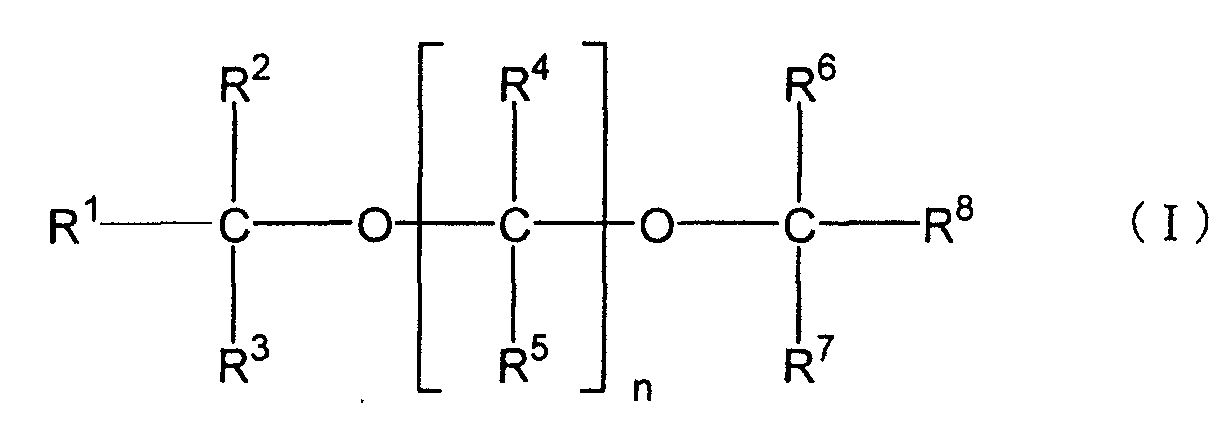
wherein n is an integer of 2 to 10, each of R
1 to R
8
is independently a substituent having at least one element
selected from carbon, hydrogen, oxygen, halogen, nitrogen,
sulfur, phosphorus, boron or silicon, any substituents of R
1
to R
8 may together form a ring other than a benzene ring,
and a main chain may contain an atom other than carbon,
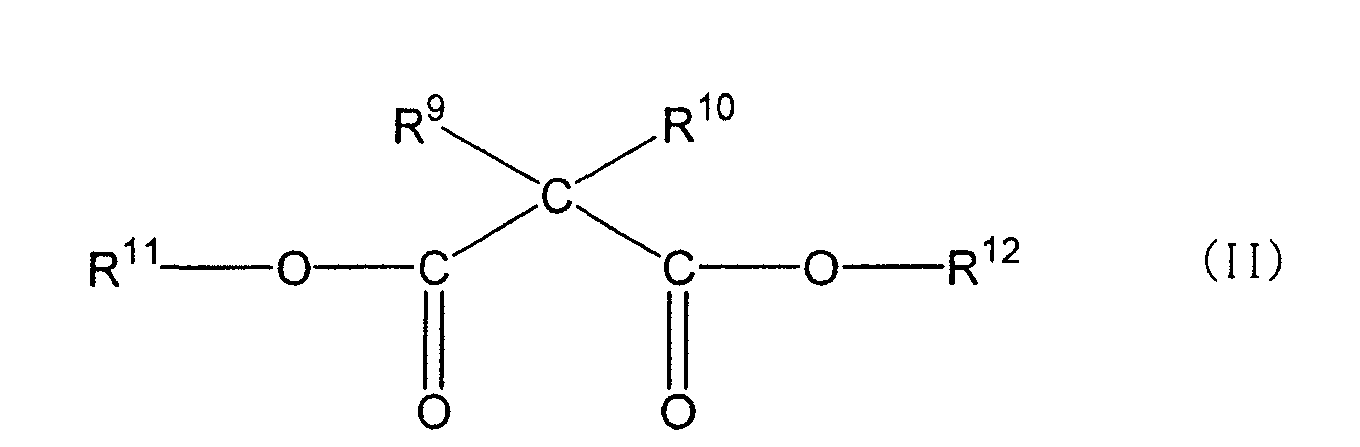
wherein each of R
9 to R
12 is independently a linear,
branched or cyclic alkyl group, or an arylalkyl group,
having 1 to 20 carbon atoms, provided that the total sum of
carbon atoms of R
9 and R
10 is 3 to 40.
[2] A solid catalyst component for olefin
polymerization as recited in [1], wherein said halogen is
iodine. [3] A solid catalyst component for olefin
polymerization as recited in [1] or [2], wherein said
halogen-containing compound is magnesium chloride. [4] A solid catalyst component for olefin
polymerization as recited in any one of [1] to [3], wherein
said metal magnesium, the alcohol and the halogen and/or
halogen-containing compound are reacted at a temperature of
30 to 90°C. [5] A solid catalyst component for olefin
polymerization as recited in [4], wherein said metal
magnesium, the alcohol and the halogen and/or halogen-containing
compound are reacted at a temperature of 30 to
60°C. [6] A solid catalyst component for olefin
polymerization as recited in any one of [1] to [5], wherein
said halogen-containing silicon compound (c) is silicon
tetrachloride. [7] A solid catalyst component for olefin
polymerization as recited in any one of [1] to [6], wherein
the compound of said general formula (I) is a 1,3-diether
compound. [8] A solid catalyst component for olefin
polymerization as recited in any one of [1] to [7], wherein
the compound of said general formula (II) is a compound of
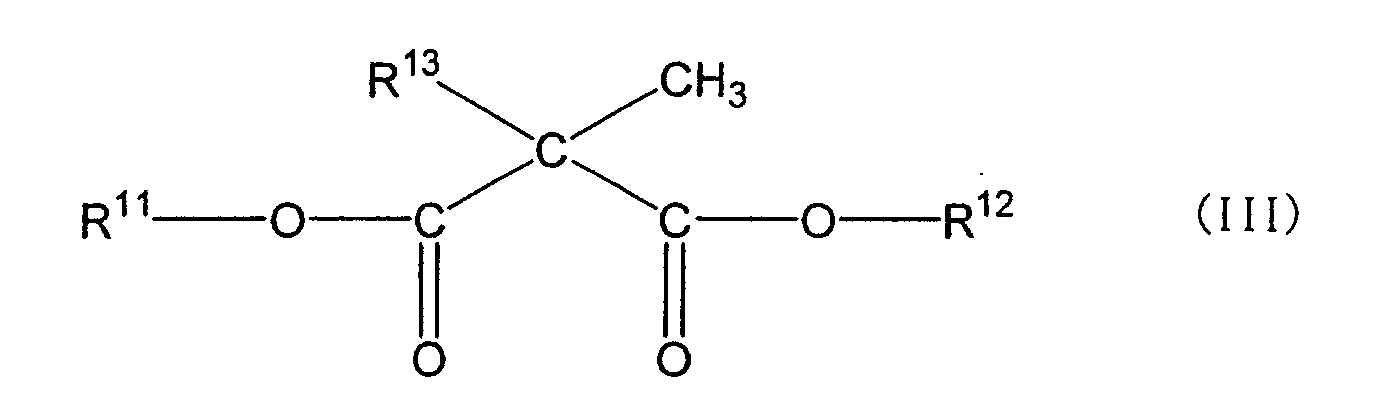
the followinq qeneral formula (III),
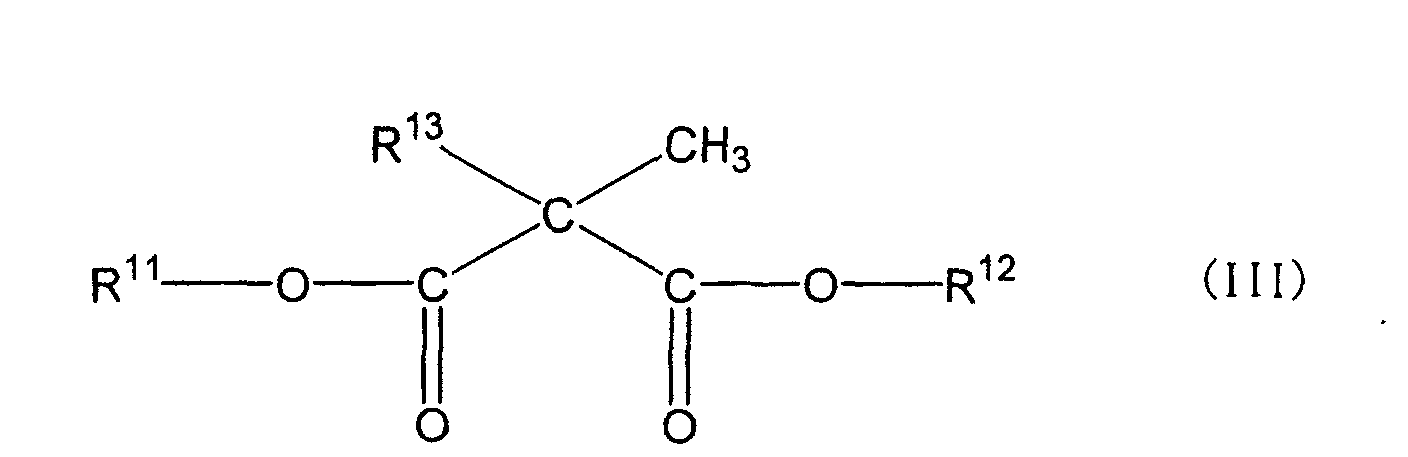
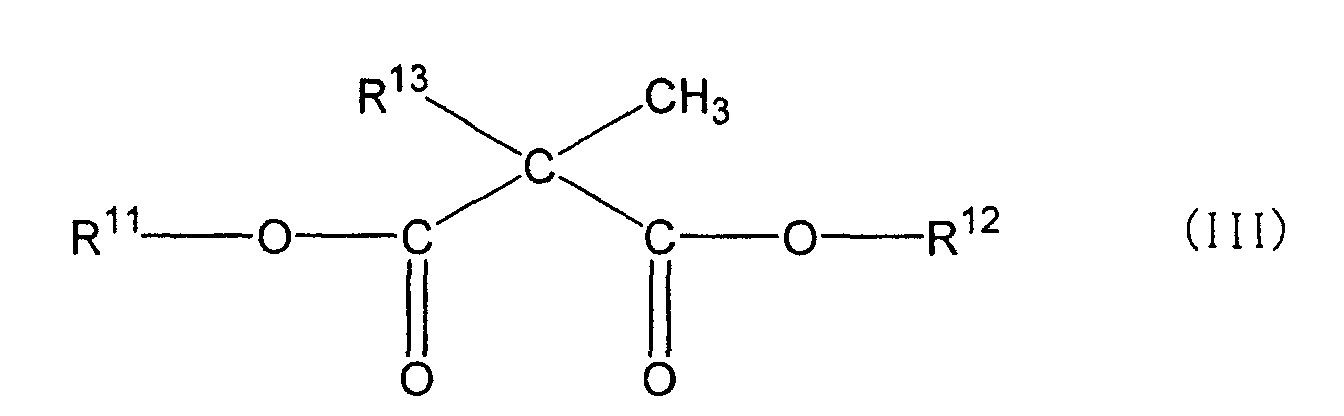
wherein R11 and R12 are as defined in said general
formula (II), and R13 is a linear, branched or cyclic alkyl
group having 2 to 20 carbon atoms. [9] A solid catalyst component for olefin
polymerization as recited in any one of [1] to [8], wherein
said compound (a) is contacted after said compound (b) and
said compound (d) are contacted to each other when said
compounds (a), (b) and (c) are reacted. [10] A solid catalyst component for olefin
polymerization as recited in any one of [1] to [8], wherein
said compound (d) is contacted after said compound (b) and
said compound (c) are contacted to each other and then said
compound (a) is contacted when said compounds (a), (b), (c)
and (d) are reacted. [11] A catalyst for olefin polymerization, comprising
the following components [A] and [B], or the following
components [A], [B] and [C],
[A] the solid catalyst component for olefin
polymerization recited in any one of [1] to [10], [B] an organic aluminum compound, and [C] an electron-donating compound. [12] A method for producing an olefin polymer, which
comprises polymerizing an olefin in the presence of the
catalyst for olefin polymerization recited in [11].
Brief Description of Drawings
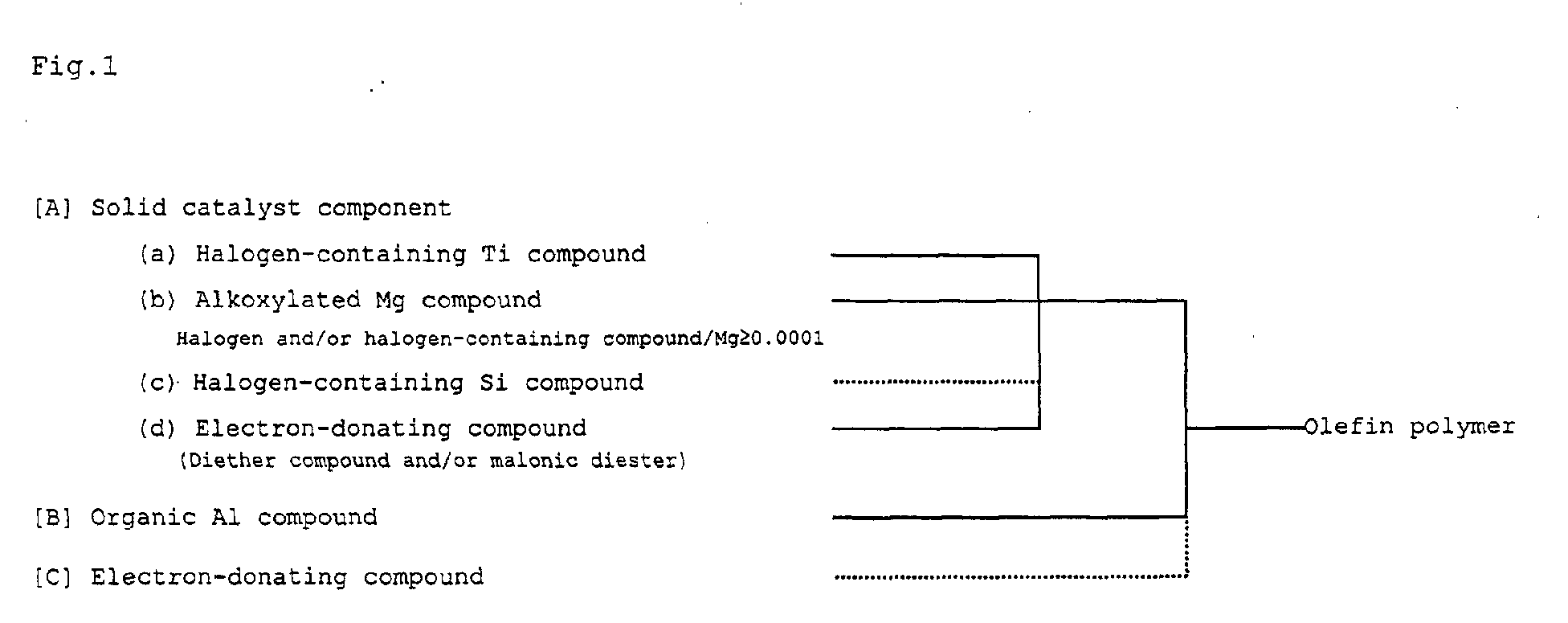
Fig. 1 is a schematic drawing for showing the
catalyst for olefin polymerization and the method for
producing an olefin polymer, provided by the present
invention.
Best Mode for Carrying out the Invention
The catalyst components, the production method, the
polymerization method, etc., in the present invention will
be explained below. The embodiments shown below are
preferred embodiments, and the present invention shall not
be limited thereto.
1. Catalyst component
[A] Solid catalyst component for olefin polymerization
(a) Halogen-containing titanium compound
As a halogen-containing titanium compound, a
compound of the following general formula (IV) can be
preferably used.
TiX1 p(OR14)4-p
In the above general formula (IV), X1 is a halogen
atom, and above all, a chlorine atom and a bromine atom are
preferred. A chlorine atom is particularly preferred. R14
is a hydrocarbon group. It may be any one of a saturated
group and an unsaturated group, it may be a linear,
branched or cyclic group, and further, it may contain
hetero atom(s) such as sulfur, nitrogen, oxygen, silicon,
phosphorus, etc. Of them, a hydrocarbon group having 1 to
10 carbon atoms is preferred. Particularly, an alkyl group,
an alkenyl group, a cycloalkenyl group, an aryl group and
an aralkyl group are preferred, and a linear or branched
alkyl group is particularly preferred. When a plurality of
OR14S are present, they may be identical or different.
Specific examples of R14 include methyl, ethyl, n-propyl,
isopropyl, n-butyl, sec-butyl, isobutyl, n-pentyl, n-hexyl,
n-heptyl, n-octyl, n-decyl, allyl, butenyl, cyclopentyl,
cyclohexyl, cyclohexenyl, phenyl, tolyl, benzyl and
phenethyl. p represents an integer of 1 to 4.
Specific examples of the halogen-containing
titanium compound of the above general formula (IV) include
titanium tetrahalides such as titanium tetrachloride,
titanium tetrabromide and titanium tetraiodide;
alkoxytitanium trihalides such as methoxytitanium
trichloride, ethoxytitanium trichloride, propoxytitanium
trichloride, n-butoxytitanium trichloride and
ethoxytitanium tribromide; dialkoxytitanium dihalides such
as dimethoxytitanium dichloride, diethoxytitanium
dichloride, diisopropoxytitanium dichloride, di-n-propoxytitanium
dichloride and diethoxytitanium dibromide,
and trialkoxytitanium monohalides such as
trimethoxytitanium chloride, triethoxytitanium chloride,
triosopropoxytitanium chloride, tri-n-propoxytitanium
chloride and tri-n-butoxytitanium chloride. Of them, highly
halogenated titanium compounds are preferred, and titanium
tetrachloride is particularly preferred, in view of
polymerization activity. These halogen-containing titanium
compounds may be used singly or in combination of at least
two members thereof.
(b) Alkoxylated magnesium compound
As an alkoxylated magnesium compound (b), the
present invention uses a compound obtained by reacting
metal magnesium, an alcohol and a halogen and/or halogen-containing
compound containing at least 0.001 gram atom,
per mole of the metal magnesium, of a halogen atom
generally at 30 to 90°C, preferably at 30 to 60°C, from the
viewpoint of the powder form of an olefin polymer, the
polymerization activity of the catalyst and
stereoregularity.
Although the reaction temperature is not critical,
the reaction is preferably carried out in the above
temperature range since the powder morphology of an olefin
polymer or the polymerization activity of the catalyst may
be improved.
The form of the metal magnesium is not specially
limited, so that metal magnesium having any particle
diameter, such as metal magnesium in the form of particles,
ribbons, a powder, or the like can be used. Further, the
surface state of the metal magnesium is not specially
limited, either, while metal magnesium free of a coating of
magnesium hydroxide, etc., formed on the surface thereof is
preferred.
The alcohol is preferably selected from lower
alcohols having 1 to 6 carbon atoms. Particularly, when
ethanol is used, preferably, there is obtained a solid
product that improves the catalyst greatly in the
exhibition of catalyst performances. While the purity and
water content of the alcohol is not specially limited, a
coating of magnesium hydroxide is formed on the metal
magnesium surface when an alcohol having a large water
content is used. It is therefore preferred to use an
alcohol having a water content of 1 % or less, and it is
particularly preferred to use an alcohol having a water
content of 2,000 ppm or less. For obtaining better
morphology, further, the smaller the water content is, the
more preferred such an alcohol is. Generally, the water
content is desirably 200 ppm or less.
The halogen can be selected from chlorine, bromine
or iodine, and it is particularly preferred to use iodine.
As a halogen atom in the halogen-containing
compound, chlorine, bromine or iodine is preferred. Of
halogen-containing compounds, further, a halogen-containing
metal compound is particularly preferred. Specifically, the
halogen-containing compound can be suitably selected from
MgCl2, Mgl2, Mg(OEt)Cl, Mg(OEt)I, MgBr2, CaCl2, NaCl, KBr, or
the like, and of them, MgCl2 is particularly preferred. The
halogen-containing compound is not specially limited in
state, form, particle size, etc., and a compound of any
type may be used. For example, a solution of it in an
alcohol solvent (e.g., ethanol) may be used.
The amount of the alcohol for use per mole of the
metal magnesium is preferably 2 to 100 mol, particularly
preferably 5 to 50 mol. When the amount of the alcohol is
too large, the yield of an alkoxylated magnesium compound
(b) having excellent morphology may be decreased. When it
is too small, stirring in a reaction vessel may not be
smoothly carried out. However, the amount of the alcohol
for use is not limited to the above molar ratio.
The halogen or the halogen-containing compound is
used in such an amount that the amount of halogen or a
halogen atom in the halogen-containing compound per mole of
the metal magnesium is at least 0.0001 gram atom,
preferably at least 0.0005 gram atom, more preferably at
least 0.001 gram atom. When the above amount is less than
0.0001 gram atom, if the thus-obtained alkoxylated
magnesium compound (b) is used as a carrier for the
catalyst, the catalytic activity, the morphology of an
olefin polymer, and the like become defective.
In the present invention, the halogen and the
halogen-containing compound may be used singly or in
combination of at least two members thereof. Further, the
halogen and the halogen-containing compound may be used in
combination. When the halogen and the halogen-containing
compound are used in combination, the amount of all of
halogen atoms of the halogen and the halogen-containing
compound per mole of the metal magnesium is adjusted to at
least 0.0001 gram atom, preferably, to at least 0.0005 gram
atom, more preferably, to at least 0.001 gram atom.
Although not specially limited, the upper limit of
the amount of the halogen and/or the halogen-containing
compound can be determined in such a range that the
alkoxylated magnesium compound (b) for use in the present
invention can be obtained, and generally, it is preferably
limited to less than 0.06 gram atom.
In the present invention, the particle diameter of
the alkoxylated magnesium compound (b) can be controlled as
required in the production thereof by properly selecting
the amount of the halogen and/or the halogen-containing
compound.
The production of the alkoxylated magnesium
compound (b) is carried out until the generation of
hydrogen gas is no longer found (generally, for 1 to 30
hours). Specifically, when iodine is used as a halogen, the
the alkoxylated magnesium compound (b) can be produced by a
method in which solid iodine is poured into a solution of
metal magnesium in an alcohol and then the resultant
mixture is allowed to react under heat, a method in which a
solution of iodine in an alcohol is dropwise added to a
solution of metal magnesium in an alcohol and then the
mixture is allowed to react under heat, or a method in
which a solution if iodine in an alcohol is dropwise added
while a solution of metal magnesium in an alcohol is heated,
to allow them to react.
Any one of these methods is preferably practiced in
an inert gas atmosphere (e.g., nitrogen gas or argon gas)
and optionally in the presence of an inert organic solvent
(e.g., a saturated hydrocarbon such as n-hexane).
Further, when the metal magnesium, the alcohol and
the halogen are poured, it is not required to pour the
entire amount of each in the beginning, and each of them
may be divided and poured. In a particularly preferred
embodiment, the entire amount of the alcohol is poured in
the beginning and the metal magnesium is divided and poured
several times. In this case, the generation of a large
amount of hydrogen gas at one time can be prevented, and
such is much desirable in view of safety. Further, the
reaction vessel can be downsized. Moreover, it is also
possible to prevent the entrainment of alcohol and halogen
caused by the generation of a large amount of hydrogen gas
at one time. The number of the division can be determined
by taking account of the size of a reaction vessel and is
not specially limited, while it is divided and poured 5 to
10 times by taking account of complicatedness in operation.
Further, the reaction itself may be carried out by
any one of a batch method and a continuous method. As a
variant, further, there may be employed a method in which a
small amount of metal magnesium is poured into the alcohol
poured in the entire amount thereof in the beginning, a
product formed by the reaction is separated and removed
into another vessel, a small amount of metal magnesium is
again poured and these procedures are repeated.
When the alkoxylated magnesium compound (b) is used
for the preparation of the solid catalyst component [A], a
dry alkoxylated magnesium compound (b) may be used, or
there may be used an alkoxylated magnesium compound (b)
that is washed with an inert solvent such as heptane, or
the like after filtering. In each case, the alkoxylated
magnesium compound (b) can be used in a subsequent step
without being subjected to milling or a classification
procedure for attaining a uniform particle diameter
distribution. The alkoxylated magnesium compound (b) has a
form close to a sphere and has a sharp particle diameter
distribution. Further, the particles thereof have spherical
form with small variations in sphericity.
Further, these alkoxylated magnesium compounds (b)
may be used singly or in combination of at least two
members thereof. Further, the alkoxylated magnesium
compound (b) may be held on a support such as silica,
alumina or polystyrene, and it may be used in the form of a
mixture with a halogen, or the like.
As the above alkoxylated magnesium compound (b), a
compound of the following general formula (V) is preferably
used.
Mg(OR15)qR16 2-q
In the above general formula (V), R15 is a
hydrocarbon group, and R16 is a halogen atom. The above
hydrocarbon group represented by R15 includes an alkyl group
having 1 to 12 carbon atoms, a cycloalkyl group, an aryl
group and an aralkyl group, and the halogen atom
represented by R16 includes chlorine, bromine, iodine and
fluorine. When a plurality of OR15 or R16 are present, they
may be identical or different. q is an integer of 1 to 2.
Specific examples of the alkoxylated magnesium
compound of the above general formula (V) include
dialkoxymagnesium and diaryloxymagnesium such as
dimethoxymagnesium, diethoxymagnesium, dipropoxymagnesium,
dibutoxymagnesium, dihexyloxymagnesium, dioctoxymagnesium,
diphenoxymagnesium and dicyclohexylmagnesium; and
alkoxymagnesium halides and aryloxymagnesium halides such
as butoxymagnesium chloride, cyclohexylmagnesium chloride,
phenoxymagnesium chloride, ethoxymagnesium chloride,
ethoxymagnesium bromide, butoxymagnesium bromide and
ethoxymagnesium iodide. Of them, dialkoxymagnesium is
preferred, and diethoxymagnesium is particularly preferred,
in view of polymerization activity and stereoregularity.
(c) Halogen-containing silicon compound
For the solid catalyst component for olefin
polymerization in the present invention, a halogen-containing
silicon compound (c) is used as required. As a
halogen-containing silicon compound (c), a compound of the
following general formula (VI) can be used.
Si (OR17)rX2 4-r
When the halogen-containing silicon compound (c) is
used, the catalytic activity during polymerization and
stereoregularity may be improved and the amount of a fine
powder to be contained in an olefin polymer may be
decreased.
In the above general formula (VI), X2 is a halogen
atom, and of halogen atoms, a chlorine atom and a bromine
atom are preferred, and a chlorine atom is particularly
preferred. R17 is a hydrocarbon group. It may be any one of
a saturated group and an unsaturated group, it may be a
linear, branched or cyclic group, and further, it may
contain hetero atom(s) such as sulfur, nitrogen, oxygen,
silicon, phosphorus, etc. Of them, a hydrocarbon group
having 1 to 10 carbon atoms is preferred, and an alkyl
group, an alkenyl group, a cycloalkenyl group, an aryl
group and an aralkyl group are particularly preferred. When
a plurality of OR17S are present, they may be identical or
different. Specific examples of R17 include methyl, ethyl,
n-propyl, isopropyl, n-butyl, sec-butyl, isobutyl, n-pentyl,
n-hexyl, n-heptyl, n-octyl, n-decyl, allyl, butenyl,
cyclopentyl, cyclohexyl, cyclohexenyl, phenyl, tolyl,
benzyl and phenethyl. r is an integer of 0 to 3.
Specific examples of the halogen-containing silicon
compound of the above general formula (VI) include silicon
tetrachloride, methoxytrichlorosilane,
dimethoxydichlorosilane, trimethoxychlorosilane,
ethoxytrichlorosilane, diethoxydichlorosilane,
triethoxychlorosilane, propoxytrichlorosilane,
dipropoxydichlorosilane and tripropoxychlorosilane. Of them,
silicon tetrachloride is particularly preferred. These
halogen-containing silicon compounds may be used singly or
in combination of at least two members thereof.
(d) Electron-donating compound
As an electron-donating compound, the present
invention uses a diether compound of the following general
formula (I) and/or a malonic diester of the following
general formula (II), preferably, the following general
formula (III).
wherein n is an integer of 2 to 10, each of R
1 to R
8
is independently a substituent having at least one element
selected from carbon, hydrogen, oxygen, halogen, nitrogen,
sulfur, phosphorus, boron or silicon, R
1 to R
8 may together
form a ring other than a benzene ring, and the main chain
may contain an atom other than carbon.
wherein each of R
9 to R
12 is independently a linear,
branched or cyclic alkyl group, or an arylalkyl group,
having 1 to 20 carbon atoms, provided that the total sum of
carbon atoms of R
9 and R
10 is 3 to 40.
wherein R
11 and R
12 are as defined in the general
formula (II), and R
13 is a linear, branched or cyclic alkyl
group having 2 to 20 carbon atoms.
In the above general formula (I), n is preferably 2
to 5. Further, each of R1 to R8 is preferably a substituent
having at least one element selected from carbon, hydrogen,
silicon, halogen or oxygen.
Specifically, the diether compound of the above
general formula (I) includes 2-(2-ethylhexyl)-1,3-dimethoxypropane,
2-isopropyl-1,3-dimethoxypropane, 2-butyl-1,3-dimethoxypropane,
2-s-butyl-1,3-dimethoxypropane,
2-cyclohexyl-1,3-dimethoxypropane, 2-phenyl-1,3-dimethoxypropane,
2-cumyl-1,3-dimethoxypropane, 2-(2-phenylethyl)-1,3-dimethoxypropane,
2-(2-cyclohexylethyl)-1,3-dimethoxypropane,
2-(p-chlorophenyl)-1,3-dimethoxypropane,
2-(diphenylmethyl)-1,3-dimethoxypropane,
2-(1-naphthyl)-1,3-dimethoxypropane, 2-(2-fluorophenyl)-1,3-dimethoxypropane,
2-(1-decahydronaphthyl)-1,3-dimethoxypropane,
2-(p-tert-butylphenyl)-1,3-dimethoxypropane,
2,2-dicyclohexyl-1,3-dimethoxypropane,
2,2-dicyclopentyl-1,3-dimethoxypropane, 2,2-diethyl-1,3-dimethoxypropane,
2,2-dipropyl-2,3-dimethoxypropane, 2,2-diisopropyl-1,3-dimethoxypropane,
2,2-dibutyl-1,3-dimethoxypropane,
2-methyl-2-propyl-1,3-dimethoxypropane,
2-methyl-2-benzyl-1,3-dimethoxypropane, 2-methyl-2-ethyl-1,3-dimethoxypropane,
2-methyl-2-isopropyl-1,3-dimethoxypropane,
2-methyl-2-phenyl-1,3-dimethoxypropane,
2-methyl-2-cyclohexyl-1,3-dimethoxypropane, 2,2-bis(p-chlorophenyl)-1,3-dimethoxypropane,
2,2-bis(2-cyclohexylethyl)-1,3-dimethoxypropane,
2-methyl-2-isobutyl-1,3-dimethoxypropane,
2-methyl-2-(2-ethylhexyl)-1,3-dimethoxypropane,
2,2-diisobutyl-1,3-dimethoxypropane, 2,2-diphenyl-1,3-dimethoxypropane,
2,2-dibenzyl-1,3-dimethoxypropane,
2,2-bis(cyclohexylmethyl)-1,3-dimethoxypropane,
2,2-diisobutyl-1,3-diethoxypropane, 2,2-diisobutyl-1,3-dibutoxypropane,
2-isobutyl-2-isopropyl-1,3-dimethoxypropane,
2-(1-methylbutyl)-2-isopropyl-1,3-dimethoxypropane,
2-(1-methylbutyl)-2-s-butyl-1,3-dimethoxypropane,
2,2-di-s-butyl-1,3-dimethoxypropane, 2,2-di-tert-butyl-1,3-dimethoxypropane,
2,2-dineopentyl-1,3-dimethoxypropane,
2-isopropyl-2-isopentyl-1,3-dimethoxypropane,
2-phenyl-2-isopropyl-1,3-dimethoxypropane,
2-phenyl-2-s-butyl-1,3-dimethoxypropane, 2-benzyl-2-isopropyl-1,3-dimethoxypropane,
2-benzyl-2-s-butyl-1,3-dimethoxypropane,
2-phenyl-2-benzyl-1,3-dimethoxypropane,
2-cyclopentyl-2-isopropyl-1,3-dimethoxypropane, 2-cyclopentyl-2-s-butyl-1,3-dimethoxypropane,
2-cyclohexyl-2-isopropyl-1,3-dimethoxypropane,
2-cyclohexyl-2-s-butyl-1,3-dimethoxypropane,
2-isopropyl-2-s-butyl-1,3-dimethoxypropane,
2-cyclohexyl-2-cyclohexylmethyl-1,3-dimethoxypropane,
2,3-diphenyl-1,4-diethoxybutane, 2,3-dicyclohexyl-1,4-diethoxybutane,
2,2-dibenzyl-1,4-diethoxybutane,
2,3-dicyclohexyl-1,4-diethoxybutane,
2,3-diisopropyl-1,4-diethoxybutane, 2,2-bis(p-methylpheny)-1,4-dimethoxybutane,
2,3-bis(p-chloropheny)-1,4-dimethoxybutane,
2,3-bis(p-fluoropheny)-1,4-dimethoxybutane,
2,4-diphenyl-1,5-dimethoxypentane, 2,5-diphenyl-1,5-dimethoxyhexane,
2,4-diisopropyl-1,5-dimethoxypentane,
2,4-diisobutyl-1,5-dimethoxypentane, 2,4-diisoamyl-1,5-dimethoxypentane,
3-methoxymethyltetrahydrofuran, 3-methoxymethyldioxane,
1,3-diisobutoxypropane, 1,2-diisobutoxypropane,
1,2-diisobutoxyethane, 1,3-diisoamyloxypropane,
1,3-diisoneopentyloxyethane, 1,3-dineopentyloxypropane,
2,2-tetramethylene-1,3-dimethoxypropane,
2,2-pentamethylene-1,3-dimethoxypropane,
2,2-hexamethylene-1,3-dimethoxypropane, 1,2-bis(methoxymethyl)cyclohexane,
2,8-dioxaspiro[5,5]undecane,
3,7-dioxabicyclo[3,3,1]nonane, 3,7-dioxabicyclo[3,3,0]octane,
3,3-diisobutyl-1,5-oxononane,
6,6-diisobutyloxyheptane, 1,1-dimethoxymethylcyclopentane,
1,1-bis(dimethoxymethyl)cyclohexane, 1,1-bis(methoxymethyl)bicyclo[2,2,1]heptane,
1,1-dimethoxymethylcyclopentane,
2-methyl-2-methoxymethyl-1,3-dimethoxypropane,
2-cyclohexyl-2-ethoxymethyl-1,3-diethoxypropane,
2-cyclohexyl-2-methoxymethyl-1,3-dimethoxypropane,
2,2-diisobutyl-1,3-dimethoxycyclohexane,
2-isopropyl-2-isoamyl-1,3-dimethoxycyclohexane, 2-cyclohexyl-2-methoxymethyl-1,3-dimethoxycyclohexane,
2-isopropyl-2-methoxymethyl-1,3-dimethoxycyclohexane,
2-isobutyl-2-methoxymethyl-1,3-dimethoxycyclohexane,
2-cyclohexyl-2-ethoxymethyl-1,3-diethoxycyclohexane,
2-cyclohexyl-2-ethoxymethyl-1,3-dimethoxycyclohexane,
2-isopropyl-2-ethoxymethyl-1,3-diethoxycyclohexane,
2-isopropyl-2-ethoxymethyl-1,3-dimethoxycyclohexane,
2-isobutyl-2-ethoxymethyl-1,3-diethoxycyclohexane,
2-isobutyl-2-ethoxymethyl-1,3-dimethoxycyclohexane,
9,9-bis(methoxymethyl)fluorene,
tris(p-methoxyphenyl)phosphine,
methylphenylbis(methoxymethyl)silane,
diphenylbis(methoxymethyl)silane,
methylcyclohexylbis(methoxymethyl)silane, di-tert-butylbis(methoxymethyl)silane,
cyclohexyl-tert-butylbis(methoxymethyl)silane
and i-propyl-tert-butylbis(methoxymethyl)silane.
Of them, 1,3-diether compounds are preferred, and
particularly preferred are 2-isobutyl-2-isopropyl-1,3-dimethoxypropane,
9,9-bis(methoxymethyl)fluorene, 2,2-dicyclopentyl-1,3-dimethoxypropane,
2,2-diisobutyl-1,3-dimethoxypropane,
2-isopropyl-2-isopentyl-1,3-dimethoxypropane,
2,2-dicyclohexyl-1,3-dimethoxypropane,
2,2-bis(cyclohexylmethyl)-1,3-dimethoxypropane, 2-cyclohexyl-2-isopropyl-1,3-dimethoxypropane,
2-isopropyl-2-s-butyl-1,3-dimethoxypropane,
2,2-diphenyl-1,3-dimethoxypropane
and 2-cyclopentyl-2-isopropyl-1,3-dimethoxypropane.
Further, these compounds may be used singly or in
combination of at least two members thereof.
Examples of R9 to R12 in the above general formulae
(II) and (III) include methyl, ethyl, n-propyl, isopropyl,
n-butyl, sec-butyl, isobutyl, tert-butyl, n-pentyl, n-hexyl,
n-heptyl, n-octyl, n-decyl, cyclopentyl, cyclohexyl, benzyl
and phenethyl. Of them, methyl, ethyl, n-propyl, isopropyl,
n-butyl, sec-butyl, isobutyl and tert-butyl are preferred.
Further, R13 in the general formula (III) include
ethyl, n-propyl, isopropyl, n-butyl, sec-butyl, isobutyl,
tert-butyl, n-pentyl, n-hexyl, n-heptyl, n-octyl, n-decyl,
cyclopentyl and cyclohexyl. Of them, ethyl, n-propyl,
isopropyl, n-butyl, sec-butyl, isobutyl and tert-butyl are
preferred.
Specific examples of the above malonic diester
compound include dimethyl esters, diethyl esters, di-n-propyl
esters, diisopropyl esters, di-n-butyl esters,
diisobutyl esters, di-tert-butyl esters, di-n-pentyl esters,
di-n-heptyl esters and di-n-octyl esters and dineopentyl
esters of 2,2-diethyl malonic acid, 2-methyl-2-isopropyl
malonic acid, 2-methyl-2-isobutyl malonic acid, 2-ethyl-2-sec-butyl
malonic acid, 2-n-butyl-2-isobutyl malonic acid,
2-n-butyl-2-isopropyl malonic acid, 2-isobutyl-2-benzyl
malonic acid, 2,2-dibenzyl malonic acid, and the like.
Of them, dimethyl ester, diethyl ester, di-n-propyl
ester, diisopropyl ester, di-n-butyl ester, diisobutyl
ester, di-tert-butyl ester, di-n-pentyl ester, di-n-heptyl
ester, di-n-octyl ester and dineopentyl ester of 2-methyl-2-isopropyl
malonic acid or 2-methyl-2-isobutyl malonic
acid, which come under the above general formula (III), are
preferred in view of polymerization activity and the
stereoregularity of an olefin polymer. These compounds may
be used singly or in combination of at least two members
thereof.
[B] Organic aluminum compound
Although not specially limited, the organic
aluminum compound (B) for use in the present invention can
be preferably selected from organic aluminum compounds
having an alkyl group, a halogen atom, a hydrogen atom and
an alkoxy group, aluminoxane or mixtures thereof. Specific
examples thereof include trialkylaluminum such as
trimethylaluminum, triethylaluminum, triisopropylaluminum,
triisobutylaluminum and trioctylaluminum; dialkylalminum
monochlorides such as diethylaluminum monochloride,
diisopropylaluminum monochloride, diisobutylaluminum
monochloride and dioctylaluminum monochloride;
alkylaluminum sesquihalides such as ethylaluminum
sesquichloride; and linear aluminoxanes such as
methylalminoxane. Of these organic aluminum compounds,
trialkylaluminum having lower alkyl groups having 1 to 5
carbon atoms is preferred, and trimethylaluminum,
triethylaluminum, tripropylaluminum and triisobutylaluminum
are particularly preferred. These organic aluminum
compounds may be used singly or in combination of at least
two members thereof.
[C] Electron-donating compound
For the catalyst for olefin polymerization in the
present invention, an electron-donating compound [C] is
used as required. The electron-donating compound [C] can be
selected from an organosilicon compound having an alkoxy
group, a nitrogen-containing compound, a phosphorus-containing
compound or an oxygen-containing compound. Of
them, an organosilicon compound having an alkoxy group is
particularly preferred.
Specific examples of the organosilicon compound
having an alkoxy group include trimethylmethoxysilane,
timethylethoxysilane, triethylmethoxysilane,
triethylethoxysilane, dimethyldimethoxysilane,
dimethyldiethoxysilane, ethylisopropyldimethoxysilane,
propylisopropyldimethoxysilane, diisopropyldimethoxysilane,
diisobutyldimethoxysilane, isopropylisobutyldimethoxysilane,
di-t-butyldimehoxysilane, t-butylmethyldimethoxysilane, t-butylethyldimethoxysilane,
t-butylpropyldimethoxysilane, t-butylisopropyldimethoxysilane,
t-butylbutyldimethoxysilane,
t-butylisobutyldimethoxysilane, t-butyl(s-butyl)dimethoxysilane,
t-butylamyldimethoxysilane, t-butylhexyldimethoxysilane,
t-butylheptyldimethoxysilane, t-butyloctyldimethoxysilane,
t-butylnonyldimethoxysilane, t-butyldecyldimethoxysilane,
t-butyl(3,3,3-trifluromethylpropyl)dimethoxysilane,
cyclohexylmethyldimethoxysilane,
cyclohexylethyldimethoxysilane,
cyclohexylpropyldimethoxysilane,
cyclohexylisobutyldimethoxysilane,
dicyclohexyldimethoxysilane, cyclohexyl-t-butyldimethoxysilane,
cyclopentylmethyldimethoxysilane,
cyclopentylethyldimethoxysilane,
cyclopentylpropyldimethoxysilane, cyclopentyl-t-butyldimethoxysilane,
dicyclopentyldimethoxysilane,
cyclopentylcyclohexyldimethoxysilane, bis(2-methylcyclopentyl)dimethoxysilane,
bis(2,3-dimethylcyclopentyl)dimethoxysilane,
α-naphthyl-1,1,2-trimethylpropyldimethoxysilane,
n-tetradecanyl-1,1,2-trimethylpropyldimethoxysilane,
1,1,2-trimethylpropylmethyldimethoxysilane,
1,1,2-trimethylpropylethyldimethoxysilane,
1,1,2-trimethylpropylisopropyldimethoxysilane,
1,1,2-trimethylpropylcyclopentyldimethoxysilane,
1,1,2-trimethylpropylcyclohexyldimethoxysilane,
1,1,2-trimethylpropylmyristyldimethoxysilane,
diphenyldimethoxysilane, diphenyldiethoxysilane,
phenyltriethoxysilane, methyltrimethoxysilane,
methyltriethoxysilane, ethyltrimethoxysilane,
ethyltriethoxysilane, propyltrimethoxysilane,
isopropyltrimethoxysilane, butyltrimethoxysilane,
butyltriethoxysilane, isobutyltrimethoxysilane, t-butyltrimethoxysilane,
s-butyltrimethoxysilane,
amyltrimethoxysilane, isoamyltrimethoxysilane,
cyclopentyltrimethoxysilane, cyclohexyltrimethoxysilane,
norbornanetrimethoxysilane, indenyltrimethoxysilane, 2-methylcyclopentyltrimethoxysilane,
ethyltriisopropoxysilane,
methylcyclopentyl(t-butoxy)dimethoxysilane, isopropyl(t-butoxy)dimethoxysilane,
t-butyl(t-butoxy)dimethoxysilane,
(isobutoxy)dimethoxysilane, t-butyl(t-butoxy)dimethoxysilane,
vinyltriethoxysilane,
vinyltributoxysilane, chlorotriethoxysilane, γ-chloropropyltrimethoxysilane,
γ-aminopropyltriethoxysilane,
1,1,2-trimethylpropyltrimethoxysilane, 1,1,2-trimethylpropylisopropoxydimethoxysilane,
1,1,2-trimethylpropyl(t-butoxy)dimethoxysilane,
tetramethoxysilane, tetraethoxysilane, tetrabutoxysilane,
tetraisobutoxysilane, ethyl silicate, butyl silicate,
trimethylphenoxysilane, methyltriallyloxysilane,
vinyltris(β-methoxyethoxy)silane, vinyltrisacetoxysilane
and dimethyltetraethoxydisiloxane. These organosilicon
compounds may be used singly or in combination of at least
two members thereof.
Further, the above organosilicon compound also
includes a compound obtained by reacting a silicon compound
having no Si-O-C bond with an organic compound having an 0-C
bond in advance or by reacting these compounds during the
polymerization of an α-olefin. Specifically, a compound
obtained by reacting silicon tetrachloride and an alcohol
is included.
Specific examples of the nitrogen-containing
compound include 2,6-substituted piperidines such as 2,6-diisopropylpiperidine,
2,6-diisopropyl-4-methylpiperidine
and N-methyl-2,2,6,6-tetramethylpiperidine; 2,5-substituted
azolidines such as 2,5-diisopropylazolidine and N-methyl-2,2,5,5-tetramethylazolidine;
substituted methylenediamines
such as N,N,N',N'-tetramethylmethylenediamine and
N,N,N',N'-tetraethylmethylenediamine; and substituted
imidazolidines such as 1,3-dibenzylimidazolidine and 1,3-dibenzyl-2-phenylimidazolidine.
Specific examples of the phosphorus-containing
compound include phosphorous acid esters such as triethyl
phosphite, tri-n-propyl phosphite, triisopropyl phosphite,
tri-n-butyl phosphite, triisobutyl phosphite, diethyl-n-butyl
phosphite and diethylphenyl phosphite.
Specific examples of the oxygen-containing compound
include 2,5-substituted tetrahydrofurans such as 2,2,5,5-tetramethyltetrahydrofuran
and 2,2,5,5-tetraethyltetrahydrofuran;
and dimethoxymethane derivatives
such as 1,1-dimethoxy-2,3,4,5-tetrachlorocyclopentadiene,
9,9-dimethoxyfluorene and diphenyldimethoxymethane.
As an oxygen-containing compound, the above diether
compound of the electron-donating compound (d) can be also
used. Of them, 2-isobutyl-2-isopropyl-1,3-dimethoxypropane,
2-isopropyl-2-isopentyl-1,3-dimethoxypropane, 9,9-bis(methoxymethyl)fluorene,
2,2-dicyclopentyl-1,3-dimethoxypropane
and 2,2-dicyclopentyl-1,3-dimethoxypropane
are particularly preferred.
2. Method for preparing [A] solid catalyst component
As a preparation method of the solid catalyst
component [A], for example, there is employed a method in
which the above halogen-containing titanium compound (a),
the alkoxylated magnesium compound (b), the electron-donating
compound (d) and, if necessary, the halogen-containing
silicon compound (c) are allowed to contact-react
and then, preferably, halogen-containing titanium
compound (a) is allowed to contact-react again (once or
more). The order of other contacts is not critical.
These components may be contacted in the presence
of an inert solvent such as a hydrocarbon, or each
component may be diluted in an inert solvent such as a
hydrocarbon and may be brought into contact with others.
Examples of the above inert solvent include aliphatic or
alicyclic hydrocarbons such as octane, decane,
ethylcyclohexane, etc., aromatic hydrocarbons such as
toluene, ethylbenzene, xylene, etc., halogenated
hydrocarbons such as chlorobenzene, tetrachloroethane,
chlorofluorocarbons, and mixtures thereof. Of them,
aliphatic hydrocarbons and aromatic hydrocarbons are
preferred, and aliphatic hydrocarbons are particularly
preferably used.
The above halogen-containing titanium compound (a)
is used generally in an amount, per mole of magnesium of
the alkoxylated magnesium compound (b), of 0.5 to 100 mol,
preferably 1 to 50 mol. When this molar ratio is outside
the above range, the catalytic activity may be insufficient.
Further, the electron-donating compound (d) is used
generally in an amount, per mole of magnesium of the
alkoxylated magnesium compound (b), of 0.01 to 10 mol,
preferably 0.05 to 1.0 mol. When the above amount is less
than 0.01 mol, the stereoregularity of a polymer may be
degraded. When it exceeds 10 mol, the polymerization
activity per titanium may be degraded.
When the halogen-containing silicon compound (c) is
used, the amount thereof per mole of magnesium of the
alkoxylated magnesium compound (b) is generally 0.005 to
100 mol. When the above amount is less than 0.005 mol, the
polymerization activity per titanium or the
stereoregularity of a polymer may be degraded. When it
exceeds 100 mol, the polymerization activity per the solid
catalyst component may be degraded.
The above contact-reaction of the compounds (a),
(b) and (d) or the compounds (a), (b), (c) and (d) is
carried out generally in a temperature range of 90 to 150°C,
preferably 125 to 140°C after they are all added together.
When the above contact temperature is outside the above
range, the effect of improving the catalytic activity and
the stereoregularity may not be fully exhibited. The
contacting is carried out generally for 1 minute to 24
hours, preferably 10 minutes to 6 hours. While the pressure
in the above case differs depending upon the kind of a
solvent if it is used, the contact temperature, and the
like, it is generally in the range of 0 to 5 MPa,
preferably 0 to 1 MPa. During contacting procedures, it is
preferred to stir the compounds in view of contact
uniformity and contact efficiency. These contact conditions
are also applicable to the contact-reaction which is
carried out second time and thereafter with regard to the
halogen-containing titanium compound (a).
The order of contacting the compounds (a) to (d) is
not specially limited. However, when the compounds (a), (b)
and (d) are contacted, preferably the compound (a) and the
compound (b) are contacted first, and then the compound (d)
is contacted. In this case, the polymerization activity may
be enhanced. Further, when the compounds (a), (b), (c) and
(d) are contacted, preferably the compound (b) and the
compound (c) are contacted, then the compound (d) is
contacted and the compound (a) is finally contacted. In
this case, the polymerization activity may be enhanced. In
addition, the contacting order of the compound (d) and the
compound (a) may be reversed.
When a solvent is used in the procedure of
contacting the halogen-containing titanium compound (a),
the amount of the solvent per mole of the halogen-containing
titanium compound (a) is generally 5,000 ml or
less, preferably 10 to 1,000 ml. When this ratio is outside
the above range, the contact uniformity and the contact
efficiency may be degraded.
Further, after the contact-reaction that is carried
out first time with regard to the compounds (a), (b) and
(d) or the compounds (a), (b), (c) and (d), a reaction
product is generally washed with an inert solvent at a
temperature of 90 to 150°C, preferably 120 to 140°C. When
the washing temperature is outside the above range, the
effect of improving the catalytic activity and the
stereoregularity may not be fully exhibited. Examples of
the above inert solvent include aliphatic hydrocarbons such
as octane, decane, etc., alicyclic hydrocarbons such as
methylcyclohexane, ethylcyclohexane, etc., aromatic
hydrocarbons such as toluene, xylene, ethyl benzene, etc.,
halogenated hydrocarbons such as chlorobenzene,
tetrachloroethane, chlorofluorocarbons, etc., and mixtures
thereof. Of them, aliphatic hydrocarbons and aromatic
hydrocarbons are preferred.
While the washing temperature after the contact-reaction
that is carried out second time and thereafter
with regard to the halogen-containing titanium compound (a)
is not specially limited, it is sometimes preferred to
carry out the washing at a temperature of 90 to 150°C,
particularly preferably 120 to 140°C, in view of
stereoregularity.
The washing method is preferably a method of
decantation or filtering. The amount of the inert solvent,
the time period for the washing and the number of times of
the washing are not specially limited. However, the washing
is effected using the solvent in an amount, per mole of the
magnesium compound, generally, of 100 to 100,000 ml,
preferably 1,000 to 50,000 ml, generally for 1 minute to 24
hours, preferably 10 minutes to 6 hours. When the ratios
are outside the above range, the washing is sometimes
incomplete.
In this case, the pressure differs depending upon
the kind of the solvent, the washing temperature, etc.,
while the washing is generally carried out under a pressure
in the range of 0 to 5 MPa, preferably 0 to 1 MPa. During
the washing procedure, it is preferred to carry out the
stirring with respect to the uniformity of washing and
washing efficiency. The thus-obtained solid catalyst
component [A] can be stored in a dry state or in an inert
solvent such as a hydrocarbon, or the like.
3. Method for producing olefin polymer
While the amount of each component for the catalyst
for olefin polymerization, provided by the present
invention, is not specially limited, the solid catalyst
component [A] is generally used in an amount corresponding
to the range of 0.00005 to 1 mmol as a titanium atom per
liter of a reaction volume.
The organic aluminum compound [B] is generally used
in such an amount that the aluminum/titanium atomic ratio
is generally in the range of 1 to 1,000, preferably 10 to
1,000. When the atomic ratio is outside the above range,
the catalytic activity may be insufficient.
Further, when the electron-donating compound [C] is
used, it is used in such an amount that [C]/[B] (molar
ratio) is generally in the range of 0.001 to 5.0,
preferably 0.01 to 2.0, more preferably 0.05 to 1.0. When
the molar ratio is outside the above range, the catalytic
activity and the stereoregularity may not be sufficiently
obtained. When preliminary polymerization is carried out,
however, the amount of the electron-donating compound [C]
can be further decreased.
As an olefin for use in the present invention, an
α-olefin of the general formula (VII) is preferred.
R18-CH=CH2
In the above general formula (VII), R18 is a
hydrogen atom or a hydrocarbon group, the hydrocarbon group
may be a saturated group or an unsaturated group, and it
may be a linear, branched or cyclic group. Specifically,
the olefin includes ethylene, propylene, 1-butene, 1-pentene,
1-hexene, 1-heptene, 1-octene, 1-decene, 3-methyl-1-pentene,
4-methyl-1-pentene, vinylcyclohexane, butadiene,
isoprene, piperylene, and the like. These olefins may be
used singly or in combination of at least two members
thereof. Of the above olefins, ethylene and propylene are
preferred.
In the polymerization of an olefin in the present
invention, the regular polymerization may be carried out
after preliminary polymerization is first carried out as
required in view of the catalytic activity during the
polymerization and the stereoregularity and powder form of
an olefin polymer. In this case, an olefin is preliminarily
polymerized in the presence of a catalyst that is a mixture
of predetermined amounts of the solid catalyst component
[A], the organic aluminum compound [B] and optionally the
electron-donating compound [C], generally at a temperature
in the range of 1 to 100°C under a pressure of atmospheric
pressure to approximately 5 MPa, and the olefin is
polymerized in a regular manner in the presence of the
catalyst and the preliminary polymerization product.
The polymerization method in the above regular
polymerization is not specially limited, and any one of
solution polymerization, slurry polymerization, gaseous
phase polymerization, bulk polymerization, and the like can
be applied. Further, batch polymerization and continuous
polymerization can be applied as well as two-stage
polymerization or multi-stage polymerization under
different conditions.
Concerning reaction conditions, the polymerization
pressure is not specially limited, and in view of
polymerization activity, it is determined to be in the
range generally of atmospheric pressure to 8 MPa,
preferably 0.2 to 5 MPa, and the polymerization temperature
is determined to be in the range generally of 0 to 200°C,
preferably 30 to 100°C. Although differing depending upon
the kind of an olefin as a raw material and the
polymerization temperature, the polymerization time period
is generally 5 minutes to 20 hours, preferably
approximately 10 minutes to 10 hours.
The molecular weight of the olefin polymer can be
adjusted by adding a chain transfer agent, preferably, by
adding hydrogen. Further, an inert gas such as nitrogen, or
the like, can be allowed to be present. Concerning the
catalyst components in the present invention, the solid
catalyst component [A], the organic aluminum compound [B]
and the electron-donating compound [C] may be mixed to
cause them to contact each other and immediately thereafter
an olefin may be introduced and polymerized. Otherwise, the
catalyst components may be aged for approximately 0.2 to 3
hours after the contacting and then an olefin may be
introduced and polymerized. Further, the above catalyst
components may be fed in the form of a suspension of them
in an inert solvent or an olefin. In the present invention,
post treatment after the polymerization can be carried out
according to a conventional method. That is, in a gaseous
phase polymerization method, after polymerization, a
nitrogen current or the like can be allowed to pass through
a polymer powder withdrawn from a polymerizer for removing
an olefin, etc., contained therein. Further, a polymer may
be pelletized with an extruder as required, and in this
case, a small amount of water, an alcohol, or the like can
be added for completely deactivating the catalyst. In a
bulk polymerization method, after polymerization, a polymer
can be pelletized after a monomer is completely separated
from the polymer withdrawn from a polymerizer.
Examples
The present invention will be explained with
reference to Examples hereinafter, while the present
invention shall not be limited to the Examples. A Ti
support amount of a solid catalyst component, an intrinsic
viscosity [η] and stereoregularity [mmmm] of polymer, and
an average particle diameter (D
50), fine powder amount,
coarse powder amount and apparent density (AD) of polymer
powder were determined as follows.
Example 1
(1) Preparation of alkoxylated magnesium compound
A three-necked flask with a stirrer, which had an
internal volume of 0.5 liter and had been subjected to
replacement of an atmosphere therein with nitrogen, was
charged with 122 g (2.64 gram atoms) of dehydrated ethanol,
0.9 g (7.1 milligram atoms) of iodine and 8 g (0.33 gram
atom) of metal magnesium, and these components were reacted
at 780°C with stirring (350 rpm) until no hydrogen was
generated from the system, to give an alkoxylated magnesium
compound (diethoxymagnesium).
(2) Preparation of solid catalyst component
A three-necked flask with a stirrer, having an
internal volume of 0.5 liter, was subjected to replacement
of an atmosphere therein with nitrogen gas and then charged
with 80 ml of dehydrated octane and 16 g (0.140 mol) of the
diethoxymagnesium prepared in the above (1) as a carrier.
These components were heated to 40°C, 2.4 ml of silicon
tetrachloride was added, and the mixture was stirred for 20
minutes. Then, 2.9 ml of 2-isobutyl-2-isopropyl-1,3-dimethoxypropane
(IPIBMP) was added as an internal donor
(electron-donating compound). This solution was
temperature-increased up to 65°C, then, 77 ml of titanium
tetrachloride was dropwise added, and the mixture was
stirred at an internal temperature of 125°C for 2 hours to
carry out contacting procedures. Then, the reaction mixture
was fully washed with dehydrated octane. Then, 122 ml of
titanium tetrachloride was added, and contacting procedures
were carried out at an internal temperature of 125°C for 2
hours, followed by sufficient washing with dehydrated
octane, to give a solid catalyst component.
(3) Polymerization of propylene
An autoclave made of stainless steel with a stirrer,
having an internal volume of 1 liter, was fully dried and
subjected to replacement of an atmosphere therein with
nitrogen, and then 400 ml of dehydrated heptane was added
at room temperature. The autoclave was charged with 2.0
mmol of triethylaluminum and 0.0025 mmol, as a Ti atom, of
the solid catalyst component prepared in the above (2) and
charged with hydrogen up to 0.02 MPa. Then, while propylene
was introduced, the autoclave was temperature-increased to
80°C and pressure-increased to a total pressure of 0.8 MPa,
followed by polymerization for 1 hour.
Then, the temperature was decreased, the pressure
was removed, and the content was taken out and poured into
2 liters of methanol to deactivate the catalyst. The
catalyst was filtered off, and the remainder was vacuum-dried
to give a polypropylene. Table 1 shows the results.
Example 2
A solid catalyst component was prepared and
propylene was polymerized in the same manner as in (2) and
(3) of Example 1, except that the 2-isobutyl-2-isopropyl-1,3-dimethoxypropane
(2.9 ml) was replaced with 9,9-bis(methoxymethyl)fluorene
(FLUMP) (3.5 ml) in (2) of
Example 1. Table 1 shows the results.
Example 3
A solid catalyst component was prepared and
propylene was polymerized in the same manner as in (2) and
(3) of Example 1, except that diethoxymagnesium prepared by
changing the amount of iodine to 0.27 g and changing the
reaction temperature to 40°C was used in (2) of Example 1.
Table 1 shows the results.
Example 4
A solid catalyst component was prepared, and
propylene was polymerized, in the same manner as in Example
3 except that 2-isobutyl-2-isopropyl-1,3-dimethoxypropane
(2.9 ml) was replaced with 9,9-bis(methoxymethyl)fluorene
(3.5 ml) in Example 3. Table 1 shows the results.
Comparative Example 1
A three-necked flask with a stirrer, which had an
internal volume of 0.5 liter and had been subjected to
replacement of an atmosphere therein with nitrogen, was
charged with 13.3 g of magnesium chloride (anhydride), 70
ml of decane and 65.5 ml (0.42 mol) of 2-ethylhexyl alcohol,
and these components were allowed to react under heat at
130°C for 2 hours, to form a homogeneous solution. Then,
3.12 g of anhydrous phthalic acid was added to this
solution, and the mixture was stirred at 130°C further for 1
hour to dissolve the anhydrous phthalic acid in the above
homogeneous solution.
The thus-obtained homogeneous solution was cooled
to room temperature, and then the total amount thereof was
dropwise added to 373 ml of titanium tetrachloride
maintained at -20°C, over a time period of 1 hour. After
the addition, the resultant homogeneous solution was
temperature-increased to 110°C over 4 hours, and when the
temperature reached to 110°C, 3.7 ml of 2-isobutyl-2-isopropyl-1,3-dimethoxypropane
was added. Then, while the
temperature was maintained at 110°C, the mixture was stirred
for 2 hours. After the reaction was completed in 2 hours, a
solid portion was collected by hot filtering, and the solid
portion was again suspended in 275 ml of titanium
tetrachloride, followed by a reaction again under heat at
110°C for 2 hours. After completion of the reaction, a
solid portion was collected again by hot filtering and
washed with decane and hexane at 110°C. The washing was
carried out until no titanium compound was detected in the
wash liquid, to give a solid catalyst component.
Propylene was polymerized in the presence of the
above catalyst component in the same manner as in (3) of
Example 1. Table 1 shows the results.
Comparative Example 2
A solid catalyst component was prepared in the same
manner as in Comparative Example 1 except that 2-isobutyl-2-isopropyl-1,3-dimethoxypropane
(3.7 ml) was replaced with
9,9-bis(methoxymethyl)fluorene (4.4 ml), and propylene was
polymerized. Table 1 shows the results.
Comparative Example 3
(1) Preparation of alkoxylated magnesium compound
A solid product, which was obtained by repeating
the same procedures as those in (1) of Example 1 except
that no iodine was used, was milled with a ball mill to
prepare diethoxymagnesium.
(2) Preparation of solid catalyst component
A three-necked flask with a stirrer was subjected
to replacement of an atmosphere therein with nitrogen gas
and then charged with 3 g of the diethoxymagnesium prepared
in the above (1), and 5.6 ml of 2-isobutyl-2-isopropyl-1,3-dimethoxypropane
and 37.5 ml of silicon tetrachloride were
added. The mixture was heated to 40°C and maintained for 1
hour. The mixture was filtered, then, 120 ml of titanium
tetrachloride was added, and the mixture was heated to 100°C
and maintained for 2 hours. The reaction mixture was
filtered at 100°C, followed by washing with hot decane twice,
and then 120 ml of titanium tetrachloride was added. The
mixture was heated to 110°C and maintained for 2 hours. Then,
the mixture was filtered at 110°C, followed by washing with
hot decane twice and further by washing with n-hexane five
times, to give a solid catalyst component.
(3) Polymerization of propylene
Propylene was polymerized in the same manner as in
(3) of Example 1 except that the solid catalyst component
prepared in the above (2) was used in (3) of Example 1.
Table 1 shows the results.
Comparative Example 4
A solid catalyst component was prepared and
propylene was polymerized in the same manner as in (2) and
(3) of Comparative Example 3 except that 2-isobutyl-2-isopropyl-1,3-dimethoxypropane
(5.6 ml) was replaced with
2-isopentyl-2-isopropyl-1,3-dimethoxypropane (IPMP) (6.0
ml) in (2) of Comparative Example 3. Table 1 shows the
results.
Comparative Example 5
A solid catalyst component was prepared and
propylene was polymerized in the same manner as in (2) and
(3) of Comparative Example 3 except that 2-isobutyl-2-isopropyl-1,3-dimethoxypropane
(5.6 ml) was replaced with
9-bis(methoxymethyl)fluorene (6.7 ml) in (2) of Comparative
Example 3. Table 1 shows the results.
A three-necked flask with a stirrer, which had an
internal volume of 0.5 liter and had been subjected to
replacement of an atmosphere therein with nitrogen, was
charged with 122 g (2.64 gram atoms) of dehydrated ethanol,
0.9 g (7.1 milligram atoms) of iodine and 8 g (0.33 gram
atoms) of metal magnesium. These components were allowed to
react at 78°C with stirring (350 rpm) until no hydrogen was
generated from the system, to give an alkoxylated magnesium
compound (diethoxymagnesium).
(2) Preparation of solid catalyst component
A three-necked flask with a stirrer, having an
internal volume of 0.5 liter, was subjected to replacement
of an atmosphere therein with nitrogen gas, and then 80 ml
of dehydrated octane and 16 g of the diethoxymagnesium
prepared in the above (1) as a carrier were added. The
mixture was heated to 40°C, 2.4 ml of silicon tetrachloride
was added, and the mixture was stirred for 20 minutes. Then,
3.1 ml of diethyl 2-methyl-2-isopropyl malonate (DEMIPM)
was added as an internal donor (electron-donating compound).
This solution was temperature-increased up to 65°C,
thereafter, 77 ml of titanium tetrachloride was added, and
the mixture was stirred at an internal temperature of 125°C
for 2 hours to carry out contacting procedures. Then, the
reaction mixture was fully washed with dehydrated octane.
Then, 122 ml of titanium tetrachloride was added, the
mixture was stirred at an internal temperature of 125°C for
2 hours to carry out contacting procedure, and then the
reaction mixture was fully washed with dehydrated octane,
to give a solid catalyst component.
(3) Polymerization of propylene
An autoclave with a stirrer, which had an internal
volume of 1 liter and was made of stainless steel, was
fully dried and subjected to replacement of an atmosphere
therein with nitrogen and then charged with 400 ml of
dehydrated heptane at room temperature. The autoclave was
charged with 2.0 mmol of triethylaluminum, 0.25 mmol of
cyclohexylmethyldimethoxysilane (CHMDMS) as an external
donor (electron-donating compound) and 0.0025 mmol, as a Ti
atom, of the solid catalyst component prepared in the above
(2) and charged with hydrogen up to 0.1 MPa. Then, while
propylene was introduced, the autoclave was temperature-increased
to 80°C and pressure-increased to a total pressure
of 0.8 MPa, followed by polymerization for 1 hour.
Then, the temperature was decreased, the pressure
was removed, and the content was taken out and poured into
2 liters of methanol to deactivate the catalyst. The
content was filtered off, and the remainder was vacuum-dried
to give a polypropylene. Table 2 shows the results.
Example 6
A solid catalyst component was prepared and
propylene was polymerized in the same manner as in (2) and
(3) of Example 5 except that 3.1 ml of diethyl 2-methyl-2-isopropyl
malonate was replaced with 3.9 ml of di-n-butyl
2-methyl-2-isopropyl malonate (DBMIPM) in (2) of Example 5.
Table 2 shows the results.
Example 7
A solid catalyst component was prepared and
propylene was polymerized in the same manner as in (2) and
(3) of Example 5 except that 3.1 ml of diethyl 2-methyl-2-isopropyl
malonate was replaced with 3.1 ml of diethyl 2,2-diethyl
malonate in (2) of Example 5. Table 2 shows the
results.
Example 8
A solid catalyst component was prepared and
propylene was polymerized in the same manner as in (2) and
(3) of Example 5 except that diethoxymagnesium prepared by
changing the amount of iodine to 0.27 g (2.1 milligram
atoms) and changing the reaction temperature to 40°C was
used in (2) of Example 5. Table 2 shows the results.
Example 9
A solid catalyst component was prepared and
propylene was polymerized in the same manner as in Example
8 except that 3.1 ml of diethyl 2-methyl-2-isopropyl
malonate was replaced with 3.9 ml of di-n-butyl 2-methyl-2-isopropyl
malonate in Example 8. Table 2 shows the results.
Example 10
A solid catalyst component was prepared and
propylene was polymerized in the same manner as in Example
8 except that 3.1 ml of diethyl 2-methyl-2-isopropyl
malonate was replaced with 3.1 ml of diethyl 2,2-diethyl
malonate in Example 8. Table 2 shows the results.
Comparative Example 6
A three-necked flask with a stirrer, which had an
internal volume of 0.5 liter and had been subjected to
replacement of an atmosphere therein with nitrogen, was
charged with 13.3 g of magnesium chloride (anhydride), 70
ml of decalin and 65.5 ml (0.42 mol) of 2-ethylhexyl
alcohol, and these components were allowed to react under
heat at 130°C for 2 hours, to form a homogeneous solution.
Then, 3.12 g of anhydrous phthalic acid was added to this
solution, and the mixture was stirred at 130°C further for 1
hour to dissolve the anhydrous phthalic acid in the above
homogeneous solution. The thus-obtained homogeneous
solution was cooled to room temperature, and then the total
amount thereof was dropwise added to 373 ml of titanium
tetrachloride maintained at -20°C, over a time period of 1
hour. After the addition, the resultant homogeneous
solution was temperature-increased to 110°C over 4 hours,
and when the temperature reached to 110°C, 4.0 ml of diethyl
2-methyl-2-isopropyl malonate was added. Then, while the
temperature was maintained at 110°C, the mixture was stirred
for 2 hours. After the reaction was completed in 2 hours, a
solid portion was collected by hot filtering, and the solid
portion was again suspended in 275 ml of titanium
tetrachloride, followed by a reaction again under heat at
110°C for 2 hours. After completion of the reaction, a
solid portion was collected again by hot filtering and
washed with decane and hexane at 110°C. The washing was
carried out until no titanium compound was detected in the
wash liquid, to give a solid catalyst component.
Propylene was polymerized in the presence of the
above catalyst component in the same manner as in (3) of
Example 5. Table 2 shows the results.
Comparative Example 7
A solid catalyst component was prepared and
propylene was polymerized in the same manner as in
Comparative Example 6 except that 4.0 ml of diethyl 2-methyl-2-isopropyl
malonate was replaced with 4.0 ml of
diethyl 2,2-diethyl malonate in Comparative Example 6.
Table 2 shows the results.
Comparative Example 8
(1) Preparation of alkoxylated magnesium compound
A solid product, which was obtained by repeating
the same procedures as those in (1) of Example 5 except
that no iodine was used in (1) of Example 5, was milled
with a ball mill to prepare diethoxymagnesium.
(2) Preparation of solid catalyst component
A three-necked flask with a stirrer was subjected
to replacement of an atmosphere therein with nitrogen gas
and then charged with 3 g of the diethoxymagnesium prepared
in the above (1), and 6.0 ml of diethyl 2-methyl-2-isopropyl
malonate and 37.5 ml of silicon tetrachloride
were added. The mixture was heated to 40°C and maintained
for 1 hour. The mixture was filtered, then, 120 ml of
titanium tetrachloride was added, and the mixture was
heated to 100°C and maintained for 2 hours. The reaction
mixture was filtered at 100°C, followed by washing with hot
decane twice, and then 120 ml of titanium tetrachloride was
added. The mixture was heated to 110°C and maintained for 2
hours. Then, the mixture was filtered at 110°C, followed by
washing with hot decane twice and further by washing with
n-hexane five times, to give a solid catalyst component.
(3) Polymerization of propylene
Propylene was polymerized in the same manner as in
(3) of Example 5 except that the solid catalyst component
prepared in the above (2) was used in (3) of Example 5.
Table 2 shows the results.
Comparative Example 9
A solid catalyst component was prepared and
propylene was polymerized in the same manner as in (2) and
(3) of Comparative Example 8 except that 6.0 ml of diethyl
2-methyl-2-isopropyl malonate was replaced with 7.5 ml of
di-n-butyl 2-methyl-2-isopropyl malonate in (2) of
Comparative Example 8. Table 2 shows the results.
Comparative Example 10
A solid catalyst component was prepared and
propylene was polymerized in the same manner as in (2) and
(3) of Comparative Example 8 except that 6.0 ml of diethyl
2-methyl-2-isopropyl malonate was replaced with 6.0 ml of
diethyl 2,2-diethyl malonate in (2) of Comparative Example
8. Table 2 shows the results.
According to the present invention, there can be
provided a solid catalyst component for olefin
polymerization, which has high polymerization activity and
gives an olefin polymer excellent in stereoregularity and
powder morphology, a catalyst for olefin polymerization and
a method for producing an olefin polymer.

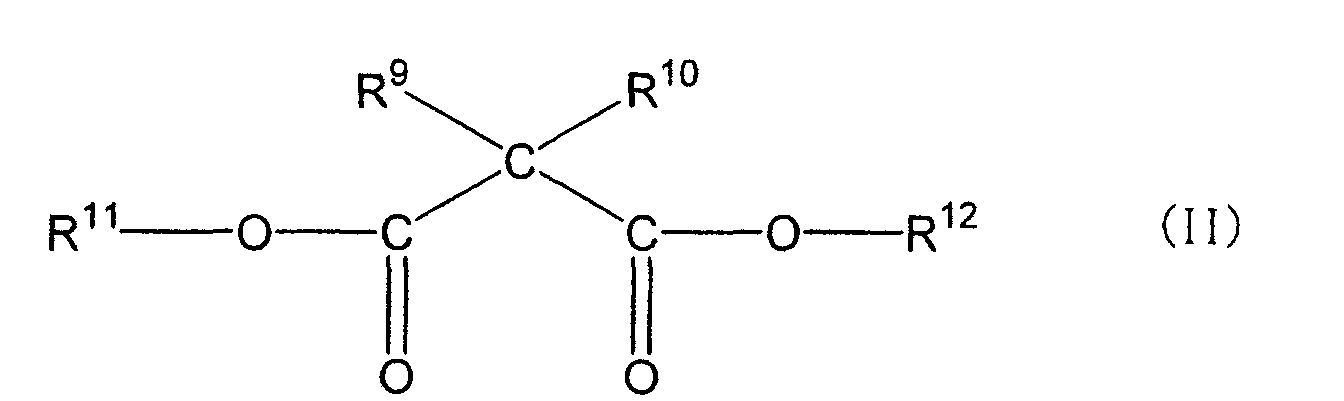

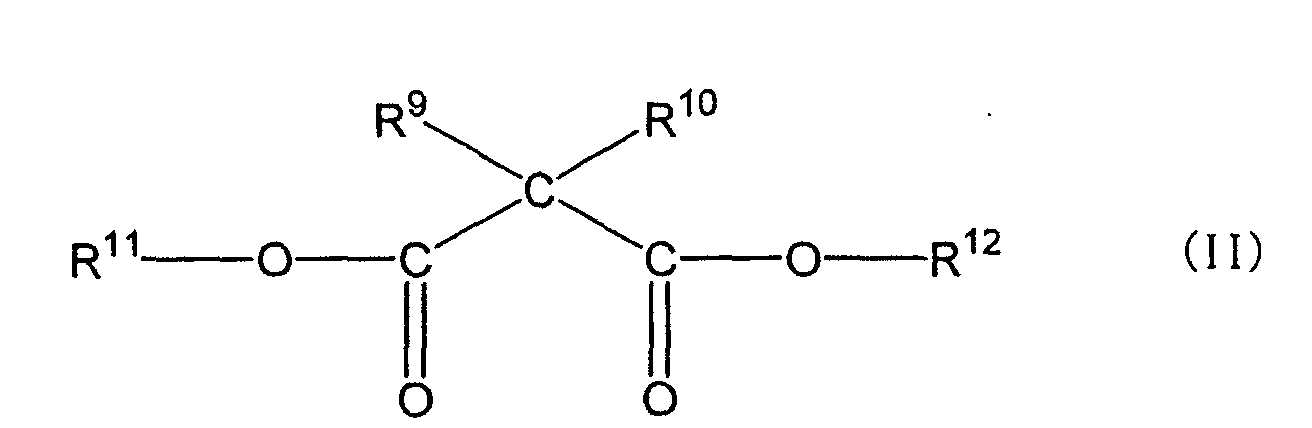




 wherein each of R9 to R12 is independently a linear, branched or cyclic alkyl group, or an arylalkyl group, having 1 to 20 carbon atoms, provided that the total sum of carbon atoms of R9 and R10 is 3 to 40.