EP1504375B1 - Providing a useable version of the data item - Google Patents
Providing a useable version of the data item Download PDFInfo
- Publication number
- EP1504375B1 EP1504375B1 EP03726523A EP03726523A EP1504375B1 EP 1504375 B1 EP1504375 B1 EP 1504375B1 EP 03726523 A EP03726523 A EP 03726523A EP 03726523 A EP03726523 A EP 03726523A EP 1504375 B1 EP1504375 B1 EP 1504375B1
- Authority
- EP
- European Patent Office
- Prior art keywords
- transaction
- version
- data item
- data
- time
- Prior art date
- Legal status (The legal status is an assumption and is not a legal conclusion. Google has not performed a legal analysis and makes no representation as to the accuracy of the status listed.)
- Expired - Lifetime
Links
Images


Classifications
-
- G—PHYSICS
- G06—COMPUTING OR CALCULATING; COUNTING
- G06F—ELECTRIC DIGITAL DATA PROCESSING
- G06F9/00—Arrangements for program control, e.g. control units
- G06F9/06—Arrangements for program control, e.g. control units using stored programs, i.e. using an internal store of processing equipment to receive or retain programs
- G06F9/46—Multiprogramming arrangements
- G06F9/466—Transaction processing
-
- G—PHYSICS
- G06—COMPUTING OR CALCULATING; COUNTING
- G06F—ELECTRIC DIGITAL DATA PROCESSING
- G06F16/00—Information retrieval; Database structures therefor; File system structures therefor
- G06F16/20—Information retrieval; Database structures therefor; File system structures therefor of structured data, e.g. relational data
- G06F16/23—Updating
- G06F16/2308—Concurrency control
- G06F16/2336—Pessimistic concurrency control approaches, e.g. locking or multiple versions without time stamps
- G06F16/2343—Locking methods, e.g. distributed locking or locking implementation details
-
- Y—GENERAL TAGGING OF NEW TECHNOLOGICAL DEVELOPMENTS; GENERAL TAGGING OF CROSS-SECTIONAL TECHNOLOGIES SPANNING OVER SEVERAL SECTIONS OF THE IPC; TECHNICAL SUBJECTS COVERED BY FORMER USPC CROSS-REFERENCE ART COLLECTIONS [XRACs] AND DIGESTS
- Y10—TECHNICAL SUBJECTS COVERED BY FORMER USPC
- Y10S—TECHNICAL SUBJECTS COVERED BY FORMER USPC CROSS-REFERENCE ART COLLECTIONS [XRACs] AND DIGESTS
- Y10S707/00—Data processing: database and file management or data structures
- Y10S707/99951—File or database maintenance
- Y10S707/99952—Coherency, e.g. same view to multiple users
- Y10S707/99955—Archiving or backup
Definitions
- the present invention relates to database systems, and more specifically, to a method for determining whether a transaction in a database system can use a version of a data item.
- SQL Structured Query Language
- data item is used herein to refer to any value or set of values associated with any logical data type or structure.
- typical data items include tables, rows, fields within rows, indexes, index entries, disk blocks, etc.
- versions of the same data item may exist.
- one version of the data item is "current" (i.e. reflects all of the changes that have been made to that data item) and other versions are non-current.
- the non-current versions typically reflect what the current version looked like at previous points in time.
- multi-versioning database systems There are various types of multi-versioning database systems. Some multi-versioning database systems durably store multiple versions of a data item. Other multi-versioning database systems durably store one version of the data item, and recreate other versions as needed by applying undo or redo records to remove or add changes.
- the techniques described herein are not limited to any particular type of multi-versioning system.
- Multi-versioning database systems typically perform versioning at a particular level of granularity. Thus, rather than keep (or generate) separate copies of an entire table, multi-versioning systems typically keep (or generate) separate copies of relatively small chunks of a table.
- chunks that represent the granularity level at which a system manages versioning shall be referred to herein as "data blocks”.
- a transaction is a logical unit of work that is comprised of one or more database language statements.
- the transaction may read or update a data item that was written or updated in response to the execution of previous transactions. Consequently, the results returned by the database system in response to executing any given transaction are typically dictated by changes made by a set of previously executed transactions.
- each transaction must see a database in a consistent state, not all versions of a data item can necessarily be used by a transaction. For example, for a transaction to see a consistent view of that data item, the transaction may need to see certain updates that were made to the data item. However, some versions of the data block that contains the data item may not contain the updates that must be seen by a transaction. On the other hand, other versions of the data block that contains the data item may contain updates that cannot be seen by the transaction. Hence, in situations where multiple versions of a data block are available to transactions, access to the versions of a data item by transactions must be managed so that database consistency is maintained.
- reaction shall be used herein to more generally refer to any entity that, for any reason, is allowed to use some but not all of the possible versions of a data item.
- a system When a system includes multiple nodes, each of which has its own cache, it is even more critical to use efficient techniques for providing a "useable version" of a data item to a transaction. For example, assume that a transaction running on a particular node requires a particular version of a data item. If the required version of the data item is in a data block within the cache of that particular node, then the desired version of the data item can be supplied from that data block to the transaction with minimal overhead. However, the act of providing the required version can be extremely inefficient if the data block that contains the required version of the data item resides (1) only on disk, (2) in the cache of a different node; or (3) must be reconstructed based on information that is on disk or in the cache of a different node.
- US-A-5806076 describes a method and an apparatus for tracking of the dependencies between transactions. Every time a data item is updated, a record is made of the transaction that updated the data item. Before another transaction locks a data item previously locked by the transaction, the entry is updated to indicate that the transaction committed and the commit time of the transaction. These entries are contained in a list head that is maintained on the same block as the data item, and a list tail that is stored separate from the data block that contains the data item. A depends-on time is maintained for each transaction.
- the technique involves a method for providing a data item to a transaction, the method comprising the steps of:
- Examples are described in which the information used to determine whether a version of the row is useable includes a snapshot time associated with the transaction. Examples are also described in which the information used to determine whether a version of a row is useable includes a MUST-SEE time and a CANNOT-SEE time. Various approaches for selecting among multiple useage candidates are also described.
- An approach is provided for determining whether a transaction can use a particular version of a data item.
- the determination of whether the particular version of the data item is useable is made even though the version of the data block that contains that particular version of the data item is not generally usable by the transaction.
- the specific data item in which the transaction is interested may not contain any such changes, and may therefore still be useable by the transaction.
- determining whether a particular version of the data item is useable involves determining whether the data item within the data block is locked. If the data block is not locked, then the last transaction to update that version of the data item has already committed, and would therefore have been assigned a commit time.
- the commit time of the latest transaction that updated a particular version of a data item within a data block shall be referred to herein as the "freshness time" of that version of the data item.
- the latest transaction that updated a particular version of a data item within the block might not be the latest transaction to update the data block itself.
- that same data block it is possible for that same data block to have other data items that are locked by active transactions, and yet for the particular data item to have a freshness time that is old enough for the interested transaction to use.
- the freshness time of the data item is compared with snapshot information associated with the transaction.
- the snapshot information associated with a transaction indicates which versions of data the transaction can and cannot see.
- the comparison between the snapshot information and the freshness time indicates whether that particular version of the data item is useable by the transaction. If that version of the data item is useable by the transaction, then the particular version of the data item may then be provided to the transaction, or added to a pool of candidate versions from which the version that will actually be provided to the transaction is selected.
- the commit time of the transaction holding the lock is used as the freshness time, and the comparison described above is performed to determine whether the data item is usable.
- the transaction holding the lock in active determines whether the transaction holding the lock is the same transaction as the transaction that is attempting to use the data item. If the active transaction holding the lock is not the transaction that is attempting to use the data item, then the version of the data item in that block is not useable. On the other hand, if the active transaction holding the lock is the same transaction as the transaction that is attempting to use the data item, then it is determined whether the data item has any changes that are too recent for the transaction to see. If the data item does not have any changes that are too recent for the transaction to see, then the data item is useable by the transaction.
- a multi-versioning system For a multi-versioning system to provide the correct version of information to transactions, the system must maintain information that indicates the version of information.
- database systems maintain such versioning information at the data block level of granularity, since that is the level of granularity at which versioning is performed.
- database systems maintain an INCLUDE TIME and an EXCLUDE TIME for each version of a data block.
- the INCLUDE TIME specifies the commit time of the most recently committed transaction whose changes are included in the version of the data block.
- the EXCLUDE TIME specifies the time at which the contents of the data block were "current".
- the EXCLUDE TIME of a data block that was created by rolling back changes would typically be the commit time of the oldest transaction whose changes have been removed from the version of the data block. If a particular version of a data block is the most recent version of the data block, then the EXCLUDE TIME for that version is infinity, since no changes have been removed.
- a first transaction causes a copy of a data block to be loaded into a volatile memory
- commits at time T10 The INCLUDE TIME for this first version is set to time T10 and the EXCLUDE TIME is set to infinity.
- a second transaction updates the same copy of the data block to create a second version of the data block and commits at time T30.
- the INCLUDE TIME of the second version of the data block is changed to time T30 to reflect that the second version of the data block includes changes made by a transaction that committed at time T30, while the EXCLUDE TIME remains at infinity, since no changes have been removed from the second version of the data block.
- version information is maintained at the granularity of data blocks, since it is at the granularity of data blocks that the system manages versions.
- version information is maintained at the data item granularity, where a single data block may contain multiple data items.
- the data item version information may be maintained in addition to and/or instead of the data block version information.
- Embodiment of the invention is described herein in the context of a transaction, within a database system, that is attempting to access a particular a row of a table.
- the data for the row of the table will typically reside on a data block that includes data for several other rows.
- examples will be given in which the data item is a row. Consequently, versioning information is maintained on a row-level granularity.
- rows are merely one example of data items that may reside on data blocks within a multi-versioning system. The present approach is not limited to any particular data items, nor to any particular type of multi-versioning system.
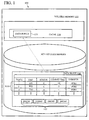
- Figure 1 is a block diagram of a database system 100 that maintains row-level version information for determining whether a transaction can use a particular version of a data item, according to an example of the invention.
- database system 100 includes a volatile memory 102 and non-volatile memory 104.
- Non-volatile memory 104 generally represents one or more storage devices, such as magnetic or optical drives, on which a database is stored.
- a data block 106 is stored on non-volatile memory 104 and contains one or more data items 107.
- data items 107 are identified individually as D1, D2, D3 and D4.
- Data block 106 also contains information about transactions that have recently operated on data items 107. Specifically, the transactions listed in entries 110 include the most recent transactions to update each of the data items in data block 106. Such transactions may either be active (in which case the data block will typically indicate that they are holding a lock on the data item), or committed. For example, entries 110 indicate that transactions TX1 and TX2 committed at times 10 and 5, respectively, while transaction TX3 has not yet committed.
- entries 110 convey version information for the data items within data block 106 at the data item level of granularity. As shall be described in greater detail hereafter, having data item level version information allows data items to be provided to transactions even when the data blocks that contain the data items may not be generally useable by the transactions.
- the information within the data block may indicate that a transaction is active when the transaction has actually committed. This phenomenon is due to delays that can occur between the time a transaction commits, and the time the data blocks that were modified by the transaction are updated to indicate that the transaction committed. As shall be described in greater detail hereafter, this phenomenon may be accounted for by determining whether a transaction that is active according to the information in the data block, has actually committed.
- the structures shown in system 100 are merely one example of how a multi-versioning system may maintain versioning information at the data item level of granularity.
- the specific versioning information, and the techniques for maintaining the information may vary from implementation to implementation.
- the present invention is not limited to any particular structure or technique for maintaining versioning information at the data item level of granularity.
- One approach for managing the execution of transactions to maintain database consistency involves making sure that a transaction sees only (1) changes that were committed to the database by a particular set of committed transactions and (2) changes made by prior statements of the transaction itself.
- the set of transactions whose changes are visible to a statement is referred to as the statement's "snapshot set.”
- the transaction must see a "snapshot" of the database.
- a transaction's snapshot includes all changes made by the transactions in its snapshot set, and none of the changes made by any transactions that are not in its snapshot set ("excluded transactions").
- a multi-versioning database system can ensure that transactions see a consistent snapshot of the database by assigning to each transaction a snapshot time that corresponds to the state of a database at the time the transaction began executing. For consistent read, a transaction must see all changes made to a database by transactions that committed on or before the snapshot time of the transaction, and cannot see any changes made by transactions that committed after the assigned snapshot time.
- a method for determining whether a transaction can use a version of a data item is now described with reference to the flowchart of Figure 2 .
- the steps identified in FIG. 2 refer to an example in which the data item that is required by the transaction is a row located in a data block within a database system.
- the determination of whether the version of the row may be used by the transaction is made by comparing the version information associated with the row to the snapshot information associated with the transaction that requires the row.
- the version information of the row must be determined before it can be compared to the snapshot information of the transaction. Therefore, several of the steps illustrated in FIG. 2 correspond to the act of determining the freshness time of a version of a row.
- step 200 it is determined whether the EXCLUDE time associated with the data block is less than the snapshot time associated with the transaction. If the EXCLUDE time associated with the data block is less than the snapshot time associated with the transaction, then the version of the row that is contained in the data block may be missing changes that must be seen by the transaction. Therefore, control passes to step 202 where the system obtains a correct version of the row from another version of the data block.
- step 204 a determination is made as to whether the information in the data block indicates that the row is locked. If the row is locked, then control proceeds to step 205. Otherwise, control passes to step 210.
- step 210 the commit time of the latest transaction that modified the version of the row that is within that data block is determined.
- the commit time may be determined, for example, by inspecting the entry, within entries 110 ( FIG. 1 ), that contains the information for the latest transaction to update the row.
- the commit time thus determined constitutes the FRESHNESS time of that version of the row.
- step 212 a determination is made as to whether the freshness time is less than or equal to the snapshot time. If not, then the transaction cannot use this version of data block 106 because the version of the row includes a modification that is too new to be seen by the transaction. Under these conditions, control proceeds to step 202 and another version of the data block is used. In some systems, the other version of the block may be generated by applying undo records to the data block in order to remove the changes that are too recent for the transaction to see.
- step 214 the version of the row is provided to the transaction for the transaction to use.
- the version of the row may not be immediately provided to the transaction simply because it is determined that the version is useable by the transaction. Rather, the system may proceed to identify several or all versions of the row that are useable by the transaction. Once the pool of useable candidates is determined, the system may use various criteria for selecting which version of the row is actually provided to the transaction. Various selection criteria may be used, as shall be described in greater detail hereafter.
- the snapshot information associated with the transaction is updated to reflect the particular version of the row that was supplied to the transaction. This step is performed, for example, in examples where the snapshot information identifies a snapshot range. Such examples, and the specifics of how the snapshot information is updated, shall be described in greater details hereafter.
- step 204 If, at step 204, the information contained in the data block indicates that the row is locked, then at step 205 it is determined whether the transaction that holds the lock is truly active. This step is performed because, even though the information in the data block indicates that the row is locked, the transaction that holds the lock may actually have committed, yet the data block had not yet been updated with the commit information of the transaction.
- step 206 it is determined whether the transaction that holds the lock is the same transaction as the transaction that is attempting to read the row. If the transaction that holds the lock is not the same transaction as the transaction that is attempting to read the row, then the version of the row that is in the data block potentially contains information that cannot be seen by the transaction, and control passes to step 202.
- step 208 it is determined whether that version of the row contains information that is too new for the transaction to see. This test is performed because, in some database systems, a transaction is allowed to see changes that it itself has made up to a particular point in time, but no changes that it has made after that particular point in time.
- MUST-SEE and CANNOT-SEE times are used to define a dependency range for each transaction, which can provide more flexibility in selecting a convenient version to read.
- a transaction must see changes made by any transaction that has a commit time at or earlier than the MUST-SEE time.
- the transaction cannot see changes made by any transaction having a commit time at or later than the CANNOT-SEE time.
- MUST-SEE and CANNOT-SEE time is described in more detail in the applications above.
- the CANNOT-SEE time of the given transaction must be greater than the FRESHNESS TIME of the version of the data item. In other words, the most recent transaction whose changes are reflected in the version of the data item must have committed before the CANNOT-SEE time of the given transaction.
- the MUST-SEE time of the given transaction must be less than the EXCLUDE TIME of the version of the data block. In other words, changes that must be seen by the given transaction cannot have been removed from the version of the data block.
- a particular version of a row has a FRESHNESS TIME of T33 and the data block in which that version of the row resides has an EXCLUDE TIME of T39.
- a transaction having a MUST-SEE time of T30 and a CANNOT-SEE time of T40 requests access to the data block. Since the FRESHNESS TIME is less than the CANNOT-SEE time and the EXCLUDE TIME is greater than the MUST-SEE time, the particular version of the data block can be supplied to this transaction.
- the range may have to be adjusted after a version of a data item is supplied to the transaction. For example, if the transaction is provided a version of a data item with a freshness time of T13, then the transaction must thereafter see all data committed as of time T13. Consequently, if the MUST-SEE time of a transaction is T12 prior to reading the version of the data item, then the MUST-SEE time of the transaction must be adjusted to time T13 after reading the data item. Accordingly, the MUST-SEE time for the transaction is changed to the greater of the current MUST-SEE time in the FRESHNESS TIME.
- the CANNOT-SEE time for the reading transaction is changed to the lesser of the current CANNOT-SEE time of the transaction and the EXCLUDE TIME of the data block that contains the data item that was read.
- the CANNOT-SEE time and the MUST-SEE time are adjusted.
- the effect of this adjustment is to narrow the range of snapshots that the transaction may see in future reads.
- Different useable versions of a data item may affect the range in different ways. Consequently, where several useable versions of a data item are present, the efficiency of the system may be affected based on which useable version is selected as the version to be provided to the transaction.
- the selection of the candidate from the pool of candidates is based on the effect that using the candidate will have on the snapshot range of the reading transaction.
- the pool of candidate versions includes the following: Version FRESHNESS EXCLUDE TIME V1 T10 T30 V2 T15 T33 V3 T9 T20
- versions V1, V2 and V3 are all useable candidates because, for all three versions, the FRESHNESS time is less than the CANNOT-SEE time, and the MUST-SEE time is less than the EXCLUDE TIME.
- the [MUST-SEE, CANNOT SEE] range that would result from providing V1 is [T11, T30].
- the [MUST-SEE, CANNOT SEE] range that would result from providing V2 is [T15, T32].
- the [MUST-SEE, CANNOT SEE] range that would result from providing V3 is [T11, T20].
- the version to provide to the transaction is selected from the useable candidates based on the size of the [MUST-SEE, CANNOT SEE] range that will remain after the version is provided to the transaction.
- V1 would be provided to the transaction because the range [T11, T30] is larger than the other ranges.
- the version to provide to the transaction is selected from the useable candidates based on the candidate that would result in the latest CANNOT SEE time.
- V2 would be provided to the transaction because T32 is later than the CANNOT-SEE times that would result from using any of the other candidates. This example is useful, for example, because it attempts to allow the transaction to see newer versions of data.
- FIG. 3 is a block diagram that illustrates a computer system 300 upon which an example of the invention may be implemented.
- Computer system 300 includes a bus 302 or other communication mechanism for communicating information, and a processor 304 coupled with bus 302 for processing information.
- Computer system 300 also includes a main memory 306, such as a random access memory (RAM) or other dynamic storage device, coupled to bus 302 for storing information and instructions to be executed by processor 304.
- Main memory 306 also may be used for storing temporary variables or other intermediate information during execution of instructions to be executed by processor 304.
- Computer system 300 further includes a read only memory (ROM) 308 or other static storage device coupled to bus 302 for storing static information and instructions for processor 304.
- ROM read only memory
- a storage device 310 such as a magnetic disk or optical disk, is provided and coupled to bus 302 for storing information and instructions.
- Computer system 300 may be coupled via bus 302 to a display 312, such as a cathode ray tube (CRT), for displaying information to a computer user.
- a display 312 such as a cathode ray tube (CRT)
- cursor control 316 is Another type of user input device
- cursor control 316 such as a mouse, a trackball, or cursor direction keys for communicating direction information and command selections to processor 304 and for controlling cursor movement on display 312.
- This input device typically has two degrees of freedom in two axes, a first axis (e.g., x) and a second axis (e.g., y), that allows the device to specify positions in a plane.
- the invention is related to the use of computer system 300 for determining whether a transaction can use a version of a data item.
- determining whether a transaction can use a version of a data item is provided by computer system 300 in response to processor 304 executing sequences of instructions contained in main memory 306. Such instructions may be read into main memory 306 from another computer-readable medium, such as storage device 310. Execution of the sequences of instructions contained in main memory 306 causes processor 304 to perform the process steps described herein. Multi-processing arrangements may be used in place of processor 304 to perform the process steps.
- hard-wired circuitry may be used in place of or in combination with software instructions to implement the invention.
- examples of the invention are not limited to any specific combination of hardware circuitry and software.
- multi-processor systems may be employed in place of processor 304.
- Non-volatile media includes, for example, optical or magnetic disks, such as storage device 310.
- Volatile media includes dynamic memory, such as main memory 306.
- Transmission media includes coaxial cables, copper wire and fiber optics, including the wires that comprise bus 302. Transmission media can also take the form of acoustic or light waves, such as those generated during radio-wave and infra-red data communications.
- Computer-readable media include, for example, a floppy disk, a flexible disk, hard disk, magnetic tape, or any other magnetic medium, a CD-ROM, any other optical medium, punch cards, paper tape, any other physical medium with patterns of holes, a RAM, a PROM, and EPROM, a FLASH-EPROM, any other memory chip or cartridge, a carrier wave as described hereinafter, or any other medium from which a computer can read.
- Various forms of computer readable media may be involved in carrying sequences of instructions to processor 304 for execution.
- the instructions may initially be carried on a magnetic disk of a remote computer.
- the remote computer can load the instructions into its dynamic memory and send the instructions over a telephone line using a modem.
- a modem local to computer system 300 can receive the data on the telephone line and use an infra-red transmitter to convert the data to an infra-red signal.
- An infra-red detector coupled to bus 302 can receive the data carried in the infra-red signal and place the data on bus 302.
- Bus 302 carries the data to main memory 306, from which processor 304 retrieves and executes the instructions.
- the instructions received by main memory 306 may optionally be stored on storage device 310 either before or after execution by processor 304.
- Computer system 300 also includes a communication interface 318 coupled to bus 302.
- Communication interface 318 provides a two-way data communication coupling to a network link 320 that is connected to a local network 322.
- communication interface 318 may be an integrated services digital network (ISDN) card or a modem to provide a data communication connection to a corresponding type of telephone line.
- ISDN integrated services digital network
- communication interface 318 may be a local area network (LAN) card to provide a data communication connection to a compatible LAN.
- LAN local area network
- Wireless links may also be implemented.
- communication interface 318 sends and receives electrical, electromagnetic or optical signals that carry digital data streams representing various types of information.
- Network link 320 typically provides data communication through one or more networks to other data devices.
- network link 320 may provide a connection through local network 322 to a host computer 324 or to data equipment operated by an Internet Service Provider (ISP) 326.
- ISP 326 in turn provides data communication services through the world wide packet data communication network now commonly referred to as the "Internet" 328.
- Internet 328 uses electrical, electromagnetic or optical signals that carry digital data streams.
- the signals through the various networks and the signals on network link 320 and through communication interface 318, which carry the digital data to and from computer system 300, are exemplary forms of carrier waves transporting the information.
- Computer system 300 can send messages and receive data, including program code, through the network(s), network link 320 and communication interface 318.
- a server 330 might transmit a requested code for an application program through Internet 328, ISP 326, local network 322 and communication interface 318.
- one such downloaded application provides for determining whether a transaction can use a version of a data item.
- the received code may be executed by processor 304 as it is received, and/or stored in storage device 310, or other non-volatile storage for later execution. In this manner, computer system 300 may obtain application code in the form of a carrier wave.
Landscapes
- Engineering & Computer Science (AREA)
- Theoretical Computer Science (AREA)
- Software Systems (AREA)
- Physics & Mathematics (AREA)
- General Engineering & Computer Science (AREA)
- General Physics & Mathematics (AREA)
- Data Mining & Analysis (AREA)
- Databases & Information Systems (AREA)
- Information Retrieval, Db Structures And Fs Structures Therefor (AREA)
Applications Claiming Priority (5)
| Application Number | Priority Date | Filing Date | Title |
|---|---|---|---|
| US37989902P | 2002-05-10 | 2002-05-10 | |
| US379899P | 2002-05-10 | ||
| US10/263,493 US6957236B1 (en) | 2002-05-10 | 2002-10-02 | Providing a useable version of a data item |
| US263493 | 2002-10-02 | ||
| PCT/US2003/013326 WO2003096226A1 (en) | 2002-05-10 | 2003-04-29 | Providing a useable version of the data item |
Publications (2)
| Publication Number | Publication Date |
|---|---|
| EP1504375A1 EP1504375A1 (en) | 2005-02-09 |
| EP1504375B1 true EP1504375B1 (en) | 2009-03-25 |
Family
ID=29423229
Family Applications (1)
| Application Number | Title | Priority Date | Filing Date |
|---|---|---|---|
| EP03726523A Expired - Lifetime EP1504375B1 (en) | 2002-05-10 | 2003-04-29 | Providing a useable version of the data item |
Country Status (8)
| Country | Link |
|---|---|
| US (1) | US6957236B1 (enExample) |
| EP (1) | EP1504375B1 (enExample) |
| JP (1) | JP4340226B2 (enExample) |
| CN (1) | CN100410930C (enExample) |
| AU (1) | AU2003228754B2 (enExample) |
| CA (1) | CA2484007C (enExample) |
| DE (1) | DE60326835D1 (enExample) |
| WO (1) | WO2003096226A1 (enExample) |
Families Citing this family (29)
| Publication number | Priority date | Publication date | Assignee | Title |
|---|---|---|---|---|
| US7305386B2 (en) * | 2002-09-13 | 2007-12-04 | Netezza Corporation | Controlling visibility in multi-version database systems |
| EP1546929A4 (en) | 2002-09-18 | 2008-07-02 | Netezza Corp | INTELLIGENT CONTROLLER OF STORAGE DEVICE |
| US7987209B2 (en) * | 2002-12-27 | 2011-07-26 | Honda Motor Co., Ltd. | Enhanced trade compliance system: mass amendment |
| US7272609B1 (en) * | 2004-01-12 | 2007-09-18 | Hyperion Solutions Corporation | In a distributed hierarchical cache, using a dependency to determine if a version of the first member stored in a database matches the version of the first member returned |
| US8117170B2 (en) * | 2004-10-06 | 2012-02-14 | International Business Machines Corporation | Transient range versioning based on redirection |
| US7418544B2 (en) * | 2005-10-05 | 2008-08-26 | Oracle International Corporation | Method and system for log structured relational database objects |
| US8051405B2 (en) * | 2006-01-11 | 2011-11-01 | Oracle International Corporation | System and method for build script generation in a software development environment |
| US7548919B2 (en) * | 2006-09-22 | 2009-06-16 | International Business Machines Corporation | Computer program product for conducting a lock free read |
| US7920700B2 (en) * | 2006-10-19 | 2011-04-05 | Oracle International Corporation | System and method for data encryption |
| US8635194B2 (en) * | 2006-10-19 | 2014-01-21 | Oracle International Corporation | System and method for data compression |
| US9465823B2 (en) * | 2006-10-19 | 2016-10-11 | Oracle International Corporation | System and method for data de-duplication |
| US9697253B2 (en) * | 2006-10-20 | 2017-07-04 | Oracle International Corporation | Consistent client-side cache |
| US10296629B2 (en) * | 2006-10-20 | 2019-05-21 | Oracle International Corporation | Server supporting a consistent client-side cache |
| US7739547B2 (en) * | 2007-06-07 | 2010-06-15 | International Business Machines Corporation | Failure recovery and error correction techniques for data loading in information warehouses |
| US7886124B2 (en) * | 2007-07-30 | 2011-02-08 | Oracle International Corporation | Method and mechanism for implementing dynamic space management for large objects |
| US7870108B2 (en) | 2007-09-25 | 2011-01-11 | Amadeus S.A.S. | Method and apparatus for version management of a data entity |
| US8447250B2 (en) * | 2009-06-09 | 2013-05-21 | Broadcom Corporation | Method and system for an integrated voltage controlled oscillator-based transmitter and on-chip power distribution network |
| CN102737028A (zh) * | 2011-04-01 | 2012-10-17 | 深圳市赛格导航科技股份有限公司 | 一种数据库的同步方法及系统 |
| JP5772458B2 (ja) * | 2011-09-29 | 2015-09-02 | 富士通株式会社 | データ管理プログラム、ノード、および分散データベースシステム |
| US9514007B2 (en) * | 2013-03-15 | 2016-12-06 | Amazon Technologies, Inc. | Database system with database engine and separate distributed storage service |
| US9760596B2 (en) * | 2013-05-13 | 2017-09-12 | Amazon Technologies, Inc. | Transaction ordering |
| US20150006466A1 (en) * | 2013-06-27 | 2015-01-01 | Andreas Tonder | Multiversion concurrency control for columnar database and mixed OLTP/OLAP workload |
| JP6289883B2 (ja) * | 2013-11-27 | 2018-03-07 | 株式会社東芝 | ストレージ装置 |
| CN103761324B (zh) * | 2014-01-28 | 2017-02-15 | 宇龙计算机通信科技(深圳)有限公司 | 一种卫星地图的气象遮挡消除方法及系统 |
| FR3046267B1 (fr) | 2015-12-28 | 2018-02-16 | Proton World International N.V. | Stockage de donnees dans une memoire flash |
| US11567934B2 (en) | 2018-04-20 | 2023-01-31 | Oracle International Corporation | Consistent client-side caching for fine grained invalidations |
| CN109558086B (zh) * | 2018-12-03 | 2019-10-18 | 浪潮电子信息产业股份有限公司 | 一种数据读取方法、系统及相关组件 |
| US11347713B2 (en) * | 2019-09-27 | 2022-05-31 | Salesforce.Com, Inc. | Version-based table locking |
| US20230093254A1 (en) * | 2021-09-23 | 2023-03-23 | Nvidia Corporation | Application programming interface to set up graph resources |
Family Cites Families (13)
| Publication number | Priority date | Publication date | Assignee | Title |
|---|---|---|---|---|
| US5794228A (en) * | 1993-04-16 | 1998-08-11 | Sybase, Inc. | Database system with buffer manager providing per page native data compression and decompression |
| US5794229A (en) * | 1993-04-16 | 1998-08-11 | Sybase, Inc. | Database system with methodology for storing a database table by vertically partitioning all columns of the table |
| US5870764A (en) * | 1993-05-12 | 1999-02-09 | Apple Computer, Inc. | Method of managing a data structure for concurrent serial and parallel revision of a work |
| US5806076A (en) | 1996-10-29 | 1998-09-08 | Oracle Corporation | Tracking dependencies between transactions in a database |
| US6237001B1 (en) | 1997-04-23 | 2001-05-22 | Oracle Corporation | Managing access to data in a distributed database environment |
| US5873098A (en) | 1997-04-23 | 1999-02-16 | Oracle Corporation | Dynamic snapshot set adjustment |
| US5956731A (en) * | 1997-04-23 | 1999-09-21 | Oracle Corporation | Sharing snapshots for consistent reads |
| FR2762695B1 (fr) * | 1997-04-29 | 1999-05-28 | Bull Sa | Procede et dispositif de connexion de l'unite centrale d'un systeme de traitement de donnees a un sous-systeme de stockage de donnees a redondance |
| US6192377B1 (en) | 1998-05-13 | 2001-02-20 | Oracle Corporation | Method and apparatus for determing whether a transaction can use a version of a data item |
| US6606660B1 (en) * | 1999-08-31 | 2003-08-12 | Accenture Llp | Stream-based communication in a communication services patterns environment |
| US6564215B1 (en) * | 1999-12-16 | 2003-05-13 | International Business Machines Corporation | Update support in database content management |
| US6772155B1 (en) * | 2001-04-04 | 2004-08-03 | Ncr Corporation | Looking data in a database system |
| US6845384B2 (en) * | 2003-08-01 | 2005-01-18 | Oracle International Corporation | One-phase commit in a shared-nothing database system |
-
2002
- 2002-10-02 US US10/263,493 patent/US6957236B1/en not_active Expired - Lifetime
-
2003
- 2003-04-29 AU AU2003228754A patent/AU2003228754B2/en not_active Expired
- 2003-04-29 WO PCT/US2003/013326 patent/WO2003096226A1/en not_active Ceased
- 2003-04-29 DE DE60326835T patent/DE60326835D1/de not_active Expired - Lifetime
- 2003-04-29 EP EP03726523A patent/EP1504375B1/en not_active Expired - Lifetime
- 2003-04-29 JP JP2004504144A patent/JP4340226B2/ja not_active Expired - Lifetime
- 2003-04-29 CA CA2484007A patent/CA2484007C/en not_active Expired - Lifetime
- 2003-04-29 CN CNB038105691A patent/CN100410930C/zh not_active Expired - Lifetime
Also Published As
| Publication number | Publication date |
|---|---|
| HK1069644A1 (en) | 2005-05-27 |
| CA2484007C (en) | 2010-04-20 |
| CN100410930C (zh) | 2008-08-13 |
| JP2005532615A (ja) | 2005-10-27 |
| JP4340226B2 (ja) | 2009-10-07 |
| DE60326835D1 (de) | 2009-05-07 |
| WO2003096226A1 (en) | 2003-11-20 |
| EP1504375A1 (en) | 2005-02-09 |
| AU2003228754B2 (en) | 2008-09-11 |
| CA2484007A1 (en) | 2003-11-20 |
| AU2003228754A1 (en) | 2003-11-11 |
| US6957236B1 (en) | 2005-10-18 |
| CN1653451A (zh) | 2005-08-10 |
Similar Documents
| Publication | Publication Date | Title |
|---|---|---|
| EP1504375B1 (en) | Providing a useable version of the data item | |
| AU2002303900B2 (en) | Consistent read in a distributed database environment | |
| US6192377B1 (en) | Method and apparatus for determing whether a transaction can use a version of a data item | |
| US7237147B2 (en) | Method and apparatus for making available data that was locked by a dead transaction before rolling back the entire dead transaction | |
| US6237001B1 (en) | Managing access to data in a distributed database environment | |
| US8429134B2 (en) | Distributed database recovery | |
| US7734580B2 (en) | Readable physical storage replica and standby database system | |
| EP0723238B1 (en) | Relational database system and method with high data availability during table data restructuring | |
| US9146934B2 (en) | Reduced disk space standby | |
| US6510421B1 (en) | Performing 2-phase commit with presumed prepare | |
| US6295610B1 (en) | Recovering resources in parallel | |
| US7953749B2 (en) | Providing the timing of the last committed change to a row in a database table | |
| AU2002303900A1 (en) | Consistent read in a distributed database environment | |
| US20070185912A1 (en) | Off-loading I/O and computationally intensive operations to secondary systems | |
| WO2006127402A1 (en) | Version-controlled cached data store | |
| US7437525B2 (en) | Guaranteed undo retention | |
| US7251660B2 (en) | Providing mappings between logical time values and real time values in a multinode system | |
| US10459810B2 (en) | Technique for higher availability in a multi-node system using replicated lock information to determine a set of data blocks for recovery | |
| HK1069644B (en) | Providing a useable version of the data item | |
| EP1788496A2 (en) | Consistent read in a distributed database environment | |
| EP4660830A1 (en) | Query language representations of constraints useable to cause query failure | |
| HK1059491B (en) | Consistent read in a distributed database environment | |
| HK1100096A (en) | Consistent read in a distributed database environment |
Legal Events
| Date | Code | Title | Description |
|---|---|---|---|
| PUAI | Public reference made under article 153(3) epc to a published international application that has entered the european phase |
Free format text: ORIGINAL CODE: 0009012 |
|
| 17P | Request for examination filed |
Effective date: 20041130 |
|
| AK | Designated contracting states |
Kind code of ref document: A1 Designated state(s): AT BE BG CH CY CZ DE DK EE ES FI FR GB GR HU IE IT LI LU MC NL PT RO SE SI SK TR |
|
| AX | Request for extension of the european patent |
Extension state: AL LT LV MK |
|
| 17Q | First examination report despatched |
Effective date: 20050310 |
|
| REG | Reference to a national code |
Ref country code: HK Ref legal event code: DE Ref document number: 1069644 Country of ref document: HK |
|
| DAX | Request for extension of the european patent (deleted) | ||
| RBV | Designated contracting states (corrected) |
Designated state(s): DE FR GB IE NL |
|
| GRAP | Despatch of communication of intention to grant a patent |
Free format text: ORIGINAL CODE: EPIDOSNIGR1 |
|
| GRAS | Grant fee paid |
Free format text: ORIGINAL CODE: EPIDOSNIGR3 |
|
| GRAA | (expected) grant |
Free format text: ORIGINAL CODE: 0009210 |
|
| AK | Designated contracting states |
Kind code of ref document: B1 Designated state(s): DE FR GB IE NL |
|
| REG | Reference to a national code |
Ref country code: GB Ref legal event code: FG4D |
|
| REG | Reference to a national code |
Ref country code: IE Ref legal event code: FG4D |
|
| REF | Corresponds to: |
Ref document number: 60326835 Country of ref document: DE Date of ref document: 20090507 Kind code of ref document: P |
|
| REG | Reference to a national code |
Ref country code: HK Ref legal event code: GR Ref document number: 1069644 Country of ref document: HK |
|
| PLBE | No opposition filed within time limit |
Free format text: ORIGINAL CODE: 0009261 |
|
| STAA | Information on the status of an ep patent application or granted ep patent |
Free format text: STATUS: NO OPPOSITION FILED WITHIN TIME LIMIT |
|
| 26N | No opposition filed |
Effective date: 20091229 |
|
| PG25 | Lapsed in a contracting state [announced via postgrant information from national office to epo] |
Ref country code: IE Free format text: LAPSE BECAUSE OF NON-PAYMENT OF DUE FEES Effective date: 20090429 |
|
| REG | Reference to a national code |
Ref country code: FR Ref legal event code: PLFP Year of fee payment: 14 |
|
| REG | Reference to a national code |
Ref country code: FR Ref legal event code: PLFP Year of fee payment: 15 |
|
| REG | Reference to a national code |
Ref country code: FR Ref legal event code: PLFP Year of fee payment: 16 |
|
| REG | Reference to a national code |
Ref country code: DE Ref legal event code: R079 Ref document number: 60326835 Country of ref document: DE Free format text: PREVIOUS MAIN CLASS: G06F0017300000 Ipc: G06F0016000000 |
|
| PGFP | Annual fee paid to national office [announced via postgrant information from national office to epo] |
Ref country code: GB Payment date: 20220310 Year of fee payment: 20 |
|
| PGFP | Annual fee paid to national office [announced via postgrant information from national office to epo] |
Ref country code: NL Payment date: 20220314 Year of fee payment: 20 Ref country code: FR Payment date: 20220308 Year of fee payment: 20 |
|
| PGFP | Annual fee paid to national office [announced via postgrant information from national office to epo] |
Ref country code: DE Payment date: 20220309 Year of fee payment: 20 |
|
| REG | Reference to a national code |
Ref country code: DE Ref legal event code: R071 Ref document number: 60326835 Country of ref document: DE |
|
| REG | Reference to a national code |
Ref country code: NL Ref legal event code: MK Effective date: 20230428 |
|
| REG | Reference to a national code |
Ref country code: GB Ref legal event code: PE20 Expiry date: 20230428 |
|
| P01 | Opt-out of the competence of the unified patent court (upc) registered |
Effective date: 20230523 |
|
| PG25 | Lapsed in a contracting state [announced via postgrant information from national office to epo] |
Ref country code: GB Free format text: LAPSE BECAUSE OF EXPIRATION OF PROTECTION Effective date: 20230428 |