EP1502390B1 - Netzwerk mit drahtlosen zugangfähigkeiten und verfahren zum datenstromkontrolle - Google Patents
Netzwerk mit drahtlosen zugangfähigkeiten und verfahren zum datenstromkontrolle Download PDFInfo
- Publication number
- EP1502390B1 EP1502390B1 EP03720052A EP03720052A EP1502390B1 EP 1502390 B1 EP1502390 B1 EP 1502390B1 EP 03720052 A EP03720052 A EP 03720052A EP 03720052 A EP03720052 A EP 03720052A EP 1502390 B1 EP1502390 B1 EP 1502390B1
- Authority
- EP
- European Patent Office
- Prior art keywords
- network
- board
- wireless
- switch
- vlan
- Prior art date
- Legal status (The legal status is an assumption and is not a legal conclusion. Google has not performed a legal analysis and makes no representation as to the accuracy of the status listed.)
- Expired - Lifetime
Links
Images


Classifications
-
- H—ELECTRICITY
- H04—ELECTRIC COMMUNICATION TECHNIQUE
- H04L—TRANSMISSION OF DIGITAL INFORMATION, e.g. TELEGRAPHIC COMMUNICATION
- H04L12/00—Data switching networks
- H04L12/28—Data switching networks characterised by path configuration, e.g. LAN [Local Area Networks] or WAN [Wide Area Networks]
- H04L12/46—Interconnection of networks
- H04L12/4641—Virtual LANs, VLANs, e.g. virtual private networks [VPN]
-
- H—ELECTRICITY
- H04—ELECTRIC COMMUNICATION TECHNIQUE
- H04W—WIRELESS COMMUNICATION NETWORKS
- H04W84/00—Network topologies
- H04W84/02—Hierarchically pre-organised networks, e.g. paging networks, cellular networks, WLAN [Wireless Local Area Network] or WLL [Wireless Local Loop]
- H04W84/10—Small scale networks; Flat hierarchical networks
- H04W84/12—WLAN [Wireless Local Area Networks]
-
- H—ELECTRICITY
- H04—ELECTRIC COMMUNICATION TECHNIQUE
- H04L—TRANSMISSION OF DIGITAL INFORMATION, e.g. TELEGRAPHIC COMMUNICATION
- H04L49/00—Packet switching elements
- H04L49/35—Switches specially adapted for specific applications
- H04L49/351—Switches specially adapted for specific applications for local area network [LAN], e.g. Ethernet switches
-
- H—ELECTRICITY
- H04—ELECTRIC COMMUNICATION TECHNIQUE
- H04L—TRANSMISSION OF DIGITAL INFORMATION, e.g. TELEGRAPHIC COMMUNICATION
- H04L49/00—Packet switching elements
- H04L49/35—Switches specially adapted for specific applications
- H04L49/354—Switches specially adapted for specific applications for supporting virtual local area networks [VLAN]
-
- H—ELECTRICITY
- H04—ELECTRIC COMMUNICATION TECHNIQUE
- H04W—WIRELESS COMMUNICATION NETWORKS
- H04W36/00—Hand-off or reselection arrangements
- H04W36/08—Reselecting an access point
Definitions
- the present invention is related to a network with wireless access capabilities and a method for managing data flows.
- Ethernet local area network
- Ethernet technology has shown an amazing ability to adapt to new requirements, evolving from a simple 10 Mbps bus to gigabit full-duplex switched networks and to wireless LANs. Ethernet is well understood and there is a wealth of experience with cost reduction and integration of Ethernet devices.
- 802.11b wireless LAN (WLAN) card technology is subject to the same economy of scale and prices have fallen to less than 30% of their relatively recent original prices. Given its track record, Ethernet is a low-risk, extensible technology suited, for example, to address challenges in wide-area mobility.
- WLAN technology has been characterized as a disruptive technology.
- WLAN technology may change paradigms and lead to unexpected and unpredictable market developments.
- Past examples of disruptive technologies are the telephone, the personal computer (PC) and the Internet.
- PC personal computer
- speed, range and security are three major limitations on WLAN technology: speed, range and security.
- the 802.11b standard supports speeds of up to 11Mbs.
- 802.11a and 802.11g are promising to deliver much higher speeds.
- range is limited, typically, to about fifty meters (50m) outdoors, tests have demonstrated a range capability of up to 20 miles using directional antennas.
- Work is continuing to expand the coverage of the wireless base stations.
- Wired Equivalent Privacy (WEP) for wireless networks has proven far less secure than was intended.
- WEP Wired Equivalent Privacy
- VLAN virtual LAN
- 802.1Q permits the definition, operation and administration of VLAN topologies within a bridged LAN infrastructure, such that LANs of all types may be connected together by Media Access Control (MAC) bridges.
- MAC Media Access Control
- Ethernet LAN variants have been relatively rigidly architected. Once attached or connected, a device could communicate freely with other attached devices. If after sending a request, however, the connection is lost prior to receiving a response, the response was lost. Once reconnected, whether to the same or a different port and, even prior to arrival of the response, the response was lost and the request had to be sent anew. This is still the case for state of the art VLANs and even for devices wirelessly connected to such a VLAN. So, if a wireless device that is connected to a VLAN through an access point leaves the access point's reception area, the wireless device must re-establish communications. It must reestablish communications even if it never leaves the overall LAN reception area, i.e., the area covered by all connected access points, and even if it remains in the reception area of another connected access point.
- the present invention relates to a network with wireless connectivity, a vehicle connected to and including the network and a method of managing network data flow.
- the network includes multiple wireless access points, each connected to an Ethernet aggregation switch.
- Each Ethernet aggregation switch is virtual local area network (VLAN) aware and matches client traffic from connected access points with access VLANs.
- a virtual network switch maintains an association table between access VLANs and core VLANs.
- the virtual network switch uses the association table to manage free-form client traffic between mobile stations at access VLANs at connected Ethernet aggregation switches and appropriate core VLANs.
- the vehicle, including the network may be a train with access points located trackside connecting train passengers to a public network, e.g., the Internet. Wireless devices on the train may also connect to an on-board such network.
- FIG. 1 shows an example of a preferred embodiment network 100 with wireless access capability, i.e., a free-form virtual local area network (FLAN) 100 wherein clients at mobile stations, once connected, roam freely within the wireless coverage area and are seamlessly swapped from one access point to another access point as they roam.
- Mobile stations (MS) 102, 104 which may be wireless client devices are connected by wireless data links to one of numerous access points (APs) 106, 108, 110, 112, 114, 116.
- APs access points
- Examples of such mobile stations 102, 104 or wireless client devices may include what is known as a personal digital assistant (PDA), a cellular phone (in particular an Internet capable cellular phone), a notebook computer/wireless tablet, a desktop computer or, a vehicle such as a train with an on-board network that has wireless communications capability as further described hereinbelow.
- PDA personal digital assistant
- Each AP 106, 108, 110, 112, 114, 116 is connected to an Ethernet aggregation switch 118.
- Each aggregation switch 118 aggregates all client traffic from connected APs 106, 108, 110, 112, 114, 116, passing it upstream to a preferred free-form virtual network switch or FLAN switch 120.
- a preferred embodiment network may include more than one layer of aggregation switches 118 and/or FLAN switches 120.
- the FLAN switch 120 may be connected through a typical router 122 to a typical Dynamic Host Configuration Protocol (DHCP) Server 124 and to a public network, e.g., to the Internet 126.
- DHCP Dynamic Host Configuration Protocol
- the router 122 also connects externally through a typical gateway 128 providing access control, network address translation (NAT) and a firewall.
- Each FLAN switch 120 may have multiple VLAN trunk interfaces 130, 132.
- FLAN switch interfaces 130 connected to aggregation switches 118 are referred to herein as access ports and packets arriving at access ports 130 are downstream packets.
- FLAN switch interfaces 132 connected to routers 122 are referred to herein as core ports and packets arriving at core ports 132 are upstream packets.
- a VLAN-aware switch refers to an Ethernet switch that associates each frame with a single VLAN, e.g., Ethernet aggregation switch 118.
- a typical VLAN-aware switch includes an association table where each row contains a MAC address, a VLAN ID and a port.
- a VLAN aware switch forwards each frame to a MAC address based upon that single associated VLAN.
- a preferred FLAN switch 120 associates each frame with two VLANs, one at an access port 130 and the other at a core port 132. To that end, each FLAN switch 120 maintains a port association table where each row contains a MAC address, an access port/VLAN pair, and a core port/VLAN pair.
- aggregation switches 118 are configured to statically map each of the access ports to a different VLAN on its trunk port.
- each aggregation switch 118 may share VLANs among multiple APs 106, 108, 110, 112, 114, 116, each one connected to a different port. VLAN sharing may be appropriate to minimize the number of VLAN IDs used. However, since there are more available VLAN IDs (4094) than ports on any one aggregation switch 118, normally, the FLAN switch 120 can reuse VLAN IDs on different aggregation switches 118 making sharing VLAN IDs unnecessary.
- each access point 106, 108, 110, 112, 114, 116 is such that the coverage area for each particular access point overlaps other adjacent access points providing uninterrupted service for the intended coverage area.
- a mobile station 102, 104 connected to the network through one of the access points 106, 108, 110, 112, 114, 116 can pass between access point reception areas and remain in constant communication with the rest of FLAN 100.
- the FLAN switch 120 seamlessly receives data passed from connected mobile stations 102, 104, from the particular access point 106, 108, 110, 112, 114, 116, wirelessly receiving the data, from the aggregation switch 118 and, forwards received data to a desired destination over the Internet 126.
- the FLAN switch 120 directs it to an appropriate mobile station 102, 104.
- FLAN switch 120 manages seamless communication between mobile stations 102, 104 and the Internet 126.
- a mobile station 102, 104 moves from one access point reception area, e.g., 110, to another, e.g., 116, data transmission to/from the particular mobile station 102, 104 is automatically conveyed correctly over the rest of FLAN 100 without any manual intervention.
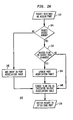
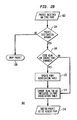
- FIGS 2A-B show flow diagrams for FLAN switch packet handling, downstream packets at access ports in flow diagram 140 and upstream packets at core ports in flow diagram 160 according to a preferred embodiment of the present invention.
- a downstream packet is received at an access port in step 142.
- the router 122 in Figure 1
- the DHCP Server 124 in addition to otherwise functioning as a normal DHCP Server, returns an address to the client, thereby configuring the client (e.g., MS 102, 104) and, switches to pass the traffic.
- the DHCP Server 124 can re-assign the client 102, 104 to a subnet that does not match a default VLAN assigned by the FLAN switch.
- the MS 102, 104 is assigned to a subnet other than the default, the DHCP response is directed to the appropriate DHCP relay agent and on to the correct VLAN.
- the port association table is checked to determine if the frame includes the MAC address of a currently connected MS 102, 104. If the packet does not originate from a current connection, then in step 146, a new connection is configured by entering the source MAC address, the access port/VLAN and default core port/VLAN information in the port association table. The default core port/VLAN is related to the incoming access port/VLAN. In step 148 the appropriate VLAN tag is changed to reflect the new default core VLAN for the downstream packet. Then, in step 150 the packet is switched to the default core port.
- step 152 the port association table is checked to determine if the access port/VLAN has changed.
- the access port/VLAN may change when the mobile station (e.g., 102) roams between AP reception areas, e.g., from first wireless access point 110 in Figure 1 to another wireless access point 116. If the access port/VLAN is unchanged, then, continuing to step 148 the package is updated with the appropriate VLAN tag and in step 150 switched to the appropriate identified core port. Otherwise, if the access port/VLAN is changed in step 152; then, in step 154 the port association table is updated and in step 148 the VLAN tag is changed. Then, in step 150 the packet is switched to the appropriate identified core port.
- step 162 of Figure 2B when a packet is received at a core port, in step 164 the packet frame is checked for a known destination. If the upstream packet is not directed to a known destination, then, it is not intended for any currently connected MS (e.g., 102 or 104) and, in step 166 the packet is dropped. If, however, the frame includes the destination MAC for a connected MS 102 or 104, the packet is for a known destination. Then, in step 168, the association table is checked to determine if the client association has changed from the most recent communication with that client.
- the association table may have changed because the identified core VLAN may have changed in a DHCP response or, because the MS 102, 104 has been assigned to a VLAN other than the default for its incoming port. Also, the VLAN and the port may both change if there is a fail over to a backup router. If the client association is unchanged, then, in step 170 the VLAN tag is changed to reflect the correct access VLAN for the packet. If the port association has changed, then in step 172 the port association table is updated before the VLAN tag is changed in step 170. Then, in step 174 the packet is switched to its access port.
- the packet is assigned to a VLAN based on the mobile station's physical location in the network, i.e., the port for its connected Access Point 106, 108, 110, 112, 114, 116.
- a packet traveling to a mobile station on the core side of the FLAN switch 120 is assigned to a VLAN based on the mobile station's logical location in the network, or, equivalently, the mobile station's IP subnet.
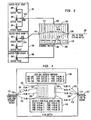
- FIG. 3 is an example of VLAN configuration of an Ethernet aggregation switch 118 according to a preferred embodiment of the present invention.
- the FLAN switch meshes through VLAN trunk interface 130 with the VLAN configuration of Ethernet aggregation switches 118 and the router 122.
- APs 180 are grouped and each group 182, 184, 186 is connected through a hub 182h, 184h, if appropriate. Hubs 182h, 184h and individual APs (i.e. single AP groups 186) are connected to Ethernet aggregation switch ports 188, 190, 192.
- Each of these Ethernet switch ports 188, 190, 192 is mapped to an individual VLAN 194, 196, 198 on a VLAN trunk 200 connected to a FLAN access port.
- Each AP group 182, 184, 186 is mapped individually; there are no layer 2 connections between the AP groups 182, 184, 186 within the Ethernet aggregation switch 118.
- Figure 4 shows an example of how a preferred FLAN switch 120, preprogrammed with default relationships, relates VLANs 194, 196, 198, 202, 204, 206, 208, 210 on access port 212 and core port 214 of the FLAN switch 120.
- Default association table 216 provides default VLAN pairs as well as fixed core VLAN assignment for the FLAN switch 120.
- Devices that access special networks or devices requiring fixed IP addresses are assigned by MAC address in association table 218. These relationships may be stored in clear text configuration files and modified using any suitable text editor.
- the FLAN switch 120 is aware of three mobile stations with MAC addresses ABC, XYZ and 456, all at Port 6, as indicated in association table 218.
- the VLAN ID numbers e.g., 1, 2, 3, 4, 21, 22, 23, 24
- devices ABC and 456 are in their default VLAN associations as indicated in default association table 216.
- device XYZ is not in the default VLAN association for port 6. Instead, its association connects it to VLAN 204. So, for this example, device XYZ may have been moved from one Access Point Group to another.
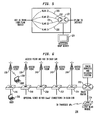
- FIG. 5 shows an example of connecting the core VLANs (e.g., 204, 206, 208, 210 of Figure 4 ) are mapped to logical interfaces 220, 222, 224, 226 on the router 122.
- each logical interface 220, 222, 224 226 is configured to provide DHCP relay; the DHCP server 124 uses the relay agent IP address (i.e., the giaddr field in the DHCP message body) to determine the appropriate IP subnet.
- the relay agent IP address i.e., the giaddr field in the DHCP message body
- Different sub-interfaces within the router 122, each corresponding to a different incoming VLAN, 220, 222, 224, 226 may be configured with different rules, e.g., for Internet access.
- DHCP server may be modified to respond on a different VLAN, enabling the DHCP server to control VLAN assignment on the core side of the FLAN switch.
- Figure 6 shows an example of a train mounted LAN 230, which may be an FLAN, providing on-train mobility for train passenger users.
- the train mounted LAN 230 may connect to a home station through trackside APs (corresponding to APs 106, 108, 110, 112, 114 and 116 in Figure 1 ) using a Client WLAN/Ethernet bridge 234 through an off-the-shelf small Ethernet router 232.
- the client Wireless LAN bridge 234 provides a bridged connection between the train router port and the trackside Ethernet infrastructure.
- the client WLAN bridge 234 is connected to a medium gain omni-directional antenna system that may be mounted on the train exterior.
- the standard small router 232 can provide DHCP and basic connectivity on the train at very low cost.
- the train router MAC address is visible to upstream side of the FLAN switch (not shown in this figure).
- train passenger users are not affected by mobility events as the train moves from AP to AP.
- back to back medium gain directional antennas aligned fore and aft may be mounted on the train.
- Each car may be equipped with standard 802.11b Access Points 236, 238, 240, 242, 244 depending upon antenna location, power and electrical noise.
- Daisy-chained Ethernet hubs 246, 248, 250, 252, 254 interconnect clients in the cars.
- the hubs 246, 248, 250, 252, 254 can also provide wired Ethernet connections at passenger seats.
- all the train networking hardware is off-the-shelf, although the antenna and power systems are adapted for on-board train use as necessary.
- wireless client devices 256, 258 are connected to an FLAN on the train and core FLAN APs are at the trackside.
- Local APs 236, 238, 240, 242, 244 on the train are hidden behind the mobile station or "client device" router 232.
- the router 232 acts as a gateway for all passenger users on the train, and router MAC address is attached to all outgoing packets.
- the train router 232 uses layer 3 addresses to direct traffic to clients on the train.
- the trackside core FLAN switch sees all train traffic arriving with the same MAC address.
- a single MAC address means a single table update whenever there is a mobility event due to the movement of the train.
- each rail car has an internal network with wired Ethernet hubs for wired connections, an internal wireless access point and an external wireless client bridge connecting to trackside wireless access points.
- each rail car has an independent network and traffic may be bridged to the trackside network and FLAN switch as described hereinabove.
- this embodiment avoids the cost and complexity of a wired network between rail cars.
- the client bridges can also provide communication between rail cars.
- a preferred railway FLAN provides 2-10 Mbps Internet connections for passenger Internet access, train data services and for security.
- Passengers can connect to the on-board FLAN using either a standard wireless LAN card or a wired Ethernet connection.
- the separate dedicated wireless FLAN connection moves data between the train and trackside APs. Mobility between the trackside APs is provided by the FLAN.
- Application of the present invention to a very large rail network allows connection of hundreds of trains over thousands of kilometers of track to the same network.
- Figure 7 is an example of a preferred trackside or FLAN 260.
- the trackside 802.11b APs 262, 264 are normally co-located with an existing trackside system, in this example the global system for mobile communications-railway base receiver station (GSM-R BTSs) at trackside.
- the APs 262, 264 utilize directional WLAN antennas 266, 268 pointing along the track to achieve a 5-10 km range. Where GSM-R BTS locations do not afford full coverage, additional APs 262, 264 may be installed between the transceiver locations.
- trackside copper telephone lines 270 and symmetric digital subscriber line (sDSL) modems 272 may be included to carry the data back to the GSM-R location.
- sDSL symmetric digital subscriber line
- FIG 8 is an example of a preferred FLAN 280 tunneling traffic between a FLAN switch 282 and an access network 284.
- the FLAN 280 is based on standard Ethernet protocol, it can easily be configured to tunnel Ethernet frames over most typical state of the art networks, e.g., SONET, ATM or IP networks.
- the access network 284 includes a group of APs 286, 288, 290 connected to hub 292. Hub 292 is connected to router 294, which connects through the Internet to router 296. Router 296 connects through Ethernet aggregation switch 298 to FLAN switch 282. Tunneling managed by routers 294, 296 may be used when it is otherwise impossible to share bandwidth, e.g., with a GSM-R BTS. Alternately, the tunneled traffic can be carried back to the FLAN switch 282 over a normal Internet connection, e.g., using a Cable Modem, xDSL or TDM.
- the present invention facilitates creating large free-form wireless data networks, i.e., FLANs that permit end-user mobility.
- FLANs can be established anywhere, e.g., in airports, coffee shops, dense urban areas, and aboard trains and buses.
- the present invention provides free-form wireless access using industry-standard wireless data technology, e.g., 802.11b and 802.11a.
- Typical available devices, equipped for wireless access, e.g., a laptop computer with an 802.11b card enable clients to connect to the FLAN using Internet Protocol (IP) without regard to location, whether at the office, at home or traveling across country by rail.
- IP Internet Protocol
- the FLAN is a simple and easy to manage network where existing client devices can "turn on and go" moving freely amongst AP reception areas without loading additional software or otherwise configuring the client device.
- a preferred embodiment FLAN may use standard, off-the-shelf equipment and, where customization is necessary, such customization may be confined to a single place in the network, the FLAN switch.
- authorization and accounting (AAA) as well as other wireless security features may be included just as with any other state of the art network.
- the present invention provides all of these advantages with a layer-two Ethernet network to interconnect the wireless access points.
- the usual scalability problems of such a network are avoided through a preferred application of IEEE 802.1Q Virtual LANs (VLANs) to effectively partition the network into many smaller networks, thus avoiding problems with broadcast traffic and spanning trees.
- VLANs Virtual LANs
Landscapes
- Engineering & Computer Science (AREA)
- Computer Networks & Wireless Communication (AREA)
- Signal Processing (AREA)
- Computer Security & Cryptography (AREA)
- Mobile Radio Communication Systems (AREA)
- Small-Scale Networks (AREA)
Claims (15)
- Netzwerk mit Drahtloszugangsmöglichkeit, das Folgendes umfasst:mehrere Drahtloszugangspunkte (106, 108, 110, 112, 114, 116),mindestens einen Ethernet-Aggregation-Switch (118), wobei einer der mehreren Drahtloszugangspunkte (106, 108, 110, 112, 114, 116) mit jedem mindestens einen Ethernet-Aggregation-Switch (118) verbunden ist, jeder mindestens eine Ethernet-Aggregation-Switch (118) virtuelle LAN (Virtual Local Area Network - VLAN) erkennt und so ausgelegt ist, dass er den Client-Verkehr von den mehreren verbundenen Drahtloszugangspunkten (106, 108, 110, 112, 114, 116) Zugangs-VLAN zuordnet, undeinen Switch für freie virtuelle Netzwerke (120), der so ausgelegt ist, dass er eine Tabelle der Assoziationen zwischen den Zugangs-VLAN und entsprechenden Kern-VLAN führt, wobei der Switch für freie virtuelle Netzwerke (120) so ausgelegt ist, dass er Client-Verkehr zwischen den Zugangs-VLAN an jedem mindestens einen Ethernet-Aggregation-Switch und den entsprechenden Kern-VLAN weiterleitet.
- Netzwerk nach Anspruch 1, das ferner Folgendes umfasst:mindestens eine Mobilstation (102), die sich durch Empfangsbereiche von Drahtloszugangspunkten bewegt,wobei das Netzwerk und/ oder die mindestens eine Mobilstation so ausgelegt sind, dass sie eine drahtlose Verbindung aufrechterhalten, während die mindestens eine Mobilstation zwischen Empfangsbereichen wechselt.
- Netzwerk nach Anspruch 2, bei dem wie erwähnt der Switch für freie virtuelle Netzwerke (120) so ausgelegt ist, dass er jede Änderung des Empfangsbereichs erkennt, und so ausgelegt ist, dass er die Assoziationstabelle für jede Änderung aktualisiert, wenn die mindestens eine Mobilstation zwischen Empfangsbereichen wechselt.
- Netzwerk nach Anspruch 1, das ferner Folgendes umfasst:einen Router (122), der so ausgelegt ist, dass er Verkehr auf den Kern-VLAN zwischen dem Switch für virtuelle Netzwerke (120) und einem öffentlichen Netzwerk (126) weiterleitet,einen DHCP-Server (Dynamic Host Configuration Protocol) (124), der so ausgelegt ist, dass er die Verbindung zwischen dem Switch für freie virtuelle Netzwerke (120) und dem öffentlichen Netzwerk (126) verwaltet, undein Gateway (128), das so ausgelegt ist, dass es für Zugangskontrolle, Network Address Translation und Firewall-Sicherheit in dem öffentlichen Netzwerk sorgt.
- Netzwerk nach Anspruch 1, bei dem mindestens zwei der Drahtloszugangspunkte (180) mit einem Hub (184h) verbunden sind und eine Drahtloszugangspunktgruppe (184) bilden, wobei das Hub (184h) die Drahtloszugangspunktgruppe (184) mit dem Ethernet-Aggregation-Switch (118) verbindet.
- Netzwerk nach Anspruch 2, bei dem die Drahtloszugangspunkte (236, 238, 240, 242, 244) an Bahngleisen entlang verlaufen und mindestens eine Mobilstation (258) eine Bordvorrichtung (258) in einem Zug ist, wobei der Zug ferner Folgendes umfasst:ein Bordnetzwerk, das mit der Bordvorrichtung verbunden ist, wobei drahtlose Bordvorrichtungen über das Bordnetzwerk mit dem öffentlichen Netzwerk verbunden sind.
- Netzwerk nach Anspruch 6, bei dem es sich bei der Bordvorrichtung (258) um eine Client-WLAN-Bridge handelt, die so ausgelegt ist, dass sie sich mit den an den Gleisen liegenden Drahtloszugangspunkten (236, 238, 240, 242, 244) verbindet.
- Netzwerk nach Anspruch 7, bei dem das Bordnetzwerk mehrere Bordzugangspunkte umfasst, die so ausgelegt sind, dass sie drahtlose Fahrgastvorrichtungen im Zug mit dem Bordnetzwerk verbinden.
- Netzwerk nach Anspruch 8, bei dem das Bordnetzwerk ferner Folgendes umfasst:mindestens einen Ethernet-Aggregation-Switch an Bord,wobei einzelne Drahtloszugangspunkte an Bord mit dem mindestens einen Ethernet-Aggregation-Switch an Bord verbunden sind,wobei jeder Ethernet-Aggregation-Switch an Bord so ausgelegt ist, dass er VLAN erkennt und den Client-Verkehr von den verbundenen Drahtloszugangspunkten an Bord einem der Zugangs-VLAN zuordnet,einen Switch für freie virtuelle Netzwerke an Bord, der so ausgelegt ist, dass er Client-Verkehr von den zugeordneten Zugangs-VLAN an jedem verbundenen Bord-Ethernet-Aggregation-Switch empfängt und zu entsprechenden Kern-VLAN weiterleitet.
- Verfahren zum Verwalten des Datenflusses zwischen Mobilstationen (102) und entfernten Zielorten, die mit den Mobilstationen (102) verbunden sind, wobei das Verfahren folgende Schritte umfasst:a) Überprüfen jedes empfangenen Kommunikationsdatenpakets auf eine bekannte Adresse,b) Ermitteln für jedes empfangene Kommunikationsdatenpaket mit einer bekannten Adresse, ob sich eine bisherige Zugangsanschluss-VLAN-Korrespondenz für eine Mobilstation an der bekannten Adresse geändert hat,c) Aktualisieren einer Anschlussassoziationstabelle an einem Switch für freie virtuelle Netzwerke für jedes Kommunikationsdatenpaket, wobei ermittelt wird, dass sich die Zugangsanschluss-VLAN-Korrespondenz geändert hat,d) Ändern eines VLAN-Tags für jedes Kommunikationsdatenpaket mit einer aktualisierten Zugangsanschluss-VLAN-Korrespondenz unde) Schalten jedes Kommunikationsdatenpakets auf einen identifizierten Kernanschluss.
- Verfahren nach Anspruch 10, bei dem ein empfangenes Kommunikationsdatenpaket, wenn es sich dabei um ein Paket für die Mobilstation handelt, das von einem Kernanschluss empfangen wurde, und in Schritt a) ermittelt wurde, dass die Adresse unbekannt ist, weggelassen (166) wird.
- Verfahren nach Anspruch 10, bei dem in Schritt c), wenn es sich bei einem empfangenen Kommunikationsdatenpaket um ein Paket von der Mobilstation handelt und in Schritt a) ermittelt wird, dass das Paket nicht für eine bekannte Adresse vorgesehen ist, in der Anschlussassoziationstabelle ein Eintrag für entsprechende Kern- und Zugangs-VLAN- und Anschlusszuordnungen vorgenommen (146) wird.
- Verfahren nach Anspruch 10, bei dem es sich bei der Adresse um eine MAC-Adresse für die Mobilstation handelt.
- Fahrzeug, das so ausgelegt ist, dass es die Kommunikation mit einem drahtlosen Netzwerk nach den Ansprüchen 1 bis 9 unterstützt, wobei das Fahrzeug Folgendes umfasst:eine Bord-WLAN-Bridge, die so ausgelegt ist, dass sie sich mit auf dem Weg liegenden Drahtloszugangspunkten verbindet,ein Bordnetzwerk, das mit der Bord-WLAN-Bridge und Bordvorrichtungen verbunden ist, wobei die Bordvorrichtungen so ausgelegt sind, dass sie sich über das Bordnetzwerk mit einem öffentlichen Netzwerk verbinden, wobei das Fahrzeug so ausgelegt ist, dass es zwischen Empfangsbereichen der auf dem Weg liegenden Drahtloszugangspunkte wechselt.
- Fahrzeug nach Anspruch 14, bei dem es sich um einen Personenzug für das Netzwerk nach einem der Ansprüche 6 bis 9 handelt.
Applications Claiming Priority (3)
| Application Number | Priority Date | Filing Date | Title |
|---|---|---|---|
| US10/140,629 US7532604B2 (en) | 2002-05-08 | 2002-05-08 | Local area network with wireless client freedom of movement |
| US140629 | 2002-05-08 | ||
| PCT/CA2003/000660 WO2003096623A1 (en) | 2002-05-08 | 2003-05-02 | Local area network with wireless client freedom of movement |
Publications (2)
| Publication Number | Publication Date |
|---|---|
| EP1502390A1 EP1502390A1 (de) | 2005-02-02 |
| EP1502390B1 true EP1502390B1 (de) | 2012-12-19 |
Family
ID=29399474
Family Applications (1)
| Application Number | Title | Priority Date | Filing Date |
|---|---|---|---|
| EP03720052A Expired - Lifetime EP1502390B1 (de) | 2002-05-08 | 2003-05-02 | Netzwerk mit drahtlosen zugangfähigkeiten und verfahren zum datenstromkontrolle |
Country Status (8)
| Country | Link |
|---|---|
| US (1) | US7532604B2 (de) |
| EP (1) | EP1502390B1 (de) |
| JP (1) | JP4044929B2 (de) |
| KR (1) | KR100660242B1 (de) |
| CN (1) | CN100375452C (de) |
| AU (1) | AU2003223801B8 (de) |
| CA (1) | CA2485821C (de) |
| WO (1) | WO2003096623A1 (de) |
Families Citing this family (81)
| Publication number | Priority date | Publication date | Assignee | Title |
|---|---|---|---|---|
| JP3849929B2 (ja) * | 2002-06-14 | 2006-11-22 | Kddi株式会社 | 仮想lan対応の無線lanシステム |
| US8667105B1 (en) * | 2002-06-26 | 2014-03-04 | Apple Inc. | Systems and methods facilitating relocatability of devices between networks |
| US7321573B2 (en) * | 2002-08-29 | 2008-01-22 | Pfeiffer Jeffrey C | Radio and data network system |
| WO2004027628A1 (en) * | 2002-09-17 | 2004-04-01 | Broadcom Corporation | System and method for access point (ap) aggregation and resiliency in a hybrid wired/wireless local area network |
| US20080259945A1 (en) * | 2002-09-24 | 2008-10-23 | Chris Catterall | Communication circuit for a vehicle |
| US20070208864A1 (en) * | 2002-10-21 | 2007-09-06 | Flynn Lori A | Mobility access gateway |
| US7562393B2 (en) * | 2002-10-21 | 2009-07-14 | Alcatel-Lucent Usa Inc. | Mobility access gateway |
| US7499401B2 (en) * | 2002-10-21 | 2009-03-03 | Alcatel-Lucent Usa Inc. | Integrated web cache |
| US7337224B1 (en) * | 2002-10-24 | 2008-02-26 | Cisco Technology, Inc. | Method and apparatus providing policy-based determination of network addresses |
| US11368537B2 (en) * | 2002-10-28 | 2022-06-21 | Dynamic Mesh Networks, Inc. | High performance wireless network |
| DE502004006742D1 (de) * | 2003-02-19 | 2008-05-21 | Arvinmeritor Gmbh | Sonnenschutzsystem für ein Kraftfahrzeug |
| JP4587446B2 (ja) * | 2003-08-07 | 2010-11-24 | キヤノン株式会社 | ネットワークシステム、並びにスイッチ装置及び経路管理サーバ及びそれらの制御方法、及び、コンピュータプログラム及びコンピュータ可読記憶媒体 |
| WO2005032171A1 (en) * | 2003-09-26 | 2005-04-07 | Cmte Development Limited | Virtual network system |
| US7821984B2 (en) * | 2003-09-29 | 2010-10-26 | Wilson W David | Satellite distributed high speed internet access |
| US20050122939A1 (en) * | 2003-12-09 | 2005-06-09 | Heng-Chien Chen | Roaming local area network |
| US20050141567A1 (en) * | 2003-12-29 | 2005-06-30 | Abed Jaber | Extending Ethernet-over-SONET to provide point-to-multipoint service |
| US7050801B2 (en) * | 2004-01-19 | 2006-05-23 | Cisco Technology, Inc. | Method and system for hitless wireless roaming in a mobile environment |
| US20050180366A1 (en) * | 2004-02-13 | 2005-08-18 | Excell Matthew W. | Voice over internet communications convergence system |
| US7545782B2 (en) | 2004-02-19 | 2009-06-09 | Belair Networks, Inc. | Mobile station traffic routing |
| US7477894B1 (en) * | 2004-02-23 | 2009-01-13 | Foundry Networks, Inc. | Methods and apparatus for handling wireless roaming among and across wireless area networks |
| DE602004001455T2 (de) * | 2004-05-24 | 2006-12-21 | Alcatel | Drahtlose Datenweiterleitung zwischen Zugangspunkten für eine Eisenbahn |
| CN100366108C (zh) * | 2004-06-14 | 2008-01-30 | 上海贝尔阿尔卡特股份有限公司 | 后第三代移动通信系统、移动接入代理装置和移动通信方法 |
| US20050286479A1 (en) * | 2004-06-29 | 2005-12-29 | Eric Spencer | Business method and apparatus for providing wireless telecommunication services for mobile applications |
| US20060045246A1 (en) * | 2004-08-31 | 2006-03-02 | United Villages, Inc. | Billing and payment method for networks incorporating long latency in their systems architectures |
| US20060068799A1 (en) * | 2004-09-27 | 2006-03-30 | T-Mobile, Usa, Inc. | Open-host wireless access system |
| US7734764B2 (en) * | 2004-12-17 | 2010-06-08 | General Electric Company | Automated remote monitoring and diagnostics service method and system |
| US7433673B1 (en) | 2004-12-17 | 2008-10-07 | Sprint Spectrum L.P. | Method and system for providing location information for a wireless local area network (WLAN) |
| WO2006118497A1 (en) * | 2005-04-29 | 2006-11-09 | Telefonaktiebolaget L M Ericsson (Publ) | Operator shop selection |
| EP1727311A1 (de) * | 2005-05-23 | 2006-11-29 | Siemens Transportation Systems S.A.S. | Kommunikationssystem zwischen einem Fahrzeugnetzwerk und streckenseitigem Netzwerk |
| WO2007004586A1 (ja) * | 2005-06-30 | 2007-01-11 | Matsushita Electric Industrial Co., Ltd. | 移動通信制御方法、データ通信装置、移動基地局装置並びに移動端末 |
| JP5040087B2 (ja) * | 2005-09-06 | 2012-10-03 | 富士通株式会社 | 無線通信ネットワークのセキュリティ設定方法、セキュリティ設定プログラム及び無線通信ネットワークシステム |
| EP1777891A1 (de) * | 2005-10-21 | 2007-04-25 | Alcatel Lucent | Verfahren zur Versorgung eines Hohendatenratendienstes zu einer Gruppe von mobilen Endgeräten, die sich zusammen bewegen |
| FI20051216A0 (fi) | 2005-11-29 | 2005-11-29 | Nokia Corp | Menetelmä, järjestelmä ja järjestelyjä WLAN-yhteyden muodostamiseksi ja ylläpitämiseksi ennustettavasti liikkuvissa kulkuneuvoissa |
| US8054799B2 (en) | 2005-12-02 | 2011-11-08 | Alcatel Lucent | Seamless mobility in layer 2 radio access networks |
| KR100737806B1 (ko) | 2005-12-26 | 2007-07-10 | 전자부품연구원 | Most-대-이더넷 정합 장치 및 이를 이용한most-대-이더넷 네트워크 |
| US7796590B1 (en) * | 2006-02-01 | 2010-09-14 | Marvell Israel (M.I.S.L.) Ltd. | Secure automatic learning in ethernet bridges |
| US7924780B2 (en) | 2006-04-12 | 2011-04-12 | Fon Wireless Limited | System and method for linking existing Wi-Fi access points into a single unified network |
| US9826102B2 (en) | 2006-04-12 | 2017-11-21 | Fon Wireless Limited | Linking existing Wi-Fi access points into unified network for VoIP |
| US8798821B2 (en) | 2009-03-17 | 2014-08-05 | General Electric Company | System and method for communicating data in a locomotive consist or other vehicle consist |
| US8935022B2 (en) | 2009-03-17 | 2015-01-13 | General Electric Company | Data communication system and method |
| US8702043B2 (en) | 2010-09-28 | 2014-04-22 | General Electric Company | Rail vehicle control communication system and method for communicating with a rail vehicle |
| US9637147B2 (en) | 2009-03-17 | 2017-05-02 | General Electronic Company | Data communication system and method |
| US8655517B2 (en) | 2010-05-19 | 2014-02-18 | General Electric Company | Communication system and method for a rail vehicle consist |
| US8825239B2 (en) | 2010-05-19 | 2014-09-02 | General Electric Company | Communication system and method for a rail vehicle consist |
| US9379775B2 (en) | 2009-03-17 | 2016-06-28 | General Electric Company | Data communication system and method |
| US8532850B2 (en) * | 2009-03-17 | 2013-09-10 | General Electric Company | System and method for communicating data in locomotive consist or other vehicle consist |
| EP1860829A1 (de) * | 2006-05-15 | 2007-11-28 | Ruf Telematik AG | Umgehungsmechanismus eines Verbinders in einem Verkehrsmittelnetzwerk |
| EP2052499B1 (de) * | 2006-08-18 | 2016-11-02 | Wifi Rail, Inc. | System und verfahren zur drahtlosen kommunikation mit mobilen geräten |
| US20080089323A1 (en) * | 2006-10-13 | 2008-04-17 | At&T Knowledge Ventures, L.P. | System and method for assigning virtual local area networks |
| CN100466626C (zh) * | 2006-11-27 | 2009-03-04 | 华为技术有限公司 | 区分无线业务的方法及无线传输设备 |
| FR2927210B1 (fr) * | 2008-02-01 | 2010-02-26 | Airbus France | Dispositif de commutation adapte a commuter un reseau sans fil d'aeronef d'une configuration de maintenance a une configuration commerciale et reciproquement. |
| US20090268678A1 (en) * | 2008-04-24 | 2009-10-29 | Fujitsu Limited | Method and apparatus for automatic gain control in a mobile orthogonal frequency division multiple access (ofdma) network |
| WO2009151480A1 (en) * | 2008-06-13 | 2009-12-17 | Nortel Networks Limited | Unifying virtualizations in a core network and a wireless access network |
| US8583299B2 (en) * | 2009-03-17 | 2013-11-12 | General Electric Company | System and method for communicating data in a train having one or more locomotive consists |
| CN102004478B (zh) * | 2010-11-08 | 2012-05-23 | 湖北三江航天万山特种车辆有限公司 | 一种车辆多总线协调通信与控制系统 |
| US10144440B2 (en) | 2010-11-17 | 2018-12-04 | General Electric Company | Methods and systems for data communications |
| US9513630B2 (en) | 2010-11-17 | 2016-12-06 | General Electric Company | Methods and systems for data communications |
| US8655515B2 (en) * | 2010-11-29 | 2014-02-18 | General Electric Company | Communication system for a rail vehicle consist and method for communicating with a rail vehicle consist |
| US8594003B2 (en) * | 2011-01-05 | 2013-11-26 | Visoft Ltd. | Method of estimating location of mobile device in transportation using WiFi |
| US8730811B2 (en) * | 2011-04-07 | 2014-05-20 | Hewlett-Packard Development Company, L.P. | Managing network traffic |
| US8804619B2 (en) * | 2011-04-27 | 2014-08-12 | Telefonaktiebolaget L M Ericsson (Publ) | Methods for assigning radio resources for mobile devices connected to a mobile communication module and related systems and devices |
| EP2728809B1 (de) * | 2011-06-30 | 2017-04-26 | Mitsubishi Electric Corporation | System zur ausgabe von ip-adressen |
| AU2012283800B2 (en) | 2011-07-14 | 2017-07-13 | Ge Global Sourcing Llc | Method and system for rail vehicle control |
| WO2013026049A1 (en) | 2011-08-17 | 2013-02-21 | Nicira, Inc. | Distributed logical l3 routing |
| US9674767B2 (en) * | 2011-09-02 | 2017-06-06 | Avaya Inc. | Method and apparatus for forming a tiered wireless local area network (WLAN) server topology |
| CN103139037B (zh) | 2011-11-30 | 2016-05-18 | 国际商业机器公司 | 用于实现灵活的虚拟局域网的方法和装置 |
| US8914170B2 (en) | 2011-12-07 | 2014-12-16 | General Electric Company | System and method for communicating data in a vehicle system |
| CN102523281A (zh) * | 2011-12-14 | 2012-06-27 | 天津七一二通信广播有限公司 | 机车综合无线通信设备维护系统 |
| WO2013097063A1 (en) * | 2011-12-31 | 2013-07-04 | Telefonaktiebolaget L M Ericsson (Publ) | Mobility management method and apparatus in high speed railway |
| US9510171B1 (en) | 2012-03-22 | 2016-11-29 | Sprint Spectrum L.P. | Provisioning mobile station with destination communication address during de-registration |
| JP6104615B2 (ja) * | 2013-01-23 | 2017-03-29 | 株式会社東芝 | 故障検出装置及び方法 |
| KR101500094B1 (ko) | 2013-07-01 | 2015-03-06 | 현대자동차주식회사 | 이더넷 기반의 차량 네트워크 메시지 전달 시스템 및 방법 |
| US9210621B1 (en) | 2013-09-23 | 2015-12-08 | Sprint Spectrum L.P. | Method and system for facilitating service level continuity |
| US20150334652A1 (en) * | 2014-05-16 | 2015-11-19 | Cisco Technology, Inc. | Selectively powering inline devices of a network device based on client device presence |
| MY177144A (en) * | 2014-09-17 | 2020-09-08 | Mimos Berhad | Method of communication through virtual links in a mesh network |
| KR102254601B1 (ko) * | 2014-10-24 | 2021-05-21 | 한국전자통신연구원 | 멀티홉 릴레이 선박 통신 장치 |
| US9930566B2 (en) * | 2014-12-01 | 2018-03-27 | Cellwize Wireless Technologies Ltd. | Method of controlling traffic in a cellular network and system thereof |
| JP6360012B2 (ja) * | 2015-08-04 | 2018-07-18 | 日本電信電話株式会社 | ネットワーク統合システムおよびネットワーク統合方法 |
| US10841852B2 (en) | 2015-12-09 | 2020-11-17 | DataSpark, PTE. LTD. | Transportation network monitoring using cellular radio metadata |
| US11540108B2 (en) | 2018-08-16 | 2022-12-27 | Nokia Solutions And Networks Oy | Communication apparatus and communication method |
| US10797948B2 (en) * | 2018-11-19 | 2020-10-06 | Dell Products, L.P. | Dynamic burn slot allocator |
Family Cites Families (26)
| Publication number | Priority date | Publication date | Assignee | Title |
|---|---|---|---|---|
| US5717737A (en) | 1995-06-01 | 1998-02-10 | Padcom, Inc. | Apparatus and method for transparent wireless communication between a remote device and a host system |
| US6418324B1 (en) | 1995-06-01 | 2002-07-09 | Padcom, Incorporated | Apparatus and method for transparent wireless communication between a remote device and host system |
| US6035105A (en) * | 1996-01-02 | 2000-03-07 | Cisco Technology, Inc. | Multiple VLAN architecture system |
| US5878232A (en) * | 1996-12-27 | 1999-03-02 | Compaq Computer Corporation | Dynamic reconfiguration of network device's virtual LANs using the root identifiers and root ports determined by a spanning tree procedure |
| US6393548B1 (en) * | 1997-02-14 | 2002-05-21 | Advanced Micro Devices, Inc. | Variable 16 or 32 bit PCI interface which supports steering and swapping of data |
| US6167052A (en) * | 1998-04-27 | 2000-12-26 | Vpnx.Com, Inc. | Establishing connectivity in networks |
| CN1258148A (zh) * | 1998-12-18 | 2000-06-28 | 北京赛得康通信技术有限公司 | 一种外交互虚拟局域网网络通信方法 |
| US6253064B1 (en) * | 1999-02-25 | 2001-06-26 | David A. Monroe | Terminal based traffic management and security surveillance system for aircraft and other commercial vehicles |
| US6937574B1 (en) * | 1999-03-16 | 2005-08-30 | Nortel Networks Limited | Virtual private networks and methods for their operation |
| US6847620B1 (en) * | 1999-05-13 | 2005-01-25 | Intermec Ip Corp. | Mobile virtual LAN |
| WO2001037517A2 (en) * | 1999-11-03 | 2001-05-25 | Wayport, Inc. | Distributed network communication system which enables multiple network providers to use a common distributed network infrastructure |
| US6366561B1 (en) * | 1999-11-03 | 2002-04-02 | Qualcomm Inc. | Method and apparatus for providing mobility within a network |
| US6862280B1 (en) * | 2000-03-02 | 2005-03-01 | Alcatel | Priority remapping for data communication switch |
| US6876642B1 (en) * | 2000-03-27 | 2005-04-05 | Delphi Technologies, Inc. | In-vehicle wireless local area network |
| US7356841B2 (en) * | 2000-05-12 | 2008-04-08 | Solutioninc Limited | Server and method for providing specific network services |
| US7099339B1 (en) | 2000-06-22 | 2006-08-29 | Nokia Corporation | Apparatus, and associated method, for integrating operation of packet radio communication systems |
| JP4126856B2 (ja) * | 2000-07-07 | 2008-07-30 | 沖電気工業株式会社 | Tag−vlanのid自動識別方法 |
| JP5006500B2 (ja) | 2000-08-16 | 2012-08-22 | ザ・ボーイング・カンパニー | 移動プラットホームに双方向データサービスおよび生放送テレビ番組を提供するための方法および装置 |
| US20020061758A1 (en) * | 2000-11-17 | 2002-05-23 | Crosslink, Inc. | Mobile wireless local area network system for automating fleet operations |
| SE517729C2 (sv) | 2000-11-24 | 2002-07-09 | Columbitech Ab | Metod för att upprätthålla kommunikation mellan enheter tillhöriga skilda kommunikationsnät |
| US20020159407A1 (en) * | 2001-04-30 | 2002-10-31 | Carrafiello Michael W. | Method and apparatus for scalable, line-rate protocol-independent switching between multiple remote access points in a wireless local area network |
| US7483411B2 (en) * | 2001-06-04 | 2009-01-27 | Nec Corporation | Apparatus for public access mobility LAN and method of operation thereof |
| US6990338B2 (en) * | 2001-06-11 | 2006-01-24 | The Boeing Company | Mobile wireless local area network and related methods |
| US6611510B2 (en) | 2001-06-18 | 2003-08-26 | Telcordia Technologies Inc. | Method and system for soft handoff of mobile terminals in IP wireless networks. |
| US7099283B2 (en) * | 2002-01-25 | 2006-08-29 | Ntt Docomo, Inc. | Quality of service aware handoff trigger |
| US6925069B2 (en) * | 2002-04-19 | 2005-08-02 | Meshnetworks, Inc. | Data network having a wireless local area network with a packet hopping wireless backbone |
-
2002
- 2002-05-08 US US10/140,629 patent/US7532604B2/en not_active Expired - Fee Related
-
2003
- 2003-05-02 KR KR1020047017906A patent/KR100660242B1/ko not_active Expired - Fee Related
- 2003-05-02 CA CA2485821A patent/CA2485821C/en not_active Expired - Fee Related
- 2003-05-02 AU AU2003223801A patent/AU2003223801B8/en not_active Ceased
- 2003-05-02 WO PCT/CA2003/000660 patent/WO2003096623A1/en not_active Ceased
- 2003-05-02 JP JP2004504460A patent/JP4044929B2/ja not_active Expired - Fee Related
- 2003-05-02 CN CNB038102641A patent/CN100375452C/zh not_active Expired - Fee Related
- 2003-05-02 EP EP03720052A patent/EP1502390B1/de not_active Expired - Lifetime
Also Published As
| Publication number | Publication date |
|---|---|
| US7532604B2 (en) | 2009-05-12 |
| KR20050027090A (ko) | 2005-03-17 |
| AU2003223801B2 (en) | 2007-09-27 |
| CA2485821C (en) | 2010-01-26 |
| AU2003223801B8 (en) | 2009-06-18 |
| CN100375452C (zh) | 2008-03-12 |
| AU2003223801A1 (en) | 2003-11-11 |
| US20030210671A1 (en) | 2003-11-13 |
| WO2003096623A1 (en) | 2003-11-20 |
| CN1663179A (zh) | 2005-08-31 |
| JP2005525048A (ja) | 2005-08-18 |
| JP4044929B2 (ja) | 2008-02-06 |
| EP1502390A1 (de) | 2005-02-02 |
| CA2485821A1 (en) | 2003-11-20 |
| AU2003223801B9 (en) | 2008-02-07 |
| KR100660242B1 (ko) | 2006-12-20 |
Similar Documents
| Publication | Publication Date | Title |
|---|---|---|
| EP1502390B1 (de) | Netzwerk mit drahtlosen zugangfähigkeiten und verfahren zum datenstromkontrolle | |
| EP1537703B1 (de) | Drahtloses lokales netzwerk, bei dem clients erweiterte bewegungsfreiheit haben | |
| US7787402B2 (en) | System and method of authenticating mobile devices | |
| US7844312B2 (en) | System for accessing information and for communication in a vehicle having a plurality of coupled units | |
| KR101006792B1 (ko) | 이동 무선랜 시스템에서의 핸드오프 방법 |
Legal Events
| Date | Code | Title | Description |
|---|---|---|---|
| PUAI | Public reference made under article 153(3) epc to a published international application that has entered the european phase |
Free format text: ORIGINAL CODE: 0009012 |
|
| 17P | Request for examination filed |
Effective date: 20041025 |
|
| AK | Designated contracting states |
Kind code of ref document: A1 Designated state(s): AT BE BG CH CY CZ DE DK EE ES FI FR GB GR HU IE IT LI LU MC NL PT RO SE SI SK TR |
|
| RBV | Designated contracting states (corrected) |
Designated state(s): DE FR GB IT |
|
| 17Q | First examination report despatched |
Effective date: 20061110 |
|
| RTI1 | Title (correction) |
Free format text: NETWORK WITH WIRELESS ACCESS CAPABILITIES AND METHOD FOR MANAGING DATA FLOW |
|
| GRAP | Despatch of communication of intention to grant a patent |
Free format text: ORIGINAL CODE: EPIDOSNIGR1 |
|
| GRAJ | Information related to disapproval of communication of intention to grant by the applicant or resumption of examination proceedings by the epo deleted |
Free format text: ORIGINAL CODE: EPIDOSDIGR1 |
|
| GRAP | Despatch of communication of intention to grant a patent |
Free format text: ORIGINAL CODE: EPIDOSNIGR1 |
|
| GRAS | Grant fee paid |
Free format text: ORIGINAL CODE: EPIDOSNIGR3 |
|
| GRAA | (expected) grant |
Free format text: ORIGINAL CODE: 0009210 |
|
| AK | Designated contracting states |
Kind code of ref document: B1 Designated state(s): DE FR GB IT |
|
| REG | Reference to a national code |
Ref country code: GB Ref legal event code: FG4D |
|
| REG | Reference to a national code |
Ref country code: DE Ref legal event code: R096 Ref document number: 60342890 Country of ref document: DE Effective date: 20130221 |
|
| RAP2 | Party data changed (patent owner data changed or rights of a patent transferred) |
Owner name: SIEMENS AKTIENGESELLSCHAFT |
|
| PLBE | No opposition filed within time limit |
Free format text: ORIGINAL CODE: 0009261 |
|
| STAA | Information on the status of an ep patent application or granted ep patent |
Free format text: STATUS: NO OPPOSITION FILED WITHIN TIME LIMIT |
|
| 26N | No opposition filed |
Effective date: 20130920 |
|
| REG | Reference to a national code |
Ref country code: DE Ref legal event code: R097 Ref document number: 60342890 Country of ref document: DE Effective date: 20130920 |
|
| REG | Reference to a national code |
Ref country code: FR Ref legal event code: PLFP Year of fee payment: 14 |
|
| REG | Reference to a national code |
Ref country code: FR Ref legal event code: PLFP Year of fee payment: 15 |
|
| REG | Reference to a national code |
Ref country code: FR Ref legal event code: PLFP Year of fee payment: 16 |
|
| PGFP | Annual fee paid to national office [announced via postgrant information from national office to epo] |
Ref country code: DE Payment date: 20180719 Year of fee payment: 16 |
|
| PGFP | Annual fee paid to national office [announced via postgrant information from national office to epo] |
Ref country code: IT Payment date: 20190528 Year of fee payment: 17 |
|
| PGFP | Annual fee paid to national office [announced via postgrant information from national office to epo] |
Ref country code: FR Payment date: 20190517 Year of fee payment: 17 |
|
| PGFP | Annual fee paid to national office [announced via postgrant information from national office to epo] |
Ref country code: GB Payment date: 20190509 Year of fee payment: 17 |
|
| REG | Reference to a national code |
Ref country code: DE Ref legal event code: R119 Ref document number: 60342890 Country of ref document: DE |
|
| PG25 | Lapsed in a contracting state [announced via postgrant information from national office to epo] |
Ref country code: DE Free format text: LAPSE BECAUSE OF NON-PAYMENT OF DUE FEES Effective date: 20191203 |
|
| GBPC | Gb: european patent ceased through non-payment of renewal fee |
Effective date: 20200502 |
|
| PG25 | Lapsed in a contracting state [announced via postgrant information from national office to epo] |
Ref country code: GB Free format text: LAPSE BECAUSE OF NON-PAYMENT OF DUE FEES Effective date: 20200502 Ref country code: FR Free format text: LAPSE BECAUSE OF NON-PAYMENT OF DUE FEES Effective date: 20200531 |
|
| PG25 | Lapsed in a contracting state [announced via postgrant information from national office to epo] |
Ref country code: IT Free format text: LAPSE BECAUSE OF NON-PAYMENT OF DUE FEES Effective date: 20200502 |