EP1501270A1 - Procédé et système d'adaptation du service de messagerie électronique d'un utilisateur - Google Patents
Procédé et système d'adaptation du service de messagerie électronique d'un utilisateur Download PDFInfo
- Publication number
- EP1501270A1 EP1501270A1 EP04291552A EP04291552A EP1501270A1 EP 1501270 A1 EP1501270 A1 EP 1501270A1 EP 04291552 A EP04291552 A EP 04291552A EP 04291552 A EP04291552 A EP 04291552A EP 1501270 A1 EP1501270 A1 EP 1501270A1
- Authority
- EP
- European Patent Office
- Prior art keywords
- message
- user
- terminal
- terminals
- server
- Prior art date
- Legal status (The legal status is an assumption and is not a legal conclusion. Google has not performed a legal analysis and makes no representation as to the accuracy of the status listed.)
- Granted
Links
Images

Classifications
-
- H—ELECTRICITY
- H04—ELECTRIC COMMUNICATION TECHNIQUE
- H04M—TELEPHONIC COMMUNICATION
- H04M3/00—Automatic or semi-automatic exchanges
- H04M3/42—Systems providing special services or facilities to subscribers
- H04M3/50—Centralised arrangements for answering calls; Centralised arrangements for recording messages for absent or busy subscribers ; Centralised arrangements for recording messages
- H04M3/53—Centralised arrangements for recording incoming messages, i.e. mailbox systems
- H04M3/533—Voice mail systems
- H04M3/53333—Message receiving aspects
-
- H—ELECTRICITY
- H04—ELECTRIC COMMUNICATION TECHNIQUE
- H04M—TELEPHONIC COMMUNICATION
- H04M2201/00—Electronic components, circuits, software, systems or apparatus used in telephone systems
- H04M2201/60—Medium conversion
-
- H—ELECTRICITY
- H04—ELECTRIC COMMUNICATION TECHNIQUE
- H04M—TELEPHONIC COMMUNICATION
- H04M2203/00—Aspects of automatic or semi-automatic exchanges
- H04M2203/20—Aspects of automatic or semi-automatic exchanges related to features of supplementary services
- H04M2203/2066—Call type detection of indication, e.g. voice or fax, mobile of fixed, PSTN or IP
Definitions
- the present invention relates to the field of telecommunications services and in particular, e-mail and e-mail services files.
- Such services allow two users with a respective terminal connected to a data transmission network such as the Internet, and executing for this purpose an electronic messaging application, to exchange messages and digital files.
- the transmitting user composes a message 20 that it wishes to send to a recipient user, using a 11a email client application, providing the address of the latter and possibly a degree of urgency.
- the message is sent to the network by the mail client application (step 21).
- This message is received at step 22 by a broadcast server 5 connected to the network and stored by it in a message storage area 6, managed in a queue FIFO (First In First Out).
- the transmission server 5 then sends the message to a reception server 7 which manages the reception box 8 of the recipient user.
- the transmission server 5 sends, as a priority, urgent messages to the corresponding receiving servers, the message sent is received at step 23 by the reception server managing a box of reception of the recipient user.
- the recipient user When the recipient user wishes to consult his box of reception, he activates an email client application 11b on one of its terminals.
- the client application queries the user's inbox recipient (step 24) and the receiving server 7 transmits in response (step 25) any messages 20 stored in the receiver box, the application client 11b receiving these messages in step 26.
- An urgent message may not be delivered: the delivery of the messages is left to the initiative of the receiver who decides to consult his box of reception. If the user does not launch his email application on his terminal, he will never have access to the message, even if he has other information services on his terminal. If the terminal of the destination user is not adapted to receive the message, for example because the message contains a multimedia file and the terminal is not equipped with the appropriate multimedia device, or because the terminal has insufficient memory size, the message can not be delivered satisfactorily. If the recipient user has preferences or habits regarding the reception of certain messages according to the nature of the messages, their sender or their urgency, they are not taken into account.
- the message receiving service and the reception terminals used are chosen a priori, without knowing the nature and precise content of the message.
- messaging systems are generally not designed for determine the most suitable terminal to receive a message, or the service best suited for restoring the content of the message, nor for take into account any preferences of the recipient user of the message.
- this method further comprises for each message received for a subscribed user, a notification step the subscribed user of the receipt of a message of which he is the recipient, a message being transmitted to a subscriber user upon request of the user subscriber who has received a notification of receipt of the message.
- this method comprises in in addition to the steps of connecting a user terminal subscribed to a server characteristics via the network, and transmission by the terminal to the information characteristics server to adapt the restitution and / or delivery of messages intended for it.
- the characteristics corresponding to the subscribed user include characteristics of respective terminals and connections of these terminals to the networks, the choice means for delivering and retrieving the message of choosing from accessible terminals of the recipient user of the message, depending on characteristics of these terminals and their connection to a network and characteristics of the message, the terminal best suited to receiving and restitution of the message.
- the characteristics corresponding to the subscribed user include preferences of the user as regards the issue and return of messages, the choice of means of delivery and restitution of the message of choosing among accessible terminals of the user receiving the message, in function of the characteristics of the message, the terminal corresponding to the user preferences.
- the characteristics corresponding to the subscribed user include characteristics of services for accessing and / or delivering message content, available at from terminals accessible by a network, the choice of means of delivery and retrieval of the message consisting in choosing among terminals accessible to the recipient user of the message and among the access services and / or restitution available, depending on the characteristics of the services available access and / or restitution and the characteristics of the message, the service access and / or restitution best suited to the reception and restitution of the message, the method further comprising a step of parameterization of the access and / or retrieval service chosen on the terminal where the service is available.
- this method comprises in addition, a step of accessing a third party service via a network.
- the invention also relates to a system for adapting a service of email accessible through user terminals capable of being connected to at least one data transmission network.
- this system comprises at least one characteristics server connected to the network and comprising means for received from a subscriber user terminal connected to the network of characteristics corresponding to the subscribed user, means for storing these features, and means for providing on request to the server adapting the characteristics of a particular subscriber user.
- the characteristics corresponding to the subscribed user include characteristics of respective terminals and connections of these terminals to the networks, the selection means being designed to select from accessible terminals the recipient of the message, depending on the characteristics of these terminals and their connection to a network and the characteristics of the message, the most suitable terminal for receiving and retrieving the message.
- the server adaptation means further comprises means for transmitting a notification receiving message to a subscribed user when receiving a message addressee, the message being sent to a subscribed user on request of the subscribed user who has received a notification of receipt of message, the notification of receipt indicating the selected terminal for receive the message.
- the characteristics corresponding to the subscribed user include preferences of the user as regards the delivery and return of messages, the selection means being designed to select from accessible terminals the recipient of the message, depending on the characteristics of the message, the terminal corresponding to the user's preferences.
- the characteristics corresponding to the subscribed user include characteristics of services for accessing and / or delivering message content, available at from terminals accessible by a network, the selection means being designed to select from accessible terminals of the recipient user of the message and among the access and / or rendering services available, in depending on the characteristics of the access and / or rendering services available and the characteristics of the message, the access service and / or rendition best suited to receiving and retrieving the message, the server adaptation device further comprising means for parameterizing the service access and / or return selected on the terminal where the service is available.
- the server adaptation means further comprises means for selecting a third-party service accessible by a network to implement to restore a message.
- the notification of receiving message indicates access service references and / or restitution to be used for rendering the message and parameters to be applied to the access and / or return service.
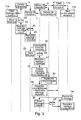
- FIG. 2 represents an electronic messaging system comprising a conventionally, a message transmission server 5 coupled to a zone of storage 6 of messages to send.
- the transmission server 5 is accessible by via telecommunications networks 10, to terminals of users 11 having in particular a client application of connection networks 10 and an email client application.
- the messages stored in the storage area 6 are transmitted by holding account of their order of reception and their degree of urgency, via the networks 10 to the reception servers 7 of the users receiving the messages, the reception servers placing the received messages in the reception boxes 8 respective recipient users.
- Networks 10 may include public networks such as the network Internet and mobile or fixed telecommunications networks and networks such as Intranet networks.
- this system also comprises at least one server adapter 3 designed to collect the messages inserted in the boxes of reception of a set of users subscribing to the service of adaptation, to store them in respective reception boxes 4 in replacement of the boxes of reception 8, and to adapt their delivery to the respective recipient user.
- this system also comprises minus a feature storage server 1 designed to collect and stored in a storage area 2, information relating to users, on the basis of which this adaptation is carried out.
- the information needed to adapt the delivery of messages can therefore include characteristics of the connected terminals of users, and / or service features and parameters available, and / or user preferences.
- connection characteristics of a user relate to the characteristics of the connected terminals of the user, namely in particular are type (PC, PDA, landline, mobile), its brand, its ability to available memory, the possible size of its display screen, the presence and the characteristics of possible means of sound reproduction, and the characteristics of connection of each of these terminals to the networks 10, that is to say particularly the type of access network (ADSL, PSTN, GSM, GPRS, WiFi, ....), the capacity of the network in terms of bandwidth or available transmission, and the transmission protocol used by this connection (IP, SS7, http, ).
- the services accessible to a user on his terminal are, for example, visualization, messaging, videoconferencing, consultation services voice messages, SMS messages, format conversion services image, audio or video transcoding services, access services to particular networks such as for example a GSM kit, or a broadcast network videos on demand, calendar services, address book, for example available on a PDA.
- networks such as for example a GSM kit, or a broadcast network videos on demand, calendar services, address book, for example available on a PDA.
- a user's preferences may include information from filtering (for example: “no advertising”, “deliver all urgent messages”, choice of authorized transmitters, availability periods, and / or choice routing messages to one or the other of the connected terminals of the user, in particular according to time slots, the identity of the transmitters, the degree of urgency and the type of messages.
- Figure 3 shows the different steps that are performed in this system to deliver a message in a manner adapted to the means and / or preferences of the user.
- a user sends at the end of a first step 21 a message 20 using an email client application 11a installed on his terminal.
- this message is received and stored by the server transmission 5 which retransmits the message to the reception server 7 ensuring the management of the reception box of the user receiving the message.
- the reception server 7 receives and places the message 20 in the inbox of the user receiving the message.
- step 30 the adaptation server 3 queries the boxes of reception of the users 8, which in response send the messages found in these boxes (step 25). These messages are received by the server adaptation 3 which stores them in step 31, in the boxes of reception 4 respectively.
- the adaptation server 3 analyzes the message and its content and access the feature server 1 to request the characteristics specifying the environment of the identified recipient user in the message by his email address. These characteristics concern including the terminals and / or services available to the user, and / or preferences of the latter.
- the characteristics server 1 that receives the request of adaptation server 3 in step 33, search for characteristics corresponding to the identified recipient user, and sends them in response to the adaptation server 3.
- step 34 these characteristics are received and exploited by the server adaptation 3 to select according to the nature and content of the message 20, the best service to implement, and / or the best terminal to which to deliver the message. Then, the adaptation server notifies to client application of connection 11b 'of the recipient user, executed by a terminal possibly selected, that a new message 20 is available.
- the user is thus encouraged to launch a consultation of his box of reception to using an 11b messaging client application that may be adapted, on a possibly adapted terminal and calling on a service possibly adapted.
- the client application 11b then interrogates the box of receiving the recipient user (step 24) and the adaptation server 3 transmits in response (step 36) any messages stored in the box 20 receiving, the client application 11b receiving these messages and returning them to the user at step 26, possibly in accordance with the preferences of the user, and possibly using the adapted service.
- the adaptation server and the characteristics server can be designed to adapt the environment and the conditions for rendering a message only by choosing one of the user's terminals accessible to the instant of receipt of the message, or only by choosing one of the services available, adapted to the restitution of the content of the message, or only according to the preferences of the user, or even to any combination of these adaptations.
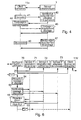
- the flowchart shown in Figure 4 illustrates a procedure for features server 1 to have access to user preferences subscribers and / or information about current terminals or connections of these, and / or the information retrieval services available to these terminals.
- This procedure is advantageously integrated into the connection application 11c to the network 10, installed on the terminal of the destination user.
- the connection application 11c of the subscribed user accesses the feature server 1 by providing it identification and authentication information.
- the features server identifies and authenticates the user with the help of received and issues an acquittal according to the result of user authentication. If the user authentication has succeeded, the connection application 11c transmits in response to step 44 characteristic information relating to the connection environment of the user, and / or the user's service environment, and / or user preferences. This information is received and stored by the feature server at step 45.
- This characteristic information is thus memorized by each terminal subscribed user. It can be expected that the terminal is equipped with a application for updating this information that can be manual or automatically in the case of information relating to services, the terminal and the connection.
- connection application 11c executes the procedure of disconnection 46 from the terminal 11 of the network 10
- the latter notifies the server of characteristics 1 that the terminal disconnects.
- the feature server 1 clears from its storage area 2 the memorized characteristics for the user identified in the notification of disconnection, and possibly, transmits in response an acknowledgment to the connection application 11c of the terminal (step 47).
- the characteristics server 1 monitors the state of the connections by course, and if a terminal is detected disconnected, the feature server erases the stored information for the disconnected detected terminal.
- the adaptations made according to the terminals or connections accessible to the recipient user or according to the preferences thereof, are carried out in accordance with the flowchart illustrated in FIG. 3.
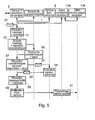
- the service adaptation is preferably performed in accordance with the flowchart shown in FIG.
- the service adaptation server 3 receives a message 20 to step 31 as previously described with reference to FIG. 3.
- he analyzes this message with regard in particular to its size, the type its content, and its degree of urgency, and queries the server of characteristics 1 to know the list and characteristics of the services accessible to the recipient of the message.
- the server of features processes the request received from the adaptation server 3 and transmits response to this request the requested information.
- the adaptation server 3 receives this information about services available from the recipient of the message, and chooses the best service to use to render the content of the message according to the result of the analysis performed in step 55.
- the adaptation server 3 can decide to use an optional third-party service 9, accessible by the networks 10 for process the message in order to make it releasable by one of the services accessible to the recipient user.
- a third party service may be a transcoding service format, for example text / vocal.
- the adaptation server decides to use a third party service 9
- the message 20 is forwarded to the third party service 9 which processes the message and returns in response the processed message 20 'to the adaptation server.
- This message is received and stored in step 59 by the adaptation server instead of the message initially received.
- the adaptation server runs step 60 during of which the adaptation server notifies the choice of the service to use to return the message to the user's client login application 11b ' recipient of the message.
- This notification message can also include Configuration parameter values to apply to the chosen service.
- step 60 If the adaptation server believes that it is not necessary to call on a third-party service, it goes directly to step 60.
- the application client 11b Upon receipt of this notification message in the next step 61, the application client 11b 'applies the received parameters to the specified service. The procedure then continues with steps 24, 36, then 26, previously described with reference to FIG.
- the system according to the invention also includes an adaptation arbitration function that manages the reception and storing messages 20 and calling specialized adaptation functions service, terminal and connection, and user preferences, in accordance with the procedures described above with reference to Figure 3 and / or 5.
- adaptation arbitration function that manages the reception and storage of messages 20 and broadcasting to one or more of the specialized adaptation servers 71, 72, 73, respectively to perform service adaptation, terminal and login, and user preferences.
- the arbitration server 70 executes the procedure illustrated in FIG. 6.
- the arbitration server 70 executes the previously described step 24 of receiving and storing a received message. Then it performs a step 65 of notifying the received message to the adaptation servers 71, 72, 73.
- each adaptation server executes steps 32 to 34 or possibly 55 to 57 for the service adaptation server 71. The choices made by each of the adaptation servers 71 to 73 are then notified to the arbitration server 70.
- the arbitration server 70 establishes in step 66 a final choice from the choices received from the adaptation servers.
- the final choice can be established by first verifying that the user sending the message is authorized by the recipient and is available to the latter. Then this choice consists in establishing the list of the terminals usable to deliver the message, according to the type of the message and the preferences of the user.
- this choice consists for each usable terminal to determine the available services capable of delivering the message in good conditions, taking into account the capabilities of the terminal and its connection to the network, and the technical constraints necessary for the implementation of the service (For example a videoconferencing service such as NetMeeting (Microsoft trademark) requires a terminal with a display screen, a microphone, a speaker and a camera).
- a videoconferencing service such as NetMeeting (Microsoft trademark) requires a terminal with a display screen, a microphone, a speaker and a camera).
- this choice consists in determining whether it is necessary to call upon a third party service 9 accessible via the network, depending on the final choice chosen. If such is the case, it triggers steps 58 and 59. In all cases, it notifies to the client application of connection 11b 'the receipt of a message, in providing the final choice (terminal and connection to be used for issuing the message), the reference of the chosen service, and, if applicable, the values of setting of this one.
- the feature server function 1 can be distributed over three specialized servers, namely a server of connection characteristics, a service characteristics server, and a user preferences feature server.
Landscapes
- Engineering & Computer Science (AREA)
- Signal Processing (AREA)
- Information Transfer Between Computers (AREA)
- Data Exchanges In Wide-Area Networks (AREA)
- Mobile Radio Communication Systems (AREA)
Abstract
Description
Un message urgent peut ne pas être délivré : la délivrance des messages est laissée à l'initiative du récepteur qui décide de consulter sa boíte de réception.
Si l'utilisateur ne lance pas son application de messagerie sur son terminal, il n'aura jamais accès au message, même s'il possède d'autres services d'information sur son terminal.
Si le terminal de l'utilisateur destinataire n'est pas adapté pour recevoir le message, par exemple du fait que le message contient un fichier multimédia et que le terminal n'est pas équipé du périphérique multimédia adéquat, ou encore du fait que le terminal présente une taille mémoire insuffisante, le message ne peut pas être délivré dans des conditions satisfaisantes.
Si l'utilisateur destinataire a des préférences ou des habitudes quant à la réception de certains messages en fonction de la nature de ceux-ci, de leur émetteur ou de leur degré d'urgence, elles ne sont pas prises en compte.
- transmettre un message d'un terminal d'utilisateur émetteur vers un utilisateur destinataire,
- recevoir le message par un serveur d'émission auquel le terminal d'utilisateur émetteur est connecté par l'intermédiaire du réseau de transmission de données, et
- transmettre le message par l'intermédiaire du réseau de transmission de données, du serveur d'émission vers un serveur de réception de l'utilisateur destinataire, et stocker le message dans une boíte de réception de l'utilisateur destinataire.
- interroger les boítes de réception d'un ensemble d'utilisateurs abonnés pour collecter les messages reçus, insérés dans celles-ci, et
- pour chacun des messages reçus pour un utilisateur abonné, analyser le contenu du message, rechercher des caractéristiques correspondant à l'utilisateur abonné, sélectionner des moyens de délivrance et de restitution du message adaptés aux caractéristiques trouvées, et transmettre le message à l'utilisateur abonné en tenant compte des moyens de délivrance et de restitution sélectionnés.
- vérifier en fonction des préférences de l'utilisateur destinataire du message que l'utilisateur destinataire est disponible vis-à-vis de l'utilisateur émetteur du message,
- déterminer en fonction du type de message, les terminaux de l'utilisateur destinataire du message qui sont accessibles et utilisables pour la restitution du message, et
- pour chaque terminal utilisable, déterminer des services d'accès et/ou de restitution disponibles permettant de délivrer et restituer le message, en fonction des caractéristiques du terminal et des services disponibles.
- des moyens pour interroger des boítes de réception d'un ensemble d'utilisateurs abonnés, et pour collecter les messages reçus insérés dans celles-ci,
- des moyens pour analyser le contenu de chacun des messages collectés,
- des moyens pour rechercher des caractéristiques correspondant à un utilisateur abonné, destinataire d'un message,
- des moyens pour sélectionner des moyens de délivrance et de restitution d'un message, adaptés aux caractéristiques trouvées de l'utilisateur destinataire du message, en fonction de l'analyse du contenu du message, et
- des moyens pour transmettre un message reçu à l'utilisateur abonné destinataire en tenant compte des moyens de délivrance et de restitution sélectionnés.
- des moyens pour vérifier en fonction des préférences de l'utilisateur destinataire du message que l'utilisateur destinataire est disponible vis-à-vis de l'utilisateur émetteur du message,
- des moyens pour déterminer en fonction du type de message, les terminaux de l'utilisateur destinataire du message qui sont accessibles et utilisables pour la restitution du message, et
- des moyens pour déterminer pour chaque terminal utilisable, des services d'accès et/ou de restitution disponibles permettant de délivrer et restituer le message, en fonction des caractéristiques du terminal et des services disponibles.
- une fonction d'adaptation de terminal et de connexion pour adapter la délivrance de messages en fonction des terminaux et des connexions au réseau dont dispose l'utilisateur,
- une fonction d'adaptation de service pour adapter la délivrance de messages en fonction de services accessibles à l'utilisateur, et
- une fonction d'adaptation de préférences pour adapter la délivrance de messages aux préférences de l'utilisateur.
L'adaptation de service est effectuée de préférence conformément à l'organigramme illustré sur la figure 5.
A la réception d'une telle notification, chaque serveur d'adaptation exécute les étapes 32 à 34 ou éventuellement 55 à 57 pour le serveur d'adaptation de services 71. Les choix effectués par chacun des serveurs d'adaptation 71 à 73 sont ensuite notifiés au serveur d'arbitrage 70.
Le choix final peut être établi en vérifiant tout d'abord que l'utilisateur émetteur du message est bien autorisé par le destinataire et est disponible pour ce dernier. Puis ce choix consiste à établir la liste des terminaux utilisables pour délivrer le message, selon le type du message et les préférences de l'utilisateur.
Ensuite, ce choix consiste pour chaque terminal utilisable à déterminer les services disponibles capables de délivrer le message dans de bonnes conditions, en tenant compte des capacités du terminal et de sa connexion au réseau, et des contraintes techniques nécessaires à la mise en oeuvre du service (par exemple un service de visioconférence tel que NetMeeting (marque déposée par Microsoft) nécessite un terminal avec un écran d'affichage, un microphone, un haut-parleur et une caméra).
Claims (17)
- Procédé d'adaptation d'un service de messagerie électronique accessible par l'intermédiaire de terminaux d'utilisateurs (11) susceptibles d'être connectés à au moins un réseau de transmission de données (10), comprenant des étapes consistant à :caractérisé en ce qu'il comprend en outre des étapes consistant à :transmettre (21) un message d'un terminal d'utilisateur émetteur vers un utilisateur destinataire,recevoir (22) le message par un serveur d'émission (5) auquel le terminal d'utilisateur émetteur est connecté par l'intermédiaire du réseau de transmission de données, ettransmettre (23) le message par l'intermédiaire du réseau de transmission de données, du serveur d'émission vers un serveur de réception (7) de l'utilisateur destinataire, et stocker le message dans une boíte de réception (8) de l'utilisateur destinataire,interroger (30) les boítes de réception (8) d'un ensemble d'utilisateurs abonnés pour collecter (31) les messages reçus, insérés dans celles-ci, etpour chacun des messages reçus pour un utilisateur abonné, analyser (32) le contenu du message, rechercher (33) des caractéristiques correspondant à l'utilisateur abonné, sélectionner (34) des moyens de délivrance et de restitution du message adaptés aux caractéristiques trouvées, et transmettre (36) le message à l'utilisateur abonné en tenant compte des moyens de délivrance et de restitution sélectionnés.
- Procédé selon la revendication 1,
caractérisé en ce qu'il comprend en outre, pour chaque message reçu pour un utilisateur abonné, une étape de notification (34) à l'utilisateur abonné de la réception d'un message dont il est le destinataire, un message étant transmis (36) à un utilisateur abonné sur requête de l'utilisateur abonné ayant reçu une notification de réception du message. - Procédé selon la revendication 1 ou 2,
caractérisé en ce qu'il comprend en outre des étapes de connexion (41) d'un terminal d'utilisateur abonné (11) à un serveur de caractéristiques (1) par l'intermédiaire du réseau (10), et de transmission (44) par le terminal au serveur de caractéristiques d'informations permettant d'adapter la restitution et/ou délivrance des messages qui lui sont destinés. - Procédé selon l'une des revendications 1 à 3,
caractérisé en ce que les caractéristiques correspondant à l'utilisateur abonné comprennent des caractéristiques de terminaux (11) et de connexions respectives de ces terminaux aux réseaux (10), le choix (34) des moyens de délivrance et de restitution du message consistant à choisir parmi des terminaux accessibles de l'utilisateur destinataire du message, en fonction des caractéristiques de ces terminaux et de leur connexion à un réseau et des caractéristiques du message, le terminal le mieux adapté à la réception et la restitution du message. - Procédé selon la revendication 4,
caractérisé en ce que les caractéristiques correspondant à l'utilisateur abonné comprennent des préférences de l'utilisateur en ce qui concerne la délivrance et la restitution de messages, le choix (34) des moyens de délivrance et de restitution du message consistant à choisir parmi des terminaux accessibles de l'utilisateur destinataire du message, en fonction des caractéristiques du message, le terminal correspondant aux préférences de l'utilisateur. - Procédé selon la revendication 4 ou 5,
caractérisé en ce que les caractéristiques correspondant à l'utilisateur abonné comprennent des caractéristiques de services d'accès et/ou de restitution de contenu de messages, disponibles à partir de terminaux accessibles par un réseau (10), le choix (34) des moyens de délivrance et de restitution du message consistant à choisir parmi des terminaux accessibles de l'utilisateur destinataire du message et parmi les services d'accès et/ou de restitution disponibles, en fonction des caractéristiques des services d'accès et/ou de restitution disponibles et des caractéristiques du message, le service d'accès et/ou de restitution le mieux adapté à la réception et la restitution du message, le procédé comprenant en outre une étape de paramétrage du service d'accès et/ou de restitution choisi sur le terminal où le service est disponible. - Procédé selon la revendication 6,
caractérisé en ce qu'il comprend en outre une étape d'accès à un service tiers (9) par l'intermédiaire d'un réseau (10). - Procédé selon l'une des revendications 5 à 7,
caractérisé en ce qu'il comprend en outre des étapes consistant à :vérifier en fonction des préférences de l'utilisateur destinataire du message que l'utilisateur destinataire est disponible vis-à-vis de l'utilisateur émetteur du message,déterminer en fonction du type de message, les terminaux de l'utilisateur destinataire du message qui sont accessibles et utilisables pour la restitution du message, etpour chaque terminal utilisable, déterminer des services d'accès et/ou de restitution disponibles permettant de délivrer et restituer le message, en fonction des caractéristiques du terminal et des services disponibles. - Système d'adaptation d'un service de messagerie électronique accessible à l'aide de terminaux d'utilisateurs (11) susceptibles d'être connectés à au moins un réseau de transmission de données (10),
caractérisé en ce qu'il comprend au moins un serveur d'adaptation (3) connecté au réseau (10) et comportant :des moyens pour interroger des boítes de réception (8) d'un ensemble d'utilisateurs abonnés, et pour collecter les messages reçus insérés dans celles-ci,des moyens pour analyser le contenu de chacun des messages collectés,des moyens pour rechercher des caractéristiques correspondant à un utilisateur abonné, destinataire d'un message,des moyens pour sélectionner des moyens de délivrance et de restitution d'un message, adaptés aux caractéristiques trouvées de l'utilisateur destinataire du message, en fonction de l'analyse du contenu du message, etdes moyens pour transmettre un message reçu à l'utilisateur abonné destinataire en tenant compte des moyens de délivrance et de restitution sélectionnés. - Système selon la revendication 9,
caractérisé en ce qu'il comprend au moins un serveur de caractéristiques (1) connecté au réseau (10) et comportant des moyens pour recevoir d'un terminal d'utilisateur abonné connecté au réseau des caractéristiques correspondant à l'utilisateur abonné, des moyens (2) pour stocker ces caractéristiques, et des moyens pour fournir sur requête au serveur d'adaptation (3) les caractéristiques d'un utilisateur abonné particulier. - Système selon la revendication 9 ou 10,
caractérisé en ce que les caractéristiques correspondant à l'utilisateur abonné comprennent des caractéristiques de terminaux (11) et de connexions respectives de ces terminaux aux réseaux (10), les moyens de sélection étant conçus pour choisir parmi des terminaux accessibles de l'utilisateur destinataire du message, en fonction des caractéristiques de ces terminaux et de leur connexion à un réseau et des caractéristiques du message, le terminal le mieux adapté à la réception et la restitution du message. - Système selon la revendication 11,
caractérisé en ce que le serveur d'adaptation (3) comprend en outre des moyens pour transmettre une notification de réception de message à un utilisateur abonné de la réception d'un message dont il est le destinataire, le message étant transmis (36) à un utilisateur abonné sur requête de l'utilisateur abonné ayant reçu une notification de réception du message, la notification de réception indiquant le terminal sélectionné pour recevoir le message. - Système selon la revendication 11 ou 12,
caractérisé en ce que les caractéristiques correspondant à l'utilisateur abonné comprennent des préférences de l'utilisateur en ce qui concerne la délivrance et la restitution de messages, les moyens de sélection étant conçus pour choisir parmi des terminaux accessibles de l'utilisateur destinataire du message, en fonction des caractéristiques du message, le terminal correspondant aux préférences de l'utilisateur. - Système selon l'une des revendications 11 à 13,
caractérisé en ce que les caractéristiques correspondant à l'utilisateur abonné comprennent des caractéristiques de services d'accès et/ou de restitution de contenu de messages, disponibles à partir de terminaux accessibles par un réseau (10), les moyens de sélection étant conçus pour choisir parmi des terminaux accessibles de l'utilisateur destinataire du message et parmi les services d'accès et/ou de restitution disponibles, en fonction des caractéristiques des services d'accès et/ou de restitution disponibles et des caractéristiques du message, le service d'accès et/ou de restitution le mieux adapté à la réception et la restitution du message, le serveur d'adaptation (3) comprenant en outre des moyens pour paramétrer le service d'accès et/ou de restitution choisi sur le terminal où le service ,est disponible. - Système selon la revendication 14,
caractérisé en ce que le serveur d'adaptation (3) comprend en outre des moyens pour sélectionner un service tiers (9) accessible par un réseau (10) à mettre en oeuvre pour restituer un message. - Système selon la revendication 14 ou 15,
caractérisé en ce que la notification de réception de message indique des références de service d'accès et/ou de restitution à utiliser pour restituer le message et des paramètres à appliquer au service d'accès et/ou de restitution. - Système selon l'une des revendications 13 à 16,
caractérisé en ce qu'il comprend en outre un serveur d'arbitrage (70) comprenant :des moyens pour vérifier en fonction des préférences de l'utilisateur destinataire du message que l'utilisateur destinataire est disponible vis-à-vis de l'utilisateur émetteur du message,des moyens pour déterminer en fonction du type de message, les terminaux de l'utilisateur destinataire du message qui sont accessibles et utilisables pour la restitution du message, etdes moyens pour déterminer pour chaque terminal utilisable, des services d'accès et/ou de restitution disponibles permettant de délivrer et restituer le message, en fonction des caractéristiques du terminal et des services disponibles.
Applications Claiming Priority (2)
| Application Number | Priority Date | Filing Date | Title |
|---|---|---|---|
| FR0309083A FR2858157A1 (fr) | 2003-07-24 | 2003-07-24 | Procede et systeme d'adaptation du service de messagerie electronique d'un utilisateur |
| FR0309083 | 2003-07-24 |
Publications (2)
| Publication Number | Publication Date |
|---|---|
| EP1501270A1 true EP1501270A1 (fr) | 2005-01-26 |
| EP1501270B1 EP1501270B1 (fr) | 2006-08-16 |
Family
ID=33484700
Family Applications (1)
| Application Number | Title | Priority Date | Filing Date |
|---|---|---|---|
| EP04291552A Expired - Lifetime EP1501270B1 (fr) | 2003-07-24 | 2004-06-18 | Procédé et système d'adaptation du service de messagerie électronique d'un utilisateur |
Country Status (5)
| Country | Link |
|---|---|
| EP (1) | EP1501270B1 (fr) |
| AT (1) | ATE336854T1 (fr) |
| DE (1) | DE602004001940T2 (fr) |
| ES (1) | ES2271803T3 (fr) |
| FR (1) | FR2858157A1 (fr) |
Citations (3)
| Publication number | Priority date | Publication date | Assignee | Title |
|---|---|---|---|---|
| EP1113631A2 (fr) * | 1999-12-30 | 2001-07-04 | AT&T Corp. | Procédé et dispositif du service intégré de messagerie multimédia |
| EP1261179A2 (fr) * | 2001-05-22 | 2002-11-27 | Siemens Information and Communication Networks Inc. | Procédé et dispositif de messagerie multimédia |
| DE20114859U1 (de) * | 2001-09-07 | 2003-01-16 | Materna Gmbh Information & Com | Vermittlungssystem für Multimedia-Nachrichten |
-
2003
- 2003-07-24 FR FR0309083A patent/FR2858157A1/fr active Pending
-
2004
- 2004-06-18 DE DE602004001940T patent/DE602004001940T2/de not_active Expired - Lifetime
- 2004-06-18 AT AT04291552T patent/ATE336854T1/de not_active IP Right Cessation
- 2004-06-18 EP EP04291552A patent/EP1501270B1/fr not_active Expired - Lifetime
- 2004-06-18 ES ES04291552T patent/ES2271803T3/es not_active Expired - Lifetime
Patent Citations (3)
| Publication number | Priority date | Publication date | Assignee | Title |
|---|---|---|---|---|
| EP1113631A2 (fr) * | 1999-12-30 | 2001-07-04 | AT&T Corp. | Procédé et dispositif du service intégré de messagerie multimédia |
| EP1261179A2 (fr) * | 2001-05-22 | 2002-11-27 | Siemens Information and Communication Networks Inc. | Procédé et dispositif de messagerie multimédia |
| DE20114859U1 (de) * | 2001-09-07 | 2003-01-16 | Materna Gmbh Information & Com | Vermittlungssystem für Multimedia-Nachrichten |
Also Published As
| Publication number | Publication date |
|---|---|
| ATE336854T1 (de) | 2006-09-15 |
| ES2271803T3 (es) | 2007-04-16 |
| DE602004001940D1 (de) | 2006-09-28 |
| DE602004001940T2 (de) | 2007-04-05 |
| FR2858157A1 (fr) | 2005-01-28 |
| EP1501270B1 (fr) | 2006-08-16 |
Similar Documents
| Publication | Publication Date | Title |
|---|---|---|
| US8145722B2 (en) | Media transfer system and associated methods | |
| EP1590931B1 (fr) | Procede de presentation d'etat d'un utilisateur utilisant plusieurs equipements de communication | |
| WO2009047457A2 (fr) | Dispositif de traitement de notifications applicatives | |
| EP1501319B1 (fr) | Procédé et système de messages déposés dans une boîte de reception d'un service de messagerie | |
| EP2336967B1 (fr) | Messagerie personnalisée sur encarts web. | |
| EP1583339A1 (fr) | Procédé et serveur d'acheminement d'appels téléphoniques | |
| WO2004080015A1 (fr) | Procede de gestion de presence selective pour service de messagerie instantanee au sein d’un reseau de telecommunication tel que le reseau internet | |
| EP1501270B1 (fr) | Procédé et système d'adaptation du service de messagerie électronique d'un utilisateur | |
| EP2819352B1 (fr) | Dépôt et consultation de messages par des utilisateurs de réseaux sociaux | |
| FR2858155A1 (fr) | Procede et systeme d'adaptation du service de messagerie electronique d'un utilisateur | |
| FR2858156A1 (fr) | Procede et systeme d'adaptation du service de messagerie electronique d'un utilisateur | |
| EP1501248B1 (fr) | Système et procédé de messagerie électronique | |
| EP1744508A2 (fr) | Procédé de mise en relation interpersonnelle | |
| EP1935149A2 (fr) | Procede et systeme de notification de reception de messages asynchrones | |
| EP3648443A1 (fr) | Gestion d'une communication entre un terminal de communication appelant, disposant d'un identifiant d'appel principal et d'un identifiant d'appel secondaire, et un terminal de communication appelé | |
| EP3219090B1 (fr) | Procédé et dispositif de communication | |
| EP1989845B1 (fr) | Gestion d'une communication entre un système de télécommunications et un serveur | |
| EP2375718B1 (fr) | Procédé de réponse à un message reçu dans un terminal d'utilisateur via une application de messagerie sur un réseau de communication | |
| EP1536607A1 (fr) | Système et procédé de partage et d'adaptation de données entre un terminal WAP et des terminaux non compatibles | |
| EP1820328B1 (fr) | Procédé et système de journal unifié des appels | |
| EP2541874A1 (fr) | Procédé et système de communication au sein d?une communauté hétérogène d?utilisateurs. | |
| FR2847754A1 (fr) | Procede et systeme d'acheminement de flux d'informations | |
| EP1372311A1 (fr) | Système et procédé de partage de données a partir d'un terminal WAP | |
| FR3007927A1 (fr) | Depot et consultation de messages par des utilisateurs de reseaux sociaux | |
| FR3007928A1 (fr) | Depot et consultation de messages par des utilisateurs de reseaux sociaux |
Legal Events
| Date | Code | Title | Description |
|---|---|---|---|
| PUAI | Public reference made under article 153(3) epc to a published international application that has entered the european phase |
Free format text: ORIGINAL CODE: 0009012 |
|
| AK | Designated contracting states |
Kind code of ref document: A1 Designated state(s): AT BE BG CH CY CZ DE DK EE ES FI FR GB GR HU IE IT LI LU MC NL PL PT RO SE SI SK TR |
|
| AX | Request for extension of the european patent |
Extension state: AL HR LT LV MK |
|
| 17P | Request for examination filed |
Effective date: 20050415 |
|
| AKX | Designation fees paid |
Designated state(s): AT BE BG CH CY CZ DE DK EE ES FI FR GB GR HU IE IT LI LU MC NL PL PT RO SE SI SK TR |
|
| GRAP | Despatch of communication of intention to grant a patent |
Free format text: ORIGINAL CODE: EPIDOSNIGR1 |
|
| GRAS | Grant fee paid |
Free format text: ORIGINAL CODE: EPIDOSNIGR3 |
|
| GRAA | (expected) grant |
Free format text: ORIGINAL CODE: 0009210 |
|
| AK | Designated contracting states |
Kind code of ref document: B1 Designated state(s): AT BE BG CH CY CZ DE DK EE ES FI FR GB GR HU IE IT LI LU MC NL PL PT RO SE SI SK TR |
|
| PG25 | Lapsed in a contracting state [announced via postgrant information from national office to epo] |
Ref country code: IE Free format text: LAPSE BECAUSE OF FAILURE TO SUBMIT A TRANSLATION OF THE DESCRIPTION OR TO PAY THE FEE WITHIN THE PRESCRIBED TIME-LIMIT Effective date: 20060816 Ref country code: AT Free format text: LAPSE BECAUSE OF FAILURE TO SUBMIT A TRANSLATION OF THE DESCRIPTION OR TO PAY THE FEE WITHIN THE PRESCRIBED TIME-LIMIT Effective date: 20060816 Ref country code: SK Free format text: LAPSE BECAUSE OF FAILURE TO SUBMIT A TRANSLATION OF THE DESCRIPTION OR TO PAY THE FEE WITHIN THE PRESCRIBED TIME-LIMIT Effective date: 20060816 Ref country code: IT Free format text: LAPSE BECAUSE OF FAILURE TO SUBMIT A TRANSLATION OF THE DESCRIPTION OR TO PAY THE FEE WITHIN THE PRESCRIBED TIME-LIMIT;WARNING: LAPSES OF ITALIAN PATENTS WITH EFFECTIVE DATE BEFORE 2007 MAY HAVE OCCURRED AT ANY TIME BEFORE 2007. THE CORRECT EFFECTIVE DATE MAY BE DIFFERENT FROM THE ONE RECORDED. Effective date: 20060816 Ref country code: PL Free format text: LAPSE BECAUSE OF FAILURE TO SUBMIT A TRANSLATION OF THE DESCRIPTION OR TO PAY THE FEE WITHIN THE PRESCRIBED TIME-LIMIT Effective date: 20060816 Ref country code: SI Free format text: LAPSE BECAUSE OF FAILURE TO SUBMIT A TRANSLATION OF THE DESCRIPTION OR TO PAY THE FEE WITHIN THE PRESCRIBED TIME-LIMIT Effective date: 20060816 Ref country code: CZ Free format text: LAPSE BECAUSE OF FAILURE TO SUBMIT A TRANSLATION OF THE DESCRIPTION OR TO PAY THE FEE WITHIN THE PRESCRIBED TIME-LIMIT Effective date: 20060816 Ref country code: FI Free format text: LAPSE BECAUSE OF FAILURE TO SUBMIT A TRANSLATION OF THE DESCRIPTION OR TO PAY THE FEE WITHIN THE PRESCRIBED TIME-LIMIT Effective date: 20060816 Ref country code: RO Free format text: LAPSE BECAUSE OF FAILURE TO SUBMIT A TRANSLATION OF THE DESCRIPTION OR TO PAY THE FEE WITHIN THE PRESCRIBED TIME-LIMIT Effective date: 20060816 Ref country code: NL Free format text: LAPSE BECAUSE OF FAILURE TO SUBMIT A TRANSLATION OF THE DESCRIPTION OR TO PAY THE FEE WITHIN THE PRESCRIBED TIME-LIMIT Effective date: 20060816 |
|
| REG | Reference to a national code |
Ref country code: GB Ref legal event code: FG4D Free format text: NOT ENGLISH |
|
| REG | Reference to a national code |
Ref country code: CH Ref legal event code: EP |
|
| REG | Reference to a national code |
Ref country code: IE Ref legal event code: FG4D Free format text: LANGUAGE OF EP DOCUMENT: FRENCH |
|
| REF | Corresponds to: |
Ref document number: 602004001940 Country of ref document: DE Date of ref document: 20060928 Kind code of ref document: P |
|
| PG25 | Lapsed in a contracting state [announced via postgrant information from national office to epo] |
Ref country code: DK Free format text: LAPSE BECAUSE OF FAILURE TO SUBMIT A TRANSLATION OF THE DESCRIPTION OR TO PAY THE FEE WITHIN THE PRESCRIBED TIME-LIMIT Effective date: 20061116 Ref country code: SE Free format text: LAPSE BECAUSE OF FAILURE TO SUBMIT A TRANSLATION OF THE DESCRIPTION OR TO PAY THE FEE WITHIN THE PRESCRIBED TIME-LIMIT Effective date: 20061116 Ref country code: BG Free format text: LAPSE BECAUSE OF FAILURE TO SUBMIT A TRANSLATION OF THE DESCRIPTION OR TO PAY THE FEE WITHIN THE PRESCRIBED TIME-LIMIT Effective date: 20061116 |
|
| GBT | Gb: translation of ep patent filed (gb section 77(6)(a)/1977) |
Effective date: 20061127 |
|
| PG25 | Lapsed in a contracting state [announced via postgrant information from national office to epo] |
Ref country code: PT Free format text: LAPSE BECAUSE OF FAILURE TO SUBMIT A TRANSLATION OF THE DESCRIPTION OR TO PAY THE FEE WITHIN THE PRESCRIBED TIME-LIMIT Effective date: 20070116 |
|
| NLV1 | Nl: lapsed or annulled due to failure to fulfill the requirements of art. 29p and 29m of the patents act | ||
| REG | Reference to a national code |
Ref country code: IE Ref legal event code: FD4D |
|
| REG | Reference to a national code |
Ref country code: ES Ref legal event code: FG2A Ref document number: 2271803 Country of ref document: ES Kind code of ref document: T3 |
|
| PLBE | No opposition filed within time limit |
Free format text: ORIGINAL CODE: 0009261 |
|
| STAA | Information on the status of an ep patent application or granted ep patent |
Free format text: STATUS: NO OPPOSITION FILED WITHIN TIME LIMIT |
|
| 26N | No opposition filed |
Effective date: 20070518 |
|
| BERE | Be: lapsed |
Owner name: FRANCE TELECOM Effective date: 20070630 |
|
| PG25 | Lapsed in a contracting state [announced via postgrant information from national office to epo] |
Ref country code: MC Free format text: LAPSE BECAUSE OF NON-PAYMENT OF DUE FEES Effective date: 20070630 |
|
| PG25 | Lapsed in a contracting state [announced via postgrant information from national office to epo] |
Ref country code: BE Free format text: LAPSE BECAUSE OF NON-PAYMENT OF DUE FEES Effective date: 20070630 |
|
| PG25 | Lapsed in a contracting state [announced via postgrant information from national office to epo] |
Ref country code: GR Free format text: LAPSE BECAUSE OF FAILURE TO SUBMIT A TRANSLATION OF THE DESCRIPTION OR TO PAY THE FEE WITHIN THE PRESCRIBED TIME-LIMIT Effective date: 20061117 |
|
| PG25 | Lapsed in a contracting state [announced via postgrant information from national office to epo] |
Ref country code: EE Free format text: LAPSE BECAUSE OF FAILURE TO SUBMIT A TRANSLATION OF THE DESCRIPTION OR TO PAY THE FEE WITHIN THE PRESCRIBED TIME-LIMIT Effective date: 20060816 |
|
| PGRI | Patent reinstated in contracting state [announced from national office to epo] |
Ref country code: IT Effective date: 20080801 |
|
| REG | Reference to a national code |
Ref country code: CH Ref legal event code: PL |
|
| PG25 | Lapsed in a contracting state [announced via postgrant information from national office to epo] |
Ref country code: LI Free format text: LAPSE BECAUSE OF NON-PAYMENT OF DUE FEES Effective date: 20080630 Ref country code: CH Free format text: LAPSE BECAUSE OF NON-PAYMENT OF DUE FEES Effective date: 20080630 |
|
| PG25 | Lapsed in a contracting state [announced via postgrant information from national office to epo] |
Ref country code: CY Free format text: LAPSE BECAUSE OF FAILURE TO SUBMIT A TRANSLATION OF THE DESCRIPTION OR TO PAY THE FEE WITHIN THE PRESCRIBED TIME-LIMIT Effective date: 20060816 Ref country code: LU Free format text: LAPSE BECAUSE OF NON-PAYMENT OF DUE FEES Effective date: 20070618 |
|
| PG25 | Lapsed in a contracting state [announced via postgrant information from national office to epo] |
Ref country code: HU Free format text: LAPSE BECAUSE OF FAILURE TO SUBMIT A TRANSLATION OF THE DESCRIPTION OR TO PAY THE FEE WITHIN THE PRESCRIBED TIME-LIMIT Effective date: 20070217 Ref country code: TR Free format text: LAPSE BECAUSE OF FAILURE TO SUBMIT A TRANSLATION OF THE DESCRIPTION OR TO PAY THE FEE WITHIN THE PRESCRIBED TIME-LIMIT Effective date: 20060816 |
|
| REG | Reference to a national code |
Ref country code: FR Ref legal event code: PLFP Year of fee payment: 13 |
|
| REG | Reference to a national code |
Ref country code: FR Ref legal event code: PLFP Year of fee payment: 14 |
|
| REG | Reference to a national code |
Ref country code: FR Ref legal event code: PLFP Year of fee payment: 15 |
|
| PGFP | Annual fee paid to national office [announced via postgrant information from national office to epo] |
Ref country code: IT Payment date: 20210519 Year of fee payment: 18 Ref country code: DE Payment date: 20210519 Year of fee payment: 18 |
|
| PGFP | Annual fee paid to national office [announced via postgrant information from national office to epo] |
Ref country code: GB Payment date: 20210519 Year of fee payment: 18 |
|
| PGFP | Annual fee paid to national office [announced via postgrant information from national office to epo] |
Ref country code: ES Payment date: 20210701 Year of fee payment: 18 |
|
| REG | Reference to a national code |
Ref country code: DE Ref legal event code: R119 Ref document number: 602004001940 Country of ref document: DE |
|
| GBPC | Gb: european patent ceased through non-payment of renewal fee |
Effective date: 20220618 |
|
| PG25 | Lapsed in a contracting state [announced via postgrant information from national office to epo] |
Ref country code: GB Free format text: LAPSE BECAUSE OF NON-PAYMENT OF DUE FEES Effective date: 20220618 Ref country code: DE Free format text: LAPSE BECAUSE OF NON-PAYMENT OF DUE FEES Effective date: 20230103 |
|
| REG | Reference to a national code |
Ref country code: ES Ref legal event code: FD2A Effective date: 20230728 |
|
| PG25 | Lapsed in a contracting state [announced via postgrant information from national office to epo] |
Ref country code: IT Free format text: LAPSE BECAUSE OF FAILURE TO SUBMIT A TRANSLATION OF THE DESCRIPTION OR TO PAY THE FEE WITHIN THE PRESCRIBED TIME-LIMIT Effective date: 20220618 |
|
| PGFP | Annual fee paid to national office [announced via postgrant information from national office to epo] |
Ref country code: FR Payment date: 20230523 Year of fee payment: 20 |
|
| PG25 | Lapsed in a contracting state [announced via postgrant information from national office to epo] |
Ref country code: ES Free format text: LAPSE BECAUSE OF NON-PAYMENT OF DUE FEES Effective date: 20220619 |