EP1498487A1 - Novel 35 kd protein - Google Patents
Novel 35 kd protein Download PDFInfo
- Publication number
- EP1498487A1 EP1498487A1 EP03725692A EP03725692A EP1498487A1 EP 1498487 A1 EP1498487 A1 EP 1498487A1 EP 03725692 A EP03725692 A EP 03725692A EP 03725692 A EP03725692 A EP 03725692A EP 1498487 A1 EP1498487 A1 EP 1498487A1
- Authority
- EP
- European Patent Office
- Prior art keywords
- protein
- polynucleotide
- seq
- sugar production
- expression
- Prior art date
- Legal status (The legal status is an assumption and is not a legal conclusion. Google has not performed a legal analysis and makes no representation as to the accuracy of the status listed.)
- Granted
Links
Images

Classifications
-
- C—CHEMISTRY; METALLURGY
- C12—BIOCHEMISTRY; BEER; SPIRITS; WINE; VINEGAR; MICROBIOLOGY; ENZYMOLOGY; MUTATION OR GENETIC ENGINEERING
- C12N—MICROORGANISMS OR ENZYMES; COMPOSITIONS THEREOF; PROPAGATING, PRESERVING, OR MAINTAINING MICROORGANISMS; MUTATION OR GENETIC ENGINEERING; CULTURE MEDIA
- C12N9/00—Enzymes; Proenzymes; Compositions thereof; Processes for preparing, activating, inhibiting, separating or purifying enzymes
- C12N9/88—Lyases (4.)
-
- A—HUMAN NECESSITIES
- A61—MEDICAL OR VETERINARY SCIENCE; HYGIENE
- A61P—SPECIFIC THERAPEUTIC ACTIVITY OF CHEMICAL COMPOUNDS OR MEDICINAL PREPARATIONS
- A61P3/00—Drugs for disorders of the metabolism
- A61P3/08—Drugs for disorders of the metabolism for glucose homeostasis
- A61P3/10—Drugs for disorders of the metabolism for glucose homeostasis for hyperglycaemia, e.g. antidiabetics
-
- C—CHEMISTRY; METALLURGY
- C07—ORGANIC CHEMISTRY
- C07K—PEPTIDES
- C07K14/00—Peptides having more than 20 amino acids; Gastrins; Somatostatins; Melanotropins; Derivatives thereof
- C07K14/435—Peptides having more than 20 amino acids; Gastrins; Somatostatins; Melanotropins; Derivatives thereof from animals; from humans
- C07K14/46—Peptides having more than 20 amino acids; Gastrins; Somatostatins; Melanotropins; Derivatives thereof from animals; from humans from vertebrates
- C07K14/47—Peptides having more than 20 amino acids; Gastrins; Somatostatins; Melanotropins; Derivatives thereof from animals; from humans from vertebrates from mammals
- C07K14/4701—Peptides having more than 20 amino acids; Gastrins; Somatostatins; Melanotropins; Derivatives thereof from animals; from humans from vertebrates from mammals not used
- C07K14/4702—Regulators; Modulating activity
-
- G—PHYSICS
- G01—MEASURING; TESTING
- G01N—INVESTIGATING OR ANALYSING MATERIALS BY DETERMINING THEIR CHEMICAL OR PHYSICAL PROPERTIES
- G01N2500/00—Screening for compounds of potential therapeutic value
Definitions
- the present invention relates to a novel 35kd protein, a polynucleotide encoding the protein, a method for producing the protein by the use of the polynucleotide, as well as to an expression system relating to the production of these, and to a screening method for a compound participating in the regulation of sugar production by the use of the expression system.
- the invention also relates to a method of treatment and prevention of diabetes by the use of the protein obtained according to the above-mentioned method or the compound obtained through screening.
- the pharmaceutical effect of a drug that has a specific pharmaceutical activity and therefore expresses an effect of curing a disease of a type results from the specific binding of the drug to the protein that participates in the pharmaceutical phenomenon to carry the disease and from the effect of the drug caused by it to specifically modify the function of the protein.
- a drug for curing a disease specifically binds to a protein to modify its function in tissues or cells that exhibit the disease, then the protein participates in the disease, and it is auseful target for development of newmedicines for the disease.
- an immunosuppressor FK506 is used as a medicine for transplantation and chronic inflammations.
- Professor Schreiber et al. have clarified that the specific binding protein in the diseases to which the medicine is directed is FKBP12 protein (Harding MW, Galat A. Uehling DE, Schreiber SL, Nature 341, pp. 758-760 (1989)). It has been further clarified that, after FK506 has bound to FKBP12, this further binds to calcineurin to express its immunosuppressive effect (Liu J, Farmer JD Jr, Lane WS, Friedman J, Weissman I, Schreiber SL, Cell 66(4), pp. 807-815 (1991)).
- FKBP12 discovered by the use of FK506 and its immunoregulation route are important targets for further development of additional immunosuppressors.
- the novel 3 5kd protein of the invention binds to a substance WF00144 (Fig. 1).
- the substance WF00144 is a pharmaceutically active substance produced by fungi, Phoma sp. No. 00144. This substance inhibits in-vitro sugar production in primary-culture liver cells.
- the substance has hypoglycemic effect in diabetes model animals.
- the substance is a medicine for diabetes, which inhibits sugar production in livers and expresses hypoglycemic effect (WO99/61645).
- the protein to which the substance WF00144 specifically binds may be useful for clarifying some new mechanism for development of diabetes and for developing novel medicines for diabetes. Prior to the present invention, however, no one knows such a protein capable of specifically binding to the substance WF00144 .
- the theme of the invention includes the following three:
- the invention provides a protein that participates in the regulation of sugar production and a polynucleotide that encodes it, and, by finding out a method or a substance for treatment and prevention of diabetes, provides a method for treatment of diabetes that participates in the regulation of sugar production relating to a method for treatment and prevention of diabetes.
- the present inventors have assiduously studied and, as a result, have found out apolynucleotide that encodes aprotein having a molecular weight of about 35 kd and participating in the regulation of sugar production, from rat liver cells, and have completed the present invention.
- DHDPS dihydrodipicolonate synthase
- DHDPS_2 PROSITE AC.PS00666
- DHDPS_1 PROSITE AC.PS00665
- the novel 35kda protein has a primary structure similar to that of the known DHDPS family protein, and it is presumed that the novel protein may be a protein of the DHDPS family and may have a function of class I aldolase activity.
- Enzyme that participates in sugar metabolisms universally exists from microorganisms to mammals, but regarding the 35kd protein, its homologous gene was found only in mammals such as humans and rodents.
- the 35kd protein participates in the metabolic route added especially to the livers and kidneys of mammal for some purposes, in addition to the sugar metabolic system universally existing in animals.
- the glycolytic system and the gluconeogenic system may be in a relationship of reciprocal reaction that is catalyzed by a common enzyme except some rate limiting enzymes.
- the glucose production (gluconeogenesis) has evolved in the livers and the kidneys as an indispensable function for ensuring the existence of individuals over starvation.
- the promotion of liver sugar production is a characteristic of the symptom of diabetes. It has heretofore been considered that the promotion of sugar production will be a change in the balance of the glycolytic system and the gluconeogenic system. Specifically, it has been believed that the promotion of sugar production will be because the level of the gluconeogenic system may be higher than that of the glycolytic system.
- the 35kd protein may exhibit its function in a sugar production route that differs from the sugar decomposition/sugar production system heretofore known in the art. Specifically, it is presumed that, in livers and kidneys, the 35kd protein may exist in a route which has evolved for efficiently producing glucose separately from the glycolytic system therein.
- the 35 kd protein and the novel sugar metabolic system that contains it are useful targets for development of novel medicines for diabetes.
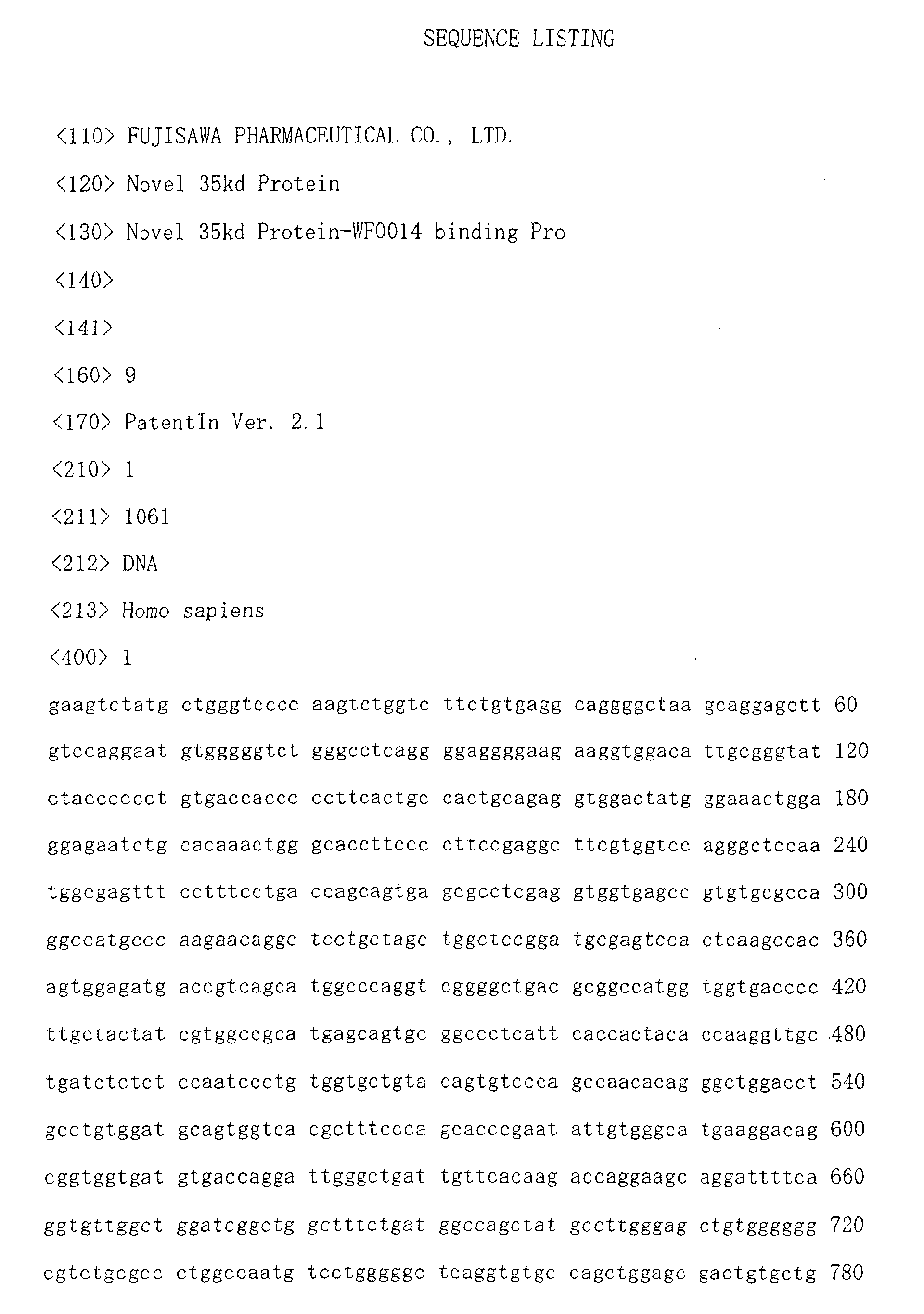
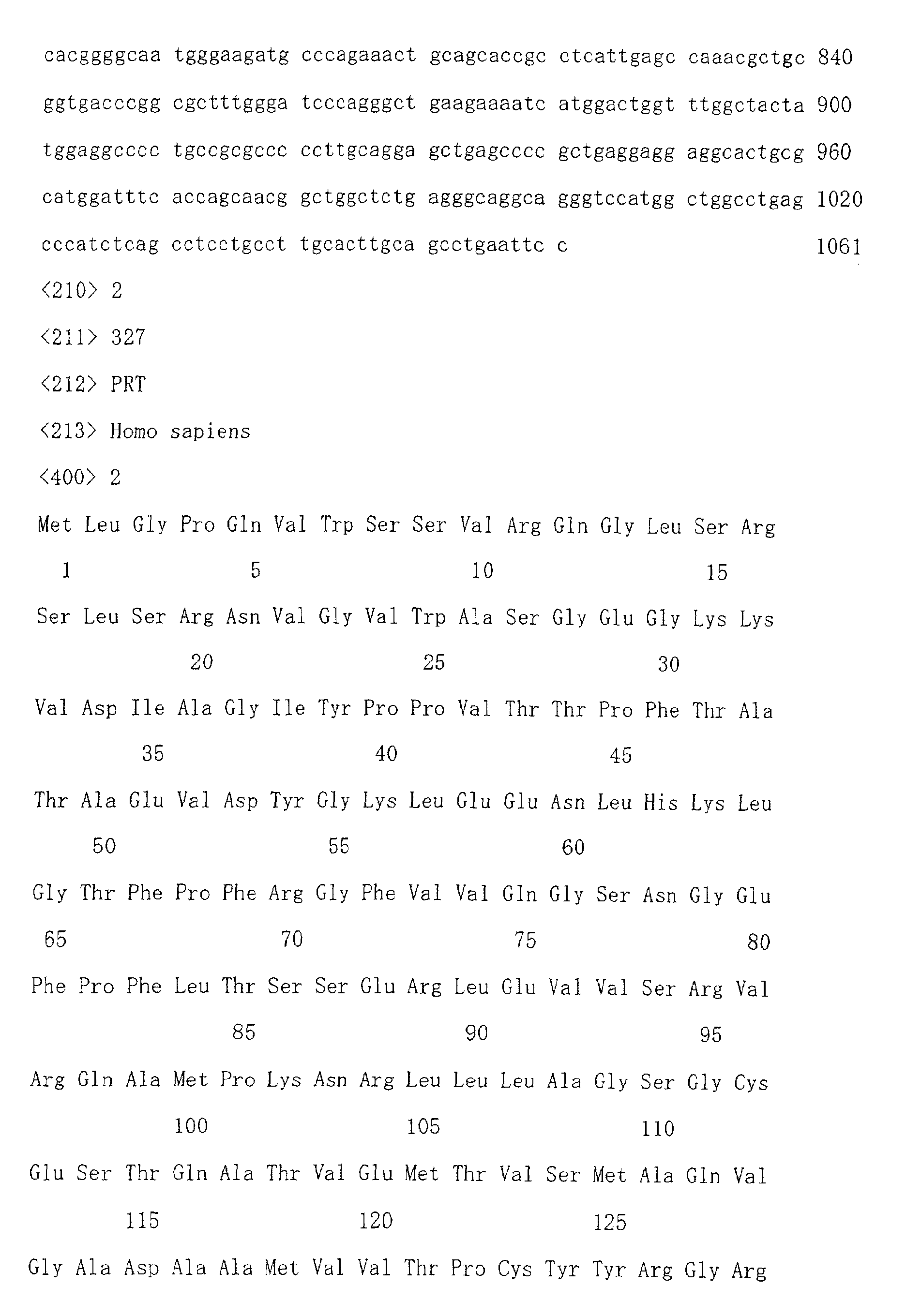
- the protein that participates in sugar production of the invention and the polynucleotide that encodes the protein have all or a part of the sequence of any of SEQ ID NO: 1 to 4.
- the polynucleotide of the invention is not specifically defined in point of its morphology so far as it encodes the protein of the invention, and it includes genome DNAs and chemically-synthesized DNAs in addition to cDNAs. So far as it encodes the protein of the invention, the polynucleotide includes any ones having any base sequence based on polycondensation of genetic codes.
- the polynucleotide that encodes the protein of the invention may be isolated in any ordinary method of, for example, hybridization with a probe of the polynucleotide sequence of SEQ ID NO: 1 or 3 or a part of it, or PCR with a primer designed on the basis of the information of such polynucleotide sequence.
- the protein of the invention that participates in sugar production may be obtained, for example, by expressing it in a transformant that is prepared through transformation with an expression vector containing an open reading frame sequence of SEQ ID NO: 1 or 3.
- the expressed protein may be purified and isolated from cell fractions in any ordinary method.
- the purification and isolation method is as follows: First, the cells are collected in any ordinary manner of filtration, centrifugation or the like, and the cell walls and/or the cell membranes of the cells are processed in an ordinary manner to obtain a cytoplasm fraction.
- the cytoplasm fraction is dissolved in a suitable aqueous solution.
- the protein of the invention is isolated and purified from the cytoplasm fraction according to an ordinary method generally employed for purification and isolation of natural or synthetic proteins. Examples of the isolation and purification method are dialysis, gel filtration, affinity column chromatography with a monoclonal antibody to the protein of the invention or to the partial peptide thereof, column chromatography on a suitable adsorbent, high-performance liquid chromatography, etc.
- the invention encompasses a polynucleotide that encodes a protein functionally equivalent to the above-mentioned protein.
- the wording "functionally equivalent” as used herein means that the intended proteins are materially the same in point of their function in living bodies.
- anyone skilled in the art may prepare the protein that is functionally equivalent to the novel 35 kd protein of the Example of the invention, for example, by utilizing a method of introducing mutation into the amino acid sequence of protein (for example, a site-specific mutagenesis (Current Protocols in Molecular Biology, edit. Ausubel et al., (1987) publish. John Wily and Sons, Sections 8.1-8.5)).
- the protein of the type may be formed through mutation of amino acids in the natural world. So far as they have the equivalent function as that of the protein identified in the Example of the invention, any other proteins having the amino acid sequence of the identified protein (amino acid sequence of the protein encoded by SEQ ID NO: 2 or 4) in which, however, one or plural amino acids are substituted, deleted, inserted and/or added are within the scope of the present invention.
- the plural amino acids as referred to herein are not specifically defined in point of the mutation number of the amino acids and the mutation sites thereof in the protein, so far as the protein keeps its function.
- Themutationnumber is typically within 10 % of all amino acids, preferably within 5 % of all amino acids, more preferably within 1 % of all amino acids.
- the invention may encompass a protein with mutation of a few amino acids as plural amino acids.
- the wording "a few" as used herein means, for example, 5, or 4 or 3, or 2 amino acids, or even one amino acid.
- the amino acid to be substituted for an original one has properties similar to those of the original amino acid.
- Ala, Val, Leu, Ile, Pro, Met, Phe and Trp are all within a group of non-polar amino acids, and they may have similar properties.
- Non-chargeable amino acid includes Gly, Ser, Thr, Cys, Tyr, Asn and Gln.
- Acidic amino acid includes Asp and Glu.
- Basic amino acid includes Lys, Arg and His.
- the protein that is functionally equivalent to the 35kd protein of the Example of the invention may be isolated by utilizing hybridization technology or gene amplification technologywell known to those skilled in the art. Specifically, anyone skilled in the art may generally isolate a polynucleotide that has a high homology to the polynucleotide encoding the protein identified in the Example of the invention, on the basis of the base sequence (SEQ ID NO: 1 or 3) of the polynucleotide that encodes the identified protein or on the basis of a part of the base sequence and by the use of a hybridization technique (Current Protocols in Molecular Biology, edit. Ausubel et al. , (1987) , publish. John Wily and Sons, Sections 6.3-6.4), and may obtain a protein functionally equivalent to the identified protein, from the isolated polynucleotide.
- the stringent condition for hybridization for isolating the polynucleotide that encodes the protein functionally equivalent to the identified protein is generally "1 ⁇ SSC, 0.1 %, SDS, 37°C” or so for washing; a more stringent condition for it is "0.5 ⁇ SSC, 0.1 %, SDS, 42°C” or so; an even more stringent condition for it is "0.1 ⁇ SSC, 0.1 %, SDS, 65°C” or so. Under such a more stringent hybridization condition, isolation of a polynucleotide having a high homology to the probe sequence may be expected.
- the protein thus isolated by the use of the hybridization technique as above generally have a high homology in point of the amino acid sequence thereof or of the base sequence to encode the protein, as compared with the protein encoded by SEQ ID NO: 2 or 4.
- the high homology is meant to indicate the sequence homology of at least 80%, preferably at least 84%, more preferably at least 88%, even more preferably at least 92 %, most preferably at least 96 %.
- the homology may be determined by the use of BLAST2 retrieval algorism (Altschul, S.F. et al., 1997, Gapped BLAST and PSI-BLAST: a new generation of protein database search programs, Nucleic Acid Res. 25, pp. 3389-3402).
- PCR gene amplification technique
- SEQ ID NO: 1 or 3 polynucleotide sequence identified in the Example of the invention
- polynucleotide fragments having a high homology to the polynucleotide sequence or to a part thereof are isolated, and based on these, a protein functionally equivalent to the protein identified in the Example of the invention is obtained.
- the invention also relates to a partial peptide of the protein of the invention, and to a polypeptide of encoding the partial peptide.
- the partial peptide of the invention comprises an amino acid sequence of at least 7 amino acids, preferably at least 9 amino acids, more preferably at least 12 amino acids, even more preferably at least 15 amino acids.
- the partial peptide of the invention may be produced, for example, according to a gene engineering method or a known peptide synthesis method, or by cleaving the protein of the invention with a suitable peptidase.
- the invention also provides an expression vector that contains any of the above-mentioned polynucleotides. Further, the invention relates to a transformant that carries the above-mentioned polynucleotide or any vector mentioned above, and to a method for producing a protein participating in sugar production or a partial peptide thereof, by cultivating the transformant and isolating the protein of the invention from the culture. Further, the invention provides the protein produced according to the method as above, or a partial peptide thereof.
- polypeptides When a polypeptide is produced according to a gene recombination method, it is well known to those skilled in the art that various polypeptides that differ in point of the type and the degree of glycosylation thereof are obtained depending on the type of the host cells used, and that the terminal (N-terminal and/or C-terminal) amino acid sequence of the precursor polypeptide expressed in the host cells is processed with a signal peptidase or the like and therefore various polypeptides having a different terminal amino acid sequence are obtained. Accordingly, anyone skilled in the art could easily understand that such polypeptides are naturally within the scope of the protein of the invention.
- Example illustrates construction of an expression vector that functions in prokaryotes, especially in E. coli.
- the polynucleotide that encodes the protein of the invention it is easy for anyone skilled in the art to construct, on the basis of it, an expression vector which, when introduced into host cells of fungi such as yeast or into those of mammals, may make the hosts express and produce the protein of the invention.
- the invention encompasses the expression vector that is constructed according to the methods well known in the art on the basis of the polynucleotide sequence of the invention.
- Microorganismic cells capable of being used for expression of the polynucleotide of encoding the protein of the invention include, for example, prokaryotic bacteria (Escherichia coli, Bacillus subtilis) and eukaryotic yeast (e.g., Saccharomyces cerevisiae).
- the mammal cells include cultivated human cells and cultivated animal cells.
- cultivated plant cells are also usable herein.
- a basic amino acid having an affinity to metal ion chelates may be added to any terminal of the protein of the invention.
- Such a basic amino acid may be added as follows: Using a primer with a series of base sequences of encoding desired amino acids added to the 5'-side thereof, PCR is carried out, whereby a desired oligopeptide may be added to any desired terminal of the intended gene.
- the basic amino acid includes histidine, lysine, arginine.
- the polynucleotide encoding the amino acid sequence of the protein of the invention may be obtained through partial synthesis or complete synthesis, for example, by the use of an DNA synthesizer. Apart from this, it may also be obtained by the use of a probe or primer designed on the basis of the base sequence of SEQ ID NO: 1 or 2 from a human cDNA library.
- a genome DNA that encodes the protein of the invention may be prepared by processing a genome DNA in an ordinary manner (for example, by digestion with restriction enzyme, dephosphorylation with bacterial alkali phosphatase, phosphorylation with T4 polynucleotide kinase, ligation with T4 DNA ligase).
- the transcription initiation point in the gene of the invention in the genome may be clarified, and the expression control region existing upstream the point may be specifically identified.
- control region such as promoter and enhancer of controlling the expression of the gene that encodes the protein of the invention is useful as a target region for detecting any expression failure in producing the protein of the invention. Further, expression control may be realized in decoy nucleic acid medicines that target the region.
- the host cells for use in the invention include cells that are used for analysis of the function of the protein of the invention and those for screening function inhibitors and function promoters by utilizing the protein.
- the vector introduction into host cells may be attained, for example, according to a calcium phosphate precipitation method, an electric pulse perforation method (Current Protocols in Molecular Biology, edit. Ausubel et al., (1987), publish. John Wiley and Sons, Sections 9.1-9.9), a lipofectamin method, or a microinjection method.
- Preparation of the protein of the invention from transformant may be attained through protein isolation and purification well known to those skilled in the art.
- the invention also provides a polynucleotide comprising a base sequence complementary to the polynucleotide of the base sequence of SEQ IDNO: 1 or 3 or to the complementary chain thereof, and containing at least 15 nucleotides.
- the "complementary chain” as referred to herein indicates the other chain opposite to one chain of a double-stranded polynucleotide that comprises a base pair of A: T (A: U) , G:C.
- the term “complementary” is not limited to the case where the region of at least 15 continuous nucleotides has a completely complementary sequence, but includes any others having at least 70 %, preferably at least 80 %, more preferably at least 90 %, even more preferably at least 95 % homology in point of the base sequence of the region. The algorism to determine the homology is described herein.
- the polynucleotide of the type may be utilized as a probe for detecting and isolating DNA and RNA that encode the protein of the invention, or as aprimer for amplifying the polynucleotide of the invention.
- the polynucleotide When it is used as a primer, in general, it has a chain length of from 15 bp to 100 bp, preferably from 15 bp to 35 bp.
- the polynucleotide When used as a probe, has at least a part or all of the sequence of the polynucleotide of the invention and has a chain length of at least 15 bp.
- the 3' -side region of the polynucleotide When used as a primer, the 3' -side region of the polynucleotide must be complementary, but the 5 ' -side thereof may have a restriction enzyme recognition site or a tag added thereto.
- the polynucleotide of the invention may be utilized for medical examination and diagnosis of abnormality of the protein of the invention. For example, in northern hybridization or RT-PCR where the polynucleotide of the invention is used as a probe or primer, the protein expression failure may be detected.
- expression includes transcription and/or translation.
- the expression analysis by the use of the polynucleotide of the invention makes it possible to examine and diagnose gene expression on the gene transcription level.
- gene expression may be examined and diagnosed on the gene translation level.
- the polynucleotide that encodes the protein of the invention or its expression control region may be amplified through genome DNA-PCR or RT-PCR in which the polynucleotide of the invention is used as the primer in the polymerase chain reaction (PCR), and the sequence disorder may be examined and diagnosed through RFLP analysis, SSCP, sequencing or the like method.
- polynucleotide complementary to the polynucleotide of the base sequence of SEQ ID NO: 1 or 2 or to the complementary chain thereof, and containing at least 15 nucleotides includes anti-sense polynucleotide that inhibits the expression of the protein of the invention.
- the anti-sense polynucleotide causes an anti-sense effect, and therefore it has a chain length of at least 15 bp, preferably at least 100 bp, more preferably at least 500 bp, but generally at most 3000 bp, preferably at most 2000 bp.
- the anti-sense polynucleotide of the type may be applied to gene therapy for diseases caused by abnormality (functional abnormality or expressional abnormality) of the protein of the invention.
- abnormality functional abnormality or expressional abnormality
- the anti-sense polynucleotide may be prepared, for example, according to a phosphorothioate method (Stein, 1988, Physicochemical Properties of Phosphorothioate Oligodeoxynucleotides, Nucleic Acids Res. 16, pp. 3209-3221 (1988)), based on the sequence information of the polynucleotide of SEQ ID NO: 1 or 3.
- the polynucleotide or the anti-sense polynucleotide of the invention is used in gene therapy, then it is administered to patients according to an ex-vivo method or an in-vivo method using, for example, a viral vector such as retrovirus vector, adenovirus vector, adeno-associated virus vector, oranon-viral vector such as liposome.
- a viral vector such as retrovirus vector, adenovirus vector, adeno-associated virus vector, oranon-viral vector such as liposome.
- the invention also provides an antibody that binds to the protein of the invention.
- the antibody of the invention is not specifically defined in point of its morphology, and includes a polyclonal antibody, a monoclonal antibody and a part of them having the ability to bind with antigen. It further includes antibodies of all classes.
- the antibody of the invention includes special antibodies such as humanized antibodies.
- the antibody of the invention When the antibody of the invention is a polyclonal antibody, it may be obtained by immunizing rabbits with the protein or partial peptide of the invention produced herein ( Current protocols in Molecular Biology, edit. Ausubel et al., (1987), publish. John Wiley and Sons, Sections 11.12-11.13).
- it when it is a monoclonal antibody, it may be obtained by immunizing mice with the protein or partial peptide of the invention, then hybridizing the spleen cells of the immunized mice with myeloma cells in a mode of cell fusion, and isolating the monoclonal antibody from the resulting hybridoma cells (Current Protocols in Molecular Biology, edit. Ausubel et al. , (1987), publish. John Wiley and Sons, Sections 11.4-11.11).
- the antibody that binds with the protein of the invention may be utilized for purification of the protein of the invention and, for example, additionally for medical examination and diagnosis of expression abnormality or structure abnormality of the protein.
- protein is extracted from tissue, blood or cells, and this is subjected western blotting, immunoprecipitation, ELISA or the like to detect therein the protein of the invention whereupon the presence or absence of the expression or structure abnormality of the protein may be examined and diagnosed.
- the antibody that binds with the protein of the invention may be utilized for the purpose of treatment of diseases associated with the protein of the invention.
- the antibody is preferably a human antibody or humanized antibody as its immunogenicity is low.
- the human antibody may be prepared by immunizing mice of which the immune system has been changed to a human immune system (for example, Functional Transplant of Megabase Human Immunoglobulin Loci Recapitulates Human Antibody Response in Mice, Mendez, M.J. et al., (1997) Nat. Genet. 15, pp. 146-156).
- the humanized antibody may be prepared through genetic recombination with an ultra-variable region of a monoclonal antibody ( Methods in Enzymology 203, pp. 99-121 (1991)).
- the protein of the invention that is encoded by the polynucleotide of SEQ ID NO: 2 or 4 participates in the regulation of sugar production, as so mentioned hereinabove in relation to the regulation of sugar production. Accordingly, when the expression of the protein of the type is enhanced, then it retards sugar production and is therefore effective for treatment and prevention of diabetes. Further, the protein of the type and the protein that is functionally equivalent to it may be used by themselves as a medicine for treatment and prevention of diabetes.
- the invention also provides a screening method for a compound having the ability to regulate the activity of the protein of the invention. Since the protein of the invention participates in sugar production, the compound having the ability to regulate the expression of the product of the gene of the protein may regulate sugar production and is therefore useful as a medicine for treatment and prevention of diabetes.
- the screening method is described below.
- the expression of the protein of the invention that is encoded by the polynucleotide of SEQ ID NO : 1 or 3 may be increased so as to retard sugar production, and it is effective for treatment and prevention of diabetes.
- the invention relates to a screening method for a compound of regulating the expression of the protein encoded by the polynucleotide of the invention, and the method includes the following steps:
- control region of the gene is cloned from a chromosomal DNA, and a reporter gene (e.g., luciferase, ⁇ -galactosidase, GFP (green fluorescent protein) ) is bound downstream to the control region of the gene to thereby construct an expression plasmid.
- a reporter gene e.g., luciferase, ⁇ -galactosidase, GFP (green fluorescent protein)
- GFP green fluorescent protein
- an S1 mapping method is known for a method of identification of a transcription initiation point ("Isolation of Transcription Control Region” and "Identification and Purification of Transcription Control Factor", Cell Engineering, extra. ed. 8, New Cell Engineering Experience Protocols, edit. Tokyo University, Medical Science Laboratory, Carcinostatic Laboratory Section, publish. Shujun-sha, 1993, pp. 362-374).
- the expression control region DNA of the gene is cloned as a gene clone that contains the expression control region, by screening a human genomic library with a segment of from 15 to 100 bp, preferably from 30 to 50 bp of the 5'-terminal of the gene that serves as a probe DNA.
- the clone often contains a 5 -non-translation region of the gene having a length of at least 10 kbp. Accordingly, the 5'-terminal of the clone is shortened or fragmented through exonuclease treatment or the like. Using the sequence thus containing the shortened expression control region, the expression intensity and the expression regulation of the reporter gene is determined, and it gives the minimal indispensable unit for maintaining the activity of the expression control region (deletion study).
- a reporter gene is functionally bound downstream to the thus-isolated control region of the gene to construct an expression plasmid, and this expression plasmid is introduced into suitable cells.
- functional binding means that the two are bound to each other in such a manner that the transcription of the reporter gene could be initiated by the activation of the expression control region.
- reporter gene any one can be utilized so far as it encodes a protein in which the activation of the expression control region can be observed as the expression of the gene.
- a gene such as luciferase, ⁇ -galactosidase, GFP (green fluorescent protein) may be generally used as the reporter gene.
- the cells into which the vector is introduced for example, usable are animal cells where the gene is deleted.
- the animal cells where the gene is deleted are transformed with the expression plasmid.
- the expression of the reporter gene owing to the control region transcription activity in the cells is detected as color formation or light emission.
- the cells are sown in a 96-well multi-plate, and the compound to be screened is added to each well. In this, accordingly, it is possible to easily select the compound capable of inhibiting or promoting the expression of the expression product of the gene.
- the method of selecting the compound is described. For example, when GFP is used for the reporter gene, then the quantity of light emission by GFP in the case where the chemical is added is compared with that in the other case where the chemical is not added, and it is possible to select the compound.
- the comparison indicates a light emission quantity ratio of at least 2 times or at most 1/2 times, preferably at least 5 times or at most 1/5 times, more preferably at least 10 times or at most 1/10 times.
- usable are not only animal cells but also any other hosts, irrespective of eukaryotes or prokaryotes, capable of inducing reporter gene expression in the same system.
- the sample to be tested in the screening method includes, for example, cell extracts, gene library expression products, low-molecular synthetic compounds, synthetic peptides, natural compounds.
- the test samples described herein are only examples, to which, therefore, the invention should not be limited.
- the compounds isolated through the screening method are candidates for the compounds that promote or inhibit the activity of the protein of the invention (agonists, antagonists).
- the invention relates to the medical use of the compounds that are obtained according to the screening method of the invention. Specifically, the invention relates to a medicine that contains the compound obtained according to the screening method and to a pharmaceutical composition that contains the compound as the principal ingredient thereof.
- the protein, the nucleotide, the antibody and the compound isolated through the screening of the invention are useful for regulation of sugar production and for medicines for diabetes.
- these When these are used for medicines, they may be directly used as medicines by themselves, but may be formulated into pharmaceutical composition according to known pharmaceutical formulation methods. For example, they may be combined with pharmaceutically-acceptable carriers or mediums, concretely sterile water, physiological saline, vegetable oil, emulsifier, suspending agent or the like, to be formulated into pharmaceutical compositions.
- pharmaceutically-acceptable carriers or mediums concretely sterile water, physiological saline, vegetable oil, emulsifier, suspending agent or the like, to be formulated into pharmaceutical compositions.
- the administration of the medicines to patients may be effected in any method known to those skilled in the art, for example, through intra-arterial injection, intravenous injection, subcutaneous injection, etc.
- the dose may vary, depending on the body weight and the age of patients, and on the administration route.
- anyone skilled in the art could readily determine the suitable dose.
- the polynucleotide When the compound can be encoded by a polynucleotide, then the polynucleotide maybe inserted into a vector for gene therapy, and it may be used for gene therapy.
- the dose and the administration route may vary, depending on the body weight, the age and the condition of patients, and anyone skilled in the art could readily determine the suitable dose.
- the protein of the invention may be associated with any other disease, by using an antibody specifically recognizing the protein of the invention, apart from those mentioned hereinabove, and determining the correlation between the specific disease and the expression quantity and the activity of the protein.
- the protein of the invention may be analyzed with reference to "Molecular Diagnosis of Genetic Diseases (edit. Rob Elles, 1996) in a series of Method in Molecular Biology (publish. Humana Press).
- the antibody that binds to the protein of the invention may be utilized for medical examination and diagnosis of expression abnormality or structure abnormality of the protein of the invention, in addition to the use for purification of the protein of the invention.
- protein is extracted from tissue, blood or cells, and this is subjected western blotting, immunoprecipitation, ELISA or the like to detect therein the protein of the invention whereupon the presence or absence of the expression or structure abnormality of the protein may be examined and diagnosed.
- the invention relates to a method for detecting diabetes that includes the following steps:
- the expression condition of the polynucleotide may be clarified by analyzing any one stage in the process where the gene is transcribed to mRNA and is translated into protein. More concretely, for example, the transcription condition may be known by measuring the mRNA that comprises the above-mentioned base sequence as the above-mentioned polynucleotide. The mRNA may be determined in any known method of northern hybridization or RT-PCR.
- the translation condition into the protein can be known.
- the protein can be determined through western blotting with an antibody that recognizes it or through various immunoassay.
- the examination method of the invention may be carried out with objects of patients' blood samples or cerebrospinal fluid samples.
- For observing the expression condition of the polynucleotide of the invention in a sample of tissue specimens employable is in-situ hybridization or tissue immunoassay.
- tissue immunoassay When the expression condition of the polynucleotide of the invention in the sample is analyzed and when the polynucleotide expression therein is retarded as compared with that in a control case with no abnormality in sugar production regulation, then the sample may be associated with diabetes.
- the invention further relates to a reagent for clarifying the expression condition of the polynucleotide of the invention. More concretely, the invention relates to the use of a polynucleotide complementary to the polynucleotide of the invention or to the complementary chain thereof and having a length of at least 15 bases, for detection of the polynucleotide of the invention.
- the invention also relates to the use of an antibody that recognizes the protein of the invention, for detection of the protein.
- Fig. 1 is a structural formula of a substance WF00144.
- Biotin was bonded to the carboxylic acid part of a substance WF00144 (W099/61645) in a mode of amido-bonding via a spacer to form a biotin-modified substance WF00144 (hereinafter referred to as a biotinated substance WF) .
- the biotinated WF substance had a sugar production inhibitory activity in primary liver cells.
- Rats Male, 200 to 250 g
- Rats with no feed given from the previous day were anesthetized and their abdomens were cut open out.
- An indwelling needle was inserted into the portal vein of each rat and fixed thereto, and, with a pre-perfusion liquid (8 g/liter sodium chloride, 0.4 g/liter potassium chloride, 0.078 g/liter NaH 2 PO 4 ⁇ 2H 2 O, 0.151 g/liter Na 2 HPO 4 ⁇ 12H 2 O, 2.38 g/liter HEPES, 0.006 g/liter phenol red, 0.19 g/liter EGTA, 0.35 g/liter sodium hydrogencarbonate, 0.9 g/liter glucose) introduced thereinto, the abdominal aorta was cut to bleed out, and the liver was perfused.
- a pre-perfusion liquid 8 g/liter sodium chloride, 0.4 g/liter potassium chloride, 0.078 g/liter NaH 2 PO 4 ⁇ 2H 2 O, 0.151 g
- the liver was perfused with a collagenase liquid (8g/liter sodium chloride, 0.4g/literpotassiumchloride, 0.078 g/liter NaH 2 PO 4 ⁇ 2H 2 O, 0.151 g/liter Na 2 HPO 4 ⁇ 12H 2 O, 0.74 g/liter CaCl 2 , 2.38 g/liter HEPES, 0.006 g/liter phenol red, 0.05 g/liter trypsin inhibitor, 0.35 g/liter sodium hydrogencarbonate, 0.4 g/liter collagenase (type III: Sigma)) to liberate the liver cells.
- the liver was cut off, its coating membrane was torn off, and the cells were dispersed in an MEM medium (minimum essential medium with Eargle's salts).
- the dispersed cells filtered through gauze, and the filtrate was centrifuged. The supernatant was removed, an MEM mediumwas added to it, and the cells were again dispersed therein, and this was centrifuged in the same manner. This operation was repeated 5 times to prepare a liver cell suspension.
- the cell suspension was transferred to a 10-cm dish coated with collagen, and incubated therein under a condition of 37°C, 5 % CO 2 , 30 % O 2 and 100 % humidity, for 6 hours, and the liver cells were adhered to the dish.
- the medium was changed to a Dulbecco' s MEM medium (-glucose, 1 % FBS, 83 mg/liter streptomycin, 83 mg/liter penicillin, 100 mg/liter kanamycin, 20 mM pyruvic acid, 0.01 mM glucagon, pH 7.2), in which the liver cells were incubated for one full day so as to make them induce sugar production.
- Dulbecco' s MEM medium -glucose, 1 % FBS, 83 mg/liter streptomycin, 83 mg/liter penicillin, 100 mg/liter kanamycin, 20 mM pyruvic acid, 0.01 mM glucagon, pH 7.2
- the concentration of glucose produced in the cell culture was quantified with Glucose Test Wako (Wako Pure Chemical's glucose metering kit) according to its manual.
- the rat primary liver cells in which sugar production had been induced overnight were collected from the dish, and then washed once with a phosphate buffered physiological saline (PBS) , and the weight of the liver cell pellets was measured.
- PBS phosphate buffered physiological saline
- the cell pellets were suspended in a cell extraction solution (0.25 M sucrose-aqueous solution) of 9 times the weight thereof, and ultrasonically disrupted.
- the cell debris was removed through low-speed centrifugation, and the supernatant was super-centrifuged (100,000 g, 30 minutes). The residue was removed, and a sugar production-inducing primary liver cell extract was thus obtained.
- Biotin/avidin affinity chromatography was carried out in an ordinary manner (FEBS Lett. , 31, 149, (1973)).
- reaction solution was dialyzed overnight to the cell extract solution to remove the unbinding biotinated WF.
- An avidin-bound resin (from Pierce) was added to the reaction solution and reacted with it overnight.
- the avidin-bound resin was precipitated through centrifugation, and the supernatant was removed. Then, the resin was washed three times with a washing solution (0.5 M salt-added cell extract). Avidin on the resin was degenerated with 8 M urea, and the bound protein was eluted out.
- the eluted protein was separated through electrophoresis with SDS polyacrylamide gel (12 %) .
- the gel was stained with CBB, and the protein bands were observed.
- those not observed in the separately-prepared, avidin-bound resin alone group (biotinated WF not added thereto) and in the WF00144-added group are specific binding protein bands.
- the band of the specific binding protein observed at around a molecular weight of 35 kd was cut out of the gel, and subjected to in-gel trypsin digestion to form peptide fragments.
- the molecular weight of each peptide fragment was determined according to a peptide mass finger method (MALDI-TOFMS) (using Tofspec 2E from Micromass), and the data were retrieved from the database.
- MALDI-TOFMS peptide mass finger method
- the underlined amino acid sequences were determined from the peptides that had been actually prepared from the 35kd bands, according to a peptide sequence-tag method (ESI-TOF MS/MS) (using Q-Tof-2 from Micromass).
- Riken mouse clones were analyzed, and it was considered that a Riken mouse clone 060010D20 would be a homologous protein to the rat 35kd protein.
- a rat cDNA library was prepared with Gibco BRL's Superscript Choice System, using the total RNA prepared from the above-mentioned, sugar production-inducing rat primary liver cells.
- a human cDNA library was bought from Clontech.
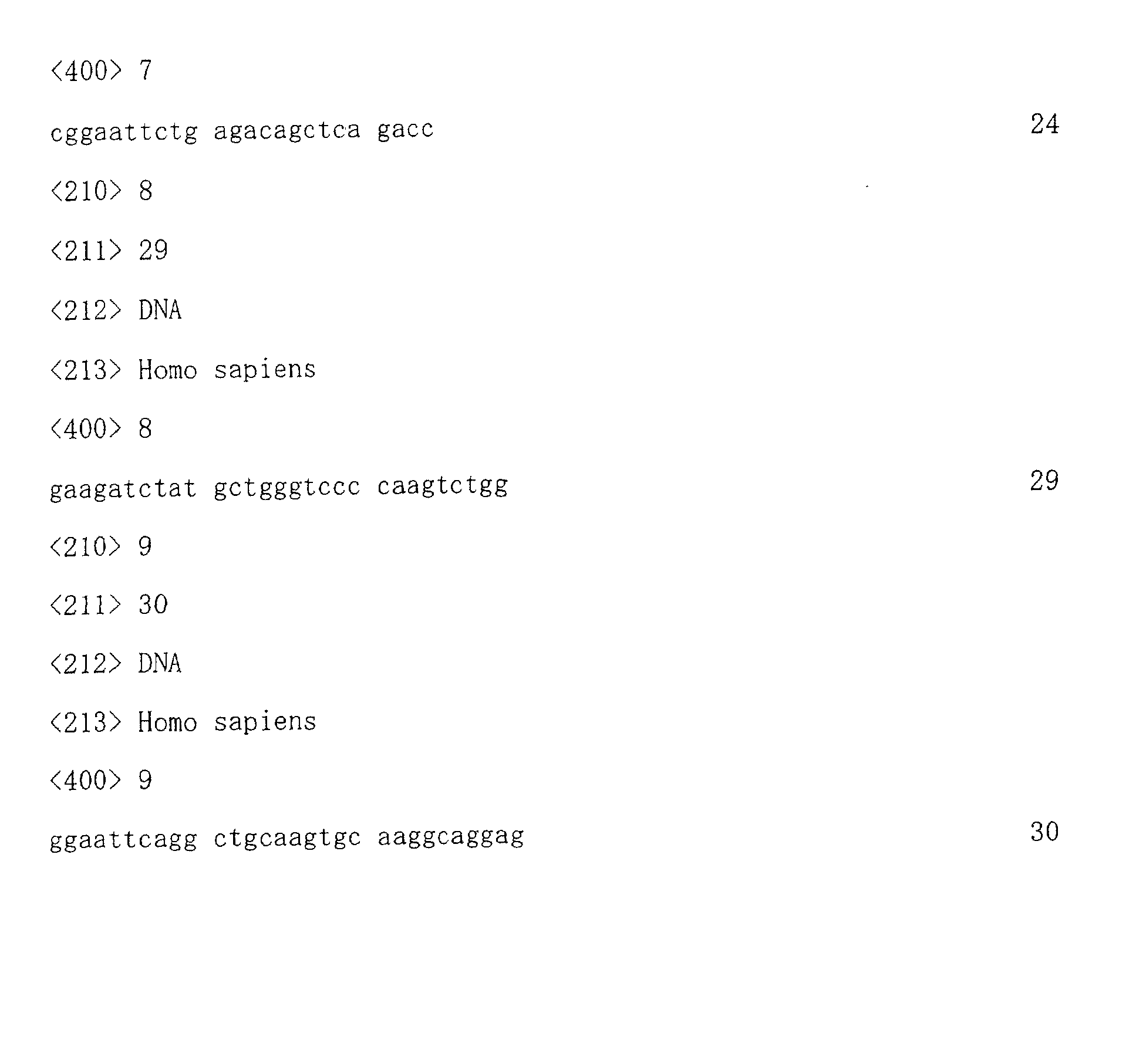
- an oligonucleotide primer was designed for obtaining the gene corresponding to about a half at the C-terminal thereof (SEQ ID NO: 7).
- an oligonucleotide primer was designed for obtaining the gene corresponding to about a half at the N-terminal thereof (SEQ ID NO: 6).
- primers SEQ ID NO:s 8 and 9 were designed, and a human 35kd-homologous gene was obtained from the human liver cDNA library according to a PCR method.
- the DNA fragments of rat and human 35kd protein for their sequencing were prepared by the use of Applied Biosystems' BigDyeTM Terminator Cycle Sequencing Ready Reaction with AmpliTaq DNA Polymerase. The sequencing was carried out with Applied Biosystems' 3100 Genetic Analyzer.
- nucleotide sequence of the rat 35kd protein and the amino acid sequence thereof are SEQ ID NO:s 3 and 4, respectively.
- nucleotide sequence of the human 35kd protein and the amino acid sequence thereof are SEQ ID NO:s 1 and 2, respectively.
- amino acid sequence-level homology between human and rat 35kd proteins was 87 %.
- the amino acid-level homology between the Riken clone-encoding protein and the rat 35kd protein and the human 35kd protein was 96 % and 88 %, respectively.
- Invitrogen's pTrcHis B was used as an expression vector.
- the genes obtained in Embodiment 1-6 were cleaved with restriction endonucleases. Briefly, the rat gene was with BamHI and EcoRI; and the human gene was with BgIII and EcoRI.
- Each fragment was ligated with a fragment prepared by cleaving pTrcHis B with the same combination of restriction endonucleases to prepare a expression plasmid of 35kd protein which a histidine tag-encoding sequence was bound to (rat: pTrcHisB/r35k, human: pTrcHisB/h35k).
- E. coli (DH5 ⁇ ) transformed with human or rat 35kd protein expression vector pTrcHisB/h35k were planted in 5 ml of an L-medium containing 50 ⁇ g/ml ampicillin (L-Amp), and incubated therein with shaking overnight at 37°C.
- the resulting culture was transferred into 200 ml of L-Amp, and shaken at 37°C for 3 hours, and then IPTG was added to it to have a final concentration of 1 mM, and this was further shaken for 6 hours.
- the cultured cells were collected through centrifugation (6000 rpm, 20 min, 4°C), and frozen and stored at -20°C.
- the cells obtained in the previous step were suspended in 40 ml of 25 mM Tris-HCl (pH 8.0) containing 0.5 mg/ml lysozyme and 0.3 M sodium chloride, and left at room temperature for about 15 minutes.
- the intended protein was eluted with 10 ml of the same buffer containing 200 mM imidazole, and the eluate was collected and concentrated to about 6 ml by the use of a ultrafiltrational concentrator (ULTRAFREE, BIOMAX-10k, Millipore).
- ULTRAFREE Ultrafiltrational concentrator
- Ni-NTA purified fraction (6 ml) was dialyzed to 200 ml of 25 mM Tris-HCl (pH 8.0), and, for cutting and removing the His-tag from it, 5 ⁇ l of Tween 20, 50 ⁇ l of 100 mM CaCl 2 and 30 units of enterokinase (Invitrogen) were added to it and reacted at room temperature for about 8 hours.
- the column was subjected to linear gradient elution with a 20-columns volume of 0.5 M sodium chloride (flow rate 1 ml/min) .
- the intended protein fraction was collected and concentrated to about 0.8 ml through ultrafiltration (ULTRAFREE, BIOMAX-10k, Millipore).
- the sample was about 10 mg in protein assay (Bio-Rad) , and it gave a single band at about 35 kda. in SDS-PAGE analysis. From these results, it is understood that the rat and human 35kd gene expressed in E. coli produced a protein having a suitable molecular weight presumed from the amino acid sequence thereof.
- the purified human 35kd protein was kept binding to the avidin resin only in the presence of the biotin-labeled substance.
- this binding was antagonized in the presence of WF00144 (in a molar ratio to the biotin-labeled substance of 1/1).
- the molecular weight of the present protein was determined.
- Aldolase MW: 158 kDa.
- albumin 67 kDa.
- ovalbumin 43 kDa.
- the expression of the 35kd protein gene is limited to only liver and kidney. This result strongly suggests that the 35kd protein gene is a protein that participates in sugar production.
- WF00144 is a liver sugar production inhibitor that is produced by fungi, Phoma sp. No. 00144 (WO99/61645). This substance inhibits in-vitro sugar production by primary culture liver cells, and owing to its effect, this exhibits hypoglycemic effect in diabetes-diseased model animals.
- this agent could be a medicine for diabetes, as binding to some protein that participates in liver sugar production and inhibiting it to thereby inhibit liver sugar production and express hypoglycemic effect.
- the 35kd protein is a protein that specifically binds to the liver sugar production inhibitor WF00144, in the sugar production-inducing rat primary liver cells shown in Embodiment 1-2, or that is, in liver cells where their sugar-producing mechanism is active. Accordingly, it may be readily presumed that the 35kd is a protein that participates in liver sugar production.
- a novel protein For finally analyzing the function of a novel protein, generally employed is a method of deleting, mutating or over-expressing the gene that encodes the protein so as to observe the phenotype of the gene on the level of cells or on the level of individuals.
- the genetic method of the type generally takes a long period of time, within which, however, some substitute mechanism may become active, and there will be many difficulties in accurate function analysis according to the method.
- the low-molecular compound may transitionally and reversibly inhibit a protein at any stage, or that is, at a stage at which the biological phenomenon that is to be observed has been induced (in general, this period is short) , and may make it possible to observe the phenotype that is induced by it.
- a solution containing the purified human or rat 35kd protein obtained according to the same method as in the above-mentioned Embodiment 2 was mixed with a solution containing a test substance to form a protein-compound complex.
- the test substance, the protein and the mixture containing the protein-compound complex formed therein were separately analyzed with BiaCore S-51 (from BiaCore) to confirm the condition of the molecules and the complex. The analysis was carried out according to the operation manual of BiaCore S-51.
- the human 35kd protein was prepared.
- the human 35kd protein was suitably reacted with its substrate for enzymatic reaction, glycerylaldehyde 3-phosphate (GAP) , dihydroxyacetone phosphate (DHAP) or fructose 1, 6-bisphosphate (F1, 6P 2 ) inareactionliquid having the following composition, at 37°C for 30 minutes.
- GAP glycerylaldehyde 3-phosphate
- DHAP dihydroxyacetone phosphate
- F1, 6P 2 fructose 1, 6-bisphosphate
- Reaction liquid 100 ⁇ l 0.25 mM tris-HCl buffer (pH 8.0), 0.5 mM glycerylaldehyde 3-phosphate (from Sigma), 0.5 mM dihydroxyacetone phosphate (from Sigma) , human 35kd protein (40 ⁇ g/ml).
- the Rf value and the color formation of the three sugars in this analysis system are as follows: Glycerylaldehyde 3-phosphate (GAP), 0.28, brown; dihydroxyacetone phosphate (DHAP), 0.16, blue; fructose 1,6-bisphosphate (F 1 , 6P 2 ) 0.05, reddish violet.
- the human 35kd protein formed fructose 1,6-bisphosphate from glycerylaldehyde 3-phosphate and dihydroxyacetone phosphate.
- the human 35kd protein produced glycerylaldehyde 3-phosphate and dihydroxyacetone phosphate from fructose 1,6-bisphosphate.
- These reactions are aldol condensation reaction and aldol cleavage reaction, and are characteristic of Class I aldolase. Accordingly, it was confirmed that the human 35kd protein is a type of Class I aldolase as so anticipated from its structure. 7-2. Determination of aldolase activity of human 35kd protein:
- the aldolase activity of the human 35kd protein was determined as follows, according to the method described in a reference (Novel Biochemistry Experiment Lectures, Vol. 15, Metabolism Abnormality, p. 111, edit. Biochemical Society of Japan, publish. Tokyo Kagaku Dojin-sha, September 22, 1992):
- TIM triose phosphate isomerase
- G3PDH glycerol 3-phosphate dehydrogenase
- a reaction liquid having the composition mentioned below was prepared, and reacted at 37°C for 30 minutes.
- the enzymatic reaction was monitored through the reduction in the 340nm absorbance owing to the oxidation of NADH in the reaction liquid.
- the enzymatic reaction was indicated by the number of mols of F1, 6P2, per mg of the protein, cleaved within 1 minute ( ⁇ mol/min/mg protein).
- the present invention provides a protein that participates in regulation of sugar production, and a polynucleotide that encodes it.
- the invention provides a screening method for a compound that participates in regulation of sugar production, it makes it possible to evaluate compounds participating in regulation of sugar production.
- the invention provides a medicine for treatment or prevention of diabetes, that contains the compound participating in regulation of sugar production.
Landscapes
- Health & Medical Sciences (AREA)
- Chemical & Material Sciences (AREA)
- Life Sciences & Earth Sciences (AREA)
- Organic Chemistry (AREA)
- Zoology (AREA)
- Genetics & Genomics (AREA)
- Medicinal Chemistry (AREA)
- Bioinformatics & Cheminformatics (AREA)
- Engineering & Computer Science (AREA)
- General Health & Medical Sciences (AREA)
- Molecular Biology (AREA)
- Wood Science & Technology (AREA)
- Biochemistry (AREA)
- Diabetes (AREA)
- Gastroenterology & Hepatology (AREA)
- General Engineering & Computer Science (AREA)
- Microbiology (AREA)
- Toxicology (AREA)
- Biotechnology (AREA)
- Biophysics (AREA)
- Proteomics, Peptides & Aminoacids (AREA)
- Biomedical Technology (AREA)
- General Chemical & Material Sciences (AREA)
- Public Health (AREA)
- Hematology (AREA)
- Obesity (AREA)
- Chemical Kinetics & Catalysis (AREA)
- Emergency Medicine (AREA)
- Nuclear Medicine, Radiotherapy & Molecular Imaging (AREA)
- Pharmacology & Pharmacy (AREA)
- Animal Behavior & Ethology (AREA)
- Endocrinology (AREA)
- Veterinary Medicine (AREA)
- Peptides Or Proteins (AREA)
- Micro-Organisms Or Cultivation Processes Thereof (AREA)
- Medicines That Contain Protein Lipid Enzymes And Other Medicines (AREA)
- Investigating Or Analysing Biological Materials (AREA)
- Pharmaceuticals Containing Other Organic And Inorganic Compounds (AREA)
- Preparation Of Compounds By Using Micro-Organisms (AREA)
Abstract
Description
| Sugar Production Inhibiting Activity of Compound Specifically Binding to Human 35kd Protein | ||
| Compound | 35kd binding (Kd: µM) | Sugar Production Inhibiting Activity (IC50: µM) |
| WF00144 | irreversible binding | 0.5 |
| Compound A | 91 | 27 |
| Compound B | 280 | 15 |
Reaction liquid 200 µl: 0.25 mM tris HCl buffer (pH 8.0), 0.15 M NaCl, 0.5 mM F1, 6P2 (from Sigma) , human 35kd protein, human liver TIM (500 µg/ml), rabbit skeletal muscle G3PDH (8 units/ml, from Sigma), 0.3 mM NADH (from Nakarai).
| Enzymatic Activity in Aldol Cleavage Reaction | |
| Additive | Aldolase Activity (µmol/min/mg protein) |
| Enzyme-free system | below detection limit |
| Sigma's commercial product aldolase | 0.278 |
| Human 35kd protein | 0.0034 |


Claims (19)
- A polynucleotide of any of the following (a) to (e) , encoding a protein that specifically binds to a substance WF00144:(a) a polynucleotide containing a base sequence of SEQ ID NO: 1 or 3;(b) a polynucleotide encoding a protein that comprises an amino acid sequence of SEQ ID NO: 2 or 4;(c) a polynucleotide encoding a protein that comprises an amino acid sequence of SEQ ID NO: 2 or 4 where one or plural amino acids are substituted, deleted, inserted and/or added;(d) a polynucleotide hybridizing with a polynucleotide that comprises a base sequence of SEQ ID NO: 1 or 3, under a stringent condition;(e) a polynucleotide having at least (1) 88 % homology, (2) 92 % homology or (3) 96 % homology to the base sequence of SEQ ID NO: 1 or 3.
- A polynucleotide encoding a partial peptide of the protein encoded by the polynucleotide of claim 1.
- A peptide or protein encoded by the polynucleotide of claim 1 or 2.
- A vector containing the polynucleotide of claim 1 or 2.
- A transformant having the polynucleotide of claim 1 or 2, or the vector of claim 5.
- A method for producing the peptide or protein of claim 3, which includes a step of cultivating the transformant of claim 5 and collecting the expressed product.
- A polynucleotide comprising a base sequence complementary to the polynucleotide of claim 1 or 2 or to the complementary chain thereof, and having a length of at least 15 bases.
- An antibody to the peptide or protein of claim 3.
- An immunoassay method including a step of observing the immunological reaction between the peptide or protein of claim 3 and the antibody of claim 8.
- A screening method for a sugar production-regulating substance, which includes the following steps:(1) a step of contacting a candidate substance with cells that express a protein encoded by the polynucleotide of claim 1; and(2) a step of cultivating the cells under the condition under which the synthesis of the protein of claim 3 is induced, and selecting the candidate substance that regulates sugar production.
- A screening method for a sugar production-regulating substance, which includes the following steps:(1) a step of contacting a candidate substance with cells having a vector introduced thereinto, where the vector contains a region of regulating the expression of a gene that comprises the base sequence of SEQ ID NO: 1 or 3 and a reporter gene functionally bound downstream to the region;(2) a step of measuring the activity of the reporter gene; and(3) a step of selecting the candidate substance that increases or decreases the reporter activity in the step (2), as compared with a control.
- A medicine that contains the compound obtained according to the method of claim 10 or 11.
- A medicine that contains the peptide or protein of claim 3.
- A medicine that contains an anti-sense polynucleotide to the protein-encoding sequence of the polynucleotide of claim 1.
- A medicine of claim 12 or 13, which is for prevention or treatment of diabetes.
- Use of the compound obtainable according to the method of claim 10 or 11, for regulation of sugar production.
- A method of detecting diabetes, which includes the following steps:(1) a step of determining the expression condition of the polynucleotide of claim 1;(2) a step of comparing the determined result in (1) with the polynucleotide expression condition in a normal state;(3) a step of correlating the change in the polynucleotide expression condition with diabetes, as a result of the comparison.
- A polynucleotide of encoding a protein, which comprises an amino acid sequence of SEQ ID NO: 2 or 4 where one or a few amino acids are substituted, deleted, inserted and/or added, and which has a dominant-negative phenotype to the protein that comprises the amino acid sequence of SEQ ID NO: 2 or 4.
- A screening method for a sugar production-regulating substance, which includes the following steps:(1) a step of contacting a candidate substance with the peptide or protein of claim 3;(2) a step of determining the binding condition of the peptide or protein to the candidate substance, and selecting the complex;(2) a step of separating the candidate substance from the complex selected in the previous step.
Applications Claiming Priority (3)
| Application Number | Priority Date | Filing Date | Title |
|---|---|---|---|
| JP2002126107 | 2002-04-26 | ||
| JP2002126107 | 2002-04-26 | ||
| PCT/JP2003/005431 WO2003091436A1 (en) | 2002-04-26 | 2003-04-28 | Novel 35 kd protein |
Publications (3)
| Publication Number | Publication Date |
|---|---|
| EP1498487A1 true EP1498487A1 (en) | 2005-01-19 |
| EP1498487A4 EP1498487A4 (en) | 2006-11-29 |
| EP1498487B1 EP1498487B1 (en) | 2008-08-06 |
Family
ID=29267584
Family Applications (1)
| Application Number | Title | Priority Date | Filing Date |
|---|---|---|---|
| EP03725692A Expired - Lifetime EP1498487B1 (en) | 2002-04-26 | 2003-04-28 | 35 kd protein |
Country Status (9)
| Country | Link |
|---|---|
| US (1) | US7371842B2 (en) |
| EP (1) | EP1498487B1 (en) |
| JP (1) | JPWO2003091436A1 (en) |
| AT (1) | ATE403724T1 (en) |
| AU (1) | AU2003231537A1 (en) |
| CA (1) | CA2484341A1 (en) |
| DE (1) | DE60322691D1 (en) |
| ES (1) | ES2307933T3 (en) |
| WO (1) | WO2003091436A1 (en) |
Family Cites Families (6)
| Publication number | Priority date | Publication date | Assignee | Title |
|---|---|---|---|---|
| AUPP377198A0 (en) * | 1998-05-28 | 1998-06-18 | Fujisawa Pharmaceutical Co., Ltd. | Novel compound WF00144 |
| WO2000049134A1 (en) * | 1999-02-19 | 2000-08-24 | Alphagene, Inc. | Secreted proteins and polynucleotides encoding them |
| CA2311201A1 (en) * | 1999-08-05 | 2001-02-05 | Genset S.A. | Ests and encoded human proteins |
| US20040219521A1 (en) * | 2000-01-21 | 2004-11-04 | Tang Y. Tom | Novel nucleic acids and polypeptides |
| AU2002236595A1 (en) * | 2000-12-07 | 2002-06-18 | Incyte Genomics, Inc. | Enzymes |
| WO2003054152A2 (en) | 2001-12-10 | 2003-07-03 | Nuvelo, Inc. | Novel nucleic acids and polypeptides |
-
2003
- 2003-04-28 CA CA002484341A patent/CA2484341A1/en not_active Abandoned
- 2003-04-28 DE DE60322691T patent/DE60322691D1/en not_active Expired - Lifetime
- 2003-04-28 JP JP2004501985A patent/JPWO2003091436A1/en not_active Withdrawn
- 2003-04-28 US US10/511,270 patent/US7371842B2/en not_active Expired - Fee Related
- 2003-04-28 ES ES03725692T patent/ES2307933T3/en not_active Expired - Lifetime
- 2003-04-28 AT AT03725692T patent/ATE403724T1/en not_active IP Right Cessation
- 2003-04-28 EP EP03725692A patent/EP1498487B1/en not_active Expired - Lifetime
- 2003-04-28 WO PCT/JP2003/005431 patent/WO2003091436A1/en not_active Ceased
- 2003-04-28 AU AU2003231537A patent/AU2003231537A1/en not_active Abandoned
Also Published As
| Publication number | Publication date |
|---|---|
| AU2003231537A1 (en) | 2003-11-10 |
| JPWO2003091436A1 (en) | 2005-09-02 |
| WO2003091436A1 (en) | 2003-11-06 |
| EP1498487A4 (en) | 2006-11-29 |
| EP1498487B1 (en) | 2008-08-06 |
| US7371842B2 (en) | 2008-05-13 |
| ATE403724T1 (en) | 2008-08-15 |
| US20050214858A1 (en) | 2005-09-29 |
| CA2484341A1 (en) | 2003-11-06 |
| DE60322691D1 (en) | 2008-09-18 |
| ES2307933T3 (en) | 2008-12-01 |
Similar Documents
| Publication | Publication Date | Title |
|---|---|---|
| Matter et al. | Role of PRL-3, a human muscle-specific tyrosine phosphatase, in angiotensin-II signaling | |
| KR100529270B1 (en) | Promotion or Inhibition of Angiogenesis and Cardiovascularization | |
| JP3472584B2 (en) | IKK-β proteins, nucleic acids and methods | |
| CN102618562B (en) | The downstream albumen Neukinase of rhNRG-1BETA S1Q237 | |
| US20040167066A1 (en) | Cleavage and polyadenylation complex of precursor mrna | |
| KR20040088077A (en) | Promotion or Inhibition of Angiogenesis and Cardiovascularization | |
| US7879982B2 (en) | 19.5 polypeptide antibodies useful for diagnosing or treating psoriasis | |
| JP2003524366A (en) | 64 human secreted proteins | |
| KR101572162B1 (en) | Regulation of brown adipocyte differentiation using PTP-RE | |
| US6159704A (en) | Phosphatase modulator | |
| JP2002526099A (en) | NLK1-interacting protein | |
| US5905146A (en) | DNA binding protein S1-3 | |
| US20070117138A1 (en) | Splice variant cannabinoid receptor (cb1b) | |
| US7371842B2 (en) | Polynucleotide encoding a 35 KDA protein thats binds to WF00144 | |
| JP2003521215A (en) | 83 human secreted proteins | |
| US6958238B2 (en) | Isolated dishevelled associated kinases, polynucleotides encoding the kinases, and methods of use thereof | |
| US5981262A (en) | Human syk | |
| WO2000009678A1 (en) | Irak3 polypeptides, polynucleotides and methods | |
| US6297019B1 (en) | Recombinant polynucleotides encoding CYP7 promoter-binding factors | |
| WO2001038371A1 (en) | A NOVEL POLYPEPTIDE-HUMAN GLUTAMATE tRNA SYNTHETASE 58 AND THE POLYNUCLEOTIDE ENCODING SAID POLYPEPTIDE | |
| EP1445315B1 (en) | Human and mammalian stem cell-derived neuronal survival polypeptides | |
| EP1450852A2 (en) | Ptp10d, tec and edtp involved in triglycerid-metabolism | |
| WO2009030093A1 (en) | Functions and uses of human protein phosphatase 1 inhibitor-2 | |
| JP2005192567A (en) | Tyrosine kinase gene and its gene product | |
| WO1999067369A1 (en) | Cell cycle regulatory factor |
Legal Events
| Date | Code | Title | Description |
|---|---|---|---|
| PUAI | Public reference made under article 153(3) epc to a published international application that has entered the european phase |
Free format text: ORIGINAL CODE: 0009012 |
|
| 17P | Request for examination filed |
Effective date: 20041028 |
|
| AK | Designated contracting states |
Kind code of ref document: A1 Designated state(s): AT BE BG CH CY CZ DE DK EE ES FI FR GB GR HU IE IT LI LU MC NL PT RO SE SI SK TR |
|
| AX | Request for extension of the european patent |
Extension state: AL LT LV MK |
|
| RAP1 | Party data changed (applicant data changed or rights of an application transferred) |
Owner name: ASTELLAS PHARMA INC. |
|
| A4 | Supplementary search report drawn up and despatched |
Effective date: 20061026 |
|
| 17Q | First examination report despatched |
Effective date: 20070215 |
|
| GRAP | Despatch of communication of intention to grant a patent |
Free format text: ORIGINAL CODE: EPIDOSNIGR1 |
|
| RTI1 | Title (correction) |
Free format text: 35 KD PROTEIN |
|
| GRAS | Grant fee paid |
Free format text: ORIGINAL CODE: EPIDOSNIGR3 |
|
| GRAA | (expected) grant |
Free format text: ORIGINAL CODE: 0009210 |
|
| AK | Designated contracting states |
Kind code of ref document: B1 Designated state(s): AT BE BG CH CY CZ DE DK EE ES FI FR GB GR HU IE IT LI LU MC NL PT RO SE SI SK TR |
|
| REG | Reference to a national code |
Ref country code: GB Ref legal event code: FG4D |
|
| REG | Reference to a national code |
Ref country code: CH Ref legal event code: EP |
|
| REG | Reference to a national code |
Ref country code: CH Ref legal event code: NV Representative=s name: BOHEST AG |
|
| REG | Reference to a national code |
Ref country code: IE Ref legal event code: FG4D |
|
| REF | Corresponds to: |
Ref document number: 60322691 Country of ref document: DE Date of ref document: 20080918 Kind code of ref document: P |
|
| REG | Reference to a national code |
Ref country code: SE Ref legal event code: TRGR |
|
| REG | Reference to a national code |
Ref country code: ES Ref legal event code: FG2A Ref document number: 2307933 Country of ref document: ES Kind code of ref document: T3 |
|
| PG25 | Lapsed in a contracting state [announced via postgrant information from national office to epo] |
Ref country code: FI Free format text: LAPSE BECAUSE OF FAILURE TO SUBMIT A TRANSLATION OF THE DESCRIPTION OR TO PAY THE FEE WITHIN THE PRESCRIBED TIME-LIMIT Effective date: 20080806 Ref country code: SI Free format text: LAPSE BECAUSE OF FAILURE TO SUBMIT A TRANSLATION OF THE DESCRIPTION OR TO PAY THE FEE WITHIN THE PRESCRIBED TIME-LIMIT Effective date: 20080806 |
|
| PG25 | Lapsed in a contracting state [announced via postgrant information from national office to epo] |
Ref country code: DK Free format text: LAPSE BECAUSE OF FAILURE TO SUBMIT A TRANSLATION OF THE DESCRIPTION OR TO PAY THE FEE WITHIN THE PRESCRIBED TIME-LIMIT Effective date: 20080806 Ref country code: BG Free format text: LAPSE BECAUSE OF FAILURE TO SUBMIT A TRANSLATION OF THE DESCRIPTION OR TO PAY THE FEE WITHIN THE PRESCRIBED TIME-LIMIT Effective date: 20081106 |
|
| PG25 | Lapsed in a contracting state [announced via postgrant information from national office to epo] |
Ref country code: PT Free format text: LAPSE BECAUSE OF FAILURE TO SUBMIT A TRANSLATION OF THE DESCRIPTION OR TO PAY THE FEE WITHIN THE PRESCRIBED TIME-LIMIT Effective date: 20090106 Ref country code: SK Free format text: LAPSE BECAUSE OF FAILURE TO SUBMIT A TRANSLATION OF THE DESCRIPTION OR TO PAY THE FEE WITHIN THE PRESCRIBED TIME-LIMIT Effective date: 20080806 Ref country code: RO Free format text: LAPSE BECAUSE OF FAILURE TO SUBMIT A TRANSLATION OF THE DESCRIPTION OR TO PAY THE FEE WITHIN THE PRESCRIBED TIME-LIMIT Effective date: 20080806 Ref country code: CZ Free format text: LAPSE BECAUSE OF FAILURE TO SUBMIT A TRANSLATION OF THE DESCRIPTION OR TO PAY THE FEE WITHIN THE PRESCRIBED TIME-LIMIT Effective date: 20080806 |
|
| PLBE | No opposition filed within time limit |
Free format text: ORIGINAL CODE: 0009261 |
|
| STAA | Information on the status of an ep patent application or granted ep patent |
Free format text: STATUS: NO OPPOSITION FILED WITHIN TIME LIMIT |
|
| 26N | No opposition filed |
Effective date: 20090507 |
|
| PG25 | Lapsed in a contracting state [announced via postgrant information from national office to epo] |
Ref country code: EE Free format text: LAPSE BECAUSE OF FAILURE TO SUBMIT A TRANSLATION OF THE DESCRIPTION OR TO PAY THE FEE WITHIN THE PRESCRIBED TIME-LIMIT Effective date: 20080806 |
|
| PG25 | Lapsed in a contracting state [announced via postgrant information from national office to epo] |
Ref country code: IE Free format text: LAPSE BECAUSE OF NON-PAYMENT OF DUE FEES Effective date: 20090428 Ref country code: MC Free format text: LAPSE BECAUSE OF NON-PAYMENT OF DUE FEES Effective date: 20090430 |
|
| PGFP | Annual fee paid to national office [announced via postgrant information from national office to epo] |
Ref country code: GB Payment date: 20100325 Year of fee payment: 8 |
|
| PGFP | Annual fee paid to national office [announced via postgrant information from national office to epo] |
Ref country code: ES Payment date: 20100423 Year of fee payment: 8 Ref country code: FR Payment date: 20100521 Year of fee payment: 8 |
|
| PGFP | Annual fee paid to national office [announced via postgrant information from national office to epo] |
Ref country code: AT Payment date: 20100413 Year of fee payment: 8 Ref country code: BE Payment date: 20100322 Year of fee payment: 8 Ref country code: DE Payment date: 20100430 Year of fee payment: 8 Ref country code: IT Payment date: 20100421 Year of fee payment: 8 Ref country code: NL Payment date: 20100416 Year of fee payment: 8 |
|
| PG25 | Lapsed in a contracting state [announced via postgrant information from national office to epo] |
Ref country code: GR Free format text: LAPSE BECAUSE OF FAILURE TO SUBMIT A TRANSLATION OF THE DESCRIPTION OR TO PAY THE FEE WITHIN THE PRESCRIBED TIME-LIMIT Effective date: 20081107 |
|
| PGFP | Annual fee paid to national office [announced via postgrant information from national office to epo] |
Ref country code: CH Payment date: 20100414 Year of fee payment: 8 |
|
| PGFP | Annual fee paid to national office [announced via postgrant information from national office to epo] |
Ref country code: SE Payment date: 20100409 Year of fee payment: 8 |
|
| PG25 | Lapsed in a contracting state [announced via postgrant information from national office to epo] |
Ref country code: LU Free format text: LAPSE BECAUSE OF NON-PAYMENT OF DUE FEES Effective date: 20090428 |
|
| PG25 | Lapsed in a contracting state [announced via postgrant information from national office to epo] |
Ref country code: HU Free format text: LAPSE BECAUSE OF FAILURE TO SUBMIT A TRANSLATION OF THE DESCRIPTION OR TO PAY THE FEE WITHIN THE PRESCRIBED TIME-LIMIT Effective date: 20090207 |
|
| PG25 | Lapsed in a contracting state [announced via postgrant information from national office to epo] |
Ref country code: TR Free format text: LAPSE BECAUSE OF FAILURE TO SUBMIT A TRANSLATION OF THE DESCRIPTION OR TO PAY THE FEE WITHIN THE PRESCRIBED TIME-LIMIT Effective date: 20080806 |
|
| PG25 | Lapsed in a contracting state [announced via postgrant information from national office to epo] |
Ref country code: CY Free format text: LAPSE BECAUSE OF FAILURE TO SUBMIT A TRANSLATION OF THE DESCRIPTION OR TO PAY THE FEE WITHIN THE PRESCRIBED TIME-LIMIT Effective date: 20080806 |
|
| BERE | Be: lapsed |
Owner name: ASTELLAS PHARMA INC. Effective date: 20110430 |
|
| REG | Reference to a national code |
Ref country code: NL Ref legal event code: V1 Effective date: 20111101 |
|
| REG | Reference to a national code |
Ref country code: SE Ref legal event code: EUG |
|
| REG | Reference to a national code |
Ref country code: CH Ref legal event code: PL |
|
| GBPC | Gb: european patent ceased through non-payment of renewal fee |
Effective date: 20110428 |
|
| REG | Reference to a national code |
Ref country code: AT Ref legal event code: MM01 Ref document number: 403724 Country of ref document: AT Kind code of ref document: T Effective date: 20110428 |
|
| REG | Reference to a national code |
Ref country code: FR Ref legal event code: ST Effective date: 20111230 |
|
| PG25 | Lapsed in a contracting state [announced via postgrant information from national office to epo] |
Ref country code: CH Free format text: LAPSE BECAUSE OF NON-PAYMENT OF DUE FEES Effective date: 20110430 Ref country code: NL Free format text: LAPSE BECAUSE OF NON-PAYMENT OF DUE FEES Effective date: 20111101 Ref country code: DE Free format text: LAPSE BECAUSE OF NON-PAYMENT OF DUE FEES Effective date: 20111101 Ref country code: FR Free format text: LAPSE BECAUSE OF NON-PAYMENT OF DUE FEES Effective date: 20110502 Ref country code: LI Free format text: LAPSE BECAUSE OF NON-PAYMENT OF DUE FEES Effective date: 20110430 Ref country code: BE Free format text: LAPSE BECAUSE OF NON-PAYMENT OF DUE FEES Effective date: 20110430 |
|
| PG25 | Lapsed in a contracting state [announced via postgrant information from national office to epo] |
Ref country code: IT Free format text: LAPSE BECAUSE OF NON-PAYMENT OF DUE FEES Effective date: 20110428 Ref country code: AT Free format text: LAPSE BECAUSE OF NON-PAYMENT OF DUE FEES Effective date: 20110428 Ref country code: GB Free format text: LAPSE BECAUSE OF NON-PAYMENT OF DUE FEES Effective date: 20110428 |
|
| REG | Reference to a national code |
Ref country code: DE Ref legal event code: R119 Ref document number: 60322691 Country of ref document: DE Effective date: 20111101 |
|
| REG | Reference to a national code |
Ref country code: ES Ref legal event code: FD2A Effective date: 20120604 |
|
| PG25 | Lapsed in a contracting state [announced via postgrant information from national office to epo] |
Ref country code: ES Free format text: LAPSE BECAUSE OF NON-PAYMENT OF DUE FEES Effective date: 20110429 |
|
| PG25 | Lapsed in a contracting state [announced via postgrant information from national office to epo] |
Ref country code: SE Free format text: LAPSE BECAUSE OF NON-PAYMENT OF DUE FEES Effective date: 20110429 |