EP1498139A1 - Novel thrombomodulin expression promoters - Google Patents
Novel thrombomodulin expression promoters Download PDFInfo
- Publication number
- EP1498139A1 EP1498139A1 EP03746171A EP03746171A EP1498139A1 EP 1498139 A1 EP1498139 A1 EP 1498139A1 EP 03746171 A EP03746171 A EP 03746171A EP 03746171 A EP03746171 A EP 03746171A EP 1498139 A1 EP1498139 A1 EP 1498139A1
- Authority
- EP
- European Patent Office
- Prior art keywords
- fluorophenyl
- salt
- cyclopropyl
- active ingredient
- heptenoic acid
- Prior art date
- Legal status (The legal status is an assumption and is not a legal conclusion. Google has not performed a legal analysis and makes no representation as to the accuracy of the status listed.)
- Ceased
Links
Images
Classifications
-
- A—HUMAN NECESSITIES
- A61—MEDICAL OR VETERINARY SCIENCE; HYGIENE
- A61K—PREPARATIONS FOR MEDICAL, DENTAL OR TOILETRY PURPOSES
- A61K31/00—Medicinal preparations containing organic active ingredients
-
- A—HUMAN NECESSITIES
- A61—MEDICAL OR VETERINARY SCIENCE; HYGIENE
- A61K—PREPARATIONS FOR MEDICAL, DENTAL OR TOILETRY PURPOSES
- A61K31/00—Medicinal preparations containing organic active ingredients
- A61K31/33—Heterocyclic compounds
- A61K31/395—Heterocyclic compounds having nitrogen as a ring hetero atom, e.g. guanethidine or rifamycins
- A61K31/435—Heterocyclic compounds having nitrogen as a ring hetero atom, e.g. guanethidine or rifamycins having six-membered rings with one nitrogen as the only ring hetero atom
- A61K31/47—Quinolines; Isoquinolines
-
- A—HUMAN NECESSITIES
- A61—MEDICAL OR VETERINARY SCIENCE; HYGIENE
- A61P—SPECIFIC THERAPEUTIC ACTIVITY OF CHEMICAL COMPOUNDS OR MEDICINAL PREPARATIONS
- A61P31/00—Antiinfectives, i.e. antibiotics, antiseptics, chemotherapeutics
- A61P31/04—Antibacterial agents
-
- A—HUMAN NECESSITIES
- A61—MEDICAL OR VETERINARY SCIENCE; HYGIENE
- A61P—SPECIFIC THERAPEUTIC ACTIVITY OF CHEMICAL COMPOUNDS OR MEDICINAL PREPARATIONS
- A61P43/00—Drugs for specific purposes, not provided for in groups A61P1/00-A61P41/00
-
- A—HUMAN NECESSITIES
- A61—MEDICAL OR VETERINARY SCIENCE; HYGIENE
- A61P—SPECIFIC THERAPEUTIC ACTIVITY OF CHEMICAL COMPOUNDS OR MEDICINAL PREPARATIONS
- A61P7/00—Drugs for disorders of the blood or the extracellular fluid
- A61P7/02—Antithrombotic agents; Anticoagulants; Platelet aggregation inhibitors
Definitions
- the present invention relates to an HMG-CoA reductase inhibitor, in particular, to a thrombomodulin expression promoter comprising (+)-(3R, 5S, 6E)-7-[2- cyclopropyl-4-(4-fluorophenyl)-3-quinolyl]-3,5-dihydroxy-6-heptenoic acid or its salt (hereinafter abbreviated as pitavastatin in some cases) as an active ingredient.
- Thrombomodulin is an anticoagulant substance and useful as a preventive and therapeutic agent for a disease associated with coagulation disorder and/or sepsis.
- the present invention relates to an antithrombotic agent, a preventive/ therapeutic agent for sepsis, an antiplatelet agent and an anticoagulant comprising pitavastatin or its salt as an active ingredient.
- Thrombomodulin (hereinafter abbreviated as TM in some cases) is one of the glycoproteins, which is present on the vascular endothelial cell membrane. It binds to thrombin as a coenzyme for the activation of protein C by thrombin, and it functions mainly as a blood-clotting regulator.
- statin HMG-CoA reductase inhibitor
- statin has, in addition to the original effect on lowering LDL cholesterol, an effect on other than lipid metabolism, namely a pleiotropic effect such as improvement of endothelial cell function, inhibition of smooth muscle cell proliferation and migration, stabilization of plaque (inhibition of macrophage foam cell formation, inhibition of matrix protease (MMP) expression or the like), an antithrombotic effect or an antioxidant effect.
- statin improvement of an antithrombotic effect on endothelial cells by inhibition of LDL oxidation (Atherosclerosis, Vol. 138, p271-280 (1998)), an inhibitory effect on activation of coagulation factor VII (Atheroscler Tromb Vase Biol, Vol. 17, p265-272 (1997)), an inhibitory effect on platelet hyperfunction (Atheroscler Tromb Vasc Biol, Vol. 15, p247-251 (1995)), an inhibitory effect on platelet adhesion (Atheroscler Tromb Vasc Biol, Vol. 19, p1812-1817 (1999)) and the like were reported in the past.
- the present invention provides an HMG-CoA reductase inhibitor, in particular, a novel pharmacological effect of (+)-(3R, 5S, 6E)-7-[2-cyclopropyl-4-(4-fluorophenyl)-3-quinolyl]-3,5- dihydroxy-6-heptenoic acid or its salt. More particularly, the present invention provides a medicinal agent which can regulate TM expression.
- the present inventors explored a substance which affects the expression of TM mRNAs and proteins by using vascular endothelial cells. As a result, they totally surprisingly found that a statin has a promoting effect on TM expression, and furthermore, particularly pitavastatin has a strong promoting effect on TM expression, and thus the present invention has been completed.
- the present invention provides a TM expression promoter comprising an HMG-CoA reductase inhibitor, in particular, (+)-(3R,5S,6E)-7-[2-cyclopropyl-4-(4-fluorophenyl)-3-quino lyl]-3,5-dihydroxy-6-heptenoic acid or its salt as an active ingredient.
- HMG-CoA reductase inhibitor in particular, (+)-(3R,5S,6E)-7-[2-cyclopropyl-4-(4-fluorophenyl)-3-quino lyl]-3,5-dihydroxy-6-heptenoic acid or its salt as an active ingredient.
- statin is a compound known as a therapeutic agent for hyperlipidemia, it is totally unknown whether a statin acts on TM expression or not.
- statin there is no particular restriction on the statin, however, it is described in, for example, US Patent No. 4,739,073 and European Patent Application Laid-open No. 114,027; European Patent Application Laid-open No. 367,895; US Patent Nos. 5,001,255, 4,613,610, 4,851,427, 4,755,606 and 4,808,607, 4,751,235, 4,939,159, 4,822,799, 4,804,679, 4,876,280, 4,829,081, 4,927,851, 4,588,715; and F.G. Kathawala, Medical Research Reviews, 11, 121-146 (1991), in addition, European Patent Application Laid-open No.
- lovastatin is described in US Patent No. 4,231,938; simvastatin in US Patent No. 4,444,784, pravastatin in US Patent No. 4,346,227; fluvastatin in US Patent No. 5,354,772; atorvastatin in US Patent No. 5,273,995; cerivastatin in US Patent No. 5,177,080; mevastatin in US Patent No.
- rosuvastatin namely monocalcium bis(+)-7-[4-(4-fluorophenyl)-6-isopropyl-2-(N-methyl-N-met hansulfonylaminopyrimidine)-5-yl]-(3R,5S)-dihydroxy-(E)-6-heptenoate in Japanese Patent No. 2.648,897, US Patent No. 5, 260, 440 or Bioorganic & Medicinal Chemistry, 5, pp437, (1977).
- pitavastatin calcium is described in Japanese Patent No. 2,569,746, European Patent No. 304,063 or US Patent No. 5,856,336.
- the TM expression promoter of the present invention has an anticoagulant effect and an inhibitory effect on platelet aggregation, and is useful as an antithrombotic (antiplatelet agent and/or anticoagulant) and/or a preventive/ therapeutic agent for sepsis in the prevention and treatment of a disease for which an anticoagulant activity is desired to be controlled.
- Examples of a dosage form in the case where the TM expression promoter of the present invention is used as a drug include an oral administration forms such as tablet, capsule, granule, powder, syrup or the like, or a parenteral administration forms such as intravenous injection, intramuscular injection, suppository, inhalant, percutaneous absorption preparation, ophthalmic solution, nasal solution or the like.
- this active ingredient can be used solely or in combination with other pharmaceutically acceptable excipients, binders, fillers, disintegrants, surfactants, lubricants, disparsants, buffers, preservatives, corrigents, flavors, coatings, carriers, diluents and the like as needed.
- a preferred form is the oral administration.
- the pH be adjusted according to the description of, for example, JP-A-2-6406, Patent No. 2,774,037, WO 97/23200, considering the stability of the active ingredient.
- the dose of the drug of the present invention varies depending on the body weight, age, sex, symptoms and the like of patients, however, generally in the case of an adult, it is preferable that the dose of 0.01 to 1000 mg/ day, particularly 0.1 to 100 mg/ day once or divided into several times a day as a compound represented by the general formula (1) be orally administered or parenterally administered.
- the TM expression promoter of the present invention is orally administered or parenterally administered.
- the dose of the TM expression promoter of the present invention varies depending on the body weight, age, sex, symptoms and the like of patients, however, generally in the case of an adult, it is preferable that the dose of 0.01 to 1000 mg/ day, preferably 0.1 to 100 mg/ day divided into one to three times a day be administered.
- HUVECs Normal human umbilical vein endothelial cells
- HuMedia-EG2 medium HuMedia-EG2 medium (Kurabo Inc.) to which 2% (vol/vol) fetal bovine serum, 50 ⁇ g/ml gentamicin, 50 ng/ml amphotericin B, 10 ng/ml hEGF, 5 ng/ml hFGF-B, 1 ⁇ g/ml hydrocortisone and 10 ⁇ g/ml heparin were added.
- each test substance (pitavastatin, fluvastatin and pravastatin) was added to the medium at a final concentration of 10 -7 M to 10 -3 M, and incubated for 24 hours with 5% CO 2 at 37°C. After the incubation, the cells were washed 3 times with a phosphate buffer solution (pH 7.4), and suspended in 50 mmol/L Tris-HCl (pH 7.4) that contained 0.15 mol/L NaCl, 0.5% Triton X-100 and 1 mmol/L benzamide hydrchloride, then, TM was extracted. The levels of TM antigen were measured by enzyme immunoassay using the monoclonal antibodies TMmAb 2, 11 and 20. In the case where the value of the control (containing an equivalent weight of DMSO (0.01%)) is assigned to 100%, the effects on the TM antigen levels existing in the cellular proteins due to the addition of each test substance were measured.
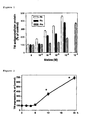
- Fig. 1 The results are shown in Fig. 1.
- the vertical axis of Fig. 1 shows the ratio (%) of the TM antigen level/ cellular protein to the control.
- the horizontal axis shows the concentration of each statin.
- the open bar, the black bar and the shaded bar in each concentration show pitavastatin (Pit), fluvastatin (Flu) and pravastatin (Pra), respectively.
- HUVECs were plated in HuMedia-EG2 medium (Kurabo Inc.) to which 2% (vol/vol) fetal bovine serum, 50 ⁇ g/ml gentamicin, 50 ng/ml amphotericin B, 10 ng/ml hEGF, 5 ng/ml hFGF-B, 1 ⁇ g/ml hydrocortisone and 10 ⁇ g/ml heparin were added. Subsequently, pitavastatin (at a final concentration of 10 -5 M) was added to the medium, and incubated for the indicated time with 5% CO 2 at 37°C. Total RNA was extracted by using TRIZOL reagent (Life Technologies, Inc.) and the levels of TM m-RNA expression were measured by the Northern blot method, which is a usual method.
- the results are shown in Table 2.
- the vertical axis of Fig. 2 shows the ratio (%) of the TM expression level to the control.
- the horizontal axis shows the time (time). It is found that the expression level increased drastically after 12 hours.
- a statin promotes the expression of TM which mainly functions as a blood clotting regulator, in particular, pitavastatin can significantly promote the expression of TM compared with other statins, therefore, it is useful as an antithrombotic agent and/or a preventive/ therapeutic agent for sepsis.
Landscapes
- Health & Medical Sciences (AREA)
- Public Health (AREA)
- Animal Behavior & Ethology (AREA)
- Pharmacology & Pharmacy (AREA)
- Veterinary Medicine (AREA)
- Chemical & Material Sciences (AREA)
- General Health & Medical Sciences (AREA)
- Life Sciences & Earth Sciences (AREA)
- Medicinal Chemistry (AREA)
- Epidemiology (AREA)
- Nuclear Medicine, Radiotherapy & Molecular Imaging (AREA)
- General Chemical & Material Sciences (AREA)
- Organic Chemistry (AREA)
- Chemical Kinetics & Catalysis (AREA)
- Bioinformatics & Cheminformatics (AREA)
- Engineering & Computer Science (AREA)
- Hematology (AREA)
- Diabetes (AREA)
- Communicable Diseases (AREA)
- Oncology (AREA)
- Pharmaceuticals Containing Other Organic And Inorganic Compounds (AREA)
- Quinoline Compounds (AREA)
- Medicines That Contain Protein Lipid Enzymes And Other Medicines (AREA)
Abstract
It is intended to provide a novel pharmaceutical effect of HMG-CoA reductase inhibitors, in particular, (+)-(3R, 5S, 6E)-7-Ä2-cyclopropyl-4-(4-fluorophenyl)-3-quinolylÜ-3,5-di hydroxy-6-heptenoic acid or its salt. Namely, TM expression promoters, more specifically speaking, antithrombotic drugs, preventive/remedies for sepsis, antiplatelet drugs and anticoagulants comprising as the active ingredient an HMG-CoA reductase inhibitor, in particular, (+)-(3R, 5S, 6E)-7-Ä2-cyclopropyl-4-(4-fluorophenyl)-3-quinolylÜ-3,5-dihydroxy-6 - heptenoic acid or its salt.
Description
The present invention relates to an HMG-CoA reductase
inhibitor, in particular, to a thrombomodulin expression
promoter comprising (+)-(3R, 5S, 6E)-7-[2- cyclopropyl-4-(4-fluorophenyl)-3-quinolyl]-3,5-dihydroxy-6-heptenoic
acid
or its salt (hereinafter abbreviated as pitavastatin in some
cases) as an active ingredient. Thrombomodulin is an
anticoagulant substance and useful as a preventive and
therapeutic agent for a disease associated with coagulation
disorder and/or sepsis. Also, the present invention relates
to an antithrombotic agent, a preventive/ therapeutic agent
for sepsis, an antiplatelet agent and an anticoagulant
comprising pitavastatin or its salt as an active ingredient.
Thrombomodulin (hereinafter abbreviated as TM in some
cases) is one of the glycoproteins, which is present on the
vascular endothelial cell membrane. It binds to thrombin as
a coenzyme for the activation of protein C by thrombin, and
it functions mainly as a blood-clotting regulator.
In addition, it has been shown recently that activated
protein C is reduced in patients with sepsis, and TM, which
is a coenzyme for the activation of protein C, has been highly
expected to be used as a preventive/ therapeutic agent for sepsis
(N Engl J Med, Vol. 344, No. 10 759-762 (2001)).
It has been shown recently that an HMG-CoA reductase
inhibitor (hereinafter abbreviated as statin in some cases)
has, in addition to the original effect on lowering LDL
cholesterol, an effect on other than lipid metabolism, namely
a pleiotropic effect such as improvement of endothelial cell
function, inhibition of smooth muscle cell proliferation and
migration, stabilization of plaque (inhibition of macrophage
foam cell formation, inhibition of matrix protease (MMP)
expression or the like), an antithrombotic effect or an
antioxidant effect.
With respect to the antithrombotic effect of statin,
improvement of an antithrombotic effect on endothelial cells
by inhibition of LDL oxidation (Atherosclerosis, Vol. 138,
p271-280 (1998)), an inhibitory effect on activation of
coagulation factor VII (Atheroscler Tromb Vase Biol, Vol. 17,
p265-272 (1997)), an inhibitory effect on platelet
hyperfunction (Atheroscler Tromb Vasc Biol, Vol. 15, p247-251
(1995)), an inhibitory effect on platelet adhesion (Atheroscler
Tromb Vasc Biol, Vol. 19, p1812-1817 (1999)) and the like were
reported in the past.
However, a promoting effect of statin on TM expression
was totally unknown.
The present invention provides an HMG-CoA reductase
inhibitor, in particular, a novel pharmacological effect of
(+)-(3R, 5S, 6E)-7-[2-cyclopropyl-4-(4-fluorophenyl)-3-quinolyl]-3,5-
dihydroxy-6-heptenoic acid or its salt. More
particularly, the present invention provides a medicinal agent
which can regulate TM expression.
The present inventors explored a substance which affects
the expression of TM mRNAs and proteins by using vascular
endothelial cells. As a result, they totally surprisingly found
that a statin has a promoting effect on TM expression, and
furthermore, particularly pitavastatin has a strong promoting
effect on TM expression, and thus the present invention has
been completed.
Namely, the present invention provides a TM expression
promoter comprising an HMG-CoA reductase inhibitor, in
particular,
(+)-(3R,5S,6E)-7-[2-cyclopropyl-4-(4-fluorophenyl)-3-quino
lyl]-3,5-dihydroxy-6-heptenoic acid or its salt as an active
ingredient.
Although a statin is a compound known as a therapeutic
agent for hyperlipidemia, it is totally unknown whether a statin
acts on TM expression or not.
There is no particular restriction on the statin, however,
it is described in, for example, US Patent No. 4,739,073 and
European Patent Application Laid-open No. 114,027; European
Patent Application Laid-open No. 367,895; US Patent Nos.
5,001,255, 4,613,610, 4,851,427, 4,755,606 and 4,808,607,
4,751,235, 4,939,159, 4,822,799, 4,804,679, 4,876,280,
4,829,081, 4,927,851, 4,588,715; and F.G. Kathawala, Medical
Research Reviews, 11, 121-146 (1991), in addition, European
Patent Application Laid-open No. 304,063; European Patent
Application Laid-open No. 330,057 and US Patent Nos. 5,026,708
and 4,868,185; European Patent Application Laid-open No.
324,347; European Patent Application Laid-open No. 300,278;
US Patent Nos. 5,013,749, 5,872,130 and 5,856,336, US Patent
No. 4,231,938, US Patent No. 4,444,784, US Patent No. 4,346,227,
US Patent No. 5,354,772, US Patent No. 5,273,995, US Patent
No. 5,177,080, US Patent No. 3,983,140, Japanese Patent No.
2,648,897, US Patent No. 5,260,440 or Bioorganic & Medicinal
Chemistry, 5, pp437, (1977) and Japanese Patent No. 2,569,746,
European Patent No. 304,063 or US Patent No. 5,856,336.
In particular, lovastatin is described in US Patent No.
4,231,938; simvastatin in US Patent No. 4,444,784, pravastatin
in US Patent No. 4,346,227; fluvastatin in US Patent No.
5,354,772; atorvastatin in US Patent No. 5,273,995;
cerivastatin in US Patent No. 5,177,080; mevastatin in US Patent
No. 3,983,140; in addition, rosuvastatin, namely monocalcium
bis(+)-7-[4-(4-fluorophenyl)-6-isopropyl-2-(N-methyl-N-met
hansulfonylaminopyrimidine)-5-yl]-(3R,5S)-dihydroxy-(E)-6-heptenoate
in Japanese Patent No. 2.648,897, US Patent No.
5, 260, 440 or Bioorganic & Medicinal Chemistry, 5, pp437, (1977).
Similarly, pitavastatin calcium is described in Japanese Patent
No. 2,569,746, European Patent No. 304,063 or US Patent No.
5,856,336.
The TM expression promoter of the present invention has
an anticoagulant effect and an inhibitory effect on platelet
aggregation, and is useful as an antithrombotic (antiplatelet
agent and/or anticoagulant) and/or a preventive/ therapeutic
agent for sepsis in the prevention and treatment of a disease
for which an anticoagulant activity is desired to be controlled.
Examples of a dosage form in the case where the TM
expression promoter of the present invention is used as a drug
include an oral administration forms such as tablet, capsule,
granule, powder, syrup or the like, or a parenteral
administration forms such as intravenous injection,
intramuscular injection, suppository, inhalant, percutaneous
absorption preparation, ophthalmic solution, nasal solution
or the like. To prepare medicinal preparations in various dosage
forms as above, this active ingredient can be used solely or
in combination with other pharmaceutically acceptable
excipients, binders, fillers, disintegrants, surfactants,
lubricants, disparsants, buffers, preservatives, corrigents,
flavors, coatings, carriers, diluents and the like as needed.
Among these dosage forms, a preferred form is the oral
administration. When a preparation for oral administration
is prepared, it is preferable that the pH be adjusted according
to the description of, for example, JP-A-2-6406, Patent No.
2,774,037, WO 97/23200, considering the stability of the active
ingredient. The dose of the drug of the present invention varies
depending on the body weight, age, sex, symptoms and the like
of patients, however, generally in the case of an adult, it
is preferable that the dose of 0.01 to 1000 mg/ day, particularly
0.1 to 100 mg/ day once or divided into several times a day
as a compound represented by the general formula (1) be orally
administered or parenterally administered.
The TM expression promoter of the present invention is
orally administered or parenterally administered.
The dose of the TM expression promoter of the present
invention varies depending on the body weight, age, sex, symptoms
and the like of patients, however, generally in the case of
an adult, it is preferable that the dose of 0.01 to 1000 mg/
day, preferably 0.1 to 100 mg/ day divided into one to three
times a day be administered.
Incidentally, all the content described in the
specification, Japanese Patent Application No. 2002-111247,
is incorporated in this description.
Hereunder, the present invention is described in more
detail with reference to Examples, however, the present
invention is not limited to these Examples.
Normal human umbilical vein endothelial cells (HUVECs)
were plated at a density of 2 x 10⁵ cells/ well in a 24-well
plate with HuMedia-EG2 medium (Kurabo Inc.) to which 2% (vol/vol)
fetal bovine serum, 50 µg/ml gentamicin, 50 ng/ml amphotericin
B, 10 ng/ml hEGF, 5 ng/ml hFGF-B, 1 µg/ml hydrocortisone and
10 µg/ml heparin were added. Subsequently, each test substance
(pitavastatin, fluvastatin and pravastatin) was added to the
medium at a final concentration of 10-7 M to 10-3 M, and incubated
for 24 hours with 5% CO2 at 37°C. After the incubation, the cells
were washed 3 times with a phosphate buffer solution (pH 7.4),
and suspended in 50 mmol/L Tris-HCl (pH 7.4) that contained
0.15 mol/L NaCl, 0.5% Triton X-100 and 1 mmol/L benzamide
hydrchloride, then, TM was extracted. The levels of TM antigen
were measured by enzyme immunoassay using the monoclonal
antibodies TMmAb 2, 11 and 20. In the case where the value of
the control (containing an equivalent weight of DMSO (0.01%))
is assigned to 100%, the effects on the TM antigen levels existing
in the cellular proteins due to the addition of each test
substance were measured.
The results are shown in Fig. 1. The vertical axis of
Fig. 1 shows the ratio (%) of the TM antigen level/ cellular
protein to the control. The horizontal axis shows the
concentration of each statin. The open bar, the black bar and
the shaded bar in each concentration show pitavastatin (Pit),
fluvastatin (Flu) and pravastatin (Pra), respectively.
From the results, it is found that any statin increases
the levels of TM expression. In particular, pitavastatin (Pit)
was found to show significant increase level.
HUVECs were plated in HuMedia-EG2 medium (Kurabo Inc.)
to which 2% (vol/vol) fetal bovine serum, 50 µg/ml gentamicin,
50 ng/ml amphotericin B, 10 ng/ml hEGF, 5 ng/ml hFGF-B, 1 µg/ml
hydrocortisone and 10 µg/ml heparin were added. Subsequently,
pitavastatin (at a final concentration of 10-5 M) was added to
the medium, and incubated for the indicated time with 5% CO2
at 37°C. Total RNA was extracted by using TRIZOL reagent (Life
Technologies, Inc.) and the levels of TM m-RNA expression were
measured by the Northern blot method, which is a usual method.
The results are shown in Table 2. The vertical axis of
Fig. 2 shows the ratio (%) of the TM expression level to the
control. The horizontal axis shows the time (time). It is found
that the expression level increased drastically after 12 hours.
According to the present invention, a statin promotes
the expression of TM which mainly functions as a blood clotting
regulator, in particular, pitavastatin can significantly
promote the expression of TM compared with other statins,
therefore, it is useful as an antithrombotic agent and/or a
preventive/ therapeutic agent for sepsis.
Claims (6)
- A thrombomodulin expression promoter comprising an HMG-CoA reductase inhibitor as an active ingredient.
- The thrombomodulin expression promoter according to claim 1, wherein the HMG-CoA reductase inhibitor is (+)-(3R, 5S, 6E)-7-[2-cyclopropyl-4-(4-fluorophenyl)-3-quinolyl]-3,5-di hydroxy-6-heptenoic acid or its salt.
- An antithrombotic agent comprising, as an active ingredient, (+)-(3R, 5S, 6E)-7-[2-cyclopropyl-4-(4-fluorophenyl)-3-quinolyl]-3,5-dihydroxy-6-heptenoic acid or its salt.
- A preventive/ therapeutic agent for sepsis comprising, as an active ingredient, (+)-(3R, 5S, 6E)-7-[2-cyclopropyl-4-(4-fluorophenyl)-3-quinolyl]-3,5-dihydr oxy-6-heptenoic acid or its salt.
- An antiplatelet agent comprising, as an active ingredient, (+)-(3R, 5S, 6E)-7-[2-cyclopropyl-4-(4-fluorophenyl)-3-quinolyl]-3,5-dihydroxy-6-heptenoic acid or its salt.
- An anticoagulant agent comprising, as an active ingredient, (+)-(3R, 5S, 6E)-7-[2-cyclopropyl-4-(4-fluorophenyl)-3-quinolyl]-3,5-dihydroxy-6-heptenoic acid or its salt.
Applications Claiming Priority (3)
| Application Number | Priority Date | Filing Date | Title |
|---|---|---|---|
| JP2002111247A JP4187141B2 (en) | 2002-04-12 | 2002-04-12 | Novel thrombomodulin expression promoter |
| JP2002111247 | 2002-04-12 | ||
| PCT/JP2003/004627 WO2003086466A1 (en) | 2002-04-12 | 2003-04-11 | Novel thrombomodulin expression promoters |
Publications (2)
| Publication Number | Publication Date |
|---|---|
| EP1498139A1 true EP1498139A1 (en) | 2005-01-19 |
| EP1498139A4 EP1498139A4 (en) | 2007-03-07 |
Family
ID=29243267
Family Applications (1)
| Application Number | Title | Priority Date | Filing Date |
|---|---|---|---|
| EP03746171A Ceased EP1498139A4 (en) | 2002-04-12 | 2003-04-11 | NOVEL PROMOTERS FOR THE EXPRESSION OF THROMBOMODULIN |
Country Status (5)
| Country | Link |
|---|---|
| US (2) | US20050148626A1 (en) |
| EP (1) | EP1498139A4 (en) |
| JP (1) | JP4187141B2 (en) |
| AU (1) | AU2003236108A1 (en) |
| WO (1) | WO2003086466A1 (en) |
Cited By (2)
| Publication number | Priority date | Publication date | Assignee | Title |
|---|---|---|---|---|
| WO2009136214A1 (en) * | 2008-05-09 | 2009-11-12 | Pannonpharma Gyógyszergyártó Kft. | Combination compositions comprising antimycotic agents and statins and the use thereof |
| EP1864662A4 (en) * | 2005-03-28 | 2010-06-23 | Kowa Co | ANTITHROMBOTIC THERAPEUTIC AGENT |
Families Citing this family (1)
| Publication number | Priority date | Publication date | Assignee | Title |
|---|---|---|---|---|
| US20060276486A1 (en) * | 2003-04-17 | 2006-12-07 | Kowa Co., Ktd. | Lklf/klf2 gene expression promoter |
Family Cites Families (9)
| Publication number | Priority date | Publication date | Assignee | Title |
|---|---|---|---|---|
| JP2569746B2 (en) * | 1987-08-20 | 1997-01-08 | 日産化学工業株式会社 | Quinoline mevalonolactones |
| US5084482A (en) * | 1990-04-10 | 1992-01-28 | The Lithox Corporation | Methods for inhibiting inflammatory ischemic, thrombotic and cholesterolemic disease response with methionine compounds |
| AU643306B2 (en) * | 1990-06-27 | 1993-11-11 | Mochida Pharmaceutical Co., Ltd. | Anticoagulant polypeptides |
| CN1217656C (en) * | 1995-11-02 | 2005-09-07 | 沃尼尔·朗伯公司 | Methods and pharmaceutical compositions for modulating lipid concentration |
| US6465477B1 (en) * | 1997-08-18 | 2002-10-15 | Kowa Company, Ltd. | Stable pharmaceutical composition |
| EP1254667A4 (en) * | 2000-02-10 | 2003-03-12 | Takeda Chemical Industries Ltd | MEDICINAL PRODUCTS WITH A COMBINATION OF ASSETS |
| US6620821B2 (en) * | 2000-06-15 | 2003-09-16 | Bristol-Myers Squibb Company | HMG-CoA reductase inhibitors and method |
| US6627636B2 (en) * | 2000-06-15 | 2003-09-30 | Bristol-Myers Squibb Company | HMG-CoA reductase inhibitors and method |
| AU2001284413A1 (en) * | 2000-08-30 | 2002-03-13 | Sankyo Company Limited | Medicinal compositions for preventing or treating heart failure |
-
2002
- 2002-04-12 JP JP2002111247A patent/JP4187141B2/en not_active Expired - Fee Related
-
2003
- 2003-04-11 AU AU2003236108A patent/AU2003236108A1/en not_active Abandoned
- 2003-04-11 WO PCT/JP2003/004627 patent/WO2003086466A1/en not_active Ceased
- 2003-04-11 EP EP03746171A patent/EP1498139A4/en not_active Ceased
- 2003-04-11 US US10/511,111 patent/US20050148626A1/en not_active Abandoned
-
2008
- 2008-07-07 US US12/217,708 patent/US20080275081A1/en not_active Abandoned
Cited By (2)
| Publication number | Priority date | Publication date | Assignee | Title |
|---|---|---|---|---|
| EP1864662A4 (en) * | 2005-03-28 | 2010-06-23 | Kowa Co | ANTITHROMBOTIC THERAPEUTIC AGENT |
| WO2009136214A1 (en) * | 2008-05-09 | 2009-11-12 | Pannonpharma Gyógyszergyártó Kft. | Combination compositions comprising antimycotic agents and statins and the use thereof |
Also Published As
| Publication number | Publication date |
|---|---|
| AU2003236108A8 (en) | 2003-10-27 |
| AU2003236108A1 (en) | 2003-10-27 |
| US20050148626A1 (en) | 2005-07-07 |
| JP2003306445A (en) | 2003-10-28 |
| WO2003086466A1 (en) | 2003-10-23 |
| US20080275081A1 (en) | 2008-11-06 |
| EP1498139A4 (en) | 2007-03-07 |
| JP4187141B2 (en) | 2008-11-26 |
Similar Documents
| Publication | Publication Date | Title |
|---|---|---|
| CZ301583B6 (en) | Medicament containing rosuvastatin intended for treating heterozygous familial hypercholesterolemia | |
| US11945782B2 (en) | Composition and methods of use of tetrahydroisoquinoline small molecules to bind and modulate PCSK9 protein activity | |
| US20080275081A1 (en) | Novel thrombomodulin expression promoters | |
| US20100204254A1 (en) | Use of statins in the prevention and treatment of radiation injury and other disorders associated with reduced endothelial thrombomodulin | |
| US20080161348A1 (en) | Ptx3-gene expression inhibitor | |
| US8252524B2 (en) | Method of screening pharmaceutical compositions that promote nuclear transfer of Cdc42 protein | |
| US20040087597A1 (en) | Preventives and remedies for complications of diabetes | |
| EP1488808A1 (en) | Remedies for glomerular diseases | |
| SK11112001A3 (en) | Use of cholesterol-lowering agent | |
| CN101193656B (en) | Novel triglyceride reducing agent | |
| AU2004233693B2 (en) | Adiponectin production enhancer | |
| JP4719572B2 (en) | LKLF / KLF2 gene expression promoter | |
| EP1719524B1 (en) | Nuclear transfer promoter for rac protein and method of screening the same | |
| US20070293535A1 (en) | Nuclear Transfer Promoter for Ddc42 Protein and Method of Screening the Dame | |
| HK1060311B (en) | Preventives and remedies for complications of diabetic | |
| JP2022062491A (en) | Agent for preventing or treating chronic sinusitis, and use of statin for producing the same | |
| HK1063606A1 (en) | Medicament containing an effector of the glutathione metabolism together with alpha-lipoic acid for use in kidney replacement therapy | |
| HK1063606B (en) | Medicament containing an effector of the glutathione metabolism together with alpha-lipoic acid for use in kidney replacement therapy | |
| TH88724A (en) | Treatment |
Legal Events
| Date | Code | Title | Description |
|---|---|---|---|
| PUAI | Public reference made under article 153(3) epc to a published international application that has entered the european phase |
Free format text: ORIGINAL CODE: 0009012 |
|
| 17P | Request for examination filed |
Effective date: 20041102 |
|
| AK | Designated contracting states |
Kind code of ref document: A1 Designated state(s): AT BE BG CH CY CZ DE DK EE ES FI FR GB GR HU IE IT LI LU MC NL PT RO SE SI SK TR |
|
| AX | Request for extension of the european patent |
Extension state: AL LT LV MK |
|
| A4 | Supplementary search report drawn up and despatched |
Effective date: 20070201 |
|
| 17Q | First examination report despatched |
Effective date: 20070926 |
|
| STAA | Information on the status of an ep patent application or granted ep patent |
Free format text: STATUS: THE APPLICATION HAS BEEN REFUSED |
|
| 18R | Application refused |
Effective date: 20091012 |