EP1495756A1 - Severe sepsis preventive therapeutic agent - Google Patents
Severe sepsis preventive therapeutic agent Download PDFInfo
- Publication number
- EP1495756A1 EP1495756A1 EP03745702A EP03745702A EP1495756A1 EP 1495756 A1 EP1495756 A1 EP 1495756A1 EP 03745702 A EP03745702 A EP 03745702A EP 03745702 A EP03745702 A EP 03745702A EP 1495756 A1 EP1495756 A1 EP 1495756A1
- Authority
- EP
- European Patent Office
- Prior art keywords
- group
- substituents
- formula
- compound
- group optionally
- Prior art date
- Legal status (The legal status is an assumption and is not a legal conclusion. Google has not performed a legal analysis and makes no representation as to the accuracy of the status listed.)
- Withdrawn
Links
- 0 CCC(C1CC(C)C)*(*)**C1=O Chemical compound CCC(C1CC(C)C)*(*)**C1=O 0.000 description 7
Images




Classifications
-
- A—HUMAN NECESSITIES
- A61—MEDICAL OR VETERINARY SCIENCE; HYGIENE
- A61K—PREPARATIONS FOR MEDICAL, DENTAL OR TOILETRY PURPOSES
- A61K31/00—Medicinal preparations containing organic active ingredients
- A61K31/33—Heterocyclic compounds
- A61K31/395—Heterocyclic compounds having nitrogen as a ring hetero atom, e.g. guanethidine or rifamycins
- A61K31/41—Heterocyclic compounds having nitrogen as a ring hetero atom, e.g. guanethidine or rifamycins having five-membered rings with two or more ring hetero atoms, at least one of which being nitrogen, e.g. tetrazole
- A61K31/4192—1,2,3-Triazoles
-
- A—HUMAN NECESSITIES
- A61—MEDICAL OR VETERINARY SCIENCE; HYGIENE
- A61K—PREPARATIONS FOR MEDICAL, DENTAL OR TOILETRY PURPOSES
- A61K31/00—Medicinal preparations containing organic active ingredients
- A61K31/21—Esters, e.g. nitroglycerine, selenocyanates
- A61K31/215—Esters, e.g. nitroglycerine, selenocyanates of carboxylic acids
- A61K31/216—Esters, e.g. nitroglycerine, selenocyanates of carboxylic acids of acids having aromatic rings, e.g. benactizyne, clofibrate
-
- A—HUMAN NECESSITIES
- A61—MEDICAL OR VETERINARY SCIENCE; HYGIENE
- A61K—PREPARATIONS FOR MEDICAL, DENTAL OR TOILETRY PURPOSES
- A61K31/00—Medicinal preparations containing organic active ingredients
-
- A—HUMAN NECESSITIES
- A61—MEDICAL OR VETERINARY SCIENCE; HYGIENE
- A61K—PREPARATIONS FOR MEDICAL, DENTAL OR TOILETRY PURPOSES
- A61K31/00—Medicinal preparations containing organic active ingredients
- A61K31/185—Acids; Anhydrides, halides or salts thereof, e.g. sulfur acids, imidic, hydrazonic or hydroximic acids
- A61K31/19—Carboxylic acids, e.g. valproic acid
- A61K31/195—Carboxylic acids, e.g. valproic acid having an amino group
- A61K31/197—Carboxylic acids, e.g. valproic acid having an amino group the amino and the carboxyl groups being attached to the same acyclic carbon chain, e.g. gamma-aminobutyric acid [GABA], beta-alanine, epsilon-aminocaproic acid or pantothenic acid
- A61K31/198—Alpha-amino acids, e.g. alanine or edetic acid [EDTA]
-
- A—HUMAN NECESSITIES
- A61—MEDICAL OR VETERINARY SCIENCE; HYGIENE
- A61K—PREPARATIONS FOR MEDICAL, DENTAL OR TOILETRY PURPOSES
- A61K31/00—Medicinal preparations containing organic active ingredients
- A61K31/21—Esters, e.g. nitroglycerine, selenocyanates
- A61K31/215—Esters, e.g. nitroglycerine, selenocyanates of carboxylic acids
-
- A—HUMAN NECESSITIES
- A61—MEDICAL OR VETERINARY SCIENCE; HYGIENE
- A61K—PREPARATIONS FOR MEDICAL, DENTAL OR TOILETRY PURPOSES
- A61K31/00—Medicinal preparations containing organic active ingredients
- A61K31/21—Esters, e.g. nitroglycerine, selenocyanates
- A61K31/215—Esters, e.g. nitroglycerine, selenocyanates of carboxylic acids
- A61K31/22—Esters, e.g. nitroglycerine, selenocyanates of carboxylic acids of acyclic acids, e.g. pravastatin
- A61K31/223—Esters, e.g. nitroglycerine, selenocyanates of carboxylic acids of acyclic acids, e.g. pravastatin of alpha-aminoacids
-
- A—HUMAN NECESSITIES
- A61—MEDICAL OR VETERINARY SCIENCE; HYGIENE
- A61K—PREPARATIONS FOR MEDICAL, DENTAL OR TOILETRY PURPOSES
- A61K31/00—Medicinal preparations containing organic active ingredients
- A61K31/21—Esters, e.g. nitroglycerine, selenocyanates
- A61K31/215—Esters, e.g. nitroglycerine, selenocyanates of carboxylic acids
- A61K31/235—Esters, e.g. nitroglycerine, selenocyanates of carboxylic acids having an aromatic ring attached to a carboxyl group
- A61K31/24—Esters, e.g. nitroglycerine, selenocyanates of carboxylic acids having an aromatic ring attached to a carboxyl group having an amino or nitro group
- A61K31/245—Amino benzoic acid types, e.g. procaine, novocaine
-
- A—HUMAN NECESSITIES
- A61—MEDICAL OR VETERINARY SCIENCE; HYGIENE
- A61K—PREPARATIONS FOR MEDICAL, DENTAL OR TOILETRY PURPOSES
- A61K31/00—Medicinal preparations containing organic active ingredients
- A61K31/21—Esters, e.g. nitroglycerine, selenocyanates
- A61K31/27—Esters, e.g. nitroglycerine, selenocyanates of carbamic or thiocarbamic acids, meprobamate, carbachol, neostigmine
-
- A—HUMAN NECESSITIES
- A61—MEDICAL OR VETERINARY SCIENCE; HYGIENE
- A61K—PREPARATIONS FOR MEDICAL, DENTAL OR TOILETRY PURPOSES
- A61K31/00—Medicinal preparations containing organic active ingredients
- A61K31/275—Nitriles; Isonitriles
- A61K31/277—Nitriles; Isonitriles having a ring, e.g. verapamil
-
- A—HUMAN NECESSITIES
- A61—MEDICAL OR VETERINARY SCIENCE; HYGIENE
- A61K—PREPARATIONS FOR MEDICAL, DENTAL OR TOILETRY PURPOSES
- A61K31/00—Medicinal preparations containing organic active ingredients
- A61K31/33—Heterocyclic compounds
- A61K31/395—Heterocyclic compounds having nitrogen as a ring hetero atom, e.g. guanethidine or rifamycins
- A61K31/41—Heterocyclic compounds having nitrogen as a ring hetero atom, e.g. guanethidine or rifamycins having five-membered rings with two or more ring hetero atoms, at least one of which being nitrogen, e.g. tetrazole
-
- A—HUMAN NECESSITIES
- A61—MEDICAL OR VETERINARY SCIENCE; HYGIENE
- A61K—PREPARATIONS FOR MEDICAL, DENTAL OR TOILETRY PURPOSES
- A61K31/00—Medicinal preparations containing organic active ingredients
- A61K31/33—Heterocyclic compounds
- A61K31/395—Heterocyclic compounds having nitrogen as a ring hetero atom, e.g. guanethidine or rifamycins
- A61K31/41—Heterocyclic compounds having nitrogen as a ring hetero atom, e.g. guanethidine or rifamycins having five-membered rings with two or more ring hetero atoms, at least one of which being nitrogen, e.g. tetrazole
- A61K31/4196—1,2,4-Triazoles
-
- A—HUMAN NECESSITIES
- A61—MEDICAL OR VETERINARY SCIENCE; HYGIENE
- A61K—PREPARATIONS FOR MEDICAL, DENTAL OR TOILETRY PURPOSES
- A61K31/00—Medicinal preparations containing organic active ingredients
- A61K31/33—Heterocyclic compounds
- A61K31/395—Heterocyclic compounds having nitrogen as a ring hetero atom, e.g. guanethidine or rifamycins
- A61K31/41—Heterocyclic compounds having nitrogen as a ring hetero atom, e.g. guanethidine or rifamycins having five-membered rings with two or more ring hetero atoms, at least one of which being nitrogen, e.g. tetrazole
- A61K31/425—Thiazoles
- A61K31/428—Thiazoles condensed with carbocyclic rings
-
- A—HUMAN NECESSITIES
- A61—MEDICAL OR VETERINARY SCIENCE; HYGIENE
- A61P—SPECIFIC THERAPEUTIC ACTIVITY OF CHEMICAL COMPOUNDS OR MEDICINAL PREPARATIONS
- A61P1/00—Drugs for disorders of the alimentary tract or the digestive system
-
- A—HUMAN NECESSITIES
- A61—MEDICAL OR VETERINARY SCIENCE; HYGIENE
- A61P—SPECIFIC THERAPEUTIC ACTIVITY OF CHEMICAL COMPOUNDS OR MEDICINAL PREPARATIONS
- A61P1/00—Drugs for disorders of the alimentary tract or the digestive system
- A61P1/04—Drugs for disorders of the alimentary tract or the digestive system for ulcers, gastritis or reflux esophagitis, e.g. antacids, inhibitors of acid secretion, mucosal protectants
-
- A—HUMAN NECESSITIES
- A61—MEDICAL OR VETERINARY SCIENCE; HYGIENE
- A61P—SPECIFIC THERAPEUTIC ACTIVITY OF CHEMICAL COMPOUNDS OR MEDICINAL PREPARATIONS
- A61P1/00—Drugs for disorders of the alimentary tract or the digestive system
- A61P1/06—Anti-spasmodics, e.g. drugs for colics, esophagic dyskinesia
-
- A—HUMAN NECESSITIES
- A61—MEDICAL OR VETERINARY SCIENCE; HYGIENE
- A61P—SPECIFIC THERAPEUTIC ACTIVITY OF CHEMICAL COMPOUNDS OR MEDICINAL PREPARATIONS
- A61P1/00—Drugs for disorders of the alimentary tract or the digestive system
- A61P1/16—Drugs for disorders of the alimentary tract or the digestive system for liver or gallbladder disorders, e.g. hepatoprotective agents, cholagogues, litholytics
-
- A—HUMAN NECESSITIES
- A61—MEDICAL OR VETERINARY SCIENCE; HYGIENE
- A61P—SPECIFIC THERAPEUTIC ACTIVITY OF CHEMICAL COMPOUNDS OR MEDICINAL PREPARATIONS
- A61P11/00—Drugs for disorders of the respiratory system
- A61P11/06—Antiasthmatics
-
- A—HUMAN NECESSITIES
- A61—MEDICAL OR VETERINARY SCIENCE; HYGIENE
- A61P—SPECIFIC THERAPEUTIC ACTIVITY OF CHEMICAL COMPOUNDS OR MEDICINAL PREPARATIONS
- A61P11/00—Drugs for disorders of the respiratory system
- A61P11/16—Central respiratory analeptics
-
- A—HUMAN NECESSITIES
- A61—MEDICAL OR VETERINARY SCIENCE; HYGIENE
- A61P—SPECIFIC THERAPEUTIC ACTIVITY OF CHEMICAL COMPOUNDS OR MEDICINAL PREPARATIONS
- A61P13/00—Drugs for disorders of the urinary system
- A61P13/12—Drugs for disorders of the urinary system of the kidneys
-
- A—HUMAN NECESSITIES
- A61—MEDICAL OR VETERINARY SCIENCE; HYGIENE
- A61P—SPECIFIC THERAPEUTIC ACTIVITY OF CHEMICAL COMPOUNDS OR MEDICINAL PREPARATIONS
- A61P15/00—Drugs for genital or sexual disorders; Contraceptives
- A61P15/08—Drugs for genital or sexual disorders; Contraceptives for gonadal disorders or for enhancing fertility, e.g. inducers of ovulation or of spermatogenesis
-
- A—HUMAN NECESSITIES
- A61—MEDICAL OR VETERINARY SCIENCE; HYGIENE
- A61P—SPECIFIC THERAPEUTIC ACTIVITY OF CHEMICAL COMPOUNDS OR MEDICINAL PREPARATIONS
- A61P17/00—Drugs for dermatological disorders
-
- A—HUMAN NECESSITIES
- A61—MEDICAL OR VETERINARY SCIENCE; HYGIENE
- A61P—SPECIFIC THERAPEUTIC ACTIVITY OF CHEMICAL COMPOUNDS OR MEDICINAL PREPARATIONS
- A61P17/00—Drugs for dermatological disorders
- A61P17/02—Drugs for dermatological disorders for treating wounds, ulcers, burns, scars, keloids, or the like
-
- A—HUMAN NECESSITIES
- A61—MEDICAL OR VETERINARY SCIENCE; HYGIENE
- A61P—SPECIFIC THERAPEUTIC ACTIVITY OF CHEMICAL COMPOUNDS OR MEDICINAL PREPARATIONS
- A61P17/00—Drugs for dermatological disorders
- A61P17/16—Emollients or protectives, e.g. against radiation
-
- A—HUMAN NECESSITIES
- A61—MEDICAL OR VETERINARY SCIENCE; HYGIENE
- A61P—SPECIFIC THERAPEUTIC ACTIVITY OF CHEMICAL COMPOUNDS OR MEDICINAL PREPARATIONS
- A61P19/00—Drugs for skeletal disorders
- A61P19/02—Drugs for skeletal disorders for joint disorders, e.g. arthritis, arthrosis
-
- A—HUMAN NECESSITIES
- A61—MEDICAL OR VETERINARY SCIENCE; HYGIENE
- A61P—SPECIFIC THERAPEUTIC ACTIVITY OF CHEMICAL COMPOUNDS OR MEDICINAL PREPARATIONS
- A61P19/00—Drugs for skeletal disorders
- A61P19/06—Antigout agents, e.g. antihyperuricemic or uricosuric agents
-
- A—HUMAN NECESSITIES
- A61—MEDICAL OR VETERINARY SCIENCE; HYGIENE
- A61P—SPECIFIC THERAPEUTIC ACTIVITY OF CHEMICAL COMPOUNDS OR MEDICINAL PREPARATIONS
- A61P19/00—Drugs for skeletal disorders
- A61P19/08—Drugs for skeletal disorders for bone diseases, e.g. rachitism, Paget's disease
-
- A—HUMAN NECESSITIES
- A61—MEDICAL OR VETERINARY SCIENCE; HYGIENE
- A61P—SPECIFIC THERAPEUTIC ACTIVITY OF CHEMICAL COMPOUNDS OR MEDICINAL PREPARATIONS
- A61P21/00—Drugs for disorders of the muscular or neuromuscular system
- A61P21/04—Drugs for disorders of the muscular or neuromuscular system for myasthenia gravis
-
- A—HUMAN NECESSITIES
- A61—MEDICAL OR VETERINARY SCIENCE; HYGIENE
- A61P—SPECIFIC THERAPEUTIC ACTIVITY OF CHEMICAL COMPOUNDS OR MEDICINAL PREPARATIONS
- A61P25/00—Drugs for disorders of the nervous system
-
- A—HUMAN NECESSITIES
- A61—MEDICAL OR VETERINARY SCIENCE; HYGIENE
- A61P—SPECIFIC THERAPEUTIC ACTIVITY OF CHEMICAL COMPOUNDS OR MEDICINAL PREPARATIONS
- A61P25/00—Drugs for disorders of the nervous system
- A61P25/08—Antiepileptics; Anticonvulsants
-
- A—HUMAN NECESSITIES
- A61—MEDICAL OR VETERINARY SCIENCE; HYGIENE
- A61P—SPECIFIC THERAPEUTIC ACTIVITY OF CHEMICAL COMPOUNDS OR MEDICINAL PREPARATIONS
- A61P25/00—Drugs for disorders of the nervous system
- A61P25/18—Antipsychotics, i.e. neuroleptics; Drugs for mania or schizophrenia
-
- A—HUMAN NECESSITIES
- A61—MEDICAL OR VETERINARY SCIENCE; HYGIENE
- A61P—SPECIFIC THERAPEUTIC ACTIVITY OF CHEMICAL COMPOUNDS OR MEDICINAL PREPARATIONS
- A61P25/00—Drugs for disorders of the nervous system
- A61P25/20—Hypnotics; Sedatives
-
- A—HUMAN NECESSITIES
- A61—MEDICAL OR VETERINARY SCIENCE; HYGIENE
- A61P—SPECIFIC THERAPEUTIC ACTIVITY OF CHEMICAL COMPOUNDS OR MEDICINAL PREPARATIONS
- A61P25/00—Drugs for disorders of the nervous system
- A61P25/28—Drugs for disorders of the nervous system for treating neurodegenerative disorders of the central nervous system, e.g. nootropic agents, cognition enhancers, drugs for treating Alzheimer's disease or other forms of dementia
-
- A—HUMAN NECESSITIES
- A61—MEDICAL OR VETERINARY SCIENCE; HYGIENE
- A61P—SPECIFIC THERAPEUTIC ACTIVITY OF CHEMICAL COMPOUNDS OR MEDICINAL PREPARATIONS
- A61P27/00—Drugs for disorders of the senses
- A61P27/02—Ophthalmic agents
-
- A—HUMAN NECESSITIES
- A61—MEDICAL OR VETERINARY SCIENCE; HYGIENE
- A61P—SPECIFIC THERAPEUTIC ACTIVITY OF CHEMICAL COMPOUNDS OR MEDICINAL PREPARATIONS
- A61P27/00—Drugs for disorders of the senses
- A61P27/16—Otologicals
-
- A—HUMAN NECESSITIES
- A61—MEDICAL OR VETERINARY SCIENCE; HYGIENE
- A61P—SPECIFIC THERAPEUTIC ACTIVITY OF CHEMICAL COMPOUNDS OR MEDICINAL PREPARATIONS
- A61P29/00—Non-central analgesic, antipyretic or antiinflammatory agents, e.g. antirheumatic agents; Non-steroidal antiinflammatory drugs [NSAID]
-
- A—HUMAN NECESSITIES
- A61—MEDICAL OR VETERINARY SCIENCE; HYGIENE
- A61P—SPECIFIC THERAPEUTIC ACTIVITY OF CHEMICAL COMPOUNDS OR MEDICINAL PREPARATIONS
- A61P3/00—Drugs for disorders of the metabolism
- A61P3/02—Nutrients, e.g. vitamins, minerals
-
- A—HUMAN NECESSITIES
- A61—MEDICAL OR VETERINARY SCIENCE; HYGIENE
- A61P—SPECIFIC THERAPEUTIC ACTIVITY OF CHEMICAL COMPOUNDS OR MEDICINAL PREPARATIONS
- A61P3/00—Drugs for disorders of the metabolism
- A61P3/06—Antihyperlipidemics
-
- A—HUMAN NECESSITIES
- A61—MEDICAL OR VETERINARY SCIENCE; HYGIENE
- A61P—SPECIFIC THERAPEUTIC ACTIVITY OF CHEMICAL COMPOUNDS OR MEDICINAL PREPARATIONS
- A61P3/00—Drugs for disorders of the metabolism
- A61P3/08—Drugs for disorders of the metabolism for glucose homeostasis
- A61P3/10—Drugs for disorders of the metabolism for glucose homeostasis for hyperglycaemia, e.g. antidiabetics
-
- A—HUMAN NECESSITIES
- A61—MEDICAL OR VETERINARY SCIENCE; HYGIENE
- A61P—SPECIFIC THERAPEUTIC ACTIVITY OF CHEMICAL COMPOUNDS OR MEDICINAL PREPARATIONS
- A61P3/00—Drugs for disorders of the metabolism
- A61P3/12—Drugs for disorders of the metabolism for electrolyte homeostasis
- A61P3/14—Drugs for disorders of the metabolism for electrolyte homeostasis for calcium homeostasis
-
- A—HUMAN NECESSITIES
- A61—MEDICAL OR VETERINARY SCIENCE; HYGIENE
- A61P—SPECIFIC THERAPEUTIC ACTIVITY OF CHEMICAL COMPOUNDS OR MEDICINAL PREPARATIONS
- A61P31/00—Antiinfectives, i.e. antibiotics, antiseptics, chemotherapeutics
-
- A—HUMAN NECESSITIES
- A61—MEDICAL OR VETERINARY SCIENCE; HYGIENE
- A61P—SPECIFIC THERAPEUTIC ACTIVITY OF CHEMICAL COMPOUNDS OR MEDICINAL PREPARATIONS
- A61P31/00—Antiinfectives, i.e. antibiotics, antiseptics, chemotherapeutics
- A61P31/04—Antibacterial agents
-
- A—HUMAN NECESSITIES
- A61—MEDICAL OR VETERINARY SCIENCE; HYGIENE
- A61P—SPECIFIC THERAPEUTIC ACTIVITY OF CHEMICAL COMPOUNDS OR MEDICINAL PREPARATIONS
- A61P31/00—Antiinfectives, i.e. antibiotics, antiseptics, chemotherapeutics
- A61P31/10—Antimycotics
-
- A—HUMAN NECESSITIES
- A61—MEDICAL OR VETERINARY SCIENCE; HYGIENE
- A61P—SPECIFIC THERAPEUTIC ACTIVITY OF CHEMICAL COMPOUNDS OR MEDICINAL PREPARATIONS
- A61P31/00—Antiinfectives, i.e. antibiotics, antiseptics, chemotherapeutics
- A61P31/12—Antivirals
-
- A—HUMAN NECESSITIES
- A61—MEDICAL OR VETERINARY SCIENCE; HYGIENE
- A61P—SPECIFIC THERAPEUTIC ACTIVITY OF CHEMICAL COMPOUNDS OR MEDICINAL PREPARATIONS
- A61P31/00—Antiinfectives, i.e. antibiotics, antiseptics, chemotherapeutics
- A61P31/12—Antivirals
- A61P31/14—Antivirals for RNA viruses
- A61P31/16—Antivirals for RNA viruses for influenza or rhinoviruses
-
- A—HUMAN NECESSITIES
- A61—MEDICAL OR VETERINARY SCIENCE; HYGIENE
- A61P—SPECIFIC THERAPEUTIC ACTIVITY OF CHEMICAL COMPOUNDS OR MEDICINAL PREPARATIONS
- A61P31/00—Antiinfectives, i.e. antibiotics, antiseptics, chemotherapeutics
- A61P31/12—Antivirals
- A61P31/14—Antivirals for RNA viruses
- A61P31/18—Antivirals for RNA viruses for HIV
-
- A—HUMAN NECESSITIES
- A61—MEDICAL OR VETERINARY SCIENCE; HYGIENE
- A61P—SPECIFIC THERAPEUTIC ACTIVITY OF CHEMICAL COMPOUNDS OR MEDICINAL PREPARATIONS
- A61P31/00—Antiinfectives, i.e. antibiotics, antiseptics, chemotherapeutics
- A61P31/12—Antivirals
- A61P31/20—Antivirals for DNA viruses
- A61P31/22—Antivirals for DNA viruses for herpes viruses
-
- A—HUMAN NECESSITIES
- A61—MEDICAL OR VETERINARY SCIENCE; HYGIENE
- A61P—SPECIFIC THERAPEUTIC ACTIVITY OF CHEMICAL COMPOUNDS OR MEDICINAL PREPARATIONS
- A61P33/00—Antiparasitic agents
- A61P33/02—Antiprotozoals, e.g. for leishmaniasis, trichomoniasis, toxoplasmosis
- A61P33/06—Antimalarials
-
- A—HUMAN NECESSITIES
- A61—MEDICAL OR VETERINARY SCIENCE; HYGIENE
- A61P—SPECIFIC THERAPEUTIC ACTIVITY OF CHEMICAL COMPOUNDS OR MEDICINAL PREPARATIONS
- A61P35/00—Antineoplastic agents
-
- A—HUMAN NECESSITIES
- A61—MEDICAL OR VETERINARY SCIENCE; HYGIENE
- A61P—SPECIFIC THERAPEUTIC ACTIVITY OF CHEMICAL COMPOUNDS OR MEDICINAL PREPARATIONS
- A61P37/00—Drugs for immunological or allergic disorders
- A61P37/02—Immunomodulators
-
- A—HUMAN NECESSITIES
- A61—MEDICAL OR VETERINARY SCIENCE; HYGIENE
- A61P—SPECIFIC THERAPEUTIC ACTIVITY OF CHEMICAL COMPOUNDS OR MEDICINAL PREPARATIONS
- A61P43/00—Drugs for specific purposes, not provided for in groups A61P1/00-A61P41/00
-
- A—HUMAN NECESSITIES
- A61—MEDICAL OR VETERINARY SCIENCE; HYGIENE
- A61P—SPECIFIC THERAPEUTIC ACTIVITY OF CHEMICAL COMPOUNDS OR MEDICINAL PREPARATIONS
- A61P7/00—Drugs for disorders of the blood or the extracellular fluid
- A61P7/02—Antithrombotic agents; Anticoagulants; Platelet aggregation inhibitors
-
- A—HUMAN NECESSITIES
- A61—MEDICAL OR VETERINARY SCIENCE; HYGIENE
- A61P—SPECIFIC THERAPEUTIC ACTIVITY OF CHEMICAL COMPOUNDS OR MEDICINAL PREPARATIONS
- A61P7/00—Drugs for disorders of the blood or the extracellular fluid
- A61P7/06—Antianaemics
-
- A—HUMAN NECESSITIES
- A61—MEDICAL OR VETERINARY SCIENCE; HYGIENE
- A61P—SPECIFIC THERAPEUTIC ACTIVITY OF CHEMICAL COMPOUNDS OR MEDICINAL PREPARATIONS
- A61P9/00—Drugs for disorders of the cardiovascular system
- A61P9/02—Non-specific cardiovascular stimulants, e.g. drugs for syncope, antihypotensives
-
- A—HUMAN NECESSITIES
- A61—MEDICAL OR VETERINARY SCIENCE; HYGIENE
- A61P—SPECIFIC THERAPEUTIC ACTIVITY OF CHEMICAL COMPOUNDS OR MEDICINAL PREPARATIONS
- A61P9/00—Drugs for disorders of the cardiovascular system
- A61P9/04—Inotropic agents, i.e. stimulants of cardiac contraction; Drugs for heart failure
-
- A—HUMAN NECESSITIES
- A61—MEDICAL OR VETERINARY SCIENCE; HYGIENE
- A61P—SPECIFIC THERAPEUTIC ACTIVITY OF CHEMICAL COMPOUNDS OR MEDICINAL PREPARATIONS
- A61P9/00—Drugs for disorders of the cardiovascular system
- A61P9/10—Drugs for disorders of the cardiovascular system for treating ischaemic or atherosclerotic diseases, e.g. antianginal drugs, coronary vasodilators, drugs for myocardial infarction, retinopathy, cerebrovascula insufficiency, renal arteriosclerosis
-
- A—HUMAN NECESSITIES
- A61—MEDICAL OR VETERINARY SCIENCE; HYGIENE
- A61P—SPECIFIC THERAPEUTIC ACTIVITY OF CHEMICAL COMPOUNDS OR MEDICINAL PREPARATIONS
- A61P9/00—Drugs for disorders of the cardiovascular system
- A61P9/14—Vasoprotectives; Antihaemorrhoidals; Drugs for varicose therapy; Capillary stabilisers
-
- C—CHEMISTRY; METALLURGY
- C07—ORGANIC CHEMISTRY
- C07D—HETEROCYCLIC COMPOUNDS
- C07D275/00—Heterocyclic compounds containing 1,2-thiazole or hydrogenated 1,2-thiazole rings
- C07D275/04—Heterocyclic compounds containing 1,2-thiazole or hydrogenated 1,2-thiazole rings condensed with carbocyclic rings or ring systems
- C07D275/06—Heterocyclic compounds containing 1,2-thiazole or hydrogenated 1,2-thiazole rings condensed with carbocyclic rings or ring systems with hetero atoms directly attached to the ring sulfur atom
-
- Y—GENERAL TAGGING OF NEW TECHNOLOGICAL DEVELOPMENTS; GENERAL TAGGING OF CROSS-SECTIONAL TECHNOLOGIES SPANNING OVER SEVERAL SECTIONS OF THE IPC; TECHNICAL SUBJECTS COVERED BY FORMER USPC CROSS-REFERENCE ART COLLECTIONS [XRACs] AND DIGESTS
- Y02—TECHNOLOGIES OR APPLICATIONS FOR MITIGATION OR ADAPTATION AGAINST CLIMATE CHANGE
- Y02A—TECHNOLOGIES FOR ADAPTATION TO CLIMATE CHANGE
- Y02A50/00—TECHNOLOGIES FOR ADAPTATION TO CLIMATE CHANGE in human health protection, e.g. against extreme weather
- Y02A50/30—Against vector-borne diseases, e.g. mosquito-borne, fly-borne, tick-borne or waterborne diseases whose impact is exacerbated by climate change
Definitions
- the present invention relates to a novel use of a cycloalkene derivative, which has an inducible nitric oxide (NO) synthetase-derived nitric oxide production-inhibiting effect and/or an inhibitory effect on the production of inflammatory cytokines such as TNF- ⁇ , IL-1, IL-6 and the like as an agent for the prophylaxis or treatment of sepsis, particularly severe sepsis.
- the present invention also relates to a TLR signal inhibitory action of a non-peptide compound including the cycloalkene derivatives and a novel use of the compound as an agent for the prophylaxis or treatment of various diseases based on the action thereof.
- Nitric oxide is known to have various important in vivo physiological activities in mammals. NO is produced principally from L-arginine by NO synthetase (NOS) and currently is known to exist as three genetic isoforms, namely, neuronal NOS, endothelial NOS and inducible NOS (iNOS) [ Cell , Vol.70, p. 705-707 (1992)].
- NOS NO synthetase
- iNOS inducible NOS
- iNOS is induced in macrophages and neutrophile by various cytokines and bacterial lipopolysaccharides (LPS) to continuously produce a large amount of NO. Therefore, iNOS is considered to have not only the pharmacological effects described above but also cell- and tissue-damaging effects at the site of the production [ Immunol. Today , Vol.13, p.157-160 (1992)]. NO produced in cells and tissues expressing iNOS is known to be involved in various diseases and pathologies. Accordingly, a substance that inhibits the NO production by iNOS inducible cells is considered to be effective as an agent for the prophylaxis or treatment of various diseases.
- cytokines such as TNF- ⁇ , IL-1 and IL-6 are secreted from various cells such as monocyte, macrophage, lymphocyte, neutrophile, fibroblast and vascular endothelial cells, and involved widely in inflammation-related biological defense and immune mechanisms [ The Cytokine Handbook , 2nd ed., Academic Press Limited (1994), Advances Immunol. , Vol.62, p.257-304 (1996)], and thus are referred to as inflammatory cytokines.
- these cytokines once produced excessively or produced in a wrong site or at a wrong time, exhibit undesirable biological effects, and are proven to be involved in various diseases such as cachexia due to protozoa, bacteria, fungi, viruses and cancers, allergic diseases, chronic rheumatoid arthritis, abscess, graft rejection, anemia, arteriosclerosis, autoimmune disease, diabetes, central nervous system diseases, inflammatory bowel diseases, cardiac failure, hepatitis, hepatocirrhosis, nephritis, osteoporosis, psoriasis, septic shock and the like.
- diseases such as cachexia due to protozoa, bacteria, fungi, viruses and cancers, allergic diseases, chronic rheumatoid arthritis, abscess, graft rejection, anemia, arteriosclerosis, autoimmune disease, diabetes, central nervous system diseases, inflammatory bowel diseases, cardiac failure, hepatitis, hepatocirrhosis, nephriti
- WO 99/46242 describes that (i) a compound represented by the formula: wherein R represents an aliphatic hydrocarbon group optionally having substituents, an aromatic hydrocarbon group optionally having substituents, a heterocyclic group optionally having substituents, a group represented by the formula: -OR 1 (wherein R 1 represents a hydrogen atom or an aliphatic hydrocarbon group optionally having substituents) or a group represented by the formula: (wherein R 1b represents a hydrogen atom or an aliphatic hydrocarbon group optionally having substituents, and R 1c is, the same as or different from R 1b , a hydrogen atom or an aliphatic hydrocarbon group optionally having substituents), R 0 represents a hydrogen atom or an aliphatic hydrocarbon group, or R 1 and R 0 represent a bond with each other, ring A is a cycloalkene substituted by 1 to 4 substituents selected from (1) an aliphatic hydrocarbon group optionally having substituents, (2) an aromatic hydro
- Sepsis is defined to be a systemic inflammatory response syndrome caused by infectious diseases ( Chest , Vol.101, pages 1644-1655 (1992)), and the essential disease state is considered to be caused by excessive production of inflammatory mediators such as NO and cytokine.
- inflammatory mediators such as NO and cytokine.
- many clinical tests targeting sepsis (severe sepsis) patients associated with organ failure, hypoperfusion, hypotension and the like have been ongoing.
- the natural immune system distinguishes the molecule structure (pathogen-associated molecular patterns, PAMPs) unique to a pathogenic microorganism, and induces biological defense responses ( Nature Reviews Immunology , Vol. 1, pages 135-145 (2001)).
- PAMPs pathogen-associated molecular patterns
- the molecule that recognizes PAMPs is called a pattern recognition receptor, which is distributed on the cell surface and blood flow of a host, and as a result of activation of the natural immunity, secretion of inflammatory cytokine from immunocompetent cells, activation of complement system, phagocytosis and the like occur to induce infection protective responses.
- TLR Toll-like receptor
- LPS lipopolysaccharide
- TLR2 transmits signals of peptide glycan, which is a bacterial cell wall-constituting component, zymosan from a yeast and the like, into a host cell from the outside of the cell, and TLR9 is essential for the recognition of bacterial DNA.
- peptide glycan which is a bacterial cell wall-constituting component, zymosan from a yeast and the like
- an object of the present invention is to provide a pharmaceutical agent effective not only for the prophylaxis of sepsis and the treatment of mild sepsis, but also for the prophylaxis or treatment of severe sepsis.
- another object of the present invention is to find a TLR selective inhibitor and provide a drug for the prophylaxis or treatment of various diseases such as organ dysfunction.
- the present inventors have proceeded with the research and study of a drug for the prophylaxis or treatment of severe sepsis, which suppresses production of NO and/or cytokine, and which is effective even by the administration after the onset of sepsis, and intensively studied.
- the above-mentioned cycloalkene compound is also effective for the prophylaxis or treatment of severe sepsis.
- non-peptide compounds including these cycloalkene compounds suppress production of NO and/or cytokine by inhibiting TLR signals, and therefore, are effective for the prophylaxis or treatment of various diseases caused by changes in TLR signals, particularly organ dysfunction and the like. Further studies made by the present inventors based on said finding resulted in the completion of the present invention.
- the present invention relates to
- Fig. 1 shows changes in survival rate with the lapse of time of LPS-inoculated mice administered with a test substance (Reference Example B1) at various times, wherein the transverse axis shows the time after LPS inoculation and the vertical axis shows the survival rate (Survival (%)) of the mice, • shows the result of non-administration of a test substance, ⁇ shows the result of administration of a test substance at 1 hr before LPS inoculation, ⁇ shows the result of administration of a test substance immediately after LPS inoculation, O shows the result of administration of a test substance at 0.5 hr after LPS inoculation, and V shows the result of administration of a test substance at 1 hr after LPS inoculation.
- Fig. 2 shows changes in the leukocyte count with the lapse of time in the mice after LPS inoculation, wherein the transverse axis shows the time after LPS inoculation and the vertical axis shows leukocyte count ( ⁇ 10 2 / ⁇ L).
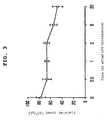
- Fig. 3 shows changes in platelet count with the lapse of time in the mice after LPS inoculation, wherein the transverse axis shows the time after LPS inoculation and the vertical axis shows platelet count ( ⁇ 10 4 / ⁇ L).
- Fig. 4 shows changes in survival rate with the lapse of time of LPS-inoculated mice administered with a test substance (Reference Example B66) at various times, wherein the transverse axis shows the time after LPS inoculation and the vertical axis shows a survival rate (Survival (%)) of the mice, • shows the result of administration of an emulsion without a test substance immediately after LPS inoculation, ⁇ shows the result of administration of a test substance immediately after LPS inoculation, ⁇ shows the result of administration of a test substance at 1 hr after LPS inoculation, ⁇ shows the result of administration of a test substance at 2 hr after LPS inoculation, ⁇ shows the result of administration of a test substance at 4 hr after LPS inoculation, and ⁇ shows the result of administration of a test substance at 6 hr after LPS inoculation.
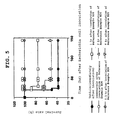
- Fig. 5 shows changes in survival rate with the lapse of time of galactosamine-loaded mouse Escherichia coli inoculation model administered with a test substance (Reference Example B26) at various times, wherein the transverse axis shows the time after Escherichia coli inoculation and the vertical axis shows a survival rate (Survival (%)) of the mice, • shows the result of administration of a solvent without a test substance immediately after Escherichia coli inoculation, ⁇ shows the result of administration of a test substance immediately after Escherichia coli inoculation, ⁇ shows the result of administration of a test substance at 0.5 hr after Escherichia coli inoculation, ⁇ shows the result of administration of a test substance at 1 hr after Escherichia coli inoculation, ⁇ shows the result of administration of a test substance at 2 hr after LPS inoculation, and ⁇ shows the result of administration of a test substance at
- Fig. 6 shows the effect of a test substance (Reference Example B3) on vascular thickening of rat due to balloon injury, wherein the vertical axis shows DNA content ( ⁇ g/cm), Normal shows rats free of balloon injury operation, Injured shows balloon injury operation rats, Difference shows difference in these two, and columns are for control, the compound of Reference Example B3, 30 mg/kg/d and 100 mg/kg/d, from the left. (**: p ⁇ 0.01)
- Severe sepsis which is the target disease of an agent for the prophylaxis or treatment of severe sepsis, which comprises a cycloalkene compound, of the present invention, is high in the level of severeness as compared to other systemic inflammatory response syndromes caused by infection, satisfies at least two of the following items of, for example, body temperature: not less than 38°C or less than 36°C, cardiac rate: not less than 90 bpm/min, respiration rate: not less than 20 times/min, and leukocyte count: not less than 12000 leukocytes/mm 3 or less than 4000 leukocytes/mm 3 , shows a disease state of hypotension (systolic blood pressure of not more than 90 mmHg), half consciousness, cryptic speech and action, urine per 1 hr of less than 0.5 mL/kg, platelets of less than 80000 platelets/mm 3 and the like, and typically accompanies symptoms such as organ failure, hypoperfusion, hypotension and the like.
- the cycloalkene compound (hereinafter to be simply referred to as the cycloalkene compound) to be used for an agent for the prophylaxis or treatment of severe sepsis of the present invention is free of any particular limitation as long as it can show effect for the prophylaxis and/or treatment of severe sepsis.
- the cycloalkene compounds the above-mentioned compounds represented by the formula (I) and the formula (II), salts thereof and prodrugs thereof are preferable.
- R represents an aliphatic hydrocarbon group optionally having substituents, an aromatic hydrocarbon group optionally having substituents, a heterocyclic group optionally having substituents, a group represented by the formula: -OR 1 (wherein R 1 represents a hydrogen atom or an aliphatic hydrocarbon group optionally having substituents) or a group represented by the formula: wherein R 1b and R 1c are the same or different and each represents a hydrogen atom or an aliphatic hydrocarbon group optionally having substituents, or R and R 0 in combination form a bond, with particular preference given to the group represented by the formula: -OR 1 (wherein R 1 is as defined above).
- the compound represented by the formula (I) can be represented by the formula: wherein each symbol is as defined above, and specifically can be represented by the formula: wherein each symbol is as defined above, or wherein each symbol is as defined above.
- R is a group represented by the formula: -OR 1 (wherein R 1 is as defined above)
- the compound represented by the formula (I) can be represented by the formula: wherein R 2 is a hydrogen atom or an aliphatic hydrocarbon group, and other symbols are as defined above, and specifically can be represented by the formula: wherein each symbol is as defined above, or the formula: wherein each symbol is as defined above.
- aliphatic hydrocarbon group of the "aliphatic hydrocarbon group optionally having substituents” represented by R, R 1 , R 11 , R 1b and R 1c and the "aliphatic hydrocarbon group” represented by R 0 and R 2 , for example, an alkyl group, a cycloalkyl group, a cycloalkylalkyl group, an alkenyl group, an alkynyl group, etc. are preferable.
- alkyl group for example, a linear or branched alkyl group having 1 to 20 carbon atoms (e.g., a methyl group, an ethyl group, an n-propyl group, an isopropyl group, an n-butyl group, an isobutyl group, a sec-butyl group, a tert-butyl group, a pentyl group, a hexyl group, a heptyl group, an octyl group, a nonyl group, a decyl group, a dodecyl group, etc.) and the like are preferable, and particularly, for example, a lower alkyl group having 1 to 6 carbon atoms (e.g., a methyl group, an ethyl group, an n-propyl group, an isopropyl group, an n-butyl group, an isobutyl group, a sec-butyl group
- a cycloalkyl group having 3 to 10 carbon atoms e.g., a cyclopropyl group, a cyclobutyl group, a cyclopentyl group, a cyclohexyl group, a cycloheptyl group, a cyclooctyl group, etc.
- a cycloalkyl group having 3 to 6 carbon atoms e.g., a cyclopropyl group, a cyclobutyl group, a cyclopentyl group, a cyclohexyl group, etc.
- a cycloalkylalkyl group having 4 to 12 carbon atoms e.g., a cyclopropylmethyl group, a cyclopentylmethyl group, a cyclohexylmethyl group, a cycloheptylmethyl group, etc.
- a cycloalkylalkyl group having 4 to 8 (particularly 4 to 7) carbon atoms e.g., a cyclopropylmethyl group, a cyclopentylmethyl group, a cyclohexylmethyl group, etc.
- alkenyl group for example, a lower alkenyl group having 3 to 6 carbon atoms (e.g., a propenyl group, a butenyl group, a pentenyl group, etc.) and the like are preferable, and particularly, for example, a lower alkenyl group having 3 or 4 carbon atoms (e.g., a propenyl group, a butenyl group, etc.) and the like are preferable.
- a lower alkenyl group having 3 or 4 carbon atoms e.g., a propenyl group, a butenyl group, etc.
- alkynyl group for example, a lower alkynyl group having 3 to 6 carbon atoms (e.g., a propynyl group, a butynyl group, a pentynyl group, etc.) and the like are preferable, and particularly, for example, a lower alkynyl group having 3 or 4 carbon atoms (e.g., a propynyl group, a butynyl group, etc.) and the like are preferable.
- a lower alkynyl group having 3 or 4 carbon atoms e.g., a propynyl group, a butynyl group, etc.
- aliphatic hydrocarbon group optionally having substituents for example, a heterocyclic group, an oxo group, a hydroxy group, a C 1-6 alkoxy group, a C 3-10 (particularly C 3-6 ) cycloalkyloxy group, a C 6-10 aryloxy group, a C 7-19 (particularly C 7-12 ) aralkyloxy group, a heterocyclic-oxy group, a C 1-6 alkylthio group (sulfur atom may be oxidized), a C 3-10 (particularly C 3-6 ) cycloalkylthio group (sulfur atom may be oxidized), a C 6-10 arylthio group (sulfur atom may be oxidized), a C 7-19 (particularly C 7-12 ) aralkylthio group (sulfur atom may be oxidized), a heterocyclic-thio group, a heterocyclic-sulfon-oxy group, a heterocyclic-thio group, a
- substituents are substituted at substitutable positions in the above-mentioned "aliphatic hydrocarbon group", wherein the substituents are not limited to a single substituent but may be the same or different plural (preferably 2 to 4) substituents.
- C 1-6 alkoxy group for example, a methoxy group, an ethoxy group, an n-propoxy group, an isopropoxy group, an n-butoxy group, a tert-butoxy group, an n-pentyloxy group, an n-hexyloxy group, etc.
- C 3-10 cycloalkyloxy group for example, a cyclopropyloxy group, a cyclohexyloxy group, etc.
- C 6-10 aryloxy group for example, a phenoxy group, a naphthyloxy group, etc.
- C 7-19 aralkyloxy group for example, a benzyloxy group, a 1-phenylethyloxy group, a 2-phenylethyloxy group, a benzhydryloxy group, a 1-naphthylmethyloxy group, etc.
- C 1-6 alkylthio group sulfur atom may be oxidized
- a methylthio group for example, a methylthio group, an ethylthio group, an n-propylthio group, an n-butylthio group, a methylsulfinyl group, a methylsulfonyl group, etc.
- C 3-10 cycloalkylthio group (sulfur atom may be oxidized)"
- a cyclopropylthio group for example, a cyclohexylthio group, a cyclopentylsulfinyl group, a cyclohexylsulfonyl group, etc.
- C 6-10 arylthio group for example, a phenylthio group, a naphthylthio group, a phenylsulfinyl group, a phenylsulfonyl group, etc.
- C 7-19 aralkylthio group (sulfur atom may be oxidized)"
- a benzylthio group for example, a benzylthio group, a phenylethylthio group, a benzhydrylthio group, a benzylsulfinyl group, a benzylsulfonyl group, etc.
- halogen atom a fluorine atom, a chlorine atom, a bromine atom and an iodine atom are used, as the "C 1-10 alkoxy-carbonyl group", for example, a methoxycarbonyl group, an ethoxycarbonyl group, an n-propoxycarbonyl group, an isopropoxycarbonyl group, an n-butoxycarbonyl group, an isobutoxycarbonyl group, a tert-butoxycarbonyl group, etc.
- C 3-6 cycloalkyloxy-carbonyl group for example, a cyclopropyloxycarbonyl group, a cyclopentyloxycarbonyl group, a cyclohexyloxycarbonyl group, etc.
- C 6-10 aryloxy-carbonyl group for example, a phenoxycarbonyl group, a naphthyloxycarbonyl group, etc.
- C 7-19 aralkyloxy-carbonyl group for example, a benzyloxycarbonyl group, a benzhydryloxycarbonyl group, a 2-phenethyloxycarbonyl group, etc.
- C 6-10 aryl-carbonyl group for example, a benzoyl group, a naphthoyl group, etc.
- C 1-6 alkanoyl group for example, a formyl group, an acetyl group, a propionyl group, a butyryl group, a valeryl group, a pivaloyl group, etc.
- C 3-5 alkenoyl group for example, an acryloyl group, a crotonoyl group, etc.
- C 6-10 aryl-carbonyloxy group for example, a benzoyloxy group, a naphthoyloxy group, etc.
- C 2-6 alkanoyloxy group for example, an acetoxy group, a propionyloxy group, a butyryloxy group, a valeryloxy group, a pivaloyloxy group, etc.
- C 3-5 alkenoyloxy group for example, an acryloyloxy group, a crotonoyloxy group, etc. are used.
- a carbamoyl group or a cyclicamino e.g., pyrrolidinyl, piperidinyl, piperazinyl, morpholinyl, etc.
- carbonyl group which may be substituted by 1 or 2 substituents selected from a C 1-4 alkyl (e.g., methyl, ethyl, etc.), a phenyl, a C 1-7 acyl (e.g., acetyl, propionyl, benzoyl, etc.), a C 1-4 alkoxy-phenyl (e.g., methoxyphenyl, etc.), etc., and the like are used, and specifically, for example, a carbamoyl group, an N-methylcarbamoyl group, an N-ethylcarbamoyl group, an N,N-dimethylcarbamoyl group, an N,N
- thiocarbamoyl group optionally having substituents for example, a thiocarbamoyl group which may be substituted by 1 or 2 substituents selected from C 1-4 alkyl (e.g., methyl, ethyl, etc.), phenyl, etc. are used, and specifically, for example, a thiocarbamoyl group, an N-methylthiocarbamoyl group, an N-phenylthiocarbamoyl group, etc. are used.
- carbamoyloxy group optionally having substituents for example, a carbamoyloxy group which may be substituted by 1 or 2 substituents selected from C 1-4 alkyl (e.g., methyl, ethyl, etc.), phenyl, etc. are used, and specifically, for example, a carbamoyloxy group, an N-methylcarbamoyloxy group, an N,N-dimethylcarbamoyloxy group, an N-ethylcarbamoyloxy group, an N-phenylcarbamoyloxy group, etc. are used.
- C 1-6 alkanoylamino group for example, an acetamido group, a propionamido group, a butyramido group, a valeramido group, a pivalamido group, etc.
- C 6-10 aryl-carbonylamino group for example, a benzamido group, a naphthamido group, a phthalimido group, etc.
- C 1-10 alkoxy-carboxamido group for example, a methoxycarboxamido (CH 3 OCONH-) group, an ethoxycarboxamido group, a tert-butoxycarboxamido group, etc.
- C 6-10 aryloxy-carboxamido group for example, a phenoxycarboxamido (C 6 H 5 OCONH-) group, etc.
- C 7-19 aralkyloxy-carboxamido group for example, a benzyloxycarboxamido (C 6 H 5 CH 2 OCONH-) group, a benzhydryloxycarboxamido group, etc.
- C 1-10 alkoxy-carbonyloxy group for example, a methoxycarbonyloxy group, an ethoxycarbonyloxy group, an n-propoxycarbonyloxy group, an isopropoxycarbonyloxy group, an n-butoxycarbonyloxy group, a tert-butoxycarbonyloxy group, an n-pentyloxycarbonyloxy group, an n-hexyloxycarbonyloxy group, etc.
- C 6-10 aryloxy-carbonyloxy group for example, a phenoxycarbonyloxy group, a naphthyloxycarbonyloxy group, etc.
- C 7-19 aralkyloxy-carbonyloxy group for example, a benzyloxycarbonyloxy group, a 1-phenylethyloxycarbonyloxy group, a 2-phenylethyloxycarbonyloxy group, a benzhydryloxycarbonyloxy group, etc. are used, and as the "C 3-10 cycloalkyloxy-carbonyloxy group", for example, a cyclopropyloxycarbonyloxy group, a cyclohexyloxycarbonyloxy group, etc. are used.
- ureido group optionally having substituents for example, a ureido group optionally substituted by 1 to 3 (preferably 1 or 2) substituents selected from a C 1-4 alkyl group (e.g., a methyl group, an ethyl group, etc.), a phenyl group, etc. are used, and, for example, a ureido group, a 1-methylureido group, a 3-methylureido group, a 3,3-dimethylureido group, a 1,3-dimethylureido group, a 3-phenylureido group, etc. are used.
- heterocyclic group When a heterocyclic group, a heterocyclic-oxy group, a heterocyclic-thio group, a heterocyclic-sulfinyl group, a heterocyclic-sulfonyl group or a heterocyclic-oxy-carbonyl group is used as the "substituents" of the "aliphatic hydrocarbon group optionally having substituents", the heterocyclic group represents a group formed by excluding one hydrogen atom that binds to the heterocycle.
- a 5- to 8-membered ring (preferably 5- or 6-membered ring) group containing 1 to a few, preferably 1 to 4 hetero atoms such as a nitrogen atom (optionally oxidized), an oxygen atom, a sulfur atom, etc., or its condensed cyclic group.
- heterocyclic groups for example, a pyrrolyl group, a pyrazolyl group, an imidazolyl group, a 1,2,3-triazolyl group, a 1,2,4-triazolyl group, a tetrazolyl group, a furyl group, a thienyl group, an oxazolyl group, an isoxazolyl group, a 1,2,3-oxadiazolyl group, a 1,2,4-oxadiazolyl group, a 1,2,5-oxadiazolyl group, a 1,3,4-oxadiazolyl group, a thiazolyl group, an isothiazolyl group, a 1,2,3-thiadiazolyl group, a 1,2,4-thiadiazolyl group, a 1,2,5-thiadiazolyl group, a 1,3,4-thiadiazolyl group, a pyridyl group, a pyridazinyl group, a a
- heterocyclic groups may be substituted at substitutable positions by 1 to 3 substituents selected from a C 1-4 alkyl (e.g., methyl, ethyl, etc.), a hydroxy, an oxo, a C 1-4 alkoxy (e.g., methoxy, ethoxy, etc.), and the like.
- a C 1-4 alkyl e.g., methyl, ethyl, etc.
- a hydroxy e.g., an oxo
- a C 1-4 alkoxy e.g., methoxy, ethoxy, etc.
- C 6-10 aryl group of the "C 6-10 aryl group optionally having substituents"
- a phenyl group, a naphthyl group, etc. are used.
- the C 6-10 aryl group may be substituted at a substitutable position by a substituent selected from those exemplified as the "substituent” (except for a C 6-10 aryl group optionally having substituents) of the "aliphatic hydrocarbon group optionally having substituents” described above.
- substituent is not limited to a single substituent, but the same or different, more than one (preferably 2 to 4) substituents may be used.
- the substituent together with the aliphatic hydrocarbon group may form an optionally substituted fused ring group, and as such fused ring group, an indanyl group, a 1,2,3,4-tetrahydronaphthyl group, etc. are used.
- This fused ring group may be substituted at a substitutable position by a substituent selected from those exemplified as the "substituent" of the "aliphatic hydrocarbon group optionally having substituents” described above.
- substituent is substituted at a substitutable position of the fused ring group, wherein the substituent is not limited to a single substituent, but the same or different, more than one (preferably 2 to 4) substituents may be used.
- aliphatic hydrocarbon group optionally having substituents for R, R 1 , R 11 , R 1b and R 1c , for example, a lower alkyl group having 1 to 6 carbon atoms (e.g., a methyl group, an ethyl group, an n-propyl group, an isopropyl group, an n-butyl group, an isobutyl group, a tert-butoxycarbonylmethyl group, a hydroxyethyl group etc.) optionally having substituents, etc., are used.
- a lower alkyl group having 1 to 6 carbon atoms e.g., a methyl group, an ethyl group, an n-propyl group, an isopropyl group, an n-butyl group, an isobutyl group, a tert-butoxycarbonylmethyl group, a hydroxyethyl group etc.
- a methyl group, an ethyl group, an n-propyl group, an isopropyl group, an n-butyl group, an isobutyl group, etc. are preferable.
- a methyl group, an ethyl group, an n-propyl group and the like are more preferable, and particularly, an ethyl group, etc. are preferable.
- an aromatic hydrocarbon group having 6 to 14 carbon atoms e.g., a phenyl group, a naphthyl group, an anthryl group, an indenyl group etc.
- an aryl group having 6 to 10 carbon atoms e.g., phenyl, naphthyl groups etc.
- a phenyl group and the like are particularly preferable.
- substituents for example, a halogen atom (fluorine atom, chlorine atom, bromine atom, iodine atom), a lower (C 1-4 ) alkyl group (e.g., a methyl group, an ethyl group, a propyl group, a butyl group etc.), a lower (C 1-4 ) alkoxy group (e.g., a methoxy group, an ethoxy group, a propoxy group, a butoxy group etc.), a lower (C 1-4 ) alkoxy-carbonyl group (e.g., a methoxycarbonyl group, an ethoxycarbonyl group, a propoxycarbonyl group, a butoxycarbonyl group etc.), a carboxyl group, a nitro group, a cyano group, a hydroxyl group, an acylamino
- substituents are substituted at substitutable positions of the aromatic hydrocarbon group, and the number of the substituents is preferably 1 to 5, more preferably 1 to 3, most preferably 1 or 2. When two or more of such substituents are present, they may be the same or different.
- heterocyclic group of the “heterocyclic group optionally having substituents” represented by R is, for example, a 5 to 8-membered ring (particularly 5 or 6-membered ring) group containing 1 to several, preferably 1 to 4, hetero atoms such as nitrogen atom (optionally oxidized), oxygen atom, sulfur atom and the like, and a fused ring group thereof.
- heterocyclic group for example, pyrrolyl group, pyrazolyl group, imidazolyl group, 1,2,3-triazolyl group, 1,2,4-triazolyl group, tetrazolyl group, furyl group, thienyl group, oxazolyl group, isoxazolyl group, 1,2,3-oxadiazolyl group, 1,2,4-oxadiazolyl group, 1,2,5-oxadiazolyl group, 1,3,4-oxadiazolyl group, thiazolyl group, isothiazolyl group, 1,2,3-thiadiazolyl group, 1,2,4-thiadiazolyl group, 1,2,5-thiadiazolyl group, 1,3,4-thiadiazolyl group, pyridyl group, pyridazinyl group, pyrimidinyl group, pyrazinyl group, indolyl group, pyranyl group, thiopyranyl group, dioxinyl group,
- heterocyclic groups are optionally substituted by 1 to 3 substituents selected from C 1-4 alkyl (e.g., methyl, ethyl etc.), hydroxy, oxo, C 1-4 alkoxy (e.g., methoxy, ethoxy etc.) and the like at substitutable positions.
- C 1-4 alkyl e.g., methyl, ethyl etc.
- hydroxy, oxo e.g., methoxy, ethoxy etc.
- an aromatic hydrocarbon group having 6 to 14 carbon atoms e.g., a phenyl group, a naphthyl group, an anthryl group, an indenyl group etc.
- an aryl group having 6 to 10 carbon atoms e.g., phenyl, naphthyl groups etc.
- a phenyl group and the like are particularly preferable.
- substituents represented by Ar and Ar a
- a halogen atom fluorine, chlorine, bromine, iodine atoms
- a lower (C 1-4 ) alkyl group e.g., a methyl group, an ethyl group, a propyl group, an isopropyl group, a butyl group etc.
- a lower (C 1-4 ) alkoxy group e.g., a methoxy group, an ethoxy group, a propoxy group, a butoxy group etc.
- a lower (C 1-4 ) alkoxy-carbonyl group e.g., a methoxycarbonyl group, an ethoxycarbonyl group, a propoxycarbonyl group, a butoxycarbonyl group etc.
- carboxyl group e.g., a nitro group, a cyano group, a hydroxyl
- substituents are substituted at substitutable positions of the aromatic hydrocarbon group, and the number of the substituents is preferably 1 to 5, more preferably 1 to 3, most preferably 1 or 2. When two or more of such substituents are present, they may be the same or different.
- a phenyl group optionally having substituents is preferable.
- a halogenophenyl group, a lower (C 1-4 ) alkylphenyl group, a halogen- and lower (C 1-4 ) alkoxycarbonyl-substituted phenyl group, a halogen- and lower (C 1-4 ) alkyl-substituted phenyl group and the like are preferably used.
- halogen atom represented by R 4 and R 5 a fluorine atom or a chlorine atom is preferable.
- halogenophenyl group for example, a 2,3-difluorophenyl group, a 2,3-dichlorophenyl group, a 2,4-difluorophenyl group, a 2,4-dichlorophenyl group, a 2,5-difluorophenyl group, a 2,5-dichlorophenyl group, a 2,6-difluorophenyl group, a 2,6-dichlorophenyl group, a 3,4-difluorophenyl group, a 3,4-dichlorophenyl group, a 3,5-difluorophenyl group, a 3,5-dichlorophenyl group, a 2-fluorophenyl group, a 2-chlorophenyl group, a 3-fluorophenyl group, a 3-chlorophenyl group, a 4-fluorophenyl group, a 4-chlorophenyl group, a 4-chlor
- the lower (C 1-4 ) alkylphenyl group for example, a 2-ethylphenyl group, a 2,6-diisopropylphenyl group and the like are preferably used, and as the lower (C 1-4 ) alkoxyphenyl group, for example, a 4-methoxyphenyl and the like are preferably used.
- the lower (C 1-4 ) alkoxy-carbonylphenyl group for example, a 2-ethoxycarbonylphenyl group, a 2-methoxycarbonylphenyl group, a 4-methoxycarbonylphenyl group and the like are preferably used, and as the halogeno-lower (C 1-4 ) alkylphenyl group, for example, a 2-trifluoromethylphenyl group and the like are preferably used, and as the halogeno-lower (C 1-4 ) alkoxyphenyl group, for example, a 2-trifluoromethoxyphenyl group, a 4-(2,2,3,3,3-pentafluoropropoxy)phenyl group and the like are preferably used.
- the lower (C 1-4 ) alkanoylphenyl group for example, a 2-acetylphenyl group and the like are preferably used, and as the 5-membered aromatic heterocycle-substituted phenyl group, for example, a 4-(2H-1,2,3-triazol-2-yl)phenyl group, a 4-(2H-tetrazol-2-yl)phenyl group, a 4-(1H-tetrazol-1-yl)phenyl group, a 4-(1H-1,2,3-triazol-1-yl)phenyl group and the like are preferably used, and as the lower (C 1-4 ) alkoxy-carbonyl-lower (C 1-4 ) alkyl-carbamoylphenyl group, for example, a 4-(N-ethoxycarbonylmethylcarbamoyl)phenyl group and the like are preferably used, and as the 1,3-diacylguanidino-low
- phenyl group substituted by halogen atom and lower (C 1-4 ) alkyl group for example, a 2-fluoro-4-methylphenyl group, a 2-chloro-4-methylphenyl group, a 4-fluoro-2-methylphenyl group and the like are preferably used, and as the phenyl group substituted by halogen atom and lower (C 1-4 ) alkoxy-carbonyl group, for example, a 2-chloro-4-methoxycarbonylphenyl group and the like are preferably used, and the phenyl group substituted by halogen atom and cyano group, a 2-chloro-4-cyanophenyl group and the like are preferably used, and as the phenyl group substituted by halogen atom and 5-membered aromatic heterocyclic group, for example, a 2-fluoro-4-(1H-1,2,4-triazol-1-yl)phenyl group and the like are preferably used, and as the pheny
- a phenyl group a phenyl group substituted by 1 to 3 (particularly 1 or 2) halogen atoms (e.g., a 2,3-difluorophenyl group, a 2,3-dichlorophenyl group, a 2,4-difluorophenyl group, a 2,4-dichlorophenyl group, a 2,5-difluorophenyl group, a 2,5-dichlorophenyl group, a 2,6-difluorophenyl group, a 2,6-dichlorophenyl group, a 3,4-difluorophenyl group, a 3,4-dichlorophenyl group, a 3,5-difluorophenyl group, a 3,5-dichlorophenyl group, a 4-bromo-2-fluorophenyl group, a 2-fluorophenyl group, a 2-chlorophenyl group,
- a phenyl group substituted by 1 to 3 (particularly 1 or 2) halogen atoms e.g., a 2,3-dichlorophenyl group, a 2,4-difluorophenyl group, a 2,4-dichlorophenyl group, a 2,6-dichlorophenyl group, a 2-fluorophenyl group, a 2-chlorophenyl group, a 3-chlorophenyl group, a 2-chloro-4-fluorophenyl group, a 2,4,5-trifluorophenyl group etc.), a phenyl group substituted by halogen atom and lower (C 1-4 ) alkyl group (e.g., a 2-chloro-4-methylphenyl group, a 4-fluoro-2-methylphenyl group etc.), etc.
- halogen atoms e.g., a 2,3-dichlorophenyl group, a 2,4-difluor
- a 2,4-difluorophenyl group, a 2-chlorophenyl group, a 2-chloro-4-fluorophenyl group, a 2-chloro-4-methylphenyl group and the like are preferable, and a 2,4-difluorophenyl group, a 2-chloro-4-fluorophenyl group and the like are preferable.
- the ring A 1 represents a cycloalkene optionally substituted by 1 to 4 substituents selected from (i) an aliphatic hydrocarbon group optionally having substituents, (ii) an aromatic hydrocarbon group optionally having substituents, (iii) a group represented by the formula -OR 11 (wherein R 11 is a hydrogen atom or an aliphatic hydrocarbon group optionally having substituents) and (iv) a halogen atom, and a cycloalkene optionally substituted by 1 to 4 substituents selected from (i) an aliphatic hydrocarbon group optionally having substituents, (ii) an aromatic hydrocarbon group optionally having substituents and (iv) a halogen atom is preferable.
- substituents (i) - (iv) are substituted on substitutable carbon atoms in the ring A 1 , and when the ring A 1 is substituted by two or more of such substituents, the substituents may be the same or different.
- a single carbon atom may be substituted by two substituents, and different carbon atoms may be substituted by two or more substituents.
- aromatic hydrocarbon group optionally having substituents as a substituent on the ring A 1 , for example, the same substituents as those of the "aromatic hydrocarbon group optionally having substituents" represented by Ar described above may be used.
- heterocyclic group optionally having substituents as a substituent on the ring A 1
- those similar to the “heterocyclic group” which is a “substituent” on the "aliphatic hydrocarbon group optionally having substituents” represented by R and the like described above may be used.
- substituents for the ring A 1 , 1 or 2 C 1-6 alkyl groups e.g., a C 1-4 alkyl group such as a methyl group, a tert-butyl group, etc.
- a phenyl group e.g., a phenyl group, a halogen atom (fluorine, chlorine, bromine, iodine atoms), etc. are preferably used.
- n 1 to 3 is preferable, and 2 is particularly preferable.
- the compound represented by the formula (I) the compound represented by the formula (Ibb') is preferable, and the compound represented by the formula (Inn) is more preferable.
- R 1a' As the "aliphatic hydrocarbon group optionally having substituents" represented by R 1a' , for example, those similar to the aforementioned "aliphatic hydrocarbon group optionally having substituents” represented by R can be used.
- R 1a' for example, lower alkyl group having 1 to 6 carbon atoms optionally having substituents (e.g., methyl group, ethyl group, n-propyl group, isopropyl group, n-butyl group, isobutyl group, tert-butoxycarbonylmethyl group, hydroxyethyl group etc.) and the like are preferably used.
- methyl group, ethyl group, n-propyl group, isopropyl group, n-butyl group, isobutyl group and the like are preferably used.
- methyl group, ethyl group, n-propyl group and the like are preferable, and ethyl group and the like are specifically preferable.
- R 1b' and R 1c' for example, those similar to the aforementioned "aliphatic hydrocarbon group optionally having substituents” represented by R can be used.
- R 1b' and R 1c' for example, a lower alkyl group having 1 to 6 carbon atoms optionally having substituents (e.g., methyl group, ethyl group, n-propyl group, isopropyl group, n-butyl group, isobutyl group, tert-butoxycarbonylmethyl group, hydroxyethyl group etc.) and the like are preferably used.
- methyl group, ethyl group, n-propyl group, isopropyl group, n-butyl group, isobutyl group and the like are preferably used.
- methyl group, ethyl group, n-propyl group and the like are preferable, and ethyl group and the like are specifically preferable.
- R 1' for example, a lower alkyl group having 1 to 6 carbon atoms optionally having substituents (e.g., methyl group, ethyl group, n-propyl group, isopropyl group, n-butyl group, isobutyl group, tert-butoxycarbonylmethyl group, hydroxyethyl group etc.) and the like are preferably used.
- substituents e.g., methyl group, ethyl group, n-propyl group, isopropyl group, n-butyl group, isobutyl group and the like are preferably used.
- methyl group, ethyl group, n-propyl group and the like are preferable, and ethyl group and the like are specifically preferable.
- substituents of the "methylene group optionally having substituents" represented by Y for example, C 1-6 alkyl group (e.g., methyl group, ethyl group, n-propyl group, isopropyl group, n-butyl group, isobutyl group etc.), hydroxy-substituted-C 1-6 alkyl group (e.g., hydroxymethyl group, hydroxyethyl group etc.), C 1-4 alkoxy-carbonyl-C 1-4 alkyl group (e.g., methoxycarbonylmethyl group, ethoxycarbonylmethyl group, tert-butoxycarbonylmethyl group, methoxycarbonylethyl group, ethoxycarbonylethyl group, tert-butoxycarbonylethyl group etc.) and the like can be mentioned. Of these, methyl group is preferable. Unsubstituted methylene is particularly preferable.
- C 1-6 alkyl group e.g., methyl group, ethyl group, n-propyl group, isopropyl group, n-butyl group, isobutyl group etc.
- hydroxy-substituted-C 1-6 alkyl group e.g., hydroxymethyl group, hydroxyethyl group etc.
- C 1-4 alkoxy-carbonyl-C 1-4 alkyl group e.g., methoxycarbonylmethyl group, ethoxycarbonylmethyl group, tert-butoxycarbonylmethyl group, methoxycarbonylethyl group, ethoxycarbonylethyl group, tert-butoxycarbonylethyl group etc.
- methyl group is preferable.
- Unsubstituted NH is particularly preferable.
- Ar' those similar to Ar are preferable.
- a group represented by the formula (c): wherein R 3' represents a halogen atom or a lower alkyl group, and ring B' is optionally further substituted by 1 to 4 halogen atoms is preferable, and a group represented by the formula (c1): wherein R 3a' and R 3b' are the same or different and each represents a halogen atom is more preferable.
- halogen atom represented by R 3' in the formula (c) halogen atom which is a substituent of ring B' in the formula (c) and the halogen atom represented by R 3a' and R 3b' in the formula (c1), fluorine atom and chlorine atom are preferable.
- the lower alkyl group represented by R 3' in the formula (c) for example, C 1-4 alkyl group such as methyl, ethyl, propyl and the like can be mentioned.
- a 2,4-difluorophenyl group, a 2-chloro-4-fluorophenyl group, a 2-methyl-4-chlorophenyl group and the like are preferable.
- groups represented by the formula (c1) a 2,4-difluorophenyl group, a 2-chloro-4-fluorophenyl group and the like are preferable.
- X represents a methylene group, NH, a sulfur atom or an oxygen atom, wherein a methylene group and an oxygen atom are preferable.
- Ring A' is a 5 to 8-membered ring substituted by a group represented by the formula: -CO-R 1' wherein R 1' is as defined above and a group represented by the formula: -SO 2 -Y-Ar' wherein Y and Ar' are as defined above, and optionally further substituted by 1 to 4 substituents selected from the group consisting of (i) an aliphatic hydrocarbon group optionally having substituents, (ii) an aromatic hydrocarbon group optionally having substituents, (iii) a group represented by the formula: -OR 2' wherein R 2' is as defined above and (iv) a halogen atom, with preference given to a 5 to 8-membered ring optionally substituted by 1 to 4 substituents selected from (i) an aliphatic hydrocarbon group optionally having substituents, (ii) an aromatic hydrocarbon group optionally having substituents and (iv) a halogen atom.
- substituents selected from the group consisting of
- substituents are substitutable at substitutable positions on the ring A'.
- X constituting the ring is NH or a methylene group
- they can substitute the NH and methylene group.
- ring A' is substituted by plural substituents, the kinds of such substituents may be the same or different.
- two substituents may substitute on the same carbon atom.
- aliphatic hydrocarbon group optionally having substituents and “aromatic hydrocarbon group optionally having substituents”, which are substituents of ring A', for example, those similar to the aforementioned groups for R can be mentioned.
- C 1-6 alkyl groups e.g., C 1-4 alkyl group such as methyl group, tert-butyl group etc.
- phenyl groups e.g., phenyl groups, halogen atoms (e.g., fluorine, chlorine, bromine, iodine etc.) and the like are preferably used.
- the "s” is an integer of 0 to 2
- "t” is an integer of 1 to 3
- the total of “s” and “t” is not more than 4, with preference given to “s” being 1 and "t” being 1.
- a group represented by the formula: represents a group represented by the formula:
- each stereoisomer and a mixture of these stereoisomers are encompassed in the present invention.
- the compound represented by the formula (I) is a compound represented by the formula (Icc) or (Inn)
- the formula (b) of the compound represented by the formula (II) is the formula (b1) and s and t are 1
- each has an optical isomer based on the asymmetric carbon in cycloalkene or cyclohexene ring.
- Such optical isomer and a mixture of such optical isomers are both encompassed in the present invention.
- the compounds (I) and (II) (hereinafter to be simply referred to as a Compound A), which are used for the agent for the prophylaxis or treatment of severe sepsis of the present invention, may be converted into a salt with an inorganic base, organic base, inorganic acid, organic acid, basic or acidic amino acid, and the like.
- the salt with an inorganic base may, for example, be used an alkaline metal salt such as sodium and potassium salts, etc.; an alkaline earth metal salt such as calcium and magnesium salts, etc.; aluminum salt; ammonium salt; and the like.
- the salt with an organic base may, for example, be used a salt with trimethylamine, triethylamine, pyridine, picoline, ethanolamine, diethanolamine, triethanolamine, dicyclohexylamine, N,N'-dibenzylethylenediamine, etc.
- the salt with an inorganic acid may, for example, be used a salt with hydrochloric acid, hydrobromic acid, nitric acid, sulfuric acid, phosphoric acid, etc.
- the salt with an organic acid may, for example, be used a salt with formic acid, acetic acid, trifluoroacetic acid, fumaric acid, oxalic acid, tartaric acid, maleic acid, citric acid, succinic acid, malic acid, methanesulfonic acid, benzenesulfonic acid, p-toluenesulfonic acid, and the like.
- the salt with a basic amino acid may, for example, be used a salt with arginine, lysine, ornithine, etc.
- the salt with acidic amino acid may, for example, be used a salt with aspartic acid, glutamic acid, and the like.
- a prodrug of Compound A or a salt thereof is a compound which is converted into Compound A as a result of a reaction with an enzyme, gastric acid etc. under physiological conditions in vivo.
- the compound is converted into Compound A by enzymatical oxidation, reduction, hydrolysis etc., by hydrolysis due to gastric acid etc.
- a prodrug of Compound A may be a compound obtained by subjecting an amino group of Compound A to an acylation, alkylation or phosphorylation (e.g., a compound obtained by subjecting an amino group of Compound A to an eicosanoylation, alanylation, pentylaminocarbonylation, 2-hydroxypropionylation, 2-acetoxypropionylation, (5-methyl-2-oxo-1,3-dioxolen-4-yl)methoxycarbonylation, tetrahydrofuranylation, pyrrolidylmethylation, pivaloyloxymethylation, tert-butylation, etc.); a compound obtained by subjecting a hydroxy group of Compound A to an acylation, alkylation, phosphorylation and boration (e.g., a compound obtained by subjecting a hydroxy group of Compound A to an acetylation, palmitoylation, propanoylation, pivaloylation, succiny
- a prodrug of Compound A may also be one which is converted into Compound A under a physiological condition, such as those described in " IYAKUHIN no KAIHATSU ( Development of Pharmaceuticals )", Vol.7, Design of Molecules, p. 163-198, Published by HIROKAWA SHOTEN (1990).
- the compound (I), a salt thereof and a prodrug thereof can be produced according to a method known per se, for example, a production method described in WO99/46242 or a method analogous thereto.
- the compound (II), a salt thereof and a prodrug thereof can be produced according to a production method described in WO01/10826 or a method analogous thereto.
- optically active compound or a salt thereof contains an enantiomer
- general separation means may be applied such as diastereomeric salt methods wherein a salt with an optically active acid (e.g., camphor sulfonic acid etc.) or optically active base (e.g., 1-methylbenzylamine etc.) is formed, inclusion compound methods using an optically active host molecule (e.g., 1,6-bis(2-chlorophenyl)-1,6-diphenylhexa-2,4-diyn-1,6-diol), various chromatographies (e.g., liquid chromatography using a chiral column etc.), fractional recrystallization and the like, whereby an optically pure compound can be obtained.
- optically active acid e.g., camphor sulfonic acid etc.
- optically active base e.g., 1-methylbenzylamine etc.
- inclusion compound methods using an optically active host molecule e.g., 1,6-bis(
- Compound A may be a hydrate or non-hydrate.
- the Compound A may be labeled with an isotope (e.g., 3 H, 14 C, 35 S, 125 I etc.) and the like.
- an isotope e.g., 3 H, 14 C, 35 S, 125 I etc.
- the cycloalkene compound and Compound A in the present invention are highly safe for humans and can be used for mammals (e.g., rat, mouse, guinea pig, monkey, cattle, dog, pig, human etc.) as a pharmaceutical agent (e.g., an agent for the prophylaxis or treatment of various diseases), veterinary drugs and the like.
- mammals e.g., rat, mouse, guinea pig, monkey, cattle, dog, pig, human etc.
- a pharmaceutical agent e.g., an agent for the prophylaxis or treatment of various diseases
- the cycloalkene compound and Compound A in the present invention have low toxicity, a nitric oxide (NO) production-inhibitory effect and an inhibitory effect on the production of inflammatory cytokines such as TNF- ⁇ , IL-1, IL-6, etc.
- the cycloalkene compound and Compound A are useful as an agent for the prophylaxis or treatment of a mammal (e.g., cat, cattle, dog, horse, goat, monkey, human etc.) against diseases such as cardiac disease, autoimmune disease, inflammatory disease, central nervous system diseases, infectious disease, septic shock, immune dysfunction and the like, including, for example, septicemia, endotoxin shock, exotoxin shock, systemic inflammatory response syndrome (SIRS), compensatory anti-inflammatory response syndrome (CARS), burn, trauma, post-operative complications, cardiac deficiency, shock, hypotension, rheumatoid arthritis, osteoarthritis, gastritis, ulcerative colitis, peptic ulcer
- the agent for the prophylaxis or treatment of severe sepsis which comprises the cycloalkene compound or Compound A, of the present invention is useful as an agent for the treatment of patients with severe sepsis, who have concurrently developed the above-mentioned diseases.
- the cycloalkene compound or Compound A can be used concurrently with other drugs.
- combination drugs for example, antibacterial agents, antifungal agents, non-steroidal antiinflammatory drugs, steroids, anticoagulants, antithrombotic drugs, thrombolytic drugs, immunomodulators, antiprotozoals, antitussive and expectorant drugs, sedatives, anesthetics, antinarcotics, antiulcer drugs, hyperlipidemia treating agents, therapeutic agents for arteriosclerosis, HDL increasing agents, unstable plaque stabilizing agents, myocardial protecting agent, hypothyroidism treating agent, nephrotic syndrome treating agent, chronic renal failure treating agent, diuretics, hypertension treating agents, cardiac failure treating agents, muscle relaxants, anticonvulsants, cardiacs, vasodilators, vasoconstrictors, antiarrhythmics, antidiabetic drugs, hypertensors, tranquilizers, antipsychotics, therapeutic agents for Alzheimer's diseases, anti-Parkinson drugs, therapeutic agents for amyotrophic spinal
- the cycloalkene compound or Compound A and a combination drug are free of any limitation on the timing of the administration.
- the cycloalkene compound or Compound A or a pharmaceutical composition thereof and the combination drug or a pharmaceutical composition thereof may be simultaneously administered to the administration object, or may be administered with time difference.
- the dose of the combination drug follows a clinical dose and can be appropriately determined depending on the administration object, administration route, disease, combination and the like.
- the mode of administration of the combination agent is not particularly limited, as long as the cycloalkene compound or Compound A and the combination drug are combined for administration.
- As the mode of such administration for example, (1) administration of a single preparation obtained by simultaneous addition of the cycloalkene compound or Compound A or a pharmaceutical composition thereof and the combination drug, (2) simultaneous administration of two kinds of preparations obtained by separate preparation of the cycloalkene compound or Compound A or a pharmaceutical composition thereof and the combination drug or a pharmaceutical composition thereof, by a single administration route, (3) time staggered administration of two kinds of preparations obtained by separate preparation of the cycloalkene compound or Compound A or a pharmaceutical composition thereof and the combination drug or a pharmaceutical composition thereof, by the same administration route, (4) simultaneous administration of two kinds of preparations obtained by separate preparation of the cycloalkene compound or Compound A or a pharmaceutical composition thereof and the combination drug or a pharmaceutical composition thereof, by different administration routes, (5) time staggered administration of two kinds of preparations obtained by separate preparation of the
- the combination ratio of the cycloalkene compound or Compound A and a combination drug in the combination agent of the present invention can be appropriately determined depending on the administration object, administration route, disease and the like.
- the content of the cycloalkene compound or Compound A in the combination agent of the present invention varies depending on the form of the preparation. It is generally about 0.01 - 100 wt%, preferably about 0.1 - 50 wt%, more preferably about 0.5 - 20 wt%, based on the preparation in total.
- the content of the combination drug in the combination agent of the present invention varies depending on the form of the preparation. It is generally about 0.01 - 100 wt%, preferably about 0.1 - 50 wt%, more preferably about 0.5 - 20 wt%, based on the preparation in total.
- the content of the additive, such as a carrier, in the combination drug of the present invention varies depending on the form of the preparation. It is generally about 1 - 99.99 wt%, preferably about 10 - 90 wt%, based on the preparation in total.
- the cycloalkene compound or compound A When administered to a human, it can be safely administered orally or parenterally as it is or in a mixture with an appropriate pharmacologically acceptable carrier, excipient and diluent, in a pharmaceutical composition such as an oral formulation (e.g., powder, granule, tablet, capsule etc.), a parenteral formulation (e.g., injection, external formulation (e.g., nasal formulation, percutaneous formulation etc.) and suppository (e.g., rectal suppository and vaginal suppository etc.).
- an oral formulation e.g., powder, granule, tablet, capsule etc.
- a parenteral formulation e.g., injection, external formulation (e.g., nasal formulation, percutaneous formulation etc.)
- suppository e.g., rectal suppository and vaginal suppository etc.
- any of these formulations may be produced by any method known per se which is employed ordinarily for producing a pharmaceutical formulation.
- the amount of the cycloalkene compound or compound A to be incorporated into a formulation may vary depending on the dosage forms, and is preferably about 10 to 95% by weight in an oral formulation described above and about 0.001 to about 95% by weight in a parenteral formulation described above.
- a cycloalkene compound or Compound A can be prepared into an aqueous injection together with a solubilizer (e.g., ⁇ -cyclodextrins etc.), a dispersant (e.g., Tween 80 (manufactured by ATLASPOWDER USA), HCO 60 (manufactured by NIKKO CHEMICALS), carboxymethylcellulose, sodium arginate etc.), a preservative (e.g., methyl paraben, propyl paraben, benzyl alcohol chlorobutanol etc.), an isotonic agent (e.g., sodium chloride, glycerine, sorbitol, glucose etc.) and the like, or into an oil-based injection by dissolving, suspending or emulsifying using a vegetable oil (e.g., olive oil, sesame oil, peanut oil, cottonseed oil, corn oil etc.) and propylene glycol and the like.
- a solubilizer
- An oral formulation can be produced by a method known per se by, for example, compressing the cycloalkene compound or Compound A together with an excipient (e.g., lactose, sucrose, starch etc.), a disintegrant (e.g., starch, calcium carbonate etc.), a binder (e.g., starch, gum arabic, carboxymethyl cellulose, polyvinyl pyrrolidone, hydroxypropyl cellulose etc.), a lubricant (e.g., talc, magnesium stearate, polyethylene glycol 6000 etc.), and the like, followed by, where necessary, a coating process known per se for the purpose of masking a taste, forming an enteric coat, or achieving a sustained release.
- an excipient e.g., lactose, sucrose, starch etc.
- a disintegrant e.g., starch, calcium carbonate etc.
- a binder e.g., starch,
- coating may be used, for example, hydroxypropylmethyl cellulose, ethyl cellulose, hydroxymethyl cellulose, hydroxypropyl cellulose, polyoxyethylene glycol, Tween 80, Pluronic F68, cellulose acetate phthalate, hydroxypropylmethyl cellulose phthalate, hydroxymethyl cellulose acetate succinate, Eudragit (manufactured by ROHM, Germany, a copolymer of methacrylic acid and acrylic acid), a dye (e.g., colcothar, titanium dioxide etc.) and the like.
- the cycloalkene compound or compound A can also be employed as an external formulation in the form of a solid or semi-solid or a liquid.
- a solid external formulation may be the cycloalkene compound or compound A as it is or in a mixture with an excipient (e.g., glycol, mannitol, starch, microcrystalline cellulose etc.), a thickening agent (e.g., natural gums, cellulose derivatives, acrylic acid polymers etc.) which is then converted into a powder composition.
- an excipient e.g., glycol, mannitol, starch, microcrystalline cellulose etc.
- a thickening agent e.g., natural gums, cellulose derivatives, acrylic acid polymers etc.
- a semi-solid external formulation may be produced by a standard method and preferably used in the form of an aqueous or oil-based gel or ointment.
- a liquid external formulation may be produced by a method employed for producing an injection formulation or an analogous method in the form of an oil-based or aqueous suspension.
- the solid, semi-solid or liquid external formulation may be supplemented also with a pH modifier (e.g., carbonic acid, phosphoric acid, citric acid, hydrochloric acid, sodium hydroxide etc.), an antiseptic (e.g., p-oxybenzoates, chlorobutanol, benzalkonium chloride etc.) and the like, as appropriate.
- a pH modifier e.g., carbonic acid, phosphoric acid, citric acid, hydrochloric acid, sodium hydroxide etc.
- an antiseptic e.g., p-oxybenzoates, chlorobutanol, benzalkonium chloride etc.
- a vaseline or a lanolin is used as a formulation base, per 1 g of which about 0.1 to 100 mg of the cycloalkene compound or compound A is contained to form an ointment.
- the cycloalkene compound or Compound A may be also formulated as an oil or aqueous, solid or semi-solid or liquid suppository by a method known per se.
- an oil base for example, a high fatty acid glyceride (e.g., cocoa butter, WITEPSOL (manufactured by DYNAMIT NOBEL, Germany) etc.), a middle fatty acid (e.g., MYGLYOL (manufactured by DYNAMIT NOBEL, Germany) etc.), a vegetable oil (e.g., sesame oil, soybean oil, cottonseed oil etc.) and the like are used as appropriate.
- An aqueous base may be, for example, polyethylene glycol or propylene glycol
- an aqueous gel base may be, for example, a natural gum, a cellulose derivative, a vinyl polymer, an acrylic polymer and the like.
- the dose of the cycloalkene compound or Compound A may be, for example, generally about 0.01 to about 1000 mg/kg, preferably about 0.01 to about 100 mg/kg, more preferably about 0.1 to about 100 mg/kg, most preferably about 0.1 to about 50 mg/kg, and particularly about 1.5 to about 30 mg/kg, as the amount of the Compound A, per day for a patient with severe sepsis (adult weighing about 60 kg), and said daily dose is given orally or parenterally all at once or in several portions a day. It is a matter of course that a lower daily dose may be sufficient or an excessive dose may be required since the dose may vary depending on various factors as discussed above.
- the dose of the combination agent of the present invention varies depending on the kind of the compound, the patient's age, body weight and condition, the dosage form, the mode and the period of the treatment
- the dose of the combination agent may be, for example, generally about 0.01 to about 1000 mg/kg, preferably about 0.01 to about 100 mg/kg, more preferably about 0.1 to about 100 mg/kg, most preferably about 0.1 to about 50 mg/kg, and particularly about 1.5 to about 30 mg/kg, as the amount of the cycloalkene compound or Compound A and the combination drug, per day for a patient with severe sepsis (adult weighing about 60 kg), said daily dose being given intravenously all at once or in several portions during a day. It is a matter of course that a lower daily dose may be sufficient or an excessive dose may be required since the dose may vary depending on various factors as discussed above.
- the combination drug may be contained in any amount as long as a side effect does not pose a problem. While the daily dose of the combination drug may vary depending on the disease state, the age, sex, body weight and difference in sensitivity of the administration object, timing and interval of administration, characteristics, dispensing and kind of the pharmaceutical preparation, the kind of active ingredient and the like and is not particularly limited, the amount of the drug is generally about 0.001 - 2000 mg, preferably about 0.01 - 500 mg, more preferably about 0.1 - 100 mg, per 1 kg body weight of mammal by oral administration, which is generally administered all at once or in 2 to 4 portions during a day.
- a cycloalkene compound or Compound A and a combination drug may be administered at the same time, or a combination drug may be administered first, and then the cycloalkene compound or Compound A may be administered.
- the cycloalkene compound or Compound A may be administered first, and then the combination drug may be administered.
- the time difference varies depending on the active ingredient to be administered, dosage form and administration route.
- the cycloalkene compound or Compound A is administered within 1 min - 3 days, preferably 10 min - 1 day, more preferably 15 min - 1 hour, after the administration of the combination drug.
- the combination drug is administered within 1 min - 1 day, preferably 10 min - 6 hours, more preferably 15 min - 1 hour, after the administration of the combination drug.
- the present invention also provides a TLR signal inhibitor comprising a non-peptide compound.
- TLR signal is meant a signal transduction, with which any Toll-like receptor recognizes bacterial component and the like of microorganism and induces biological defense response, and, for example, signal transduction via known TLR1-TLR10 can be mentioned.
- the non-peptide compound which is an active ingredient of the TLR signal inhibitor of the present invention (hereinafter sometimes to be referred to as the inhibitor of the present invention) is free of any particular limitation, as long as it can inhibit signal transduction via any of the above-mentioned TLRs, and can suppress the production of inflammatory mediators such as NO and/or cytokine. While one capable of specifically inhibiting signal transduction via TLR4 is preferable, one that specifically inhibits other TLR signals and one capable of inhibiting plural kinds of TLRs are also preferable.
- a low molecular non-peptide compound having a molecular weight of not more than about 1000, preferably about not more than 500, is used, and particularly, the cycloalkene compound or the above-mentioned compound A is preferably used.
- non-peptide compounds are highly safe for humans and can be used for mammals (e.g., rat, mouse, guinea pig, monkey, cattle, dog, pig, human etc.) as a pharmaceutical agent (e.g., an agent for the prophylaxis or treatment of various diseases), veterinary drugs and the like.
- mammals e.g., rat, mouse, guinea pig, monkey, cattle, dog, pig, human etc.
- a pharmaceutical agent e.g., an agent for the prophylaxis or treatment of various diseases
- the non-peptide compound in the present invention has low toxicity, a TLR signal inhibitory action and an inhibitory effect on inflammatory mediator such as the production of NO and/or cytokine
- the non-peptide compound is useful for the prophylaxis and treatment of diseases caused by changes in the signals, such as organ dysfunction and the like.
- organs various organs of central nervous system, circulatory system, respiratory system, bone and joint system, digestive system or renal and urinary system can be mentioned.
- the TLR signal inhibitor comprising the non-peptide compound of the present invention is specifically useful for the prophylaxis and/or treatment of diseases caused by changes in TLR signals, such as
- the present invention also provides an agent for the prophylaxis or treatment of a disease caused by changes in TLR signals (e.g., the above-mentioned diseases), comprising a TLR signal inhibitor comprising a non-peptide compound (preferably having a molecular weight of not more than about 1000), preferably a cycloalkene compound or the above-mentioned compound A, as an active ingredient.
- a TLR signal inhibitor comprising a non-peptide compound (preferably having a molecular weight of not more than about 1000), preferably a cycloalkene compound or the above-mentioned compound A, as an active ingredient.
- the non-peptide compound in the present invention can be formulated by a method similar to the method for the above-mentioned cycloalkene compound or compound A, as a TLR signal inhibitor or an agent for the prophylaxis or treatment of a disease caused by changes in TLR signals, which contains the compound, and can be administered to mammals by way of the same administration route, dose and the like as those mentioned above.
- the non-peptide compound in the present invention can be used in combination with the above-mentioned combination drug for cycloalkene compound or compound A, for the prophylaxis and/or treatment of the above-mentioned diseases.
- the compound can be used in combination with at least one kind of a drug selected from antibacterial agent, antifungal agent, non-steroidal antiinflammatory drug, steroid and anticoagulant.
- the compound can be used in combination with at least one kind of a drug selected from therapeutic agents for Alzheimer's diseases, antiparkinson agent, therapeutic agents for amyotrophic spinal lateral sclerosis, neurotrophic factor, antidepressant and therapeutic agents for schizophrenia.
- a drug selected from therapeutic agents for Alzheimer's diseases, antiparkinson agent, therapeutic agents for amyotrophic spinal lateral sclerosis, neurotrophic factor, antidepressant and therapeutic agents for schizophrenia.
- the compound can be used in combination with at least one kind of drug selected from hyperlipidemia treating agents, therapeutic agent for arteriosclerosis, diuretics, hypertension treating agents, cardiac failure treating agents, antiarrhythmic, anticoagulant, antithrombotic drug, antidiabetic drug, HDL increasing agents and unstable plaque stabilizing agents.
- a non-peptide compound of the present invention particularly the cycloalkene compound, among others compound A, have been found as TLR signal selective inhibitory substances. It has been found, moreover, that the aforementioned various organ dysfunctions, infectious diseases such as severe sepsis, central nervous system diseases such as Alzheimer's disease, circulatory system diseases such as arteriosclerosis, bone and joint diseases such as arthritis rheumatoides, digestive system diseases such as ulcerative colitis, and the like can be improved by the action of these TLR signal inhibitory substances.
- the present invention also provides an agent for the prophylaxis or treatment of organ dysfunction, infectious diseases such as severe sepsis, central nervous system diseases such as Alzheimer's disease, circulatory system diseases such as arteriosclerosis, bone and joint diseases such as arthritis rheumatoides, digestive system diseases such as ulcerative colitis, comprising a TLR signal inhibitory substance.
- infectious diseases such as severe sepsis
- central nervous system diseases such as Alzheimer's disease
- circulatory system diseases such as arteriosclerosis
- bone and joint diseases such as arthritis rheumatoides
- digestive system diseases such as ulcerative colitis
- the TLR signal inhibitory substance for example, a peptide compound (e.g., anti TLR antibody, TLR inhibitory peptide, MIF (migration inhibitory factor) etc.) and the above-mentioned non-peptide compound can be mentioned.
- the cycloalkene compound or compound A is preferable.
- the TLR signal inhibitory substance of the present invention has low toxicity and preferably used for the prophylaxis and treatment of organ dysfunction and the like in mammal (e.g., rat, mouse, guinea pig, monkey, cattle, dog, pig, human etc.).
- the TLR signal inhibitory substance can be processed by a method similar to the method for the above-mentioned non-peptide compound to give a preparation, which can be administered to mammals by the same administration route, dose and the like as mentioned above.
- the agent for the prophylaxis or treatment of organ dysfunction and the like can be used in combination with a combination drug similar to any of the above-mentioned combination agents, and can be administered to mammals by the same administration route, dose and the like as mentioned above.
- the present invention further provides a method for the prophylaxis or treatment of severe sepsis or the above-mentioned organ dysfunction by inhibiting TLR signals by inhibition with a TLR signal inhibitory substance, or other method (e.g., hypothermia therapy by placing in a low temperature chamber, or hypnotherapy by hypnotism or hypnotic administration, etc.).
- a TLR signal inhibitory substance e.g., hypothermia therapy by placing in a low temperature chamber, or hypnotherapy by hypnotism or hypnotic administration, etc.
- the 1 H-NMR spectrum was determined by a VARIAN GEMINI 200 (200 MHz) spectrometer using tetramethylsilane as an internal standard and represented as the entire ⁇ values in ppm.
- the number in a bracket when a solvent mixture was employed is the volume ratio of each solvent, wherein % means % by weight unless otherwise specified.
- the ratio of the solvents in silica gel chromatography shows the volume ratio of the solvents to be admixed.
- a more polar diastereomer means a diastereomer having a smaller Rf value
- a less polar diastereomer means a diastereomer having a larger Rf value, when determined by normal phase thin layer chromatography under the same conditions (e.g., using ethyl acetate/hexane etc. as an eluent).
- the melting point was measured using melting point measuring apparatus (manufactured by Yanako).
- the data of the powder X-ray diffraction was measured using RINT2500 (Rigaku Industrial Corporation) using Cu-K ⁇ 1 ray as a ray source.
- Reference Examples A can be produced according to Reference Examples of WO99/46242
- Reference Example B can be produced according to Examples of WO99/46242
- Reference Examples C can be produced according to Reference Examples of WO01/10826
- Reference Examples D can be produced according to Examples of WO01/10826.
- a mixture of compound 72 (10 mg) of Reference Example B66, lactose (60 mg) and cornstarch (35 mg) is granulated by the use of a 10% aqueous gelatin solution (0.03 ml) (3 mg as gelatin) and passing through a 1 mm mesh sieve, dried at 40°C and again passed through a sieve.
- the granules thus obtained are mixed with magnesium stearate (2 mg) and compressed.
- the obtained core tablets are sugar coated by applying an aqueous suspension of sucrose, titanium dioxide, talc and gum arabic and glazed with beeswax to give coated tablets.
- the compound 72 (10 mg) of Reference Example B66 and magnesium stearate (3 mg) are granulated using an aqueous solution (0.07 ml) of soluble starch (7 mg as soluble starch), dried and mixed with lactose (70 mg) and cornstarch (50 mg). The mixture is compressed to give tablets.
- a mixture of compound 29 (10 mg) of Reference Example B65, lactose (60 mg) and cornstarch (35 mg) is granulated by the use of a 10% aqueous gelatin solution (0.03 ml) (3 mg as gelatin) and passing through a 1 mm mesh sieve, dried at 40°C and again passed through a sieve.
- the granules thus obtained are mixed with magnesium stearate (2 mg) and compressed.
- the obtained core tablets are sugar coated by applying an aqueous suspension of sucrose, titanium dioxide, talc and gum arabic and glazed with beeswax to give coated tablets.
- the compound 29 (10 mg) of Reference Example B65 and magnesium stearate (3 mg) are granulated using an aqueous solution (0.07 ml) of soluble starch (7 mg as soluble starch), dried and mixed with lactose (70 mg) and cornstarch (50 mg). The mixture is compressed to give tablets.
- test substance (Reference Example B1) by administration after LPS inoculation in an endotoxin shock model was investigated.
- LPS 10 mg/kg
- the test substance was suspended in 0.5% aqueous methyl cellulose solution, and intraperitoneally inoculated (30 mg/kg) at 1 hr before, immediately after, 30 min after and 1 hr after LPS inoculation.
- the solvent was given to the control group at 1 hr before LPS inoculation. The results are shown in Fig. 1.
- test substance was found to show a clear life-saving effect even by the administration at 1 hr after LPS inoculation.
- test substance can be expected to show clear life-saving effect by the administration in the state of severe sepsis (see Reference Experimental Example 1).
- LPS (10 mg/kg) was intraperitoneally administered to mice and blood was drawn after a given time.
- the blood (about 45 ⁇ L) taken with a calibrated pipette and 1.5% EDTA-2Na (4.5 ⁇ L) were mixed, white blood count and platelet count were measured with an automatic cell counter (F-800, Sysmex).
- the results are shown in Figs. 2 and 3.
- the white blood count (Fig. 2) and platelet count (Fig. 3) decreased in 30 min to 1 hr after the LPS inoculation, thereby suggesting the possibility of induction of a disease state of severe sepsis patients in 30 - 1 hr from the LPS inoculation.
- test substance (Reference Example B66) by administration after LPS inoculation in an endotoxin shock model was investigated.
- LPS 4 mg/kg
- the test substance was prepared into an emulsified liquid of a soybean oil, and intravenously administered (10 mg/kg) immediately after, 1, 2, 4 and 6 hr after LPS inoculation.
- An emulsified liquid without a drug was intravenously administered to the control group immediately after LPS inoculation. The results are shown in Fig. 4.
- test substance was found to show a clear life-saving effect even by the administration at 4 hr after LPS inoculation. In other words, the test substance can be expected to show a clear life-saving effect by the administration in the state of severe sepsis (see Reference Experimental Example 1).
- the test substance was suspended in 0.5% aqueous methyl cellulose solution, and orally administered (30 mg/kg) immediately, 30 min and 1, 2 and 4 hr after the bacterial inoculation.
- the solvent was orally administered to the control group immediately after the bacterial inoculation. The results are shown in Fig. 5.
- test substance was found to show a clear life-saving effect even by the administration at 1 hr after bacterial inoculation in mice having hepatopathy induced by inoculation of galactosamine.
- the test substance can be expected to show effect of improving the state of severe sepsis complicated with organ dysfunction.
- mice macrophage cell line RAW264.7 Using mouse macrophage cell line RAW264.7, the suppressive effect of the test substance on cytokine production by a TLR selective agonist was investigated.
- the cells were suspended in RPMI-1640 medium supplemented with 10% inactivated fetal calf serum to 5 ⁇ 10 5 cells/mL and inoculated to a 96-well microplate at 0.2 mL/well. After incubation at 37°C under an atmosphere of 5% CO 2 /95% air overnight, the medium was changed to an RPMI-1640 medium supplemented with 1% inactivated fetal calf serum, and a test substance, various TLR agonists and interferon- ⁇ (final concentration 0.1 ng/mL) were added.
- nitrite ion stable metabolite of NO
- concentration of nitrite ion (stable metabolite of NO) in the culture supernatant was quantified by fluorescence method using 2,3-dimaminonaphthalene.
- TLR4 selective agonist LPS was added, as the TLR2 selective agonist, peptide glycan (PGN) was added, and as the TLR9 selective agonist, CpG oligoDNA (CPG) was added, to the final concentrations of 5 ng/mL, 1 ⁇ g/mL and 75 nmol/L, respectively.
- test substance was dissolved at 10 mM in N,N-dimethylformamide, diluted with an RPMI-1640 medium supplemented with 1% inactivated fetal calf serum to the concentration of 0.1 mM, then diluted with a medium to a 10-fold concentration of the final concentration and 1/10 was added.
- Table 15 Reference Example No. IC 50 (nmol/L) LPS PGN CPG B66 10 >1000 >1000 D4 11 >1000 >1000 D7 18 530 >1000
- test substance suppressed NO production due to LPS, which is a TLR4 agonist, at IC 50 in the order of 10 -8 mol/L, but scarcely suppressed NO production due to PGN and CPG, that are TLR2 and TLR9 agonists, respectively. Therefore, the test substance can be said a TLR4 signal selective inhibitor.
- mice macrophage cell line RAW264.7 Using mouse macrophage cell line RAW264.7, a suppressive effect of test substances (Reference Example B1, Reference Example B26 and Reference Example B3) on cytokine production by ⁇ -amyloid peptide (1-40) considered to be involved in the onset of Alzheimer's disease was investigated.
- test substances Reference Example B1, Reference Example B26 and Reference Example B3
- cytokine production by ⁇ -amyloid peptide (1-40 considered to be involved in the onset of Alzheimer's disease was investigated.
- the cells were suspended in RPMI-1640 medium supplemented with 10% inactivated fetal calf serum to 5 ⁇ 10 5 cells/mL and inoculated to a 96-well microplate at 0.2 mL/well.
- the medium was changed to an RPMI-1640 medium supplemented with 1% inactivated fetal calf serum, a test substance and ⁇ -amyloid peptide (1-40) (final concentration 10 ⁇ M) and interferon- ⁇ (final concentration 10 U/mL) were added.
- concentrations of tumor necrosis factor- ⁇ (TNF- ⁇ ) and IL-6 in culture supernatants were measured using an enzyme immunoassay kit manufactured by Amersham.
- test substance was dissolved at 10 mM in N,N-dimethylformamide and diluted with an RPMI-1640 medium supplemented with 1% inactivated fetal calf serum to the concentration of 0.1 mM, then diluted with a medium to a 10-fold concentration of the final concentration and 1/10 was added.
- the suppressive rate is shown in Table 16.
- test substance markedly suppressed cytokine production from macrophage cells due to ⁇ -amyloid peptide stimulation.
- the drug (Reference Example B3) was suspended in 0.5% methyl cellulose, and intraperitoneally administered once a day from the day of balloon injury operation to carotid artery enucleation. When balloon injury operation was performed, the drug was administered 30 min before anesthesia and the balloon injury was produced.
- test substance suppressed vascular thickening due to balloon injury in a dose-dependent manner.
- DSS dextran sulfate
- the drug (Reference Example B3) (10 - 30 mg/kg) was suspended in 0.5% methyl cellulose (MC), and orally administered from day 6 under 1% DSS solution drinking once a day for 7 days. After 12 days of drinking DSS, the body weight was measured and stool was observed (grossly bloody stool: GBS).
- test substance Since the test substance remarkably suppressed changes in WBC, RBC, Hb and Ht induced by DSS, it was found to be useful for the treatment of ulcerative colitis and the like.
- Bovine-derived type II collagen was dissolved in 0.05% acetic acid solution, and an equivalent amount of Freund's complete adjuvant was mixed therewith to give an emulsion.
- the drug (Reference Example B3) (30 mg/kg) was suspended in 0.5% MC, and orally administered once a day from collagen immunization for 8 weeks (except Sundays).
- test substance decreased the incidence and index of arthritis, it was found to be useful for the treatment of arthritis rheumatoides and the like.
- the pharmaceutical agent of the present invention which comprises a cycloalkene compound, is useful as a prophylaxis ⁇ therapeutic agent for sepsis, particularly severe sepsis.
- the TLR signal inhibitor of the present invention which comprises a non-peptide compound, is useful as an agent for the prophylaxis or treatment of various organ dysfunctions, severe sepsis, Alzheimer's disease, arteriosclerosis, ulcerative colitis, arthritis rheumatoides and the like.
Landscapes
- Health & Medical Sciences (AREA)
- Life Sciences & Earth Sciences (AREA)
- Chemical & Material Sciences (AREA)
- Veterinary Medicine (AREA)
- Animal Behavior & Ethology (AREA)
- Pharmacology & Pharmacy (AREA)
- Public Health (AREA)
- Medicinal Chemistry (AREA)
- General Health & Medical Sciences (AREA)
- Organic Chemistry (AREA)
- Nuclear Medicine, Radiotherapy & Molecular Imaging (AREA)
- Chemical Kinetics & Catalysis (AREA)
- General Chemical & Material Sciences (AREA)
- Engineering & Computer Science (AREA)
- Bioinformatics & Cheminformatics (AREA)
- Epidemiology (AREA)
- Emergency Medicine (AREA)
- Virology (AREA)
- Diabetes (AREA)
- Oncology (AREA)
- Neurology (AREA)
- Communicable Diseases (AREA)
- Biomedical Technology (AREA)
- Neurosurgery (AREA)
- Cardiology (AREA)
- Hematology (AREA)
- Physical Education & Sports Medicine (AREA)
- Rheumatology (AREA)
- Heart & Thoracic Surgery (AREA)
- Obesity (AREA)
- Pulmonology (AREA)
- Dermatology (AREA)
- Endocrinology (AREA)
- Tropical Medicine & Parasitology (AREA)
- Molecular Biology (AREA)
- Orthopedic Medicine & Surgery (AREA)
- Pain & Pain Management (AREA)
- Immunology (AREA)
- Psychiatry (AREA)
- Hospice & Palliative Care (AREA)
Abstract

Description


Ar represents an aromatic hydrocarbon group optionally having substituents,
a group represented by the formula:


(ii) a compound represented by the formula:


R0a represents a hydrogen atom or an aliphatic hydrocarbon group, or Ra and R0a represent a bond with each other,
Ara represents an aromatic hydrocarbon group optionally having substituents,
a group represented by the formula:

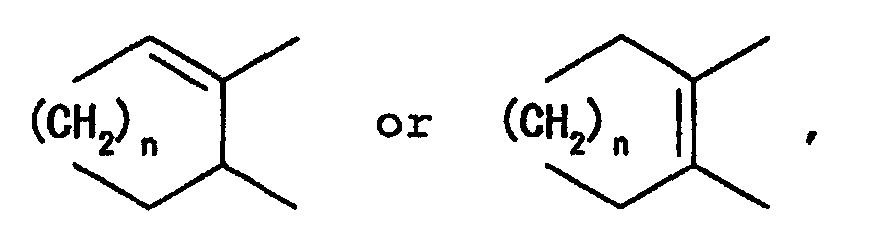
WO01/10826 describes that a compound represented by the formula:


X represents a methylene group, NH, a sulfur atom or an oxygen atom,
Y represents a methylene group optionally having substituents or NH optionally having substituents,
ring A represents a 5 to 8-membered ring optionally having 1 to 4 substituents selected from the group consisting of (1) an aliphatic hydrocarbon group optionally having substituents,
(2) an aromatic hydrocarbon group optionally having substituents, (3) a group represented by the formula: -OR2
(wherein R2 represents a hydrogen atom or an aliphatic hydrocarbon group optionally having substituents) and (4) a halogen atom,
Ar represents an aromatic hydrocarbon group optionally having substituents,
a group represented by the formula:


n represents an integer of 1 to 3, and
the total of m and n is not more than 4;
provided that when X is a methylene group, Y represents a methylene group optionally having substituents, a salt thereof and a prodrug thereof have a nitric oxide (NO) production-inhibiting effect and an inhibitory effect on the production of inflammatory cytokines, such as TNF-α, IL-1, IL-6 and the like, and are useful as an agent for the prophylaxis or treatment of diseases including cardiac diseases, autoimmune diseases, inflammatory diseases, central nervous system diseases, infectious diseases, sepsis, septic shock and the like. However, it has not been suggested if these compounds show a treatment effect on sepsis after a considerable time from the onset, particularly, after the onset of severe sepsis associated with organ failure, hypoperfusion, hypotension and the like. Furthermore, a detail of the action mechanism of these compounds has not been clarified.

- R
- represents an aliphatic hydrocarbon group optionally
having substituents, an aromatic hydrocarbon group
optionally having substituents, a heterocyclic group
optionally having substituents, a group represented by
the formula: -OR1 wherein R1 represents a hydrogen atom
or an aliphatic hydrocarbon group optionally having
substituents, or a group represented by the formula:
wherein

- R1b and R1c
- are the same or different and each represents a hydrogen atom or an aliphatic hydrocarbon group optionally having substituents,
- R0
- represents a hydrogen atom or an aliphatic hydrocarbon group, or R and R0 in combination form a bond,
- ring A1
- represents a cycloalkene optionally substituted by 1
to 4 substituents selected from the group consisting
of
- (1) an aliphatic hydrocarbon group optionally having substituents,
- (2) an aromatic hydrocarbon group optionally having substituents,
- (3) a group represented by the formula: -OR11 wherein R11 represents a hydrogen atom or an aliphatic hydrocarbon group optionally having substituents and
- (4) a halogen atom,
- Ar
- represents an aromatic hydrocarbon group optionally having substituents,
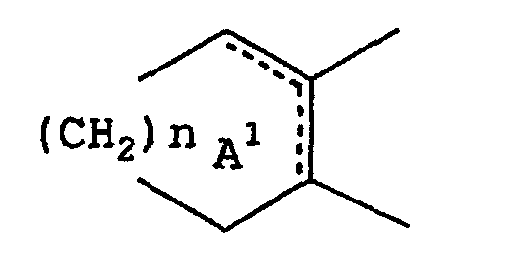

- n
- represents an integer of 1 to 4,


X represents a methylene group, NH, a sulfur atom or an oxygen atom,
Y represents a methylene group optionally having substituents or NH optionally having substituents,
ring A' represents a 5- to 8-membered ring optionally having 1 to 4 substituents selected from the group consisting of (1) an aliphatic hydrocarbon group optionally having substituents, (2) an aromatic hydrocarbon group optionally having substituents, (3) a group represented by the formula: -OR2' wherein R2' represents a hydrogen atom or an aliphatic hydrocarbon group optionally having substituents and (4) a halogen atom,
Ar' represents an aromatic hydrocarbon group optionally having substituents,
a group represented by the formula:

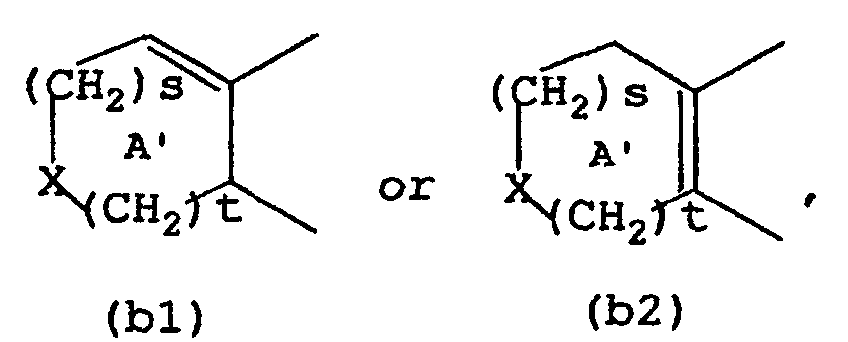
t represents an integer of 1 to 3, and
the total of s and t is not more than 4;
provided that when X is a methylene group, Y represents a methylene group optionally having substituents, or a salt thereof or a prodrug thereof,
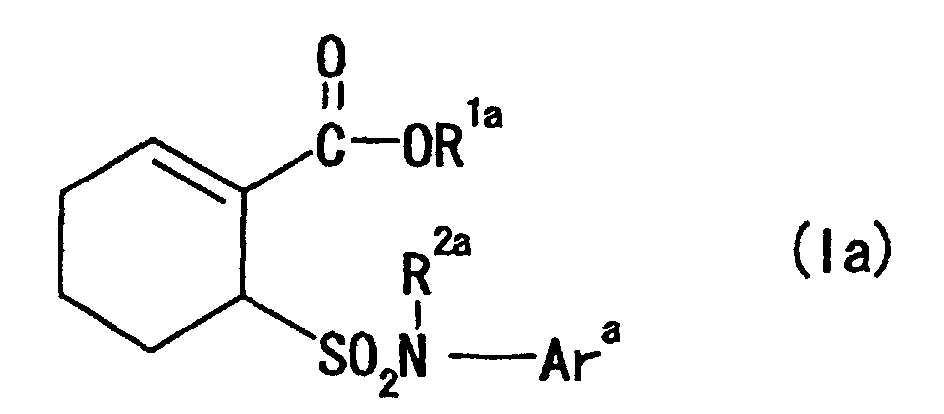


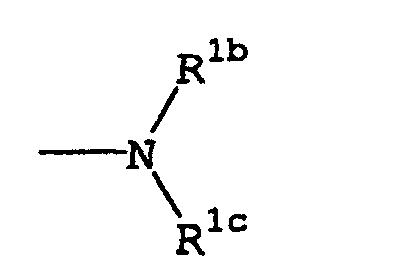
R0 represents a hydrogen atom or an aliphatic hydrocarbon group, or R and R0 in combination form a bond,
ring A1 represents a cycloalkene optionally substituted by 1 to 4 substituents selected from the group consisting of (1) an aliphatic hydrocarbon group optionally having substituents, (2) an aromatic hydrocarbon group optionally having substituents, (3) a group represented by the formula: -OR11 wherein R11 represents a hydrogen atom or an aliphatic hydrocarbon group optionally having substituents and (4) a halogen atom,
Ar represents an aromatic hydrocarbon group optionally having substituents,
a group represented by the formula:


n represents an integer of 1 to 4, or a salt thereof or a prodrug thereof, or, a compound represented by the formula (II):


X represents a methylene group, NH, sulfur atom or oxygen atom,
Y represents a methylene group optionally having substituents or NH optionally having substituents,
ring A' represents a 5 to 8-membered ring optionally having 1 to 4 substituents selected from the group consisting of (1) an aliphatic hydrocarbon group optionally having substituents, (2) an aromatic hydrocarbon group optionally having substituents, (3) a group represented by the formula: -OR2' wherein R2' represents a hydrogen atom or an aliphatic hydrocarbon group optionally having substituents and (4) a halogen atom,
Ar' represents an aromatic hydrocarbon group optionally having substituents,
a group represented by the formula:
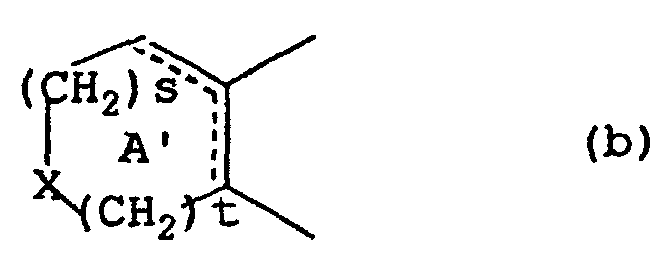

t represents an integer of 1 to 3,
the total of s and t is not more than 4;
provided that when X is a methylene group, Y represents a methylene group optionally having substituents, or a salt thereof or a prodrug thereof,


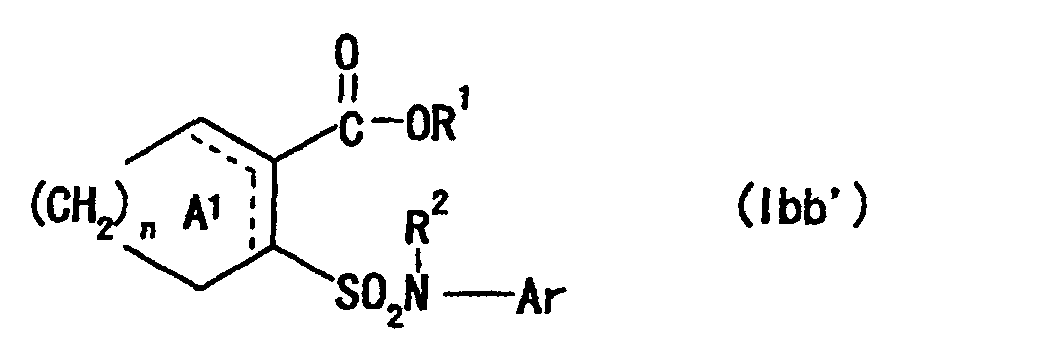


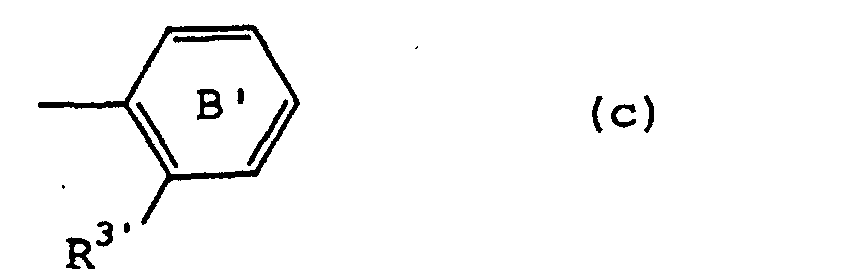

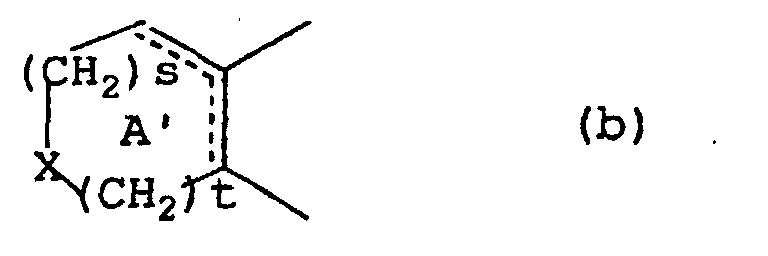

the group represented by the formula:
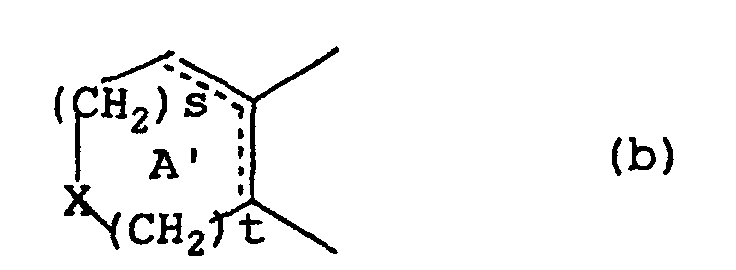
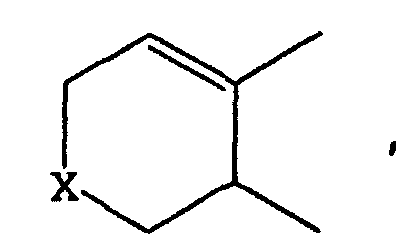
Y is a methylene or -NH-, and
Ar' is a phenyl group optionally having 1 or 2 substituents selected from a halogen atom and a C1-6 alkoxy, thus, a compound represented by the formula (IIa):
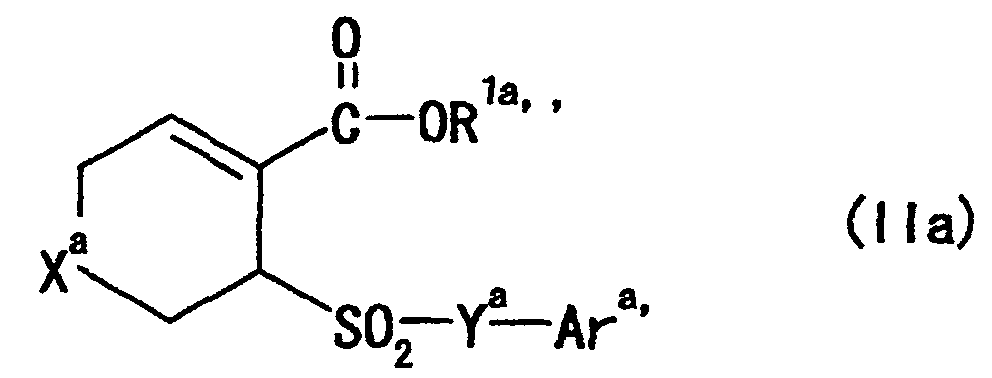
the group represented by the formula:
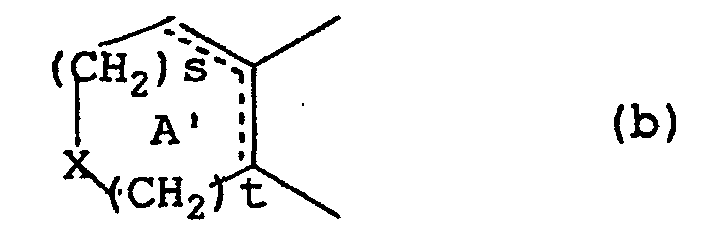

Ar' is a phenyl group optionally having two halogen atoms (e.g., 2-chloro-4-fluorophenyl group etc.).
ethyl 6-[(4-methoxybenzyl)sulfonyl]-1-cyclohexene-1-carboxylate (compound 2),
ethyl 6-[(2,4-difluorobenzyl)sulfonyl]-1-cyclohexene-1-carboxylate (compound 3),
ethyl 6-[(2-chloro-4-fluorobenzyl)sulfonyl]-1-cyclohexene-1-carboxylate (compound 4),
ethyl (-)-6-[(2-chloro-4-fluorobenzyl)sulfonyl]-2-cyclohexene-1-carboxylate (compound 5),
ethyl (+)-6-[(2-chloro-4-fluorobenzyl)sulfonyl]-1-cyclohexene-1-carboxylate (compound 6),
ethyl 3-[(2,4-difluorophenyl)sulfamoyl]-3,6-dihydro-2H-pyran-4-carboxylate (compound 7), and
ethyl 3-[(2-chloro-4-fluorophenyl)sulfamoyl]-3,6-dihydro-2H-pyran-4-carboxylate (compound 8).
ethyl (+)-6-[(2-chloro-4-fluorobenzyl)sulfonyl]-1-cyclohexene-1-carboxylate (compound 6), and
ethyl 3-[(2-chloro-4-fluorophenyl)sulfamoyl]-3,6-dihydro-2H-pyran-4-carboxylate (compound 8).
sulfamethizole, sulfisoxazole, sulfamonomethoxine, sulfamethizole, salazosulfapyridine, silver sulfadiazine and the like.
nalidixic acid, pipemidic acid trihydrate, enoxacin, norfloxacin, ofloxacin, tosufloxacin tosilate, ciprofloxacin hydrochloride, lomefloxacin hydrochloride, sparfloxacin, fleroxacin and the like.
isoniazid, ethambutol (ethambutol hydrochloride), p-aminosalicylic acid (calcium p-aminosalicylate), pyrazinamide, ethionamide, protionamide, rifampicin, streptomycin sulfate, kanamycin sulfate, cycloserine and the like.
diaphenylsulfone, rifampicin and the like.
idoxuridine, acyclovir, vidarabine, ganciclovir and the like.
zidovudine, didanosine, zalcitabine, indinavir sulfate ethanolate, ritonavir and the like.
tetracycline hydrochloride, ampicillin, piperacillin, gentamicin, dibekacin, kanendomycin, lividomycin, tobramycin, amikacin, fradiomycin, sisomycin, tetracycline, oxytetracycline, rolitetracycline, doxycycline, ampicillin, piperacillin, ticarcillin, cephalothin, cephapirin, cephaloridine, cefaclor, cephalexin, cefroxadine, cefadroxil, cefamandole, cefotoam, cefuroxime, cefotiam, cefotiam hexetil, cefuroxime axetil, cefdinir, cefditoren pivoxil, ceftazidime, cefpiramide, cefsulodin, cefmenoxime, cefpodoxime proxetil, cefpirome, cefozopran, cefepime, cefsulodin, cefmenoxime, cefmetazole, cefminox, cefoxitin, cefbuperazone, latamoxef, flomoxef, cefazolin, cefotaxime, cefoperazone, ceftizoxime, moxalactam, thienamycin, sulfazecin, aztreonam or a salt thereof, griseofulvin, lankacidin-group [Journal of Antibiotics, 38, 877-885(1985)] and the like.
acetaminophen, phenacetin, ethenzamide, sulpyrine, antipyrine, migrenin, aspirin, mefenamic acid, flufenamic acid, diclofenac sodium, loxoprofen sodium, phenylbutazone, indomethacin, ibuprofen, ketoprofen, naproxen, oxaprozin, flurbiprofen, fenbufen, pranoprofen, floctafenine, epirizole, tiaramide hydrochloride, zaltoprofen, gabexate mesilate, camostat mesilate, urinastatin, colchicine, probenecid, sulfinpyrazone, benzbromarone, allopurinol, gold sodium thiomalate, sodium hyaluronate, sodium salicylate, morphine hydrochloride, salicylic acid, atropine, scopolamine, morphine, pethidine, levorphanol, ketoprofen, naproxen, oxymorphone or a salt thereof, and the like.
heparin sodium, sodium citrate, activated protein C, tissue factor pathway inhibitor, antithrombin III, dalteparin sodium, warfarin potassium, argatroban, gabexate, sodium citrate and the like.
ozagrel sodium, ethyl icosapentate, beraprost sodium, alprostadil, ticlopidine hydrochloride, pentoxifylline, dipyridamole and the like.
tisokinase, urokinase, streptokinase and the like.
cyclosporin, tacrolimus, gusperimus, azathioprine, antilymphocyte serum, dried sulfonated immunoglobulin, erythropoietin, colony-stimulating factor, interleukin, interferon and the like.
metronidazole, tinidazole, diethylcarbamazine citrate, quinine hydrochloride, quinine sulfate and the like.
ephedrine hydrochloride, noscapine hydrochloride, codeine phosphate, dihydrocodeine phosphate, isoproterenol hydrochloride, ephedrine hydrochloride, methylephedrine hydrochloride, noscapine hydrochloride, alloclamide, chlophedianol, picoperidamine, chloperastine, protokylol, isoproterenol, salbutamol, terbutaline, oximetebanol, morphine hydrochloride, dextromethorphan hydrobromide, oxycodone hydrochloride, dimemorphan phosphate, tipepidine hibenzate, pentoxyverine citrate, clofedanol hydrochloride, benzonatate, guaifenesin, bromhexine hydrochloride, ambroxol hydrochloride, acetylcysteine, ethyl cysteine hydrochloride, carbocysteine and the like.
chlorpromazine hydrochloride, atropine sulfate, phenobarbital, barbital, amobarbital, pentobarbital, thiopental sodium, thiamylal sodium, nitrazepam, estazolam, flurazepam, haloxazolam, triazolam, flunitrazepam, bromovalerylurea, chloral hydrate, triclofos sodium and the like.
cocaine hydrochloride, procaine hydrochloride, lidocaine, dibucaine hydrochloride, tetracaine hydrochloride, mepivacaine hydrochloride, bupivacaine hydrochloride, oxybuprocaine hydrochloride, ethyl aminobenzoate, oxethazaine) and the like.
levallorphan, nalorphine, naloxone or a salt thereof and the like.
metoclopromide, histidine hydrochloride, lansoprazole, metoclopramide, pirenzepine, cimetidine, ranitidine, famotidine, urogastrone, oxethazaine, proglumide, omeprazole, sucralfate, sulpiride, cetraxate, gefarnate, aldioxa, teprenone, prostaglandin and the like.
HMG-CoA reductase inhibitors (e.g., fluvastatin, cerivastatin, atorvastatin etc.), fibrates (e.g., simfibrate, clofibrate aluminum, clinofibrate, fenofibrate etc.), adsorbents for bile acid (e.g., cholestyramide etc.), nicotinic acid formulations (e.g., nicomol, niceritrol, tocopherol nicotinate etc.), probucol and a derivative thereof, polyvalent unsaturated fatty acid derivatives (e.g., ethyl icosapentate, polyene phosphatidylcholine, melinamide etc.), vegetable sterols (e.g., γ-oryzanol, soysterol etc.), elastases, sodium dextran sulfate, squalene synthetase inhibitor, squalene epoxidase inhibitor, CETP inhibitor, ethyl 2-chloro-3-[4-(2-methyl-2-phenylpropoxy)phenyl]propionate [Chem. Pharm. Bull., 38, 2792, 2796 (1990)], LDL receptor enhancing drug, cholesterol absorption inhibitor (Ezetimibe etc.), MTP inhibitor, ileal bile acid transporter inhibitor, SCAP ligand, FXR ligand and the like.
MMP inhibitor, chymase inhibitor, ACAT inhibitor(Avasimibe, Eflucimibe etc.), apoAI Milano and an analogue thereof, scavenger receptor inhibitor, 15-lipoxygenase inhibitor, phospholipase A2 inhibitor, ABCA1 activator, LXR ligand, sphingomyelinase inhibitor, paraoxonase activator, estrogen receptor agonist and the like.
squalene synthetase inhibitors, CETP inhibitors, LPL activators and the like.
MMP inhibitors, kinase inhibitors, ACAT inhibitors, lipid-rich plaque regressing agents and the like.
cardiac ATP-K oral formulation, endoserine antagonist, urotensin antagonist and the like.
dried thyroid gland (thyreoid), levothyroxine sodium (thyradin S), liothyronidin sodium (thyronine, thyromin) and the like.
prednisolone (Predonine), prednisolone succinate sodium (Predonine), methylprednisolone succinate sodium (Solu medrol), betamethasone (rinderon) and the like.
diuretics [e.g., furosemide (lasix), bumetamide (lunetron), azosemide (diart)], hypotensive agent (e.g., ACE inhibitor, (enalapril maleate (renivase)) and Ca antagonist (manidipine), α-receptor blocker, AII antagonist (candesartan)] and the like.
thiazide diuretics (benzylhydro-chlorothiazide, cyclopenthiazide, ethiazide, hydrochlorothiazide, hydroflumethiazide, methyclothiazide, penfluthiazide, polythiazide, trichloromethiazide etc.), loop diuretics (clortharidone, clofenamide, indapamide, mefruside, meticrane, sotolazone, tripamide, quinethazone, metolazone, furosemide etc.), potassium retaining diuretics (spironolacton, triamterene etc.).
α2 stimulants (e.g., clonidine, guanabenz, guanfacine, methyldopa etc.), ganglionic blocking agents (e.g., hexamethonium, trimethaphan etc.), presynaptic blockers (e.g., alseroxylon, dimethylaminoreserpinate, rescinamine, reserpine, syrosingopine etc.), neuron blockers (e.g., betanidine, guanethidine etc.), α1 blockers (e.g., bunazosin, doxazocin, prazosin, terazosin, urapidil etc.), β blockers (e.g., propranolol, nadolol, timolol, nipradilol, bunitrolol, indenolol, penbutolol, carteolol, carvedilol, pindolol, acebutolol, atenolol, bisoprolol, metoprolol, labetalol, amosulalol, arotinolol etc.).
calcium channel antagonists (e.g., manidipine, nicardipine, nilvadipine, nisoldipine, nitrendipine, benidipine, amlodipine, aranidipine etc.), phthalazine derivatives (e.g., budralazine, cadralazine, ecarazine, hydralazine, todralazine etc.) and the like.
alacepril, captopril, cilazapril, delapril, enalapril, lisinopril, temocapril, trandolapril, quinapril, imidapril, benazepril, perindopril and the like.
losartan, candesartan, valsartan, termisartan, irbesartan, forasartan and the like.
cardiotonic agents (e.g., digitoxin, digoxin, methyldigoxin, lanatoside C, proscillaridine etc.), α,β-stimulants (e.g., epinephrine, norepinephrine, isoproterenol, dopamine, docarpamine, dobutamine, denopamine etc.), phosphodiesterase inhibitors (e.g., aminone, milrinone, olprinone hydrochloride etc.), calcium channel sensitivity promoters (e.g., pimobendan etc.), nitrate agents (e.g., nitroglycerin, isosorbide nitrate etc.), ACE inhibitors (for example, ACE inhibitors described above), diuretics (for example, diuretics described above), carperitide, ubidecarenone, vesnarinone, aminophylline and the like.
pridinol, tubocurarine, pancuronium, tolperisone hydrochloride, chlorphenesin carbamate, baclofen, chlormezanone, mephenesin, chlorzoxazone, eperisone, tizanidine and the like.
phenytoin, ethosuximide, acetazolamide, chlordiazepoxide, trimethadione, carbamazepine, phenobarbital, primidone, sulthiame, sodium valproate, clonazepam, diazepam, nitrazepam and the like.
trans-pi-oxocamphor, terephyllol, aminophyllin, etilefrine, dopamine, dobutamine, denopamine, aminophyllin, bencirin, amrinone, pimobendan, ubidecarenone, digitoxin, digoxin, methyldigoxin, lanatoside C, G-strophanthin and the like.
oxyfedrine, diltiazem, tolazoline, hexobendine, bamethan, clonidine, methyldopa, guanabenz and the like.
dopamine, dobutamine, denopamine and the like.
dopamine, dobutamine, denopamine, digitoxin, digoxin, methyldigoxin, lanatoside C, G-strophanthin and the like.
sulfonylureas (e.g., tolbutamide, chlorpropamide, glyclopyramide, acetohexamide, tolazamide, glibenclamide, glybuzole etc.), biguanides (e.g., metformin hydrochloride, buformin hydrochloride etc.), α-glucosidase inhibitors (e.g., voglibose, acarbose etc.), insulin resistance improving agents (e.g., pioglitazone, rosiglitazone, troglitazone etc.), insulin, glucagon, agents for treating diabetic complications (e.g., epalrestat etc.) and the like.
diazepam, lorazepam, oxazepam, chlordiazepoxide, medazepam, oxazolam, cloxazolam, clotiazepam, bromazepam, etizolam, fludiazepam, hydroxyzine and the like.
chlorpromazine hydrochloride, prochlorperazine, trifluoperazine, thioridazine hydrochloride, perphenazine maleate, fluphenazine enanthate, prochlorperazine maleate, levomepromazine maleate, promethazine hydrochloride, haloperidol, bromperidol, spiperone, reserpine, clocapramine hydrochloride, sulpiride, zotepine and the like.
L-dopa, Deprenyl, carbidopa+levodopa, Pergolide, Ropinirole, cabergoline, Pramipexol, Entacapone, Lazabemide and the like.
riluzole, mecasermin, Gabapentin and the like.
imipramine, clomipramine, noxiptiline, phenelzine, amitriptyline hydrochloride, nortriptyline hydrochloride, amoxapine, mianserin hydrochloride, maprotiline hydrochloride, sulpiride, fluvoxamine maleate, trazodone hydrochloride and the like.
Olanzapine, risperidone, Quetiapine, Iloperidone and the like.
6-O-(N-chloroacetylcarbamoyl)fumagillol, bleomycin, methotrexate, actinomycin D, mitomycin C, daunorubicin, adriamycin, neocarzinostatin, cytosine arabinoside, fluorouracil, tetrahydrofuryl-5-fluorouracil, picibanil, lentinan, levamisole, bestatin, azimexon, glycyrrhizin, doxorubicin hydrochloride, aclarubicin hydrochloride, bleomycin hydrochloride, peplomycin sulfate, vincristine sulfate, vinblastine sulfate, irinotecan hydrochloride, cyclophosphamide, melphalan, busulphan, thiotepa, procarbazine hydrochloride, cisplatin, azathioprine, mercaptopurine, tegafur, carmofur, cytarabine, methyltestosterone, testosterone propionate, testosterone enanthate, mepitiostane, fosfestol, chlormadinone acetate, leuprorelin acetate, buserelin acetate and the like.
various derivatives of vitamins, for example, vitamin D3 derivatives such as 5,6-trans-cholecalciferol, 2,5-hydroxycholecalciferol, 1-α-hydroxycholecalciferol and the like, vitamin D2 derivatives such as 5,6-trans-ergocalciferol and the like.
diphenhydramine, chlorpheniramine, tripelennamine, metodilamine, clemizole, diphenylpyraline, methoxyphenamine, sodium cromoglycate, tranilast, repirinast, amlexanox, ibudilast, ketotifen, terfenadine, mequitazine, azelastine, epinastine, ozagrel hydrochloride, pranlkast hydrate, seratrodast and the like.
isoprenaline hydrochloride, salbutamol sulfate, procaterol hydrochloride, terbutaline sulfate, trimetoquinol hydrochloride, tulobuterol hydrochloride, orciprenaline sulfate, fenoterol hydrobromide, ephedrine hydrochloride, iprotropium bromide, oxitropium bromide, flutropium bromide, theophyline, aminophyllin, sodium cromoglycate, tranilast, repirinast, anrexanone, ibudilast, ketotifen, terfenadine, mequitazine, azelastine, epinastine, ozagrel hydrochloride, pranlkast hydrate, seratrodast, dexamethasone, prednisolone, hydrocortisone, beclometasone dipropionate and the like.
sodium cromoglycate and the like.
sodium cromoglycate, chlorpheniramine maleate, alimemazine tartrate, clemastine fumarate, homochlorcyclizine hydrochloride, terfenadine, mequitazine and the like.
flavoxate hydrochloride and the like.
peptidic compounds such as rBPI-21 (bactericidal permeability increasing protein), BI-51017 (antithrombin III), SC-59735 (rTFPI), r-PAF acetylhydrase, LY-203638 (r-activated protein C), anti-TNF-α antibody and the like, and non-peptidic compounds such as JTE-607, E-5531, E-5564, S-5920, FR-167653, ONO-1714, ONO-5046 (sivelestat), GW-273629, RWJ-67657 and the like.
hydroxycam, diaserine, megestrol acetate, nicerogolin, prostaglandins and the like.
ethyl 6-[N-(4-fluorophenyl)sulfamoyl]-1-cyclohexene-1-carboxylate (compound 12)
ethyl 2-[N-(4-fluorophenyl)sulfamoyl]-1-cyclohexene-1-carboxylate (compound 18)
ethyl 5-[N-(2,4-difluorophenyl)sulfamoyl]-1-cyclopentene-1-carboxylate (compound 58)
ethyl (6R)-6-[(2-chloro-4-fluoroanilino)sulfonyl]-1-cyclohexene-1-carboxylate (d-ethyl 6-[N-(2-chloro-4-fluorophenyl)sulfamoyl]-1-cyclohexene-1-carboxylate) (compound 72)
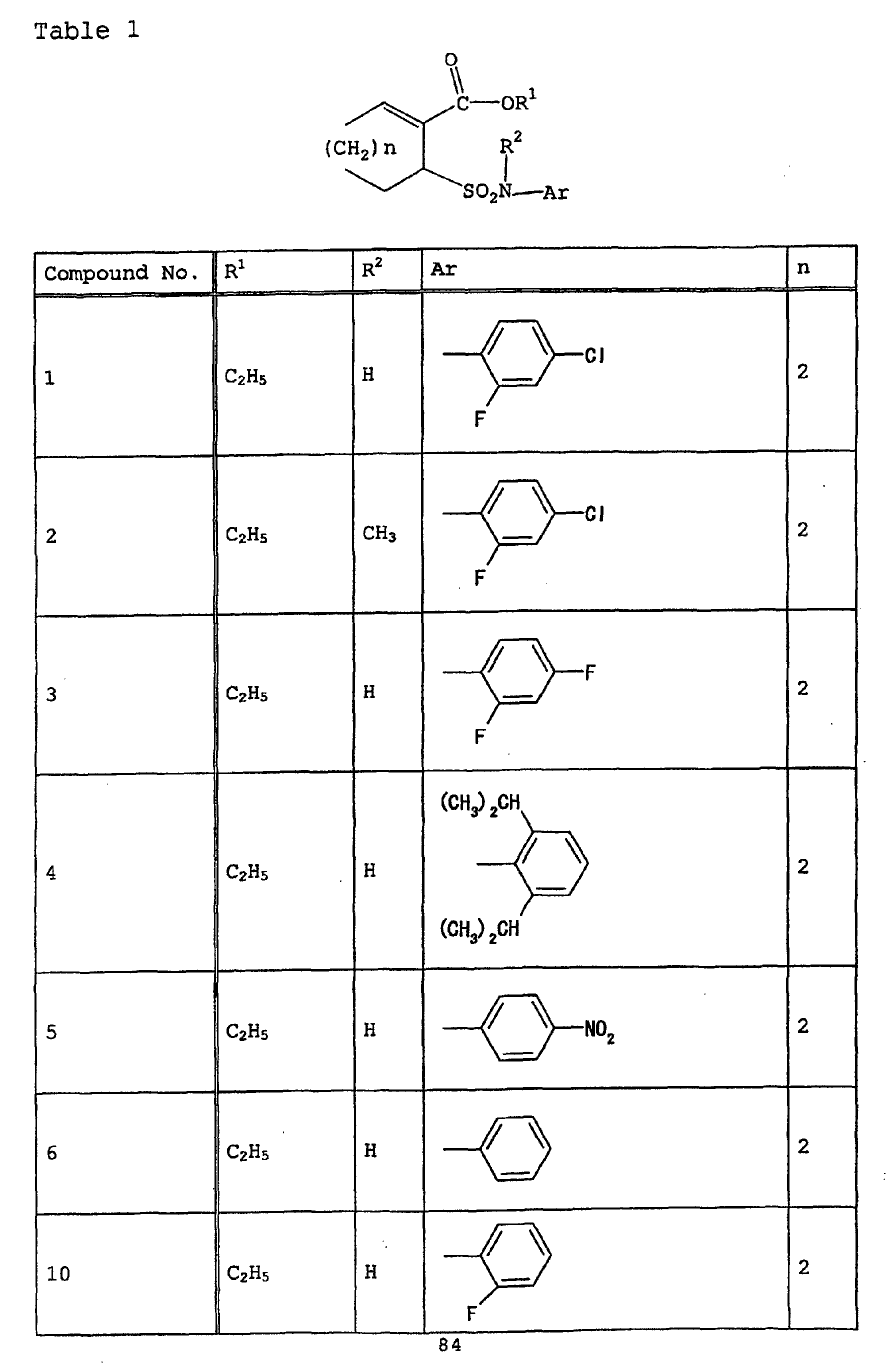
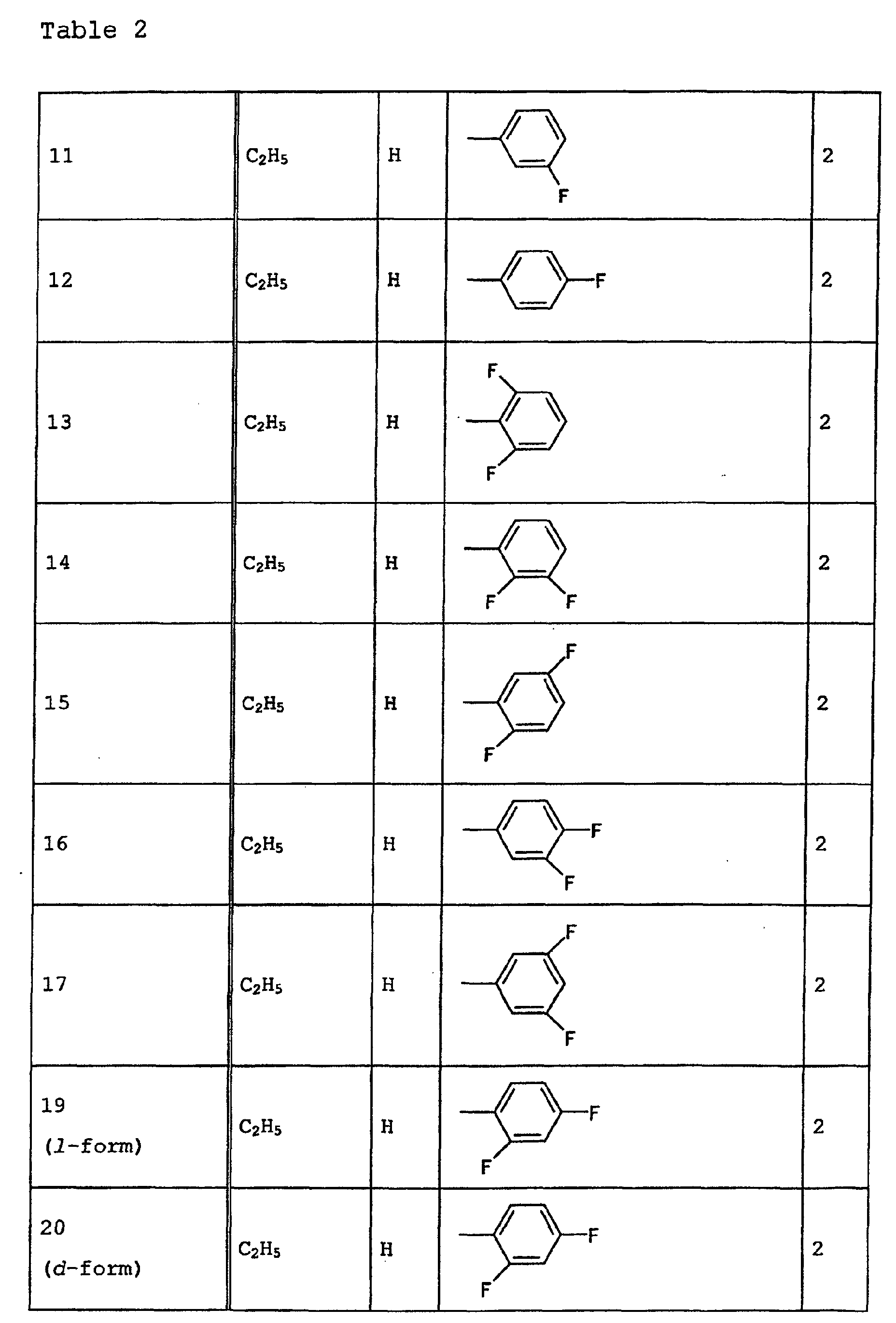
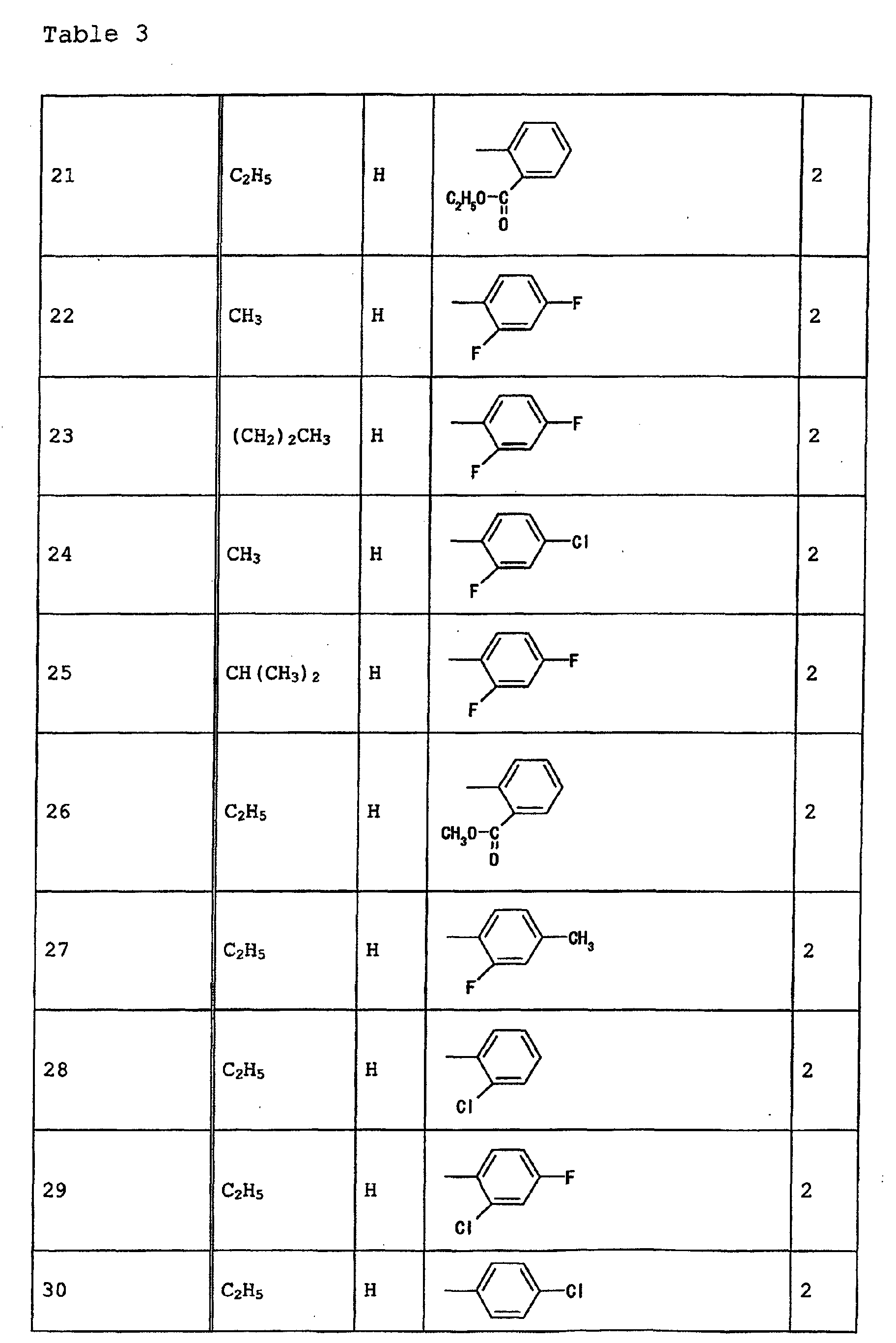
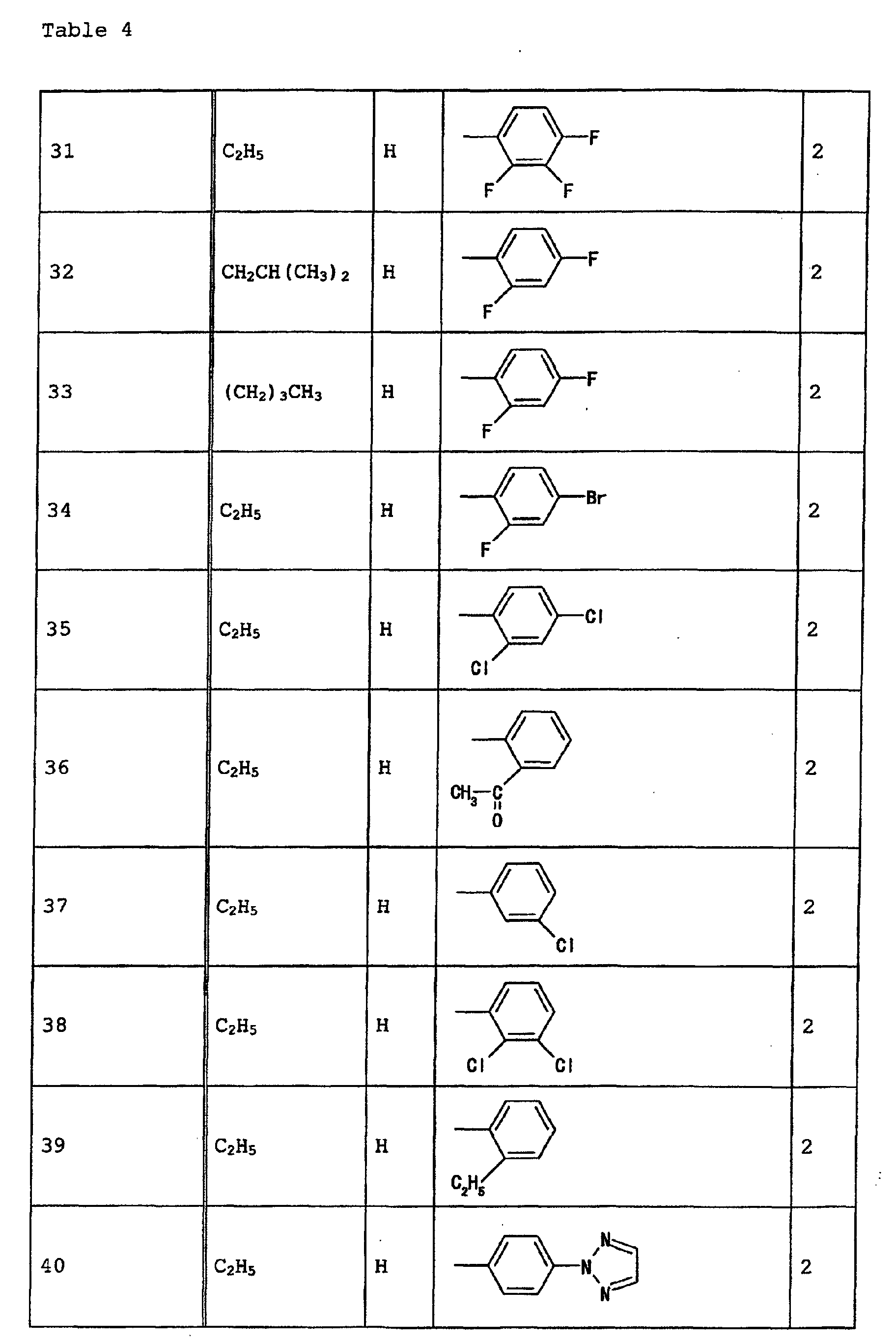


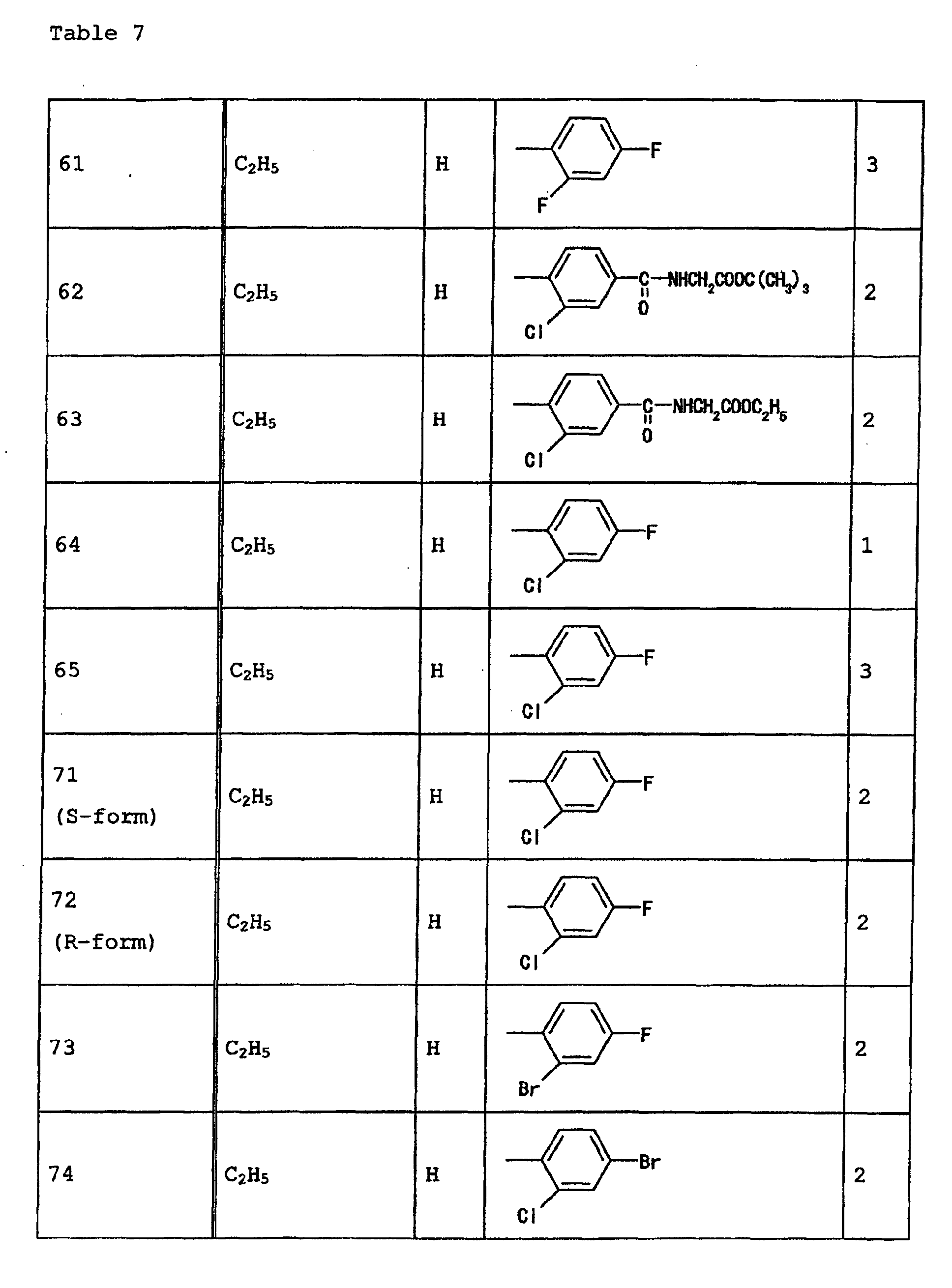
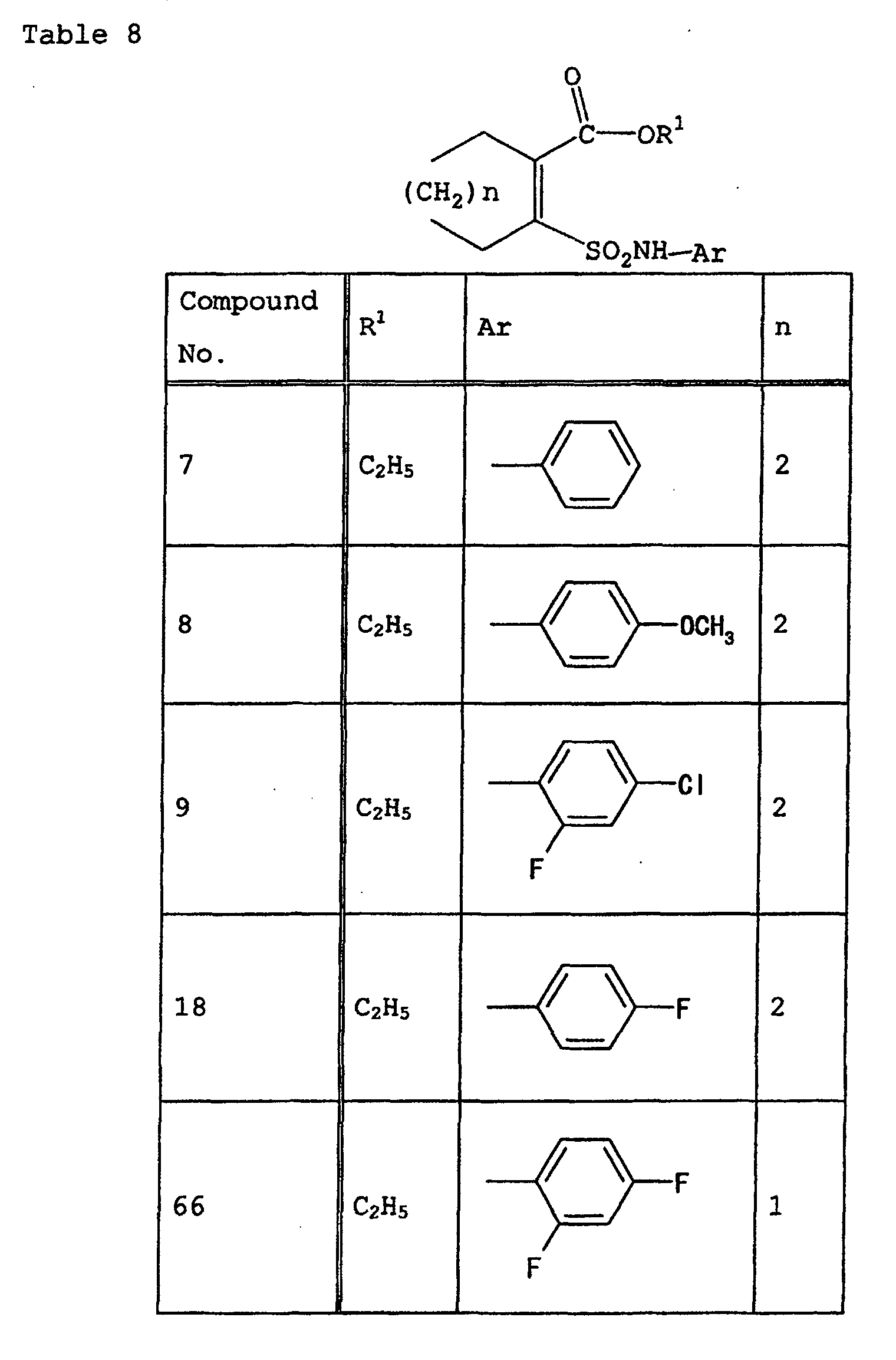
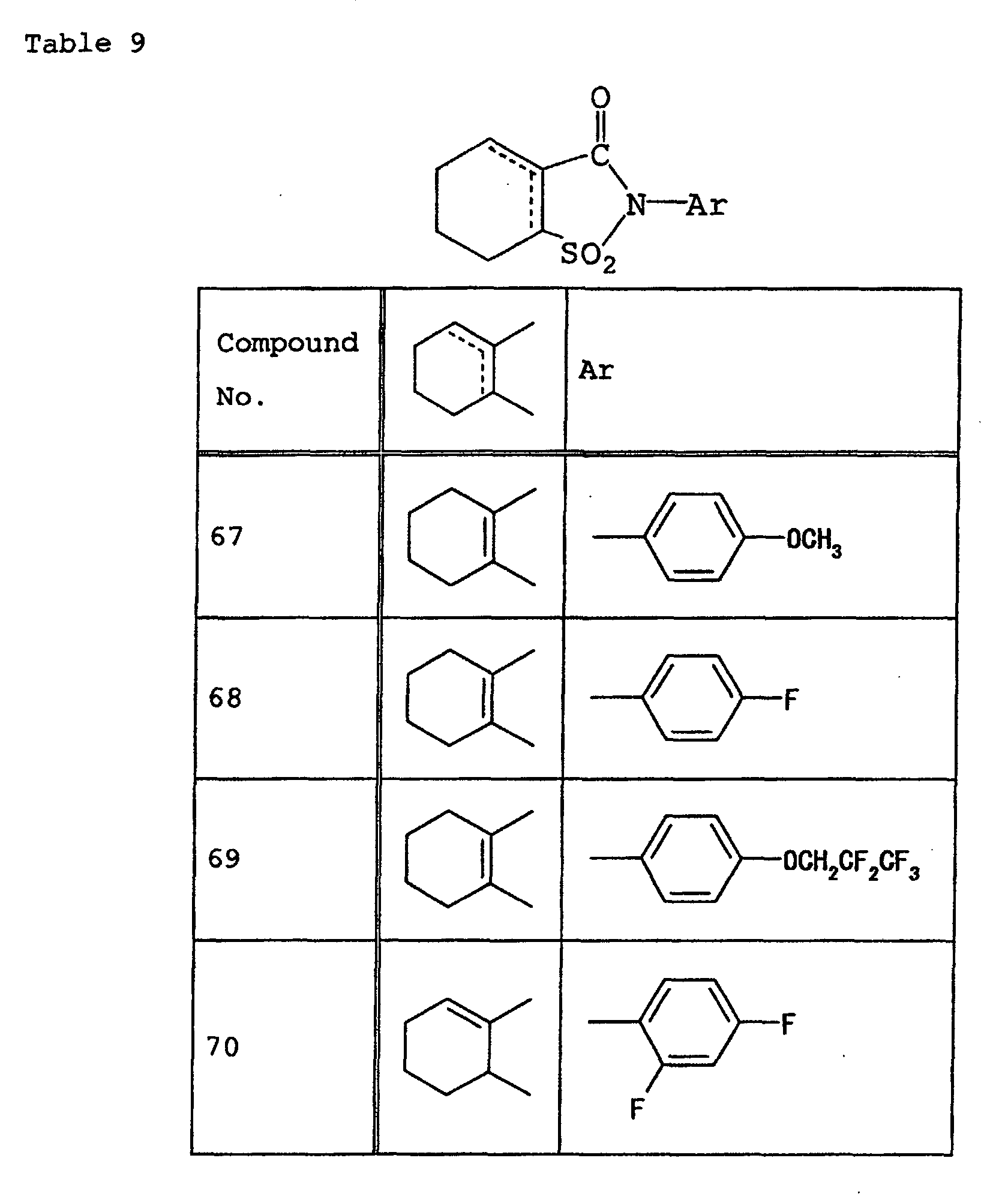
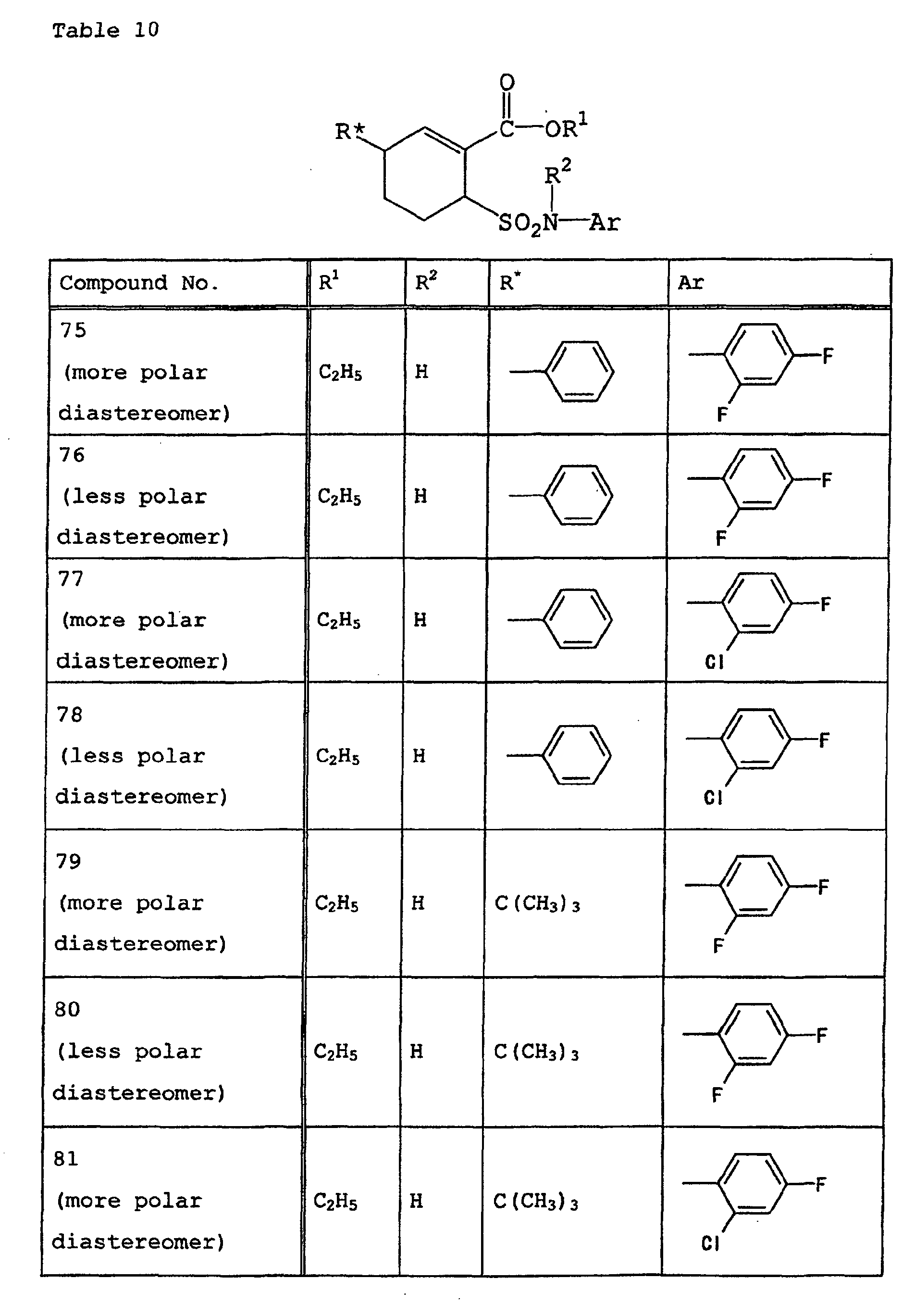

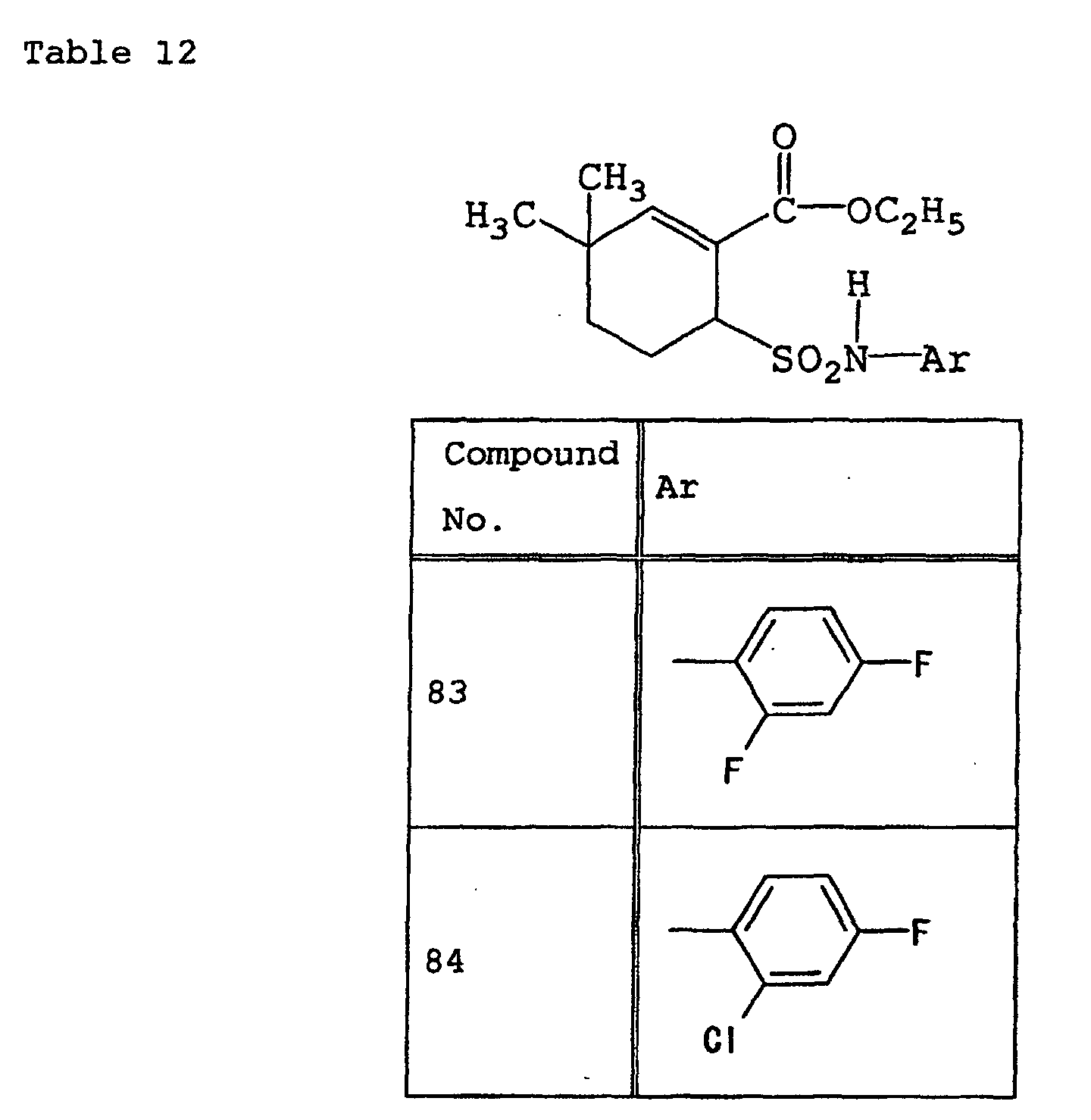
ethyl (+)-6-[(2-chloro-4-fluorobenzyl)sulfonyl]-1-cyclohexene-1-carboxylate (compound 6')

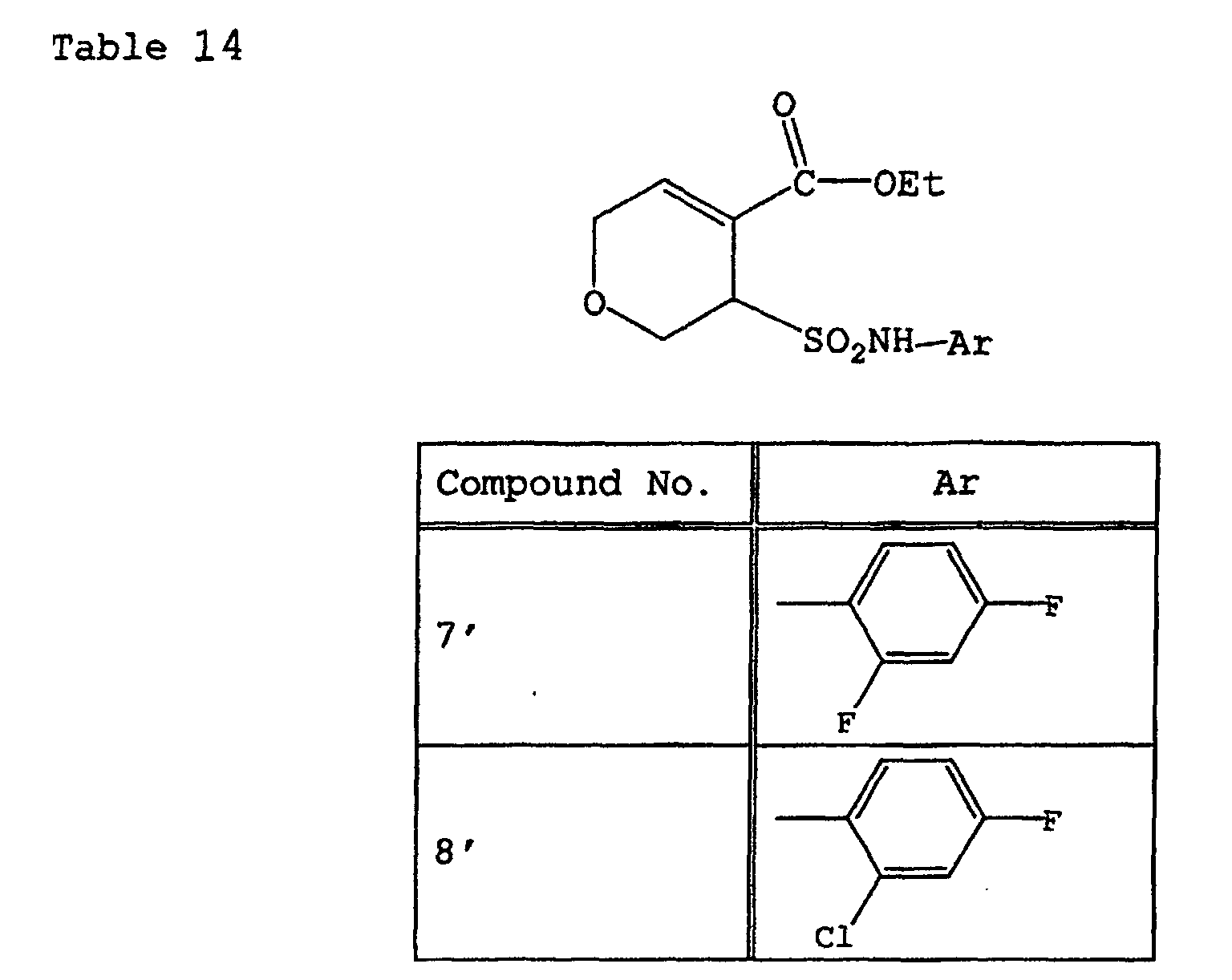
| (1) compound 72 of |
10 mg |
| (2) |
60 mg |
| (3) cornstarch | 35 mg |
| (4) gelatin | 3 mg |
| (5) |
2 mg |
| (1) compound 72 of |
10 mg |
| (2) lactose | 70 mg |
| (3) cornstarch | 50 mg |
| (4) |
7 mg |
| (5) magnesium stearate | 3 mg |
| (1) compound 29 of |
10 mg |
| (2) |
60 mg |
| (3) cornstarch | 35 mg |
| (4) gelatin | 3 mg |
| (5) |
2 mg |
| (1) compound 29 of |
10 mg |
| (2) lactose | 70 mg |
| (3) cornstarch | 50 mg |
| (4) |
7 mg |
| (5) magnesium stearate | 3 mg |
| Reference Example No. | IC50 (nmol/L) | ||
| LPS | | CPG | |
| B66 | |||
| 10 | >1000 | >1000 | |
| D4 | 11 | >1000 | >1000 |
| D7 | 18 | 530 | >1000 |
| Reference Example No. | Concentration (µM) | Suppressive rate (%) | |
| TNF-α | IL-6 | ||
| | 1 | 77 | 80 |
| | 10 | 99 | 100 |
| | 1 | 88 | 93 |
| | 10 | 100 | 96 |
| | 1 | 87 | 100 |
| | 10 | 97 | 100 |
| WBC | RBC | Hb | |
| (x102/ µL) | (x104/ µL) | (g/dL) | |
| Normal | 39.6±4.2 | 941.4±55.4 | 16.2±0.8 |
| Vehicle | 95.7±13.0** | 475.8±46.5** | 10.9±1.0** |
| | 41.0±4.1+ | 607.5±45.3 | 13.2±0.8 |
| | 53.5±7.8+ | 616.7±51.1 | 12.9±0.5 |
| Ht (%) | BW (%) | GBS (%) | |
| Normal | 53.6±3.4 | 108.0±2.4 | 0 |
| Vehicle | 29.2±2.4** | 93.3±5.4* | 100** |
| Reference Example B3 | 35.4±2.7 | 102.0±7.1 | 83 |
| 10 mg/kg | |||
| Reference Example B3 | 35.1±2.7 | 102.8±7.9 | 67 |
| 30 mg/kg | |||
| Data are expressed as means±SE of six mice. | |||
| *, p≤0.05; **, p≤0.01 (Student's test) vs. normal. | |||
| +, p≤0.05 (Student's test) vs. vehicle. |
| N | Arthritis incidence (%) | Arthritis index | |||||
| 6W | 7W | 8W | 6W | 7W | 8W | ||
| Vehicle | 12 | 58.3 | 65.0 | 70.0 | 1.20 | 1.23 | 1.40 |
| | 10 | 37.5 | 40.0 | 60.0 | 0.65 | 0.80 | 1.15 |
| Example B3 |
Claims (20)
- An agent for the prophylaxis or treatment of severe sepsis, which comprises a cycloalkene compound as an active ingredient.
- An agent for the prophylaxis or treatment of severe sepsis, which comprises a compound represented by the formula (I):wherein
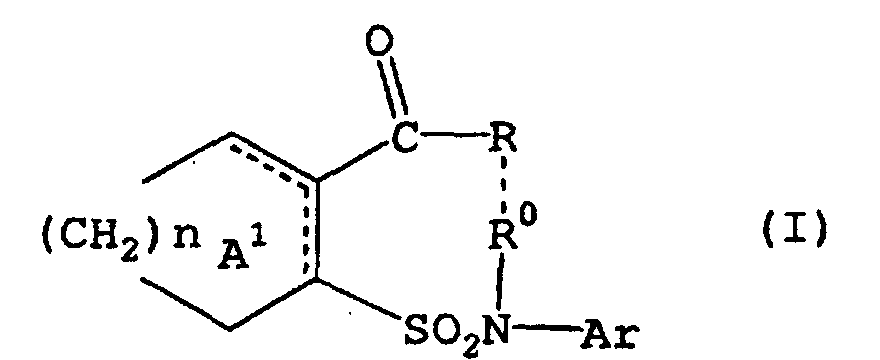
- R
- represents an aliphatic hydrocarbon group optionally
having substituents, an aromatic hydrocarbon group
optionally having substituents, a heterocyclic group
optionally having substituents, a group represented by
the formula: -OR1 wherein R1 represents a hydrogen atom
or an aliphatic hydrocarbon group optionally having
substituents, or a group represented by the formula:
wherein
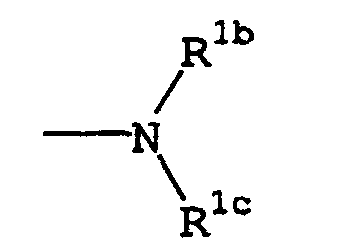
- R1b and R1c
- are the same or different and each represents a hydrogen atom or an aliphatic hydrocarbon group optionally having substituents,
- R0
- represents a hydrogen atom or an aliphatic hydrocarbon group, or R and R0 in combination form a bond,
- ring A1
- represents a cycloalkene optionally substituted by 1
to 4 substituents selected from the group consisting
of
- (1) an aliphatic hydrocarbon group optionally having substituents,
- (2) an aromatic hydrocarbon group optionally having substituents,
- (3) a group represented by the formula: -OR11 wherein
R11 represents a hydrogen atom or an aliphatic hydrocarbon group optionally having substituents and - (4) a halogen atom,
- Ar
- represents an aromatic hydrocarbon group optionally having substituents,
represents a group represented by the formula: and
and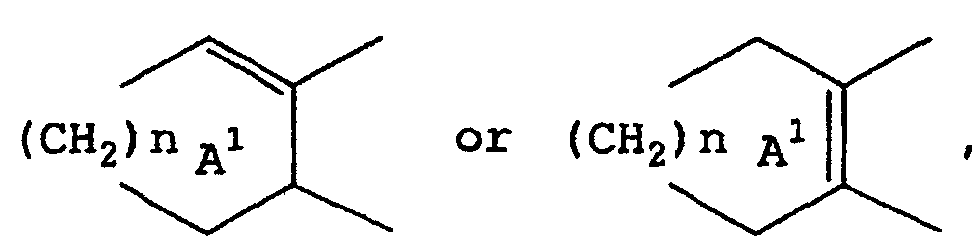
- n
- represents an integer of 1 to 4,
wherein R1' represents an aliphatic hydrocarbon group optionally having substituents, an aromatic hydrocarbon group optionally having substituents, a heterocyclic group optionally having substituents, a group represented by the formula: -OR1a' wherein R1a' represents a hydrogen atom or an aliphatic hydrocarbon group optionally having substituents, or a group represented by the formula: wherein R1b' and R1c' are the same or different and each represents a hydrogen atom or an aliphatic hydrocarbon group optionally having substituents,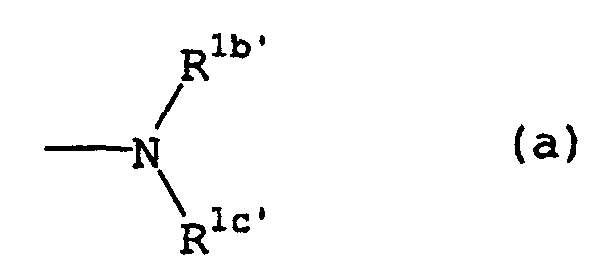
X represents a methylene group, NH, a sulfur atom or an oxygen atom,
Y represents a methylene group optionally having substituents or NH optionally having substituents,
ring A' represents a 5- to 8-membered ring optionally having 1 to 4 substituents selected from the group consisting of (1) an aliphatic hydrocarbon group optionally having substituents, (2) an aromatic hydrocarbon group optionally having substituents, (3) a group represented by the formula: -OR2' wherein R2' represents a hydrogen atom or an aliphatic hydrocarbon group optionally having substituents and (4) a halogen atom,
Ar' represents an aromatic hydrocarbon group optionally having substituents,
a group represented by the formula:represents a group represented by the formula: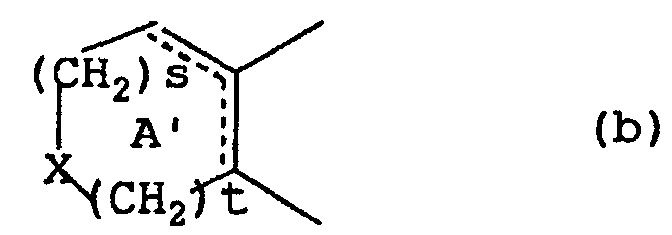 s represents an integer of 0 to 2,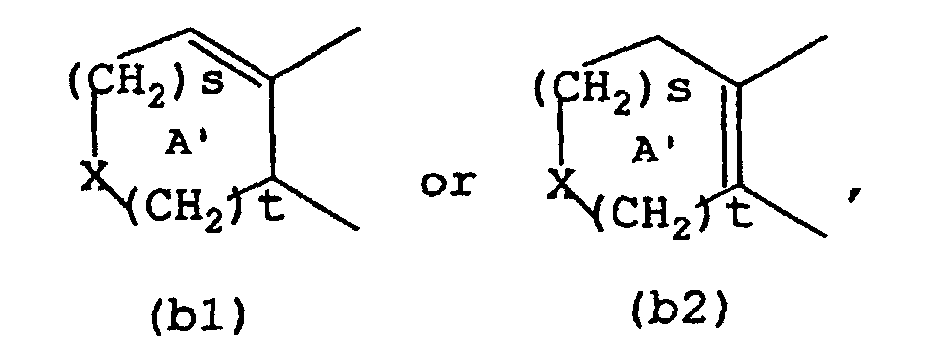
t represents an integer of 1 to 3, and
the total of s and t is not more than 4;
provided that when X is a methylene group, Y represents a methylene group optionally having substituents, or a salt thereof or a prodrug thereof. - The agent of claim 2, wherein the formula (I) is the formula (Ia):wherein R1a represents a C1-6 alkyl, R2a represents a hydrogen atom or a C1-6 alkyl and Ara represents a phenyl group substituted by 1 or 2 halogen atoms, and the formula (II) is the formula (IIa):
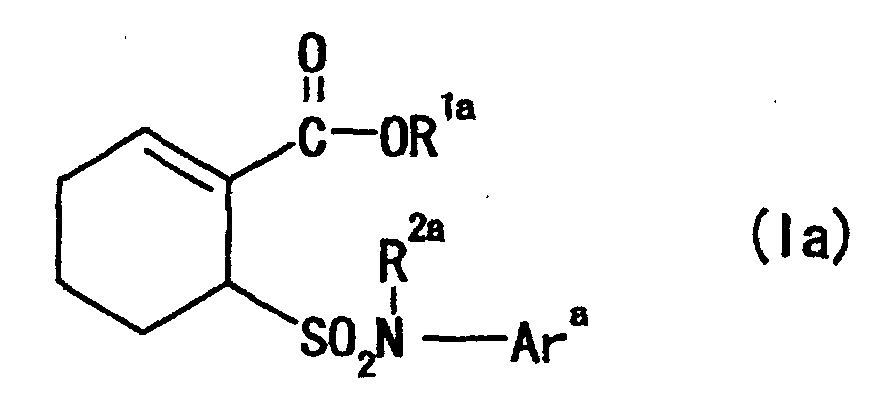 wherein R1a'' represents a C1-6 alkyl, Xa represents a methylene group or an oxygen atom, Ya represents a methylene group or -NH- and Ara' represents a phenyl group optionally having 1 or 2 substituents selected from a halogen atom and a C1-6 alkoxy group.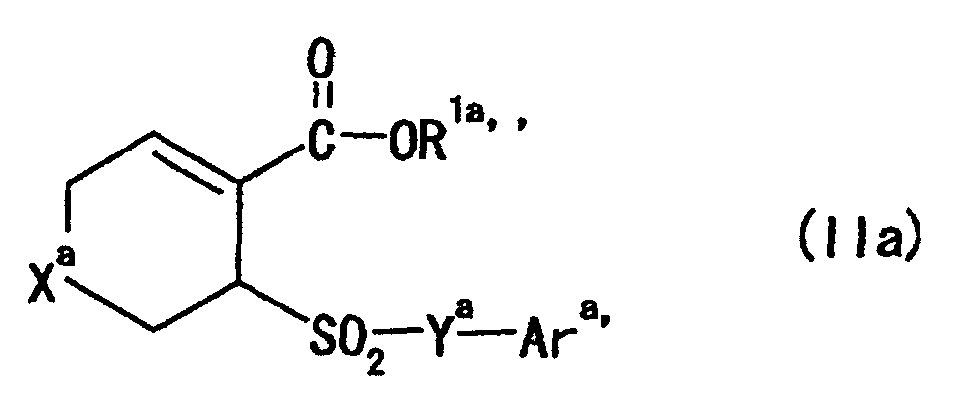
- The agent of claim 2, further comprising at least one kind of drug selected from the group consisting of antibacterial agent, antifungal agent, non-steroidal antiinflammatory drug, steroid and anticoagulant.
- A method for the prophylaxis or treatment of severe sepsis, which comprises administration of an effective amount of a compound represented by the formula (I) or the formula (II) or a salt thereof or a prodrug thereof described in claim 2 to a mammal.
- Use of a compound represented by the formula (I) or the formula (II) or a salt thereof or a prodrug thereof described in claim 2 for the production of an agent for the prophylaxis or treatment of severe sepsis.
- A TLR signal inhibitor comprising a non-peptide compound as an active ingredient.
- The agent of claim 7, wherein the non-peptide compound is a non-peptide compound having a molecular weight of not more than about 1000.
- The agent of claim 8, wherein the non-peptide compound is a compound represented by the formula (I):wherein R represents an aliphatic hydrocarbon group optionally having substituents, an aromatic hydrocarbon group optionally having substituents, a heterocyclic group optionally having substituents, a group represented by the formula: -OR1 wherein R1 represents a hydrogen atom or an aliphatic hydrocarbon group optionally having substituents, or a group represented by the formula:
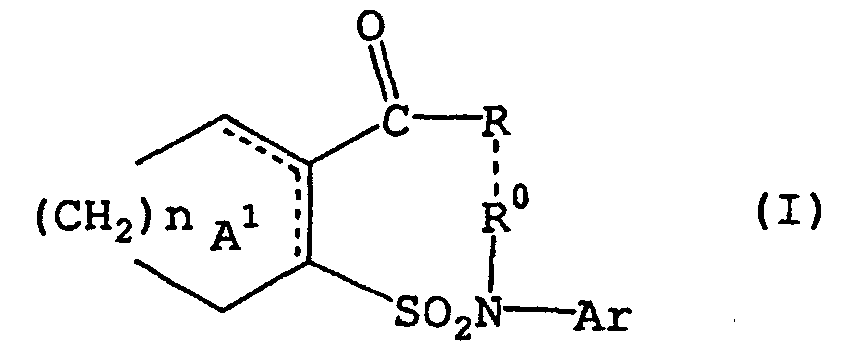 wherein R1b and R1c are the same or different and each represents a hydrogen atom or an aliphatic hydrocarbon group optionally having substituents,
R0 represents a hydrogen atom or an aliphatic hydrocarbon group, or R and R0 in combination form a bond,
ring A1 represents a cycloalkene optionally substituted by 1 to 4 substituents selected from the group consisting of (1) an aliphatic hydrocarbon group optionally having substituents, (2) an aromatic hydrocarbon group optionally having substituents, (3) a group represented by the formula: -OR11 wherein R11 represents a hydrogen atom or an aliphatic hydrocarbon group optionally having substituents and (4) a halogen atom,
Ar represents an aromatic hydrocarbon group optionally having substituents,
a group represented by the formula:represents a group represented by the formula: and
and
n represents an integer of 1 to 4, or a salt thereof or a prodrug thereof, or, a compound represented by the formula (II) :wherein R1' represents an aliphatic hydrocarbon group optionally having substituents, an aromatic hydrocarbon group optionally having substituents, a heterocyclic group optionally having substituents, a group represented by the formula: -OR1a' wherein R1a' represents a hydrogen atom or an aliphatic hydrocarbon group optionally having substituents, or a group represented by the formula: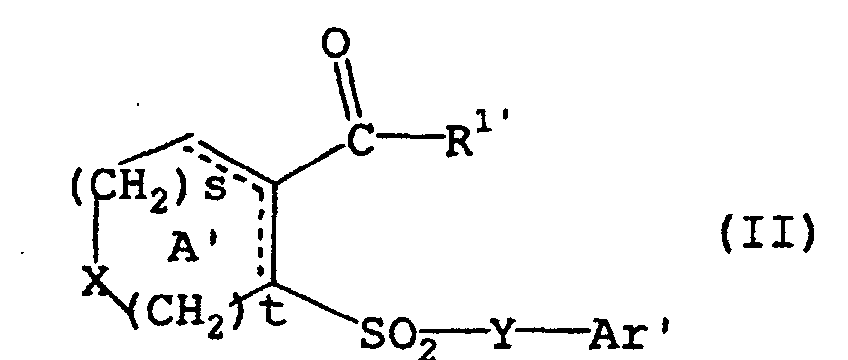 wherein R1b' and R1c' are the same or different and each represents a hydrogen atom or an aliphatic hydrocarbon group optionally having substituents,
X represents a methylene group, NH, sulfur atom or oxygen atom,
Y represents a methylene group optionally having substituents or NH optionally having substituents,
ring A' represents a 5 to 8-membered ring optionally having 1 to 4 substituents selected from the group consisting of (1) an aliphatic hydrocarbon group optionally having substituents, (2) an aromatic hydrocarbon group optionally having substituents, (3) a group represented by the formula: -OR2' wherein R2' represents a hydrogen atom or an aliphatic hydrocarbon group optionally having substituents and (4) a halogen atom,
Ar' represents an aromatic hydrocarbon group optionally having substituents,
a group represented by the formula:represents a group represented by the formula: s represents an integer of 0 to 2,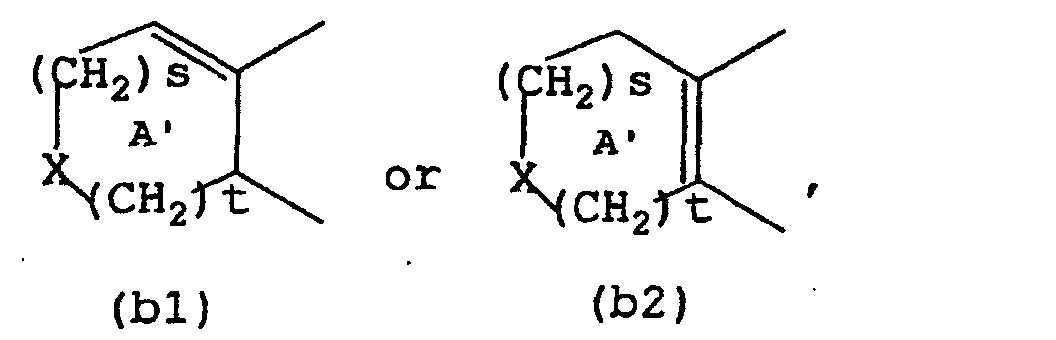
t represents an integer of 1 to 3,
the total of s and t is not more than 4;
provided that when X is a methylene group, Y represents a methylene group optionally having substituents, or a salt thereof or a prodrug thereof. - The agent of claim 7, wherein TLR is TLR4.
- An agent for the prophylaxis or treatment of a disease caused by a change in a TLR signal, which comprises the agent of claim 7.
- The agent of claim 11, wherein the disease caused by the changes in the TLR signal is organ dysfunction.
- The agent of claim 12, wherein the organ is an organ of central nervous system, circulatory system, respiratory system, bone and joint system, digestive system or renal and urinary system.
- A method for the inhibition of TLR signal, which comprises administration of an effective amount of a non-peptide compound to a mammal.
- A method for the prophylaxis or treatment of a disease caused by a change in a TLR signal, which comprises administration of an effective amount of a non-peptide compound to a mammal.
- Use of a non-peptide compound for the production of a TLR signal inhibitor.
- Use of a non-peptide compound for the production of an agent for the prophylaxis or treatment of a disease caused by a change in a TLR signal.
- An agent for the prophylaxis or treatment of organ dysfunction, which comprises a TLR signal inhibitory substance.
- The agent of claim 18, wherein the organ is an organ of central nervous system, circulatory system, respiratory system, bone and joint system, digestive system or renal and urinary system.
- A method for the prophylaxis or treatment of severe sepsis or organ dysfunction, which comprises inhibition of TLR signal.
Priority Applications (1)
| Application Number | Priority Date | Filing Date | Title |
|---|---|---|---|
| EP11000034A EP2366389A1 (en) | 2002-04-08 | 2003-04-07 | Severe sepsis preventive therapeutic agent |
Applications Claiming Priority (3)
| Application Number | Priority Date | Filing Date | Title |
|---|---|---|---|
| JP2002105204 | 2002-04-08 | ||
| JP2002105204 | 2002-04-08 | ||
| PCT/JP2003/004396 WO2003084527A1 (en) | 2002-04-08 | 2003-04-07 | Severe sepsis preventive therapeutic agent |
Publications (2)
| Publication Number | Publication Date |
|---|---|
| EP1495756A1 true EP1495756A1 (en) | 2005-01-12 |
| EP1495756A4 EP1495756A4 (en) | 2009-10-28 |
Family
ID=28786369
Family Applications (2)
| Application Number | Title | Priority Date | Filing Date |
|---|---|---|---|
| EP03745702A Withdrawn EP1495756A4 (en) | 2002-04-08 | 2003-04-07 | THERAPEUTICS FOR THE PREVENTION OF HEAVY SEPSIS |
| EP11000034A Withdrawn EP2366389A1 (en) | 2002-04-08 | 2003-04-07 | Severe sepsis preventive therapeutic agent |
Family Applications After (1)
| Application Number | Title | Priority Date | Filing Date |
|---|---|---|---|
| EP11000034A Withdrawn EP2366389A1 (en) | 2002-04-08 | 2003-04-07 | Severe sepsis preventive therapeutic agent |
Country Status (7)
| Country | Link |
|---|---|
| US (2) | US20060058288A1 (en) |
| EP (2) | EP1495756A4 (en) |
| KR (1) | KR20040099418A (en) |
| CN (1) | CN1658863A (en) |
| AU (1) | AU2003236290A1 (en) |
| CA (1) | CA2481767C (en) |
| WO (1) | WO2003084527A1 (en) |
Cited By (9)
| Publication number | Priority date | Publication date | Assignee | Title |
|---|---|---|---|---|
| WO2006109170A3 (en) * | 2005-04-14 | 2007-04-19 | Esperion Therapeutics Inc | Combination therapy for treatment of cardiovascular diseases and related conditions |
| EP1997902A4 (en) * | 2006-03-30 | 2009-11-11 | Univ Hiroshima | SCREENING PROCESS |
| WO2009146875A1 (en) * | 2008-06-03 | 2009-12-10 | Fresenius Medical Care Deutschland Gmbh | Pharmaceutical compositions comprising gamma secretase modulators |
| US7718778B2 (en) | 2005-10-27 | 2010-05-18 | Centocor, Inc. | Antibody reactive with human toll like receptor 3 |
| WO2011093512A1 (en) * | 2010-01-27 | 2011-08-04 | Takeda Pharmaceutical Company Limited | Compounds for suppressing a peripheral nerve disorder induced by an anti - cancer agent |
| WO2010042543A3 (en) * | 2008-10-06 | 2011-08-11 | Idera Pharmaceuticals, Inc. | Use of inhibitors of toll-like receptors in the prevention and treatment of hypercholesterolemia and hyperlipidemia and diseases related thereto |
| US8153583B2 (en) | 2004-11-30 | 2012-04-10 | Carton Jill M | Toll like receptor 3 antagonists, methods and uses |
| WO2016182036A1 (en) * | 2015-05-08 | 2016-11-17 | Takeda Pharmaceutical Company Limited | Cyclic compounds |
| EP3296296A4 (en) * | 2015-05-08 | 2019-01-09 | Takeda Pharmaceutical Company Limited | CYCLIC COMPOUND |
Families Citing this family (10)
| Publication number | Priority date | Publication date | Assignee | Title |
|---|---|---|---|---|
| TWI404537B (en) * | 2005-08-19 | 2013-08-11 | Array Biopharma Inc | 8-substituted benzoazepines as toll-like receptor modulators |
| US20090062355A1 (en) * | 2006-04-20 | 2009-03-05 | Takeda Pharmaceutical Company Limited | Pharmaceutical Product |
| EP2018855A1 (en) | 2006-05-15 | 2009-01-28 | Takeda Pharmaceutical Company Limited | Pharmaceutical agent |
| WO2008004673A1 (en) | 2006-07-07 | 2008-01-10 | Takeda Pharmaceutical Company Limited | Cycloalkene derivatives, process for production of the derivatives, and use of the same |
| JP2008260760A (en) * | 2007-03-12 | 2008-10-30 | Daiichi Sankyo Co Ltd | Pharmaceutical composition containing a substituted cycloalkene derivative |
| WO2012039447A1 (en) | 2010-09-24 | 2012-03-29 | 第一三共株式会社 | Crystals of substituted cycloalkene derivatives |
| KR101286743B1 (en) * | 2011-02-18 | 2013-07-15 | 충남대학교산학협력단 | Pharmaceutical composition containing fenofibrate for prevention of sepsis |
| CN109923101B (en) * | 2016-09-09 | 2021-03-09 | 武田药品工业株式会社 | cyclic compound |
| CN116999436B (en) * | 2023-05-18 | 2025-09-19 | 青岛大学 | Application of spirocyclic piperidone in preparation of medicine for preventing and treating sepsis |
| WO2024261477A1 (en) | 2023-06-20 | 2024-12-26 | Yaqrit Limited | Combination of tlr4 antagonist, ornithine and phenylacetate or phenylbutyrate |
Family Cites Families (11)
| Publication number | Priority date | Publication date | Assignee | Title |
|---|---|---|---|---|
| US5714469A (en) * | 1994-09-01 | 1998-02-03 | Smithkline Beecham Corporation | Method of treating sepsis |
| US5993811A (en) * | 1997-02-03 | 1999-11-30 | Biology Associates, Llc | Method and compositions for preventing and treating the systemic inflammatory response syndrome including sepsis |
| EP1650219B1 (en) * | 1997-10-17 | 2007-12-19 | Genentech, Inc. | Human toll homologues |
| PT1032672E (en) * | 1997-11-18 | 2009-04-02 | Genentech Inc | Dna19355 polypeptide, a tumor necrosis factor homolog |
| DE69923300T2 (en) * | 1998-03-09 | 2006-01-05 | Takeda Pharmaceutical Co. Ltd. | CYCLOALKEN DERIVATIVES, METHOD FOR THE PRODUCTION THEREOF AND THEIR USE |
| KR100778256B1 (en) * | 1999-08-06 | 2007-11-27 | 다케다 야쿠힌 고교 가부시키가이샤 | Substituted aromatic ring compounds, preparation methods and uses thereof |
| AU1553001A (en) * | 1999-11-29 | 2001-06-12 | Takeda Chemical Industries Ltd. | Process for the production of optically active cyclohexene derivatives and intermediates therefor |
| CA2400804C (en) * | 2000-02-04 | 2009-09-01 | Takeda Chemical Industries, Ltd. | Stable emulsion compositions of cycloalkene derivatives |
| JP2001261557A (en) * | 2000-03-21 | 2001-09-26 | Takeda Chem Ind Ltd | Injection composition having improved dissolution or stability |
| US20040092712A1 (en) * | 2000-03-31 | 2004-05-13 | Shoji Furusako | Tlr/cd14 binding inhibitor |
| US20040063685A1 (en) * | 2000-12-08 | 2004-04-01 | Juji Ilzawa | Combination Drugs |
-
2003
- 2003-04-07 EP EP03745702A patent/EP1495756A4/en not_active Withdrawn
- 2003-04-07 CA CA2481767A patent/CA2481767C/en not_active Expired - Fee Related
- 2003-04-07 EP EP11000034A patent/EP2366389A1/en not_active Withdrawn
- 2003-04-07 KR KR10-2004-7016098A patent/KR20040099418A/en not_active Ceased
- 2003-04-07 WO PCT/JP2003/004396 patent/WO2003084527A1/en not_active Ceased
- 2003-04-07 AU AU2003236290A patent/AU2003236290A1/en not_active Abandoned
- 2003-04-07 US US10/510,596 patent/US20060058288A1/en not_active Abandoned
- 2003-04-07 CN CN038132737A patent/CN1658863A/en active Pending
-
2011
- 2011-03-30 US US13/064,526 patent/US20110184034A1/en not_active Abandoned
Cited By (15)
| Publication number | Priority date | Publication date | Assignee | Title |
|---|---|---|---|---|
| US8153583B2 (en) | 2004-11-30 | 2012-04-10 | Carton Jill M | Toll like receptor 3 antagonists, methods and uses |
| WO2006109170A3 (en) * | 2005-04-14 | 2007-04-19 | Esperion Therapeutics Inc | Combination therapy for treatment of cardiovascular diseases and related conditions |
| US7718778B2 (en) | 2005-10-27 | 2010-05-18 | Centocor, Inc. | Antibody reactive with human toll like receptor 3 |
| EP1997902A4 (en) * | 2006-03-30 | 2009-11-11 | Univ Hiroshima | SCREENING PROCESS |
| US8329420B2 (en) | 2006-03-30 | 2012-12-11 | Hiroshima University | Screening method for a substance that binds to an intracellular region of TLR4 |
| WO2009146875A1 (en) * | 2008-06-03 | 2009-12-10 | Fresenius Medical Care Deutschland Gmbh | Pharmaceutical compositions comprising gamma secretase modulators |
| WO2010042543A3 (en) * | 2008-10-06 | 2011-08-11 | Idera Pharmaceuticals, Inc. | Use of inhibitors of toll-like receptors in the prevention and treatment of hypercholesterolemia and hyperlipidemia and diseases related thereto |
| WO2011093512A1 (en) * | 2010-01-27 | 2011-08-04 | Takeda Pharmaceutical Company Limited | Compounds for suppressing a peripheral nerve disorder induced by an anti - cancer agent |
| CN102821763A (en) * | 2010-01-27 | 2012-12-12 | 武田药品工业株式会社 | Compounds for inhibiting peripheral nerve disorders induced by anticancer agents |
| AU2011211294B2 (en) * | 2010-01-27 | 2014-11-13 | Takeda Pharmaceutical Company Limited | Compounds for suppressing a peripheral nerve disorder induced by an anti - cancer agent |
| US8901171B2 (en) | 2010-01-27 | 2014-12-02 | Takeda Pharmaceutical Company Limited | Compounds for suppressing a peripheral nerve disorder induced by an anti-cancer agent |
| TWI481401B (en) * | 2010-01-27 | 2015-04-21 | Takeda Pharmaceutical | Pharmacy |
| WO2016182036A1 (en) * | 2015-05-08 | 2016-11-17 | Takeda Pharmaceutical Company Limited | Cyclic compounds |
| EP3296296A4 (en) * | 2015-05-08 | 2019-01-09 | Takeda Pharmaceutical Company Limited | CYCLIC COMPOUND |
| EA033083B1 (en) * | 2015-05-08 | 2019-08-30 | Такеда Фармасьютикал Компани Лимитед | Cyclic compounds |
Also Published As
| Publication number | Publication date |
|---|---|
| CA2481767A1 (en) | 2003-10-16 |
| KR20040099418A (en) | 2004-11-26 |
| US20060058288A1 (en) | 2006-03-16 |
| US20110184034A1 (en) | 2011-07-28 |
| EP1495756A4 (en) | 2009-10-28 |
| CA2481767C (en) | 2011-07-12 |
| EP2366389A1 (en) | 2011-09-21 |
| CN1658863A (en) | 2005-08-24 |
| WO2003084527A1 (en) | 2003-10-16 |
| AU2003236290A1 (en) | 2003-10-20 |
Similar Documents
| Publication | Publication Date | Title |
|---|---|---|
| US20110184034A1 (en) | Severe sepsis preventive therapeutic agent | |
| US7105572B2 (en) | Stable emulsion compositions | |
| US7960416B2 (en) | Stable emulsion composition | |
| US20090062355A1 (en) | Pharmaceutical Product | |
| US20090105314A1 (en) | Pharmaceutical Agent | |
| IL186673A (en) | Stable emulsion composition | |
| CA2431206C (en) | Combination drugs containing anti-sepsis cycloalkene compound | |
| US10738004B2 (en) | Cyclic compound | |
| JP2004002370A (en) | Drug for preventing and treating severe sepsis | |
| JP4863553B2 (en) | Stable emulsion composition | |
| CA3036349C (en) | Cyclic compound having toll-like receptor 4 (tlr4) inhibitory activity | |
| HK1151234A (en) | Stable emulsion composition | |
| HK1116061A (en) | Stable emulsion composition | |
| BR112019004520B1 (en) | COMPOUND, MEDICINE, AND USE OF THE COMPOUND |
Legal Events
| Date | Code | Title | Description |
|---|---|---|---|
| PUAI | Public reference made under article 153(3) epc to a published international application that has entered the european phase |
Free format text: ORIGINAL CODE: 0009012 |
|
| 17P | Request for examination filed |
Effective date: 20041008 |
|
| AK | Designated contracting states |
Kind code of ref document: A1 Designated state(s): AT BE BG CH CY CZ DE DK EE ES FI FR GB GR HU IE IT LI LU MC NL PT RO SE SI SK TR |
|
| AX | Request for extension of the european patent |
Extension state: AL LT LV MK |
|
| RAP1 | Party data changed (applicant data changed or rights of an application transferred) |
Owner name: TAKEDA PHARMACEUTICAL COMPANY LIMITED |
|
| A4 | Supplementary search report drawn up and despatched |
Effective date: 20090929 |
|
| 17Q | First examination report despatched |
Effective date: 20101018 |
|
| STAA | Information on the status of an ep patent application or granted ep patent |
Free format text: STATUS: THE APPLICATION HAS BEEN WITHDRAWN |
|
| 18W | Application withdrawn |
Effective date: 20130813 |