EP1493765A1 - Organic polymers having at the ends epoxy- and/or oxetanyl-containing silicon groups and process for production thereof - Google Patents
Organic polymers having at the ends epoxy- and/or oxetanyl-containing silicon groups and process for production thereof Download PDFInfo
- Publication number
- EP1493765A1 EP1493765A1 EP03745970A EP03745970A EP1493765A1 EP 1493765 A1 EP1493765 A1 EP 1493765A1 EP 03745970 A EP03745970 A EP 03745970A EP 03745970 A EP03745970 A EP 03745970A EP 1493765 A1 EP1493765 A1 EP 1493765A1
- Authority
- EP
- European Patent Office
- Prior art keywords
- group
- range
- carbon number
- organic polymer
- expressed
- Prior art date
- Legal status (The legal status is an assumption and is not a legal conclusion. Google has not performed a legal analysis and makes no representation as to the accuracy of the status listed.)
- Withdrawn
Links
- 0 C1C2C1CC*2 Chemical compound C1C2C1CC*2 0.000 description 4
Classifications
-
- C—CHEMISTRY; METALLURGY
- C08—ORGANIC MACROMOLECULAR COMPOUNDS; THEIR PREPARATION OR CHEMICAL WORKING-UP; COMPOSITIONS BASED THEREON
- C08G—MACROMOLECULAR COMPOUNDS OBTAINED OTHERWISE THAN BY REACTIONS ONLY INVOLVING UNSATURATED CARBON-TO-CARBON BONDS
- C08G65/00—Macromolecular compounds obtained by reactions forming an ether link in the main chain of the macromolecule
- C08G65/02—Macromolecular compounds obtained by reactions forming an ether link in the main chain of the macromolecule from cyclic ethers by opening of the heterocyclic ring
- C08G65/32—Polymers modified by chemical after-treatment
- C08G65/329—Polymers modified by chemical after-treatment with organic compounds
- C08G65/336—Polymers modified by chemical after-treatment with organic compounds containing silicon
-
- C—CHEMISTRY; METALLURGY
- C08—ORGANIC MACROMOLECULAR COMPOUNDS; THEIR PREPARATION OR CHEMICAL WORKING-UP; COMPOSITIONS BASED THEREON
- C08F—MACROMOLECULAR COMPOUNDS OBTAINED BY REACTIONS ONLY INVOLVING CARBON-TO-CARBON UNSATURATED BONDS
- C08F8/00—Chemical modification by after-treatment
- C08F8/42—Introducing metal atoms or metal-containing groups
-
- C—CHEMISTRY; METALLURGY
- C08—ORGANIC MACROMOLECULAR COMPOUNDS; THEIR PREPARATION OR CHEMICAL WORKING-UP; COMPOSITIONS BASED THEREON
- C08G—MACROMOLECULAR COMPOUNDS OBTAINED OTHERWISE THAN BY REACTIONS ONLY INVOLVING UNSATURATED CARBON-TO-CARBON BONDS
- C08G59/00—Polycondensates containing more than one epoxy group per molecule; Macromolecules obtained by polymerising compounds containing more than one epoxy group per molecule using curing agents or catalysts which react with the epoxy groups
- C08G59/18—Macromolecules obtained by polymerising compounds containing more than one epoxy group per molecule using curing agents or catalysts which react with the epoxy groups ; e.g. general methods of curing
- C08G59/20—Macromolecules obtained by polymerising compounds containing more than one epoxy group per molecule using curing agents or catalysts which react with the epoxy groups ; e.g. general methods of curing characterised by the epoxy compounds used
- C08G59/22—Di-epoxy compounds
- C08G59/30—Di-epoxy compounds containing atoms other than carbon, hydrogen, oxygen and nitrogen
- C08G59/306—Di-epoxy compounds containing atoms other than carbon, hydrogen, oxygen and nitrogen containing silicon
-
- C—CHEMISTRY; METALLURGY
- C08—ORGANIC MACROMOLECULAR COMPOUNDS; THEIR PREPARATION OR CHEMICAL WORKING-UP; COMPOSITIONS BASED THEREON
- C08G—MACROMOLECULAR COMPOUNDS OBTAINED OTHERWISE THAN BY REACTIONS ONLY INVOLVING UNSATURATED CARBON-TO-CARBON BONDS
- C08G59/00—Polycondensates containing more than one epoxy group per molecule; Macromolecules obtained by polymerising compounds containing more than one epoxy group per molecule using curing agents or catalysts which react with the epoxy groups
- C08G59/18—Macromolecules obtained by polymerising compounds containing more than one epoxy group per molecule using curing agents or catalysts which react with the epoxy groups ; e.g. general methods of curing
- C08G59/20—Macromolecules obtained by polymerising compounds containing more than one epoxy group per molecule using curing agents or catalysts which react with the epoxy groups ; e.g. general methods of curing characterised by the epoxy compounds used
- C08G59/32—Epoxy compounds containing three or more epoxy groups
- C08G59/3254—Epoxy compounds containing three or more epoxy groups containing atoms other than carbon, hydrogen, oxygen or nitrogen
-
- C—CHEMISTRY; METALLURGY
- C08—ORGANIC MACROMOLECULAR COMPOUNDS; THEIR PREPARATION OR CHEMICAL WORKING-UP; COMPOSITIONS BASED THEREON
- C08G—MACROMOLECULAR COMPOUNDS OBTAINED OTHERWISE THAN BY REACTIONS ONLY INVOLVING UNSATURATED CARBON-TO-CARBON BONDS
- C08G65/00—Macromolecular compounds obtained by reactions forming an ether link in the main chain of the macromolecule
- C08G65/02—Macromolecular compounds obtained by reactions forming an ether link in the main chain of the macromolecule from cyclic ethers by opening of the heterocyclic ring
- C08G65/04—Macromolecular compounds obtained by reactions forming an ether link in the main chain of the macromolecule from cyclic ethers by opening of the heterocyclic ring from cyclic ethers only
- C08G65/06—Cyclic ethers having no atoms other than carbon and hydrogen outside the ring
- C08G65/16—Cyclic ethers having four or more ring atoms
- C08G65/18—Oxetanes
-
- C—CHEMISTRY; METALLURGY
- C08—ORGANIC MACROMOLECULAR COMPOUNDS; THEIR PREPARATION OR CHEMICAL WORKING-UP; COMPOSITIONS BASED THEREON
- C08G—MACROMOLECULAR COMPOUNDS OBTAINED OTHERWISE THAN BY REACTIONS ONLY INVOLVING UNSATURATED CARBON-TO-CARBON BONDS
- C08G65/00—Macromolecular compounds obtained by reactions forming an ether link in the main chain of the macromolecule
- C08G65/02—Macromolecular compounds obtained by reactions forming an ether link in the main chain of the macromolecule from cyclic ethers by opening of the heterocyclic ring
- C08G65/04—Macromolecular compounds obtained by reactions forming an ether link in the main chain of the macromolecule from cyclic ethers by opening of the heterocyclic ring from cyclic ethers only
- C08G65/22—Cyclic ethers having at least one atom other than carbon and hydrogen outside the ring
Definitions
- the present invention relates to structurally novel polymers having epoxy- and/or oxetanyl-containing silicon groups at their ends, and to a process for producing the same.
- epoxy group-containing polymers produced by such known processes do not necessarily have satisfactory physical properties for various applications.
- organic polymers each have their own characteristics.
- saturated hydrocarbon polymers whose main chain skeleton comprises a polymer selected from the group consisting of polyisobutylene, hydrogenated polyisoprene, hydrogenated polybutadiene, and their copolymers have high weather resistance, high heat resistance, low gas permeability, superior flexibility, and other characteristics.
- oxyalkylene polymers have superior compatibility with other polymers, flexibility, and advantageous low-temperature characteristics.
- the object of the present invention is to provide novel organic polymers having an epoxy- and/or oxetanyl-containing silicon group at their ends, prepared by selectively introducing the epoxy- and/or oxetanyl-containing silicon group into the end of various types of organic polymers, and a process for producing the organic polymers.
- the inventors of the present invention have conducted intensive research to overcome the above-described disadvantages. As a result, they have found that a polymer having a specific epoxy- and/or oxetanyl-containing silicon group exhibits superior physical properties, and have accomplished the present invention.
- a first invention relates to an organic polymer having at its end the structure expressed by general formula (1):
- R 1 represents an alkyl group having a carbon number in the range of 1 to 20, an aryl group having a carbon number in the range of 6 to 20, an aralkyl group having a carbon number in the range of 7 to 20, or a triorganosiloxy group expressed by (R') 3 SiO-.
- R 2 represents an alkyl group having a carbon number in the range of 1 to 20, an aryl group having a carbon number in the range of 6 to 20, an aralkyl group having a carbon number in the range of 7 to 20, an alkoxy group having a carbon number in the range of 1 to 20, or a triorganosiloxy group expressed by (R') 3 SiO-. If the number of R 1 s or R 2 s is at least two, they may be the same or different. R' represents a monovalent hydrocarbon group having a carbon number in the range of 1 to 20, the three R's may be the same or different.
- X represents a monovalent organic group having an epoxy group and/or an oxetanyl group. If the number of X is at least two, they may be the same or different.
- m represents an integer in the range of 0 to 20, and n represents an integer of 1, 2, or 3.
- a second invention relates to an organic polymer having at its end the structure expressed by general formula (2): (In the formula, R 1 , R 2 , and m are the same as above. R 3 represents a divalent organic group having a carbon number in the range of 1 to 20 and containing at least one constituent atom selected from the group consisting of hydrogen, oxygen, and nitrogen.)
- a third invention relates to an organic polymer having at its end the structure expressed by general formula (3): (In the formula, R 1 , R 2 , and m are the same as above. R 4 represents a divalent organic group having a carbon number in the range of 1 to 20 and containing at least one constituent atom selected from the group consisting of hydrogen, oxygen, and nitrogen.)
- a fourth invention relates to an organic polymer having at its end the structure expressed by general formula (4): (In the formula, R 1 , R 2 , and m are the same as above. R 5 represents a divalent organic group having a carbon number in the range of 1 to 20 and containing at least one constituent atom selected from the group consisting of hydrogen, oxygen, and nitrogen.)
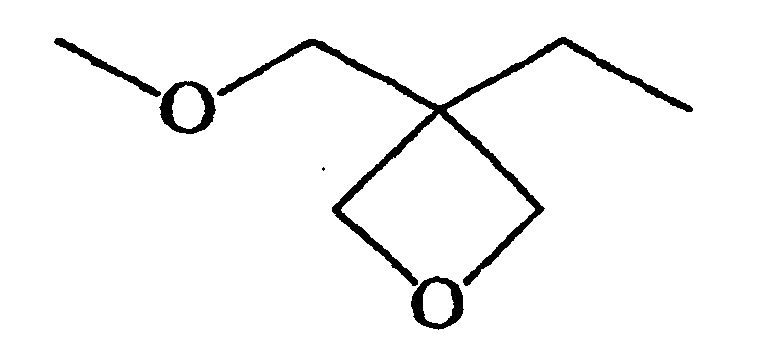
- At least one X has the structure expressed by the following formula:
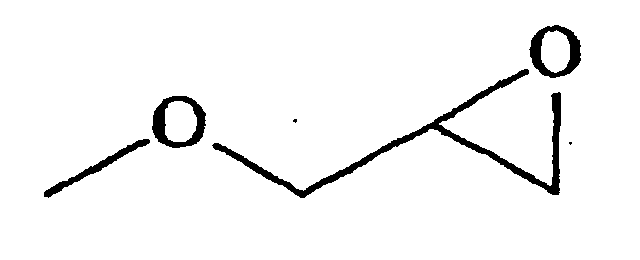
- At least one X has the structure expressed by the following formula:
- the main chain skeleton of the organic polymer comprises a saturated hydrocarbon polymer selected from the group consisting of polyisobutylene, hydrogenated polyisoprene, hydrogenated polybutadiene, and their copolymers.
- the main chain skeleton of the organic polymer comprises an oxyalkylene polymer.
- the organic polymer is produced by an addition reaction of an organic polymer having an unsaturated group at its end with a hydrosilane compound having an epoxy group and/or an oxetanyl group.
- the organic polymer may be produced by an exchange reaction of a hydrolyzable group between an organic polymer having a hydrolyzable silyl group at its end and a compound having at least one epoxy and/or oxetanyl group and one hydroxyl group in its molecule.
- a fifth invention relates to a process for producing the organic polymer of any one of the foregoing inventions.
- the process performs an addition reaction of an organic polymer having an unsaturated group at its end with a hydrosilane compound having an epoxy group and/or an oxetanyl group.
- Another invention relates to a process for producing the organic polymer of any one of the foregoing inventions.
- the process performs an exchange reaction of a hydrolyzable group between an organic polymer having a hydrolyzable silyl group at its end and a compound having at least one epoxy and/or oxetanyl group and one hydroxyl group in its molecule.
- An organic polymer having at its end an epoxy- and/or oxetanyl-containing silicon group of the present invention can exhibit a superior curing property because of the presence of the epoxy- and/or oxetanyl-containing silicon group at the end of the molecular chain. Also, the polymer exhibits its own characteristics depending on the type of organic polymer main chain constituting the skeleton of the polymer.
- the main chain skeleton of the organic polymer is not particularly limited. For example, commonly known organic polymers are used, such as acrylic polymers, polyester polymers, saturated hydrocarbon polymers, and oxyalkylene polymers.
- X represents a monovalent organic group having an epoxy group and/or an oxetanyl group.
- X is not particularly limited as long as it is an organic group having an epoxy group and/or an oxetanyl group, and it may have a nitrogen atom, a halogen atom, or other atoms in addition to hydrogen, carbon, and oxygen atoms.
- X may have an organic group having an ether structure in addition to the epoxy group and/or the oxetanyl group.
- X is an organic group having a carbon number in the range of 1 to 30, more preferably 1 to 20, and still more preferably 1 to 10. If the number of Xs is at least two, they may be the same or different.
- R 1 represents an alkyl group having a carbon number in the range of 1 to 20, an aryl group having a carbon number in the range of 6 to 20, an aralkyl group having a carbon number in the range of 7 to 20, or a triorganosiloxy group expressed by (R') 3 SiO-.
- R 2 represents an alkyl group having a carbon number in the range of 1 to 20, an aryl group having a carbon number in the range of 6 to 20, an aralkyl group having a carbon number in the range of 7 to 20, an alkoxy group having a carbon number in the range of 1 to 20, or a triorganosiloxy group expressed by (R') 3 SiO-.
- alkyl groups having a carbon number in the range of 1 to 20 or the phenyl group preferred are alkyl groups having a carbon number in the range of 1 to 6 and the phenyl group, from the viewpoint of reactivity and availability.
- m represents an integer in the range of 0 to 20
- n represents an integer of 1, 2, or 3.
- the epoxy group and/or the oxetanyl group may be a common epoxy and/or oxetanyl group, or a cyclic epoxy and/or oxetanyl group.
- the end structure of the organic polymer is expressed by general formula (2) from the viewpoint of reactivity of the epoxy group. More preferably, the structure is expressed by general formula (3) or (4) from the viewpoint of ease of production, availability of raw material, and reactivity.
- R 1 , R 2 , and m are the same as above, and R 3 represents a divalent organic group having a carbon number in the range of 1 to 20, preferably 1 to 10, and containing at least one constituent atom selected from the group consisting of hydrogen, oxygen, and nitrogen.
- R 3 may be a hydrocarbon group or an organic group having an ether structure.
- R 1 , R 2 , and m are the same as above, and R 4 represents a divalent organic group having a carbon number in the range of 1 to 20, preferably 1 to 10, and containing at least one constituent atom selected from the group consisting of hydrogen, oxygen, and nitrogen.
- R 4 may be a hydrocarbon group or an organic group having an ether structure.
- R 1 , R 2 , and m are the same as above, and R 5 represents a divalent organic group having a carbon number in the range of 1 to 20, preferably 1 to 10, and containing at least one constituent atom selected from the group consisting of hydrogen, oxygen, and nitrogen.
- R 5 may be a hydrocarbon group or an organic group having an ether structure.
- the main chain skeleton of the organic polymer of the present invention is not limited to the above-described structure. If the main chain skeleton comprises a saturated hydrocarbon polymer selected from the group consisting of polyisobutylene, hydrogenated polyisoprene, hydrogenated polybutadiene, and their copolymers, or an oxyalkylene polymer, the cured product prepared from such an organic polymer exhibits rubber elasticity.
- an organic polymer and an epoxy resin, such as bisphenol A gives weather resistance and flexibility to the polymer.
- saturated hydrocarbon polymers are also given a low gas permeability.
- the saturated hydrocarbon polymers substantially contain no unsaturated carbon-carbon bond except aromatic rings, and whose examples include polyethylene, polypropylene, polyisobutylene, hydrogenated polybutadiene, and hydrogenated polyisoprene.
- the polymer constituting the saturated hydrocarbon polymer main chain skeleton may be prepared by: (1) homopolymerizing or copolymerizing a component or components essentially consisting of an olefinic compound having a carbon number in the range of 1 to 6, such as ethylene, propylene, 1-butene, and isobutylene; or (2) homopolymerizing or copolymerizing a diene or dienes, such as butadiene and isoprene, or copolymerizing a diene and the above-mentioned olefinic compound and subsequently hydrogenating the copolymer.
- isobutylene polymers and hydrogenated polybutadiene polymers are suitable because they facilitate the introduction of functional groups into their ends, the molecular weight is easy to control, and the number of terminal functional groups can be increased.
- isobutylene polymers particularly preferred are isobutylene polymers. This is because isobutylene polymers are easy to handle due to their liquid feature or fluidity, and contain no unsaturated carbon-carbon bond except aromatic rings in the main chain and, accordingly, do not require to be hydrogenated. Furthermore, they have excellent weather resistance.
- the isobutylene polymer may comprise monomer units consisting of isobutylene, or may further contain a monomer unit copolymerizable with isobutylene in an amount of, preferably, 50% by weight or less, more preferably 30% by weight or less, and particularly preferably 10% by weight or less.
- Such monomer units include olefins having a carbon number in the range of 4 to 12, vinyl ethers, aromatic vinyl compounds, vinyl silanes, and allyl silanes.
- the copolymerization components include 1-butene, 2-butene, 2-methyl-1-butene, 3-methyl-1-butene, pentene, 4-methyl-1-pentene, hexene, vinylcyclohexene, methyl vinyl ether, ethyl vinyl ether, isobutyl vinyl ether, styrene, ⁇ -methylstyrene, dimethylstyrene, monochlorostyrene, dichlorostyrene, ⁇ -pinene, indene, vinyltrichlorosilane, vinylmethyldichlorosilane, vinyldimethylchlorosilane, vinyldimethylmethoxysilane, vinyltrimethylsilane, divinyldichlorosilane, divinyldimethoxysilane, diviny
- the hydrogenated polybutadiene polymer and other saturated hydrocarbon polymers may also contain other monomer units in addition to the main constituent monomer unit, as in the foregoing isobutylene polymer.
- the saturated hydrocarbon polymer particularly isobutylene polymer or hydrogenated polybutadiene polymer, preferably has a number average molecular weight of about 500 to 50,000.
- a hydrocarbon polymer having a number average molecular weight of about 1,000 to 20,000 and exhibiting a liquid feature or fluidity is more preferable from the viewpoint of ease of handling.
- the main chain structure of the oxyalkylene polymer comprises repeating units expressed by -R 6 -O-, wherein R 6 represents a divalent organic group having a carbon number in the range of 1 to 20.
- the oxyalkylene polymer may be a homopolymer, which comprises a single type of repeating unit, or a copolymer, which comprises at least two types of repeating unit.
- the main chain may further have a branch structure.
- R 6 examples include -CH 2 CH 2 -, -CH(CH 3 )CH 2 -, -CH(C 2 H 5 )CH 2 -, -C(CH 3 ) 2 CH 2 -, and -CH 2 CH 2 CH 2 CH 2 -. Among these, preferred is -CH(CH 3 )CH 2 -.
- the main chain skeleton of the oxyalkylene polymer is prepared by, for example, ring-opening polymerization of monoepoxide with a starting material in the presence of a catalyst.
- Exemplary starting material include dihydric alcohols, such as ethylene glycol, propylene glycol, butanediol, hexamethylene glycol, methallyl alcohol, bisphenol A, hydrogenated bisphenol A, neopentyl glycol, polybutadienediol, diethylene glycol, triethylene glycol, polyethylene glycol, polypropylene glycol, polypropylenetriol, polypropylenetetraol, dipropylene glycol, glycerin, trimethylolmethane, trimethylolpropane, and pentaerythritol; polyhydric alcohols; and oligomers having a hydroxyl group.
- dihydric alcohols such as ethylene glycol, propylene glycol, butanediol, hexamethylene glycol, methallyl alcohol, bisphenol A, hydrogenated bisphenol A, neopentyl glycol, polybutadienediol, diethylene glycol, triethylene glyco
- Examples of the monoepoxide include alkylene oxides, such as ethylene oxide, propylene oxide, ⁇ -butylene oxide, ⁇ -butylene oxide, hexene oxide, cyclohexene oxide, styrene oxide, and ⁇ -methylstyrene oxide; alkyl glycidyl ethers, such as methyl glycidyl ether, ethyl glycidyl ether, isopropyl glycidyl ether, and butyl glycidyl ether; allyl glycidyl ethers; and aryl glycidyl ethers.
- alkylene oxides such as ethylene oxide, propylene oxide, ⁇ -butylene oxide, ⁇ -butylene oxide, hexene oxide, cyclohexene oxide, styrene oxide, and ⁇ -methylstyrene oxide
- the polyoxyalkylene polymer is synthesized by, for example, a polymerization in the presence of an alkaline catalyst, such as KOH, a polymerization in the presence of a transition metal compound-porphyrin complex, such as a complex obtained from a reaction between an organic aluminium compound and a porphyrin, as disclosed in Japanese Unexamined Patent Application Publication No. 61-215623, a polymerization in the presence of a compound metal cyanide complex catalyst as disclosed in, for example, Japanese Examined Patent Application Publication Nos. 46-27250 and 59-15336, a polymerization in the presence of a cesium catalyst, and a polymerization in the presence of a phosphazene catalyst.
- an alkaline catalyst such as KOH
- a transition metal compound-porphyrin complex such as a complex obtained from a reaction between an organic aluminium compound and a porphyrin
- a polymerization in the presence of a compound metal cyanide complex catalyst as disclosed
- the synthesis of the polyoxyalkylene polymer is not particularly limited to these polymerizations.
- preferred is the polymerization in the presence of a compound metal cyanide complex catalyst, from the viewpoint of ease of preparation of a less colored polymer having a high molecular weight.
- the main chain skeleton of the polyoxyalkylene polymer may be prepared by chain elongation or the like of a hydroxyl-terminated oxyalkylene polymer with a difunctional or higher functional halogenated alkyl, such as CH 2 Cl 2 or CH 2 Br 2 , in the presence of a basic compound, such as KOH, NaOH, KOCH 3 , or NaOCH 3 .
- a basic compound such as KOH, NaOH, KOCH 3 , or NaOCH 3 .
- the main chain skeleton of the oxyalkylene polymer may contain other components, such as urethane bond components, as long as such components do not negatively affect the characteristics of the oxyalkylene polymer.
- the process for introducing the epoxy- and/or oxetanyl-containing silicon group having the structure expressed by any one of general formulas (1) to (4) into an end of an organic polymer is not particularly limited.
- preferred introduction is performed by addition of an epoxy- and/or oxetanyl-containing hydrosilane compound to an unsaturated group, or hydrolyzable group exchange reaction between an organic polymer having a hydrolyzable silyl group at its end and a compound having at least one epoxy group and/or oxetanyl group and one hydroxyl group in its molecule because these processes do not cause degradation resulting from oxidation in the introduction nor require purification by, for example, deoxidation after the introduction.
- Preferred compounds having at least one epoxy group and/or oxetanyl group and one hydroxyl group in its molecule include 2,3-epoxy-1-propanol, 3-ethyl-3-(hydroxymethyl)oxetane, and glycerin diglycidyl ether because these compounds are easily available.
- the introduction by addition reaction of the hydrosilane compound can be conducted by either of the processes of: synthesizing an unsaturated group-terminated organic polymer and subsequently adding a monohydrosilane compound having an epoxy group and/or an oxetanyl group; adding a hydrosilane compound having at least two hydrosilyl groups in its molecule into an end of an organic polymer and subsequently adding an epoxy and/or oxetane compound having an unsaturated group, such as an allyl group, into an unreacted hydrosilyl group.
- the former process is adopted from the viewpoint of ease of production, selectivity in reaction, and easy control of introduction quantity of the epoxy group and/or the oxetanyl group.
- hydrosilane compound expressed by general formula (5) may be used.
- R 1 , R 2 , X, m, and n are the same as in general formula (1).
- hydrosilane compound expressed by general formula (6) from the viewpoint of high reactivity of the terminal epoxy group, and more preferable to use a hydrosilane compound expressed by general formula (7) or (8) from the viewpoint of ease of production, availability, and high reactivity.
- R 1 , R 2 , R 3 , and m are the same as above.
- R 1 , R 2 , R 4 , and m are the same as above.
- R 1 , R 2 , R 5 , and m are the same as above.
- the hydrosilane compound can be synthesized by a known synthetic process.
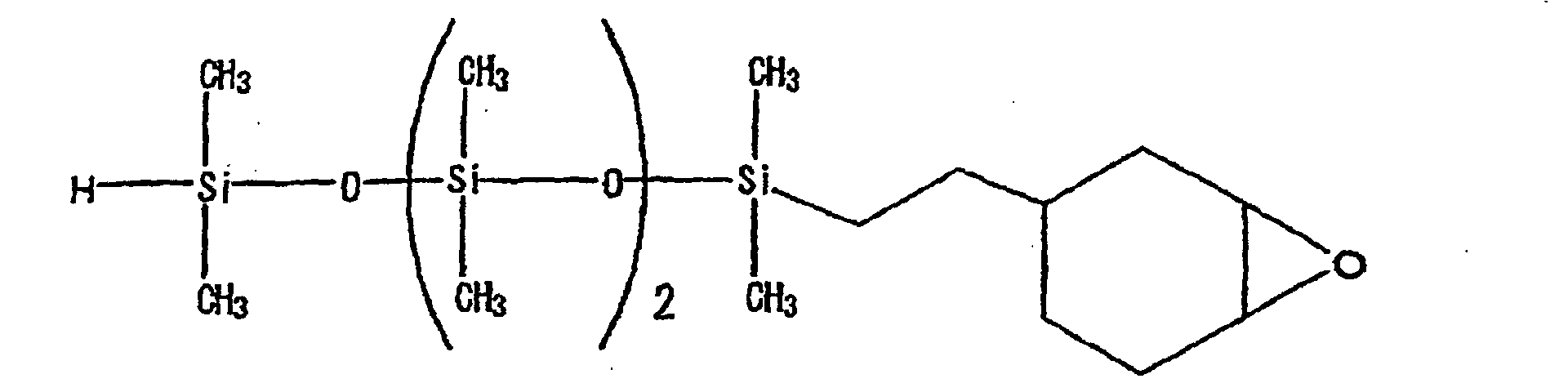
- a polysiloxane compound having hydrosilyl groups at its both ends is subjected to addition reaction with an epoxy compound having an unsaturated group by hydrosilylation, as described in Journal of Polymer Science Part A, Polymer Chemistry, Vol. 31, 2563-2572 (1993) or Vol. 31, 2729-2737 (1993).
- R 1 is more preferably methyl from the viewpoint of availability. Examples of such compounds are listed below while being listed in the foregoing literatures.
- the unsaturated group-terminated organic polymer can be synthesized by a generally known process without problems.
- a halogen-terminal polymer prepared by living cationic polymerization may be dehydrohalogenated with a metal alkoxide, or allyltrimethylsilane or the like may be allowed to react in the presence of titanium tetrachloride or the like to introduce an unsaturated group.
- a compound having an unsaturated bond may be reacted with a hydroxy terminal to form an ether bond, ester bond, urethane bond, carbonate bond, or the like, thereby introducing an unsaturated group.
- an unsaturated group-terminated polymer from a polymer having a hydroxy terminal
- the hydroxy terminal is converted into an oxymetal group, such as -ONa or -OK
- the terminal is reacted with, for example, an alkali metal, such as Na or K, a metal hydride, such as NaH, metal alkoxide, such as NaOCH 3 , or an alkali hydroxide, such as NaOH or KOH.
- an alkali metal such as Na or K
- a metal hydride such as NaH
- metal alkoxide such as NaOCH 3
- an alkali hydroxide such as NaOH or KOH.
- the above-mentioned hydrosilylation is preferably performed by a reaction between an unsaturated group-terminated organic polymer and a hydrosilyl compound in the presence of a Group VIII transition metal catalyst.
- An advantageous VIII transition metal catalyst is selected from metal complex catalysts containing Group VIII transition metal elements, such as platinum, rhodium, cobalt, palladium, and nickel.
- Group VIII transition metal elements such as platinum, rhodium, cobalt, palladium, and nickel.
- Examples of such a catalyst include H 2 PtCl 6 ⁇ 6H 2 O, platinum-vinylsiloxane complexes, platinum-olefin complexes, Pt metal, RhCl(PPh 3 ) 3 , RhCl 3 , Rh/Al 2 O 3 , RuCl 3 , IrCl 3 , FeCl 3 , PdCl 2 ⁇ 2H 2 O, and NiCl 2 .
- any one of H 2 PtCl 6 ⁇ 6H 2 O, platinum-vinylsiloxane complexes, and platinum-olefin complexes is used from the viewpoint of hydrosilylation reactivity.
- Platinum-vinylsiloxane complexes are particularly preferable because the induction period of reaction is short.
- AlCl 3 , TiCl 4 , and benzoyl peroxide and other radical initiators may be used as the hydrosilylation catalyst.
- the temperature of the hydrosilylation is selected from the viewpoint of reaction rate, provided such a side reaction as negatively affects the polymer does not easily occur.
- the temperature is generally in the range of 10 to 150°C, preferably 20 to 120°C, more preferably 40 to 100°C.
- a solvent may be used, such as benzene, toluene, xylene, tetrahydrofuran, methylene chloride, pentane, hexane, or heptane.
- a process may be applied, such as reactivation of catalyst with oxygen, as disclosed in Japanese Unexamined Patent Application Publication No. 8-283339, or addition of sulfur.
- the hydrosilylation may be performed in the presence of an antioxidant.
- the percentage of introduction of the epoxy- and/or oxetanyl-containing silicon group various methods can be applied. At present, the percentage can be accurately obtained by comparing the integral obtained from NMR spectra of the end into which the epoxy- and/or oxetanyl-containing silicon group is introduced to that of the end into which such groups are not introduced.
- An isobutylene polymer having an epoxy group and/or an oxetanyl group at its end of the present invention may be produced with use of an end-functional, preferably all-end-functional, isobutylene polymer prepared by polymerization called the inifer process (cationic polymerization using a specific compound called an inifer, serving as an initiator and a chain transfer agent).
- an end-functional, preferably all-end-functional, isobutylene polymer prepared by polymerization called the inifer process (cationic polymerization using a specific compound called an inifer, serving as an initiator and a chain transfer agent).
- an unsaturated group-terminated polyisobutylene is prepared by dehalogenating the end-functional polymer or introducing an unsaturated group into a polymer as disclosed in Japanese Unexamined Patent Application Publication No.
- the polyisobutylene is subjected to addition reaction with the epoxy- and/or oxetanyl-containing hydrosilane compound expressed by general formula (6), (7), or (8) by hydrosilylation in the presence of a platinum catalyst.
- hydrogenated polybutadiene polymer for example, the hydroxy terminal of a hydroxyl-terminated hydrogenated polybutadiene polymer is converted into an oxymetal group, such as -ONa or -OK, followed by a reaction with an unsaturated group-containing compound expressed by general formula (9) or (10).
- an unsaturated group-terminated hydrogenated polybutadiene polymer can be obtained.
- the product unsaturated group-terminated hydrogenated polybutadiene polymer has substantially the same molecular weight as the starting material hydroxyl-terminated hydrogenated polybutadiene polymer.
- the starting material is first reacted with a polyvalent organic halogen compound containing at least two halogens, such as methylene chloride, bis(chloromethyl)benzene, or bis(chloromethyl)ether, in its molecule before the reaction with the organic halogen compound expressed by general formula (9) or (10), so that the molecular weight can be increased.
- the product is reacted with the organic halogen compound expressed by general formula (9) or (10) to yield a higher molecular weight hydrogenated polybutadiene polymer having an olefin group at its end.
- the introduction of the epoxy- and/or oxetanyl-containing silicon group into the unsaturated group-terminated hydrogenated polybutadiene polymer is performed by an addition reaction with a hydrosilane compound in the presence of a platinum catalyst, as in the case of isobutylene polymer.
- Saturated hydrocarbon polymers containing substantially no unsaturated bond except aromatic rings provide coatings having superior weather resistance to coatings formed of known rubber polymers, such as unsaturated bond-containing organic polymers. Also, since such polymers are hydrocarbon polymers, they have low gas permeability and high water resistance, accordingly providing advantageously less gas-permeable coatings.
- a process for preparing the oxyalkylene polymer having an epoxy and/or oxetanyl-containing silicon group at its end is not particularly limited.
- the oxyalkylene polymer is, for example, obtained by hydrosilylation of the above-described unsaturated group-terminated oxyalkylene polymer with the monohydrosilane compound having an epoxy- and/or oxetanyl-containing silicon group expressed by general formula (6), (7), or (8).
- the following process can be applied.
- the hydroxy terminal of an oxyalkylene polymer is converted into a metaloxy group -OM (M represents Na, K, or the like), and subsequently reacted with the unsaturated group-containing compound expressed by general formula (9) or (10), as above.
- a hydrolyzable silyl-terminated organic polymer is subjected to a hydrolyzable group exchange reaction with a compound having at least one epoxy and/or oxetanyl group and one hydroxyl group in its molecule.
- the hydrolyzable silyl group of the hydrolyzable silyl-terminated organic polymer is not particularly limited, but is typically expressed by the groups expressed by general formula (11), for example: -[SiR 1 2 O] m Si(R 2 3-n )Z n (In the formula, R 1 , R 2 , m, and n are the same as above. Z represents a hydroxyl group or a hydrolyzable group, and if the number of Zs is two or more, they may be the same or different.)
- the hydrolyzable group expressed by Z is not particularly limited, and any known hydrolyzable group can be used.
- Exemplary hydrolyzable groups include the hydrogen atom, halogen atoms, and alkoxy, acyloxy, ketoximate, amino, amido, acid amido, aminoxy, mercapto, and alkenyloxy groups.
- alkoxy groups such as methoxy, ethoxy, propoxy, and isopropoxy, from the viewpoint of gentle hydrolyzability and ease of handling.
- hydrolyzable or hydroxyl groups are present in a reactive silicon group, they may be the same or different.
- the reactive silicon group is expressed by general formula (12) because of availability.
- -Si(R 2 3-n )Z n (In the formula, R 2 , Z and n are the same as above.)
- the process for producing the hydrolyzable silyl-terminated organic polymer is not particularly limited, and the unsaturated group-terminated organic polymer and a hydrosilane compound expressed by following general formula (13) may be subjected to the above-described addition reaction.
- H-[SiR 1 2 ] m Si(R 2 3-n )Z n (In the formula, R 1 , R 2 , Z, m, and n are the same as above.)
- the hydrosilane compound is preferably expressed by general formula (14): H-Si(R 2 3-n )Z n (In the formula, R 2 , Z, m and n are the same as above.)
- Examples of the compound expressed by general formulas (13) and (14) include silane halides, such as trichlorosilane, methyldichlorosilane, dimethylchlorosilane, phenyldichlorosilane, trimethylsiloxymethylchlorosilane, and 1,1,3,3-tetramethyl-1-bromodisiloxane; alkoxysilanes, such as trimethoxysilane, triethoxysilane, methyldiethoxysilane, methyldimethoxysilane, phenyldimethoxysilane, trimethylsiloxymethylmethoxysilane, and trimethylsiloxydiethoxysilane; acyloxysilanes, such as methyldiacetoxysilane, phenyldiacetoxysilane, triacetoxysilane, trimethylsiloxymethylacetoxysilane, and trimethylsiloxydiacetoxysilane; ketoximate
- the compound having at least one epoxy and/or oxetanyl group and one hydroxyl group in its molecule to be reacted with the above-described hydrolyzable silyl-terminated organic polymer is not particularly limited, but is preferably a secondary or primary compound having a hydroxyl group from the viewpoint of reactivity.
- Examples of the compound having at least one epoxy and/or oxetanyl group and one hydroxyl group in its molecule are expressed by general formula (15).
- W-OH (W represents a monovalent organic group having an epoxy group and/or an oxetanyl group.)
- Examples of such compounds include 2,3-epoxy-1-propanol, 3-ethyl-3-hydroxymethyloxetane, and glycerin diglycidyl ether, from the viewpoint of availability.
- 2,3-epoxy-1-propanol and 3-ethyl-3-hydroxymethyloxetane which are primary alcohols.
- the quantity of the compound is not particularly limited. However, in order to promote the exchange reaction, at least 1 mole equivalent of the compound is used relative to the hydrolyzable group of the hydrolyzable silyl-terminated organic polymer.
- the exchange reaction of the hydrolyzable group can be performed by a reaction between the above-described hydrolyzable silyl-terminated organic polymer and the above-described compound having at least one epoxy and/or oxetanyl group and one hydroxyl group in its molecule in the presence of a transesterification catalyst.
- transesterification catalyst examples include alkali metal alkoxides, Sn compounds, Ti compounds, Zn compounds, Ba compounds, and conventionally used highly alkaline compounds.
- Suitable transesterification catalysts include dimethyltin neodecanoate, dibutyltin diacetate, dibutyltin dilaurate, dioctyltin dilaurate, dibutyltin dioctate, zinc naphthenate, cobalt naphthenate, zinc octylate, tin octylate, cobalt octylate, diisooctyl mercaptoacetate, zirconium naphthenate, zirconium octylate, tetrabutyl titanate, tetraisopropyl titanate, barium hydroxide monohydrate, and other organic metal catalysts.
- the transesterification catalyst is preferably selected from among tetraisopropyl titanate
- the quantity of the transesterification catalyst to be used is not particularly limited, but is generally in the range of 50 to 100,000 ppm, and preferably 50 to 3,000 relative to the organic polymer.
- a solvent may be further used.
- the solvent include, but not particularly limited to, aliphatic hydrocarbons, such as pentane, cyclopentane, hexane, cyclohexane, heptane, octane, and nonane; aromatic hydrocarbons, such as benzene, toluene, and xylene; and fluorine-, chlorine-, or bromine-substituted aliphatic or aromatic hydrocarbons, such as perchloroethylene and bromobenzene. At least two nonpolar solvents may be used in combination.
- the quantity of the solvent is not limited, but 100 parts by weight of the polymer may contain 0 to 100 parts by weight of the solvent.
- the transesterification can be promoted by devolatilization of the product.
- devolatilization known processes in the art can be applied. Any devolatilization process may be adopted in the present invention.
- the devolatilization is performed by heating, heating and decompression, using a rotatory evaporator, a thin-film stripper, or a wiped film evaporator, or a combination of these methods.
- the devolatilization is performed by heating the product to a temperature of 50 to 150°C under a reduced pressure of about 20 to 100 Torr.
- the organic polymer having at its end an epoxy- and/or oxetanyl-containing silicon group of the present invention is a novel polymer prepared by introducing an epoxy- and/or oxetanyl-containing silicon group selectively into its end, and can be synthesized in a production process preventing degradation of its main chain and other adverse effects.
- the resulting polymer can be cured independently by a known reaction of the epoxy group and/or the oxetanyl group, and can be used for modification of conventionally used epoxy cured product. These cured products are expected to exhibit characteristics derived from the main chain of the polymer.
- the organic polymer having at its end an epoxy- and/or oxetanyl-containing silicon group of the present invention can be cured by, but not particularly limited to, reacting the epoxy group and/or the oxetanyl group with a common curing agent for epoxy- and/or oxetanyl-containing compounds.
- a common curing agent for epoxy- and/or oxetanyl-containing compounds examples include amine-based curing agents, acid-based curing agents, boron trifluoride-amine complex curing agents, and photo-cation curing agents. These agents can be used in common processes.
- a photo-curing reaction is preferably adopted because it allows short-time curing.
- a cationic photo-initiator may be used.
- Suitable cationic photo-initiators include onium salts, diaryliodonium sulfonates, triarylsulfonium sulfonates, diaryliodonium boronates, triarylsulfonium boronates, and photo-initiators disclosed in Japanese Unexamined Patent Application Publication Nos. 5-117311, 11-49791, or 2000-226396.
- the organic polymer having at its end an epoxy- and/or oxetanyl-containing silicon group of the present invention may contain another polymer, a filler, a reinforcer, other additives, and a catalyst, if necessary, so that the resulting polymer can be advantageously used as adhesive, paint, sealant compositions, waterproofing material, spraying material, molding material, and injection rubber.
- a 2 L pressure-resistant glass vessel was equipped with a three-way stopcock and purged with nitrogen.
- Into the vessel were added, with a syringe, 138 mL of ethylcyclohexane (dried by being allowed to stand at least overnight together with molecular sieve 3A), 1,012 mL of toluene (dried by being allowed to stand at least overnight together with molecular sieve 3A), and 8.14 g (35.2 mmol) of 1,4-bis( ⁇ -chloroisopropyl)benzene.
- a pressure-resistant glass liquefied sampling tube equipped with a needle valve, containing 254 mL (2.99 mol) of isobutylene monomer was joined to the three-way stopcock. Then, the polymerization vessel was cooled in a dry ice/ethanol bath of -70°C, and subsequently depressurized with a vacuum pump. After introducing the isobutylene monomer into the polymerization vessel from the liquefied gas sampling tube with the needle valve open, nitrogen was introduced into the vessel through one way of the three-way stopcock, and thus the pressure in the vessel was increased to normal pressure. Then, 0.387 g (4.15 mmol) of 2-methylpyridine was added.
- the yield of the product polymer was calculated, and the Mn and the Mw/Mn was determined by GPC.
- the 1 H-NMR analysis was performed in carbon tetrachloride/heavy acetone with Varian Gemini 300 (300 MHz for 1 H).
- the GPC was performed with a liquid delivery system Waters LC Module 1 and a column Shodex K-804.
- the molecular weight was defined as a relative molecular weight to a polystyrene standard.
- a 300 mL three-neck flask was charged with 100 g of the allyl-terminated polyisobutylene polymer and 2 g of toluene, and equipped with a stirrer having a vacuum seal, a three-way stopcock, and a ball cock.
- the reaction system was heated to 180°C and stirred, and the water and hydrochloric acid in the reaction system were removed with a vacuum pump for two hours.
- a starting material polypropylene glycol having a number average molecular weight of 2,000 was polymerized with propylene oxide in the presence of a zinc hexacyanocobaltate-glyme complex catalyst to yield a polypropylene glycol having a number average molecular weight of 10,000. Then, CH 3 ONa (solution in methanol) was added in an amount of 1.2 equivalents per terminal hydroxyl group of the resulting polypropylene glycol, and the terminal was converted into a metaloxy group while the methanol was removed under reduced pressure. Into the reaction system, 1.3 equivalents of 3-chloro-1-propene was added. After a reaction, byproduct salts were removed by demineralization to yield an allyl-terminated oxypropylene polymer.
- a 300 mL three-neck flask was charged with 100 g of the allyl-terminated oxypropylene polymer and 2 g of hexane, and equipped with a stirrer having a vacuum seal, a three-way stopcock, and a ball cock.
- the reaction system was heated to 90°C and stirred, and the water in the reaction system was removed with a vacuum pump for two hours by azeotropic dehydration.
- a 300 mL three-neck flask was charged with 100 g of the allyl-terminated polyisobutylene polymer and 2 g of toluene, and equipped with a stirrer having a vacuum seal, a three-way stopcock, and a ball cock.
- the reaction system was heated to 180°C and stirred, and the water and hydrochloric acid in the reaction system were removed with a vacuum pump for two hours.
- a 300 mL three-neck flask was charged with 100 g of the allyl-terminated polyisobutylene polymer and 2 g of toluene, and equipped with a stirrer having a vacuum seal, a three-way stopcock, and a ball cock.
- the reaction system was heated to 180°C and stirred, and the water and hydrochloric acid in the reaction system were removed with a vacuum pump for two hours,
- a 500 mL flask equipped with a Dean-Stark separator was charged with 100 g of the alkoxysilyl-terminated polyisobutylene polymer and 100 g of toluene. Subsequently, 14.4 g of 3-ethyl-3-hydroxymethyloxetane and 200 ⁇ L of tetraisopropoxy titanate were added. The mixture was heated to 70°C to react for 16 hours while being stirred. After the reaction, toluene and excess 3-ethyl-3-hydroxymethyloxetane were removed under reduced pressure.
- the present invention provides polymers prepared by selectively and quantitatively introducing epoxy- and/or oxetanyl-containing silicon groups into ends of various types of organic polymer, and a simple process for producing the polymers which prevents the introduction of the epoxy groups from oxidizing or negatively affecting the polymers and which does not require purification and other steps in association with generation of byproducts.
- the resulting organic polymer having an epoxy- and/or oxetanyl-containing silicon group at its end has superior reactivity, and its cured product and known cured products modified with the organic polymer can exhibit the characteristics of the main chain skeleton of the polymer.
- the organic polymer of the present invention can be advantageously used in various industrial applications.
Landscapes
- Chemical & Material Sciences (AREA)
- Health & Medical Sciences (AREA)
- Chemical Kinetics & Catalysis (AREA)
- Medicinal Chemistry (AREA)
- Polymers & Plastics (AREA)
- Organic Chemistry (AREA)
- General Chemical & Material Sciences (AREA)
- Polyethers (AREA)
- Other Resins Obtained By Reactions Not Involving Carbon-To-Carbon Unsaturated Bonds (AREA)
- Addition Polymer Or Copolymer, Post-Treatments, Or Chemical Modifications (AREA)
- Epoxy Resins (AREA)
Abstract
An organic polymer is provided which has an end structure
expressed by general formula (1):
 In the formula, R1 represents an alkyl group having a carbon
number in the range of 1 to 20, an aryl group having a
carbon number in the range of 6 to 20, an aralkyl group
having a carbon number in the range of 7 to 20, or a
triorganosiloxy group expressed by (R')3SiO-. R2 represents
an alkyl group having a carbon number in the range of 1 to
20, an aryl group having a carbon number in the range of 6
to 20, an aralkyl group having a carbon number in the range
of 7 to 20, an alkoxy group having a carbon number in the
range of 1 to 20, or a triorganosiloxy group expressed by
(R')3SiO-. X represents a monovalent organic group having
an epoxy group and/or an oxetanyl group. m represents an
integer in the range of 0 to 20. n represents an integer of
1, 2, or 3.
In the formula, R1 represents an alkyl group having a carbon
number in the range of 1 to 20, an aryl group having a
carbon number in the range of 6 to 20, an aralkyl group
having a carbon number in the range of 7 to 20, or a
triorganosiloxy group expressed by (R')3SiO-. R2 represents
an alkyl group having a carbon number in the range of 1 to
20, an aryl group having a carbon number in the range of 6
to 20, an aralkyl group having a carbon number in the range
of 7 to 20, an alkoxy group having a carbon number in the
range of 1 to 20, or a triorganosiloxy group expressed by
(R')3SiO-. X represents a monovalent organic group having
an epoxy group and/or an oxetanyl group. m represents an
integer in the range of 0 to 20. n represents an integer of
1, 2, or 3.
Description
The present invention relates to structurally novel
polymers having epoxy- and/or oxetanyl-containing silicon
groups at their ends, and to a process for producing the
same.
Since epoxy groups have superior reactivity, various
types of epoxy group-containing polymers, which are prepared
by introducing epoxy groups into various types of polymer,
have been developed. In the process of epoxidizing an
olefin with a peroxide or the like to introduce an epoxy
group, however, the resulting polymer is negatively affected
by oxidation, and it is disadvantageously difficult to
selectively introduce an epoxy group into the end of a
polymer and to make it polyfunctional. Moreover, in some
production processes, byproducts must be removed. In
particular, a process disclosed in Japanese Unexamined
Patent Application Publication No. 3-56505, which is a
technique of the foregoing processes, and the structure of
the resulting epoxy group-containing polymers may cause
oxidation degradation as mentioned above, or cause an
adverse effect to reactivity due to the steric hindrance
around the epoxy group of the resulting polymer. Thus,
epoxy group-containing polymers produced by such known
processes do not necessarily have satisfactory physical
properties for various applications.
It is broadly known that organic polymers each have
their own characteristics. In particular, saturated
hydrocarbon polymers whose main chain skeleton comprises a
polymer selected from the group consisting of
polyisobutylene, hydrogenated polyisoprene, hydrogenated
polybutadiene, and their copolymers have high weather
resistance, high heat resistance, low gas permeability,
superior flexibility, and other characteristics. On the
other hand, oxyalkylene polymers have superior compatibility
with other polymers, flexibility, and advantageous low-temperature
characteristics.
Various types of polymers have been developed which are
prepared by introducing hydrolyzable groups, unsaturated
groups, hydrosilyl groups, or the like into the ends of the
saturated hydrocarbon polymers or the oxyalkylene polymers.
However, these polymers disadvantageously require water and
heating for being cured, and are also disadvantageous in
storage stability.
Accordingly, polymers prepared by selectively
introducing epoxy groups into the ends of various types of
organic polymer have been highly demanded, and a simple
production process has also been desired which prevents the
polymers from deteriorating due to the introduction of the
epoxy groups and which does not require purification and
other steps in association with generation of byproducts.
The object of the present invention is to provide novel
organic polymers having an epoxy- and/or oxetanyl-containing
silicon group at their ends, prepared by selectively
introducing the epoxy- and/or oxetanyl-containing silicon
group into the end of various types of organic polymers, and
a process for producing the organic polymers.
The inventors of the present invention have conducted
intensive research to overcome the above-described
disadvantages. As a result, they have found that a polymer
having a specific epoxy- and/or oxetanyl-containing silicon
group exhibits superior physical properties, and have
accomplished the present invention.
A first invention relates to an organic polymer having
at its end the structure expressed by general formula (1):
 (In the formula, R1 represents an alkyl group having a
carbon number in the range of 1 to 20, an aryl group having
a carbon number in the range of 6 to 20, an aralkyl group
having a carbon number in the range of 7 to 20, or a
triorganosiloxy group expressed by (R')3SiO-. R2 represents
an alkyl group having a carbon number in the range of 1 to
20, an aryl group having a carbon number in the range of 6
to 20, an aralkyl group having a carbon number in the range
of 7 to 20, an alkoxy group having a carbon number in the
range of 1 to 20, or a triorganosiloxy group expressed by
(R')3SiO-. If the number of R1s or R2s is at least two, they
may be the same or different. R' represents a monovalent
hydrocarbon group having a carbon number in the range of 1
to 20, the three R's may be the same or different. X
represents a monovalent organic group having an epoxy group
and/or an oxetanyl group. If the number of X is at least
two, they may be the same or different. m represents an
integer in the range of 0 to 20, and n represents an integer
of 1, 2, or 3.)
(In the formula, R1 represents an alkyl group having a
carbon number in the range of 1 to 20, an aryl group having
a carbon number in the range of 6 to 20, an aralkyl group
having a carbon number in the range of 7 to 20, or a
triorganosiloxy group expressed by (R')3SiO-. R2 represents
an alkyl group having a carbon number in the range of 1 to
20, an aryl group having a carbon number in the range of 6
to 20, an aralkyl group having a carbon number in the range
of 7 to 20, an alkoxy group having a carbon number in the
range of 1 to 20, or a triorganosiloxy group expressed by
(R')3SiO-. If the number of R1s or R2s is at least two, they
may be the same or different. R' represents a monovalent
hydrocarbon group having a carbon number in the range of 1
to 20, the three R's may be the same or different. X
represents a monovalent organic group having an epoxy group
and/or an oxetanyl group. If the number of X is at least
two, they may be the same or different. m represents an
integer in the range of 0 to 20, and n represents an integer
of 1, 2, or 3.)
A second invention relates to an organic polymer having
at its end the structure expressed by general formula (2):
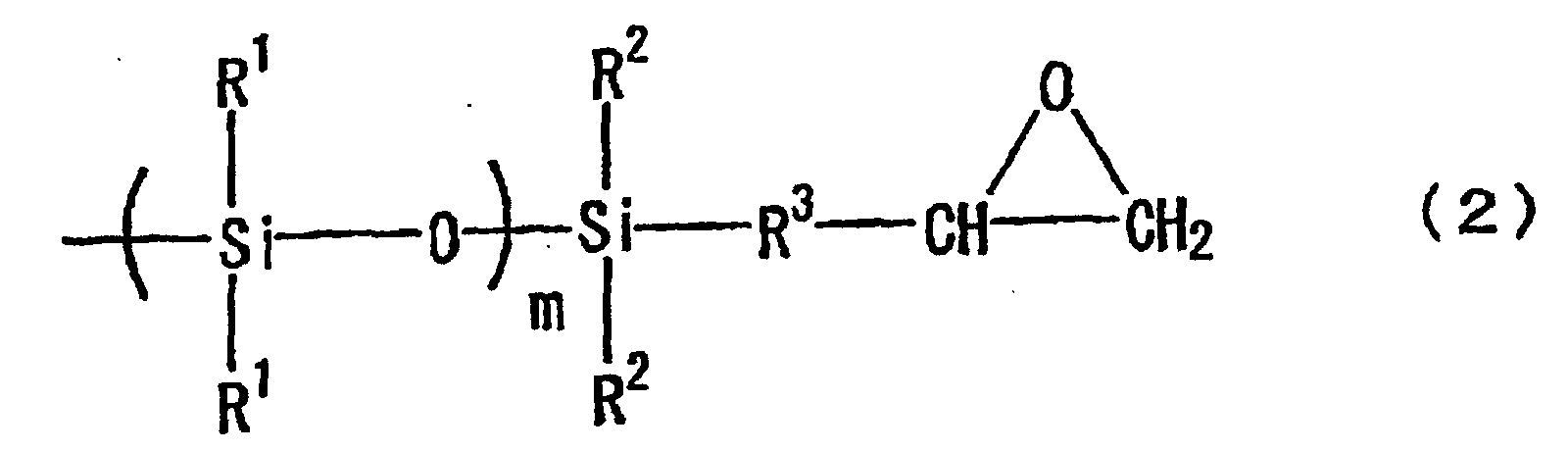 (In the formula, R1, R2, and m are the same as above. R3
represents a divalent organic group having a carbon number
in the range of 1 to 20 and containing at least one
constituent atom selected from the group consisting of
hydrogen, oxygen, and nitrogen.)
(In the formula, R1, R2, and m are the same as above. R3
represents a divalent organic group having a carbon number
in the range of 1 to 20 and containing at least one
constituent atom selected from the group consisting of
hydrogen, oxygen, and nitrogen.)
A third invention relates to an organic polymer having
at its end the structure expressed by general formula (3):
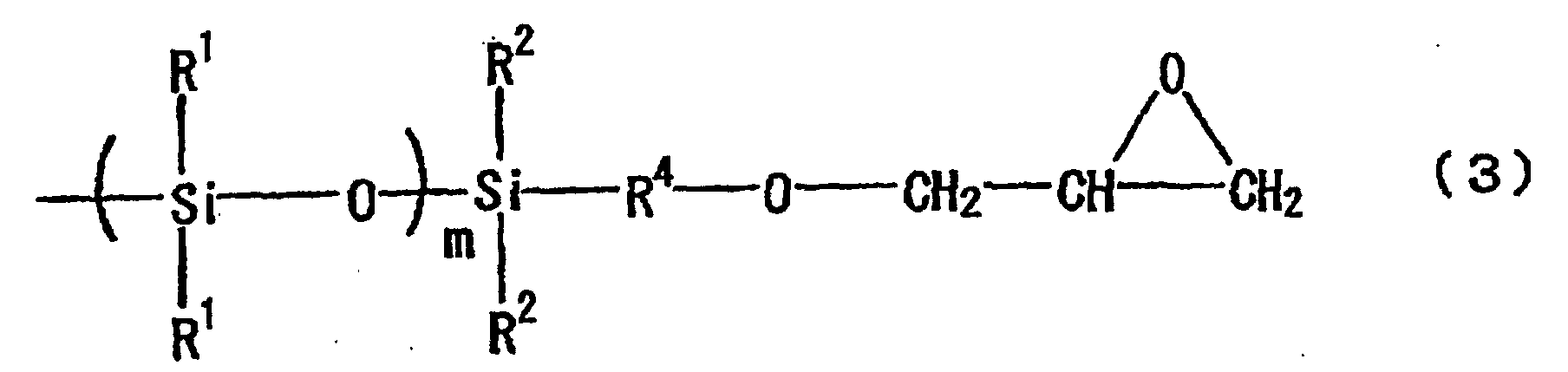 (In the formula, R1, R2, and m are the same as above. R4
represents a divalent organic group having a carbon number
in the range of 1 to 20 and containing at least one
constituent atom selected from the group consisting of
hydrogen, oxygen, and nitrogen.)
(In the formula, R1, R2, and m are the same as above. R4
represents a divalent organic group having a carbon number
in the range of 1 to 20 and containing at least one
constituent atom selected from the group consisting of
hydrogen, oxygen, and nitrogen.)
A fourth invention relates to an organic polymer having
at its end the structure expressed by general formula (4):
 (In the formula, R1, R2, and m are the same as above. R5
represents a divalent organic group having a carbon number
in the range of 1 to 20 and containing at least one
constituent atom selected from the group consisting of
hydrogen, oxygen, and nitrogen.)
(In the formula, R1, R2, and m are the same as above. R5
represents a divalent organic group having a carbon number
in the range of 1 to 20 and containing at least one
constituent atom selected from the group consisting of
hydrogen, oxygen, and nitrogen.)
In the organic polymer of the first invention,
preferably, at least one X has the structure expressed by
the following formula:
In another preferred form of the organic polymer of the
first invention, at least one X has the structure expressed
by the following formula:
In any one of the foregoing inventions, preferably, the
main chain skeleton of the organic polymer comprises a
saturated hydrocarbon polymer selected from the group
consisting of polyisobutylene, hydrogenated polyisoprene,
hydrogenated polybutadiene, and their copolymers.
In another preferred form of any one of the foregoing
inventions, the main chain skeleton of the organic polymer
comprises an oxyalkylene polymer.
In further preferred form of any one of the foregoing
inventions, the organic polymer is produced by an addition
reaction of an organic polymer having an unsaturated group
at its end with a hydrosilane compound having an epoxy group
and/or an oxetanyl group. Alternatively, in any one of the
foregoing inventions, the organic polymer may be produced by
an exchange reaction of a hydrolyzable group between an
organic polymer having a hydrolyzable silyl group at its end
and a compound having at least one epoxy and/or oxetanyl
group and one hydroxyl group in its molecule.
A fifth invention relates to a process for producing
the organic polymer of any one of the foregoing inventions.
The process performs an addition reaction of an organic
polymer having an unsaturated group at its end with a
hydrosilane compound having an epoxy group and/or an
oxetanyl group. Another invention relates to a process for
producing the organic polymer of any one of the foregoing
inventions. The process performs an exchange reaction of a
hydrolyzable group between an organic polymer having a
hydrolyzable silyl group at its end and a compound having at
least one epoxy and/or oxetanyl group and one hydroxyl group
in its molecule.
The present invention will now be further described in
detail.
An organic polymer having at its end an epoxy- and/or
oxetanyl-containing silicon group of the present invention
can exhibit a superior curing property because of the
presence of the epoxy- and/or oxetanyl-containing silicon
group at the end of the molecular chain. Also, the polymer
exhibits its own characteristics depending on the type of
organic polymer main chain constituting the skeleton of the
polymer. The main chain skeleton of the organic polymer is
not particularly limited. For example, commonly known
organic polymers are used, such as acrylic polymers,
polyester polymers, saturated hydrocarbon polymers, and
oxyalkylene polymers.
The end structure of the organic polymer of the present
invention is expressed by general formula (1):

In the formula, X represents a monovalent organic group
having an epoxy group and/or an oxetanyl group. X is not
particularly limited as long as it is an organic group
having an epoxy group and/or an oxetanyl group, and it may
have a nitrogen atom, a halogen atom, or other atoms in
addition to hydrogen, carbon, and oxygen atoms. X may have
an organic group having an ether structure in addition to
the epoxy group and/or the oxetanyl group. Preferably, X is
an organic group having a carbon number in the range of 1 to
30, more preferably 1 to 20, and still more preferably 1 to
10. If the number of Xs is at least two, they may be the
same or different.
R1 represents an alkyl group having a carbon number in
the range of 1 to 20, an aryl group having a carbon number
in the range of 6 to 20, an aralkyl group having a carbon
number in the range of 7 to 20, or a triorganosiloxy group
expressed by (R')3SiO-. R2 represents an alkyl group having
a carbon number in the range of 1 to 20, an aryl group
having a carbon number in the range of 6 to 20, an aralkyl
group having a carbon number in the range of 7 to 20, an
alkoxy group having a carbon number in the range of 1 to 20,
or a triorganosiloxy group expressed by (R')3SiO-. Among
these, preferred are alkyl groups having a carbon number in
the range of 1 to 20 or the phenyl group, and more preferred
are alkyl groups having a carbon number in the range of 1 to
6 and the phenyl group, from the viewpoint of reactivity and
availability. m represents an integer in the range of 0 to
20, and n represents an integer of 1, 2, or 3. The epoxy
group and/or the oxetanyl group may be a common epoxy and/or
oxetanyl group, or a cyclic epoxy and/or oxetanyl group.
Preferably, the end structure of the organic polymer is
expressed by general formula (2) from the viewpoint of
reactivity of the epoxy group. More preferably, the
structure is expressed by general formula (3) or (4) from
the viewpoint of ease of production, availability of raw
material, and reactivity.

In this formula, R1, R2, and m are the same as above,
and R3 represents a divalent organic group having a carbon
number in the range of 1 to 20, preferably 1 to 10, and
containing at least one constituent atom selected from the
group consisting of hydrogen, oxygen, and nitrogen.
Specifically, R3 may be a hydrocarbon group or an organic
group having an ether structure.

In this formula, R1, R2, and m are the same as above,
and R4 represents a divalent organic group having a carbon
number in the range of 1 to 20, preferably 1 to 10, and
containing at least one constituent atom selected from the
group consisting of hydrogen, oxygen, and nitrogen.
Specifically, R4 may be a hydrocarbon group or an organic
group having an ether structure.

In this formula, R1, R2, and m are the same as above,
and R5 represents a divalent organic group having a carbon
number in the range of 1 to 20, preferably 1 to 10, and
containing at least one constituent atom selected from the
group consisting of hydrogen, oxygen, and nitrogen.
Specifically, R5 may be a hydrocarbon group or an organic
group having an ether structure.
The main chain skeleton of the organic polymer of the
present invention is not limited to the above-described
structure. If the main chain skeleton comprises a saturated
hydrocarbon polymer selected from the group consisting of
polyisobutylene, hydrogenated polyisoprene, hydrogenated
polybutadiene, and their copolymers, or an oxyalkylene
polymer, the cured product prepared from such an organic
polymer exhibits rubber elasticity. The combined use of
such an organic polymer and an epoxy resin, such as
bisphenol A, gives weather resistance and flexibility to the
polymer. In particular, saturated hydrocarbon polymers are
also given a low gas permeability.
The saturated hydrocarbon polymers substantially
contain no unsaturated carbon-carbon bond except aromatic
rings, and whose examples include polyethylene,
polypropylene, polyisobutylene, hydrogenated polybutadiene,
and hydrogenated polyisoprene.
The polymer constituting the saturated hydrocarbon
polymer main chain skeleton may be prepared by: (1)
homopolymerizing or copolymerizing a component or components
essentially consisting of an olefinic compound having a
carbon number in the range of 1 to 6, such as ethylene,
propylene, 1-butene, and isobutylene; or (2)
homopolymerizing or copolymerizing a diene or dienes, such
as butadiene and isoprene, or copolymerizing a diene and the
above-mentioned olefinic compound and subsequently
hydrogenating the copolymer. In particular, isobutylene
polymers and hydrogenated polybutadiene polymers are
suitable because they facilitate the introduction of
functional groups into their ends, the molecular weight is
easy to control, and the number of terminal functional
groups can be increased. Among these, particularly
preferred are isobutylene polymers. This is because
isobutylene polymers are easy to handle due to their liquid
feature or fluidity, and contain no unsaturated carbon-carbon
bond except aromatic rings in the main chain and,
accordingly, do not require to be hydrogenated. Furthermore,
they have excellent weather resistance.
The isobutylene polymer may comprise monomer units
consisting of isobutylene, or may further contain a monomer
unit copolymerizable with isobutylene in an amount of,
preferably, 50% by weight or less, more preferably 30% by
weight or less, and particularly preferably 10% by weight or
less.
Such monomer units include olefins having a carbon
number in the range of 4 to 12, vinyl ethers, aromatic vinyl
compounds, vinyl silanes, and allyl silanes. Examples of
the copolymerization components include 1-butene, 2-butene,
2-methyl-1-butene, 3-methyl-1-butene, pentene, 4-methyl-1-pentene,
hexene, vinylcyclohexene, methyl vinyl ether, ethyl
vinyl ether, isobutyl vinyl ether, styrene, α-methylstyrene,
dimethylstyrene, monochlorostyrene, dichlorostyrene, β-pinene,
indene, vinyltrichlorosilane,
vinylmethyldichlorosilane, vinyldimethylchlorosilane,
vinyldimethylmethoxysilane, vinyltrimethylsilane,
divinyldichlorosilane, divinyldimethoxysilane,
divinyldimethylsilane, 1,3-divinyl-1,1,3,3-tetramethyldisiloxane,
trivinylmethylsilane,
tetravinylsilane, allyltrichlorosilane,
allylmethyldichlorosilane, allyldimethylchlorosilane,
allyldimethylmethoxysilane, allyltrimethylsilane,
diallyldichlorosilane, diallyldimethoxysilane,
diallyldimethylsilane, γ-methacryloyloxypropyltrimethoxysilane,
and γ-methacryloyloxypropylmethyldimethoxysilane.
The hydrogenated polybutadiene polymer and other
saturated hydrocarbon polymers may also contain other
monomer units in addition to the main constituent monomer
unit, as in the foregoing isobutylene polymer.
The saturated hydrocarbon polymer, particularly
isobutylene polymer or hydrogenated polybutadiene polymer,
preferably has a number average molecular weight of about
500 to 50,000. In particular, a hydrocarbon polymer having
a number average molecular weight of about 1,000 to 20,000
and exhibiting a liquid feature or fluidity is more
preferable from the viewpoint of ease of handling.
The main chain structure of the oxyalkylene polymer
comprises repeating units expressed by -R6-O-, wherein R6
represents a divalent organic group having a carbon number
in the range of 1 to 20. The oxyalkylene polymer may be a
homopolymer, which comprises a single type of repeating unit,
or a copolymer, which comprises at least two types of
repeating unit. The main chain may further have a branch
structure.
Examples of R6 include -CH2CH2-, -CH(CH3)CH2-,
-CH(C2H5)CH2-, -C(CH3)2CH2-, and -CH2CH2CH2CH2-. Among these,
preferred is -CH(CH3)CH2-.
The main chain skeleton of the oxyalkylene polymer is
prepared by, for example, ring-opening polymerization of
monoepoxide with a starting material in the presence of a
catalyst.
Exemplary starting material include dihydric alcohols,
such as ethylene glycol, propylene glycol, butanediol,
hexamethylene glycol, methallyl alcohol, bisphenol A,
hydrogenated bisphenol A, neopentyl glycol,
polybutadienediol, diethylene glycol, triethylene glycol,
polyethylene glycol, polypropylene glycol,
polypropylenetriol, polypropylenetetraol, dipropylene glycol,
glycerin, trimethylolmethane, trimethylolpropane, and
pentaerythritol; polyhydric alcohols; and oligomers having a
hydroxyl group.
Examples of the monoepoxide include alkylene oxides,
such as ethylene oxide, propylene oxide, α-butylene oxide,
β-butylene oxide, hexene oxide, cyclohexene oxide, styrene
oxide, and α-methylstyrene oxide; alkyl glycidyl ethers,
such as methyl glycidyl ether, ethyl glycidyl ether,
isopropyl glycidyl ether, and butyl glycidyl ether; allyl
glycidyl ethers; and aryl glycidyl ethers.
The polyoxyalkylene polymer is synthesized by, for
example, a polymerization in the presence of an alkaline
catalyst, such as KOH, a polymerization in the presence of a
transition metal compound-porphyrin complex, such as a
complex obtained from a reaction between an organic
aluminium compound and a porphyrin, as disclosed in Japanese
Unexamined Patent Application Publication No. 61-215623, a
polymerization in the presence of a compound metal cyanide
complex catalyst as disclosed in, for example, Japanese
Examined Patent Application Publication Nos. 46-27250 and
59-15336, a polymerization in the presence of a cesium
catalyst, and a polymerization in the presence of a
phosphazene catalyst. However, the synthesis of the
polyoxyalkylene polymer is not particularly limited to these
polymerizations. Among these, preferred is the
polymerization in the presence of a compound metal cyanide
complex catalyst, from the viewpoint of ease of preparation
of a less colored polymer having a high molecular weight.
Alternatively, the main chain skeleton of the
polyoxyalkylene polymer may be prepared by chain elongation
or the like of a hydroxyl-terminated oxyalkylene polymer
with a difunctional or higher functional halogenated alkyl,
such as CH2Cl2 or CH2Br2, in the presence of a basic compound,
such as KOH, NaOH, KOCH3, or NaOCH3.
The main chain skeleton of the oxyalkylene polymer may
contain other components, such as urethane bond components,
as long as such components do not negatively affect the
characteristics of the oxyalkylene polymer.
The process for introducing the epoxy- and/or oxetanyl-containing
silicon group having the structure expressed by
any one of general formulas (1) to (4) into an end of an
organic polymer is not particularly limited. However,
preferred introduction is performed by addition of an epoxy-
and/or oxetanyl-containing hydrosilane compound to an
unsaturated group, or hydrolyzable group exchange reaction
between an organic polymer having a hydrolyzable silyl group
at its end and a compound having at least one epoxy group
and/or oxetanyl group and one hydroxyl group in its molecule
because these processes do not cause degradation resulting
from oxidation in the introduction nor require purification
by, for example, deoxidation after the introduction.
Preferred compounds having at least one epoxy group and/or
oxetanyl group and one hydroxyl group in its molecule
include 2,3-epoxy-1-propanol, 3-ethyl-3-(hydroxymethyl)oxetane,
and glycerin diglycidyl ether
because these compounds are easily available.
The introduction by addition reaction of the
hydrosilane compound can be conducted by either of the
processes of: synthesizing an unsaturated group-terminated
organic polymer and subsequently adding a monohydrosilane
compound having an epoxy group and/or an oxetanyl group;
adding a hydrosilane compound having at least two hydrosilyl
groups in its molecule into an end of an organic polymer and
subsequently adding an epoxy and/or oxetane compound having
an unsaturated group, such as an allyl group, into an
unreacted hydrosilyl group. Preferably, the former process
is adopted from the viewpoint of ease of production,
selectivity in reaction, and easy control of introduction
quantity of the epoxy group and/or the oxetanyl group.
In order to obtain a polymer having a specific end
structure in the present invention, a hydrosilane compound
expressed by general formula (5) may be used.
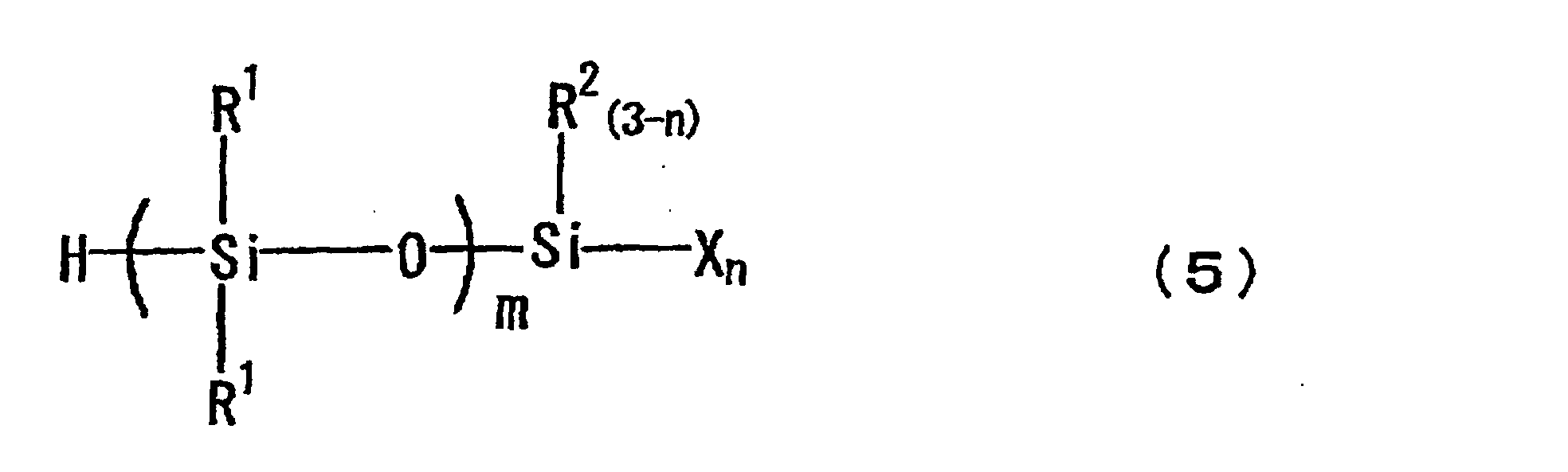
In the formula, R1, R2, X, m, and n are the same as in
general formula (1).
In particular, it is preferable to use a hydrosilane
compound expressed by general formula (6) from the viewpoint
of high reactivity of the terminal epoxy group, and more
preferable to use a hydrosilane compound expressed by
general formula (7) or (8) from the viewpoint of ease of
production, availability, and high reactivity.
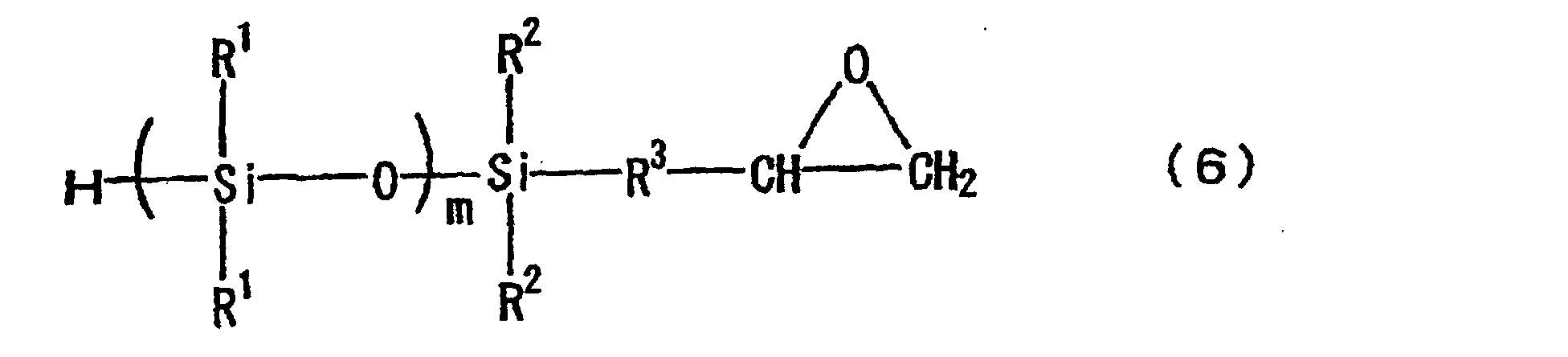
In this formula, R1, R2, R3, and m are the same as above.
 In this formula, R1, R2, R4, and m are the same as above.
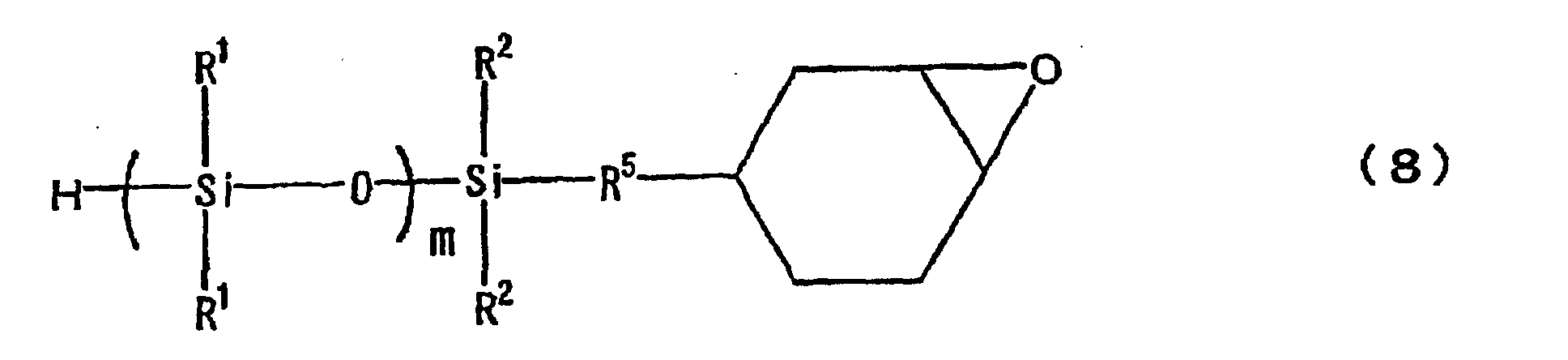
In this formula, R1, R2, R5, and m are the same as above.
The hydrosilane compound can be synthesized by a known
synthetic process. For synthesis, for example, a
polysiloxane compound having hydrosilyl groups at its both
ends is subjected to addition reaction with an epoxy
compound having an unsaturated group by hydrosilylation, as
described in Journal of Polymer Science Part A, Polymer
Chemistry, Vol. 31, 2563-2572 (1993) or Vol. 31, 2729-2737
(1993).
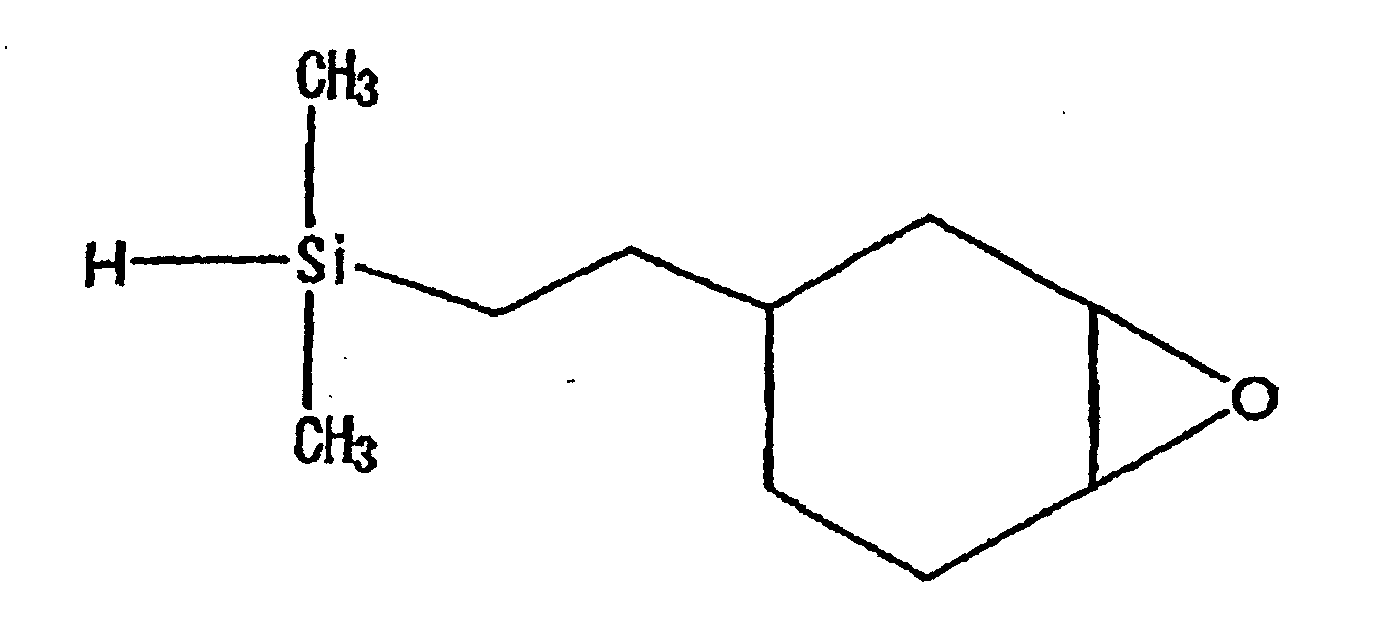
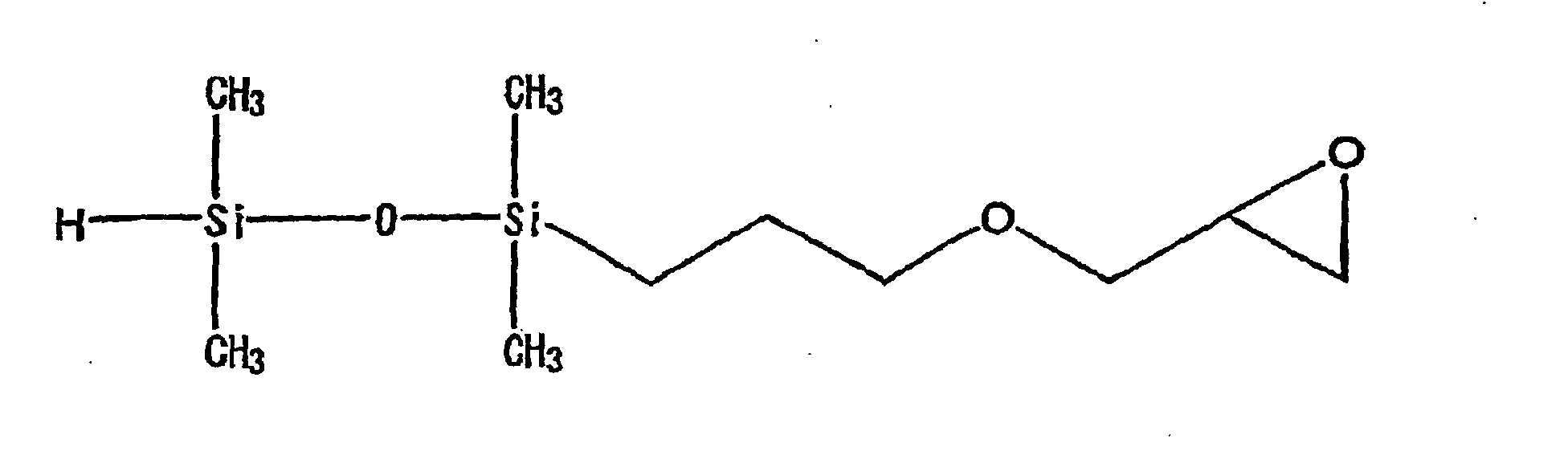
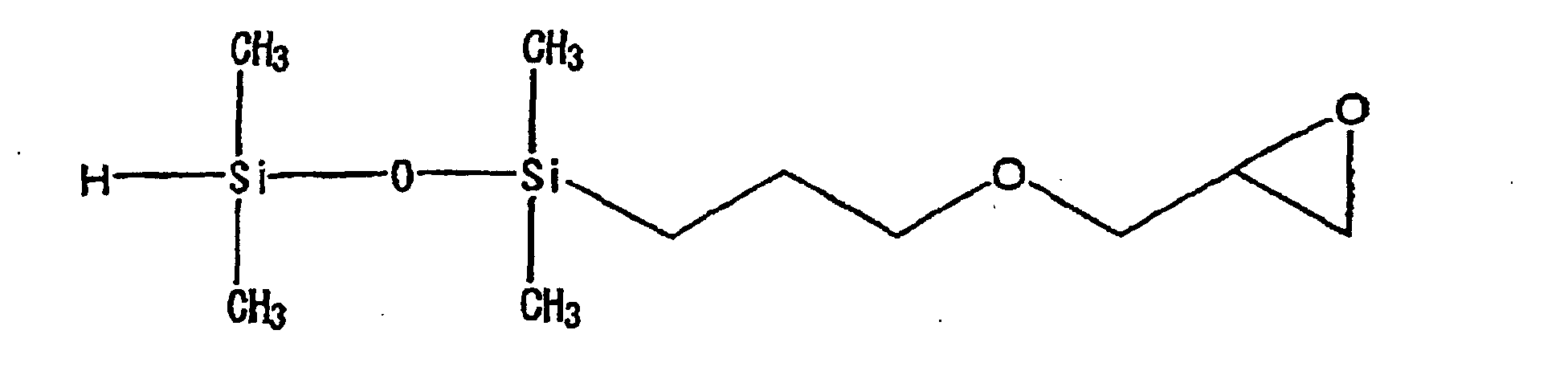
In the hydrosilane compound, R1 is more preferably
methyl from the viewpoint of availability. Examples of such
compounds are listed below while being listed in the
foregoing literatures.


The unsaturated group-terminated organic polymer can be
synthesized by a generally known process without problems.
For example, a halogen-terminal polymer prepared by living
cationic polymerization may be dehydrohalogenated with a
metal alkoxide, or allyltrimethylsilane or the like may be
allowed to react in the presence of titanium tetrachloride
or the like to introduce an unsaturated group. Also, a
compound having an unsaturated bond may be reacted with a
hydroxy terminal to form an ether bond, ester bond, urethane
bond, carbonate bond, or the like, thereby introducing an
unsaturated group.
For example, in the formation of an unsaturated group-terminated
polymer from a polymer having a hydroxy terminal,
the hydroxy terminal is converted into an oxymetal group,
such as -ONa or -OK, followed by reaction with an
unsaturated group-containing organic compound expressed by
general formula (9):
CH2=CH-R7-Y
or
general formula (10):CH2=C(R8)-R7-Y
(in the formulas, R7 represents a divalent organic group
having a carbon number in the range of 1 to 20, R8
represents a hydrocarbon group having a carbon number of 10
or less, and Y represents a halogen atom).
general formula (10):
To convert the hydroxy terminal into an oxymetal group,
the terminal is reacted with, for example, an alkali metal,
such as Na or K, a metal hydride, such as NaH, metal
alkoxide, such as NaOCH3, or an alkali hydroxide, such as
NaOH or KOH.
Examples of the unsaturated group-containing compound
expressed by general formula (9) or (10) include:
CH2=CH-CH2-Cl, CH2=CH-CH2-Br, CH2=CH-C2H4-Cl, CH2=CH-C2H4-Br,
CH2=CH-C3H6-Cl, CH2=CH-C3H6-Br, CH2=C(CH3)-CH2-Cl,
CH2=C(CH3)-CH2-Br, CH2=C(CH2CH3)-CH2-Cl, CH2=C(CH2CH3)-CH2-Br,
CH2=C(CH2CH(CH3)2)-CH2-Cl, and CH2=C(CH2CH(CH3)2)-CH2-Br.
Among these, preferred are CH2=CH-CH2-Cl and CH2=C(CH3)-CH2-Cl,
particularly from the viewpoint of reactivity.
The unsaturated group may be introduced by another
process using an isocyanate compound, a carboxylic acid, an
epoxy compound, or the like having a CH2=CH-CH2- group, a
CH2=C(CH3)-CH2- group, or the like.
The above-mentioned hydrosilylation is preferably
performed by a reaction between an unsaturated group-terminated
organic polymer and a hydrosilyl compound in the
presence of a Group VIII transition metal catalyst.
An advantageous VIII transition metal catalyst is
selected from metal complex catalysts containing Group VIII
transition metal elements, such as platinum, rhodium, cobalt,
palladium, and nickel. Examples of such a catalyst include
H2PtCl6·6H2O, platinum-vinylsiloxane complexes, platinum-olefin
complexes, Pt metal, RhCl(PPh3)3, RhCl3, Rh/Al2O3,
RuCl3, IrCl3, FeCl3, PdCl2·2H2O, and NiCl2. Preferably, any
one of H2PtCl6·6H2O, platinum-vinylsiloxane complexes, and
platinum-olefin complexes is used from the viewpoint of
hydrosilylation reactivity. Platinum-vinylsiloxane
complexes are particularly preferable because the induction
period of reaction is short.
In addition to these compounds, AlCl3, TiCl4, and
benzoyl peroxide and other radical initiators may be used as
the hydrosilylation catalyst.
The temperature of the hydrosilylation is selected from
the viewpoint of reaction rate, provided such a side
reaction as negatively affects the polymer does not easily
occur. The temperature is generally in the range of 10 to
150°C, preferably 20 to 120°C, more preferably 40 to 100°C.
For adjusting the reaction temperature or the viscosity of
the reaction system, or for the reason of other necessity, a
solvent may be used, such as benzene, toluene, xylene,
tetrahydrofuran, methylene chloride, pentane, hexane, or
heptane.
In order to accelerate the hydrosilylation, a process
may be applied, such as reactivation of catalyst with oxygen,
as disclosed in Japanese Unexamined Patent Application
Publication No. 8-283339, or addition of sulfur.
In order to prevent oxidation of the organic polymer,
the reaction solvent, the plasticizer in the system, and the
like, the hydrosilylation may be performed in the presence
of an antioxidant.
For the measurement of the percentage of introduction
of the epoxy- and/or oxetanyl-containing silicon group,
various methods can be applied. At present, the percentage
can be accurately obtained by comparing the integral
obtained from NMR spectra of the end into which the epoxy-
and/or oxetanyl-containing silicon group is introduced to
that of the end into which such groups are not introduced.
The process for producing a saturated hydrocarbon
polymer having an epoxy- and/or oxetanyl-containing silicon
group at its end will now be described in detail.
An isobutylene polymer having an epoxy group and/or an
oxetanyl group at its end of the present invention may be
produced with use of an end-functional, preferably all-end-functional,
isobutylene polymer prepared by polymerization
called the inifer process (cationic polymerization using a
specific compound called an inifer, serving as an initiator
and a chain transfer agent). For the introduction of an
epoxy- and/or oxetanyl-containing silicon group into the
polymer, for example, an unsaturated group-terminated
polyisobutylene is prepared by dehalogenating the end-functional
polymer or introducing an unsaturated group into
a polymer as disclosed in Japanese Unexamined Patent
Application Publication No. 63-105005, and then the
polyisobutylene is subjected to addition reaction with the
epoxy- and/or oxetanyl-containing hydrosilane compound
expressed by general formula (6), (7), or (8) by
hydrosilylation in the presence of a platinum catalyst.
As for hydrogenated polybutadiene polymer, for example,
the hydroxy terminal of a hydroxyl-terminated hydrogenated
polybutadiene polymer is converted into an oxymetal group,
such as -ONa or -OK, followed by a reaction with an
unsaturated group-containing compound expressed by general
formula (9) or (10). Thus, an unsaturated group-terminated
hydrogenated polybutadiene polymer can be obtained.
The product unsaturated group-terminated hydrogenated
polybutadiene polymer has substantially the same molecular
weight as the starting material hydroxyl-terminated
hydrogenated polybutadiene polymer. For a polymer having a
higher molecular weight, the starting material is first
reacted with a polyvalent organic halogen compound
containing at least two halogens, such as methylene chloride,
bis(chloromethyl)benzene, or bis(chloromethyl)ether, in its
molecule before the reaction with the organic halogen
compound expressed by general formula (9) or (10), so that
the molecular weight can be increased. Then, the product is
reacted with the organic halogen compound expressed by
general formula (9) or (10) to yield a higher molecular
weight hydrogenated polybutadiene polymer having an olefin
group at its end.
The introduction of the epoxy- and/or oxetanyl-containing
silicon group into the unsaturated group-terminated
hydrogenated polybutadiene polymer is performed
by an addition reaction with a hydrosilane compound in the
presence of a platinum catalyst, as in the case of
isobutylene polymer.
Saturated hydrocarbon polymers containing substantially
no unsaturated bond except aromatic rings provide coatings
having superior weather resistance to coatings formed of
known rubber polymers, such as unsaturated bond-containing
organic polymers. Also, since such polymers are hydrocarbon
polymers, they have low gas permeability and high water
resistance, accordingly providing advantageously less gas-permeable
coatings.
A process for preparing the oxyalkylene polymer having
an epoxy and/or oxetanyl-containing silicon group at its end
is not particularly limited. The oxyalkylene polymer is,
for example, obtained by hydrosilylation of the above-described
unsaturated group-terminated oxyalkylene polymer
with the monohydrosilane compound having an epoxy- and/or
oxetanyl-containing silicon group expressed by general
formula (6), (7), or (8).
For the production of the unsaturated group-terminated
oxyalkylene polymer, the following process can be applied.
In, for example, the case of introducing an unsaturated
group with an ether bond, the hydroxy terminal of an
oxyalkylene polymer is converted into a metaloxy group -OM
(M represents Na, K, or the like), and subsequently reacted
with the unsaturated group-containing compound expressed by
general formula (9) or (10), as above.
For the introduction of an epoxy group and/or an
oxetanyl group into the polymer end by hydrolyzable group
exchange reaction, a hydrolyzable silyl-terminated organic
polymer is subjected to a hydrolyzable group exchange
reaction with a compound having at least one epoxy and/or
oxetanyl group and one hydroxyl group in its molecule.
The hydrolyzable silyl group of the hydrolyzable silyl-terminated
organic polymer is not particularly limited, but
is typically expressed by the groups expressed by general
formula (11), for example:
-[SiR1 2O]mSi(R2 3-n)Zn
(In the formula, R1, R2, m, and n are the same as above. Z
represents a hydroxyl group or a hydrolyzable group, and if
the number of Zs is two or more, they may be the same or
different.)
The hydrolyzable group expressed by Z is not
particularly limited, and any known hydrolyzable group can
be used. Exemplary hydrolyzable groups include the hydrogen
atom, halogen atoms, and alkoxy, acyloxy, ketoximate, amino,
amido, acid amido, aminoxy, mercapto, and alkenyloxy groups.
Among these, preferred are alkoxy groups, such as methoxy,
ethoxy, propoxy, and isopropoxy, from the viewpoint of
gentle hydrolyzability and ease of handling.
If at least two of the hydrolyzable or hydroxyl groups
are present in a reactive silicon group, they may be the
same or different.
Preferably, the reactive silicon group is expressed by
general formula (12) because of availability.
-Si(R2 3-n)Zn
(In the formula, R2, Z and n are the same as above.)
The process for producing the hydrolyzable silyl-terminated
organic polymer is not particularly limited, and
the unsaturated group-terminated organic polymer and a
hydrosilane compound expressed by following general formula
(13) may be subjected to the above-described addition
reaction.
H-[SiR1 2]mSi(R2 3-n)Zn
(In the formula, R1, R2, Z, m, and n are the same as above.)
In particular, from the viewpoint of availability, the
hydrosilane compound is preferably expressed by general
formula (14):
H-Si(R2 3-n)Zn
(In the formula, R2, Z, m and n are the same as above.)
Examples of the compound expressed by general formulas
(13) and (14) include silane halides, such as
trichlorosilane, methyldichlorosilane, dimethylchlorosilane,
phenyldichlorosilane, trimethylsiloxymethylchlorosilane, and
1,1,3,3-tetramethyl-1-bromodisiloxane; alkoxysilanes, such
as trimethoxysilane, triethoxysilane, methyldiethoxysilane,
methyldimethoxysilane, phenyldimethoxysilane,
trimethylsiloxymethylmethoxysilane, and
trimethylsiloxydiethoxysilane; acyloxysilanes, such as
methyldiacetoxysilane, phenyldiacetoxysilane,
triacetoxysilane, trimethylsiloxymethylacetoxysilane, and
trimethylsiloxydiacetoxysilane; ketoximate silanes, such as
bis(dimethylketoximate)methylsilane,
bis(cyclohexylketoximate)methylsilane,
bis(diethylketoximate)trimethylsiloxysilane,
bis(methylethylketoximate)methylsilane, and
tris(acetoximate)silane; and alkenyloxysilanes, such as
methylisopropenyloxysilane. Among these, preferred are
alkoxysilanes. Particularly preferred alkoxy groups include
methoxy, ethoxy, propoxy, and isopropoxy groups.
The compound having at least one epoxy and/or oxetanyl
group and one hydroxyl group in its molecule to be reacted
with the above-described hydrolyzable silyl-terminated
organic polymer is not particularly limited, but is
preferably a secondary or primary compound having a hydroxyl
group from the viewpoint of reactivity.
Examples of the compound having at least one epoxy
and/or oxetanyl group and one hydroxyl group in its molecule
are expressed by general formula (15).
W-OH
(W represents a monovalent organic group having an epoxy
group and/or an oxetanyl group.)
Examples of such compounds include 2,3-epoxy-1-propanol,
3-ethyl-3-hydroxymethyloxetane, and glycerin diglycidyl
ether, from the viewpoint of availability. Among these,
preferred are 2,3-epoxy-1-propanol and 3-ethyl-3-hydroxymethyloxetane,
which are primary alcohols.
The quantity of the compound is not particularly
limited. However, in order to promote the exchange reaction,
at least 1 mole equivalent of the compound is used relative
to the hydrolyzable group of the hydrolyzable silyl-terminated
organic polymer.
The exchange reaction of the hydrolyzable group can be
performed by a reaction between the above-described
hydrolyzable silyl-terminated organic polymer and the above-described
compound having at least one epoxy and/or oxetanyl
group and one hydroxyl group in its molecule in the presence
of a transesterification catalyst.
Examples of the transesterification catalyst include
alkali metal alkoxides, Sn compounds, Ti compounds, Zn
compounds, Ba compounds, and conventionally used highly
alkaline compounds. Suitable transesterification catalysts
include dimethyltin neodecanoate, dibutyltin diacetate,
dibutyltin dilaurate, dioctyltin dilaurate, dibutyltin
dioctate, zinc naphthenate, cobalt naphthenate, zinc
octylate, tin octylate, cobalt octylate, diisooctyl
mercaptoacetate, zirconium naphthenate, zirconium octylate,
tetrabutyl titanate, tetraisopropyl titanate, barium
hydroxide monohydrate, and other organic metal catalysts.
In particular, the transesterification catalyst is
preferably selected from among tetraisopropyl titanate,
barium hydroxide monohydrate, and alkoxides, such as sodium
methoxide.
The quantity of the transesterification catalyst to be
used is not particularly limited, but is generally in the
range of 50 to 100,000 ppm, and preferably 50 to 3,000
relative to the organic polymer.
In the transesterification, a solvent may be further
used. Examples of the solvent include, but not particularly
limited to, aliphatic hydrocarbons, such as pentane,
cyclopentane, hexane, cyclohexane, heptane, octane, and
nonane; aromatic hydrocarbons, such as benzene, toluene, and
xylene; and fluorine-, chlorine-, or bromine-substituted
aliphatic or aromatic hydrocarbons, such as
perchloroethylene and bromobenzene. At least two nonpolar
solvents may be used in combination.
The quantity of the solvent is not limited, but 100
parts by weight of the polymer may contain 0 to 100 parts by
weight of the solvent.
The transesterification can be promoted by
devolatilization of the product. For devolatilization,
known processes in the art can be applied. Any
devolatilization process may be adopted in the present
invention. For example, the devolatilization is performed
by heating, heating and decompression, using a rotatory
evaporator, a thin-film stripper, or a wiped film evaporator,
or a combination of these methods. Preferably, the
devolatilization is performed by heating the product to a
temperature of 50 to 150°C under a reduced pressure of about
20 to 100 Torr.
The organic polymer having at its end an epoxy- and/or
oxetanyl-containing silicon group of the present invention
is a novel polymer prepared by introducing an epoxy- and/or
oxetanyl-containing silicon group selectively into its end,
and can be synthesized in a production process preventing
degradation of its main chain and other adverse effects.
The resulting polymer can be cured independently by a known
reaction of the epoxy group and/or the oxetanyl group, and
can be used for modification of conventionally used epoxy
cured product. These cured products are expected to exhibit
characteristics derived from the main chain of the polymer.
The organic polymer having at its end an epoxy- and/or
oxetanyl-containing silicon group of the present invention
can be cured by, but not particularly limited to, reacting
the epoxy group and/or the oxetanyl group with a common
curing agent for epoxy- and/or oxetanyl-containing compounds.
Examples of the curing agent include amine-based curing
agents, acid-based curing agents, boron trifluoride-amine
complex curing agents, and photo-cation curing agents.
These agents can be used in common processes.
In particular, a photo-curing reaction is preferably
adopted because it allows short-time curing. For the photo-curing
reaction, a cationic photo-initiator may be used.
Suitable cationic photo-initiators include onium salts,
diaryliodonium sulfonates, triarylsulfonium sulfonates,
diaryliodonium boronates, triarylsulfonium boronates, and
photo-initiators disclosed in Japanese Unexamined Patent
Application Publication Nos. 5-117311, 11-49791, or 2000-226396.
The organic polymer having at its end an epoxy- and/or
oxetanyl-containing silicon group of the present invention
may contain another polymer, a filler, a reinforcer, other
additives, and a catalyst, if necessary, so that the
resulting polymer can be advantageously used as adhesive,
paint, sealant compositions, waterproofing material,
spraying material, molding material, and injection rubber.
The present invention will be further described in
detail with reference to examples, but the invention is not
limited by the examples.
A 2 L pressure-resistant glass vessel was equipped with
a three-way stopcock and purged with nitrogen. Into the
vessel were added, with a syringe, 138 mL of
ethylcyclohexane (dried by being allowed to stand at least
overnight together with molecular sieve 3A), 1,012 mL of
toluene (dried by being allowed to stand at least overnight
together with molecular sieve 3A), and 8.14 g (35.2 mmol) of
1,4-bis(α-chloroisopropyl)benzene.
A pressure-resistant glass liquefied sampling tube
equipped with a needle valve, containing 254 mL (2.99 mol)
of isobutylene monomer was joined to the three-way stopcock.
Then, the polymerization vessel was cooled in a dry
ice/ethanol bath of -70°C, and subsequently depressurized
with a vacuum pump. After introducing the isobutylene
monomer into the polymerization vessel from the liquefied
gas sampling tube with the needle valve open, nitrogen was
introduced into the vessel through one way of the three-way
stopcock, and thus the pressure in the vessel was increased
to normal pressure. Then, 0.387 g (4.15 mmol) of 2-methylpyridine
was added. Subsequently, 4.90 mL (44.7 mmol)
of titanium tetrachloride was added to initiate
polymerization. After a reaction time of 70 minutes, 9.65 g
(13.4 mmol) of allyltrimethylsilane was added to introduce
an allyl group into an end of the polymer. After a reaction
time of 120 minutes, the reaction solution was washed with
200 mL of water four times, and the solvent was evaporated
to yield an allyl-terminated isobutylene polymer.
The yield of the product polymer was calculated, and
the Mn and the Mw/Mn was determined by GPC. The end
structure was determined by 300 MHz 1H-NMR in which the
intensities of resonance signals of protons from the
constituent structures (protons of the starting material:
6.5 to 7.5 ppm; peaks of terminal allyl groups of the
polymer (4.97 ppm: =CH2, 5.79 ppm: -CH=C) were measured and
compared. The 1H-NMR analysis was performed in carbon
tetrachloride/heavy acetone with Varian Gemini 300 (300 MHz
for 1H).
The GPC was performed with a liquid delivery system
Waters LC Module 1 and a column Shodex K-804. The molecular
weight was defined as a relative molecular weight to a
polystyrene standard. The results of polymer analysis were:
Mn = 5,800; Mw/Mn = 1.35; and Fn(v) = 2.04 (number of allyl
groups per molecule of an aromatic ring being the residue of
the starting material).
A 300 mL three-neck flask was charged with 100 g of the
allyl-terminated polyisobutylene polymer and 2 g of toluene,
and equipped with a stirrer having a vacuum seal, a three-way
stopcock, and a ball cock. The reaction system was
heated to 180°C and stirred, and the water and hydrochloric
acid in the reaction system were removed with a vacuum pump
for two hours.
After cooling the reaction system to 100°C, 0.05 g of
3,5-di-tert-butyl-4-hydroxytoluene, 21.6 µL of platinum-1,1,3,3-tetramethyl-1,3-divinyldisiloxane
complex (3% by
weight solution in toluene, in terms of platinum), and 11.1
µL of 1% sulfur solution in toluene were dripped, and the
mixture was sufficiently stirred.
Into the reaction mixture was slowly dripped, from a
dripping tube, 9.13 g of an epoxy group-containing
monohydrosilane having the following structure prepared by a
reaction of an allyl glycidyl ether with
tetramethyldisiloxane. The mixture was stirred for 2 hours
in air containing 6% of oxygen.

The progress of the reaction was monitored by 1H-NMR,
and confirmed by reduction or disappearance of the peak
heights of terminal allyl groups (4.97 ppm: =CH2, 5.79 ppm:
-CH=C) and reduction of the peak height of the hydrosilyl
group (Si-H, 4.65 ppm) of the dripped epoxy group-containing
monohydrosilane.
The 1H-NMR analysis of the reaction product showed that
the peaks of the above-mentioned allyl groups of the
original allyl-terminated polymer and hydrosilane
completely disappeared. Thus, it was confirmed that an
isobutylene polymer having at a desired end an epoxy-containing
silicon group expressed by the following formula
was obtained:

A starting material polypropylene glycol having a
number average molecular weight of 2,000 was polymerized
with propylene oxide in the presence of a zinc
hexacyanocobaltate-glyme complex catalyst to yield a
polypropylene glycol having a number average molecular
weight of 10,000. Then, CH3ONa (solution in methanol) was
added in an amount of 1.2 equivalents per terminal hydroxyl
group of the resulting polypropylene glycol, and the
terminal was converted into a metaloxy group while the
methanol was removed under reduced pressure. Into the
reaction system, 1.3 equivalents of 3-chloro-1-propene was
added. After a reaction, byproduct salts were removed by
demineralization to yield an allyl-terminated oxypropylene
polymer.
A 300 mL three-neck flask was charged with 100 g of the
allyl-terminated oxypropylene polymer and 2 g of hexane, and
equipped with a stirrer having a vacuum seal, a three-way
stopcock, and a ball cock. The reaction system was heated
to 90°C and stirred, and the water in the reaction system
was removed with a vacuum pump for two hours by azeotropic
dehydration.
Then, 4.10 µL of platinum-1,1,3,3-tetramethyl-1,3-divinyldisiloxane
complex (3% by weight solution in toluene,
in terms of platinum) was dripped, and the mixture was
sufficiently stirred. Into the reaction system, 4.52 g of
the same epoxy group-containing monohydrosilane as in
Example 1 was slowly dripped in an atmosphere of nitrogen,
and the mixture was stirred for 2 hours.
The progress of the reaction was monitored by 1H-NMR,
and confirmed by reduction or disappearance of the peak
heights of terminal allyl groups (4.97 ppm: =CH2, 5.79 ppm:
-CH=C) and reduction of the peak height of the hydrosilyl
group (Si-H, 4.65 ppm) of the dripped epoxy group-containing
monohydrosilane.
The 1H-NMR analysis of the reaction product showed that
the peaks of the above-mentioned allyl groups of the
original allyl-terminated polymer and hydrosilane
completely disappeared. Thus, it was confirmed that an
oxyalkylene polymer having at its end an epoxy-containing
silicon group expressed by the following formula was
obtained:
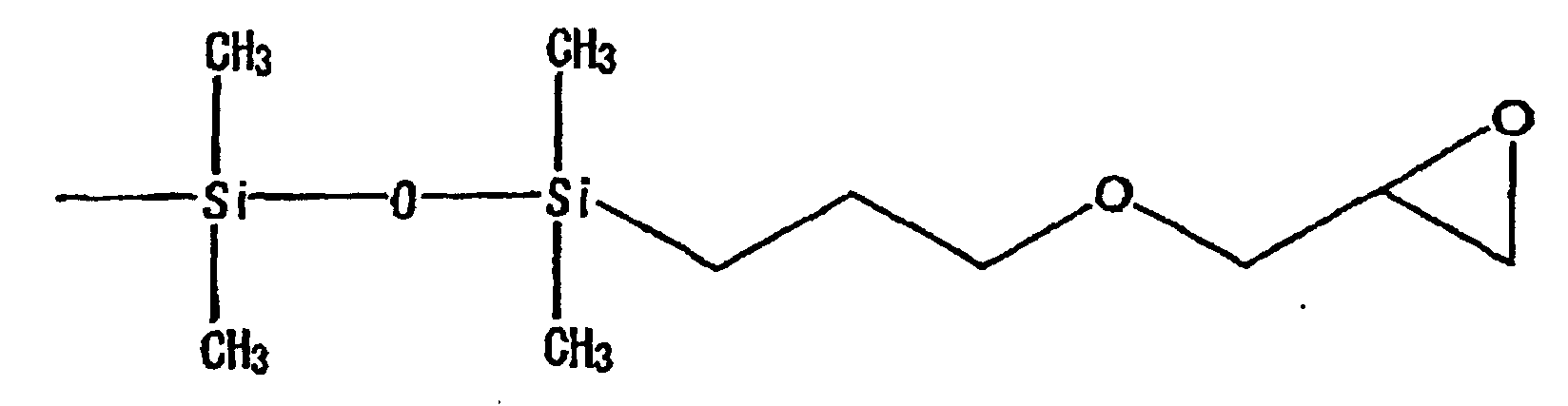
A 300 mL three-neck flask was charged with 100 g of the
allyl-terminated polyisobutylene polymer and 2 g of toluene,
and equipped with a stirrer having a vacuum seal, a three-way
stopcock, and a ball cock. The reaction system was
heated to 180°C and stirred, and the water and hydrochloric
acid in the reaction system were removed with a vacuum pump
for two hours.
After cooling the reaction system to 100°C, 0.05 g of
3,5-di-tert-butyl-4-hydroxytoluene, 21.6 µL of platinum-1,1,3,3-tetramethyl-1,3-divinyldisiloxane
complex (3% by
weight solution in toluene, in terms of platinum), and 11.1
µL of 1% sulfur solution in toluene were dripped, and the
mixture was sufficiently stirred.
Into the reaction mixture was slowly dripped, from a
dripping tube, 9.50 g of an epoxy group-containing
monohydrosilane having the following structure prepared by a
reaction of 1,2-epoxy-4-vinylcyclohexane with
tetramethyldisiloxane. The mixture was stirred for 2 hours
in air containing 6% of oxygen.

The progress of the reaction was monitored by 1H-NMR,
and confirmed by reduction or disappearance of the peak
heights of terminal allyl groups (4.97 ppm: =CH2, 5.79 ppm:
-CH=C) and reduction of the peak height of the hydrosilyl
group (Si-H, 4.65 ppm) of the dripped epoxy group-containing
monohydrosilane.
The 1H-NMR analysis of the reaction product showed that
the peaks of the above-mentioned allyl groups of the
original allyl-terminated polymer and hydrosilane completely
disappeared. Thus, it was confirmed that an isobutylene
polymer having at a desired end an epoxy-containing silicon
group expressed by the following formula was obtained:
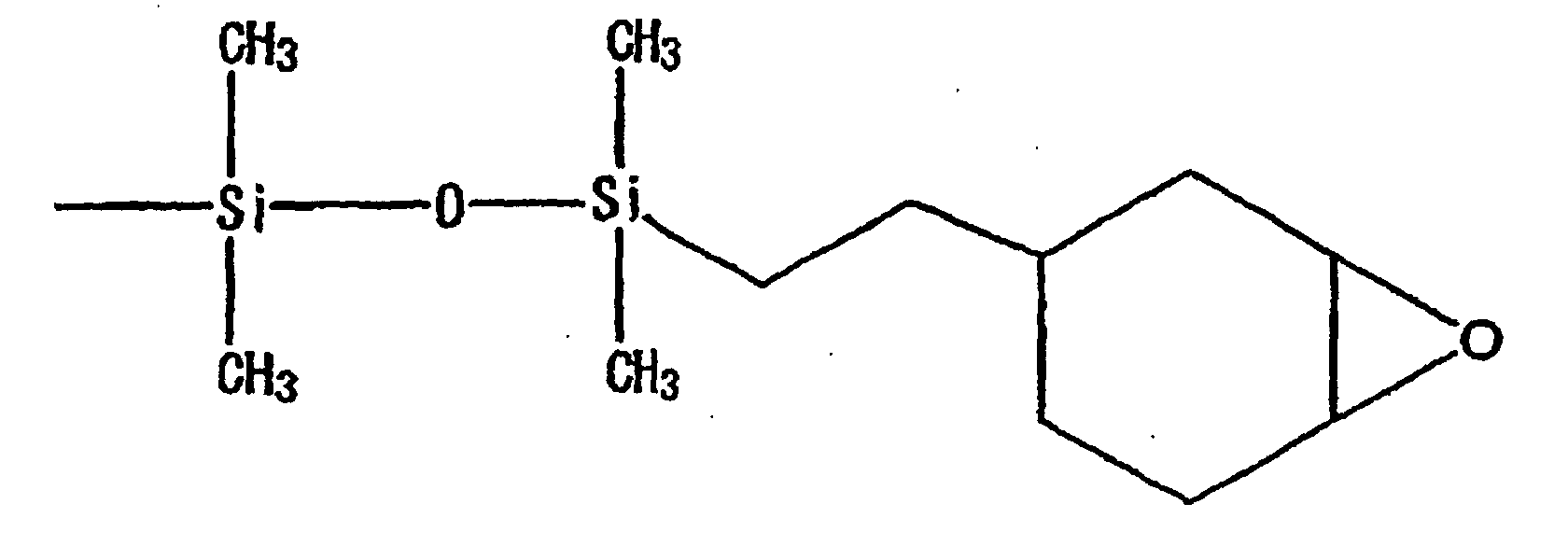
A 300 mL three-neck flask was charged with 100 g of the
allyl-terminated polyisobutylene polymer and 2 g of toluene,
and equipped with a stirrer having a vacuum seal, a three-way
stopcock, and a ball cock. The reaction system was
heated to 180°C and stirred, and the water and hydrochloric
acid in the reaction system were removed with a vacuum pump
for two hours,
After cooling the reaction system to 100°C, 0.05 g of
3,5-di-tert-butyl-4-hydroxytoluene, 21.6 µL of platinum-1,1,3,3-tetramethyl-1,3-divinyldisiloxane
complex (3% by
weight solution in toluene, in terms of platinum), and 11.1
µL of 1% sulfur solution in toluene were dripped, and the
mixture was sufficiently stirred.
Into the reaction system, 5.86 g of
methyldimethoxysilane was slowly dripped from a dripping
tube, and the mixture was stirred for 2 hours in air
containing 6% of oxygen. Then, excess methyldimethoxysilane
was removed under reduced pressure to yield an isobutylene
polymer having at its end a hydrolyzable group having the
following structure:
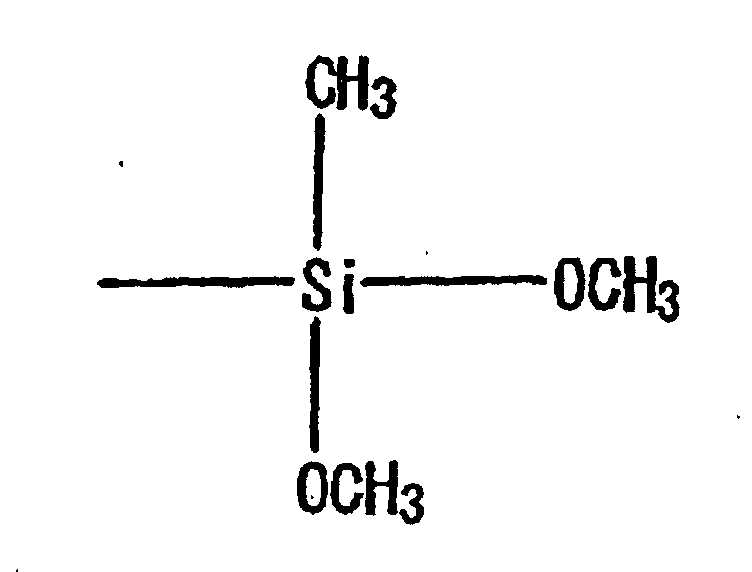
A 500 mL flask equipped with a Dean-Stark separator was
charged with 100 g of the alkoxysilyl-terminated
polyisobutylene polymer and 100 g of toluene. Subsequently,
14.4 g of 3-ethyl-3-hydroxymethyloxetane and 200 µL of
tetraisopropoxy titanate were added. The mixture was heated
to 70°C to react for 16 hours while being stirred. After
the reaction, toluene and excess 3-ethyl-3-hydroxymethyloxetane
were removed under reduced pressure.
The progress of the reaction was monitored by 1H-NMR,
and confirmed by reduction or disappearance of the peak
height of the terminal methoxy group (3.5 ppm: -CH3).
The 1H-NMR analysis of the reaction product showed that
the average number of introduced terminal 3-ethyl-3-hydroxymethyloxetanyl
groups was 1.5. Thus, it was
confirmed that an isobutylene polymer having at a desired
end an oxetanyl-containing silicon group expressed by the
following formula was obtained:

The present invention provides polymers prepared by
selectively and quantitatively introducing epoxy- and/or
oxetanyl-containing silicon groups into ends of various
types of organic polymer, and a simple process for producing
the polymers which prevents the introduction of the epoxy
groups from oxidizing or negatively affecting the polymers
and which does not require purification and other steps in
association with generation of byproducts.
The resulting organic polymer having an epoxy- and/or
oxetanyl-containing silicon group at its end has superior
reactivity, and its cured product and known cured products
modified with the organic polymer can exhibit the
characteristics of the main chain skeleton of the polymer.
Thus, the organic polymer of the present invention can be
advantageously used in various industrial applications.
Claims (12)
- An organic polymer having an end structure expressed by general formula (1):(wherein R1 represents an alkyl group having a carbon number in the range of 1 to 20, an aryl group having a carbon number in the range of 6 to 20, an aralkyl group having a carbon number in the range of 7 to 20, or a triorganosiloxy group expressed by (R')3SiO-; R2 represents an alkyl group having a carbon number in the range of 1 to 20, an aryl group having a carbon number in the range of 6 to 20, an aralkyl group having a carbon number in the range of 7 to 20, an alkoxy group having a carbon number in the range of 1 to 20, or a triorganosiloxy group expressed by (R')3SiO-; if the number of R1s or R2s is at least two, they may be the same or different; R' represents a monovalent hydrocarbon group having a carbon number in the range of 1 to 20 and the three R's may be the same or different; X represents a monovalent organic group having an epoxy group and/or an oxetanyl group, and if the number of Xs is at least two, they may be the same or different; m represents an integer in the range of 0 to 20; and n represents an integer of 1, 2, or 3).

- An organic polymer having an end structure expressed by general formula (2):(wherein R1 represents an alkyl group having a carbon number in the range of 1 to 20, an aryl group having a carbon number in the range of 6 to 20, an aralkyl group having a carbon number in the range of 7 to 20, or a triorganosiloxy group expressed by (R')3SiO-; R2 represents an alkyl group having a carbon number in the range of 1 to 20, an aryl group having a carbon number in the range of 6 to 20, an aralkyl group having a carbon number in the range of 7 to 20, an alkoxy group having a carbon number in the range of 1 to 20, or a triorganosiloxy group expressed by (R')3SiO-; if the number of R1s or R2s is at least two, they may be the same or different; R' represents a monovalent hydrocarbon group having a carbon number in the range of 1 to 20 and the three R's may be the same or different; R3 represents a divalent organic group having a carbon number in the range of 1 to 20 and containing at least one constituent atom selected from the group consisting of hydrogen, oxygen, and nitrogen; and m represents an integer in the range of 0 to 20).
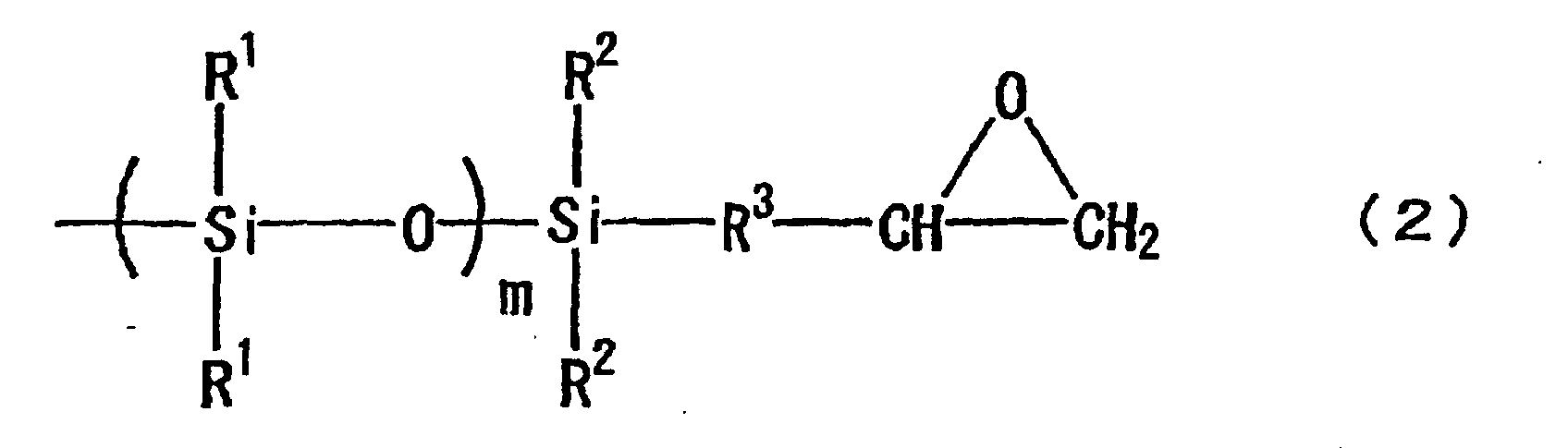
- An organic polymer having an end structure expressed by general formula (3):(wherein R1 represents an alkyl group having a carbon number in the range of 1 to 20, an aryl group having a carbon number in the range of 6 to 20, an aralkyl group having a carbon number in the range of 7 to 20, or a triorganosiloxy group expressed by (R')3SiO-; R2 represents an alkyl group having a carbon number in the range of 1 to 20, an aryl group having a carbon number in the range of 6 to 20, an aralkyl group having a carbon number in the range of 7 to 20, an alkoxy group having a carbon number in the range of 1 to 20, or a triorganosiloxy group expressed by (R')3SiO-; if the number of R1s or R2s is at least two, they may be the same or different; R' represents a monovalent hydrocarbon group having a carbon number in the range of 1 to 20 and the three R's may be the same or different; R4 represents a divalent organic group having a carbon number in the range of 1 to 20 and containing at least one constituent atom selected from the group consisting of hydrogen, oxygen, and nitrogen; and m represents an integer in the range of 0 to 20).

- An organic polymer having an end structure expressed by general formula (4):(wherein R1 represents an alkyl group having a carbon number in the range of 1 to 20, an aryl group having a carbon number in the range of 6 to 20, an aralkyl group having a carbon number in the range of 7 to 20, or a triorganosiloxy group expressed by (R')3SiO-; R2 represents an alkyl group having a carbon number in the range of 1 to 20, an aryl group having a carbon number in the range of 6 to 20, an aralkyl group having a carbon number in the range of 7 to 20, an alkoxy group having a carbon number in the range of 1 to 20, or a triorganosiloxy group expressed by (R')3SiO-; if the number of R1s or R2s is at least two, they may be the same or different; R' represents a monovalent hydrocarbon group having a carbon number in the range of 1 to 20 and the three R's may be the same or different; R5 represents a divalent organic group having a carbon number in the range of 1 to 20 and containing at least one constituent atom selected from the group consisting of hydrogen, oxygen, and nitrogen; and m represents an integer in the range of 0 to 20).
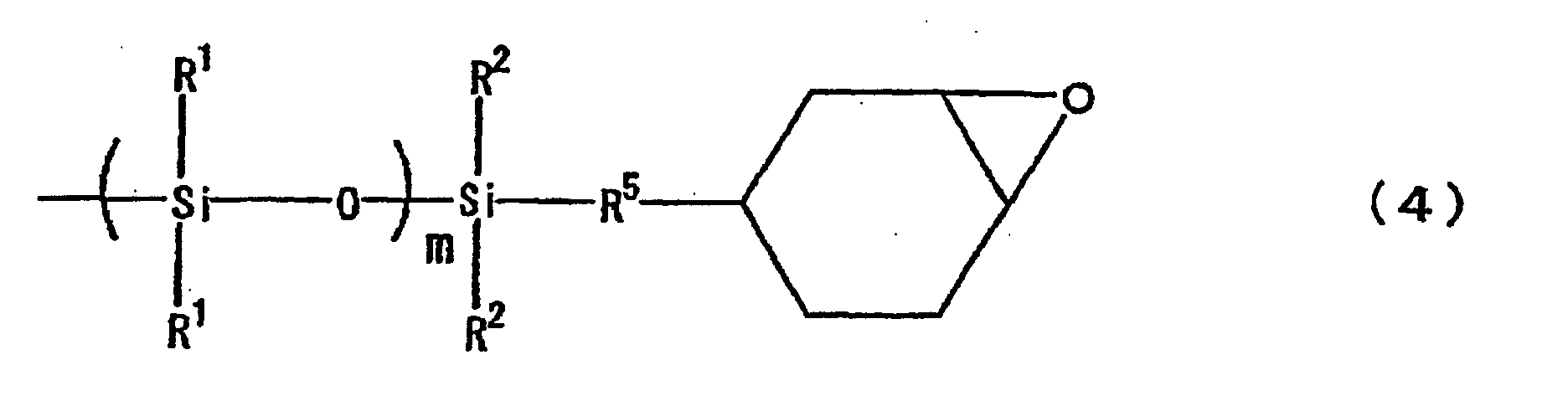
- The organic polymer according to Claim 1, wherein at least one X has a structure expressed by the following formula:
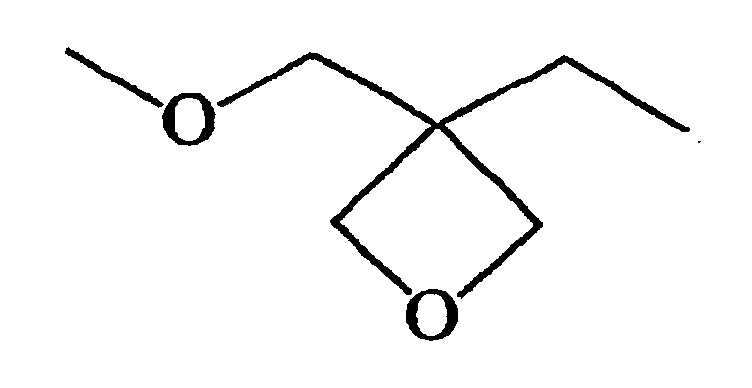
- The organic polymer according to Claim 1, wherein at least one X has a structure expressed by the following formula:
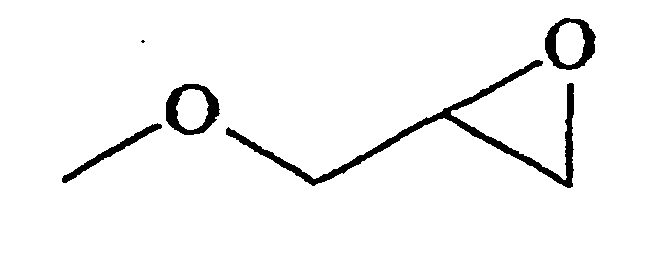
- The organic polymer according to any one of Claims 1 to 6, wherein the main chain skeleton of the organic polymer comprises a saturated hydrocarbon polymer selected from the group consisting of polyisobutylene, hydrogenated polyisoprene, hydrogenated polybutadiene, and copolymers thereof.
- The organic polymer according to any one of Claims 1 to 6, wherein the main chain skeleton of the organic polymer comprises an oxyalkylene polymer.
- The organic polymer according to any one of Claims 1 to 8, wherein the organic polymer is produced by an addition reaction of an organic polymer having an unsaturated group at an end thereof with a hydrosilane compound having an epoxy group and/or an oxetanyl group.
- A process for producing the organic polymer as set forth in any one of Claims 1 to 8, the process comprising the step of performing an addition reaction of an organic polymer having an unsaturated group at an end thereof with a hydrosilane compound having an epoxy group and/or an oxetanyl group.
- The organic polymer according to any one of Claims 1 to 8, wherein the organic polymer is produced by an exchange reaction of a hydrolyzable group between an organic polymer having a hydrolyzable silyl group at an end thereof and a compound having at least one epoxy and/or oxetanyl group and one hydroxyl group in one molecule thereof.
- A process for producing the organic polymer as set forth in any one of Claims 1 to 8, the process comprising the step of performing an exchange reaction of a hydrolyzable group between an organic polymer having a hydrolyzable silyl group at an end thereof and a compound having at least one epoxy and/or oxetanyl group and one hydroxyl group in one molecule thereof.
Applications Claiming Priority (3)
| Application Number | Priority Date | Filing Date | Title |
|---|---|---|---|
| JP2002105242 | 2002-04-08 | ||
| JP2002105242 | 2002-04-08 | ||
| PCT/JP2003/004460 WO2003085024A1 (en) | 2002-04-08 | 2003-04-08 | Organic polymers having at the ends epoxy- and/or oxetanyl-containing silicon groups and process for production thereof |
Publications (2)
| Publication Number | Publication Date |
|---|---|
| EP1493765A1 true EP1493765A1 (en) | 2005-01-05 |
| EP1493765A4 EP1493765A4 (en) | 2005-10-19 |
Family
ID=28786371
Family Applications (1)
| Application Number | Title | Priority Date | Filing Date |
|---|---|---|---|
| EP03745970A Withdrawn EP1493765A4 (en) | 2002-04-08 | 2003-04-08 | Organic polymers having at the ends epoxy- and/or oxetanyl-containing silicon groups and process for production thereof |
Country Status (5)
| Country | Link |
|---|---|
| US (1) | US7067605B2 (en) |
| EP (1) | EP1493765A4 (en) |
| JP (1) | JP4426318B2 (en) |
| AU (1) | AU2003236347A1 (en) |
| WO (1) | WO2003085024A1 (en) |
Cited By (4)
| Publication number | Priority date | Publication date | Assignee | Title |
|---|---|---|---|---|
| EP3209506A4 (en) * | 2014-10-24 | 2017-08-30 | ExxonMobil Chemical Patents Inc. | Chain end functionalized polyolefins for improving wet traction and rolling resistance of tire treads |
| US10023719B2 (en) | 2015-02-02 | 2018-07-17 | Exxonmobil Chemical Patents Inc. | Toughened polyolefin nanocomposites using silane functionalized polyolefins |
| US10280270B2 (en) | 2014-11-24 | 2019-05-07 | Exxonmobil Chemical Patents Inc. | Silane functionalized polyolefins for polyolefin nanocomposites |
| US10583692B2 (en) | 2014-10-24 | 2020-03-10 | Exxonmobil Chemical Patents Inc. | Chain end functionalized polyolefins for improving wet traction and rolling resistance of tire treads |
Families Citing this family (6)
| Publication number | Priority date | Publication date | Assignee | Title |
|---|---|---|---|---|
| JP2001163961A (en) * | 1999-12-07 | 2001-06-19 | Toagosei Co Ltd | Method for manufacturing alkyd resin having oxetane ring and active energy ray-curable composition composed thereof |
| JP4468629B2 (en) * | 2002-10-22 | 2010-05-26 | 株式会社カネカ | Organic polymer having epoxy group-containing silicon group at terminal and method for producing the same |
| WO2005028537A1 (en) * | 2003-09-18 | 2005-03-31 | Kaneka Corporation | Photocuring resin composition containing organic polymer having epoxy group and/or oxethane group-containing silicon group at end, and method for producing same |
| JP4560672B2 (en) * | 2003-10-24 | 2010-10-13 | 株式会社スリーボンド | Curable resin composition |
| KR101017188B1 (en) * | 2005-12-26 | 2011-02-25 | 가부시키가이샤 가네카 | Curable composition |
| CN110330640B (en) * | 2019-07-15 | 2022-02-18 | 万华化学集团股份有限公司 | Refining method of high molecular weight alkyl terminated polyether |
Family Cites Families (20)
| Publication number | Priority date | Publication date | Assignee | Title |
|---|---|---|---|---|
| US4493924A (en) | 1983-06-10 | 1985-01-15 | Union Carbide Corporation | Water-curable, silane modified chlorosulfonated olefinic polymers and a process for the preparation thereof |
| NL8502463A (en) | 1985-09-10 | 1987-04-01 | Dsm Resins Bv | COMPOSITION BASED ON A WATERY DISPERSION OF AN ADDITION POLYMER. |
| CA1274647A (en) * | 1986-06-25 | 1990-09-25 | Takahisa Iwahara | Curable isobutylene polymer |
| JP2602865B2 (en) * | 1987-12-26 | 1997-04-23 | 鐘淵化学工業株式会社 | Curable composition |
| US5240971A (en) * | 1991-12-05 | 1993-08-31 | General Electric Company | UV-curable epoxysilicone-polyether block copolymers |
| JP3090764B2 (en) * | 1992-03-17 | 2000-09-25 | 積水化学工業株式会社 | Polycarbonate resin composition |
| US5260455A (en) * | 1992-07-08 | 1993-11-09 | General Electric Company | Polyepoxysilanes and radiation-curable polyepoxysilicone compositions |
| JP3283606B2 (en) | 1993-02-17 | 2002-05-20 | 日本化薬株式会社 | Organopolysiloxane and epoxy resin composition containing the same |
| JPH09501964A (en) * | 1993-08-24 | 1997-02-25 | シーメンス アクチエンゲゼルシヤフト | Method for producing epoxy siloxane |
| JP3322759B2 (en) * | 1994-07-04 | 2002-09-09 | 鐘淵化学工業株式会社 | Isobutylene-based polymer having reactive silicon group at terminal, method for producing the same, and curable composition thereof |
| JP3429091B2 (en) * | 1994-12-16 | 2003-07-22 | 鐘淵化学工業株式会社 | Curable composition containing isobutylene polymer |
| GB2305919B (en) * | 1995-10-02 | 1999-12-08 | Kansai Paint Co Ltd | Ultraviolet-curing coating composition for cans |
| US5700581A (en) * | 1996-06-26 | 1997-12-23 | International Business Machines Corporation | Solvent-free epoxy based adhesives for semiconductor chip attachment and process |
| EP0949296B1 (en) | 1996-12-25 | 2002-03-13 | Kansai Paint Co., Ltd. | Polymer composition capable of forming water-slidable surface |
| JP3251188B2 (en) | 1997-01-30 | 2002-01-28 | 関西ペイント株式会社 | UV-curable can coating composition |
| JP3835715B2 (en) * | 1997-02-18 | 2006-10-18 | 住友ベークライト株式会社 | Liquid injection sealed underfill material |
| JP2000344863A (en) * | 1999-06-03 | 2000-12-12 | Nippon Kayaku Co Ltd | Polymerizable composition and cured product thereof |
| US6506868B1 (en) * | 1999-07-15 | 2003-01-14 | Arakawa Chemical Industries, Ltd. | Partial condensate of glycidyl ether group-containing alkoxysilane, silane-modified resin, compositions thereof and preparation methods thereof |
| FR2800383B1 (en) * | 1999-10-29 | 2002-01-18 | Rhodia Chimie Sa | SILICONE COMPLEX / ADHESIVE ADHESIVE WITH STABILIZATION ADDITIVE IN SILICONE |
| JP3995862B2 (en) * | 2000-03-29 | 2007-10-24 | 住友ベークライト株式会社 | Liquid resin composition and semiconductor device using the same |
-
2003
- 2003-04-08 US US10/509,623 patent/US7067605B2/en not_active Expired - Lifetime
- 2003-04-08 WO PCT/JP2003/004460 patent/WO2003085024A1/en not_active Ceased
- 2003-04-08 AU AU2003236347A patent/AU2003236347A1/en not_active Abandoned
- 2003-04-08 JP JP2003582211A patent/JP4426318B2/en not_active Expired - Fee Related
- 2003-04-08 EP EP03745970A patent/EP1493765A4/en not_active Withdrawn
Cited By (6)
| Publication number | Priority date | Publication date | Assignee | Title |
|---|---|---|---|---|
| EP3209506A4 (en) * | 2014-10-24 | 2017-08-30 | ExxonMobil Chemical Patents Inc. | Chain end functionalized polyolefins for improving wet traction and rolling resistance of tire treads |
| US10583692B2 (en) | 2014-10-24 | 2020-03-10 | Exxonmobil Chemical Patents Inc. | Chain end functionalized polyolefins for improving wet traction and rolling resistance of tire treads |
| EP3689638A1 (en) * | 2014-10-24 | 2020-08-05 | ExxonMobil Chemical Patents Inc. | Chain end functionalized polyolefins for improving wet traction and rolling resistance of tire treads |
| US11142021B2 (en) | 2014-10-24 | 2021-10-12 | Exxonmobil Chemical Patents Inc. | Chain end functionalized polyolefins for improving wet traction and rolling resistance of tire treads |
| US10280270B2 (en) | 2014-11-24 | 2019-05-07 | Exxonmobil Chemical Patents Inc. | Silane functionalized polyolefins for polyolefin nanocomposites |
| US10023719B2 (en) | 2015-02-02 | 2018-07-17 | Exxonmobil Chemical Patents Inc. | Toughened polyolefin nanocomposites using silane functionalized polyolefins |
Also Published As
| Publication number | Publication date |
|---|---|
| EP1493765A4 (en) | 2005-10-19 |
| JPWO2003085024A1 (en) | 2005-08-11 |
| US7067605B2 (en) | 2006-06-27 |
| US20050228159A1 (en) | 2005-10-13 |
| AU2003236347A1 (en) | 2003-10-20 |
| WO2003085024A1 (en) | 2003-10-16 |
| JP4426318B2 (en) | 2010-03-03 |
Similar Documents
| Publication | Publication Date | Title |
|---|---|---|
| JP2873395B2 (en) | Isobutylene-based polymer having reactive silicon group, method for producing the same, and curable composition thereof | |
| JP4758230B2 (en) | Photocurable composition containing organic polymer having epoxy group and / or oxetane group-containing silicon group at terminal, cured product obtained therefrom, and production method | |
| JP3315210B2 (en) | Curable composition | |
| CA1274647A (en) | Curable isobutylene polymer | |
| JPH03200807A (en) | Organic polymer, its production, and curable composition containing the same | |
| JPWO1991013927A1 (en) | curable composition | |
| JP2000109676A (en) | Curable composition | |
| US7067605B2 (en) | Organic polymer having epoxy-and/or oxetanyl-containing silicon group at the end and process for producing the same | |
| US20260049176A1 (en) | Hydrolyzable silyl group-containing polyoxyalkylene polymer, curable composition, and cured product | |
| EP1038901B1 (en) | Curable composition | |
| JP2000109678A (en) | Improved room temperature curable composition | |
| JP4468629B2 (en) | Organic polymer having epoxy group-containing silicon group at terminal and method for producing the same | |
| JP3608878B2 (en) | Curable composition containing minute hollow body | |
| JP2000129126A (en) | Room temperature curable composition | |
| JP3568698B2 (en) | Emulsion composition | |
| JP2000109677A (en) | Room temperature curable composition | |
| JP3934276B2 (en) | Curable composition | |
| JP2602865B2 (en) | Curable composition | |
| JP2001055438A (en) | Method for producing functional group-containing polyoxyalkylene polymer | |
| JP2001011383A (en) | Vehicle coating material composition | |
| JP3636583B2 (en) | Sealant for double-glazed glass | |
| JP4750295B2 (en) | Curable composition | |
| JP3924848B2 (en) | Room temperature curable composition | |
| JP3636555B2 (en) | Curable composition and method for improving the storage stability of a curable composition | |
| JP2001262040A (en) | Primer composition and bonding method |
Legal Events
| Date | Code | Title | Description |
|---|---|---|---|
| PUAI | Public reference made under article 153(3) epc to a published international application that has entered the european phase |
Free format text: ORIGINAL CODE: 0009012 |
|
| 17P | Request for examination filed |
Effective date: 20041029 |
|
| AK | Designated contracting states |
Kind code of ref document: A1 Designated state(s): AT BE BG CH CY CZ DE DK EE ES FI FR GB GR HU IE IT LI LU MC NL PT RO SE SI SK TR |
|
| AX | Request for extension of the european patent |
Extension state: AL LT LV MK |
|
| A4 | Supplementary search report drawn up and despatched |
Effective date: 20050906 |
|
| 17Q | First examination report despatched |
Effective date: 20061106 |
|
| STAA | Information on the status of an ep patent application or granted ep patent |
Free format text: STATUS: THE APPLICATION IS DEEMED TO BE WITHDRAWN |
|
| 18D | Application deemed to be withdrawn |
Effective date: 20090708 |