EP1493598B1 - A camouflage or otherwise multicolored pattern tire and method of manufacture - Google Patents
A camouflage or otherwise multicolored pattern tire and method of manufacture Download PDFInfo
- Publication number
- EP1493598B1 EP1493598B1 EP04102696A EP04102696A EP1493598B1 EP 1493598 B1 EP1493598 B1 EP 1493598B1 EP 04102696 A EP04102696 A EP 04102696A EP 04102696 A EP04102696 A EP 04102696A EP 1493598 B1 EP1493598 B1 EP 1493598B1
- Authority
- EP
- European Patent Office
- Prior art keywords
- tire
- layer
- camouflaged
- veneered
- pattern
- Prior art date
- Legal status (The legal status is an assumption and is not a legal conclusion. Google has not performed a legal analysis and makes no representation as to the accuracy of the status listed.)
- Expired - Lifetime
Links
- 238000000034 method Methods 0.000 title claims description 15
- 238000004519 manufacturing process Methods 0.000 title claims description 9
- 239000003086 colorant Substances 0.000 claims description 23
- 239000008188 pellet Substances 0.000 claims description 9
- 239000013536 elastomeric material Substances 0.000 claims description 6
- 230000002093 peripheral effect Effects 0.000 claims description 4
- 238000003825 pressing Methods 0.000 claims description 3
- 238000000465 moulding Methods 0.000 claims 1
- 239000000463 material Substances 0.000 description 17
- 230000001788 irregular Effects 0.000 description 9
- JOYRKODLDBILNP-UHFFFAOYSA-N Ethyl urethane Chemical compound CCOC(N)=O JOYRKODLDBILNP-UHFFFAOYSA-N 0.000 description 5
- VYPSYNLAJGMNEJ-UHFFFAOYSA-N Silicium dioxide Chemical compound O=[Si]=O VYPSYNLAJGMNEJ-UHFFFAOYSA-N 0.000 description 3
- 230000004888 barrier function Effects 0.000 description 2
- 150000001875 compounds Chemical class 0.000 description 2
- 230000000694 effects Effects 0.000 description 2
- 238000010186 staining Methods 0.000 description 2
- 241000283070 Equus zebra Species 0.000 description 1
- 241000282376 Panthera tigris Species 0.000 description 1
- 239000011248 coating agent Substances 0.000 description 1
- 238000000576 coating method Methods 0.000 description 1
- 238000001514 detection method Methods 0.000 description 1
- 239000000945 filler Substances 0.000 description 1
- 239000004615 ingredient Substances 0.000 description 1
- 238000002386 leaching Methods 0.000 description 1
- 230000014759 maintenance of location Effects 0.000 description 1
- 239000000203 mixture Substances 0.000 description 1
- 238000010422 painting Methods 0.000 description 1
- 229920000642 polymer Polymers 0.000 description 1
- 230000001681 protective effect Effects 0.000 description 1
- 239000004576 sand Substances 0.000 description 1
- 239000000377 silicon dioxide Substances 0.000 description 1
- 230000004083 survival effect Effects 0.000 description 1
- 230000000007 visual effect Effects 0.000 description 1
Images


Classifications
-
- B—PERFORMING OPERATIONS; TRANSPORTING
- B29—WORKING OF PLASTICS; WORKING OF SUBSTANCES IN A PLASTIC STATE IN GENERAL
- B29D—PRODUCING PARTICULAR ARTICLES FROM PLASTICS OR FROM SUBSTANCES IN A PLASTIC STATE
- B29D30/00—Producing pneumatic or solid tyres or parts thereof
- B29D30/0061—Accessories, details or auxiliary operations not otherwise provided for
-
- B—PERFORMING OPERATIONS; TRANSPORTING
- B60—VEHICLES IN GENERAL
- B60C—VEHICLE TYRES; TYRE INFLATION; TYRE CHANGING; CONNECTING VALVES TO INFLATABLE ELASTIC BODIES IN GENERAL; DEVICES OR ARRANGEMENTS RELATED TO TYRES
- B60C11/00—Tyre tread bands; Tread patterns; Anti-skid inserts
-
- B—PERFORMING OPERATIONS; TRANSPORTING
- B60—VEHICLES IN GENERAL
- B60C—VEHICLE TYRES; TYRE INFLATION; TYRE CHANGING; CONNECTING VALVES TO INFLATABLE ELASTIC BODIES IN GENERAL; DEVICES OR ARRANGEMENTS RELATED TO TYRES
- B60C13/00—Tyre sidewalls; Protecting, decorating, marking, or the like, thereof
- B60C13/001—Decorating, marking or the like
Definitions
- the resultant method produces a camouflaged tire having an elastomeric veneered outer layer adhering to at least the sidewall portion of the tire.
- This veneered outer layer will have one or more distinct colors not including the color of the base underlying tire.
- the resultant tire has two distinct colors or more depending on the number of layers applied to the tire to form the veneered surface.
- the color combinations can vary as well as the number of colors.
- the tire can be black as commonly found in tires and a veneered surface may have a green layer and a brown layer to form a three-color camouflage pattern of black, green and brown.
- the tire can be black and have a white layer and gray layer applied to form a winter or urban camouflage pattern.
- the tire can be black or dark brown and have a veneered surface of light brown or tan forming a desert camouflage pattern.
Landscapes
- Engineering & Computer Science (AREA)
- Mechanical Engineering (AREA)
- Tires In General (AREA)
- Tyre Moulding (AREA)
Description
- This invention relates to multicolored pattern tires generally, and more particularly camouflaged tires, and to a method of manufacturing such tires.
- Camouflage is a way to hide or conceal a person or an object from its surroundings. The objective is to blend into the environment and to avoid detection.
- For years the art of concealment by the use of camouflage has evolved from the simple use of netting to the art of painting vehicles and dressing personnel by using specific camouflaged patterns.
- In the case of vehicles, one area that has been both overlooked and avoided has been the tires of the vehicles. Some attempts to provide camouflage netting over the wheel wells have been attempted but basically the concept of wheel concealment has been ignored. This is partly because the wheel is already in the shadows of the body of the vehicle in some cases and in other cases it has been generally understood that large vehicles on the move are easily detected. Accordingly, these vehicles are generally covered by camouflage netting when they are stopped. However, when on the move these vehicles generally do not rely heavily on their camouflage.
- In recent years small agile, very fast reconnaissance vehicles are being used by scouts or Special Forces troops who require the element of concealment and surprise to accomplish their objectives. These soldiers have adopted four and six wheel off road vehicles similar to the All Terrain Vehicle (ATV) vehicles used for recreational hunting.
- These vehicles have the tires generally exposed and the tires are a dominant visual pattern easily spotted by opposing forces, whether the vehicles are moving or stationary the tires become a prominent feature that can be easily detected.
- It is an object of the present invention to provide a camouflaged tire to enhance concealment of vehicles.
- It is another object of the present invention to provide a simple and efficient way to produce such a tire that can survive harsh off road conditions.
-
DE-A- 196 30 586 describes a method and a tire according to the preamble ofclaims 1 and 6 respectively. A further camouflaged tire is described inEP-A- 1 452 345 . - The invention relates to a method of manufacturing a tire according to claim 1 and to a tire according to
claim 6. - A three color pattern can be achieved by applying a thin second colored layer of perforated elastomeric material onto the peripheral surface of the thin first colored layer and the uncured tire assembly. It is preferred that the steps of applying the first and second layer further include the step of stretching the layers to increase the perforations into enlarged irregular shaped openings. It is believed that the perforated elastomeric layers may have the perforations made in the forms of slits or cuts or even openings of varying lengths and shapes or combinations of such features to enhance the irregular pattern required in camouflaging. It is believed that these thin elastomeric layers can be applied to an uncured tire assembly. The tire assembly can then be shaped and formed into its toroidal shape and then cured in a mold curing press as commonly done with tires.
- The resultant method produces a camouflaged tire having an elastomeric veneered outer layer adhering to at least the sidewall portion of the tire. This veneered outer layer will have one or more distinct colors not including the color of the base underlying tire. When molded, the resultant tire has two distinct colors or more depending on the number of layers applied to the tire to form the veneered surface. The color combinations can vary as well as the number of colors. The tire can be black as commonly found in tires and a veneered surface may have a green layer and a brown layer to form a three-color camouflage pattern of black, green and brown. Alternatively, the tire can be black and have a white layer and gray layer applied to form a winter or urban camouflage pattern. Additionally, the tire can be black or dark brown and have a veneered surface of light brown or tan forming a desert camouflage pattern.
- Additionally, a clear outer elastomeric layer can be applied over the entire veneered surface to form a clear outer layer as a protective barrier for the camouflage pattern if so desired. It is possible that the clear layer can actually be a urethane material and may provide a clear outer tread and sidewall covering such that the underlying veneered pattern overlies the carcass and is interposed between a clear outer tread layer and sidewall layers. Furthermore, an anti-migrating barrier layer can be placed between the colored veneer layers and the underlying tire in order to prevent migrating of staining materials leaching outward into the colored pattern.
-
-
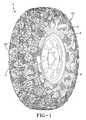
FIG. 1 is a perspective view of a camouflaged tire according to the invention. -
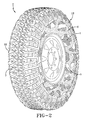
FIG. 2 is a perspective view of a tire wherein one or both sidewalls have a camouflaged surface. -
FIG. 3 is a view of two elastomeric sheets or layers of colored materials for producing a camouflaged tire. -
FIG. 4 shows an uncured tire assembly on a building drum having a first colored layer and a second colored layer applied to the peripheral surface of the uncured tire. -
FIG. 5 shows a veneer base layer being formed according to an alternative embodiment of the invention. -
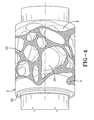
FIG. 6 is a perspective view showing the uncured tire assembly having the veneer ofFig. 5 applied. - With reference to
Figure 1 , a perspective view of an exemplarycamouflaged tire 2 made according to the invention is illustrated. As shown thetire 2 has three distinct colors, one color being the black or dark color of theunderlying tire 2. The other two colors are contrasting colors provided in irregular shapes and patterns on the surface of the tire to form acamouflage pattern 12 that blends in with the surrounding environment. As shown, thecamouflage pattern 12 has three distinct colors. The first and second colors are formed by elastomeric layers orsheets tire 2 in the uncured state. In an overlying arrangement on the tire each of these sheets has openings that are irregular in shape and pattern such that the underlying surfaces are exposed through these openings. This gives the ability to see the underlying color when thetire 2 is molded. This method of laying up sheets of material is best illustrated inFigures 3 and4 .Figure 3 shows each of the layers orsheets perforations 10 of irregular shape.Figure 4 shows thesesheets tire building drum 50. The stretching of the material is optional and although not required helps enhance the irregular shape and gives greater non-uniformity to the patterns. As thefirst layer 4 is applied using one turn of thebuilding drum 50 it is stitched onto theuncured tire assembly 2 and firmly attached. Then a secondthin layer 6 of material is applied of a different color as illustrated. The result is the tire as shown inFigure 1 . Alternatively, the materials of the first andsecond layer uncured tire 2. In such case, narrower webs of material can be used and stretched and stitched directly onto the carcass in thesidewall area 5 on both sides of thetire 2 or only oneside 5 of thetire 2. When using such a technique, thecamouflage surface 12 will extend up to the tread area 7 but not necessarily extend over it. In such a pattern the treads 7 would then be left in their original black shape, however, as shown inFigure 2 but thesidewalls 5 would have the camouflage feature. This may be desirable due to the fact that as the tread 7 wears thecamouflage surface 12 at least at thetread lugs 22 will tend to disappear and will only remain in the groove areas of the tread. While this may be acceptable in some applications, it may be preferable simply to only camouflage thesidewalls 5. This may be particularly true in trucks or other vehicles where the sidewalls are exposed but the tread is within the wheel well of the vehicle. - An alternative method of applying the
camouflage surface 12 is to create irregular shapes or patches that can be applied to the outer surface of the green or uncured tire. These patches can then be overlaid or superimposed by additional patches of different colors. In this manner of manufacturing acamouflaged tire 2 the colors are provided by the patches and any number of colors can be achieved depending on the number of patches desired as an alternative to the use oflayers tire 2 would not change significantly using this method of manufacturing a camouflaged tire. - With reference to
Figure 5 , another alternative method of forming theveneer 18 is to take a base layer of uncured elastomeric material and randomly presscolored pellets base layer 8 can pass under ameans 60 for pressing the pellets such as aroller 62 or a pair of rollers or a simple stamping press. The flattened colored pellets provide distinct colors that can create a camouflage type appearance or similar marbleized effect to form a pattern of discrete colors. The pressing of the pellets creates flattened irregular shape colors. The enhanced shape changes the pellets and may further be varied in size or shape. The resultantuncured tire 2 with theveneer layer 18 applied to the outer surface is shown inFig. 6 . Alternatively, as opposed to forming a veneer using the method shown inFig. 5 , an entire tread or sidewall can be made full depth multicolored using thecolored pellets - In preparing the
pellets pellets - As a further alternative embodiment, a clear coating or layer of materials such as urethane could be applied to the outer surface of the uncured tire and cured with the uncured tire in such a fashion that the underlying veneer of the
camouflage surface 12 can be protected. It is possible, in the case of light ATV tires, that acomplete urethane tire 2 where the tread 7 andsidewalls 5 are clear and applied over theveneer camouflage surface 12 to protect the veneer camouflage surface. It is possible in the case of ATV tires that acomplete urethane tire 2 where the tread 7 andsidewalls 5 are clear and applied over the veneer surface to protect the veneer surface with the underlying tire carcass being entirely urethane or a rubber material for added strength. In such a fashion acamouflage tire 2 having an exterior clear rubber layer forming the tread and sidewall could be used where the underlyingveneer camouflage surface 12 is embedded well within thetire 2. This has the advantage of protecting theveneer camouflage surface 12 and ensuring that it survives throughout the useful life of thetire 2. It is believed that the survival of theveneer camouflage surface 12 in thesidewall 5 will be more than sufficient for the useful life of thetire 2. However, it is understood that as the tread wears using the first method of manufacture wherein the tread lugs 22 are coated with the veneeredcamouflage surface 12 as illustrated inFigure 1 the black underlying rubber will eventually be exposed such that the tread lugs 22 will show as the tread wears. - It has been found that the proper selection of elastomeric materials compatible with the tread 7 and
sidewall 5 are sufficient to provide excellent adhesion of the layers 46 such that they do not peel or abrade from thesurface 12 but are actually integrally bonded to the underlying materials. This is important as the end user does not want the camouflaging to peel off or to be lost due to the extreme flexure and punctures and scratches that are accomplished in off road tire vehicle use. - It is important to understand that the
perforations 10 used in the manufacture of the sheets or layers 4, 6 as illustrated inFig. 3 can be simple slits or incisions in narrow webs of material. These slits orincisions 10 can be varied and as the material layers 4, 6 are stretched prior to applying to thetire 2 on thetire building drum 50 the stretching of thelayers openings 10 needed to achieve the underlying camouflage effect of the various layers forming the veneered camouflage surface pattern. Alternatively, regular or irregular shaped cutouts or openings can be used as the perforations and may or may not be stretched to achieve the desired look. As previously noted theunderlying tire 2 provides one of the colors for thecamouflage surface 12 while the veneer surface can provide two or more other distinct colors. Accordingly, in urban and snow areas the black tire can be used in combination with varying amounts of white and gray to achieve either the urban or the snow colored tire for that particular camouflage requirement. Alternatively, the forest camouflage commonly used in wooded areas can use the green, tan and black to achieve a desired camouflage technique for that environment. Finally, a tire can be manufactured with a color other than black such as brown and a lighter brown and tan can be used to achieve a sand or desert type camouflage. - While this invention has been directed primarily for the purpose of camouflaging tires, it is also directly applicable to providing tires having distinct colors or patterns by employing one or more colored veneer surfaces, preferably multicolored. This may be desirable for aesthetic looks for appearances where one wants to achieve multicolored tires and either striped or zigzag configurations or any other pattern of more uniform nature other than for camouflaging, by way of example a black and white cow or zebra pattern or even an orange and black tiger striped pattern.
- In such a case the veneer layer can be a single white or orange layer covering an underlying black tire to achieve a multicolored tire having only a two color pattern. The use of one or more perforated layers to form the veneer is therefore considered within the scope of the present invention. Accordingly, such alternative uses of layers having slits to achieve a multicolored tire are considered well within the scope of the present invention as well as using patches of elastomeric colored materials.
Claims (10)
- A method of manufacturing a tire (2), the method comprising the steps of:(A) applying an uncured elastomeric colored pattern veneer (18) onto an uncured tire and thereafter curing the tire, wherein the uncured elastomeric multicolored veneer (18) is formed by passing a base layer (8) of a first color through a press means (60) and randomly pressing color pellets (30, 32) of one or more additional colors of elastomeric material into the base layer (8); or(B) applying at least one colored thin layer (4, 6) of perforated elastomeric material onto the peripheral surface of an uncured tire assembly wherein perforations (10) form openings in said layer (4, 6) to expose portions of the tire (2) to create at least two different colors in a multicolored pattern (12).
- The method of claim 1, further comprising the steps of applying a thin second colored layer (6) of perforated elastomeric material onto the peripheral surfaces of the at least one thin colored layer (4) of the uncured tire assembly, wherein the step of applying the at least one thin colored layer (4) and the thin second colored layer (6) further comprises the step of stretching said layers (4, 6) to increase the perforations (10) into enlarged openings, to create at least three distinct colors.
- The method of at least one of the previous claims wherein the perforations (10) are in the form of slits, cuts or openings of varying lengths and shapes or combinations of such patterns.
- The method of at least one of the previous claims, further comprising the step of molding the tire to form a cured veneer camouflaged surface.
- Use of the method of any of the preceding claims to manufacture a camouflaged tire.
- A camouflaged tire comprising an elastomeric veneered outer layer (4, 6, 18) adhering to at least the sidewall portion (5) of the tire (2), wherein the veneered outer layer has one or more different colors relative to the color of the tire, characterized in that the veneered outer layer has one or more perforated layers of distinct colors formed by a plurality of patches creating a camouflage pattern, the perforations in the perforated layers being in the form of slits, cuts or openings of varying lengths and shapes or combinations of such patterns.
- The camouflaged tire of claim 6, wherein the tire is black and the veneered outer layer has a green layer and a brown or tan layer to form a three color camouflage pattern.
- The camouflaged tire of claim 6, wherein the tire is black and the veneered outer layer has a white layer and a gray layer forming a winter or urban camouflage pattern.
- The camouflaged tire of claim 6, wherein the tire is black or dark brown and the veneered outer layer has a light brown layer and a tan layer forming a desert camouflage pattern.
- The tire of any of the precedings claims 6 to 9, wherein the tire comprises a tread (7) and a sidewall (5), and wherein the tread or sidewall is multicolored throughout the depth of the tread or the sidewall to form a full depth pattern of discrete colors.
Applications Claiming Priority (2)
| Application Number | Priority Date | Filing Date | Title |
|---|---|---|---|
| US611520 | 2003-07-01 | ||
| US10/611,520 US7156936B2 (en) | 2003-07-01 | 2003-07-01 | Camouflage or otherwise multicolored pattern tire and method of manufacturing |
Publications (2)
| Publication Number | Publication Date |
|---|---|
| EP1493598A1 EP1493598A1 (en) | 2005-01-05 |
| EP1493598B1 true EP1493598B1 (en) | 2009-04-29 |
Family
ID=33435435
Family Applications (1)
| Application Number | Title | Priority Date | Filing Date |
|---|---|---|---|
| EP04102696A Expired - Lifetime EP1493598B1 (en) | 2003-07-01 | 2004-06-14 | A camouflage or otherwise multicolored pattern tire and method of manufacture |
Country Status (6)
| Country | Link |
|---|---|
| US (1) | US7156936B2 (en) |
| EP (1) | EP1493598B1 (en) |
| JP (1) | JP4608249B2 (en) |
| CN (1) | CN1575965A (en) |
| BR (1) | BRPI0402528A (en) |
| DE (1) | DE602004020836D1 (en) |
Cited By (1)
| Publication number | Priority date | Publication date | Assignee | Title |
|---|---|---|---|---|
| CN102602014A (en) * | 2012-03-07 | 2012-07-25 | 黄加源 | Manufacturing process for colorful tires |
Families Citing this family (33)
| Publication number | Priority date | Publication date | Assignee | Title |
|---|---|---|---|---|
| US7118643B1 (en) * | 2001-09-28 | 2006-10-10 | Sweetskinz, Inc. | Method of making tire with exo-belt skin |
| US20070209743A1 (en) * | 2001-09-28 | 2007-09-13 | Sweetskinz, Inc. | Tire with reinforcing exo-belt skin |
| EP1481229B1 (en) * | 2002-02-06 | 2007-05-02 | The University of Akron | Temperature indicator using thermochromic materials |
| DE202005014972U1 (en) * | 2005-09-22 | 2006-01-05 | Leber, Gerold | Pneumatic tire for a vehicle, in particular motor vehicle |
| US20080073018A1 (en) * | 2005-12-19 | 2008-03-27 | Stephen Theodore Brei | Camouflage or otherwise multicolored tire |
| US7530378B2 (en) * | 2005-12-28 | 2009-05-12 | The Goodyear Tire & Rubber Company | Speckled tire treads |
| CA2653022A1 (en) * | 2006-04-18 | 2007-10-25 | Treadfx Llc | Production of a tire with printable thermoplastic organic polymer |
| US8846179B2 (en) | 2010-05-20 | 2014-09-30 | Armorworks Enterprises LLC | Three-dimensional camouflage surface |
| TWM434693U (en) * | 2011-10-07 | 2012-08-01 | Jing-Huang Cai | Protective device for vehicle tire |
| JP6059933B2 (en) * | 2012-09-26 | 2017-01-11 | 東洋ゴム工業株式会社 | Non-pneumatic tire manufacturing method and non-pneumatic tire |
| JP5536924B1 (en) * | 2013-03-18 | 2014-07-02 | 株式会社ブリヂストン | Tire and tire surface printing method |
| JP5588545B1 (en) | 2013-06-21 | 2014-09-10 | 株式会社ブリヂストン | Tire and tire printing method |
| CN105392640B (en) | 2013-07-01 | 2019-05-31 | 普利司通美国轮胎运营有限责任公司 | Method and apparatus for producing visual effects on rubber articles |
| USD695212S1 (en) | 2013-07-01 | 2013-12-10 | Bridgestone Americas Tire Operations, Llc | Tire sidewall |
| US20150013871A1 (en) * | 2013-07-15 | 2015-01-15 | Bridgestone Americas Tire Operations, Llc | Compression Molded Green Rubber Component and Method for Manufacturing the Same |
| USD708122S1 (en) | 2014-01-24 | 2014-07-01 | Bridgestone Americas Tire Operations, Llc | Tire sidewall |
| USD780094S1 (en) | 2015-10-01 | 2017-02-28 | Travis Bullock | Vehicle tire |
| JP1545852S (en) * | 2015-10-14 | 2016-03-14 | ||
| USD799415S1 (en) * | 2015-10-14 | 2017-10-10 | Toyo Tire & Rubber Co., Ltd. | Tire |
| JP6726957B2 (en) * | 2015-12-08 | 2020-07-22 | 株式会社ブリヂストン | tire |
| JP6652823B2 (en) * | 2015-12-15 | 2020-02-26 | Toyo Tire株式会社 | Pneumatic tire |
| USD804403S1 (en) * | 2016-07-22 | 2017-12-05 | Cooper Tire & Rubber Company | Sidewall for a tire |
| JP6927807B2 (en) * | 2017-08-31 | 2021-09-01 | Toyo Tire株式会社 | Pneumatic tires |
| USD837726S1 (en) | 2017-09-22 | 2019-01-08 | Bridgestone Americas Tire Operations, Llc | Tire |
| USD837725S1 (en) | 2017-09-22 | 2019-01-08 | Bridgestone Americas Tire Operations, Llc | Tire |
| EP3684606B1 (en) | 2017-09-22 | 2023-04-12 | Bridgestone Americas Tire Operations, LLC | Mold for manufacturing pneumatic tire with a textured surface |
| USD837727S1 (en) | 2017-09-22 | 2019-01-08 | Bridgestone Americas Tire Operations, Llc | Tire |
| USD838235S1 (en) | 2017-09-22 | 2019-01-15 | Bridgestone Americas Tire Operations, Llc | Tire |
| USD838237S1 (en) | 2017-09-22 | 2019-01-15 | Bridgestone Americas Tire Operations, Llc | Tire |
| USD838236S1 (en) | 2017-09-22 | 2019-01-15 | Bridgestone Americas Tire Operations, Llc | Tire |
| USD837728S1 (en) | 2017-09-22 | 2019-01-08 | Bridgestone Americas Tire Operations, Llc | Tire |
| TWI669224B (en) * | 2018-06-05 | 2019-08-21 | 正新橡膠工業股份有限公司 | Tire pattern structure |
| JP2024093505A (en) | 2022-12-27 | 2024-07-09 | 住友ゴム工業株式会社 | Pneumatic tires |
Family Cites Families (32)
| Publication number | Priority date | Publication date | Assignee | Title |
|---|---|---|---|---|
| US1989703A (en) * | 1931-12-21 | 1935-02-05 | Goodrich Co B F | Decorated rubber article and method of making same |
| US2351142A (en) * | 1941-11-26 | 1944-06-13 | Mitchell Meldon | Camouflaging method and device therefor |
| US2985216A (en) * | 1958-02-19 | 1961-05-23 | James H Williams | Method of and apparatus for applying identifying markings to vehicle tires |
| US3233647A (en) * | 1963-06-26 | 1966-02-08 | Goodyear Tire & Rubber | Coding device for elastomeric articles |
| US3280427A (en) * | 1964-02-03 | 1966-10-25 | Cooper Tire & Rubber Co | Apparatus for extruding composite black and white rubber strips for white sidewall tires |
| US3769123A (en) * | 1971-03-24 | 1973-10-30 | Goodyear Tire & Rubber | Method of making non-cracking decorative sidewalls of tires |
| US4323605A (en) * | 1976-09-14 | 1982-04-06 | Brunswick Corporation | Camouflage incising geometry |
| IT1125155B (en) * | 1976-11-19 | 1986-05-14 | Sarda Off Mec | IMPROVEMENTS OF TIRES COVERS |
| JPS60128006A (en) * | 1983-12-15 | 1985-07-08 | Sumitomo Rubber Ind Ltd | Radial tyre with improved side part |
| US4552521A (en) * | 1984-12-10 | 1985-11-12 | Gencorp Inc. | Apparatus for co-extruding a rubber strip of one material with a stripe of a second material |
| US4767481A (en) * | 1985-08-16 | 1988-08-30 | The Firestone Tire & Rubber Company | Process for making a tire having decorative applique |
| US4967818A (en) * | 1988-10-11 | 1990-11-06 | The Goodyear Tire & Rubber Company | Tire having decorative applique on sidewall and method for preparing same |
| US5077101A (en) * | 1989-09-01 | 1991-12-31 | The United States Of America As Represented By The Secretary Of The Army | Three color infrared camouflage system |
| JP3283670B2 (en) * | 1993-12-15 | 2002-05-20 | オーツタイヤ株式会社 | tire |
| US5454894A (en) * | 1994-03-30 | 1995-10-03 | The Goodyear Tire & Rubber Company | Apparatus for producing tire with injection molded white sidewall |
| CA2180770A1 (en) * | 1996-03-11 | 1997-09-12 | Bill Joe Ratliff, Jr. | Tire sidewall mosaic design patterns |
| KR100272125B1 (en) | 1996-05-29 | 2000-11-15 | 하기와라 세이지 | Pneumatic tire made by using lowly permeable thermoplastic elastomer composition in gas-barrier layer and thermoplas .... |
| DE19630586A1 (en) | 1996-07-30 | 1998-02-05 | Merten Helmut Wolfgang Dipl So | Pneumatic tyre with surface profile for reducing air resistance |
| FR2765525B1 (en) * | 1997-07-02 | 1999-12-03 | Michelin & Cie | TIRE WITH COLOR MIXTURES |
| US6279633B1 (en) * | 1999-03-23 | 2001-08-28 | The Goodyear Tire & Rubber Company | Tire with EPDM-based component |
| WO2001086540A1 (en) | 2000-05-11 | 2001-11-15 | Michelin Recherche Et Technique S.A. | Method for customizing and purchasing a tire |
| JP2002192904A (en) | 2000-12-27 | 2002-07-10 | Bridgestone Corp | tire |
| US6583210B2 (en) | 2001-02-01 | 2003-06-24 | The Goodyear Tire & Rubber Company | Tire having tread with co-extruded non-black colored overlay |
| US20020100528A1 (en) * | 2001-02-01 | 2002-08-01 | Sandstrom Paul Harry | Tire having tread with colored grooves |
| ATE331598T1 (en) | 2001-04-19 | 2006-07-15 | Michelin Soc Tech | METHOD AND DEVICE FOR APPLYING A COLOR MOTIF TO A TIRE |
| US20030140999A1 (en) | 2002-01-28 | 2003-07-31 | Smith Krag C. | Motor vehicle tires |
| US7255762B2 (en) | 2002-02-25 | 2007-08-14 | The Goodyear Tire & Rubber Company | Camouflage tire |
| US20040144462A1 (en) | 2002-02-25 | 2004-07-29 | The Goodyear Tire & Rubber Company | Camouflage tire |
| USD480041S1 (en) * | 2002-03-20 | 2003-09-30 | The Goodyear Tire & Rubber Company | Camouflage tire |
| USD478861S1 (en) * | 2002-05-24 | 2003-08-26 | The Goodyear Tire & Rubber Company | Camouflage tire and wheel assembly |
| USD477807S1 (en) * | 2002-05-24 | 2003-07-29 | The Goodyear Tire & Rubber Company | Camouflage tire and wheel assembly |
| JP2004026862A (en) | 2002-06-21 | 2004-01-29 | Sumitomo Rubber Ind Ltd | Rubber composition and tire using the same |
-
2003
- 2003-07-01 US US10/611,520 patent/US7156936B2/en not_active Expired - Fee Related
-
2004
- 2004-06-14 DE DE602004020836T patent/DE602004020836D1/en not_active Expired - Lifetime
- 2004-06-14 EP EP04102696A patent/EP1493598B1/en not_active Expired - Lifetime
- 2004-06-28 BR BR0402528-8A patent/BRPI0402528A/en not_active IP Right Cessation
- 2004-07-01 JP JP2004195595A patent/JP4608249B2/en not_active Expired - Fee Related
- 2004-07-01 CN CN200410062931.0A patent/CN1575965A/en active Pending
Cited By (1)
| Publication number | Priority date | Publication date | Assignee | Title |
|---|---|---|---|---|
| CN102602014A (en) * | 2012-03-07 | 2012-07-25 | 黄加源 | Manufacturing process for colorful tires |
Also Published As
| Publication number | Publication date |
|---|---|
| US7156936B2 (en) | 2007-01-02 |
| US20050000616A1 (en) | 2005-01-06 |
| DE602004020836D1 (en) | 2009-06-10 |
| CN1575965A (en) | 2005-02-09 |
| JP2005022644A (en) | 2005-01-27 |
| BRPI0402528A (en) | 2005-05-24 |
| EP1493598A1 (en) | 2005-01-05 |
| JP4608249B2 (en) | 2011-01-12 |
Similar Documents
| Publication | Publication Date | Title |
|---|---|---|
| US7156936B2 (en) | Camouflage or otherwise multicolored pattern tire and method of manufacturing | |
| US20030140999A1 (en) | Motor vehicle tires | |
| US20060016534A1 (en) | Tire having an element or covering attached to a surface thereof | |
| EP2879888B1 (en) | Tire with laminate | |
| WO1999034073A1 (en) | Variegated shingle and method of manufacture | |
| US7118643B1 (en) | Method of making tire with exo-belt skin | |
| CN102356005A (en) | Tyre provided with coloured appliques | |
| US20160318346A1 (en) | Tire With Laminate And Method Of Making Same | |
| US20070209743A1 (en) | Tire with reinforcing exo-belt skin | |
| US20170021673A1 (en) | Tire with reinforced tread | |
| WO2001043958A1 (en) | Cover member and method of making same | |
| EP0780245A3 (en) | Pneumatic tire | |
| EP1438184B1 (en) | Tire with exo-belt skin and method for producing the same | |
| TWM328961U (en) | Protection structure of wheel tire outer case | |
| JPH10329512A (en) | Vehicle pneumatic tire having curing heat-treated decoration member mounted on side wall | |
| EP1647421A1 (en) | Decorative metal foils for tires | |
| JPH07314576A (en) | Manufacture of bicycle tire |
Legal Events
| Date | Code | Title | Description |
|---|---|---|---|
| PUAI | Public reference made under article 153(3) epc to a published international application that has entered the european phase |
Free format text: ORIGINAL CODE: 0009012 |
|
| AK | Designated contracting states |
Kind code of ref document: A1 Designated state(s): AT BE BG CH CY CZ DE DK EE ES FI FR GB GR HU IE IT LI LU MC NL PL PT RO SE SI SK TR |
|
| AX | Request for extension of the european patent |
Extension state: AL HR LT LV MK |
|
| 17P | Request for examination filed |
Effective date: 20050705 |
|
| AKX | Designation fees paid |
Designated state(s): DE FR GB |
|
| 17Q | First examination report despatched |
Effective date: 20070831 |
|
| GRAP | Despatch of communication of intention to grant a patent |
Free format text: ORIGINAL CODE: EPIDOSNIGR1 |
|
| GRAP | Despatch of communication of intention to grant a patent |
Free format text: ORIGINAL CODE: EPIDOSNIGR1 |
|
| GRAS | Grant fee paid |
Free format text: ORIGINAL CODE: EPIDOSNIGR3 |
|
| GRAA | (expected) grant |
Free format text: ORIGINAL CODE: 0009210 |
|
| AK | Designated contracting states |
Kind code of ref document: B1 Designated state(s): DE FR GB |
|
| REG | Reference to a national code |
Ref country code: GB Ref legal event code: FG4D |
|
| REF | Corresponds to: |
Ref document number: 602004020836 Country of ref document: DE Date of ref document: 20090610 Kind code of ref document: P |
|
| PLBE | No opposition filed within time limit |
Free format text: ORIGINAL CODE: 0009261 |
|
| STAA | Information on the status of an ep patent application or granted ep patent |
Free format text: STATUS: NO OPPOSITION FILED WITHIN TIME LIMIT |
|
| 26N | No opposition filed |
Effective date: 20100201 |
|
| PGFP | Annual fee paid to national office [announced via postgrant information from national office to epo] |
Ref country code: FR Payment date: 20100617 Year of fee payment: 7 |
|
| PGFP | Annual fee paid to national office [announced via postgrant information from national office to epo] |
Ref country code: DE Payment date: 20100630 Year of fee payment: 7 Ref country code: GB Payment date: 20100401 Year of fee payment: 7 |
|
| GBPC | Gb: european patent ceased through non-payment of renewal fee |
Effective date: 20110614 |
|
| REG | Reference to a national code |
Ref country code: FR Ref legal event code: ST Effective date: 20120229 |
|
| REG | Reference to a national code |
Ref country code: DE Ref legal event code: R119 Ref document number: 602004020836 Country of ref document: DE Effective date: 20120103 |
|
| PG25 | Lapsed in a contracting state [announced via postgrant information from national office to epo] |
Ref country code: DE Free format text: LAPSE BECAUSE OF NON-PAYMENT OF DUE FEES Effective date: 20120103 Ref country code: FR Free format text: LAPSE BECAUSE OF NON-PAYMENT OF DUE FEES Effective date: 20110630 |
|
| PG25 | Lapsed in a contracting state [announced via postgrant information from national office to epo] |
Ref country code: GB Free format text: LAPSE BECAUSE OF NON-PAYMENT OF DUE FEES Effective date: 20110614 |