EP1489958B1 - A non-contacting tonometer - Google Patents
A non-contacting tonometer Download PDFInfo
- Publication number
- EP1489958B1 EP1489958B1 EP03709495.0A EP03709495A EP1489958B1 EP 1489958 B1 EP1489958 B1 EP 1489958B1 EP 03709495 A EP03709495 A EP 03709495A EP 1489958 B1 EP1489958 B1 EP 1489958B1
- Authority
- EP
- European Patent Office
- Prior art keywords
- eye
- vibration
- vibrational response
- induced vibration
- perturbing
- Prior art date
- Legal status (The legal status is an assumption and is not a legal conclusion. Google has not performed a legal analysis and makes no representation as to the accuracy of the status listed.)
- Expired - Lifetime
Links
- 230000004410 intraocular pressure Effects 0.000 claims description 54
- 230000004044 response Effects 0.000 claims description 50
- 238000000034 method Methods 0.000 claims description 38
- 238000005259 measurement Methods 0.000 claims description 23
- 230000003094 perturbing effect Effects 0.000 claims description 20
- 230000004323 axial length Effects 0.000 claims description 19
- 210000004087 cornea Anatomy 0.000 claims description 19
- 230000008859 change Effects 0.000 claims description 16
- 230000001939 inductive effect Effects 0.000 claims description 6
- XLYOFNOQVPJJNP-UHFFFAOYSA-N water Substances O XLYOFNOQVPJJNP-UHFFFAOYSA-N 0.000 claims description 4
- 210000000744 eyelid Anatomy 0.000 claims 1
- 210000001508 eye Anatomy 0.000 description 134
- 239000012530 fluid Substances 0.000 description 12
- 210000005252 bulbus oculi Anatomy 0.000 description 8
- 230000005284 excitation Effects 0.000 description 7
- 230000010355 oscillation Effects 0.000 description 5
- 230000000694 effects Effects 0.000 description 4
- 230000000704 physical effect Effects 0.000 description 4
- 238000004458 analytical method Methods 0.000 description 3
- 230000008901 benefit Effects 0.000 description 2
- 230000001427 coherent effect Effects 0.000 description 2
- 239000012141 concentrate Substances 0.000 description 2
- 238000010586 diagram Methods 0.000 description 2
- 208000010412 Glaucoma Diseases 0.000 description 1
- 208000028389 Nerve injury Diseases 0.000 description 1
- 230000003444 anaesthetic effect Effects 0.000 description 1
- 230000003466 anti-cipated effect Effects 0.000 description 1
- 238000013459 approach Methods 0.000 description 1
- 238000013528 artificial neural network Methods 0.000 description 1
- 230000015572 biosynthetic process Effects 0.000 description 1
- 238000009530 blood pressure measurement Methods 0.000 description 1
- 230000006835 compression Effects 0.000 description 1
- 238000007906 compression Methods 0.000 description 1
- 238000013016 damping Methods 0.000 description 1
- 230000003247 decreasing effect Effects 0.000 description 1
- 230000001419 dependent effect Effects 0.000 description 1
- 238000002474 experimental method Methods 0.000 description 1
- 210000001061 forehead Anatomy 0.000 description 1
- 230000036541 health Effects 0.000 description 1
- CPBQJMYROZQQJC-UHFFFAOYSA-N helium neon Chemical class [He].[Ne] CPBQJMYROZQQJC-UHFFFAOYSA-N 0.000 description 1
- 238000007373 indentation Methods 0.000 description 1
- 230000004941 influx Effects 0.000 description 1
- 230000002452 interceptive effect Effects 0.000 description 1
- 238000011835 investigation Methods 0.000 description 1
- 238000004556 laser interferometry Methods 0.000 description 1
- 230000000873 masking effect Effects 0.000 description 1
- 238000000491 multivariate analysis Methods 0.000 description 1
- 230000008764 nerve damage Effects 0.000 description 1
- 238000010606 normalization Methods 0.000 description 1
- 210000001328 optic nerve Anatomy 0.000 description 1
- 230000010363 phase shift Effects 0.000 description 1
- 238000001228 spectrum Methods 0.000 description 1
- 238000007619 statistical method Methods 0.000 description 1
- 238000012549 training Methods 0.000 description 1
Images


Classifications
-
- A—HUMAN NECESSITIES
- A61—MEDICAL OR VETERINARY SCIENCE; HYGIENE
- A61B—DIAGNOSIS; SURGERY; IDENTIFICATION
- A61B3/00—Apparatus for testing the eyes; Instruments for examining the eyes
- A61B3/10—Objective types, i.e. instruments for examining the eyes independent of the patients' perceptions or reactions
- A61B3/16—Objective types, i.e. instruments for examining the eyes independent of the patients' perceptions or reactions for measuring intraocular pressure, e.g. tonometers
- A61B3/165—Non-contacting tonometers
-
- A—HUMAN NECESSITIES
- A61—MEDICAL OR VETERINARY SCIENCE; HYGIENE
- A61B—DIAGNOSIS; SURGERY; IDENTIFICATION
- A61B3/00—Apparatus for testing the eyes; Instruments for examining the eyes
- A61B3/10—Objective types, i.e. instruments for examining the eyes independent of the patients' perceptions or reactions
- A61B3/1005—Objective types, i.e. instruments for examining the eyes independent of the patients' perceptions or reactions for measuring distances inside the eye, e.g. thickness of the cornea
Definitions
- the present invention relates to a non-contacting apparatus and methodology for the acquisition of physical, physiological and structural characteristics of an eyeball and more particularly for determining a measure of the internal ocular pressure of the eye. More particularly, vibration is induced in the eye and a laser velocimeter and laser interferometer are employed.
- IOP intraocular pressure
- An eyeball may be deemed analogous to an elastic vessel filled with a fluid of a substantially incompressible nature.
- Fluids inside the eye circulate in a substantially continuous fashion and an increase in the influx of fluids normally accompanies a similar increase in the outflow of fluid. In cases where the outflow does not keep up with inflow, an increase in internal pressure and an expansion of the eye will occur.
- the rigidity of the eye's wall is increased, two effects are observed: increases in the internal pressure are greater per increase in fluid inflow; and a smaller overall expansion of the volume of the eye.
- the change in the expansion of the eye depends on the extensibility of the walls of the eyeball.
- the more extensible the wall the greater the ability for eye's volume to increase in response to a fluid volume change.
- pressure such as IOP is not measured directly because of the invasive nature of placing a pressure sensor in the fluid of the eyeball. Therefore, determination of pressure is typically attempted using alternate less invasive methods. Consequently, while measuring intraocular pressure directly, continuously, and non-invasively is desired, it is difficult to achieve.
- IOP influences the mechanical properties of the eye and vice versa. Measuring these mechanical properties permits one to better deduce information about the IOP.
- the advantages of this technique include lack of contact with the eye and an associated increase in comfort while decreasing the level of training of technicians required to perform the measurement. As a result, the instrument may also be applied at point-of-care. Further, by removing the prior art reliance upon assumptions regarding nominal eye characteristics, the results are more accurate over a wider range of population.
- Applicant's obtain certain measurements including establishing fundamental mechanical eye characteristics which are unique to each specific eye, and which can mask the factors which identify variations in IOP. Further, additional geometric measurements are obtained which, when combined with the eye's mechanical characteristics, enable more accurate determination of IOP despite variations from eye to eye.
- a methodology and apparatus are provided which, in a preferred embodiment, measures characteristics or the physical properties of the eye as a whole, including at least the tensile properties and the corneal properties, in particular, based on its vibrational characteristics, including but not limited to resonant vibrations and harmonics.
- the vibrational characteristics are preferably induced using an acoustical, non-contacting source.
- a tonometer instrument which does not require contact with the eye and which corrects or normalizes for the variations in physical properties of the eye.
- an acoustical energy is applied to the eyeball, the velocity of the corresponding vibrational oscillations or response of the eye is measured and physical information of the eye may be deduced.
- the vibrational response is measured over a range of frequencies.
- phase shift or lag between the perturbing vibration and the induced vibrations of the eye is also observed to vary with IOP. Also the rate of change of phase lag with frequency is indicative of properties of the eye. By measuring one or more resonant frequencies, more physical information of the eye may be deduced.
- a laser interferometer is used to measure the geometry of the eye including an axial length of the eye from which the volume of the eye is deduced. Also the cornea thickness can be measured, from which additional mechanical properties such as the elasticity are deduced.
- the IOP is measured by measuring vibrational properties of the cornea or eye as a whole. Characteristics which are identifiable and responsive to changes in IOP for normalizing or removing the effect of each eye's own physical characteristics include: the physical three-dimensional response to the exciting vibration, the phase lag of the response with respect to the exciting force and the amplitude and/or shape of the phase response.
- the novel instrument is sensitive to two forces, that due to the IOP and that due to the tensile tension of the corneal and other eye tissue.
- a method for determining measures of intraocular pressure in an eye without direct contact with the eye comprising: applying a perturbing vibration to at least a portion of the eye for inducing an induced vibration in the surface of the eye; varying the frequency of the perturbing vibration; measuring a vibrational response of the induced vibration as the frequency of the perturbing vibration is varied for establishing characteristics indicative of mechanical properties of at least the portion of the eye including at least a stiffness property of the eye; and determining measurements indicative of the intraocular pressure in the eye from the vibrational response of the eye.
- the method further comprises measuring the velocity of the vibration in the eye for establishing characteristics indicative of at least the stiffness of the eye.
- acoustical energy is applied so as to induce the vibration in the eye.
- the method further comprises the steps of providing a laser velocimeter which produces signal and reference laser beams; reflecting at least the signal laser beam from the vibrating eye; and combining the reflecting signal laser beam with the reference beam for creating interference indicative of the one or more dimensional vibrational responses or motion of the vibrating eye.
- the measured vibration response is preferably one of determining the velocity response of the vibrating eye, or determining the phase and phase lag response of the vibrating eye.
- the method further comprises the step of determining the vibration response of the vibrating eye as a function of the axial length of the eye which can be related to the eye's volume, and the mechanical properties of the eye. Additionally, an elastic modulus of the vibrating eye is determined as a function of the thickness of the cornea and the water content of the cornea. Accordingly, most preferably, the IOP is determined as a function of the vibrational response, the mechanical properties and the geometry of the eye.
- the method further comprising the steps of: providing a laser interferometer for producing a measuring beam and interference patterns from a plurality of beams reflected back to the interferometer; and determining the path length between at least two of the reflected beams for establishing an axial length of the eye as a geometric characteristic of the eye.
- the method comprises determining path lengths between at least two of the reflected beams for establishing a corneal thickness as a geometric characteristic of the eye.
- a non-contacting tonometer comprising: means for vibrating the eye, preferably using acoustic energy; means for measuring the vibrational response from the surface of the eye, preferably using a laser velocimeter; and means to calculate mechanical properties of the eye including at least its volume, preferably using a laser interferometer.
- a laser interferometer is preferably employed to measure the axial length of the eye and more preferably also to measure the thickness of the cornea to improve the accuracy of the IOP determination.
- the importance of measuring the mechanical properties (such as compliance, elastic properties or stiffness) of the eye 1, and more specifically of the cornea, stems from the fact that the variability of the elastic modulus between eyes is associated with variations in the apparent IOP as derived using other direct and indirect measurements.
- the volume for a normal emmetropic eye with an axial length of 24 mm is about 7238 microliters.
- a change in eye volume of about 80 microliters results in about a 50-mm Hg change in IOP (from 10 to 60 mm of Hg).
- volume changes occur between about 10 to 40 mm Hg, and are less beyond about 40 mm Hg.
- the IOP pressure in the eye 1 affects its vibrational response to a stimulus.
- the eye can be stimulated by driving the eye with acoustic excitation.
- One way to determine the response of the eye 1 to such acoustic excitation is through the use of a laser velocimeter 6 and the techniques of Laser Doppler Vibrometry (LDV).
- LDV Laser Doppler Vibrometry
- a device such as one similar to an Ometron VS 100 from Image Automation Ltd., can accurately measure the velocity of vibration of the outer wall of the eye 1 or the cornea 8 when perturbed by a sonic wave.
- Typical specifications include vibration frequency: ⁇ 0.01 Hz to over 300 kHz and vibration velocity measurement of +/- 0.001 to 1000 mm/s (40 micro ips to 40 ips) peak.
- a coherent signal laser beam 7 (such as a 1mW helium-Neon class II laser) is projected onto the cornea 8.
- the signal beam 7 comprises long coherent light over a narrow spectrum.
- the signal beam 7 strikes the vibrating surface of the cornea 8 and is reflected back into the instrument 6 where it is recombined with a reference beam.
- Light scattered back from the surface is shifted in frequency by an amount proportional to the velocity of the vibration of the surface. This is the Doppler effect.
- Interference between signal 7 and reference beams generates signals from which the Doppler shift and the velocity of the vibrating surface is derived.
- the frequency shift is measured to produce an instantaneous velocity signal which can be analyzed.
- Suitable lasers used in the velocimeter include the Ometron HeNe and Nichia laser diodes available from Nichia America Corporation of Mountville, PA.
- the vibrational response There is a definite association between the vibrational response and the IOP, however the measured changes in vibrational response of the eye are very small (5-10 Hz for an IOP range of 5 to 35 inches of water, being 10-65 mm Hg). Also the amplitudes of the vibrations are very small (2-20 nm) when driven by an acoustical excitation of 1 pascal pressure. The shift of harmonic frequencies or amplitude produced by a change in the IOP is crucial for vibration analysis to detect IOP. Vibration or movement of the eye 1 in the orbit can act to mask these small vibrations induced in the eye 1 itself. Accordingly, in an optional enhancement, the measurements are improved by measuring the vibrational difference between the cornea and a reference location such as the back of eye. Basically, such masking effects can be minimized by making two simultaneous measurements from two different locations from the eye.
- an acoustical wave generator such as a standard audio speaker can be used.
- the speaker is placed in close proximity (2-4 in) to the eye and driven at approximately 100dB.
- a soft cup 22 with a driven diaphragm 23 at the closed end can be used to concentrate the energy into the eye.
- Each eye has a different volume and mechanical properties such as elasticity, therefore these variances must be taken into consideration when calculating IOP.
- laser interferometry similar to that described in US patent 6,288,784 to Hitzenberger et al. is used to accurately measure the corneal thickness.
- Corneal thickness is related to corneal stiffness, a major source of error in contact tonometry.
- Axial length of the eye is related to the eye's volume. The eye's vibrational response is normalized with the axial length and corneal thickness to yield a more accurate IOP.
- IOP is a multivariate analysis which is dependent upon a large body of empirical data. Practically, the resulting relationships are complex and the effects of the various parameters which affect the IOP pressure measurement have to be found empirically and preferably with the use of finite element analysis. As those of skill in the art are aware, a variety of numerical techniques can be applied to obtain the solution. One approach is to apply neural networks and statistical methods to establish these relationships and to confirm the results of finite element analysis.
- a system for exciting and measuring the resulting vibrations of an eye An acoustic transducer 3, is driven by an audio frequency oscillator 4. Both the frequency and amplitude of said oscillator are controlled by a computer 5 which is preferably common to all elements of the instrument. The amplitude of the oscillator 4 is controlled such that the force of the acoustic wave 2 exciting the eye 1 is known. Simultaneously, the computer 5 controls and performs velocity and phase measurements via a laser velocimeter 6 reflecting a laser light beam 7 off of the eye 1 and interfering with a reference beam (not shown). The frequency of the oscillator 4 is swept across a range of interest while the computer 5 determines and records vibrational responses of the eye 1 including the resonant or harmonic frequencies under investigation.
- FIG. 2 there is illustrated a system for measuring the axial length and the corneal thickness of an eye 1.
- a laser light beam 12 is shone into the eye 1.
- the light beam 12 is reflected back to the instrument 13 causing interference patterns.
- the reflections include light from the outer 16 and inner 15 surfaces of the cornea 8 and from the back 17 of the eye 1.
- the interferometer 13 measures these patterns and determines three path lengths.
- the same microprocessor or computer 5 controls the interferometer 13, and calculates the axial length and the cornea thickness from the three path lengths.
- a measured pressure representing IOP
- Acoustical energy was applied using the frequency oscillator through a range of about 50 to 300 Hz for inducing vibrations in the eye. Preferably a range of frequencies is applied so as to aid in identifying occasional points of resonance.
- a laser velocimeter was applied to the surface of the eye to measure the vibrational response, namely velocity, at the surface of the eye.
- trace Va illustrates the vibrational velocity response of the acoustically excited eye having a low IOP.
- Trace Pa illustrates the phase lag between the excitation energy and the oscillations for the eye 1 having low IOP.
- the eye demonstrates more internal damping.
- the response is more localized at the surface and demonstrates more phase lag.
- trace Vb illustrates the velocity of an acoustically excited porcine's eye having a high IOP.
- Trace Pb illustrates the phase lag between the excitation energy and the oscillations of the eye.
- the eye demonstrates higher stiffness which is beyond that inherent in the eye's mechanical properties alone, resulting in less lag in the phase of perturbing vibration and the measured vibration.
- a soft concave cup 22 for application over the eye 1.
- the back 23 of the cup 22 is fitted with a diaphragm which is caused to oscillate resulting in a pressure wave to be impinged upon the eye 1.
- the cup 22 is pressed against the patient's forehead 26 and the cheek 27 to form a seal 25 over the eye.
- One or more transparent windows 24 are positioned in the back 23 of the cup 22 such that laser light 7,12 from the velocimeter and interferometer can pass therethrough and reflect off of the eye 1.
- a desktop or handheld unit incorporates a housing containing the means for a laser velocimeter, a laser interferometer, a non-contacting vibration source, a microprocessor and some form of IOP display - absolute or threshold.
- the housing incorporates locational means, such as a soft cup or nose rest for aligning the laser components for enabling reflection and measurement of the various reflected laser beams.
Landscapes
- Life Sciences & Earth Sciences (AREA)
- Health & Medical Sciences (AREA)
- Medical Informatics (AREA)
- Animal Behavior & Ethology (AREA)
- Ophthalmology & Optometry (AREA)
- Engineering & Computer Science (AREA)
- Biomedical Technology (AREA)
- Heart & Thoracic Surgery (AREA)
- Physics & Mathematics (AREA)
- Molecular Biology (AREA)
- Surgery (AREA)
- Biophysics (AREA)
- General Health & Medical Sciences (AREA)
- Public Health (AREA)
- Veterinary Medicine (AREA)
- Eye Examination Apparatus (AREA)
- Measurement Of Mechanical Vibrations Or Ultrasonic Waves (AREA)
- Length Measuring Devices By Optical Means (AREA)
- Force Measurement Appropriate To Specific Purposes (AREA)
Description
- The present invention relates to a non-contacting apparatus and methodology for the acquisition of physical, physiological and structural characteristics of an eyeball and more particularly for determining a measure of the internal ocular pressure of the eye. More particularly, vibration is induced in the eye and a laser velocimeter and laser interferometer are employed.
- Measuring the intraocular pressure (IOP) of an eye is a measurement of the pressure of the fluid inside the eyeball. It is advantageous to monitor IOP as it is an indicator of the health of the eye. Excessively high IOP can be associated with optic nerve damage, such as in the case of glaucoma.
- An eyeball may be deemed analogous to an elastic vessel filled with a fluid of a substantially incompressible nature. One can compare such an elastic vessel to a balloon having extensible walls wherein an increase in volume in the fluid produces a change in the internal pressure balanced by an expansion of the vessel wall. Fluids inside the eye circulate in a substantially continuous fashion and an increase in the influx of fluids normally accompanies a similar increase in the outflow of fluid. In cases where the outflow does not keep up with inflow, an increase in internal pressure and an expansion of the eye will occur. In situations where the rigidity of the eye's wall is increased, two effects are observed: increases in the internal pressure are greater per increase in fluid inflow; and a smaller overall expansion of the volume of the eye.
- The change in the expansion of the eye depends on the extensibility of the walls of the eyeball. The more extensible the wall, the greater the ability for eye's volume to increase in response to a fluid volume change. The less extensive is the wall, the less capable is the eyeball to cope with fluid volume change and the more the fluid pressure will increase.
- Typically, in biomedicine, pressure such as IOP is not measured directly because of the invasive nature of placing a pressure sensor in the fluid of the eyeball. Therefore, determination of pressure is typically attempted using alternate less invasive methods. Consequently, while measuring intraocular pressure directly, continuously, and non-invasively is desired, it is difficult to achieve.
- Moderately invasive measurements are known and have already been conducted. Devices known as "Contacting Tonometers" have been used extensively by the medical community for many years. However, their popularity and attractiveness is offset by the need to have direct mechanical contact with the eye, thus requiring an anesthetic. Further, the requirement for contact and the resulting deformation of the eye can introduce errors in the determination of IOP due to formation of tears, changes in eye volume due to compression, and as a result the variance of the physical properties of the cornea. Such prior art devices are described in
US patents; 2,519,681 ;3,049,001 ;3,070,087 ;3,192,765 . - Various other attempts have been made to measure IOP discreetly or continuously by means of more indirect methods. Indirect methods have the advantage of being non-invasive, or at least less invasive than indentation and applanation tonometry. As set forth in
US patent 3,181,351 , one such method introduces a sharp pulse of air onto the eye, while measuring the resulting deformation of the cornea. Such indirect methodology usually suffers from two limitations: lack of accuracy and a lack of absolute value in resulting measurements.US patent 3,882,718 discloses the determination of IOP by inducing vibration with variable frequencies and measuring a vibrational response of the eyeball. - Both the invasive and indirect methods assume that all eyes have substantially equivalent physical properties. This is not the usual case. What is required is a means to determine IOP which is cognizant of the variability of characteristics from eye to eye. Some have attempted to relate IOP to an eye's mechanical response to gross stimulus and nominal eye characteristics and others have associated IOP with measures of eye geometry.
- In contradistinction to the prior art, Applicants have sought to determine both characteristics specific to the structure of the eye and characteristics which vary as a result of changes in IOP.
- An apparatus and method are provided that represent a new, indirect method for a discreet or continuous and non-contact measurement of IOP. IOP influences the mechanical properties of the eye and vice versa. Measuring these mechanical properties permits one to better deduce information about the IOP. The advantages of this technique include lack of contact with the eye and an associated increase in comfort while decreasing the level of training of technicians required to perform the measurement. As a result, the instrument may also be applied at point-of-care. Further, by removing the prior art reliance upon assumptions regarding nominal eye characteristics, the results are more accurate over a wider range of population.
- Applicant's obtain certain measurements including establishing fundamental mechanical eye characteristics which are unique to each specific eye, and which can mask the factors which identify variations in IOP. Further, additional geometric measurements are obtained which, when combined with the eye's mechanical characteristics, enable more accurate determination of IOP despite variations from eye to eye.
- A methodology and apparatus are provided which, in a preferred embodiment, measures characteristics or the physical properties of the eye as a whole, including at least the tensile properties and the corneal properties, in particular, based on its vibrational characteristics, including but not limited to resonant vibrations and harmonics. The vibrational characteristics are preferably induced using an acoustical, non-contacting source.
- In accordance with one embodiment of the present invention, a tonometer instrument is provided which does not require contact with the eye and which corrects or normalizes for the variations in physical properties of the eye. When an acoustical energy is applied to the eyeball, the velocity of the corresponding vibrational oscillations or response of the eye is measured and physical information of the eye may be deduced. The vibrational response is measured over a range of frequencies. In a preferred embodiment, it is noted that as the frequency of the exciting or perturbing oscillations pass through a harmonic of the eye, the velocity will reach a peak. The appearance of the peak can shift in frequency and in magnitude as the IOP varies. Further, the phase shift or lag, between the perturbing vibration and the induced vibrations of the eye is also observed to vary with IOP. Also the rate of change of phase lag with frequency is indicative of properties of the eye. By measuring one or more resonant frequencies, more physical information of the eye may be deduced.
- For further normalizing the vibrational response, and contiguous with the velocity measurement, a laser interferometer is used to measure the geometry of the eye including an axial length of the eye from which the volume of the eye is deduced. Also the cornea thickness can be measured, from which additional mechanical properties such as the elasticity are deduced.
- These measurements are more accurate than are possible by merely measuring the changes occurring in the corneal curvature or the force or time required to indent or flatten it. The reason for this is that when acoustic energy is used, it does not change the volume of the eye and thus does not substantially affect the pressure.
- The IOP is measured by measuring vibrational properties of the cornea or eye as a whole. Characteristics which are identifiable and responsive to changes in IOP for normalizing or removing the effect of each eye's own physical characteristics include: the physical three-dimensional response to the exciting vibration, the phase lag of the response with respect to the exciting force and the amplitude and/or shape of the phase response.
- The novel instrument is sensitive to two forces, that due to the IOP and that due to the tensile tension of the corneal and other eye tissue.
- In a broad aspect of the invention, a method is provided for determining measures of intraocular pressure in an eye without direct contact with the eye, comprising: applying a perturbing vibration to at least a portion of the eye for inducing an induced vibration in the surface of the eye; varying the frequency of the perturbing vibration; measuring a vibrational response of the induced vibration as the frequency of the perturbing vibration is varied for establishing characteristics indicative of mechanical properties of at least the portion of the eye including at least a stiffness property of the eye; and determining measurements indicative of the intraocular pressure in the eye from the vibrational response of the eye.
- More preferably, the method further comprises measuring the velocity of the vibration in the eye for establishing characteristics indicative of at least the stiffness of the eye. Preferably, acoustical energy is applied so as to induce the vibration in the eye.
- More preferably, the method further comprises the steps of providing a laser velocimeter which produces signal and reference laser beams; reflecting at least the signal laser beam from the vibrating eye; and combining the reflecting signal laser beam with the reference beam for creating interference indicative of the one or more dimensional vibrational responses or motion of the vibrating eye. The measured vibration response is preferably one of determining the velocity response of the vibrating eye, or determining the phase and phase lag response of the vibrating eye.
- In applying the properties determined above, the method further comprises the step of determining the vibration response of the vibrating eye as a function of the axial length of the eye which can be related to the eye's volume, and the mechanical properties of the eye. Additionally, an elastic modulus of the vibrating eye is determined as a function of the thickness of the cornea and the water content of the cornea. Accordingly, most preferably, the IOP is determined as a function of the vibrational response, the mechanical properties and the geometry of the eye.
- More preferably, the method further comprising the steps of: providing a laser interferometer for producing a measuring beam and interference patterns from a plurality of beams reflected back to the interferometer; and determining the path length between at least two of the reflected beams for establishing an axial length of the eye as a geometric characteristic of the eye. One can apply the axial length of the eye for establishing characteristics indicative of at least the volume of the eye. More particularly, the method comprises determining path lengths between at least two of the reflected beams for establishing a corneal thickness as a geometric characteristic of the eye.
- The method is understood to be accomplished with a variety of apparatus, some components of which are known to those skilled in the art. Namely, in a broad aspect of the invention, a non-contacting tonometer is provided comprising: means for vibrating the eye, preferably using acoustic energy; means for measuring the vibrational response from the surface of the eye, preferably using a laser velocimeter; and means to calculate mechanical properties of the eye including at least its volume, preferably using a laser interferometer. A laser interferometer is preferably employed to measure the axial length of the eye and more preferably also to measure the thickness of the cornea to improve the accuracy of the IOP determination.
-
-
Figure 1 is a block diagram of an acoustic transducer exciting an eye while a laser velocimeter measures vibrational response such as movement of oscillations of the eye; -
Figure 2 is a block diagram of a laser interferometer measuring both the axial length and the cornea thickness of the eye; -
Figure 3a &b are plots of the vibrational response, of velocity and phase lag, in an experiment using a porcine's eye; and -
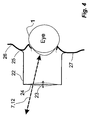
Figure 4 is a schematic of an optional soft cup used to concentrate acoustical energy used to perturb an eye. - Have reference generally to
Fig. 1 , the importance of measuring the mechanical properties (such as compliance, elastic properties or stiffness) of theeye 1, and more specifically of the cornea, stems from the fact that the variability of the elastic modulus between eyes is associated with variations in the apparent IOP as derived using other direct and indirect measurements. Considering that theeye 1 is a near-sphere, the volume for a normal emmetropic eye with an axial length of 24 mm is about 7238 microliters. As a baseline, and based on measurements of the change in volume and pressure in such a nominal eye, a change in eye volume of about 80 microliters results in about a 50-mm Hg change in IOP (from 10 to 60 mm of Hg). Typically, within the normal range of the human eye, volume changes occur between about 10 to 40 mm Hg, and are less beyond about 40 mm Hg. - Applicant's have found that the IOP pressure in the
eye 1 affects its vibrational response to a stimulus. The eye can be stimulated by driving the eye with acoustic excitation. One way to determine the response of theeye 1 to such acoustic excitation is through the use of alaser velocimeter 6 and the techniques of Laser Doppler Vibrometry (LDV). A device such as one similar to anOmetron VS 100 from Image Automation Ltd., can accurately measure the velocity of vibration of the outer wall of theeye 1 or thecornea 8 when perturbed by a sonic wave. Typical specifications include vibration frequency: < 0.01 Hz to over 300 kHz and vibration velocity measurement of +/- 0.001 to 1000 mm/s (40 micro ips to 40 ips) peak. - A coherent signal laser beam 7 (such as a 1mW helium-Neon class II laser) is projected onto the
cornea 8. Preferably thesignal beam 7 comprises long coherent light over a narrow spectrum. Thesignal beam 7 strikes the vibrating surface of thecornea 8 and is reflected back into theinstrument 6 where it is recombined with a reference beam. Light scattered back from the surface is shifted in frequency by an amount proportional to the velocity of the vibration of the surface. This is the Doppler effect. Interference betweensignal 7 and reference beams generates signals from which the Doppler shift and the velocity of the vibrating surface is derived. The frequency shift is measured to produce an instantaneous velocity signal which can be analyzed. Suitable lasers used in the velocimeter include the Ometron HeNe and Nichia laser diodes available from Nichia America Corporation of Mountville, PA. - There is a definite association between the vibrational response and the IOP, however the measured changes in vibrational response of the eye are very small (5-10 Hz for an IOP range of 5 to 35 inches of water, being 10-65 mm Hg). Also the amplitudes of the vibrations are very small (2-20 nm) when driven by an acoustical excitation of 1 pascal pressure. The shift of harmonic frequencies or amplitude produced by a change in the IOP is crucial for vibration analysis to detect IOP. Vibration or movement of the
eye 1 in the orbit can act to mask these small vibrations induced in theeye 1 itself. Accordingly, in an optional enhancement, the measurements are improved by measuring the vibrational difference between the cornea and a reference location such as the back of eye. Basically, such masking effects can be minimized by making two simultaneous measurements from two different locations from the eye. - To deliver the necessary acoustical excitation or perturbing vibration to the eye, an acoustical wave generator such as a standard audio speaker can be used. The speaker is placed in close proximity (2-4 in) to the eye and driven at approximately 100dB. As show in
Fig. 4 , to improve the delivery of the acoustical excitation, asoft cup 22 with a drivendiaphragm 23 at the closed end can be used to concentrate the energy into the eye. - Each eye has a different volume and mechanical properties such as elasticity, therefore these variances must be taken into consideration when calculating IOP. To do this, laser interferometry similar to that described in
US patent 6,288,784 to Hitzenberger et al. is used to accurately measure the corneal thickness. Corneal thickness is related to corneal stiffness, a major source of error in contact tonometry. Axial length of the eye is related to the eye's volume. The eye's vibrational response is normalized with the axial length and corneal thickness to yield a more accurate IOP. - While the actual normalization of the eye's characteristics may be numerically determined, it is understood that a better measure of the IOP can be determined as a function of some basic variables including :
- Ro is a function of V, Ri, and k1;
- E is a function of P, H2O, k2; and
- IOP is a function of V, E, Rik3.
- Ro = is the vibrational response of the eye;
- V = Eye volume (axial length);
- Ri = Biomechanical rigidity of the eye;
- E = Elastic modulus of the eye;
- P = Thickness of the cornea;
- H2O = Water content of the cornea (which is substantially constant); and
- K1, k2 and k3 = Constants.
- The determination of IOP is a multivariate analysis which is dependent upon a large body of empirical data. Practically, the resulting relationships are complex and the effects of the various parameters which affect the IOP pressure measurement have to be found empirically and preferably with the use of finite element analysis. As those of skill in the art are aware, a variety of numerical techniques can be applied to obtain the solution. One approach is to apply neural networks and statistical methods to establish these relationships and to confirm the results of finite element analysis.
- In greater detail, and again with reference to
Fig. 1 , there is illustrated a system for exciting and measuring the resulting vibrations of an eye. Anacoustic transducer 3, is driven by anaudio frequency oscillator 4. Both the frequency and amplitude of said oscillator are controlled by acomputer 5 which is preferably common to all elements of the instrument. The amplitude of theoscillator 4 is controlled such that the force of theacoustic wave 2 exciting theeye 1 is known. Simultaneously, thecomputer 5 controls and performs velocity and phase measurements via alaser velocimeter 6 reflecting alaser light beam 7 off of theeye 1 and interfering with a reference beam (not shown). The frequency of theoscillator 4 is swept across a range of interest while thecomputer 5 determines and records vibrational responses of theeye 1 including the resonant or harmonic frequencies under investigation. - Further, and referring to
Fig. 2 , there is illustrated a system for measuring the axial length and the corneal thickness of aneye 1. Alaser light beam 12 is shone into theeye 1. Thelight beam 12 is reflected back to theinstrument 13 causing interference patterns. The reflections include light from the outer 16 and inner 15 surfaces of thecornea 8 and from the back 17 of theeye 1. Theinterferometer 13 measures these patterns and determines three path lengths. Conveniently, the same microprocessor orcomputer 5 controls theinterferometer 13, and calculates the axial length and the cornea thickness from the three path lengths. - Referring to
Figs. 3a and3b there are illustrated velocity, phase lag and one or more points of resonance measured from a porcine eye at low and high IOP respectively. In this example, a measured pressure, representing IOP, was applied to the eye with an invasive fluid connection. Acoustical energy was applied using the frequency oscillator through a range of about 50 to 300 Hz for inducing vibrations in the eye. Preferably a range of frequencies is applied so as to aid in identifying occasional points of resonance. A laser velocimeter was applied to the surface of the eye to measure the vibrational response, namely velocity, at the surface of the eye. - Referring specifically to
Fig. 3a , trace Va illustrates the vibrational velocity response of the acoustically excited eye having a low IOP. Note a maximal velocity inflection in trace Va at about 220 Hz which is indicative of vibrational resonance. Trace Pa illustrates the phase lag between the excitation energy and the oscillations for theeye 1 having low IOP. At these low IOPs, the eye demonstrates more internal damping. Further, at low frequencies, it is believed that the whole eye is involved and at higher frequencies the response is more localized at the surface and demonstrates more phase lag. - Referring to
Fig. 3b , trace Vb illustrates the velocity of an acoustically excited porcine's eye having a high IOP. Trace Pb illustrates the phase lag between the excitation energy and the oscillations of the eye. As anticipated, at higher IOP, the eye demonstrates higher stiffness which is beyond that inherent in the eye's mechanical properties alone, resulting in less lag in the phase of perturbing vibration and the measured vibration. - Returning to
Fig. 4 , note that resolution of the vibrational response is preferably increased using a higher driver force. Using acoustic energy, higher force is achieved by applying an acoustical wave at higher decibels. For better concentrating the acoustical energy onto theeye 1, and additionally for avoiding audio discomfort to a patient, there is provided a softconcave cup 22 for application over theeye 1. Theback 23 of thecup 22 is fitted with a diaphragm which is caused to oscillate resulting in a pressure wave to be impinged upon theeye 1. Thecup 22 is pressed against the patient'sforehead 26 and thecheek 27 to form aseal 25 over the eye. One or moretransparent windows 24 are positioned in theback 23 of thecup 22 such thatlaser light eye 1. - The combination of apparatus and methodology makes it possible to provide a portable IOP instrument which can be used by a patient at point-of-care rather than being limited to a clinical environment. A desktop or handheld unit incorporates a housing containing the means for a laser velocimeter, a laser interferometer, a non-contacting vibration source, a microprocessor and some form of IOP display - absolute or threshold. The housing incorporates locational means, such as a soft cup or nose rest for aligning the laser components for enabling reflection and measurement of the various reflected laser beams.
Claims (24)
- A method of determining measures of intraocular pressure in an eye (1) without direct contact with the eye comprising:applying a perturbing vibration (2) to at least a portion of the eye (1) without contact with the eye for inducing a vibration in the surface of the eye;varying the frequency of the perturbing vibration (2);measuring a vibrational response of the induced vibration without contact with the eye using a laser vibrometer as the frequency of the perturbing vibration (2) is varied for establishing characteristics indicative of mechanical properties of at least the portion of the eye including at least a stiffness property of the eye;characterized in that the method is further comprising:measuring an axial length of the eye for establishing a volume of the eye; anddetermining measurements indicative of the intraocular pressure in the eye from the vibrational response, the mechanical properties and the volume of the eye.
- The method as described in claim 1 wherein the vibrational response comprises a velocity of the induced vibration.
- The method as described in claims 1 or 2 wherein the vibrational response comprises a phase lag between the perturbing vibration (2) and the induced vibration.
- The method as described in claim 3 wherein the vibrational response comprises a rate of change of a phase lag between the perturbing vibration (2) and the induced vibration.
- The method as described in claim 3 wherein the vibrational response comprises a velocity of the induced vibration and a comparison of the rate of change of the phase lag between the perturbing vibration (2) and the induced vibration.
- The method as described in claim 1 wherein the vibrational response is selected from the group of a velocity of the induced vibration, a magnitude of the velocity of the induced vibration, a phase lag between the perturbing vibration (2) and the induced vibration, and a rate of change of the phase lag between the perturbing vibration and the induced vibration.
- The method as described in any of claims 1 to 6 wherein the perturbing vibration (2) is an acoustic wave.
- The method as described in claim 7 wherein the vibrational response is measured using a laser doppler vibrometer.
- The method as described in claim 1 further comprising:providing a laser velocimeter (6) producing a signal laser beam (7) and a reference laser beam;directing the signal laser beam (7) at the eye (1) for forming at least one reflected laser beam; andcombining the at least one reflected signal laser beam with a reference laser beam for creating interference indicative of the vibrational response.
- The method as described in claim 9 wherein the vibrational response is at least a velocity of the induced vibration and a comparison of the rate of change of the phase lag between the signal laser beam (7) and the at least one reflected laser beam.
- The method as described in claim 9 wherein the vibrational response comprises one or more of: a velocity of the induced vibration, a magnitude of the velocity of the induced vibration, a phase lag between the perturbing vibration (2) and the induced vibration, and a rate of change of the phase lag between the perturbing vibration (2) and the induced vibration.
- The method as described in claim 11 further comprising:providing a laser interferometer (13) for producing a measuring beam directed at the eye and for producing interference patterns from a plurality of reflected beams reflected from the eye; anddetermining a path length between at least two of the plurality of reflected beams for establishing the axial length of the eye as a geometric property related to the volume of the eye.
- The method as described in claim 12 further comprising establishing a corneal thickness as a geometric property of the eye by determining path lengths between at least two of the plurality of reflected beams.
- The method as described in claim 1 further comprising:providing a laser velocimeter (6) and a laser interferometer (13);applying the laser velocimeter (6) to the eye for producing a reflected signal laser beam and combining the reflected signal laser beam with a reference laser beam for creating interference indicative of one or more vibrational responses;applying the laser interferometer (13) for producing a measuring beam directed to the eye and receiving interference patterns from a plurality of reflected measurement beams reflected back from the vibrating eye and determining a path length between at least two of the reflected measurement beams for establishing the axial length of the eye as a geometric characteristic of the eye; anddetermining measurements indicative of the intraocular pressure in the eye from the vibrational response and the axial length of the eye.
- The method as described in claim 14 wherein the mechanical and geometric properties comprise one or more of: the axial length of the eye, the stiffness of the eye, a water content of the cornea and a thickness of the cornea.
- The method as described in any of claims 1 to 15 wherein the vibrational response comprises one or more of: a velocity of the induced vibration, a magnitude of the velocity of the induced vibration, a phase lag between the perturbing vibration (2) and the induced vibration, and a rate of change of the phase lag between the perturbing vibration (2) and the induced vibration.
- A non-contact tonometer comprising:a device for inducing vibration in at least a portion of an eye (1) over a range of frequencies, without contact with the eye , a laser vibrometer for measuring a vibrational response from a surface of the eye without contact with the eye ;means for determining mechanical properties of the eye based on the vibrational response of the eye; characterized by further comprisingmeans for measuring geometric properties of the eye including at least an axial length of the eye for establishing characteristics indicative of at least a volume of the eye; andmeans for applying the mechanical and geometric properties of the eye to calculate an intraocular pressure in the eye.
- The non-contact tonometer as described in claim 17 wherein the means for measuring the vibrational response from the surface of the eye without contact with the eye or the eyelid is a laser velocimeter (6).
- The non-contact tonometer as described in claim 17 wherein the means for determining the geometric properties of the eye is a laser interferometer (13) having a measuring beam directed at the eye (1) and which obtains interference patterns from a plurality of reflected measurement beams reflected back from the vibrating eye so as to determining a path length between at least two of the reflected measurement beams for establishing the axial length of the eye.
- The non-contact tonometer as described in any of claims 17 to 19 wherein the geometric properties further include a corneal thickness of the eye.
- The non-contact tonometer as described in any of claims 17 to 20 further comprising:a computer (5) for applying the vibrational response of the eye to calculate measures indicative of an intraocular pressure in the eye.
- The non-contact tonometer as described in claim 21 wherein the computer (5) applies the vibrational response and the geometric properties of the eye to calculate measures indicative of an intraocular pressure in the eye.
- The non-contact tonometer as described in any of claims 17 to 22 wherein the device for inducing vibration in the eye is an acoustic generator.
- The non-contact tonometer as described in claim 23 further comprising a cup (22) for concentrating the acoustic generator onto the eye.
Applications Claiming Priority (3)
| Application Number | Priority Date | Filing Date | Title |
|---|---|---|---|
| US36776602P | 2002-03-28 | 2002-03-28 | |
| US367766P | 2002-03-28 | ||
| PCT/CA2003/000452 WO2003082087A1 (en) | 2002-03-28 | 2003-03-28 | A non-contacting tonometer |
Publications (2)
| Publication Number | Publication Date |
|---|---|
| EP1489958A1 EP1489958A1 (en) | 2004-12-29 |
| EP1489958B1 true EP1489958B1 (en) | 2015-07-15 |
Family
ID=28675396
Family Applications (1)
| Application Number | Title | Priority Date | Filing Date |
|---|---|---|---|
| EP03709495.0A Expired - Lifetime EP1489958B1 (en) | 2002-03-28 | 2003-03-28 | A non-contacting tonometer |
Country Status (11)
| Country | Link |
|---|---|
| US (1) | US7201720B2 (en) |
| EP (1) | EP1489958B1 (en) |
| JP (1) | JP2005521450A (en) |
| CN (1) | CN1642468A (en) |
| AU (1) | AU2003213926A1 (en) |
| BR (2) | BRPI0308794B8 (en) |
| CA (1) | CA2479493C (en) |
| EA (1) | EA200401269A1 (en) |
| IL (1) | IL164245A0 (en) |
| MX (1) | MXPA04009269A (en) |
| WO (1) | WO2003082087A1 (en) |
Families Citing this family (33)
| Publication number | Priority date | Publication date | Assignee | Title |
|---|---|---|---|---|
| WO1999046019A1 (en) * | 1998-03-11 | 1999-09-16 | Digideal Corporation | Automated system for playing live casino table games having tabletop changeable playing card displays and play monitoring security features |
| US20050030473A1 (en) * | 2003-06-12 | 2005-02-10 | Welch Allyn, Inc. | Apparatus and method for determining intraocular pressure and corneal thickness |
| EP1793730B1 (en) * | 2004-08-24 | 2011-12-28 | The General Hospital Corporation | Process, system and software arrangement for determining elastic modulus |
| US20120277569A1 (en) * | 2011-04-30 | 2012-11-01 | Hogan Josh N | Optic Characteristic Measuring System and Method |
| DE202005002562U1 (en) | 2005-02-16 | 2005-06-09 | Oculus Optikgeräte GmbH | Ophthalmic analysis system for measuring intraocular pressure in the eye |
| US20070121120A1 (en) * | 2005-11-16 | 2007-05-31 | Schachar Ronald A | Apparatus and method for measuring scleral curvature and velocity of tissues of the eye |
| US20070123768A1 (en) * | 2005-11-30 | 2007-05-31 | Duke University | Ophthalmic instruments, systems and methods especially adapted for conducting simultaneous tonometry and pachymetry measurements |
| DE102006033035B4 (en) * | 2006-07-14 | 2015-06-03 | Universität Bremen | Apparatus and method for contactless internal pressure determination |
| US8740795B2 (en) | 2007-03-26 | 2014-06-03 | John Lawrence Norris | Reflective non-contact ocular pulse analyzer for clinical diagnosis of eye and cerebrovascular disease |
| US7924020B2 (en) * | 2007-09-17 | 2011-04-12 | Seagate Technology Llc | Free-state modal frequency response testing |
| WO2009100439A2 (en) * | 2008-02-07 | 2009-08-13 | Ehrecke Timothy J | Pressure monitor |
| JP5268053B2 (en) | 2008-05-15 | 2013-08-21 | 晃太郎 石井 | Apparatus for measuring natural frequency of eyeball tissue and non-contact tonometer using the same |
| DE102008049692B4 (en) * | 2008-09-19 | 2010-05-12 | Fraunhofer-Gesellschaft zur Förderung der angewandten Forschung e.V. | Laser-based device for non-contact scanning of eyes and corresponding laser-based scanning method |
| US20100120536A1 (en) * | 2008-11-10 | 2010-05-13 | Chatellier Nate J | Entertaining visual tricks for electronic betting games |
| US8292745B2 (en) * | 2009-02-27 | 2012-10-23 | Digideal Corporation | Convertible rail for selecting player-tracking modes in an electronic game table |
| JP5658018B2 (en) * | 2010-12-10 | 2015-01-21 | 株式会社ニデック | Ophthalmic examination equipment |
| CH705167A1 (en) * | 2011-06-16 | 2012-12-31 | Haute Ecole D Ingenierie Et De Gestion Du Canton De Vaud Heig Vd | Method and apparatus for measuring intraocular pressure. |
| JP2013031639A (en) * | 2011-07-01 | 2013-02-14 | Canon Inc | Ophthalmologic apparatus and ophthalmologic system |
| TWI484154B (en) * | 2012-02-24 | 2015-05-11 | Optical detecting apparatus and operating method thereof | |
| TWI507170B (en) * | 2012-10-24 | 2015-11-11 | Crystalvue Medical Corp | Optical apparatus and operating method thereof |
| FI20135401L (en) | 2013-04-19 | 2014-10-20 | Garuda Oy | Measurement method and measurement arrangement for utilizing electromagnetic waves |
| JP6289040B2 (en) * | 2013-11-11 | 2018-03-07 | 株式会社アドテックス | Non-contact ocular vibration tonometer |
| CN107072529B (en) | 2014-07-17 | 2022-01-18 | 爱音医疗股份有限公司 | Measuring ocular parameters using vibrations induced in the eye |
| WO2017037330A1 (en) * | 2015-09-03 | 2017-03-09 | Photono Oy | Method and arrangement for eye measurements |
| CN107095643B (en) * | 2017-04-11 | 2019-01-25 | 佛山科学技术学院 | Non-contact intraocular pressure detection system and detection method based on low coherent light interference |
| FI128150B (en) * | 2018-11-29 | 2019-11-15 | Photono Oy | A system and a method for measuring pressure of an eye |
| FI129285B (en) * | 2020-02-11 | 2021-11-15 | Photono Oy | Device and method for detecting motion of a surface |
| EP3878372A1 (en) * | 2020-03-11 | 2021-09-15 | National University of Ireland, Galway | Method and system for screening ocular tissue abnormality through deformation of the ocular tissue |
| CN113974553B (en) * | 2021-12-28 | 2022-04-01 | 广东麦特维逊医学研究发展有限公司 | Eye pressure measuring device and working method thereof |
| DE102022201297A1 (en) | 2022-02-08 | 2023-08-10 | Carl Zeiss Meditec Ag | Tonometer for measuring intraocular pressure |
| FI131547B1 (en) * | 2023-04-25 | 2025-06-17 | Icare Finland Oy | A device for measuring properties of eye and method thereof |
| US20250031960A1 (en) * | 2023-07-28 | 2025-01-30 | Twenty Twenty Therapeutics Llc | System for optical interrogation of an intraocular implant through interference pattern projection |
| DE102024113474A1 (en) * | 2024-05-14 | 2025-11-20 | Universität Duisburg-Essen, Körperschaft des öffentlichen Rechts | Obtaining ophthalmic diagnostic information |
Family Cites Families (15)
| Publication number | Priority date | Publication date | Assignee | Title |
|---|---|---|---|---|
| US2519681A (en) | 1946-07-27 | 1950-08-22 | Mueller & Company V | Tonometer head |
| US3049001A (en) | 1959-06-18 | 1962-08-14 | Univ California | Tonometer |
| US3070087A (en) | 1959-09-29 | 1962-12-25 | Franklin Institute | Tonometer |
| US3192765A (en) | 1962-07-17 | 1965-07-06 | Franklin Institute | Vibration tonometer |
| US3181351A (en) | 1962-11-06 | 1965-05-04 | Honeywell Inc | Non-contacting tonometer |
| US4646754A (en) | 1985-02-19 | 1987-03-03 | Seale Joseph B | Non-invasive determination of mechanical characteristics in the body |
| US5076274A (en) * | 1987-02-18 | 1991-12-31 | Canon Kabushiki Kaisha | Non-contact tonometer |
| AU4292193A (en) * | 1992-04-30 | 1993-11-29 | Alcon Surgical, Inc. | Interferometer apparatus for measuring cornea velocity |
| JP3408315B2 (en) * | 1994-03-31 | 2003-05-19 | 株式会社ニデック | Ophthalmic equipment |
| US6120460A (en) * | 1996-09-04 | 2000-09-19 | Abreu; Marcio Marc | Method and apparatus for signal acquisition, processing and transmission for evaluation of bodily functions |
| US6137585A (en) | 1998-05-15 | 2000-10-24 | Laser Diagnostic Technologies, Inc. | Method and apparatus for recording three-dimensional distribution of light backscattering potential in transparent and semi-transparent structures |
| JP3386376B2 (en) * | 1998-08-19 | 2003-03-17 | 株式会社トプコン | Non-contact tonometer |
| DE10039896A1 (en) * | 2000-08-16 | 2002-03-07 | Inst Technik Der Informationsv | Contactless inner eye pressure measurement involves determining pressure from vibration characteristics of eye measured in narrow frequency band with aid of Helmholtz resonator |
| US6595920B2 (en) * | 2001-05-21 | 2003-07-22 | The Ohio State University | Non-contact instrument for measurement of internal optical pressure |
| US6673014B2 (en) * | 2001-10-05 | 2004-01-06 | Itonix, Inc. | Noninvasive methods and apparatuses for measuring the intraocular pressure of a mammal eye |
-
2003
- 2003-03-28 EA EA200401269A patent/EA200401269A1/en unknown
- 2003-03-28 US US10/400,688 patent/US7201720B2/en not_active Expired - Lifetime
- 2003-03-28 BR BRPI0308794A patent/BRPI0308794B8/en not_active IP Right Cessation
- 2003-03-28 IL IL16424503A patent/IL164245A0/en unknown
- 2003-03-28 CN CNA038066599A patent/CN1642468A/en active Pending
- 2003-03-28 MX MXPA04009269A patent/MXPA04009269A/en not_active Application Discontinuation
- 2003-03-28 CA CA002479493A patent/CA2479493C/en not_active Expired - Lifetime
- 2003-03-28 WO PCT/CA2003/000452 patent/WO2003082087A1/en not_active Ceased
- 2003-03-28 BR BR0308794-8A patent/BR0308794A/en not_active IP Right Cessation
- 2003-03-28 AU AU2003213926A patent/AU2003213926A1/en not_active Abandoned
- 2003-03-28 JP JP2003579636A patent/JP2005521450A/en active Pending
- 2003-03-28 EP EP03709495.0A patent/EP1489958B1/en not_active Expired - Lifetime
Also Published As
| Publication number | Publication date |
|---|---|
| JP2005521450A (en) | 2005-07-21 |
| MXPA04009269A (en) | 2005-05-17 |
| WO2003082087A1 (en) | 2003-10-09 |
| IL164245A0 (en) | 2005-12-18 |
| EA200401269A1 (en) | 2005-04-28 |
| BRPI0308794B1 (en) | 2019-09-17 |
| AU2003213926A1 (en) | 2003-10-13 |
| BRPI0308794B8 (en) | 2021-06-22 |
| BR0308794A (en) | 2005-01-18 |
| CA2479493A1 (en) | 2003-10-09 |
| CA2479493C (en) | 2009-07-07 |
| EP1489958A1 (en) | 2004-12-29 |
| US7201720B2 (en) | 2007-04-10 |
| CN1642468A (en) | 2005-07-20 |
| US20030187342A1 (en) | 2003-10-02 |
Similar Documents
| Publication | Publication Date | Title |
|---|---|---|
| CA2479493C (en) | A non-contacting tonometer | |
| US11659994B2 (en) | Method and arrangement for eye pressure measurements | |
| US5251627A (en) | Non-invasive measurement of eyeball pressure using vibration | |
| EP4342362B1 (en) | Non-contact type eyeball physical property measurement device | |
| US20070121120A1 (en) | Apparatus and method for measuring scleral curvature and velocity of tissues of the eye | |
| US20030078486A1 (en) | Nonivasive methods and apparatuses for measuring the intraocular pressure of a mammal eye | |
| FI128851B (en) | SYSTEM AND METHOD OF MEASURING AT LEAST ONE PARAMETER | |
| US20040193033A1 (en) | Noninvasive methods and apparatuses for measuring the intraocular pressure of a mammal eye | |
| US20030187343A1 (en) | Force feedback tonometer | |
| US20150359427A1 (en) | Optic Characteristic Measuring System and Method | |
| US20220378291A1 (en) | Ultrasound Intraocular Pressure Sensor in Sclera or in Cornea | |
| JP2023141373A (en) | Non contact type eyeball physical property measurement device | |
| WO2010087291A1 (en) | Intraocular pressure measurement device | |
| Zhang et al. | Ultrasound surface wave elastography of the living human eye | |
| US9610062B2 (en) | Perioperative ocular distention (POD) monitor | |
| FI131741B1 (en) | Tonometer for measuring intraocular pressure with pulsating air | |
| FI131841B1 (en) | Air pulse tonometers | |
| CN121001643A (en) | Tonometers and methods for determining eye characteristics |
Legal Events
| Date | Code | Title | Description |
|---|---|---|---|
| PUAI | Public reference made under article 153(3) epc to a published international application that has entered the european phase |
Free format text: ORIGINAL CODE: 0009012 |
|
| 17P | Request for examination filed |
Effective date: 20041025 |
|
| AK | Designated contracting states |
Kind code of ref document: A1 Designated state(s): AT BE BG CH CY CZ DE DK EE ES FI FR GB GR HU IE IT LI LU MC NL PT RO SE SI SK TR |
|
| AX | Request for extension of the european patent |
Extension state: AL LT LV MK |
|
| RAP1 | Party data changed (applicant data changed or rights of an application transferred) |
Owner name: I SONIC MEDICAL |
|
| 17Q | First examination report despatched |
Effective date: 20090930 |
|
| GRAP | Despatch of communication of intention to grant a patent |
Free format text: ORIGINAL CODE: EPIDOSNIGR1 |
|
| INTG | Intention to grant announced |
Effective date: 20150305 |
|
| GRAS | Grant fee paid |
Free format text: ORIGINAL CODE: EPIDOSNIGR3 |
|
| GRAA | (expected) grant |
Free format text: ORIGINAL CODE: 0009210 |
|
| AK | Designated contracting states |
Kind code of ref document: B1 Designated state(s): AT BE BG CH CY CZ DE DK EE ES FI FR GB GR HU IE IT LI LU MC NL PT RO SE SI SK TR |
|
| REG | Reference to a national code |
Ref country code: CH Ref legal event code: EP Ref country code: GB Ref legal event code: FG4D |
|
| REG | Reference to a national code |
Ref country code: IE Ref legal event code: FG4D |
|
| REG | Reference to a national code |
Ref country code: AT Ref legal event code: REF Ref document number: 736331 Country of ref document: AT Kind code of ref document: T Effective date: 20150815 |
|
| REG | Reference to a national code |
Ref country code: DE Ref legal event code: R096 Ref document number: 60347819 Country of ref document: DE |
|
| REG | Reference to a national code |
Ref country code: CH Ref legal event code: NV Representative=s name: NOVAGRAAF INTERNATIONAL SA, CH |
|
| REG | Reference to a national code |
Ref country code: AT Ref legal event code: MK05 Ref document number: 736331 Country of ref document: AT Kind code of ref document: T Effective date: 20150715 |
|
| REG | Reference to a national code |
Ref country code: NL Ref legal event code: MP Effective date: 20150715 |
|
| PG25 | Lapsed in a contracting state [announced via postgrant information from national office to epo] |
Ref country code: FI Free format text: LAPSE BECAUSE OF FAILURE TO SUBMIT A TRANSLATION OF THE DESCRIPTION OR TO PAY THE FEE WITHIN THE PRESCRIBED TIME-LIMIT Effective date: 20150715 Ref country code: GR Free format text: LAPSE BECAUSE OF FAILURE TO SUBMIT A TRANSLATION OF THE DESCRIPTION OR TO PAY THE FEE WITHIN THE PRESCRIBED TIME-LIMIT Effective date: 20151016 |
|
| PG25 | Lapsed in a contracting state [announced via postgrant information from national office to epo] |
Ref country code: PT Free format text: LAPSE BECAUSE OF FAILURE TO SUBMIT A TRANSLATION OF THE DESCRIPTION OR TO PAY THE FEE WITHIN THE PRESCRIBED TIME-LIMIT Effective date: 20151116 Ref country code: ES Free format text: LAPSE BECAUSE OF FAILURE TO SUBMIT A TRANSLATION OF THE DESCRIPTION OR TO PAY THE FEE WITHIN THE PRESCRIBED TIME-LIMIT Effective date: 20150715 Ref country code: SE Free format text: LAPSE BECAUSE OF FAILURE TO SUBMIT A TRANSLATION OF THE DESCRIPTION OR TO PAY THE FEE WITHIN THE PRESCRIBED TIME-LIMIT Effective date: 20150715 Ref country code: AT Free format text: LAPSE BECAUSE OF FAILURE TO SUBMIT A TRANSLATION OF THE DESCRIPTION OR TO PAY THE FEE WITHIN THE PRESCRIBED TIME-LIMIT Effective date: 20150715 |
|
| REG | Reference to a national code |
Ref country code: FR Ref legal event code: PLFP Year of fee payment: 14 |
|
| REG | Reference to a national code |
Ref country code: DE Ref legal event code: R097 Ref document number: 60347819 Country of ref document: DE |
|
| PG25 | Lapsed in a contracting state [announced via postgrant information from national office to epo] |
Ref country code: SK Free format text: LAPSE BECAUSE OF FAILURE TO SUBMIT A TRANSLATION OF THE DESCRIPTION OR TO PAY THE FEE WITHIN THE PRESCRIBED TIME-LIMIT Effective date: 20150715 Ref country code: EE Free format text: LAPSE BECAUSE OF FAILURE TO SUBMIT A TRANSLATION OF THE DESCRIPTION OR TO PAY THE FEE WITHIN THE PRESCRIBED TIME-LIMIT Effective date: 20150715 Ref country code: CZ Free format text: LAPSE BECAUSE OF FAILURE TO SUBMIT A TRANSLATION OF THE DESCRIPTION OR TO PAY THE FEE WITHIN THE PRESCRIBED TIME-LIMIT Effective date: 20150715 Ref country code: IT Free format text: LAPSE BECAUSE OF FAILURE TO SUBMIT A TRANSLATION OF THE DESCRIPTION OR TO PAY THE FEE WITHIN THE PRESCRIBED TIME-LIMIT Effective date: 20150715 Ref country code: DK Free format text: LAPSE BECAUSE OF FAILURE TO SUBMIT A TRANSLATION OF THE DESCRIPTION OR TO PAY THE FEE WITHIN THE PRESCRIBED TIME-LIMIT Effective date: 20150715 |
|
| PLBE | No opposition filed within time limit |
Free format text: ORIGINAL CODE: 0009261 |
|
| STAA | Information on the status of an ep patent application or granted ep patent |
Free format text: STATUS: NO OPPOSITION FILED WITHIN TIME LIMIT |
|
| PG25 | Lapsed in a contracting state [announced via postgrant information from national office to epo] |
Ref country code: RO Free format text: LAPSE BECAUSE OF FAILURE TO SUBMIT A TRANSLATION OF THE DESCRIPTION OR TO PAY THE FEE WITHIN THE PRESCRIBED TIME-LIMIT Effective date: 20150715 |
|
| 26N | No opposition filed |
Effective date: 20160418 |
|
| PG25 | Lapsed in a contracting state [announced via postgrant information from national office to epo] |
Ref country code: SI Free format text: LAPSE BECAUSE OF FAILURE TO SUBMIT A TRANSLATION OF THE DESCRIPTION OR TO PAY THE FEE WITHIN THE PRESCRIBED TIME-LIMIT Effective date: 20150715 Ref country code: BE Free format text: LAPSE BECAUSE OF NON-PAYMENT OF DUE FEES Effective date: 20160331 |
|
| PG25 | Lapsed in a contracting state [announced via postgrant information from national office to epo] |
Ref country code: LU Free format text: LAPSE BECAUSE OF FAILURE TO SUBMIT A TRANSLATION OF THE DESCRIPTION OR TO PAY THE FEE WITHIN THE PRESCRIBED TIME-LIMIT Effective date: 20160328 Ref country code: MC Free format text: LAPSE BECAUSE OF FAILURE TO SUBMIT A TRANSLATION OF THE DESCRIPTION OR TO PAY THE FEE WITHIN THE PRESCRIBED TIME-LIMIT Effective date: 20150715 |
|
| REG | Reference to a national code |
Ref country code: IE Ref legal event code: MM4A |
|
| PG25 | Lapsed in a contracting state [announced via postgrant information from national office to epo] |
Ref country code: IE Free format text: LAPSE BECAUSE OF NON-PAYMENT OF DUE FEES Effective date: 20160328 |
|
| REG | Reference to a national code |
Ref country code: FR Ref legal event code: PLFP Year of fee payment: 15 |
|
| PG25 | Lapsed in a contracting state [announced via postgrant information from national office to epo] |
Ref country code: NL Free format text: LAPSE BECAUSE OF FAILURE TO SUBMIT A TRANSLATION OF THE DESCRIPTION OR TO PAY THE FEE WITHIN THE PRESCRIBED TIME-LIMIT Effective date: 20150715 |
|
| REG | Reference to a national code |
Ref country code: FR Ref legal event code: PLFP Year of fee payment: 16 |
|
| PG25 | Lapsed in a contracting state [announced via postgrant information from national office to epo] |
Ref country code: CY Free format text: LAPSE BECAUSE OF FAILURE TO SUBMIT A TRANSLATION OF THE DESCRIPTION OR TO PAY THE FEE WITHIN THE PRESCRIBED TIME-LIMIT Effective date: 20150715 Ref country code: HU Free format text: LAPSE BECAUSE OF FAILURE TO SUBMIT A TRANSLATION OF THE DESCRIPTION OR TO PAY THE FEE WITHIN THE PRESCRIBED TIME-LIMIT; INVALID AB INITIO Effective date: 20030328 |
|
| PG25 | Lapsed in a contracting state [announced via postgrant information from national office to epo] |
Ref country code: TR Free format text: LAPSE BECAUSE OF FAILURE TO SUBMIT A TRANSLATION OF THE DESCRIPTION OR TO PAY THE FEE WITHIN THE PRESCRIBED TIME-LIMIT Effective date: 20150715 |
|
| PG25 | Lapsed in a contracting state [announced via postgrant information from national office to epo] |
Ref country code: BG Free format text: LAPSE BECAUSE OF FAILURE TO SUBMIT A TRANSLATION OF THE DESCRIPTION OR TO PAY THE FEE WITHIN THE PRESCRIBED TIME-LIMIT Effective date: 20150715 |
|
| PGFP | Annual fee paid to national office [announced via postgrant information from national office to epo] |
Ref country code: FR Payment date: 20210331 Year of fee payment: 19 |
|
| PGFP | Annual fee paid to national office [announced via postgrant information from national office to epo] |
Ref country code: DE Payment date: 20210421 Year of fee payment: 19 |
|
| PGFP | Annual fee paid to national office [announced via postgrant information from national office to epo] |
Ref country code: GB Payment date: 20210422 Year of fee payment: 19 Ref country code: CH Payment date: 20210422 Year of fee payment: 19 |
|
| REG | Reference to a national code |
Ref country code: DE Ref legal event code: R119 Ref document number: 60347819 Country of ref document: DE |
|
| REG | Reference to a national code |
Ref country code: CH Ref legal event code: PL |
|
| GBPC | Gb: european patent ceased through non-payment of renewal fee |
Effective date: 20220328 |
|
| PG25 | Lapsed in a contracting state [announced via postgrant information from national office to epo] |
Ref country code: LI Free format text: LAPSE BECAUSE OF NON-PAYMENT OF DUE FEES Effective date: 20220331 Ref country code: GB Free format text: LAPSE BECAUSE OF NON-PAYMENT OF DUE FEES Effective date: 20220328 Ref country code: FR Free format text: LAPSE BECAUSE OF NON-PAYMENT OF DUE FEES Effective date: 20220331 Ref country code: DE Free format text: LAPSE BECAUSE OF NON-PAYMENT OF DUE FEES Effective date: 20221001 Ref country code: CH Free format text: LAPSE BECAUSE OF NON-PAYMENT OF DUE FEES Effective date: 20220331 |